
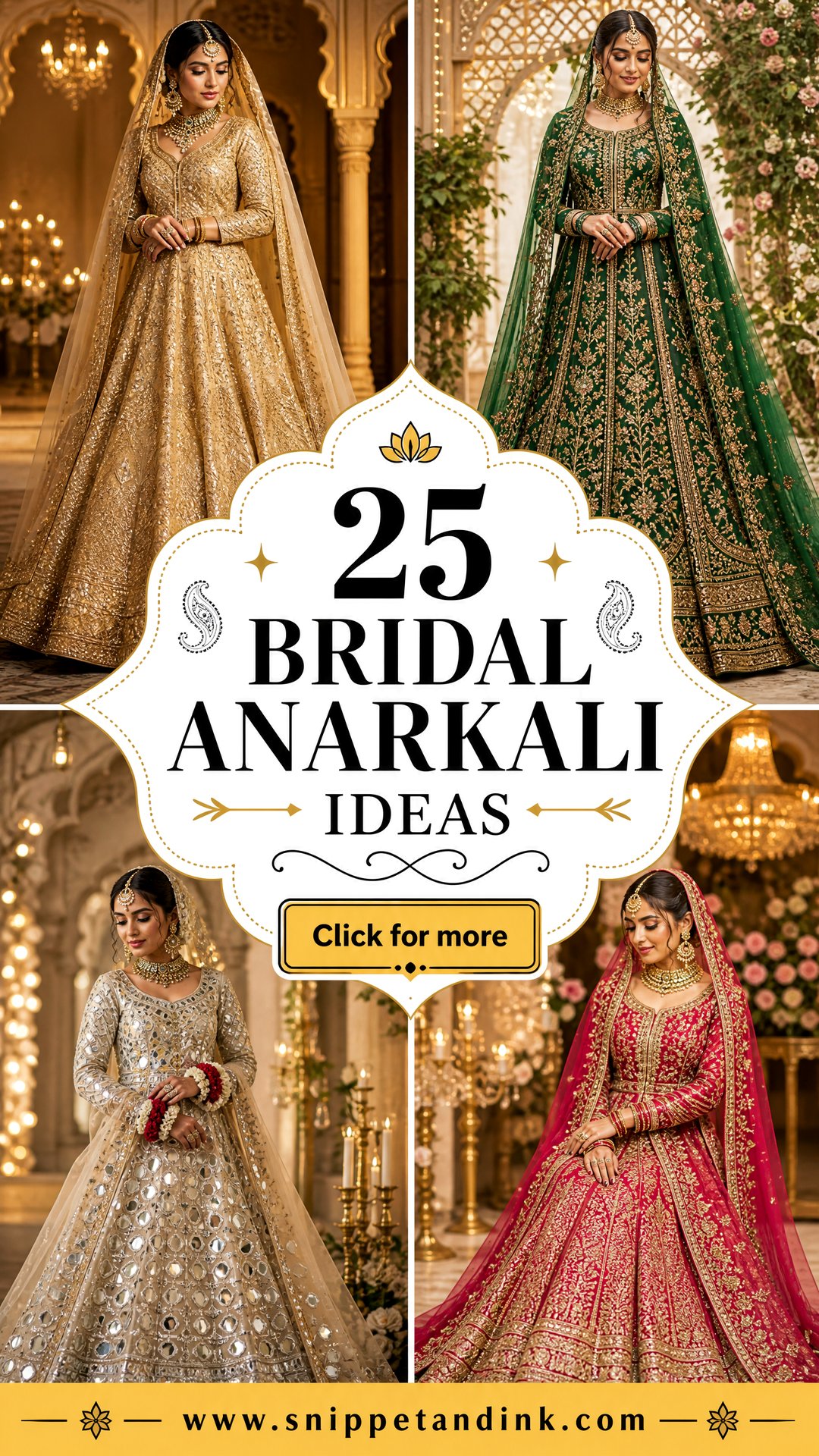
Bridal Anarkali outfits give you the presence of a lehenga with the ease of a suit, and that trade is why I suggest them so often for nikah ceremonies, pheras, receptions and sangeet nights. The flare comes from the kalis, the long triangular panels stitched below the bodice, so the dress swings with you instead of sitting on your hips like a lehenga skirt. Below are 25 versions I’d genuinely put a bride in, from red zardozi to ivory chikankari, velvet for winter and sharara cuts for dancing, each with the thing I’d check before you pay for it.
Where the Waist Seam Sits Changes the Whole Anarkali
Most of an Anarkali’s shape is decided by one line, the seam where the bodice meets the kalis. When I fit a bride, I place it at her natural waist or just above it. Drop it too low and the flare starts at the hip, which shortens the legs in every photo. Raise it to an empire line and the outfit can look like maternity wear from the side.
What I check at the first fitting
- Panel count. More kalis give a fuller, rounder flare; fewer give a straighter fall. Ask how many panels the cut uses before you compare two designs by photo.
- Lining and can-can. A soft lining lets georgette move. A can-can adds volume but also heat and weight, so I avoid it for summer daytime functions.
- Length in your shoes. Hem the kurta and churidar while wearing the exact heels you’ll wear on the day, not flats.
- Sleeve ease. Raise your arms as if you’re exchanging garlands. If the armhole hitches the whole bodice up, it needs letting out.
Order early. Heavily embroidered pieces often take a couple of months or more to make, and timelines vary between workshops, so I’d still leave room for two fittings once it arrives.
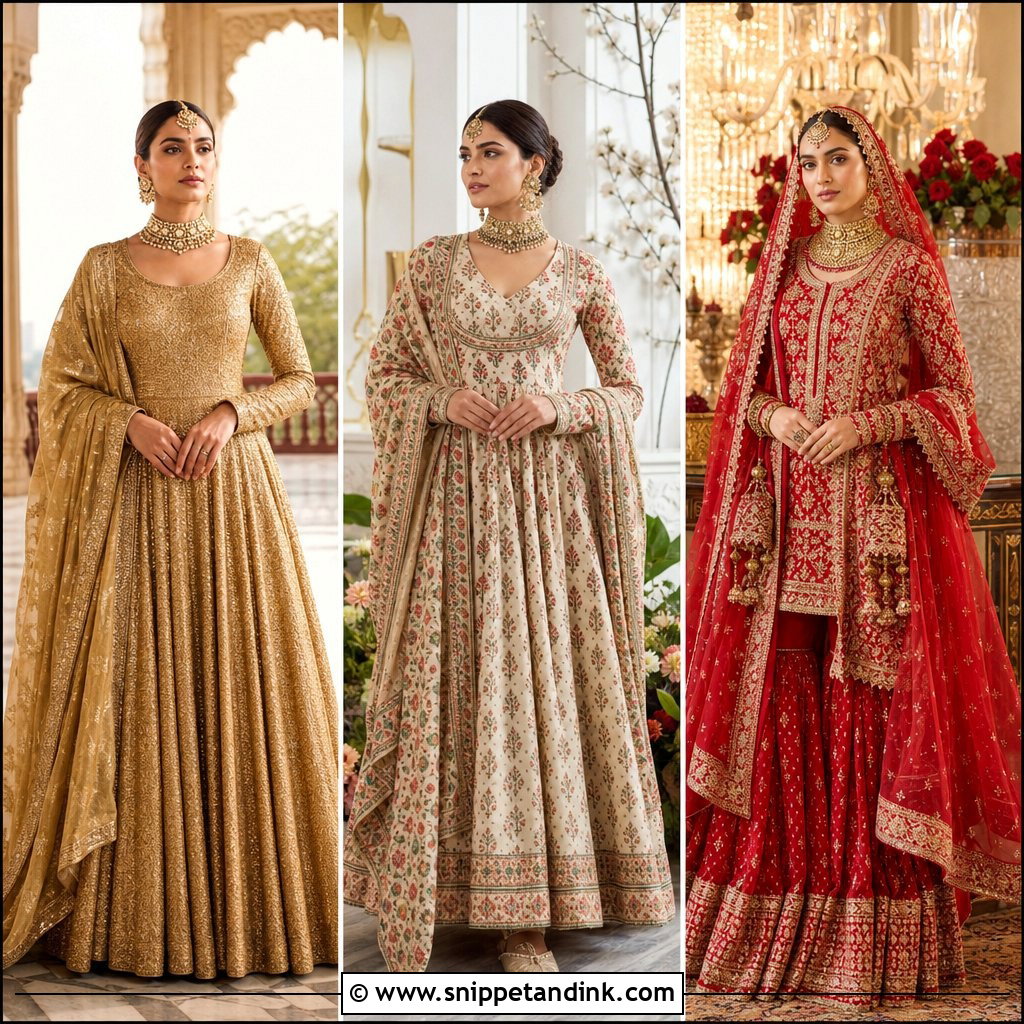
1. Red Bridal Anarkali
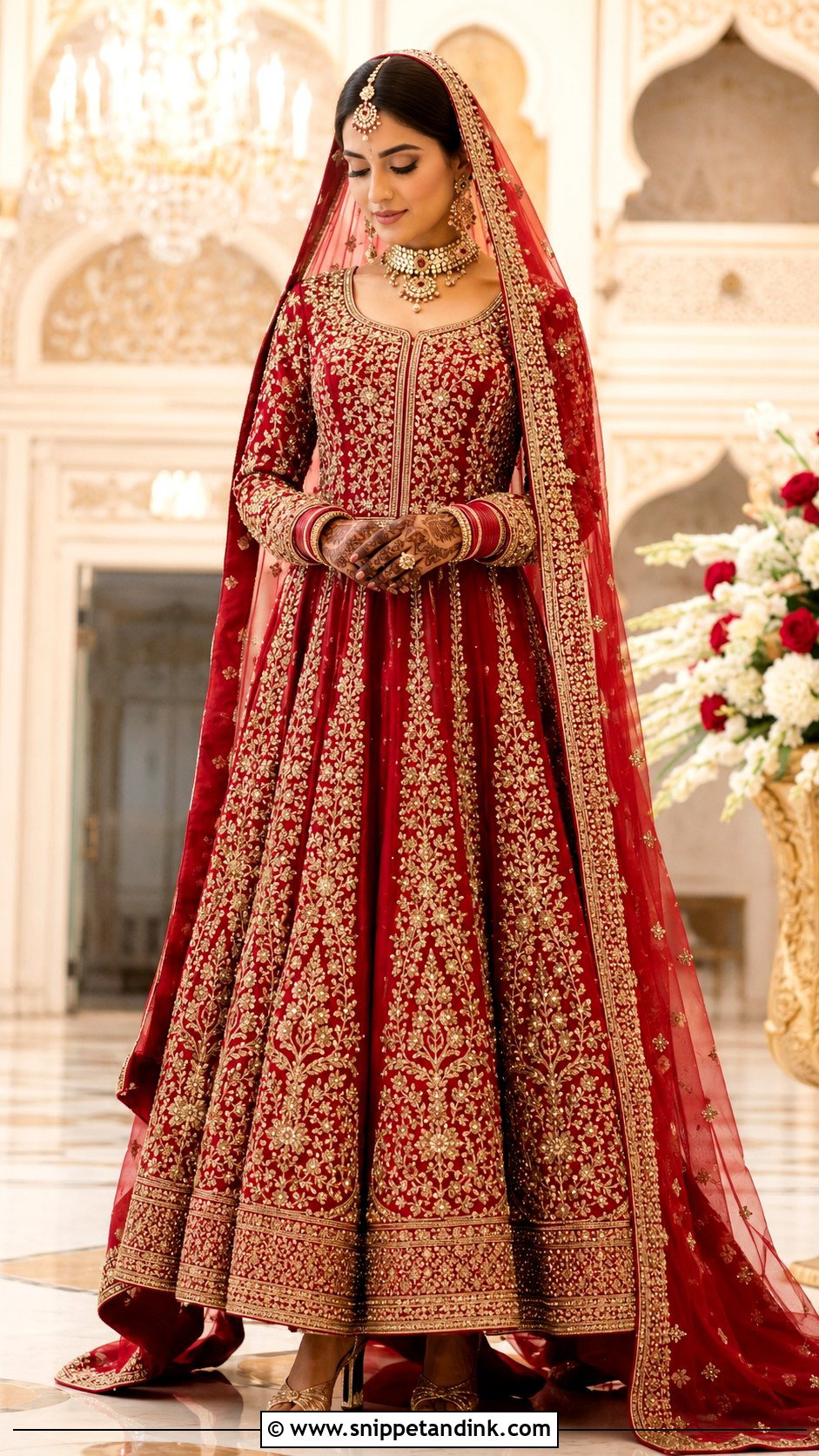
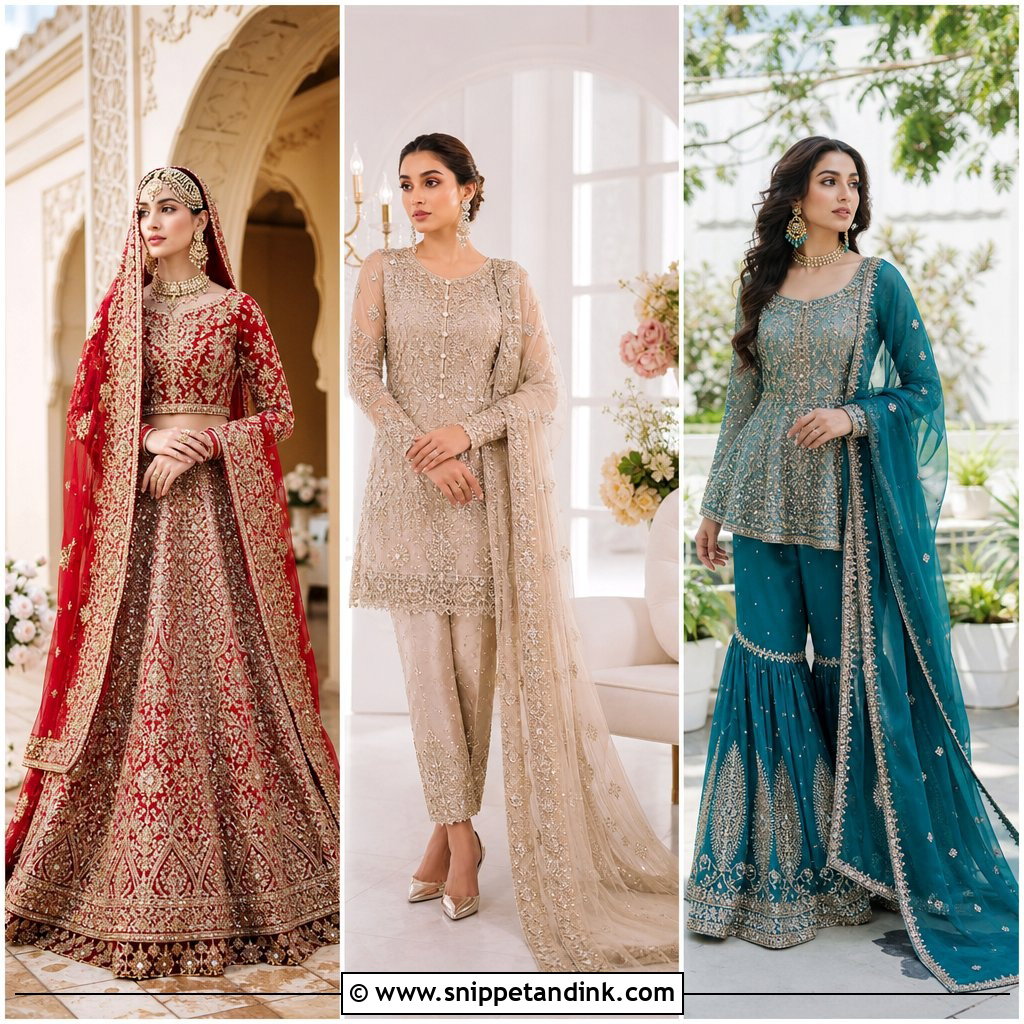
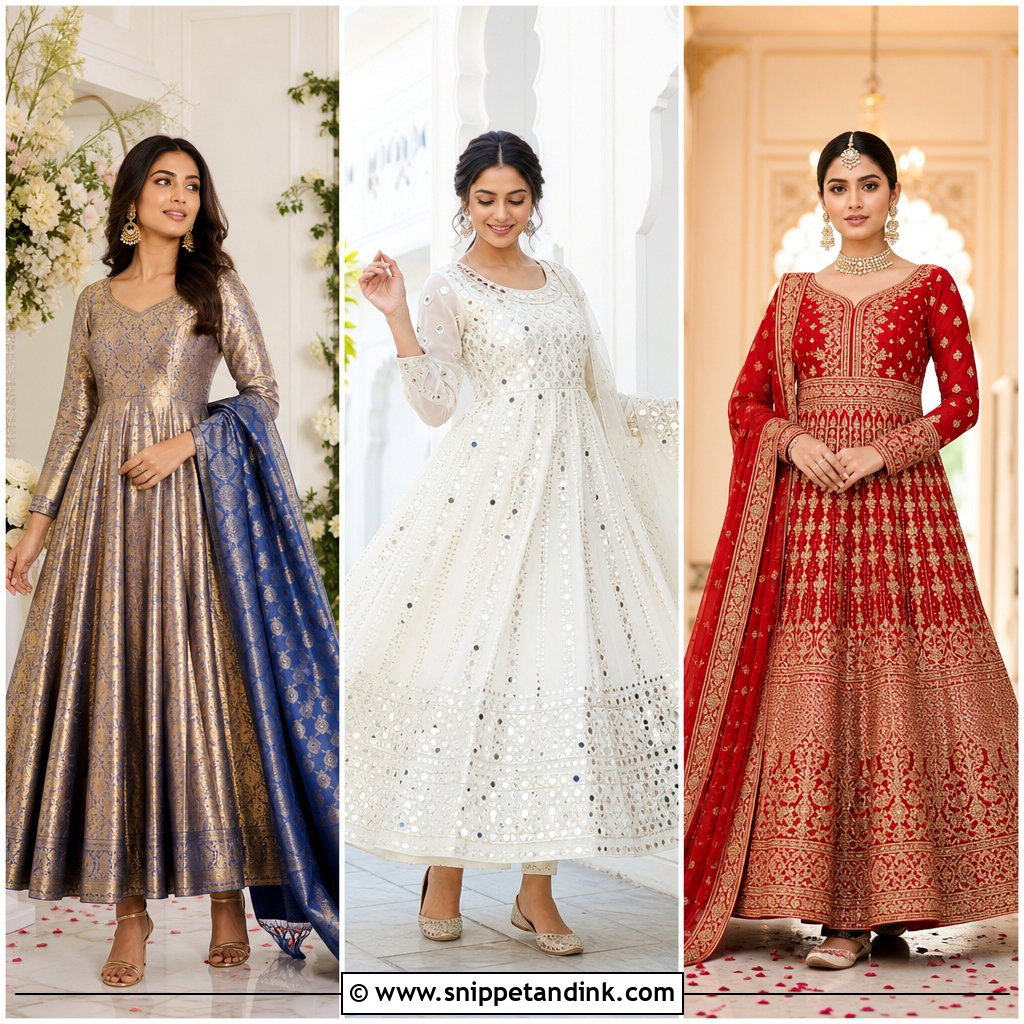
Red is still the colour I reach for first when a bride wants the full traditional effect without carrying a lehenga. Zardozi or dabka on the bodice reads as ceremonial, but ask how heavy the yoke is. If the embroidery is dense across the shoulders, the neckline drags forward by the third hour of rituals and you’ll spend the pheras tugging it back. I like a contrast dupatta with a deep border here, gold jhumkas, stacked bangles and a sleek bun with fresh flowers. Keep the makeup in soft gold so the red stays the loudest thing in the frame.
2. Ivory Bridal Anarkali
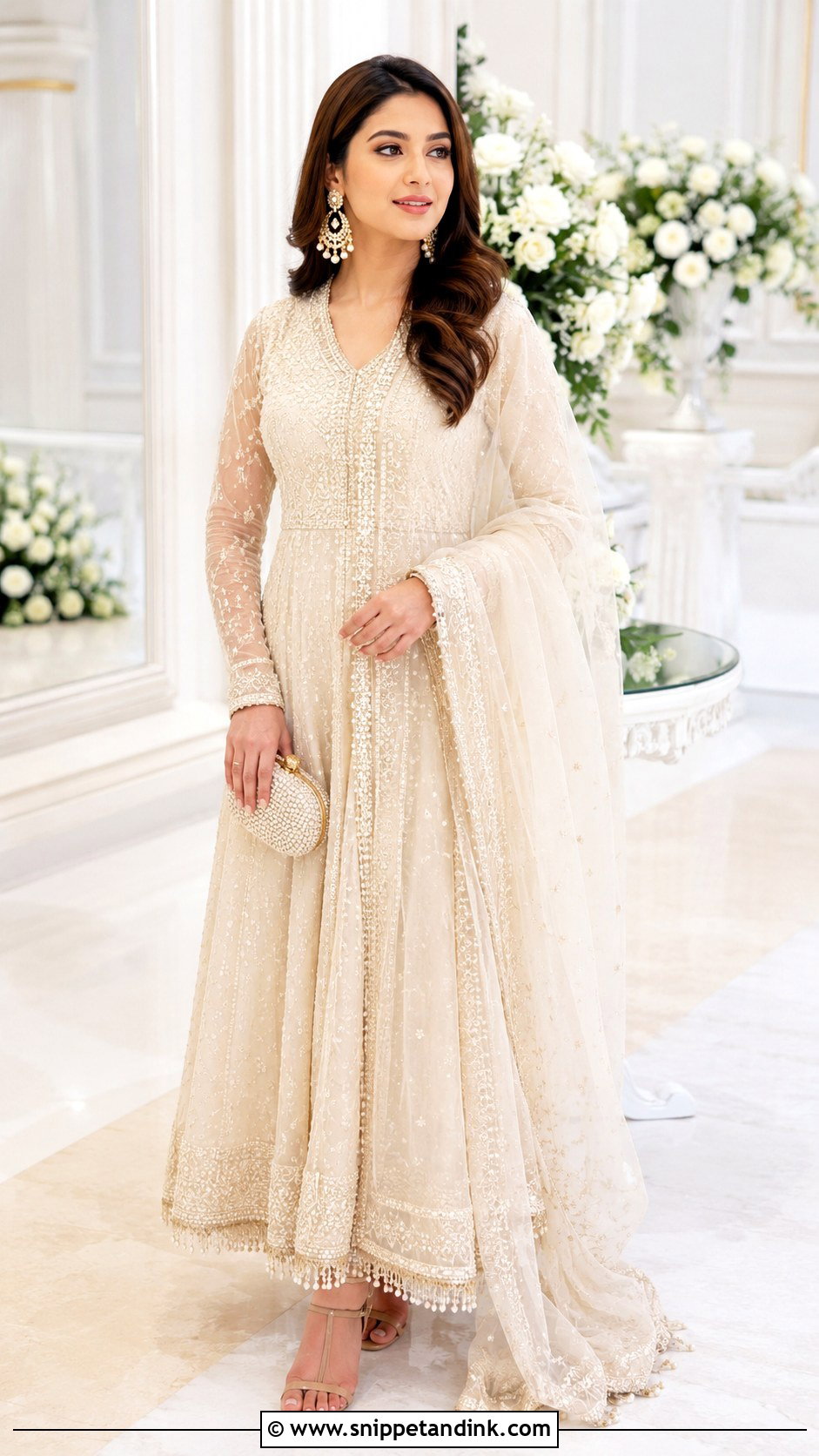
Ivory needs texture or it goes flat in daylight photos. I look for pearl work, sequins or tone-on-tone chikankari that throws small shadows, because a plain ivory surface photographs as one block of white. Check the lining as well: a cheap ivory lining shows through and makes skin look greyish under the fabric. Champagne or gold accessories warm it up, and a muted rose lip stops your face disappearing against it.
3. Gold Bridal Anarkali
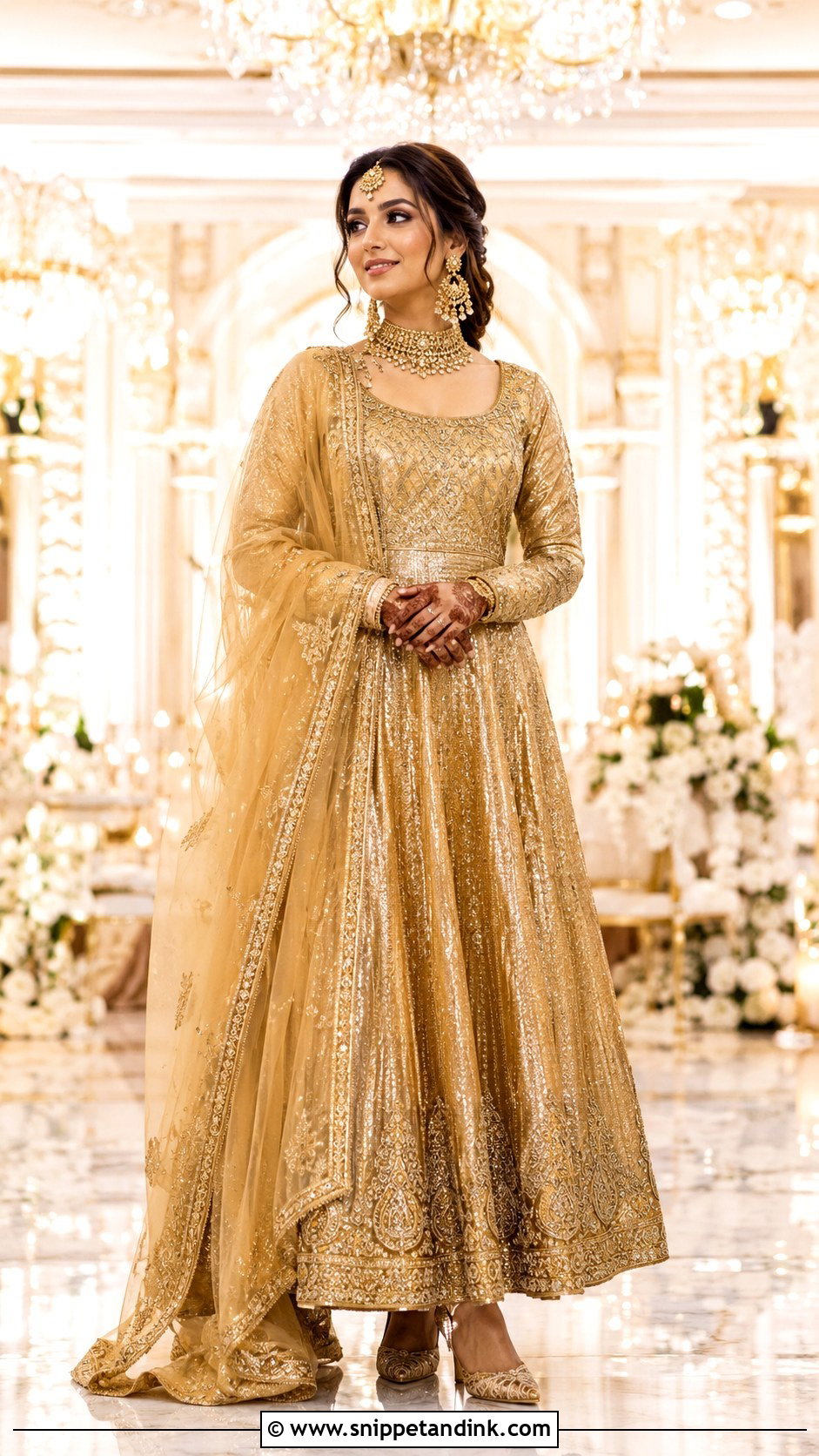
Gold carries a room on its own, so my styling here is mostly subtraction. In silk or brocade with metallic threadwork it catches stage lighting at a sangeet or reception, which is exactly where it belongs. I pair it with antique gold or polki rather than shiny new gold, because two bright golds side by side look as if they were bought on different days. A middle-part bun and embroidered juttis keep everything else calm.
4. Pink Bridal Anarkali
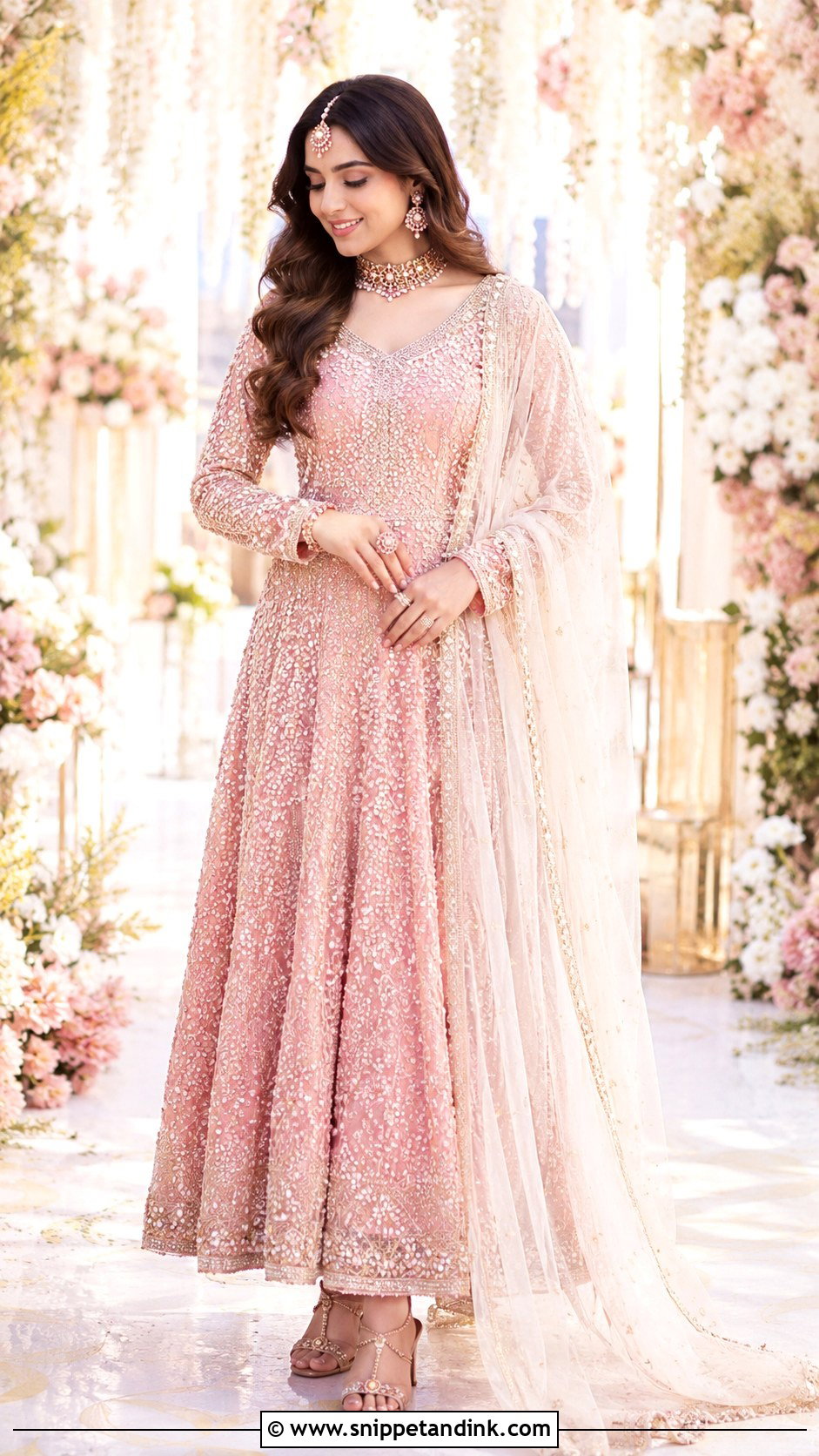
The shade matters more than the embroidery with pink. Blush with pearl work suits a daytime ceremony, while rani pink holds up at night, when warm bulbs would wash a pale blush out to beige. Rose-gold and kundan both sit well against it. When the pink is strong, I usually suggest an ivory dupatta over a matching one, since full monochrome rani can feel heavy in close portraits.
5. Green Bridal Anarkali
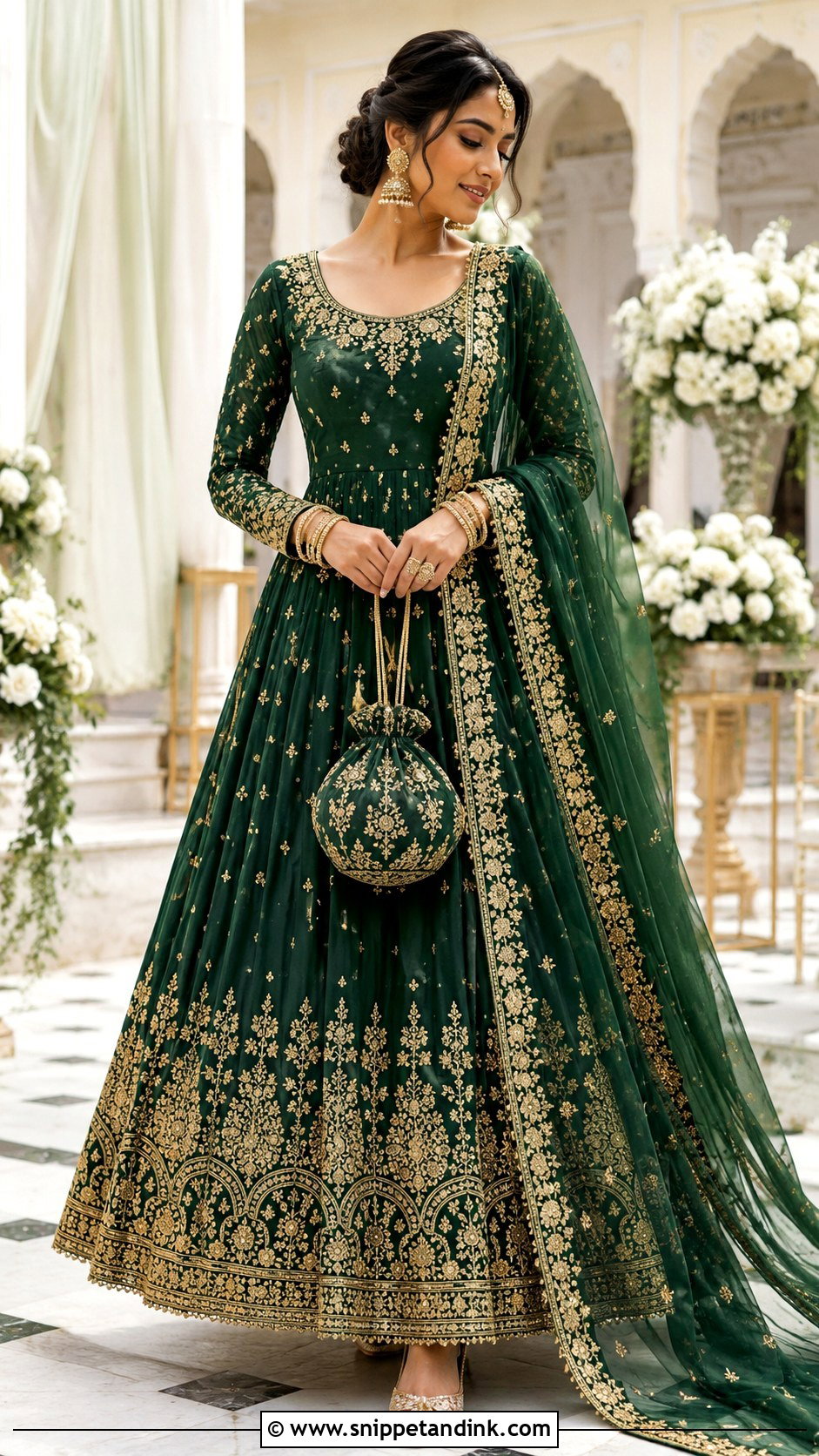
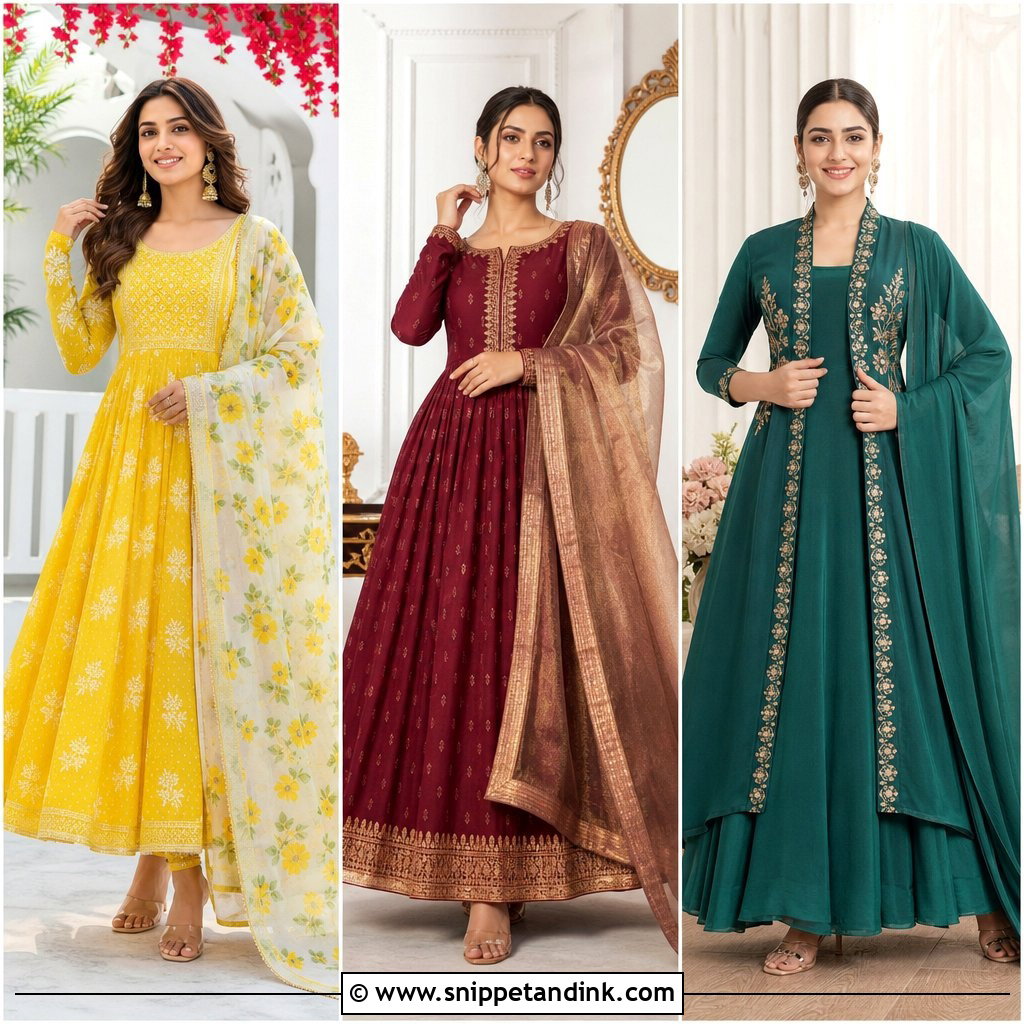
Green is the colour brides hesitate over at the first appointment and then refuse to give up. Emerald or bottle green velvet with gold embroidery is rich for winter; sage with mirror work is lighter for a day event. The one thing I always test is the green under the venue’s lighting, because some emerald dyes turn almost black under tungsten. A red or pink dupatta works well against it, and bronze eyes keep the face warm.
6. White Bridal Anarkali
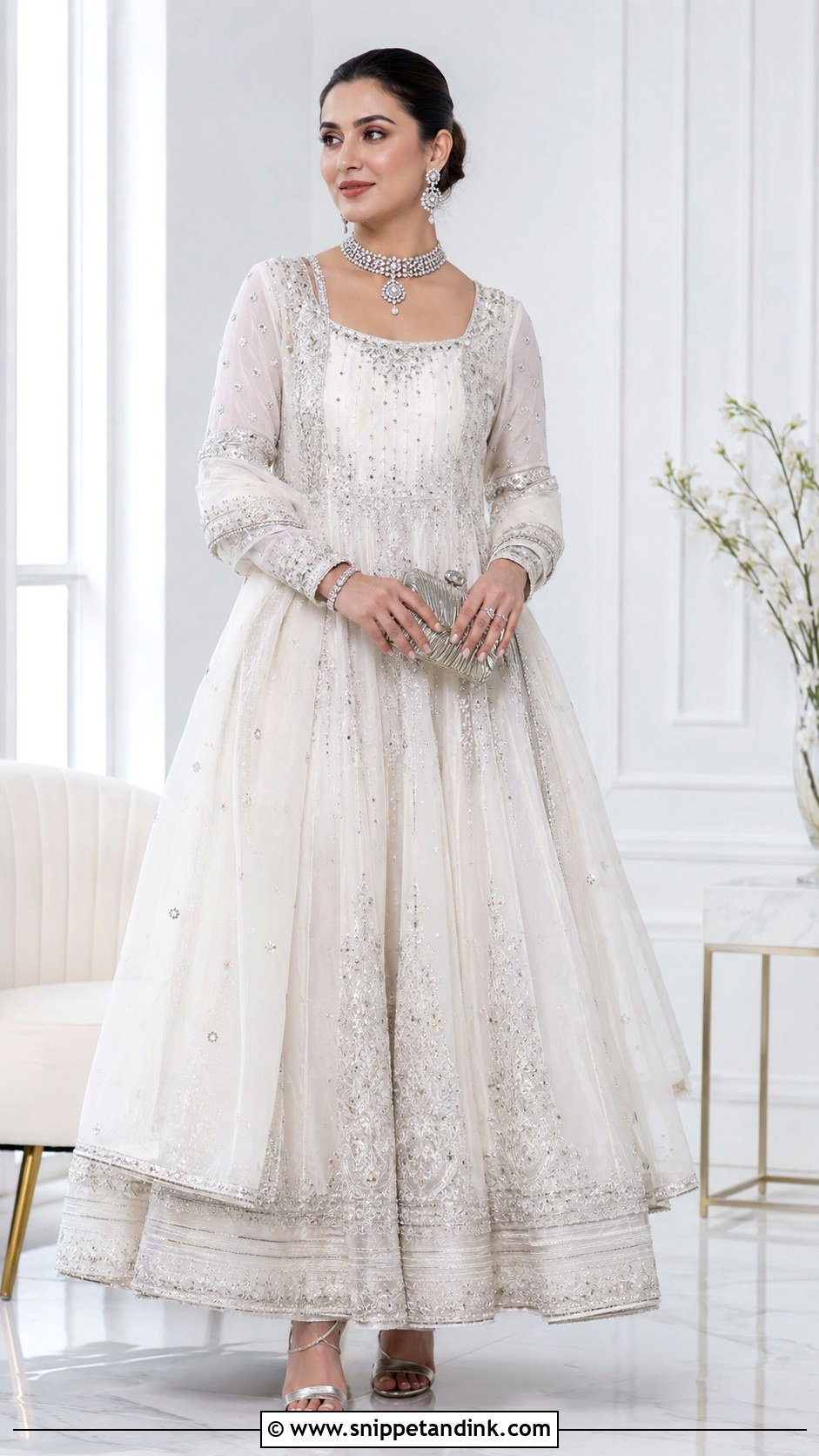
White tips into plain very quickly, so I’d only choose it in a fabric with real surface interest: organza with pearls, net with silver thread, or silk with self-embroidery. In many families it sits more comfortably at a registry ceremony, engagement or reception than at the main rituals, so check how your relatives feel before ordering. Silver jewellery gives a cool, modern finish and gold makes it warmer. Add a heavily bordered dupatta so the outfit has a frame around it.
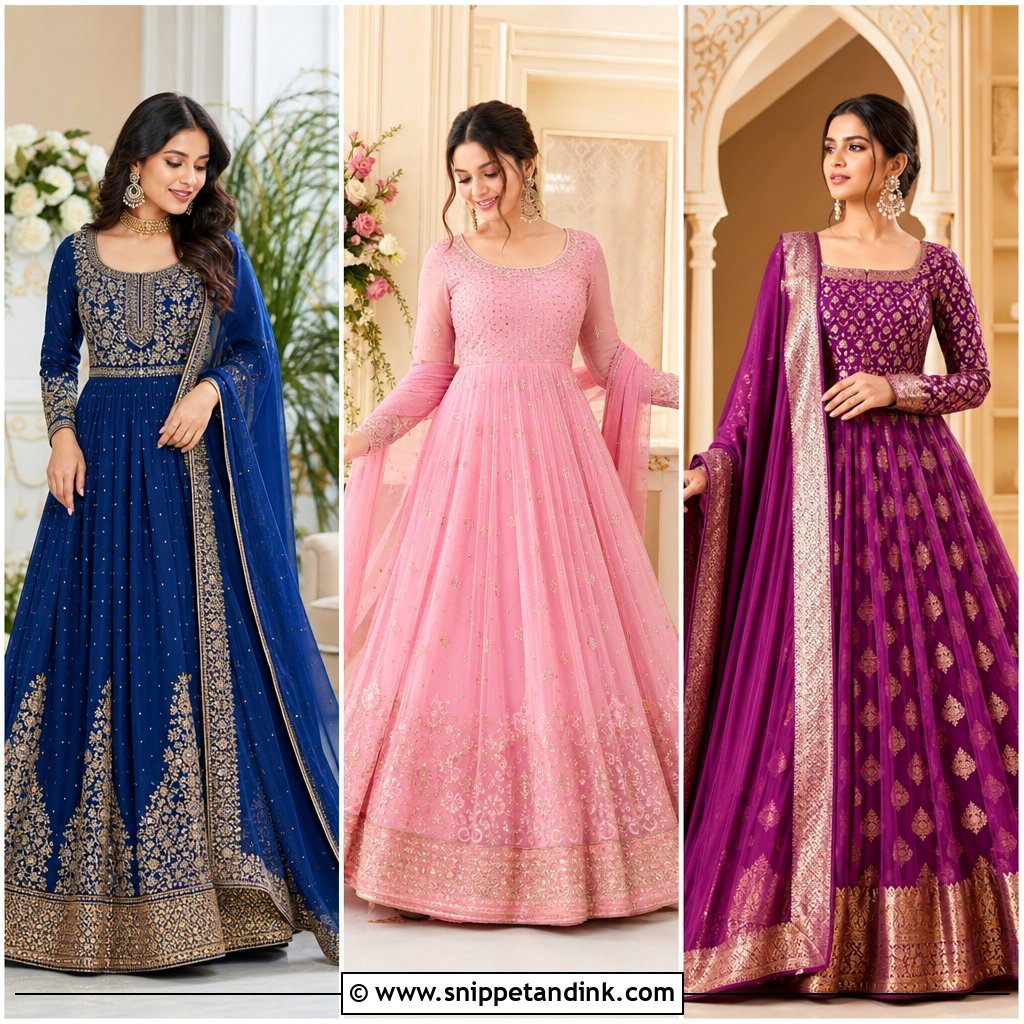
7. Velvet Bridal Anarkali
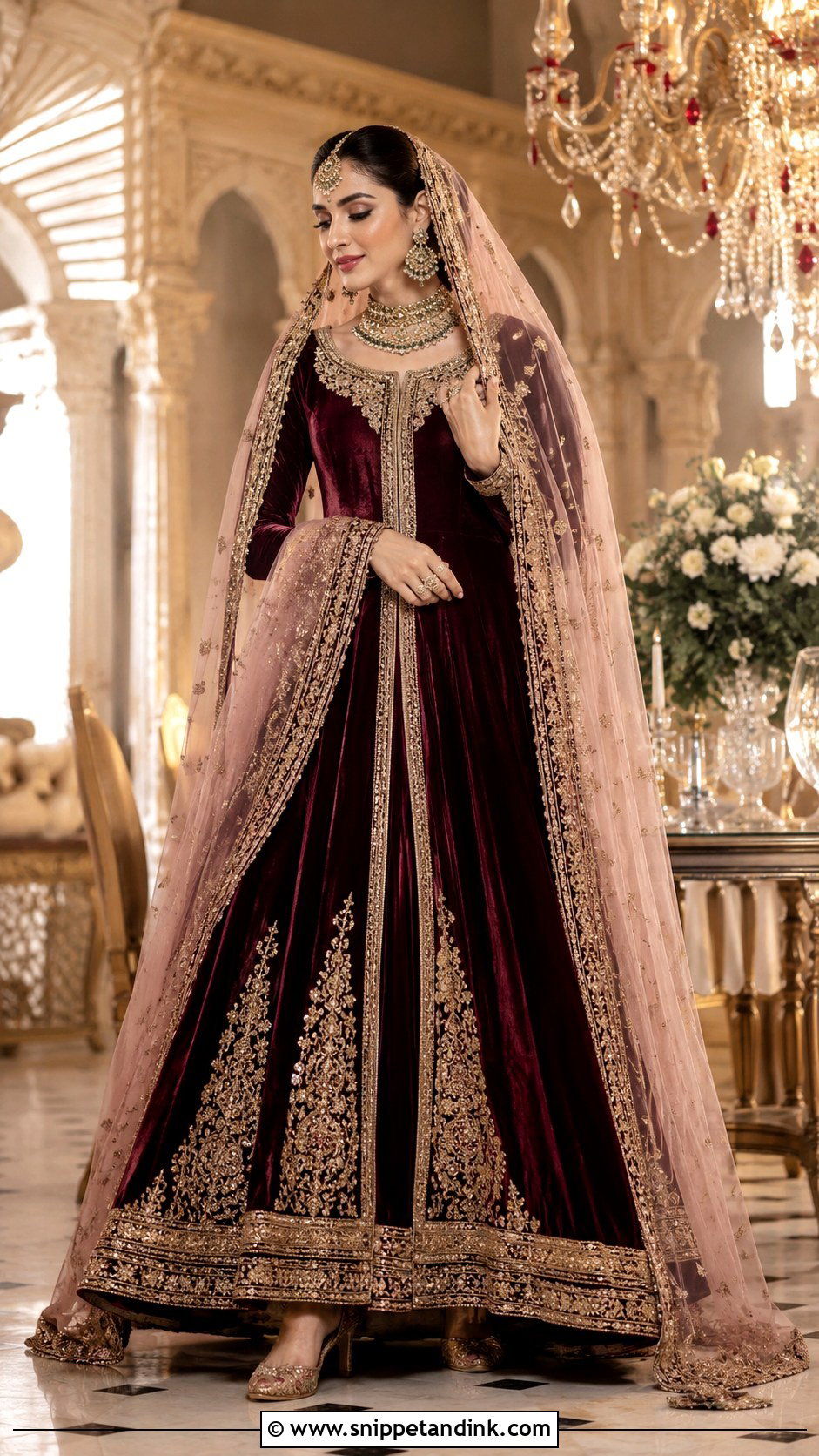
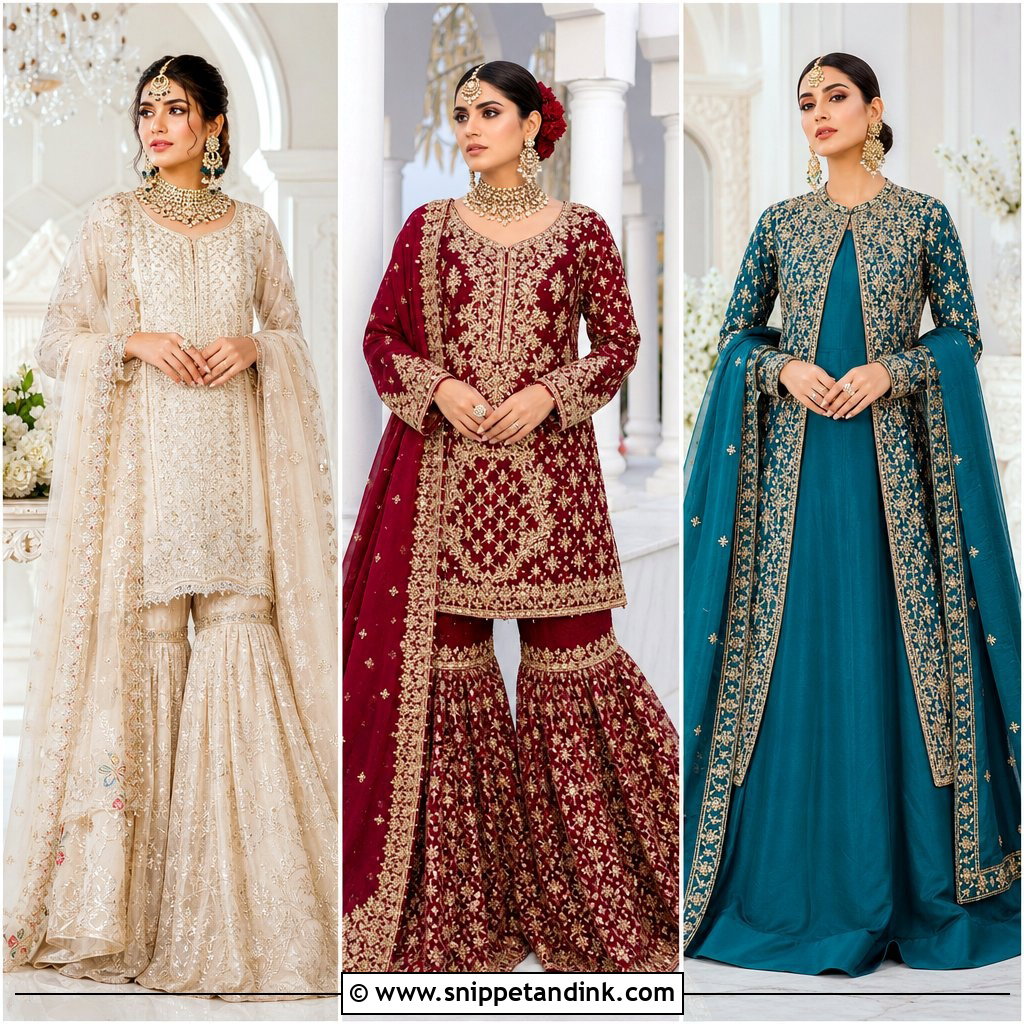
A velvet bridal Anarkali is my winter answer, because the pile holds warmth and colour in a way silk can’t in a cold marquee. Maroon, emerald, navy, plum and burgundy all look deeper in velvet. The catch is weight. A full-flare velvet kurta is heavy on its own, so I pair it with a net or organza dupatta rather than a second velvet layer. Velvet also crushes where you sit; have it steamed from the inside on the morning, never pressed flat, or the pile shines. Antique gold and a low bun suit it.
8. Silk Bridal Anarkali
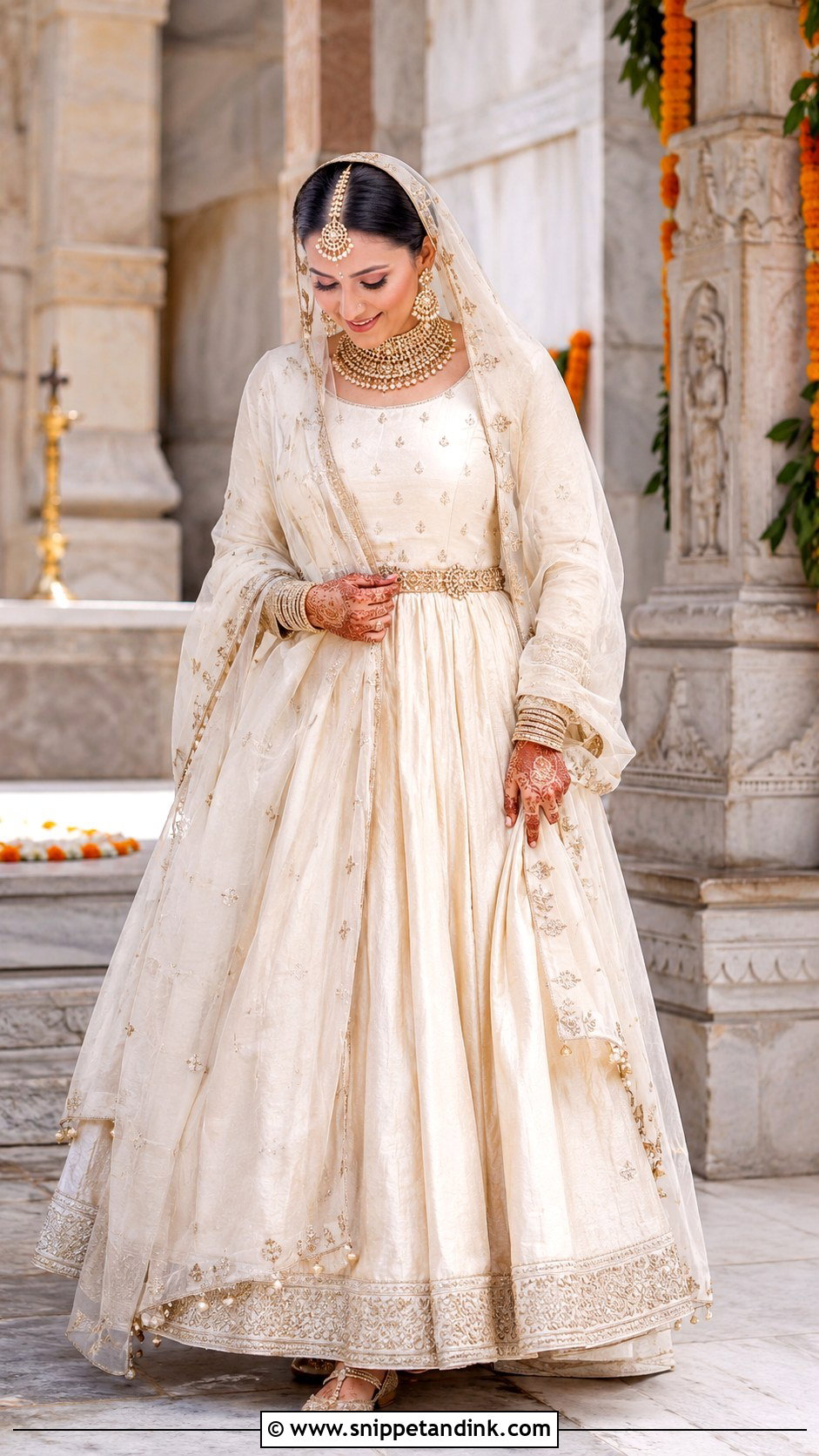
Raw silk, Banarasi and dupion hold a flare’s shape without a can-can underneath, which is why I like them for long ceremonies where you sit and stand over and over. Woven zari motifs read clearly from a distance at temple-style weddings. Silk does water-spot, so keep it well back during any ritual involving water or turmeric. A waist belt defines the shape and anchors the dupatta, and kohl-lined eyes with a neat bun keep the look classic.
9. Net Bridal Anarkali
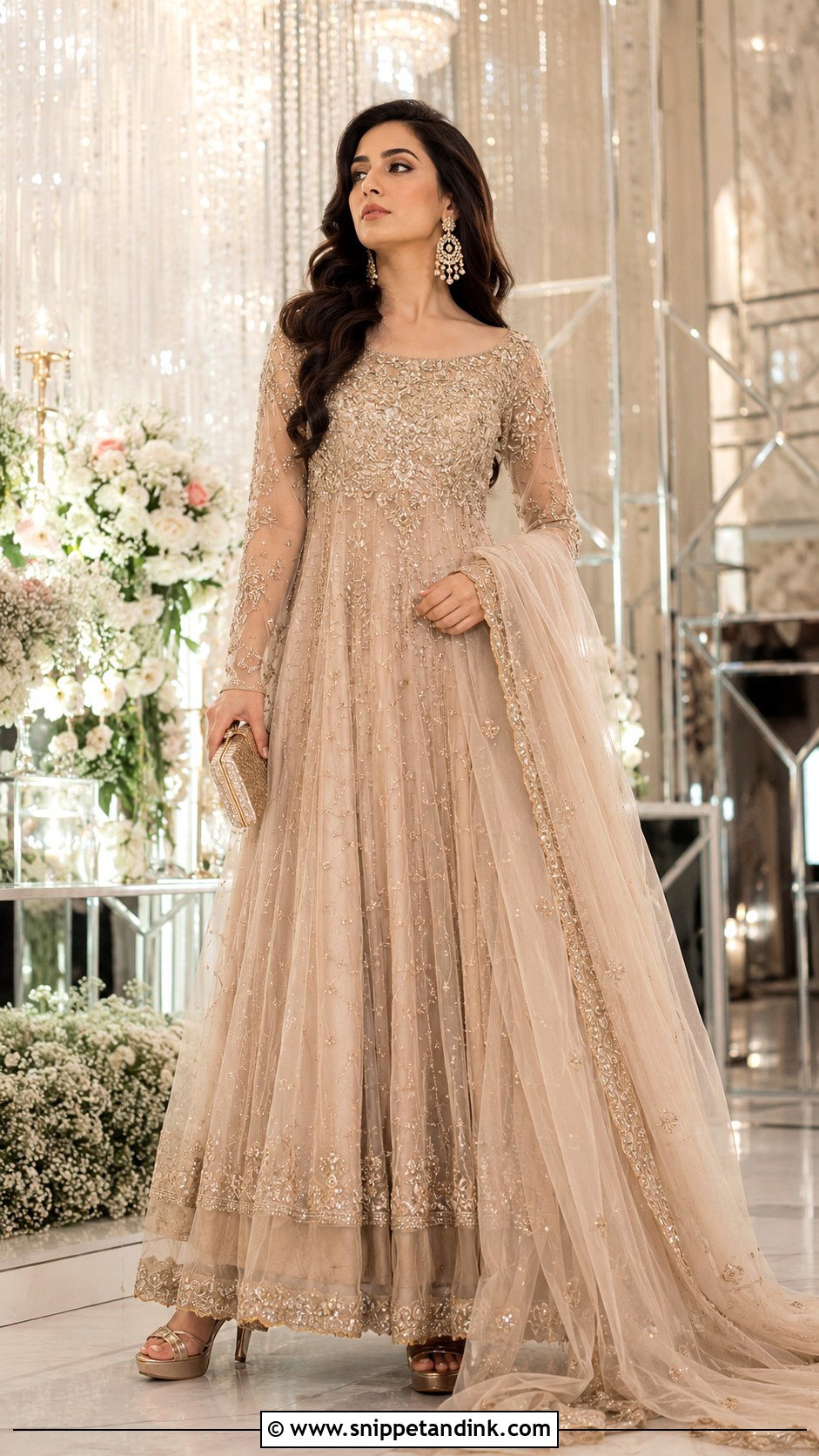
Net builds volume through layers rather than stiffness, so it floats nicely at receptions and evening events. Ask how many layers sit under the outer net and whether it’s fully lined. An unlined net Anarkali shows every seam of the slip once a flash goes off. Pastels, champagne, red and ivory all wear well in it, and because net looks airy, I let the jewellery and a defined eye give the outfit its edges.
10. Organza Bridal Anarkali
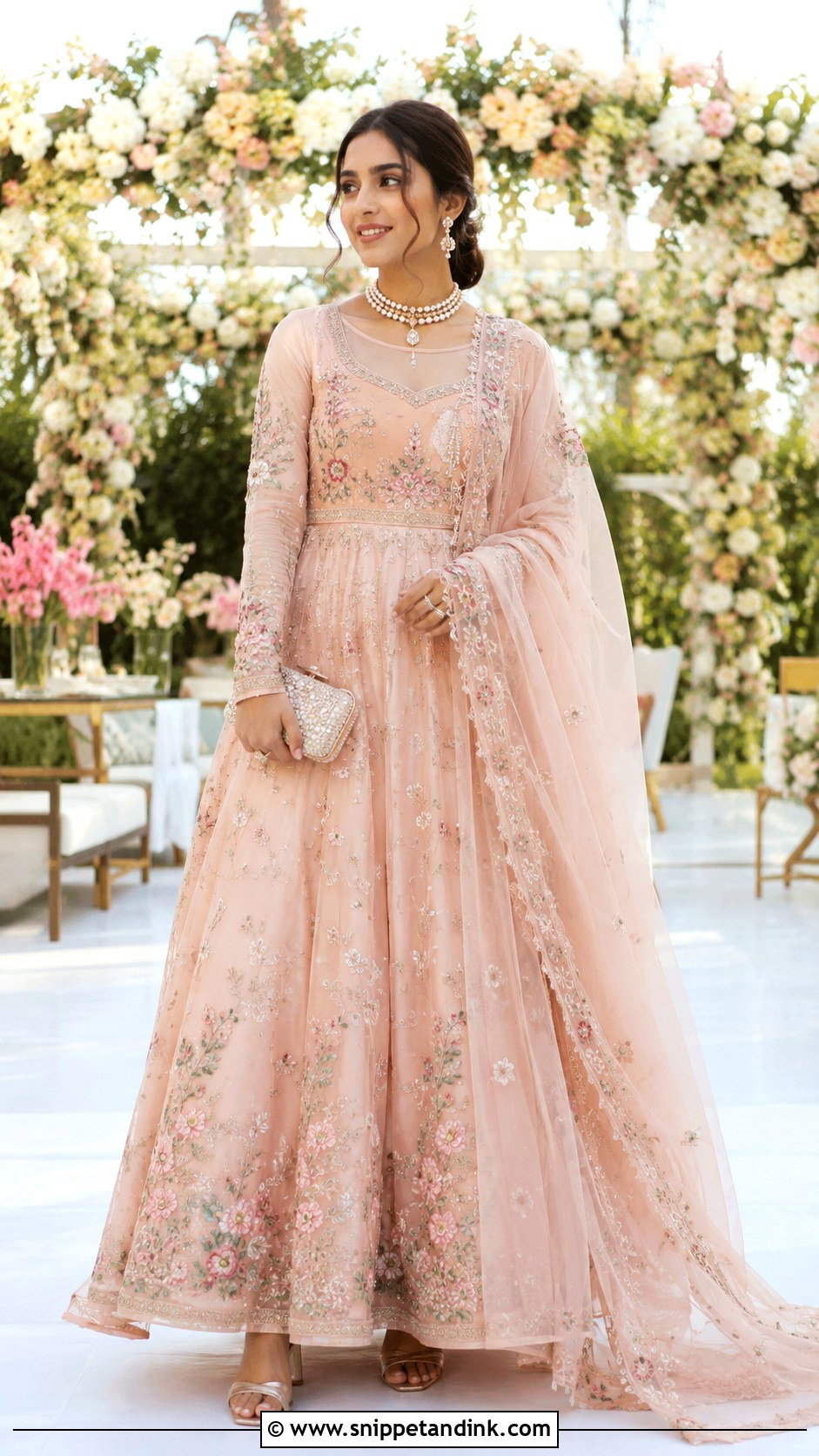
Organza is crisp, so it holds a flare at a fraction of the weight of brocade. That crispness has a downside I always mention: it creases sharply where you sit, and those lines don’t drop out on their own the way georgette’s do. Floral embroidery, sequin vines or scalloped borders suit it for daytime functions and outdoor photos. Peach, mint and powder pink are where I’d start, with pearl jewellery and a sheer organza dupatta.
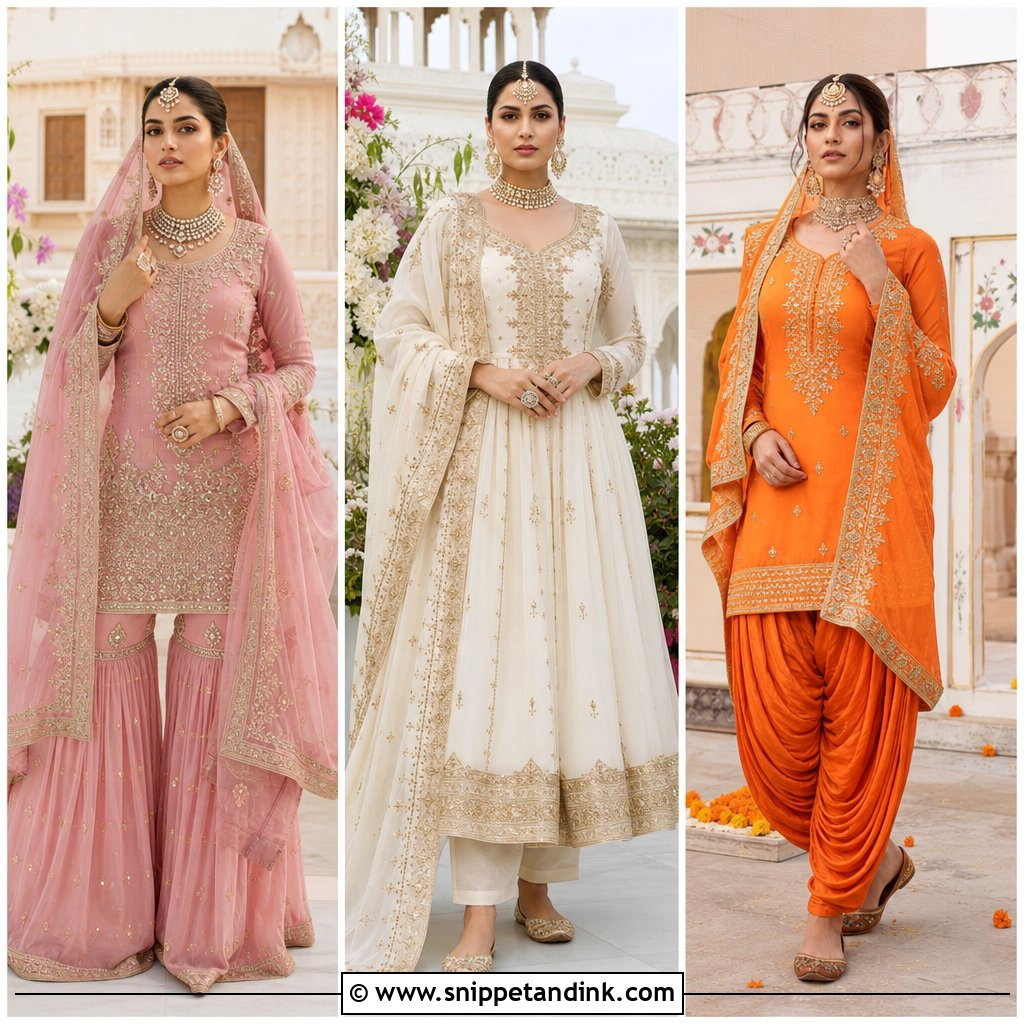
11. Chikankari Bridal Anarkali
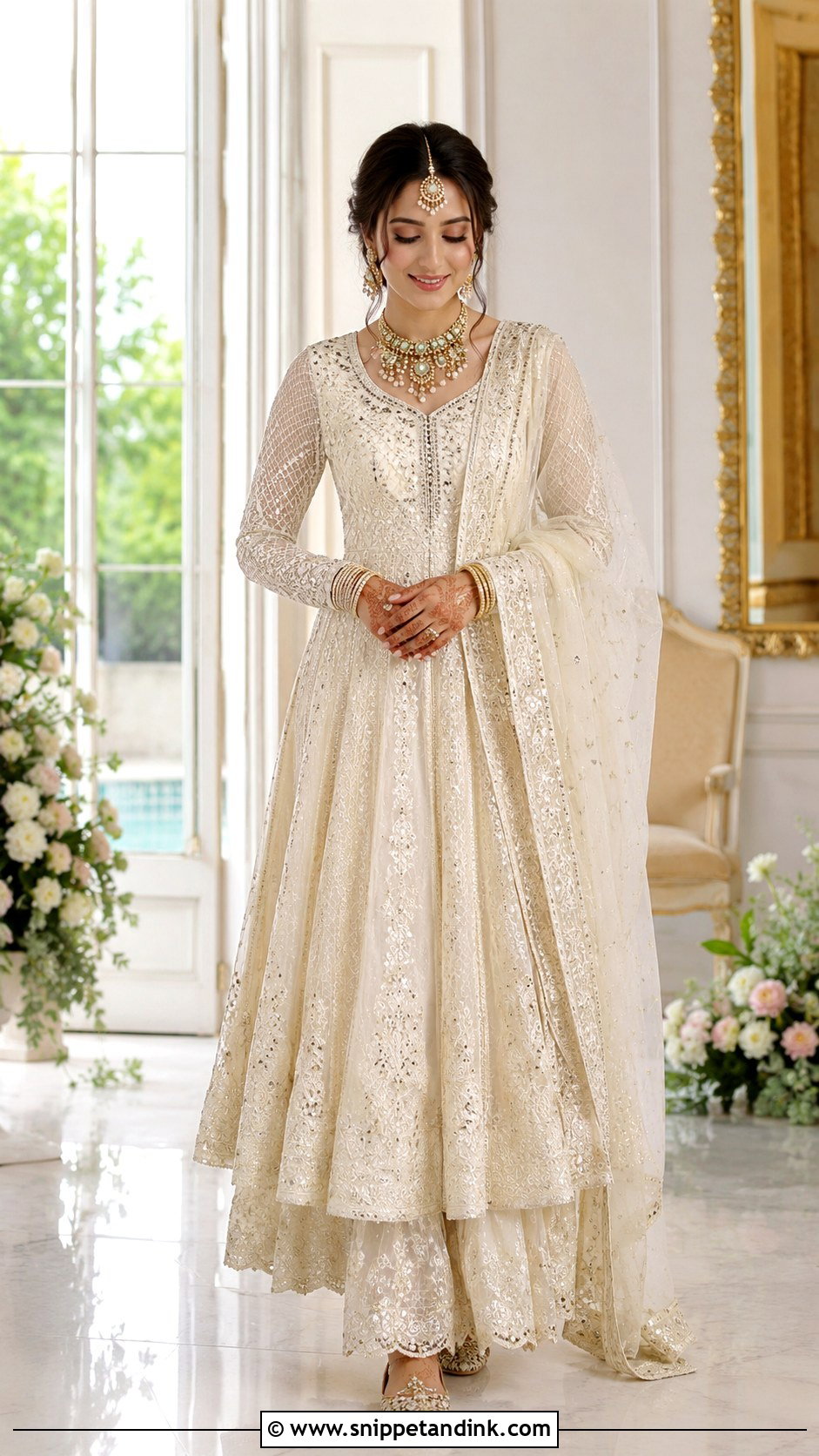
Chikankari is fine hand shadow-work, so it’s quiet from across a room and intricate up close. For bridal wear I’d look for mukaish, pearls or zari worked into it, because plain thread chikankari on its own reads as daywear. Georgette and organza bases drape better on a bride than cotton. Ivory, blush, sage and pastel yellow suit haldi, an engagement or a small daytime wedding, finished with kundan and embellished juttis.
12. Zardozi Bridal Anarkali
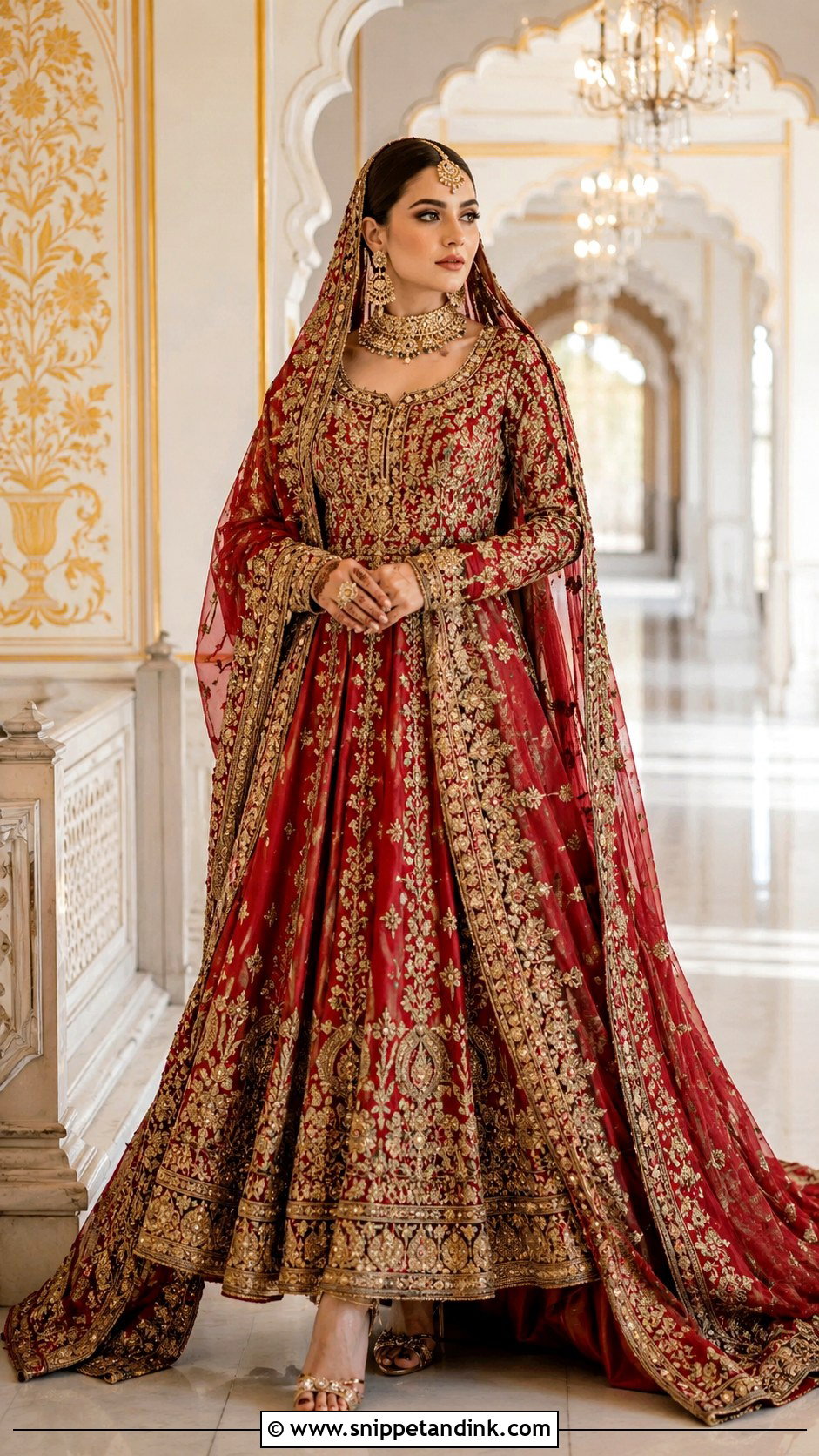
Zardozi is metal-thread embroidery, and it’s the natural pick for brides drawn to ornate, heritage-inspired fashion. It is also the heaviest work in this list. I ask every bride to wear the kurta for ten minutes at the fitting and lift her arms, because a dense zardozi yoke can rub the underarm raw by evening. Red, maroon, emerald and royal blue carry it best. Keep the cut clean, fitted on top with a generous flare, and let a matha patti or maang tikka do the jewellery work.
13. Mirror Work Bridal Anarkali
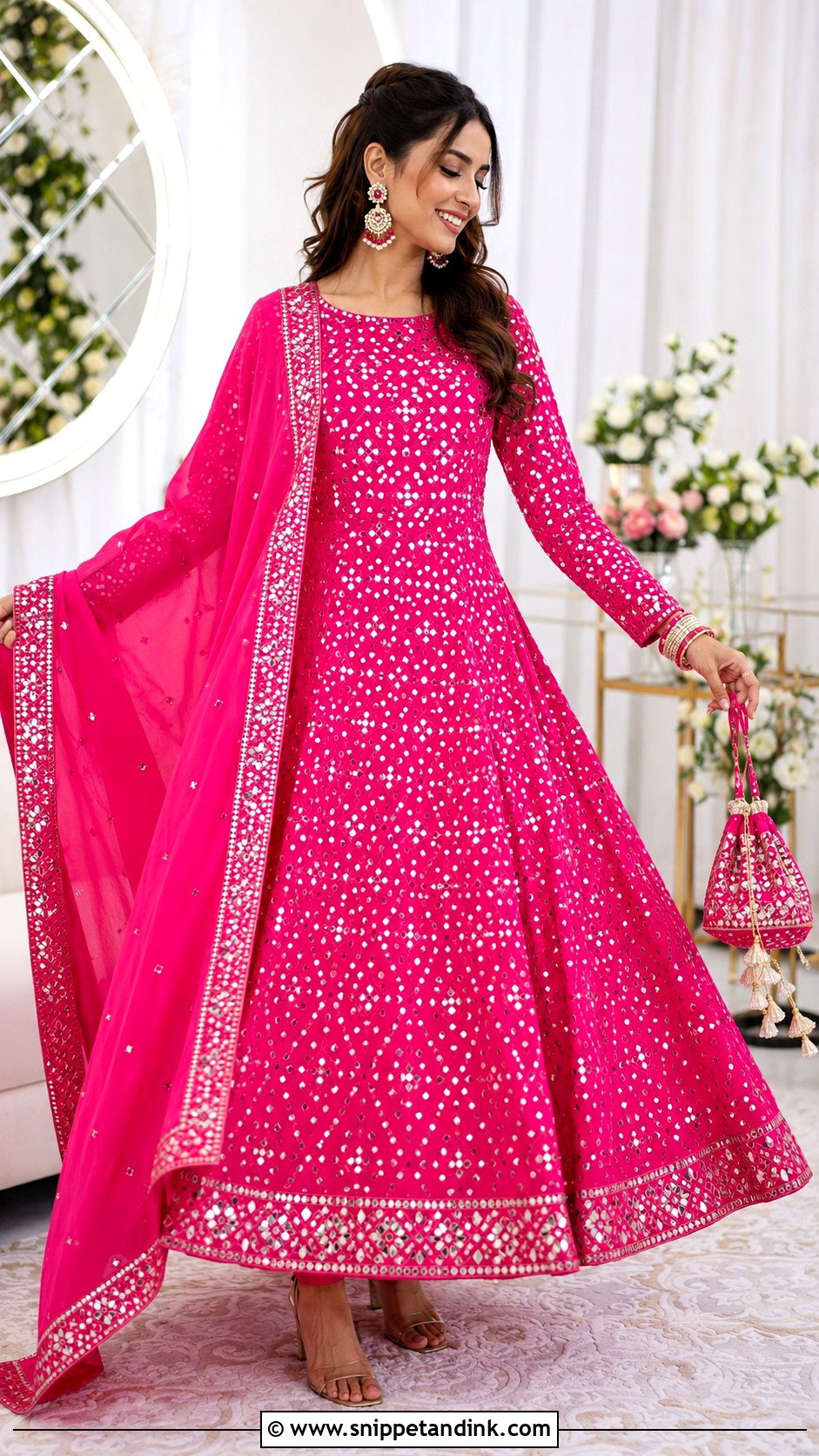
Mirror work flashes every time you move, which is why I steer it toward sangeet and mehendi rather than the main ceremony. Yellow, fuchsia, turquoise and orange all suit it; ivory with pastel mirrors is the softer route. Ask whether the mirrors are real glass or foil. Glass is heavier and its edges can snag a partner’s sherwani during a dance. A braid or half-up style will hold up better than an elaborate bun once you start dancing.
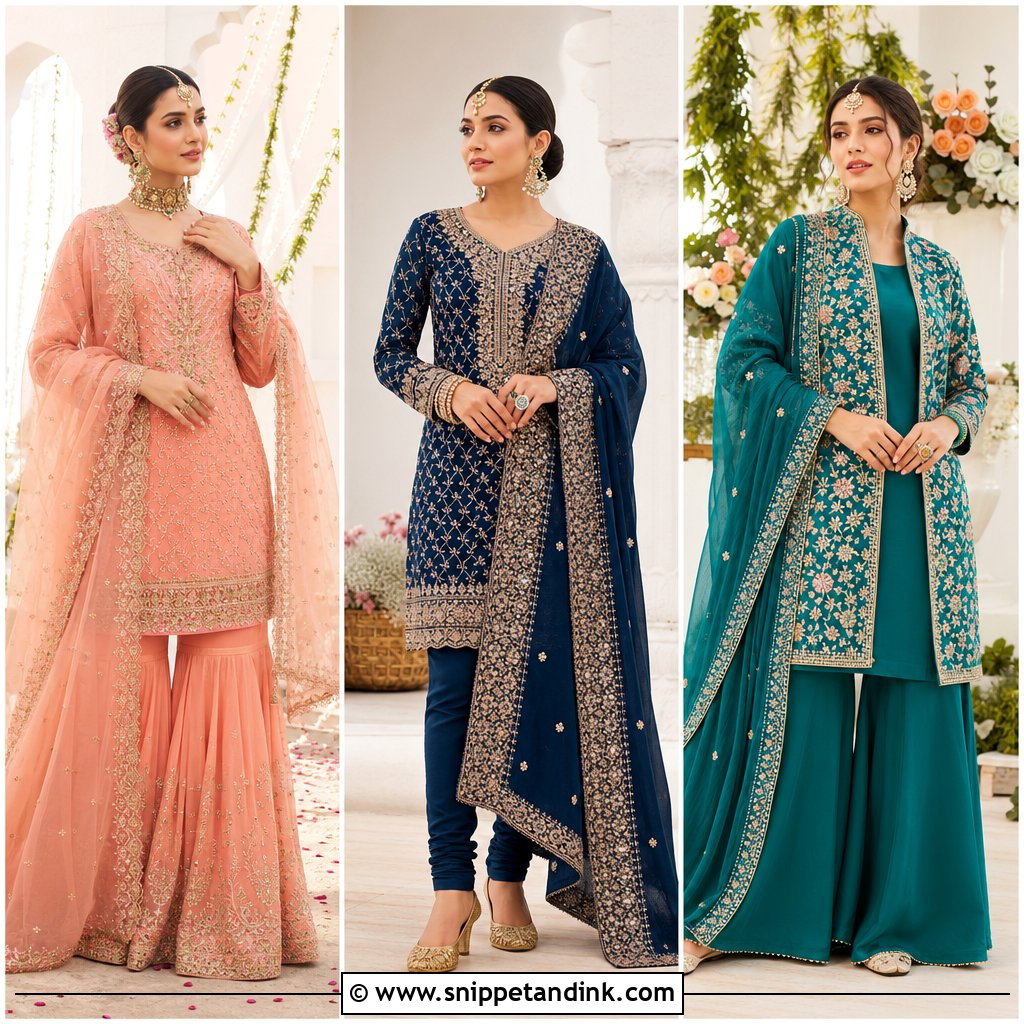
14. Sharara Bridal Anarkali
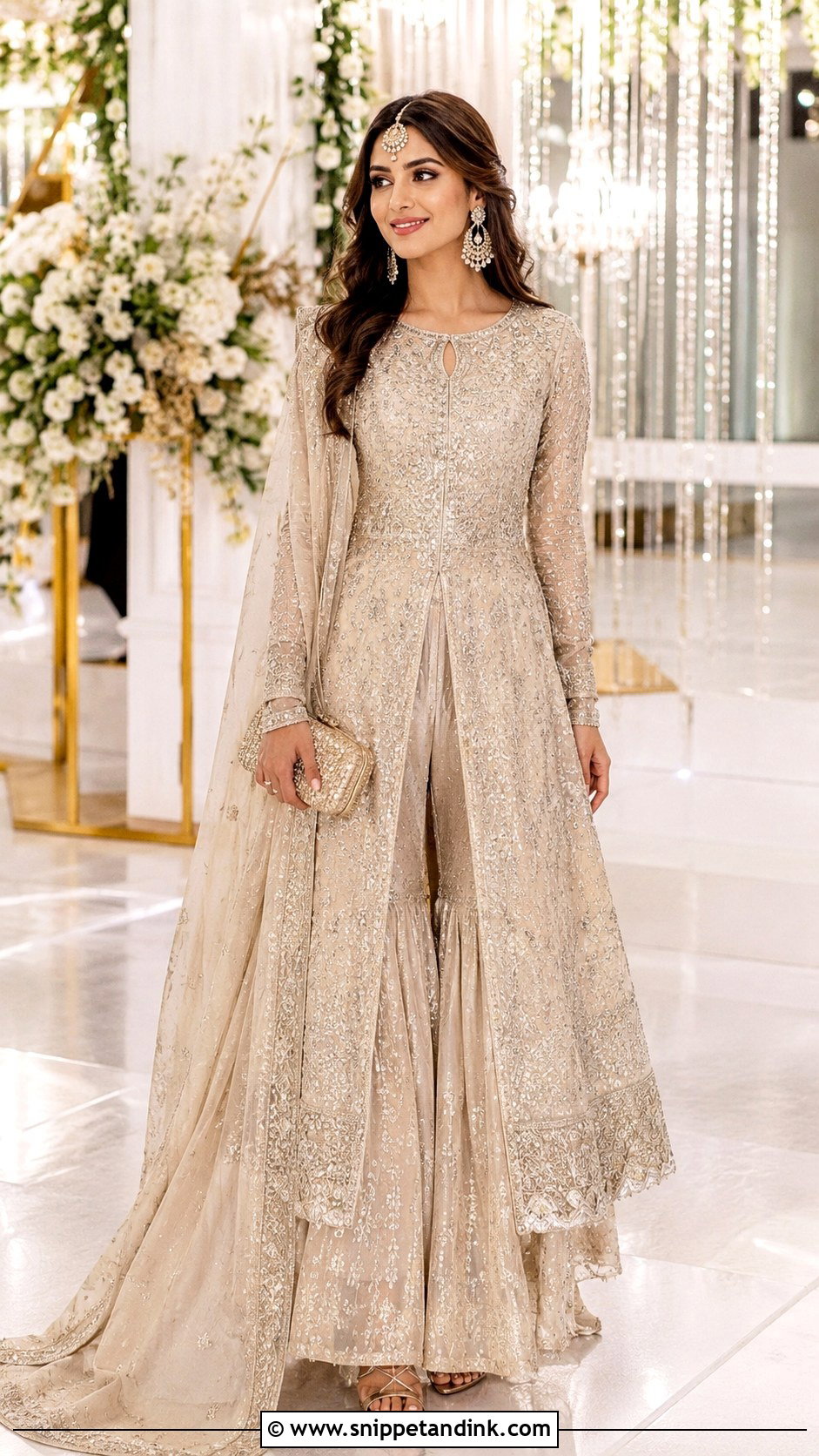
A sharara bridal Anarkali puts a shorter or front-slit kurta over flared sharara pants, so you get movement without a skirt to manage. I like it most for a sangeet or a modern reception. Get the sharara length right: it should just graze the floor in the heels you’ll actually wear, because an extra inch of hem catches on stairs and stage steps. Keep the accessories coordinated so the two layers read as one outfit.
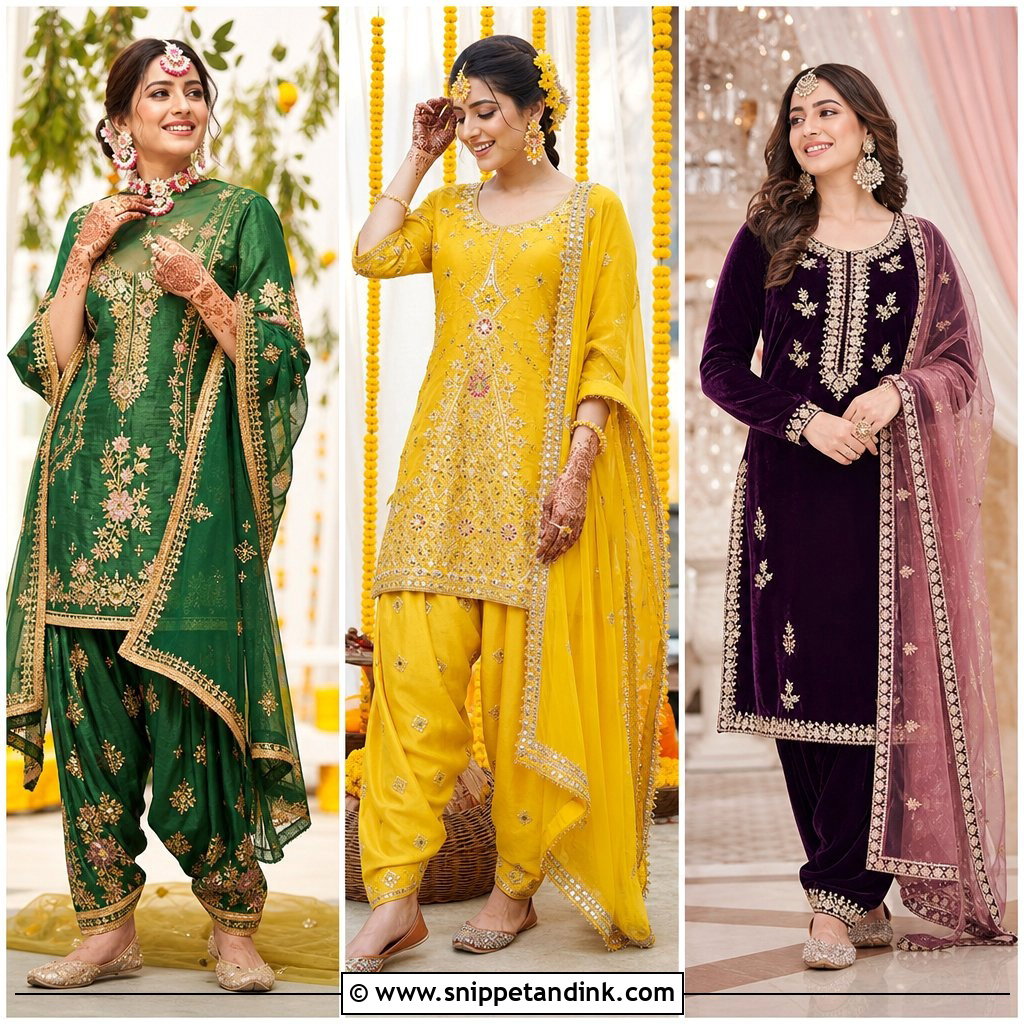


15. Jacket Bridal Anarkali
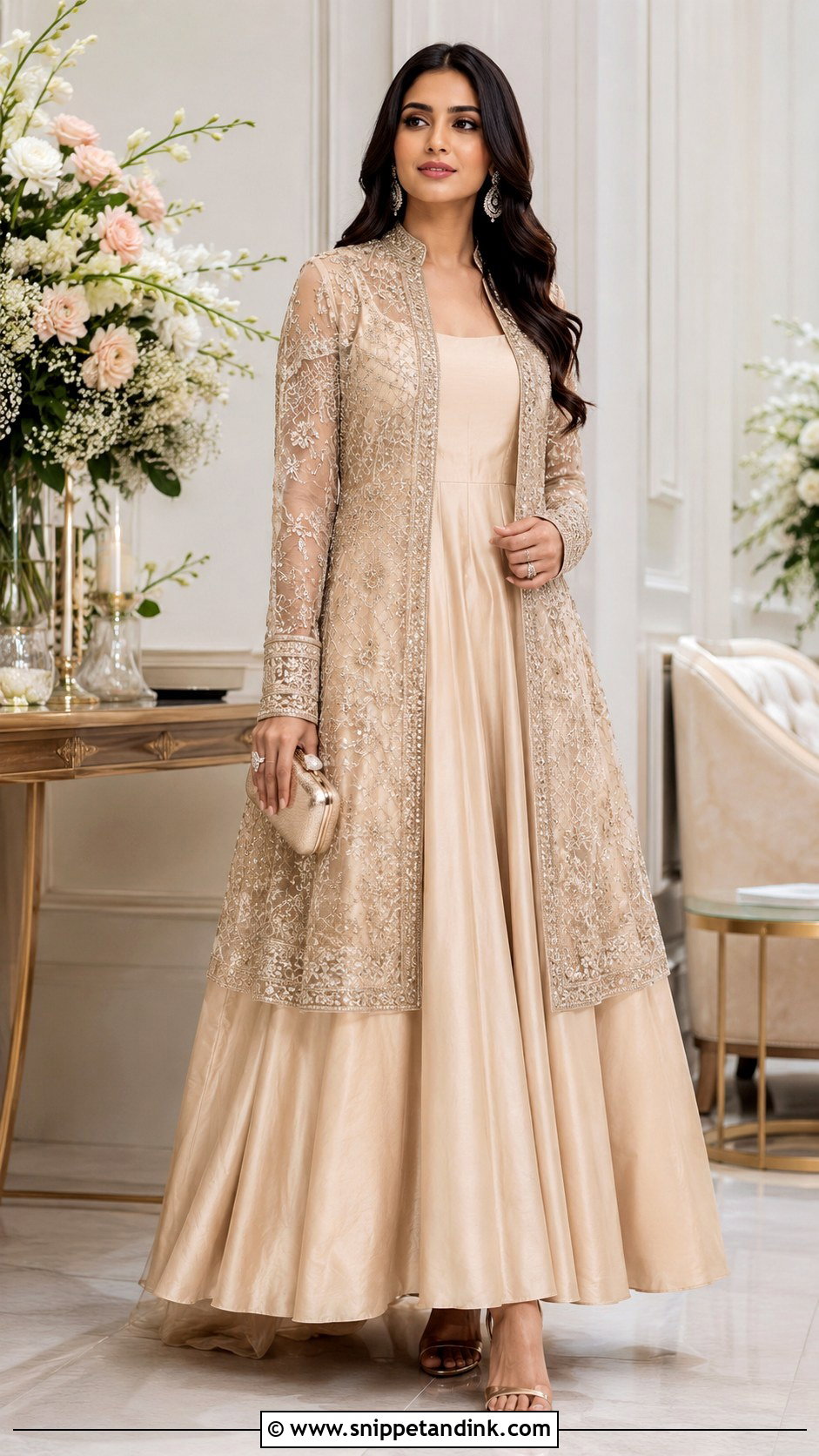
Jackets add structure without making the Anarkali itself heavy. My usual approach is a fairly plain Anarkali under a heavily embroidered jacket, so you can take the jacket off for dinner and dancing, which a fully worked kurta never allows. Tone-on-tone looks polished; contrast gives more impact. Have the jacket fitted over the kurta, not on its own, or it will pull across the back. It earns its place on cooler evenings and at engagement ceremonies.
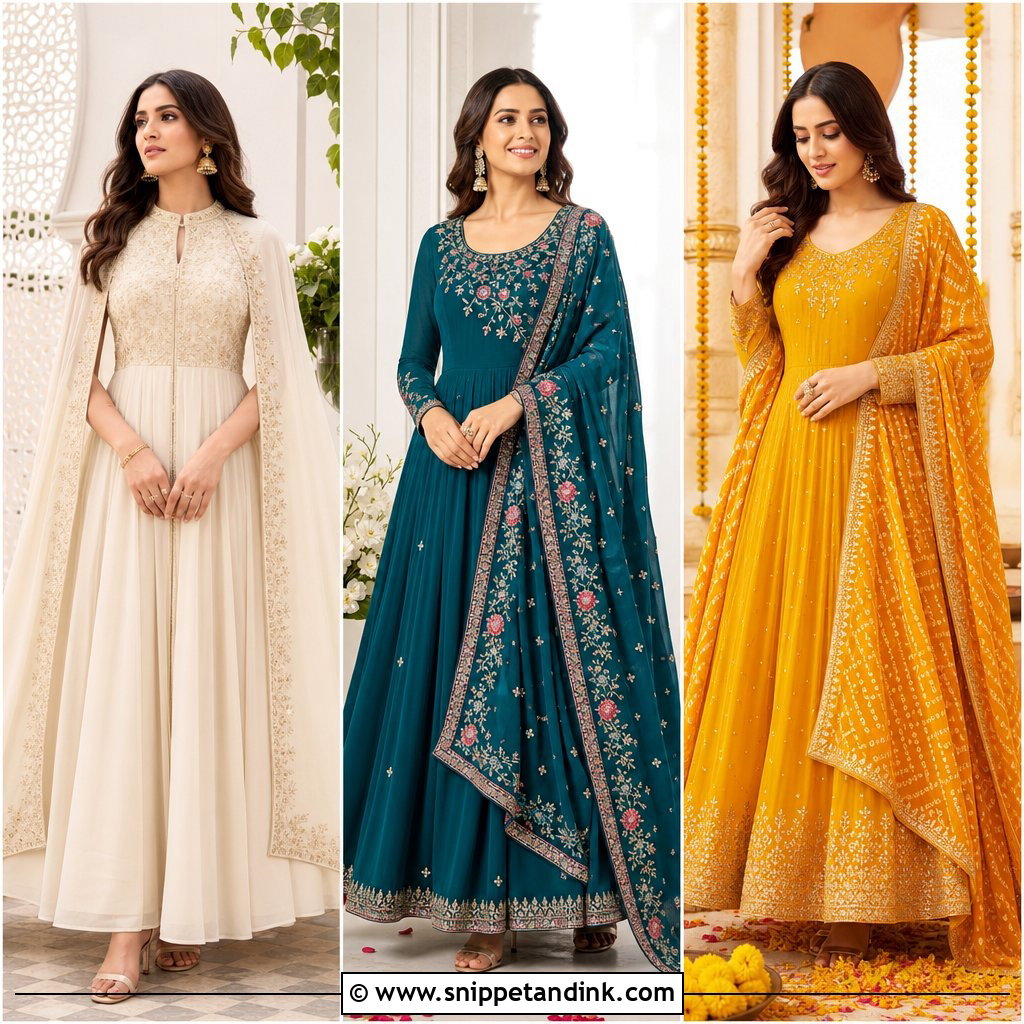
16. Cape Bridal Anarkali
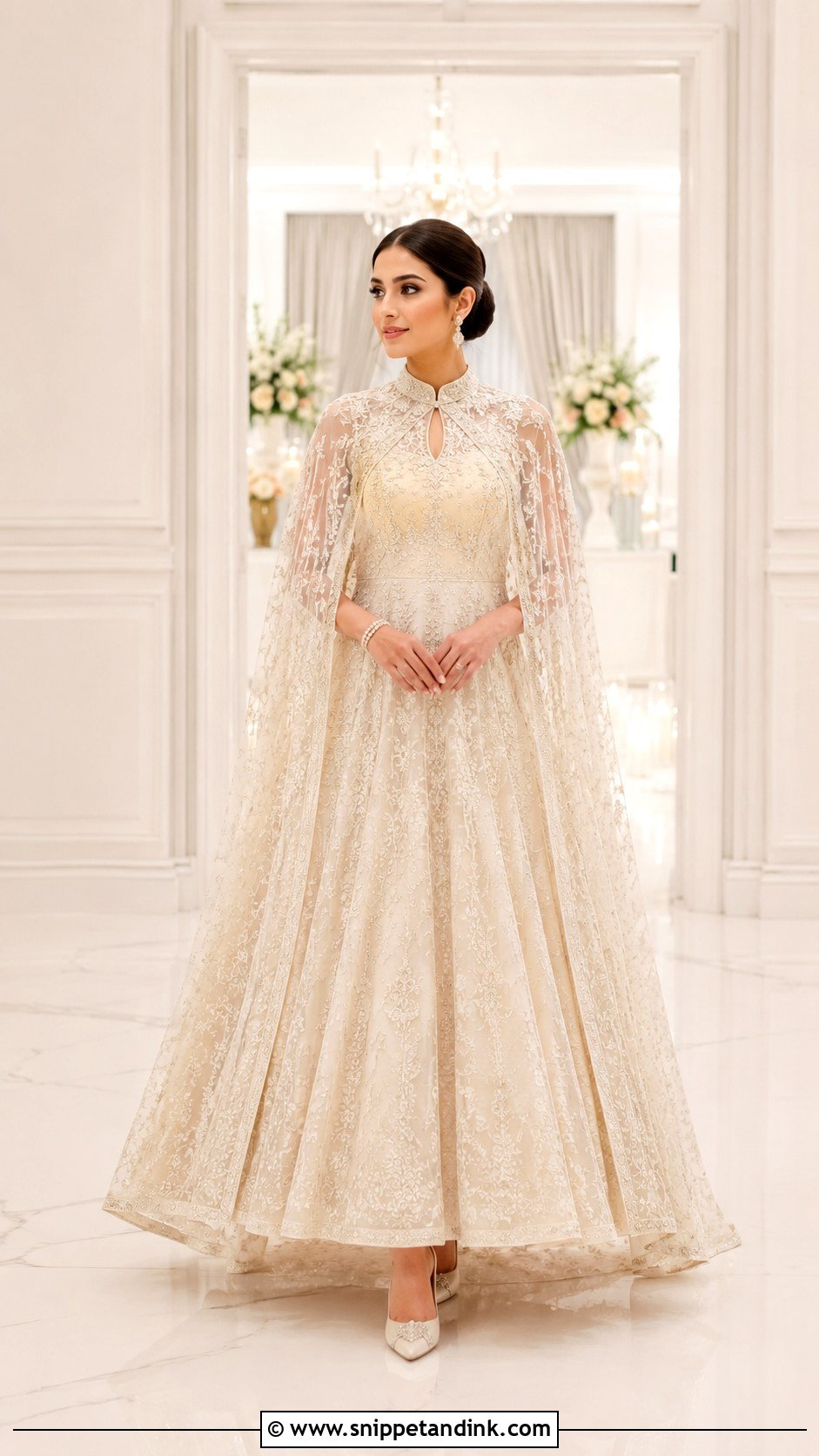
A cape frees your hands for greeting guests, and that matters more on a reception night than most brides expect. A sheer embroidered cape over a fitted Anarkali balances the flare below it. Check how it’s attached. A cape stitched into the shoulder seam stays put, while a loose one slides off every time someone hugs you. Drop earrings and pointed heels suit it, and I keep the hair tucked back so the shoulders show.
17. Anarkali Lehenga Bridal Outfit
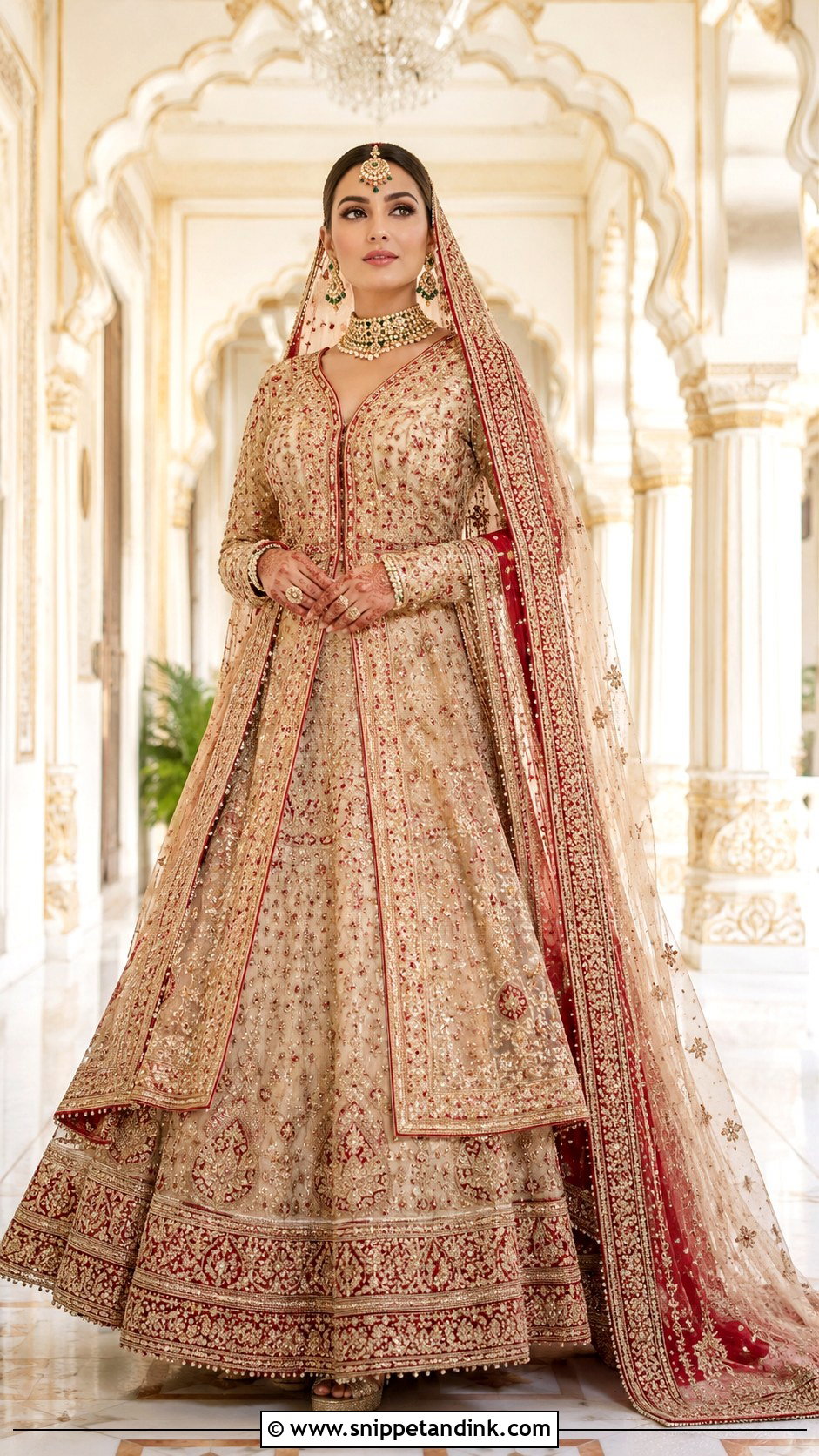
This hybrid sets a long or open-front Anarkali over a lehenga skirt, giving you two layers of movement. It’s built for an entrance or a photo-led reception. With this much volume, posture does half the work, so I tell brides to choose a mid-height block heel they can stand in for two hours rather than a stiletto. Put the heavy embroidery on the skirt hem, bodice and dupatta border, and stop the jewellery at a choker, earrings and a maang tikka.
18. Pastel Bridal Anarkali
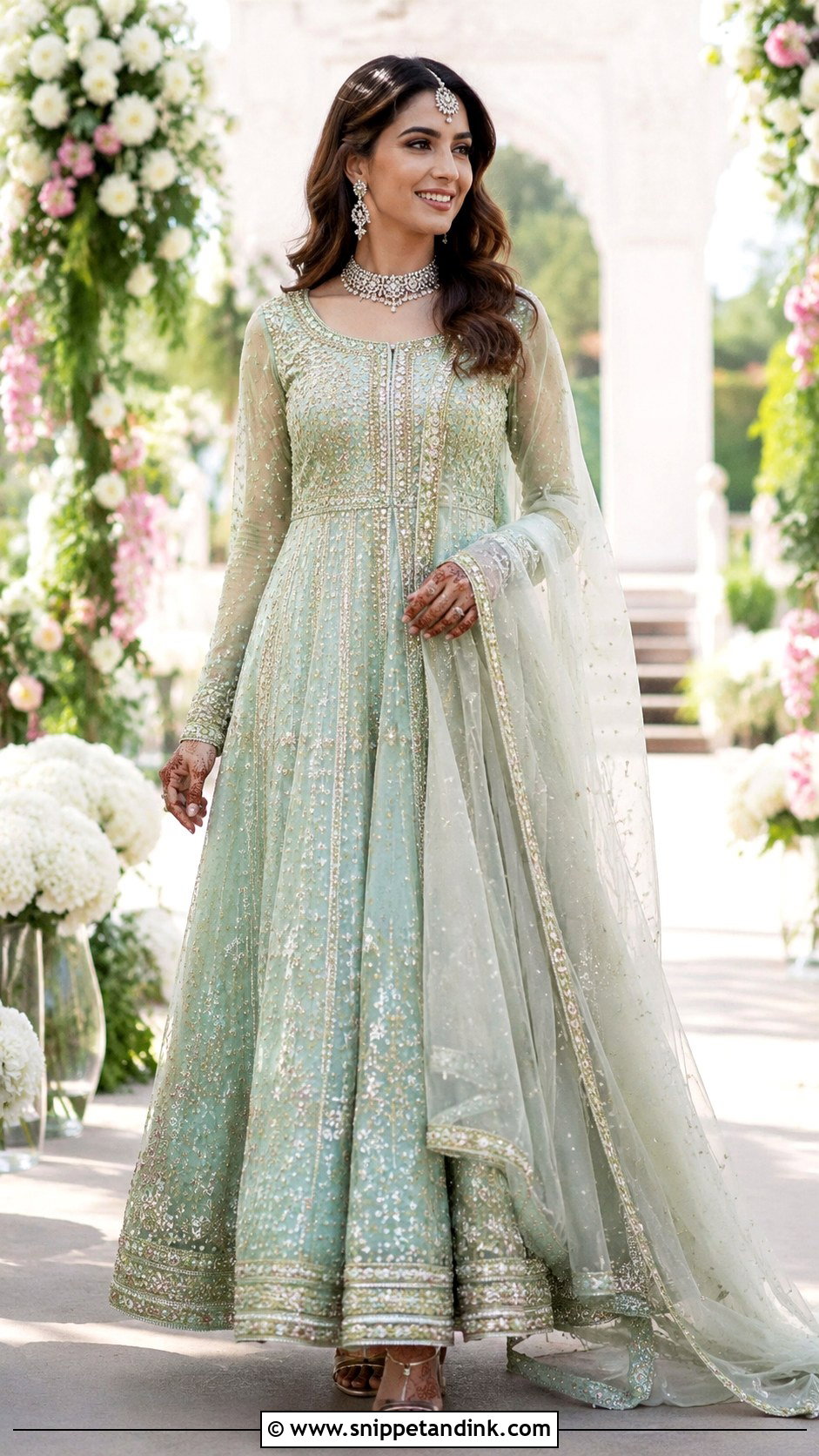
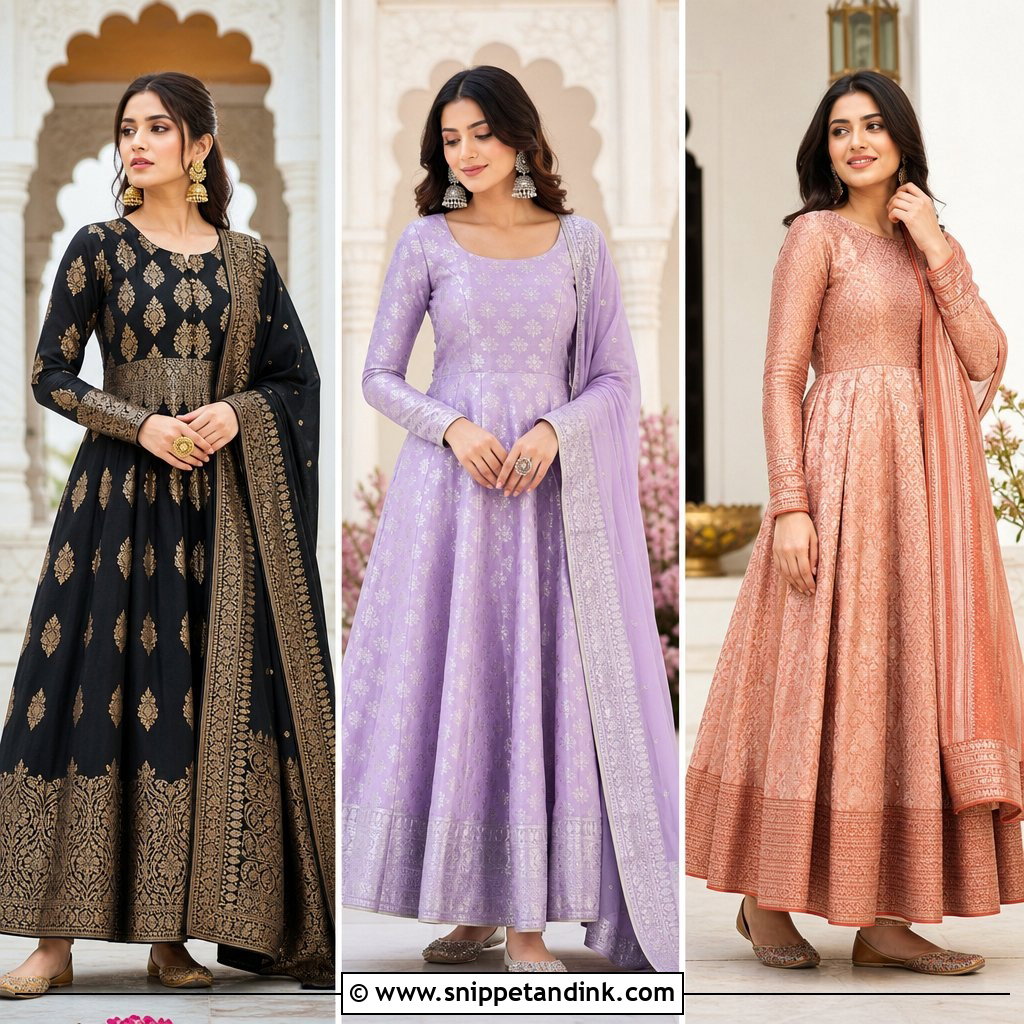
Pastels come alive in natural light, so I recommend them for daytime functions. Mint, lavender, peach and powder blue each behave differently on camera; lavender in particular can drift toward grey in open shade. Pearls, sequins or floral threadwork keep it bridal without weight. Diamond-style pieces or soft kundan, a sheer dupatta and metallic sandals finish it, and glowy skin suits pastels far better than a full matte base.
19. Maroon Bridal Anarkali
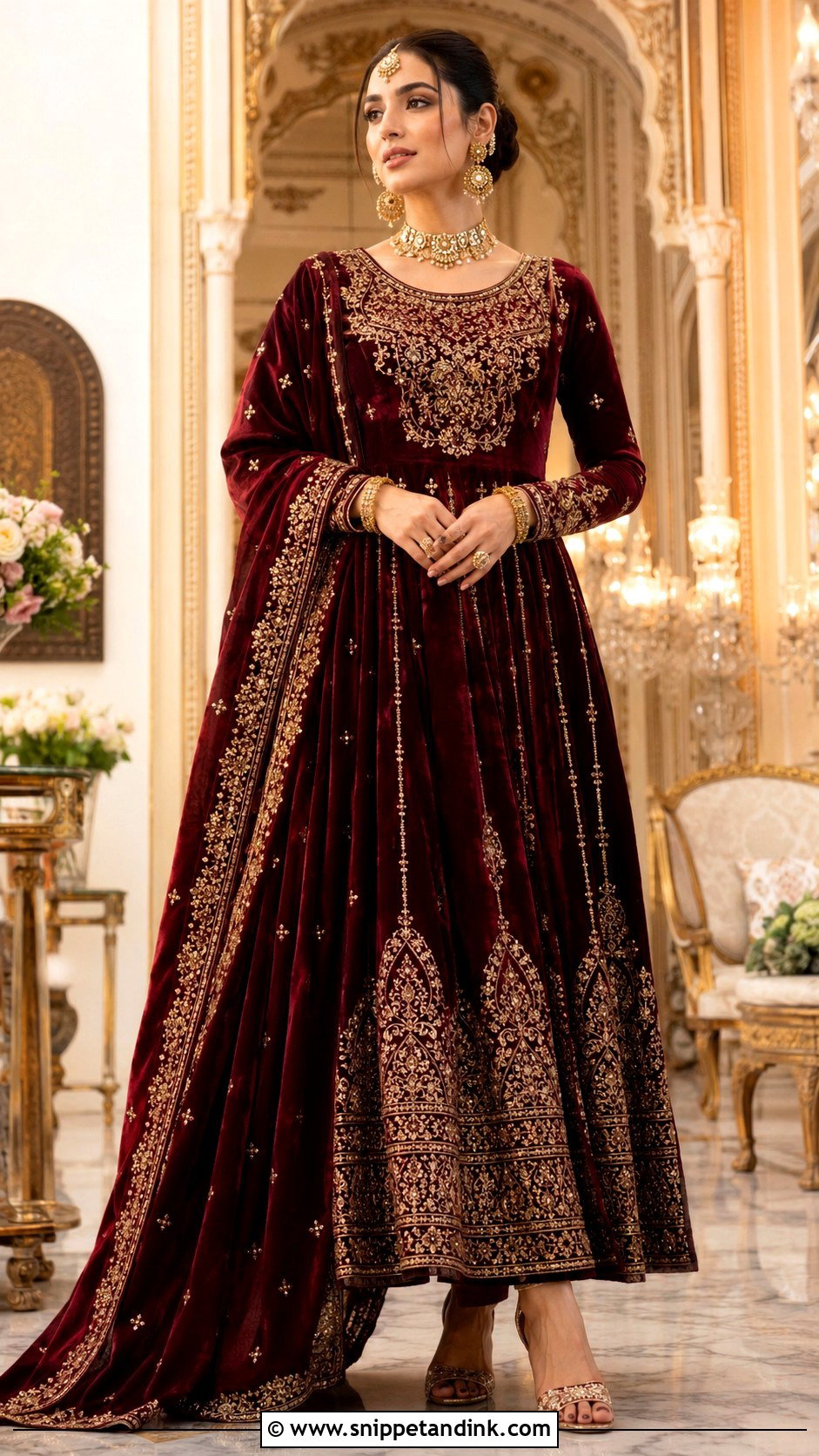
Maroon gives you depth without bright red’s intensity. In velvet or brocade with antique gold embroidery it feels formal enough for the main ceremony. My rule for a heavily worked maroon outfit is one jewellery focus, either a choker or large earrings, never both at full size. Warm-toned makeup and a neat bridal bun complete it.
20. Black Bridal Anarkali
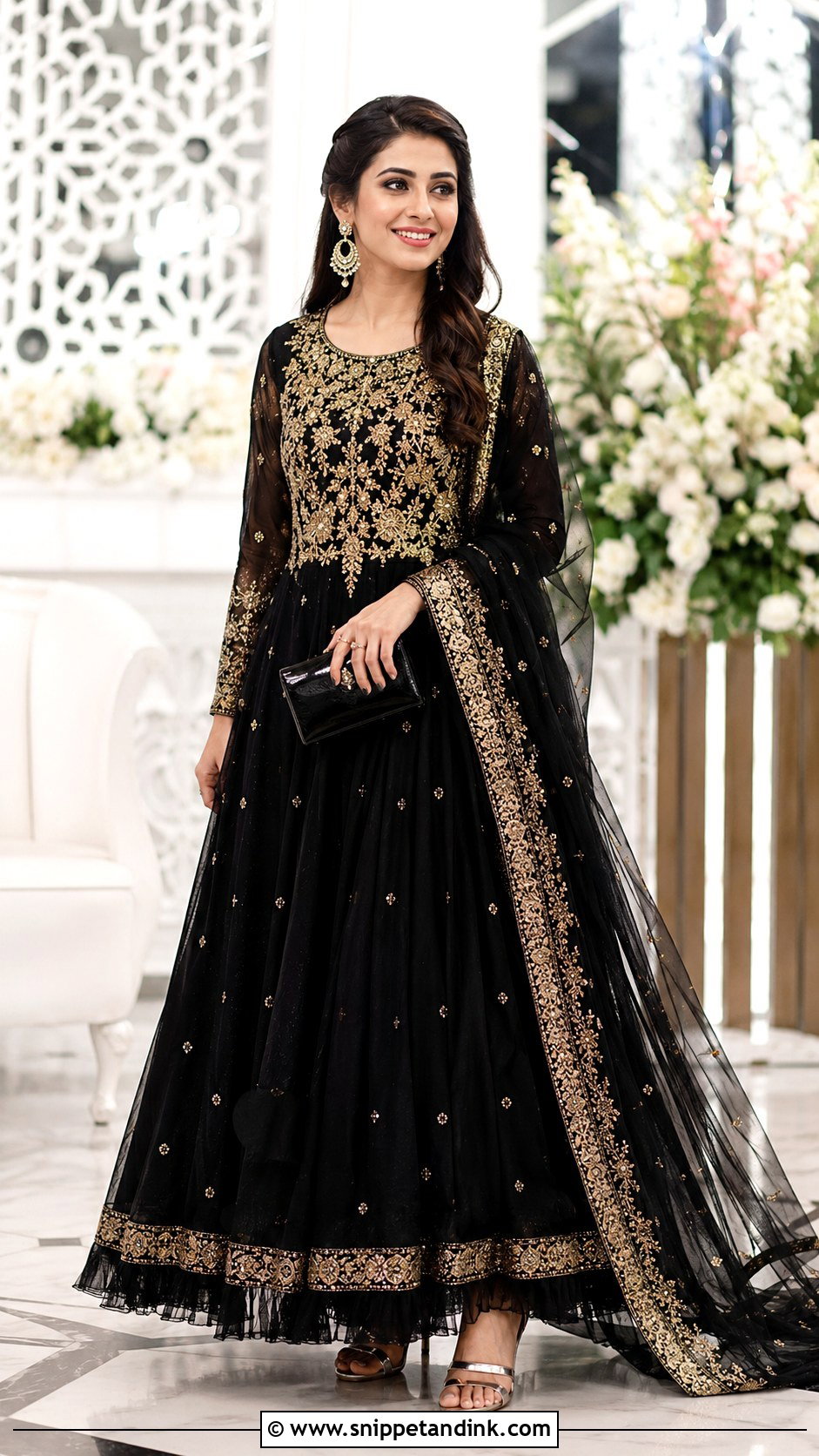
Black is a fashion choice for a reception or sangeet, and some families still see it as inauspicious for a bride, so I’d talk it through at home before ordering. With gold, silver or multicoloured embroidery it reads festive rather than sombre. Velvet, net, georgette and silk all take black well. A sheer bordered dupatta softens it, and defined eyes with glowing skin keep the face lifted against so much dark fabric.
21. Blue Bridal Anarkali
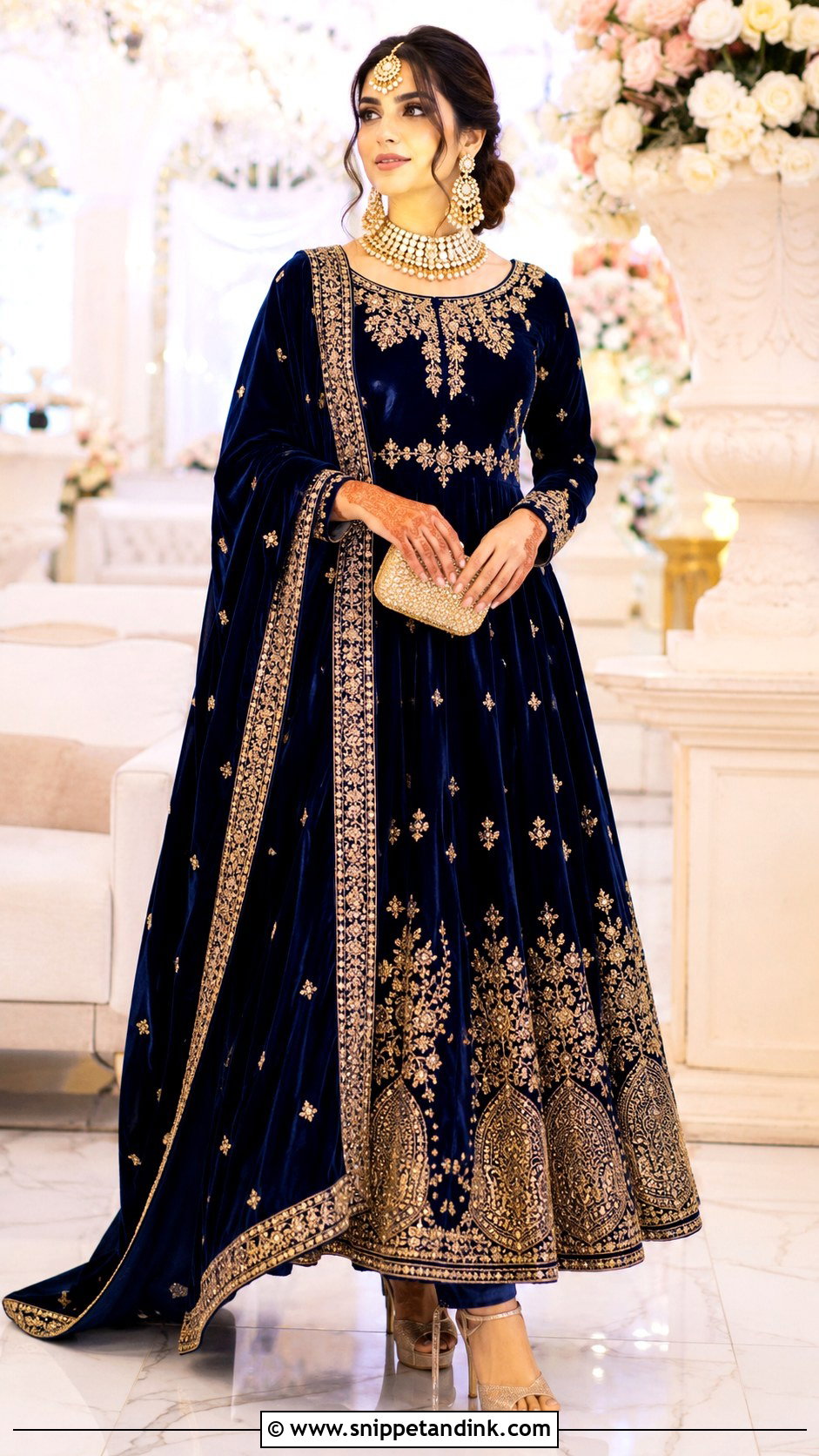
Blue steps away from the usual bridal palette without feeling odd. Navy velvet with gold work suits an evening reception, and powder blue with silver embroidery suits a day function. I match the metal to the depth of the blue: antique gold or kundan with dark shades, pearls or diamond-style pieces with pale ones. A dupatta in the embroidery’s tone ties it together, and a soft smoky eye with a nude lip finishes it.
22. Yellow Bridal Anarkali
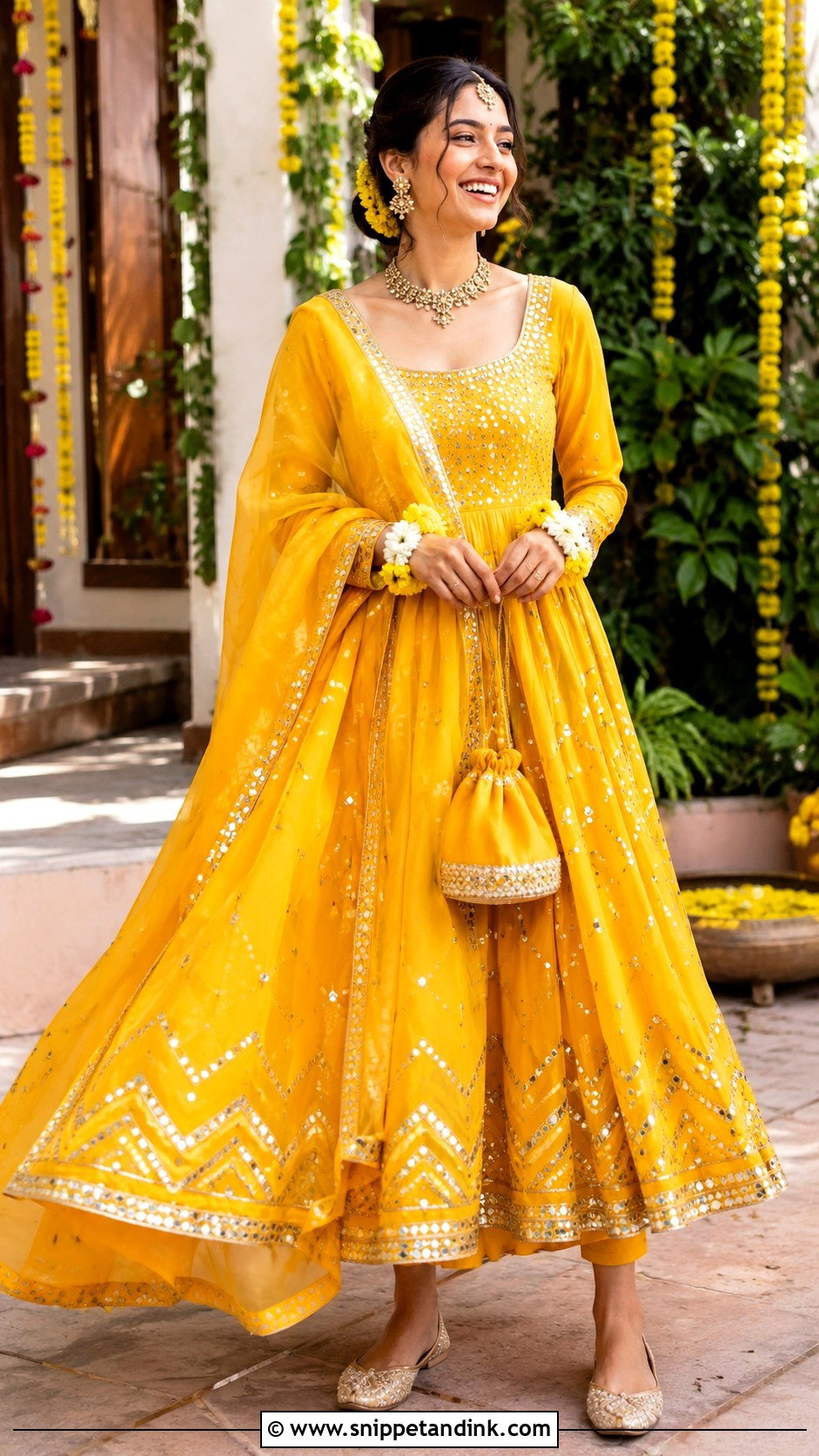
A yellow bridal Anarkali is the natural pick for haldi or mehendi. Choose the yellow for your skin, not the trend: marigold and mustard flatter warm and deeper skin, while a sharp lemon can make some complexions look sallow in daylight. Gota patti or mirror work keeps it festive and light. For haldi, assume the outfit will be stained, so choose cotton or a washable blend over silk and floral jewellery over gold.
23. Orange Bridal Anarkali
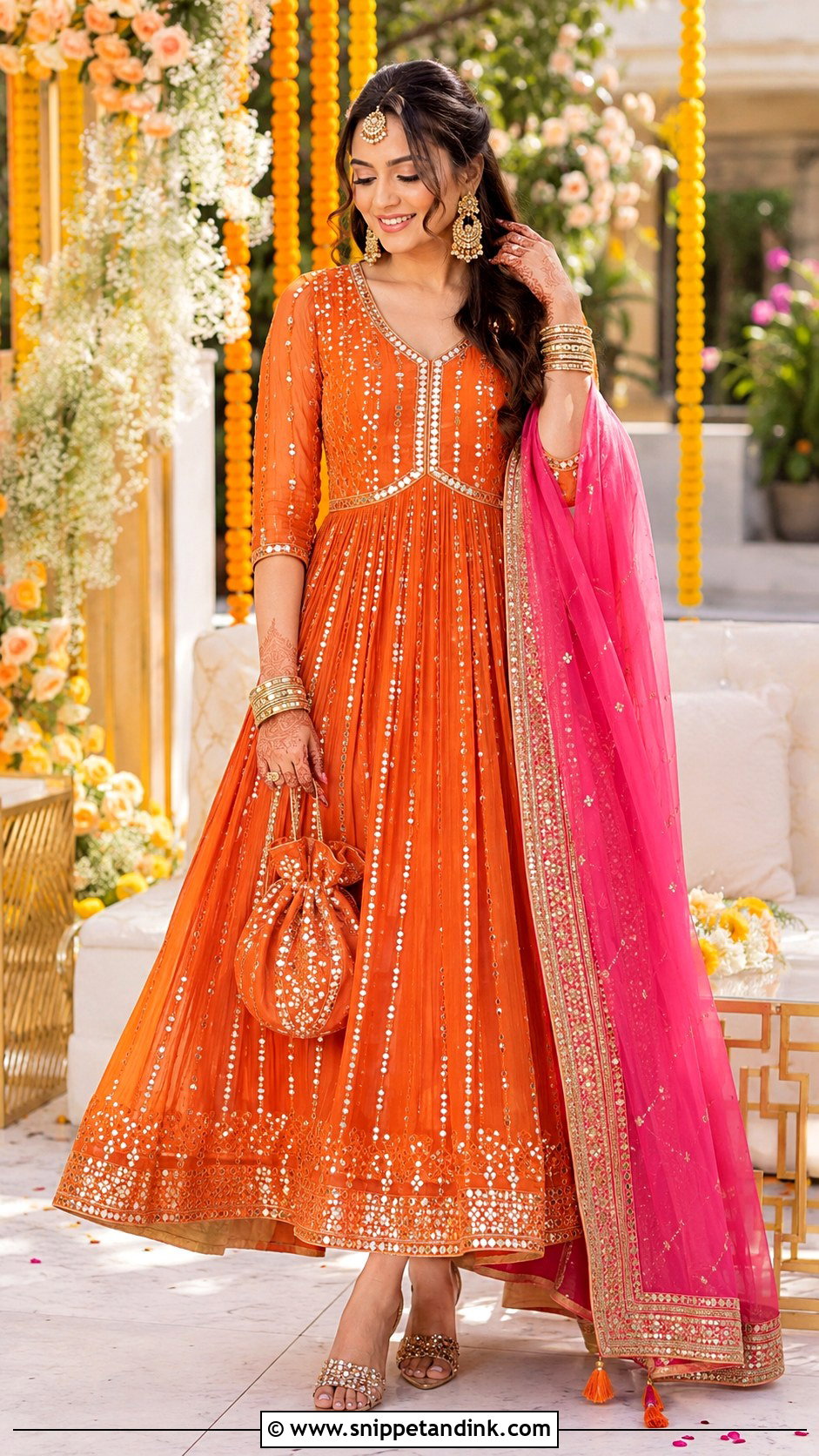
Orange brings real warmth to outdoor functions. Rust, tangerine, coral and burnt orange each suit a different undertone, so I hold the fabric against a bride’s face in daylight before she decides. Gota patti, zari or mirror work make it wedding-ready. A pink or red dupatta is the classic pairing, and bronze eyes with a coral lip keep the whole look warm.
24. Purple Bridal Anarkali
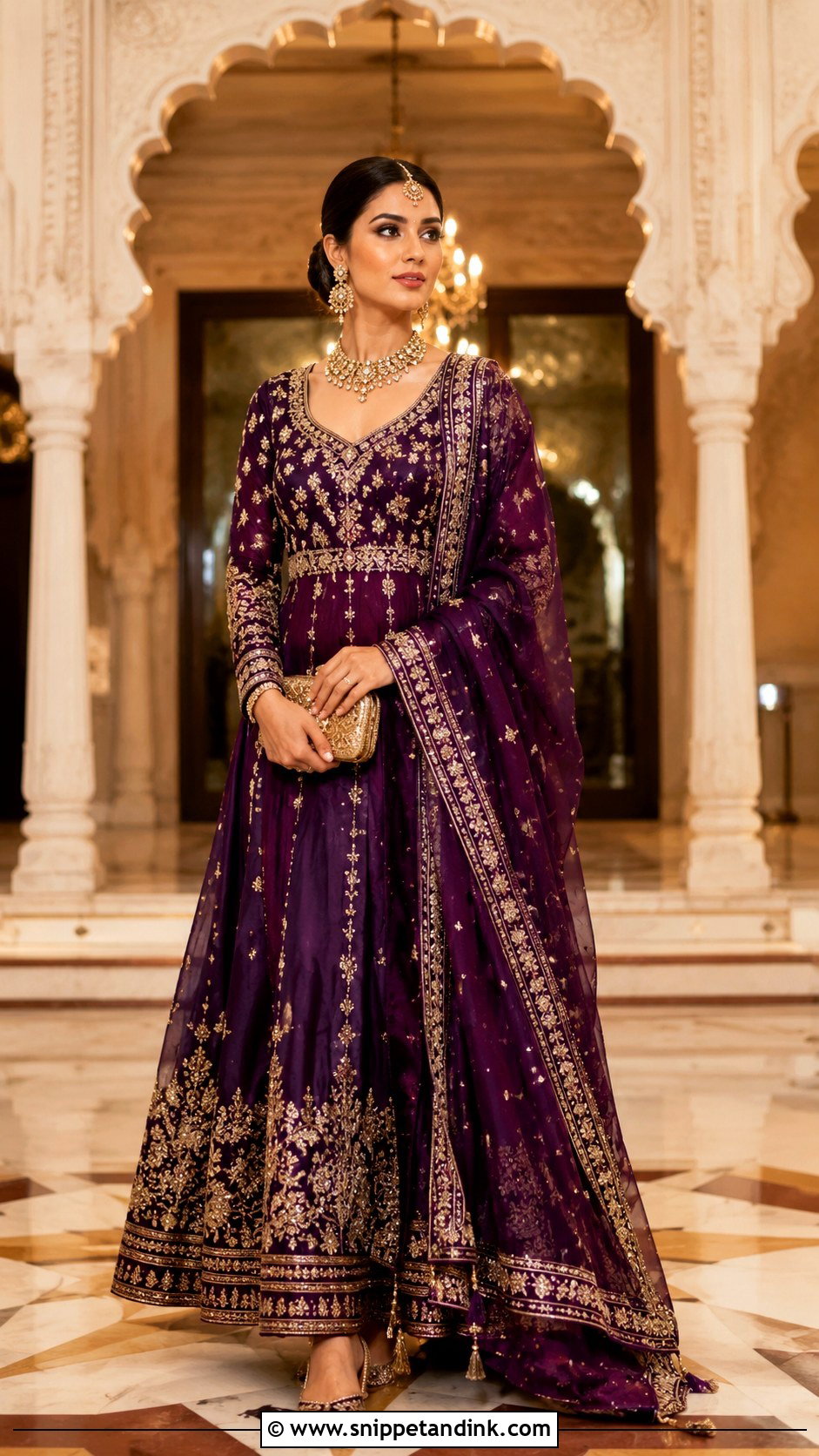
Purple sits somewhere between regal and unexpected. Plum or aubergine velvet with gold embroidery suits evening functions; lavender with silver or pearl work is softer for daytime. Dye lots vary more in purple than in most colours, so if the dupatta is being ordered separately, ask for a swatch from the same batch. Antique jewellery goes with the deep purples, crystal or pearls with the lighter ones.
25. Reception Bridal Anarkali
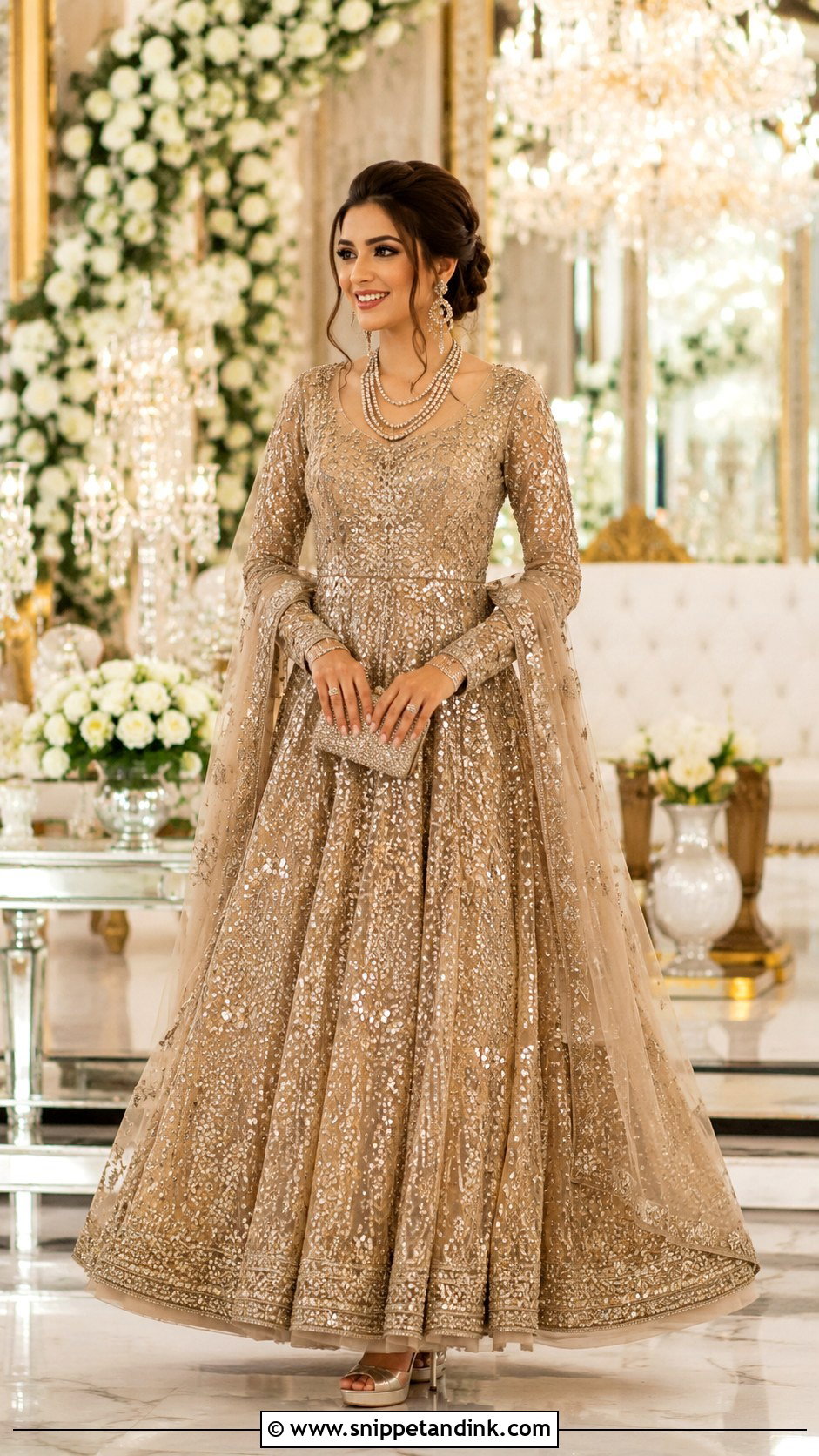
At a reception you’ll stand for hours greeting guests, so comfort shapes my choices more than style does. A slightly structured bodice with a soft flare in silk, net, velvet or organza looks finished from every side. Bright reception lighting turns heavy sequins into glare in photos, so I lean toward embroidery on a matte thread base with only a little sparkle. A choker or layered necklace, earrings and a clutch are enough, and a sleek hairstyle keeps the neckline clear.
Sitting Through the Pheras in a Full Flare
A long flare behaves very differently once you sit cross-legged on a mandap or a low stool. Before the ceremony starts, I gather the back kalis forward so you aren’t sitting directly on the embroidery, which crushes zardozi and can snap bead threads. Practise sitting down and standing up once at home in the full outfit, dupatta included. If you can’t rise without stepping on the hem, it’s too long.
For the dupatta, I pin through the heavy border on the inside of the shoulder, and at the back of the head if it’s draped over the hair. Never pin through the sheer body of the fabric; it tears the moment someone steps on the trailing end.
Folding the Anarkali Away After the Last Function
Heavy embroidery hates hangers. Over months, the weight of a worked bodice pulls the shoulder seams and stretches the kalis out of shape. Once the wedding is over, I’d have it cleaned by someone who handles bridal embroidery, then fold it with acid-free tissue between the layers and keep it in a cotton or muslin bag. Plastic traps moisture, and metal thread tarnishes in it.
Refold it along different lines every few months so creases don’t set and the zari doesn’t crack at the fold. Store it somewhere dry and out of direct sunlight, which fades velvet and silk unevenly.
The Function Decides the Fabric
An Anarkali can look as grand as a lehenga and still be easier to live in through long ceremonies. Start with the function and the season, pick a fabric that suits both, then build the dupatta, jewellery and footwear around it. Red and gold for tradition, pastels for daylight, velvet for winter, a cape or jacket when you want something modern: any of these will work once the fit at the waist is right.
You'll Like These Ideas:





Leave a Reply