
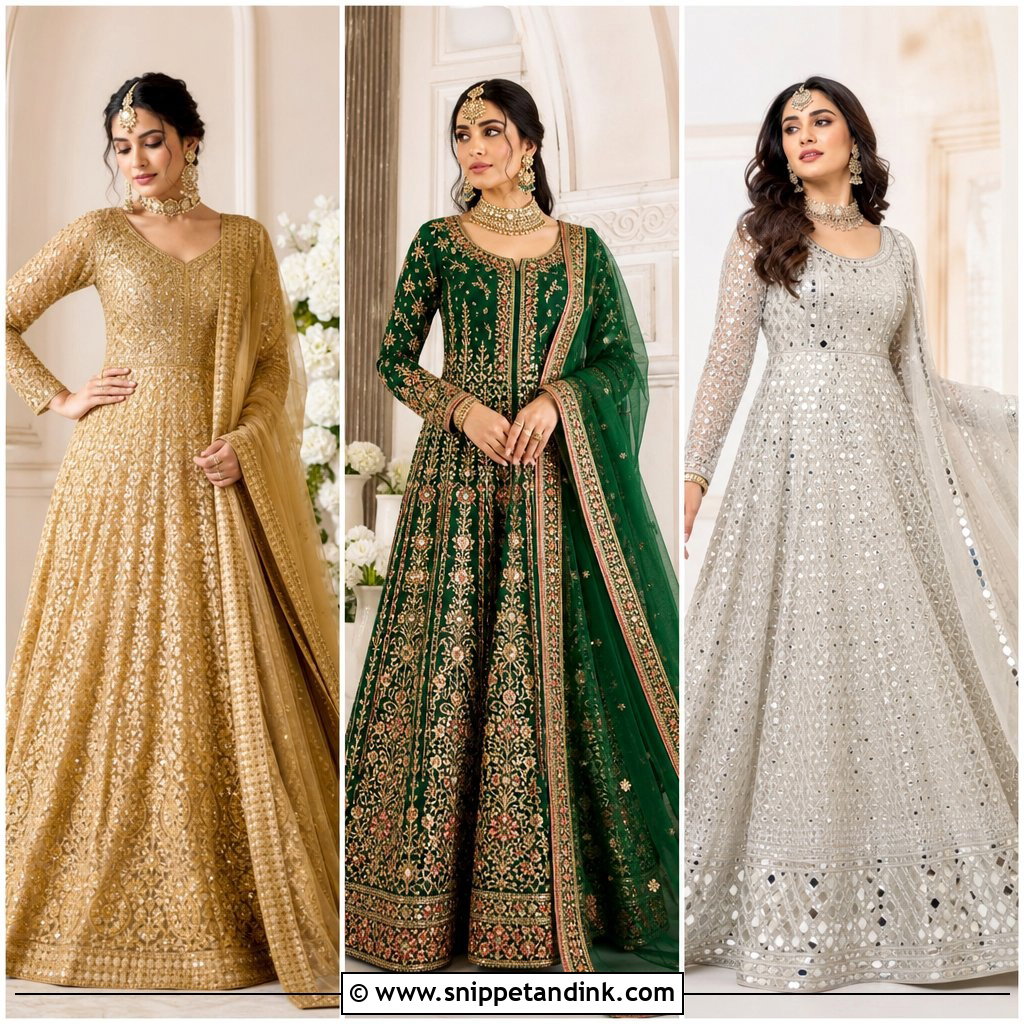
An Anarkali gives a bride the drama of a full skirt without the weight of a lehenga sitting on her hips, which is why I suggest it so often for brides who will be on their feet for hours. Bridal Anarkali suits now come in floor-length kalidar cuts, velvet, jacket sets, pastel embroidery, mirror work and Anarkali-lehenga hybrids, so there’s one for every function. Red and maroon still carry the main ceremony; yellow, green, pink and ivory suit the events before it. What I talk through with every bride is less about colour and more about embroidery weight, the climate, her heel height and how she needs to move. Below are twenty full looks, one per event and mood, with the fitting notes I’d give at a styling appointment.
Ordering a Custom Anarkali Months Ahead
Hand embroidery like zardozi, dabka and gota patti takes weeks of work, and many ateliers ask for three to six months for a heavily worked bridal piece, sometimes more in peak wedding season. The time varies by designer, so ask before you commit. Lighter outfits for haldi or mehndi can be ready faster, but I’d still leave room for two fittings.
At the first appointment, I bring a short brief so the designer isn’t guessing:
- Which function it’s for, the time of day and whether the venue is indoors or outside.
- How much weight you can comfortably carry. Ask to hold a finished sample with similar embroidery.
- Your sleeve preference, especially for the mehndi and the ceremony.
- The heel height you’ll wear, so the hem can be measured to it.
- Jewelry you already own, so the neckline suits your necklace and not the other way round.
Keep the final fitting two or three weeks before the wedding. Pre-wedding stress and diet changes affect the bodice fit more than anything else.
1. Red Zardozi Bridal Anarkali Suit
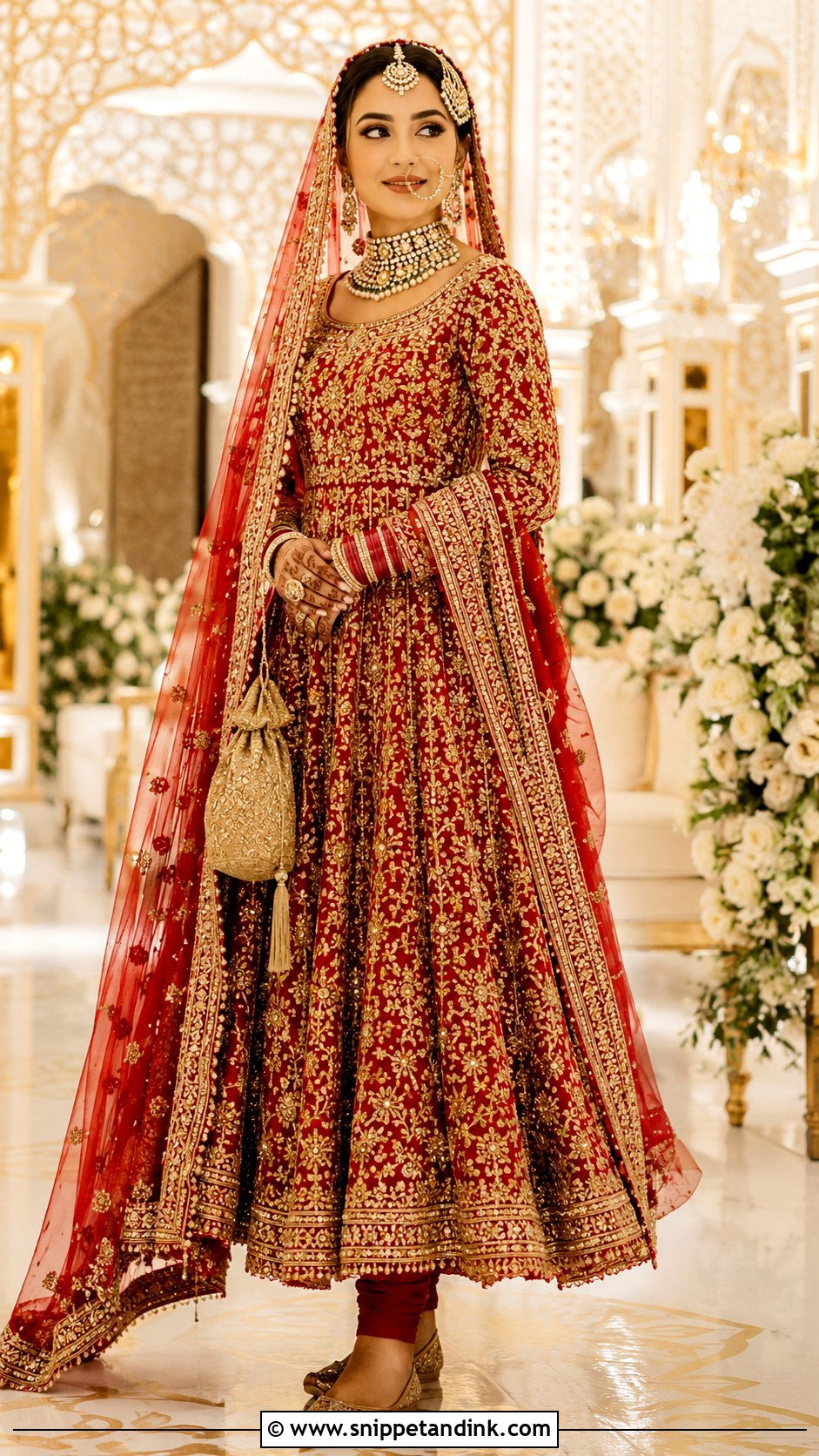
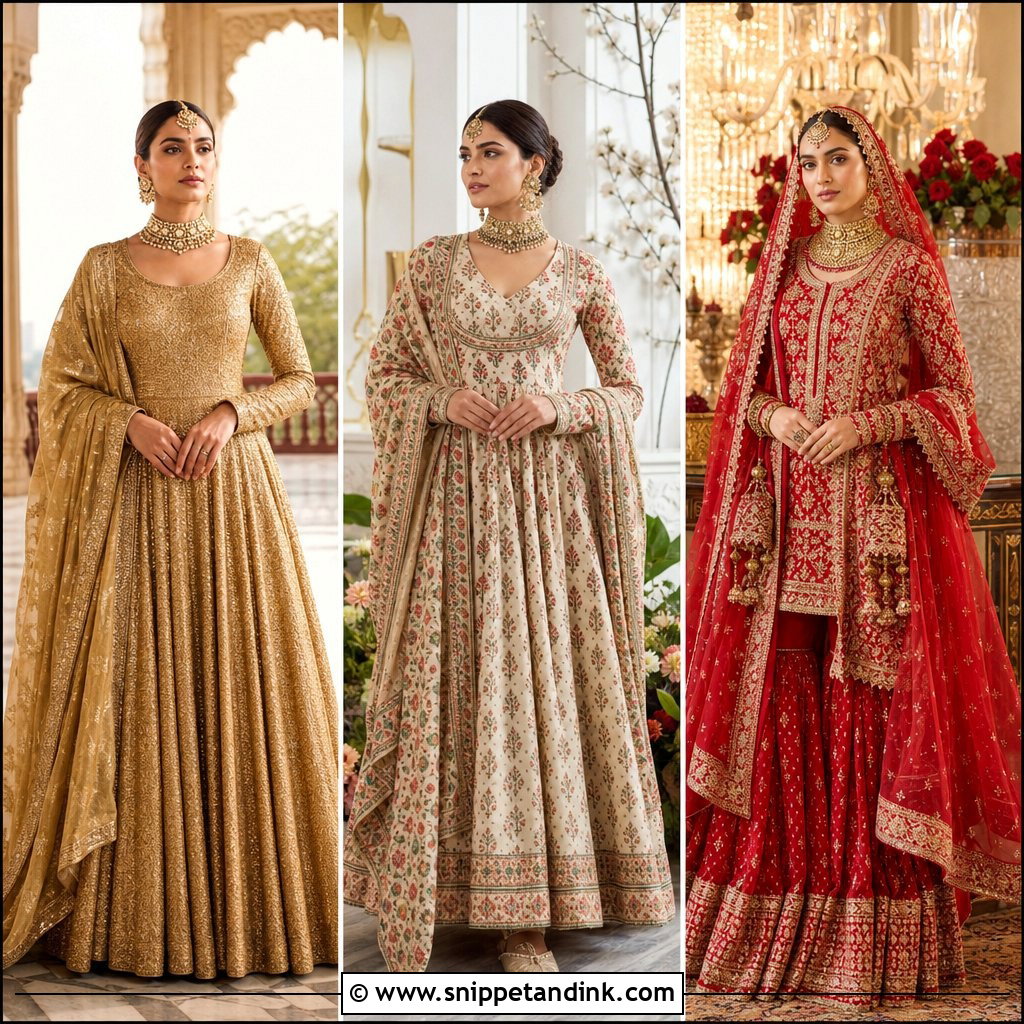
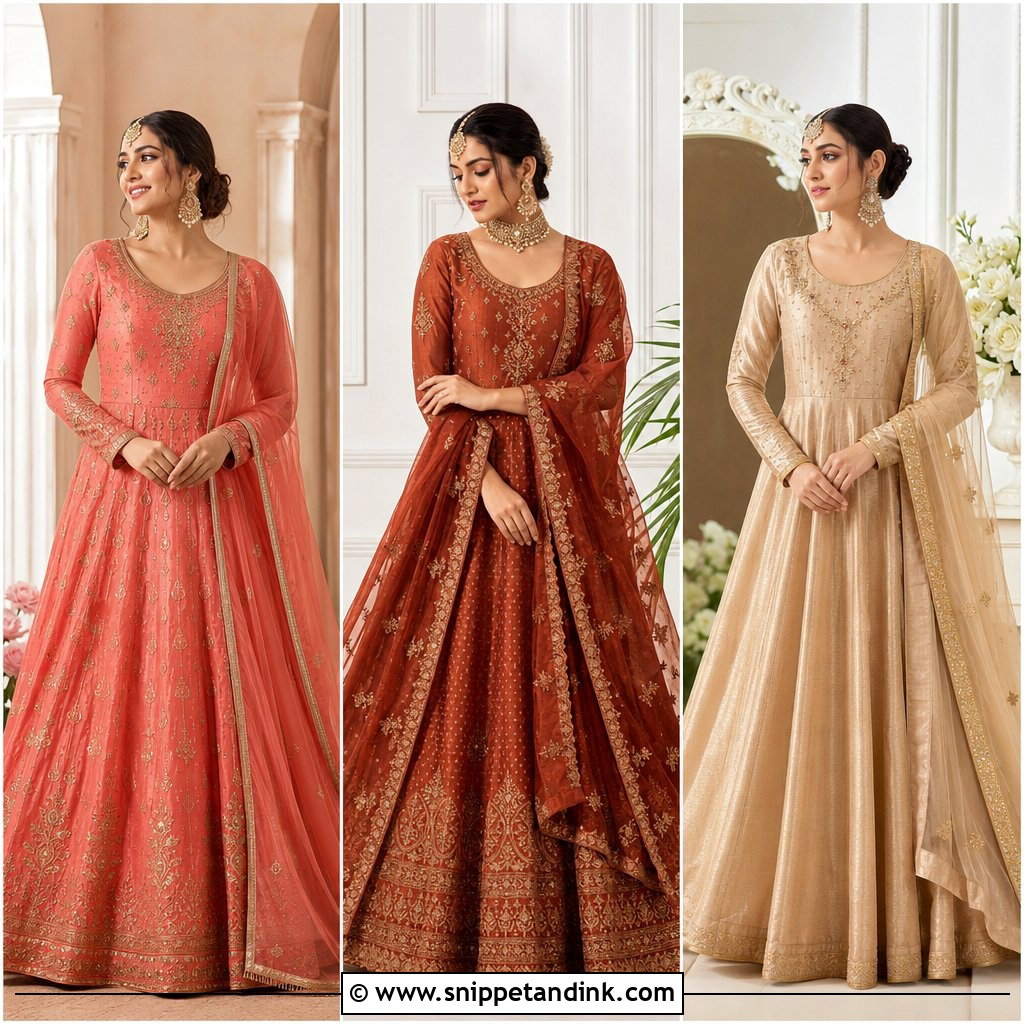
Dense antique-gold zardozi on deep red is the classic ceremony Anarkali, and the weight is real: a heavily worked bodice can pull the neckline forward unless it is lined and boned properly. I ask for soft cotton lining under every embroidered panel. Choose a floor-length kalidar silhouette with a defined waist and a generous flare over a matching churidar. One embroidered red net dupatta goes over the head, a lighter one across the shoulder. Polki, a traditional nath, red bangles and gold juttis finish it. On a petite bride, smaller motifs and a slightly raised waistline keep her from disappearing; taller brides can carry wide borders.
2. Maroon Velvet Bridal Anarkali Suit
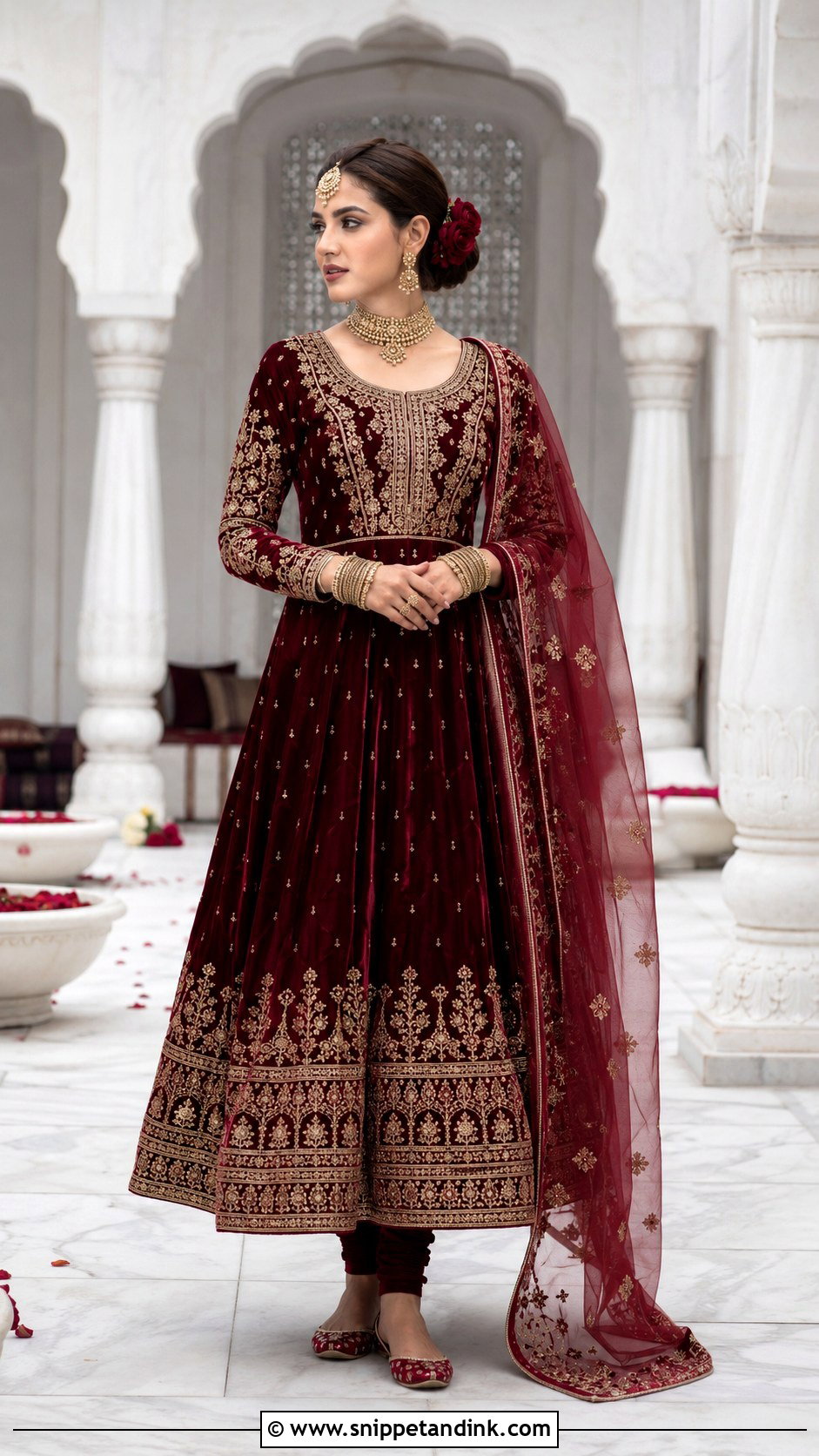
Maroon velvet is for a winter wedding, full stop. In a warm banquet hall it becomes exhausting by the second hour. With the right season, I look for a structured bodice, full sleeves and a floor-skimming flare, with gold embroidery limited to neckline, cuffs and hem so the velvet’s own sheen shows. Velvet is heavy, so balance it with a slim churidar and an organza dupatta rather than a second velvet layer. A gold choker, matching earrings, stacked bangles and maroon velvet juttis. Ask the tailor for breathable lining in the bodice and sleeves; velvet lined in polyester traps heat.
3. Ivory And Gold Bridal Anarkali Suit
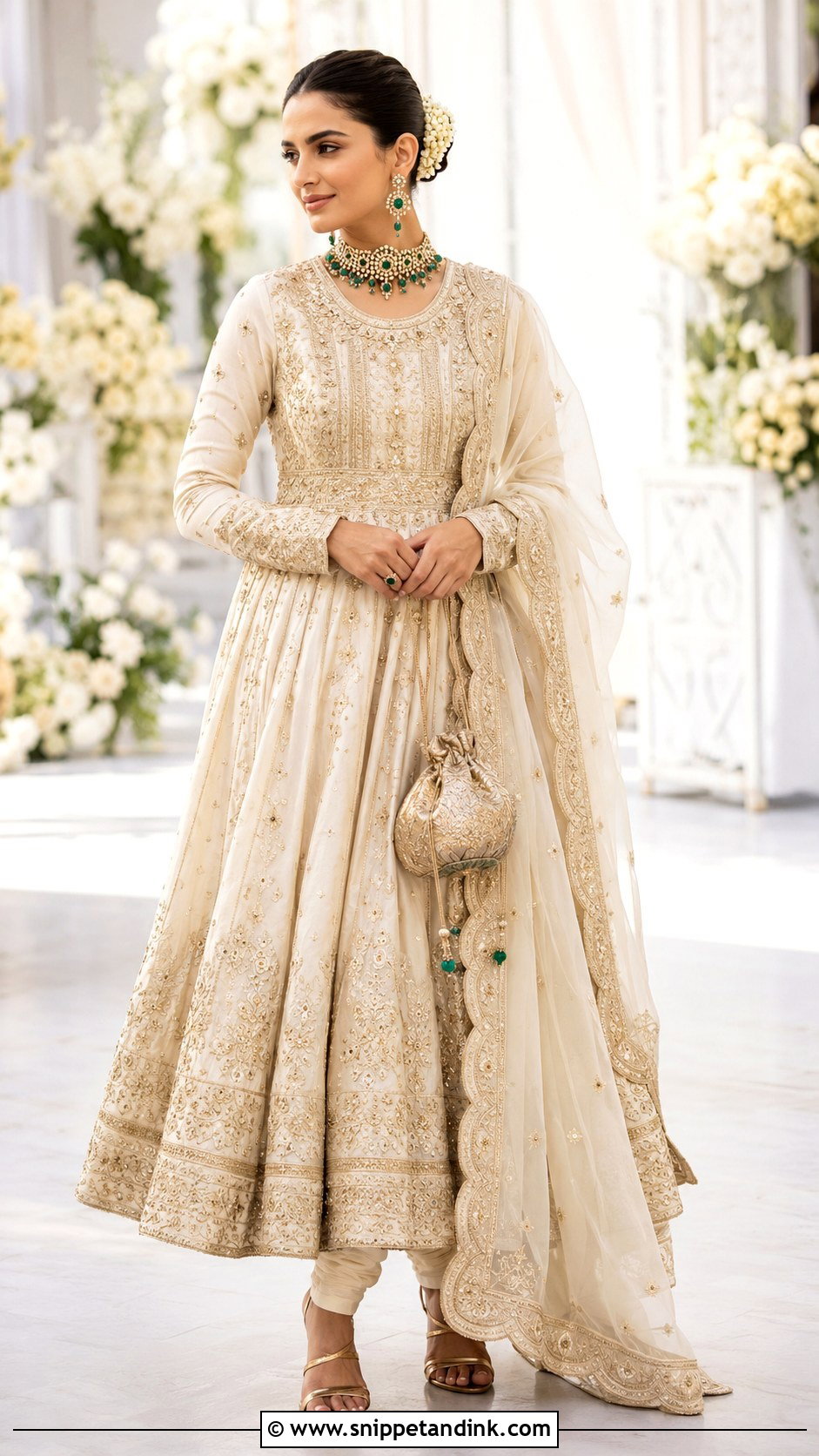
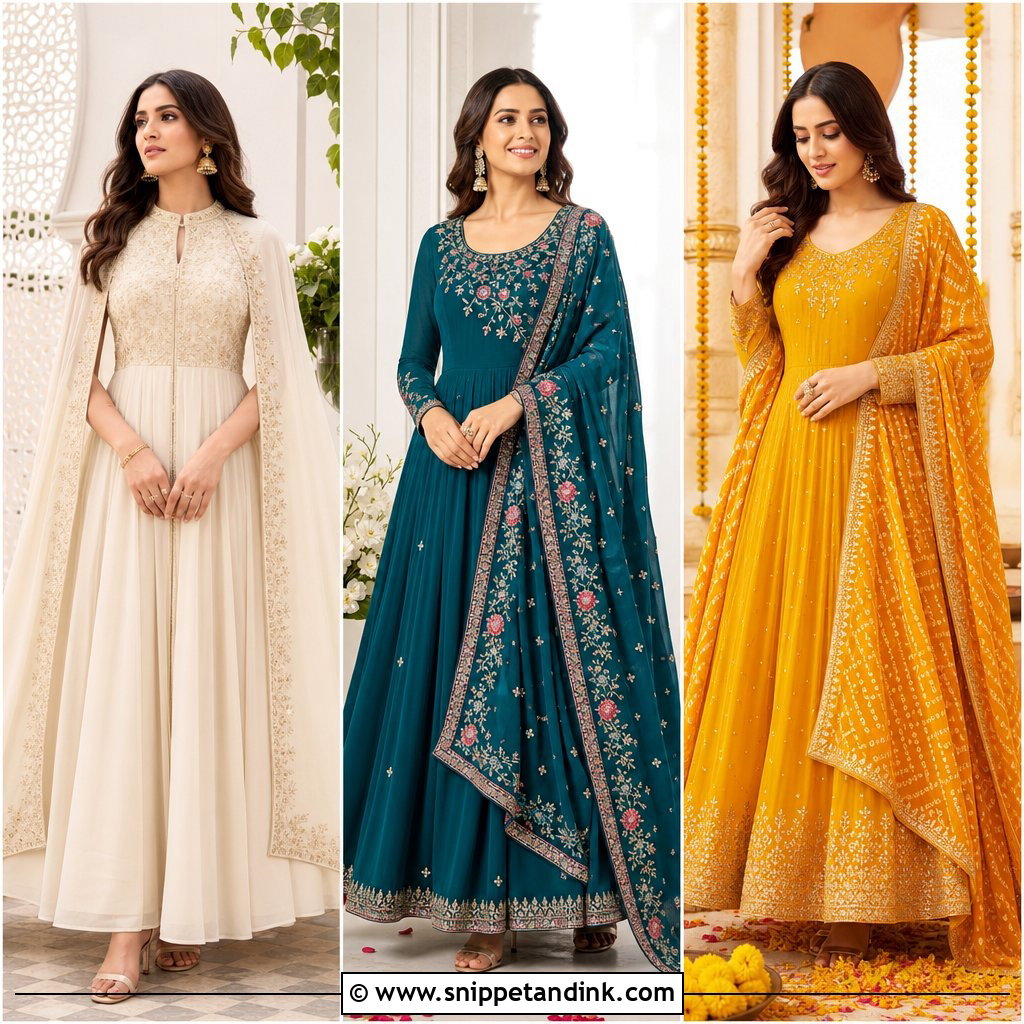
Ivory and gold photograph flat when the embroidery is all one texture, so I look for a mix: zari outlines, pearl clusters, and a little sequin catching the light. That variety gives the camera something to read. Choose ivory silk or organza with a paneled floor-length skirt and a fitted bodice, worn with an ivory churidar, gold heels and a sheer scalloped dupatta. Emerald jewelry adds contrast; pearl or polki keeps it soft. A small gold potli rather than a handbag. Ask your makeup artist for a little more warmth in the cheeks than usual, since ivory near the face can wash a bride out in daylight.
4. Blush Pink Bridal Anarkali Suit
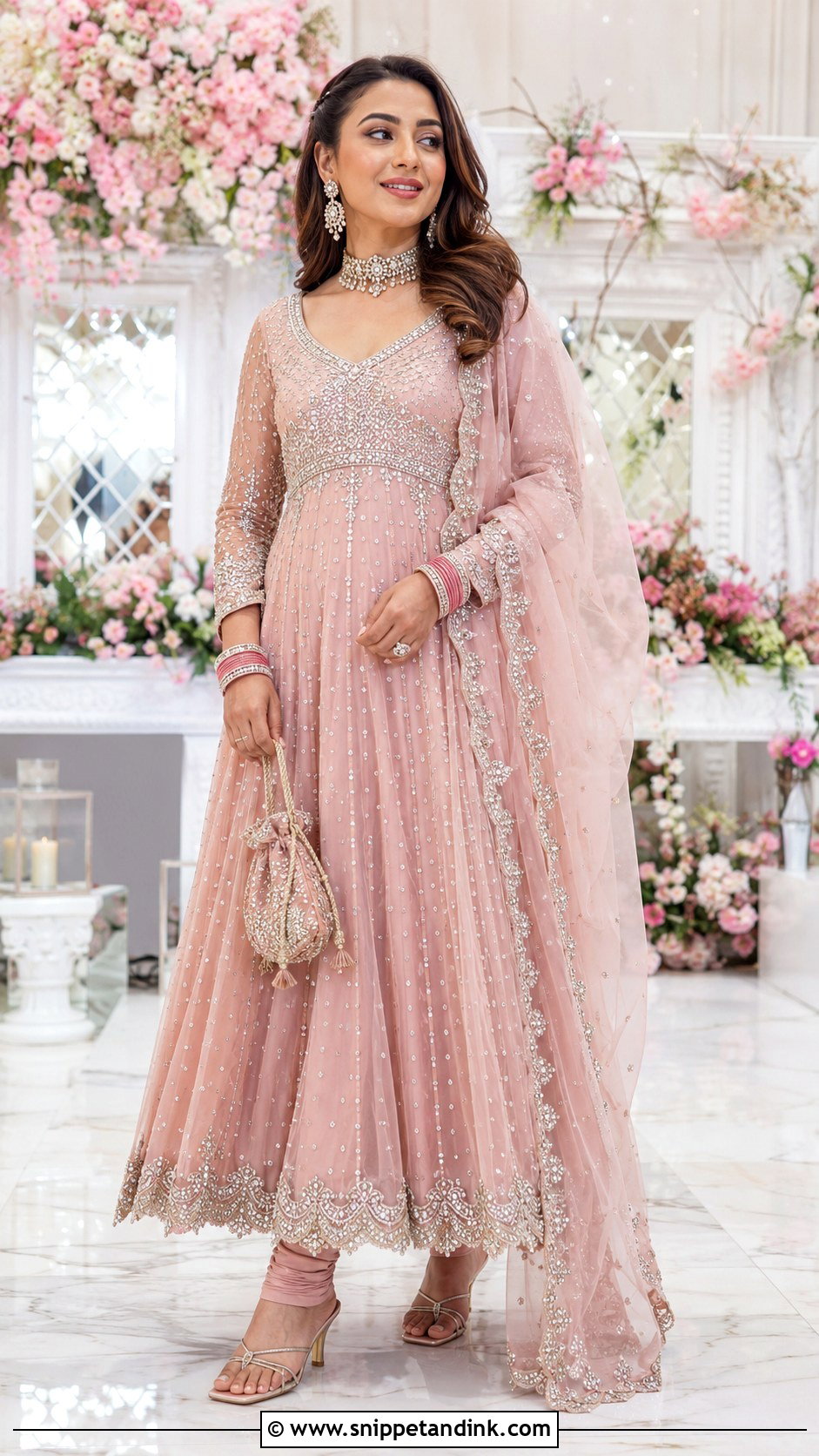
Blush georgette or tulle with silver threadwork, crystals and tiny pearls is lighter than it looks, and that’s its appeal for an engagement when you’ll be greeting guests for hours. A supportive fitted bodice and enough flare to walk freely, over a matching churidar, with a scalloped net dupatta. Silver or soft gold heels, a diamond-style choker, drop earrings and a beaded potli. Sheer full sleeves with embroidered cuffs give coverage without heat. Blush is easily overpowered, so I keep the makeup fresh and the lips pink rather than berry. Loose waves or a textured low bun suit it.
5. Emerald Green Bridal Anarkali Suit
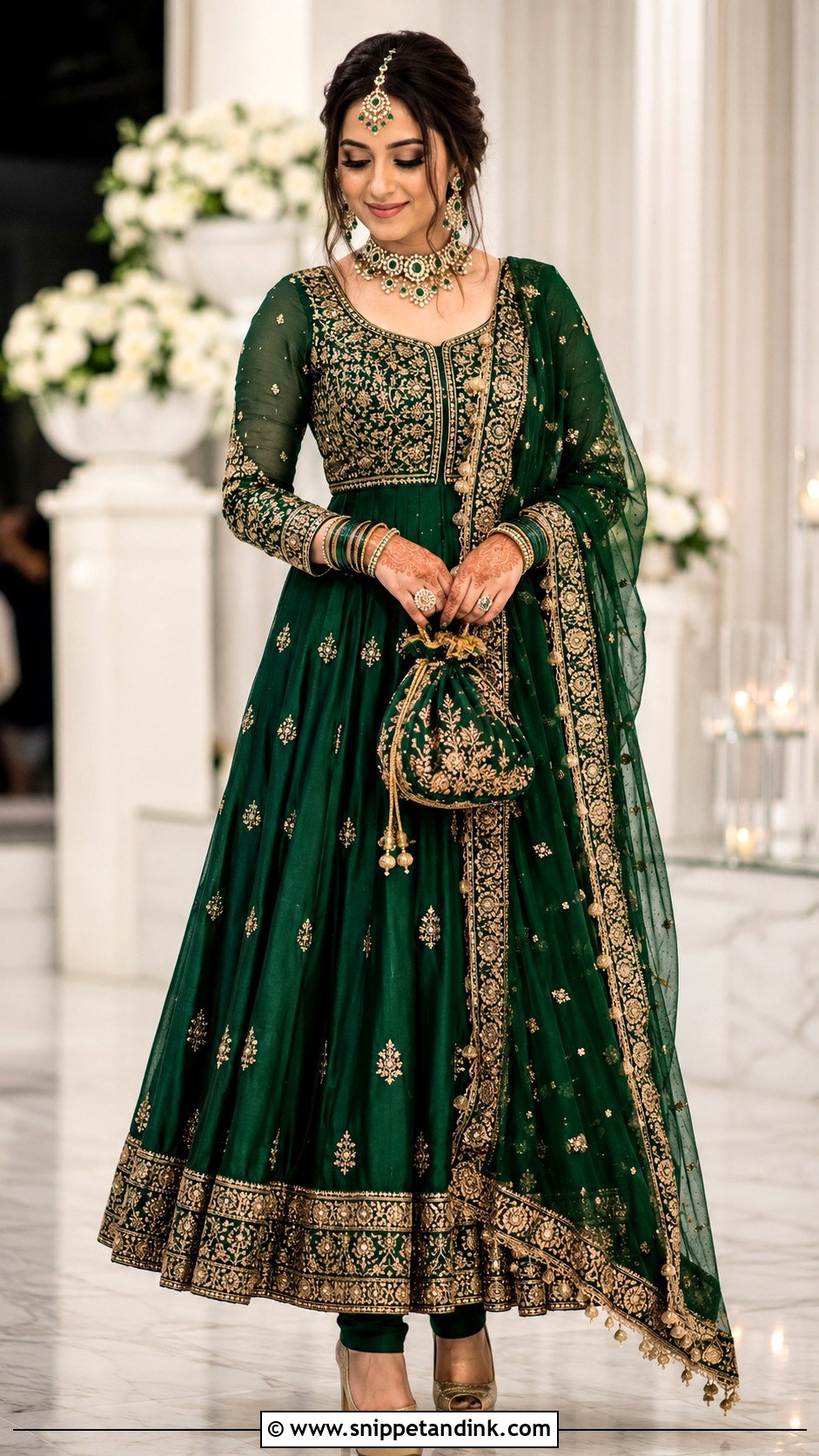
Emerald is a reception colour; it holds up under evening lighting where pastels fade. Raw silk or velvet gives structure, and gold zari, dabka or resham work at the bodice and hem defines it. The full kalidar skirt moves like a lehenga without being one. Pair it with a fitted churidar and a sheer green dupatta with a broad border. For shoes, I steer brides toward gold platforms over stilettos; a narrow heel sinks into lawn and wobbles on stage steps. Kundan with emerald accents, stacked bangles, a structured potli and a centre-parted low bun. If the neckline is heavily worked, one statement necklace is enough.
6. Mustard Mirror Work Bridal Anarkali Suit
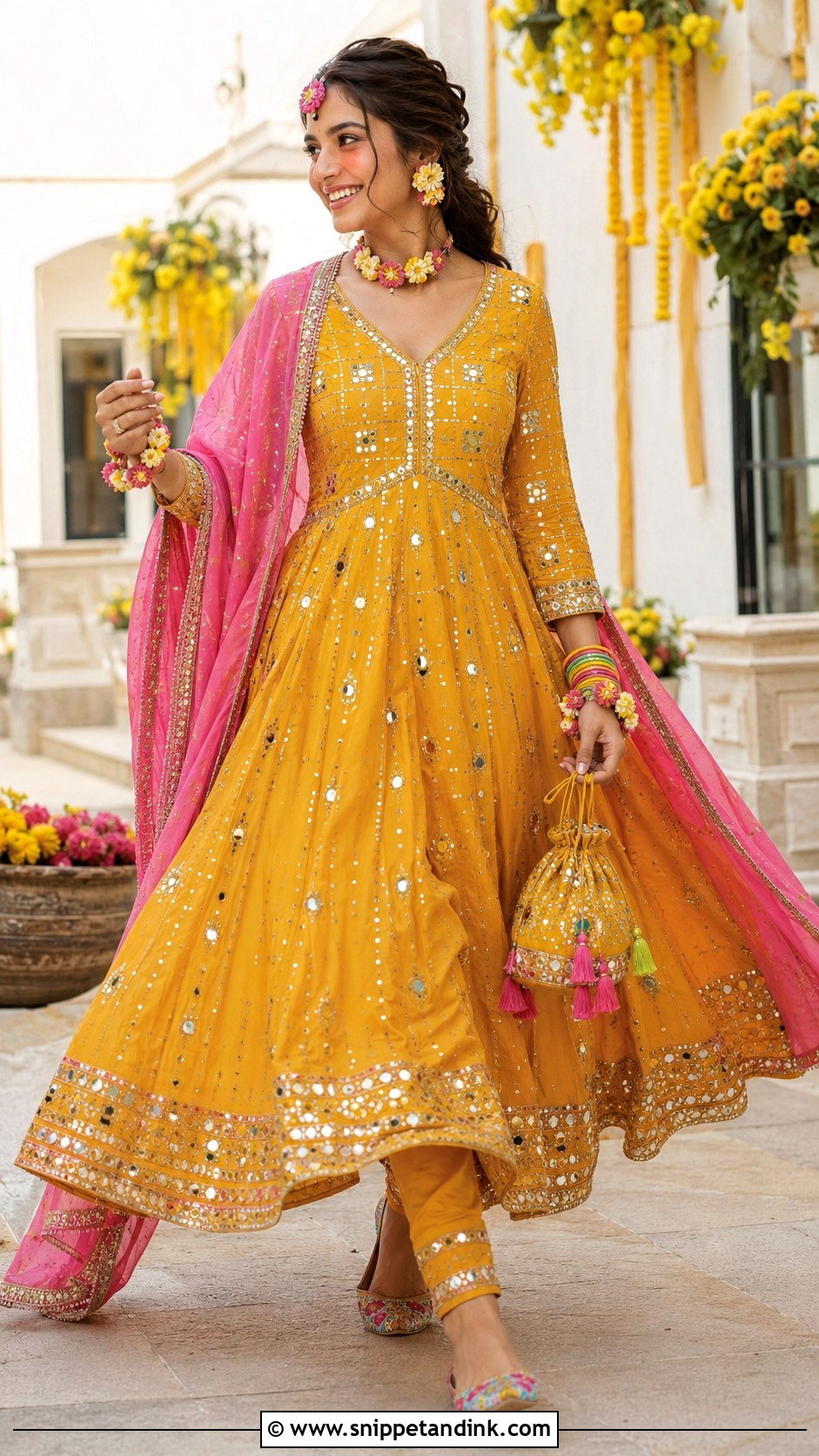
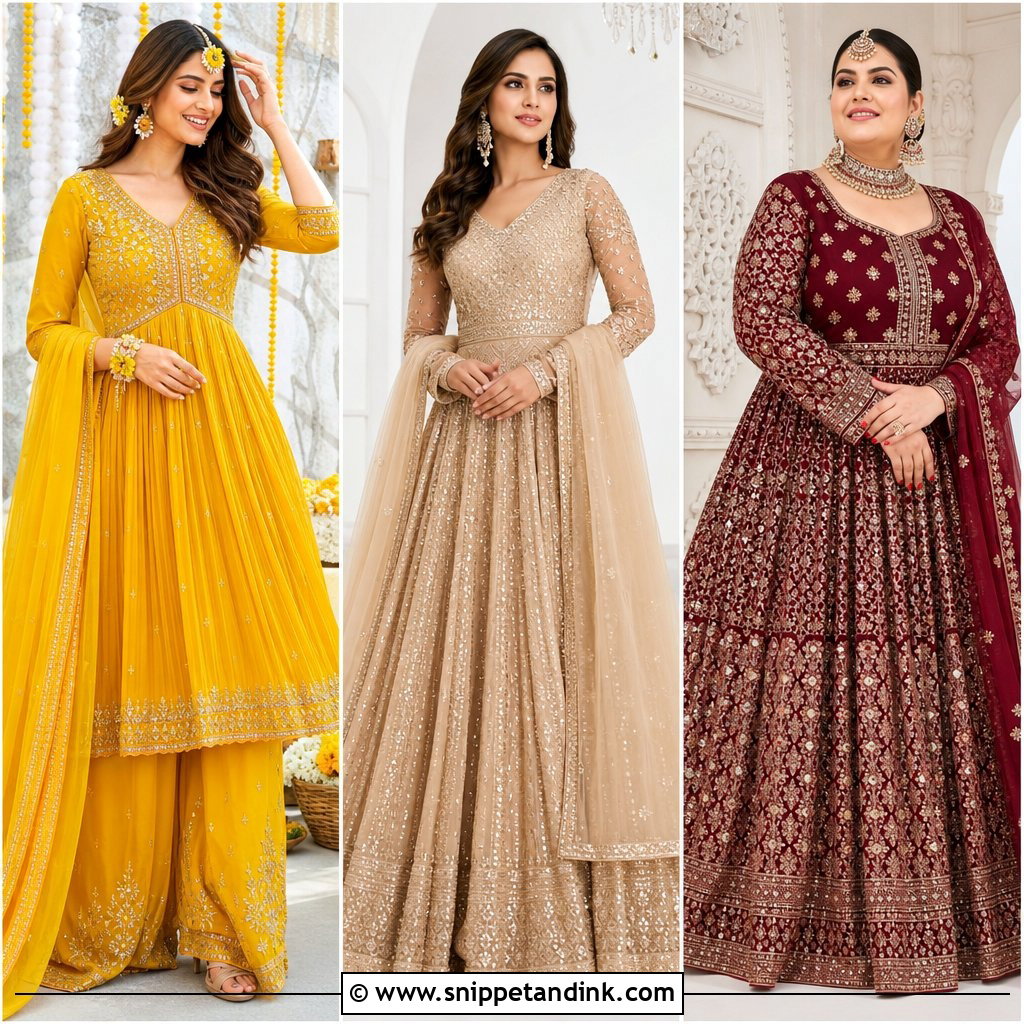
Haldi means turmeric paste, and turmeric stains, so I never let a bride wear anything precious to it. A mustard mirror work Anarkali in georgette, cotton silk or crepe is cheerful and forgiving. Keep the mirrors small and dense on the bodice and scattered on the skirt, which gives sparkle without the weight. Check that the back of the mirror work is properly covered; exposed thread and mirror edges scratch the inner arm. Narrow pants, floral juttis, a yellow or contrasting pink dupatta and fresh-flower jewelry. Hem it just off the floor for an outdoor ceremony.
7. Mehndi Green Gota Patti Bridal Anarkali Suit
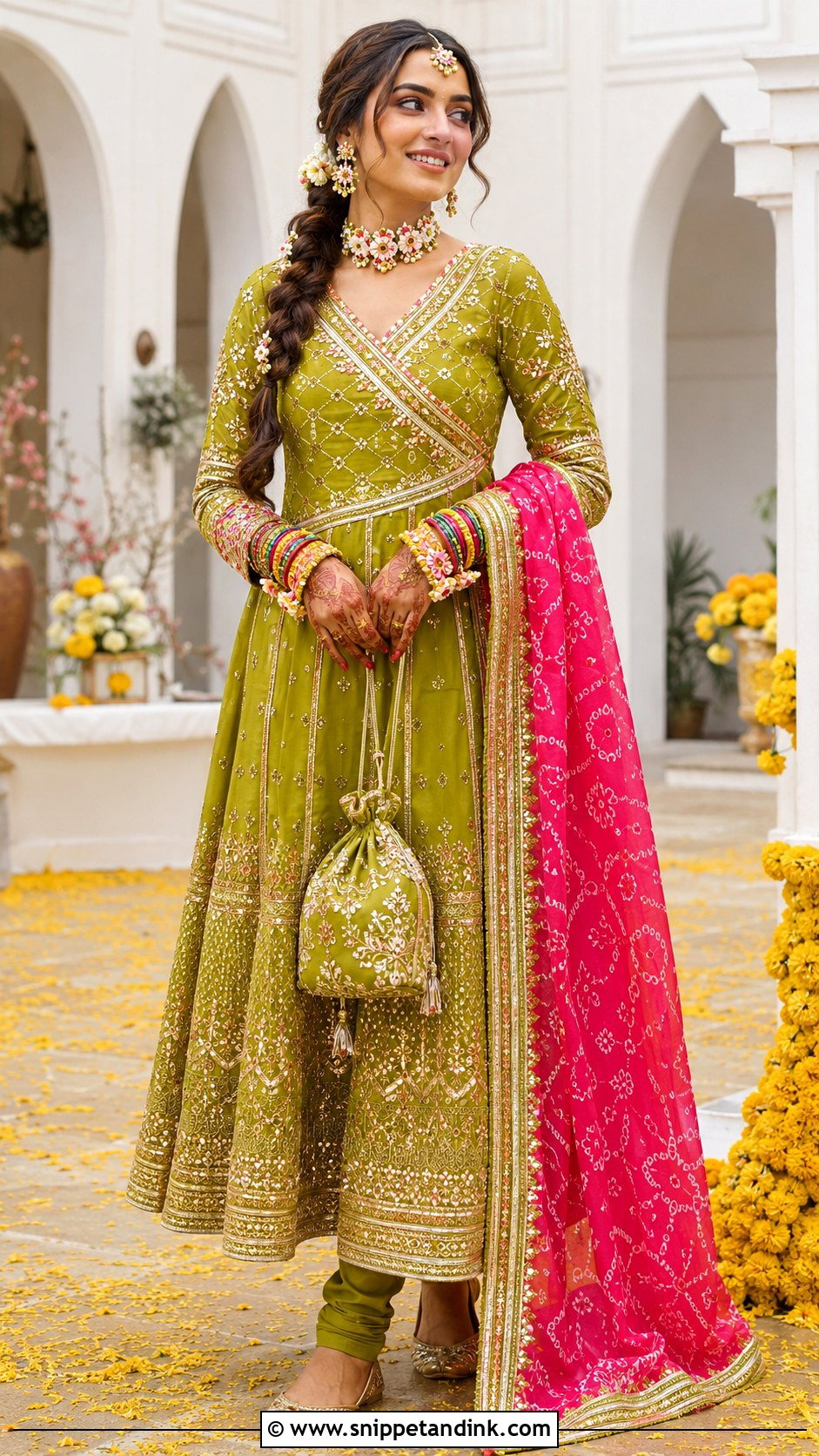
Mehndi green with gold gota patti suits the function it’s named for, and the sleeves matter more than anything else here. Your mehndi artist will cover your hands and often your forearms, and the paste needs hours undisturbed to stain well. I choose three-quarter sleeves or sleeves with easy closures so nothing brushes the wet design. An angrakha-style neckline and paneled skirt, a slim churidar, and a pink bandhani dupatta for contrast. Gold juttis, a floral choker, bangles that go on after the henna dries. A side braid keeps hair away from your hands.
8. Fuchsia Pink Bridal Anarkali Suit
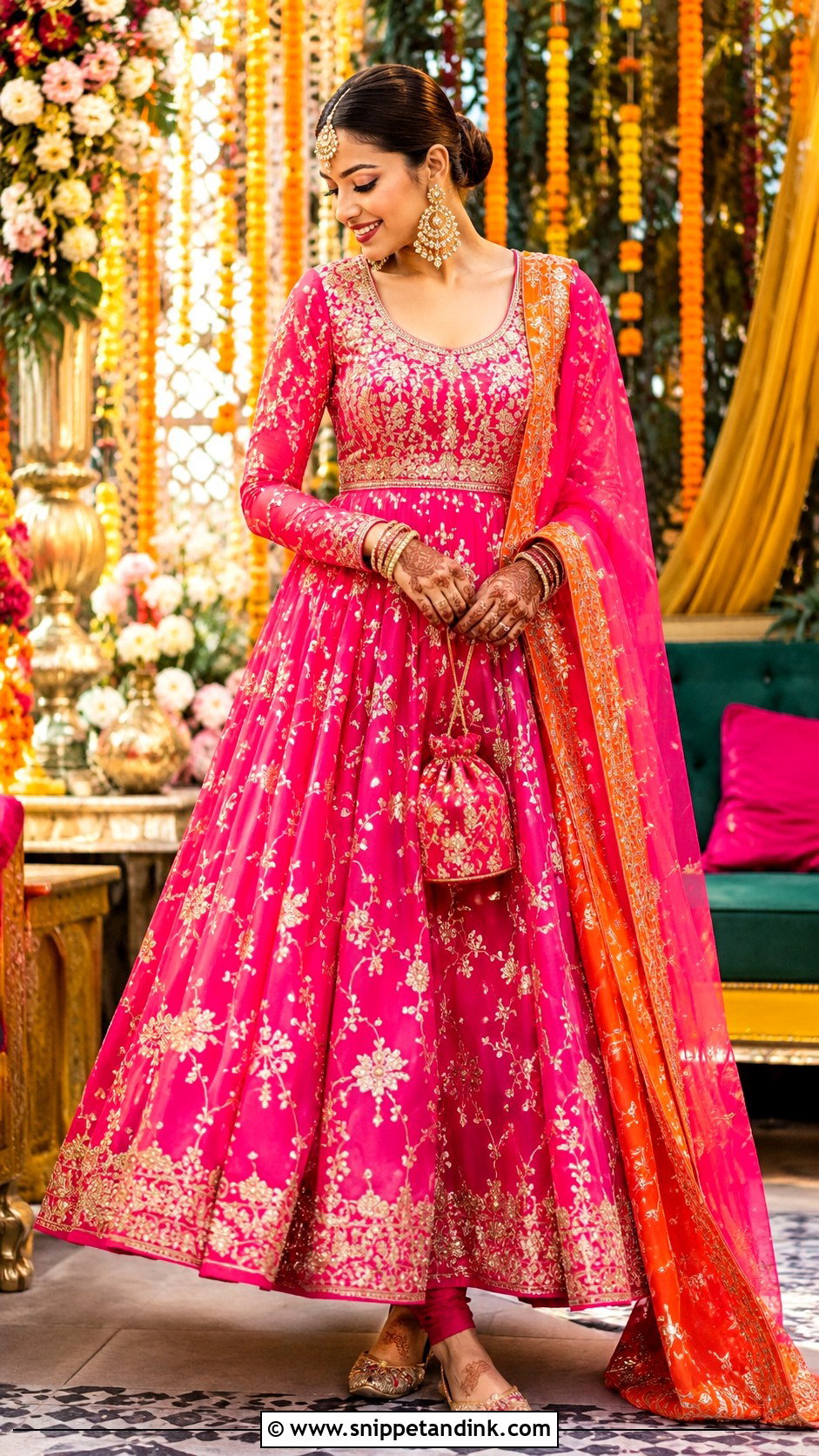
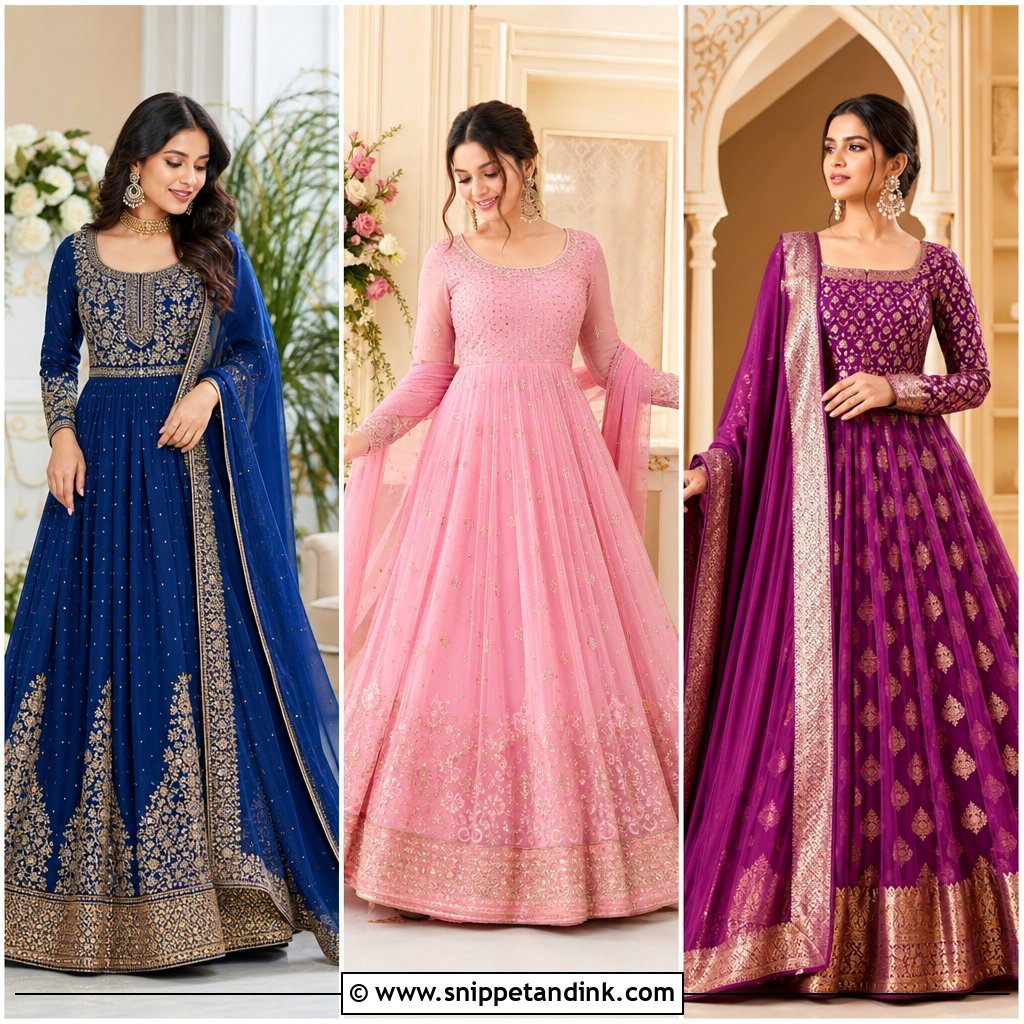
Fuchsia has huge presence, which means the bride’s face has to keep up with it. I balance it with warm gold makeup and defined brows, or the dress wins every photo. Silk or georgette with zari, sequins and resham florals, cut with a fitted bodice into a wide floor-length skirt, makes an Anarkali worn for a sangeet or daytime wedding. An orange, red or gold-edged dupatta keeps the colour play lively. Gold heels or embellished juttis, kundan earrings and a compact potli. For broad shoulders, a soft V-neck and lighter sleeve work balance the upper body.
9. Royal Blue Bridal Anarkali Suit
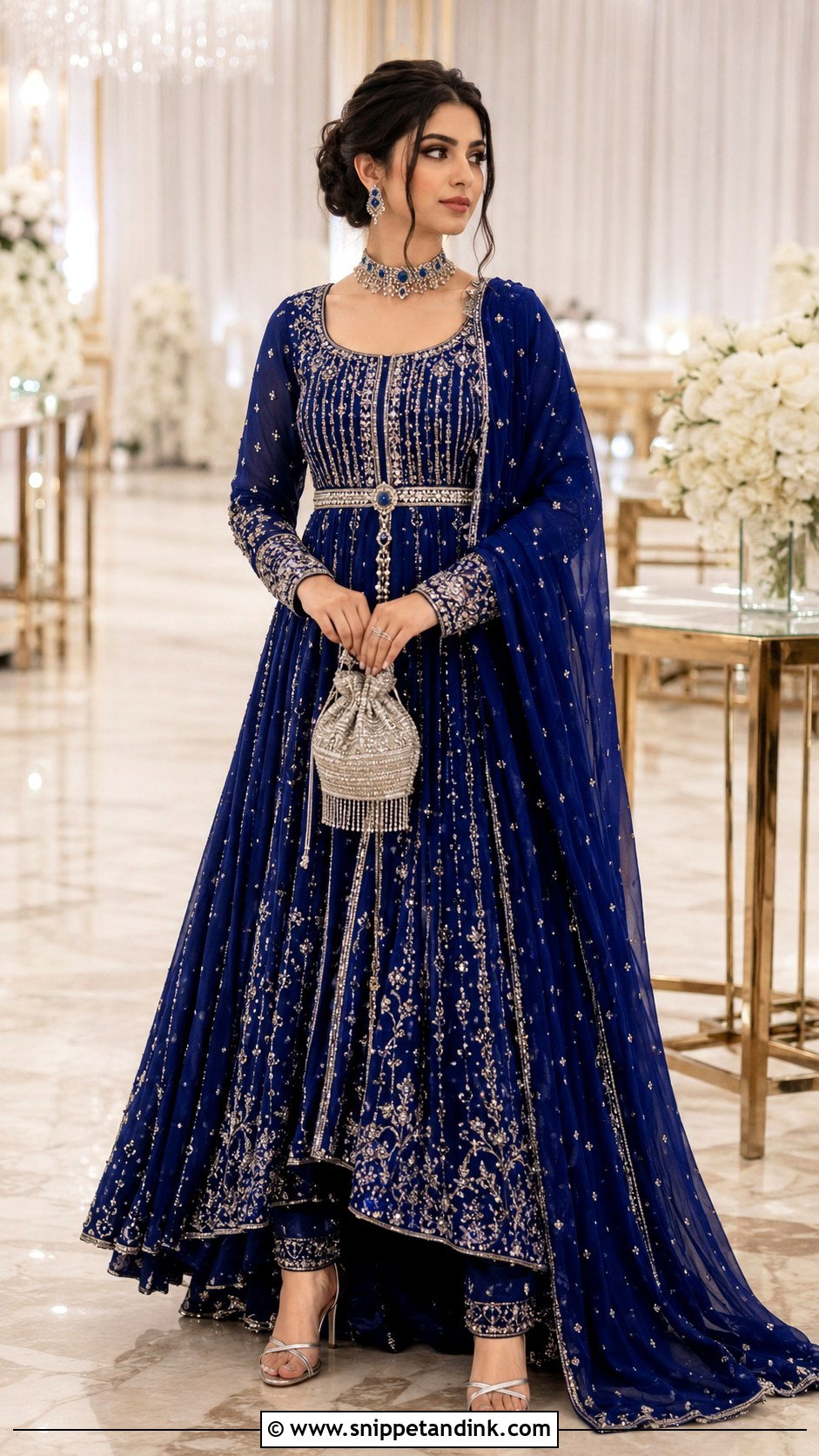
With royal blue the embroidery colour changes everything. Silver crystal work makes it cool and contemporary; gold zardozi pulls it back toward tradition; multicolour thread makes it festive. For an evening reception, choose silk, velvet or layered georgette with a fitted waist and sweeping flare, matching pants and a sheer dupatta over one shoulder so the bodice stays visible. Metallic heels, sapphire-toned earrings and a choker. A detachable embroidered belt adds definition. One practical point I repeat to every bride: buy the wedding shoes first, then have the hem finished in them.
10. Powder Blue Bridal Anarkali Suit
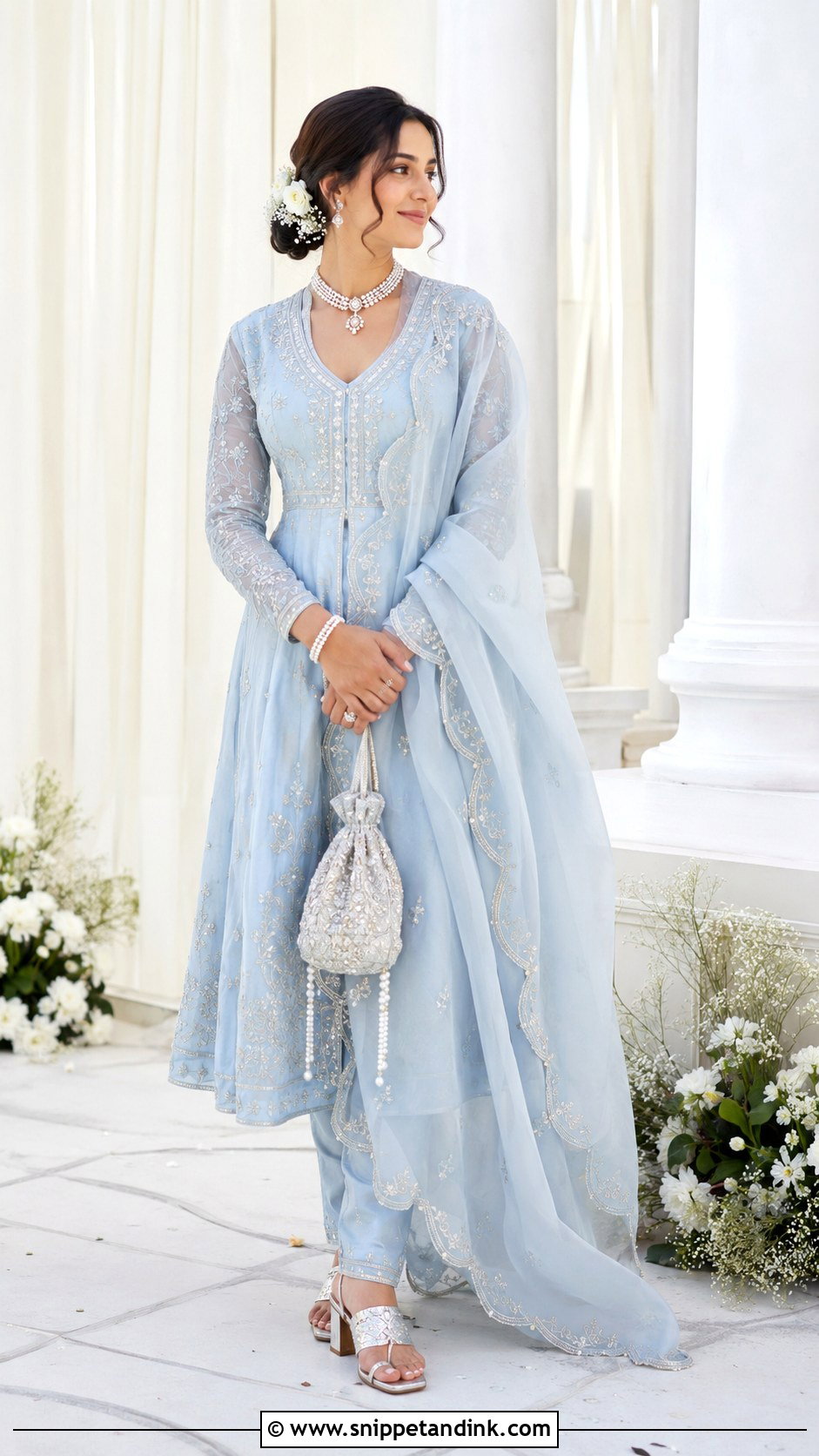
Powder blue suits a daytime nikah or engagement where a bride wants something quieter than red. Organza or tissue silk with delicate silver work, pearls and small florals, cut high-waisted to add visual height. Thin fabric can’t support dense embellishment, though. Heavy work on organza drags the drape and puckers the seams, so keep it light. Matching fitted pants, silver block heels, a scalloped dupatta, pearl earrings and a crystal potli. Pale pink flowers in a low bun or a tinted lip add a little warmth. Make sure the lining is full; pale organza turns see-through against a bright window.
11. Lavender Bridal Anarkali Suit
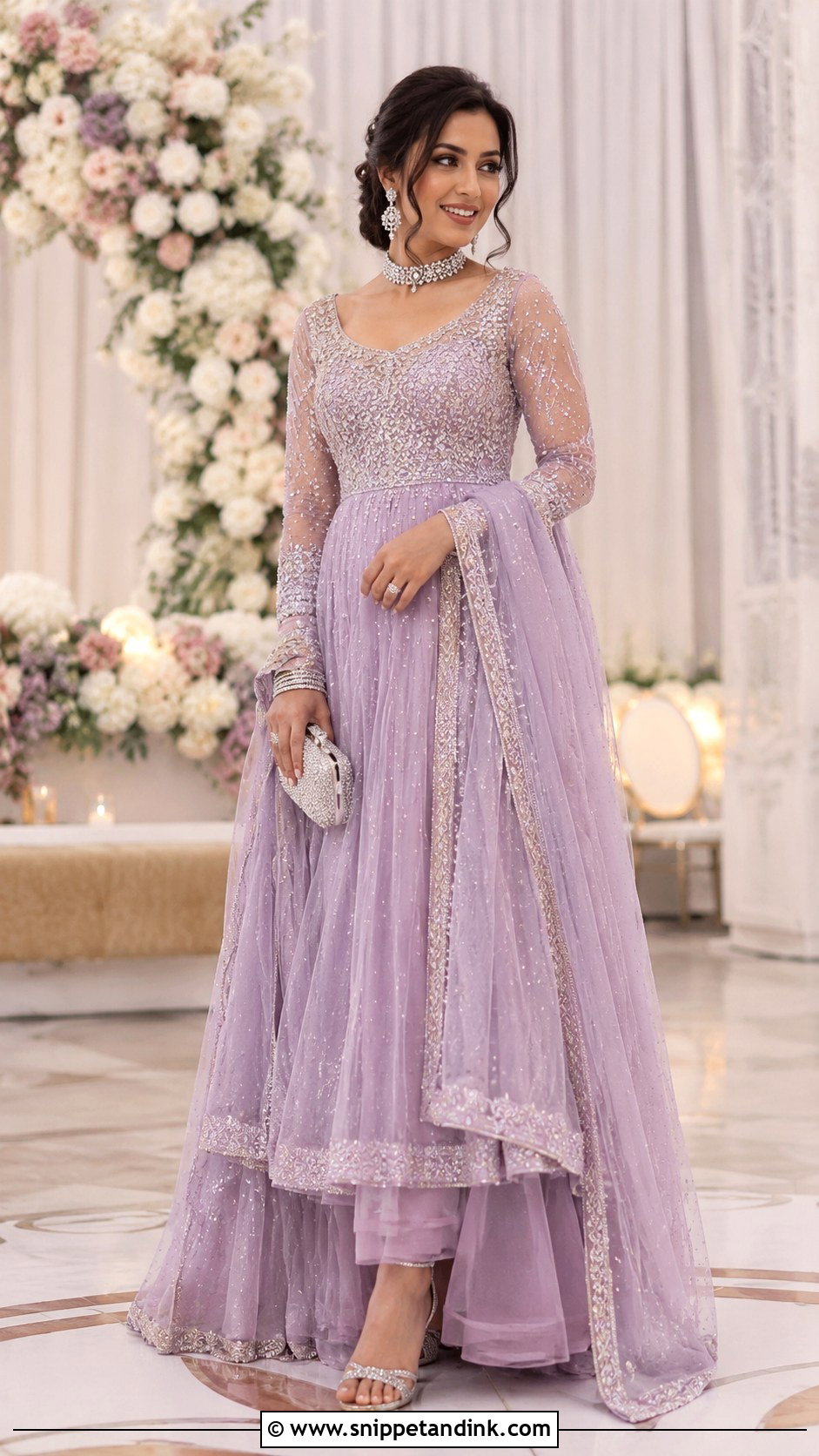
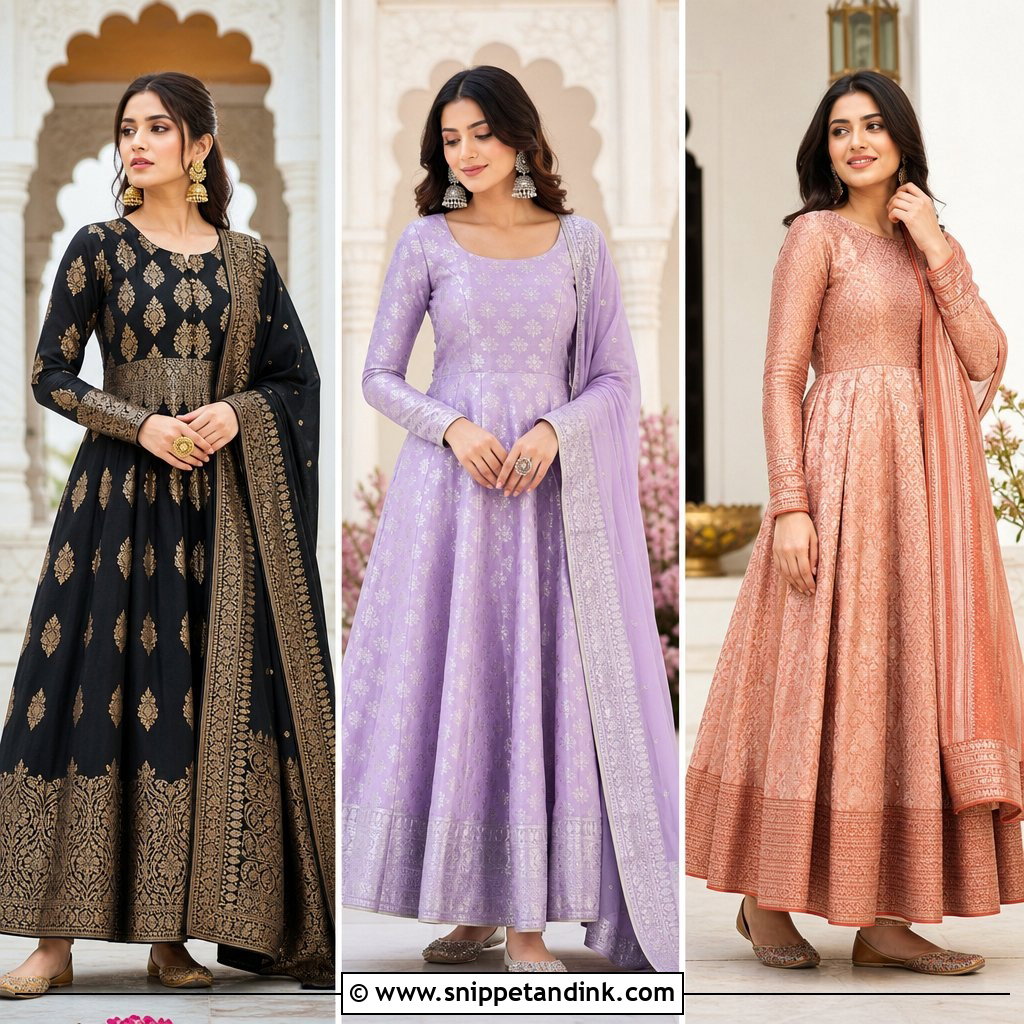
Lavender with tulle layers looks grand but should still be manageable, so I keep the flare moderate rather than ballgown-wide. A fitted bodice with pearls, sequins and silver thread over a full-length skirt, worn with matching pants, crystal heels and a sheer lavender dupatta pinned at one shoulder. A silver choker, drop earrings, slim bangles and a beaded clutch. Pale green stones in the jewelry give a subtle contrast. Lavender can turn grey under some indoor lighting, so check the shade in the reception venue’s light, not only at the boutique. Cool-toned makeup and a soft pink lip keep it light.
12. Champagne Sequin Bridal Anarkali Suit
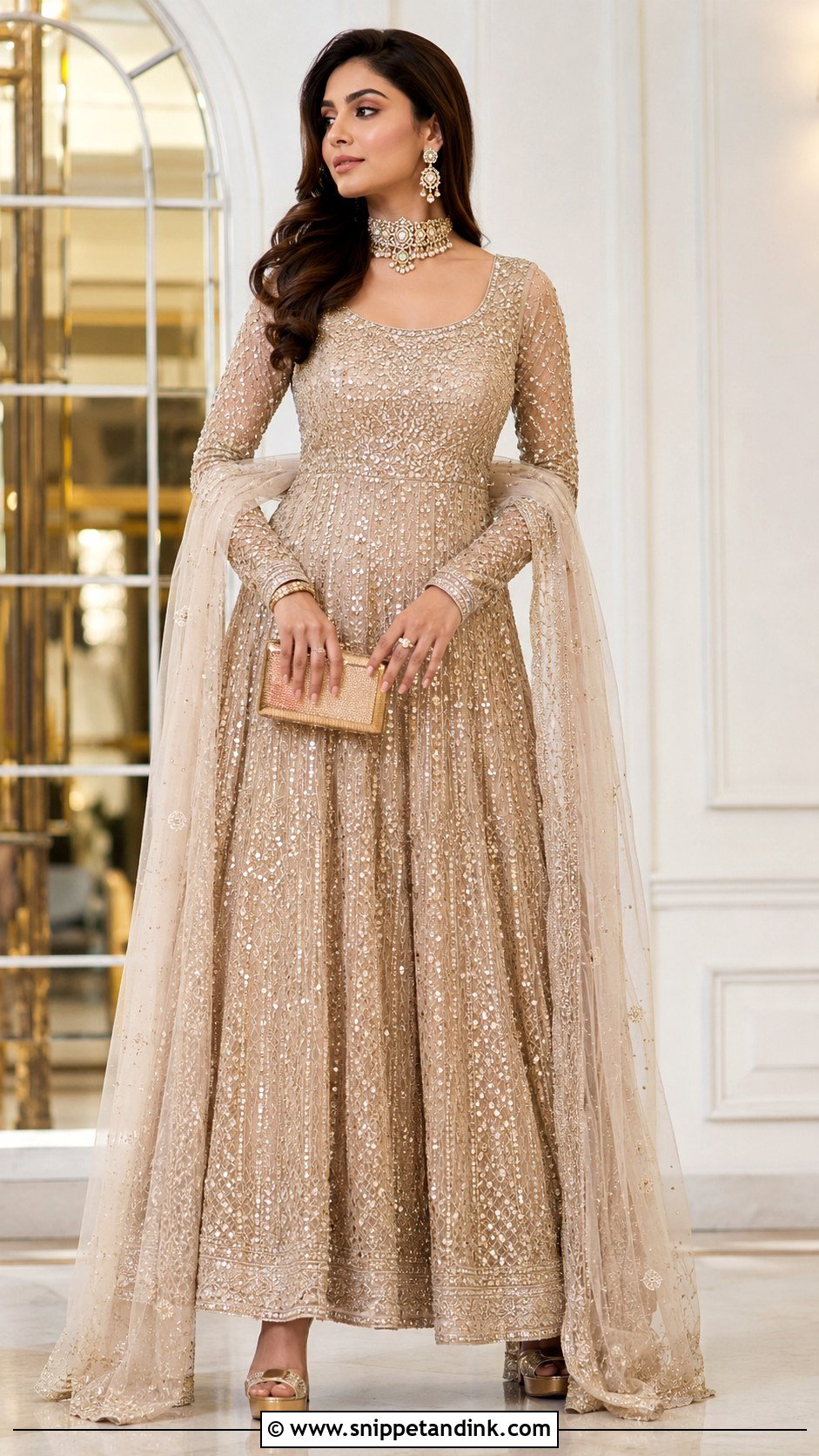
Sequins on a champagne base reflect every camera flash, which is lovely until it isn’t: too much shine and the bride’s face loses definition. I keep jewelry around the face only and let the garment supply the sparkle. Choose a champagne sequin Anarkali with tonal sequins, crystals and fine thread, a fitted waist and a fluid skirt. Narrow pants, a light net dupatta, gold platforms, a crystal choker and a metallic box clutch. Run your hand along the inside seams before buying; loose sequin threads and uncovered backs scratch the underarms all evening.
13. Red Bandhani Bridal Anarkali Suit
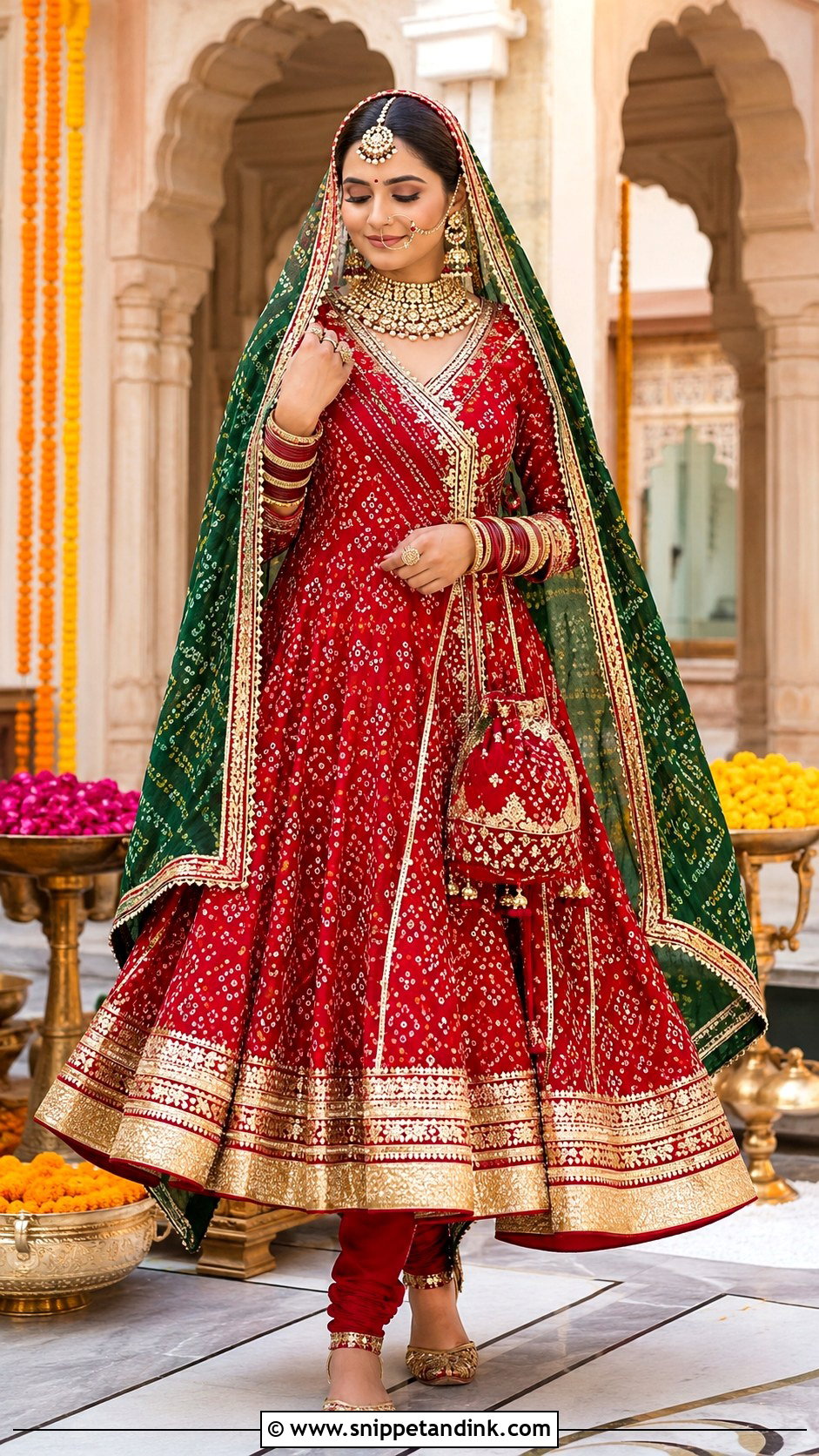
Bandhani is resist-dyed: the cloth is pinched and tied before dyeing, which is what leaves those tiny dots. It carries pattern on its own, so the embellishment should be placed rather than piled on. A silk or georgette kalidar Anarkali with gold gota patti at the neckline, waist and hem, and a contrasting green or mustard dupatta draped over the head for rituals. Fitted churidar, gold juttis, kundan, red bangles and an embroidered potli. A braided bun with flowers suits the regional character. It’s much lighter than a zardozi suit, so I suggest it for long family pujas in warm weather.
14. Floral Organza Bridal Anarkali Suit
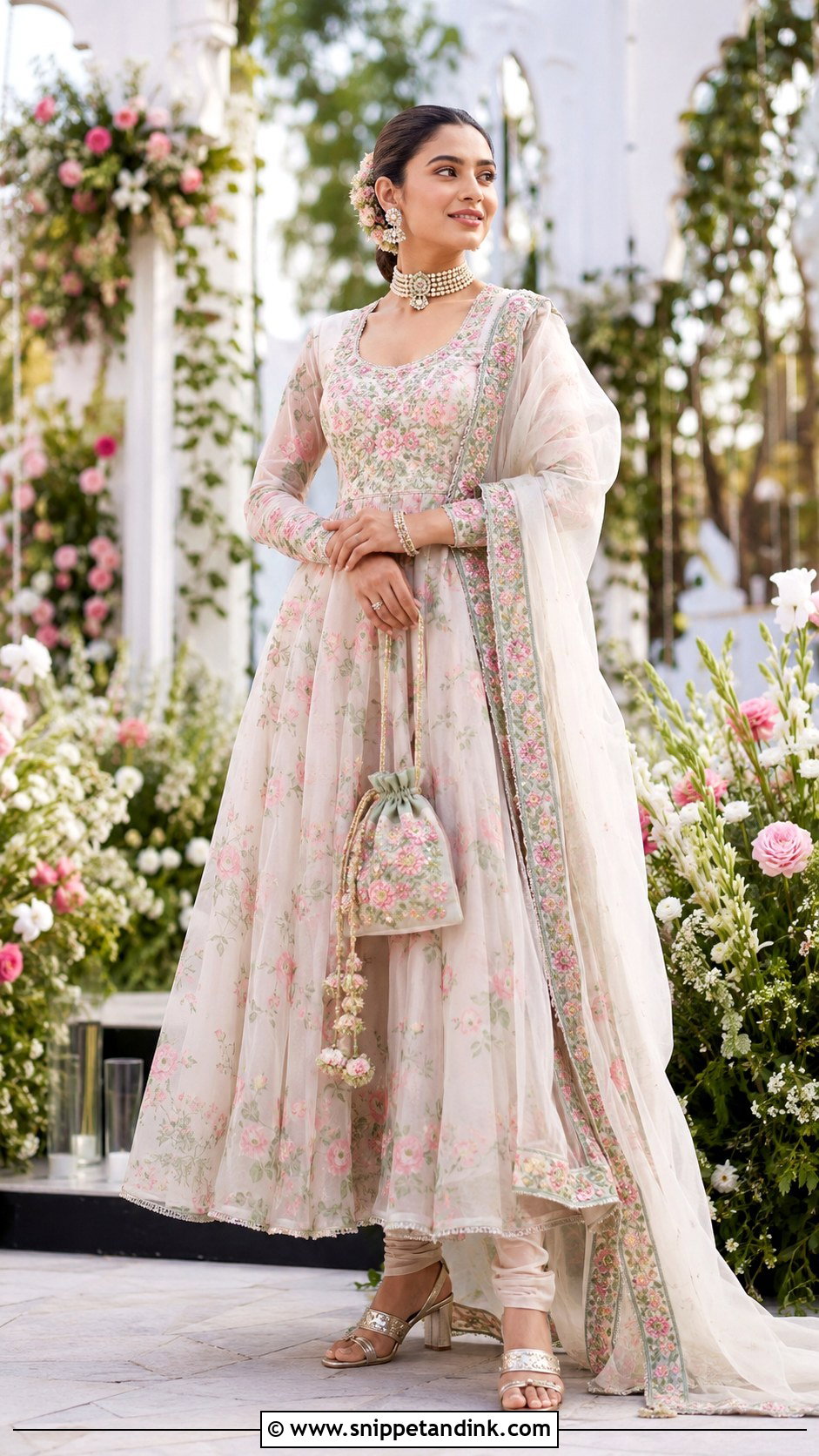
Organza is transparent and creases where it’s pressed, which is why the lining does all the structural work in a floral organza Anarkali. Choose a pastel base with embroidered flowers rather than a printed fabric, which reads casual next to bridal handwork. A lined bodice and layered floor-length skirt keep the shape. Slim ankle pants, nude or metallic block heels, a sheer dupatta with matching floral borders and pearl jewelry. For a fuller bust, I’d pick a modest V-neck with embroidery placed at the shoulders rather than across the chest. Keep the hem clear of the ground at a garden ceremony.
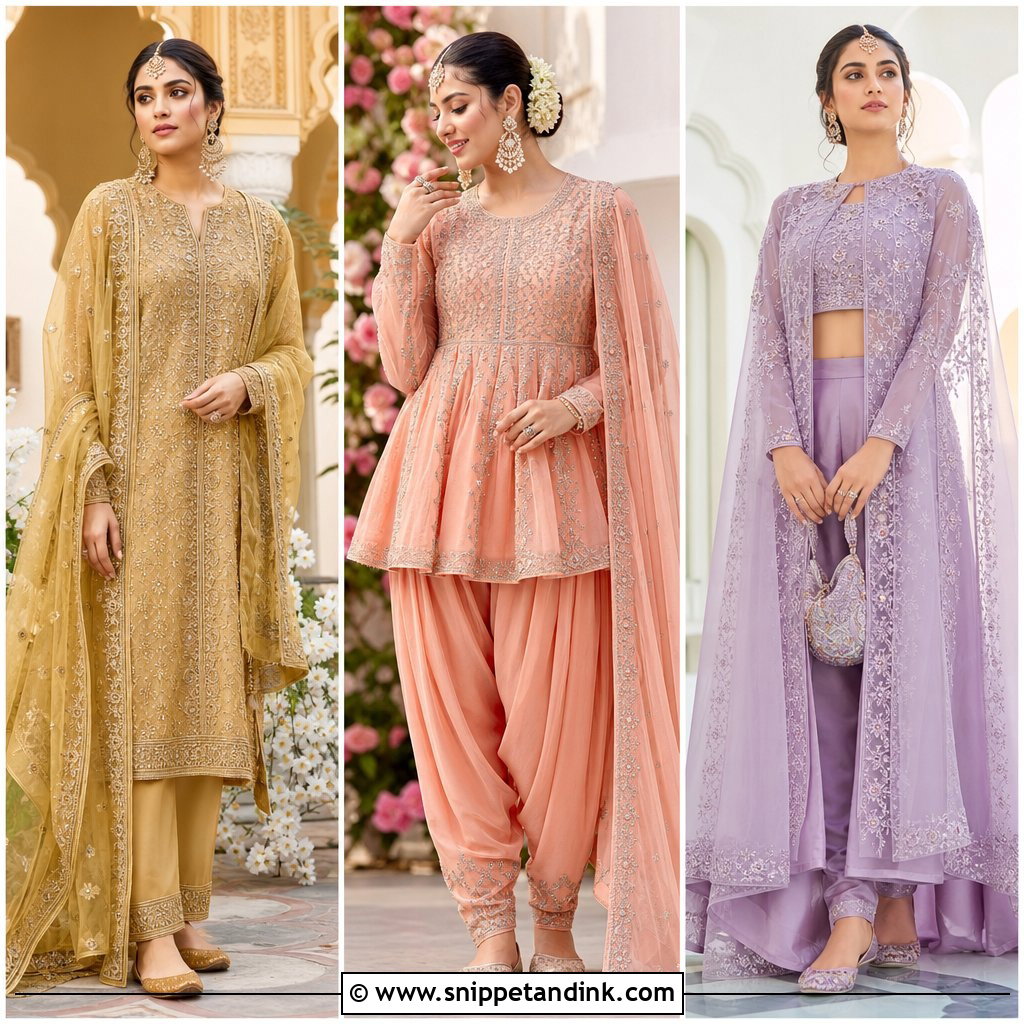
15. Jacket Style Bridal Anarkali Suit
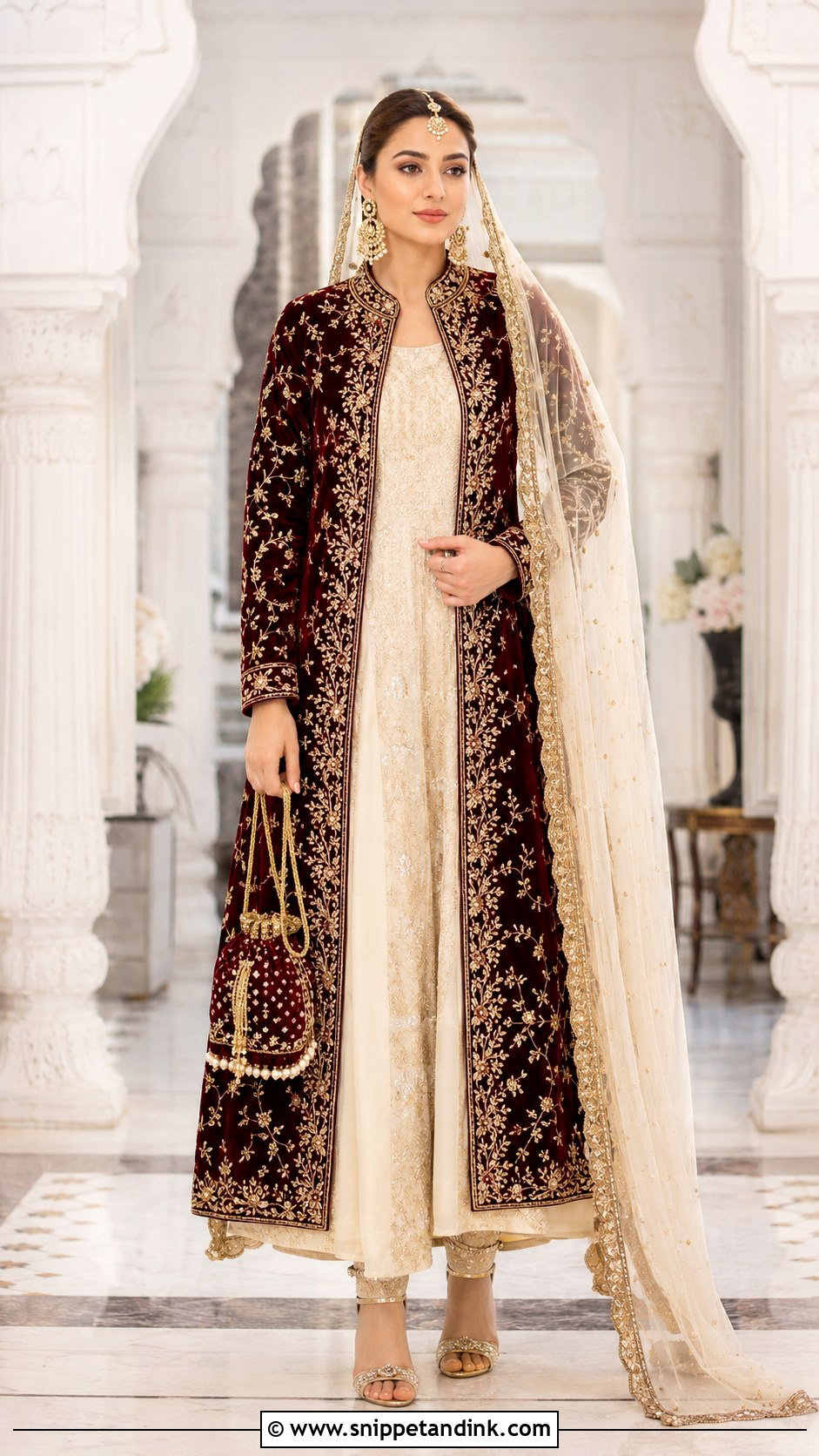
The jacket-style Anarkali is the most adaptable set I style, because one outfit becomes two. A plain or lightly embroidered floor-length Anarkali underneath, a velvet, brocade or net long jacket with zardozi and resham over it. Wear it open to create a long vertical line; take it off later and you’re in a lighter dress for dancing. Fitted pants, embellished heels, statement earrings and a potli. A light dupatta is optional at a reception. A neat bun or sleek ponytail stops the neckline crowding. Lift your arms in the fitting; long jackets often bind at the armhole.
16. Cape Bridal Anarkali Suit
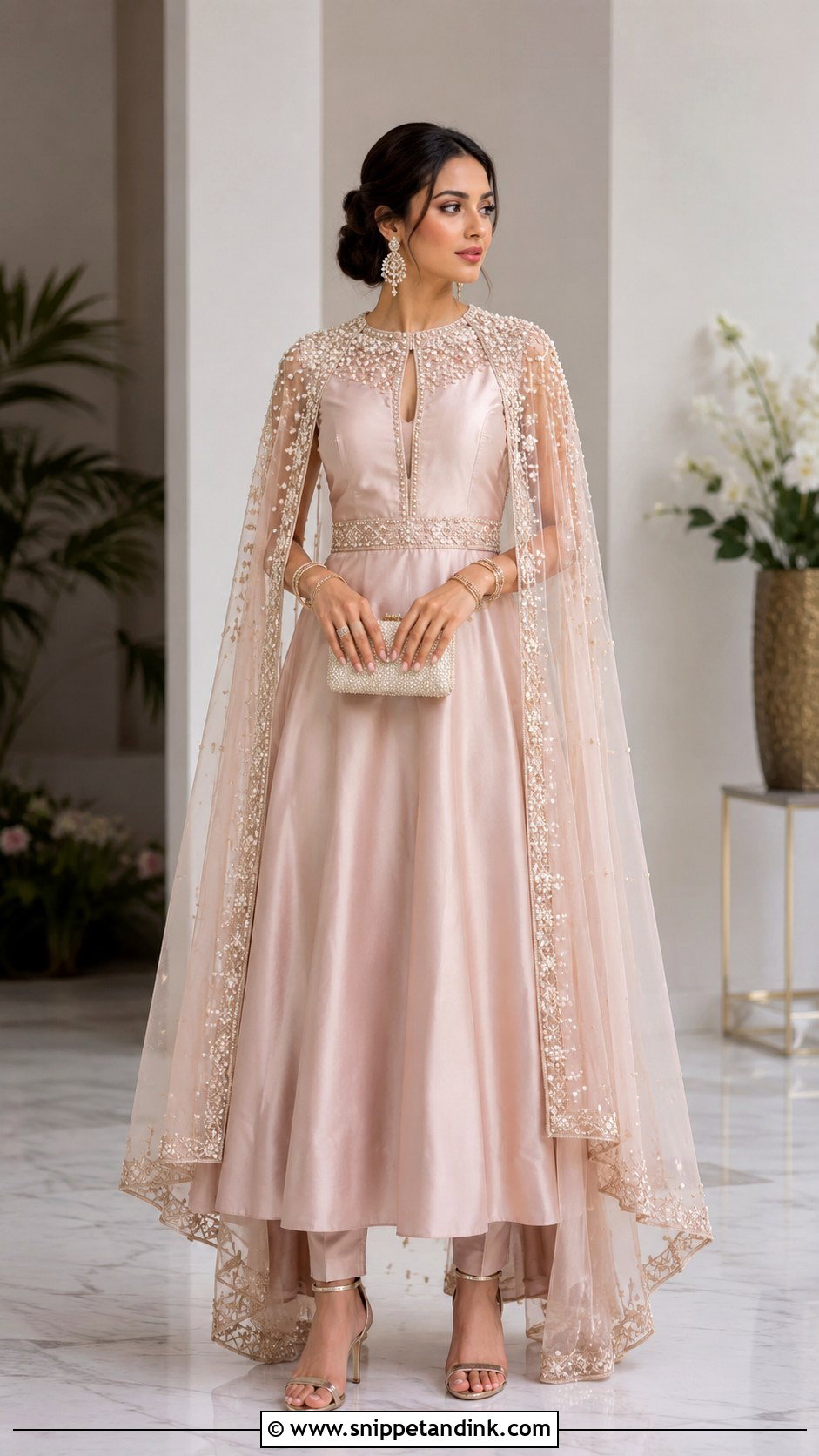
A cape gives a modern line, and its length decides whether it works. It should end at the waist or below the hips without hiding the whole shape of the dress, or the bride looks wrapped rather than dressed. Choose a fitted silk or georgette Anarkali with a detachable sheer cape in crystals, pearls or fine thread. Narrow pants, metallic heels, statement earrings and a compact clutch. If the cape has a worked neckline, skip the necklace. Slim bangles add traditional detail. Hair goes in a low bun or behind the shoulders so it doesn’t tangle in the cape at receptions and indoor sangeets.
17. Angrakha Bridal Anarkali Suit
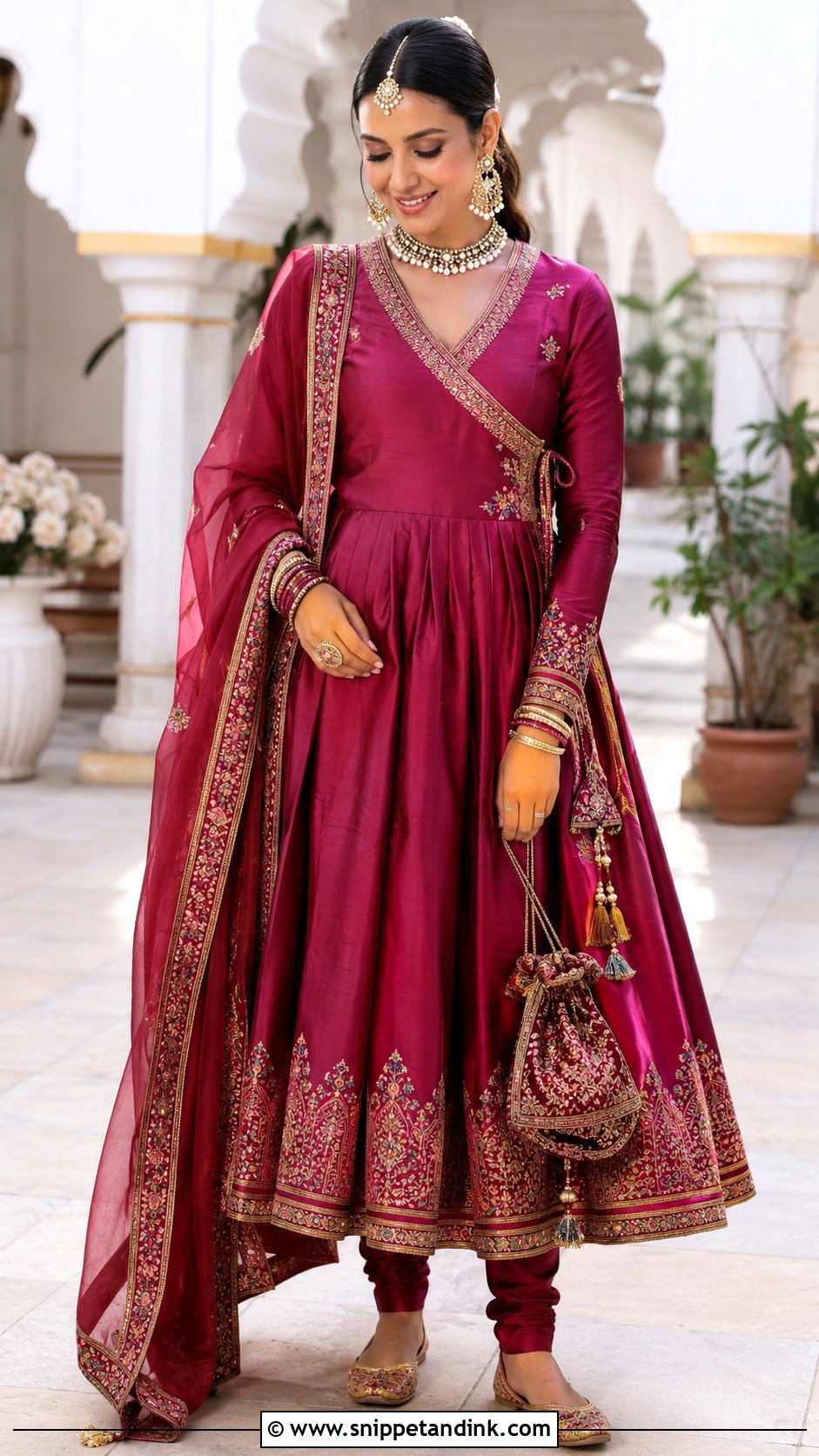
The angrakha wraps across the body and ties at the side, which gives an adjustable waist but needs secure inner fastenings, especially for a fuller bust. I always ask the tailor to add a hidden hook or snap behind the ties so the overlap can’t open when you hug guests. Choose silk or georgette with embroidered ties, beads or tassels and multiple skirt panels. A contrast border shows off the wrap in photos. Fitted churidar, an embroidered dupatta, juttis, kundan earrings, a medium necklace and a tassel potli. A side-parted bun or long braid; keep tassels where they won’t catch on jewelry.
18. Bridal Anarkali Lehenga Suit
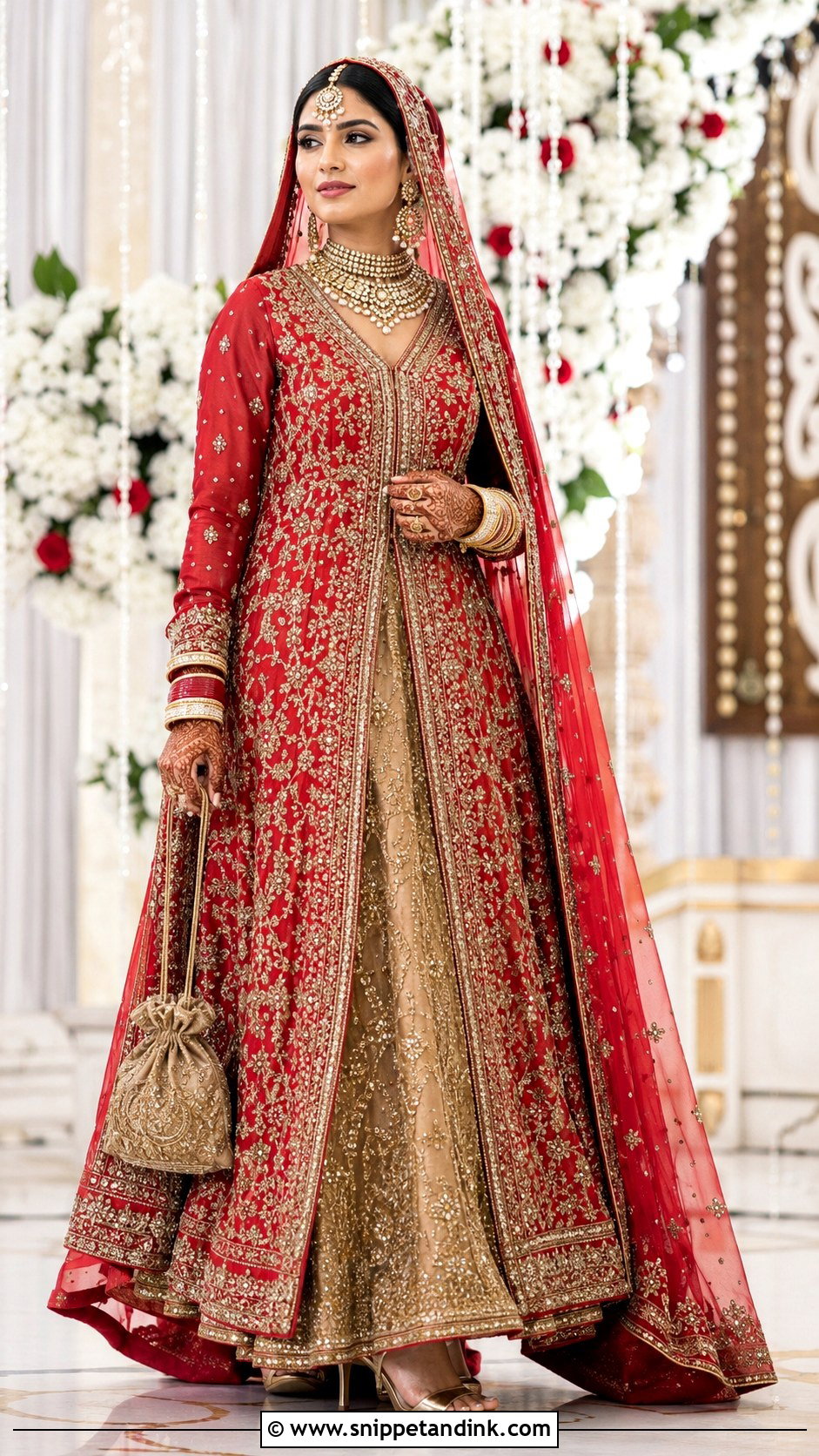
An Anarkali lehenga gives a bride the coverage of a long kurta and the volume of a bridal skirt in one look. A front-slit Anarkali layered over a coordinated lehenga lets both show, with the open panels framing the skirt as you walk. A bordered dupatta over the head, supportive heels, a polki necklace and bridal bangles. Balance the embroidery across both layers or it gets heavy. Petite brides suit a higher slit and narrower skirt; taller brides can take broader panels. Practise sitting, stairs and getting in and out of a car in it before the day. Two layers take more room than you expect.
19. Bridal Anarkali Sharara Suit
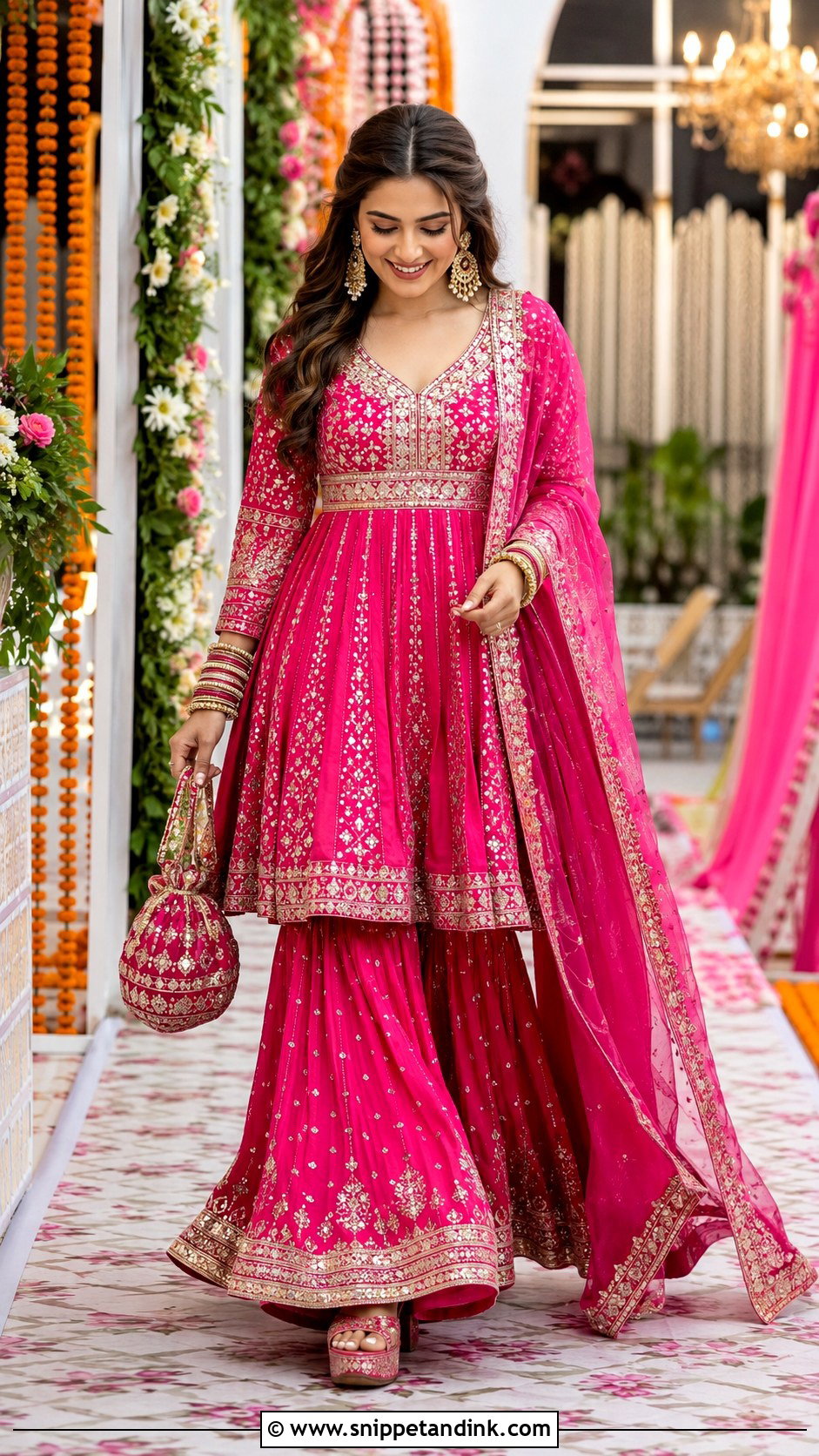
With a sharara, the length of the top is what makes or breaks the silhouette. A knee or calf-length flared Anarkali leaves the wide pants visible; anything longer and you lose the sharara entirely. I like this Anarkali worn over a sharara for mehndi and sangeet nights, in silk, brocade or georgette with coordinated zari or mirror work on top and pants. Platform juttis, statement earrings, stacked bangles and a small bag. Curvier hips suit a sharara that starts to flare below the upper thigh. Pin the dupatta firmly so it doesn’t tangle with two moving layers.

20. Pastel Chikankari Bridal Anarkali Suit
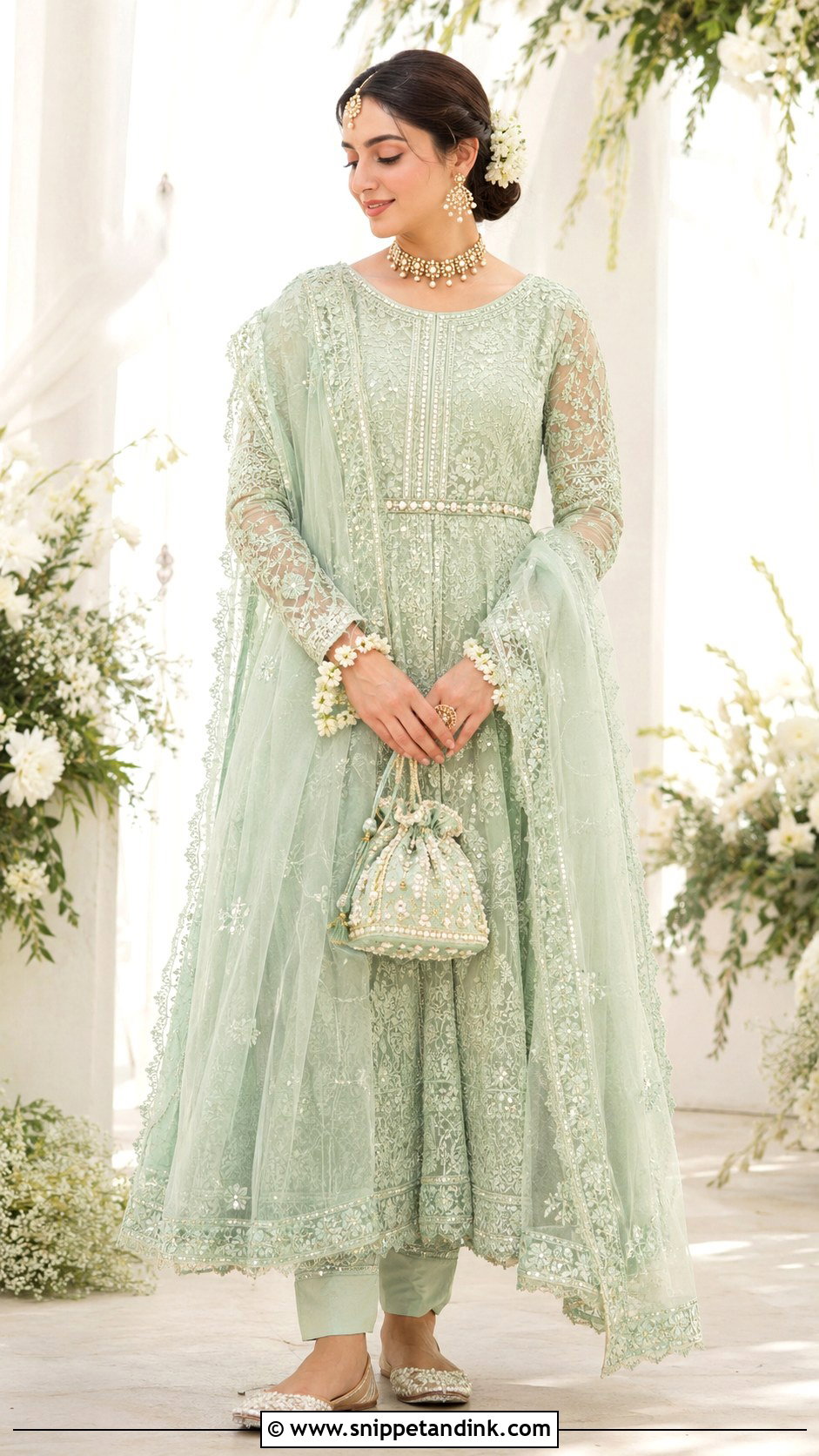
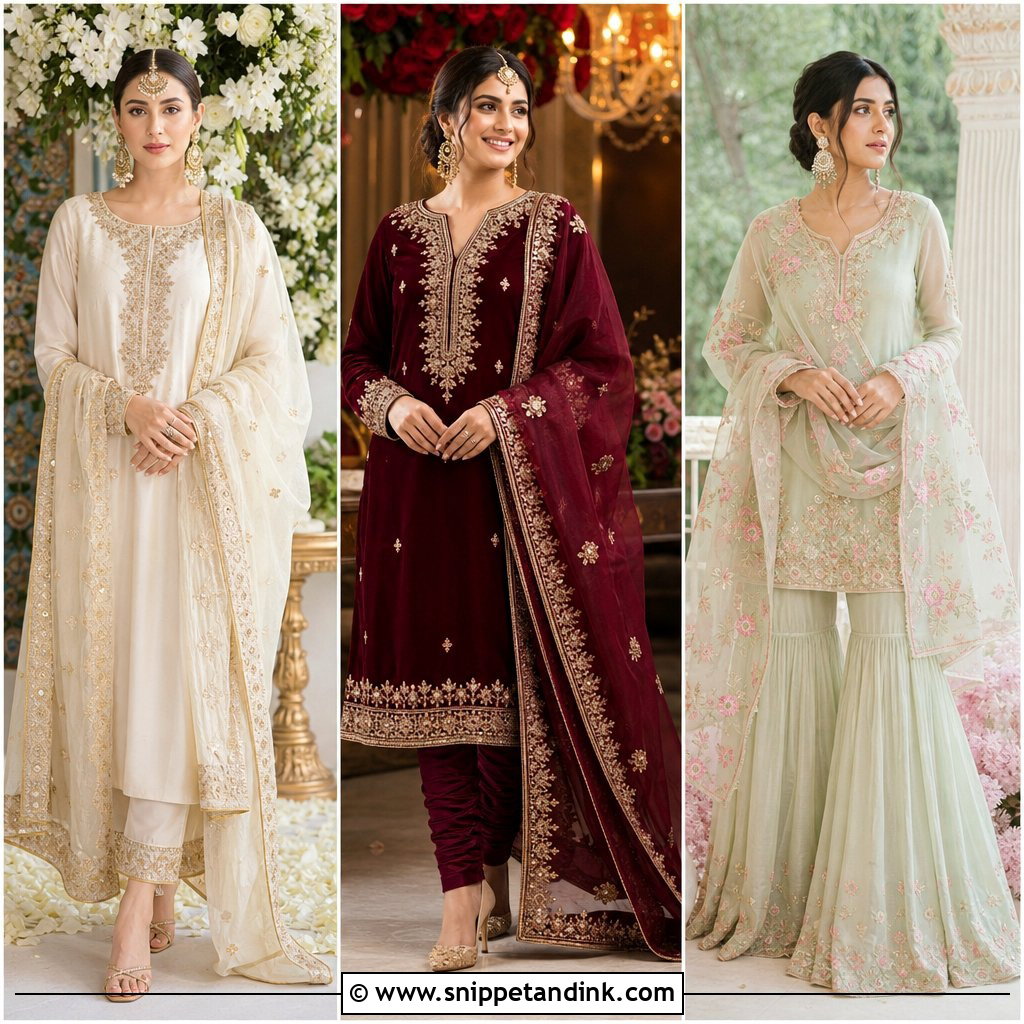
Chikankari is fine hand embroidery traditionally worked in white thread on light cloth, and a pastel version with tonal work suits a morning ceremony or a pre-wedding prayer. Blush, mint, ivory or pale yellow cotton-silk, georgette or organza keep it breathable. The detail I check every time is lining colour: a slightly mismatched underlayer shows straight through pale, open embroidery and changes the shade of the whole dress. Fitted pants, an embroidered organza dupatta, pearl juttis and a beaded potli. Pearls or a delicate polki set, a slim belt if you want definition, fresh makeup and a flower bun.
Sitting for the Pheras in Twenty Kalis of Skirt
A kalidar Anarkali is built from many triangular panels, and the more panels, the more fabric pools around you when you sit. On a mandap or a low stage, that matters. Before you sit, gather the back of the skirt with one hand and sweep it forward, so you are not sitting on the embroidery or pulling the bodice down at the back.
Pinning a heavy dupatta
A dupatta worn over the head is anchored to the hair, not the dress. I use U-pins or small bobby pins hidden under the edge at the crown and behind each ear, then a single safety pin at the shoulder seam on the inside of the bodice. Pinning through embroidery tears thread, so always pin through plain fabric or the lining.
Shoes and stairs
Stage steps, garden paths and the walk to the car are where floor-length skirts catch. Practise lifting the front panel with one hand while holding a rail with the other. A block or platform heel feels steadier under a heavy flare than a stiletto.
One Anarkali for Each Function, Fitted to How You’ll Move
Matching each Anarkali to a specific function, climate and comfort level makes the choice much easier. Red zardozi, maroon velvet and Anarkali lehenga sets carry the wedding ceremony. Mirror work, bandhani, sharara sets and bright colours suit haldi, mehndi and sangeet. Pastel organza, chikankari and pearl work set a softer mood for engagements and daytime events. Whichever you choose, I’d put the tailoring first: support in the bodice, breathable lining, embroidery you can carry and a hem finished in your actual shoes. A dupatta pinned securely means you can stop thinking about the outfit and enjoy the day.
You'll Like These Ideas:





Leave a Reply