
How Banarasi Brocade Behaves in a Flared Skirt
An Anarkali gets its flare from many triangular panels called kalis, and brocade is a stiff, patterned cloth. Those two facts decide most of what will go right or wrong with your outfit.
Heavier brocade holds a bell shape and stands away from the body, which looks regal in photos but adds weight and width. Softer silk Banarasi falls closer to the legs. If you want drama, ask for more kalis rather than a heavier fabric; more panels give more flare without making the skirt harder to walk in.
Checking the fabric before you buy
- Turn the fabric over. Handloom weaving usually shows floating threads or small irregularities on the back; very even, glued-looking backs often point to power-loom cloth.
- Genuine Banarasi from the region can carry a geographical indication label, and pure silk may carry a silk mark tag. Ask the seller if either is present.
- Real silver-based zari is soft and slightly dull rather than brassy. Plastic-coated metallic thread feels rough and can scratch the inner arm.
- Look at where the motifs will land. Large motifs need to be centered on each kali by the cutter, or the skirt looks randomly chopped.
Handloom pieces cost more and take longer to source. Power-loom Banarasi is not a bad choice, especially for a guest outfit, as long as you know which one you’re buying.
1. Red Banaras Anarkali Dress With Gold Dupatta
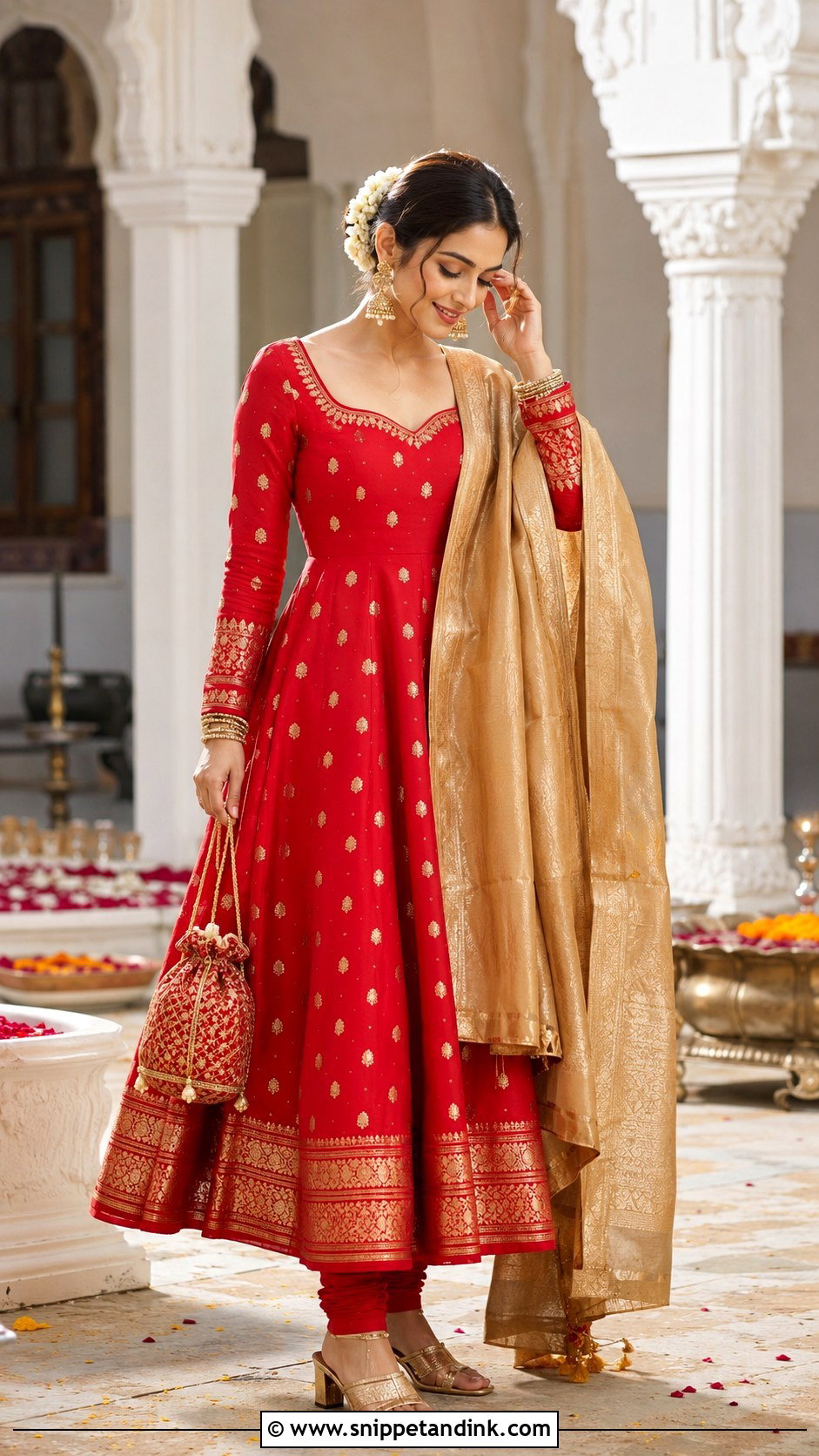
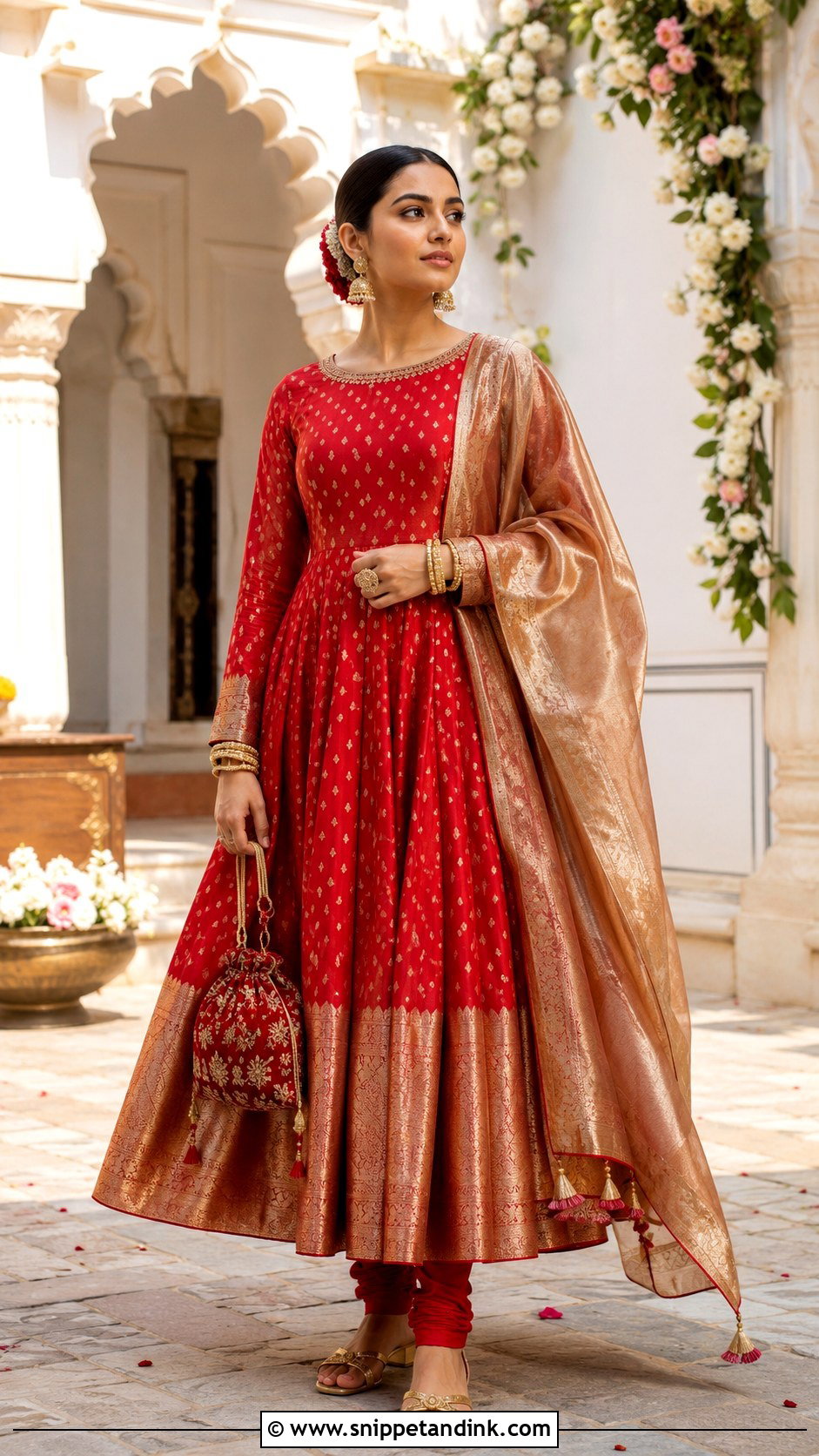
Red with gold is the Banarasi pairing every family recognizes, which is exactly why the details have to be right. I prefer small gold butis to oversized motifs on the Anarkali itself; large woven motifs get chopped up by the panel seams of a flared skirt. Ask for a fitted bodice and a wide flare, with a matching churidar and a gold tissue or organza dupatta to keep weight off the shoulders. Antique gold jhumkas, stacked bangles and an embroidered potli bring in the heritage notes. Wear gold block heels, since a stiletto sinks into lawns and disappears under the hem anyway. Go with defined eyes and a classic red lip, and a sleek low bun or center-parted braid so the neckline stays clear.
2. Emerald Green Banaras Anarkali Dress With Churidar
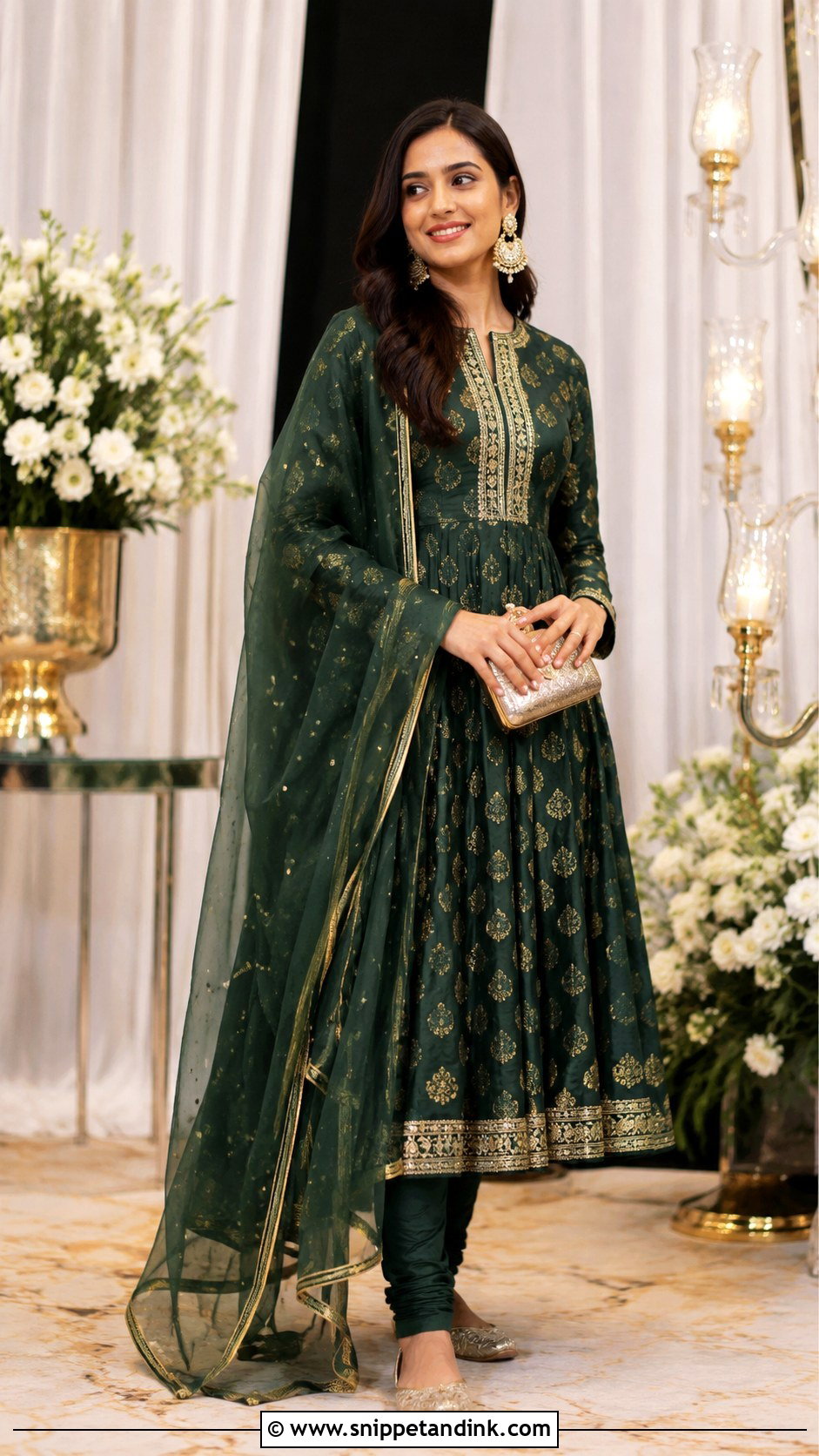
Gold zari reads richest against emerald, more so than against almost any other green. I’d choose an ankle-length Anarkali with a defined waist, three-quarter sleeves and zari motifs spaced evenly, so no panel looks bare after stitching. A fitted green churidar keeps the lower half slim. Drape a light gold-bordered dupatta over one shoulder only; across both, it hides the flare you paid for. Pearl and kundan earrings, a structured gold clutch and metallic juttis finish it. A side-parted low bun with one small hair ornament suits evening. Warm neutral eyes and a muted rose lip keep the color doing the work. It sits comfortably at evening functions without looking like you’re competing with the bride.
3. Rani Pink Banaras Anarkali Dress With Contrast Dupatta
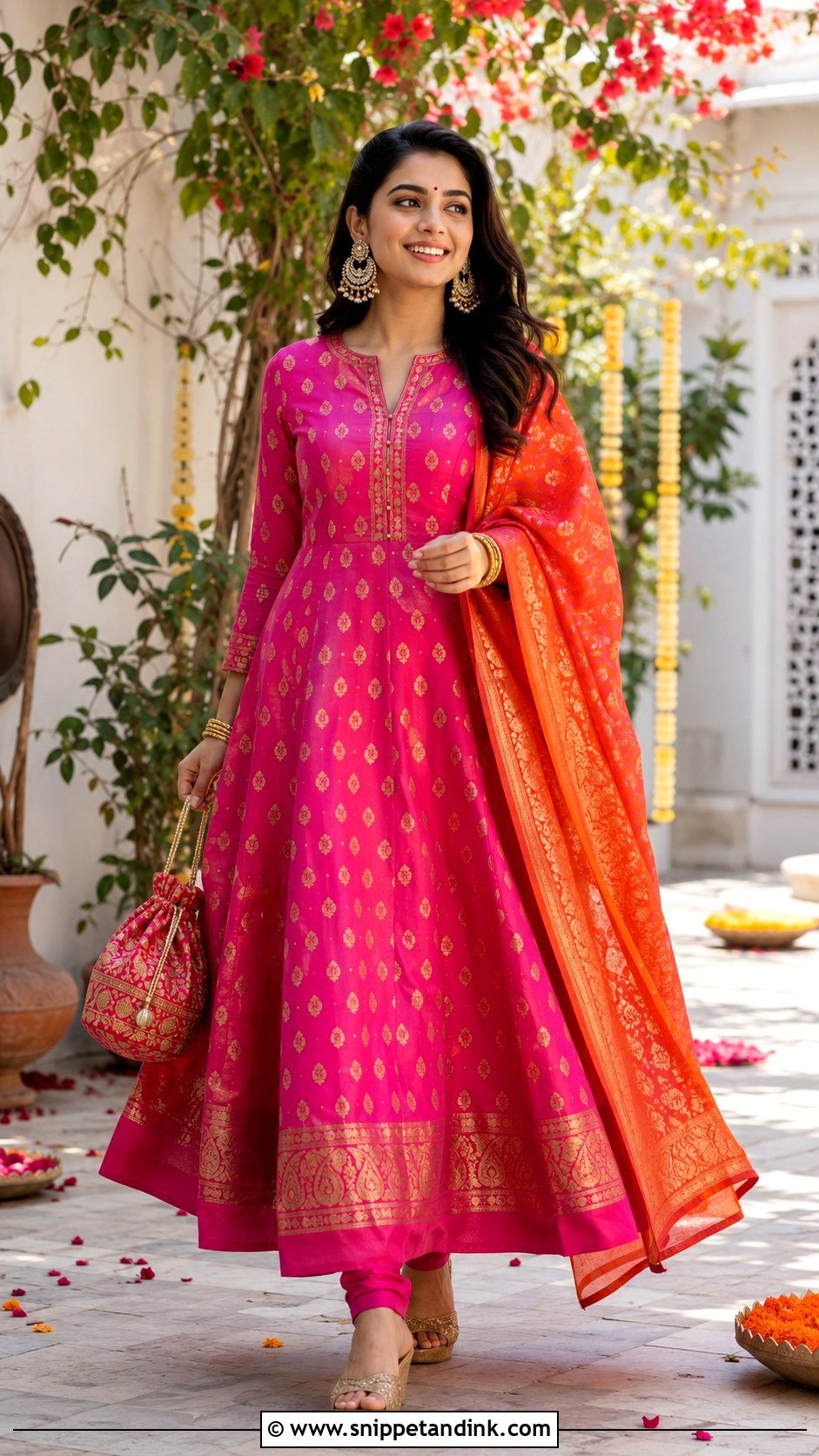
Rani pink is loud in the best way, and it holds up well under the yellow lights at most mehendi and sangeet venues. Look for silk with small gold butis, a scoop neck and a full flare. This is the one where I break the matching rule: an orange, green or deep purple dupatta with a narrow zari border gives the outfit depth. Repeat one dupatta color in the potli and wear gold chandbalis with fine bangles. Gold wedges help if you’ll be standing for hours. A soft braid or half-up style suits the brightness. Glowing skin, pink blush and a berry-toned lip complete it. It moves easily from a daytime puja to an evening party.
4. Ivory Banaras Anarkali Dress With Gold Jewelry
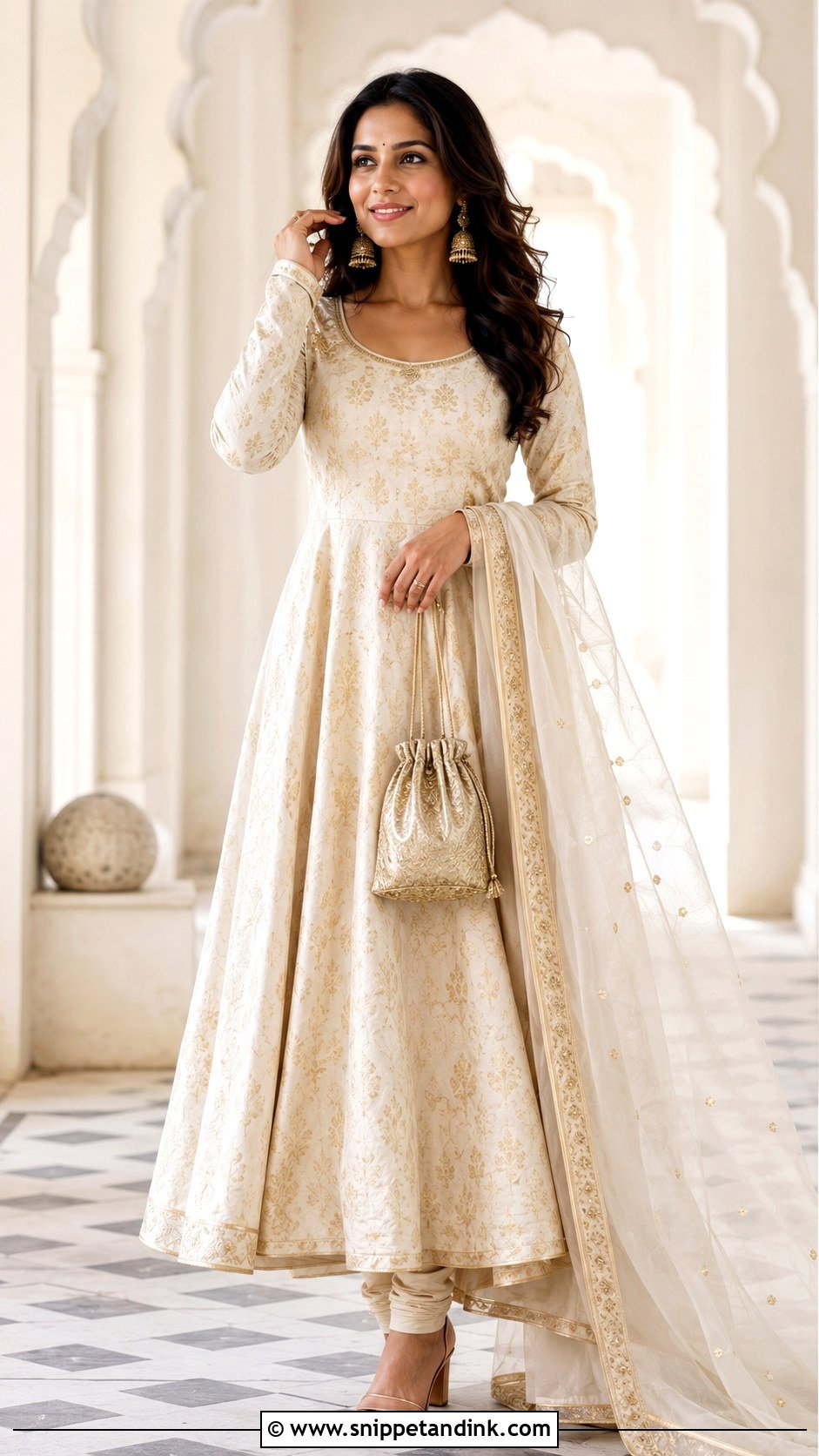
On ivory, you see the weave itself rather than the color, so I only recommend it when the fabric is genuinely good. Cheap brocade looks flat and plasticky in ivory in a way that a dark shade hides. Choose a floor-length Anarkali with subtle gold floral weaving and a neatly tailored bodice, an ivory churidar, and a sheer organza dupatta with a woven border. Gold jhumkas, one statement cuff and an ivory potli are plenty. Nude or antique gold heels keep the line long. A smooth low bun and luminous makeup suit daytime weddings and engagements. Ivory marks easily at the hem, so keep a spare dupatta pin and a stain pen in your bag.
5. Black Banaras Anarkali Dress With Antique Gold Accessories
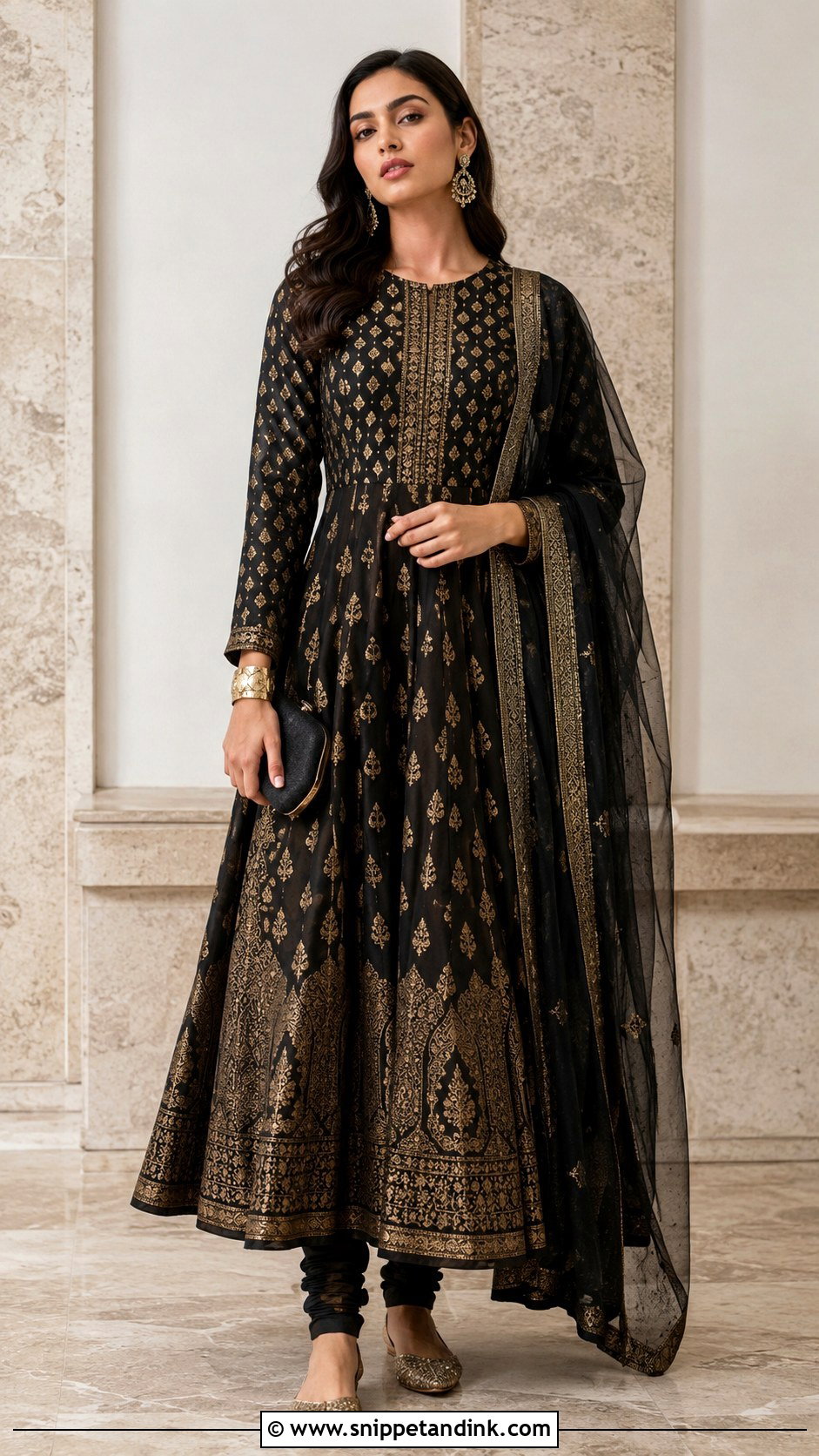
Black Banarasi is a reception outfit, and families who avoid black at auspicious ceremonies will notice if you wear it to the pheras. Check before you buy. For the right event, choose antique gold weaving, a square or modest V-neck and a controlled floor-length flare, with a black churidar and a sheer black dupatta edged in gold. Oxidized earrings, a sculptural cuff and a small black clutch suit it better than bright gold. Pointed metallic flats or low block heels keep it sleek. A center-parted bun or polished ponytail sharpens the silhouette, with bronze eyes and a deep rose lip.
6. Pastel Pink Banaras Anarkali Dress With Pearl Accessories
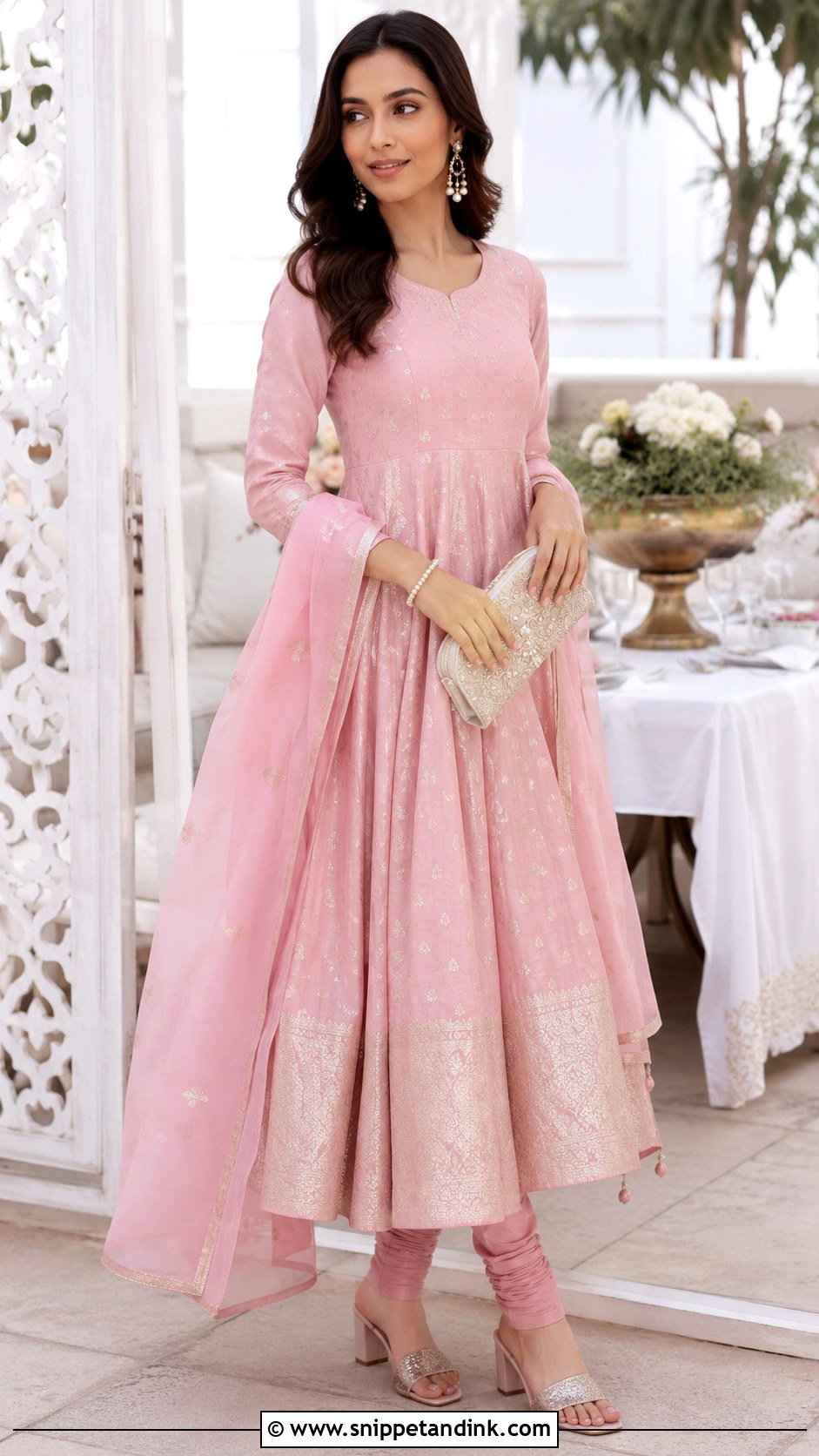
Blush with silver-gold zari is the softest look here and the one I suggest for a hot daytime event. An ankle-skimming hem, delicate butis, a matching churidar and a light organza dupatta keep it airy. Pearl drops, a slim bracelet and a pale embroidered clutch stay inside the gentle palette. Pastels show every fold, so I’d hang this one for a night before the event and steam it lightly from inside. Champagne block heels or embroidered juttis, depending on the floor. Loose waves or a relaxed bun keep it fresh, with rosy makeup and a neutral pink lip.
7. Royal Blue Banaras Anarkali Dress With Silver Dupatta
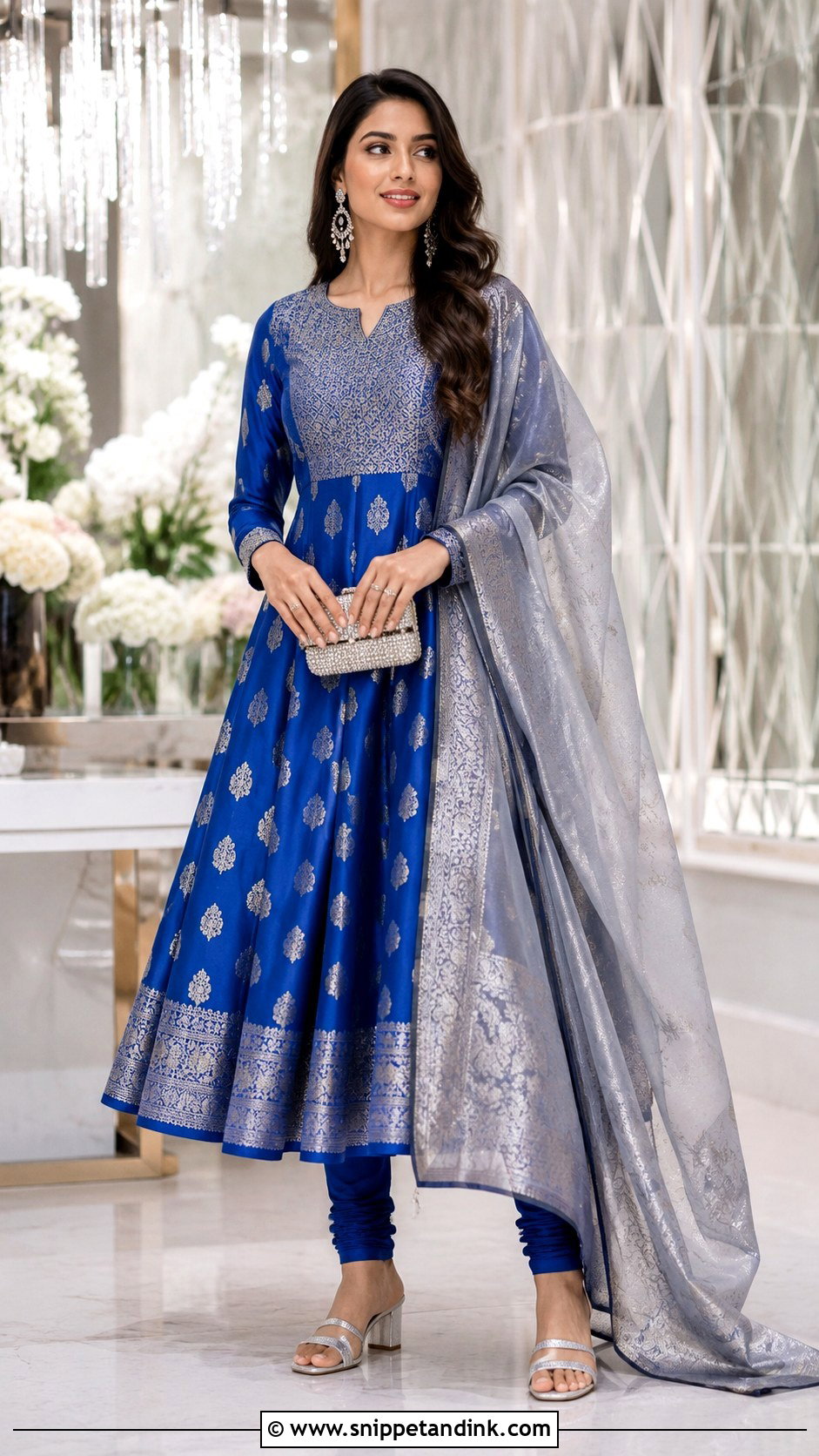
Royal blue and silver zari is a cooler, more dramatic pairing than blue with gold. A structured bodice, full sleeves and a wide flare that moves freely give the shape; a matching churidar and a silver-gray tissue dupatta add contrast without a third color. Stick to one metal. Silver chandbalis, a crystal clutch and metallic heels or embellished flats keep it intentional; mixing gold in makes it look like two outfits. A sleek ponytail gives the traditional fabric a modern edge. Softly smoked eyes and a nude lip are enough. Full sleeves in brocade are warm and stiff at the elbow, so make sure the armhole is cut high enough to lift your arms.
8. Mustard Banaras Anarkali Dress With Maroon Dupatta
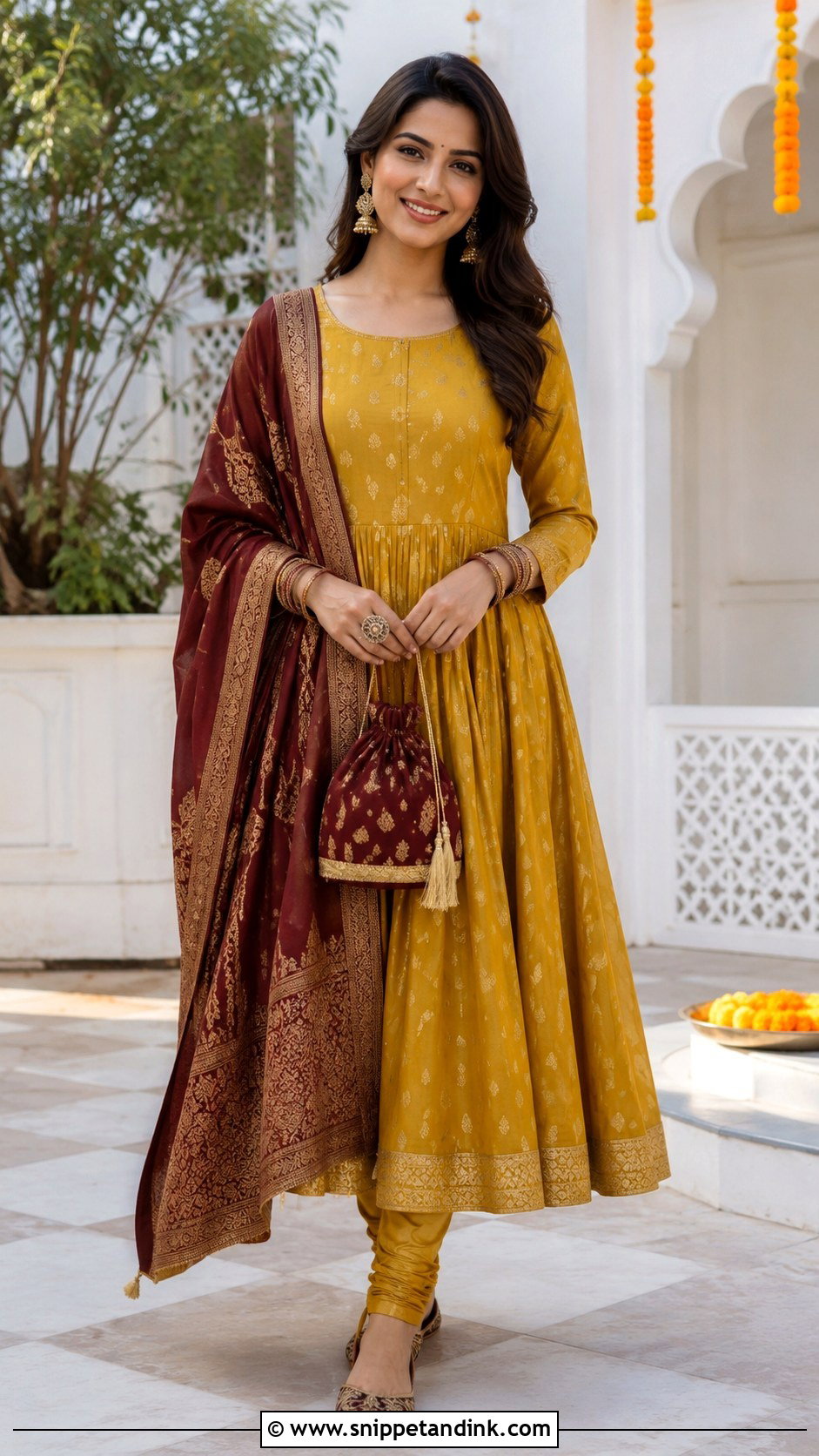
Mustard and maroon is an old pairing that keeps coming back because it flatters warm and deep skin tones particularly well. Start with a mustard Anarkali with small gold motifs and a fitted top, then add a maroon dupatta bordered in mustard or antique gold. A coordinated churidar keeps the focus on the drape. Antique gold earrings, bangles and a maroon potli tie the colors together. Brown-gold juttis suit outdoor venues. Mustard can wash out very fair skin under midday sun, so hold the fabric up to your face in daylight before ordering. Wear a low braid with a center part, warm brown eyes, peach blush and a brick lip.
9. Maroon Banaras Anarkali Dress With Kundan Jewelry
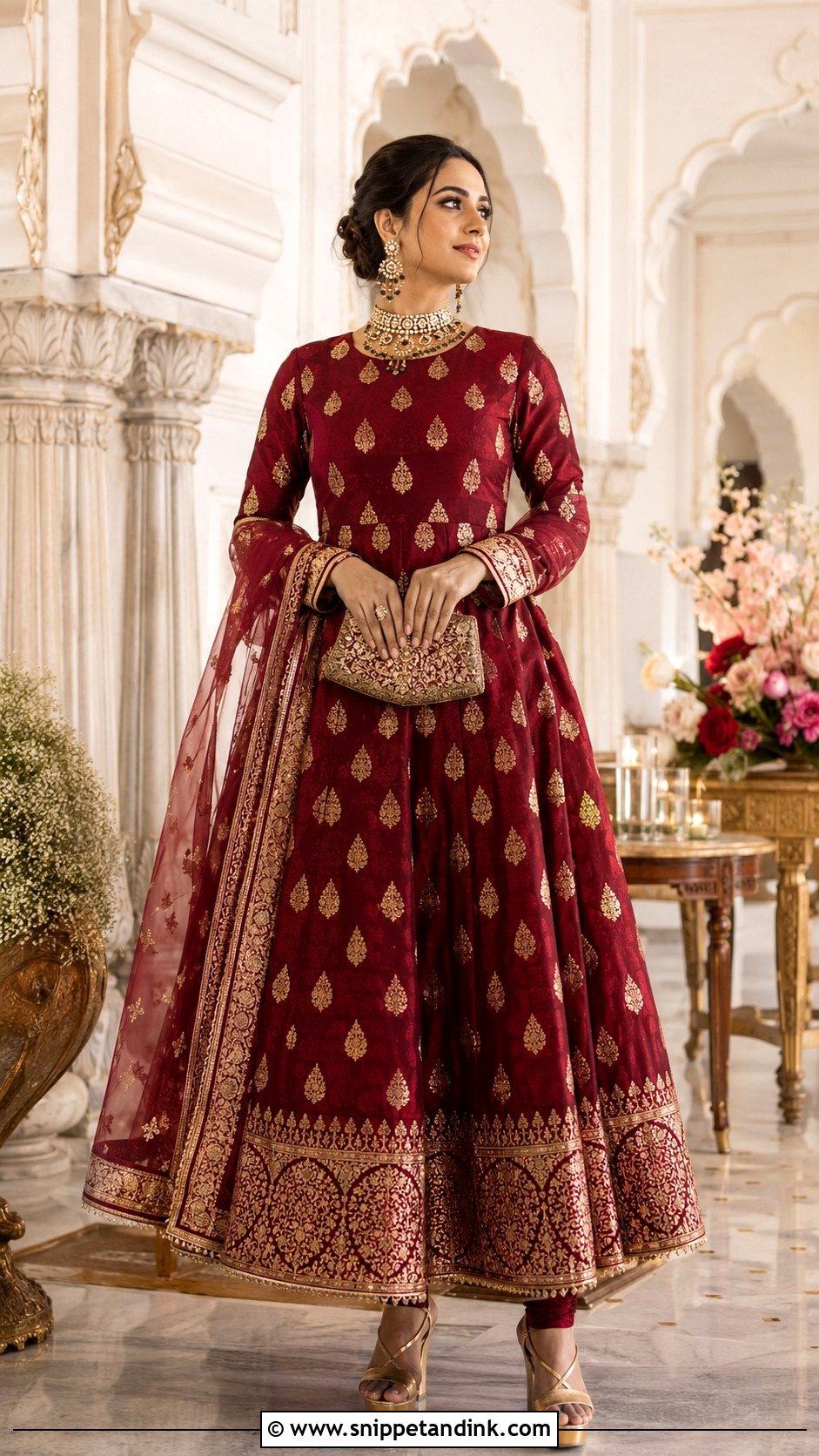
Maroon is the color I steer a bride’s mother or older sister toward when she wants to look ceremonial without echoing the bride’s red. Choose gold butidar work, a modest round neck and fitted three-quarter sleeves, with a matching churidar and a sheer maroon dupatta edged in gold. Kundan earrings and a small necklace can frame the face; keep everything else minimal. A gold embroidered clutch and platform heels hidden under the hem add height. A neat bun with one ornament, warm gold eyes, softly contoured cheeks and a muted maroon lip finish it.
10. Lavender Banaras Anarkali Dress With Silver Jewelry
Lavender with silver motifs makes Banarasi weaving feel young. A fitted waist, a flowing ankle-length skirt, a tonal churidar and a sheer lavender dupatta with a fine silver edge keep the look cool. Crystal or silver drops add sparkle without weight. A lilac clutch and silver block heels hold the palette from head to toe. Lavender is tricky to match: the churidar and dupatta are often dyed separately and can come out slightly pink or slightly grey, so compare all three pieces together in daylight. A loose low bun with face-framing pieces, mauve eyes and a soft berry lip suit daytime receptions and engagement events.
11. Banaras Tissue Anarkali Dress With Metallic Heels
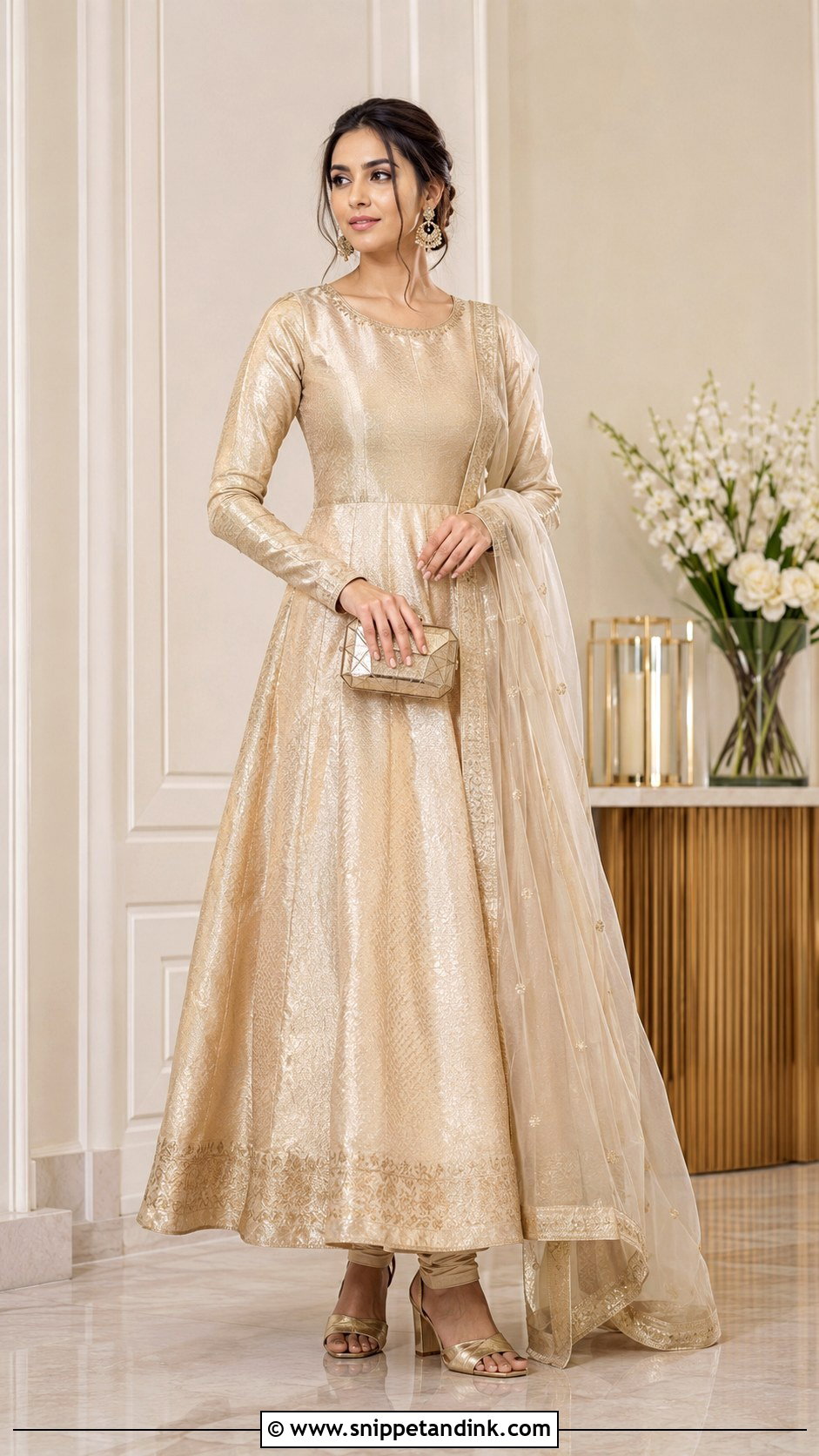
Tissue has zari woven into the weft, so the whole surface shimmers without any embroidery. That’s why I pair it with almost nothing. Champagne, soft gold or pale silver, a clean neckline and a fluid flare, a plain matching churidar and an airy organza dupatta. Pick one statement piece, sculptural earrings or a bold cuff, not both. Metallic block heels and a structured clutch finish it. Tissue is crisp and can crackle and crease at the waist seam if the lining is thin, so ask for a soft cotton lining underneath. A smooth bun, neutral makeup and a rose-nude lip complete it for an evening reception.
12. Banaras Organza Anarkali Dress With Floral Dupatta
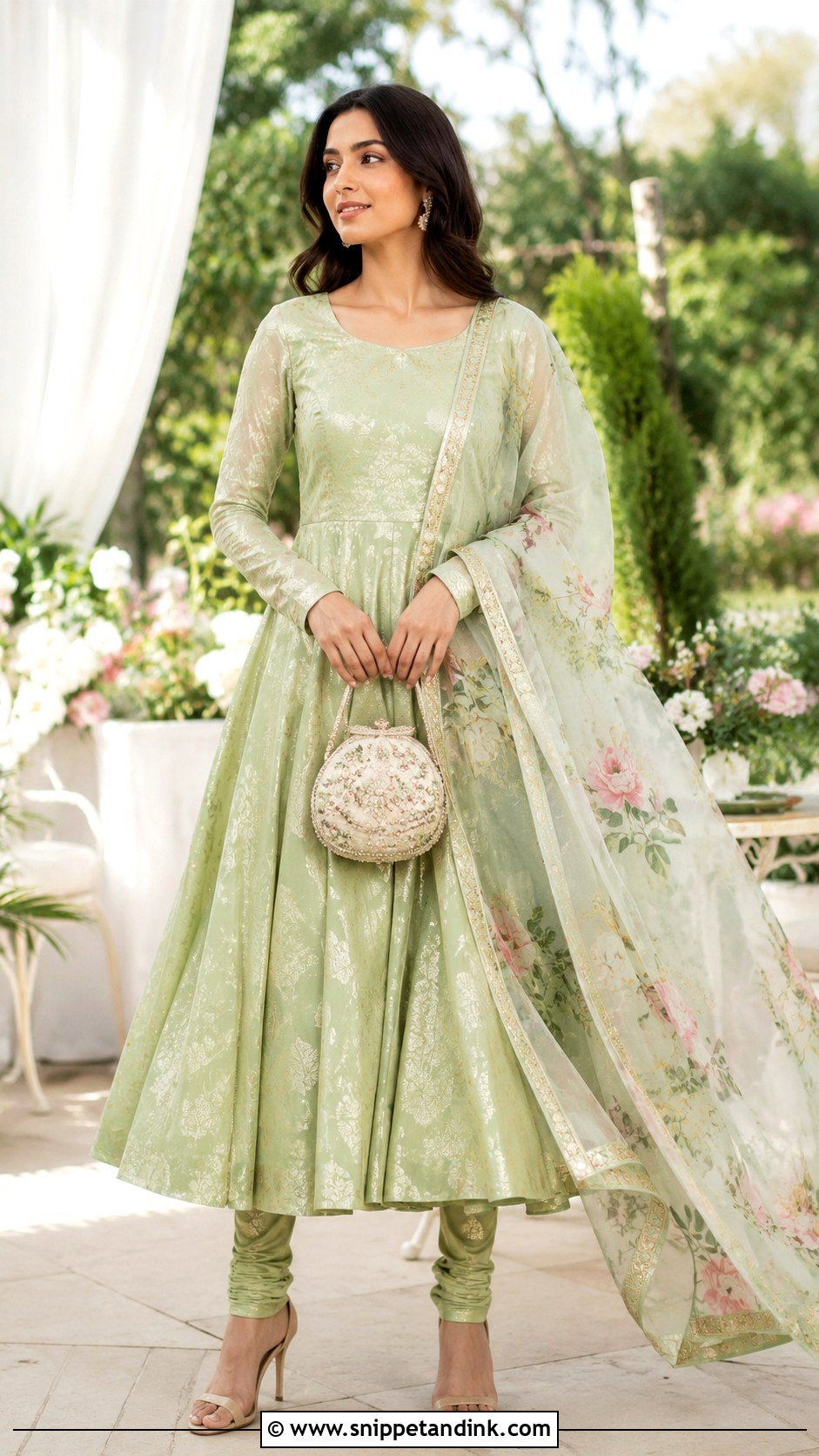
Organza Banarasi is my first suggestion for a summer garden function. It’s sheer and light, but the woven zari still gives it occasion weight. The bodice must be lined, and ask for the lining in a shade close to your skin if the organza is pale, or it shows as a block under the sheer layer. Pastel green, peach or ivory with a softly flared skirt works well. Pair a narrow churidar with a floral organza dupatta that repeats at least one shade from the dress. Small kundan earrings, a delicate bracelet, an embroidered handbag and comfortable juttis are enough. Soft waves and natural makeup suit it.
13. Banaras Jangla Anarkali Dress With Plain Dupatta
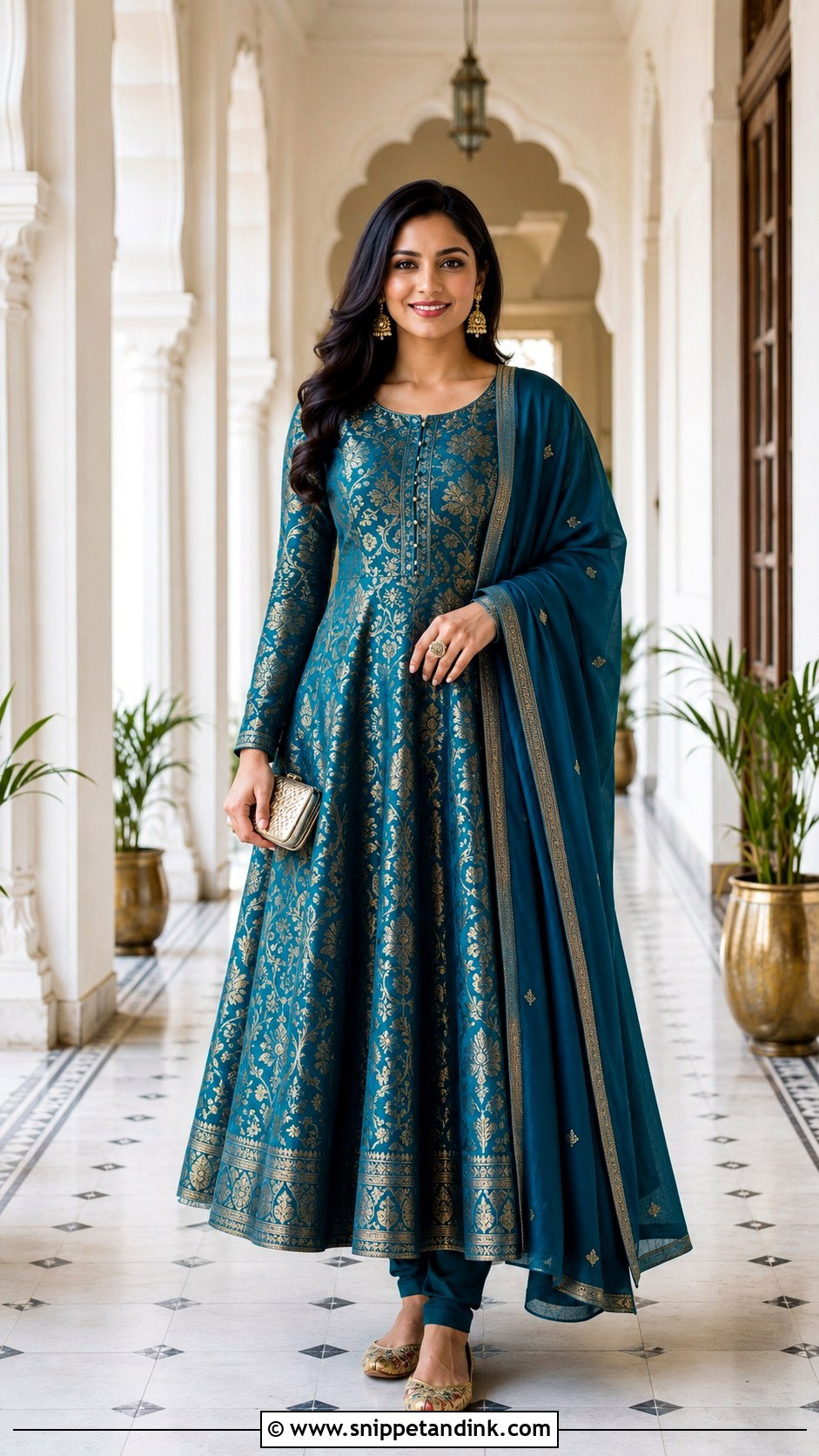
Jangla is the all-over scrolling vine pattern, the busiest weave on this list, and it needs room to breathe. Choose a jewel tone with the pattern flowing across the whole flare, then a plain silk or organza dupatta in the same color and a simple churidar. Medium gold earrings, one cocktail ring, a clean metallic clutch and classic juttis are all I’d add. A smooth low bun keeps the pattern in charge, with softly lined eyes and a muted lip. Because the vines run continuously, a skilled tailor matches them across the kali seams. Ask to see how they plan the panels before cutting.
14. Banaras Butidar Anarkali Dress With Embroidered Juttis
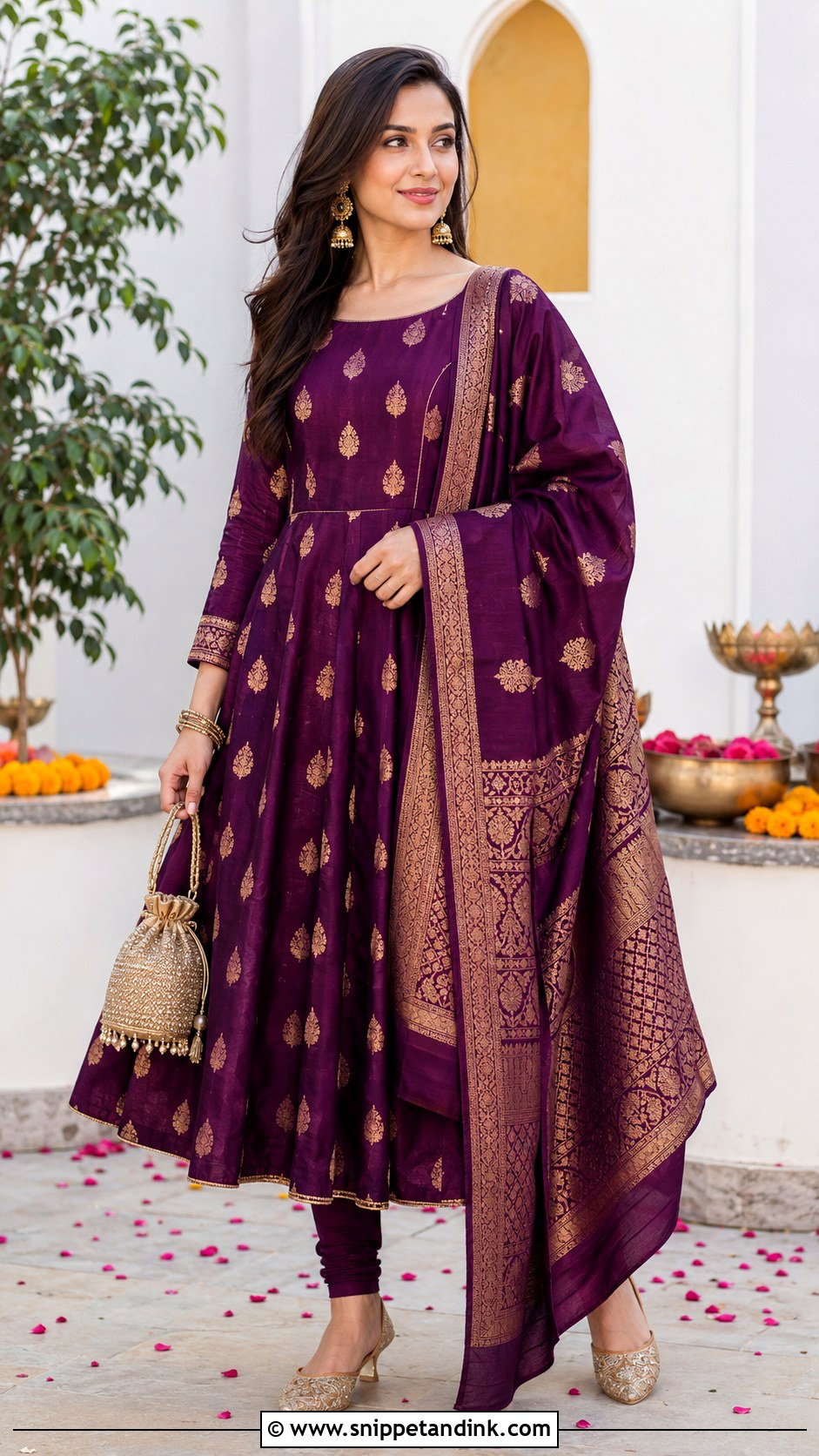
Butidar means small motifs scattered evenly across the ground, and it is the most forgiving Banarasi on an Anarkali because the seams can’t interrupt anything large. Teal, plum or deep pink with a fitted bodice and a calf-to-ankle flare work well. Add a plain churidar and a dupatta with a buti border. Embroidered juttis bring detail to the lower half and stay comfortable all day. Jhumkas, slim bangles and a small potli are enough jewelry. A side braid or low ponytail keeps it approachable, with neutral eyes, peach blush and a berry lip. I’d call this the most re-wearable outfit in the list.

15. Banaras Tanchoi Anarkali Dress With Minimal Jewelry
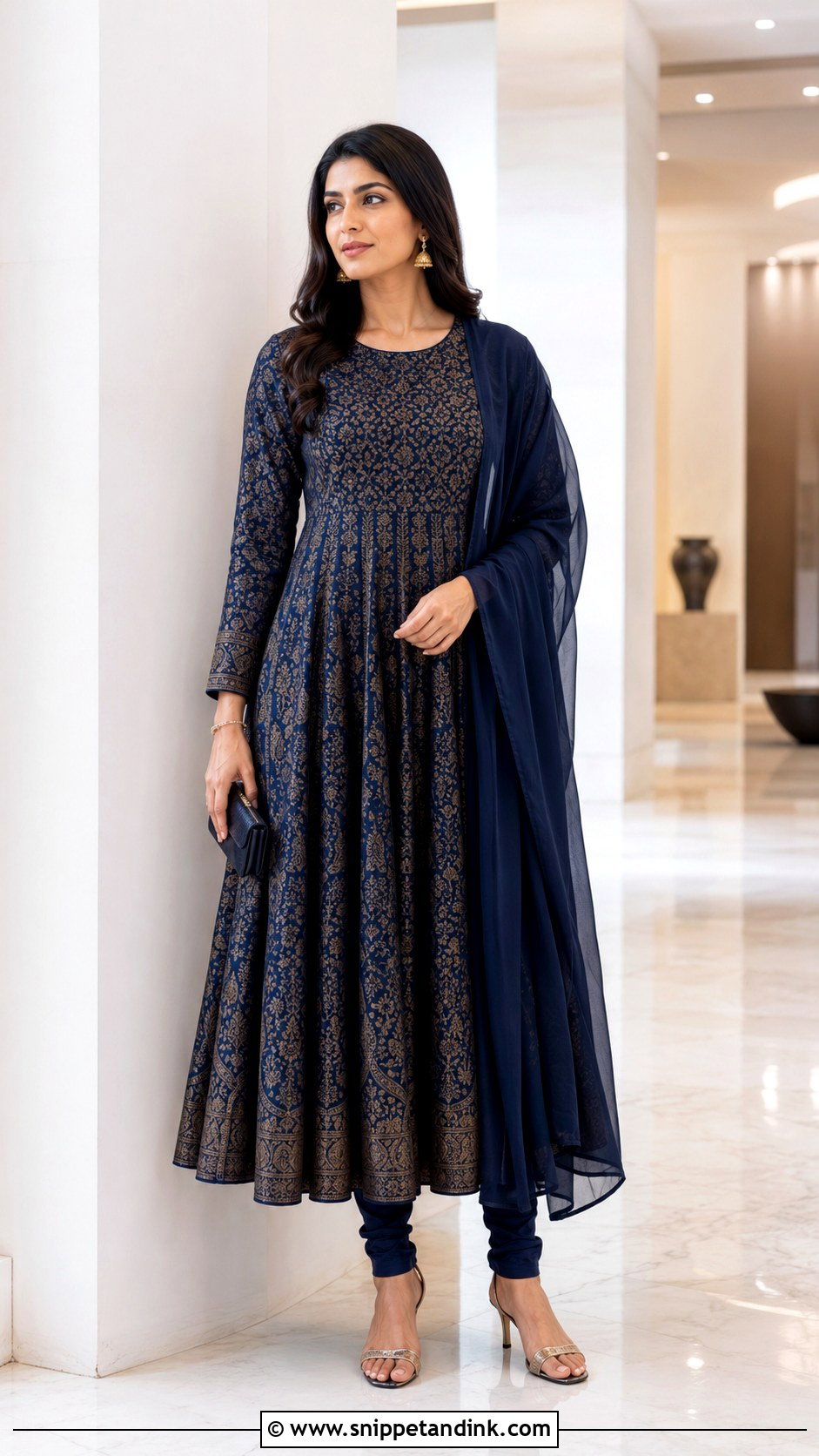
Tanchoi is woven with several colored wefts packed tightly into small repeating patterns, so the cloth looks almost embroidered up close and very smooth from a distance. It needs the simplest styling of anything here. Navy, rust or purple in a streamlined floor-length cut, a matching churidar and a plain, lightweight dupatta with a slim border are right. Small gold earrings and one bracelet are plenty. A solid clutch, low metallic heels and a sleek center-parted bun finish it. Tanchoi silk is softer than brocade, so the flare will fall rather than stand; don’t expect a dramatic bell shape.
16. Banaras Bandhej Anarkali Dress With Gold Accessories
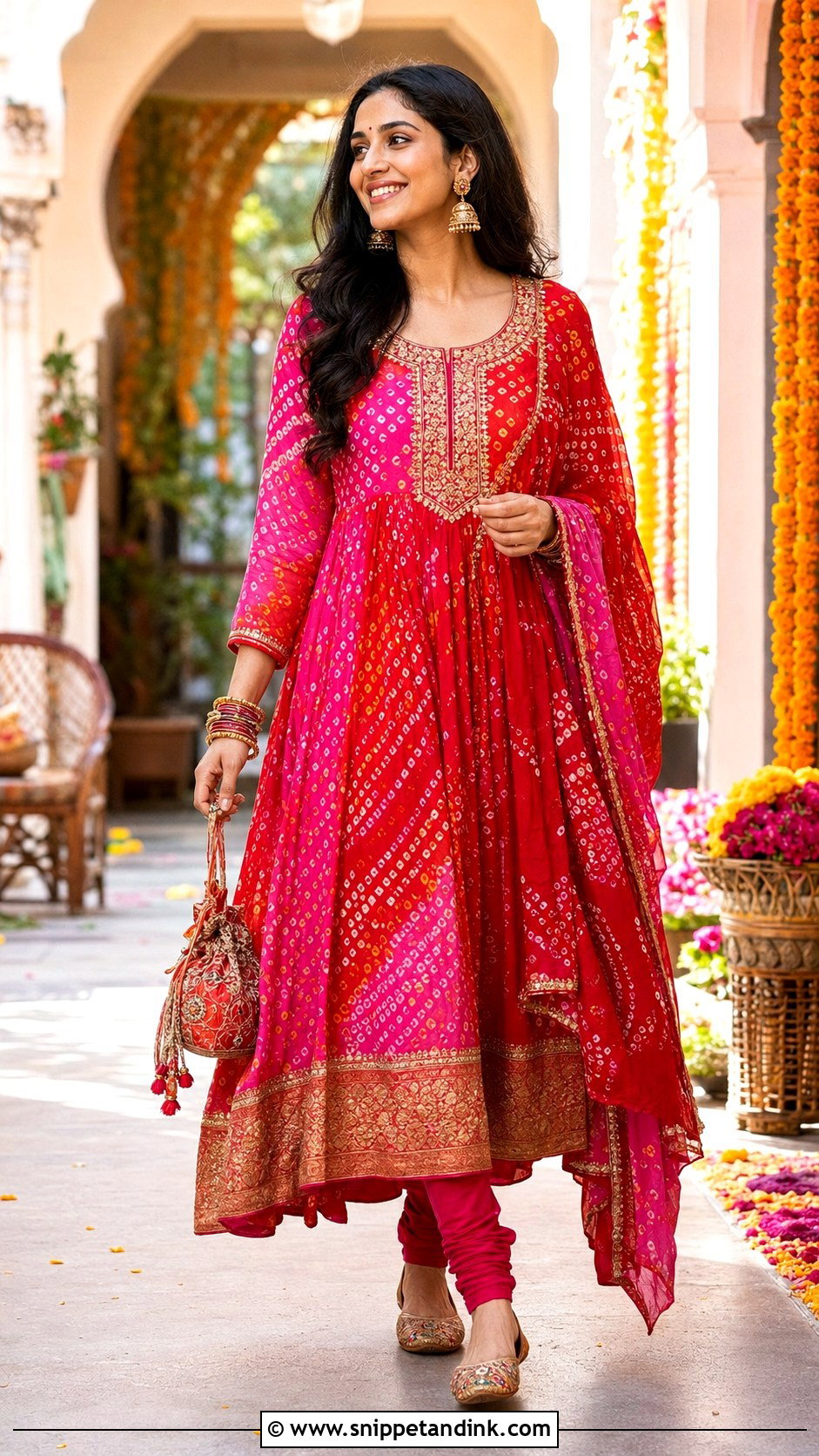
Bandhej, the tie-dye of Gujarat and Rajasthan, combined with Banarasi borders makes a cheerful mixed-region outfit. Red, pink, orange or green with the tie-dye across the body and woven zari at the neck, cuffs and hem is a good layout. A plain churidar and a dupatta repeating the Bandhej in a lighter arrangement balance it. Gold jhumkas, stacked bangles and an embroidered potli suit the mood. Comfortable juttis are a must if there’s dancing. Real Bandhej has tiny raised peaks where each dot was tied; if the surface is completely flat, it’s printed, which is fine for the price but worth knowing. A long braid, kohl eyes and a warm pink lip finish it.
17. Banaras Jacket Anarkali Dress With Straight Pants
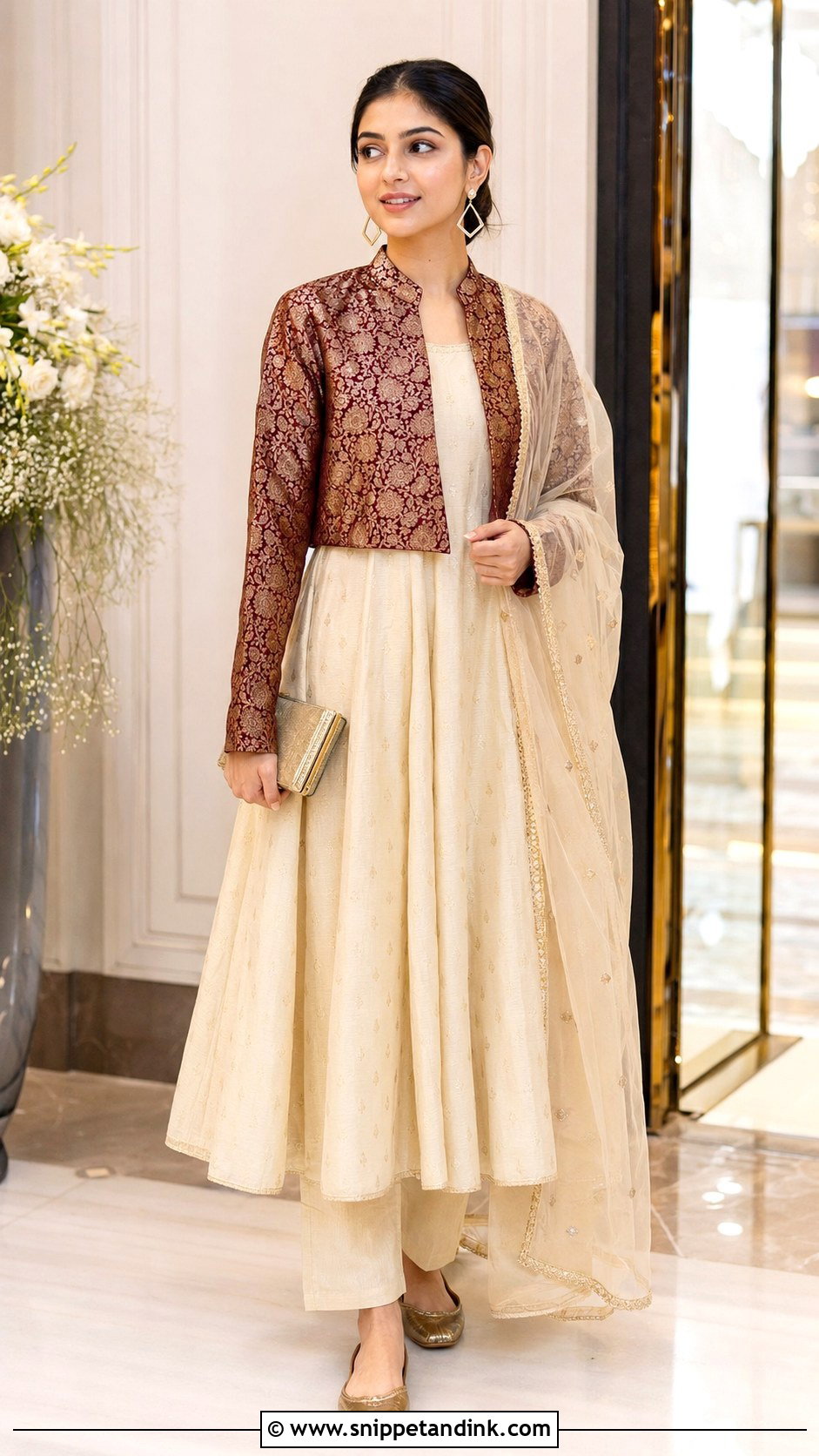
Adding a jacket turns a plain Anarkali into something more structured. Start with ivory, black, deep green or maroon in a plain or lightly woven fabric. Top it with a fitted Banarasi brocade jacket ending at or just below the waist, so the skirt can flare out beneath it. Straight pants instead of a churidar give a cleaner line. The dupatta becomes optional; a very light one over the arm is enough. Geometric earrings, a box clutch, pointed metallic flats and a sleek ponytail or bun suit the sharper shape. A brocade jacket over silk can feel hot, so keep the Anarkali under it sleeveless or in a light fabric.
18. Banaras Bridal Anarkali Dress With Heavy Dupatta
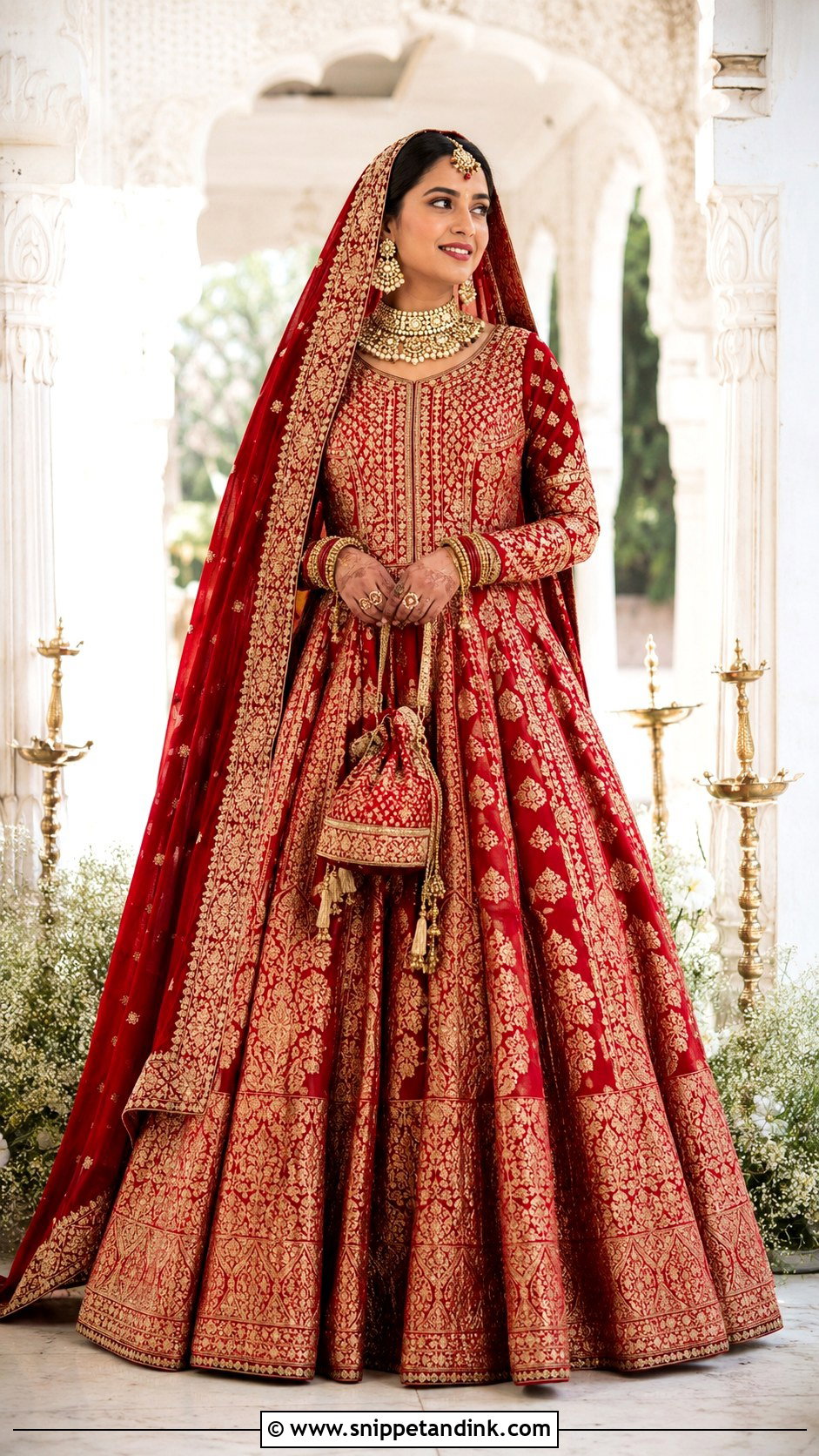
A bridal Banarasi Anarkali is a lot of fabric, and the bride feels every gram of it by evening. Red, maroon or deep pink with a wide floor-length flare and rich gold weaving is classic. The bodice should be secure while leaving room to lift your arms through the shoulders. A heavy dupatta with woven borders can go over the head or across one shoulder; if over the head, I pin it to a center-parted bun with at least four U-pins and a couple of hidden safety pins at the shoulder, because brocade slides. Kundan earrings, a necklace, bangles and a potli complete it. Platform heels add hidden height. Choose long-wear makeup with defined eyes and a classic lip.
19. Banaras Wedding Guest Anarkali Dress With Light Dupatta
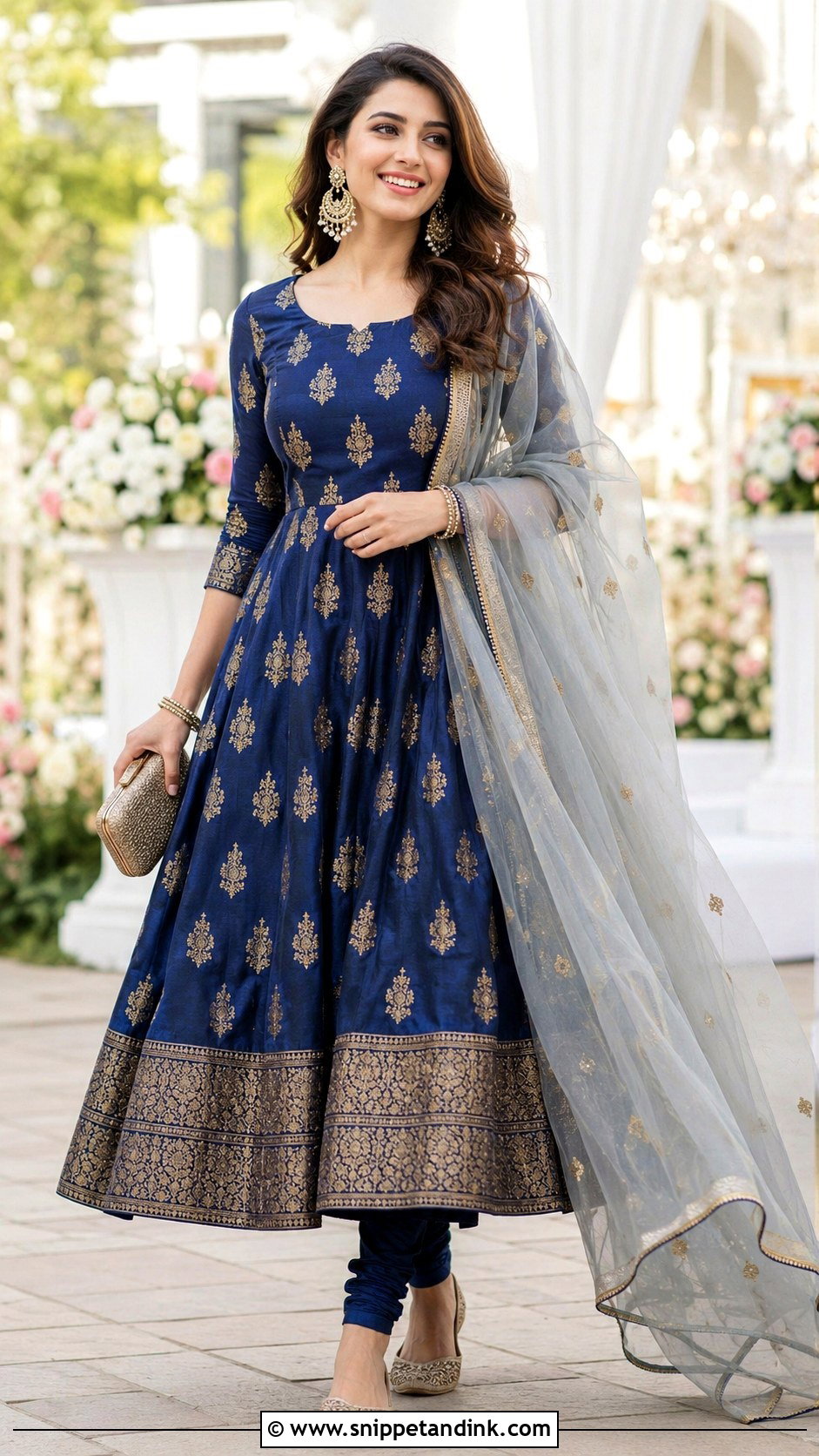
As a guest, you can wear Banarasi without stepping on the bride. The trick is medium-sized motifs and colors she’s unlikely to wear: sapphire, emerald, magenta or a muted gold. Avoid bright red and heavy all-over brocade. An ankle-length hem, a matching churidar and a light organza dupatta over one shoulder keep it comfortable. Statement earrings, two or three slim bangles and a compact clutch are better than a full set. Low block heels or embellished juttis help through long ceremonies. Soft waves, a ponytail or a relaxed bun all work. Choose natural makeup with one defined feature.
20. Minimal Banaras Anarkali Dress With Plain Churidar
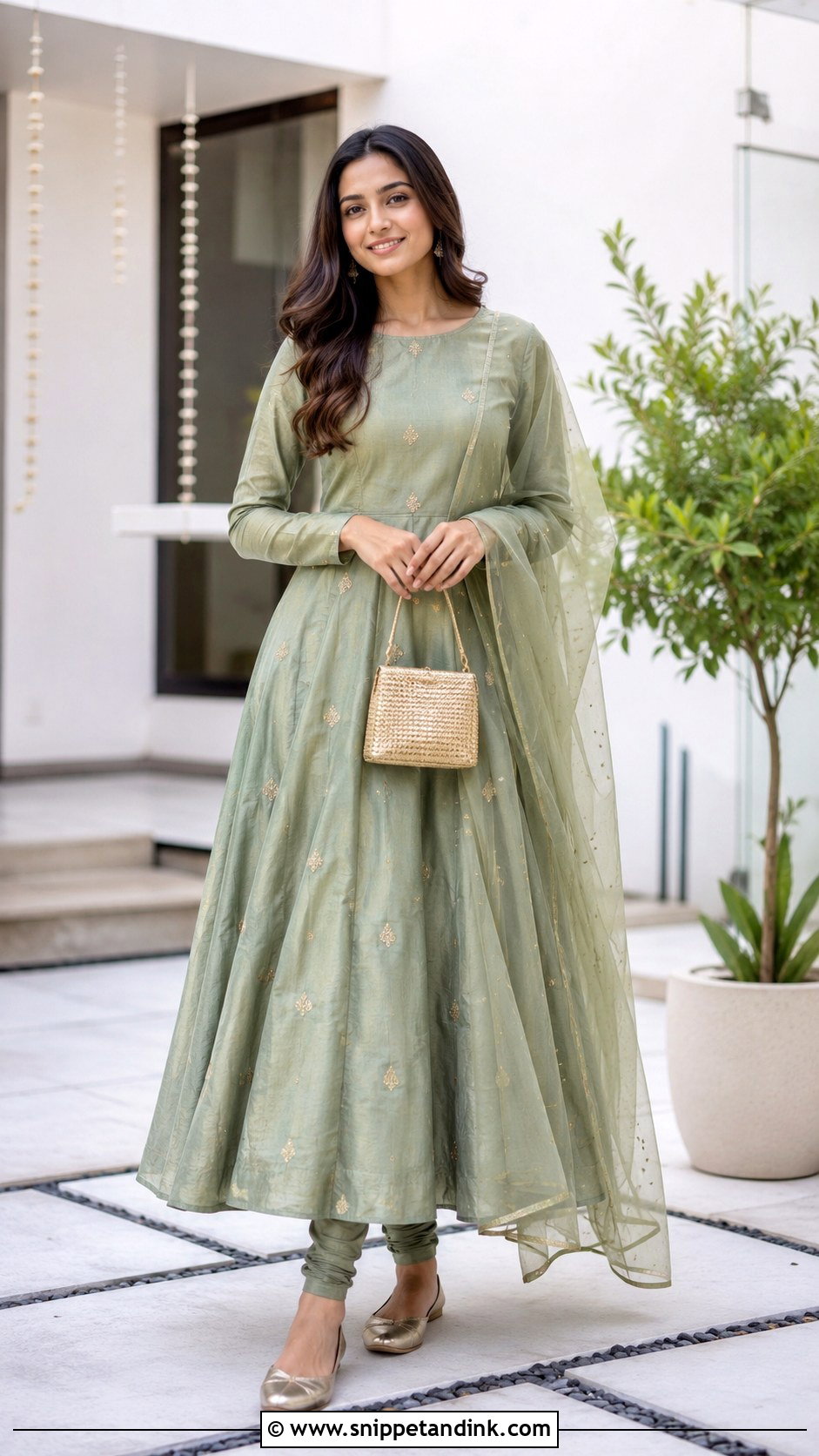
The simplest version is often the one you wear again. A straight or round neck, a controlled flare, scattered zari butis and a clean ankle hem in a muted shade like sage, dusty rose, ivory, steel blue or soft gray feels current. A plain churidar and a sheer tonal dupatta go with it. Small earrings, a structured mini bag and comfortable metallic flats keep it relaxed. A neat ponytail or loose waves, groomed brows, subtle liner and a soft lip are plenty. I’d choose this one for smaller celebrations and family lunches. It can be restyled with a different dupatta for years.
Alterations a Tailor Can and Can’t Make on a Ready Anarkali
Many brides buy off the rack and alter. That works well up to a point. Taking in the bodice and side seams is easy, and shortening sleeves usually is too. Shortening the hem is harder than it sounds because the woven border runs along the bottom; the tailor has to remove it, cut the skirt and reattach it, which takes time and can show.
Letting out is limited by the seam allowance, which on ready garments is often narrow. If you’re between sizes, buy the larger one. Adding flare after the fact is almost impossible without inserting new panels that rarely match. Ask for the alteration estimate before you leave the shop.
Putting Zari Away So It Doesn’t Tarnish
Zari dulls and darkens when it meets moisture, perfume and the plastic of a garment bag. After the event, air the outfit inside out for a day, then wrap it in soft muslin or an old cotton saree and store it flat or loosely folded.
- Spray perfume before dressing, never directly onto the fabric.
- Refold every few months along different lines, since zari can crack where it stays creased for a long time.
- Send it only to a dry cleaner who knows silk brocade, and ask them not to press directly on the zari.
Matching the Weave to the Occasion
One silhouette carries a remarkable range here. Red, maroon, emerald and black set a formal mood; ivory, lavender and pastel pink feel lighter for daytime. The heavily patterned weaves, Jangla, Butidar, Bandhej and Tanchoi, look best with restrained accessories, while tissue, organza and the minimal designs are the easier choice when heavy brocade would be too warm. Whichever you pick, check the bodice fit, the flare length, the lining and the dupatta weight before you pay. Then add shoes, jewelry and a bag that let the weaving stay in front. If the fabric is good and the fit is right, you’ll be comfortable through the whole function.
You'll Like These Ideas:





Leave a Reply