
A Punjabi wedding is several days of dressing, and a suit can carry a bride through most of them: the Anand Karaj, mehndi, sangeet, Jaago, engagement and reception. What I look for in every one is movement. You’ll sit on the floor, dance, bend to touch elders’ feet and greet hundreds of people, so the silhouette has to allow all of that. Red and maroon still lead for the ceremony itself, but blush, ivory, mustard, emerald and powder blue are all worn now, and shararas and ghararas sit comfortably next to long kameez sets and Anarkalis. Below are twenty suits I’d dress a bride in, with the fit and fabric notes I’d give at a trial.
Sitting on a Gurdwara Floor in a Heavily Embroidered Suit
The Anand Karaj shapes the ceremony suit more than any trend does. You’ll sit on the floor in front of the Guru Granth Sahib, often cross-legged, for most of the service, then stand and walk four rounds for the laavan while holding the palla. Your head stays covered throughout. Every choice I make for the ceremony outfit starts from those three facts.
- Salwars and shararas handle floor sitting easily. A tight churidar pulls at the knee, and a stiff gharara joint digs in when you fold your legs.
- Farshi salwars and long trailing hems need someone to arrange them each time you sit and stand.
- The dupatta must be pinned to the hair, not just draped. I anchor it with U-pins into the base of a bun so it doesn’t slip during the rounds or when you bow.
- Heavy kaleere swing as you walk. Ask that they be tied snugly so they don’t knock against the palla.
Do a test at home: put on the full suit, dupatta and juttis, sit on the floor for twenty minutes, then stand without using your hands. If you can’t, the fit or the silhouette needs changing.
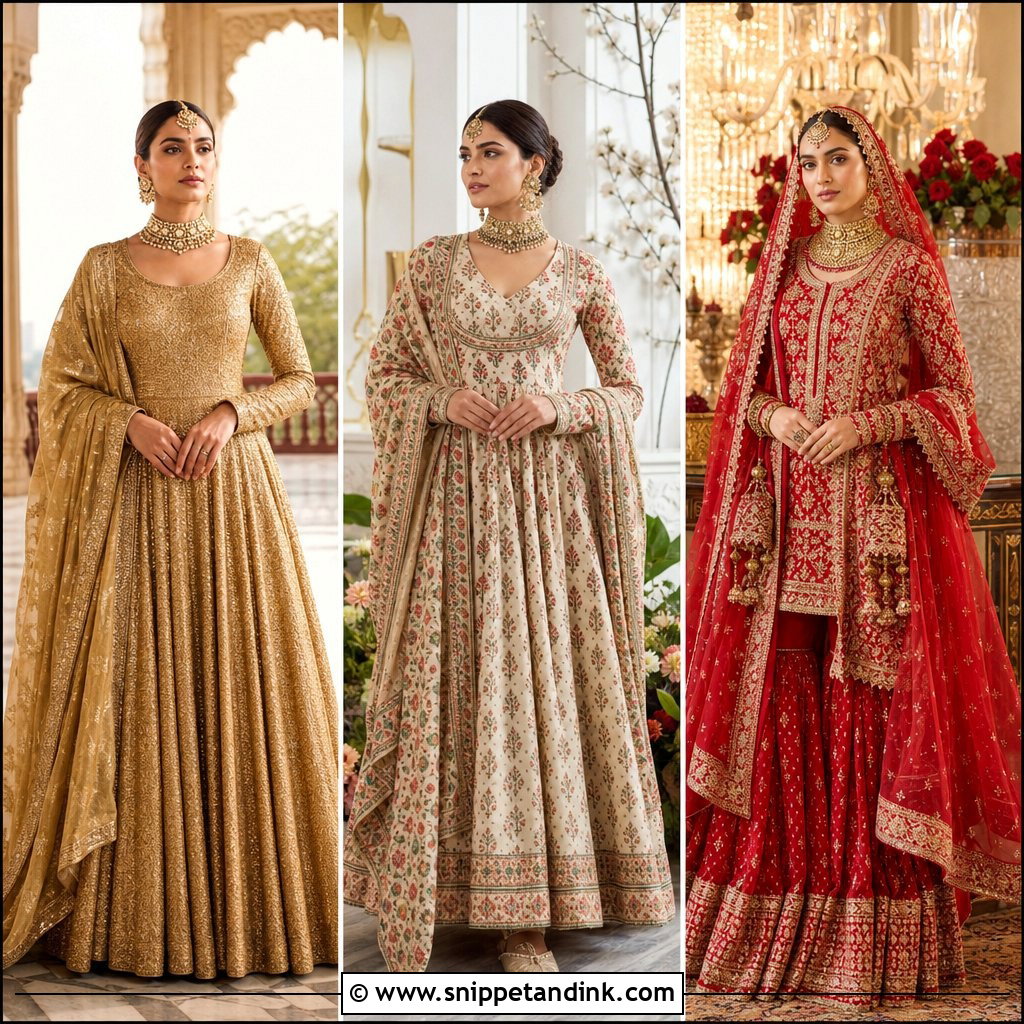
1. Red Bridal Punjabi Suit With Salwar
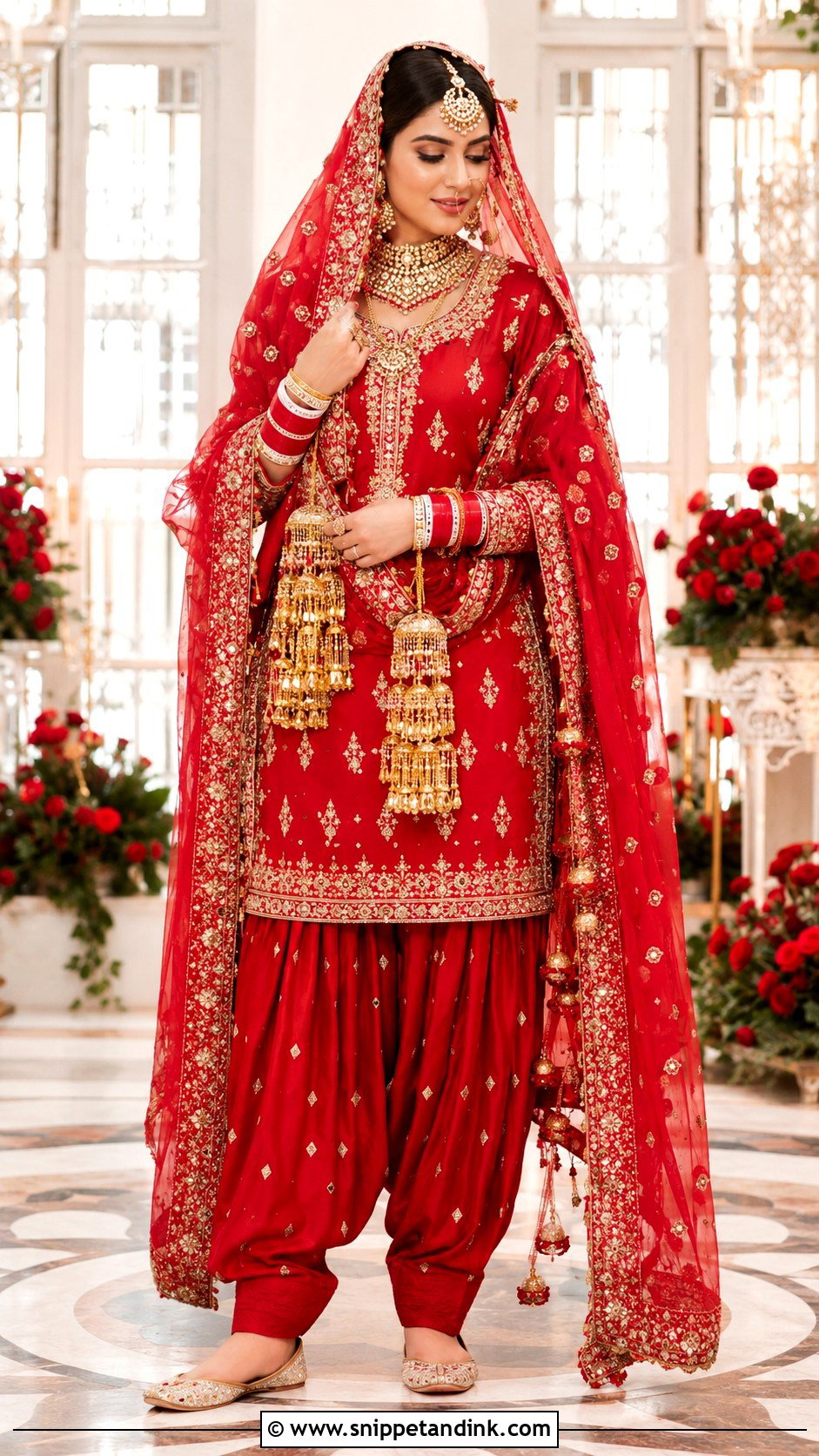
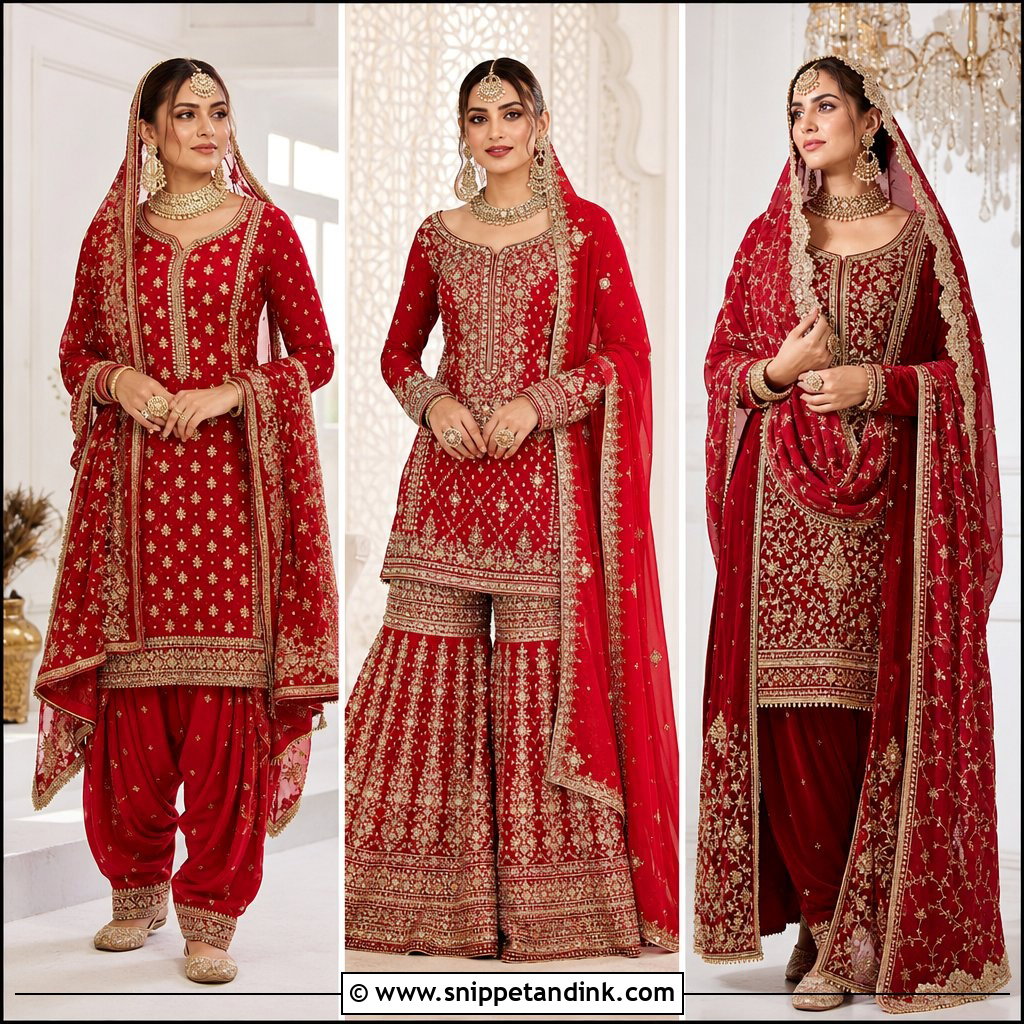
For the Anand Karaj, a deep red long kameez with a pleated salwar is the suit I trust most, because it lets you sit cross-legged on the floor for the whole ceremony without fighting the fabric. Keep the zardozi, dabka or resham concentrated at the neckline, cuffs and hem; embroidery across the seat area gets uncomfortable on a gurdwara floor. The pleated salwar keeps the traditional Punjabi shape. Layer a heavy bordered dupatta with a lighter veil. With chooda and kaleere already weighing on your wrists, I’d go moderate on the necklace, and choose cushioned juttis.
2. Maroon Bridal Punjabi Gharara Suit
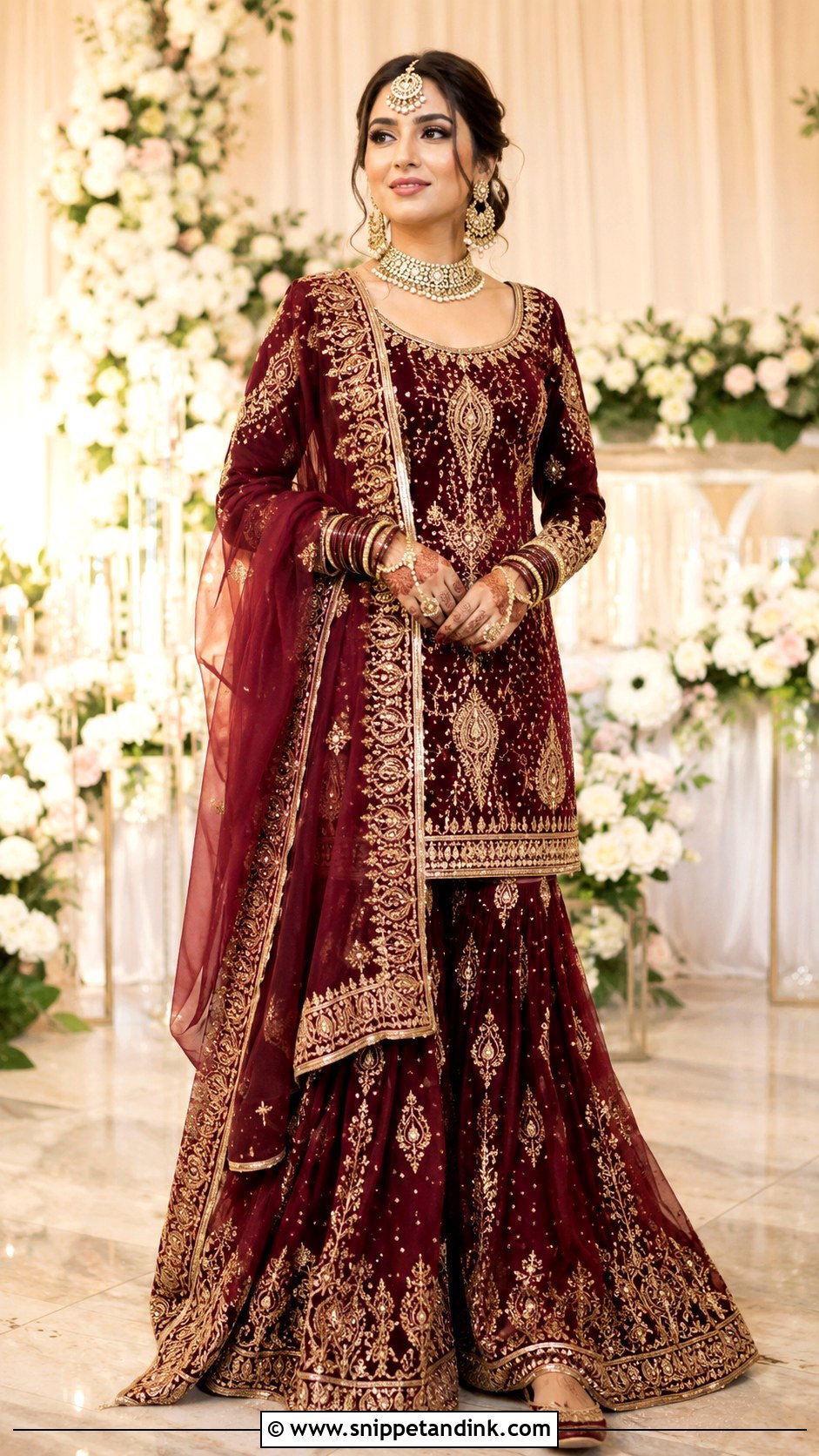
Maroon ghararas look grand, and they are the most demanding silhouette to tailor. The gharara joint, that gathered seam at the knee, has to sit exactly at your knee or the flare starts in the wrong place and you shuffle when you walk. I always mark it with the bride standing in her actual footwear. A knee-length fitted kameez, antique-gold borders and an organza dupatta finished with kiran trim are enough; you don’t need embroidery on every inch. Velvet juttis and a kundan choker carry it to an evening ceremony or reception.
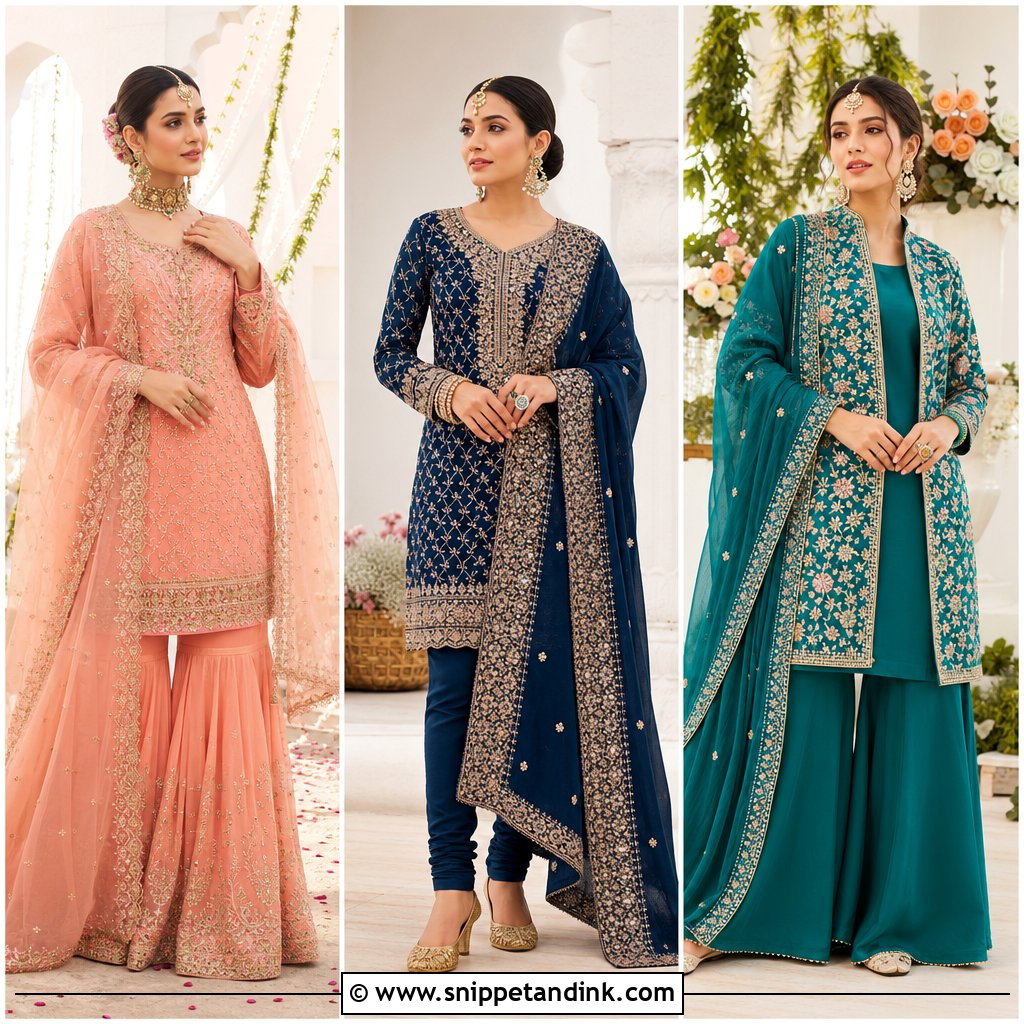
3. Blush Pink Bridal Punjabi Sharara Suit
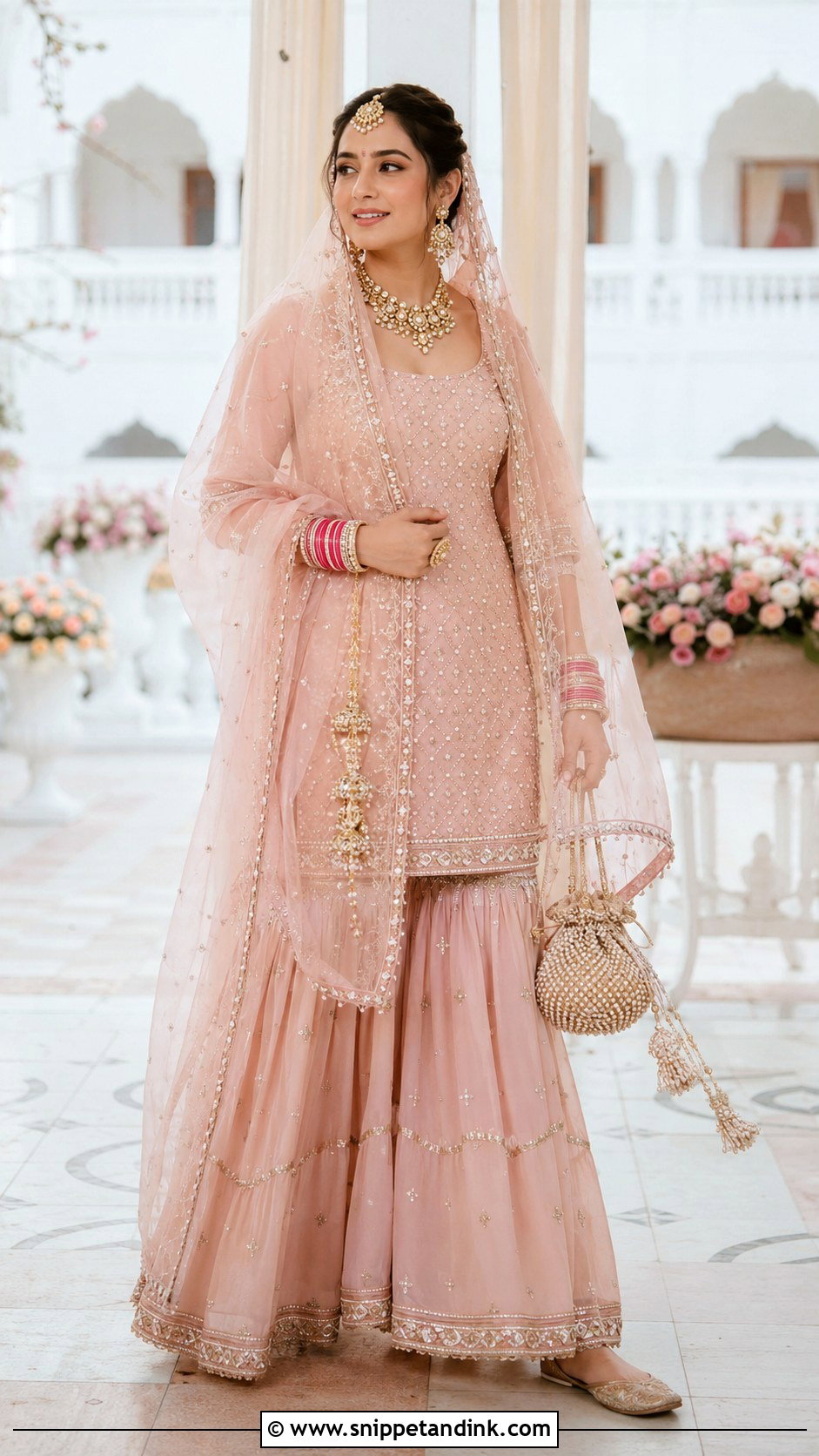
Blush is my go-to when a bride asks for something soft at the engagement or a daytime function. A short embroidered kurti over a wide sharara, with silver zari and pearl beading rather than heavy gold, keeps the pastel clean. Proportion is what I watch: the kurti hem should end above the widest part of the sharara, otherwise the two volumes merge and you lose your waist. Vertical embroidery lines lengthen the torso. A net dupatta over the head and a second across one shoulder adds ceremony without weight.
4. Ivory Bridal Punjabi Anarkali Suit
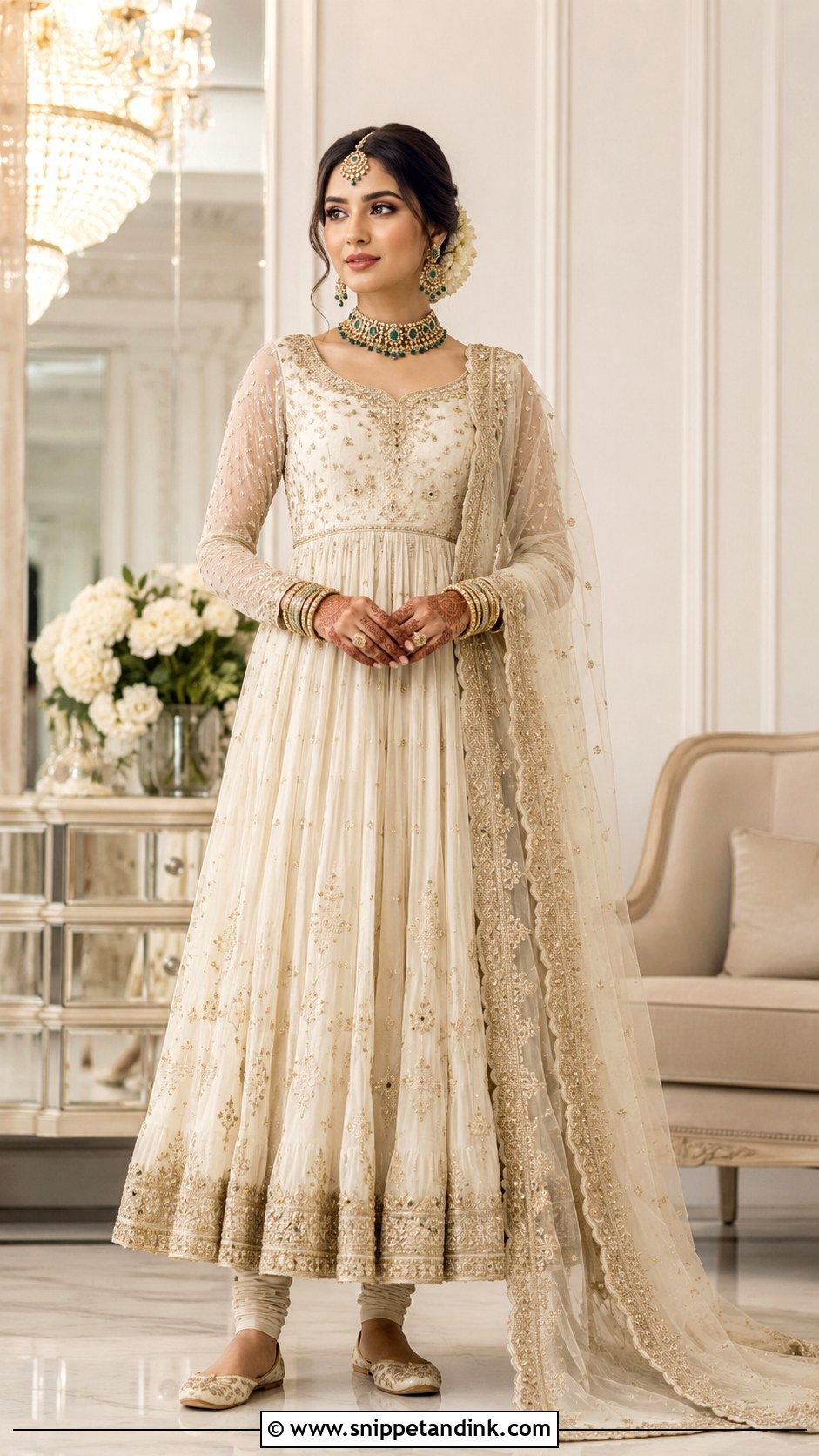
Ivory is the color most likely to look flat in photographs, especially under a flash. I solve that with texture rather than more embroidery: silk for the body, organza for the dupatta, net or fine mukaish on the yoke, so light catches different surfaces. A floor-length Anarkali with a fitted bodice and enough flare to turn in suits an engagement or reception. Churidar underneath, ivory juttis. Emerald jewelry gives sharp contrast; polki or pearls keep it gentle.
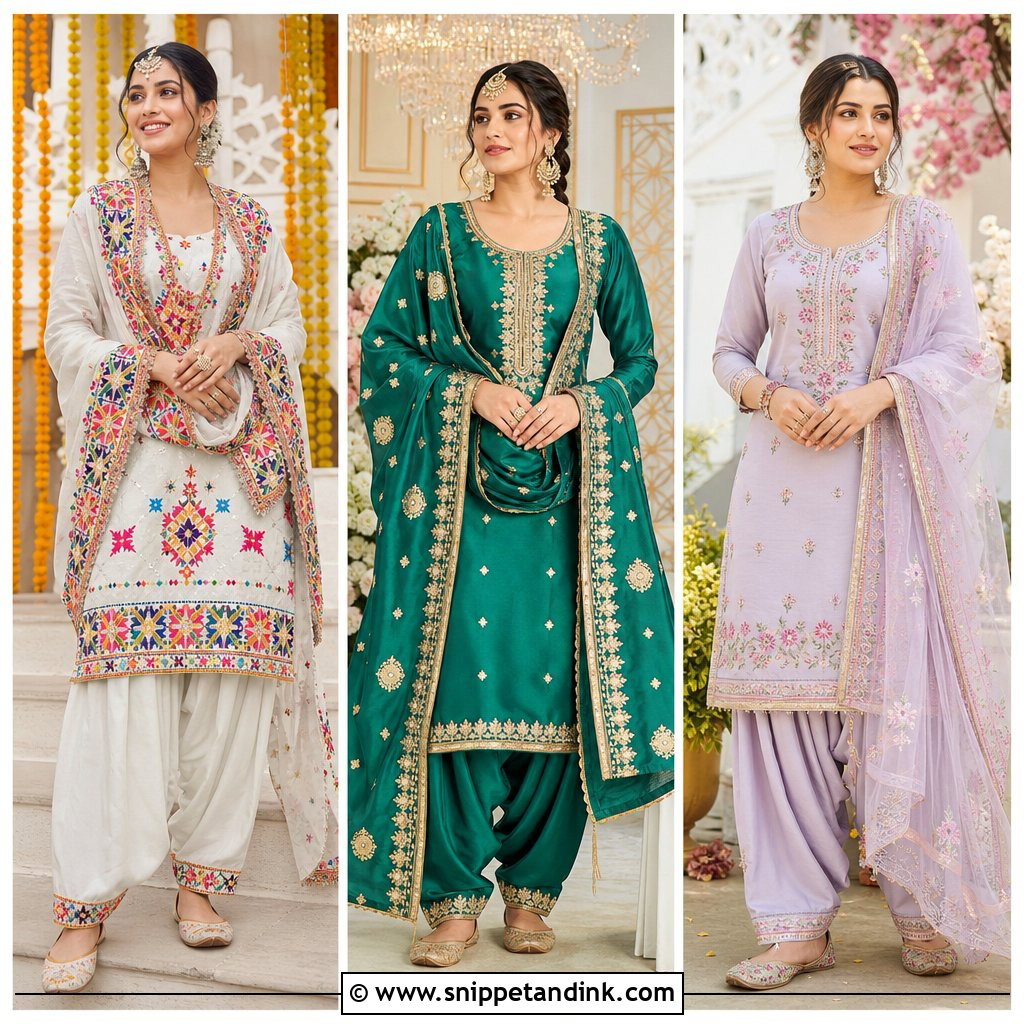
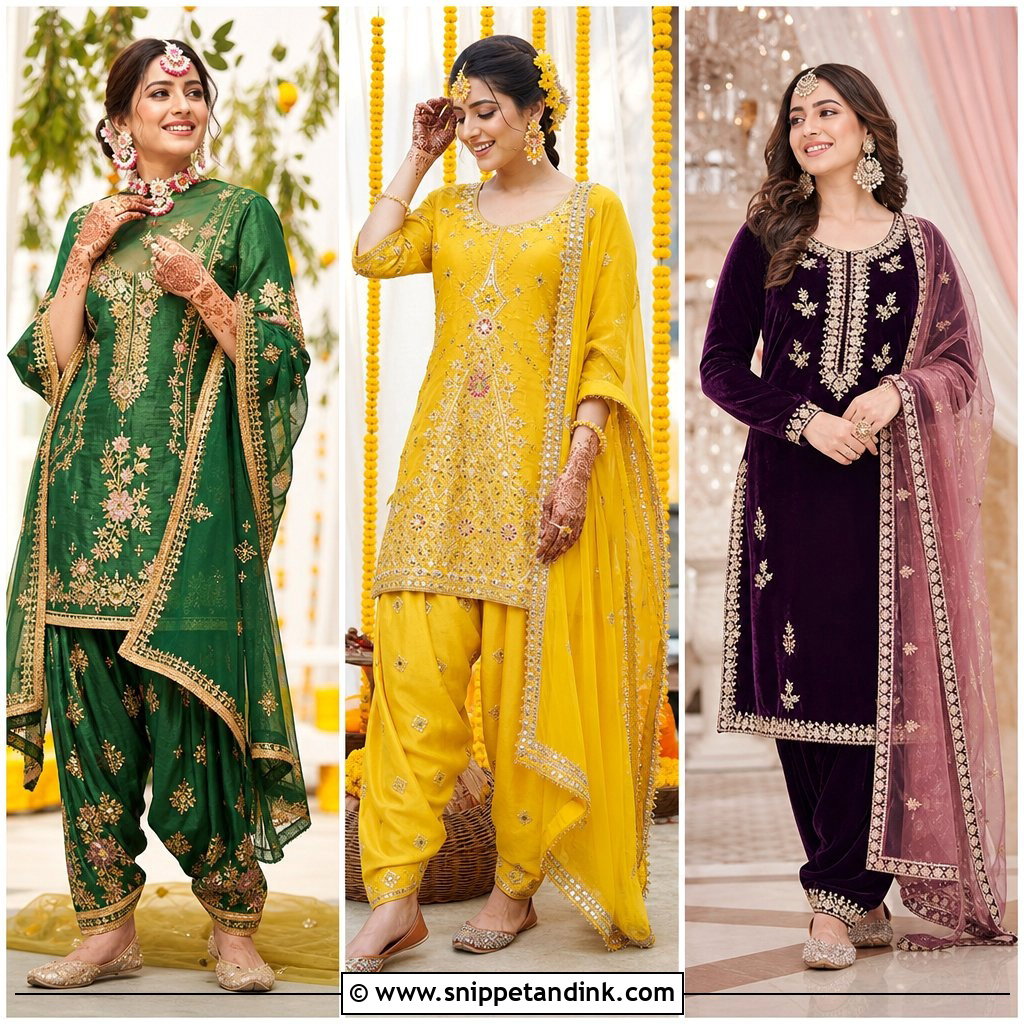
5. Mustard Bridal Punjabi Patiala Suit
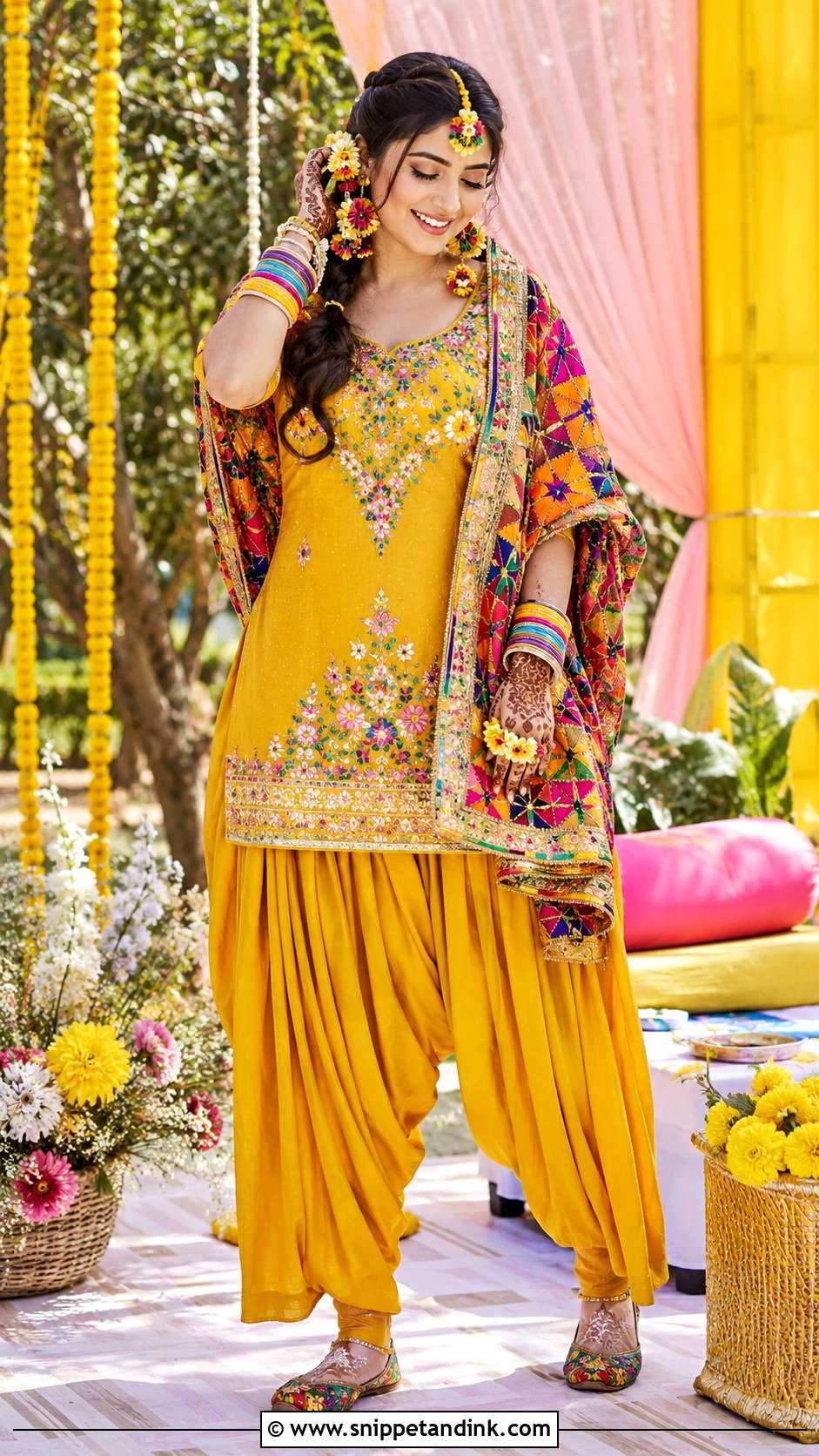
Mustard is pure joy at a mehndi or a daytime Jaago celebration, and a Patiala salwar gives you all the room you need for giddha. Breathable fabric matters here, since you’ll be dancing in the heat and sitting for henna. Let a phulkari dupatta be the statement and keep the jewelry light: floral pieces, colorful bangles, a small tikka. Pin the dupatta firmly at one shoulder. During mehndi your hands are out of action for hours, and a sliding dupatta you can’t touch is a real nuisance.
6. Emerald Green Bridal Punjabi Palazzo Suit
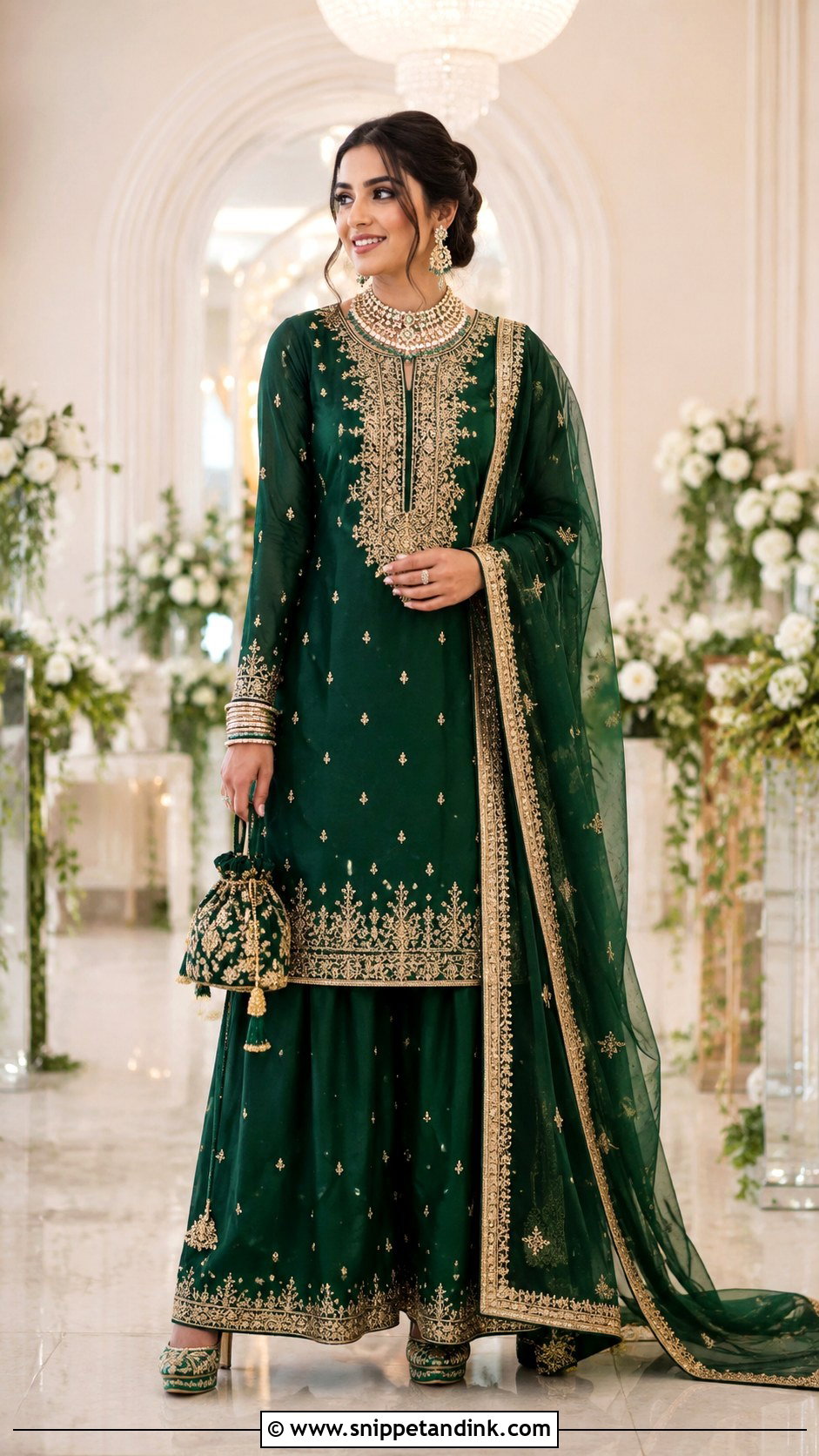
A palazzo suit is my answer when a bride asks for coverage and comfort without the weight of a lehenga at the reception. Long kameez with side slits, wide matching palazzos in silk or georgette, gold work framing the neckline and hem. The detail that makes or breaks it is the hem length. Palazzos should skim the top of your shoes, so I hem them only after the bride has chosen her platform juttis. Too long and they collect dust and get stepped on all night.
7. Royal Blue Bridal Punjabi Jacket Suit
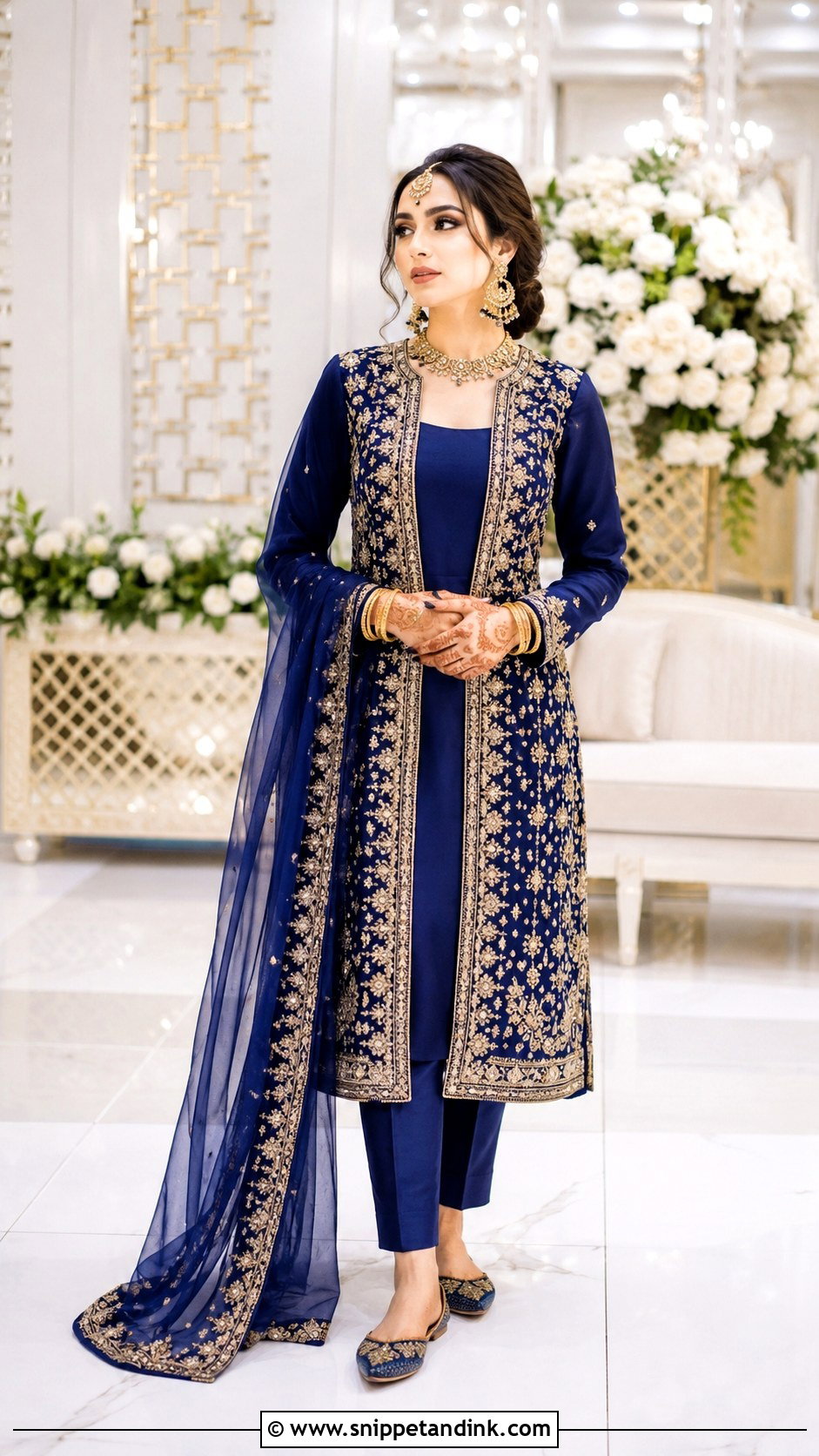
Jacket suits are the modern choice for a sangeet or reception, and royal blue takes gold thread and mirror accents well. The inner kameez stays simple and the long embroidered jacket does the work. I’d ask for a soft lining, because a stiff jacket stands away from the body and adds bulk at the hips when you sit. Leave it open below the waist for a longer line. Keep the dupatta light or skip it entirely; two heavy layers fight each other.
8. Orange Bridal Punjabi Dhoti Suit
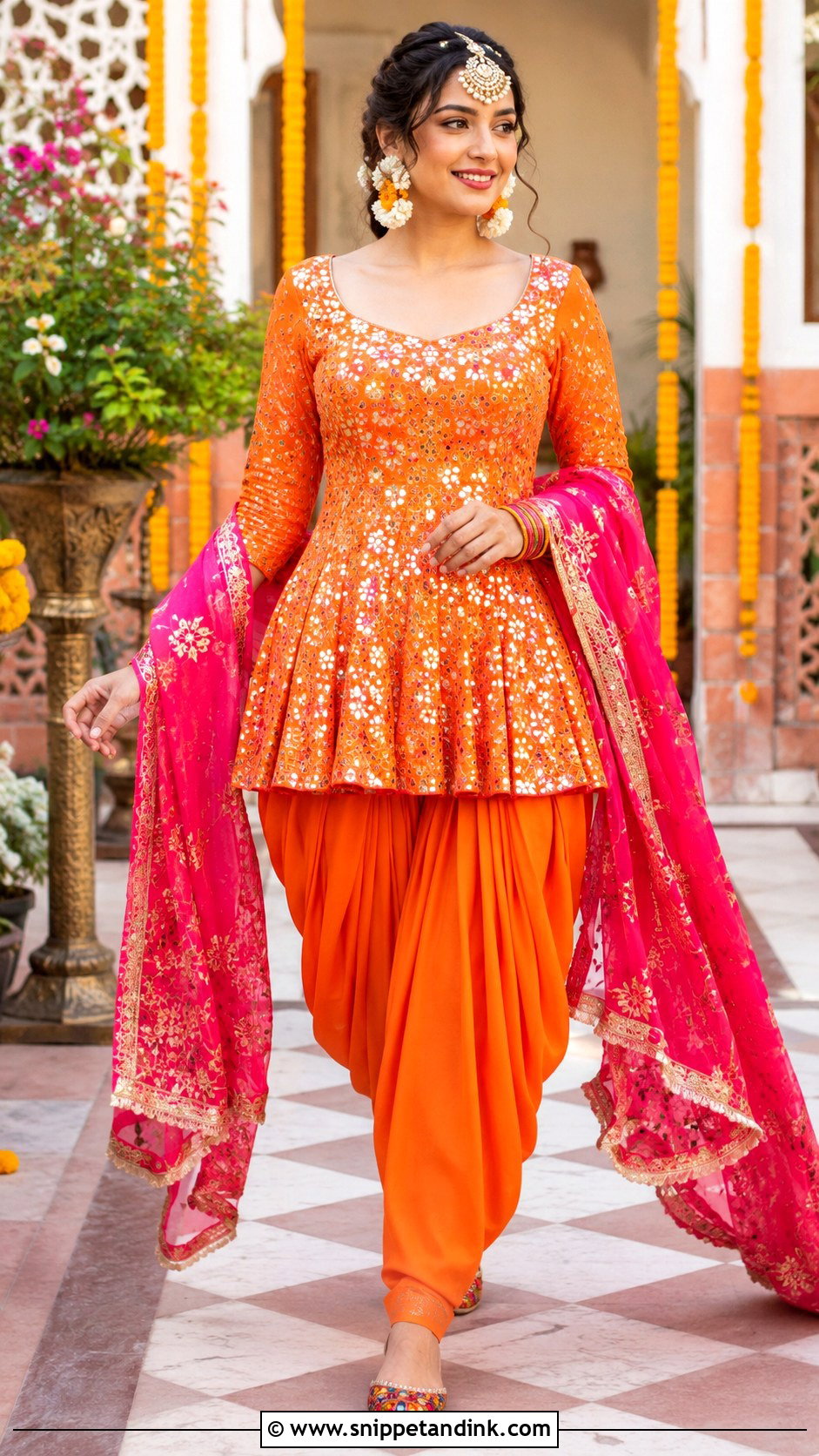
Dhoti pants already add volume at the hip, so the kurti needs to be fitted at the waist and end near the upper hip. Get that wrong and the whole outfit looks shapeless. A bright orange dhoti suit with gota patti and mirror work suits haldi, mehndi or a daytime sangeet, and a fuchsia dupatta with a narrow gold edge gives it punch. One word on haldi: turmeric stains permanently, so don’t wear embroidery you love to that ceremony. Pin the dupatta behind the shoulder so it stays put while you dance.
9. Magenta Bridal Punjabi Farshi Salwar Suit
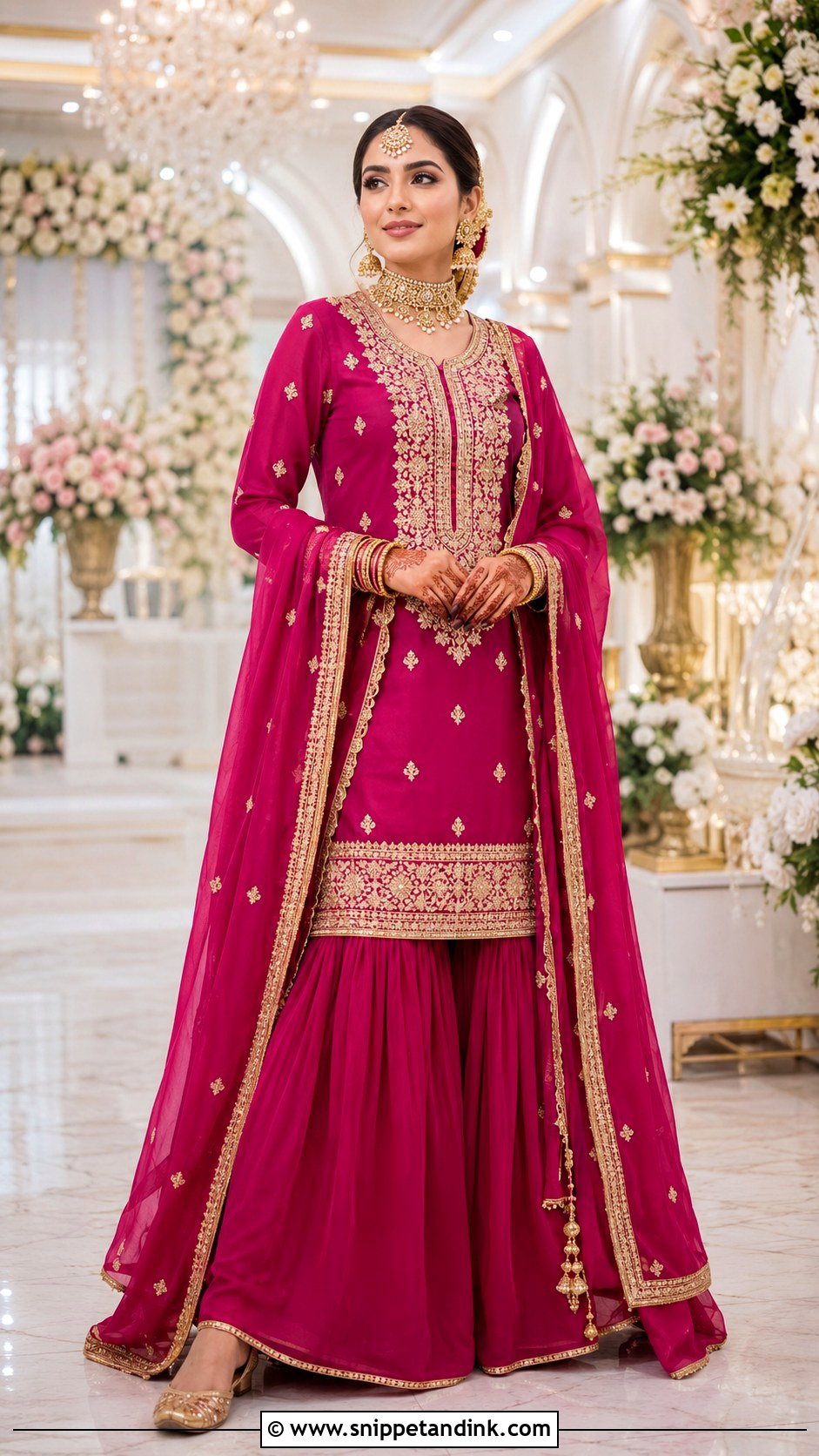
Farshi salwars pool on the floor by design, which is dramatic and also a trip hazard. I fit the length so the fabric rests just past the toes when standing, then have the bride walk, climb a step and sit before I finalize it. Side openings in the long kameez show off the flare. Magenta with gold borders and a kiran-edged dupatta suits an evening function. Low juttis are the sensible choice, and a few practice walks at home are worth more than any alteration.
10. Powder Blue Bridal Punjabi Straight Suit
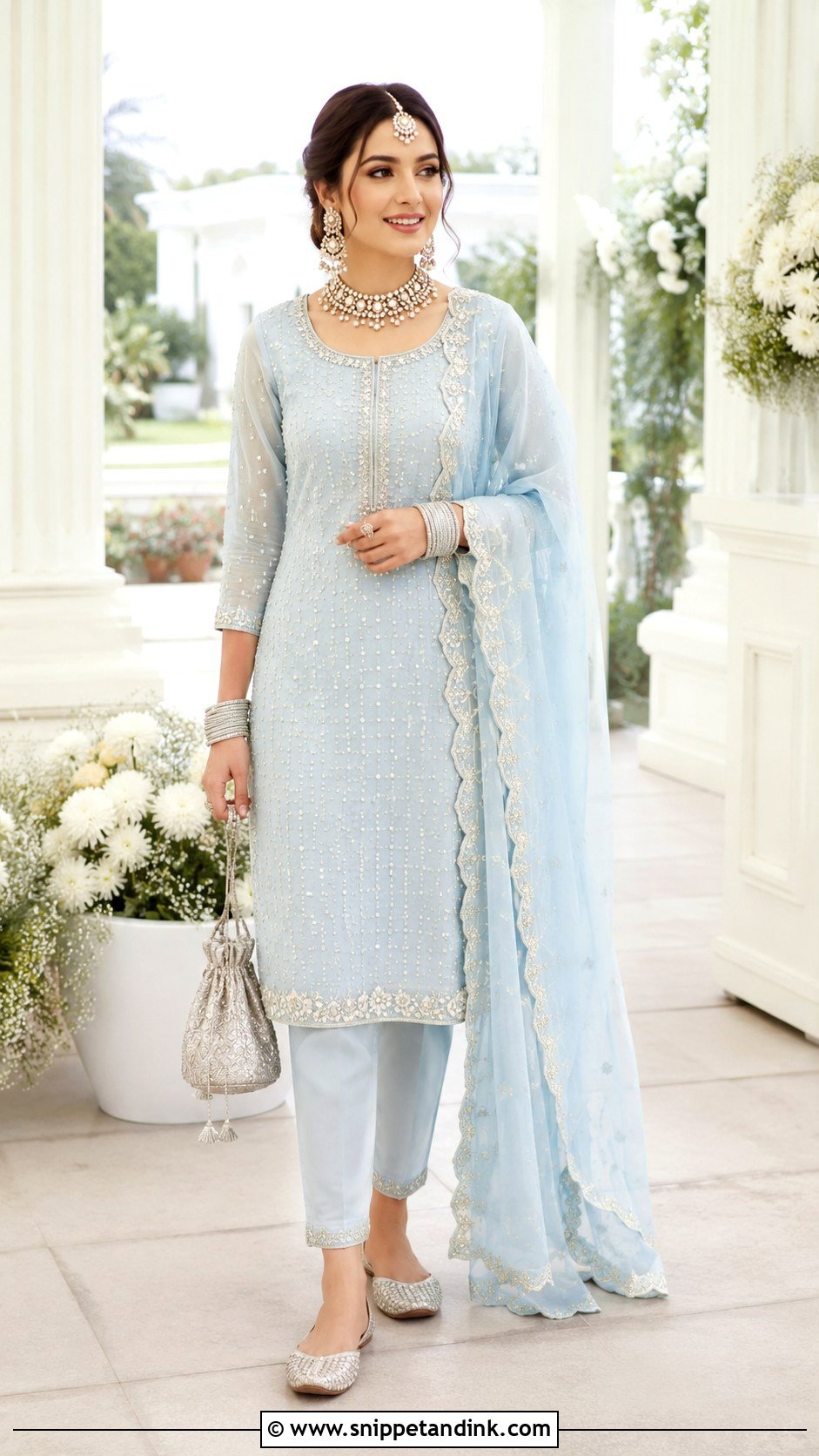
Powder blue suits a morning ceremony or roka, and it’s unforgiving about fit. Pale colors show every wrinkle at the shoulder and every pulled side seam, so I spend most of the trial on those two places. A long straight kameez with tonal embroidery and silver zari, narrow trousers or churidar, and a scalloped dupatta over the head. Choose a fabric with some body; very soft pale georgette can look casual in professional photos. Pearl and kundan jewelry suit the cool tone.
11. White Bridal Punjabi Suit With Phulkari Dupatta
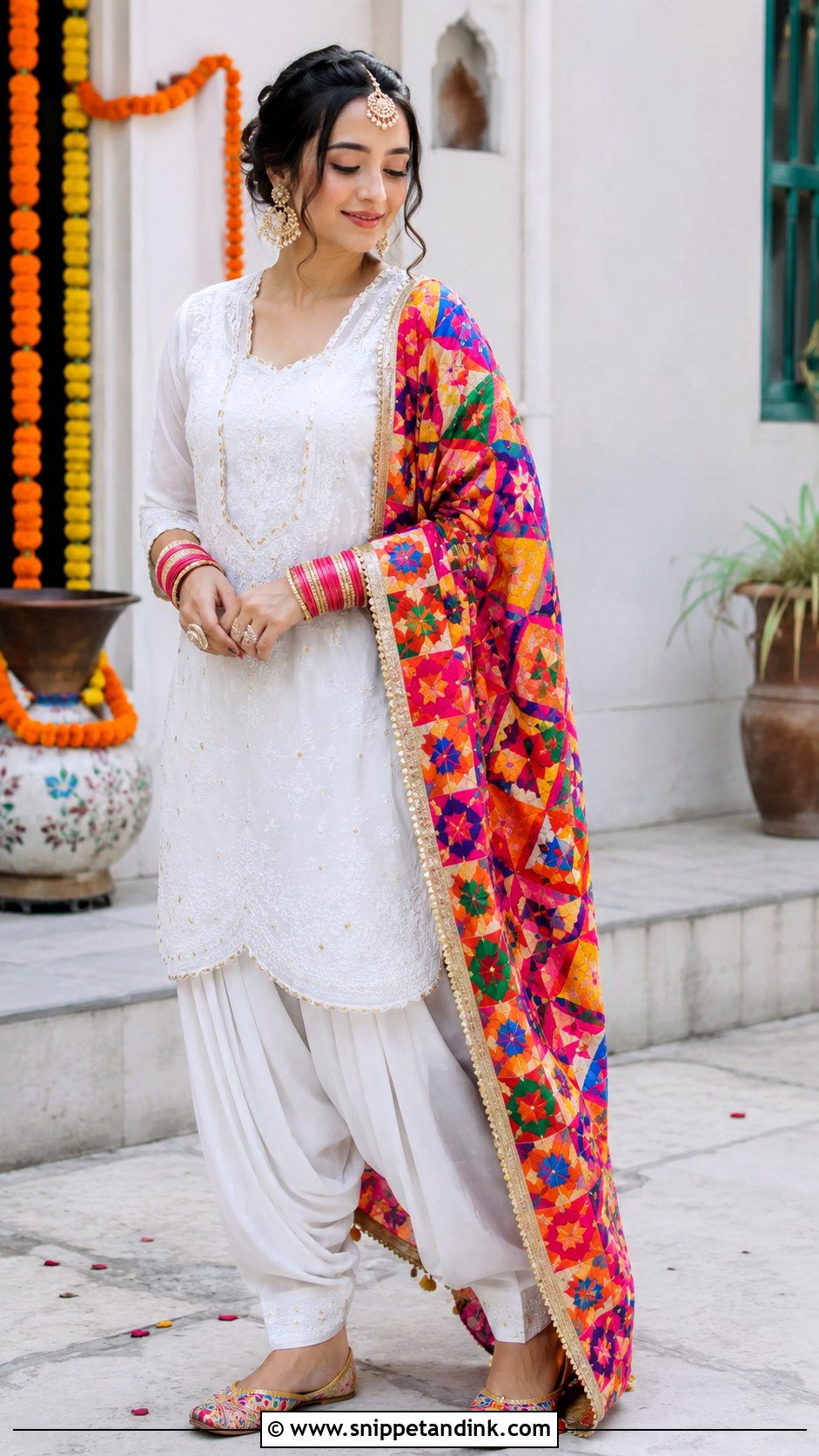
This combination lets the dupatta do everything. A white Punjabi suit in silk or cotton-silk with subtle white threadwork, then a phulkari dupatta dense with pink, orange, green and gold. It’s lovely for a Jaago or a family gathering before the wedding. Some families consider plain white unsuitable for a bride, so check before you commit. I pin one corner near the shoulder and let the other side fall, so the embroidery shows across the front.
12. Lavender Bridal Punjabi Peplum Sharara Suit
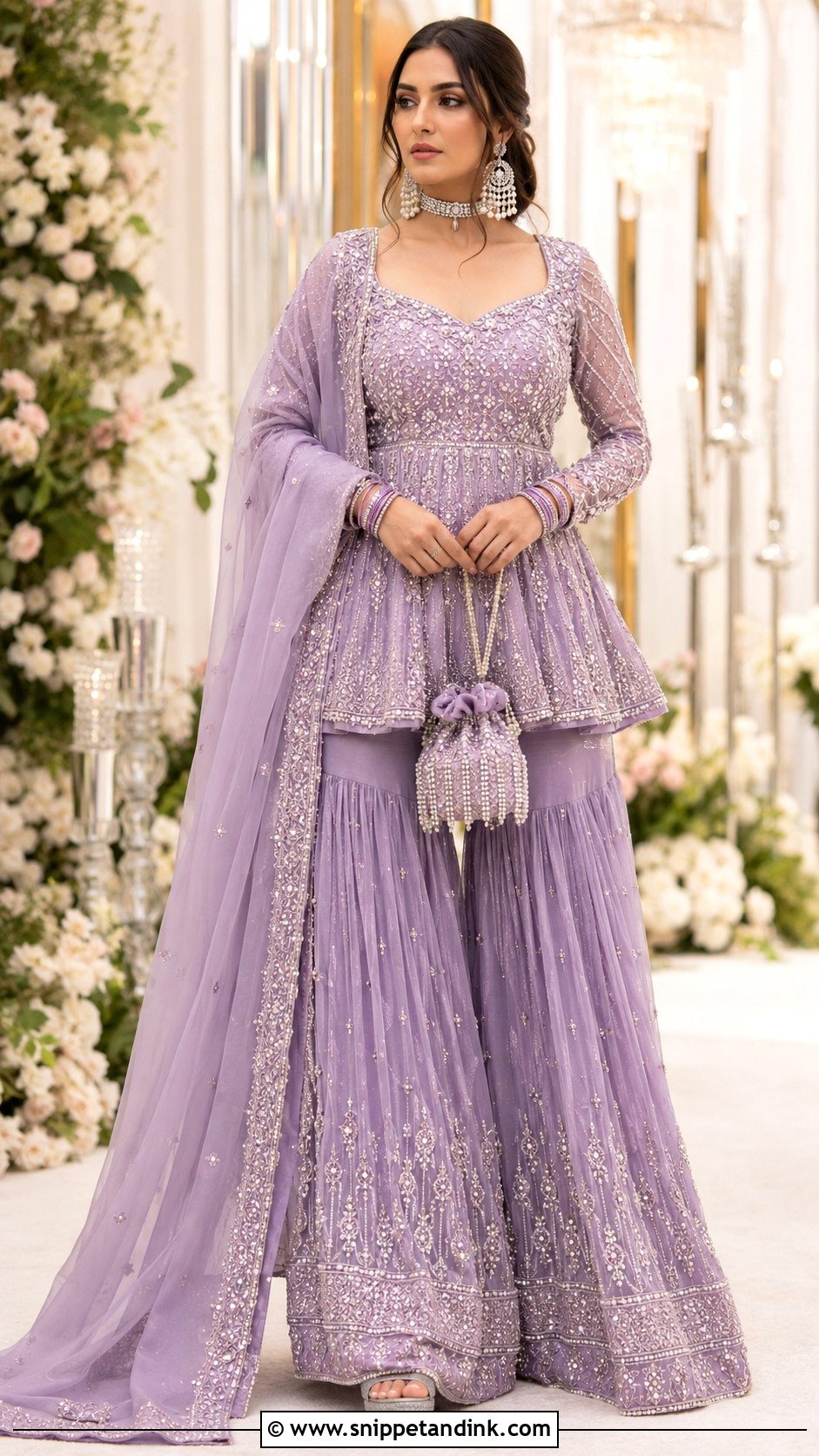
Peplums and shararas both add volume, so the peplum has to stop at the upper hip or the two flares collide. In lavender, silver and crystal work suits the cool tone better than yellow gold. A matching organza dupatta with tiny motifs keeps it light enough for a sangeet. For dancing, I pin the dupatta at both shoulders; for portraits, release one side so it falls. A slightly longer, curved peplum suits anyone who wants more coverage over the hips.
13. Black Bridal Punjabi Velvet Suit
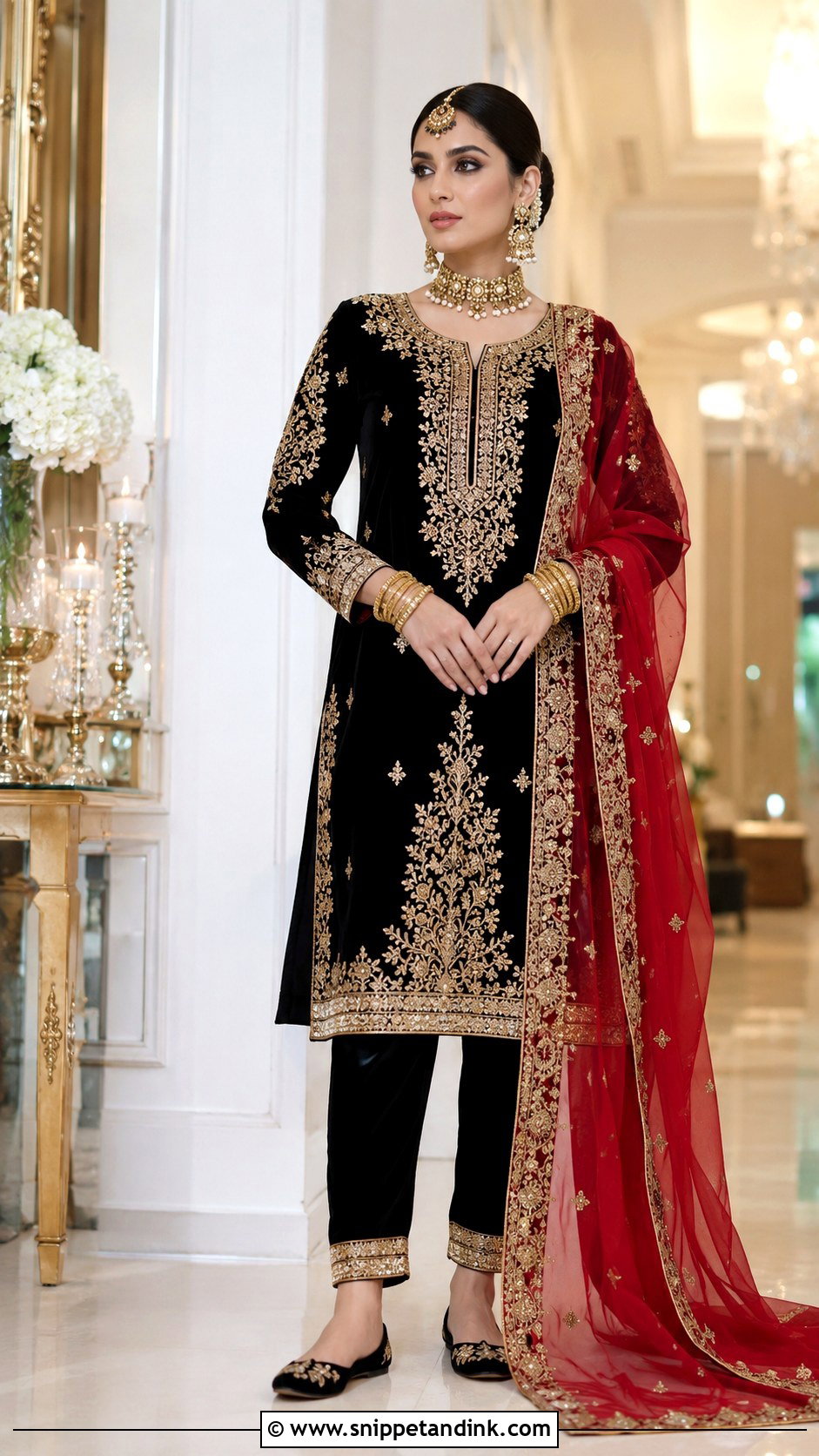
Black velvet is striking for an evening sangeet or reception, but please ask your family first. Many Punjabi households avoid black at wedding events, and it’s better to know before the order goes in. If it’s welcome, keep embroidery to the neckline, cuffs and hem, since velvet already looks rich. Velvet holds heat, so I’d only suggest it for a winter function or a well-cooled venue. A red or magenta organza dupatta with a gold border adds warmth against the black.
14. Peach Bridal Punjabi Angrakha Suit
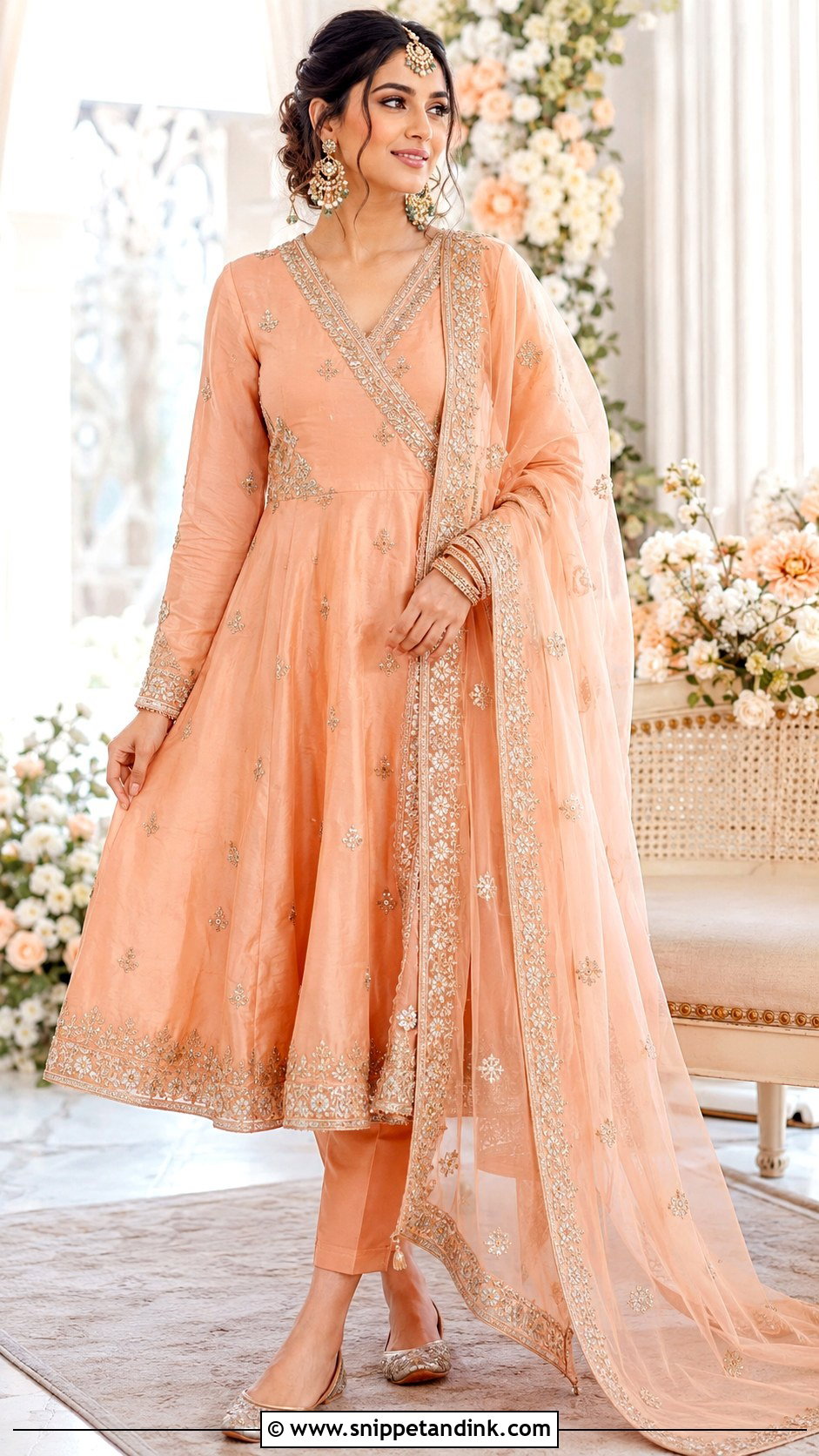
Angrakhas wrap and tie at the side, which flatters most figures, but that overlap can open when you sit or lift your arms. I always add hidden hooks or a snap behind the decorative tie, and check that the inner panel covers fully when seated. Peach with rose-gold embroidery and pearls works for an engagement or intimate sangeet. A churidar or slim ankle pants balance the flare above. Kundan earrings and metallic juttis keep the palette warm.

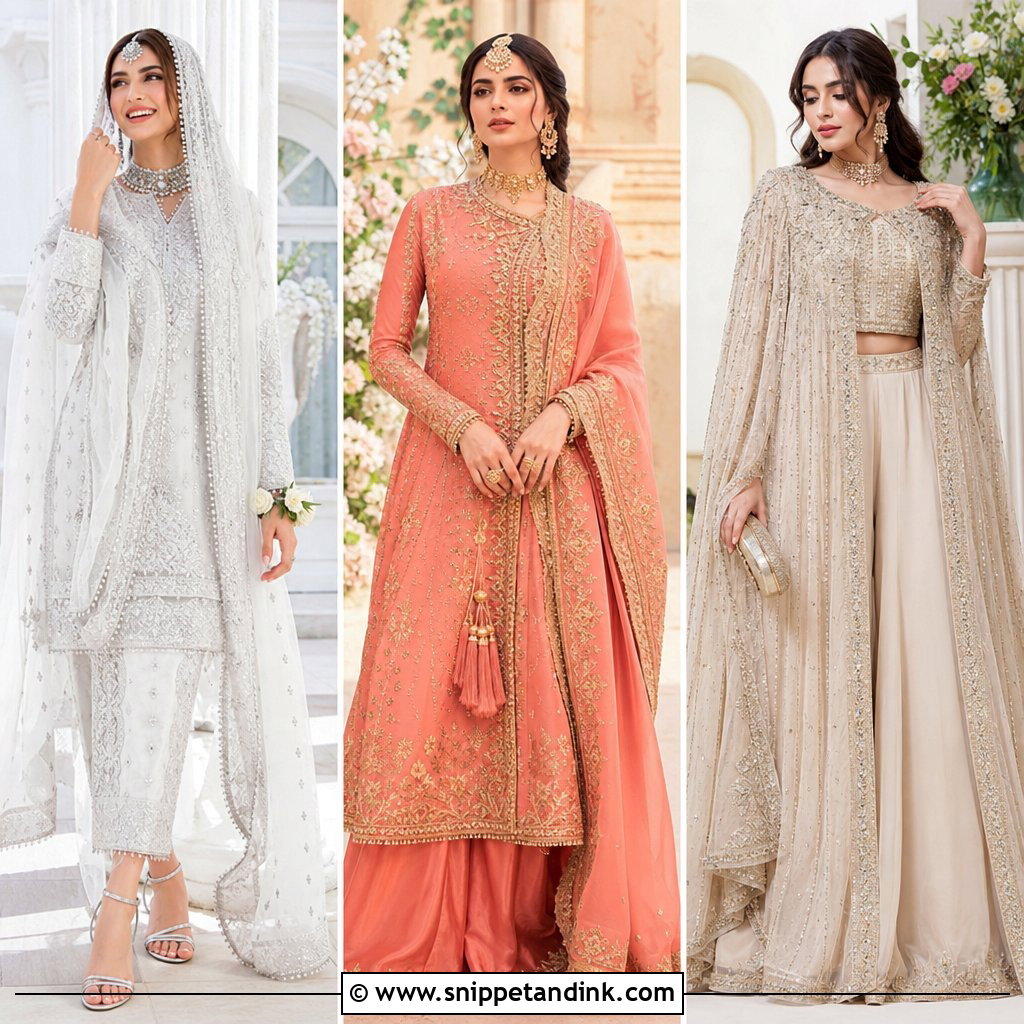
15. Teal Bridal Punjabi Cape Suit
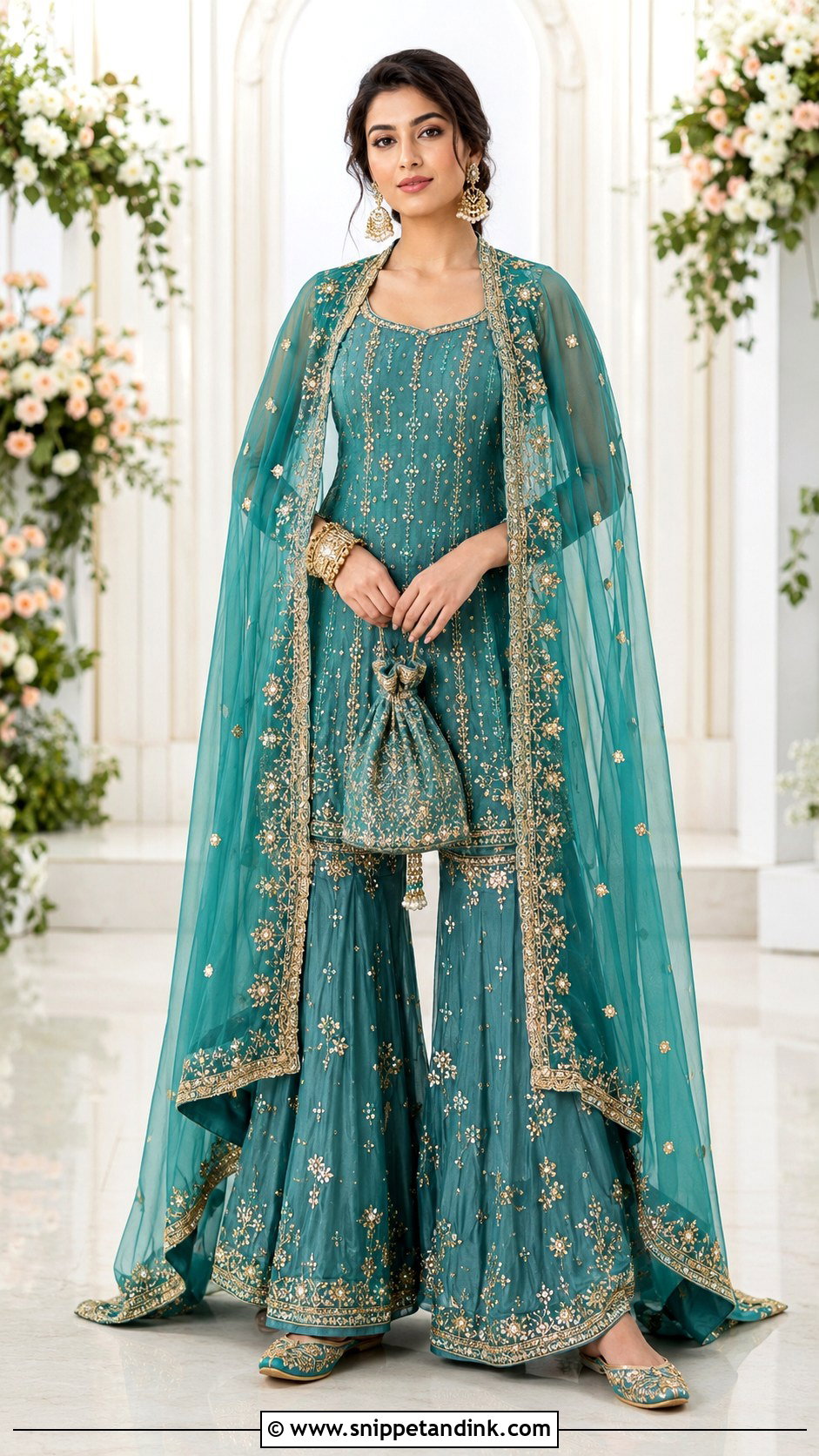
Capes solve the dupatta problem. No sliding, no constant re-pinning, no corner trailing in the food. That alone makes a teal cape suit a smart choice for a reception or sangeet where you’ll be on your feet. A fitted kameez or short kurti with straight pants or a sharara, then a sheer embroidered cape. Keep the cape length above the widest part of the bottoms. Make sure the front opening lets you raise your arms freely, as some cut tight at the shoulder.
16. Rani Pink Bridal Punjabi Salwar Suit
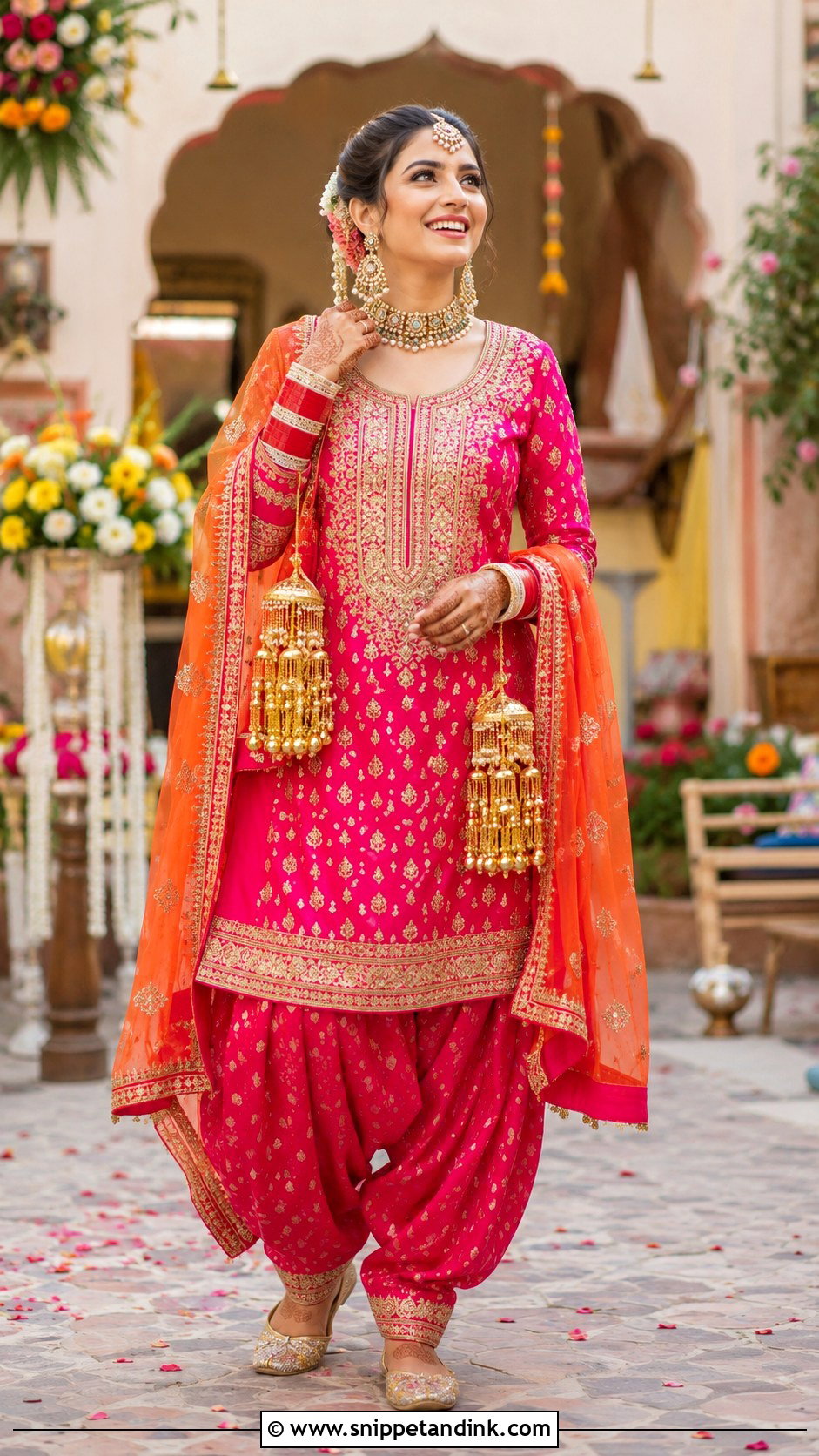
Rani pink is unmistakably festive, and pairing it with an orange or red dupatta is classic Punjabi color blocking. The weight of the embroidery decides the occasion: heavy zardozi for the wedding, lighter gota for a Jaago. With bridal chooda, kaleere, a choker and big earrings already in play, I keep makeup in the same warm family so the face doesn’t clash with the suit. On a petite bride, a defined kameez waist stops the bright color and salwar volume from swamping her.
17. Beige Bridal Punjabi Mirror Work Suit
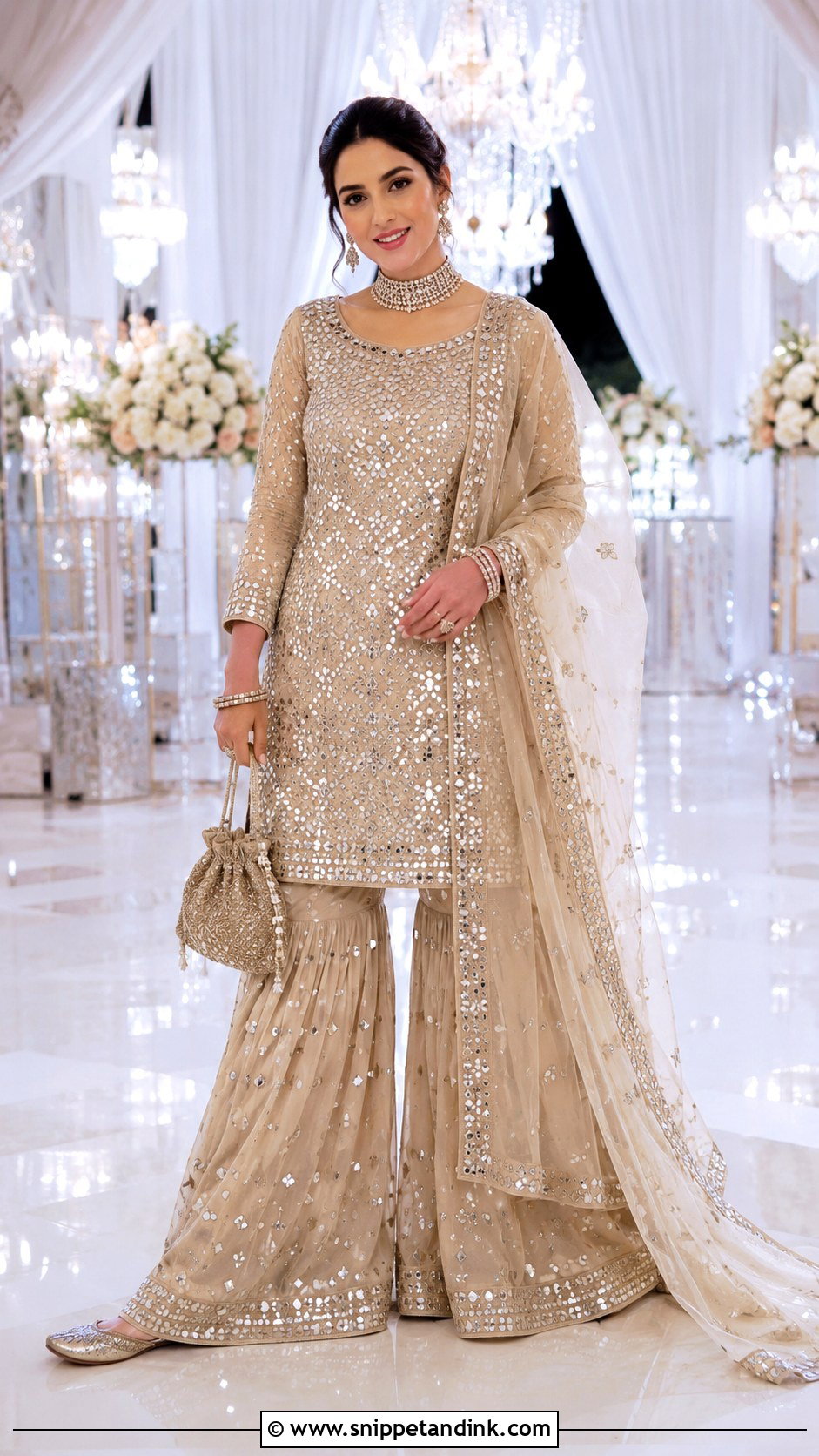
Beige lets mirror work shine, especially in evening light where every mirror catches a lamp. Ask how the mirrors are attached. Poorly backed mirrors have sharp edges that scratch the inside of your arms and snag the dupatta. A knee-length kameez with a flared sharara or straight trousers, champagne and silver accents, and a mirrored-border organza dupatta suit a sangeet or reception. Keep the potli small and simple; a sparkly bag next to a sparkly suit is too much.
18. Rust Bridal Punjabi Gharara Suit
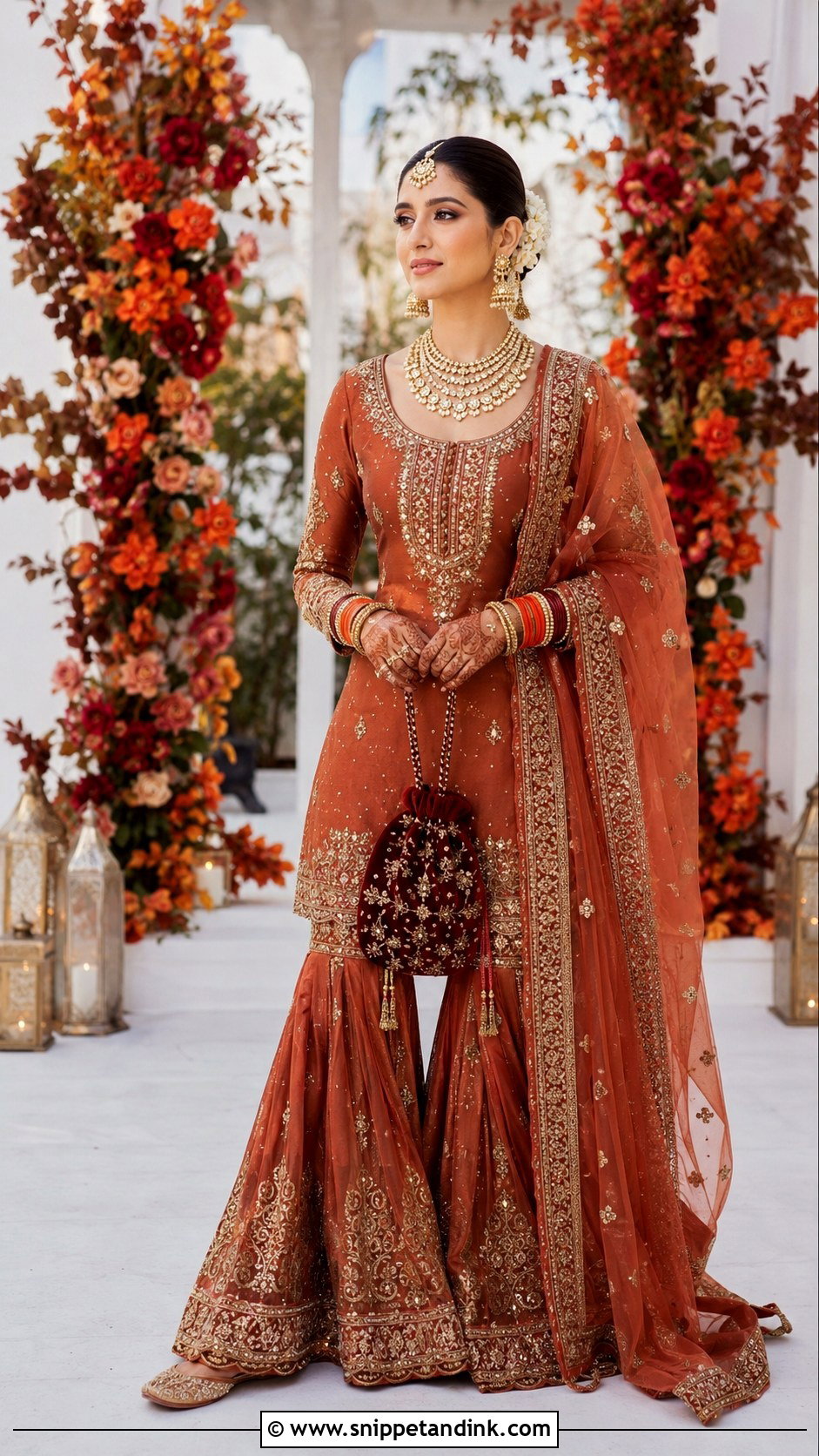
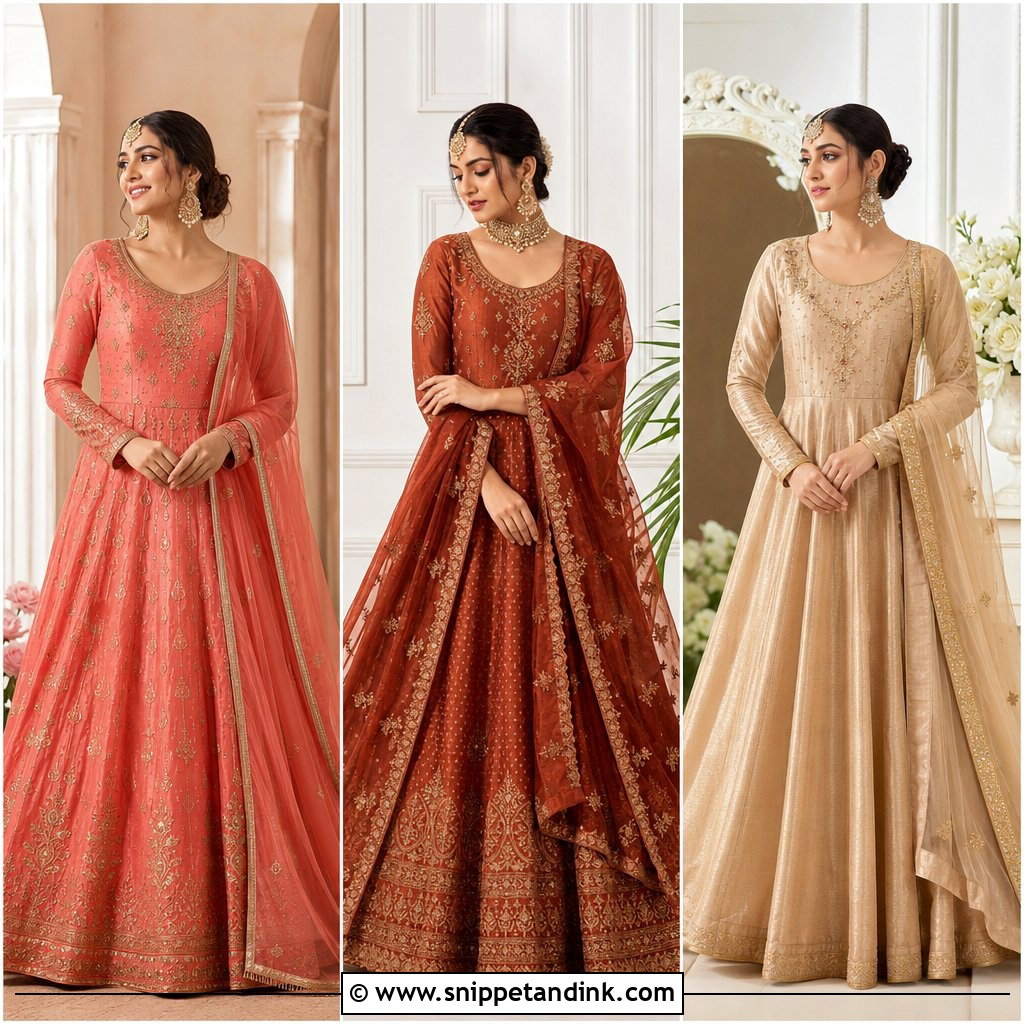
Rust is warmer than orange and less expected than maroon, which makes it a good autumn or evening Jaago color. A structured gharara needs fabric with body to hold its flare, so I’d steer away from very soft georgette here. Antique-gold work at the neckline, cuffs and knee joint draws the eye in the right places. A slightly higher waist on the short kameez lengthens the legs. Tissue or organza dupatta adds volume without weight.
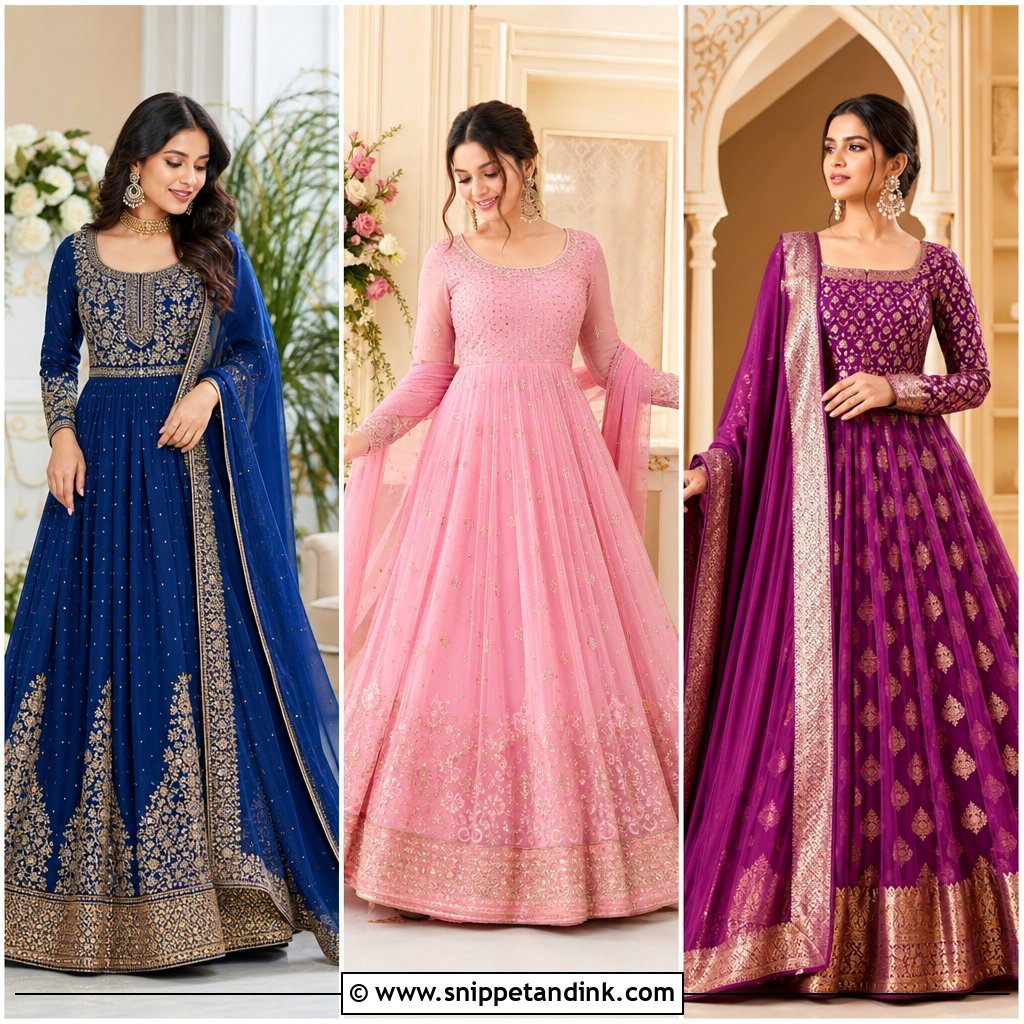
19. Mint Green Bridal Punjabi Anarkali Suit
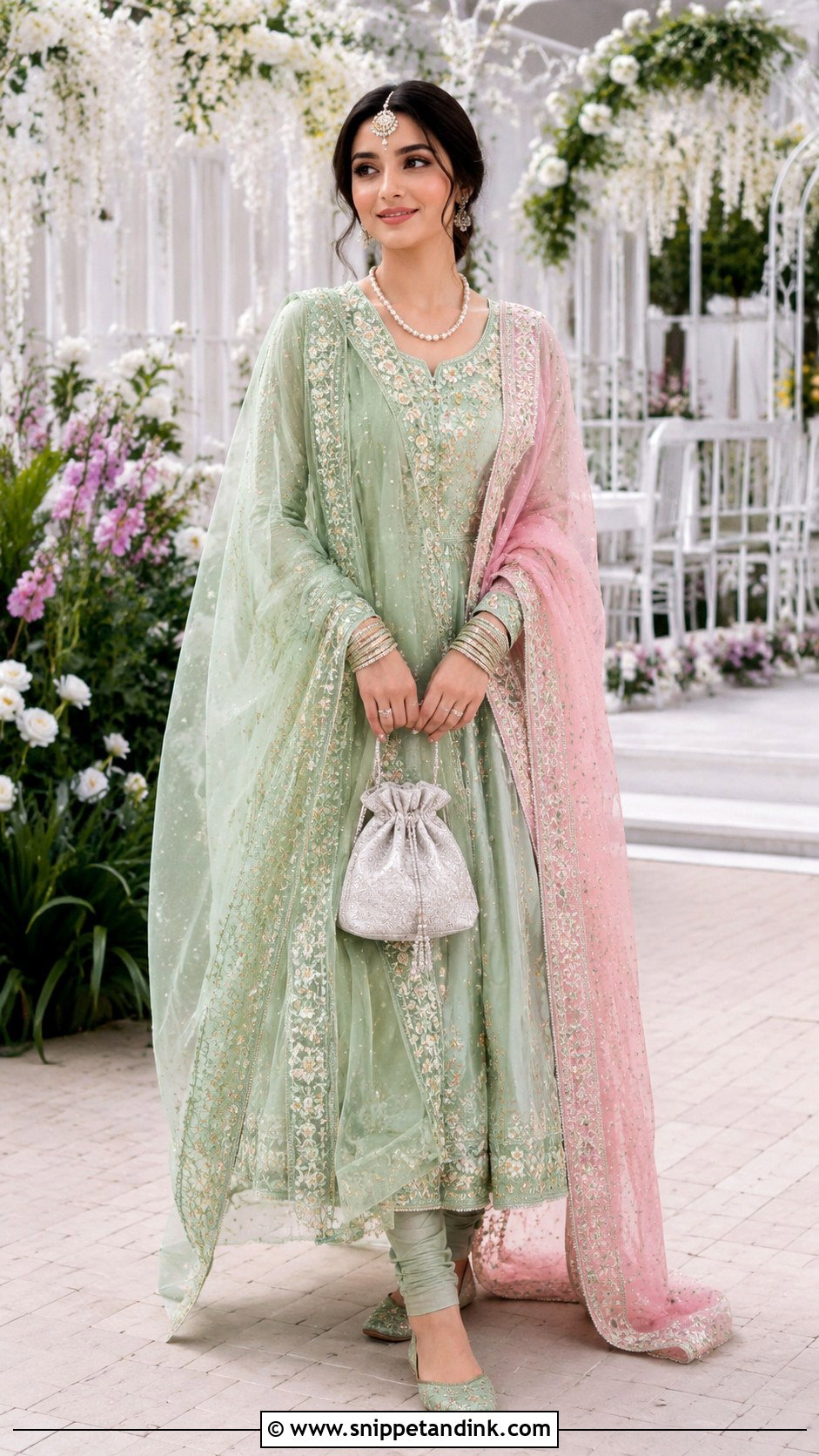
Mint green is fresh for a daytime engagement or post-wedding function, and an Anarkali in it feels light. I’d keep the flare controlled, starting just below the waist, because a huge Anarkali is hard to manage in a packed living room or when sitting with family. Silver or pearl embroidery, slim churidar, mint juttis for an unbroken color line. A second pale pink dupatta gives subtle contrast. Pearl jewelry and a light tikka suit the softness.
20. Gold Bridal Punjabi Palazzo Suit
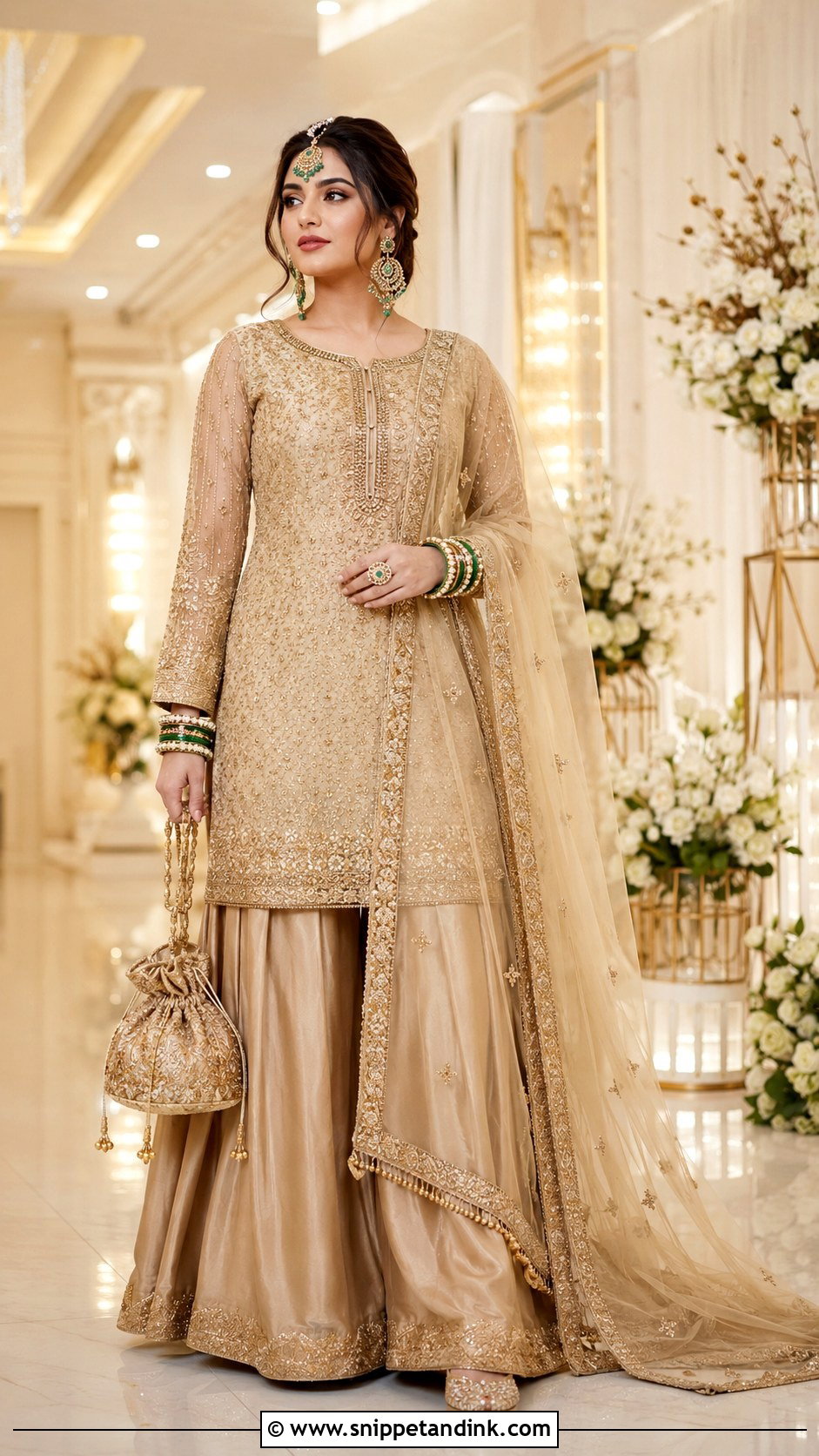
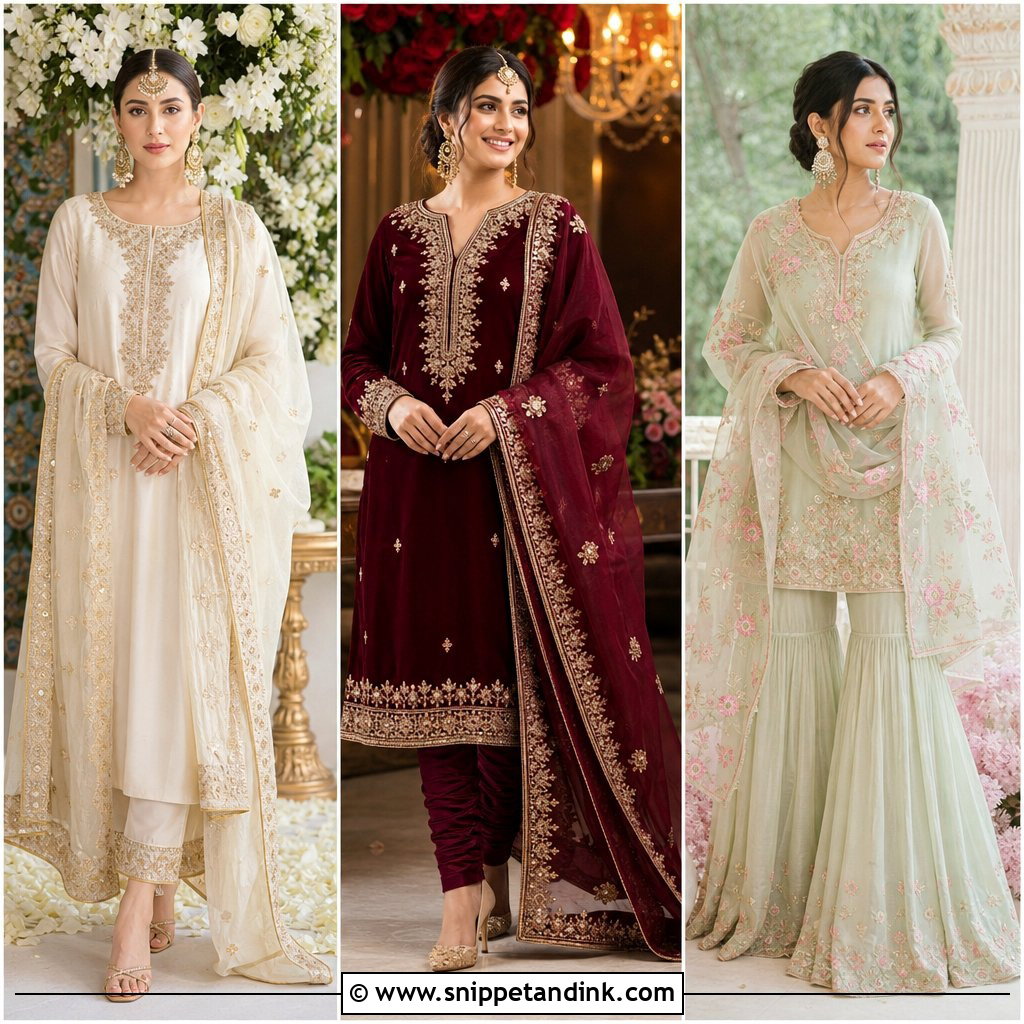
An all-gold suit can look flat when every surface shines the same way. My fix is to vary texture: matte silk palazzos against a reflective embroidered kameez and a sheer dupatta. Champagne gold with tonal zari and vertical beadwork suits a reception or formal dinner. Wide palazzos move well and show off platform juttis. Bring contrast through emerald, ruby or multicolored kundan jewelry. The dupatta can go across both shoulders or loosely over one arm for a relaxed look later in the evening.
How Many Fittings a Hand-Embroidered Suit Really Needs
Hand zardozi and dabka take time, and boutiques get busy in wedding season. I’d place a ceremony suit order around three to four months ahead, and earlier if you’re ordering from abroad. Lighter function outfits can follow later. Expect two or three fittings.
- First fitting: check shoulders, bust and armholes before heavy embroidery is attached, while changes are still easy.
- Second fitting: wear your wedding juttis and the bra you’ll wear on the day. Hem lengths and the gharara joint are set now.
- Final fitting: put on the full outfit with dupatta and some jewelry, sit on the floor, raise your arms, and walk a staircase.
Ask the tailor to leave a little extra seam allowance at the side seams, since weight often shifts in the last months. Keep a small offcut of the fabric too; it helps your makeup artist match lip color and lets a tailor patch a snag after the wedding.
Red for the Laavan, Freedom for Everything After
For the ceremony itself, a red salwar suit or maroon gharara still carries the most weight with family and in photographs. Pastel Anarkalis, shararas, capes and palazzo suits come into their own at the functions around it. Before you settle on any of them, think about the venue, the season and how much you’ll be moving, and give your tailor time to get the shoulder, waist and length right. Pin the dupatta securely, wear juttis you can stand in for hours, and let the jewelry support the suit rather than compete with it.
You'll Like These Ideas:






Leave a Reply