
When a bride tells me she wants Yoruba traditional wedding attire that feels like her and still pleases the elders, I start with three things: the cloth, the venue and the camera. Aso oke, iro, buba, gele, ipele or iborun, beads, a hand fan and shoes make up the classic set, and brides now mix in lace, sequins, velvet, adire and structured gowns as well. Below are 25 complete looks, color by color and shape by shape, with what I’d adjust for movement, heat and photos from the introduction to the last family portrait.
Heat, Halls and Canopies: Matching Cloth Weight to the Venue
Traditional ceremonies often run for hours, many under outdoor canopies or in halls that warm up fast once the guests arrive. Densely woven aso oke is warm, and the ipele and gele add more layers on top. When I know a venue runs hot, I steer the bride toward a lighter weave, an open or eyelet pattern, or lace for the buba, and save the heavier cloth for the gele, where stiffness is actually useful.
Small things that keep a bride cool
- Ask for a breathable cotton lining in the buba rather than polyester.
- Give a plain cooling fan to a bridesmaid. A beaded bridal fan looks right in photos but moves very little air.
- Carry blotting papers and setting spray in the clutch so makeup doesn’t slide under the gele.
- Sit in the shade between dances and sip water steadily through the day.
An air-conditioned evening hall flips the problem. Lace sleeves and bare shoulders can feel cold under strong vents, and the heavier aso oke you avoided at noon suddenly makes sense. If your day moves from an outdoor introduction to an indoor reception, I’d plan the lighter outfit first and the heavier, more embellished one for the evening change, rather than the other way round.
1. White Aso Oke Yoruba Bride Attire
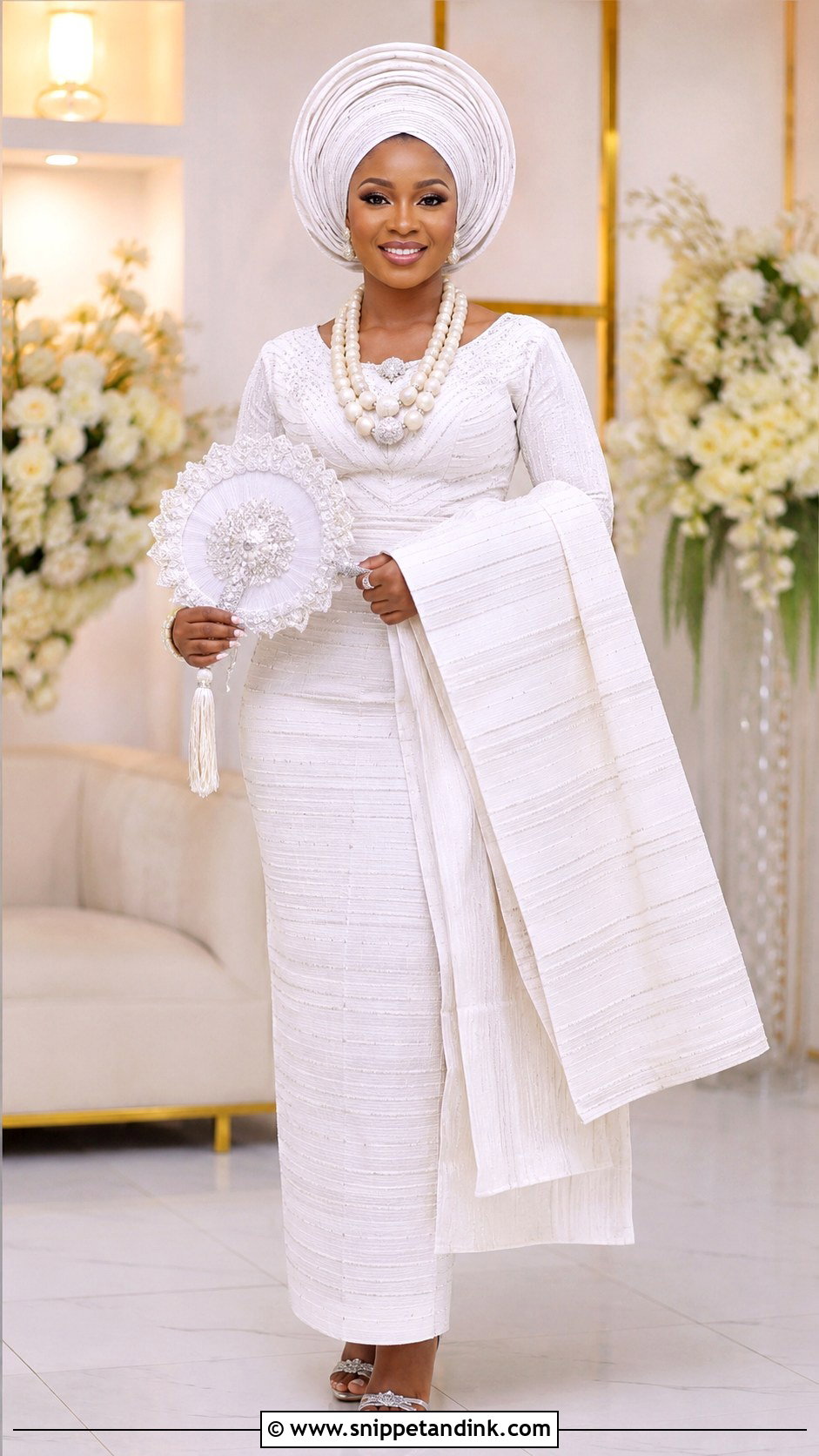
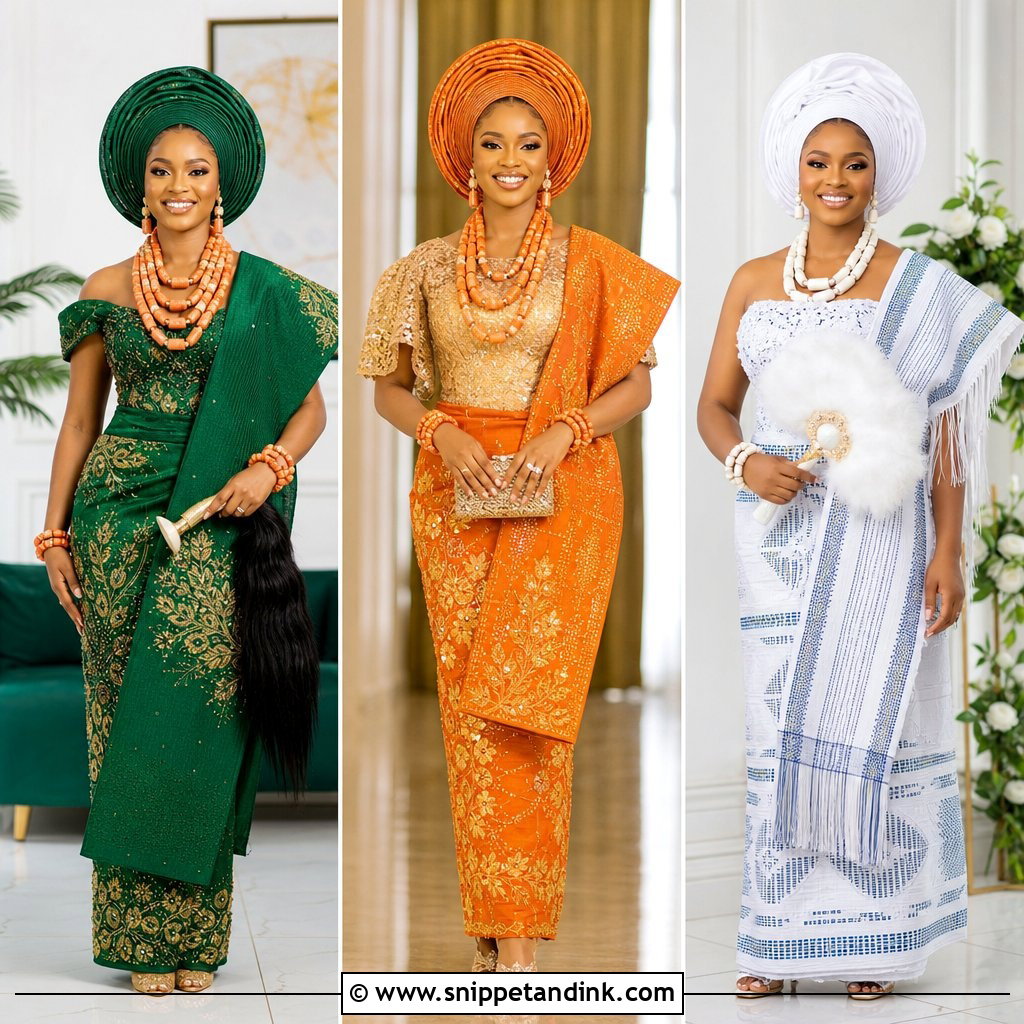
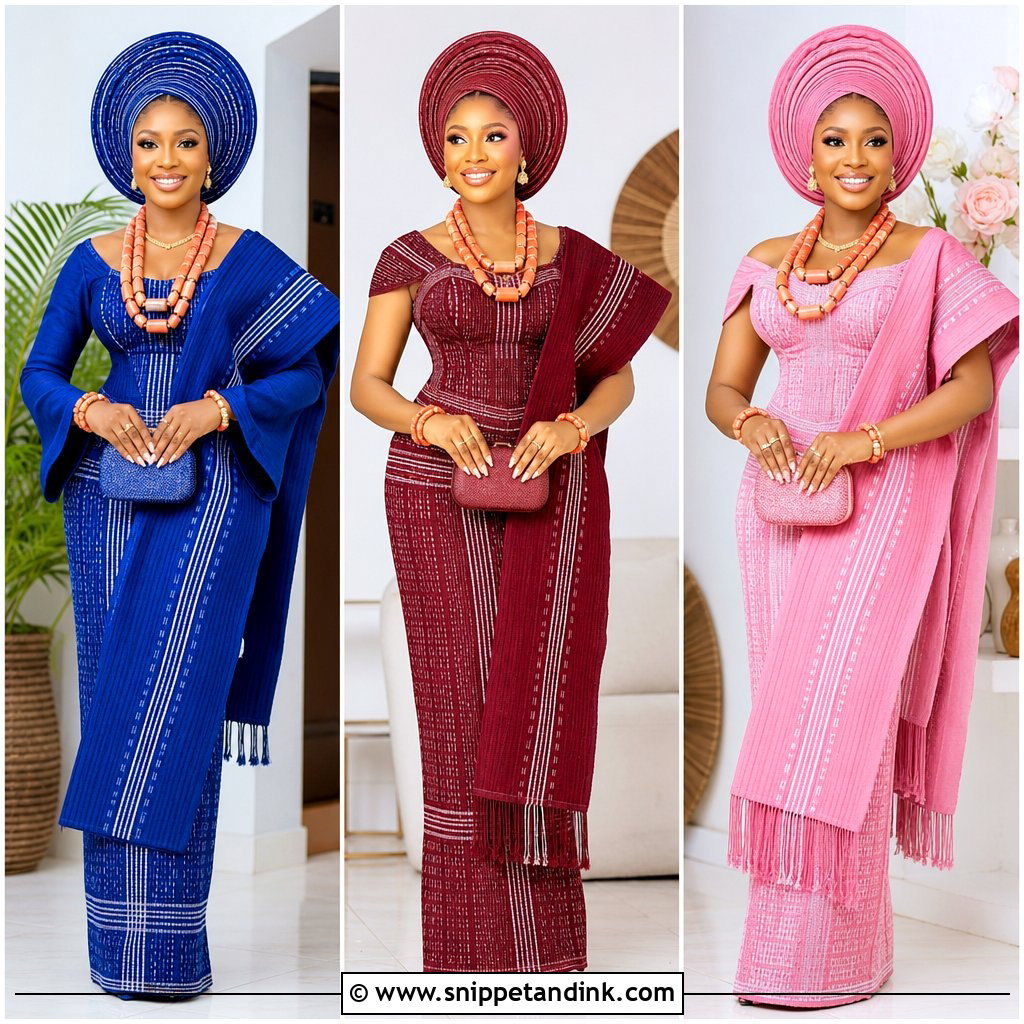
Pure white aso oke has one weakness: in strong daylight it can photograph as a flat bright block. Silver thread, pearl beading or soft geometric weaving fixes that by giving the camera texture to read. A fitted buba, a neatly wrapped iro, a structured gele and an ipele over one shoulder form the set, with layered white or crystal beads, silver heels and a decorated hand fan. If the groom is in white, ivory, or silver agbada, ask both tailors to compare swatches side by side, since two whites rarely match by chance. Defined eyes and soft shimmer keep the face from fading against all that white.
2. Gold Aso Oke Yoruba Bride Attire
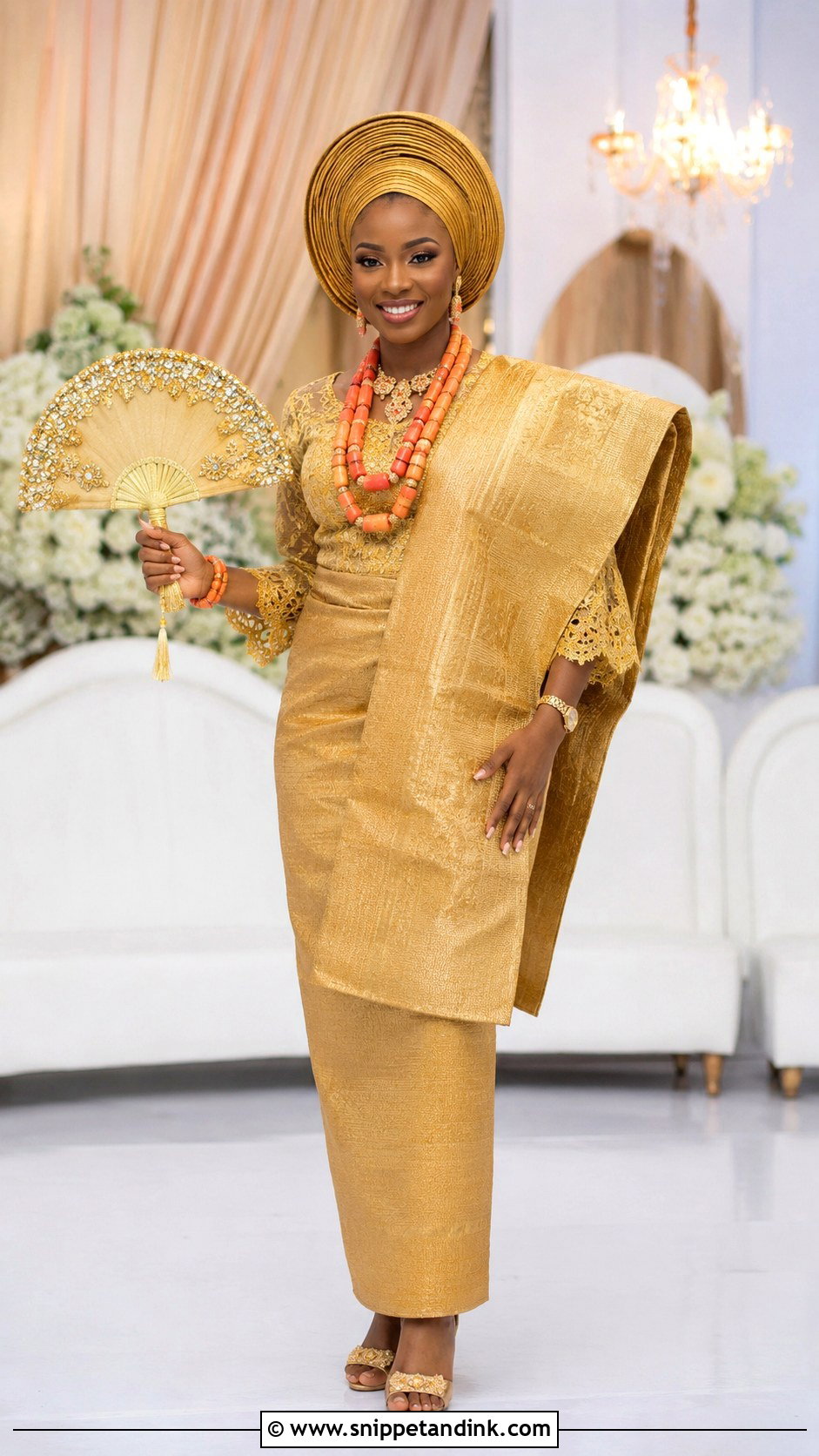
Gold needs very little help. A gold iro and buba, a tall matching gele, an ipele, gold jewelry and embellished sandals already make a royal statement. What I look at is texture: woven stripes or embroidery show up in photos, while flat metallic cloth can look like foil. Coral layered at the neck and wrist adds a classic warm contrast, and a gold fan completes it. Mind the gele height if you’re driving to the venue. A tall gele is best tied on arrival, or the car roof will flatten it.
3. Red Aso Oke Yoruba Bride Attire
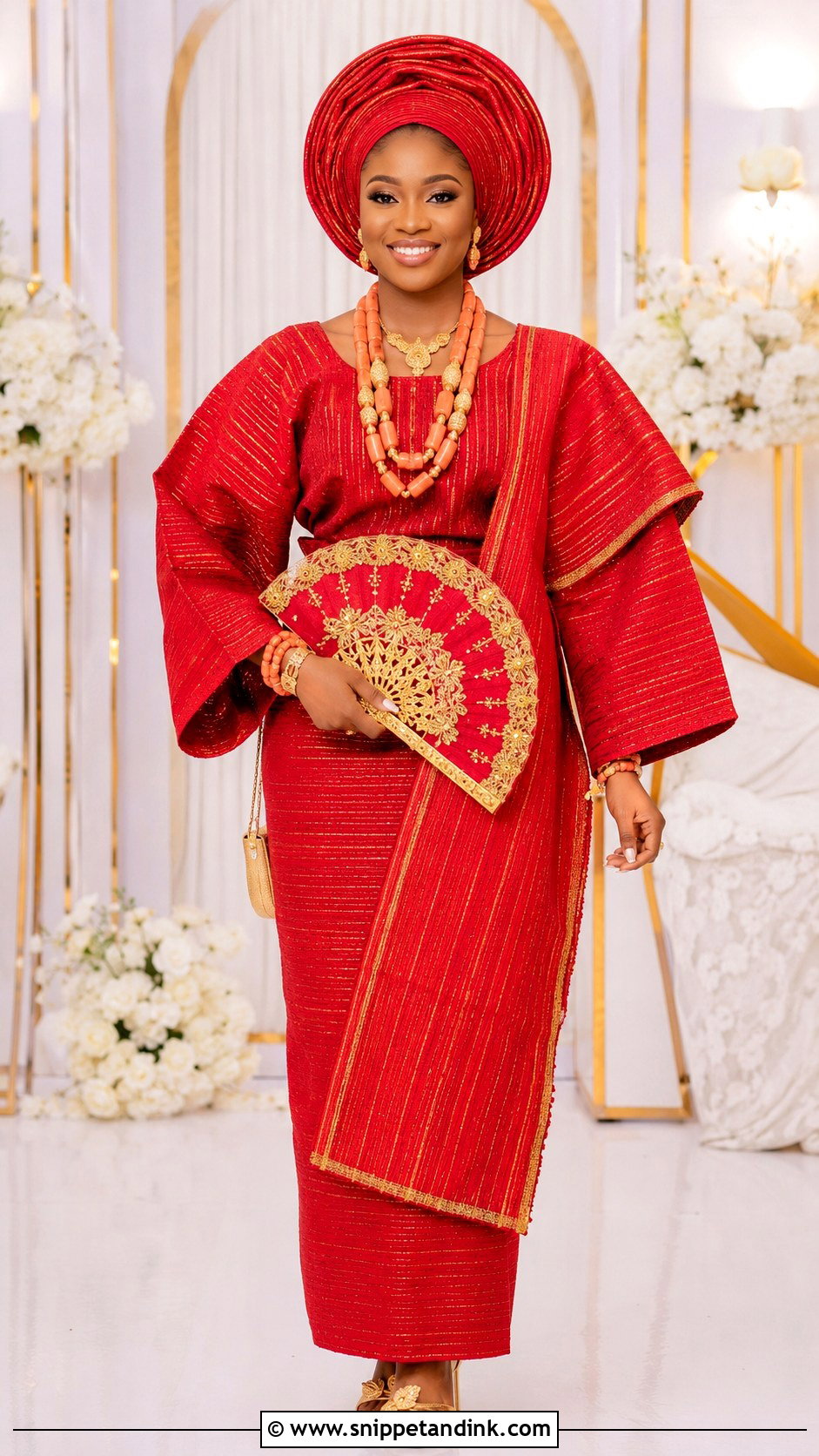
Red already carries the energy, so everything around it should calm down: clean tailoring, smooth wrapping and jewelry that supports rather than competes. A full iro and buba, a sculpted gele, a neat ipele, coral beads and gold heels make the look, with a red and gold fan for the entrance dance. On the face I keep to warm tones, defined brows and a gold highlight. A cool pink lipstick fights a warm red cloth every time.
4. Burgundy Yoruba Bride Attire
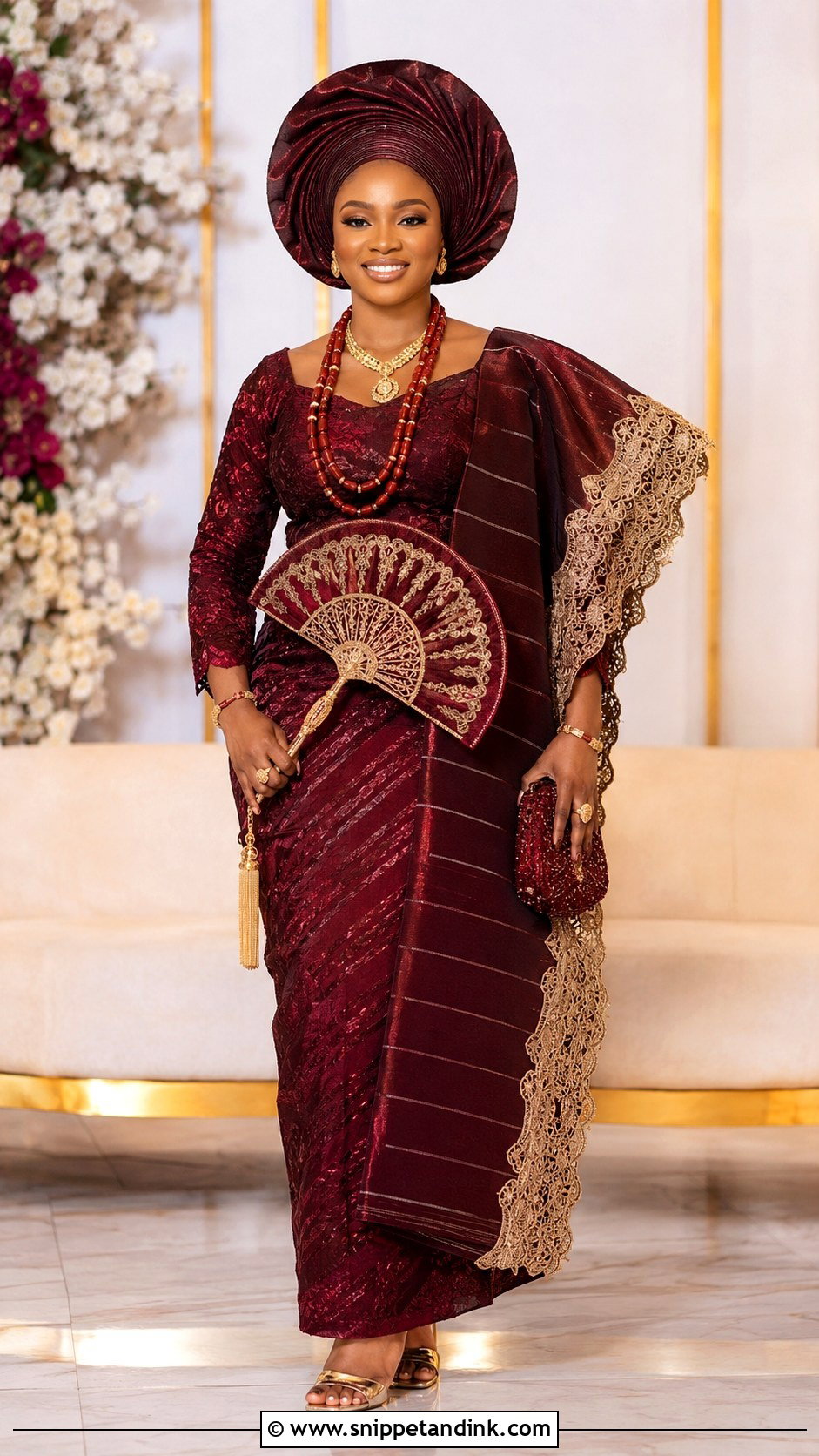
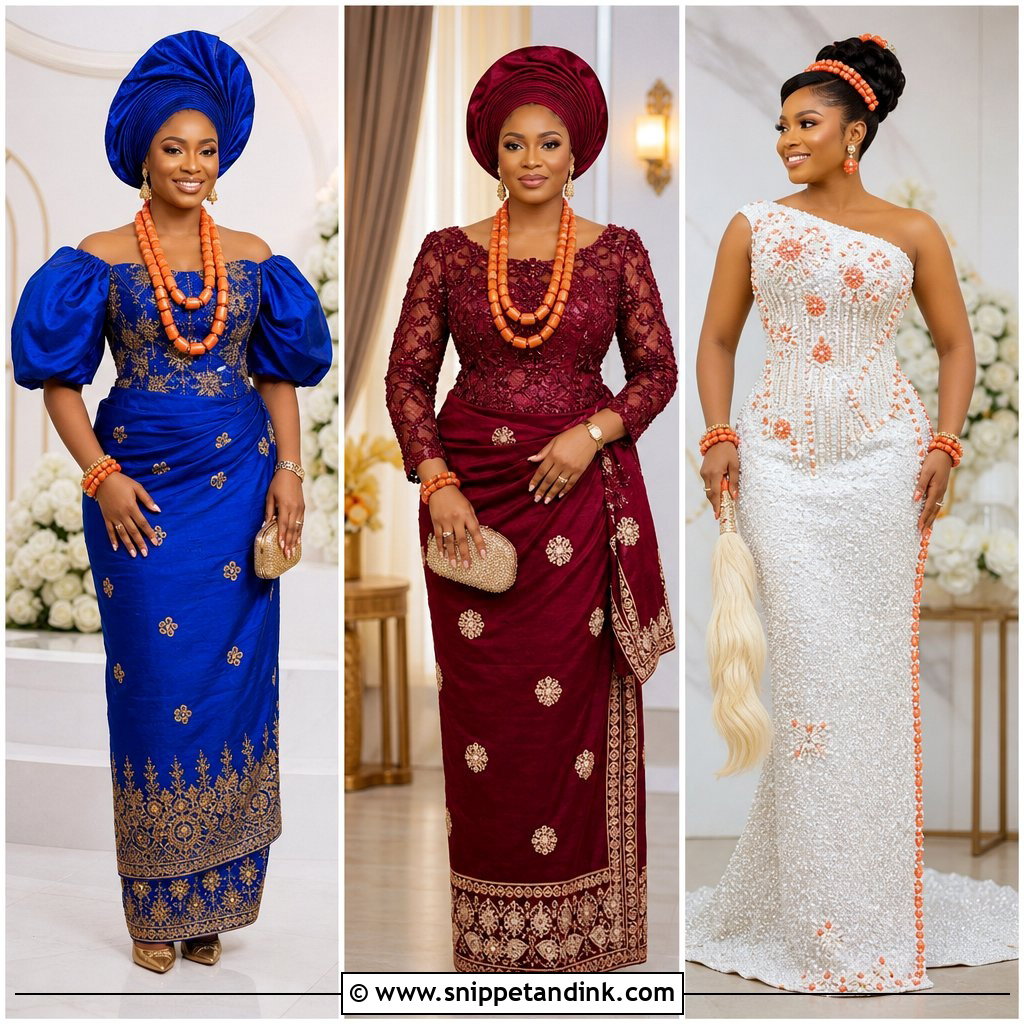
Burgundy comes into its own indoors under bright hall lighting, where its depth reads rich rather than dark. Pair a burgundy aso oke iro with a fitted buba, a matching gele and an ipele edged with gold or champagne thread, then add gold jewelry, wine-toned beads and metallic heels. A burgundy fan adds movement in photos. Deep colors also hide the silhouette, so I keep the iro tied neatly and the buba well fitted; otherwise the outfit reads as one dark shape from a distance.
5. Champagne Yoruba Bride Attire
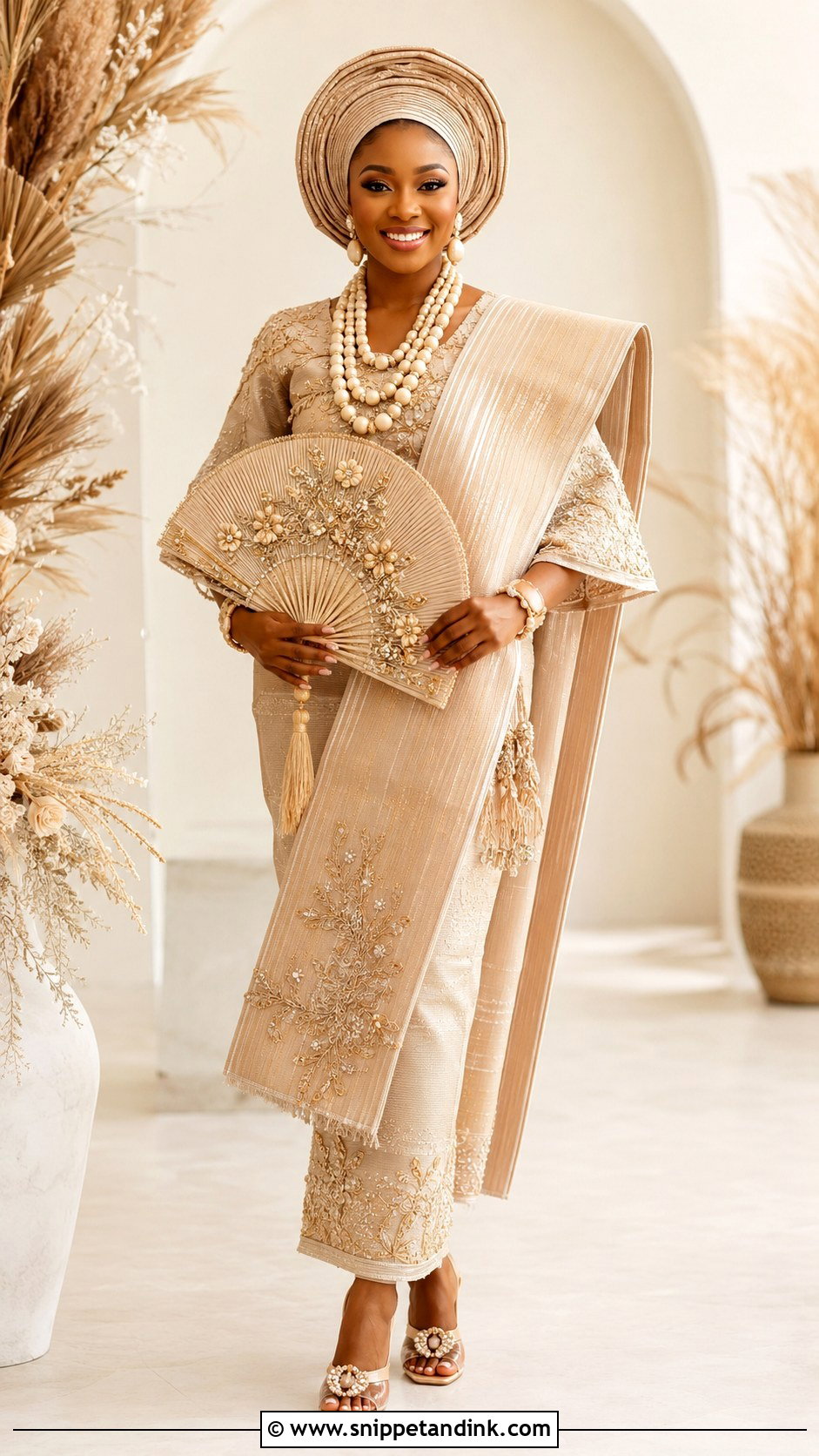
Champagne is the quiet luxury option, and it pairs with almost any groom color, from cream and brown to gold and white. A champagne iro and buba with a matching gele glow softly beside pearl or gold jewelry, and the ipele can carry embroidery or beaded trim. Nude, gold or ivory heels keep it cohesive. My one caution: on some skin tones champagne blurs the line between face and cloth in photos, so I hold the fabric under the bride’s chin before anything is ordered. A structured clutch or fan completes it.
6. Ivory Lace And Aso Oke Yoruba Bride Attire
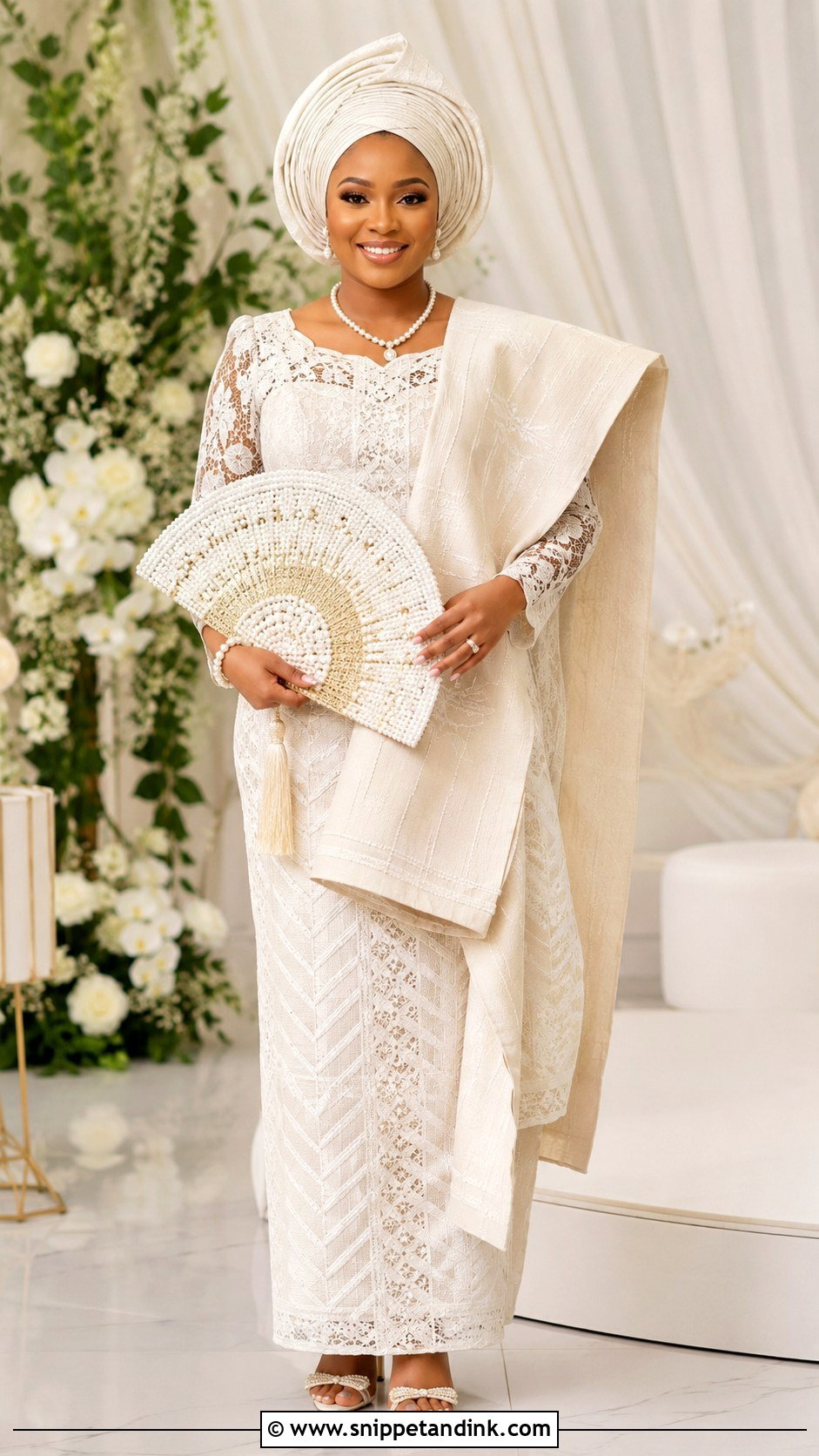
Lace takes the buba here while ivory aso oke does the iro, gele and ipele, so you get softness on top and structure below. Most of the detail sits in the beaded sleeves. It keeps the classic four-piece set intact, which matters to families who want tradition visibly respected. Pearl jewelry, clear stone earrings, ivory heels and a lace fan or beaded clutch finish it. Keep the gele crisp so the soft lace still reads as ceremonial.
7. Blush Pink Yoruba Bride Attire
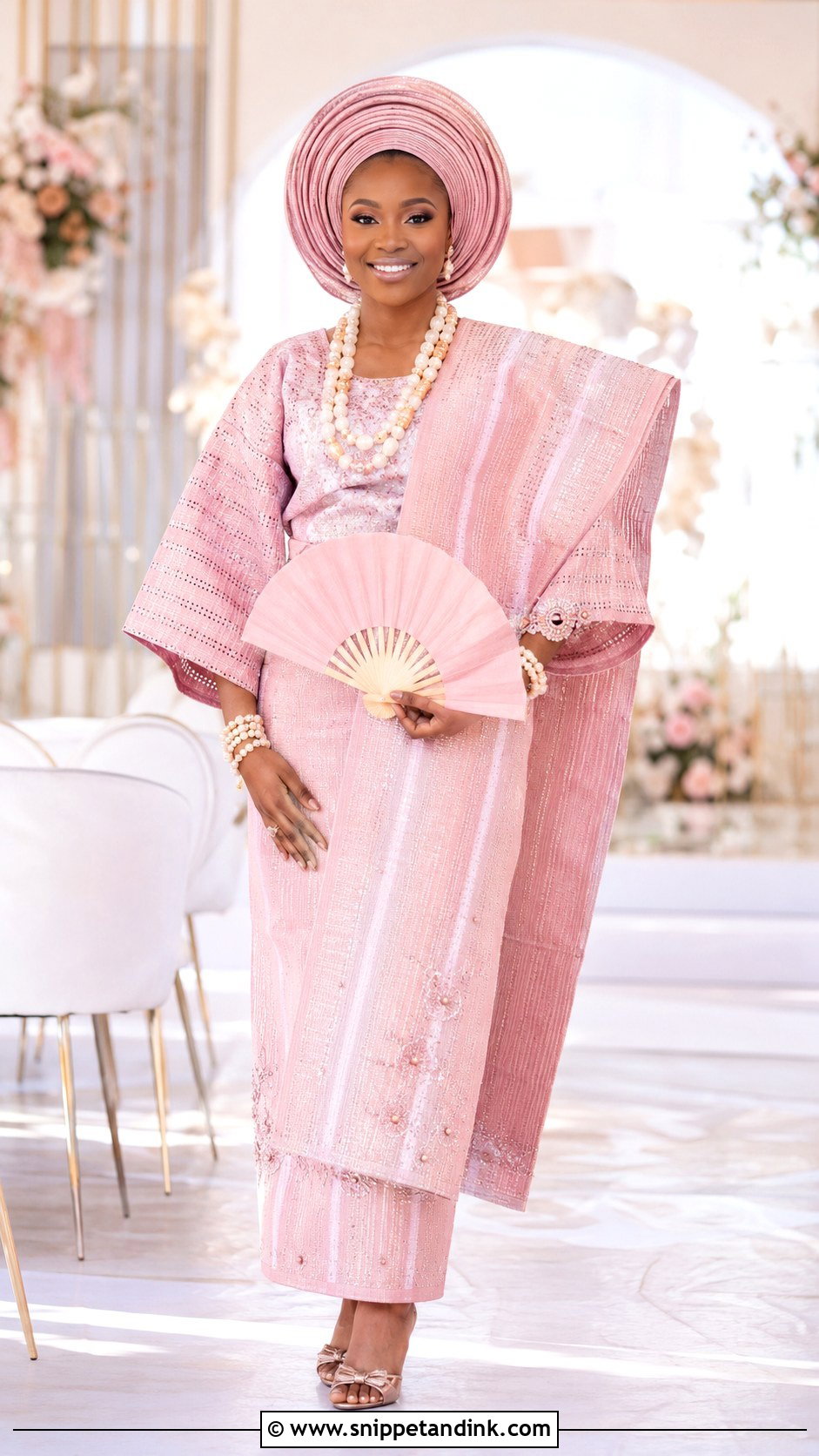
Blush does best in daylight, where it picks up soft light and keeps the face fresh. To avoid a flat look, I choose cloth with silver, champagne or a deeper pink woven through. A blush iro and buba, a matching gele, an embellished ipele, rose-gold heels and pearl or crystal accessories make the look, with a structured blush and gold fan. Soft glam makeup suits it, while heavy contour looks muddy beside such a pale color.
8. Fuchsia Yoruba Bride Attire
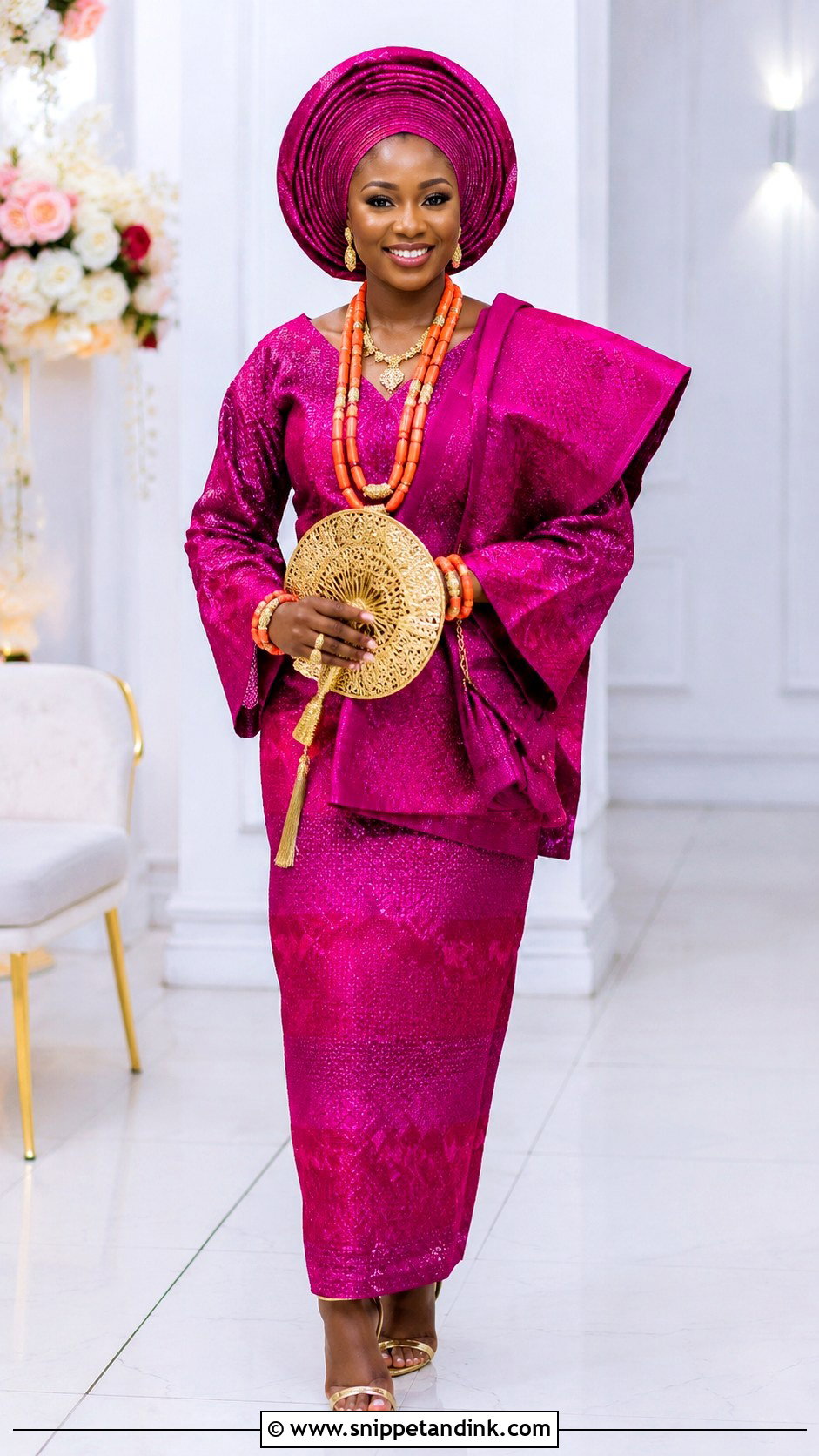
Fuchsia is the loudest color on this list, and that’s the point. A fuchsia aso oke iro and buba set carries a dramatic gele, gold beads and metallic heels with ease, and the ipele over one shoulder adds movement. With a color this strong I limit the palette to fuchsia plus one metal, and pick no more than two of the gold fan, coral beads and crystal earrings. Lipstick needs care too. Fuchsia leans blue, so an orange-based lip clashes; match the lip to the cloth’s cool undertone instead. It suits energetic celebrations and brides who love color.
9. Purple Aso Oke Yoruba Bride Attire
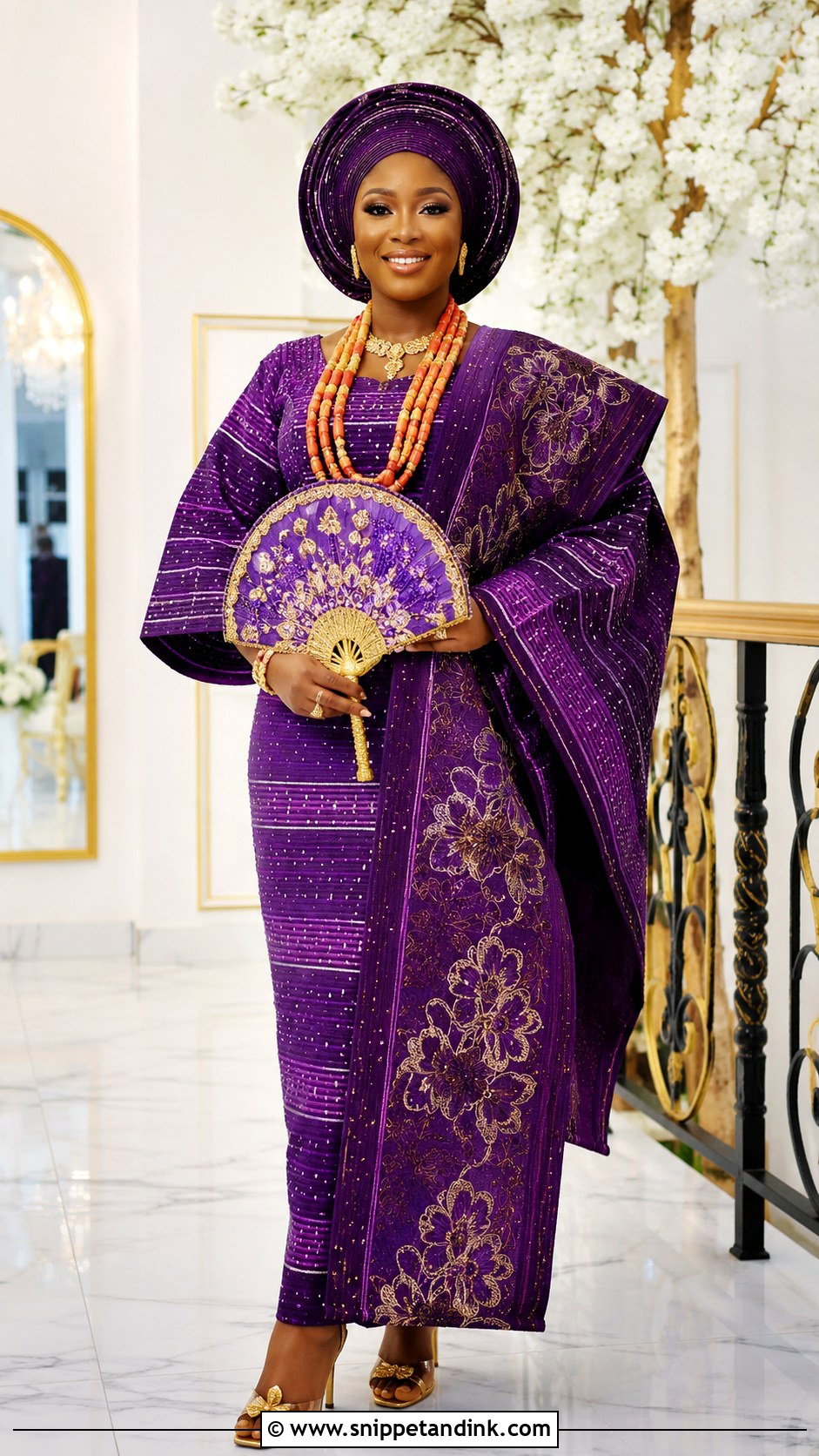
Purple has read as regal for a long time, and with gold jewelry the contrast feels rich and ceremonial. A deep purple iro and buba with a matching gele, an embroidered ipele, layered beads and gold or silver heels make the full look. Lavender accents soften it and plum makes it dramatic. A beaded fan in purple and champagne completes it. Keep the eyes soft and the skin glowing, and choose a lip that doesn’t fight the cloth; a berry tone usually sits well.
10. Royal Blue Yoruba Bride Attire
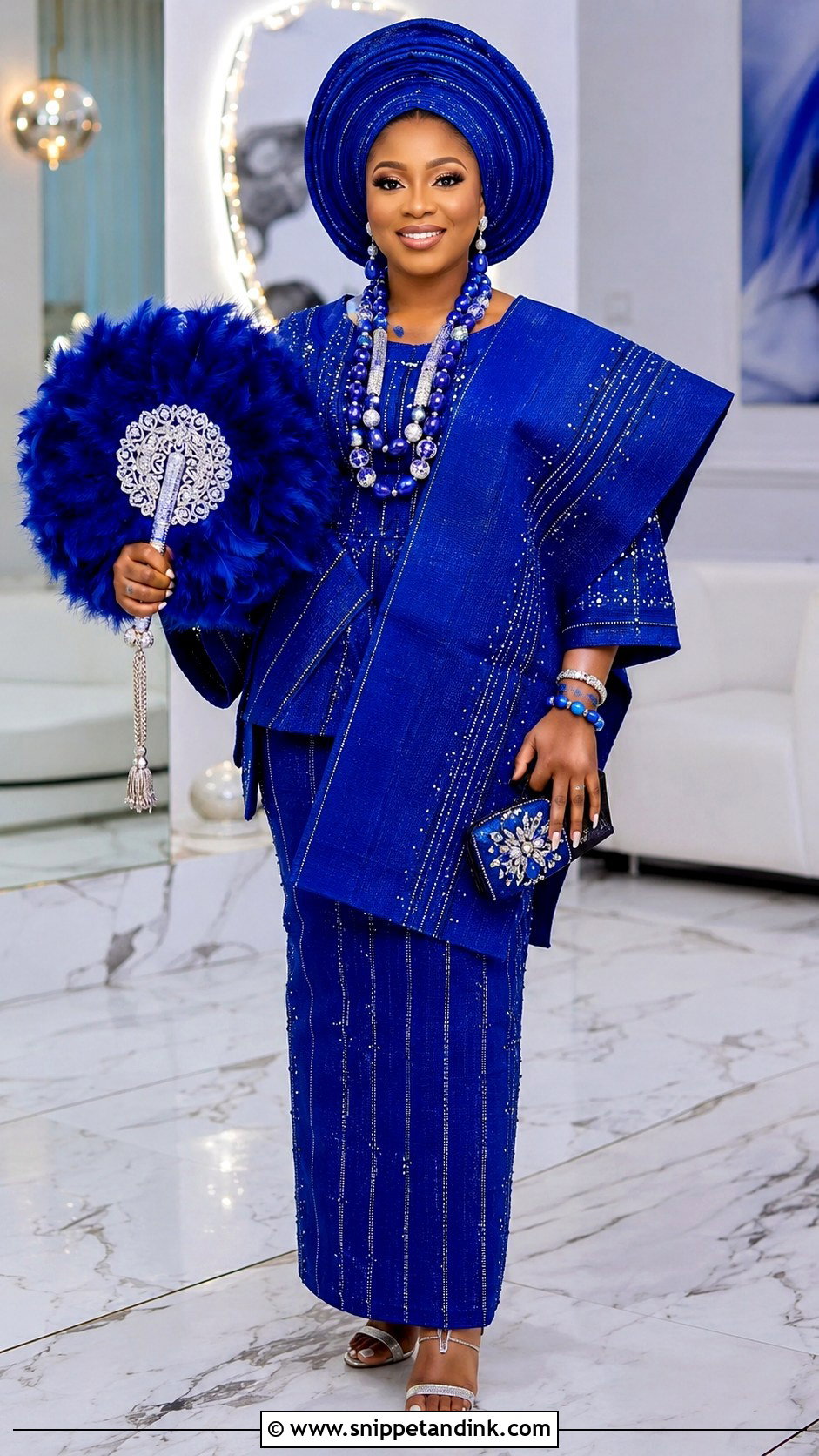
Royal blue is clean and bold, and it rewards crisp pleats and a sharply structured gele, because the strong color makes any sloppy fold obvious. A royal blue aso oke iro, buba, gele and ipele, with silver jewelry, crystal beads and blue or metallic heels, form the set, and a silver or blue fan finishes it. It pairs with white, silver, navy or gold groom attire, which gives the families plenty of room when choosing asoebi.
11. Navy Blue Yoruba Bride Attire
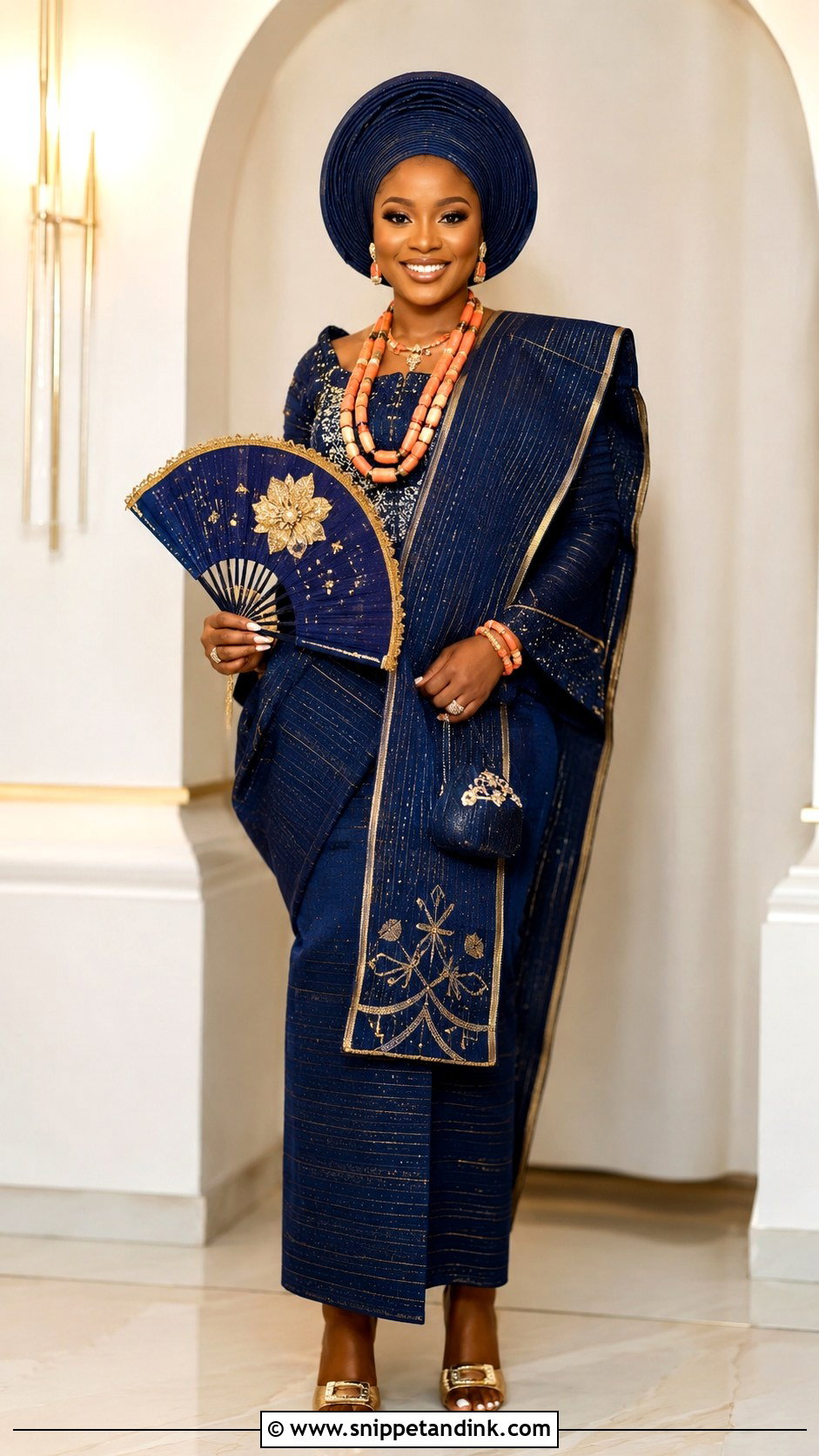
Navy suits a bride who wants depth without brightness. A navy aso oke iro and buba with a matching gele looks rich with gold accessories, coral beads and a structured ipele. To keep it bridal rather than formal-office, I insist on metallic thread, embroidered edges or some shine in the weave. Gold heels and a gold fan warm it up. A dark solid color also creates one long unbroken line, which brides of every size tend to find flattering.
12. Emerald Green Yoruba Bride Attire
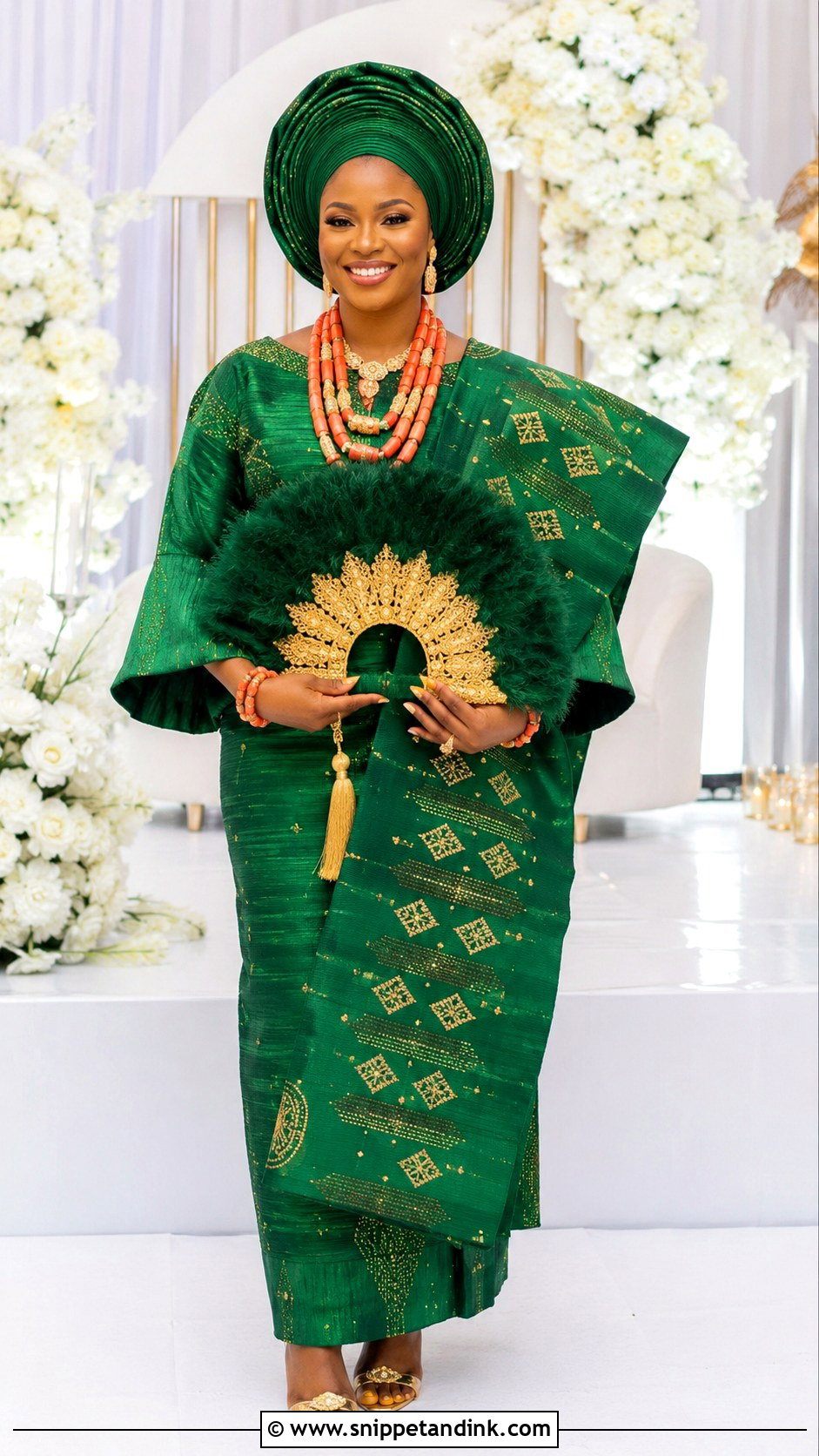
Emerald carries so much color that the makeup can stay neutral and glowing. A structured buba, a wrapped iro, a matching gele and an ipele with gold or silver detailing form the set, and gold jewelry, coral beads and metallic sandals suit it. A green and gold fan completes it for entrance photos and family portraits. Check the decor before you commit, though: emerald disappears against green backdrops and leafy walls.
13. Mint Green Yoruba Bride Attire
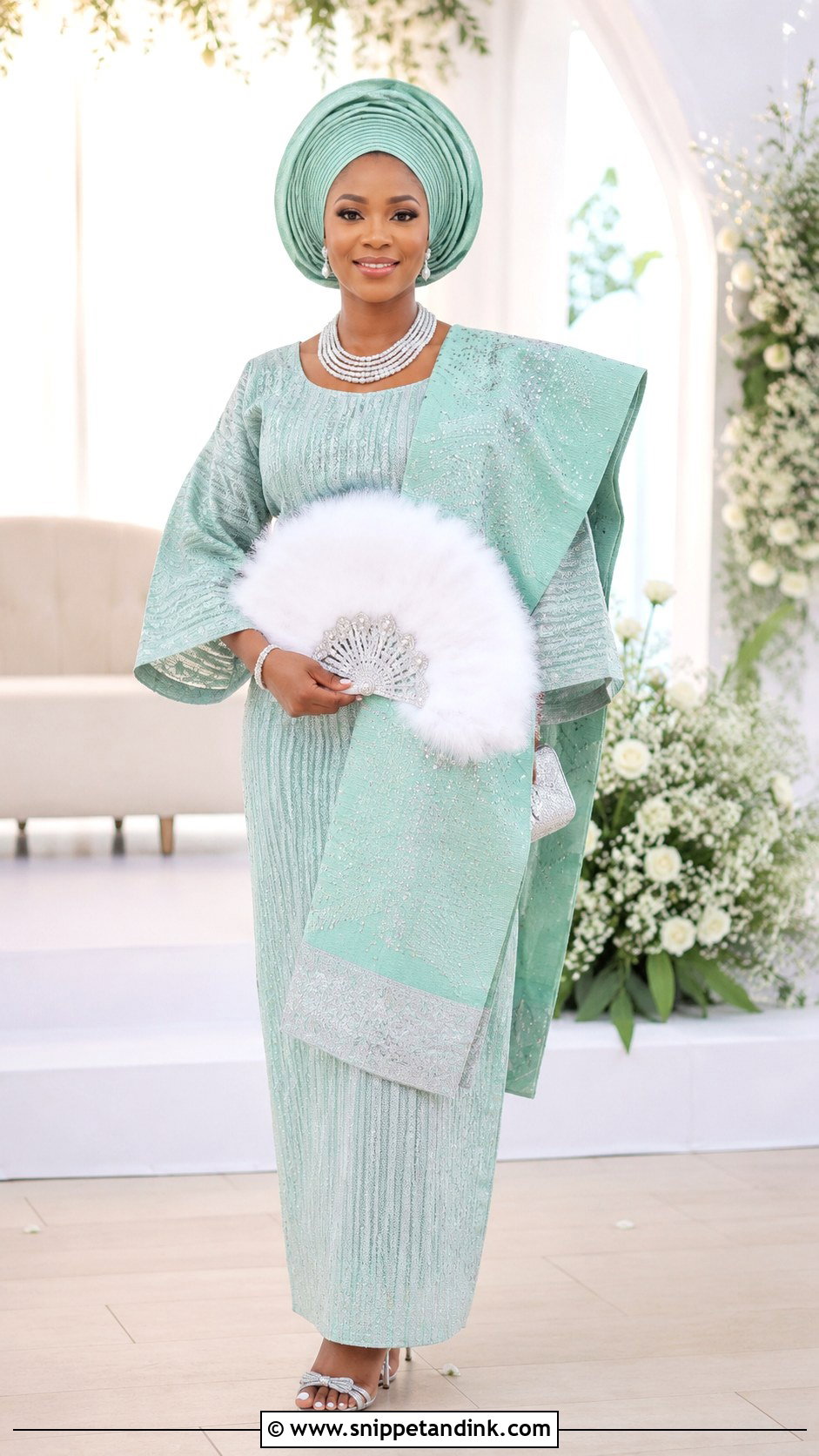
Mint is calm and fresh at a daytime ceremony, but harsh midday sun can push it toward white in photos, so a shaded canopy or a slightly later start helps. The cloth needs shine, embroidery or a woven pattern to look formal. A mint iro and buba, a matching gele, a soft silver ipele, pearl beads and silver heels make the look, with a white or silver fan to keep it airy. It pairs with cream, white, sage or light grey groom attire.
14. Teal Yoruba Bride Attire
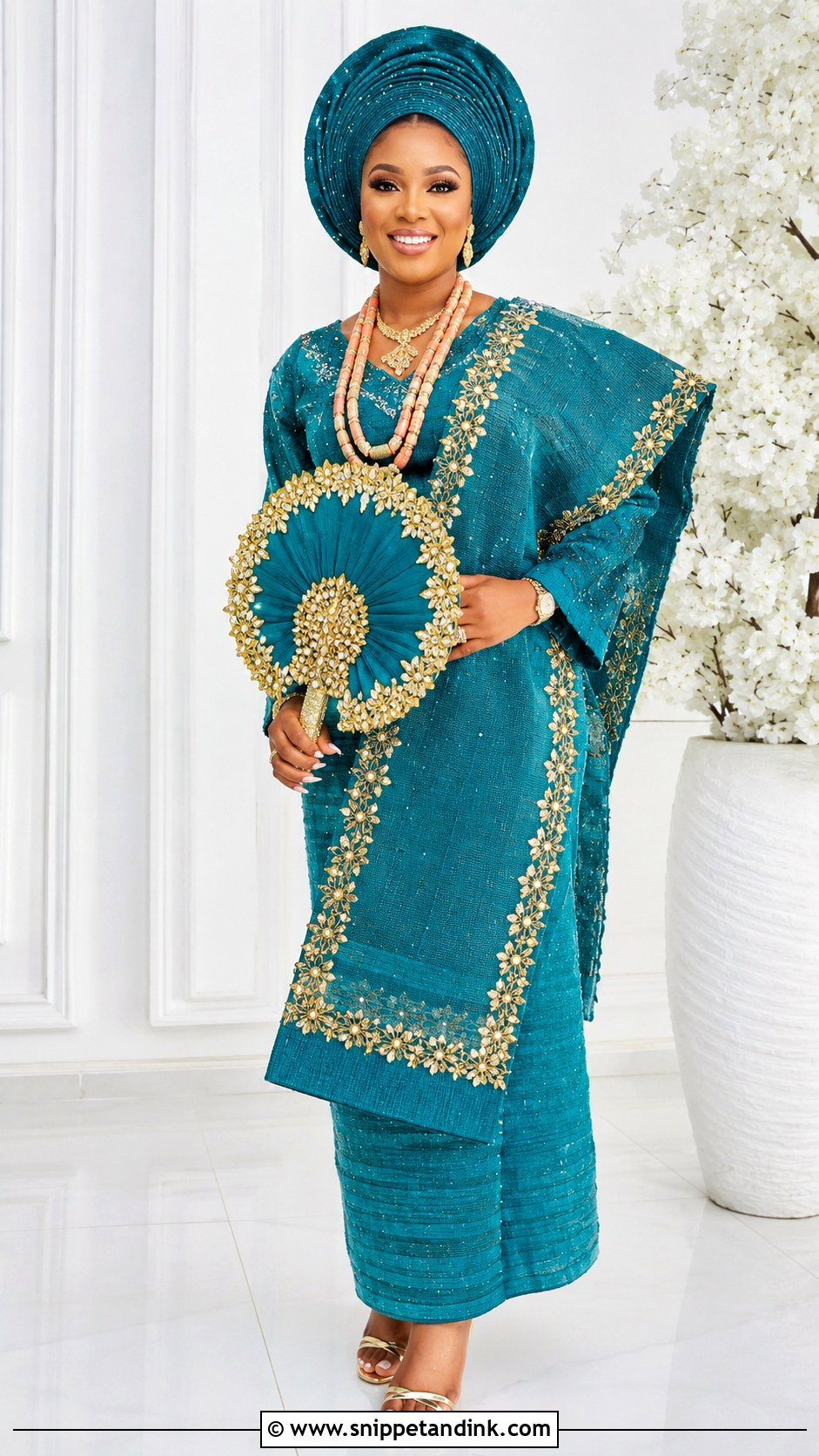
Teal balances blue and green, and it flatters many skin tones because it brightens without looking harsh. A teal aso oke iro and buba with a matching gele, an ipele with gold embroidery, layered beads, metallic heels and a matching fan make the full look. Let the woven thread decide the metal: gold thread calls for gold jewelry, silver thread for silver. Brides who want to avoid red, gold or white often settle happily on teal.
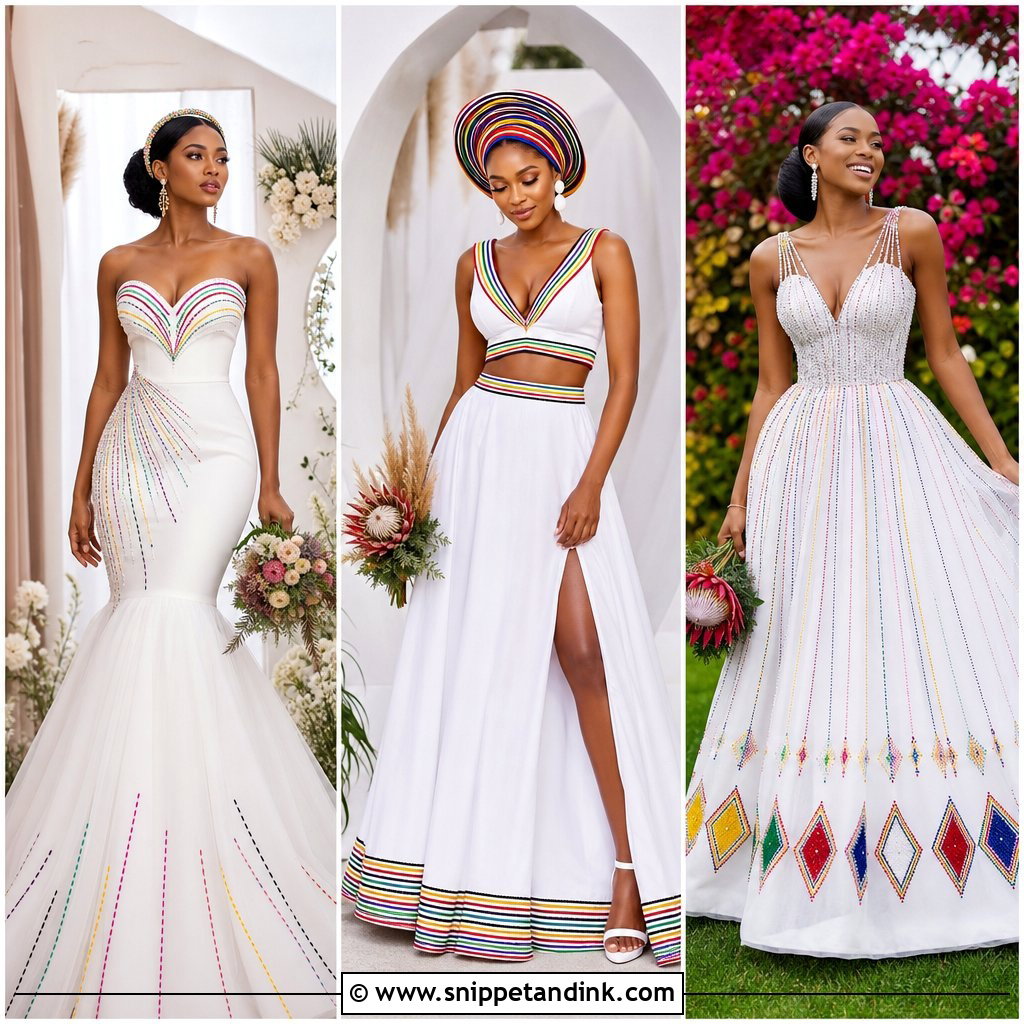

15. Orange Yoruba Bride Attire
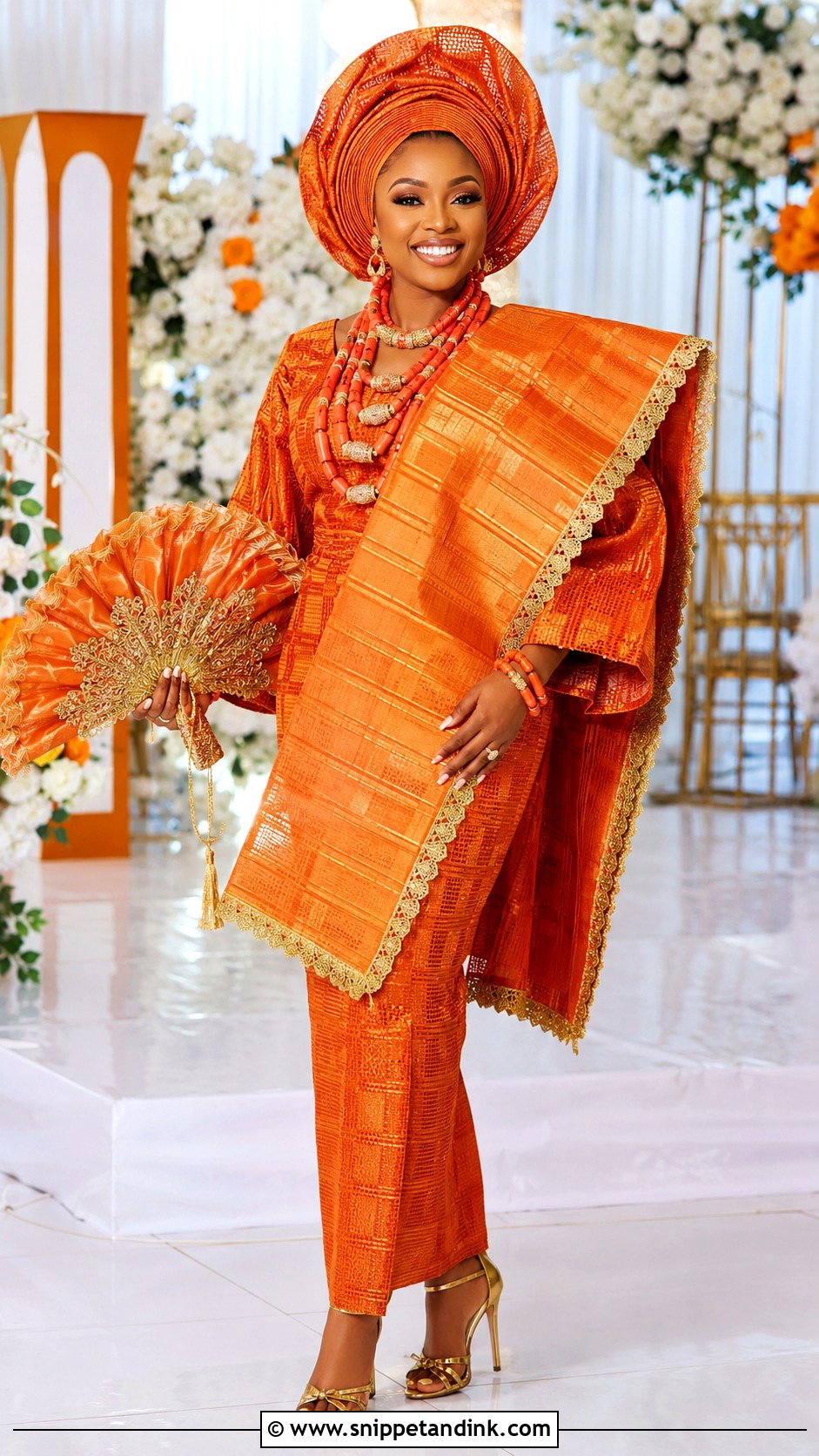
Orange aso oke is lively, and it looks best with smooth wrapping and few accessories. An orange iro and buba, a matching gele, a gold-edged ipele, coral beads and gold heels make the full look, and a coral or gold fan keeps the palette tight. Orange catches outdoor light with real energy. On the face, warm bronze and peach tones blend with the cloth, while cool pinks look chalky against it.
16. Coral Yoruba Bride Attire
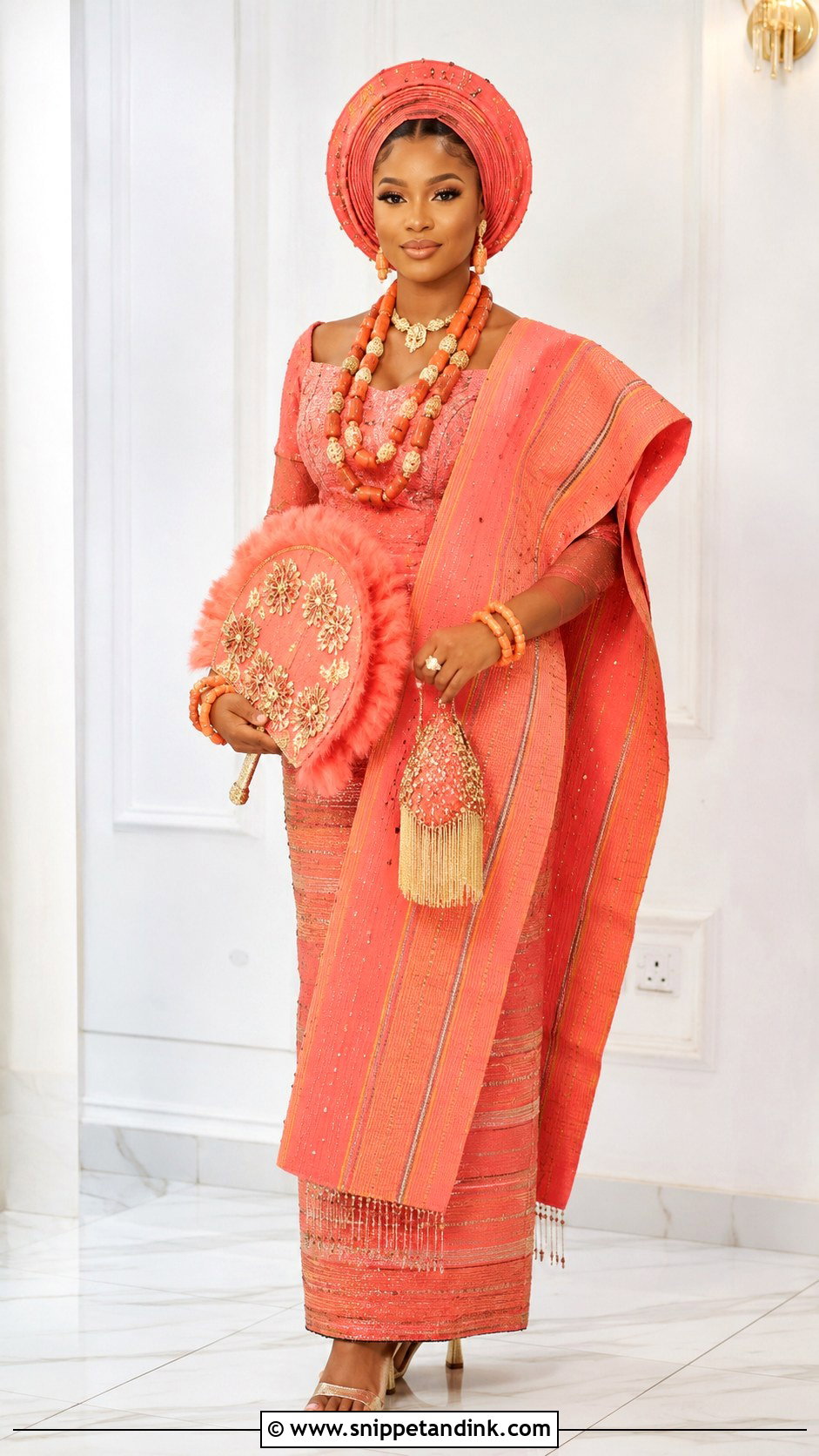
Coral sits between pink, orange and red. It’s softer than red but still festive, which makes it easier to live in through a long ceremony. A coral aso oke iro and buba with a sculpted gele, a matching ipele, coral beads and gold sandals form the set, and gold embroidery or champagne accents add luxury. Coral beads on coral cloth can blur together, so I pick beads a shade deeper than the fabric. A coral fan ties it all together.
17. Silver Yoruba Bride Attire
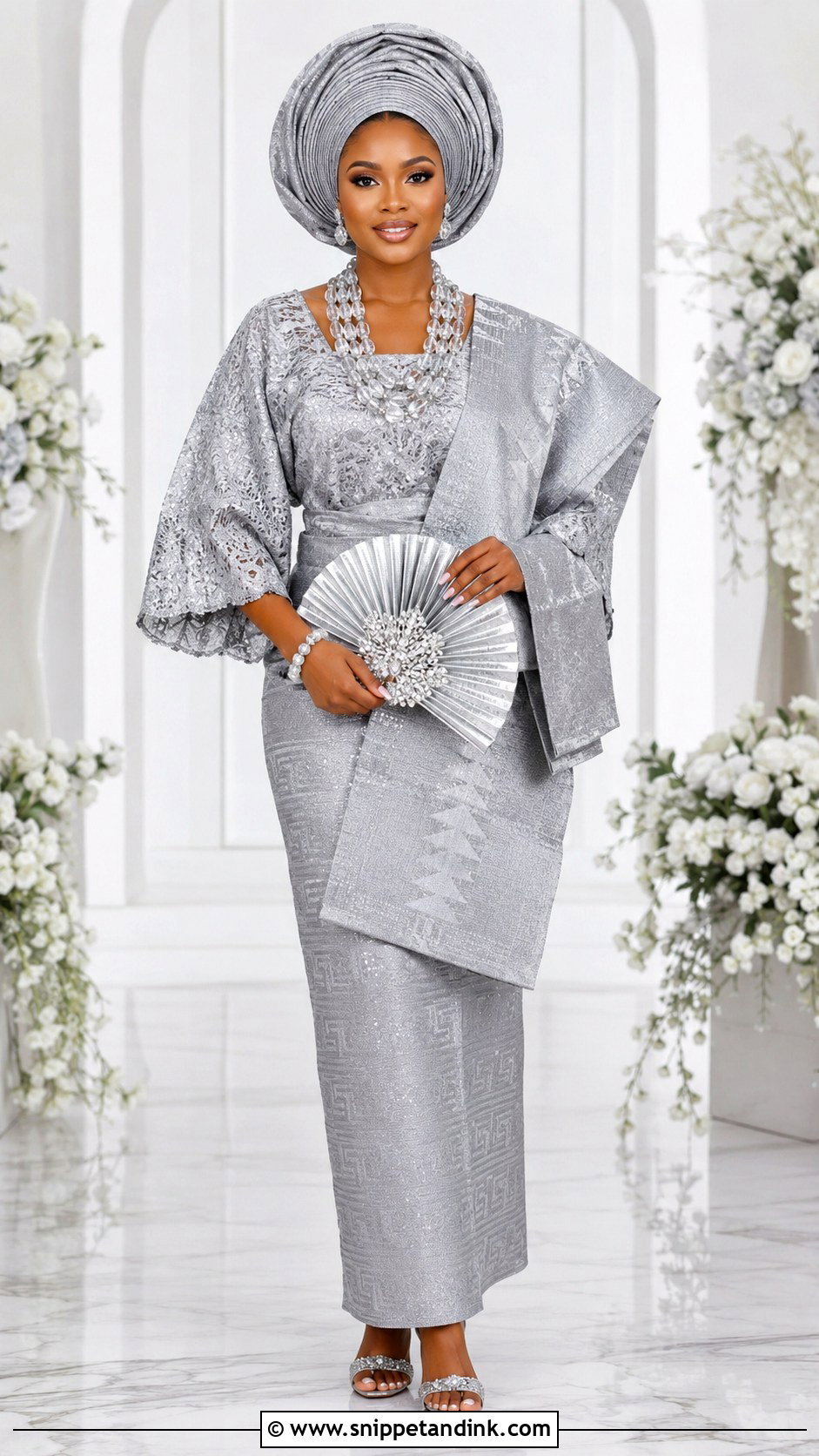
Silver can look icy unless the makeup brings warmth back, so I go luminous rather than matte. A silver iro and buba with a matching gele looks modern while keeping the classic structure. Crystal beads, pearl jewelry, silver heels and a sleek fan finish it, and a softly draped ipele adds dimension against the shine. Silver also makes a neutral base for the couple, since it pairs with white, navy, black or royal blue groom attire.
18. Black And Gold Yoruba Bride Attire
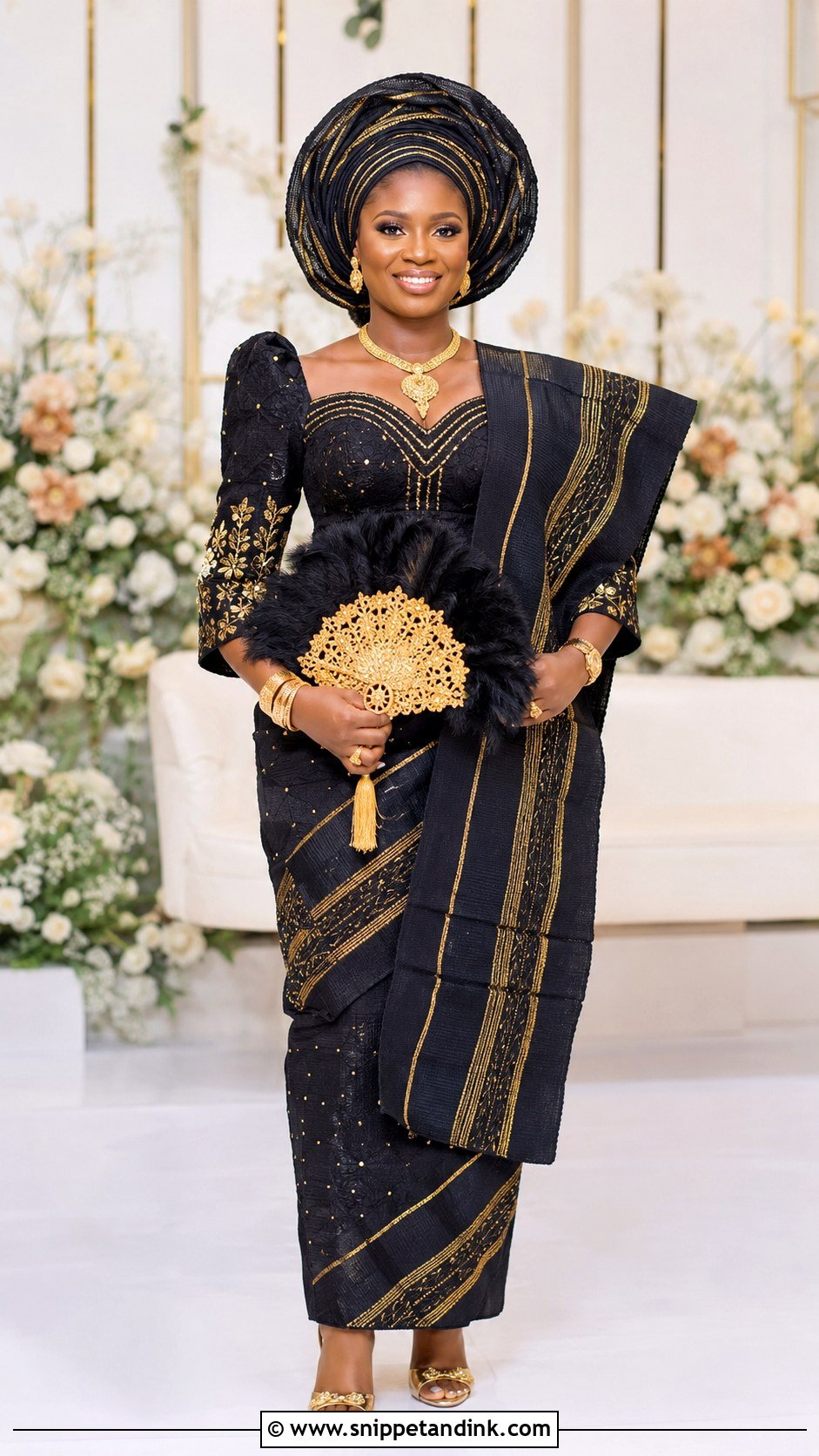
Black aso oke with gold woven detail is the most dramatic choice here, and it suits evening events best. A fitted buba, wrapped iro, matching gele and gold-trimmed ipele form the set, with gold jewelry, gold heels and a statement fan. The cloth needs enough shimmer or pattern to stay celebratory. Some families still feel black isn’t a wedding color, so I’d have that conversation at home before the cloth is ordered.
19. Adire Yoruba Bride Attire
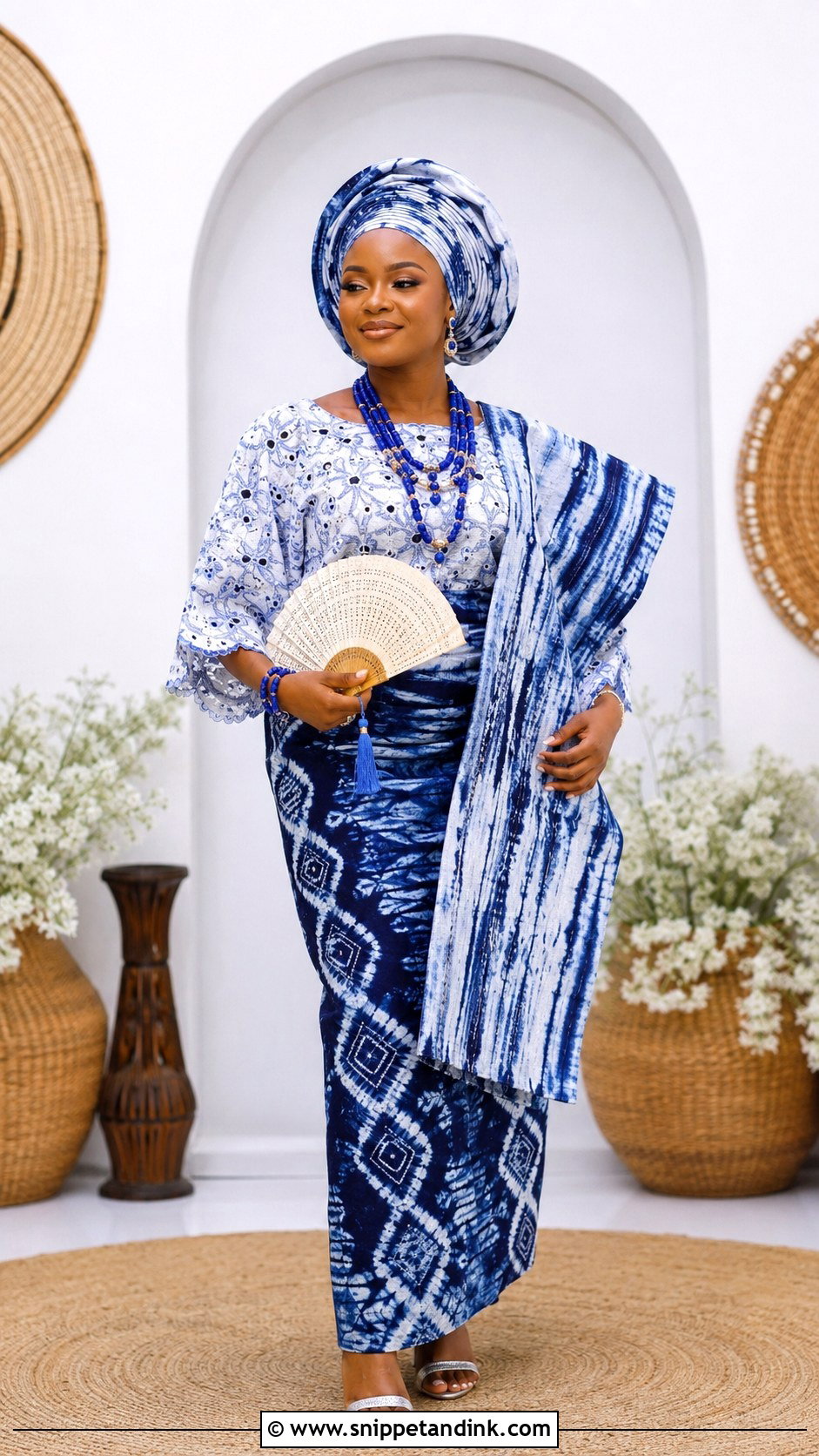
Adire is resist-dyed by hand, so no two pieces are identical, and that is what makes it personal. An adire-inspired iro and buba with a matching or contrasting gele, an ipele, beads and heels form the set. Indigo and white adire is the most recognizable, but softer blues, purple tones or custom patterns are possible if the dyer is briefed early. Keep accessories simple with silver jewelry, blue beads and a clean fan. Adire cotton is lighter and cooler than aso oke, which helps outdoors, though it creases more, so plan to steam it at the venue.

20. Aso Olona Yoruba Bride Attire
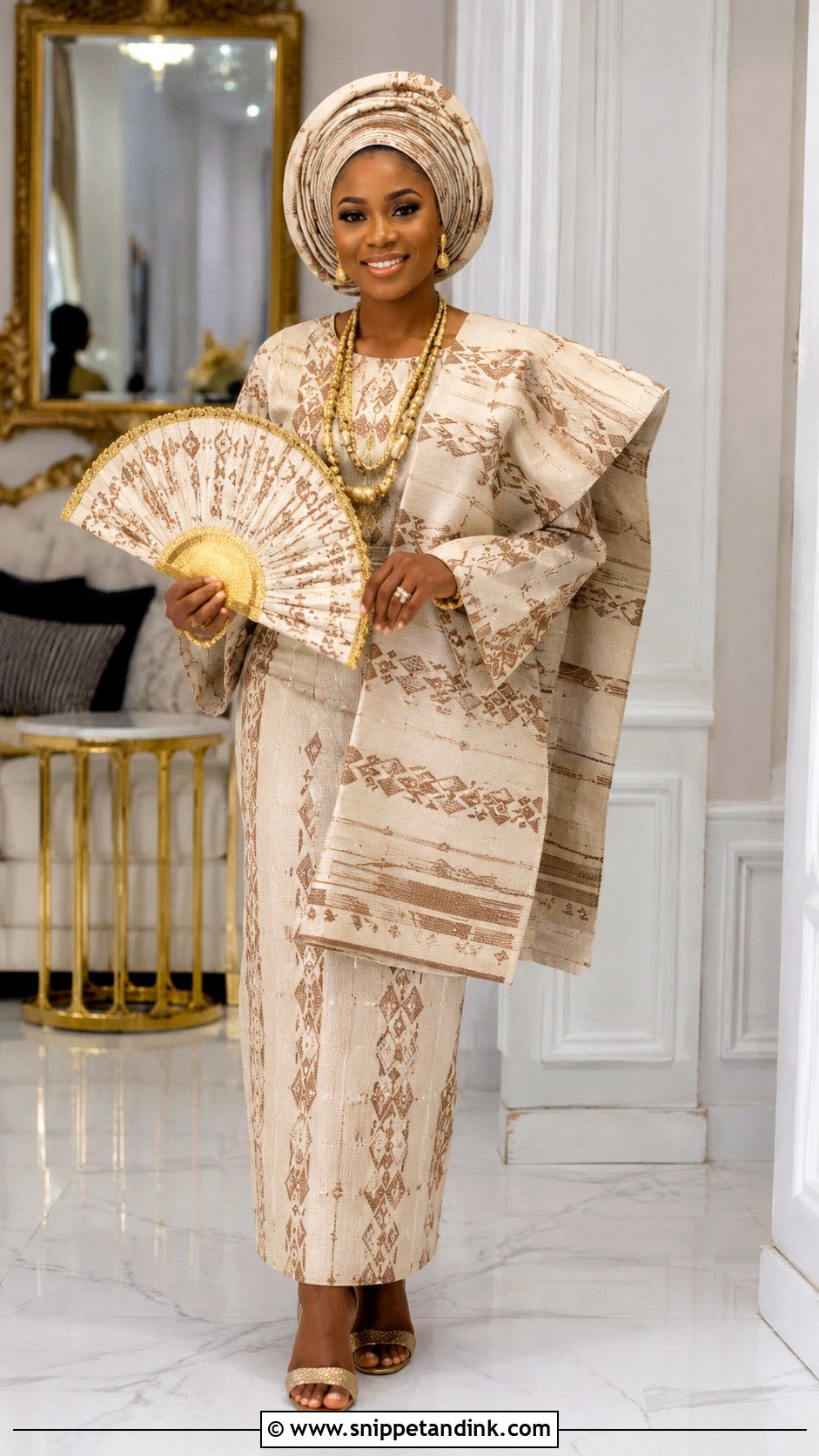
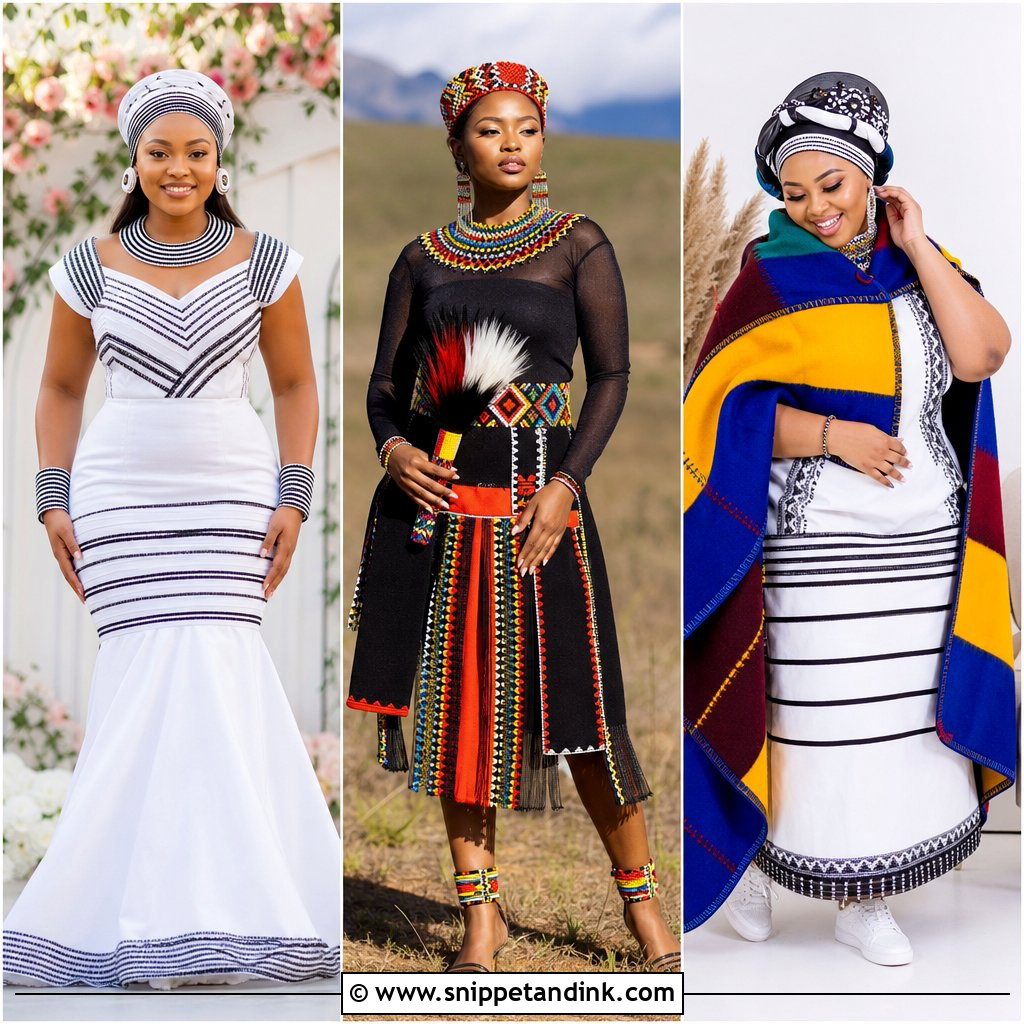
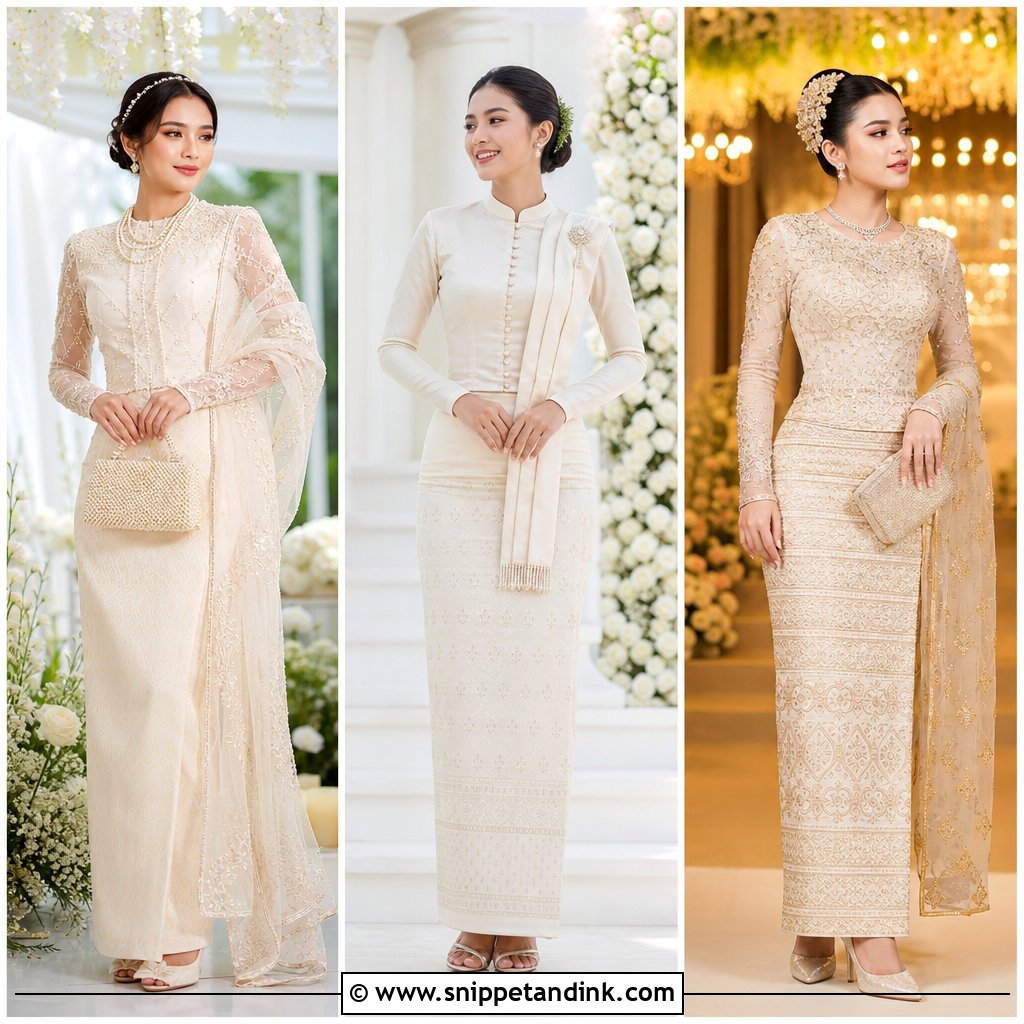
Aso olona is patterned aso oke, woven with motifs rather than plain stripes, and it has long been treated as prestige cloth. Because the pattern is the feature, I keep the cut of the buba simple and let the motif run uninterrupted across the iro. Ask the tailor to match the pattern at the seams, since misaligned motifs are obvious in full-length photos. Gold beads, simple earrings, heels and a matching fan are enough.
21. Komole Yoruba Bride Attire
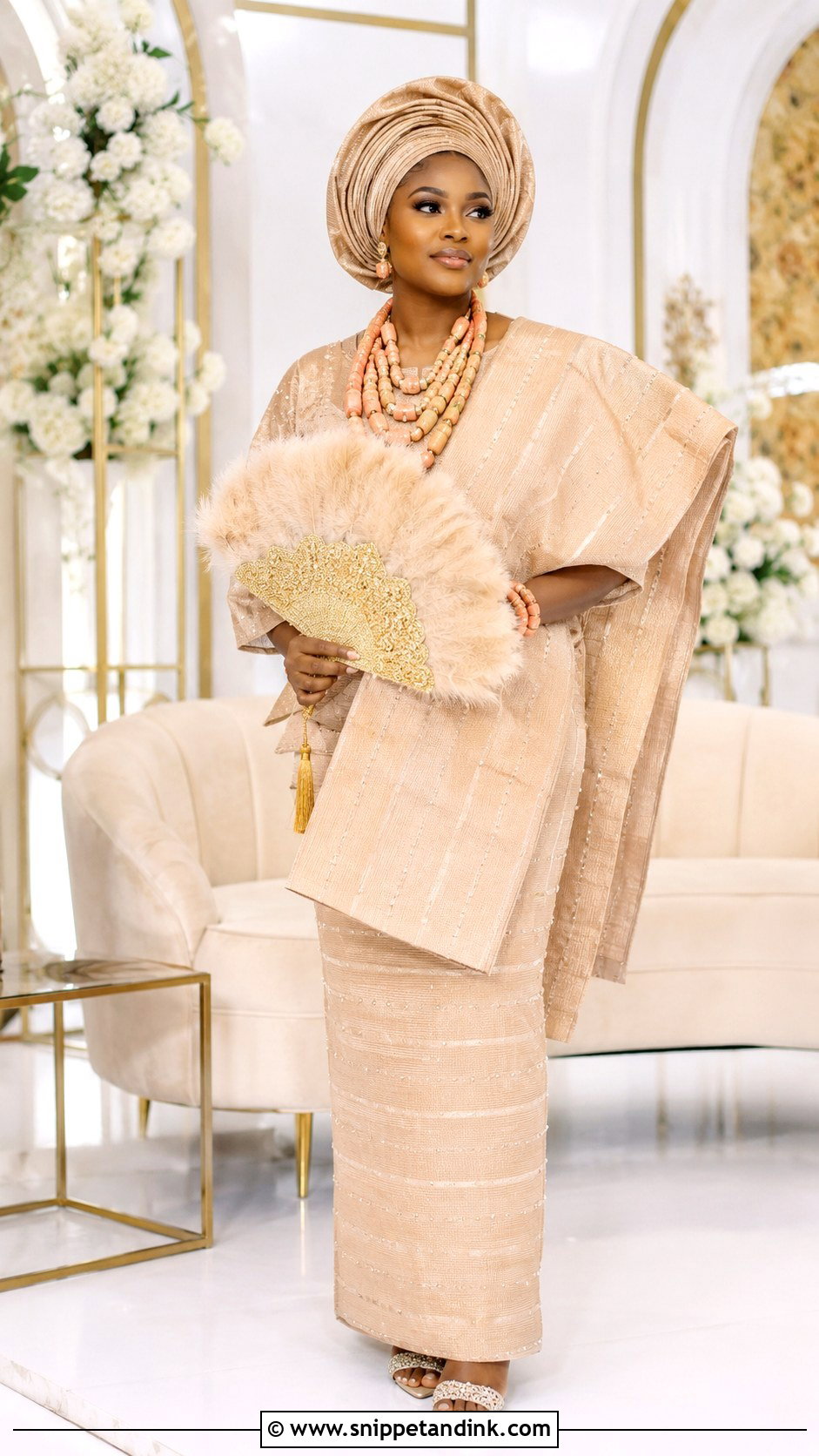
Komole gives you the Yoruba silhouette in one piece, a fitted or flowing floor-length dress instead of a separate iro and buba. It’s my answer for brides who don’t want to worry about a wrapper loosening during the dancing. Add a matching gele, an ipele or shoulder sash, beads, a fan and heels so it stays ceremonial. Structured tailoring and a proper lining keep aso oke from puckering at the seams.
22. Mermaid Gown Yoruba Bride Attire
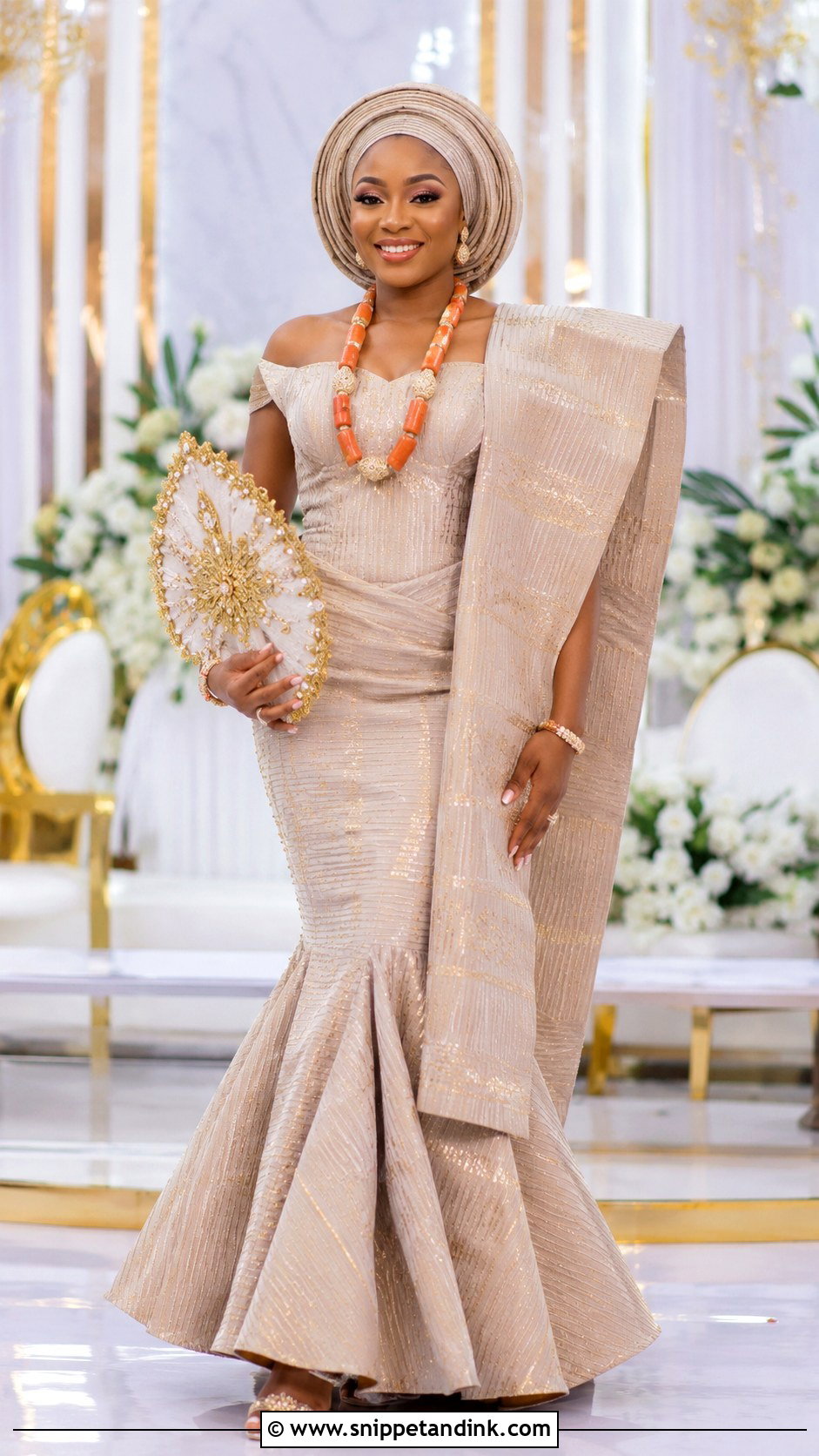
A mermaid gown in aso oke or lace gives a figure-hugging traditional look: fitted bodice, flared hem, matching gele, shoulder ipele, beads and embellished heels. The test I run at fittings is the greeting. Bend, kneel and rise as if before an elder, and if the knee and hip seams strain, the flare needs to start higher. A beaded fan gives the bride something to hold in photos, and strong inner structure keeps the bodice smooth all day.
23. Peplum Buba Yoruba Bride Attire
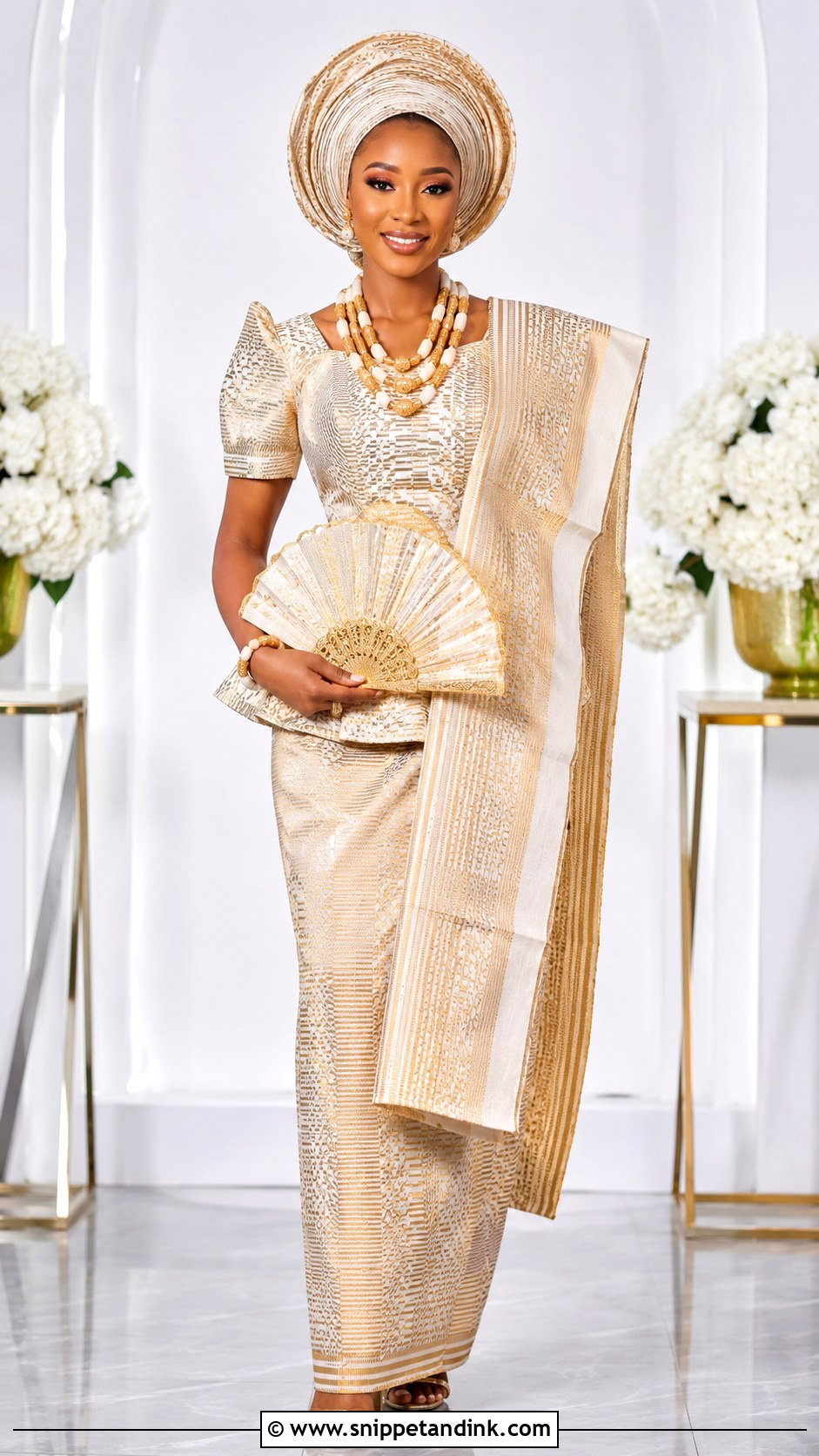
A peplum blouse defines the waist and covers the midsection, which is why so many brides ask me for it. Worn with a wrapped iro, a matching gele, a draped ipele, beads and heels, it keeps the classic set while adding shape. It works in aso oke, lace or a mix. In thick aso oke I keep the peplum short and smooth so it doesn’t stand out at the hip. Any palette color suits it, from gold and blush to emerald and ivory, with a structured fan and coordinated jewelry.
24. Lace Iro And Buba Yoruba Bride Attire
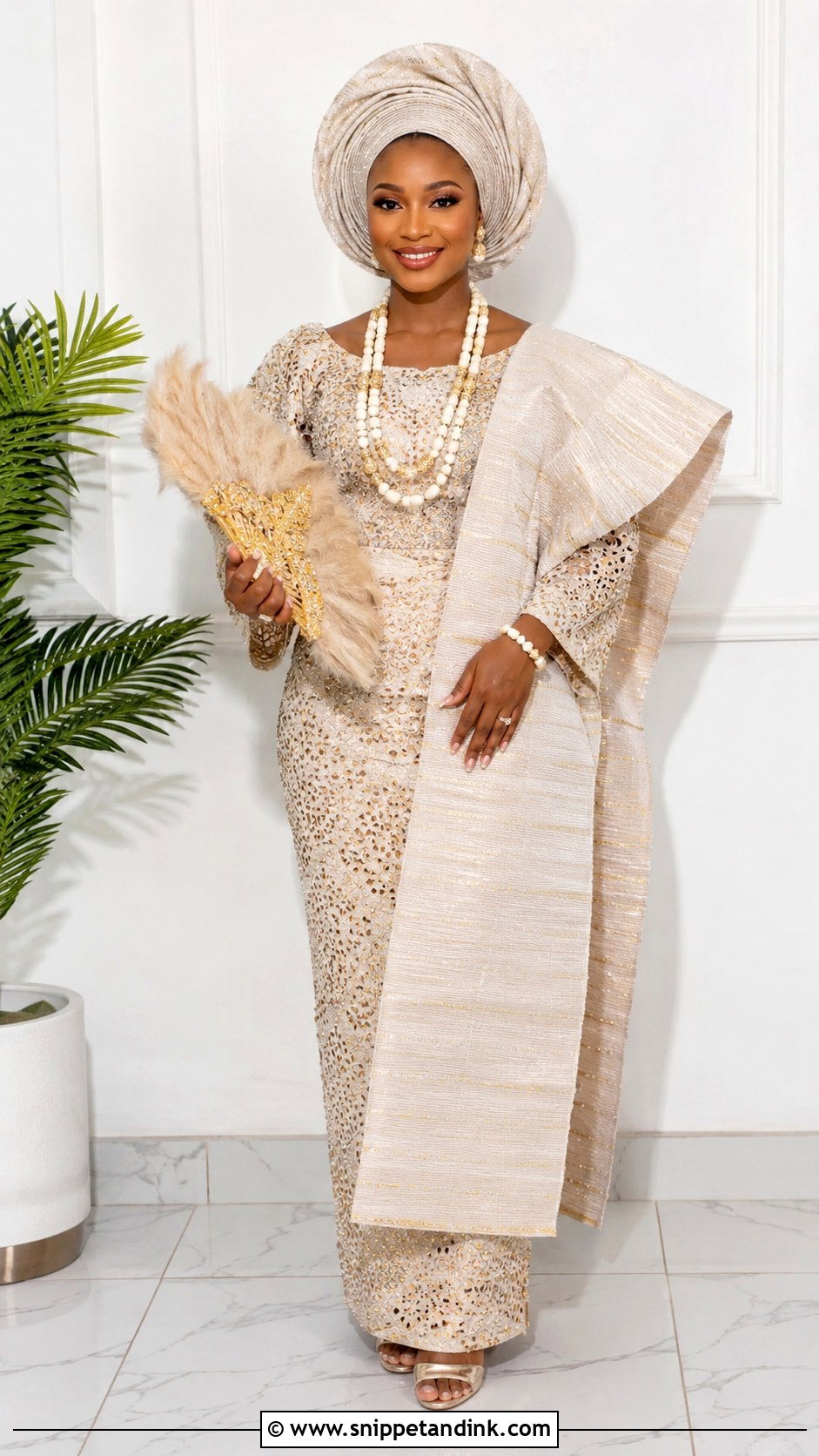
Beaded lace for both buba and wrapper, then an aso oke gele and ipele for structure: the lace softens the outfit while the woven pieces keep it traditional. Ivory, champagne, gold, blush and emerald lace all photograph clearly. Line the lace well for comfort and coverage, because an unlined lace wrapper can turn sheer under flash. Pearl beads, metallic heels and a fan matched to the gele finish it. Lace is softer than aso oke and can slip at the waist, so I add a hidden hook.
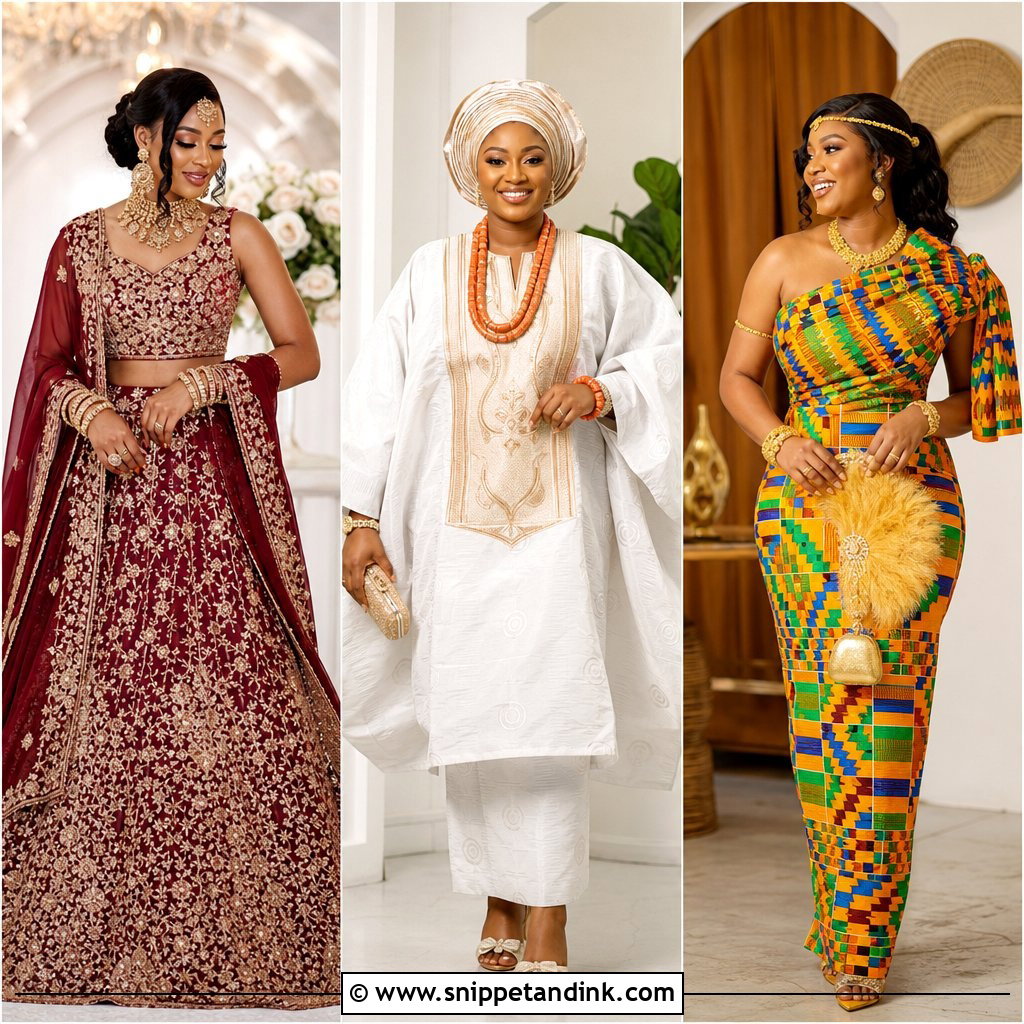
25. Two Tone Yoruba Bride Attire
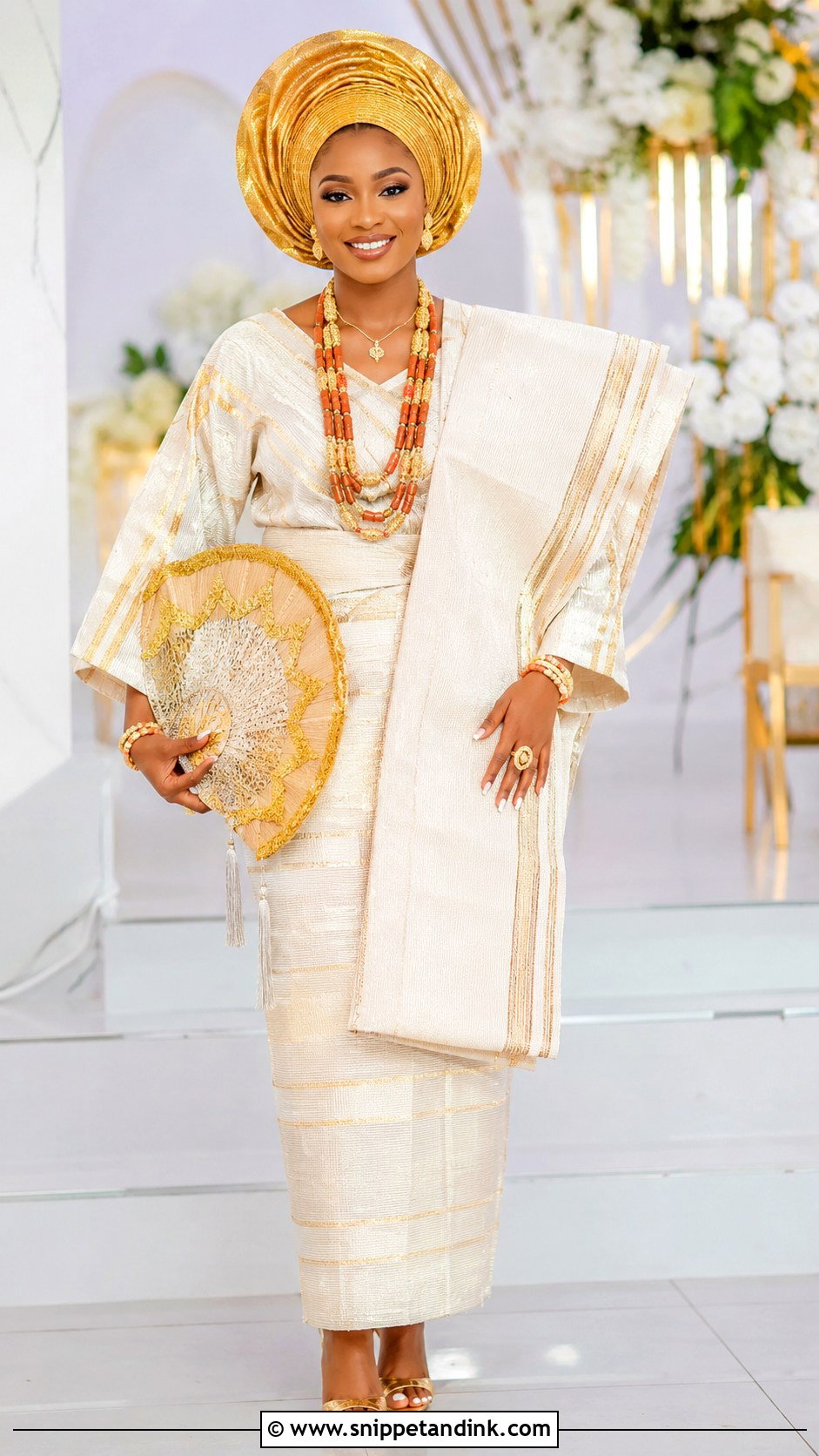
Two tones give contrast without clutter. Ivory and gold, blush and champagne, emerald and gold, and royal blue and silver are reliable pairings. Wear the main color as the iro and buba, then use the second for the gele, ipele, beads, shoes or fan. The detail people overlook is cloth quality: if the gele fabric is noticeably finer than the iro, one piece looks less formal, so buy both from the same weaver. Two tones also make it easier to coordinate with the groom, family colors or decor.
Caring for Aso Oke After the Party
Aso oke can last for generations when it’s stored well, and many brides pass theirs down or have it remade. The day after the wedding, I have every piece hung somewhere airy and out of direct sun so sweat and perfume can dry out before anything is packed away.
- Spot-clean food or makeup marks quickly, and send heavily beaded or metallic pieces to a dry cleaner who handles hand-woven cloth.
- Fold loosely into a cotton bag or wrap in clean cotton fabric. Plastic traps moisture and invites mildew.
- Refold along different lines every few months so permanent creases don’t set into the weave.
- Store beads and coral separately in soft pouches; heavy beads left lying on cloth can pull threads.
If you’d like to wear it again, a good tailor can turn the iro into a wrap skirt or the ipele into a shawl for a family occasion, which keeps the cloth in use instead of in a drawer.
Tradition You Can Move and Breathe In
Every look here comes back to the same balance of culture, comfort and the bride’s own taste. White aso oke, bold red, champagne, adire or a komole gown all have to work as one outfit from gele to heels, and keep working through the dancing, kneeling and photos. Get the cloth weight right for the venue, have the tailoring tested in motion, and the rest is styling.
You'll Like These Ideas:




Leave a Reply