
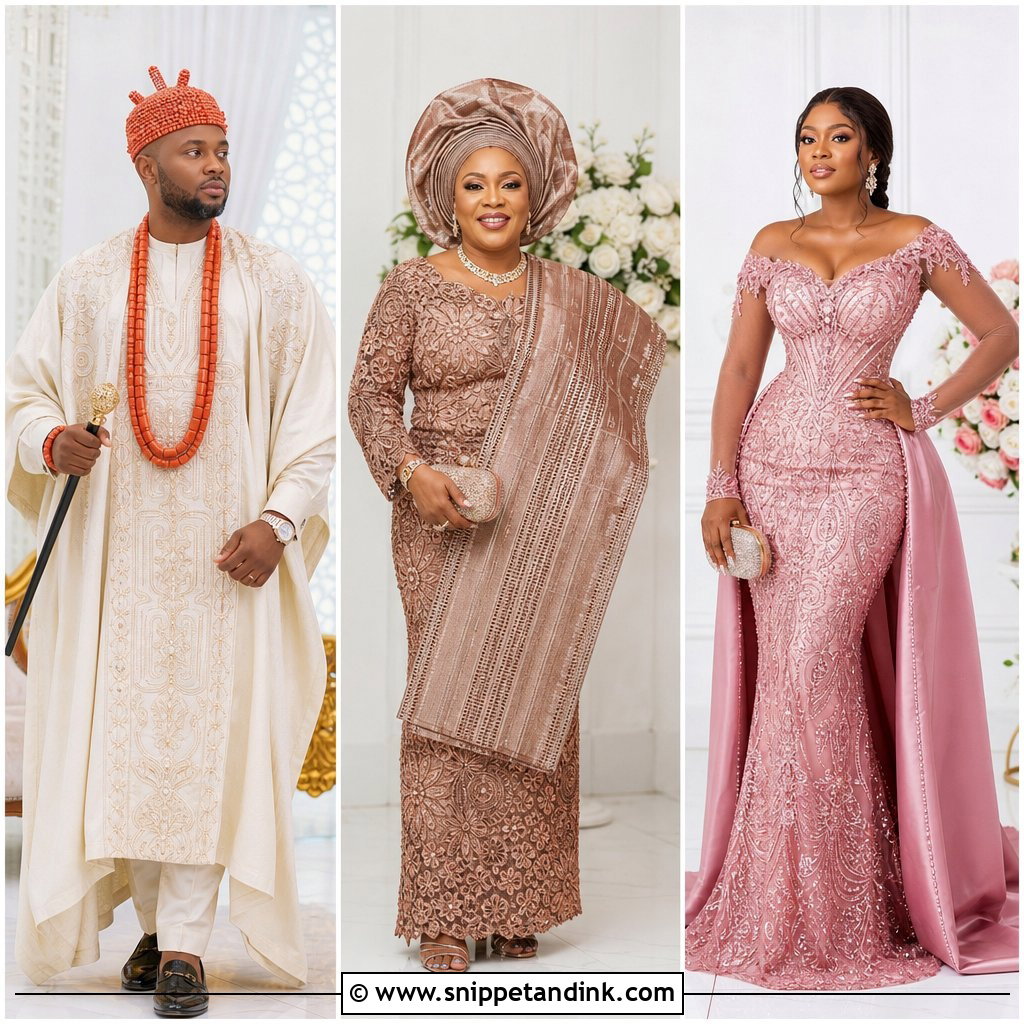
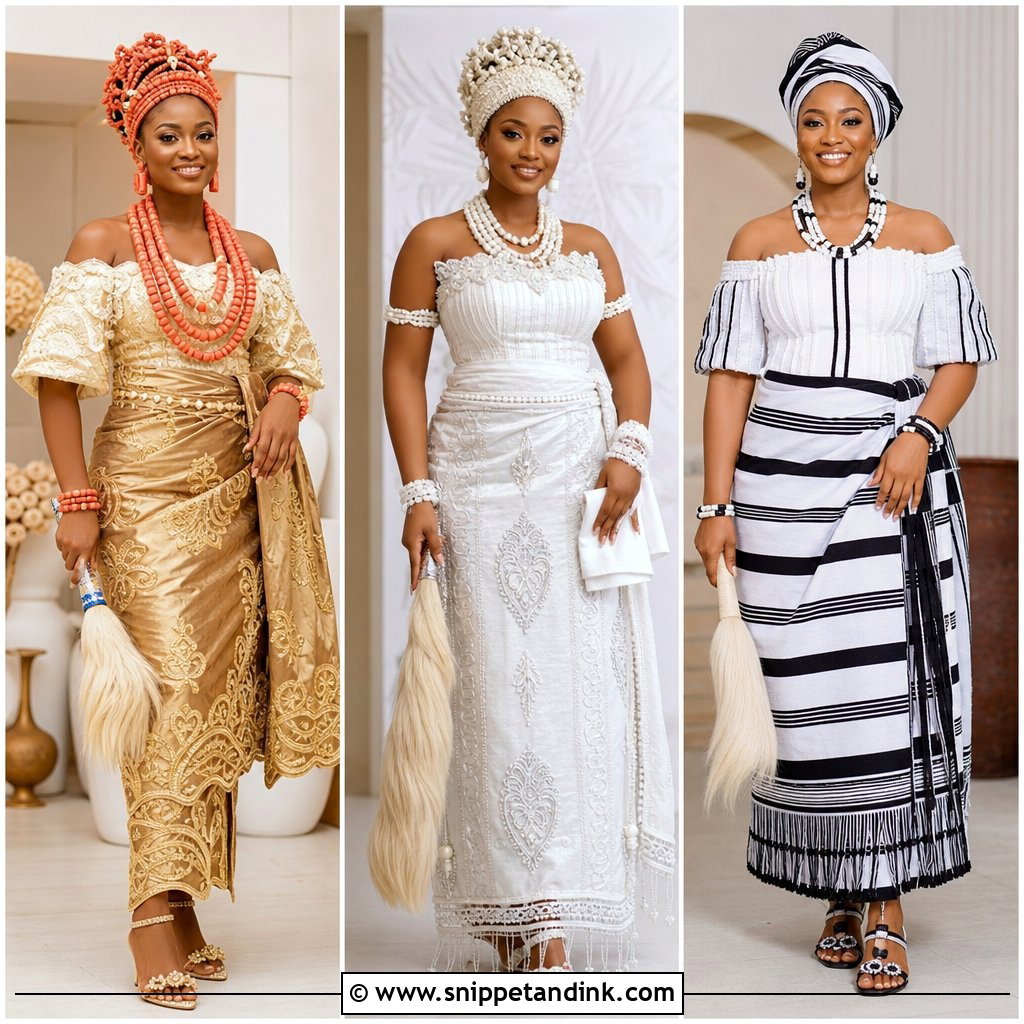
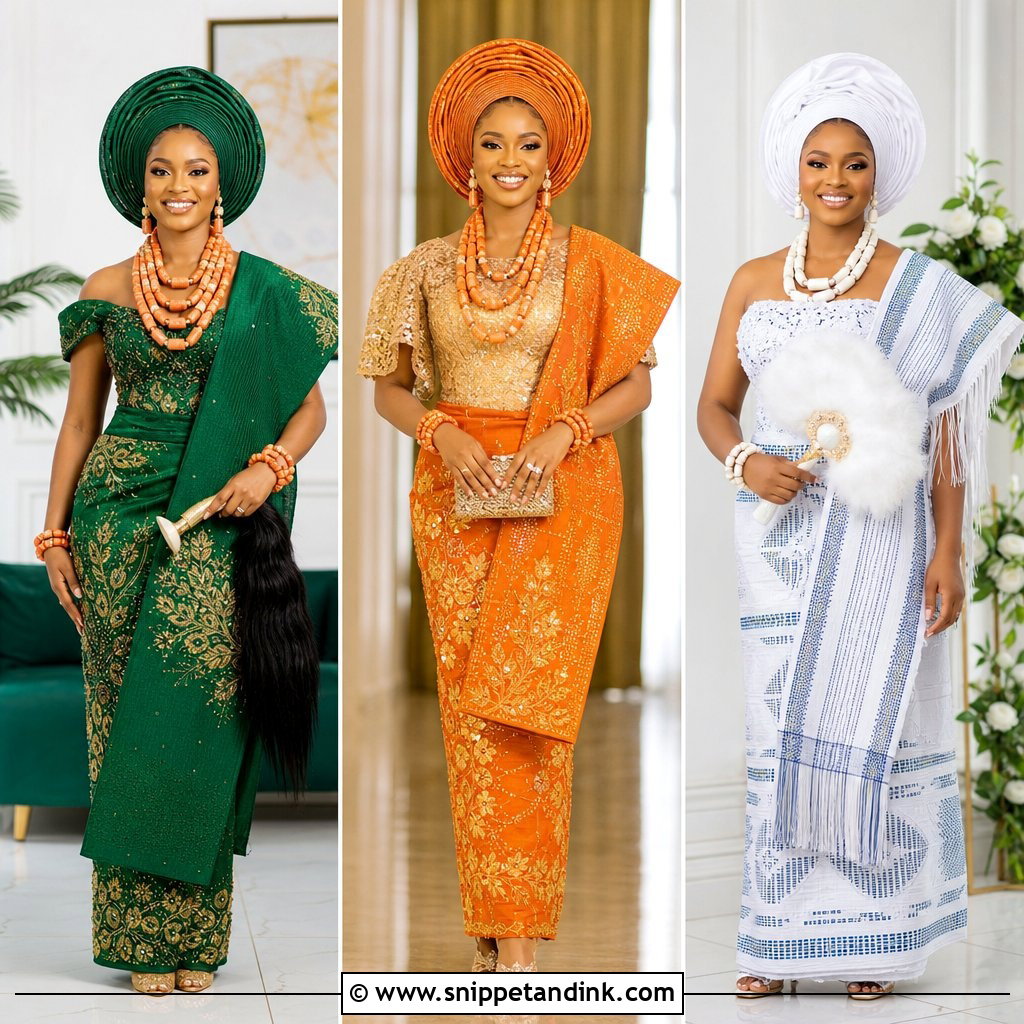
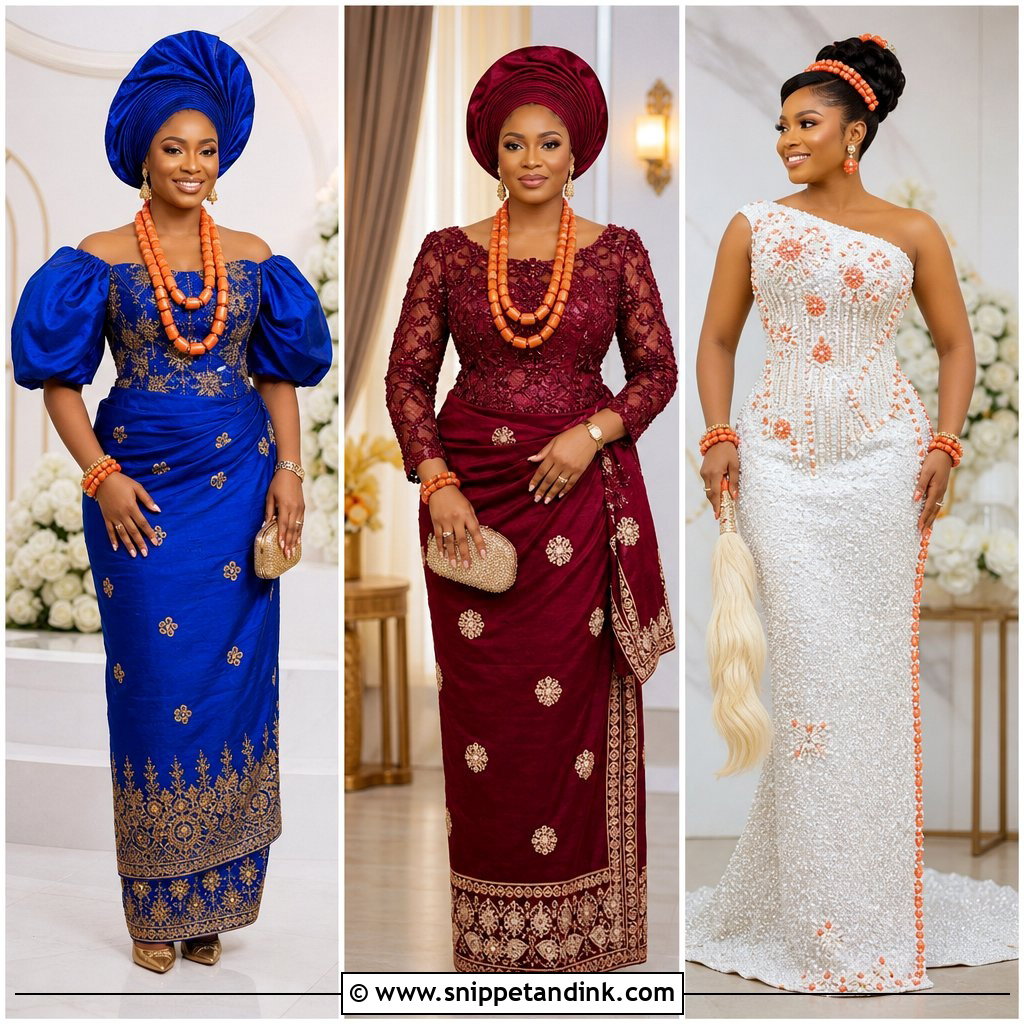
A Nigerian traditional wedding outfit carries more than style. It tells guests whose daughter you are and which hometown you’re from, so the fabric, beads and headpiece all mean something. The looks below draw on Yoruba, Igbo, Hausa-Fulani, Edo, Efik, Ibibio, Tiv and Idoma dressing: woven aso oke, George wrappers, sculpted gele, coral crowns, modest embroidered gowns and striking regional cloth. Nigerian wedding clothing differs by ethnic group, hometown, family and ceremony, so I always ask brides to confirm the important details with their mothers, aunties or elders and with a designer who knows that tradition. For each outfit I’ve added the jewellery, shoes and accessories I’d pair with it and the fitting points worth raising.
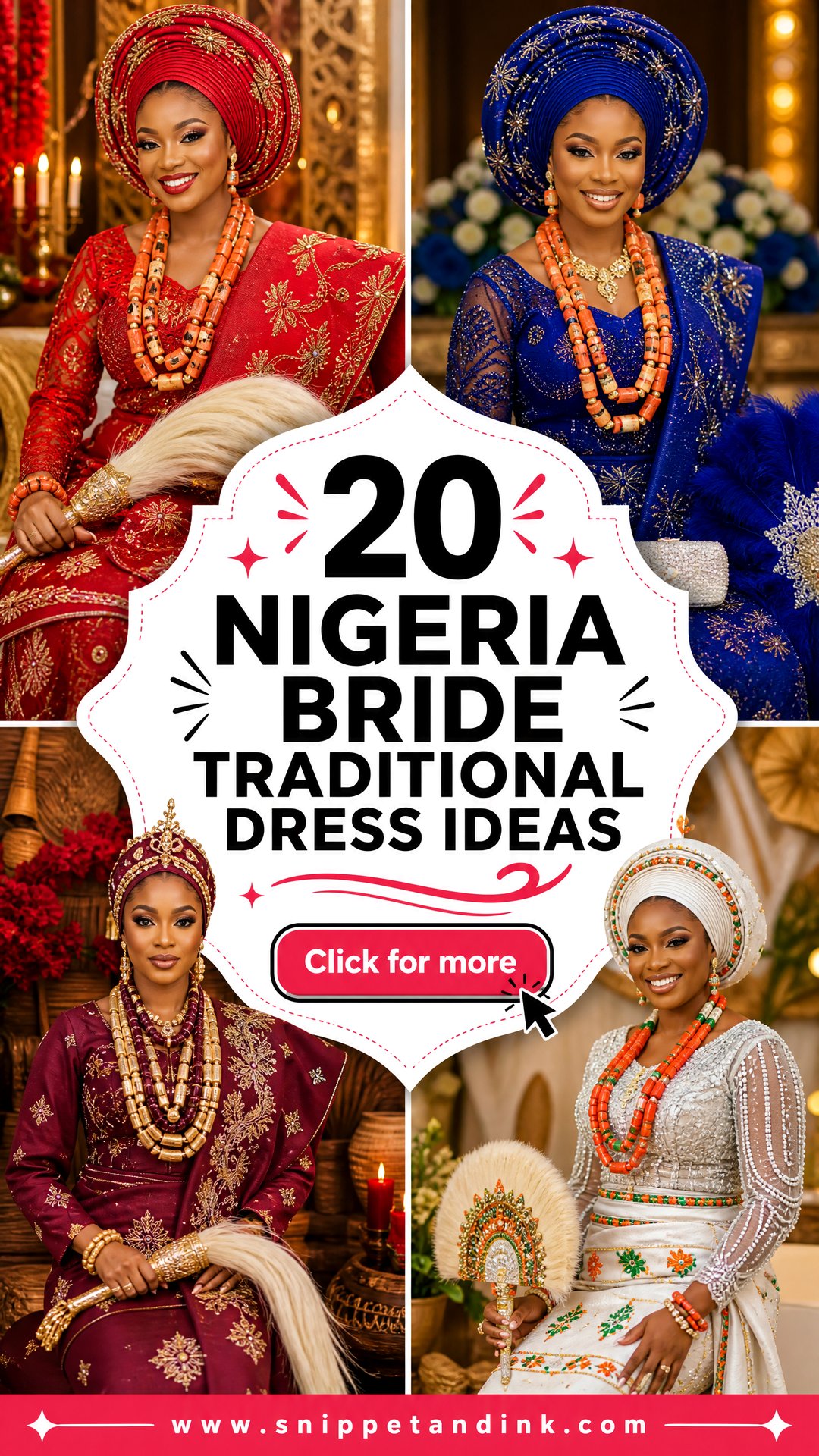
Two Entrances, One Dressing Room: Planning Outfit Changes
Many Nigerian traditional weddings include more than one bridal look, such as a first entrance, a change for the main rites and sometimes a lighter outfit for dancing. Each change takes longer than people expect, because a gele has to be retied and beads moved from one outfit to the next. I plan the order backwards from the dancing: the heaviest, most formal outfit comes first, and the lightest comes last, when you’ll be on your feet the longest.
- Agree a changing window with the MC, and allow at least twenty to thirty minutes if the gele is being retied.
- Book a private room close to the hall with a mirror, good light and a clothes rail.
- Hang each outfit with its beads, shoes and headpiece bagged together and labelled in order.
- Bring one helper whose only job is dressing you, not greeting guests.
1. Yoruba Bride Ivory Aso Oke Iro And Buba
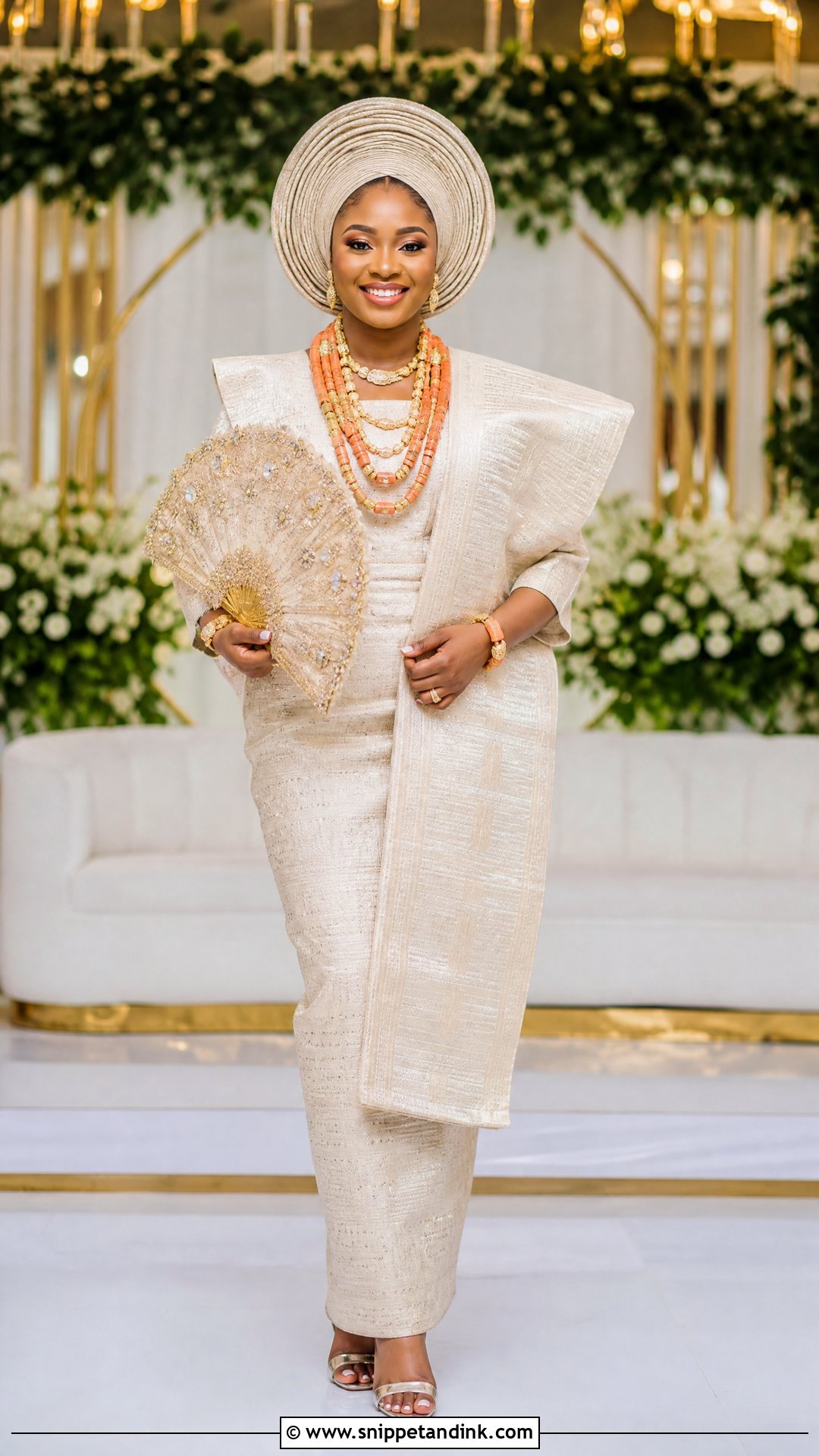
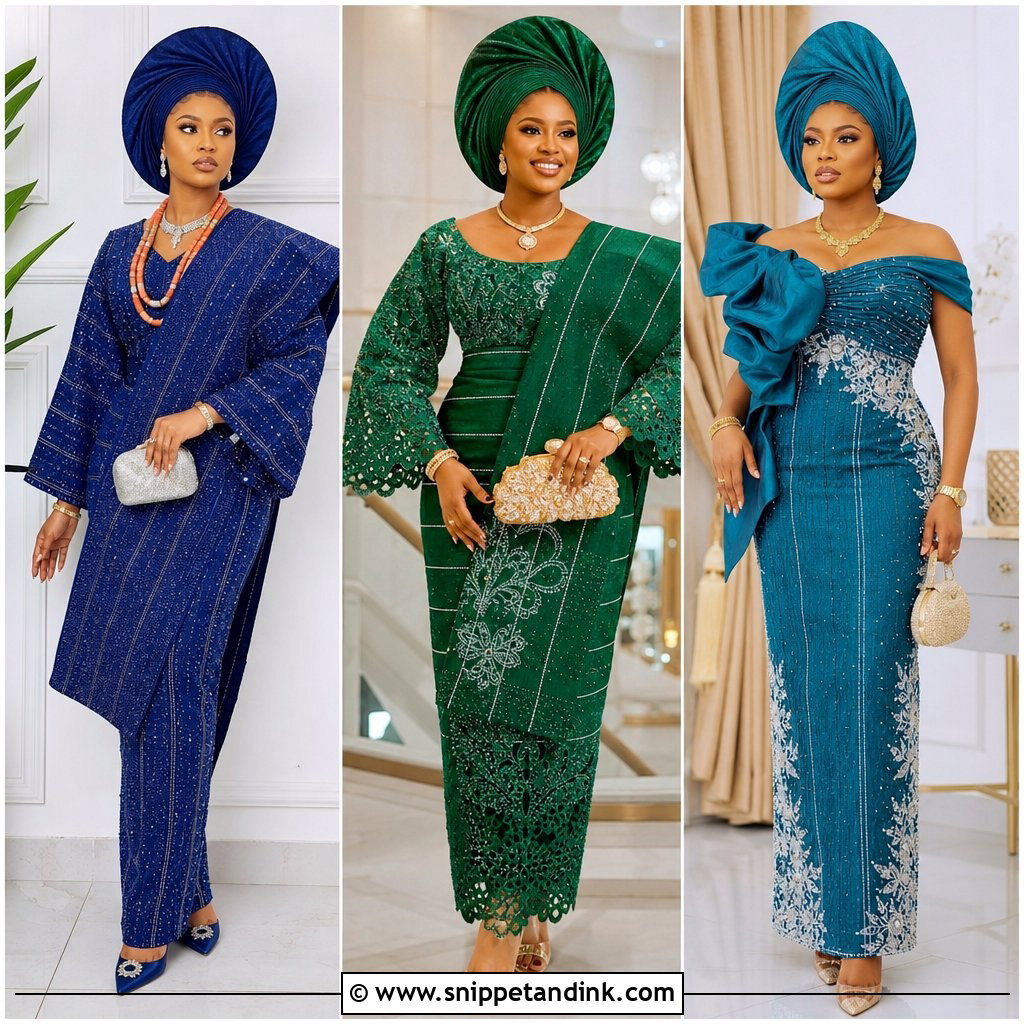
Ivory aso oke keeps a Yoruba bridal set polished and quietly rich. The classic combination is a buba, an iro, a gele and an ipele over one shoulder, and it’s instantly recognisable as Yoruba bridal dress. I’d choose a structured buba with elbow-length sleeves and an iro wrapped firmly enough to stay up but loose enough to dance in. A metallic thread woven through the cloth gives depth under hall lights. Hand-woven aso oke is stiff and heavy, so the iro needs a good tuck and a hidden hook, or it slides by the second hour. Gold or coral beads at the neck, a hand fan and gold sandals or low block heels finish it.
2. Yoruba Bride Emerald Aso Oke Gown
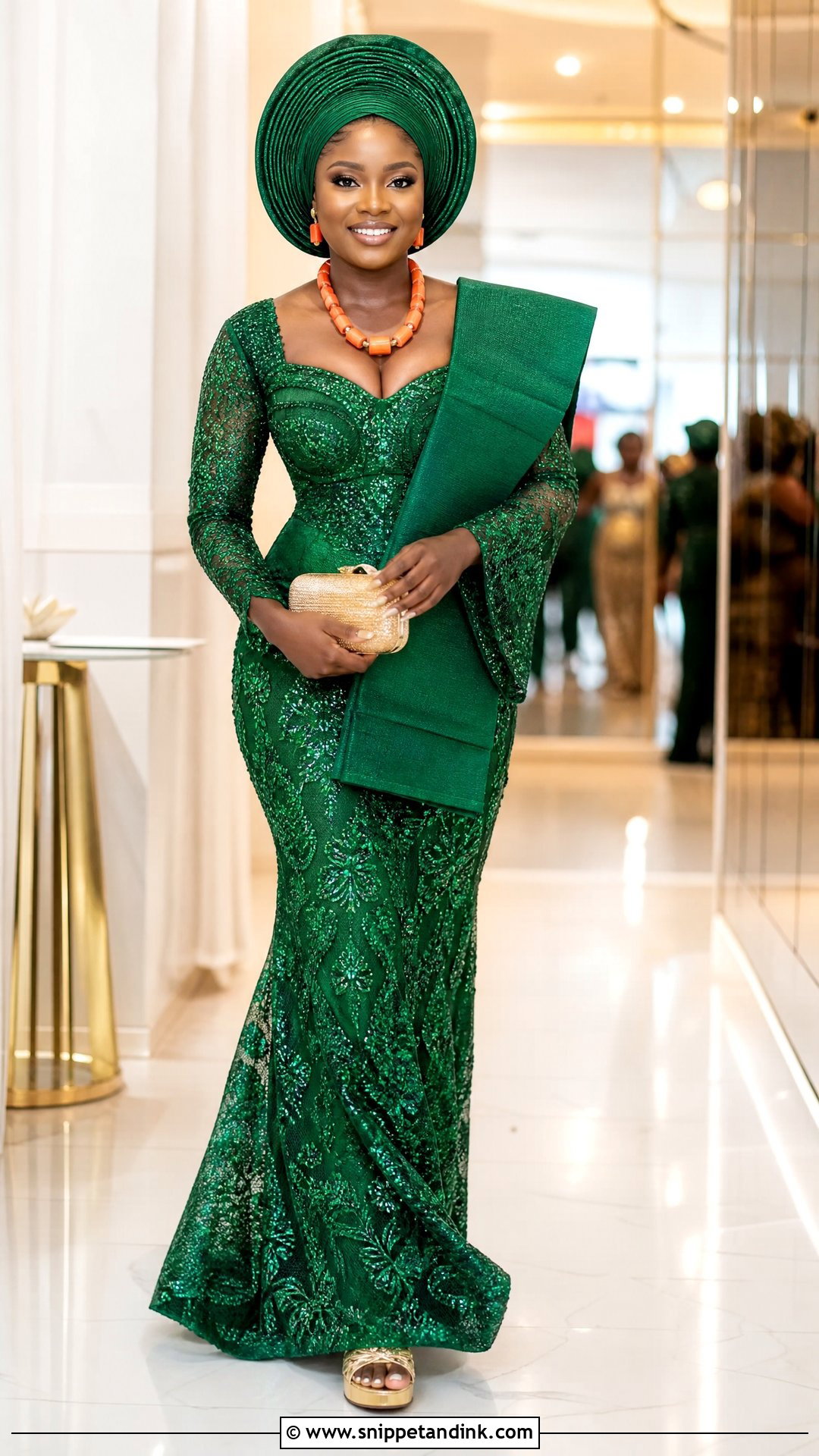
Deep emerald gives a modern Yoruba bridal gown a regal mood. Many brides now have aso oke cut into a fitted floor-length dress while keeping the gele and the ipele sash, which holds the link to tradition. A modest square or off-shoulder neckline leaves room for coral beads. Aso oke is woven in narrow strips, so a fitted gown needs a tailor who plans the seams around the strip joins; I check those at the first fitting. Keep beadwork to the neckline, sleeves or waist so the weave shows. An emerald gele, matching ipele, a gold beaded clutch and metallic platforms complete it.
3. Yoruba Bride Burgundy Lace And Aso Oke Outfit
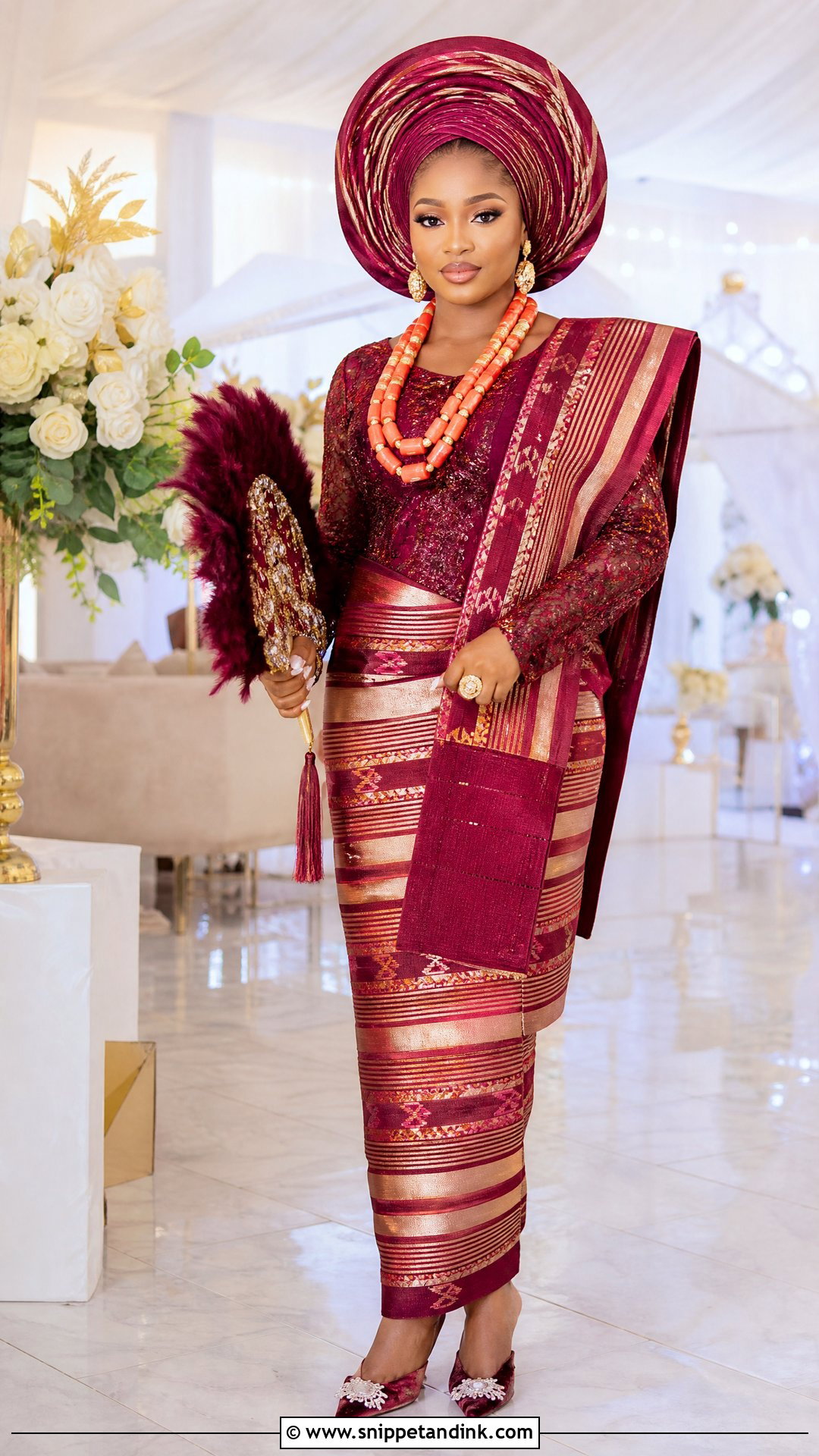
Burgundy lace on top with aso oke below is a smart combination: the lace is soft and light near the face, and the woven iro gives structure. A fitted lace blouse with a scalloped neckline over an iro woven in burgundy, rose gold and champagne threads works well, crowned with a gele that repeats the iro’s metallic pattern. The ipele ties the two fabrics together. Lace and aso oke rarely match in colour exactly, so I compare them side by side under warm light before the tailor cuts. Layered coral beads, gold drops and a compact fan finish it, with burgundy velvet pumps or embellished sandals under the wrapper.
4. Igbo Bride Red George Wrapper And Blouse
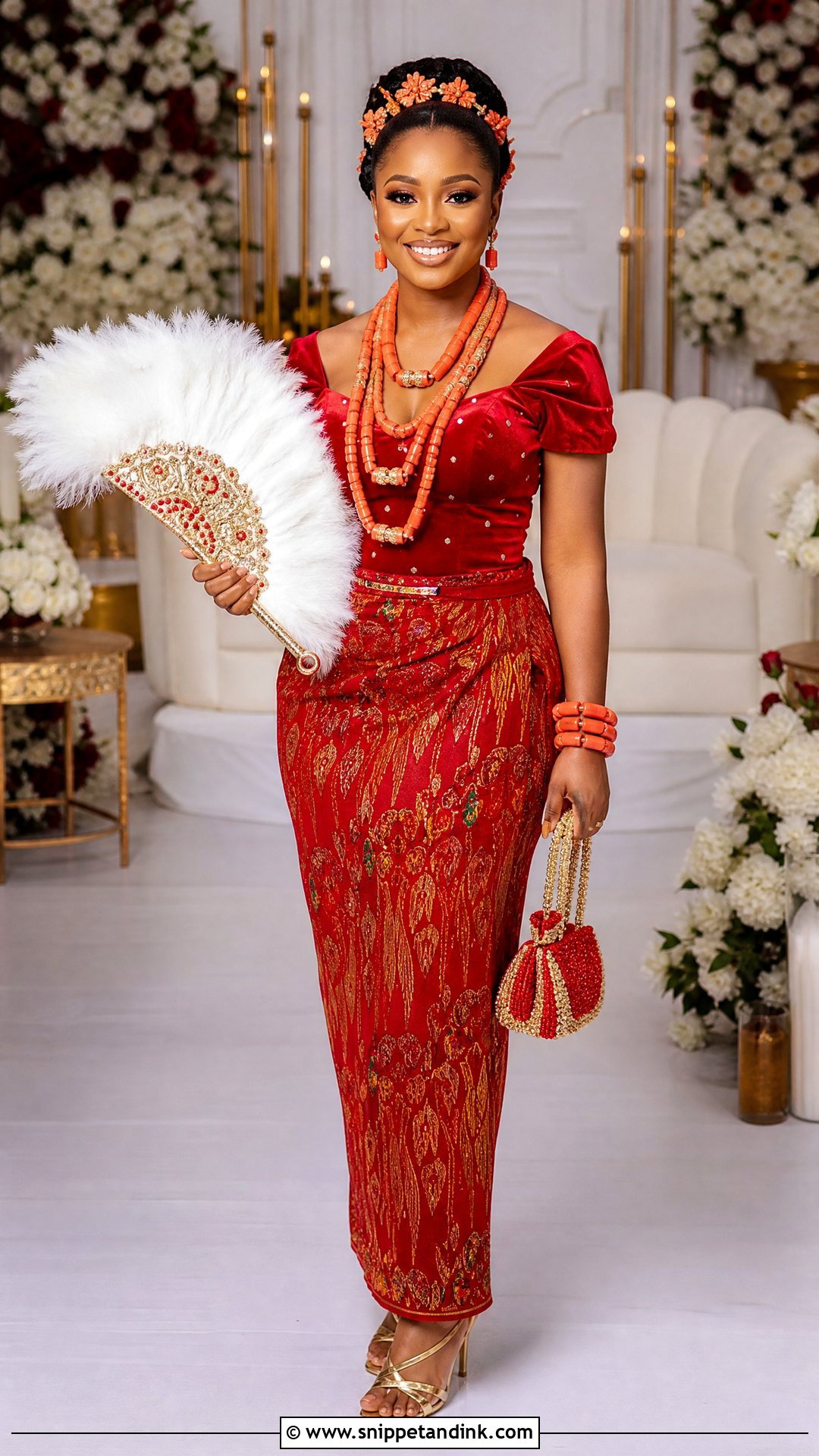
A red George wrapper and blouse is a joyful, unmistakable Igbo bridal look, with George fabric, wrapped shapes and coral jewellery at its heart. The blouse should be fitted and supportive, with beadwork that frames the wrapper rather than competing with it. The wrapper can be one neat drape or a layered arrangement, depending on your family. George is heavy with embroidery, and a double wrapper adds real weight at the waist, so I ask for a firm inner tie rather than relying on a tuck. Strands of coral at the neck and wrists, repeated in the hair, a carved fan, a small beaded purse and gold sandals finish it.
5. Igbo Bride Royal Blue George Outfit
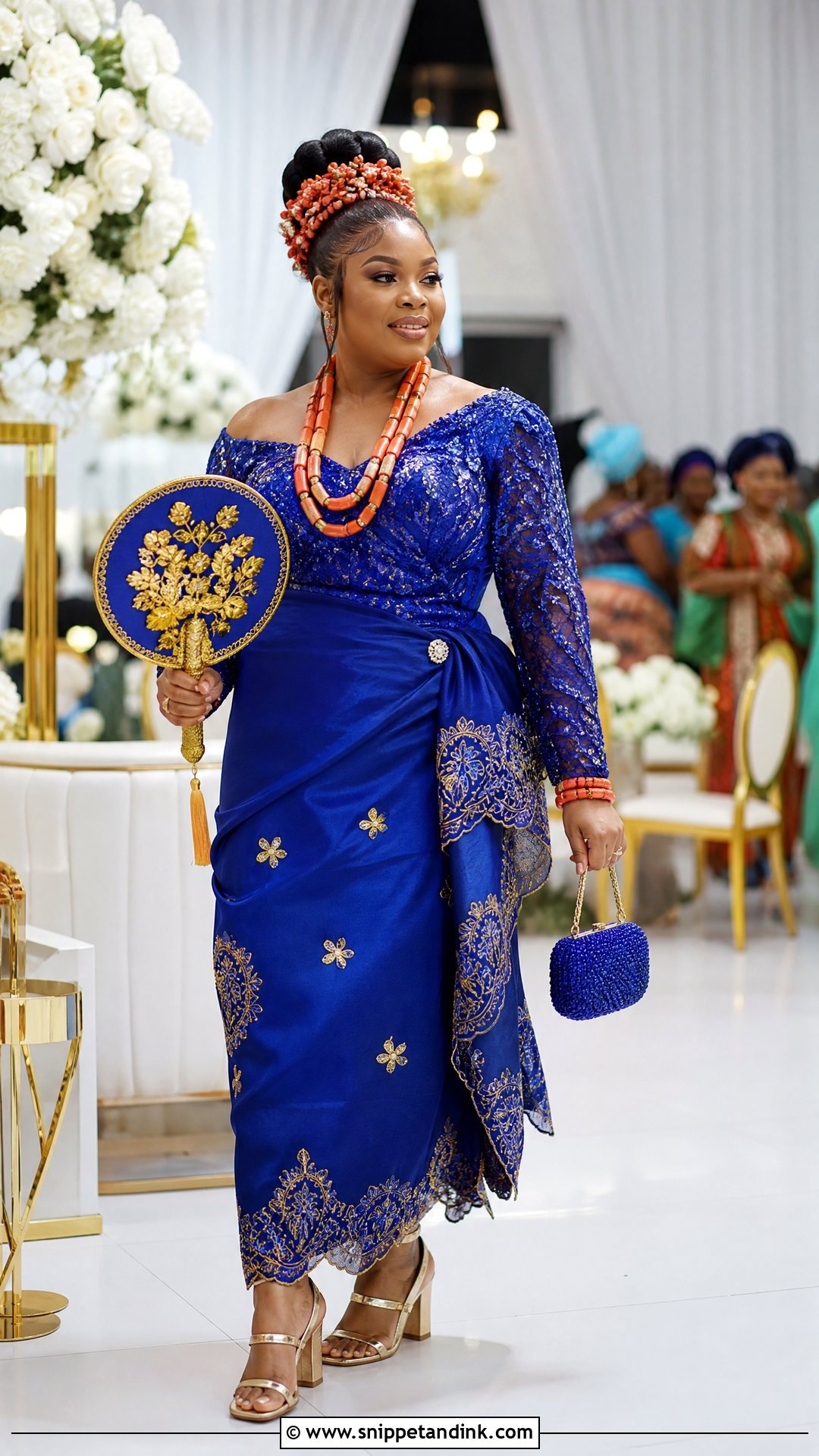
Royal blue is a fresh alternative to red that still looks majestic. Jewel tones are increasingly common in modern Igbo bridal clothing, which lets the bride match her wedding palette. Choose a richly patterned George wrapper with silver, gold or pale blue embroidery and a fitted blouse in matching lace or velvet with a bateau or soft off-shoulder neckline. Coral beads glow against cool blue, worn as a layered necklace, bracelets and a hairpiece. If the wrapper is heavily worked, keep the sleeves plain and skip extra crystals. A blue-and-gold fan and metallic sandals with a stable heel complete it.
6. Igbo Bride Isi Agu Maiden Outfit
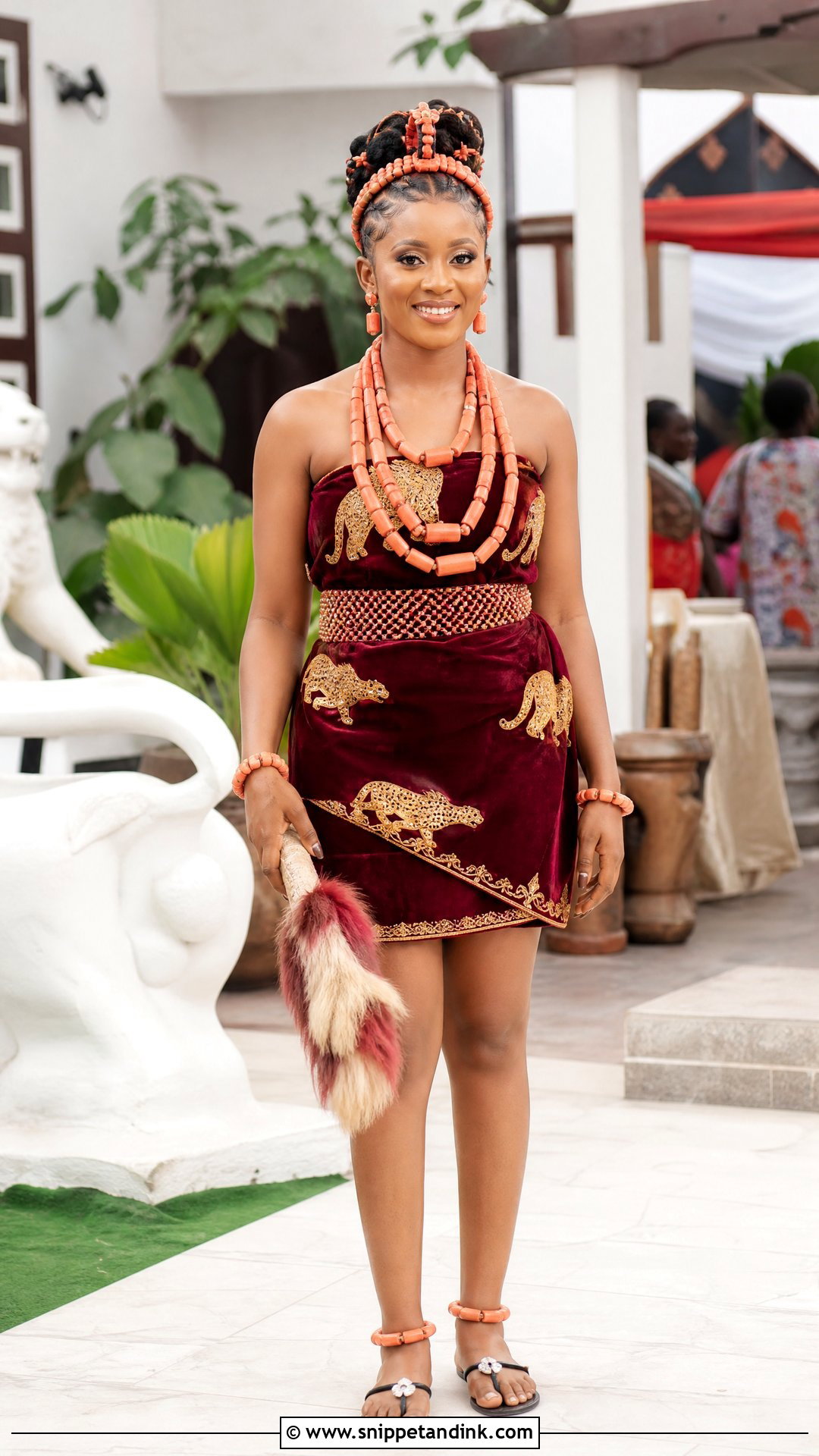
An isi agu maiden outfit suits an Igbo bride’s early entrance or first change. The maiden look traditionally represents the bride before marriage and is often followed by a fuller, floor-length ensemble. A short structured dress, or a fitted blouse with a knee-length wrapper, in lion-head print in red, green, burgundy or royal blue sets the youthful tone, with a beaded belt at the waist. Coral necklaces, wrist beads, anklets and hair ornaments complete it. Flat sandals are the right call here, because this is the outfit you’ll greet relatives and dance in. Keep the fan small so the look stays light.
7. Igbo Bride Gold Lace Mermaid Gown
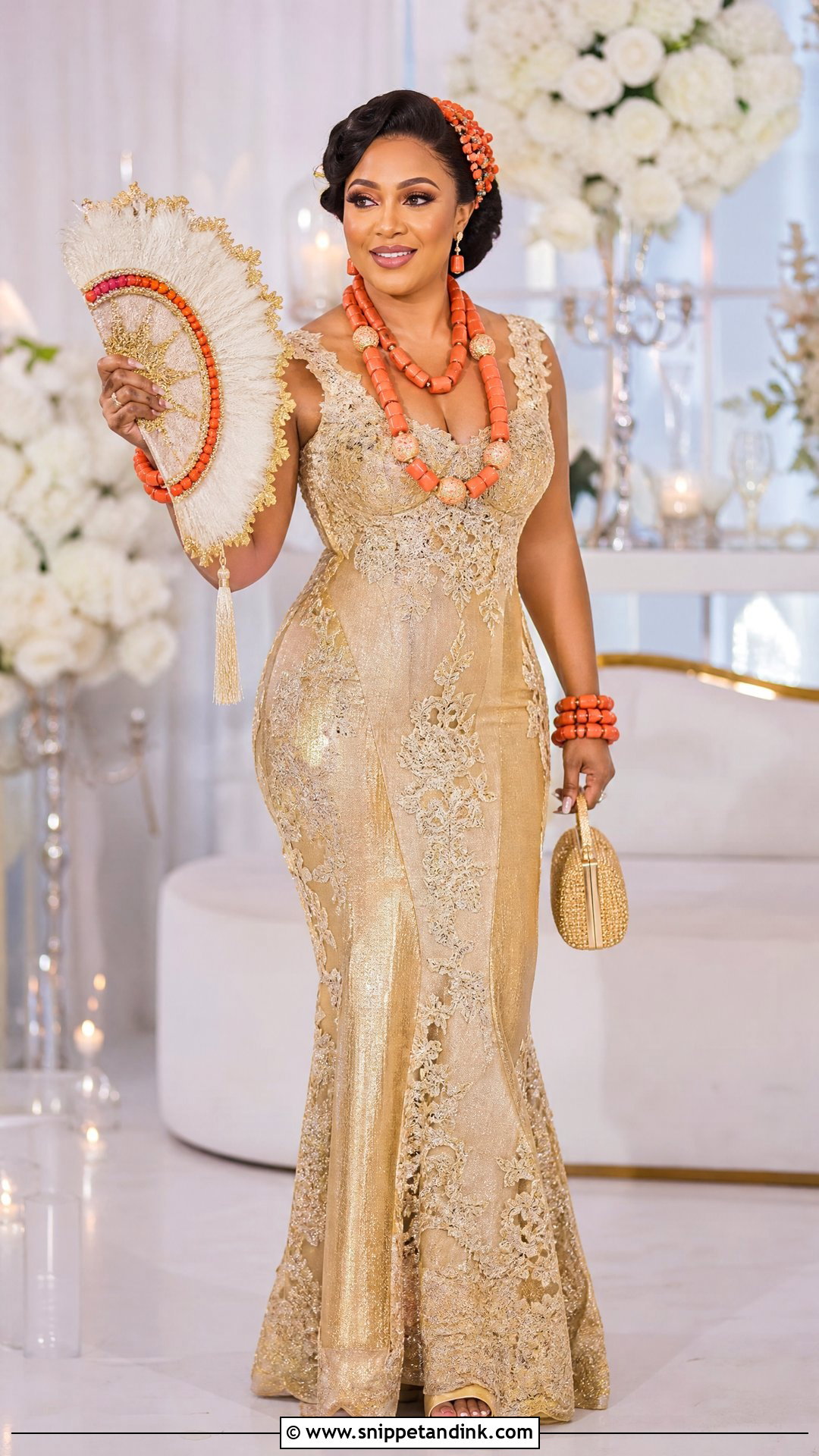
A gold lace mermaid gown blends modern glamour with Igbo accessories, and it makes a strong second entrance. Choose a well-lined dress that hugs the body and opens into a manageable flare below the knee. Concentrate embroidery and appliques on the bodice and let them thin toward the hem; a skirt heavy with crystals pulls the flare flat. Coral at the neck, wrists and hair brings in culture and colour, with a coral-trimmed fan and a compact gold purse. Platforms or block heels are steadier under a fitted skirt. I’d also ask the designer to work in George fabric, isi agu accents or a family motif on a panel, belt or detachable train.
8. Hausa Bride Champagne Embroidered Kaftan
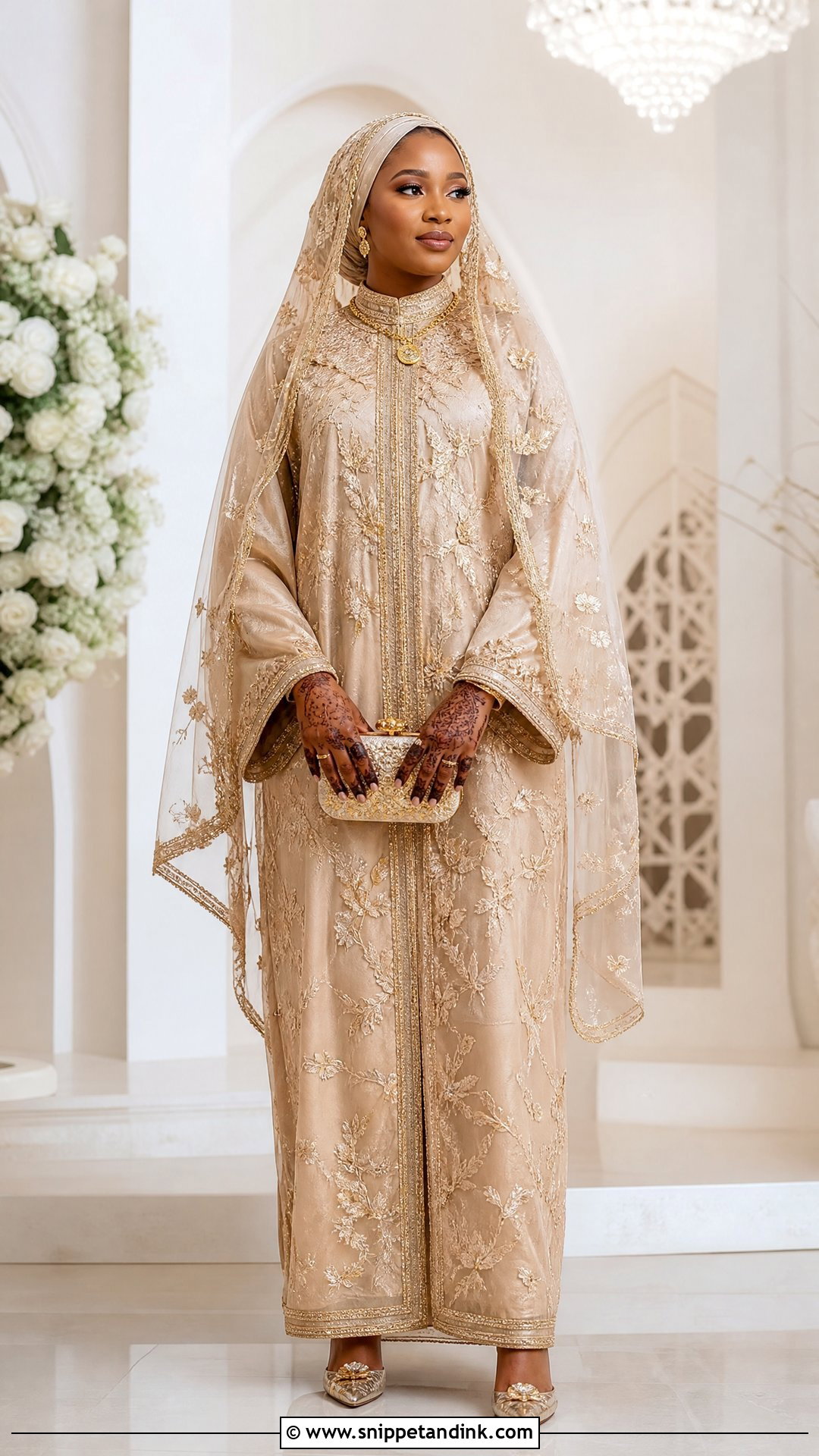
A champagne kaftan gives a Hausa bride a graceful, modest line with plenty of detail. Hausa-Fulani bridal dress often favours silk or lace gowns, fine embroidery, coordinated head coverings and restrained jewellery. A floor-length kaftan with long sleeves, a high neck and embroidery at the collar, cuffs and front panel does that well. Gold thread, pearls or a few crystals add light without weight. Pair it with a matching veil or neat headscarf, fine gold jewellery, a small clutch and metallic flats or low heels. Bridal henna is a big part of the look, so I’d fit the cuffs to sit just at the wrist bone and leave the designs on the hands fully visible.
9. Hausa Bride Emerald Silk Abaya
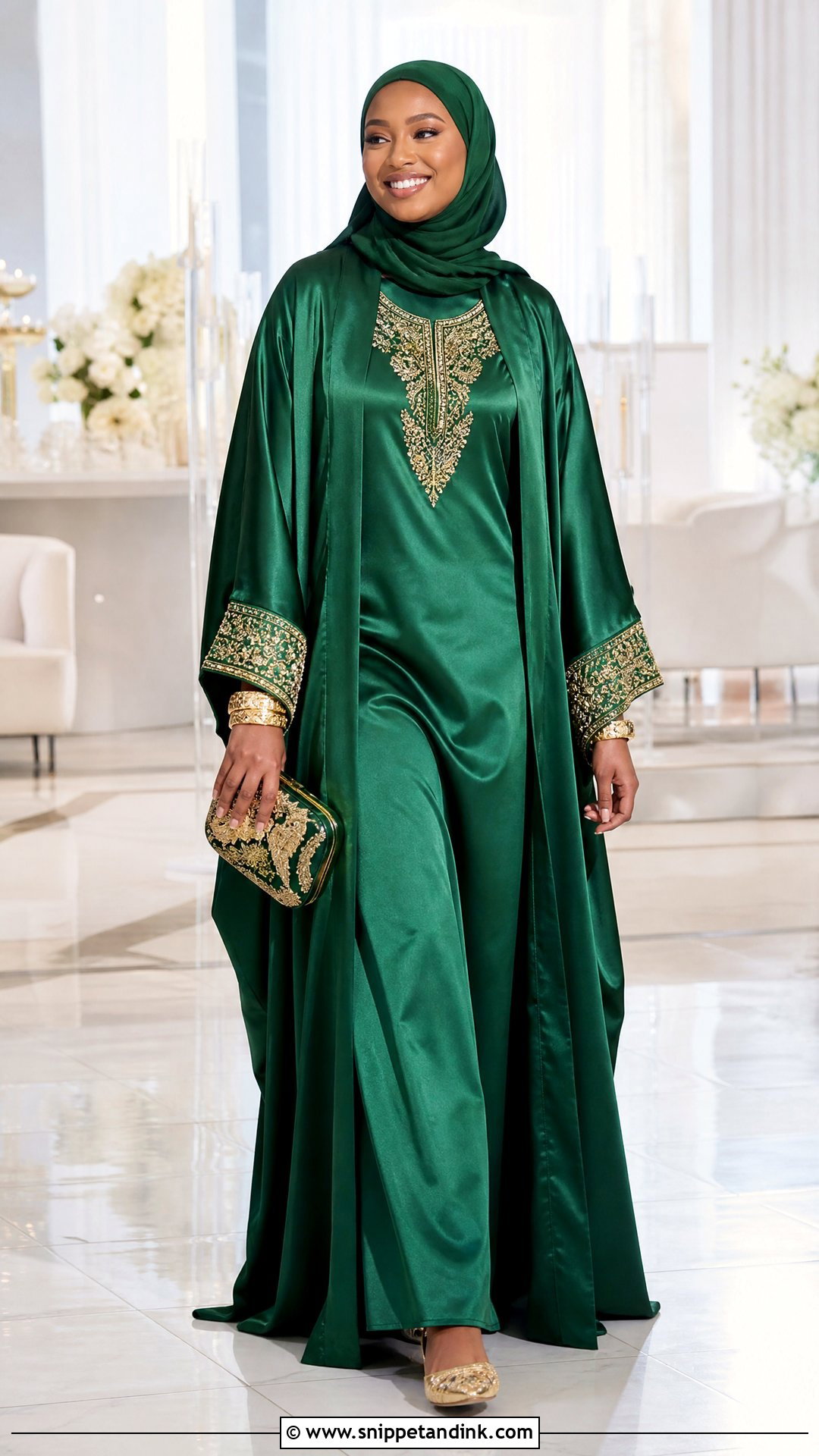
Emerald silk makes a striking bridal abaya. Choose silk with enough body to hold embroidery yet still move, and gold detailing along the neckline, sleeves and open front. Wear a full-length inner dress in a matching tone so it looks finished from every side, especially when the abaya swings open as you walk. A matching hijab or veil, drop earrings if your family is comfortable with them, stacked gold bangles and an embroidered clutch complete it. Gold flats disappear under the hem. Keep the shoulders soft; the fabric and head covering already give plenty of presence, and padded shoulders under a hijab look boxy.
10. Fulani Bride Mudukare Wrapper Outfit
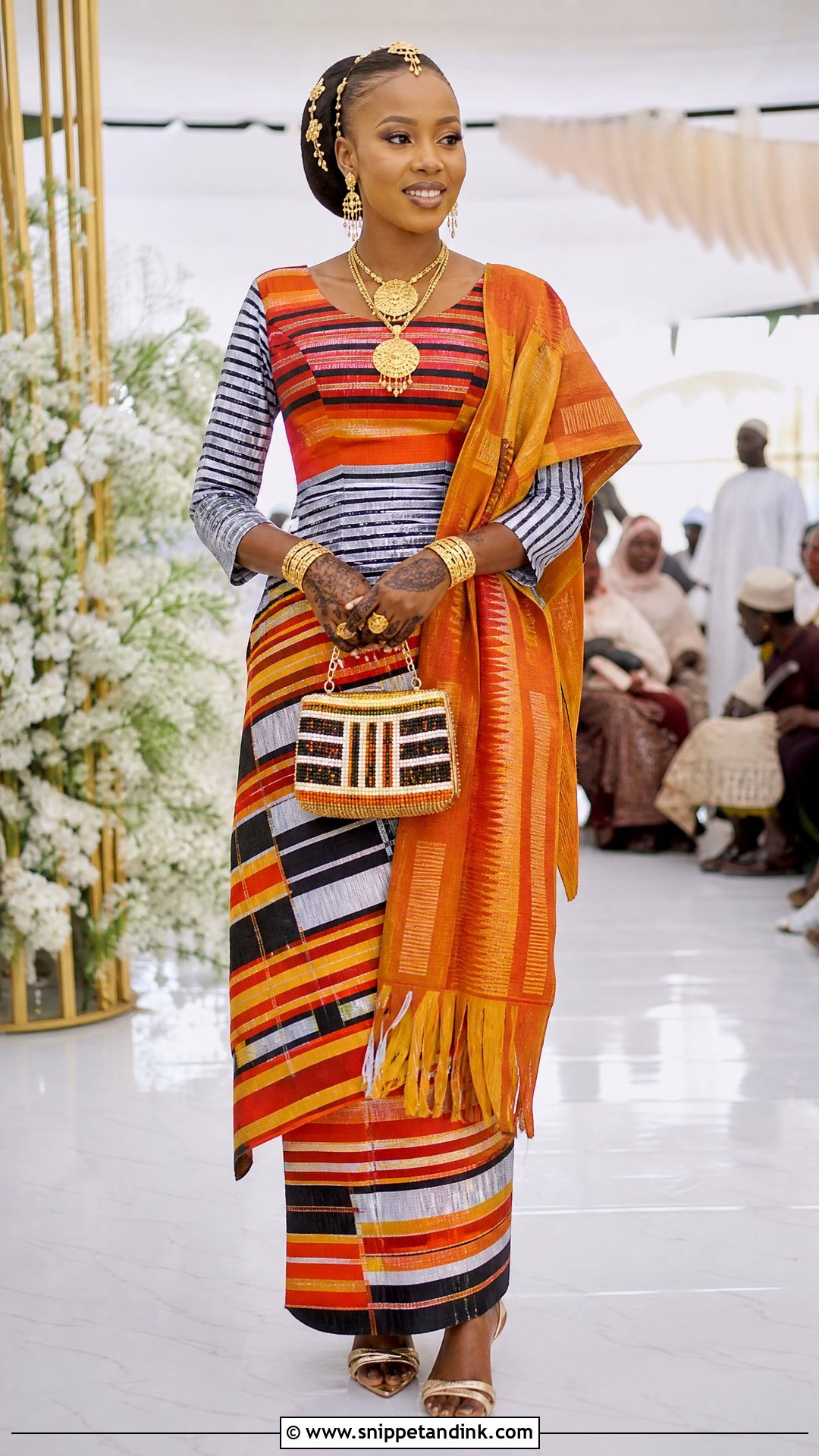
A Fulani-inspired mudukare outfit has its own colour and texture. Fulani bridal dressing may draw on mudukare, lace, Ankara and decorative henna. Style the fabric as a long wrapper with a fitted, modest blouse, or have a designer who knows the tradition shape it into a full-length dress. Add a coordinated shawl or head covering that leaves the pattern visible. Gold earrings, layered necklaces, bracelets and hair ornaments can follow the bride’s community and family custom. Decorated hands and feet are part of the look, so I’d choose open, simple gold sandals rather than closed shoes that hide the henna, and a small woven or beaded purse.
11. Edo Bride Red Velvet Coral Bead Outfit
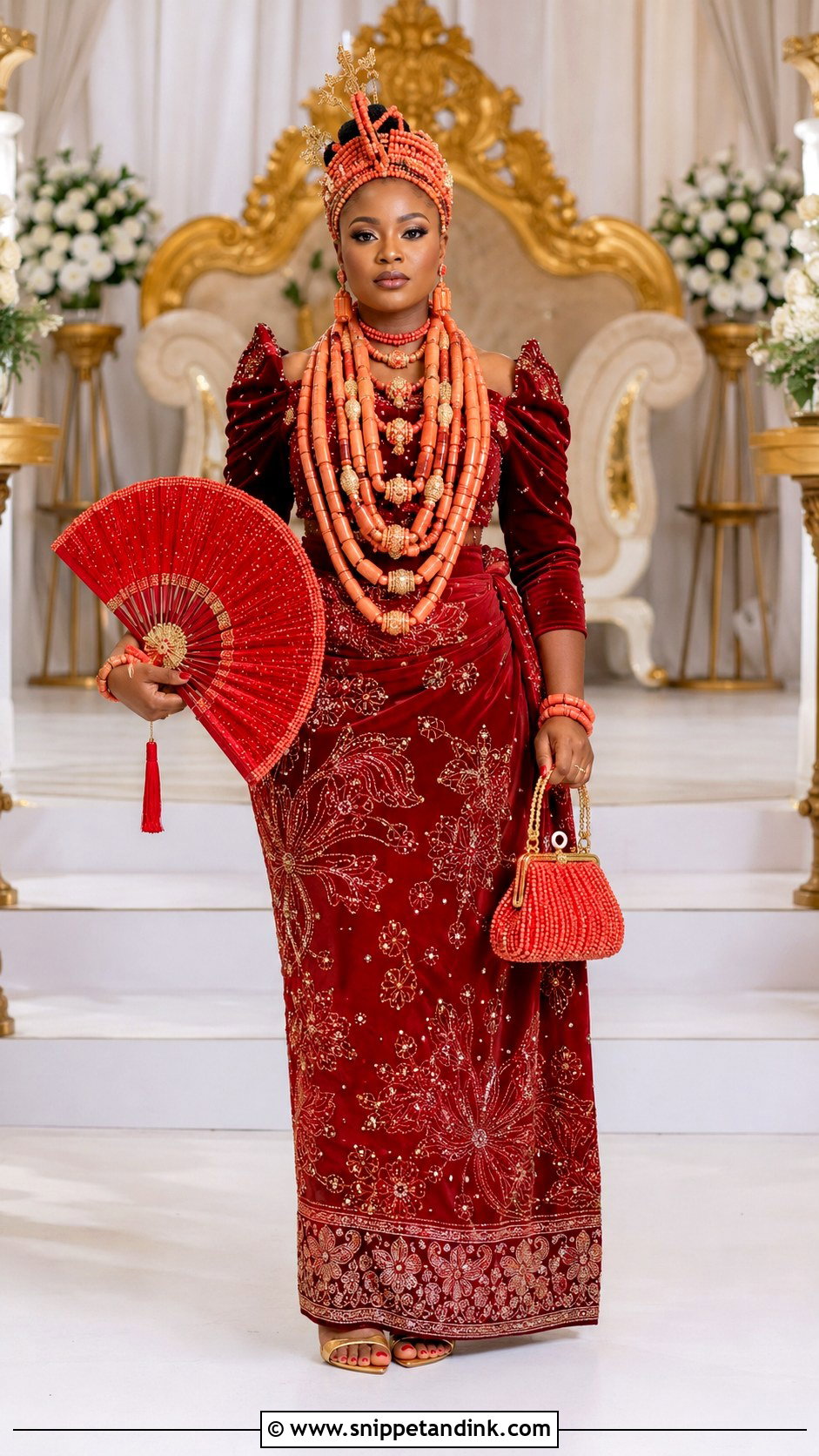
Few bridal combinations command a room like red velvet and coral. Edo bridal dress is known for rich colour and generous coral adornment, above all the beaded crown. A fitted velvet blouse or corset over a matching floor-length wrapper is the base, and the centrepiece is an okuku-style coral crown with layered necklaces, chest beads, bracelets and earrings. With that much coral, keep any decoration on the velvet minimal. The tailoring has a job to do: the corset must support the weight of the chest beads without cutting in when you sit. A structured red fan, a small beaded purse and simple gold or red sandals finish it.
12. Edo Bride Ivory Lace Coral Crown Outfit
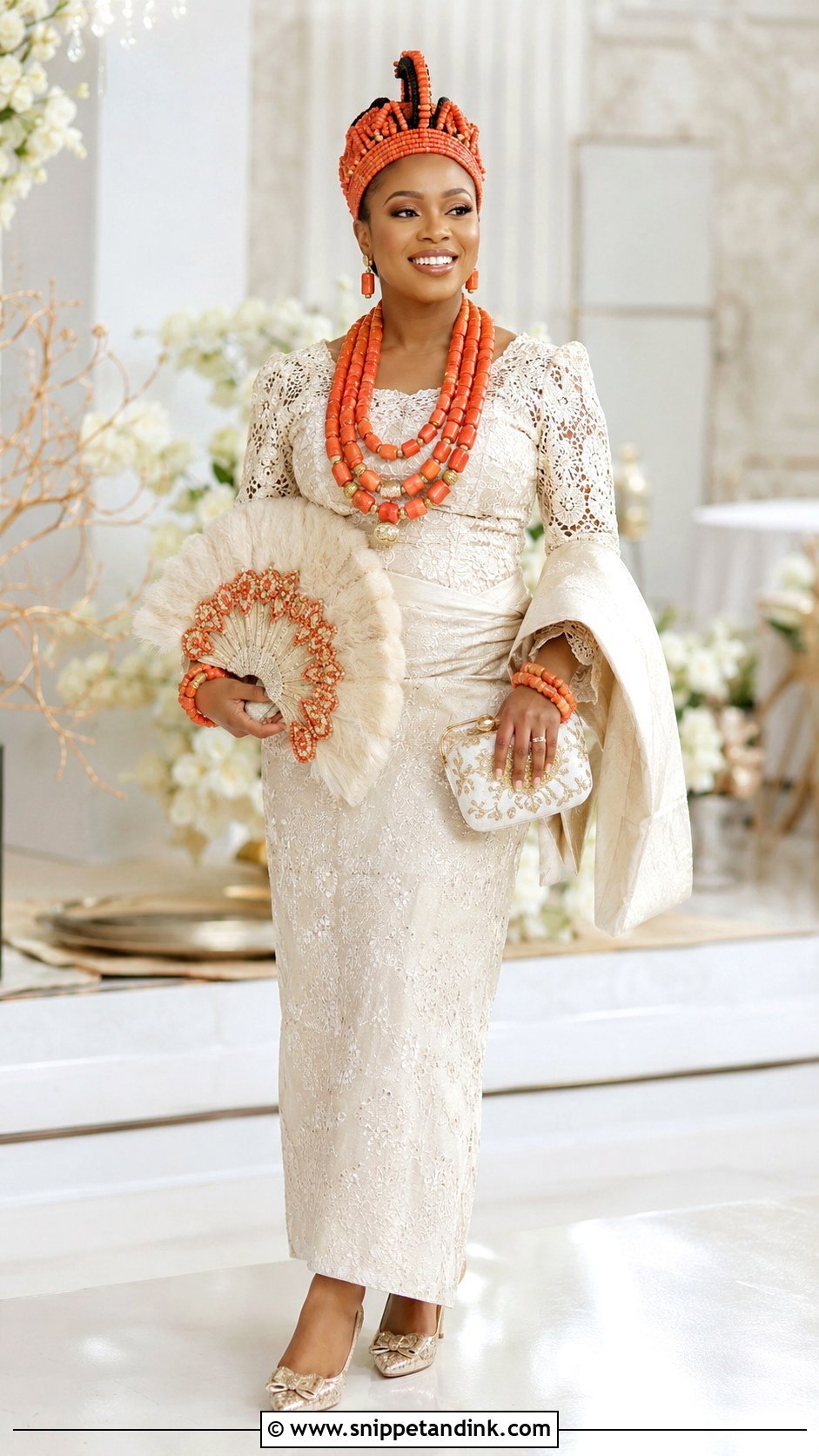
Ivory lace gives Edo coral a softer, brighter background. A fitted lace blouse with a defined waist and a matching wrapper lined in smooth, opaque fabric lets the coral crown take over as the focal point, with layered necklaces and wrist beads linking it to the rest of the outfit. Pick a medium-scale lace pattern; tiny lace reads as plain cloth next to the beads, and very large motifs fight them. If the whole look feels too heavy, I’d cut back embellishment on the sleeves and bodice before touching the culturally important pieces. An ivory-and-coral fan, embroidered clutch and low gold heels finish it. It shines at daytime ceremonies.
13. Efik Bride White Onyonyo Gown
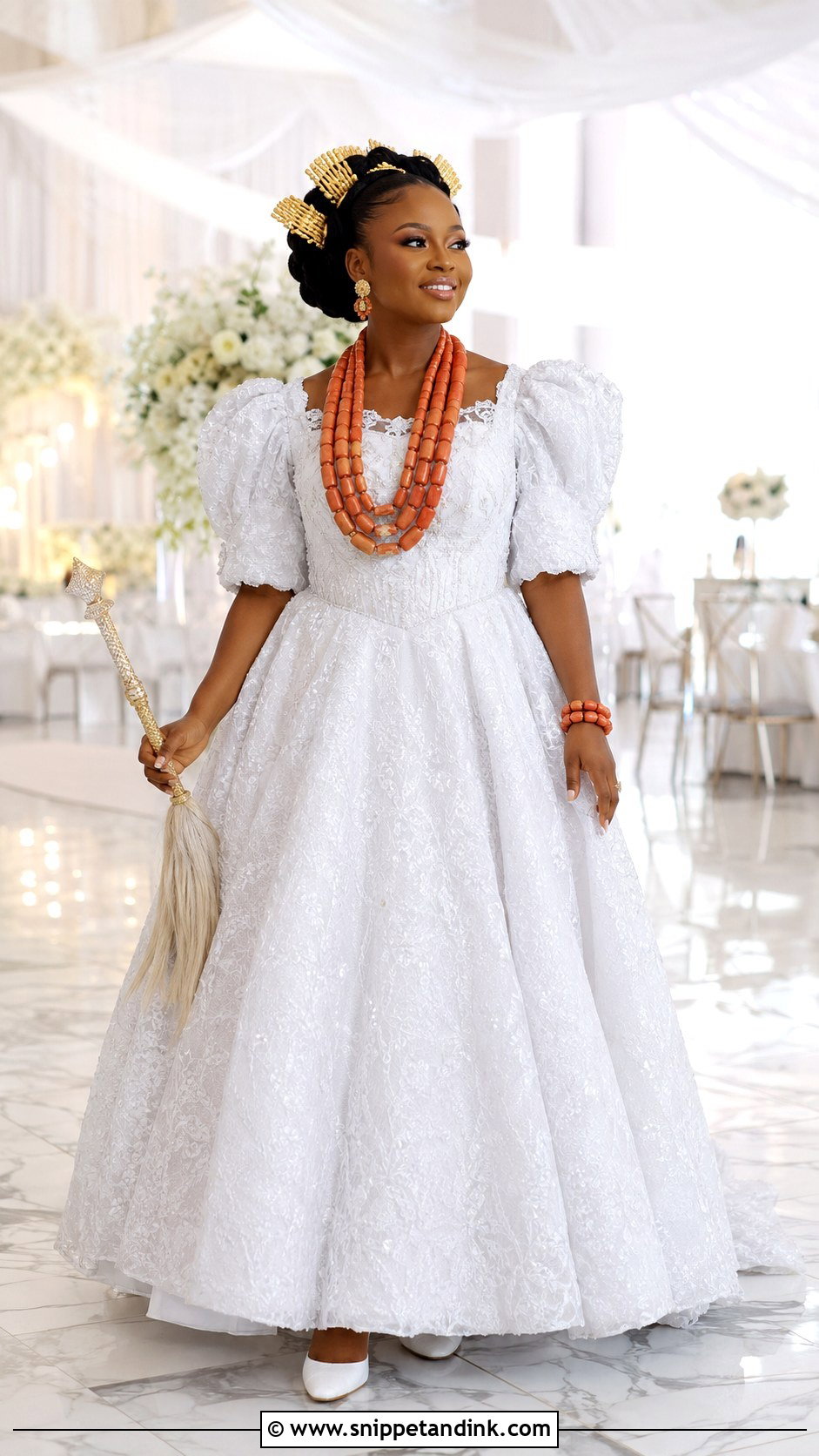
The Efik onyonyo gown is known for its volume and ceremony, worn with ornate hair decoration, beads and a carried staff. Choose bright white or ivory with a fitted bodice, defined waist and full skirt drawn from historic formal gowns. Puff sleeves, lace panels and delicate embroidery add character. Arrange the hair with decorative combs chosen with guidance from someone who knows the tradition, and add layered beads and the ceremonial staff. Closed-toe low heels or embellished flats are kinder under a wide skirt. Wide skirts pull on the shoulders and waist, so I have the bodice fitted with the full petticoat on, never without it.
14. Efik Bride Burgundy Onyonyo Outfit
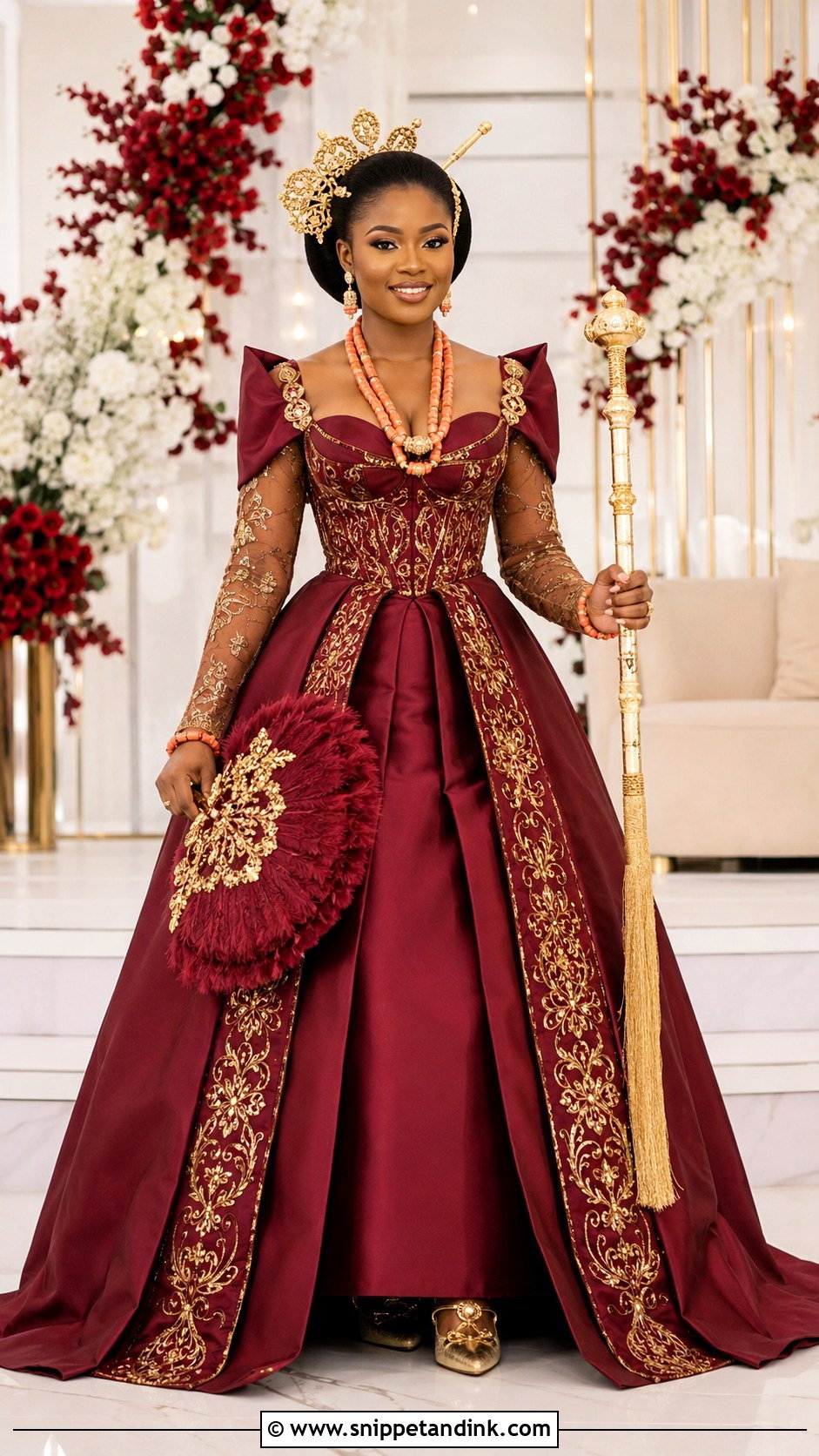
Burgundy gives the full onyonyo shape a deep, formal presence. Velvet or satin for the gown, with lace at the neckline, sleeves or skirt panels, keeps the dark colour from feeling heavy, and gold embroidery adds light. Style the hair with suitable ornamental combs and finish with coordinated beads, the staff and a burgundy fan, with gold shoes and a small structured purse. Before the final fitting, measure the skirt against the real space: the entrance door, the aisle between tables and the seat you’ll use. A full onyonyo skirt can be wider than a standard chair allows, and that’s far easier to fix in the workroom than on the day.
15. Ibibio Bride Wrapper And Beaded Blouse Outfit
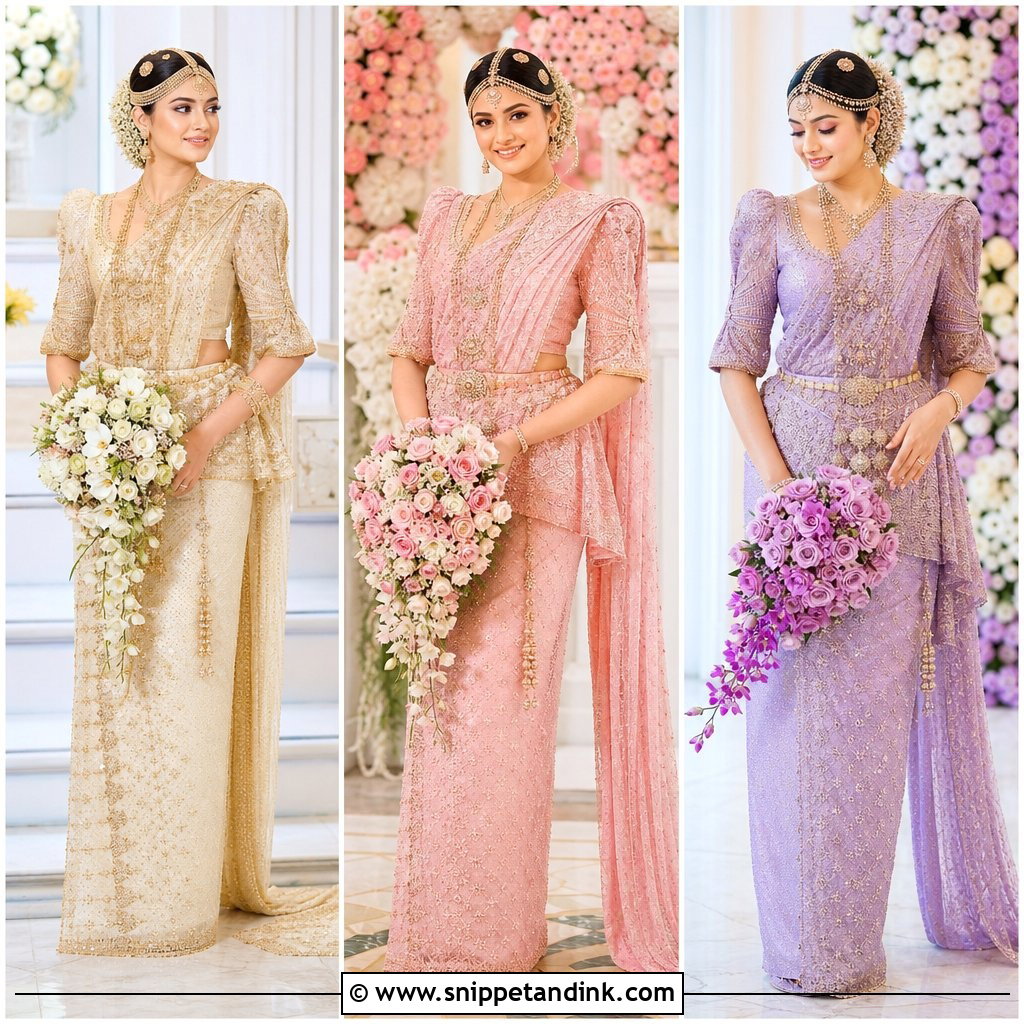
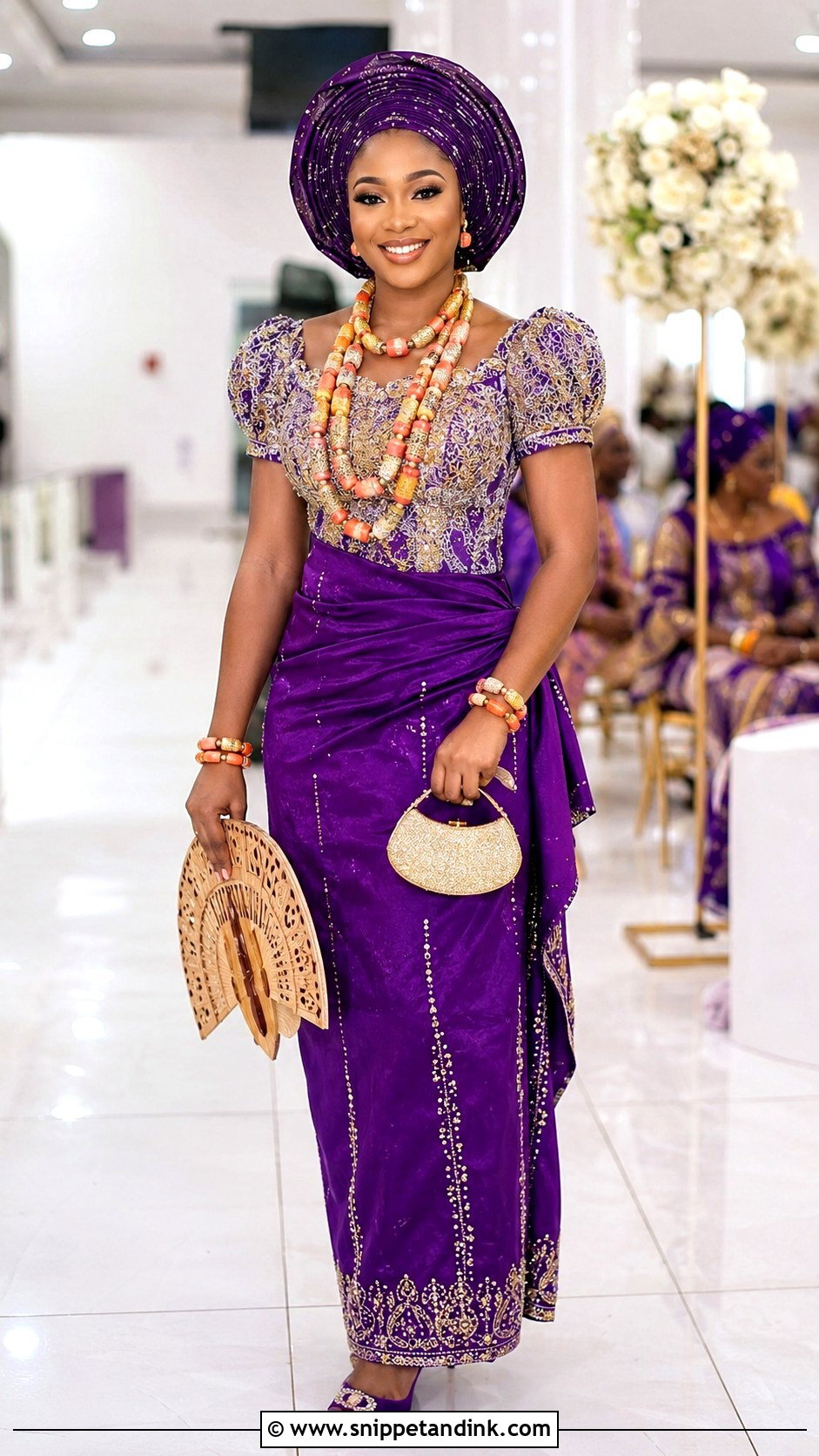
An Ibibio wrapper outfit is traditional, flattering and easy to personalise. The usual elements are a wrapper, a traditional top and generous beads, though the exact presentation should follow your family and local custom. Pair a floor-length wrapper with a fitted blouse beaded at the neckline, sleeves and waist. Purple, teal, red or royal blue with gold accents read well in photos. Layered necklaces, wrist beads, matching earrings and a carefully tied headwrap complete the top half. Wrappers loosen with dancing, so I’d have it draped by someone experienced and backed with hidden hooks. A carved fan, compact purse and low block heels finish it.
16. Tiv Bride Black And White A’nger Outfit
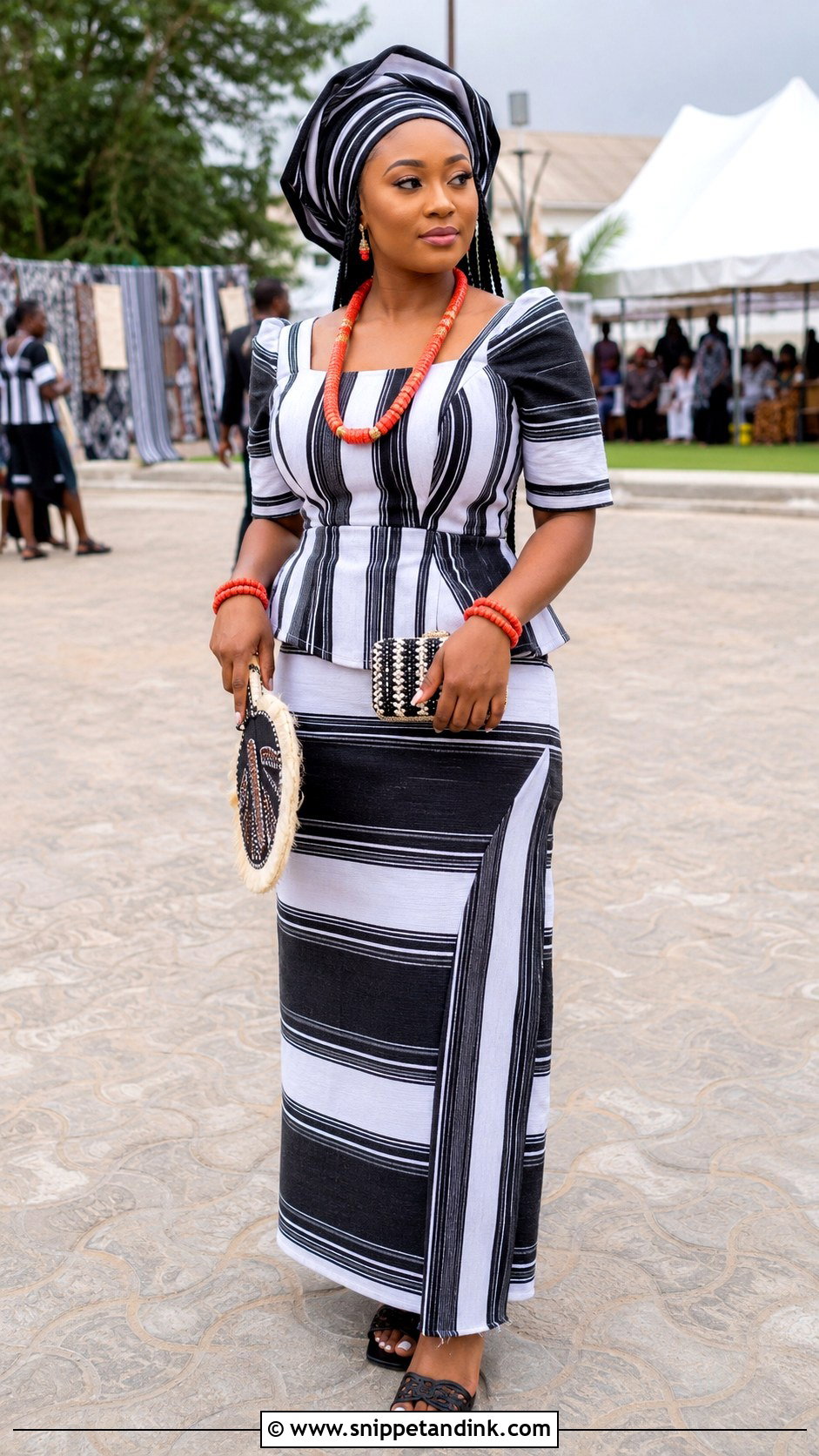
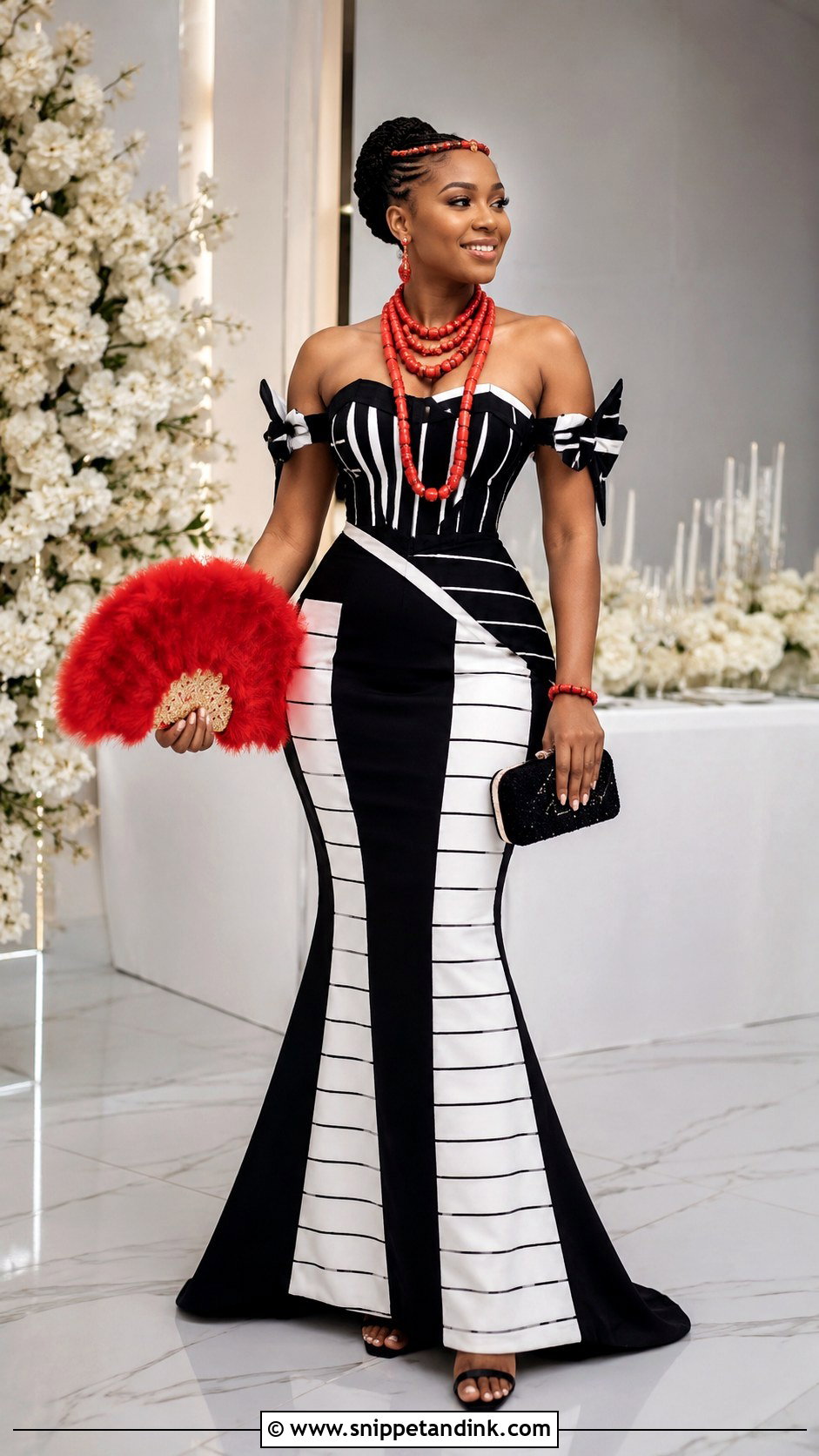
A’nger, the black-and-white striped cloth so closely tied to Tiv identity, makes a graphic bridal outfit. Wear it as a long wrapped skirt with a fitted blouse, or as a tailored floor-length gown that keeps the stripes clear. Red beads at the neck, wrists, ears or hair bring warmth to the monochrome. An A’nger headwrap or a braided style finishes the top half, with black sandals, a beaded clutch and a small fan. Stripes are unforgiving, and the cutting is what I’d watch most. They should line up at the centre front, the side seams and the closures, so expect your tailor to need extra fabric to match them.
17. Tiv Bride A’nger Corset Gown
For a modern take, shape A’nger into a structured corset gown with a full-length skirt. The bodice should support rather than squeeze, with clean panels that line the stripes up. A gently flared skirt dances far better than a narrow mermaid. I’d consider cutting the bodice panels on a slight angle, which turns the stripes into a chevron that defines the waist without any extra decoration. Red coral-toned beads at the neck and wrists, repeated in a slim waist detail or the fan, add warmth. A neat braided style with a minimal beaded band keeps the focus on the cloth, with black block heels and a clutch made from the same textile.
18. Idoma Bride Apa Wrapper And Blouse Outfit
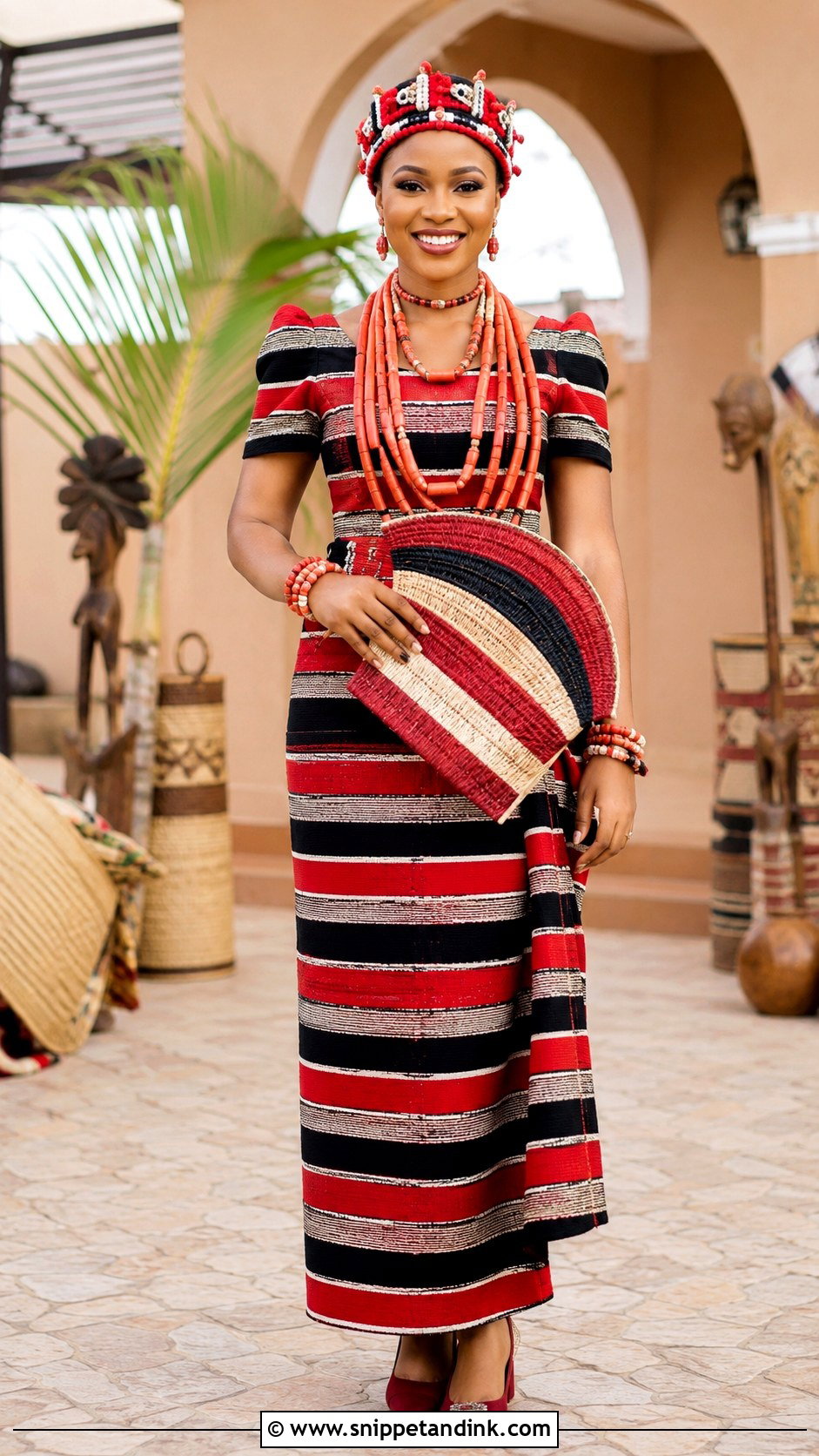
Red, black and white apa cloth makes a bold Idoma bridal base, worn as a wrapper and blouse or tailored into a dress. Wrap it as a floor-length skirt with a fitted blouse that repeats the stripes in a controlled way, or choose a solid red bodice with apa sleeves for balance. Beaded necklaces, bracelets, earrings and a coordinated headband or crown finish it, with black or red low heels and a striped fan. A good tailor matches the lines at seams and closures. If the stripes run horizontally across the body, I’d keep them on the wrapper and use the vertical direction on the blouse, which reads longer and slimmer.
19. Idoma Bride Apa Floor Length Gown
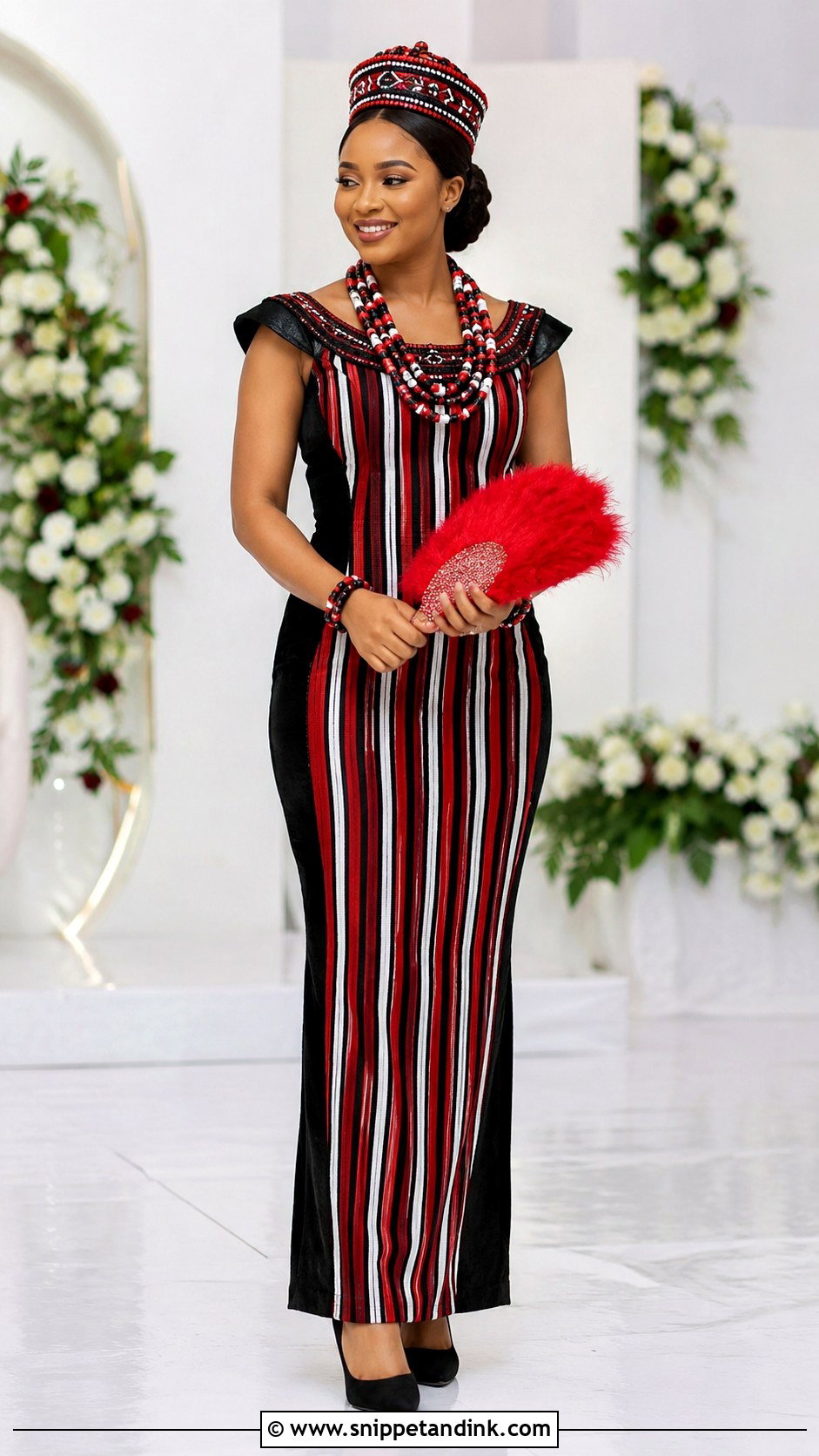
A floor-length apa gown is a graceful alternative to the wrapper set. Use the striped cloth through the fitted bodice, then set it in vertical or diagonal panels down the skirt for length. Solid black or red side panels calm the pattern and mark the waist. Pair it with a beaded crown, layered necklace, slim bracelets and a red fan, plus black sandals or low pumps. Keep any train short enough to cross a compound or a hall floor without collecting dust. Before cutting, talk with family about how the cloth is placed and what it means, so the gown feels part of the tradition rather than a borrowed print.
20. Nigerian Bride Two Culture Wedding Outfit
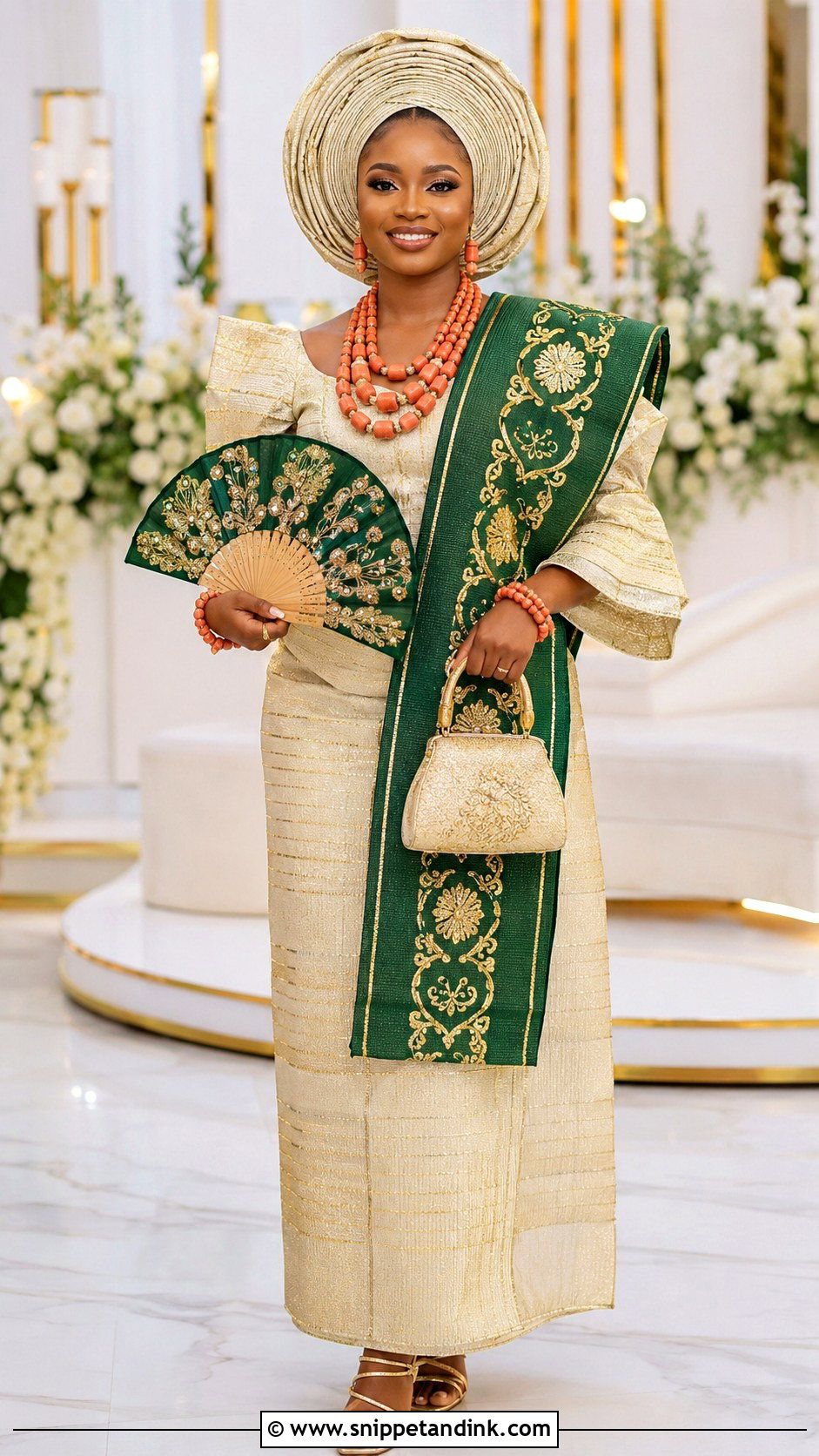
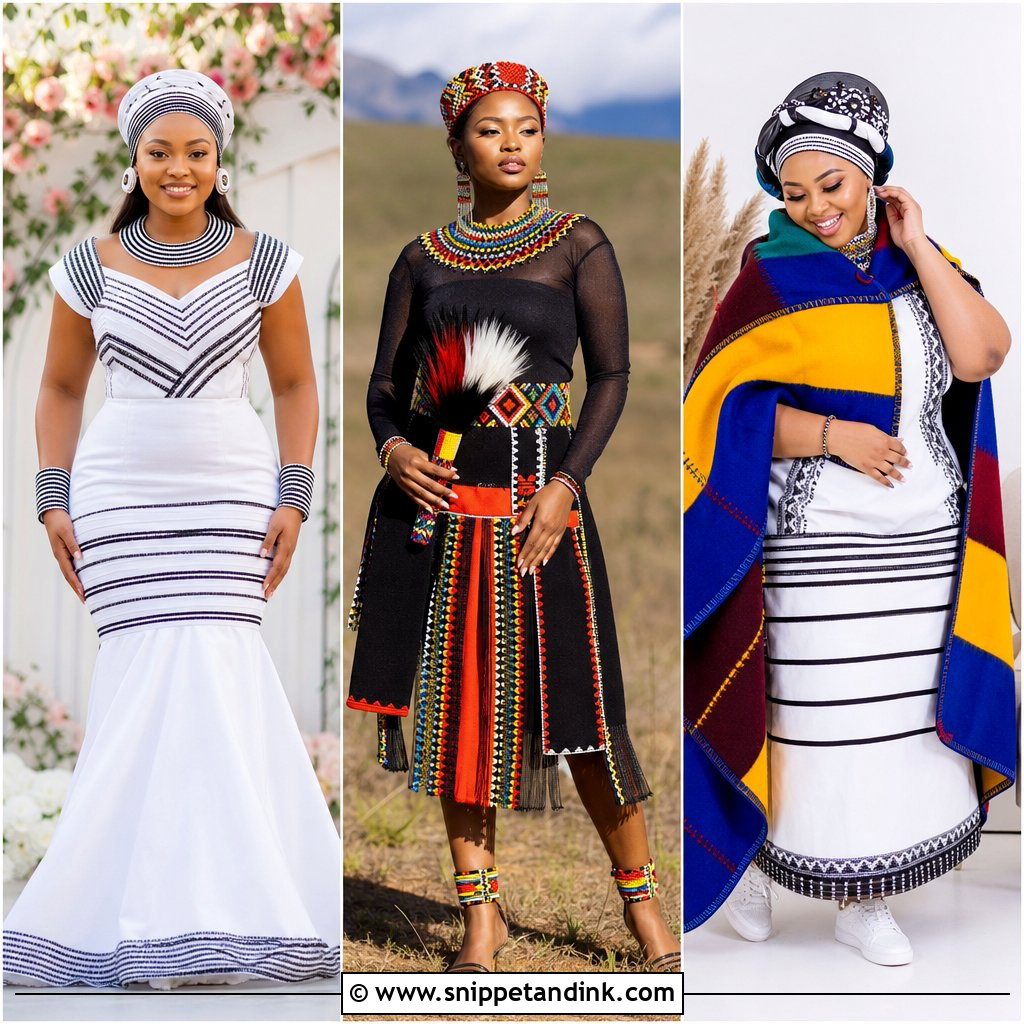
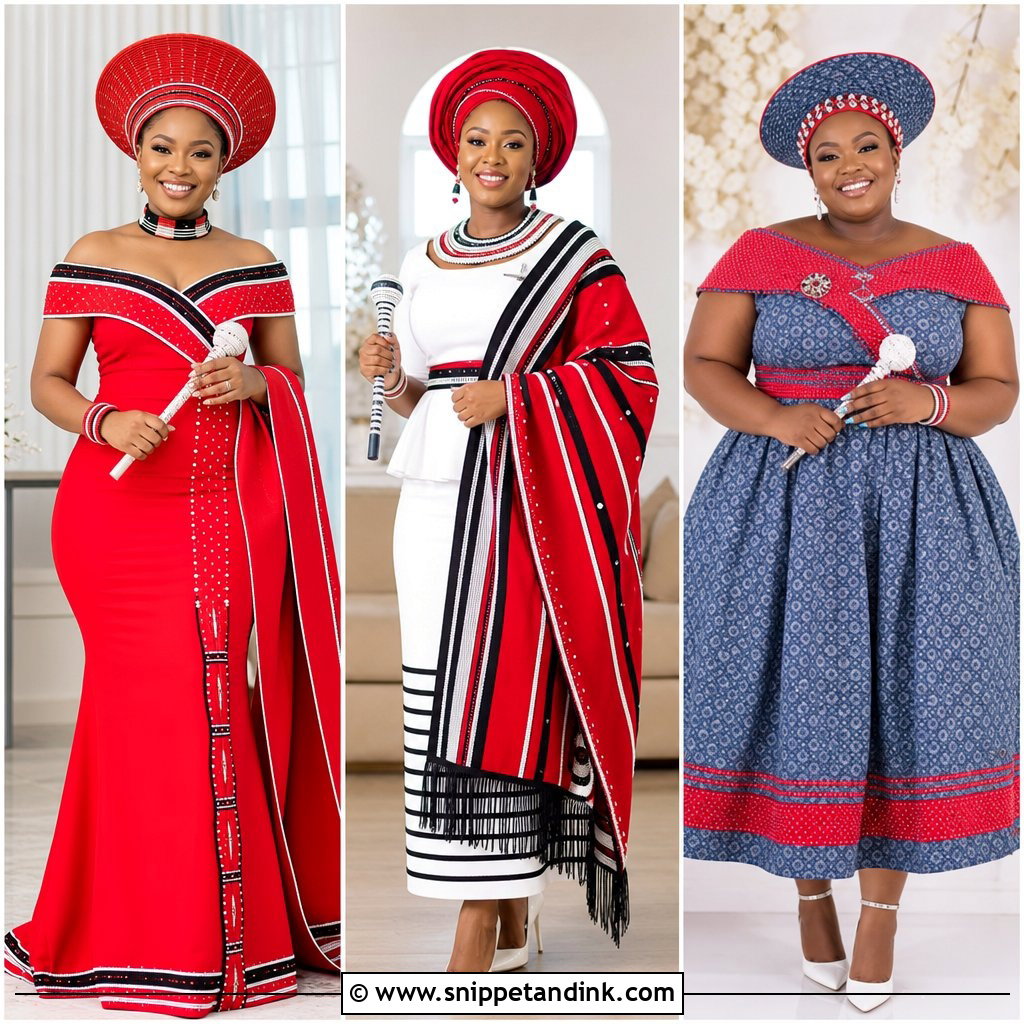
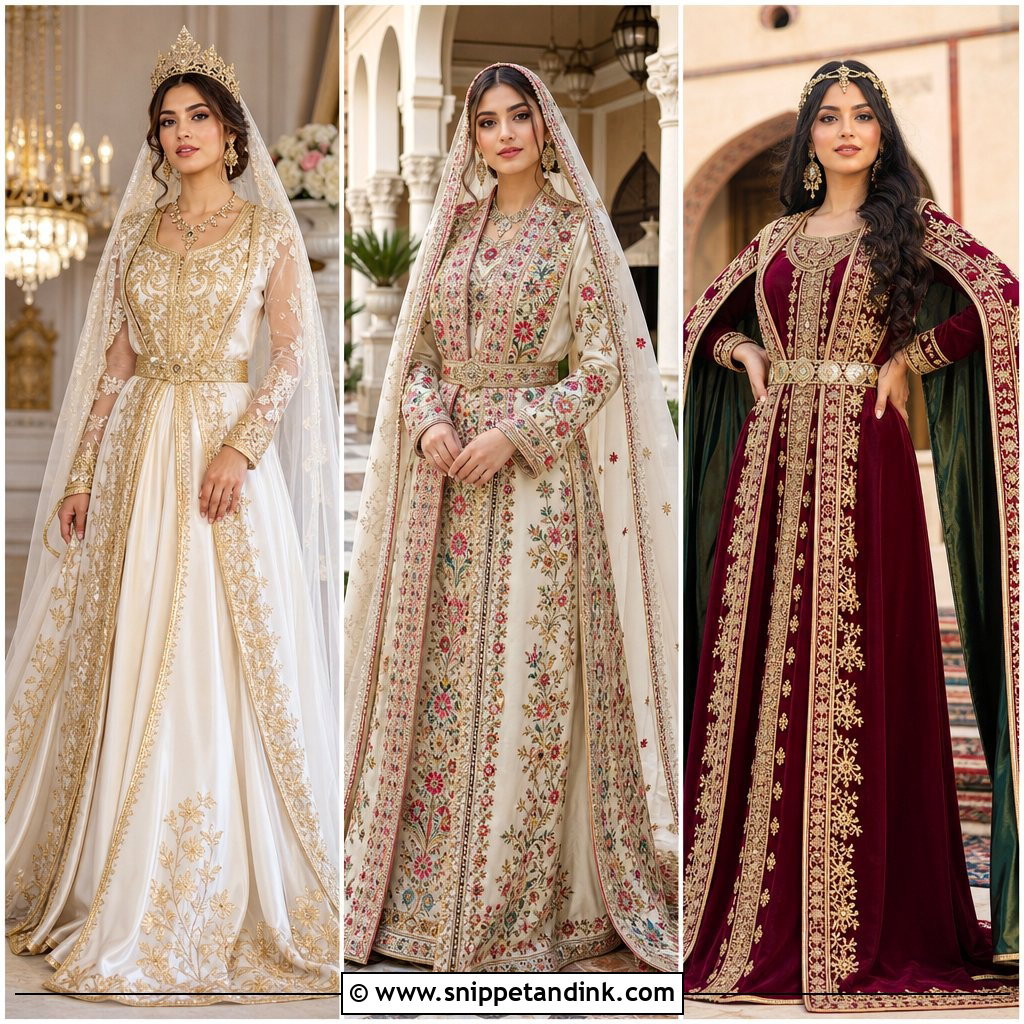
A two-culture outfit can honour both families and still look like one design. Start from the bride’s main traditional shape, such as a Yoruba aso oke gown, an Igbo George wrapper or a Hausa embroidered kaftan. Then bring in the groom’s heritage through a sash, a textile panel, a bead colour, a head accessory or a second entrance look. The mistake I see most is trying to include every symbol from both sides at once. Let one culture lead the structure and the other supply the details, and coordinate the couple through colour rather than identical clothes. Comfortable shoes, a fitting headpiece, jewellery and a fan or purse finish it. Talk to both families early, because these choices carry real meaning.
A Gele That Holds Until the Spraying Ends
The gele has to stay sculpted through the entrance, the rites, the photos and a long stretch of dancing while guests spray money. Aso oke gele is stiff and holds a sharp shape for hours; softer fabrics look gentler but sag sooner. I’d book an experienced gele stylist and have it tied after your makeup and hair are finished, so nothing has to go over it.
Tell the stylist straight away if it presses at your temples. A gele tied too tight gives many brides a headache within the hour, and it’s easy to loosen at the start and impossible to fix mid-ceremony. Keep a few pins and a spare small mirror in your purse for touch-ups.
Caring for Coral and Hand-Woven Cloth Afterwards
Coral beads are porous and react badly to perfume, hairspray and sweat. Put them on last, after any sprays, and wipe them with a soft, dry cloth before storing. Keep each strand in its own soft pouch so the beads don’t scratch each other.
- Air aso oke, George and velvet for a day before folding them away, since a long day’s sweat breeds mildew in a closed box.
- Fold heavy woven cloth loosely with acid-free tissue between the layers to soften the creases.
- Take beaded or embroidered pieces to a cleaner who handles traditional fabrics; ordinary washing can strip metallic threads.
Fabric, Family and the Ceremony You Are Dressing For
A Nigerian bridal outfit should reflect your heritage, fit comfortably, read clearly in photos and carry you through every part of the ceremony. The looks above cover wrappers and blouses, modern gowns, modest kaftans, regional cloth, sculpted headwear and meaningful beads. Before settling on a design, talk with relatives and a designer who knows your community, and agree on fabric, colour, jewellery, headpiece and modesty early. Go to every fitting in your real underwear and shoes, then sit, walk and dance in the full outfit. Do that, and the outfit will feel personal, respectful and wholly yours.
You'll Like These Ideas:


Leave a Reply