
Brides have more shapes to choose from now than at any point I can remember: satin ball gowns, sleek columns, lace, and modern convertible silhouettes that change halfway through the night. Basque waists, visible corsetry, high necks, detachable layers and shorter reception hems sit right alongside the classics. My advice never changes, though. Start with the venue, the season and how you want to feel at hour eight, then look at trend. A dress has to let you sit, walk, hug and dance, and its neckline has to stay where it belongs. The twenty looks below cover formal ceremonies, city weddings, outdoor days and small gatherings, each with the accessories I’d put with it.
Which Fabrics Wilt in Heat and Which Feel Thin in Winter
The season changes what a gown feels like more than its shape does. A dress that looks right in a cool showroom can become a sauna at an August garden ceremony, and a slip that felt dreamy in spring will leave you shivering in a stone church in December. I sort fabric by season before I even pull silhouettes.
- Hot months: chiffon, organza, light crepe and unlined lace breathe best. Heavy satin and Mikado trap heat, and dark sweat marks show quickly on silk.
- Humid climates: tulle can droop and lose volume as the day goes on, so ask for a firmer underlayer or a horsehair hem to hold the shape.
- Cold months: satin, Mikado, brocade and long sleeves keep you warm, and velvet trims or a cape add a layer for outdoor portraits.
- Transitional weather: a lined lace gown with a detachable sleeve or shrug covers a chilly ceremony and a warm reception.
Think about the floor too. Long trains pick up grass stains and wet leaves outdoors, while polished hotel floors are kind to them. A shorter train or a quick bustle is often the better call for gardens and beaches, whatever the season.
1. Satin Ball Gown Bridal Dress
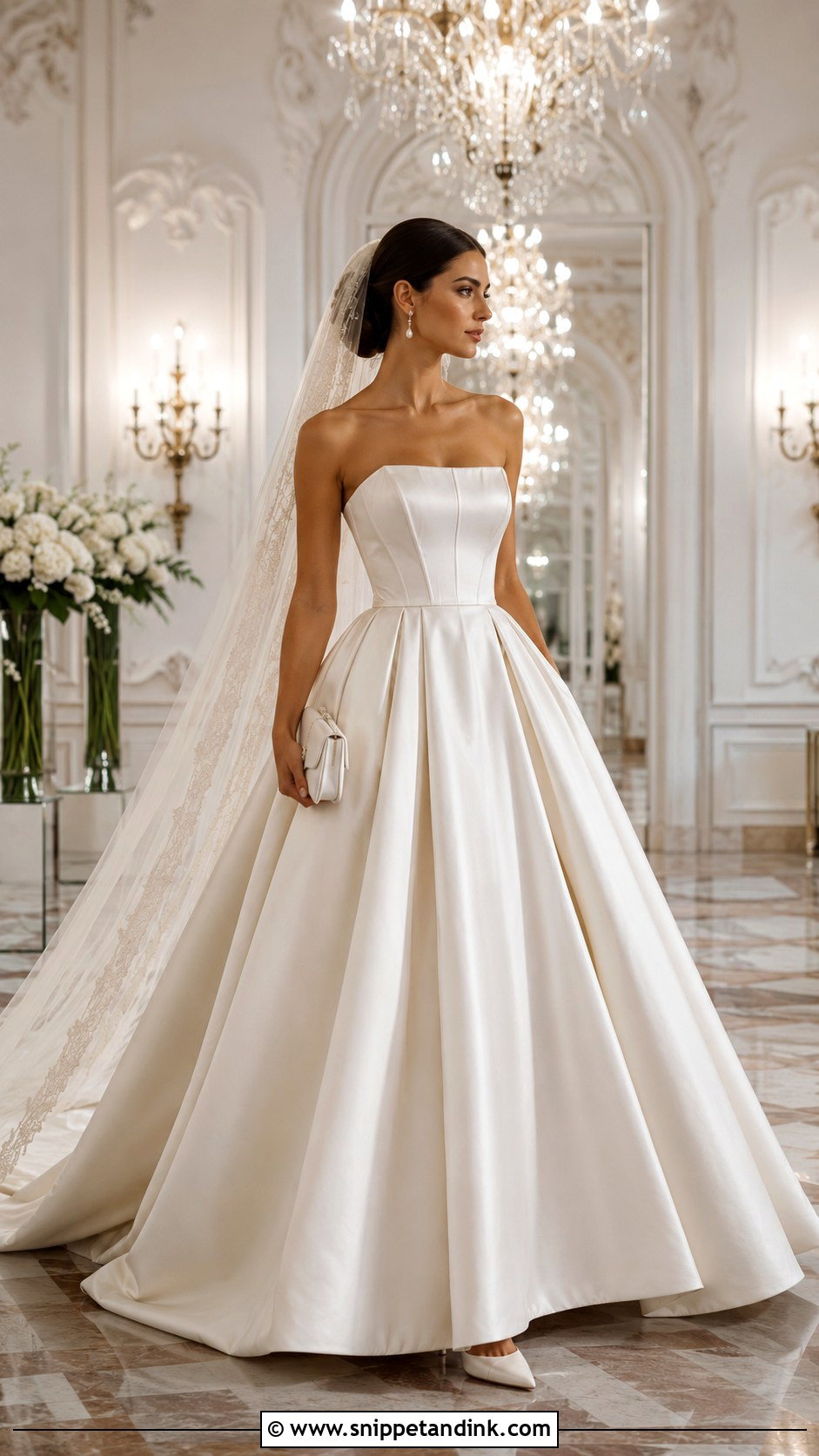
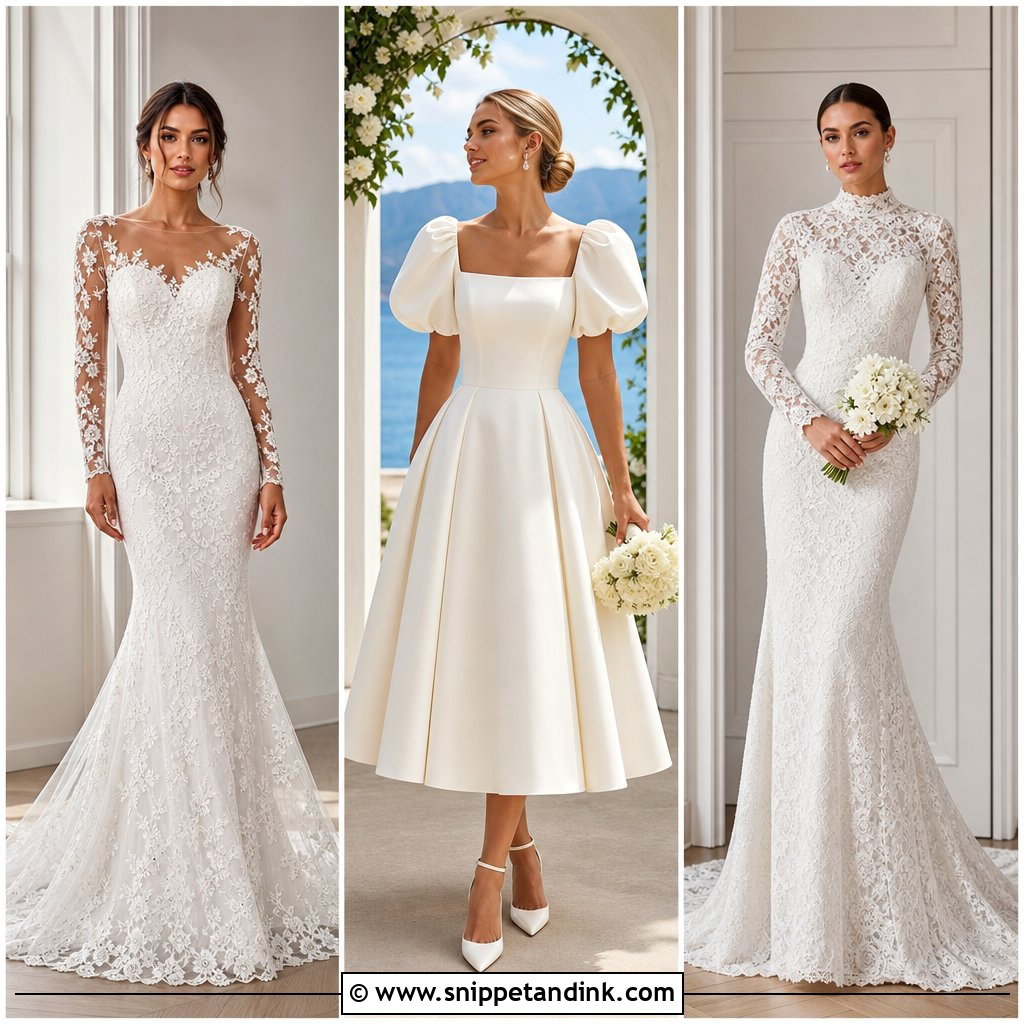
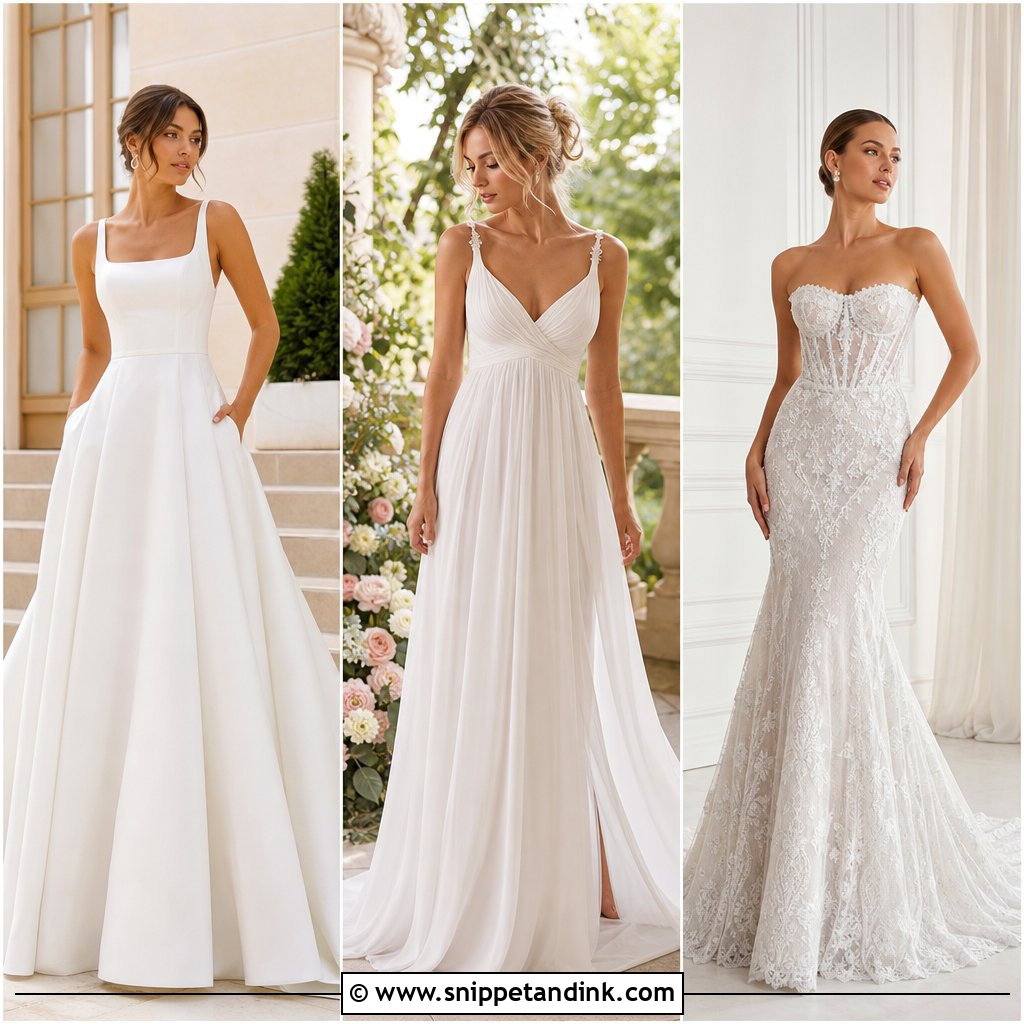
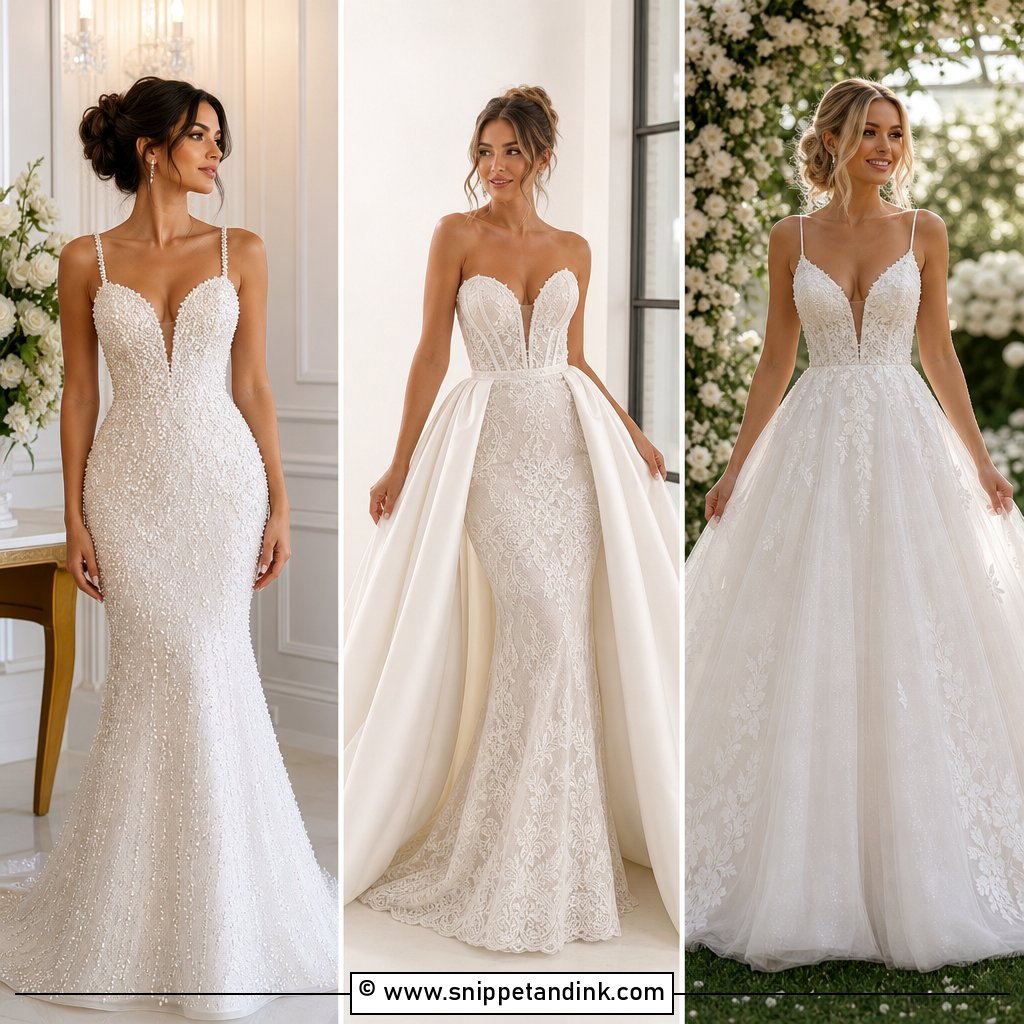
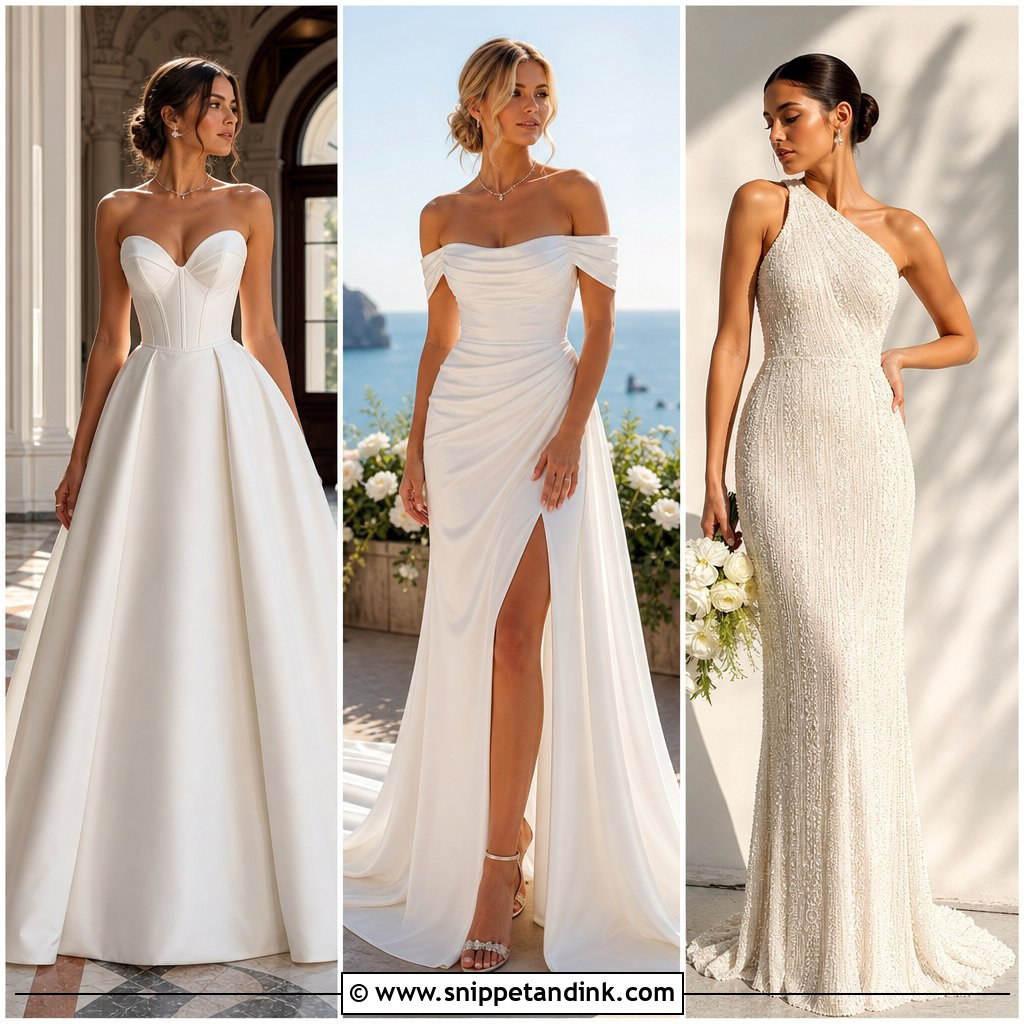
Satin ball gowns are about clean volume, and box pleats give that volume without the bulk of heavy gathering at the waist. A structured bodice with a curved strapless edge or wide supportive straps holds everything in place, and a defined natural waist keeps the skirt in proportion. Satin bounces light, so I keep jewelry to one sparkling element, usually pearl drops, never pearls plus crystals plus a beaded veil. A low bun leaves the shoulders clear. Plan the bustle at the second-to-last fitting. A full satin skirt with an unbustled train is heavy to drag around a ballroom.
2. Lace A-Line Bridal Dress
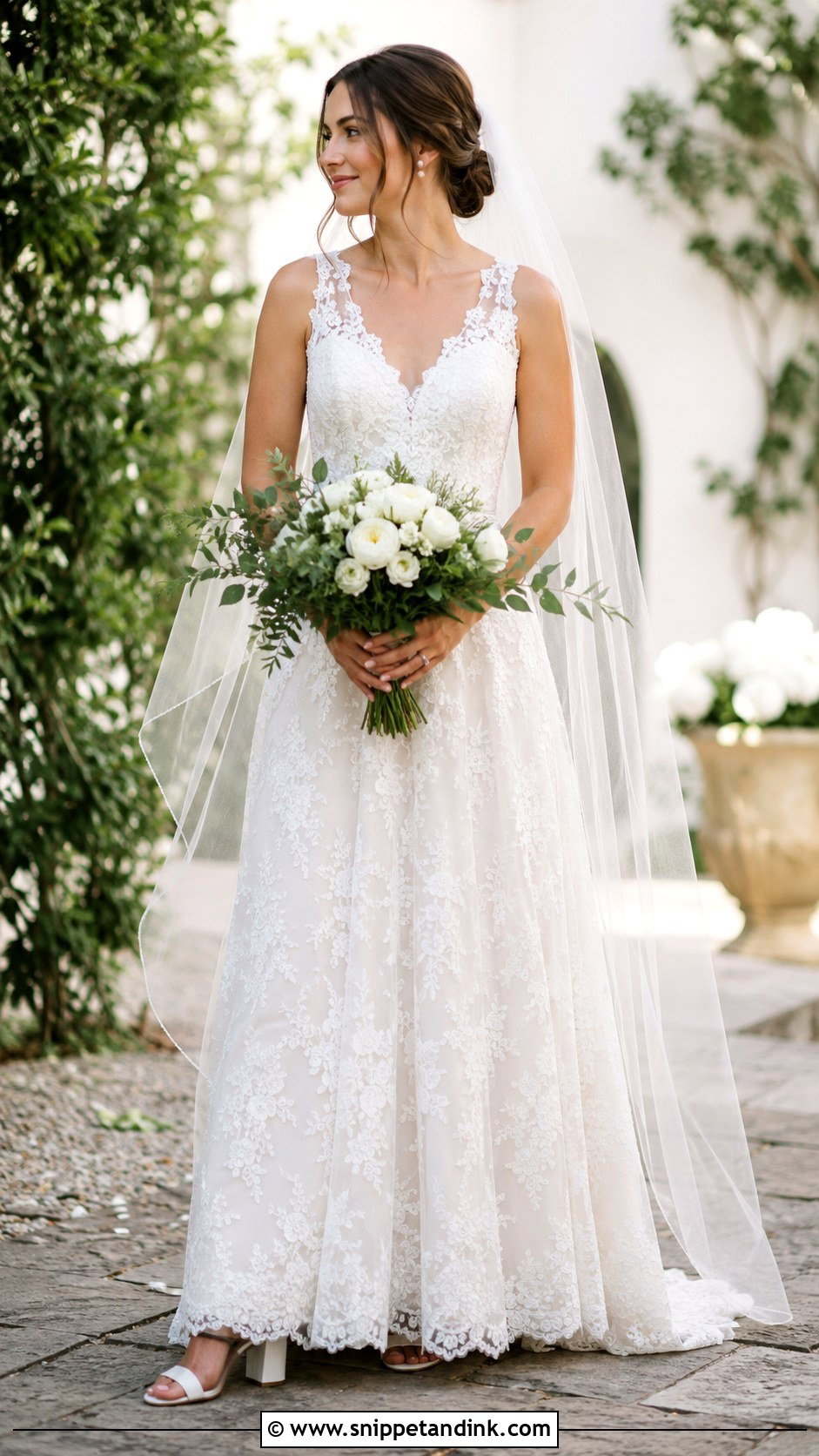
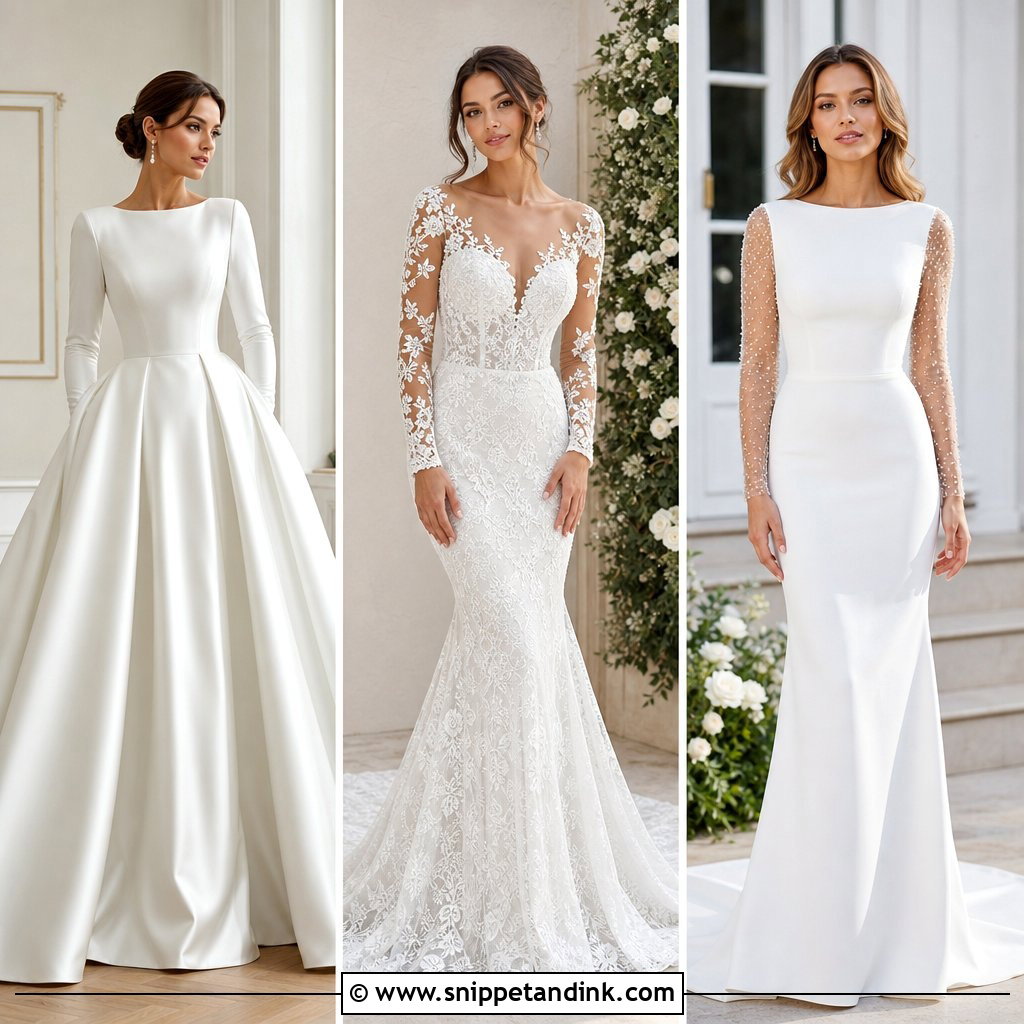
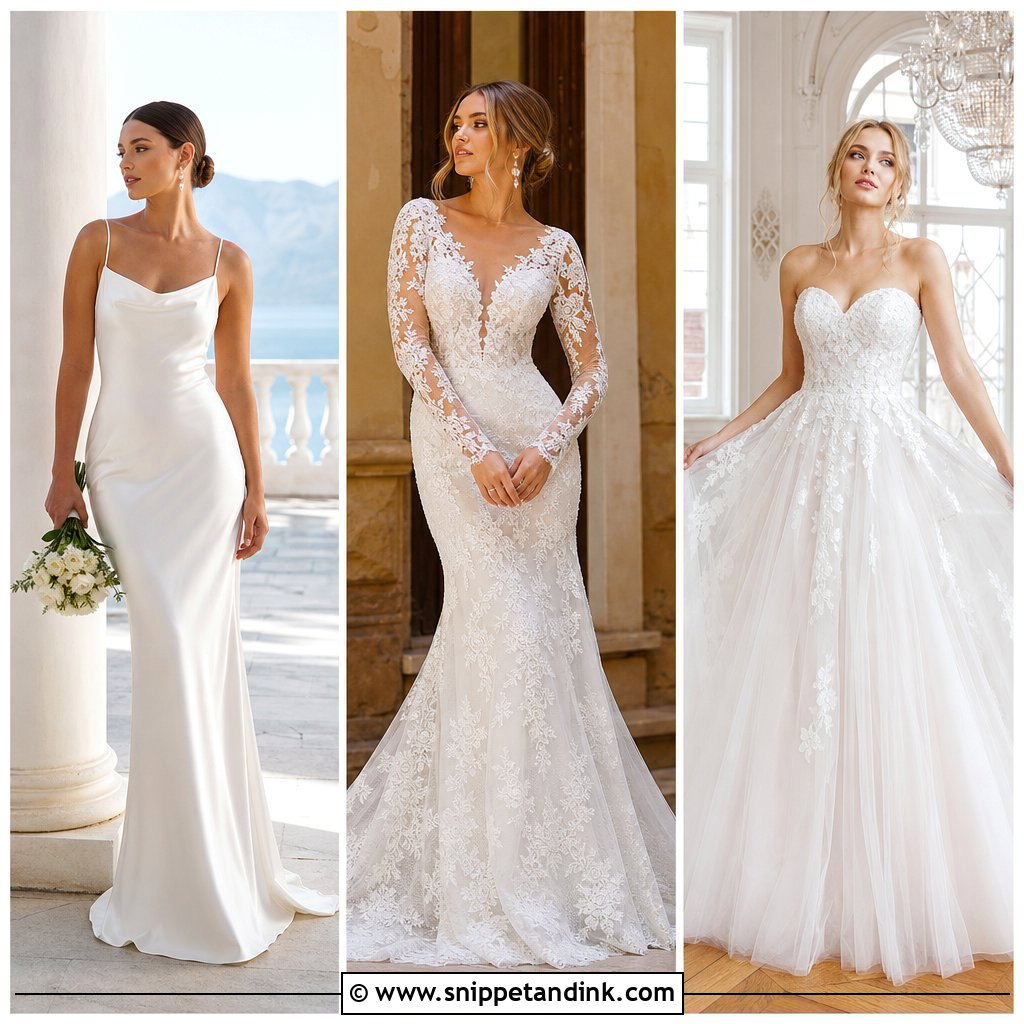
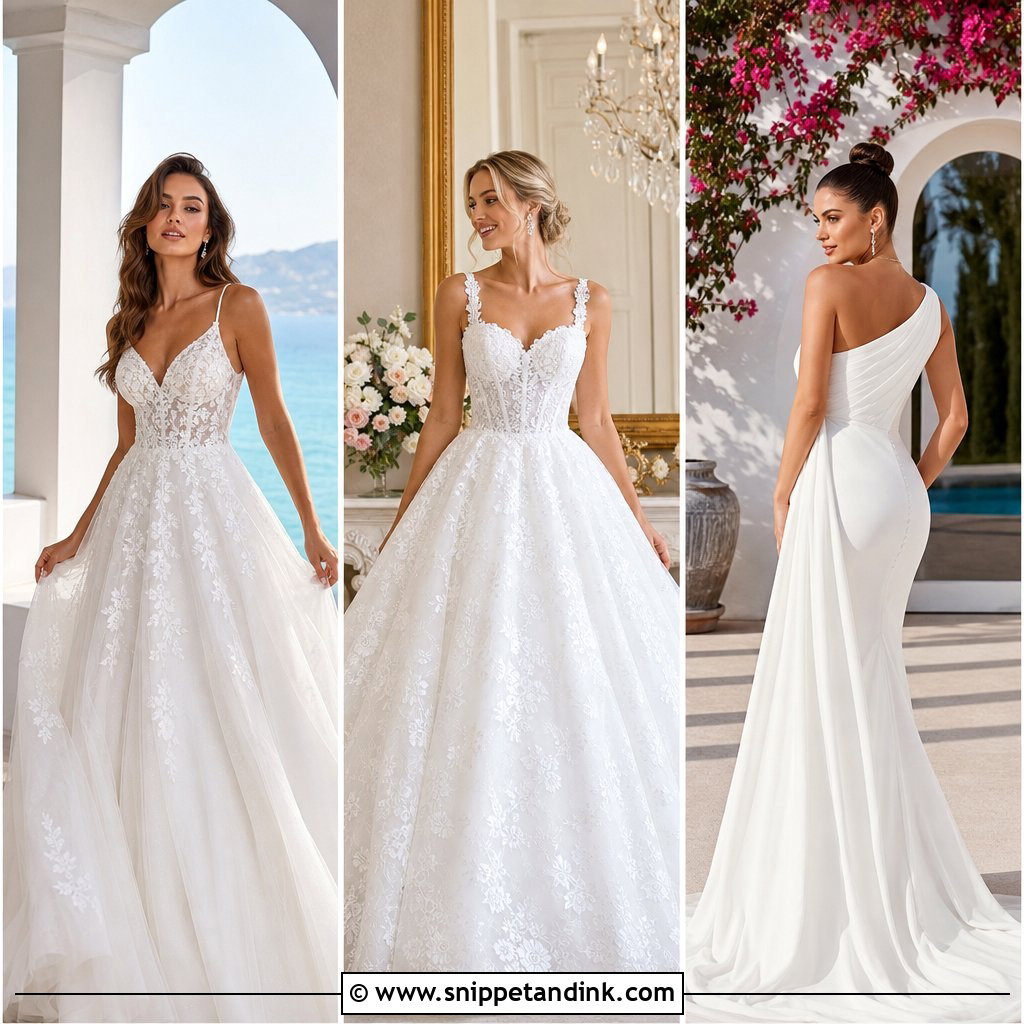
Lace over an A-line is the combination I’d call the safest bet, and that’s meant as praise. Ask for a bodice that releases gradually from the waist rather than clinging through the hips; that’s where lace starts to look strained. Floral lace over a light lining suits gardens, estates and country ceremonies, with a chapel veil and low block heels that won’t sink into lawn. Loose waves echo the texture. Before alterations, look closely at where the lace motifs meet at the side seams and the waist. A good seamstress cuts and re-appliqués them so the pattern flows; a rushed job leaves a visible line.
3. Crepe Sheath Bridal Dress
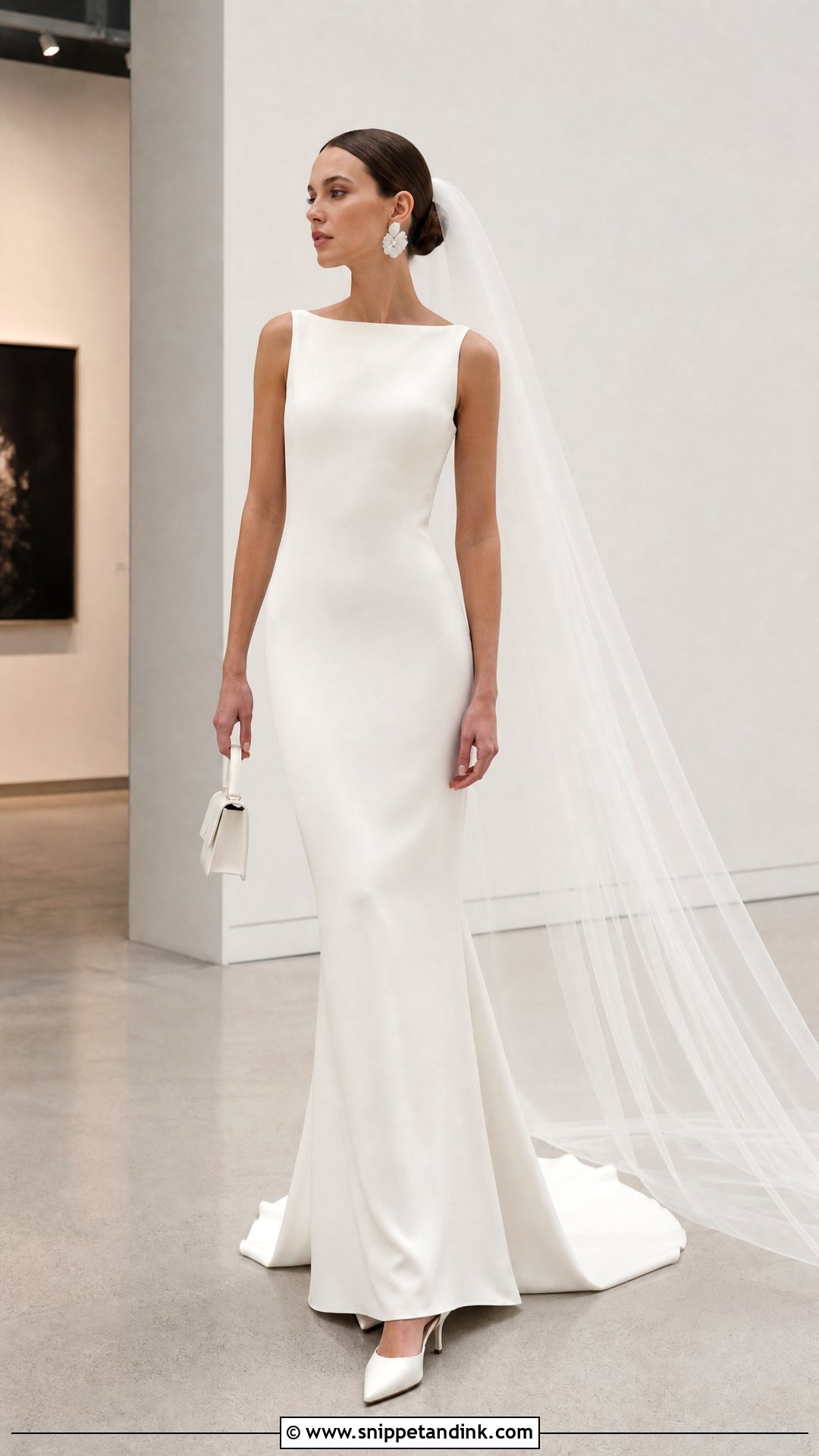
A crepe sheath suits a bride who wants almost nothing between her and the dress. Crepe is honest fabric. It shows every pull at the waist, every lumpy seam and every undergarment edge, so tailoring isn’t optional here. A bateau, narrow V or square neck changes how much support you’ll need. Bring smooth, no-line underwear and whatever shapewear you’ll actually wear to each fitting. Sculptural earrings and a long plain veil add the bridal note, and a removable lace topper gives you a softer ceremony look that comes off for a clean reception silhouette.
4. Mermaid Bridal Dress
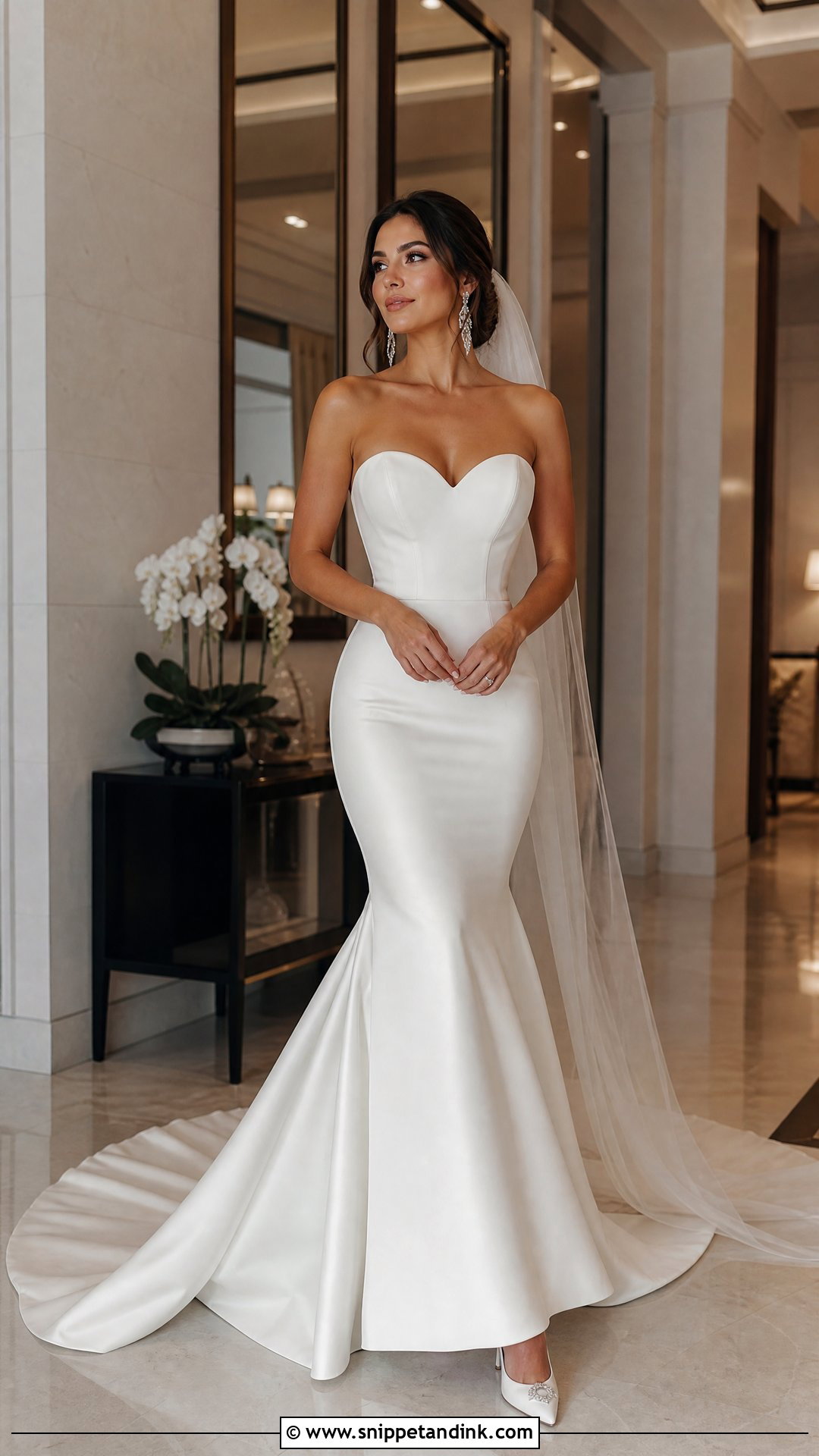
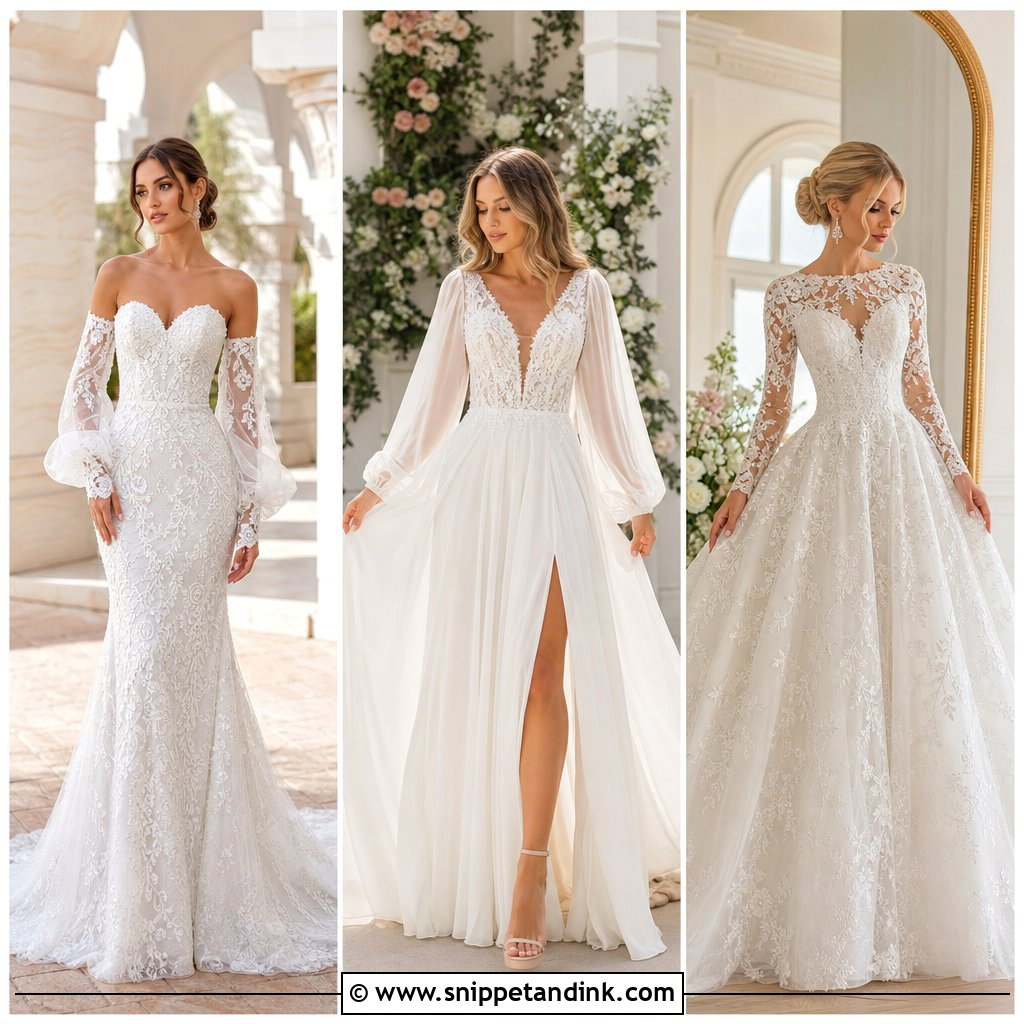
The mermaid hugs the bodice, waist and hips and flares near the knee, so fabric choice matters: it needs enough body to hold the shape but enough give to walk in. A sweetheart neckline softens it; wider straps help if you need support. In fittings I make brides climb a flight of stairs and sit at a table, not just stand on the box. If the flare starts above the knee joint, you’ll shuffle all evening. Keep accessories quiet, with crystal earrings and an unembellished veil, and ask for a sturdy bustle, since a fitted skirt makes a long train hard to carry yourself.
5. Basque Waist Bridal Dress
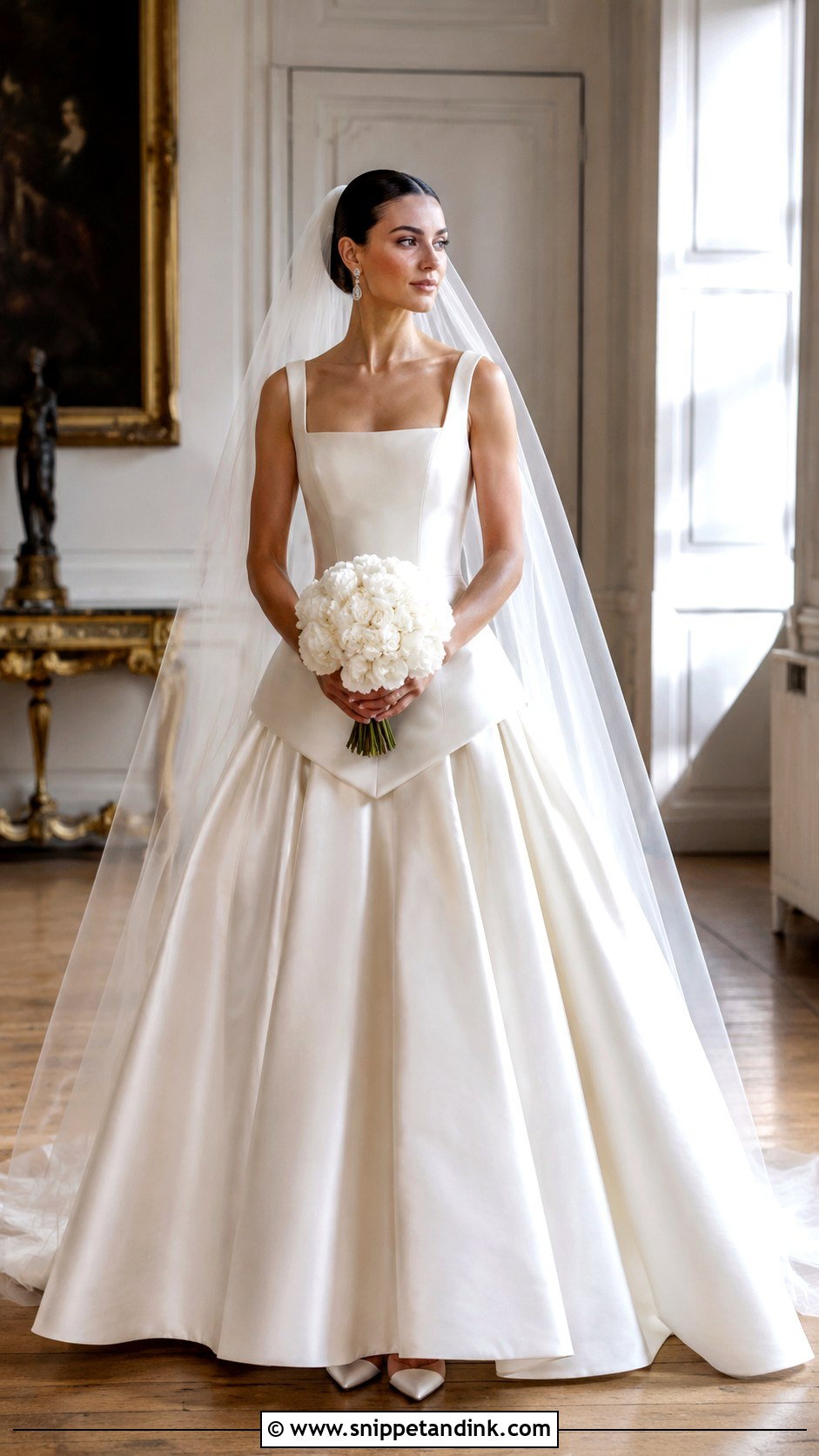
The Basque waist bridal dress brings back a historical shape: the bodice dips below the natural waist into a point, lengthening the torso, usually over satin, tulle or a softly pleated skirt. The internal structure is what makes or breaks it. It should feel firm and supportive without digging into your ribs or hip bones when you lean forward. Never add a belt; it cuts straight across the point. Let the seaming or tonal beading draw the eye instead. A center-parted bun and a plain cathedral veil suit historic venues and formal halls especially well.
6. Corset Tulle Bridal Dress
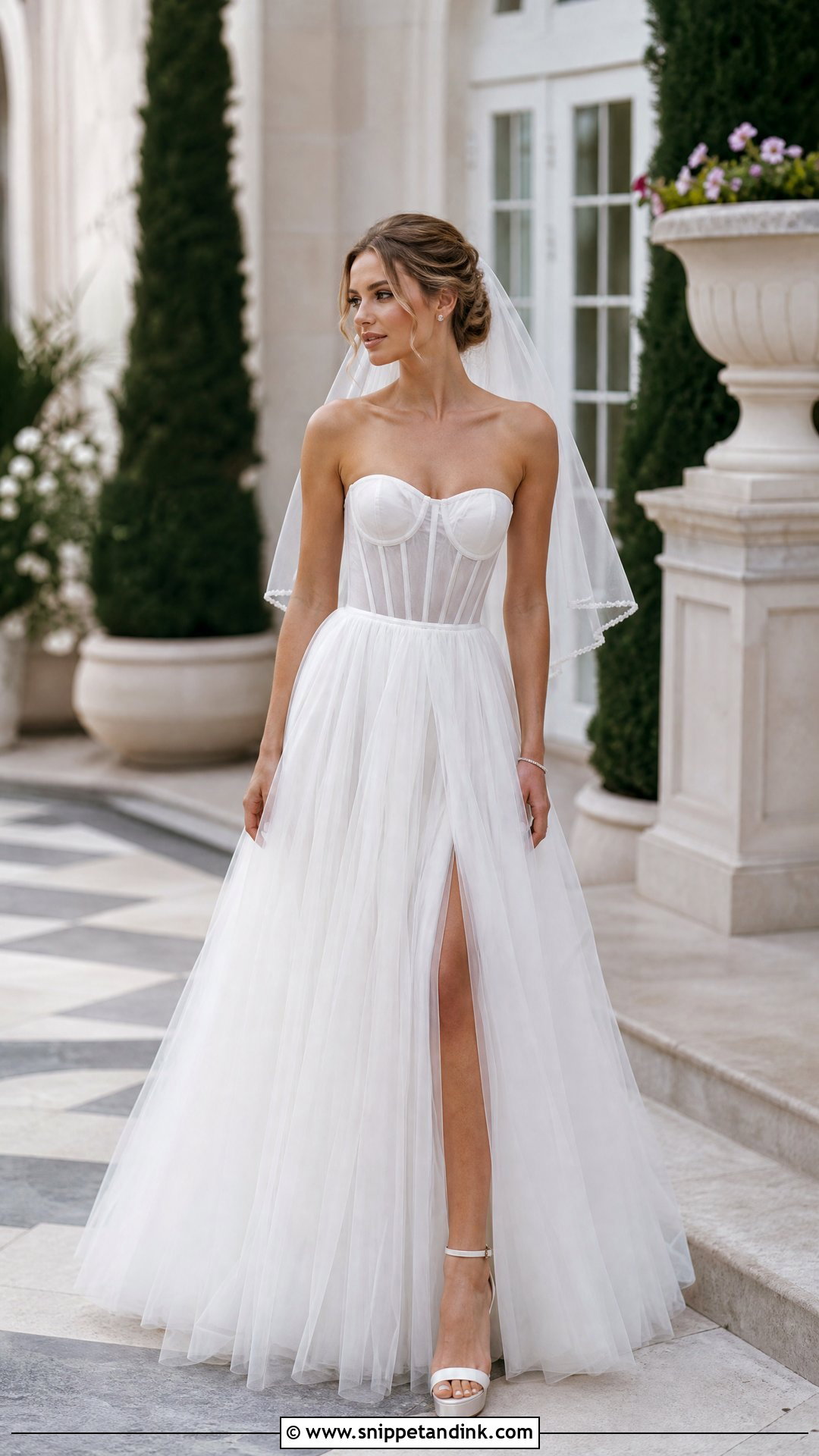
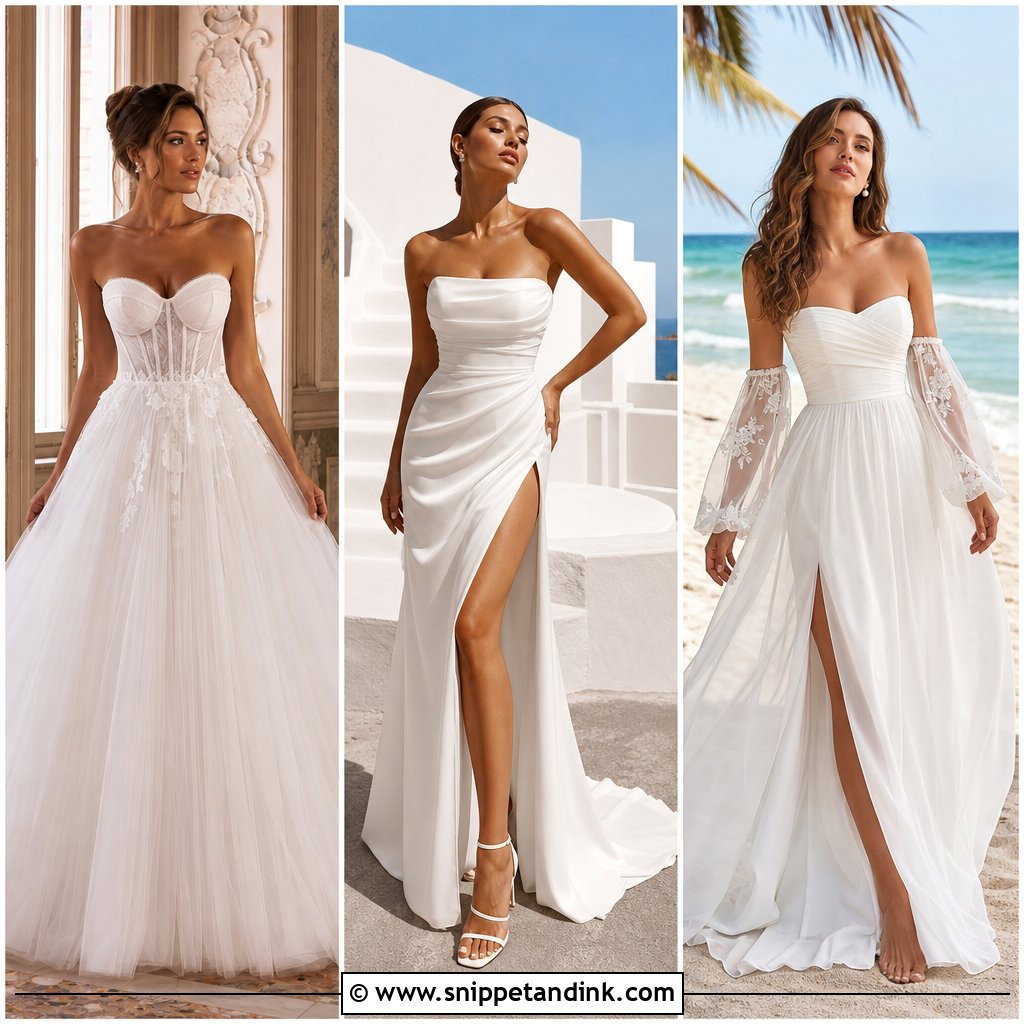
Corset over tulle gives you structure up top and a skirt that floats. I prefer a lined bodice or tonal paneling here; exposed boning over sheer mesh can look unfinished in close-up photos. The tulle layers should drop softly, not stand out stiffly. Fit is personal, so check that the cup size, boning length and waist placement are actually yours rather than the sample’s. A corset that’s wrong for your torso pinches at the bottom edge after a few hours. With that much skirt, keep the rest spare: crystal studs, a sheer fingertip veil and an updo.
7. Off-Shoulder Bridal Dress
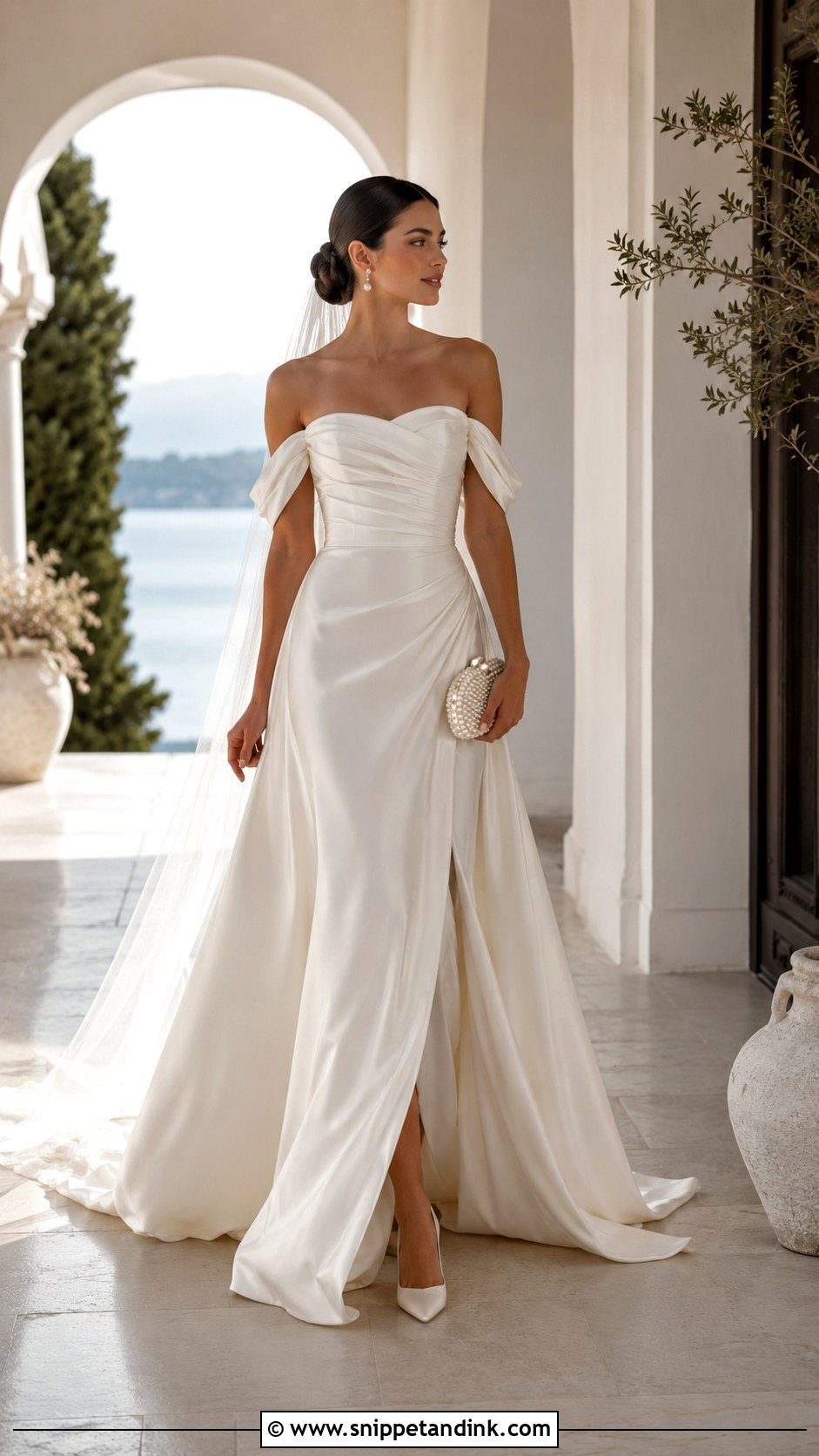
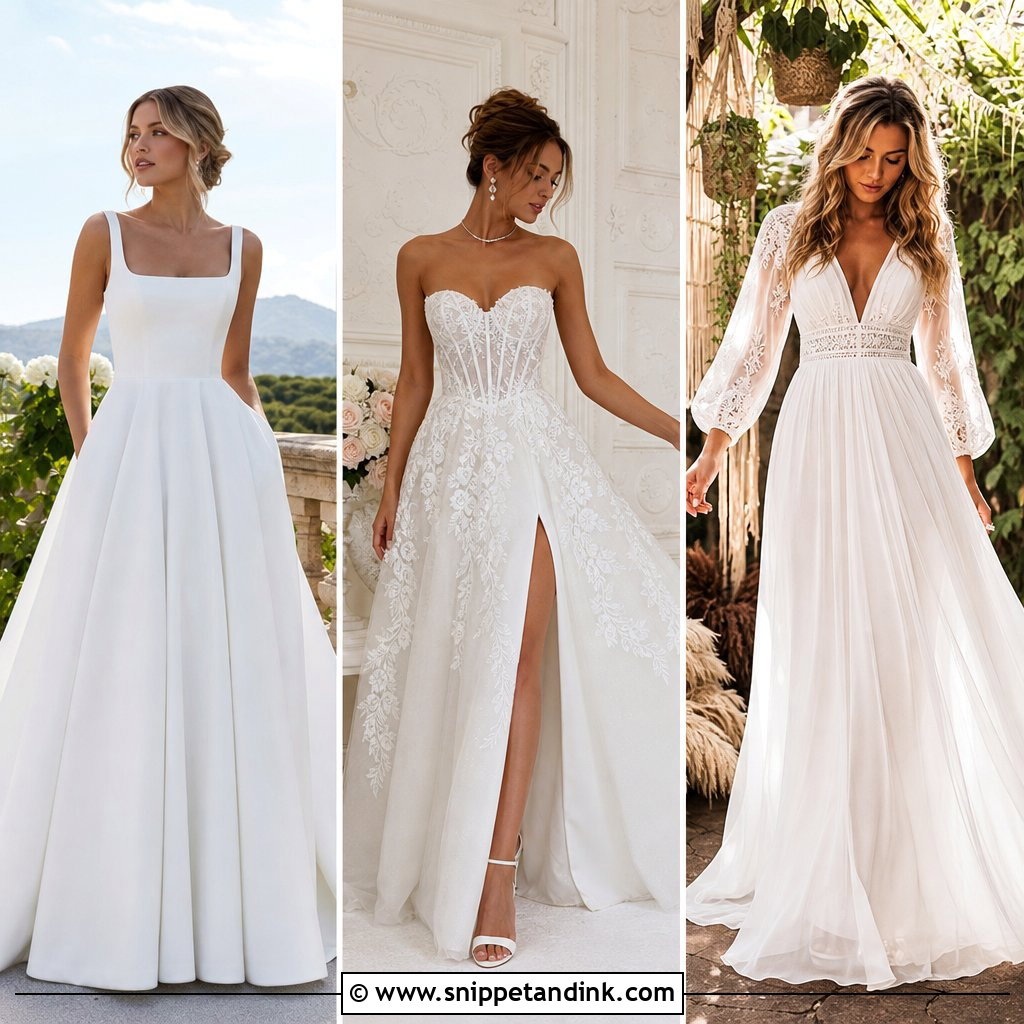
Off-shoulder necklines frame the collarbones, and the whole look depends on what’s holding the dress up. Built-in support in the bodice should do the work, so the sleeves simply rest on the arm. Satin looks formal, lace or draped tulle softer. At every fitting, raise your arms as if you’re reaching for a hug and watch the neckline. If it rides up or pins your elbows down, ask about detachable off-shoulder straps. They give you the ceremony look and come off for dinner and dancing. A low bun and statement earrings stop the hair from competing.
8. High-Neck Lace Bridal Dress
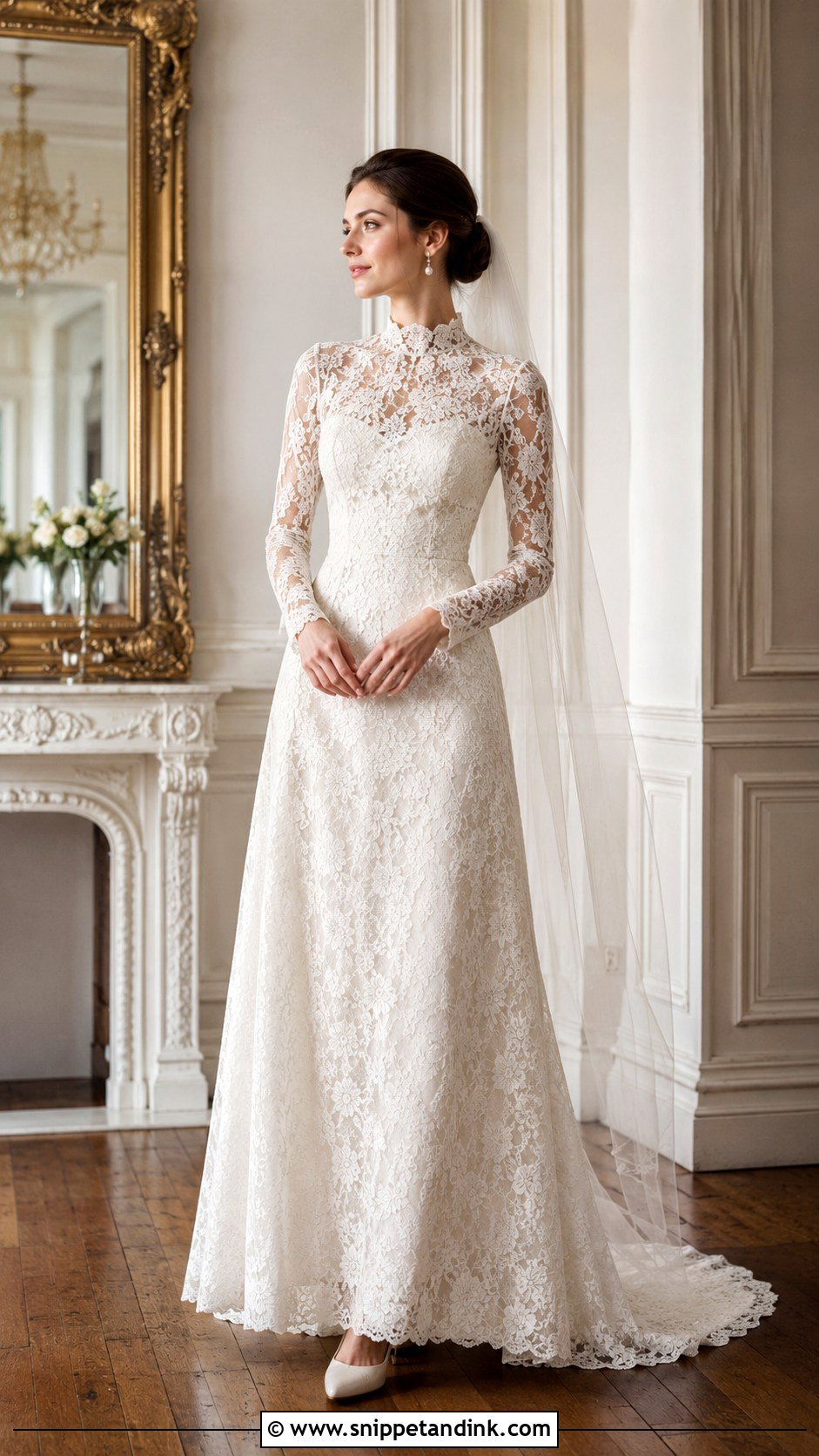
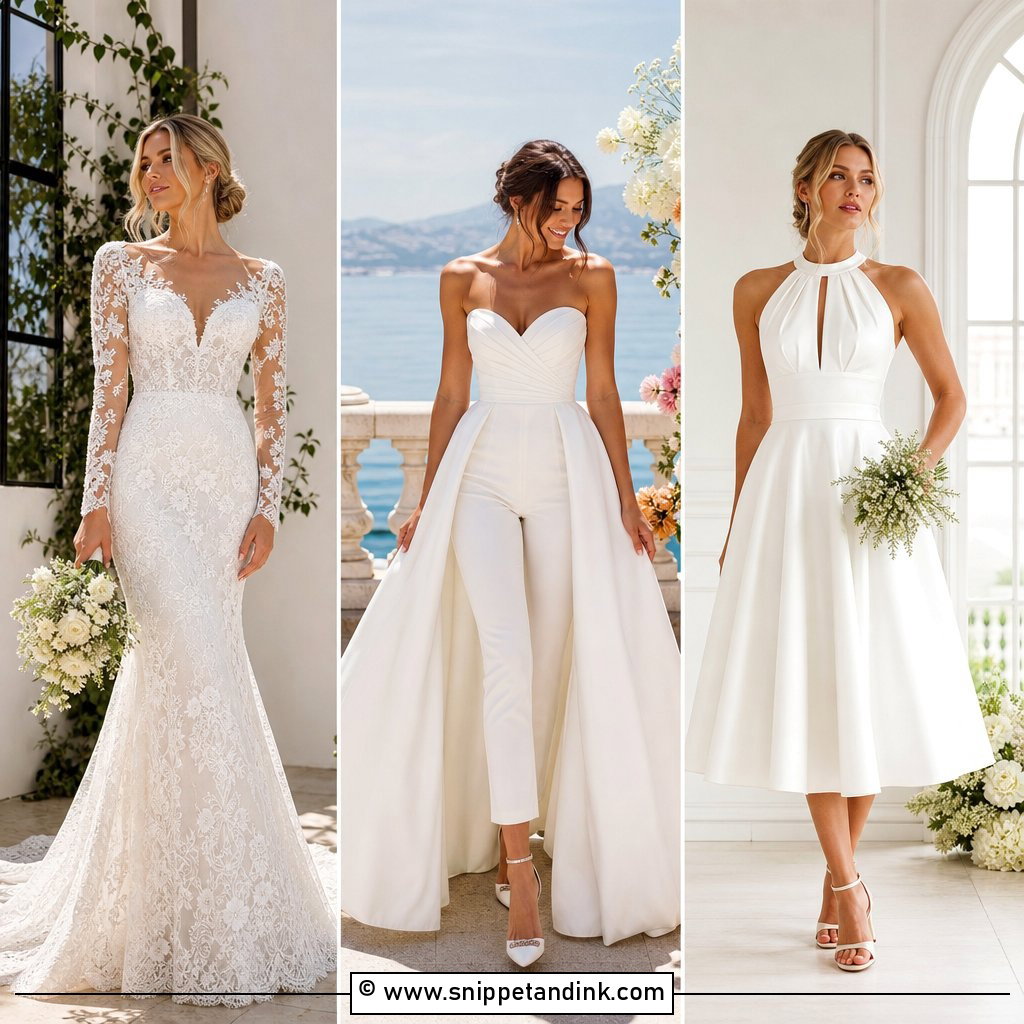
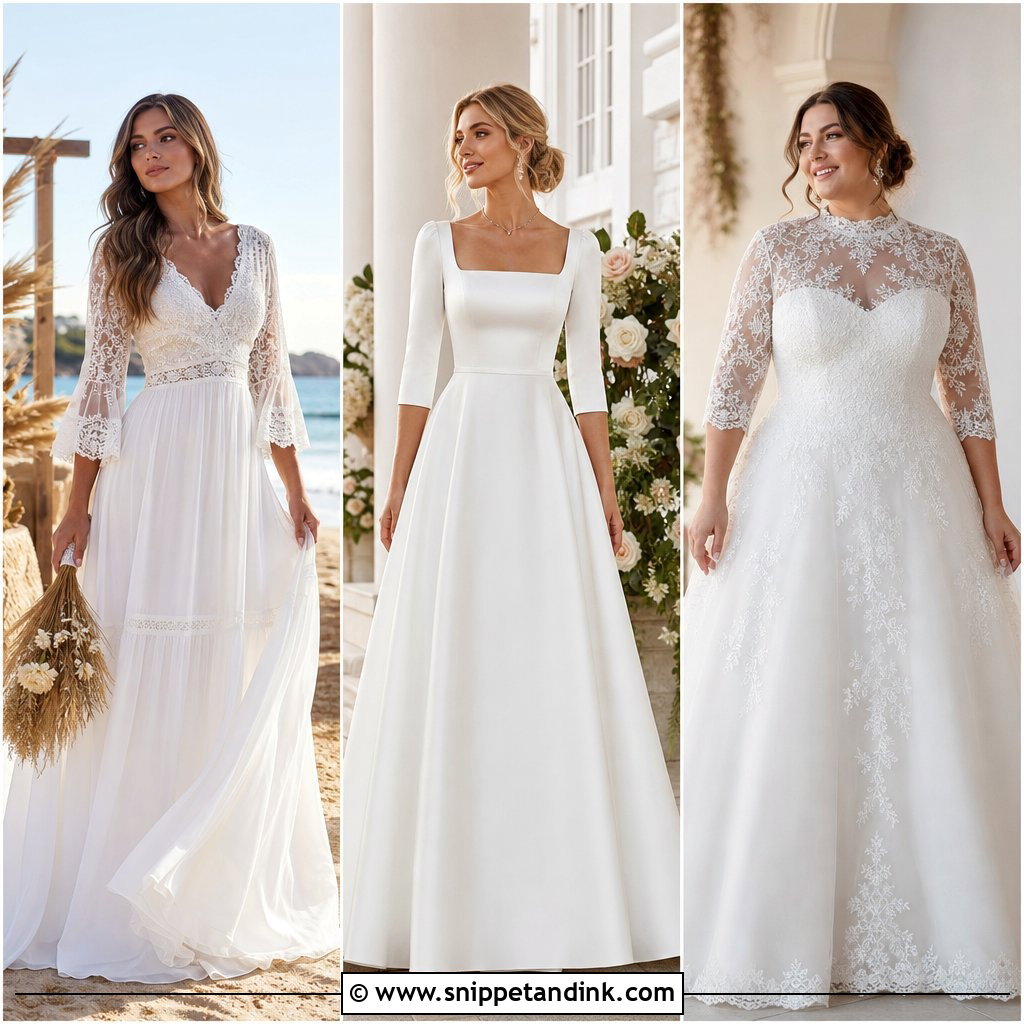
A high lace neck draws attention up to the face and gives graceful coverage, often with a Victorian feel. The comfort question is the neckline itself. Heavy lace and a stiff lining around the throat feel warm and scratchy by evening, so ask for lightweight lace and a breathable lining. If your skin is sensitive, run a finger along the lace edge at the first fitting; a seamstress can face it with soft tulle. Skip the necklace. Pearl earrings, a veil under a low bun and a fitted waist into a flowing skirt are all it needs, and it suits autumn and winter ceremonies.
9. Square-Neck Bridal Dress
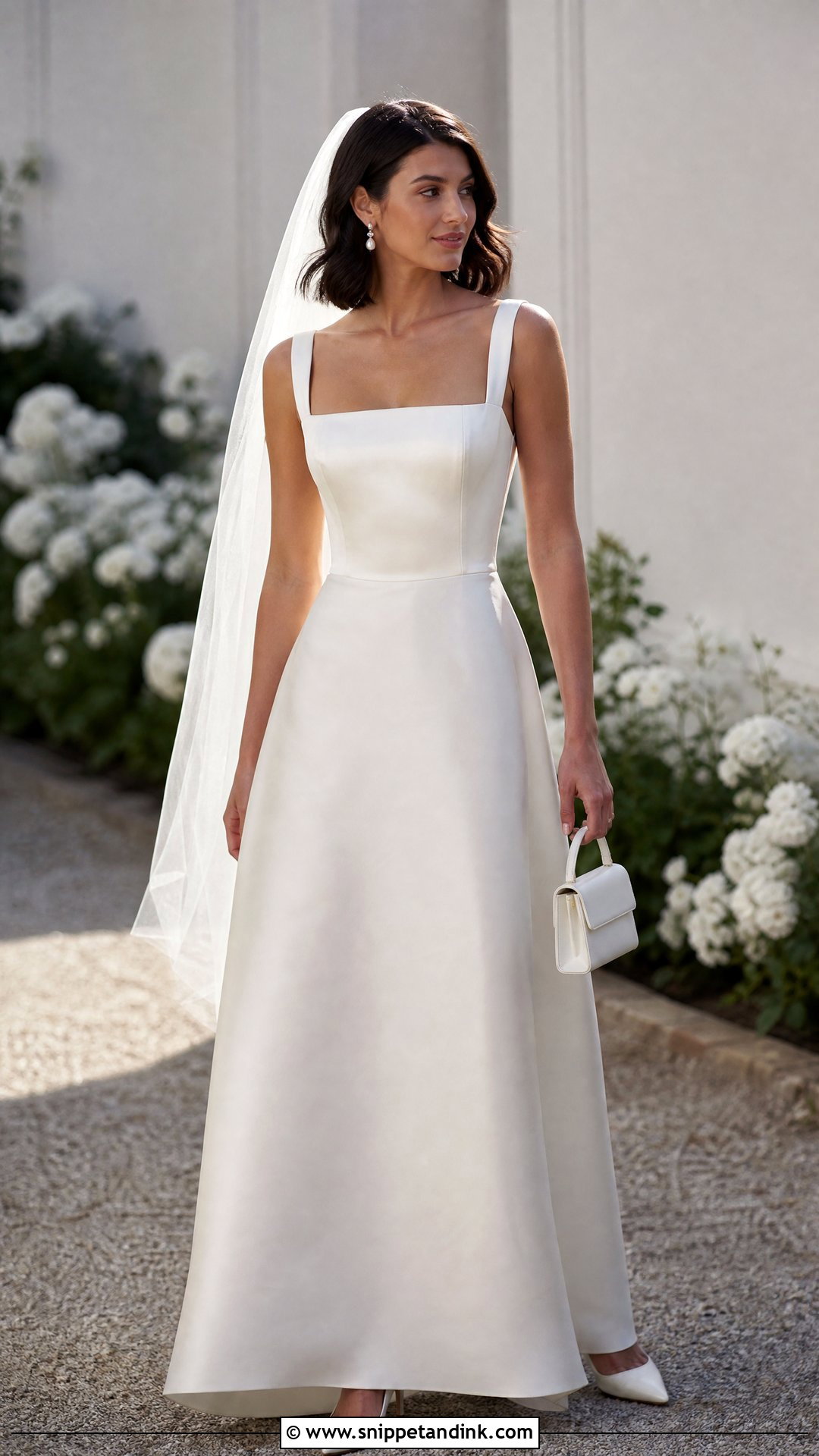
Square necks look clean and a little unexpected. The angular line frames the collarbones and works with wide straps, short sleeves or a sleeveless structured bodice, in satin, crepe or lace. The detail I check is how the corners behave when you move. A low or very wide square tends to gape at the corners when you lean forward, and correct strap length is what fixes it. A softly waved bob, half-up style or neat chignon sits well with the geometry. Leave the neckline bare or wear something very fine.
10. Halter-Neck Bridal Dress
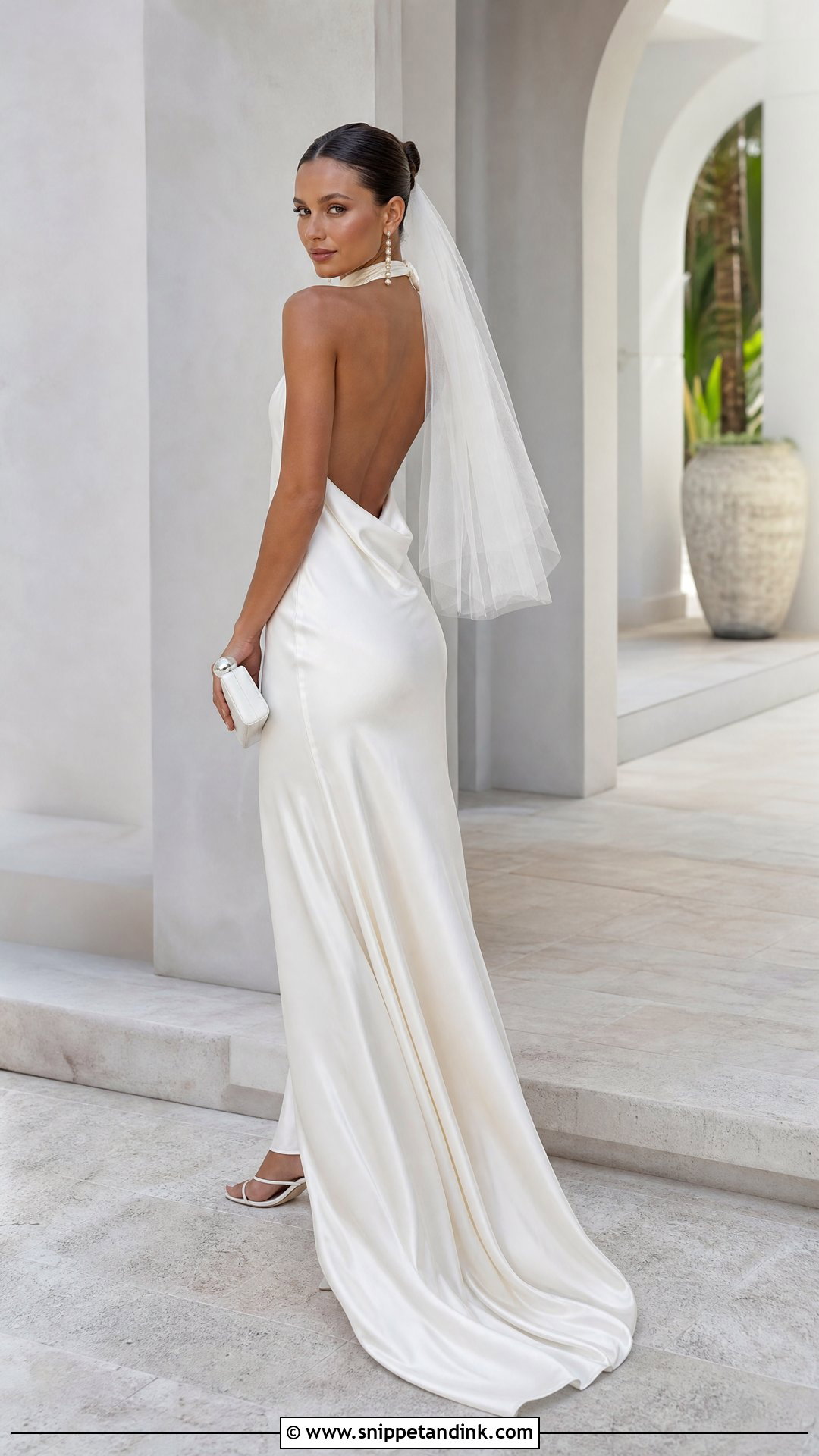
Halters show off the shoulders and upper back, and they look sharp in structured crepe or sleek in fluid satin. Check the neck strap first. It carries the weight of the bodice, and a halter that’s even slightly tight leaves you with a sore neck and a headache by the speeches. Look for a secure fastening with a little room. A low or open back usually needs sewn-in cups. Instead of a long veil that hides the back, try a short one or a single hair accessory, and a smooth updo so the neckline stays visible. Dance in it at the final fitting.
11. Long-Sleeve Bridal Dress
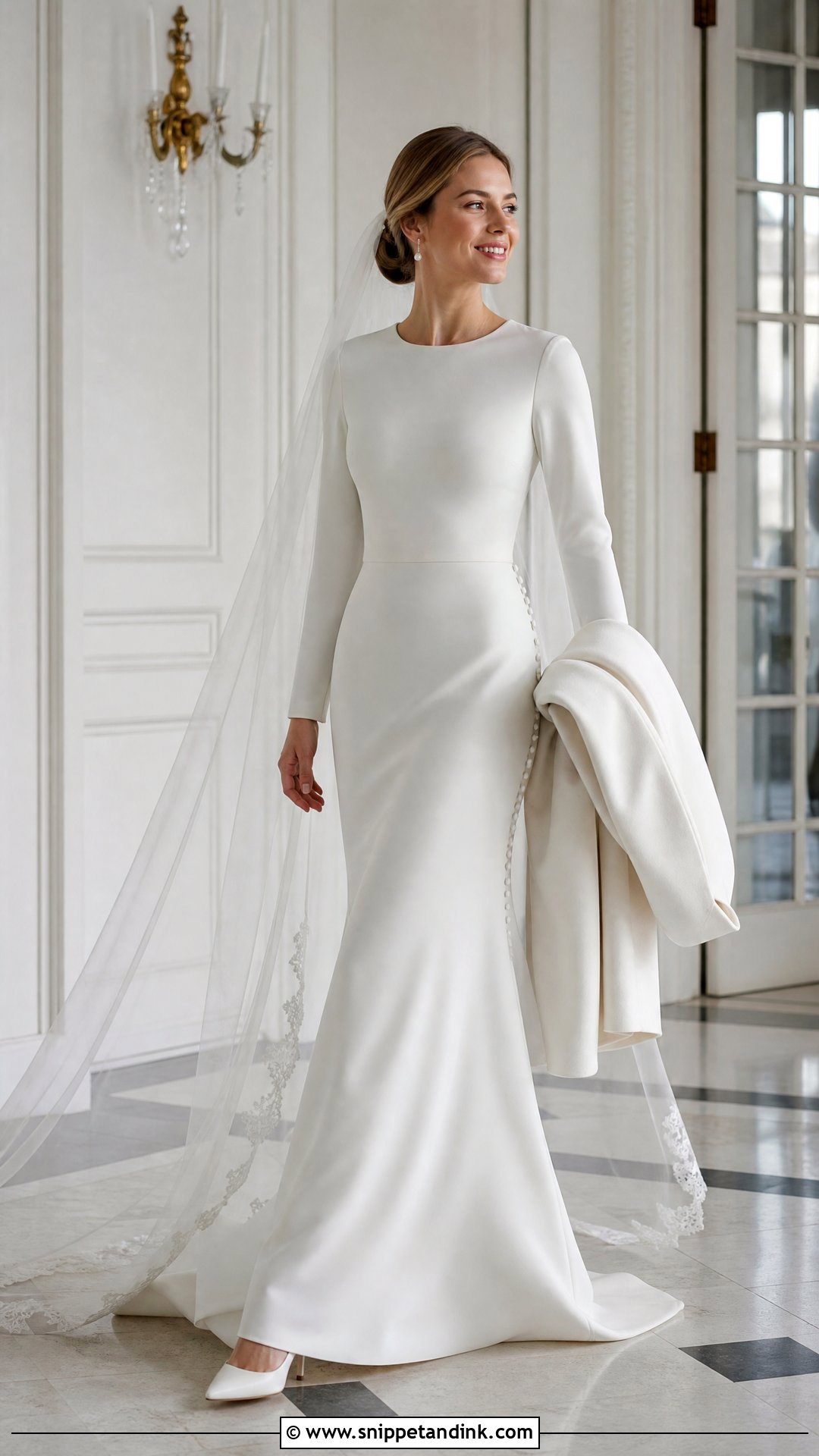
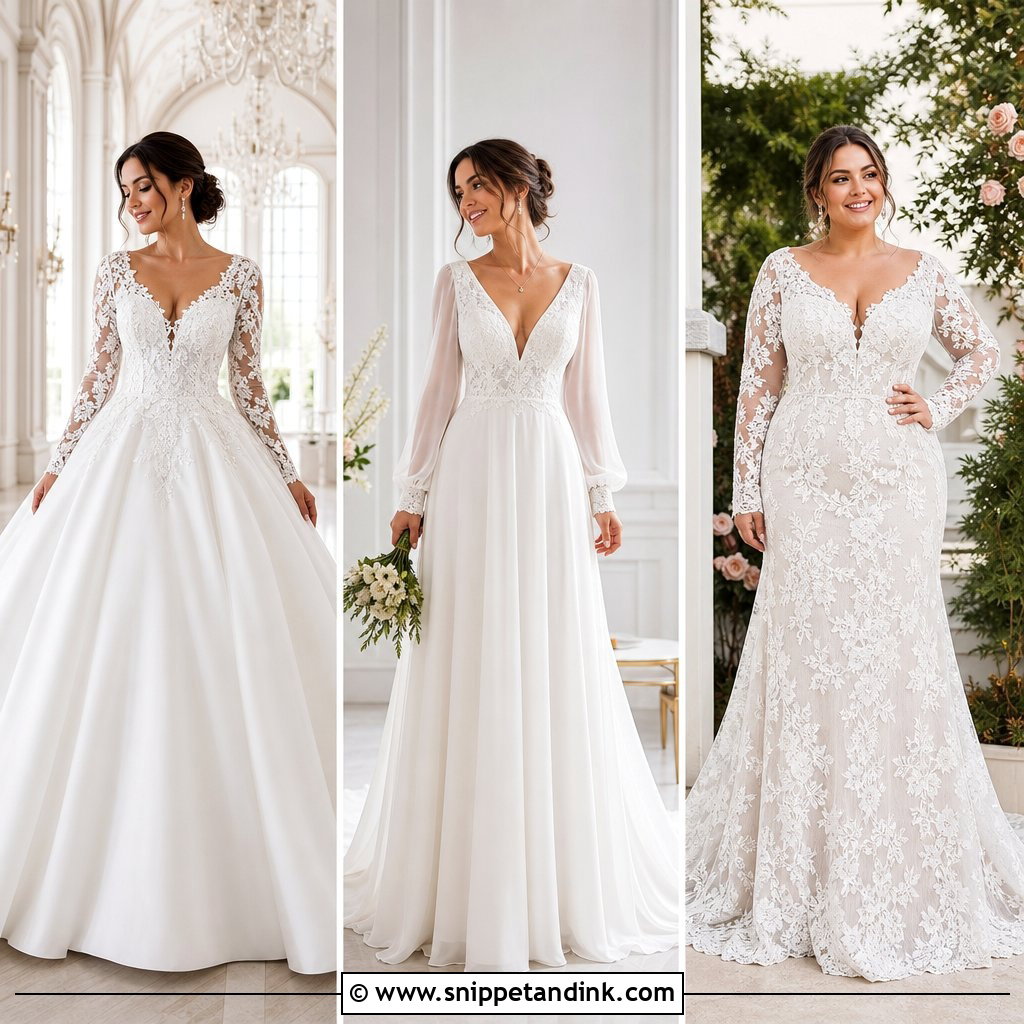
Long sleeves give coverage and can look romantic in sheer lace or architectural in fitted crepe or satin. The shoulder seam has to sit exactly on your shoulder point; if it’s off, the sleeve pulls every time you lift your arm. At fittings, hug someone, reach up and hold a bouquet at waist height. Those are the movements that reveal tightness across the upper back. Don’t stack bracelets over lace cuffs, because they snag. It’s the practical choice for autumn and winter, with a tailored coat on top for outdoor photos, and breathable illusion lace makes it workable in spring.
12. Tea-Length Bridal Dress
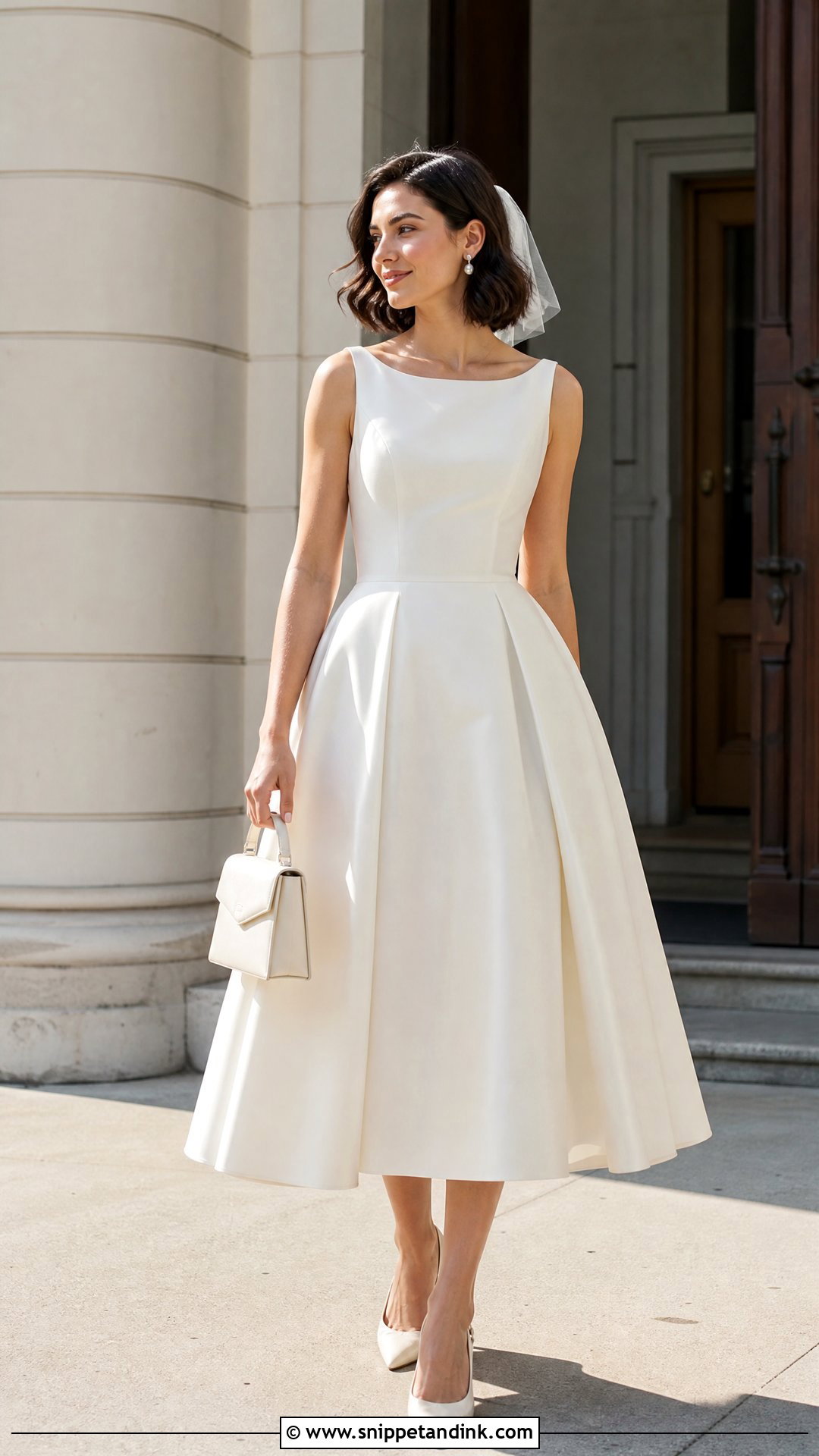
Tea length sits between knee and ankle, which brings your shoes into the outfit and keeps you moving freely at a courthouse ceremony, daytime wedding or relaxed reception. A fitted bodice over an A-line skirt in satin, organza or lace is the classic version. It also makes an easy additional wedding-weekend look if you’re planning several events. Watch where the hem lands on your leg. Ending at the widest part of the calf shortens you; an inch above or below is far more flattering. A petticoat adds lift, but it shouldn’t peek out when you sit.
13. Mini Bridal Dress
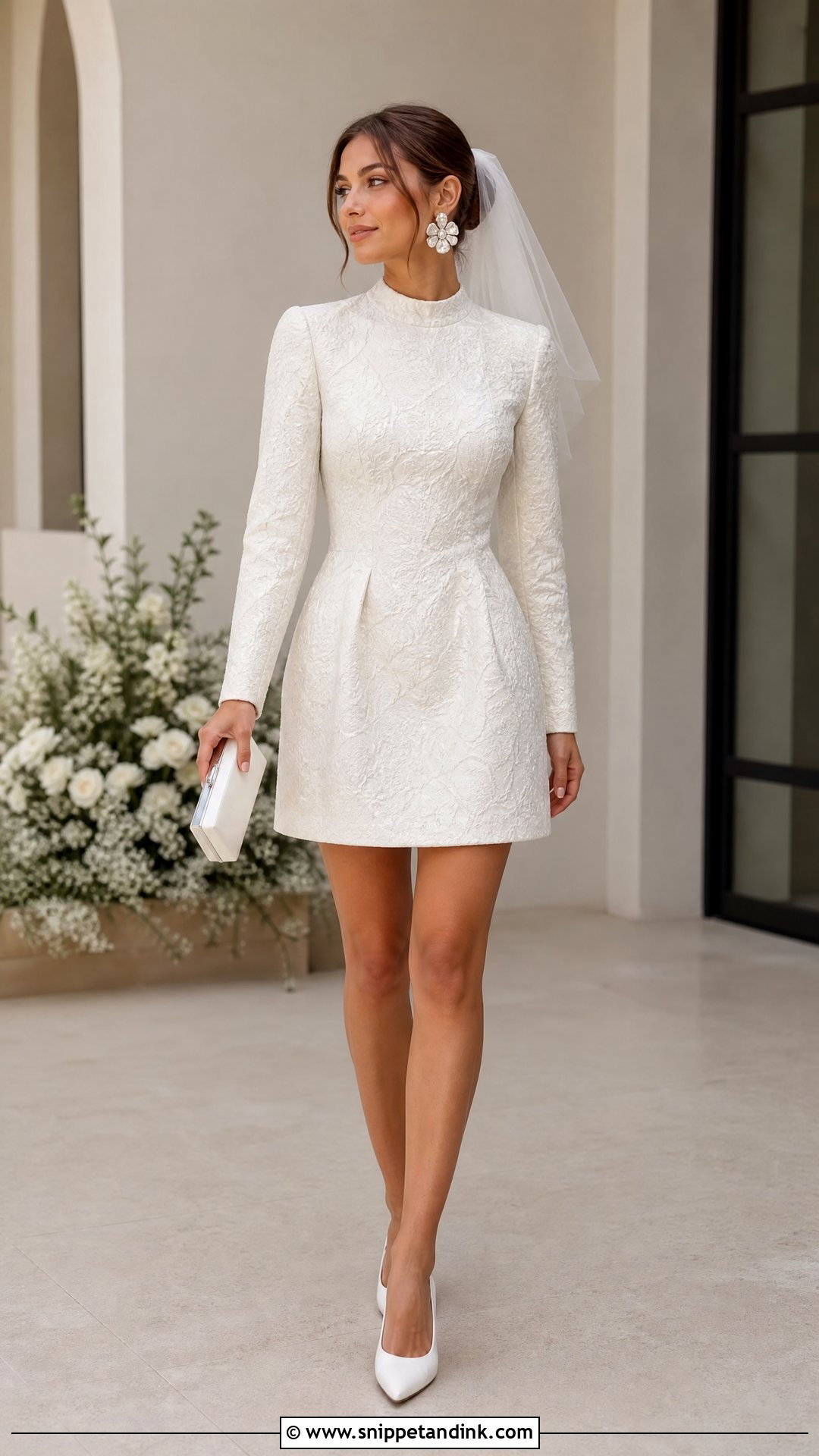
A bridal mini works for a civil ceremony, a small celebration or a reception change, as long as the fabric has substance. Structured satin, embellished crepe or textured jacquard keep it from looking like a cocktail dress. A higher neckline or long sleeves balance the short hem. Pointed pumps or slingbacks suit warm months; sheer ivory tights work in cold weather and look intentional. The short hem moves the risk to the back. Sit down and bend in front of a mirror before you commit, and consider tailored shorts underneath. Then go dance in it.
14. Satin Slip Bridal Dress
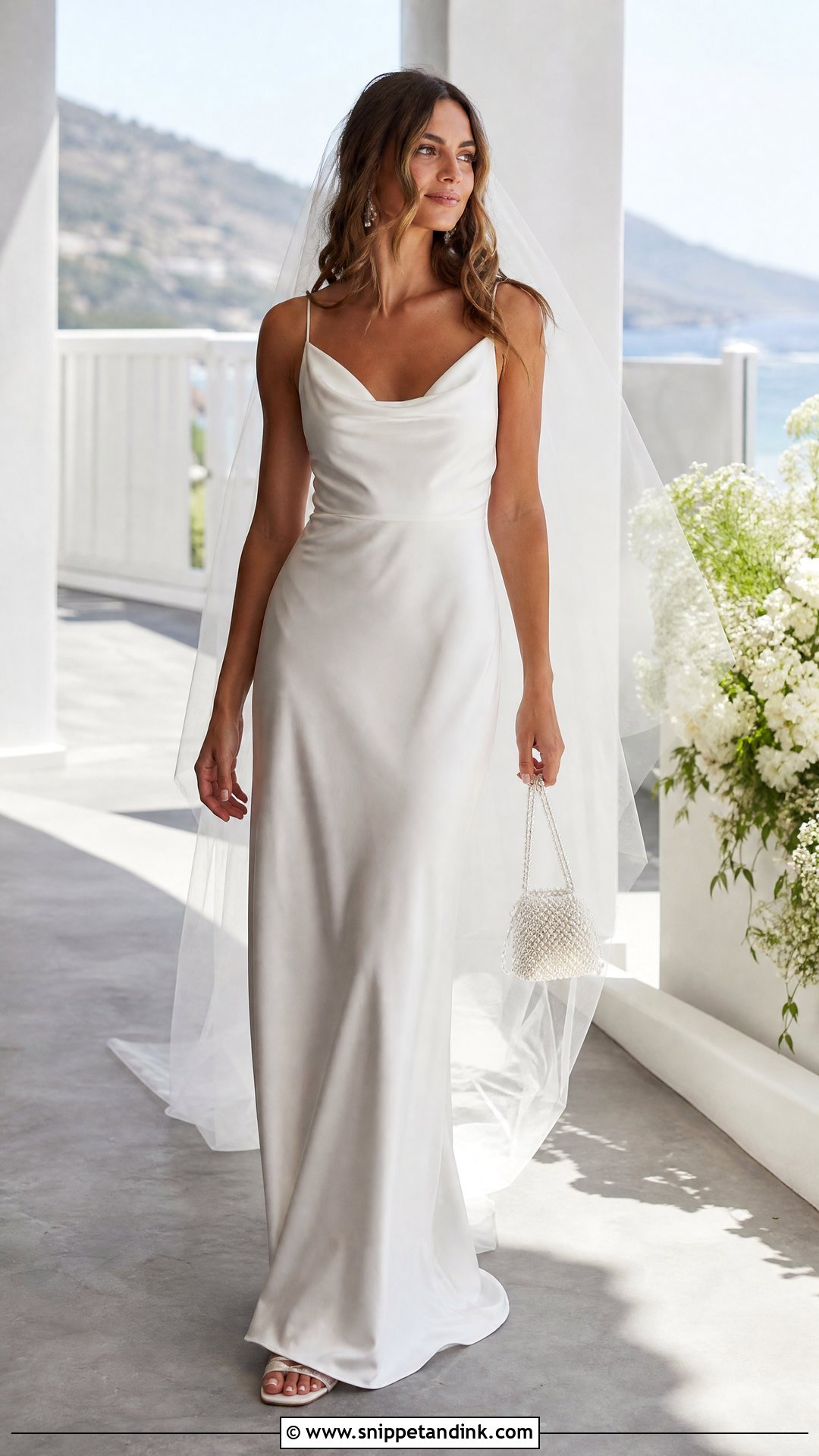
A satin slip bridal dress relies on fluid fabric and very little detail, so the fit has to skim, not cling, through the waist and hips. Cowl, straight or draped necklines all work, with straps adjusted or shortened by a professional. Satin shows underwear lines readily, so bring smooth options to every appointment. Bias-cut fabric also relaxes and drops slightly after it’s been hanging for a while, which is why I schedule the final hem as close to the wedding as possible. A wrap or tailored blazer adds coverage for cool evenings.
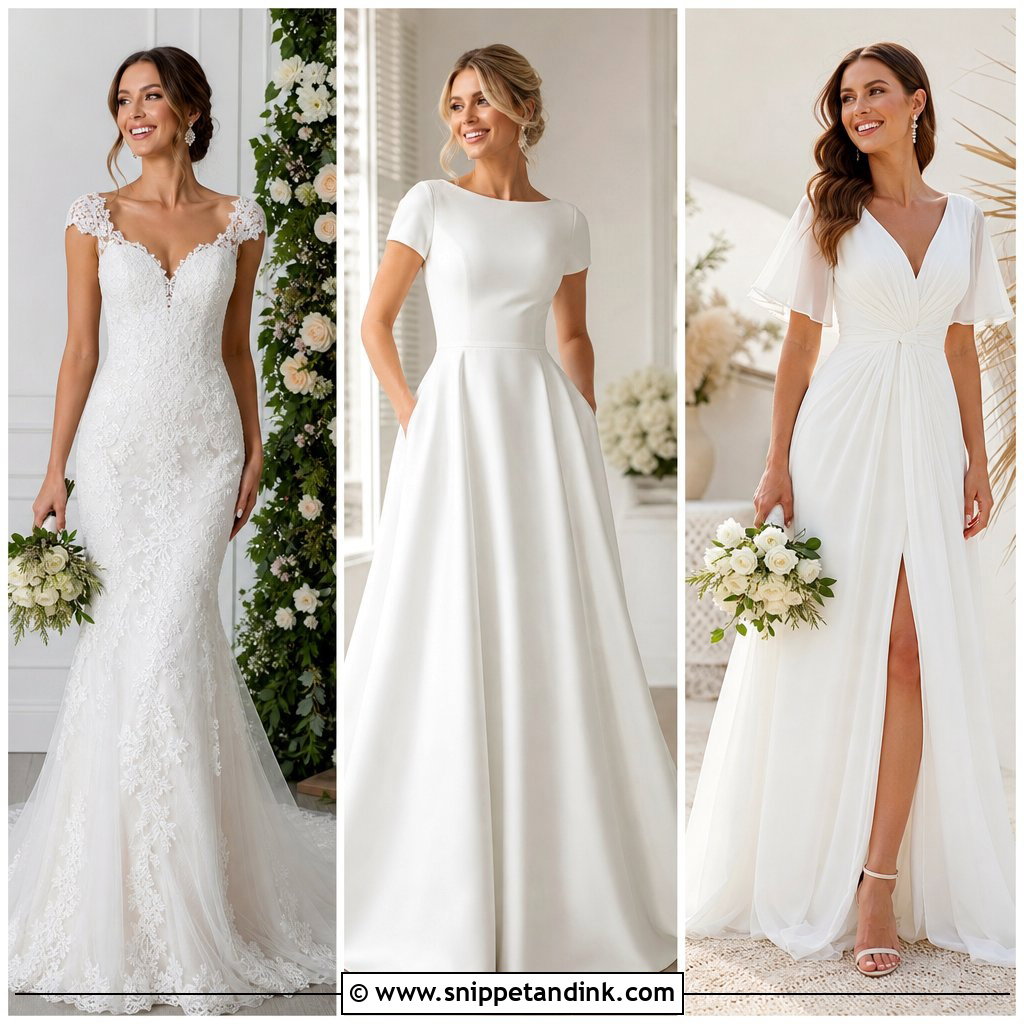
15. Floral Appliqué Bridal Dress
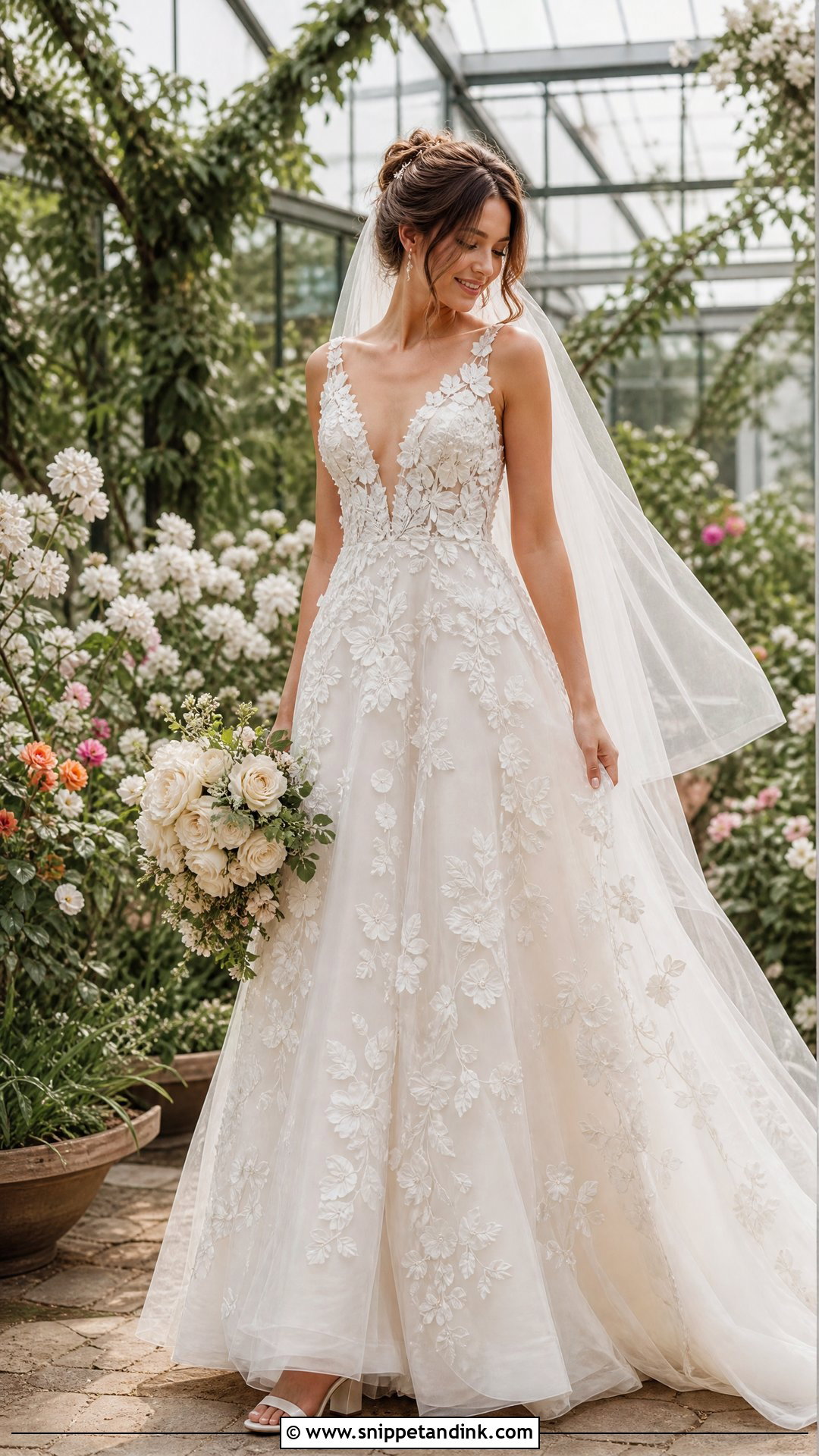
Floral appliqué adds dimension with embroidered petals, leafy motifs or raised blooms. I like the work concentrated on the bodice and scattered more lightly down the skirt, so the eye moves downward naturally. An A-line or soft ball gown gives the flowers room to be seen. Choose a bouquet that complements the fabric flowers rather than copying them, and keep jewelry simple. Before final alterations, go over the dress with the seamstress and secure loose petals and beads under the arms and around the waist, where your arms and your partner’s hands will rub all day.
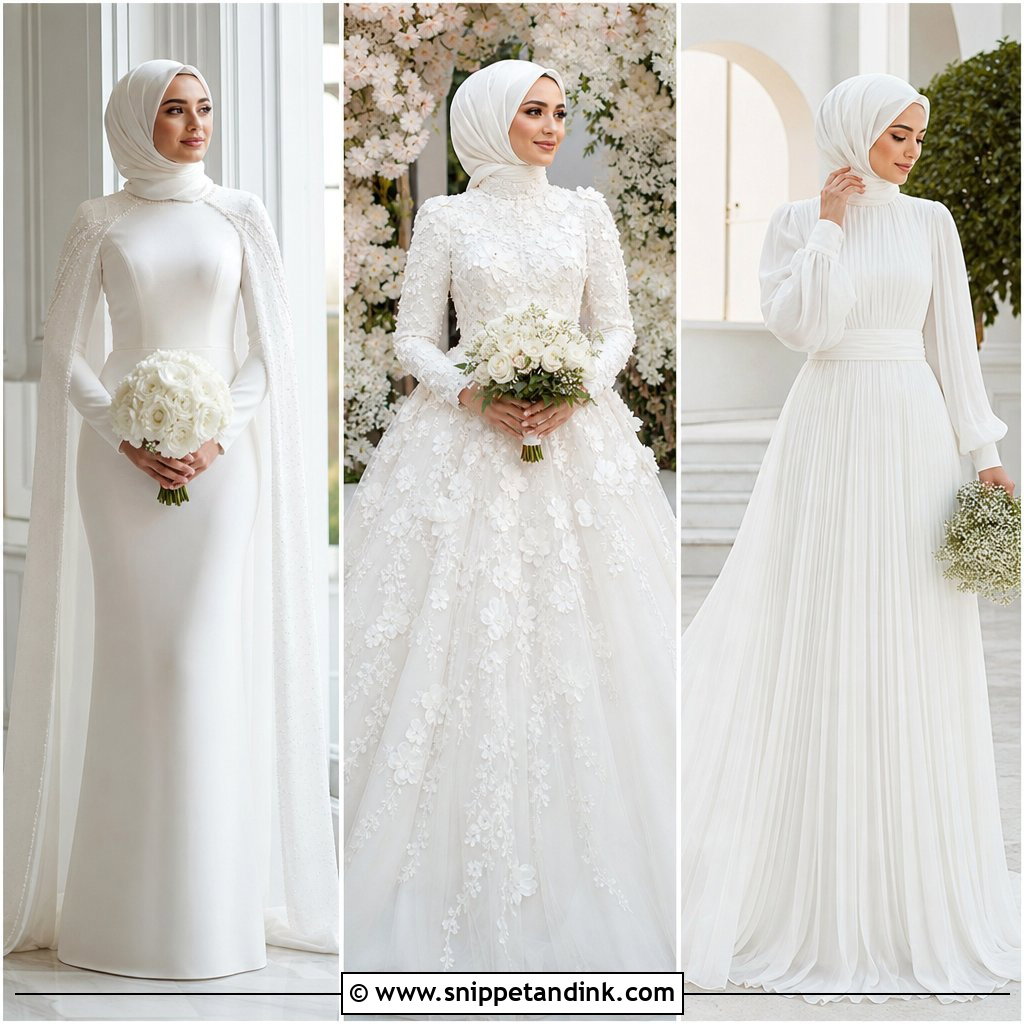
16. Cape-Sleeve Bridal Dress
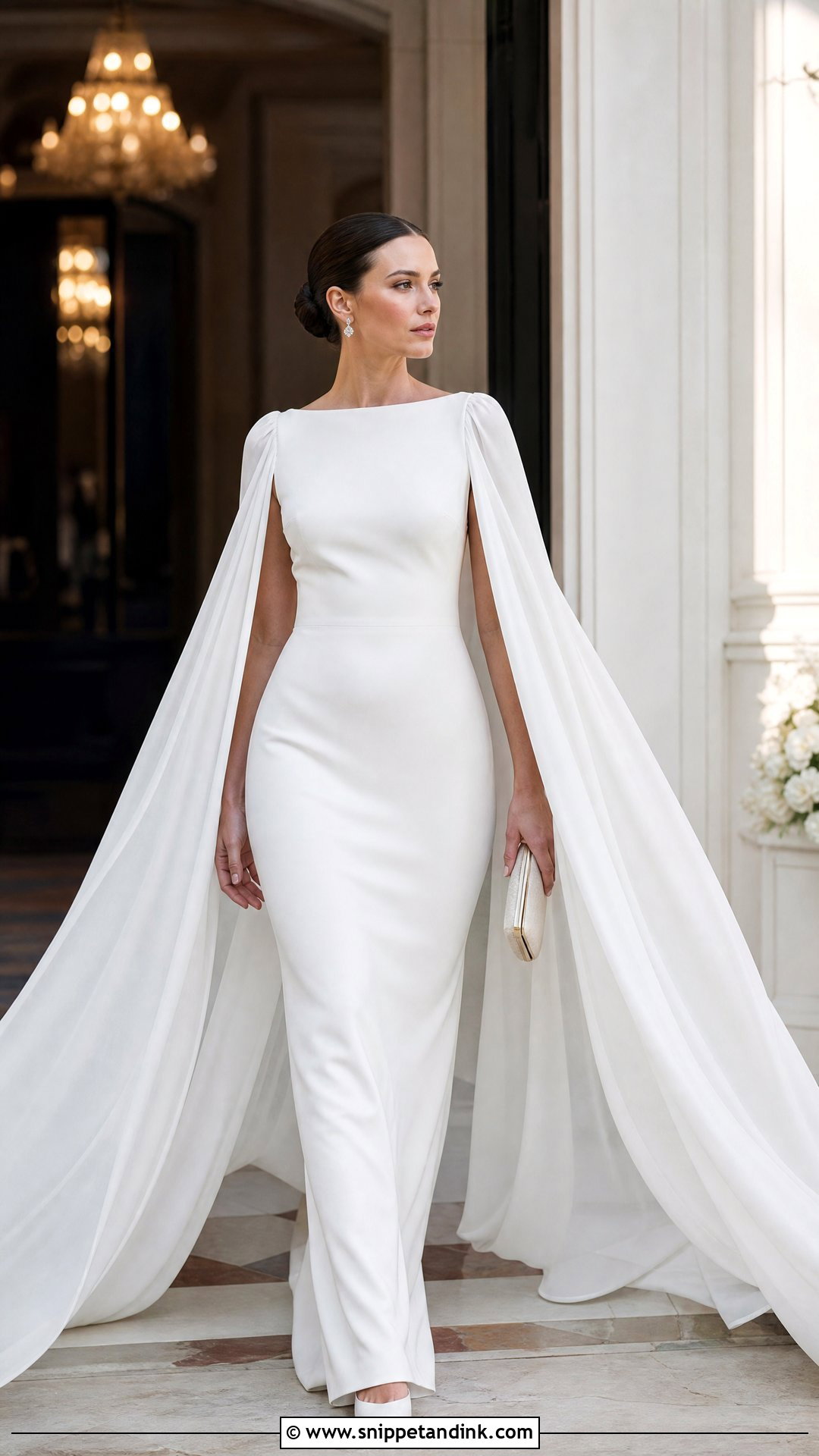
A cape gives movement and coverage without the snug feel of a fitted sleeve. Keep the gown underneath plain, in crepe, satin or chiffon, so the cape is the feature. Short capelets are subtle. Floor-length panels can replace a veil entirely for the ceremony entrance. Necklaces and big hairpieces tend to tangle with the cape’s neckline, so leave them out. Capes catch on chair backs when you sit, so practice that too. If it detaches, give one person the job of taking it off and hanging it somewhere clean, otherwise it ends up crumpled on a bridal-suite sofa.
17. Detachable Overskirt Bridal Dress
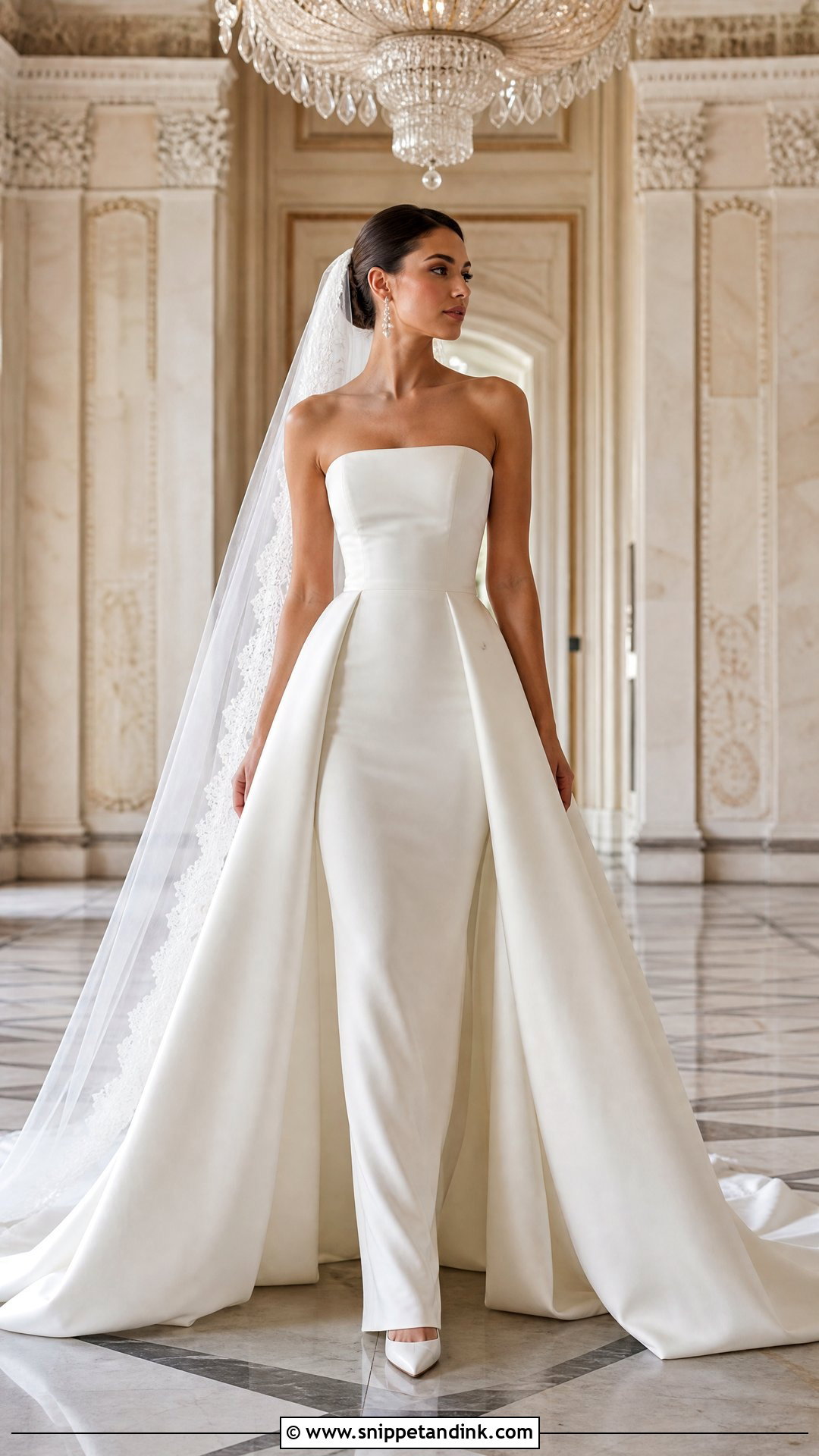
A detachable overskirt gives you two looks without a full outfit change. Start with a fitted crepe, lace or satin column, add a full tulle or structured satin skirt for the ceremony, then remove it, along with the long veil, for the reception. Check that the waistband fastens firmly and stays hidden from every side. Color matching is the part people miss. Ivory from one dye lot and ivory from another can look different under flash, so if the overskirt is ordered separately, compare both pieces side by side in daylight.
18. Two-Piece Bridal Dress
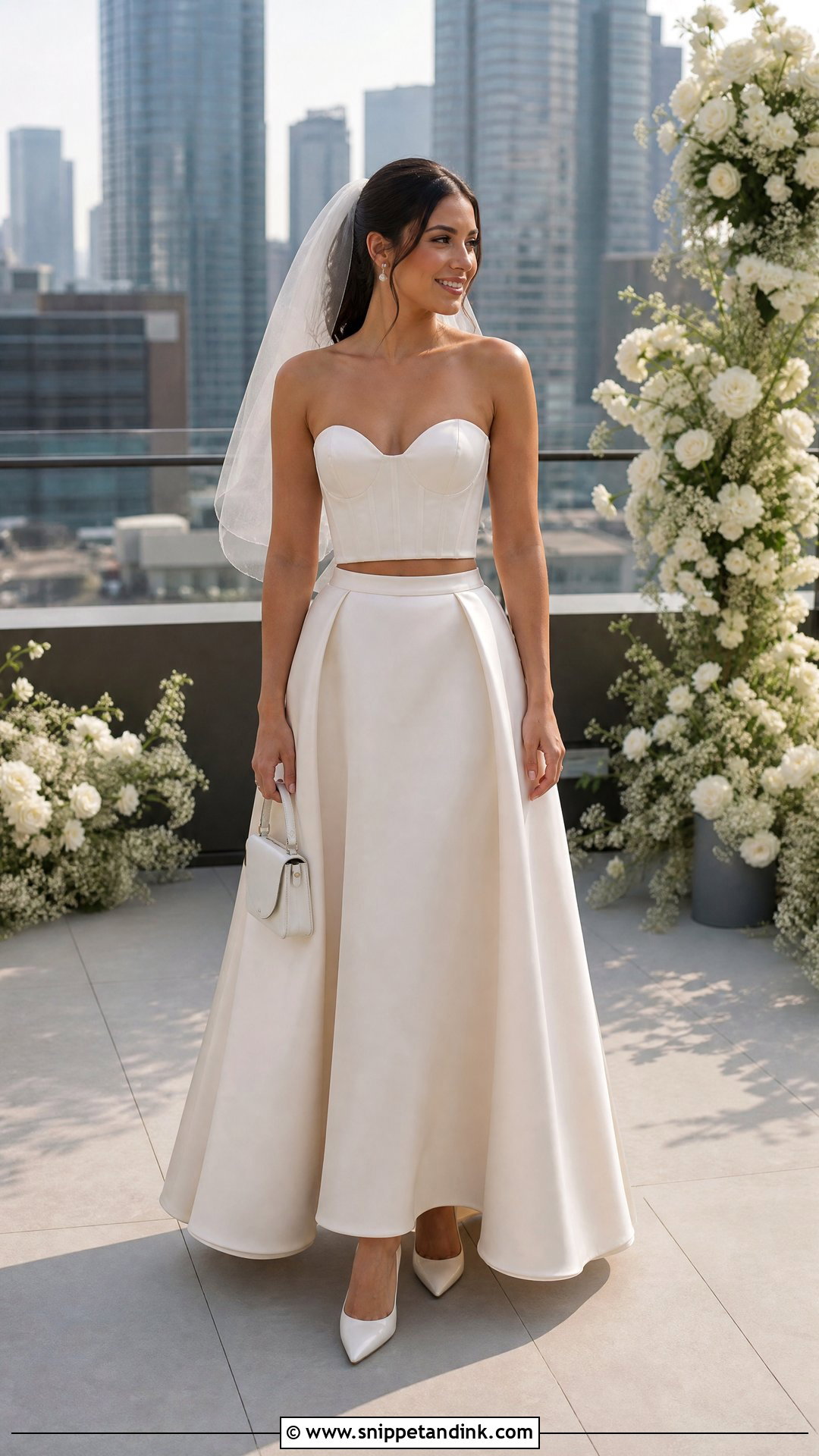
A two-piece pairs a structured corset top, square-neck crop or fitted lace blouse with a matching high-waisted skirt. A narrow band of skin looks contemporary; overlapping pieces give coverage. The practical concern is alignment. Tops ride up when you raise your arms, so ask for a waistband with a small grip strip or hidden hooks that join the two. Buy both pieces from the same collection where you can. Two ivories with slightly different sheen look mismatched in photos, even when they seem identical in the shop.
19. Champagne Bridal Dress
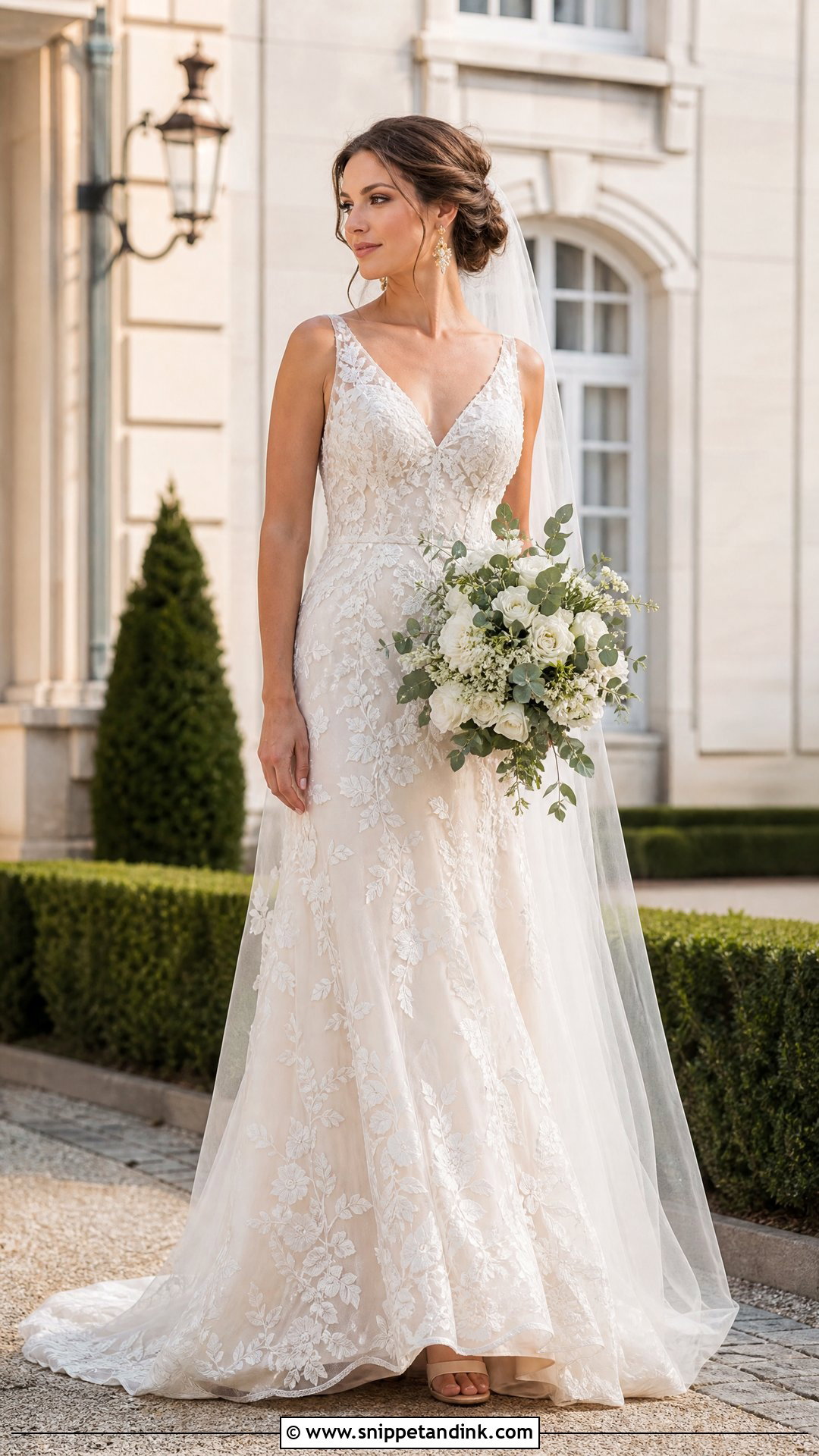
Champagne is a warm alternative to bright white and still looks unmistakably bridal, especially beneath ivory lace, beaded tulle, satin or organza. Undertone decides whether it flatters you, so see it in daylight, indoors and in a photo before committing. On some skin it glows, on others it reads as a nude that blends in. Keep accessories warm, since stark blue-white crystals clash. One detail most brides never ask about is thread. Confirm that the lining, outer layer and alteration thread are all the same shade, or intentionally different.
20. Petite Column Bridal Dress
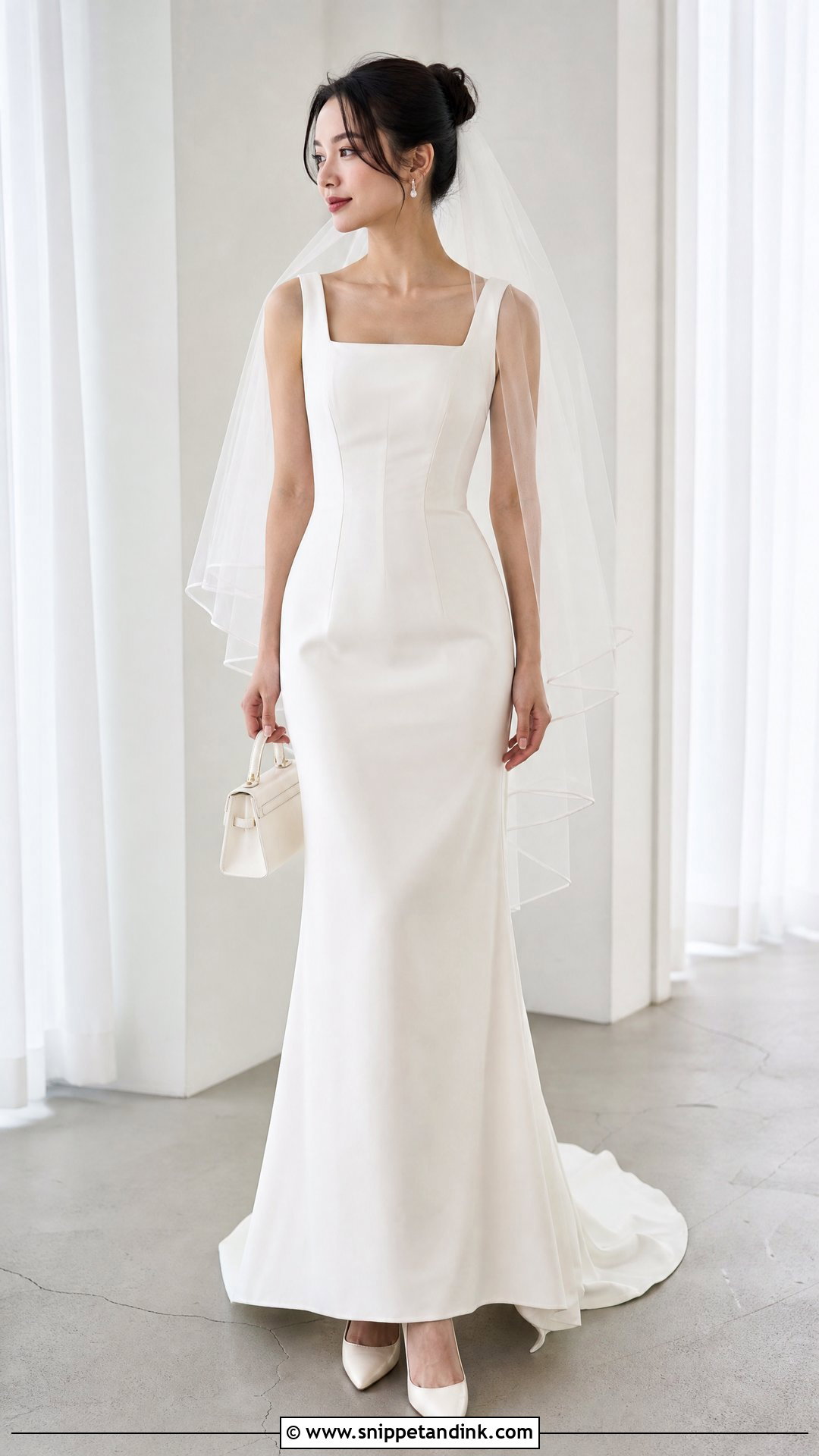
A column gives a petite bride a long, unbroken line without fabric swamping her. Look for a raised or natural waist, limited skirt volume and details scaled to your frame: small lace motifs rather than big appliqués. A narrow V, square neck or strapless bodice opens the upper body, and vertical seams add length. Petite sizing doesn’t mean no alterations. Bodice length, strap placement, the train and hip shaping still usually need adjusting. A higher bun adds a touch of height and keeps the neckline open.
The Underpinnings You Won’t See in the Photos
Half of how a gown hangs comes from what’s underneath it, and it’s the part brides leave until the last minute. Settle your undergarments before the first fitting, because the seamstress pins the dress around them and a different bra later can change the bodice fit by a size.
What to sort out early
- Sewn-in cups for open backs, halters and slips, so nothing slides out of place during dancing.
- Shapewear that ends below the hem line of a fitted dress or well above the flare point, never right at it.
- A slip or petticoat for sheer or full skirts, tried with the dress rather than bought separately on the day.
- Anti-chafe balm for fitted silhouettes, since thighs rub in a mermaid or column after hours of standing.
Pack a small fix-it pouch for the gown as well: clear thread and a needle pre-threaded in ivory, safety pins, fashion tape, chalk for light marks and a stain pen tested first on the inside hem. Most dress emergencies are a popped hook or a fallen bustle loop, and both take two minutes if the kit is in the room.
What the Mirror Can’t Tell You About a Wedding Dress
The right dress supports your body, suits the setting and lets you move without thinking about it. Note the shapes, necklines and fabrics you like, then stay open in the fitting room, because gowns look very different on a body than online. Bring your shoes and undergarments to every appointment, test your full range of movement and keep money aside for alterations. Veil, jewelry and hair should support the dress, not compete with it. Traditional satin, soft lace, modern crepe or a short hem, the dress that wins is the one you forget you’re wearing.
You'll Like These Ideas:


Leave a Reply