
Plenty of brides come to me sure they want a lehenga and leave with a suit. A well-cut suit moves better, weighs less and is far easier to wear again. The 20 bridal suits below cover Anarkalis, shararas, ghararas, Patiala and Punjabi sets, straight cuts and capes. Which one suits you depends on the event, the venue, the season and your family’s traditions: reds and jewel tones feel regal, while ivory, blush, mint and powder blue are softer. With suits, cut matters even more than embroidery, so for each one I’ve noted the tailoring detail I’d watch.
Readymade, Semi-Stitched or Made to Measure?
Bridal suits come three ways, and the choice affects both your timeline and the fit.
- Readymade: fastest, and you see exactly what you get. Expect to alter the waist, sleeves and length, and check the seam allowance first; some readymades leave almost none.
- Semi-stitched: embroidered panels with the side seams left open, finished by your own tailor. A good middle ground if you have a tailor you trust.
- Made to measure: the best fit, but hand embroidery takes time. Allow several months and at least two fittings.
Whichever you choose, I bring the bride’s wedding shoes and bra to every fitting, and I fit sleeves with her bangles on. Length on a churidar or salwar should be set in the actual heels, because a difference of a few centimetres changes how the fabric gathers at the ankle.
1. Red Velvet Anarkali Bridal Suit
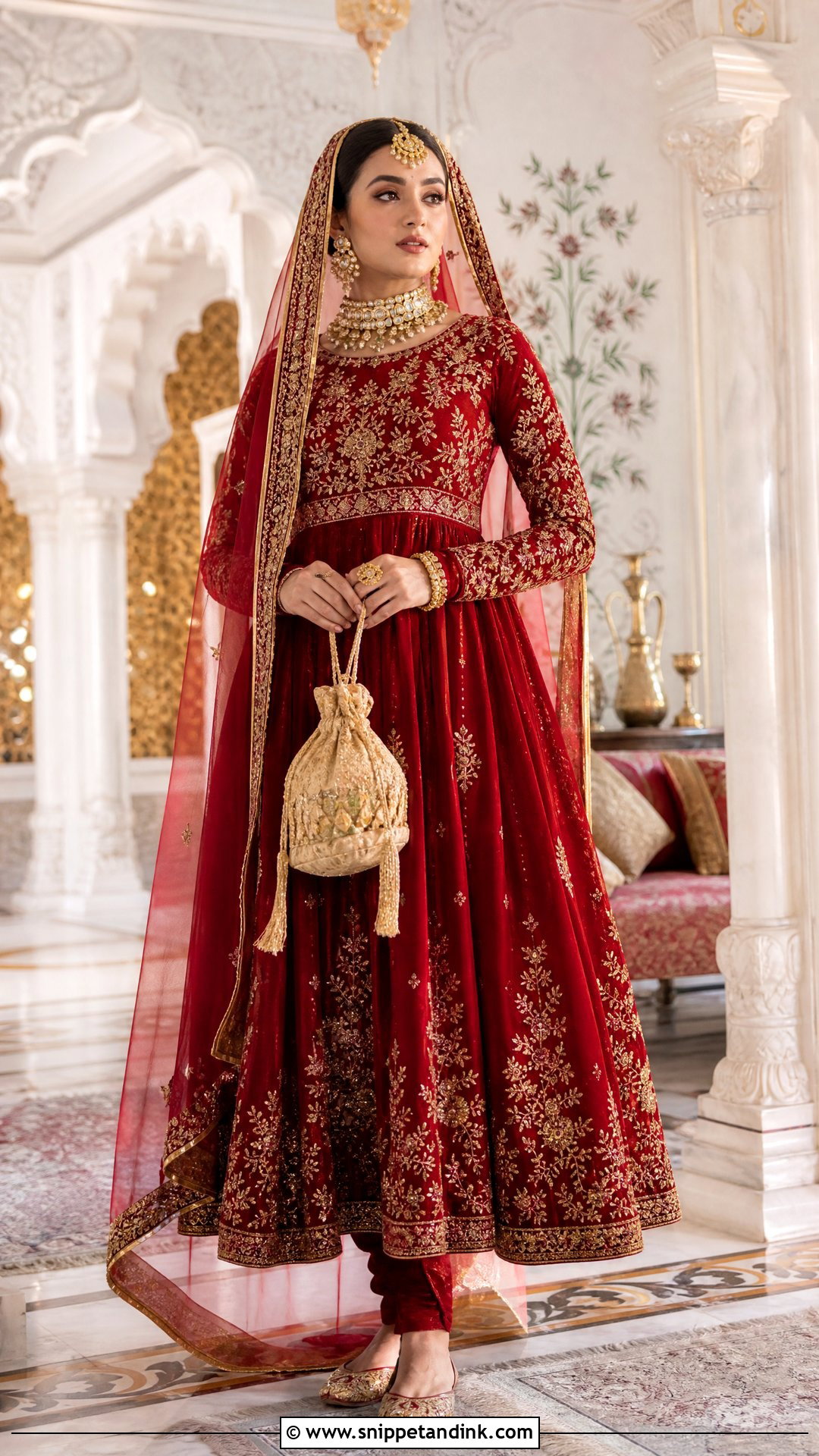
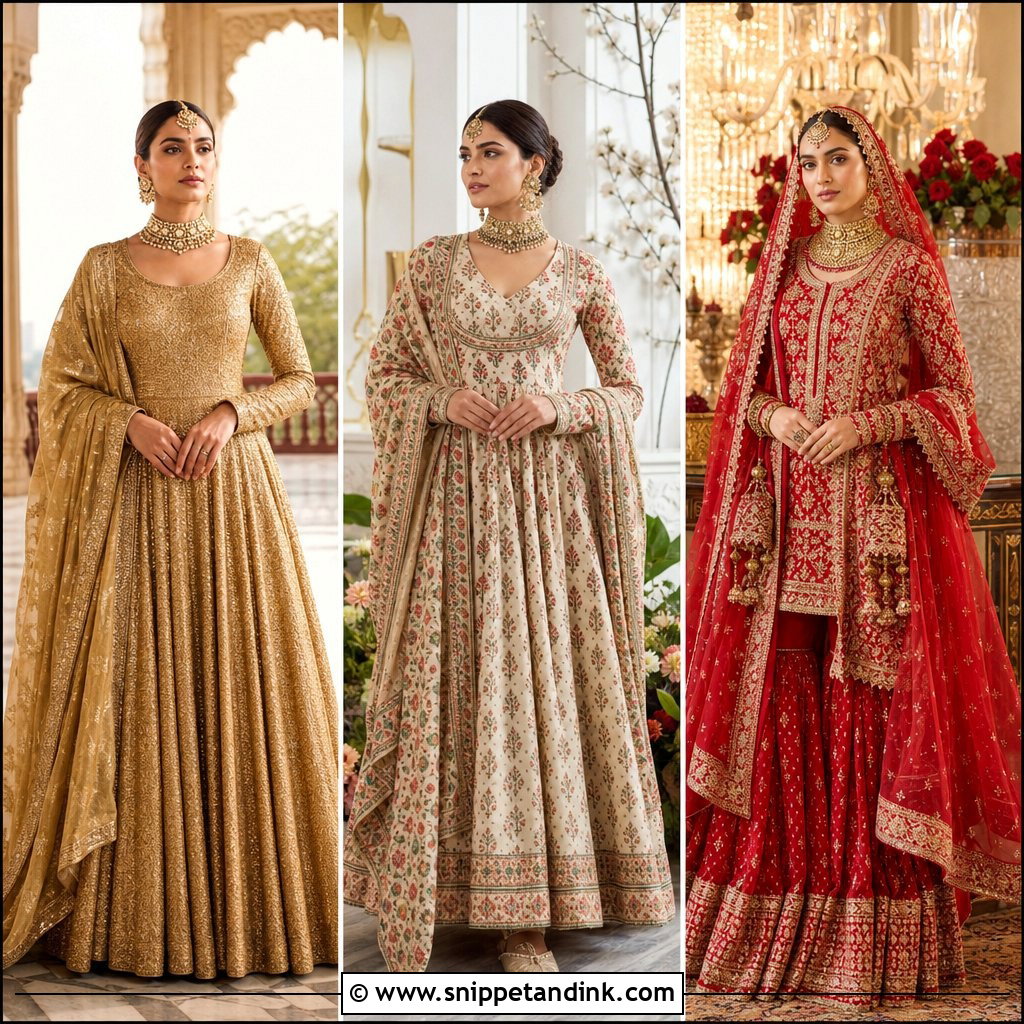
Red velvet in an Anarkali is evening and winter dressing at its richest. The waist seam is everything here: velvet is thick, and if the seam sits even slightly high it pulls when you sit, so I fit it with the bride seated. Zardozi, dabka or thread at the neckline, sleeves and hem is enough decoration. Slim churidars and a light net dupatta keep the weight in check, and a bordered dupatta over the head gives the traditional bridal line. A kundan choker, juttis, a potli and a low bun under the dupatta finish it.
2. Ivory Embroidered Sharara Bridal Suit
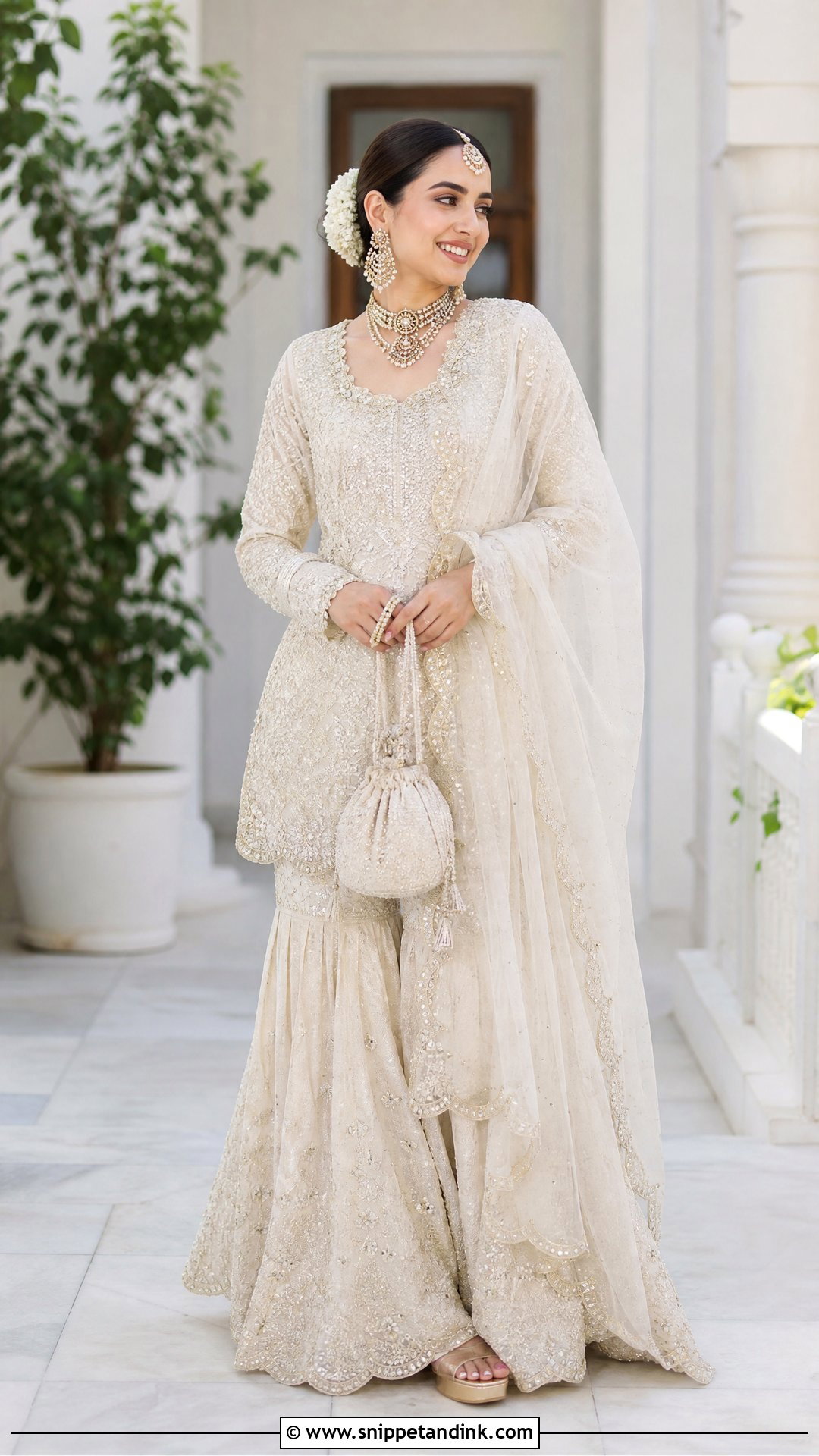
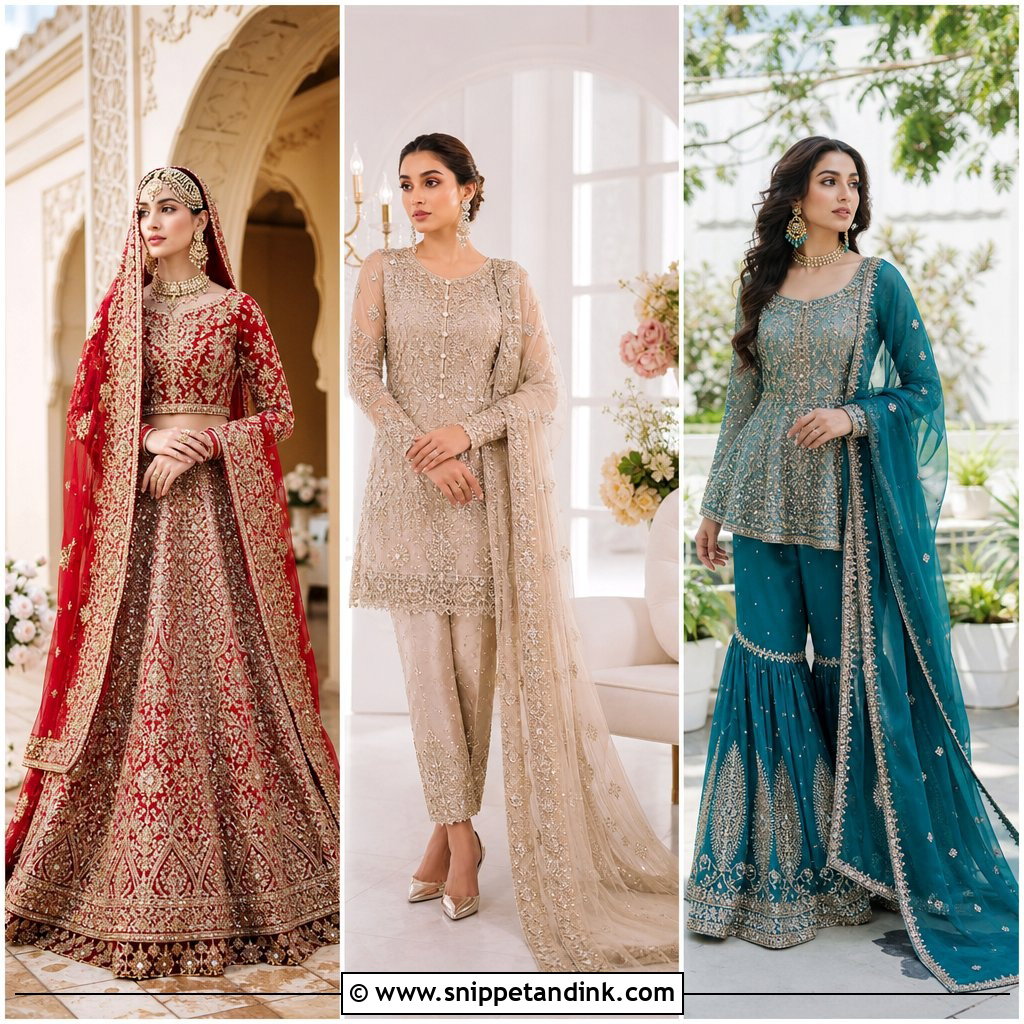
Ivory works for a bride when it has texture. A short fitted kurta with pearlwork, sequins and silver or champagne embroidery over a sharara that flares from the waist gives movement for dancing and photos. I check the sharara’s waistband carefully, since a wide flare means a lot of fabric gathered into a small band, and bulk there shows under a short kurta. An organza dupatta with a scalloped edge adds shape without weight. Pearl-and-kundan jewelry, block heels and an ivory potli suit it; emerald earrings add contrast if you want it.
3. Maroon Gharara Bridal Suit
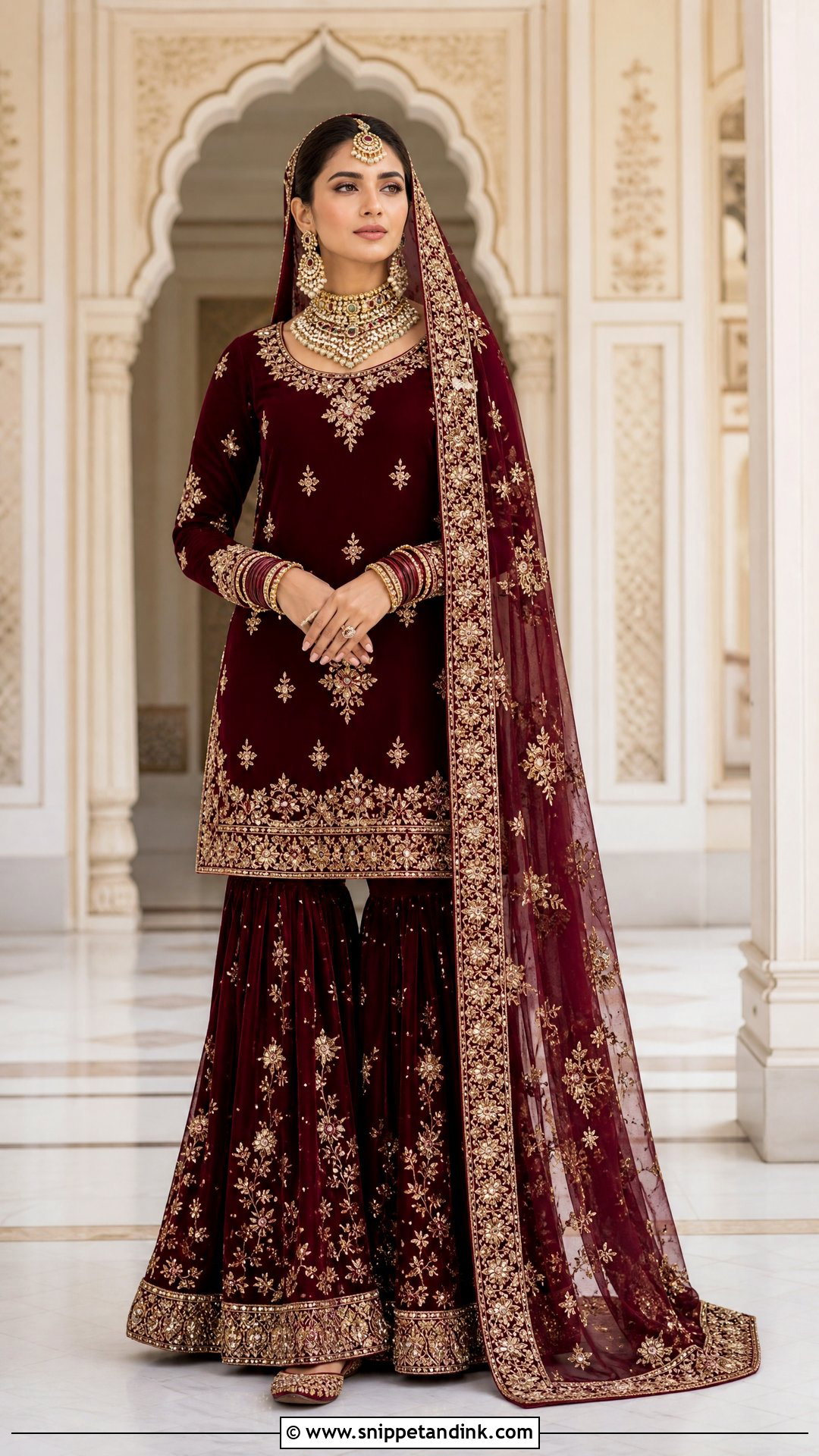
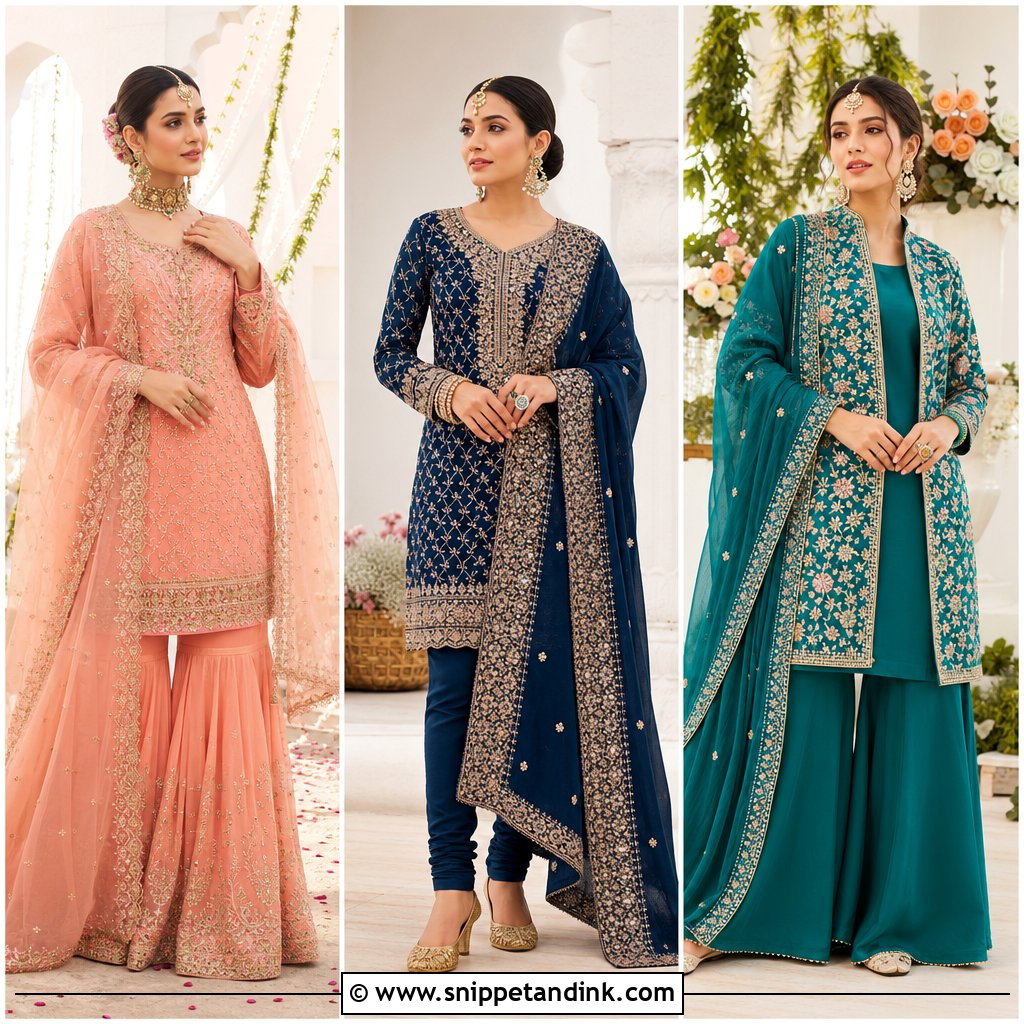
The gharara is fitted to the knee, then flares from a gathered band, usually covered in gota or zari. That knee band is the fitting point I fuss over most. Too high and it pulls when you sit; too low and you’ll shuffle rather than walk. Deep maroon with antique gold looks regal with a waist-length kurti, fitted sleeves and a dupatta with a wide decorative edge. Layered necklace, jhumkas, maang tikka, bangles and embroidered juttis complete it. It’s a strong choice for a nikah, a qawwali night or any formal evening.
4. Pink Floor Length Anarkali Bridal Suit
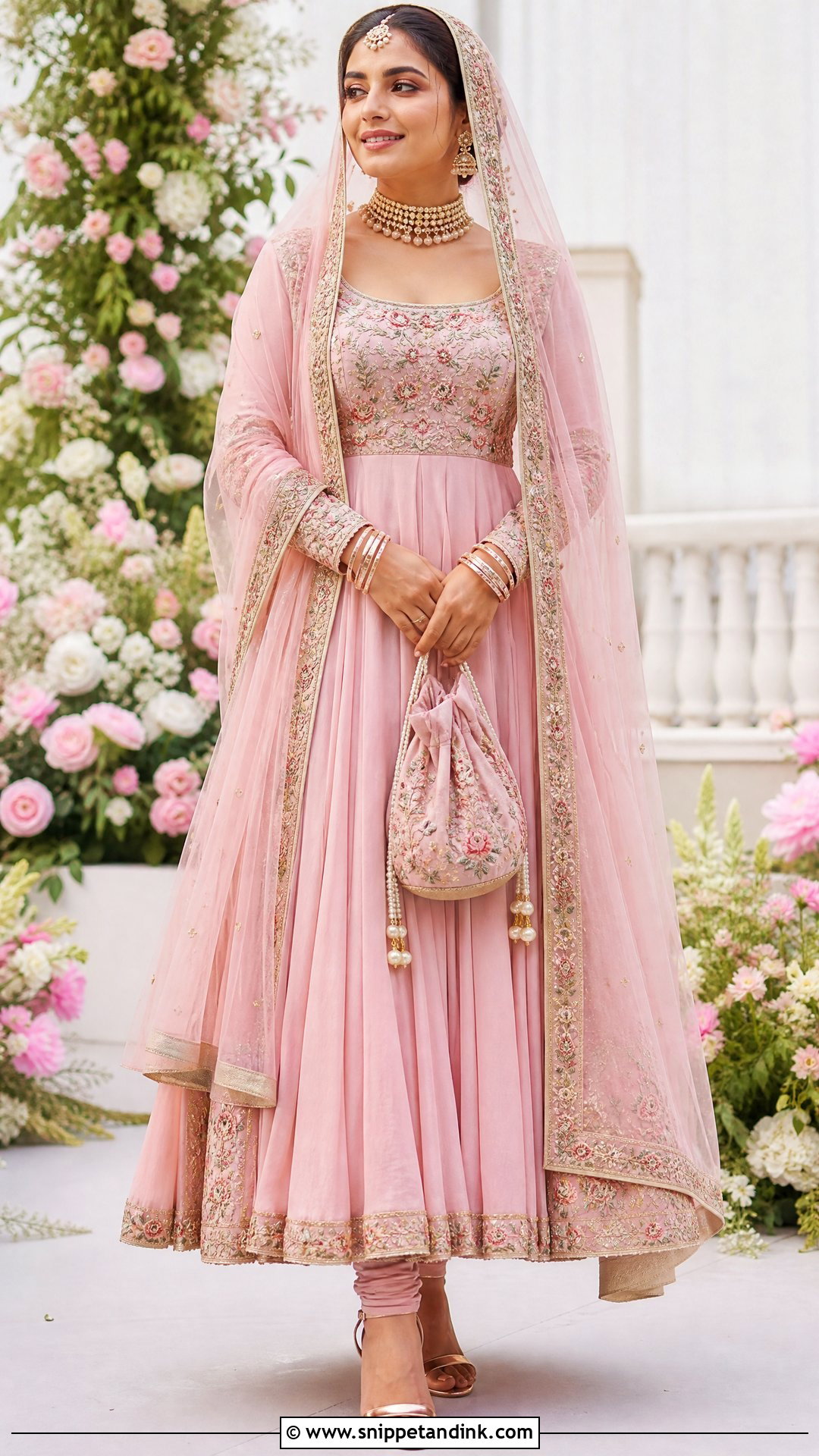
Rose or blush pink softens a floor-length Anarkali without losing presence. The flare comes from panels, called kalis, and more panels mean more swing but also more weight at the waist. A structured bodice keeps that weight from dragging. Floral threadwork, crystals, pearls and tonal sequins add depth. With fitted pants underneath, drape one end of the net dupatta over the head and the other across the arms. Rose-gold heels, a pearl choker and a beaded potli finish it, with a low braided bun and small flowers.
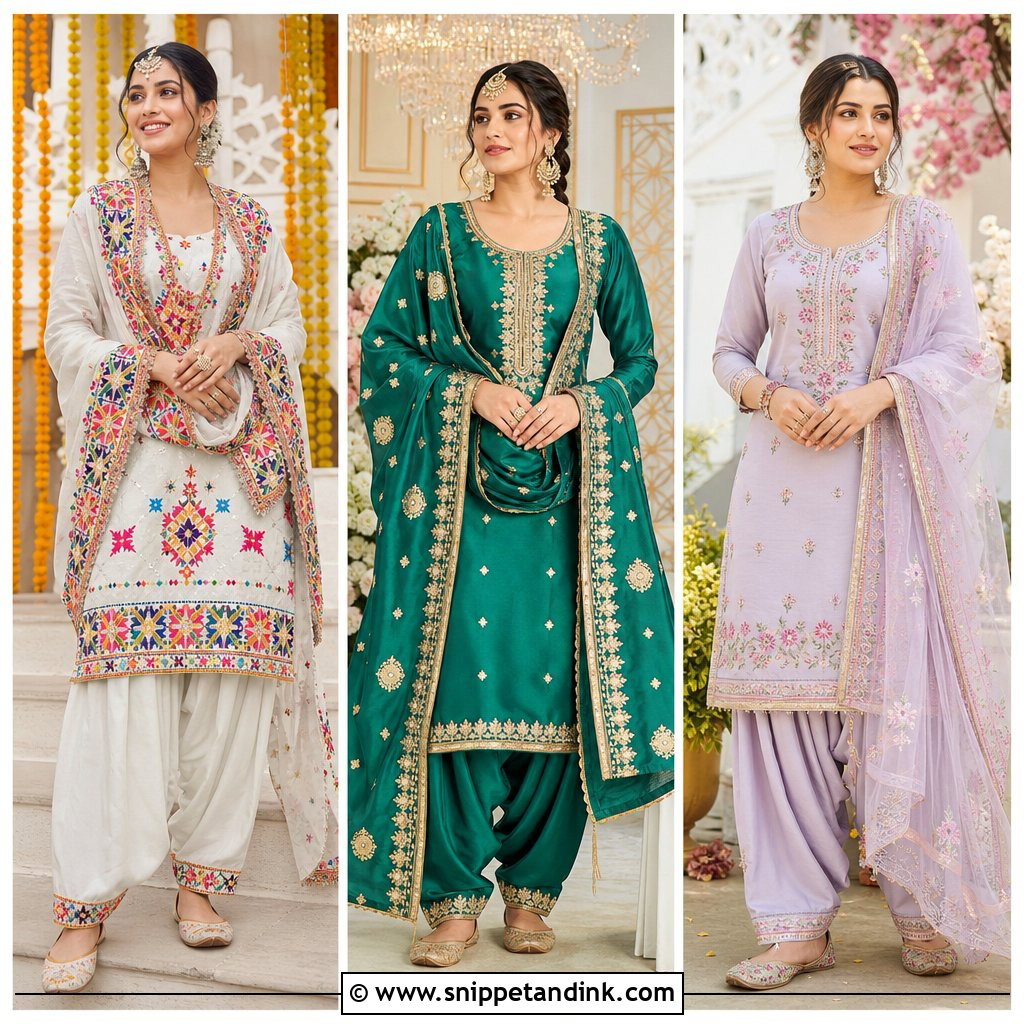
5. Green Patiala Bridal Suit
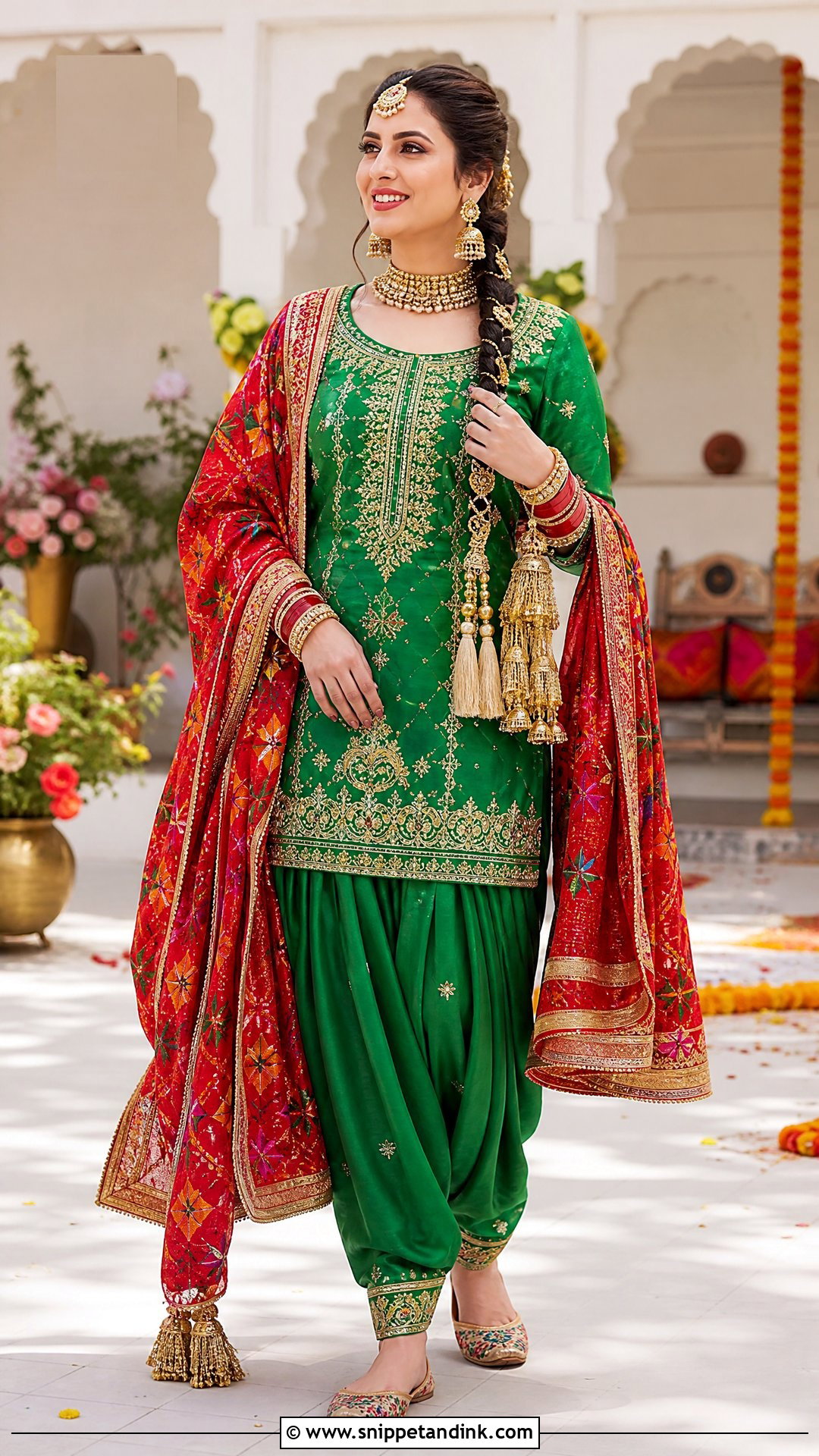
A green Patiala bridal suit is pure Punjabi celebration. A Patiala salwar takes a great deal of fabric folded into deep pleats, so it drapes in heavy folds from the hip. Silk or satin hangs best; stiff fabrics stand out from the body. Pair it with a short emerald or bottle-green kameez worked at the neckline, cuffs and hem, and a red, magenta or mustard phulkari dupatta. A gold choker, jhumkas, chooda, kaleere, Punjabi juttis and a long braid with a paranda suit a mehndi, jaago or any night with a dhol.
6. Gold Brocade Palazzo Bridal Suit
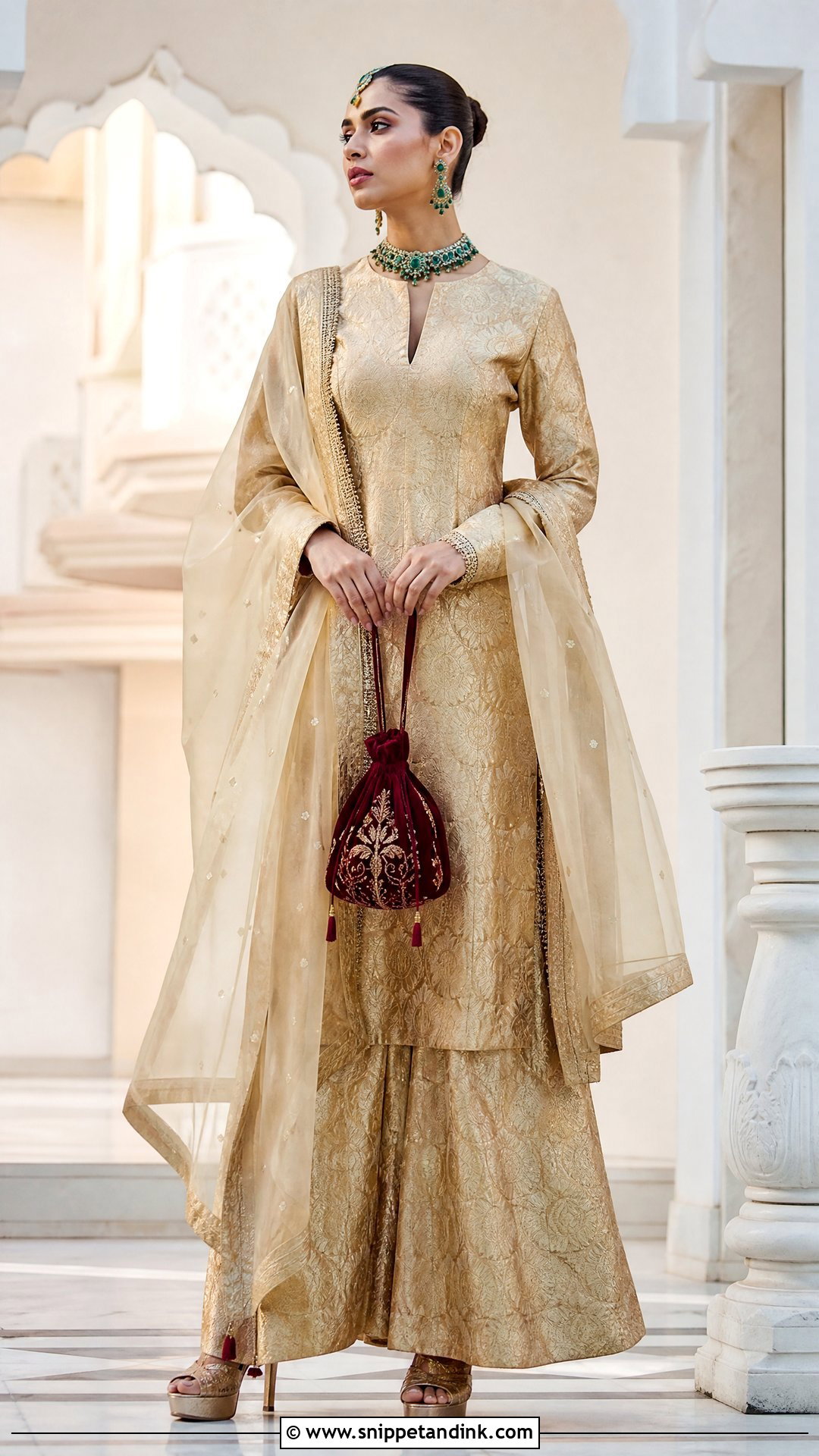
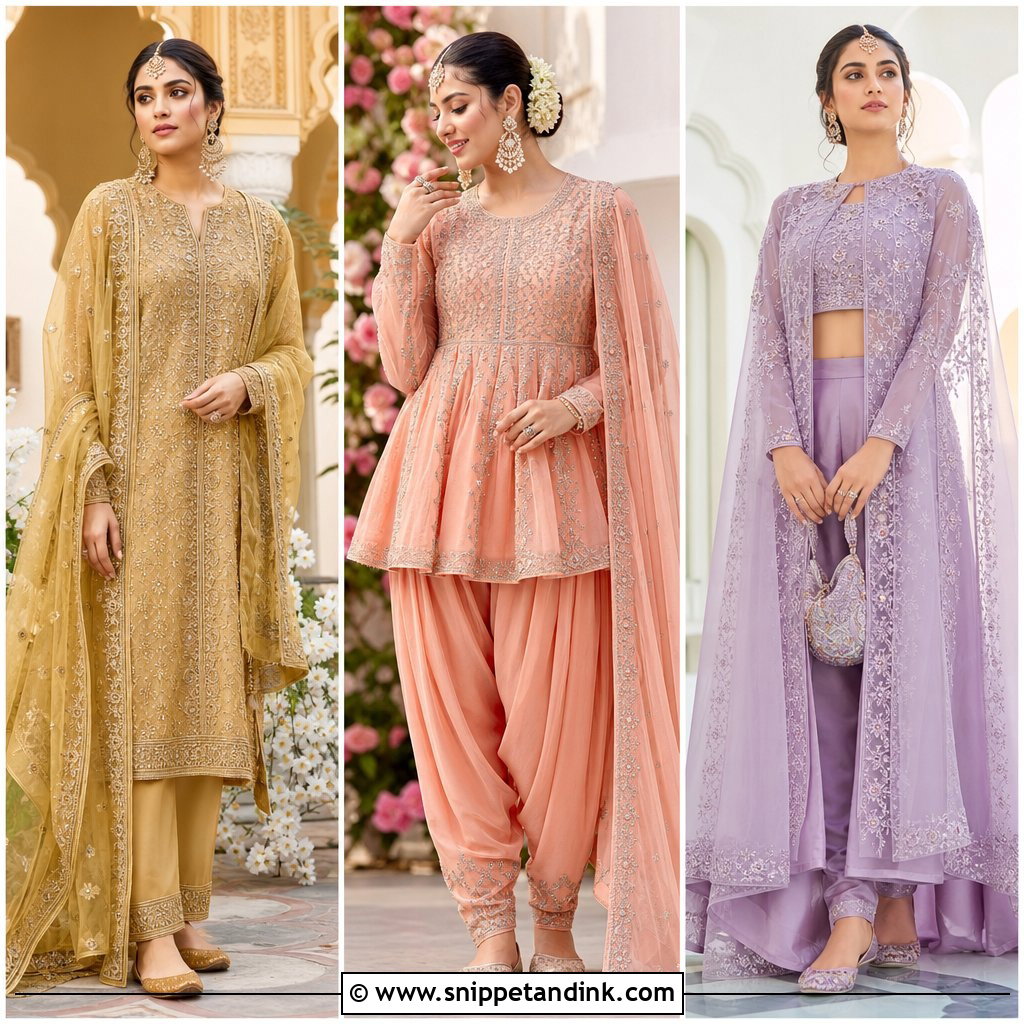
Gold brocade is woven, not embroidered, which makes it stiff. That stiffness suits a straight-cut kurta, because brocade won’t drape into a flare. It frays readily at cut edges, so I check that every seam inside is properly finished. Wide palazzos give freedom and lengthen the line. A sheer gold, champagne or beige dupatta with a woven border ties it together, and colour comes from emerald jewelry, ruby bangles or a red potli. Metallic platforms, a low bun and soft contour suit a reception, civil ceremony or formal family gathering.
7. Yellow Sharara Bridal Suit
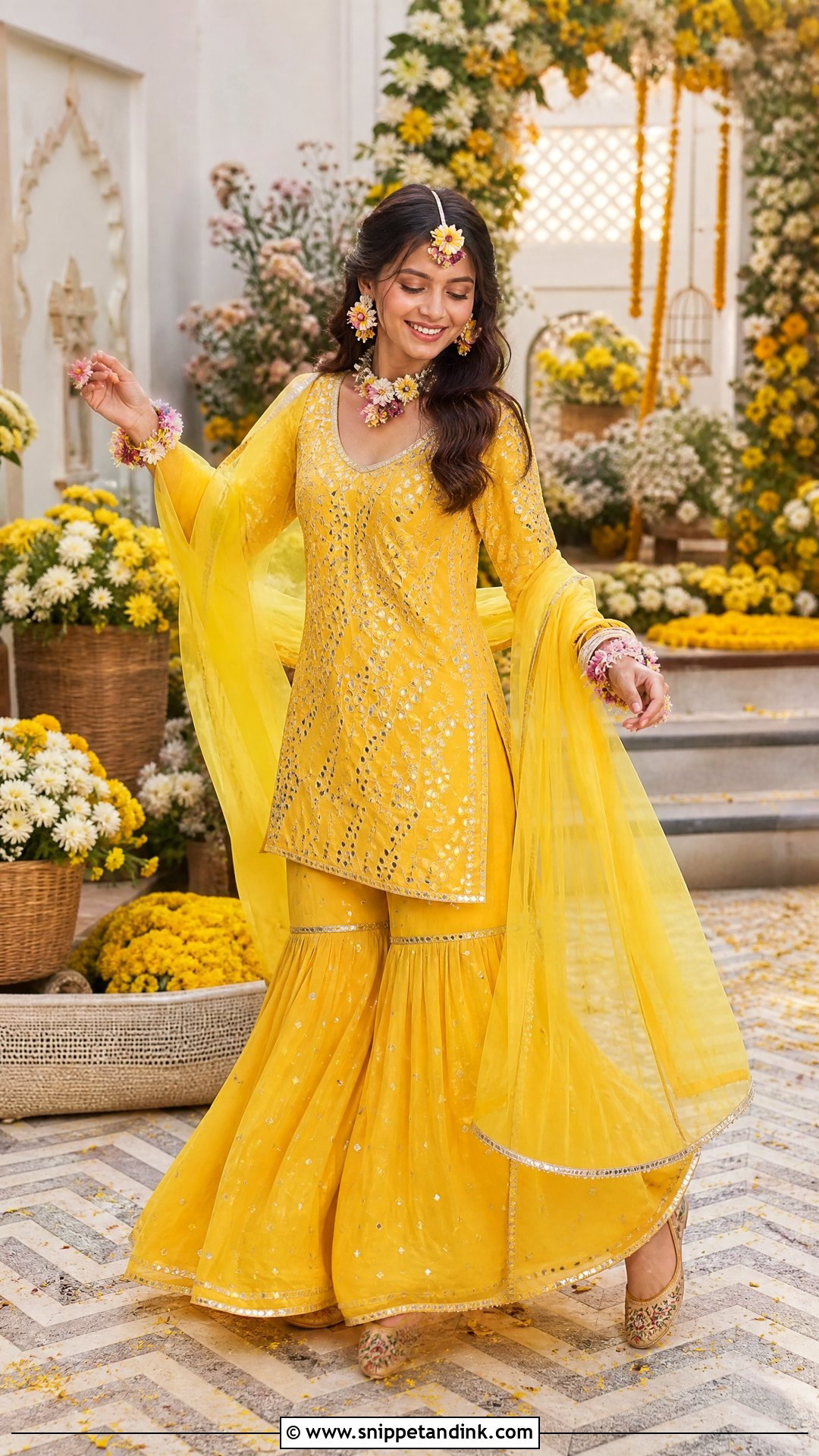
Yellow is the natural colour for a haldi celebration, but turmeric paste stains fabric, and it doesn’t wash out of silk. I suggest a short kurta in georgette or cotton-based chanderi you won’t mind marking, with floral thread, mirror accents or gota. A wide sharara and soft organza dupatta keep it light. Floral jewelry, bangles and a simple tikka suit the morning. Flat juttis, because you’ll sit, stand and dance. Wear waterproof makeup, and keep a loose braid with yellow and white flowers.
8. Teal Jacket Anarkali Bridal Suit
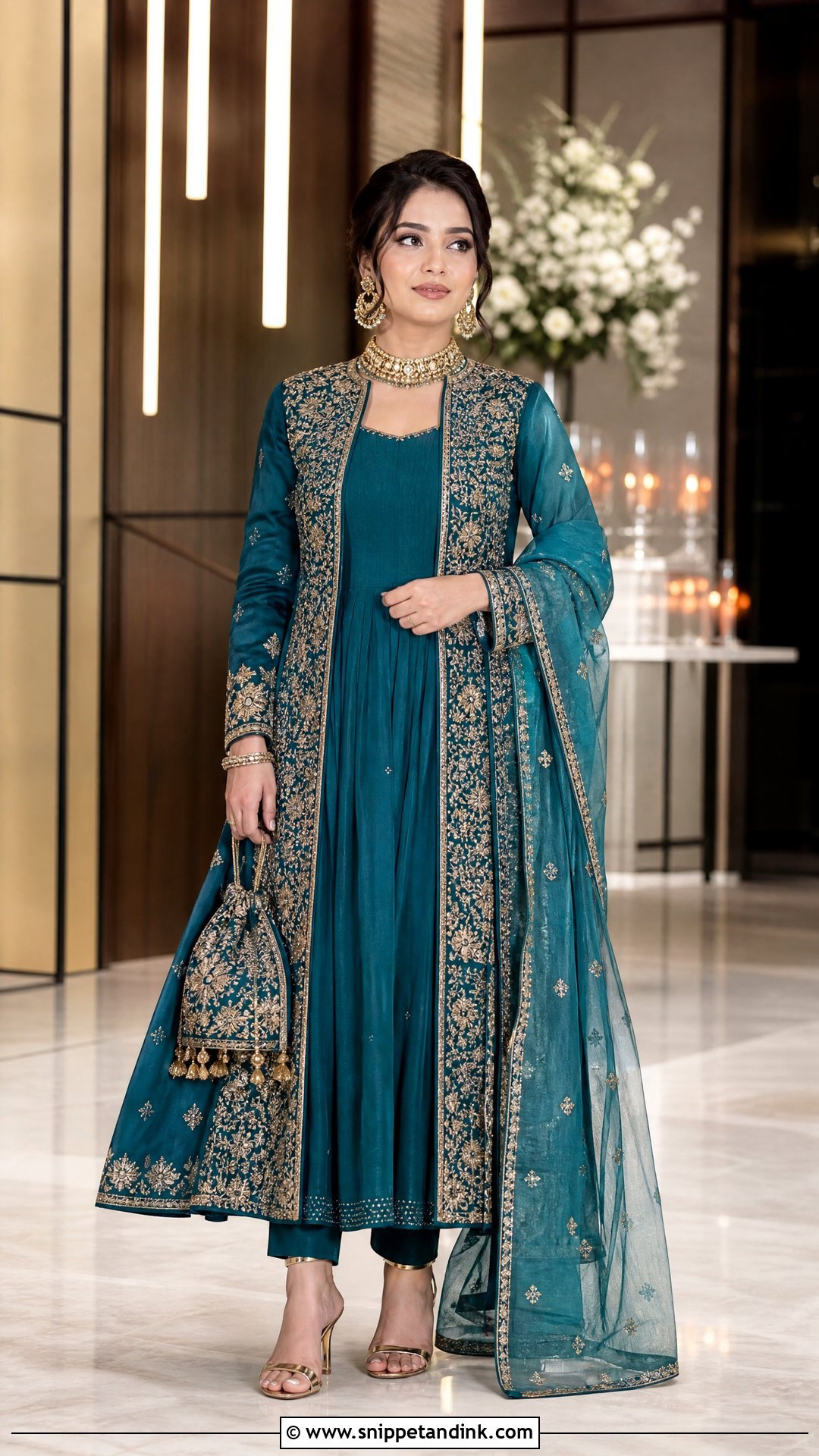
The teal jacket Anarkali is two layers: a sleeveless or short-sleeve Anarkali with a fitted bodice, and a long embroidered jacket left open at the front. Gold zari, velvet appliqué or tonal threadwork defines the jacket. What I check is the jacket’s shoulder fit. If it’s a little wide, the jacket slides back as you move, and you spend the evening hitching it up. Slim pants, a light dupatta over one arm, antique gold earrings, a collar necklace and a sleek bun suit a sangeet, reception or cool evening.
9. White Chikankari Bridal Suit
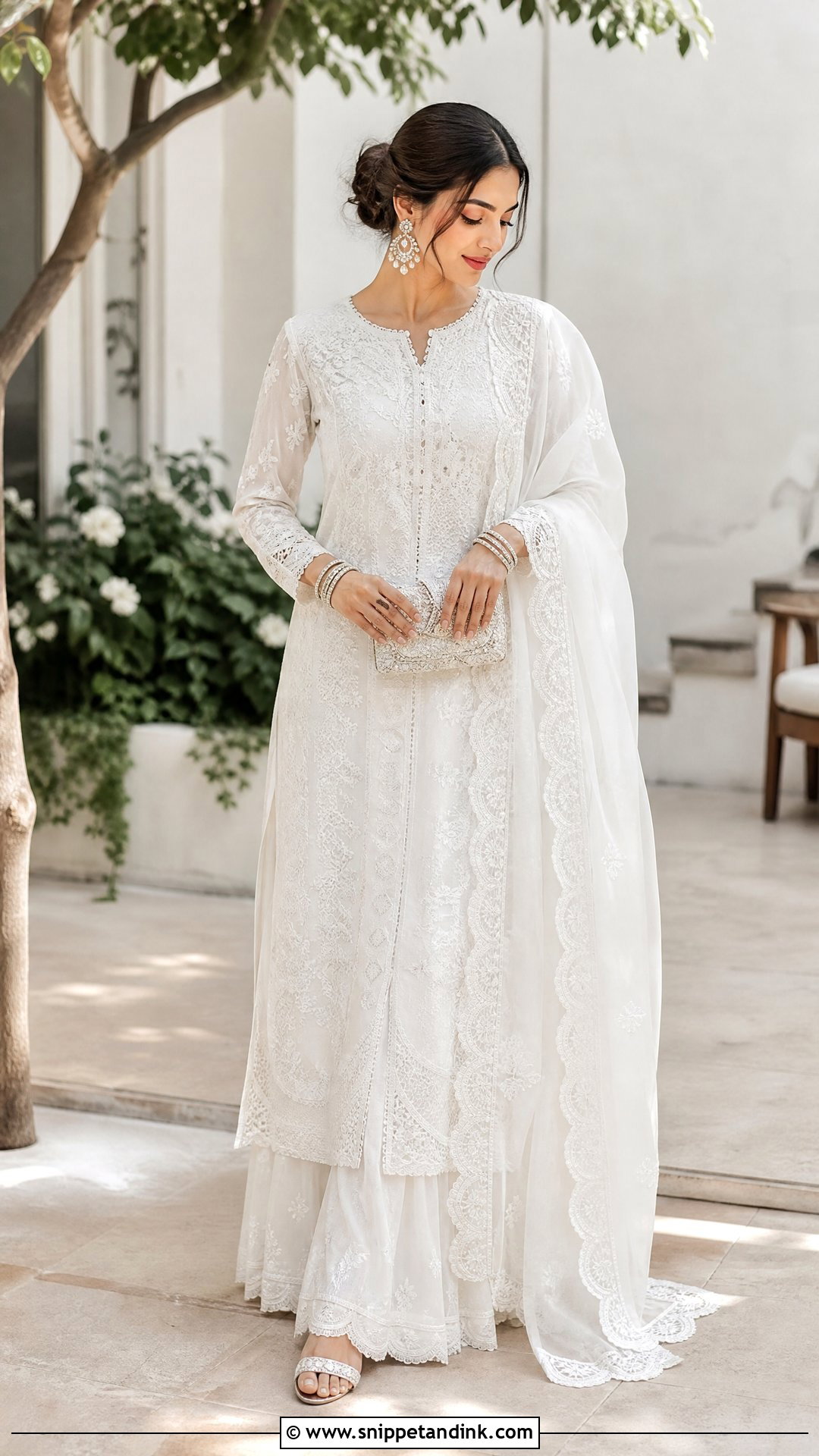
Chikankari is hand embroidery on fine, often sheer cotton or georgette, and a white bridal suit in it is quietly beautiful. A long straight kurta with dense tonal work and subtle sequins must be fully lined; unlined chikankari shows everything in daylight. Narrow pants or gently flared palazzos both work. A sheer white dupatta with a scalloped edge keeps it light. Pearls, silver bangles and embellished sandals suit it, with pale pink flowers in a low bun or emerald drops for colour. I’d choose it for a morning ceremony, a nikah or a registry signing.
10. Royal Blue Cape Bridal Suit
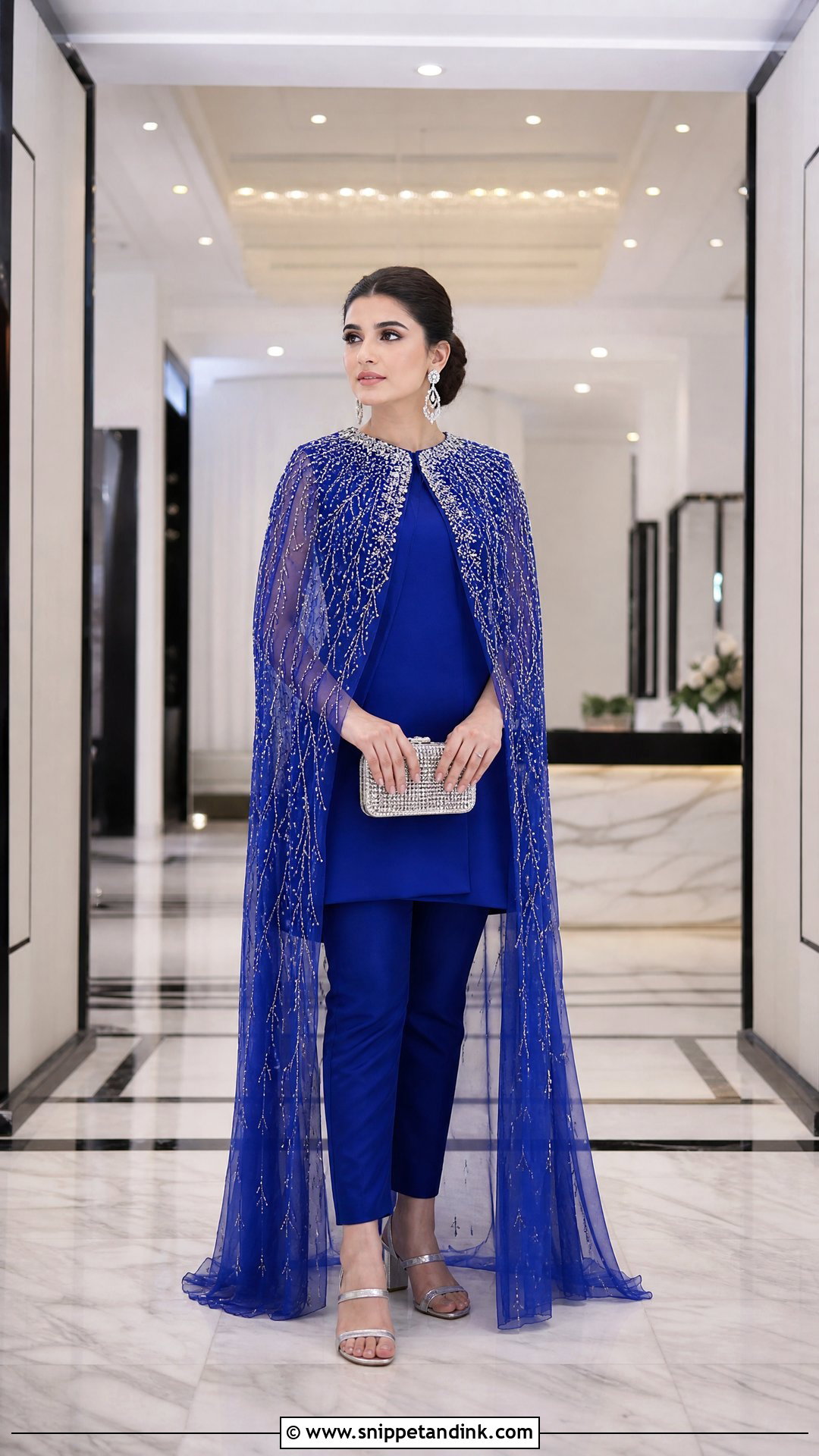
Royal blue with a cape is modern and very easy to manage. A sleek sleeveless kurta with straight pants and a floor-length sheer cape attached at the shoulders replaces the dupatta entirely. I ask how the cape is attached; snaps hidden under the embroidery let you remove it later for dancing. Silver threadwork, crystals or scattered sequins are enough decoration. Diamond-style jewelry, silver block heels, a metallic clutch and a high bun or ponytail keep the neckline clear. It suits a reception or modern sangeet.
11. Peach Peplum Sharara Bridal Suit
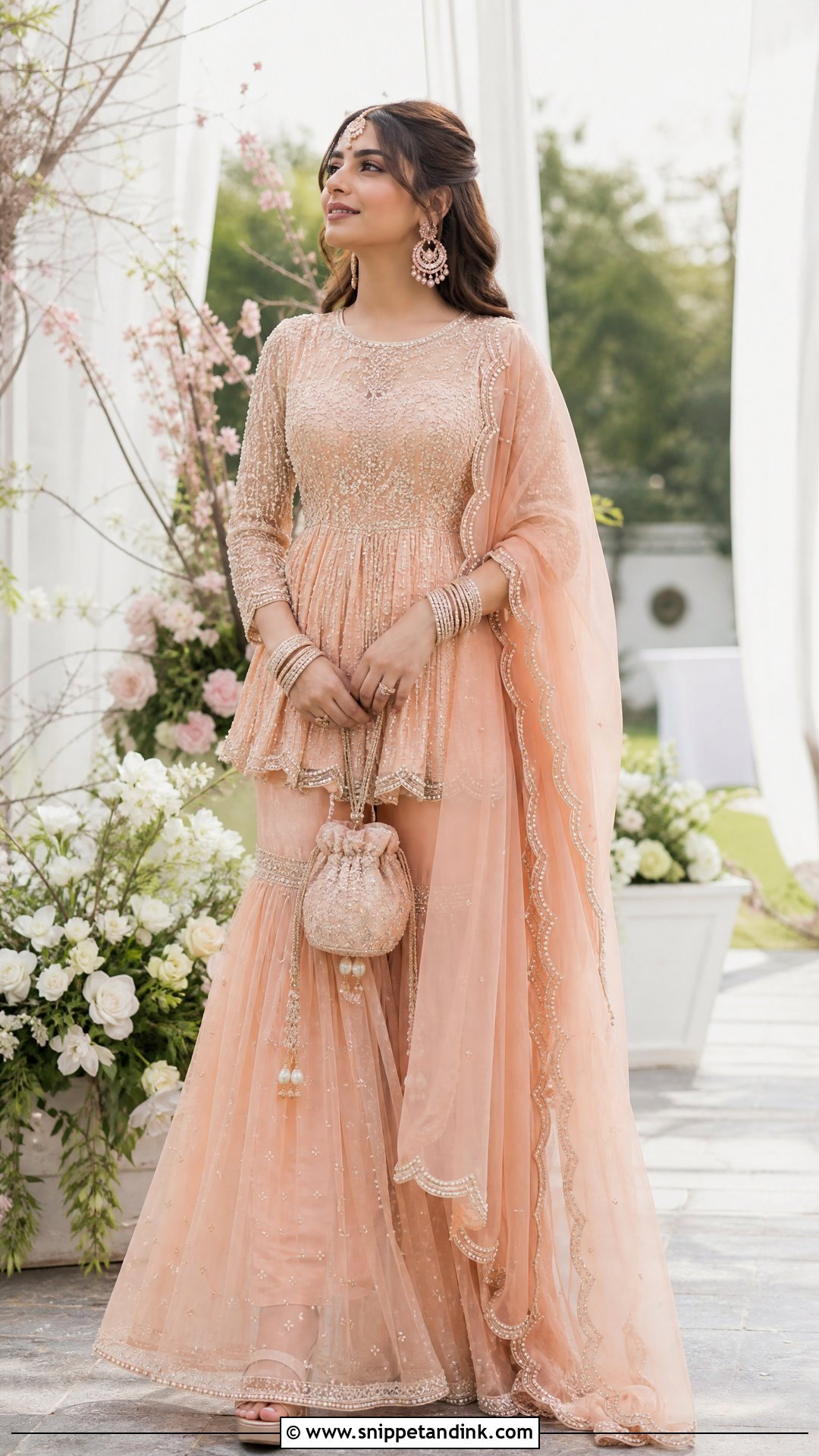
A peach peplum over a sharara gives a defined waist and soft volume below. The peplum length matters: just below the waist suits most figures, while a longer peplum starts to compete with the sharara flare. Floral embroidery, pearls or light mirrorwork on the top, with a matching sharara flowing from the hip and a sheer dupatta with a narrow scalloped edge, keep the weight low. Rose-gold earrings, a slim tikka, bangles, platform heels and soft waves complete it for a daytime sangeet, engagement or garden wedding.
12. Purple Silk Straight Cut Bridal Suit
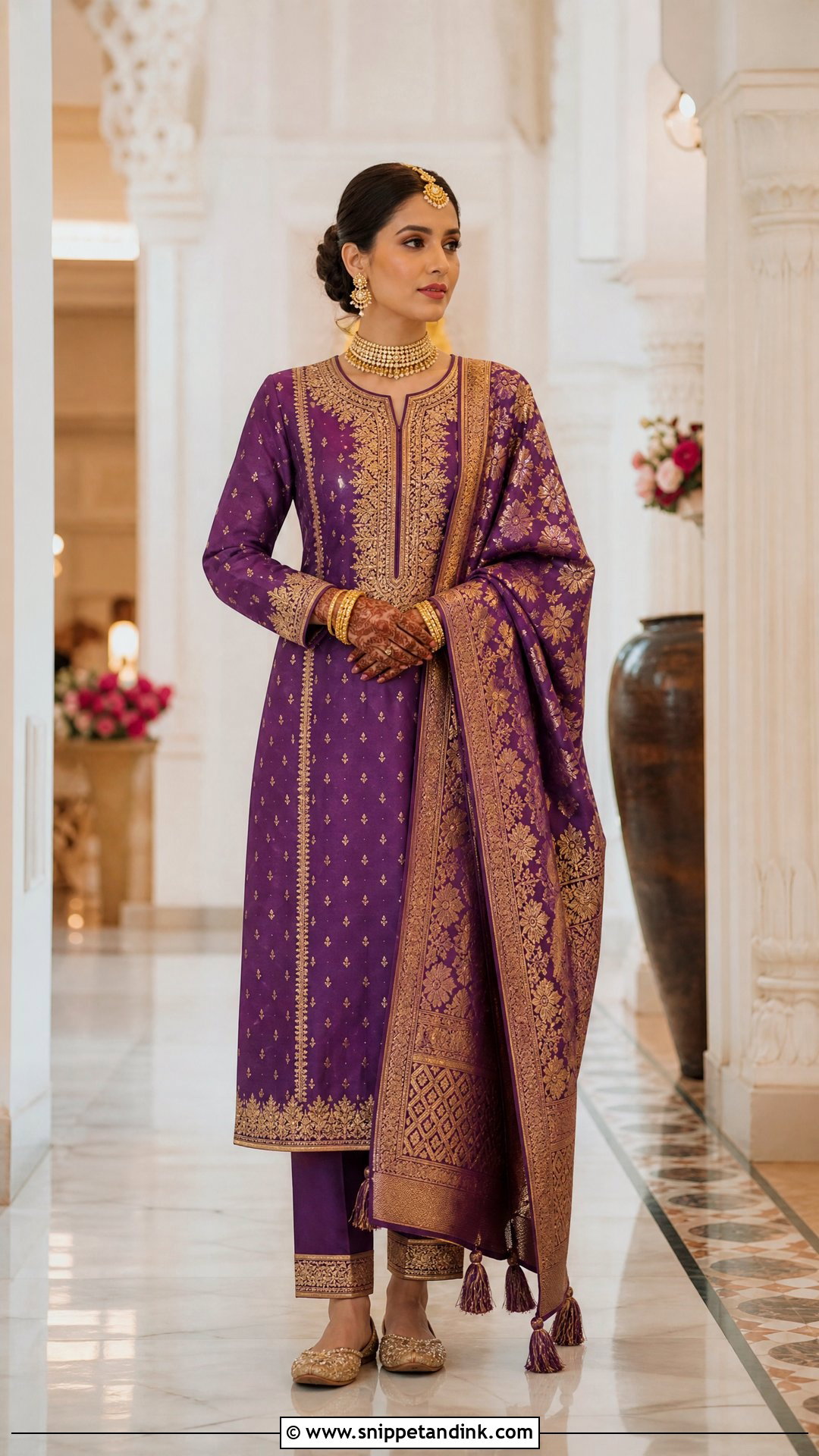
Purple silk in a straight cut is for a bride who prefers precise tailoring to flare. A long, neatly tailored kurta with gold embroidery on the neckline, sleeves and border, over cigarette pants, is clean and modest. With a straight cut, the side slits do the work of letting you sit and walk; I set them at the high thigh rather than the knee for comfort. A Banarasi, brocade or embroidered organza dupatta becomes the statement. A gold choker, mules or juttis and a low bun with a centre part finish it.
13. Orange Dhoti Bridal Suit
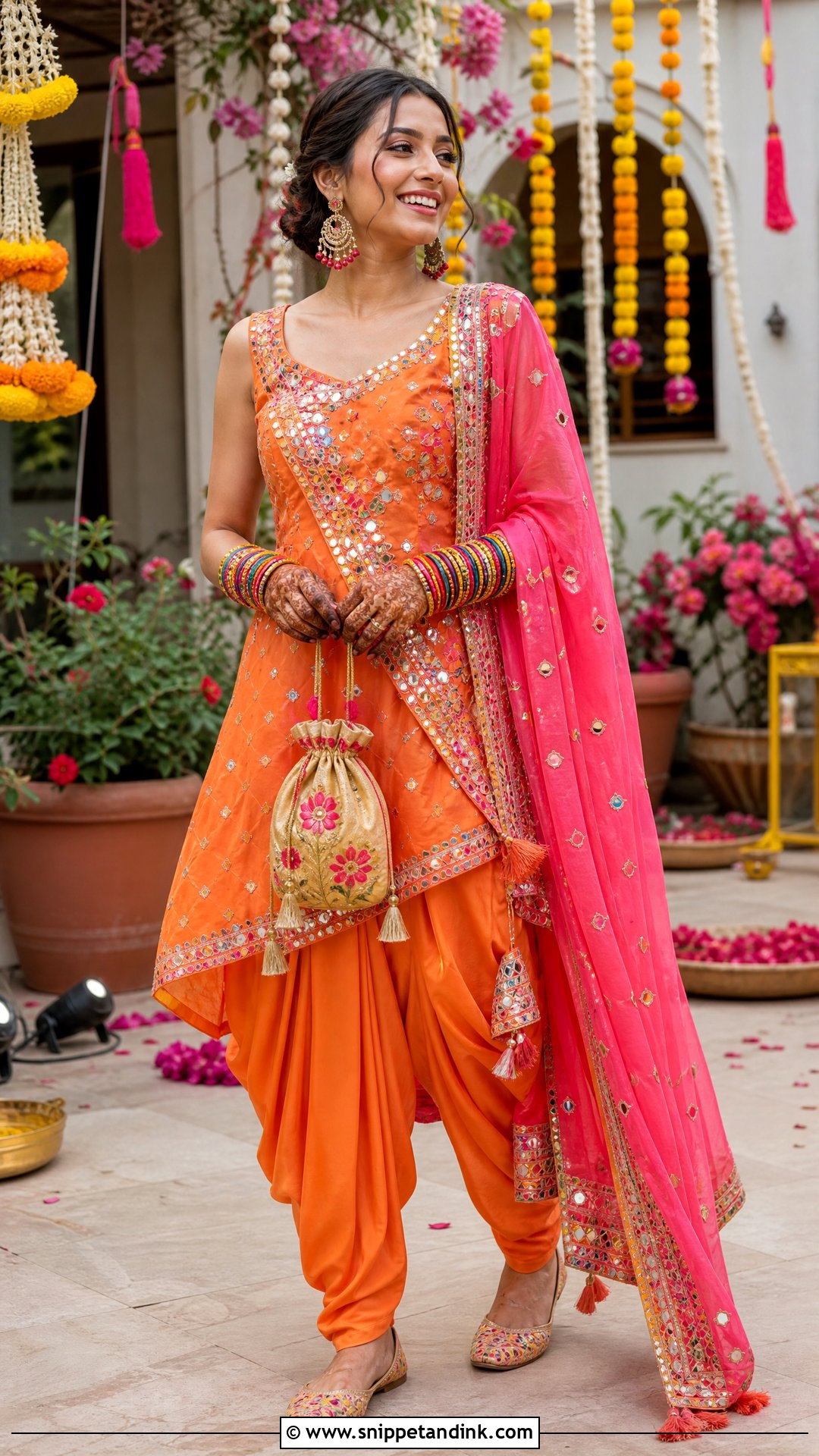
Orange in a dhoti-style bridal suit is lively for a mehndi or daytime function. The dhoti bottom needs secure, stitched pleats and real room at the hip; a dhoti cut too close loses its drape the moment you sit. A short kurta, asymmetric tunic or embroidered crop top that shows the drape, plus a pink, green or multicolour dupatta, gives contrast. Mirrorwork, gota and small tassels add festivity. Statement earrings, colourful bangles, juttis, a braided ponytail and a coral lip suit it.
14. Red Pakistani Bridal Suit
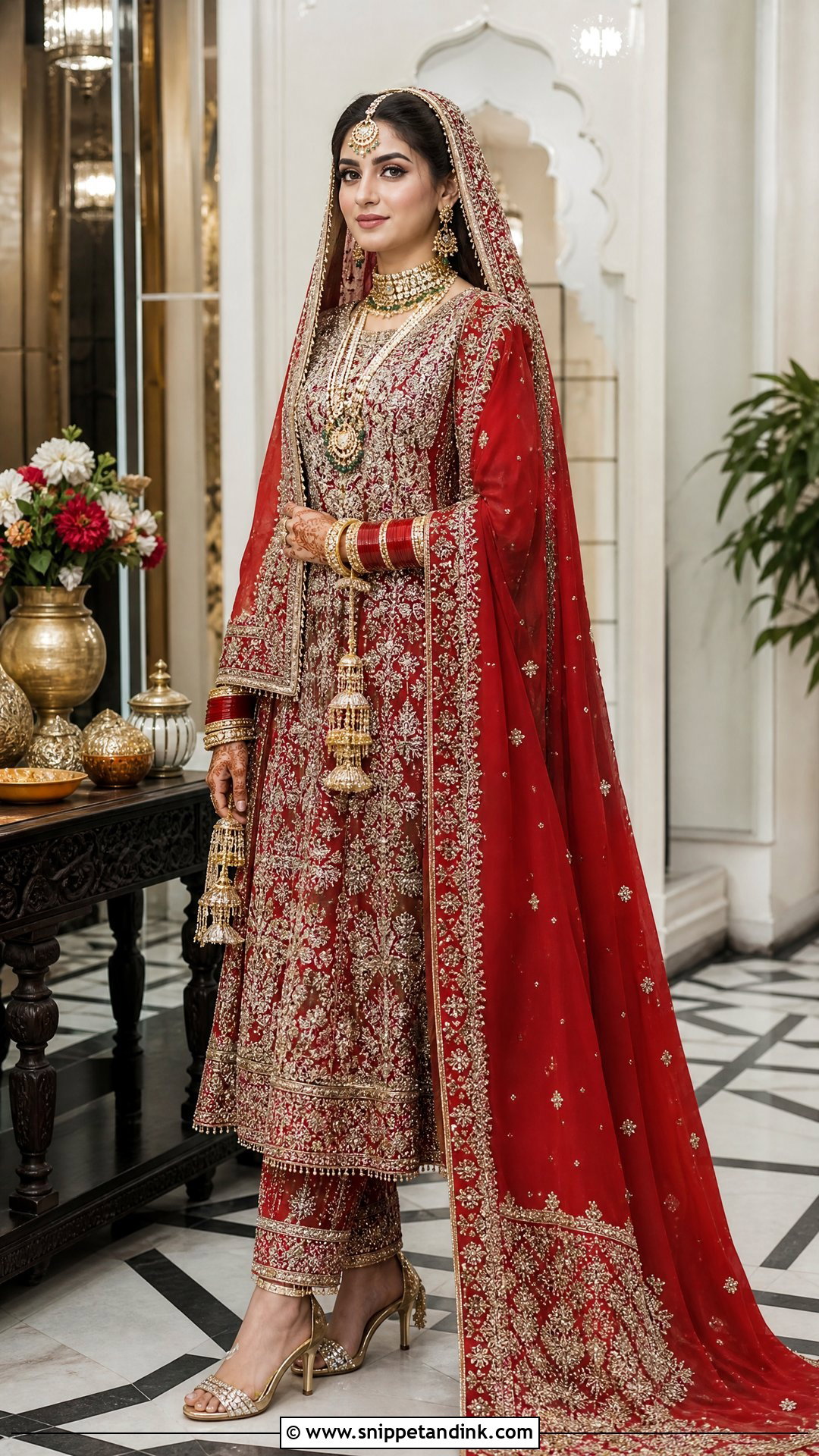
A red Pakistani bridal suit relies on length and surface work: a straight or lightly flared kameez below the knee, embroidered across the neckline, front panels, sleeves and hem, over straight trousers or a narrow salwar. A long kameez can look shapeless without careful darting, so I take the time to fit it through the bust and waist. Side slits give comfort for sitting. A long dupatta with a detailed border over the head, falling evenly both sides, frames the face. Kundan choker, long necklace, jhumkas, tikka, red bangles and a smooth bun complete it.

15. Mint Green Palazzo Bridal Suit
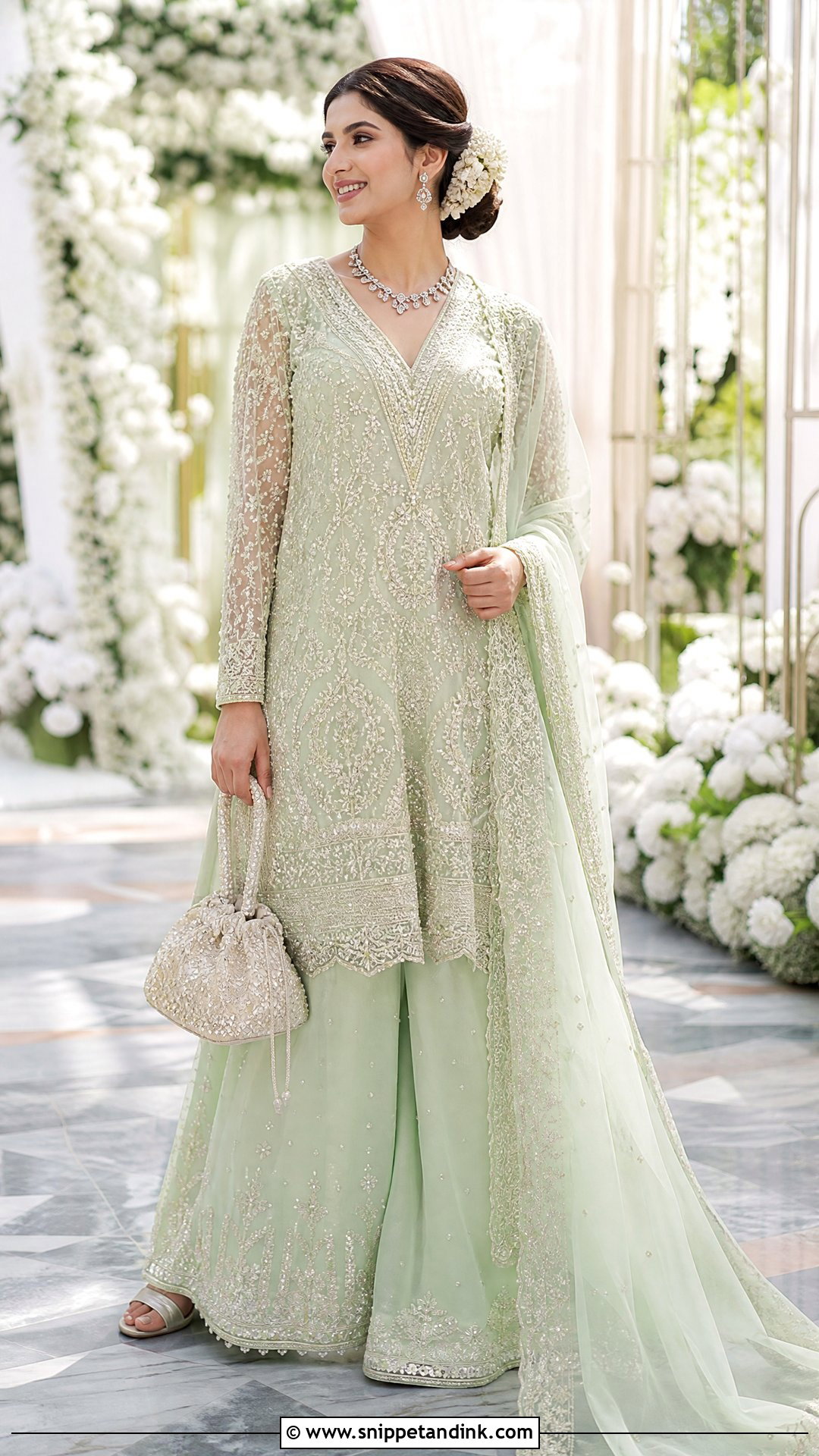
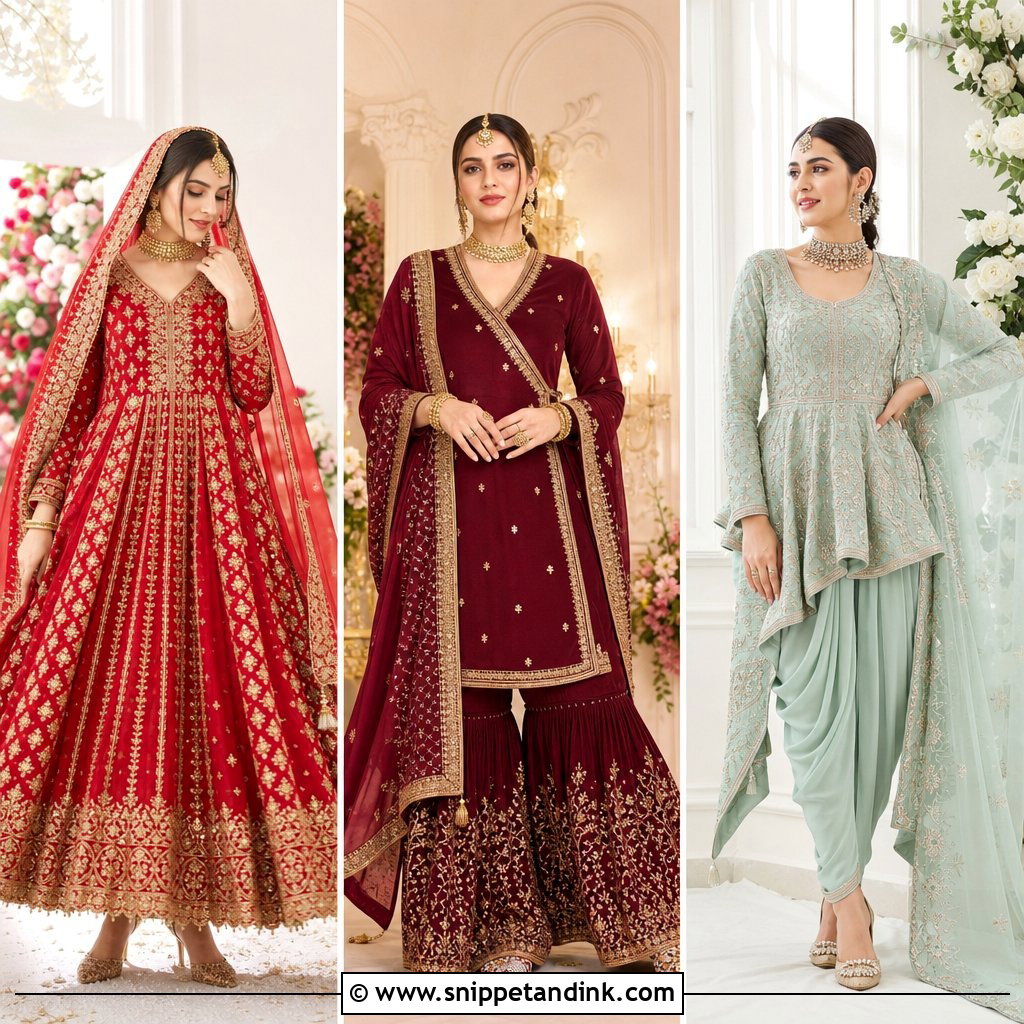
Mint is fresh for spring and summer. An embroidered A-line kurta with a fitted upper body falling over wide palazzos has a light, easy line. Silver threadwork, pearls, crystals or tonal flowers add detail. Pale fabrics like mint are often slightly sheer, so I ask for a lining and check the palazzos in daylight. A sheer organza dupatta with scattered motifs, pearl earrings, silver sandals and a beaded bag suit it. Ruby or emerald accents add contrast. A low floral bun and natural makeup keep the mood airy.
16. Black Sequin Bridal Pant Suit
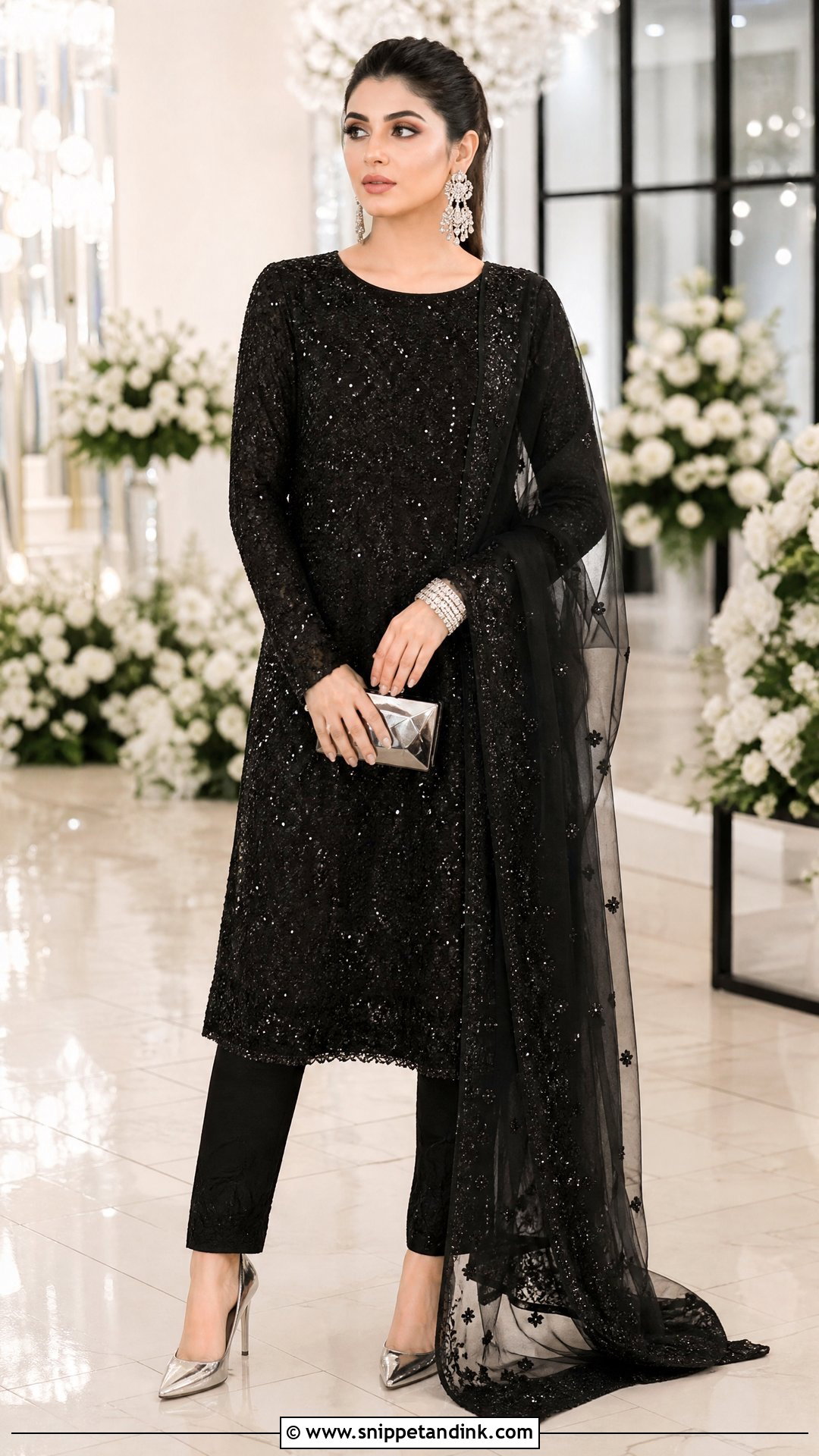
A black sequin pant suit is a glamorous reception look and not one for every family; in some traditions black is avoided at weddings, so check first. A long fitted kurta with full sleeves and a modest neckline, over straight pants that skim without clinging, keeps it sharp. All-over sequins scratch, so I ask for a soft lining in the sleeves and underarms. A sheer black dupatta with a narrow sequin border softens it. Crystal earrings, a cuff, pointed metallic heels, a sleek ponytail and smoky eyes suit the evening.
17. Magenta Bandhani Bridal Suit
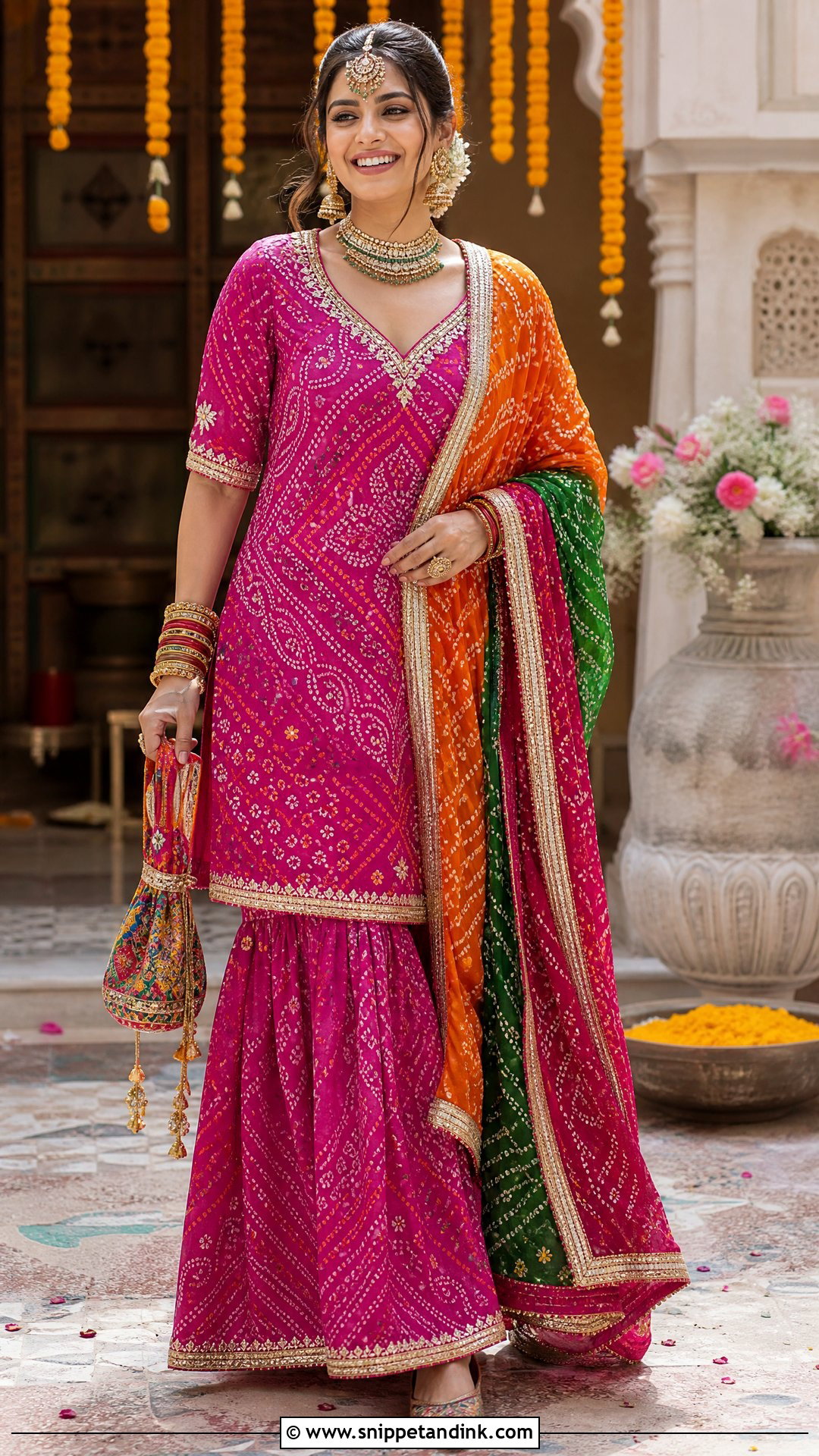
Magenta bandhani brings Gujarati and Rajasthani pattern to a suit. Each dot is a tiny tied resist, which gives the cloth its crinkled texture; pressing it flat removes that character, so it should be steamed lightly and dry-cleaned. A short or mid-length kurta finished with gota, mirrors or zari, over a sharara or pleated salwar, with an orange, red or green bandhani dupatta, is vivid and festive. Gold jewelry, bangles, a tikka and juttis complete it for a mehndi, garba gathering or daytime function.
18. Burgundy Velvet Palazzo Bridal Suit
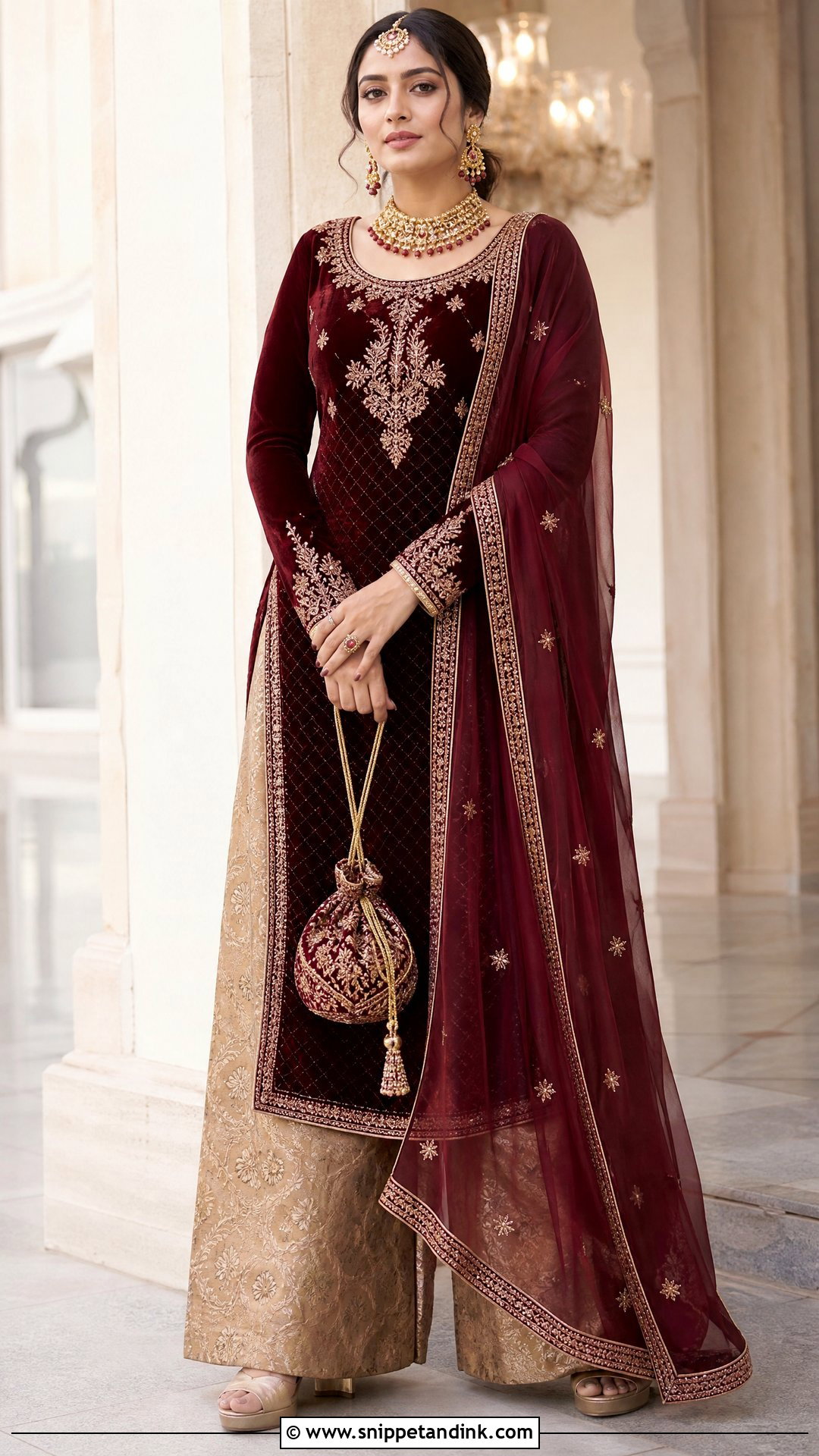
Burgundy velvet with wide brocade palazzos combines two heavy fabrics, so balance is the job. Keep the kurta mid-length with a clean shape and side slits, with gold work at the neckline and cuffs. Line it fully and ask for minimal seams at the waist, since velvet adds bulk fast. A lighter organza or net dupatta stops the outfit feeling dense. Antique gold earrings, a layered necklace, platform heels and a small potli suit it. A side-parted low bun and warm makeup finish it for a winter sangeet or formal evening.
19. Powder Blue Angrakha Bridal Suit
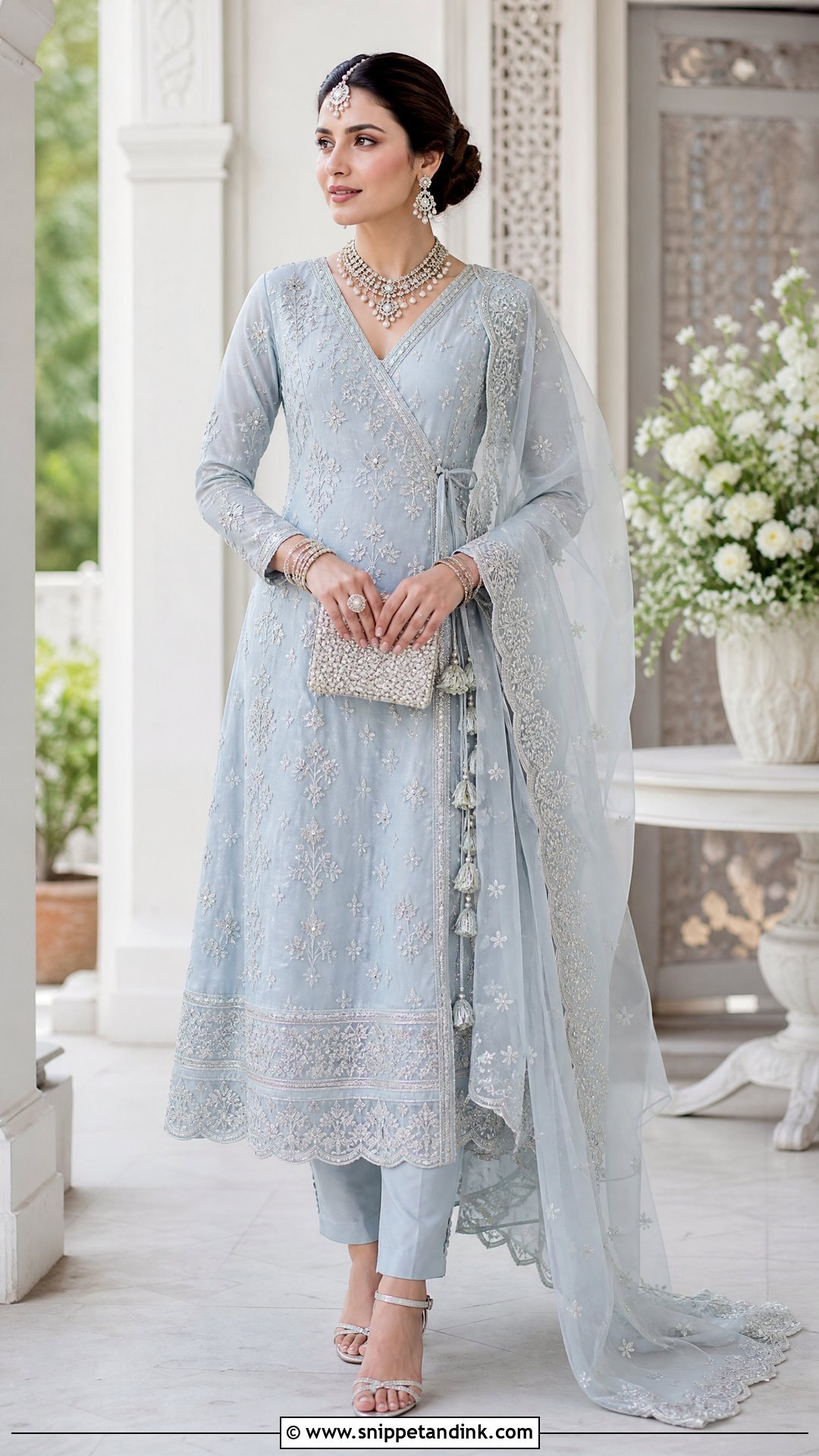
An Angrakha wraps across the body, with one panel overlapping the other and fastening at the side, usually with tie strings and tassels. Powder blue with silver embroidery and pearl accents along the diagonal neckline is gentle and modern. The wrap gives you a little adjustability, but tie strings alone tend to gape; I always add hidden hooks or a press stud under the overlap. Churidars or straight trousers, a sheer dupatta with a scalloped edge, pearl-and-crystal jewelry and a low bun with pale flowers suit an engagement or daytime reception.
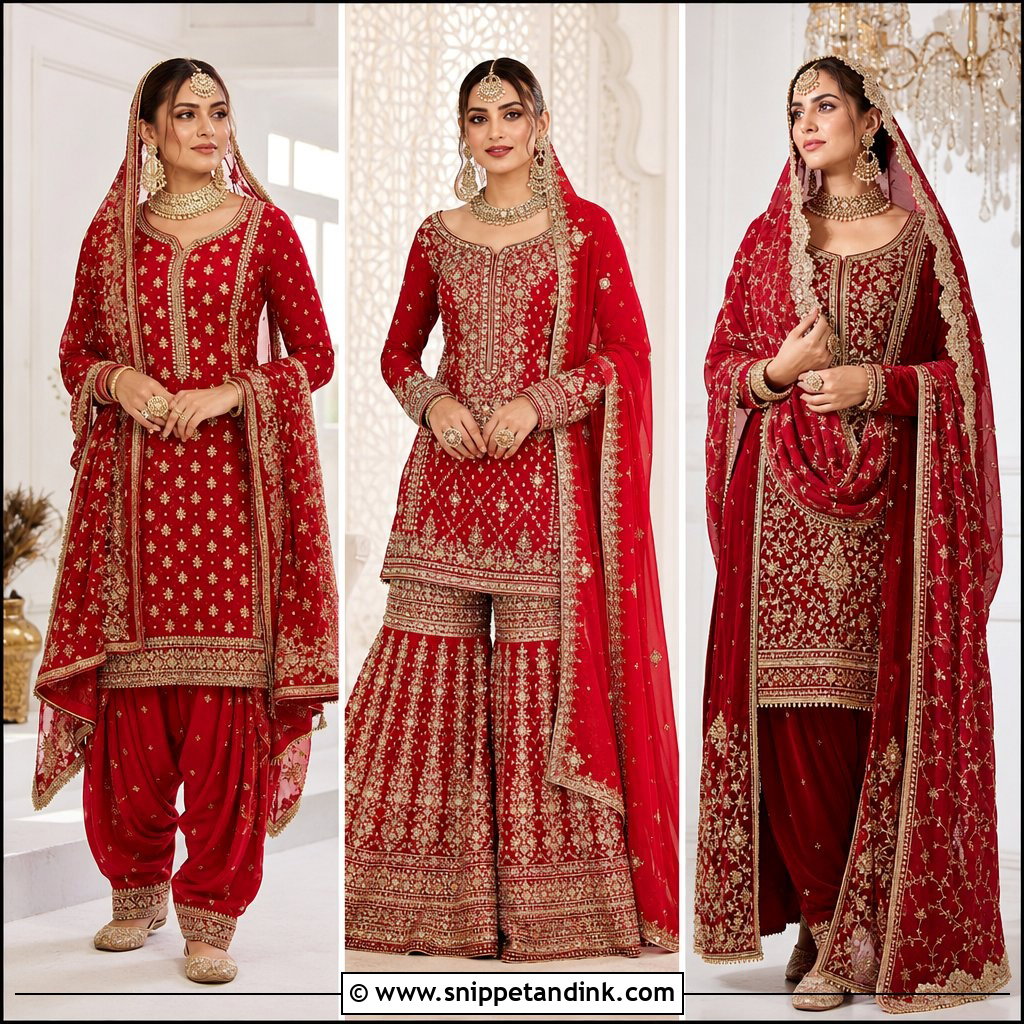
20. Red Punjabi Salwar Bridal Suit
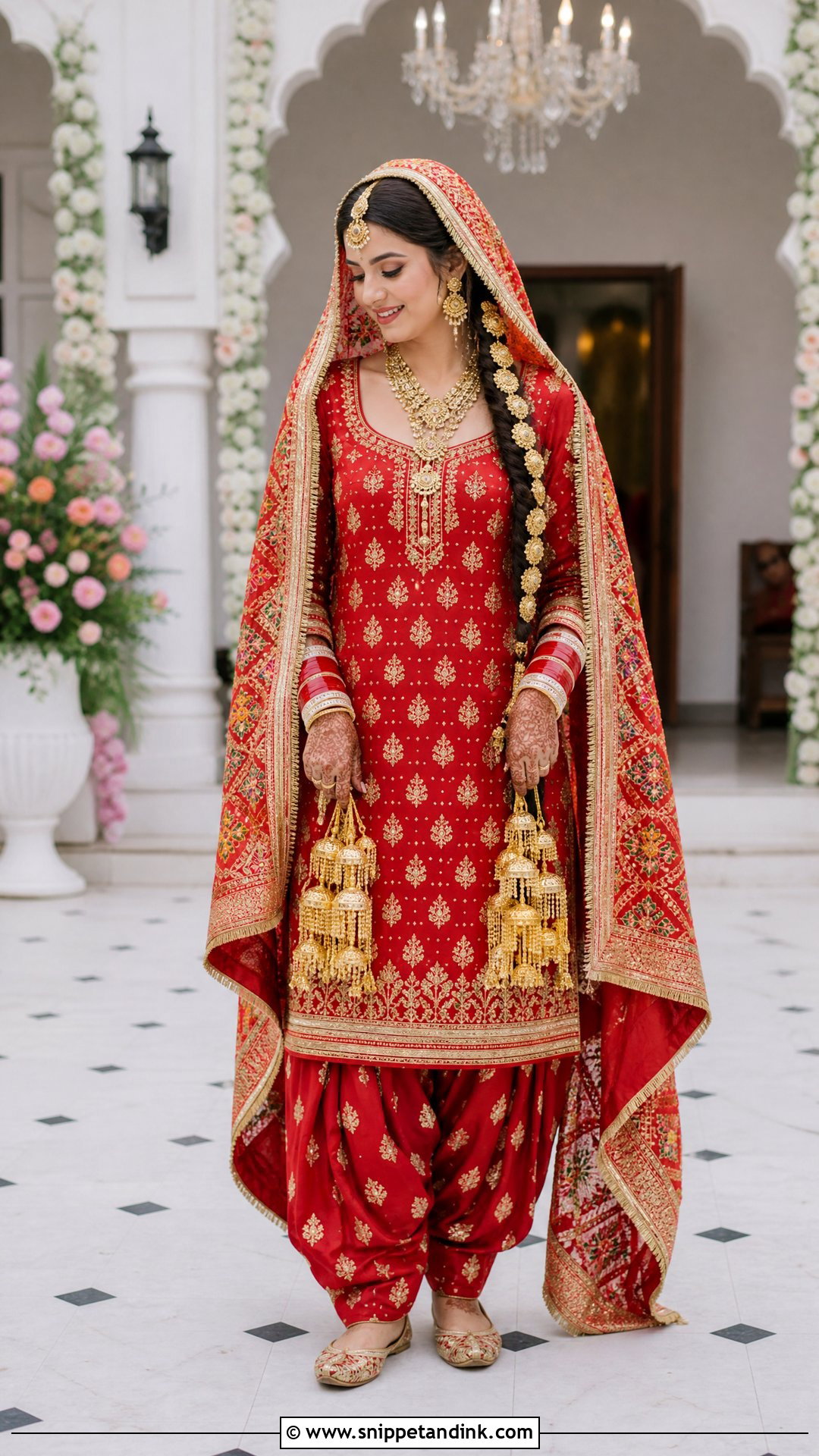
Few looks are as instantly recognisable as a red Punjabi bridal salwar suit. A fitted knee-length kameez in silk or velvet with gold embroidery, a generously pleated salwar and a phulkari or bridal dupatta over the head is the heart of it. Chooda covers the forearm, so I keep kameez sleeves ending above the bangles or cut wide enough not to rub. A choker, long necklace, jhumkas, tikka, kaleere and Punjabi juttis complete it. Match the embroidery, jewelry metal and dupatta border before final fittings.
Setting a Heavy Dupatta So It Stays on Your Head
Many of these suits rely on a dupatta draped over the head for the ceremony, and a bordered bridal dupatta is heavier than it looks. The border pulls backwards, so without anchoring it slides off the moment you turn.
- Build the hairstyle with the dupatta in mind: a low bun gives a firm base to pin into.
- Fold a small pleat where the dupatta meets the crown and pin through it into the bun with U-pins, not just bobby pins.
- Add one hidden pin at each shoulder so the weight rests there and not on your hair.
- Silky georgette slips more than net; a strip of double-sided fabric tape at the crown helps.
- Walk, sit and bow your head once before you leave the room.
Wearing It Again
The suit’s real advantage shows after the wedding. The kurta pairs with plain trousers for festivals, the dupatta works over a simple outfit, and a sharara or palazzo can go with another top entirely. Store embroidered pieces folded in cotton rather than plastic, and the suit will be ready for the next family wedding. If you plan to rewear it, ask your tailor at the first fitting to leave generous seam allowance at the sides and sleeves. Bodies change over the years, and that extra fabric is what lets the same kurta be let out later instead of retired.
A Bridal Suit Has a Life After the Wedding
A bridal wardrobe can be far more varied than one lehenga. You might wear a red Punjabi suit, a velvet Anarkali, a sharara, a straight-cut set or a cape outfit, depending on the ceremony, the weather and your family’s traditions. Put secure tailoring, breathable lining, comfortable shoes and a dupatta that stays put ahead of extra embroidery, and let jewelry support the outfit rather than compete with it. Above all, you should be able to sit, move and celebrate without thinking about your clothes. And unlike most bridal outfits, a good suit will come out of the cupboard again.
You'll Like These Ideas:






Leave a Reply