
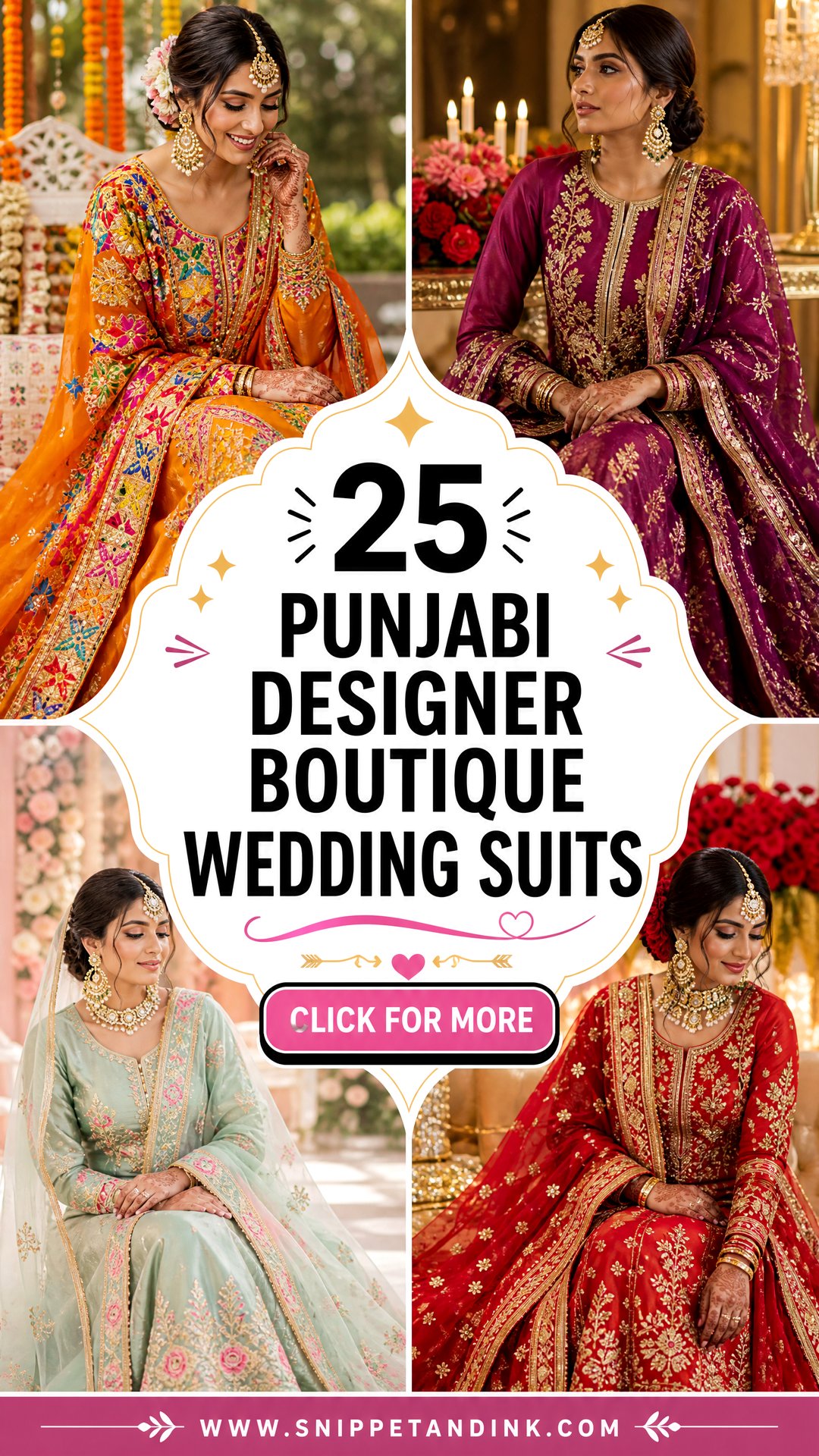
A good boutique suit is where Punjabi tailoring really shows off: rich colour, a cut made for your body and handwork you can feel under your fingers. The range is wide, from Patiala salwar suits with phulkari dupattas to shararas, ghararas, Anarkalis, velvet kameez sets and mirror work. I shop these with brides, sisters and mothers of the couple, and the question is always the same: will it look festive at the sangeet and still be comfortable at hour six of a family function? Below are 25 styles, with the details I look for when I turn a suit inside out on the boutique counter.
Telling Handwork From Machine Embroidery on the Counter
Boutique prices are mostly paying for handwork and tailoring, so it helps to be able to see both before you buy. When I’m shopping with someone, I turn the kameez inside out before I look at the colour.
- Machine embroidery has a uniform, tight backing, often with a stiff paper or mesh stabiliser behind it. Hand embroidery has knots and slightly uneven stitches on the reverse.
- Zardozi and dabka done by hand feel raised and slightly irregular under your fingertip; machine imitations feel flat.
- Look at the seams. Overlocked edges are standard; bound or hand-finished seams show extra care.
- Ask about seam allowance. A generous one lets the kameez be let out later, which matters if you want to wear it again.
Machine embroidery is not bad, and it is lighter and cheaper. But if a suit is priced as handwork, the reverse should show it. I also ask whether the dupatta is included and whether alterations are part of the price, since both vary from one boutique to the next.
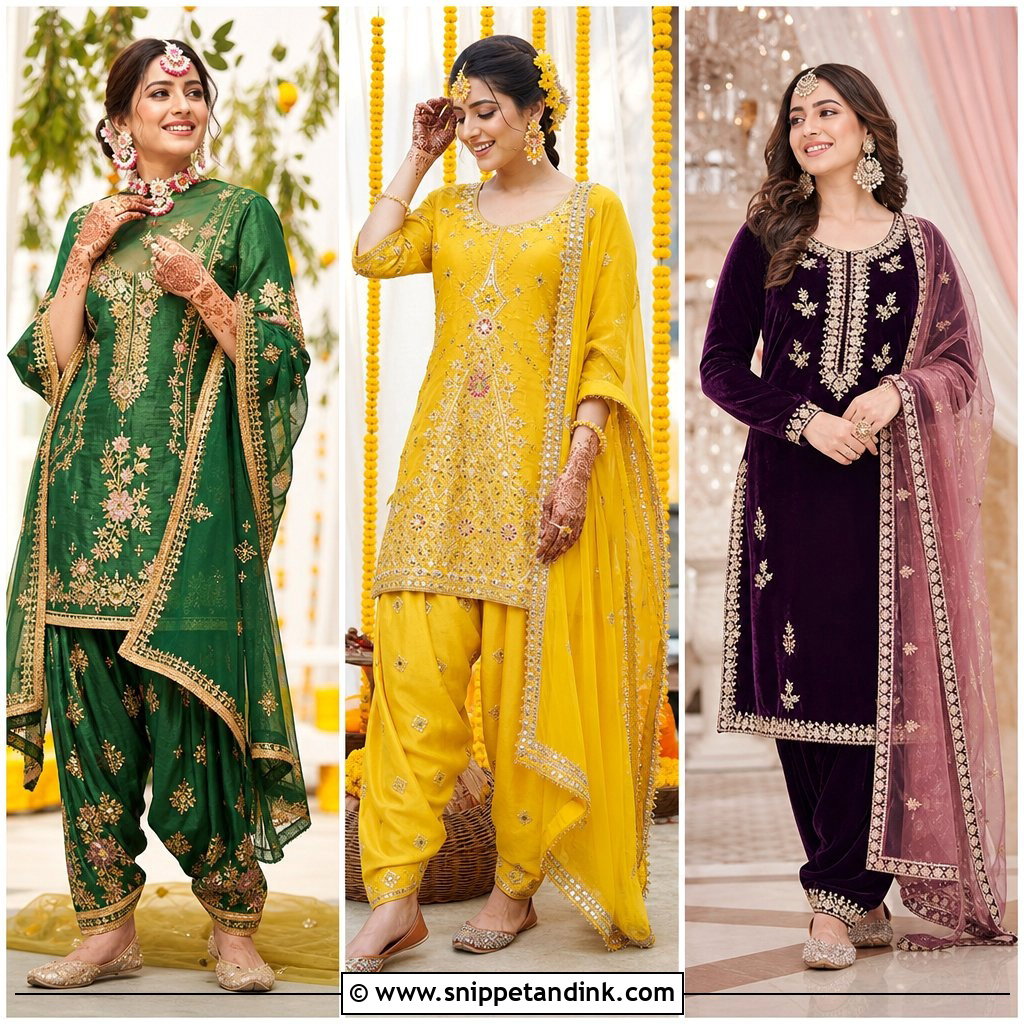
1. Punjabi Patiala Suit For Wedding
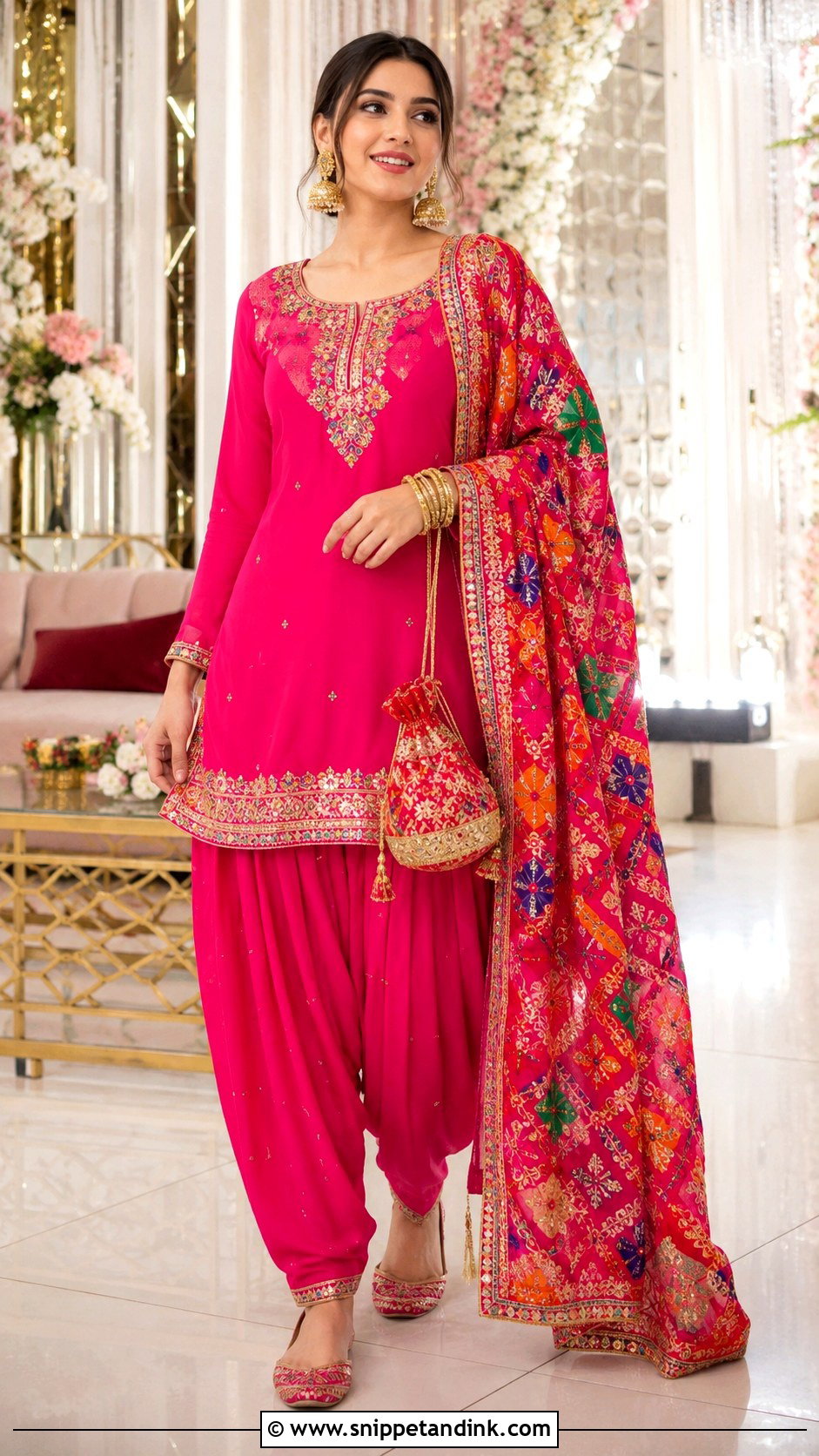
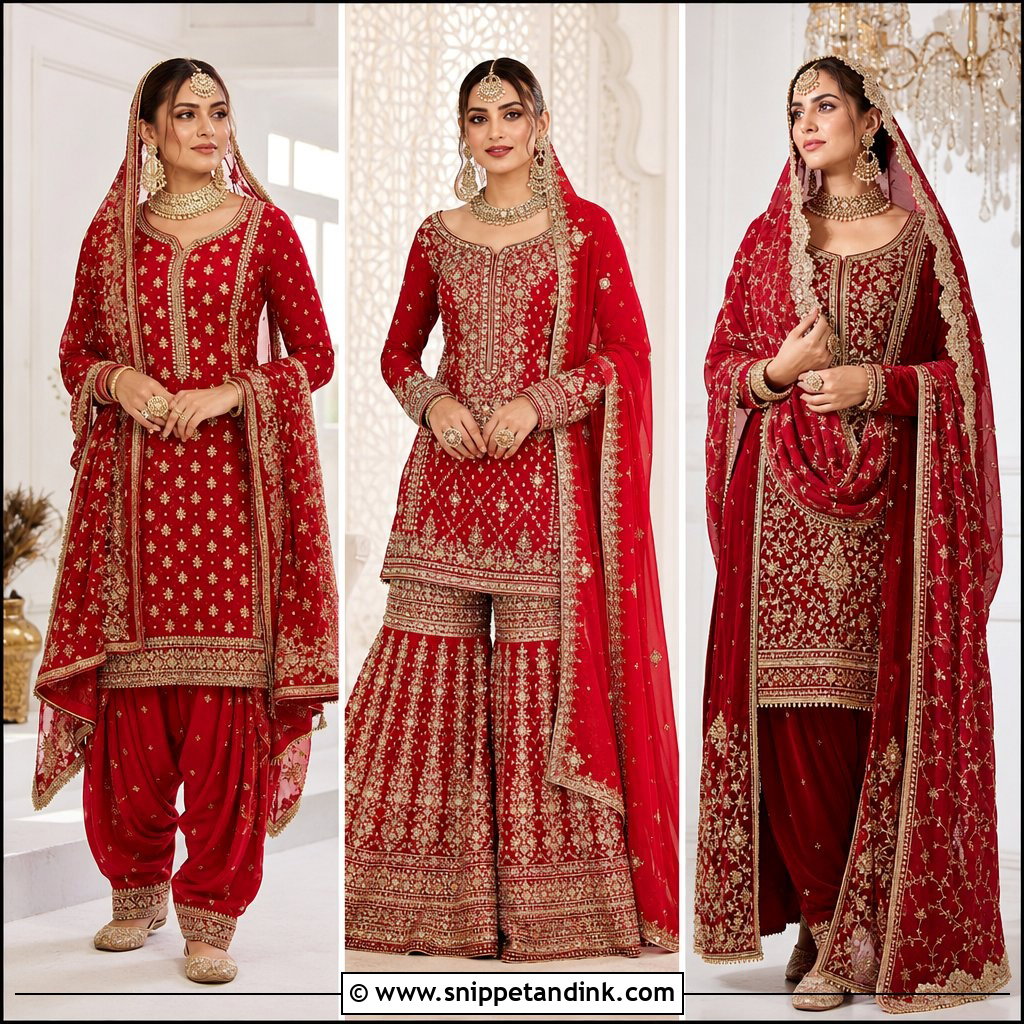
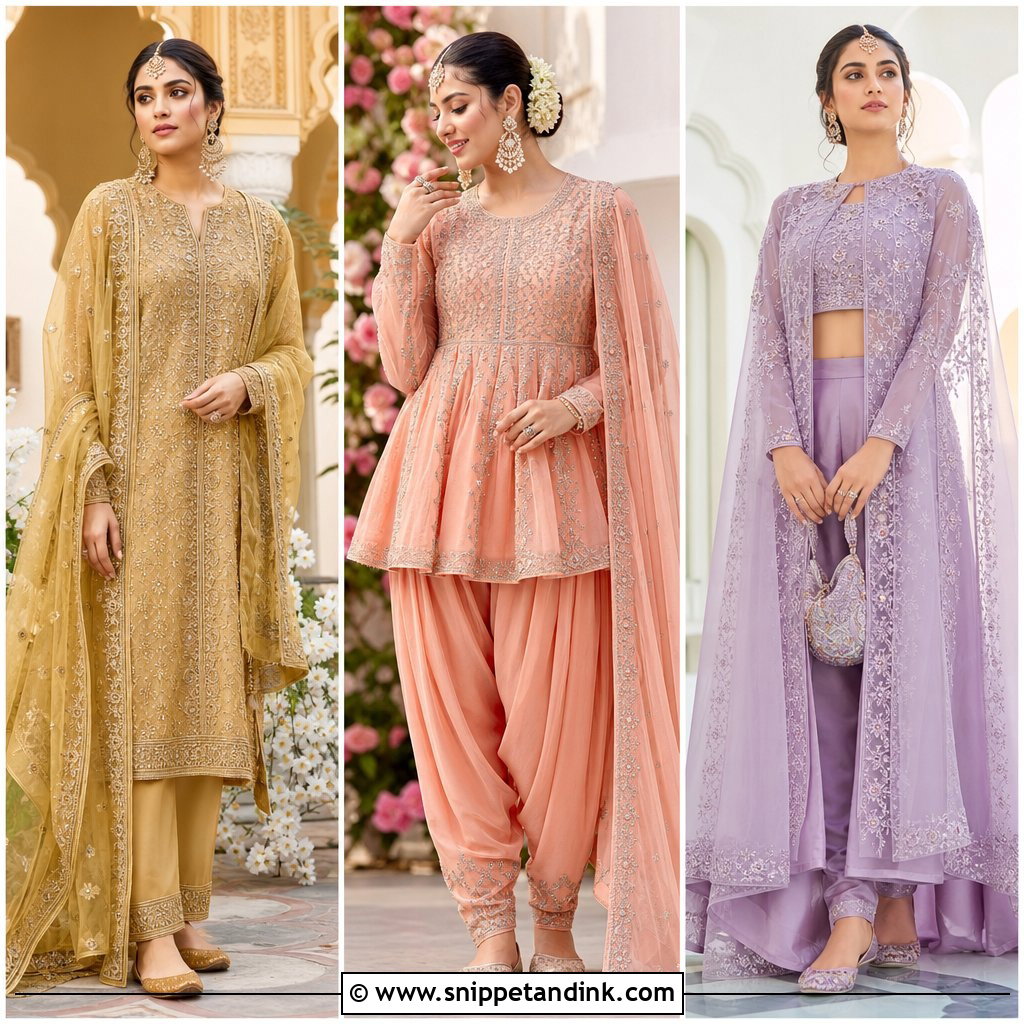
The Patiala is the classic: a short embroidered kameez over a pleated salwar that gives volume and freedom to move. Silk, georgette or crepe with zari, resham, sequins or mirrors at the neck and sleeves dresses it up, and a heavy phulkari or embroidered organza dupatta makes it feel grand. Fabric weight matters here. Crepe and georgette fall into soft, deep folds, while stiff silk can make the pleats stand out at the hip. Rani pink, mustard, emerald, maroon and royal blue all suit day or evening, with juttis, gold bangles, jhumkas and a small potli.
2. Punjabi Sharara Suit For Wedding
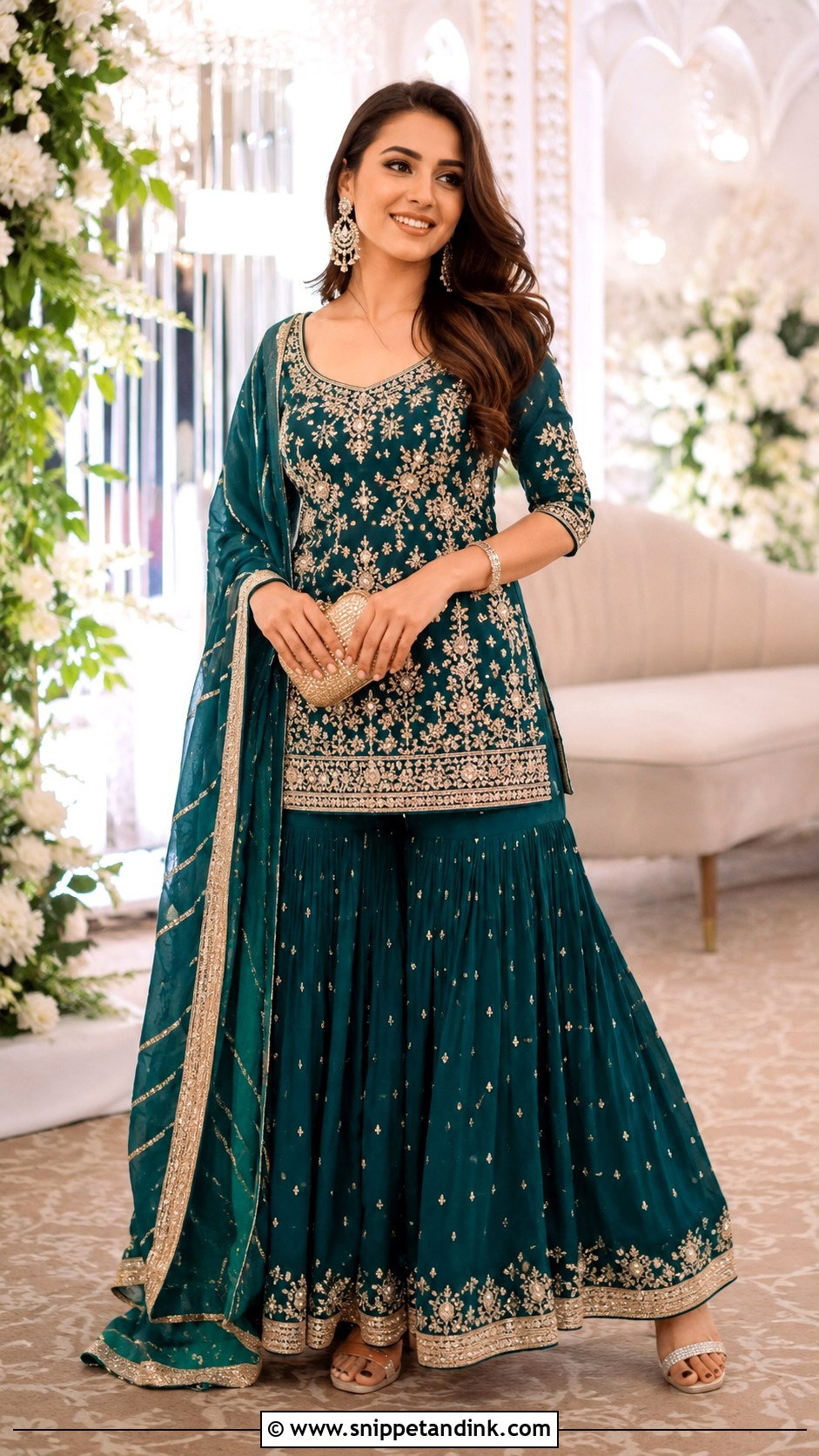
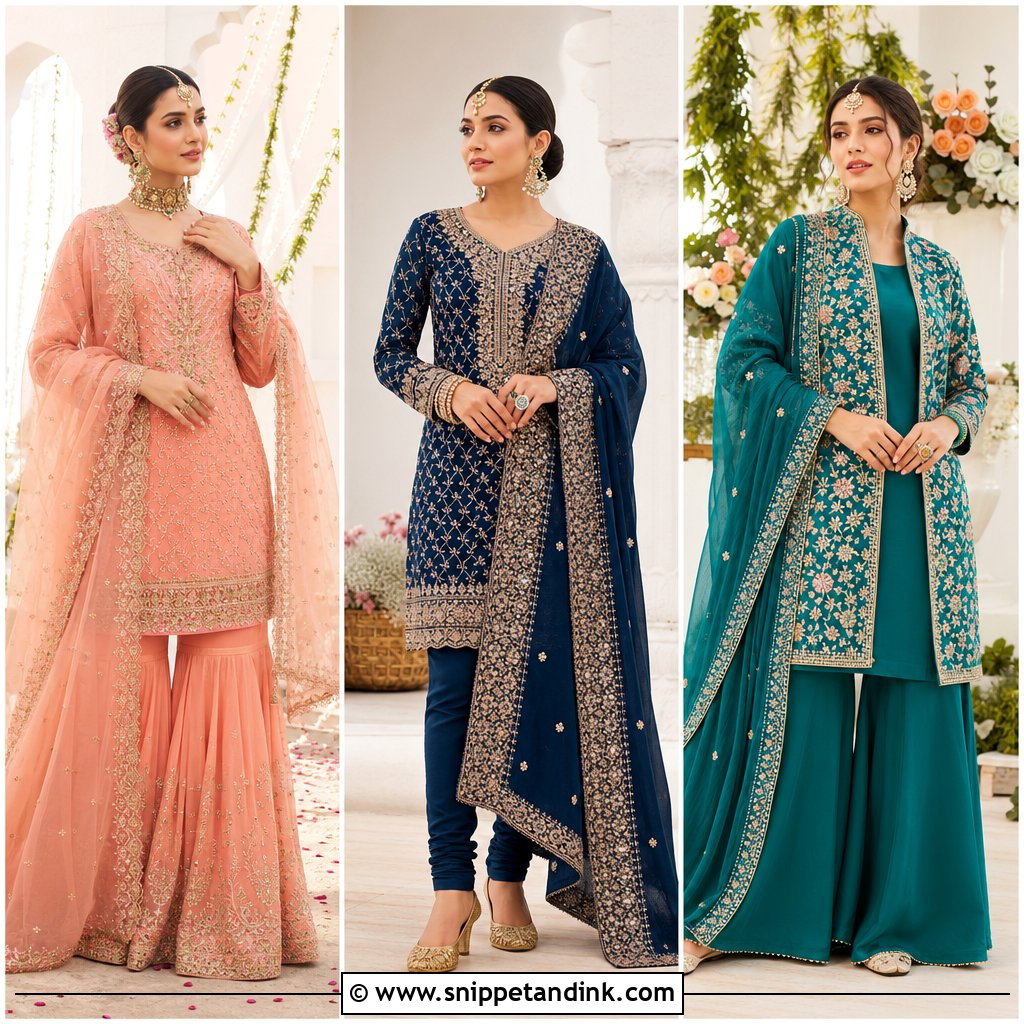
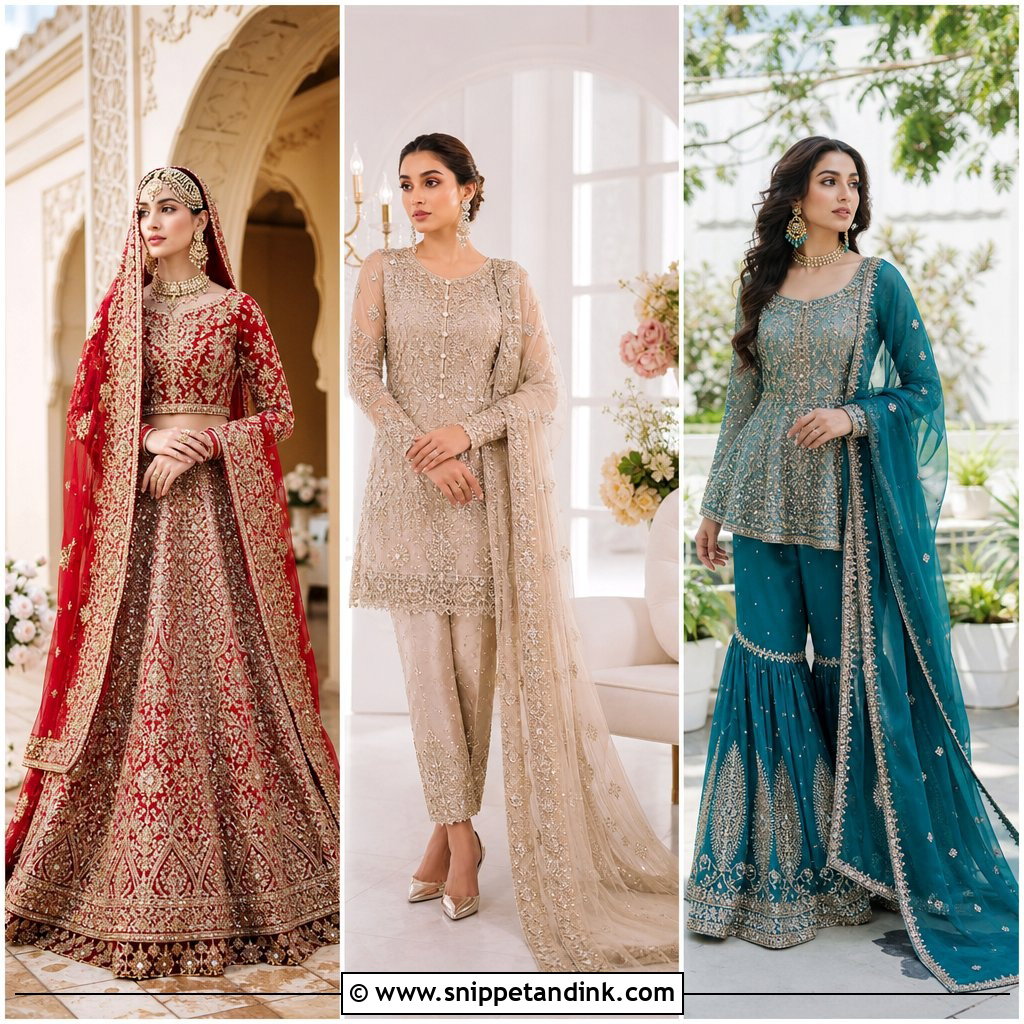
Shararas look festive without much weight. The pants flare from the knee, and a short or mid-length kameez keeps the proportions right. I look for embroidery at the hem, neckline, cuffs and dupatta border, in gota patti, zardozi, thread or light mirror work. Have the length set with the shoes you’ll actually wear; a sharara hemmed for flats drags once you put on block heels. It suits sangeet, mehndi, engagement and family receptions, and a passa, chandbali earrings and a structured clutch polish it.
3. Punjabi Gharara Suit For Wedding
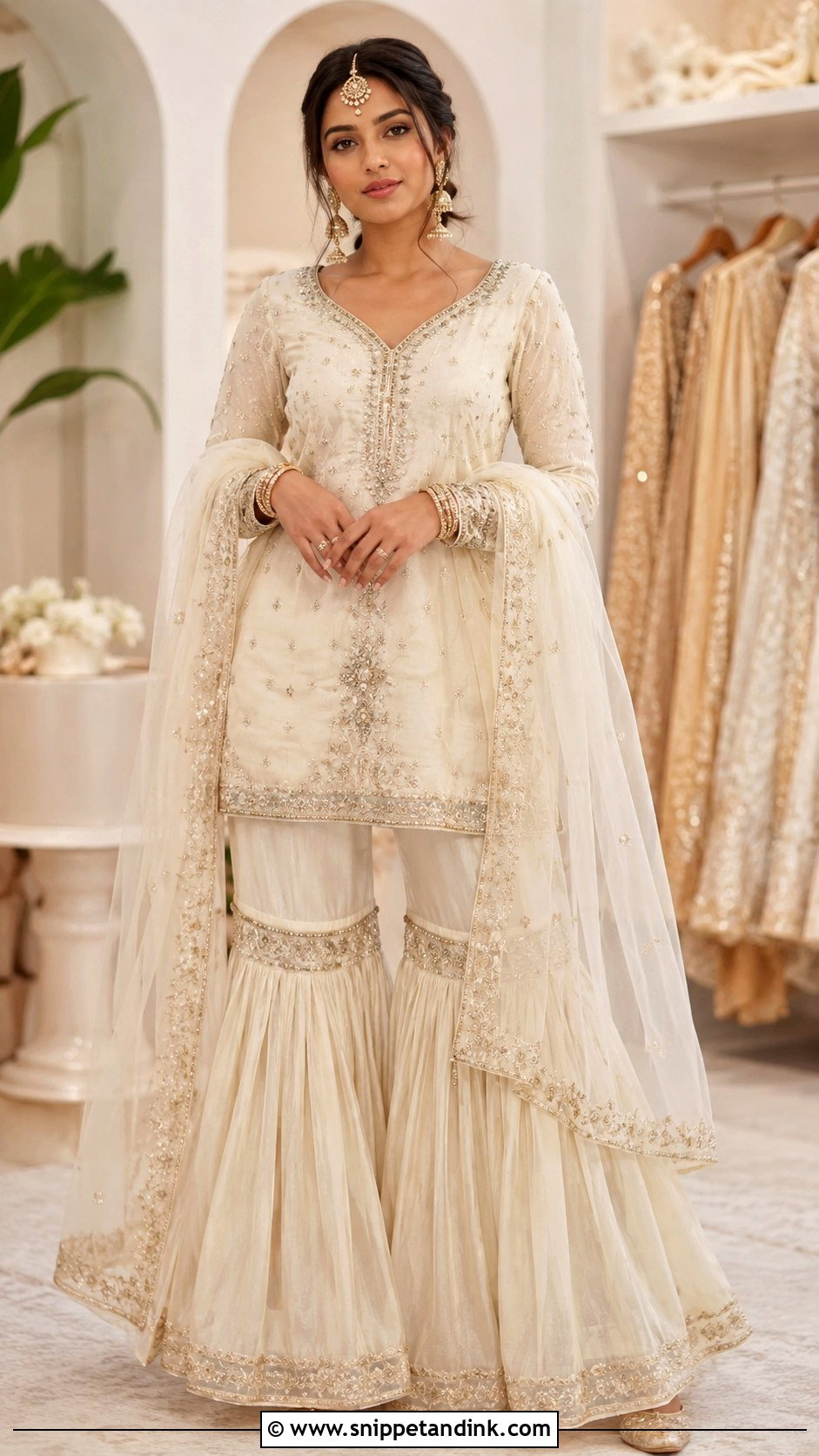
A gharara has an old-world grace: fitted through the upper leg, then flaring from a joined panel at the knee, often finished with lace, zari or gota. That knee seam is what I inspect first. It should sit right at the knee when you stand, and on a petite frame an off-the-rack gharara often places it too low, which makes the legs look short. Soft silk, brocade, georgette or chiffon work, pastels for day and jewel tones for evening. Drape the dupatta over one shoulder and add a maang tikka, jhumkas and bangles.
4. Punjabi Anarkali Suit For Wedding
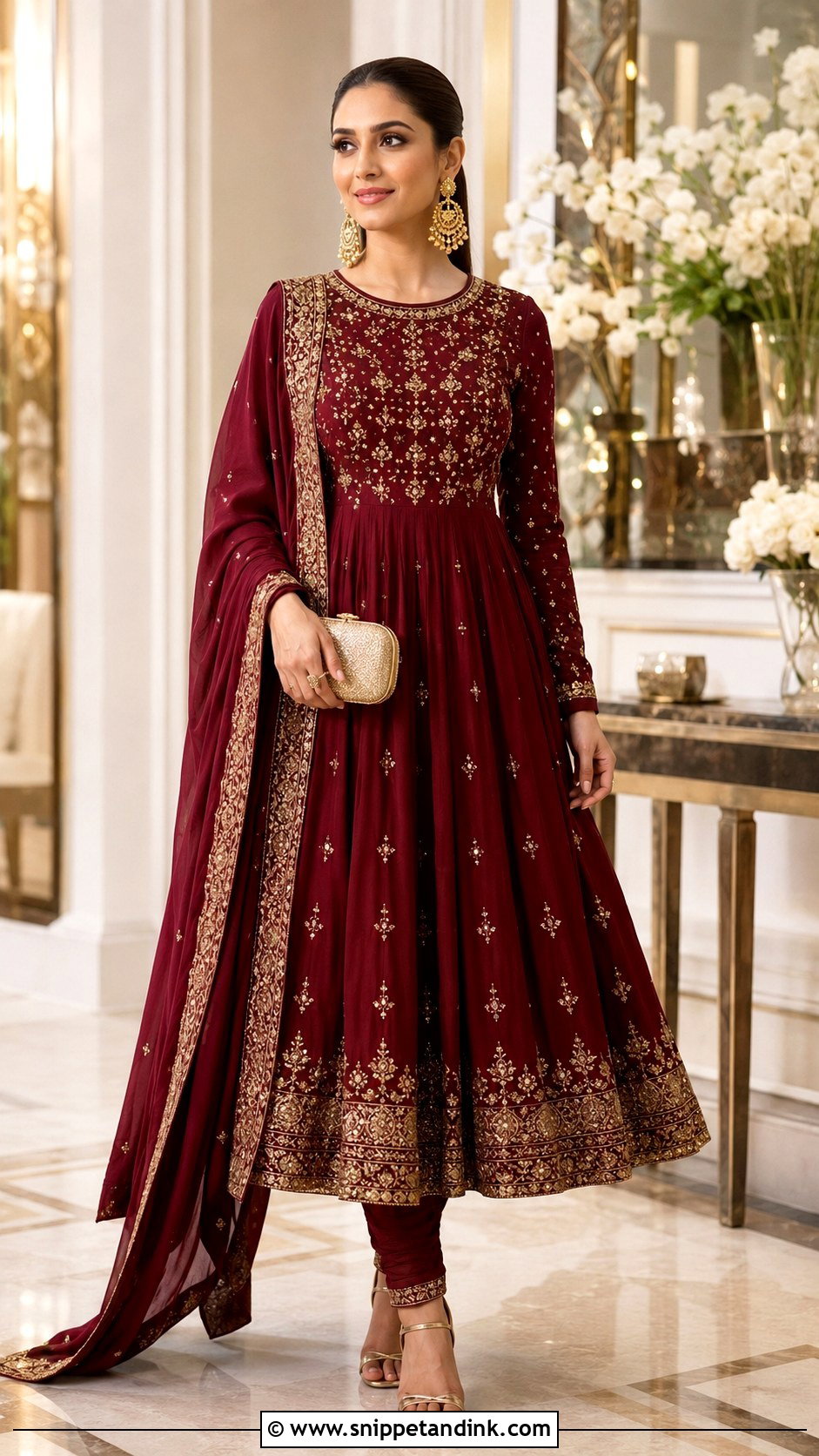
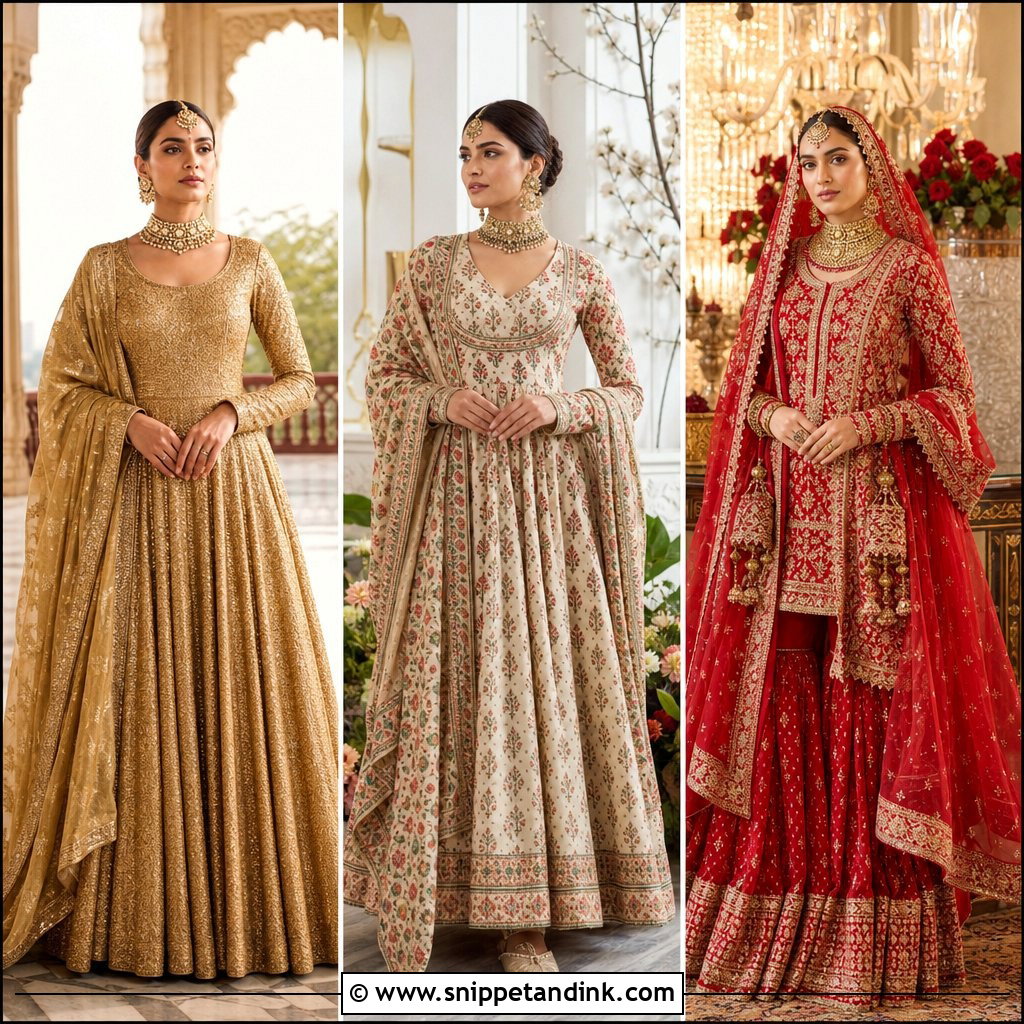
A flared Anarkali over churidar or slim trousers gives a long, flowing line. Boutique versions tend to put the work into the yoke, sleeves and scalloped borders, with a lace or sequin dupatta. Velvet suits winter, georgette moves best, and silk blends look polished. Check the number of kalis, the flared panels: more panels mean more flare and more weight at the hem, which is lovely standing but bulky in a car. It’s a reliable pick for bridesmaids, sisters, close relatives and guests alike.
5. Punjabi Phulkari Suit For Wedding
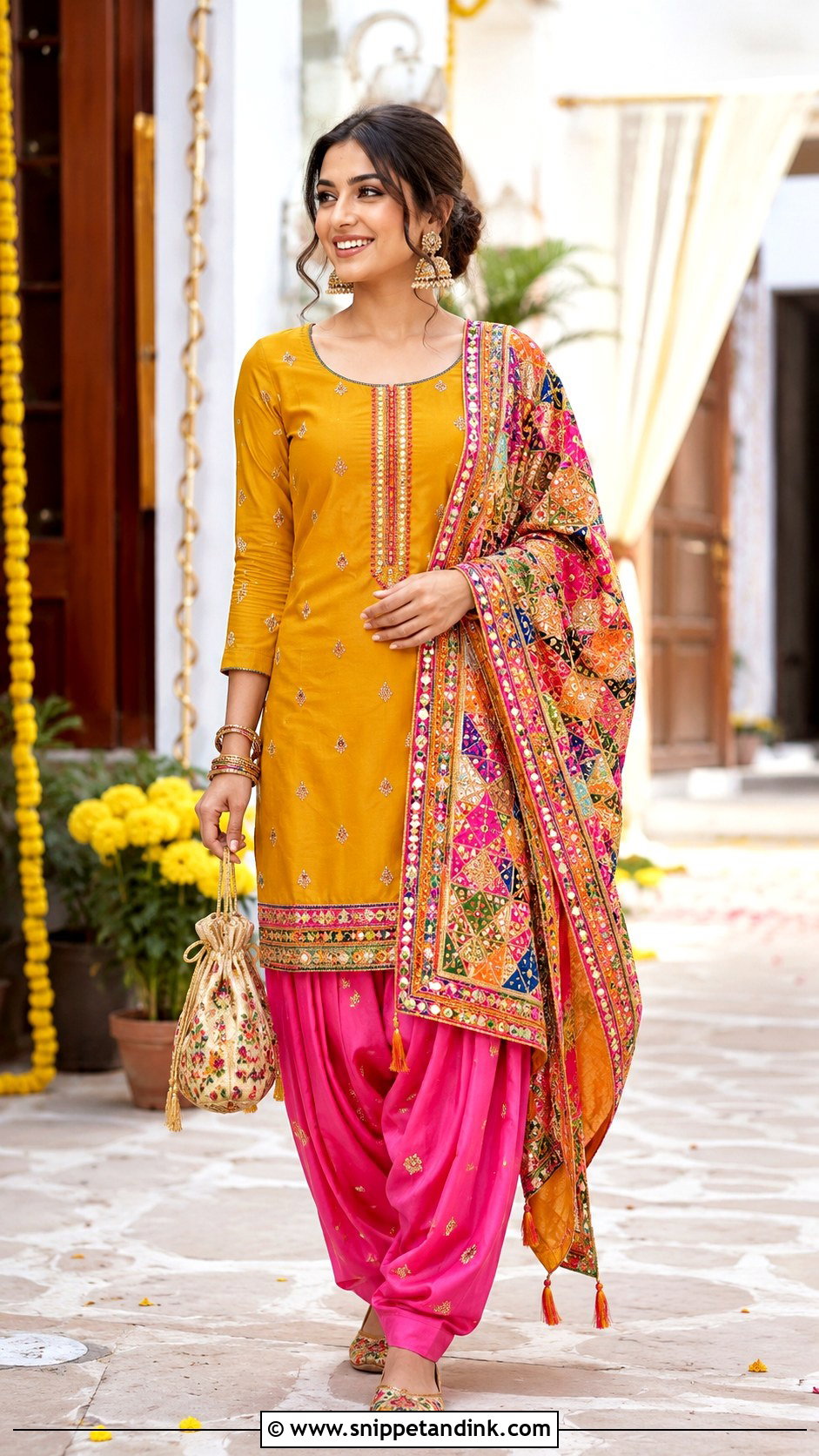
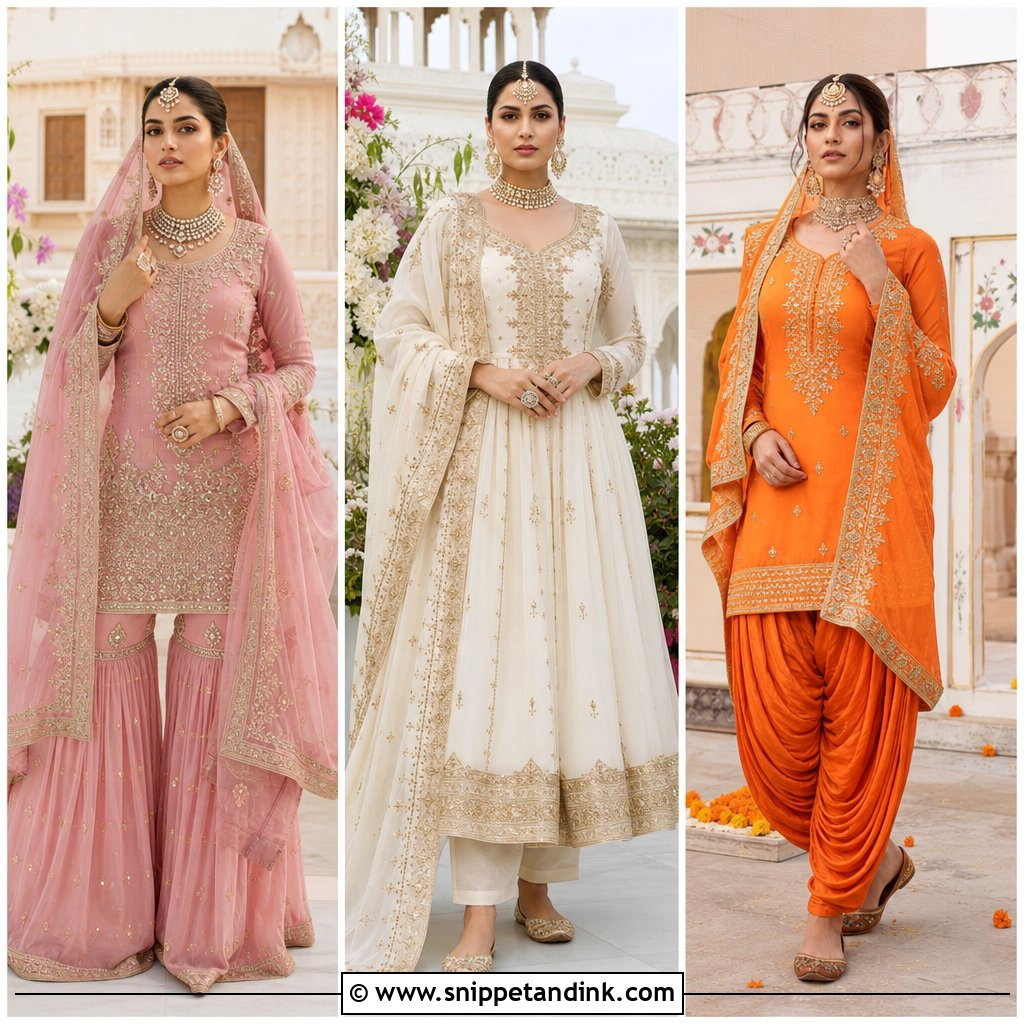
Phulkari puts all the colour into the dupatta, with floral or geometric darn-stitch embroidery in bold thread. Keep the kameez and salwar plainer when the dupatta is heavy so the two don’t compete. A straight kameez with Patiala, palazzo or churidar works. Mustard with pink, orange with green, ivory with multicolour or deep red with gold are classic pairings. Turn the dupatta over: hand-stitched phulkari shows small irregularities and a slightly fuzzy reverse, while printed or machine versions look perfectly even. Juttis and glass bangles finish it.
6. Punjabi Mirror Work Suit For Wedding
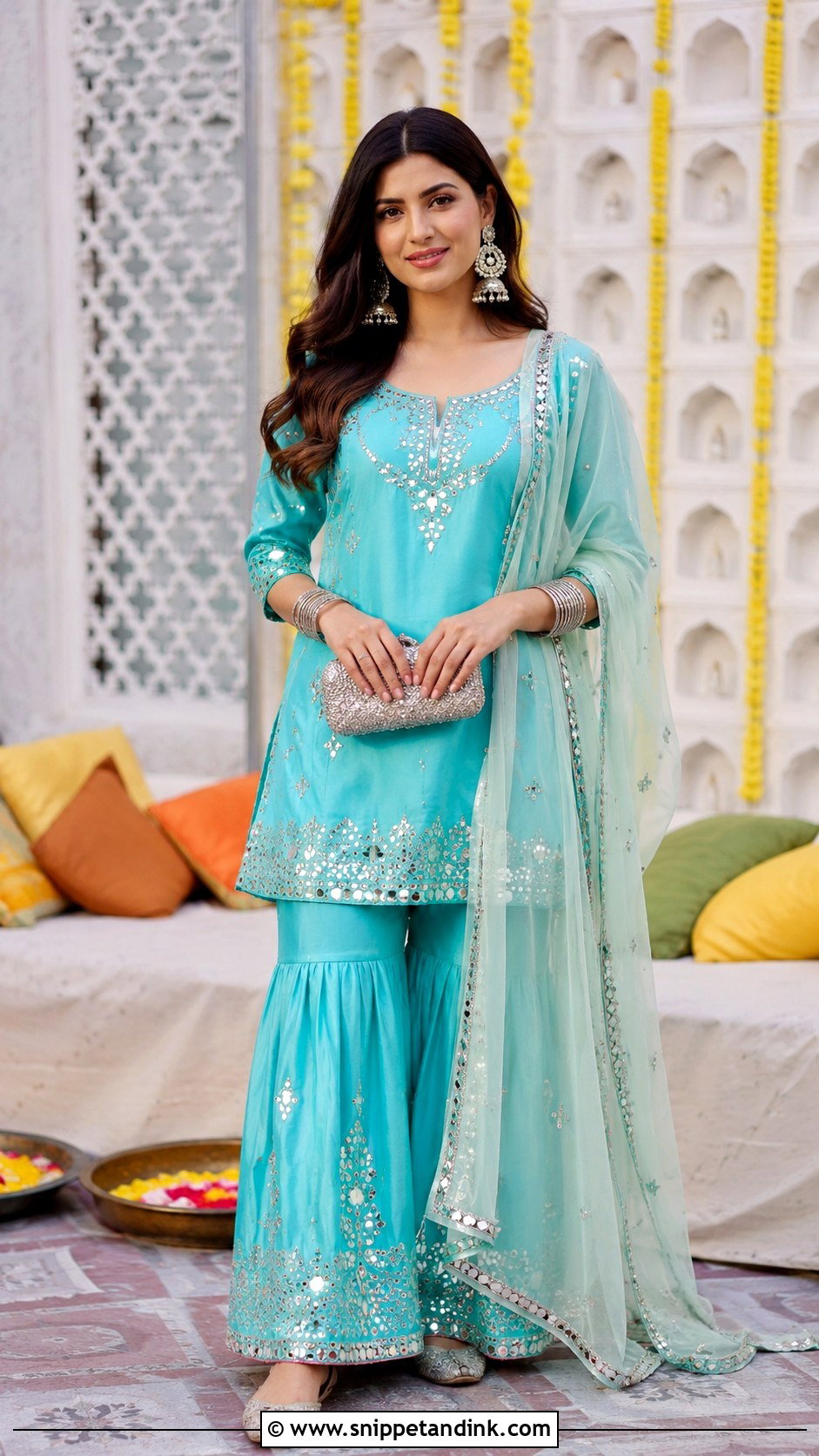
Mirror work adds sparkle without heavy fabric, and the little mirrors catch light on georgette, chiffon, silk or cotton silk. A short kameez with sharara is playful; a straight kameez with slim pants is cleaner. The thing to check is the stitching around each mirror. Tight, dense buttonhole stitches hold them in place; loose ones let mirrors drop out after a few washes. Keep jewellery restrained, mostly silver-toned earrings and bangles. It’s at its best at a mehndi, sangeet, dholki or daytime function.
7. Punjabi Velvet Suit For Wedding
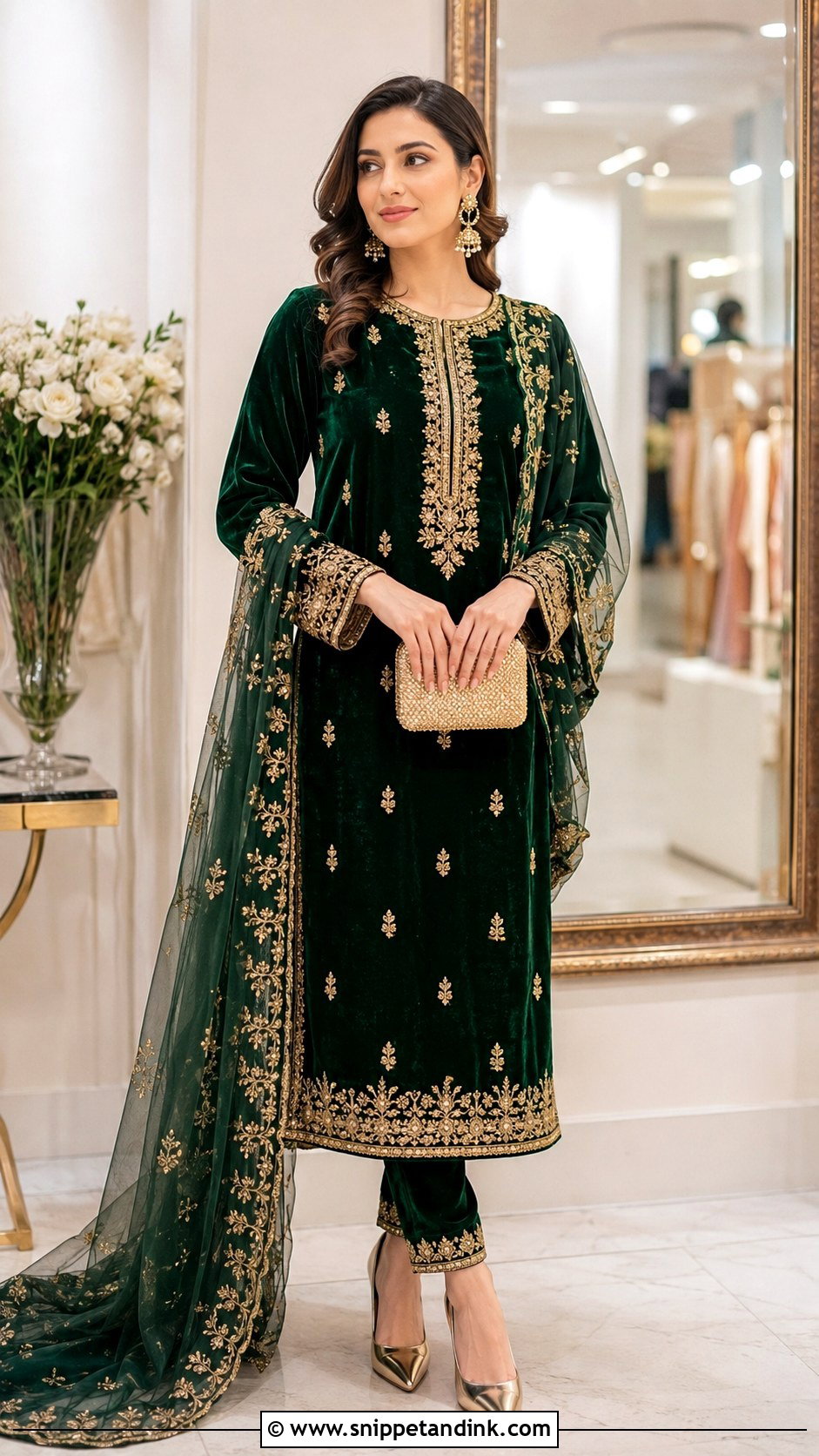
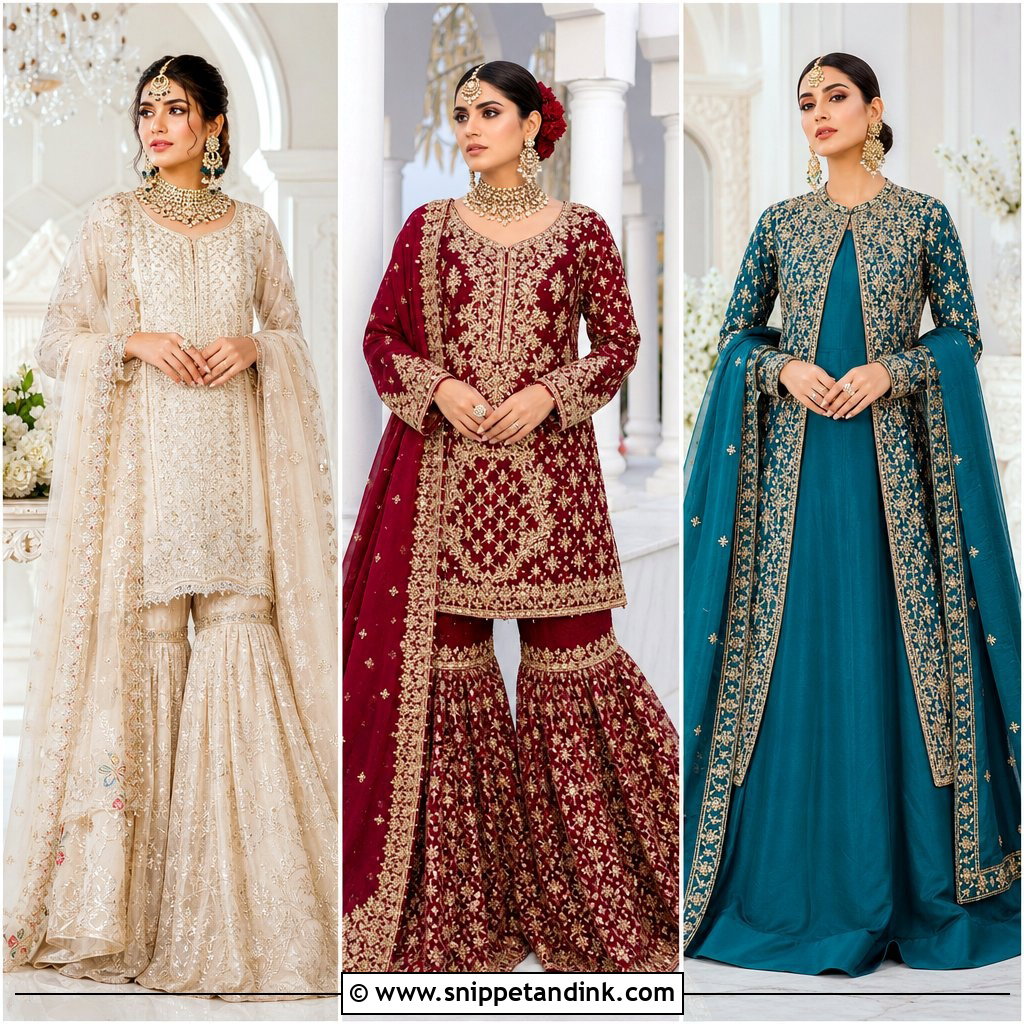
For autumn and winter weddings, velvet holds embroidery well, so boutiques load it with zari, dabka, pearl or sequin work at the neck, sleeves and borders. A straight velvet kameez with matching pants and an organza or net dupatta looks refined; a velvet Anarkali or sharara adds drama. Navy, emerald, burgundy, plum and blackened maroon read as luxurious. Velvet has a nap, so I check that every panel was cut in the same direction. If one isn’t, it looks a shade lighter in photos. Gold heels and kundan earrings keep it polished.
8. Punjabi Silk Suit For Wedding
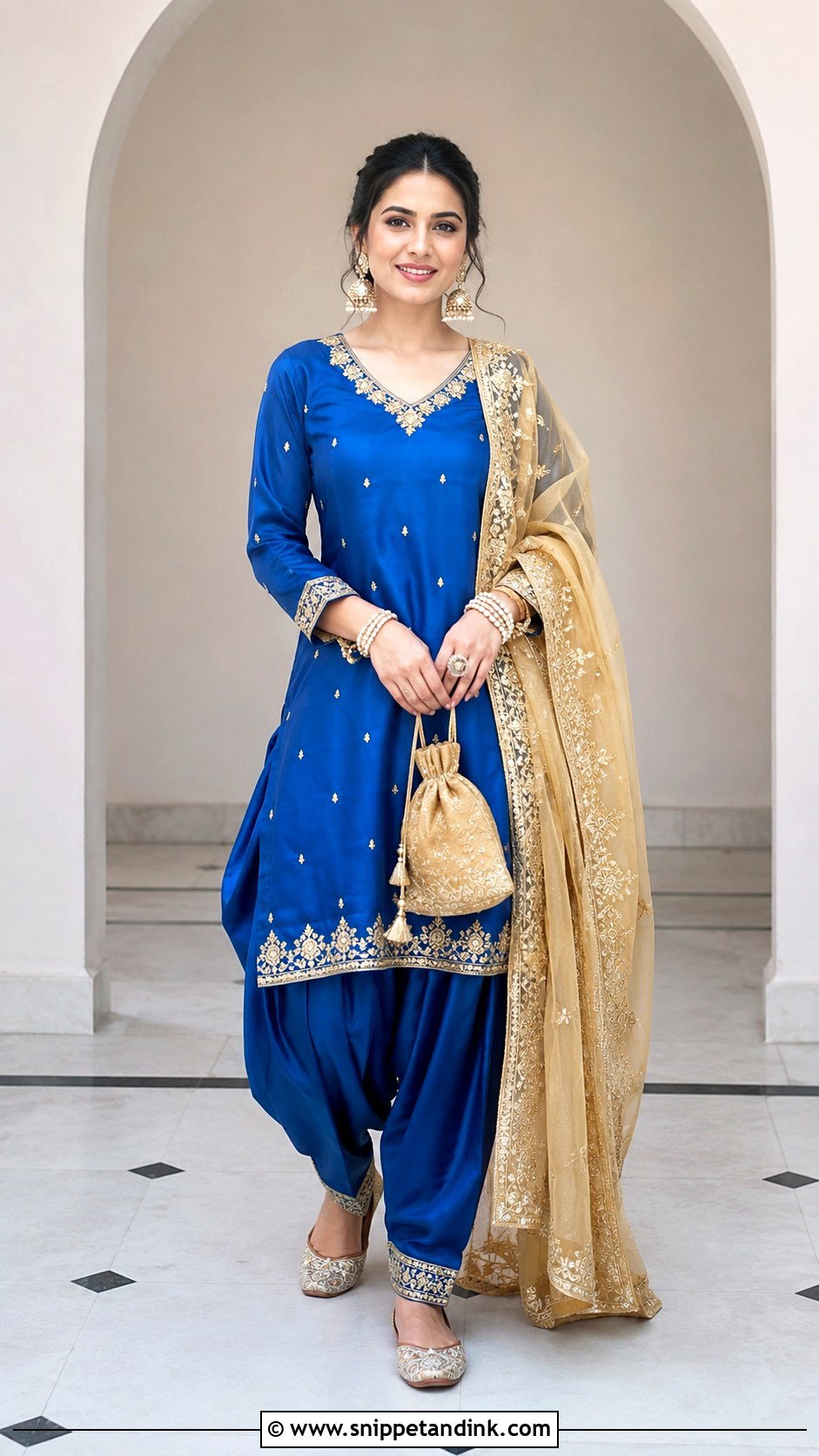
Silk looks formal even with light embroidery, which is why it is so reliable for a Patiala, straight kameez, gharara or Anarkali. Woven motifs, zari borders, contrast dupattas or a hand-embroidered neckline give it boutique character. I like a jewel-toned silk kameez with matching salwar and a statement dupatta for a family function. Silk shows sweat marks under the arms, so for a long outdoor day I’d ask for a cotton lining or choose a darker shade. Juttis or block heels, pearl bangles and classic earrings are enough.
9. Punjabi Organza Dupatta Suit For Wedding
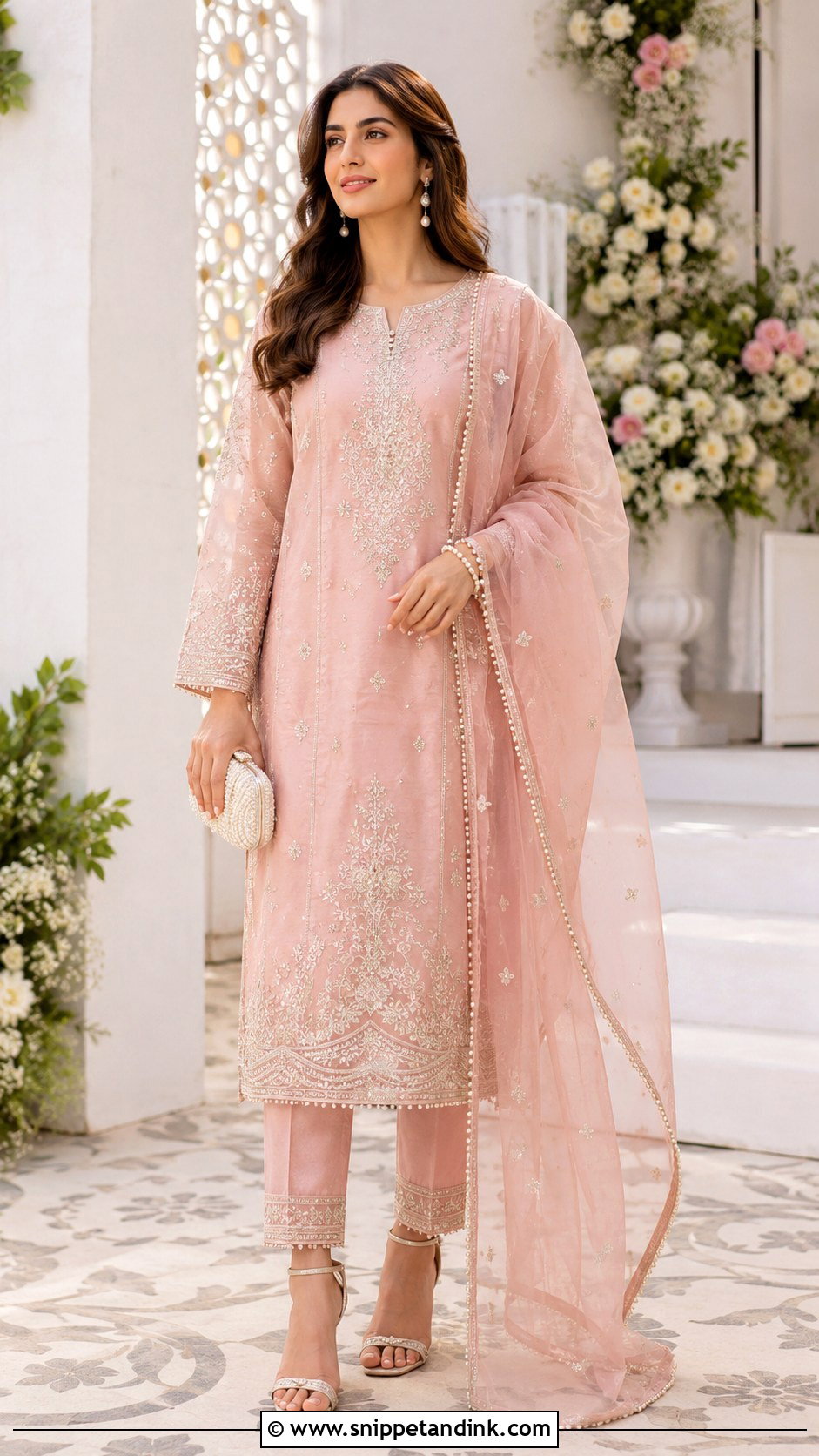
An organza dupatta looks airy and modern, especially with embroidered borders, scattered sequins, pearl edging or floral thread. It pairs well with a silk, crepe or georgette kameez for a contrast in texture, on straight, sharara or Anarkali suits. Organza’s weakness is that it slides off silk. I fold a pleat into it at the shoulder and secure it with a small pin from underneath. Blush, ivory, mint, lavender and peach suit daytime; deeper shades suit evening. Keep jewellery light so the dupatta stays the focus.
10. Punjabi Straight Cut Suit For Wedding
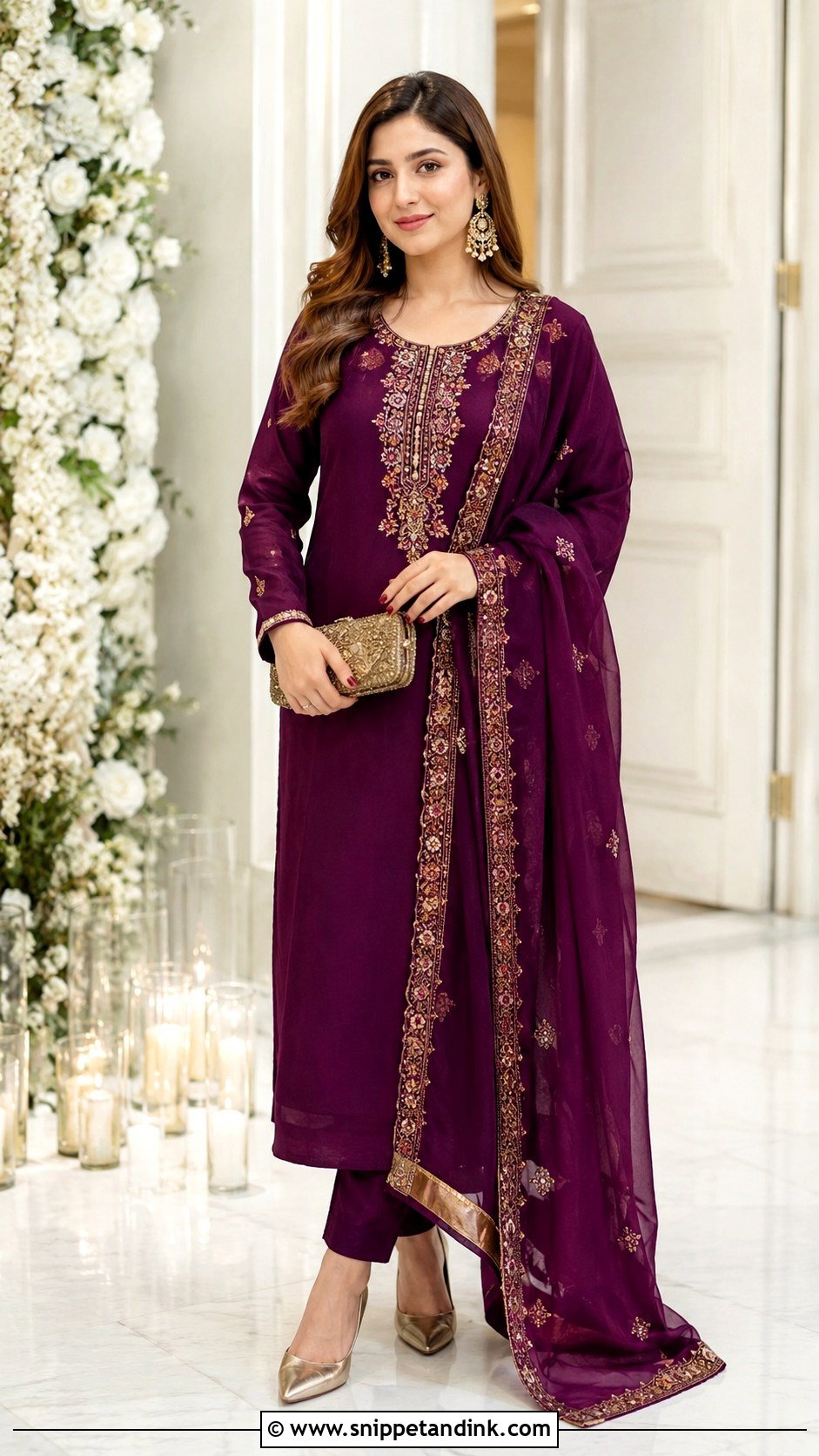
The straight cut gives a clean, long line, with pants, churidar or palazzo for comfort. Boutique versions usually carry the detail at the neck and sleeves, with side slits and a statement dupatta border. It suits anyone who wants elegance without flare. Silk, georgette, brocade or chinnon make it formal. Side slits are where I look closely. They should be reinforced at the top with a small bar tack, or they tear the first time you sit down quickly. Pointed heels or juttis and statement earrings suit receptions and engagements.
11. Punjabi Palazzo Suit For Wedding
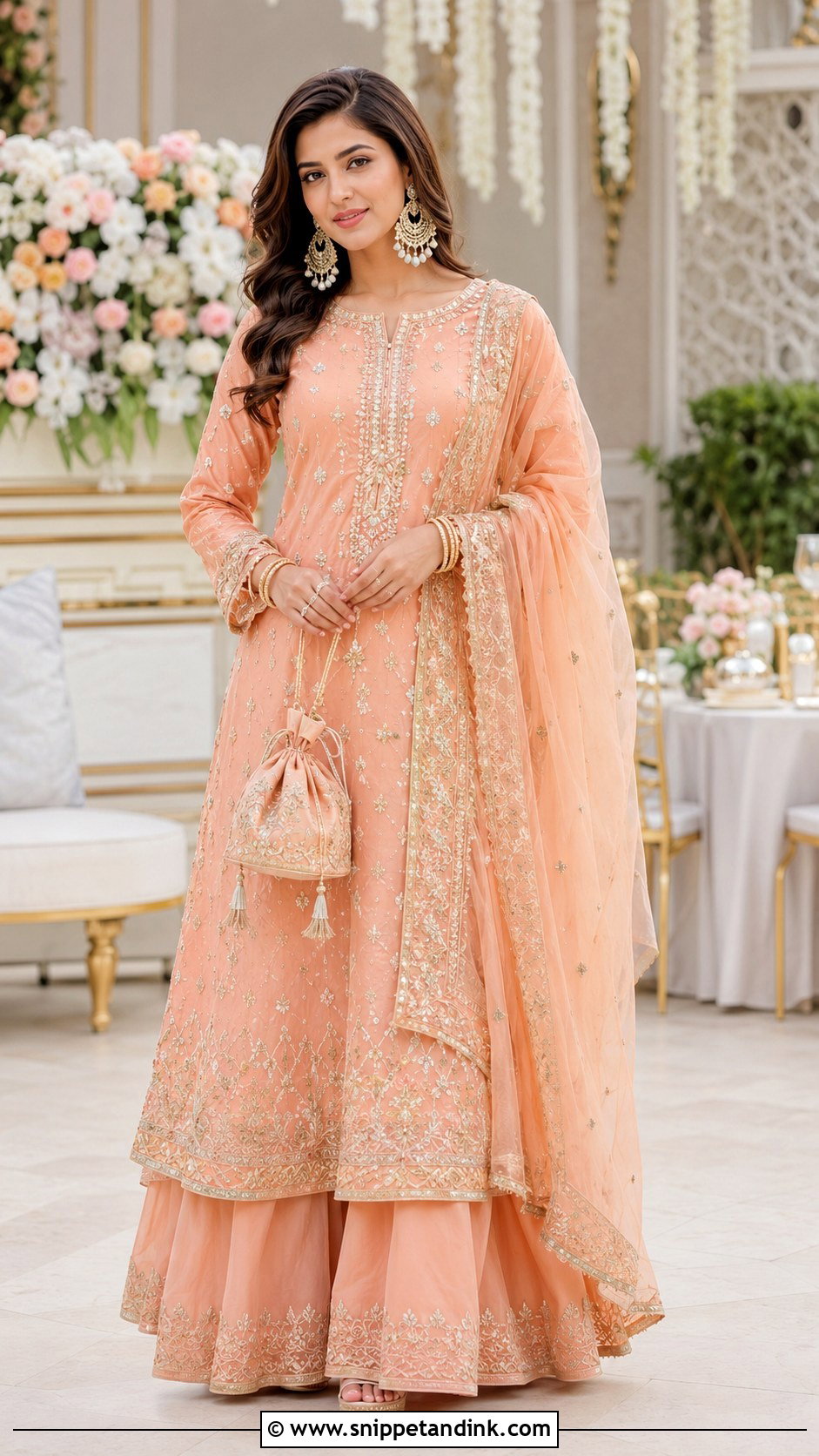
Palazzos are about as comfortable as wedding wear gets: wide, easy trousers under a straight or A-line kameez. Boutique pieces add embroidered hems, lace borders, pearl details or handworked printed dupattas. It’s a good choice for coverage and movement without the weight of a lehenga. Wide palazzos can swallow a shorter frame, so I keep the kameez a little shorter and add platform heels or wedges. Pastels for day, jewel tones for evening, with chandbalis, bangles and a potli.
12. Punjabi Churidar Suit For Wedding
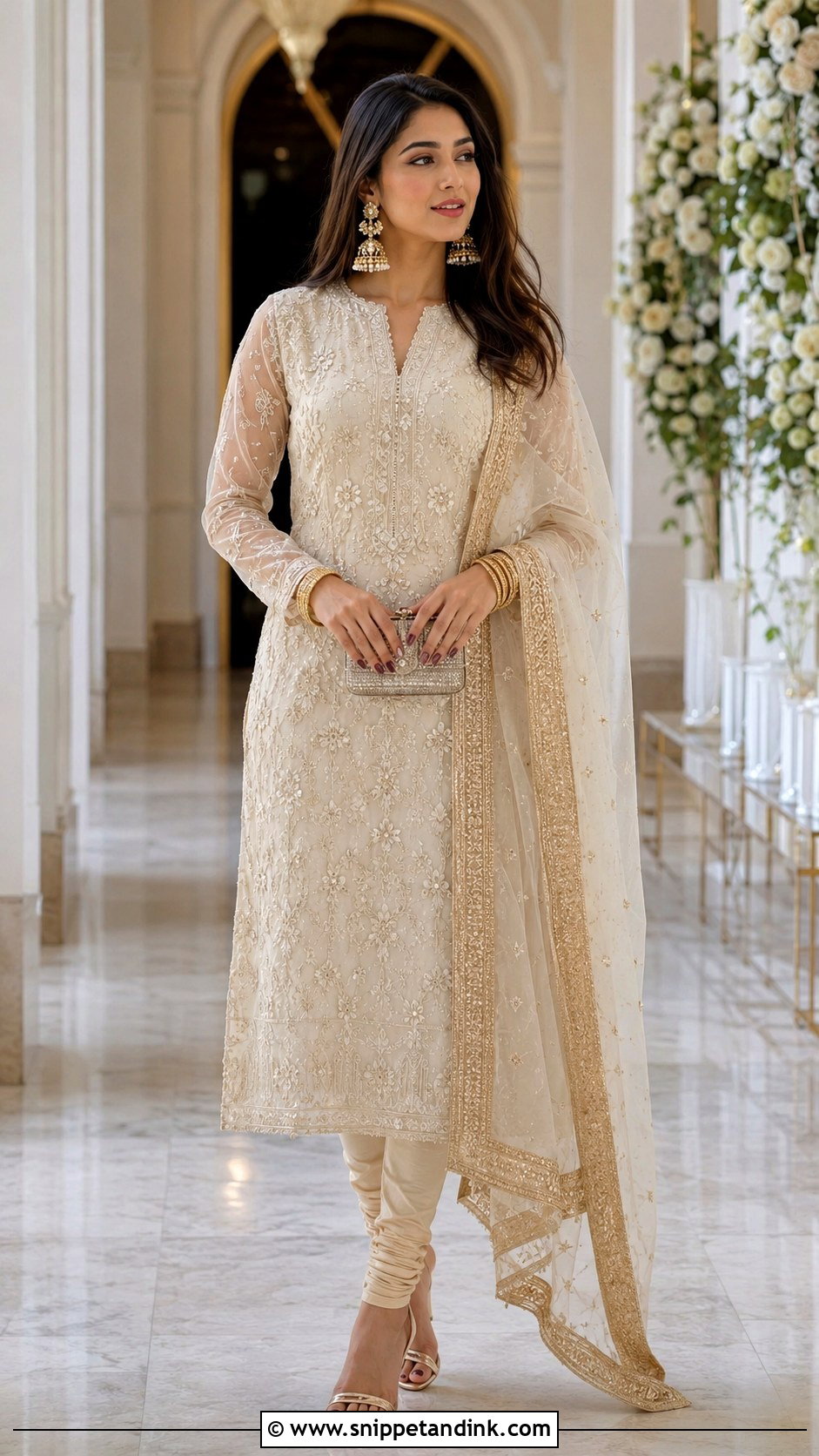
A slim churidar lets a flared Anarkali, long kameez or embroidered straight kurta take centre stage. The gathered folds at the ankle are the giveaway of a good one: the churidar should be cut on the bias and longer than the leg, so it bunches neatly instead of wrinkling at the knee. Detailed sleeves, a handworked neck and a heavy dupatta border make it a boutique piece. Silk, chiffon, georgette, velvet and brocade all work, with heeled sandals and jhumkas for formal ceremonies and evening receptions.
13. Punjabi Short Kurti Sharara Suit For Wedding
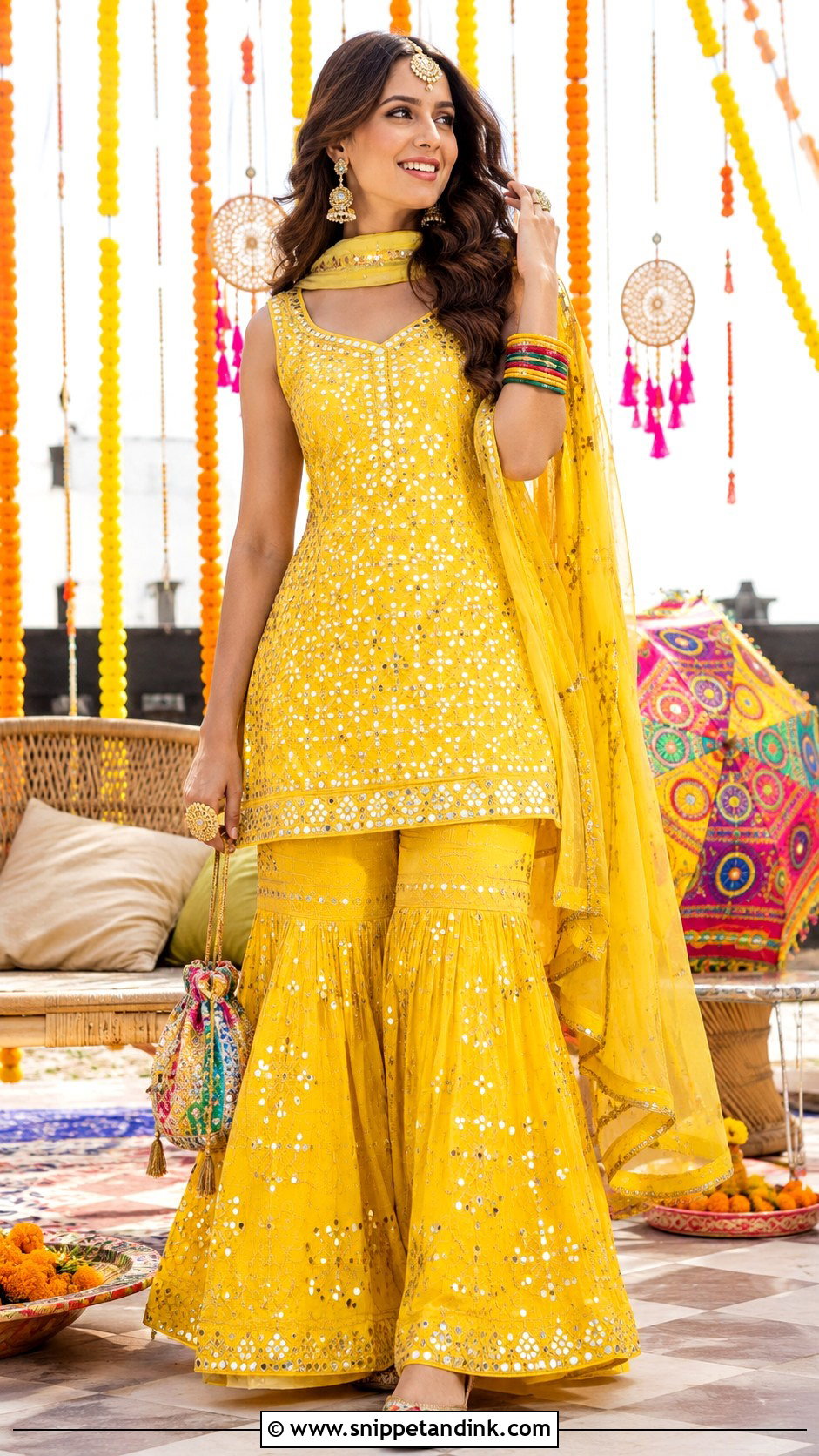
A Punjabi short kurti sharara suit feels young and is very easy to dance in, because the short kurti lets the flare of the sharara do the moving. Boutique versions add mirror work, gota patti, sequins, thread or pearl borders. Yellow, fuchsia, turquoise, coral and green suit mehndi and sangeet. Short kurtis ride up when you raise your arms, so I check the length in a dance pose. A small dupatta over one shoulder, juttis and bangles finish it, with fresh, glowing makeup.
14. Punjabi Long Kameez Suit For Wedding
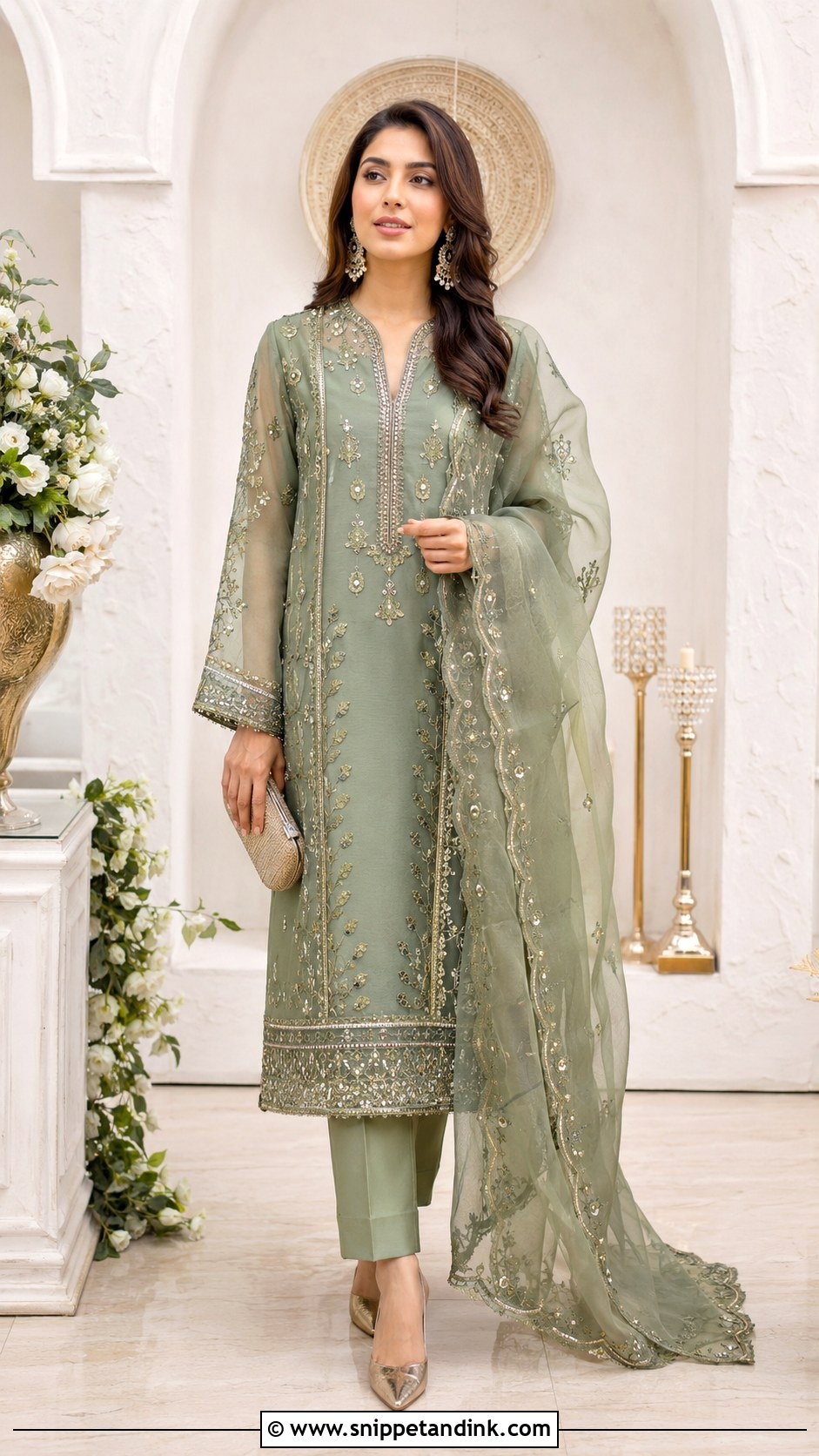
A long kameez reads modest and graceful while staying festive, worn with churidar, straight pants, palazzos or a light gharara. Side embroidery, front panels, zari borders and detailed cuffs give it a boutique finish. The long, vertical line suits anyone who prefers less volume around the waist. Fit across the hip matters most: too tight and it creases when you sit; too loose and the line disappears. Soft silk, georgette or crepe move well, with a rich-bordered dupatta, pointed heels and a clutch.

15. Punjabi Front Slit Suit For Wedding
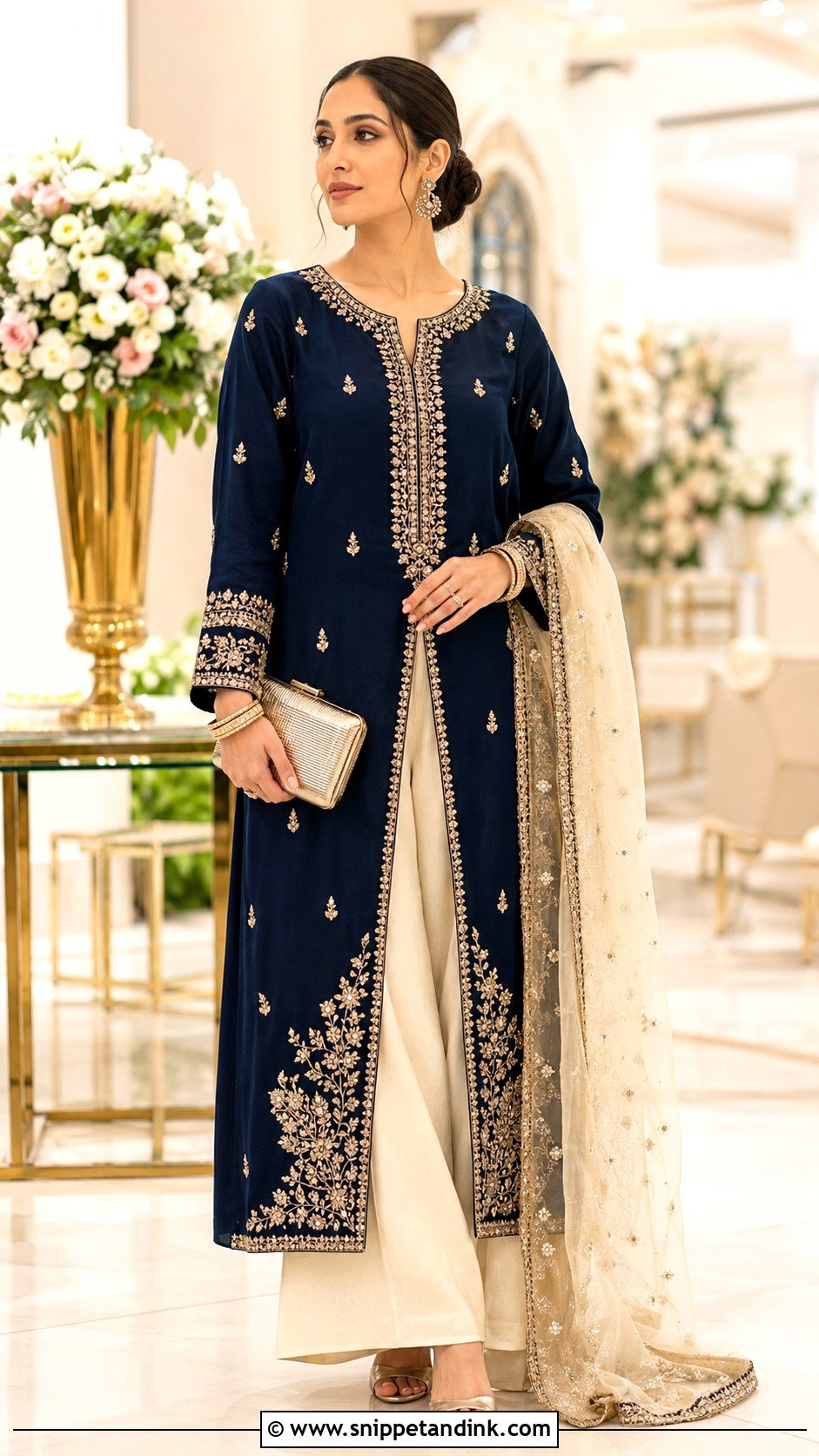
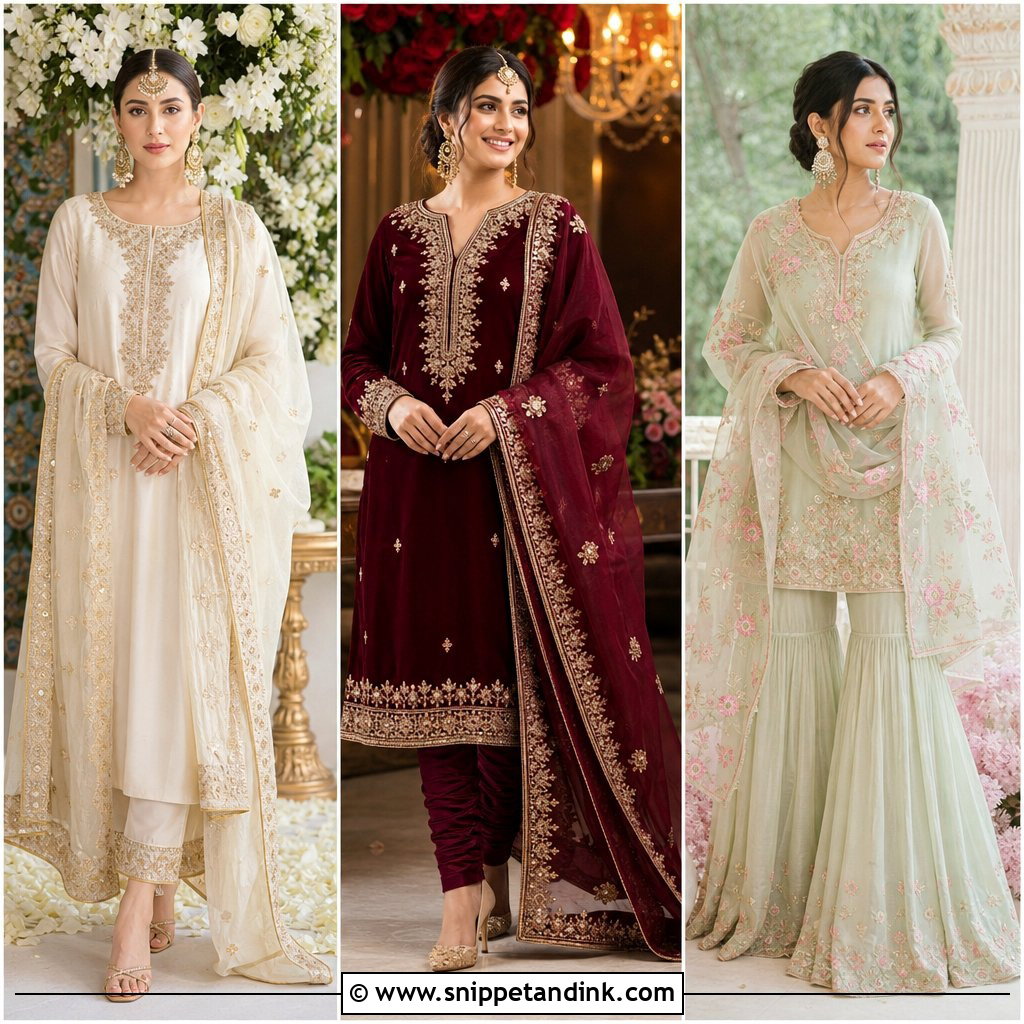
A front slit modernises a traditional suit and shows the layer underneath, whether sharara pants, palazzos, cigarette pants or a skirt. Embroidery along the slit, neck and hem makes it look deliberate. It’s fashionable without being experimental. Pairing a structured kameez fabric with a softer bottom keeps it balanced. I wouldn’t wear it to a gurdwara ceremony, since a front slit opens awkwardly when you sit cross-legged on the floor. Save it for the reception, with heels, a statement clutch and a light dupatta.
16. Punjabi Jacket Suit For Wedding
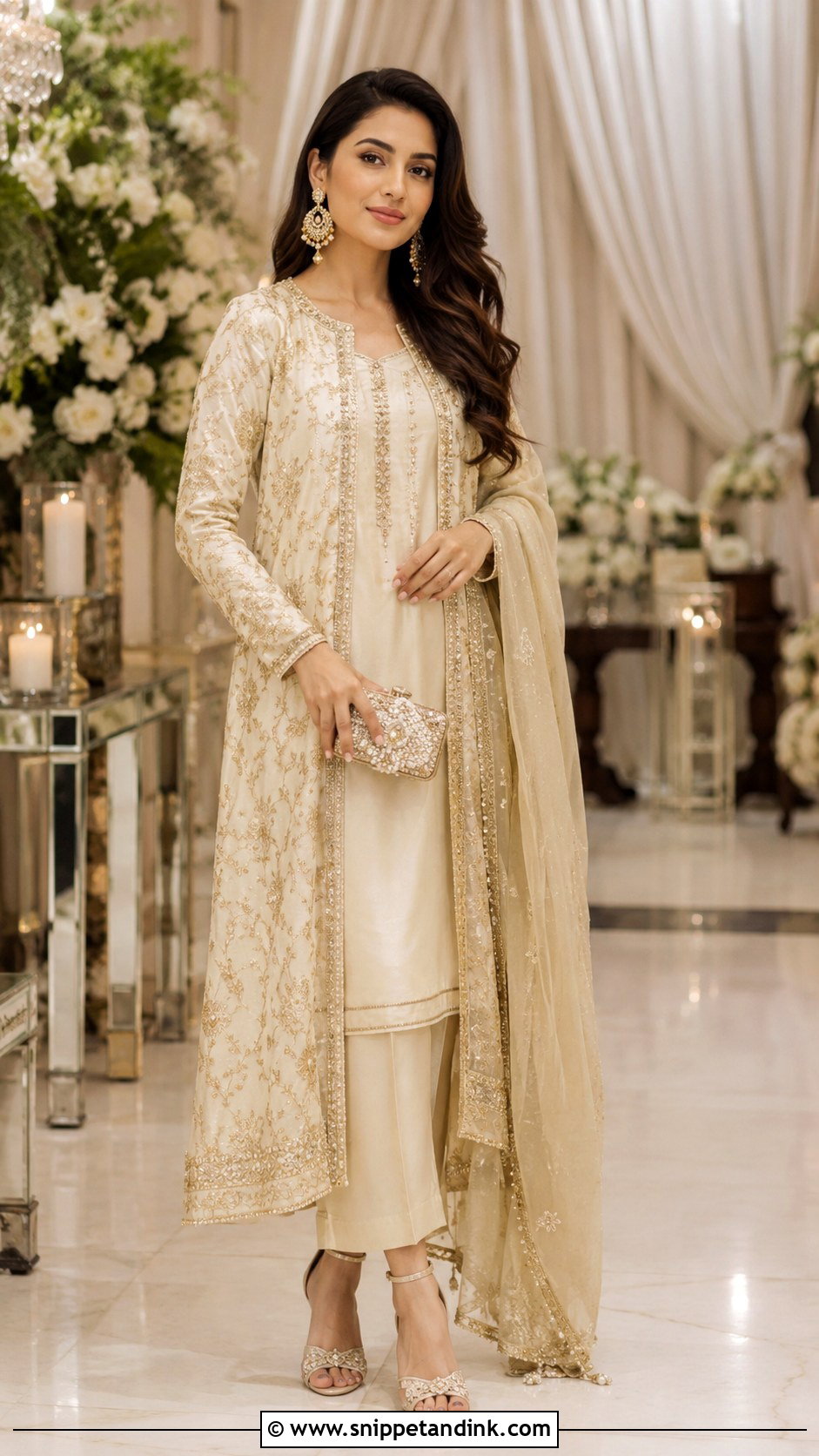
A Punjabi jacket suit for wedding events adds a layer and an instant boutique finish. The jacket may be short and embroidered, long and open-front or cape-like, over a straight kurta, crop kameez, sharara or palazzo set. Thread, gota, zari, mirror or brocade suit it best. Keep the inner outfit simpler so the jacket stands out. I check the jacket’s lining in particular, because an unlined embroidered jacket scratches through a thin kurta. It suits cooler weather and formal evenings.
17. Punjabi Cape Suit For Wedding
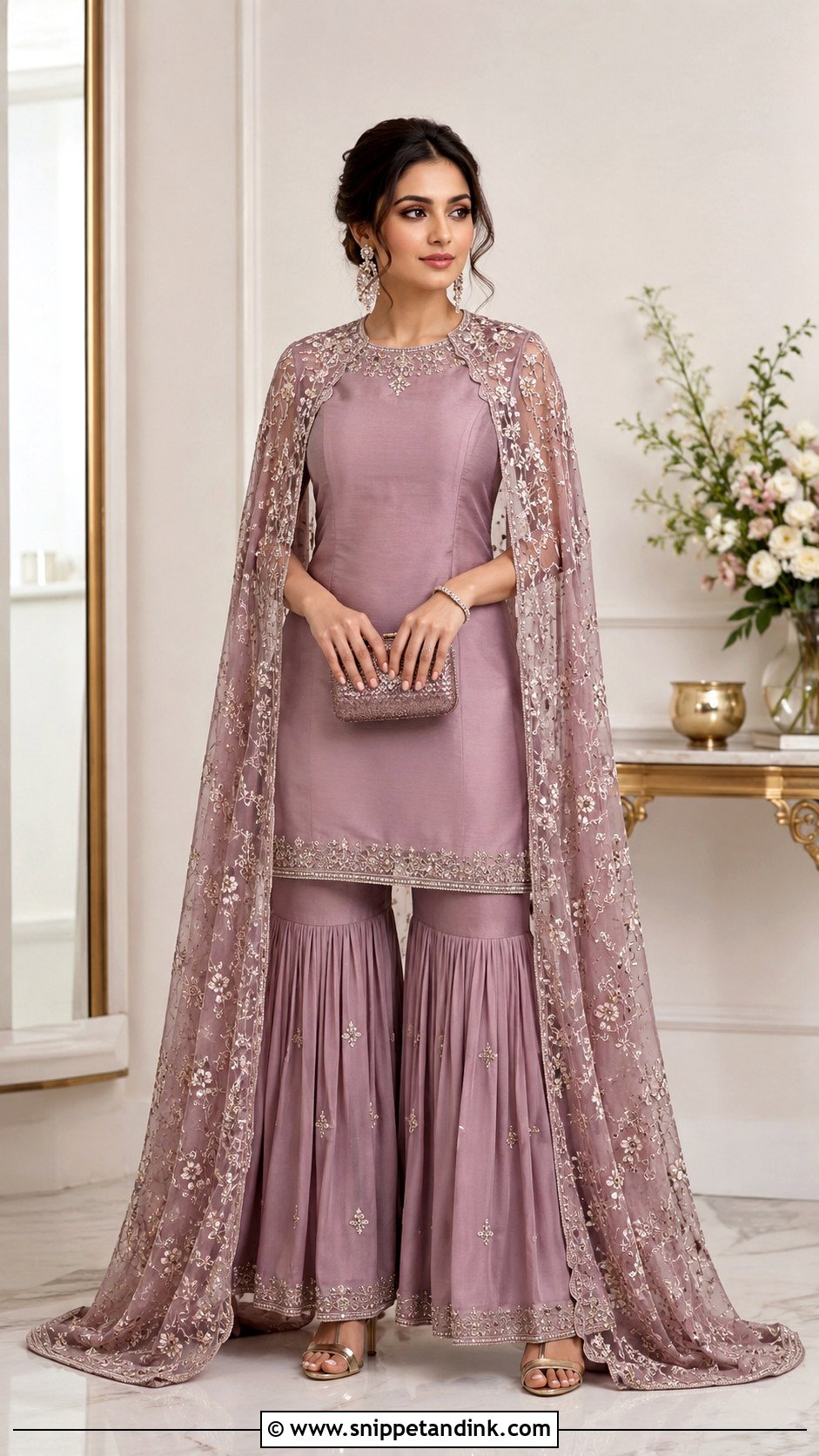
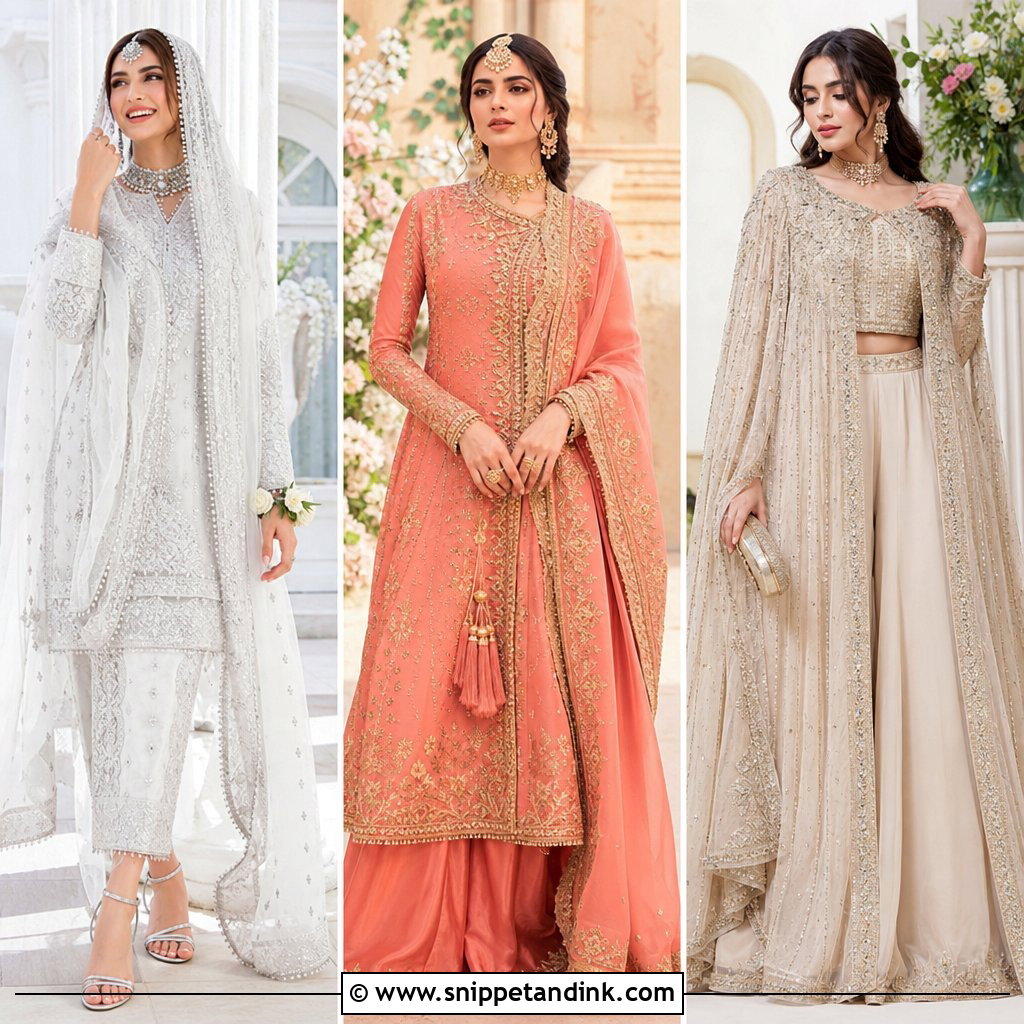
A cape replaces the dupatta with a sheer, flowing layer and frees both hands. Boutique capes come in organza, net or chiffon with embroidery, sequins or pearl edging, over a fitted kameez with sharara or slim trousers. It suits receptions, engagements and cocktail-style events. The front edges of a cape fall into food at a buffet more easily than you’d think, so I’d choose one that is shorter at the front. Clean accessories and soft pastels, metallics or jewel shades keep it refined.
18. Punjabi Sequin Suit For Wedding
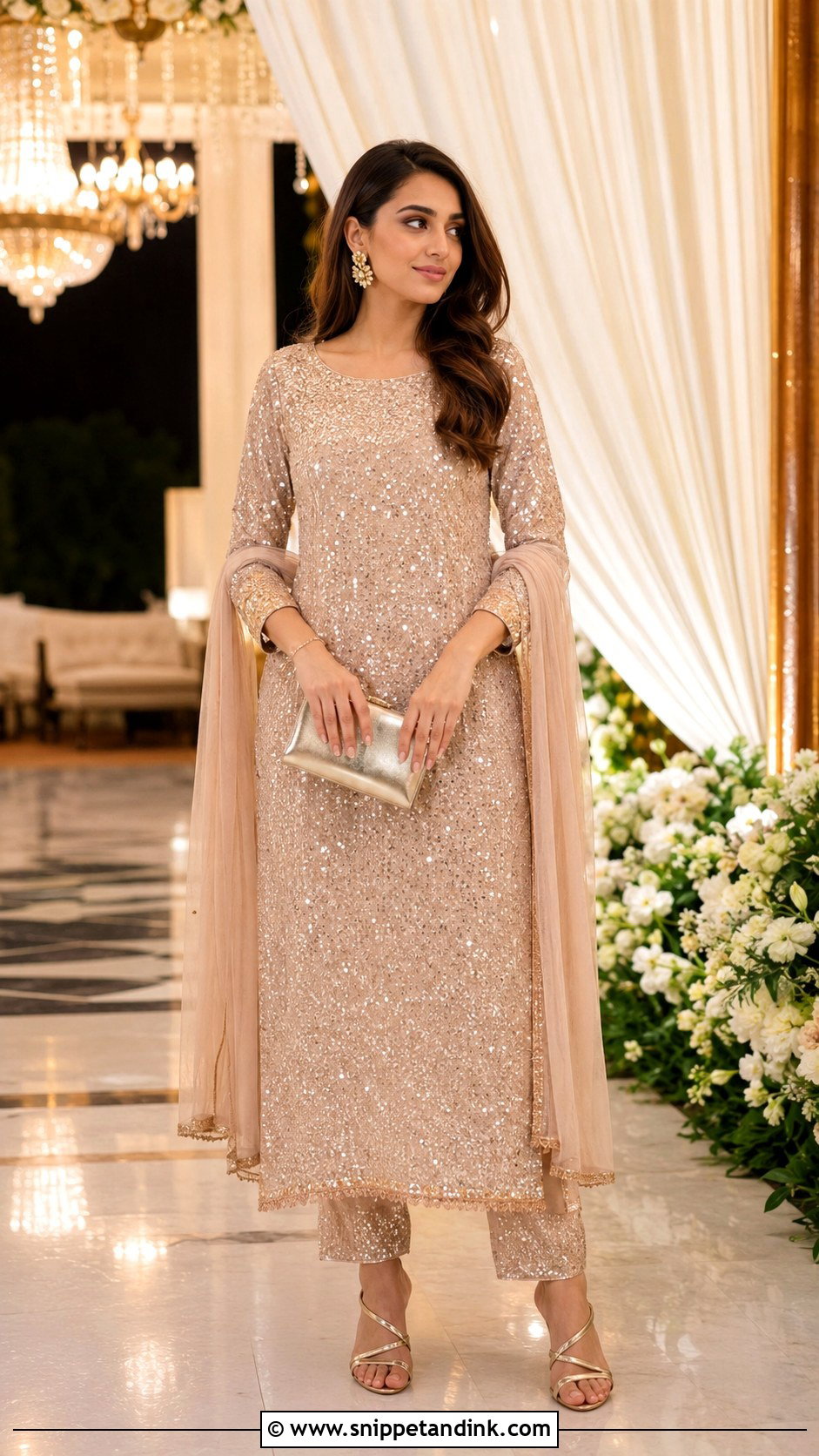
Sequins look tasteful when placed carefully: on the neck, sleeves, dupatta border or in a subtle all-over pattern. A straight kameez with pants feels sleek, while a sharara feels more festive. Lighter base fabrics like georgette, net or chiffon keep the weight down. Sequins have a practical downside. They scratch the inner arm where the sleeve rubs the bodice, and they can snag a partner’s shirt when hugging. Simple jewellery, soft waves and delicate heels let the sparkle lead at an evening reception or sangeet.
19. Punjabi Zari Work Suit For Wedding
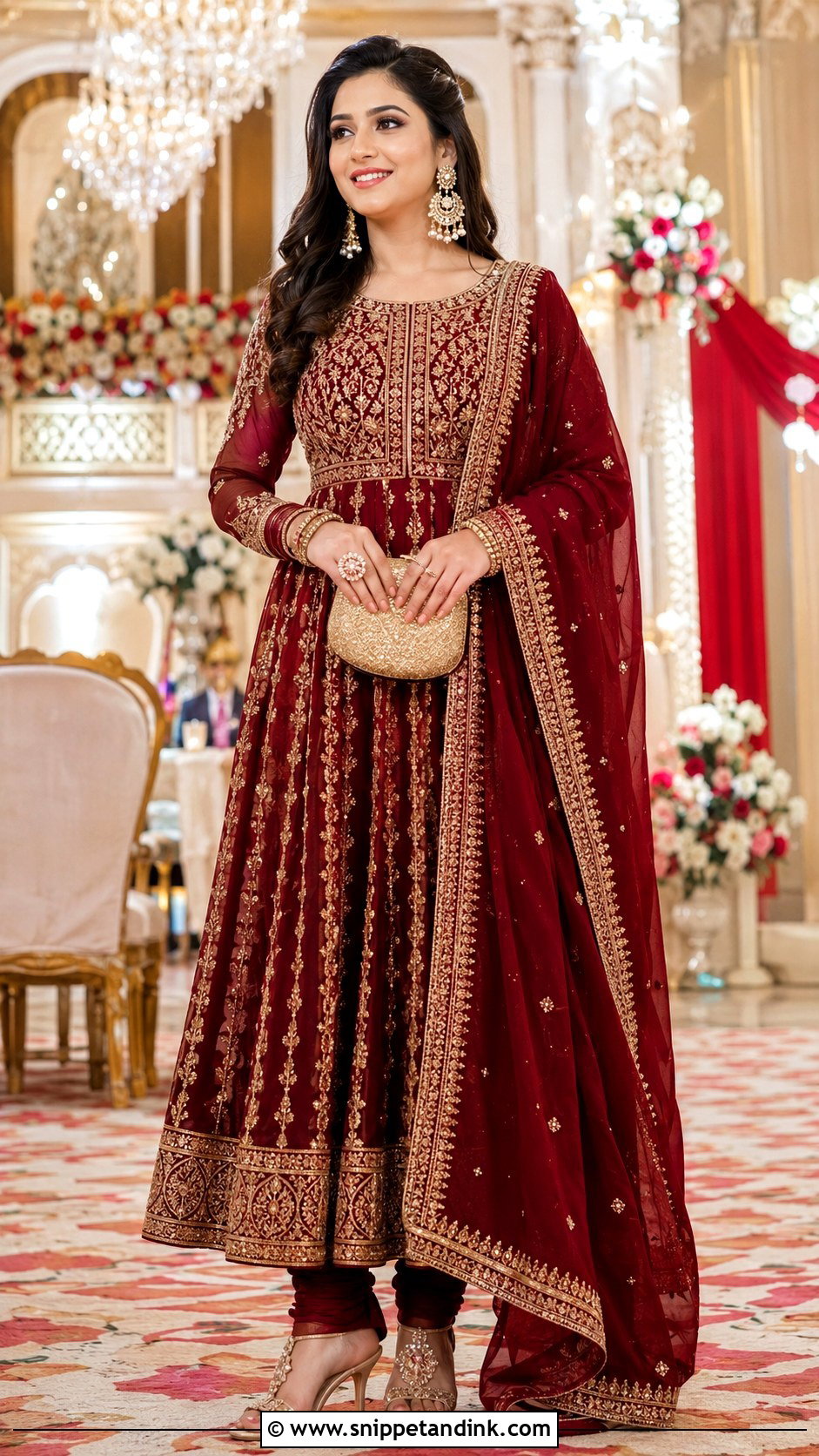
A Punjabi zari work suit feels regal: gold or silver thread on silk, velvet, brocade, georgette or jacquard. A zari neckline, sleeve border and dupatta edge can make a simple suit formal. For more weight, choose an Anarkali, gharara or sharara with zari panels. Real metallic zari tarnishes slowly and should never be sprayed with perfume directly. Maroon, emerald, royal blue, rust and ivory all suit it. Pair it with kundan earrings, bangles and embroidered juttis for close family at a grand wedding.
20. Punjabi Gota Patti Suit For Wedding
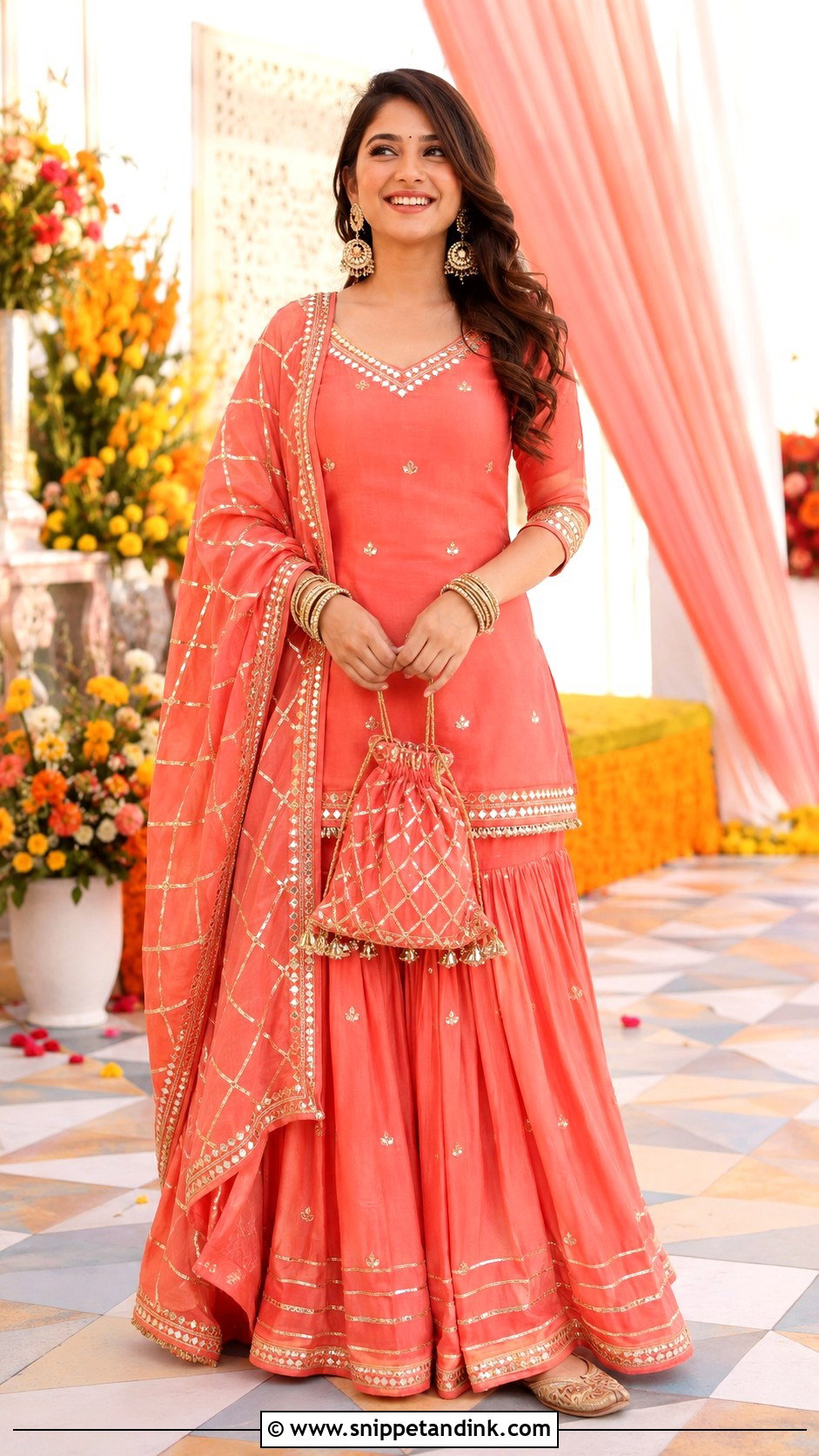
Gota patti is ribbon work, strips of metallic ribbon folded and stitched into patterns, and it reflects light in a cheerful, lightweight way. It shows best on georgette, chiffon, silk and organza, as a sharara, Patiala or Anarkali for mehndi, sangeet or a daytime function. Yellow, peach, hot pink, green and orange suit it. I prefer gota with a slightly matt finish; the very shiny plastic versions look cheap in flash photos. Keep the dupatta light but detailed, with matching juttis and a potli.
21. Punjabi Net Dupatta Suit For Wedding
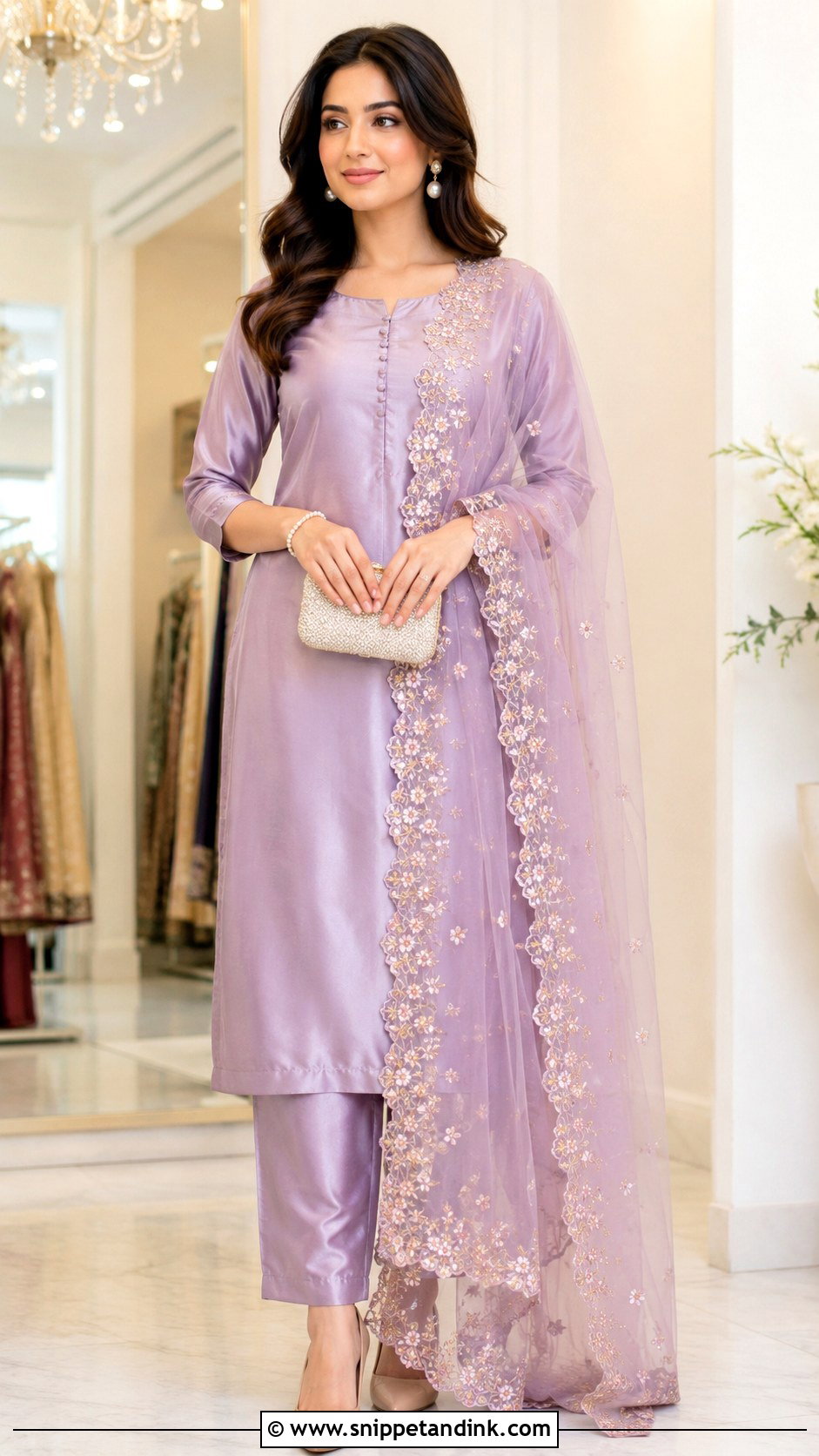
Net dupattas feel dressy and delicate, with embroidered borders, sequins, pearls, lace or scattered motifs. Put one over a silk kameez, velvet suit, sharara set or straight cut for a contrast of textures. The finish of the edge is what separates a good one: a neatly bound or embroidered edge drapes well, while raw or very stiff net looks cheap and scratches the neck. Soft makeup and neat hair keep it elegant, with heels, earrings and a small clutch.
22. Punjabi Pastel Suit For Wedding
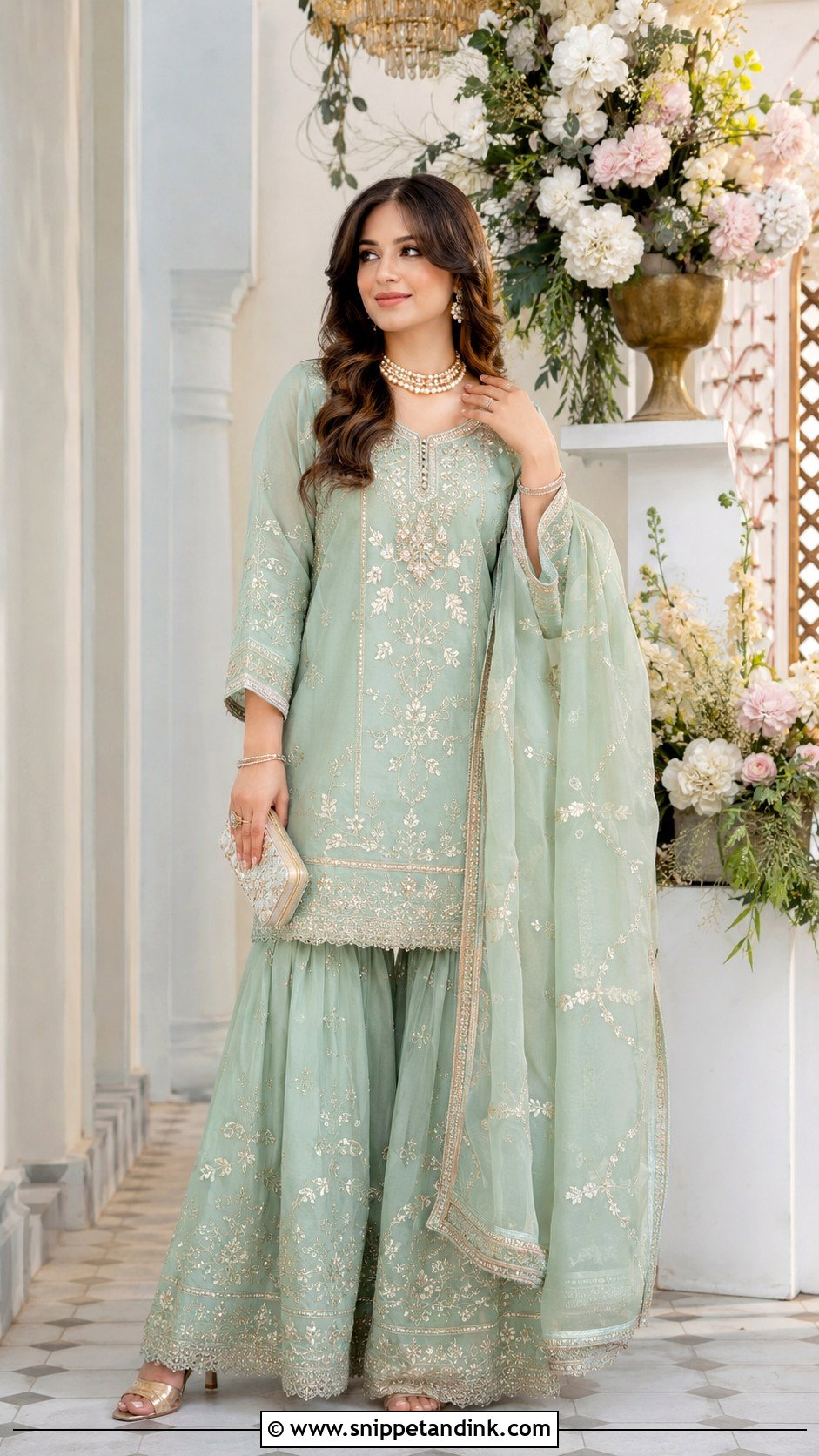
Pastels feel fresh for daytime: blush, mint, powder blue, lavender, peach and ivory. Embroidery in pearls, sequins, thread, silver zari or delicate gota keeps them wedding-ready, and organza or net dupattas suit shararas, straight suits and Anarkalis. I’d check a pastel under the venue’s lighting if you can, because pale shades can look almost white in bright sun, which some families mind at a wedding. Pearls, metallic heels and a light clutch suit bridesmaids, sisters, cousins and guests who prefer softer colour.
23. Punjabi Red Suit For Wedding
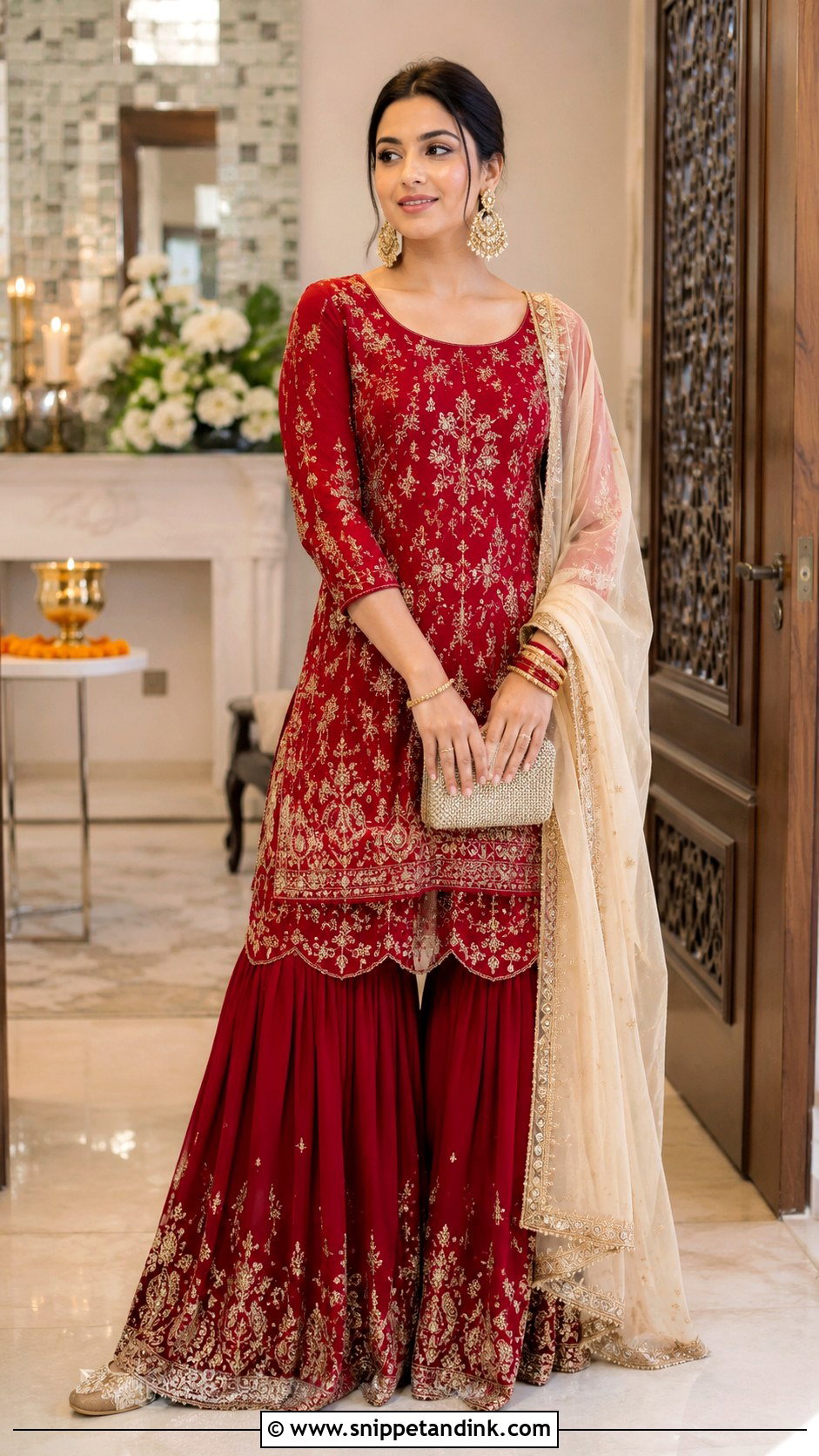
Red is bold and always festive, in a Patiala, gharara, sharara, Anarkali or straight cut. Gold zari, dabka, gota patti or sequins make it wedding-ready. When the suit is heavily embroidered, keep the accessories balanced. A contrasting dupatta in gold, green, peach or ivory gives it a fresh twist. One etiquette point I always raise: if you are a guest, a heavy red suit can be mistaken for the bride’s colour, so I’d ask the family first or choose a lighter version. It suits close family functions, formal ceremonies and evening celebrations.
24. Punjabi Green Suit For Wedding
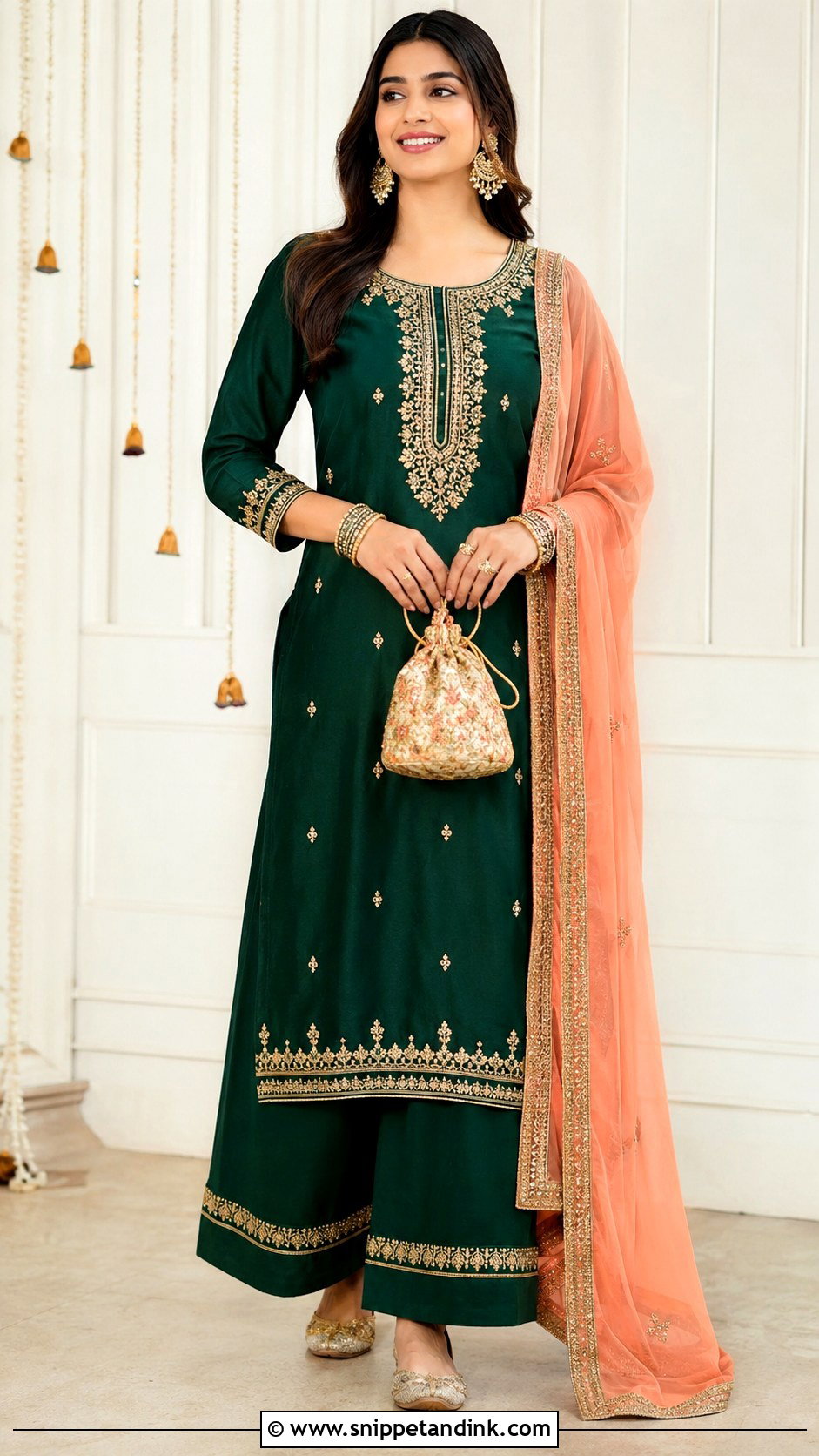
Green flatters a wide range of skin tones, and each shade carries a different mood: emerald, bottle green, mehndi green, sage or parrot. Lighter greens with silver or floral thread suit daytime; deep green with gold zari, velvet or a heavy border suits evening. A sharara, Patiala or straight kameez with palazzos all work. Sage is the one to test on your skin, since it can make some complexions look sallow without a warm dupatta near the face. A pink, ivory, mustard or peach dupatta adds brightness, with gold jewellery and juttis.
25. Punjabi Bridal Suit For Wedding
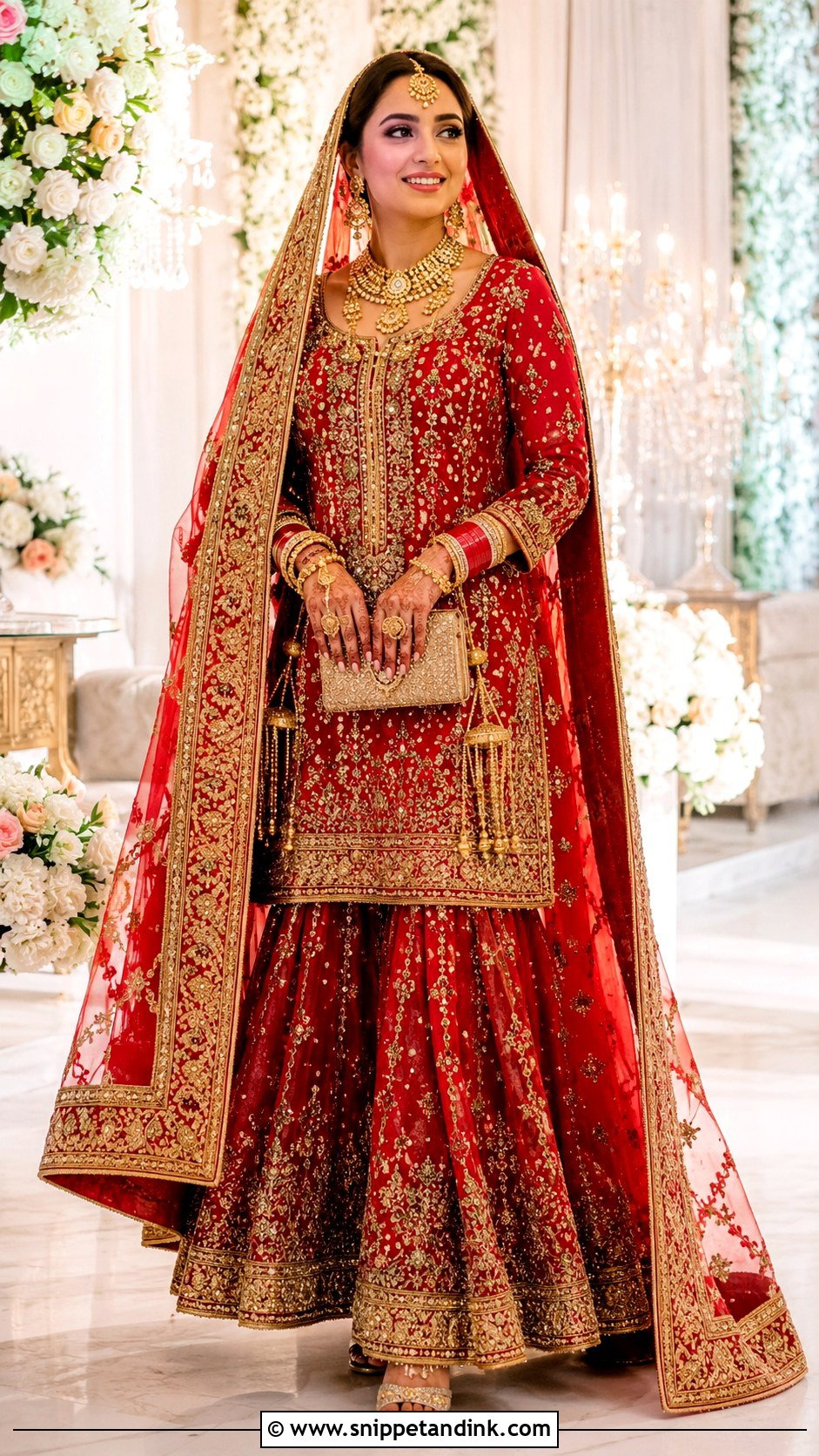
For the bride, many choose heavily embroidered salwar suits, shararas, ghararas or Anarkalis for ceremonies and family rituals. Silk, velvet, brocade and organza give a luxurious base, with zardozi, dabka, zari, pearls, sequins or phulkari-inspired work. The dupatta frames the whole look and deserves the most attention. Bridal suits are heavy, so I ask the boutique to weigh the full outfit and I have the bride wear it for half an hour at the final fitting. Bridal juttis, layered jewellery, bangles and a maang tikka complete it.
Sister, Cousin or Guest? Matching the Suit to Your Role
Many of the suits above are bought by family and guests, not the bride. The same suit can be right for a sister and slightly wrong for a guest, so I always ask where someone sits in the wedding before suggesting colour and weight.
Family of the couple
Sisters and close cousins often coordinate by event, with a colour or theme per function. Ask the bride early, because a matching group order at a boutique needs extra time. You can wear heavier embroidery than guests, but leave the deepest bridal red and the heaviest dupatta to her.
Guests
Guests do best with jewel tones, pastels or gota work in festive colours. For a ceremony at a gurdwara, everyone covers their head, removes their shoes and sits on the floor, so bring a dupatta that stays put and choose a kameez long enough and a bottom loose enough for sitting cross-legged. Save the front slits, capes and short kurtis for the reception or sangeet.
What Makes a Boutique Suit Worth Paying For
Patialas, shararas, ghararas, Anarkalis, velvet, silk and phulkari can all be adapted to the event and to your own taste. What separates a boutique suit from a market one is mostly invisible from across the room: hand-finished seams, a proper lining, embroidery stitched rather than glued and enough seam allowance to let the kameez out later. Check those on the counter, then settle colour, jewellery and footwear for the function, and the suit will be one you wear again at the next family wedding.
You'll Like These Ideas:






Leave a Reply