
Haldi is the one wedding event where your outfit will almost certainly get paste on it, and that changes how I style it. A sharara works so well here because you can sit cross-legged on a low stool for the ritual, get up quickly when the dancing starts, and the flare hides any turmeric that lands on the knees. Below are twenty haldi sharara sets, from classic yellow to mint, prints and cape tops. For each one I’ve noted which fabric copes with turmeric, what the bride might add, and how guests, sisters and friends can wear the same idea in a simpler way, at home, in a garden or at a venue.
Will Turmeric Wash Out? Fabric Decides
Turmeric is a strong natural dye, and haldi paste is usually mixed with oil or milk that helps it soak in. How much of the stain you can remove depends far more on the fabric than on the color of the outfit.
- Cotton, mulmul and cotton chikankari: the most washable. Expect to remove most of the stain with prompt care.
- Georgette and crepe (usually polyester): often release turmeric reasonably well with a gentle hand wash.
- Silk, raw silk, tissue and zari: treat as stain-prone. Water can mark silk, and metallic threads tarnish. Send these to a dry cleaner and tell them it’s turmeric.
- White and pale pastels: show every speck. Fine for guests standing back, risky for the bride.
For washable fabrics, scrape off the dried paste first instead of rubbing it in, rinse from the back of the fabric in cold water, and use a little dish soap. Avoid hot water, which tends to set the stain. On white cotton, drying in direct sun helps fade what’s left, because turmeric’s color breaks down in sunlight.
1. Yellow Chikankari Sharara for Haldi
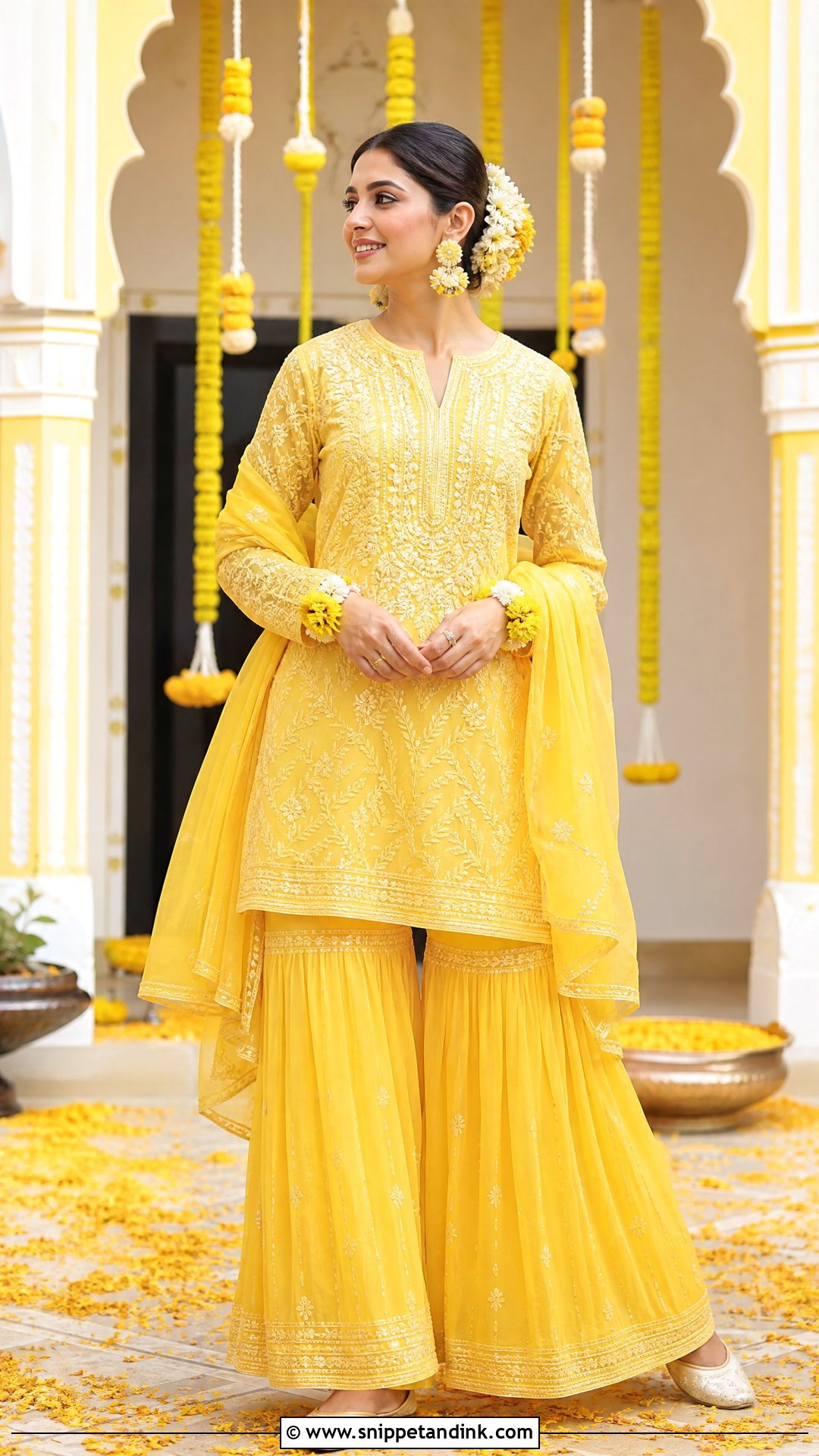
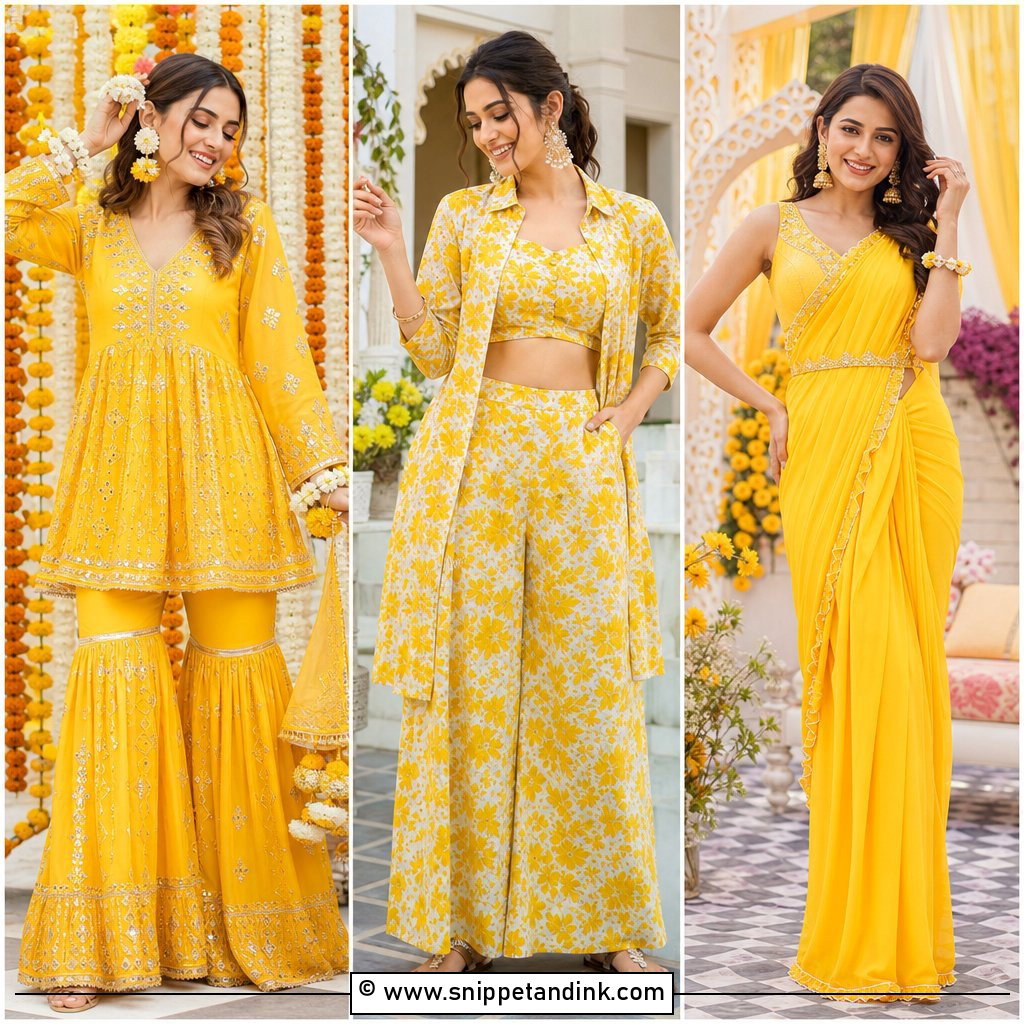
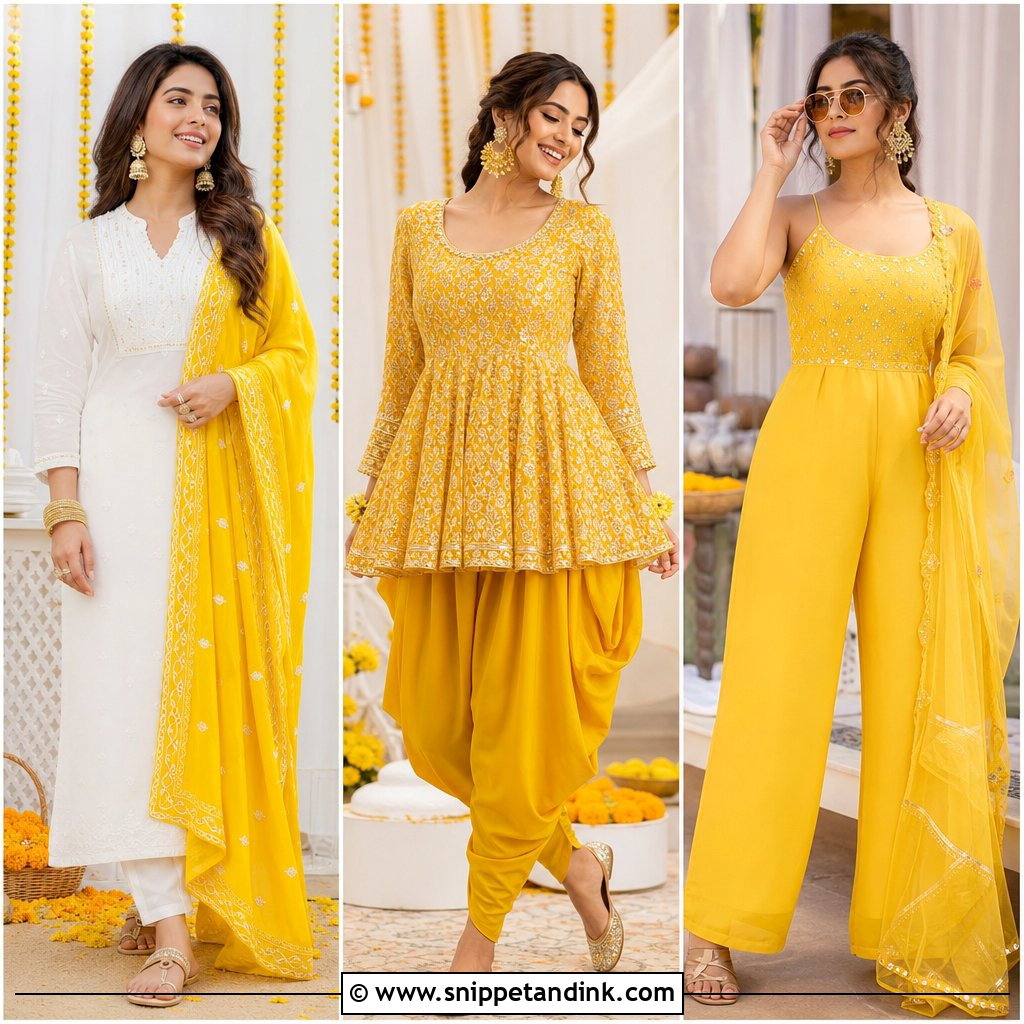
A yellow chikankari sharara looks graceful without any heaviness, and cotton chikankari is one of the few embroideries I’m happy to see near turmeric because it can be hand washed. A short straight kurta with tonal white threadwork over a generous flare, plus a light chiffon dupatta, keeps it airy. Floral earrings, a small tikka, ivory bangles and juttis for sitting on the floor complete it. Brides can choose denser stitching and a flower-trimmed low bun; guests do well with a simpler set and very little jewelry.
2. Mustard Gota Patti Sharara for Haldi
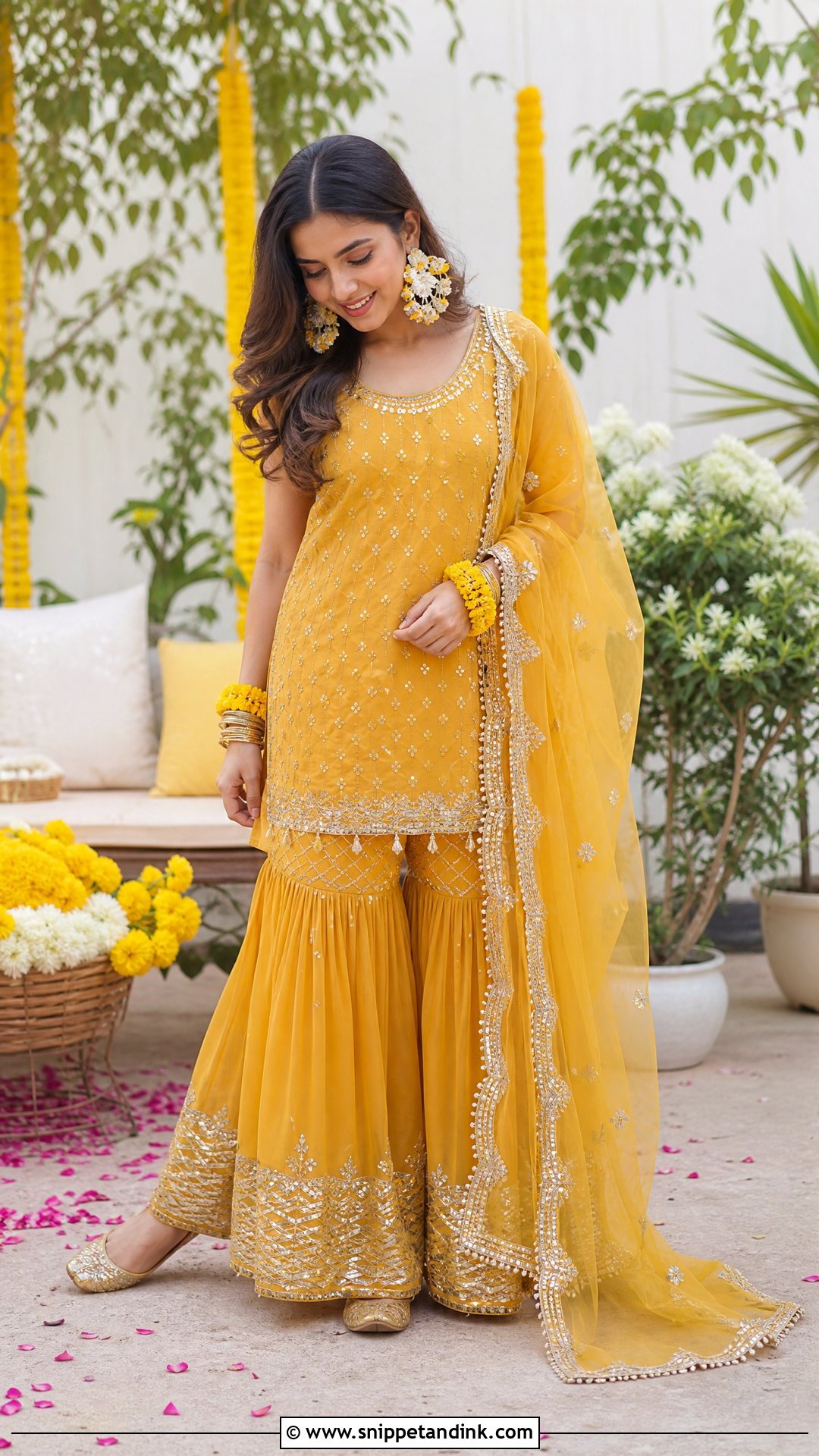
Mustard hides a turmeric smear far better than pale lemon, which is half the reason I like it. Gota patti around the neckline, hem and armholes of a sleeveless or short-sleeved kurta catches the daylight, while the sharara needs only small scattered motifs. A sheer dupatta with a wide gota border carries the festive detail. Sleeveless is practical here, since sleeves are what get dipped in the paste bowl. Floral chandbalis, stacked bangles and metallic juttis suit everyone; the bride can add a floral necklace and hathphool, and a braided ponytail keeps hair out of the way.
3. Yellow and Orange Ombre Sharara for Haldi
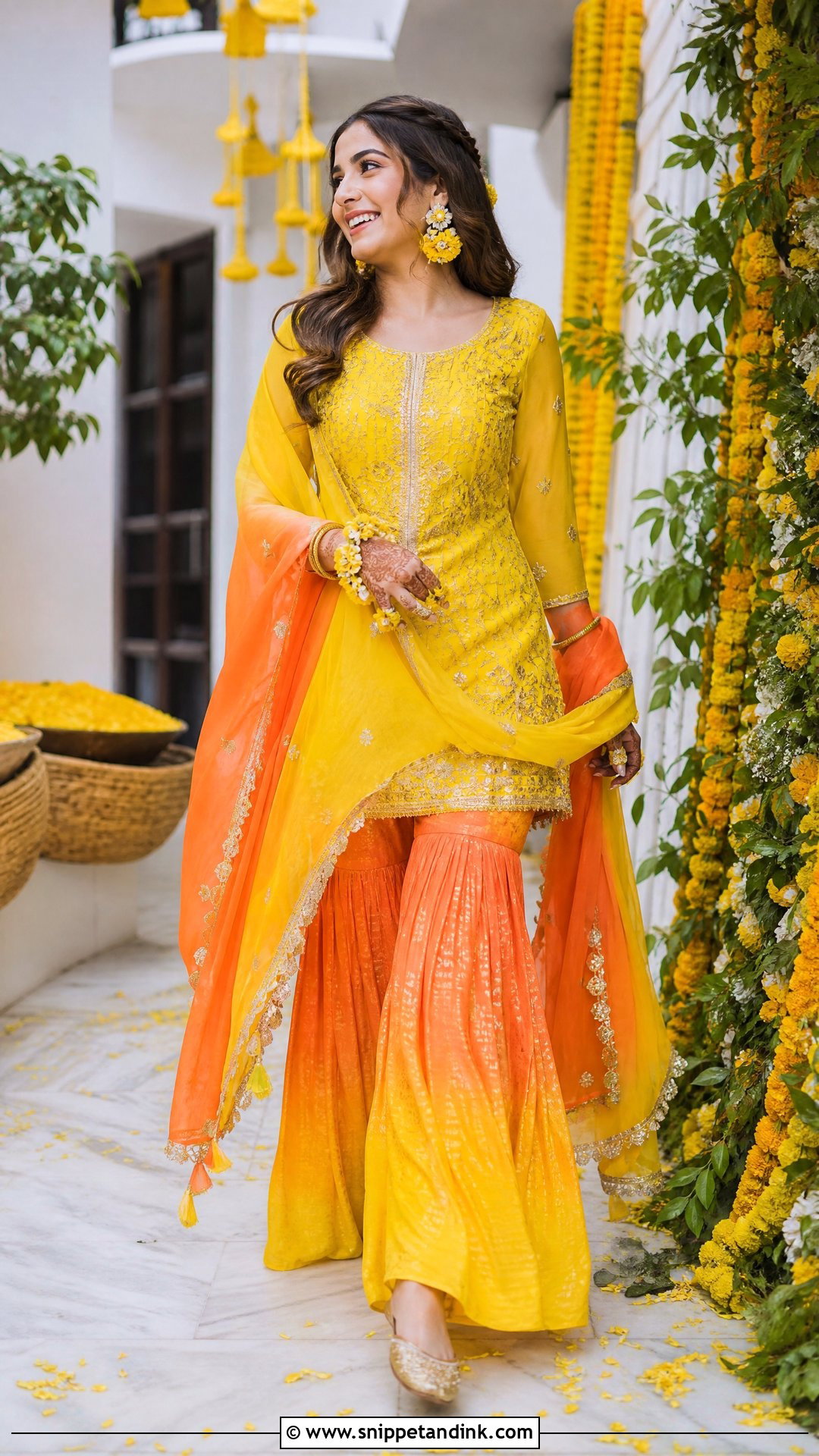
Yellow over orange ombre has the cheerful energy a haldi morning calls for. Pair a yellow short kurta with light threadwork or tiny mirrors, and orange pants that fade back into yellow at the hem. A matching ombre dupatta joins the two. Ombre dye is the thing I look at closely: on cheaper georgette the gradient can be patchy, which shows clearly in outdoor light. Breathable georgette or a cotton blend keeps the wide flare light. Gold juttis and orange floral earrings are enough, with loose curls or a half-up style.
4. Floral Print Sharara for Haldi
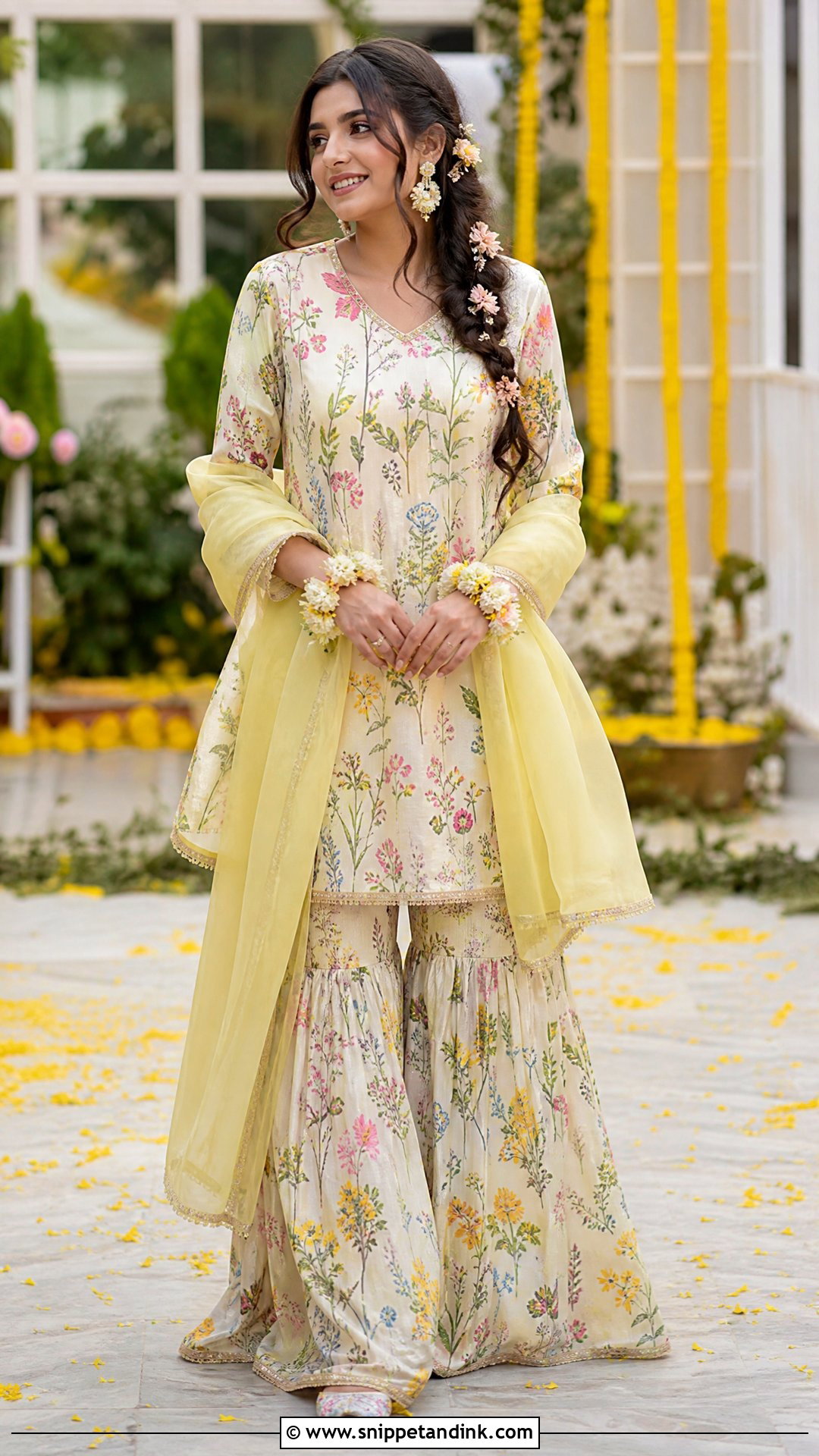
Floral prints are forgiving at a haldi; a yellow fingerprint on a busy marigold print simply disappears. Choose a yellow or ivory kurta printed with marigolds, small roses or botanicals, and either a matching printed sharara or plain yellow pants with a floral border. Organza gives the dupatta shape; chiffon moves more freely. A loose braid with tiny flowers suits the garden feeling. The bride can add a floral choker and tikka, guests should keep it lighter, and dewy makeup with a coral lip does the rest.
5. Yellow Mirror Work Sharara for Haldi
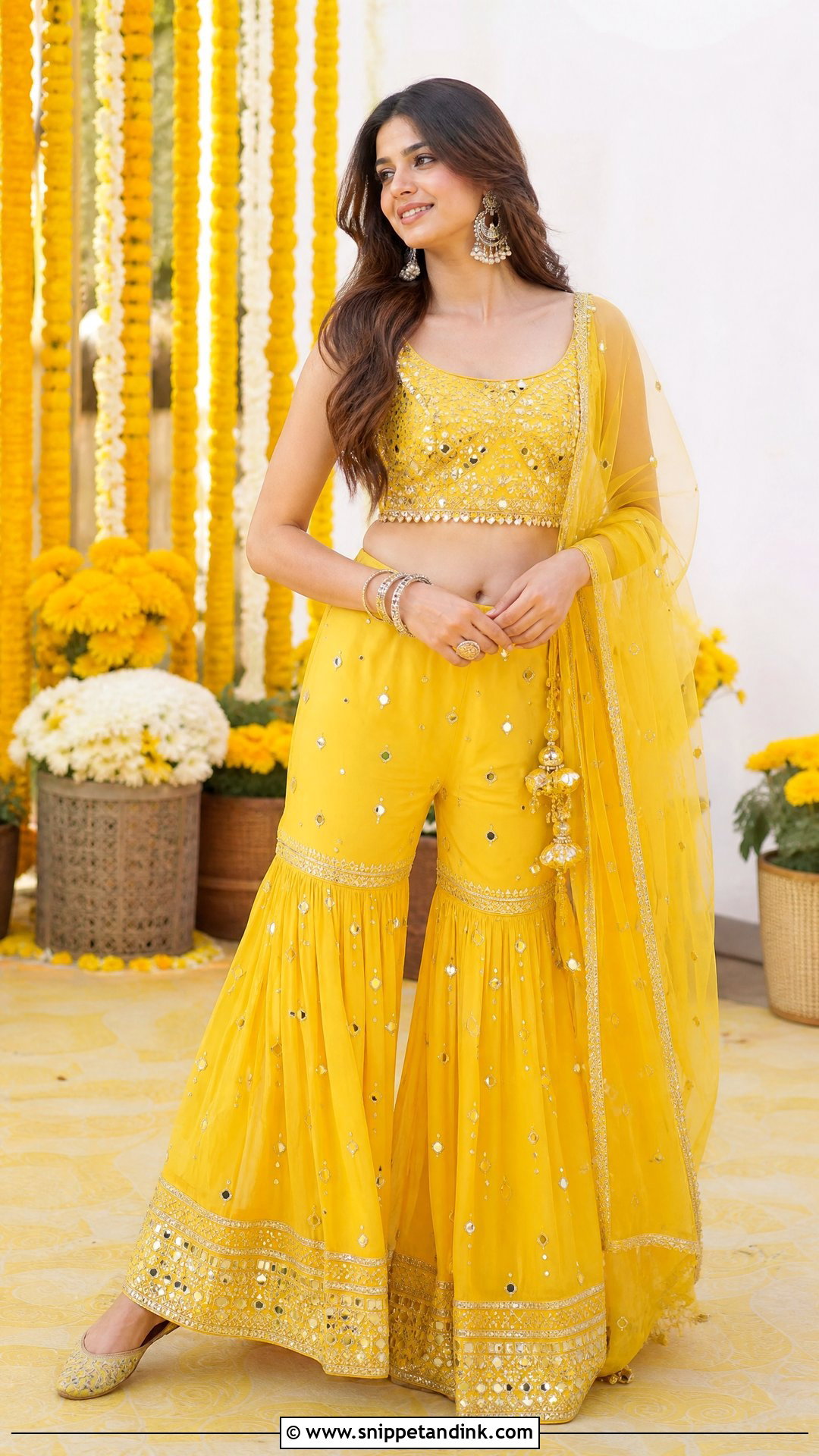
Mirror work gives you sparkle that still feels right in daylight, as long as it’s placed with restraint. I’d keep the mirrors to the neckline and sleeves of a cropped or waist-length kurta and one border near the sharara hem. A net dupatta with scattered mirrors and a finished edge ties in. Turmeric paste settles into the stitching around each mirror and is tricky to clean, so this is a better guest outfit than a bride’s. Silver earrings, slim bangles, soft waves and a peach lip let the mirrors lead.
6. Yellow Peplum Sharara for Haldi
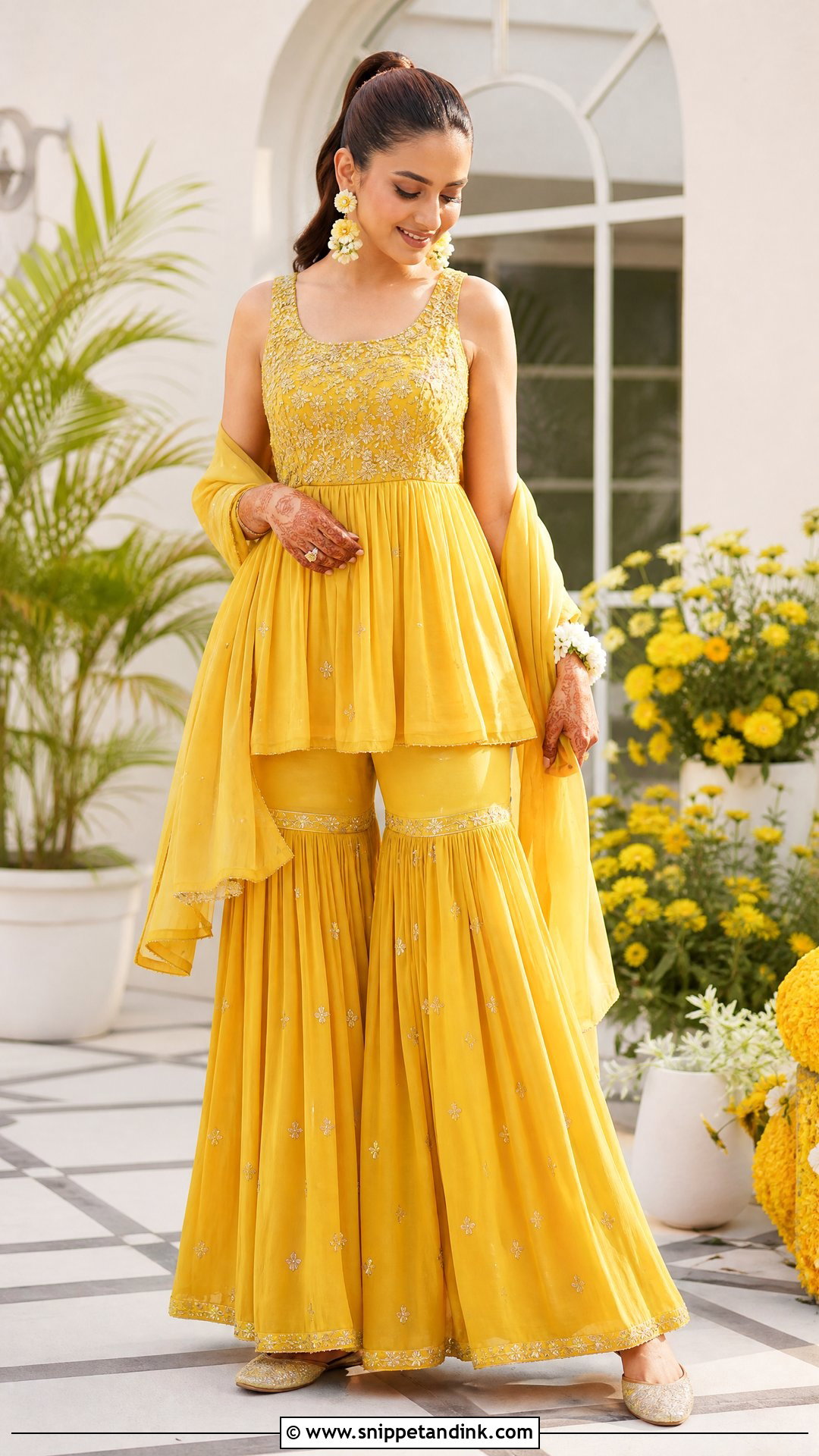
A yellow peplum gives the sharara a defined waist, which helps petite guests who feel swamped by flare. The peplum should end around the upper hip and pair with high-waisted pants so there’s no gap at the middle. Pearls, gota or light embroidery can trace the neckline and peplum hem. At a small home haldi I’d happily skip the dupatta; otherwise drape a soft one over one shoulder. Floral drops, a few bangles and pointed juttis finish it. A high ponytail reads playful, a low bun more polished.
7. Yellow Cape Sharara for Haldi
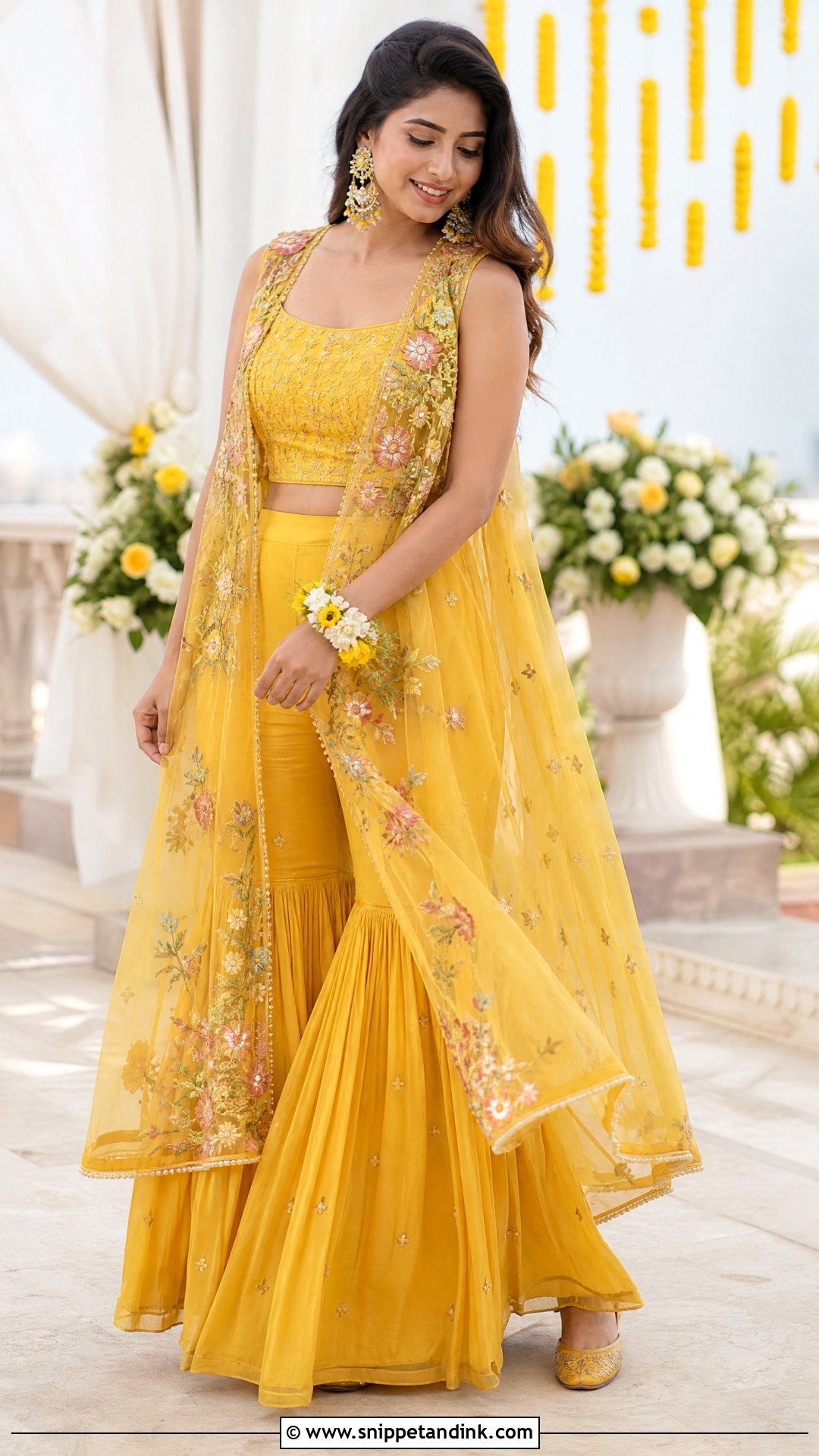
A cape replaces the dupatta, so there’s nothing sliding off your shoulder into the paste bowl. Wear a yellow sleeveless blouse or short kurta with matching flared pants, and layer a sheer cape that ends at the knee or calf. Floral embroidery, scalloped edges or a few sequins make the cape festive. I’d stop it at the calf for outdoor events; a floor-length cape drags through damp grass and petals. Skip the heavy necklace since the cape frames the shoulders, and wear statement earrings with a sleek ponytail.
8. Yellow Bandhani Sharara for Haldi
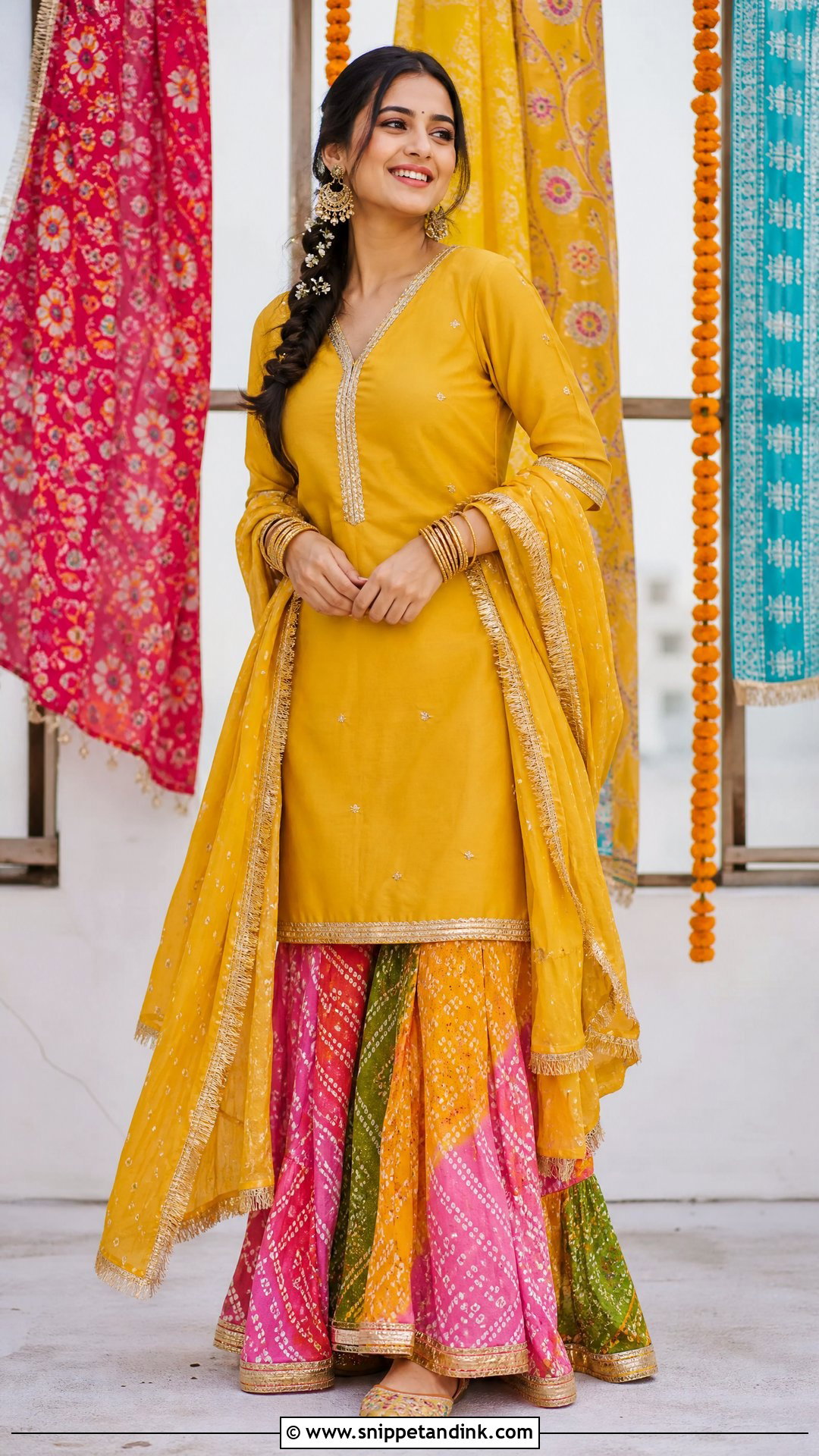
Bandhani pairs naturally with haldi colors, but real tie-dye can bleed when it gets wet, so keep it away from the white parts of your outfit and away from the water splashing at the end. I’d do a plain yellow or mustard kurta with a bandhani sharara in yellow, orange, pink or red. A matching bandhani dupatta links the colors if it’s light enough to drape. Simple gota trim on the kurta, oxidized or antique gold earrings and handcrafted juttis suit it, with a side braid. Brides can add a small tikka and hathphool.
9. Ivory and Yellow Sharara for Haldi
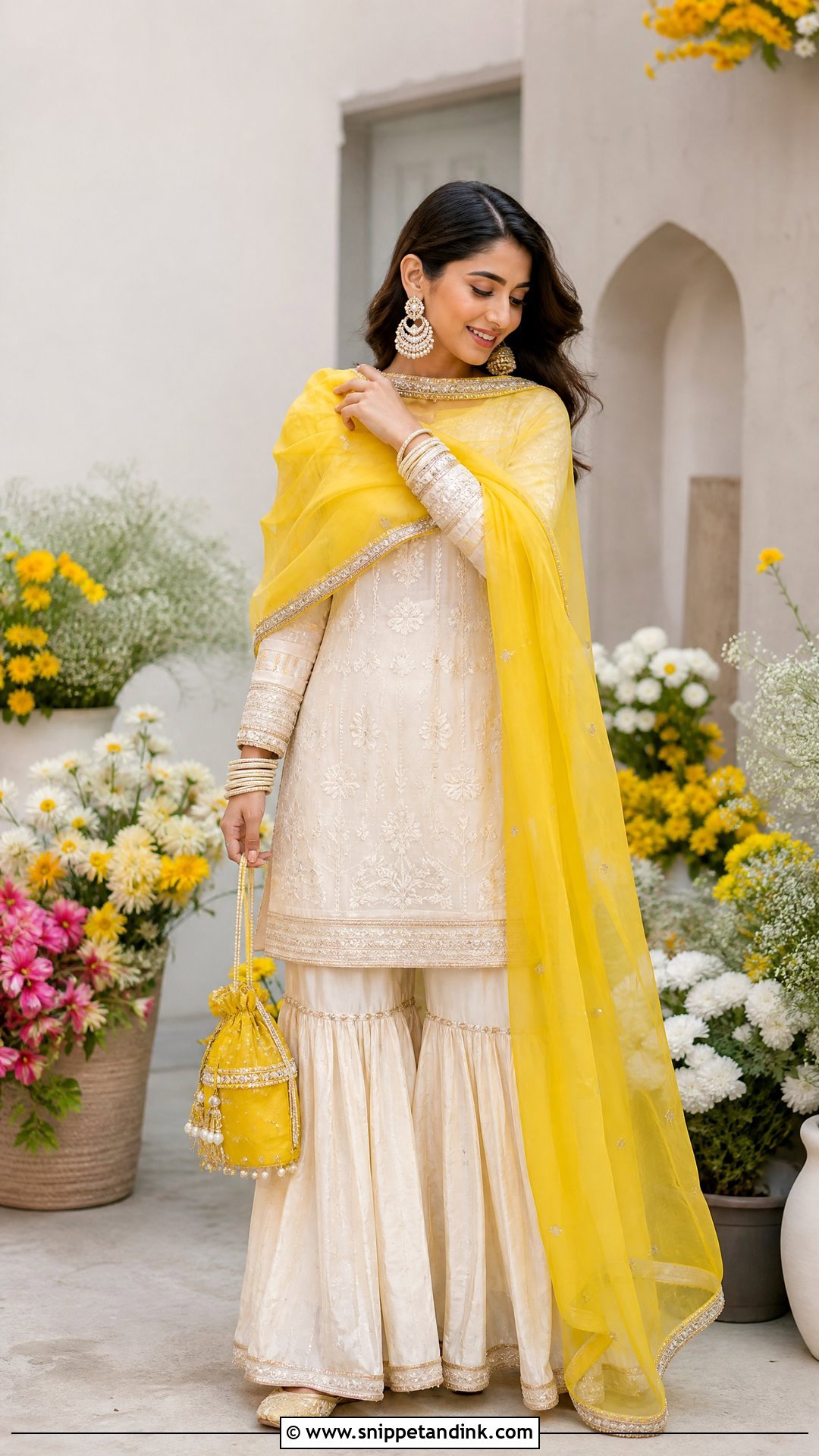
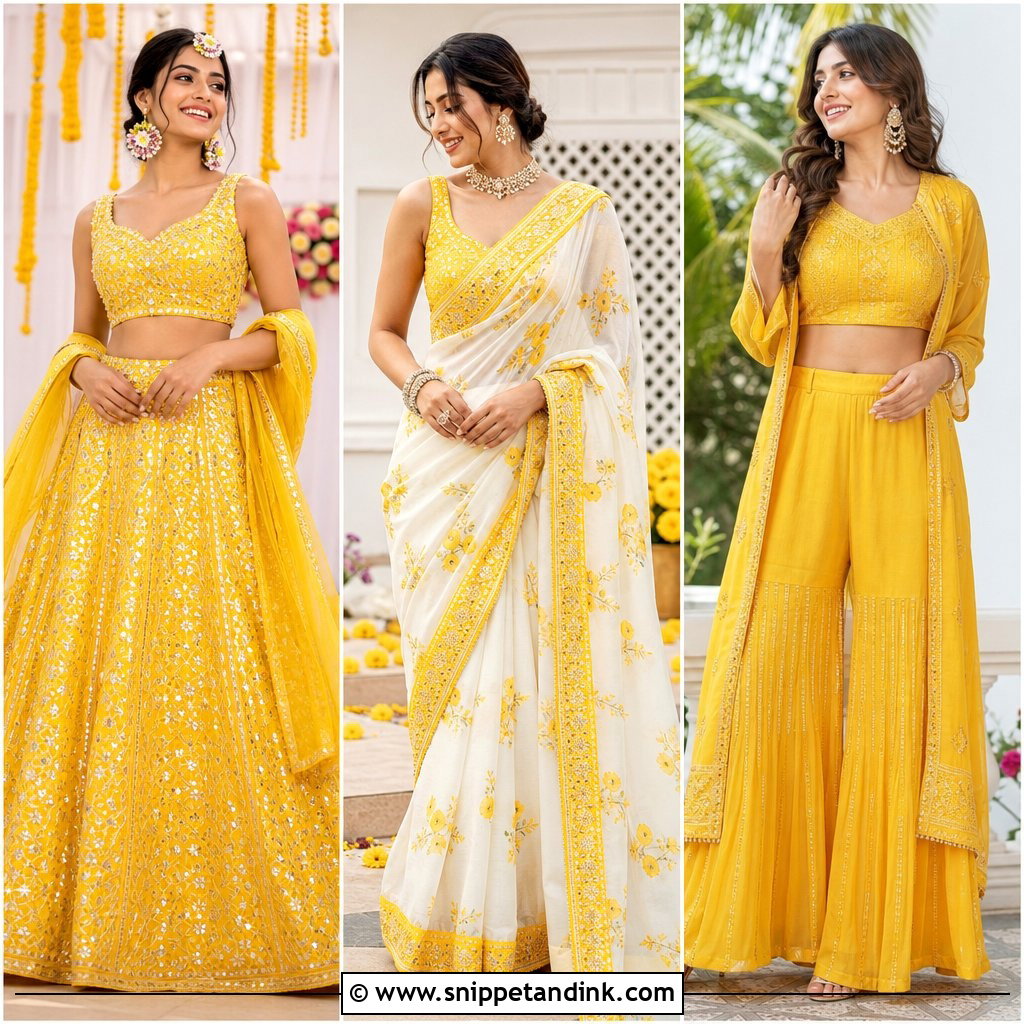
Ivory with yellow embroidery is the softer route, and I suggest it to guests who don’t love strong color near their face. Choose an ivory kurta and sharara with yellow florals or printed borders, then bring the color up with a clear yellow dupatta. Pearl chandbalis, ivory bangles and pale gold juttis keep it refined, and a small yellow potli holds your phone. Brides can opt for a more embellished neckline and wider flare. For guests, cotton or organza versions are lighter and much easier to clean than silk.
10. Multicolor Sharara for Haldi
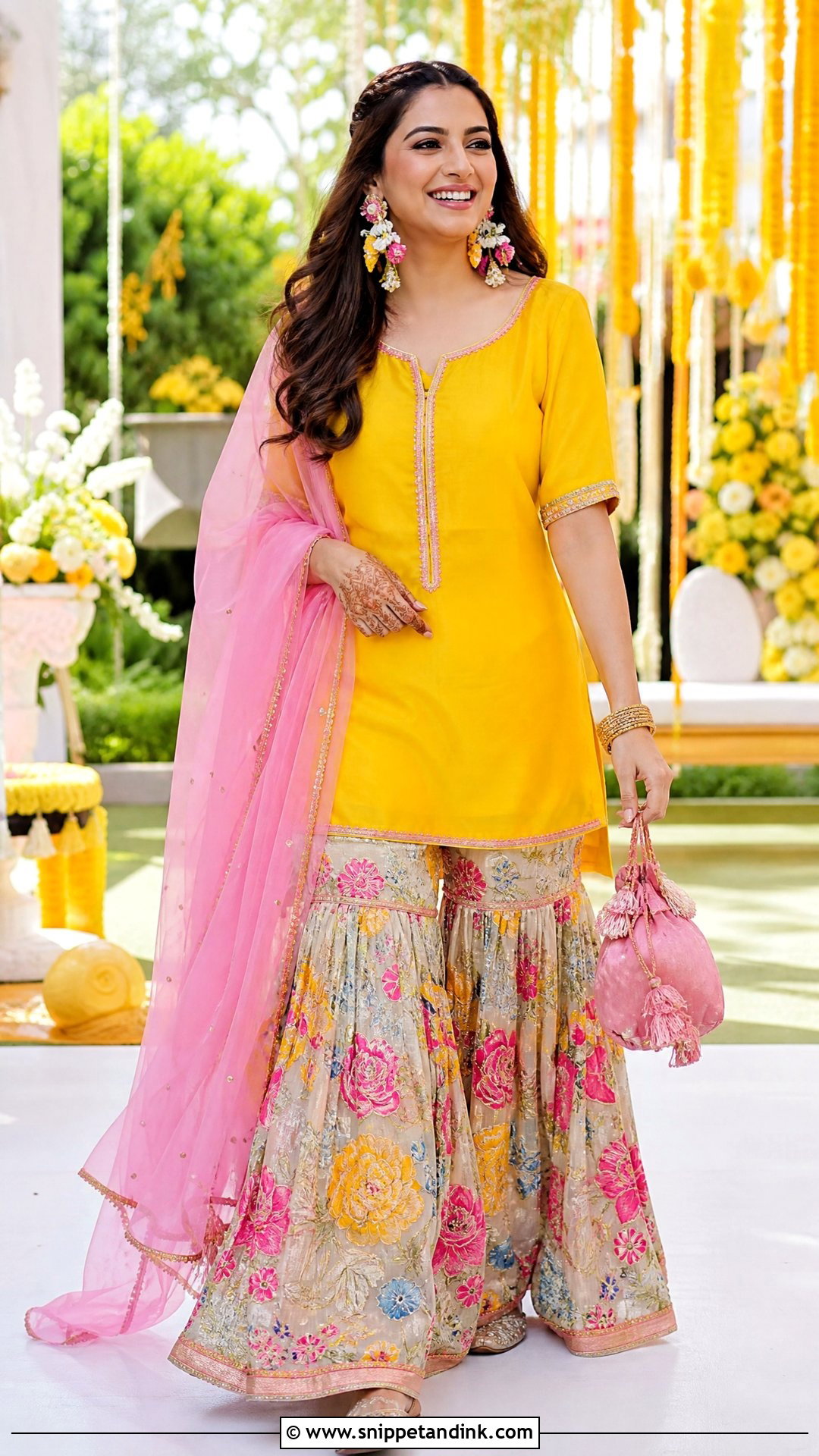
Multicolor pants make the outfit, so everything else should calm down. Start with a plain yellow, ivory or pink kurta and let the sharara carry the floral embroidery, stripes, patchwork or print. Pick the dupatta in one shade lifted from the pants; that single decision is what makes it look intended. With four or five colors already in play, keep to floral earrings, a few slim bangles and metallic juttis. A relaxed ponytail and a lip color pulled from the print finish it. Brides can add a multicolor floral necklace.
11. Lime Green Sharara for Haldi
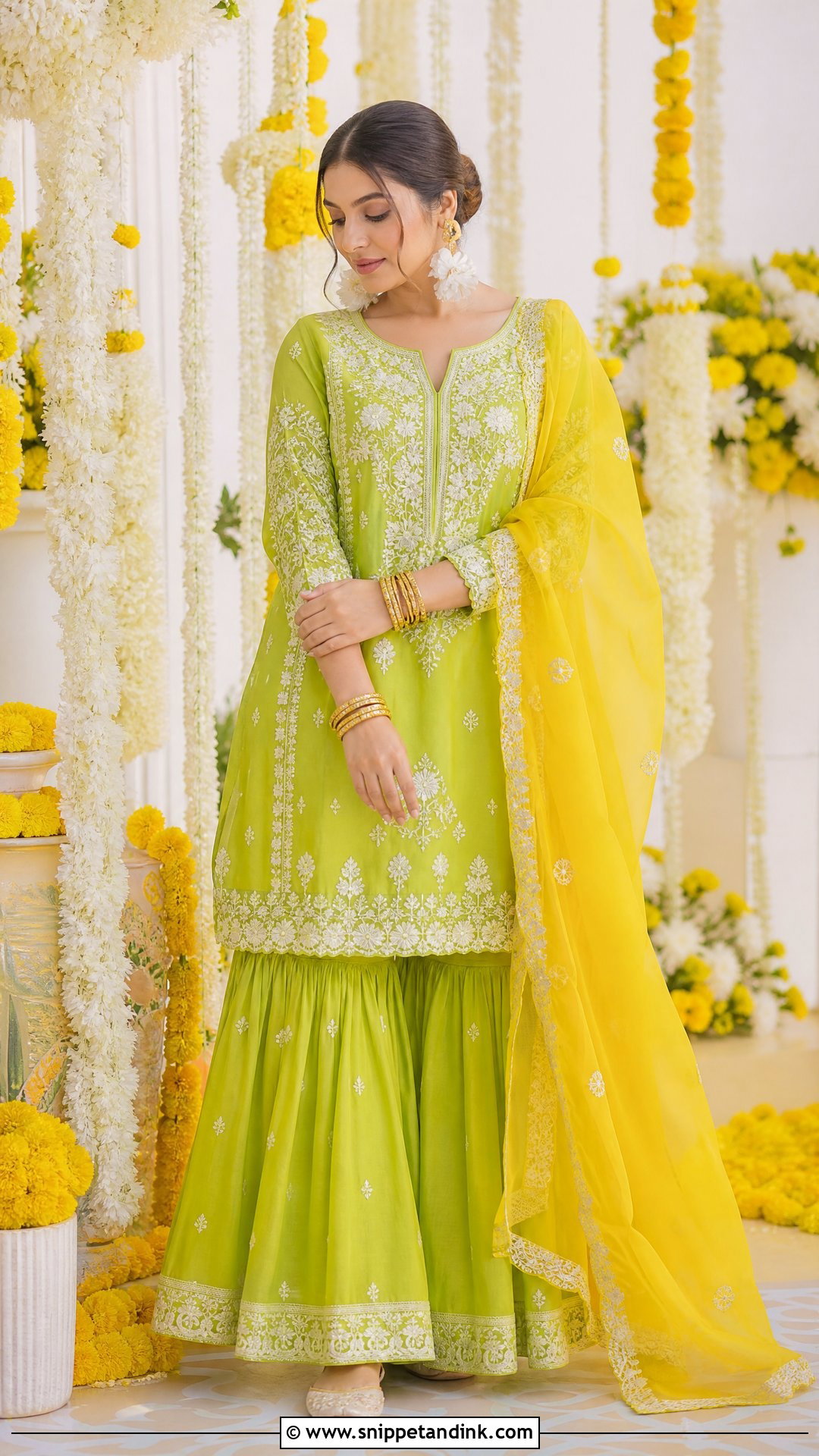
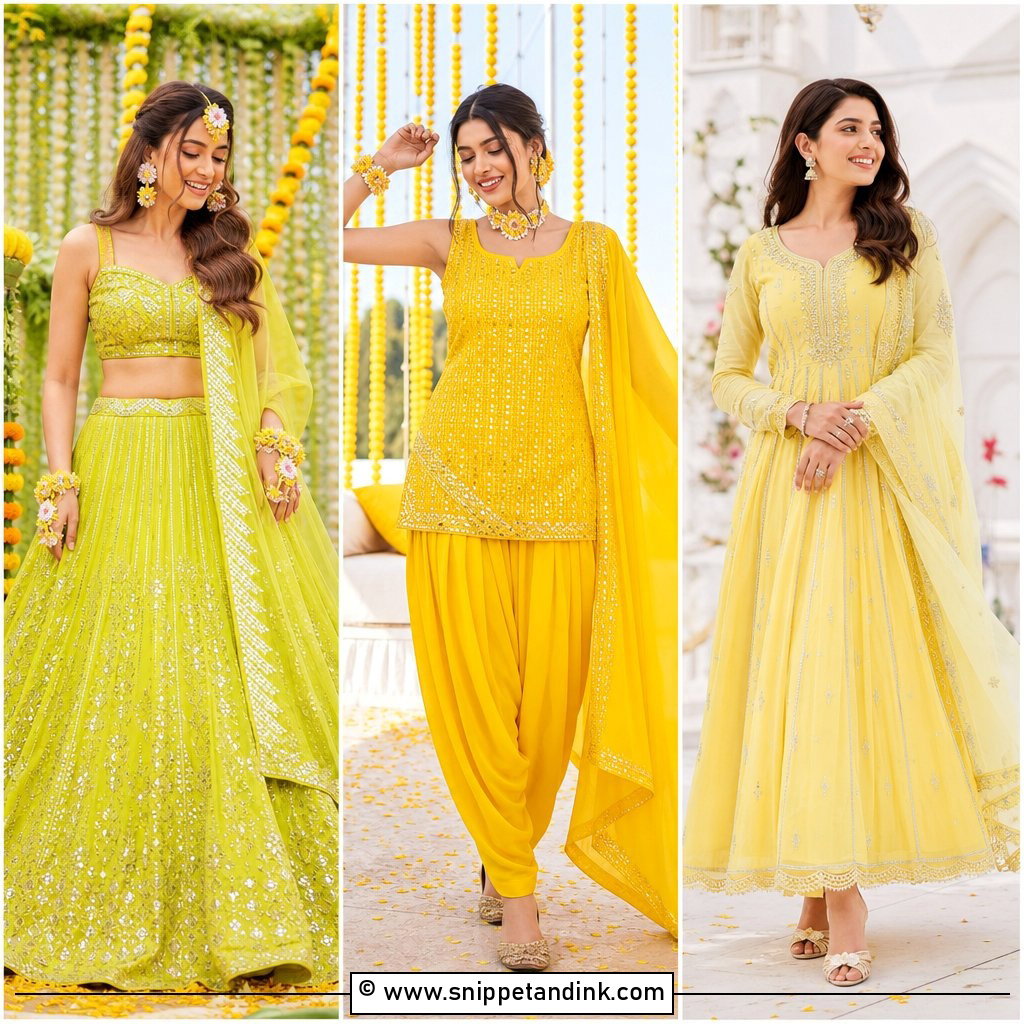
Lime green looks fresh beside yellow decor and reads differently from every other guest in yellow. A lime kurta with white, gold or multicolor embroidery over matching flared pants, plus a yellow organza dupatta, connects it to the ceremony. For outdoors, georgette or crepe moves easily. Lime can make some skin tones look sallow in direct sun, so I hold the fabric under the chin in daylight before deciding. Soft pink makeup balances it. White floral earrings, gold bangles and a center-parted bun complete the look.
12. Pink and Yellow Sharara for Haldi
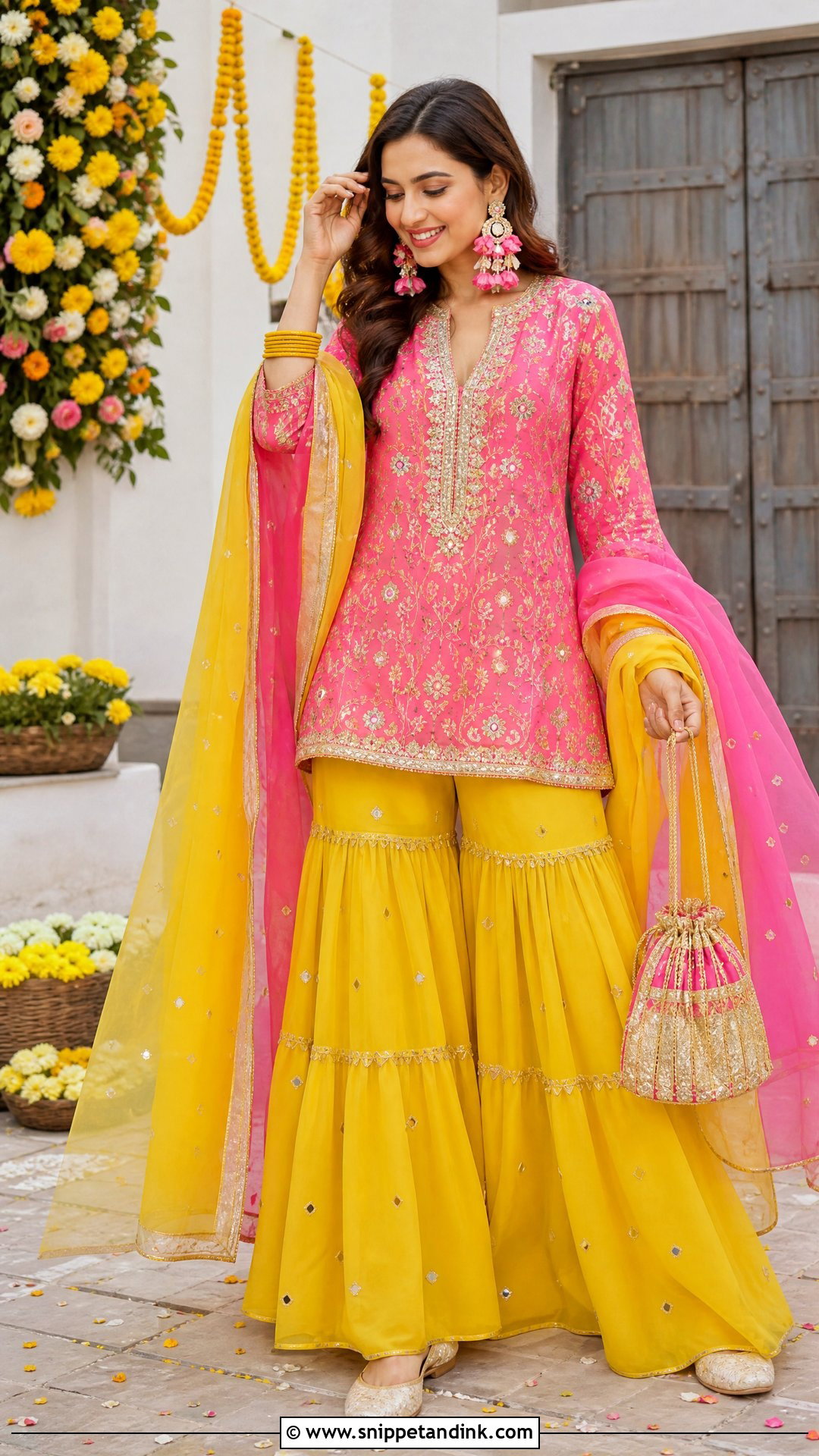
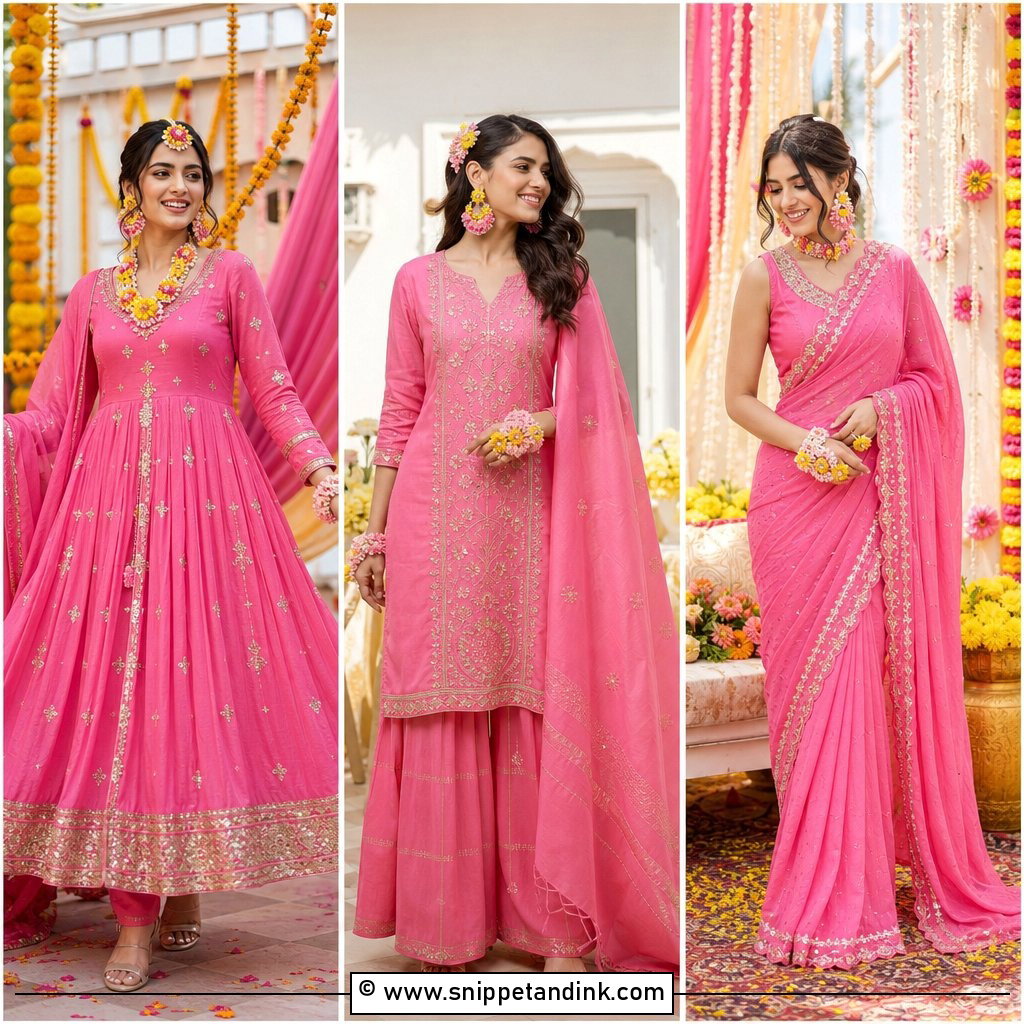
Pink with yellow looks joyful and still traditional. Either wear a short pink kurta with yellow threadwork over a yellow sharara, or reverse it with a yellow kurta over pink pants for more contrast near the hem. A two-tone dupatta pulls it together. My preference for the bride is yellow on top, since that’s the color closest to the face during the ritual photos. Pink floral earrings, yellow bangles, neutral juttis and a small pink potli suit both versions, with a side braid or half-up hair. Sisters can simplify it to earrings and a few bracelets.
13. Orange Sharara for Haldi
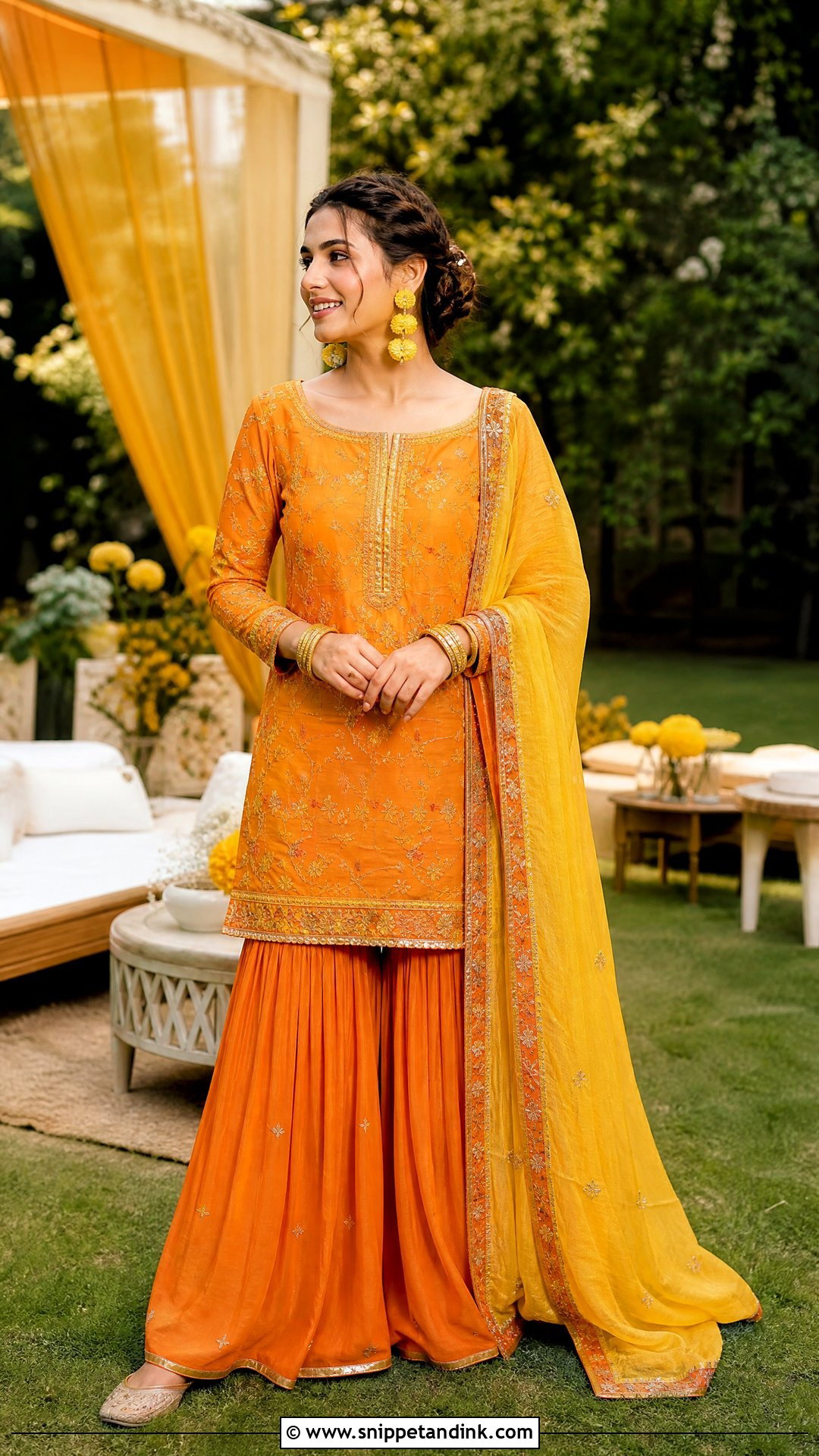
Orange is warmer than yellow and stands out clearly against green garden decor. A short orange kurta with tonal embroidery or small gold details over fluid orange pants makes a strong base, and a yellow dupatta with an orange border brings the haldi color in. Yellow and white floral earrings soften the saturation. Because the color is intense, keep hair simple, like a low ponytail or braided bun. Antique gold bangles, beige or embroidered juttis, peach blush and a muted coral lip complete it.
14. Pastel Peach Sharara for Haldi
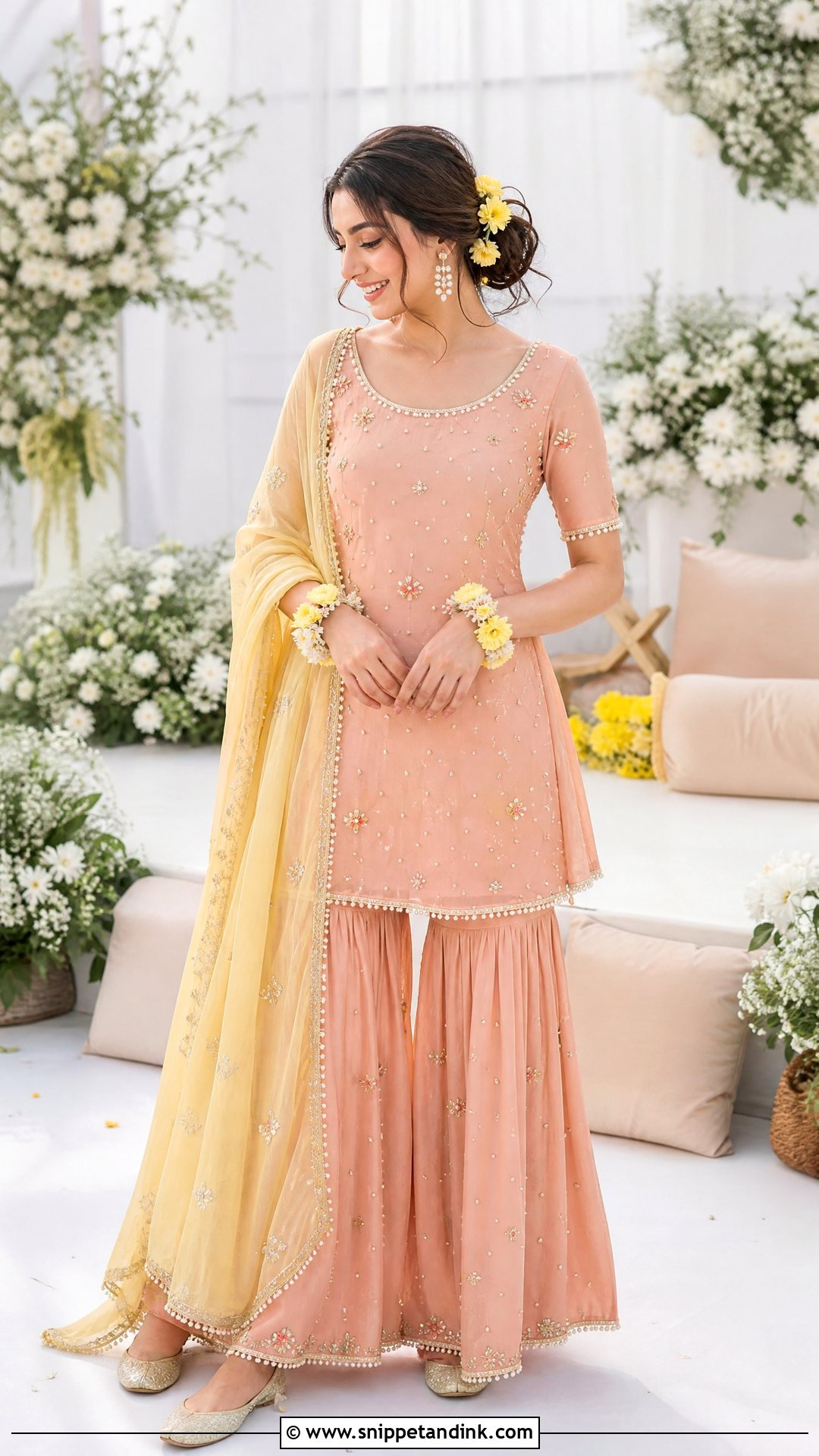
Pastel peach is for the guest who wants a quieter version of the haldi palette. A short kurta with fine thread embroidery or tiny pearls, matching peach pants and a pale yellow dupatta give just enough contrast. Fresh yellow flowers in a loose bun put the haldi color right by the face, which matters more in photos than the outfit itself. Pastels do show turmeric clearly, so stand back during the application if you’re not part of it. Pearl earrings, ivory juttis and a peach-pink lip finish it.
15. Mint Green Sharara for Haldi
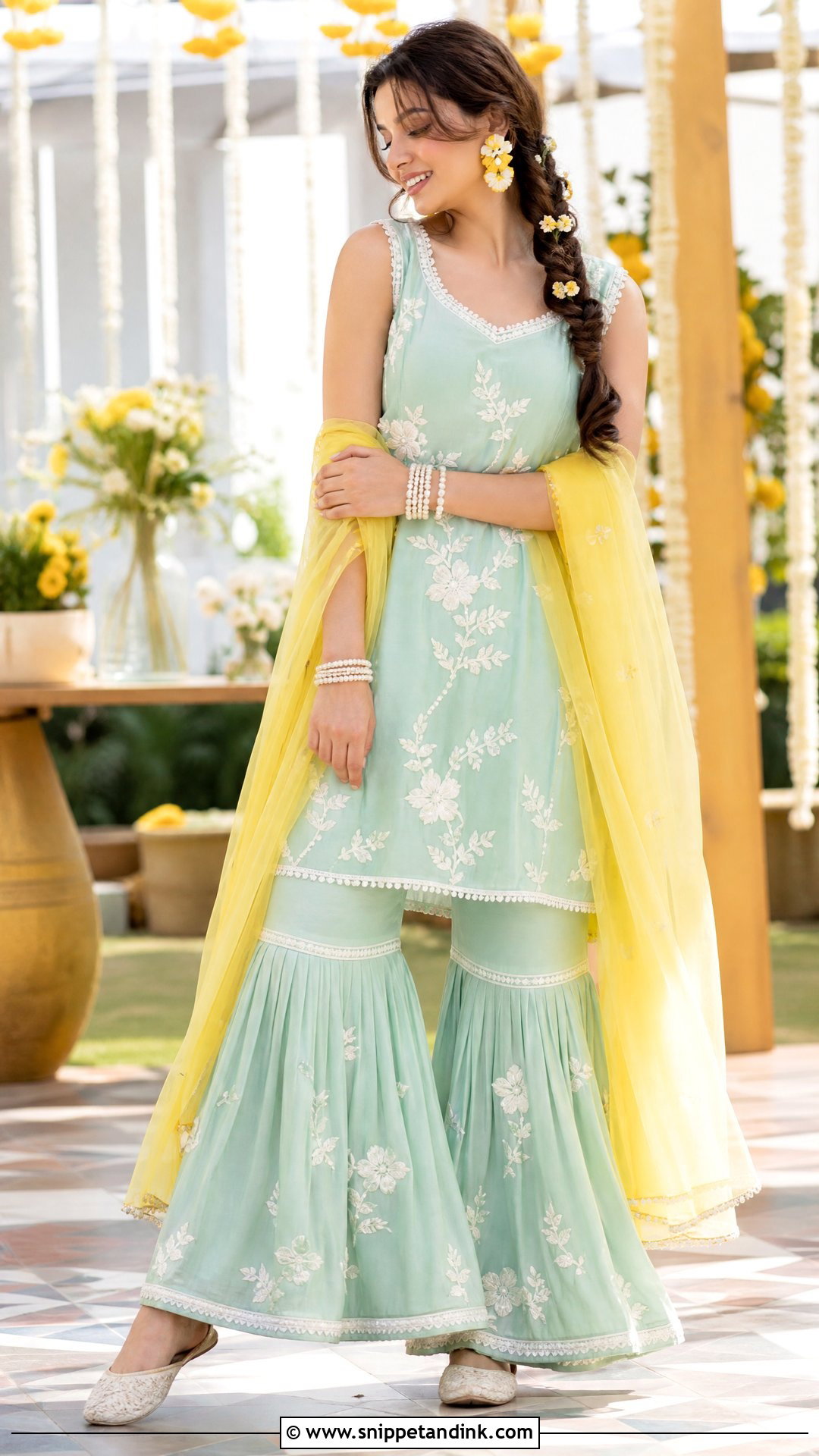
Mint feels cool in a hot garden and gives the photos some relief from all that yellow. Choose a mint short kurta with white florals, pearls or subtle mirrors, matching flared pants, and bring yellow in through the dupatta or flower jewelry. Ivory juttis with green embroidery tie the shoes in. Mint can wash out fair skin, so keep makeup rosy rather than nude. Brides might go for organza or georgette with handwork; guests can choose printed cotton. A soft braid with tiny yellow flowers completes it.
16. White Floral Sharara for Haldi
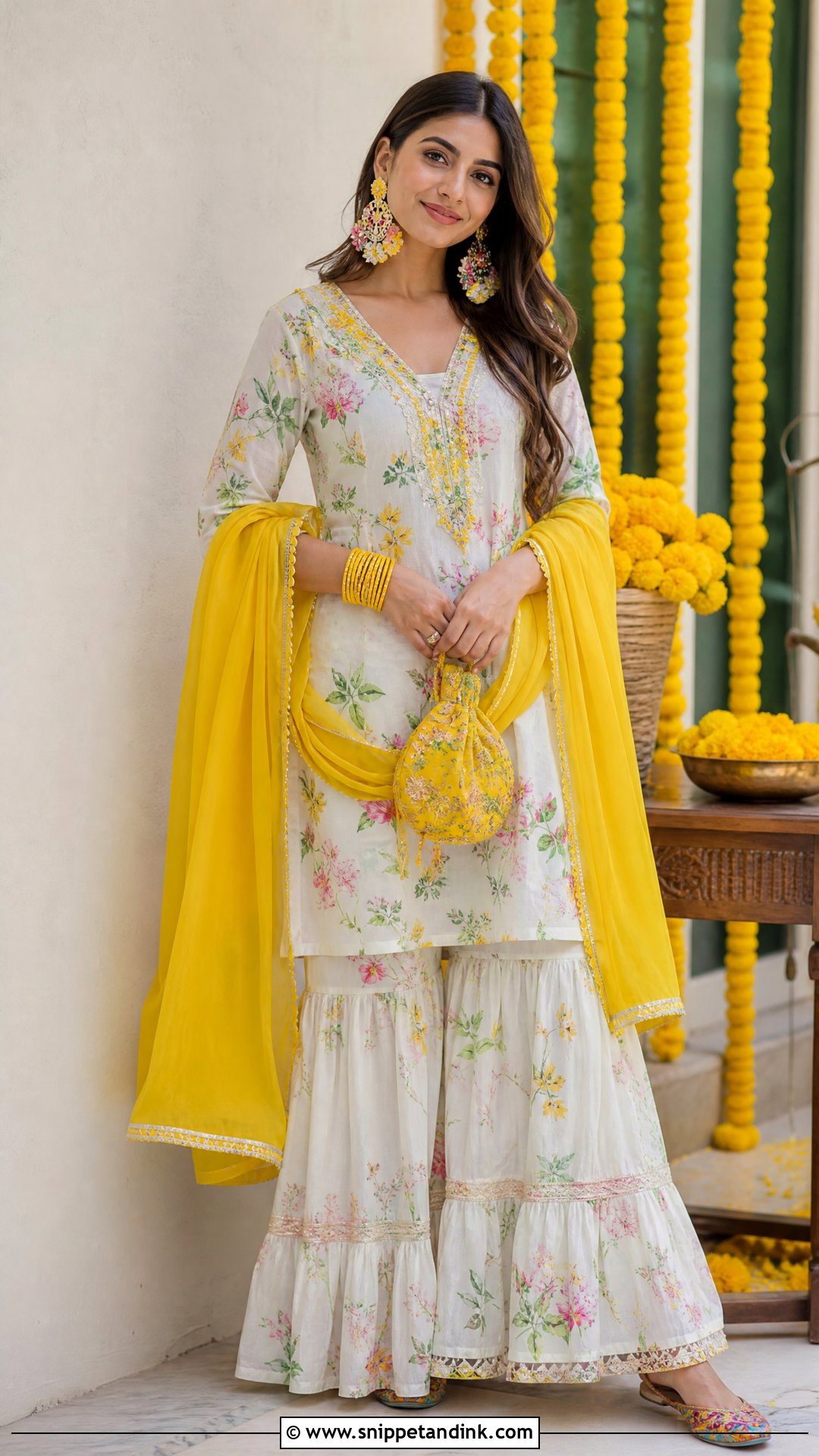
White with florals looks crisp and photographs clean against yellow decor. A white short kurta with small printed or embroidered flowers, a sharara repeating the pattern at the hem, and a yellow dupatta for the ceremonial note make the set. Colorful floral earrings, yellow bangles and a yellow potli complete the palette. I’ll be honest: turmeric on white cotton is the hardest stain of the day to shift. This one belongs on guests and sisters standing back from the ritual, not on the person being covered in paste.
17. Short Kurti Sharara for Haldi
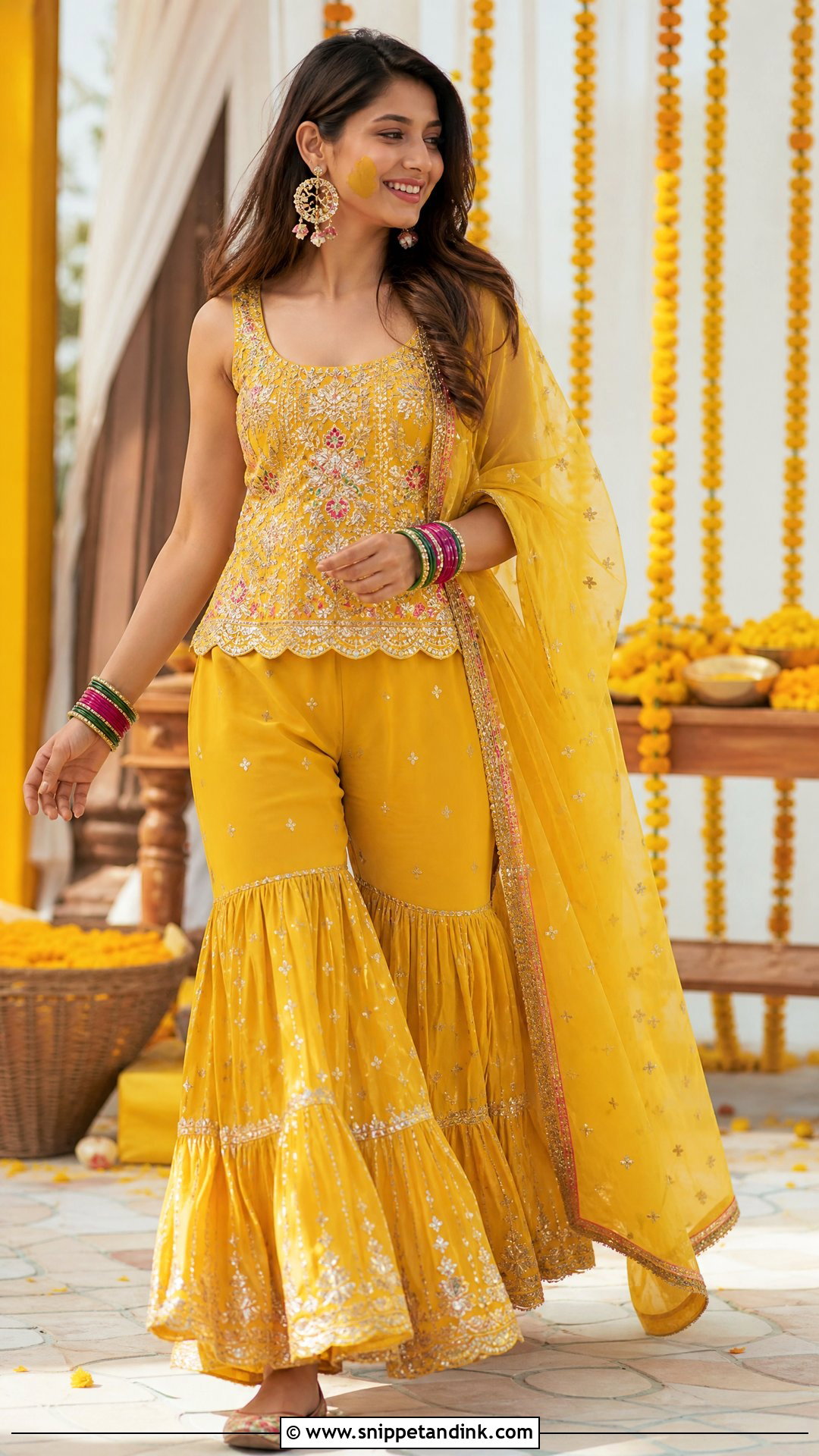
The short kurti is the shape I trust most for dancing. It ends at the waist or upper hip, the high-waisted pants stay fitted through the upper leg, then the flare opens below. Square, round or a modest V neck all work. Before buying, raise both arms above your head in the trial room; if the kurti rides up past the waistband, it will do the same on the dance floor. A light dupatta over one shoulder keeps the shape clean. Brides can choose gota-bordered pants; guests can wear printed ones with floral chandbalis.
18. Angrakha Sharara for Haldi
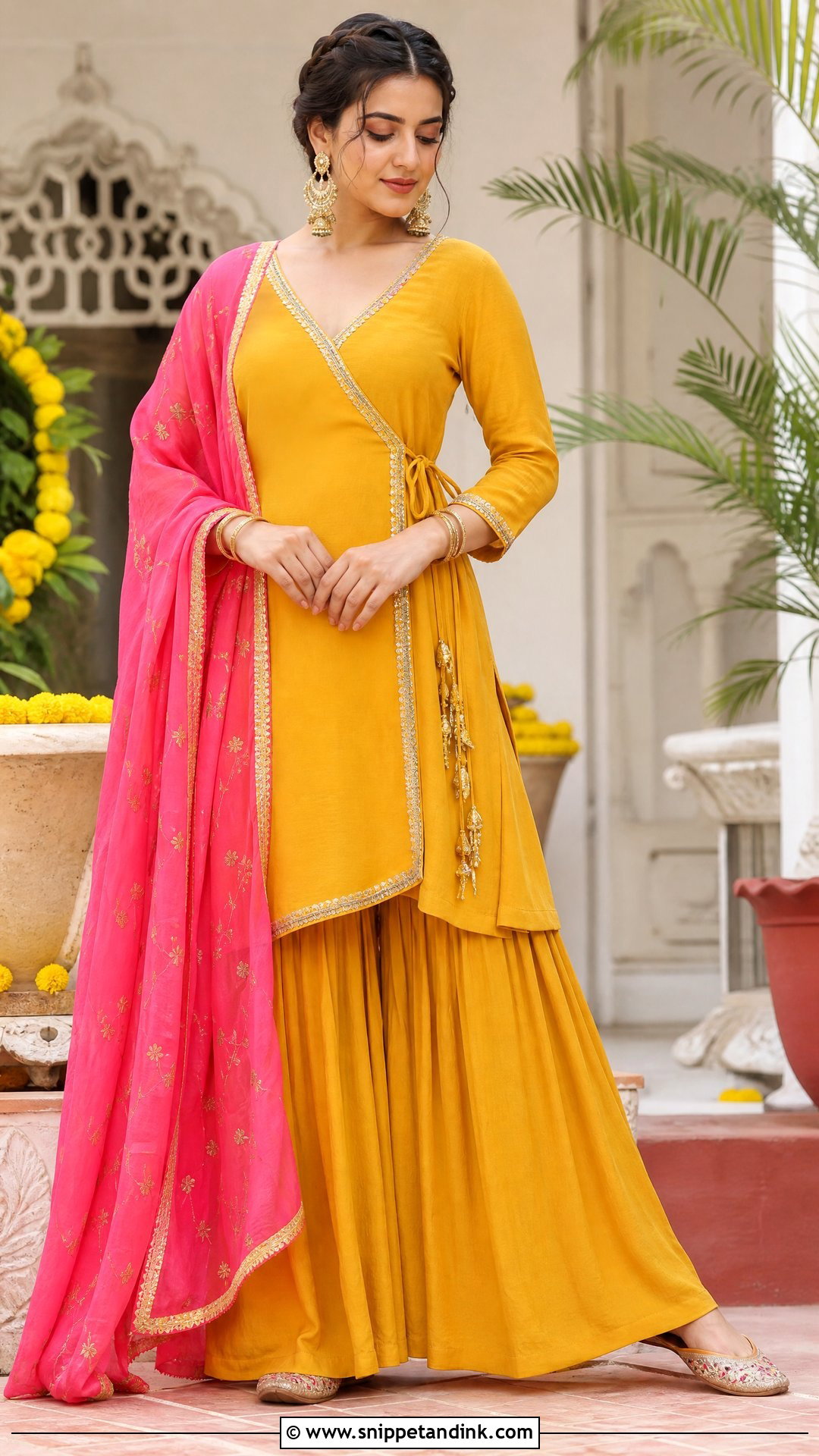
An angrakha’s overlapping front and side ties add traditional detail without much embellishment. Choose a yellow or mustard angrakha top with tassels and a gently flared hem, over plain sharara pants so the wrap stays the focus. Check that the inner tie is secure and placed so the overlap doesn’t gape when you sit forward. A contrast dupatta in pink, orange or green can match the tassels. Brides can add gota or mirror work along the overlap; guests can wear printed cotton with antique gold earrings and a low braid.
19. Jacket Sharara for Haldi
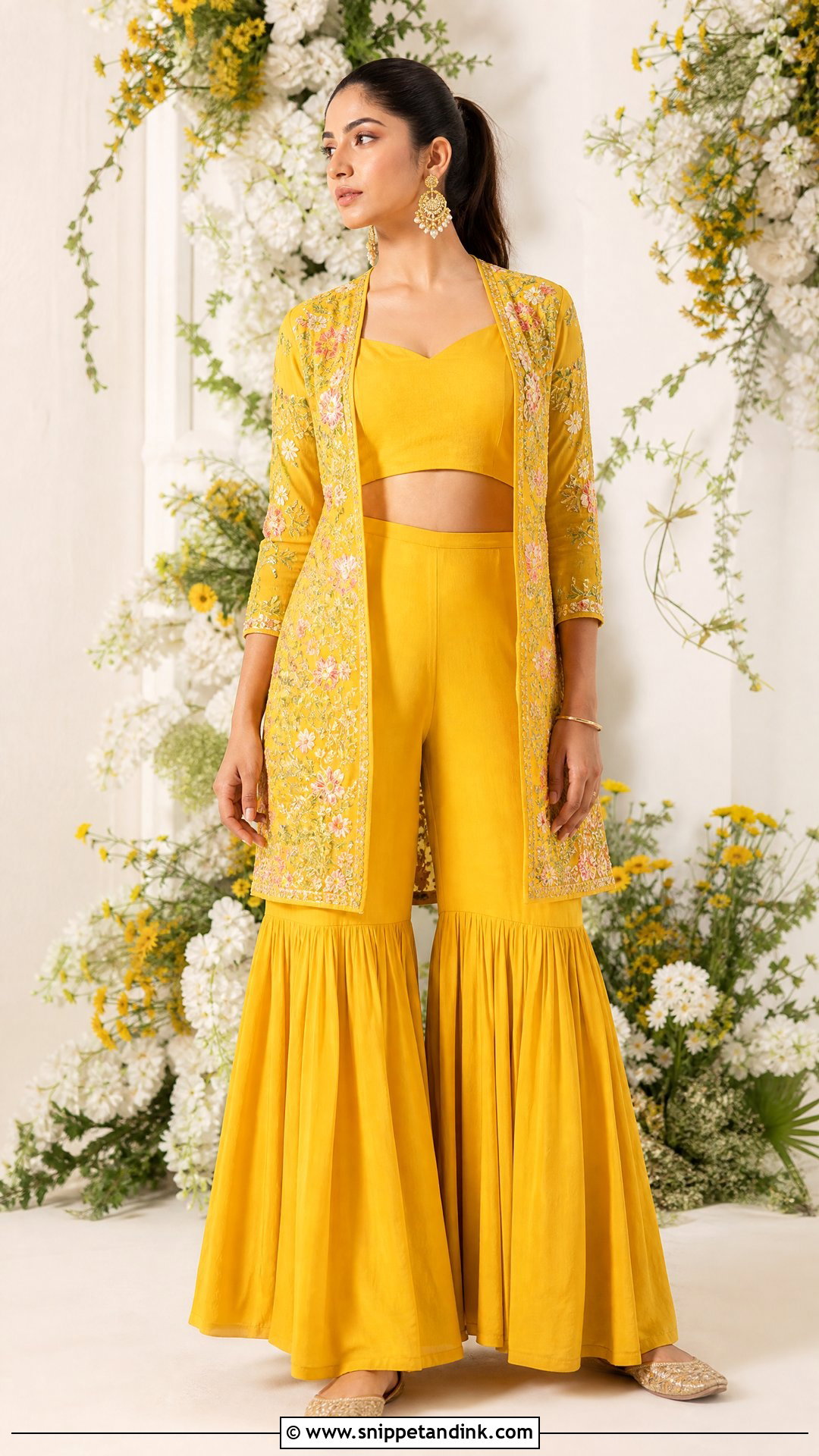
Adding a jacket makes a simple set look structured and modern. Start with a plain yellow crop top or short kurta and matching flared pants, then layer an open-front jacket with floral print, mirrors or colored borders. Knee length frames the sharara without hiding the flare. The jacket does a dupatta’s job, so skip the dupatta or use a very light one. It also comes off easily if paste lands on it, which I count as a real advantage. Statement earrings, neutral juttis and a sleek ponytail finish it.
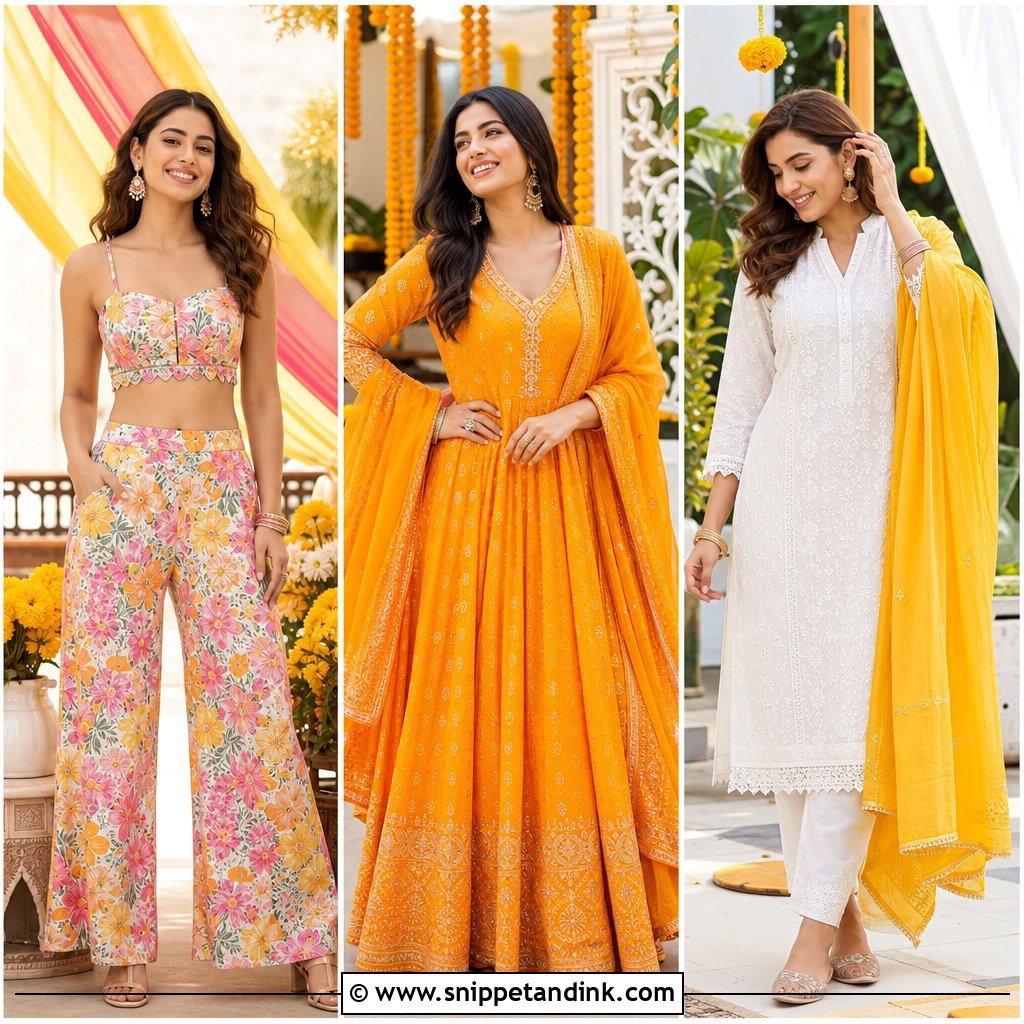
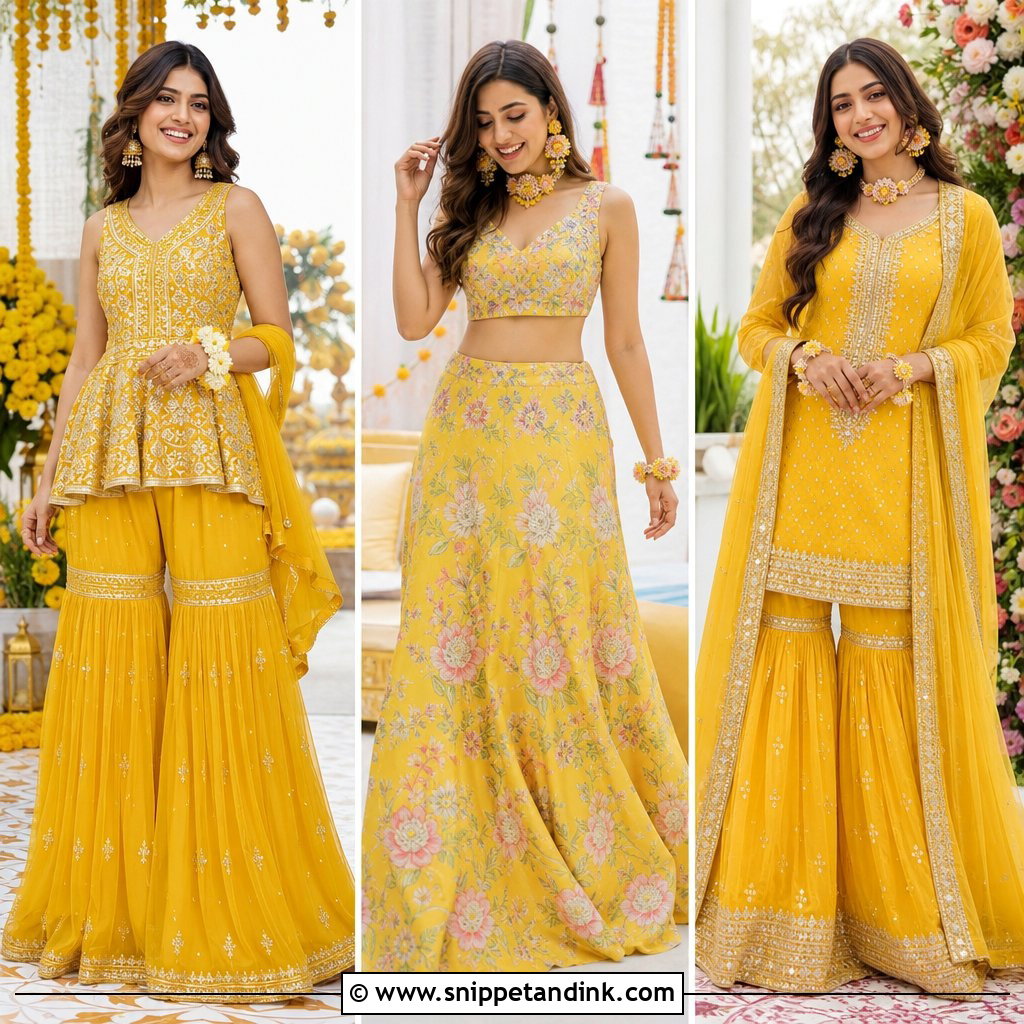

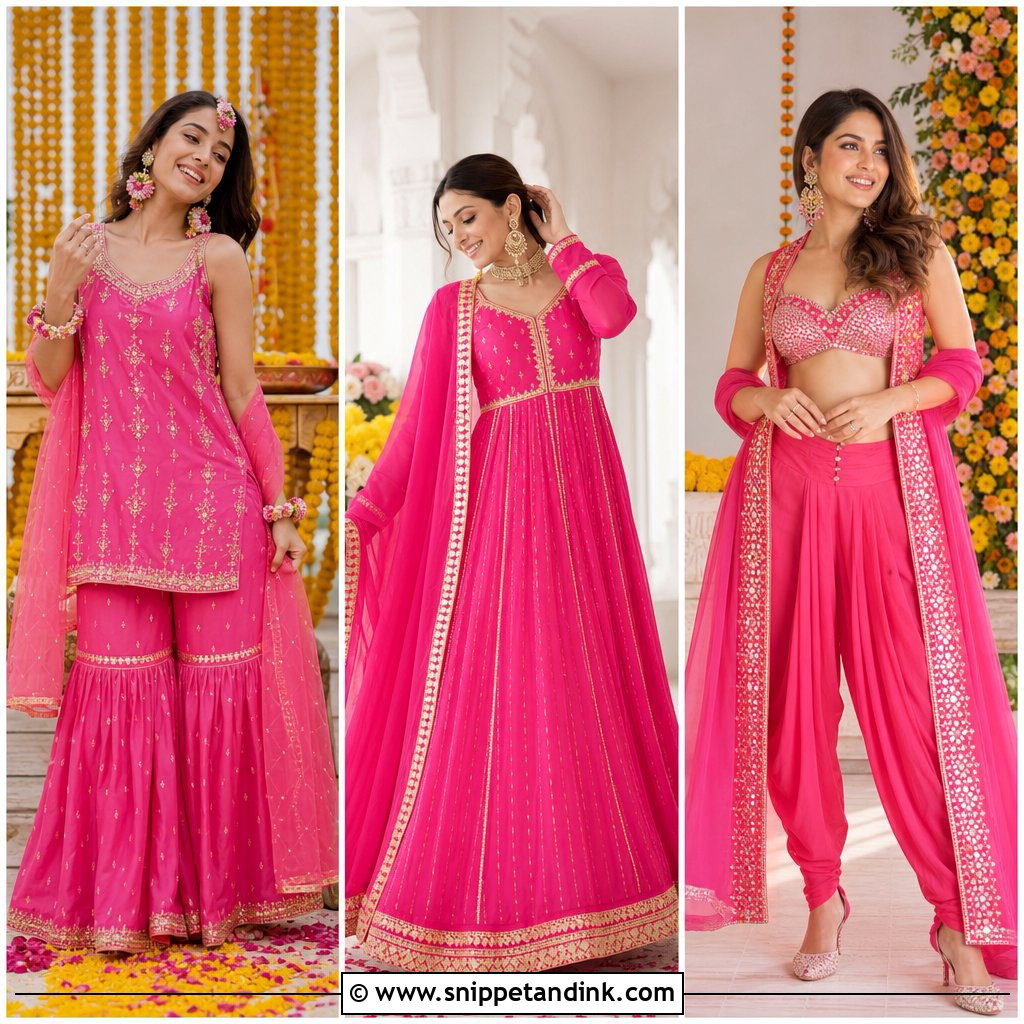
20. Yellow Silk Sharara for Haldi
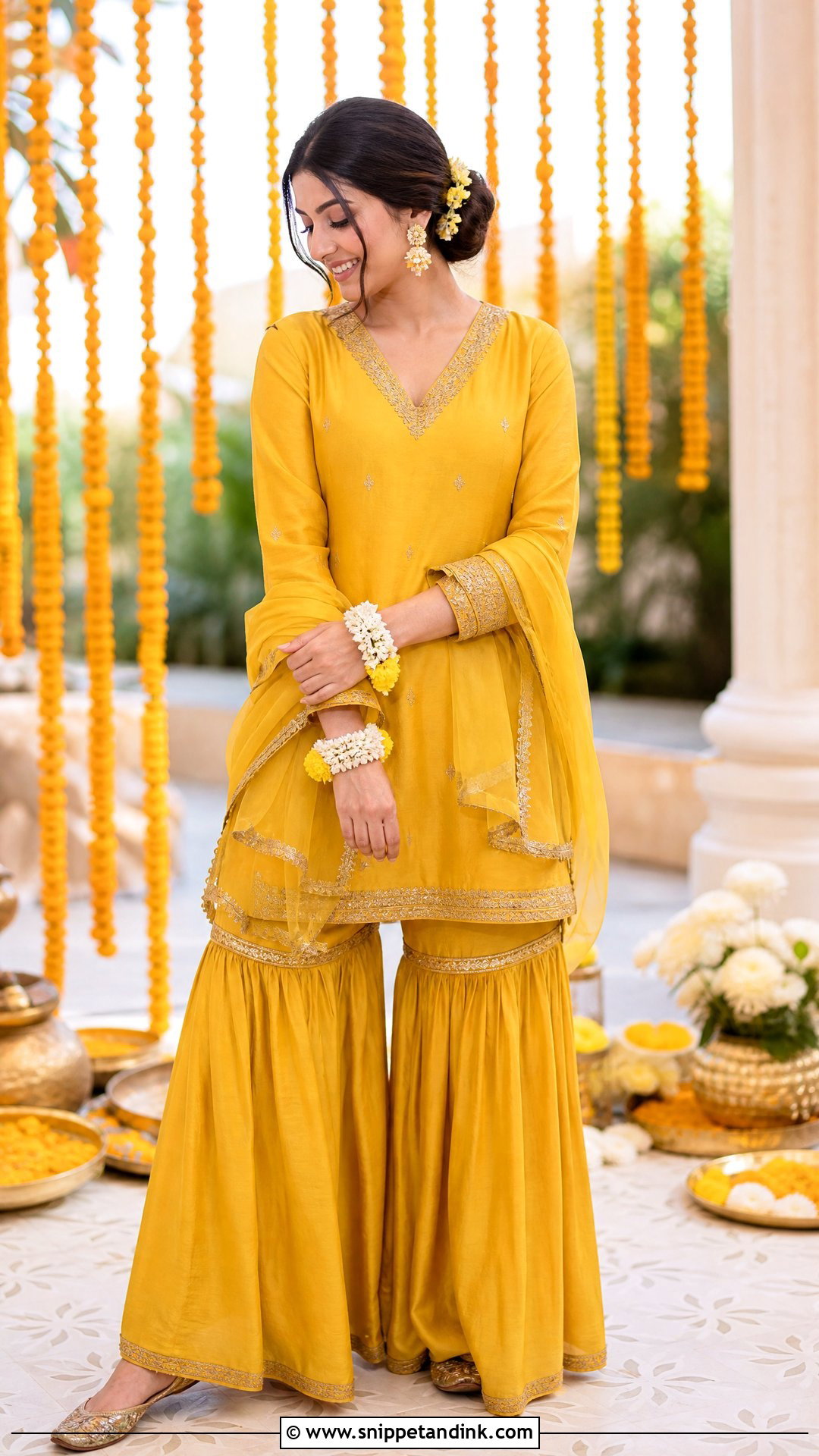
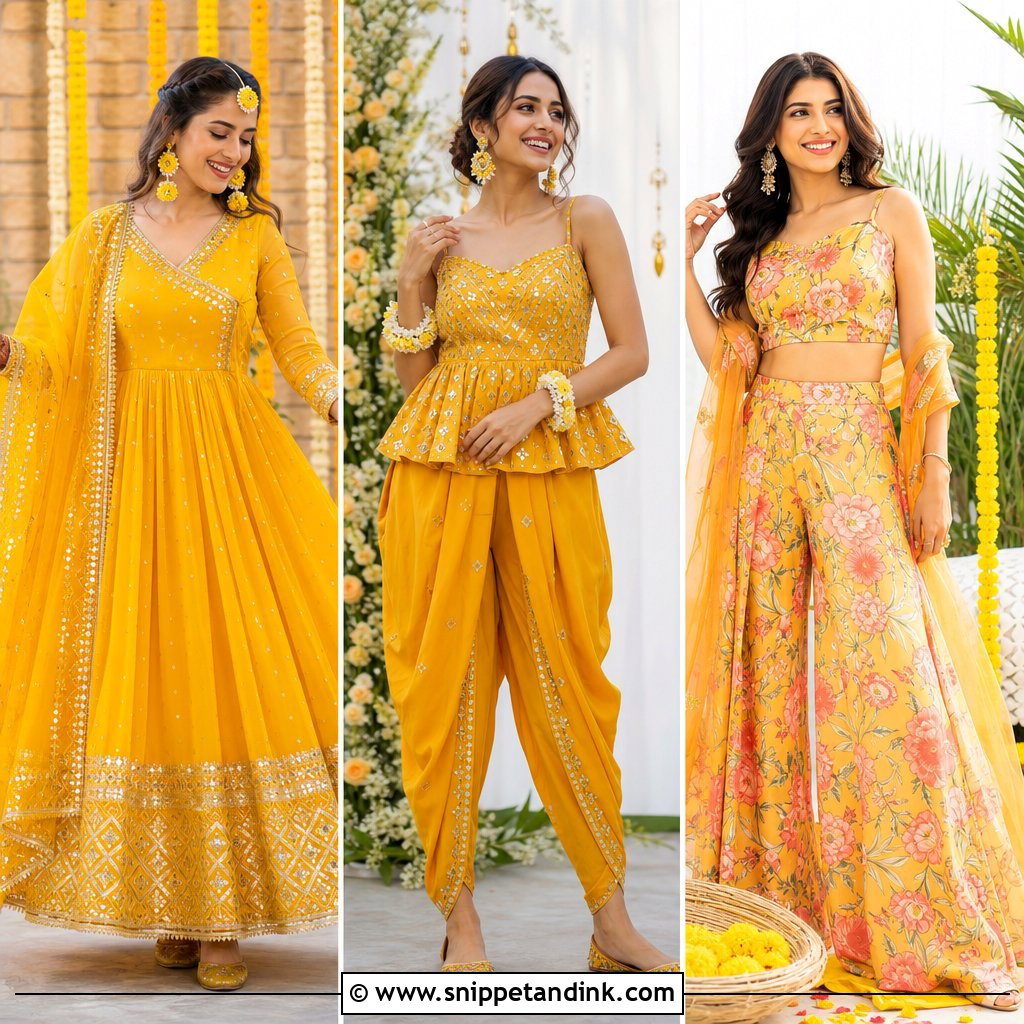
Silk is the formal option for a grand or evening haldi, but it’s also the least forgiving fabric near turmeric. Raw silk or a silk blend in a short kurta with restrained gold work, over pants with enough body to hold the flare, looks polished. A tissue, organza or chiffon dupatta with a fine gold edge completes it. Silk sits warmer than cotton, so choose a breathable lining and skip extra layers outdoors. Small kundan earrings, a delicate tikka and gold juttis suit it. I’d keep this for guests, or for a bride who’ll change before the paste comes out.
Fresh Flower Jewelry in a Hot Courtyard
Floral earrings, tikkas and hathphools are almost part of the haldi uniform, and they wilt faster than anything else you’ll wear that day. I ask the florist to deliver them the morning of the event, not the night before. Until you put them on, keep them in a closed box in a cool room or the fridge, with damp tissue nearby but not touching the petals, which bruises them.
Sturdier blooms hold up longer in heat; thin-petaled flowers like jasmine look exquisite but soften and brown within a few hours of sun. Ask for wired pieces rather than strung ones if you want the earrings to keep their shape, and put them on last, after the dupatta is pinned.
A small haldi bag for the bride’s sister
- Old towel or cotton cloth to blot paste before it dries
- Wet wipes and a small bottle of coconut oil to lift turmeric off skin
- Safety pins for the dupatta
- A spare plain dupatta in case the embroidered one gets soaked
- Flip flops for the walk to the shower after the ritual
Wear the Set You Don’t Mind Getting Yellow
Haldi asks for a different mindset from the rest of the wedding. Yellow is the classic base, but orange, pink, mint, ivory, peach and multicolor sets all fit the mood. What matters more is fabric you can wash, a dupatta that won’t fall in the paste, juttis you can sit and dance in and jewelry that doesn’t tangle. Brides can go fuller and more embroidered; guests can choose lighter, simpler versions. Most of all, pick something you’re happy to sit on the floor in and get a little messy.
You'll Like These Ideas:










Leave a Reply