
Burnt orange is one of the few colors that reads as both festive and grown-up at a traditional wedding, which is why I keep reaching for it in autumn fittings. The looks below lean on Nigerian and wider African occasion wear, from regal Aso Oke sets to George wrappers and modern lace gowns. Gold and bronze are the safest partners for the shade, and emerald gives it real bite. What decides whether an outfit lands is less the color than the cut, the gele and how much shine you pile on top. Brides can go big on trains and beading; guests should keep enough restraint that nobody mistakes them for the couple. And before any fabric is bought, find out what the family and the ceremony actually expect.
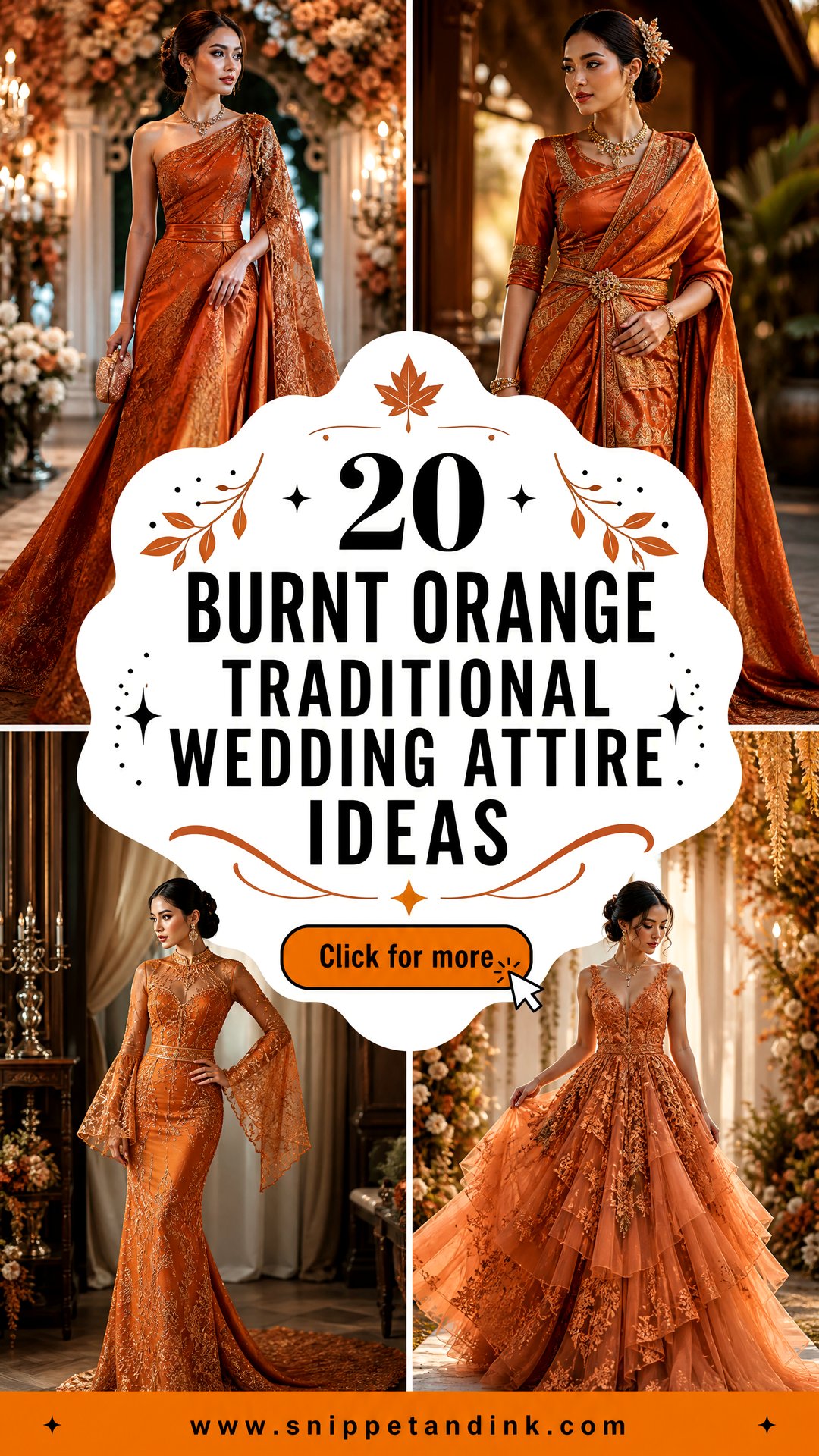
Burnt Orange Shifts Color Under Hall Lights, So Test Swatches First
Burnt orange is a moody color. In daylight it looks warm and earthy; under the yellow lights of many event halls it can turn brick red or flat brown. I never sign off on a fabric until I have seen the swatch in three places: by a window, under warm indoor bulbs, and with a phone flash. That last test matters because a lot of your photos will be flash shots at the reception.
Fabric type changes the color too. Aso Oke and George have a woven sheen that throws a gold highlight; lace absorbs light and looks darker; velvet pushes the orange toward rust; satin bounces light and can look almost copper. If you are mixing two fabrics, such as a lace blouse and a George wrapper, buy them on the same day and hold them together before paying.
Matching the gele to the outfit
- Bring a cutting of your main fabric when you buy the gele. A gele that is a shade too bright makes the whole outfit look mismatched in close-up photos.
- Choose a slightly deeper gele if in doubt. A darker headtie frames the face; a lighter one competes with it.
- Ask for extra fabric from the tailor. Leftovers can be used to cover a clutch or trim a hand fan.
Skin tone plays a part too. On deeper skin, burnt orange with gold reads rich and warm; on lighter or olive skin, I sometimes bring in bronze or champagne near the face so the orange does not wash the complexion out.
1. Burnt Orange Aso Oke Iro And Buba
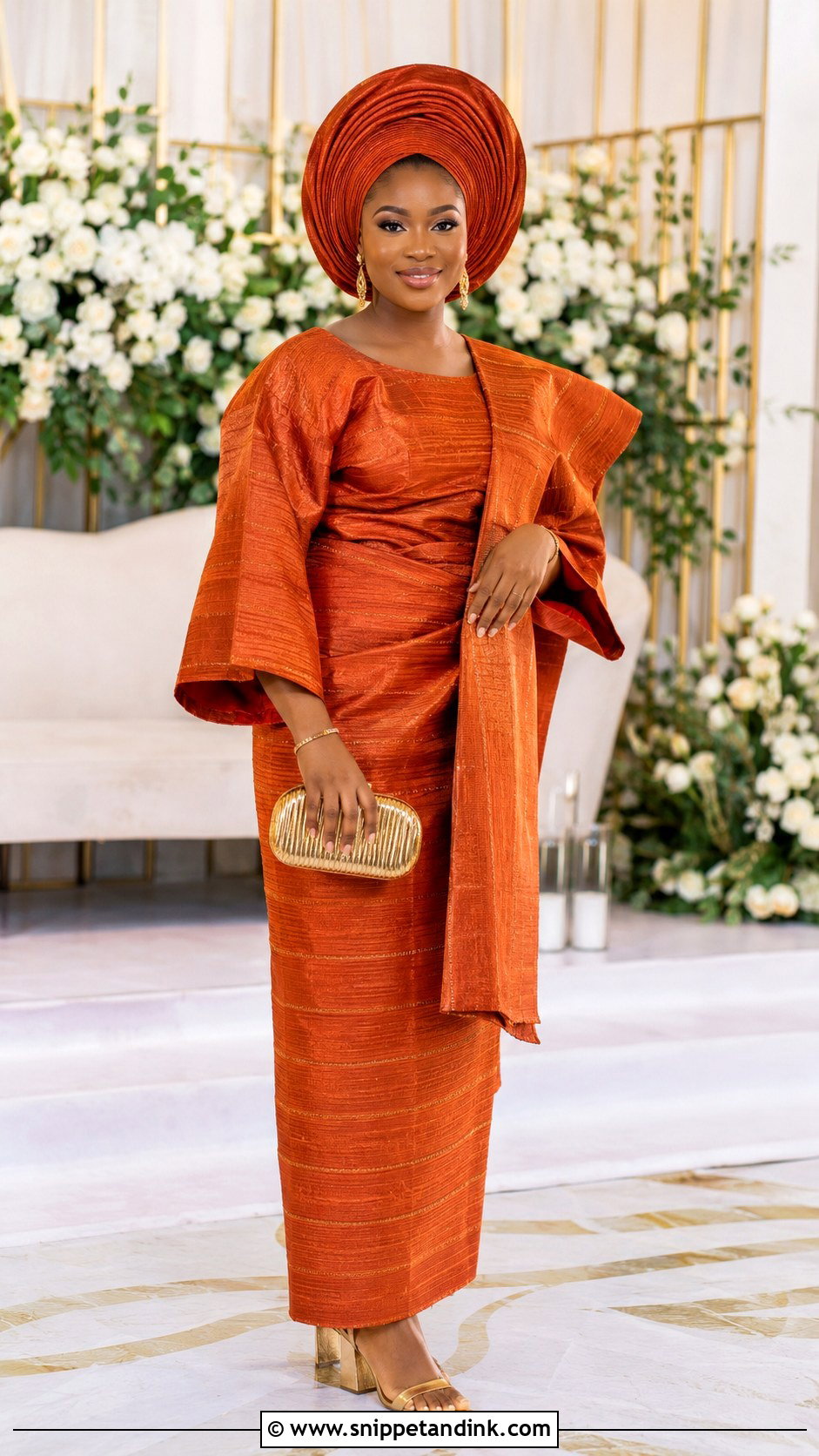
This is the outfit I picture first when someone says burnt orange and Yoruba traditional wedding in the same breath. Aso Oke is hand-woven and fairly stiff, so I ask the tailor for an elbow-length buba with a little ease across the back; a tight buba in this fabric pulls into creases the moment you raise your arms to dance. The iro should be wrapped so you can take a full stride. A matching gele finishes it, and gold embroidery at the neckline is plenty. Brides can add a sash; guests can drop the embroidery altogether.
2. Burnt Orange George Wrapper And Blouse
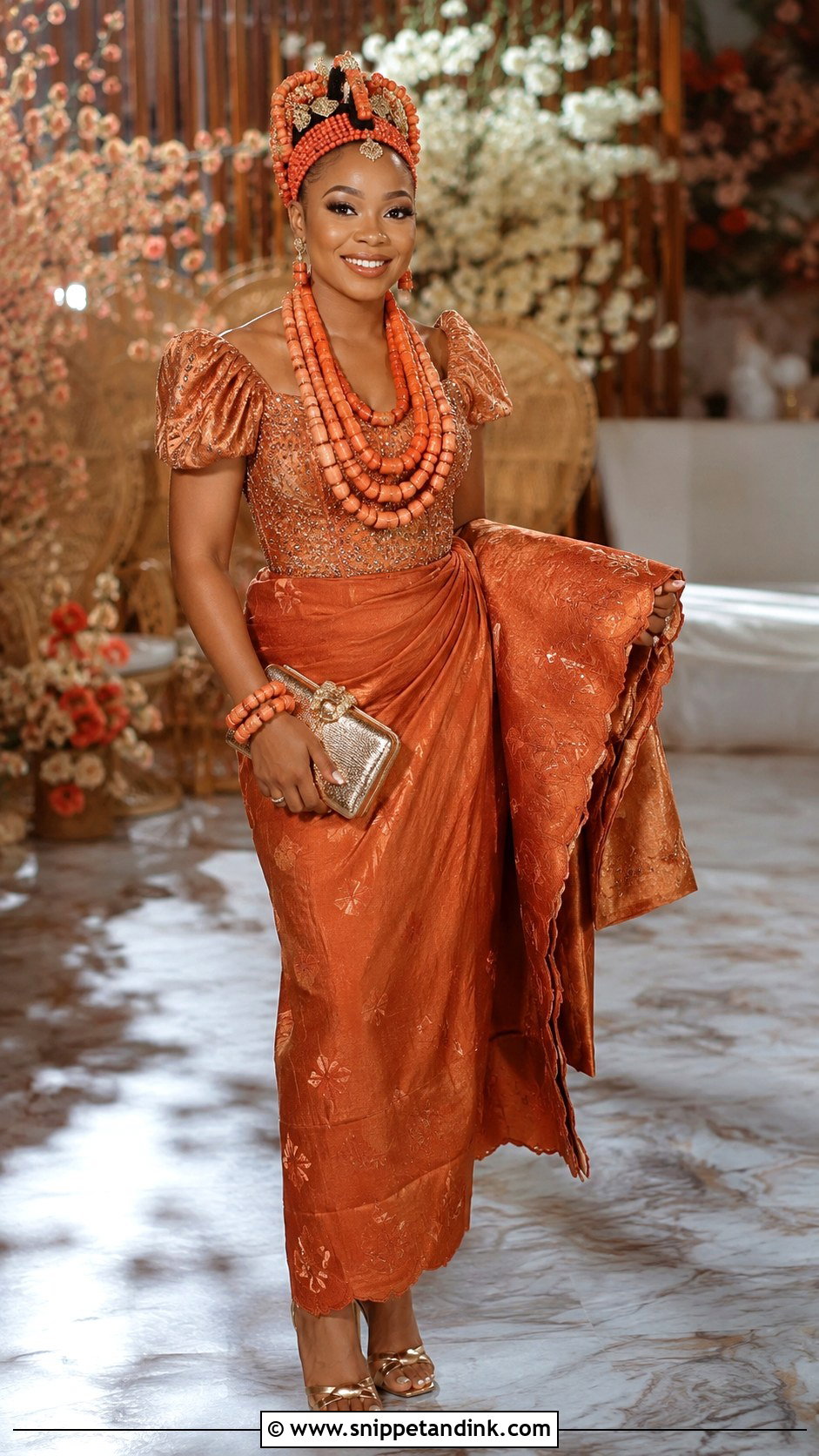
George has a heavy, almost upholstered hand, which is exactly why a burnt orange George wrapper suits an Igbo traditional wedding. Because the wrapper already carries the pattern, I keep beadwork on the blouse to the neckline and waist. A sweetheart neckline and sculpted sleeves give the top shape without fighting the fabric. Coral beads at the neck and wrist are the classic finish; a bride wears the full coral headpiece, while a guest keeps her head simpler. If you add a second wrapper for the ceremony, have it fitted while you are wearing the first, or the waist will bulk out.
3. Burnt Orange Lace Mermaid Gown With Gele
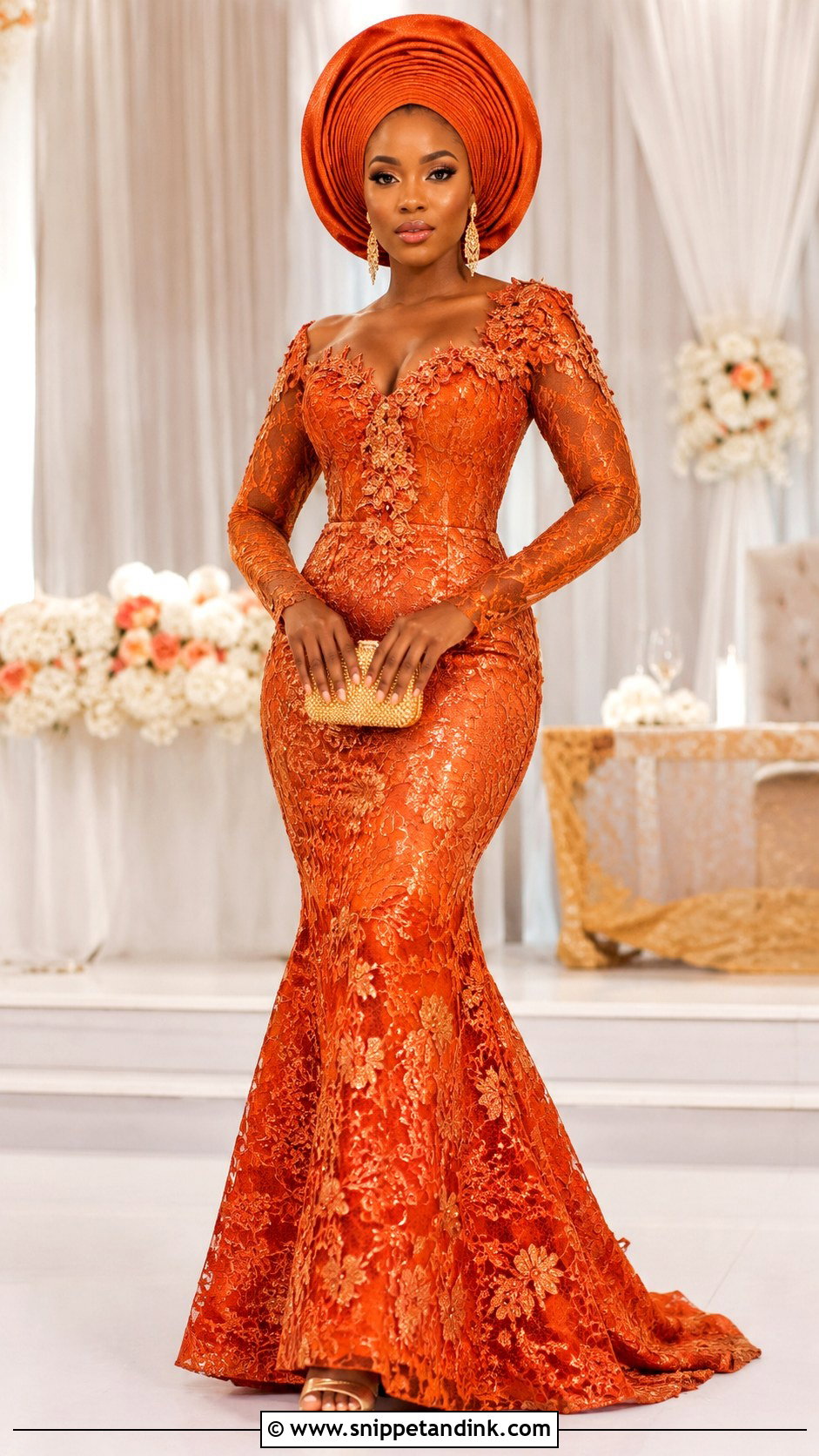
A lace mermaid with a matching gele is polished and very formal, but it is also the gown I see go wrong most often at the hem. Lace that drags picks up dust and catches on heels, so I have it hemmed with the exact shoes on, usually hidden platforms. Pick lace with a proper lining and a little gold thread rather than anything sheer. The gele matters here: a structured one balances the flare of the skirt, while a soft one makes the whole figure look bottom-heavy. Brides can carry a short train; guests should keep the flare modest.
4. Burnt Orange Corset Gown With Detachable Train
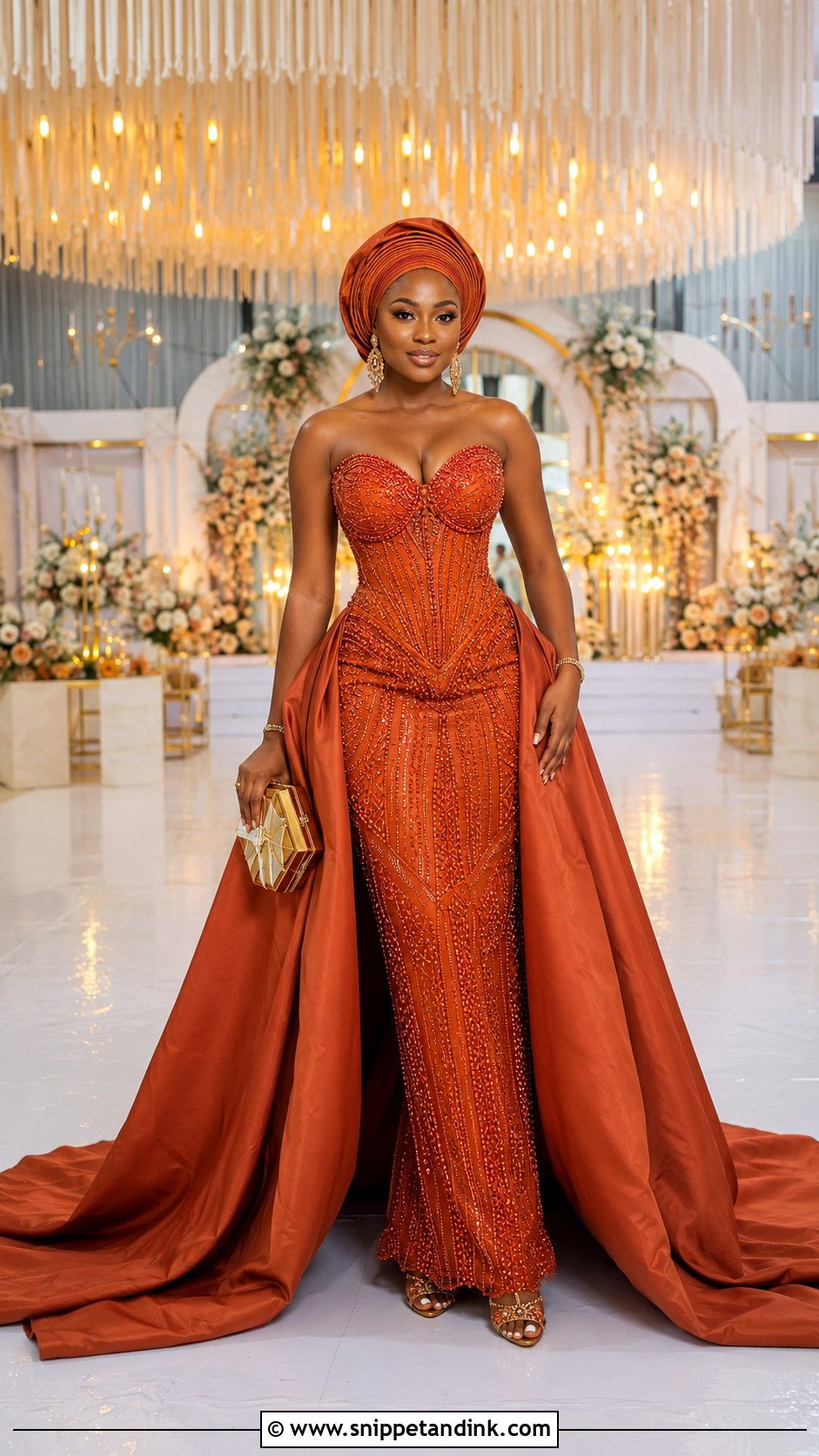
The detachable train is what makes this corset gown practical. You get the grand overskirt for the entrance and the portraits, then a fitted gown you can actually sit in. I check two things at the fitting: that the corset has real boning and an inner waist stay, and that the train fastens with hooks or snaps you can undo without help. A medium gele and bronze earrings keep it traditional. A bride can bead the train heavily, though that adds weight; guests get the same effect from tonal embroidery and a shorter overskirt.
5. Burnt Orange Ankara Peplum Skirt Outfit
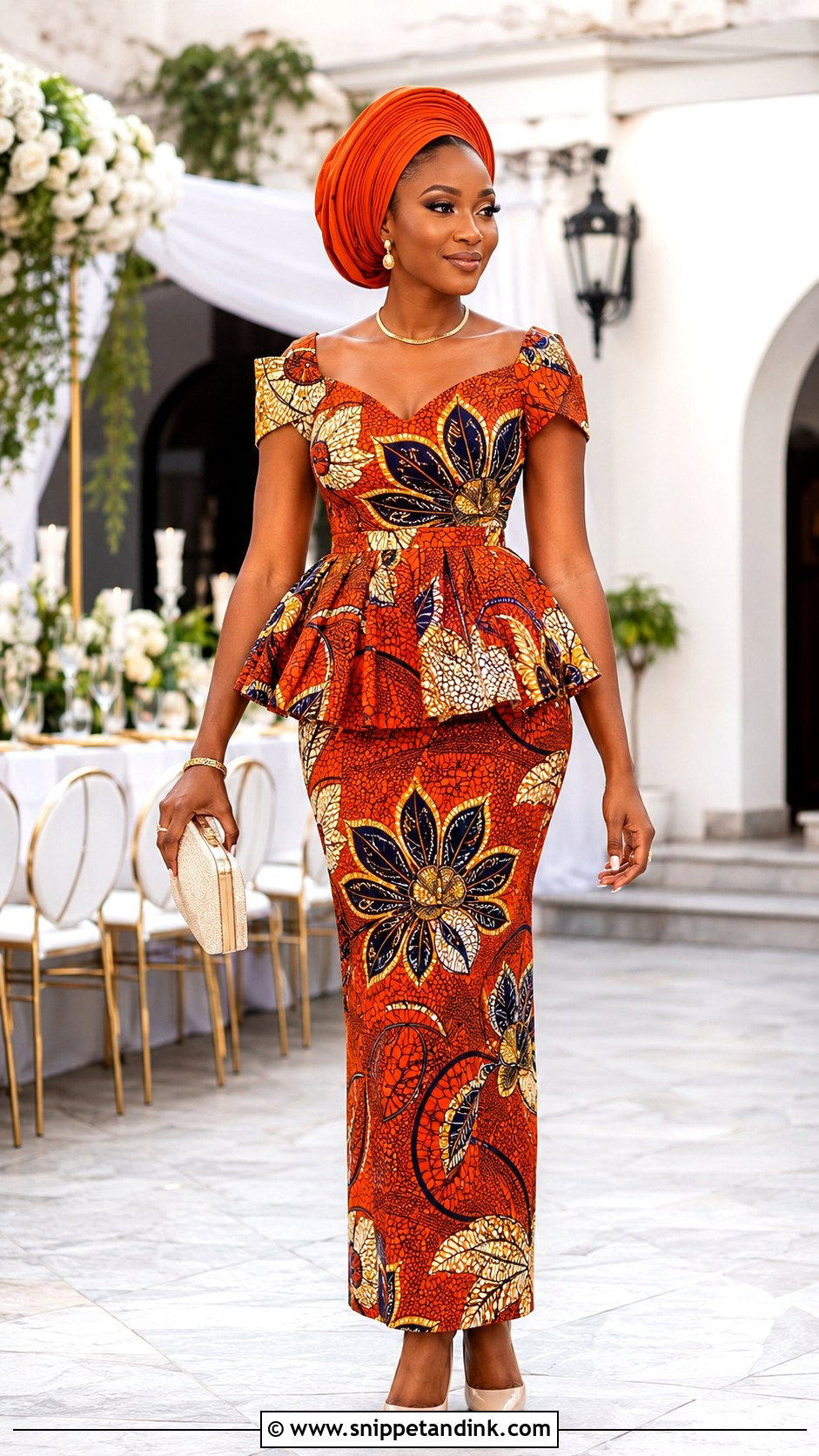
Ankara is where burnt orange gets playful. I look for a print that pairs the orange with one cool color, navy or green, so the pattern does not turn into a blur of warm tones. The peplum should sit on the natural waist and fall softly; Ankara is a crisp cotton, and an over-stiffened peplum sticks straight out. A straight skirt with a back slit is easy to walk in. Tie a solid burnt orange gele so the print has somewhere to rest. This is guest territory more than bridal, and it falls apart if you add a printed bag or a chunky necklace.
6. Burnt Orange Velvet Blouse And Wrapper
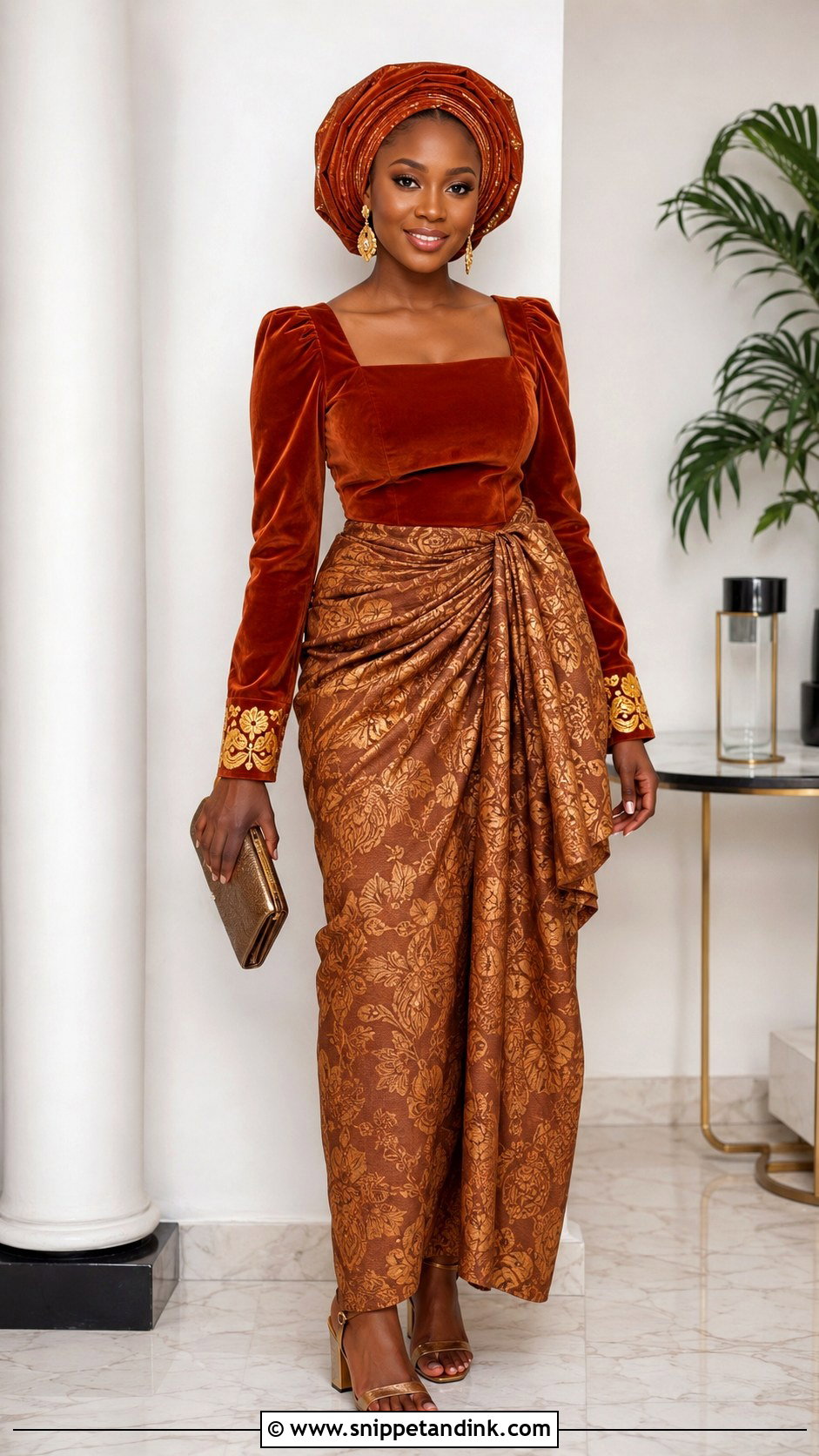
Velvet deepens burnt orange to almost rust, which makes it a natural pick for an evening or indoor ceremony. I use it only for the blouse and pair it with a patterned lace, George or Aso Oke wrapper, because head-to-toe velvet gets hot and heavy fast. Velvet also shows every crush mark, so keep beading to the cuffs and neckline where it will not be sat on. A square neckline suits the fabric. Ask for a breathable lining if you will be greeting guests in a packed hall for hours.
7. Burnt Orange One-Shoulder Traditional Gown
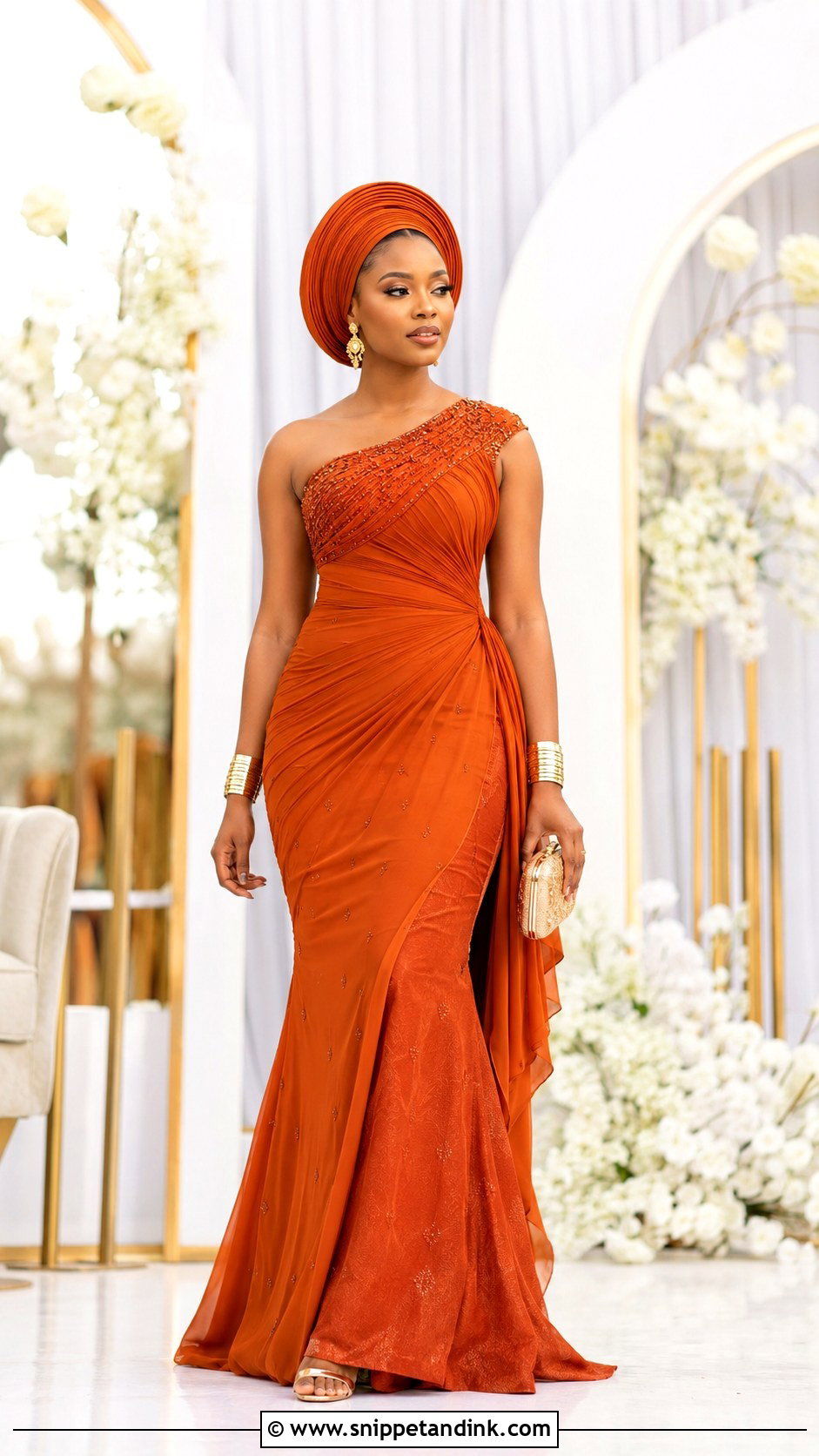
One-shoulder gowns live or die by the shoulder seam. If it is cut even slightly loose, the gown slides toward the bare side all night, so I always check it with the arms raised. Beaded trim along the strap gives you the detail, and that means the neck stays bare: no necklace, just drops or cuffs. Pick a compact gele or a low bun that leaves the neckline visible. With heavy embroidery it reads bridal; with less, it suits a mother of the bride or a guest.
8. Burnt Orange Off-Shoulder Lace Gown
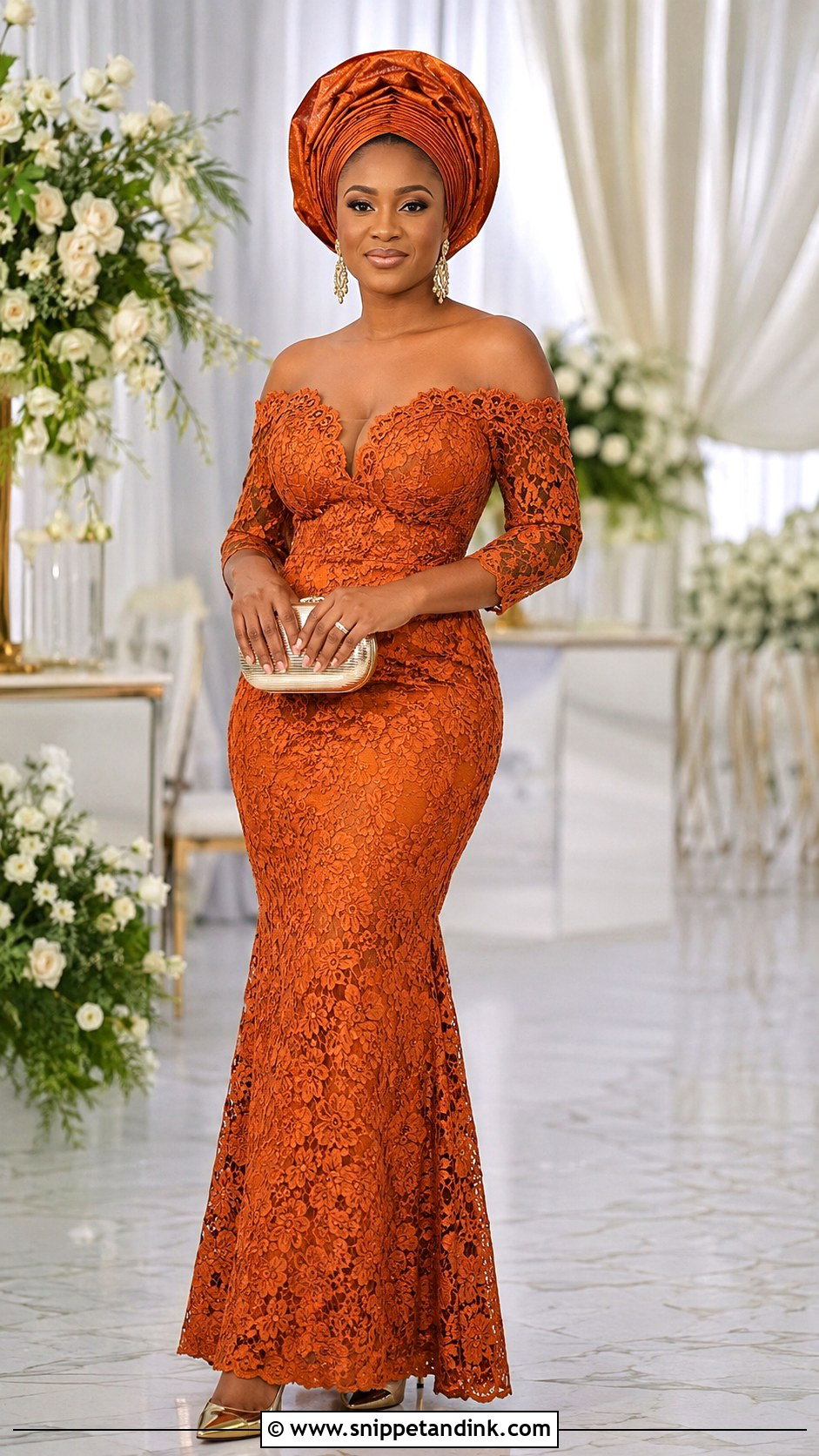
Off-shoulder lace is romantic, but it is also the neckline that gets tugged at most during a long day. I ask for an elastic or silicone grip inside the neckline and a well-fitted bodice, so the fit, not the wearer, holds it up. Short or three-quarter lace sleeves help. A tall gele and chandelier earrings bring light up to the face. For brides, crystal appliqués; for guests, tonal embroidery. A matching lining under the lace matters more than people expect, because skin-colored lining under orange lace can look patchy in flash photos.
9. Burnt Orange High-Neck Beaded Gown
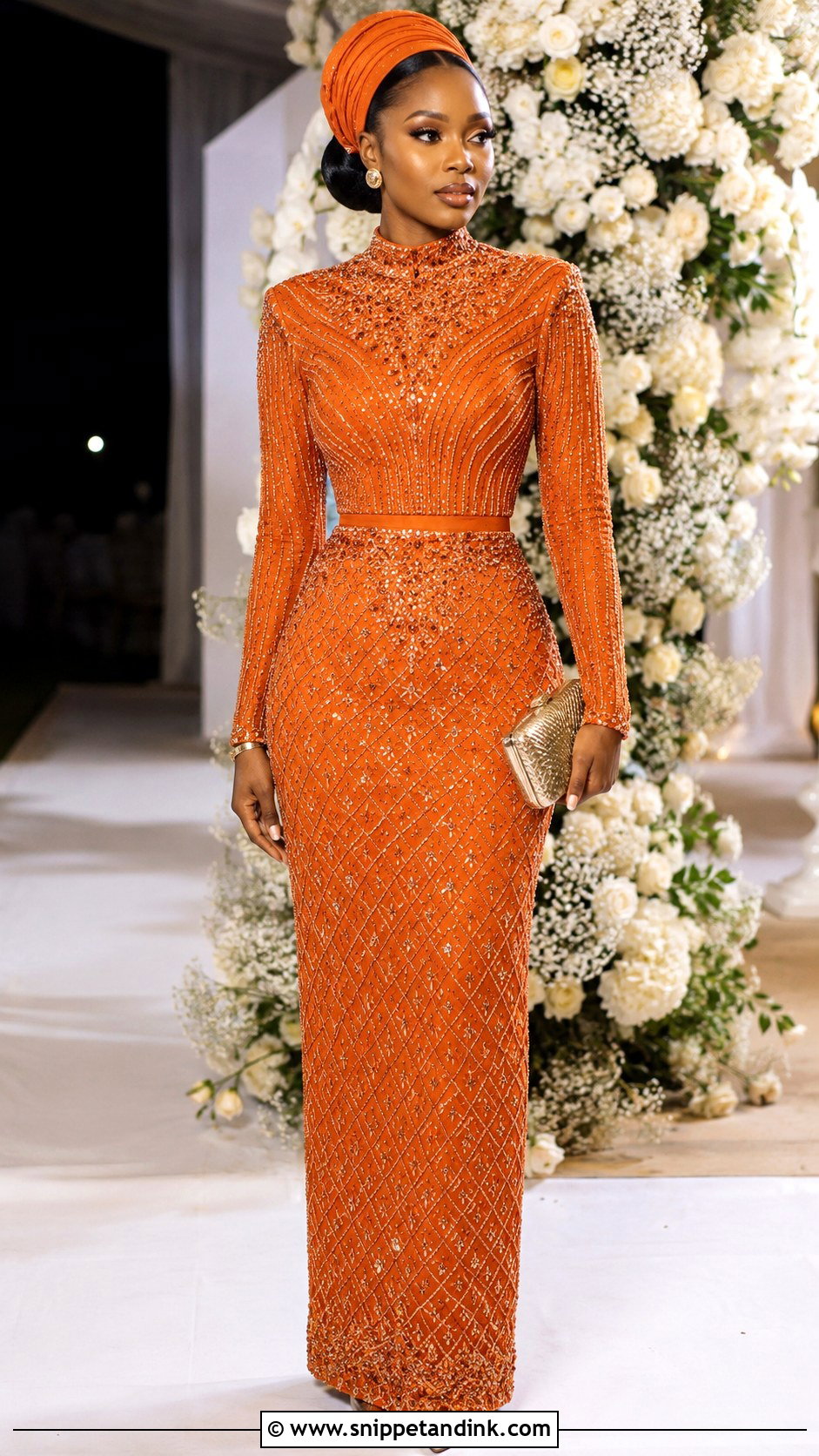
High necks give you coverage and let the beadwork do the jewelry’s job. Bronze, champagne or copper beads across the collar and shoulders look rich against burnt orange; I keep the skirt plain so the eye stays up top. Long fitted sleeves with a straight hem make a clean column. Add a small back slit, because a high-neck column with no slit gives you a shuffle instead of a walk. Skip the necklace, wear studs and one bracelet. It suits an evening ceremony, a formal family role, or a guest who wants polish without a big gele.
10. Burnt Orange Embroidered Kaftan
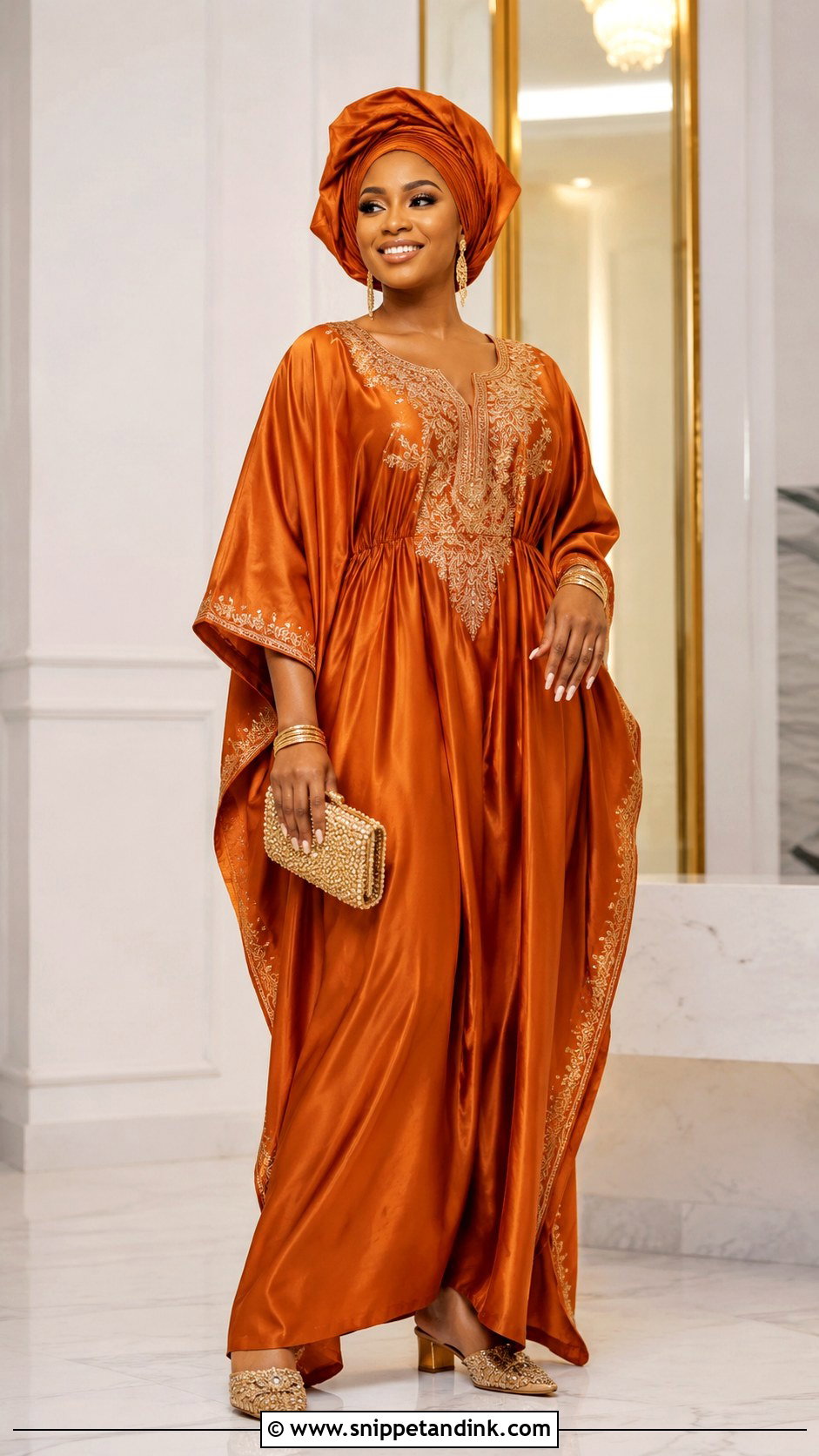
Kaftans are the most comfortable dress here and the easiest to get wrong, because an unstructured kaftan photographs like a tent. I always add a hidden inner belt or a soft defined waist. Silk, crepe or a light brocade with gold embroidery at the neck and center panel keeps it formal. Petite women should choose a narrower cut and smaller motifs; taller women can carry wide sleeves and a bold border. Hem it so it just clears the shoe. For a long celebration with lots of sitting and eating, few outfits are kinder.
11. Burnt Orange A-Line Gown With Cape
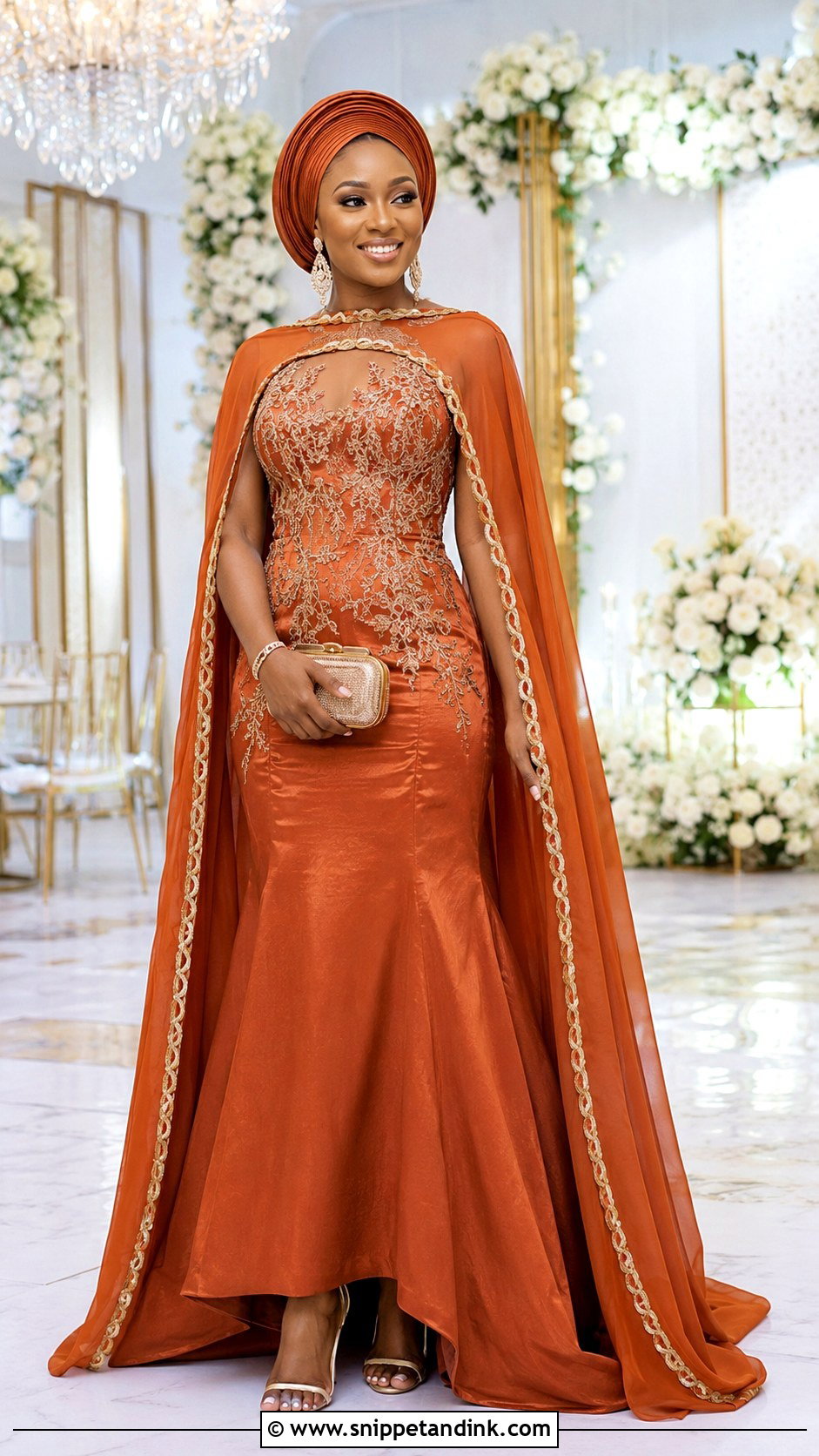
A cape adds drama without the weight of a full train, provided it is light. Embroidered edges or scattered crystals are enough; a heavily beaded cape drags the shoulders back and pulls the neckline up. I prefer capes that attach at the shoulder seams with snaps over ones that tie at the throat, which wander during dancing. Under it, keep an A-line gown with a fitted bodice. Brides can let the cape sweep the floor; guests should cut it to the hip or knee.
12. Burnt Orange Asymmetrical Peplum Gown
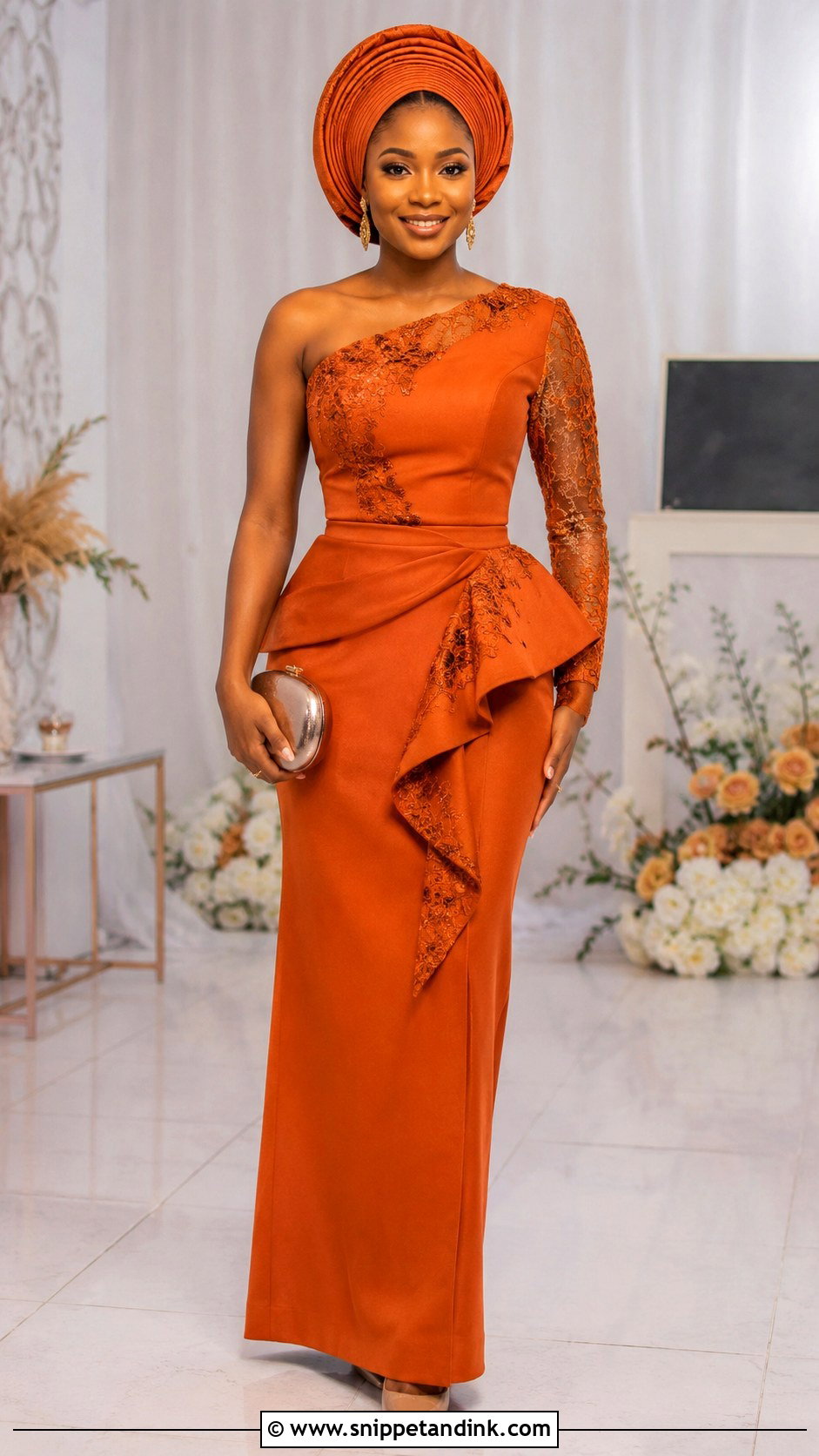
Want peplum shape in one garment instead of a blouse and skirt? An asymmetrical peplum gown gives you that, with the peplum starting at the waist and cutting diagonally across one hip. Placement is everything. I pin the diagonal on the body, because a peplum that ends at the widest part of the hip adds width instead of shape. Trim the edge with tonal lace or gold piping, and keep the peplum soft rather than stiff. A medium gele and bronze clutch finish it.
13. Burnt Orange Two-Piece Skirt And Blouse
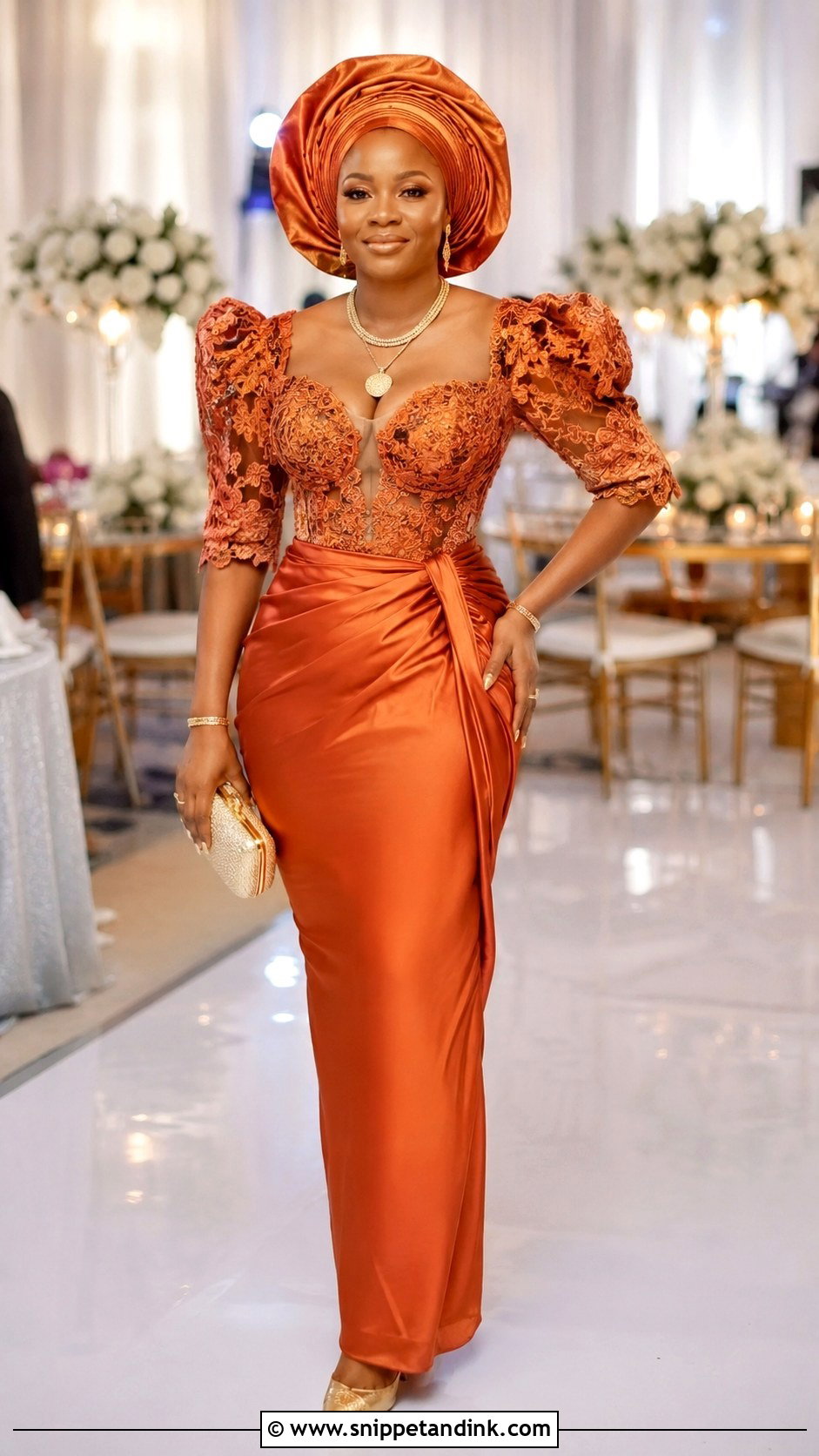
Separates let you tailor the top and bottom independently, which helps anyone who is a different size above and below the waist. I pair a structured lace blouse with satin, brocade or George in the closest shade I can find; check the two fabrics side by side in daylight, because oranges from different dye lots rarely match exactly. Elbow-length statement sleeves give you movement. Groups of bridesmaids or relatives can share the fabric and choose their own necklines. Make sure the blouse covers the skirt waistband when you sit.
14. Burnt Orange Jumpsuit With Gele
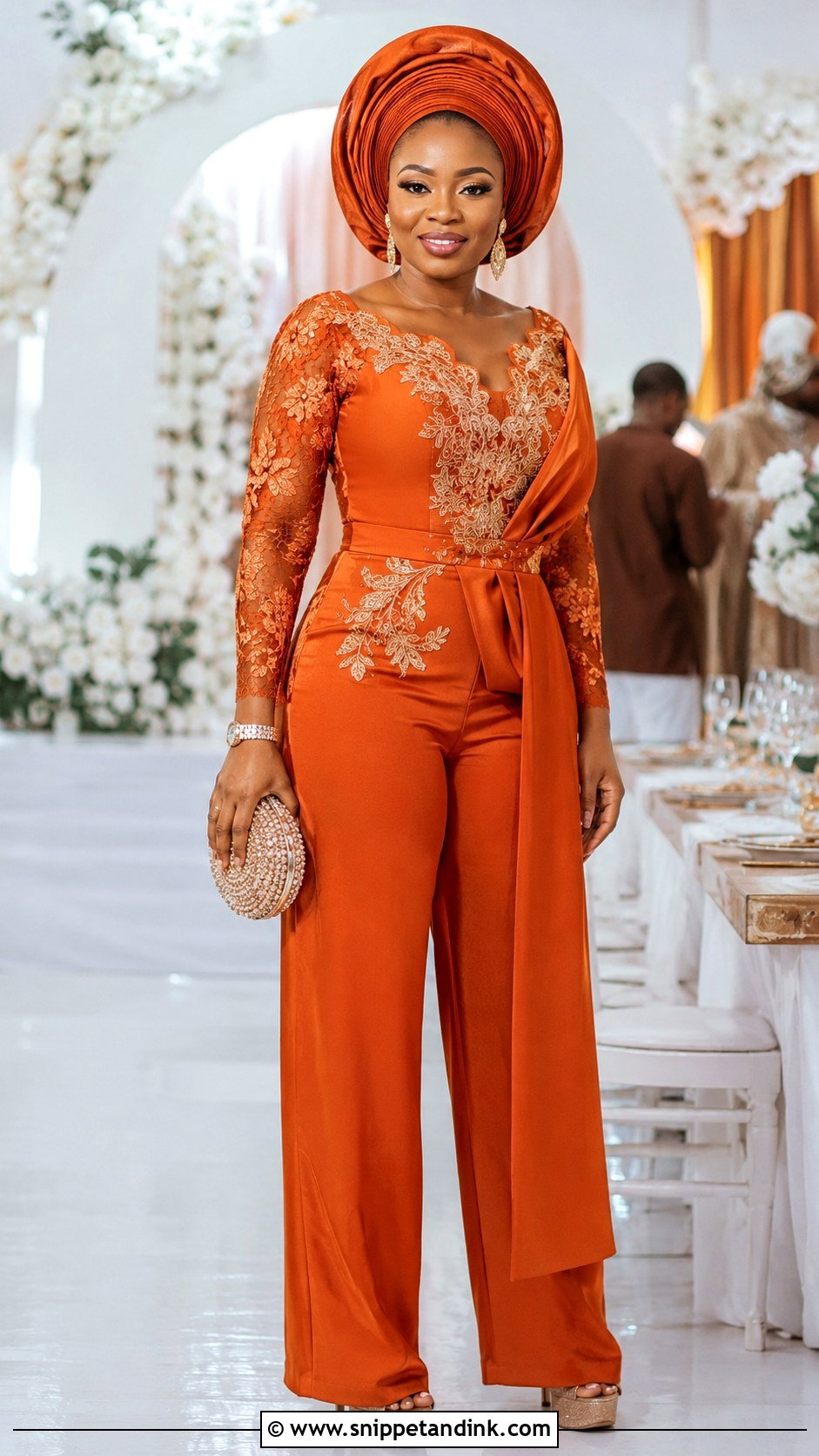
A jumpsuit with a gele is my go-to for a reception change or a guest who hates skirts. Wide legs and a defined waist work best, and the length should just skim the top of the shoe. Lace sleeves or a peplum panel tie it back to formal African occasion wear. The rise is where jumpsuits fail; I have the wearer sit and squat at the fitting, since a short rise pulls at the crotch and shoulders all evening. Choose a fabric with weight, not anything that looks like daywear.
15. Burnt Orange Tulip Wrapper And Blouse
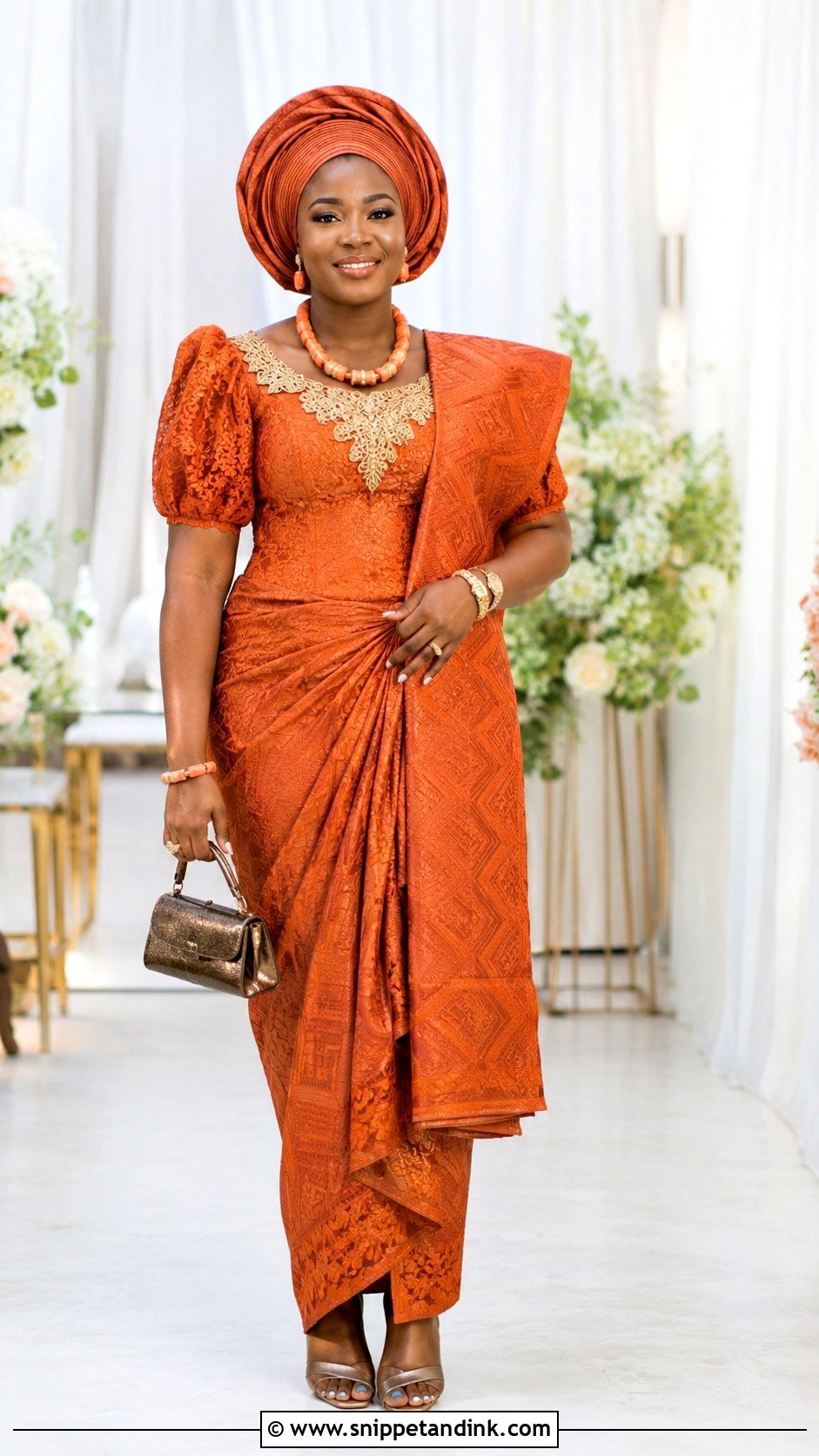
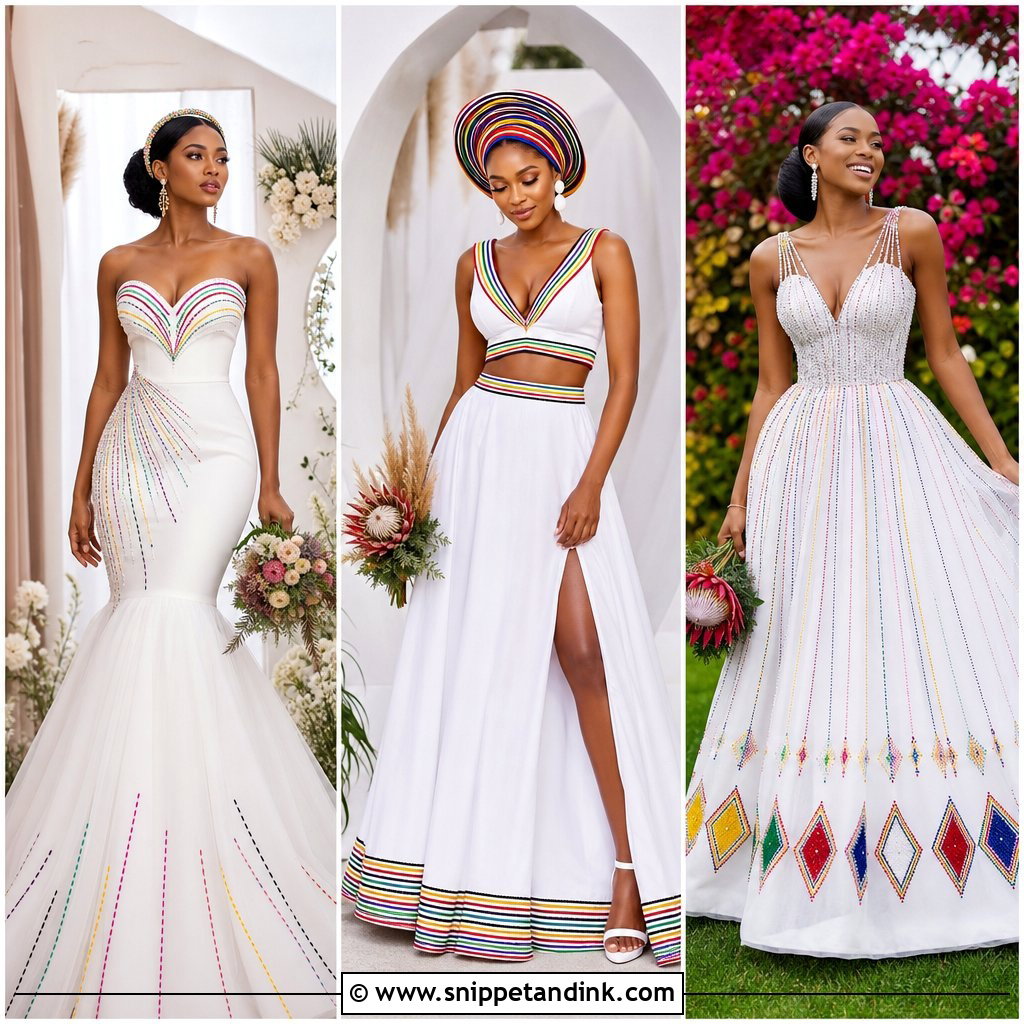
The tulip wrapper overlaps at the front, which gives you more walking room than a straight wrapper and a softer shape. The overlap is also the weak point: I add hidden hooks or a snap so it does not open when you sit or dance. Pair it with a structured blouse, modest puff sleeves and fine gold embroidery. Coral-inspired jewelry and low heels complete it. Get the blouse length right, ending cleanly at the wrapper waist, so no gap shows. It is a strong pick for an Aso Ebi group or close relatives.
16. Burnt Orange Double Wrapper With Coral Beads
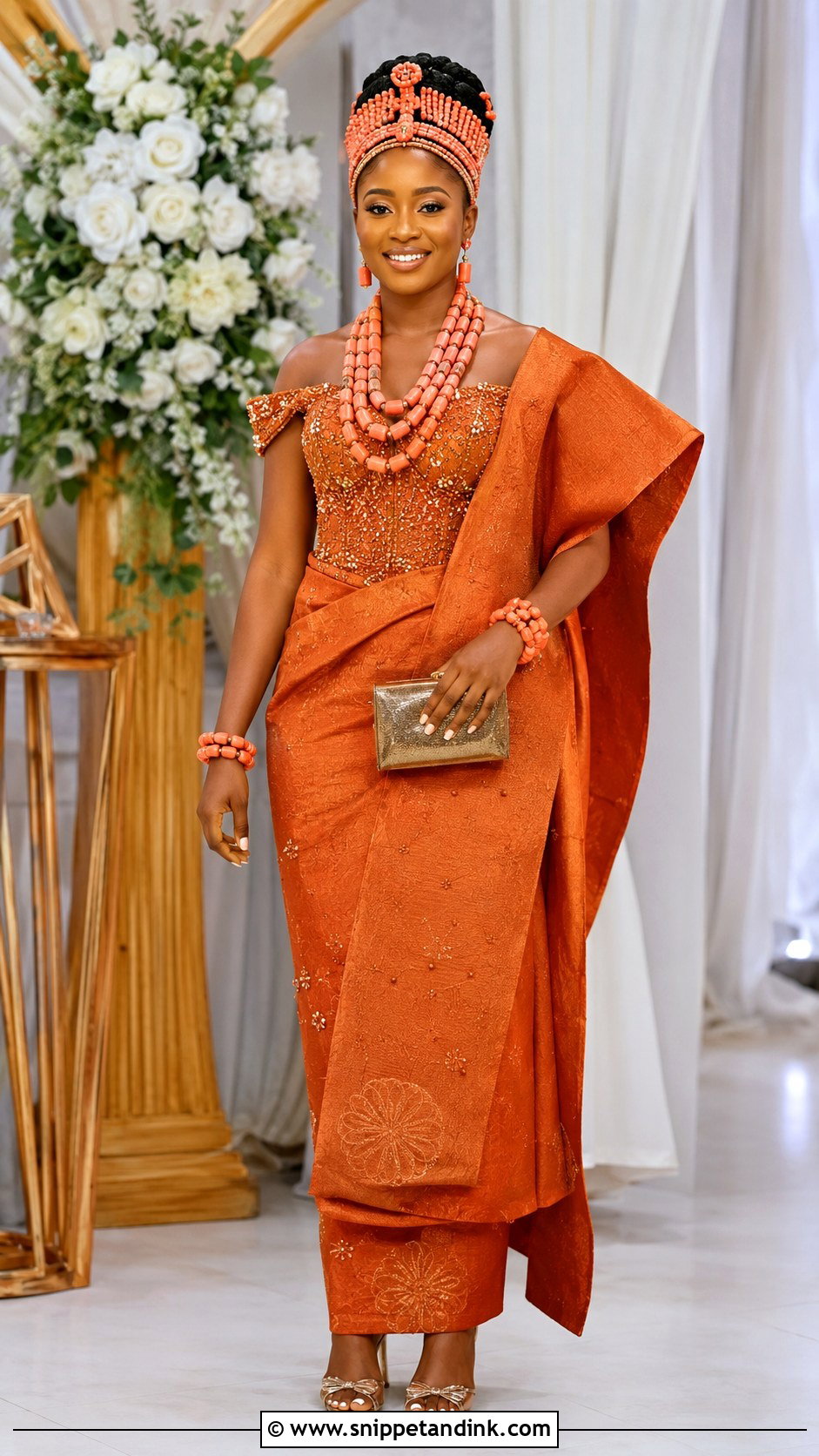
The double wrapper with layers of coral beads is ceremonial bridal dress, and the order of layers and beads carries meaning, so the family’s guidance comes first. Technically, the first wrapper must be firmly tied, and the second sits lower or drapes over one side. Coral is heavy; with a full crown and several necklaces, I ask a dresser who knows the tradition to secure everything and check it between greetings. Keep the blouse sleeves loose enough to lift your arms, and keep the handbag tiny.
17. Burnt Orange Bell-Sleeve Column Gown
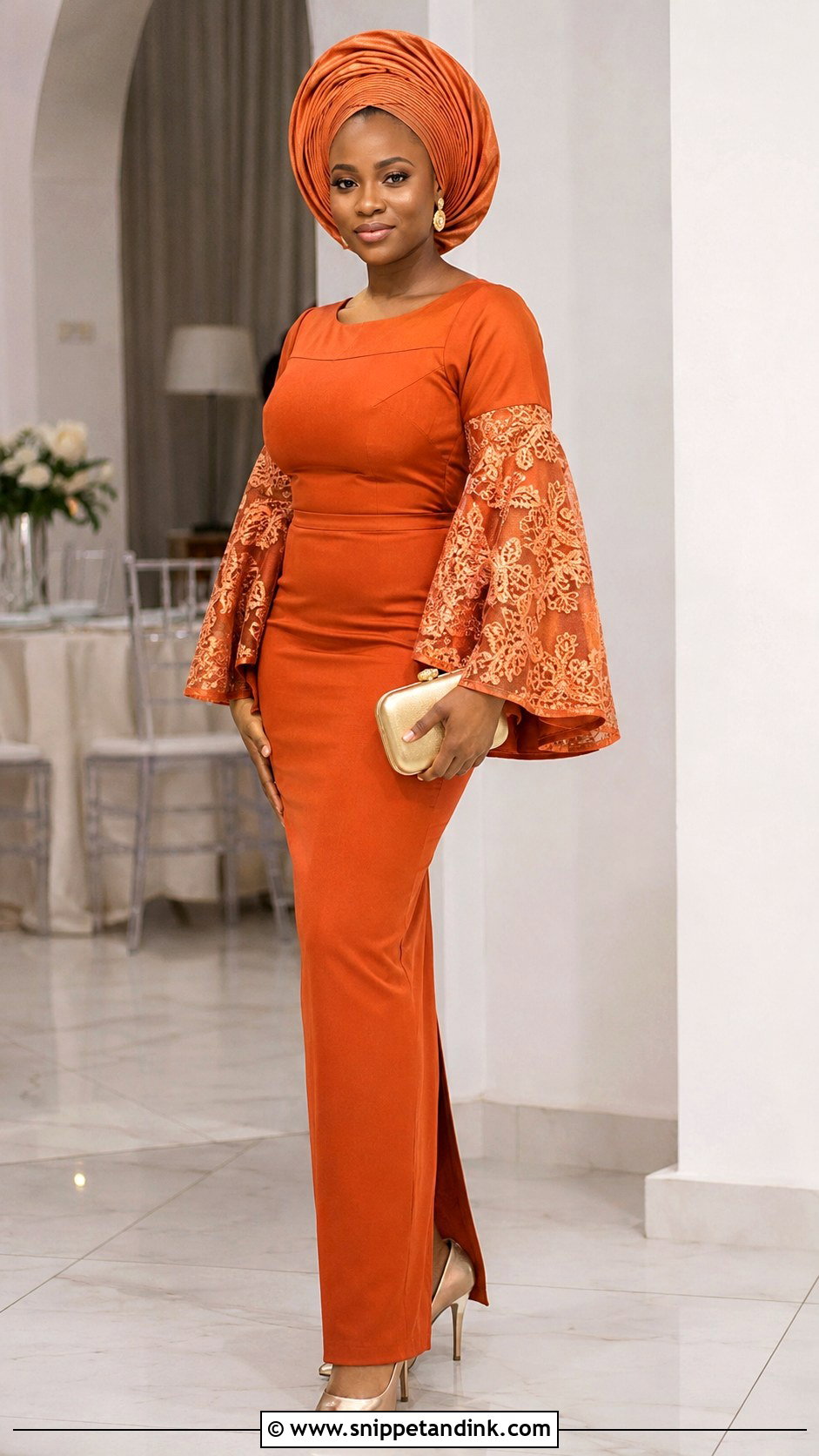
Bell sleeves bring movement to a narrow column gown, but I always think about dinner. Sleeves that flare past the wrist end up in the soup, so keep the widest point above the hand. Use lace or embroidery for the sleeves and a smoother fabric for the body so the outfit does not get busy. A straight skirt needs room to step, so add a back slit if the fitting shows any shuffle. A tall gele balances the slim line. A light lining in the sleeves keeps them from feeling heavy.
18. Burnt Orange Layered Tulle And Lace Gown
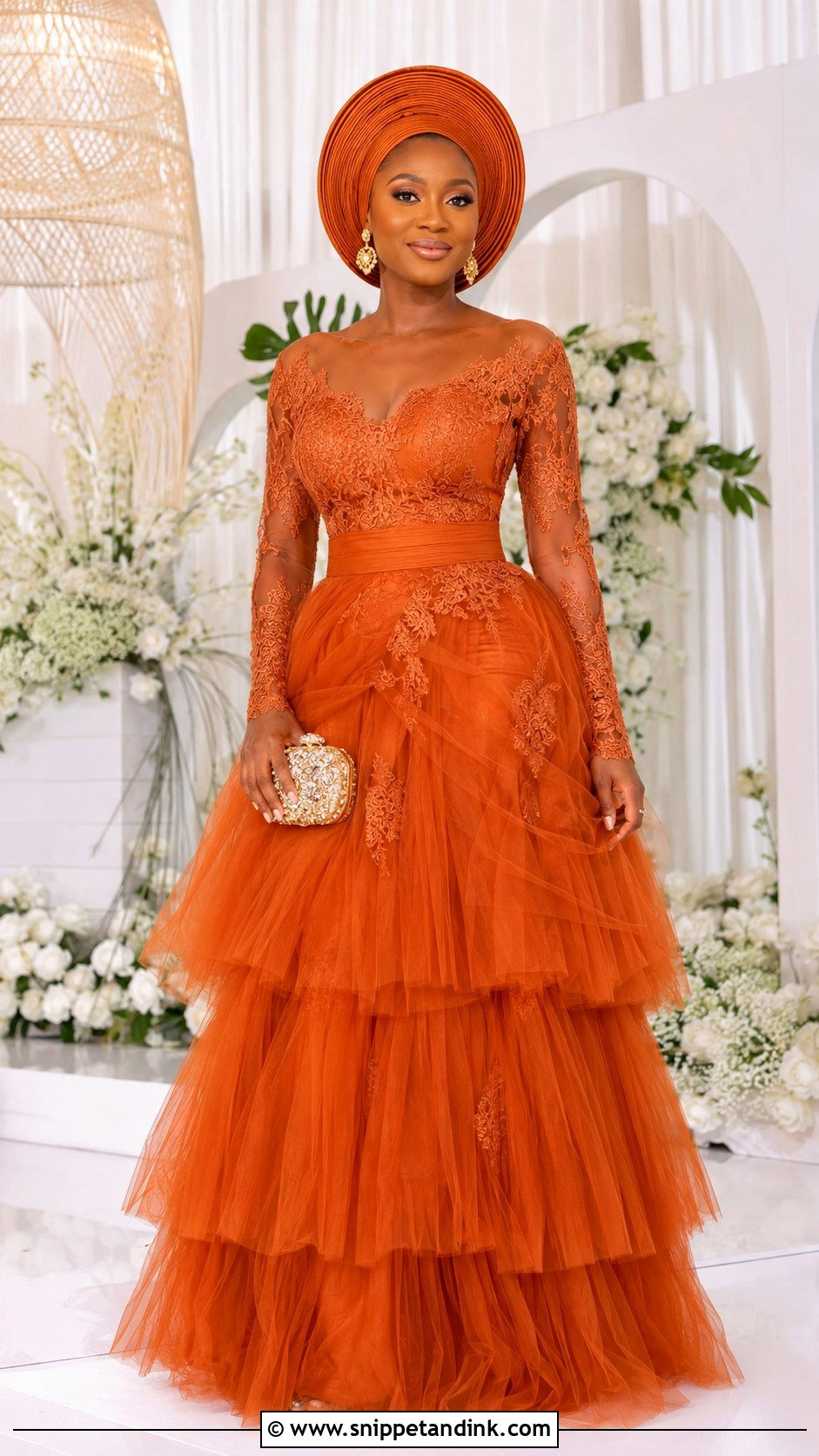
Tulle under a lace bodice makes burnt orange feel lighter, but tulle is often dyed in a slightly different orange from the lace, so I compare them together in daylight before anything is cut. The waistband holds the two textures together. Layer count is the real decision: too many layers swamp a petite frame, too few and the skirt collapses in photos. I usually ask the tailor to baste the layers and try them before sewing. Brides can go full; guests should keep the skirt moderate and skip the train.
19. Burnt Orange And Gold Ombre Gown
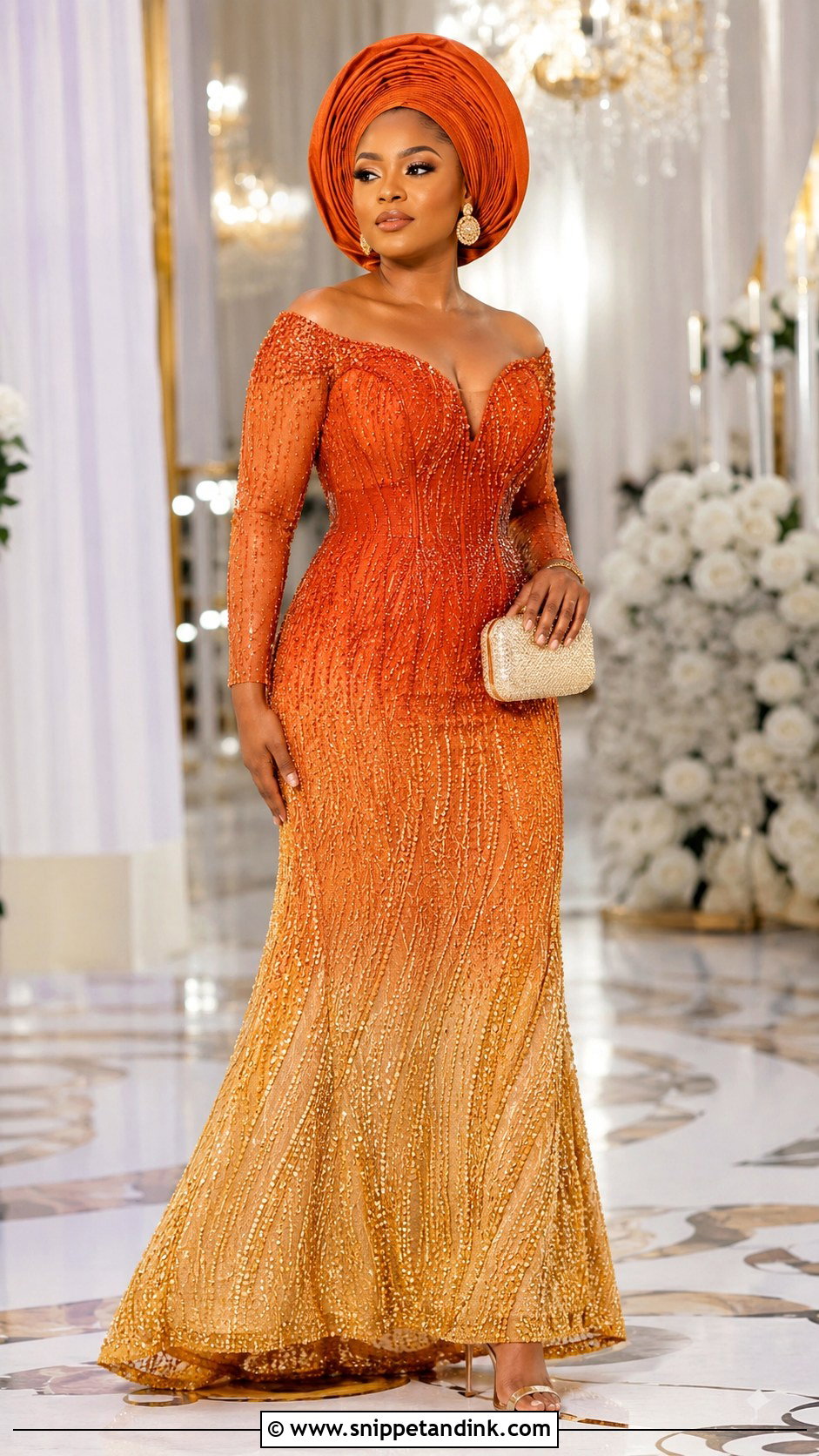
Ombre gowns are fun to wear, and they show their quality in the transition. A cheap gradient looks banded; a good one blends over a long stretch of fabric. Decide whether the darker burnt orange sits at the bodice or the hem, and keep the silhouette simple so the color change is the feature. A solid gele in burnt orange anchors it. I check gold fabric under the venue lighting too, because some golds turn mustard yellow under warm bulbs. Brides can bead the transition by hand; guests can use a printed or woven fade.

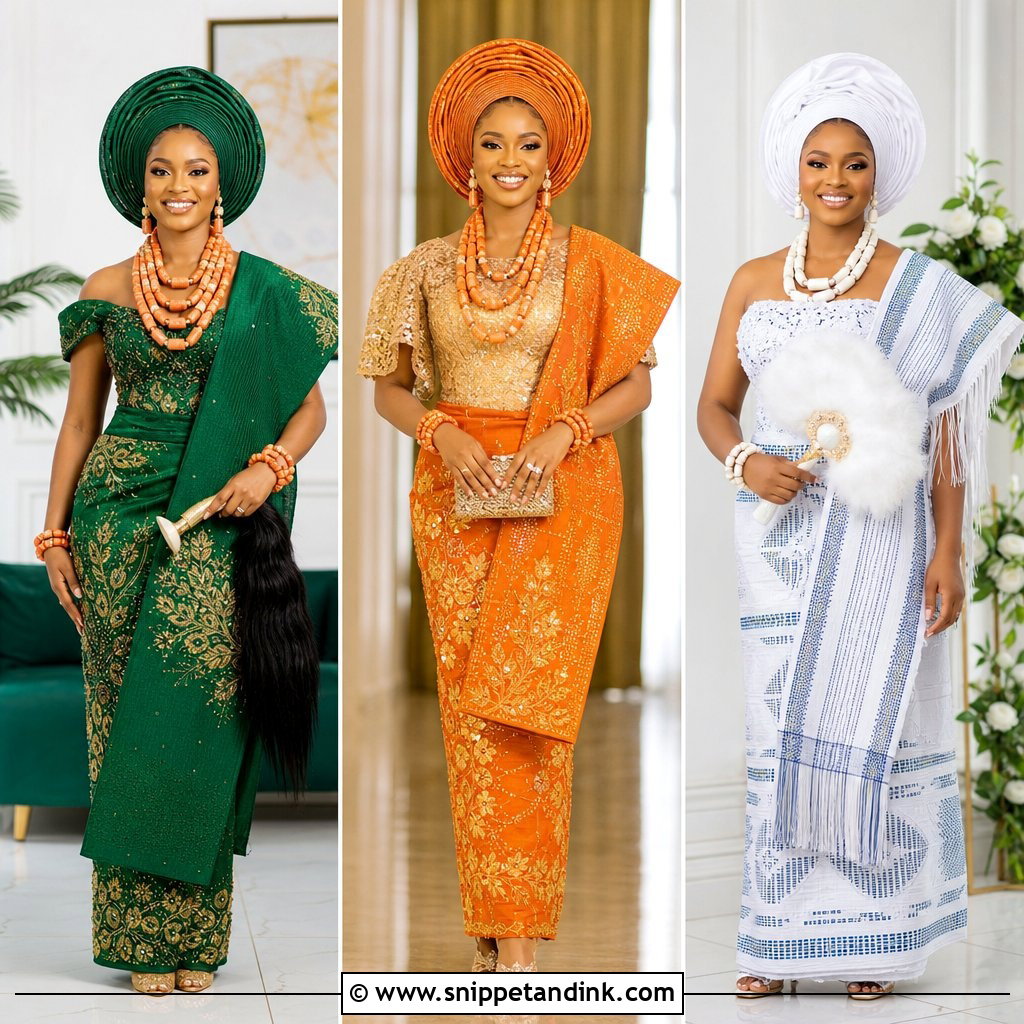

20. Burnt Orange Gown With Emerald Accessories
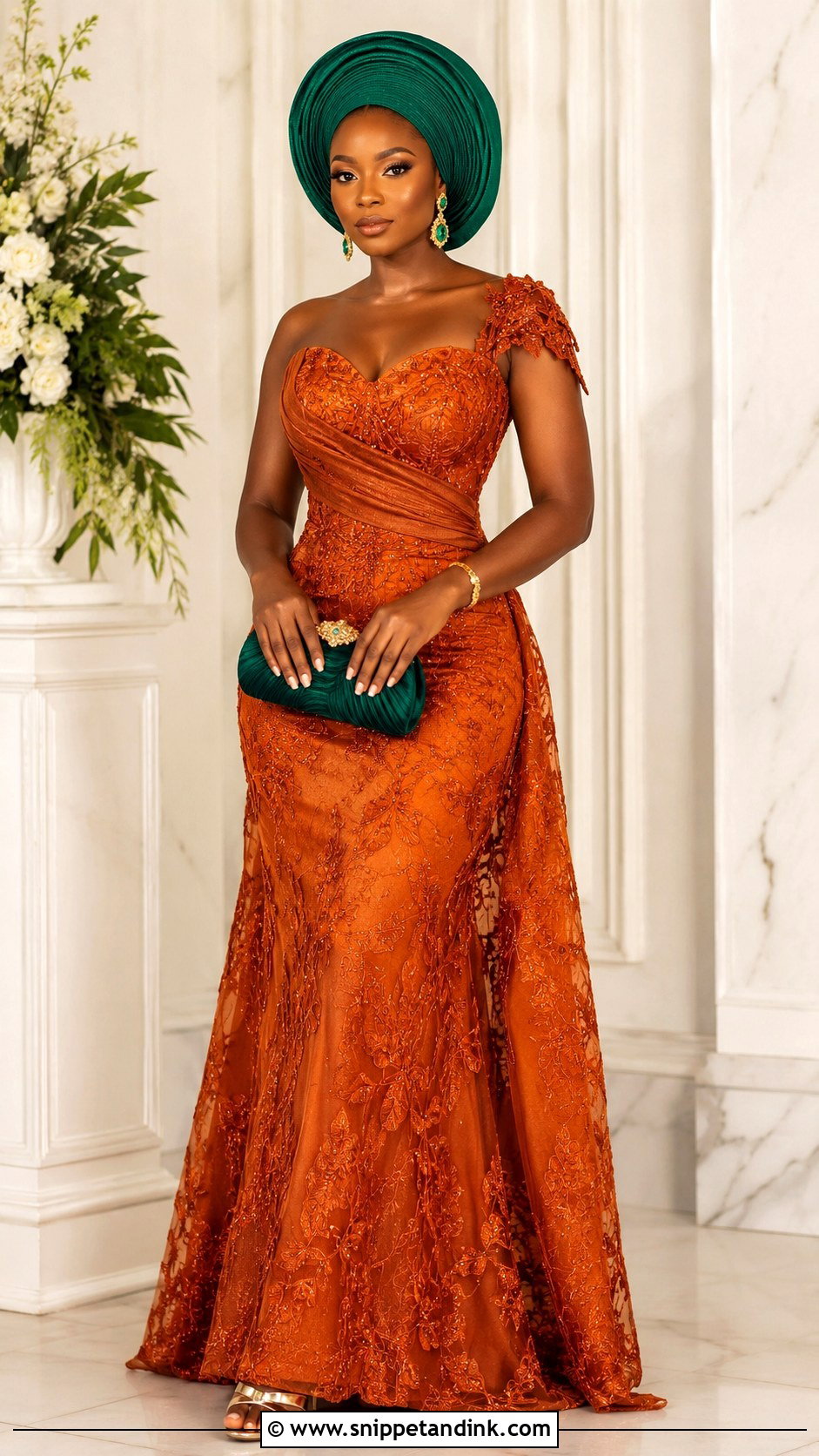
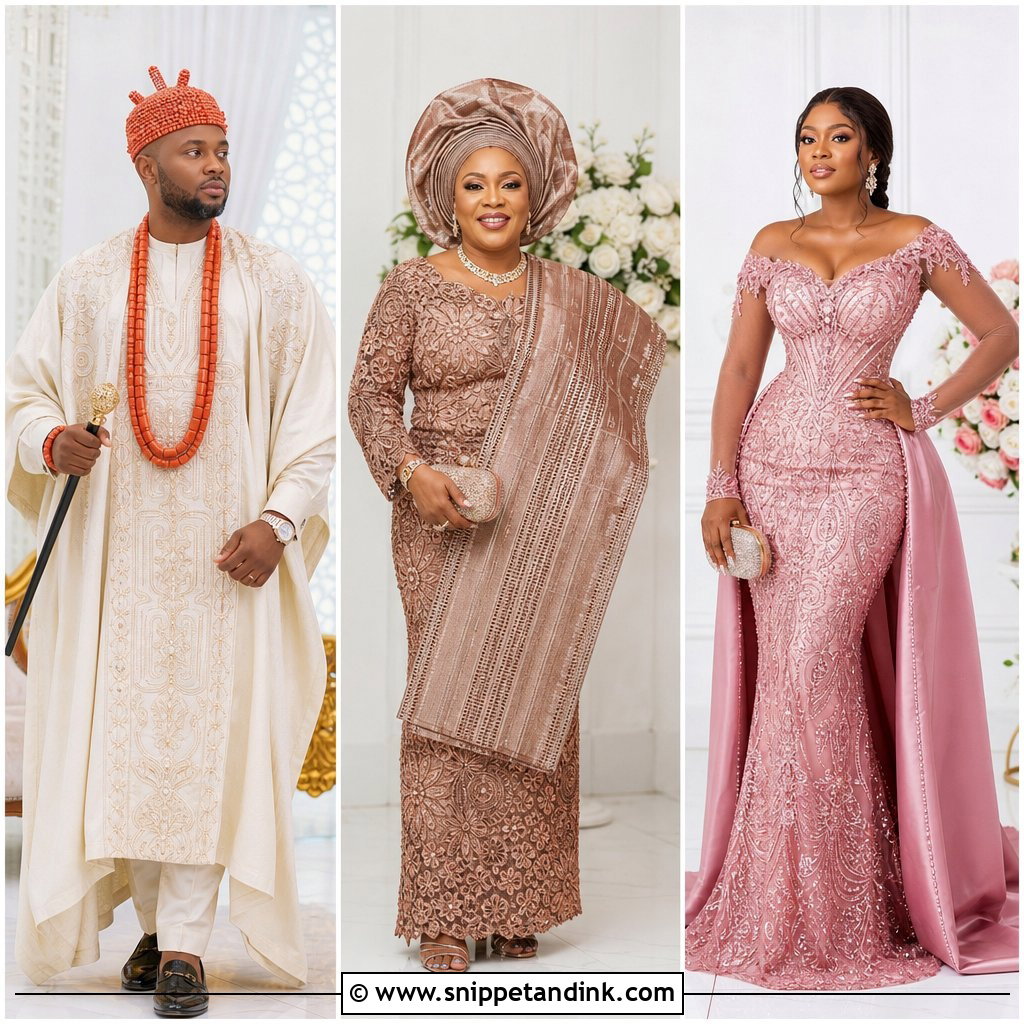
Emerald is the most confident partner for burnt orange, and the trick is using it sparingly. I put green in two or three places: an emerald gele, a clutch, small stone earrings. Gold shoes and a simple bracelet bridge the two colors. Keep the gown in restrained gold embroidery. If the couple has set official Aso Ebi colors and green is not one of them, ask before wearing it, because accessories in a rival color can read as ignoring the brief. Otherwise, let orange stay the main color and green the accent.
A Fitting Timeline for Aso Oke, Lace and Hand-Beaded Outfits
Traditional wedding outfits take longer than most people plan for. Hand-woven Aso Oke may need to be ordered from a weaver, beaded lace takes hours to finish by hand, and good tailors get booked solid before peak wedding season. Exact timings vary by tailor and by how busy they are, so treat the outline below as a rough plan and confirm dates in writing.
- Three to four months out: settle the colors with the couple or family, buy fabric and the gele together, and book your tailor.
- Ten to twelve weeks out: first fitting on the base garment, before any beading. Changes are cheap at this stage and expensive later.
- Six to eight weeks out: second fitting with the beading or embroidery in progress. Sit, bend, raise your arms and walk.
- Two to three weeks out: final fitting in the exact shoes and with the jewelry. Hems are set here.
- The week of: practice tying the gele or book a gele stylist, and pack a small kit of safety pins, fabric tape and thread in your color.
How Beaded and Velvet Outfits Hold Up Through a Long Celebration
Nigerian traditional weddings often run for many hours, with dancing, spraying and lots of standing to greet people. Heavy outfits tire you out. Beaded bodices and coral layers add real weight to the shoulders, and velvet and lined lace get warm in a crowded hall. I build in comfort from the start: a breathable lining, an inner waist stay so the gown is not hanging from the shoulders, and sleeves that let you lift your arms.
If the bride has a dramatic entrance outfit, I almost always suggest a second, lighter look for the reception, such as the jumpsuit, kaftan or tulip wrapper above. Change after the main ceremony and photos, not halfway through the dancing. And brief one person, a sister or friend, on how your gele is tied, so they can re-pin it if it slips.
Matching the Gele, Fabric and Your Role on the Day
Every outfit here works because the fabric, the fit and the gele were chosen together rather than piece by piece. One rich color can carry Aso Oke, George, lace, a kaftan or a jumpsuit, depending on the ceremony and your role in it. Gold and bronze keep it classic; coral, emerald and champagne add contrast. Settle the customs and the couple’s palette first, then think about your role, whether bride, relative, bridesmaid or guest. After that, spend your attention on a gele that stays put, shoes you can stand in, and embellishment that stops before it gets crowded.
You'll Like These Ideas:




Leave a Reply