
Ask a Nigerian bride about her traditional wedding outfit and she’ll talk about her mother, her grandmother and her hometown before she mentions a hemline. Yoruba aso oke, Igbo George, Edo coral, Hausa-Fulani modest gowns and modern lace all tell people where a bride comes from. My job is to make that story fit her body and survive a long, hot, joyful day. Lately most brides I work with want both: a traditional structure with modern tailoring, softer colours, sculpted sleeves or a train. Here are the dresses I see most, with what I’d watch for in each.
Turning a Saved Photo Into a Dress That Fits
Most brides arrive at a tailor with a screenshot. That’s a good start, but a photo hides a lot: lighting, editing, a model’s posture, sometimes a stretch lace that your fabric doesn’t have. Before you hand it over, I’d work through these points.
- Name the fabric in the photo. A sculpted gown cut in stretch lace won’t behave the same in aso oke or George.
- Ask how many yards or pieces the design needs. Buying short means a second bolt that may not match the dye lot.
- Request a test fitting in plain fabric first for anything with a corset or mermaid shape. It costs a little more and saves the expensive cloth.
- Bring your actual shoes, undergarments and, if possible, your coral to every fitting.
- Agree in writing on the number of fittings and the final collection date.
Be honest with yourself about comfort, too. A dress that only works when you stand still will spend most of the day being tugged.
1. Yoruba Aso Oke Bridal Dress
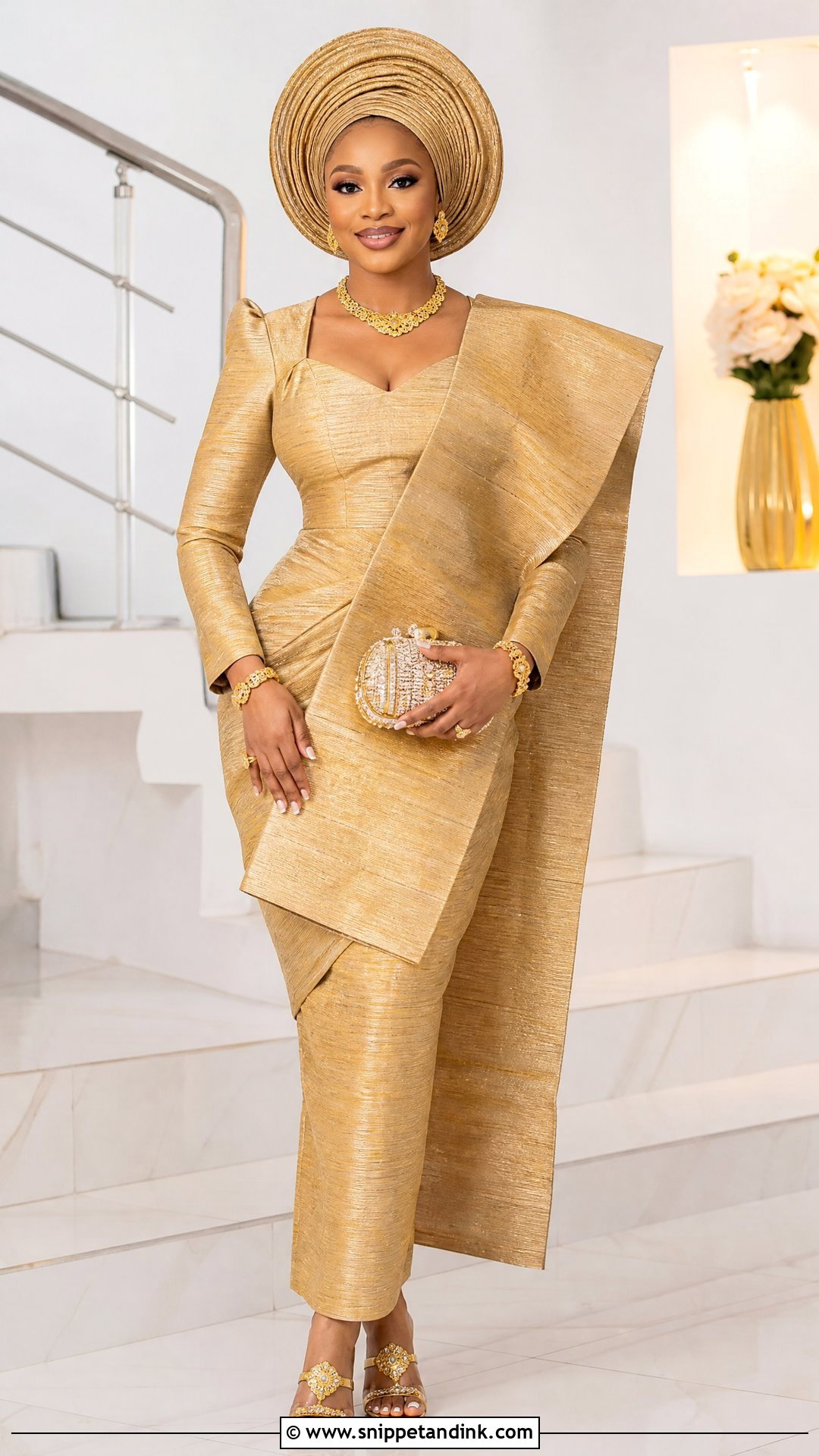
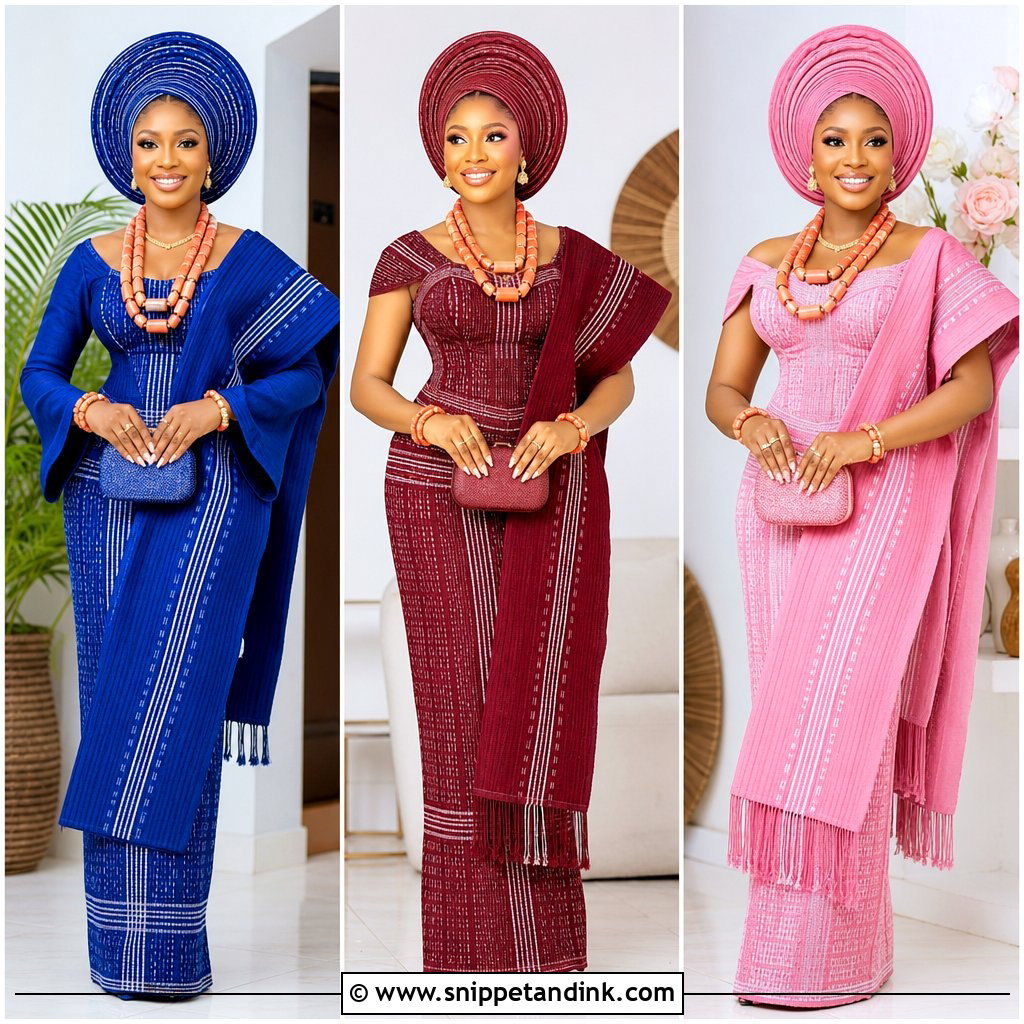
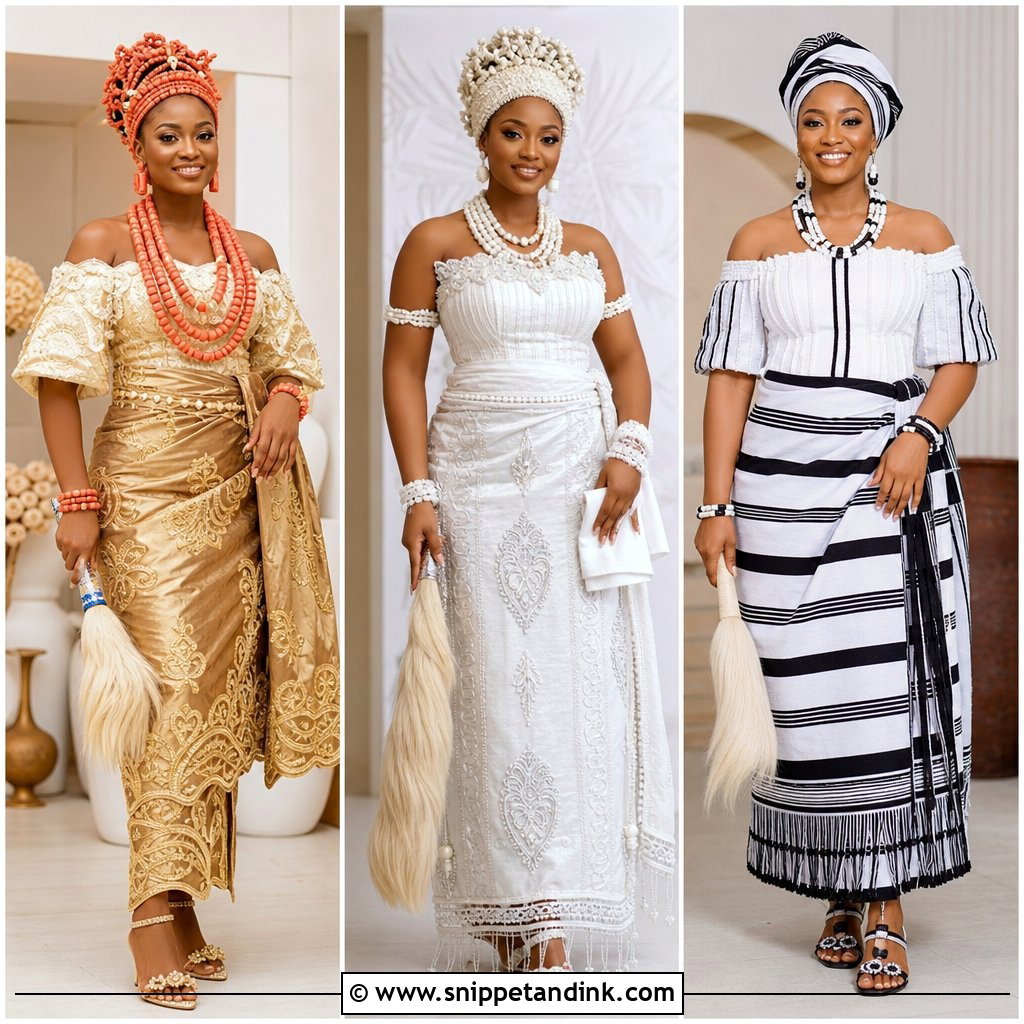
Aso oke is hand-woven in narrow strips, and that weave gives a Yoruba bride her shape. The set is usually a fitted blouse, a wrapper or skirt, an ipele over the shoulder and a gele. White, gold, champagne and emerald are favourites. Because the cloth is stiff, it holds a crisp outline in photos but resists tight curves, so a corset blouse or mermaid skirt needs a skilled tailor who knows to cut with the weave. Keep the gele and ipele traditional and let the blouse be the modern part.
2. Igbo George Wrapper Bridal Dress
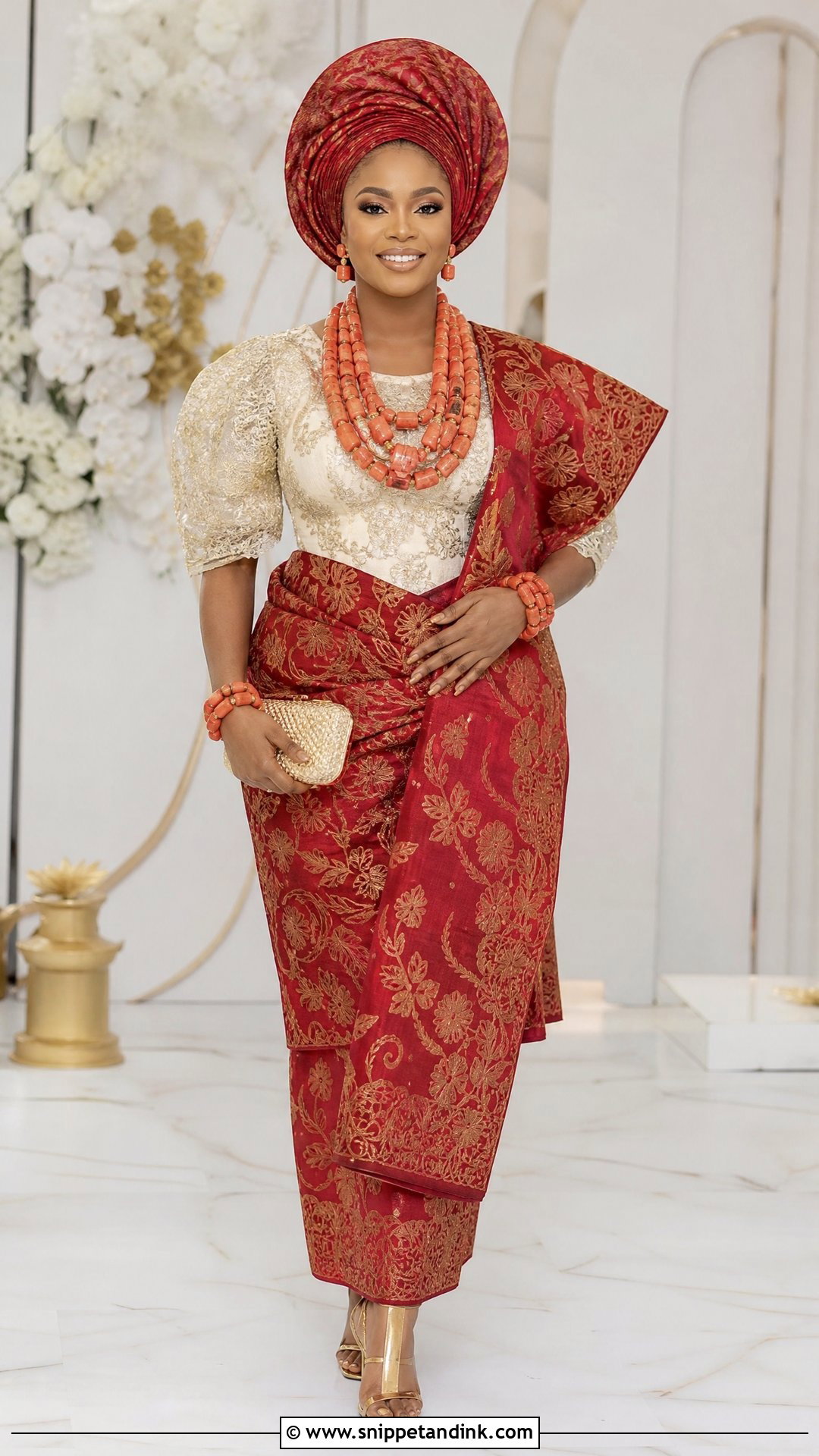
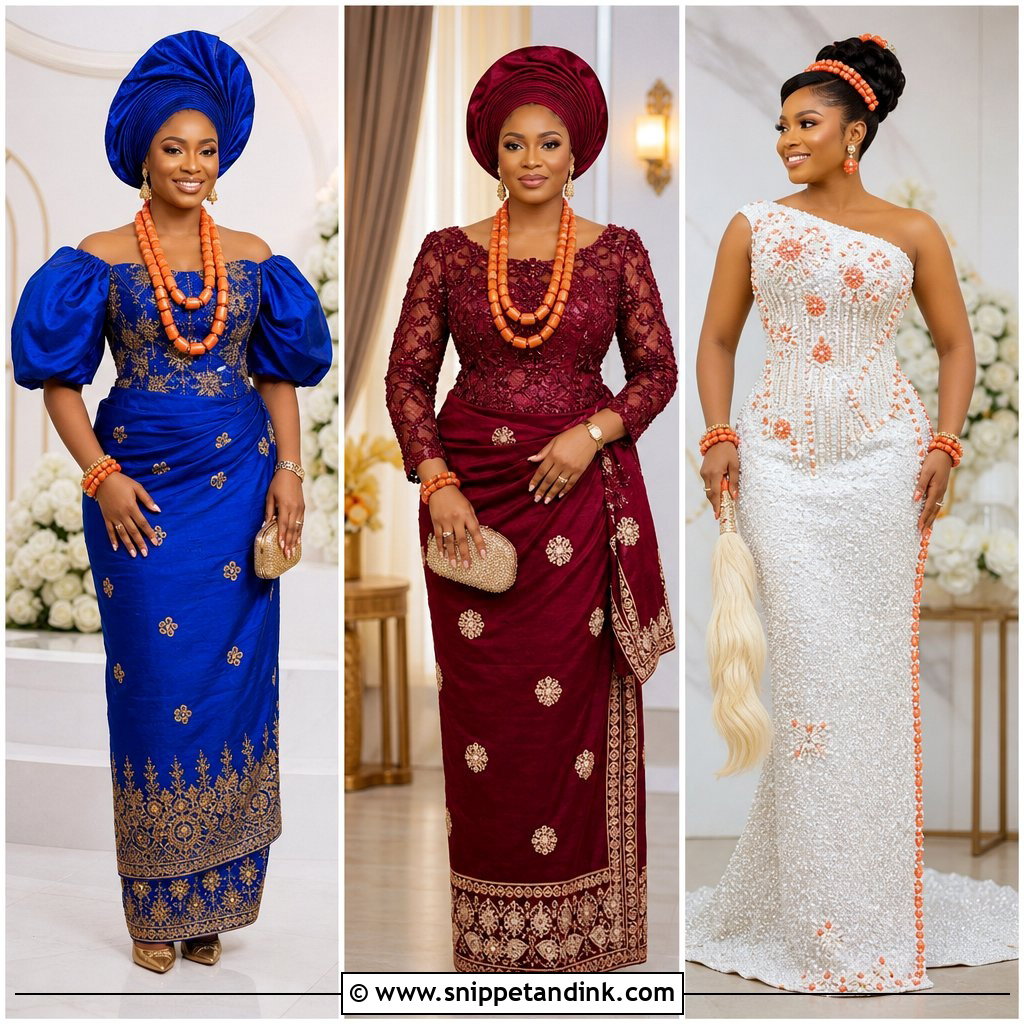
Two George wrappers tied at the waist, an embroidered blouse and layered coral: the Igbo bride’s look is grand. The coral isn’t decoration; it signals status and heritage. Red, gold, ivory, royal blue and deep purple George are the classic choices. The second wrapper is where things go wrong, so I tie it slightly higher than the first, folding in the top edge, which keeps both layers visible and stops the outer one sliding. Heels stay hidden under the hem, so pick comfort over looks.
3. Edo Coral Bead Bridal Dress
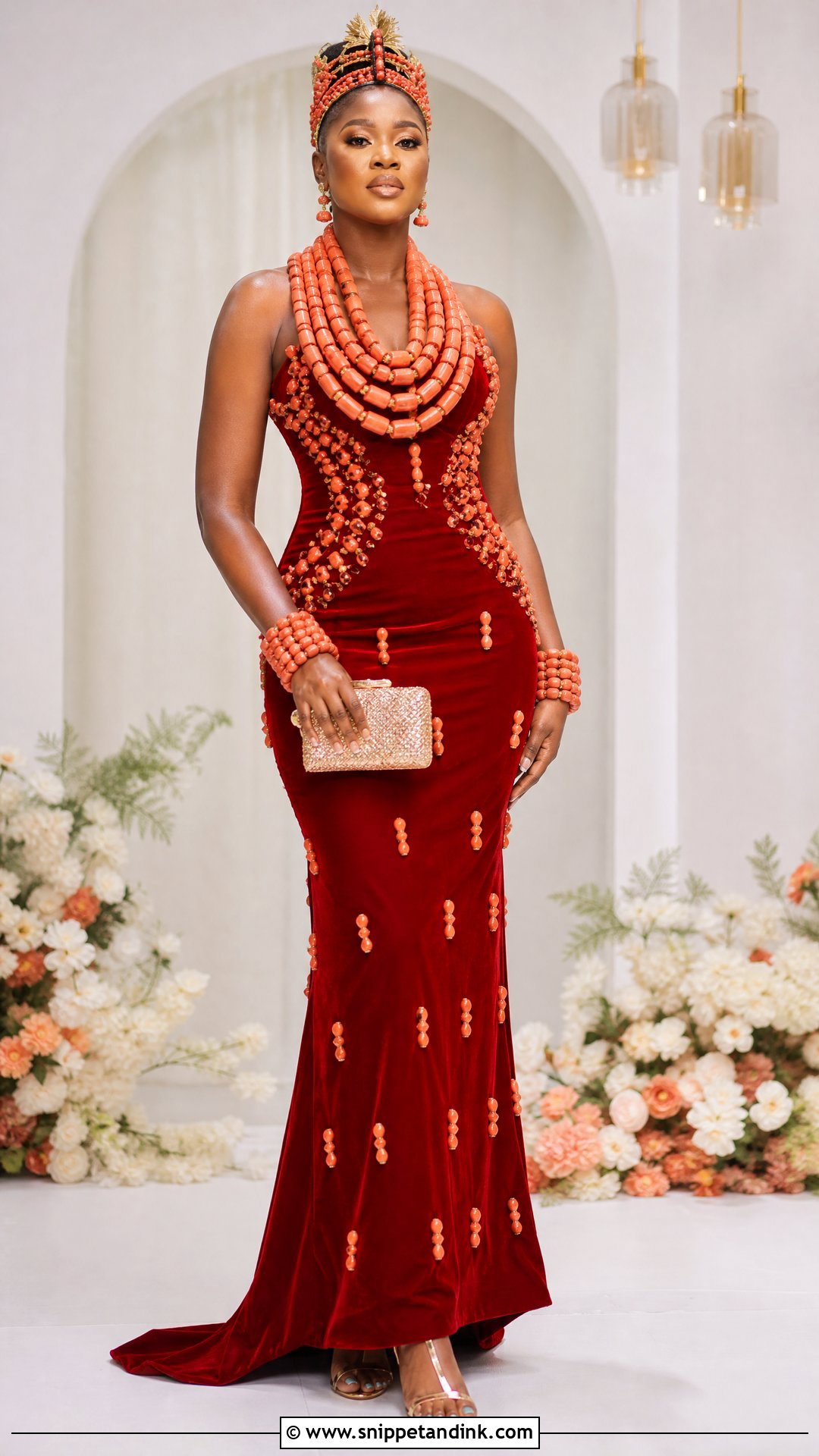
With an Edo coral bead bridal dress, the beads are the dress. The bride wears coral necklaces, cuffs, earrings and, at the most traditional weddings, the okuku: a hairstyle built into a dome and covered in coral. The garment underneath, whether velvet, lace or a fitted gown in red, wine or gold, should be plain enough to let the coral lead. An okuku is heavy and takes time, so book an experienced stylist and sit for it early in the morning.
4. Hausa Fulani Modest Bridal Gown
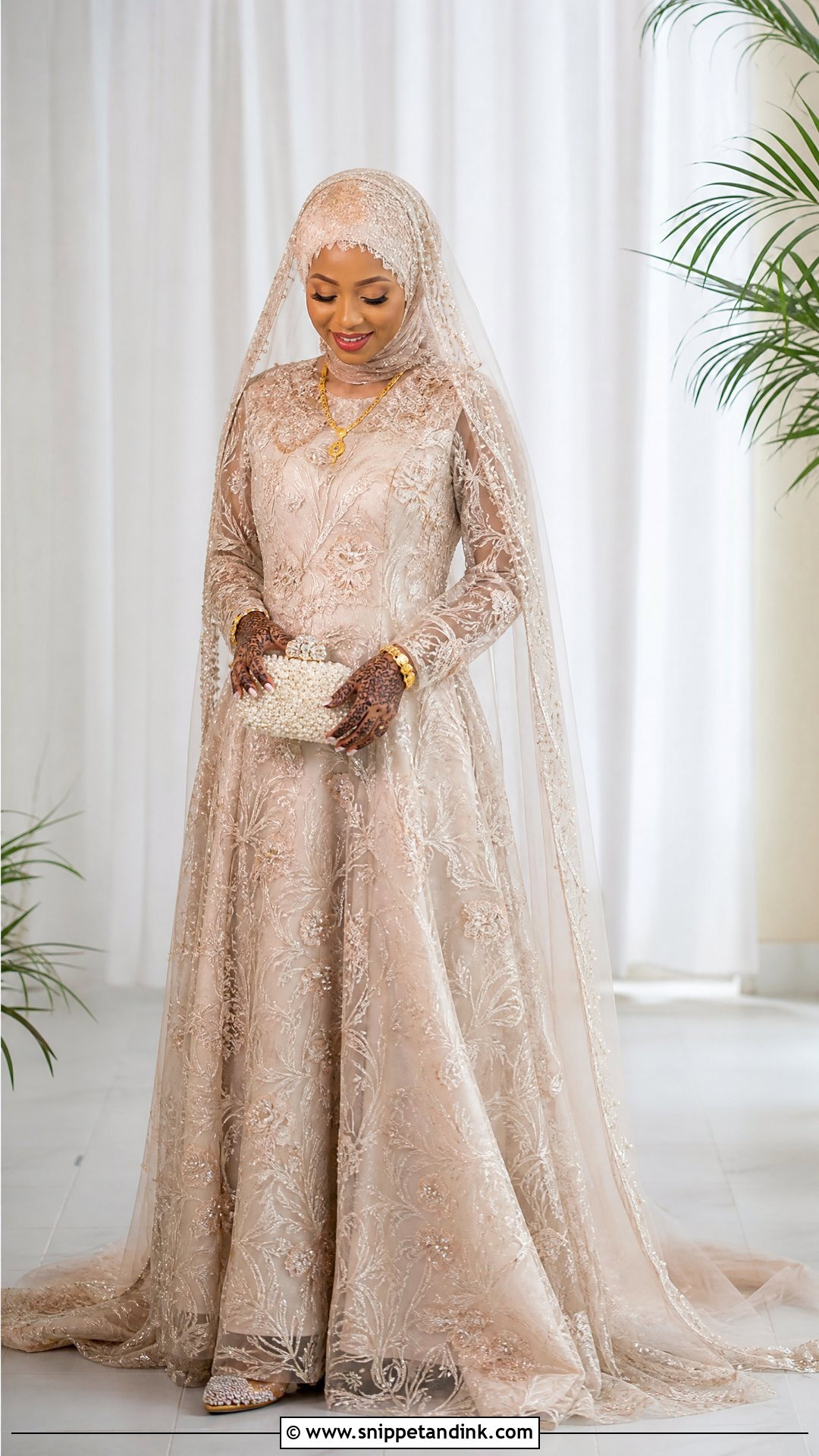
Long sleeves, high necklines and a matching veil define the Hausa-Fulani bridal gown, usually in lace, silk, brocade or embroidered fabric. Ivory, blush, mint and sky blue are common. My advice is about weight: these ceremonies involve long greetings and long sitting, and a heavy beaded lace gown becomes exhausting. A lighter base fabric with embroidery placed at the neckline and cuffs gives the same effect. Henna, delicate jewellery and embellished flats finish it.
5. Yoruba Iro And Buba Wedding Dress
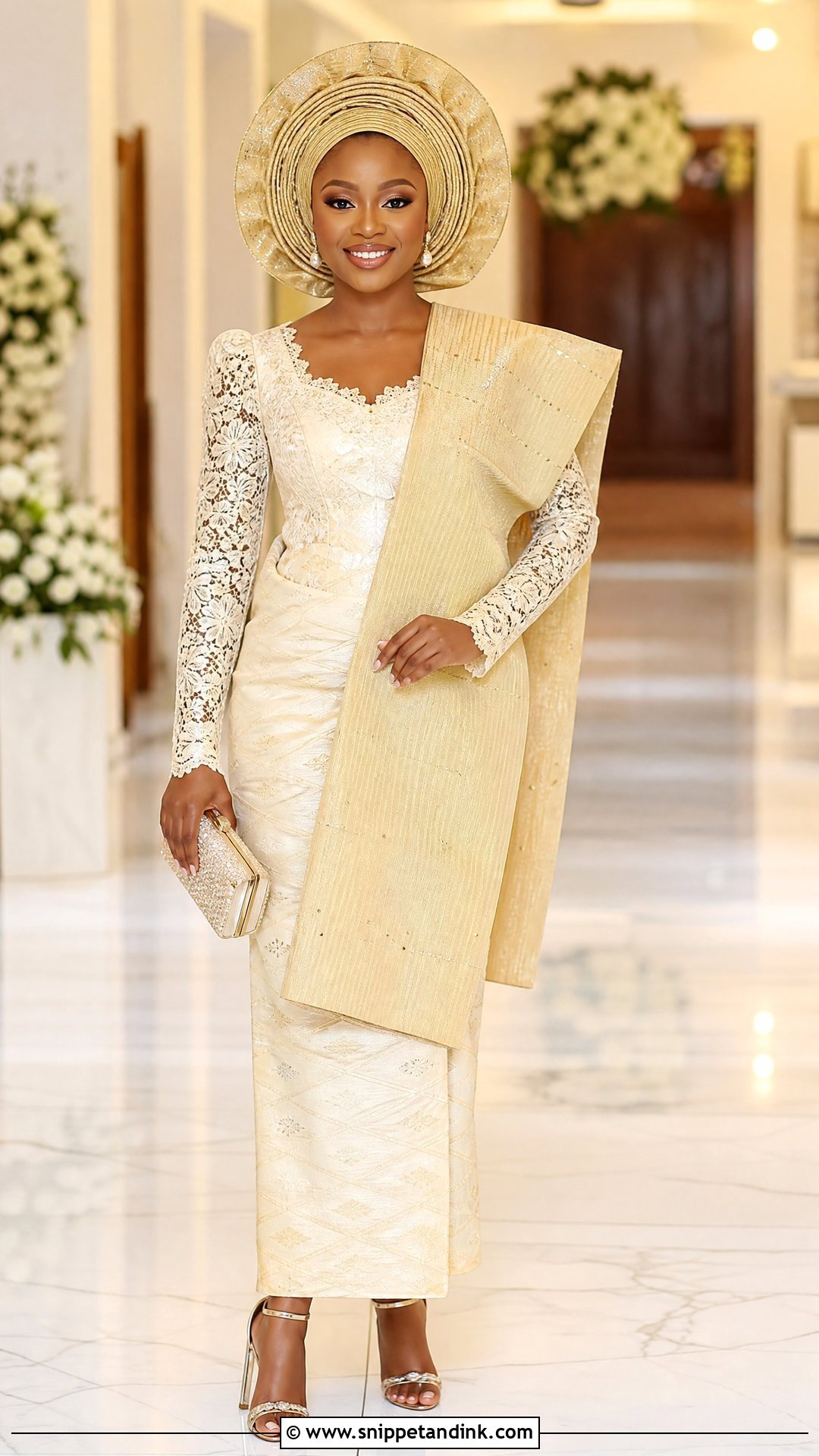
The Yoruba iro and buba wedding dress is the relaxed classic: buba blouse, iro wrapper tied at the waist, gele and ipele. It’s looser than a fitted gown, which is exactly why brides who plan to dance love it. Lace, aso oke, damask or silk blends all suit. If your buba is lace and your gele is aso oke, check the colours side by side in daylight; woven cloth and lace rarely match perfectly, and close enough looks deliberate while almost looks like a mistake.
6. Igbo Lace Blouse And Wrapper Dress
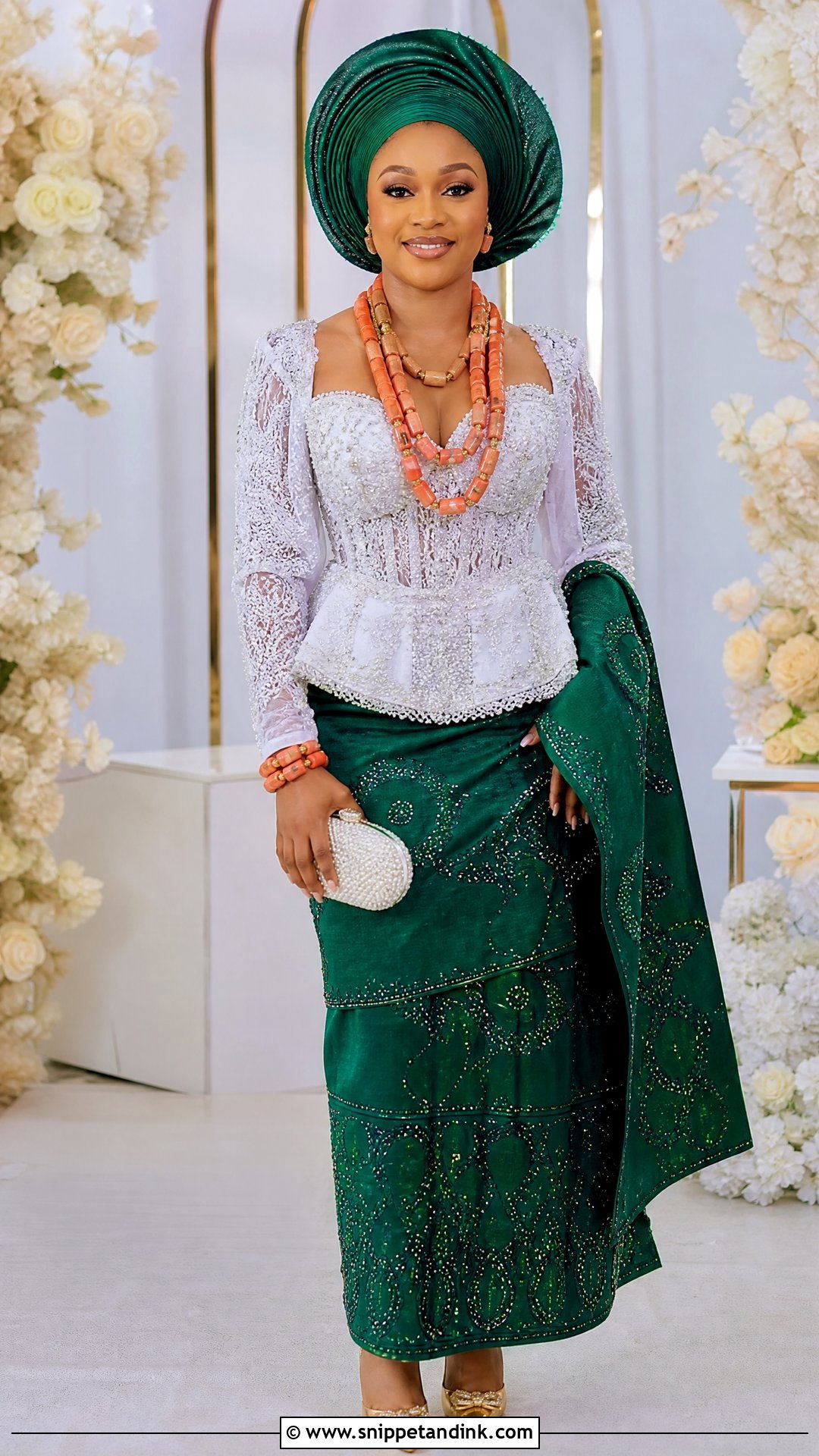
An Igbo lace blouse and wrapper dress brings sparkle without losing meaning. The blouse can be fitted, off-shoulder, peplum or long-sleeved; the wrapper is tied double, in George, silk or matching lace. Ivory lace with red coral is the pairing I return to most. Crystal-heavy blouses snag on coral strands, so I put the heaviest stones below the bust and keep the neckline clean where the beads sit.
7. Akwete Traditional Wedding Dress
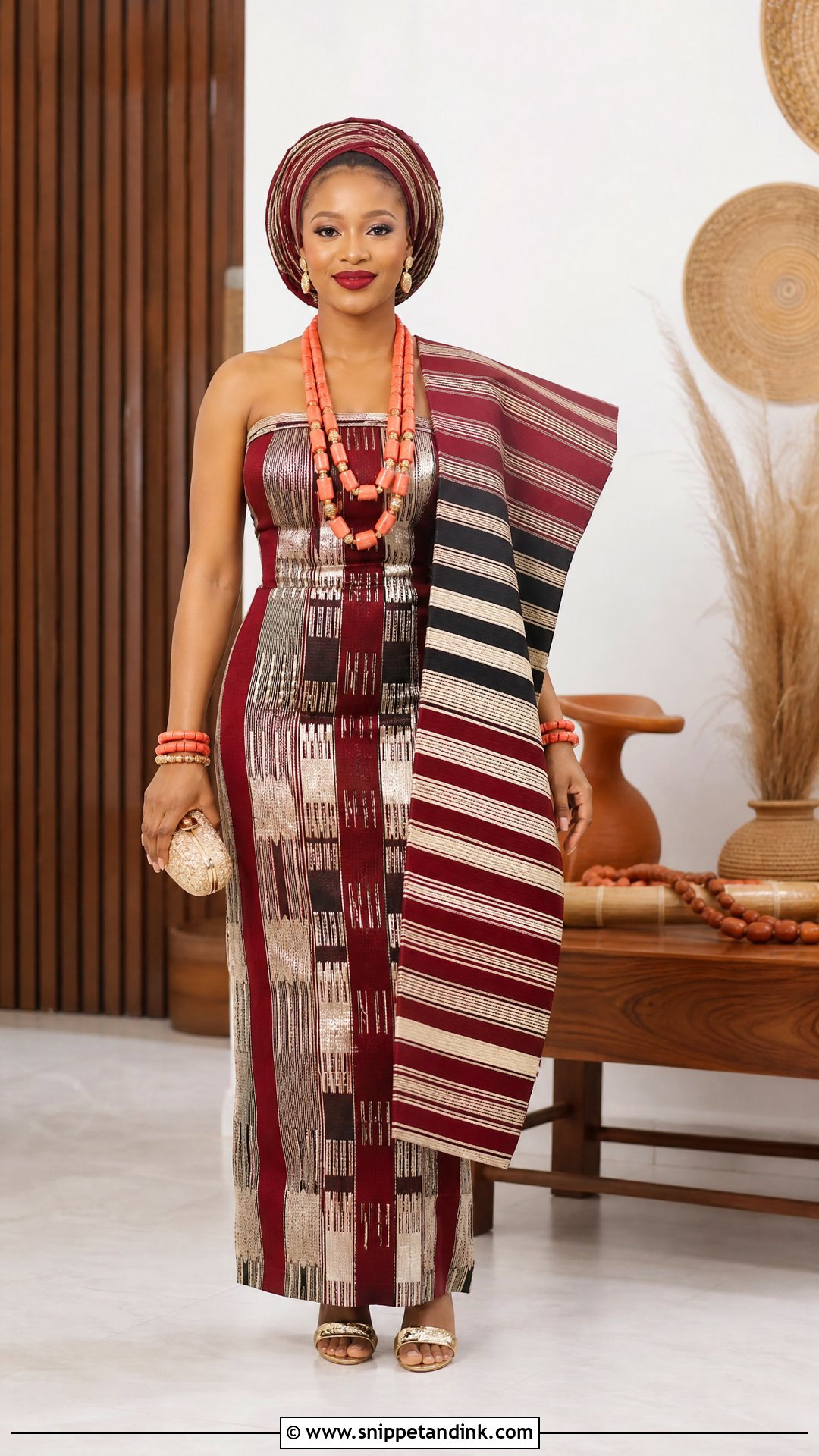
Akwete cloth is woven by women in Akwete, in Abia State, and its bold motifs make it a proud choice for an Igbo bride who wants the textile at the centre. Wear it as a wrapper set with a blouse, or have a gown made with a second wrapper over one shoulder. Hand-woven cloth comes in limited widths, so ask how many pieces your design needs before cutting. Simple coral and metallic sandals let the weave speak.
8. Yoruba Komole Wedding Dress
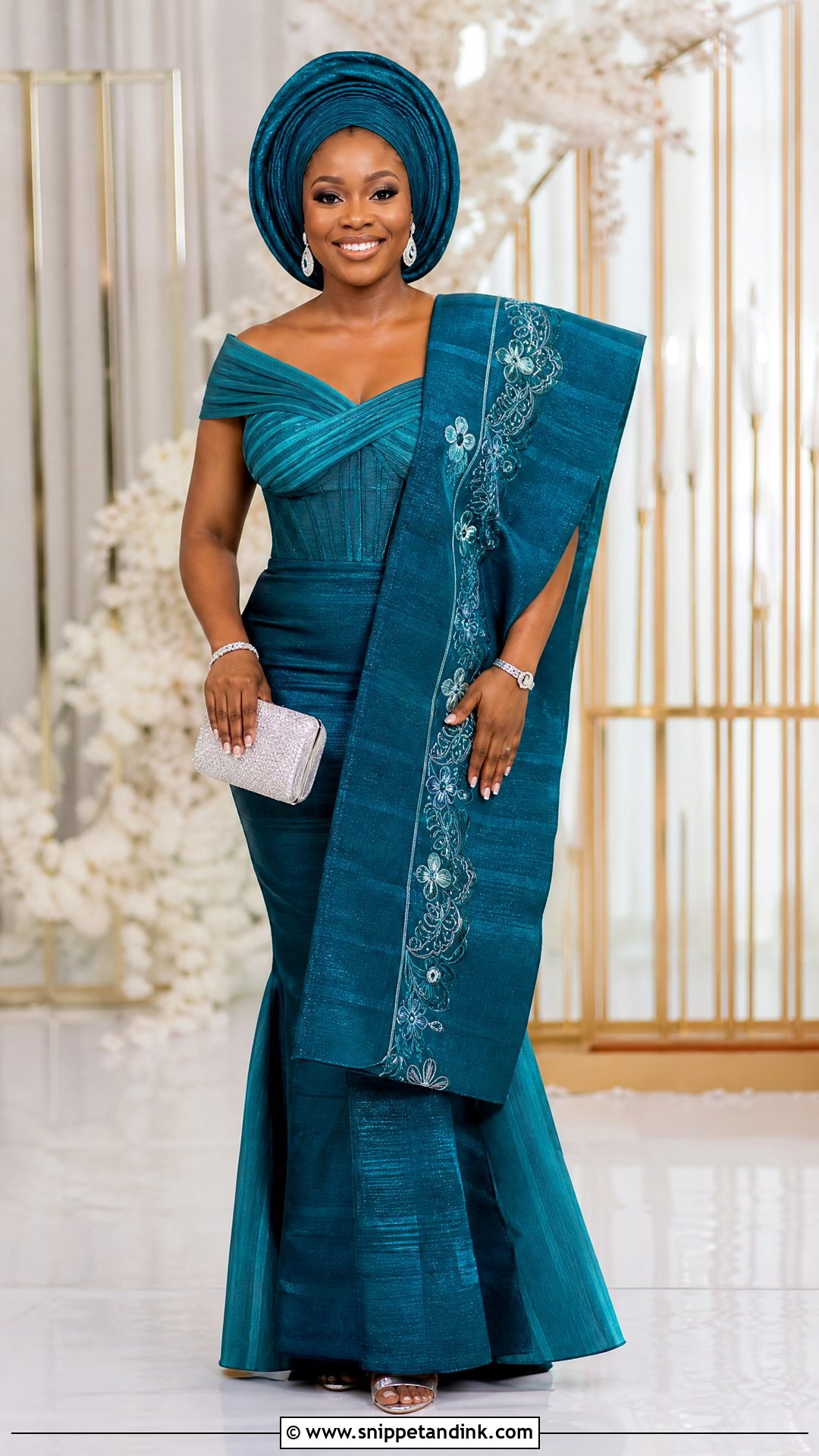
What brides call a komole dress is aso oke cut into a close-fitting gown, often with a mermaid hem, sculpted sleeves or an embroidered bodice. With the gele and ipele, it still reads clearly as Yoruba bridal wear. Rigid aso oke in a tight cut doesn’t forgive weight changes, so schedule the last fitting close to the date. Gold, teal, rust and wine show the weave well. Crystal earrings and a coordinated clutch are enough.
9. Nigerian Lace Mermaid Wedding Dress
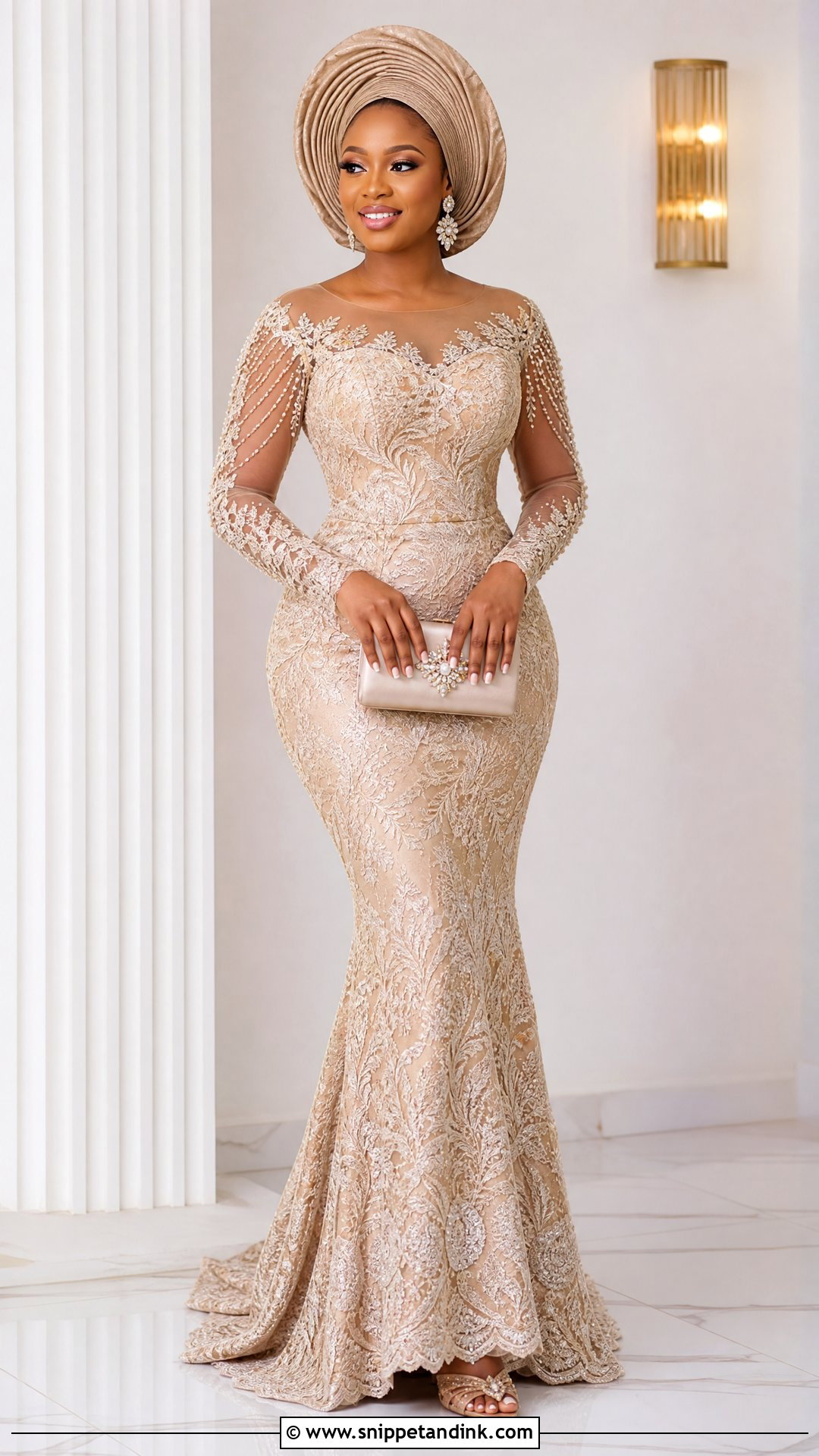
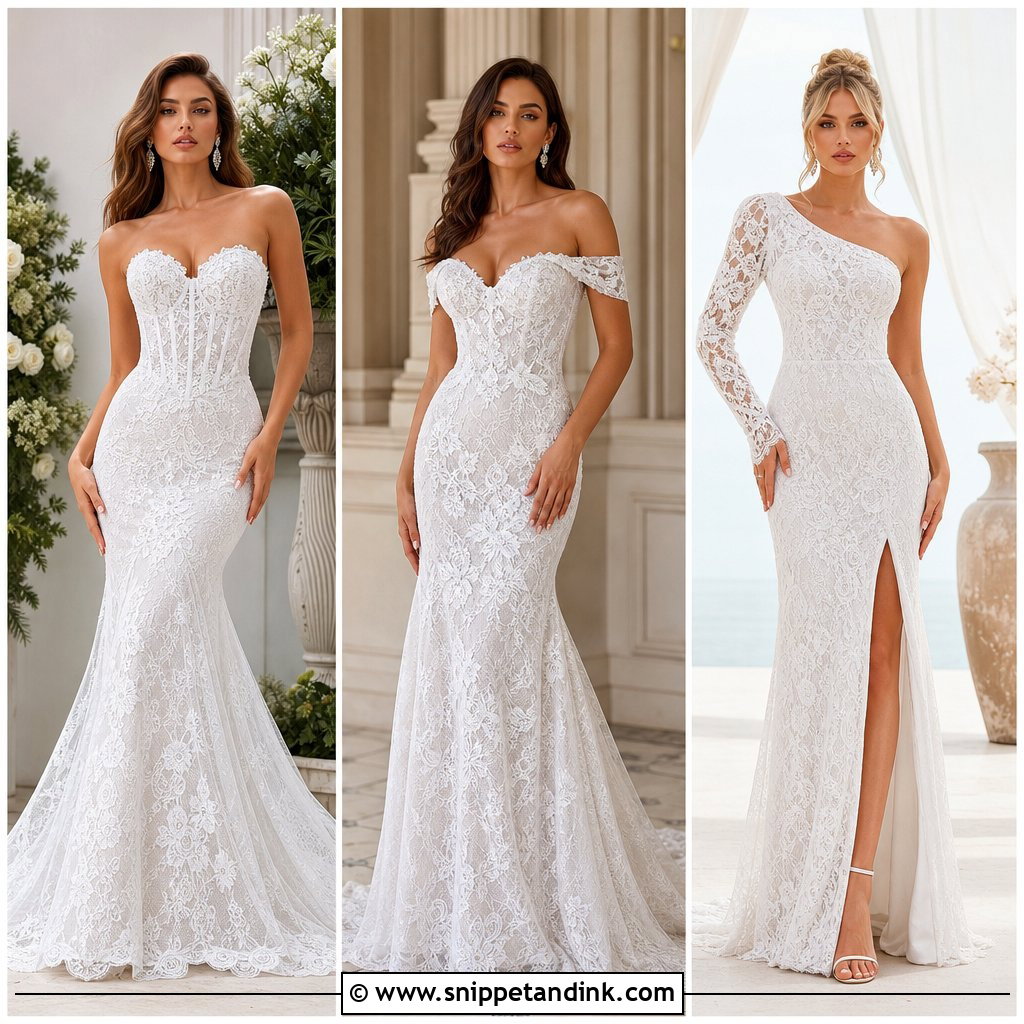
A lace mermaid gown gives drama and shape, and it can be dressed for any culture: a gele for Yoruba, coral for Igbo or Edo, a soft veil for a northern bride. Pick one focal point, whether beaded sleeves, a train or a neckline, and keep the rest calm. Mermaid hems restrict your stride. Walk, sit and climb two steps in the fitting, and ask for the flare to start low enough that you can still move.
10. Ankara Traditional Wedding Dress
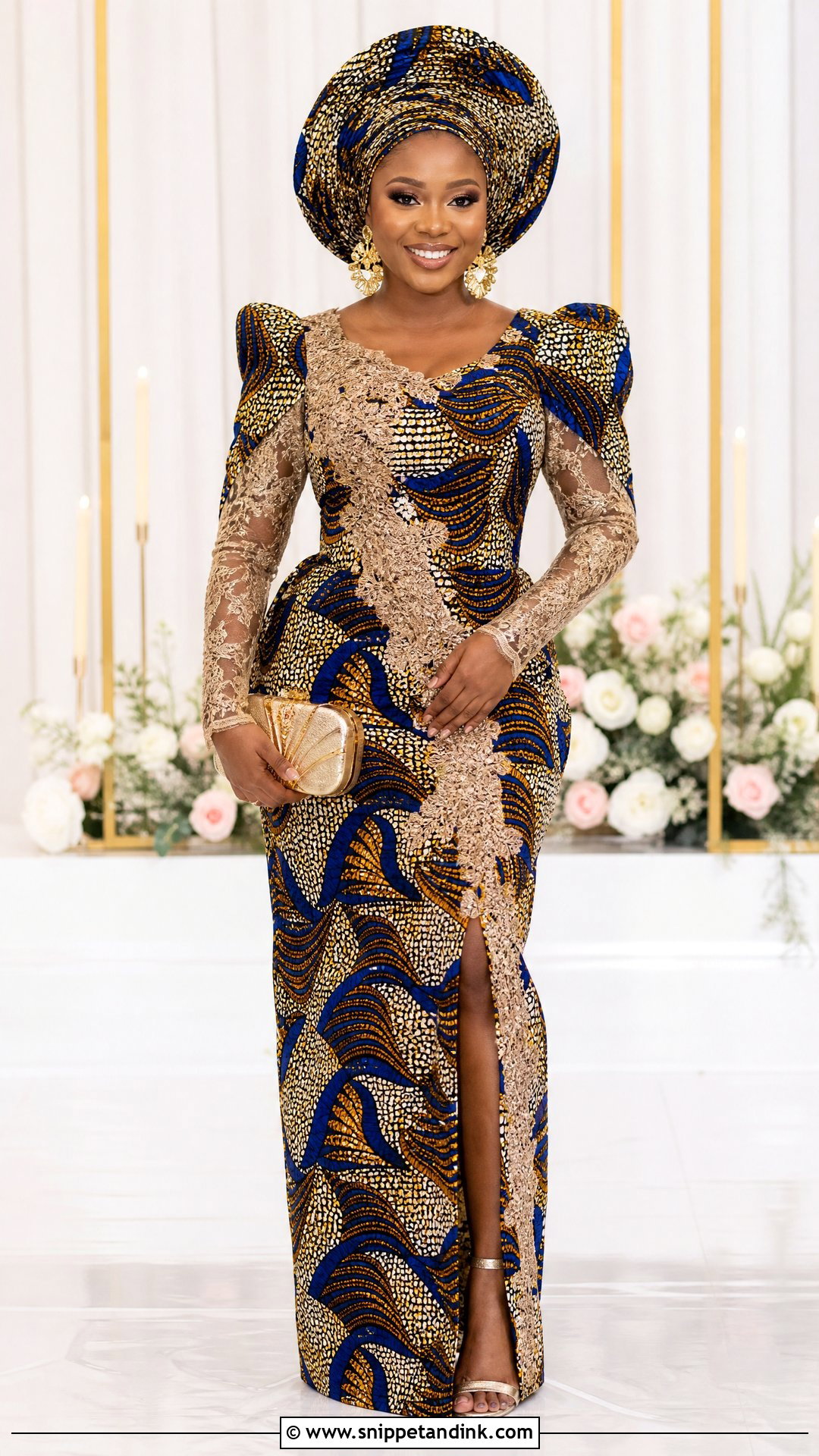
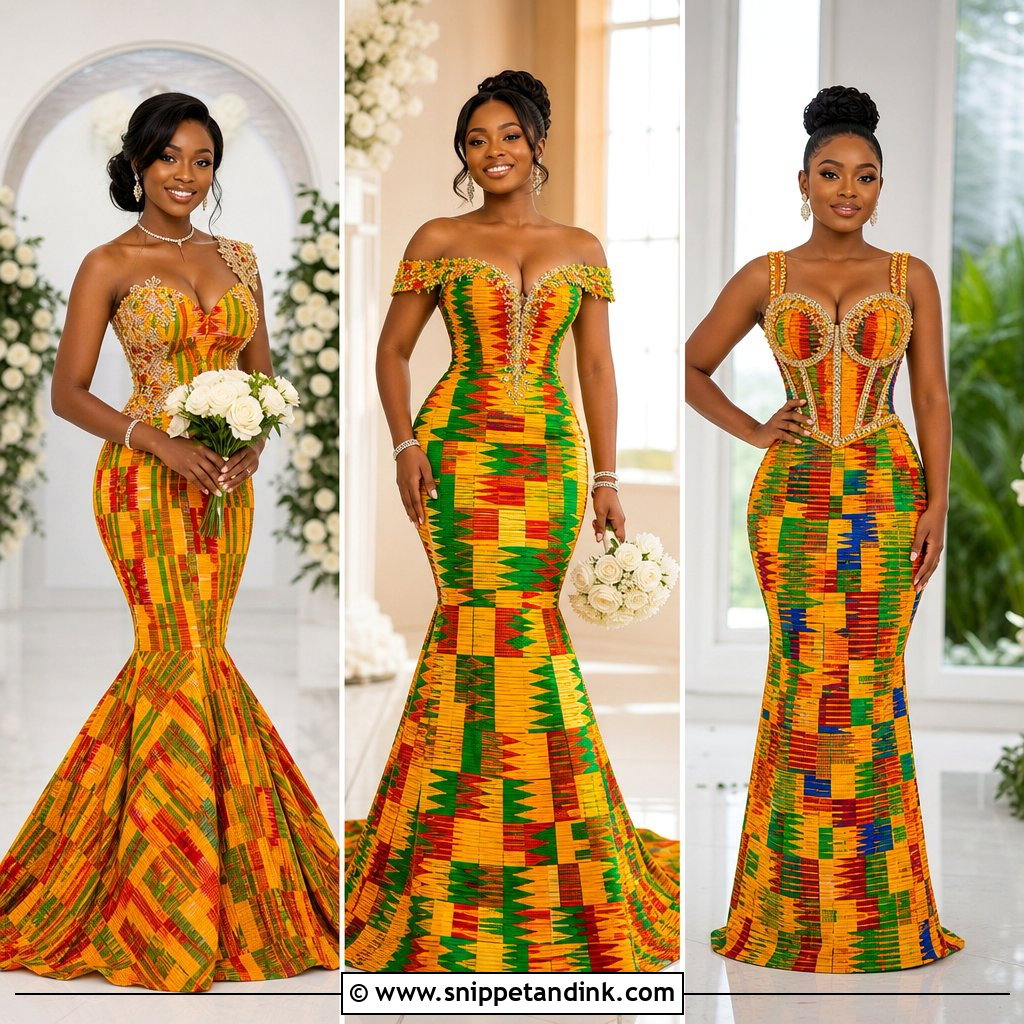
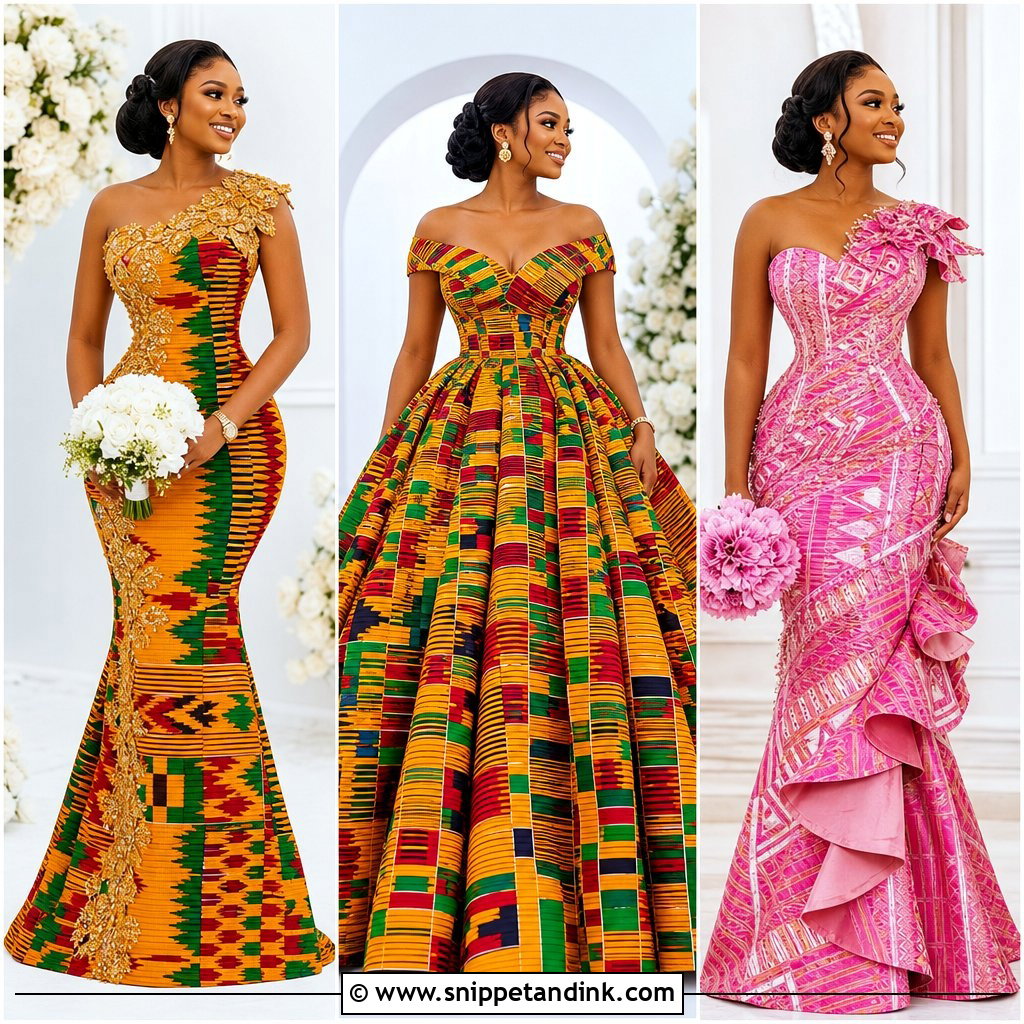
Ankara is less common for brides than lace or aso oke, but good tailoring can make it bridal. A full-length gown, a peplum blouse with wrapper or a layered skirt all lift it. I choose prints with two or three harmonious colours rather than six, then add solid accessories. Lace panels, organza sleeves or a detachable train push it toward formal. Wash wax print before cutting; it softens and won’t shrink after the wedding.
11. Nigerian Velvet Wedding Dress
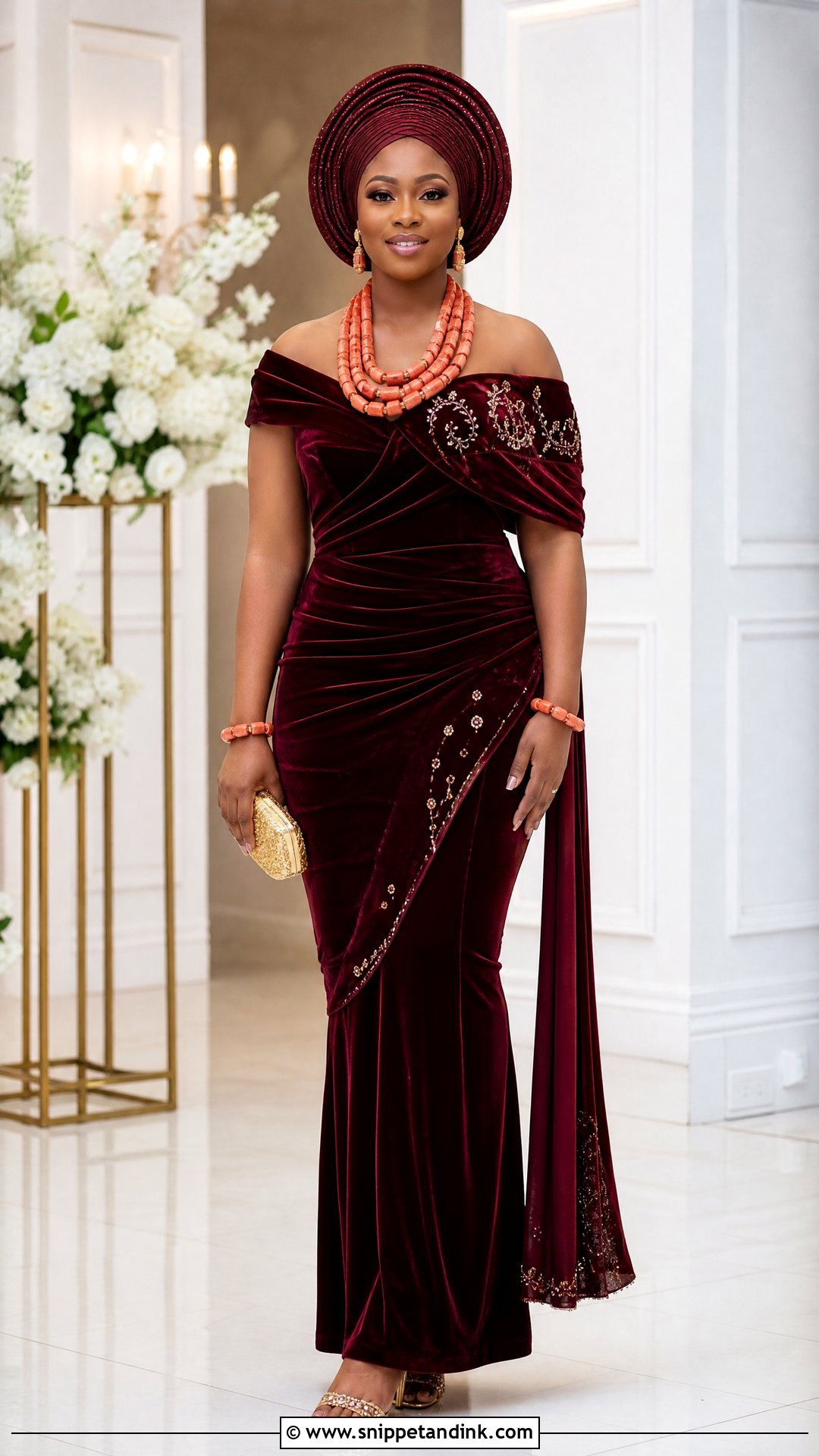
Velvet suits Edo and Igbo brides especially, because it makes coral and gold glow. Deep red, wine, emerald, navy and purple all look rich, but only in a simple cut, since velvet shows every pucker. It’s also warm, which matters at a midday outdoor ceremony. A fitted long-sleeved gown, a wrapper skirt or a structured bodice all suit. Steam velvet from the back; an iron flattens the pile and leaves a shine.
12. Nigerian Gold Lace Bridal Dress
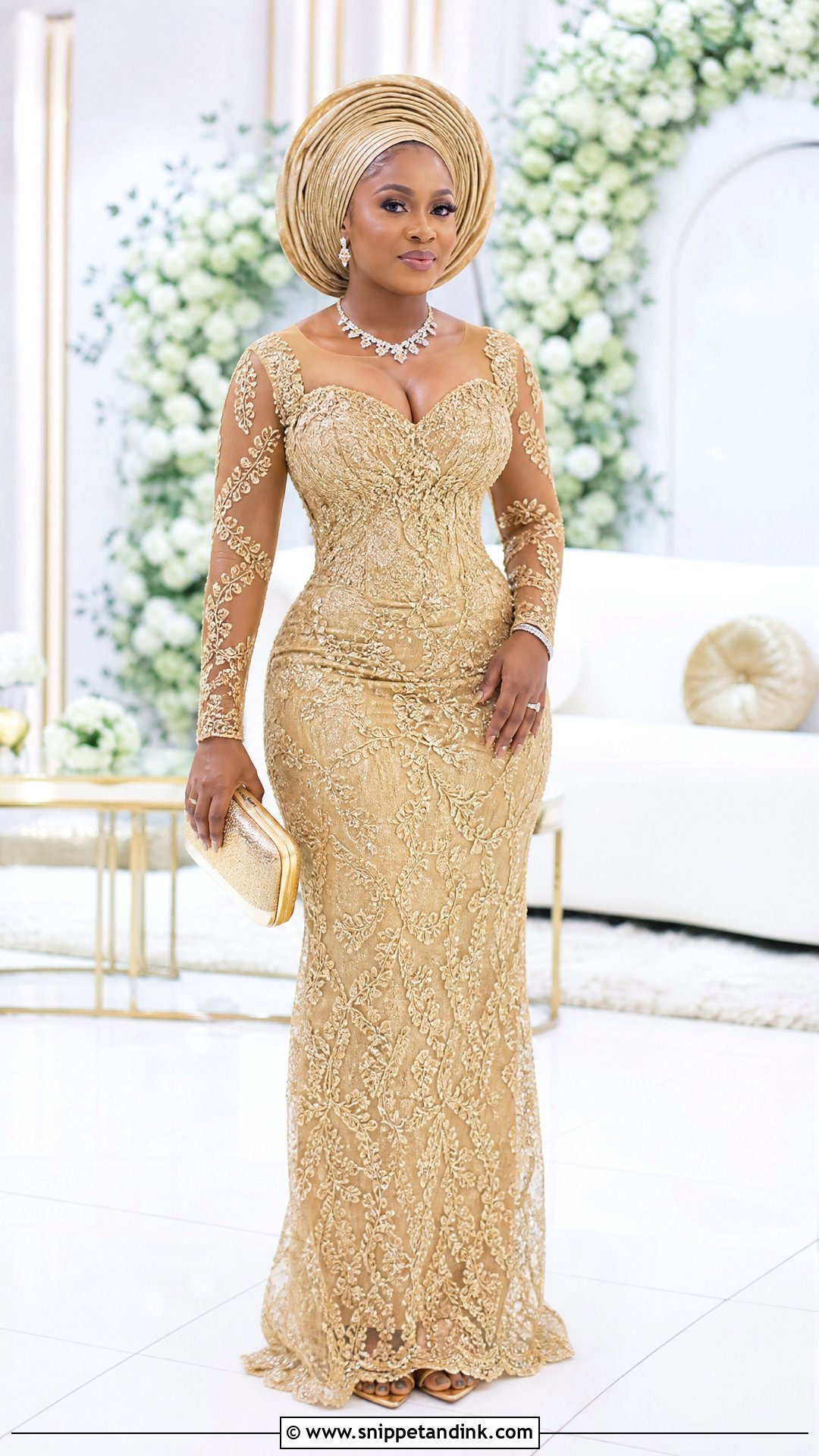
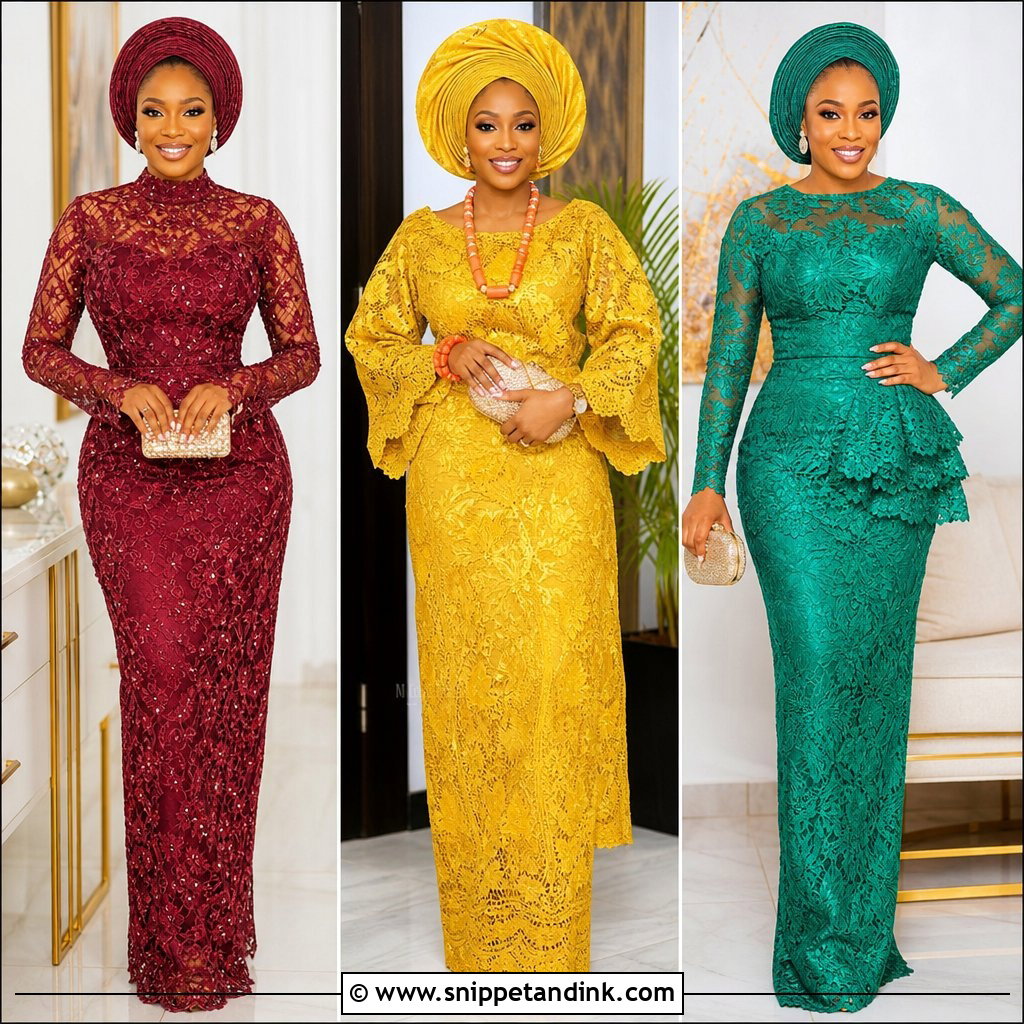
Gold lace feels festive and pairs with coral, pearls, crystal and bold headwraps across many traditions. Champagne gold is softer; bright yellow gold makes a louder entrance. Quality shows in the texture. A well-corded lace with a clear pattern looks expensive, while cheap metallic lace tends to look stiff and scratchy. Rub it on the inside of your wrist before buying, because you’ll wear it all day.
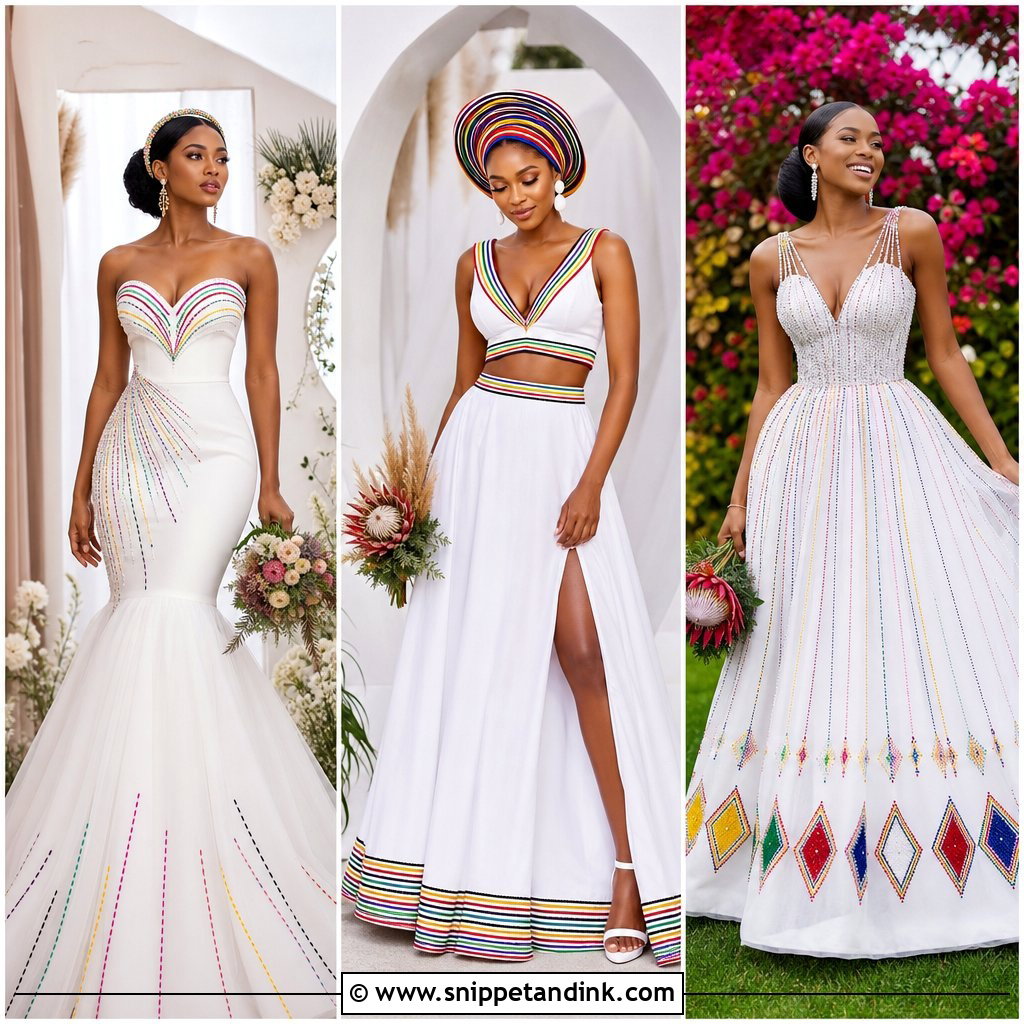
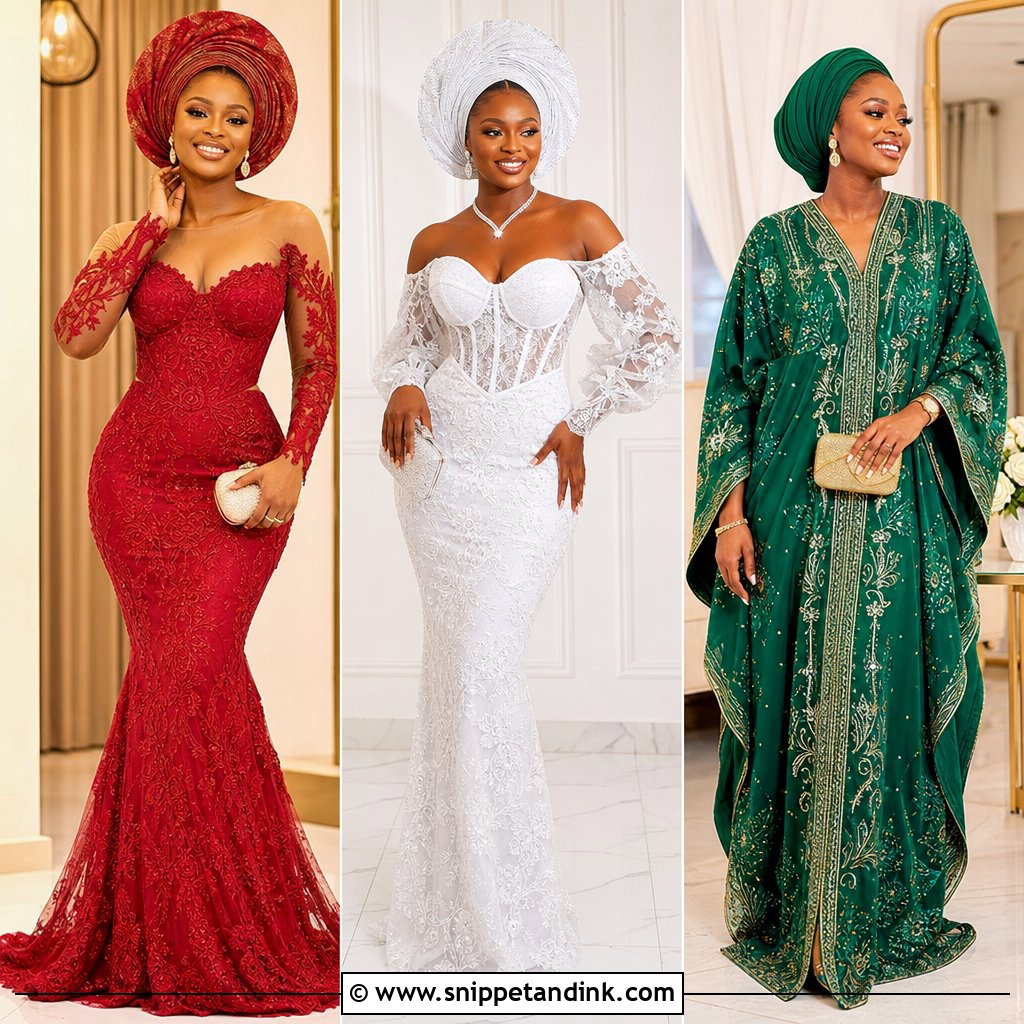
13. Nigerian White Traditional Wedding Dress
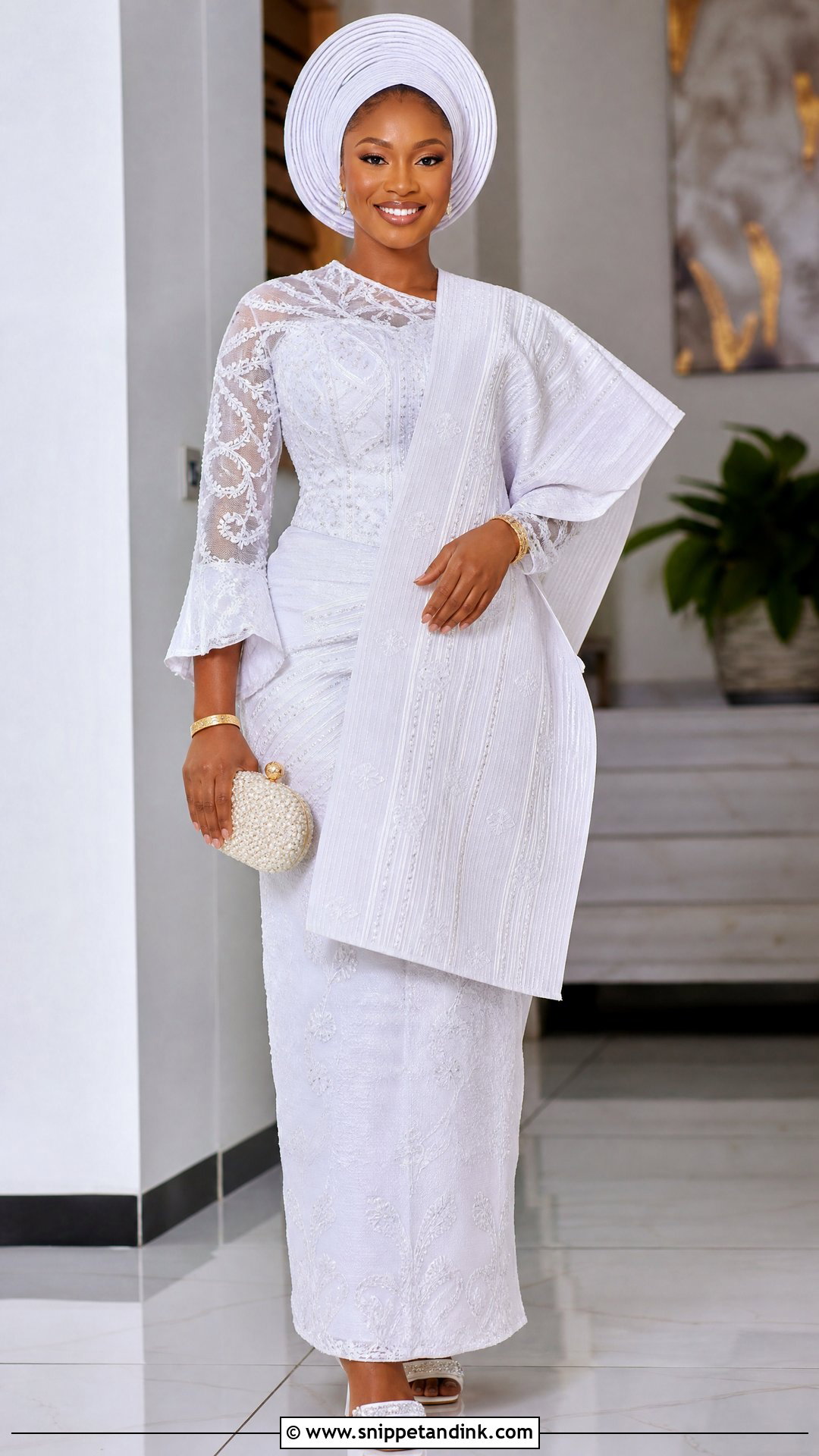
White aso oke, lace, George or brocade gives a traditional ceremony a bridal feeling that isn’t Western. A white gele, coral, pearls or gold all suit, depending on your background. The practical problem with white is makeup transfer. I dress the bride before final powder and use a face cover when pulling anything over her head, because foundation on a white collar won’t come out on the day.
14. Nigerian Red Traditional Wedding Dress
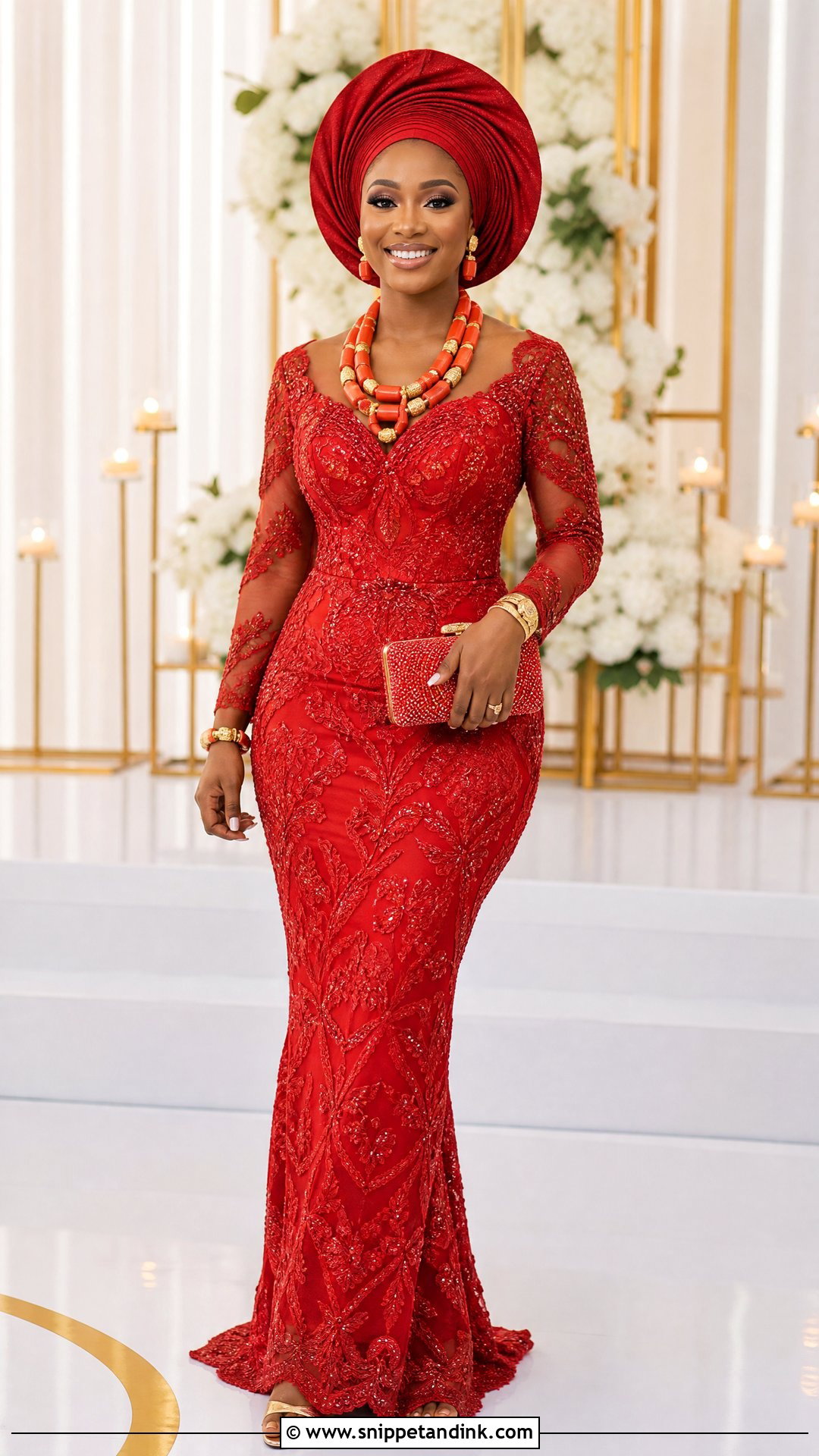
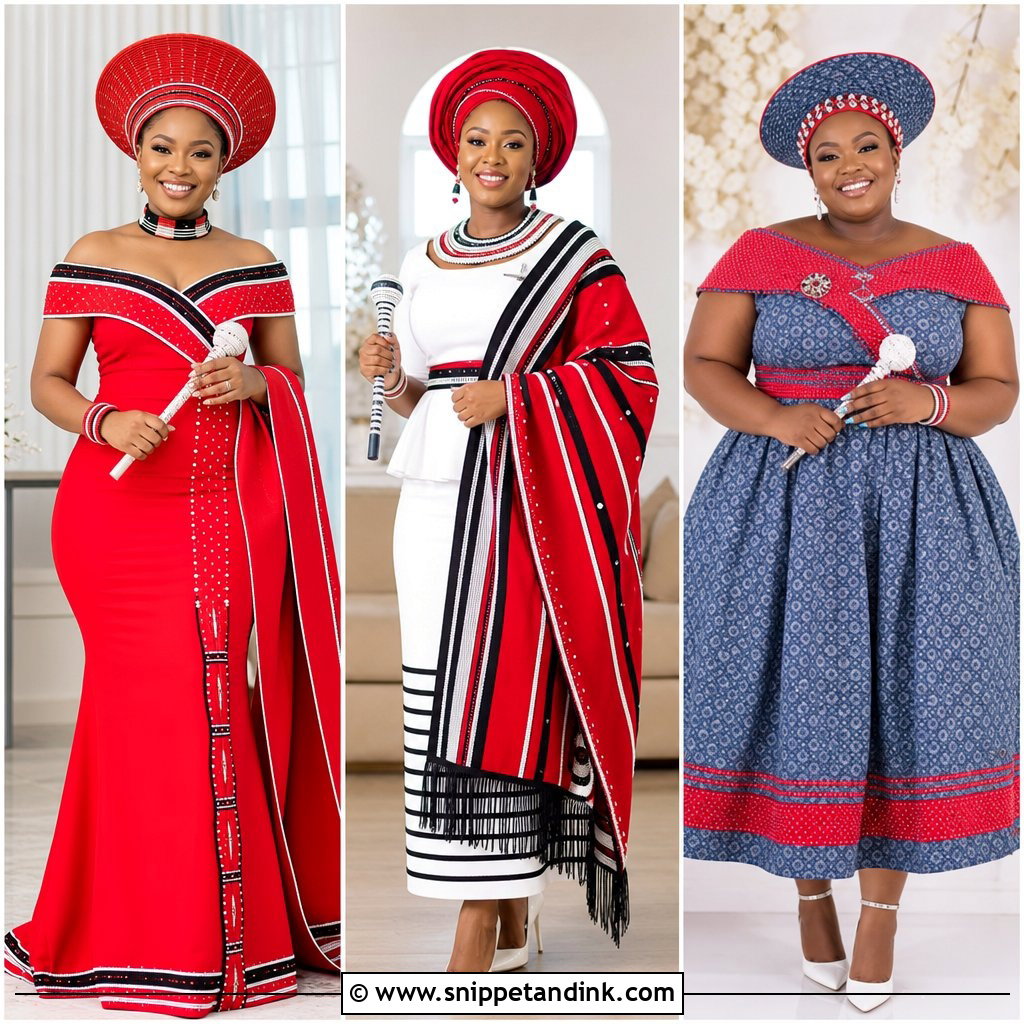
Red pairs naturally with coral and gold, which is why Edo and Igbo brides wear it so often, and Yoruba brides can choose red aso oke or lace for a ceremonial feel. Gown, wrapper set, velvet or beaded mermaid all work. Red shifts toward orange under warm hall lighting, so look at the fabric under the kind of light your venue has. A red gele or coral crown finishes it.
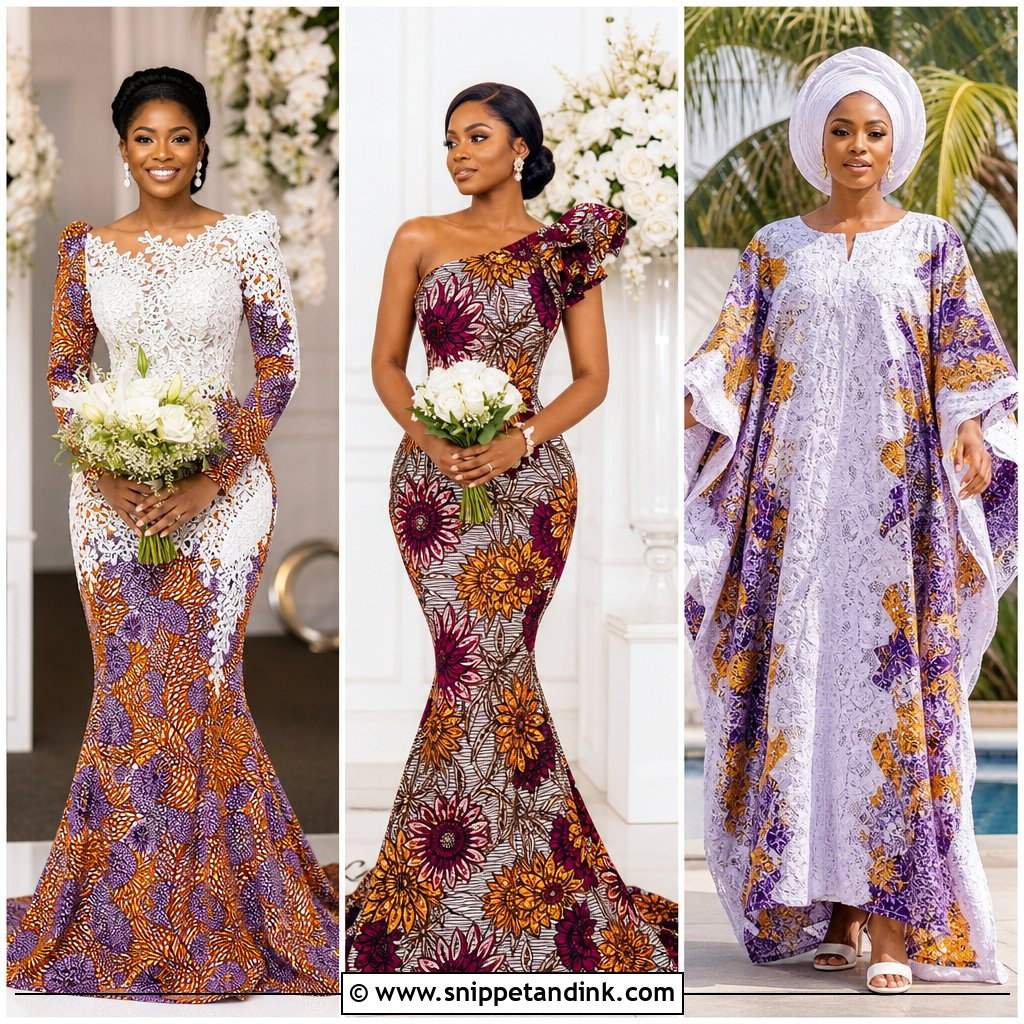
15. Nigerian Green Traditional Wedding Dress
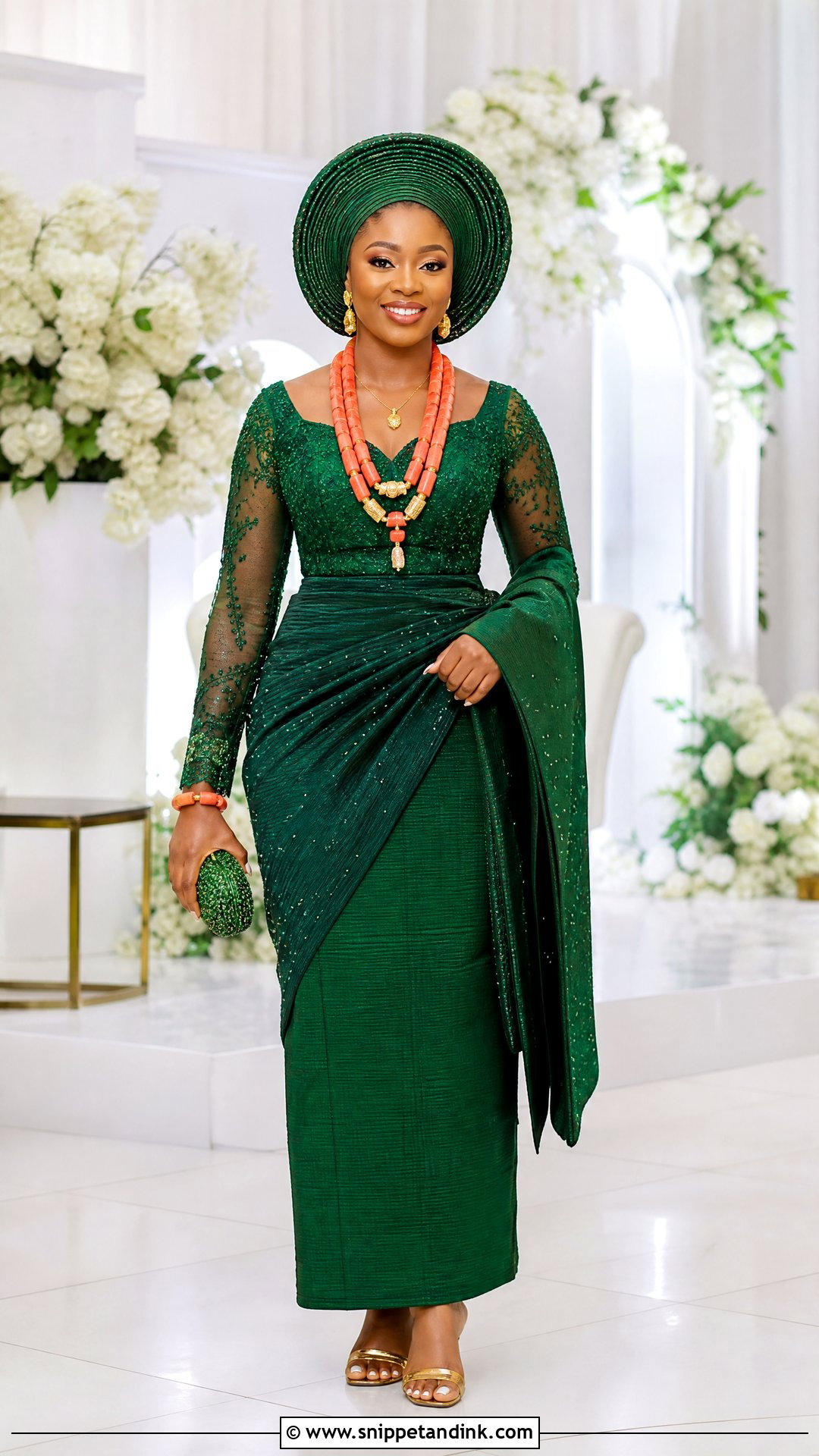
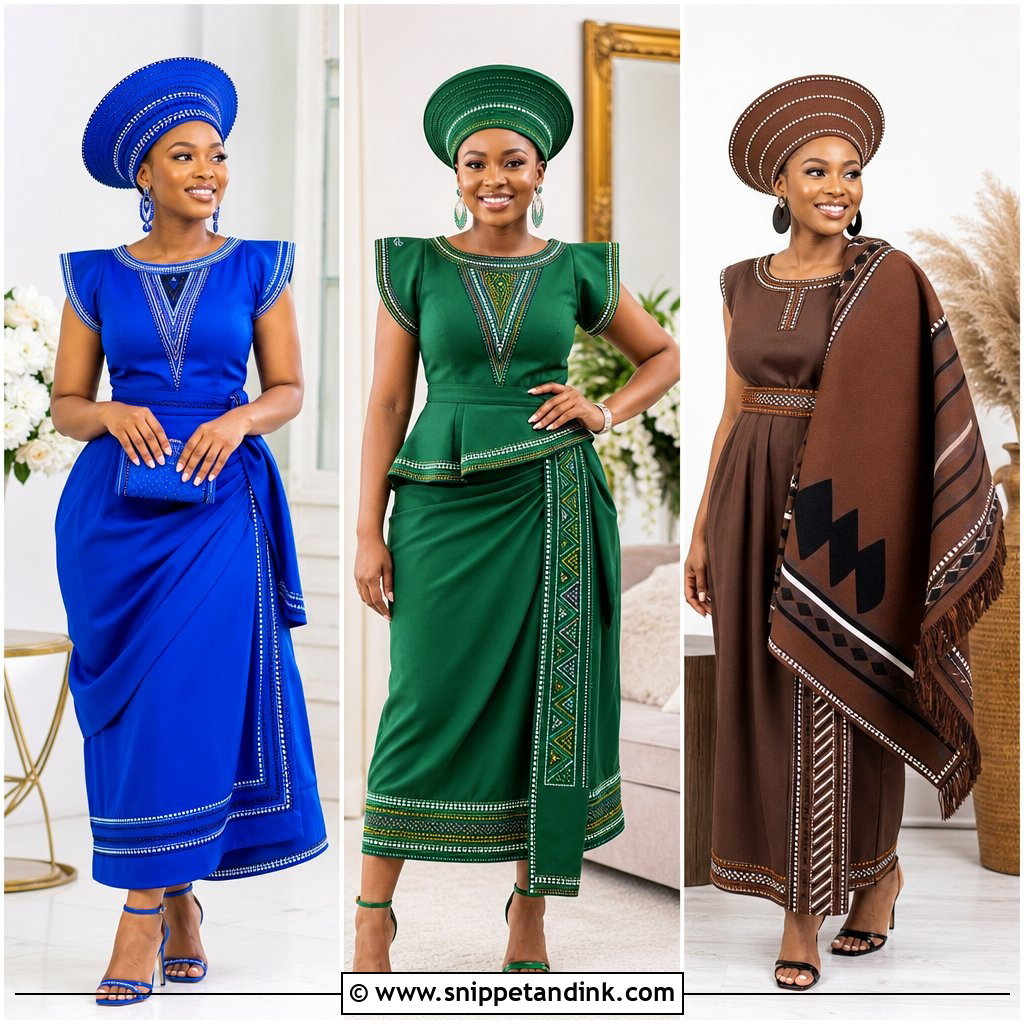
Green ranges from emerald to olive to teal, and it suits aso oke, lace, George, velvet and brocade. Emerald is the shade I reach for most, because it holds its colour in photos and flatters deep and light skin alike. Olive is trickier; under yellow lighting it can look drab. Gold, coral and ivory accessories all sit well with it.
16. Nigerian Blue Traditional Wedding Dress
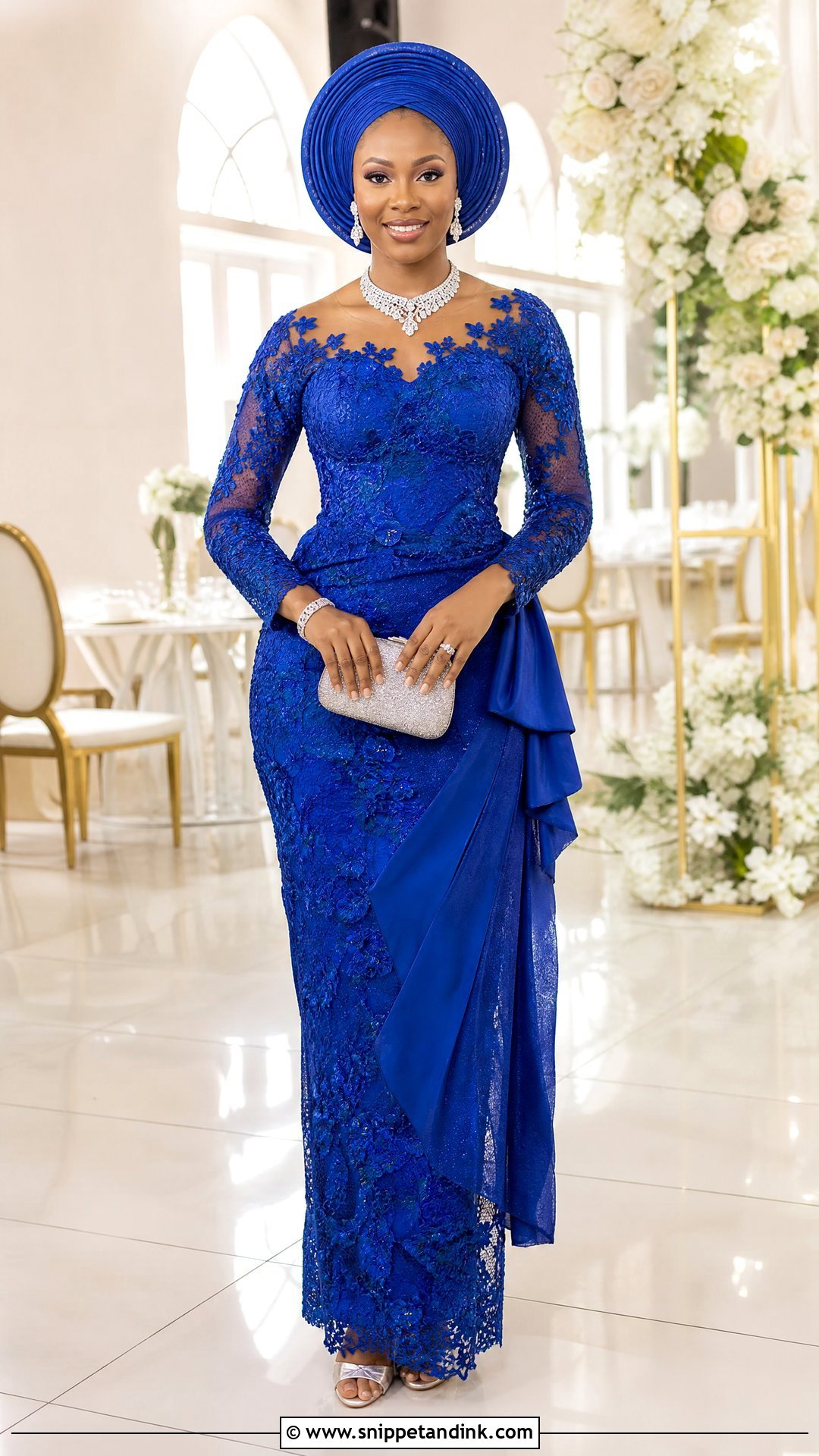
Blue gives you colour without volume. Royal blue is grand, navy is polished, sky blue is soft, teal is modern. It works in lace, aso oke, Hausa-Fulani gowns and George. Your metal choice sets the mood: silver keeps it cool and formal, gold warms it up. Decide that first, then choose the gele and clutch to match the metal, not the dress.
17. Nigerian Pink Traditional Wedding Dress
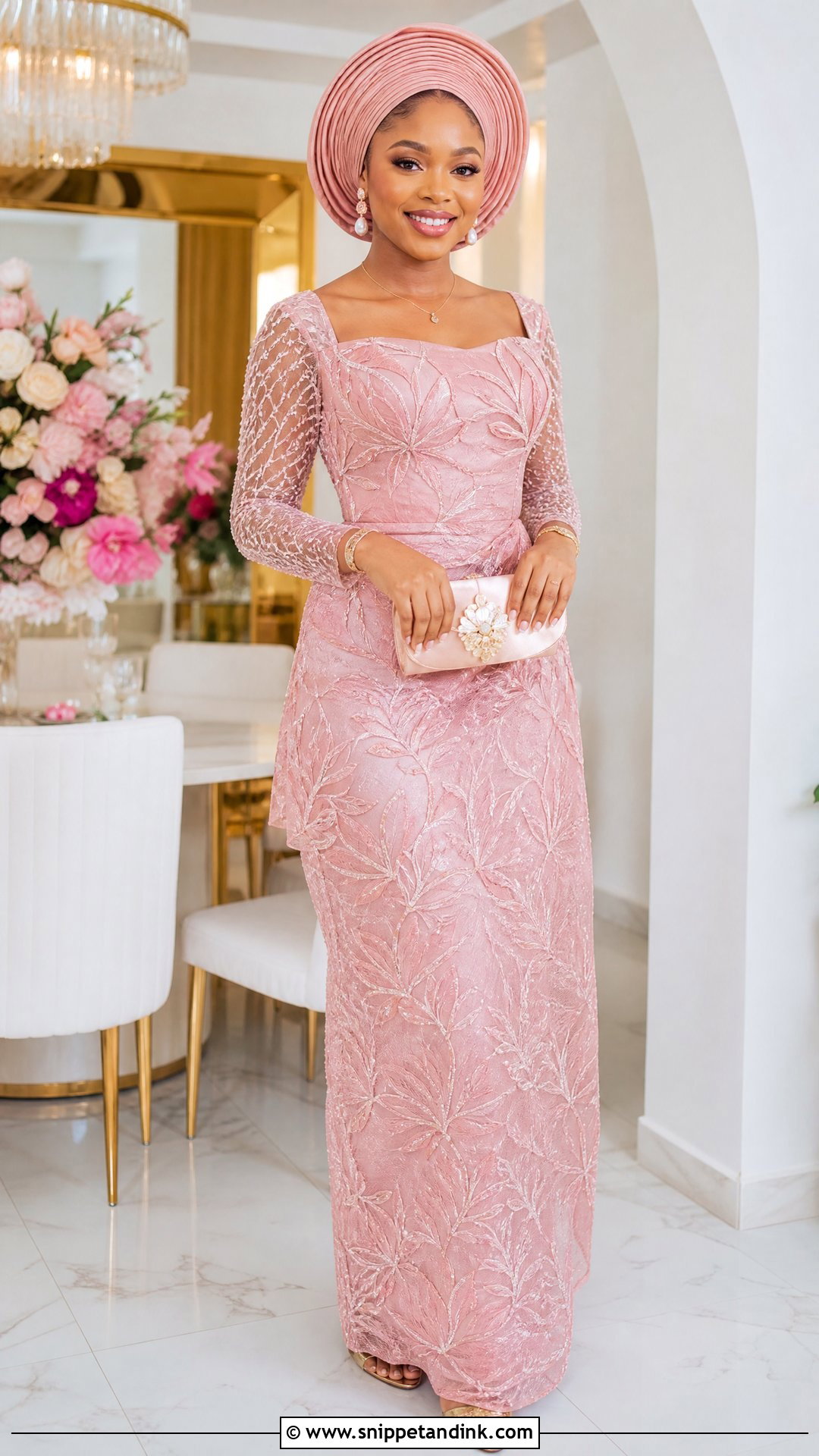
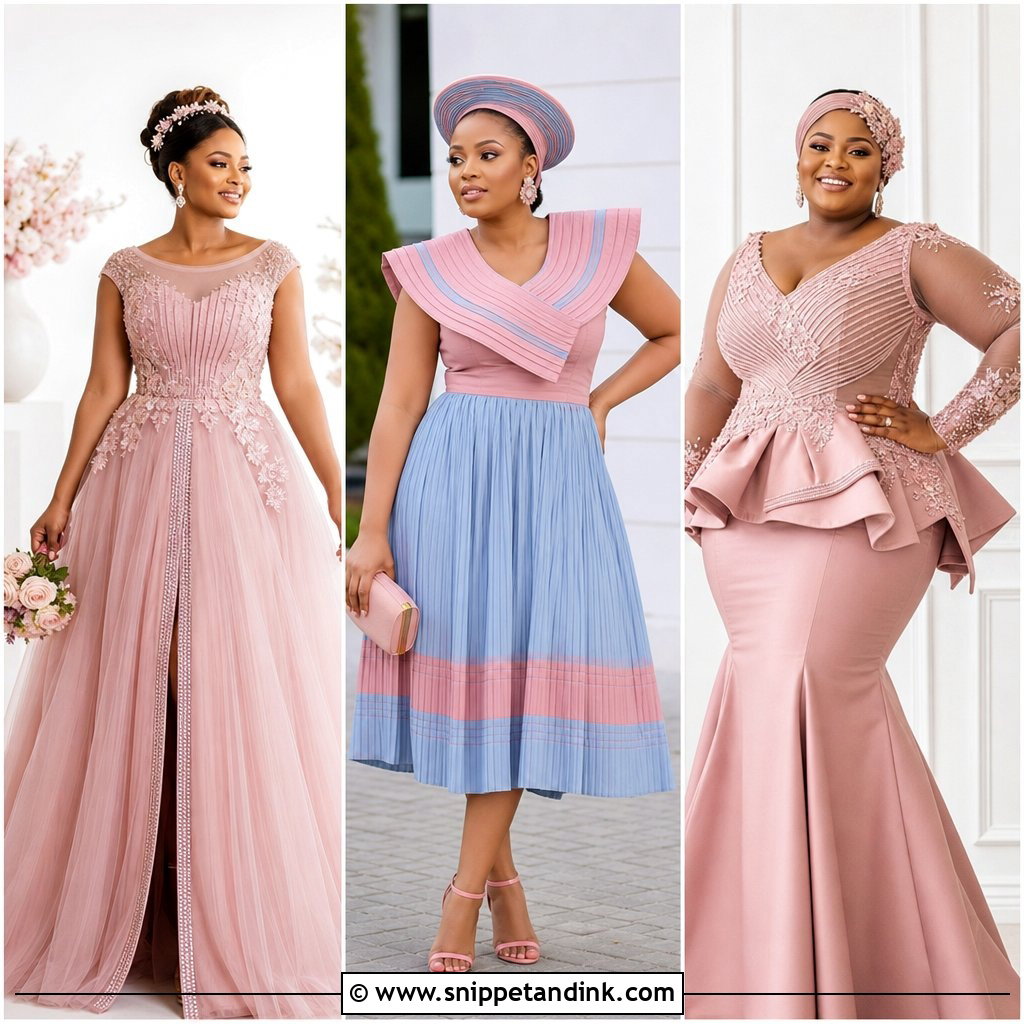
Pink covers blush, rose, dusty pink, fuchsia and mauve. A blush lace gown with matching gele is gentle; hot pink aso oke is a party. For Igbo or Edo brides, coral beads against pink need care: soft blush sits well with coral, but fuchsia and coral can fight. Pick one pink family for the dress, headwear, clutch and shoes.
18. Nigerian Purple Traditional Wedding Dress
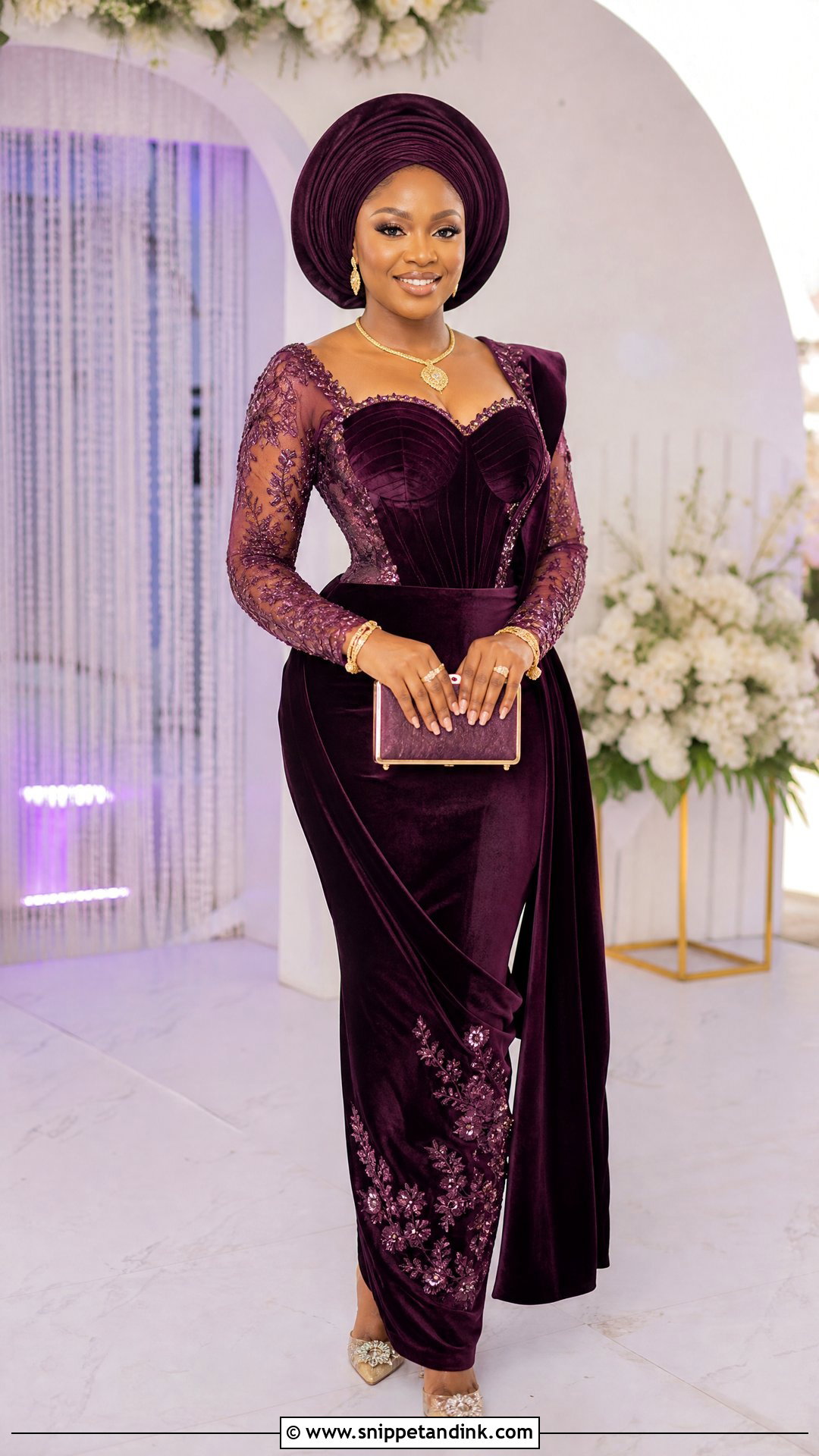
Purple has a royal feel on its own. Deep plum in lace or George suits a Yoruba gown or Igbo wrapper; lavender suits a flowing Hausa-Fulani gown with a veil. Plum can look almost black in dim evening light, so if your reception is low-lit, choose a brighter amethyst. Gold warms it, silver cools it.
19. Nigerian Beaded Bridal Dress
Beading can sit on the neckline, sleeves, bodice, hem, gele, wrapper or train. It’s the detail that most often goes wrong in comfort terms: heavy beading on the inner arm rubs skin raw by evening, and beads at the waist dig in when you sit. I keep beads off those zones and concentrate them where they catch light. Yoruba, Igbo and Edo brides can all wear it, with coral layered on top for the Edo look.
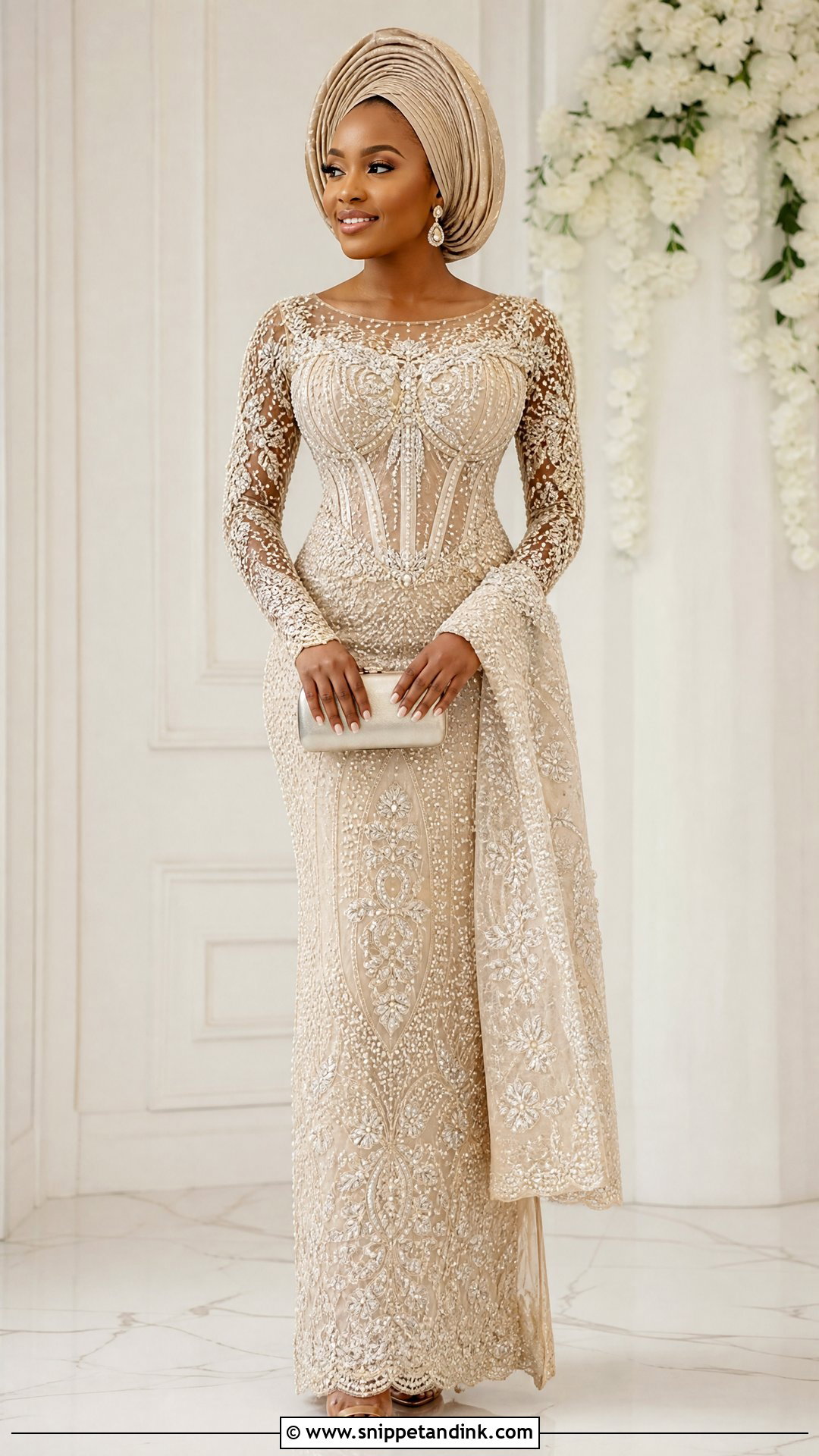
20. Nigerian Corset Traditional Wedding Dress
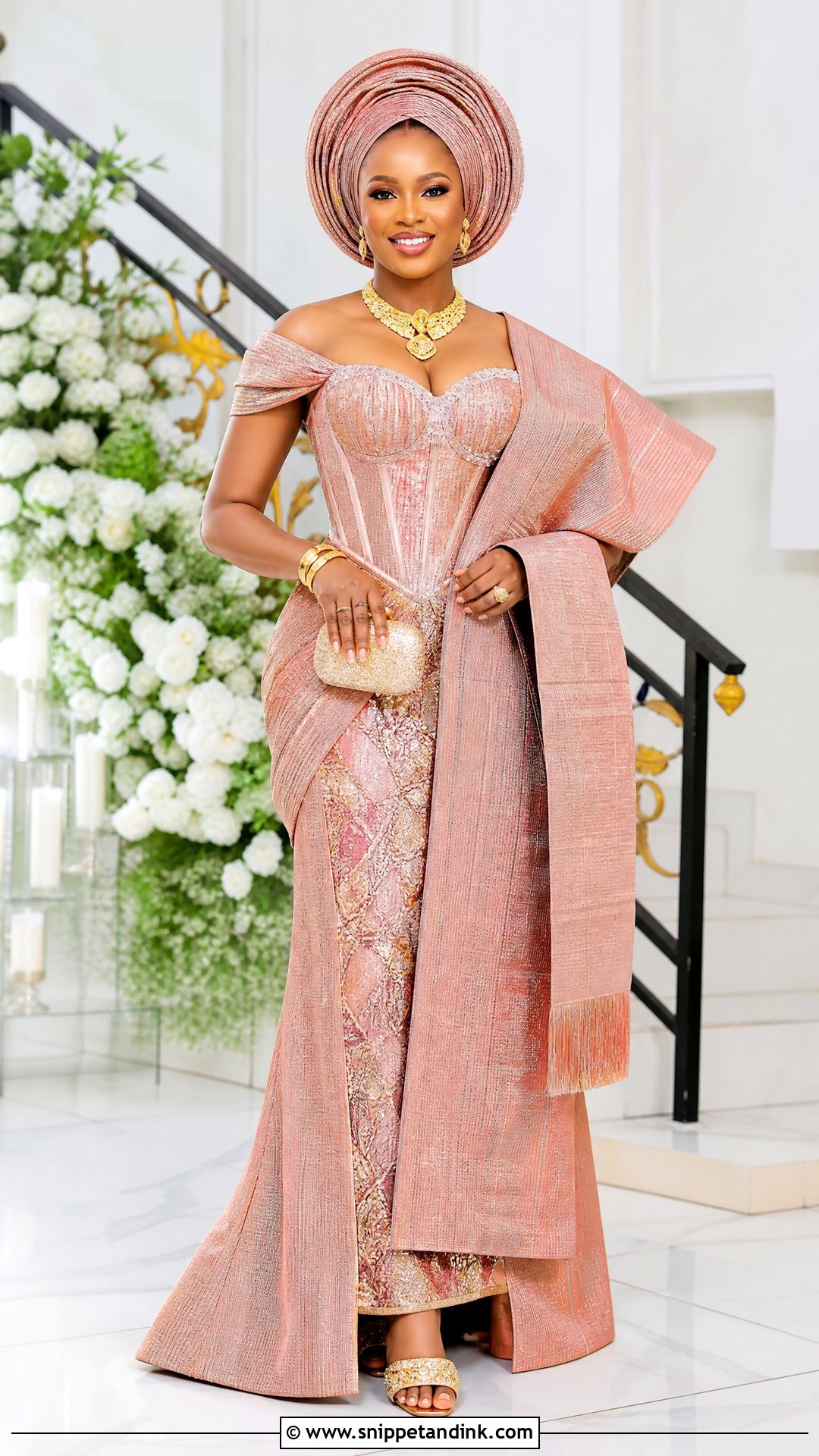
Built-in corsetry gives a shaped waist and helps heavy fabrics like aso oke or George sit neatly. Spiral steel boning bends with you; cheap plastic boning warps in heat and starts poking by the afternoon, so ask what your tailor uses. Balance the fitted top with a full skirt, wrapper detail, long sleeves or an ipele. Sit down at every fitting. If you can’t eat in it, it’s too tight for a ceremony that runs for hours.
21. Nigerian Peplum Blouse And Wrapper Dress
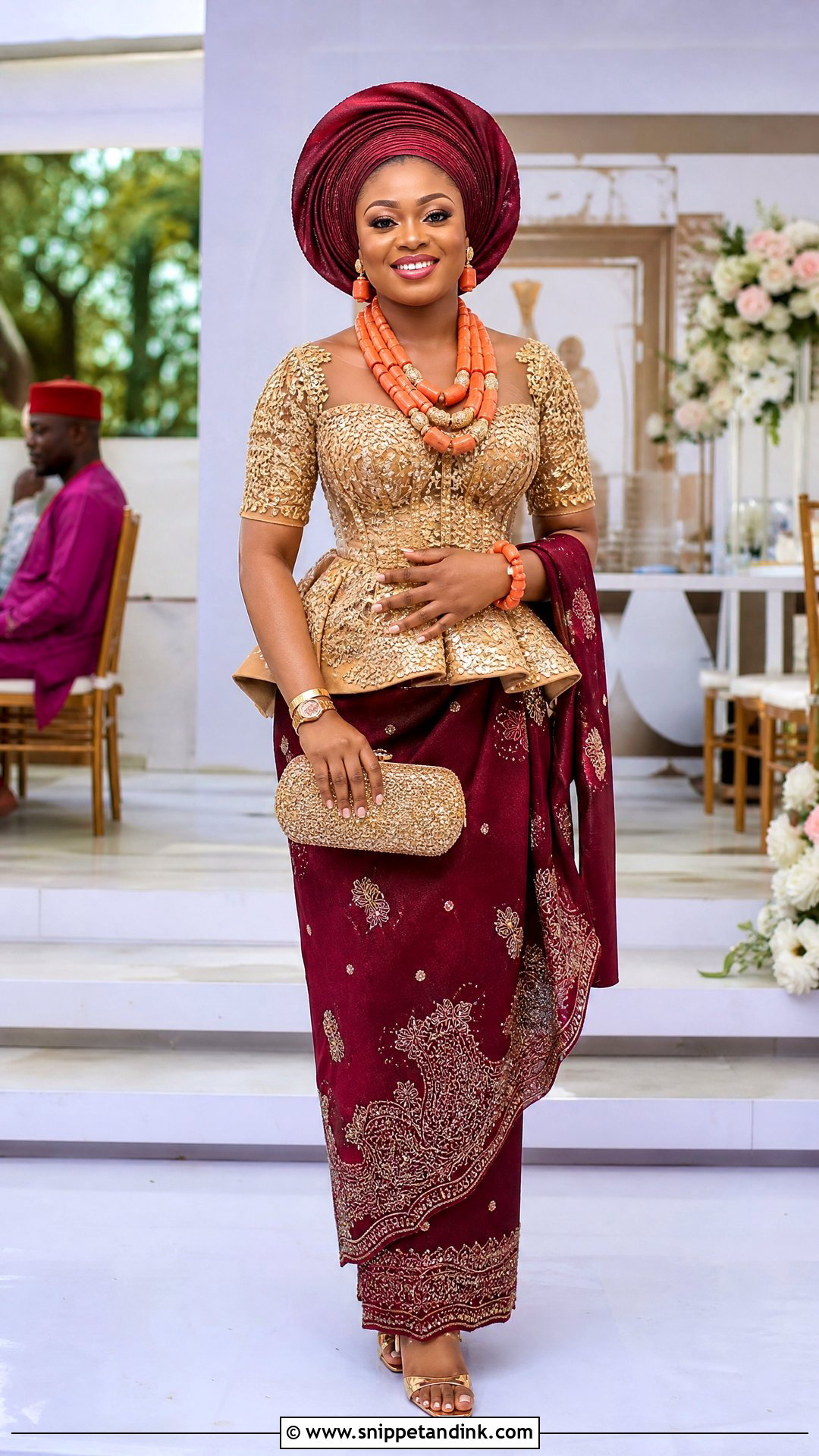
A Nigerian peplum blouse and wrapper dress shapes the waist while the wrapper keeps it traditional. Igbo brides wear it in George, but it adapts to lace, brocade, Ankara or aso oke. The peplum should stop at your high hip; any longer and it bunches over the wrapper knot. Long sleeves and a higher neck give coverage; sheer sleeves or beadwork add glamour.
22. Nigerian Off Shoulder Traditional Wedding Dress
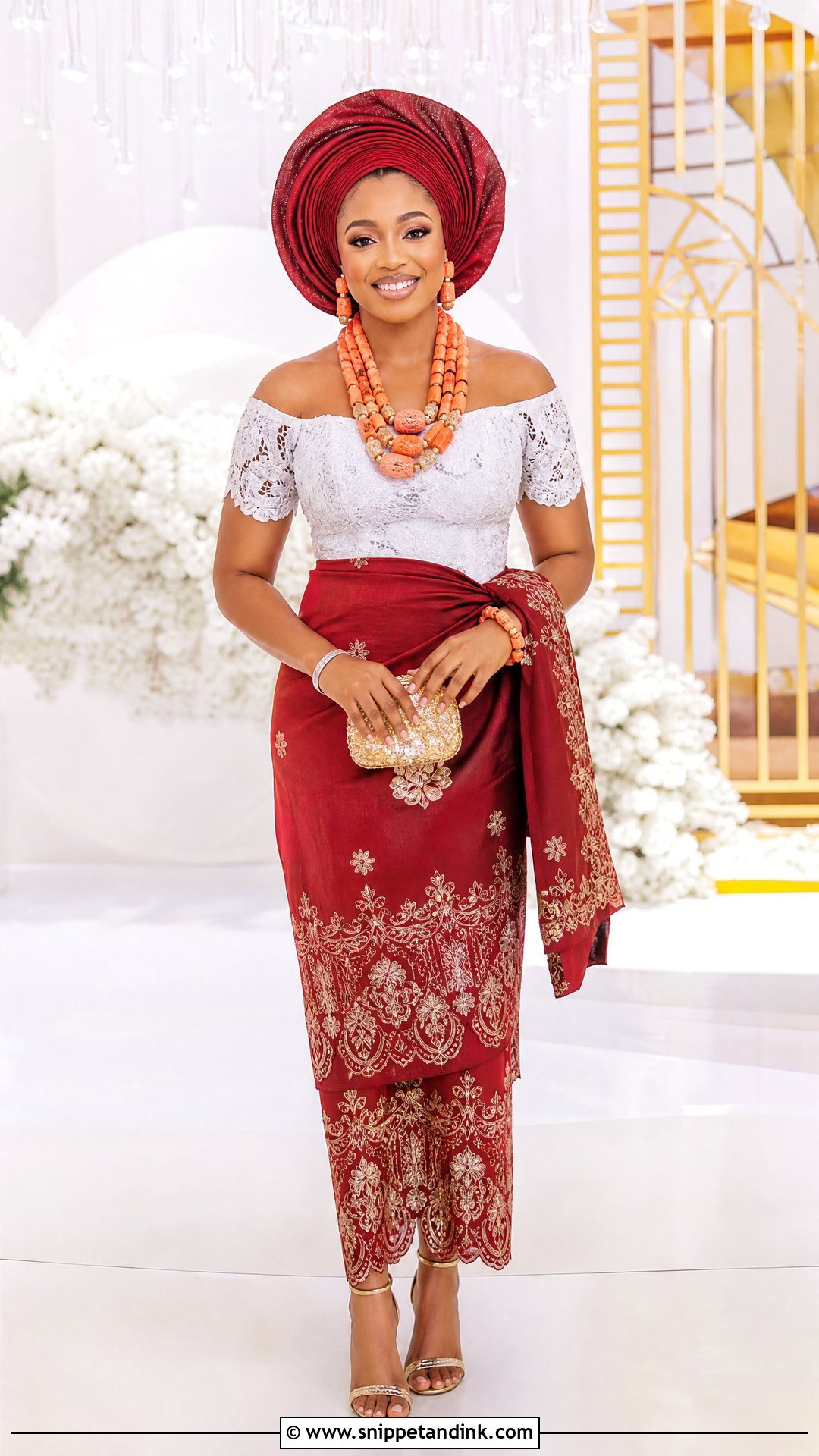
An off-shoulder neckline is the natural frame for coral, crystal or layered gold. Lace, velvet and George all suit it, whether a Yoruba lace gown with gele or an Igbo blouse with double wrapper. Heavy coral pulls off-shoulder necklines down, so I ask for boning at the sides and a silicone grip at the top edge. Test it by lifting your arms as if dancing.
23. Nigerian Long Sleeve Traditional Wedding Dress
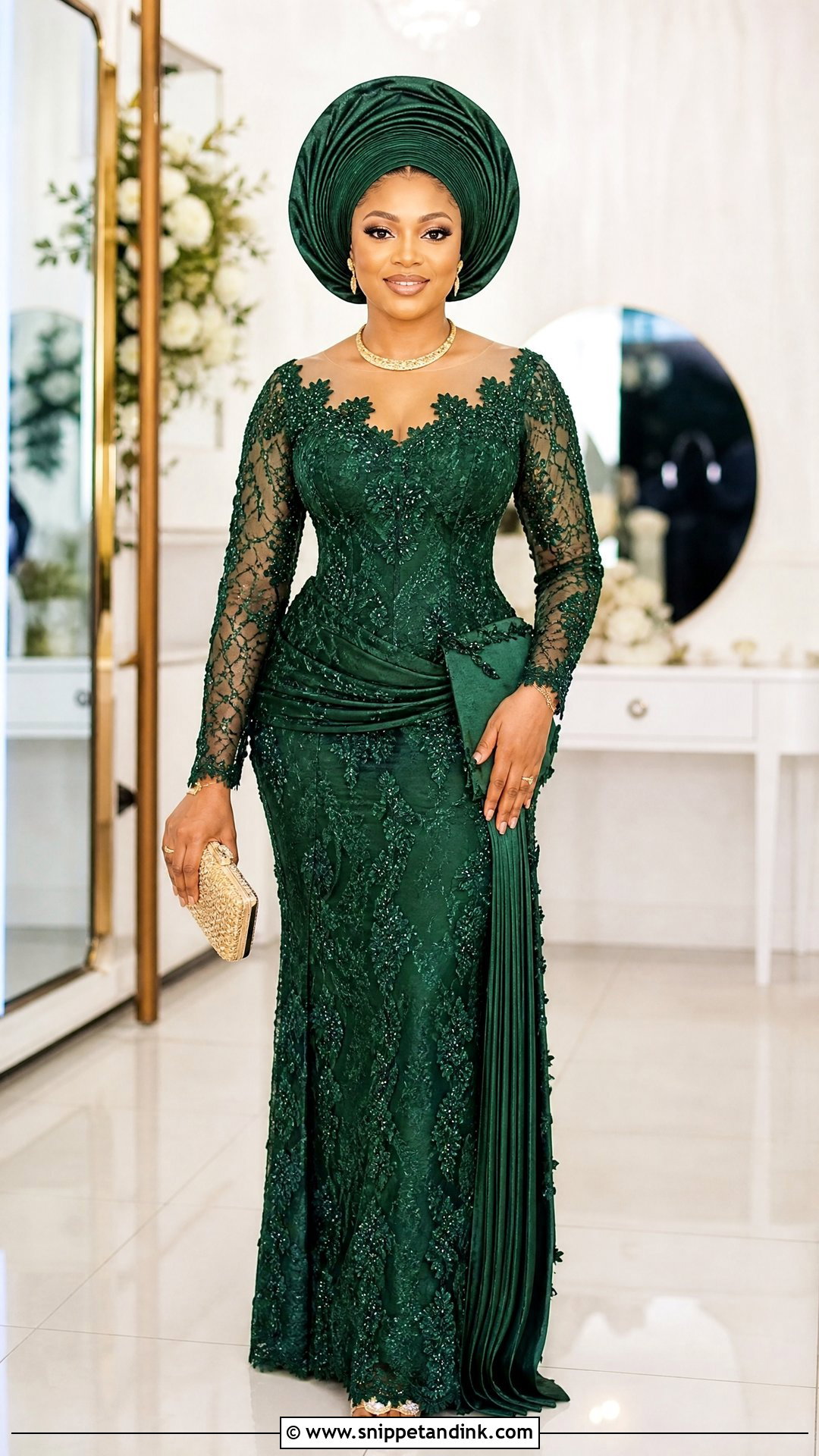
Long sleeves suit formal family moments and brides who want coverage. They can be lace, sheer mesh, velvet, brocade or aso oke. Sheer mesh should be matched to your skin tone; the wrong shade looks grey in photos. A long-sleeved mermaid gown is glamorous, a long-sleeved blouse with wrapper is classic. Beaded cuffs add detail where hands are always in frame.
24. Nigerian Traditional Wedding Dress With Train
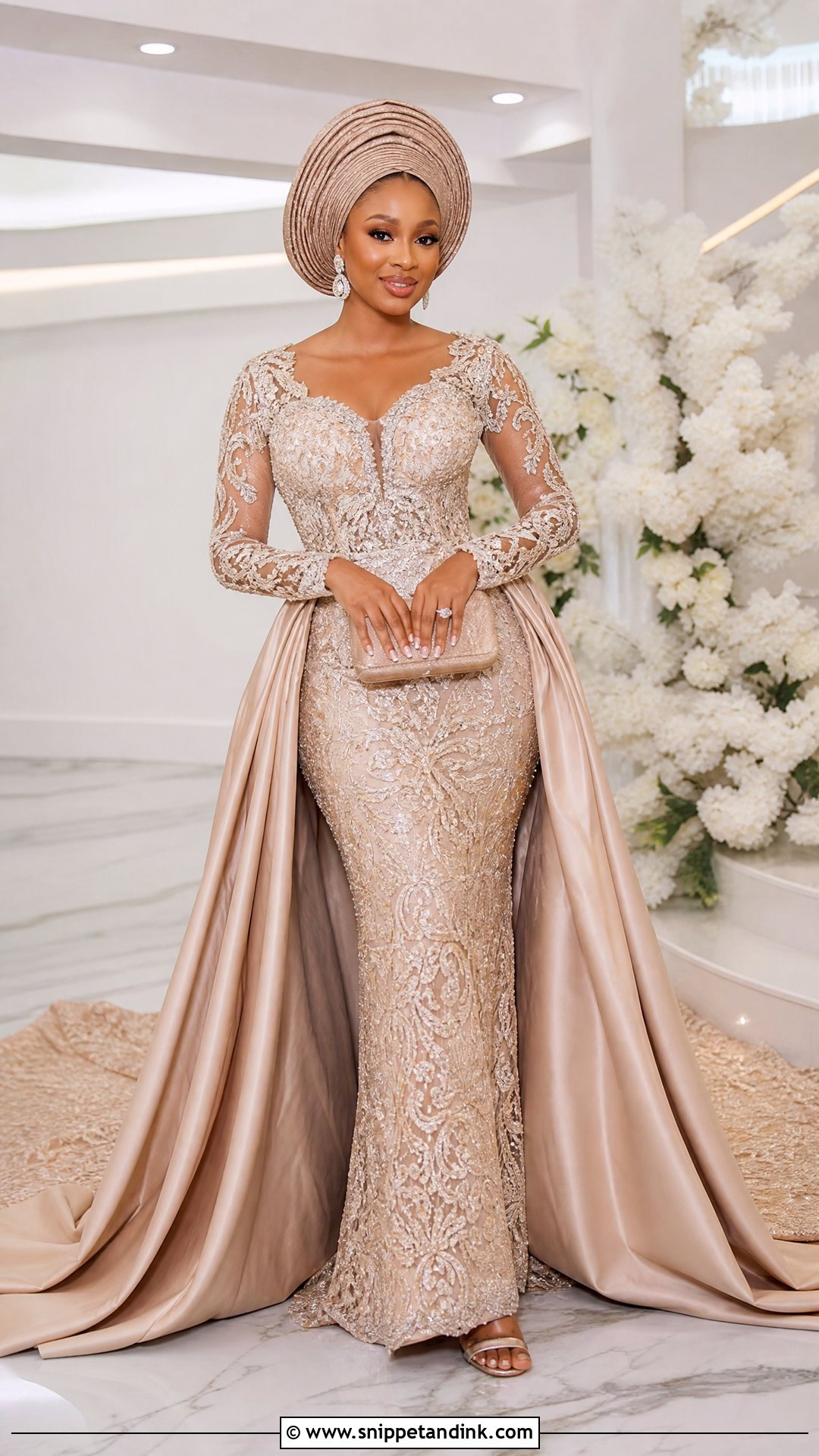
A train turns an entrance into a moment. It can attach to a lace gown, an aso oke dress, velvet or George. Think about how long you’ll be walking through crowds; a long train will be stepped on in a busy hall. I recommend detachable trains, fixed with hooks or snaps rather than pins, so they come off cleanly for dancing. Keep the front simple and let the back do the talking.
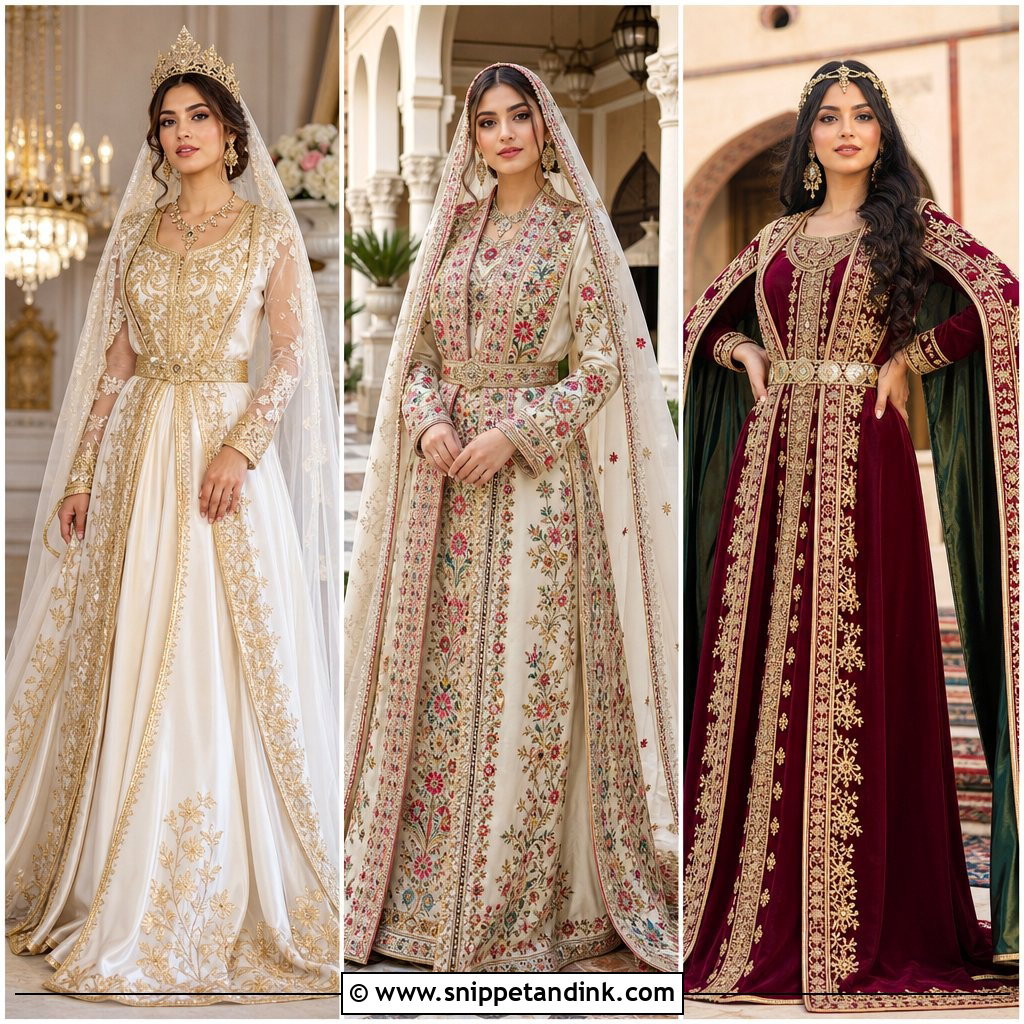
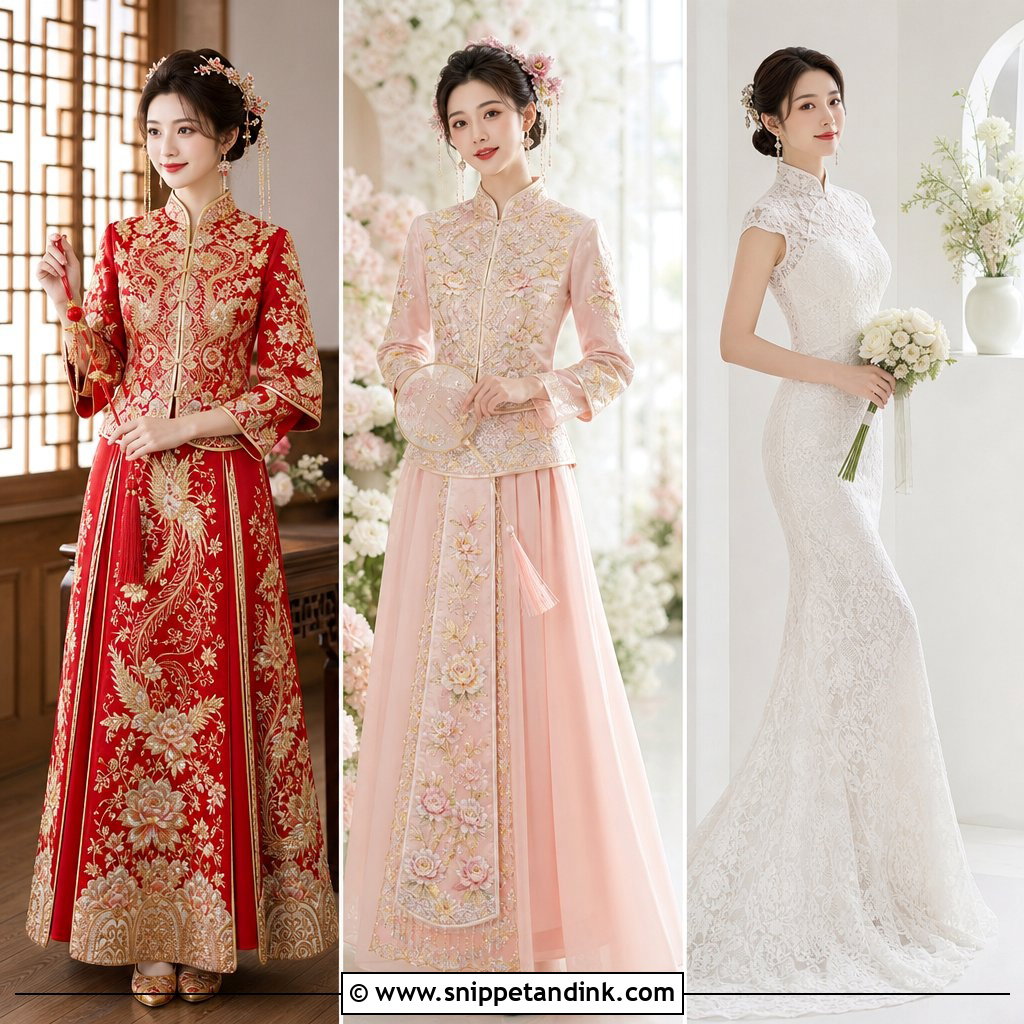

25. Nigerian Reception Traditional Wedding Dress
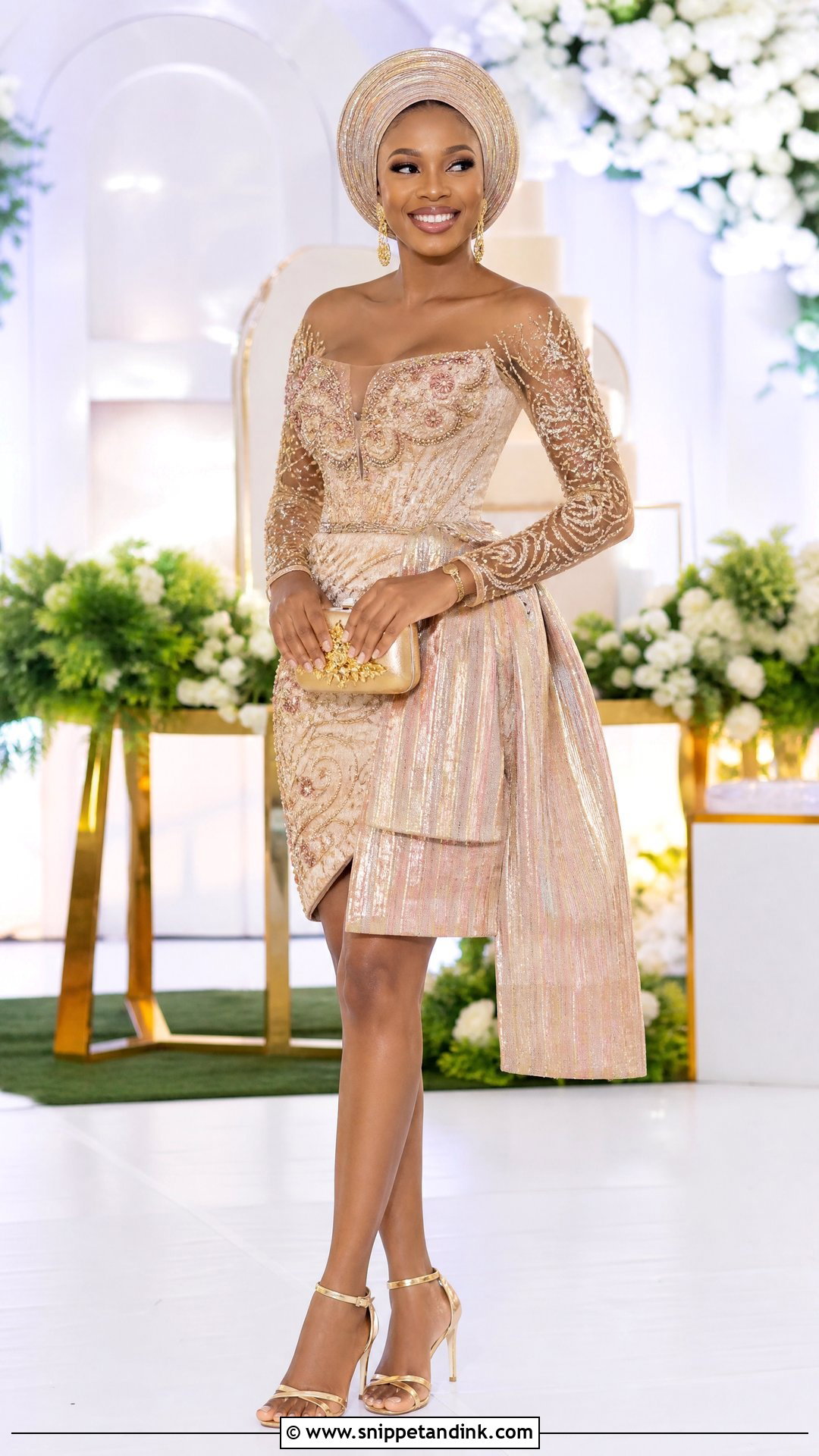
The reception outfit should feel lighter and still part of the bridal story. Many brides change after the main ceremony into a shorter aso oke dress, a fitted lace gown, a beaded midi or a sleek Ankara look. Keep the same colour family or switch to something brighter. This is the dancing outfit, so wear shoes you’ve already walked in, and swap a towering gele for a smaller one or a sleek headpiece.
Coral and Aso Oke Are Heirlooms; Store Them Like It
Many families pass down coral beads and keep the bride’s aso oke for years. A little care after the wedding keeps them that way.
Coral
Real coral is organic and fairly soft, so perfume, hairspray and body oils dull it over time. Put the beads on last, after sprays have settled, and wipe them with a soft, slightly damp cloth before storing. Keep each strand in its own pouch so the beads don’t scratch each other. If you’re buying, real coral tends to feel cool and heavier than plastic copies, but ask a trusted dealer if you’re unsure.
Aso oke, George and lace
Air the outfit for a day after the wedding, then spot clean or take it to a cleaner used to beaded and woven fabric. Fold aso oke loosely with tissue between the layers rather than hanging it, since the weight stretches the weave on a hanger. Keep beaded lace flat in a cotton bag, away from damp. Many brides have the gele or wrapper remade later into something they can wear to family events.
Your Family’s Cloth, Cut for You
A Nigerian traditional wedding dress has two jobs: honour where you come from and get you comfortably through hours of greetings, prayers and dancing. Yoruba aso oke, Igbo George, Edo coral, Hausa-Fulani gowns, lace, velvet and modern corsetry all do that well when they’re fitted properly. Bring your family into the fabric decision, give your tailor time, and try on the whole look, beads and headwear included, before the day.
You'll Like These Ideas:




Leave a Reply