
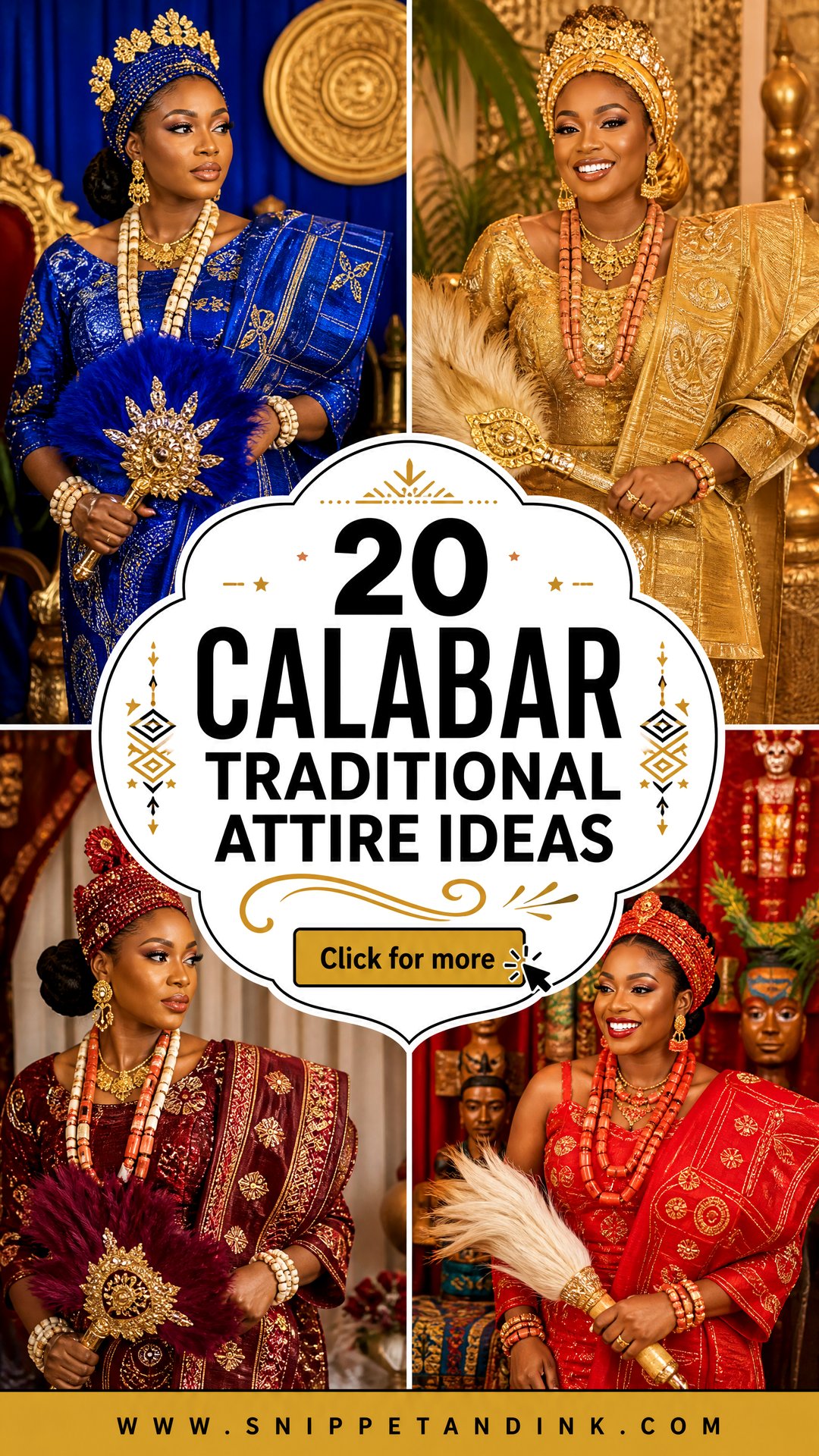
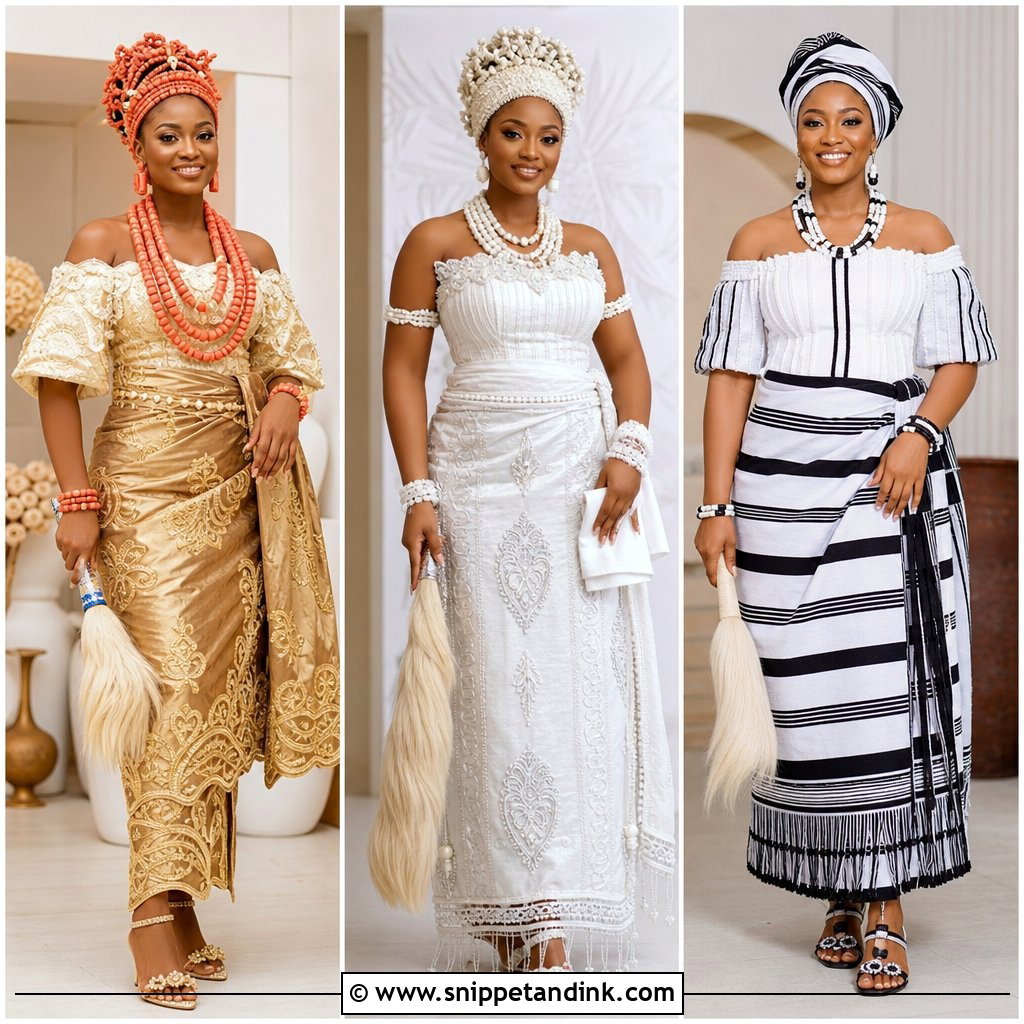
Efik bridal dress from Calabar is built on two shapes. Women’s formal Efik dress means either the Onyonyo, a long, full, flowing gown, or the Ofod Ukod Anwang, a knee-length skirt with a fitted blouse and layers of beads over the upper body. Around both sit the same finishing pieces: coral beads, beaded shoes, a tall braided hairstyle with ornaments, and a decorated staff. Modern brides play with necklines, embroidery and colour, but when I dress a bride in either outfit, the shape and the coral are the parts I protect. Everything else has to make room for them. Below are twenty versions, from classic white to deep velvet.
Two Outfits, One Day: Planning the Change From Short Skirt to Gown
Many Efik brides wear both looks in sequence, usually the Ofod Ukod Anwang first and the Onyonyo later. The change itself needs more planning than most brides give it, and that’s where I spend a lot of my time on the day.
- Design one hairstyle for both. Rebuilding tall braids mid-ceremony isn’t realistic, so the ornaments should suit the short outfit and the gown.
- Plan the bead order. Body strands come off for the gown, necklaces may stay. Lay each set out on a towel in the order it goes on.
- Allow at least thirty to forty minutes for the change. Coral strands tangle, and hooks on a full gown take time.
- Choose one helper who has practised with you, plus a private room close to where the ceremony happens.
Brief your photographer too. The second entrance in the Onyonyo is often the moment families remember most, and it’s easy to miss if the change runs long.
1. White Lace Onyonyo Calabar Attire
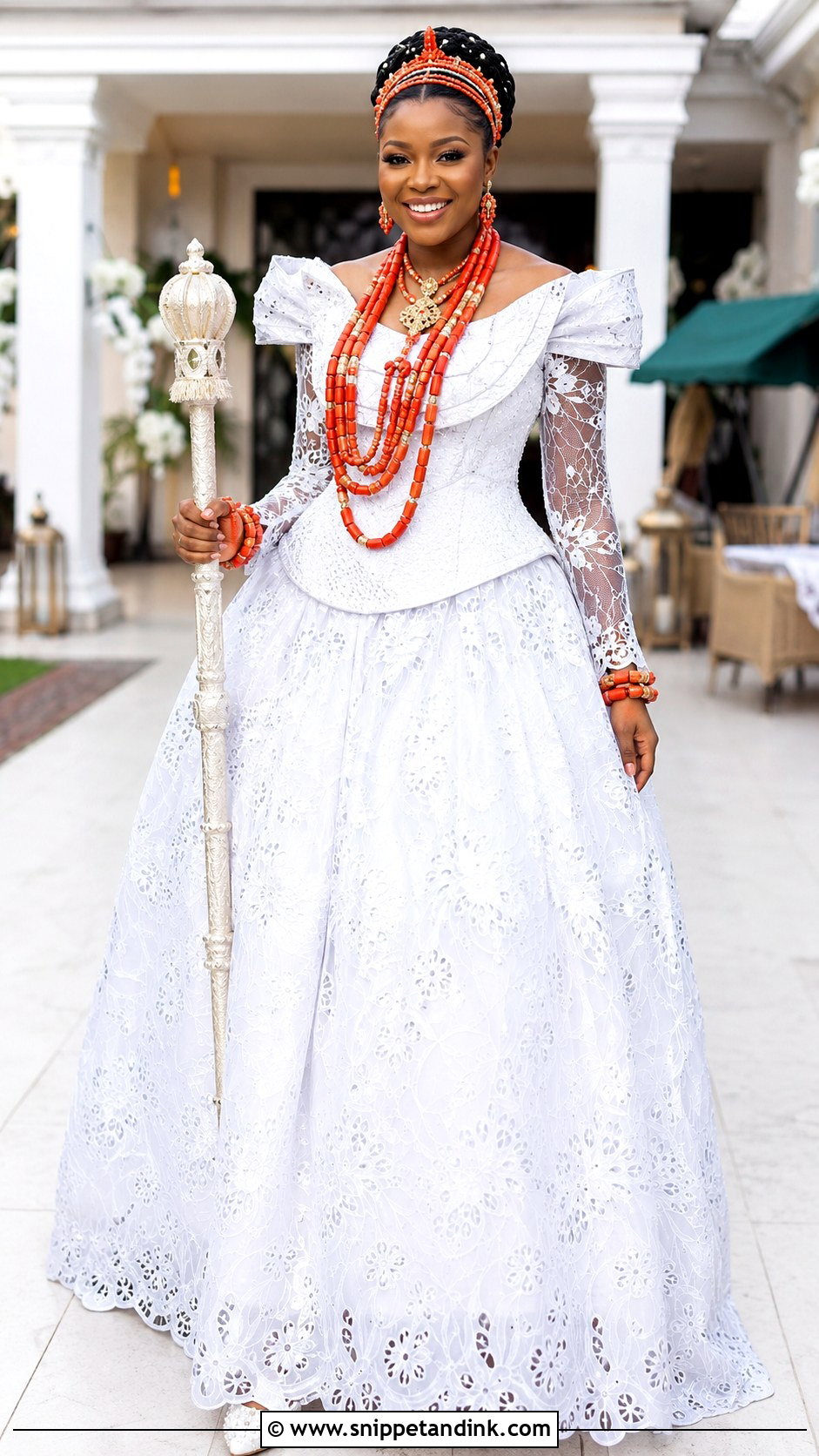
White lace over satin is the version most brides picture first. The satin underneath matters more than people expect: lace alone looks flat in photos, and the satin gives it depth and keeps it from going see-through under flash. A fitted bodice, structured sleeves and a generously gathered skirt carry the Onyonyo shape. I keep embroidery to the neckline, sleeves and hem, because the volume is already dramatic. Layered coral, coral hair ornaments, white or red beaded shoes and a decorated staff complete it.
2. Red Velvet Onyonyo Calabar Attire
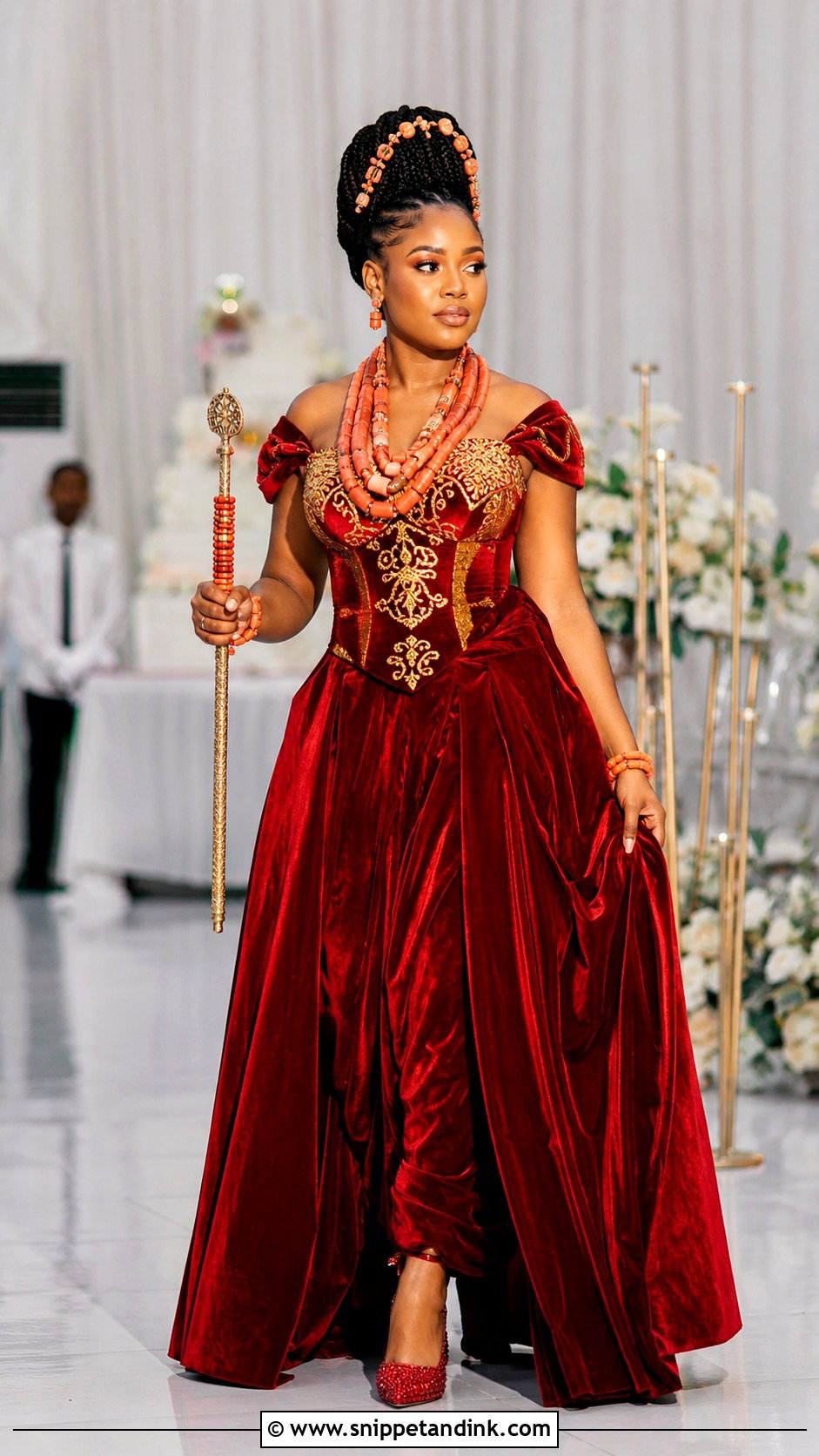
Red velvet and coral are a natural pair, since the beads sit inside the same warm family of colour. Velvet has weight, so I’d use it on a structured bodice with a wide neckline and let the skirt fall straight to the floor rather than gathering too much bulk at the waist. Gold embroidery at the sleeves, waist and lower border defines it without hiding the pile. Velvet crushes when you sit on it, so a satin lining in the back of the skirt helps. Red or metallic beaded shoes show when the hem lifts, and a high braided style with coral pins keeps the neckline clear.
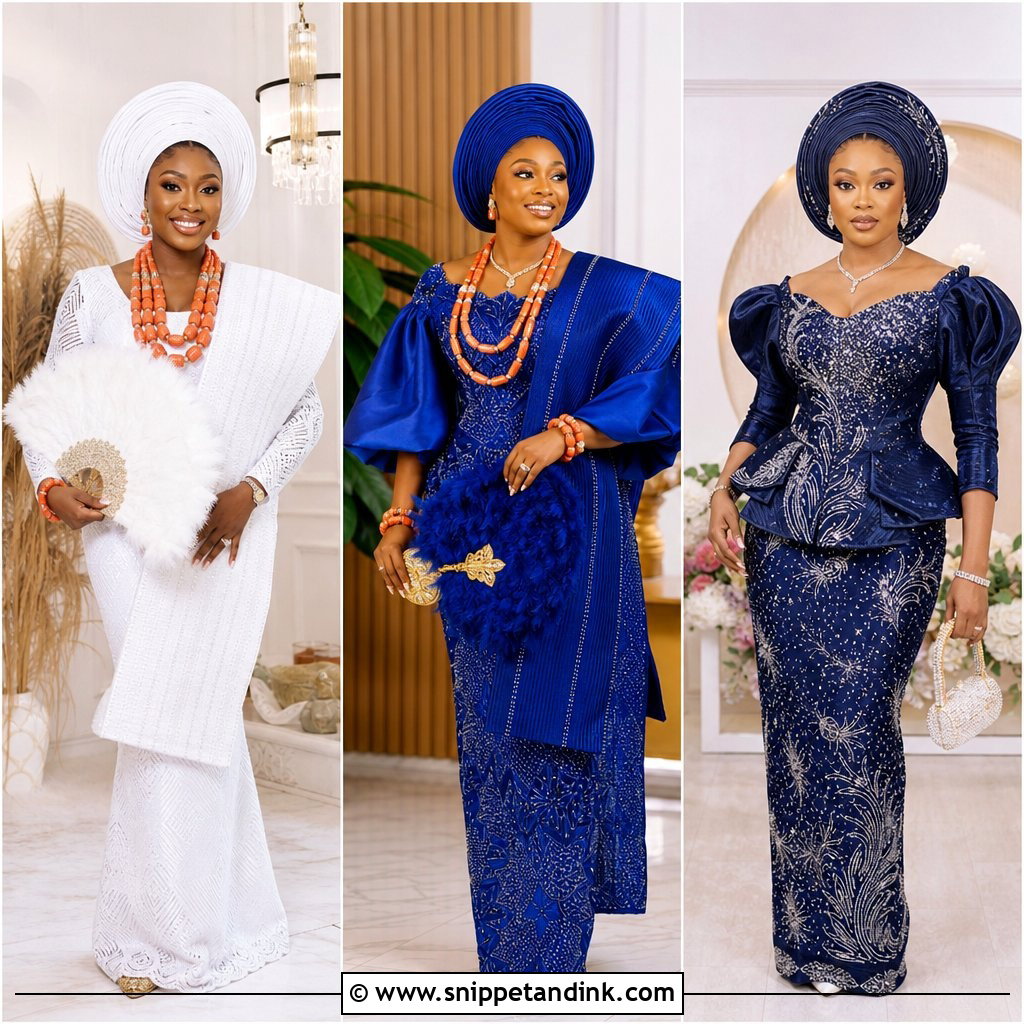
3. Royal Blue Onyonyo Calabar Attire
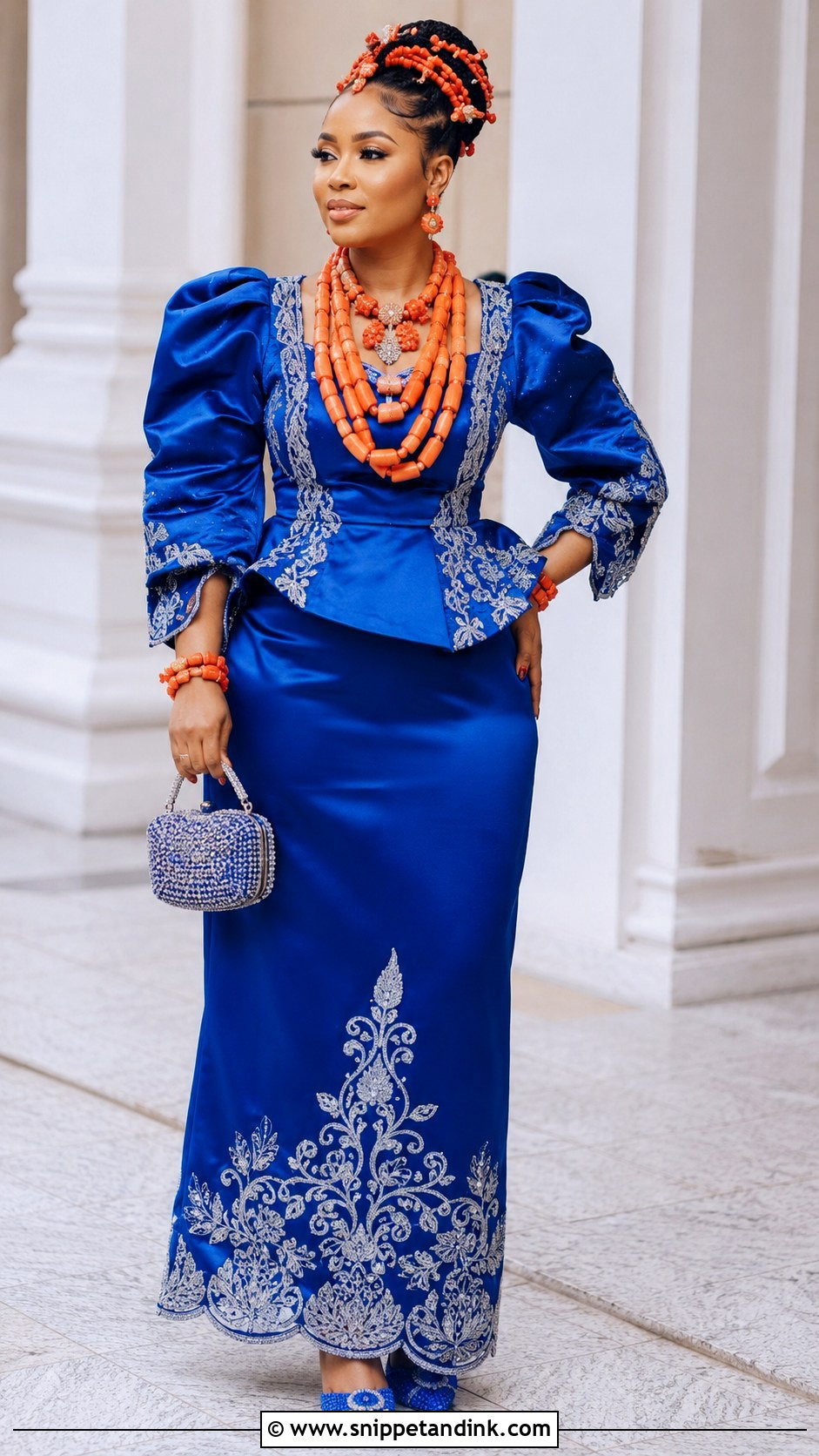
Royal blue is confident, and the coral shows up brilliantly against it. Satin, silk or a soft velvet all hold the skirt without becoming too heavy. Silver embroidery or pale blue appliqué lifts the bodice. One fitting note: set the fullest part of the skirt just below the natural waist. If the gathers start too high, the gown looks as if it’s floating away from the body. A coral-decorated braided updo ties the hair to the jewellery, with stacked bracelets and silver or blue shoes. It photographs crisply in daylight and in studio portraits alike.
4. Emerald Green Onyonyo Calabar Attire
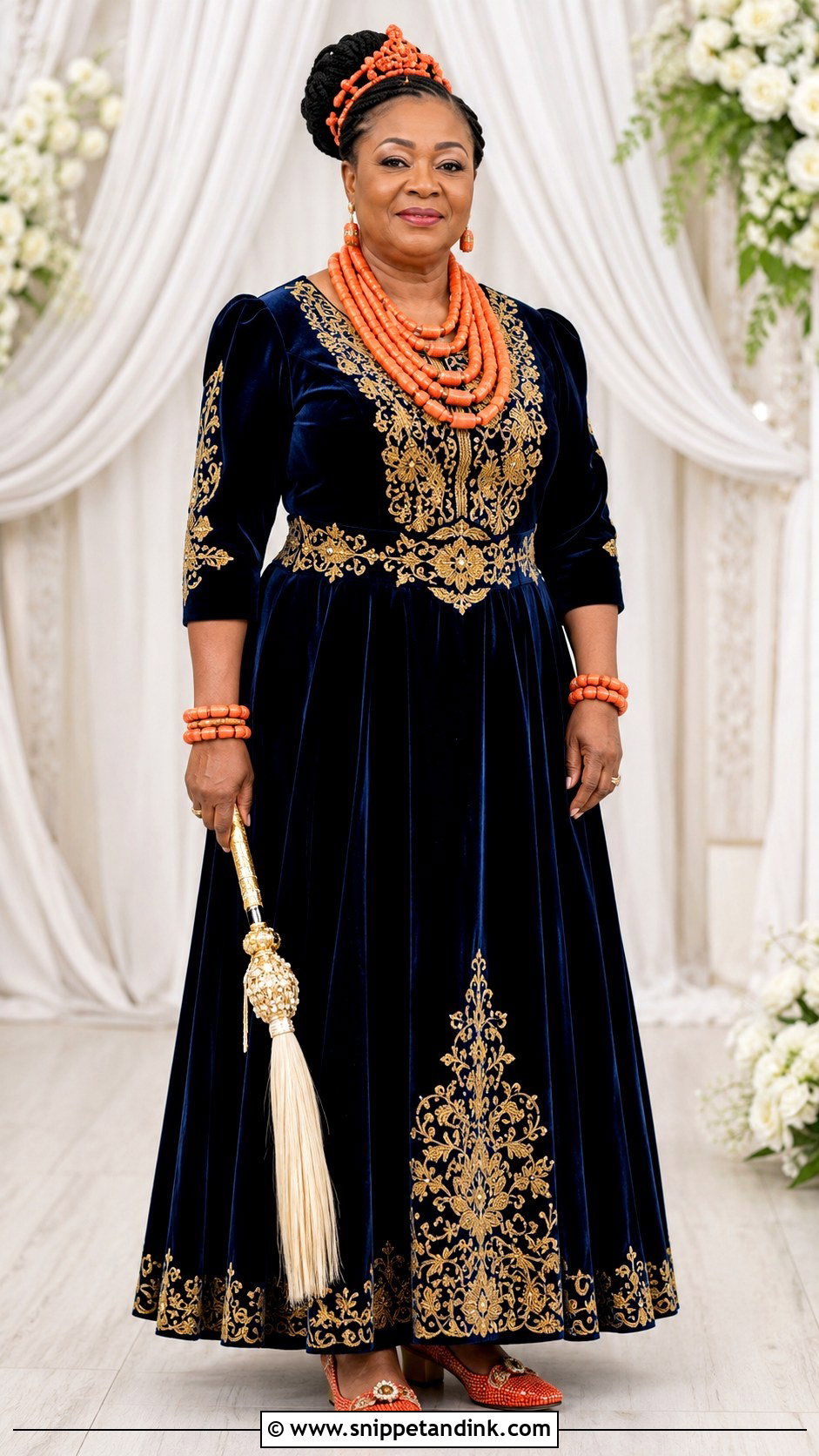
Emerald is the colour I suggest when a bride asks for something regal without the heat of red. Embroidered silk or velvet runs from bodice to floor, with gold thread at the neckline and cuffs to deepen the green. Coral against emerald is a strong contrast, so accessories elsewhere should be calm. If the gown is heavily embroidered, choose either the staff or a small embellished bag to carry, not both, or your hands are full all day. A crown-style braid keeps it formal. It suits brides, mothers of the couple and title-holders equally.
5. Gold Onyonyo Calabar Attire
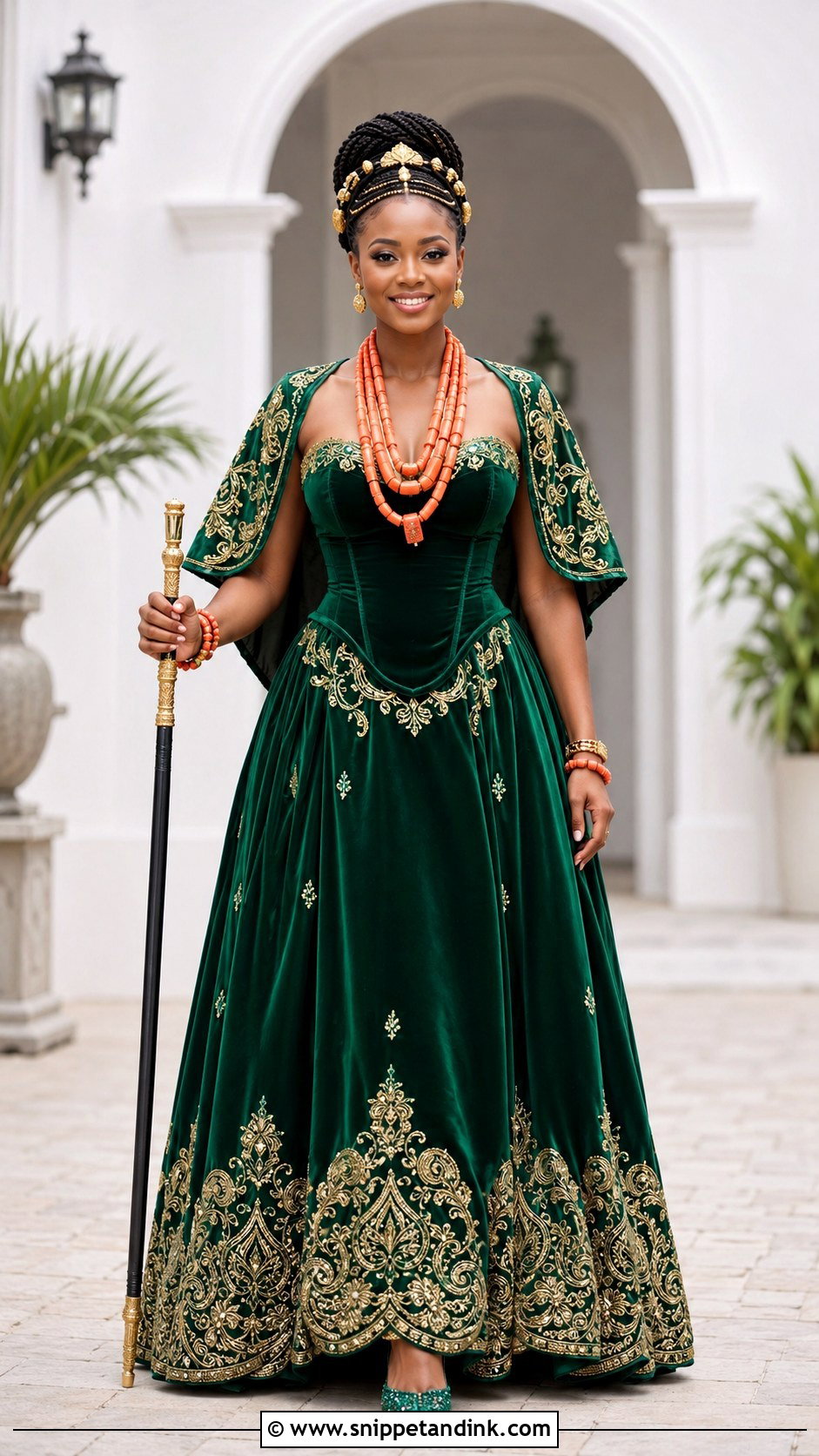
Gold fabric is luxurious, but very shiny lamé can look cheap under camera flash and drown out the coral. I steer brides toward brocade, jacquard or embroidered lace with a soft metallic finish, where the pattern stays readable. A burgundy or coral-coloured staff breaks up the gold so the whole outfit doesn’t read as one block of colour. Deep red coral, gold earrings and bracelets, and neutral gold shoes complete it. Keep the hair tall and sculpted, with just a few beads at the crown, since the gown is already busy with light.
6. Burgundy Onyonyo Calabar Attire
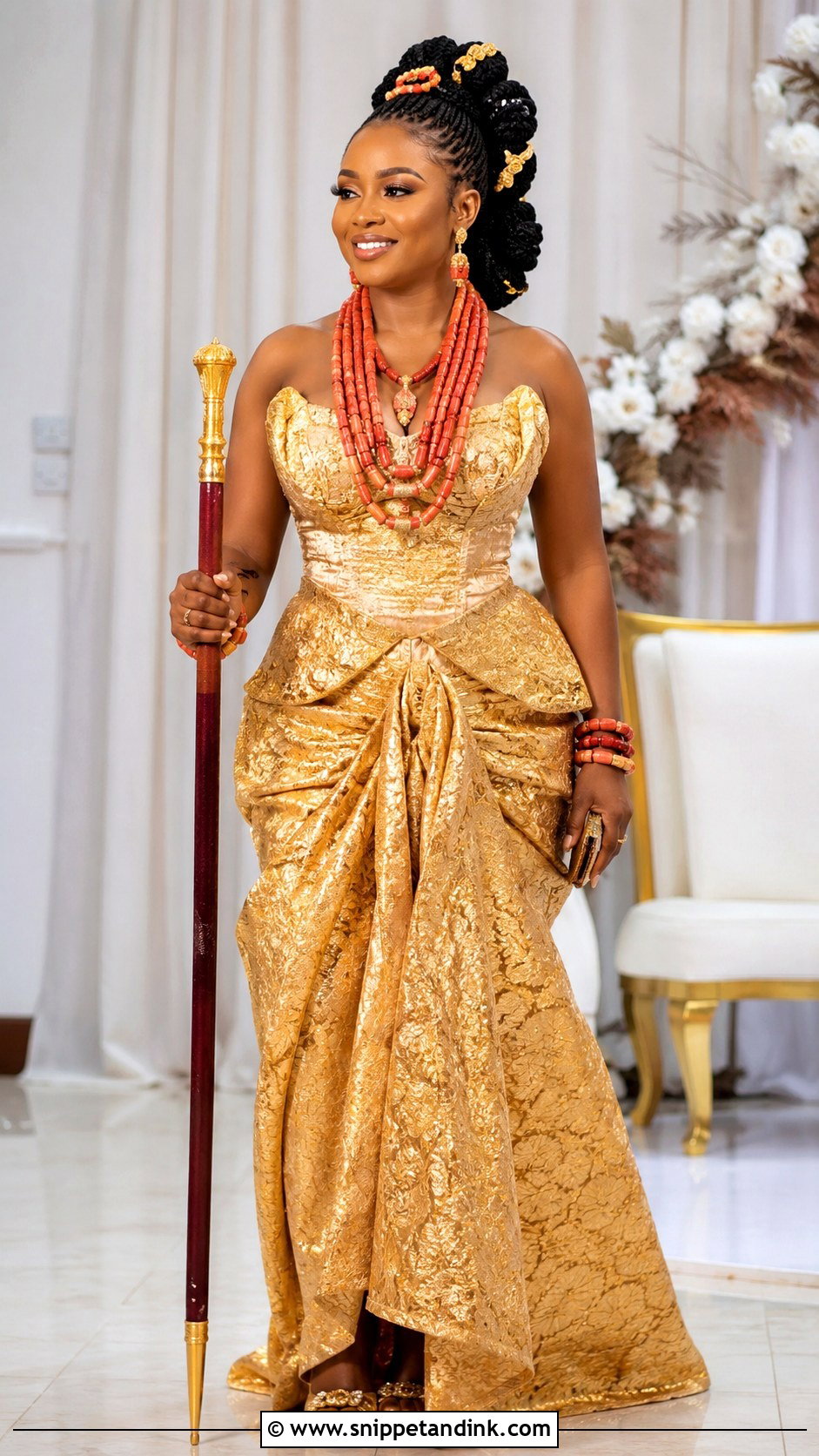
Burgundy gives you red’s richness in a deeper register, and it flatters a wide range of skin tones. Velvet or heavy satin, with gold embroidery at the neckline, fitted sleeves and hem. A softly structured bodice is important here. Without it, the weight of a full burgundy skirt drags the shoulders down and the top half looks bulky. Coral in several lengths, matching wrist cuffs and burgundy beaded shoes complete it. Place coral pins around the crown of the braids rather than across the forehead, where they compete with the face. Evening receptions suit it particularly.
7. Purple Onyonyo Calabar Attire
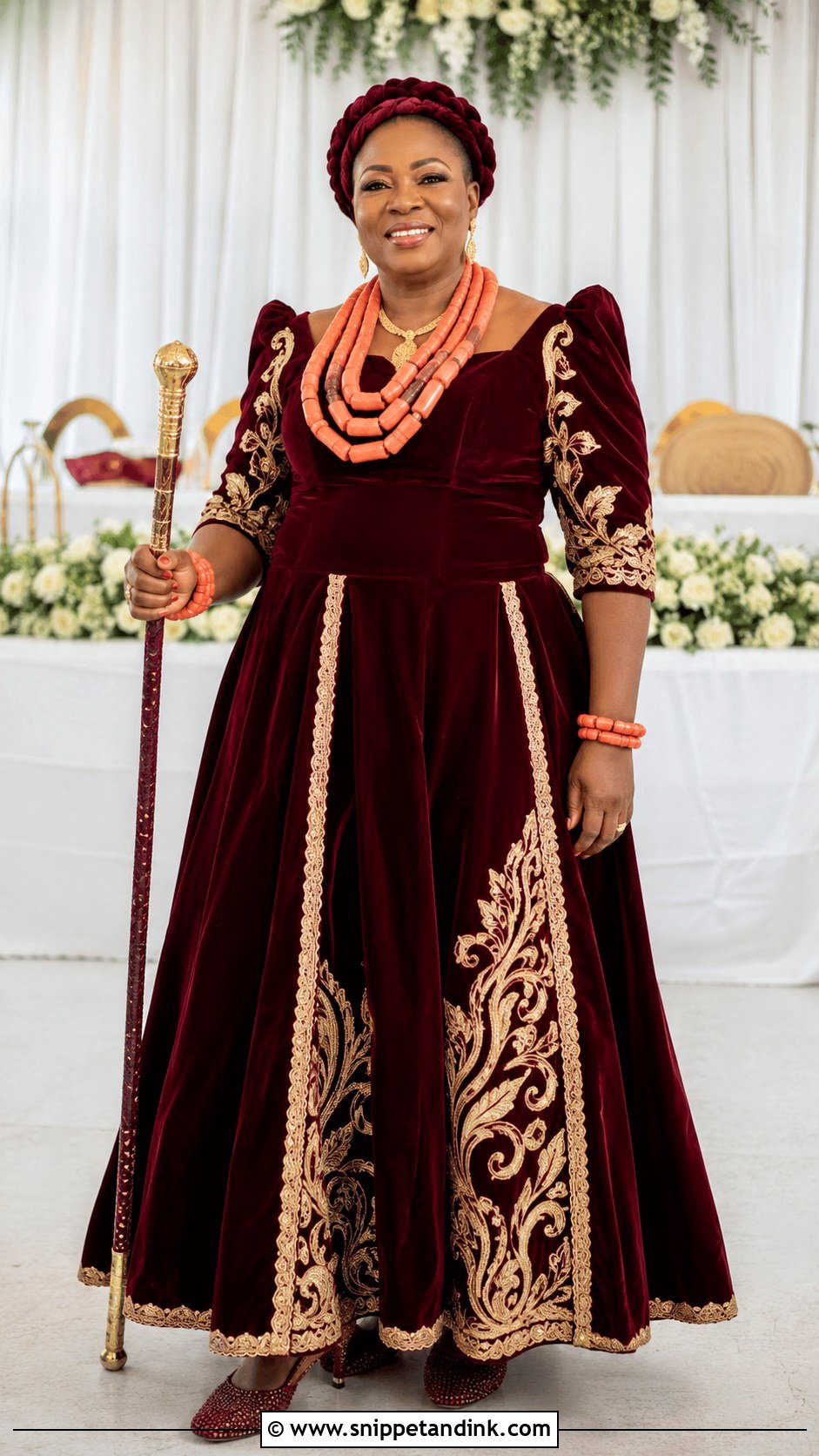
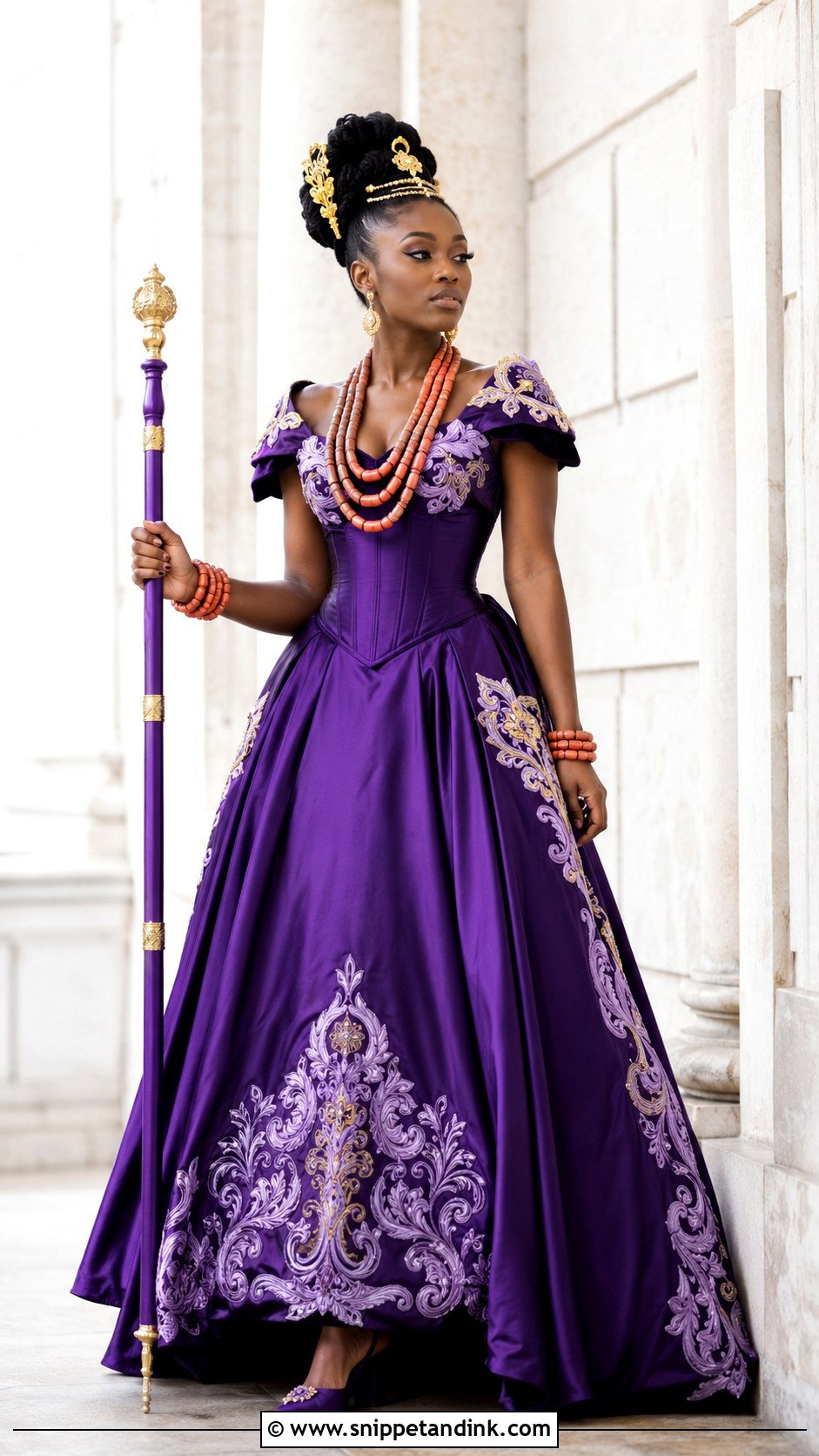
Deep purple gives an Onyonyo gown dignity, and the coral glows against it. Velvet gives structure; satin moves more softly through the skirt. Gold or lavender embroidery shapes the bodice and waist. Purple shoes and a decorated staff complete it. With the jewellery already doing so much, I’d add only subtle gold pins to the braids. Brides and family representatives who want to step away from red and white often land here.
8. Blush Pink Onyonyo Calabar Attire
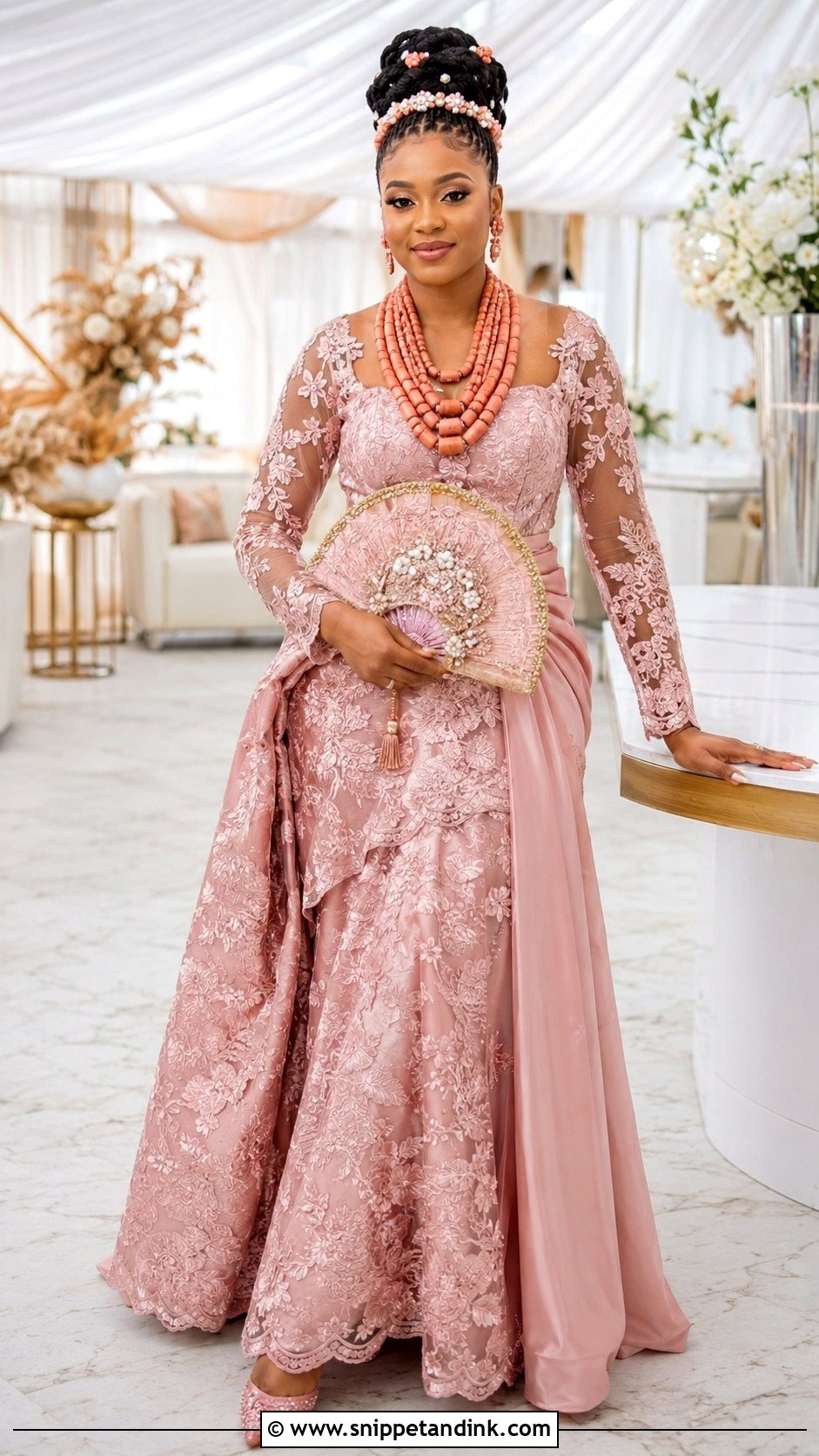
Blush pink softens the Onyonyo without losing its ceremony. Delicate floral lace over matching satin, a defined waist and short structured sleeves keep it light. Blush is tricky next to coral: a pink with too much blue in it clashes with the orange-red of the beads. Hold a strand of the actual coral against the fabric before ordering. Rose-gold earrings, pink beaded shoes and a small fan complete it, with coral and pearl accents in a tall braided updo. It’s a lovely choice for younger brides and engagement celebrations. Hold back on extra decoration if the lace is detailed.
9. Turquoise Onyonyo Calabar Attire
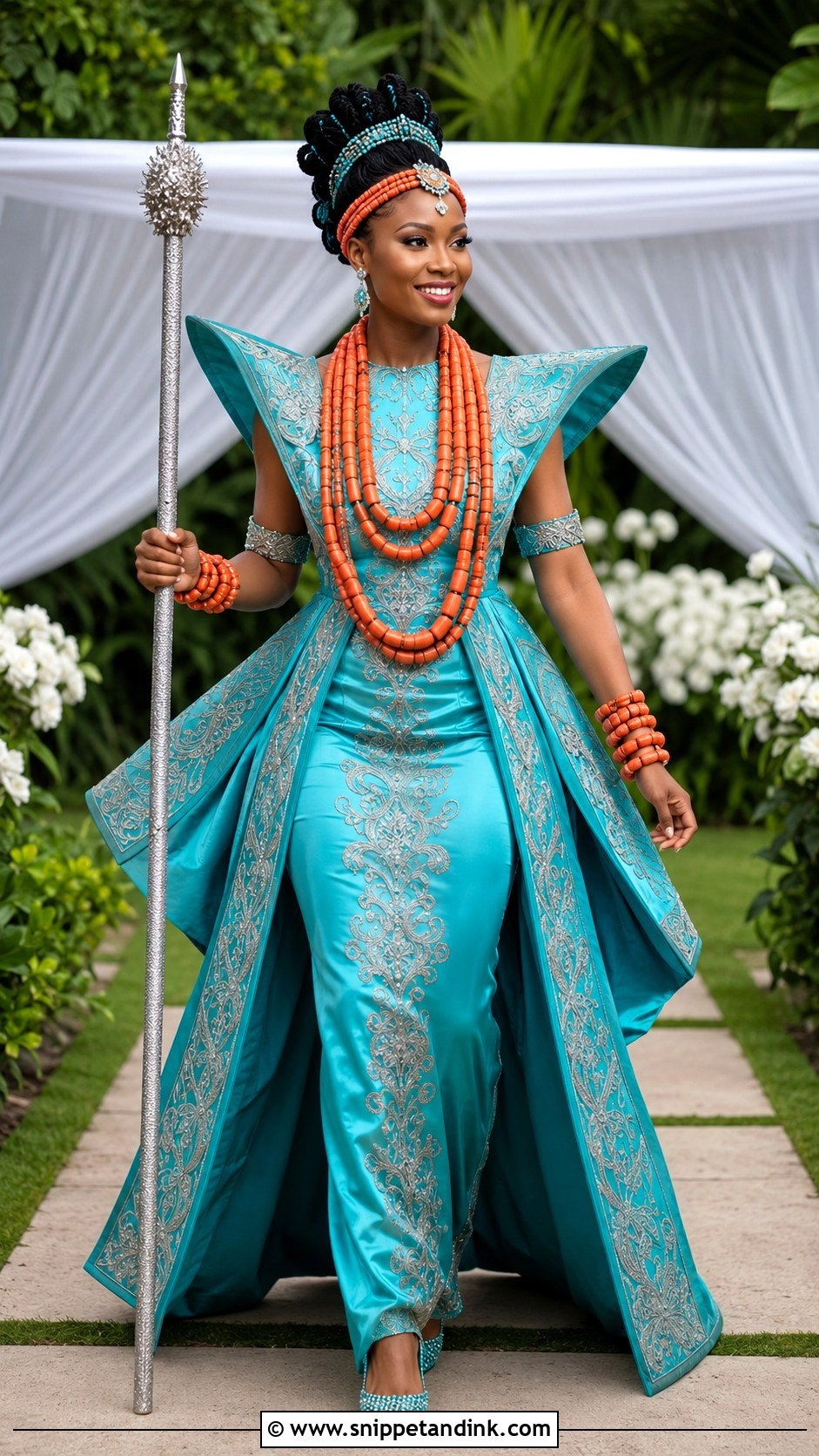
Turquoise feels fresh and works well outdoors, where it stands out against green or neutral surroundings. Choose satin, silk or lace with a firm lining so the bodice keeps its structure and the skirt keeps its volume. Silver embroidery around the neckline and sleeves, with a few crystals that catch light as you move. The turquoise and coral contrast makes every bead visible, so you need fewer strands than you’d think. Turquoise shoes, a silver-trimmed staff and a neat crown braid finish it. Daytime weddings suit it best.
10. Black And Gold Onyonyo Calabar Attire
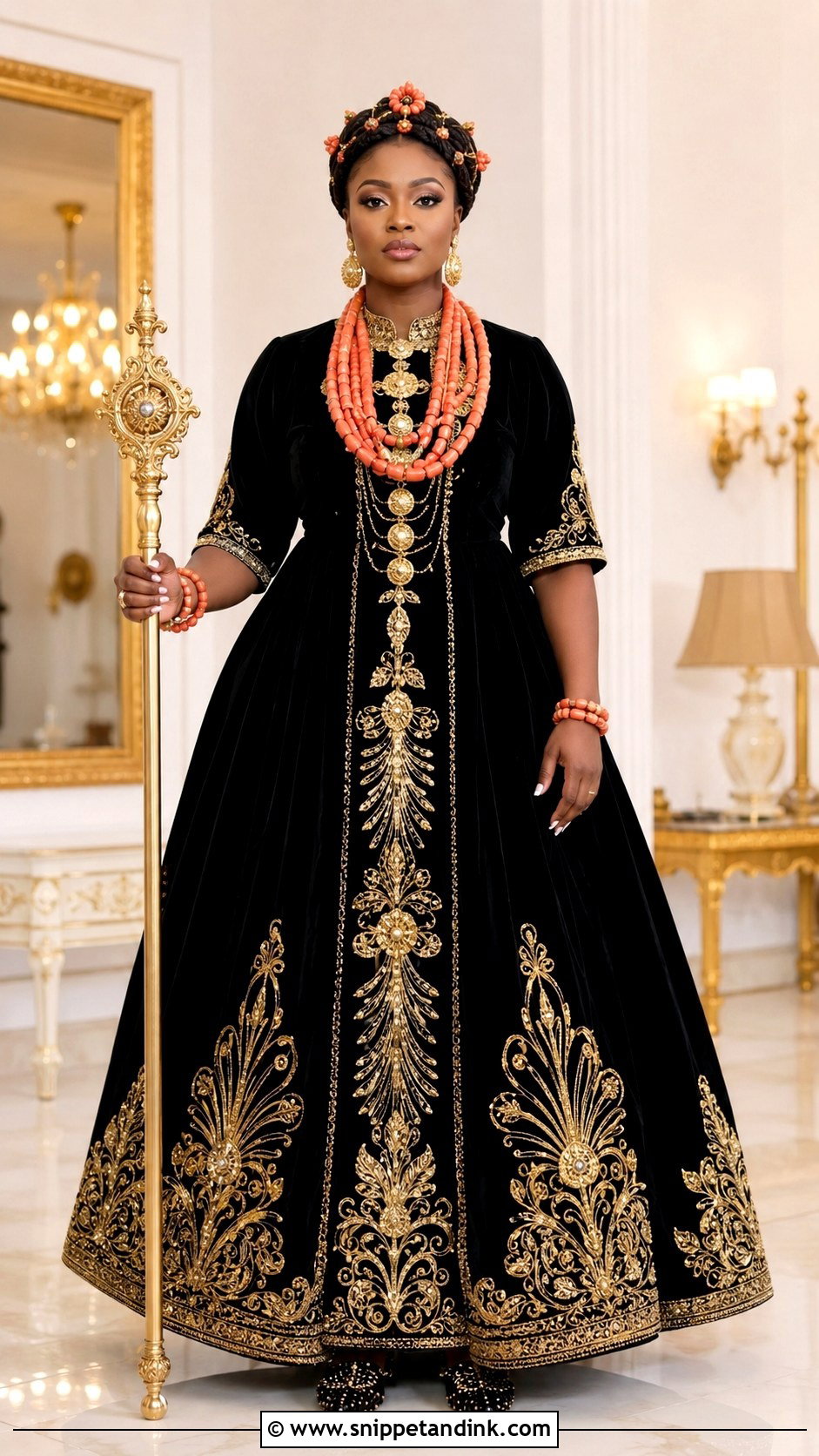
Black and gold is the most dramatic Onyonyo, and also the most demanding to make. Every seam and every crooked line of embroidery shows against dark velvet or satin, so this is not a gown to rush. Keep the gold work clean and symmetrical across bodice, sleeves and lower border. Layered coral cuts through the black, and small coral pins in a braided crown keep the face from being overwhelmed. Gold earrings, black beaded shoes and a gold-accented staff. It belongs at indoor evening events.
11. Red Ofod Ukod Anwang Calabar Attire
The Ofod Ukod Anwang is often the bride’s first look of the day: a fitted cropped blouse and coordinated skirt, with layered beadwork across the upper body. In red, it’s bold and joyful. The skirt should sit at the knee or a little below, with enough fullness to dance in, since this outfit is made for movement. I keep blouse embroidery neat and minimal so it doesn’t fight the body beads. Wrist cuffs, anklets, red beaded shoes, a staff and coral in a high braided style finish it.
12. White And Coral Ofod Ukod Anwang Calabar Attire
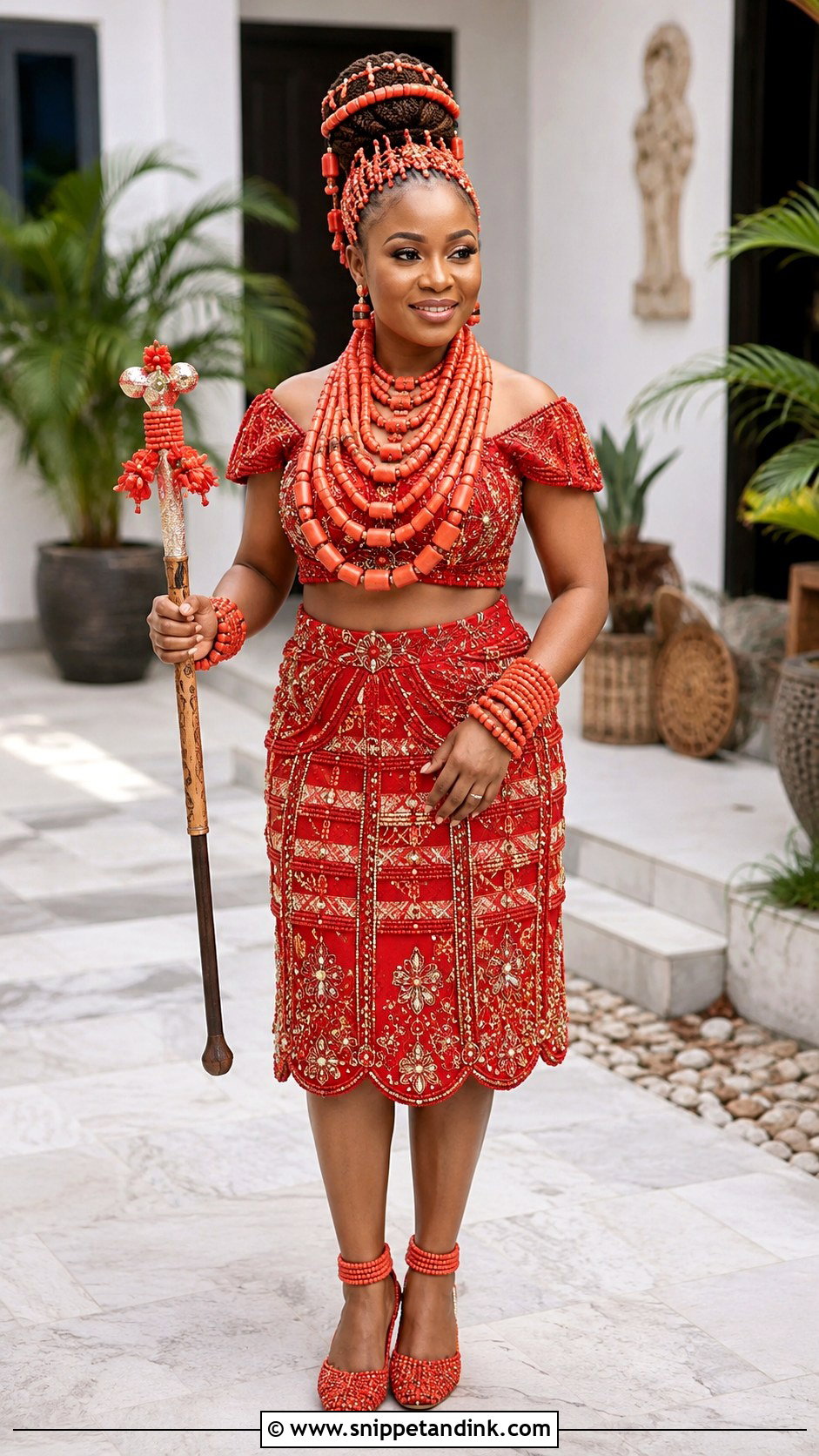
White fabric lets the coral do all the talking. An embroidered white blouse and full skirt with a defined waistband, then coral repeated at the neckline, upper body, wrists, ankles and hair. For a bride, a little crystal embroidery makes the white feel special without changing its character. White picks up marks quickly, especially at the hem and wherever coral is pressed against it, so I’d have a stain pen and a clean cloth in the dressing room. A white-and-coral staff and a tall braid complete the look.
13. Blue And Gold Ofod Ukod Anwang Calabar Attire
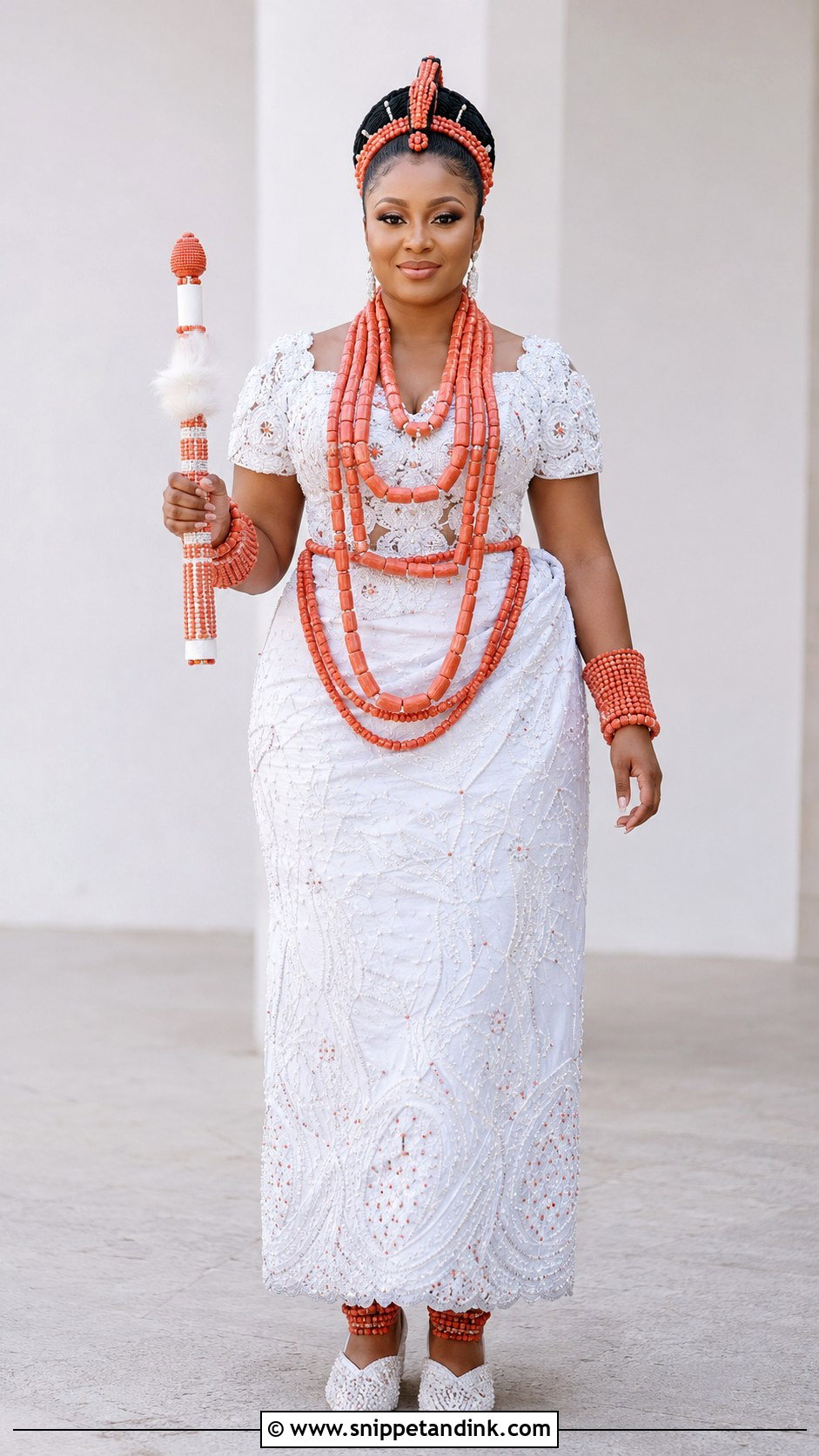
Blue with gold edging is balanced and festive, and coral sits surprisingly well against both. Royal blue fabric for the blouse and skirt, gold along the edges and waistband. The waistband is the fitting point that matters. It must sit securely enough to hold the skirt through dancing while leaving the hips free, so I test it with the bride stepping and turning. Stacked bead bracelets, blue beaded shoes and a gold-trimmed staff complete it, with coral pins in a sculpted braided style.
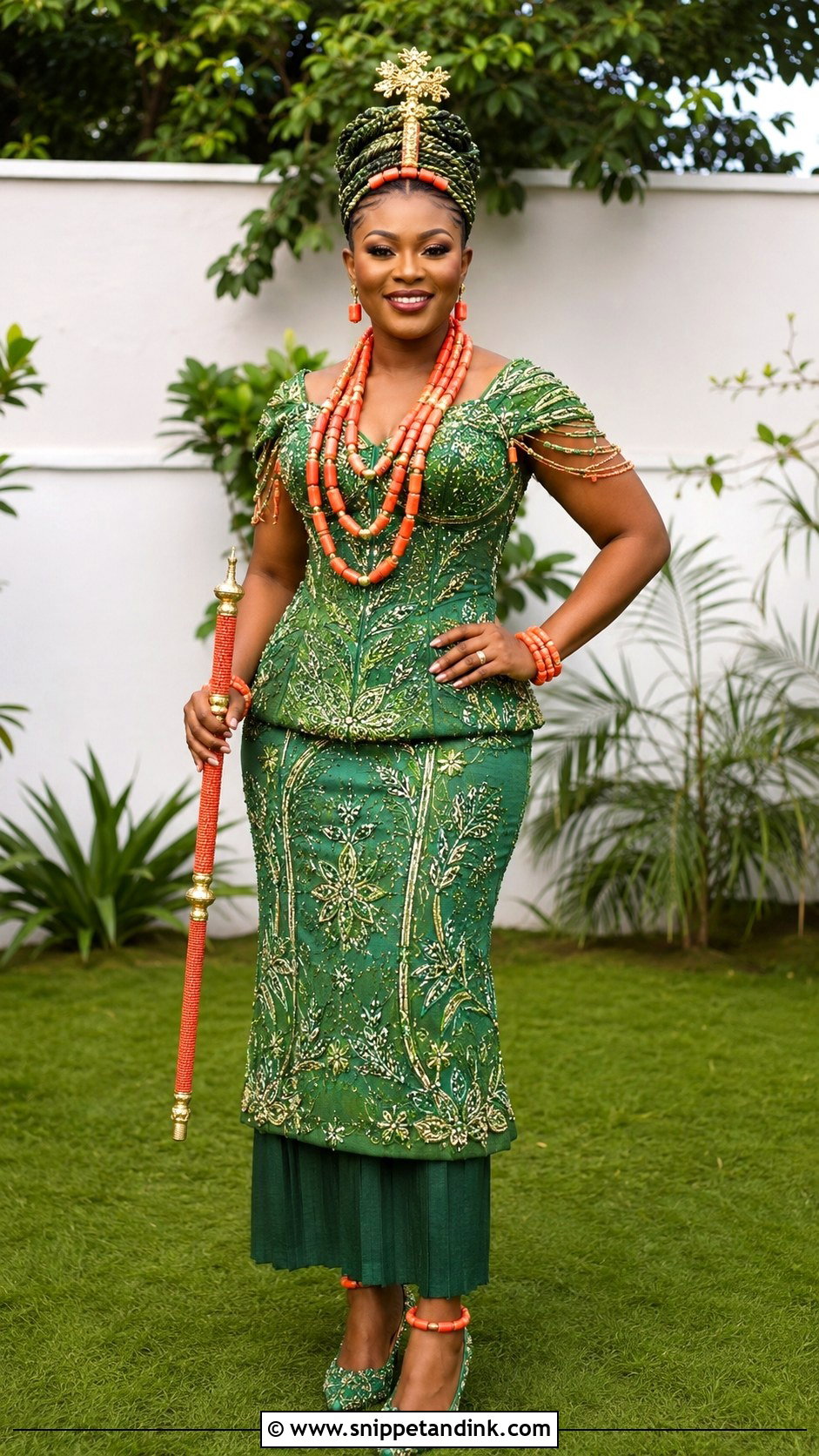
14. Green Ofod Ukod Anwang Calabar Attire
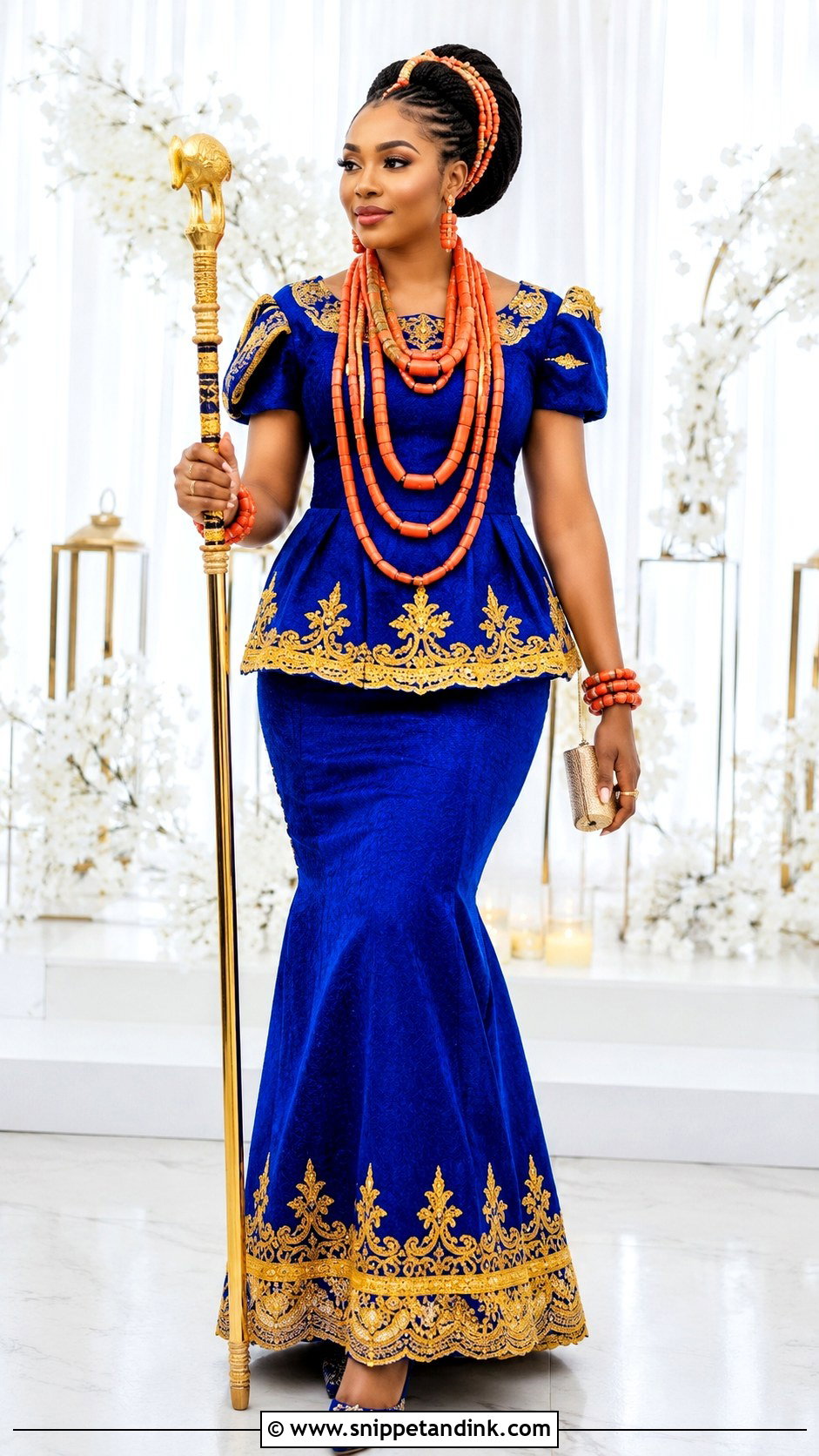
Green Ofod Ukod Anwang has energy, especially at outdoor celebrations. For the skirt, use patterned George, embroidered satin or lace, with a matching section on the blouse. Green and coral already make a strong pair, so don’t add a third colour. A high braided crown keeps the shoulders and beadwork visible. Green beaded shoes and a staff with coral and gold accents finish it. George is heavy, so line the skirt to stop it scratching the backs of the knees.
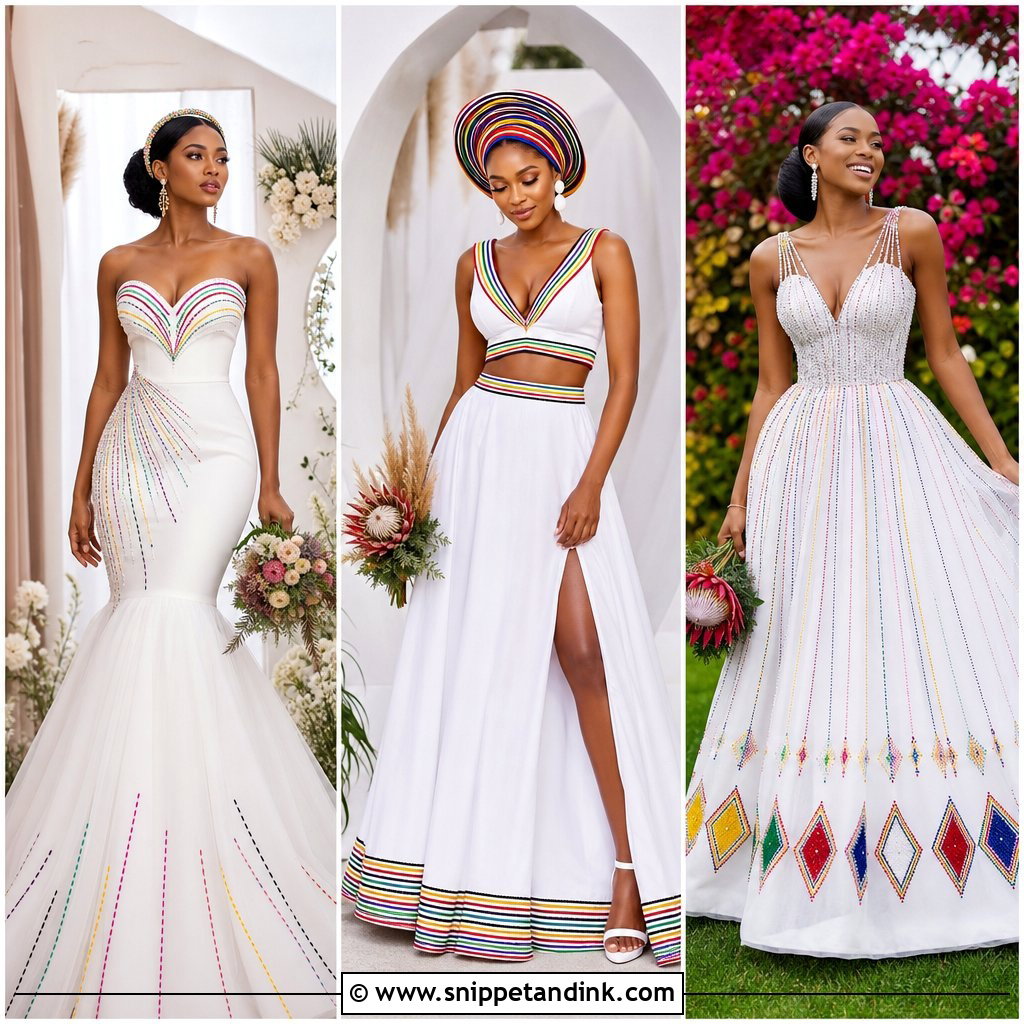
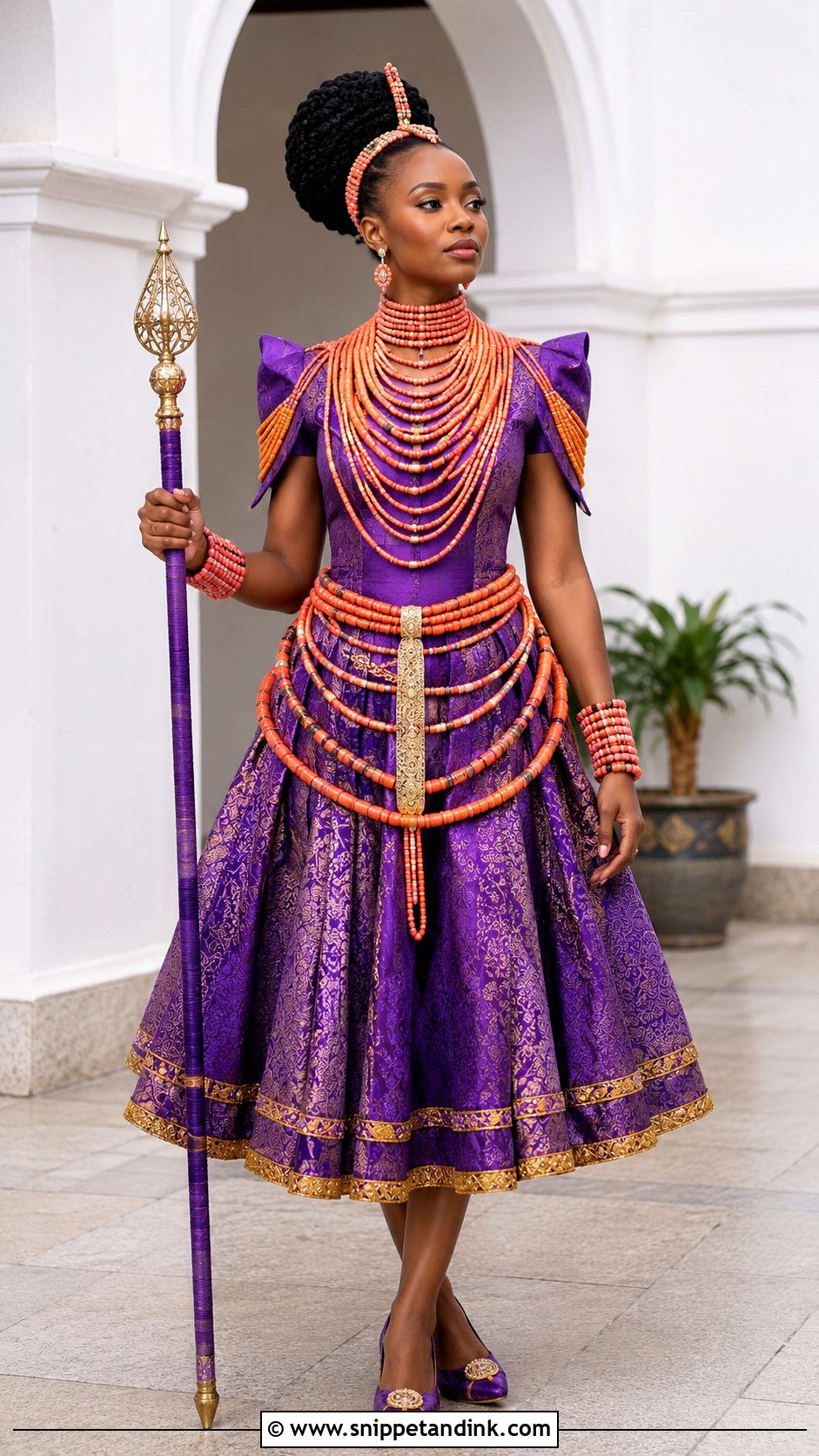
15. Purple And Coral Ofod Ukod Anwang Calabar Attire
Purple with coral is a richer, less expected pairing. A structured cropped blouse with a flattering neckline over a full skirt at knee or mid-calf. Gold embroidery outlines the edges and gives the purple dimension. The blouse is where fit matters most: if it rides up when you raise your arms to dance, the beads shift and bare more skin than you planned. Ask the tailor to add a little length or a hidden hook at the waist. Layered coral body beads, wrist cuffs, anklets, purple shoes, a bead-covered staff and coral accents throughout a tall braided style.
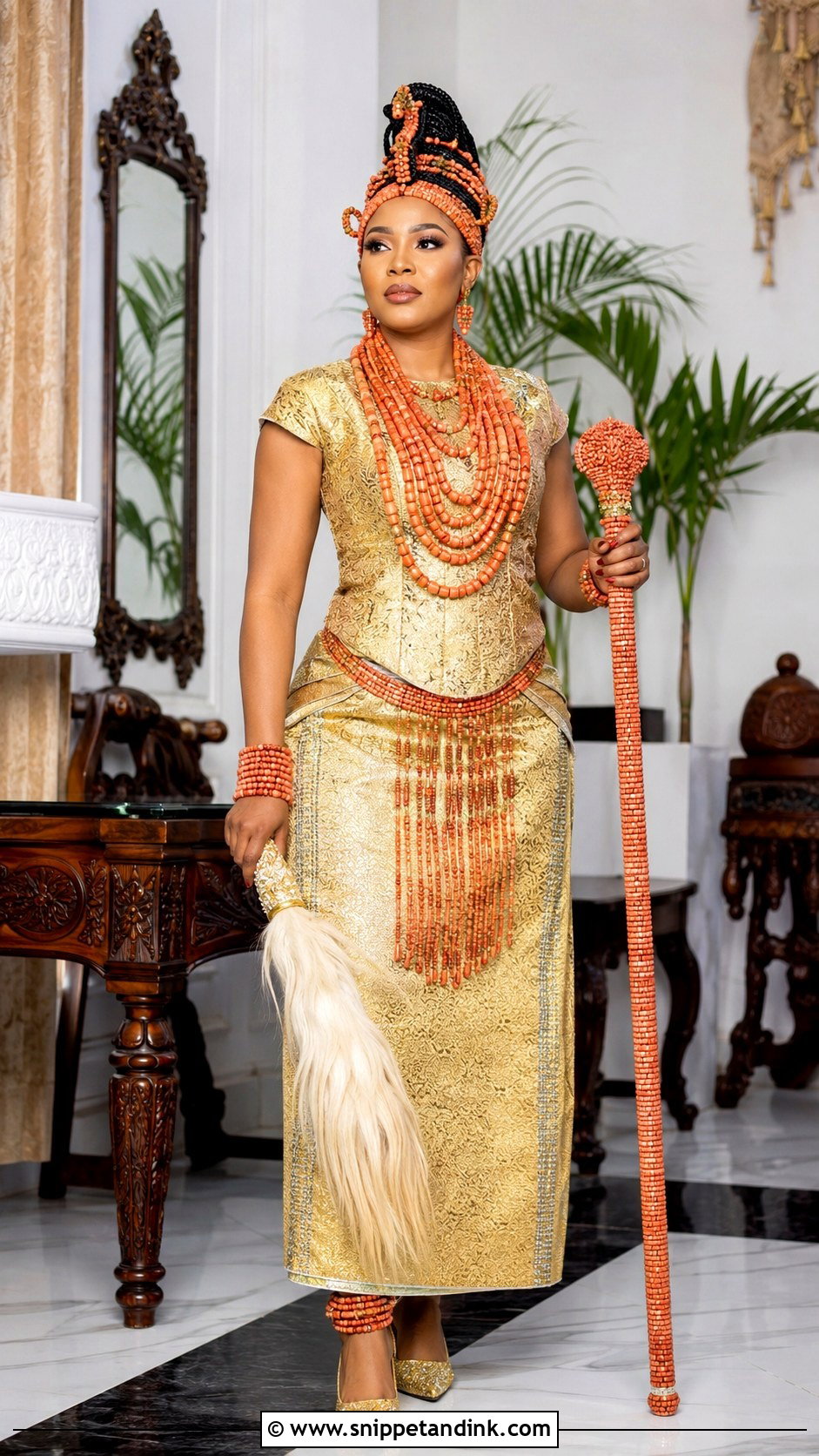
16. Gold Ofod Ukod Anwang Calabar Attire
Gold brocade or embroidered lace gives an Ofod Ukod Anwang a luminous look for the entrance. The texture keeps it from reading as flat metal. Coral across the neckline, torso, wrists, ankles and hair breaks up the gold. I’d add a secure waistband inside the skirt to carry its weight, because full brocade skirts pull downward over a long day. Gold beaded shoes and a coral-covered staff, with a tall braided style. Brides, celebrants and family members all wear it well.
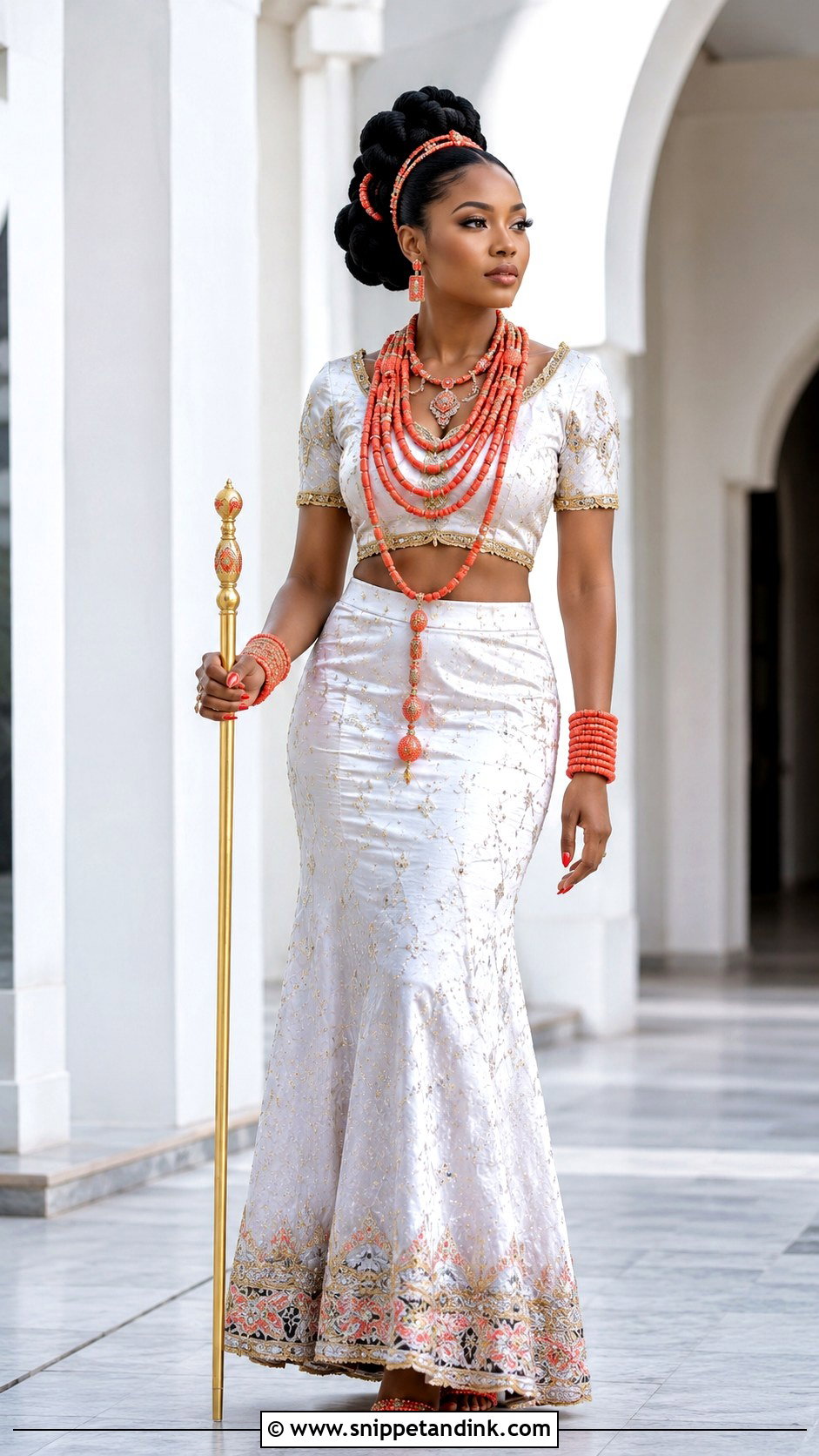
17. Modern Floor-Length Ofod Ukod Anwang Attire
A floor-length skirt makes the Ofod Ukod Anwang more formal while keeping the fitted blouse and the coral. Mermaid or softly flared cuts work, but test the stride; a narrow skirt and a lot of dancing don’t mix. Keep the palette to one fabric colour, coral and one metal. Layered necklaces, a body strand, wrist cuffs and beaded shoes peeking from the hem complete it. Without the coral and the staff, this quickly becomes a generic evening two-piece, so those are the pieces I’d never drop.
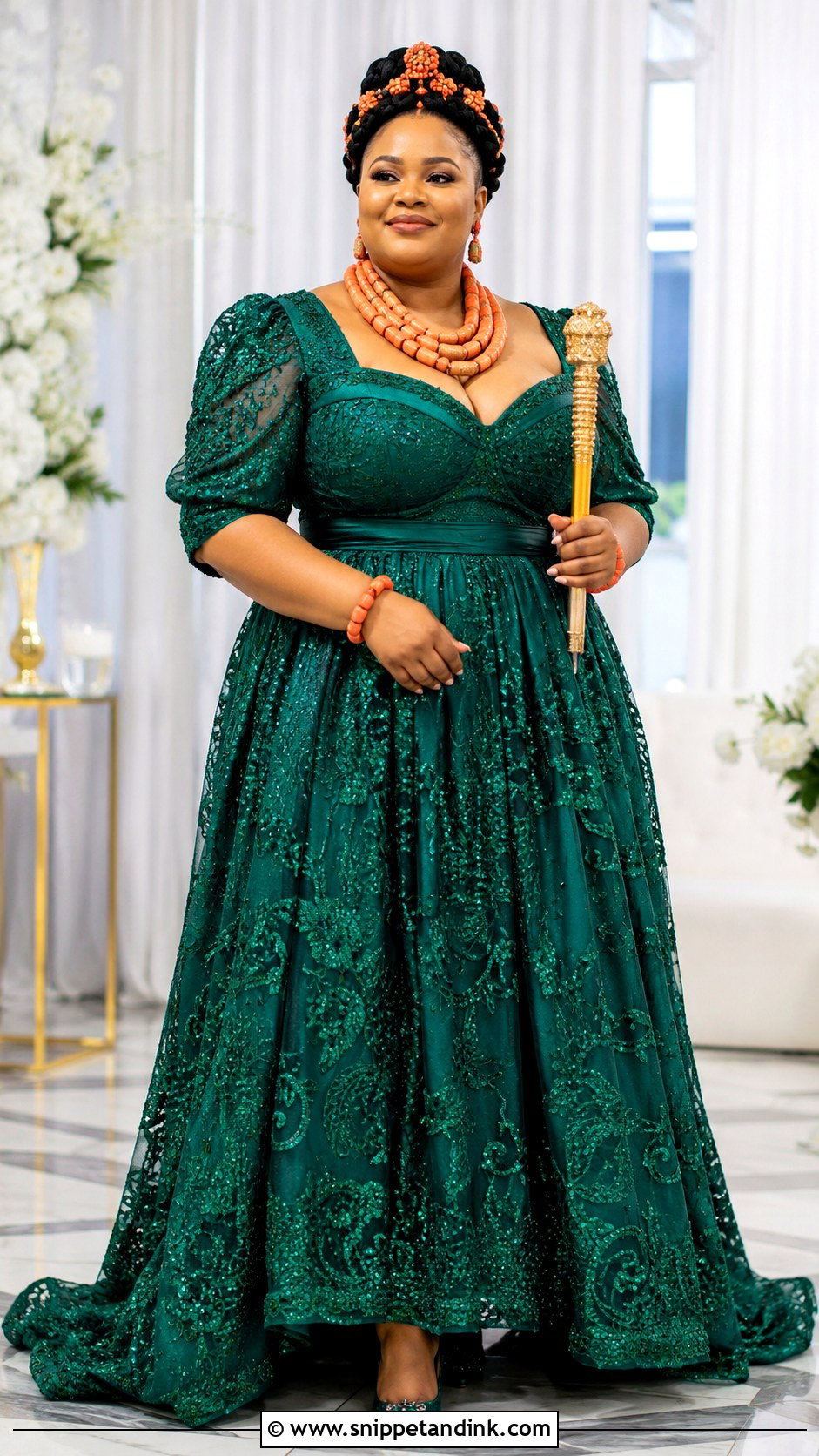
18. Plus-Size Onyonyo Calabar Attire
The Onyonyo suits fuller figures naturally, as long as the proportions are tailored rather than taken from a sample. A supportive fitted bodice, a comfortable neckline and sleeves that let you lift your arms. Place the waist seam where it feels best on you, then let the skirt fall in controlled gathers, not stacked layers that add width. Emerald, burgundy, royal blue or plum give coral a strong base. Choose substantial jewellery; small beads look lost against a grand gown. Beaded shoes, wrist cuffs, a staff and a tall braided style complete it.
19. Mature Women’s Onyonyo Calabar Attire
For mothers of the couple and senior relatives, rich fabric and precise tailoring matter more than decoration. Navy, burgundy, forest green, champagne or deep purple in velvet, lace or good brocade. Three-quarter sleeves and a softly structured neckline give coverage. Keep embroidery to the neckline and hem so the centre stays uncluttered. Low-heeled beaded shoes are kinder through a long ceremony. A light ornamental staff is easier to hold for hours than a heavy carved one. Layered coral and a neat braided updo or smooth natural style finish it.
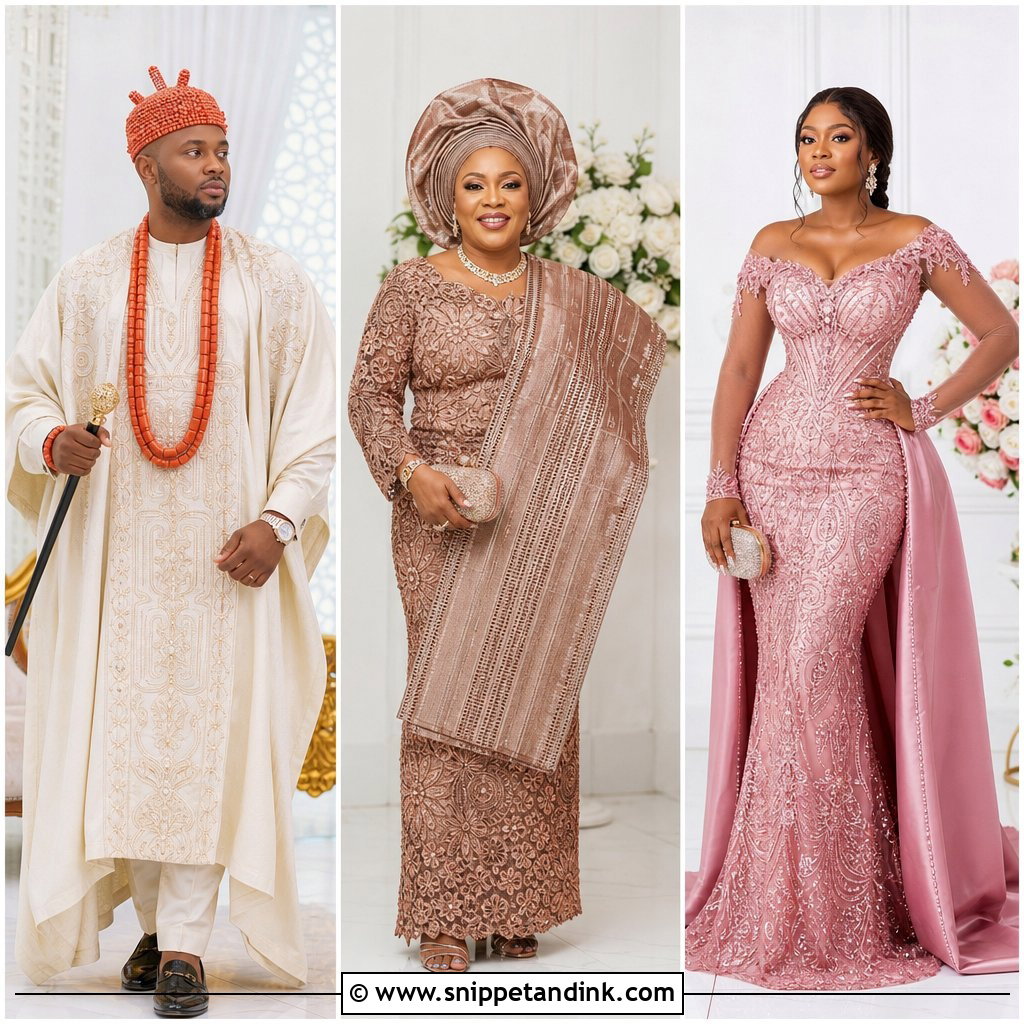
20. Matching Mother And Daughter Calabar Attire
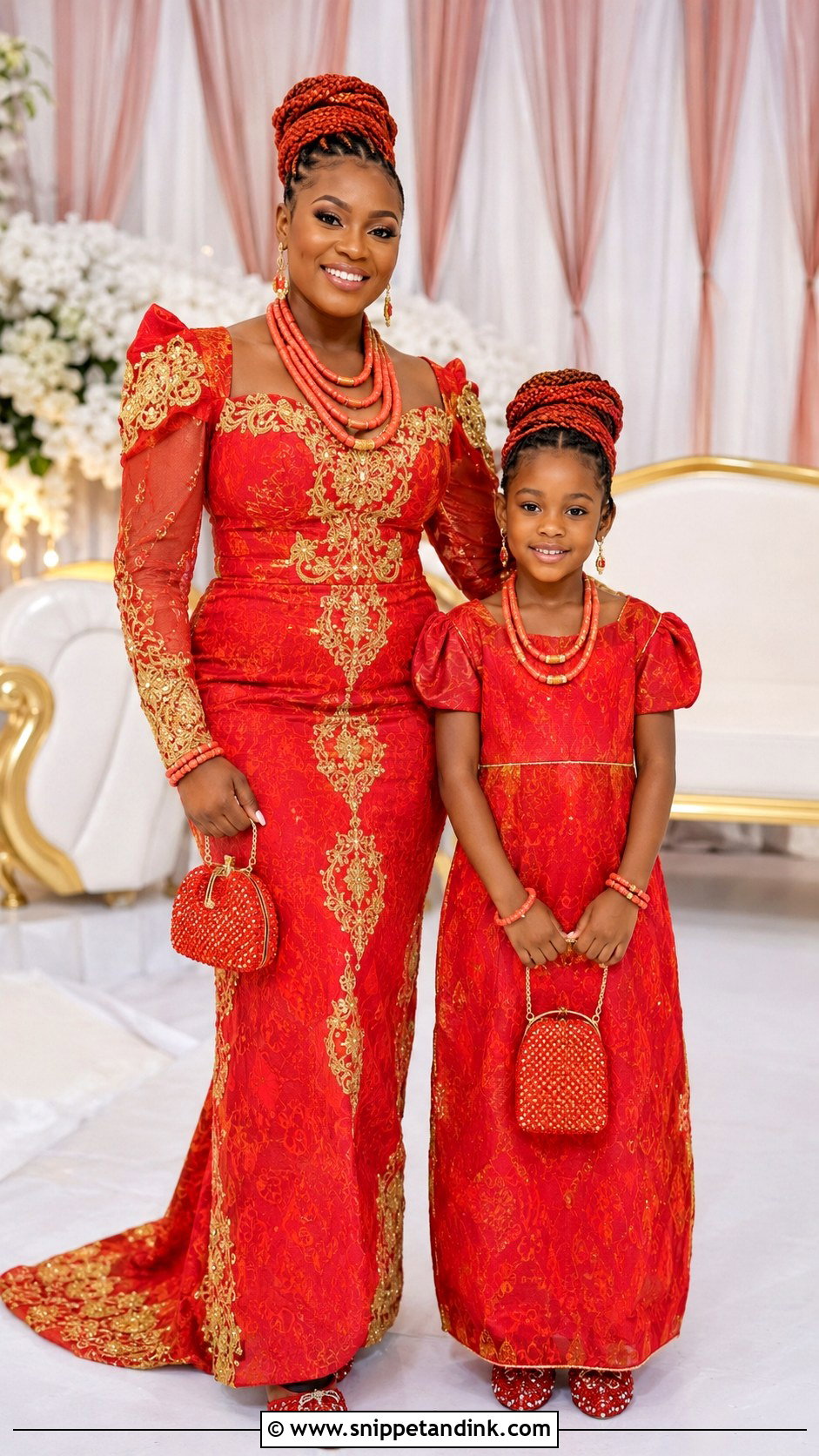
Mother and daughter don’t need identical shapes to match. The mother might wear a full Onyonyo, while the daughter wears a simplified one or an Ofod Ukod Anwang in the same fabric, with the colour, embroidery and coral repeated. Give the mother the larger necklace and the staff; the daughter gets lighter beads, comfortable shoes and a small bag. For young children, I keep embellishment to a minimum. Heavy beads and stiff fabric on a small child usually end in tears before the photos are done.
Wearing Several Strands of Coral for Hours
Coral is heavy once you stack it, and the weight sits on the neck and shoulders all day. I build the layers from the shortest strand outward and check that no single necklace is pulling into the back of the neck. A strip of soft fabric under the clasps stops them rubbing raw skin by evening. Body strands on an Ofod Ukod Anwang should be tacked lightly to the blouse at a few points so they don’t swing apart when you dance.
Genuine coral is softer than most gemstones and reacts to perfume, hairspray and body lotion, which dull its surface. Put the beads on last, after the spray and fragrance. Wipe them with a soft dry cloth afterward and store each strand separately so they don’t scratch one another. Imitation coral is common and far lighter, which some brides prefer for a long day; just make sure the colour matches across every piece.
Commissioning Your Outfit From a Tailor
Embroidered velvet, lace over satin and full gathered skirts all take time. Talk to your tailor several months ahead, and longer around busy wedding seasons, since lead times vary widely. Bring your actual coral to the fittings. A neckline that looks right on its own can sit too high or too low once heavy strands are laid over it, and the waistband often needs adjusting for the weight of the beads.
Coral, Colour and a Tailor Who Knows Efik Dress
Whichever you wear, the sweeping Onyonyo or the two-piece Ofod Ukod Anwang, every piece should add up to one presentation. Coral, braids, beaded shoes, fans and the staff strengthen the look when they’re balanced, and colour is where you can be most personal. Classic white and red, emerald, turquoise, gold or purple all honour the tradition. The single best decision is a designer who has made Efik clothing before and understands the occasion. Bring your beads to every fitting, and the rest follows.
You'll Like These Ideas:




Leave a Reply