
Mexico doesn’t have one wedding dress. It has dozens of regional traditions, each tied to a place and often to an Indigenous community: the Zapotec Tehuana dress of the Isthmus, the Yucatán terno, Chiapas flowers on black tulle, Oaxacan huipiles, the china poblana, the charra. Mexican bridal fashion also borrows from Catholic ritual, with lace mantillas and rebozos. When a bride brings me one of these, I start by asking where her family is from and how warm the venue will be. The looks below are styled head to toe, with the practical notes I’d give at a fitting.
Hand Embroidery or Machine? Buying From Artisans Without Regret
A lot of the dresses sold as Mexican wedding dresses online are machine embroidered and mass produced. That’s fine if it’s what you want, but you should know which one you’re buying.
- Turn the embroidery over. Hand work has a slightly irregular back with knots and thread ends; machine work is perfectly uniform with a paper or mesh backing.
- Ask who made it and where. A real artisan seller will tell you the town or community, and often the stitch name.
- Allow time. A densely hand-embroidered piece can take weeks or months, so commission early and don’t expect express shipping.
- Wash a cotton dress before alterations, or ask whether it’s pre-shrunk. Natural cotton can shrink after its first wash.
Sizing works differently too. A huipil is sized by its width and length, not by bust and waist, so measure a loose top you love and compare it to the seller’s flat measurements.
1. Traditional Mexican Huipil Wedding Dress
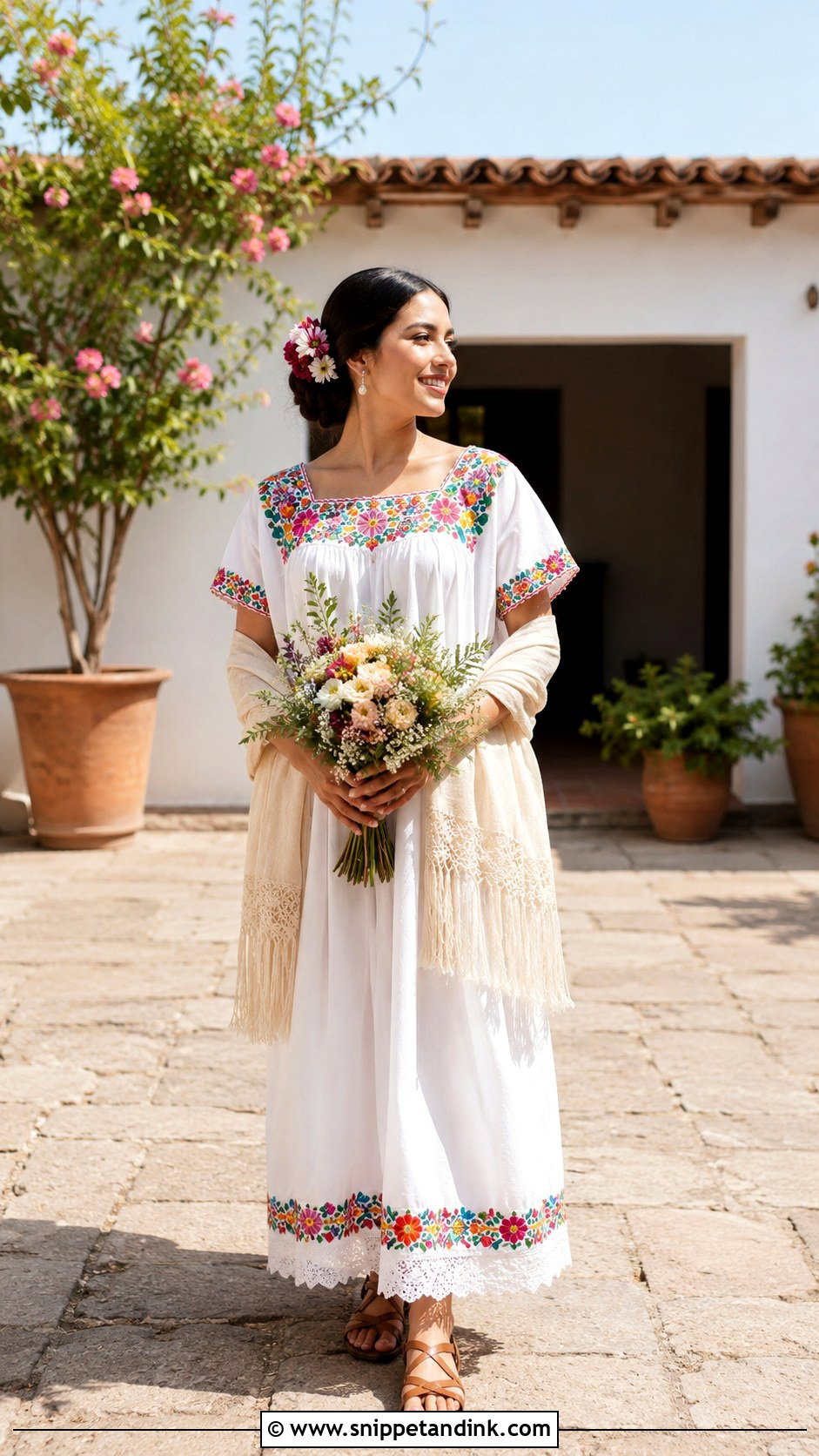
The huipil is a loose tunic, traditionally woven on a backstrap loom from rectangular panels, and its shape is the reason it’s so comfortable in heat. For a wedding, white or ivory cotton with hand embroidery at the neck, sleeves and hem keeps it bridal. Because a huipil has no darts, it can look boxy in photos; a woven sash at the waist fixes that without changing the garment. Leather sandals, pearl earrings and a low bun with fresh flowers suit it, and a light rebozo over the shoulders for the ceremony adds coverage in church.
2. White Mexican Embroidered Wedding Dress
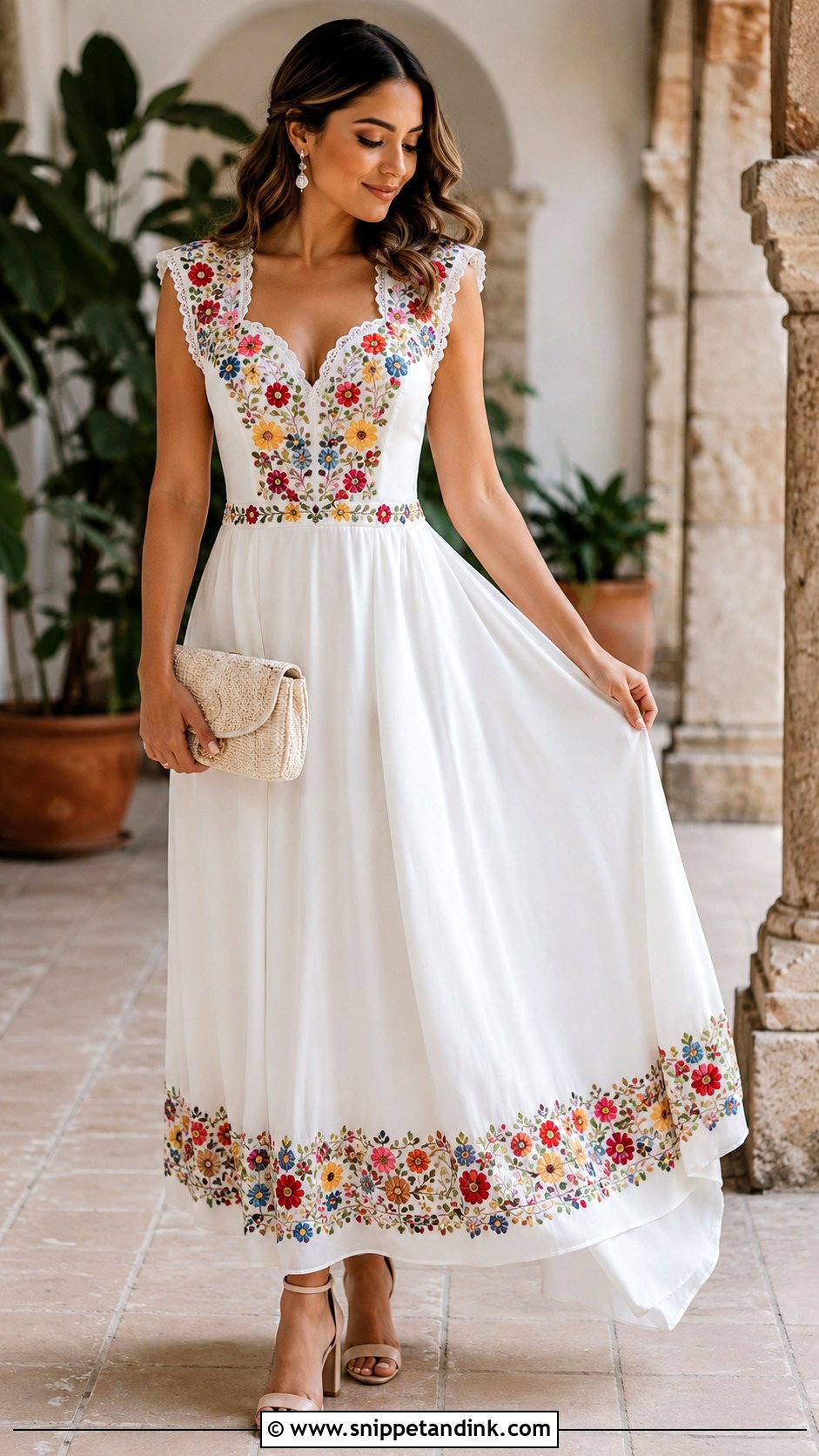
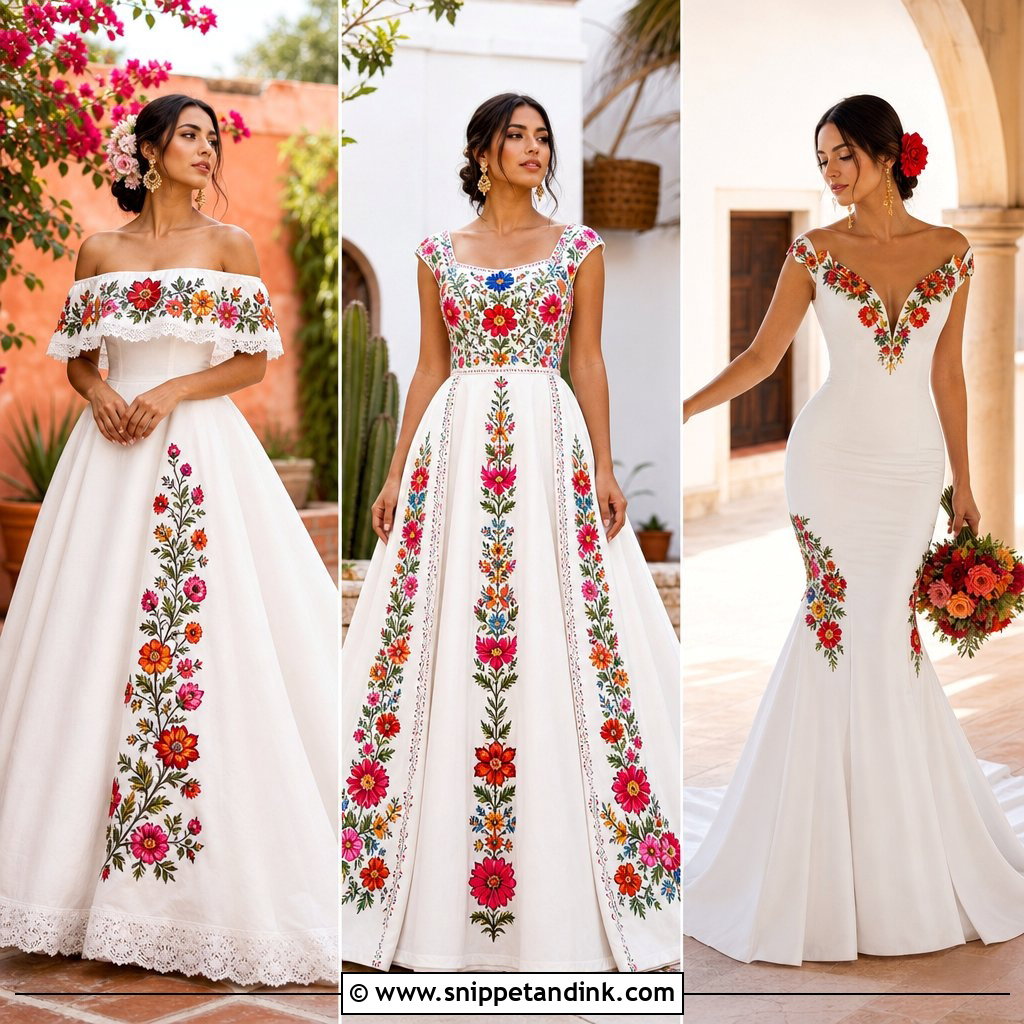
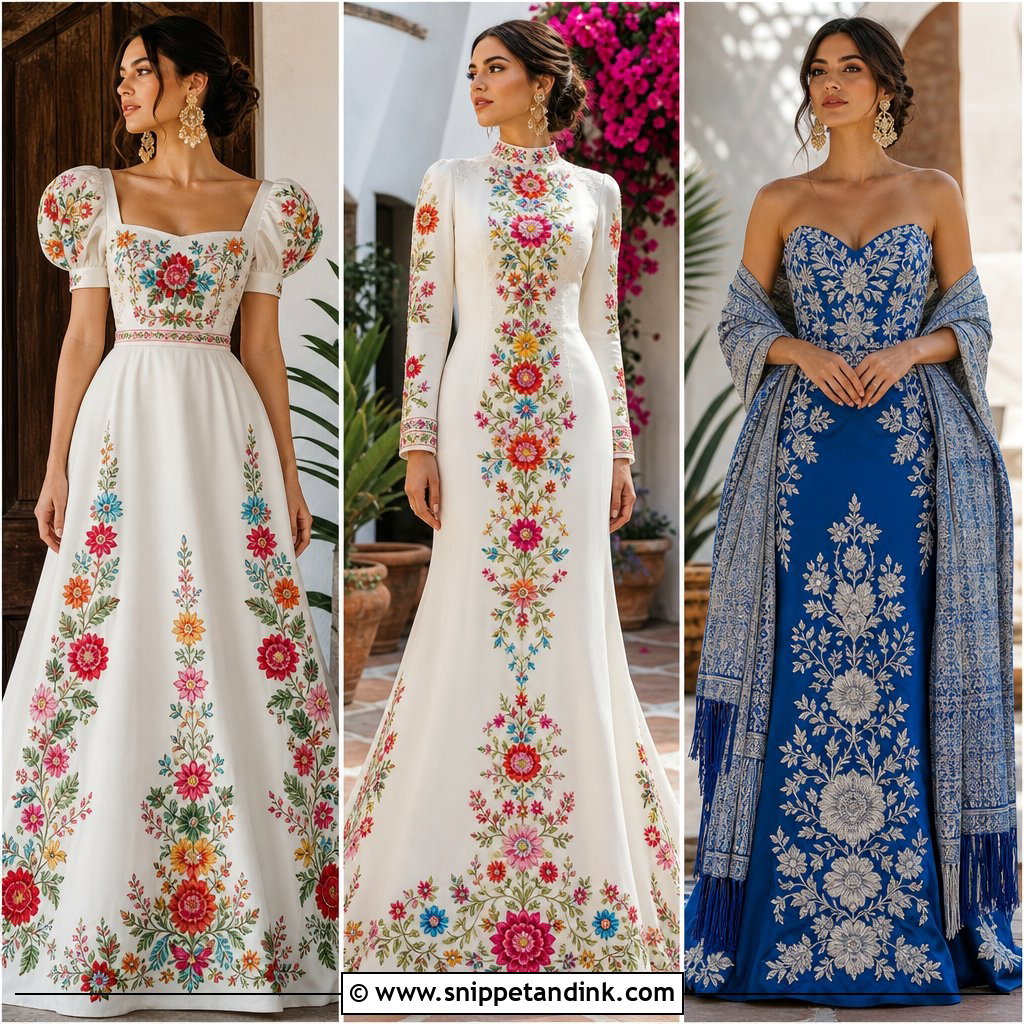
This is the dress most brides picture: flowing white with bright floral embroidery across the bodice, sleeves or skirt border. Red, pink, blue, green and yellow thread give it energy. The thing I check first is where the embroidery sits on the body. A floral band right across the widest part of the hips draws the eye there, so for most figures I’d rather see it at the neckline and hem. A lace mantilla makes it more formal; soft waves tucked behind the ears keep it relaxed.
3. Tehuana Mexican Wedding Dress
A Tehuana Mexican wedding dress comes from the Zapotec women of the Isthmus of Tehuantepec in Oaxaca: a short huipil, often velvet, densely embroidered with large flowers, over a long enagua skirt finished with a white lace ruffle. The ceremonial version adds the resplandor, a lace headdress that frames the face like a halo. It’s heavy and hot, especially in velvet. I’d only recommend it for a bride with a family or community connection to the region, or with their blessing, because this dress carries identity, not just style.
4. Mexican Wedding Dress With Mantilla Veil
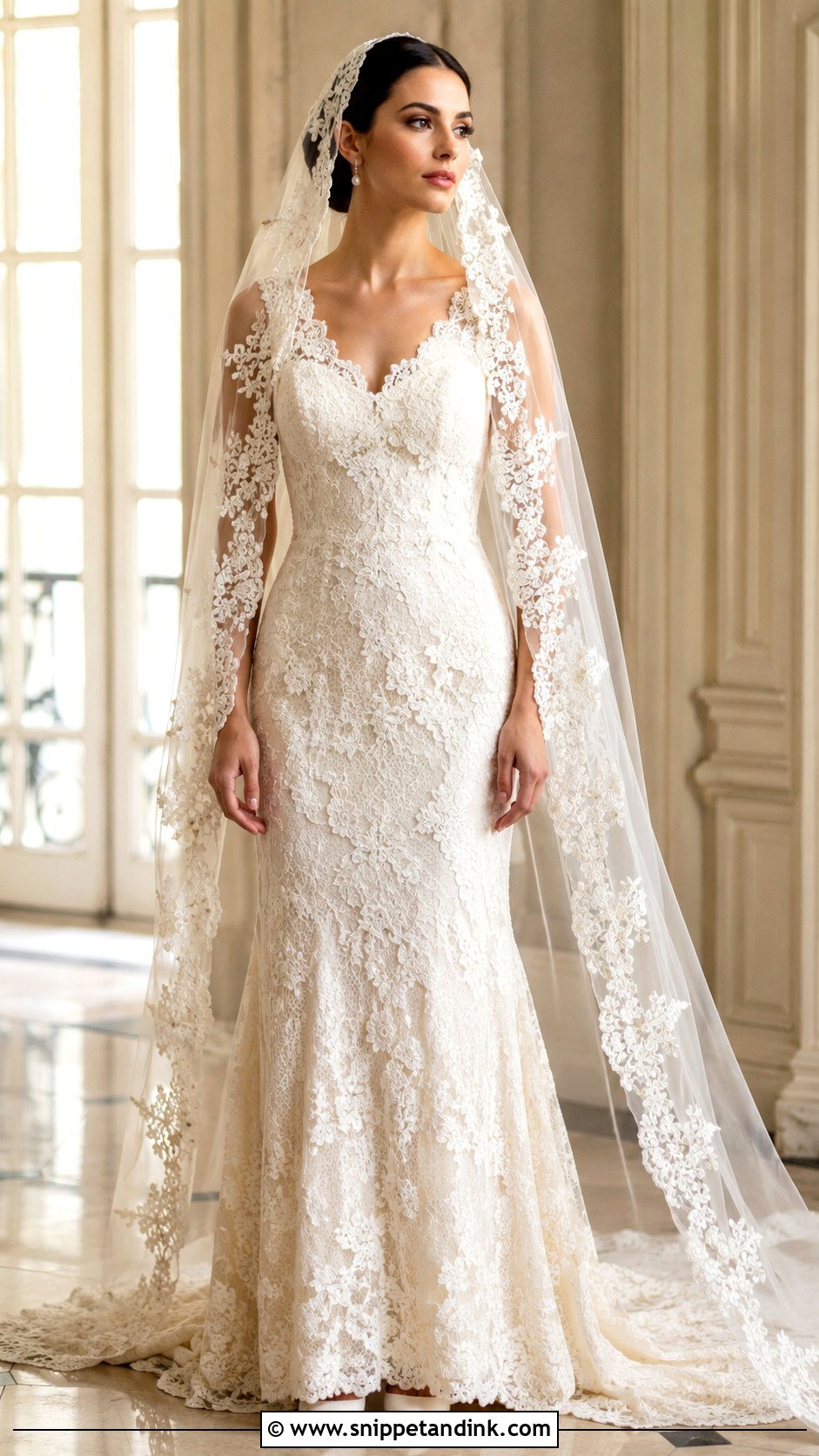
A mantilla is a long lace veil worn over the head and shoulders, and it pairs naturally with a Catholic ceremony. Put it with a lace or embroidered white gown in any shape. The mantilla needs anchoring: I set a small comb into a low chignon and pin the lace through it, because lace slides on smooth hair. Pearl drops and simple heels keep the focus on the lace. Hacienda chapels and old churches suit it best.
5. Mexican Wedding Dress With Rebozo
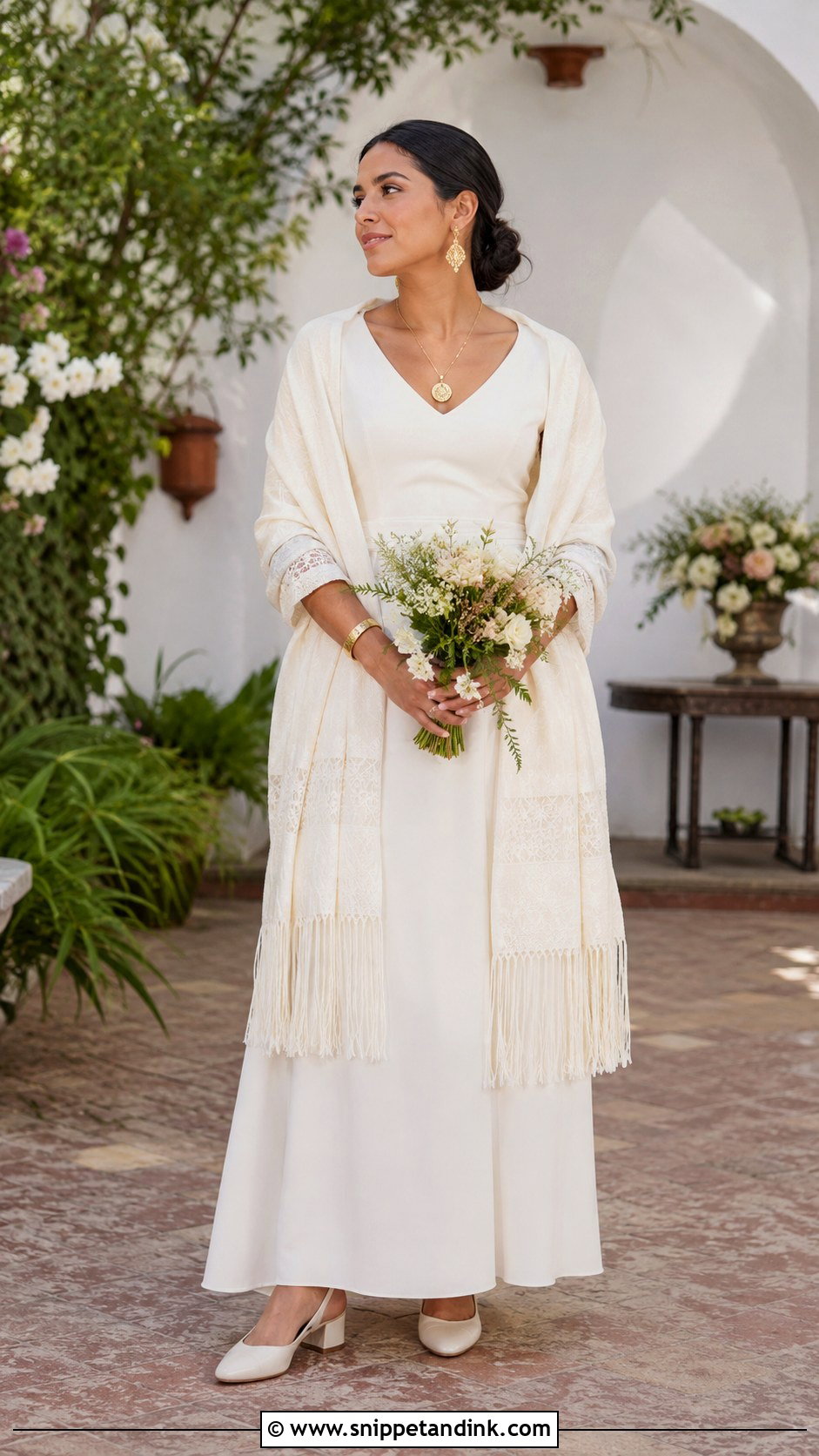
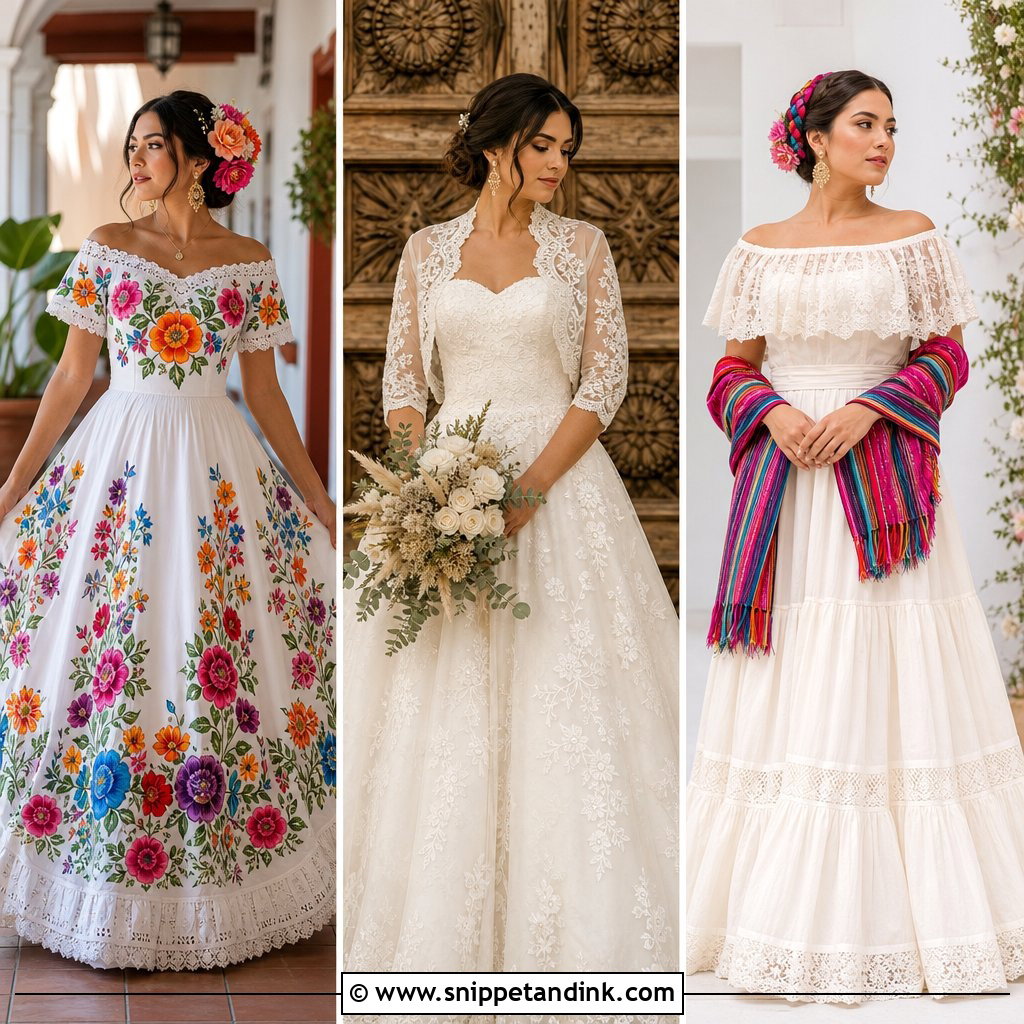
The rebozo is a long woven shawl, and a Mexican wedding dress with a rebozo lets a plain gown carry tradition. Wear it over the shoulders, around the arms or loose across the back. Silk rebozos from Santa María del Río are prized for their fine knotted fringe; cotton ones are lighter and easier to wear in heat. The practical bonus is that you take it off for dancing and suddenly have a second look.
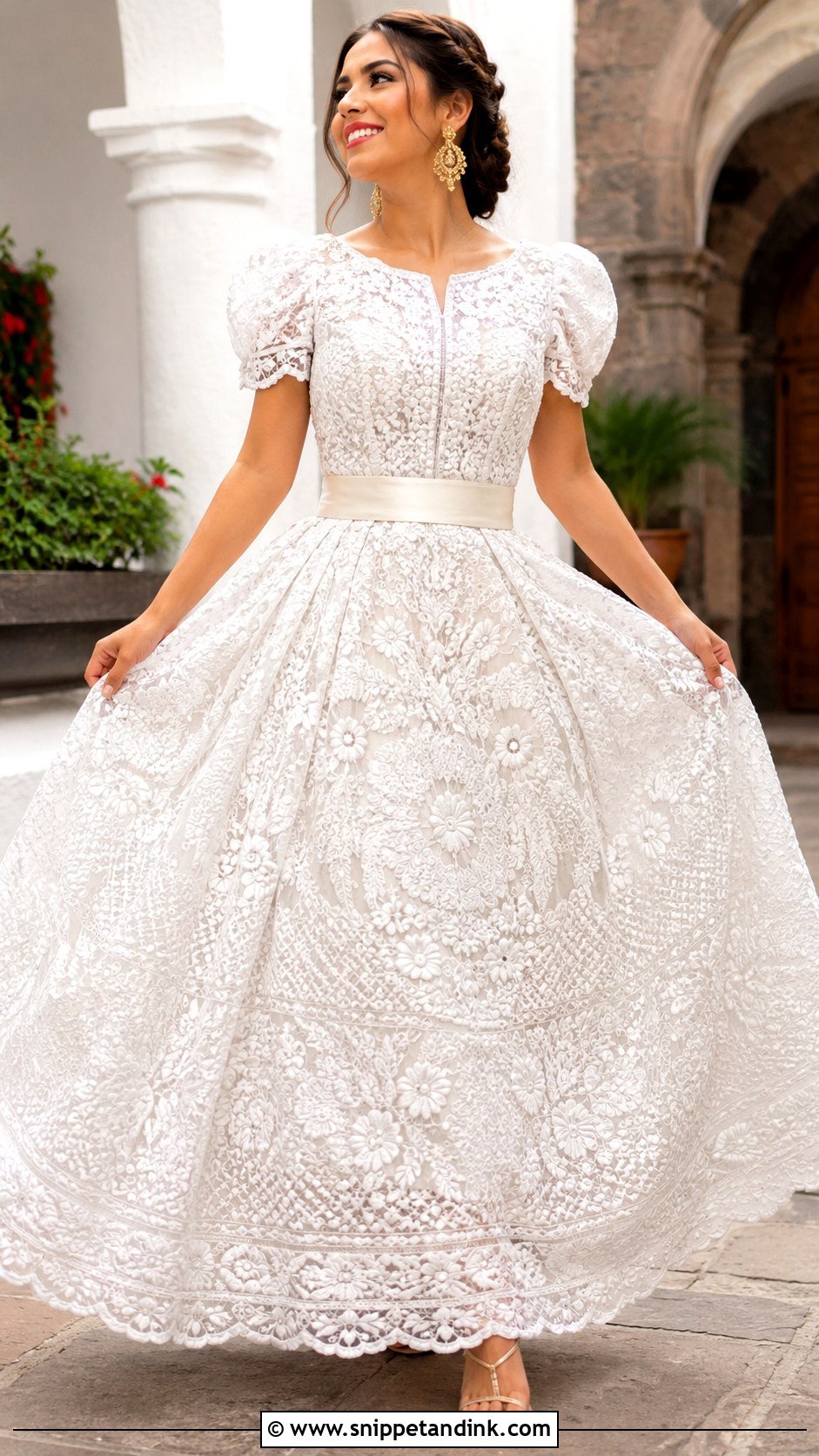
6. Mexican Lace Wedding Dress
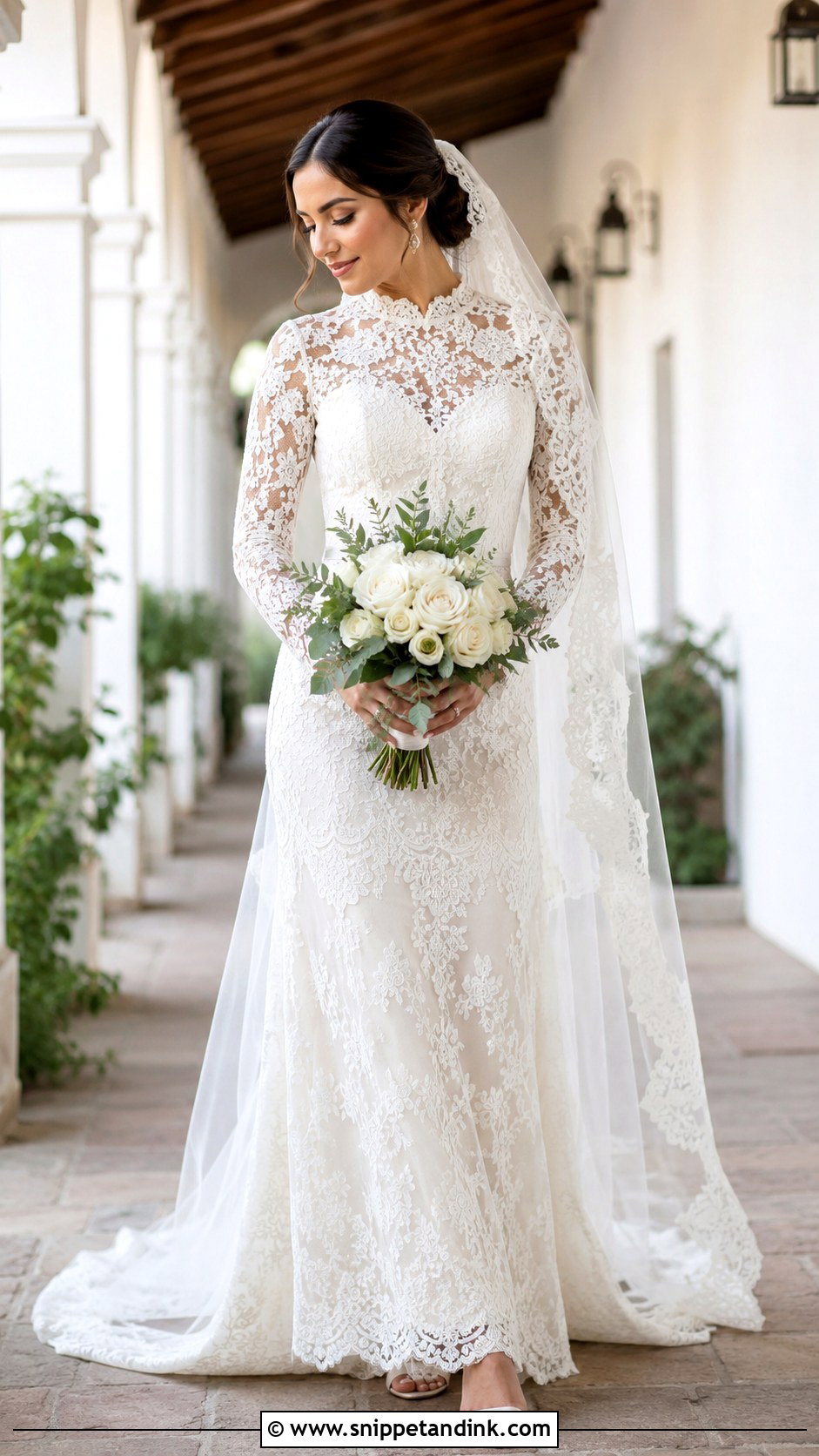
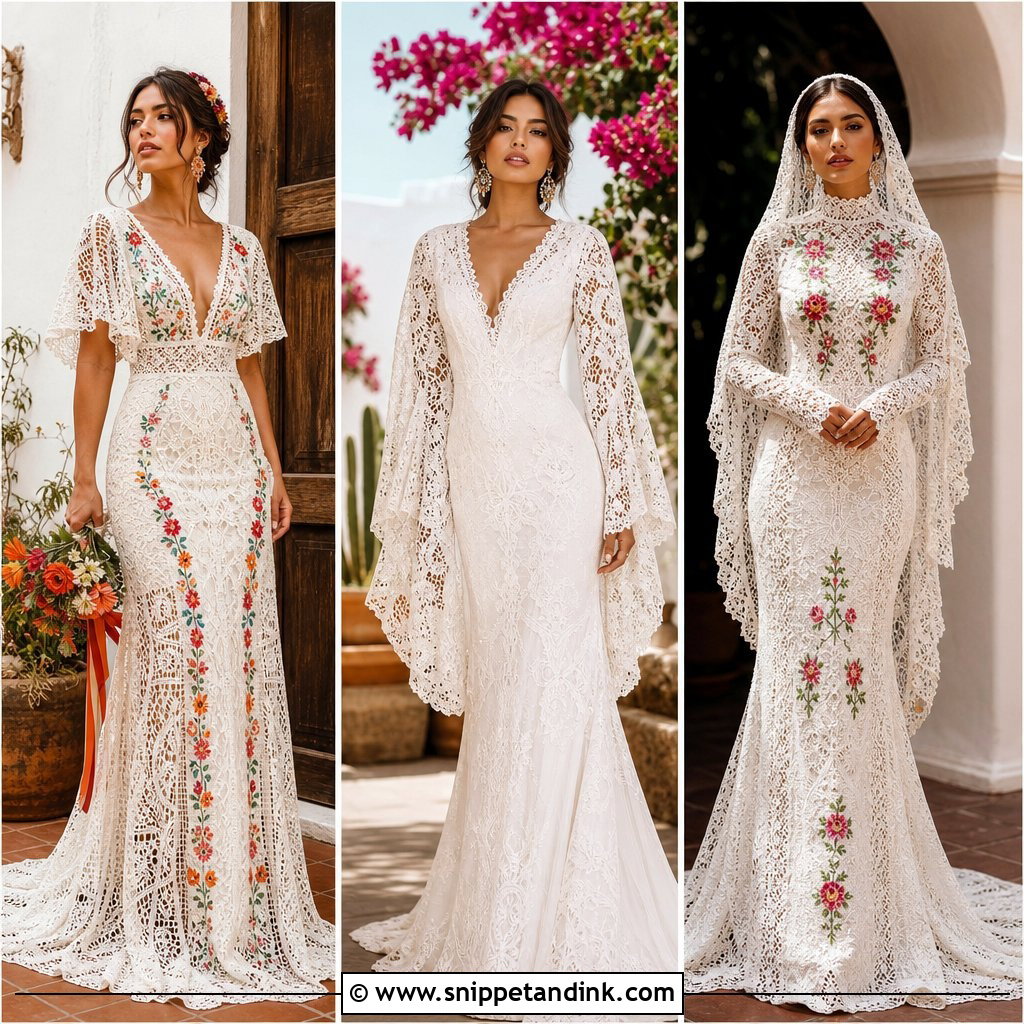
Lace with long sleeves and a high or square neckline reads traditional straight away. Cotton lace and crochet-style lace look handmade; floral re-embroidered lace looks more formal. Lace sleeves can be scratchy at the underarm seam, so ask the seamstress to bind it with a soft tulle or silk tape. A colourful sash or an embroidered belt brings it back to Mexico without weighing it down.
7. Mexican Off Shoulder Wedding Dress
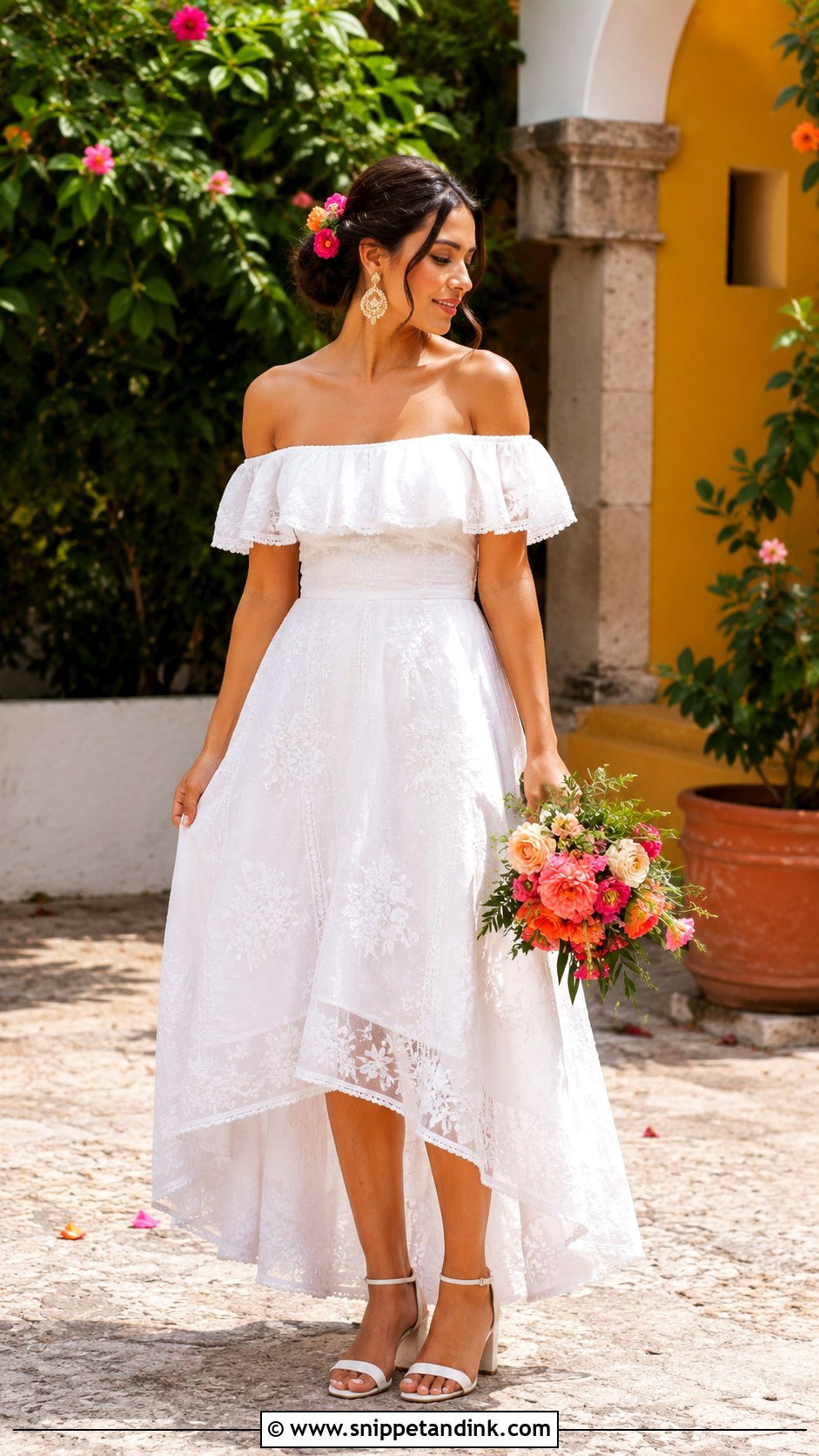
Off-shoulder dresses in white cotton or linen, with embroidered flowers along a ruffled neckline, are festive and flattering. The problem is keeping the neckline in place. Elastic necklines creep up your shoulders as you move your arms, so I add a silicone grip strip inside and suggest a strapless bra fitted before the final alteration. Gold hoops or a pendant fill the open neckline nicely.
8. Mexican Ruffle Wedding Dress
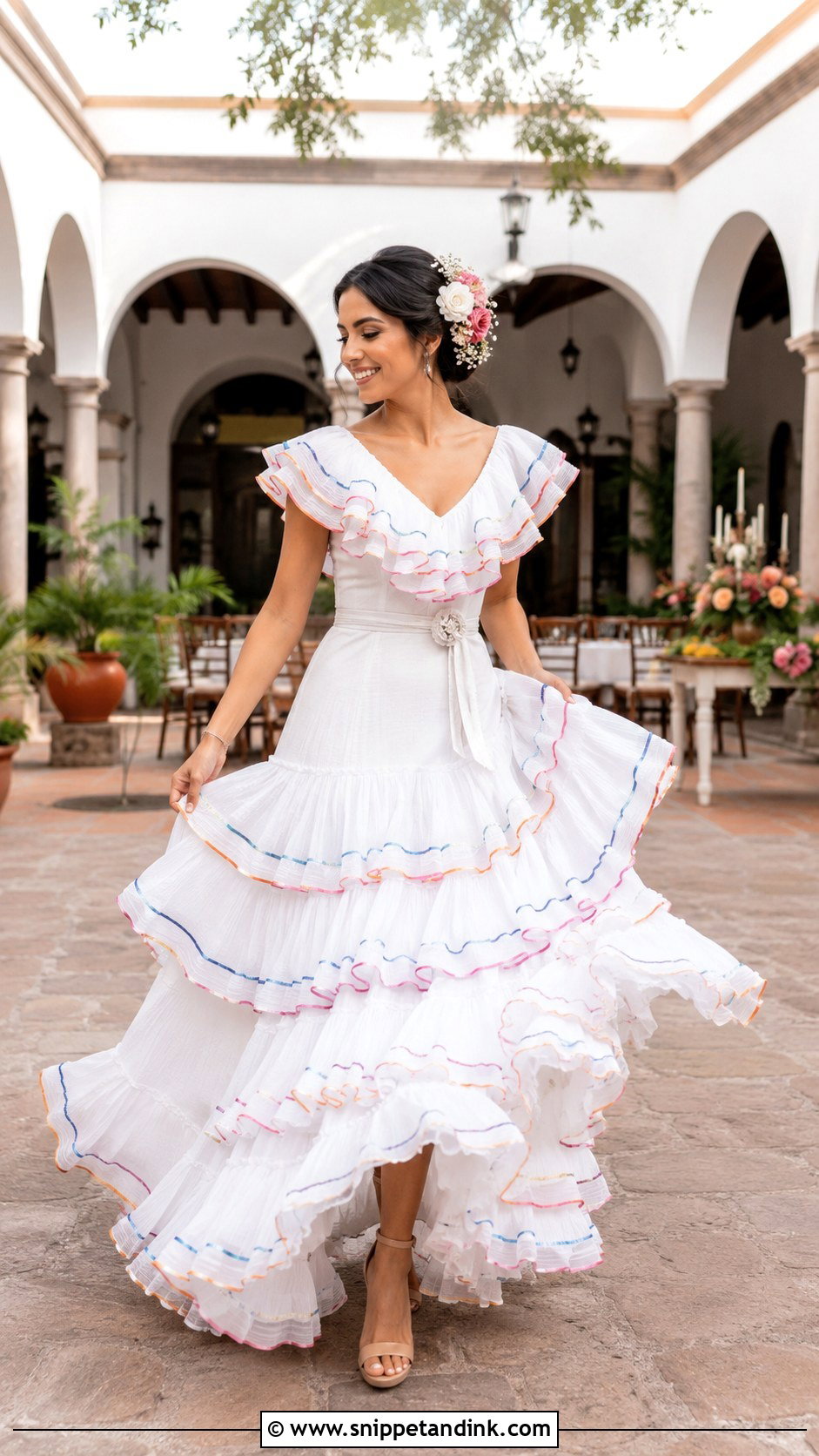
Ruffles give movement, and a ruffled skirt swings when you dance. That’s the fun of it. Tiered ruffles in white or ivory keep it bridal; ribbon trim or coloured embroidery adds personality. Layers of cotton ruffles crush when you sit, though, so steam the dress right before the ceremony and again before the reception photos. Keep accessories quiet: a floral comb and little else.
9. Mexican Floral Embroidered Wedding Dress
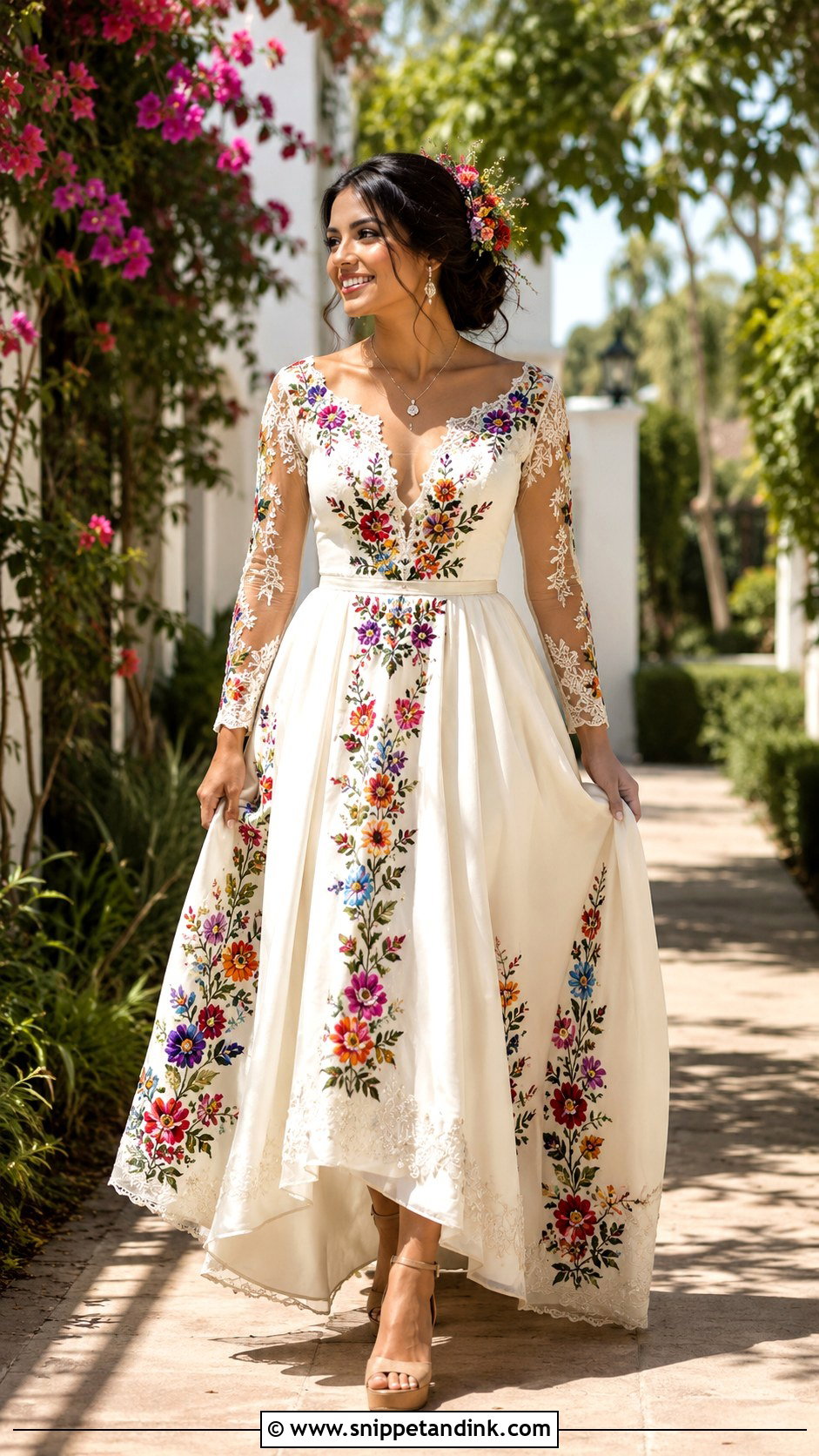
Floral embroidery on a white or cream base can run across the bodice, sleeves, skirt or train. Big flowers feel celebratory, small borders feel delicate. Here’s the step people skip: hold your bouquet against the embroidery at the fitting, or bring a photo of it. Thread colours that clash with the flowers become obvious in every photo.
10. Mexican Boho Wedding Dress
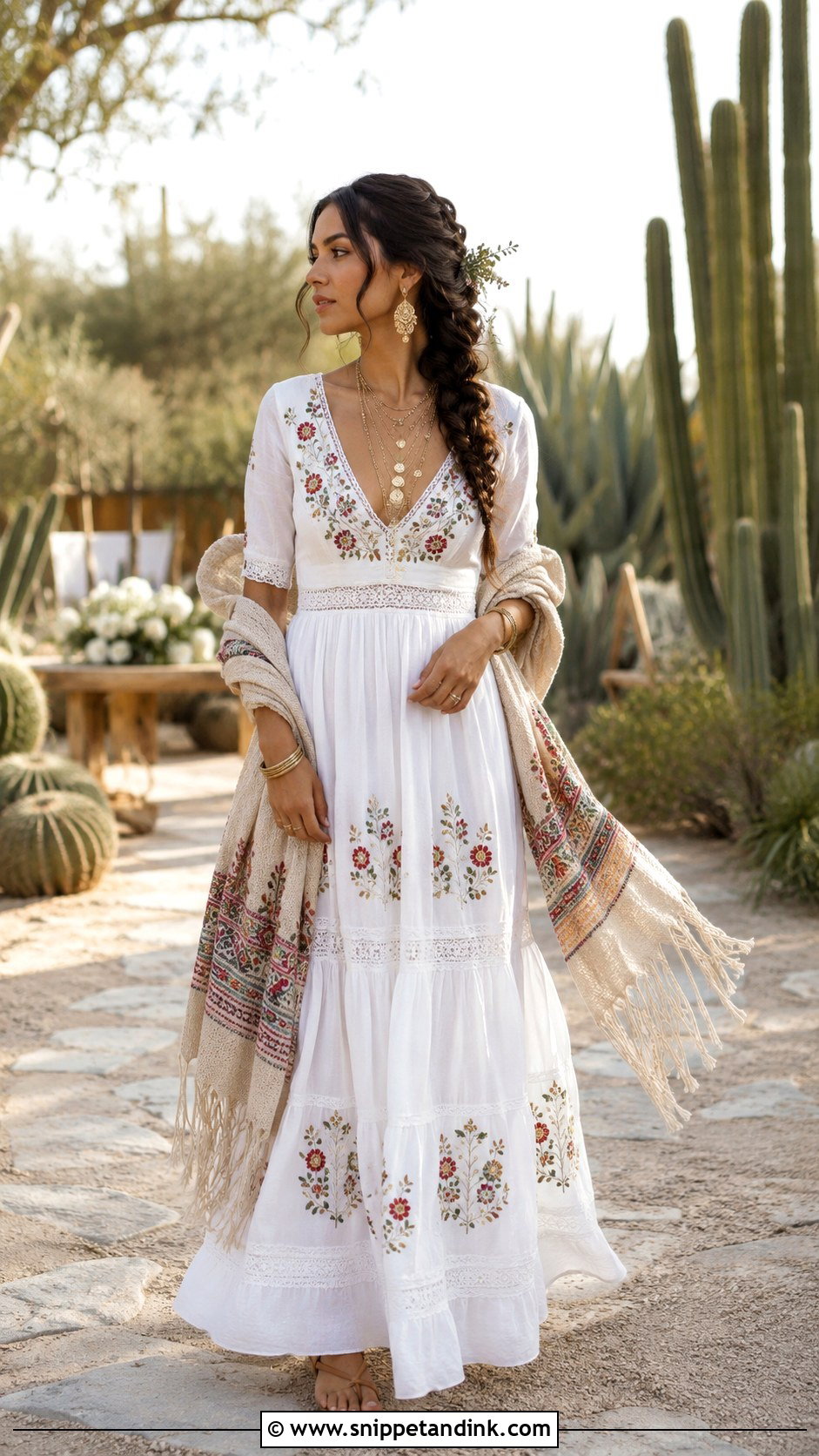
The boho version is a flowing white dress in cotton, gauze or linen, with floral embroidery and tassel ties. Add a woven rebozo, flat sandals, layered gold and loose waves or a braid. Gauze and linen wrinkle the moment you sit, so accept the crumpled texture as part of it or choose a cotton blend. Outdoor, beach and rustic venues suit it.
11. Mexican Charra Wedding Dress
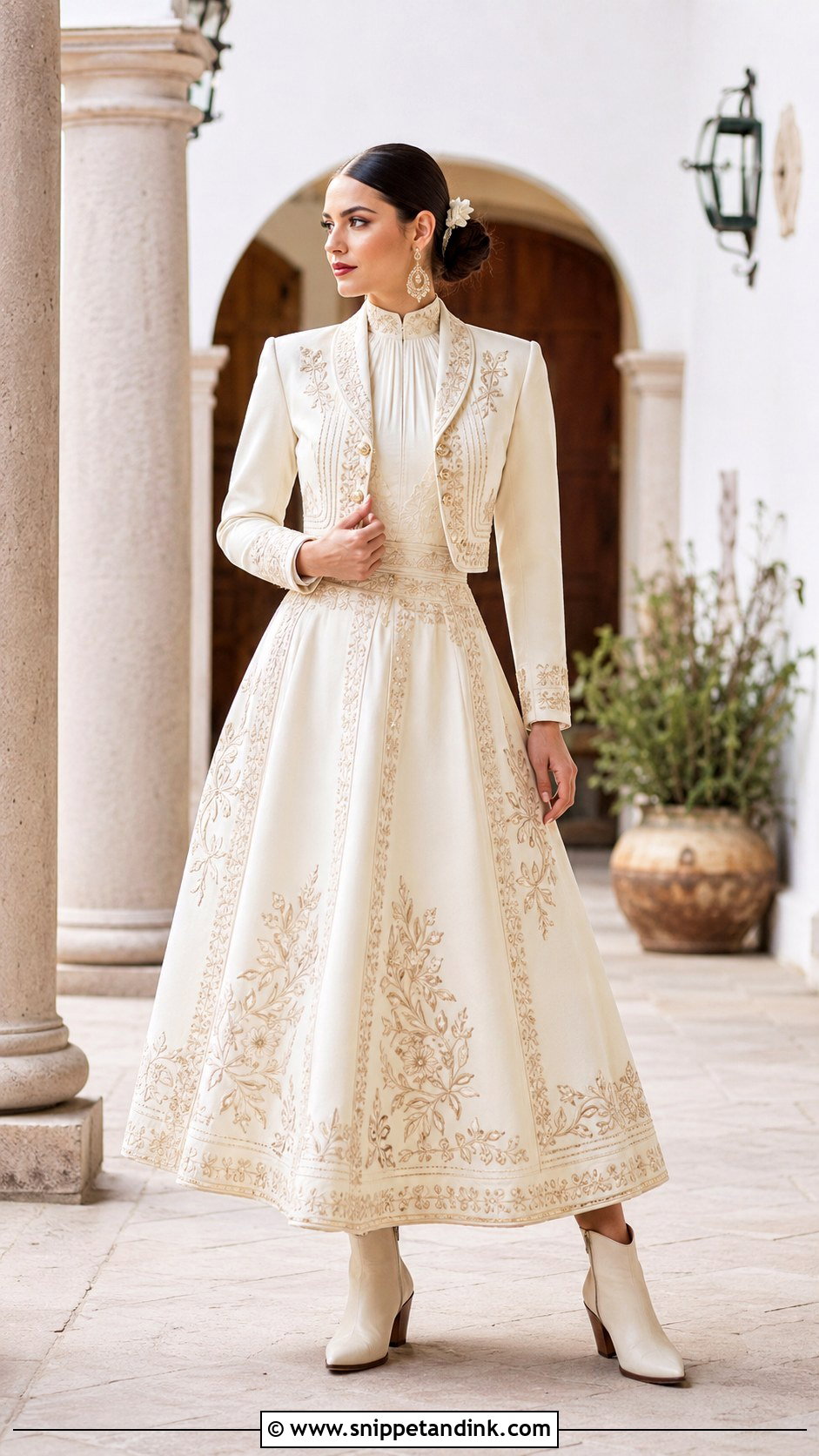
Charra dress comes from the riding tradition of the charrería, and a bridal version takes its structure: a fitted short jacket, a high-neck blouse, a long skirt with embroidery or silver buttons. White, ivory or soft beige keep it bridal; black accents add contrast. Tailoring is everything here. The jacket must close cleanly across the bust and the sleeves must let you lift a bouquet. Heeled boots and a sleek bun finish it.
12. Mexican China Poblana Wedding Dress
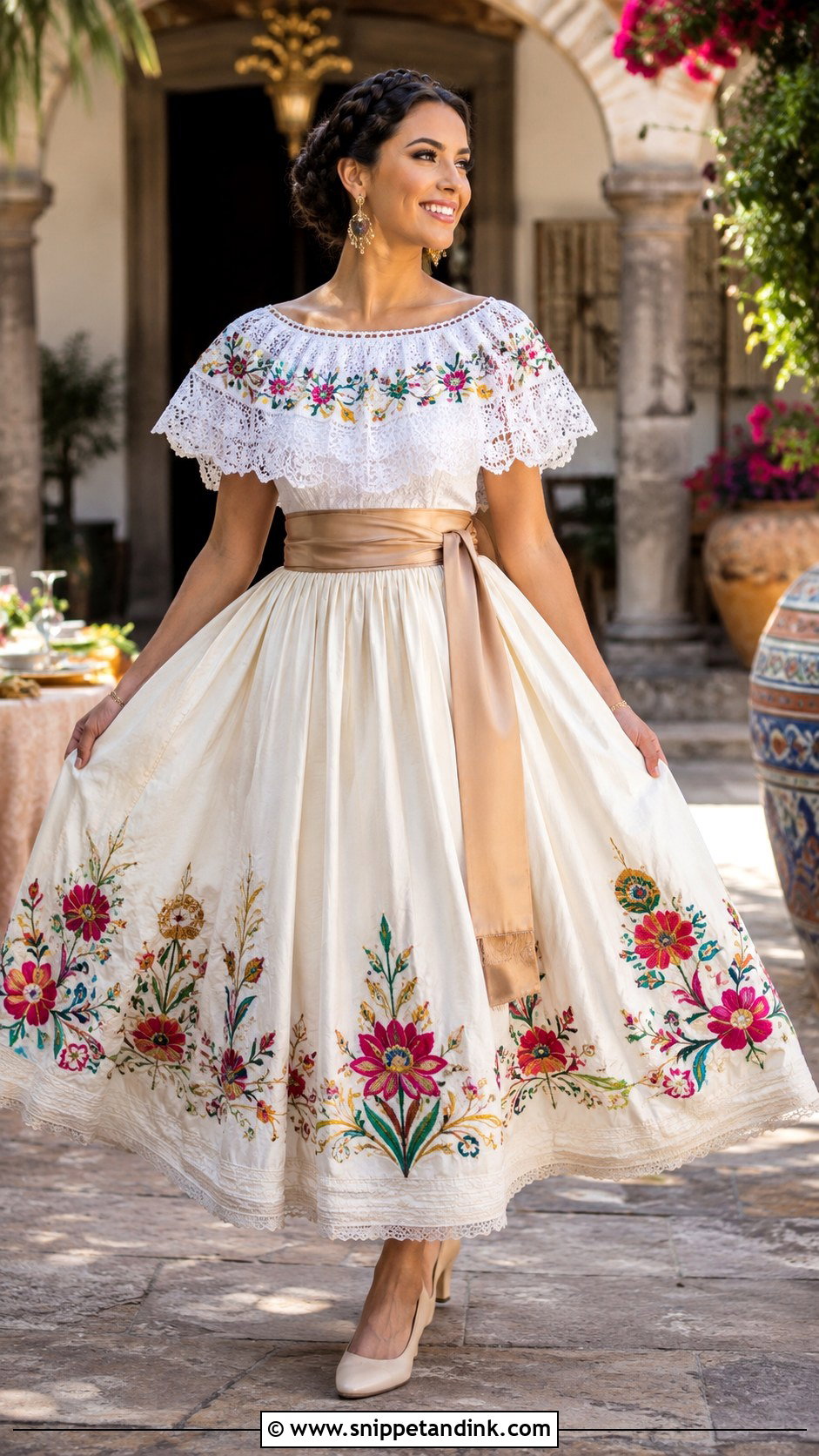
The china poblana is one of Mexico’s best-known folk costumes: a white blouse with beaded or embroidered yoke and a full skirt, traditionally red and green with sequins. In bright colours it can tip toward costume at a wedding. I suggest an ivory skirt with red, green or blue embroidery for the bride, kept as a reception or second look. A braided updo and gold earrings fit the folkloric mood.
13. Mexican Yucatan Wedding Dress
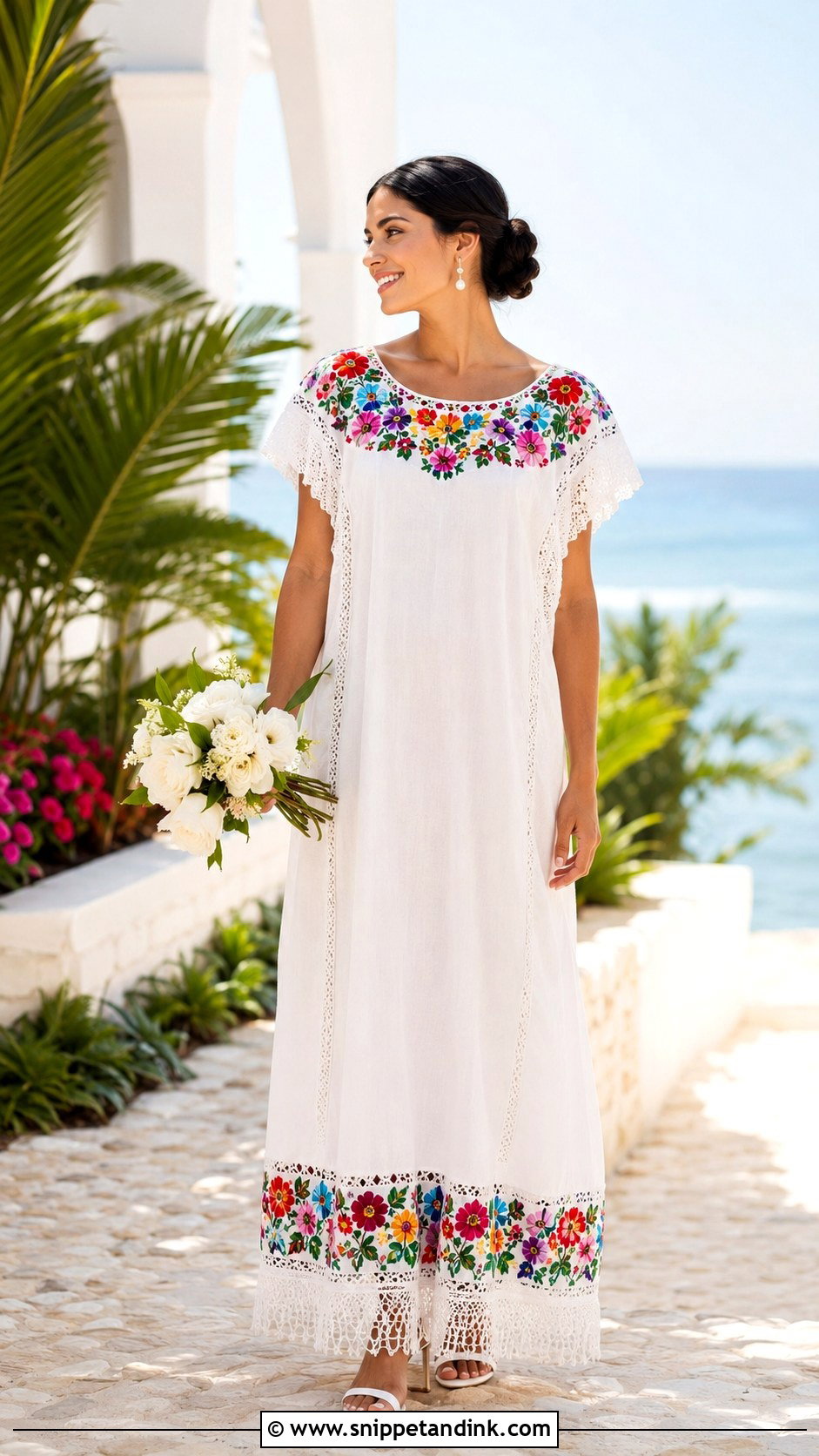
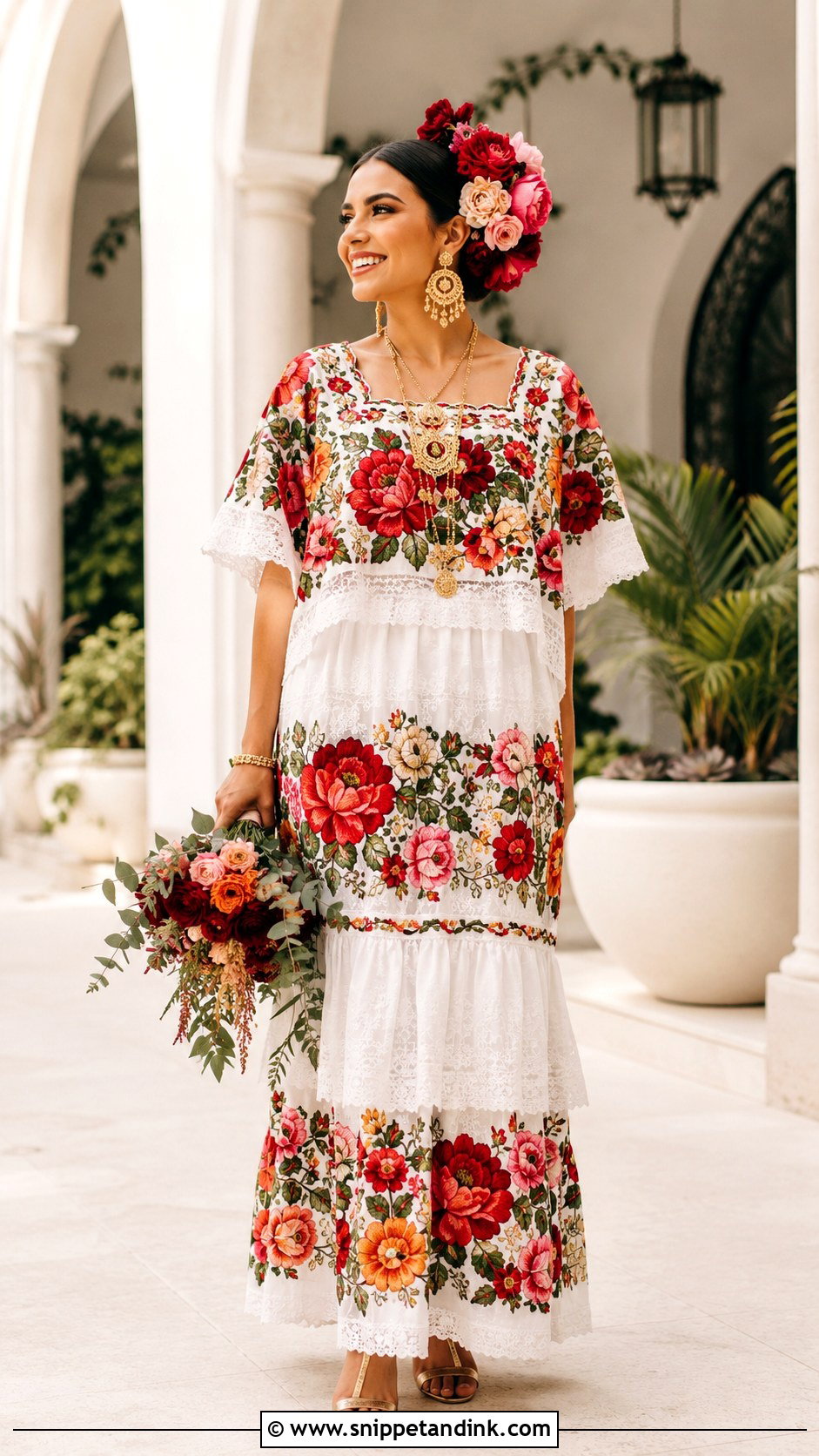
In Yucatán the formal dress is the terno: a white hipil over an underskirt, with a doble band at the yoke, all embroidered with flowers in cross-stitch or machine stitch, and lace at the hem. It’s made for heat. Breathable cotton keeps you cool, and a fine rebozo adds coverage without weight. White sandals and a smooth low bun suit it. The embroidery at neck and hem is usually the most detailed, so keep necklaces off.
14. Mexican Oaxaca Wedding Dress
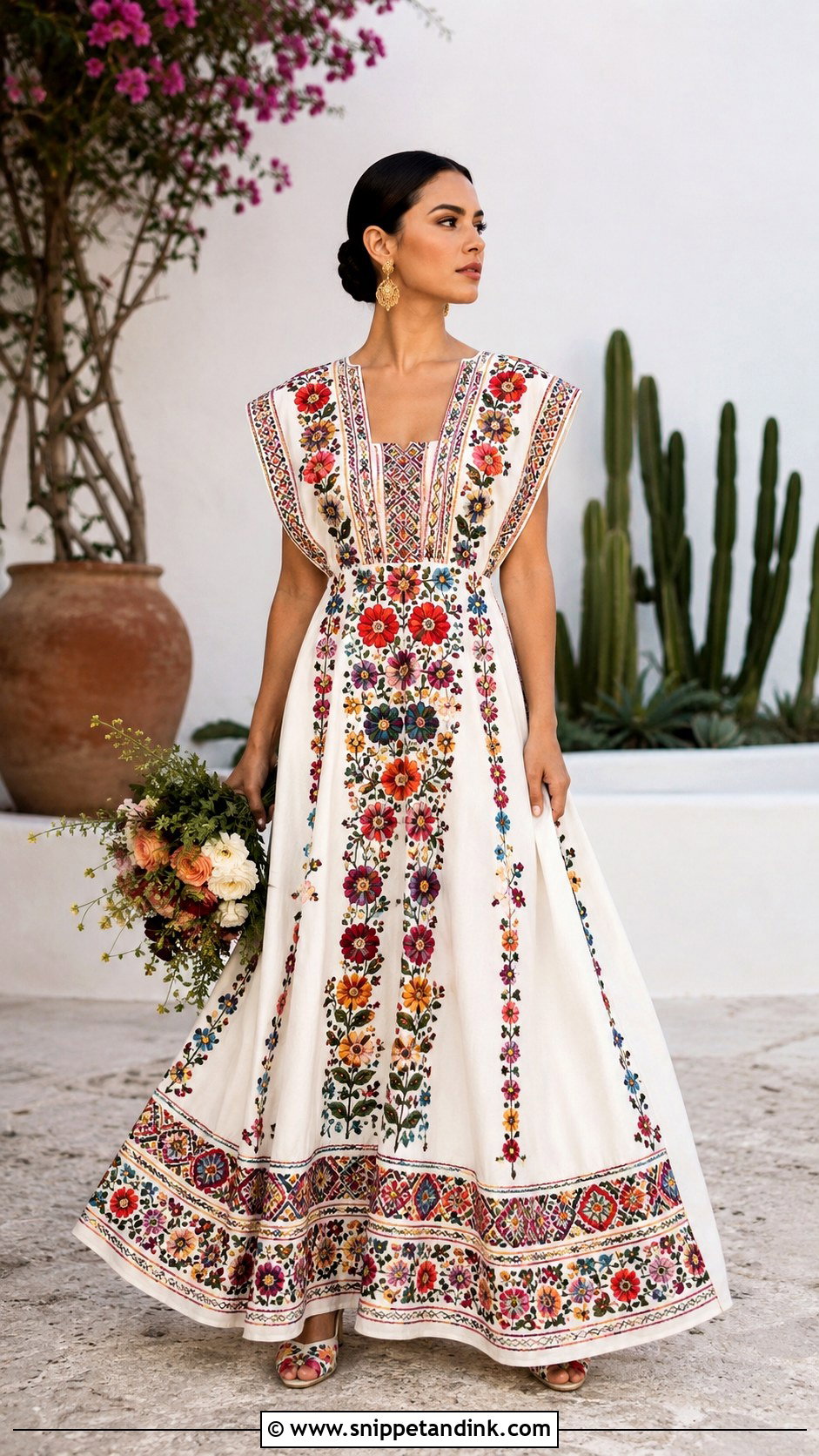
Oaxaca’s textile traditions vary village by village, from bold floral embroidery to geometric weaving. A hand-embroidered dress or a huipil-style gown in natural cotton connects you to that craft. White, black, red and deep jewel tones all appear depending on the community. Keep everything else simple, because the textile is the story. If you can, buy directly from the makers or a cooperative so the money reaches the women who stitched it.

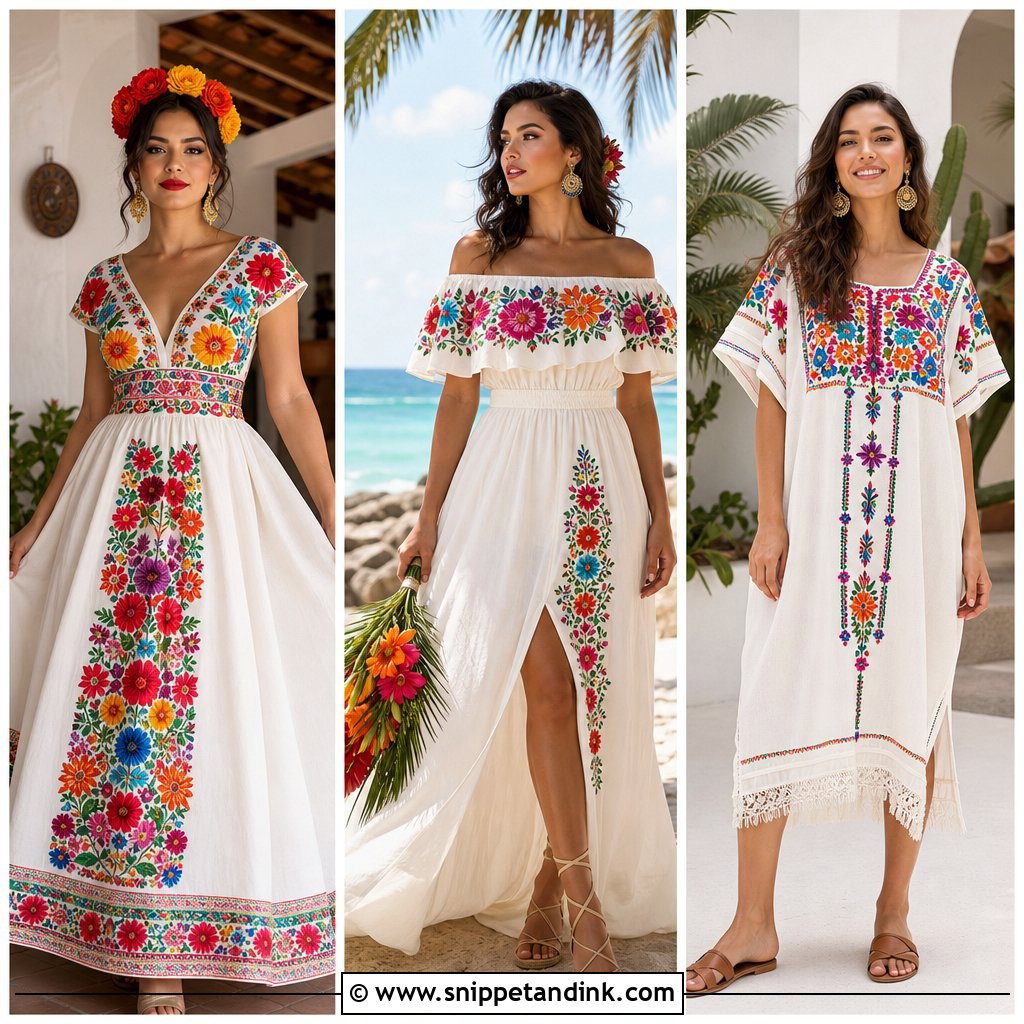
15. Mexican Chiapas Wedding Dress
The Chiapas dress most people recognise is the chiapaneca: black or white tulle covered with large, brightly coloured flowers in silk thread. It’s dramatic. For the bride, a white base with coloured flowers keeps it bridal; a black version makes a confident reception change. Tulle snags on rough surfaces and jewellery clasps, so I keep bracelets off and choose smooth heels. The flowers show clearly in full-length portraits.
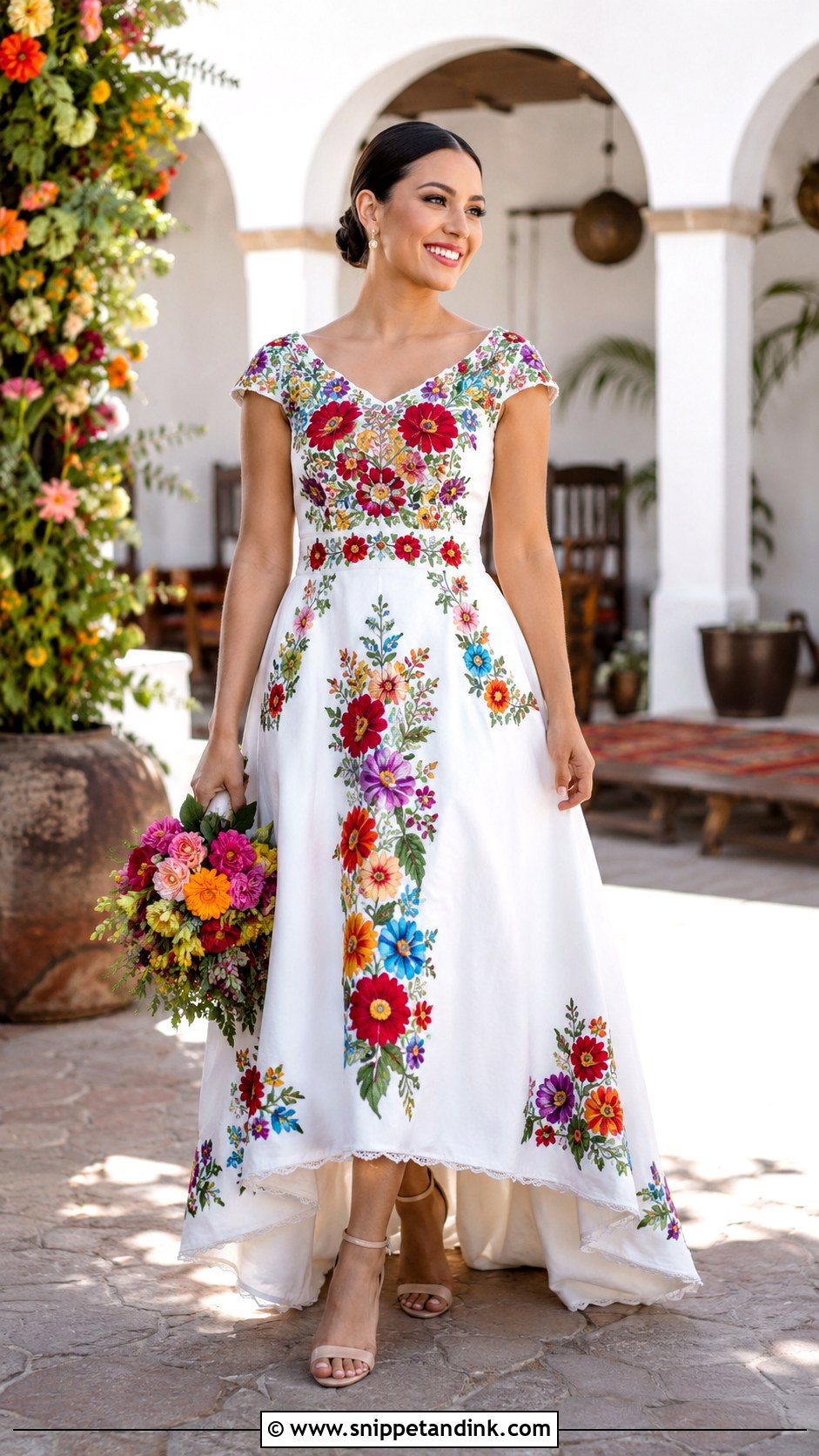
16. Mexican Puebla Wedding Dress
Puebla is known for embroidered blouses and the full skirts of the china poblana tradition, and a Puebla-inspired wedding dress borrows that cheerful feeling. A white blouse-style dress or full gown with floral and geometric stitching, a fitted waist and a satin ribbon belt is my usual version. It dresses up with lace trim and a veil or down with sandals and fresh flowers. A soft updo keeps the neckline embroidery visible.
17. Mexican Wedding Dress With Flower Crown
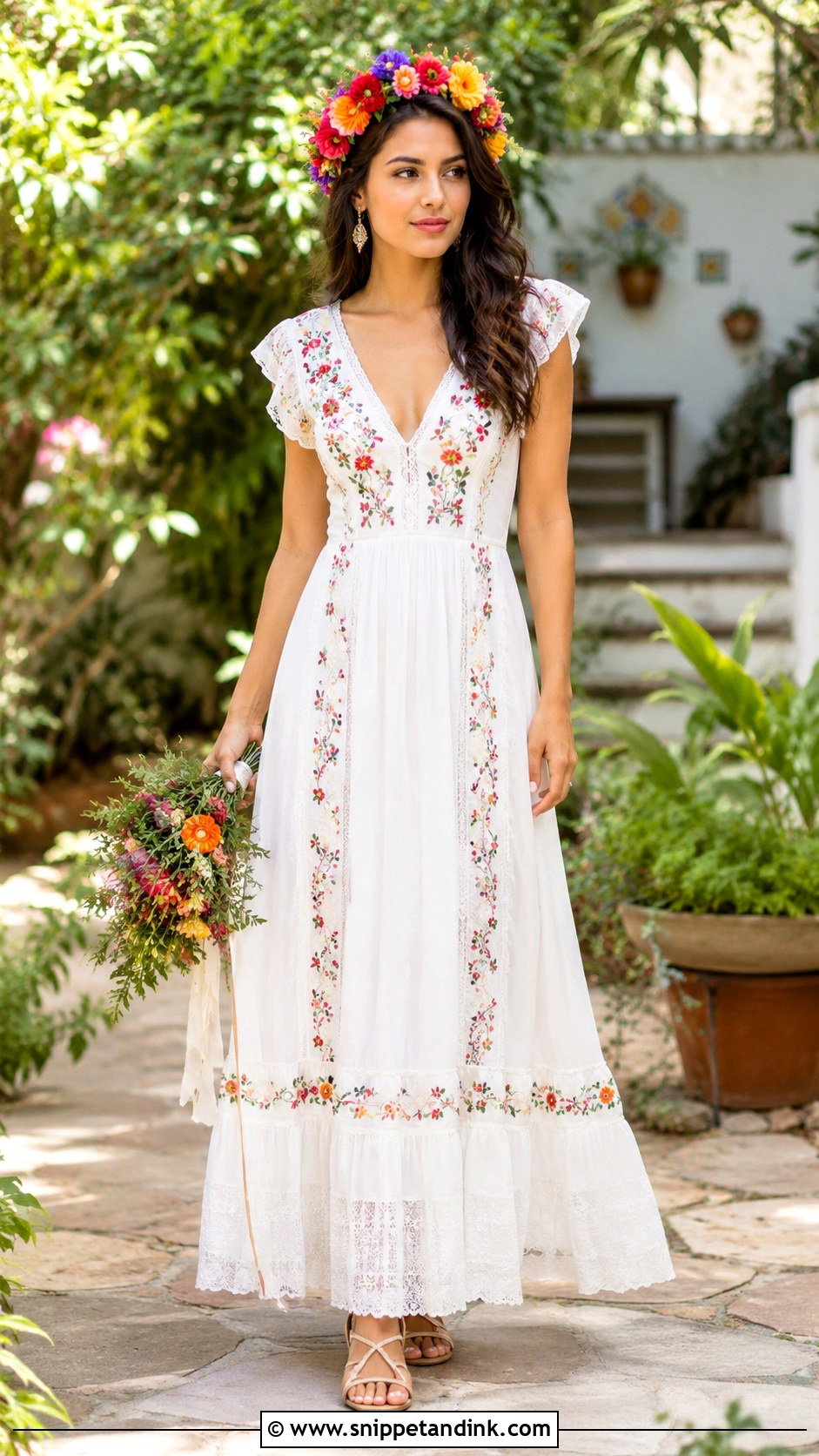
Flower crowns fit Mexican bridal dressing naturally, but proportion decides whether it works. On a heavily embroidered gown, I keep the crown small and close to the head. A simple dress can carry a fuller one. Roses, marigold-like blooms, greenery and small white flowers all suit, depending on season. Fresh crowns wilt in hot sun within a few hours, so I order hardy flowers and keep the crown chilled until you put it on.
18. Mexican Wedding Dress With Red Embroidery
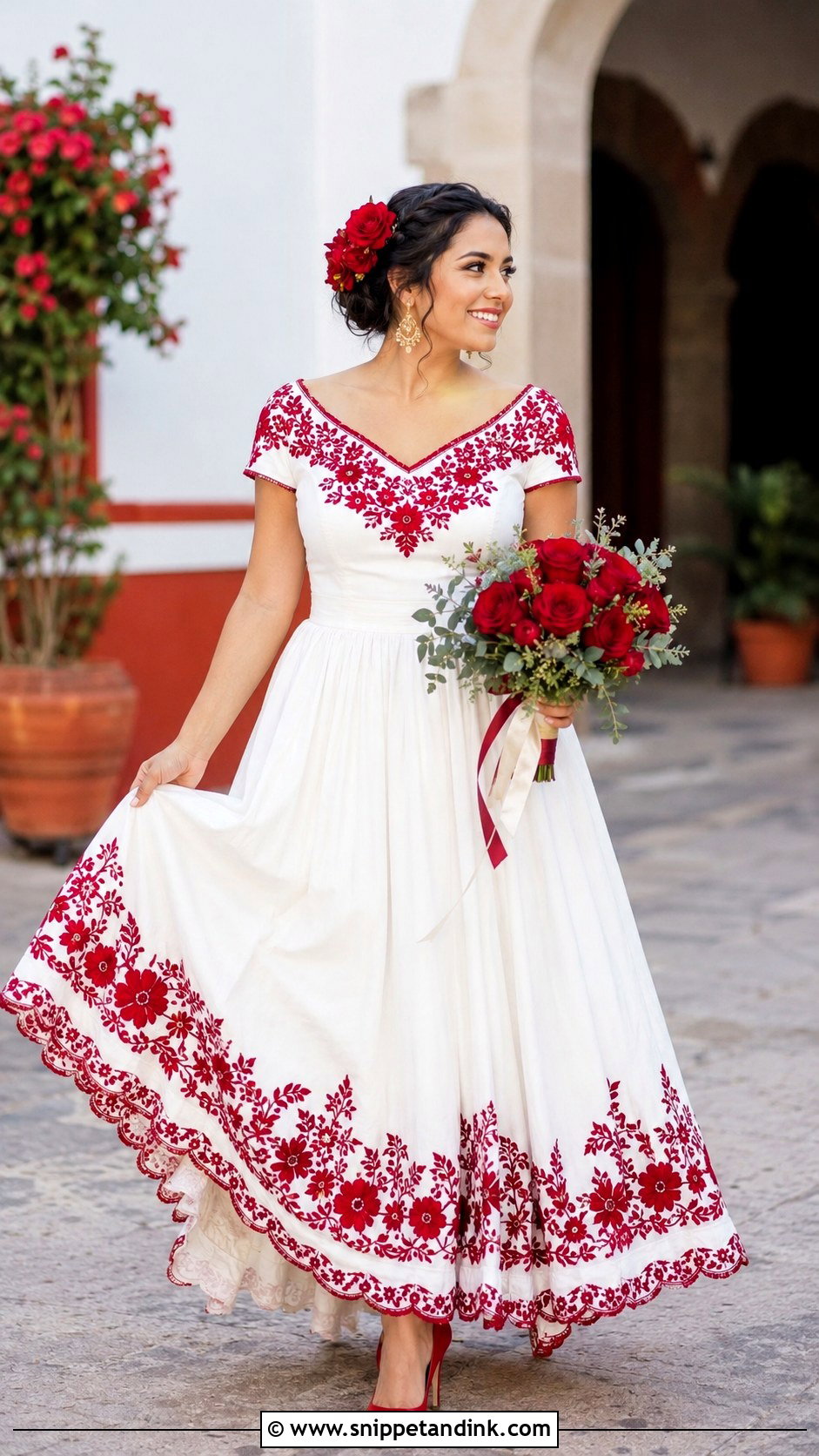
Red thread on white is classic and warm. Stitching around the neckline, sleeves, waist or hem gives colour without losing the bridal base. Red shoes or a red floral hairpiece repeat it; red roses in the bouquet finish it. One warning from experience: cheaper red embroidery thread can bleed onto white cotton if the dress gets wet, so ask the maker whether the thread is colourfast.
19. Mexican Wedding Dress With Blue Embroidery
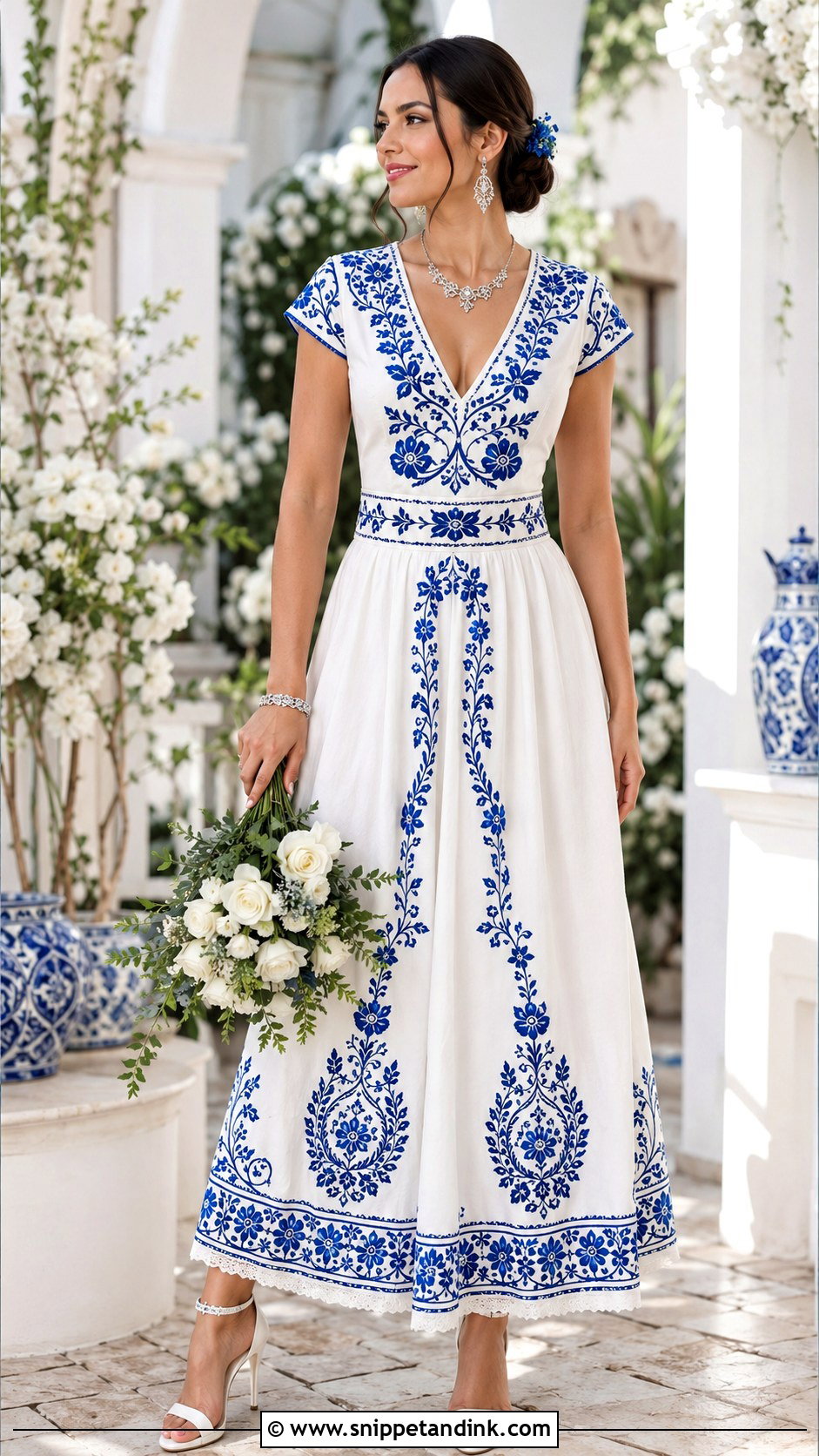
Blue embroidery on white cotton, lace or linen is cooler and calmer than red. Floral, vine or geometric patterns all suit, and it doubles as something blue. Silver jewellery sits better with blue thread than gold. A blue ribbon in the hair or an embroidered rebozo can echo it, but stop at one echo or it starts to look matched.

20. Mexican Wedding Dress With Colorful Embroidery
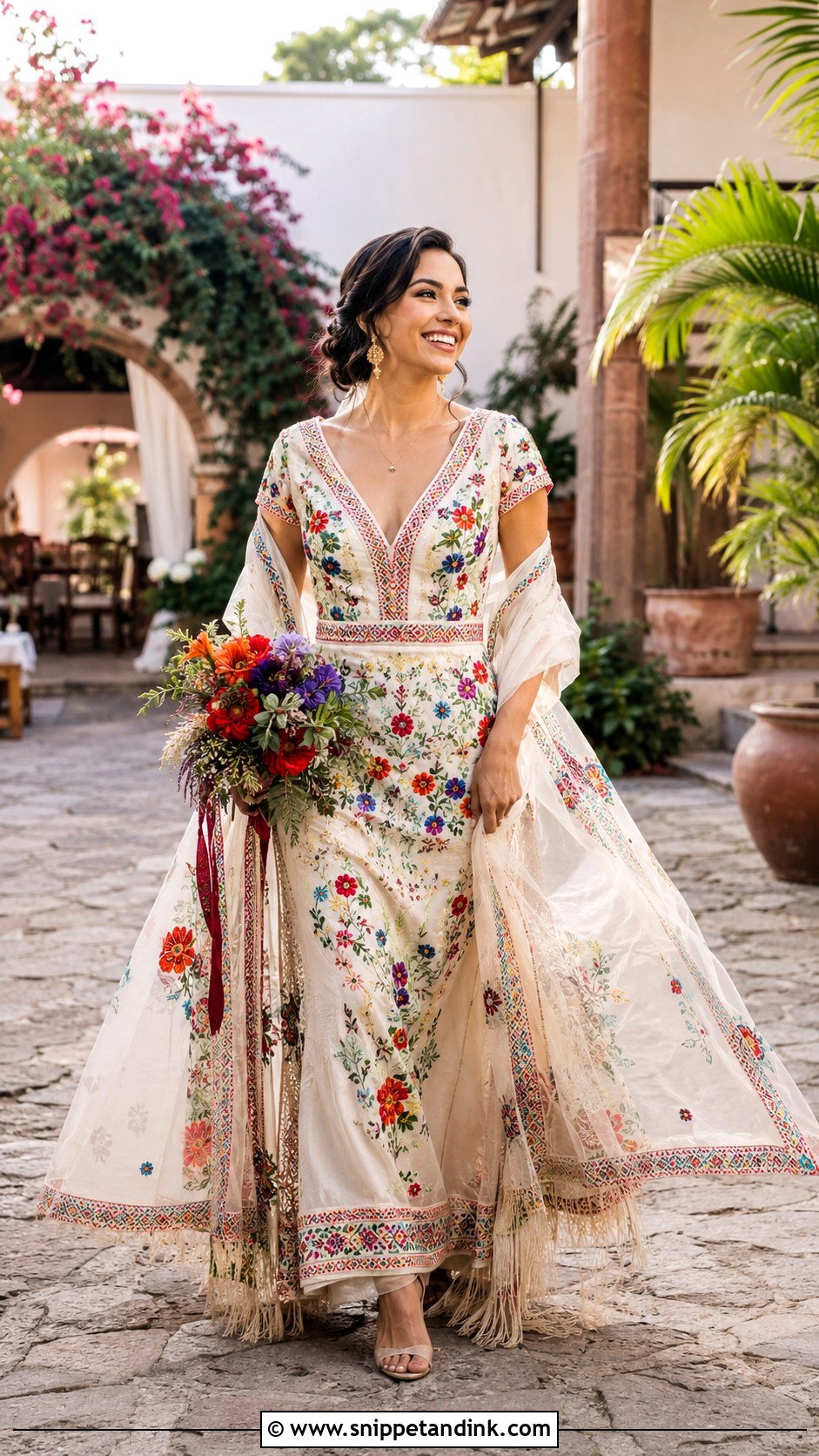
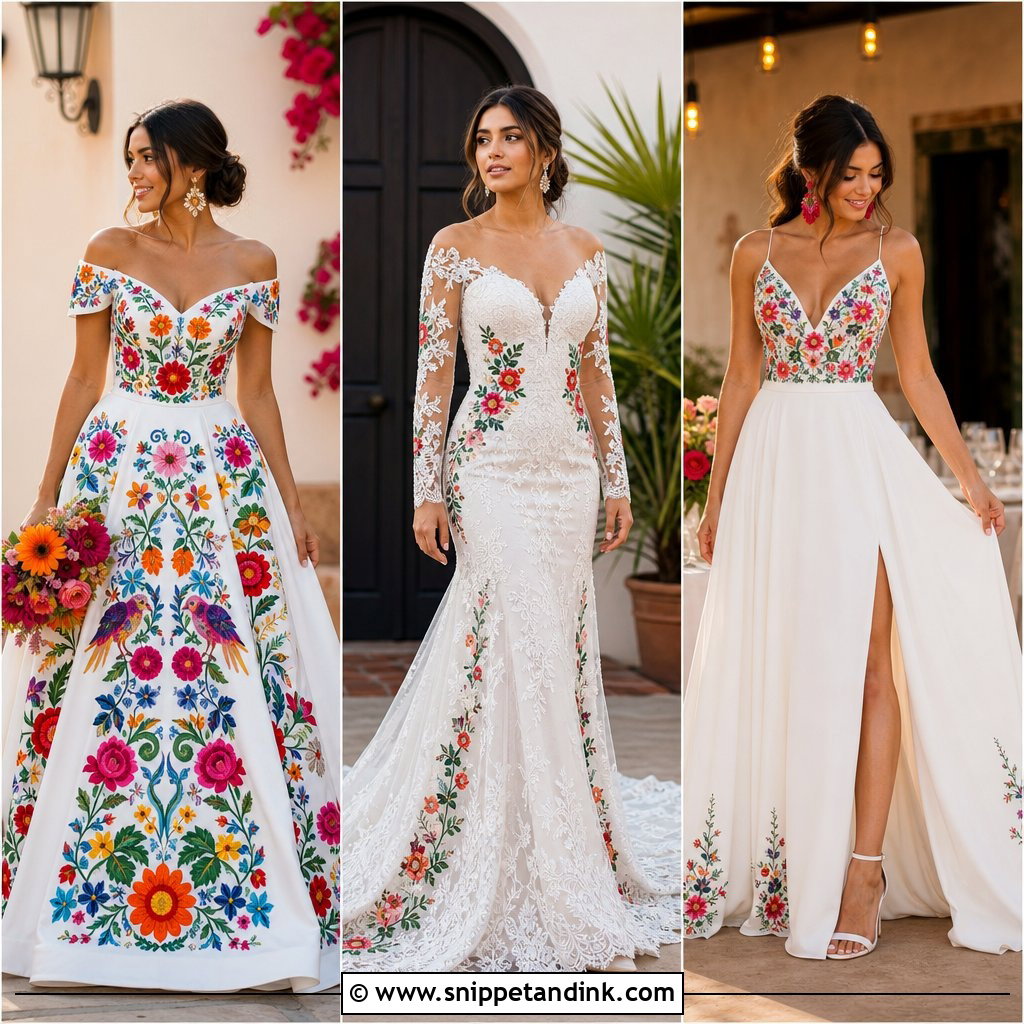
Multicolour embroidery of flowers, birds, vines or geometric stitching is the most joyful version, and the easiest to overdo. Look at placement: bodice, sleeves or hem, rarely all three. Keep shoes neutral and jewellery small. My usual trick is to build the bouquet from two embroidery colours plus greenery so the whole look reads together.
21. Mexican Wedding Dress With Long Sleeves
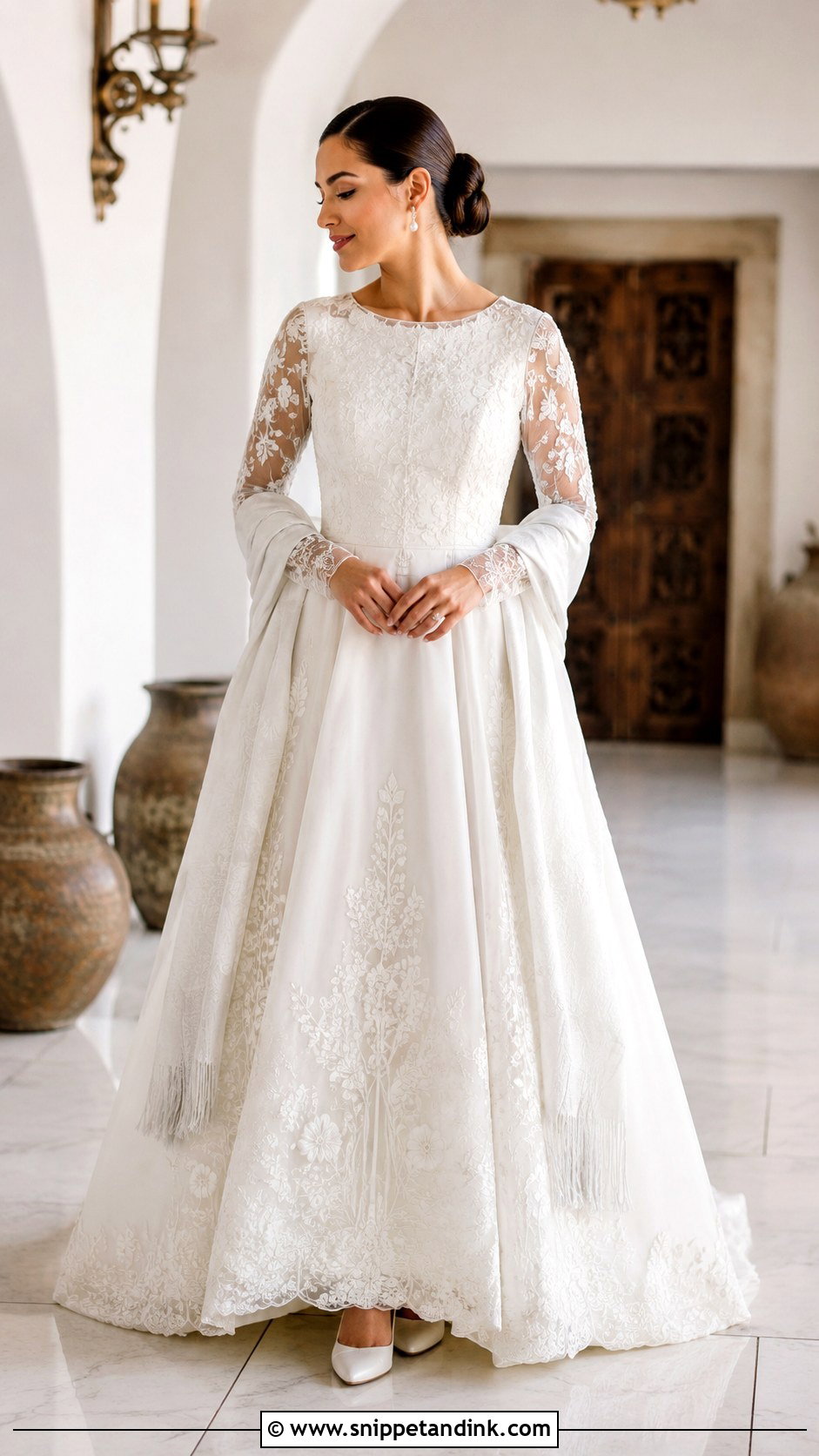
Long sleeves bring modesty and give the embroidery more space. Lace, embroidered cotton, sheer cotton or soft ruffles all suit. In a hot outdoor ceremony, though, a long-sleeved lace gown gets uncomfortable fast; choose cotton voile or sheer sleeves instead. Raise your arms at the fitting. If the sleeves are set too low, you won’t be able to hug anyone.
22. Mexican Wedding Dress With Full Skirt
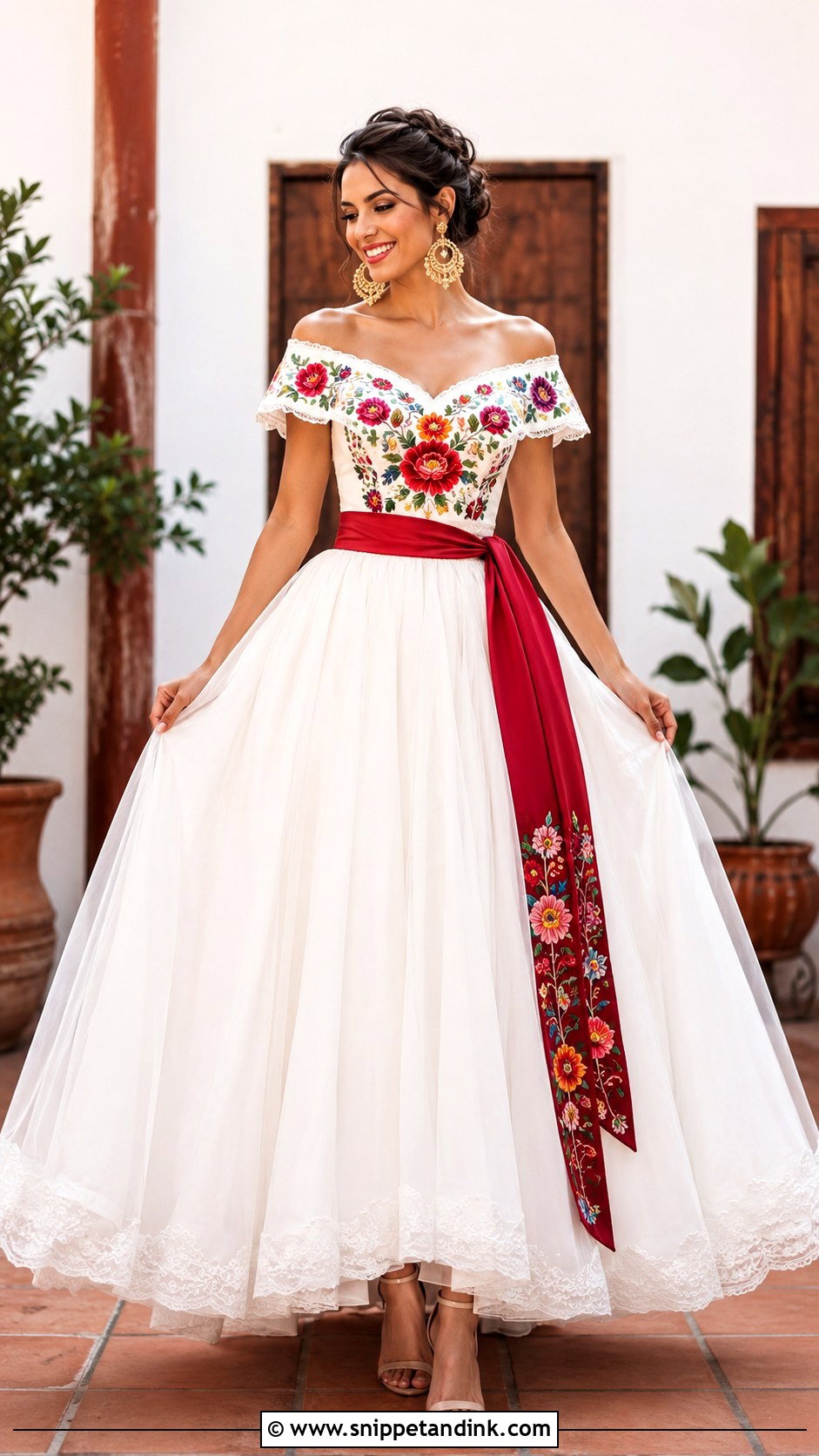
A fitted embroidered bodice over a wide skirt gives volume without a modern ball gown. The skirt can stay plain or carry embroidery, lace or ribbon. Volume comes from layers, and layers add heat and weight. I build these skirts from lightweight cotton petticoats rather than stiff crinoline, so the skirt moves and you can sit in a church pew.
23. Mexican Wedding Dress With Embroidered Veil
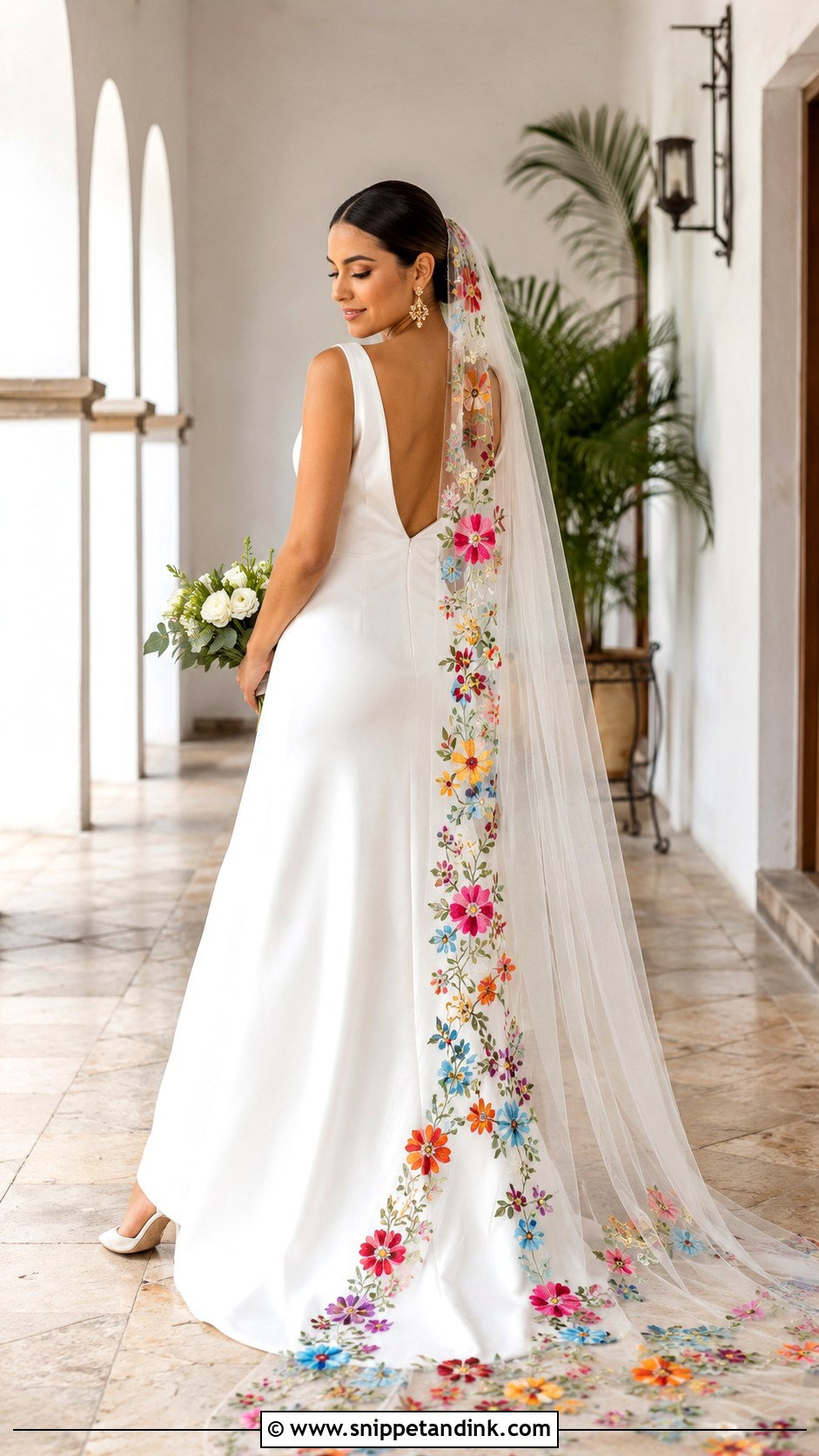
An embroidered veil turns a simple white dress into something special. Floral embroidery, lace edging or subtle coloured thread can echo the dress or carry the whole look. Embroidery adds weight to a veil, so it pulls on the hair. I set it on a firm, well-pinned base with a comb sewn in, and test it while the bride turns her head quickly. It shows best from the back during the ceremony.
24. Mexican Wedding Dress With Embroidered Boots
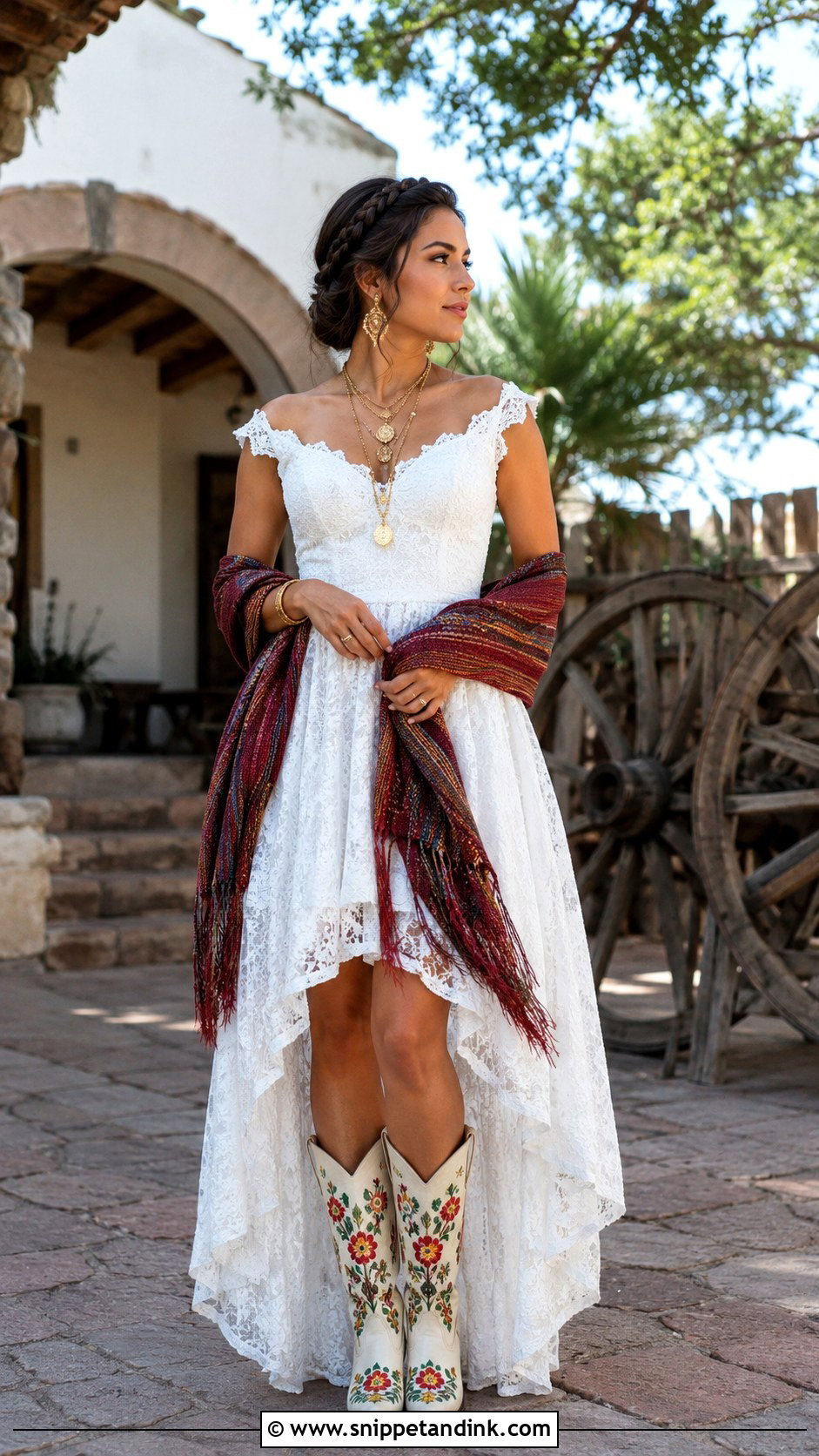
Embroidered boots are practical at ranch and garden venues where heels sink. The dress needs to sit above the ankle or have a high-low hem so the boots show. White, tan or colourful embroidered leather all work. Break the boots in for a couple of weeks beforehand; new boots and a dance floor are a painful combination. A rebozo and a braid tie it together.
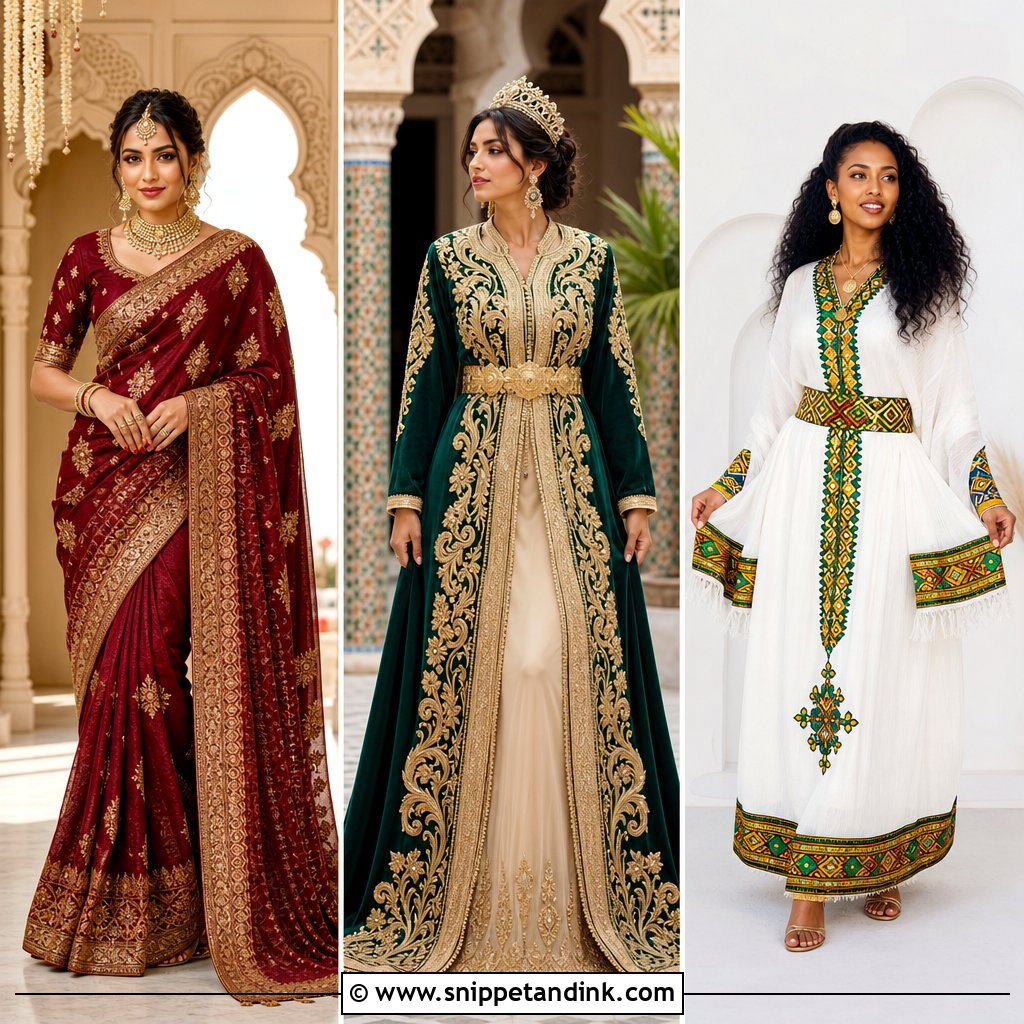
25. Modern Traditional Mexican Wedding Dress
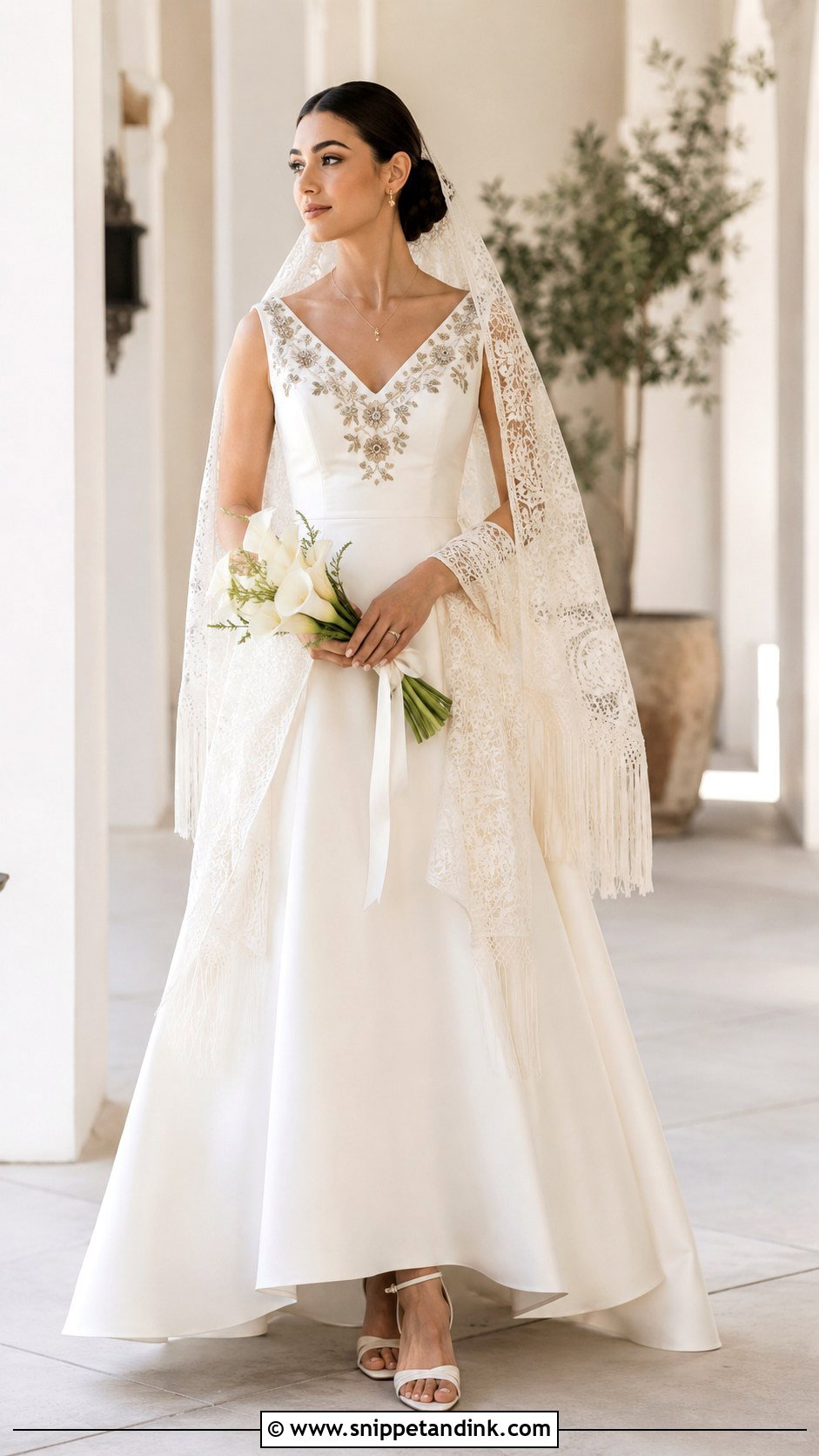
A modern version blends one or two heritage details into a clean silhouette: an A-line, sheath or wrap gown with embroidered sleeves, a lace trim, a rebozo or a mantilla. Pick the detail that means most to your family and let it carry the meaning. Everything else stays simple. It suits brides who want a contemporary shape and a clear nod to where they come from.
The Lazo, the Arras and Your Dress
In a Catholic Mexican wedding, the lazo, a large rosary or looped cord, is placed over the couple’s shoulders, and the groom receives the thirteen arras coins. Both rituals affect styling more than people expect.
- A long mantilla or rebozo will be under the lazo for several minutes; make sure the lace is pinned so the cord doesn’t drag it sideways.
- Beaded lazos can catch on heavy embroidery or tulle. Ask your padrinos to lift it straight up rather than slide it off.
- Kneeling is part of the mass. Try kneeling in your dress at the final fitting, and check where a long skirt and train settle.
After the wedding
Hand-embroidered cotton is easier to care for than silk, but it needs gentle handling. Spot test the brightest thread first. Wash by hand in cold water with a mild soap, never wring it, and dry it flat in the shade so the colours don’t fade. Store it folded in cotton or acid-free tissue, away from plastic, and refold it along different lines every year or so to avoid permanent creases.
Which Region Is Your Dress Speaking For?
Each dress here belongs to a place: a huipil, a Tehuana outfit, an embroidered gown, a lace mantilla, a rebozo, a charra jacket. Start with the region and the family connection, then think about fabric, weather and how much you’ll move. A traditional Mexican bridal look doesn’t follow one formula. It can be quiet or loud, old or modern, as long as it’s worn with care for the people who made the tradition.
You'll Like These Ideas:



Leave a Reply