
Venda bridalwear starts with the cloth. The striped nwenda or minwenda cloth carries the colors people recognize from across a field, and traditionally it is wrapped at the waist or draped over the upper body. Today designers cut the same textile into fitted gowns, trains, sleeves and two-piece sets, and the challenge for a stylist is keeping the stripe readable while the shape changes. Every look below can be adjusted for body shape, ceremony setting and comfort, from a classic wrap to a white gown with Venda panels. I have styled each one as a full outfit, down to the shoes you will need on grass.
Cutting Striped Nwenda So the Lines Meet
Striped cloth is less forgiving to sew than a plain fabric. Every seam is a place where the stripes either line up or visibly jump, and on a bridal gown guests notice. When I plan a Venda dress with a dressmaker, the stripe direction is the first decision, before the neckline or sleeves.
- Horizontal stripes across the body widen the area they cover, so I keep them for skirts, hems and borders on most brides.
- Stripes running vertically lengthen the figure and suit columns and fitted bodices.
- Stripes cut on the bias form chevrons at a center seam, which looks deliberate on a bodice but is hard to match on a full skirt.
- Buy more cloth than a plain-fabric pattern asks for. Matching stripes eats extra length, and a short bolt forces compromises at the side seams.
Wash or soak a small offcut before cutting. Some printed cottons release dye in water, and you want to know that before a red stripe meets a white lace panel. If it bleeds, have the white sections lined and keep the dress dry-cleaned only.
Finally, bring the actual bolt to your first fitting. Different batches of the same pattern can vary in shade, so all panels should come from one length.
1. Classic Venda Minwenda Wrap Wedding Dress
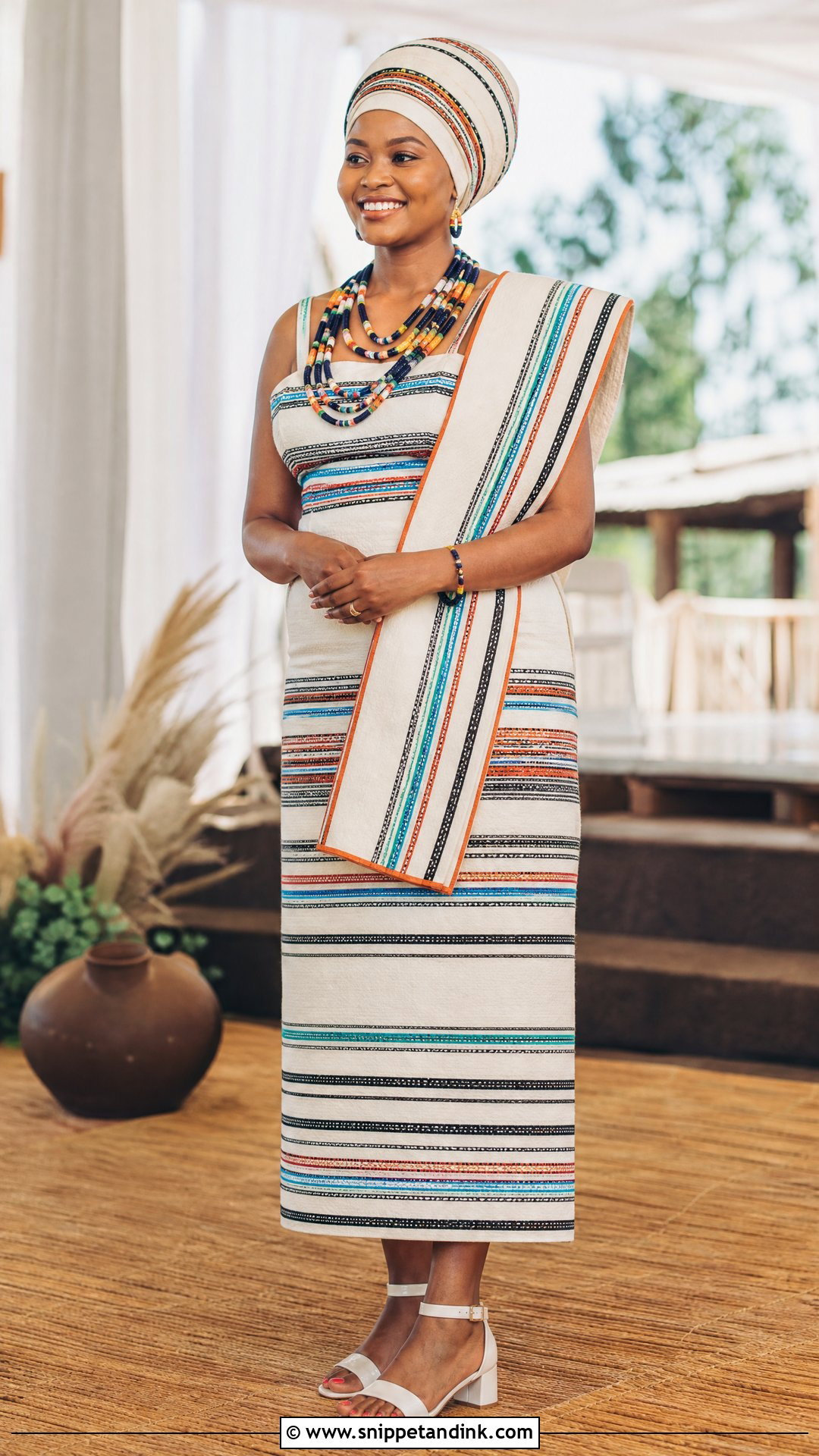
The classic minwenda wrap keeps the outfit closest to how the cloth has always been worn, and it is the look family elders tend to respond to most warmly. A striped wrap skirt sits over a fitted top with comfortable coverage, and a second length can be draped over one shoulder. The weak point of any wrap is the waist, so I stitch an inner waistband and pin the overlap at two points, never one, before the bride stands up to dance. A matching headwrap, a few neat strands of beads and low block-heel sandals complete it. Keep the makeup natural and let the cloth lead. It suits an outdoor family ceremony best.
2. Venda Mermaid Wedding Dress
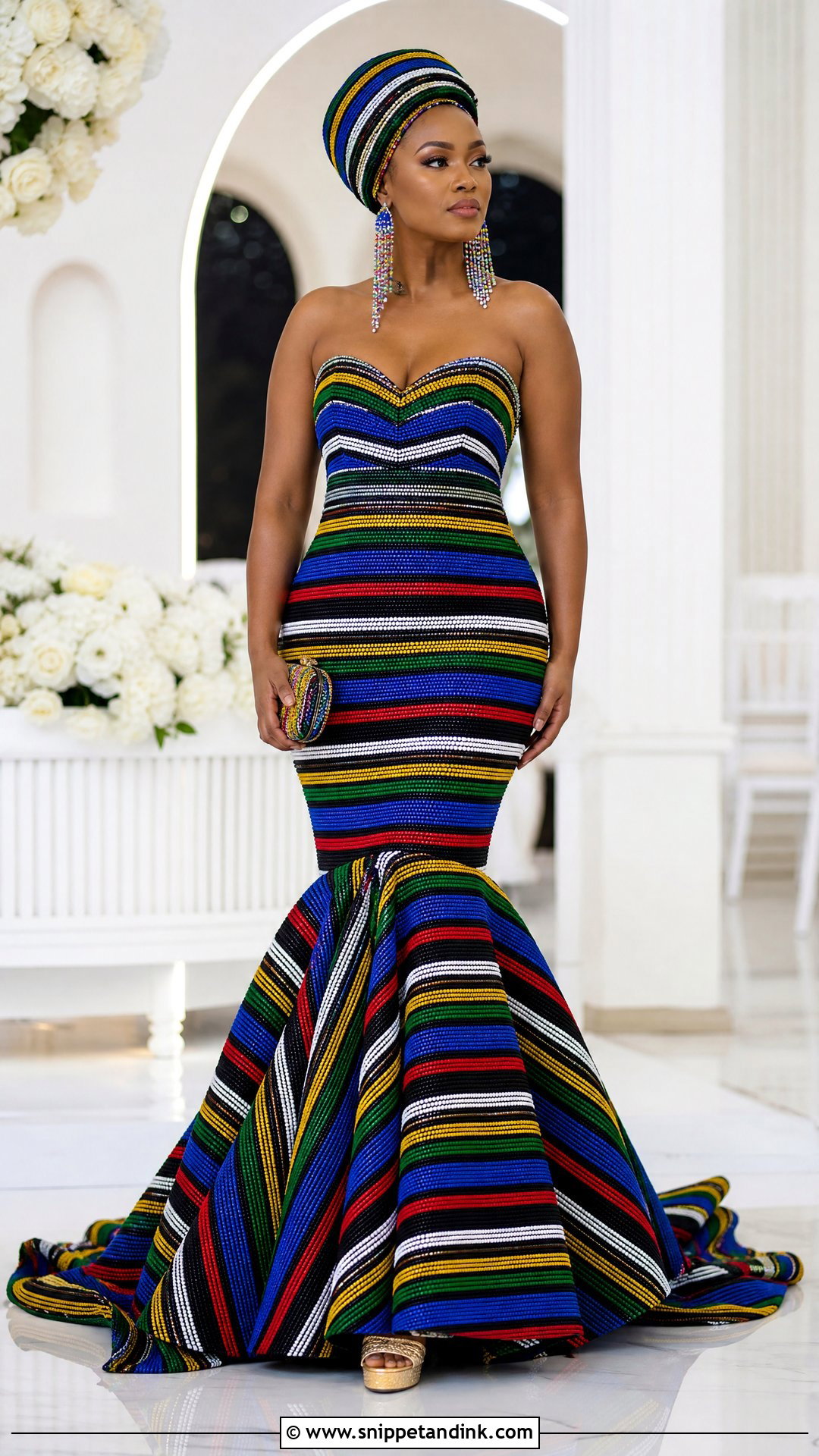
A mermaid cut shows off a figure, but on striped cloth it also bends the stripes around the hips, which can look thrilling or messy depending on the cutter. I ask for the striped fabric in panels along the bodice and skirt rather than the whole gown when the bride is curvy, so the stripes stay straight where the body curves most. A structured sweetheart neckline holds the shape, and detachable straps add security. A wrapped headpiece, beaded earrings, a small clutch and heels with a sturdy base finish it. Keep the train to a sweep. It gives formal portraits modern tailoring with a clear Venda identity.
3. Venda Ball Gown Wedding Dress
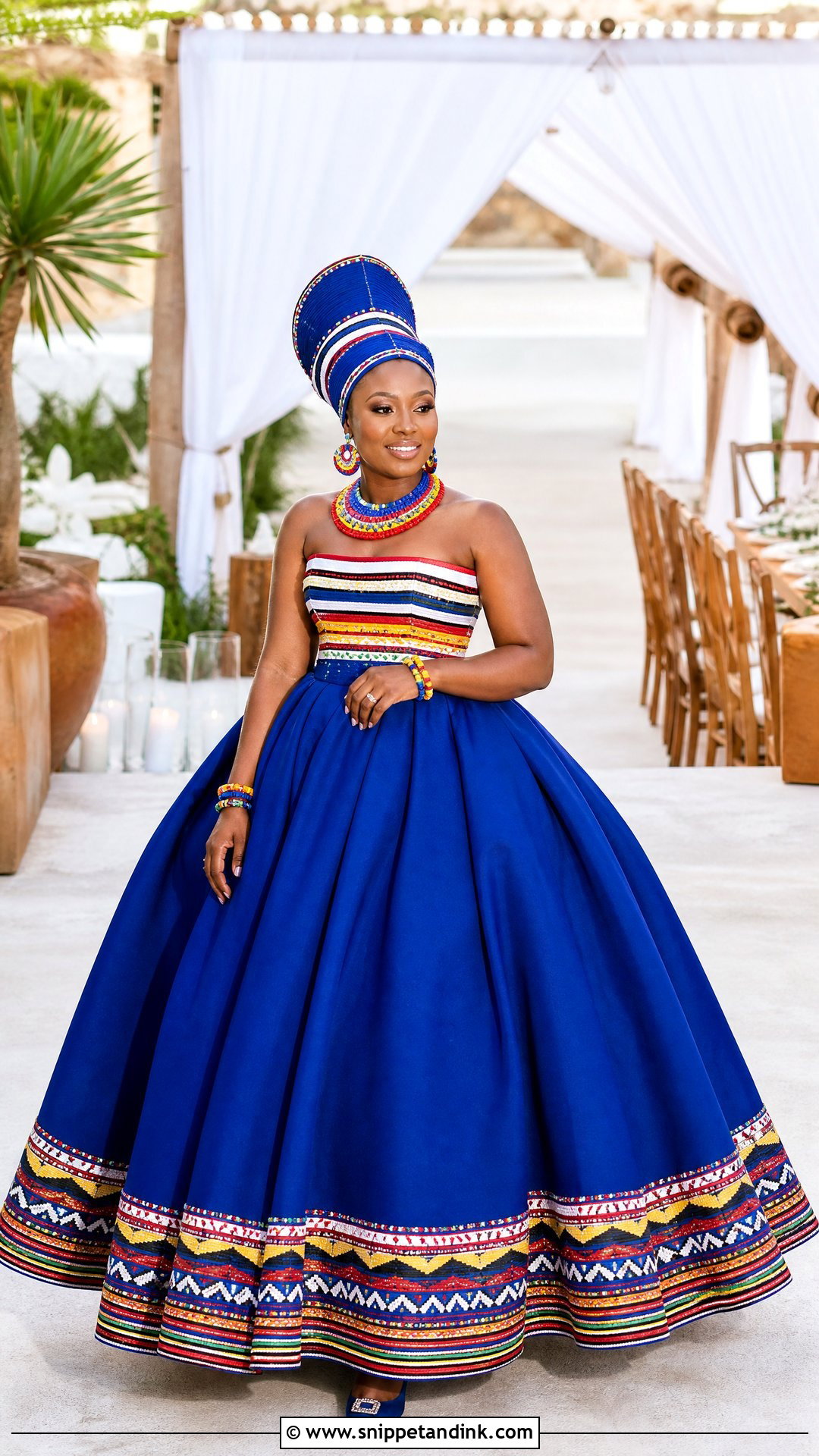
For a ball gown, I put the striped nwenda in the bodice and pull one solid color straight out of the cloth for the skirt: red, yellow, blue, green or black. Matching a thread from the stripe is what makes the pairing look intended. The volume should come from a light underskirt and soft tulle layers, not a heavy hoop, because the bride will be on her feet greeting family for hours. A tall headwrap, bold beads and closed block heels give it presence. Short sleeves or a curved neckline add coverage if the family prefers it. Save this shape for a large venue or a wide outdoor space where the skirt has room.
4. Venda Off-Shoulder Wedding Dress
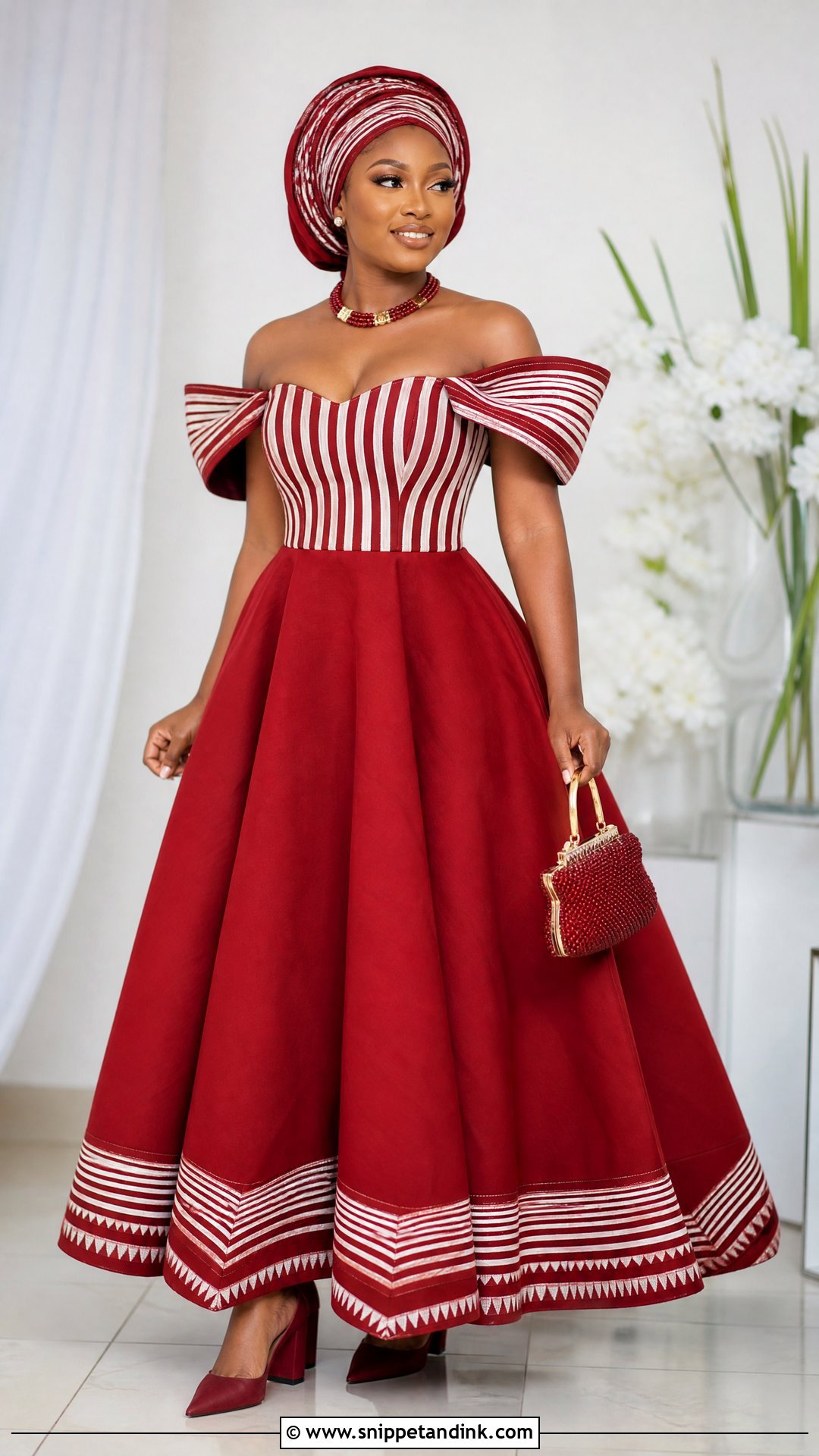
An off-shoulder neckline is the one I fit most carefully, because Venda celebrations involve a lot of arm movement and an elasticated edge alone will creep up. Internal straps or silicone grip tape keep it in place. The bodice can be fully striped or set on a solid black, red or royal blue base, with a wide border of the cloth at the hem tying everything together. Short structured sleeves help too. A short beaded necklace, drop earrings, a headwrap and pointed block-heel pumps finish it. Choose this if you love an open neckline and are prepared to have it properly anchored.
5. Venda Long-Sleeve Lace Wedding Dress
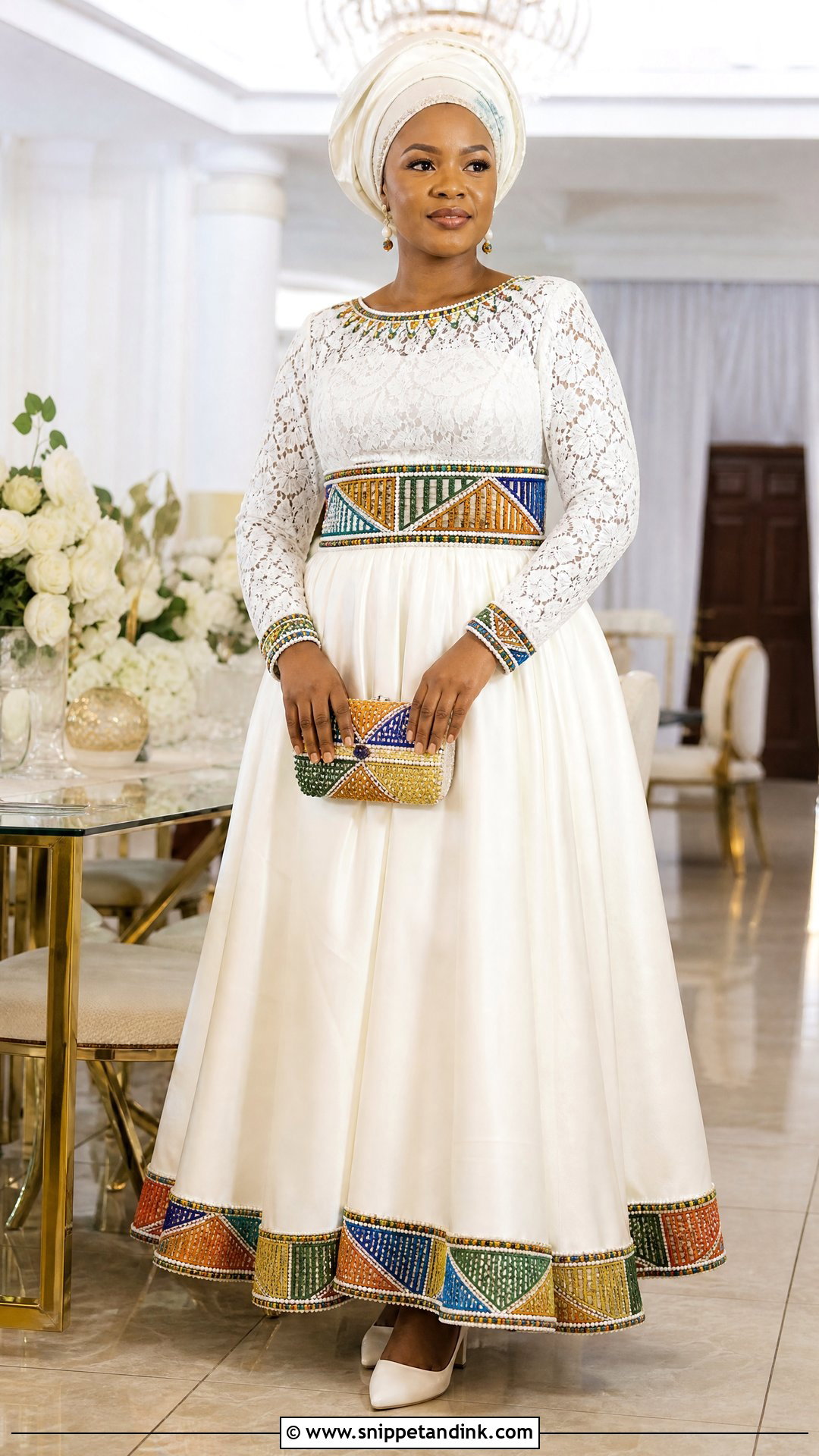
Lace and colorful Venda fabric look good together because they are opposites: one is fine and transparent, the other bold and graphic. I build on a floor-length A-line with sheer lace sleeves and a lined bodice, then place nwenda only at the waist, cuffs, neckline and lower skirt. White or ivory lace keeps it bridal. Ask for the sleeve lining to be adjustable so you can decide coverage at the final fitting. A neat headwrap, pearl-and-bead earrings, a matching clutch and low closed heels complete it. Long lace sleeves are warm, so this suits a cool-season or indoor ceremony better than a midsummer field.
6. Venda Peplum Wedding Dress
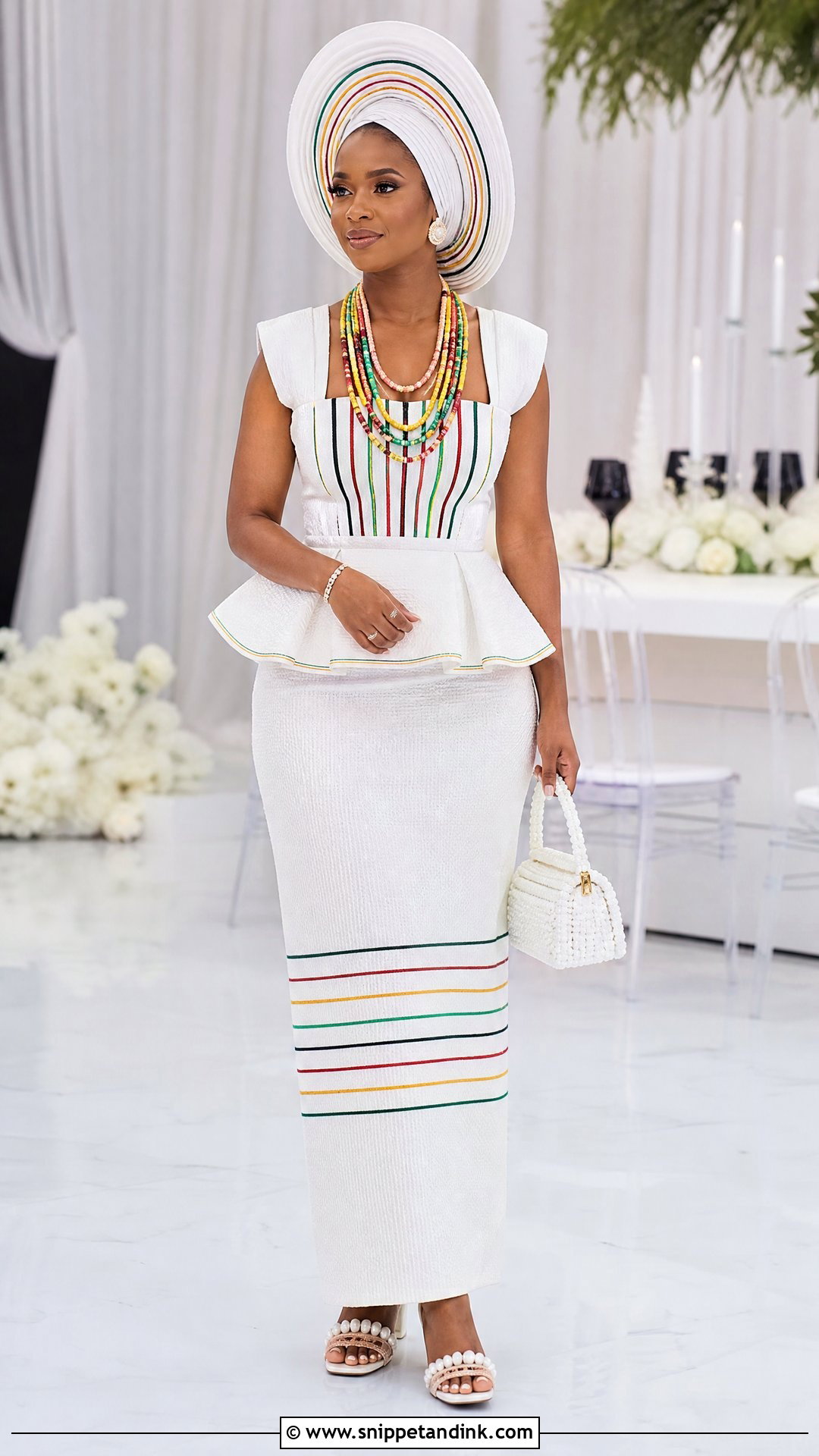
A peplum gives waist definition without forcing a tight skirt, which matters when you will be dancing. The flare should sit right at the natural waist and stop above the widest part of the hip; too long and it adds width instead of shape. A tailored Venda-print bodice over a straight or softly flared maxi skirt in the same cloth keeps the line long. Pick the neckline for coverage: square, V or round. A sculpted headwrap, layered beads, a small structured bag and block-heel sandals complete it. It stays polished through sitting, walking and dancing.
7. Venda Two-Piece Bridal Outfit
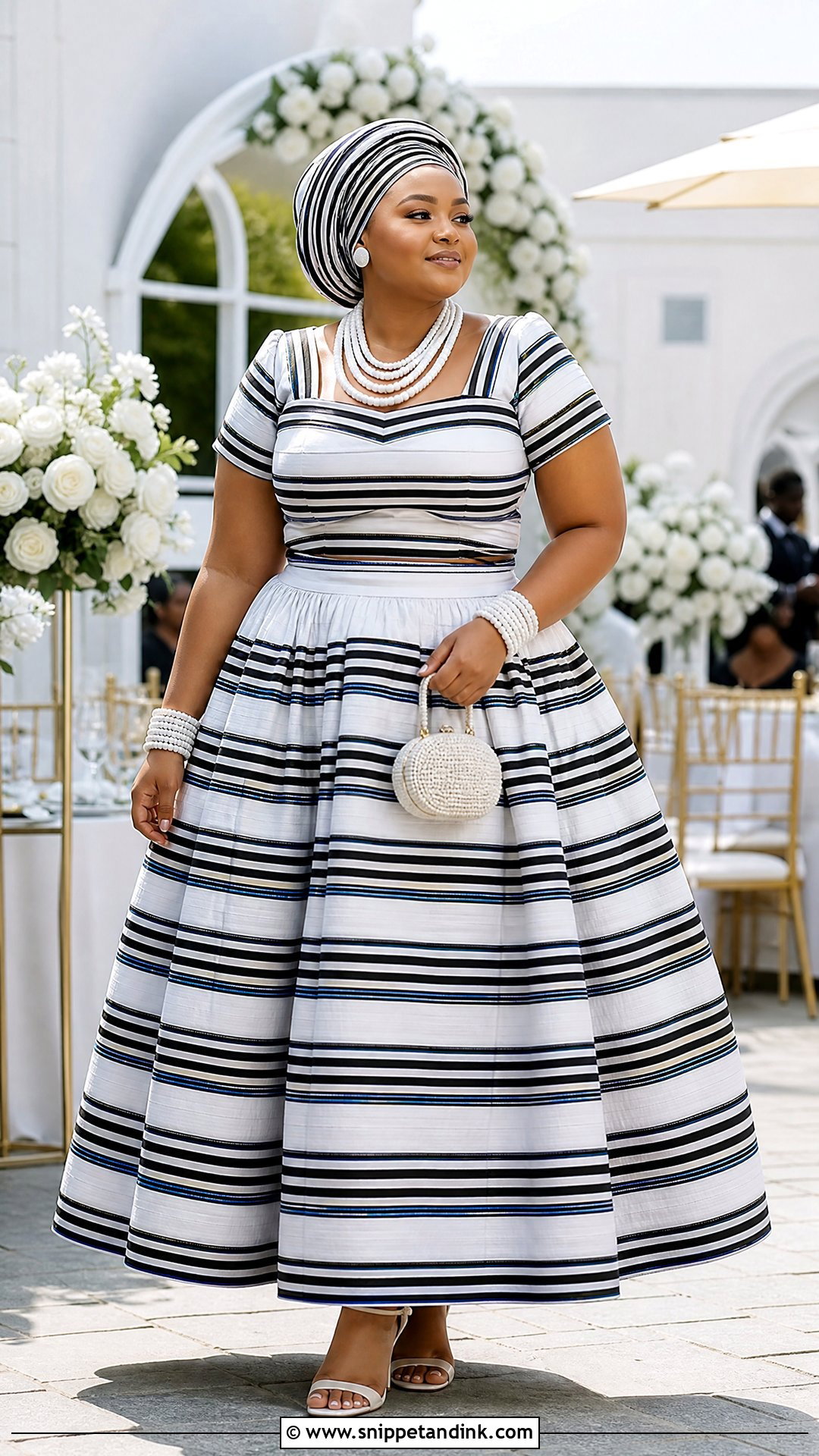
Separates are my practical answer for brides whose top and bottom halves are different sizes, because each piece can be cut and altered on its own. A fitted Venda top meets a high-waisted floor-length skirt cleanly, so from a distance it reads as one dress. The top can have short sleeves, a modest sweetheart or one shoulder; the skirt can be full for formality or straight for something quieter. The detail I watch is stripe placement where the two pieces meet. If the stripes on the top and skirt fall out of line, the eye catches it immediately. Finish with a headwrap, beads at the neck and wrists, a small bag and supportive heels.
8. Venda One-Shoulder Wedding Dress
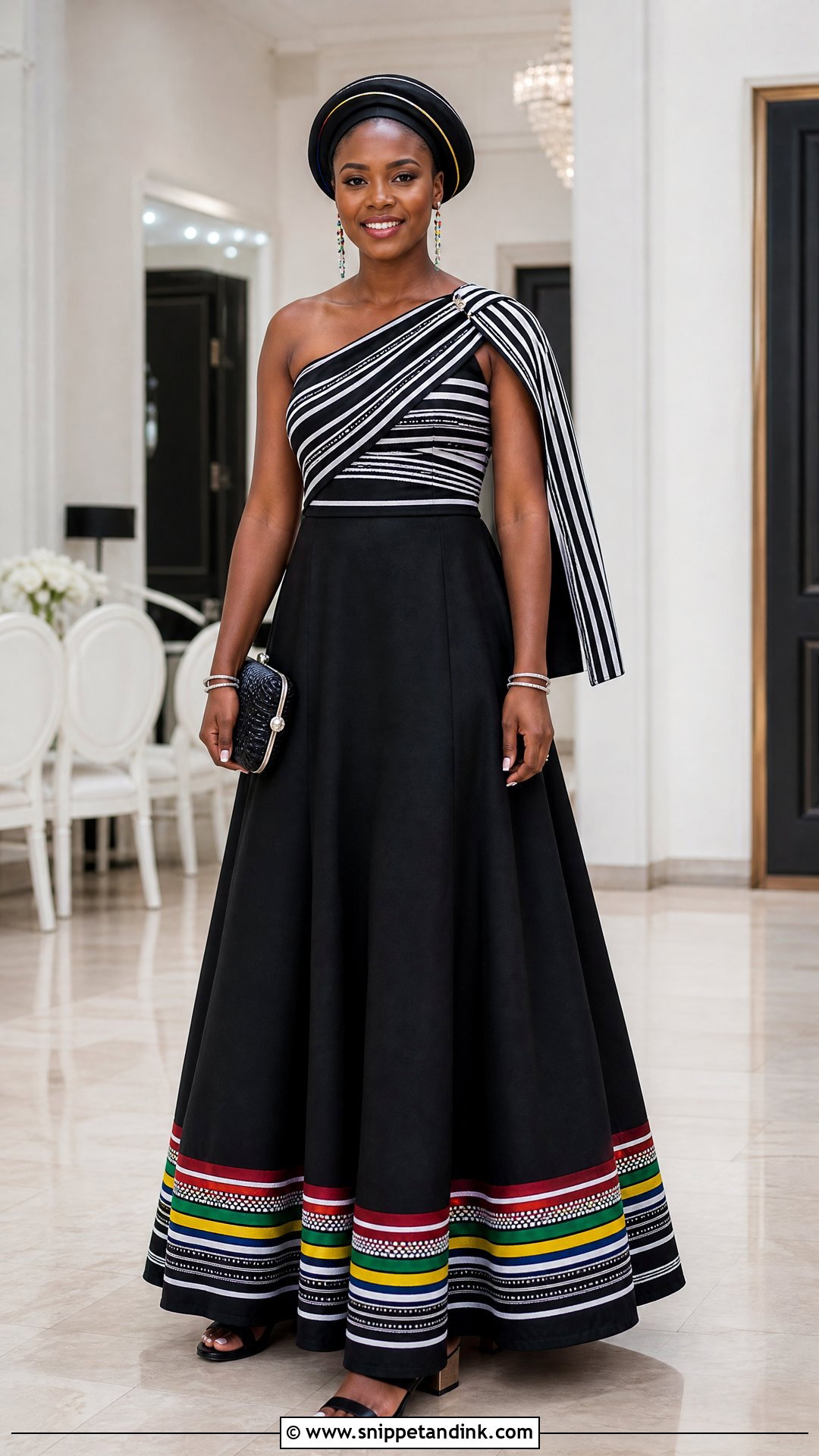
One-shoulder bodices echo the way nwenda is traditionally draped across the body, which is why I find them the most natural modern cut for the cloth. Choose a fitted bodice with one secure strap and a diagonal neckline, and let a striped panel fall from the shoulder or sweep across the waist into the skirt. A floor-length A-line keeps it balanced. Wear the headwrap low so the asymmetric line stays visible, and skip a big necklace. Beaded drops, slim bracelets, a small clutch and medium block heels are enough. The result is distinctive but controlled, with one strong line from head to hem.
9. Venda High-Neck Column Wedding Dress
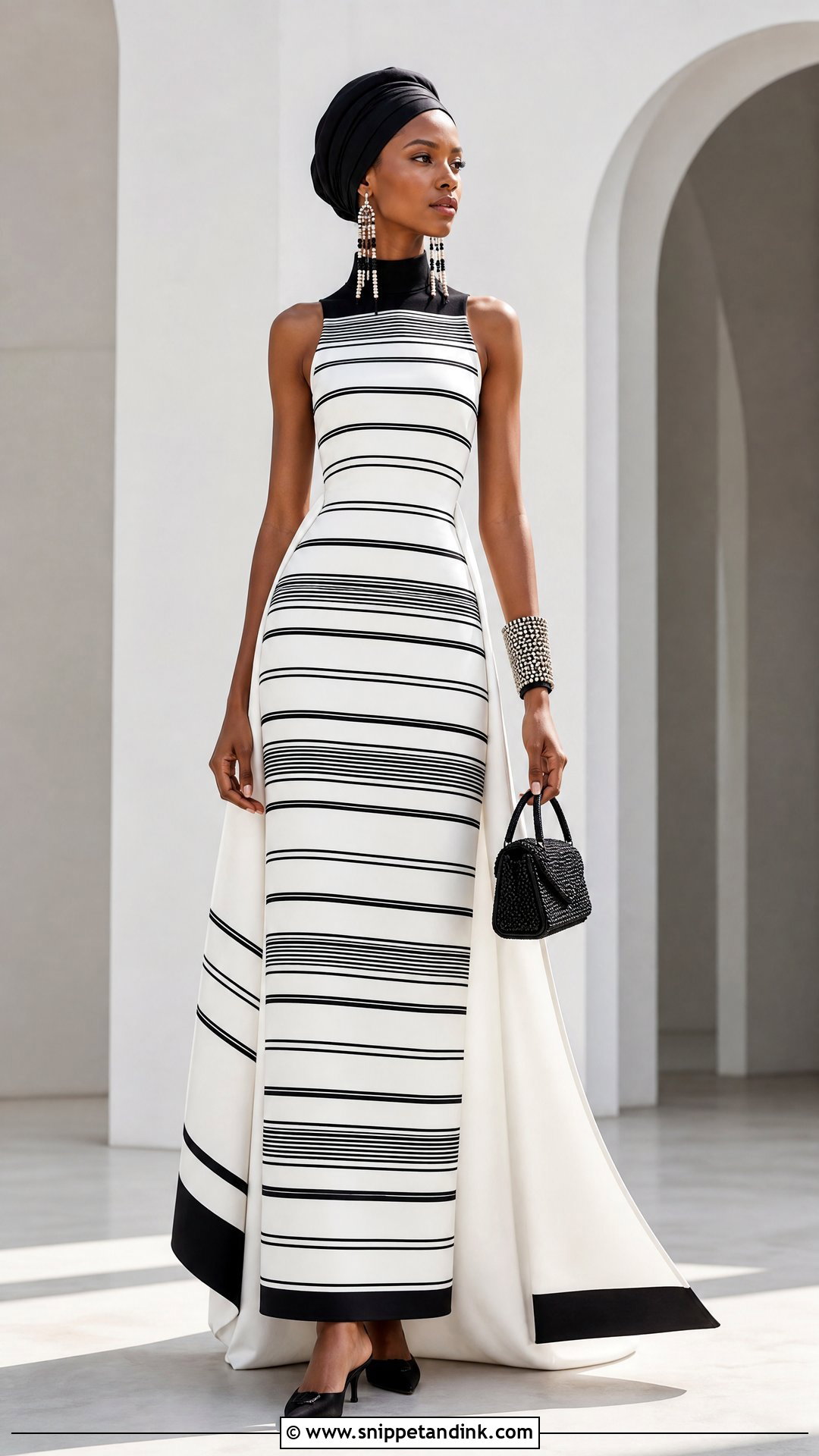
A column has no volume to hide fitting errors, so on striped cloth I insist on a toile or a basted fitting first. Shaping through the bodice and enough ease around the knees for walking are the two things to get right. A solid-color high neck frames the face, and narrow borders of the cloth at the armholes and hem finish the edges. A short detachable back panel adds movement in photos. A sleek headwrap, long beaded earrings, a cuff, a structured mini bag and low pointed heels finish it. Seams placed with care and a smooth lining are what make it sit properly.
10. Venda Cape Wedding Dress
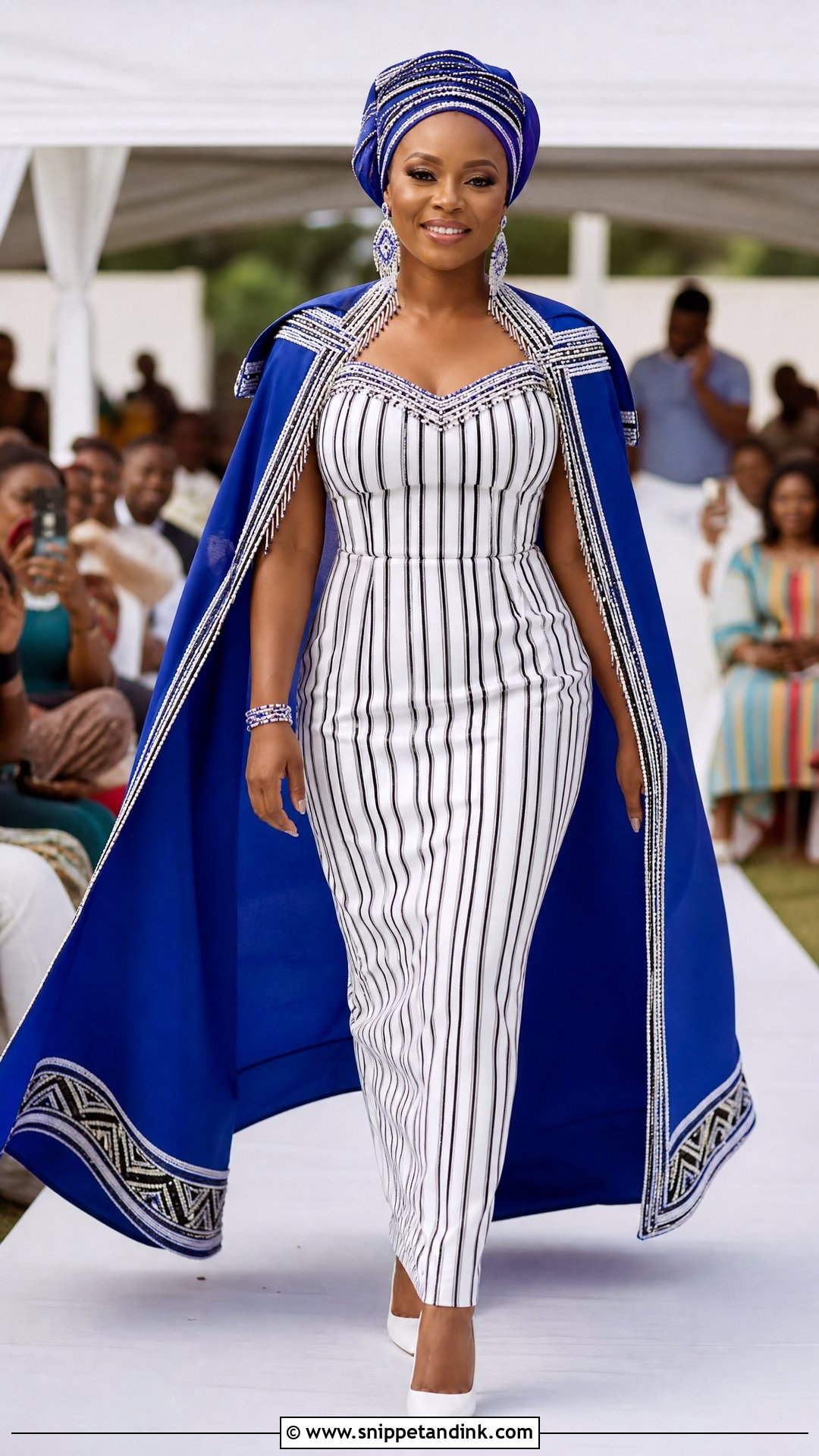
A cape turns a simple Venda gown into a ceremonial outfit, then comes off for the dancing. Start with a sleeveless or short-sleeved fitted dress and add a cape that fastens neatly at the shoulders. I usually put the stripe on the dress and a solid color with a nwenda border on the cape, though reversing it gives a lighter overall look. Use a light fabric for the cape, since a heavy one drags on the fastenings and pulls the neckline back. A compact headwrap, statement earrings, a beaded bracelet and closed heels keep it tidy, with little or no necklace.
11. Venda Tiered Wedding Dress
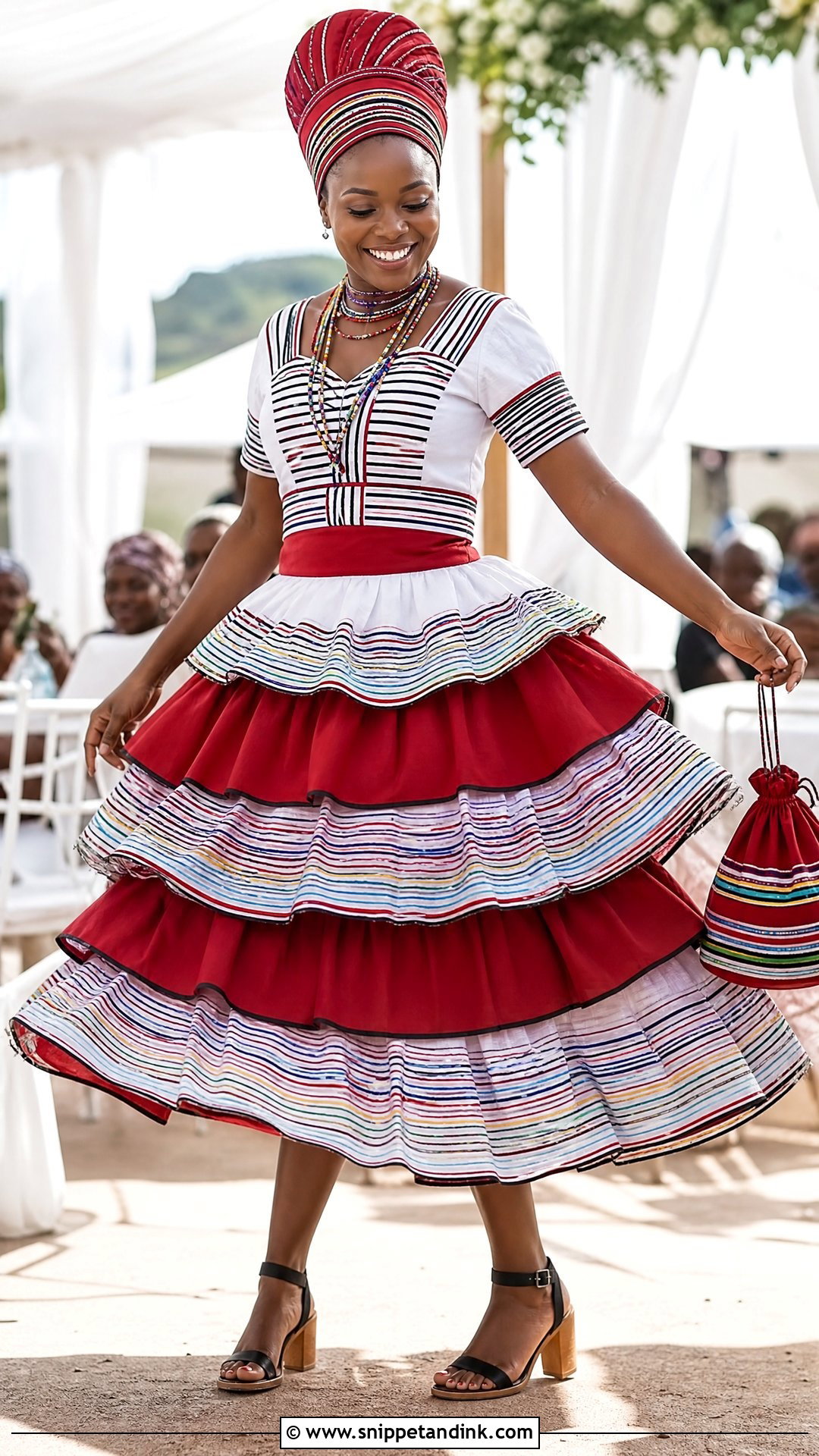
Tiers are made for dancing; each layer swings separately, so the skirt keeps moving after you stop. A fitted upper bodice leads into two or three gathered tiers, alternating stripe and solid or using nwenda throughout with clean horizontal seams. The first tier must start below the widest part of the hip, or it adds bulk exactly where most brides do not want it. Short puff sleeves or simple straps balance the fullness. A medium headwrap, layered beads, a small drawstring bag and sturdy block-heel sandals complete it, and a light lining lets the tiers fall freely.
12. Venda Fishtail Wedding Dress With Train
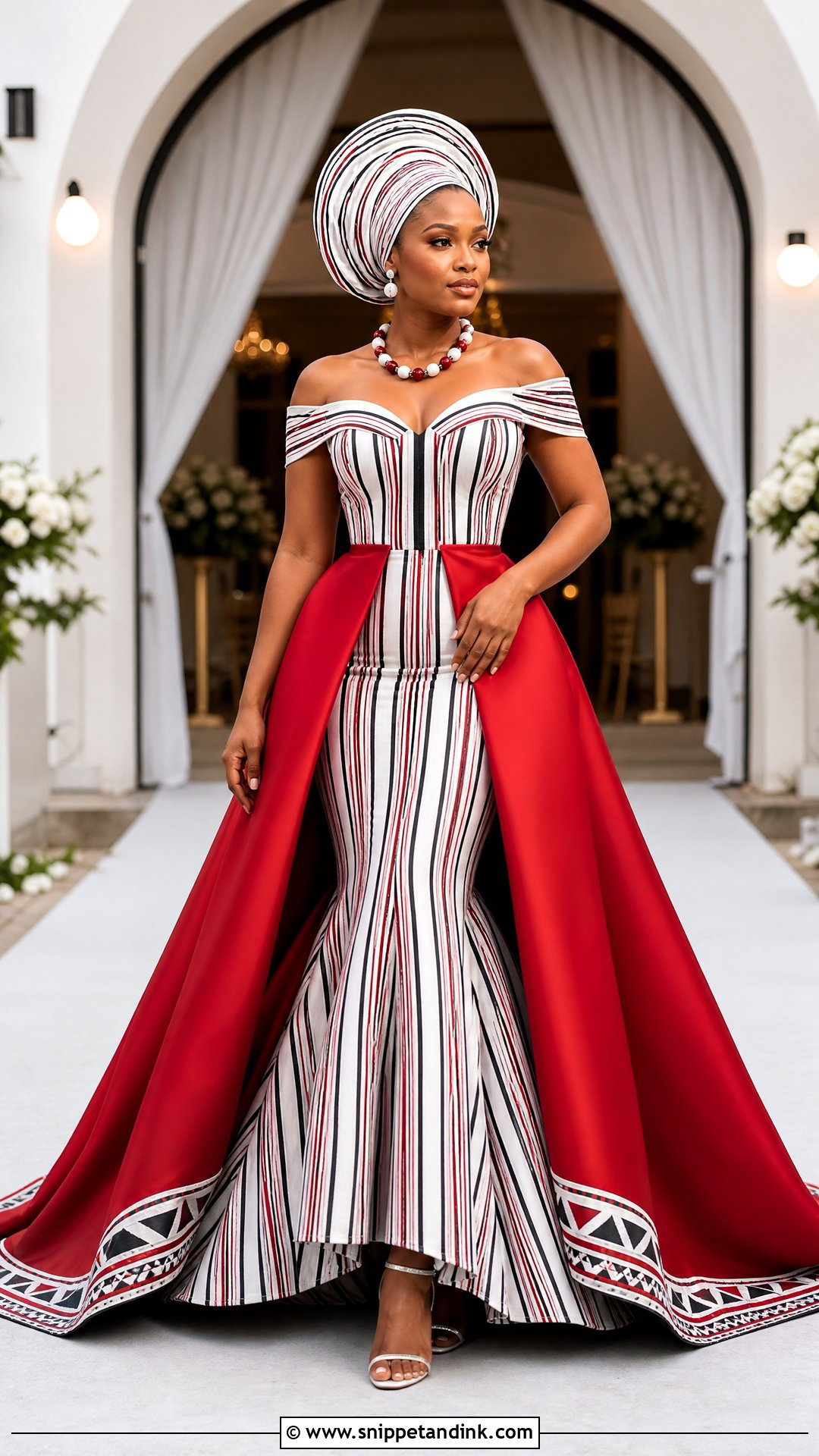
The fishtail with a detachable train gives you a grand entrance and a slimmer dress for the reception. The gown fits through the waist and hips and flares below the knee; the train or overskirt comes in a solid color with a striped border linking it back to the dress. I have the concealed fasteners tested by whoever will help you change, since finding hidden hooks in a crowded room is harder than it sounds. A sculpted headwrap, beaded earrings, a short necklace and stable heels under the hem finish it. Remove the train after formal photos and you can move freely for the rest of the day.
13. Venda Midi Wedding Dress
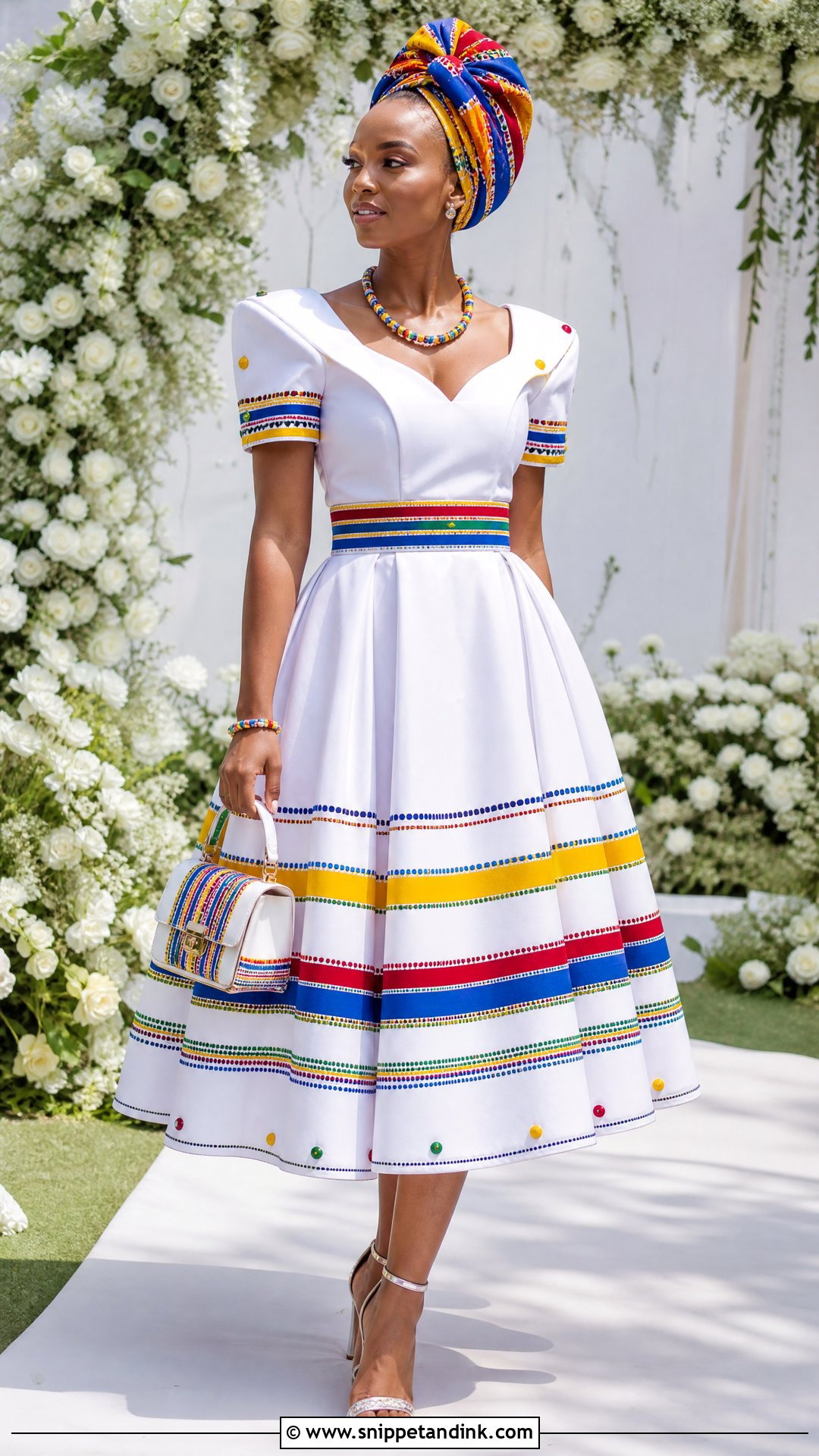
Not every traditional wedding dress needs to reach the floor. A midi suits a smaller ceremony, a daytime celebration or a bride planning several outfit changes, and it never drags on grass or gravel. A fitted waist, softly flared skirt between knee and ankle, structured bodice and short sleeves keep it formal. A striped belt defines the waist, and on a solid dress I add Venda panels at the neckline, pockets and hem. Because the shoes now show, pick a pair whose color comes from the cloth, such as a yellow or blue ankle-strap heel. Add a headwrap, beads and a structured bag.
14. Venda Puff-Sleeve Wedding Dress
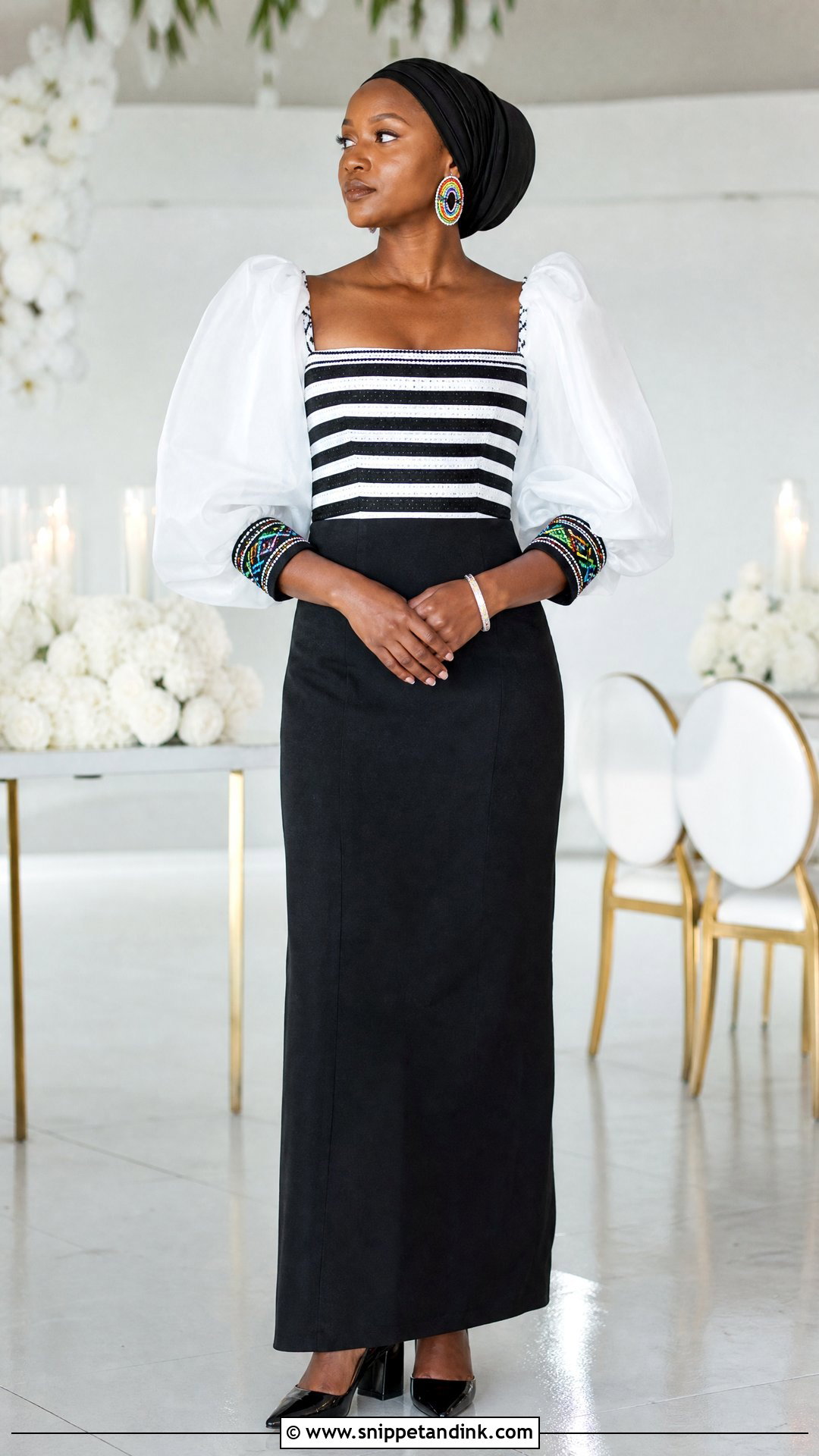
Puff sleeves suit the bold lines of Venda cloth, but only if the fabric is soft enough to gather. Many printed cottons are fairly crisp, and a stiff sleeve stands out like a balloon. When the cloth is stiff, I make the sleeves from a lighter solid fabric and keep the stripe on the cuffs and bodice. Balance the sleeves with a fitted bodice, a simple square neckline and a straight or gently flared maxi skirt. The volume can sit at the shoulder, gather at the elbow or taper into cuffs. A low headwrap, medium bead earrings, a slim bracelet and block-heel pumps complete it.
15. Venda Wrap Gown With Shawl
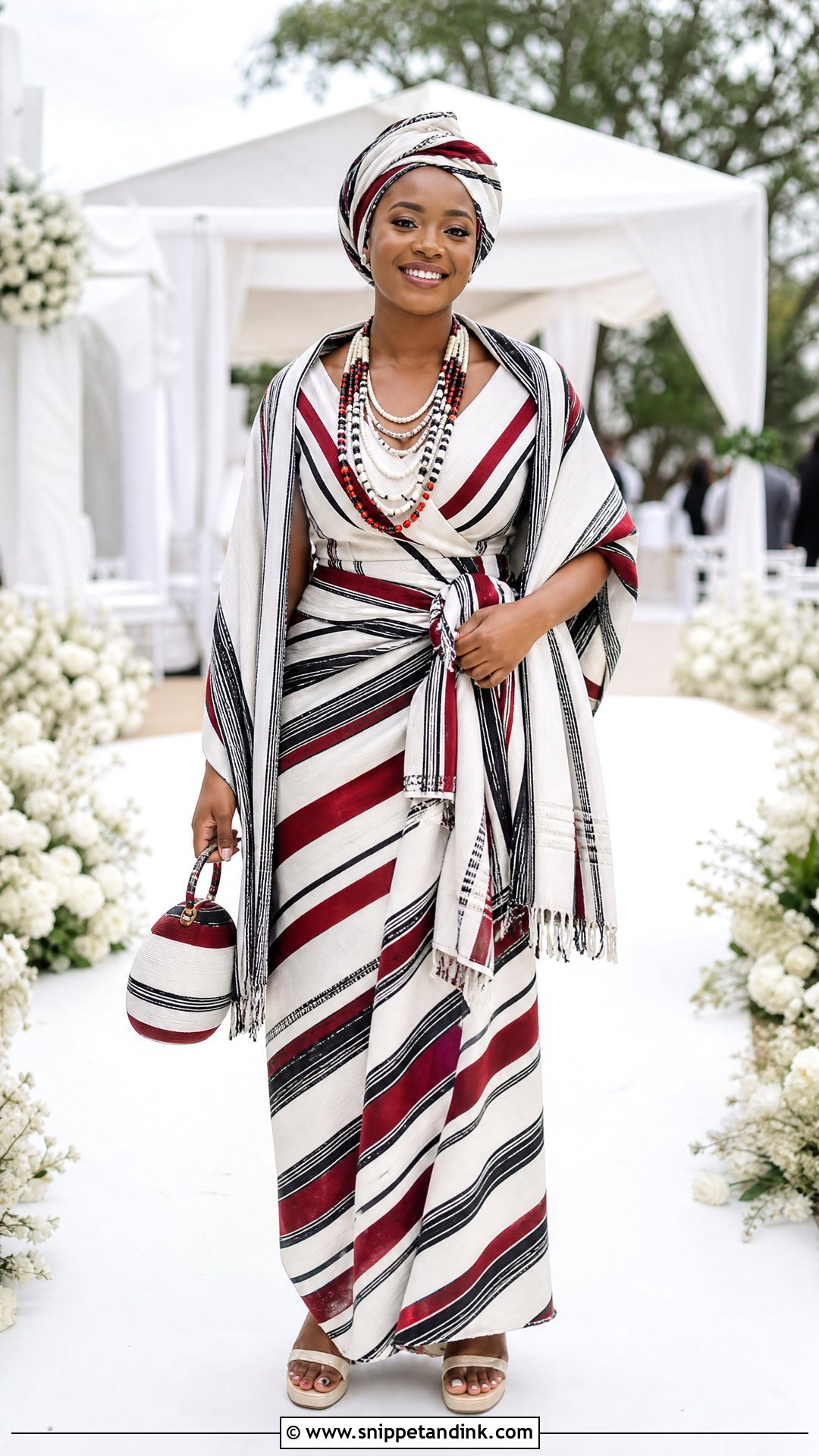
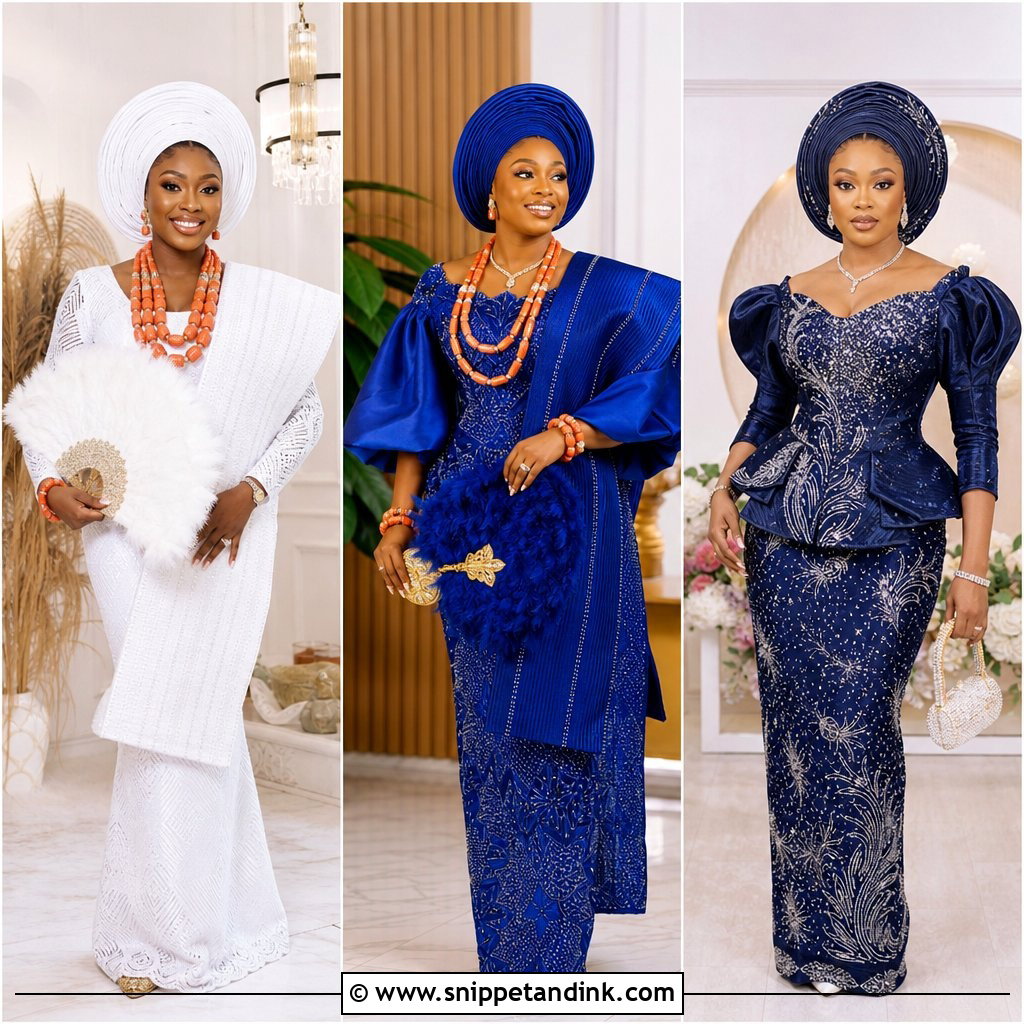
A wrap gown connects most directly to traditional draping while still looking like a modern dress. The crossover bodice and waist tie let you adjust the fit through the day, which is a real comfort after a long meal. I always add hidden snaps at the neckline, because a crossover front opens a little each time you bend to greet someone. The skirt can fall straight or open into an A-line, and a matching shawl rests across the shoulders or drapes over one arm. A contrasting border gives definition. A wrapped headpiece, layered beads, a small bag and low wedge or block-heel sandals finish it.
16. Venda Beaded A-Line Wedding Dress
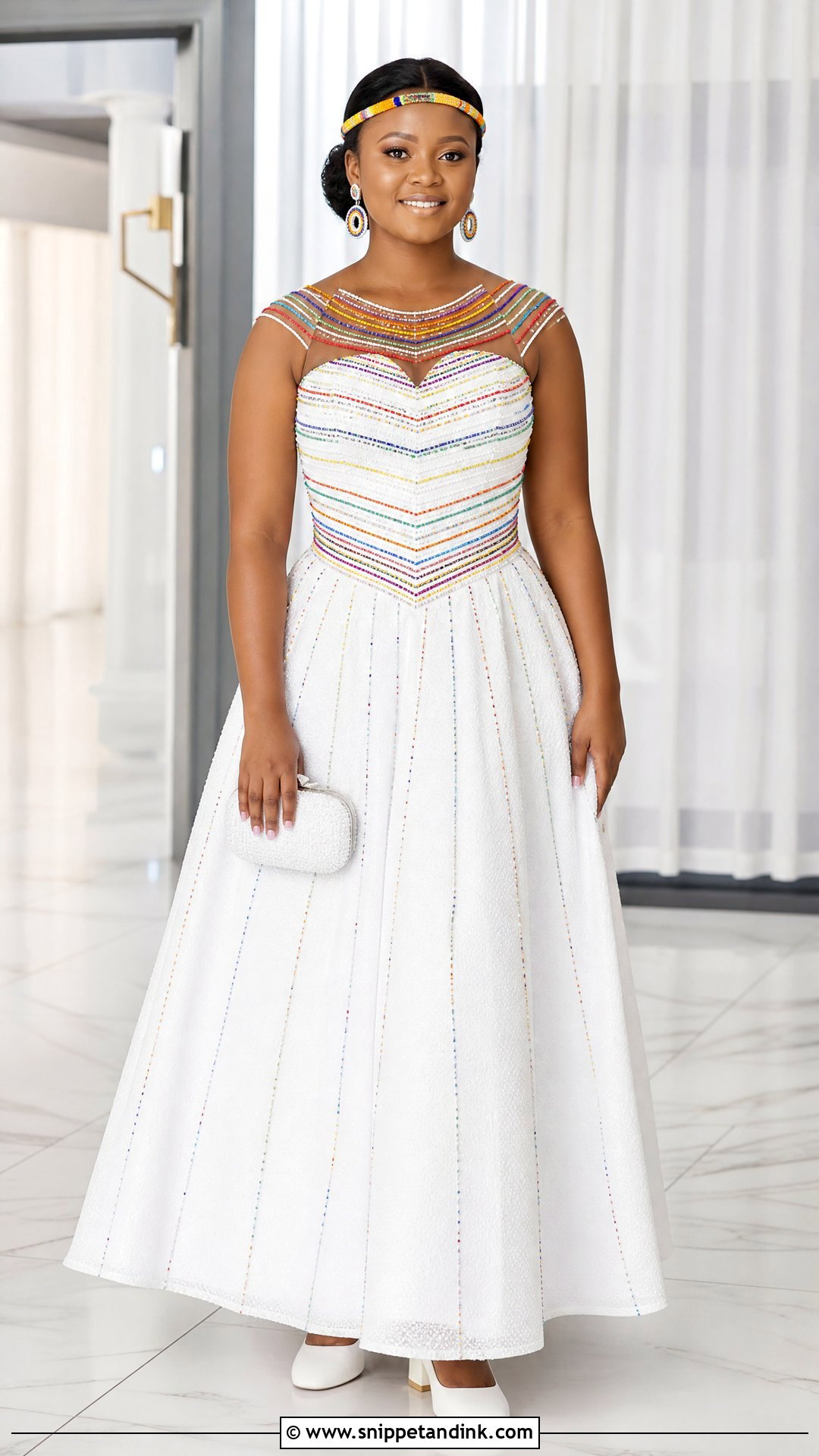
Beadwork belongs to Venda dress already, so adding it to an A-line gown feels natural rather than decorative. Keep it controlled: neckline, waist, sleeve edges or skirt border, never every surface, because the cloth already carries plenty of pattern. The practical issue is weight. Heavy beading needs a firm lining and reinforced stitching behind it, or it pulls the fabric and the seams start to pucker by evening. A beaded headband or a neatly wrapped headpiece carries the theme upward. Matching earrings, a small bracelet, a simple clutch and closed block heels complete it, with the stripes still in charge.
17. White Venda Wedding Dress With Traditional Panels
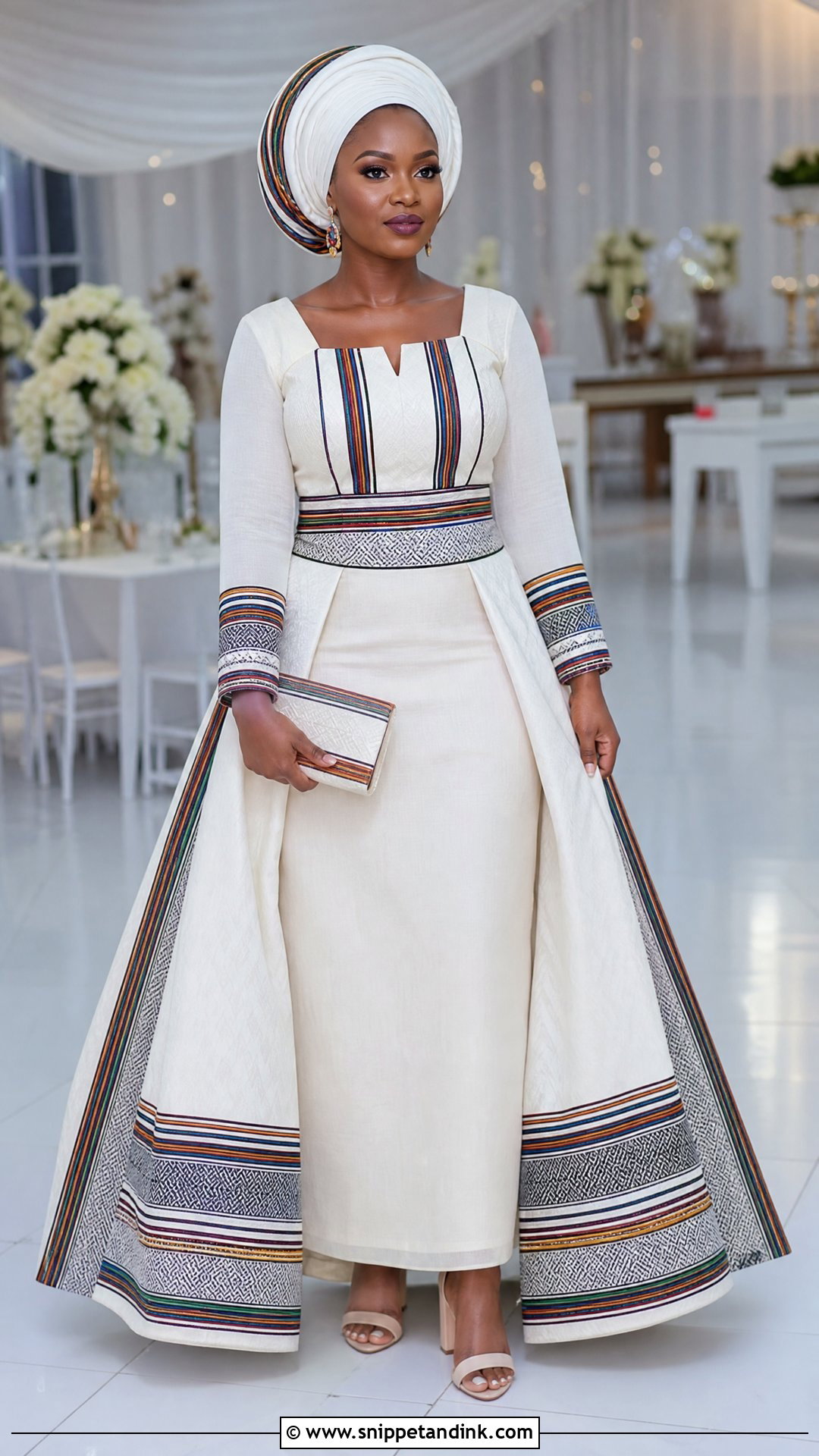
A white fusion gown is a familiar bridal base with Venda elements placed on purpose. Start with a white or ivory A-line, mermaid or column and add striped fabric at the bodice, waistband, cuffs and train border. Repeating the cloth in three or four places is the balance I aim for; more starts to look busy, fewer looks like an afterthought. A detachable nwenda overskirt adds color for the traditional part and comes off later. Line the white sections so they stay opaque in daylight. A white headwrap edged in the stripe, delicate bead earrings, a matching clutch and neutral block heels complete it.
18. Colorful Venda Striped Wedding Dress
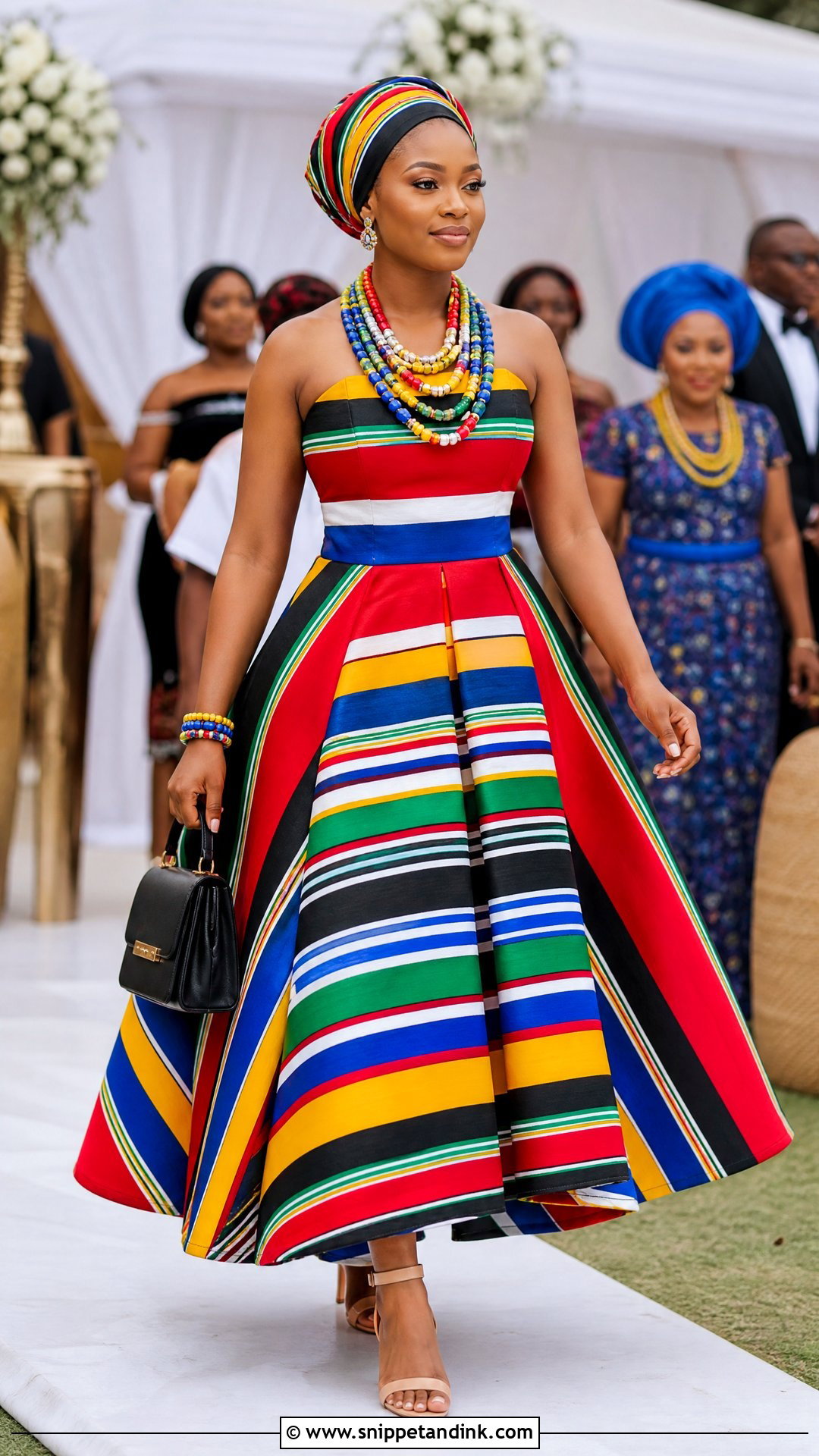
This is the bravest version: a full-length gown showing red, yellow, blue, green, black and white stripes from shoulder to hem. A fitted bodice and wide A-line skirt give the pattern structure, and stripe matching at the seams is what separates a good dressmaker from an average one here; ask to see the side seams before the final fitting. Everything else should step back: a matching headwrap, layered beads, a solid-color bag and plain black or neutral heels, with a clean neckline and simple sleeves. This joyful Venda wedding dress belongs at an outdoor ceremony full of music.
19. Plus-Size Venda Empire-Waist Wedding Dress
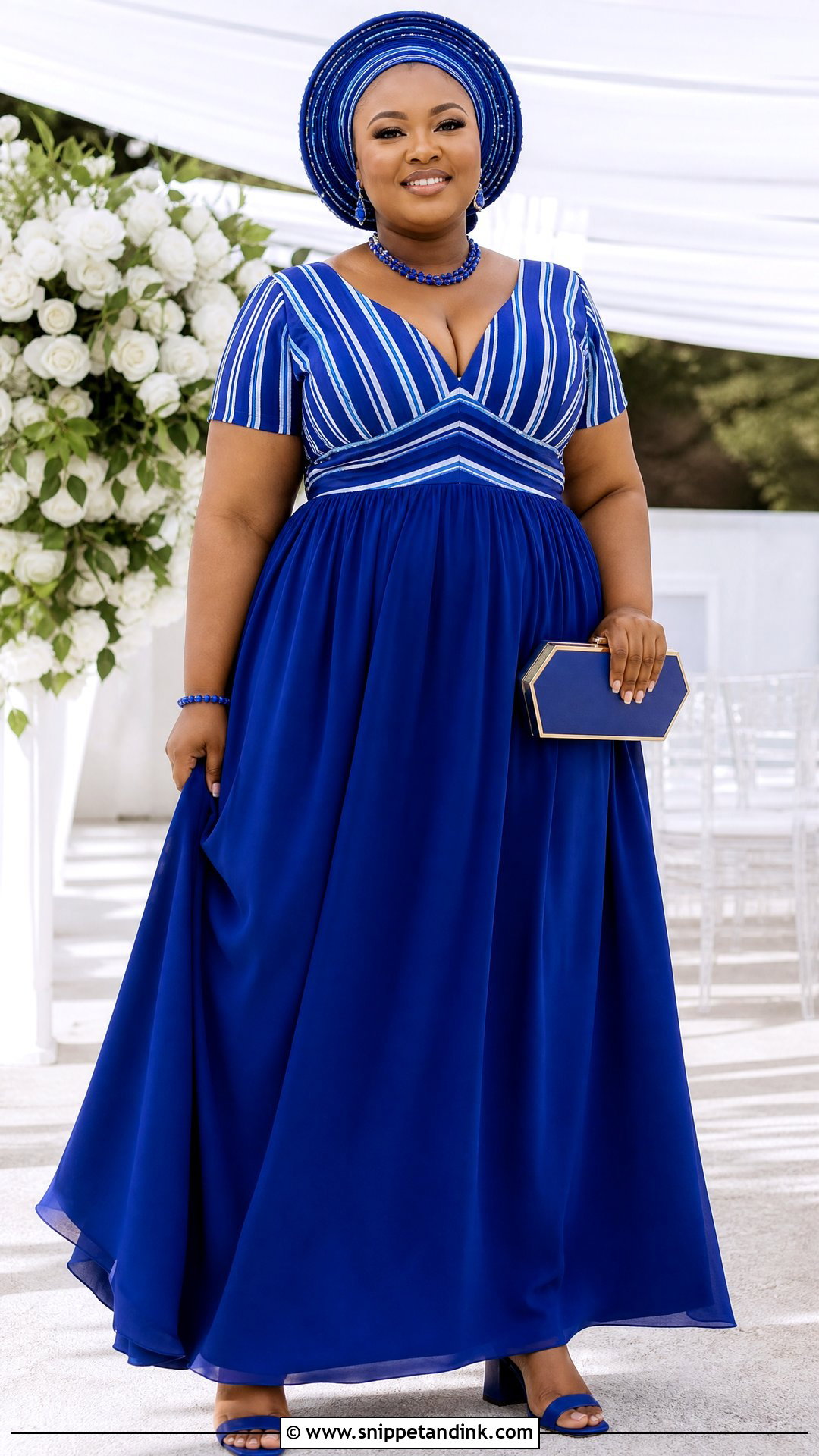
Empire waists give plus-size brides shaping without anything tight at the waist or hips. The seam sits just under the bust and the skirt falls free. What makes or breaks it is under-bust support, so I ask for a built-in band or a structured bra layer inside rather than relying on a separate bra. A V or soft round neckline opens up the upper body. Use stripe on the bodice and solid on the skirt, or the pattern throughout. Supportive short sleeves, a headwrap, medium-scale beads, a structured clutch and wide-fit block heels finish it, and a breathable lining keeps you comfortable through standing, sitting and dancing.

20. Venda Reception Dress With Detachable Overskirt
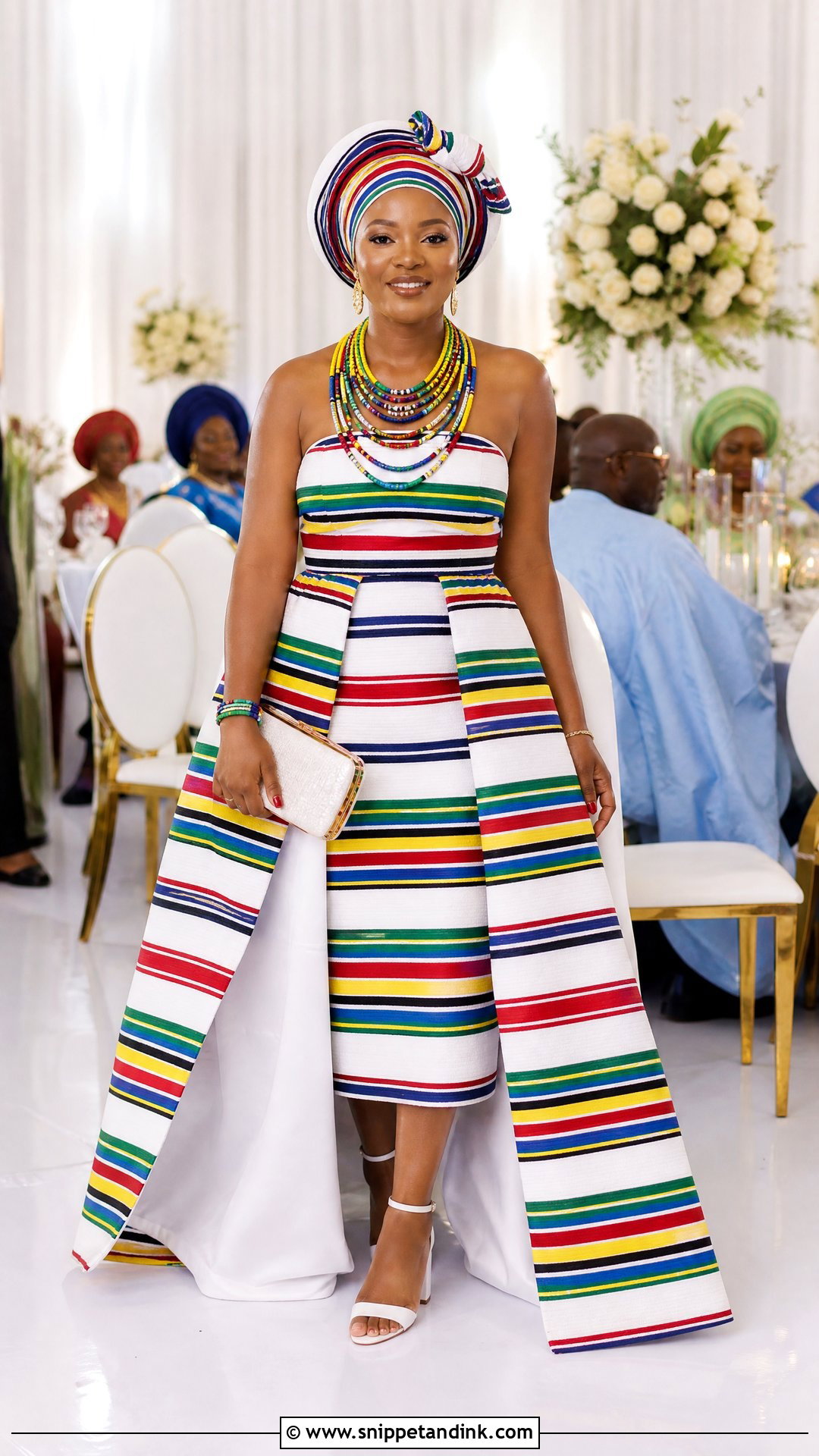
A detachable overskirt lets you go from the formal entrance to the dance floor without a full change. Start with a fitted knee-length, midi or floor-length Venda dress and add a full overskirt fastened at the waist, open slightly in front to show the dress beneath. Both can be striped, or pair a solid base with a bold nwenda overskirt. After photos, take off the overskirt and swap the large headwrap for a slim beaded band. I plan that swap with the bride in advance, since the headwrap often holds the hairstyle in place underneath. The outfit stays cohesive while the later hours become far easier to move in.
Kneeling, Dancing and Long Hours on Grass
A Venda traditional wedding asks more of a dress than a church aisle does. Women commonly kneel to greet elders as a sign of respect, there may be time seated on mats, and the dancing goes on for hours. A gown that looks right standing still can fail all three.
The fitting room test I ask every bride to do
- Kneel fully and rise again without using your hands. If the skirt pulls tight across the knees, it needs more ease or a slit.
- Sit on the floor with your legs to one side. Check that the neckline stays put and the hem covers you.
- Lift both arms above your head as if dancing, then bend forward. Watch the bodice and the headwrap.
- Walk on an uneven surface in your shoes, ideally outside.
Shoes matter just as much. Thin stilettos sink into lawn and make kneeling awkward, which is why nearly every look above uses block heels or sandals. For the headwrap, ask the person tying it to anchor it with a few hidden pins into the hair or a soft band underneath, so it survives a full afternoon of dancing and hugging.
If you change outfits partway through, plan where and with whom. A quiet room and one trusted helper save a lot of time.
Wearing the Cloth Your Own Way
Venda cloth sits comfortably on both heritage garments and modern bridal shapes. A wrap, a ball gown, a mermaid or a white gown with panels can all carry it. The outfit that works best respects what the textile means to your family and still feels like you. Secure construction, breathable lining, shoes you can stand in and restrained accessories matter as much as color and shape. Talk through fabric placement, movement and coverage with your designer, and ask the older women in your family about any details they would expect to see. Their input often shapes the final dress more than any trend.
You'll Like These Ideas:






Leave a Reply