
Venda dress is built around one thing: the striped cloth. The ṅwenda, with its bands of bright color running across a solid ground, carries the whole look, and everything else (the draping, the beads, a headwrap) is there to support it. Women have long worn it as a wrapped garment with decorative accessories, and today’s dressmakers cut the same cloth into dresses, suits and formal gowns. Before I sketch anything, I ask where it will be worn, how much coverage the wearer wants and whether her family follows particular customs for that event. A dressmaker who knows the cloth will also steer you to the genuine fabric rather than a loose imitation. The twenty outfits below run from wrapped heritage pieces to tailored pantsuits.
Questions I Settle Before Ṅwenda Cloth Gets Cut
Most of the work in a good Venda outfit happens before the scissors come out. When a client brings me cloth, these are the points I go through with her and the dressmaker.
- Which way should the stripes run? Horizontal bands on a skirt look traditional. Vertical bands lengthen the body but use the cloth differently and may need more of it.
- Is there enough fabric to match? Lining up stripes at side seams, zips and wrap closures takes extra length, so buy more than the bare pattern asks for.
- Is it the genuine cloth or a printed copy? A print is lighter and cheaper, but if the stripes weren’t printed straight on the grain, they wander across every seam.
- Does it need a lining? Stiff striped cloth can scratch at the seams, and a soft lining fixes that while helping a structured shape hold.
- How long will it take? Give a dressmaker several weeks, and more before busy periods such as Heritage Day on 24 September, when everyone wants an outfit at once.
I also ask for a wash test on a scrap first. Bright bands can bleed into a pale lining, and it’s far better to learn that before the garment is sewn.
1. Traditional Tshivenda Ṅwenda Wrap Outfit
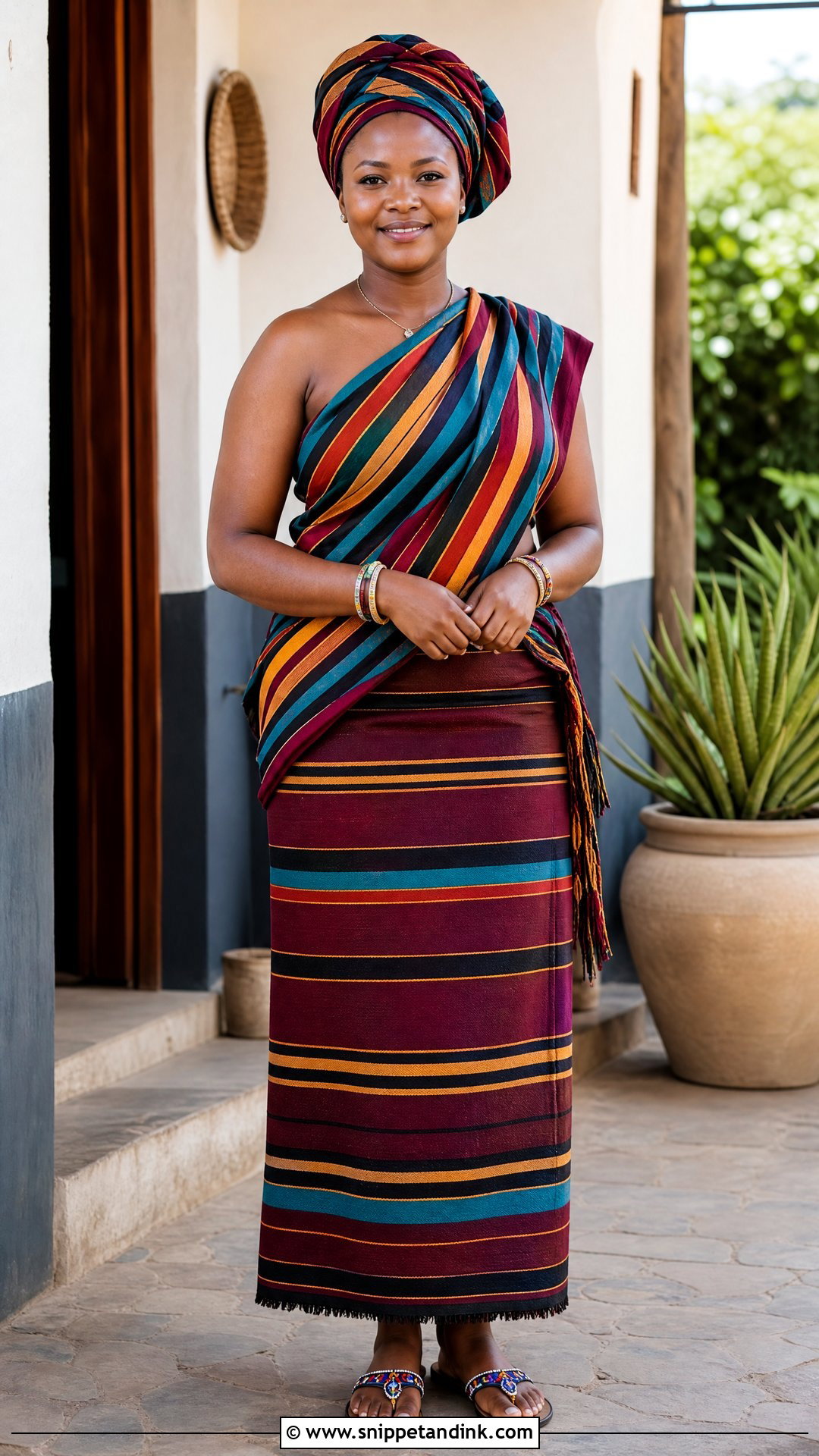
This is the original, and it’s what I’d wear to a heritage celebration or a family gathering where elders will be present. The striped cloth forms an upper garment with a coordinating wrap skirt, often finished with a decorative band across the top and fabric straps fastened over the shoulder. Have it tied by someone who has done it many times. A wrap tied loosely at the shoulder drifts all afternoon, and one tied too tightly digs in when you sit. Flat sandals, beaded bracelets and a simple necklace leave the stripes in charge, and a headwrap adds formality where it’s expected. Draping methods and the meaning of certain accessories can differ by age, occasion and community, so a relative, an elder or an experienced dressmaker should check any ceremonial version.
2. Tshivenda Musisi and Matching Blouse Outfit
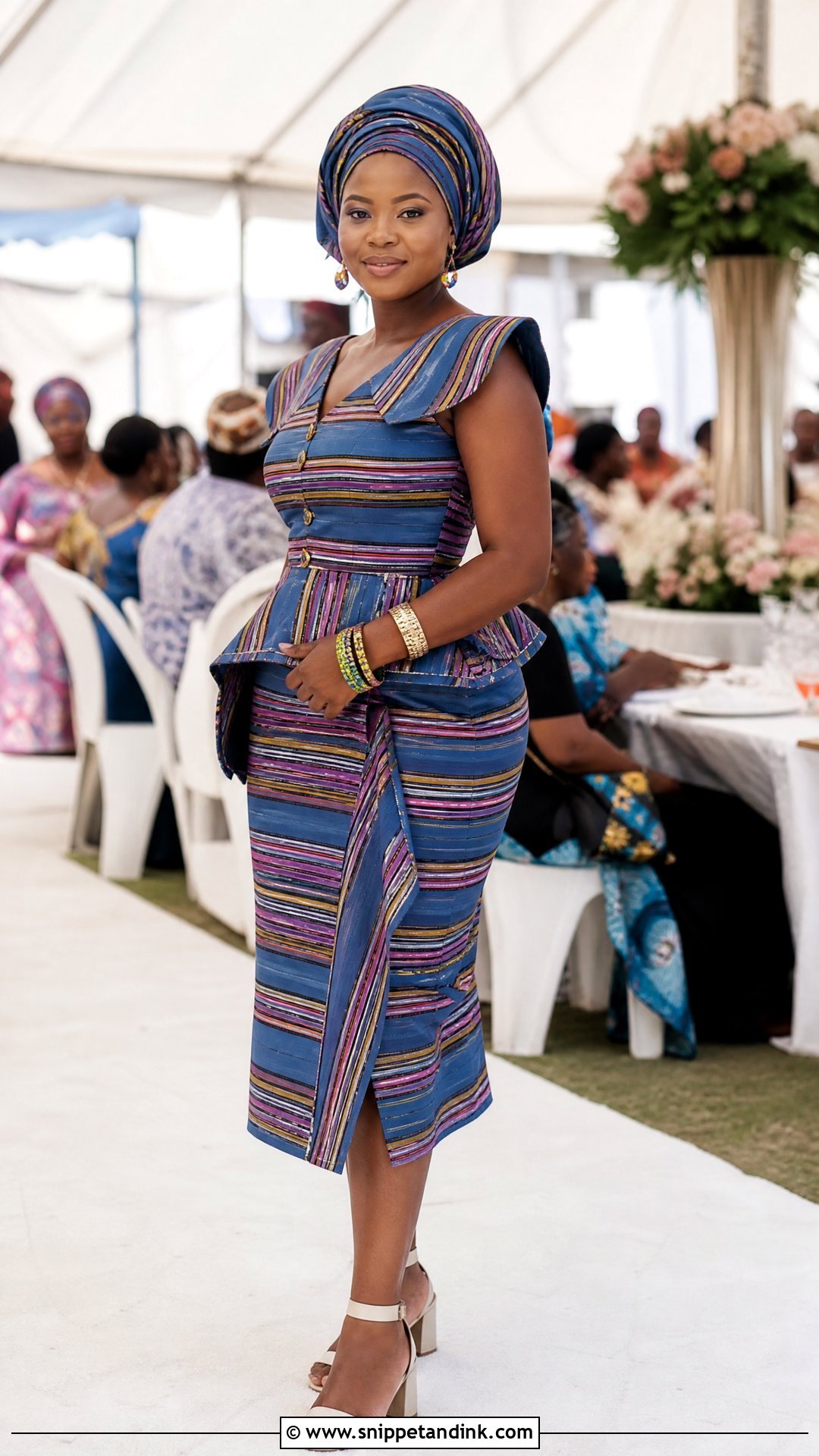
A full musisi skirt moves a lot, and that movement is the point, so the blouse has to stay out of its way. I fit the blouse close at the waist with no spare fabric, because any bulk there sits right on top of the gathers and thickens the middle. A solid blouse trimmed in striped cloth keeps things balanced; a matching striped blouse is bolder. If the skirt is heavily pleated, pick a smooth sleeve over ruffles. Low block heels or neat flats will carry you through a long celebration, with a wrapped headscarf, small earrings and two or three bangles. Traditional garments can signal age, status and occasion, so confirm the construction and styling with your family or dressmaker before wearing it to a ceremony.
3. Tshivenda Wedding Guest Midi Dress Outfit
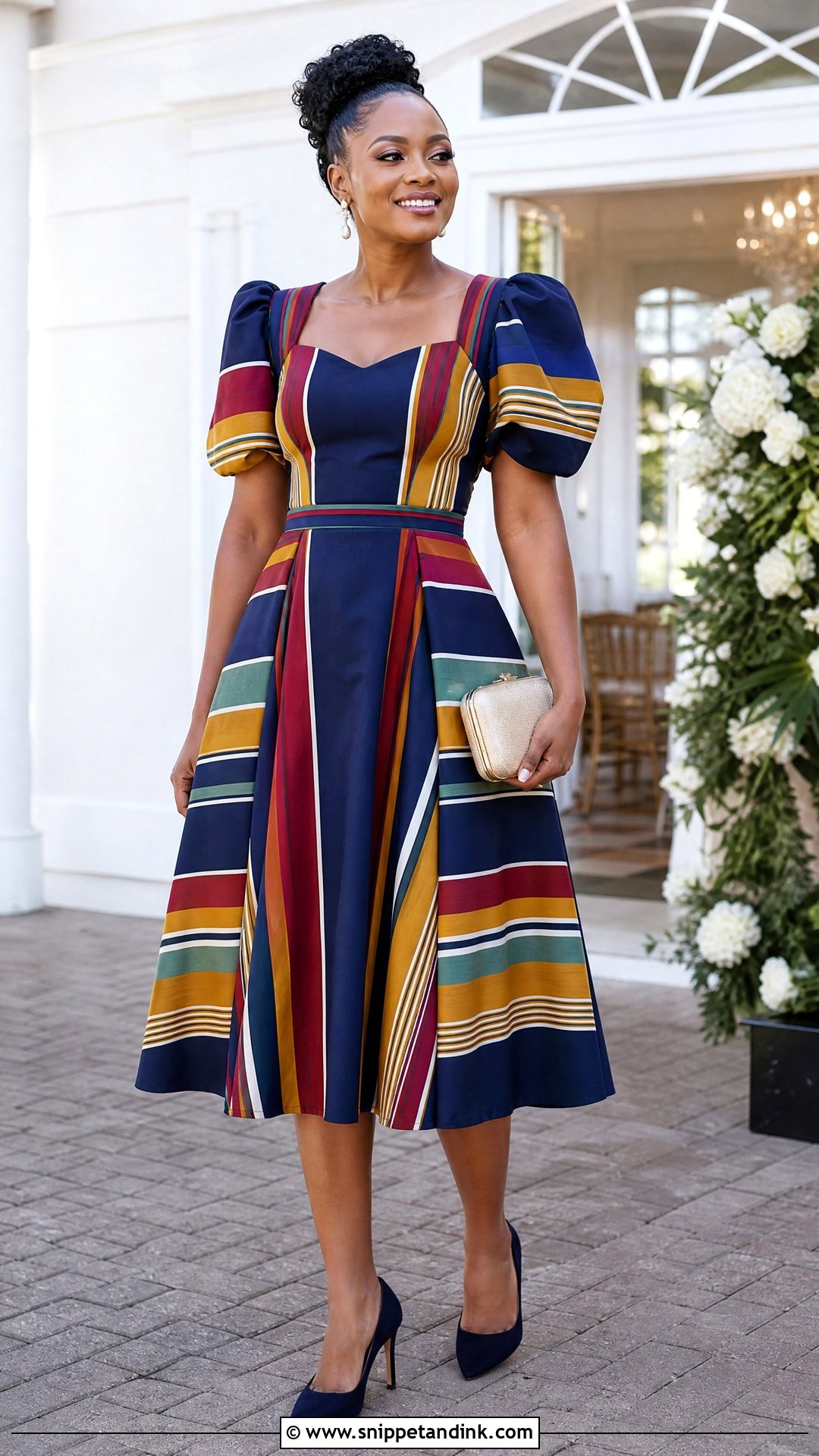
For a wedding guest, I want the cloth to show without competing with the bride. A fit-and-flare midi with a shaped bodice, a defined waist and a hem just below the knee does exactly that. You can make the whole dress from striped fabric or set panels of it into a solid base, which is what I’d suggest if the couple has a family color scheme you need to sit alongside. Short puff sleeves and a square or round neckline keep it tidy. Take one shade from the stripes for your block heels and clutch instead of matching every color, and wear small drop earrings. Check the dress code first. Some families dress the wedding party in ṅwenda and may prefer that guests don’t mirror them exactly.
4. Tshivenda Bridal Ball Gown Outfit
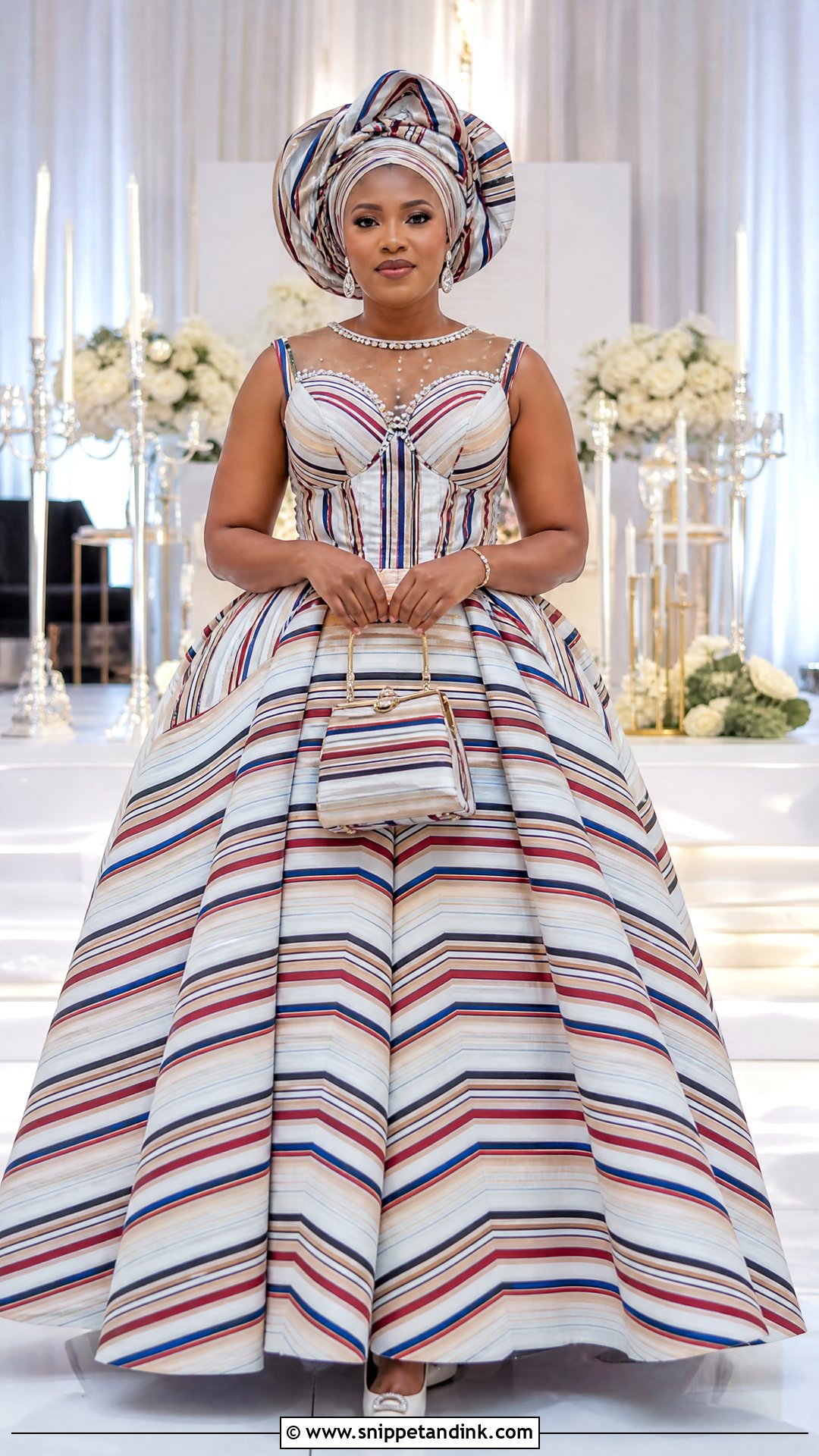
A Tshivenda bridal ball gown puts the cloth on a full skirt, and the challenge is scale. Stripes across a floor-length skirt can easily overpower a face, so I keep solid fabric around the neckline and let the striped panels, borders or bands begin lower down. Placing them takes planning, because the bands need to meet at every skirt seam, and that means buying extra fabric. A headwrap or a refined hair piece follows family custom and the bride’s own wishes, with closed-toe heels, delicate earrings and a small structured bag. The stripes can be repeated on detachable sleeves or a removable overskirt. Designers have been bringing this cloth into formal gowns for some time now, but any ceremonial detail with a specific meaning still deserves a conversation with family.
5. Tshivenda Peplum Top and Maxi Skirt Outfit
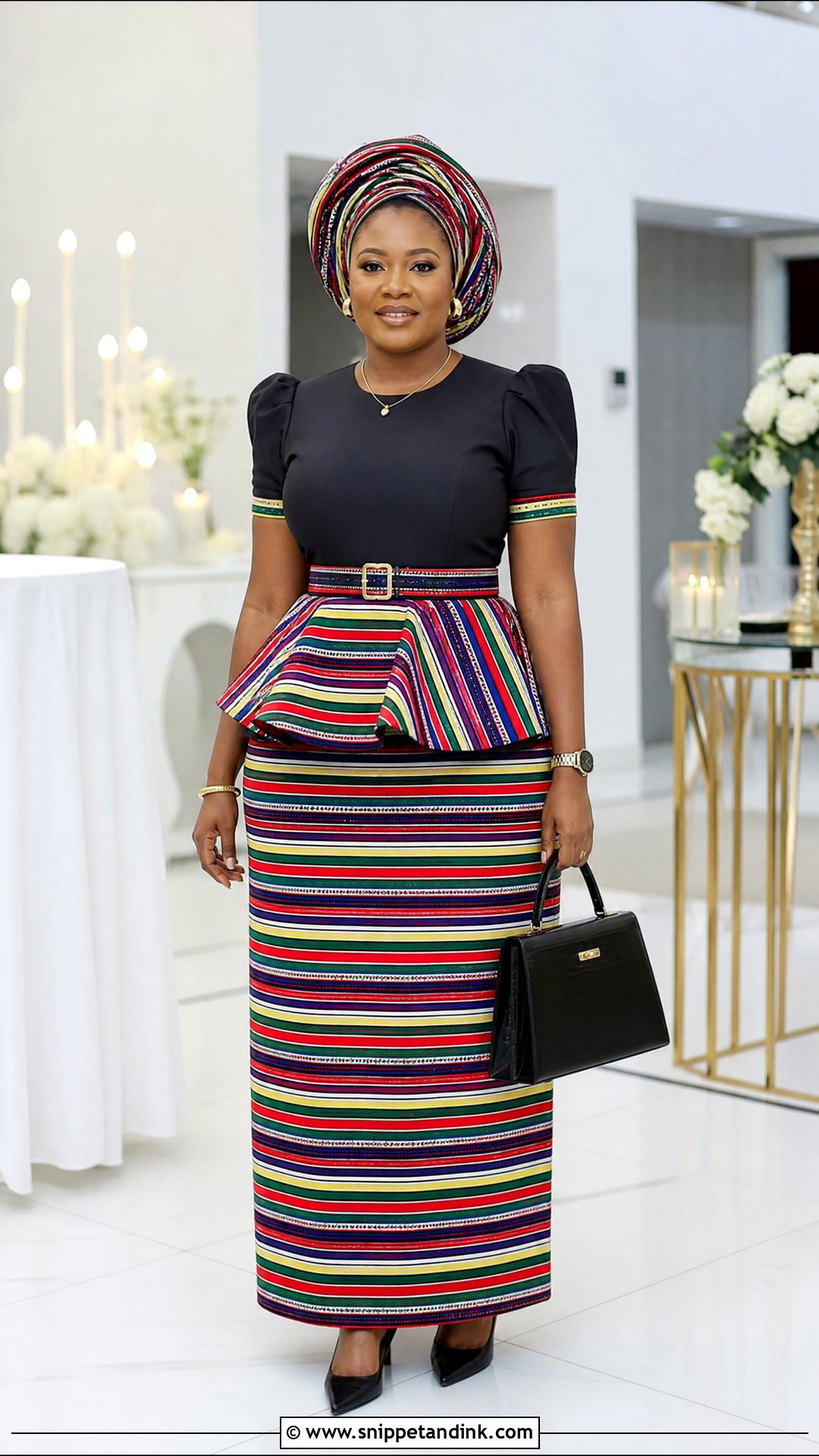
Peplums and full skirts tend to fight, so the skirt here is kept to controlled volume. I’d use a fitted solid bodice with stripes on the peplum, neckline and sleeves, then repeat the pattern in a floor-length skirt; the repetition ties the pieces together without weighing the outfit down. Watch the peplum’s length. If it ends at the widest point of your hip, it adds width exactly there, and moving it an inch up or down changes the whole silhouette. Pointed flats or mid heels, a matching headwrap, a structured bag and gold-tone or beaded jewelry finish it, and a narrow belt can sharpen the waist. Both pieces can be worn again separately with clothes you already own.
6. Tshivenda Off-Shoulder Maxi Dress Outfit
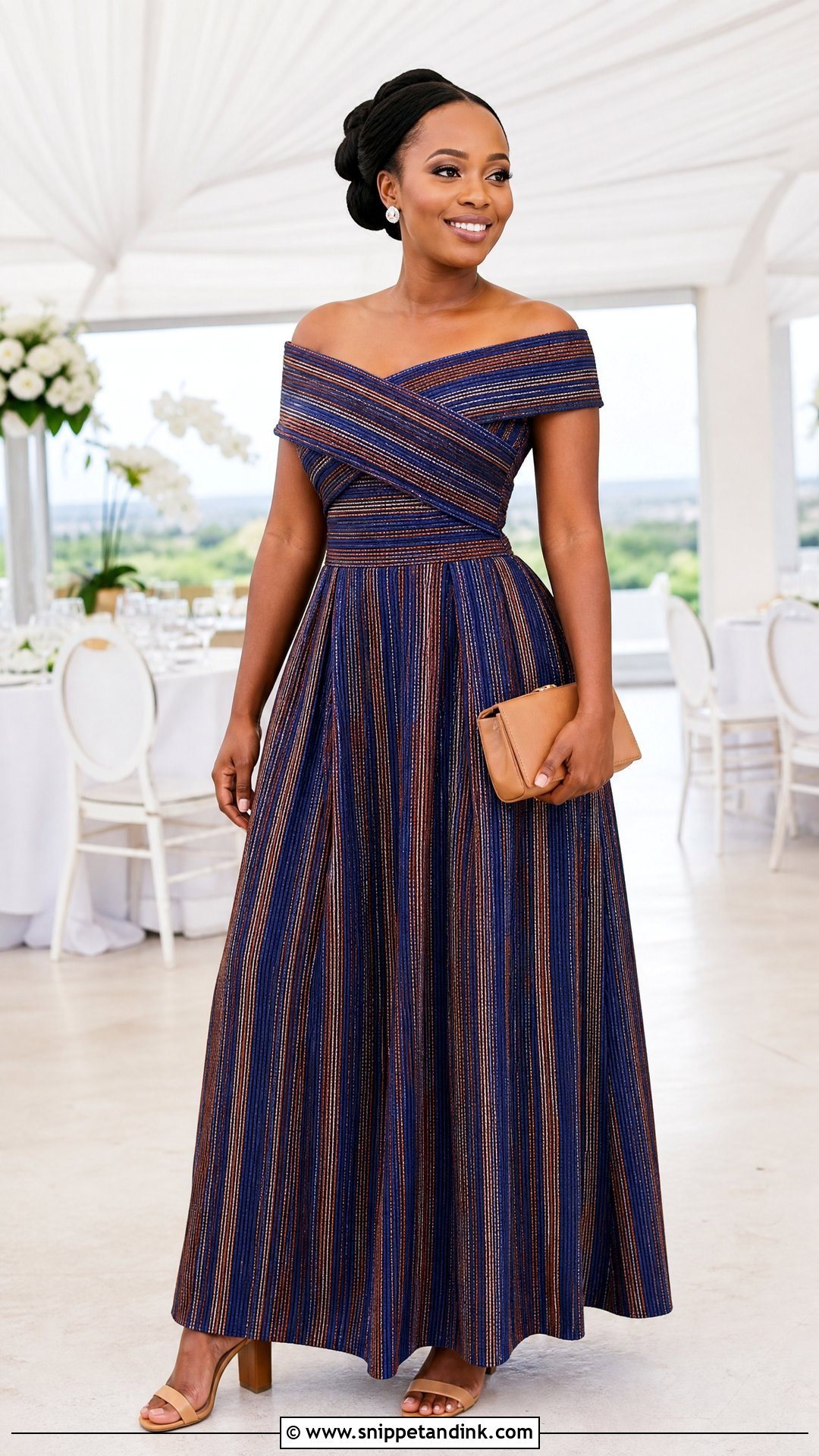
Off-shoulder necklines need a bodice built to hold itself up, and that’s the first thing I check. A folded band of striped cloth across the shoulders frames the upper body neatly, but if the bodice underneath isn’t properly fitted and boned, the band slides every time you raise your arms to dance. Detachable straps or short sleeves give you coverage when you need it. Block-heel sandals, a solid clutch and earrings in one shade from the pattern are enough. Skip the necklace, since the neckline is already the focal point, and finish with a neat updo or a headwrap. For a culturally significant event, make sure bare shoulders suit the occasion before you commit.
7. Tshivenda One-Shoulder Gown Outfit
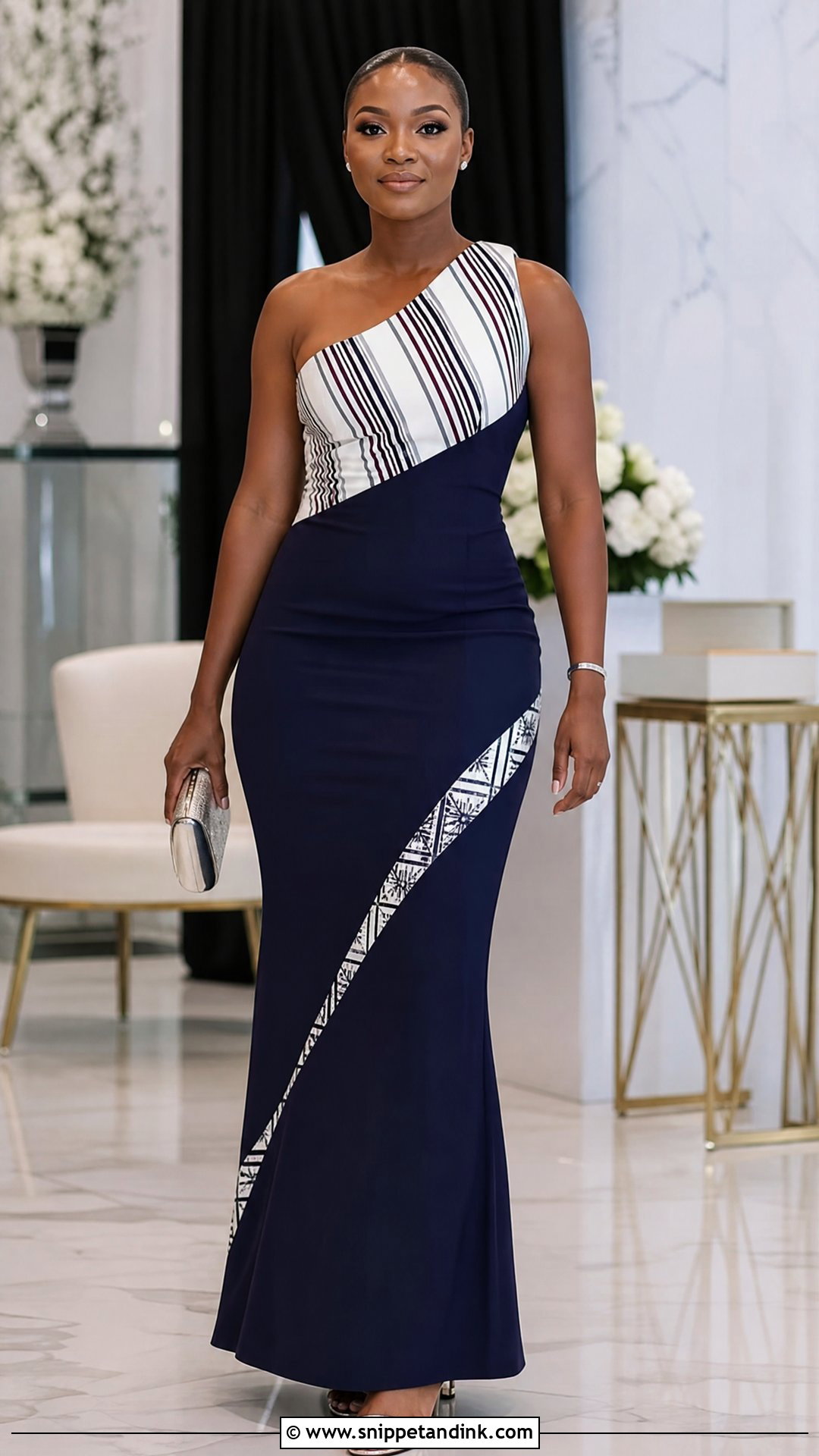
A one-shoulder line is diagonal, and stripes either fight it or follow it. My preference is to cut the striped panels on the diagonal so they echo the shoulder, or to keep the skirt solid and put the cloth on the bodice only. A gown made entirely of stripes can work, though it rarely looks as considered. The single strap has to stay put through a whole reception, so test it by reaching across your body for something. Comfortable heels, a slim bracelet and a small clutch in one coordinating shade are plenty, with no necklace and a sleek bun or pulled-back hair. It suits receptions, award evenings and cultural celebrations where the family is comfortable with a modern cut.
8. Tshivenda Fit-and-Flare Dress Outfit
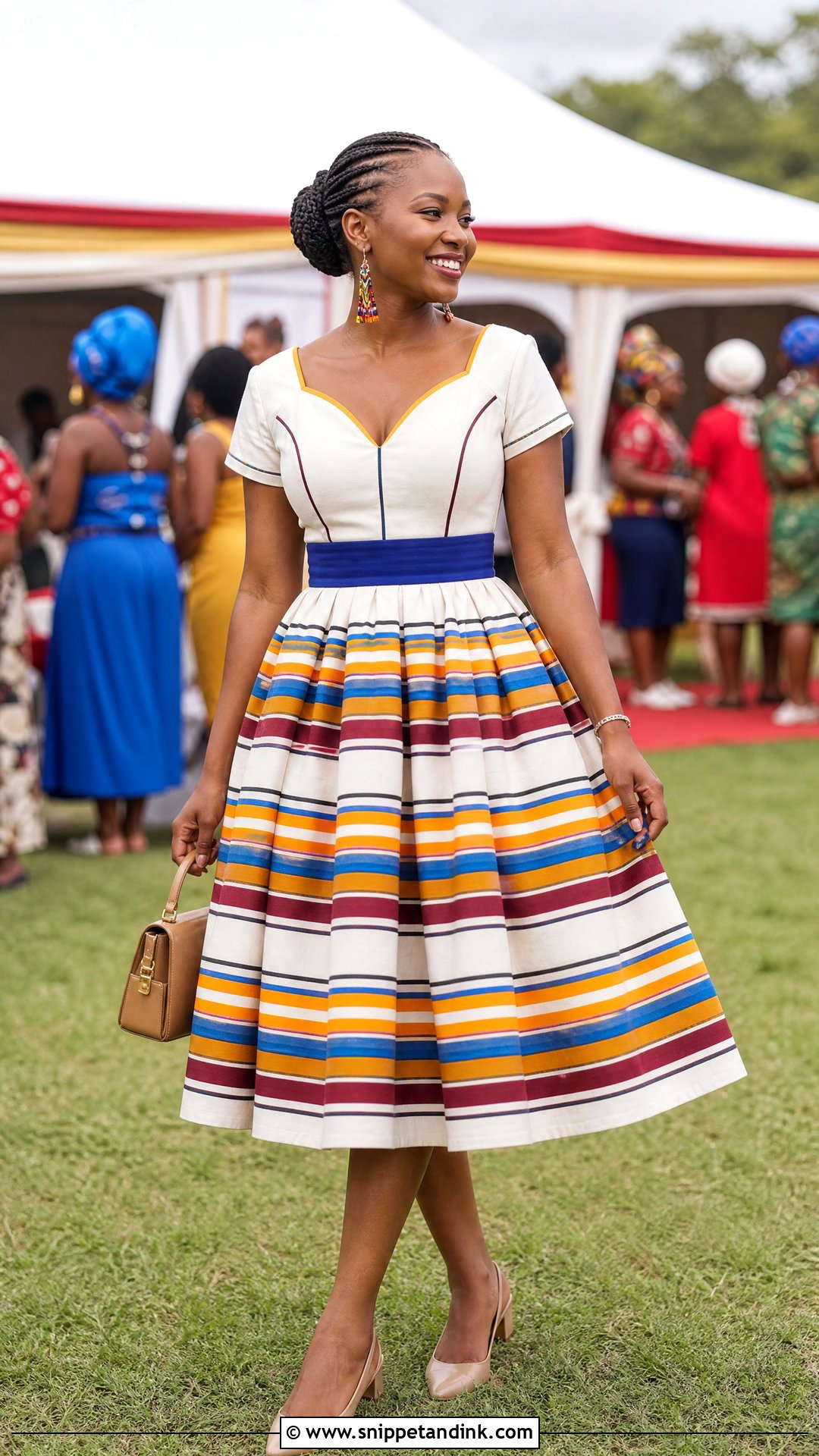
Of everything here, this is the shape I’d hand to someone wearing the cloth for the first time. A shaped bodice and a flared skirt let you walk, dance and sit at a daytime event without thinking about your dress. Knee or midi length depends on the occasion, and cap sleeves, short puff sleeves or a modest sleeveless cut all suit it. Because the fabric is so colorful, solid accessories keep it calm: low heels or polished flats, a small handbag and a little beadwork. A narrow waistband in a contrasting color finishes the line. A dressmaker can move the waist, change the sleeves and adjust the skirt volume for different bodies, which is why it works on so many people.
9. Tshivenda Mermaid Dress Outfit
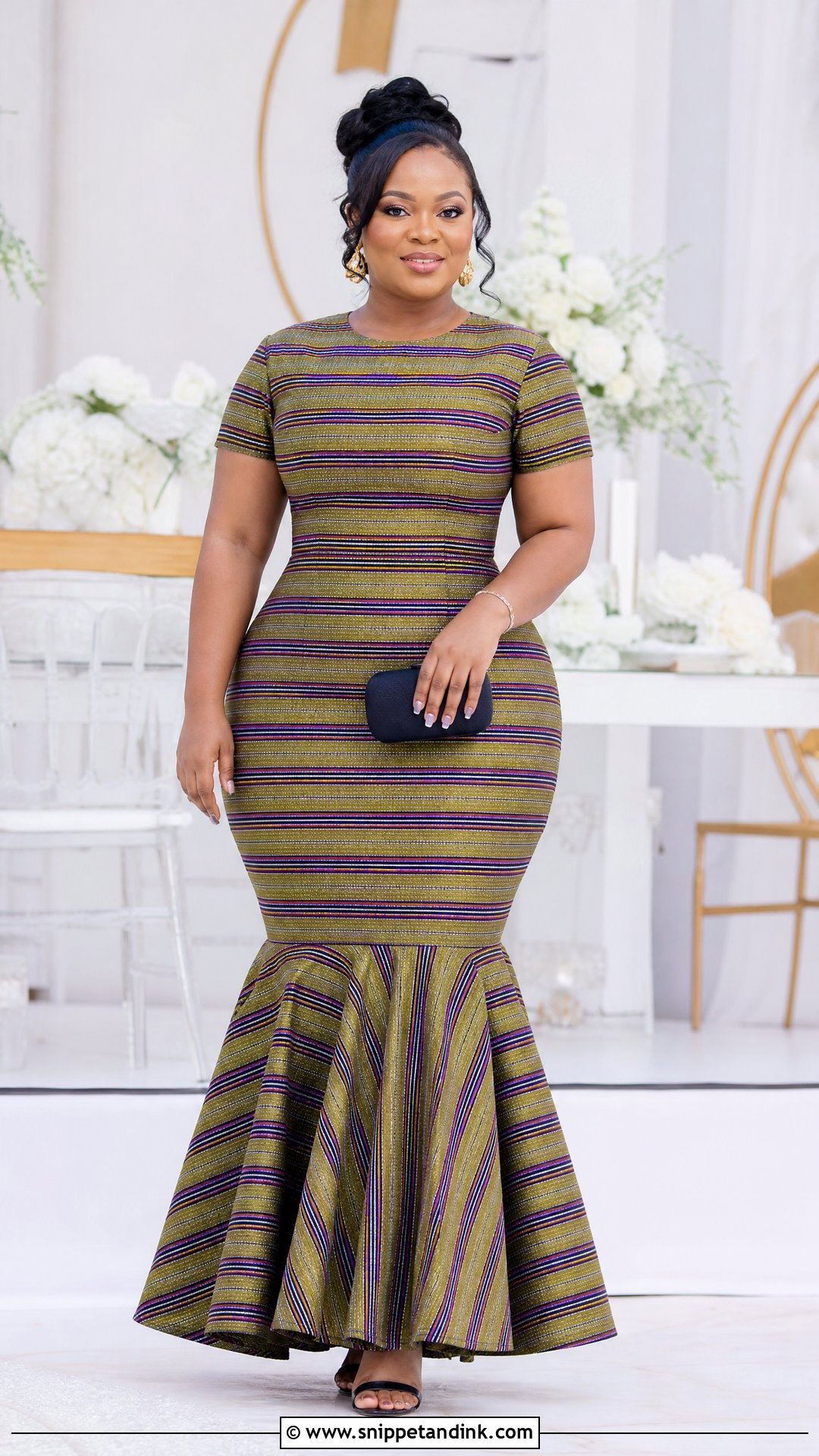
A mermaid gown in striped cloth is dramatic, and it’s also the least forgiving shape in this list. It fits through the bodice, waist and hips and widens near the knee, so the fabric needs enough body to hold that line; a thin cloth without structure creases across the thighs the first time you sit. I’d put the stripes on the flared lower panel against a solid top, which draws the eye down toward the movement. A modest V-neck, a round neckline or fitted short sleeves balance the skirt. Wear stable heels, a small clutch and understated earrings. If you’ll be standing or dancing for hours, ask the designer for some stretch, real walking room and a train you can manage.
10. Tshivenda High-Low Dress Outfit
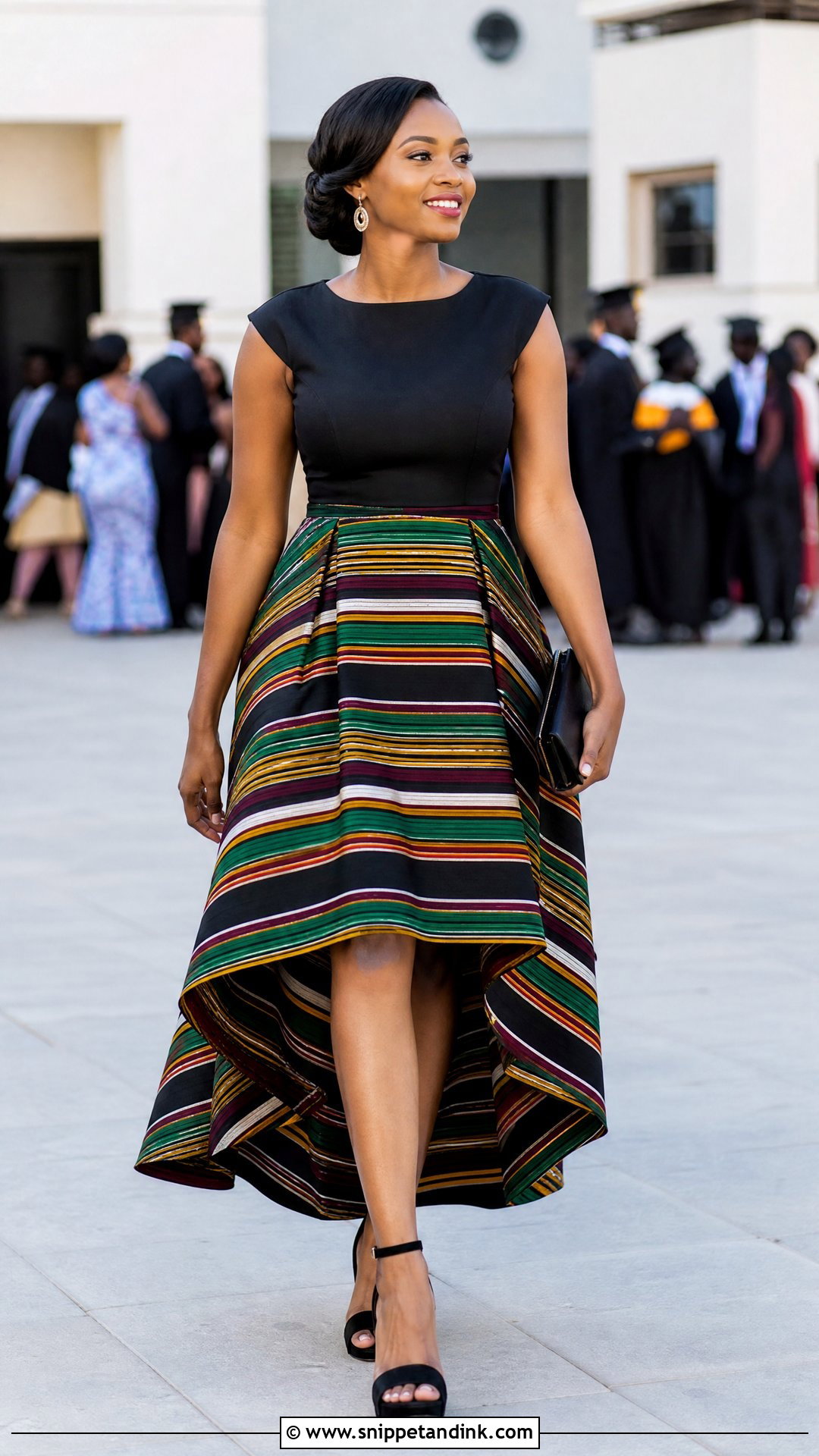
High-low hems are mostly about the front. Cut too short, it has you tugging every time you sit or climb steps, so I check the front hem seated before I sign it off. The shorter front shows the shoes, while the longer back gives formality without a full train. A fitted bodice and a lightly structured skirt work better than layers here. A solid top with a striped high-low skirt is the balanced version; an all-over pattern works if the cut stays plain. Your shoes are on show the whole event, so choose ankle-strap block heels in one clear color, then add a neat clutch and medium earrings. It sits well at graduations and modern weddings.
11. Tshivenda Blazer and Wide-Leg Pants Outfit
A blazer is where the striped cloth looks sharpest, because tailoring gives the stripes straight edges to follow. Use them on the lapels, as covered buttons or as sleeve panels, and pair the jacket with solid high-waisted trousers for a quieter look or matching fabric for a full suit. Underneath, a simple camisole or a modest shell lets the jacket details show. Pointed pumps, loafers or clean block heels, a structured bag and minimal earrings finish it. The tailoring matters more than the cloth: the shoulder seam should end at your shoulder bone, and the trousers should be hemmed in the shoes you’ll actually wear. Done well, it’s one of the cleanest ways to bring heritage fabric into current dressing.
12. Tshivenda Blouse and Tailored Pants Outfit
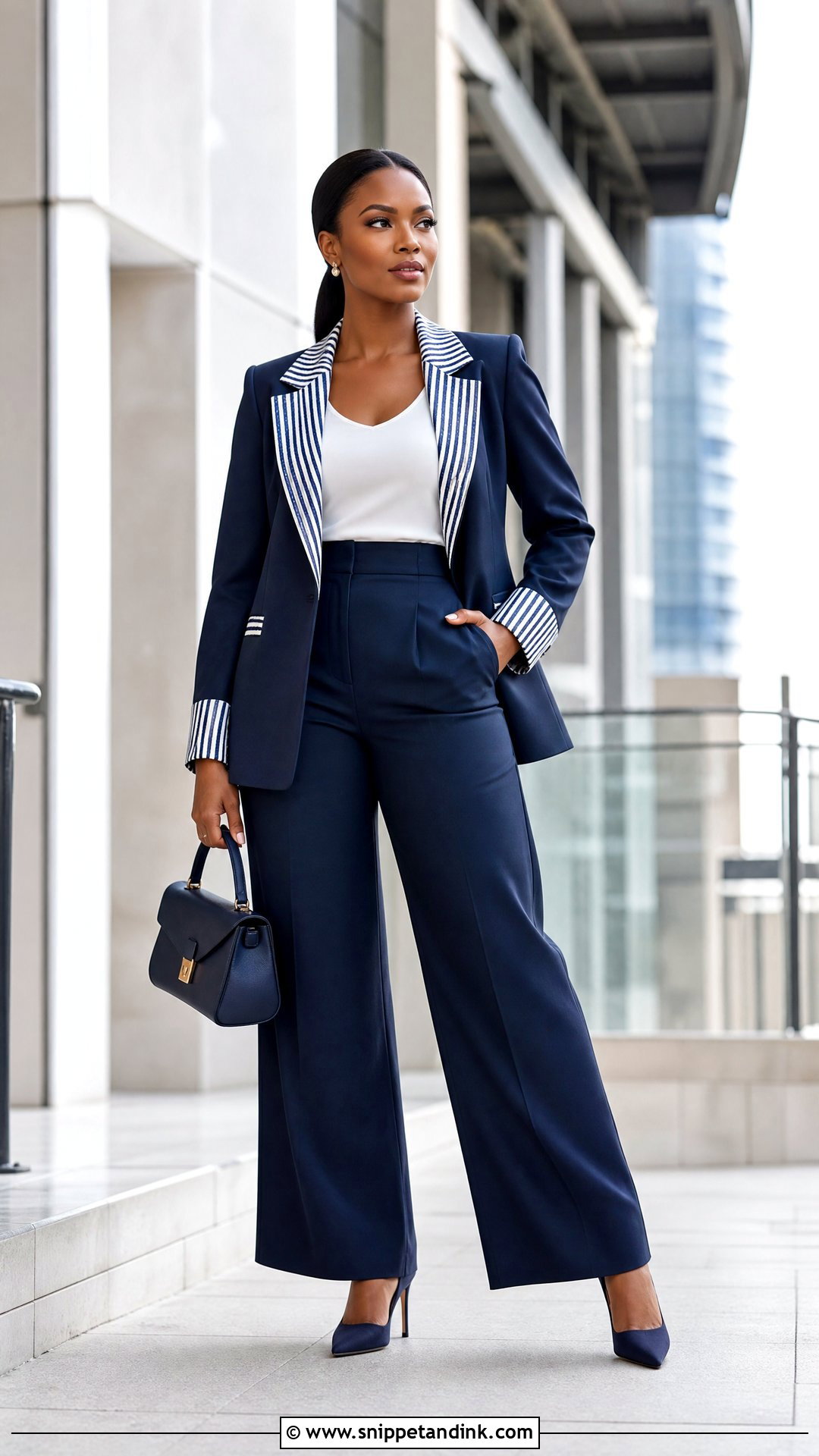
For a lighter formal look, I’d pair a Tshivenda blouse with solid tailored pants. A peplum, wrap or button-front blouse shows off the stripes without a fully patterned outfit. Take the trouser color from the cloth itself, and go high-waisted in a straight or wide leg so the line runs cleanly from waist to shoe. A button-front blouse in striped cloth is fiddly to sew, because the bands should line up across the placket once it’s buttoned, so check that before you collect it. Loafers, pointed flats or block heels, a small shoulder bag and one bracelet are enough. If the blouse has puff sleeves or a wide collar, I’d keep everything else even quieter. It’s well judged for work celebrations, graduations and relaxed family gatherings.
13. Tshivenda Jumpsuit Outfit
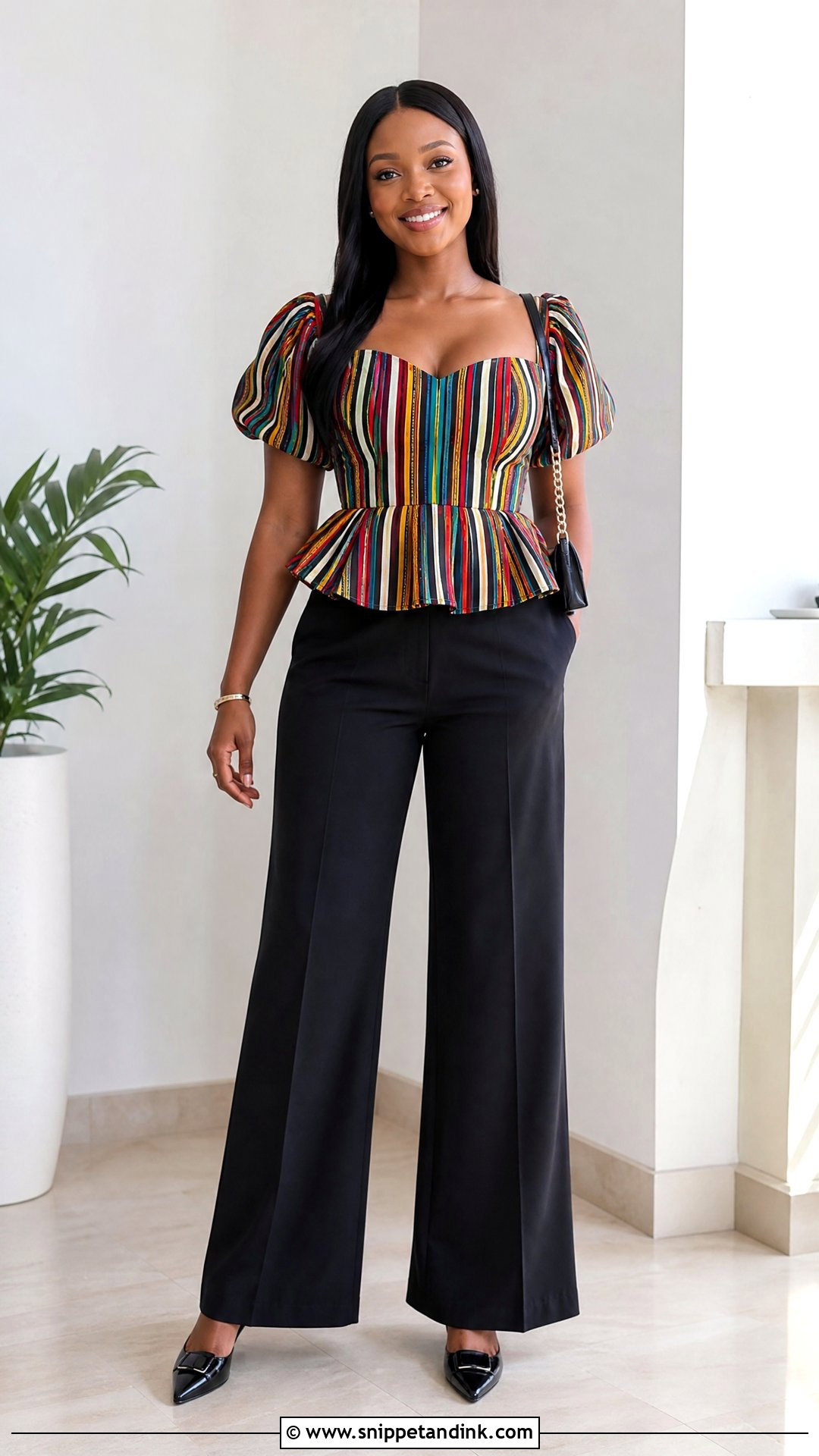
With a jumpsuit, I measure the torso twice. That measurement runs from the shoulder through the crotch, and if it’s even slightly short, the whole garment pulls when you sit, which no styling can hide. Look for a defined waist and trousers with room to move; wide legs read formal, and a tapered cut reads modern. The cloth can cover everything or appear only on the bodice, belt and pocket trim. A matching fabric belt shapes the waist and makes the piece look intentional. Add heeled sandals or pointed pumps, a compact bag and simple earrings. Detachable sleeves or a solid tailored blazer over the jumpsuit give you a second look later in the day.
14. Tshivenda Two-Piece Skirt Set Outfit
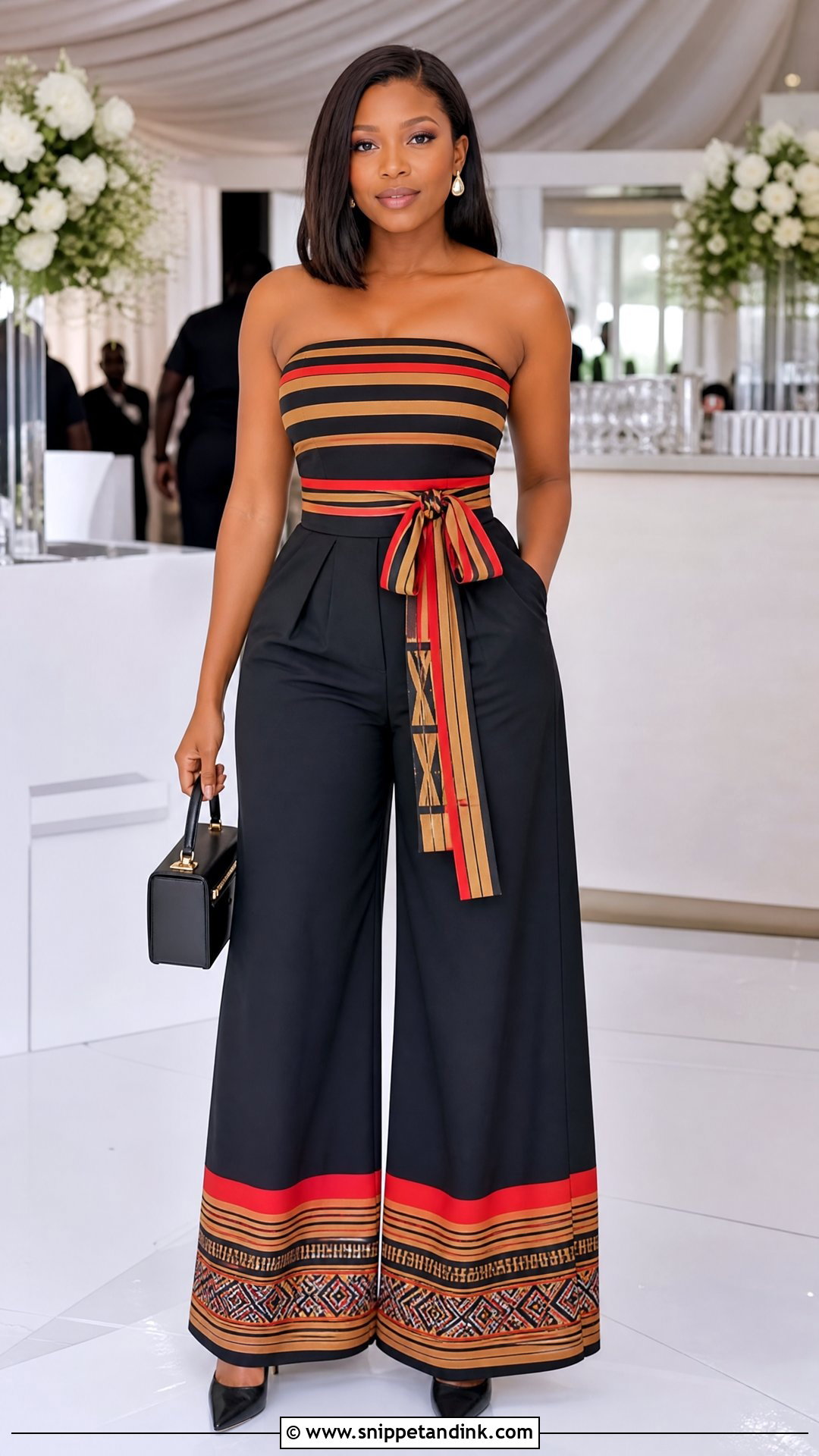
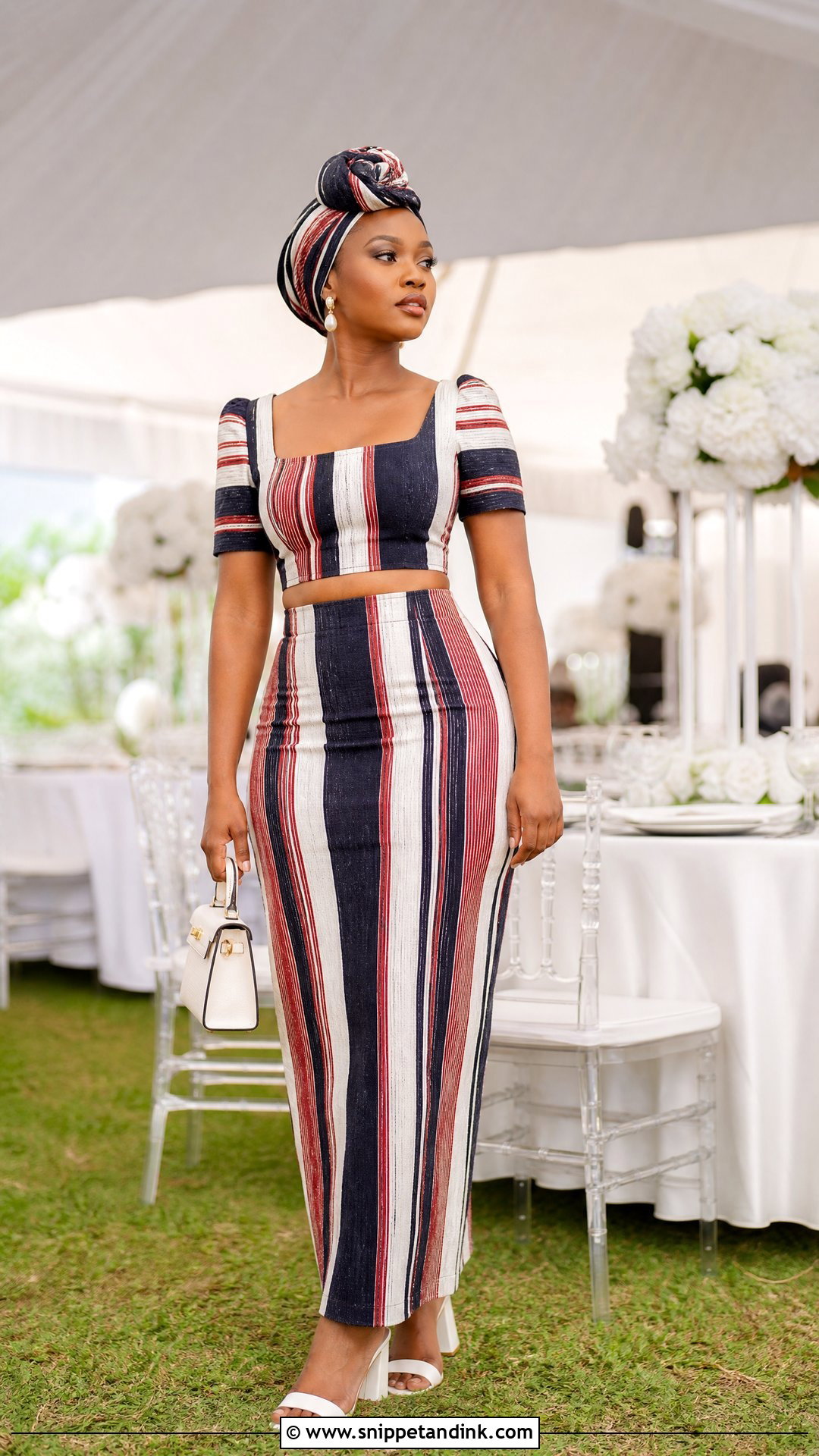
A two-piece set earns its keep after the event. Pair a fitted top with a high-waisted midi or maxi skirt, and make sure the two meet comfortably at the waist; a cropped top should show only as much skin as the occasion allows. When both pieces come from the same striped cloth, I match the stripe level at the waistband so the bands don’t jump between top and skirt. A solid panel can soften the print. Block heels, a structured mini bag, delicate earrings and perhaps a headwrap are enough. Afterward, wear the top with tailored pants, or style the skirt with a simple blouse, and the set keeps working long after the celebration.
15. Tshivenda Plus-Size Wrap Dress Outfit
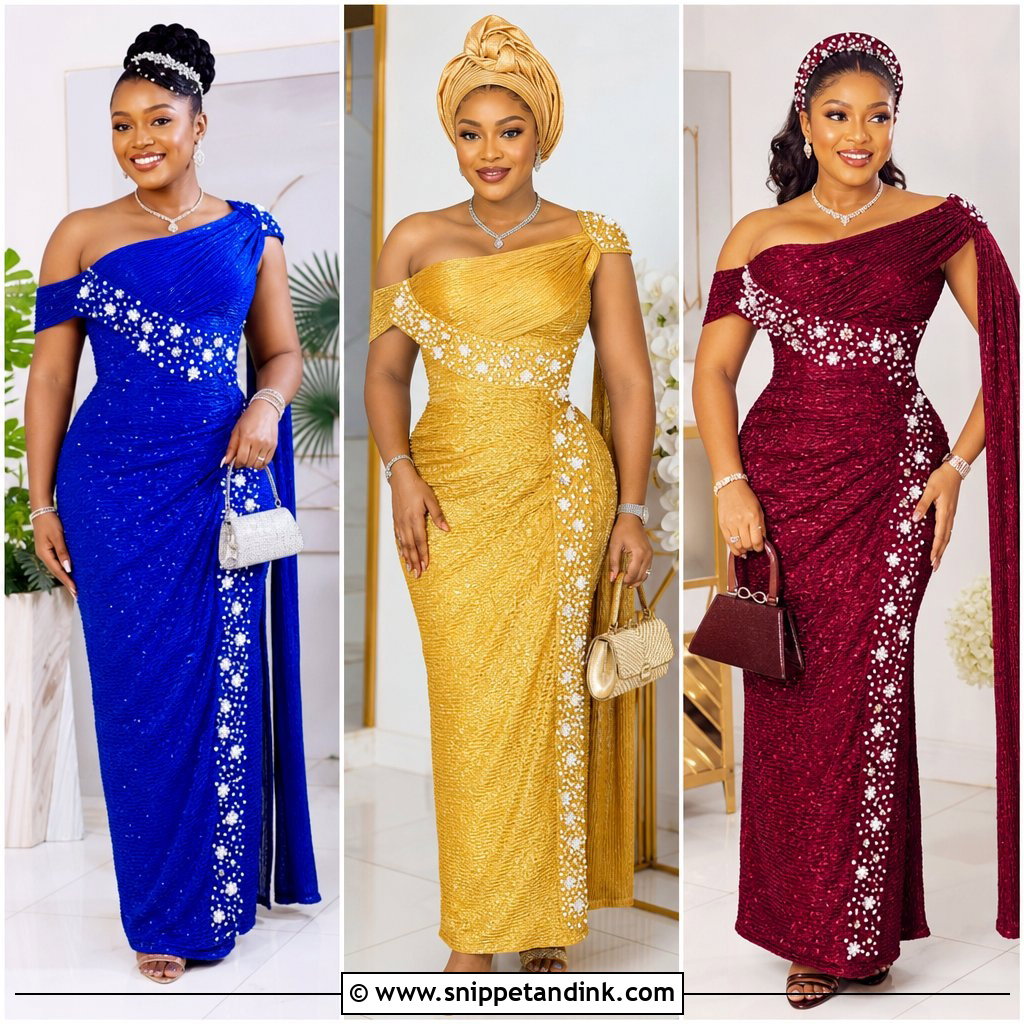
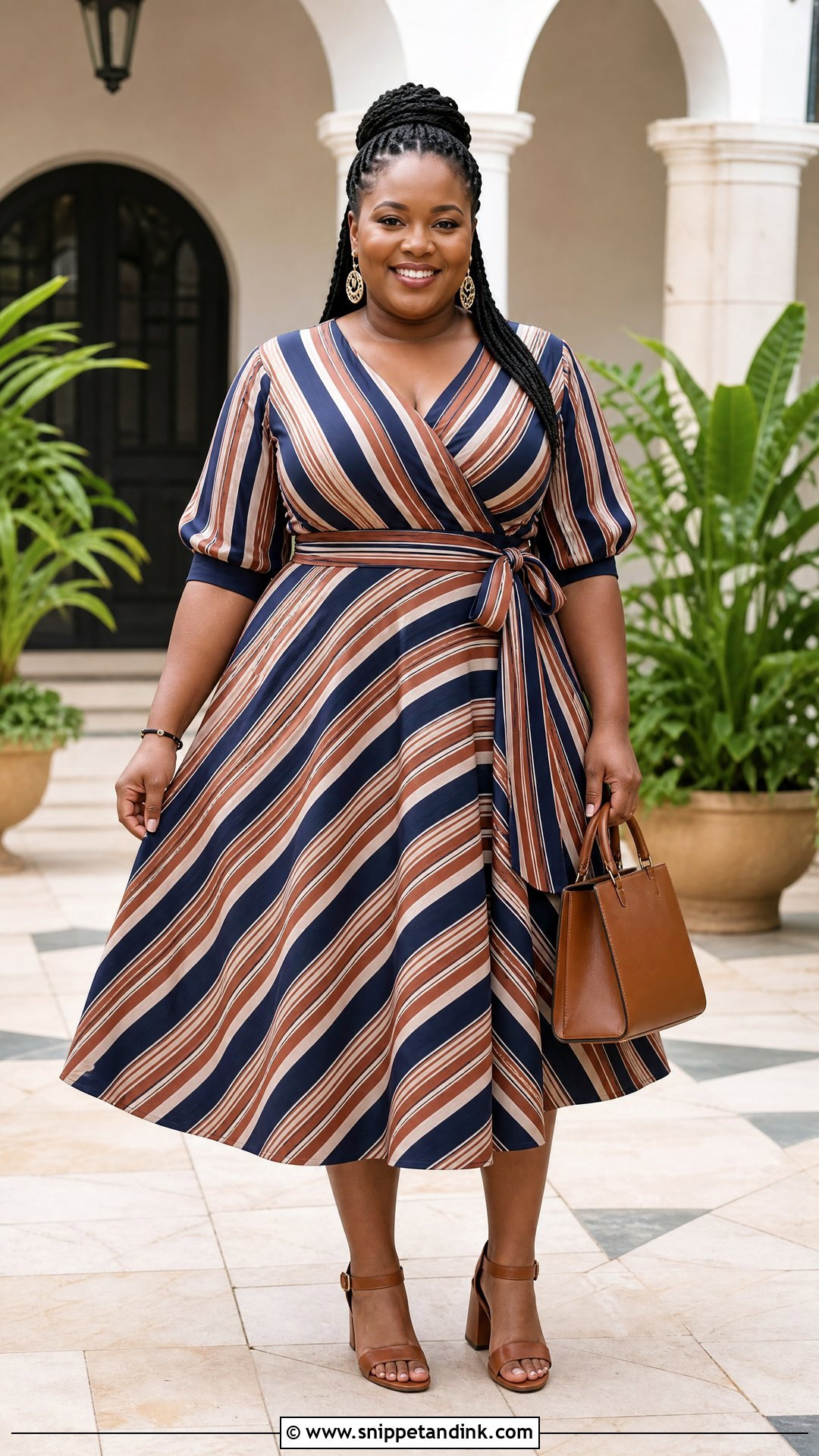
A true wrap, with a secure inner tie, adjusts to the body in a way a fixed waist never can, and that’s why I like it on fuller figures. Avoid imitation wraps that are stitched closed, since they can’t be loosened after a long lunch. A wider waistband gives support, and a softly flared midi or maxi skirt moves comfortably. Choose sleeves for the season and the coverage you want. Where stripes cross the neckline and side seams, ask the dressmaker to align them, because mismatched bands on a wrap neckline are the first thing the eye catches. Cushioned block heels or flats, a solid bag and medium earrings complete it. Above all, it should be cut to your current measurements, neither squeezing nor swamping you.
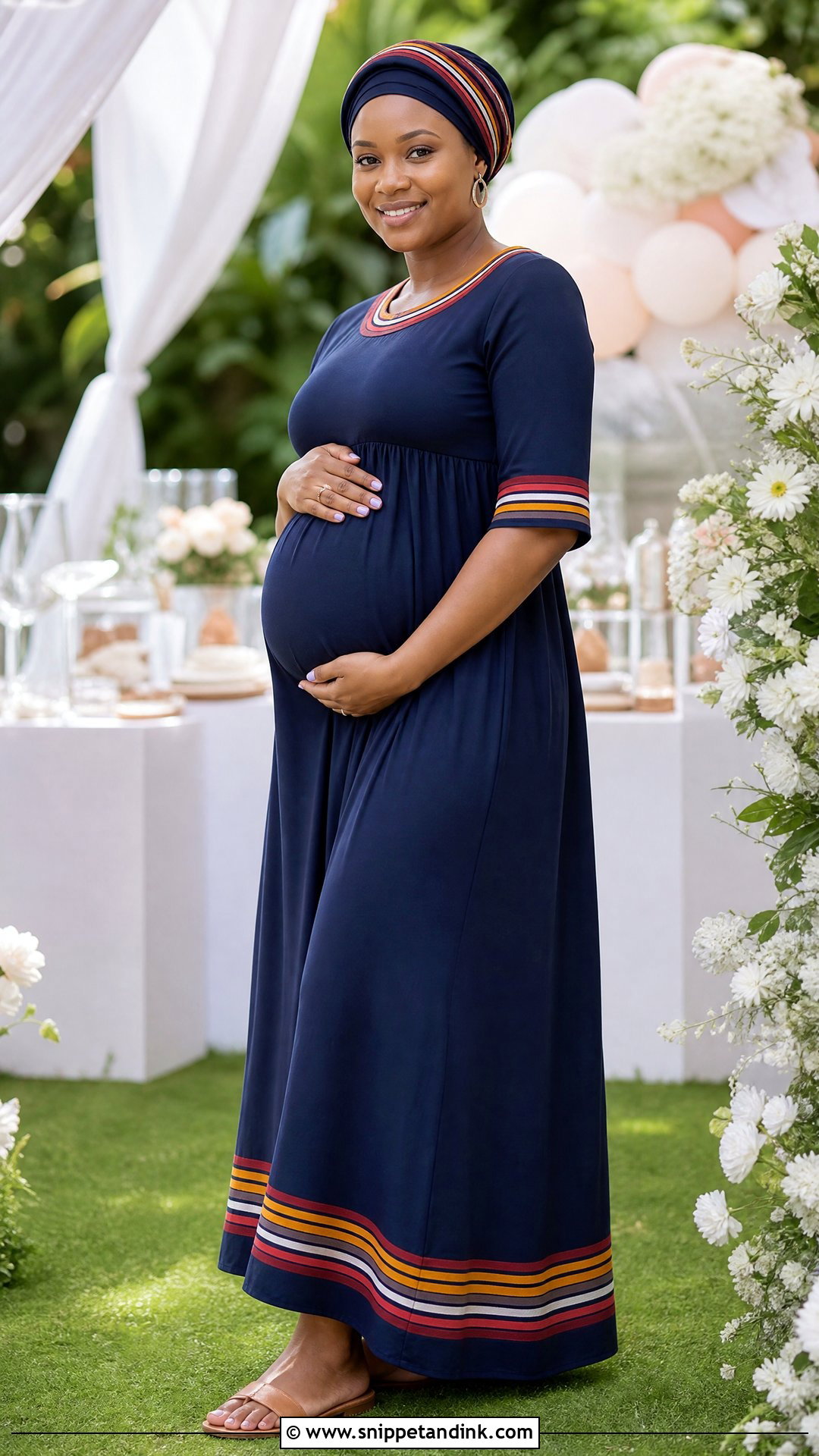
16. Tshivenda Maternity Maxi Dress Outfit
Pregnancy changes fit week by week, so I book the final fitting as close to the event as the dressmaker allows. An empire waist sitting below the bust gives the bump room while keeping some shape, and a breathable lining matters more than people expect, because you’ll run warm. Sleeves shouldn’t restrict the upper arms. The stripes can cover the whole dress or run as a bold border along a solid gown, which is lighter to wear. Flat sandals or low block heels are steadier, with a light headwrap and simple earrings. Leave out tight waistbands, heavy embellishment and long trains. A concealed nursing-friendly neckline keeps the dress useful after the baby arrives.
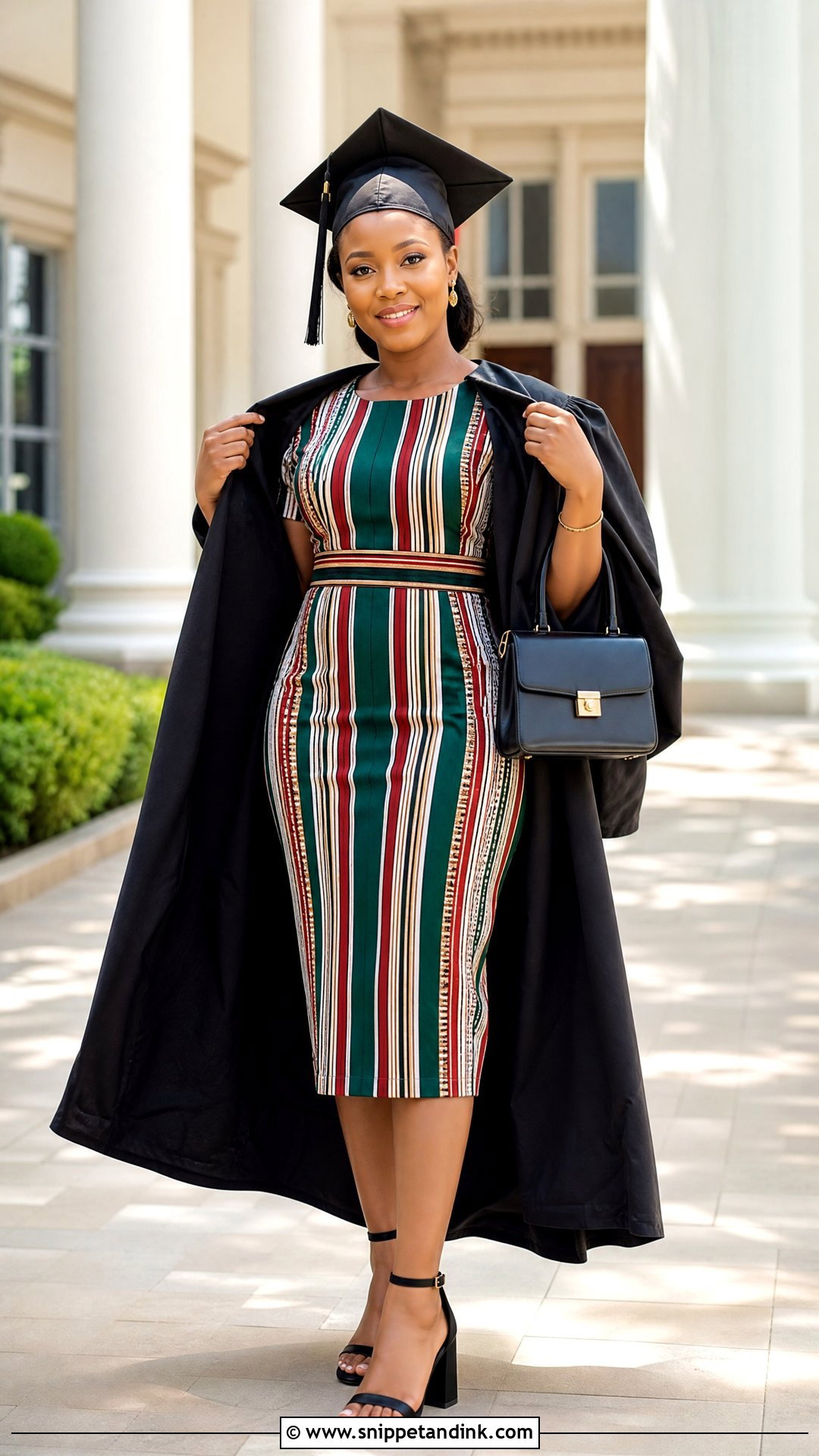
17. Tshivenda Graduation Dress Outfit
Most of a graduation dress disappears under an academic gown, so I put the stripes where they’ll still show when the robe hangs open: the bodice, the cuffs and the hem. A streamlined midi with short sleeves, a neat neckline and little skirt volume sits flat under the robe without bunching. Graduation days mean stairs, queues and a walk across a stage, so stable block heels or polished flats are the sensible pick. Carry a small crossbody, wear simple earrings, and choose a hairstyle the cap can sit on. When the ceremony is over and the robe comes off, add a matching headwrap or a statement bracelet for the family photographs.
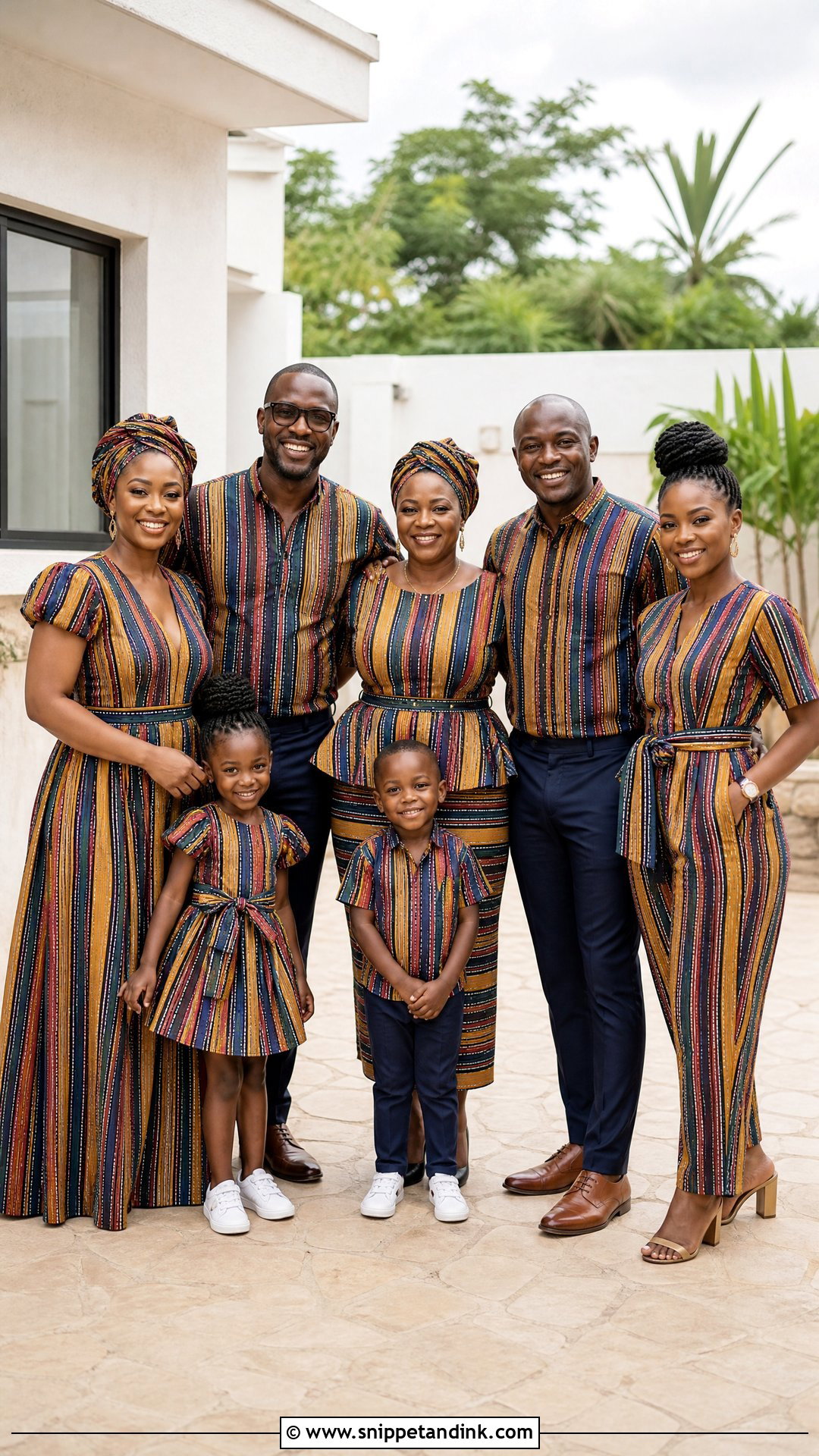
18. Tshivenda Family Matching Outfit
A family dressed in one cloth looks better than a family dressed in one design. Choose a single striped fabric and let each person wear it their own way: a maxi dress for one woman, a peplum skirt set for another, a tailored jumpsuit for a third. Men can wear patterned shirts with solid trousers, and children need simple cuts they can play in. Carry one color through shoes, headwraps or accessories to pull the group photograph together. Buy all the fabric at once if you can, since dye batches vary and two slightly different reds look odd side by side. Comfort comes first at every age. Don’t hand out ceremonial garments for their looks; ask knowledgeable relatives what suits each person.
19. Tshivenda Men’s Shirt and Trouser Outfit
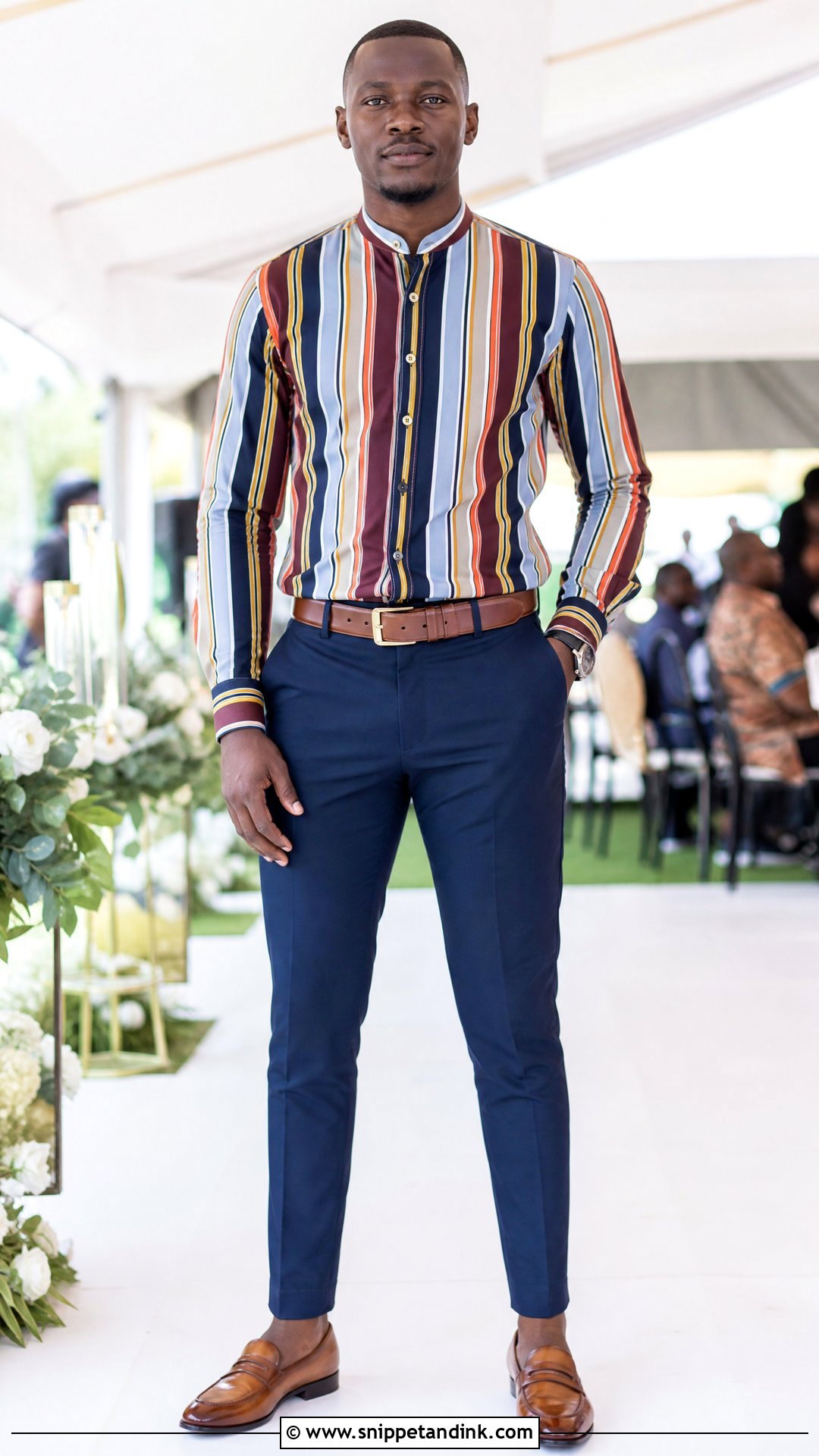
For men, I start with fit before fabric, since a patterned shirt that pulls across the chest looks wrong in any cloth. Modern Venda menswear often uses the striped cloth in shirts or as a length draped across one shoulder. For something that works at many events, choose a well-fitted short- or long-sleeve shirt in the cloth with tailored black, navy or burgundy trousers. Loafers or lace-up shoes and a plain belt finish it. A man who prefers a subtle version can wear a solid shirt with a patterned pocket or covered buttons. Repeating the same fabric in the family’s dresses links the group. Traditional men’s attire has its own history, so ceremonial versions should be made with guidance and never treated as costume.
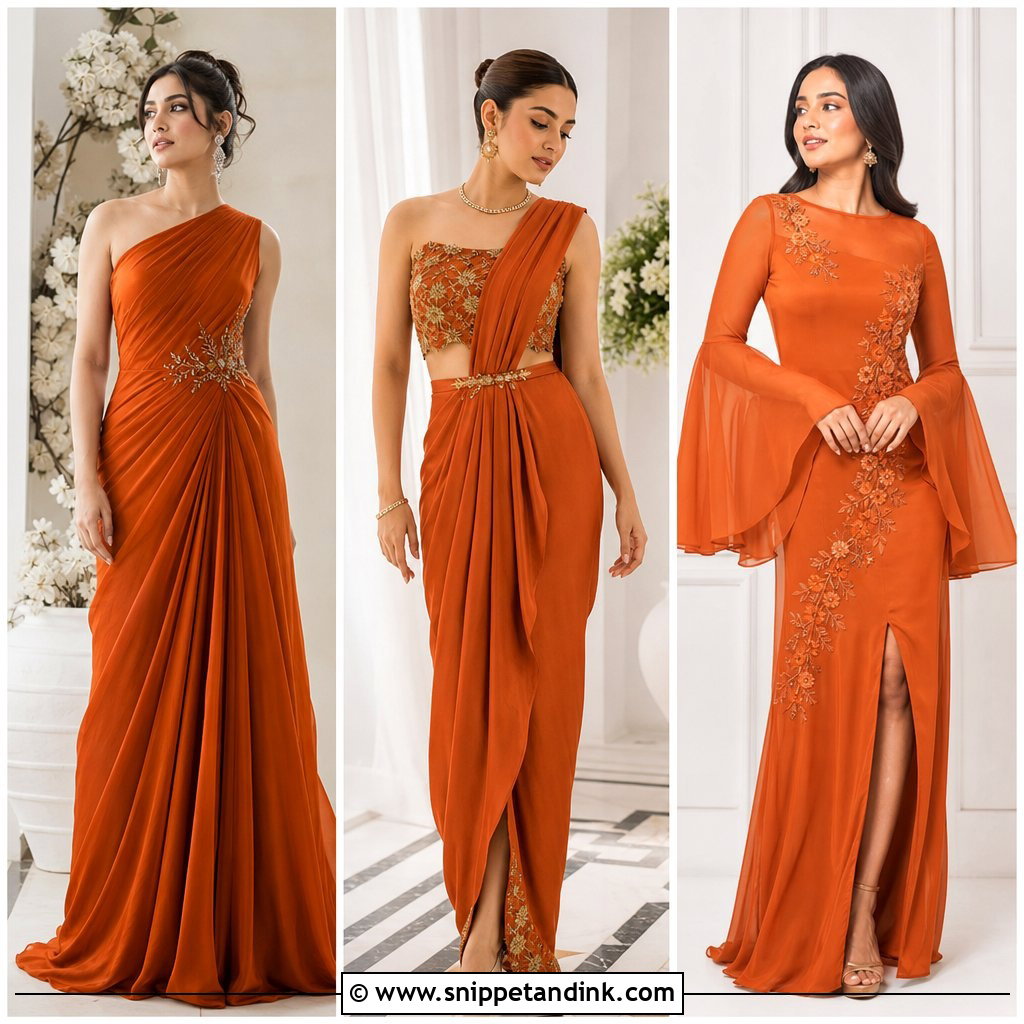
20. Tshivenda Girls Celebration Dress Outfit
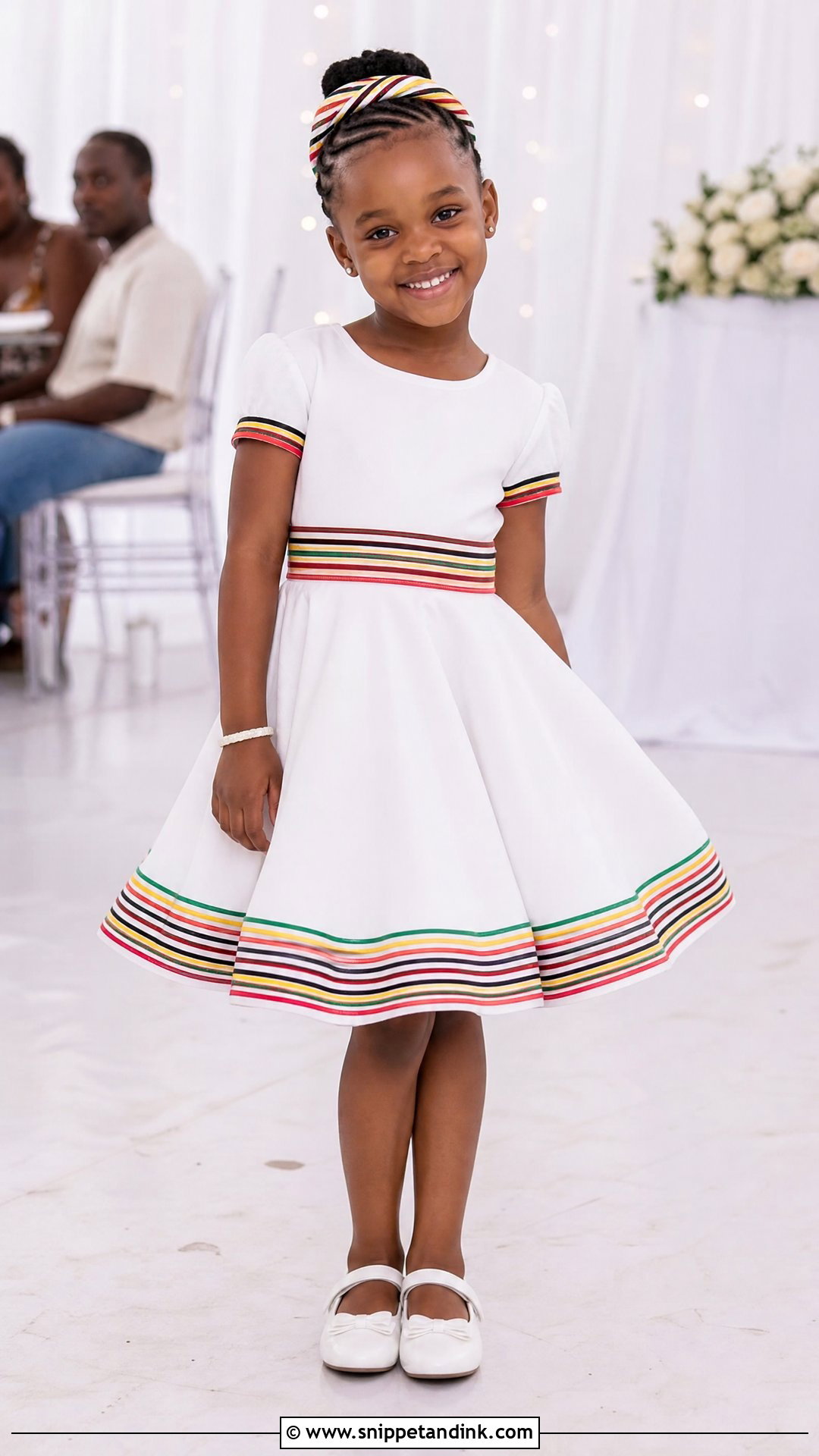
Children’s clothes have to survive running, sitting on the floor and being hugged by every aunt, so comfort wins over detail. A simple fit-and-flare with a soft lining, easy sleeves and a skirt she can move in is the safest base. Put the striped cloth on the waistband, a hem border and small sleeve panels, or across the whole dress. Choose secure ballet flats or low sandals, never heels, and keep to a small headband, a fabric bow or a simple bracelet. Leave off heavy beadwork, sharp trims, tight bodices and trailing hems that trip small feet. Girls’ clothing and accessories have historically marked particular stages and customs, so a party dress shouldn’t copy a ceremonial garment without family guidance.
Wearing Venda Cloth as a Guest From Another Culture
Guests from outside the culture often ask me whether it’s all right to wear ṅwenda to a Venda wedding. Usually, a family that invites you to wear it will be glad you did. What matters is how you go about it.
- Ask the couple or a family member first, and follow what they suggest about colors and garments.
- Pick a modern cut, such as a midi dress or a blouse, over the ceremonial wrap and beadwork unless you’ve been invited to wear those.
- Buy from Venda makers and sellers where you can.
- Keep it for occasions where it belongs, not as a costume at an unrelated party.
Washing and Storing a Striped Outfit So the Color Lasts
The stripes are the part that ages first. Wash the garment inside out in cold water, by hand or on a gentle cycle, and on its own for the first few washes in case the dyes run. Dry it in shade, because strong sun fades bright bands surprisingly fast. Iron on the reverse at moderate heat.
Hang structured pieces such as gowns and blazers on padded hangers inside a breathable cotton bag, never plastic. An unsewn length of cloth keeps better rolled around a tube than folded, since sharp folds left for months can leave permanent lines across the stripes.
When the Stripes, the Fit and the Family Agree
Venda cloth can become a wrap, a ball gown, a pantsuit or a set of family outfits, and the best version is rarely just the brightest one. It has to fit properly, suit the occasion and treat the culture with care. Buy genuine fabric where you can, and find a dressmaker who understands how stripes behave across seams. Comfortable shoes and restrained accessories do the rest. For weddings and ceremonies, ask family members which garments and details are appropriate. That conversation is how your own style and Vhavenda heritage end up in the same outfit.
You'll Like These Ideas:


Leave a Reply