
Royal blue is a color I rarely have to sell. It holds its own next to gold, silver, coral or champagne, and on camera it stays rich where paler blues wash out under hall lighting. The looks below run head to toe for brides, family and guests: aso-oke sets, lace gowns, wrapper outfits, boubous, kaftans and garments drawn from several West, North and Southern African traditions. One rule comes before any of them. Find out the couple’s dress code, whether the family has chosen aso-ebi colors, and how traditional they expect the clothing to be. Once that’s clear, the accessories and shoes are the easy part.
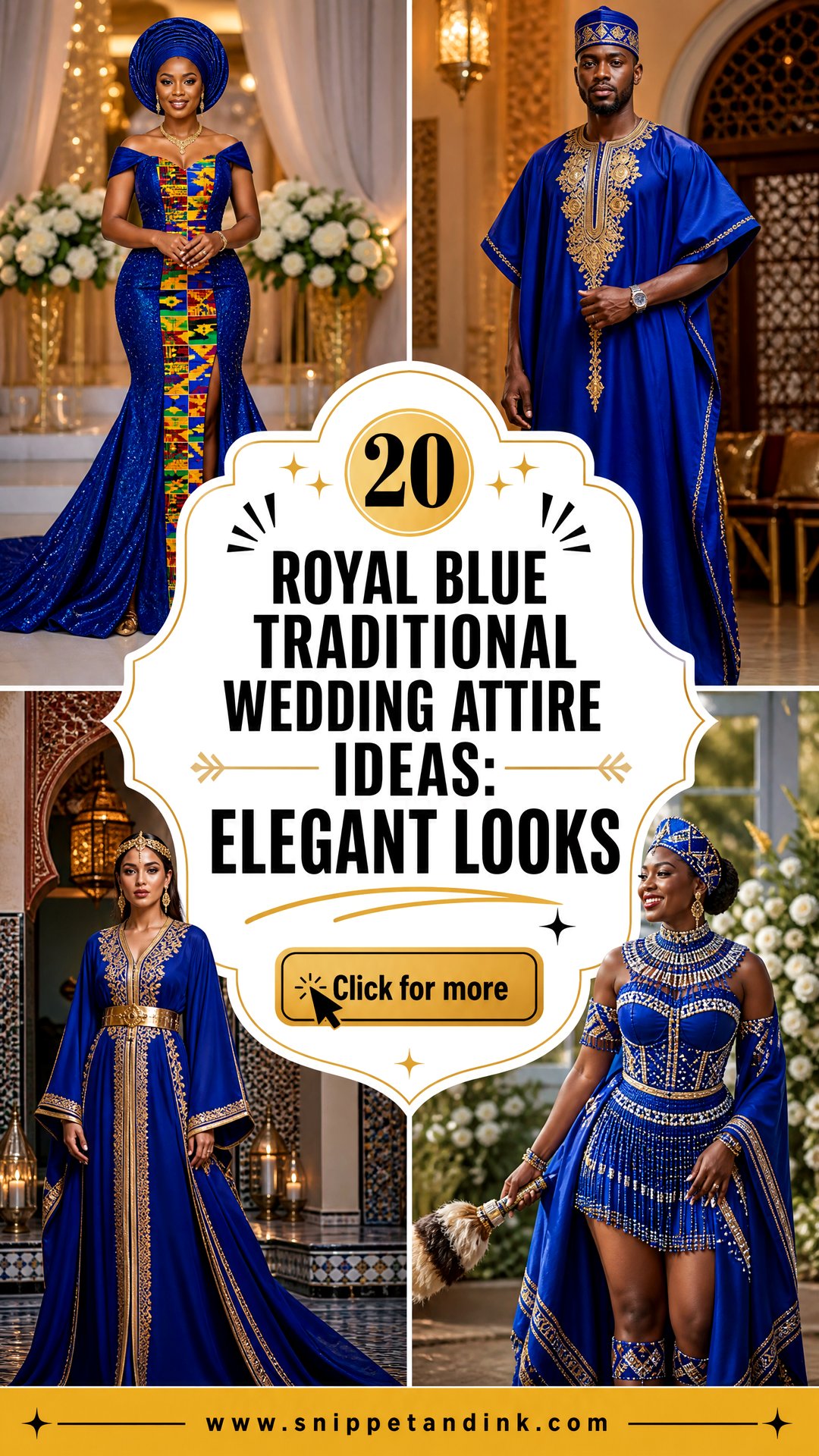
Royal Blue Shifts From Bolt to Bolt, So Match Early
The thing nobody warns you about with royal blue is how much it varies. Lace, aso-oke, George, Ankara and bazin are dyed by different makers in different ways, and a blue that looks identical in the market can lean purple or teal once it’s sewn up and photographed. When a family orders aso-ebi, I ask for every piece to come from the same dye lot whenever possible.
- Take a swatch outside and look at it in daylight, then under warm indoor bulbs. Some royal blues turn violet under yellow light, which is what most halls use.
- If the gele and the dress come from different fabrics, hold them together before buying. A head tie that’s a shade off is obvious in close-up photos.
- Metallic thread changes the read too. Gold-shot cloth looks warmer and darker from a distance than the plain blue beside it.
- Buy a little extra yardage. If a tailor makes a cutting mistake, finding a matching bolt later is often impossible.
For guests who are matching a family color, I suggest sending a photo of your fabric to whoever is coordinating, taken in daylight with no filter. It saves a lot of awkwardness at the venue.
1. Royal Blue Aso-Oke Iro And Buba Outfit
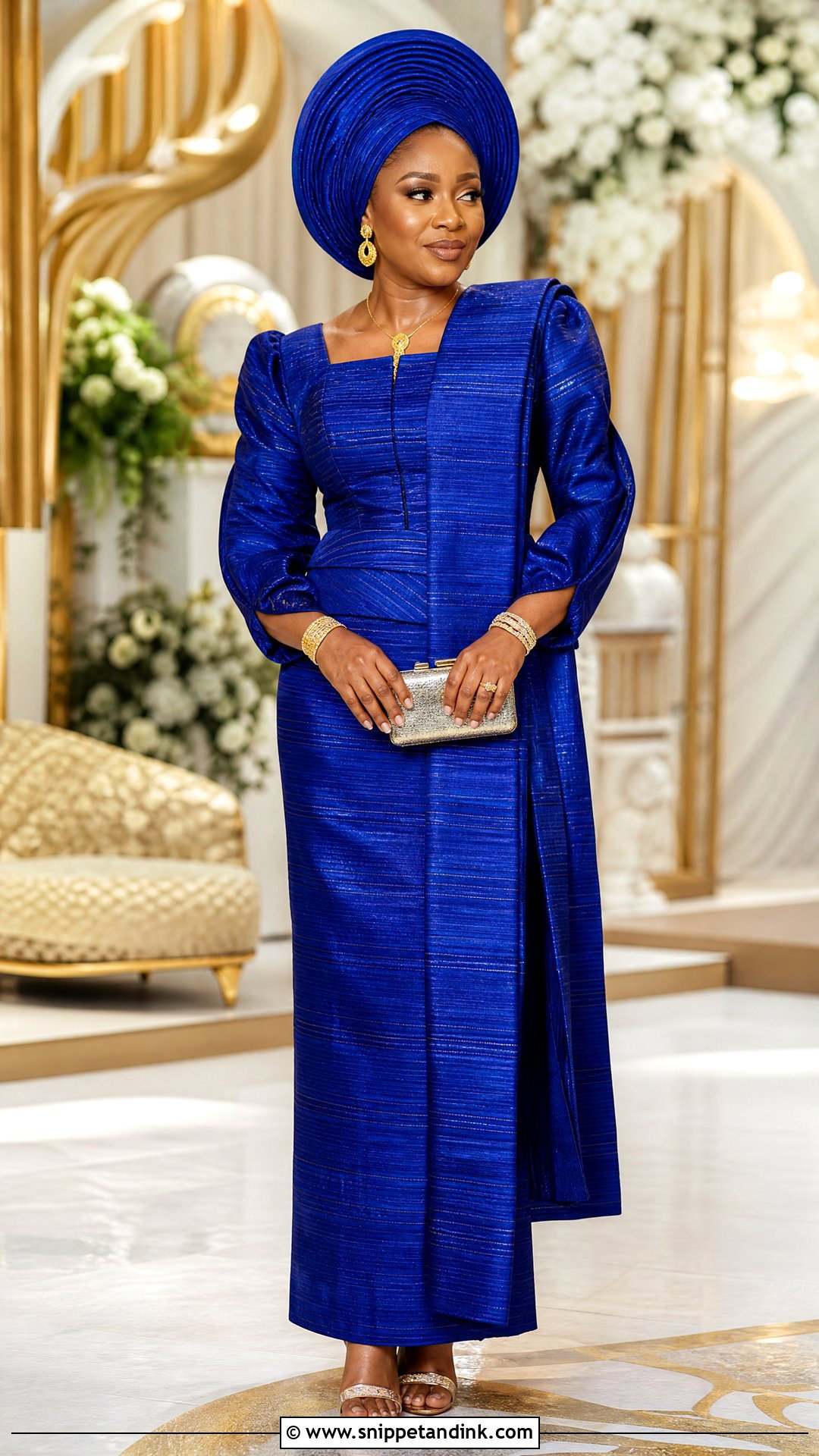
For a Yoruba traditional wedding, royal blue aso-oke iro and buba is a confident choice. A fitted or gently shaped buba sits over a wrapper tied securely at the waist, and fine gold threads in the weave give the blue depth without noise. A structured blue gele, gold drops, stacked bangles and a metallic clutch finish it, with champagne block heels for the long hours on your feet. Aso-oke is stiff when new, which is a gift for a gele and a nuisance for an iro. I have wrappers tied and retied in fittings until the fold stays put through sitting and dancing; a loose iro is the most common wardrobe adjustment I see mid-party.
2. Royal Blue Lace Mermaid Gown With Gele
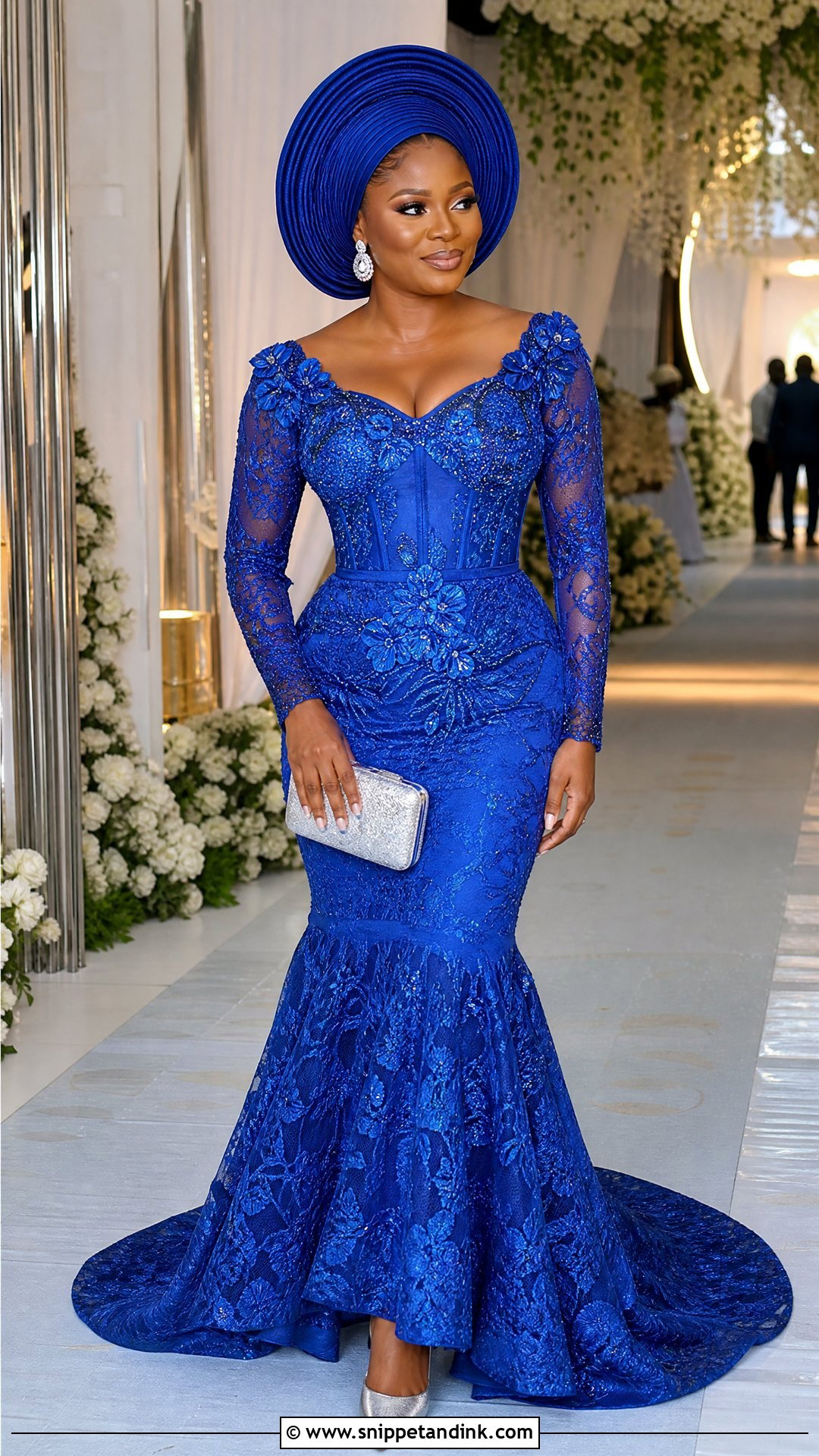
A lace mermaid gown with a matching gele makes the entrance, and it works for a bride, a close relative or a coordinated aso-ebi group. Look for lined lace with sequins or beads placed to follow the shape, not to pile on bulk. A modest sweetheart, square or illusion neckline frames the face. Crystal earrings, a silver clutch and metallic pointed pumps suit it, and the necklace should stay delicate if the bodice is busy. My warning with mermaid cuts at traditional weddings: there’s a lot of dancing, often with spraying, so ask your tailor for real room at the knee and keep the train short enough to step over.
3. Royal Blue Off-Shoulder Blouse And Wrapper Outfit
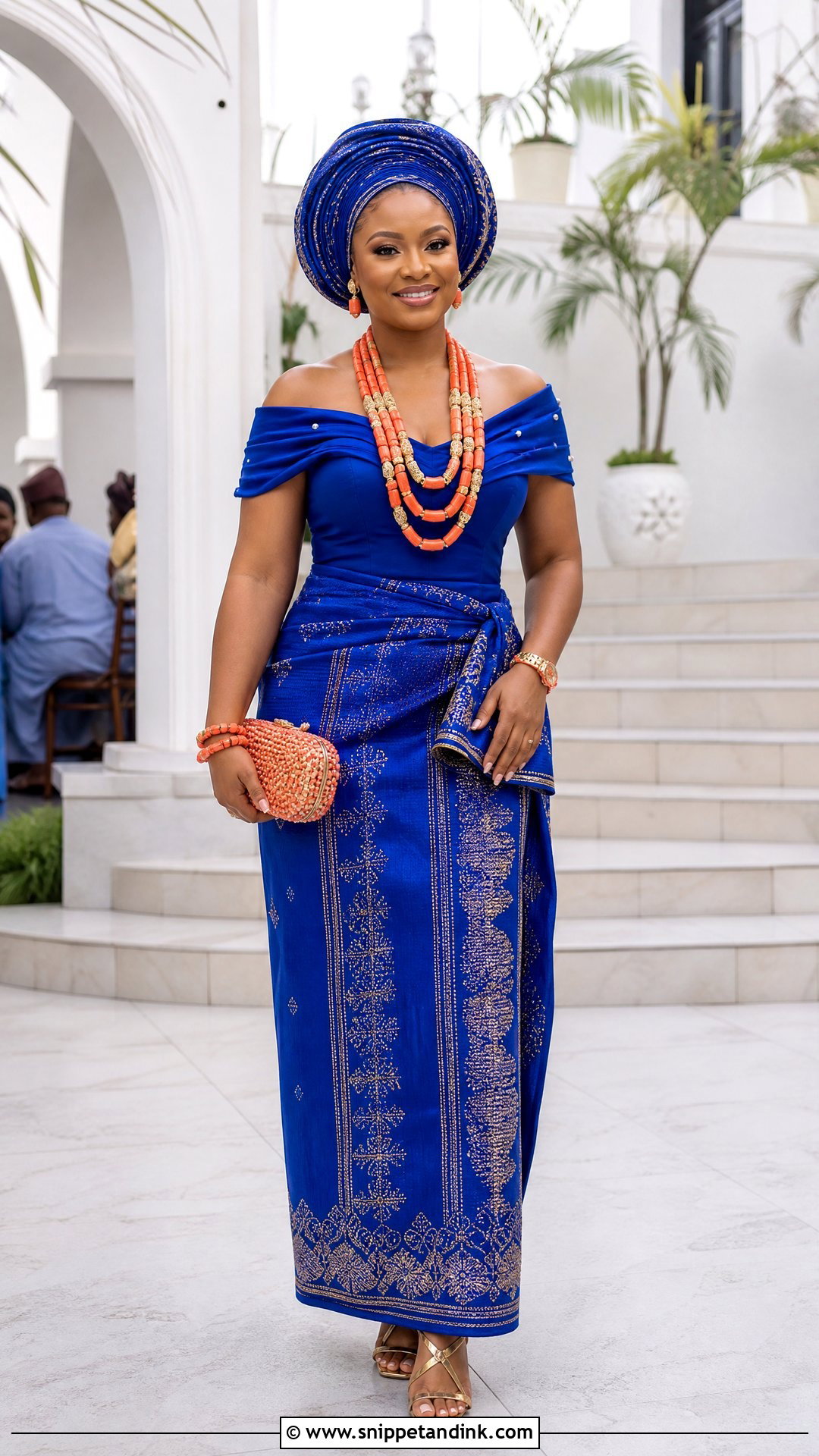
Bare shoulders give the blouse-and-wrapper outfit a modern edge, but only if the blouse is built to stay up. I want internal structure, fitted sleeves and darts placed so the neckline doesn’t slide when you raise your arms. Pair it with a floor-length wrapper in lace, George or woven cloth. Coral beads make a sharp contrast against the blue; gold blends more softly. A matching head wrap, embellished low heels and a small structured bag complete it. Off-shoulder blouses are a poor fit for anyone who’ll be lifting children or carrying trays all day, since every reach pulls the neckline down.
4. Royal Blue Double Wrapper Outfit With Coral Beads
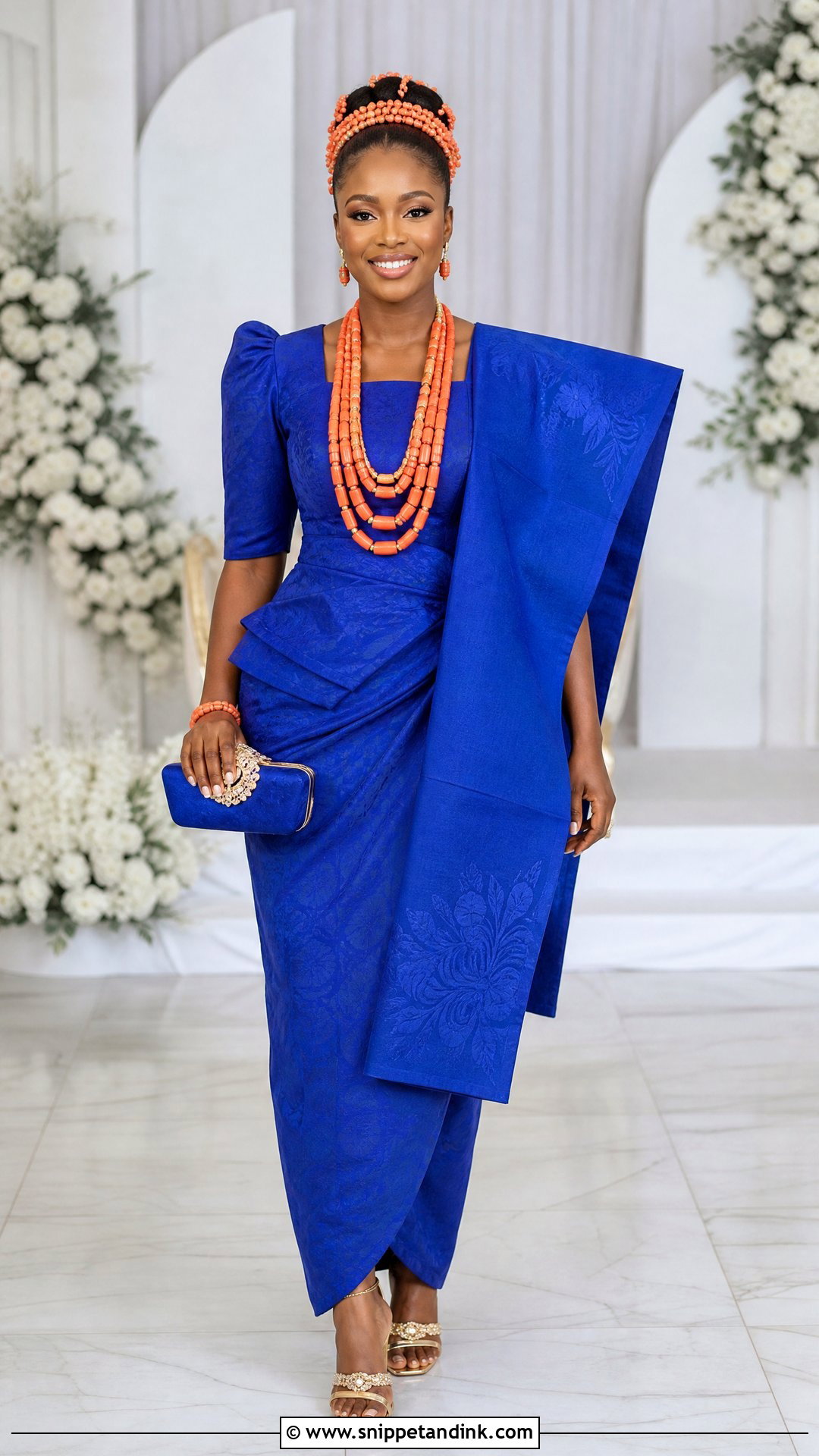
Coral beads look their most vivid against a royal blue double wrapper outfit. Start with a fitted blouse, then two wrappers tied with the shorter layer over the longer one so both show. An ichafu-style head tie or coral beads in the hair finishes the top. Graduated coral necklaces, matching earrings and a few bracelets are plenty; covering every inch with beads flattens the effect. Gold sandals and a beaded clutch pick up the coral’s warmth. The tying method, fabric and accessories vary between families and communities, so I always ask whoever in the family knows the customs before I style anything.
5. Royal Blue George Wrapper And Blouse Outfit
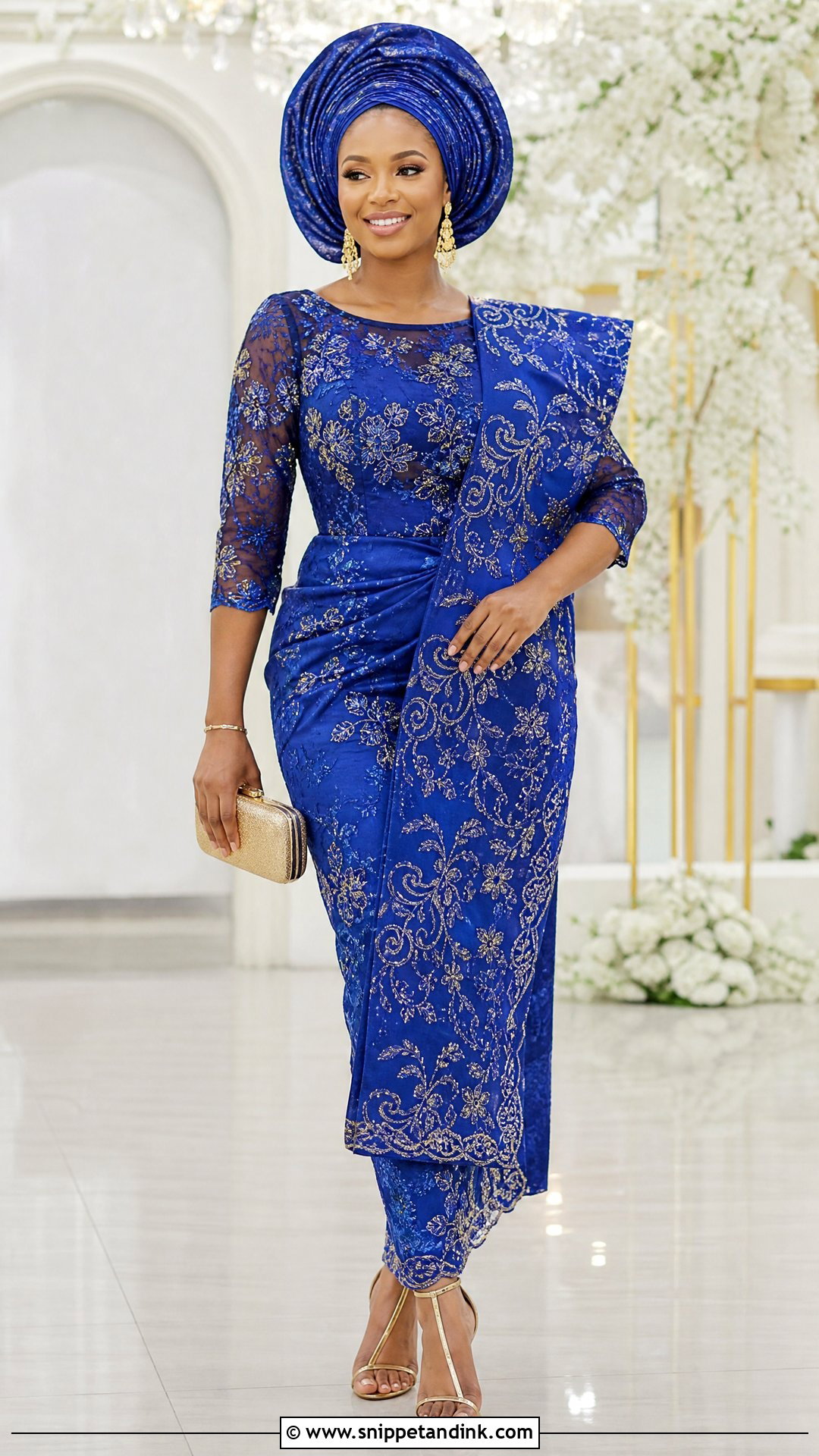
George cloth does the heavy lifting here, so the silhouette can stay simple. A richly embroidered wrapper with metallic work pairs with a fitted satin, velvet or lace blouse, and three-quarter sleeves leave the wrists free for bangles. A matching head tie, gold chandelier earrings and a slim clutch are all it needs. George is heavy, and a wrapper that’s even slightly long will drag and fray, so heeled sandals help. The detail I fuss over with tailors is border placement: the embroidered edge should line up at the neckline, waist and hem. It’s a small thing, and it’s exactly what separates a sharp outfit from a rushed one.
6. Royal Blue Ankara Peplum Top And Maxi Skirt
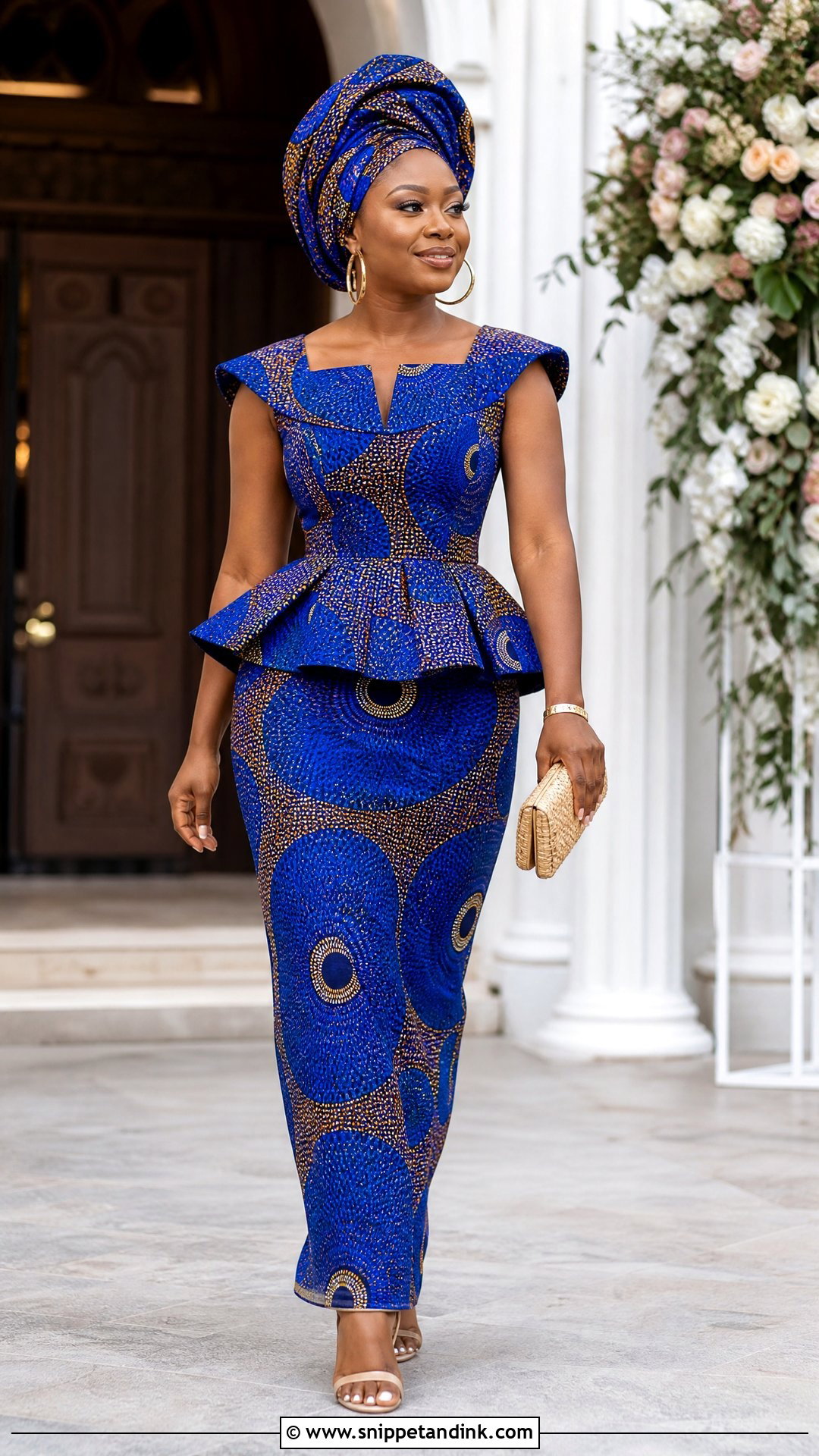
An Ankara peplum top and maxi skirt gives you color, print and a waist without much fuss. Pick a print where royal blue clearly dominates, with smaller touches of gold, orange, white or green. The peplum top can take a square neck, puff sleeves or one statement sleeve over a high-waisted straight or softly flared skirt. Finish with a coordinated head wrap, gold hoops, a woven clutch and simple heeled sandals. Here’s the trap I see often: brides and guests try to match an accessory to every color in the print. Choose one metal and stop. This is one of the easiest looks for a guest to make her own.
7. Royal Blue Kente Panel Gown
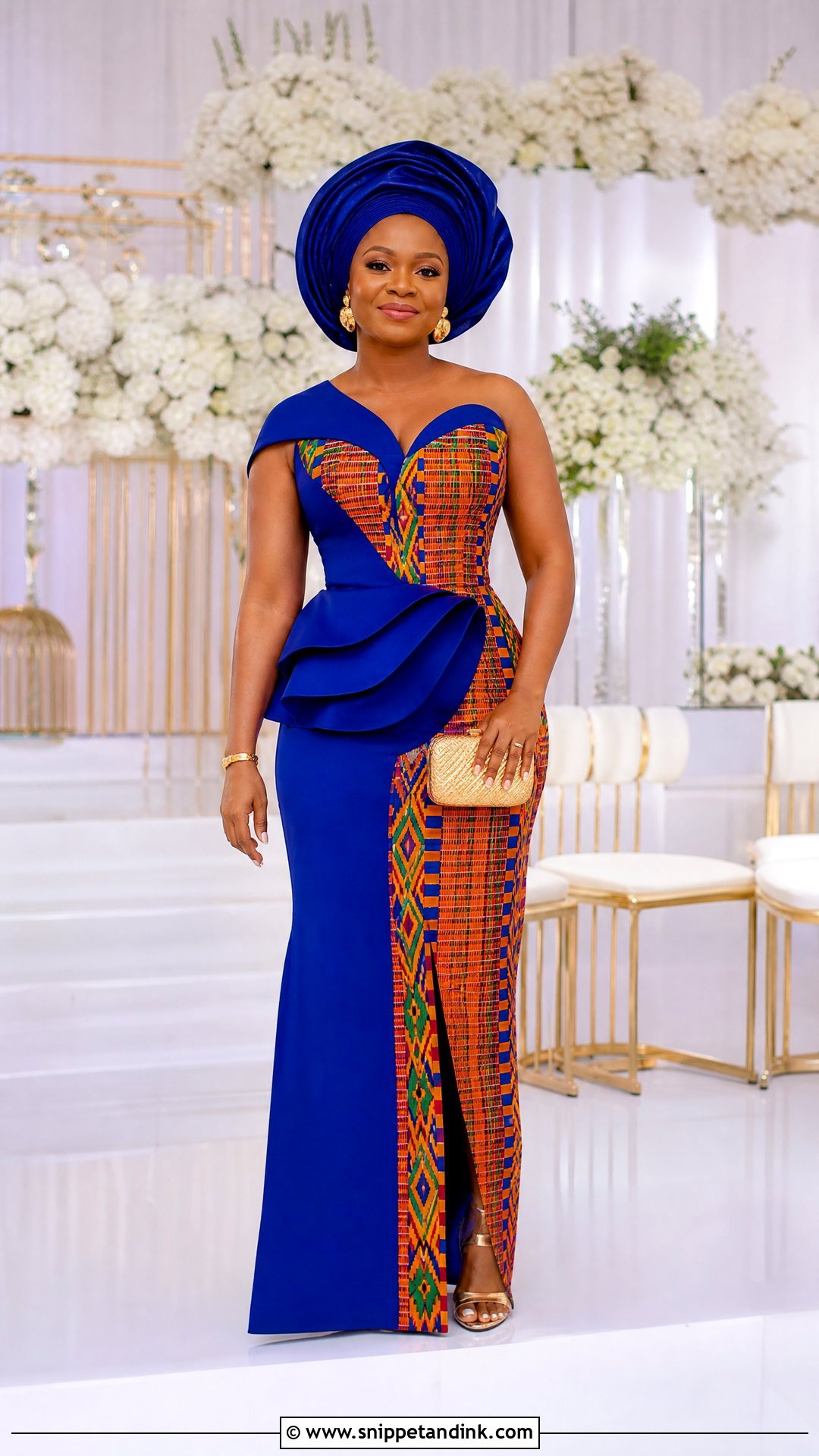
Woven panels turn a plain royal blue gown into something with real weight. Start with a streamlined floor-length dress and set Kente-inspired or authentic woven strips into a few chosen places, such as the bodice, sleeves or waist. Using it sparingly lets the weave and its colors read clearly. Gold earrings, a bracelet, a box clutch and metallic heels suit it, with a sculpted head wrap for height or natural hair for a softer finish. Kente patterns carry names and meaning in Ghanaian culture, so if you’re using real cloth, I’d buy from knowledgeable weavers or sellers and ask what the pattern signifies before cutting into it.
8. Royal Blue Shweshwe Fit And Flare Dress
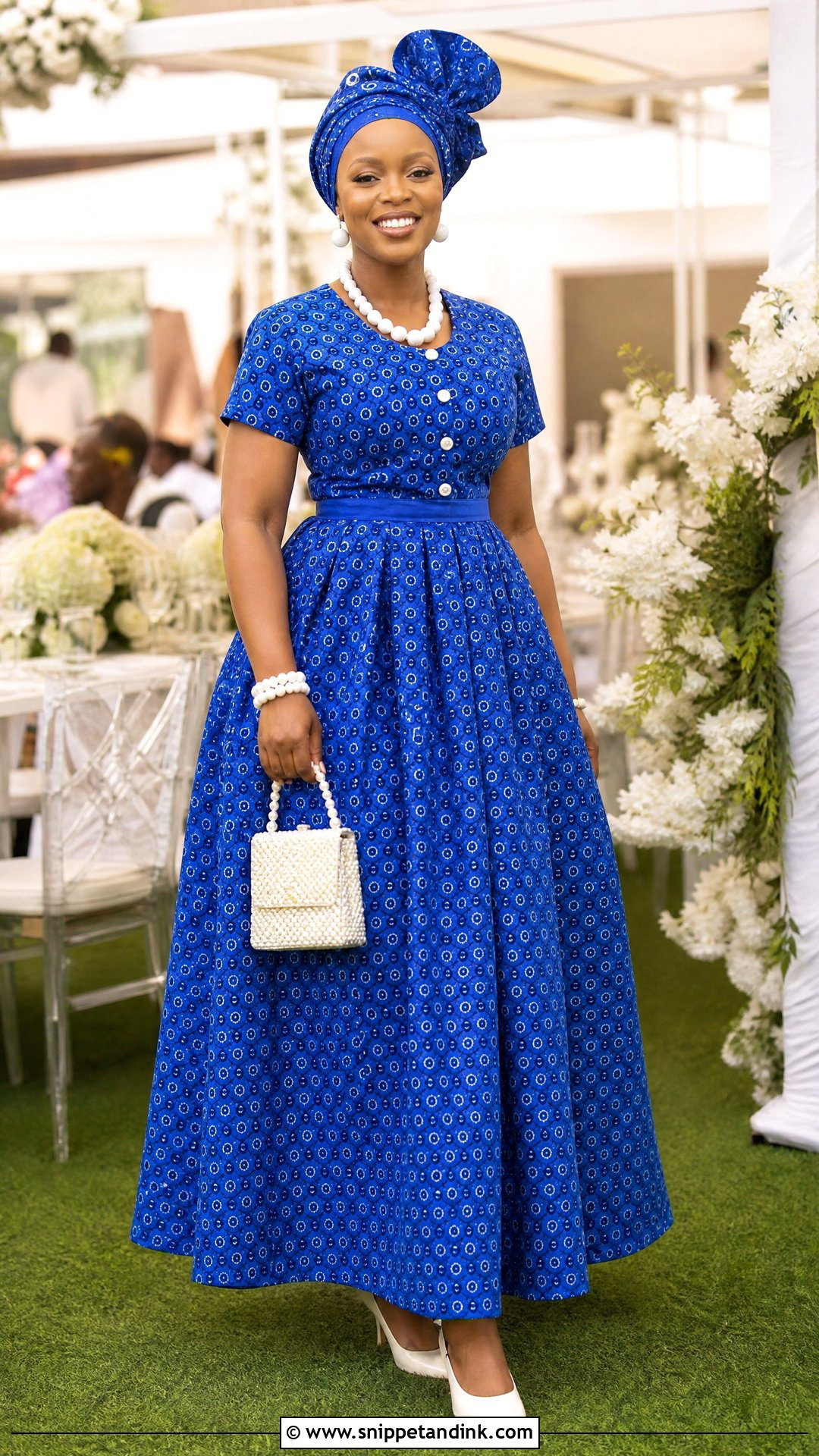
Shweshwe’s crisp printed cotton gives a fit-and-flare dress a structured, cheerful look. A fitted bodice with a modest V, boat neck or short sleeves leads into a full midi or ankle-length skirt, and a narrow solid-blue waistband breaks up the print. A head wrap, silver or white-beaded jewelry, a small bag and closed pumps complete it. New shweshwe is stiff from its finishing starch, and that softens with washing, which is why I recommend washing the fabric before it’s cut so the dress doesn’t shrink after the first clean. A light petticoat gives volume, but keep it soft enough to sit and dance in.
9. Royal Blue Embroidered Boubou Outfit
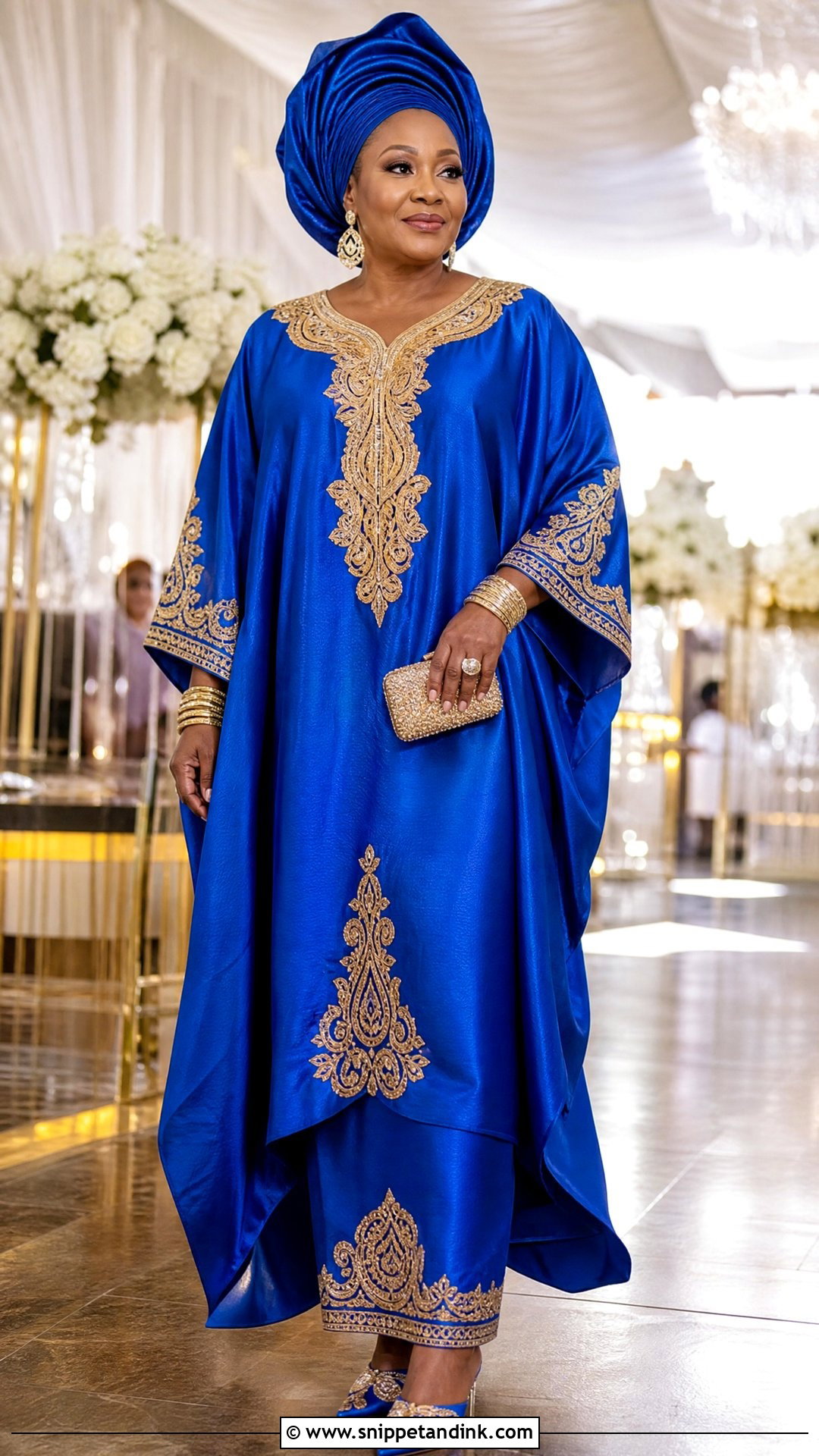
I find the boubou one of the most forgiving formal garments there is. A flowing cut with gold, silver or tonal embroidery at the neckline, sleeves and center front, over a fitted slip or matching dress, gives coverage and a clean base. A tall head wrap, statement earrings, stacked bangles and embellished mules or low block heels finish it. With that much fabric, a small clutch looks right and an oversized bag looks like luggage. Watch the hem; a boubou cut a little long will catch under your heel on stairs. Mothers and honored relatives often love it because it looks grand and lets them move freely all day.
10. Royal Blue Kaftan With Gold Embroidery
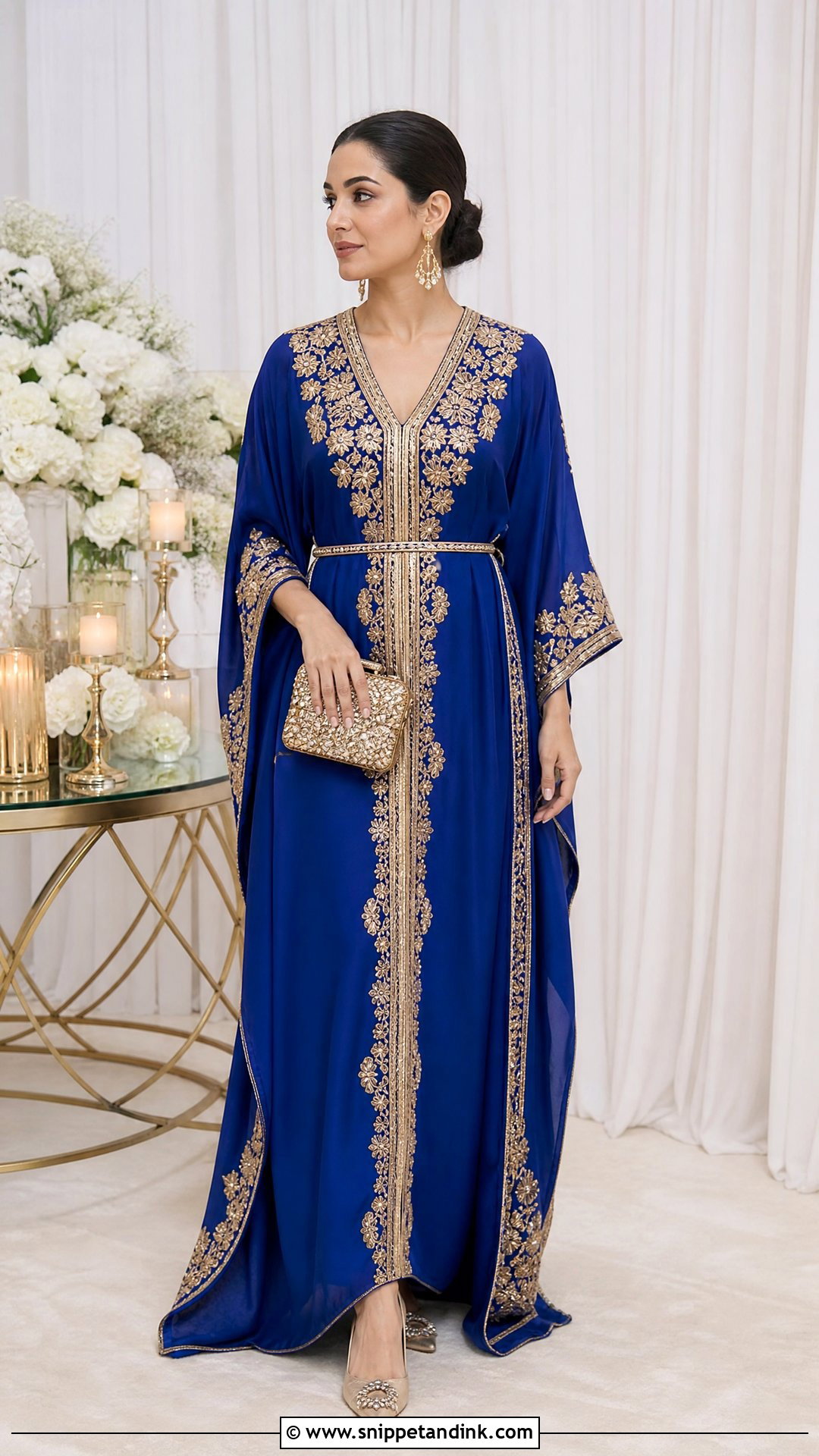
Picture royal blue silk or crepe falling straight from the shoulders, edged in precise gold embroidery. A formal kaftan only works when the fabric has enough weight to drape without clinging, so I avoid thin polyester versions that stick to the body in heat. Look for embroidery at the neckline, cuffs and front opening. A narrow matching belt adds shape if you want it; left loose, it flows traditionally. Gold earrings, a jeweled clutch and pointed flats or low heels finish it, with a sleek bun or headscarf. Choose breathable lining and a sleeve length you can eat in, because wide sleeves trail through plates.
11. Royal Blue Senegalese Bazin Skirt And Top
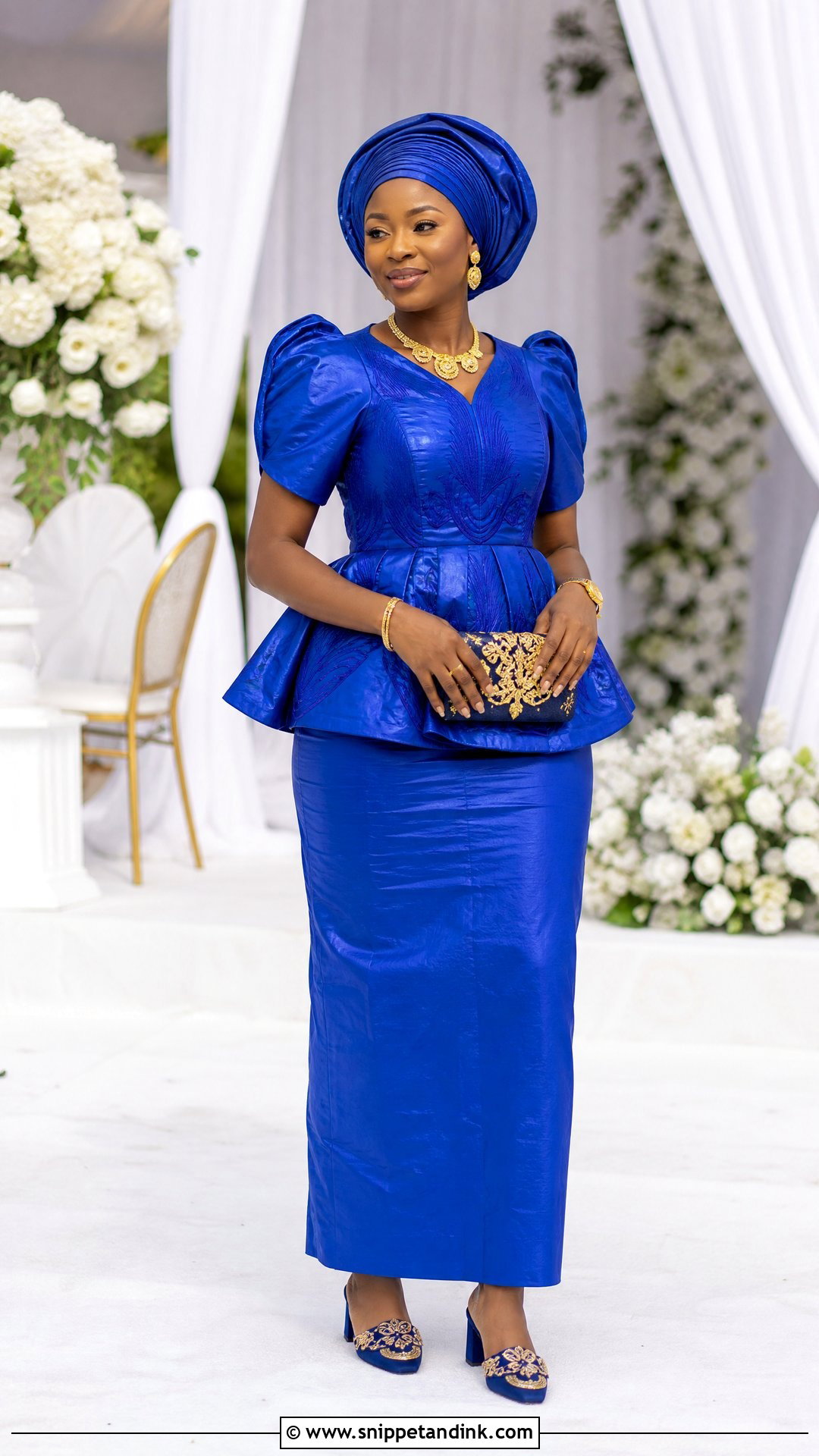
Bazin has a polished, almost glazed surface that holds structure, which is why it’s prized for Senegalese formalwear. A fitted top with sculpted sleeves or a soft peplum balances a long column or flared maxi skirt, and tonal embroidery keeps the blue in charge. A head wrap, gold earrings, layered bracelets and an embroidered clutch complete it, with low heels or mules so the skirt skims rather than drags. Because the fabric stands up on its own, big sleeves and a big skirt together can overwhelm a frame. Pick one statement area. A tailor who works with bazin regularly will also know how to press it without dulling the sheen.
12. Royal Blue Kaba And Slit Outfit
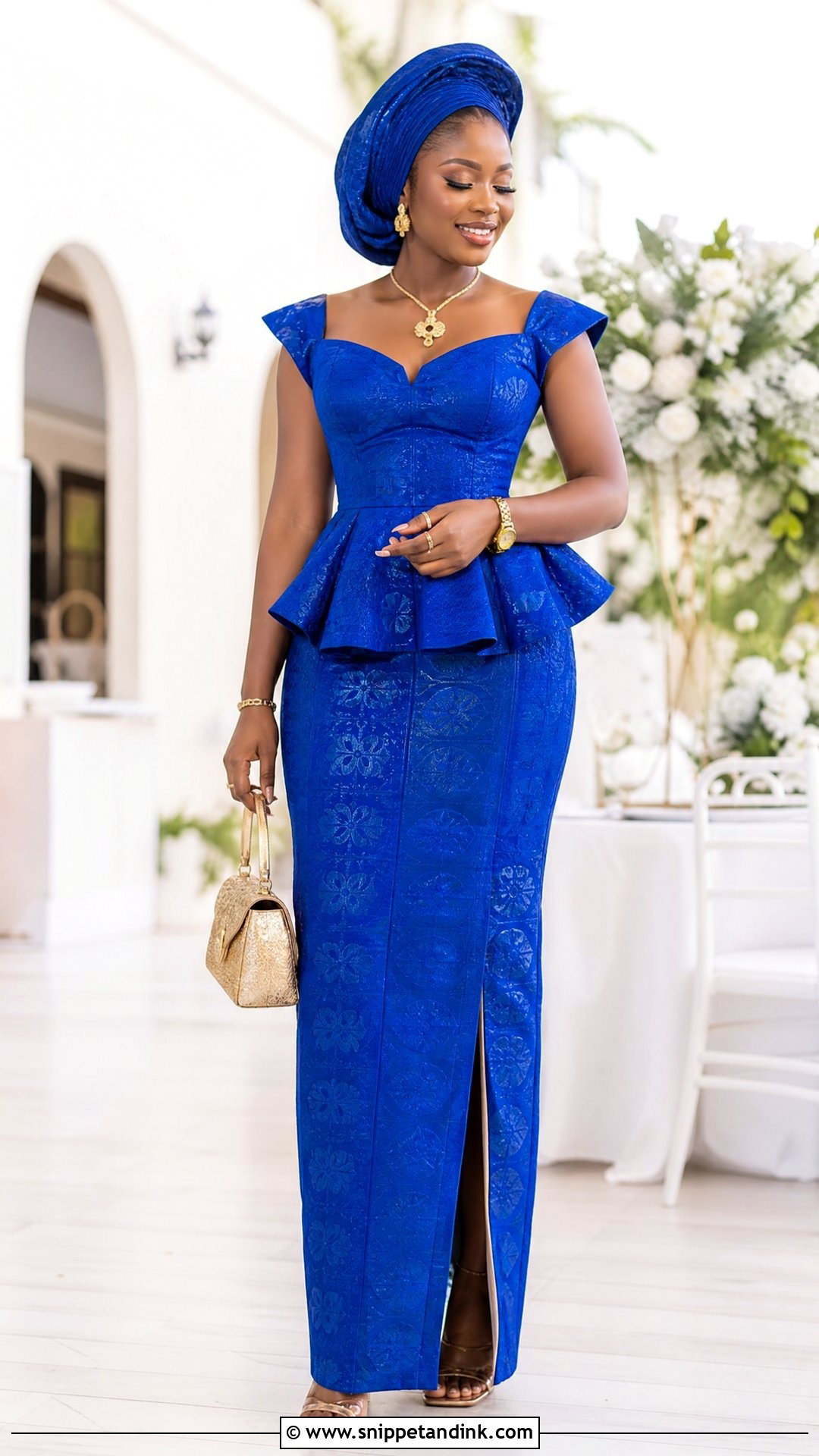
Kaba and slit pairs a shaped blouse with a long skirt, ideally cut so the motifs line up across both pieces. The blouse can have short or three-quarter sleeves or a soft peplum. A matching head wrap, gold or beaded jewelry, a compact bag and stable heeled sandals finish the look. The slit is what I check most carefully: sit down in the fitting and see where it ends up, since a back slit that’s fine standing can ride high on a low chair. For a long day, a smooth breathable skirt lining stops the fabric clinging to your legs.
13. Royal Blue Moroccan Caftan With Metallic Belt
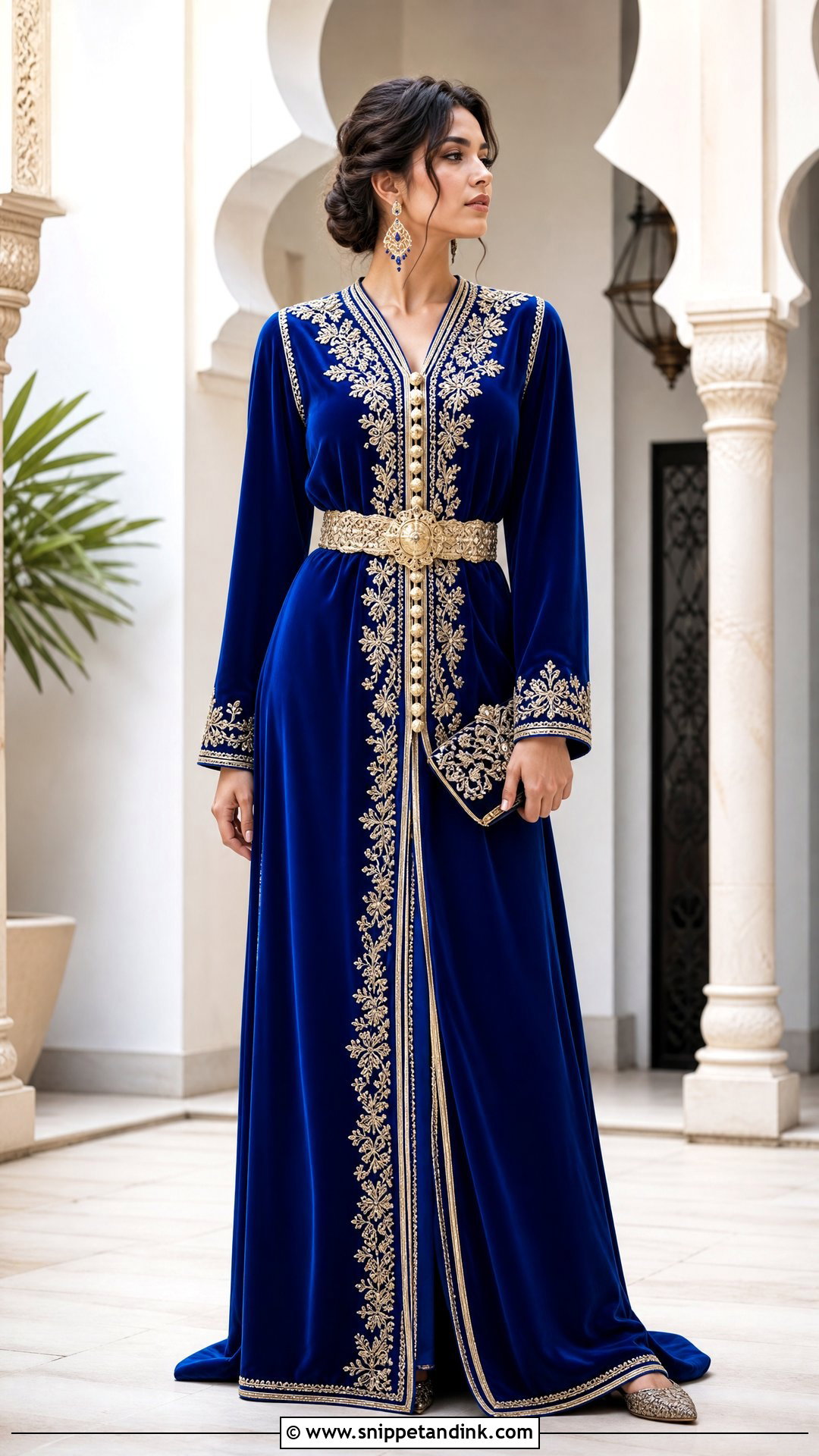
A royal blue Moroccan-inspired caftan comes alive with intricate trim and a metallic belt. A floor-length cut with long sleeves, decorative buttons and gold or silver embroidery along the neck and front seam gives the ceremonial base; the belt defines the waist. Drop earrings, a fine bracelet, an embroidered clutch and pointed flats suit it, and an oversized necklace would only fight the trim. I check that there’s real ease through the shoulders and hips, since a caftan that’s tight when you sit loses its whole point. If the wedding follows Moroccan tradition, ask the couple or a designer familiar with it what’s appropriate.
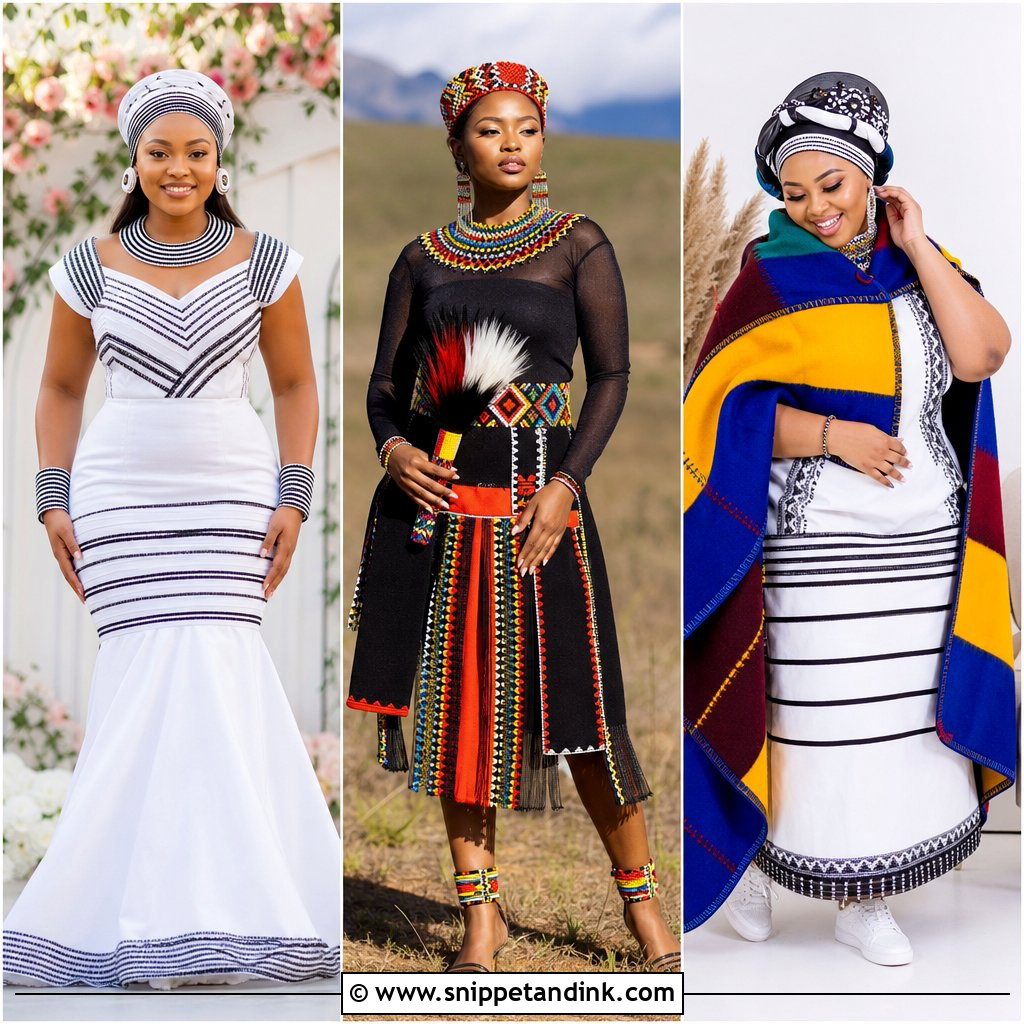
14. Royal Blue Xhosa-Inspired Umbhaco Outfit
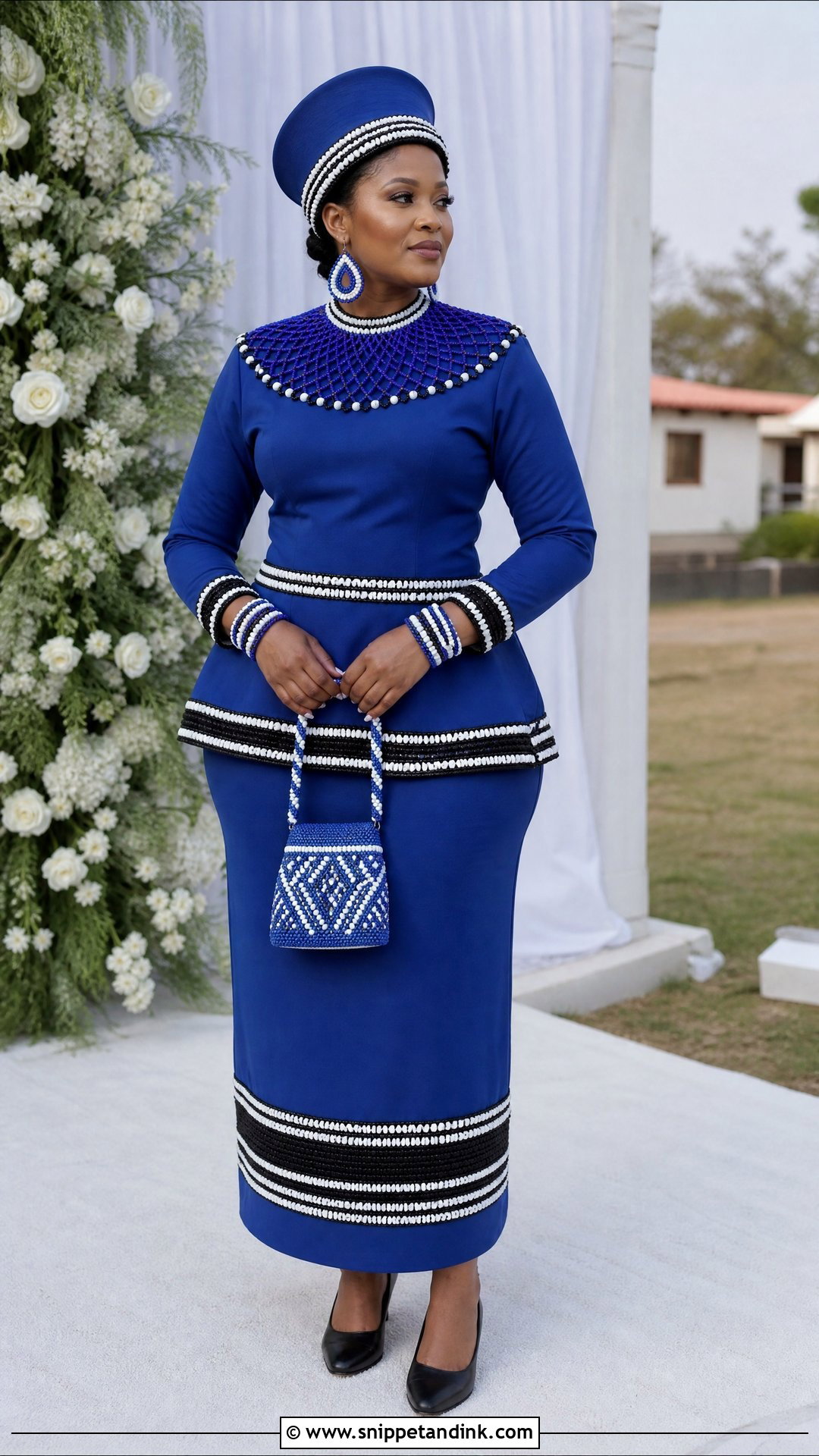
Black-and-white banding gives a royal blue umbhaco-inspired outfit its graphic edge. Build it from a full-length skirt and a coordinated top or wrap, with banded trim in balanced sections. Beaded collars, earrings, headpieces and bracelets add texture without metallics. Black, white or blue low heels and a compact beaded bag keep the palette tight. In Xhosa dress, the placement of trims and beadwork can carry meaning, including signals tied to age and marital status, so I’d never mix motifs just for decoration. Work with a designer or relative who knows how the pieces are worn.

15. Royal Blue Zulu-Inspired Beaded Wedding Outfit
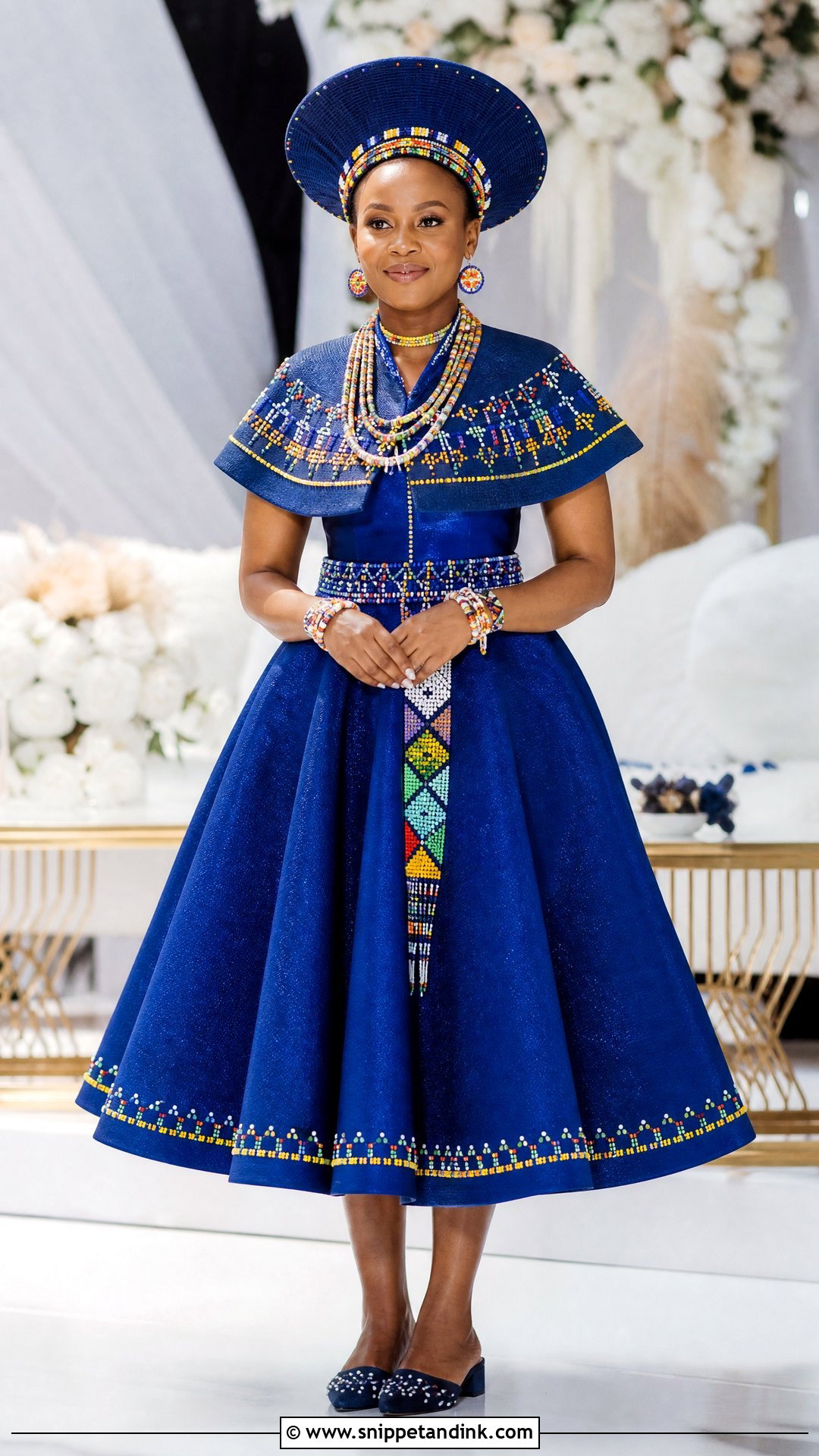
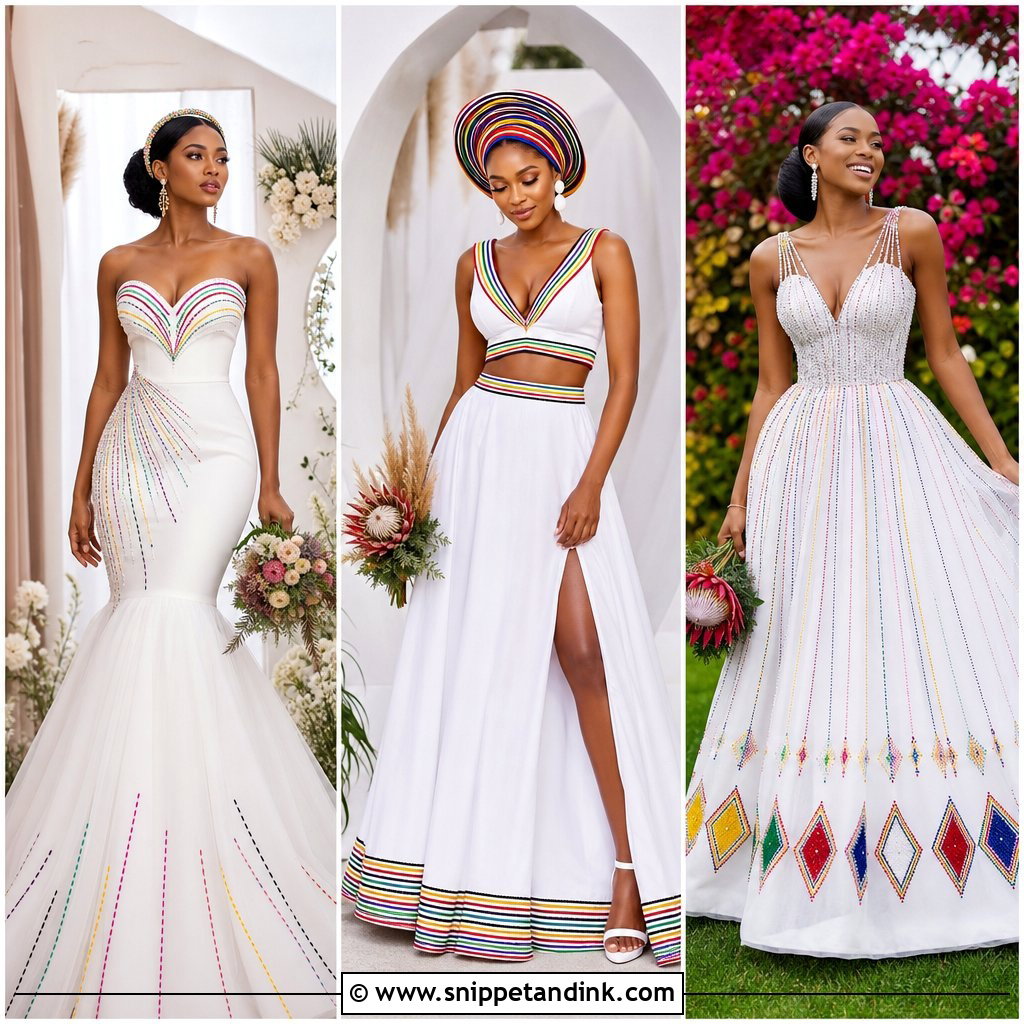
Royal blue makes a vivid backdrop for Zulu-inspired beadwork. A full midi or maxi skirt with a fitted top, a shoulder covering and beaded accessories is a strong base. White, black, red and yellow beads give contrast, but colors in Zulu beadwork can carry meaning, so the final combination should follow what the family has chosen. A headpiece, layered necklaces, bracelets and flat or low shoes complete it. With accessories that rich, the garment itself should stay restrained. Practically, I check every fastening and every strand before the day; beadwork that isn’t secured properly breaks mid-dance and scatters across the floor.
16. Royal Blue Lace Peplum Top And Pencil Skirt
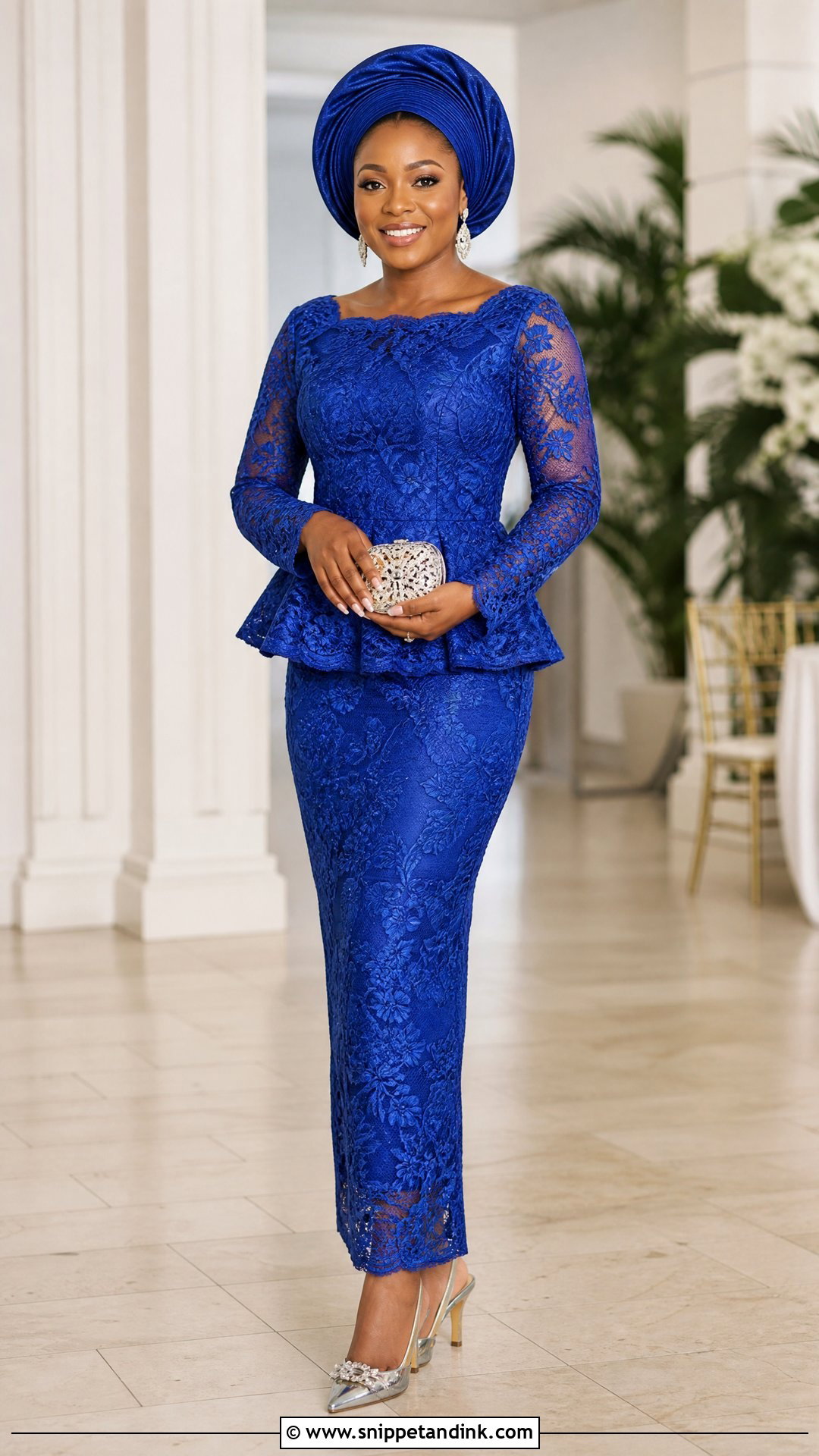
A royal blue lace peplum top and pencil skirt is a sleek option for aso-ebi guests and family. The top needs a defined waist, a moderate neckline and sleeves that balance the hips. The lined pencil skirt can end below the knee or at the ankle depending on formality, with a slit high enough to walk but low enough for coverage. A matching gele, silver earrings, a crystal clutch and metallic slingbacks finish it; with sequined lace, keep jewelry minimal. Pencil skirts show every tailoring shortcut. If it pulls across the thighs when you sit, it needs letting out.
17. Royal Blue One-Shoulder Traditional Gown
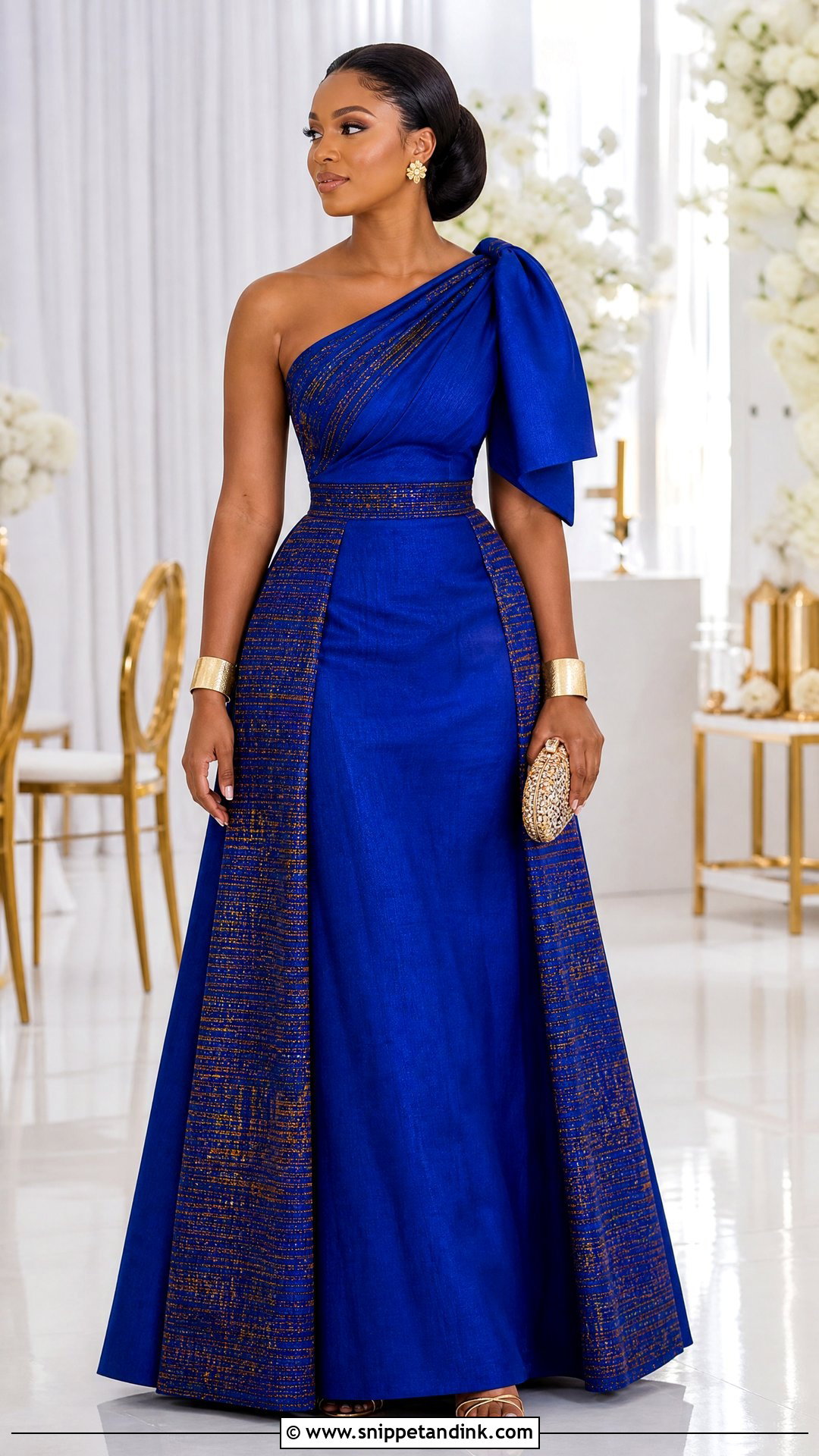
For a modern take, a one-shoulder gown in lace, Ankara or woven ceremonial fabric gives an asymmetrical line that leaves room for big earrings. A floor-length A-line or softly fitted shape suits it, and a draped shoulder panel adds movement without a train. Gold cuffs, a small clutch and matching heels complete the look. If a head wrap is expected, go lower-profile so it doesn’t crowd the bare shoulder. The construction matters more than the style. I want silicone grip tape or boning inside the bodice, because a one-shoulder dress without it slides toward the bare side every time you dance.
18. Royal Blue Traditional Pants And Tunic Outfit
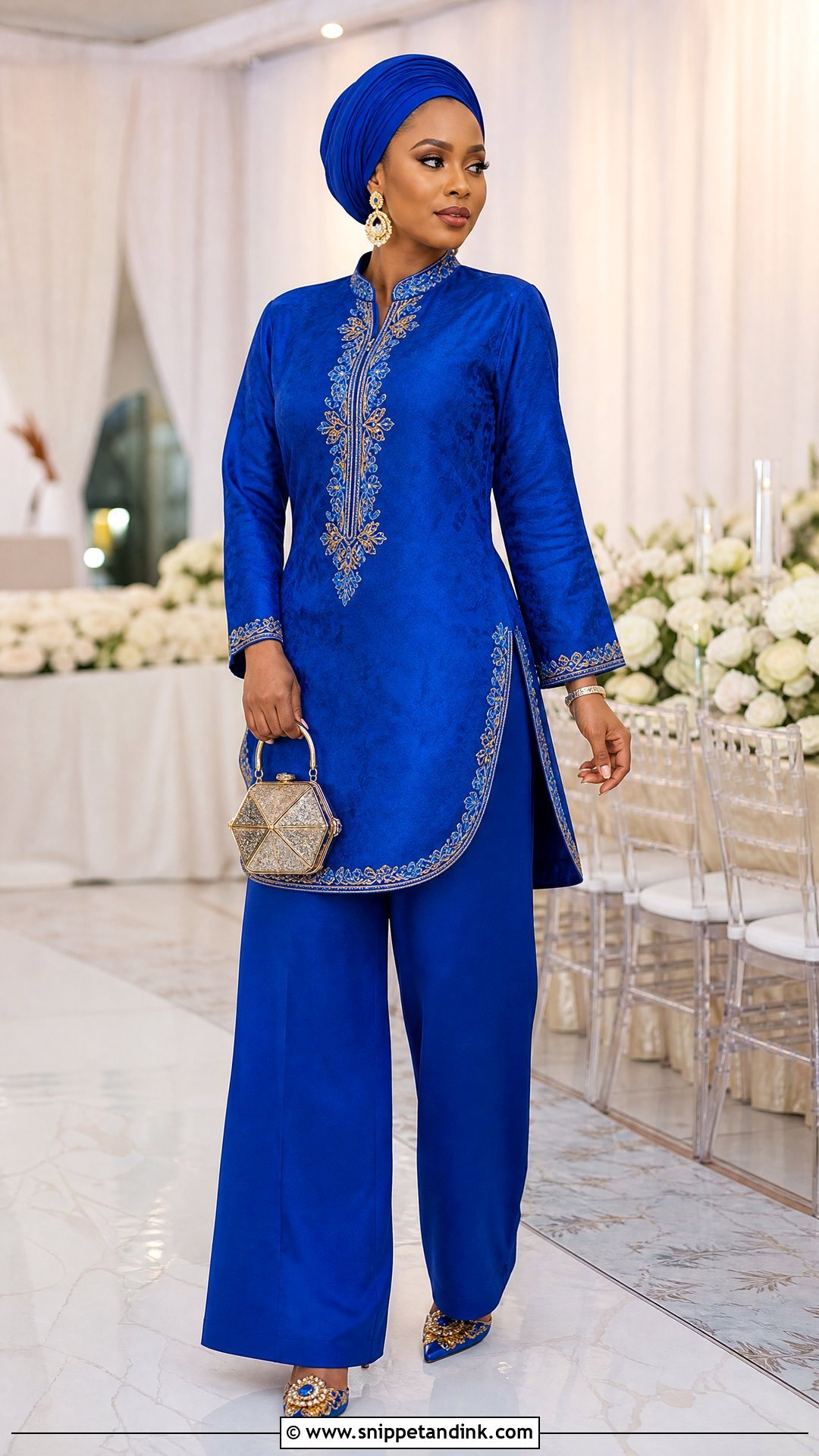
Not every formal traditional outfit needs a skirt. Wide-leg or tapered trousers under a long embroidered tunic that falls to the knee or calf look just as celebratory when the proportions are right. Side slits let you move and show the matching trousers. A head wrap, bold earrings, a metallic bag and pointed pumps or mules finish it. Trouser hems are the detail people get wrong: I hem them in the exact shoes, just brushing the top of the foot, so they look formal without catching under a heel. Lace panels or woven borders keep it ceremonial.
19. Royal Blue Maternity Traditional Wedding Outfit
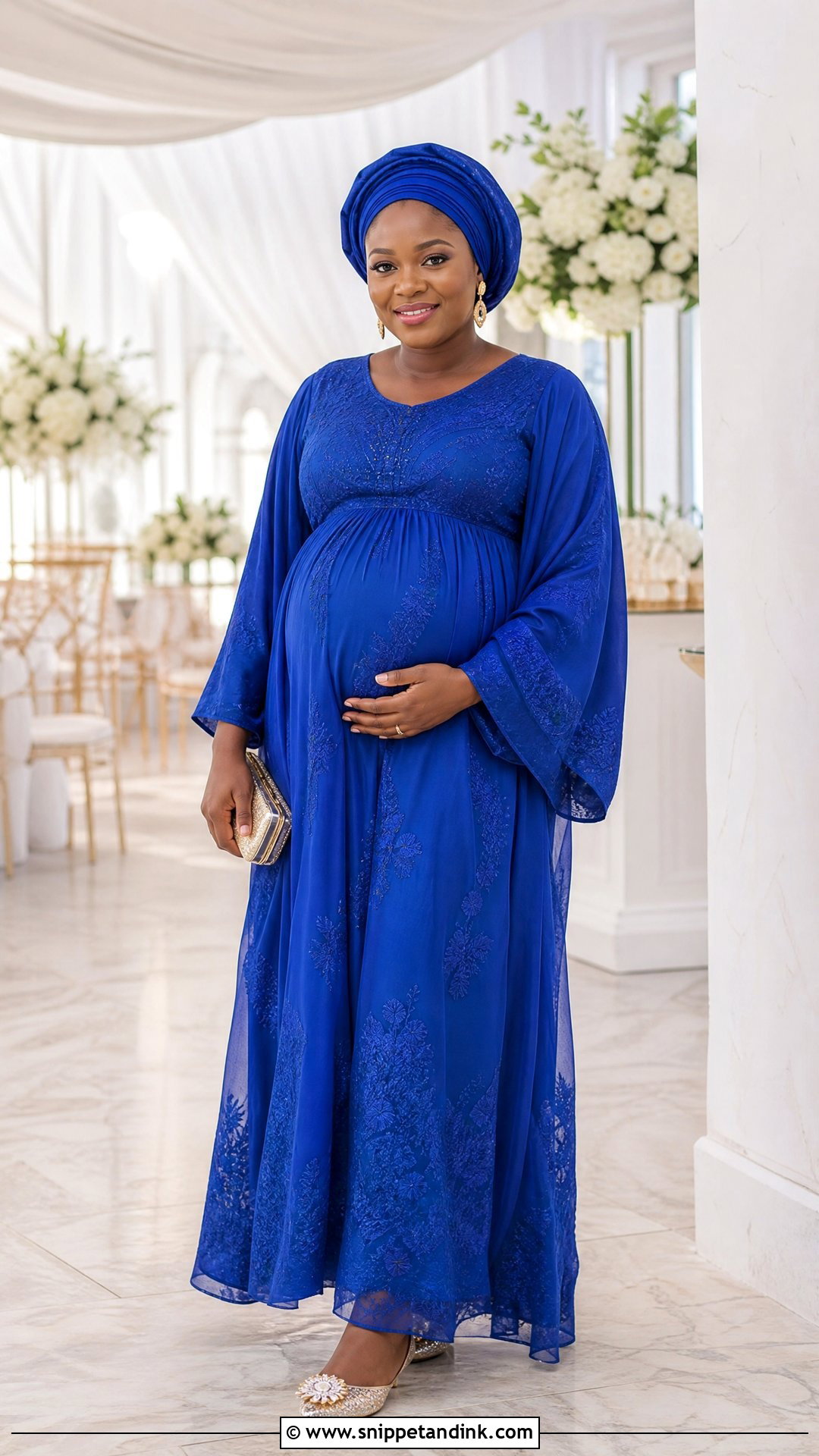
When I style an expectant mother, comfort comes first and color second, and royal blue lets you have both. An empire-waist gown, loose kaftan or adjustable wrapper leaves room for the bump, and soft lace, breathable crepe or light embroidered fabric stays comfortable for hours. A head wrap should feel secure, not tight; a gele tied very firmly can bring on a headache by mid-afternoon. Light earrings, a small bag and cushioned block heels or flats suit it. Skip stiff belts and scratchy linings. A tailor can build in hidden support and leave extra seam allowance in case the fit needs adjusting closer to the date.
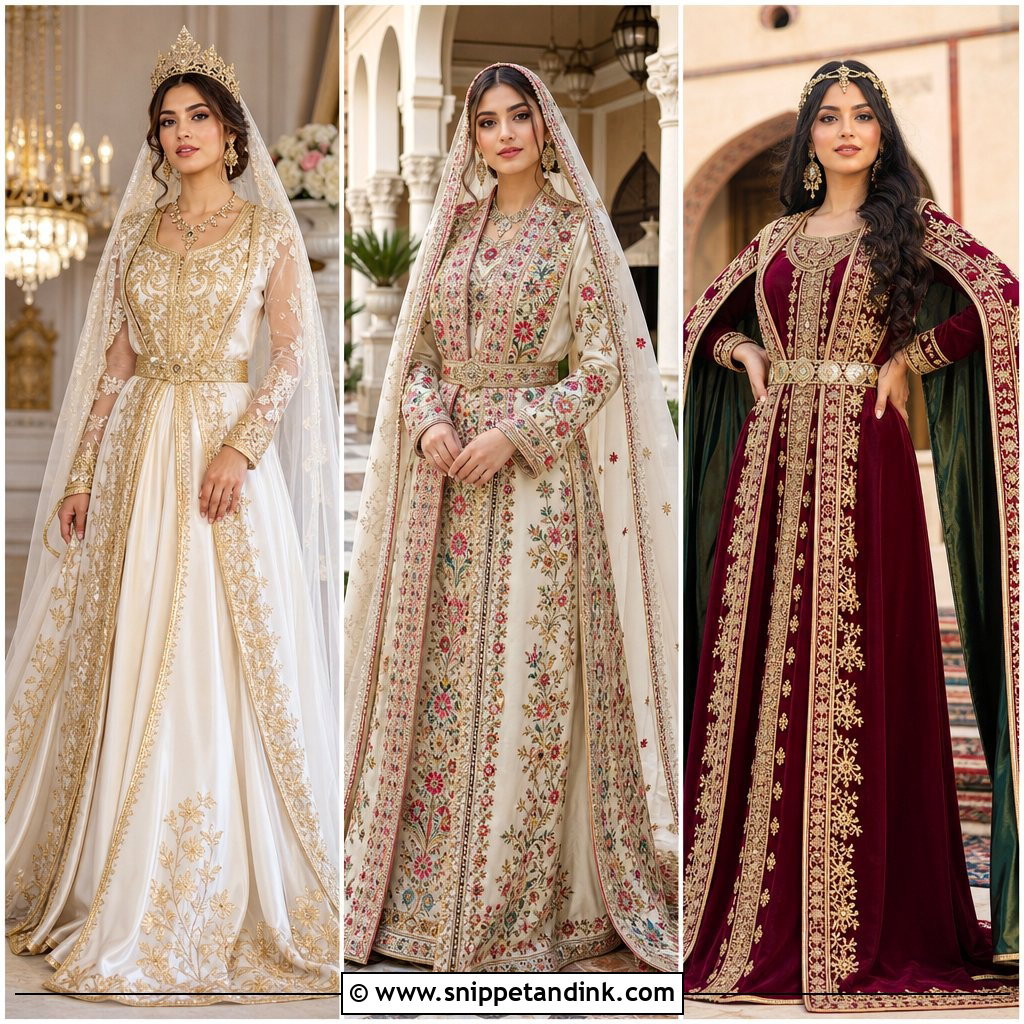
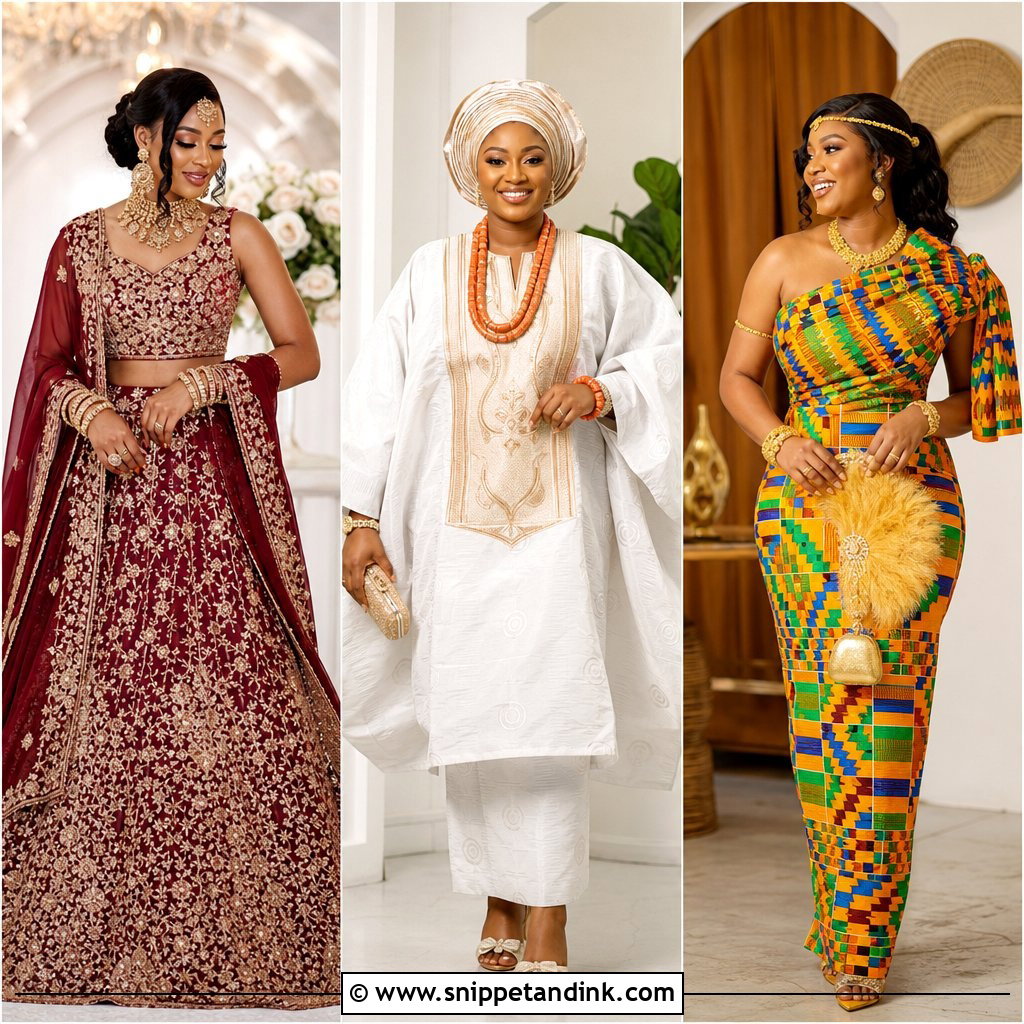

20. Royal Blue Bride And Groom Matching Traditional Outfit
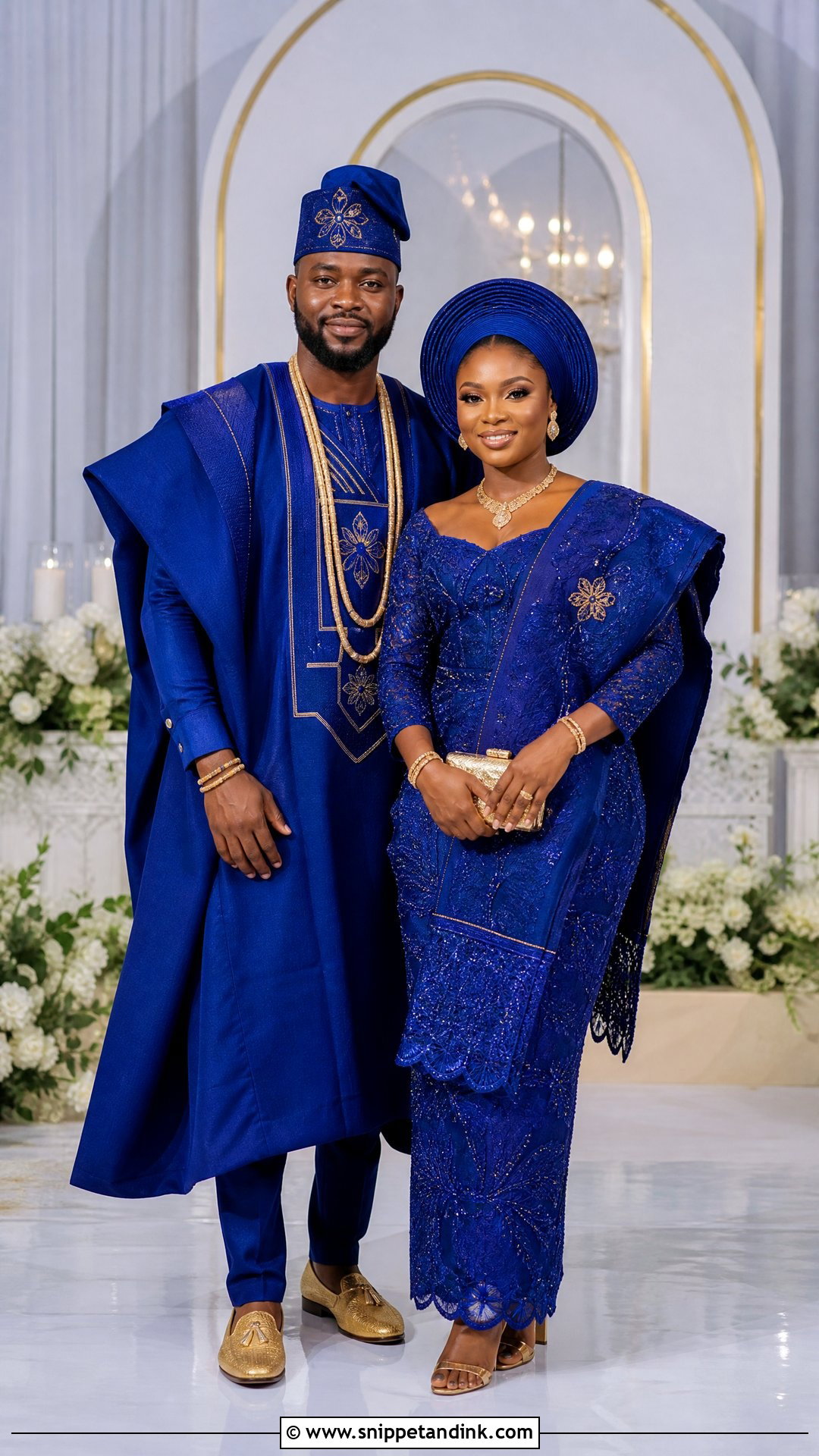
Matching bride-and-groom outfits make a unified picture, but identical rarely looks best. The bride might wear a lace gown, wrapper set or aso-oke with a gele; the groom picks up the same cloth in an agbada, tunic-and-trouser set, cap, sash or embroidered panel. I repeat one element, the shade, the weave or the metal, rather than copying every piece. Gold shoes, coral or silver embroidery tie the two together. Agbada sleeves are voluminous, so make sure the groom can actually dance in his. Above all, the clothes should reflect the couple’s own heritage, ideally made by designers who know it.
Tailor Timelines and Getting the Blue Through the Wash
Traditional wedding season fills good tailors’ books quickly, and aso-ebi orders often arrive in batches. I tell clients to hand over fabric at least six to eight weeks before the date for a simple style, and longer for beading, heavy embroidery or a full bridal set. Ask for at least one fitting with your actual shoes and head tie, then a final collection a week before, not the night before.
Dye bleed and storage after the party
Deep blues are among the dyes most likely to run. Before the first wash, dab a damp white cloth on a hidden seam; if blue comes off, the garment goes to a dry cleaner, never into a machine with other clothes. Cotton prints like Ankara and shweshwe can usually be hand washed in cold water, inside out, and dried in shade, because strong sun fades royal blue quickly.
Aso-oke, bazin and anything beaded or sequined I’d always dry clean. Store them folded in breathable cotton bags rather than plastic, with acid-free tissue between metallic layers so the thread doesn’t rub and tarnish. Roll a gele instead of folding it if you want to keep its crispness for the next celebration.
Let the Cloth Lead, Then Ask the Family
Royal blue gives traditional clothing depth that very few colors can match, and it suits almost any cut you’ve seen here, from a fitted lace gown to a wrapper set, boubou or caftan. Start with the dress code and the family’s customs, then pick a shape you can move in from the first greeting to the last dance. Let one thing lead, such as the embroidery, the beadwork, the head wrap or the weave itself, and let shoes and jewelry quietly support it. When in doubt about a cultural detail, the right designer or an elder in the family will know, and asking them is always the better move.
You'll Like These Ideas:




Leave a Reply