
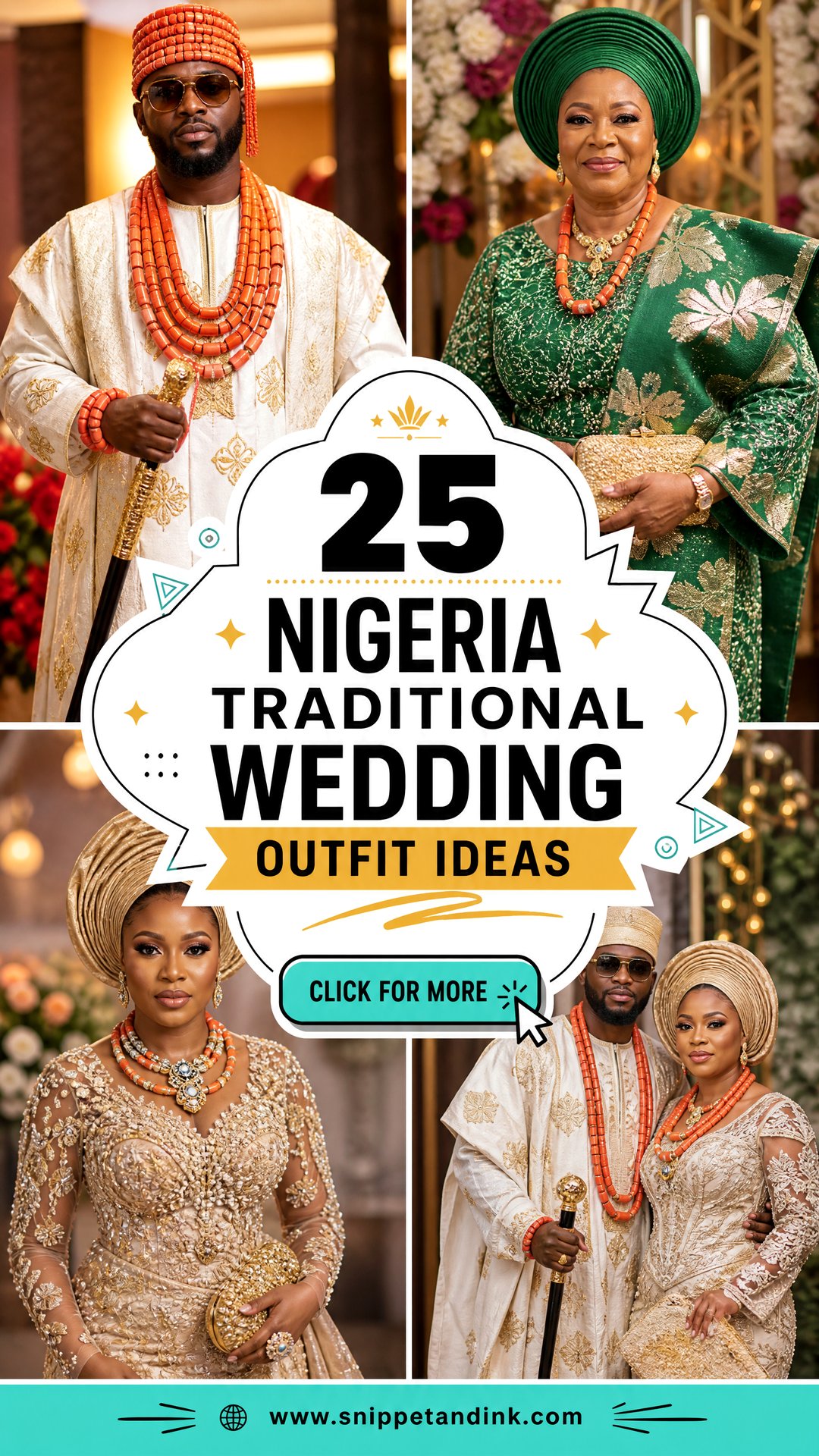
Dressing for a Nigerian traditional wedding means dressing for a role. The bride, the groom, the mothers, the aso ebi friends and the casual guest each carry different weight on the day, and the outfit should show which one you are. Yoruba aso oke and gele, Igbo George wrappers, Edo coral beads, Hausa-Fulani lace and modern aso ebi gowns all follow their own logic. When I style for these ceremonies I plan the fabric, headwrap, beads and shoes as one decision, because a gele that fights the blouse or shoes that can’t survive hours of dancing will undo good tailoring. Here are the looks I’d build, family member by family member.
Getting Aso Ebi Fabric to Your Tailor in Time
The fabric arrives months before the wedding, and the biggest risk is letting it sit. Tailors who do traditional outfits often stop taking new work weeks before the busy wedding seasons, and beaded lace takes much longer to sew than plain cotton. As soon as the couple announces the aso ebi, I’d collect it and book a slot.
- Bring the full yardage and any sample photo to the first appointment, and ask the tailor how much cloth your chosen style needs before cutting.
- Agree on one fitting about two to three weeks before the event, so there’s time for a second adjustment.
- Save any offcuts. They can become a matching fan, clutch cover or cap trim.
- For beaded lace, ask whether the beads along seam lines will be removed and re-sewn by hand, which is the neater finish.
If the wedding is far away, have the outfit finished early enough to try it on at home. Fixing a hem in a hotel room the night before is stressful and rarely as tidy.
1. Yoruba Aso Oke Bride Outfit
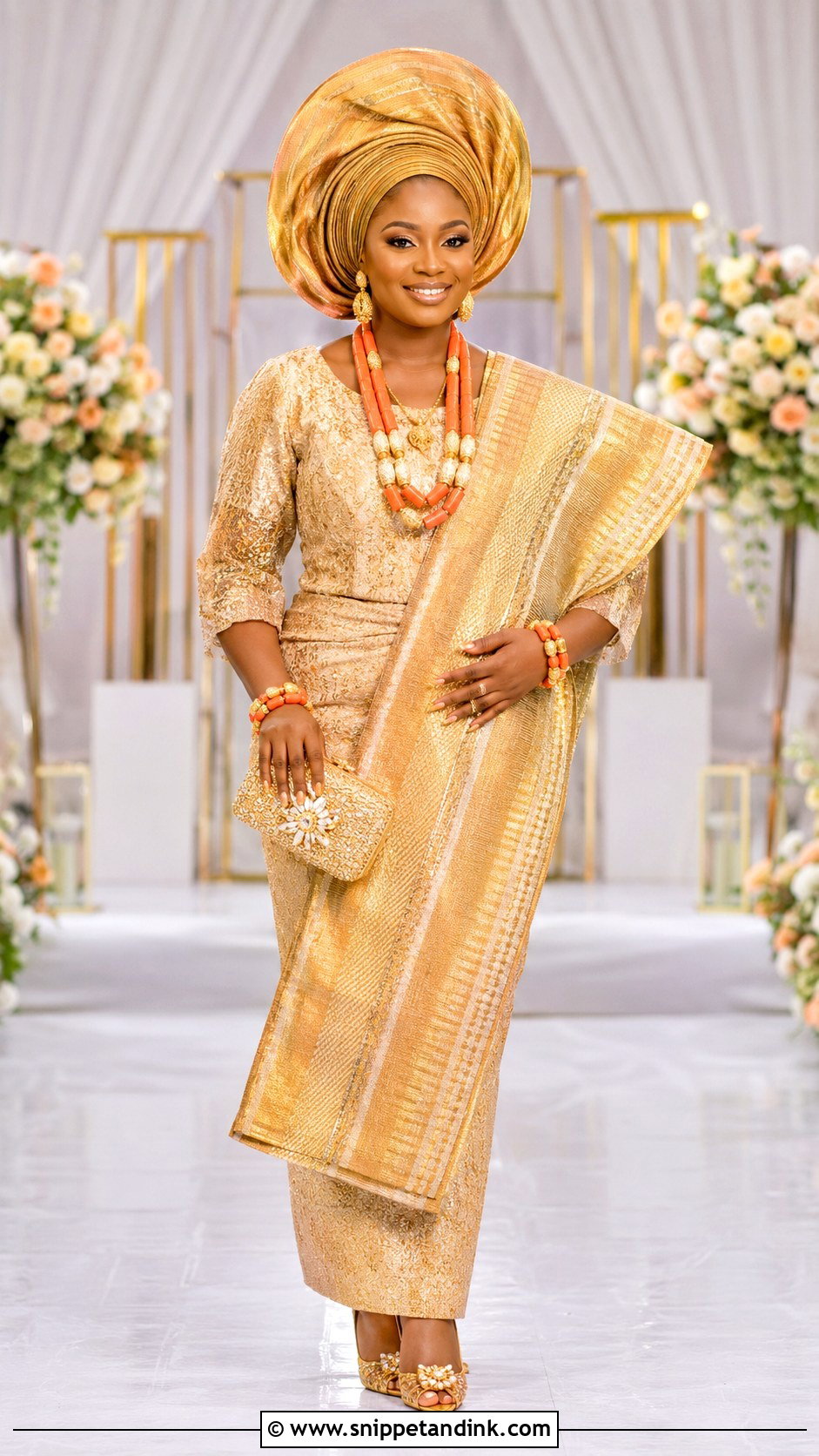
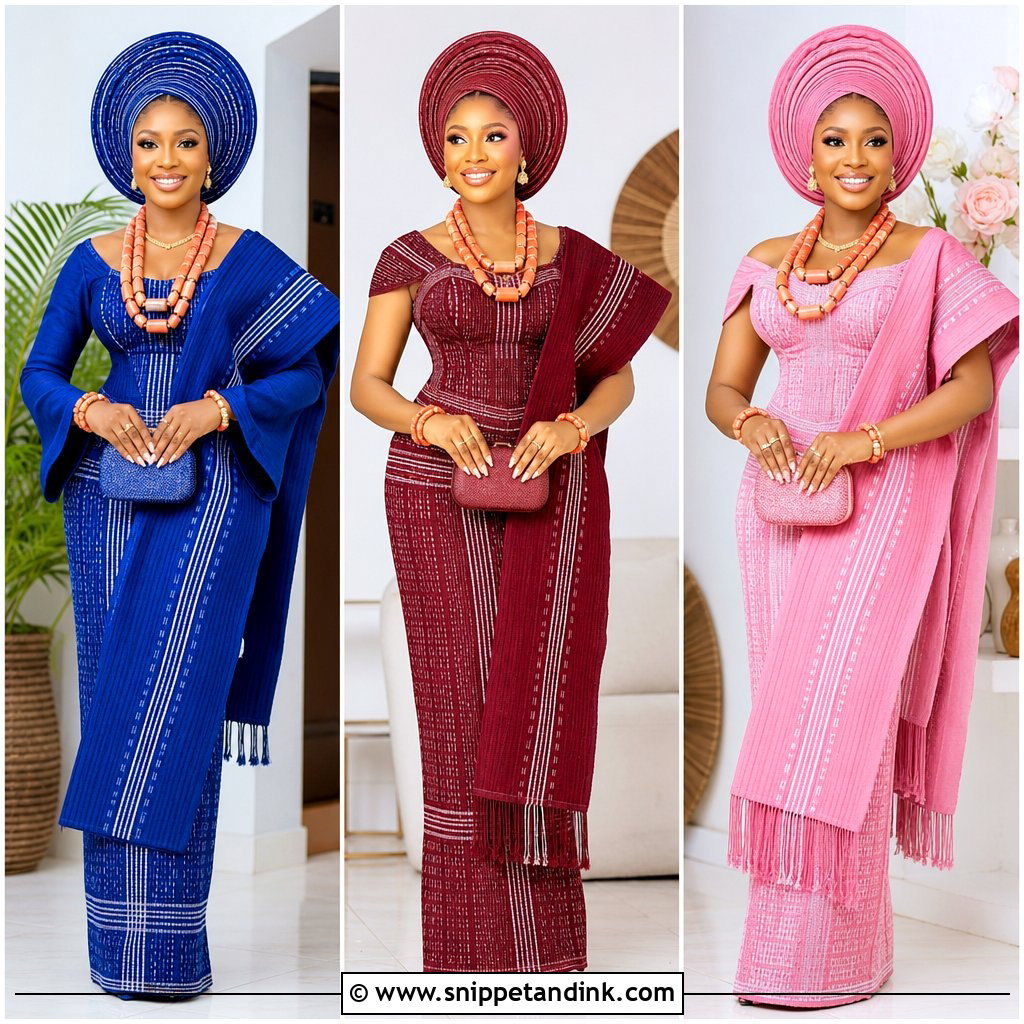
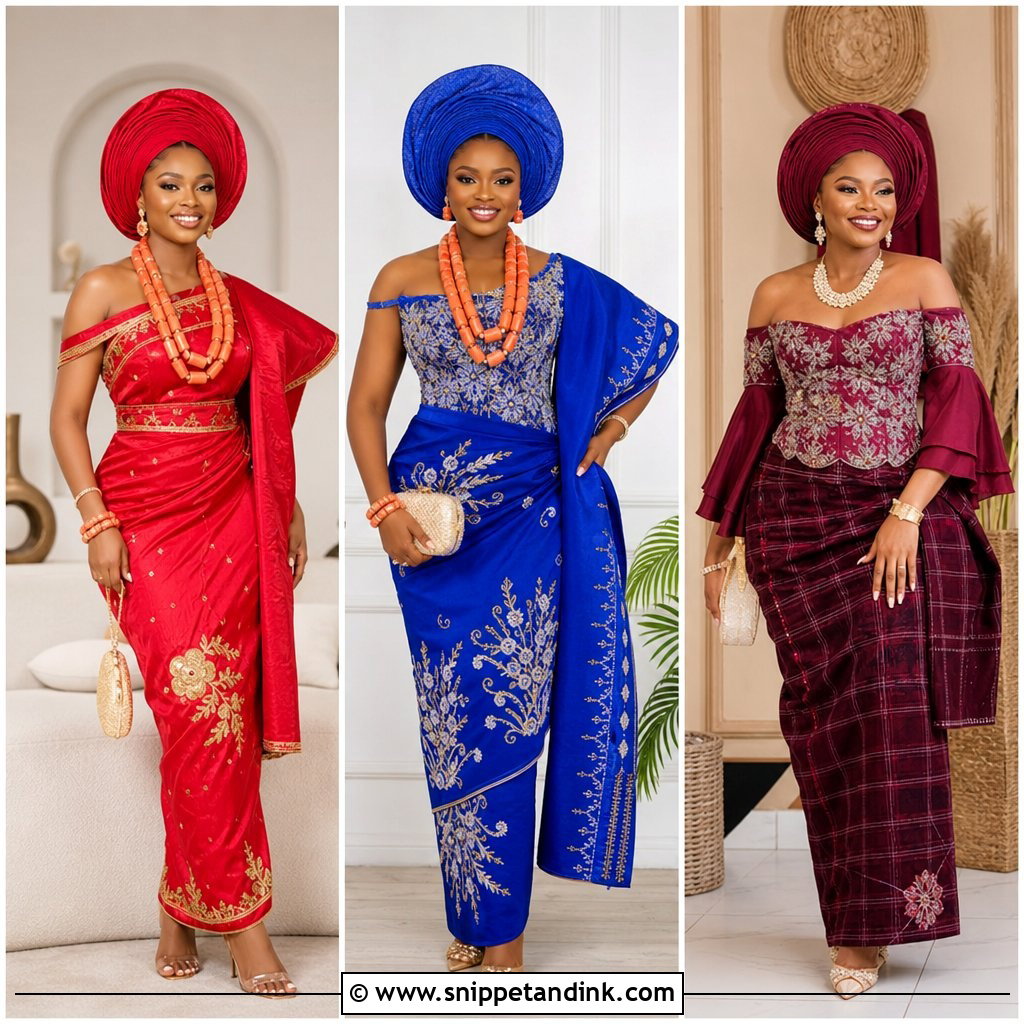
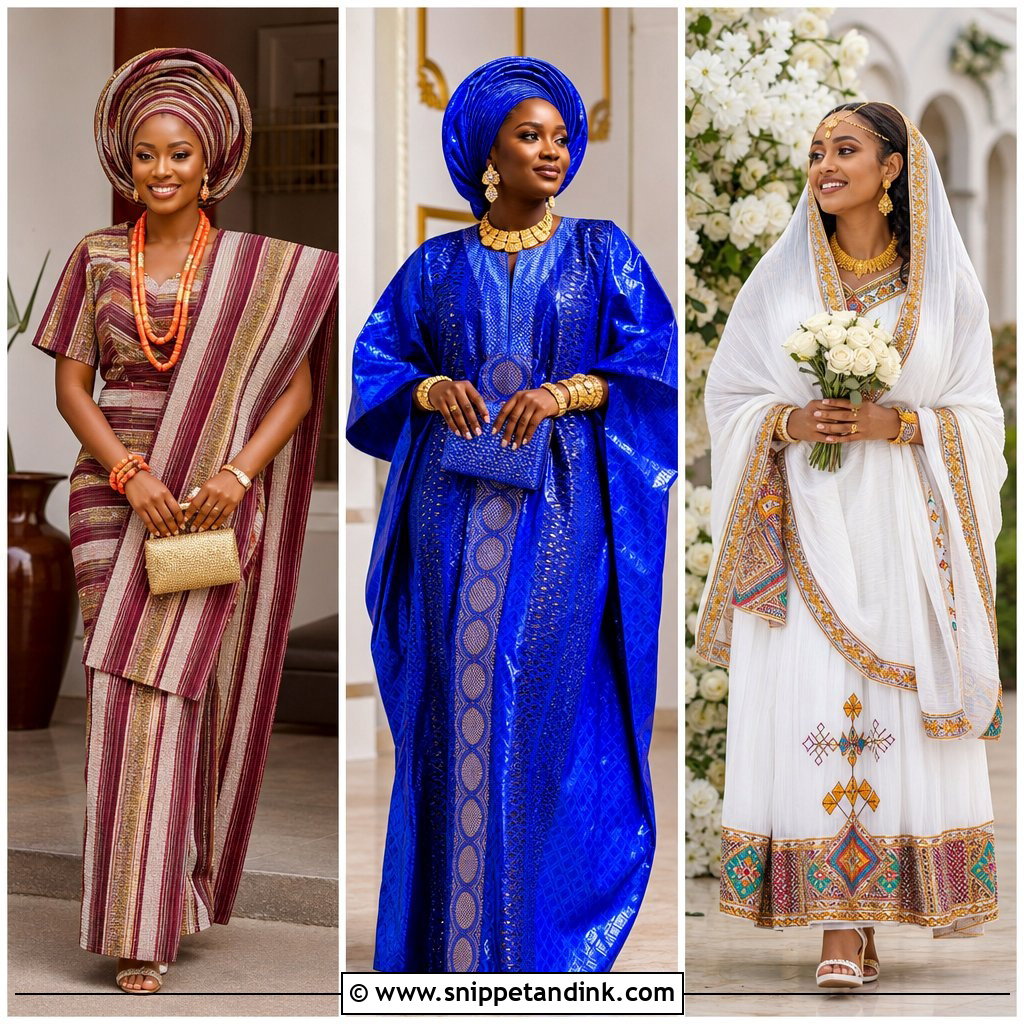
The Yoruba bride’s set is a full system: iro wrapper, buba blouse, gele, ipele over the shoulder, beads and a small clutch. Aso oke is a stiff, hand-woven cloth, so it needs a tailor who knows how to cut it without the blouse standing away from the body. I balance the height of the gele against the fit; a big sculpted gele looks right only when the buba sits neatly at the shoulders. Agree on coral, gold or crystal with the family before buying, and wear block heels, because you’ll greet and dance for hours. A Yoruba aso oke bride outfit photographs in champagne, emerald or wine equally well.
2. Yoruba Aso Oke Groom Agbada Outfit
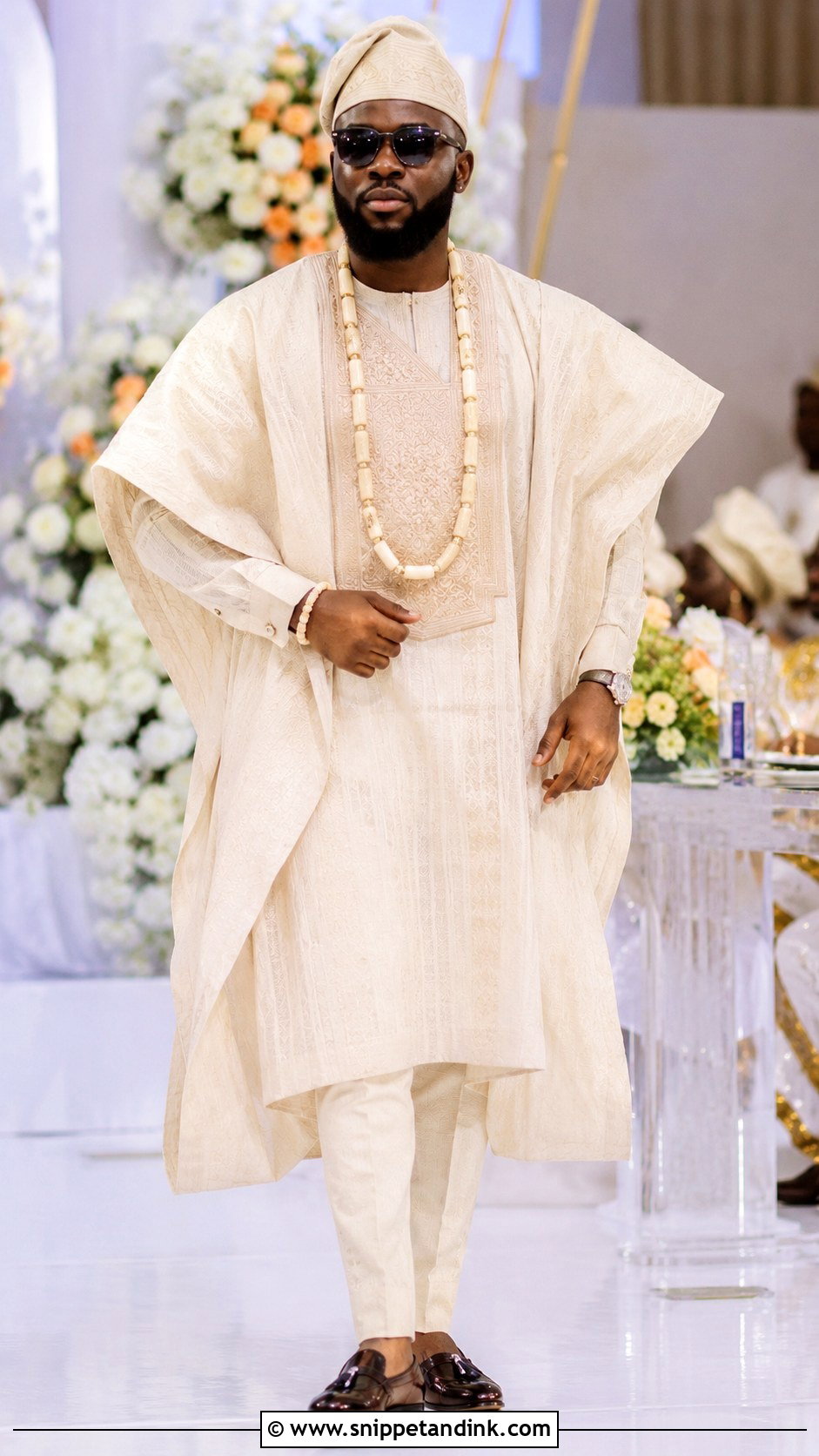
An agbada has a lot of cloth to manage. The wide outer robe goes over an inner tunic and trousers, with a fila cap and beads to finish. Most grooms pick aso oke in the bride’s colour or one that sits beside it, which pulls the couple together in group photos. I prefer embroidery kept to the neckline, sleeves and chest rather than covering the whole robe. Get the length checked while you walk, since a robe that brushes the floor gets stepped on, and practise folding the sleeves back onto the shoulders so it doesn’t swallow your hands when you dance.
3. Igbo George Wrapper Bride Outfit
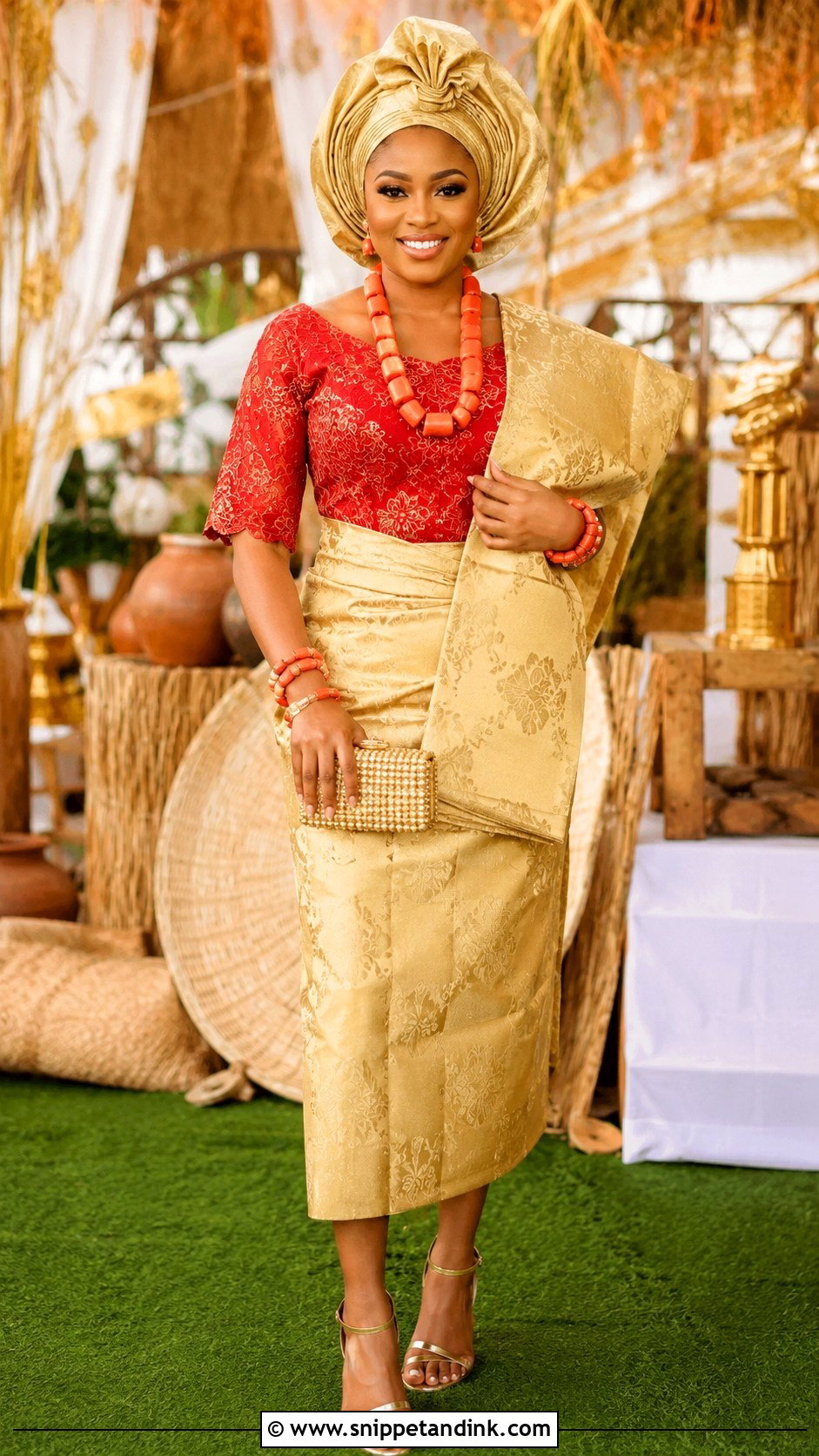
Double George wrappers carry real weight, so the blouse on top should do the opposite: a fitted lace or beaded top with a clear shape. That combination, plus coral beads at the neck and wrists, is what gives an Igbo George wrapper bride outfit its royal finish. If the wrapper is heavily embroidered, keep the blouse clean. Have someone who knows how to tie George wrappers do it on the day, because a wrapper that loosens mid-dance during the wine-carrying is hard to fix in public. Many brides carry a fan, which is useful as well as decorative in a warm hall.
4. Igbo Isi Agu Groom Outfit
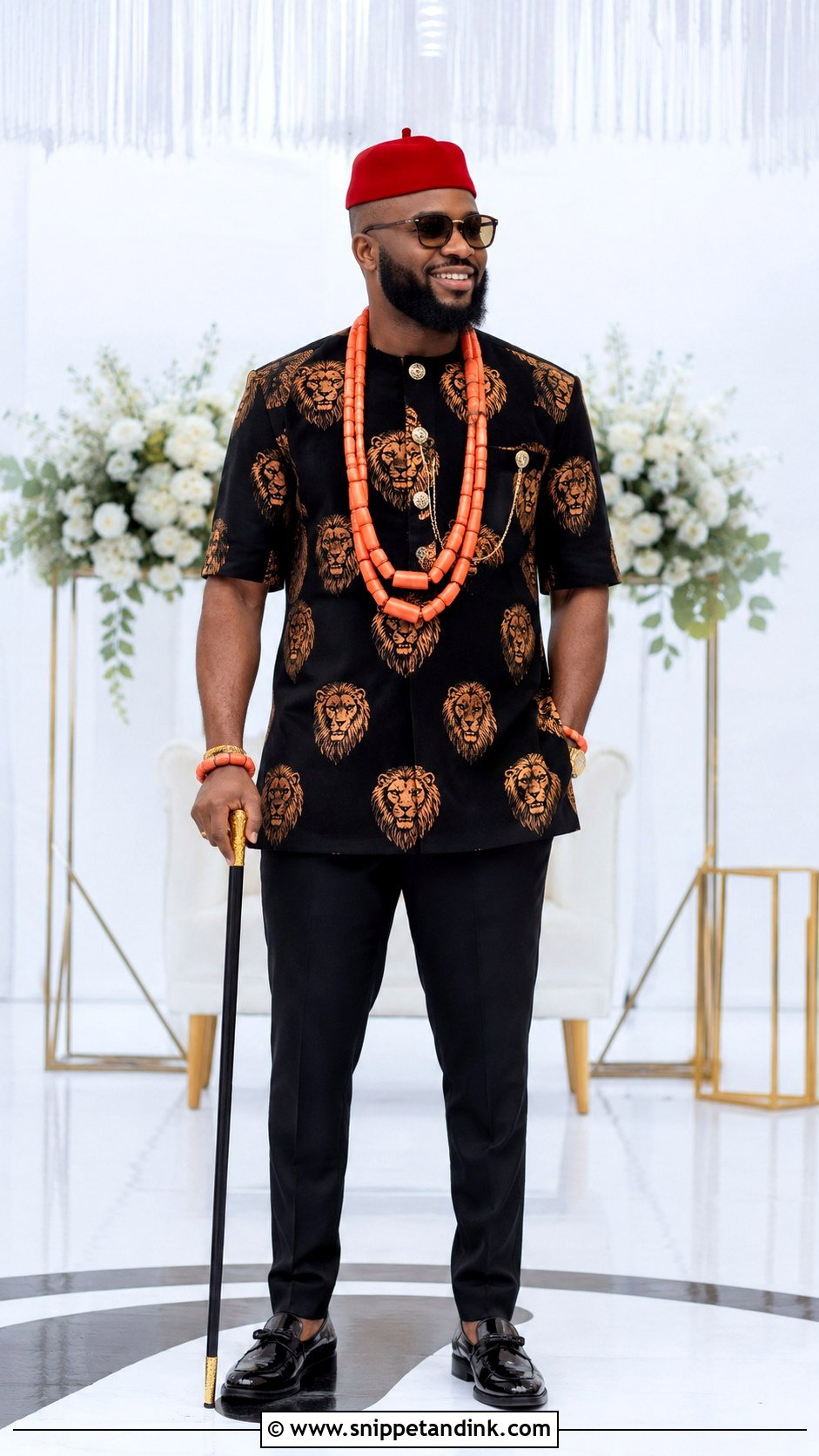
The isi agu top, printed with lion heads, carries a lot of meaning on its own, so I keep the rest of the groom’s outfit plain. Tailored trousers, a red or black cap, coral beads and formal shoes are the core; a walking stick is optional. Red, black and gold are classic, though cream and green are increasingly common. The fit test is the shoulders: the print shouldn’t pull or distort across the back when you raise your arms. It sits naturally beside an Igbo bride in George wrappers.
5. Edo Coral Bead Bride Outfit
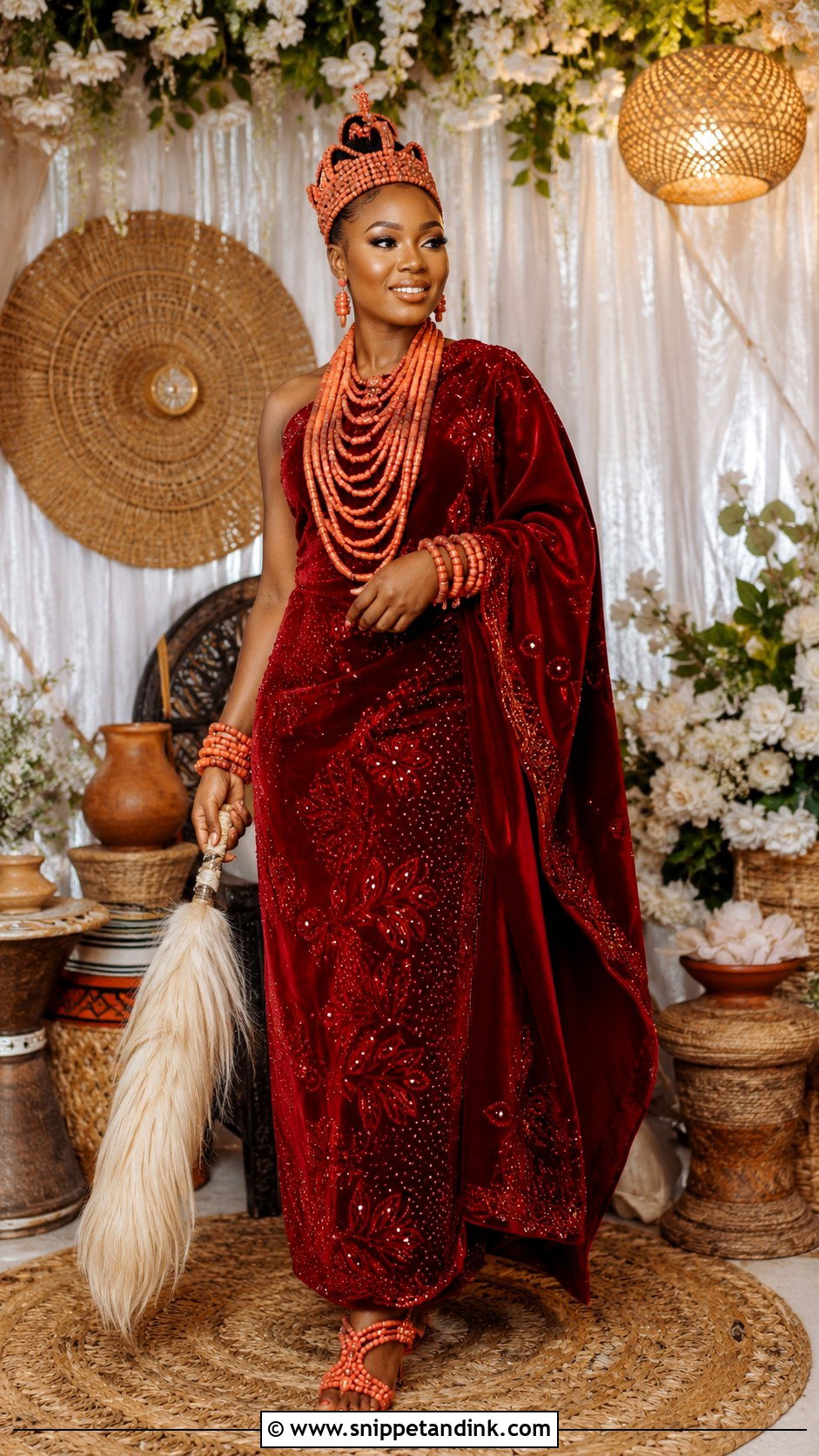
Edo bridal coral is heavy. The okuku-inspired crown, layered necklaces and bead bracelets frame the face and shoulders, and the wrapped base, often velvet, needs to sit smooth and flat so the beads can lie properly. I’d ask the family or bead specialist to dress the bride well ahead of the entrance, since fitting the crown and fastening every strand takes time. Keep makeup defined but soft, with a strong brow, because the coral already provides the colour. Expect a sore neck by evening, and plan a seated moment between photo sessions.
6. Edo Groom Coral Bead Outfit
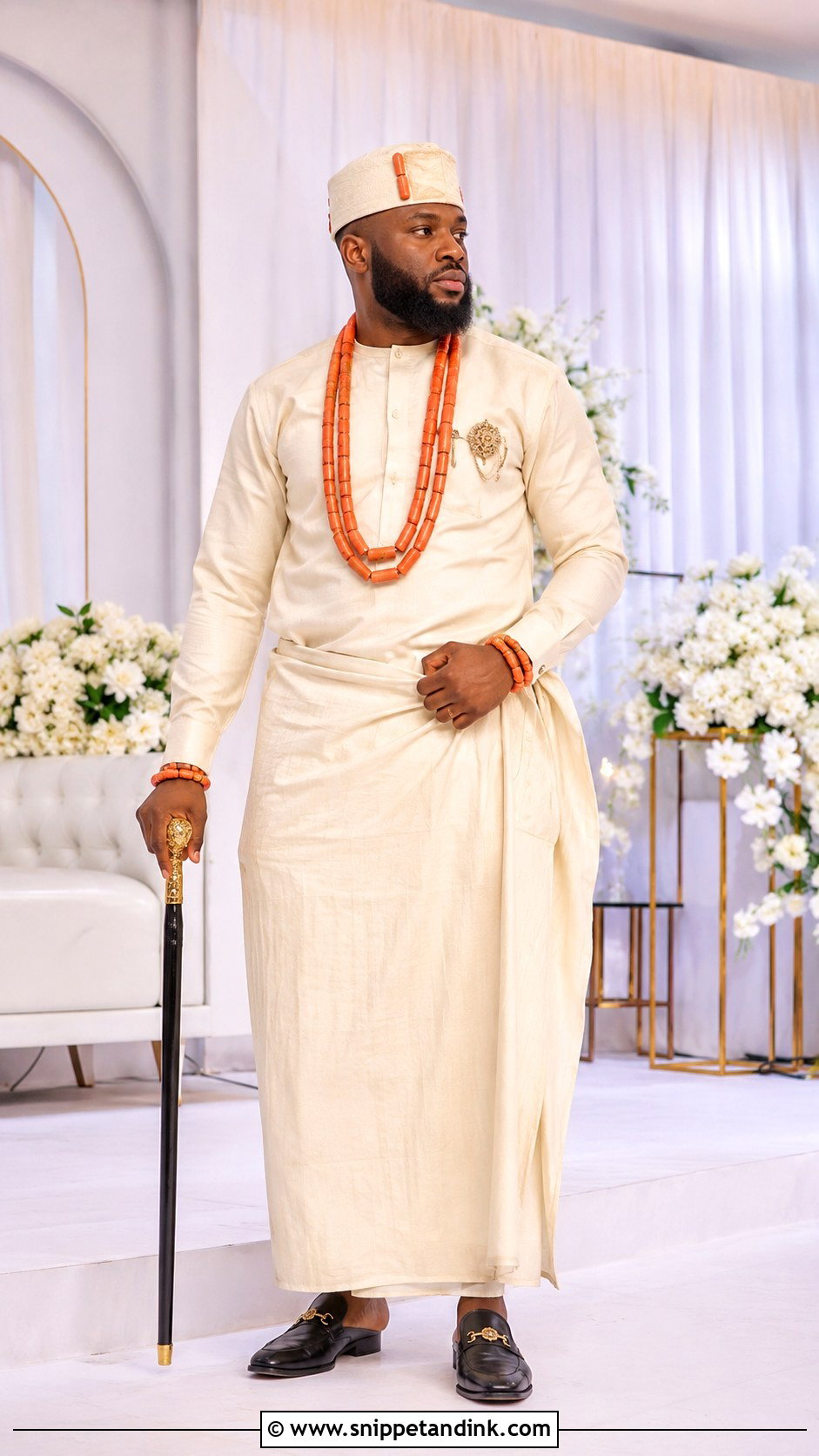
The groom’s coral beads should sit cleanly across his chest, so I avoid heavy embroidery underneath that fights with them. An Edo groom coral bead outfit can be a wrapper or a tailored top and trousers, finished with a cap and sometimes a walking stick. White and cream let red coral read strongly. If the bride is in a full coral crown, his look can step back a little. Make sure the beads are strung firmly; a snapped strand on the dance floor scatters everywhere.
7. Hausa Fulani Lace Bride Outfit
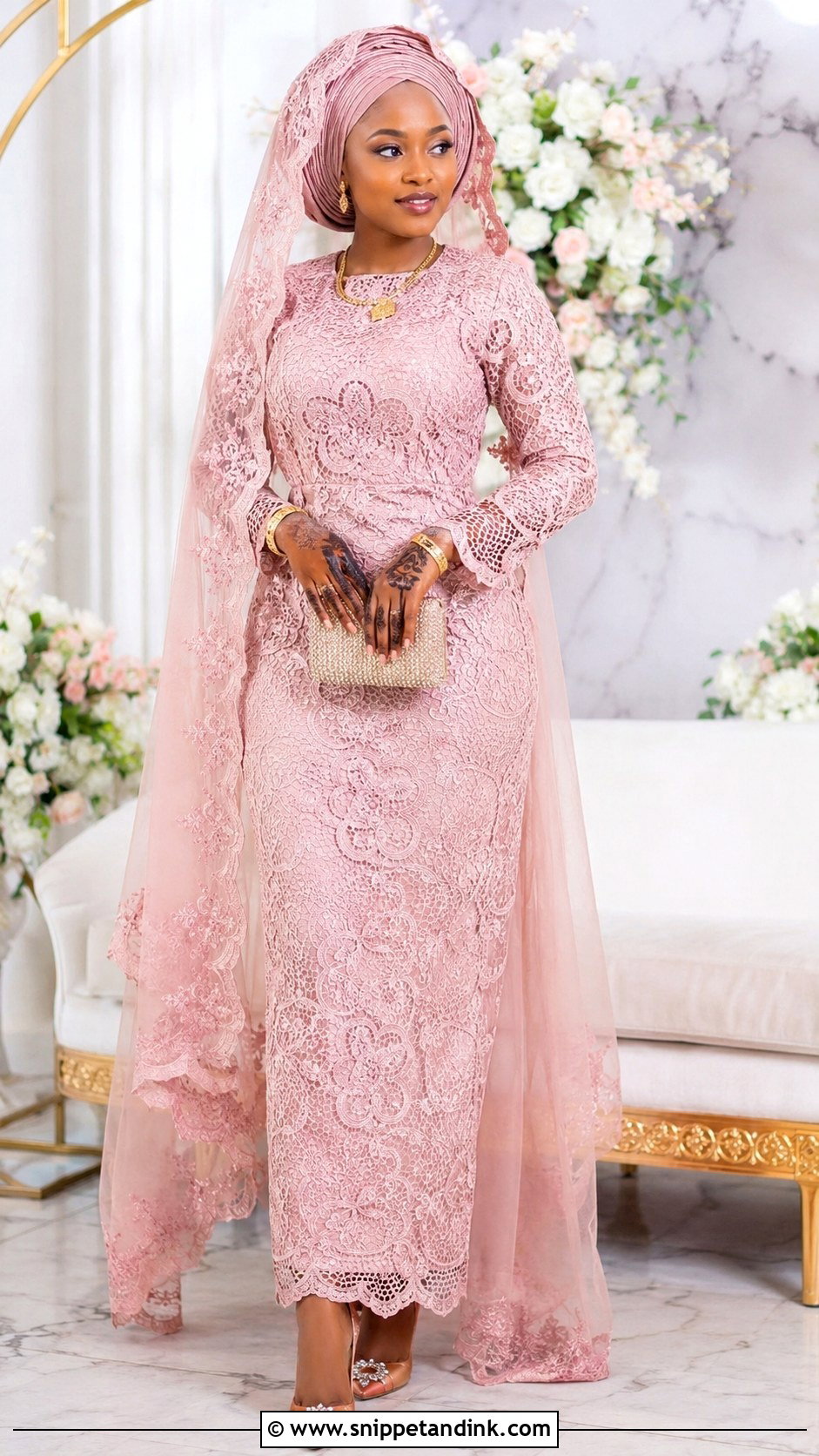
Hausa-Fulani bridal dressing is about modest coverage and fine detail. The gown or skirt-and-blouse set is usually long lace, with a matching veil or headwrap, delicate jewellery and embellished heels. Fine beading on the lace matters more than volume. I always pin the veil so the face stays clearly framed; a loose veil slides back and gets fiddled with all day. Henna on the hands often completes the bride’s look, so plan the lace sleeve length so it doesn’t cover the design.
8. Hausa Groom Babban Riga Outfit
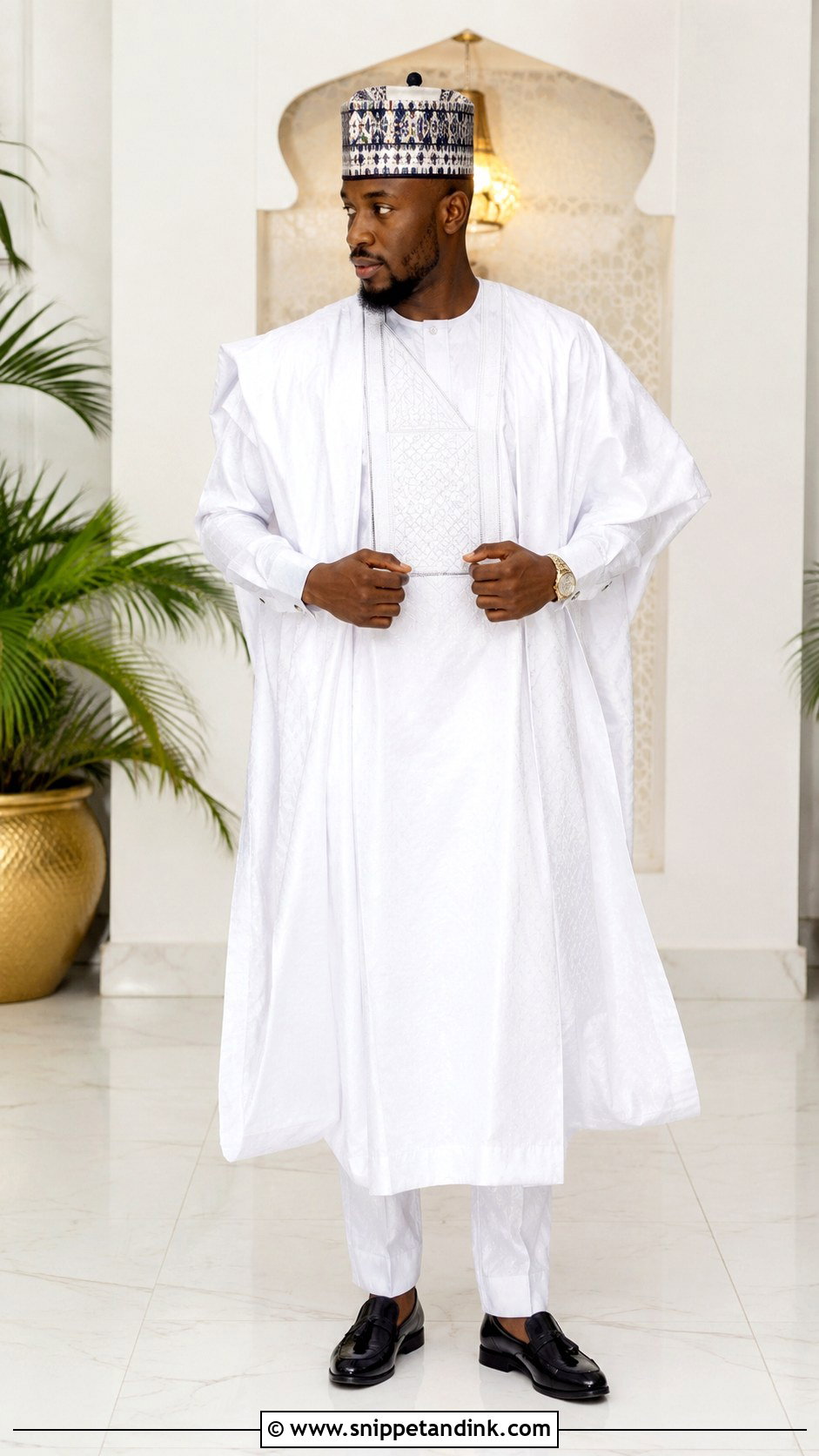
A babban riga is a three-layer outfit: the wide outer robe, a kaftan beneath and trousers, with an embroidered cap. The embroidery around the neck and chest is the focal point, so look closely at the threadwork before buying. White, cream and sky blue feel ceremonial. If you want to echo the bride’s colour, do it in the cap embroidery or a thread accent rather than the whole robe. Enough volume to look formal is right; too much and every handshake becomes a fight with the sleeves.
9. Aso Ebi Lace Gown Outfit
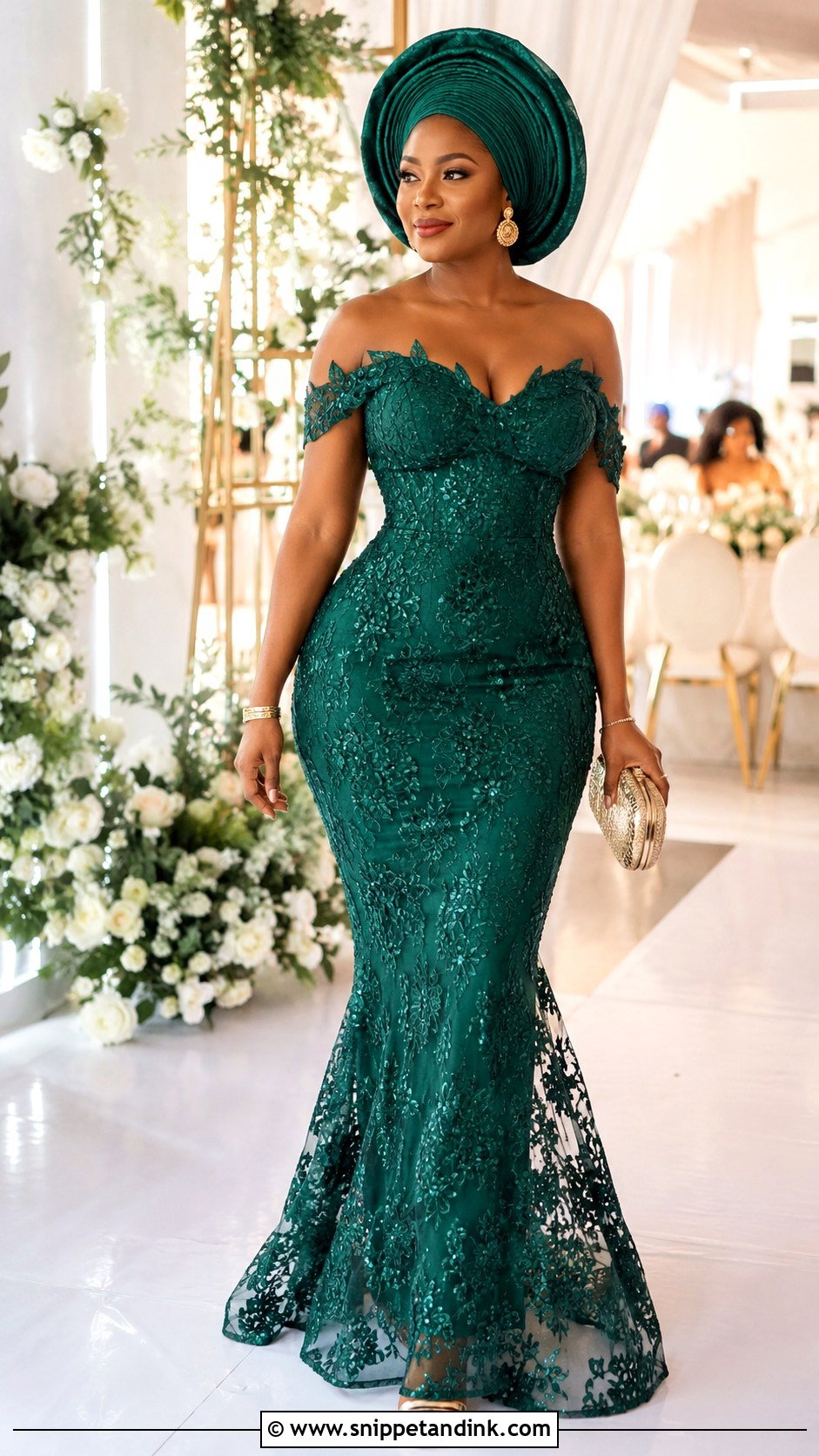
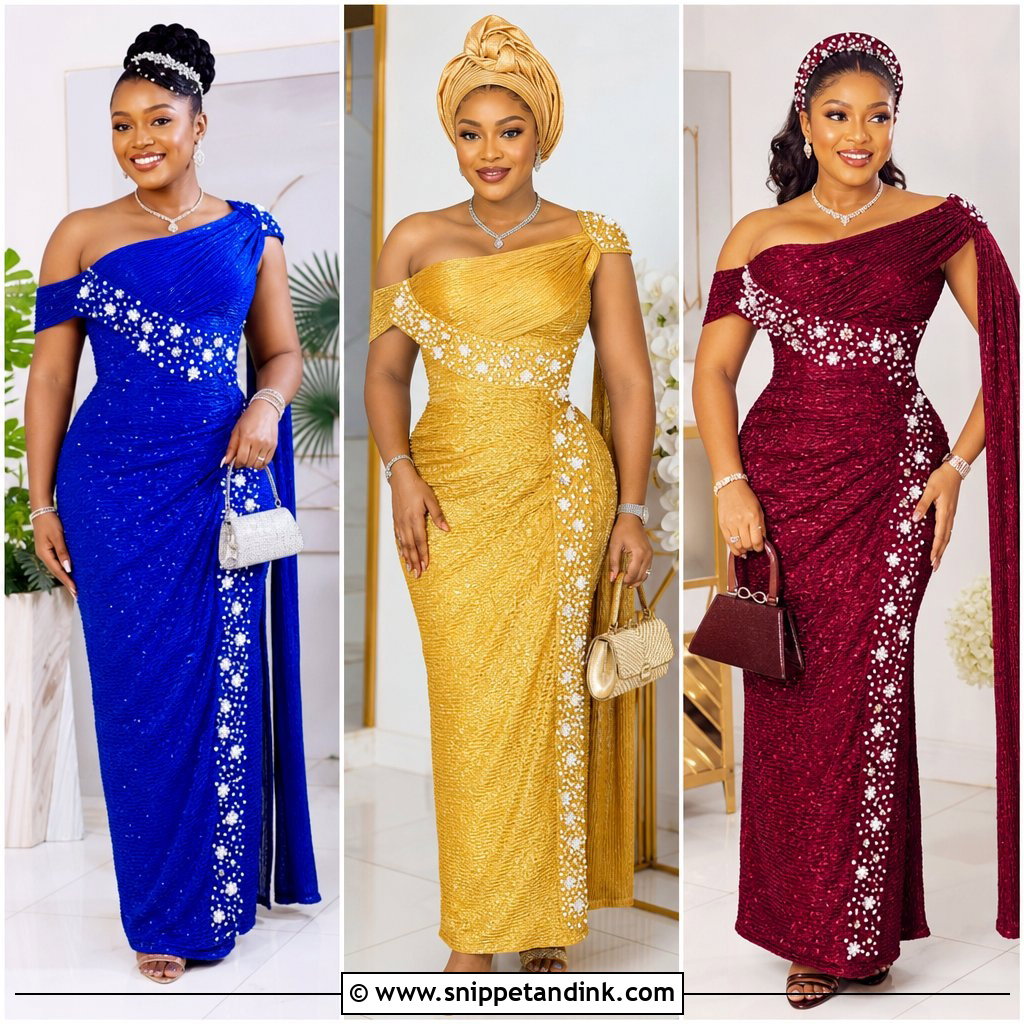
Aso ebi lace is the guest uniform at most Nigerian weddings, and how you have it sewn is where your personality comes in. Mermaid, straight, peplum, off-shoulder or long-sleeve all work, as long as your choice fits the dress code. My rule is simple: heavy stones on the lace call for sleek accessories, while plain lace leaves room for a dramatic gele. Nude or metallic heels go with almost any colour. Start sewing early, since tailors are booked solid during busy wedding months.
10. Ankara Aso Ebi Guest Outfit
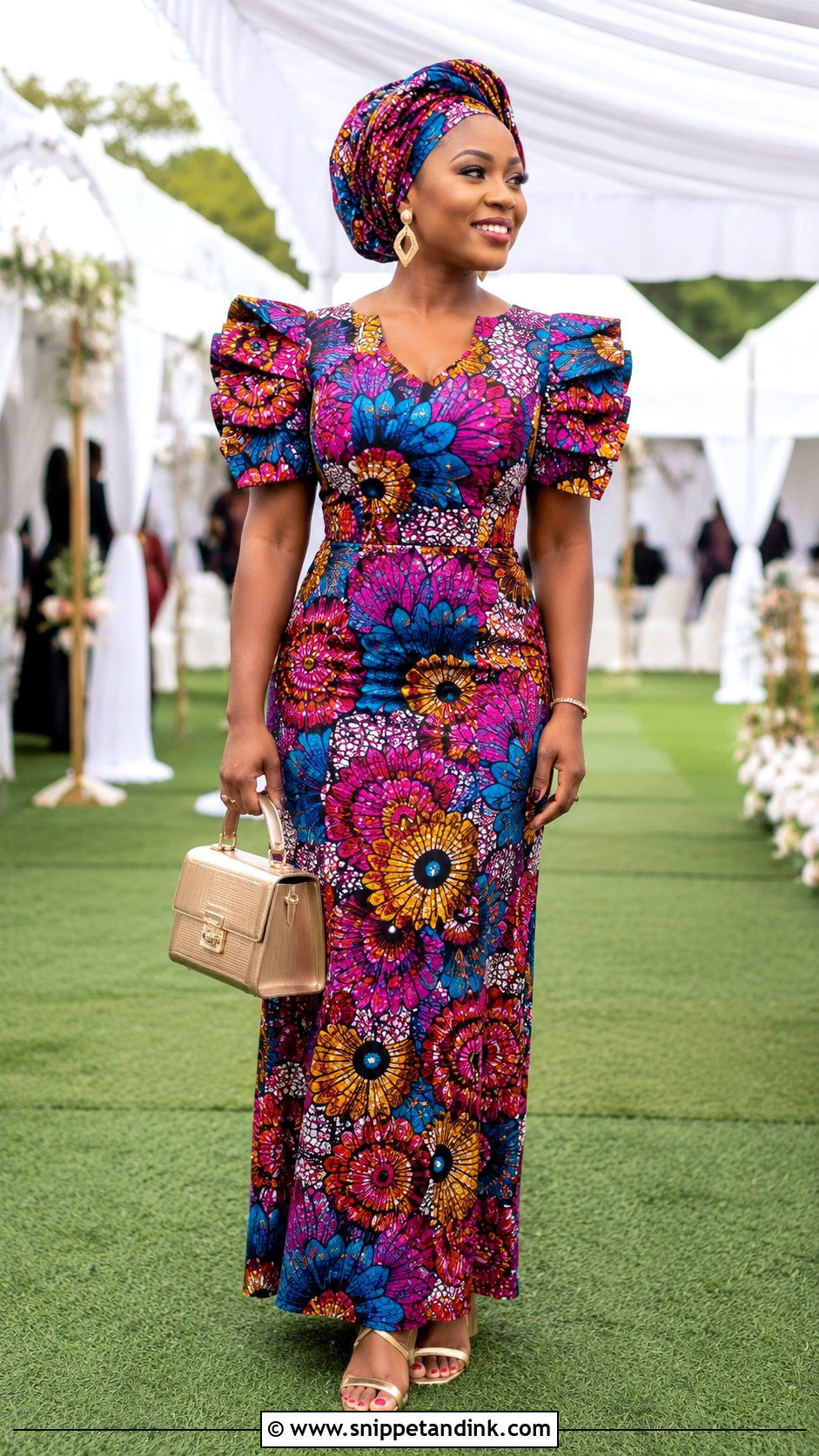
Ankara aso ebi is the more relaxed version, and wax-print cotton is far easier to dance in than beaded lace. A midi or maxi in the couple’s print, with a gele or turban and solid-colour shoes, keeps the busy pattern under control. Wrap dresses and peplum cuts are good for long days because they forgive a big lunch. Ask your tailor whether to pre-wash the fabric in cold water, since cotton can shrink slightly after the first clean.
11. Lace Iro And Buba Outfit
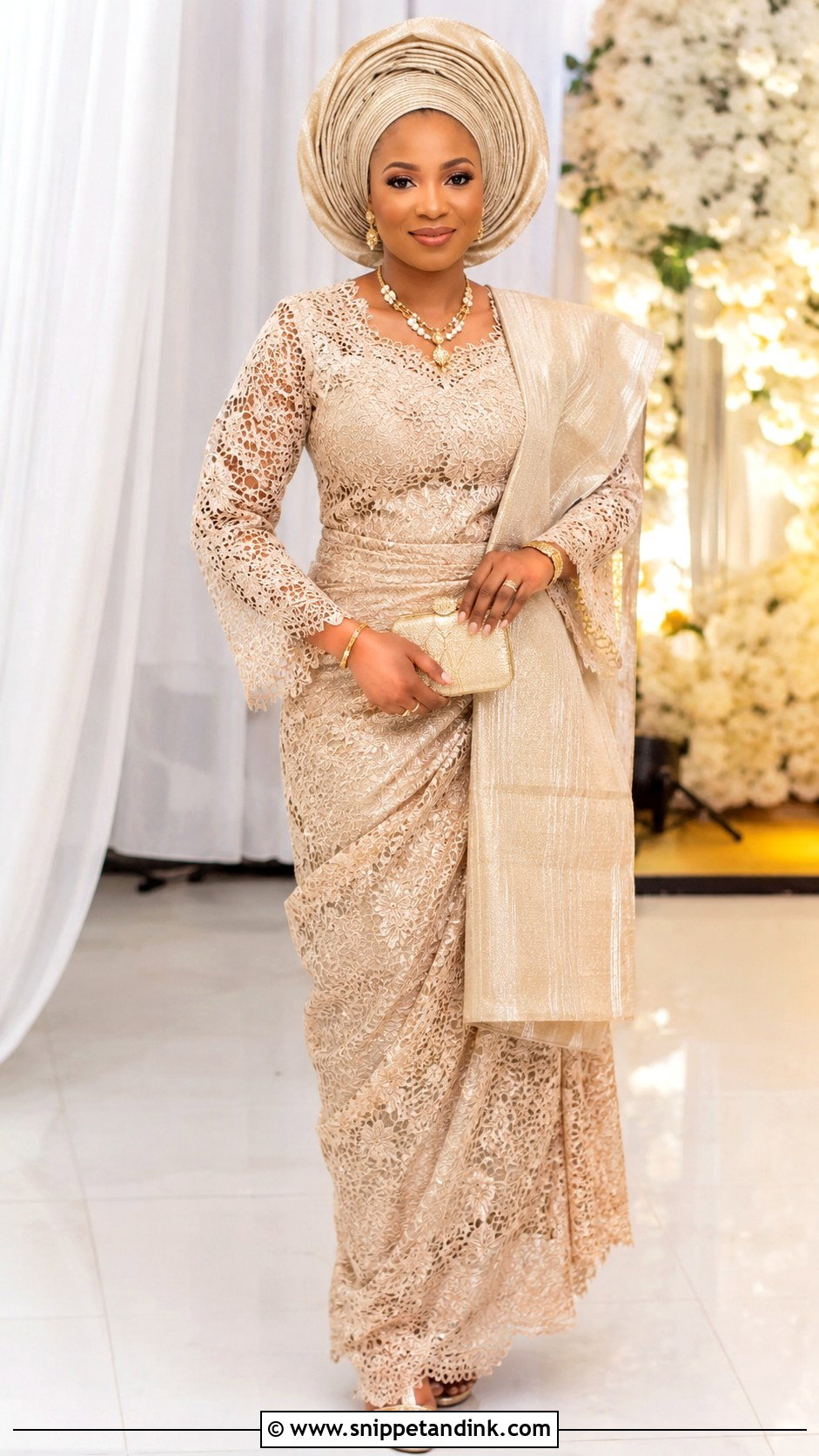
Lace iro and buba is the outfit I recommend for aunties and older relatives who want something traditional that is still comfortable for sitting. A lace iro and buba outfit pairs a wrapper skirt with a buba that can be loose or fitted, and the right blouse length, ending at the waist or upper hip, makes the biggest difference to the silhouette. Match the gele to your role: dramatic for close family, modest for a general guest. Soft colours like champagne, lilac or teal work well in daylight.
12. Modern Aso Oke Jumpsuit Outfit
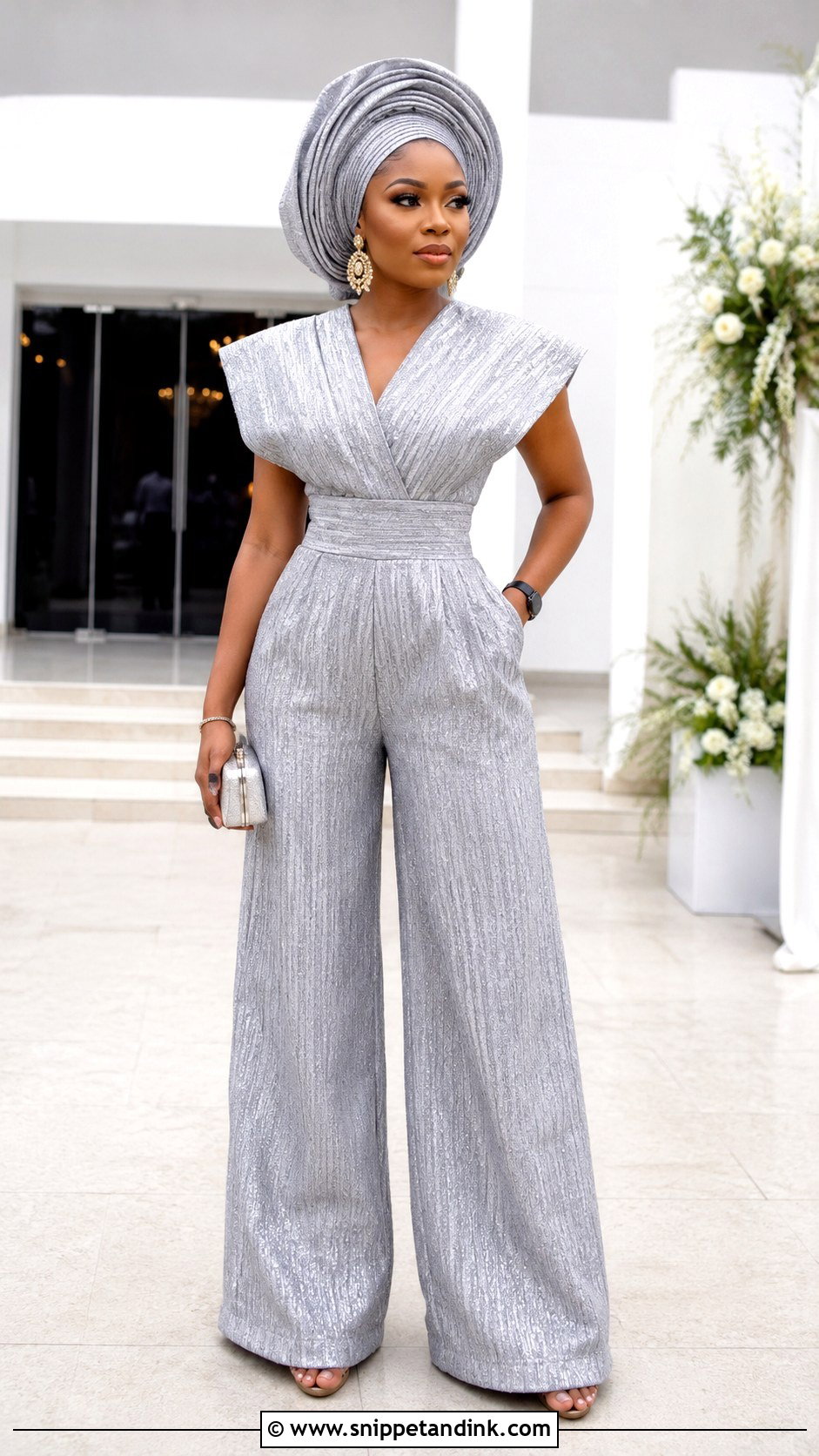
An aso oke jumpsuit brings handwoven cloth into a cut that’s much easier to move in. It suits bridesmaids or sisters who want to stand out a little within the family colour. Because aso oke is stiff, a wide leg drapes better than a skinny one, and a defined waist keeps it from looking boxy. Keep jewellery clean so the weave shows, and confirm with the couple that trousers are welcome in your group before you cut the cloth.
13. Aso Oke Two Piece Outfit
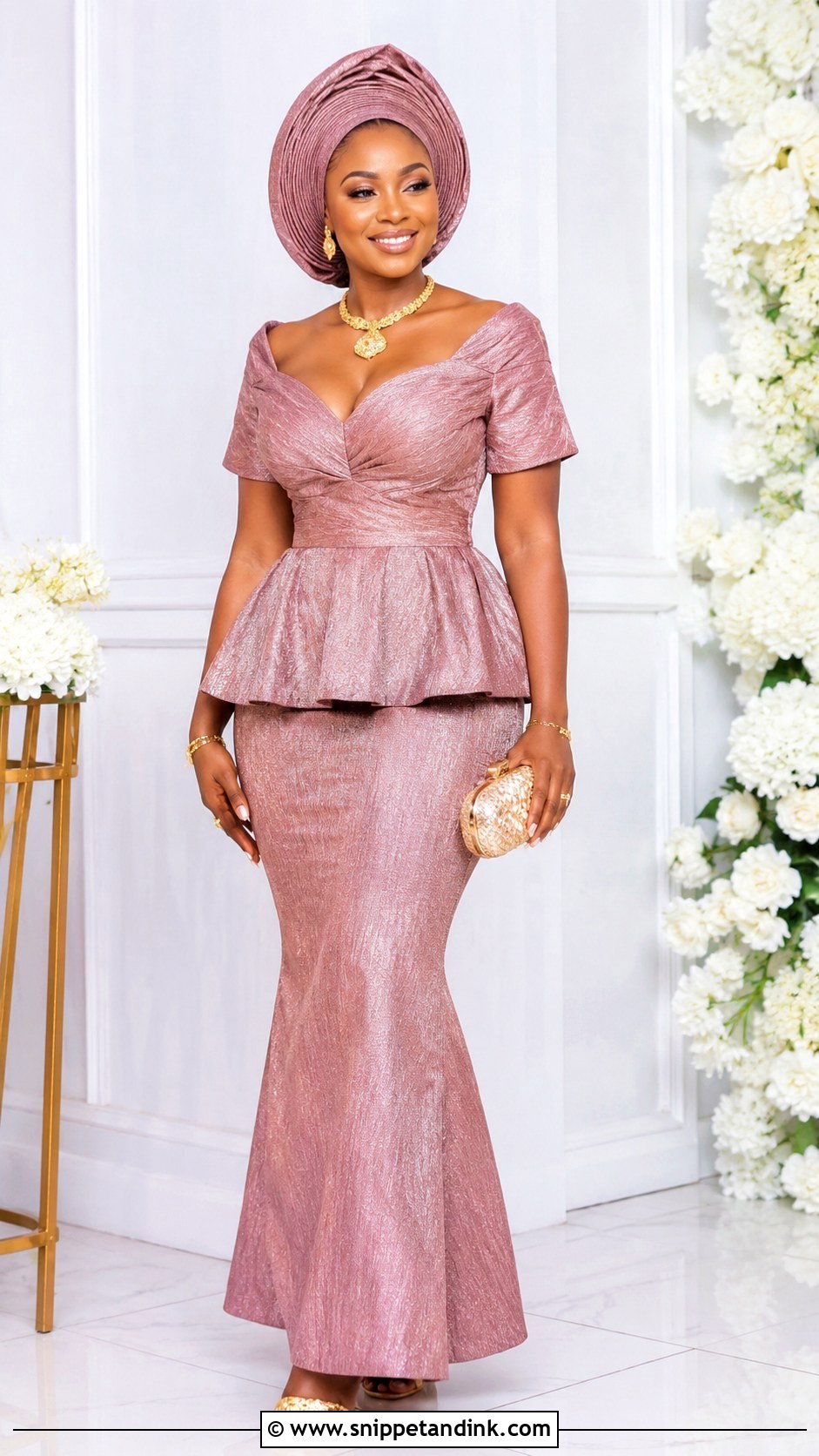
A two-piece in aso oke gives you the fabric without the full iro and buba. A fitted blouse or peplum top with a matching skirt is the base; a straight skirt reads sleek while a mermaid flare adds drama. Strongly striped aso oke is tricky here, since stripes need matching across seams, so ask your tailor to show you how she’ll line them up. Soft metallic tones look rich at an evening party.
14. Bride Second Look Reception Outfit
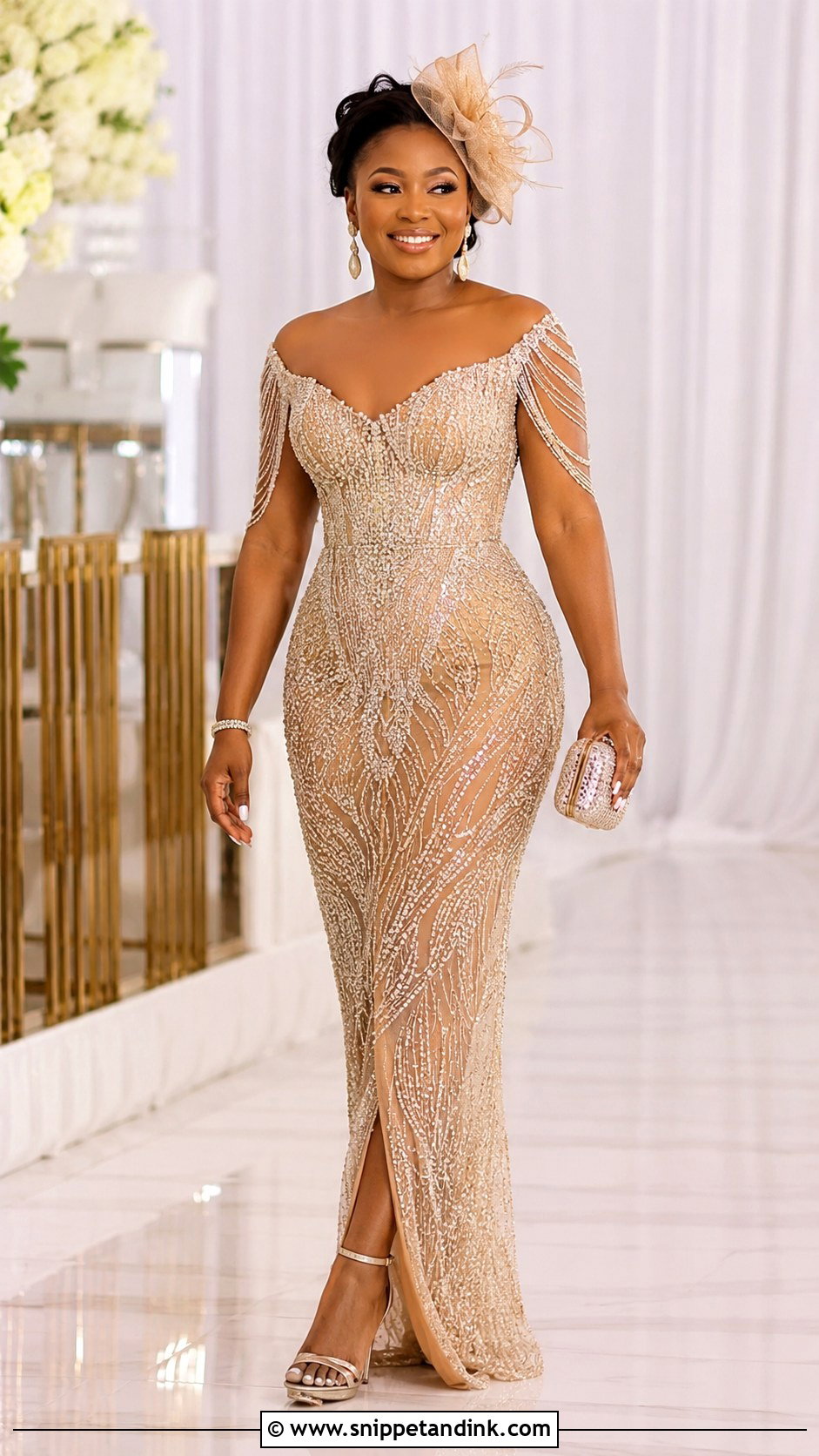
Most brides change after the ceremony because traditional regalia is heavy and hot. The reception look is usually a lace gown, beaded dress, Ankara set or embellished jumpsuit, paired with a lighter gele or headpiece. I keep the change simple: one outfit with a side zip, shoes already broken in, and makeup touched up during the switch. A shorter train and lighter sleeves make the dance floor manageable, and gold, champagne or the couple’s colour keeps it connected to the earlier look.
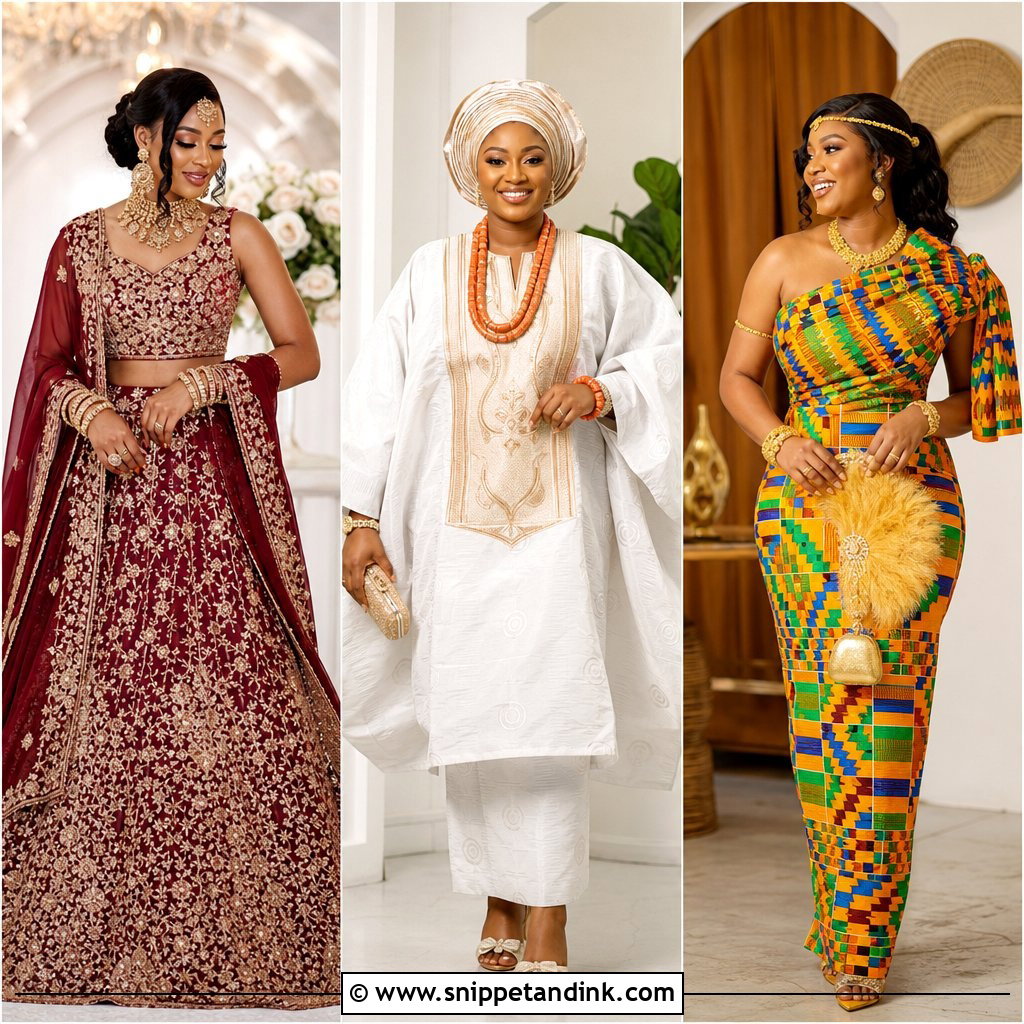
15. Mother Of The Bride Lace Outfit
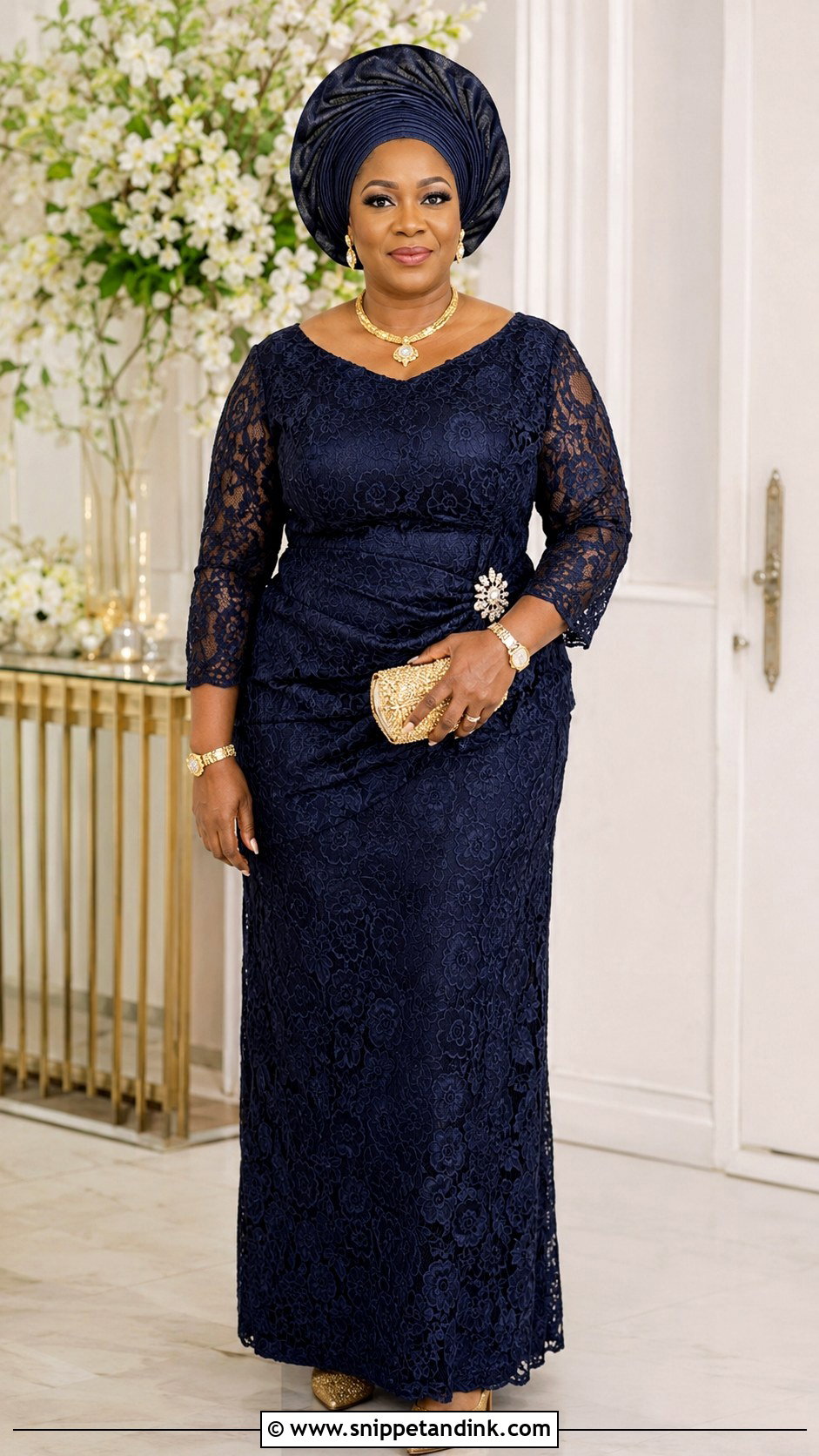
A mother of the bride should look important without competing. A long lace gown or iro and buba, a sculpted gele, classic jewellery and closed-toe heels give her presence. Navy, plum and emerald read dignified. I like a sleeve with a little structure or light beading. She’ll greet guests for hours and pose for dozens of family pictures, so the gele must be pinned firmly and the shoes must be ones she has actually worn before.
16. Mother Of The Groom George Wrapper Outfit
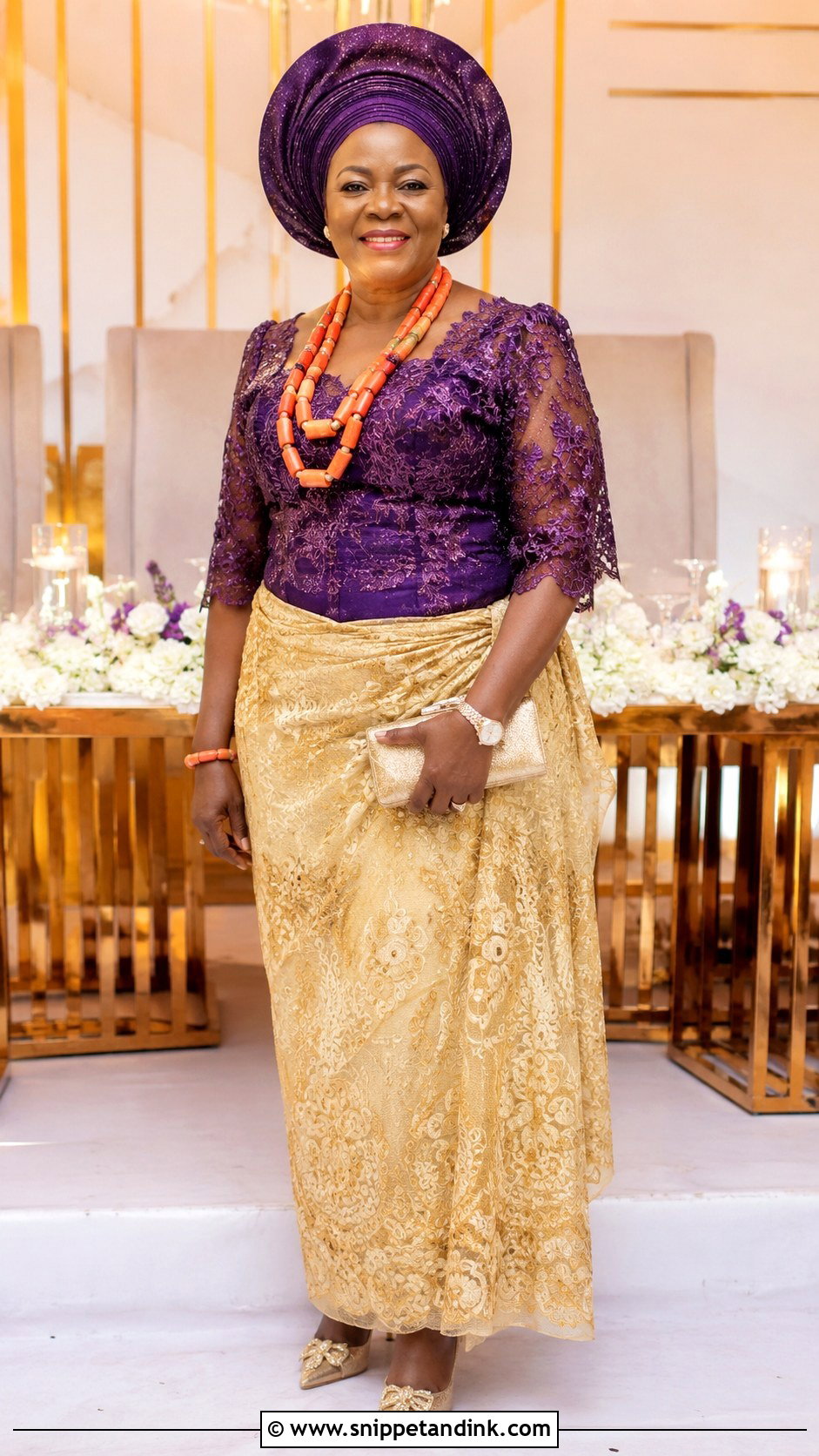
For an Igbo or mixed wedding, the mother of the groom usually wears a lace blouse with a George wrapper and headtie, finished with coral or gold. Deep jewel tones or metallic wrappers feel formal. The wrapper length matters more than people think: too long and she trips on stairs, too short and the shoes look clumsy. Let the blouse carry the detail, embroidered sleeves or stones, so she doesn’t need extra jewellery.
17. Bridesmaid Aso Ebi Gown Outfit
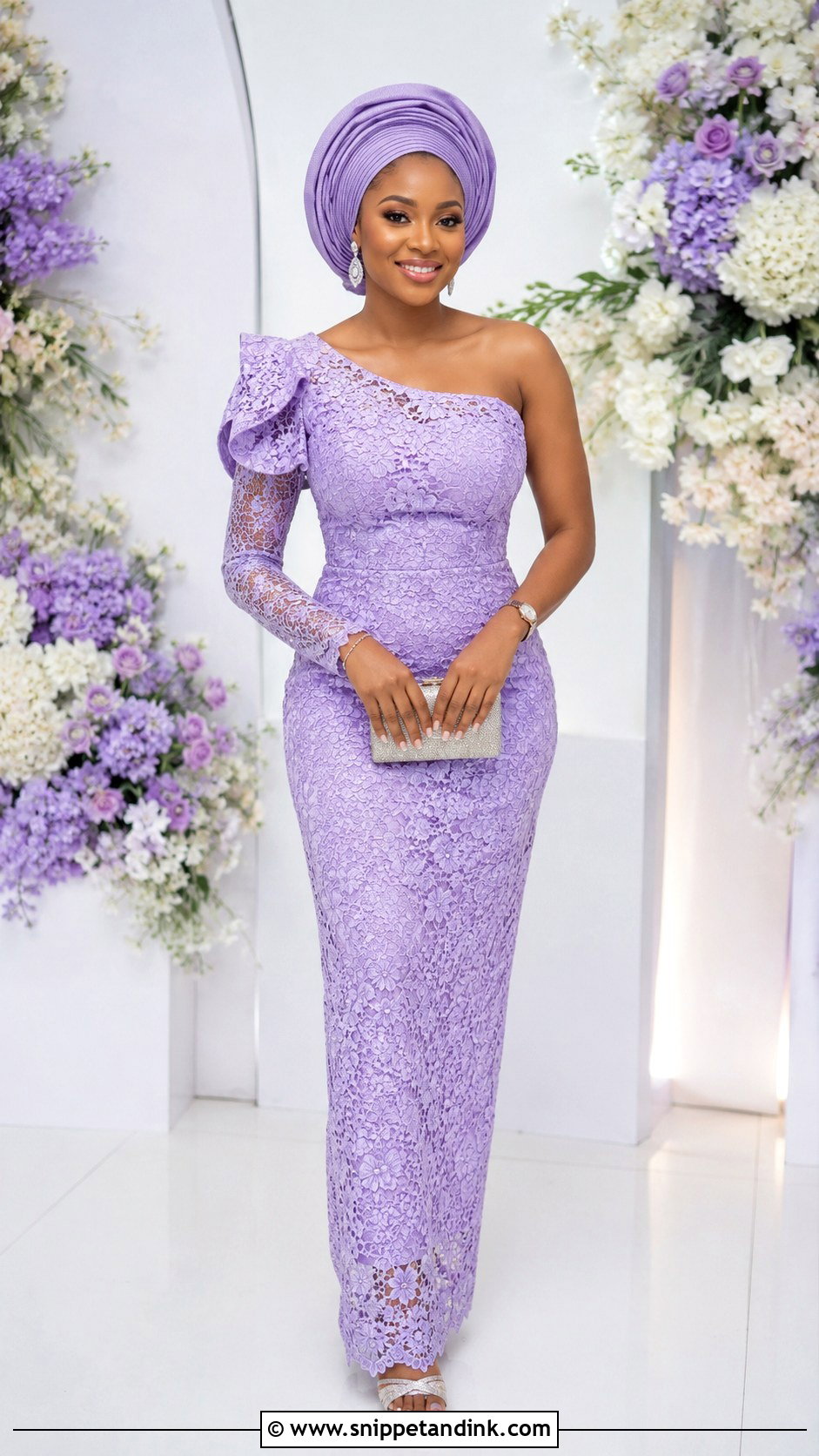
Bridesmaids in aso ebi usually share a fabric but choose individual cuts, which keeps the group cohesive without forcing everyone into one shape. Mermaid, straight maxi and peplum cuts are the usual picks. I ask the bride to approve each sketch first so no one ends up more detailed than she is. A gele or simple headwrap, small earrings and a clutch finish each look, and comfortable heels are non-negotiable for a full day on your feet.
18. Plus Size Lace Traditional Wedding Outfit
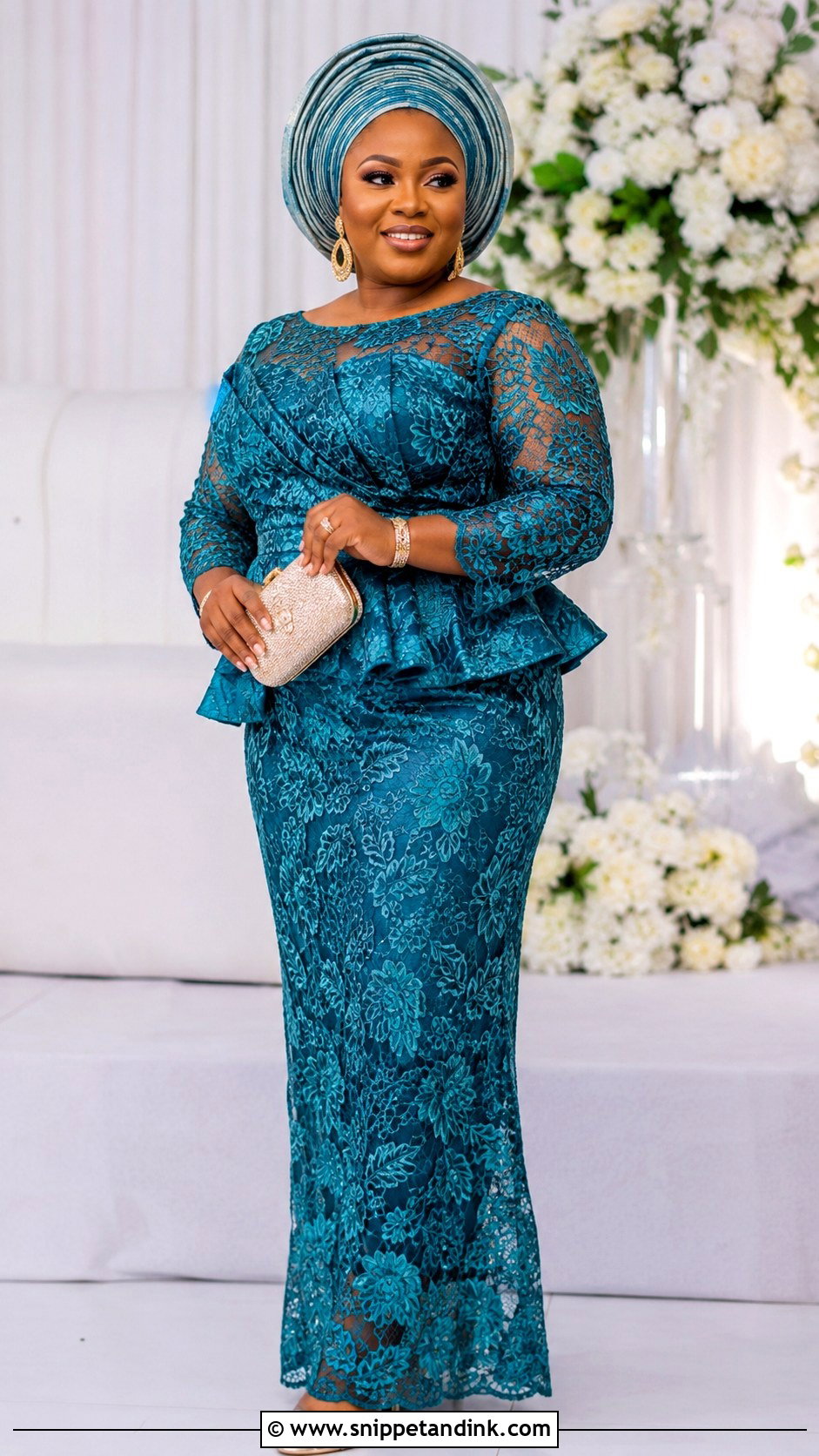
For plus-size traditional outfits, I start with structure in the fabric. Lace with a firmer backing sits smoothly, while very soft lace clings and creases. Wrap shapes, empire waists, peplum tops and A-line skirts all work. A gele adds height and frames the face. The point of good tailoring isn’t to hide the body; it’s to support it, so ask for proper lining and a well-placed zip. If the gown is beaded, keep the jewellery quieter.
19. Simple Traditional Wedding Guest Outfit
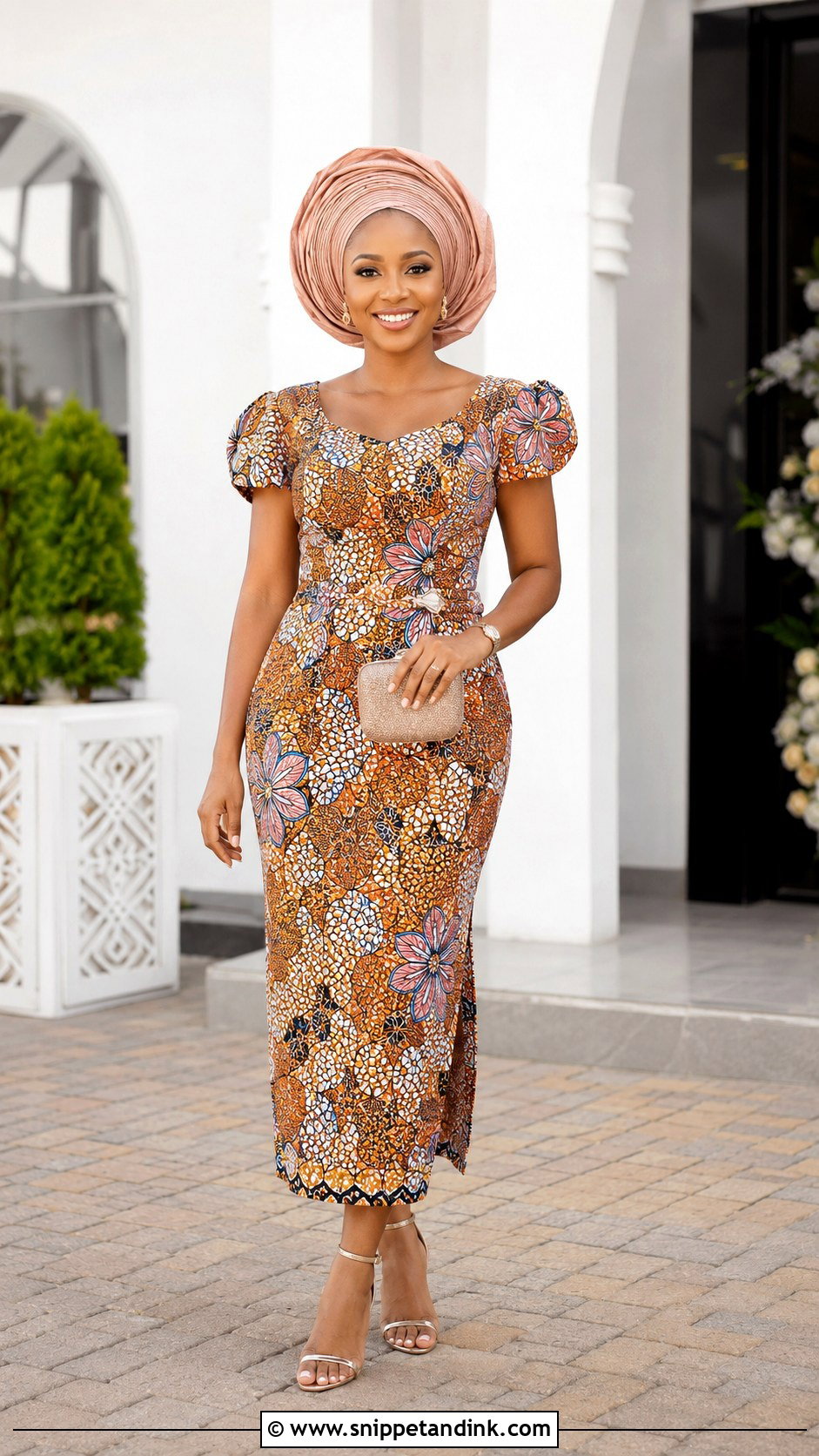
Outside the aso ebi group, a simple outfit works fine if it’s chosen with care. A plain lace or Ankara dress, a neat gele and heeled sandals are enough. Pick one strong element, such as a lovely print or a well-tied gele, and leave the rest minimal. If you’re unsure, avoid all-white or heavily embellished ivory, which can look bridal. A sharp fit and freshly pressed fabric matter more here than any accessory.

20. Luxury Beaded Lace Gown Outfit
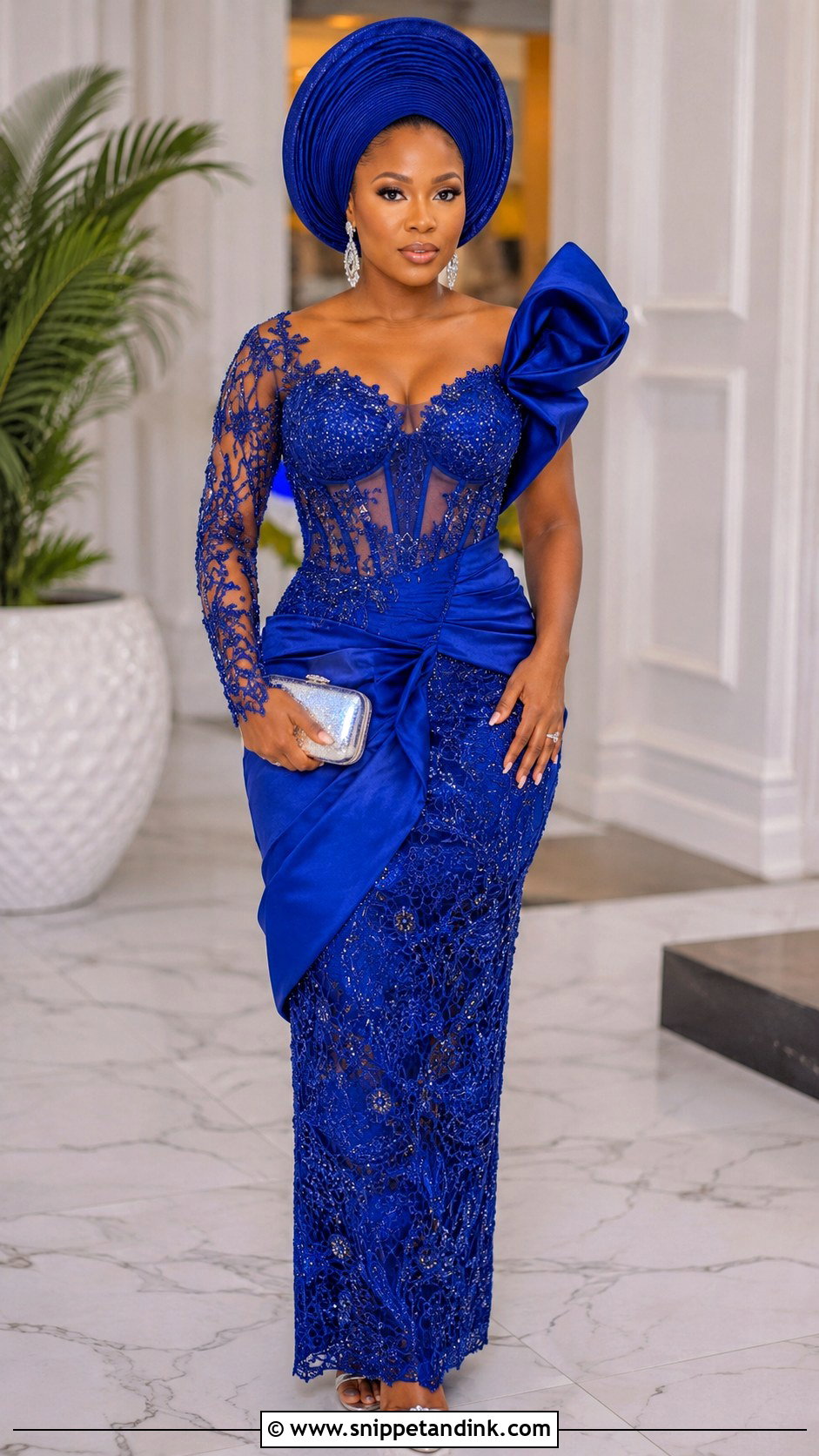
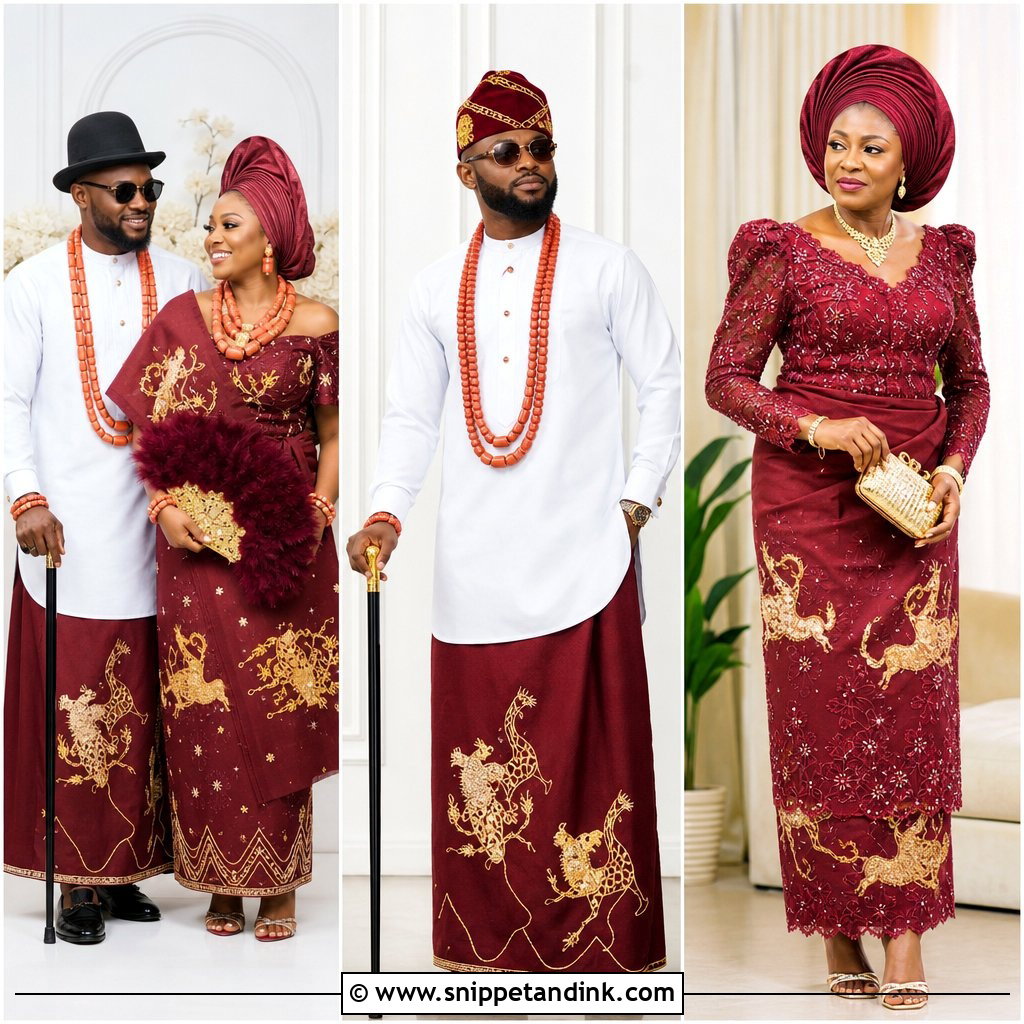
Beaded lace is heavy, and the weight pulls on shoulders and seams over a long day. That’s why a luxury beaded gown needs careful tailoring and a smooth lining against the skin, or the beads scratch. A clean neckline lets the earrings sit properly. I’d save this one for close family or VIP guests at a formal wedding, with metallic heels and a small polished clutch. Rich shades like emerald or deep red carry the glamour well.
21. Velvet Traditional Wedding Outfit
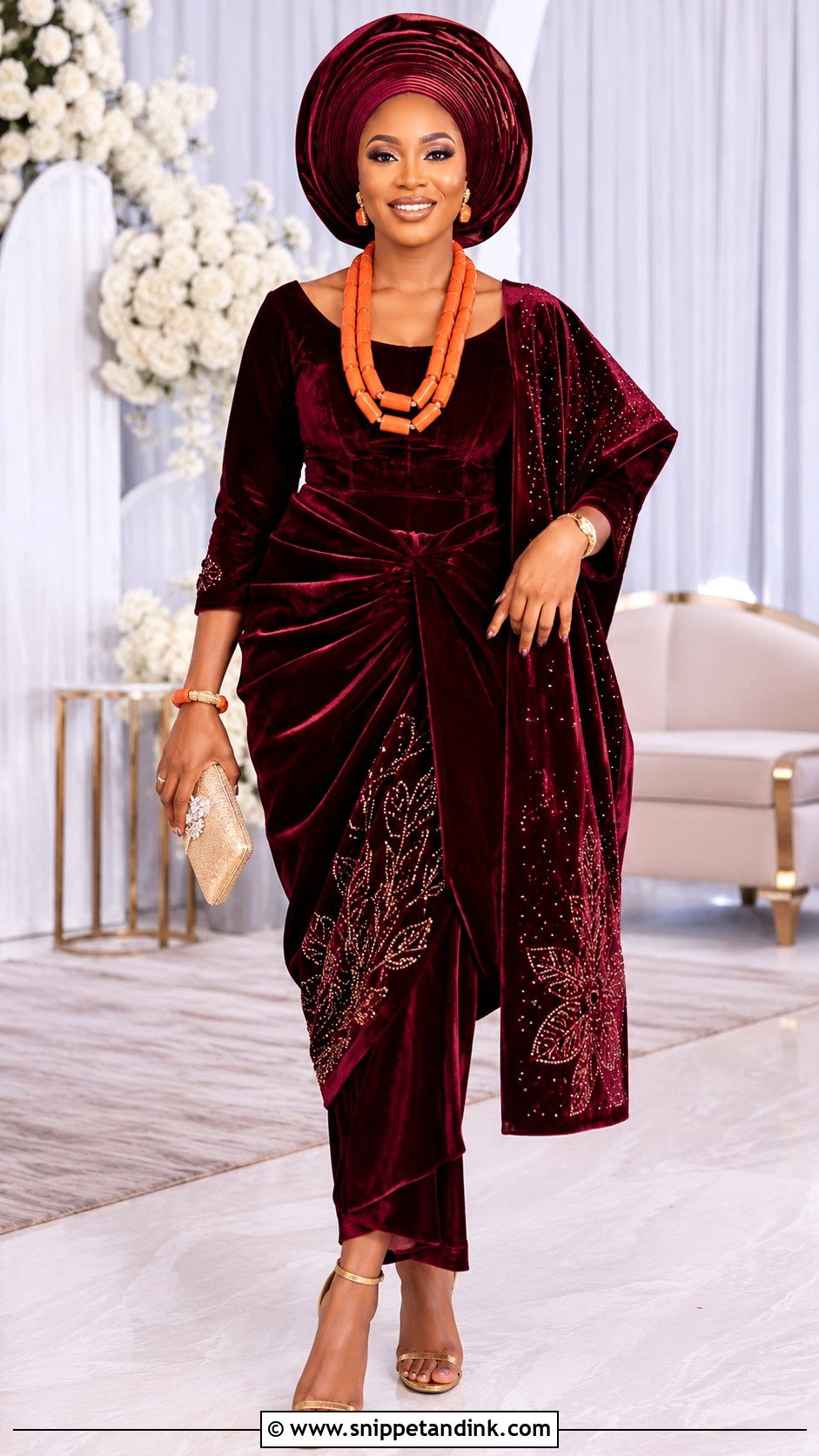
Velvet holds colour richly at night, but it’s warm, so I only suggest it for evening events or cooler months. A velvet wrapper set, fitted gown or kaftan-style dress works with gele and beads. Burgundy and forest green look especially deep in this fabric. Velvet already has a lot of texture, so simple jewellery is usually better than too many stones. Ask for a breathable lining and remember that velvet marks easily when crushed, so don’t sit on it for hours in one position.
22. Traditional Wedding Couple Matching Outfit
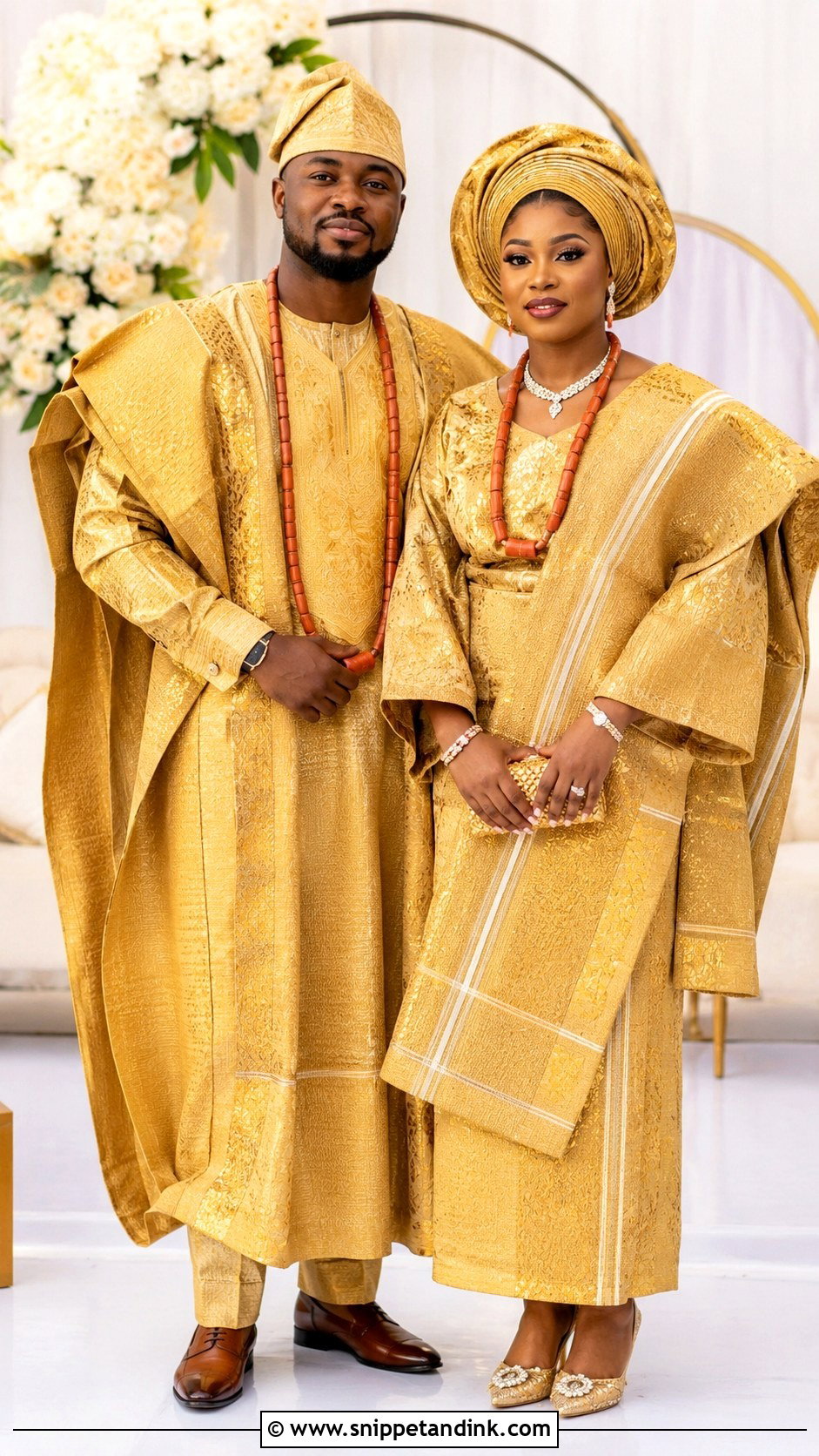
Couple matching works best when it’s coordinated rather than identical. The two can share aso oke, lace, George or Ankara, or simply share colours from their two cultures. The bride might wear iro and buba, a wrapper set or a gown; the groom might wear agbada, isi agu or a kaftan. Often the groom’s cap, beads or embroidery echoes her fabric. Lay both outfits side by side in daylight before the day, since two fabrics dyed the same colour can still clash.
23. Traditional Wedding Outfit With Gele
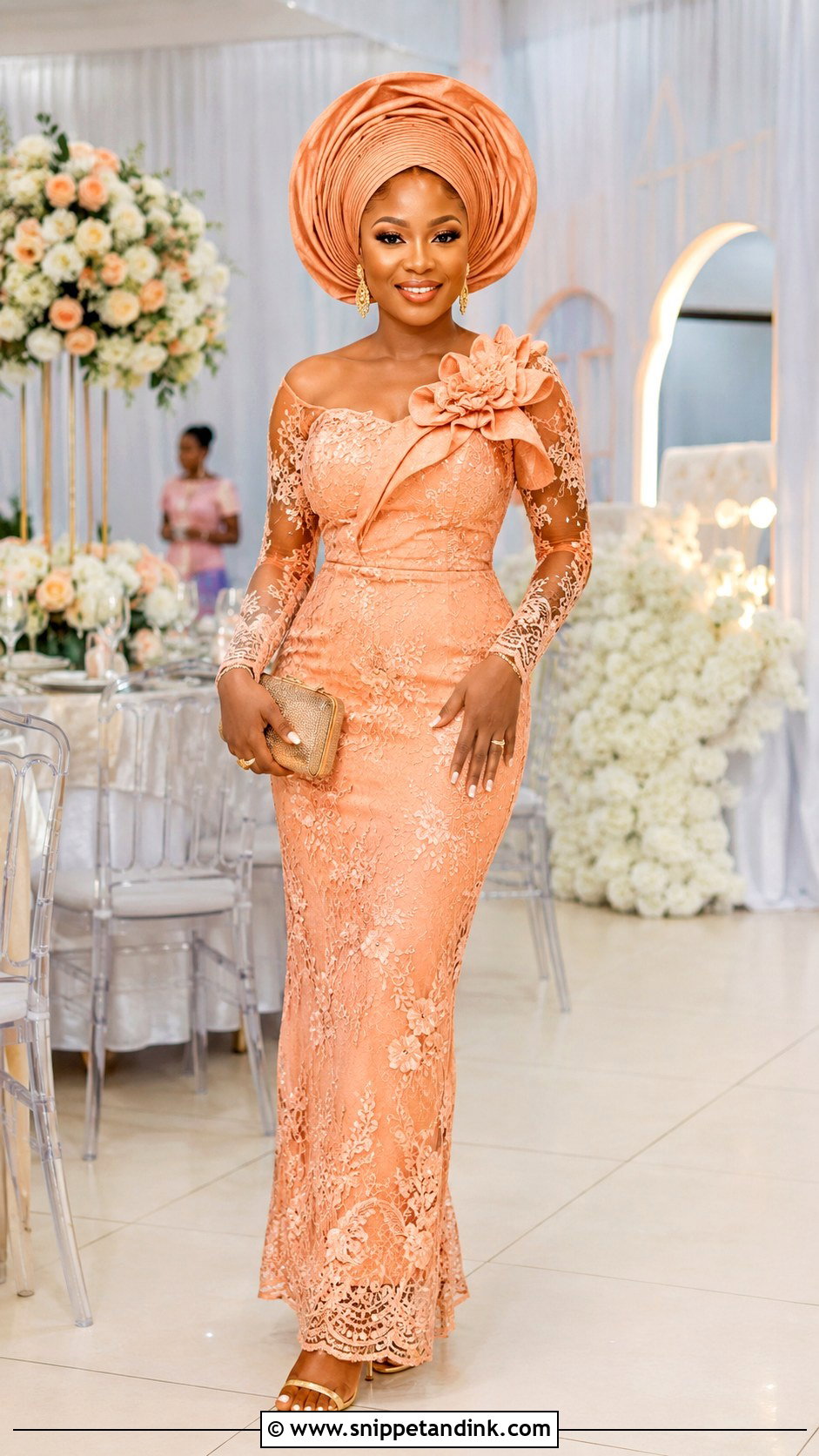
A gele changes the whole outfit. Pair it with a lace gown, iro and buba, an Ankara dress or an aso oke two-piece. Match its scale to your role: a large structured gele for family, bridesmaids or aso ebi groups, a softer wrap for a general guest. Metallic gold or champagne pairs with almost anything. A good gele adds height and frames the face, but only if it’s tied over a flat base and pinned well.
24. Traditional Wedding Outfit Without Gele
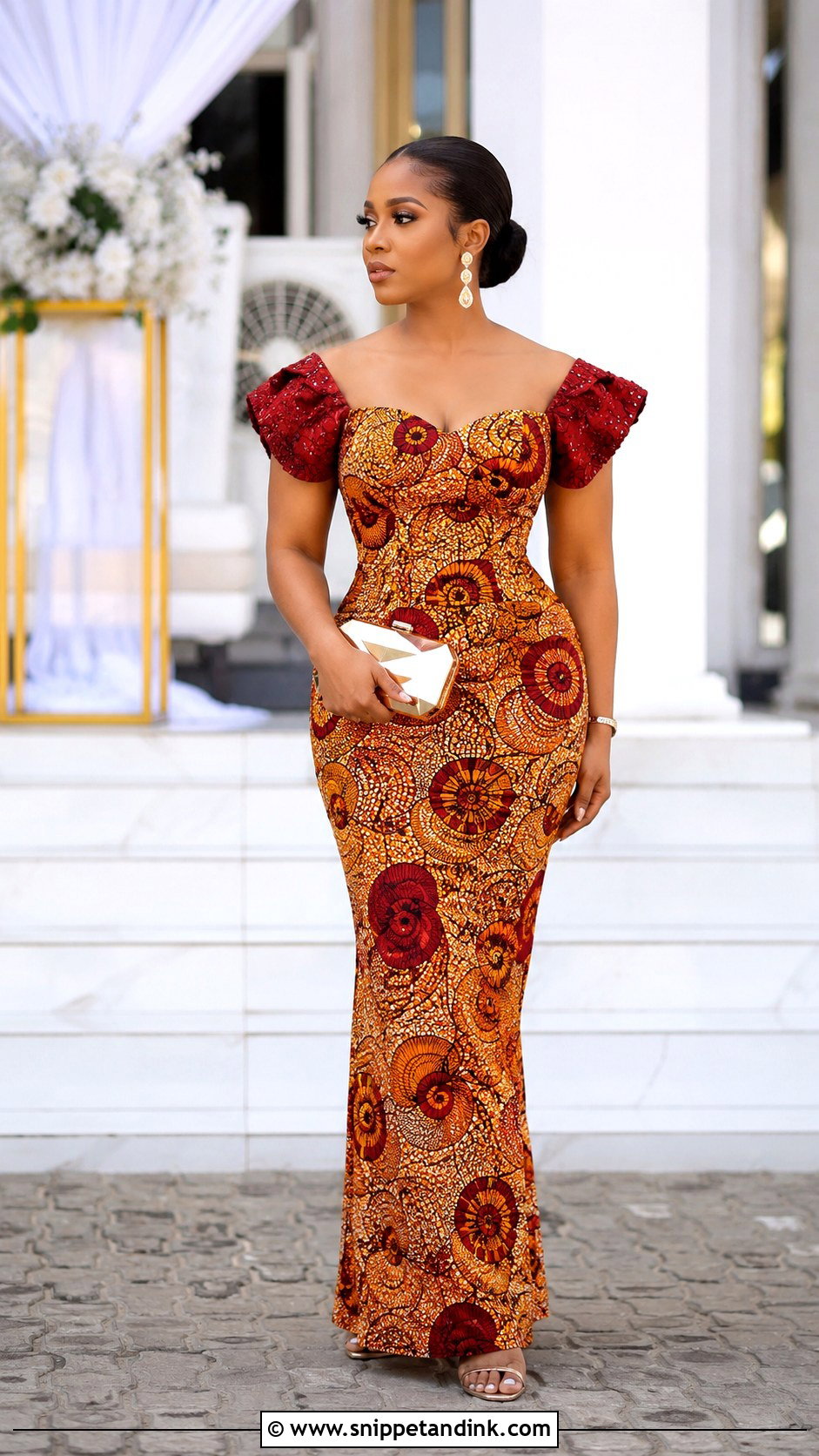
Skipping the gele is fine when the clothing and accessories carry the formality. A lace gown, Ankara maxi, jumpsuit or two-piece with styled hair and statement earrings looks polished. It’s a good option for long celebrations or a modern bridesmaid brief. I’d swap the gele’s height for a sleek bun or a neat low ponytail, and spend the saved budget on better tailoring and quality fabric.
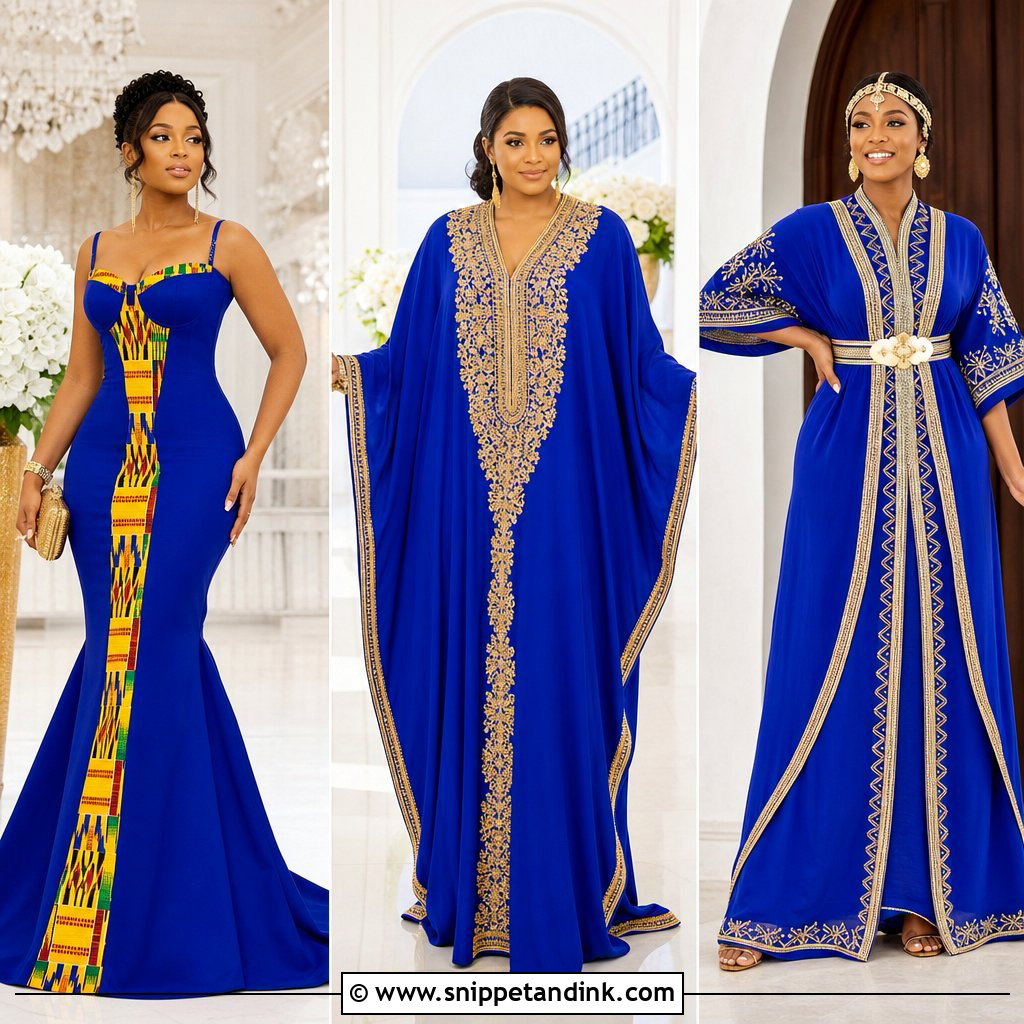

25. Traditional Wedding Ankara Couple Outfit
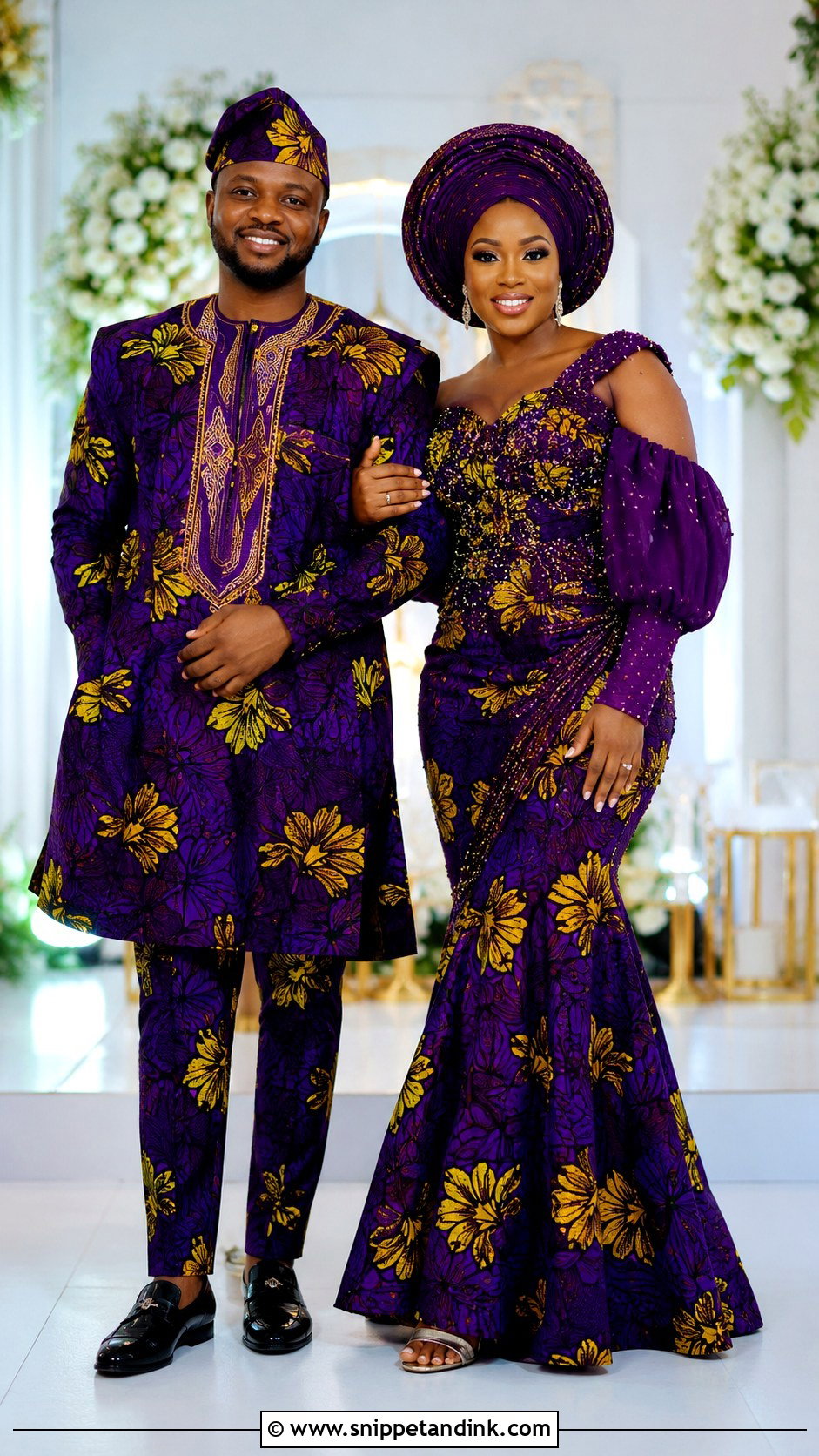
Ankara is the easiest fabric for couples to coordinate. The bride might wear a gown, wrapper set or skirt and blouse; the groom a matching top with trousers, an agbada-inspired layer or a kaftan. You can share one print in different amounts, with the bride in full Ankara and the groom using it only on his top, cap or a pocket. Beads, a gele and formal shoes lift the cotton to wedding level. I’d save this pairing for introductions and relaxed traditional ceremonies.
Who Ties the Gele, and How It Lasts Through the Dancing
A dramatic gele is a skilled job. Most brides and mothers book a gele specialist to come to the house on the morning, and that slot should be confirmed as early as the makeup booking. The order I follow is hair flat first, then makeup, then the blouse, then the gele, so nothing gets pulled over the head once it’s tied.
- Wear the hair in flat cornrows or a tight low bun, or use a wig cap, so the gele has a stable base.
- Ask for the gele to be pinned through to the base at the back and sides, not just tucked.
- If you’re tying it yourself, consider an auto gele, which is pre-shaped and slips on like a hat.
- Pack a few spare pins and a small mirror in your clutch for re-tucking after dancing.
Coral beads and aso oke after the party
Coral is porous, so keep perfume, hairspray and lotion away from the beads and put them on last. Wipe them with a soft dry cloth and store each strand separately so they don’t scratch. Aso oke and George should be aired, then dry cleaned if needed, and folded with tissue rather than hung, since the weight of heavy cloth stretches the shoulders of a hanger-stored blouse.
Plan the Whole Outfit From Gele to Shoe
Every outfit here works only when the pieces were planned together. Yoruba aso oke, Igbo George, Edo coral, Hausa-Fulani lace, Ankara, velvet and modern aso ebi all suit different roles and different ceremonies. Before you buy, decide the headwrap, beads, shoes and clutch alongside the fabric, then book the tailor and the gele tier early. For more ideas by region, look through these Nigeria Traditional Wedding Outfit Ideas. Nigerian weddings are long and full of dancing, so comfort decides how good you look by evening.
You'll Like These Ideas:



Leave a Reply