
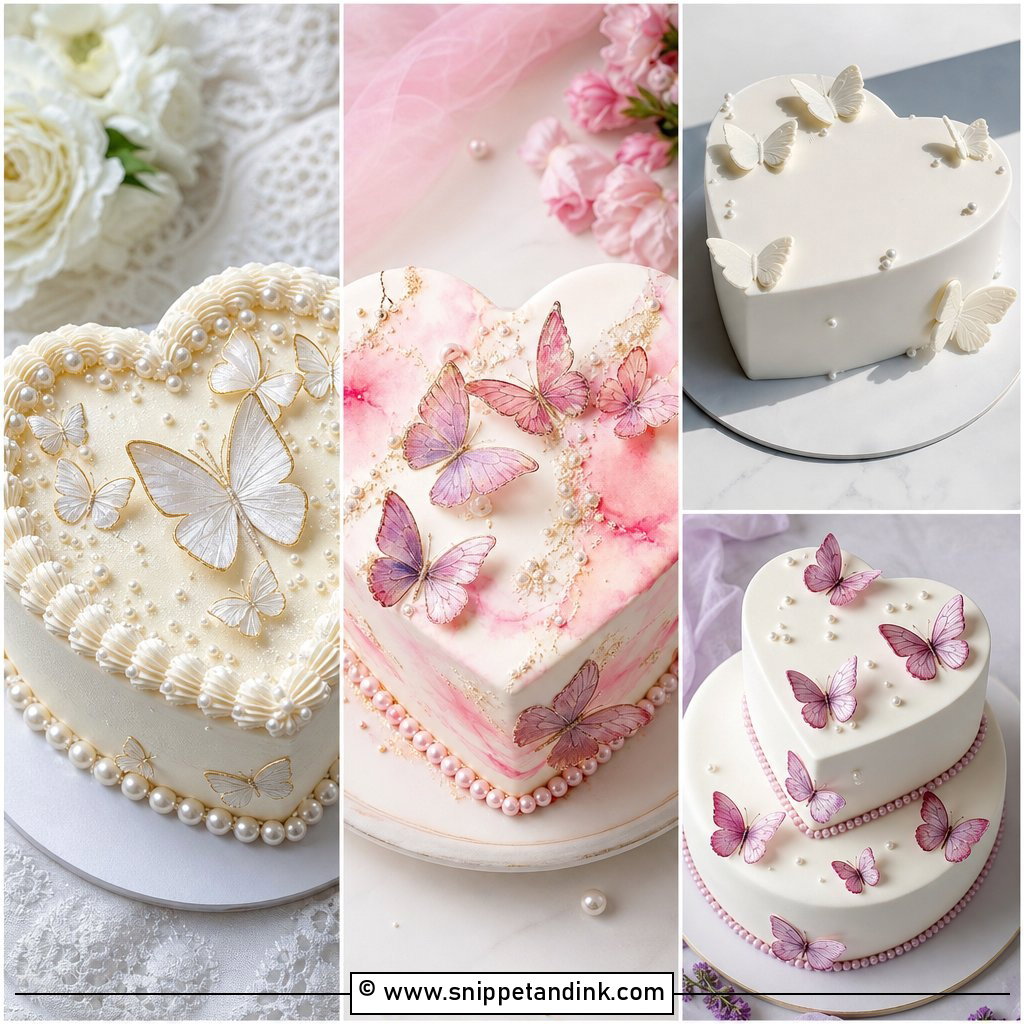
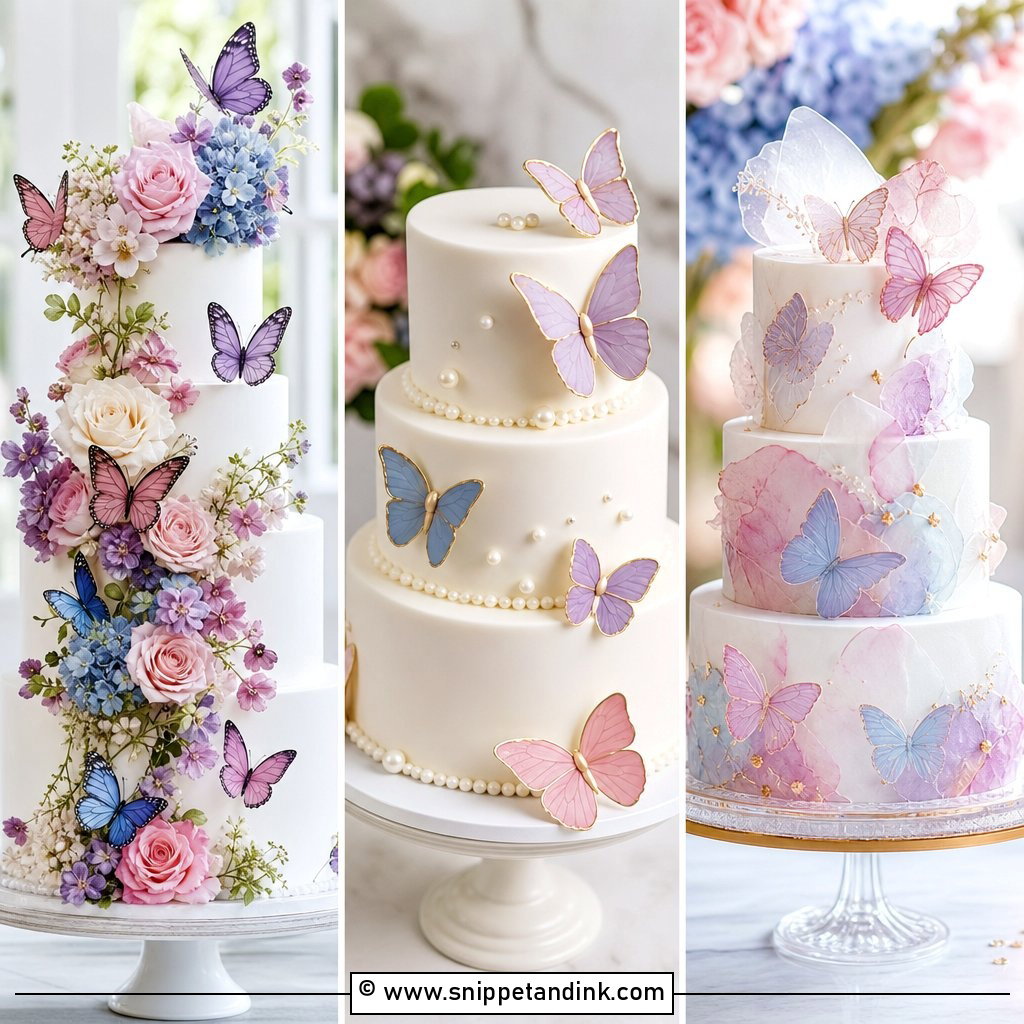
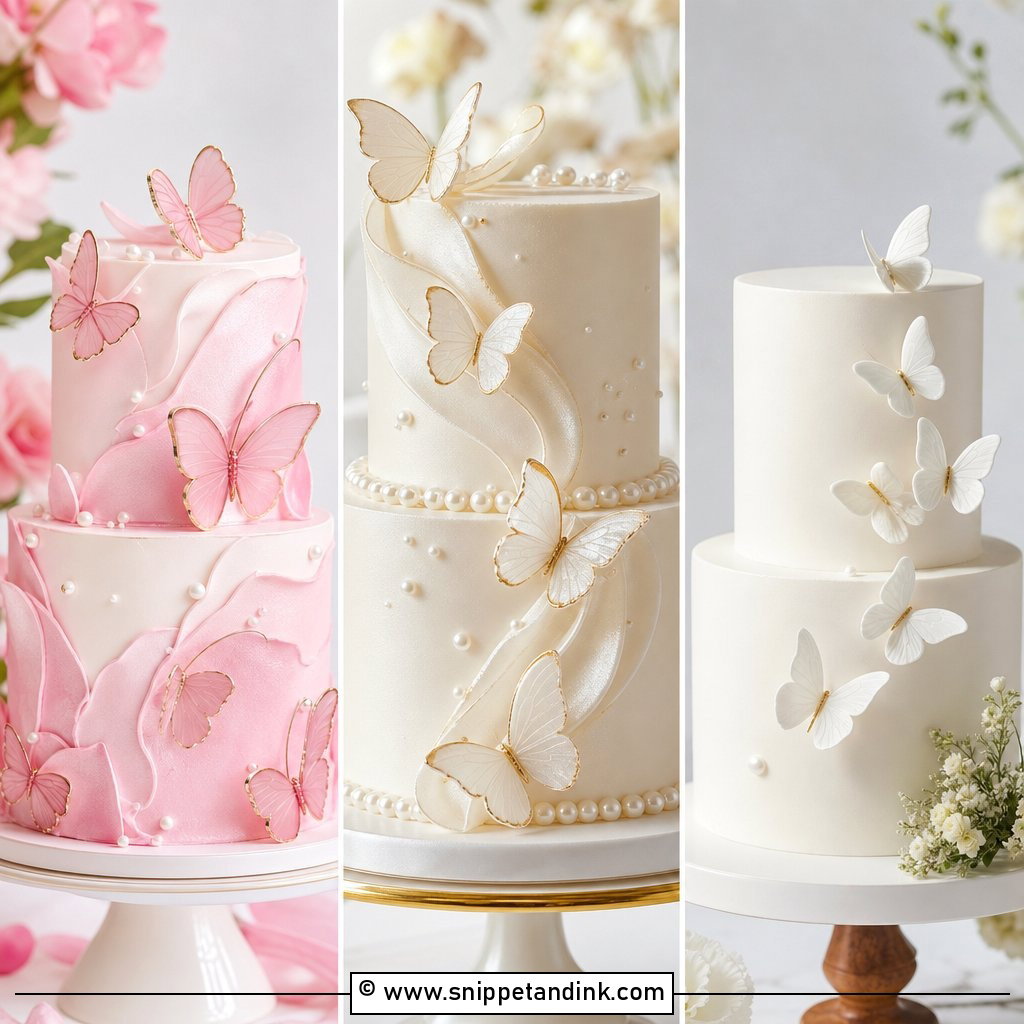
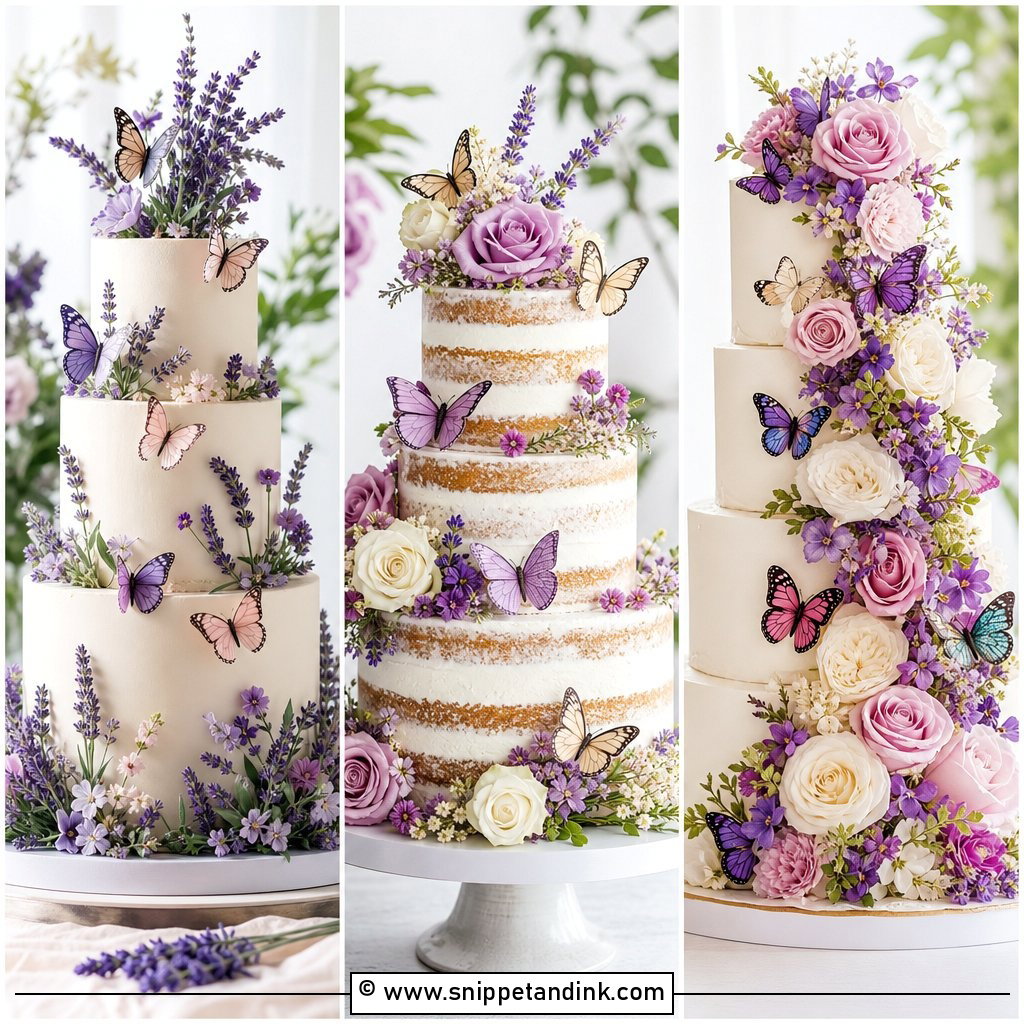
Butterflies are one of the few cake themes I can push in almost any direction. A few white wings on a plain tier read as quiet and modern, while a trail of painted ones can carry a garden or vintage mood. What makes them work on a tiered cake is movement: a butterfly placed on one tier leads the eye up to the next, which flowers alone rarely do. You’ll see edible wafer butterflies in most of these designs, along with sugar, chocolate and painted versions, and each material behaves differently once it meets frosting and a warm room. Below are twenty directions I’d happily pipe and assemble, with the practical notes I’d give you at a tasting.
What Your Butterflies Are Made Of Changes Everything
Before we talk colour, decide on the material. Two cakes can look identical in a photo and behave completely differently on a warm afternoon, so this is the first question I ask at a consultation.
Wafer paper
Thin starch sheets that can be printed, painted or punched. They’re the lightest option and give that see-through wing look. The weakness is moisture: humidity makes them curl or go limp, and they soften if they sit flat against wet buttercream. I attach them with a dot of melted chocolate or royal icing and set them on as late as I can.
Gelatin and isomalt
Both give glassy, translucent wings that catch light. Isomalt in particular turns sticky in humidity, so I’d avoid it for a tent or a summer garden unless the cake stays indoors with air conditioning.
Chocolate, fondant and gum paste
Piped chocolate butterflies are sturdy and taste good, though they soften in heat. Gum paste dries hard and holds its shape for weeks, which makes it the safest choice for a cake that has to sit out for hours. It’s also heavier, so large gum paste pieces need support on soft frosting.
1. White Butterfly Wedding Cake
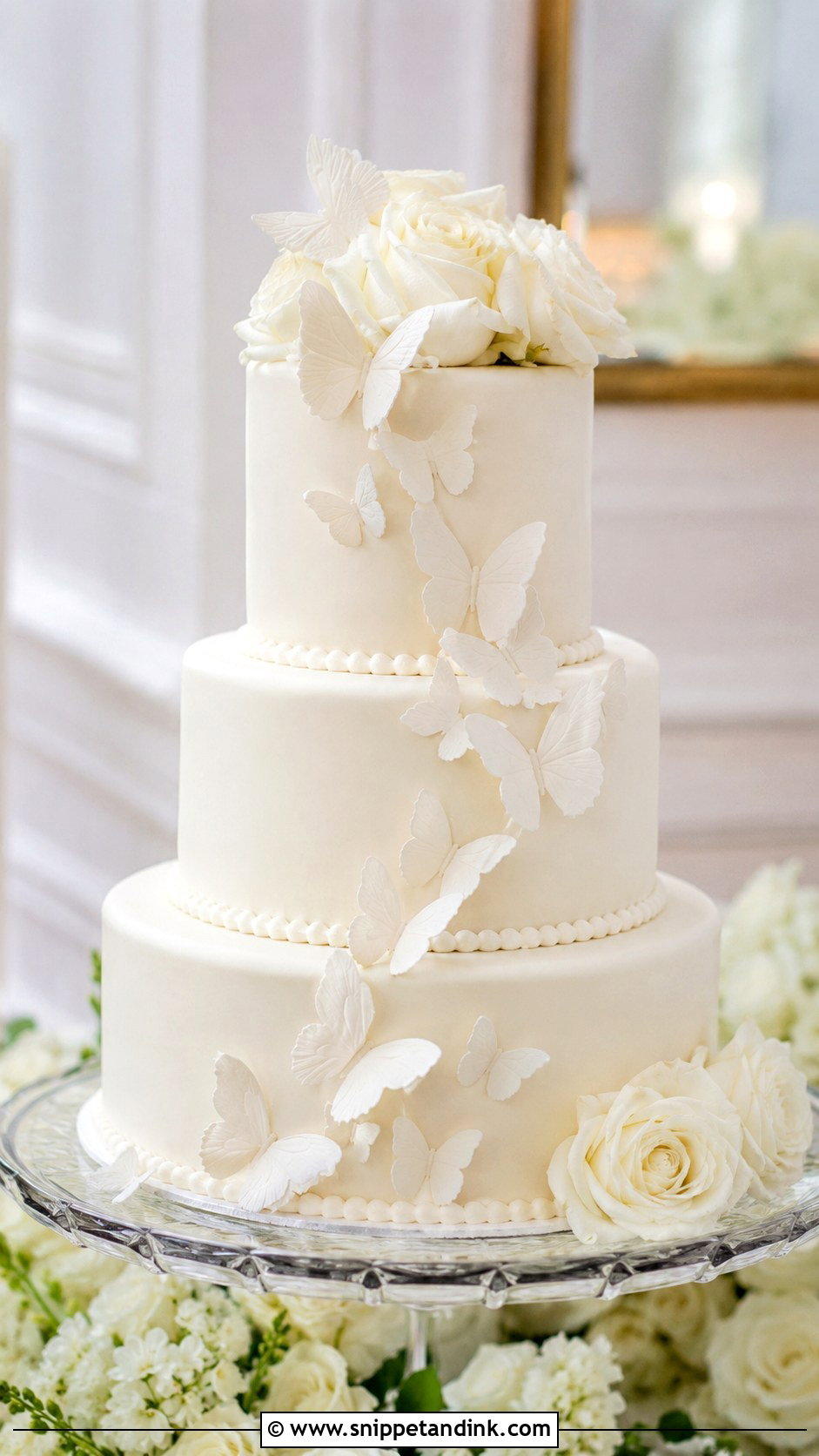
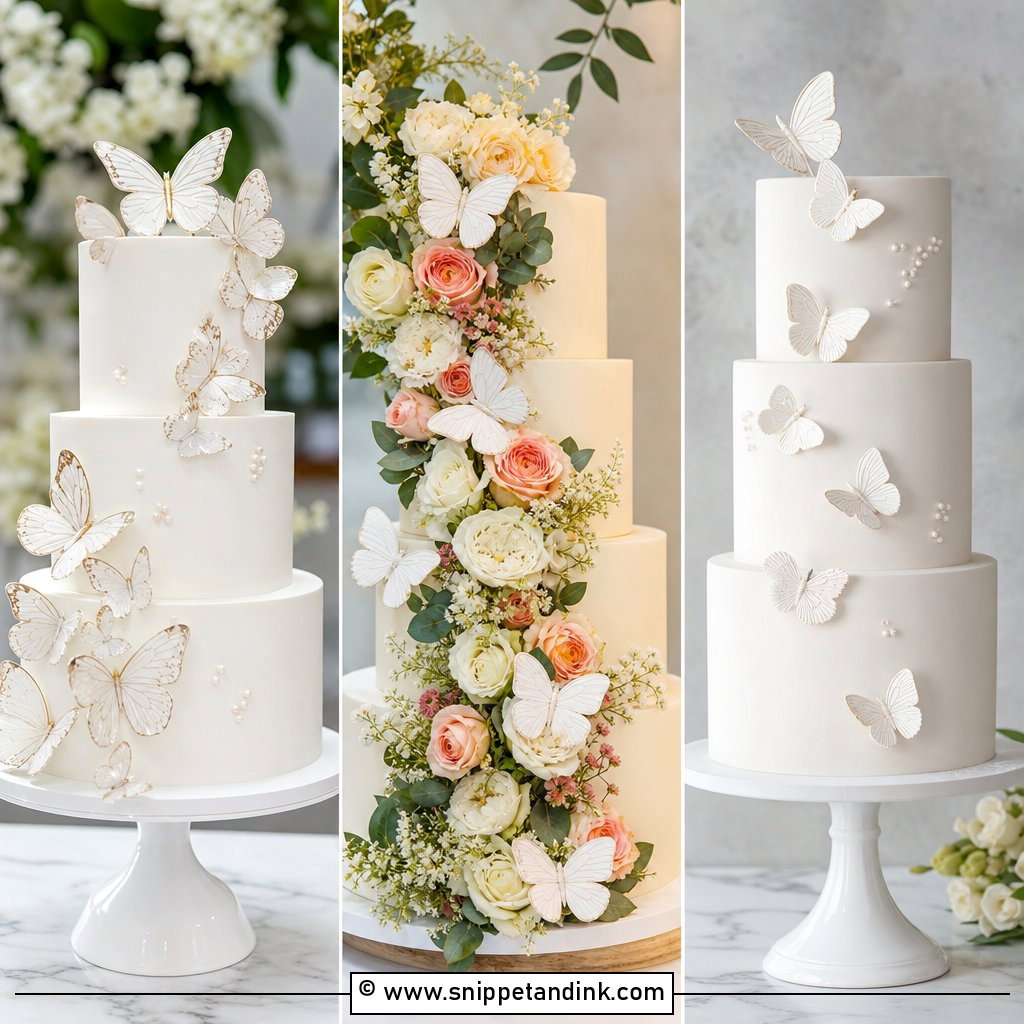
A white butterfly wedding cake is the design I’d recommend to anyone unsure about the theme, because it never fights the flowers or the linens. Two or three smooth tiers in buttercream or fondant, then white or ivory butterflies set in a light upward cascade rather than spaced like polka dots. The hard part is shade matching: pure white wafer paper next to ivory buttercream makes the frosting look yellow, so I tint one to match the other before anything goes on. Pearl piping and a satin ribbon at each tier base finish it. Baby’s breath shows up in a lot of these photos, but it isn’t food safe, so if you want it, the stems have to be wrapped and kept off the cake surface.
2. Blue Butterfly Wedding Cake
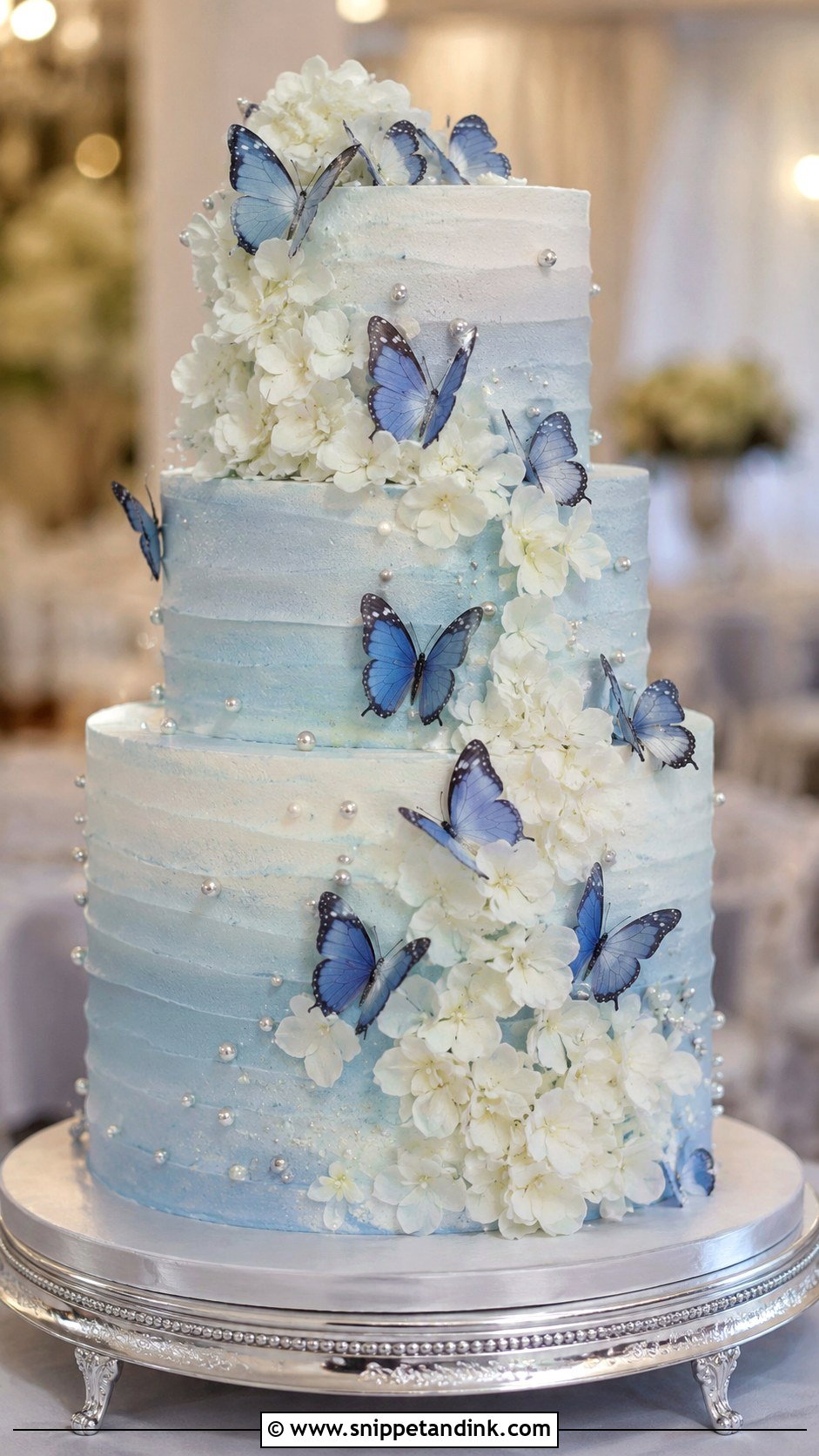
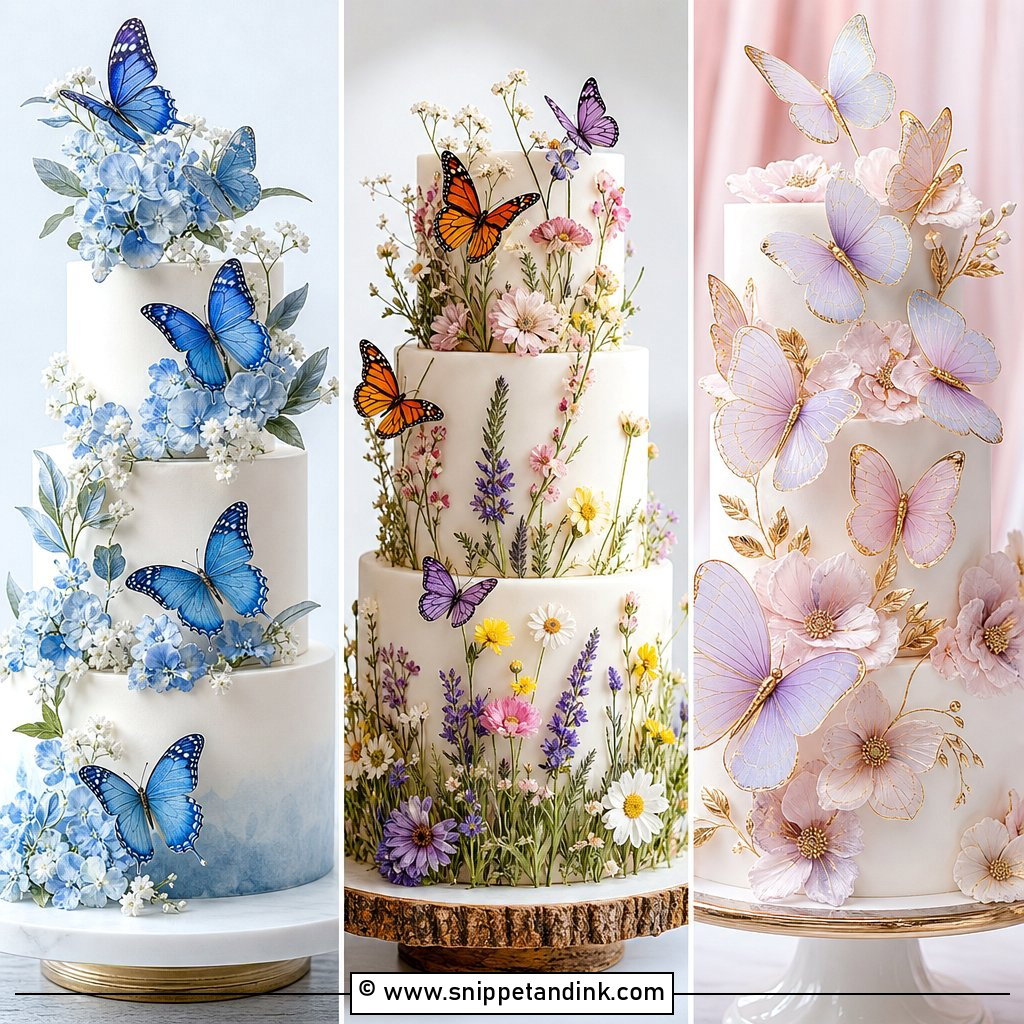
Blue is the colour I’m most careful with in buttercream. Butter is naturally yellow, and a light blue tint on top of it can drift toward mint, so for a pale sky shade I start from a very white base or use a touch of violet to cancel the yellow. Once the base is right, blue wafer paper butterflies in mixed sizes look like they’re floating, especially over a few soft palette knife strokes that read as clouds. Silver pearls and white sugar blossoms keep it polished. It suits spring and coastal weddings, and it’s an easy way to carry your something blue onto the dessert table.
3. Purple Butterfly Wedding Cake
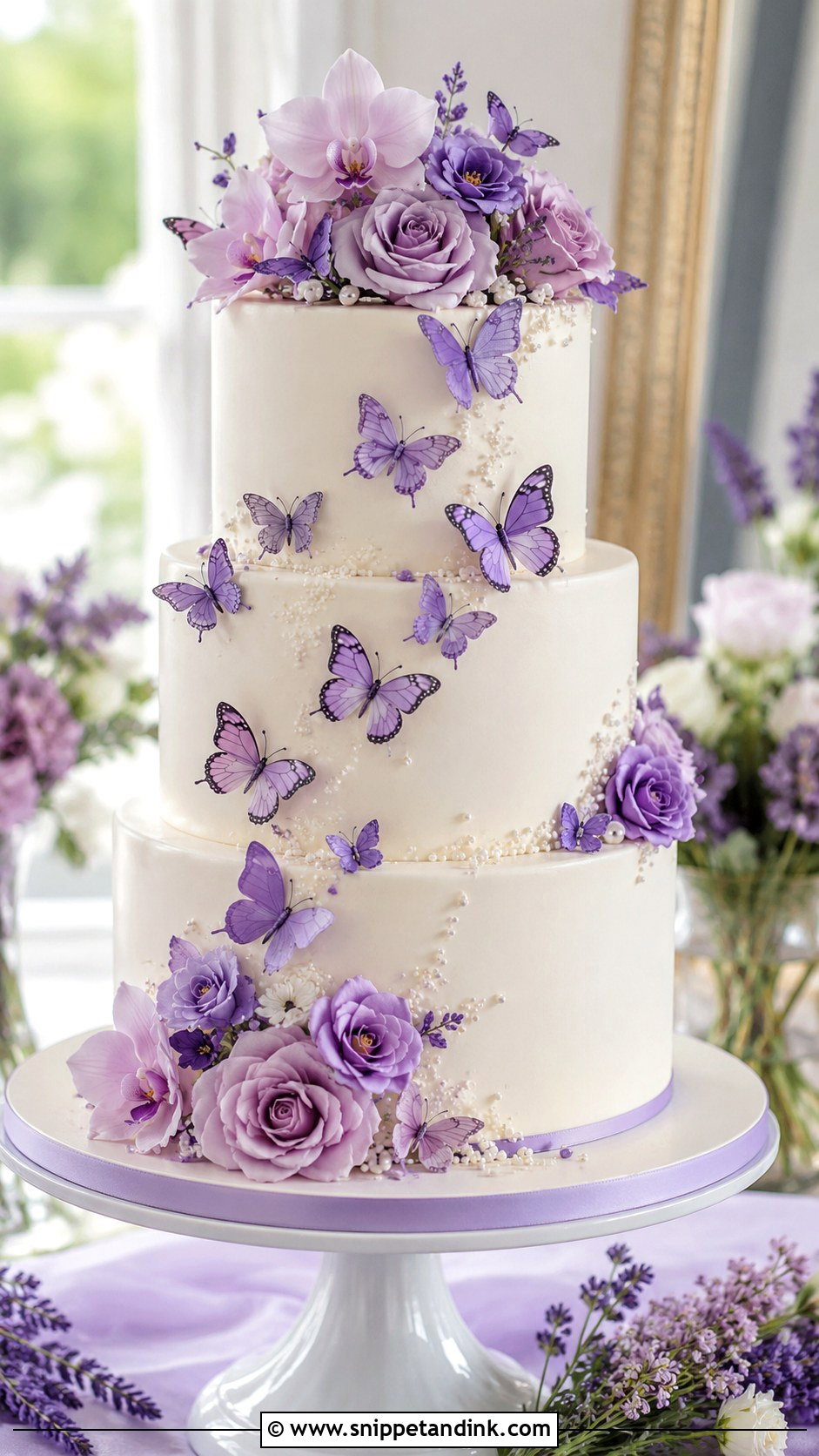
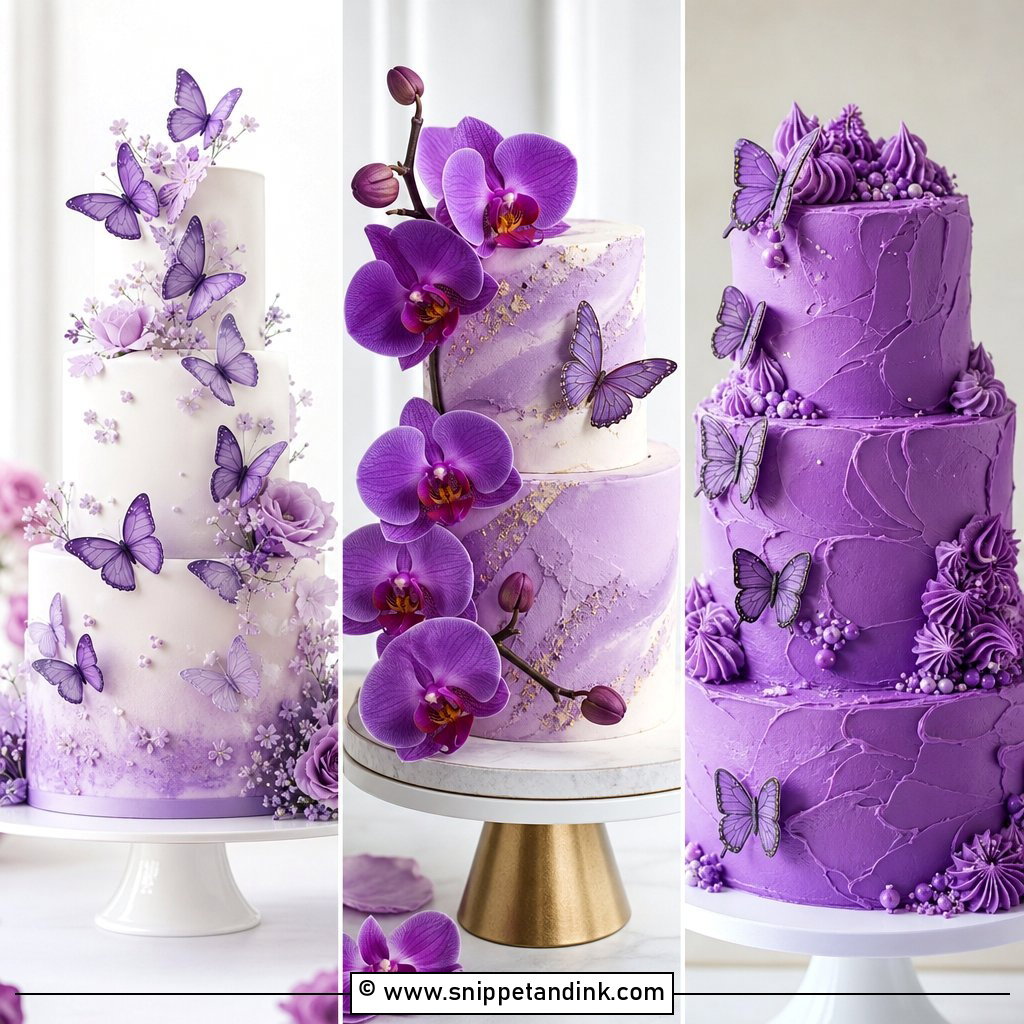
A purple butterfly wedding cake can sit anywhere from barely-there lilac to deep plum. Here’s the catch I always mention: purple food colouring fades, and it can shift toward blue or grey after hours under strong light or near a window. I keep a purple cake out of direct sun and mix the shade a little deeper than the target. An ivory cake with lavender butterflies and a few fresh blooms is the gentle version; ombré tiers with darker butterflies and gold details are the dramatic one. Run the butterflies on a diagonal across the tiers so they look like they’re travelling, not parked.
4. Pink Butterfly Wedding Cake
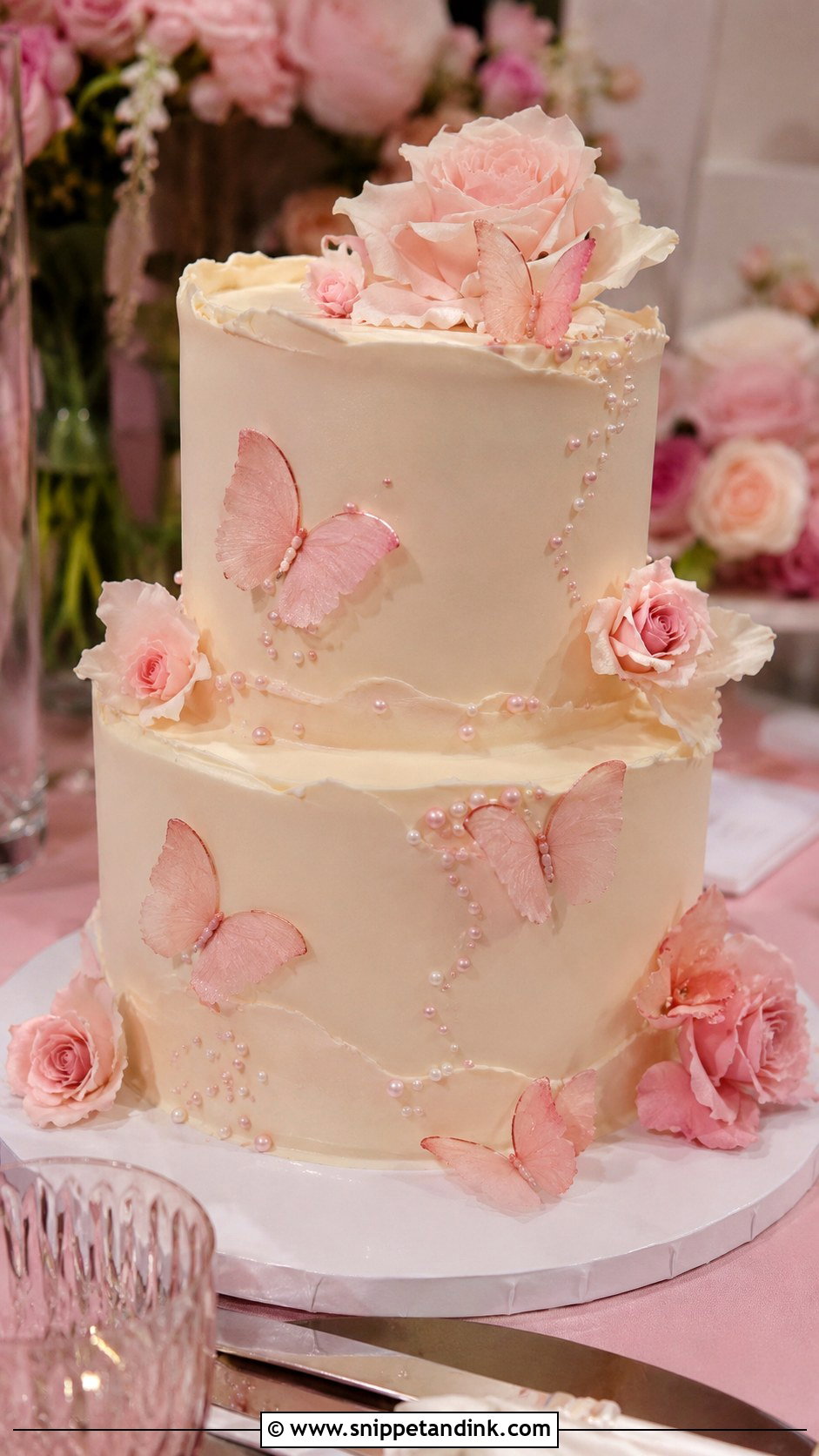
Pink goes wrong fast if it lands on bubblegum, so I mix blush, dusty rose or a peachy pink and test a swatch against your flowers before committing. An ivory base keeps the cake bridal while the pink butterflies bring the warmth. Buttercream ruffles are my favourite partner here, because the butterflies can tuck into the folds and look settled rather than stuck on. Sugar roses or a thin pink drip work too, but pick one, not both. It sits most comfortably where the florals already lean pink.
5. Gold Butterfly Wedding Cake
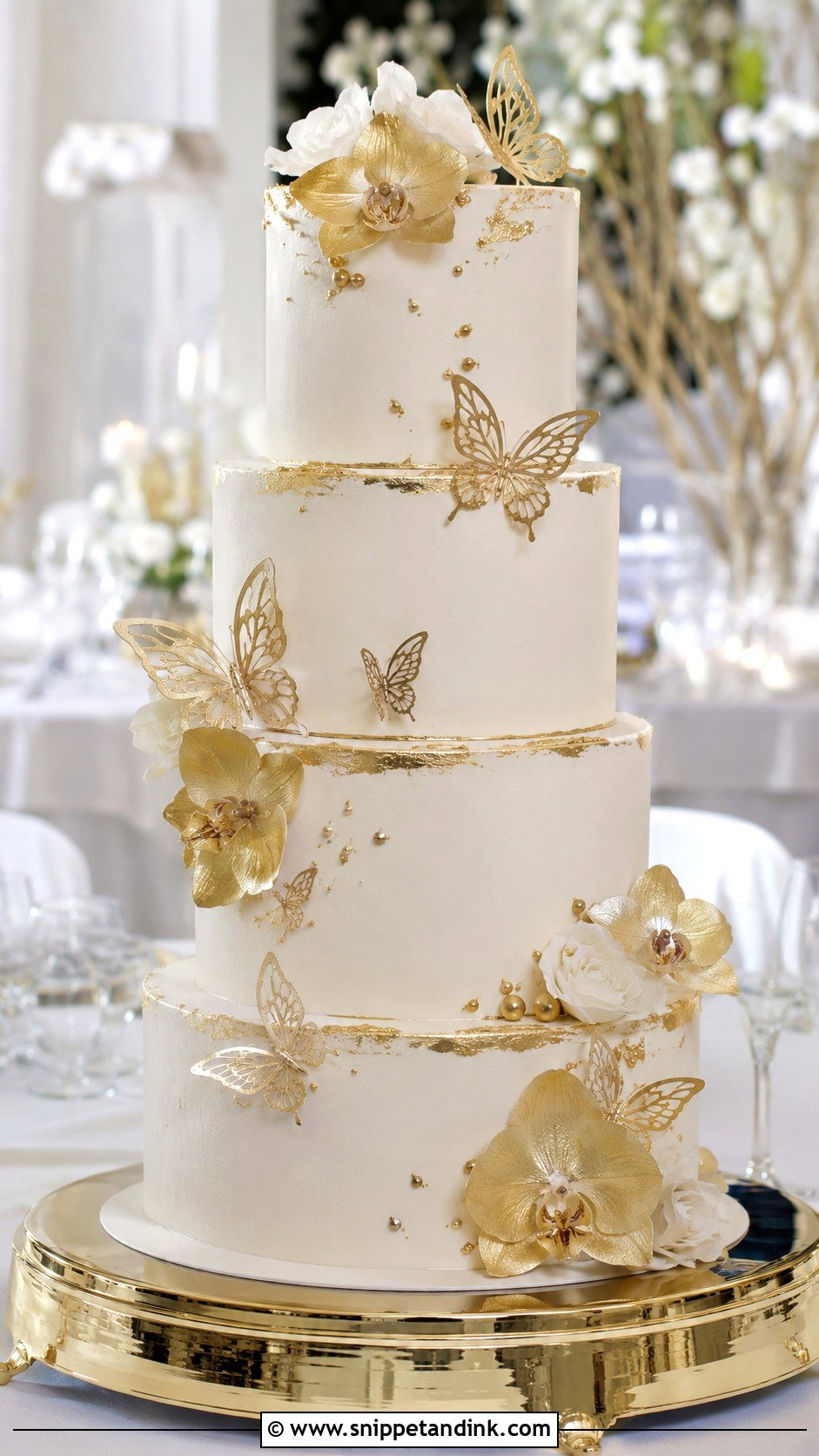
Gold works best as an accent. When a client asks for an all-gold cake I usually talk them down to brushed gold edges, a few gold pearls and metallic butterflies climbing one side, because full coverage looks flat in photos and costs a lot in leaf. Worth knowing: true edible gold leaf is safe to eat, but many shimmering gold dusts are labelled non-toxic and meant for decoration only, so I keep those on toppers and pieces that get removed before cutting. One larger gold butterfly near the top tier with smaller ones below gives it a focal point. Champagne orchids or ivory sugar flowers suit a ballroom or evening reception.
6. Floral Butterfly Wedding Cake
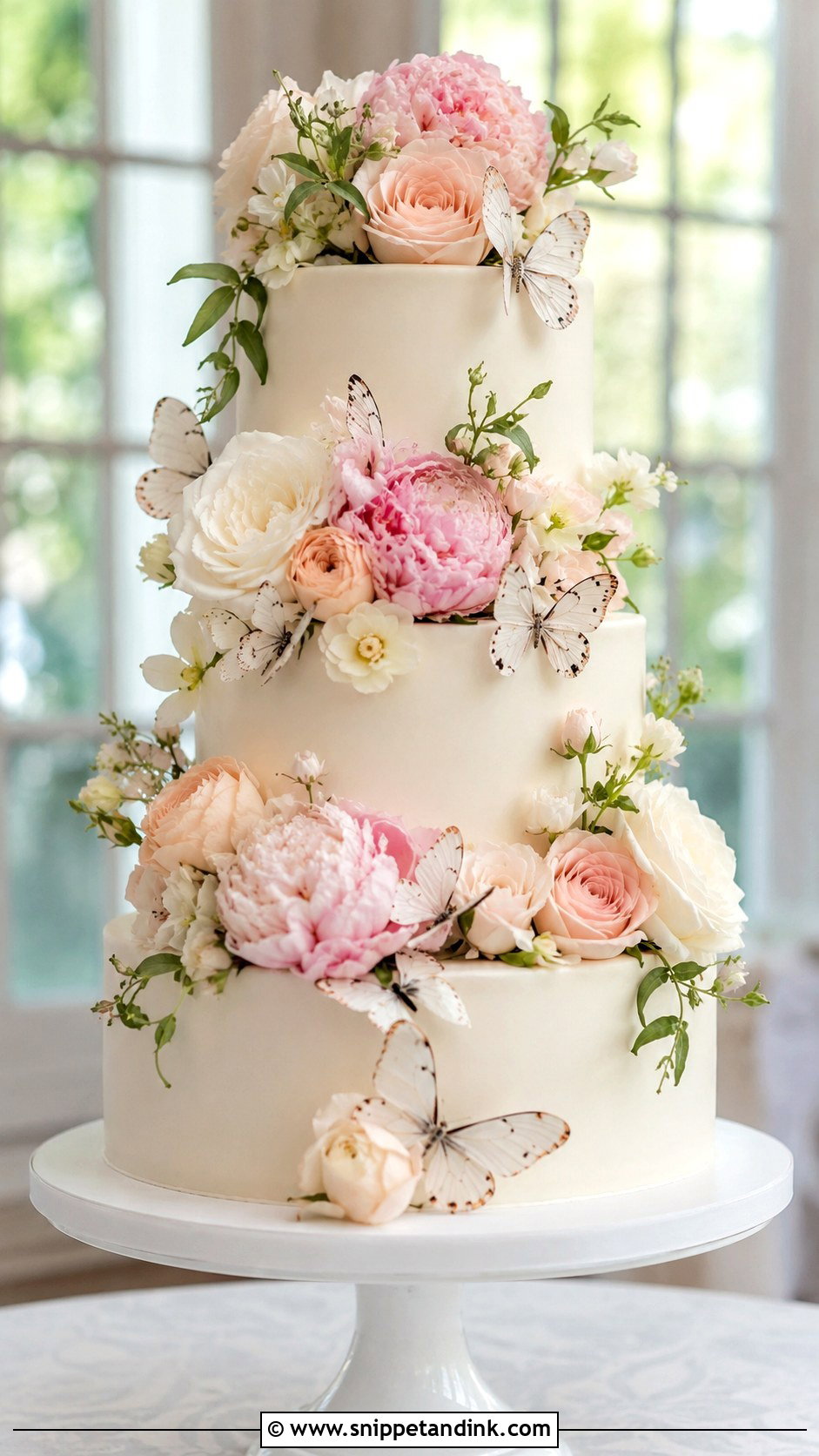
Flowers give butterflies a reason to be there. Without them, the wings can look scattered; with a cluster to land on, the design reads as a scene. I like to repeat blooms from your bouquet, such as roses, peonies or ranunculus, then set butterflies around the edge of each cluster. Fresh flowers need care on a cake, though. Some common wedding stems, hydrangeas and sweet peas among them, shouldn’t touch frosting at all, and florist flowers are often sprayed, so I wrap stems and insert them in food-safe picks or switch to sugar flowers. Balance the colour across the tiers and let the butterflies bridge the gaps.
7. Cascading Butterfly Wedding Cake
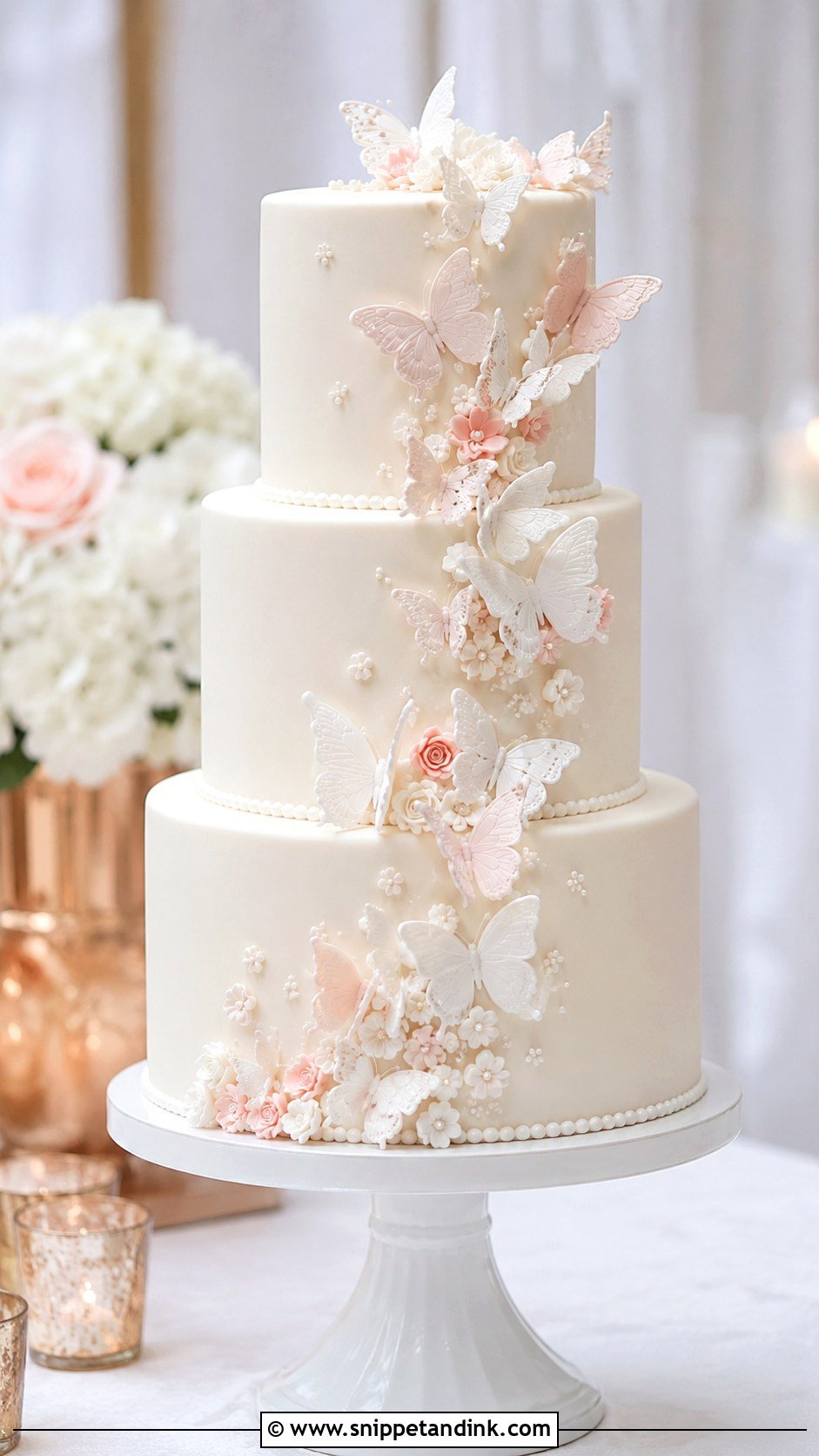
A cascade is where placement skill shows. I start with the largest butterflies at two or three focal points, usually near the top tier edge and partway down, then fill between them with smaller ones so the line drifts down one side the way real butterflies would never fly in a straight row. Because the cake now has a clear front, I always ask where it will sit in the room so the cascade faces the guests and the camera. Minimal flowers and a little pearl shimmer are plenty. Wafer paper is the lightest choice here, since a long trail of heavy sugar pieces can slide on soft buttercream.
8. Garden Butterfly Wedding Cake
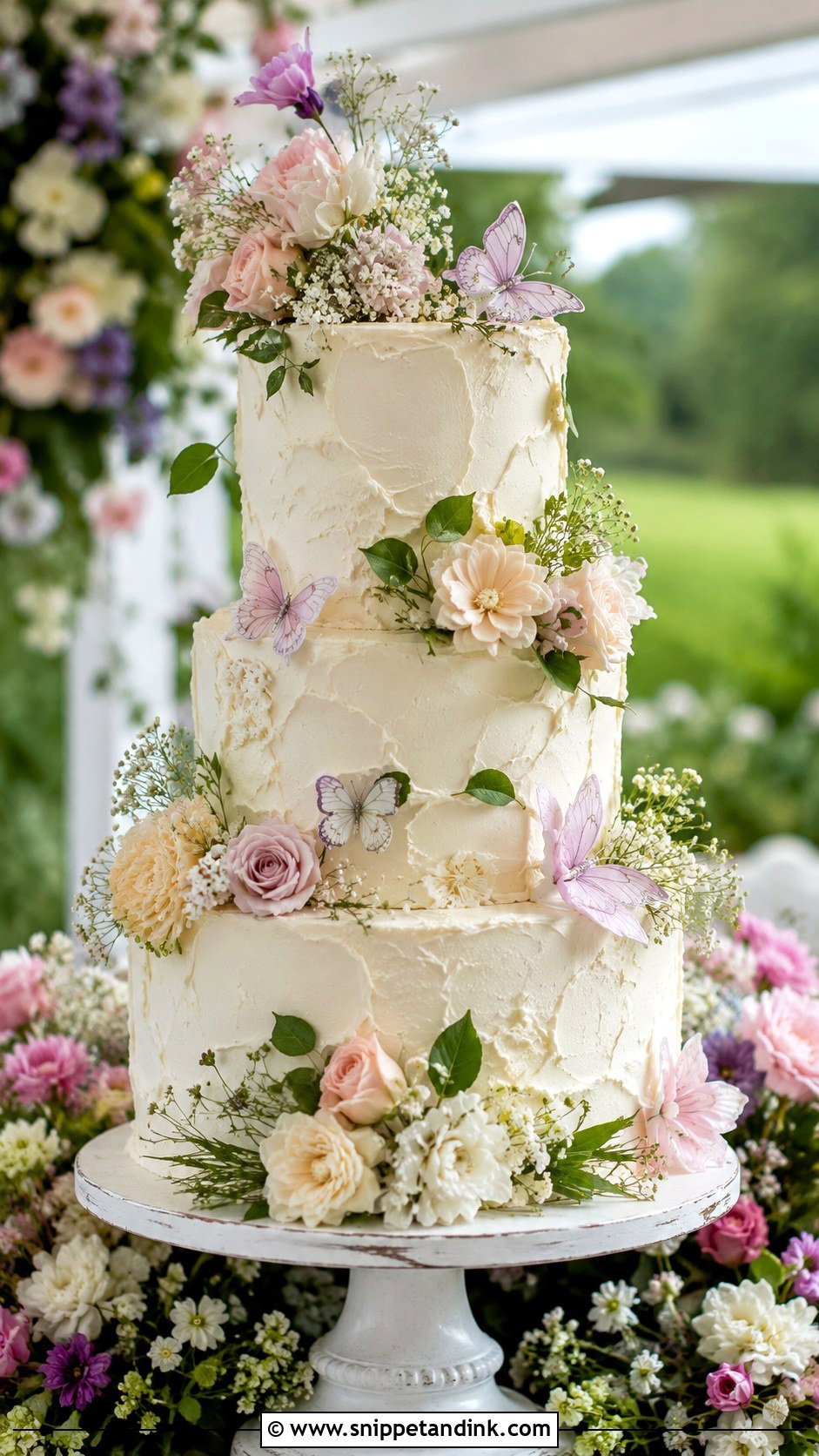
For a garden cake, I’d choose a slightly textured buttercream over a sharp-edged finish. Spatula marks hide small bumps, look handmade, and give butterflies something to grip. Loose floral clusters, a little greenery and butterflies in white, yellow, blush or pale blue keep it fresh. Outdoor venues are the risk: heat softens buttercream and humidity curls wafer paper, so for a greenhouse or backyard reception I plan shade for the cake table and put the butterflies on as late as possible. A few edible flowers tucked around the tiers add colour without weight.
9. Vintage Butterfly Wedding Cake
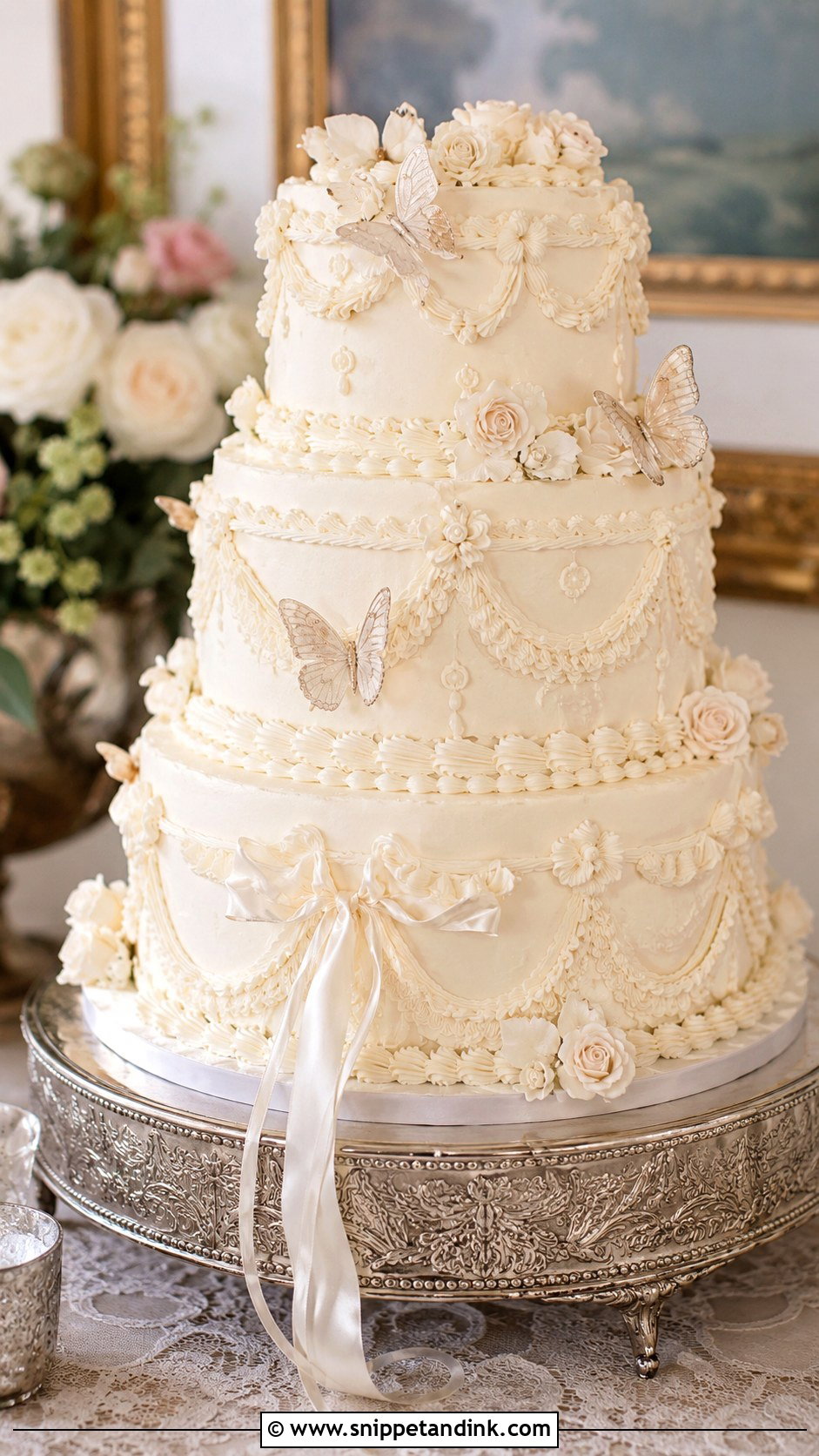
Lambeth piping is slow, layered work, and it’s what gives a vintage cake its depth: overpiped scallops, swags and borders built up in rows. The danger with butterflies is that they disappear into all that texture, so I leave a few smooth panels on the tiers where the wings can sit clearly. White, champagne, blush or pale gold butterflies keep the look soft. Sugar roses, ribbon bows or a cameo detail push the vintage mood further. Allow extra lead time with your baker, since heavy piping on several tiers takes hours, and it suits historic venues and tea-room receptions especially well.
10. Minimalist Butterfly Wedding Cake
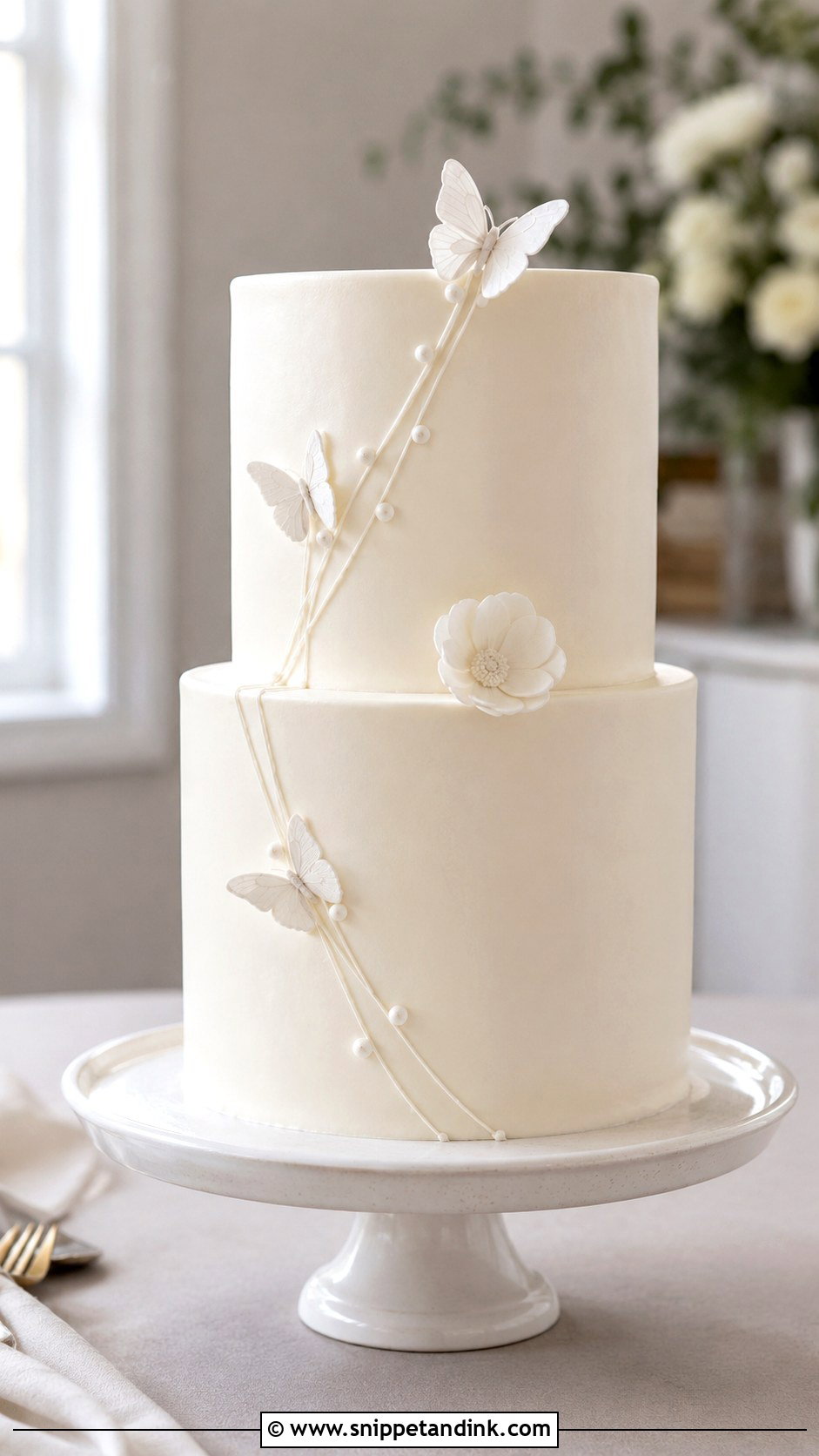
A minimalist butterfly wedding cake lives or dies on the finish. With only a few butterflies, there’s nowhere to hide a wavy edge or air bubbles, so I’d pick a baker whose smooth buttercream or fondant work you’ve seen up close. One or two tiers in white or a pale neutral, then maybe one butterfly near the top edge and two lower down. Thin piping or a satin ribbon is enough detail. It’s the cake I’d suggest for a courthouse wedding or a small modern reception.
11. Watercolor Butterfly Wedding Cake
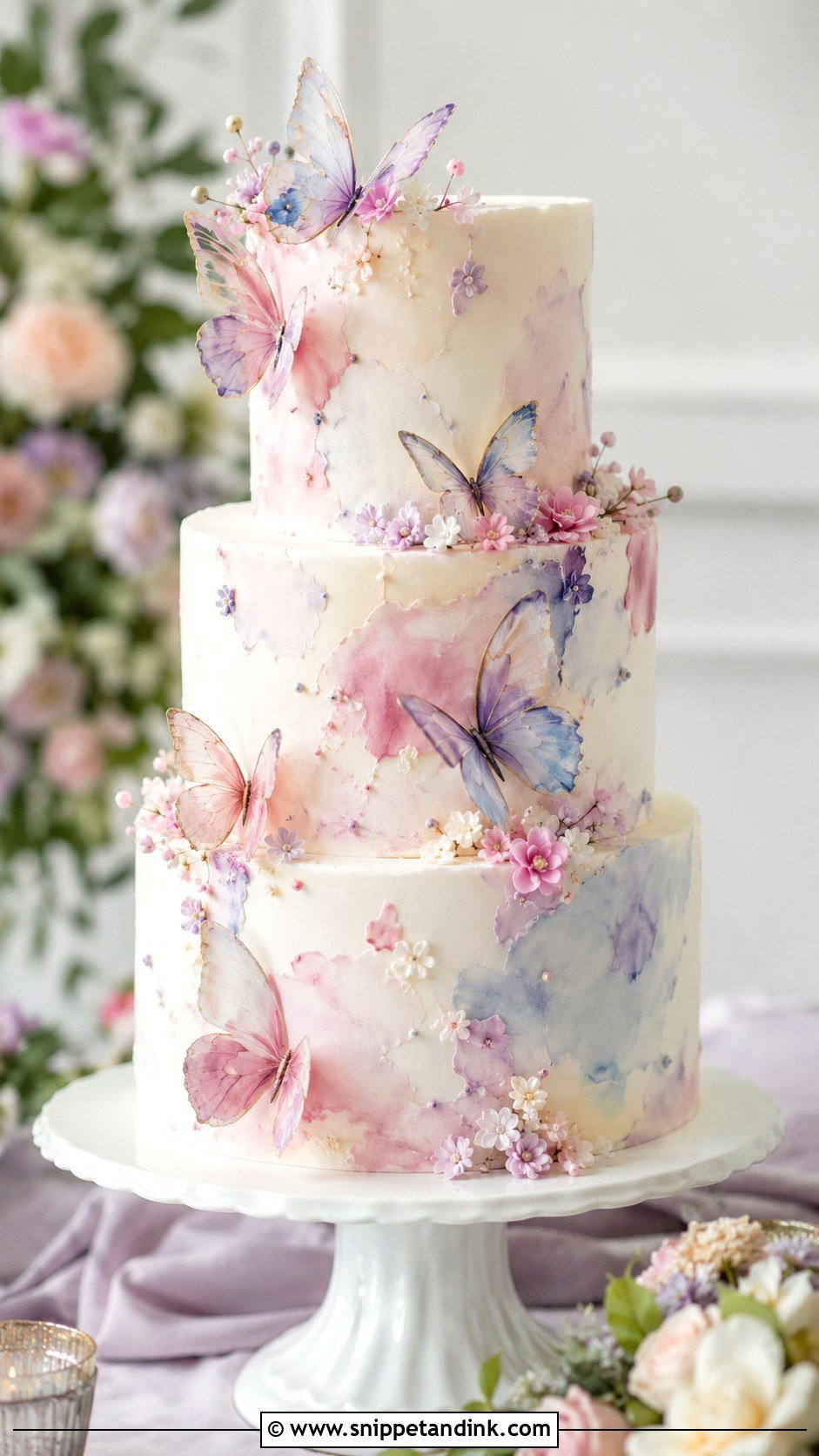
Watercolour effects are painted onto set buttercream or fondant with thinned gel colour, building pale washes in blush, lavender, blue or peach. I match the butterflies to the painted tones so they feel like they came out of the same palette. Wafer paper suits this style best because you can paint it with the same colours and it stays light. Keep the frosting very smooth so the washes blend instead of catching in ridges. Tiny sugar flowers or a few metallic specks finish it, and the result looks custom because, honestly, no two painted cakes ever come out the same.
12. Boho Butterfly Wedding Cake
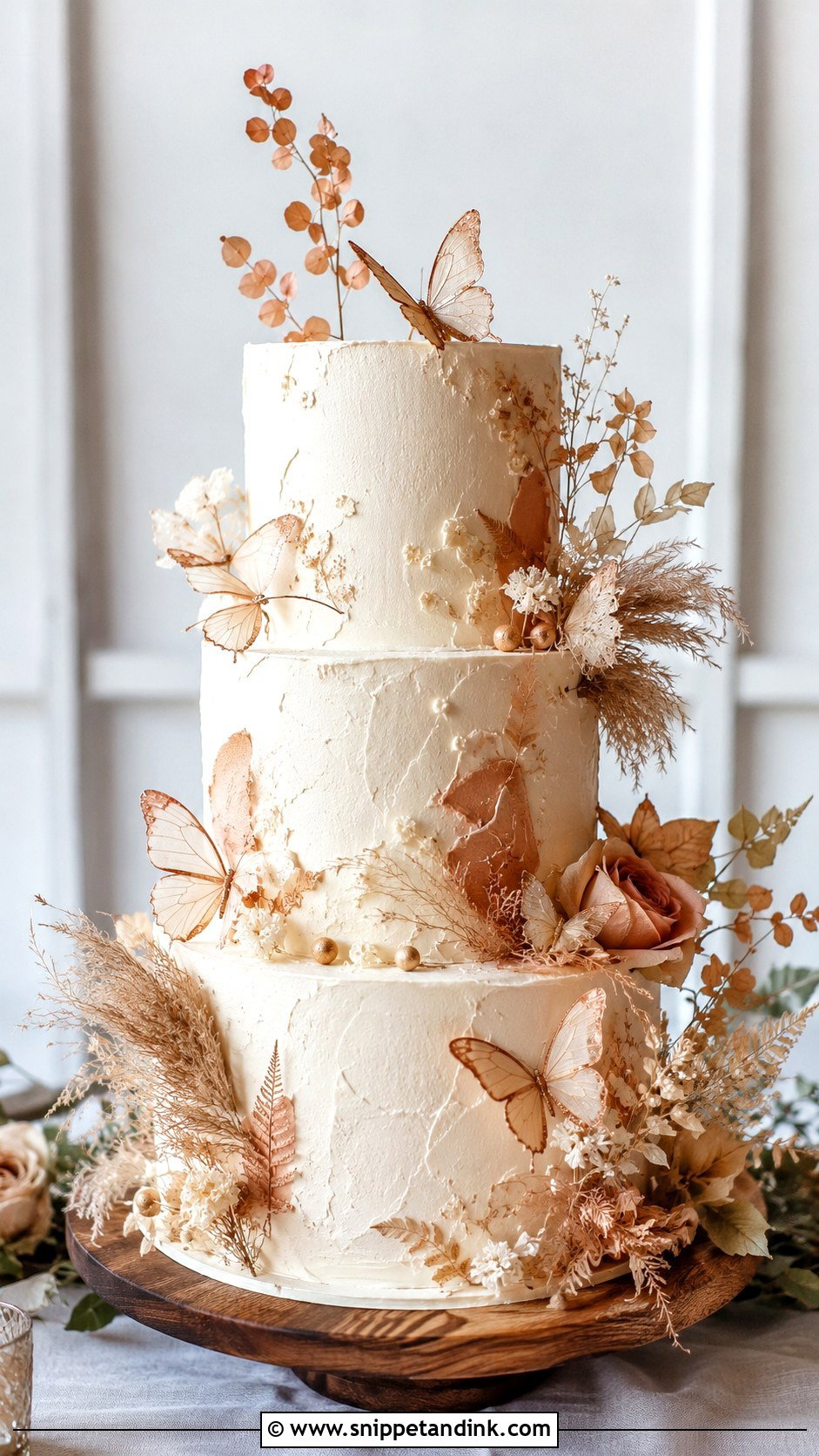
Boho cakes swap bright colour for warm neutrals: ivory, beige, terracotta, soft peach and muted gold. Dried flowers and pampas grass are popular here, but they’re decorative only, so I keep them on picks or a separate base arrangement rather than pressed into the frosting. Textured buttercream and butterflies in cream, tan or soft copper blend with the palette instead of standing out. A wooden stand and candlelight suit it. Barn and desert venues get warm, so plan where the cake sits before the day.
13. Pearl Butterfly Wedding Cake
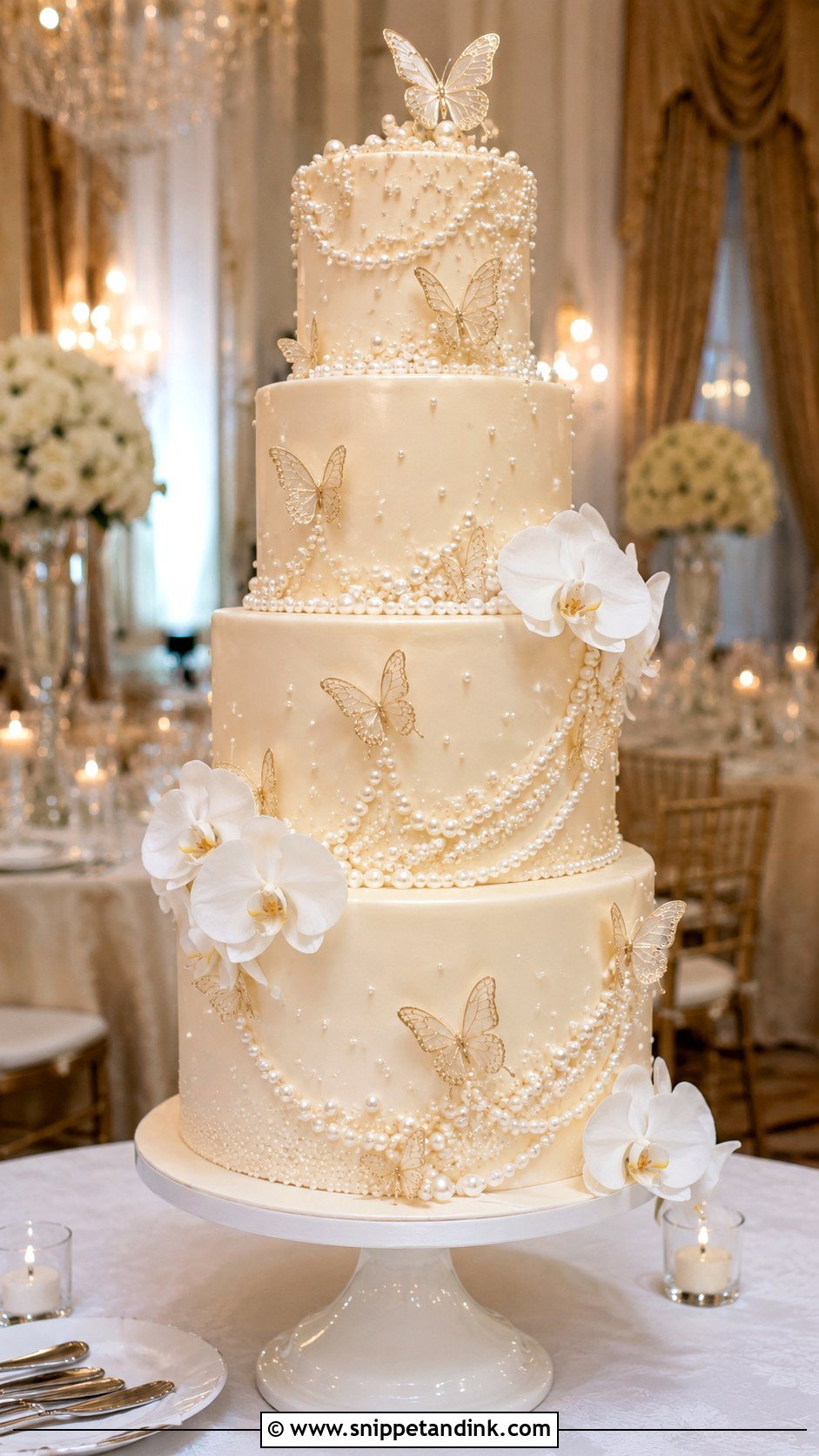
Pearls look easy and take patience. Each sugar pearl is set by hand, and too many make a cake look heavy, so I map pearl strands or borders on paper before I start. Smooth ivory tiers, then white, ivory or champagne butterflies with a slight shimmer that echoes the pearls. Leave breathing room between tiers. A few white roses or orchids soften it. It pairs naturally with satin gowns and classic ballroom styling.
14. Marble Butterfly Wedding Cake
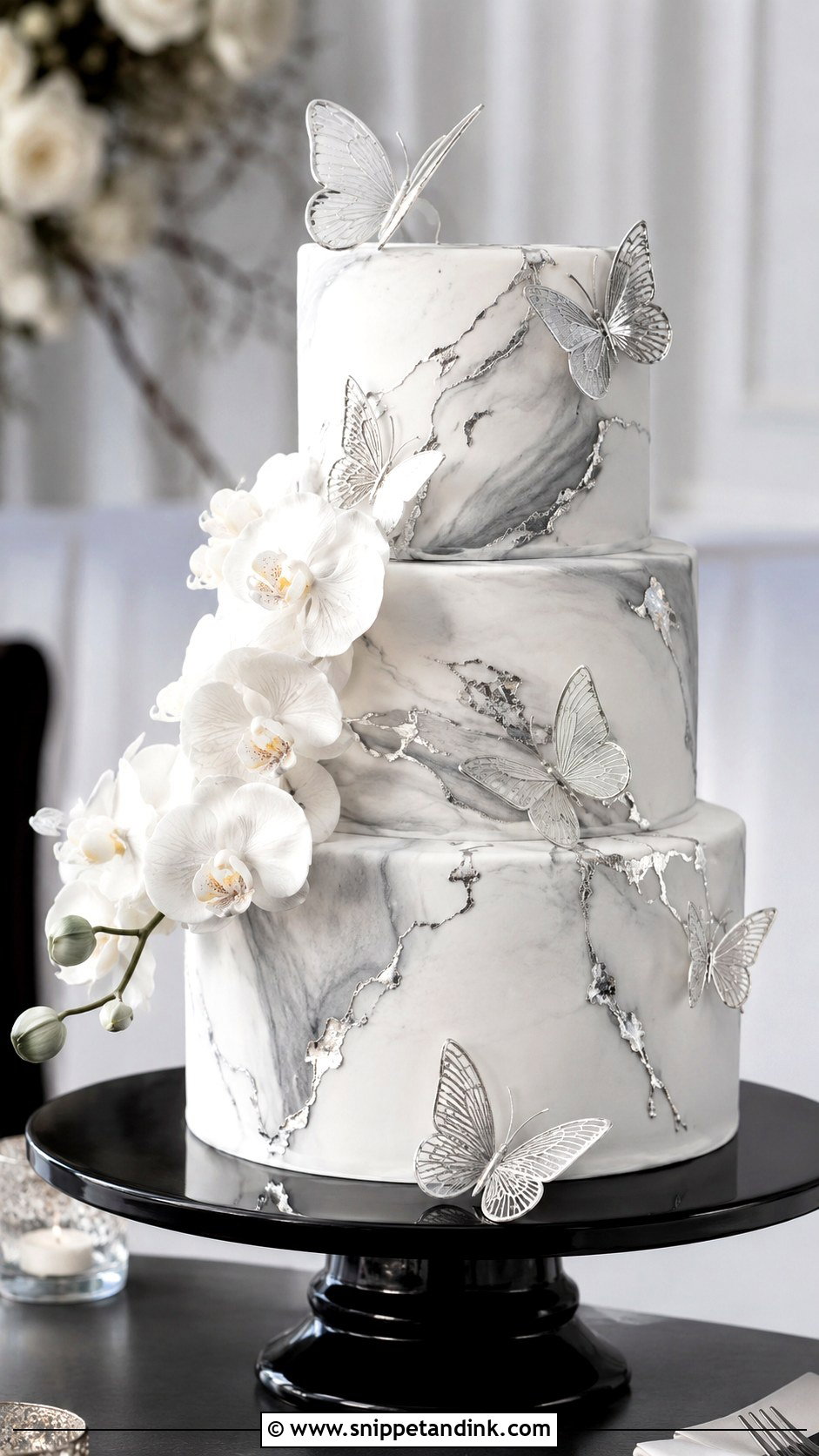
Marbled fondant is made by folding grey or black colour through white paste and rolling it out, so every tier comes out different and you can’t repeat a pattern exactly. That unpredictability is the charm. Gold or silver veining painted along the marble lines makes it feel more formal. I’d keep the butterflies to white, grey or metallic so they don’t argue with the veining. A couple of sugar orchids add freshness. It fits a gallery, a rooftop or any neutral, graphic setting.



15. Black And White Butterfly Wedding Cake
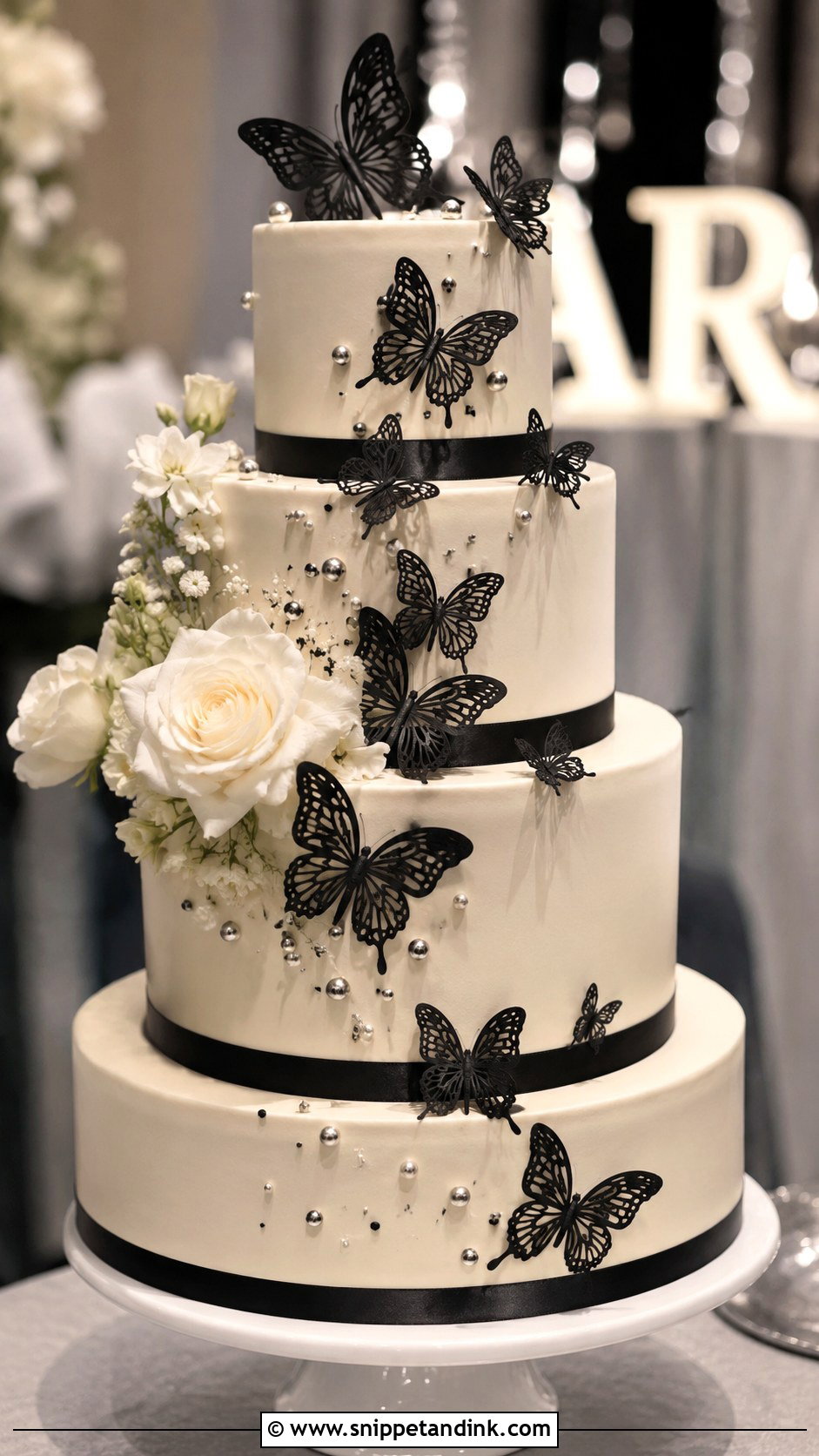
Black on a wedding cake needs a light hand. Deep black buttercream takes a lot of gel colour, which can taste bitter and stain teeth and lips, so I keep black to the butterflies, fine piping or a satin ribbon on white tiers. Delicate wings stop the contrast from looking harsh. A black and white floral cluster adds a fashion edge, and tiny pearls or silver soften it. Evening receptions and formal venues are where it feels most at home.
16. Green Butterfly Wedding Cake
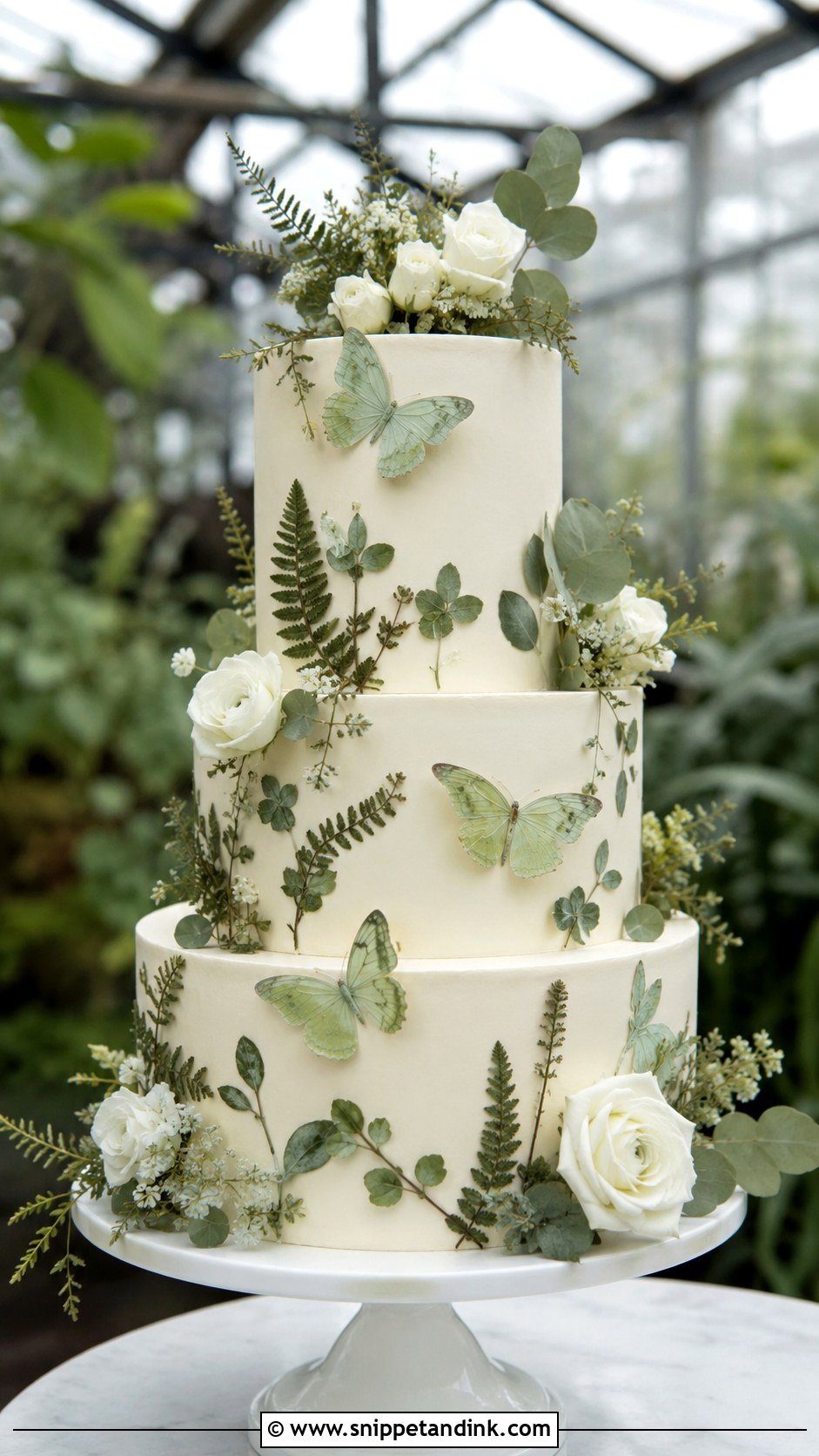
A green butterfly wedding cake reads as calm and botanical, especially in sage, eucalyptus or olive. I’d use green as watercolour accents or a soft sage buttercream over an ivory base rather than a saturated green, which can look artificial under reception lighting. White or pale green butterflies keep the effect gentle. Real eucalyptus is lovely on the table but not on the cake; I use sugar or wafer greenery for anything touching frosting. Greenhouse and outdoor ceremonies suit it well.
17. Tall Butterfly Wedding Cake
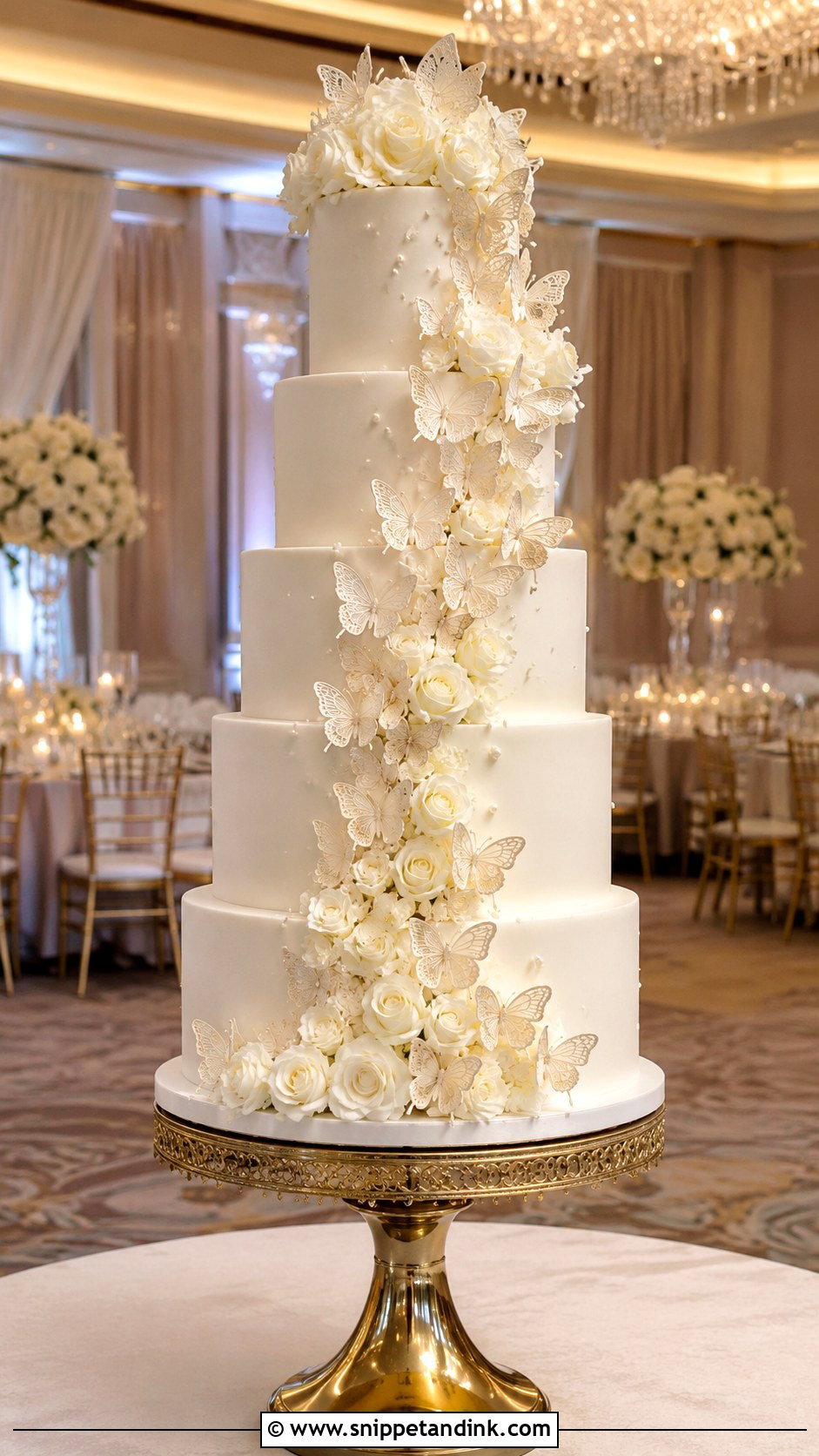
Four or five tiers give you room for a long butterfly trail, but height brings structure questions first. A tall cake needs internal dowels and a central rod, and it travels in sections, so I stack the top tiers at the venue. Keep the base ivory or soft white so the height doesn’t feel overwhelming, then run butterflies of varied sizes in one flowing path. Flowers only in key spots, like the top and one lower side. Make sure the cake table is sturdy and level; a tall cake shows every tilt.
18. Small Butterfly Wedding Cake
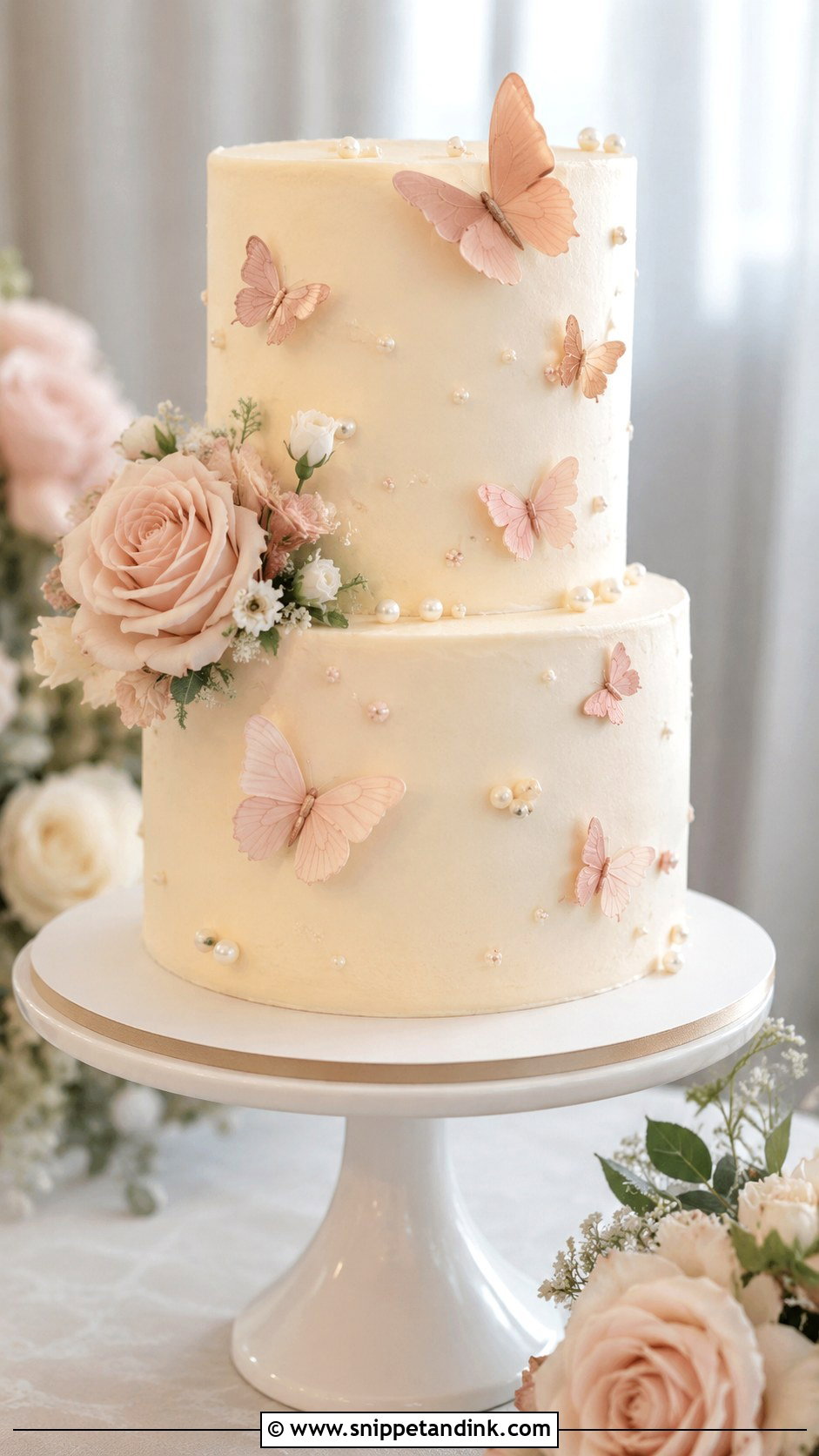
A one or two tier cake is my favourite canvas for detail, because guests stand close enough to see it. With less surface, every butterfly counts, so I’d place three or four with care rather than scattering a dozen. Smooth buttercream, one small floral cluster and a soft colour like blush or pale blue are enough. Small cakes often serve as the cutting cake alongside a sheet cake in the kitchen, which is a smart way to feed a bigger crowd on a modest budget. A good stand and decent light do the rest.
19. Butterfly Wedding Cake With Edible Flowers
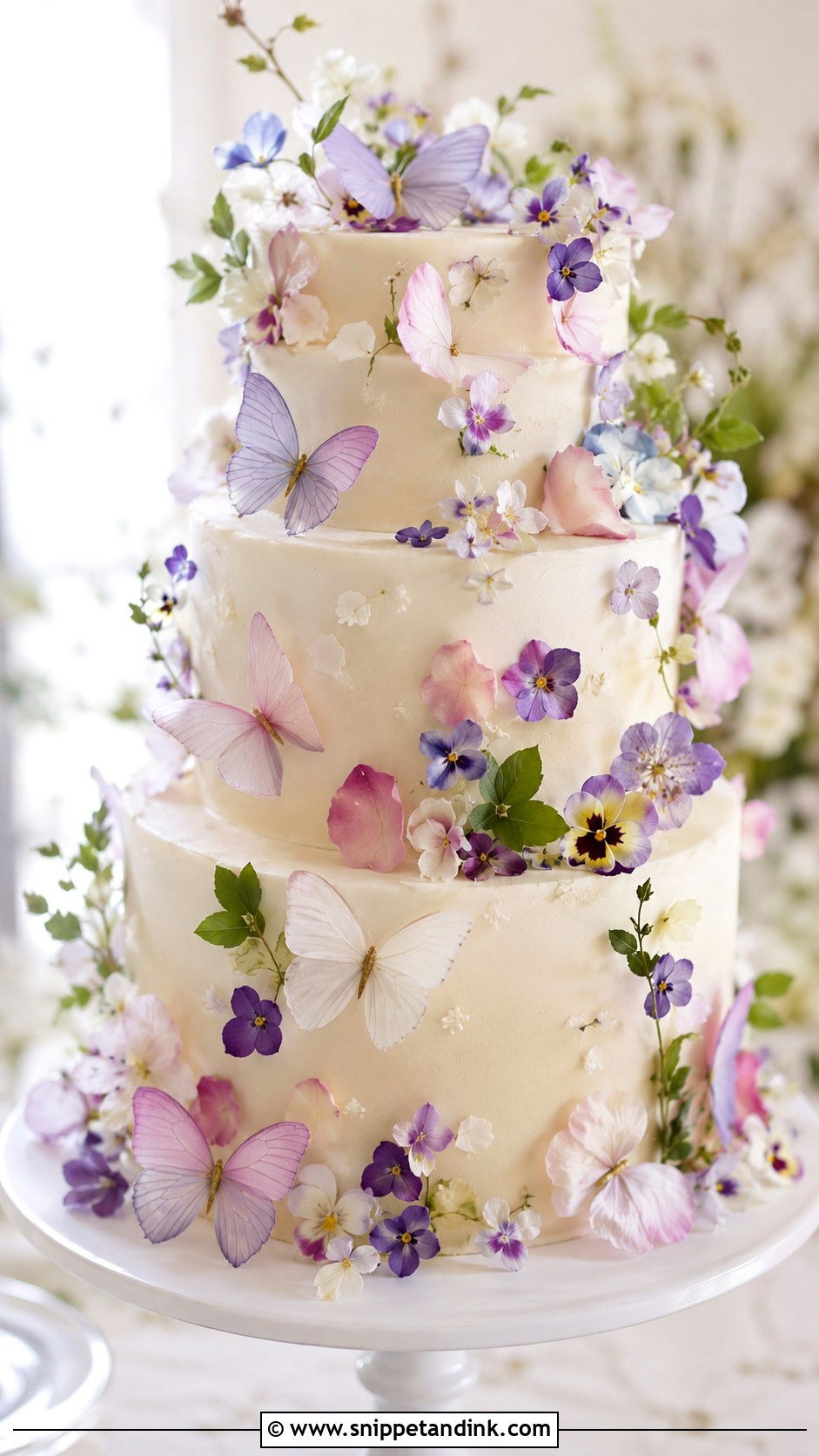
Edible flowers have to be grown for eating, not bought from a florist, since cut flowers are usually treated. Pansies, violas, calendula and rose petals from a food-safe source all work. They wilt faster than sugar flowers, so I add them close to serving time. Wafer paper butterflies between loose clusters keep the garden feel light, and a base of white buttercream, pale yellow, blush or soft lavender ties into your colours. It’s a spring and summer cake by nature.



20. Butterfly Wedding Cake With Topper
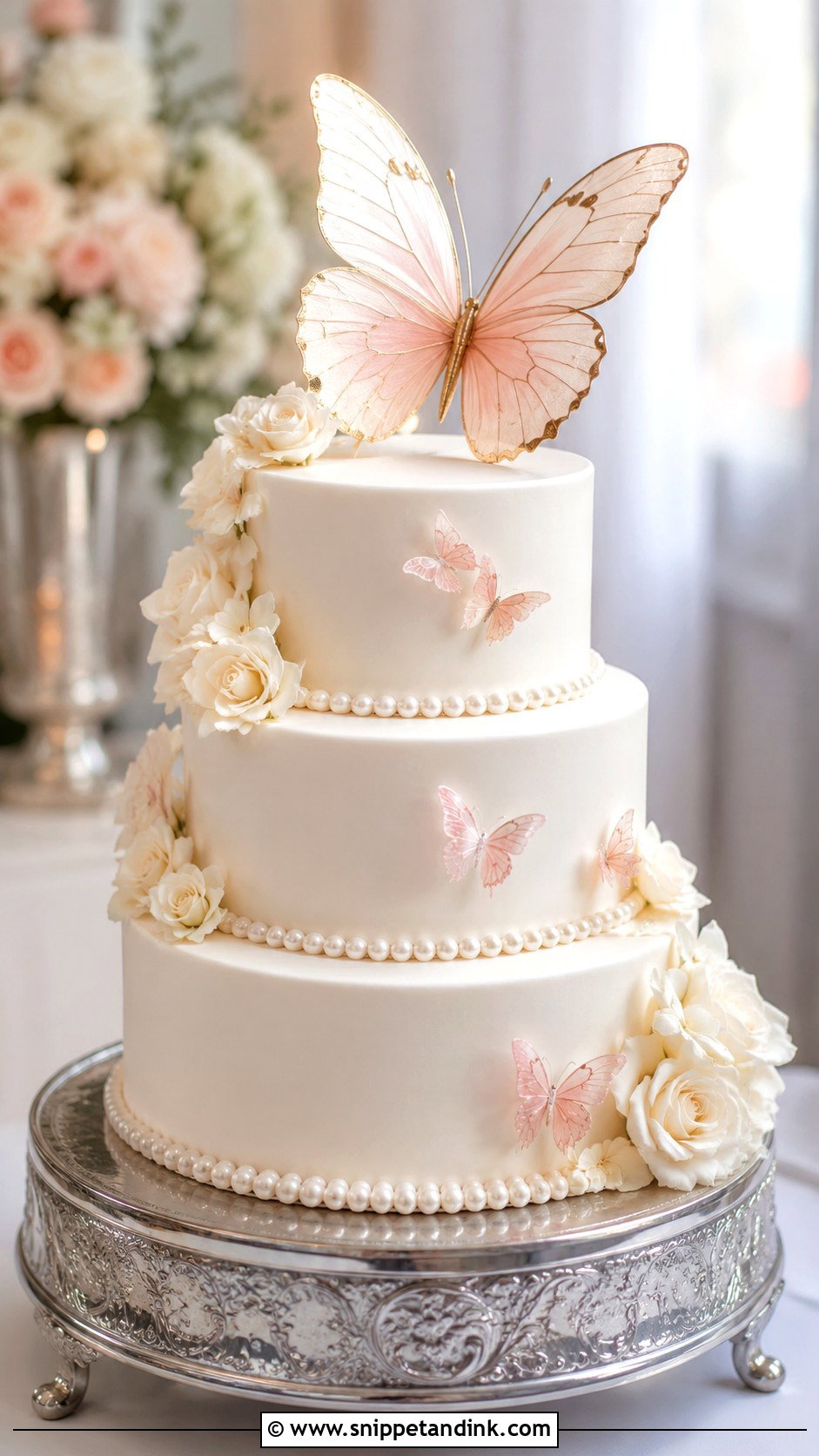
A topper makes the theme obvious from across the room. One large butterfly, a pair, or a small arrangement with flowers all work, and I’d keep the tiers below simple so the topper stays the star. Weight is the thing to ask about: heavy acrylic or metal toppers need a stem or a support in the top tier, or they slowly sink into soft frosting. Smooth white tiers, light piping and a few pearls are enough below it. Initials or a metallic finish make it personal, and a topper is easy to keep as a keepsake afterwards.
Delivery Day, Heat and the Last Hour Before Guests Walk In
Most of the butterfly damage I’ve seen happens between the van and the cake table. A cake moved from a chilled van into a warm room can form condensation, and beads of water on fondant will soften wafer paper and make colours bleed. I let it come up to room temperature gradually and place delicate pieces only once the surface is dry.
Ask your venue three things early: will the cake table be in direct sun, near a heater or under a tent, and how long will it sit before cutting? Buttercream starts to soften quickly in real heat, and a long display window outdoors is the main reason I’d steer a couple toward gum paste or chocolate wings.
What to bring to your tasting
- A photo or swatch of your flowers and linens, so butterfly colours can be matched under the same light
- Your venue, season and whether the cake will be indoors or out
- The guest count and whether you want a cutting cake with kitchen cakes behind it
- Any topper you already own, so its weight can be planned into the top tier
- Allergies in the wedding party, since some edible paints and dusts contain ingredients worth checking
Popular bakers book months ahead for peak season, and hand-made sugar butterflies or heavy piping add making time, so I’d start the conversation as early as you can.
A Few Wings Go a Long Way
What I like most about butterflies is how far a small number can go. Three white wings make a plain tier feel finished, and a long cascade can turn a tall cake into the room’s centrepiece. Start with your colour and venue, then pick the material that will survive your conditions: wafer paper for lightness indoors, chocolate or sugar where it’s humid. Bring your flowers, your colour swatches and a photo of the cake table to the tasting, and your baker can build the rest around them.
You'll Like These Ideas:




Leave a Reply