
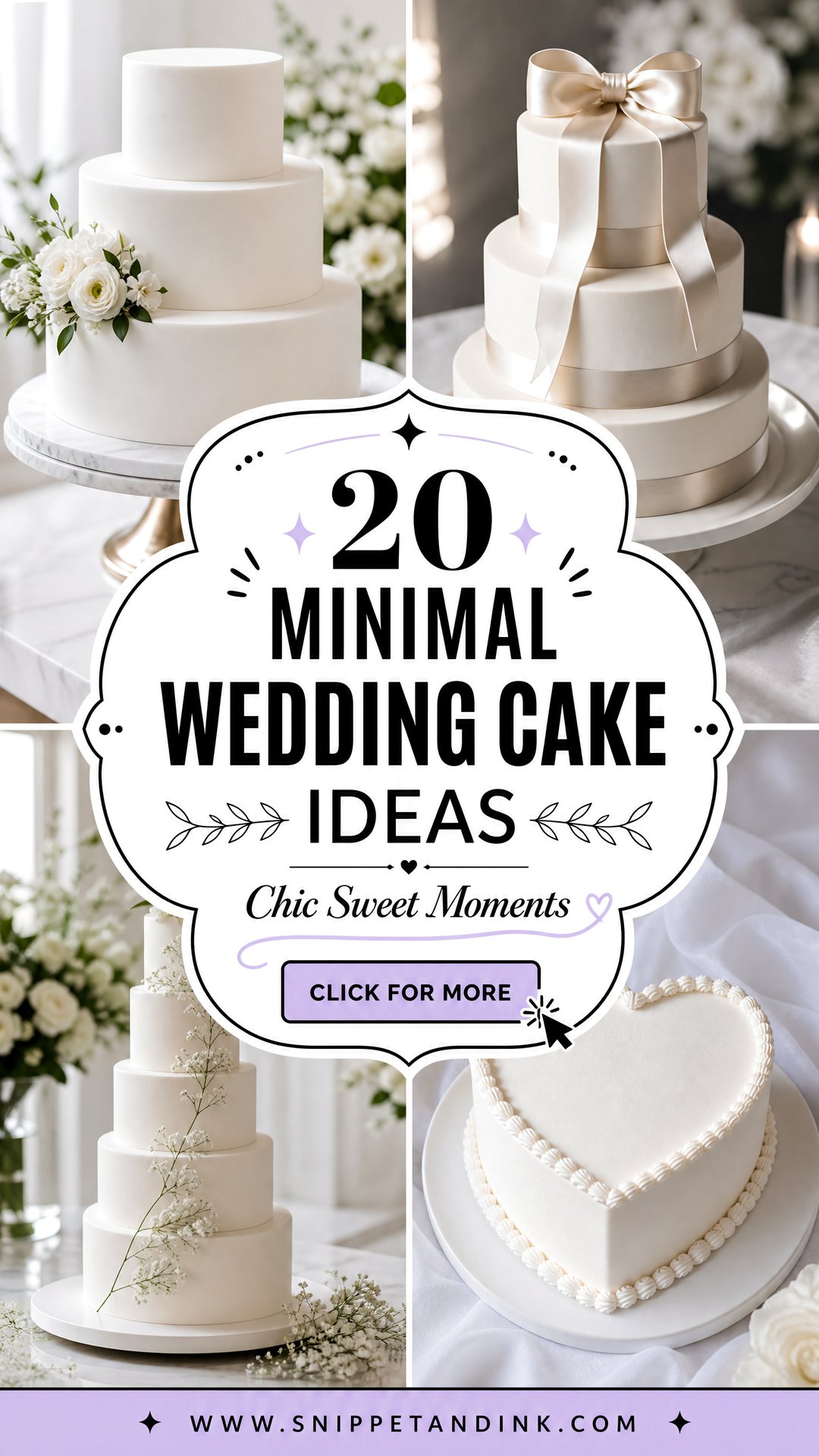
A plain cake has nowhere to hide. With clean lines, a quiet palette and one small detail, the finish itself becomes the decoration, and the eye goes straight to the shape. That’s why I love making them, and why they take more care than people expect. Smooth buttercream, a single bloom, a few pearls, a slim tier, a soft texture: any of these can carry a modern reception, a garden ceremony or a small city wedding. Below are twenty pared-back cakes and what I’d watch for with each.
Why a Plain Cake Isn’t the Cheap Option
Couples are often surprised that a minimal cake can cost the same as a decorated one. The reason is the finish. A perfectly sharp edge, level tiers and a flawless smooth side take time, and there’s no piping or flowers to cover a dent. Most of the hours on a minimal cake go into the smoothing, not the decoration.
When you brief your baker, be specific about what minimal means to you:
- Sharp edges or softly rounded ones. Sharp takes longer and is harder in buttercream.
- Buttercream or fondant. Fondant gives the crispest surface; buttercream tastes better to most guests.
- The single detail and where it sits. Bring a photo of exactly that detail, not just a whole cake you like.
- Whether the cake will sit somewhere warm. A plain buttercream cake shows heat damage faster than a textured one.
1. White Buttercream Wedding Cake
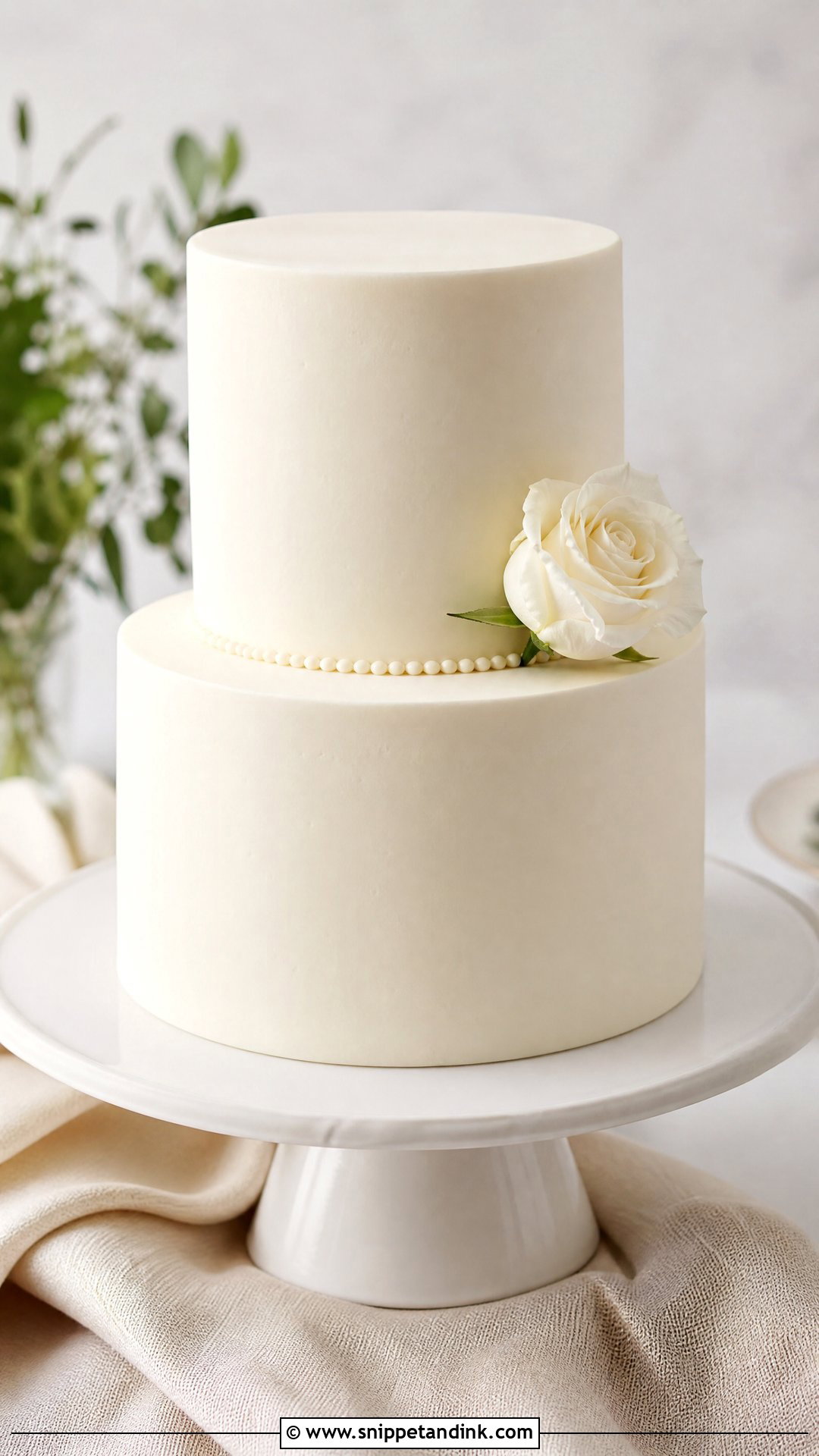
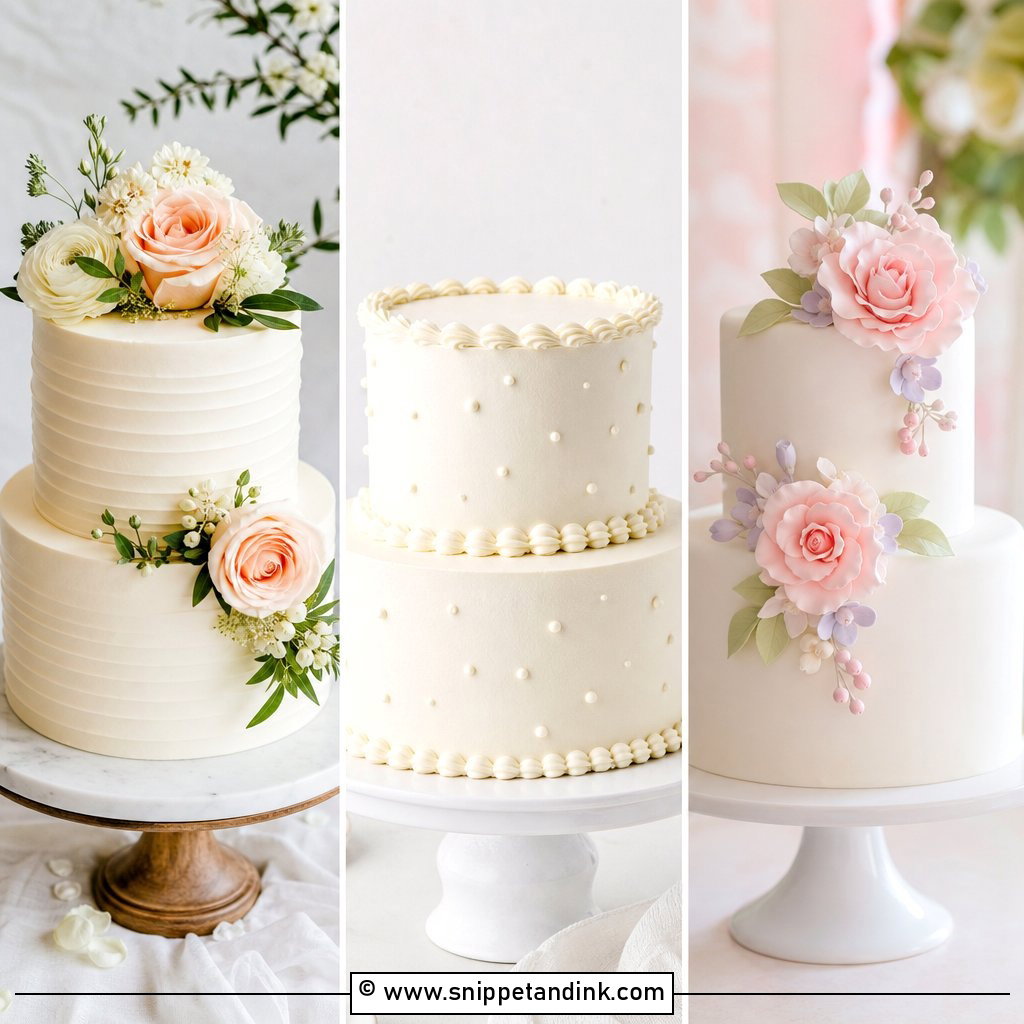
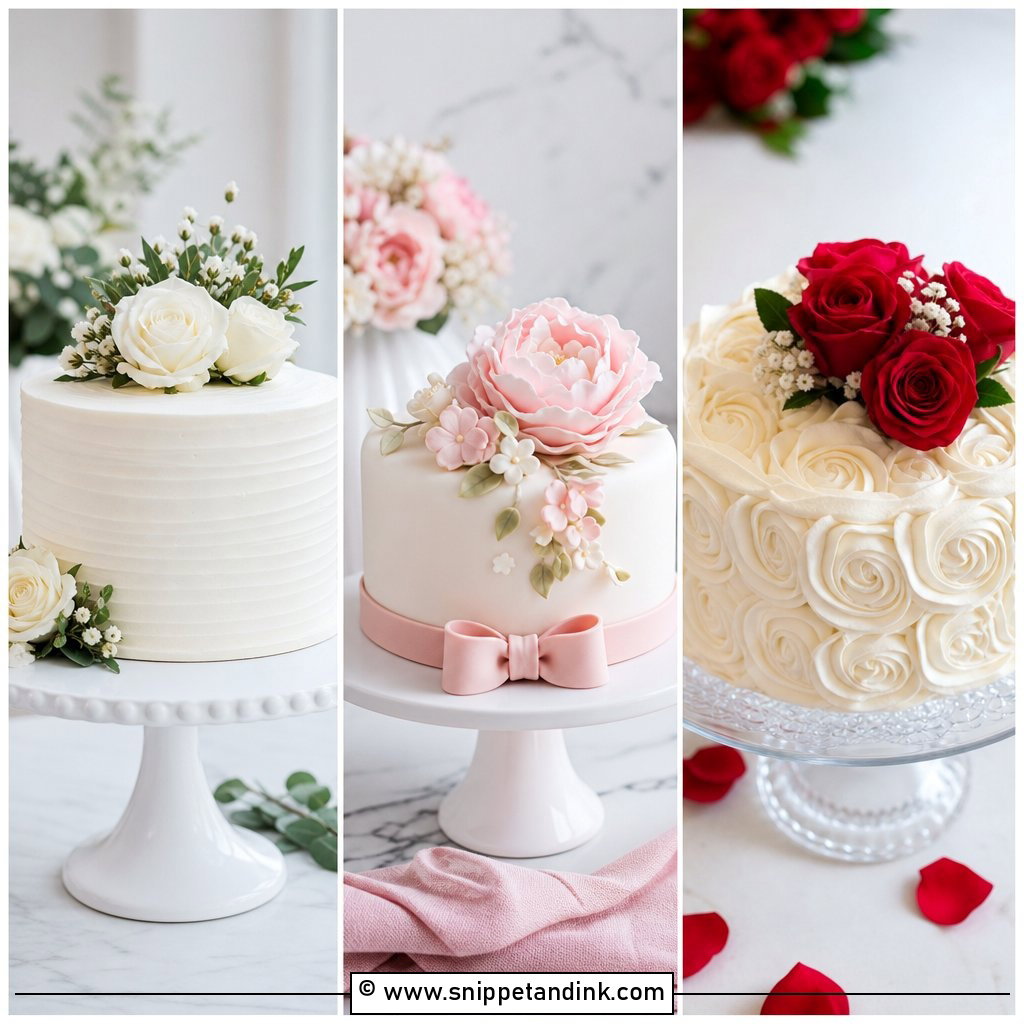
White buttercream is where most minimal cakes begin, and it’s a test of the baker. Straight sides and a sharp top edge take a chilled crumb coat, a bench scraper held perfectly upright and a few passes with a hot spatula. If that’s done well, the cake needs almost nothing else: one flower, a fine pearl border or a narrow ribbon. It won’t fight the flowers or linens in any room. Vanilla, almond, lemon or champagne sponge keeps the inside as light as the outside.
2. Single Tier Wedding Cake
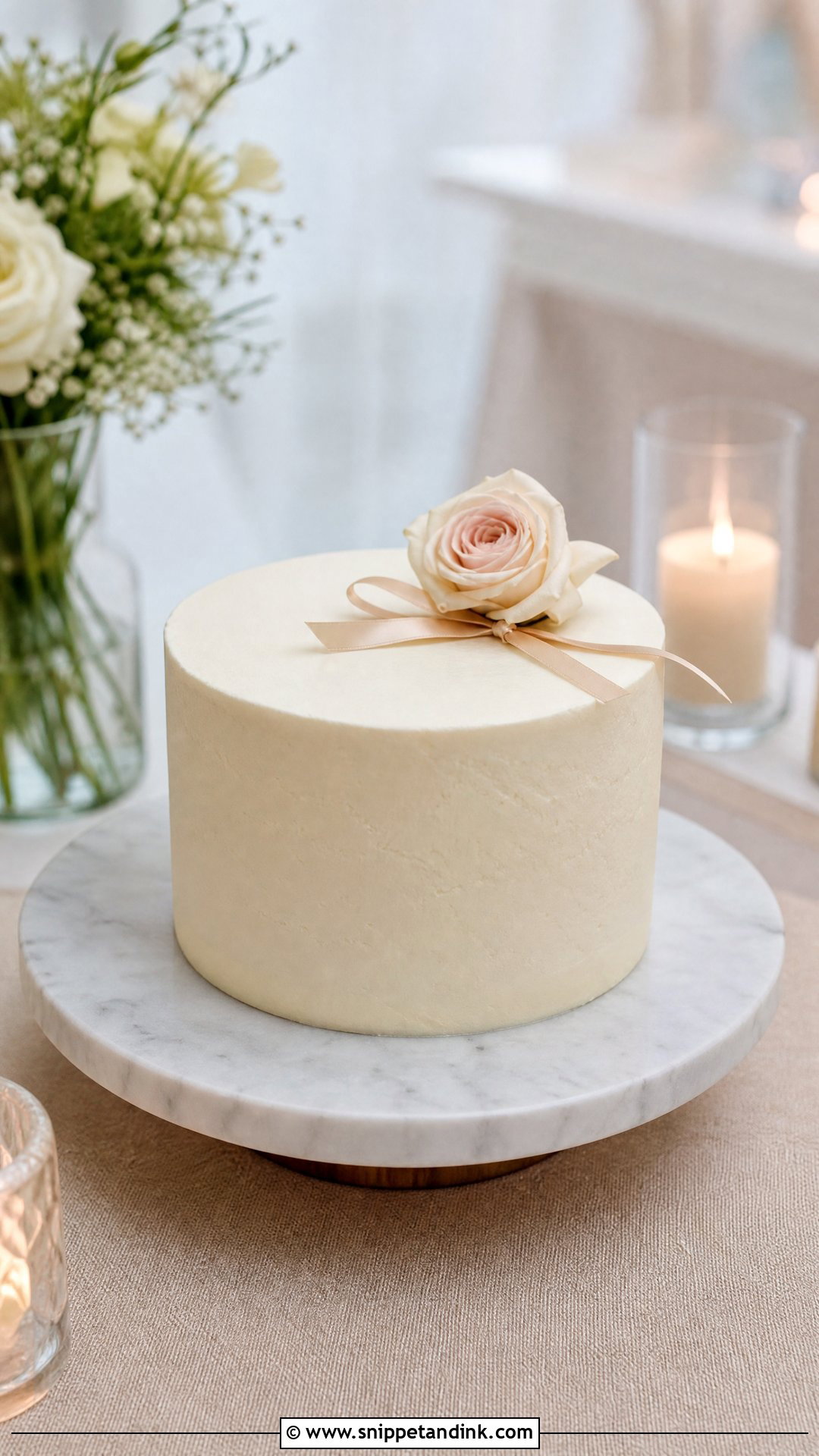
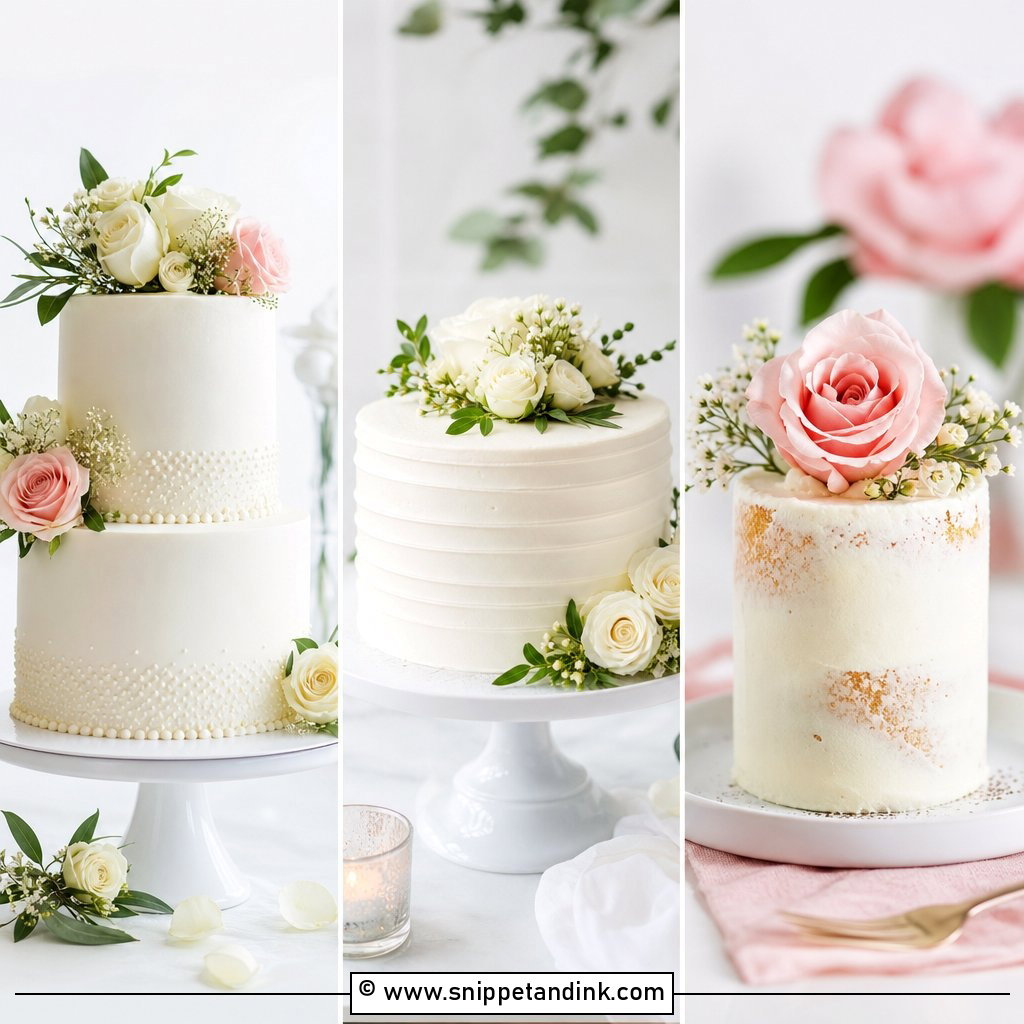
One tier is enough for an intimate wedding, a courthouse lunch or a dessert table with other sweets. You get the cutting moment without the height. I’d make it a little taller than a standard cake, four layers rather than three, so it doesn’t look like a birthday cake on the table. Sharp edges, smooth buttercream and one focal point, perhaps a small spray of flowers or a clean satin ribbon. A raised stand gives it presence.
3. Two Tier Wedding Cake
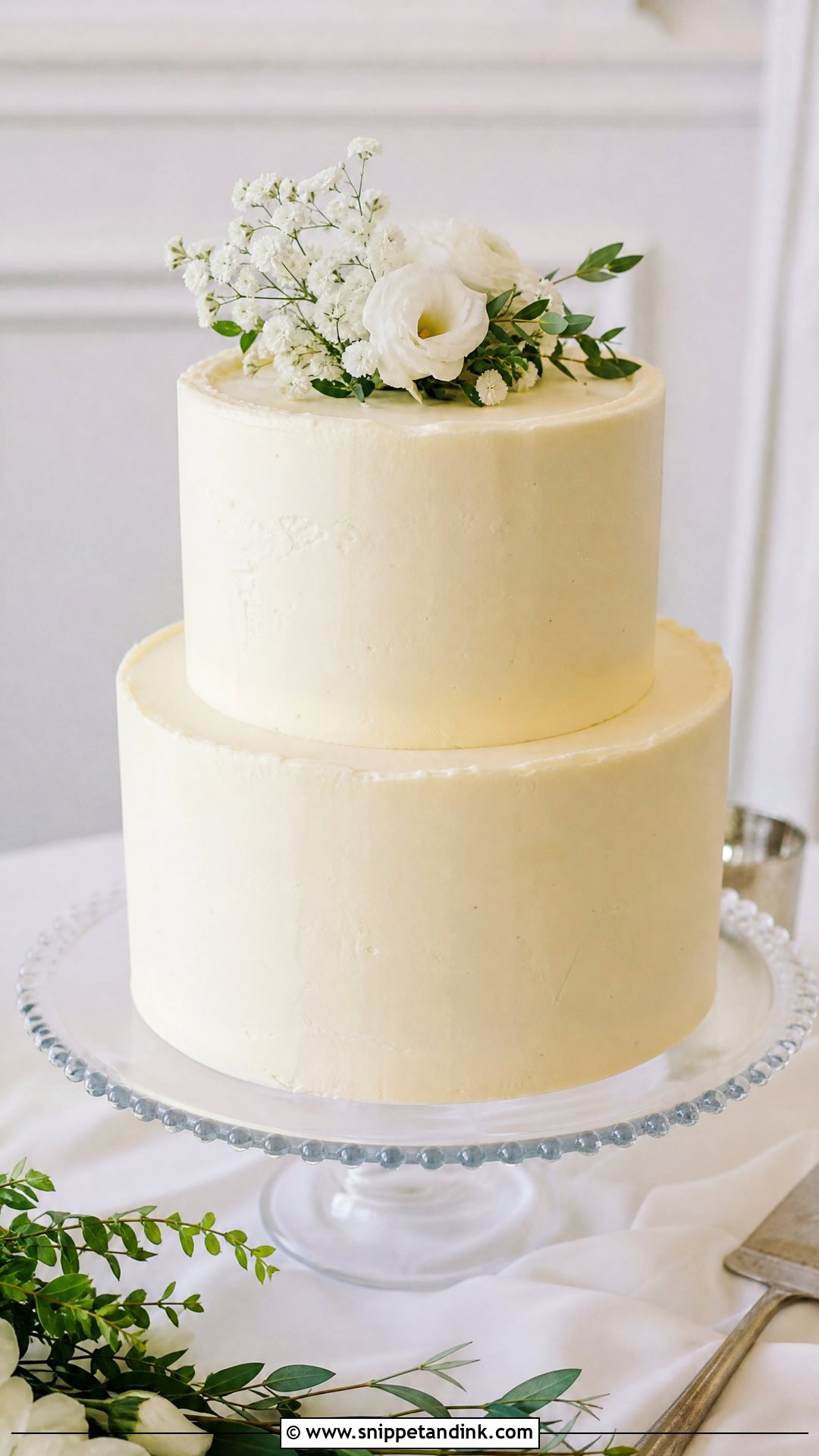
Two tiers give the cake real presence while keeping it understated. The proportion matters most: I usually make the top tier about two-thirds the width of the bottom, which looks balanced from a distance. Skip busy piping. Smooth ivory, one floral accent and a clean base are enough. A practical bonus is two flavors, such as vanilla bean on one tier and lemon raspberry on the other.
4. Three Tier Wedding Cake
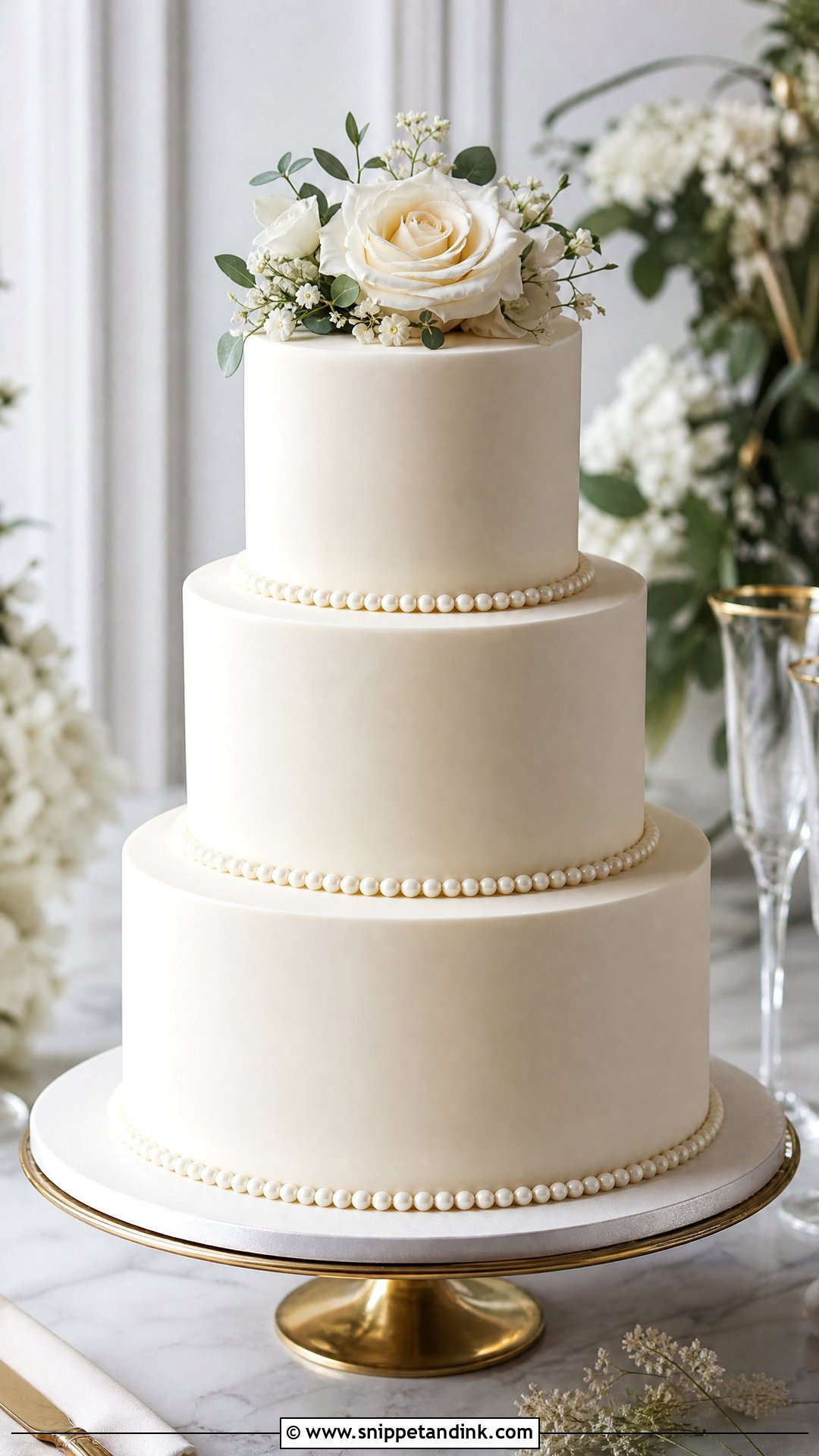
Height adds drama, so a three tier wedding cake can be very simple and still fill a large room. I’d pick one design element and repeat it gently: tiny pearls at each base, slim floral stems climbing one side, or the same soft texture on every tier. Each tier sits on its own board with dowels underneath; that’s what stops a three-tier cake leaning by the evening. White, ivory, blush or pale beige keeps it graceful rather than heavy.
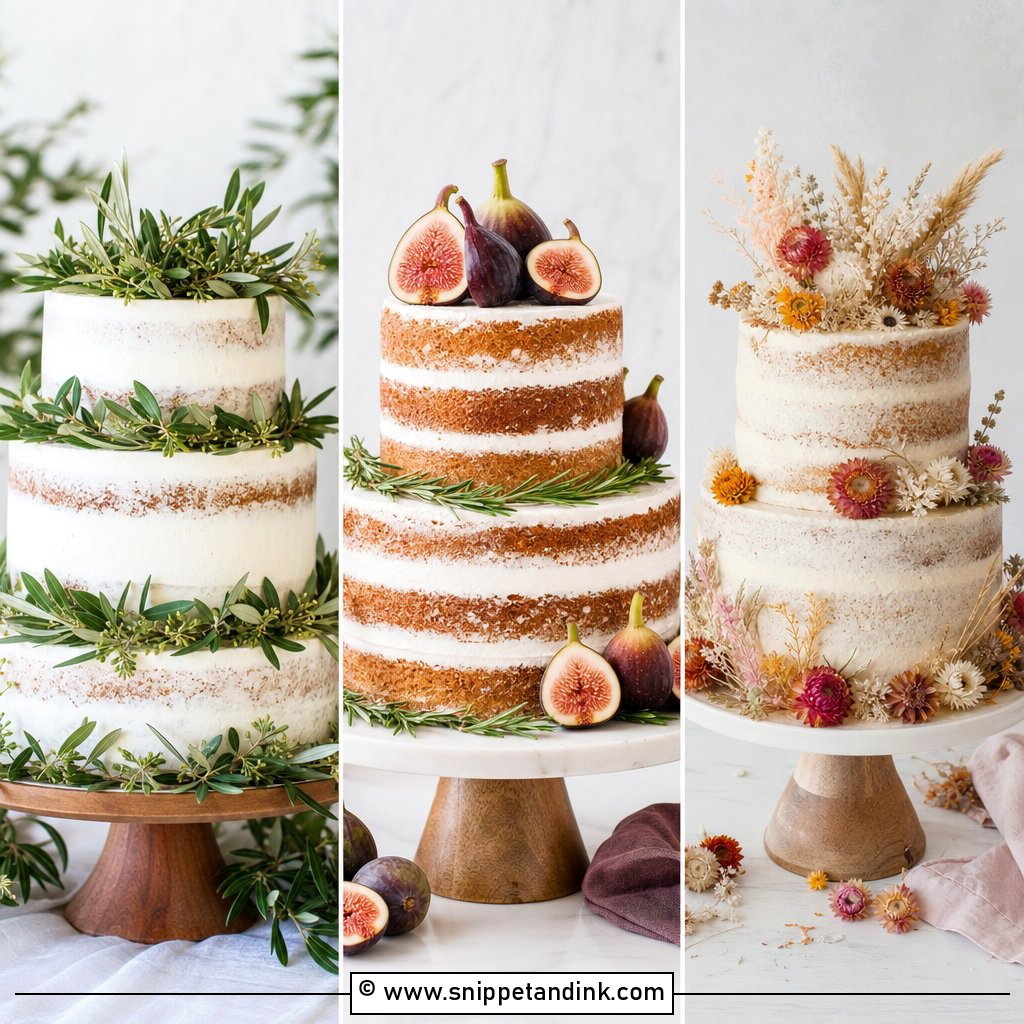
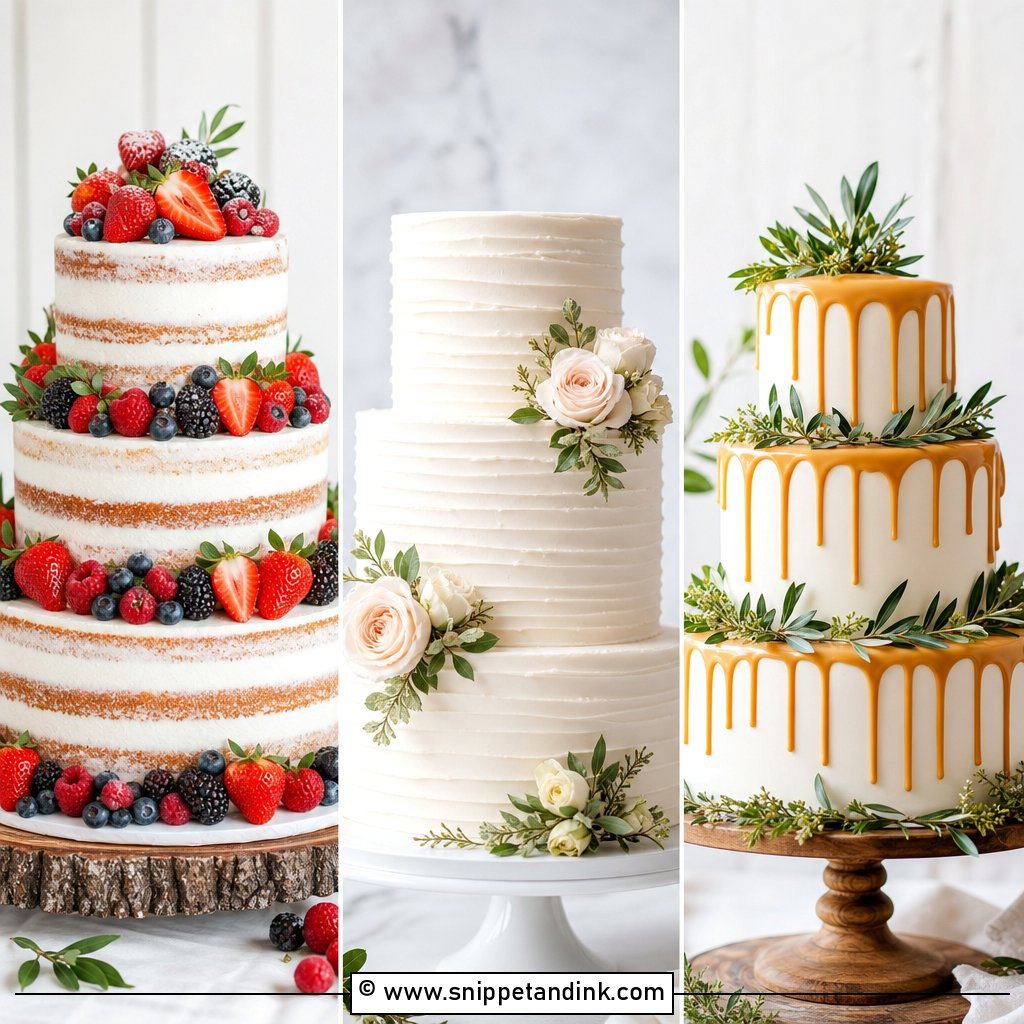
5. Semi Naked Wedding Cake
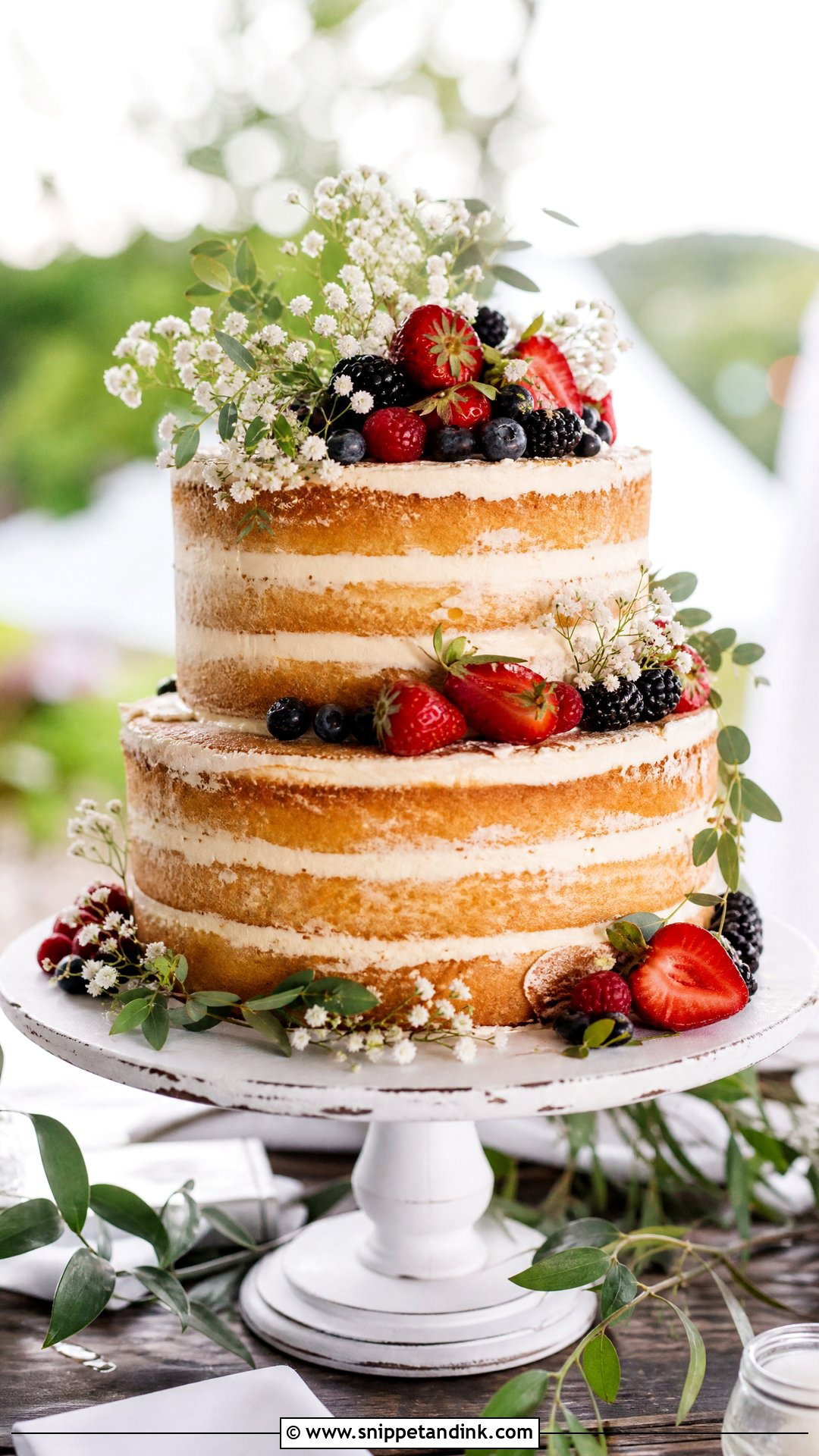
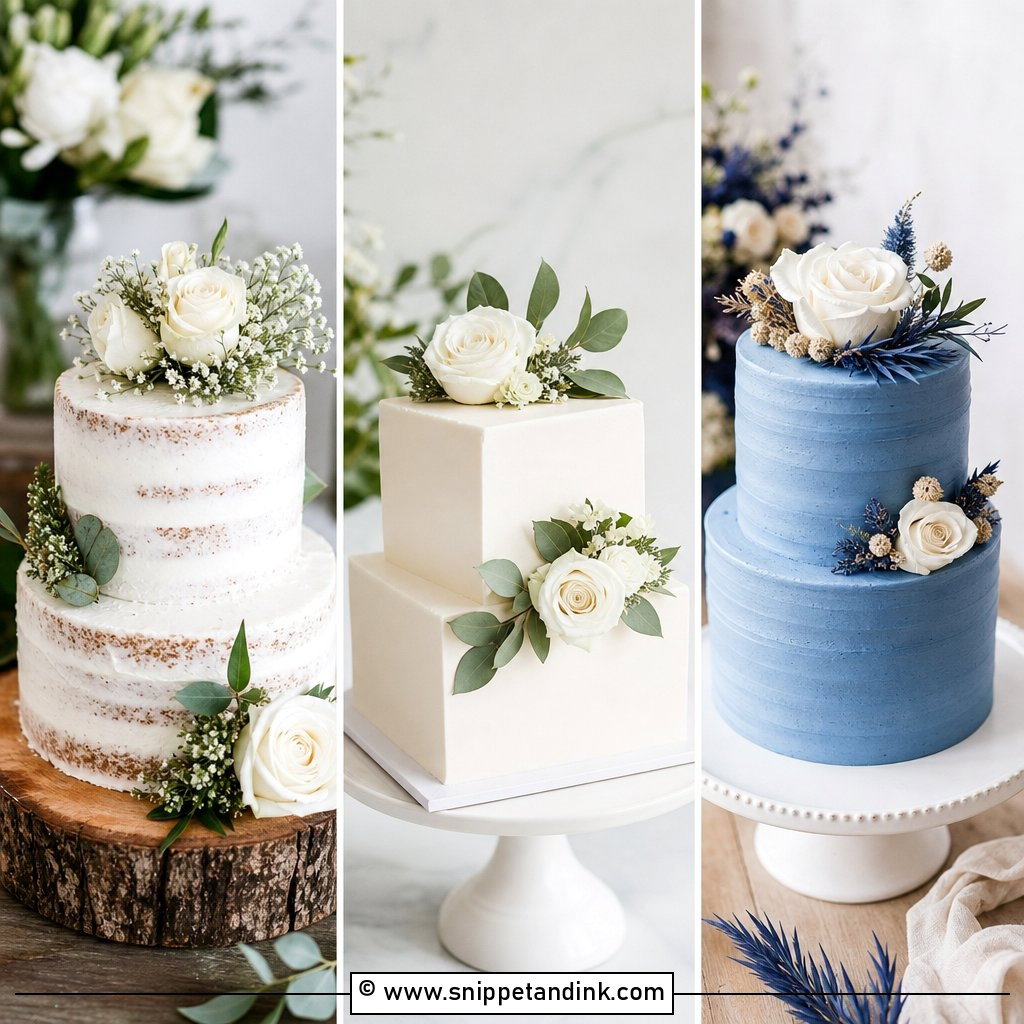
Semi-naked cakes get just enough frosting to soften the layers, so the sponge shows through as texture. They suit outdoor, barn and garden weddings. The look depends on even layers and straight filling lines, since they’re all on show. They also dry out faster than a fully coated cake, so I assemble them as late as I can and keep them covered until setup. A few flowers, berries or greenery placed with care finish them.
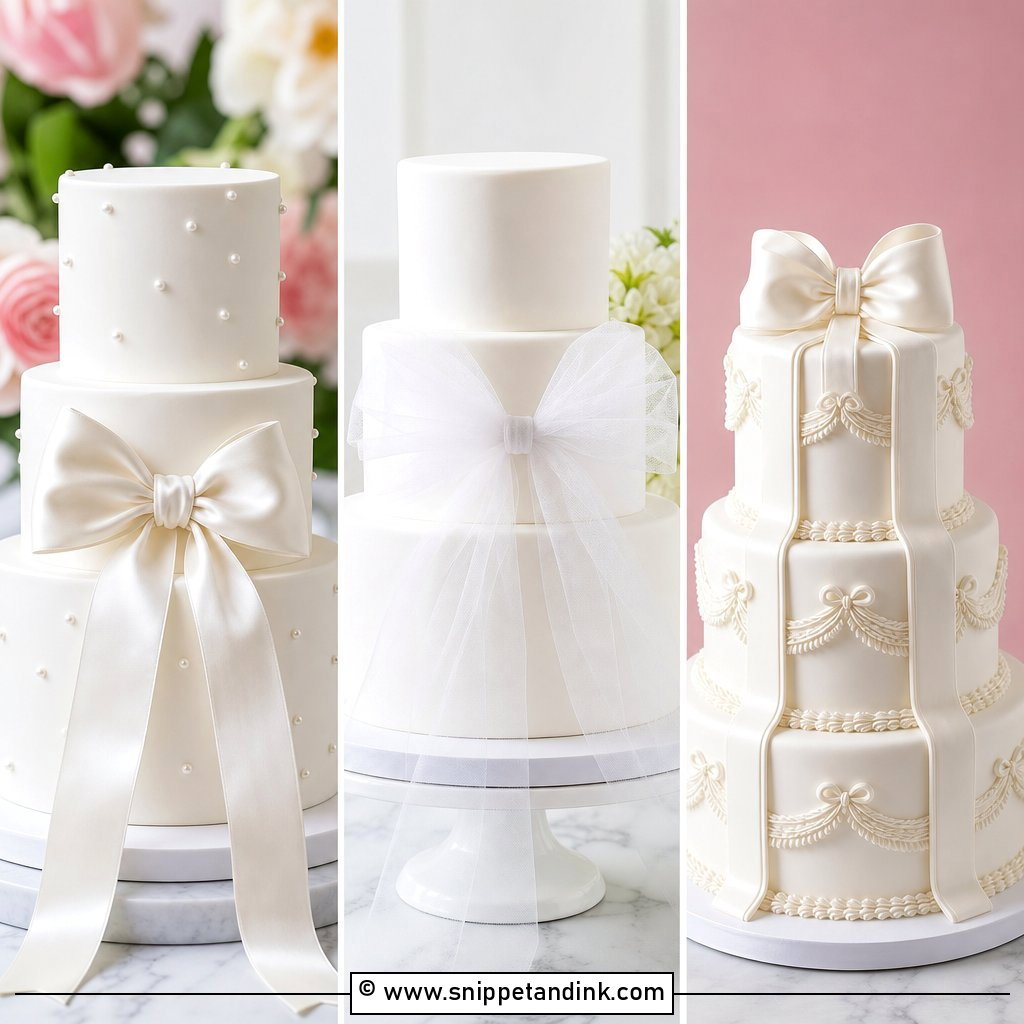
6. Smooth Fondant Wedding Cake
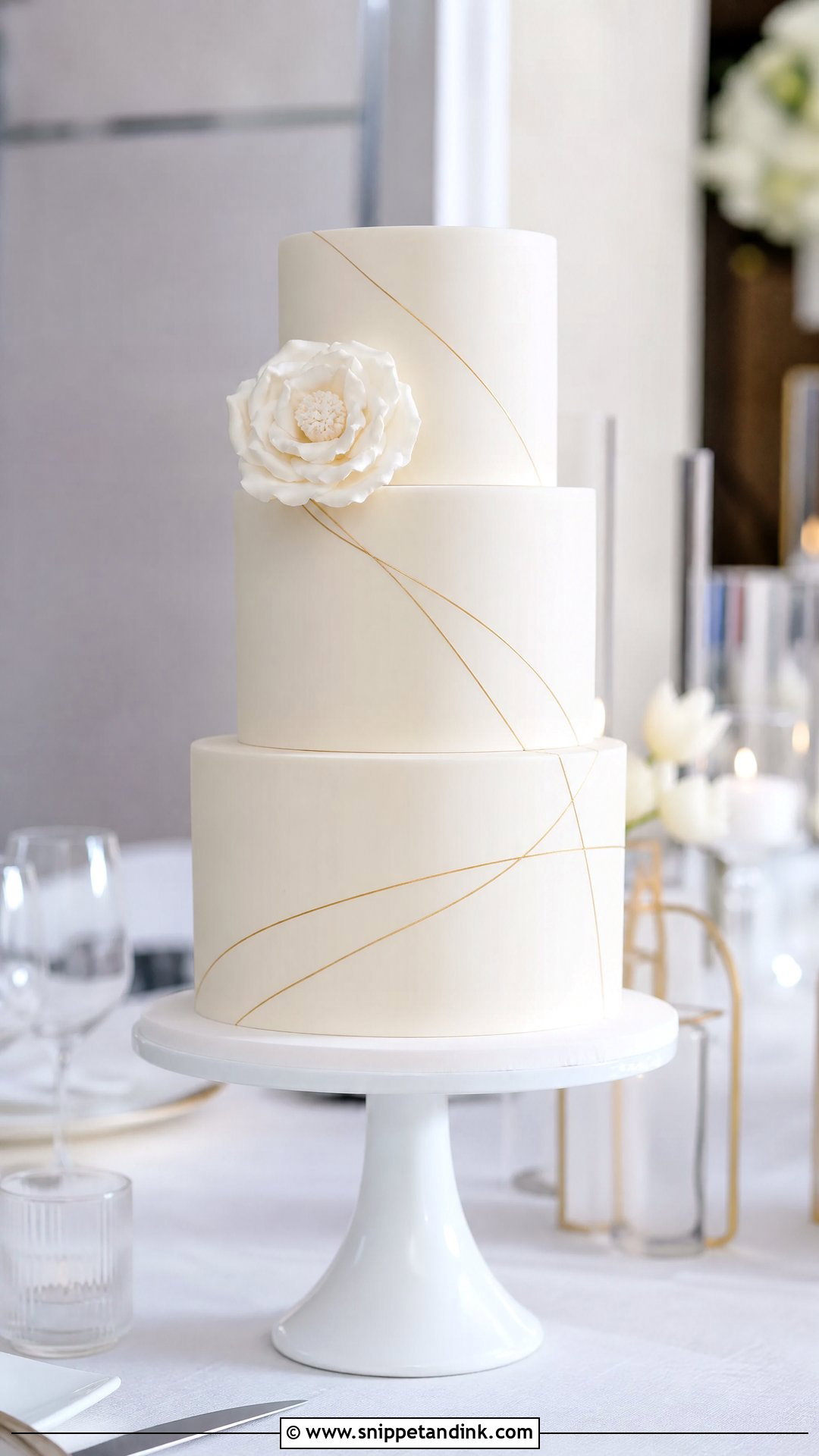
Fondant gives the sharpest lines and the smoothest surface of any finish, which suits a modern room or hotel ballroom. Under it, I always use a firm ganache coat rather than buttercream, because that’s what gives fondant its crisp corners. Keep it white or ivory with one accent: a single sugar flower, a fine metallic line or a soft fabric ribbon is enough to make it feel finished. One thing to know: fondant-covered cakes shouldn’t go straight from the fridge into a warm room, or they sweat and spot.
7. Pearl Wedding Cake
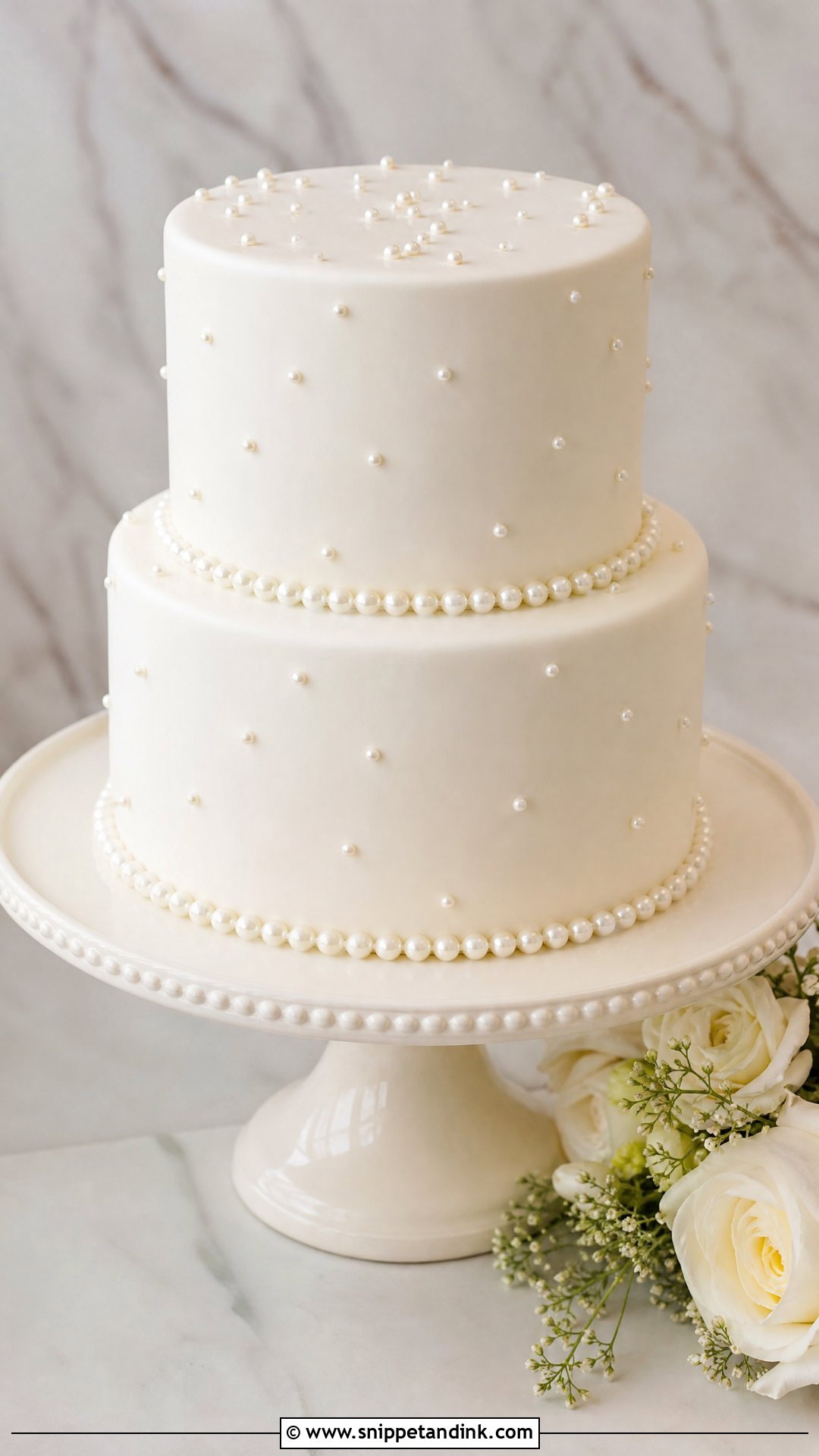
Pearls add quiet texture as long as they’re an accent. Tiny edible pearls around the base of each tier, a light scatter on one side or a clean vertical line all look refined on smooth white buttercream or fondant. I set them with a dot of piping gel, one at a time with tweezers, which is slow but keeps lines straight. No lace, big flowers or dramatic piping needed.
8. Ribbon Wedding Cake
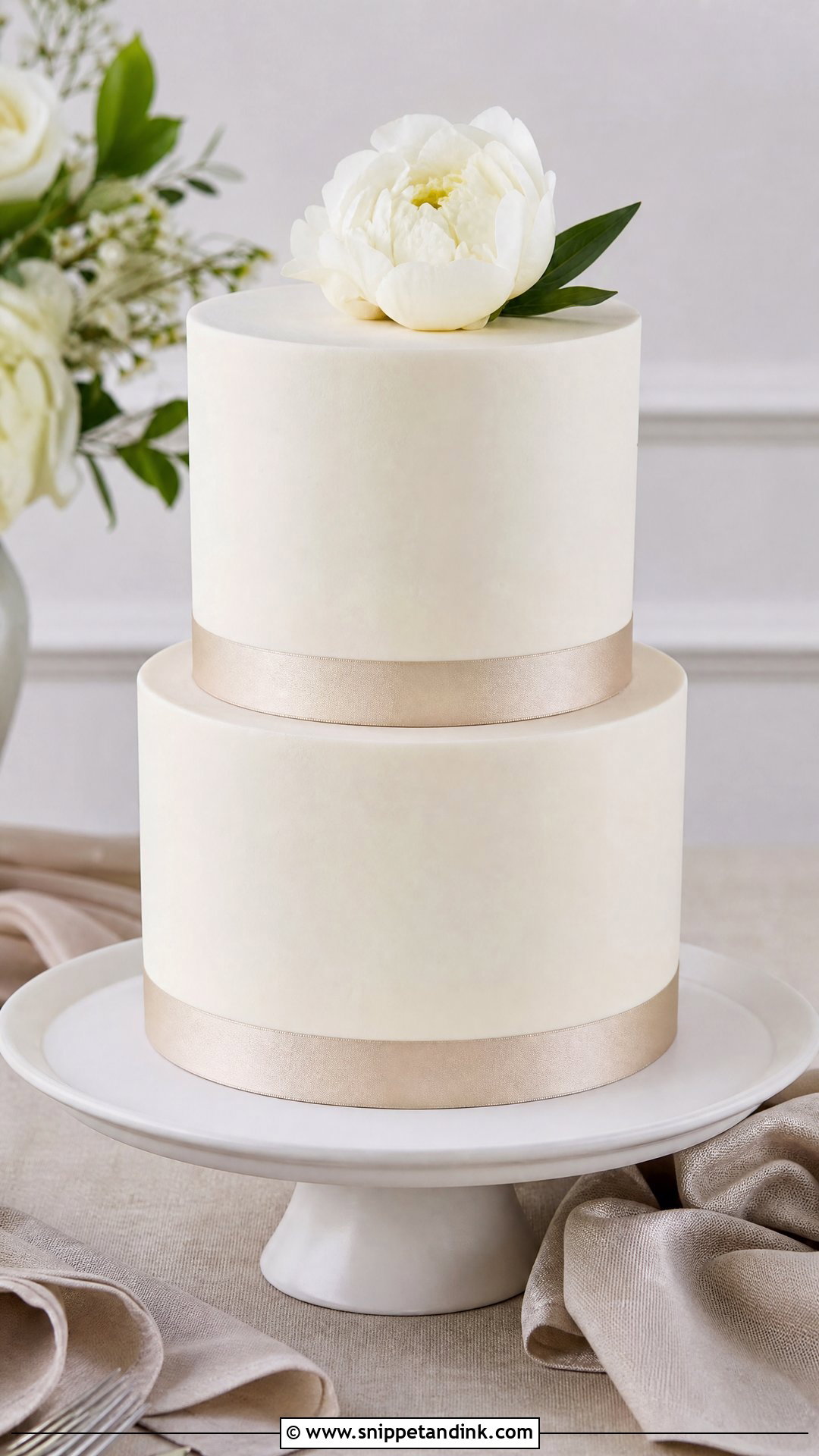
A ribbon is the quickest way to style a plain cake. A slim satin band around each tier in ivory, champagne, blush, sage or soft blue adds color and shape. The catch most people don’t know about is grease: buttercream soaks through fabric and leaves dark patches. I back the ribbon with a strip of clear tape or wax paper, or put it on fondant instead. One fresh bloom, or nothing at all, finishes it. Matching the ribbon to the bridesmaid dresses or linens ties the cake into the room.
9. Fresh Flower Wedding Cake
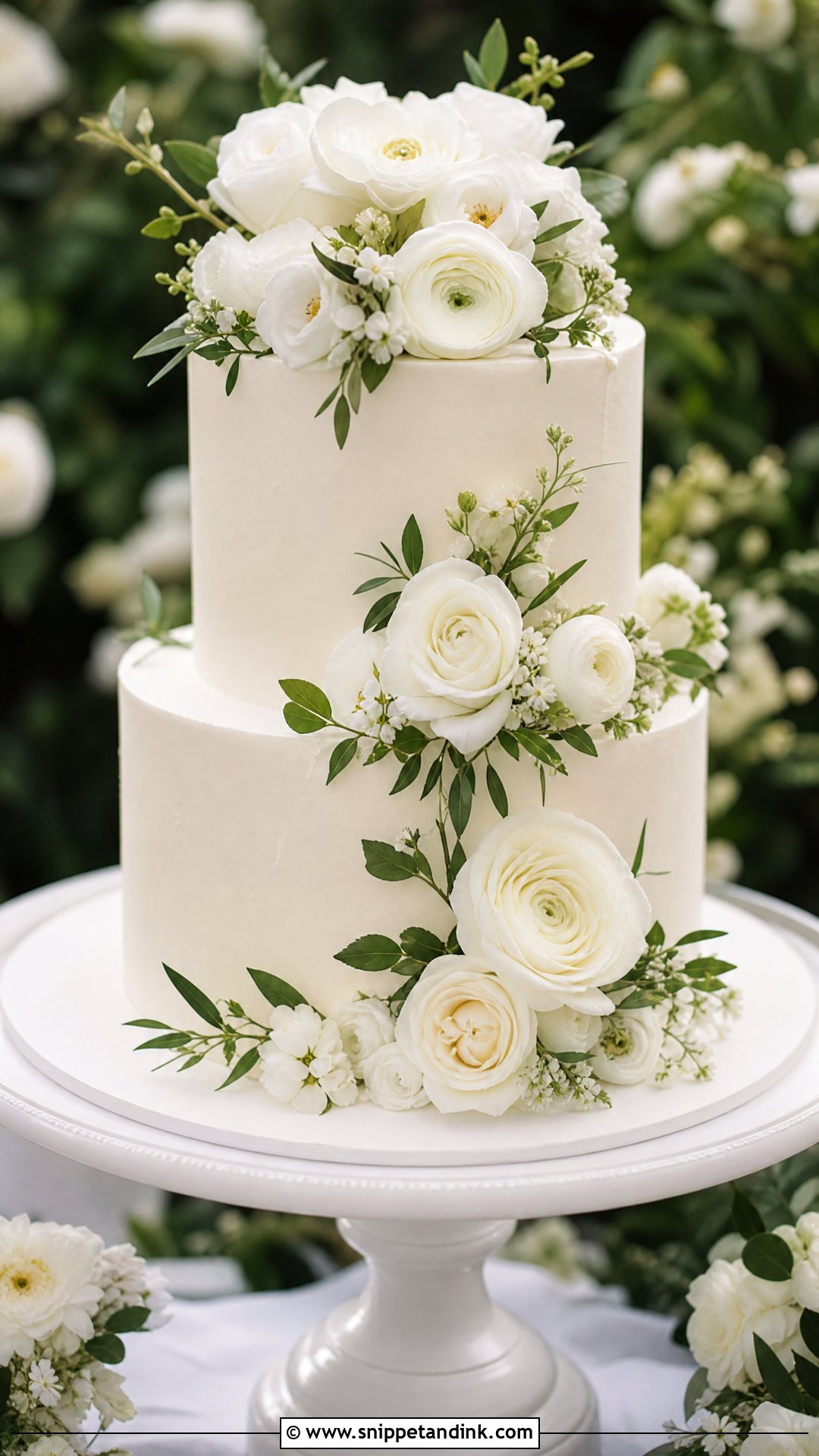
Fresh flowers stay minimal when there are only one or two. A single white rose, a small orchid stem or a few ranunculus on a smooth, pale cake can change it completely. Food safety is where I’m firm: many popular wedding flowers are toxic or have been sprayed, so stems get wrapped or set into food-safe holders and never pushed straight into the cake. Ask your florist which stems are safe and who places them.
10. Greenery Wedding Cake
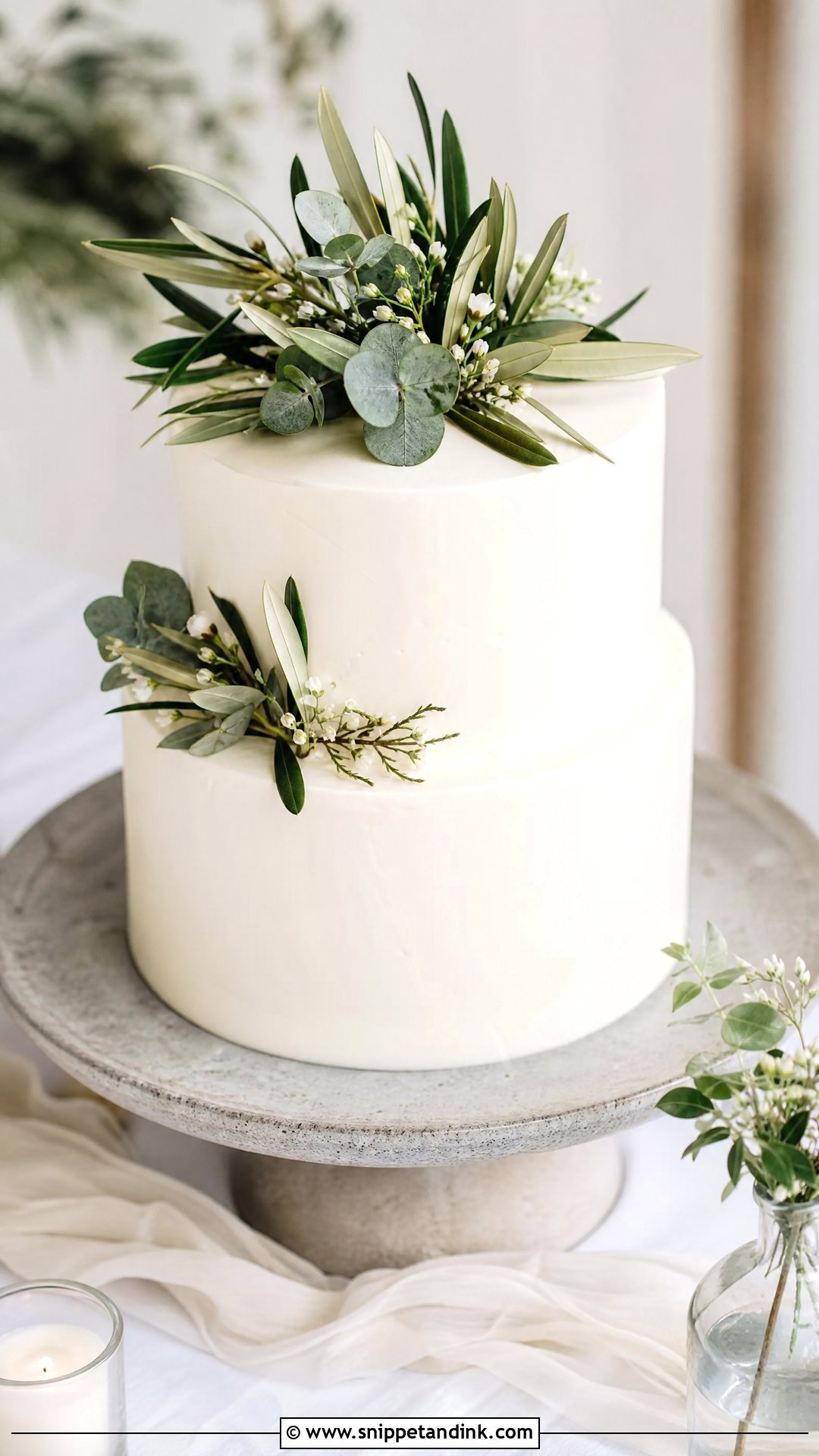
Greenery gives a fresh botanical look without strong color. Eucalyptus, olive branches, rosemary or small ferns look clean set in a small cluster at the base or a light diagonal across the tiers. Not every leaf is food-safe, eucalyptus included, so the same barrier rules apply as with flowers. Herbs like rosemary are the safest option. Smooth white frosting lets the leaves stand out, and it suits outdoor weddings and neutral palettes.
11. Textured Buttercream Wedding Cake
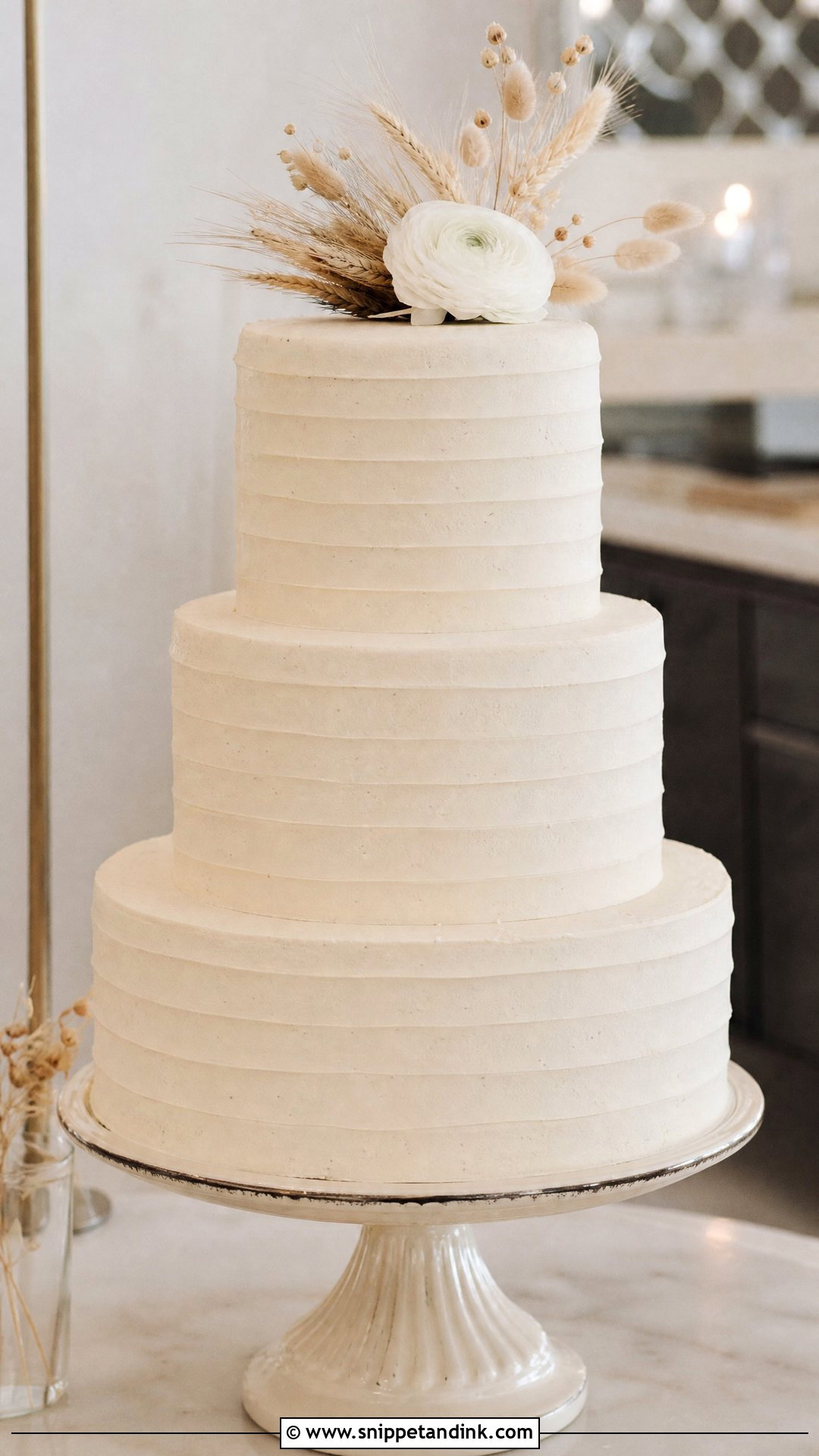
A textured buttercream wedding cake gets its movement from the frosting itself: soft horizontal lines, spatula marks or fine vertical combing. I make these with a textured scraper or a palette knife while the final coat is still soft. Texture is also forgiving, which makes it a smart pick for a warm day or a long drive. White or ivory keeps it clean, pale blush or beige adds warmth. It needs little or no topper.
12. Square Wedding Cake
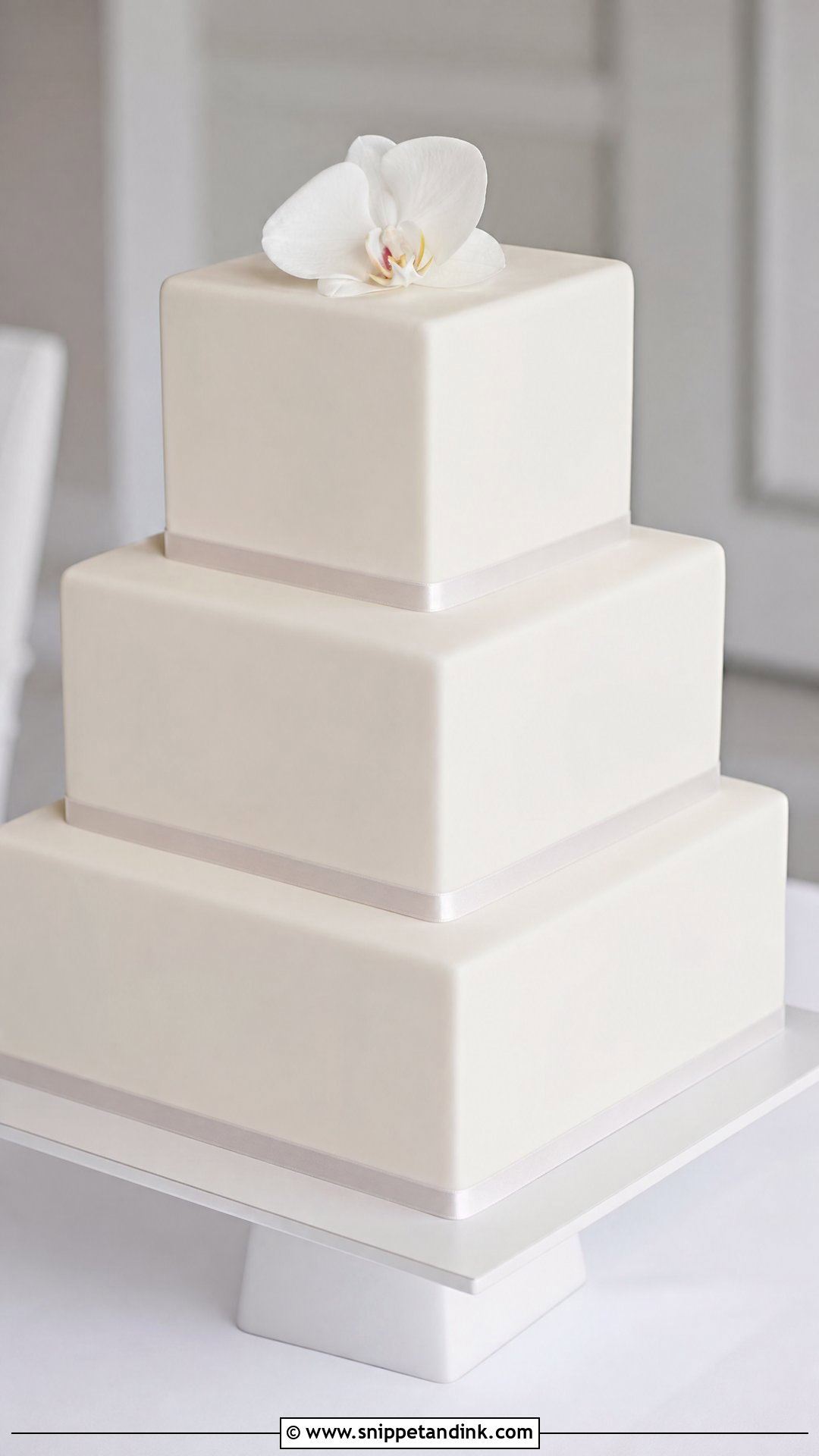
Square tiers look architectural because they’re less expected than rounds. Clean corners and smooth sides are the whole design. Buttercream corners soften in warm rooms, so I’d use fondant over ganache for a square cake at a summer wedding. Keep it to one or two tiers in white, ivory or pale grey, with a small flower cluster, slim ribbon or a few pearls. A plain stand keeps the outline clear. Squares also slice into very even portions.
13. Tall Wedding Cake
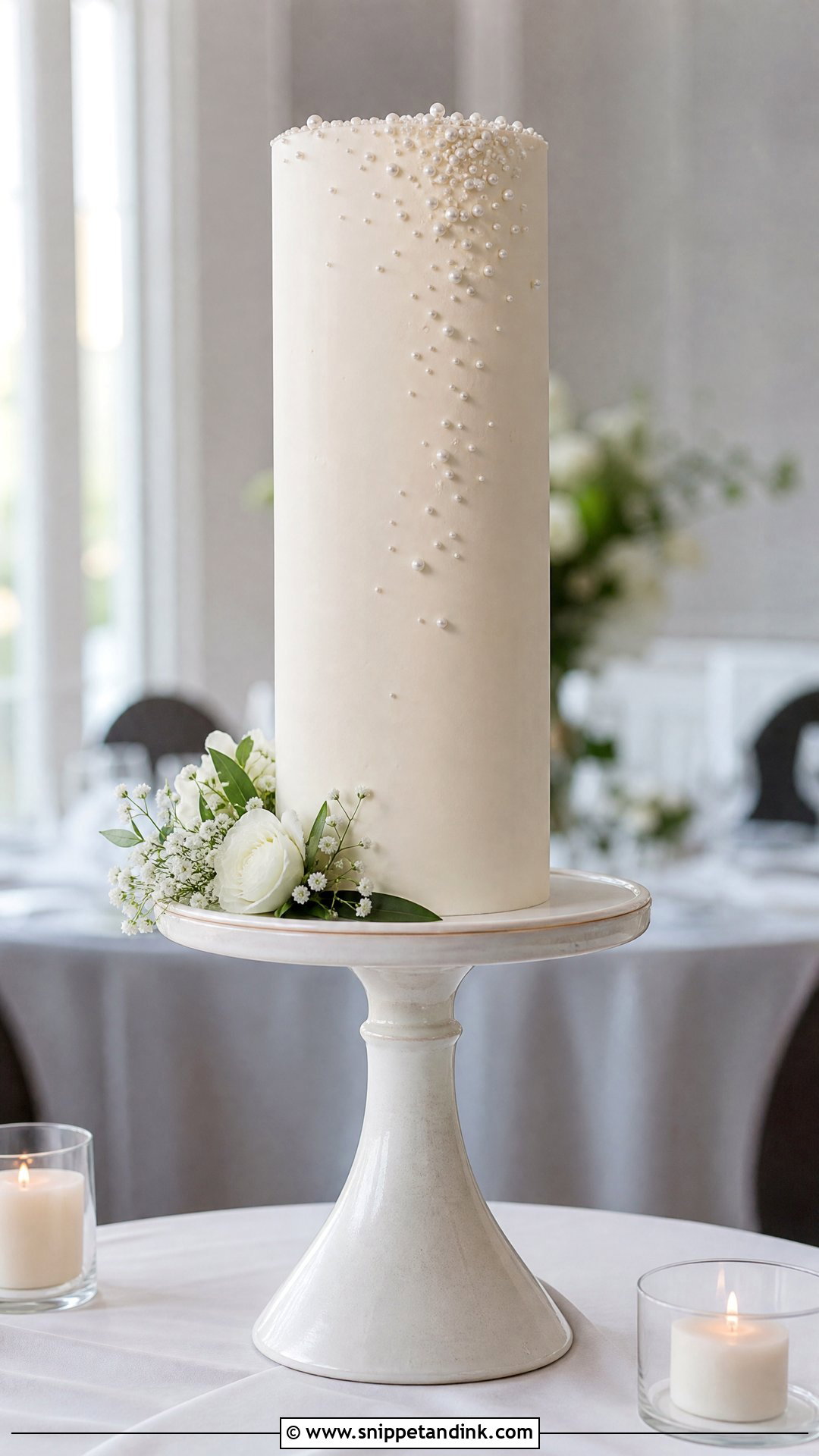
Extra-tall tiers give a cake presence through shape alone. A tall single tier looks chic at a small wedding; tall stacked tiers look sleek at a larger one. Anything taller than about six inches needs an internal board and supports partway up, otherwise the lower layers compress under the weight. Skip big toppers and busy patterns. Flowers at the base or one fine line of piping are enough.
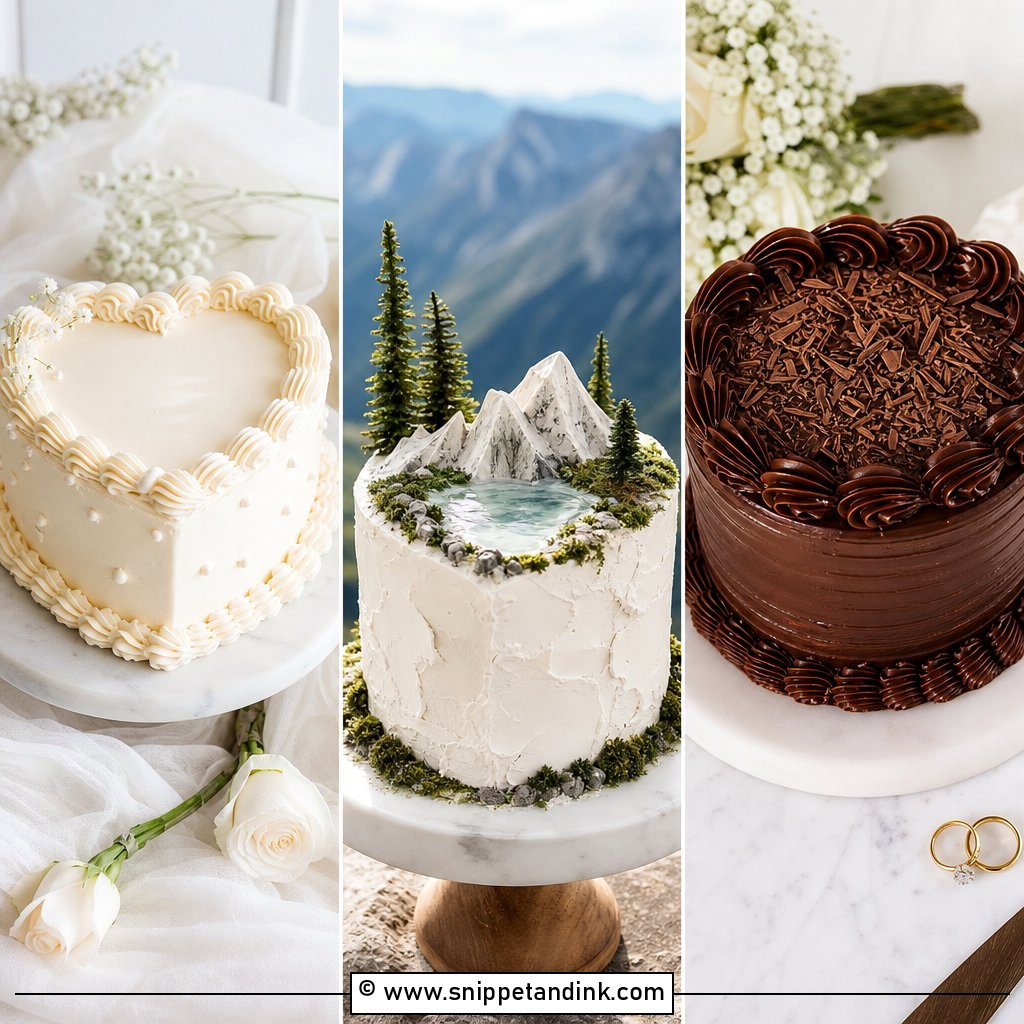
14. Heart Wedding Cake
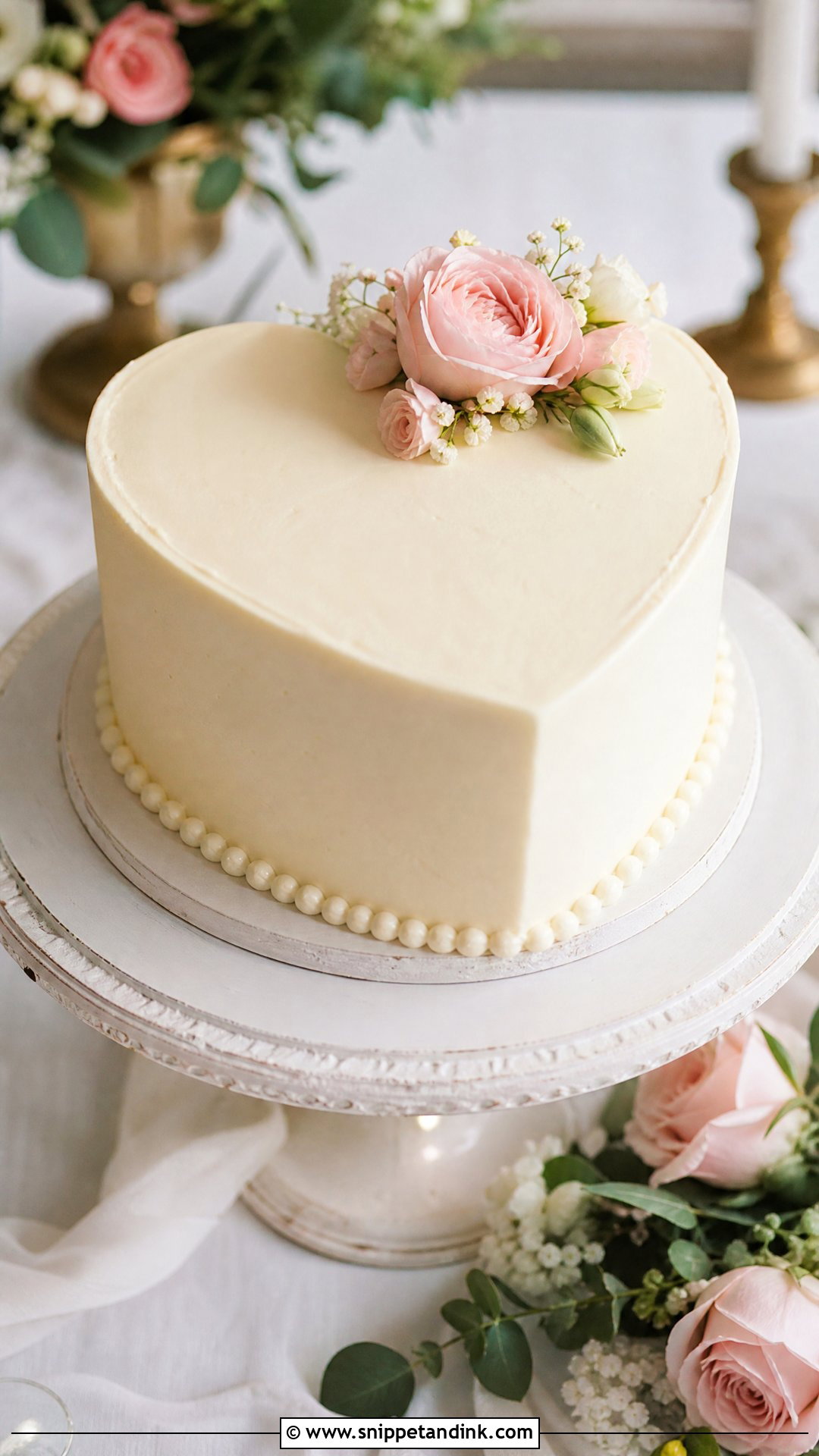
A heart wedding cake brings romance through its outline, which suits smaller weddings and couples who’d like something less traditional. Keep the frosting smooth and add a fine pearl border or a small flower cluster. Heart tins give slightly rounded points, so if you want a sharper tip, ask your baker to carve it. One tier suits an intimate reception, and stacked hearts give more servings. Soft colors stop it looking playful.


15. Marble Wedding Cake
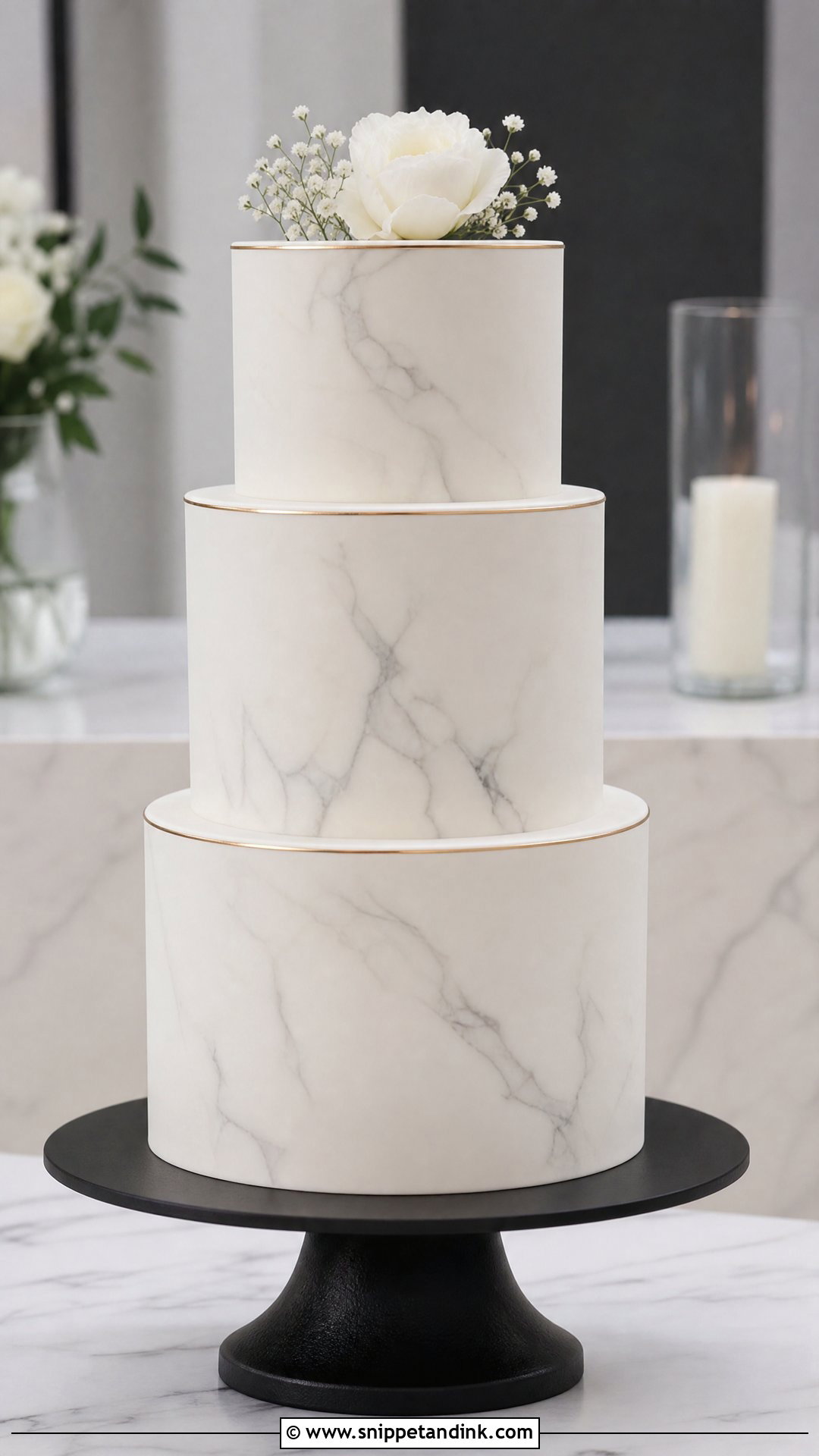
Marble gives pattern without any added decoration. Soft grey veining on white fondant looks like stone, and the trick is restraint: light, thin veins look real, while heavy dark streaks look like a smudge. I pair a marbled tier with a plain white one, sometimes with a thin metallic edge. It suits contemporary weddings, black-and-white palettes and city venues. A simple stand lets the veining show.
16. Gold Accent Wedding Cake
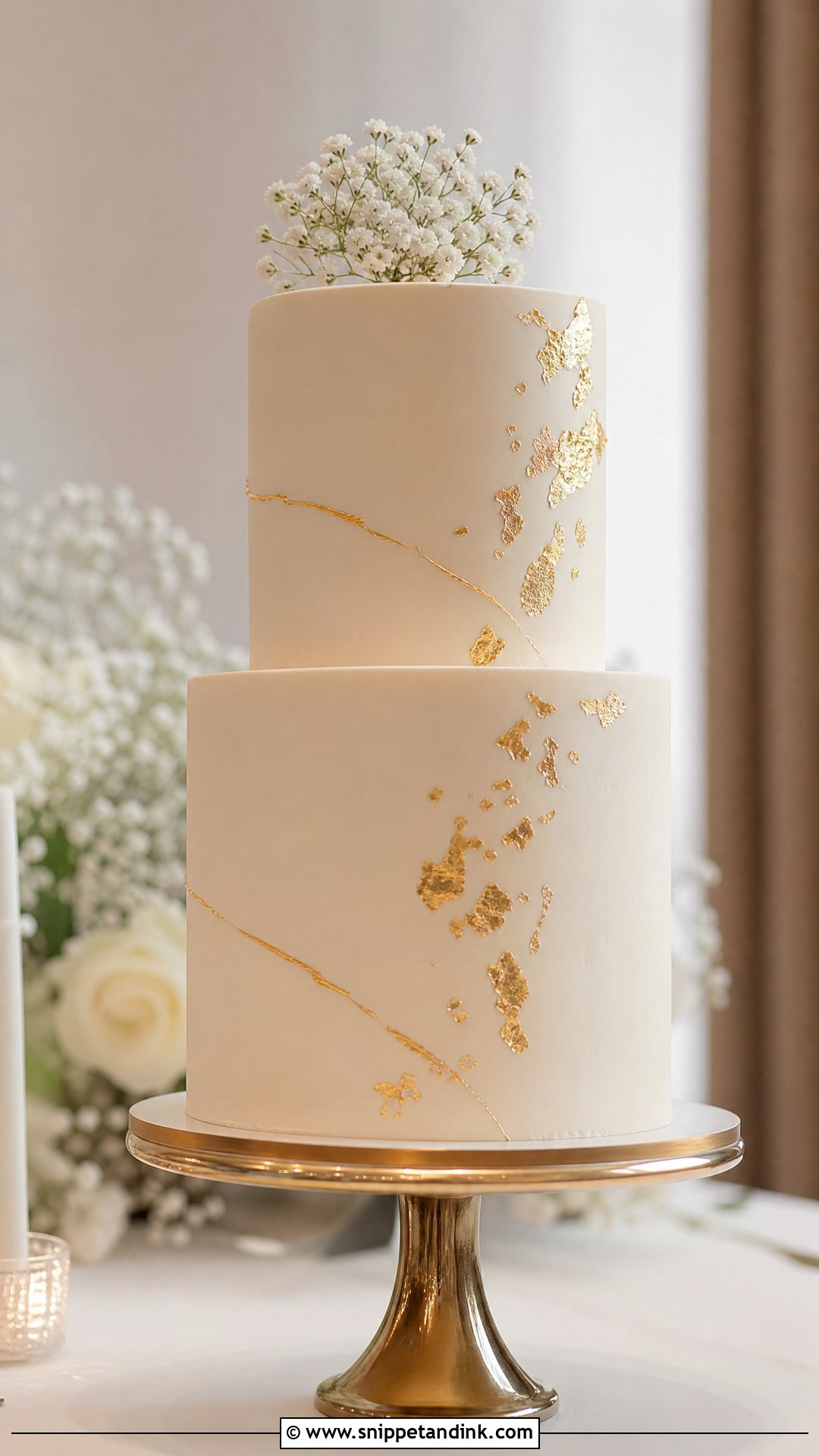
Gold stays minimal when it appears in small, clean touches: a thin painted line, a few brushed flakes or a narrow band at the base. Pair it with white, ivory or champagne buttercream for warmth. Painted gold looks smoothest on fondant; on buttercream I use leaf instead, since paint can streak across a soft surface. Avoid covering the whole cake. A little metal catches the candlelight at an evening reception.
17. Black And White Wedding Cake
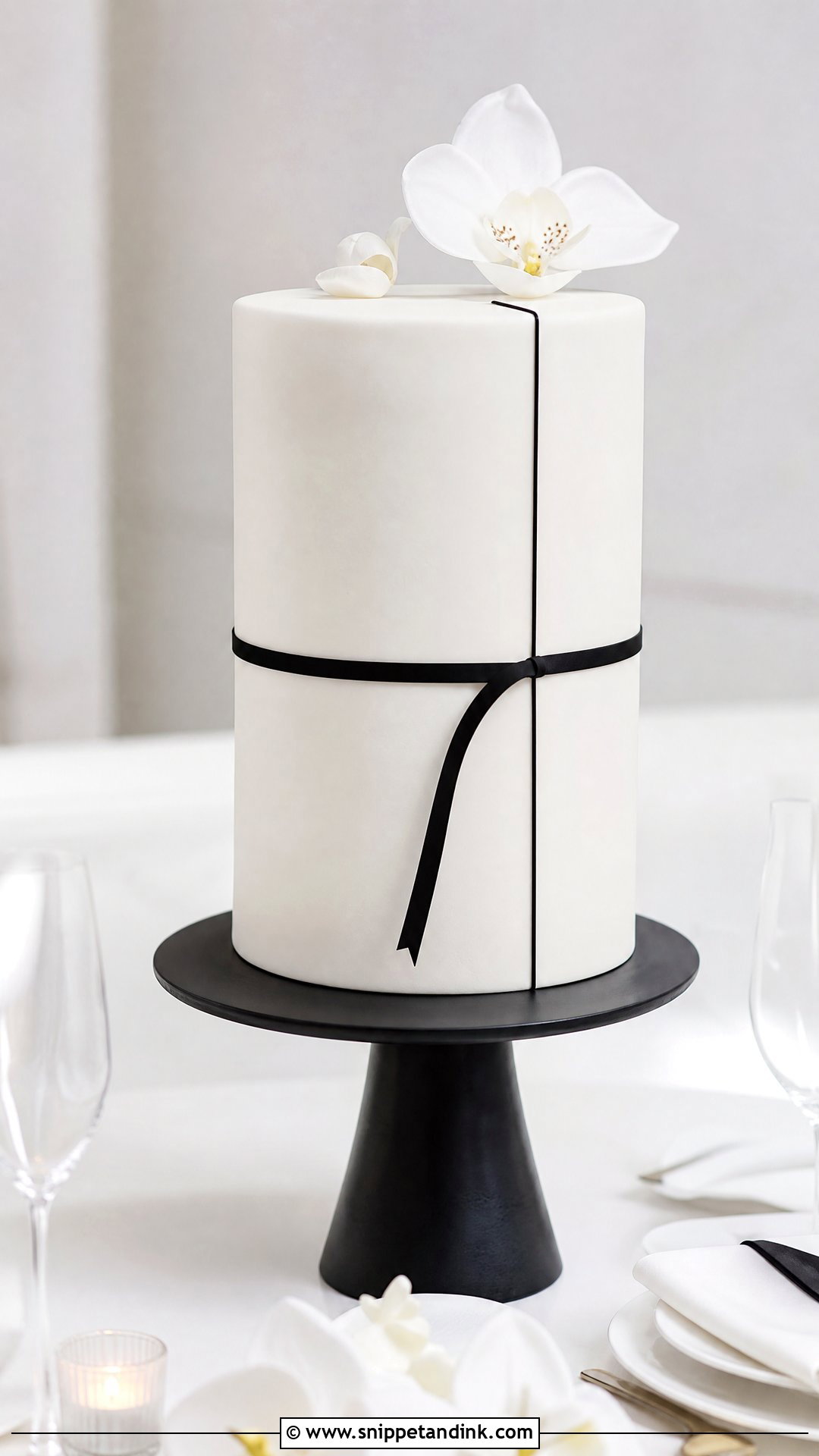
Black and white sounds bold, and it can still be minimal with one clean detail: a thin black ribbon, a slim line or a small bow on a white cake. A white tier over a black base gives a stronger look. Smooth finishes and no busy patterns keep it graphic. Black frosting does stain mouths and teeth, so I keep it on the outside of a fondant tier or use it only for thin accents.
18. Blush Wedding Cake
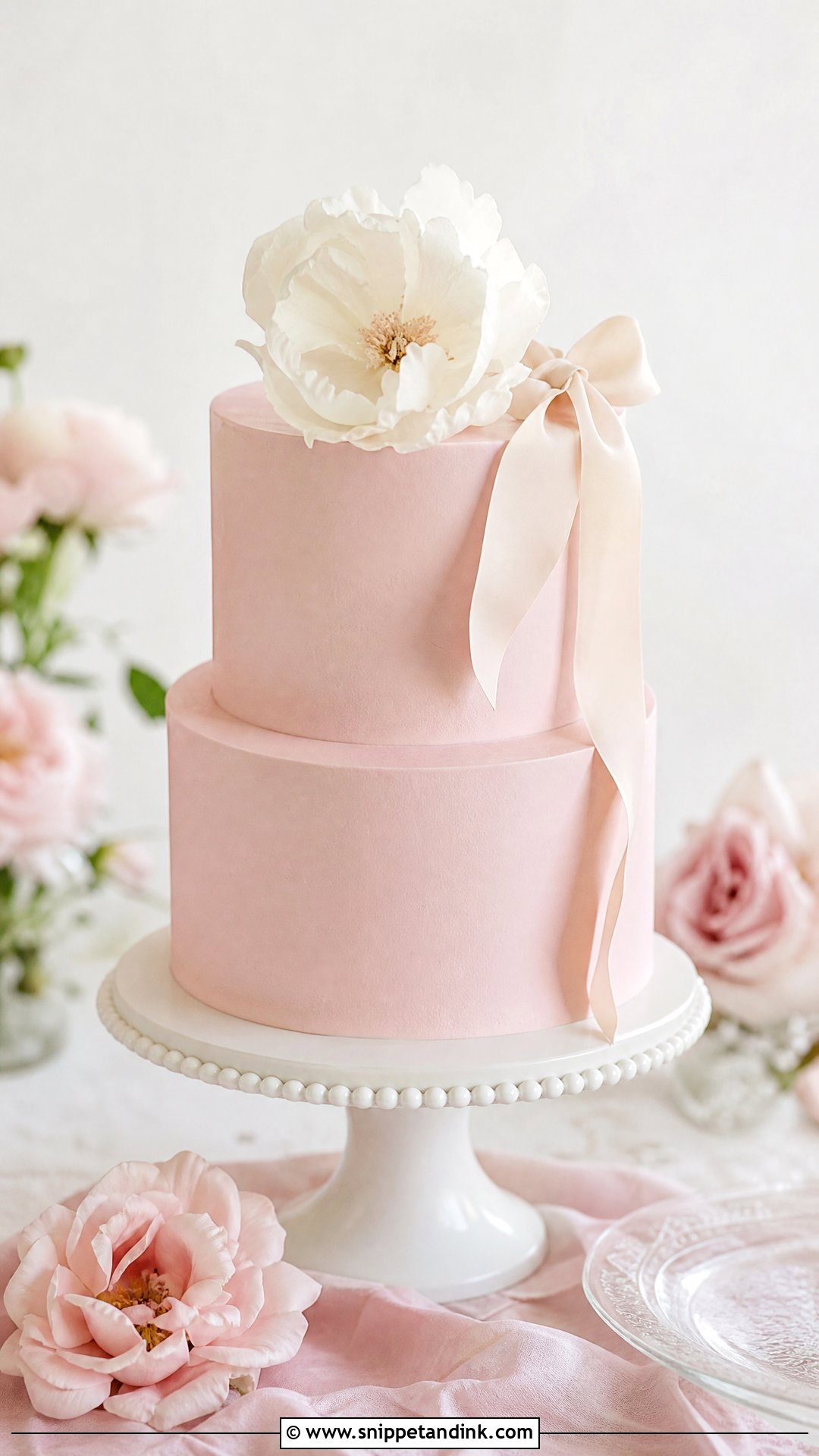
Blush adds color gently. Pale pink buttercream or fondant gives a romantic look without being bright, and the color itself is the feature. A single white flower, a pearl border or a soft ribbon completes it. The shade needs testing in daylight, since some pinks turn peachy under warm reception lighting. Vanilla, strawberry, almond and raspberry flavors suit it, and spring garden weddings suit it best.
19. Sage Green Wedding Cake
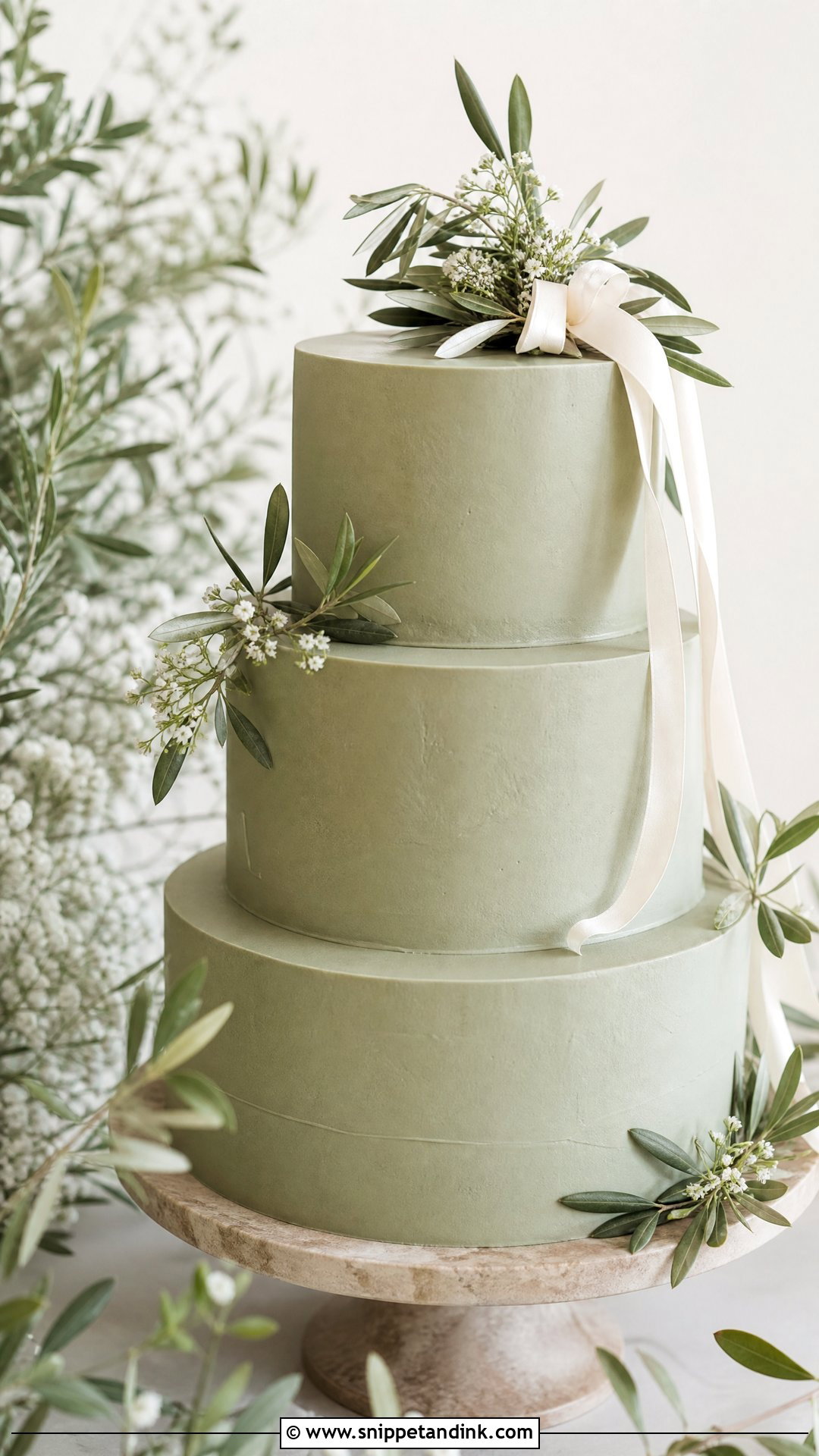
A sage green wedding cake brings color in a calm, earthy way. Smooth buttercream or fondant keeps sage looking modern rather than rustic. Getting the shade right is the hard part, as sage drifts toward olive or mint depending on the buttercream’s yellow tone, so I mix a sample to match against the couple’s swatch. One sage tier looks fresh; two or three feel formal. Tiny white blooms, olive leaves or an ivory ribbon are enough.
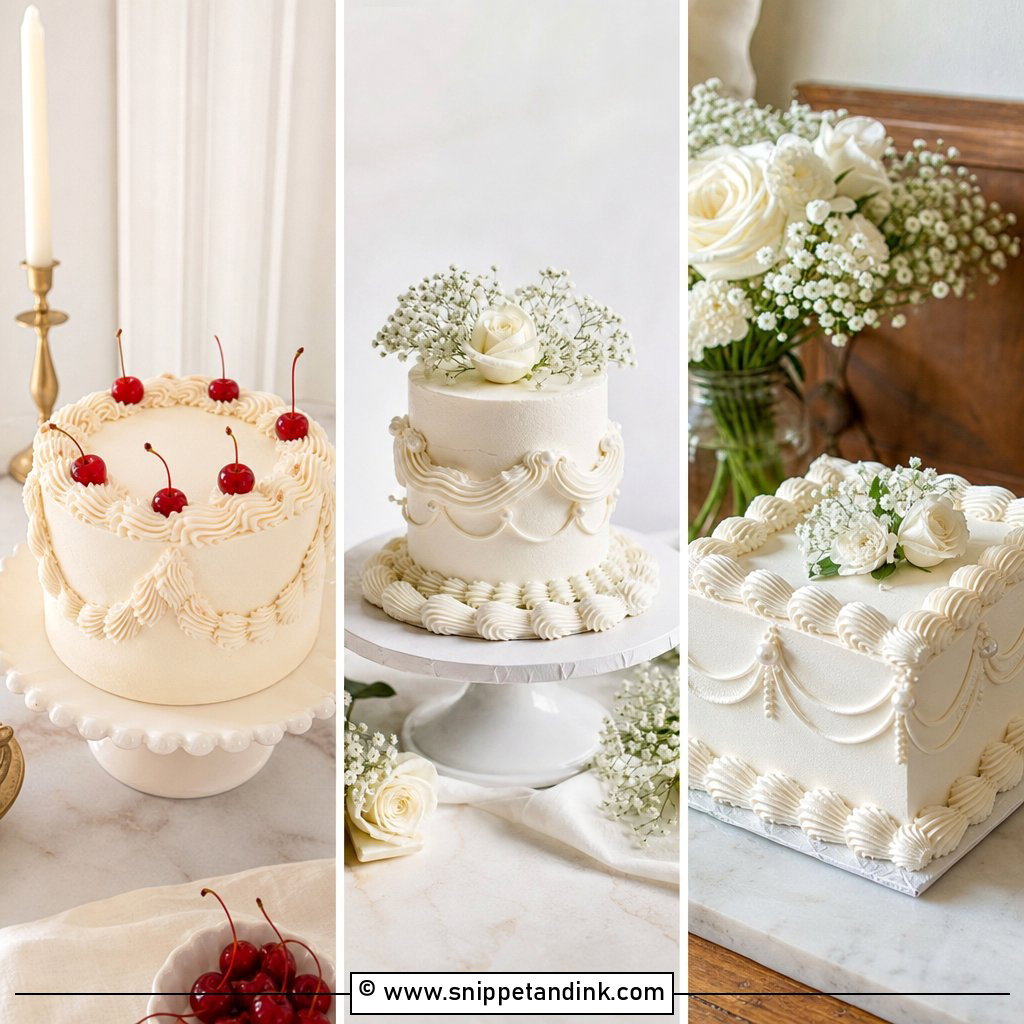



20. Mini Wedding Cake
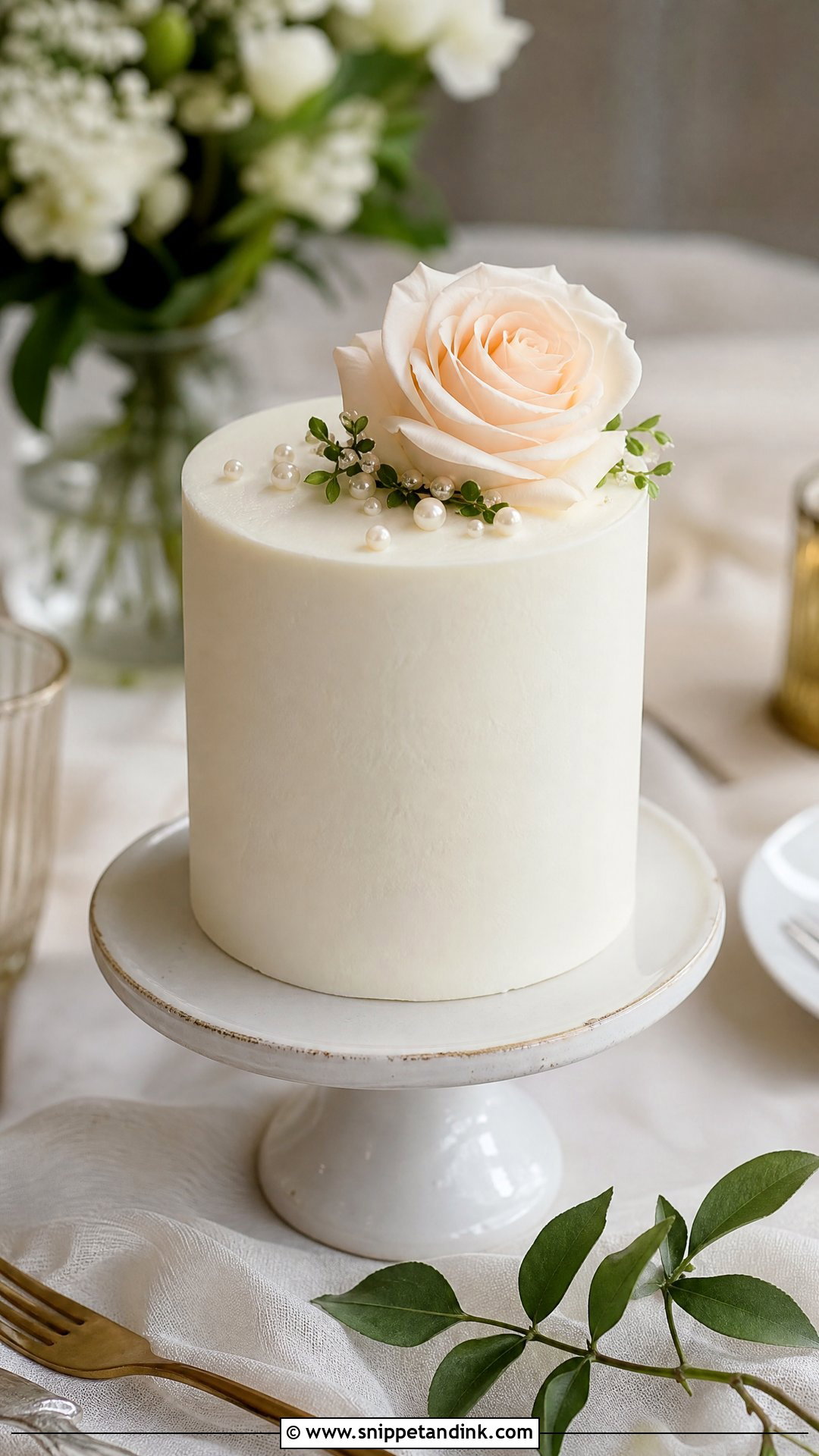
A mini cake gives you the cutting moment without a large centerpiece, which suits elopements, micro weddings and dessert tables. Smooth frosting, one bloom and a good stand look as considered as a big cake. You can also make it a cutting cake and serve sheet cake or plated dessert to guests. Avoid sprinkles and bright colors, which push it toward a birthday cake. Ivory buttercream and a simple topper keep it bridal.
Colored Frosting Shifts After It’s Mixed
On a cake with one color and no decoration, the shade has to be right. Colored buttercream keeps developing after mixing, usually getting darker over a few hours, so I mix colors the day before and judge them the next morning.
Sage and other muted greens
Butter is yellow, so green coloring added to buttercream leans olive. For a cooler sage, the base needs whitening first. Swiss meringue buttercream gives a paler base than butter-heavy recipes.
Blush
A touch too much pink coloring turns blush into candy pink. I add it a drop at a time and check it in daylight, then again under warm light, since reception lighting changes how pink reads.
Black
True black takes a lot of coloring and can taste bitter in buttercream. I start from chocolate buttercream to need less color, or use black fondant for larger areas. Either way, keep black to the outside or to slim accents.
Sunlight fades colored frosting too. Pinks and purples are the quickest to dull, so a pale cake set out by a window or under a garden tent for hours may look washed out by the cutting. Keep colored cakes in shade until they’re needed, and send your baker a fabric swatch rather than a screen photo, since phone screens shift color.
One Detail, Done Well, Is the Whole Design
A minimal cake makes every choice count. Shape, texture, color and placement do the work that piped decoration does on a busier cake. White buttercream reads classic; square tiers, marble or black and white read modern. Blush, sage, pearls, ribbon and greenery add personality without crowding. Settle your guest count and venue first, then the finish, and give your baker clear photos of the exact edge and color you want.
You'll Like These Ideas:




Leave a Reply