
A garden cake works when it looks like a small piece of a real garden: petals at different stages, greenery with some movement, and a few butterflies that seem to have wandered in. It fails when it looks like a plain cake with toppers stuck on. That difference is mostly about placement and restraint, and it’s what I spend the design meeting on. The theme bends toward rustic, vintage, modern or formal depending on the frosting and flowers, and it’s happiest at spring and summer weddings, in greenhouses and at outdoor receptions. Below are twenty ways to build one, with notes you can pass straight to your baker.
Which Garden Flowers Can Actually Touch Icing?
A garden cake almost always includes real flowers, and this is the conversation I have before anything else. Plenty of favorite wedding flowers are not edible, and a few are toxic. Florist flowers are also typically grown with pesticides, even the edible kinds.
Usually fine when grown for eating
Pansies, violas, calendula, nasturtiums, cornflowers, chamomile, borage, culinary lavender and unsprayed rose petals. Buy these from a grower who sells them for food.
Keep away from the cake, or use in sugar instead
- Hydrangea, sweet pea, lily of the valley, foxglove, delphinium and calla lily are not edible and some are toxic.
- Ranunculus and anemone can irritate skin and should not sit in icing.
- Gypsophila sheds and can irritate; wrap and pick it if you use it at all.
Anything non-edible can still decorate the cake if its stem is wrapped in floral tape, set into a food-safe pick, and the flowers are removed before cutting. Or I make that flower in sugar, which looks the same in photos and solves the problem entirely.
1. Butterfly Garden Wedding Cake With Fresh Flowers
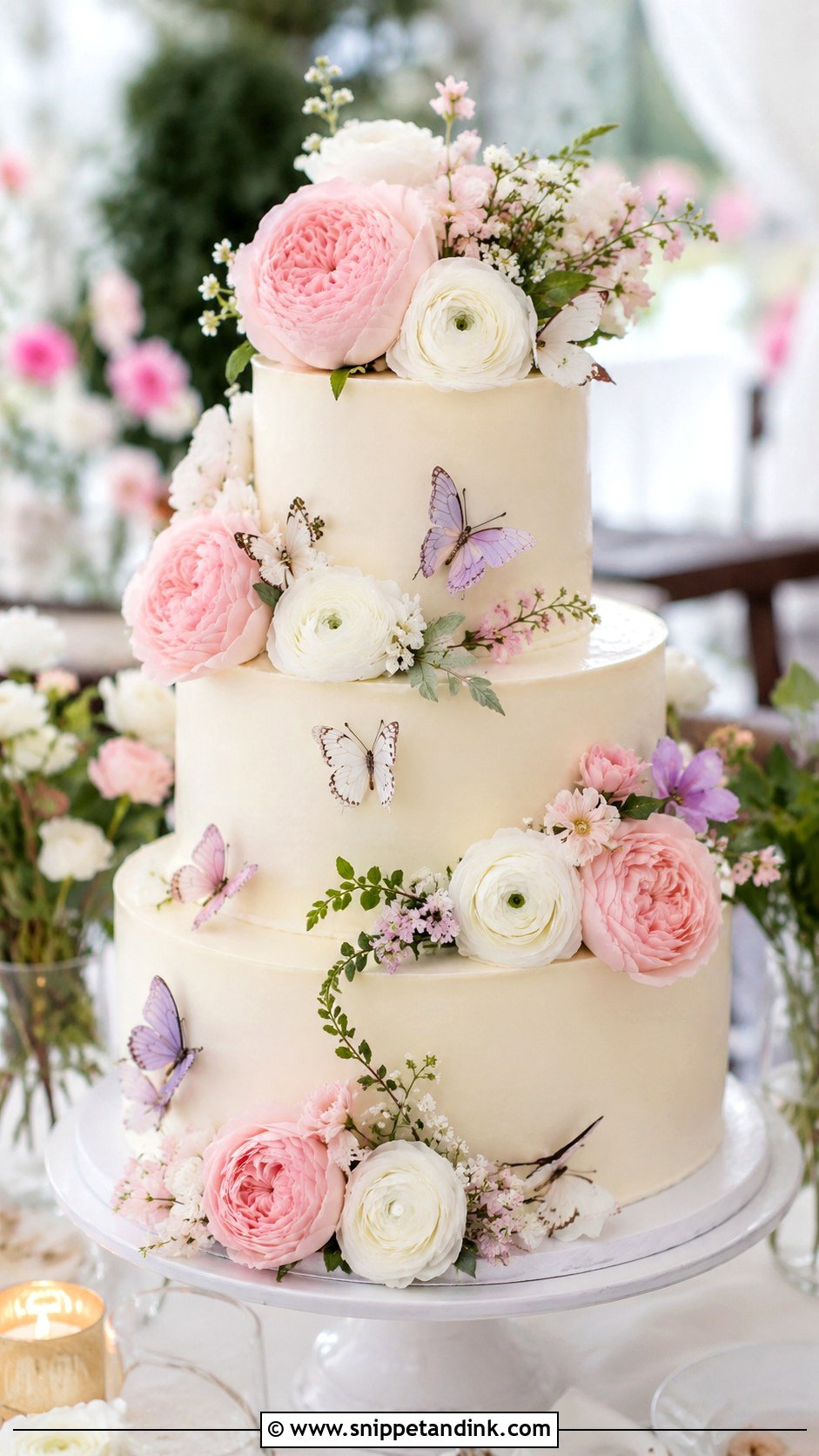
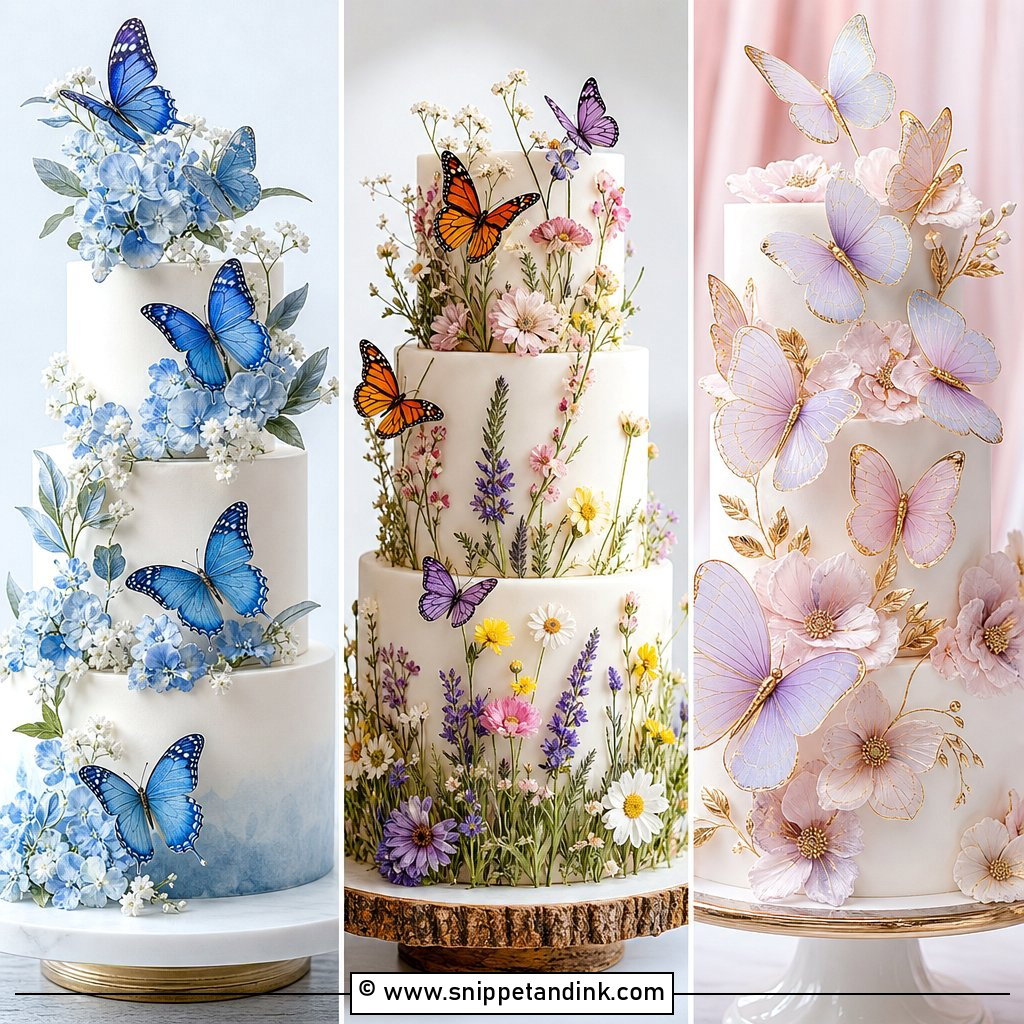
Fresh flowers make the dessert table feel alive, and they’re the most common request I get for this theme. Picture a tall ivory buttercream cake with garden roses, ranunculus and sweet peas, and small wafer butterflies tucked among them. The flowers should look as if they’re growing around the tiers, so I leave bare icing between clusters rather than covering everything. Some of those blooms aren’t safe to touch food, which is why stems get wrapped and set in picks. Light sponges such as vanilla, almond, lemon or elderflower suit the fresh look.
2. Butterfly Garden Wedding Cake With Pressed Flowers
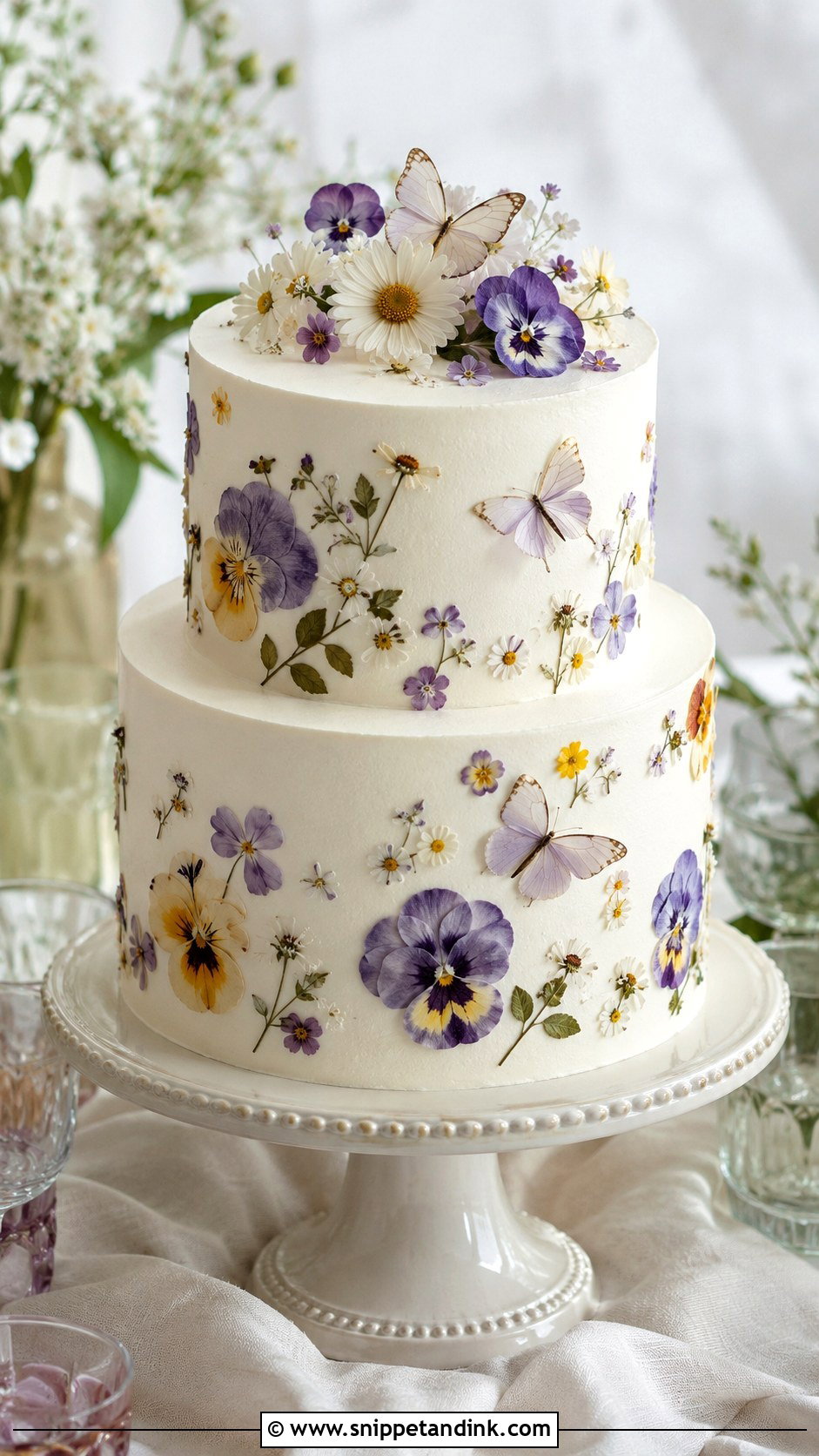
Pressed flowers look handmade and gentle, laid flat like a meadow against smooth white or pale blush buttercream. Small wafer butterflies in soft yellow, lavender or ivory can look as if they’ve just landed on them. I fix the petals with a light brush of piping gel and keep them well spaced. Crowd them, and too many pressed petals turn the cake busy. Pressed petals also darken if they sit on moist icing for a long time, so they go on close to the event.
3. Butterfly Garden Wedding Cake With Sugar Flowers
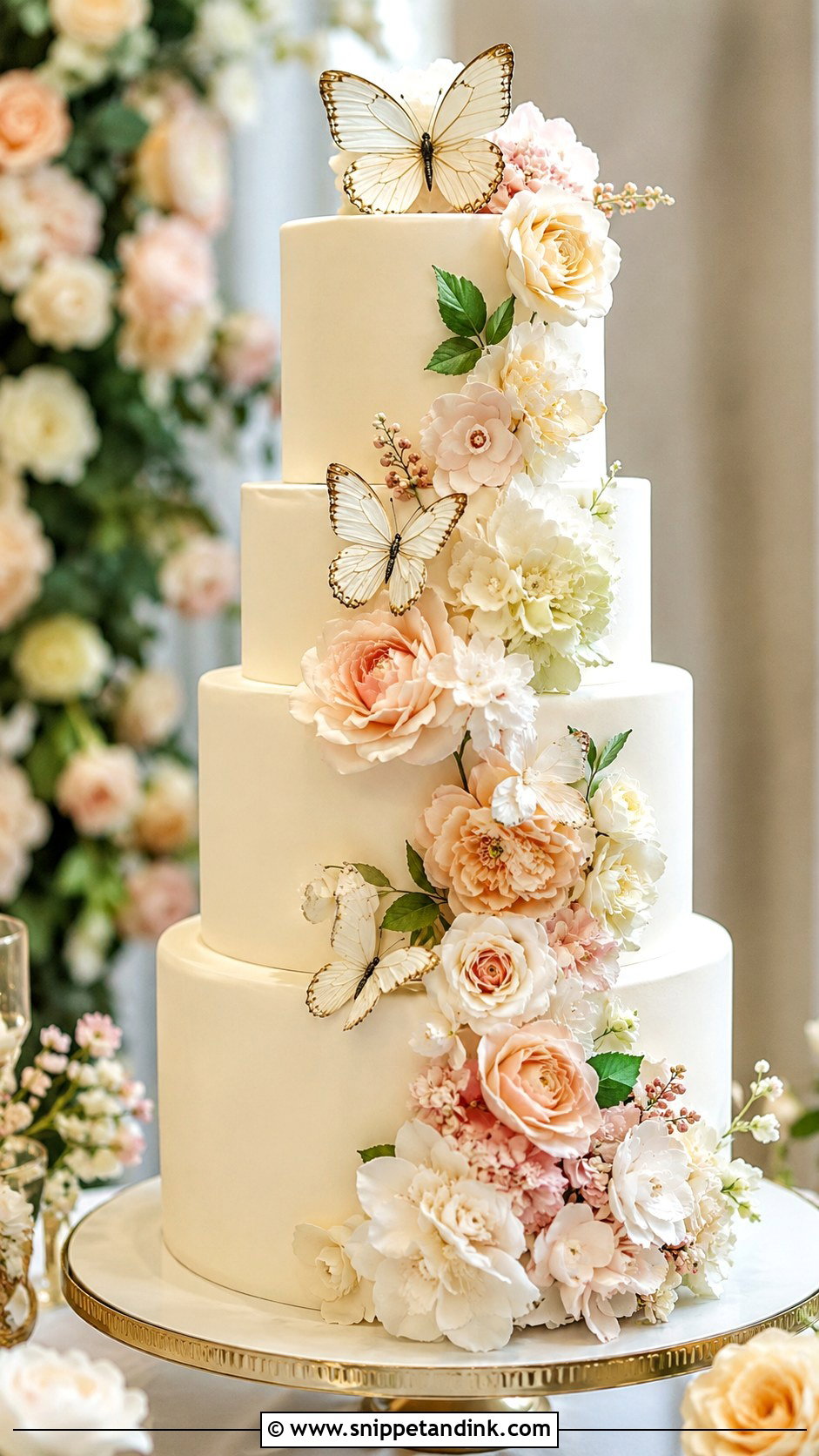
Sugar flowers are my answer for a hot venue. Handmade gum paste roses, peonies, hydrangeas and blossoms won’t wilt, and I can match them to your bouquet petal for petal. They take time, though, often many hours for a large peony, so they’re one of the first things to book. A three- or four-tier fondant cake shows them off best, with a few butterflies around the clusters for movement. Ivory, sage, blush and champagne keep it classic. Sugar flowers can also be kept afterwards if you store them somewhere dry.
4. Butterfly Garden Wedding Cake With Wafer Paper Butterflies
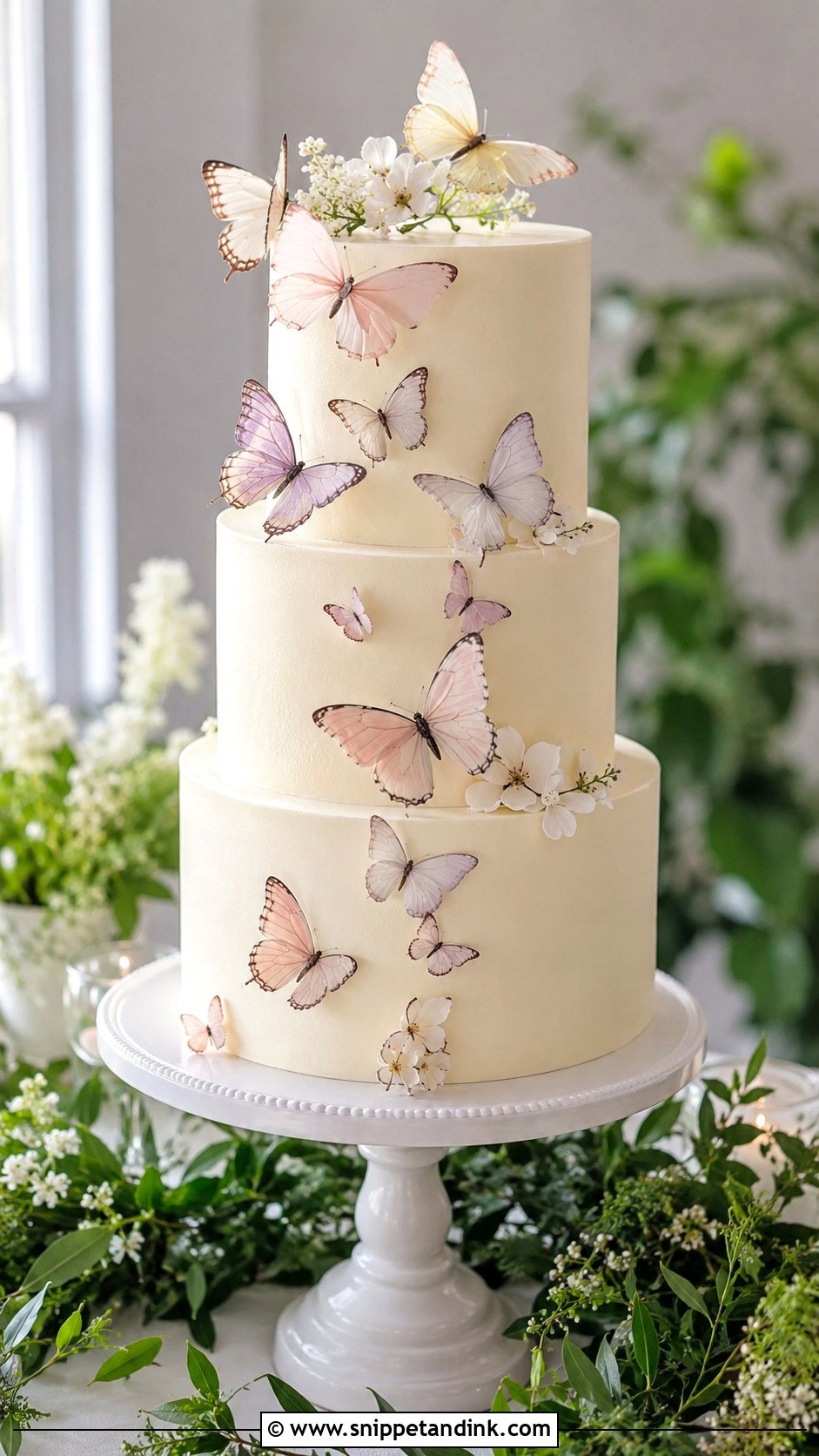
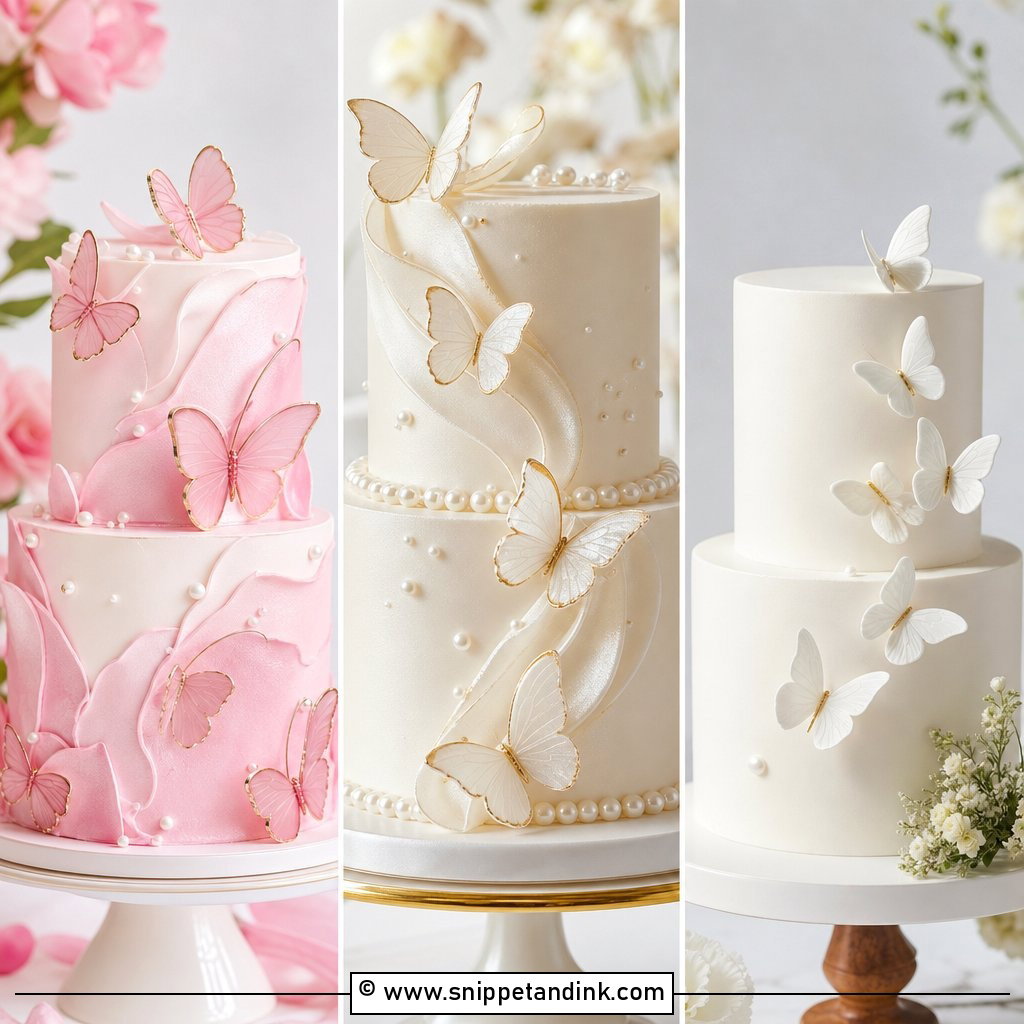
Wafer paper is the lightest material I can use for wings, thin enough to bend into a lifelike angle. I set them in an upward trail around the tiers so they appear to fly through the flowers. A simple base helps them stand out: smooth buttercream, pale fondant, or very light texture. Monarch colors look realistic, pastels look softer, and all-white butterflies look bridal. The thing to plan around is humidity. Wafer paper goes limp in damp air or against wet icing, so for an outdoor summer reception I attach them at the venue.
5. Butterfly Garden Wedding Cake With Buttercream Flowers
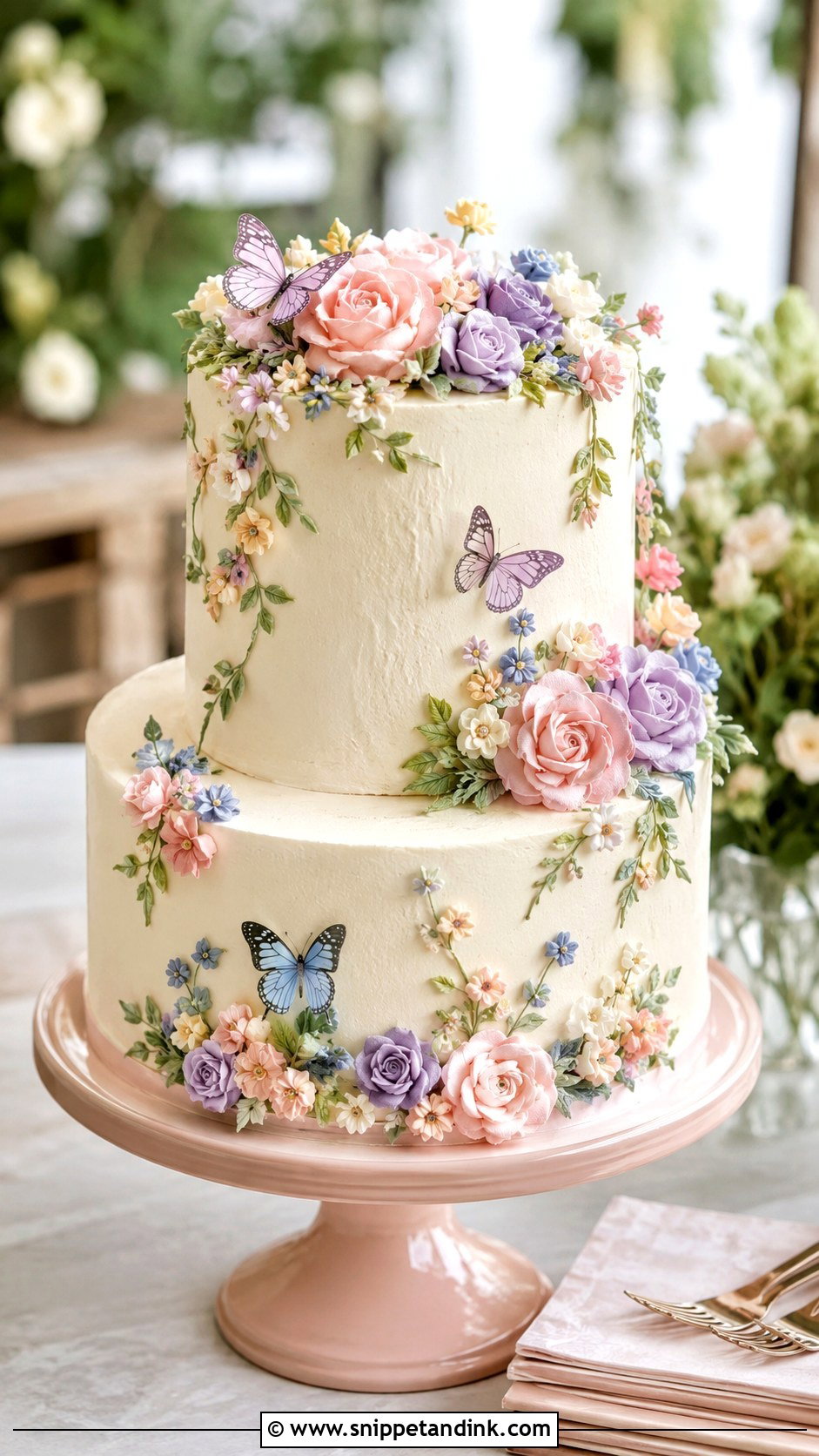
Piped buttercream flowers keep everything edible. Roses, daisies, blossoms and tiny leaves go straight onto the cake, using different piping tips for each petal shape. A pale vanilla base takes blush, lilac, peach and sage piping well. Add a few edible butterflies across the floral areas and it’s done. The limitation is heat: piped petals soften and lose definition in a warm room, so this one needs a cool space or a short time on display.
6. Butterfly Garden Wedding Cake With Pastel Colors
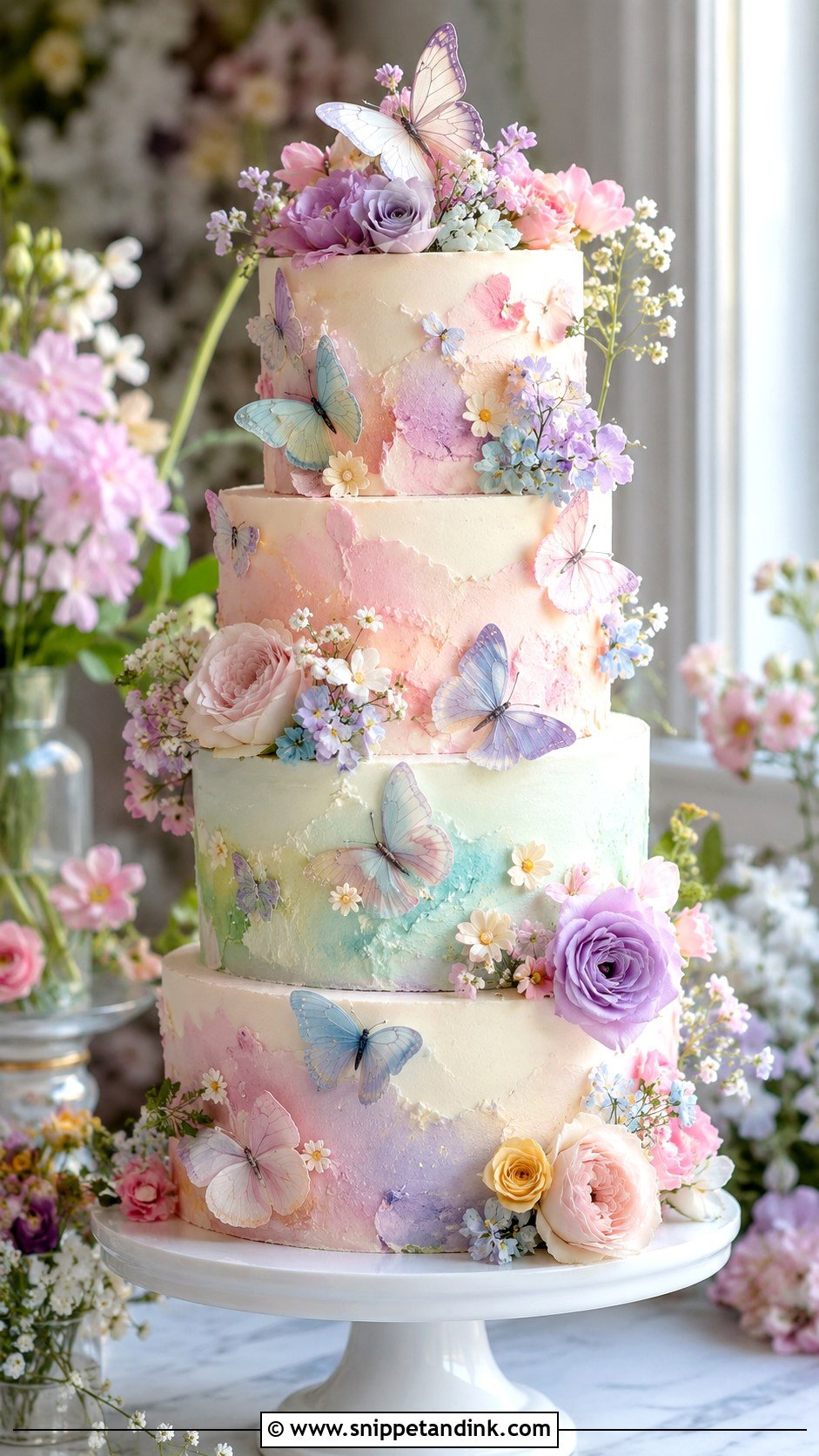
Pastels give the cake spring energy. A watercolor buttercream in blush, lavender, pale blue, mint and soft yellow, blended with a palette knife, replaces plain white. Matching flowers and butterflies tie it together. The risk is candy colors, so I mute each shade with a touch of ivory before mixing. Daytime garden weddings suit it best. A white stand, linen cloth and fresh greenery round it out.
7. Butterfly Garden Wedding Cake With Lavender Flowers
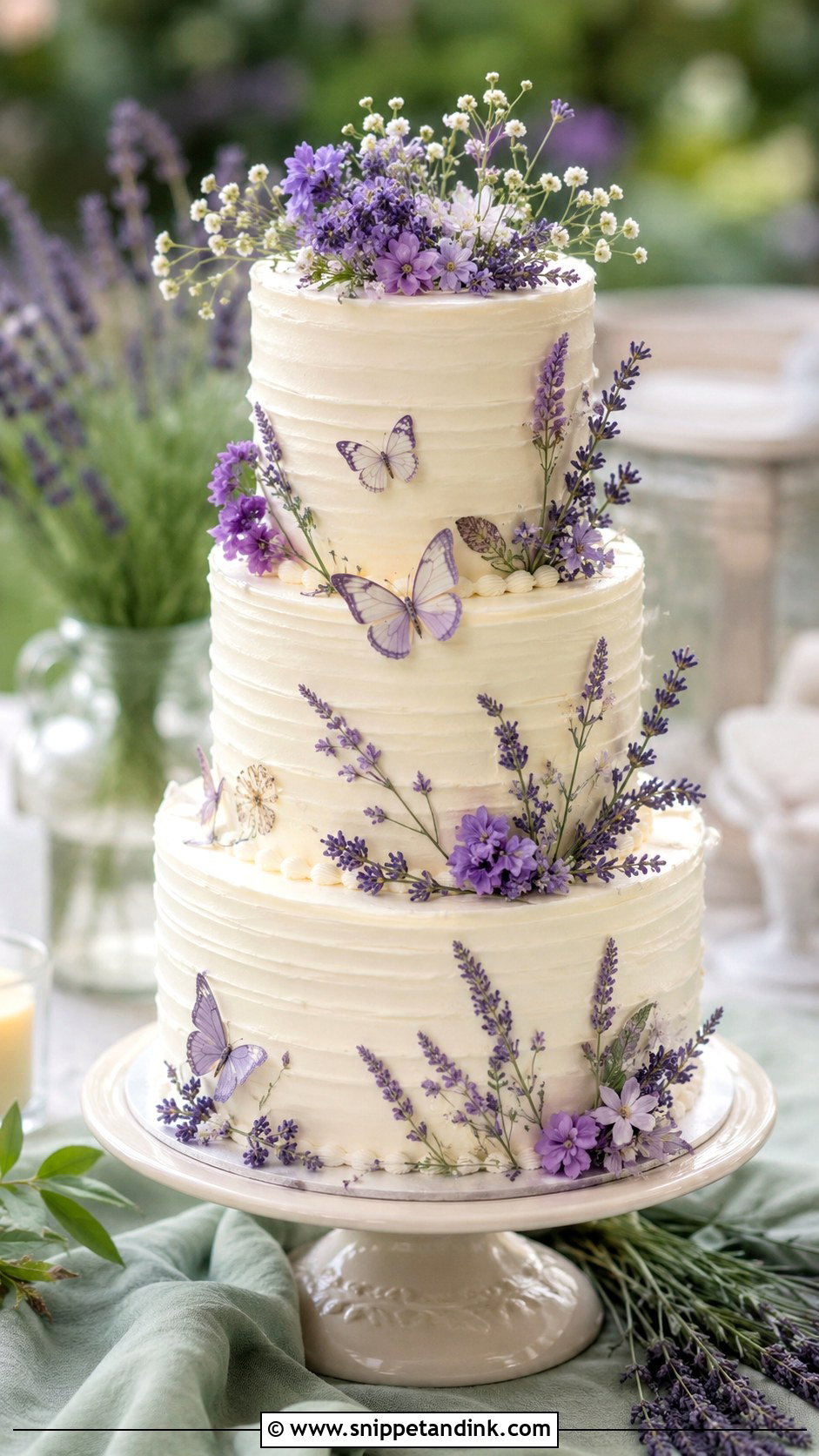
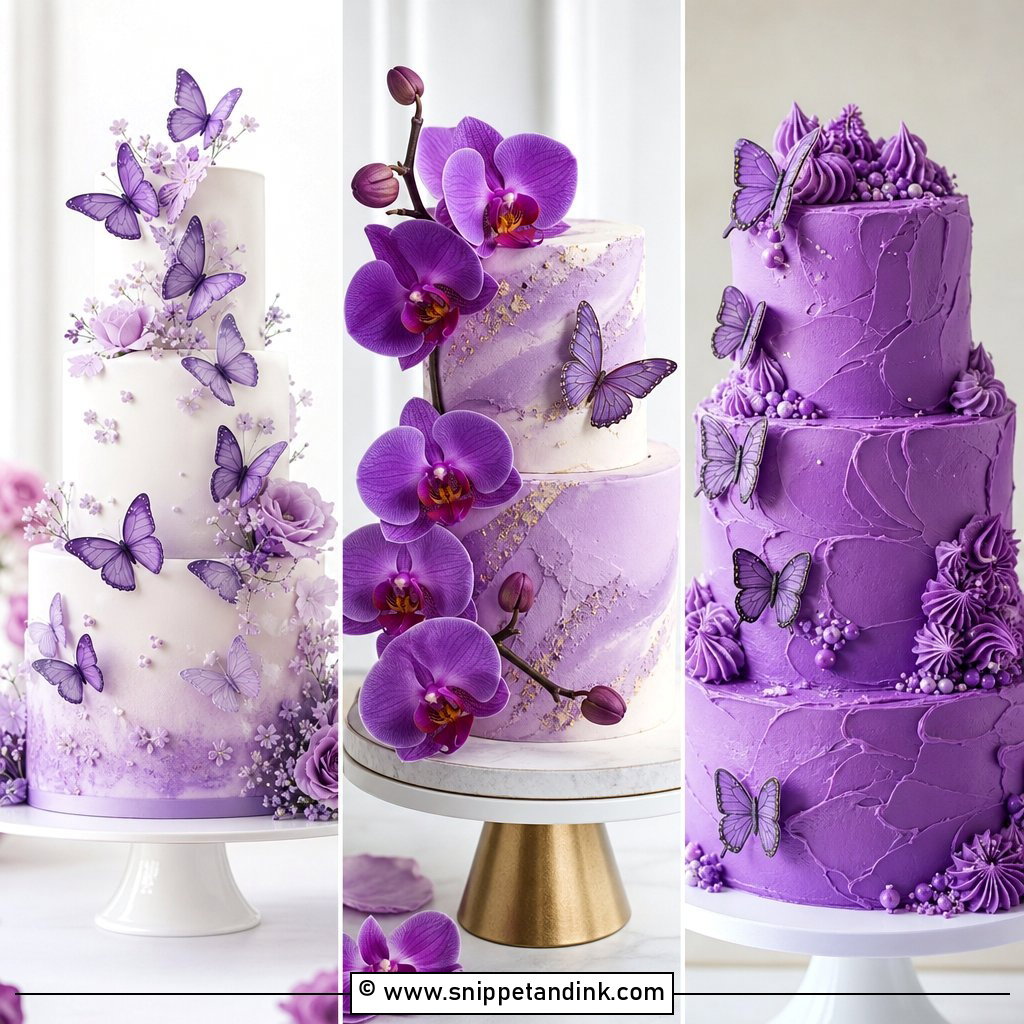
Lavender is fragrant and calm on a cake. Ivory buttercream with small sprigs, purple sugar blossoms and pale lilac wafer wings suits countryside weddings and greenhouse receptions. Use culinary lavender if any of it is going on or in the cake; it’s grown for food and is milder. A lavender flavor needs a light hand too, as too much tastes like soap. Lemon lavender or vanilla honey sponge pairs nicely. A few trailing vines or tiny white flowers soften the purple.
8. Butterfly Garden Wedding Cake With Pink Roses
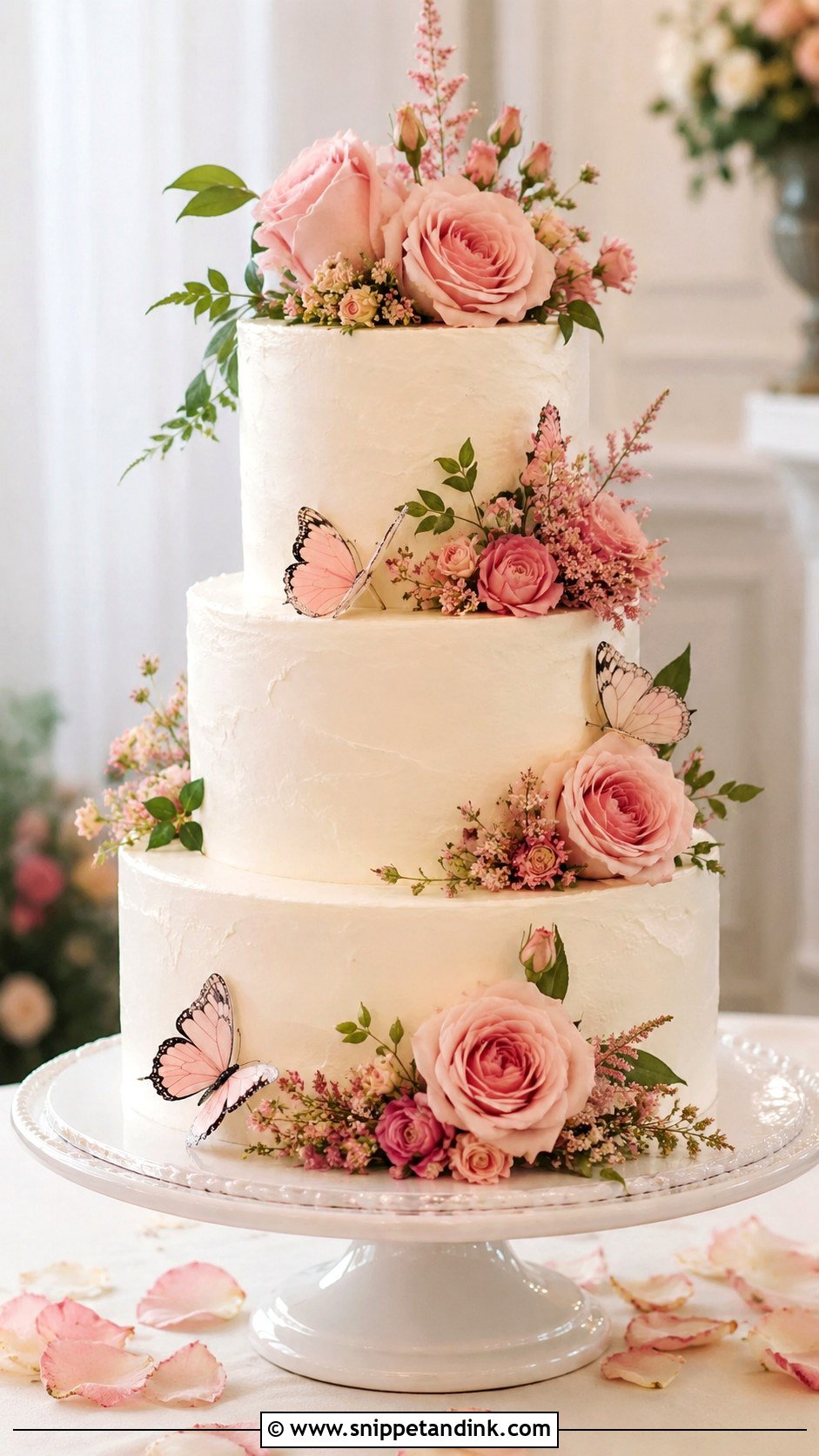
Pink roses are the safest bet if your bouquet already has them, because the cake can repeat the same story. Blush, dusty rose and soft peach around smooth white tiers, with small butterflies near the clusters, looks romantic. I arrange roses asymmetrically so they look freshly picked rather than lined up. Florist roses are usually treated with pesticides, so those stay wrapped and away from the slices. Vanilla bean, strawberry cream or champagne sponge suits it.
9. Butterfly Garden Wedding Cake With Wildflowers
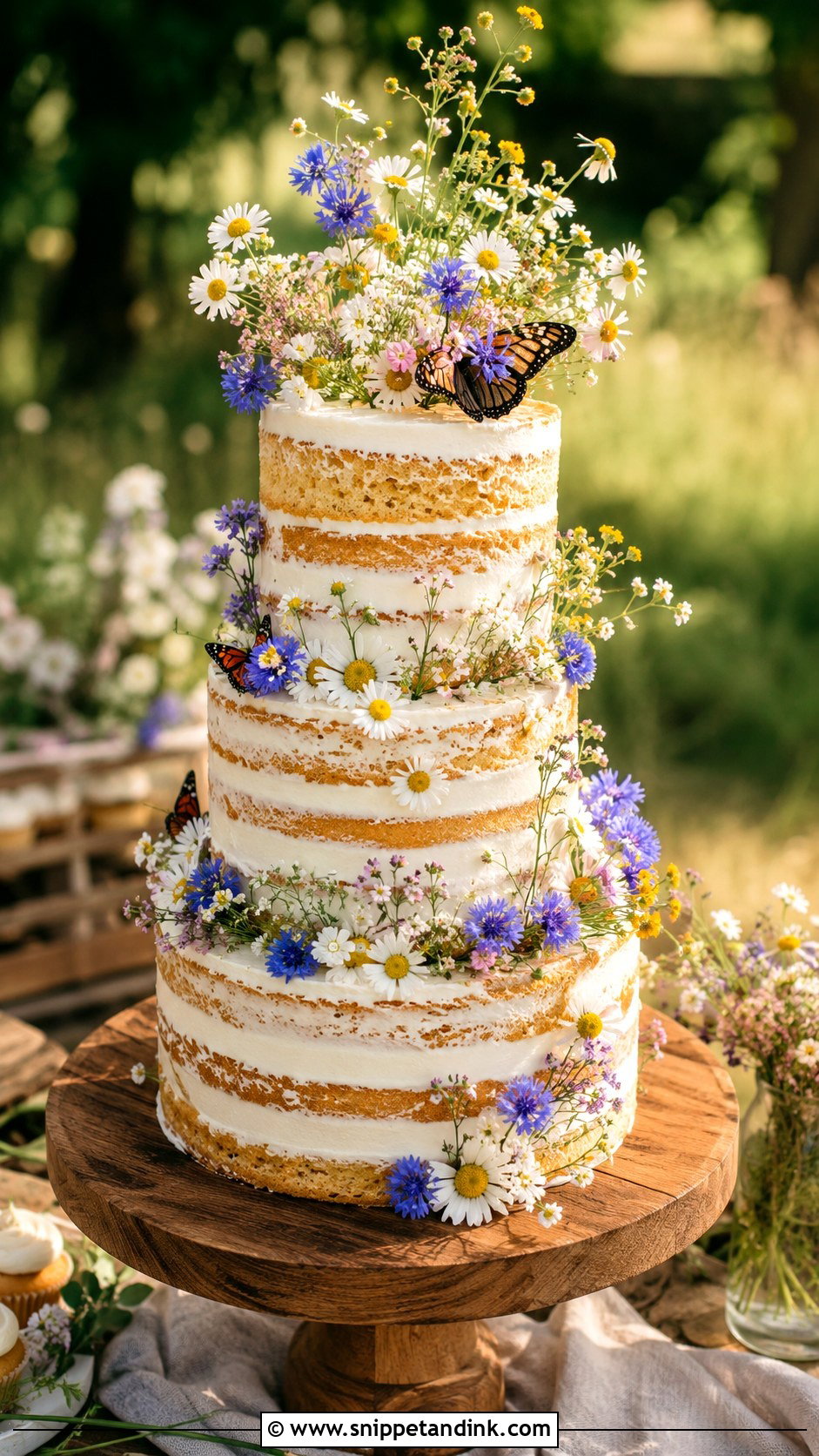
A wildflower butterfly garden wedding cake is the relaxed one. Daisies, chamomile, cornflowers, small blossoms and wispy greenery replace formal roses, with wafer wings in natural colors. Semi-naked or lightly textured buttercream suits it, as does a simple ivory finish. It belongs at barn weddings and backyard receptions. Wildflowers bought from a florist are not automatically food-safe, so ask where they’re grown. A slightly imperfect, airy arrangement is exactly what you want here.
10. Butterfly Garden Wedding Cake With Green Vines
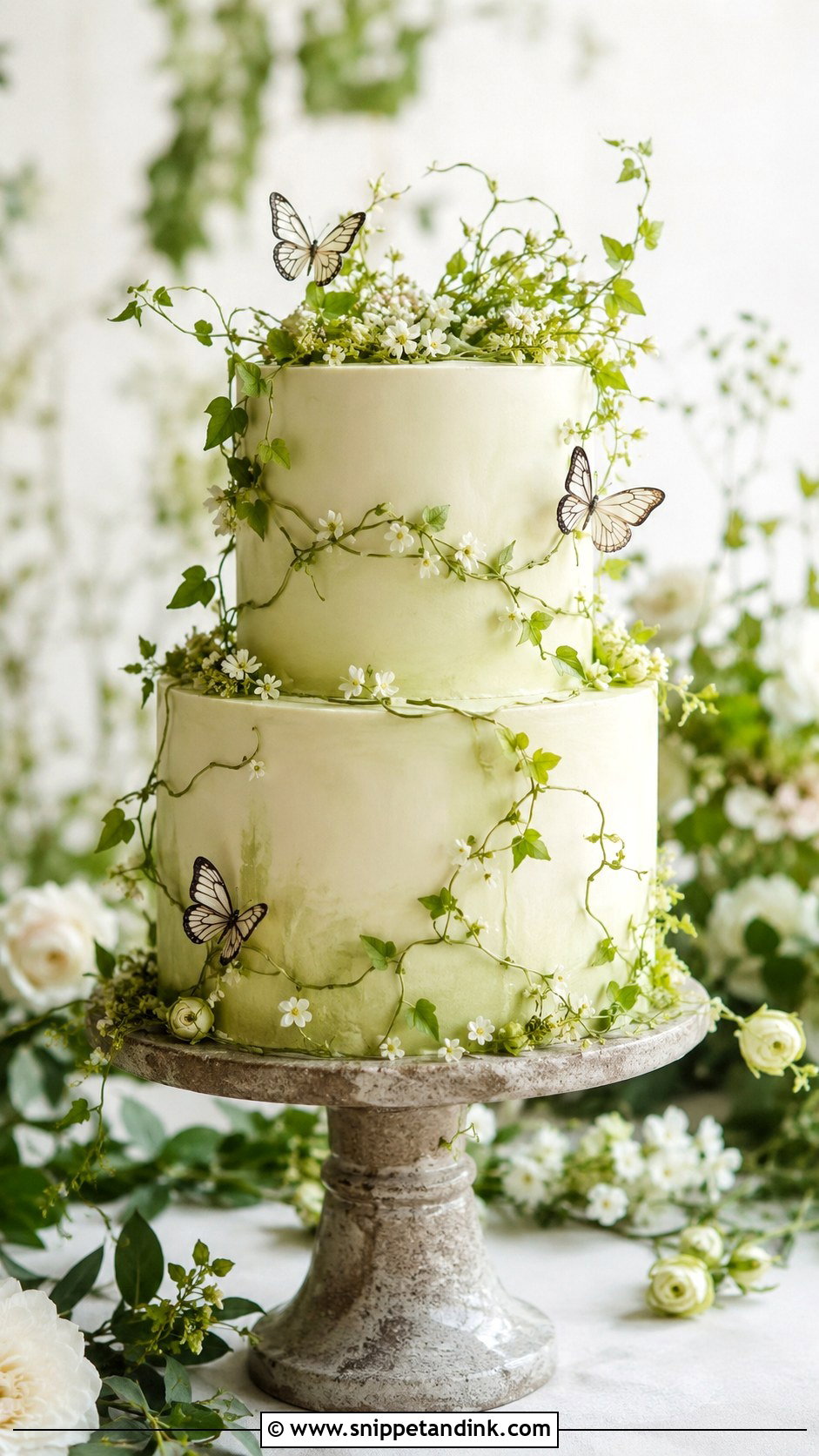
Vines turn a simple cake into a garden wall. Trailing greenery, small blossoms and tiny butterflies wrapping around white or ivory tiers feel fresh and clean. I prefer piped or sugar vines when they need to climb the full height, as real trailing stems droop and lean during an evening. It suits couples who prefer greenery to heavy flowers. A few white sugar blooms keep it bridal. Lemon, vanilla, pistachio or almond sponge matches the green palette.
11. Butterfly Garden Wedding Cake With Blue Flowers
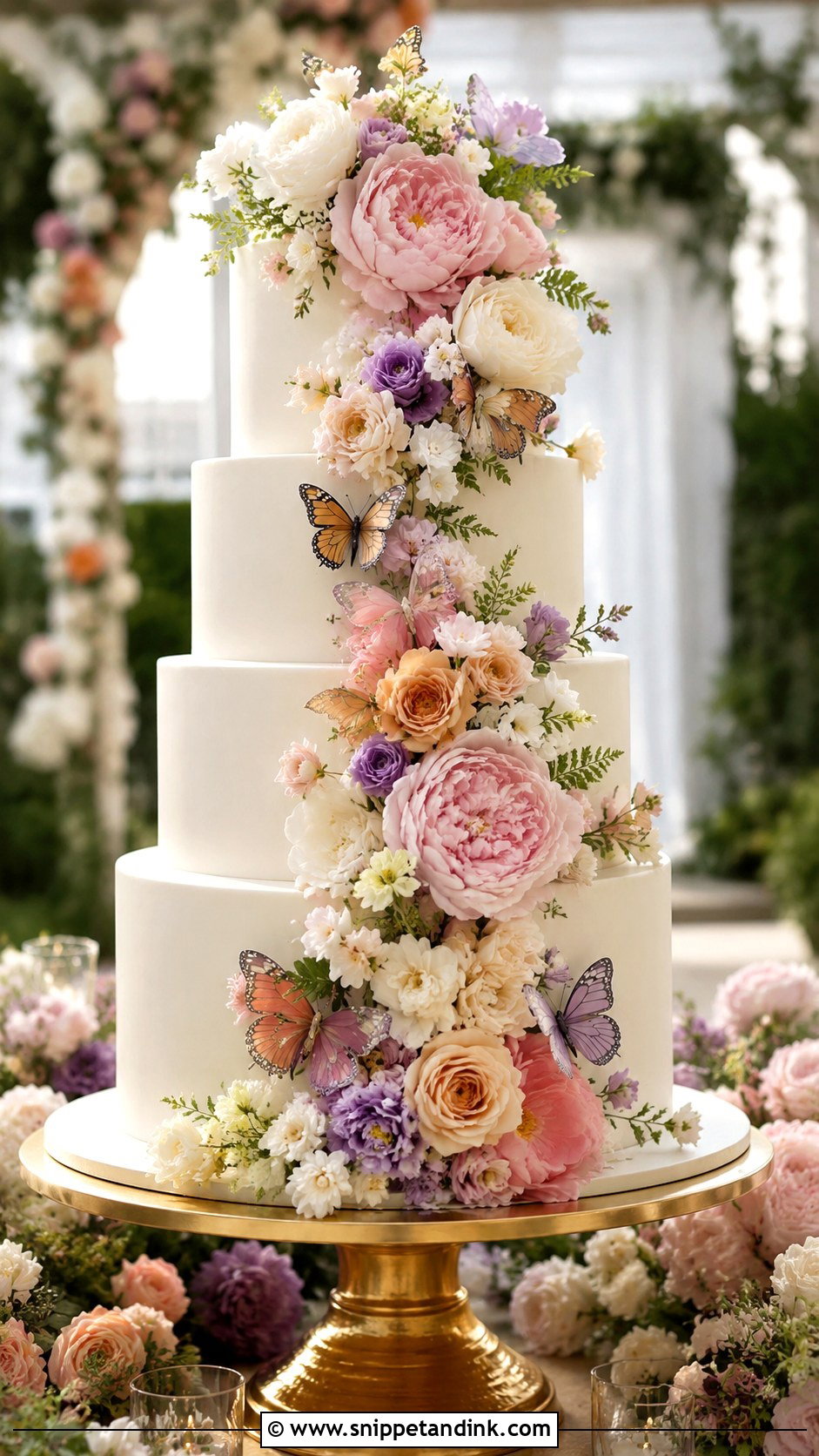
Blue flowers bring calm. Soft hydrangea, forget-me-nots, cornflowers or painted blooms with ivory frosting and pale blue butterflies suit coastal gardens and blue-and-white palettes. Hydrangeas are a real flower I keep away from the icing entirely, because they’re not edible; I’d make them in sugar or keep them on the table around the cake. Keep the blues soft. Silver or pearl accents refine it, and a blueberry filling links color and flavor.
12. Butterfly Garden Wedding Cake With Gold Accents
Gold makes a garden cake feel formal and suits estates, ballrooms and evening receptions. Start with smooth white or champagne icing and add gold leaf, fine edging or a monogram. Then surround the metallic touches with butterflies and flowers so it stays soft. Restraint matters most here. Too much gold drowns the delicate theme, while a few glowing touches beside ivory roses, blush blooms and greenery look rich. Edible gold leaf sticks best to a slightly tacky fondant surface, so I apply it before any flowers go on.
13. Butterfly Garden Wedding Cake With Pearl Details
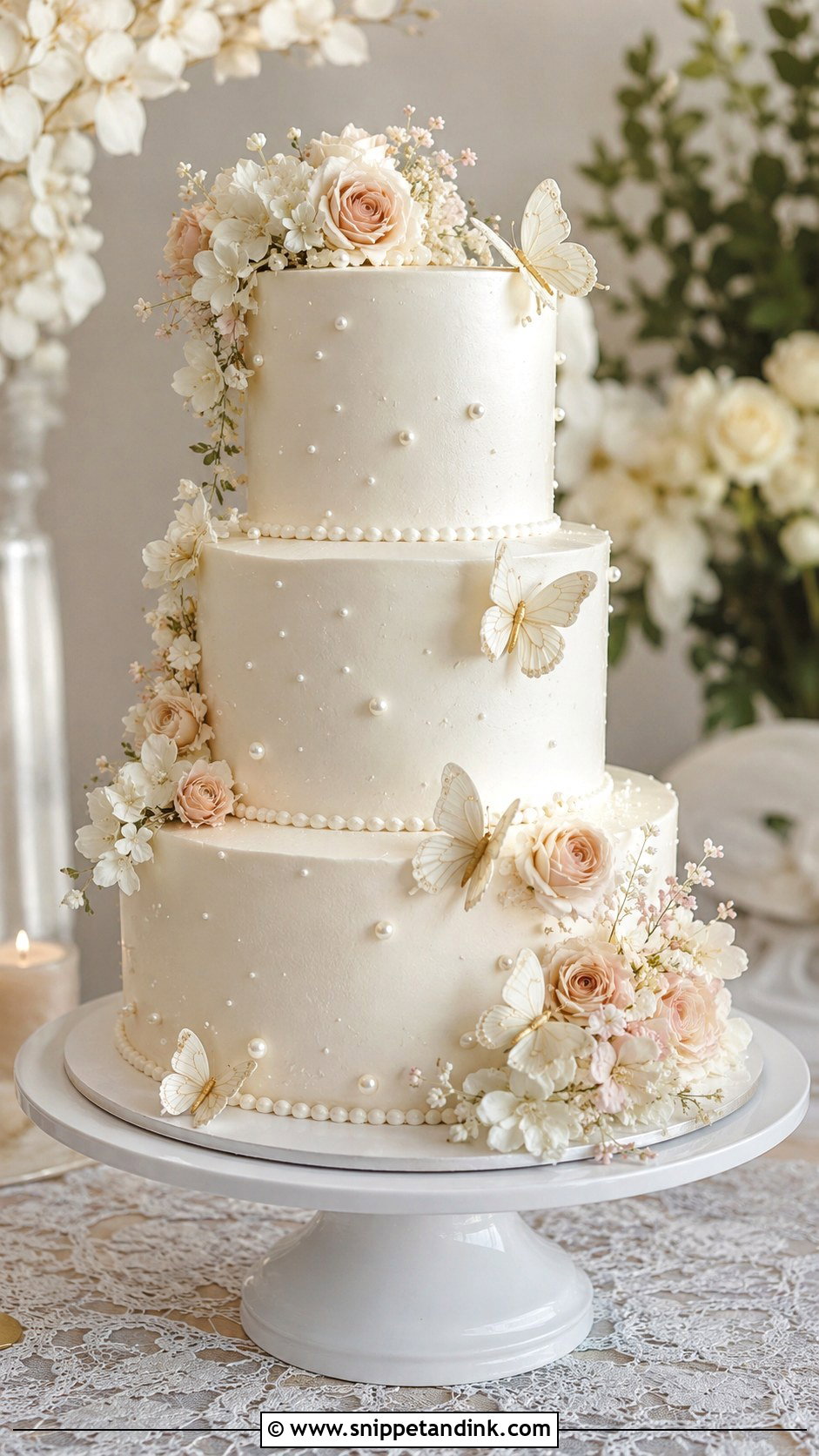
Pearls soften the whole cake. Tiny edible pearls can frame tiers, sit among piped flowers, or trail behind wafer butterflies, with white buttercream, pale blush flowers and ivory wings. It’s for couples who want something romantic with very little color. It pairs well with lace gowns and garden marquees. Keep them small, because large pearls look formal and are hard to bite.
14. Butterfly Garden Wedding Cake With Watercolor Flowers
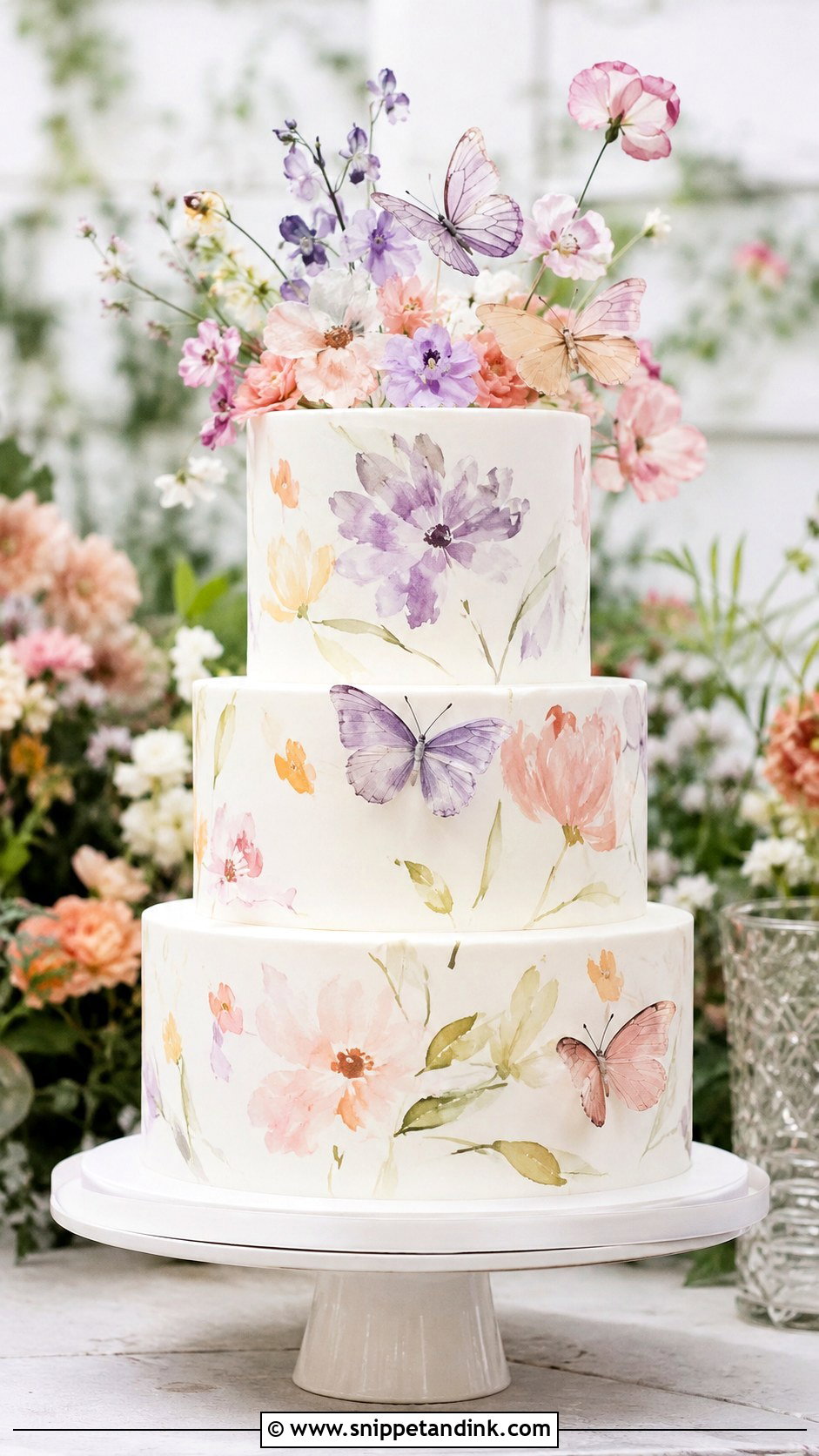
Watercolor flowers make the cake look painted. I brush diluted color in blush, lavender, peach and sage over white fondant; on buttercream it’s done with a palette knife and looks more textured. A few raised sugar flowers and wafer butterflies add depth. The palette can be subtle or bolder, but leave white space between the brushstrokes. Painting is done in layers that each need to dry, so this design takes longer than it looks.
15. Butterfly Garden Wedding Cake With Semi Naked Frosting
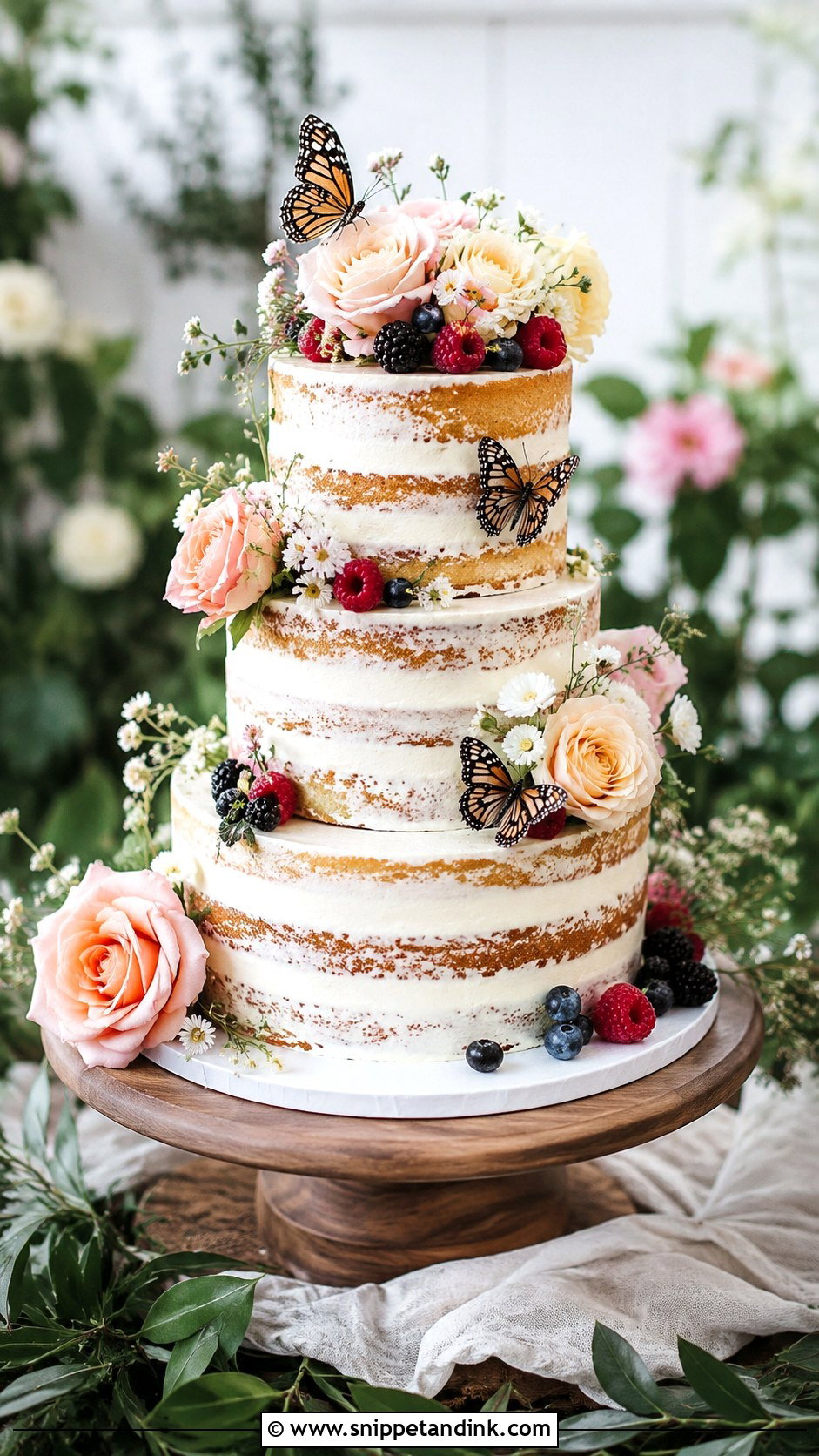
A semi-naked finish lets the sponge layers show through a thin scrape of buttercream, which feels relaxed and rustic. Dress it with fresh flowers, soft greenery, berries and a few butterflies for a woodland-meadow mood. Vanilla, lemon, almond, carrot or honey sponge all suit it. Group decorations in loose clusters rather than rows. The trade-off is freshness: with so little icing, the sponge dries out faster, so I finish this style as late as possible before it’s displayed. A wood or ceramic stand completes it.
16. Butterfly Garden Wedding Cake With Tall Tiers
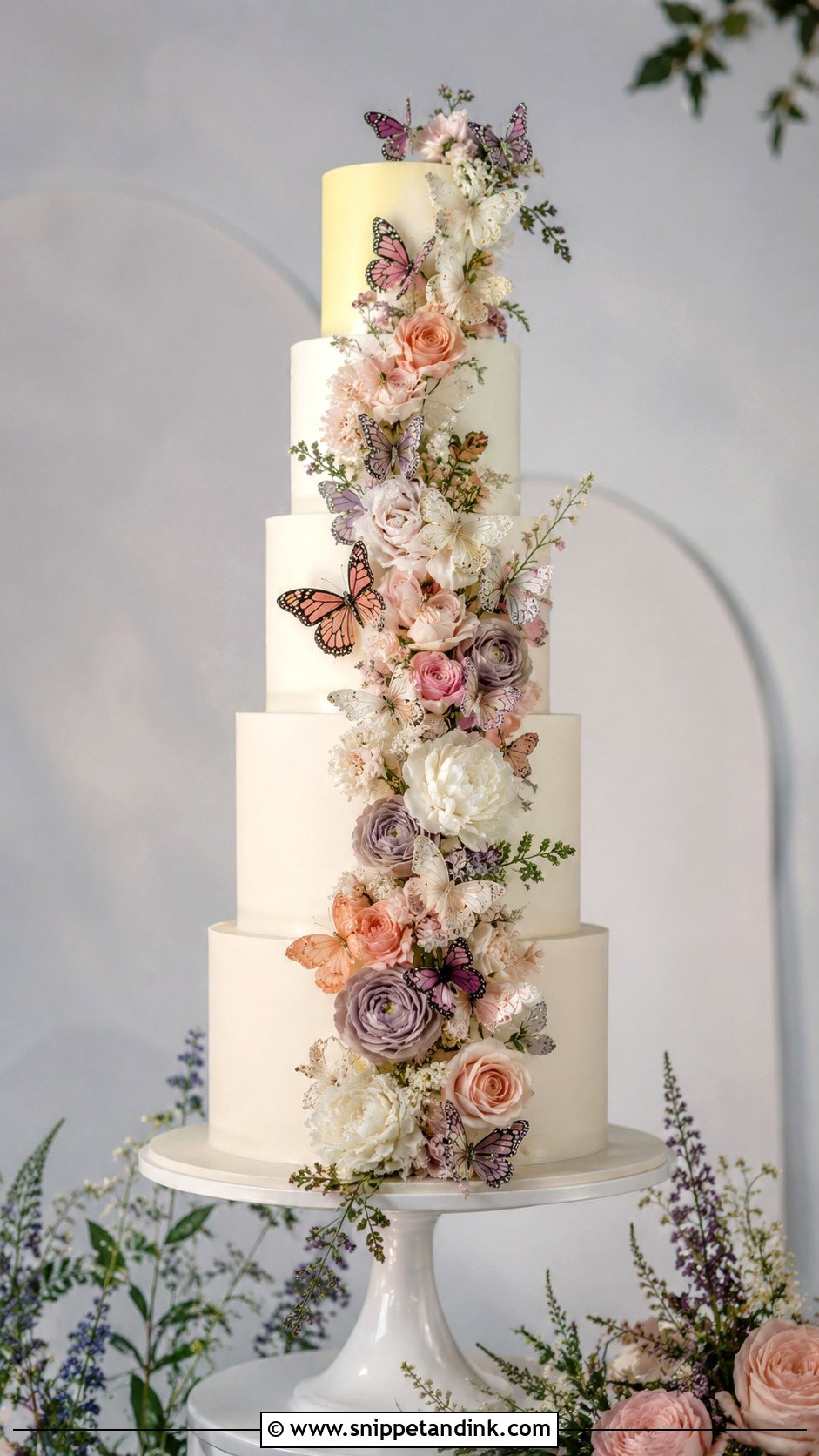
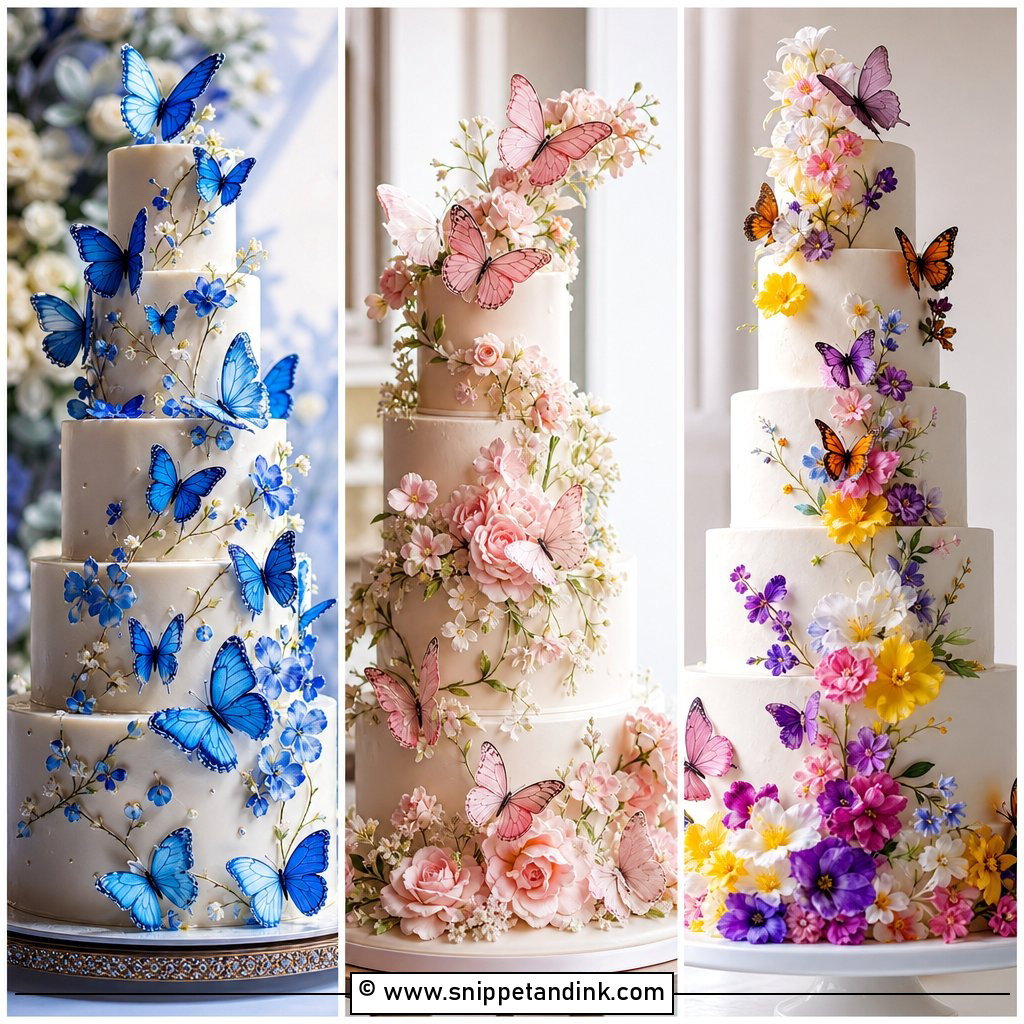
Extra-tall tiers add grandeur without needing extra decoration. A two- or three-tier cake with double-height layers looks modern and photographs well. Smooth buttercream or fondant, with flowers and butterflies in a clean vertical line, keeps it refined. Tall tiers need proper internal support, dowels and boards within each tier, and they’re heavier to move. Ask how many slices it serves, since a tall tier gives taller, thinner slices than a standard one.
17. Butterfly Garden Wedding Cake With Square Tiers
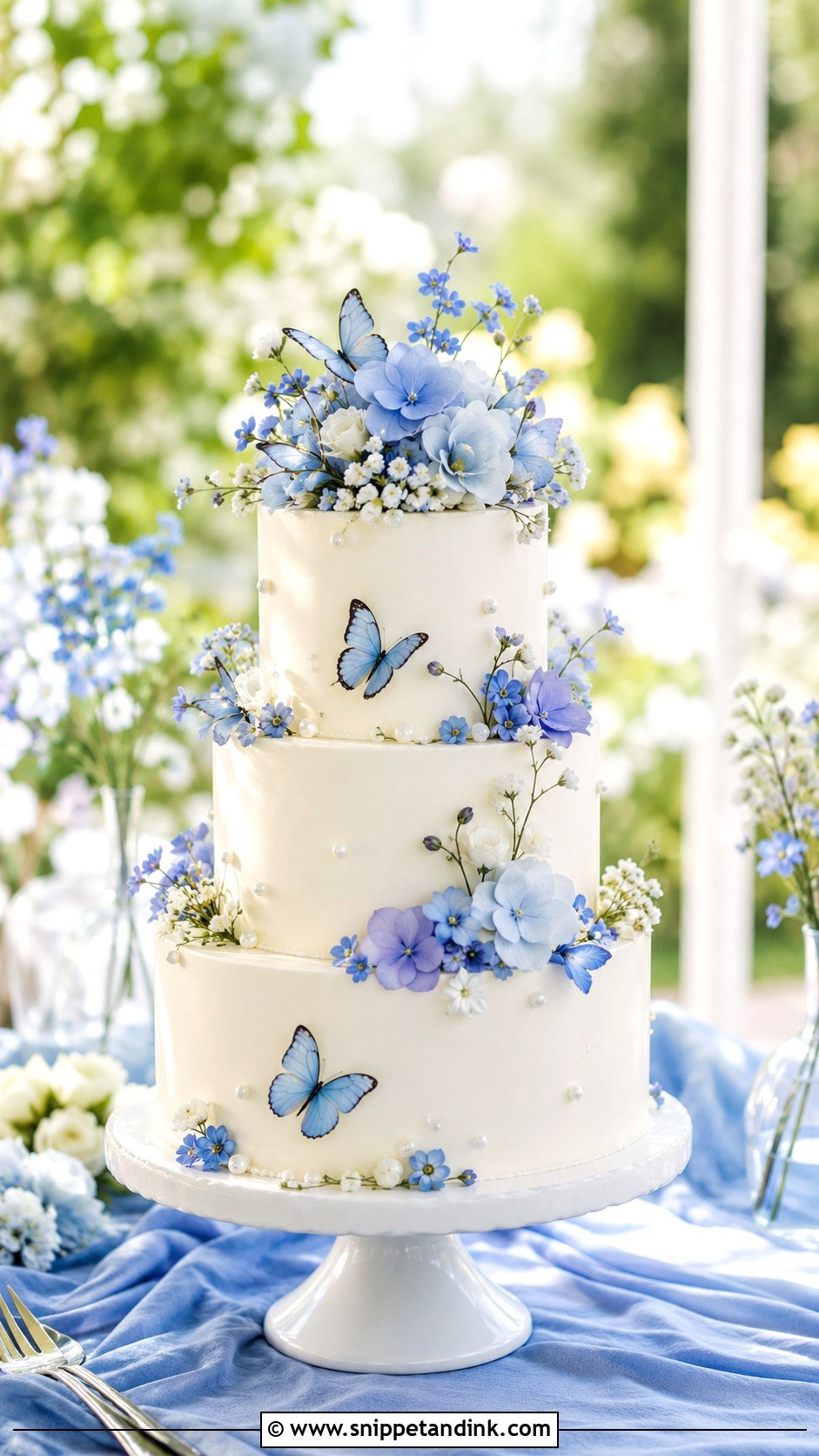
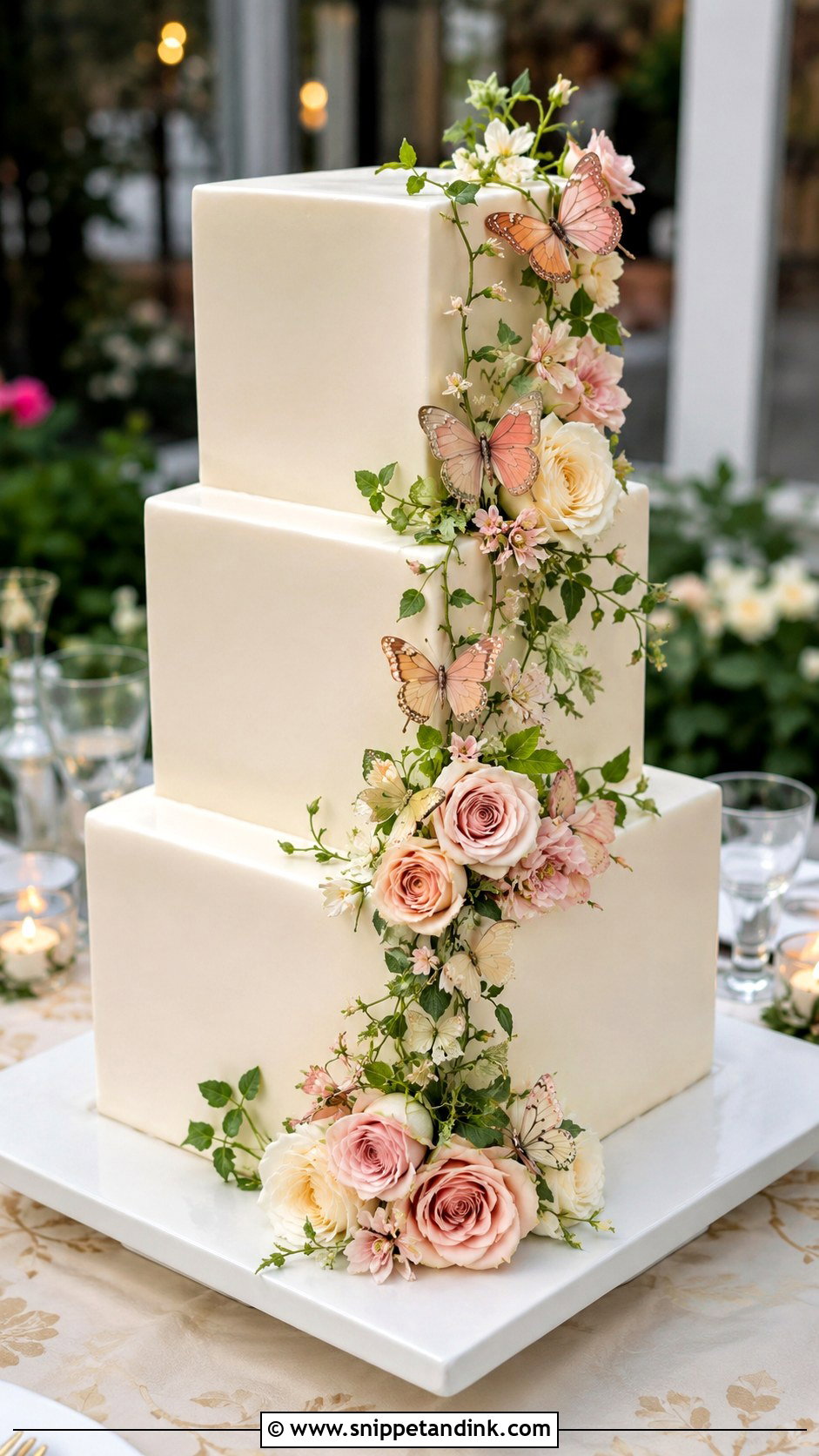
Square tiers give the garden theme a modern frame. Sharp corners contrast with soft flowers, vines and wings, and a white square cake with a cascade of garden roses feels both classic and unexpected. Run the decoration diagonally or around one corner. Getting truly sharp corners on buttercream takes more time than on a round cake, and those corners also show any soft spots first if the room gets warm.
18. Butterfly Garden Wedding Cake With Floating Butterflies
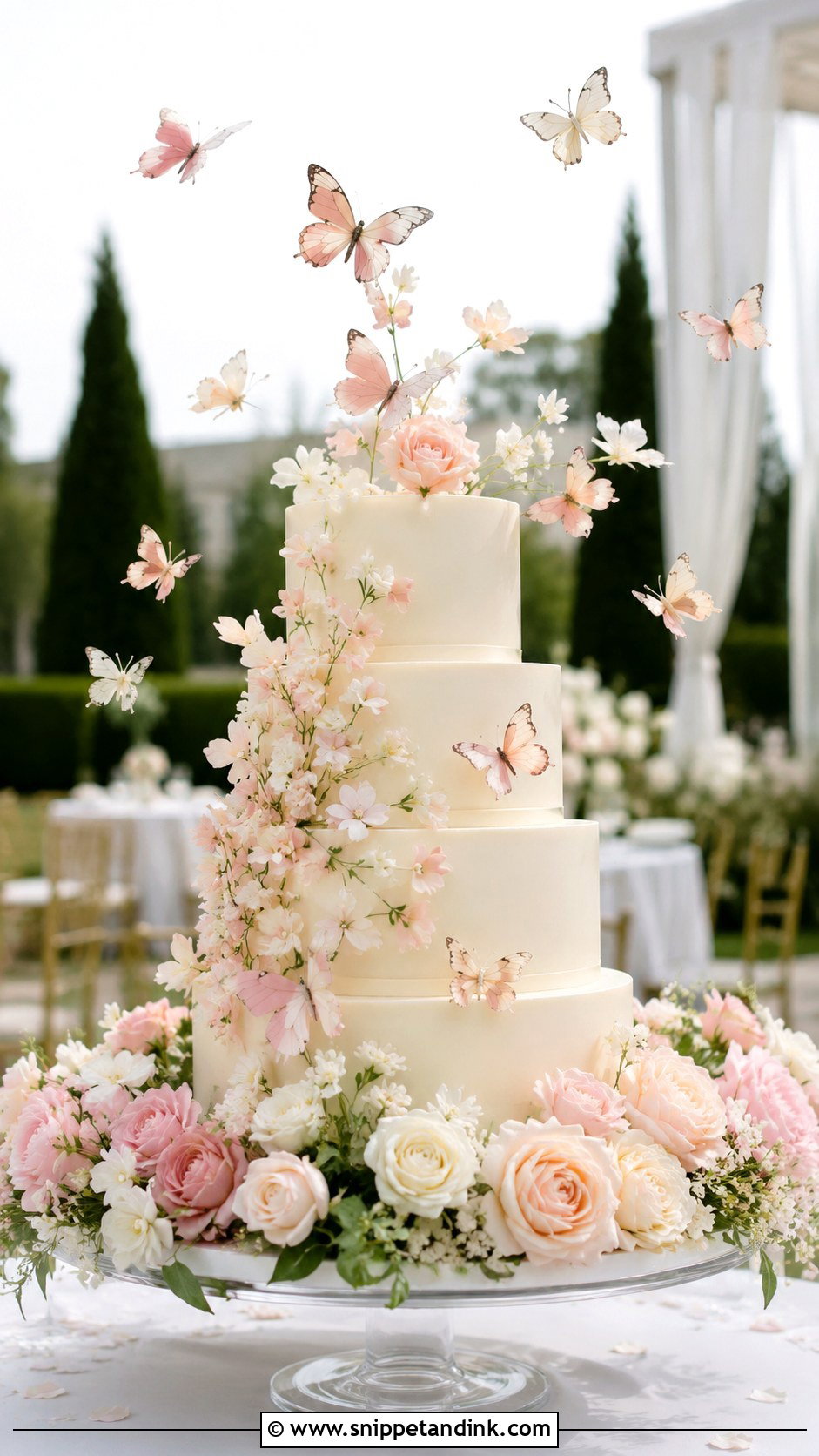
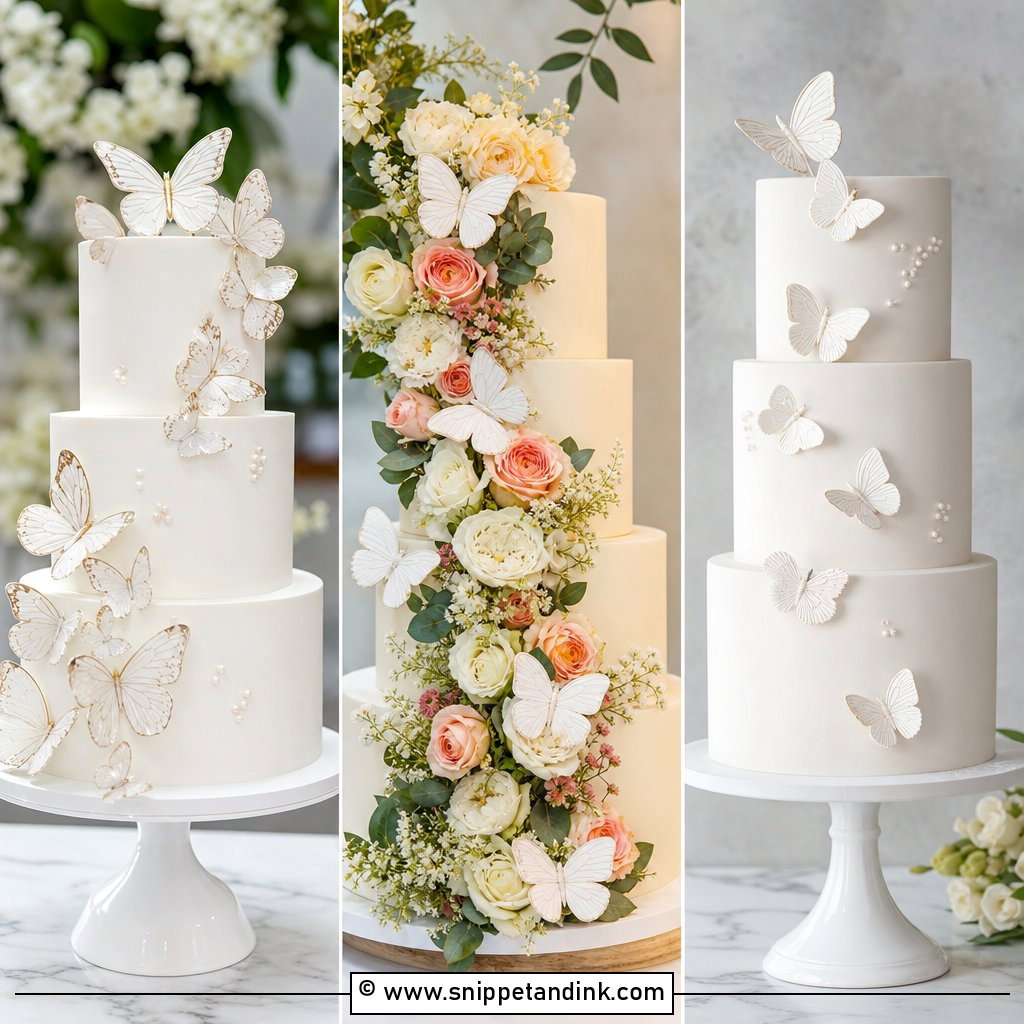
Floating butterflies are what most people imagine when they hear this theme. The cake stays simple, ivory with a few soft flowers, while butterflies sit at different heights on fine wires set into food-safe picks, so they seem to hover. Mixing sizes and following a natural upward path keeps it believable. Too many large ones look theatrical. Wires should never go straight into sponge, and they all come out before cutting.
19. Butterfly Garden Wedding Cake With Floral Cascade
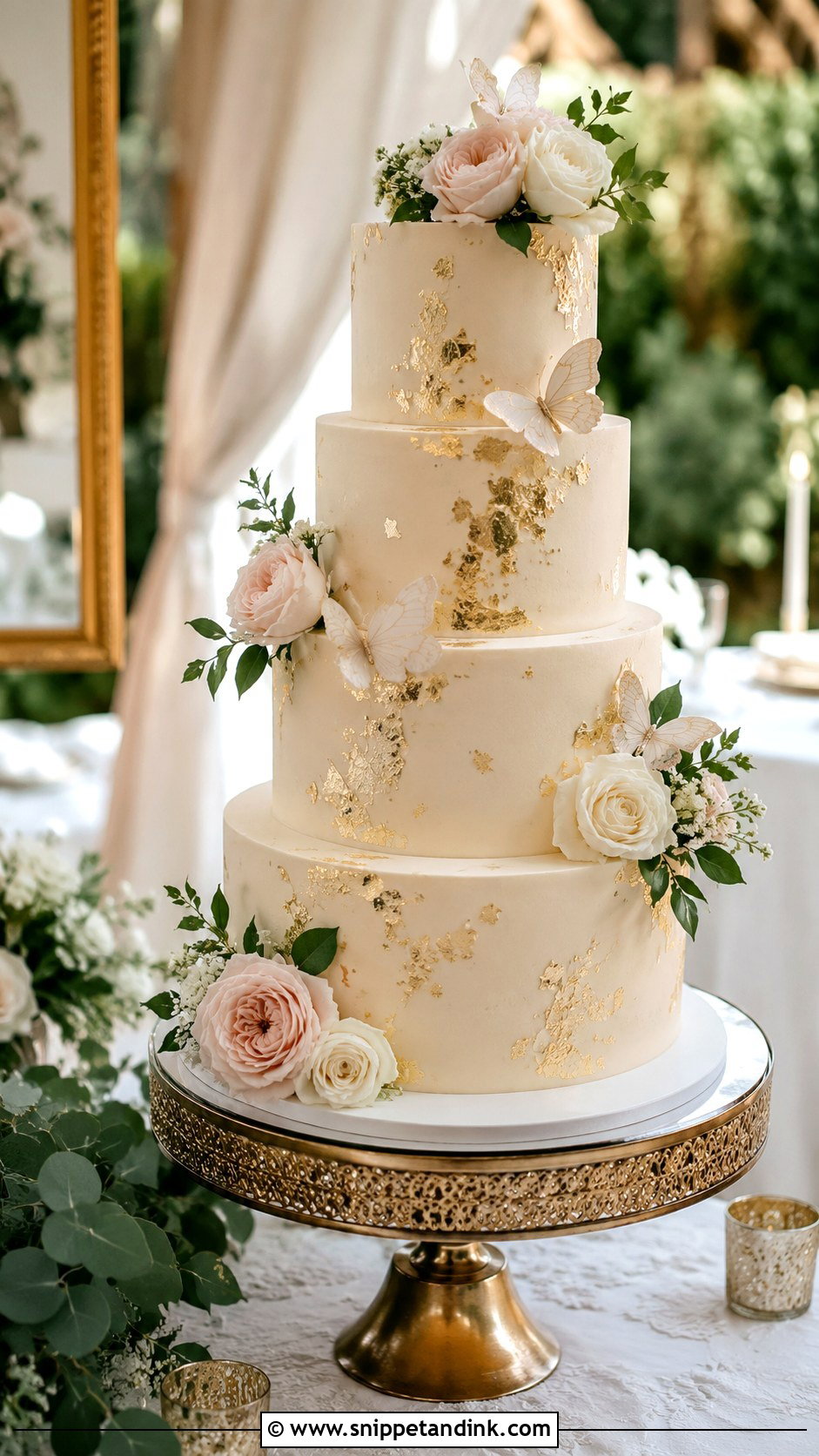
A floral cascade flowing down one side of the cake reads from across a big room, which makes it a good choice for larger weddings. Roses, peonies, orchids, sweet peas or seasonal blooms can follow a soft diagonal, with butterflies along the line. Keep the base simple: ivory buttercream, light fondant or a subtle texture. I build heavy cascades at the venue, as the weight on one side can make a cake list in transit.

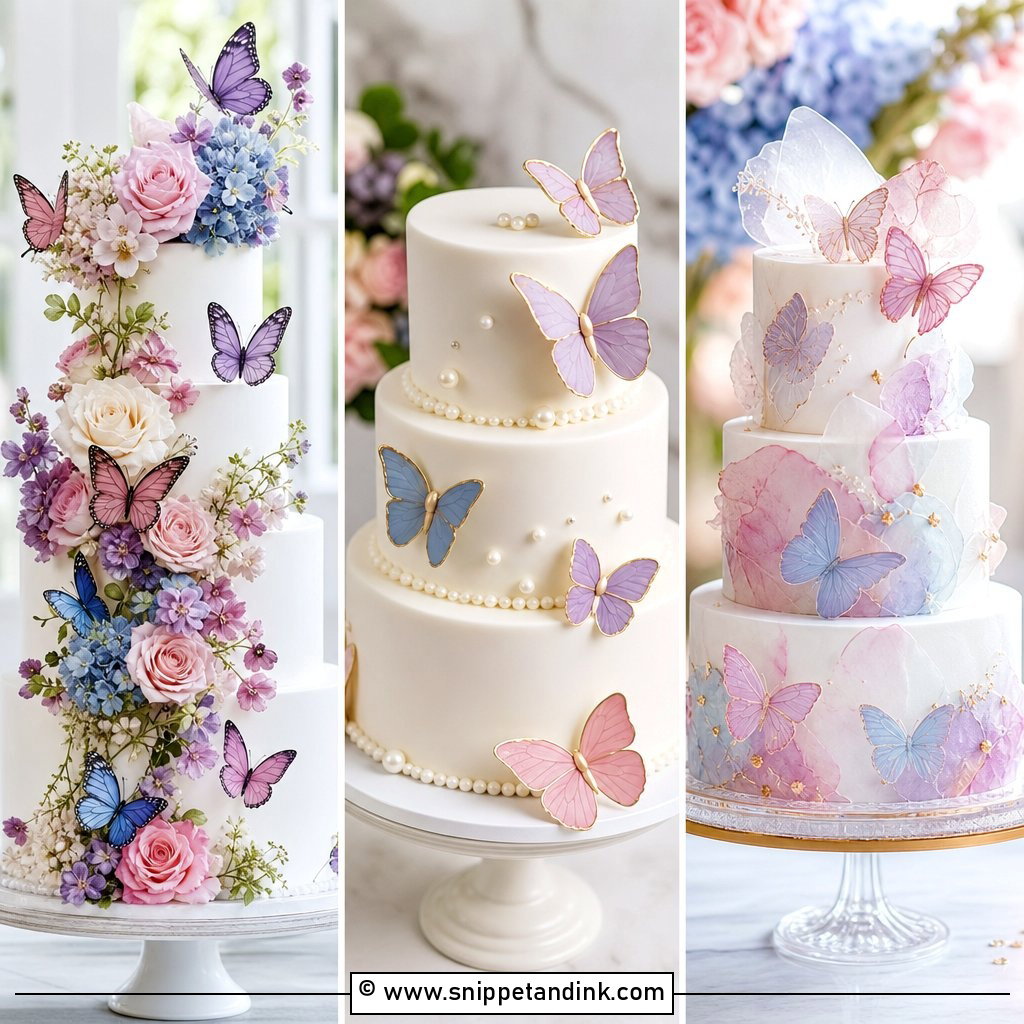
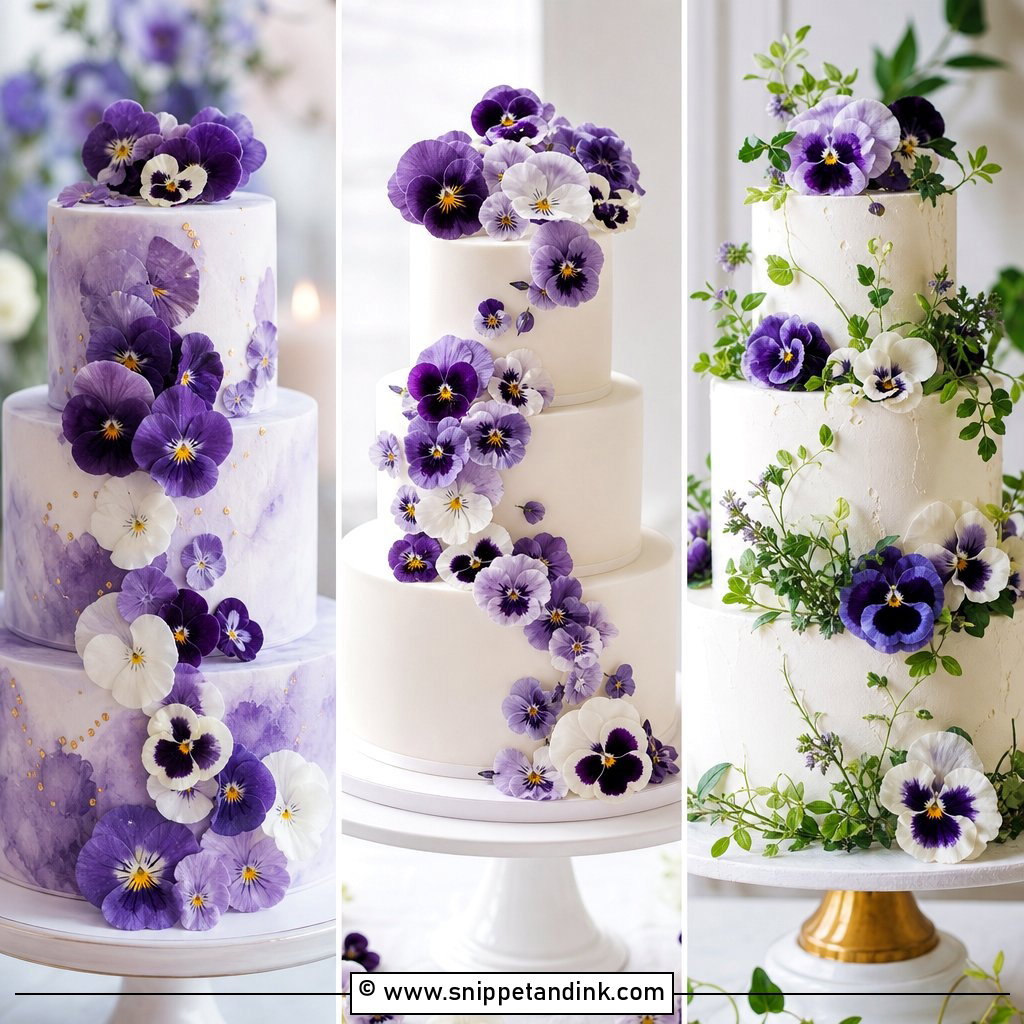
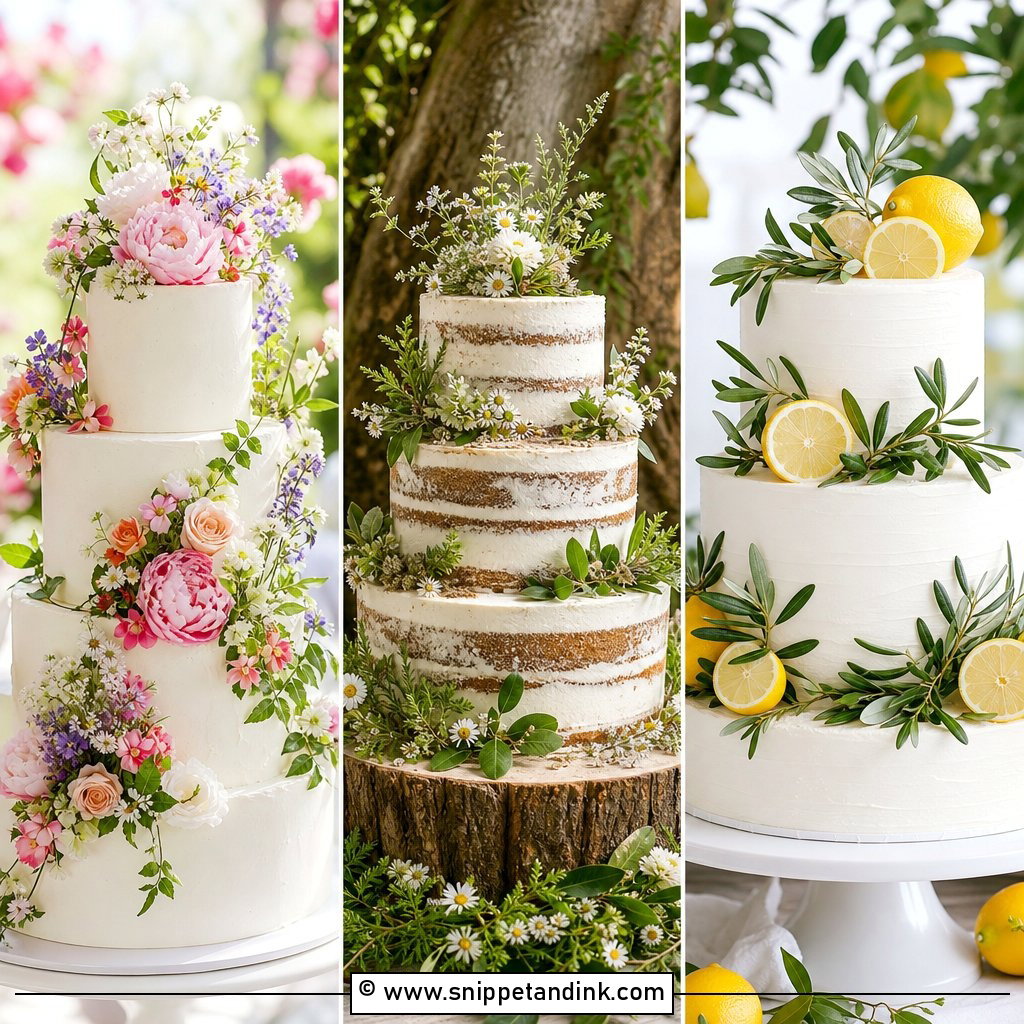
20. Butterfly Garden Wedding Cake With Edible Flowers
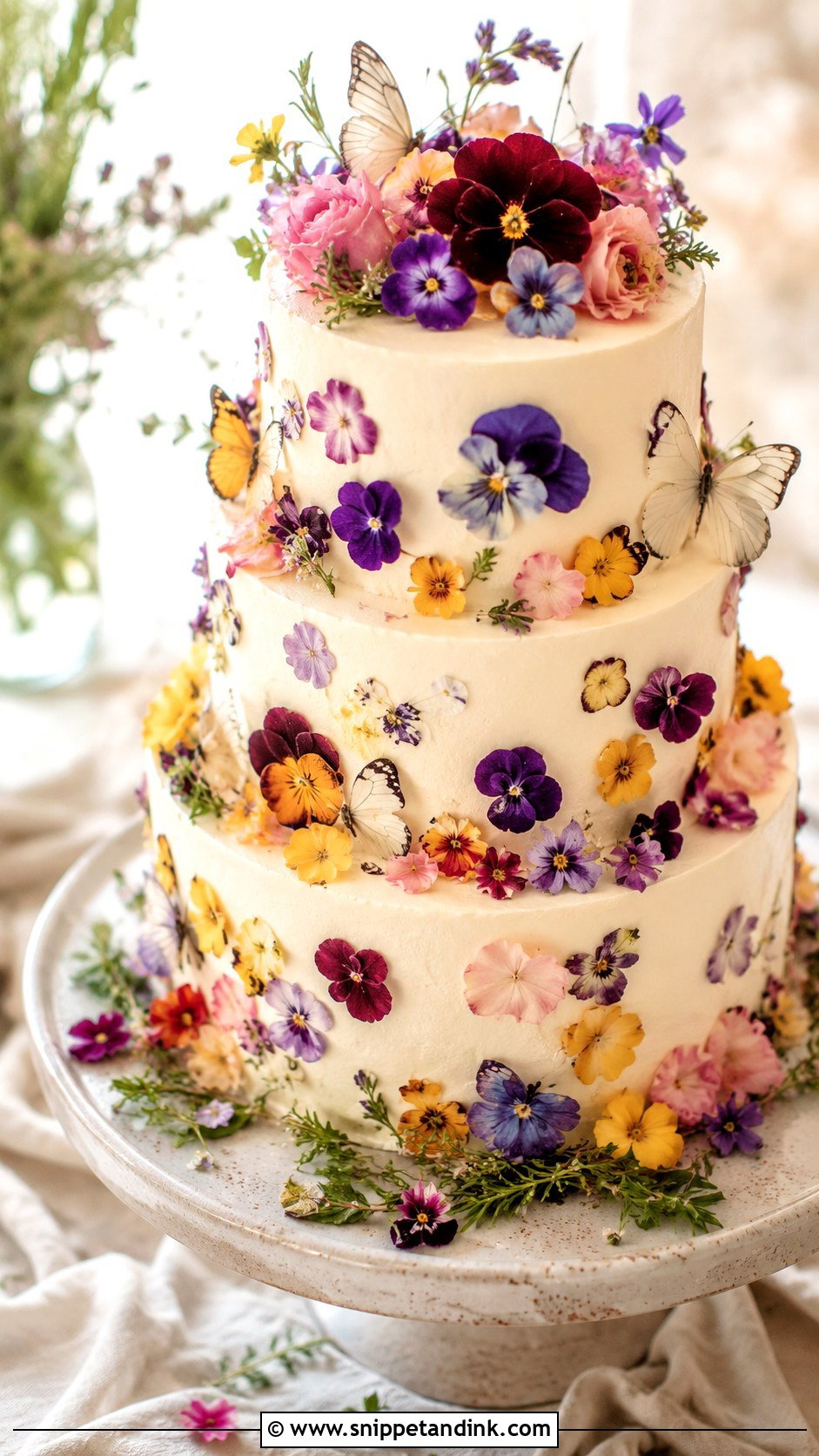
Edible flowers connect the decoration directly to the food. Pansies, violas, calendula, nasturtiums and edible rose petals create a bright garden look, and edible wafer paper butterflies keep everything food-friendly. Organic, farmers market styling suits it. The flowers have to be grown for eating, without pesticides, and that usually means a specialist grower rather than a regular florist. Lemon, vanilla, honey or berry sponge pairs well.
A Cake Table in an Actual Garden
Couples choose this theme for outdoor receptions, and outdoors is the hardest place for a cake to be. Sun, wind and real insects all arrive at once. These are the things I ask the venue about first.
- Full shade for the cake table all afternoon, not just at setup. The sun moves, and buttercream in direct sun starts to slide within the hour.
- A sheltered spot. Wafer and sugar wings catch the wind, and a gust can snap them off.
- A short display time. I’d rather deliver close to the reception and cut within a couple of hours than leave it on show from the ceremony onwards.
- A cloche or net for any pre-cut dessert or cupcakes. Wasps find sugar quickly in late summer.
If none of that is possible, consider a smaller display cake for the cutting photos and a kitchen cake kept indoors for serving. Guests get the same flavor, and only the display cake has to survive outside.
If the weather turns
Agree on a rain plan for the cake as well as the guests. A damp marquee is just as hard on wafer wings and fondant as direct sun, so the indoor backup spot should be dry, away from the kitchen steam and ideally somewhere the cake can be wheeled to without being lifted.
Let the Bouquet Decide What Grows Up the Tiers
The best garden cakes are tied to the rest of the wedding: the bouquet, the table flowers, the venue and the season. Start with your color palette, then decide on finish, flowers, butterflies and flavor. Smooth buttercream feels classic, semi-naked feels rustic, fondant feels polished, and wafer wings add movement. Pink roses, pressed flowers, gold or wildflowers can all lead. Whatever you pick, decide early who is supplying which flowers, and your baker can plan the rest around it.
You'll Like These Ideas:





Leave a Reply