
Butterflies are one of the few cake decorations that suggest movement, and that’s exactly what makes them tricky. Placed well, they seem to drift up a cake; placed carelessly, they look like stickers. On two tiers there’s just enough height for a rising line, and the size suits intimate weddings, garden receptions and brunches. The wings can be wafer paper, gum paste, isomalt or painted, and each behaves differently in a warm room. Below are twenty directions, from plain white to boho, with what I’d watch for when making each.
Wafer Paper, Gum Paste or Isomalt Wings?
The material decides how the butterflies look by the time the cake is cut, so I settle it before we talk colour. Each one has a weakness, and humidity is the usual culprit.
- Wafer paper: very light and thin, curves beautifully and takes print or paint. It wilts and goes see-through with moisture, so keep it off damp buttercream.
- Gum paste: sturdy, can be veined and shaped in detail and made weeks ahead. It softens in humid air and breaks if knocked.
- Isomalt or gelatin: glass-like, translucent wings. Gorgeous under lights, but sticky and cloudy in humidity.
- Chocolate: tastes best and is quick to pipe, but melts in a warm room or under direct sun.
- Printed acetate or paper: not edible at all; fine only if the guest knows to remove them.
For an outdoor summer wedding, I’d lean toward gum paste placed at the venue. For an air-conditioned ballroom, wafer paper or isomalt gives the most delicate effect.
Guests do eat them, especially children, so I tell couples honestly how they taste. Wafer paper has almost no flavour and melts on the tongue; gum paste is hard and very sweet, more of a keepsake than a treat. If you want something people will actually enjoy, a few chocolate butterflies placed on the slices at cutting time is a nice compromise.
1. White Two Tier Butterfly Wedding Cake
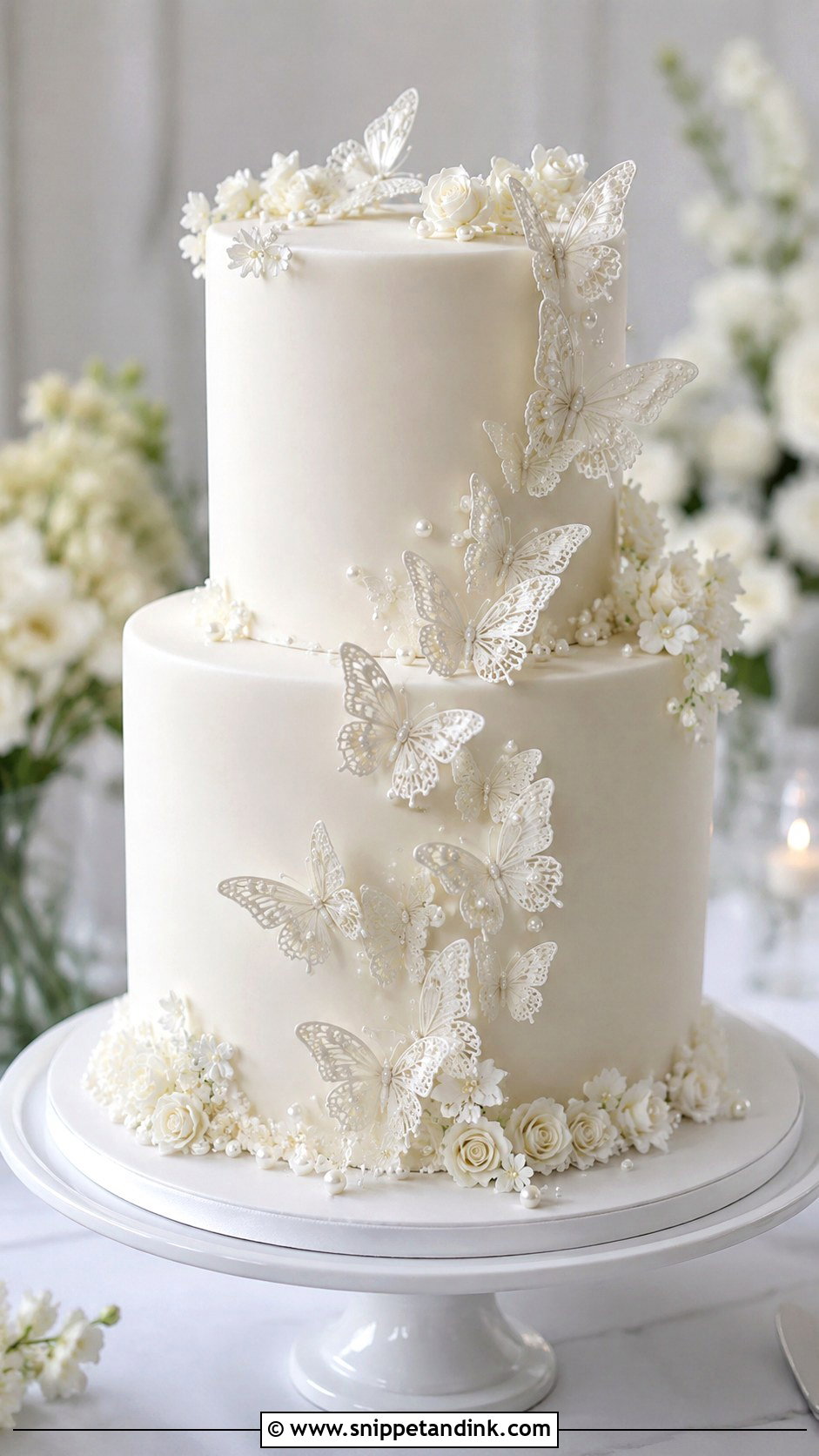
White on white is where I’d start if you’re unsure, because it hides nothing and suits any venue. Smooth white buttercream or fondant, then pale butterflies in ivory, pearl or champagne lifting from the lower tier toward the top. On a pure white cake, pure white wings vanish in photos, so I give them a faint shimmer or a slightly warmer tone. A few white roses or piped dots add texture. It fits a chapel, ballroom or classic garden ceremony equally.
2. Pink Two Tier Butterfly Wedding Cake
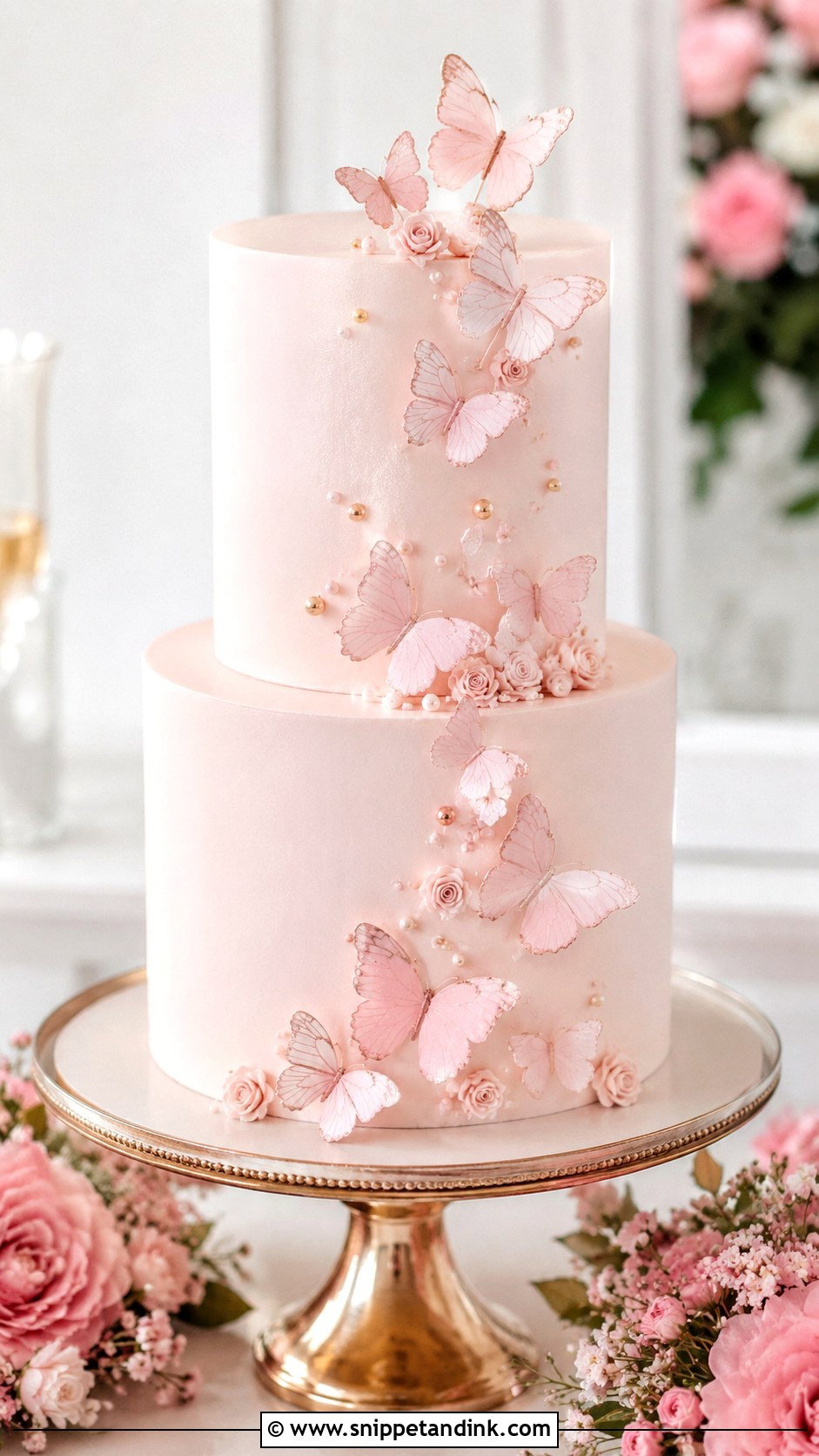
Pink can tip into a child’s birthday cake quickly, and the fix is in the shade. Dusty rose or blush frosting with paler butterflies above it stays grown-up; bright pink with bright butterflies does not. I’d add only one extra element, either sugar flowers, pearls or a little rose gold. Smooth tiers let the butterflies lead. Strawberry or raspberry sponge pairs naturally, and it suits spring weddings and outdoor receptions.
3. Blue Two Tier Butterfly Wedding Cake
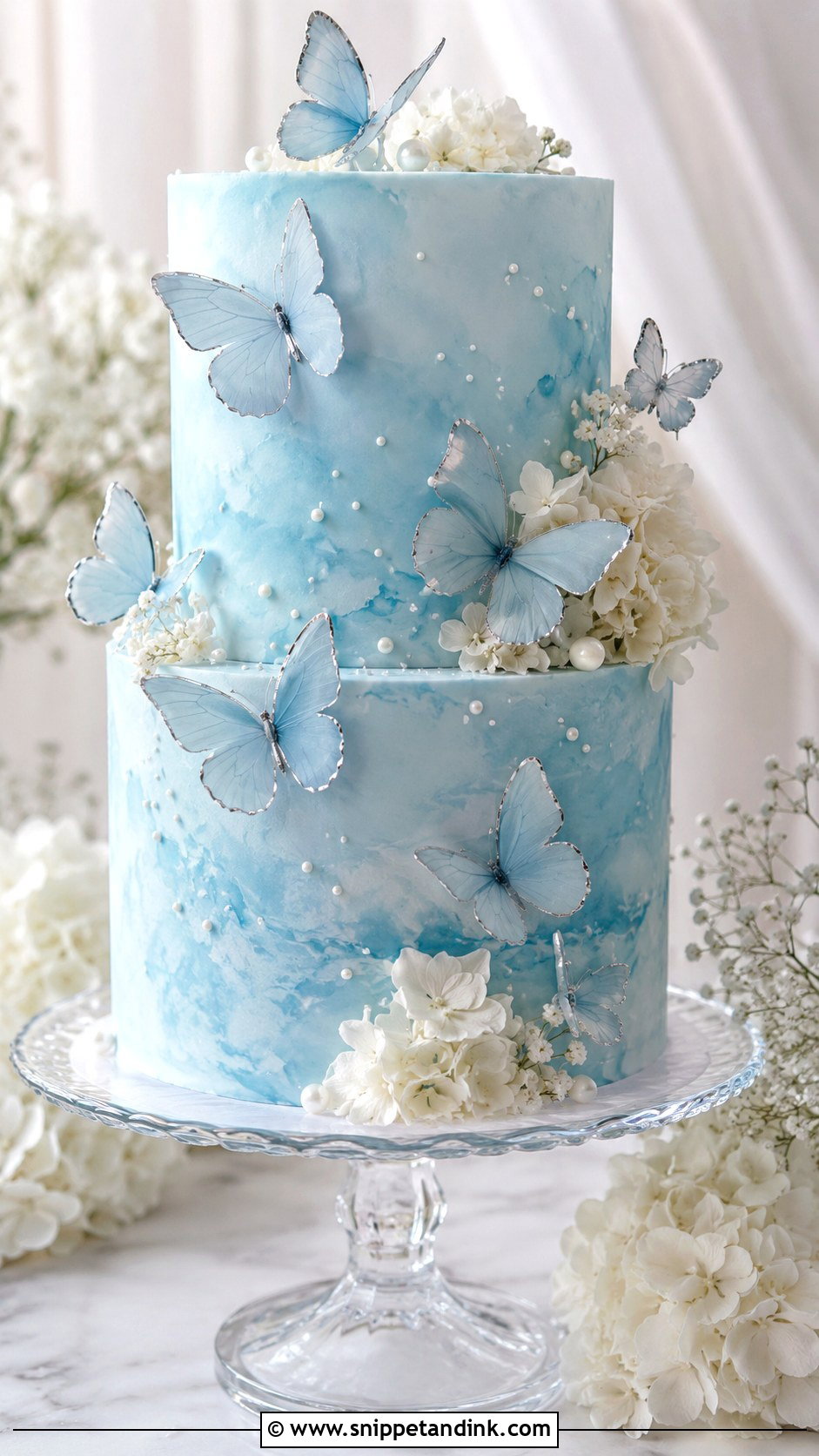
Pale blue buttercream reads like a summer sky, and white or silver butterflies on it seem to float. Blue in buttercream can turn slightly green because butter is yellow, so I whiten the base before tinting. Watercolour shading around the tiers adds depth. Keep the flowers small, maybe a few white blossoms, and set the butterflies in a gentle spiral rather than scattered. It’s an easy “something blue” for coastal ceremonies.
4. Gold Two Tier Butterfly Wedding Cake
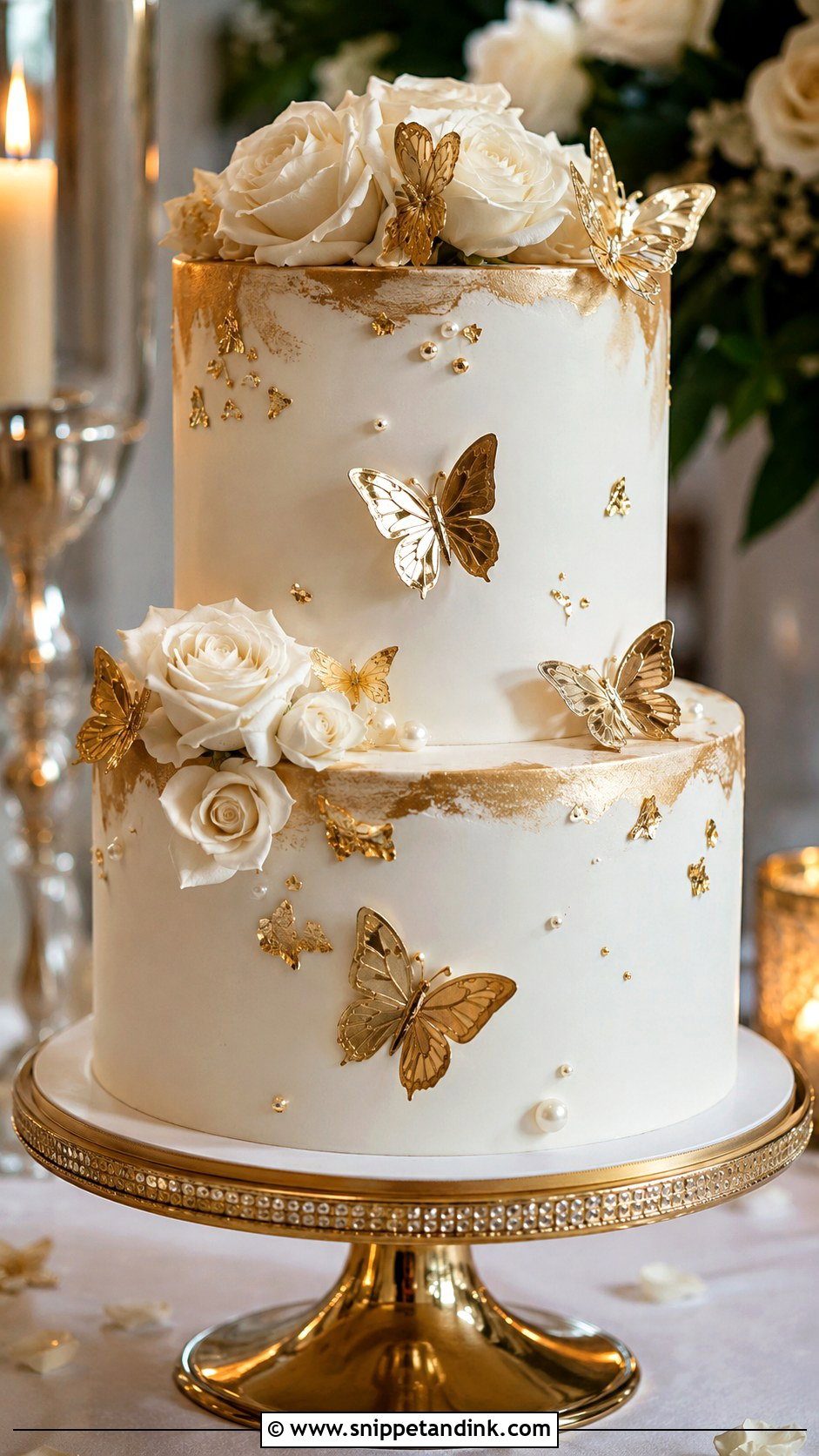
Gold butterflies look rich, but gold on gold gets heavy fast. I use a white or ivory base and choose one gold element: metallic wings, brushed edges or a thin drip. Wafer paper wings brushed with edible gold catch light at the edges as they curve, which is the effect most couples want. A few cream roses or flecks of gold leaf tie it in. It suits evening receptions and hotel ballrooms where candlelight does half the work.
5. Purple Two Tier Butterfly Wedding Cake
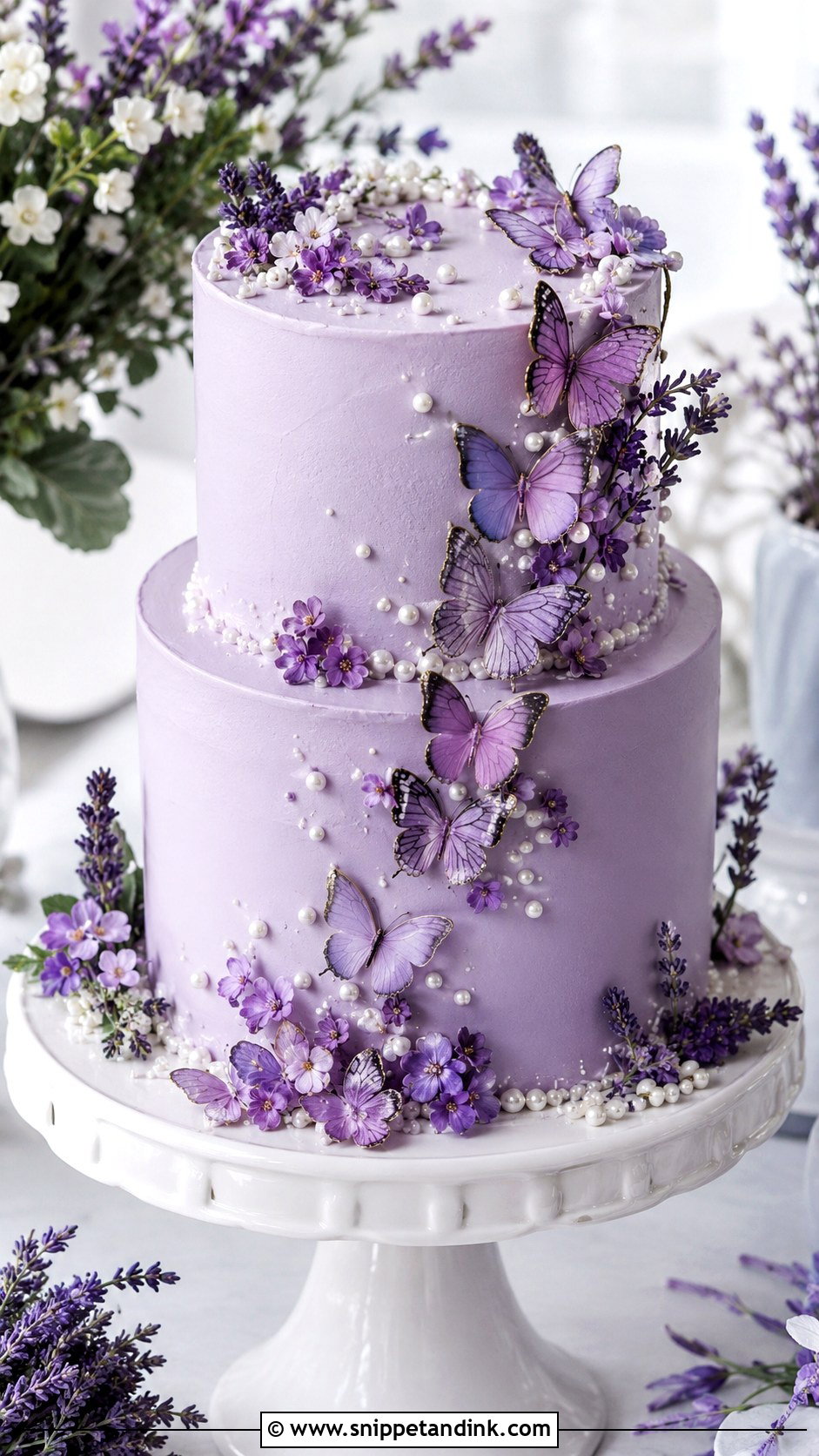
Lavender butterflies on pale purple buttercream look soft; plum accents make the same cake feel deeper and more autumnal. Purple is the colour I’m most careful with, because it fades and can shift toward grey or blue under some lighting. A lavender two tier butterfly wedding cake works with lilac and white butterflies climbing between the tiers, plus sugar violets or real lavender sprigs. Lemon or lavender honey sponge suits the flavour.
6. Sage Green Two Tier Butterfly Wedding Cake
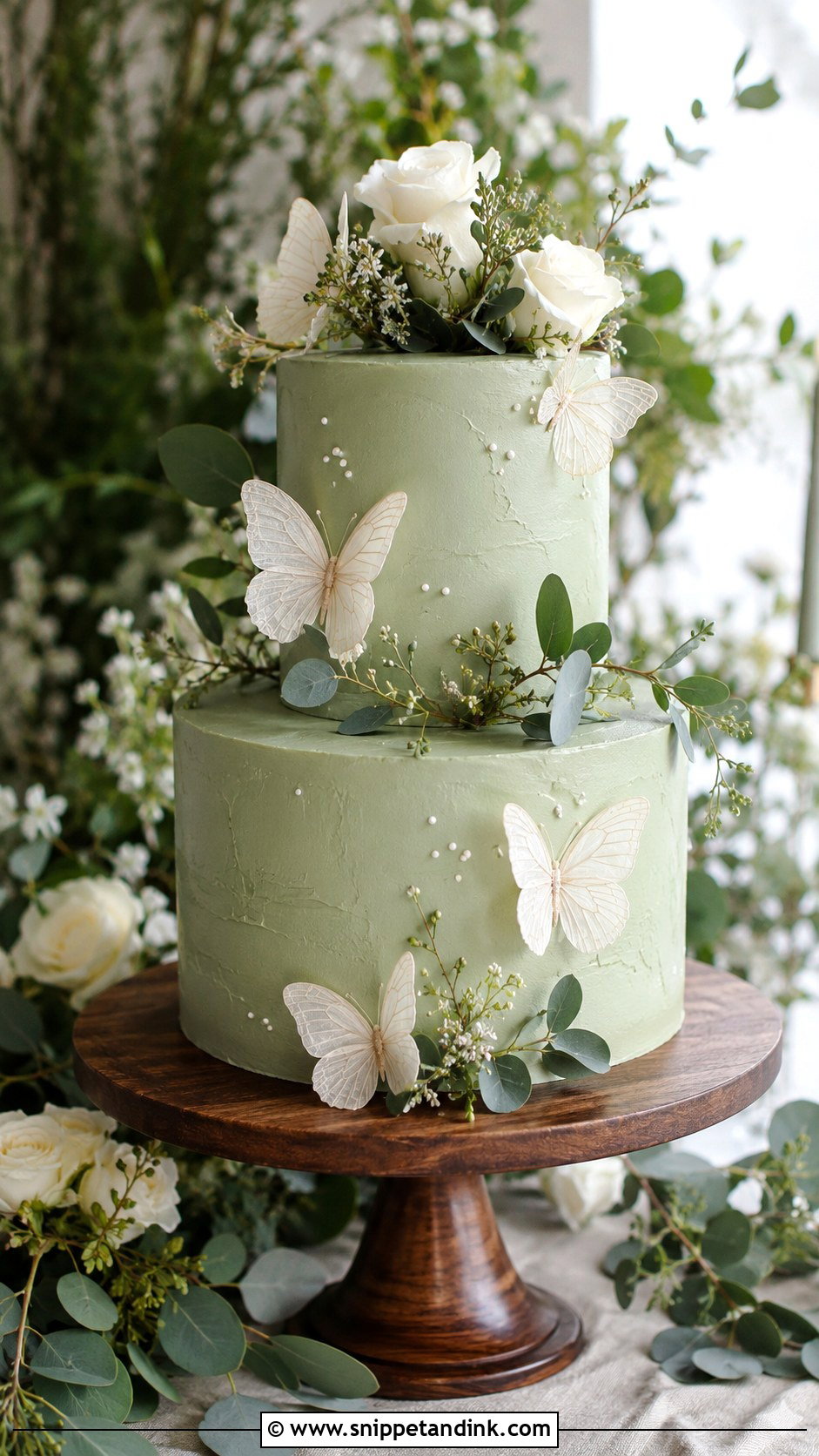
Sage frosting with ivory butterflies has a calm, green-garden feel. I keep the wings very light here; wafer paper is ideal because it curves naturally and doesn’t weigh down the look. The tiers can be smooth for a modern line or lightly textured with a palette knife. If you’d like eucalyptus on the table, keep it off the cake itself, as it isn’t food safe. A wooden or matte white stand finishes it.
7. Floral Two Tier Butterfly Wedding Cake
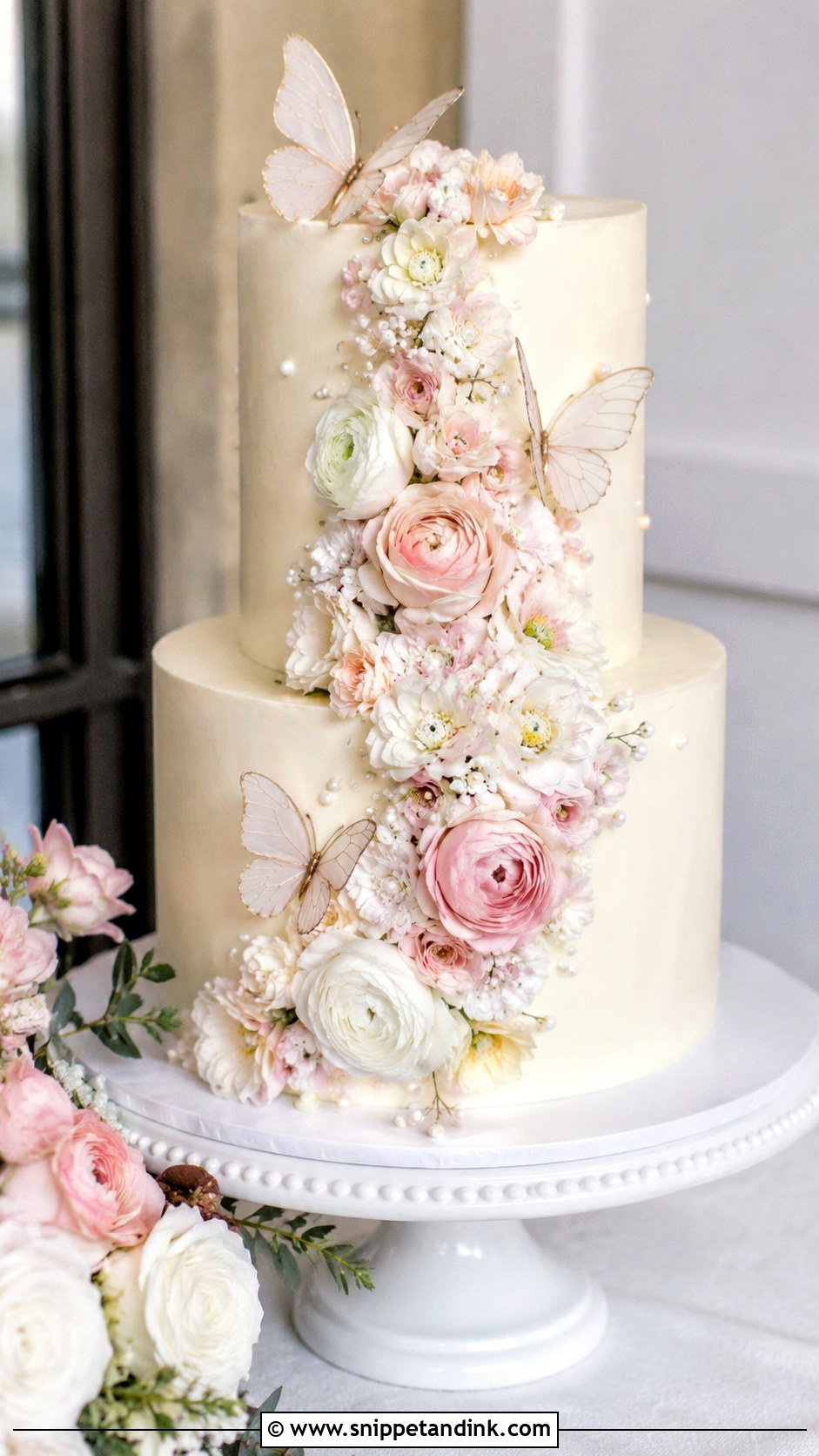
When butterflies join flowers, they should look like they’ve landed. I build one main floral cascade, matched to the bouquet if possible, then tuck butterflies into it at different angles. Varying their sizes, small near the flowers and larger toward the top, creates depth. Keep the frosting plain in ivory, blush or pale peach so nothing competes. Fresh blooms need pesticide-free sourcing and wrapped stems before they go near the cake.
8. Pearl Two Tier Butterfly Wedding Cake
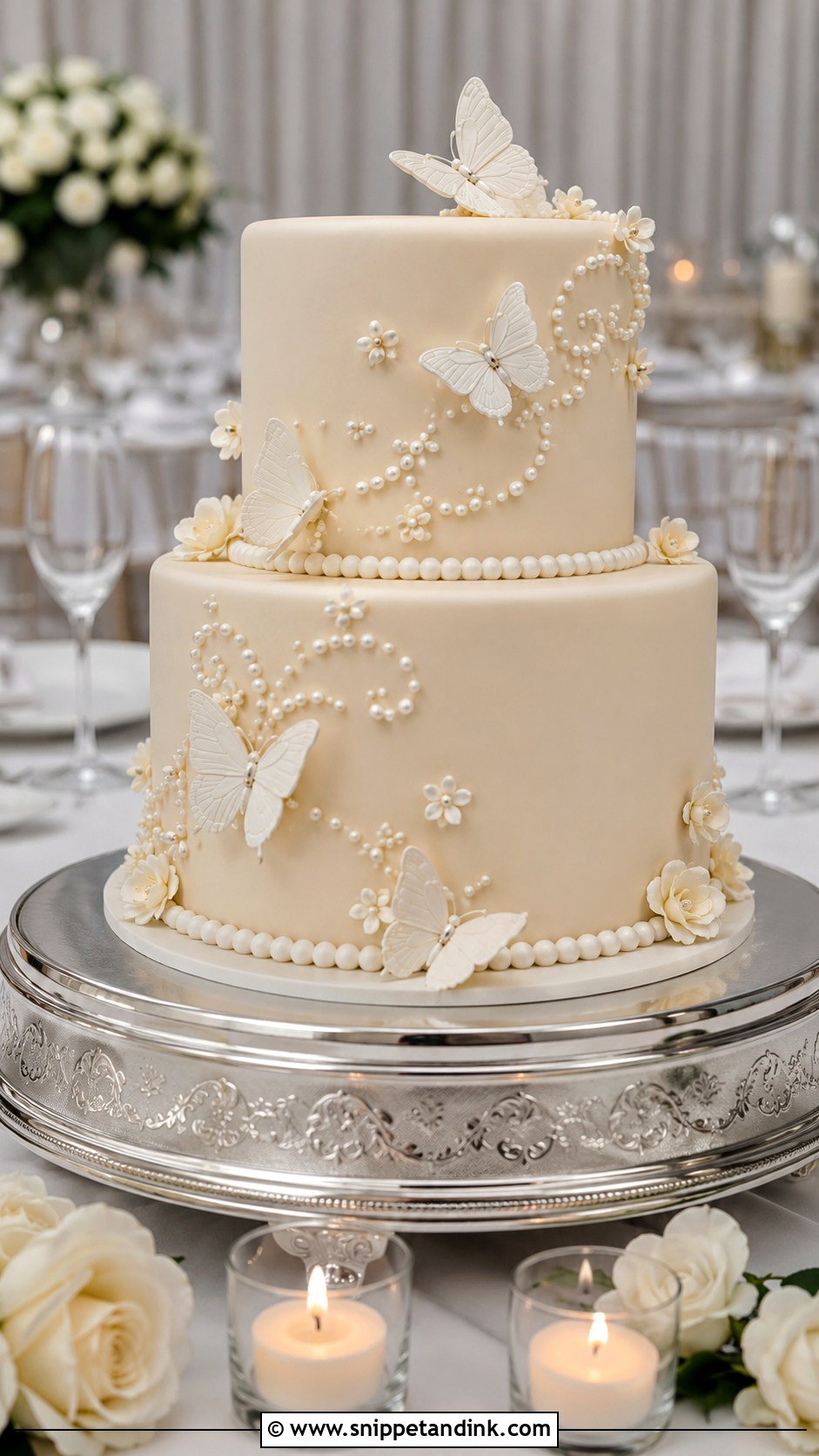
A trail of tiny pearls behind each butterfly can suggest a flight path, which is my favourite detail on this design. Ivory buttercream with pearl borders and white butterflies stays restrained and very bridal. I press the pearls in while the surface is still slightly soft so they don’t drop off when the cake is moved. Keep the palette to ivory, cream and champagne. Piped shells or a few sugar flowers can add texture, but this cake works best with less.
9. Watercolor Two Tier Butterfly Wedding Cake
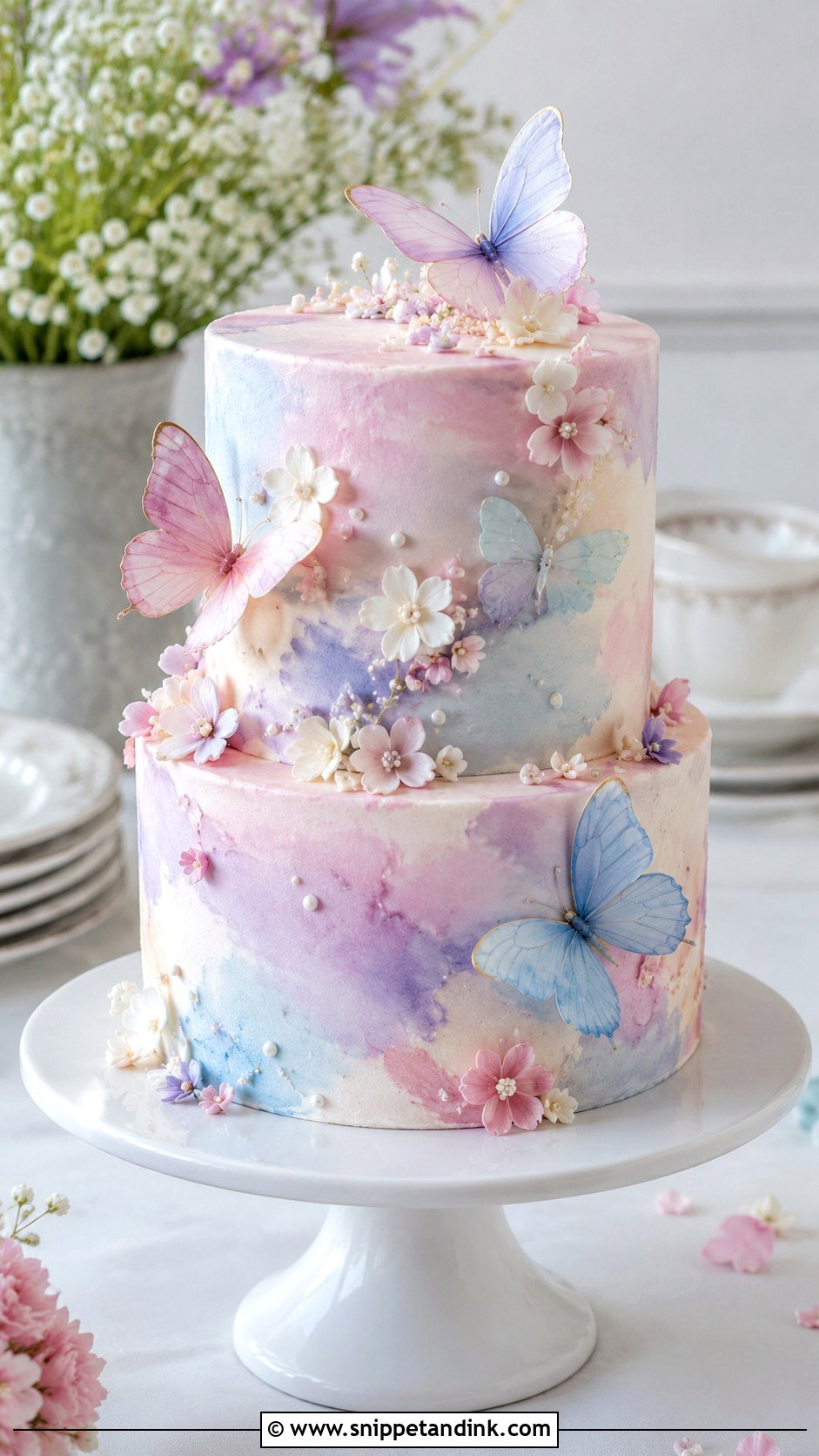
Watercolour frosting blends pastel washes such as blush, lavender, peach or sage across buttercream or fondant. I match the butterflies to those exact tones, which is easiest with wafer paper since it can be painted or printed in the same palette. Keep the top tier lighter so the colour drifts up rather than sitting in a band. It gives couples colour without a bold block, and suits outdoor spring receptions.
10. Vintage Two Tier Butterfly Wedding Cake
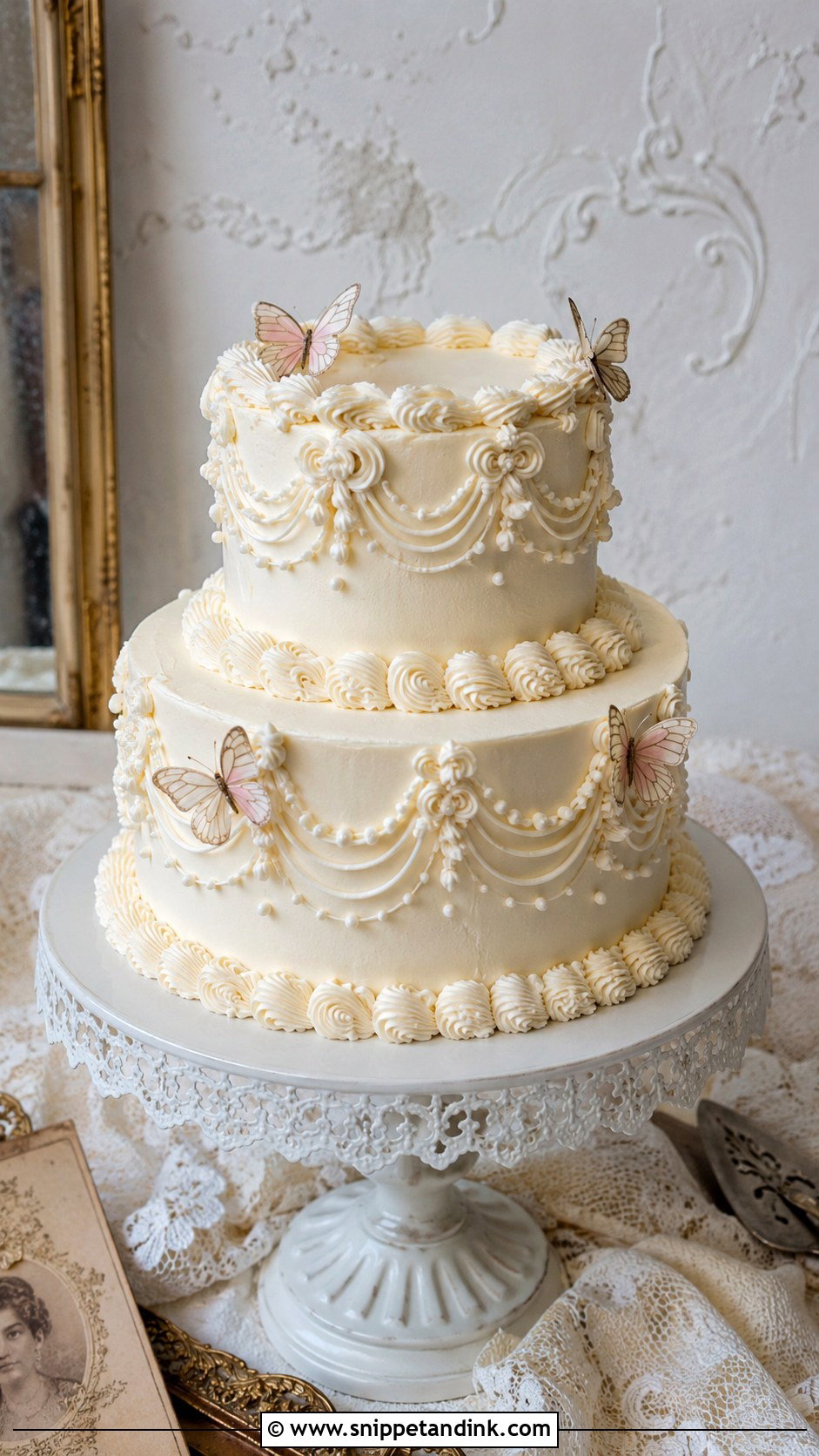
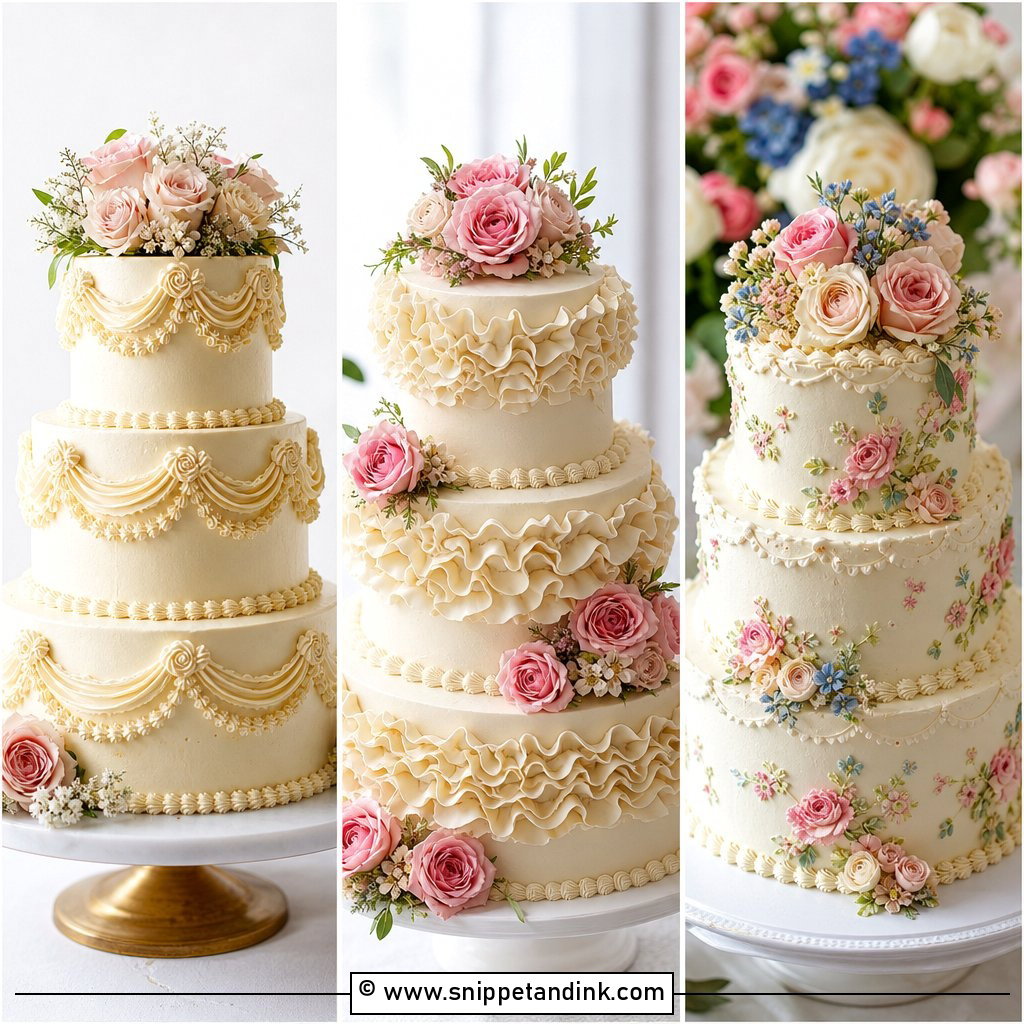
Lambeth-style piping, with its layered swags, shells and rosettes, comes back into fashion every few years, and butterflies suit it well if they stay small. I pipe the frames first, then set a few butterflies inside or just above them. Scattering them everywhere fights the piping. Blush, cream, pale yellow or soft blue are classic. This is labour-intensive work and is usually priced accordingly; it pairs well with a vintage dress or a tea garden reception.
11. Minimal Two Tier Butterfly Wedding Cake
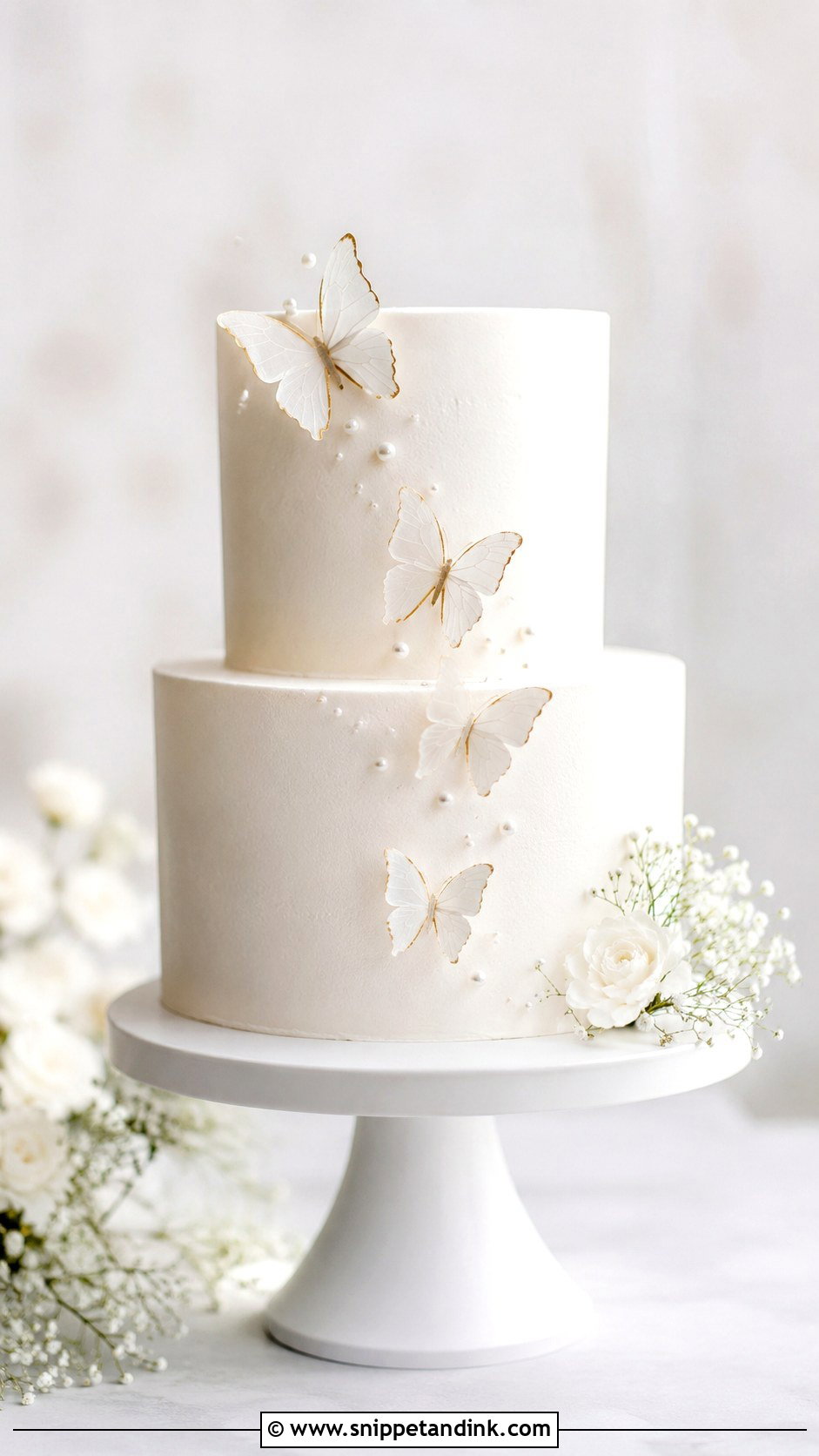
Minimal butterfly cakes depend on spacing more than anything. I use three to seven butterflies in a clean upward line on smooth white buttercream or fondant, then one small flower cluster or a ribbon at the base. Odd numbers look more natural than even ones. With so few, each wing has to be neat, so I make extras and pick the best on the day. Ivory, champagne or pale blush keeps it quiet.
12. Ombre Two Tier Butterfly Wedding Cake
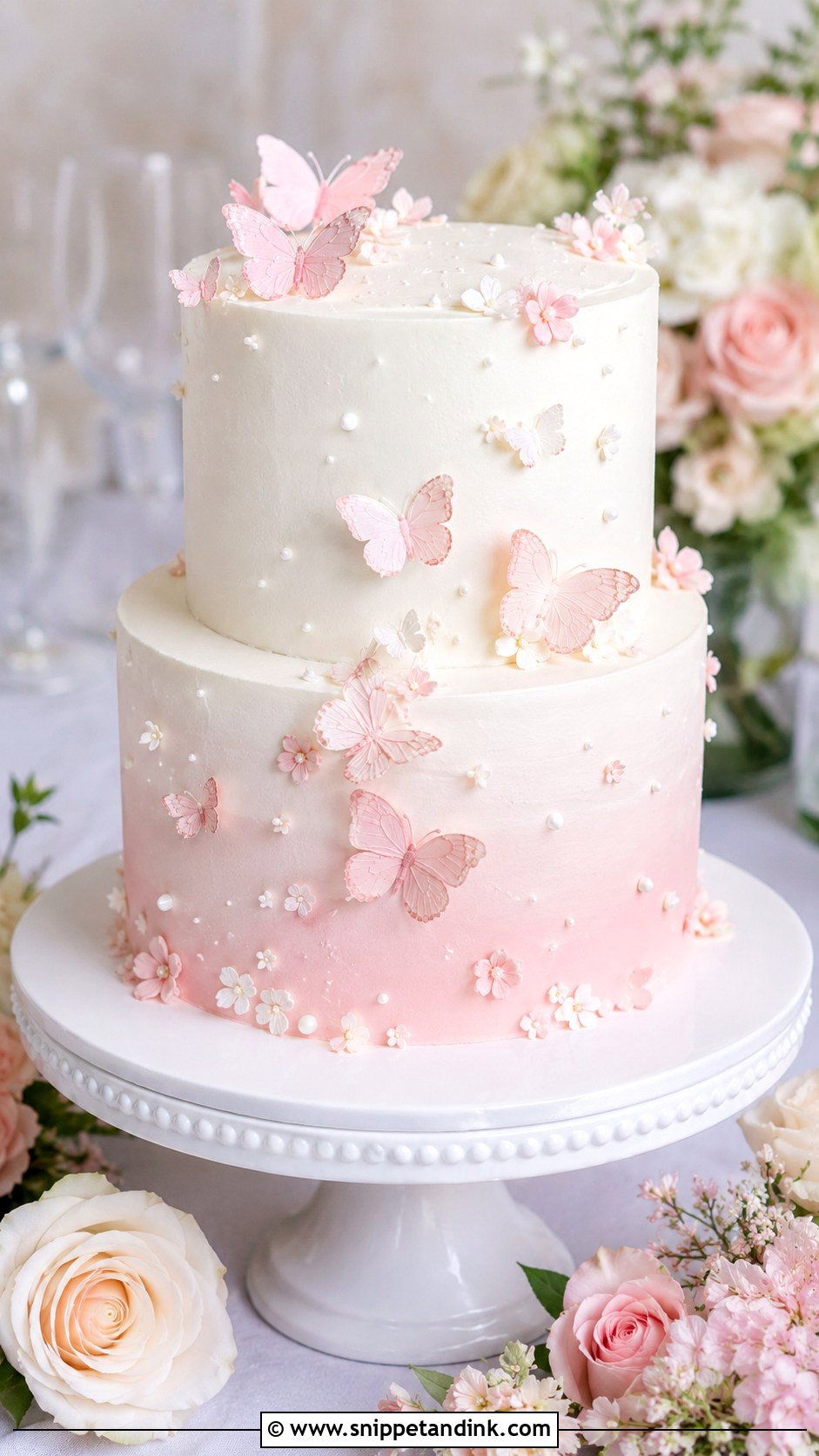
Ombré frosting fades from one tone into another, such as white to blush, lavender to white, or blue to pale grey. The butterflies should follow the same gradient and grow paler as they rise. I blend ombré from three or four batches of tinted buttercream, which takes time to get smooth on a two-tier cake. A taller bottom tier shows the fade best. Keep everything else to a few pearls or small flowers.
13. Semi Naked Two Tier Butterfly Wedding Cake
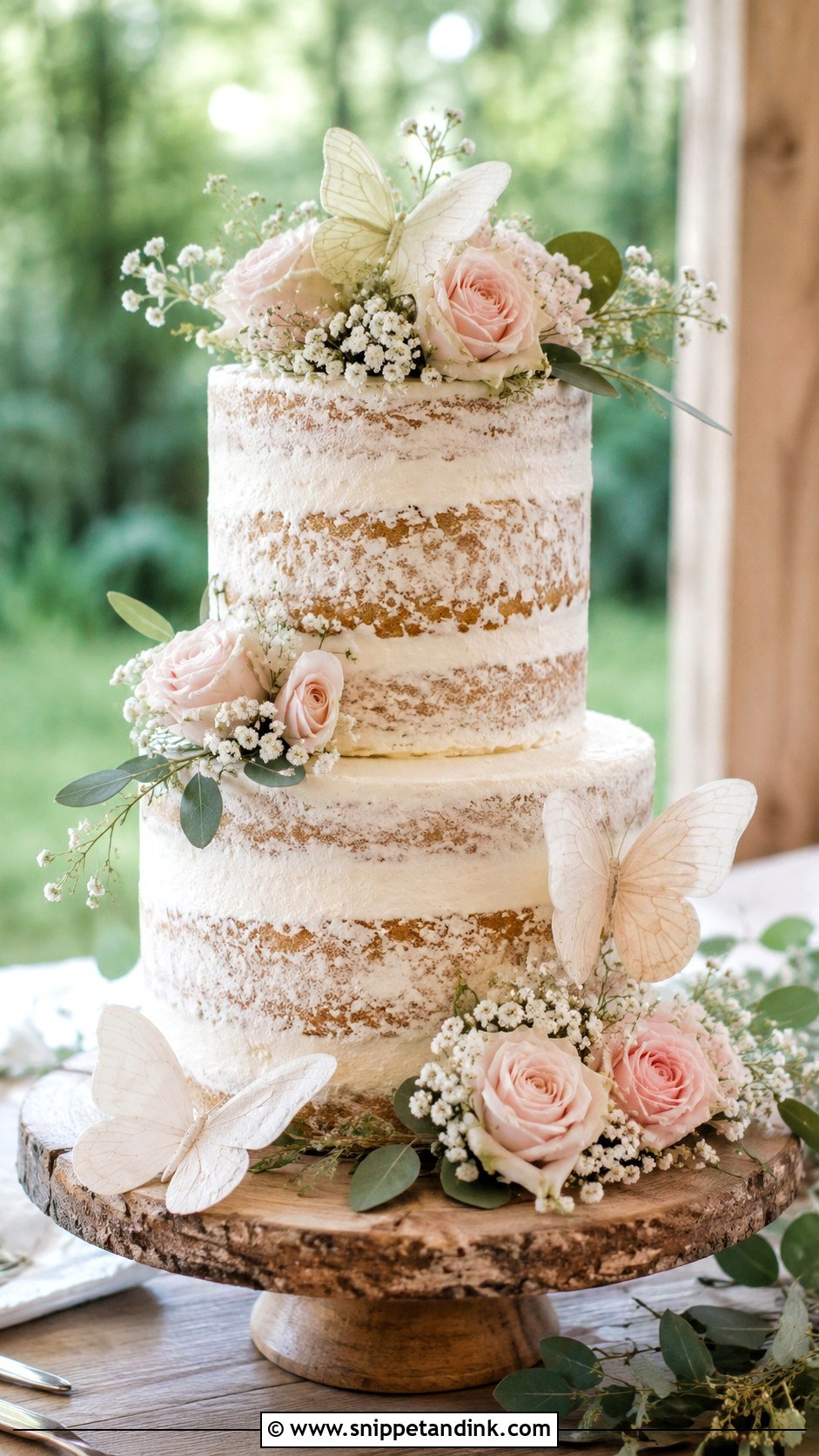
A semi naked two tier butterfly cake is the one where wafer paper behaves worst. The thin frosting lets moisture from the sponge reach the wings, and wafer paper softens and droops as soon as it gets damp. I attach them with a small dot of melted chocolate or mount them on a wired body so the wings stay off the surface. Fresh flowers and greenery give the garden feel, and carrot, lemon or berry sponge suits the exposed look.
14. Fondant Two Tier Butterfly Wedding Cake
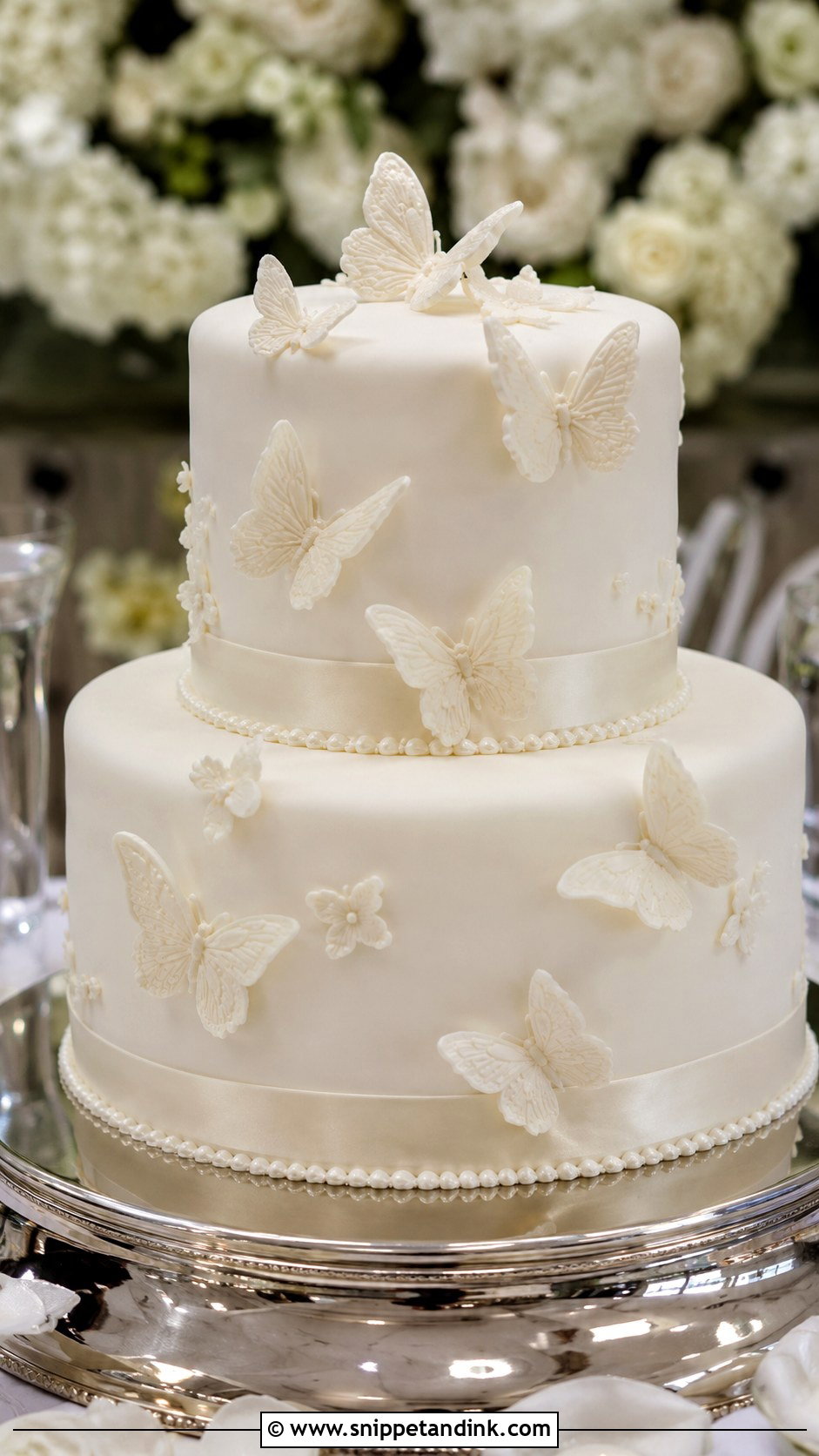
Fondant gives the smoothest canvas for raised sugar butterflies, and it protects them from buttercream’s moisture. White, ivory, blush or pale blue fondant can take embossed patterns, pearl trim or a satin ribbon around each tier. Structured butterfly toppers also sit better on fondant. The trade-off is taste: many guests peel fondant off, so I keep it thin and put a good buttercream underneath.

15. Buttercream Two Tier Butterfly Wedding Cake
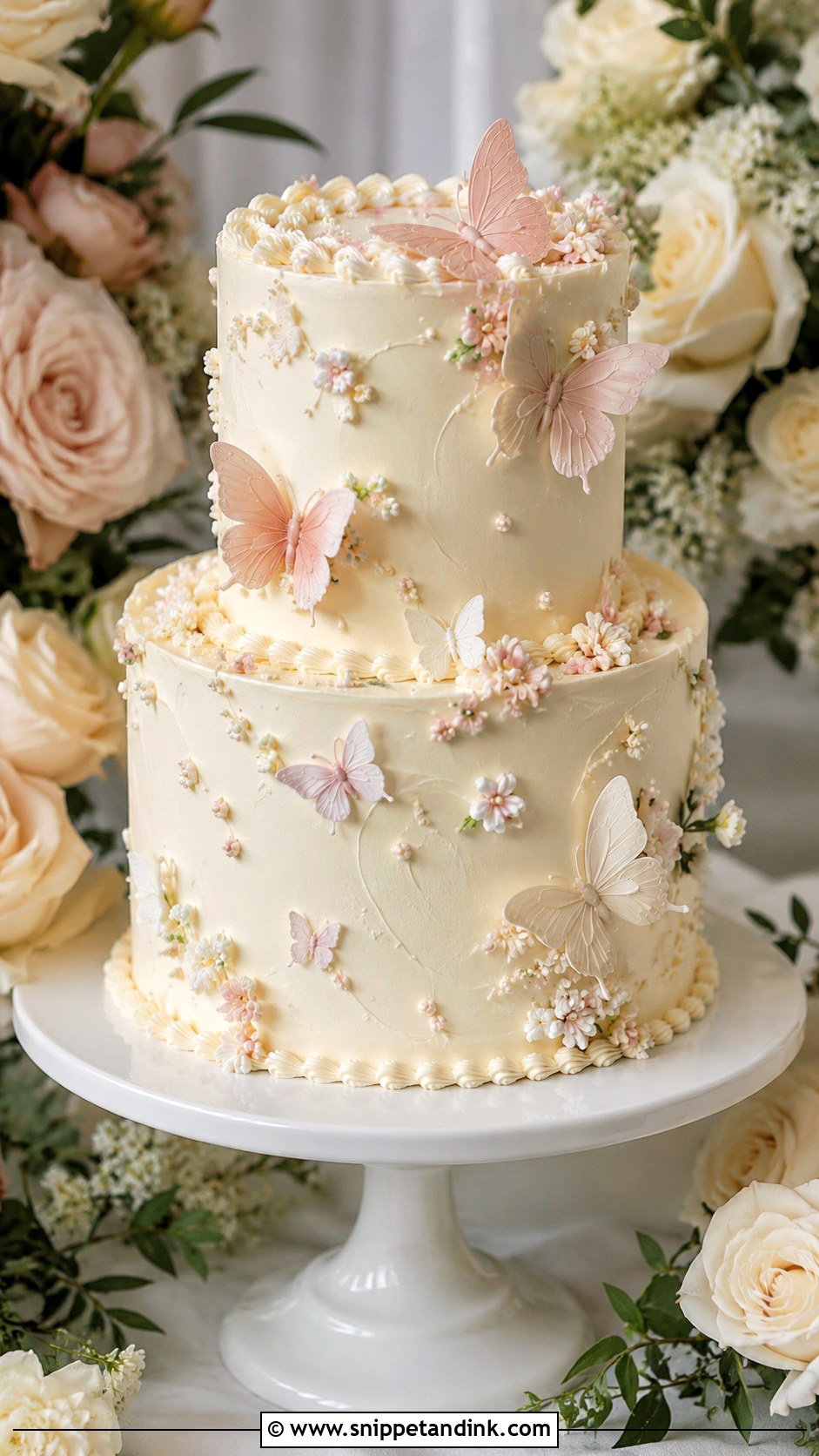
Buttercream is the frosting most people enjoy eating, and it gives the butterflies a soft base. Smooth, lightly textured or palette-knife finishes all work. Gum paste or chocolate butterflies hold up better on buttercream than wafer paper, which absorbs the fat and goes translucent. Ivory, blush, gold or pastel wings, plus small flowers or pearl dots, keep it simple. Vanilla, lemon or strawberry sponge underneath.
16. Garden Two Tier Butterfly Wedding Cake
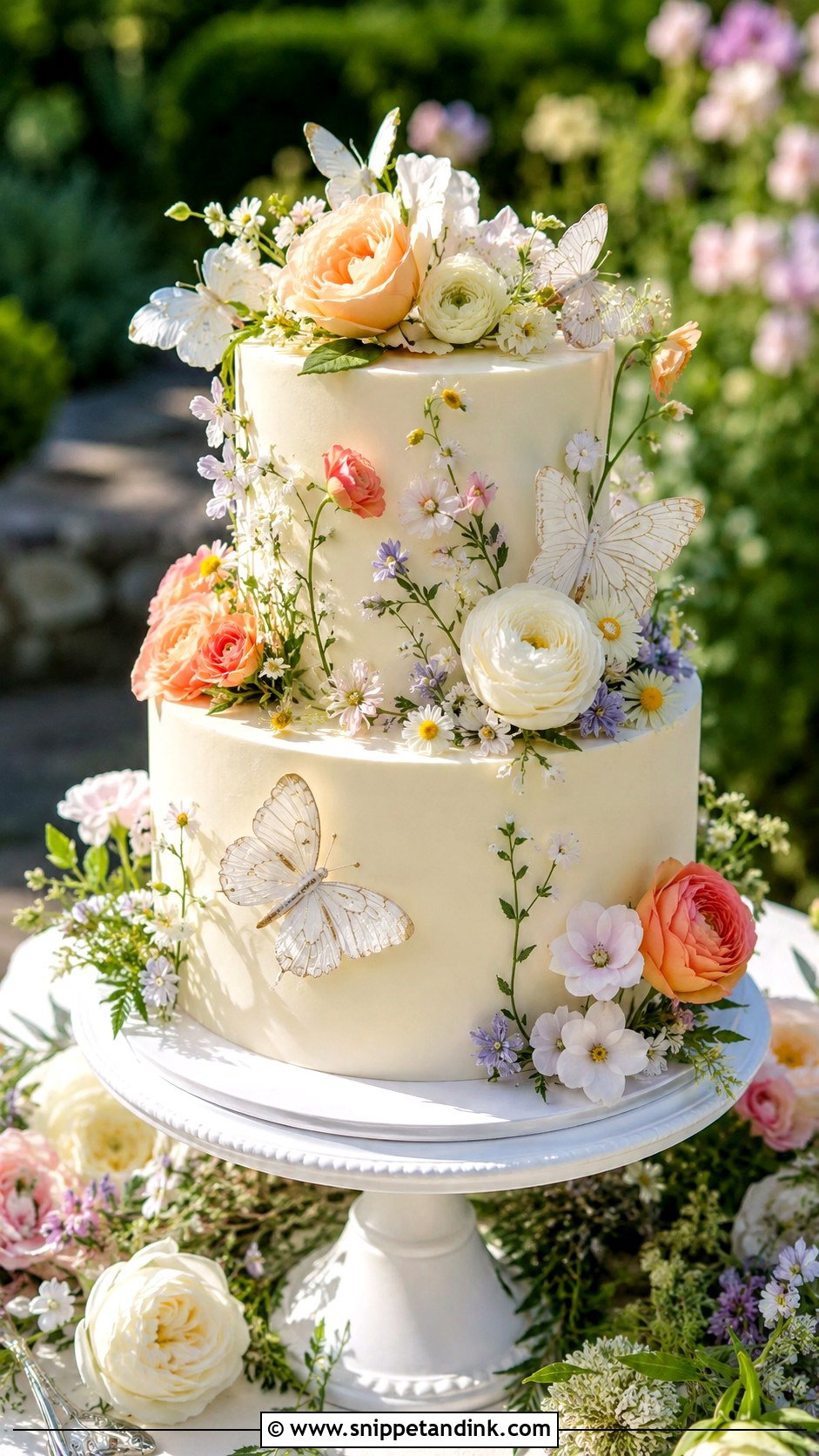
A garden-style cake should look as if the butterflies came in from the flowerbeds. On an ivory base, I use seasonal blooms like sweet peas, ranunculus, daisies or roses, kept small so they don’t bury the tiers, and set butterflies resting on petals or just off them. Greenery should stay light. In a tent on a warm day, I’d place the butterflies at the venue rather than transporting them on the cake, since wings break in transit more than any other decoration.
17. Boho Two Tier Butterfly Wedding Cake
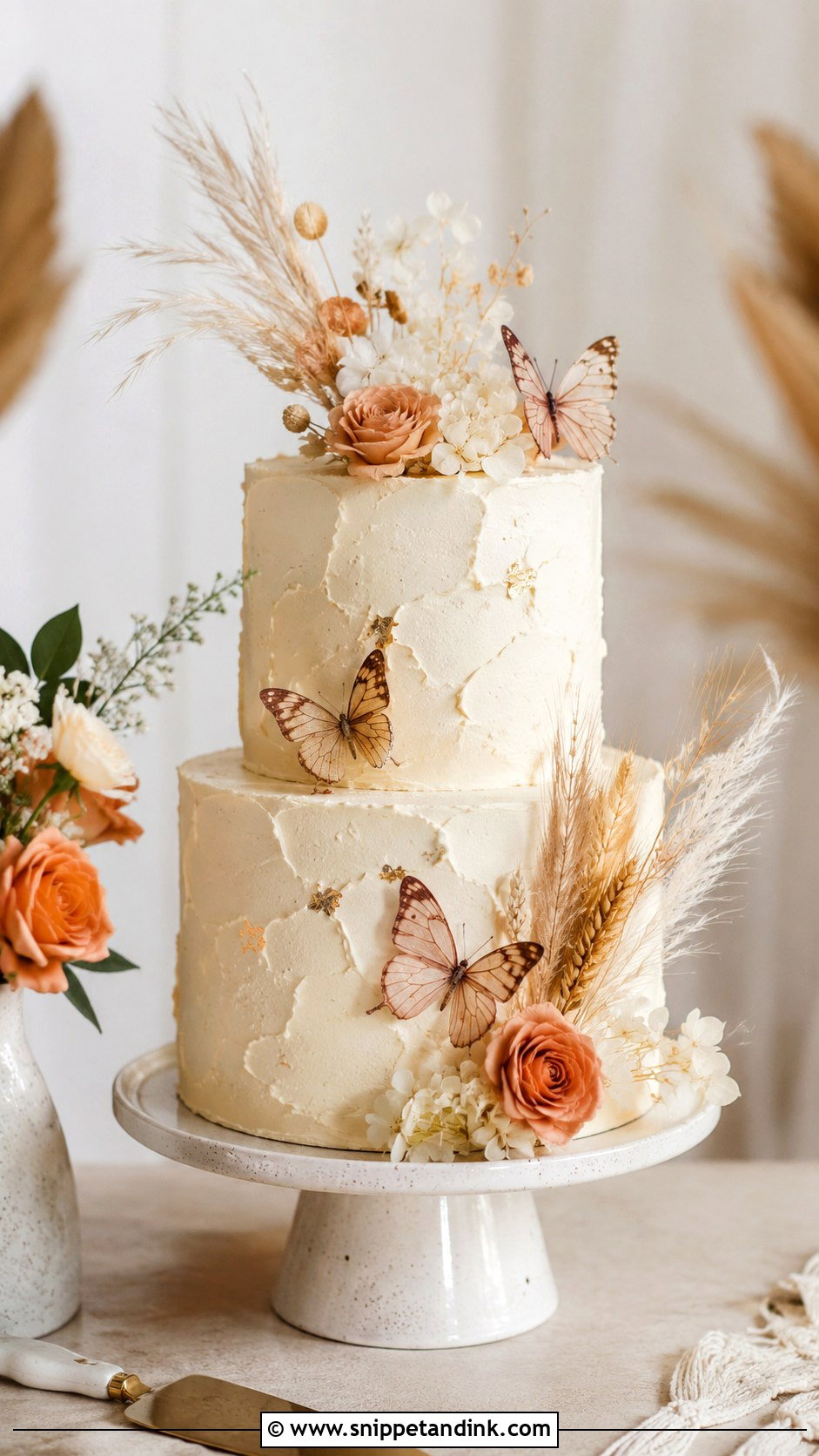
A boho two tier butterfly wedding cake works in warm ivory, beige, pale peach or muted terracotta. Wafer paper butterflies, sugar flowers made to look dried and light gold give it texture. Real pampas grass sheds and isn’t edible, so I’d suggest sugar or wafer paper versions instead. Keep the butterflies rising from one side. It suits barn venues, desert palettes and relaxed outdoor ceremonies.
18. Modern Two Tier Butterfly Wedding Cake
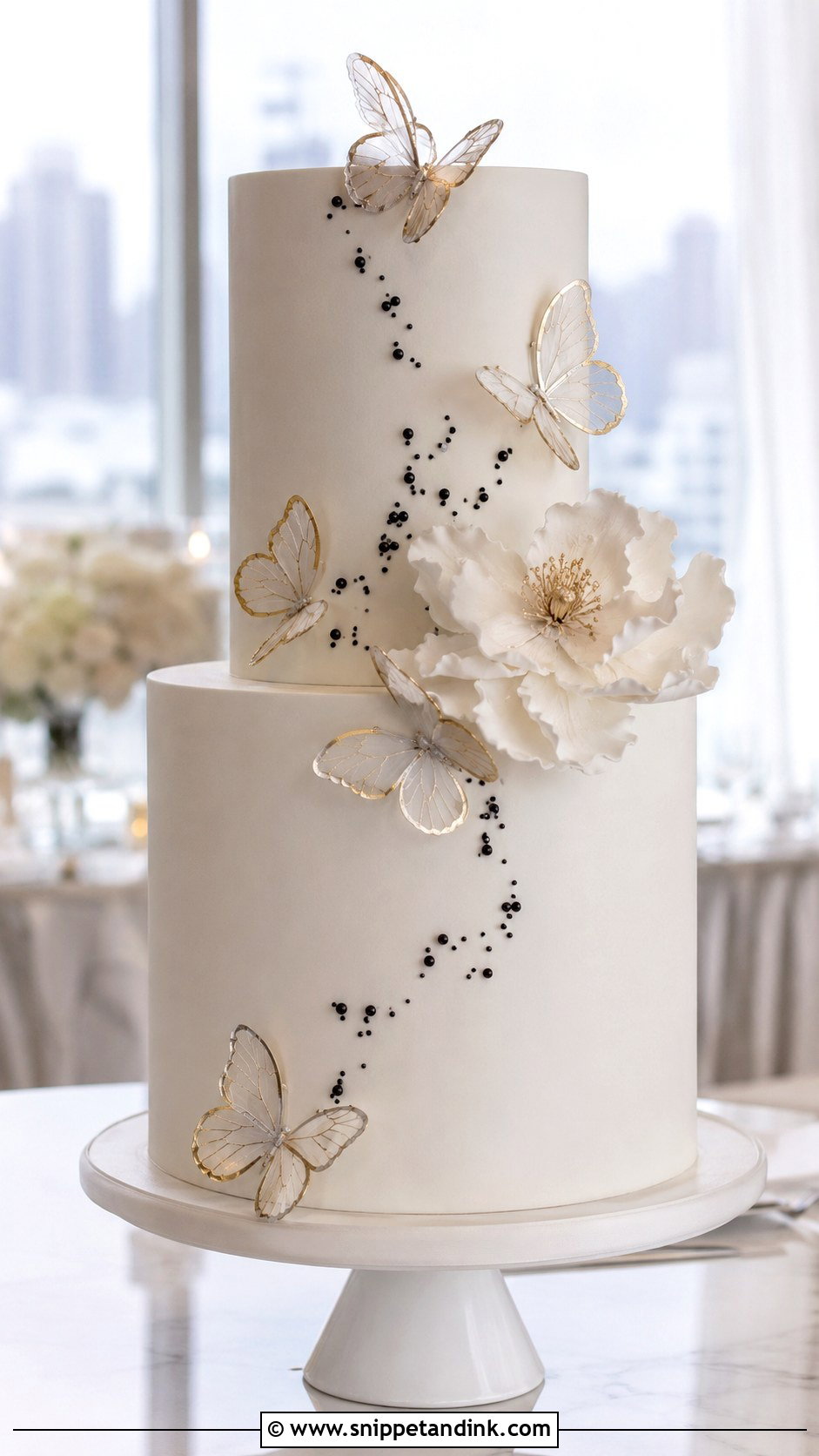
Modern butterfly cakes treat the wings almost like an art installation. Smooth white tiers, extra-tall rounds or squares, and black, gold or translucent butterflies placed with wide gaps. Translucent wings are usually isomalt or gelatin, which look like glass but go sticky in humidity, so they’re best for air-conditioned venues. Keep flowers to one sculptural sugar bloom. It suits loft and gallery receptions.
19. Champagne Two Tier Butterfly Wedding Cake
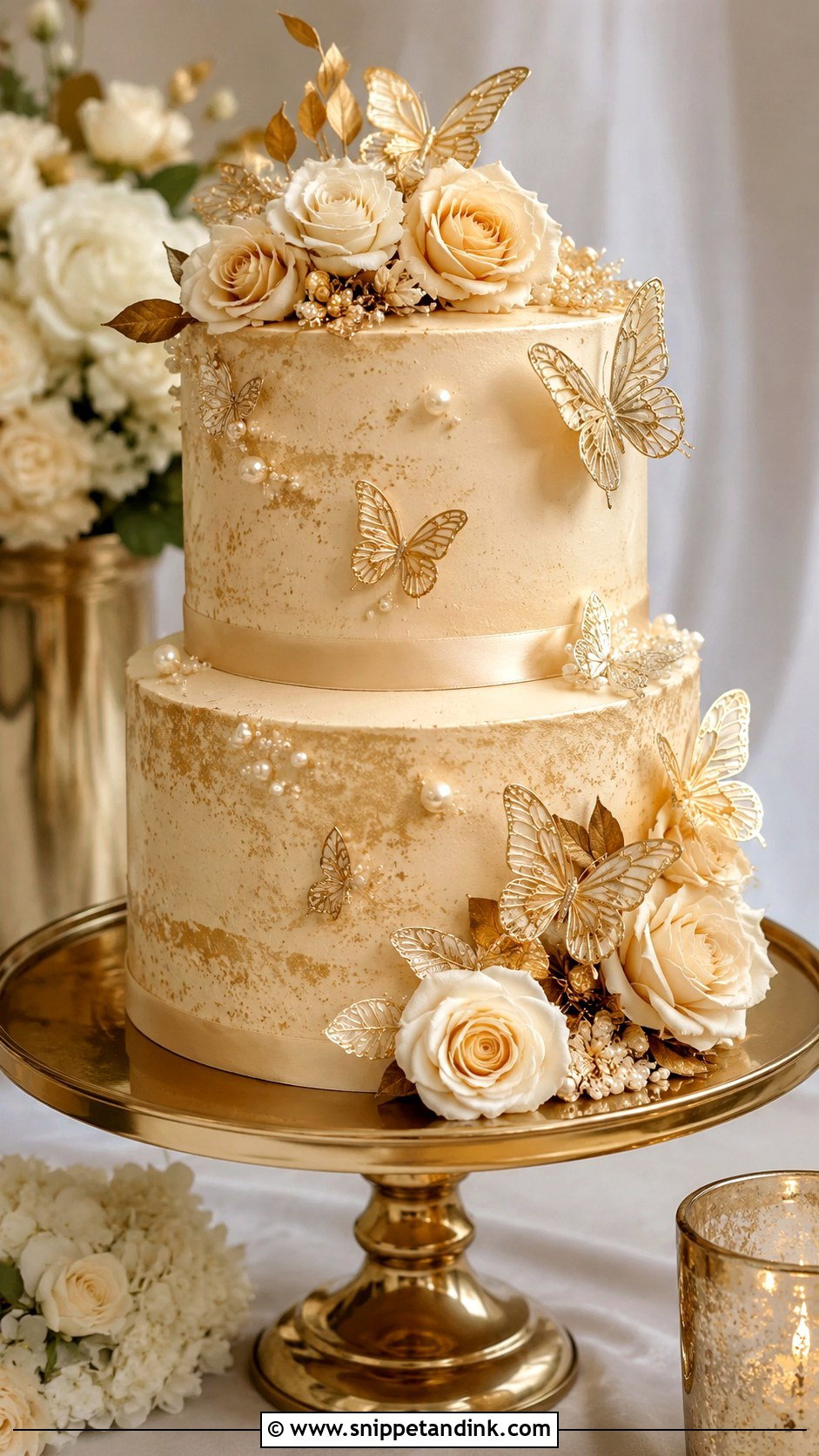
Champagne buttercream with ivory and gold butterflies glows warmly under reception lighting. I keep the shine to one or two places, since too much lustre dust looks plastic in photos. Pearl beads, satin ribbon or a brushed metallic edge add polish; a small cluster of cream roses or sugar orchids softens it. Caramel or almond sponge suits the warm colour, and it fits formal evening weddings.

20. Sugar Butterfly Two Tier Wedding Cake
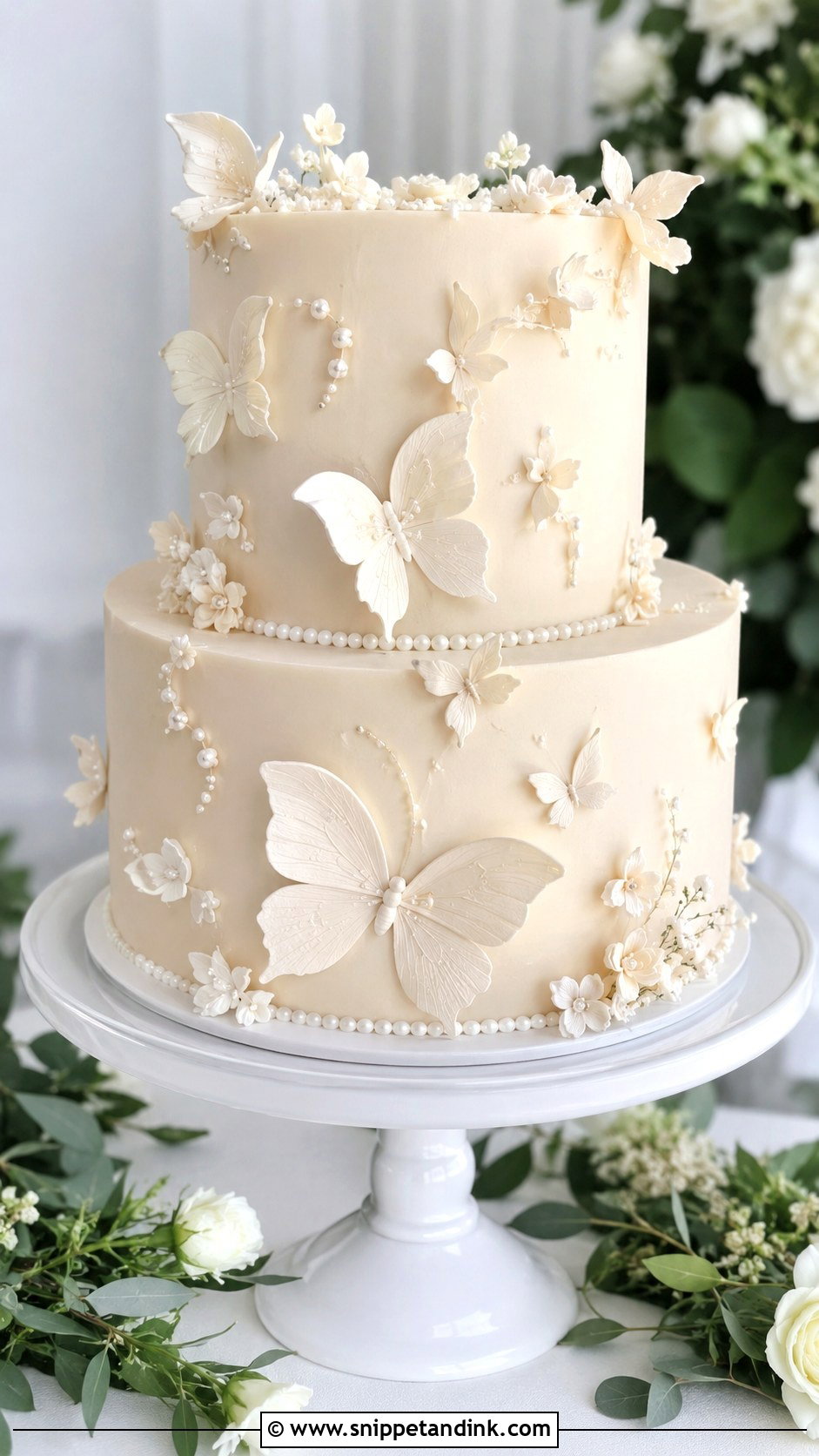
Gum paste butterflies are the most detailed edible decorations of all the options. I cut them, vein them, and dry them folded in a V so the wings stay lifted, then paint or dust them. They can be made weeks ahead and stored airtight, which is a bonus for busy wedding weeks. Different sizes, smaller near the base and larger at the top, look more natural. Fine piping or small sugar flowers complete it without fresh flowers.
How Butterflies Stay On a Cake All Evening
The attachment matters as much as the wings. Light butterflies can sit on a small piped body of buttercream or royal icing, which grips the underside and keeps the wings lifted. Heavier ones go on florist wire, and every wire goes into a straw or a food-safe pick so metal never touches the sponge. Remind whoever is cutting that wired butterflies come off first.
I always place butterflies after the cake has been delivered and stacked, never before the drive. They’re the first thing to snap on a bumpy road. I bring extras of every size because one or two always crack.
What to bring to your consultation
- A photo of your flowers or invitation so the wing colours match
- Where the cake will stand and whether that spot is warm or sunny
- Which side faces guests, so the main flight path points into the room
- Whether you’d like a few butterflies kept as a keepsake; gum paste ones last years if stored dry
Let the Butterflies Lead the Eye Upward
Colour, frosting and flowers matter, but placement is what makes a butterfly cake work. The wings should travel from the lower tier toward the top in one clear line or a loose spiral, getting slightly smaller or paler as they rise. Choose the wing material for your venue’s weather as much as for the look, and ask your baker to bring spares. Settle on your palette first, then everything else on this list can be adapted to it.
You'll Like These Ideas:











Leave a Reply