
Nigerian traditional weddings give a bride more to wear, and more to get right, than almost any other ceremony I style for. Handwoven aso oke, embroidered lace, glittering George, coral beads, wrappers, structured blouses, flowing gowns and headwear that has to be tied by someone who knows how. Each community has its own expectations, and so does each family. My rule is simple: a modern sleeve or a new silhouette is fine, but the pieces that carry meaning stay, and an elder or a designer who knows the tradition checks them. Below are twenty complete bridal looks across Yoruba, Igbo, Edo, Efik, Ibibio, Hausa-Fulani, Kanuri, Ijaw, Urhobo, Isoko and Tiv styles, with the fitting and fabric details I’d watch for in each.
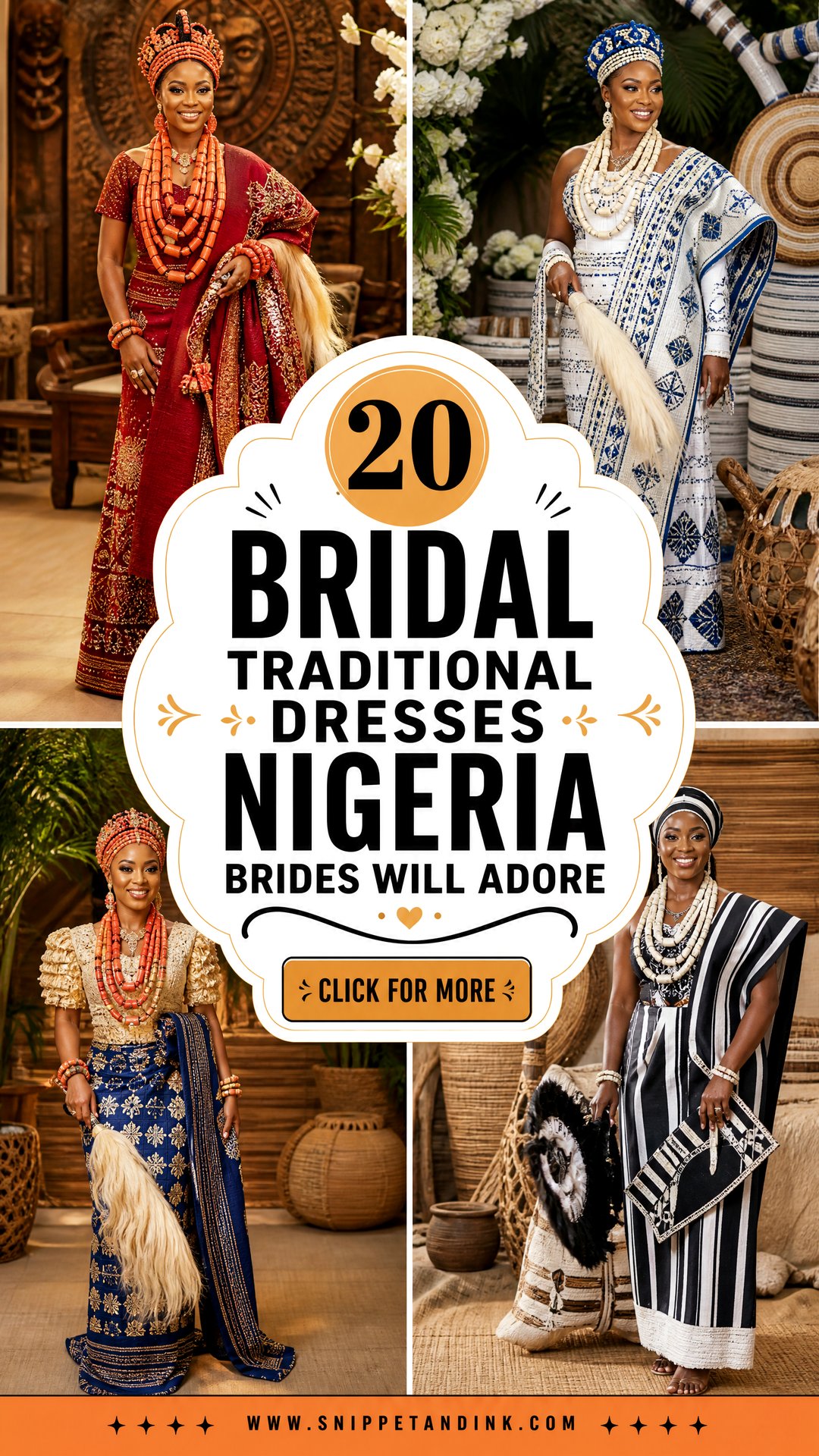
Aso Oke, George and Coral Behave Differently From Bridal Satin
Most bridal fitting advice assumes soft, draping fabric. Nigerian traditional cloth is often the opposite, and I plan fittings around that.
Aso oke is woven on narrow looms in strips that are then joined. It’s stiff and heavy, it holds structure brilliantly, and it doesn’t forgive a careless seam, because every stripe has to line up. Buy the full quantity at once from the same weaver, plus a little extra; a second batch rarely matches exactly. George is also heavy and often embroidered or stoned, which adds weight at the waist in a double wrapper. Lace is lighter but needs a lining that matches your skin tone or the blouse color, depending on how sheer you want it.
Coral and other beads
Genuine coral is expensive and surprisingly heavy, and many brides wear good imitation coral, especially for long ceremonies. If the beads are family pieces, keep perfume, hairspray and body oil away from them, because coral is a soft, porous material and can dull. Put the beads on last, after makeup and hair. Ask whoever strings or arranges them to check the clasp and knotting a few weeks ahead, not on the morning.
Headwear needs its own plan. A gele in stiff aso oke takes a skilled tier and some time, so book her for a slot early on the day, and do a trial if you can. Pre-tied auto-geles exist and are a practical backup for an outfit change later in the day.
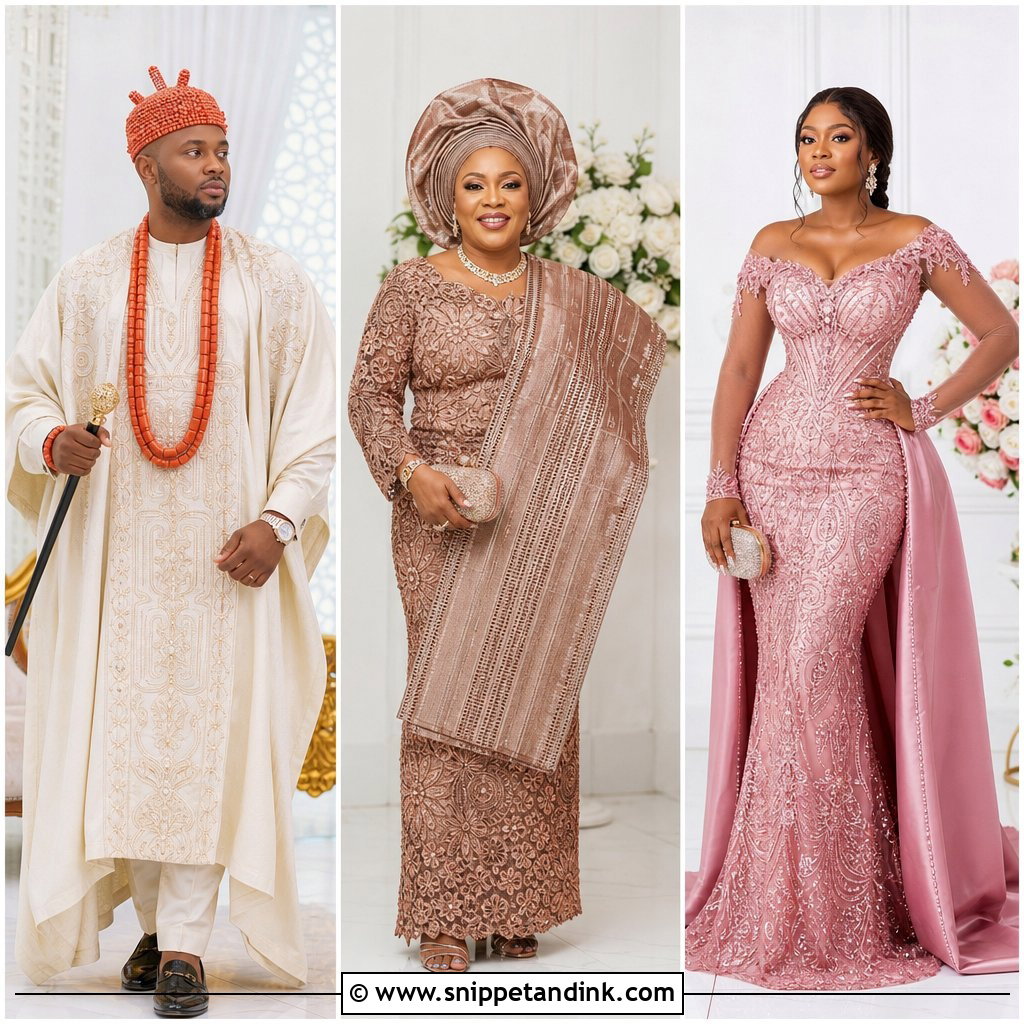
1. Yoruba White And Gold Aso Oke Bridal Outfit
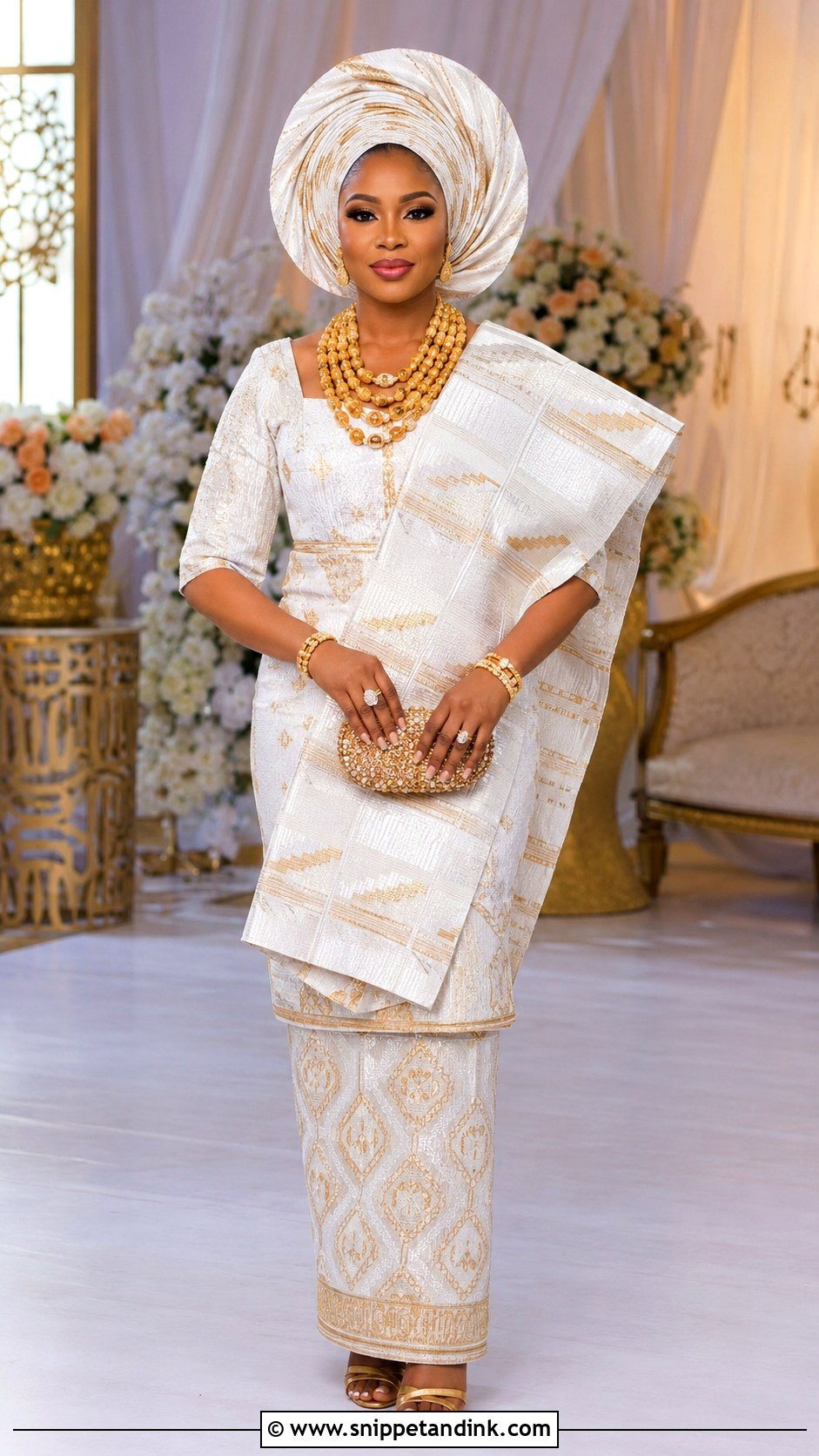
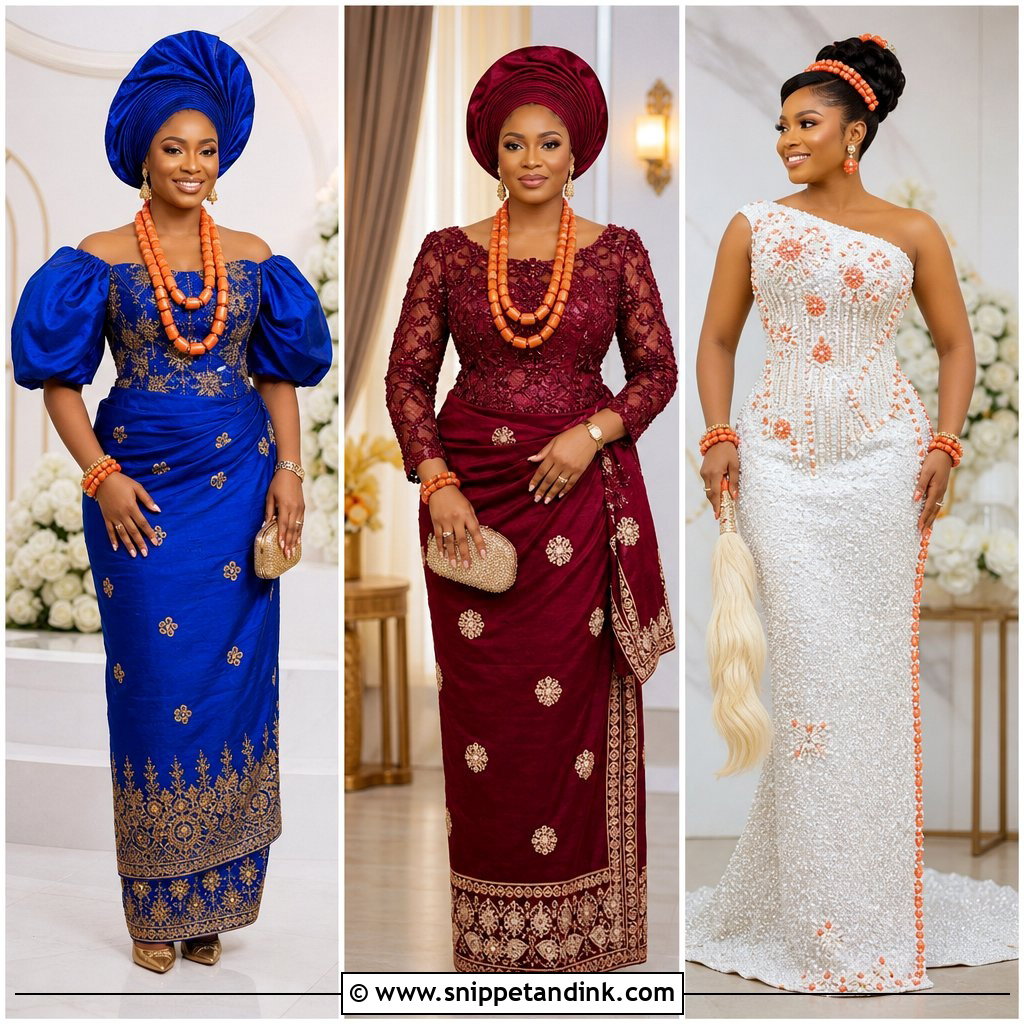
White and gold aso oke is bright and regal, and it shows off the weave better than any darker color. A fitted buba, a properly wrapped iro, a matching gele and an ipele over one shoulder make up the full set. Because aso oke is stiff, the iro has to be wrapped and tucked firmly, or it loosens as you dance; I’d ask the tailor about a hidden hook or tie. Keep the beading to the neckline, sleeves and wrapper border so the handwoven cloth stays the star. Gold earrings, a statement necklace, stacked bracelets and a beaded clutch finish it. Bring flat embellished sandals as well as heels for later. The groom can match or pick a complementary aso oke.
2. Yoruba Monochrome Aso Oke Bridal Gown
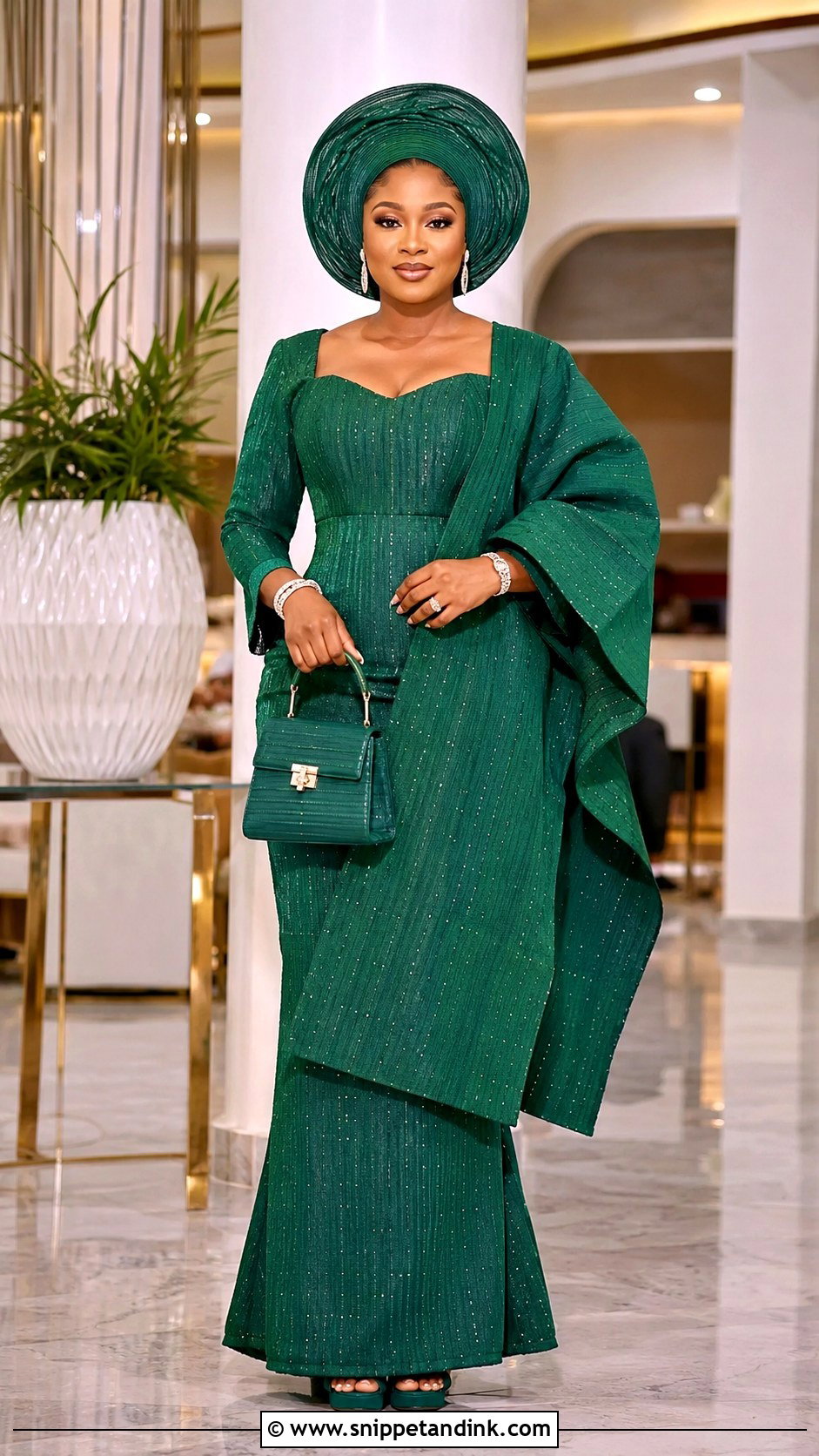
If you want Yoruba heritage in a sleek silhouette, a monochrome aso oke gown does it. The fabric is cut into a fitted floor-length gown with a flared hem instead of buba and iro. Pair it with a structured gele in the same color family and an ipele over one arm. Emerald, royal blue, burgundy and champagne with a little metallic thread look rich in photographs. Aso oke is woven in narrow strips and joined, so the stripe and pattern have to be matched across every seam; I check this at the first fitting, before anything is boned. A corseted bodice adds shape, but you still need to sit and dance. Crystal earrings, bracelets, a small purse and platform sandals complete it.
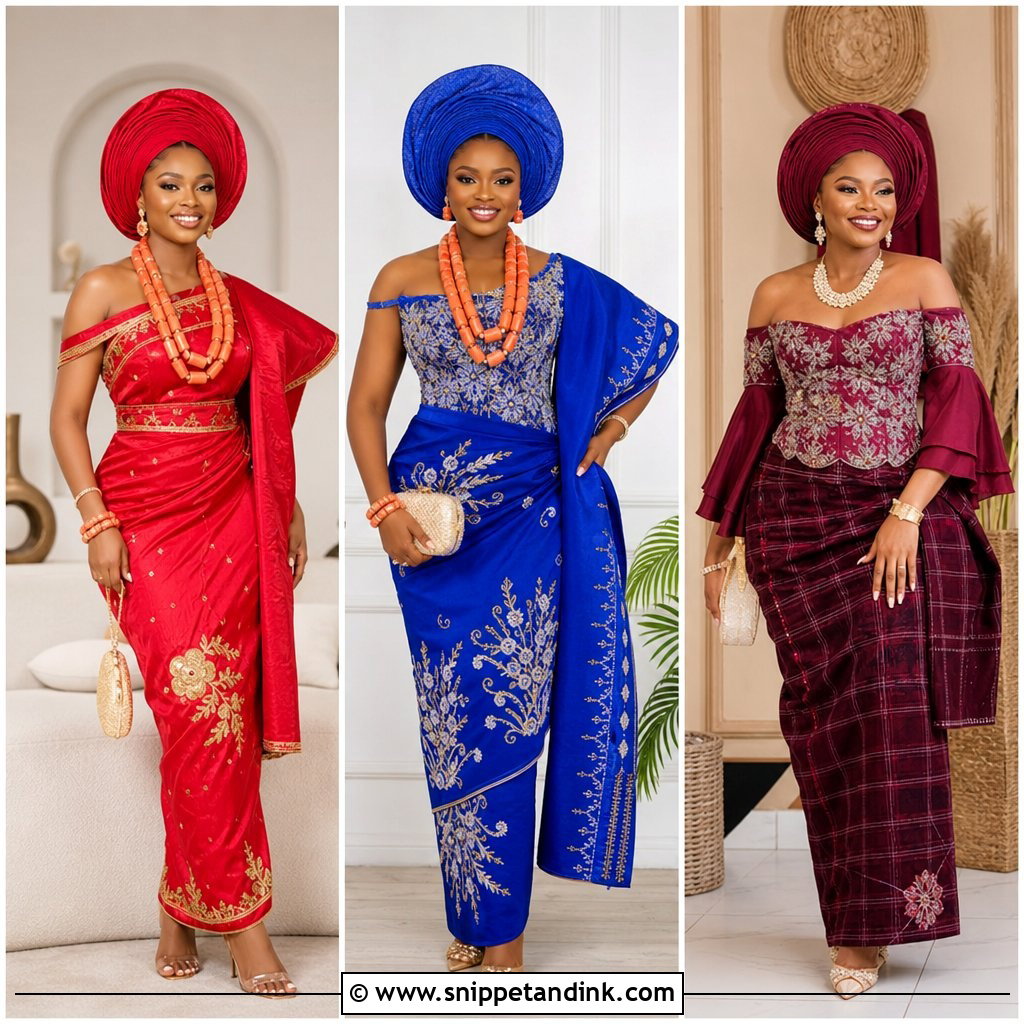
3. Yoruba Lace Blouse And Aso Oke Wrapper Outfit
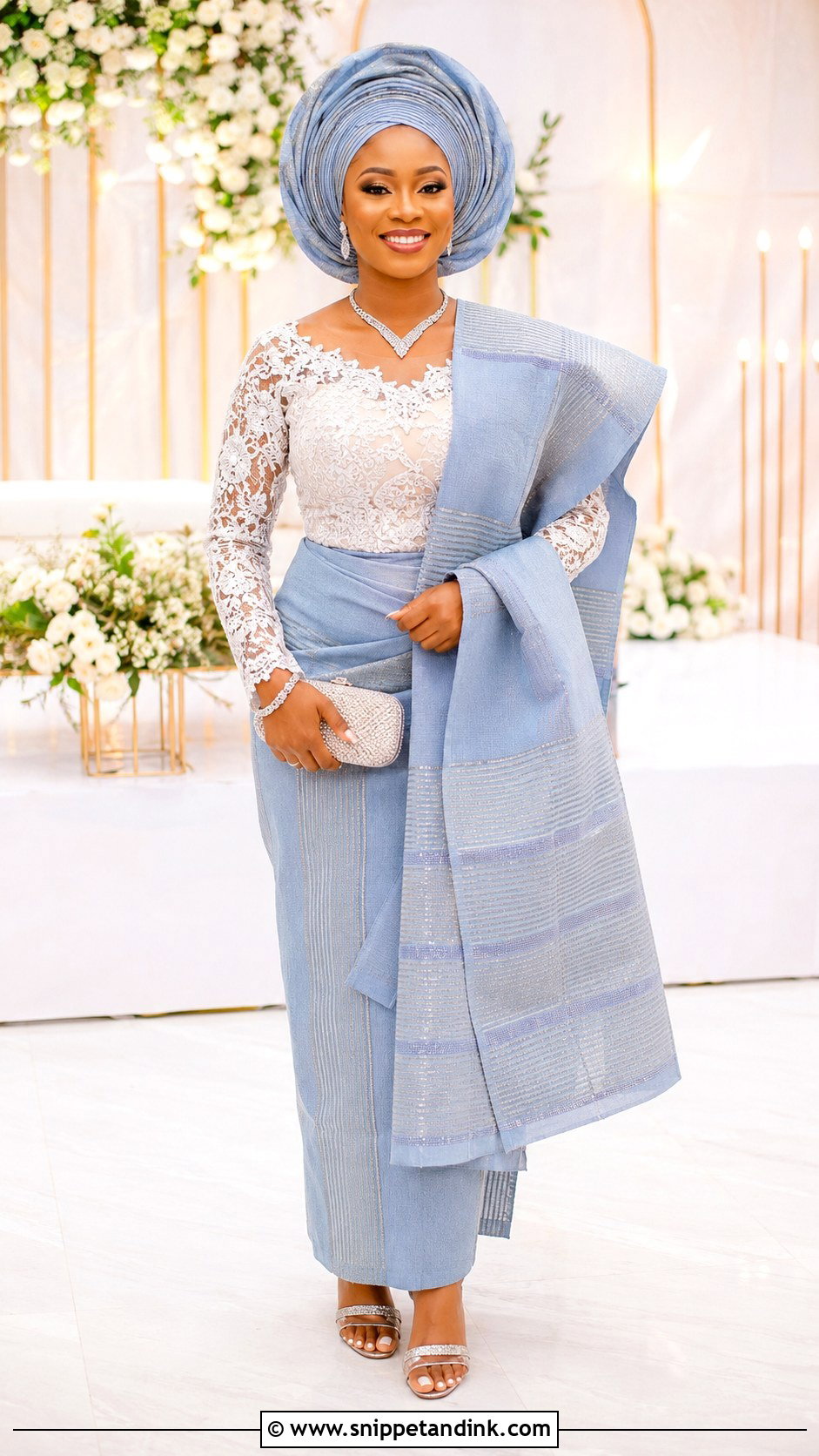
Lace on top and aso oke below balance each other well. A fitted lace blouse with lined illusion sleeves, fine beadwork and a supportive neckline pairs with an iro in a related shade, and the same aso oke is used for the gele and ipele. Champagne lace with wine aso oke reads rich; ivory lace with dusty blue reads lighter. Keep one fabric detailed and the other quiet, or the two embroideries fight. Make sure the blouse is long enough to stay tucked under the wrapper when you lift your arms to dance. Coordinated earrings, bracelets, a beaded clutch and block-heel sandals finish the look.
4. Yoruba Burgundy Aso Oke Peplum Outfit
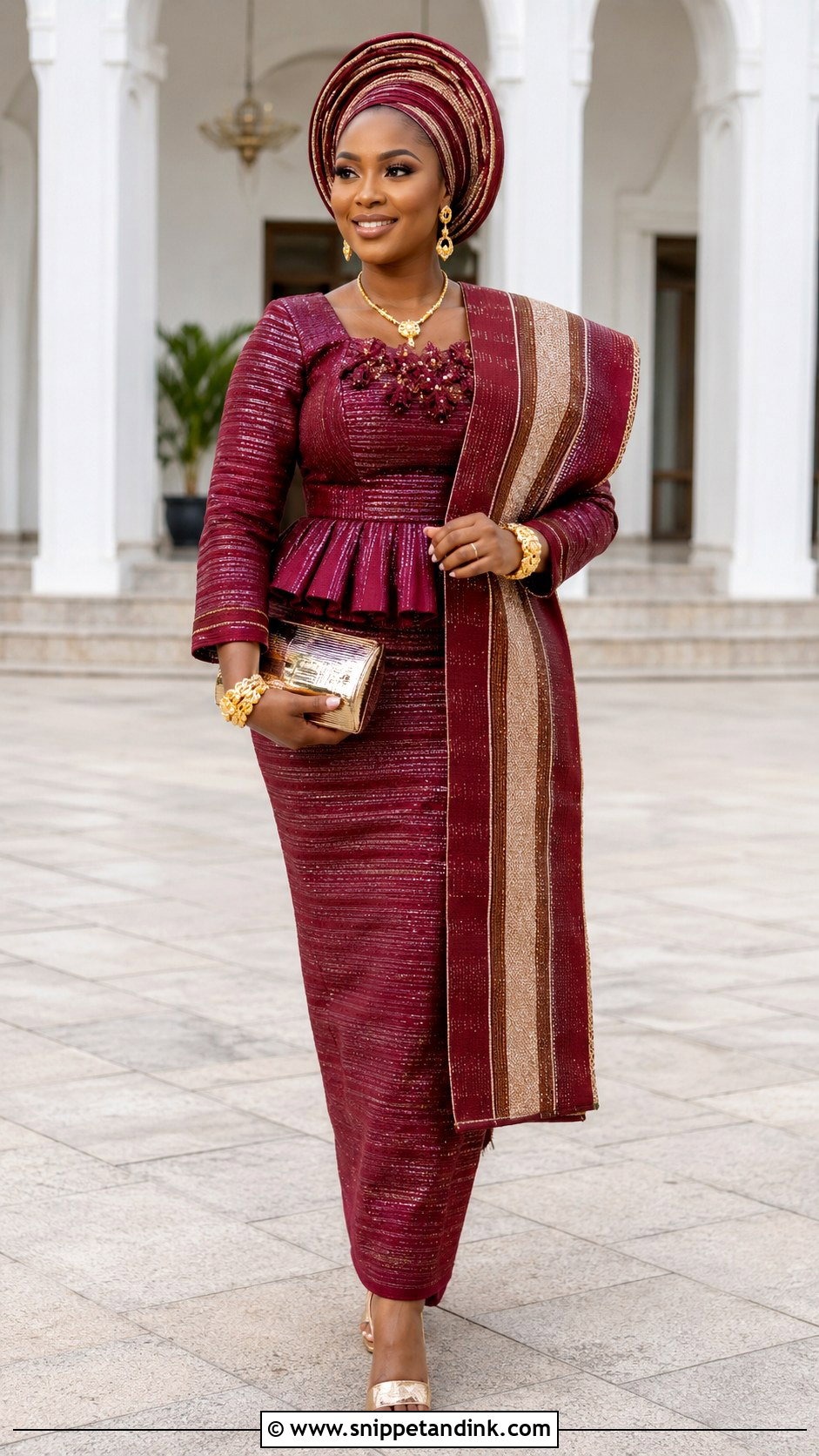
Deep burgundy aso oke is confident and formal without a lot of decoration. A fitted peplum blouse defines the waist over a straight or slightly flared wrapper, and the peplum also hides the wrapper’s top fold, which is a practical bonus. A tall gele in burgundy and champagne and an ipele with gold fringe complete the set. If the cloth already has bold stripes or metallic weave, keep beading to the neckline and cuffs. Sculptural gold earrings, layered bracelets and a metallic clutch tie it together. Block heels are steadier than pointed pumps. I’d link the groom’s outfit through one repeated color rather than identical fabric on both of you.
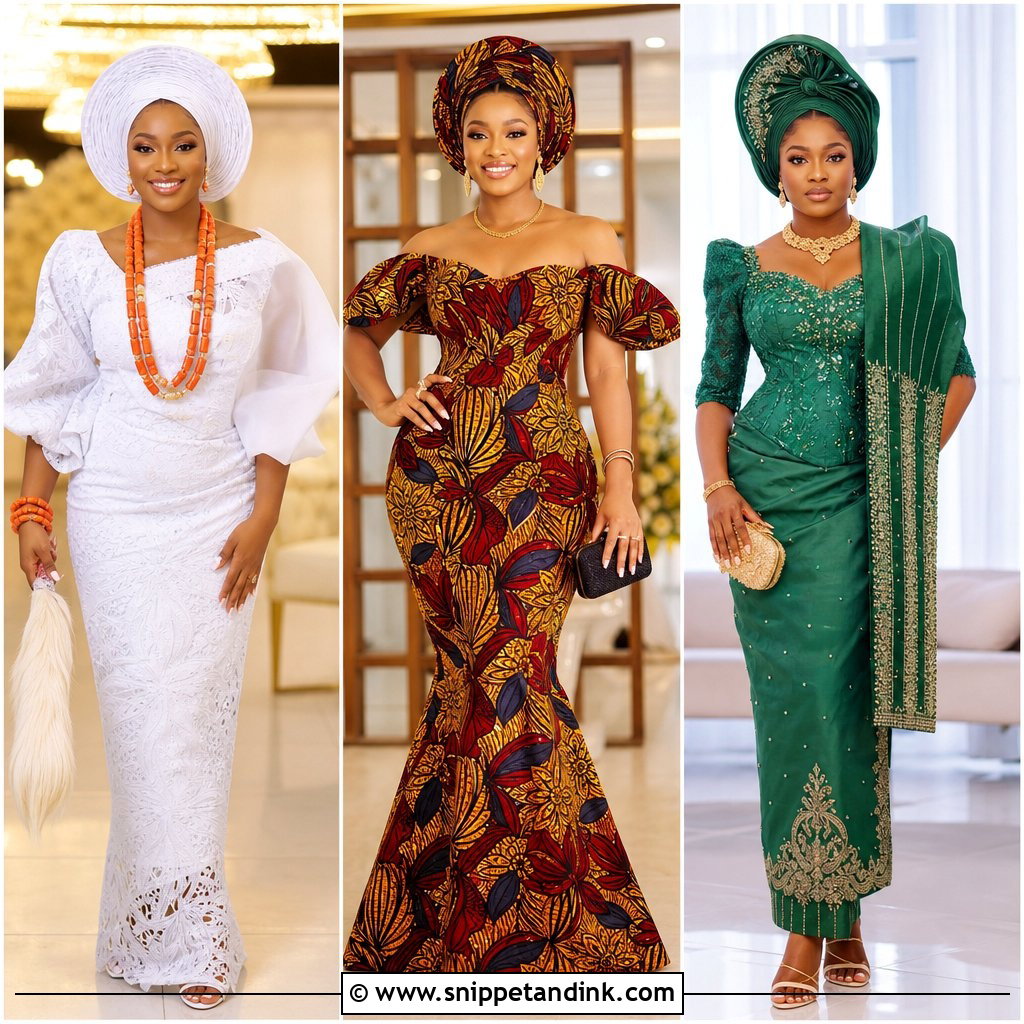
5. Igbo George Wrapper And Coral Bead Bridal Outfit
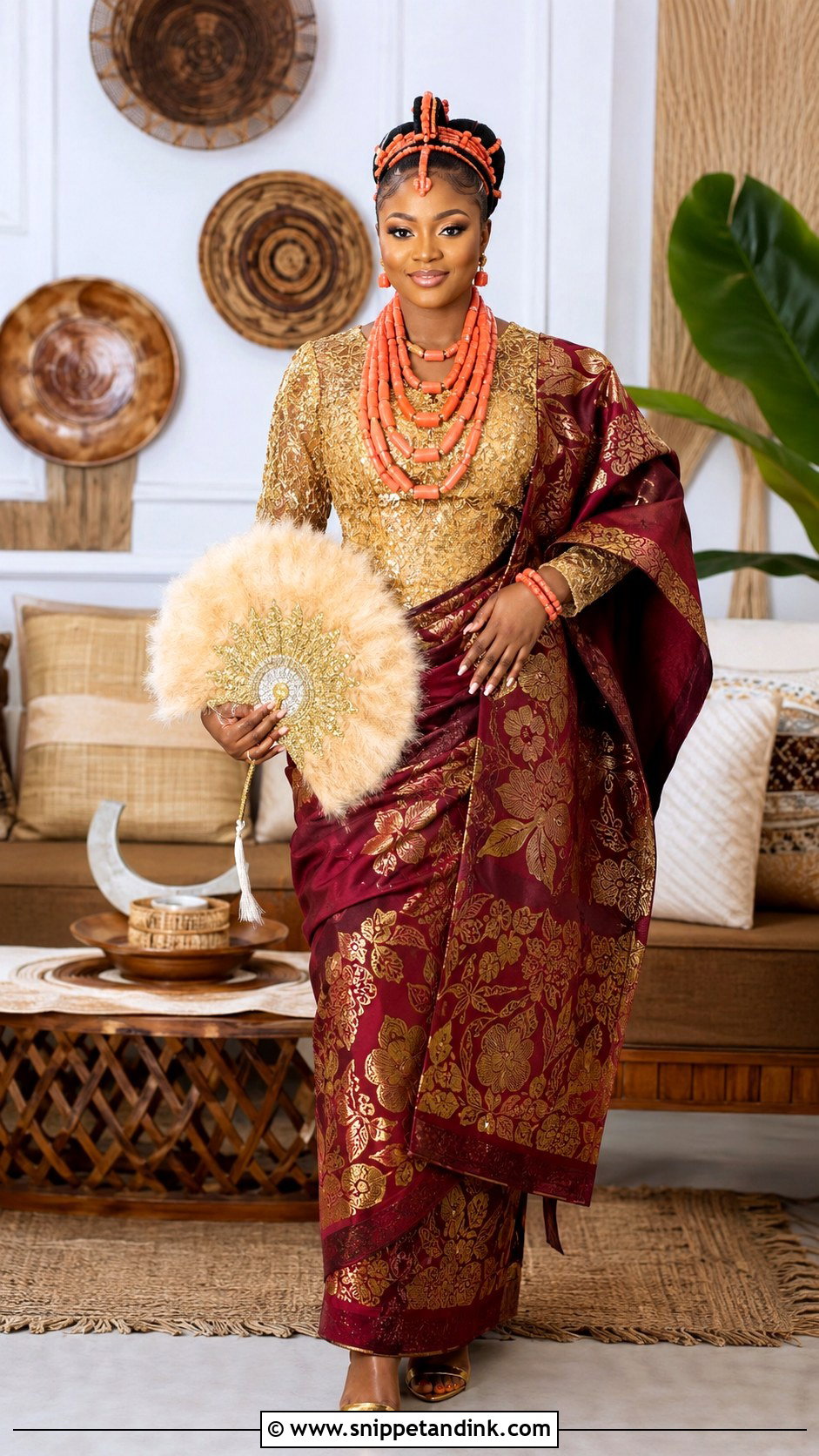
A rich George wrapper is a familiar choice for many Igbo traditional brides. A fitted blouse with a square, sweetheart or soft curved neckline, in lace, velvet or embellished fabric in a color pulled from the wrapper, sits above it. Coral-colored beads frame the neck, wrists and hair. George is heavy, and a double wrapper adds more weight at the waist, so I’d have the under-wrapper secured with a tie or hook before the top one is arranged. A hand fan, metallic sandals and a small purse finish it. Customs vary between Igbo communities, so confirm beads, wrapper arrangement and accessories with family before anything is final.
6. Igbo Akwa Ocha Wrapper Bridal Outfit
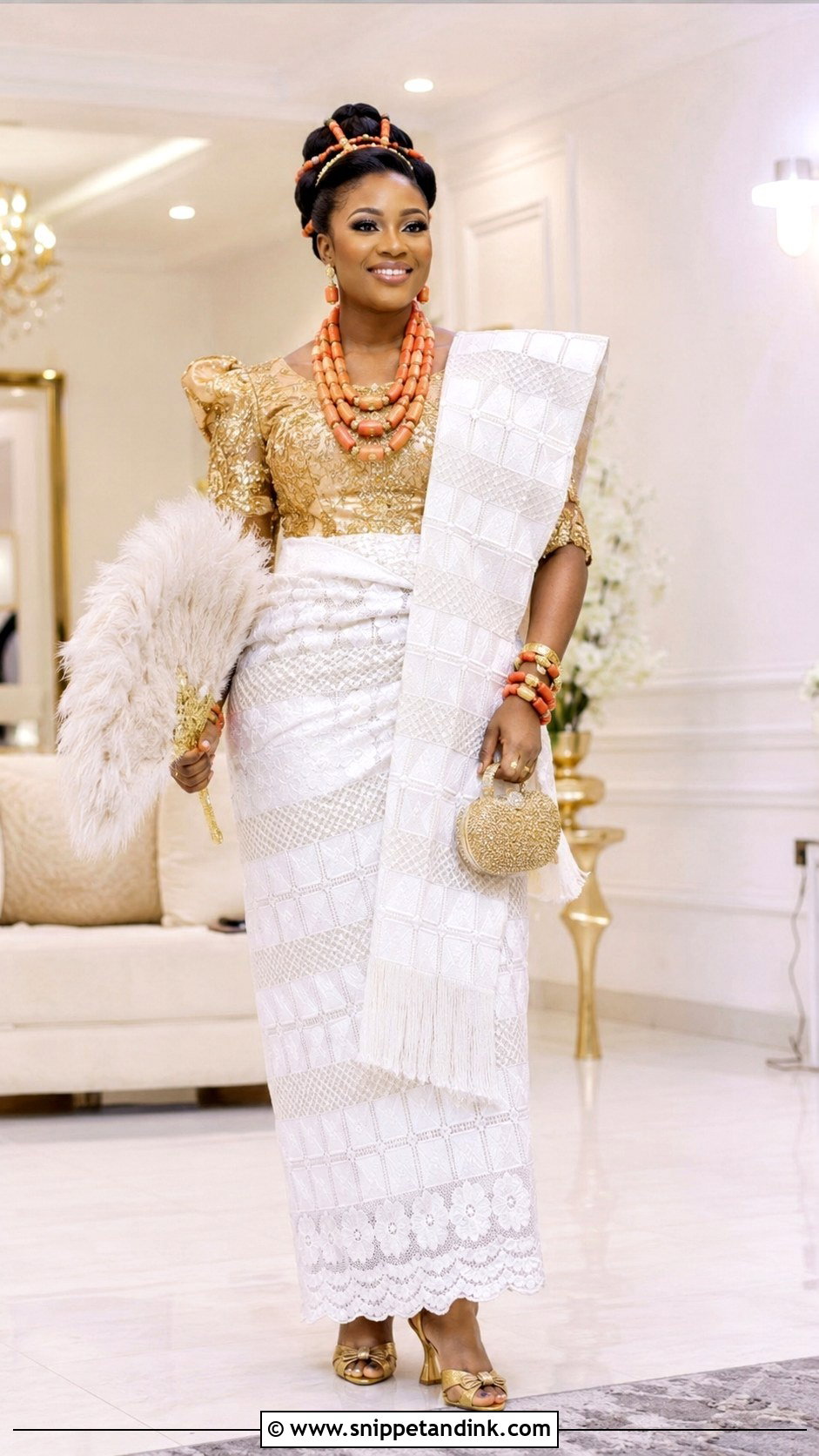
Akwa ocha is lighter in color and full of woven detail, so the styling should frame it, not cover it. An embellished gold or ivory blouse with structured sleeves and a secure bodice goes on top. Coral-toned necklaces, bracelets and hair ornaments add traditional color. When the wrapper is folded and pinned, I plan the folds so the decorative sections face forward; it’s easy to bury the best part of the cloth at the back. A feather or woven fan adds movement in photos. Low gold heels and a small beaded bag finish it. Relatives who know the bride’s community should confirm the wrapper style and accessories.
7. Igbo Isi Agu Bridal Gown
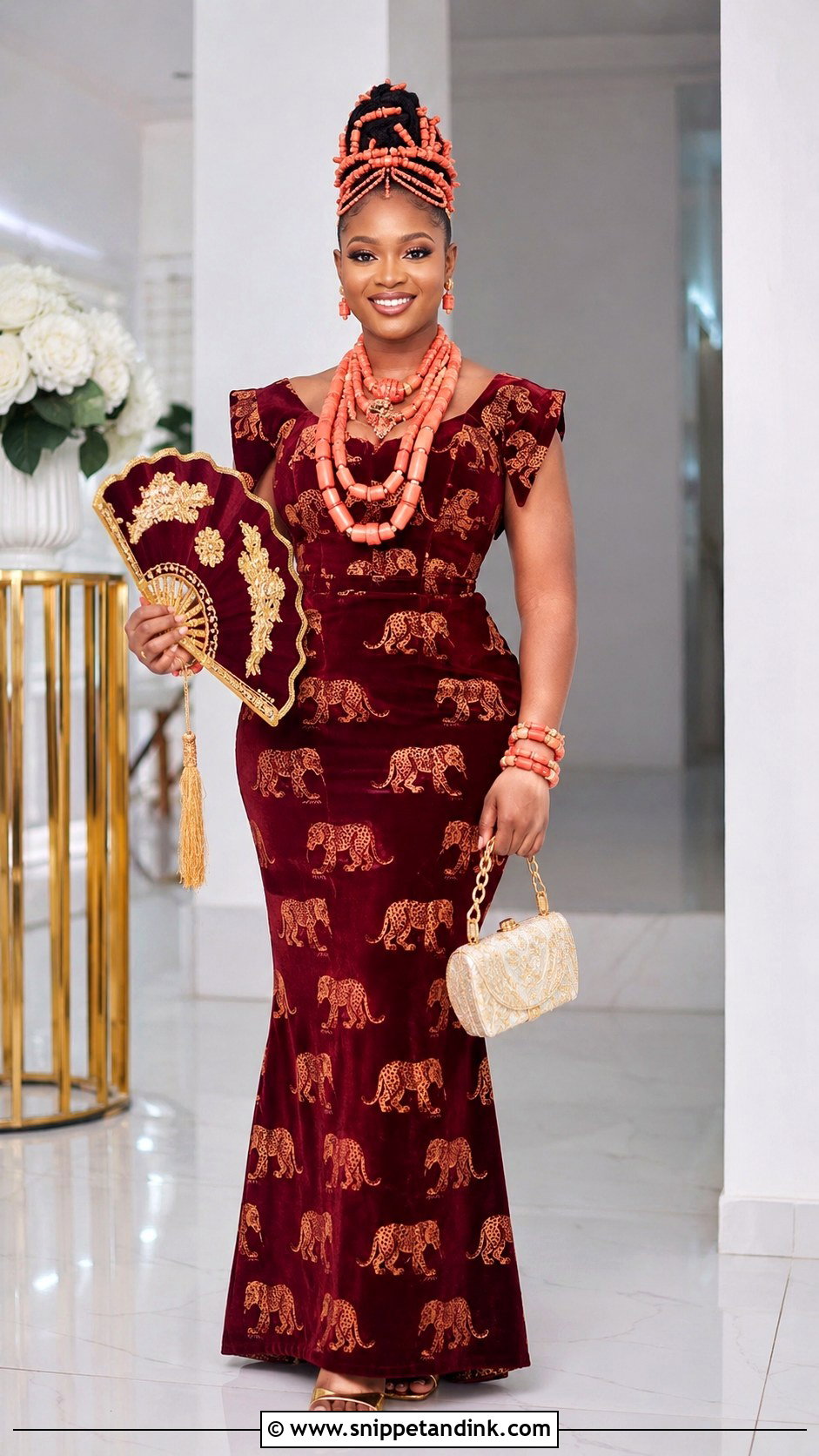
Isi agu can be made into a fitted gown or a blouse and skirt for a more contemporary statement. A floor-length shape with a modest train and defined waist works, but the motifs need careful placement: I’d want the tailor to lay the pattern out on the body before cutting, so a lion head doesn’t land in an awkward spot. Coral-colored beads at the neck and wrists, a beaded hairstyle or headpiece, a fan, simple gold sandals and a small purse complete it. Keep crystals and embroidery to the neckline and sleeves, because the fabric is already bold. Families interpret the use of isi agu differently, so talk to yours first.
8. Edo George Wrapper And Okuku Bridal Outfit
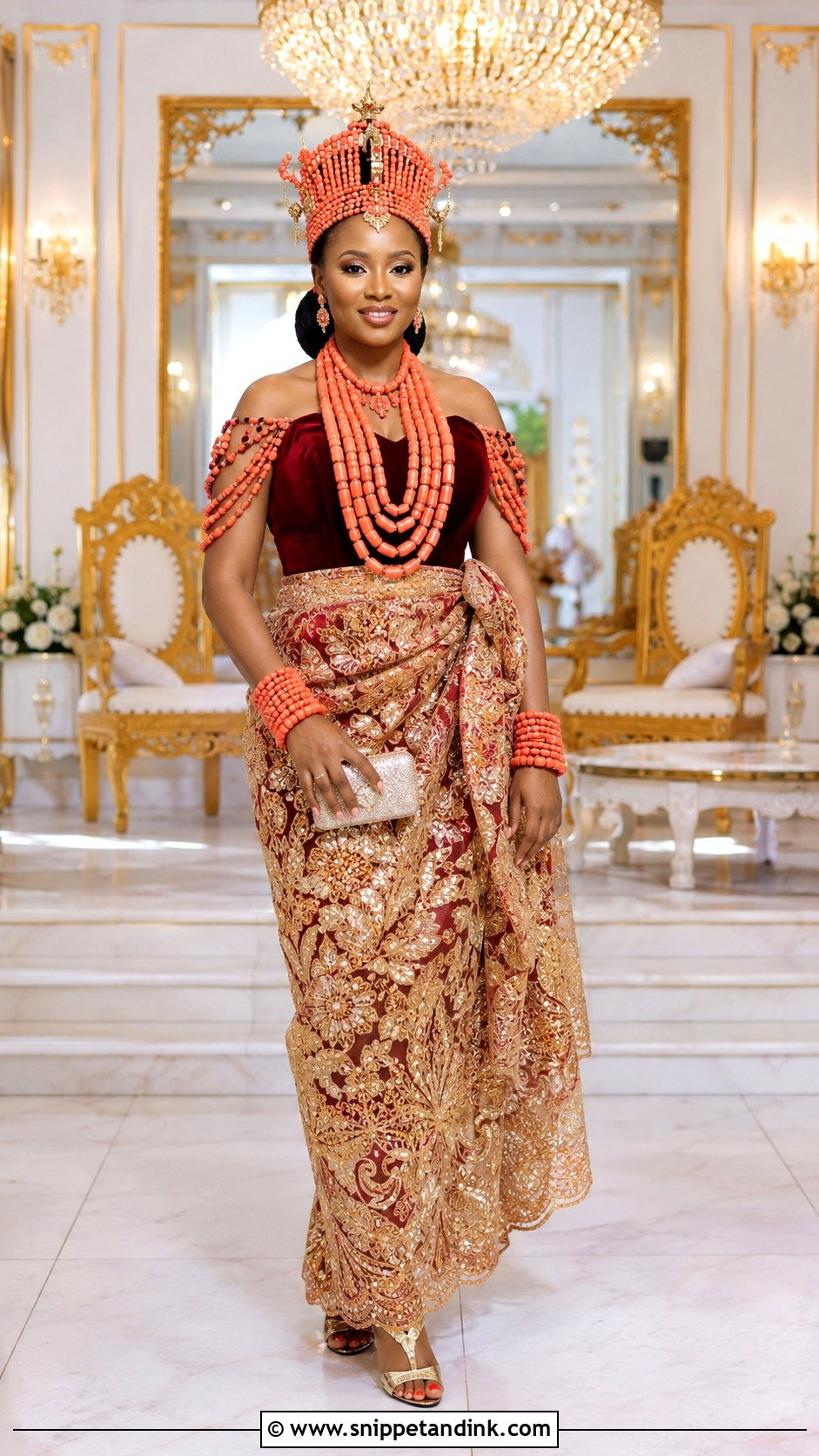
An Edo bridal look turns regal once an embellished George wrapper is paired with coral beadwork and an okuku-style crown arrangement. A structured blouse in velvet, lace or embroidered fabric goes above a long wrapper that falls cleanly to the floor. Coral necklaces in layered lengths and beads on the wrists come next, and a beaded cape or shoulder strands add drama. Beadwork is heavy, so the blouse needs a firm neckline and shoulders that can carry it. The crown, hair and bead placement take experienced hands and real time, so book the dresser early on the day. Metallic heels and a small purse finish it, and family should guide the details for their community.
9. Edo Velvet Gown And Coral Bead Outfit
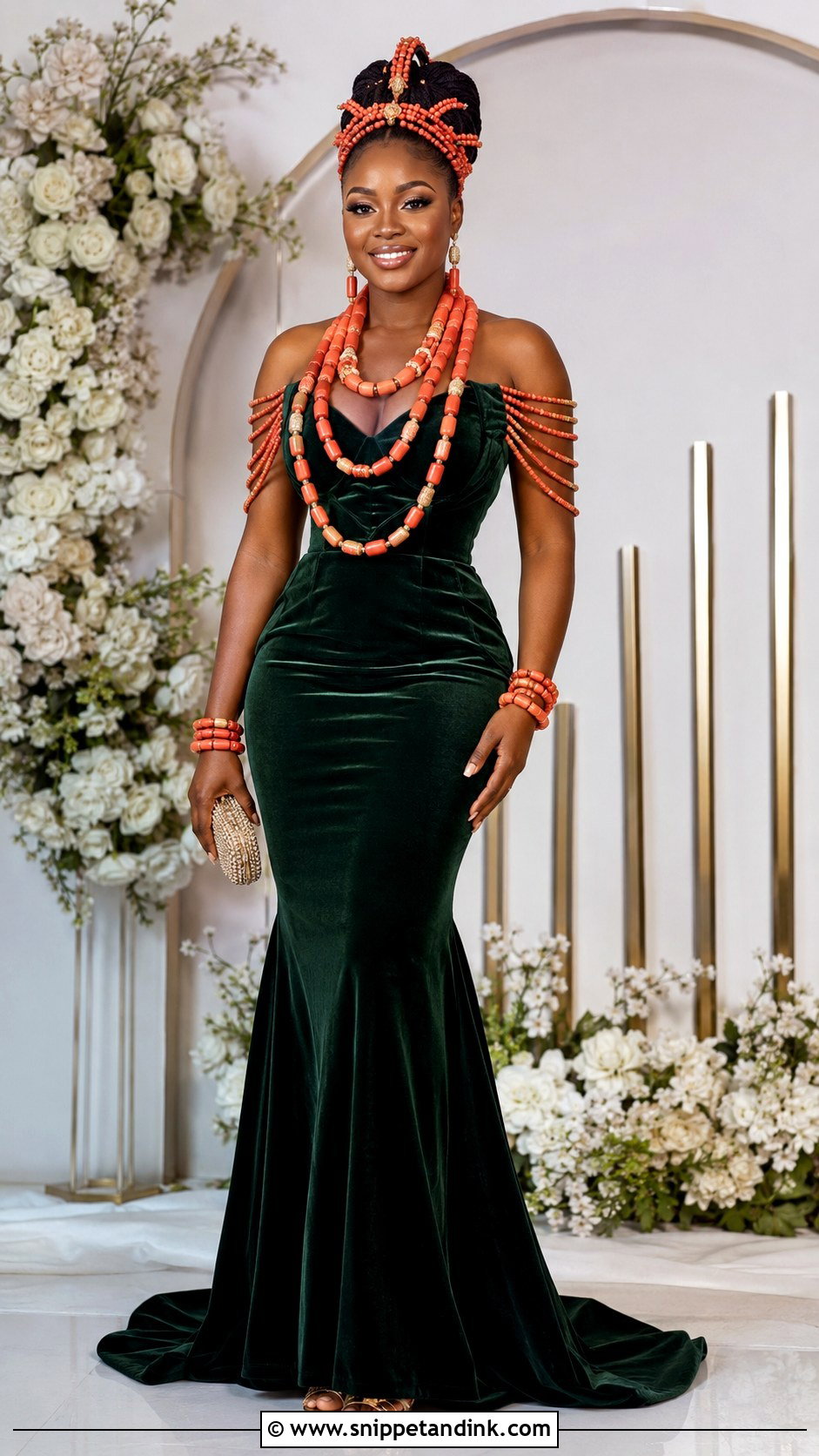
A velvet gown is a sleeker alternative to blouse and wrapper and still carries Edo bridal accessories well. Burgundy, deep green, navy or rich red velvet sets off coral beads. Choose a fitted gown with a straight neckline, structured bodice and a flare below the knee. The straight neckline matters: bead strands need a flat, firm edge to sit on, or they slide and twist. Add a beaded hairstyle, layered necklaces, wrist cuffs and a beaded shoulder piece if the family tradition includes one. Velvet is hot, so I’d ask for a breathable lining and skip extra layers in warm weather. Gold sandals and a discreet clutch complete it.
10. Efik Onyonyo Bridal Gown
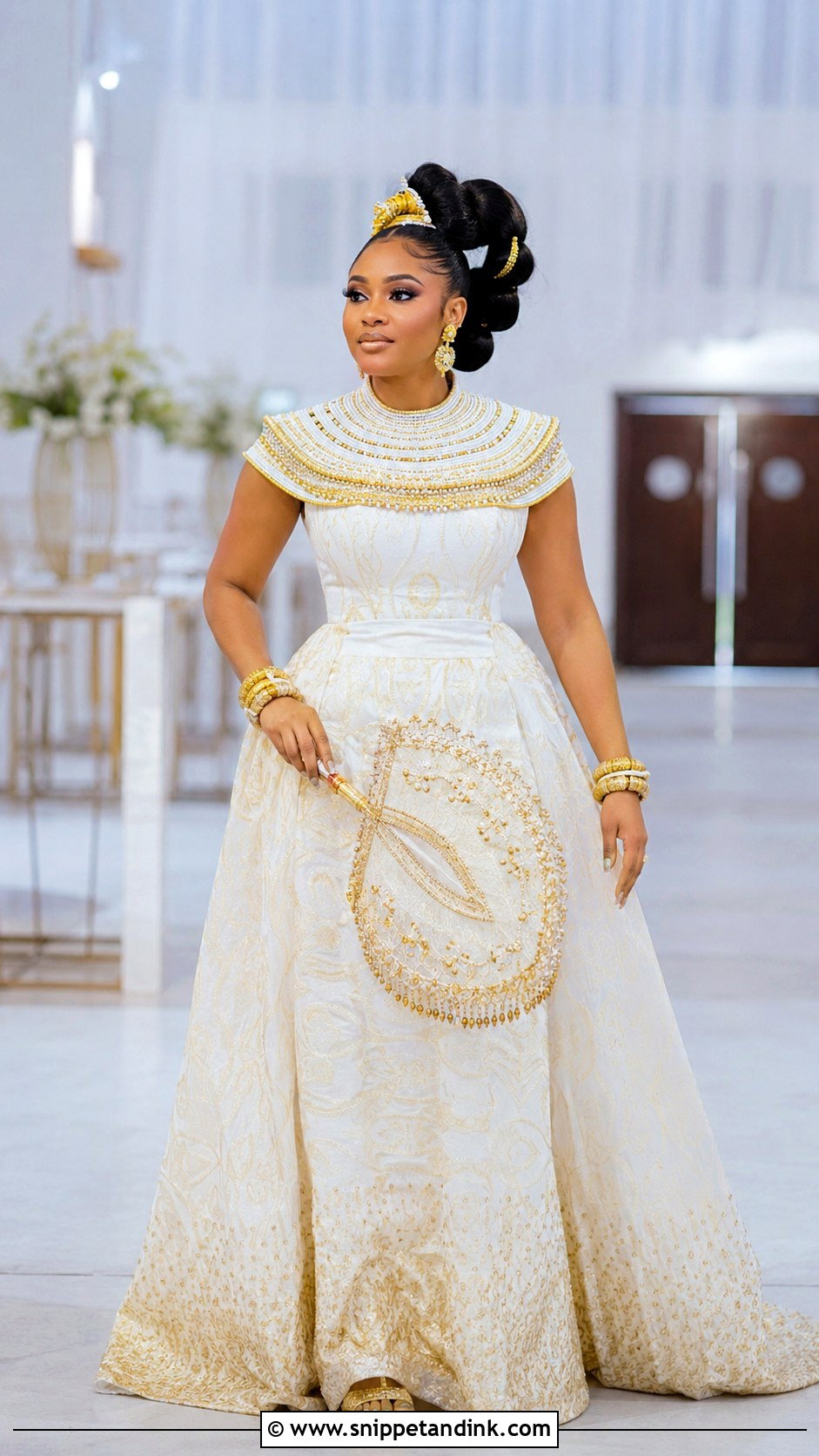
The Onyonyo gown gives an Efik bride a full, flowing skirt and a defined upper body. Satin, brocade, lace or another formal fabric works, chosen with family guidance, in white, gold, green or a jewel tone. A detailed beaded collar, earrings, wrist jewelry and a styled headpiece complete it, with a staff or fan when the bride’s customs call for one. Under a wide skirt you can’t see your feet, so I’d choose stable block heels or embellished flats and practice walking and turning. The hem should just skim the floor. Ceremonial garments and accessories can carry specific meanings, so consult relatives or a specialist in Efik dress before approving the design.
11. Efik Ofod Ukod Anwang Bridal Outfit
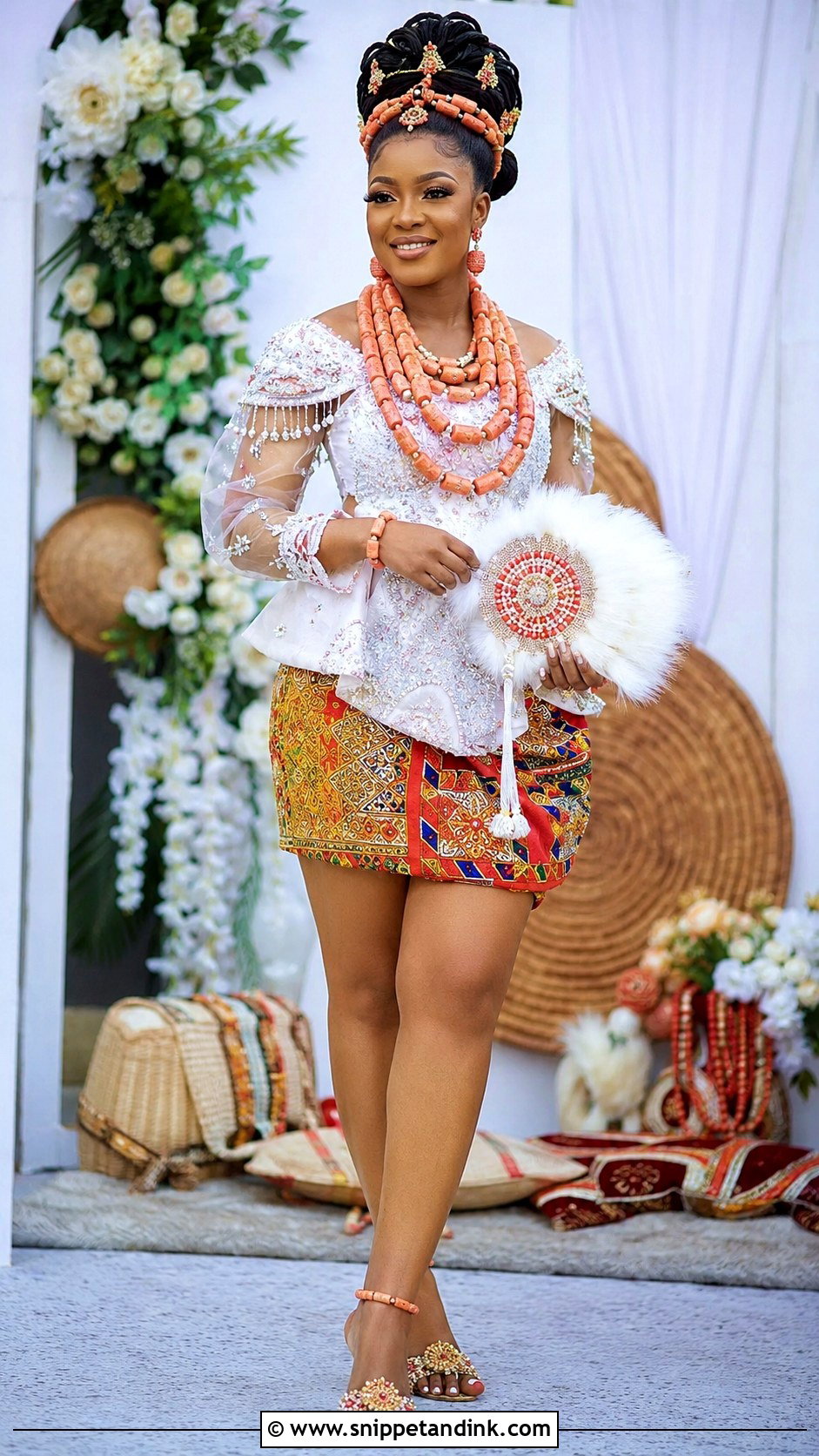
The Ofod Ukod Anwang look has its own proportions: a shorter wrapper or skirt, a fitted blouse, beads and ceremonial accessories. Modern versions use richly decorated fabric and keep those proportions recognizable. Choose a blouse with supportive straps or a modest neckline to suit the bride and her family’s expectations. Layered statement beads at the neck and wrists, an ornate hairstyle and a fan or staff where appropriate complete it. The difference between authentic and costume-like is usually in the details, so I’d work with a designer who has made this attire before and ask family to review length, beads and headpiece. Embellished sandals keep it comfortable.
12. Ibibio Lace Blouse And Double Wrapper Outfit
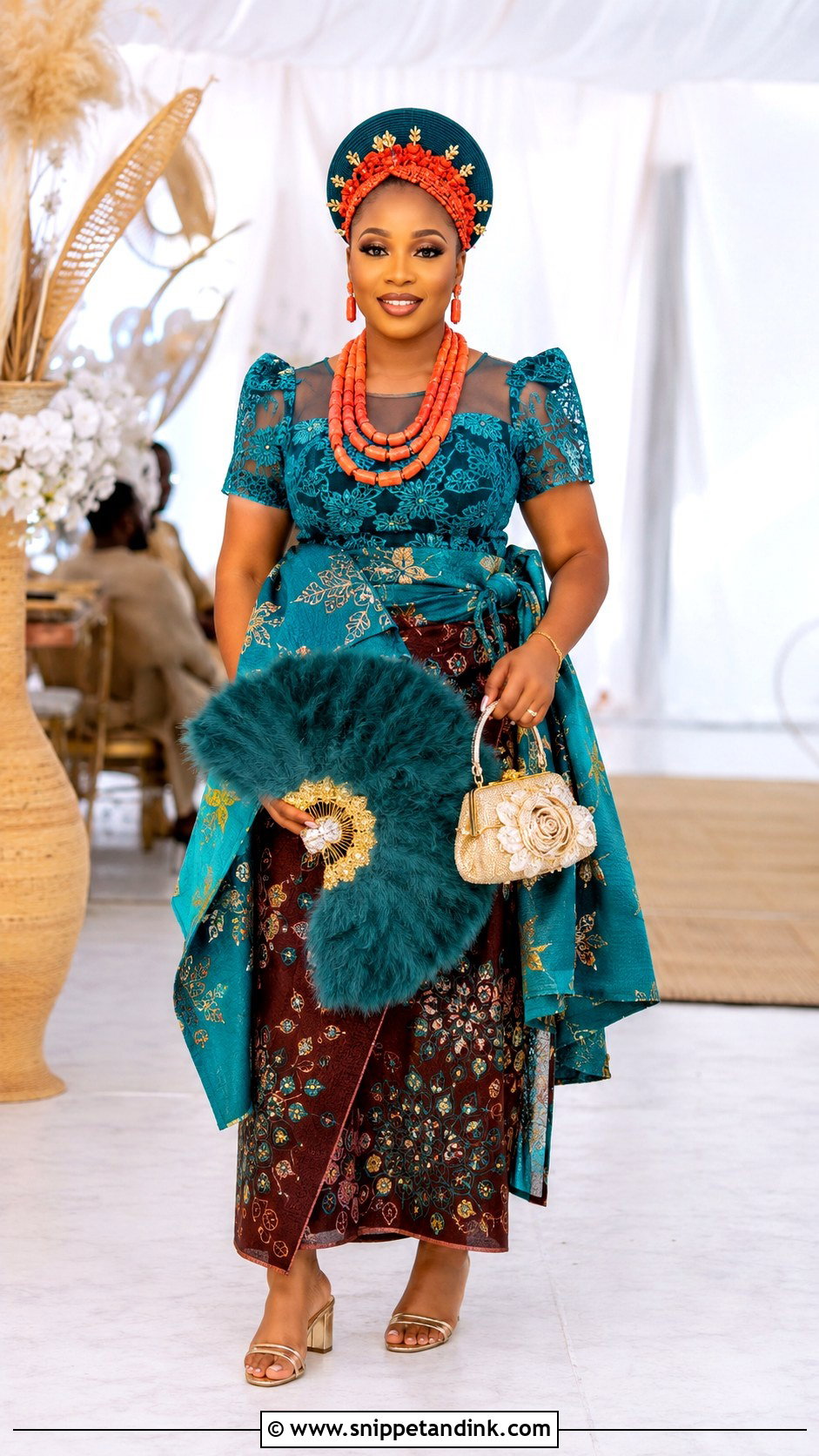
A lace blouse with a double wrapper is a refined Ibibio look that adapts easily to a family’s colors. The blouse should be fitted, with structured sleeves, a defined neckline and embroidery that doesn’t overpower the wrappers. The first wrapper goes on securely at the waist; the second adds dimension and a neat front. One richly patterned wrapper with a quieter second layer usually looks more balanced than two busy prints. Layered beads, statement earrings, a coordinated headpiece and a fan finish it, with metallic block heels or decorated sandals. Confirm wrapper placement and accessories with relatives before the tailor starts.
13. Hausa-Fulani Embroidered Silk Bridal Gown
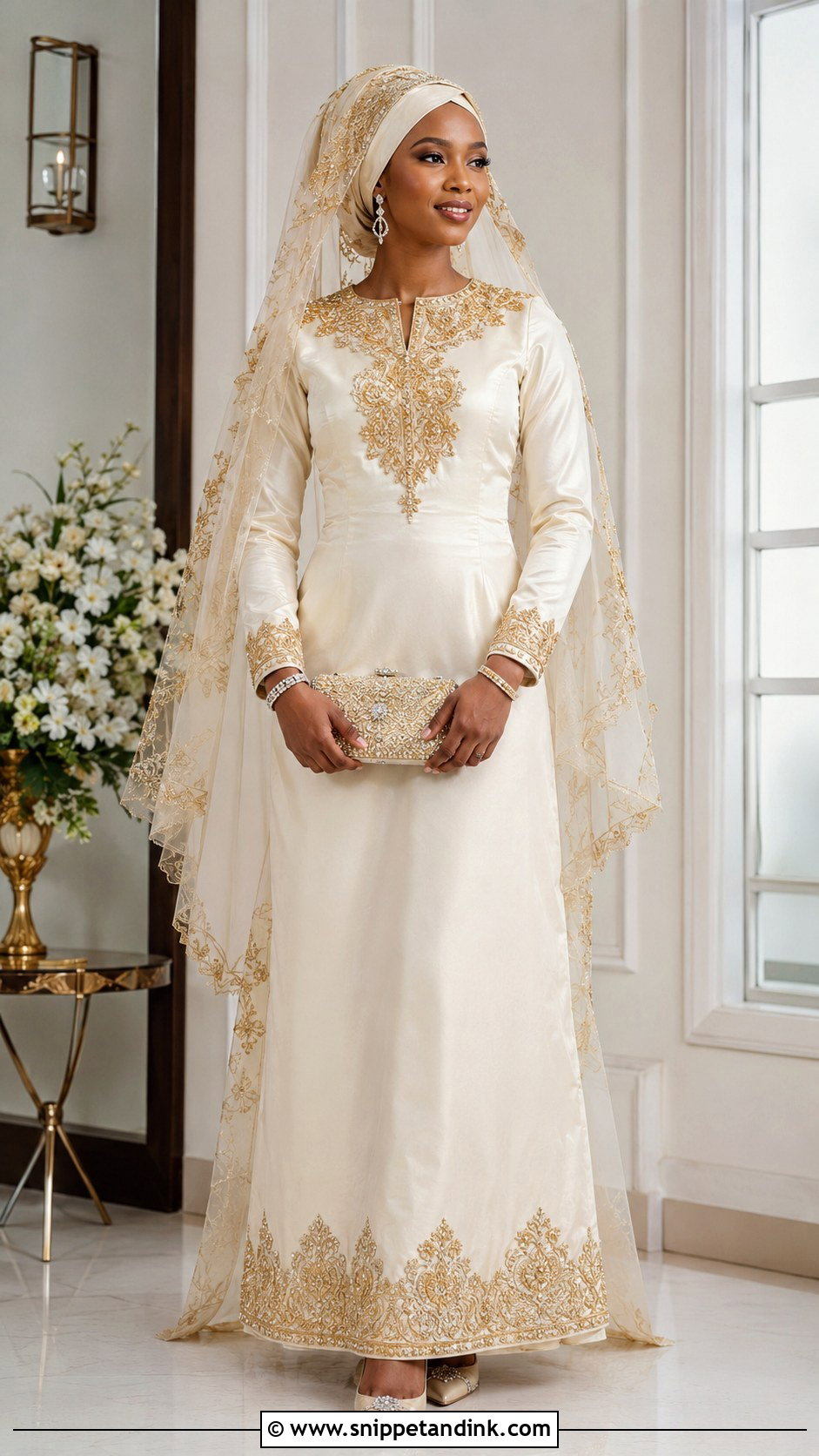
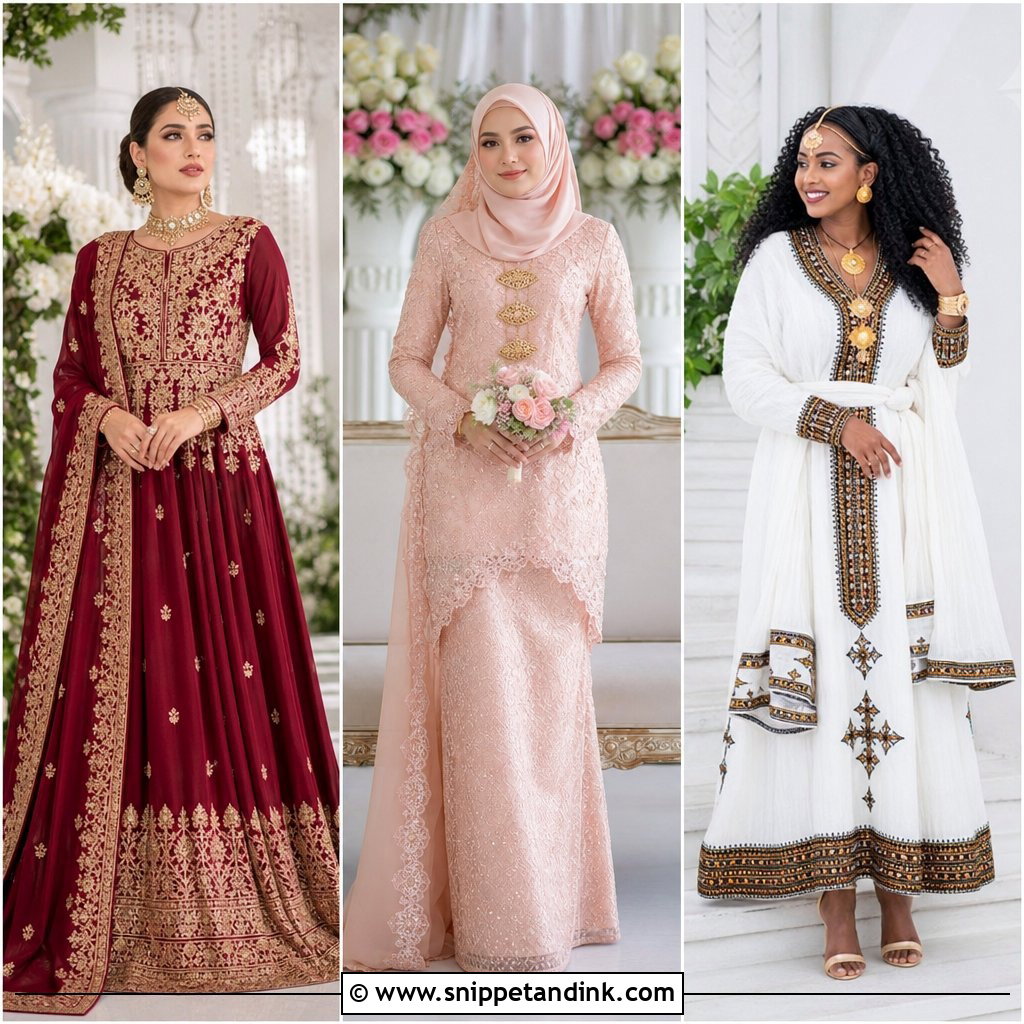
An embroidered silk gown is a graceful, modest base for a Hausa-Fulani bride. Floor length, long sleeves, a comfortable high neck and room to move. Embroidery at the bodice, cuffs and hem gives definition without crowding. A coordinating veil or headscarf, crystal earrings, a small embellished bag and closed pumps or low heels complete it. Ivory, emerald, rose, gold and powder blue all suit a formal celebration. Silk on its own can feel clammy in heat, so a breathable cotton lining is worth asking for. The scarf can match exactly or be a softer tone. Family preferences and religious considerations should lead on coverage and silhouette.
14. Hausa-Fulani Velvet Kaftan Bridal Outfit
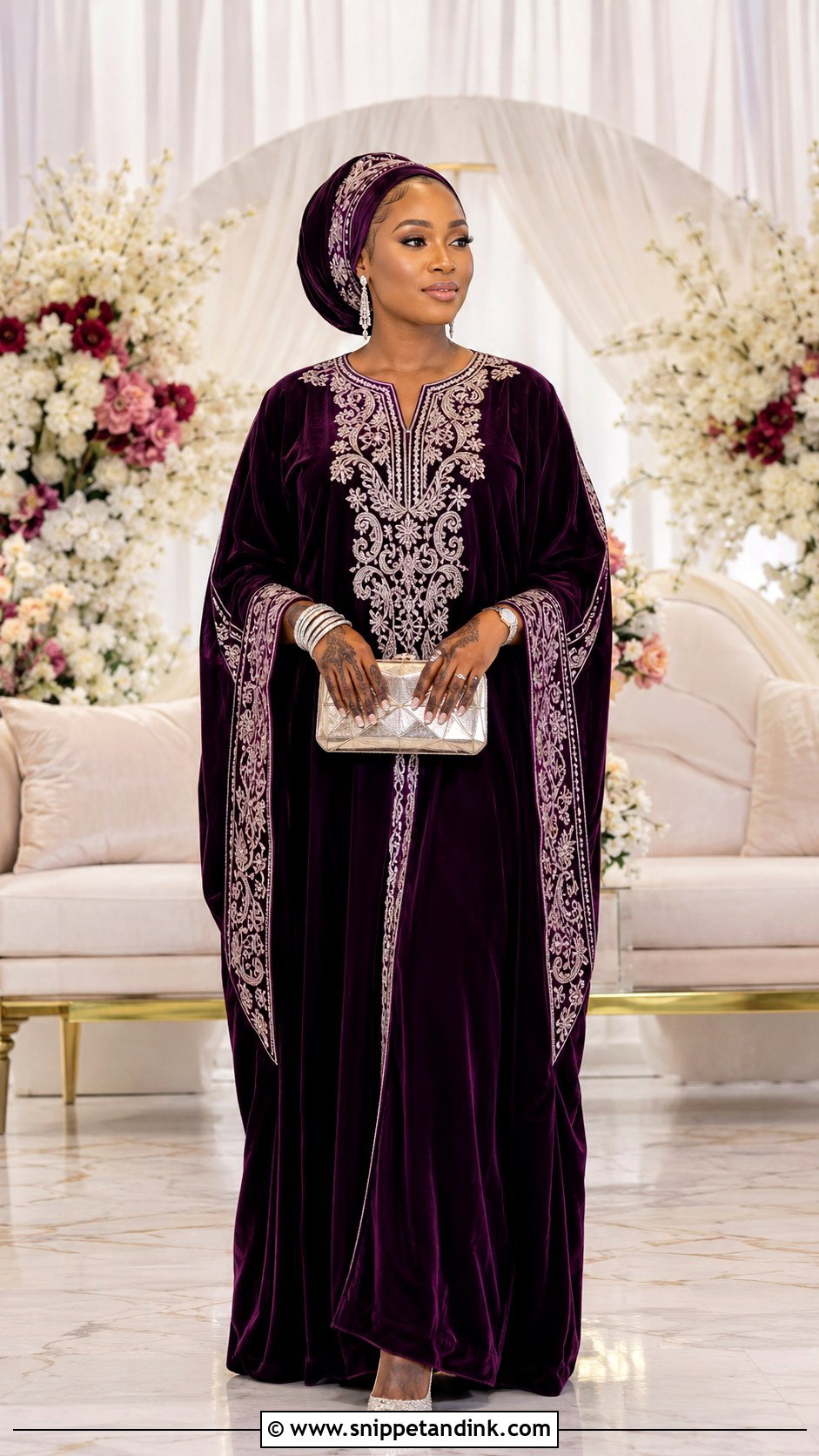
A velvet kaftan feels luxurious and relaxed at the same time. Look for a long, flowing cut with gold or silver embroidery along the neckline, sleeves and front opening. A matching headscarf over a fine under-scarf stays put far better than a single slippery layer, which is the detail I’d never skip. Drop earrings, stacked bangles, a structured clutch and pointed flats or low block heels finish it. Deep green, wine, navy and plum velvet look richest beside metallic threadwork. Velvet holds heat, so a lighter inner layer helps. Keep the body loose enough to sit and walk, but the shoulders and sleeves should still be tailored neatly.
15. Kanuri Layered Bridal Gown
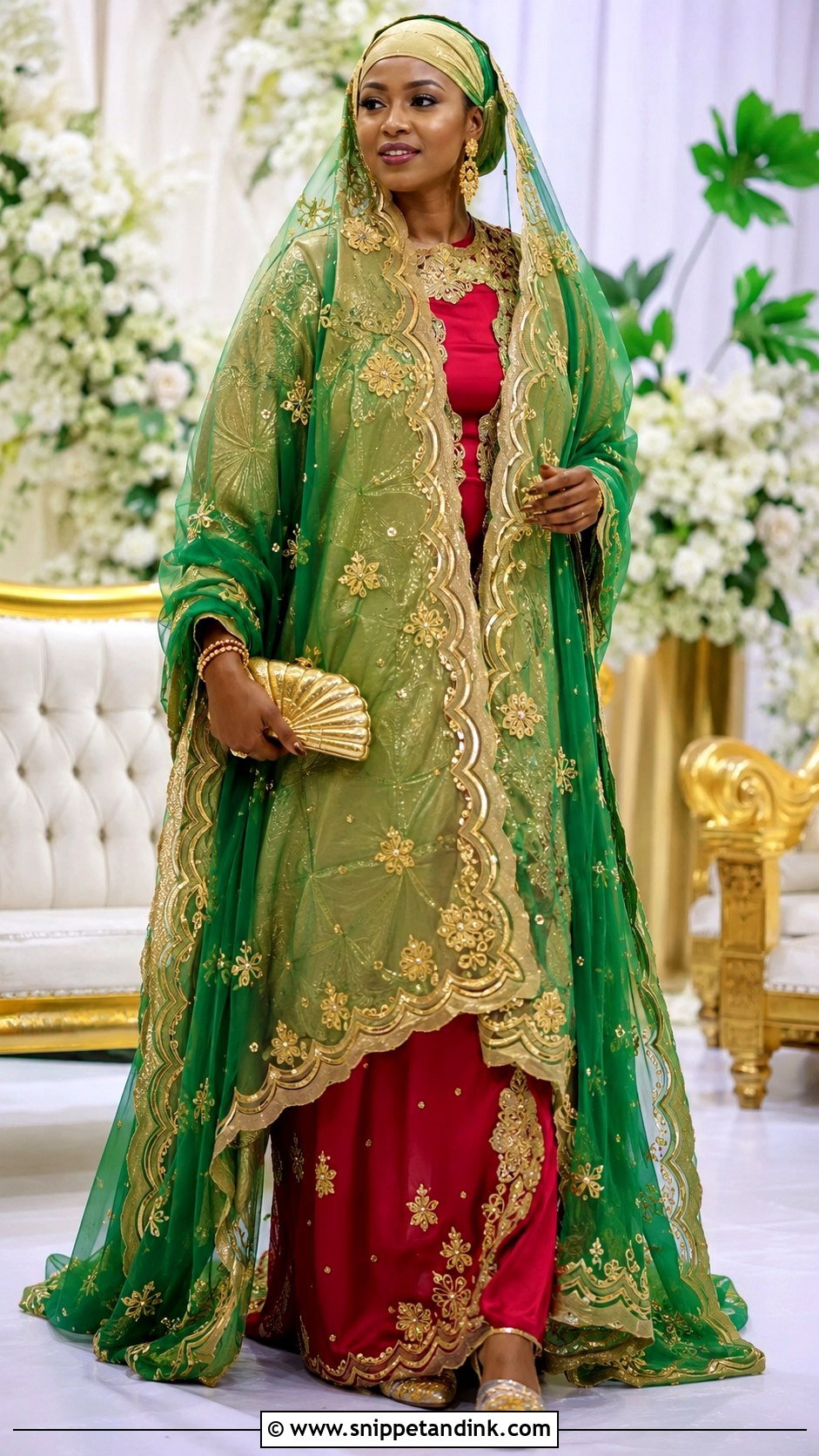
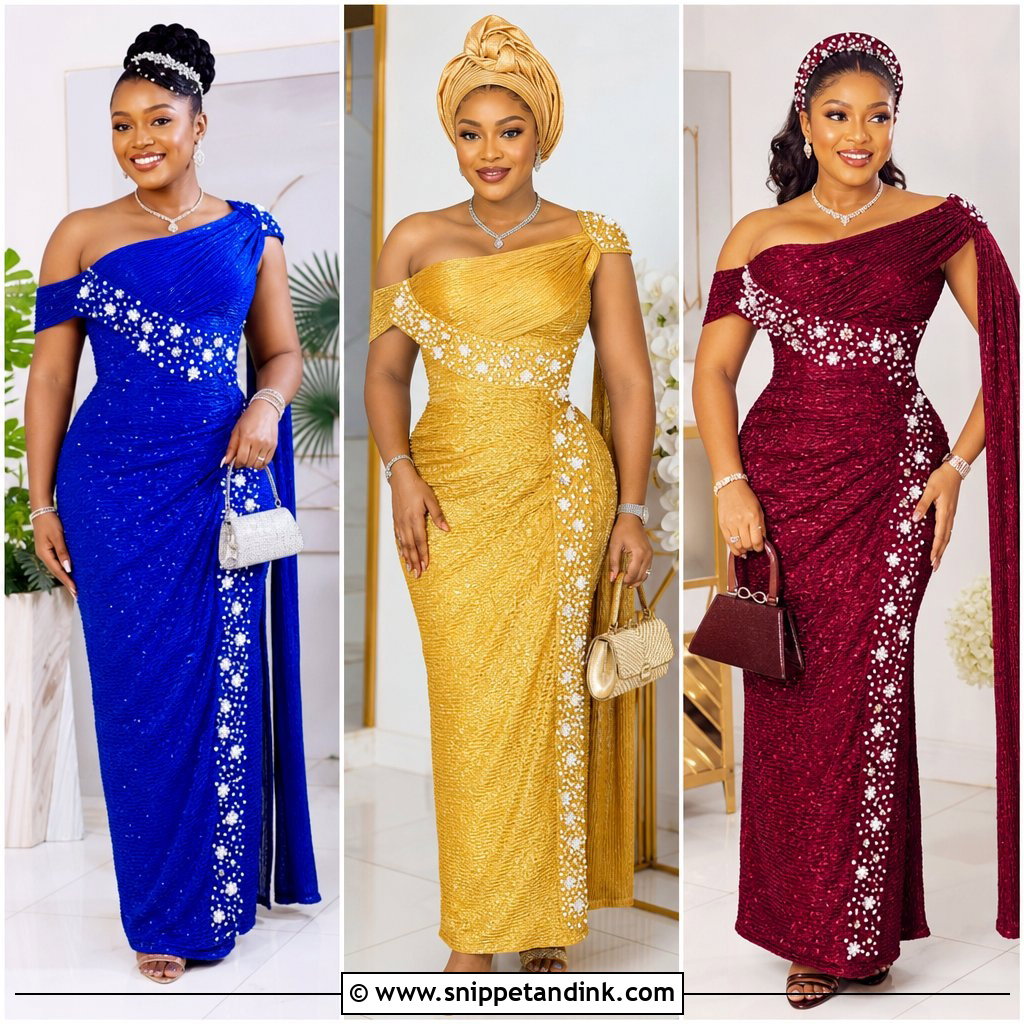
A layered Kanuri bridal gown combines generous proportions, ornate textiles and a coordinated veil. A long inner dress sits under an embroidered outer layer or flowing robe that moves around the bride. Rich red, gold, green and jewel-tone combinations show the detail well. I’d ask for the outer layer to be slightly shorter at the front, because a long robe over a long dress is easy to step on. Repeat one main embroidery pattern across the robe, cuffs and veil border. A secure head covering, decorative earrings, bracelets, a formal clutch and low embellished shoes complete it. Kanuri customs vary, so work closely with family and a designer who knows the region’s dress.
16. Ijaw George Wrapper And Lace Blouse Outfit
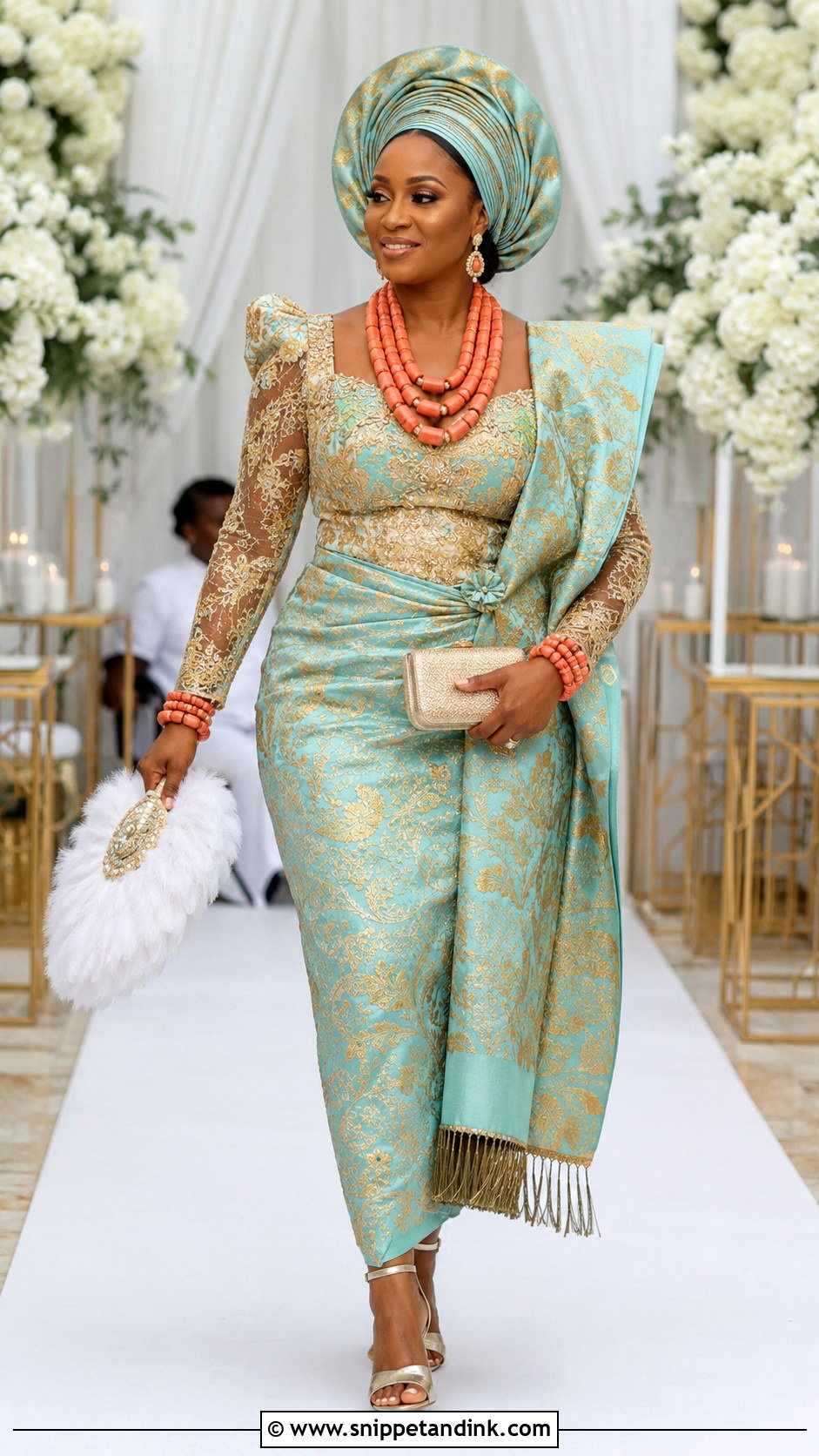
Shimmering George with detailed lace makes an Ijaw bridal outfit with plenty of texture. A long wrapper goes with a fitted blouse that has structured sleeves, a secure neckline and carefully placed stones or embroidery. Add coral-toned beads, wrist jewelry, statement earrings and a head tie or culturally appropriate hairstyle, plus a feather fan and metallic sandals. Aqua, purple, coral, wine and gold all photograph strongly. Let the George pattern lead and keep embellishment elsewhere modest. The wrapper should be fastened firmly and cut to a length you can dance in. Traditions differ between Ijaw communities, so confirm beads, headwear and wrapper with family.
17. Urhobo Double Wrapper Bridal Outfit
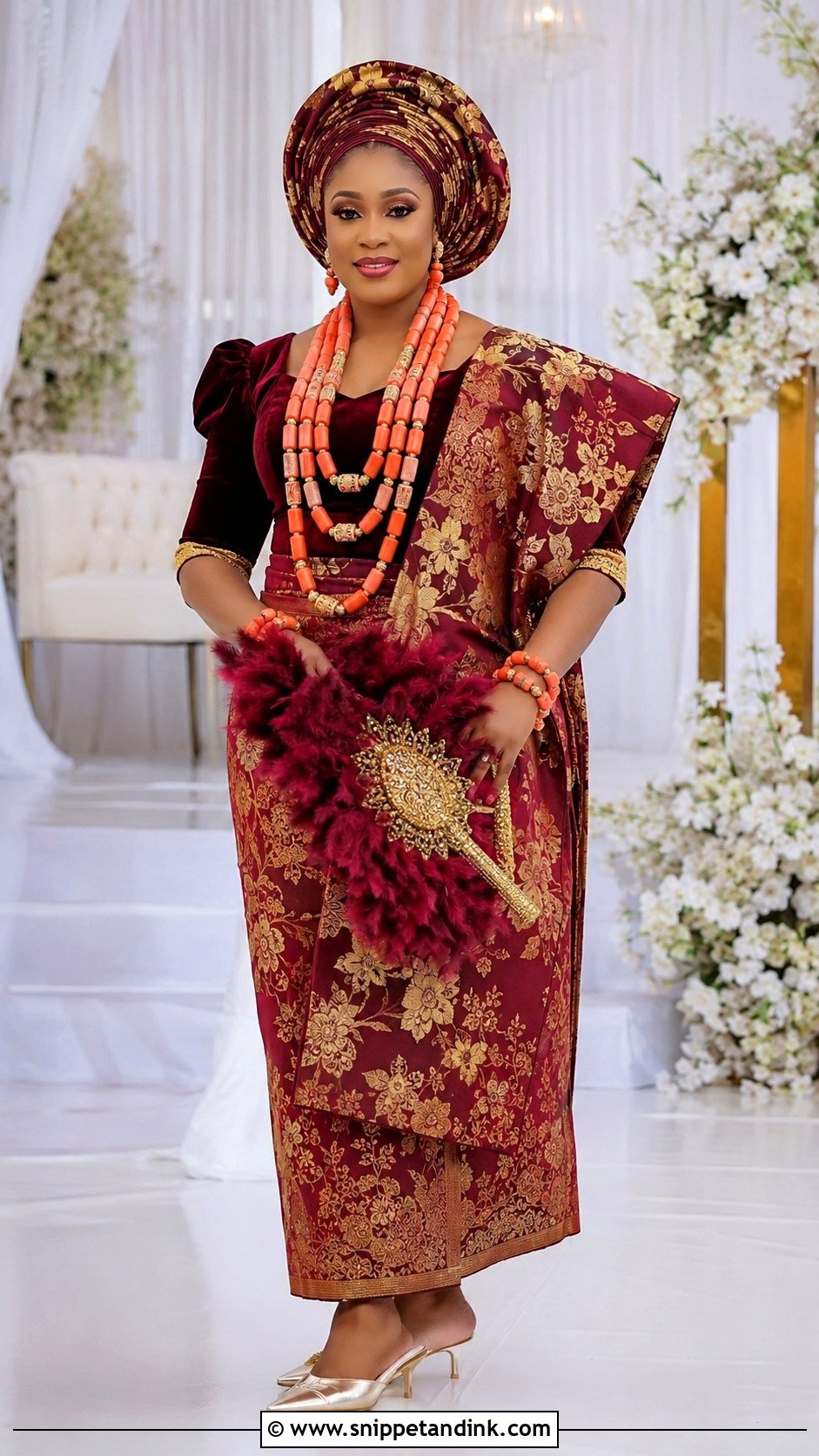
A double wrapper gives an Urhobo bride a layered, dignified look. Richly patterned George or brocade pairs with a fitted lace or velvet blouse. The lower wrapper sits securely, and the second is arranged to show borders and contrasting motifs. Two heavy wrappers can bulk up the waist, which is why I’d ask an experienced dresser to tie them on the day and stay close for adjustments rather than leave it to a friend. Coral necklaces, stacked bracelets, statement earrings, a headpiece or head tie and a fan in the outfit’s main color finish it. Low metallic heels or embellished sandals work best underneath. Family guidance should shape the arrangement and beads.
18. Isoko George Wrapper And Beaded Blouse Outfit
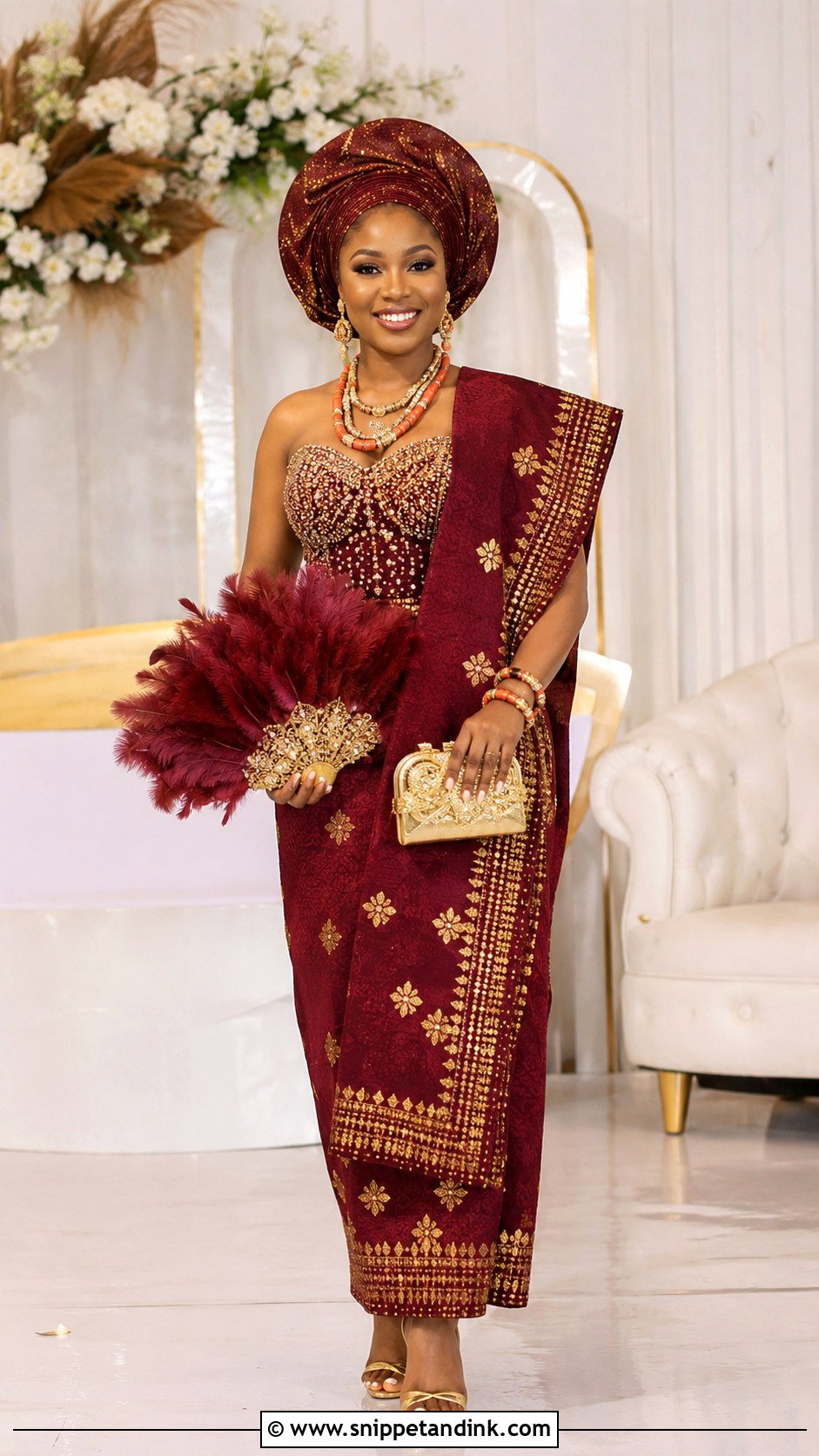
For an Isoko bridal look, pair a formal George wrapper with a beaded blouse in colors taken from the fabric. A sweetheart or square neckline frames layered beads, and structured sleeves balance a fitted bodice. Wrap the skirt securely so the most decorative border shows near the hem. Keep beading smooth around the blouse waist, since raised beads catch on the wrapper and pull threads. Earrings, bracelets, a head tie or family-approved hairstyle, a feather fan and gold sandals finish it. Wine and gold is classic; teal and coral is brighter. Ask family about headwear, bead placement and how many wrappers are expected.
19. Tiv Black And White Bridal Outfit
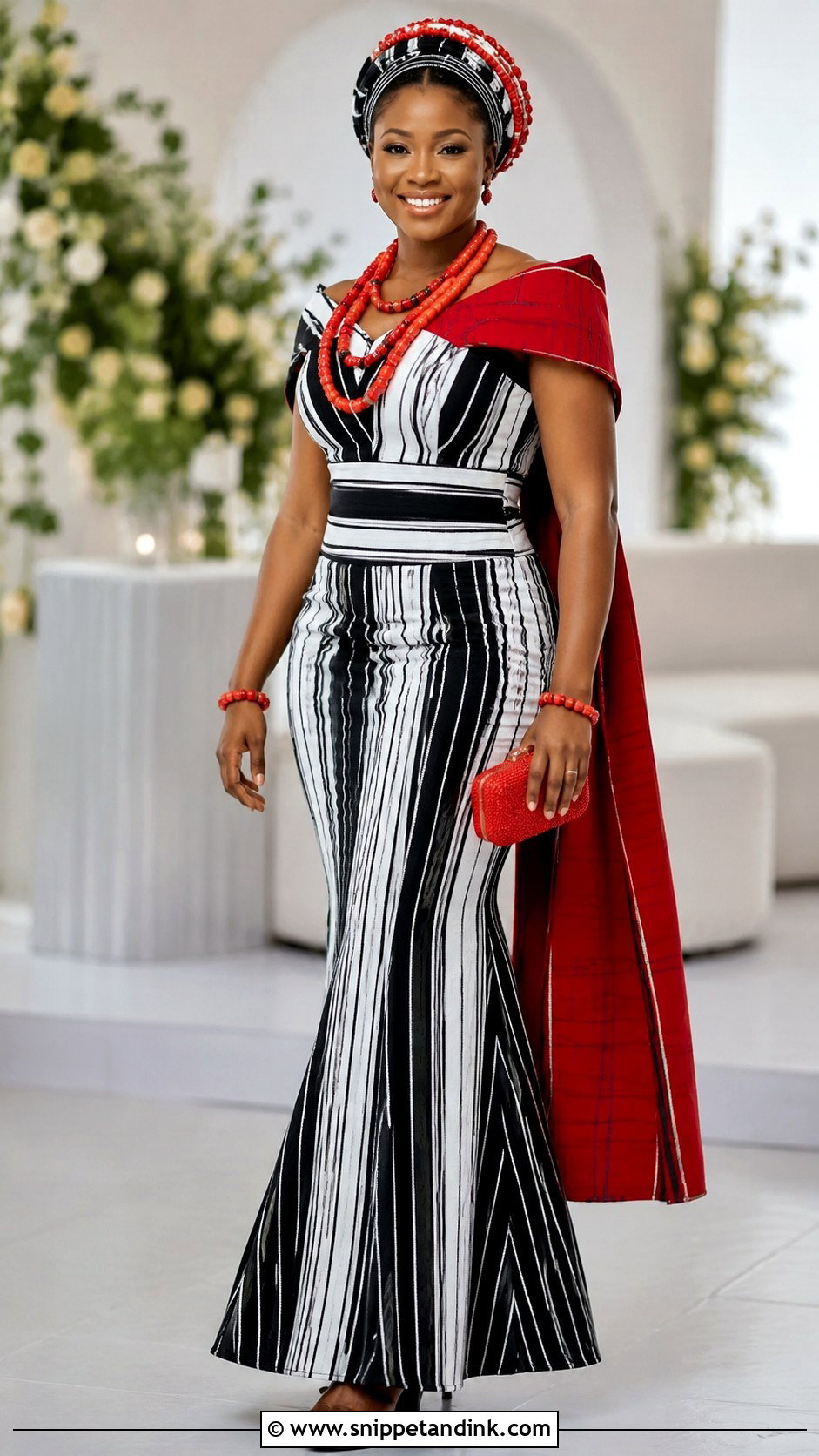
The bold black-and-white stripes of Tiv woven cloth make a bridal outfit nobody forgets. The fabric can become a fitted gown, a blouse with a long skirt or a wrapper outfit, chosen with family guidance. Red accessories give a strong accent: red beads, a coordinated headpiece, a red shawl or shoulder cloth. In a mermaid cut, stripes have to line up through bodice and skirt, and that uses more fabric than people expect, so buy extra. Keep crystals and lace minimal, since the weave is already graphic. A small clutch and black or metallic sandals finish it. Relatives who understand Tiv heritage should confirm the arrangement and accessories.
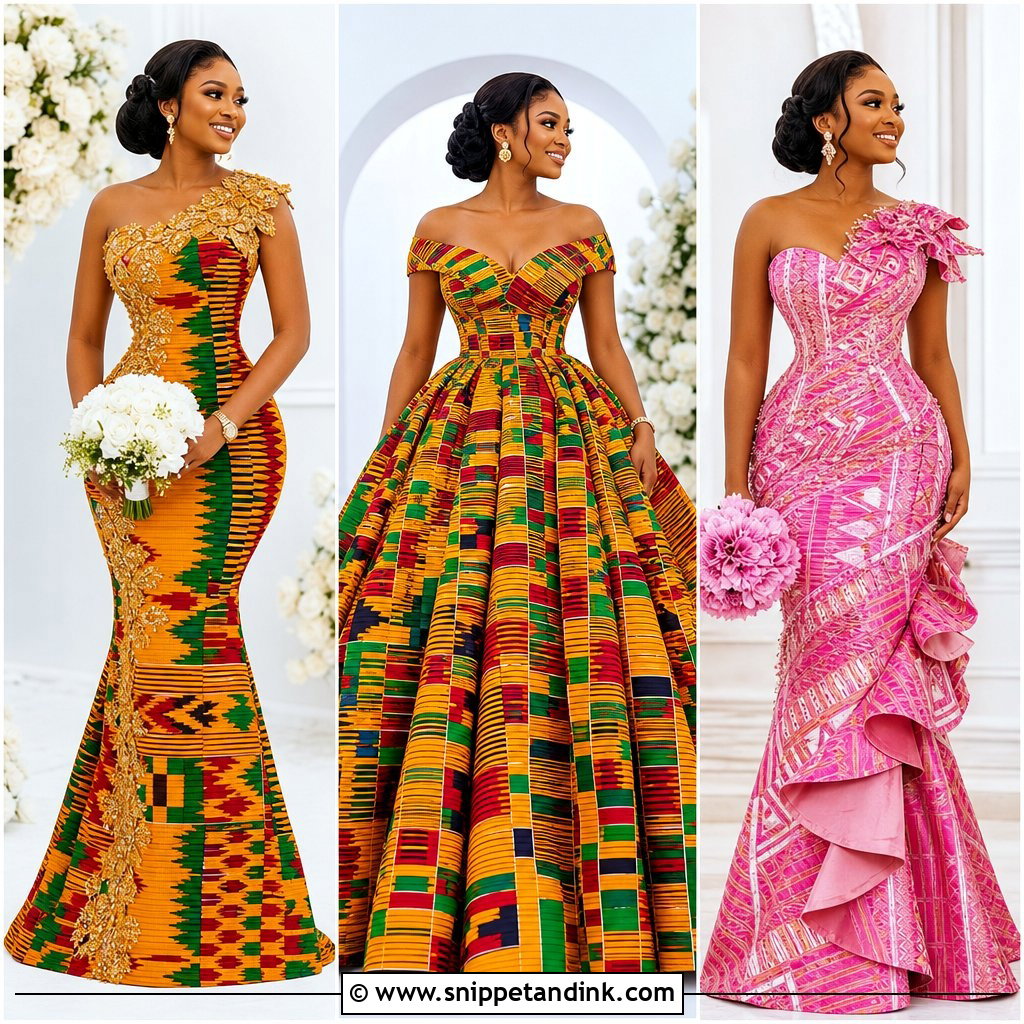
20. Nigerian Ankara And Aso Oke Fusion Bridal Outfit
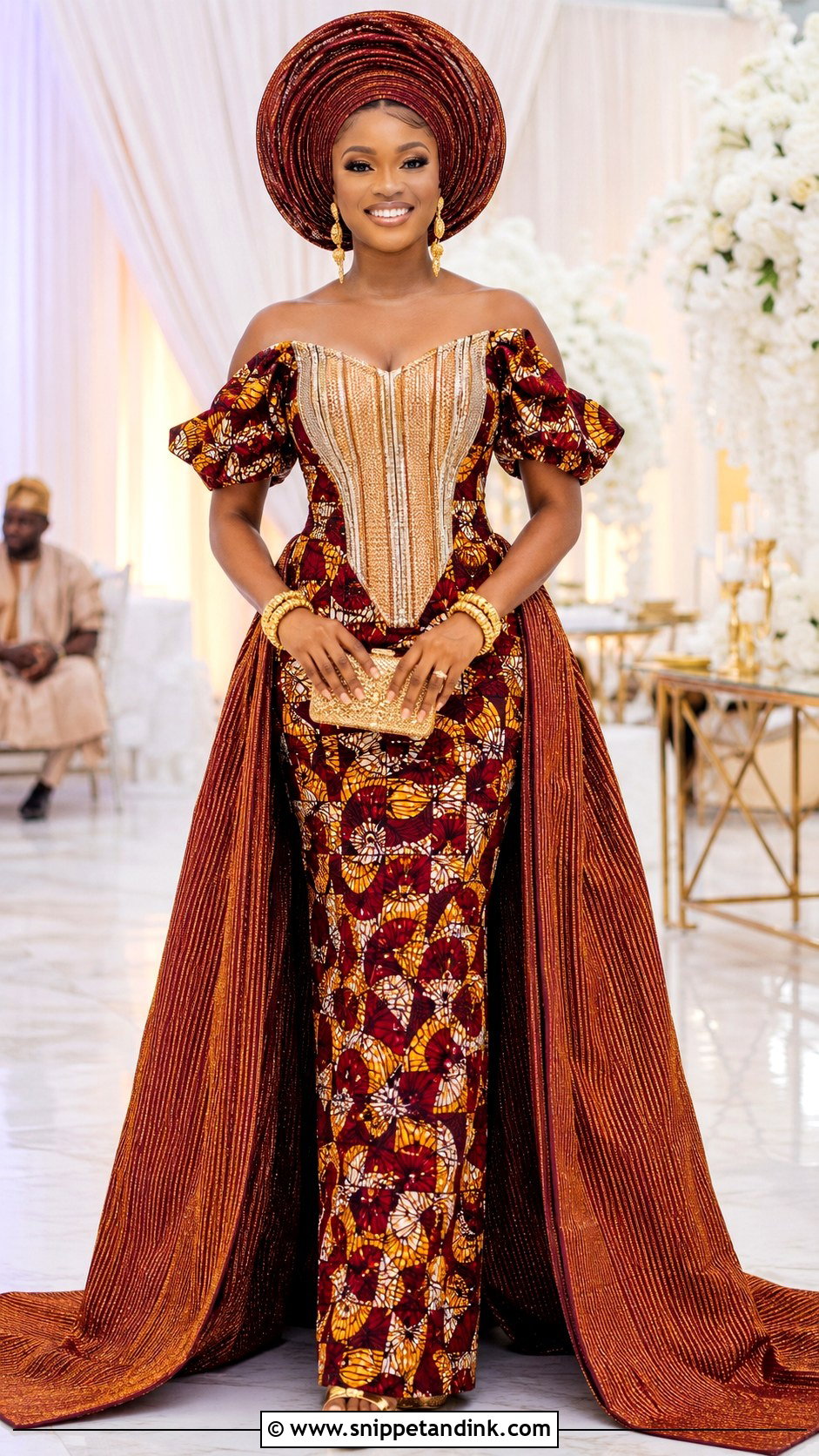
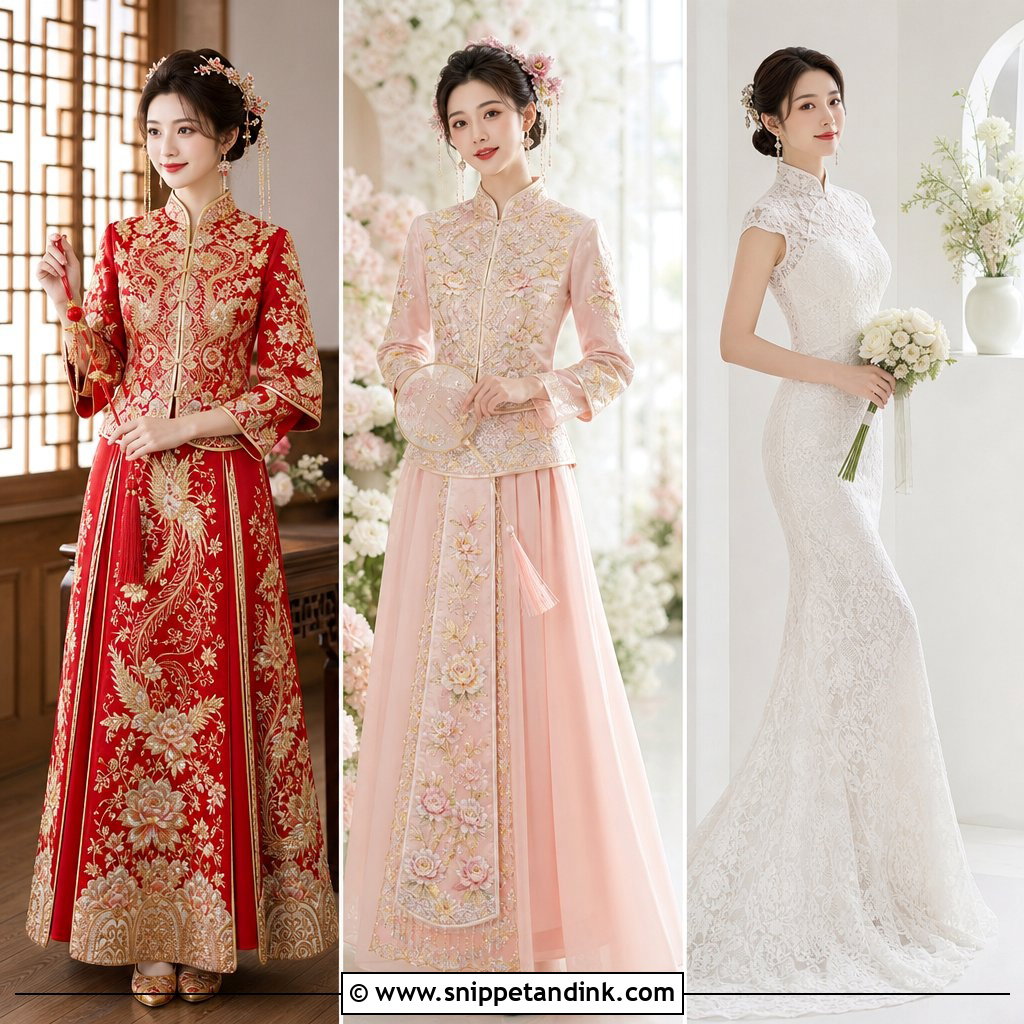
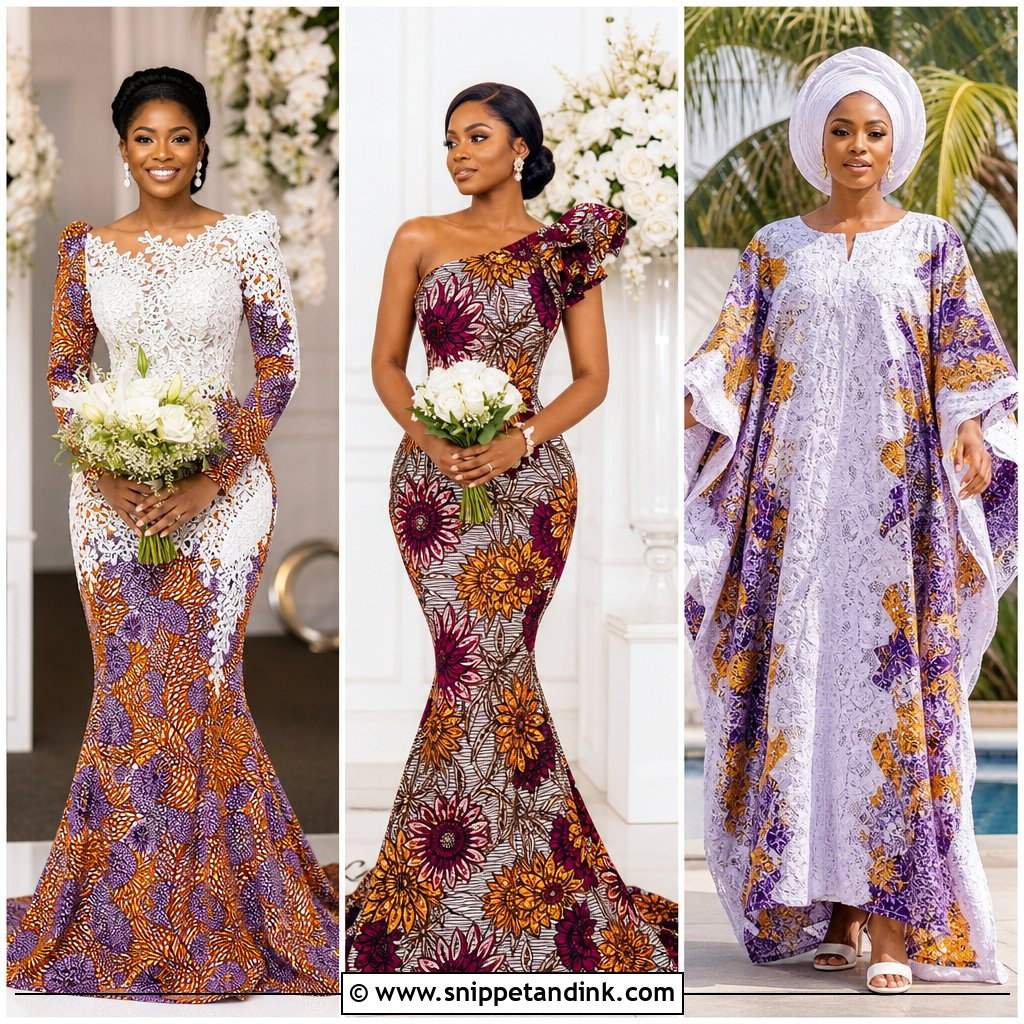
An Ankara and aso oke fusion suits a bride who wants a colorful modern design with clearly Nigerian textiles. Ankara forms the gown, blouse or flared skirt; aso oke comes in through a corset panel, wrapper overlay, gele or shoulder sash. Pick one dominant print and repeat only two or three of its colors in the accessories. Ankara is a lighter cotton than aso oke, so I’d have the tailor interface the Ankara where they’re joined to stop it puckering. A structured gele, gold earrings, stacked bracelets, a compact clutch and platform sandals complete it, as a peplum-and-wrapper set or a gown with a detachable train. It’s modern, but it should still reflect the bride’s identity and follow family guidance.
Dressing for Hours of Dancing, Spraying and Outfit Changes
A traditional ceremony is long and lively. Couples dance while guests spray money, family members pull the bride in for greetings, and many brides change outfits once or twice. I’d fit and test every look for that day, not for a still photograph.
- Ask your tailor whether a wrapper can be made with a hidden hook, zip or tie inside. A ready-to-wear wrapper skirt looks the same and won’t unravel mid-dance.
- Dance at your final fitting. Lift your arms, turn and sit, so you can see whether the blouse rides up and the gele stays put.
- Plan each change with your dresser: what comes off first, where the beads go, and who keeps the gele safe. A labeled bag per outfit saves panic.
- Have someone collect the sprayed money as you dance, so notes don’t catch in beading or get trodden on.
- Carry a small kit: safety pins, a needle and thread in your main colors, spare clasps for beads, blotting papers and flat shoes.
Heat is the other factor. Velvet, heavy George and layered aso oke are warm, and outdoor or poorly ventilated venues make that worse. A breathable lining, a fan that’s actually used, cold water within reach and short breaks somewhere cool keep you upright and comfortable through the evening.
Let Family Knowledge Lead and the Tailor Follow
Heritage cloth, meaningful accessories, careful tailoring and modern shapes can sit together in one outfit. Yoruba aso oke, an Igbo George wrapper, Edo coral, an Efik gown, Hausa-Fulani embroidery or any of the others works best when the meaning comes first and the trend second. Talk to family, then find a designer who has made that attire before. Go to every fitting, test your shoes, practice walking and dancing in the wrapper or gown, and pack a small repair kit. Comfort matters too. A bride who can move freely in her outfit carries it with far more confidence than one counting the minutes until she can change.
You'll Like These Ideas:


Leave a Reply