
Traditional doesn’t have to mean heavy. Some of the most classic gowns I’ve fitted have almost no beading at all; they rely on satin, lace, chiffon, crepe or mikado and on a silhouette that has been worn down aisles for generations. An A-line gives gentle structure, a ball gown brings volume, a sheath stays understated. What turns any of them into a complete bridal look is the veil, the shoes, a little jewelry and a bouquet that sits in proportion. Each of the twenty looks below is paired with a specific veil and finishing pieces, with notes on how I’d fit and wear them.
Matching Veil Length to the Gown, the Aisle and the Weather
Every look below comes with a veil, and the veil is where I see the most avoidable trouble on the day. Length should follow the dress and the room, not just the picture you saved.
- Shoulder and elbow length: best with tea-length dresses and busy bodices, since they stop above the detail.
- Fingertip: the most versatile. It ends around mid-thigh and works with nearly every silhouette.
- Chapel: just touches the floor behind you. A good middle ground for church aisles.
- Cathedral: trails past the train. It needs a long aisle and someone to straighten it before photos.
Placement and wind
Where the comb sits changes the whole silhouette. Pinned high on the crown, a veil adds height and falls away from the back of the dress; pinned under a low bun, it hugs the back and shows buttons or lace through it. Outdoors, long sheer tulle catches every breeze. I add a couple of small hidden pins along the edge of the comb and suggest a shorter veil if the ceremony is on a clifftop or open lawn.
Decide in advance when it comes off. Most brides remove a long veil after portraits, so tell your hairstylist; taking out a comb without a plan can pull the hair loose.
1. A-Line Satin Wedding Dress With Pearl Veil
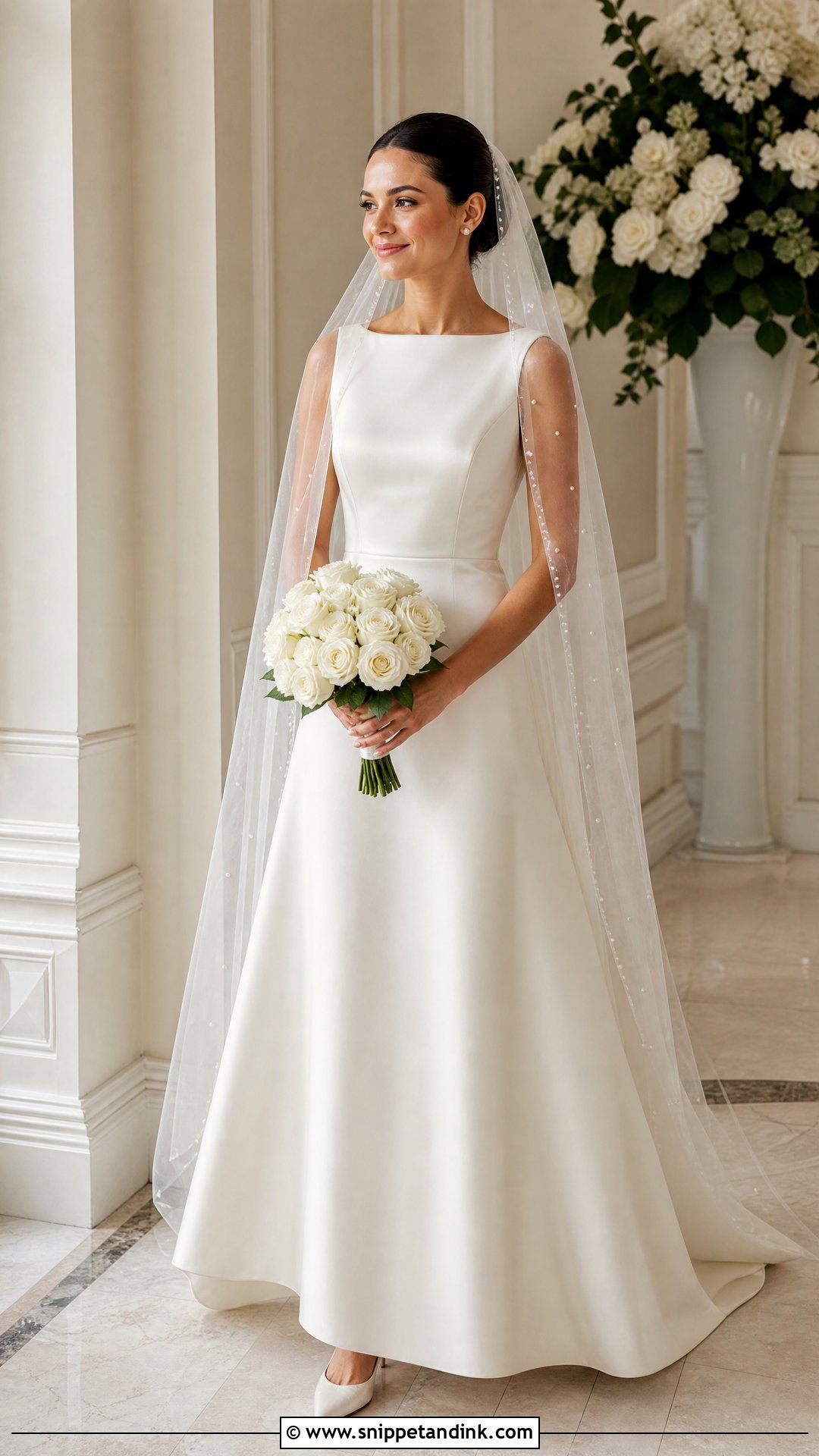
Ivory satin in an A-line is the shape most brides picture when they hear the word traditional, and it suits more figures than almost any other cut. Keep the seams minimal and the waist natural so the satin does the work. A pearl-scattered fingertip veil adds texture, but check the weight: a veil heavy with pearls drags its comb backward, so I anchor it into a solid section of hair rather than loose curls. Pointed ivory pumps or low block heels, pearl studs, a slim bracelet and compact white roses complete it for a ballroom or hotel.
2. Long Sleeve Lace Wedding Dress With Cathedral Veil
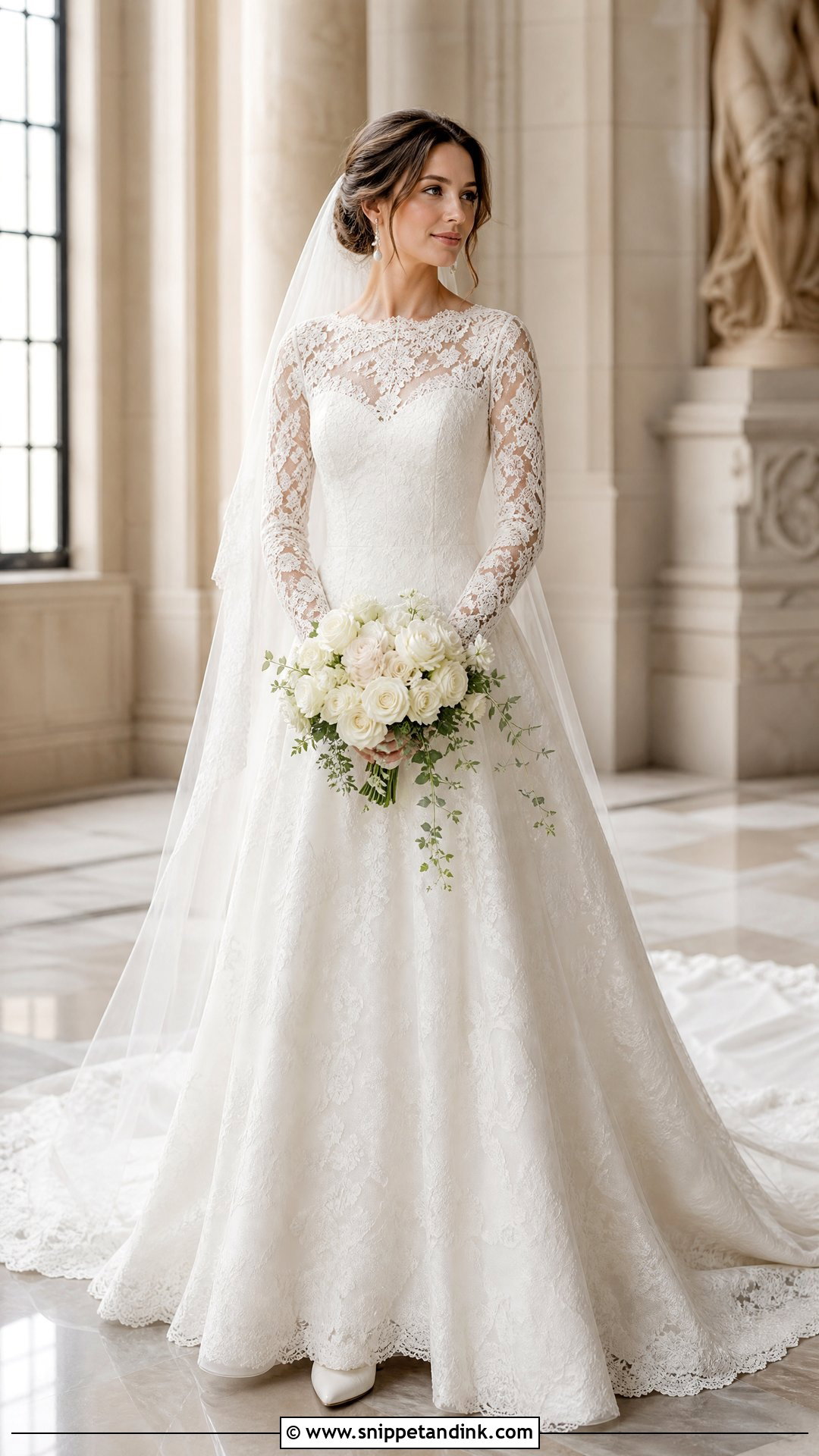
Long lace sleeves give coverage and softness together, which is why they’re a favorite for church ceremonies in cooler months. Look for a lined bodice, sleeves fitted close but not tight, and a lightly scalloped neckline. I check lace sleeves with the arms bent at the elbow, because that’s where they tear first. Lace can run onto the skirt or stop at the waist for a cleaner line. A plain cathedral veil secured in a low bun, closed-toe ivory heels, pearl drops and a loose bunch of garden roses keep everything quiet around the lace.
3. Strapless Ball Gown Wedding Dress With Satin Gloves
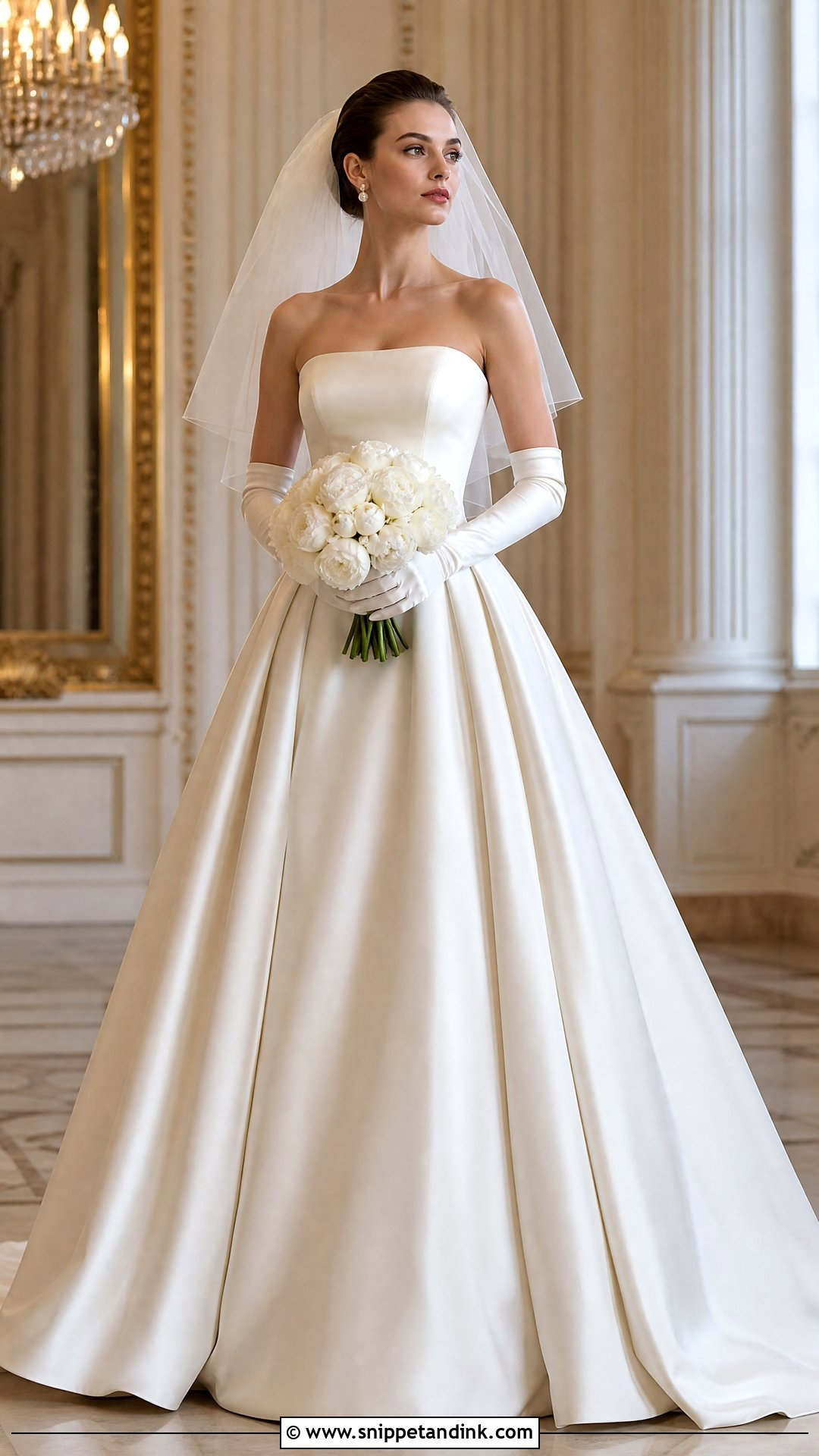
A strapless ball gown in plain satin is about as recognizable as bridal gets. Neat pleats in the skirt and a structured bodice with a straight or gently curved top are all it needs; crystals only distract from the shape. Elbow-length satin gloves make it formal, though they come with one practical question: how will the ring go on? I sort that out at the fitting, not at the altar. A short tulle veil, pearl earrings, white pointed heels hidden under the skirt, a smooth chignon and round peonies or roses suit a grand indoor venue.
4. Square Neck Satin Wedding Dress With Low Bun
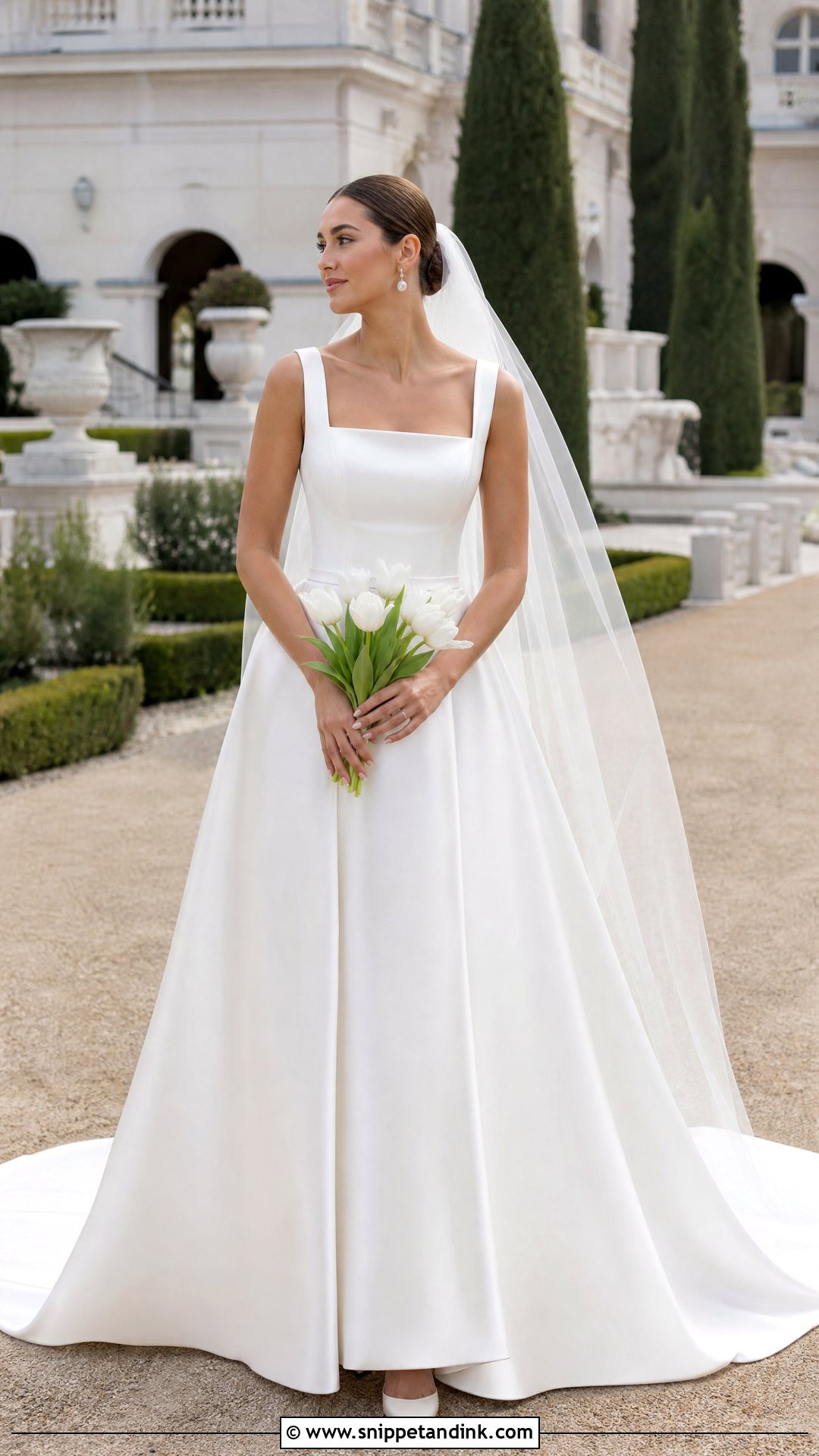
Square necklines give a satin dress structure at the top, and wide straps mean you can forget about it all day. Choose an A-line or softly fitted shape with a defined waist and a smooth floor-length skirt. I’d keep the neck bare or wear one small pendant inside the frame. Pearl drops and a low center-parted bun fit the line, with a sheer chapel veil pinned under the bun. Ivory slingbacks feel lighter than closed pumps, and a small posy of tulips or calla lilies follows the clean lines. It works in a garden as well as indoors.
5. Bateau Neck Wedding Dress With Chapel Veil
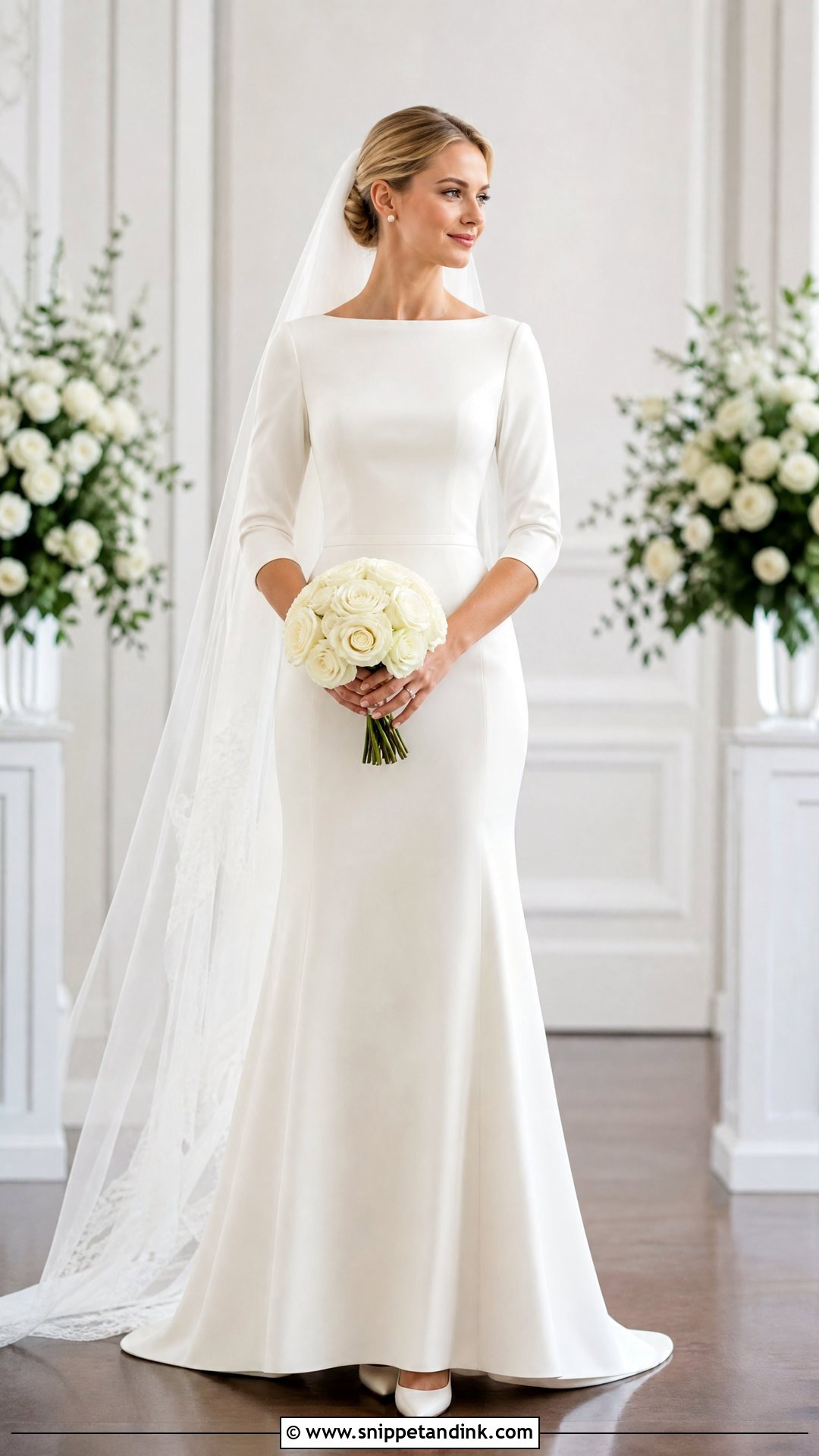
Bateau necks are wide and high, running nearly straight across the collarbone, and they give coverage without looking covered up. They suit narrow and average shoulders best; on broad shoulders I’d usually suggest a softer scoop. A smooth crepe or satin gown with three-quarter sleeves, a defined waist and a gently flared skirt barely needs decoration. Pin a chapel veil beneath a sleek bun so the neckline stays visible from the front. Pearl studs, low ivory pumps and structured white roses tied with matching ribbon are enough.
6. Sweetheart Wedding Dress With Lace Bolero
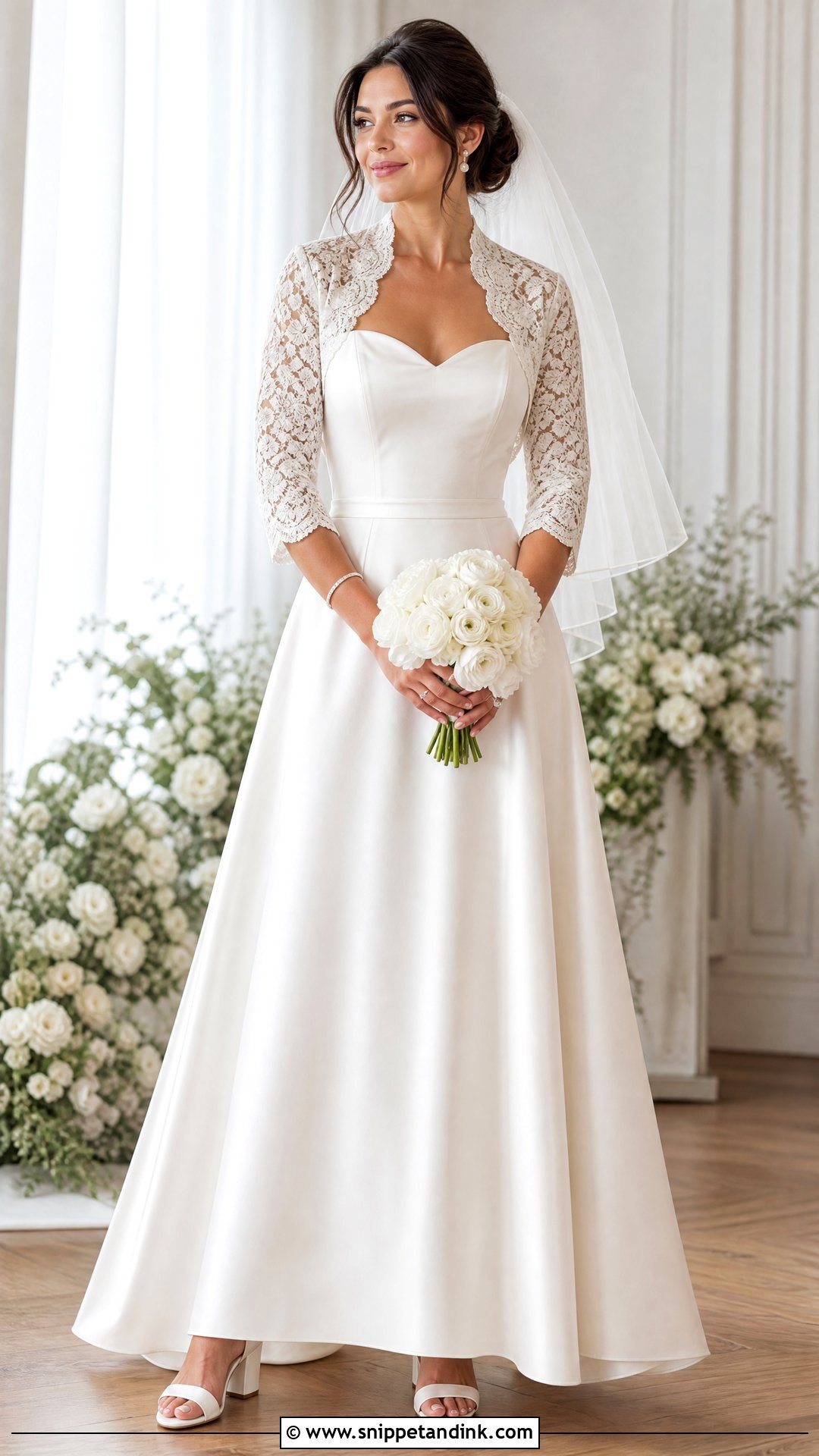
Here’s a trick I use often when a bride needs covered shoulders in church but wants a lighter look for the party. A plain satin sweetheart A-line with a supportive bodice, worn under a removable lace bolero with long or three-quarter sleeves. The bolero covers the shoulders for the service and comes off after the vows. Match the bolero’s ivory to the dress in daylight, since lace and satin labeled the same shade can look different side by side. A waist-length veil keeps the top half from crowding. Ivory block heels, pearl studs, a fine bracelet and ranunculus with roses finish it.
7. High Neck Lace Wedding Dress With Pearl Earrings
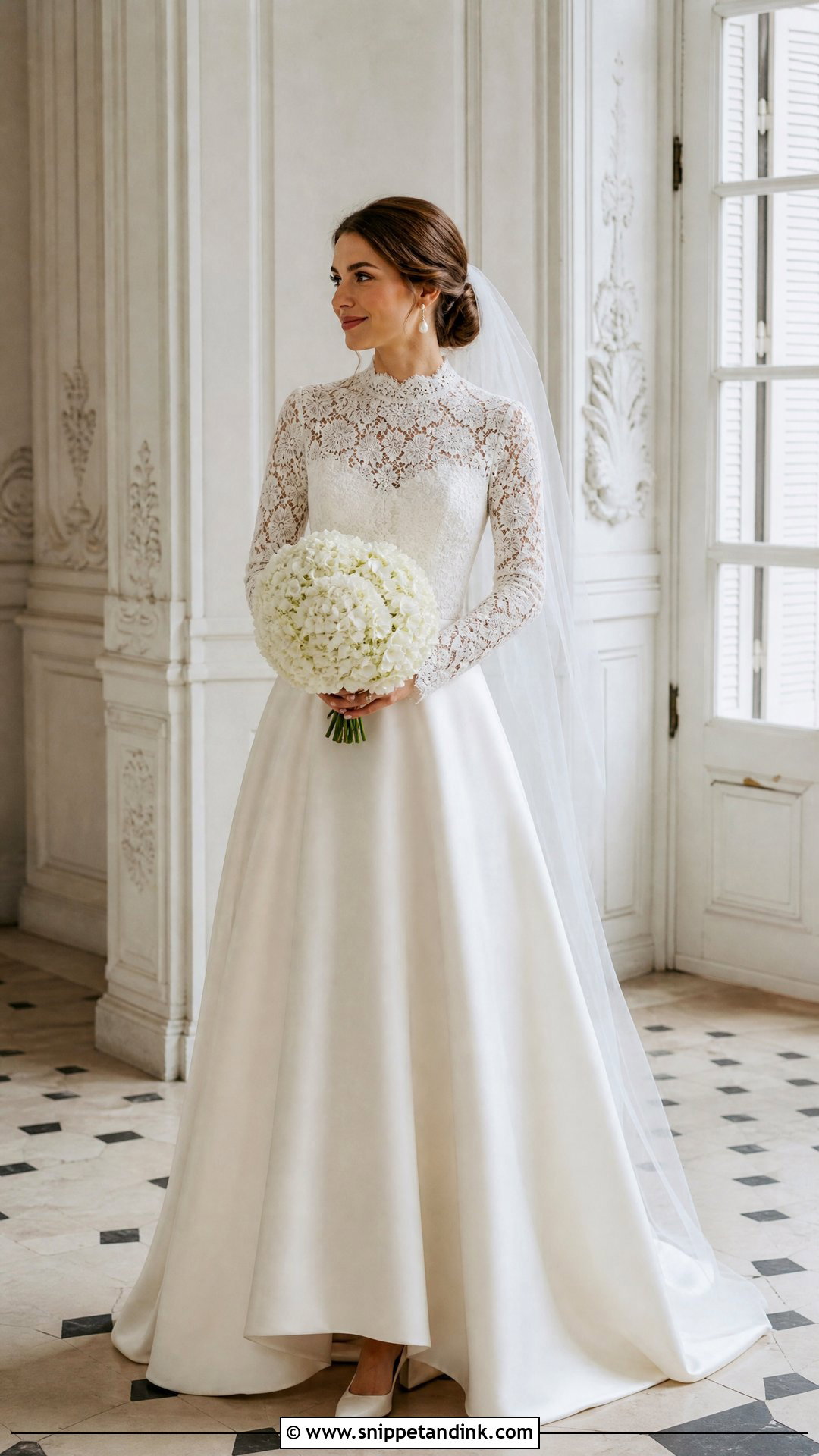
A high lace collar looks poised and modest, but it can feel warm, so I ask brides about the venue temperature before ordering. Look for a fitted lace bodice, lined front, long sleeves and a plain chiffon or satin A-line skirt; a lace skirt on top of all that becomes heavy. Skip the necklace and wear pearl earrings. A low bun or soft updo shows the collar, with a simple tulle veil, ivory pumps and white hydrangeas. Hydrangeas wilt fast without water, so keep the bouquet in a vase until the last minute. It suits a historic building well.
8. Cap Sleeve Wedding Dress With Floral Veil
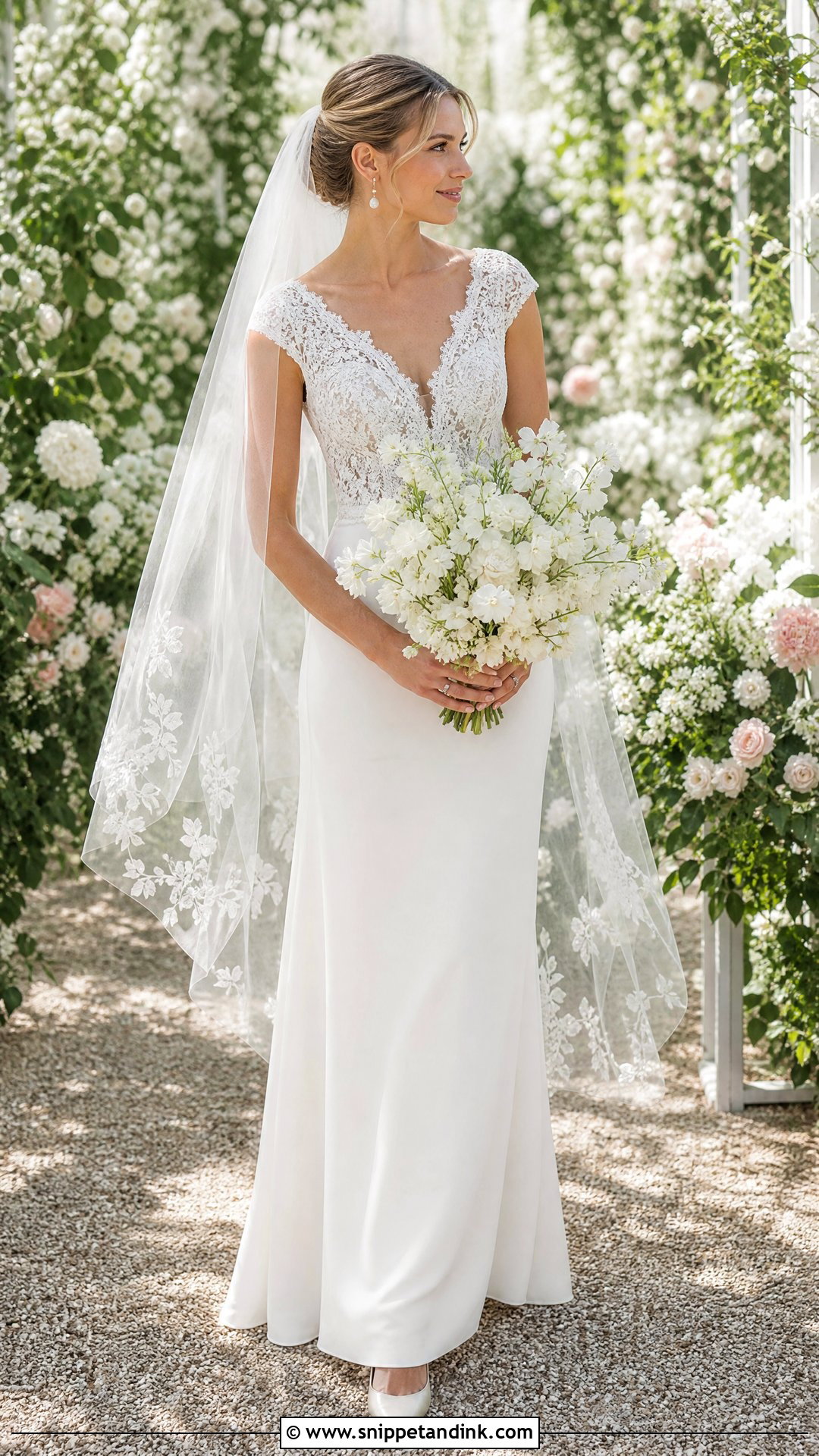
Cap sleeves cover just the top of the shoulder, enough to soften the look without the warmth of a full sleeve. An ivory A-line with a fitted bodice, subtle lace sleeves and a satin or chiffon skirt keeps it light. If you add a floral embroidered veil, keep its motifs small and widely spaced; dense embroidery on both veil and bodice fight each other. Nude or ivory pointed pumps, pearl studs and a fine chain bracelet suit it, with a half-up style and sweet peas, roses and greenery. Spring gardens and bright daytime rooms are its natural setting.
9. Off Shoulder Wedding Dress With Tulle Veil
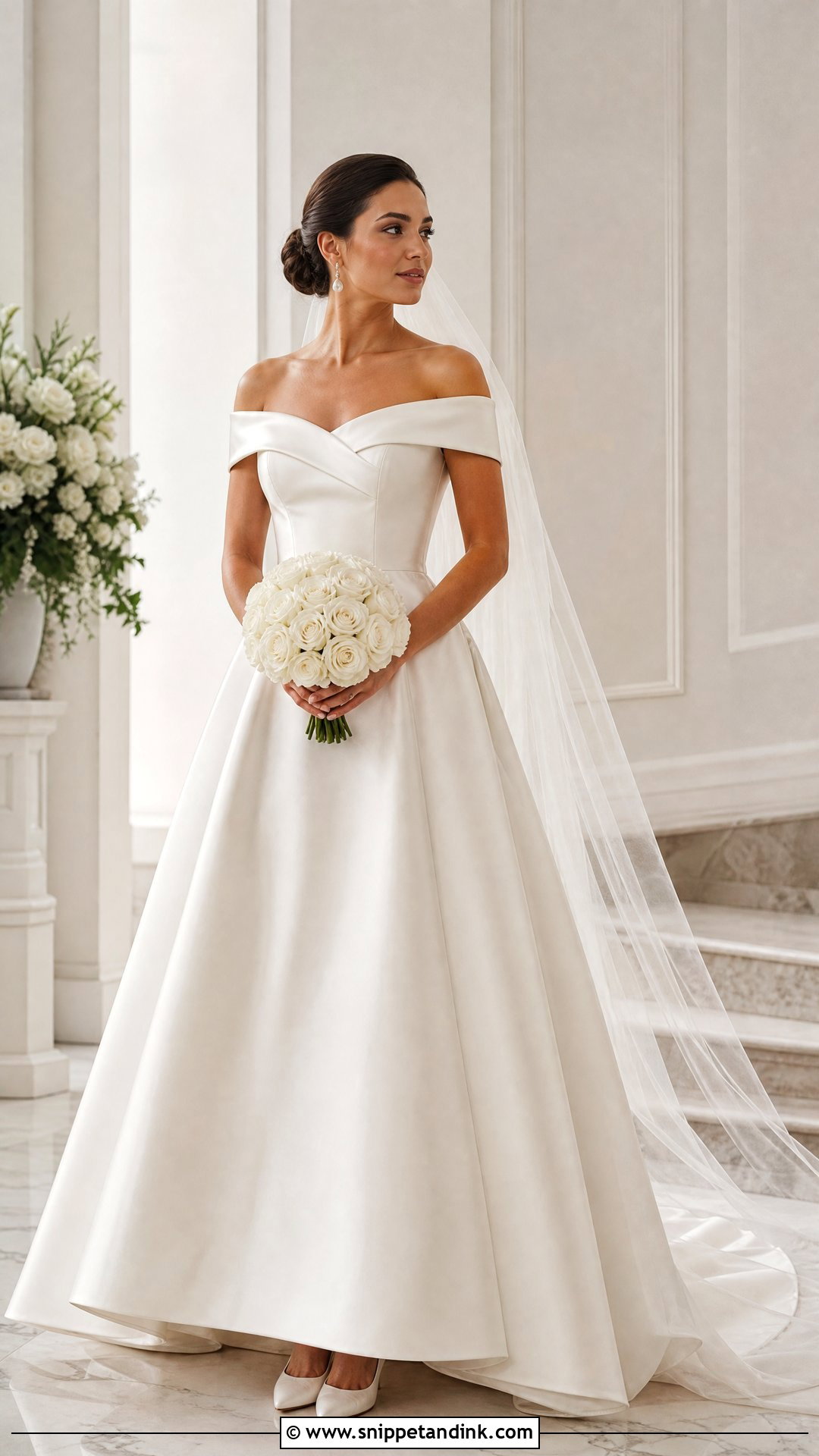
Off-shoulder satin gives a traditional gown a softer top line without losing its grandeur. The folded sleeves rest across the upper arms, which means they’re the first thing to slip when you hug guests. I’d ask for internal elastic or a grip edge rather than relying on fashion tape alone. A structured A-line with a defined waist and moderately full skirt balances the open neckline. Hang a plain chapel tulle veil from a low bun, add crystal or pearl drops and skip the big necklace. Ivory closed-toe pumps and a round bouquet of white roses complete it.
10. V-Neck Chiffon Wedding Dress With Simple Veil
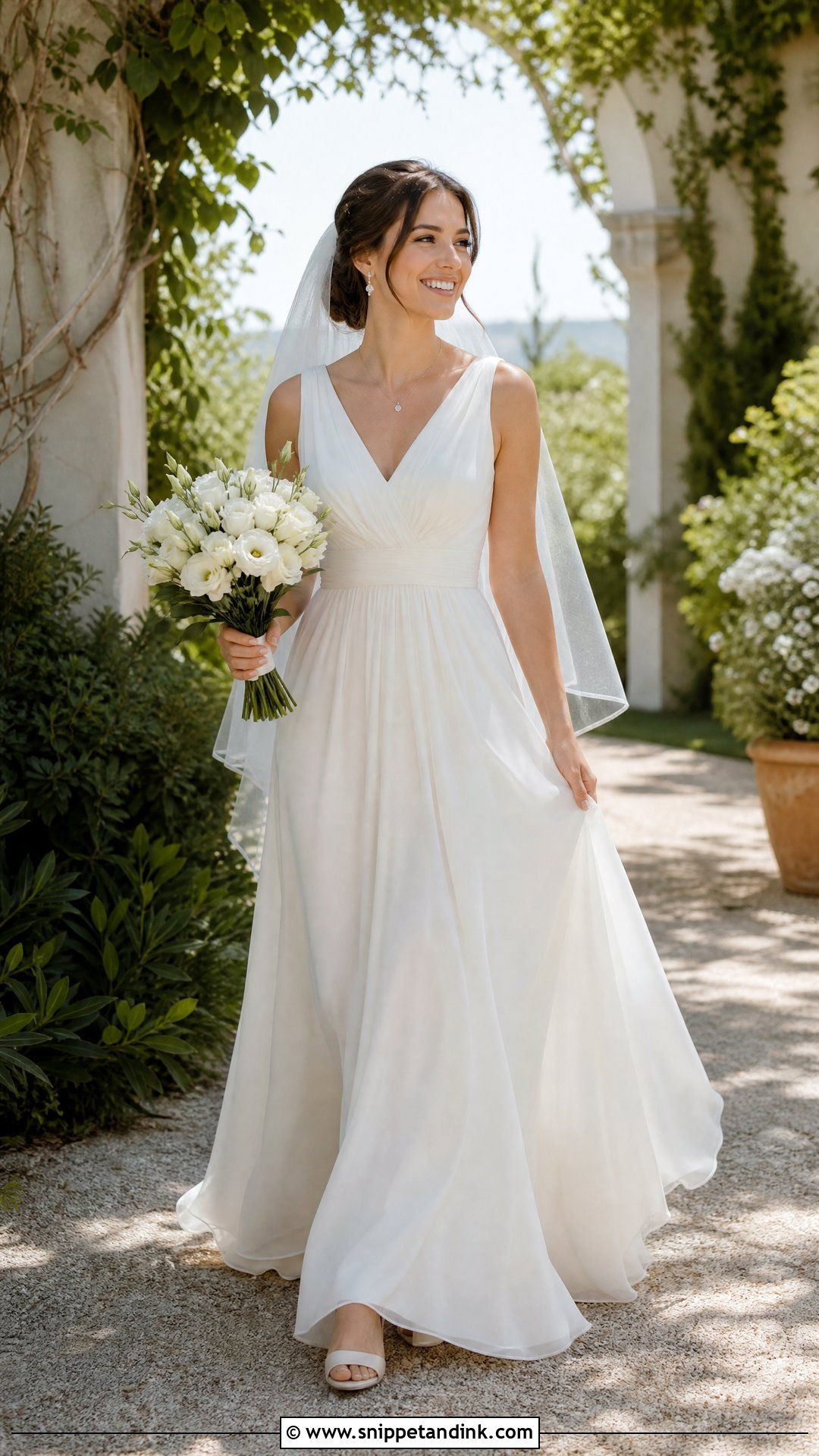
Chiffon is the traditional fabric I recommend for heat. It moves, breathes and doesn’t crease the way satin does. An A-line with a modest V, wide straps and a lightly gathered waist is comfortable to walk, sit and dance in, and a lined bodice keeps it opaque. Low ivory sandals or block heels suit grass. A fine pendant can follow the V. Pearl earrings, a plain fingertip veil, soft waves or a low twisted bun, and a loose bouquet of roses, lisianthus and greenery fit an outdoor ceremony where heavy satin would wilt you.
11. Empire Waist Wedding Dress With Short Veil
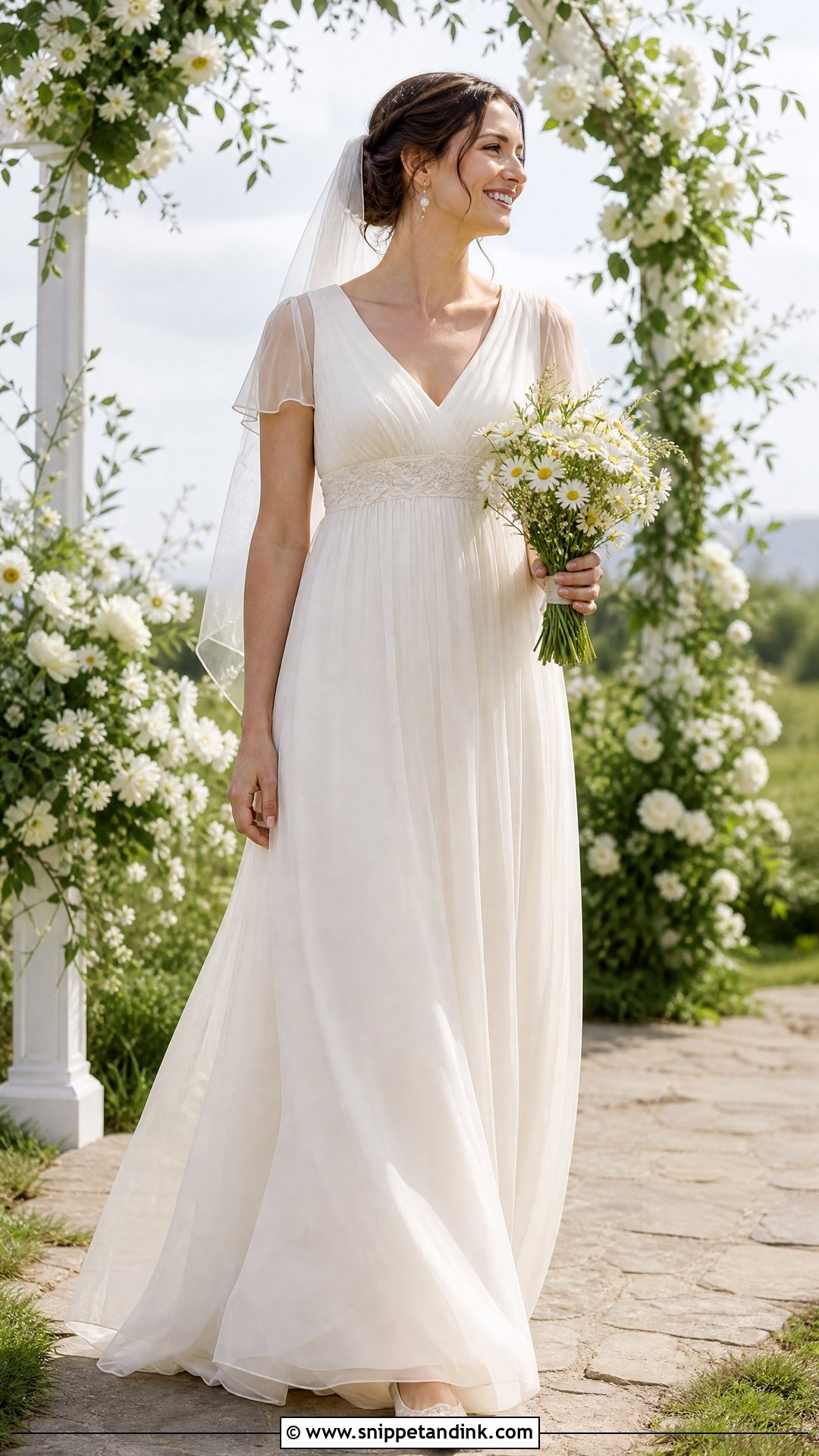
Empire waists sit just under the bust, so the skirt falls in one long line from there. In light chiffon with short sheer sleeves and a modest scoop or V, it’s the most comfortable gown on this list for a warm, long day. Watch the gathering at the seam; too much makes the skirt flare out like maternity wear, and a few soft pleats keep it graceful. A short veil keeps the airy shape visible. Low block heels or embellished flats, pearl earrings, a delicate bracelet and white daisies or roses suit an intimate outdoor ceremony.
12. Fit And Flare Lace Wedding Dress With Chapel Veil
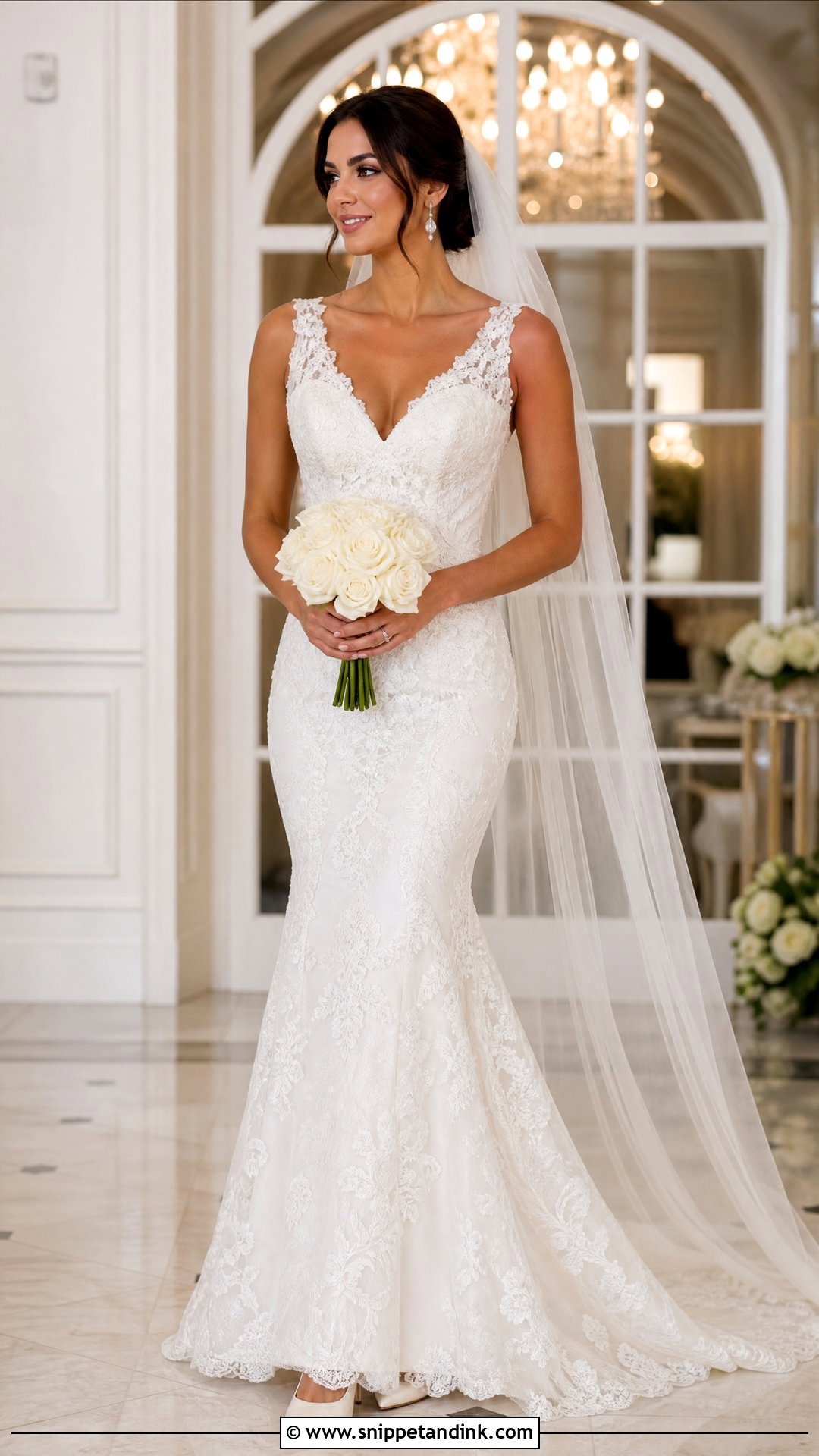
Fit-and-flare gives shape without the restriction of a full mermaid, because the skirt opens around the lower thigh rather than the knee. That extra stride length matters on stairs and church steps. A lined design in traditional floral lace with a modest sweetheart or V keeps it balanced. Pair it with a plain chapel veil; a lace-edged veil on top of a lace gown competes. Pointed ivory heels, pearl drops, a low bun or side-swept waves and a compact bouquet of roses and eucalyptus finish it in an indoor venue.
13. Sheath Crepe Wedding Dress With Pearl Headband
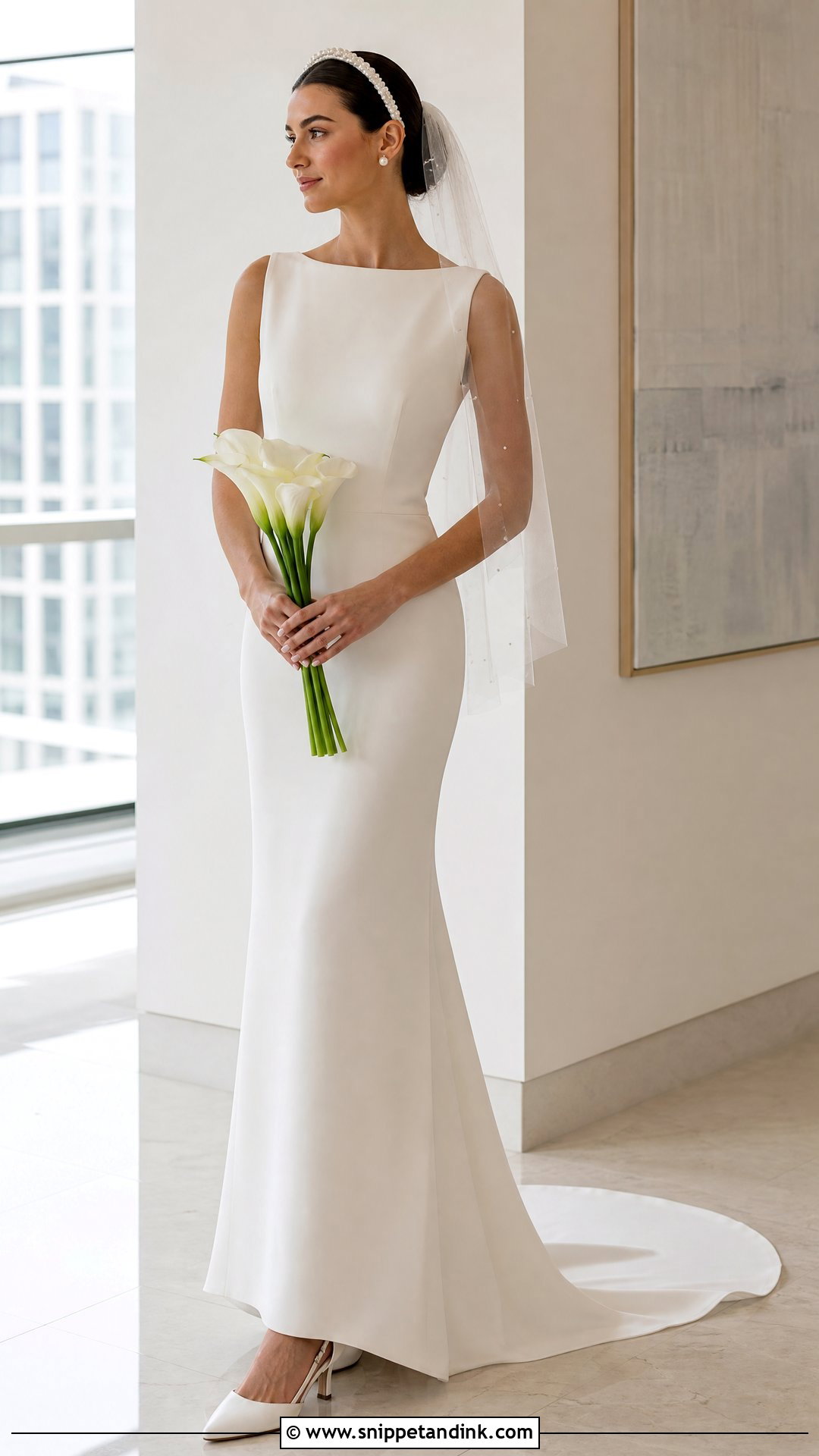
Crepe drapes close to the body, so a sheath in crepe looks only as good as its tailoring. Floor length with a bateau or modest V neck, a supportive lining and a small sweep train is the traditional version. A pearl headband reads quieter than a large tiara, and it can hold a fingertip veil just behind it, or the veil can sit lower in a bun. Headbands press behind the ears after a few hours, so wear yours for an afternoon before the wedding. Ivory slingbacks, pearl studs and calla lilies suit a city ceremony.
14. Tea Length Wedding Dress With Low Heels
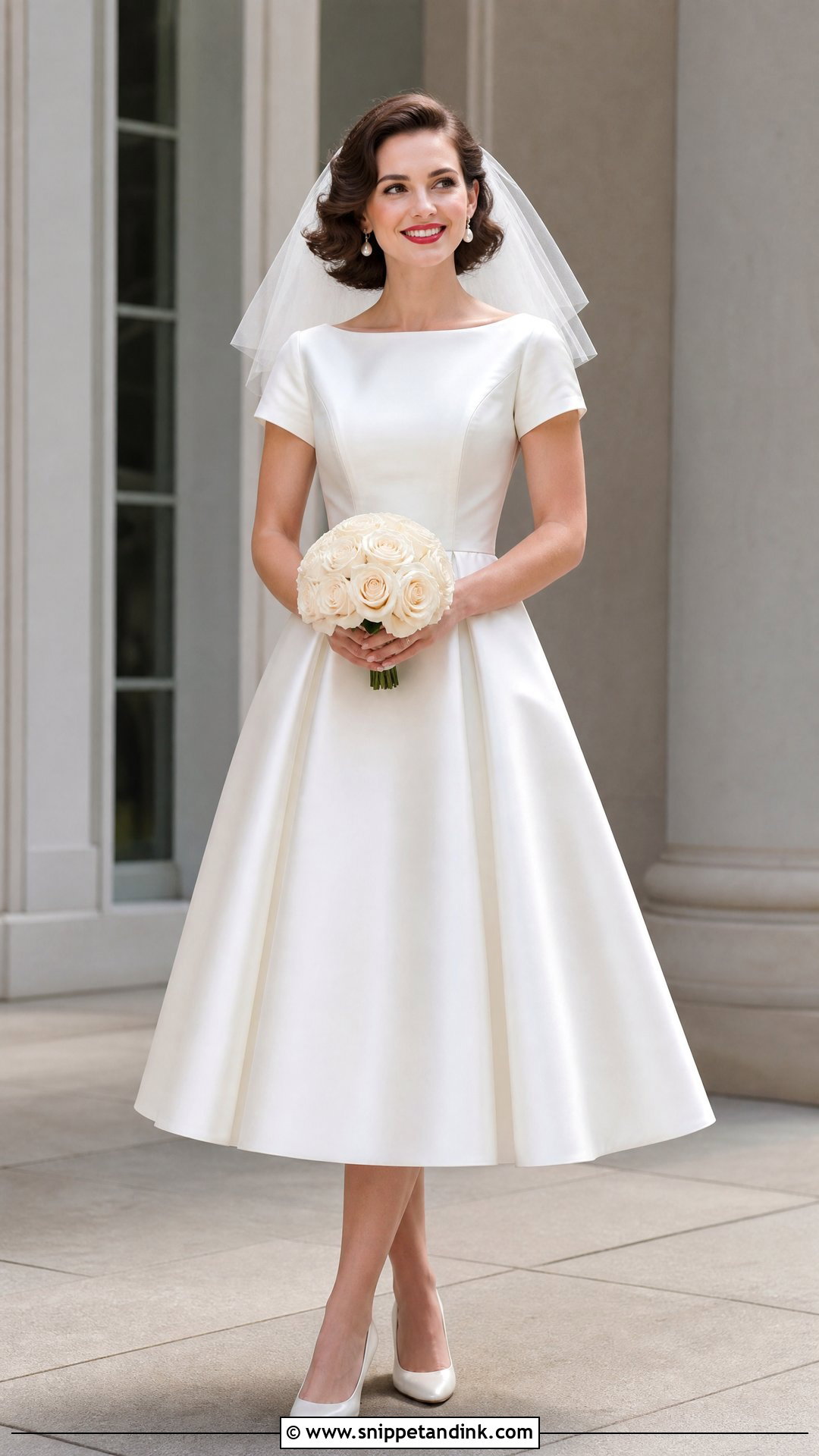
Tea length is the vintage option, and because the shoes are on show, they become part of the gown. Choose polished ivory pumps with a low heel and add cushioned insoles before the day, not after. A structured A-line in satin, lace or mikado falling between knee and ankle, with a fitted bodice and short sleeves, holds its shape. A birdcage or short tulle veil keeps the proportions right. Pearl earrings, white gloves if you like them, a smooth bun or curled bob, and a compact bouquet of roses make it ideal for daytime and courthouse weddings.
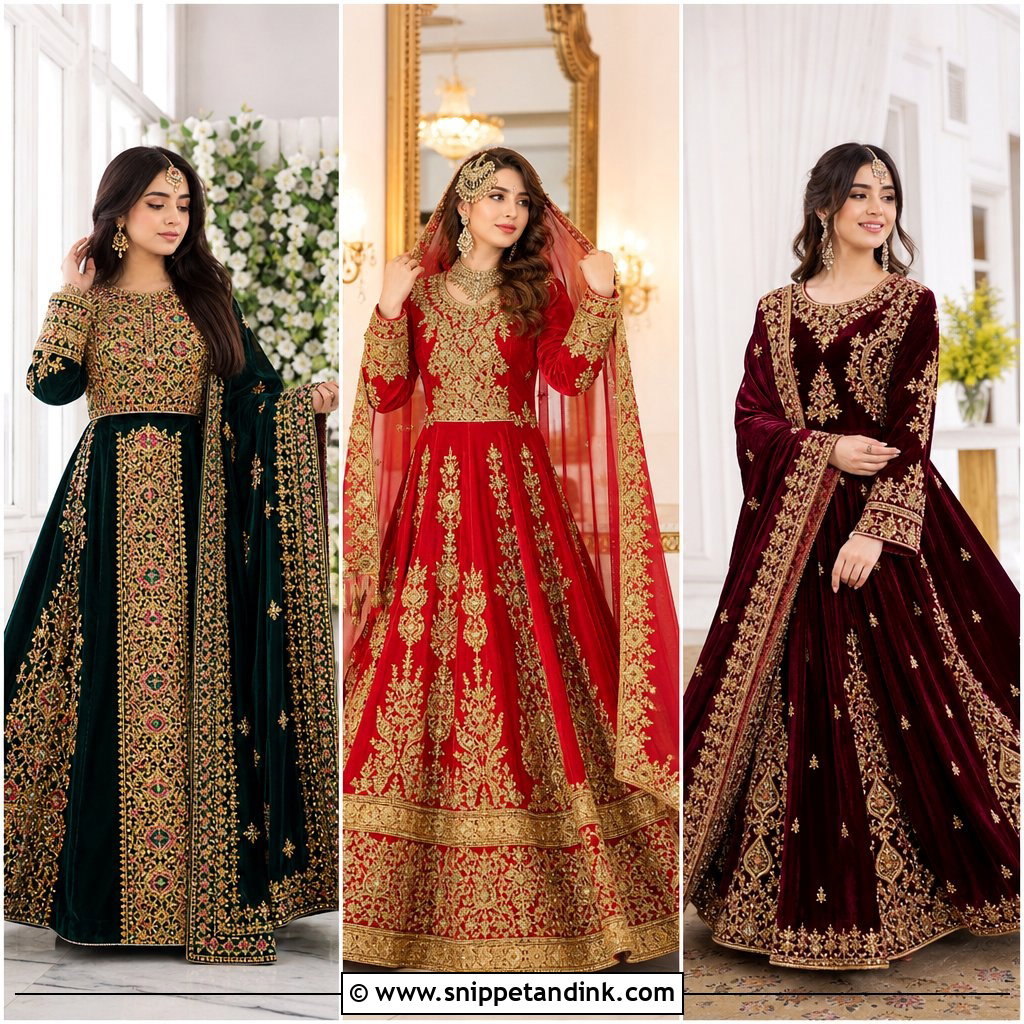

15. Scoop Neck Wedding Dress With Three Quarter Sleeves
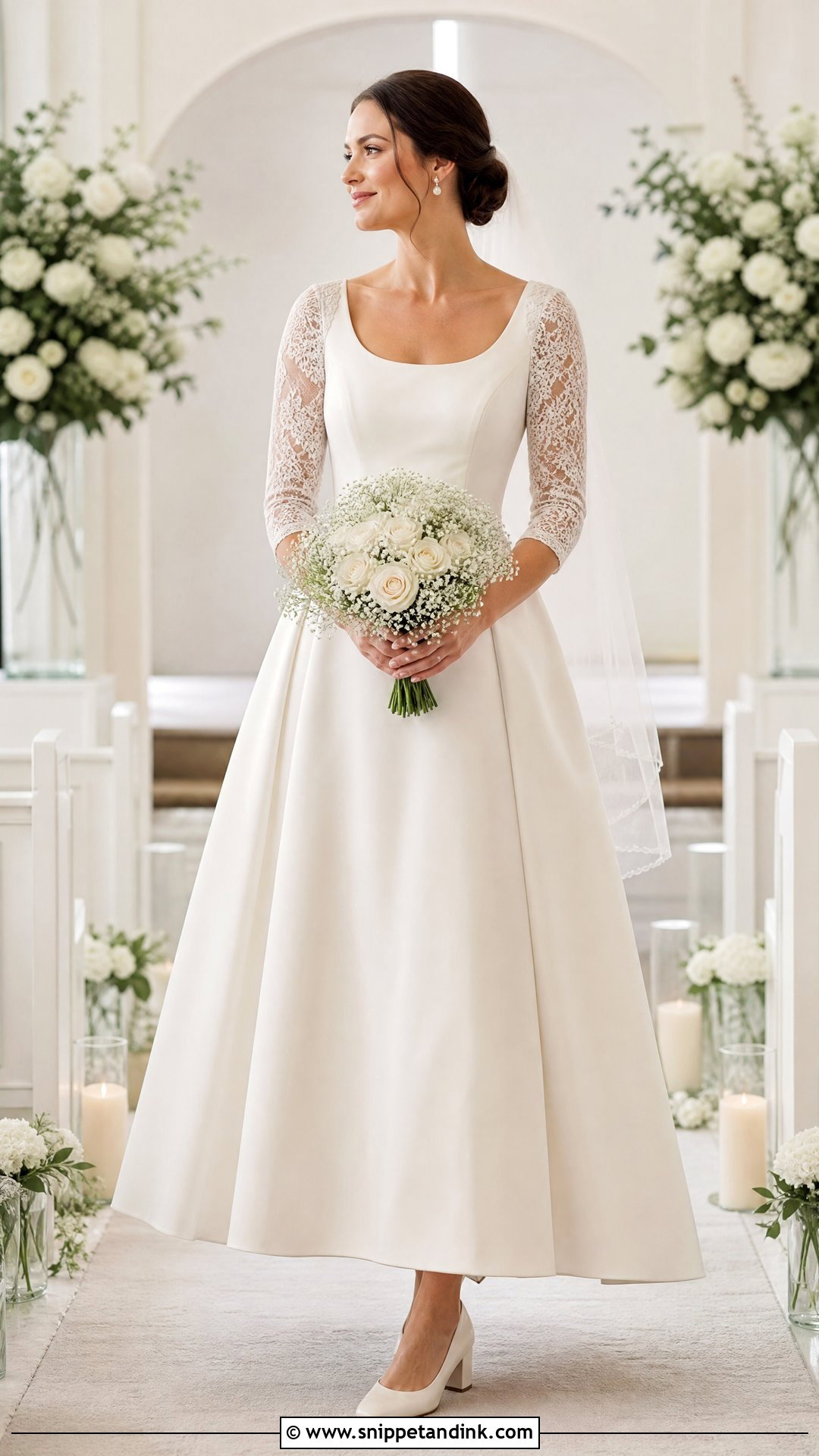
The scoop neck is the gentlest neckline there is, and with three-quarter sleeves it reads modest without feeling stiff. A satin or crepe A-line with a tailored bodice and lightly pleated skirt, perhaps with lace only on the sleeves, carries from ceremony to seated dinner without any change. The sleeve length leaves your wrists free, which helps when you’re eating and signing. A low twisted bun gives the veil a firm base. Fingertip veil, pearl earrings, a fine bracelet, ivory block heels and white roses with baby’s breath suit it.
16. Corset Bodice Satin Wedding Dress With Long Veil
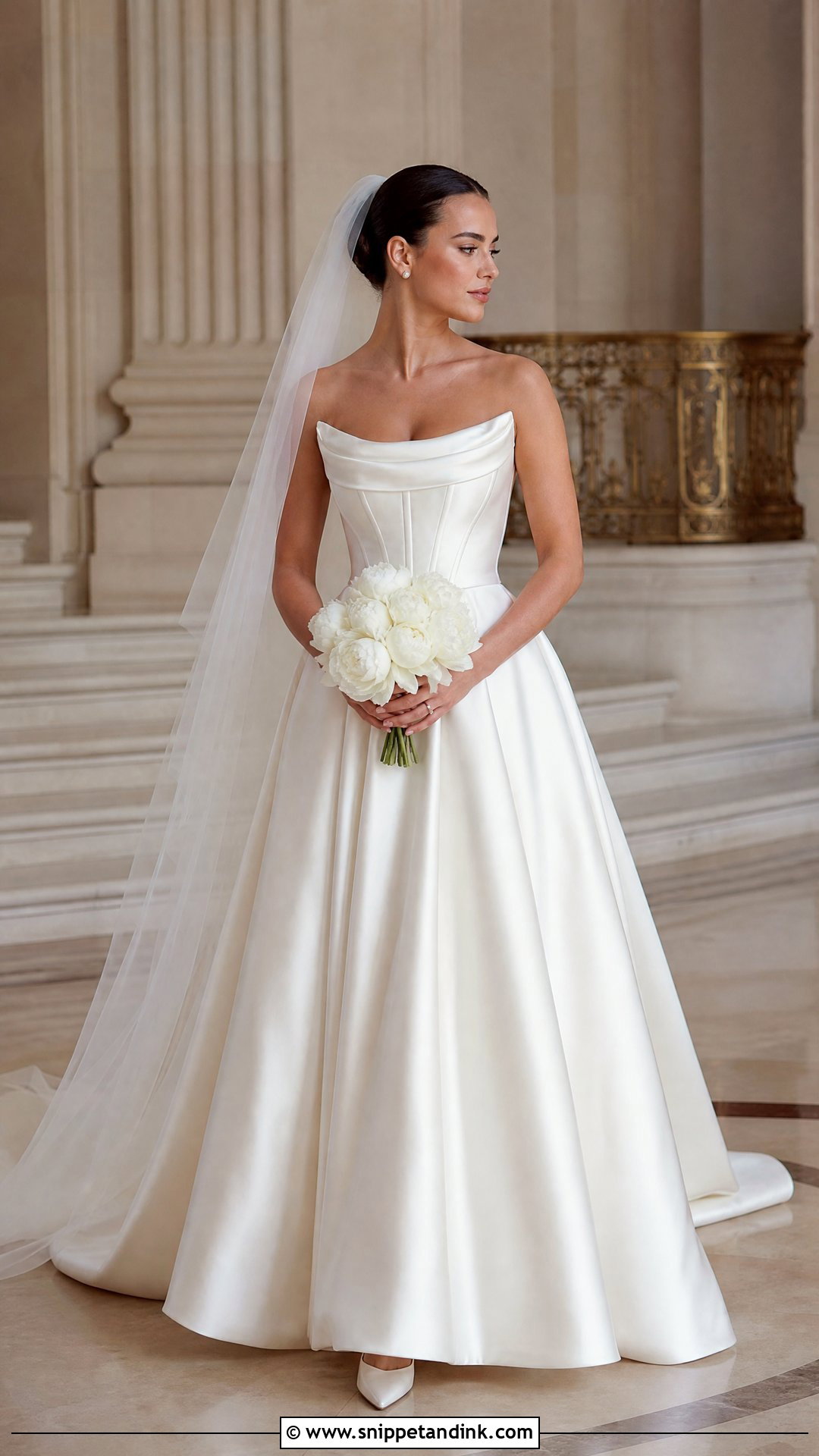
Corset bodices are back in traditional bridal, and the tasteful ones keep the boning hidden under smooth fabric panels. Run your hand along the bodice at the fitting; if you can feel the bones as ridges, they’ll show in side-on photos. A softly curved neckline above a full satin A-line is the classic pairing. Lace it so you can breathe through dinner and still sit upright comfortably. A long plain veil trailing past the train makes the entrance, with pearl or crystal studs, ivory pumps, white peonies and a sleek low bun.
17. Button Back Wedding Dress With Lace Veil
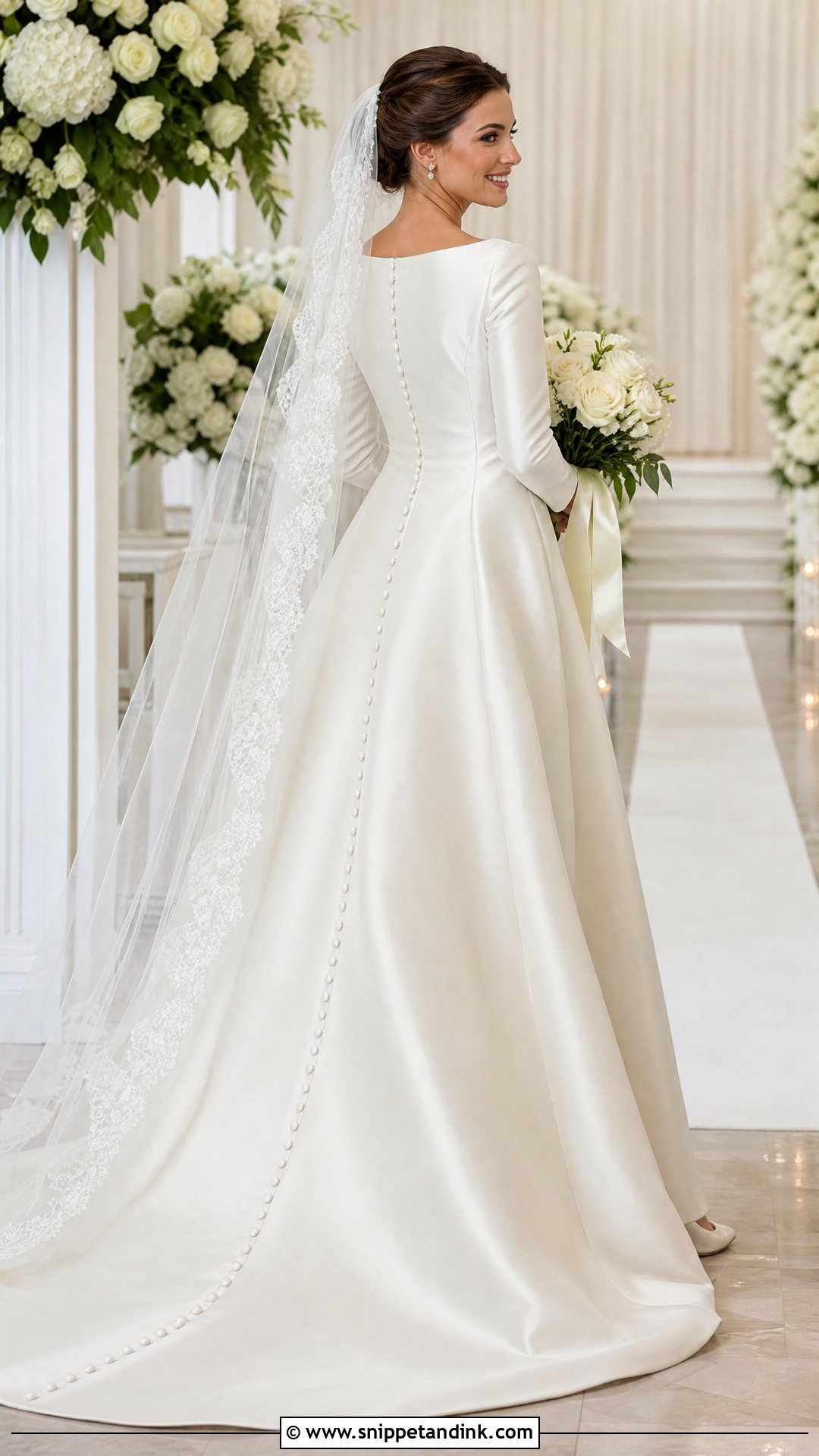
Covered buttons running from the upper back toward the train are the detail guests see most during the ceremony, since that’s the view from the pews. Ivory satin A-line, long sleeves, bateau neck. Practically, real buttons take a long time to fasten, so many dresses hide a zip underneath with decorative buttons over it; ask which you’re getting and plan dressing time accordingly. A lace-edged veil lets the buttons show through. Pearl studs, no necklace, ivory closed-toe heels, a low chignon and roses tied with a long satin ribbon finish it.
18. Cathedral Train Wedding Dress With Simple Accessories
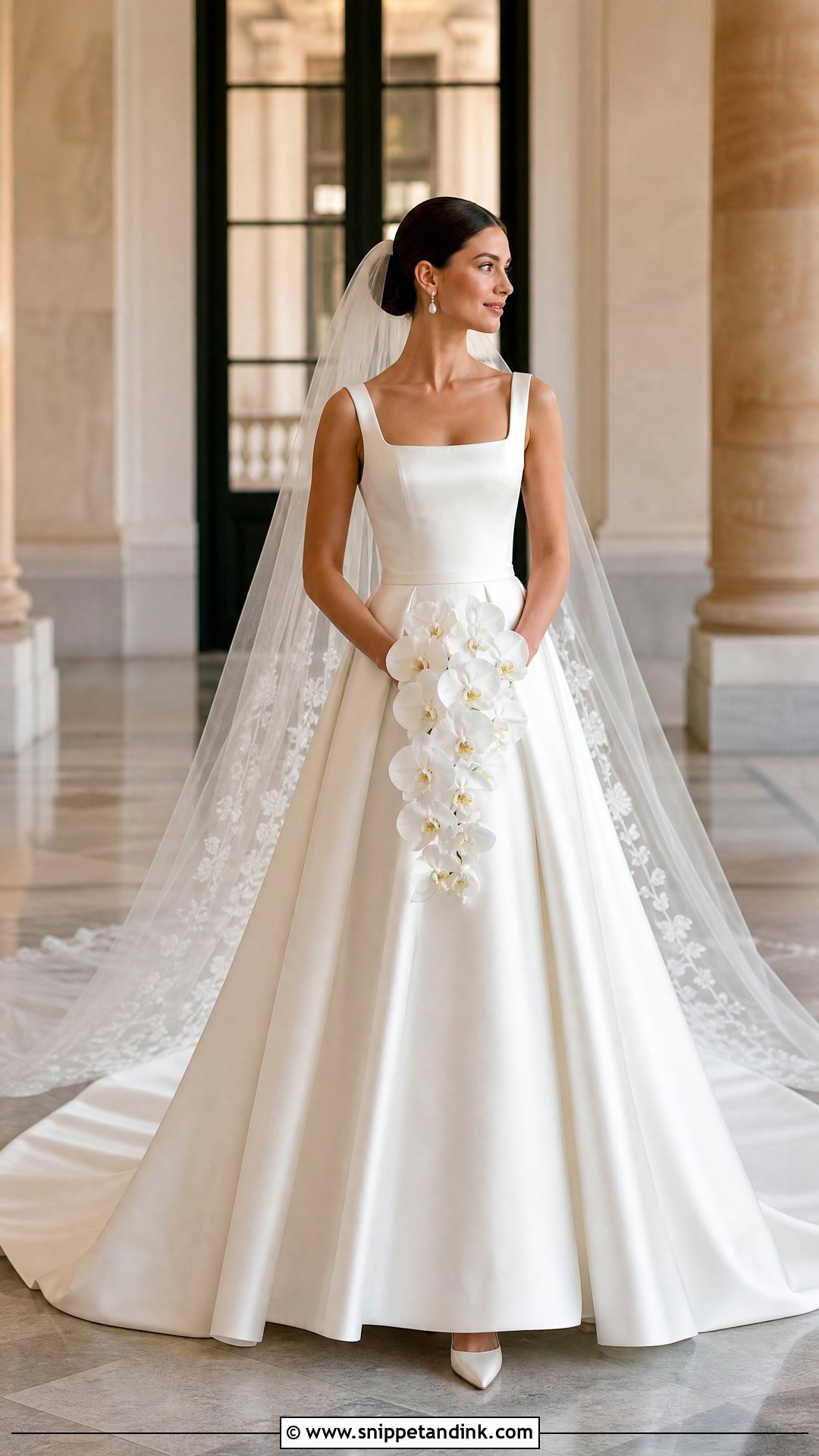
A cathedral train makes even a plain gown ceremonial, and it needs planning. Clean satin or mikado, an A-line with wide straps, a square neck and a fitted waist keep the train as the only statement. Practice walking and turning with it at your last fitting; you’ll need someone to arrange it at the altar and for photos. A secure bustle for the reception is essential, with enough anchor points that it holds through dancing. Pearl earrings, a slim bracelet, a plain cathedral veil, ivory heels, a low bun and structured roses or orchids suit a large venue.
19. Modest Full Sleeve Wedding Dress With Satin Veil
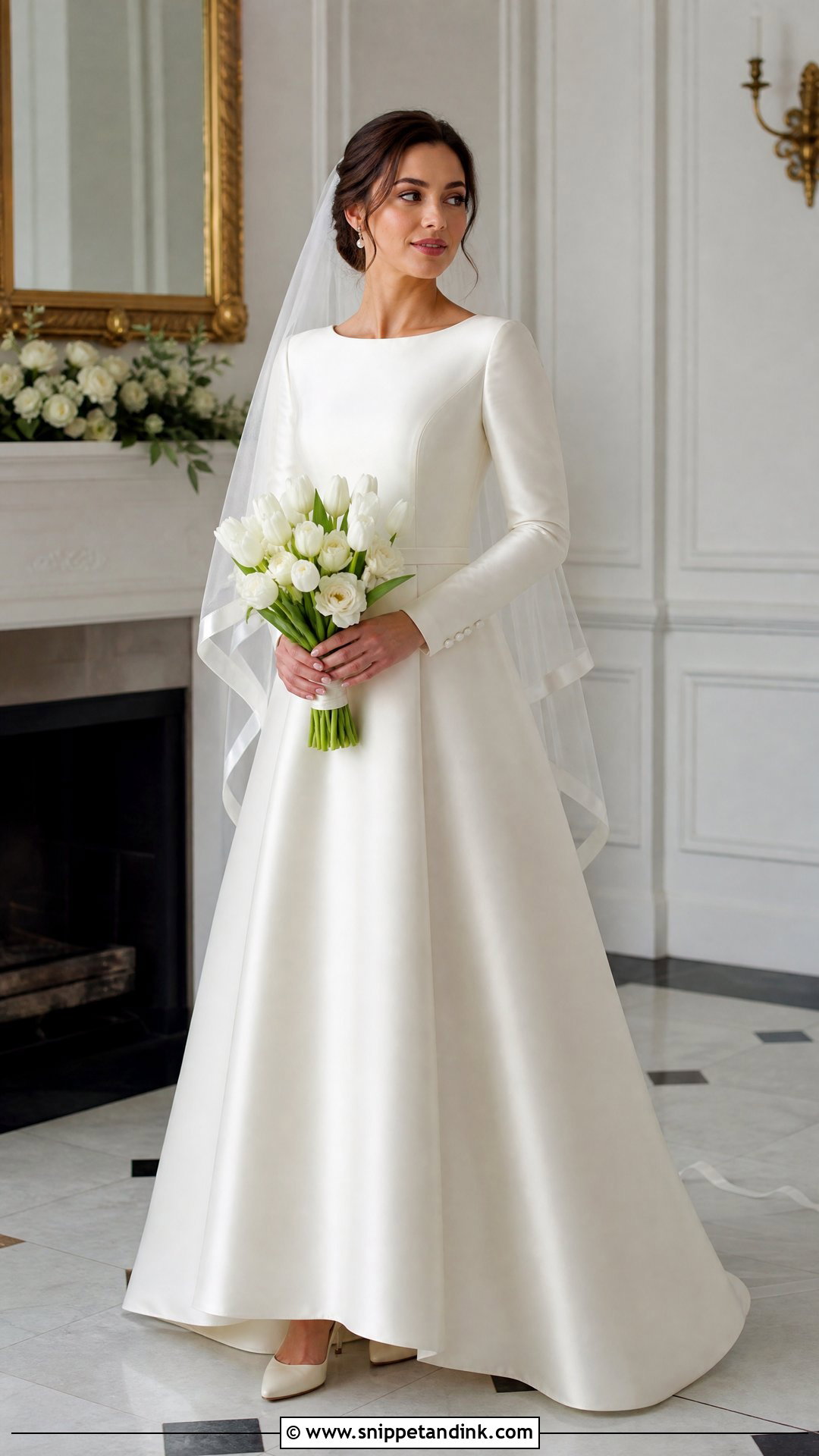
Full sleeves needn’t feel heavy. A satin A-line with a high scoop, lined bodice, fitted sleeves and a flowing skirt gives complete coverage, and covered buttons at the cuff add a quiet traditional touch. Fitted sleeves can bind when you lift your arms to hug or hold a bouquet high, so raise them at every alteration and ask for a gusset or extra ease if they pull. A plain satin-edged veil, pearl earrings, low ivory pumps, a sleek bun and tulips with roses keep it fresh for ceremonies where modest dress is expected.
20. Ivory Mikado Wedding Dress With Pearl Jewelry
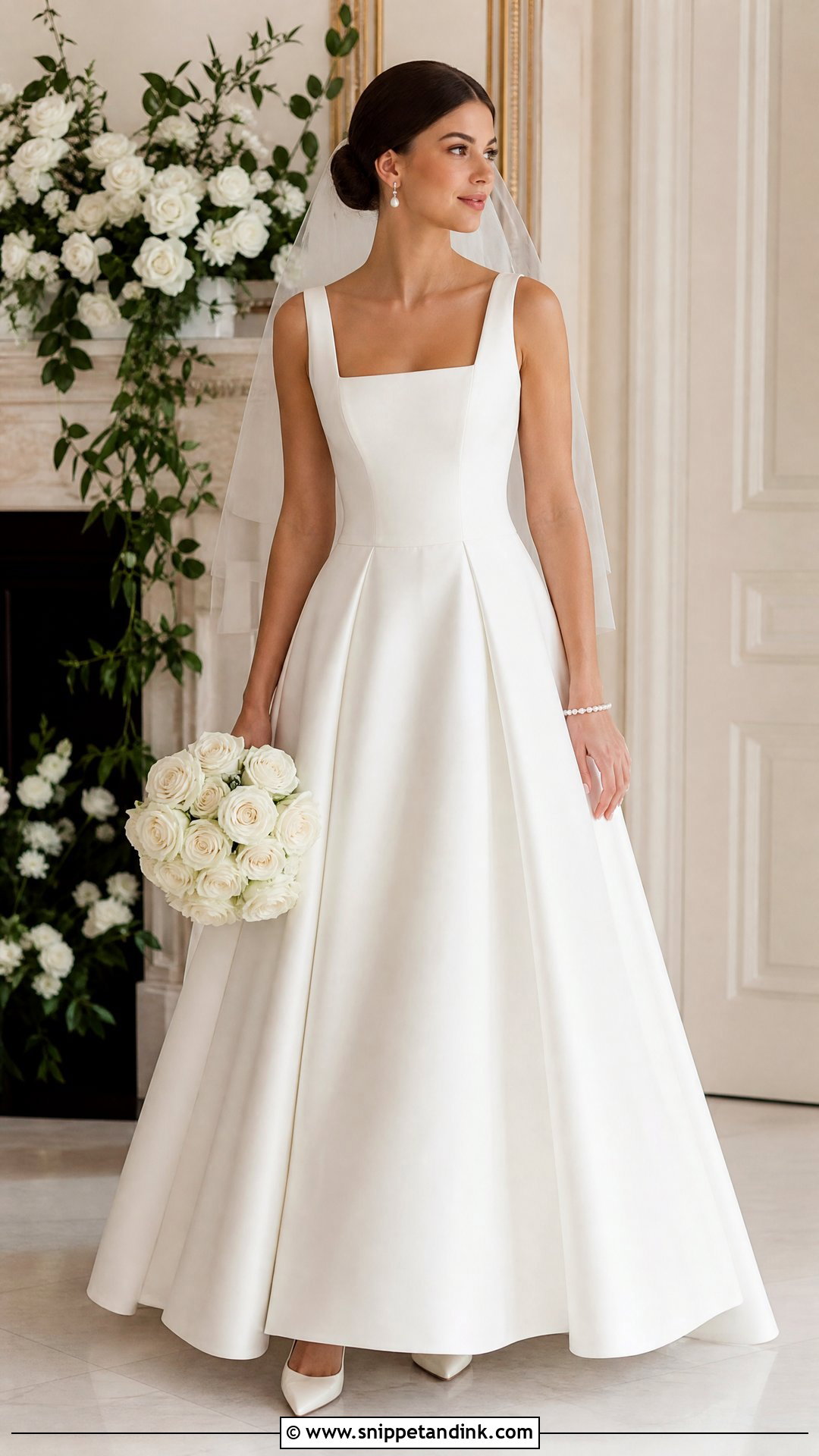
Mikado is a heavy, crisp silk-blend weave with a soft sheen, and it holds pleats and structure on its own. That makes it ideal for a plain A-line with a square neck and folded skirt pleats; no lace or crystals needed. It also creases less than lighter satins, which helps on a long day. The weight is the trade-off, so it suits cooler months better than a midsummer garden. A plain fingertip veil, pearl drops, a single-strand pearl bracelet, ivory pointed pumps, a smooth low bun and white roses with greenery complete a gown that looks substantial from every side.
An Heirloom Veil or Your Mother’s Lace, Brought Back Into Use
Traditional weddings often bring something handed down: a grandmother’s veil, a mother’s gown, a piece of lace to sew into the lining. These are worth wearing, but older fabric needs care before it goes near a new dress.
- Expect color change. Old tulle and lace yellow with age, and that shade can look very different next to a new ivory gown. Hold them together in daylight early.
- Don’t bleach or wash it at home. A specialist cleaner who handles vintage textiles can often lift yellowing gently; home bleach can weaken old fibers until they tear.
- Remount instead of reworking. A seamstress can attach old lace edging to new tulle, which keeps the heirloom and gives you a veil strong enough to wear all day.
- Give it time. Restoration and remounting can take several weeks, so start a few months before the wedding.
Gloves and the ring exchange
If you’re wearing gloves from family or new satin ones, plan the ring moment. Fingerless styles avoid the problem. Otherwise, hand the left glove to your maid of honor just before the vows, or ask your seamstress to open the seam on the ring finger so the band slides on over it.
Traditional Without Being Fussy
A traditional gown works when it feels right on the person wearing it. Clean A-lines, lace sleeves, satin ball gowns and modest crepe all belong to the same long line of bridal dressing, and none of them needs heavy decoration. Let the veil, shoes, jewelry and flowers support the dress rather than crowd it. Think about the venue, the season, any religious requirements and how much you’ll be moving before you decide. Then put your effort into fit and alterations; that’s where a simple traditional dress gets its polish, and where your own personality has room to show.
You'll Like These Ideas:





Leave a Reply