
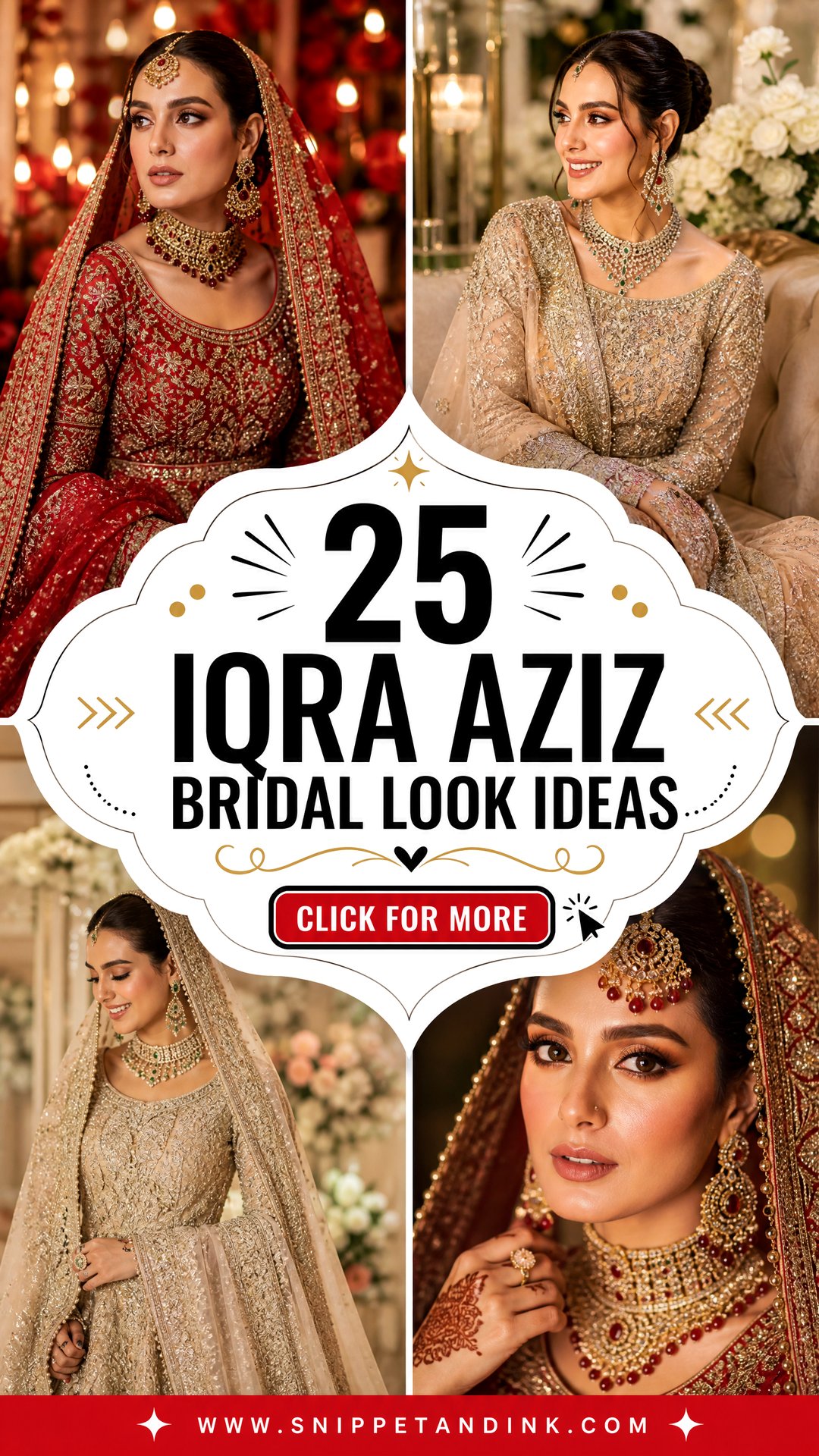
Brides still bring Iqra Aziz’s wedding pictures to fittings, and I understand why. Her wardrobe moved from a classic red bridal lehenga to a fresh walima look and dramatic shoot outfits, and each one felt traditional without being stiff. What I take from her looks isn’t a single dress but the way everything is styled together: dupatta placement, jewelry scale, makeup tone and shoes. So the 25 ideas below are full outfits for baraat, nikkah, mehndi and walima, with the notes I’d give a bride recreating them with her own tailor.
Briefing Your Tailor on a Celebrity Bridal Look
A screenshot from a wedding shoot hides most of what a tailor needs: the back, the weight, the fabric under the embroidery. When a bride brings me a celebrity reference, I ask her to gather several images from different angles, including full-length shots and close-ups of the sleeves and borders.
- Name the fabric, not just the color. Raw silk, velvet, net and organza take embroidery differently and photograph differently.
- Ask for a swatch of the dyed fabric and look at it in daylight. Reds and pinks can shift noticeably between dye batches.
- Agree on the weight. Heavy zardozi and can-can layers add up, and a lehenga you can’t stand in for hours is no good on a long baraat.
- Set fittings early. Embroidered bridal wear commonly takes several months, and you want at least two fittings before the final pickup.
Treat the photo as a starting point rather than a blueprint. A neckline or sleeve that suits her may not suit your shape, and a good designer will tell you so.
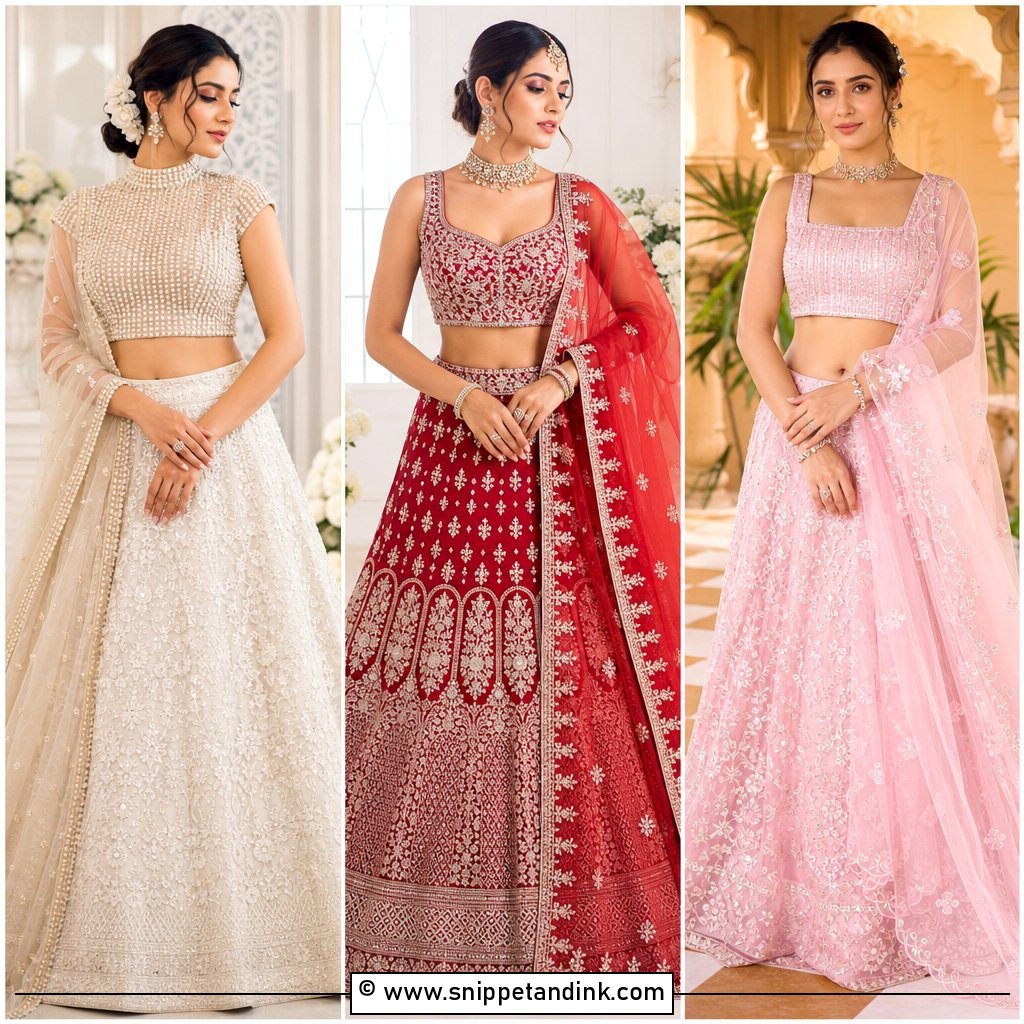
1. Iqra Aziz Red Bridal Lehenga Look
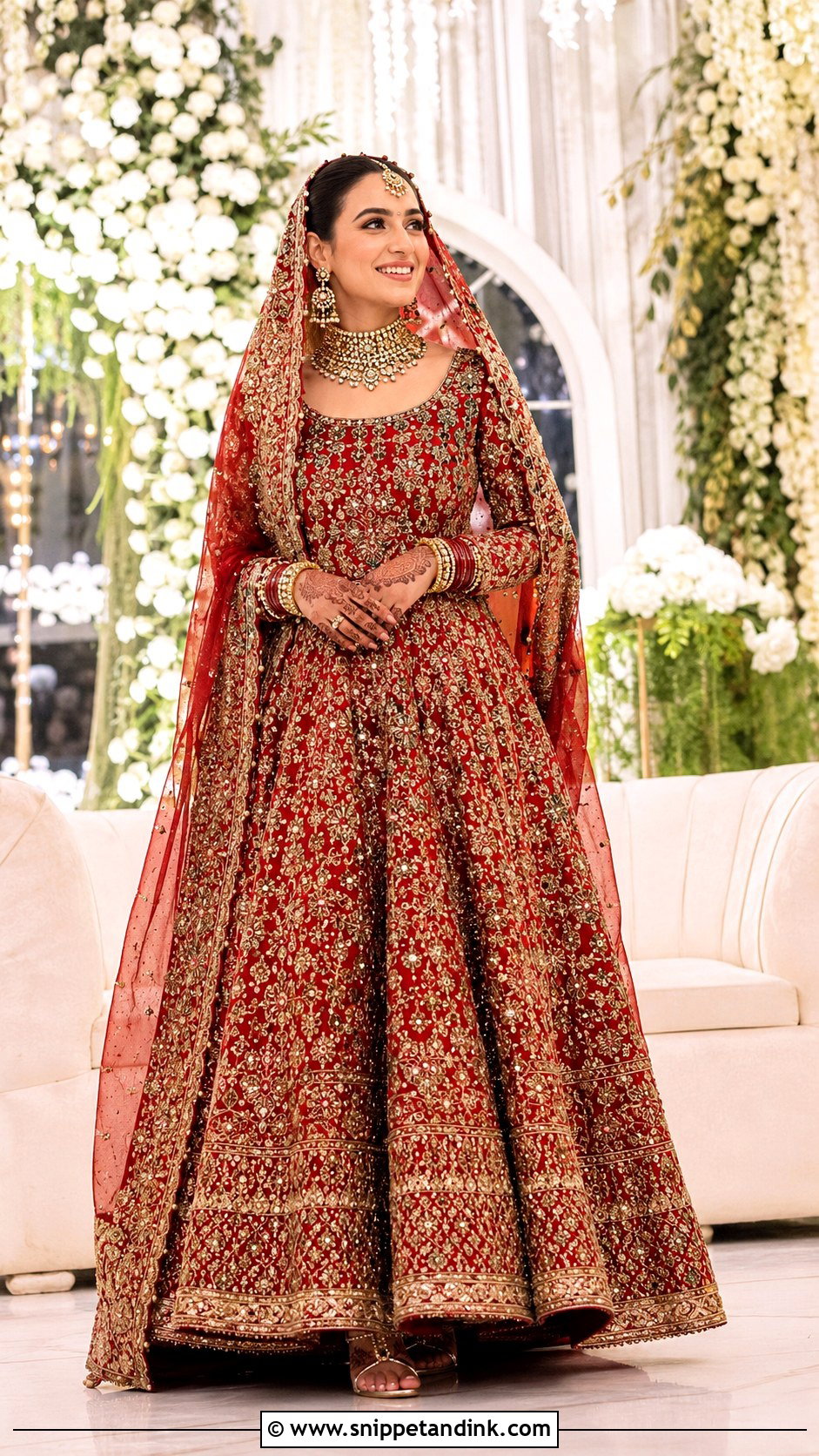
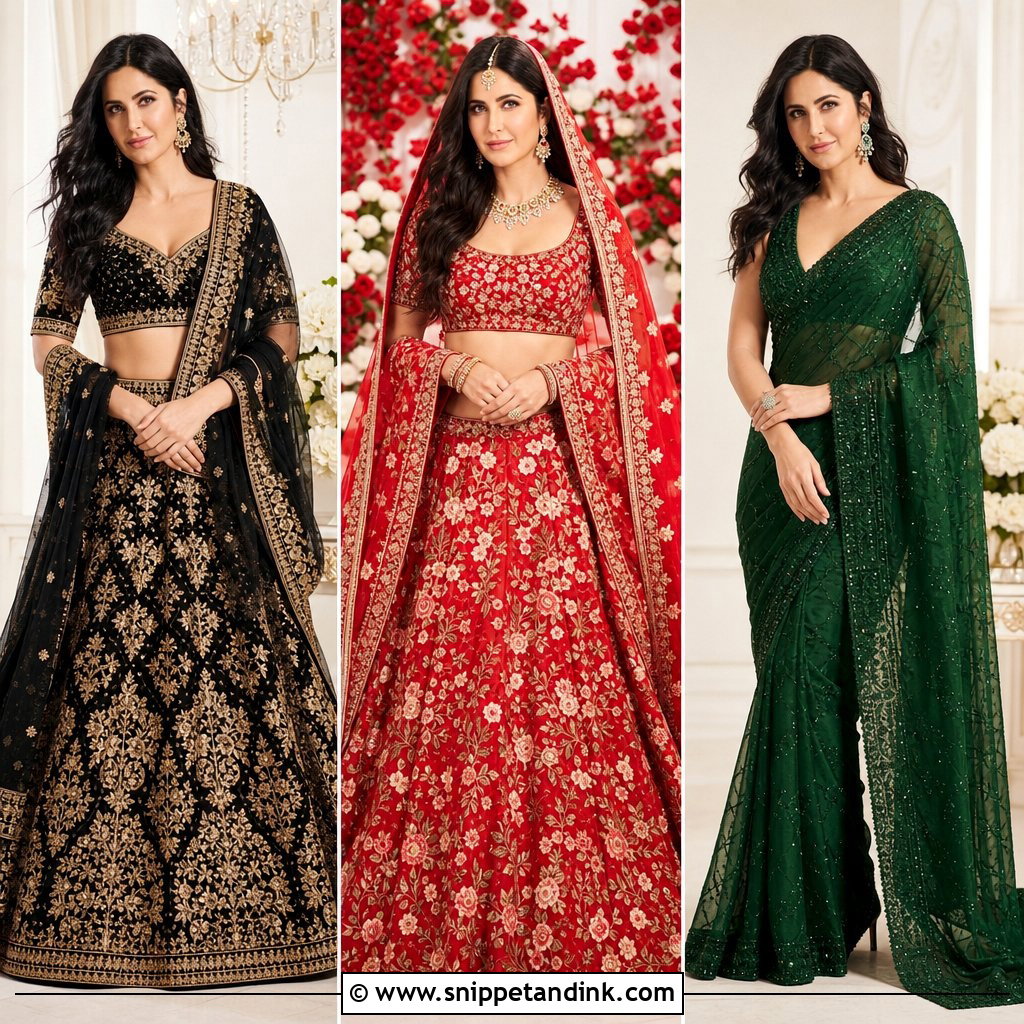
Red is the look most people connect with her, and it’s still the safest choice for a baraat. Pick a deep red or scarlet with heavy embroidery, a fitted full-sleeve choli and a matching net dupatta. Full sleeves need careful fitting at the elbow, because heavily embroidered sleeves are stiff and pull if they’re cut close. A matha patti, choker, long necklace, jhumkas and bangles all go on, so plan the neckline with room for two layers of necklace. Soft but defined makeup with kohl and a rose-red lip keeps the face from disappearing under all that gold.
2. Iqra Aziz Red On Red Bridal Look
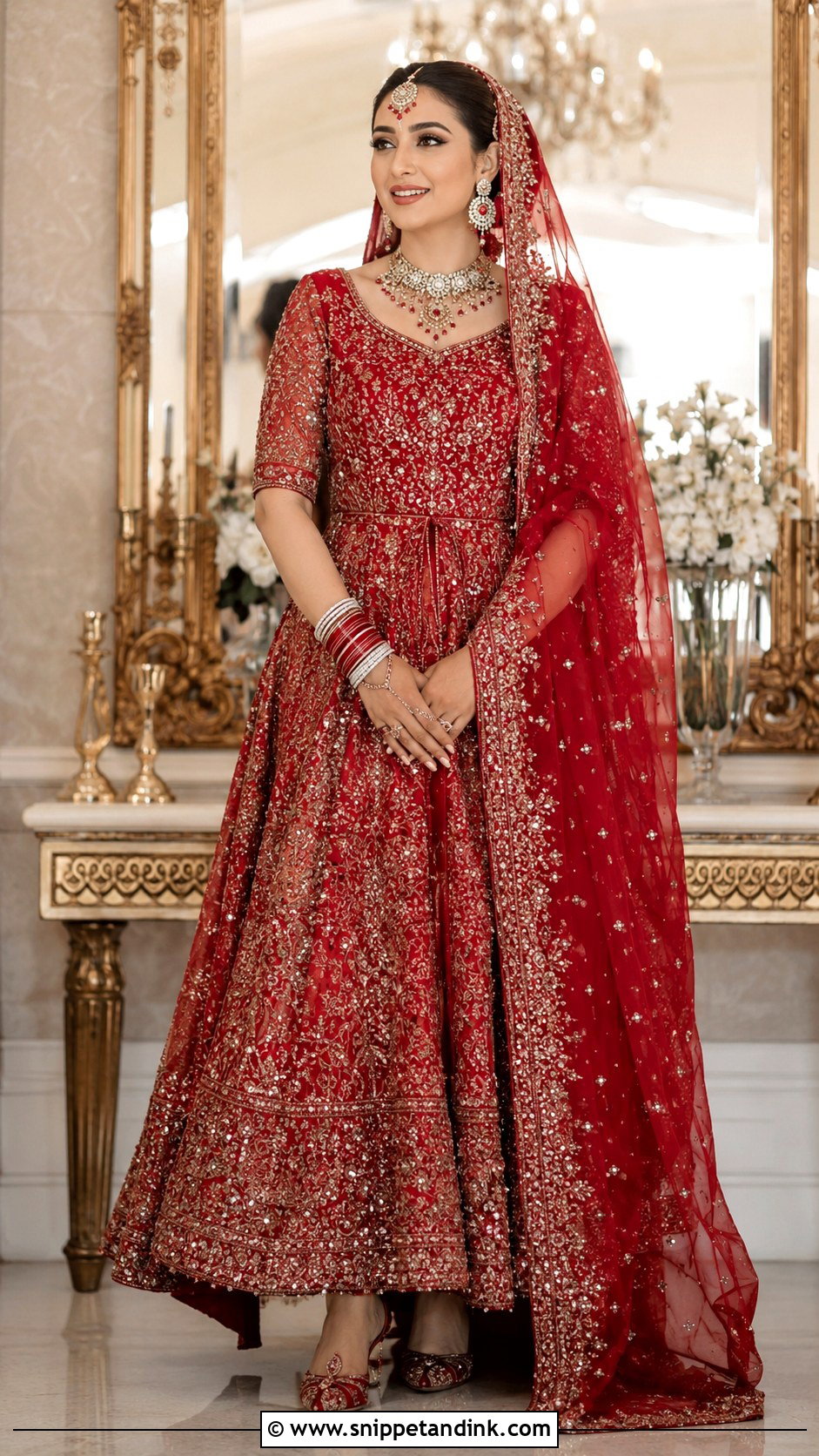
Keeping lehenga, blouse, dupatta and embroidery inside one red family gives a rich, unbroken finish. The trap is reds that almost match. A tomato-red dupatta beside a blue-red lehenga looks like a mistake in photos, so I compare the swatches together in daylight before anything is dyed. Sequins, stones, resham or zardozi all suit it. Wear one dupatta over the head and a second across the front if you’d like more coverage. Gold jewelry is traditional, though kundan or diamonds add brightness.
3. Iqra Aziz Nikkah White Bridal Dress Look
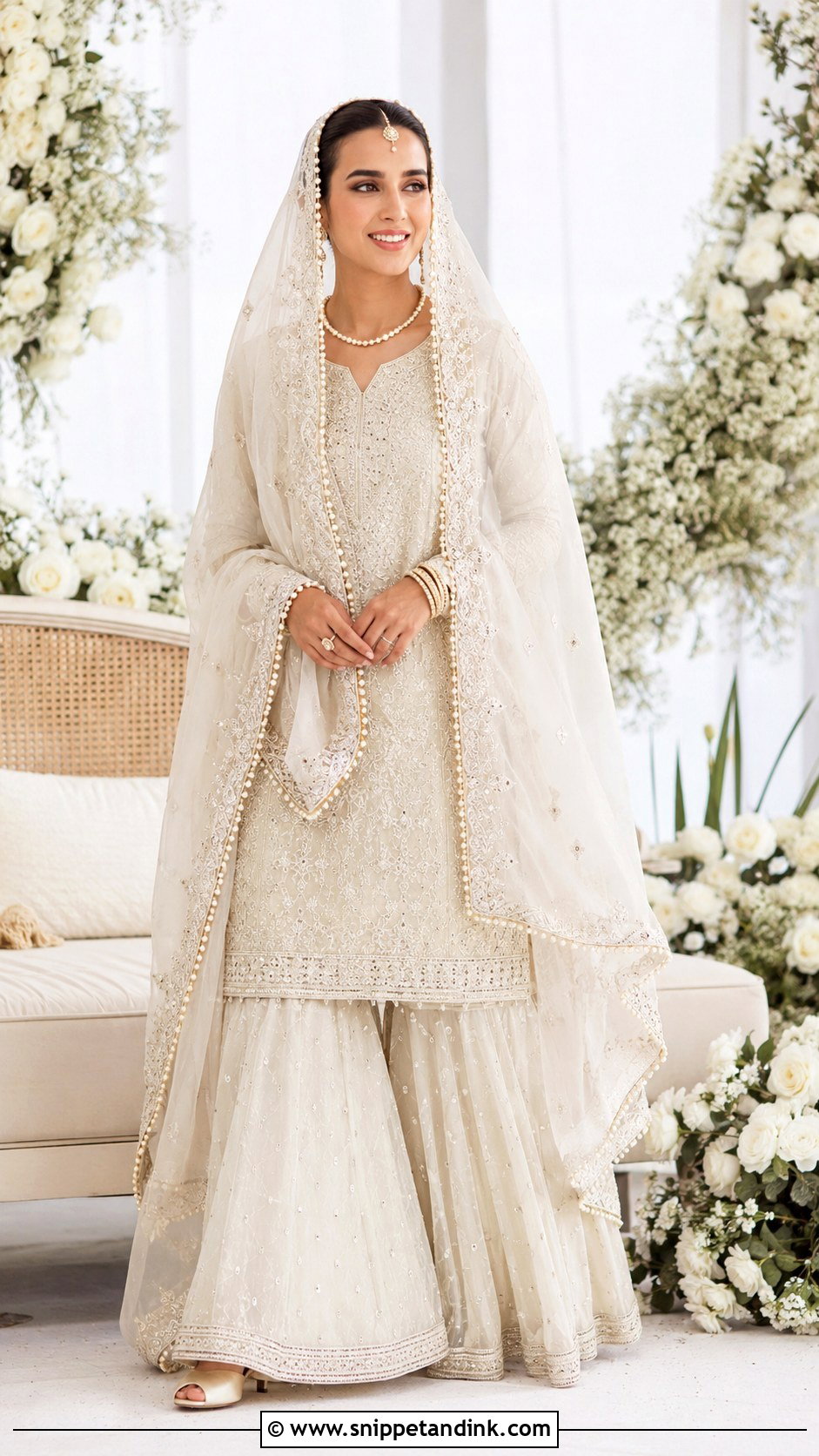
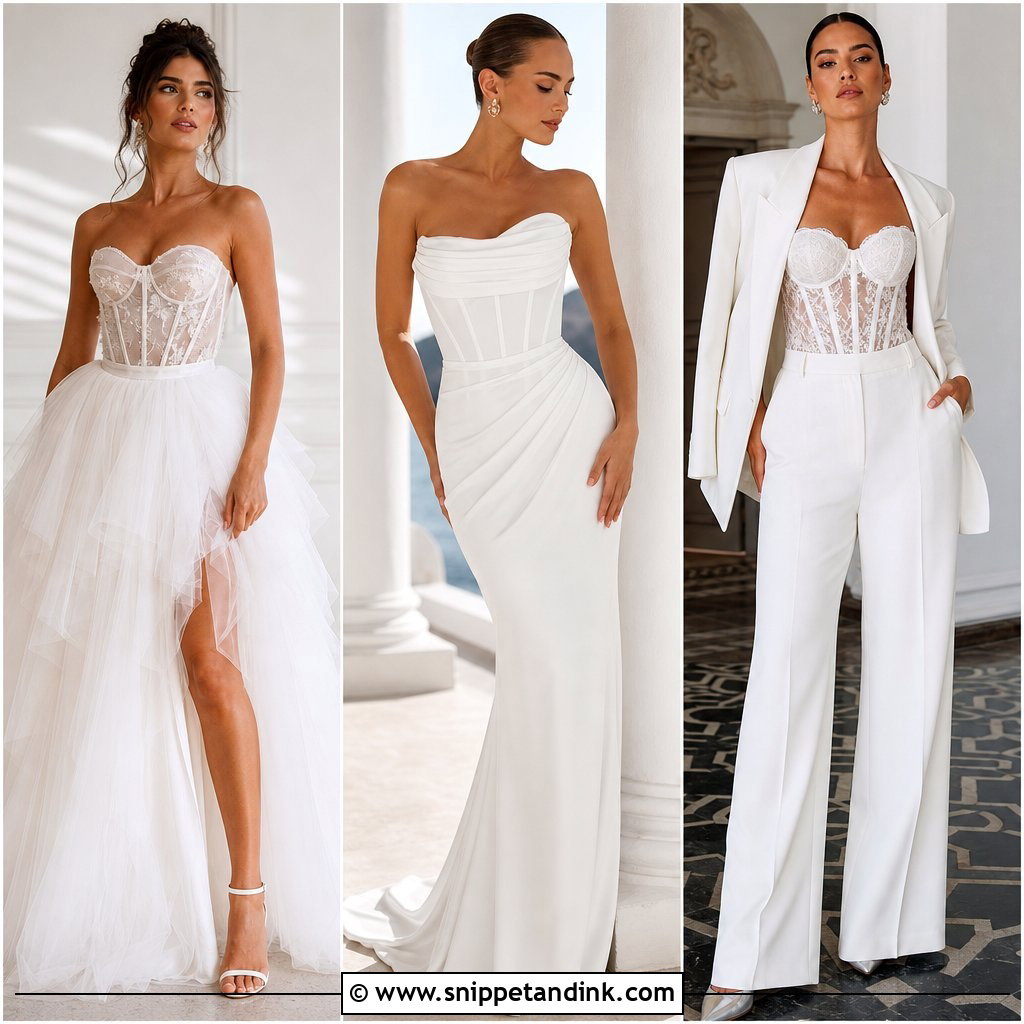
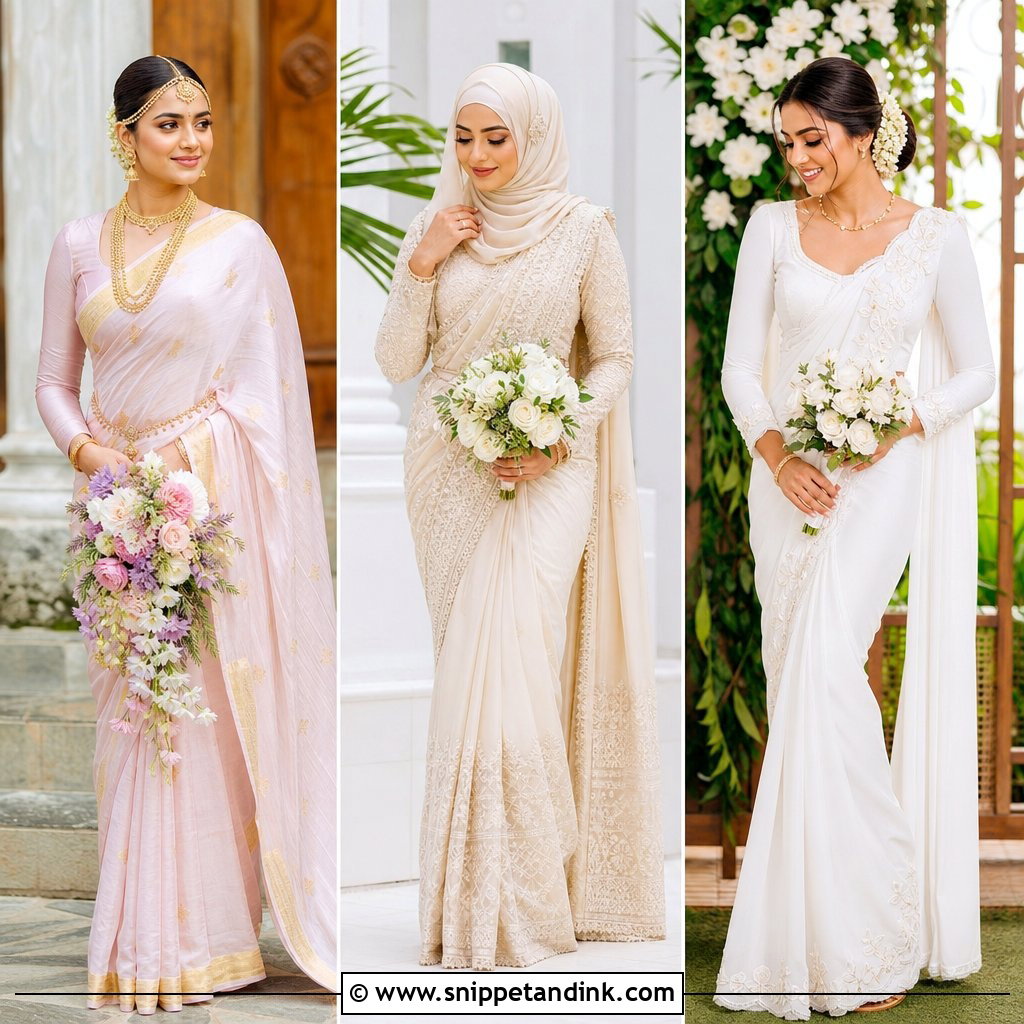
For a nikkah, white and ivory feel calm and fitting. An ivory pishwas, a white lehenga choli or a long embroidered shirt with a flowing sharara all work, kept light rather than heavy. Pearl work, silver thread, crystals or pale gold embroidery make it bridal without shouting. Pure white can wash out warmer skin tones in photos, which is why I usually steer brides toward ivory or off-white instead. A sheer dupatta over the head, pearl jewelry, a small tikka and fresh pink makeup suit a daytime ceremony.
4. Iqra Aziz Ivory Lehenga Bridal Look
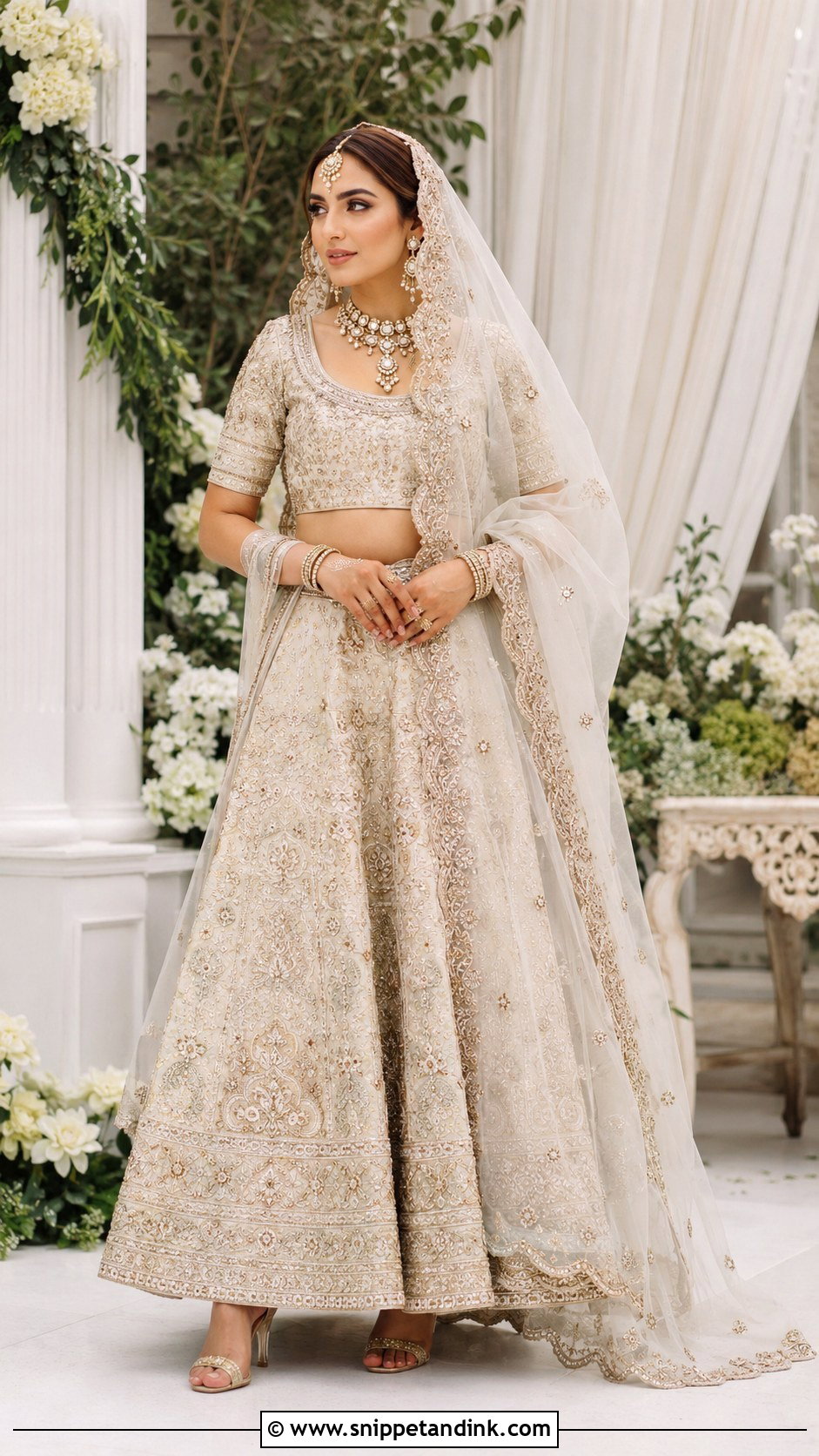
Ivory turns royal once you pair it with strong jewelry. An embroidered ivory lehenga, a short choli and a sheer dupatta with scalloped edges make the base; a kundan choker, layered necklace, jhumkas and a passa give it weight. Gold accents warm the ivory so it never looks stark. Ivory also shows every mark, so I tell brides to keep a stain pen and a helper close, especially at meals. Champagne heels or embroidered ivory khussas and a center-parted bun with fresh flowers suit a nikkah or reception.
5. Iqra Aziz Maroon Bridal Lehenga Look
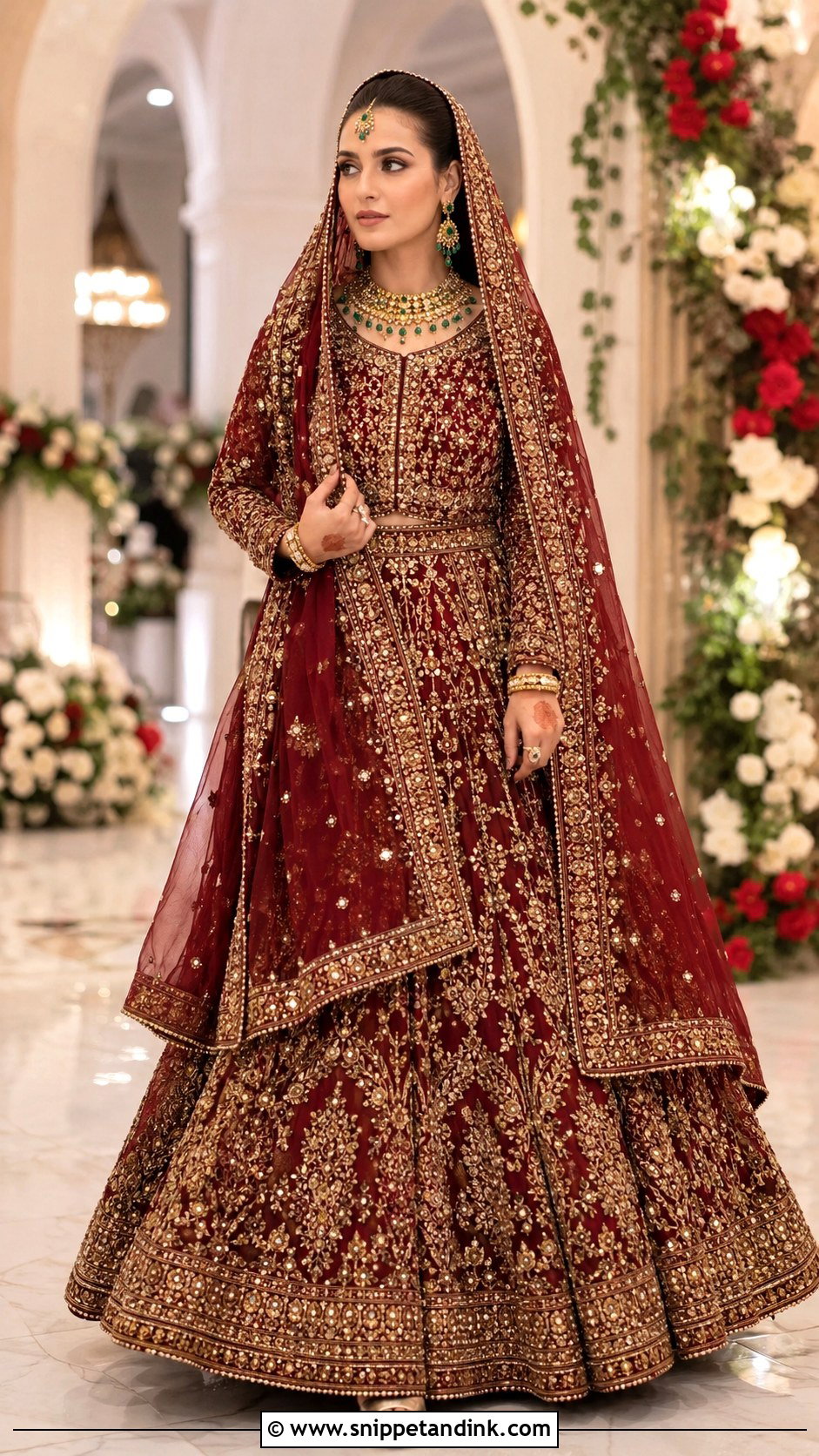
Maroon carries red’s tradition in a deeper, moodier tone, and it’s often kinder than bright red to brides who look flushed in photos. A maroon zardozi lehenga with a full-sleeve blouse and rich dupatta looks especially good in evening lights. Antique gold with green stones or emerald beads reads regal. Very dark maroon can drift toward brown under warm yellow lighting, so it’s worth asking your photographer how the venue is lit. A bold kohl eye and a muted berry lip keep the face balanced.
6. Iqra Aziz Mehndi Yellow Gharara Look
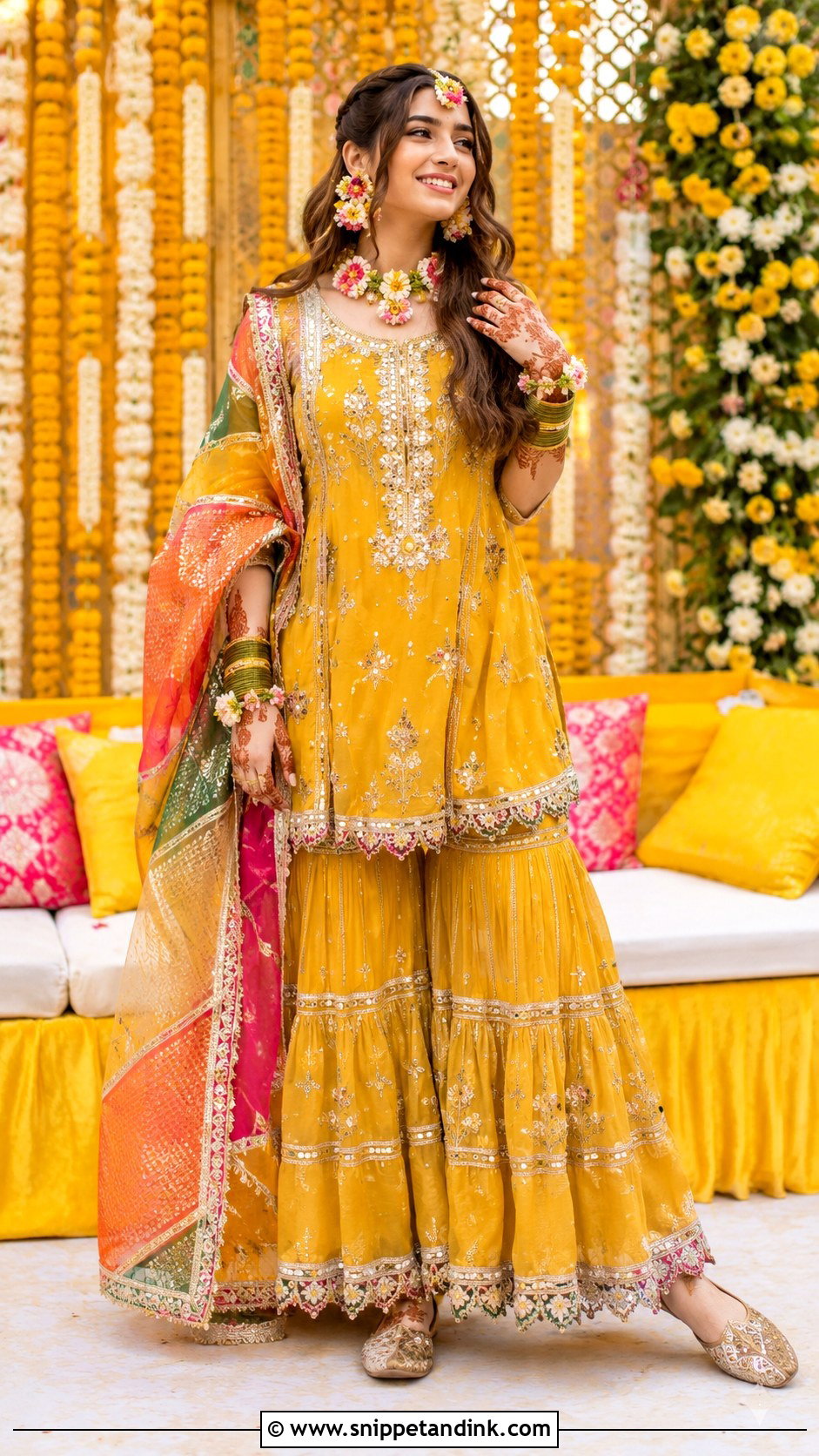
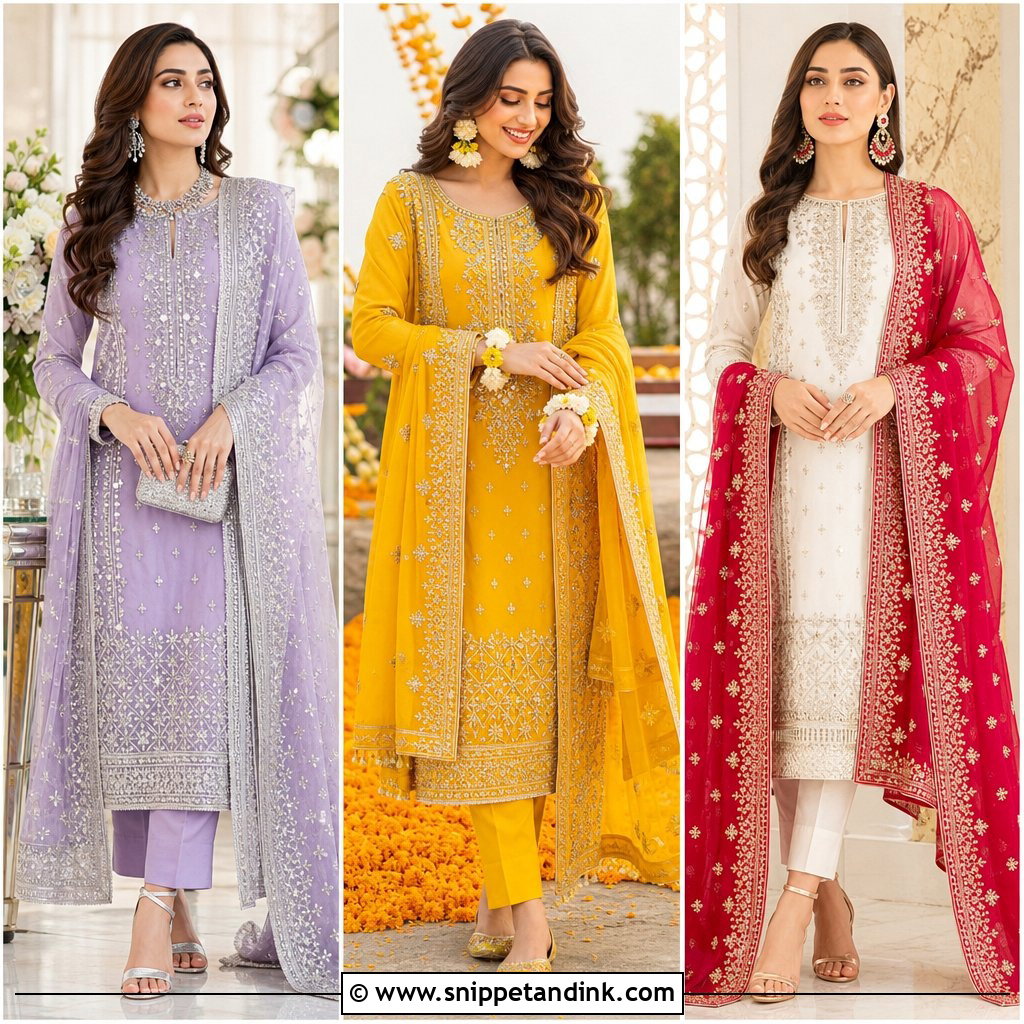
Mehndi is where lightness matters most, because you’ll be dancing, sitting on the floor and having henna applied. A mustard or sunny yellow short shirt with a flared gharara and a colorful gota dupatta sets that bright mood, kept lively rather than heavy, as her fresher looks were. Floral jewelry and khussas instead of heels let you move freely. One practical warning: wet henna marks pale fabric quickly, so keep sleeves short or loose enough to push up while your hands dry.
7. Iqra Aziz Mehndi Green Lehenga Look
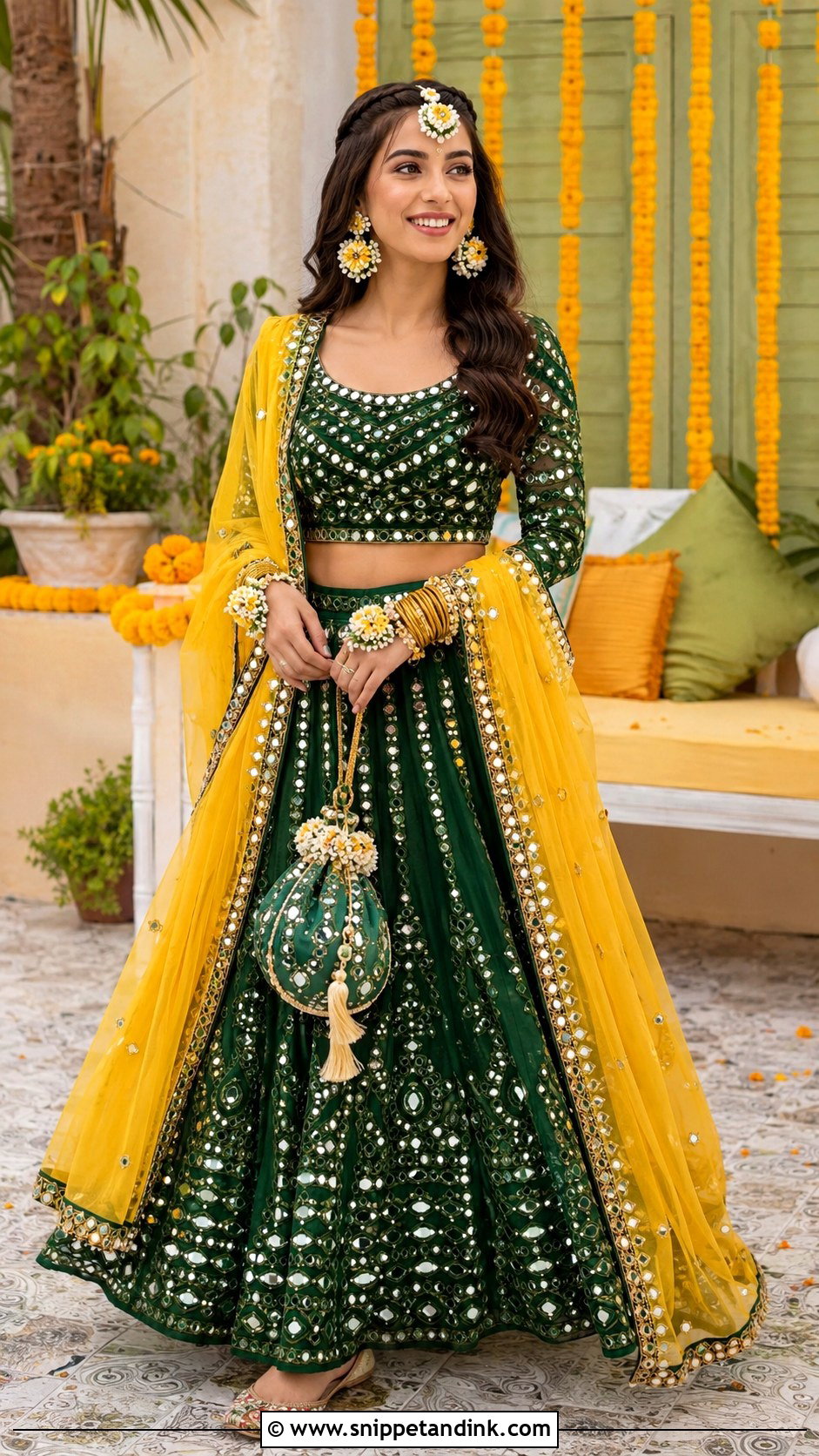
Green suits mehndi because it’s festive without copying the red bridal outfit. Bottle or parrot green with gota, mirror work or colorful thread embroidery pairs well with a contrasting yellow, orange or pink dupatta. How formal the event is decides between floral jewelry and light kundan. Mirror work adds real weight to a lehenga, so lift the finished skirt before committing if you plan to dance a lot. Bronze eyes and a peach lip suit the warmth of the color.
8. Iqra Aziz Orange Mehndi Sharara Look
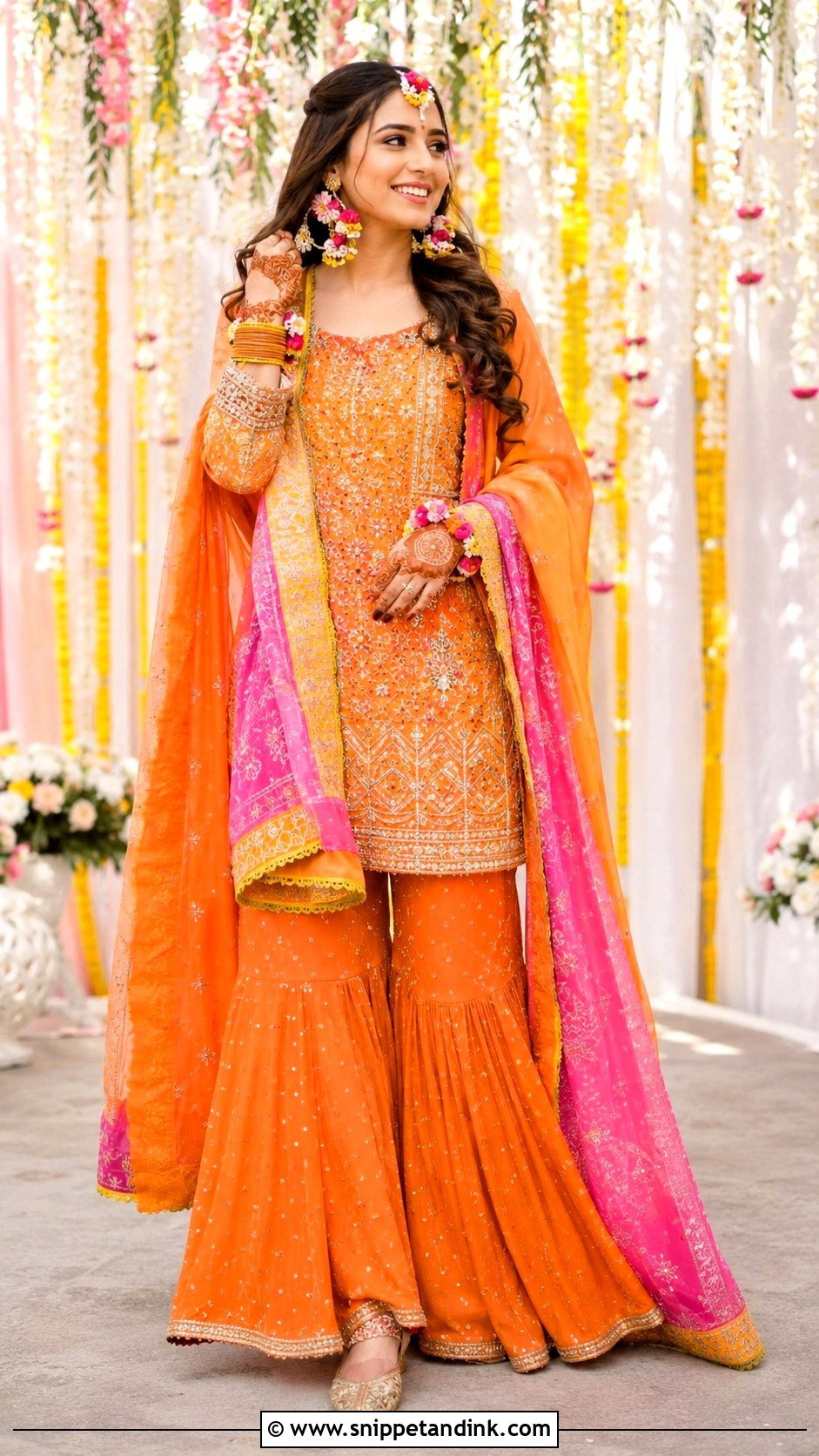
Orange brings instant energy. Pick an embroidered orange short kameez with a flared sharara and a contrasting pink, yellow or green dupatta. Gota, mirror accents and tassels make it festive while keeping it light, though tassels catch on bangles and chair backs, so keep them short on the dupatta edge you’ll handle most. A side braid or half-up style adds softness. Gold eyeshadow and a soft coral lip suit the warmth, with fresh floral jewelry and a maang tikka.
9. Iqra Aziz Walima Pastel Bridal Look
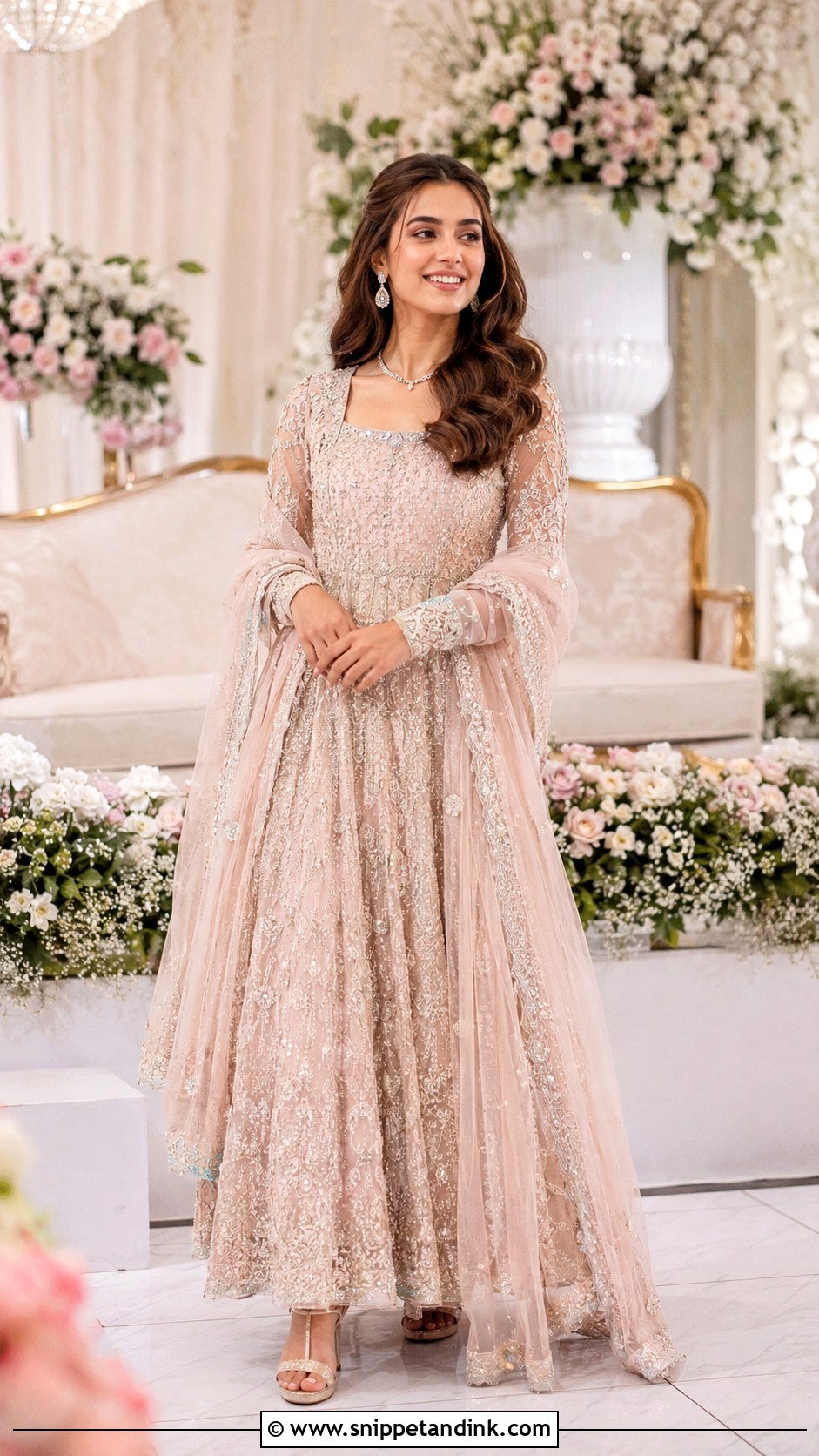
Pastel walima outfits mark a clear change of mood after the baraat, which is half their appeal. Mint, blush, powder blue or champagne in a gown-style dress with delicate embroidery works, as does a long shirt with lehenga or an embellished maxi with dupatta. Diamonds, pearls or light kundan suit pastels better than heavy yellow gold, which can overpower them. Pastels also take on color from stage lighting and decor, so hold your fabric next to the walima decor colors if you can.
10. Iqra Aziz Mint Walima Dress Look
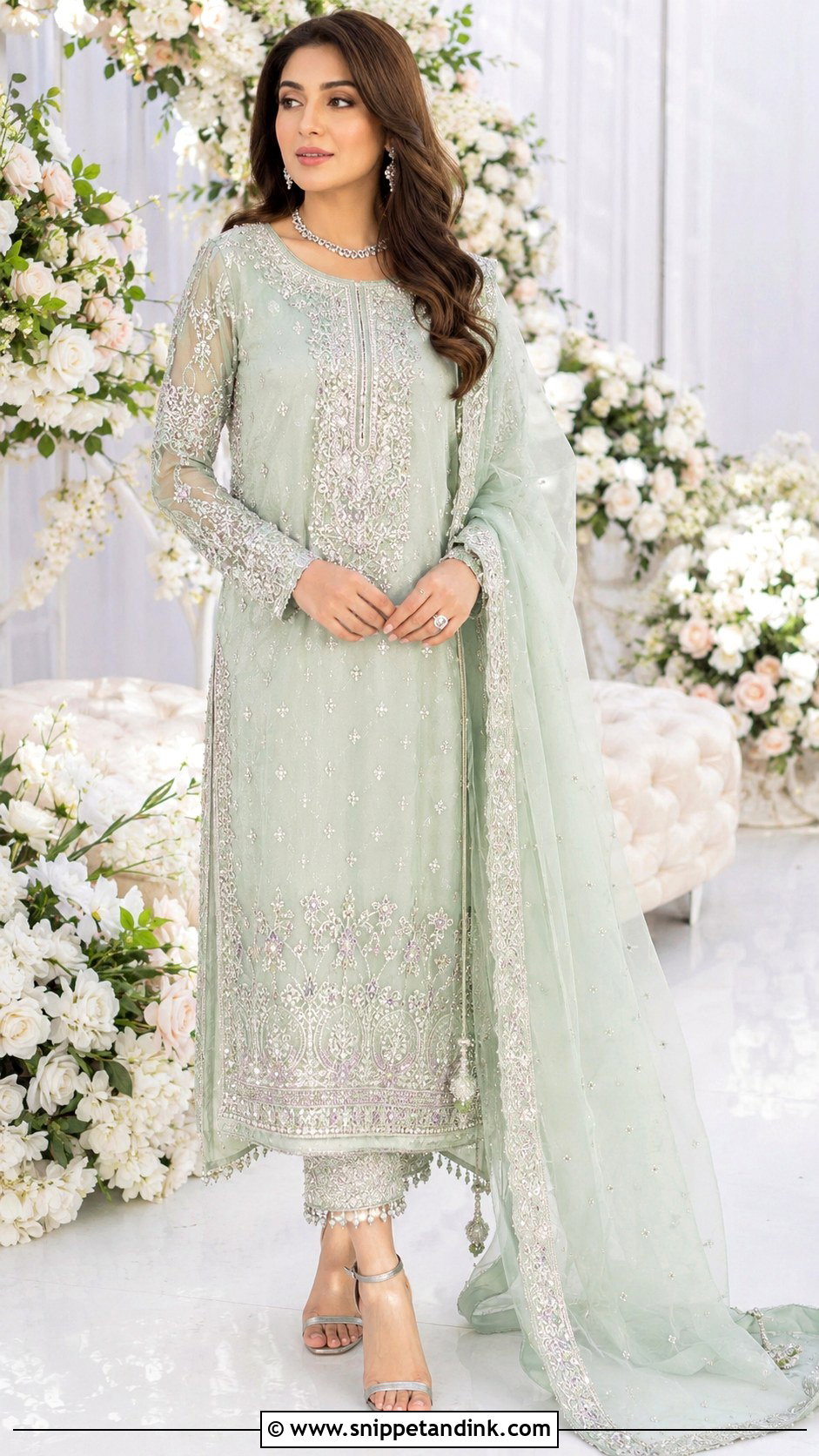
Mint looks calm and cool, and it pairs naturally with silver, pearl and crystal work rather than gold. Choose a long dress, pishwas or lehenga in mint with a sheer dupatta and a fine border. Diamond-style earrings, a soft necklace and silver heels keep everything in one cool family. Mint can make some warm skin tones look sallow, so try the actual fabric against your face in daylight before ordering. A half-up hairstyle with champagne eyeshadow and a pale pink lip suits it.
11. Iqra Aziz Champagne Bridal Gown Look
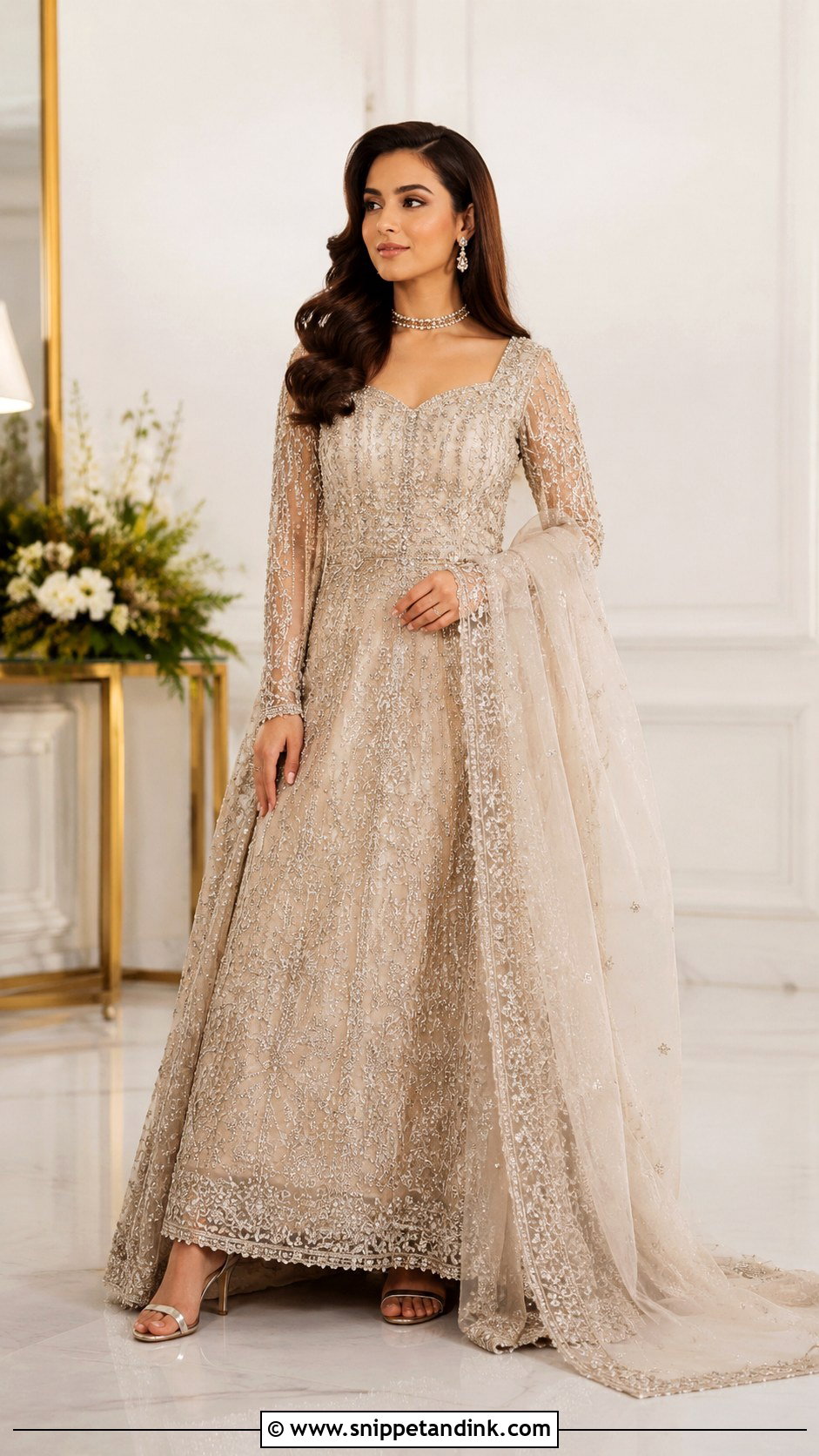
Champagne sits between gold and ivory, so it reads luxurious without the boldness of either. A floor-length gown, maxi or pishwas with delicate beadwork and a flowing dupatta suits a walima or engagement. Pearl earrings, a dainty choker and metallic heels keep the styling light. For a more traditional finish, drape the dupatta over your head just for the portraits. Champagne can blend into beige backdrops, so check what the stage decor will look like before you settle on it.
12. Iqra Aziz Gold Bridal Lehenga Look
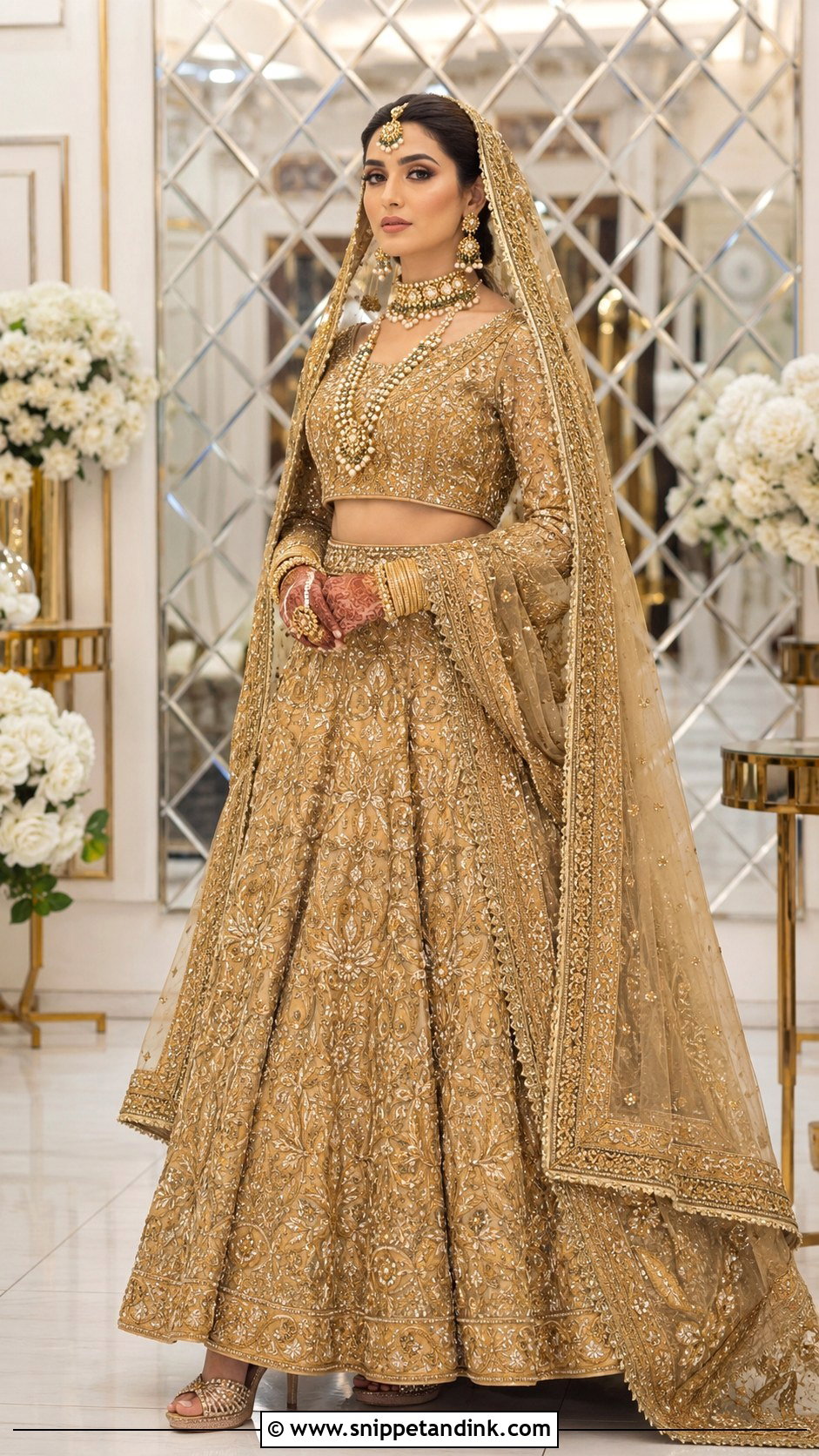
Gold head to toe is grand, but it can look flat in photos if everything is one texture. Mix matte embroidery, sequins, beads and zari so light breaks up across the lehenga. A deep red lip or green stones add contrast; neutral makeup keeps it softer. Real zari work is heavy, so try the lehenga before it’s finished and stand in it for a while. With kundan and gold khussas, it’s the regal alternative if red isn’t you.
13. Iqra Aziz Pink Bridal Lehenga Look
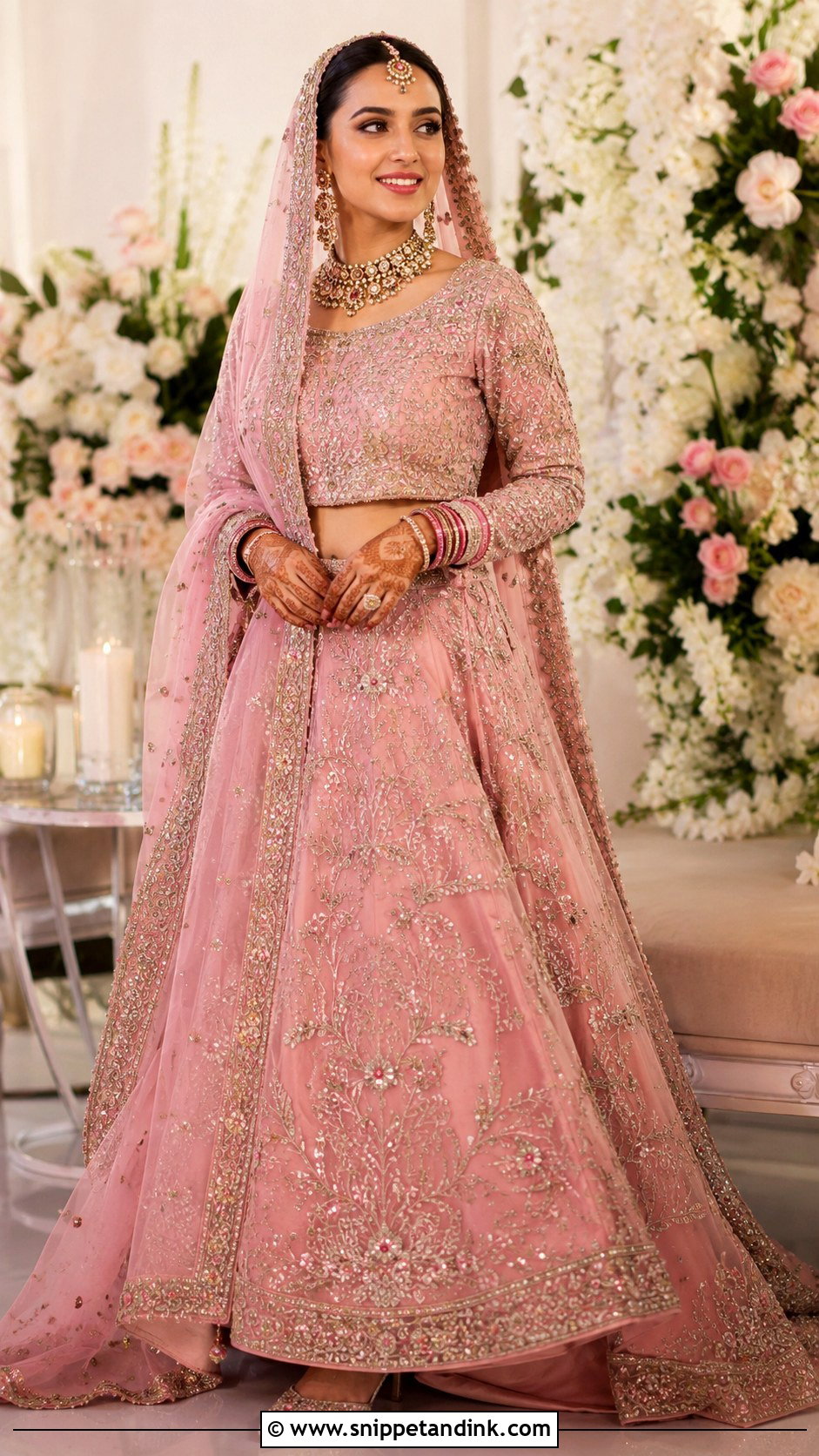
A pink bridal lehenga softens traditional red without losing color. Rose, blush and rani pink each fit different events: blush for nikkah or walima, deeper rani for mehndi or baraat. Gold, silver and pearl embroidery all suit pink, though silver reads cooler and gold warmer, so choose by your skin’s undertone. Kundan, a tikka and embroidered heels keep it bridal, and winged liner with rosy cheeks suits the color. Drape the dupatta over the head for a traditional touch.
14. Iqra Aziz Bridal Pishwas Look
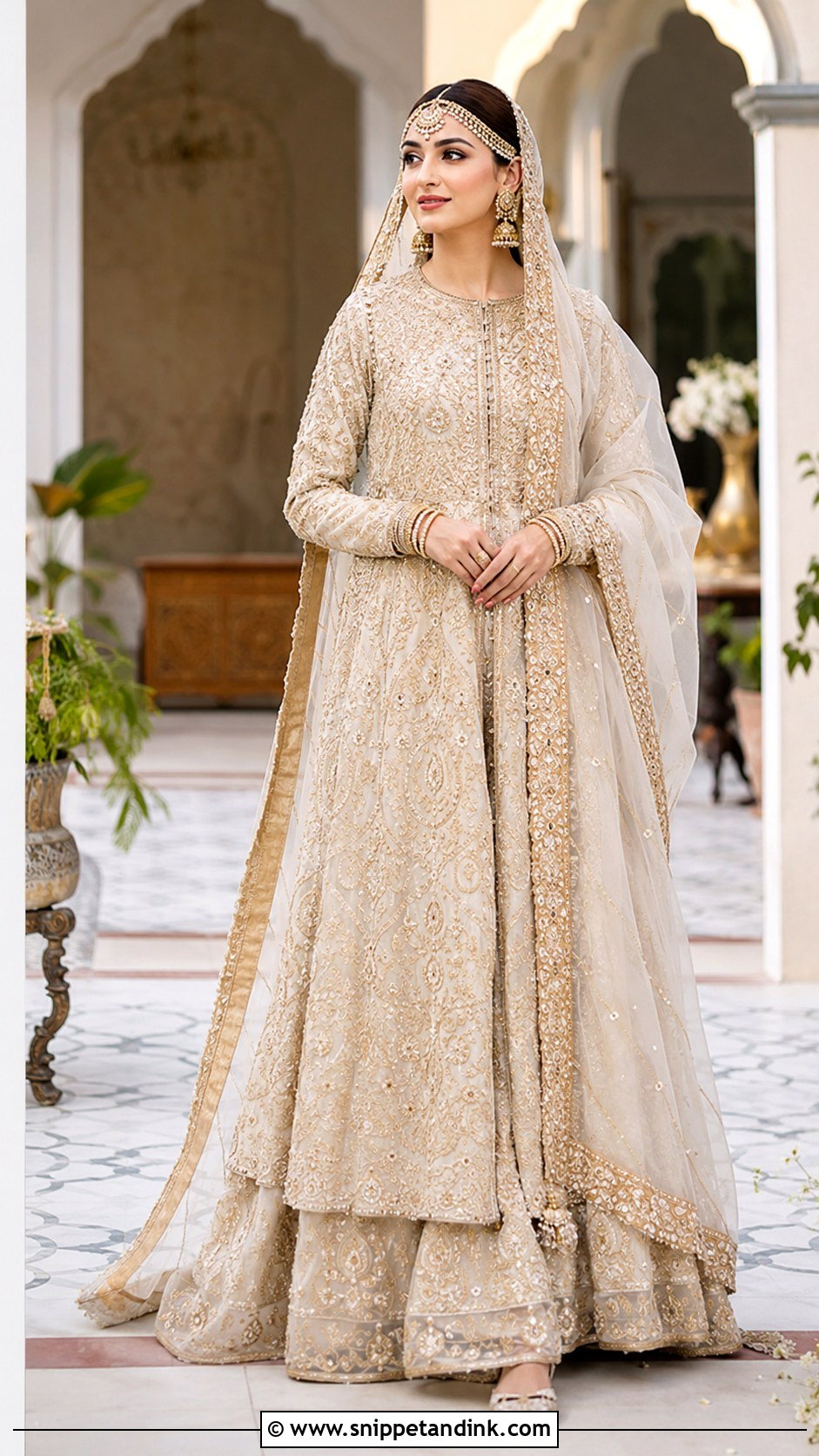
A bridal pishwas flows from a fitted bodice into a long flared skirt, and it suits many body types because the flare starts high. Embroidery on the bodice and hem, with a lehenga or churidar underneath, makes it bridal. The bodice fit decides everything: if it’s loose under the bust, the flare starts in the wrong place and the whole outfit looks shapeless. A matha patti, long earrings and pointed khussas complete it in ivory, red, gold, mint or blush. It’s comfortable enough for a long nikkah or walima.
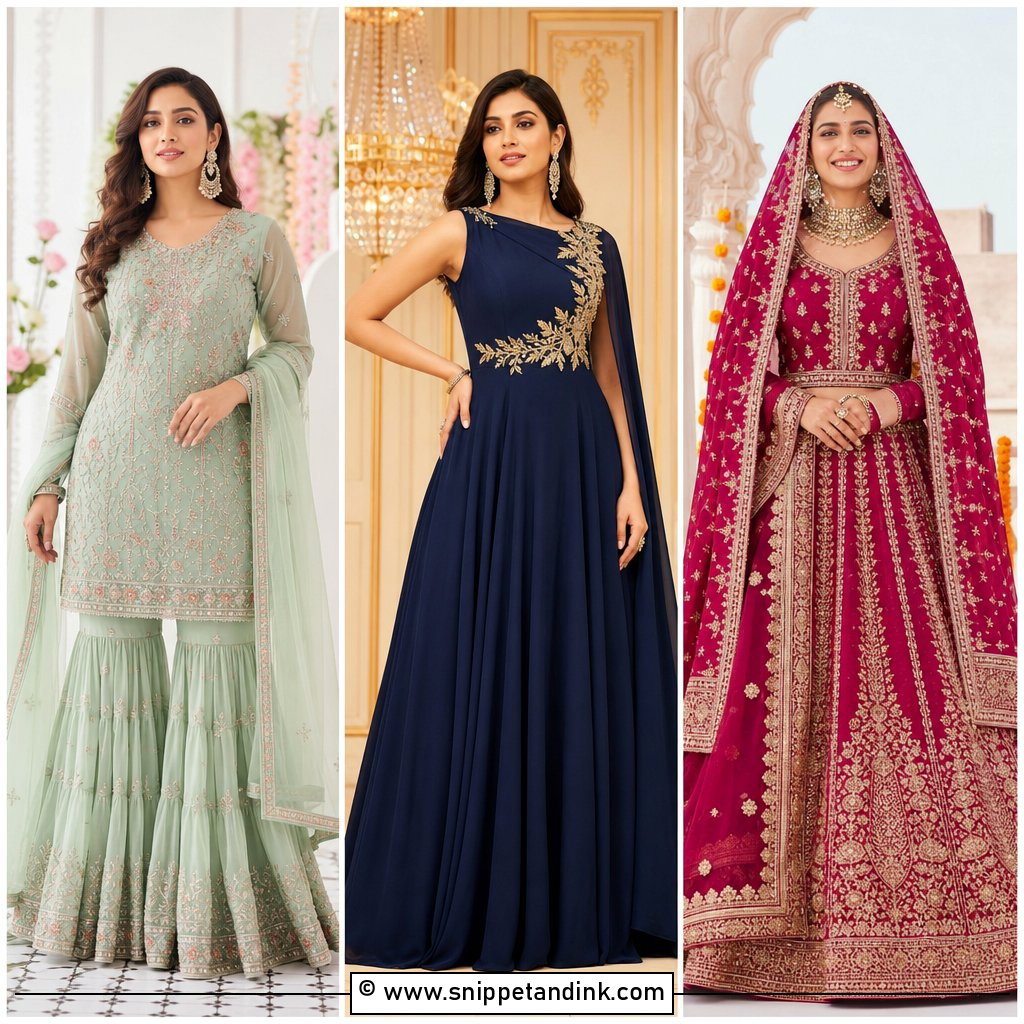

15. Iqra Aziz Bridal Sharara Look
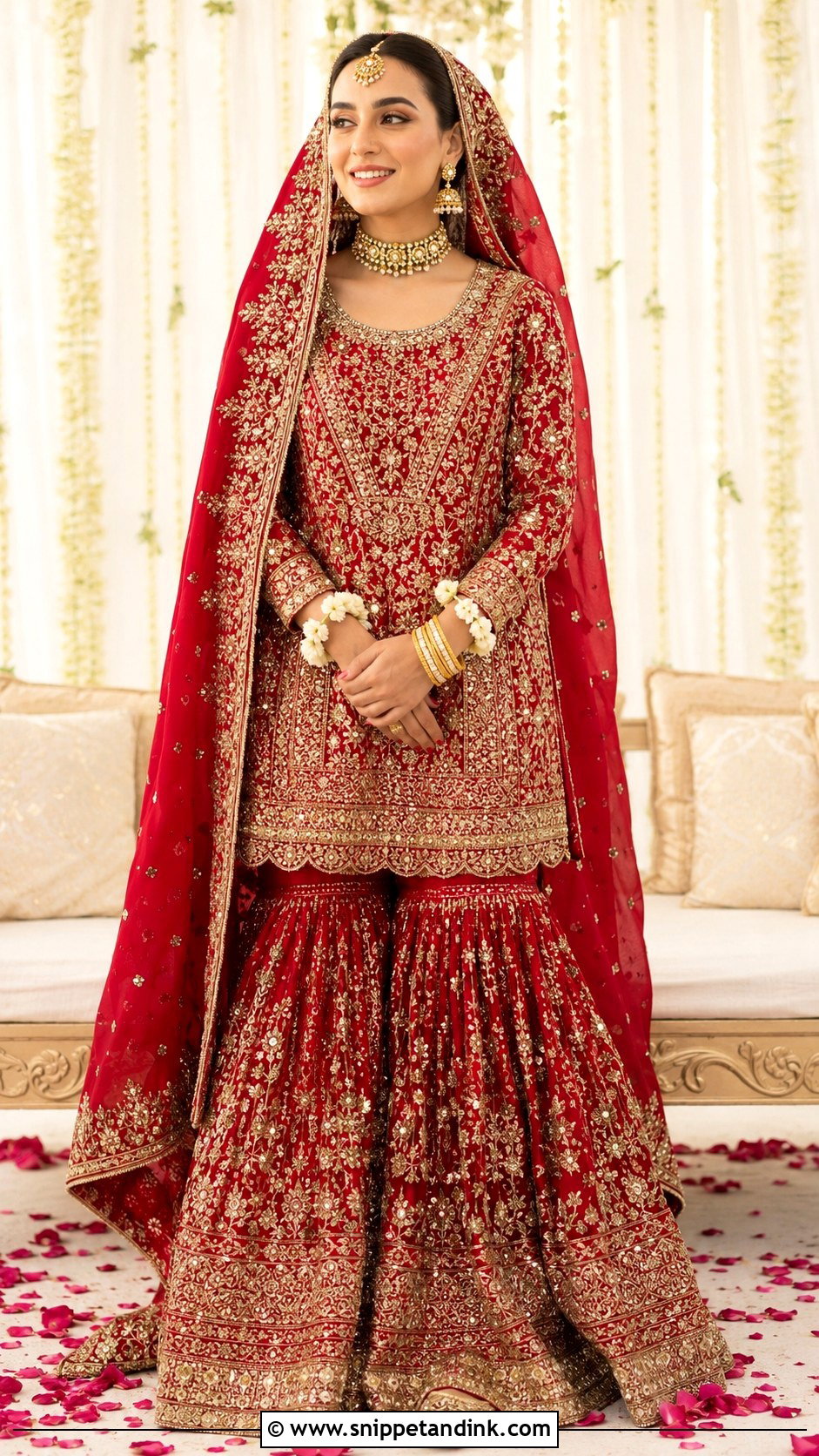
Volume plus the comfort of a divided leg is what a sharara offers. A short embroidered kameez with a wide flared sharara and a face-framing dupatta looks festive, and heavy borders at the hem show up well in full-length photos. Those borders add weight at the ankle, so walk around in it at the fitting and check it doesn’t drag. Red, maroon, ivory, green and gold all work. A center-parted bun, a choker and embellished khussas suit nikkah, mehndi or family events.
16. Iqra Aziz Bridal Gharara Look
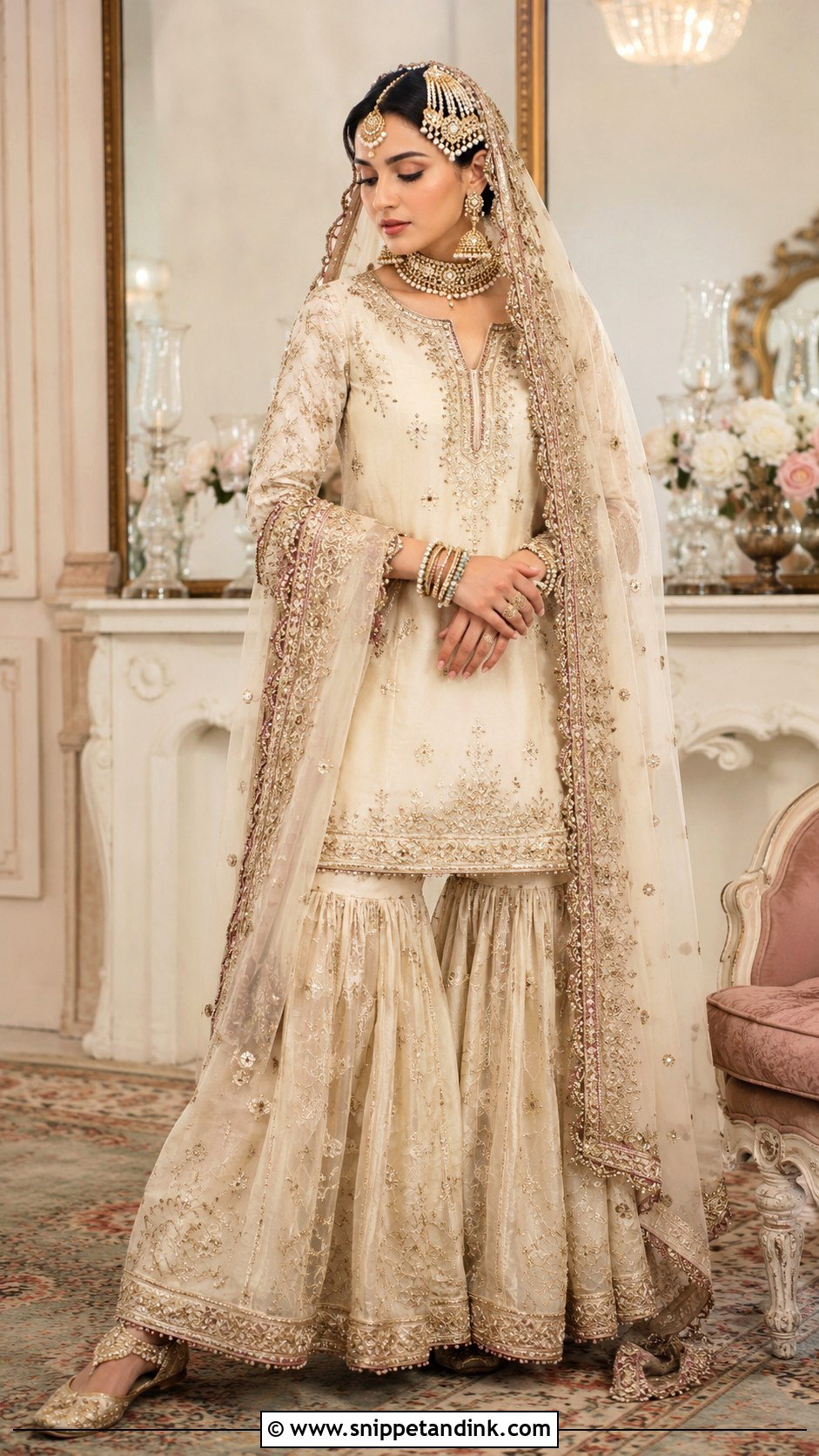
The gharara’s shape depends on the joint where the gathered flare begins, and it needs to sit right at the knee to look correct, so hem it with your shoes on. A fitted short shirt above and a dupatta with gota or zardozi borders complete the classic outfit, which has a lovely vintage South Asian feel. Ivory, red, yellow, green and soft pink all suit it. A passa, tikka, choker and jhumkas are traditional with this silhouette; keep them noticeable but not crowded. Khussas or low heels are kinder for a long ceremony.
17. Iqra Aziz Bridal Maxi Dress Look
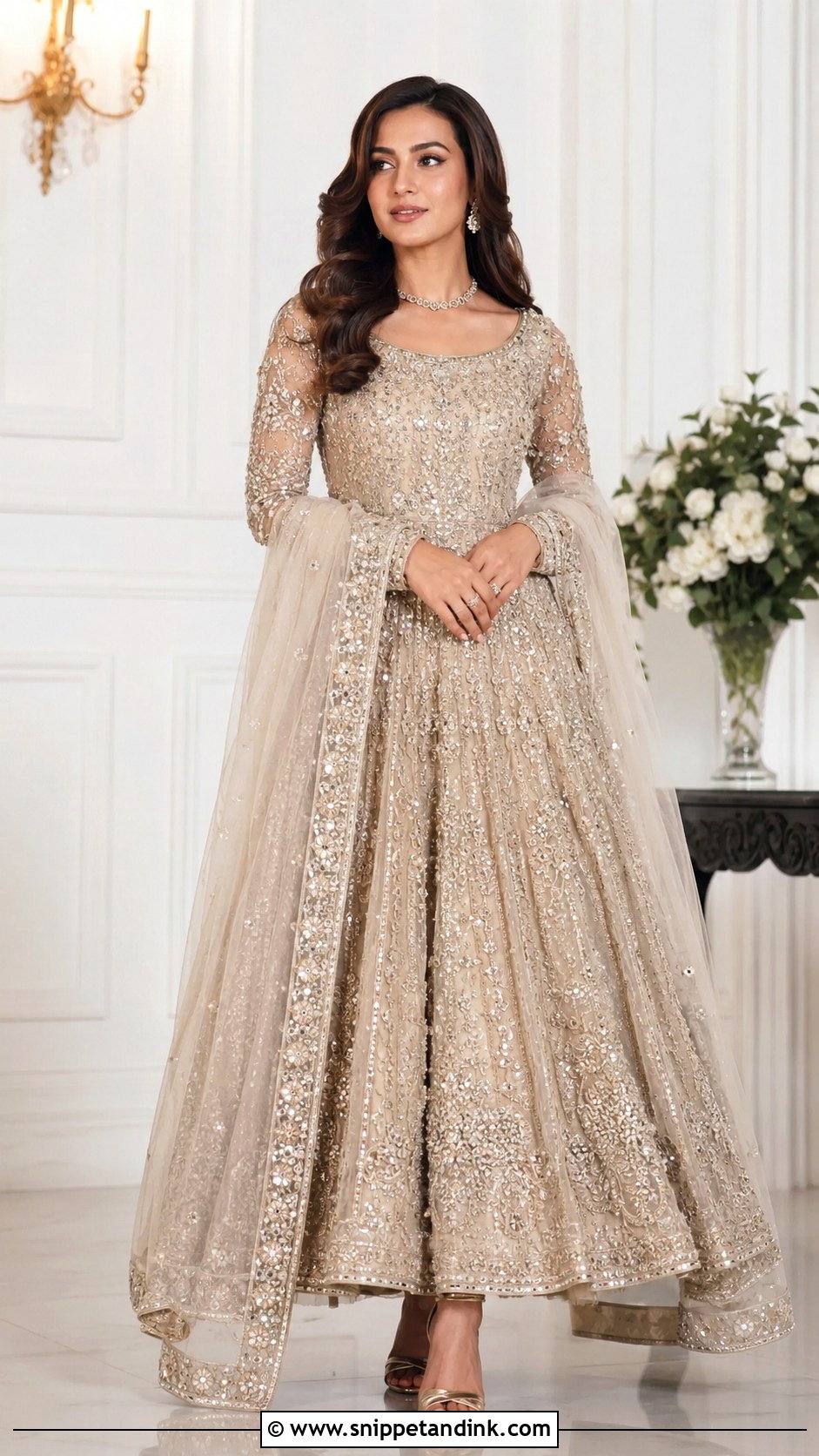
A heavily embellished maxi with a fitted bodice and flared skirt is far easier to carry than a big lehenga, which is why I suggest it for long receptions and shoots. Ivory, champagne, mint, pink or gold suit a walima, while red and maroon read traditional. A dupatta keeps it wedding-appropriate. With heavy embroidery, choose delicate jewelry; with a plainer maxi, go bolder. Soft curls and elegant heels finish it.
18. Iqra Aziz Bridal Dupatta Over Head Look
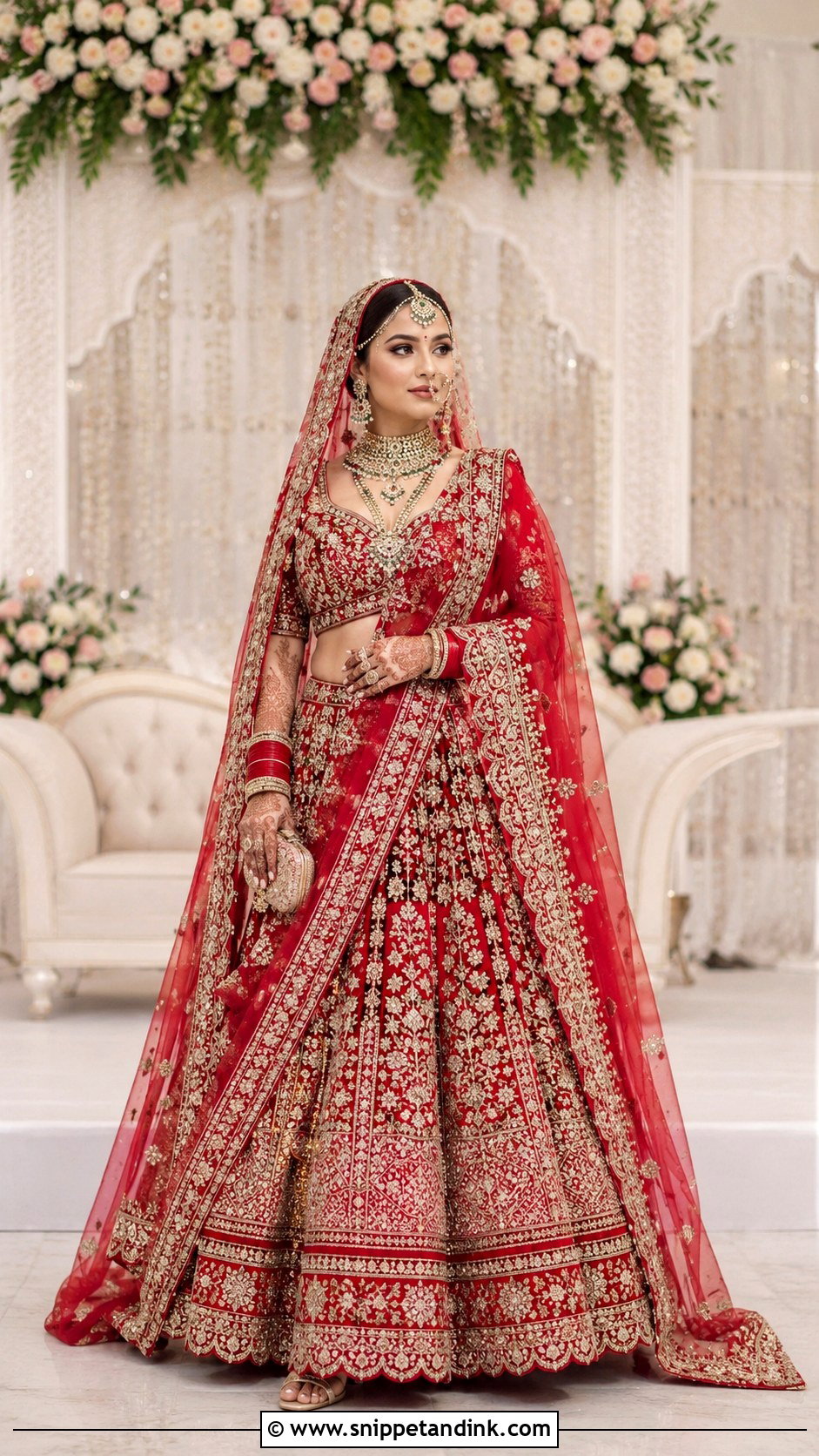
Putting the dupatta over the head makes almost any outfit feel traditional, and pinning it well is a skill. I anchor it at the crown with a few U-pins into a small bun or padding, so the weight rests on the hair rather than dragging at the forehead. It should frame the face without covering the jhumkas. If the main dupatta is heavy, drape a second, lighter one across the shoulder instead of adding more pins. A strong border with small scattered motifs suits red, ivory, maroon and gold for nikkah, baraat and family portraits.
19. Iqra Aziz Bridal Jewelry Look
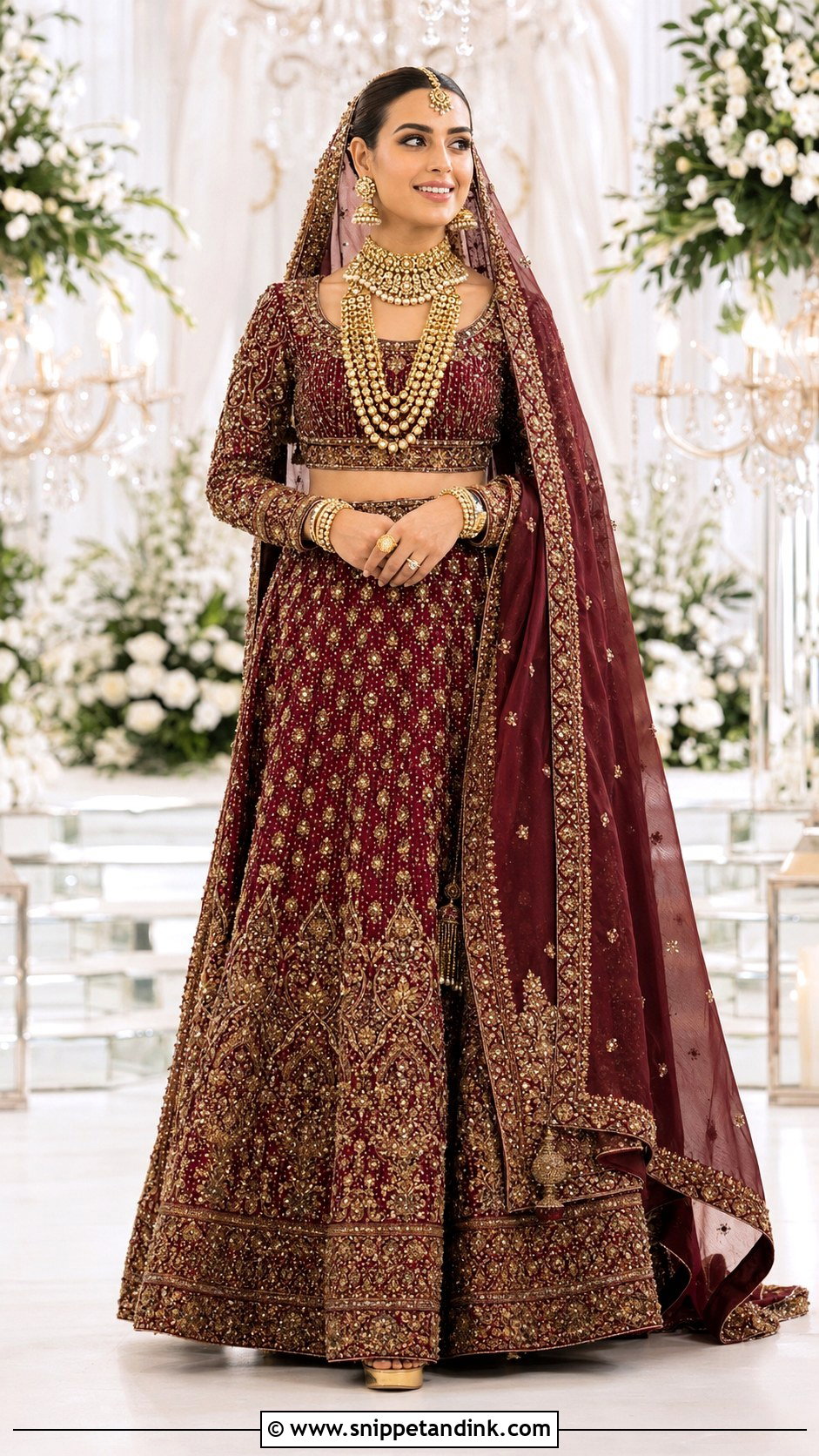
Build the jewelry around the neckline and the dupatta, not the other way round. A choker with a long necklace suits deep bridal colors and a high or round neck, while pearls and diamonds suit pastel walima outfits. Add a tikka, jhumkas, bangles and rings, but watch the face: if you wear a large matha patti and a passa, choose smaller earrings. Match shoes and clutch to the metal tone. Clean makeup lets the jewelry carry the look.

20. Iqra Aziz Bridal Bun With Flowers Look
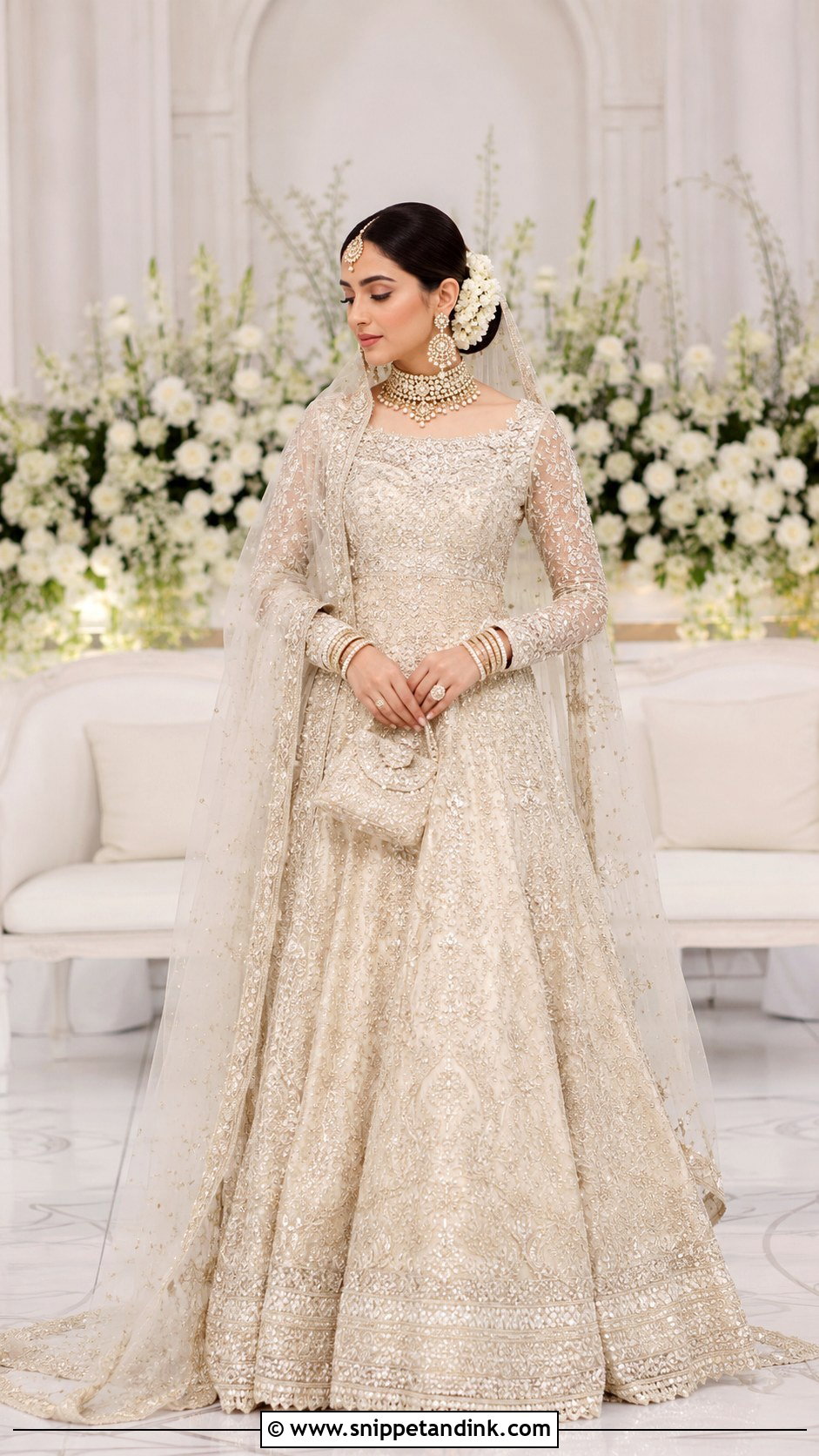
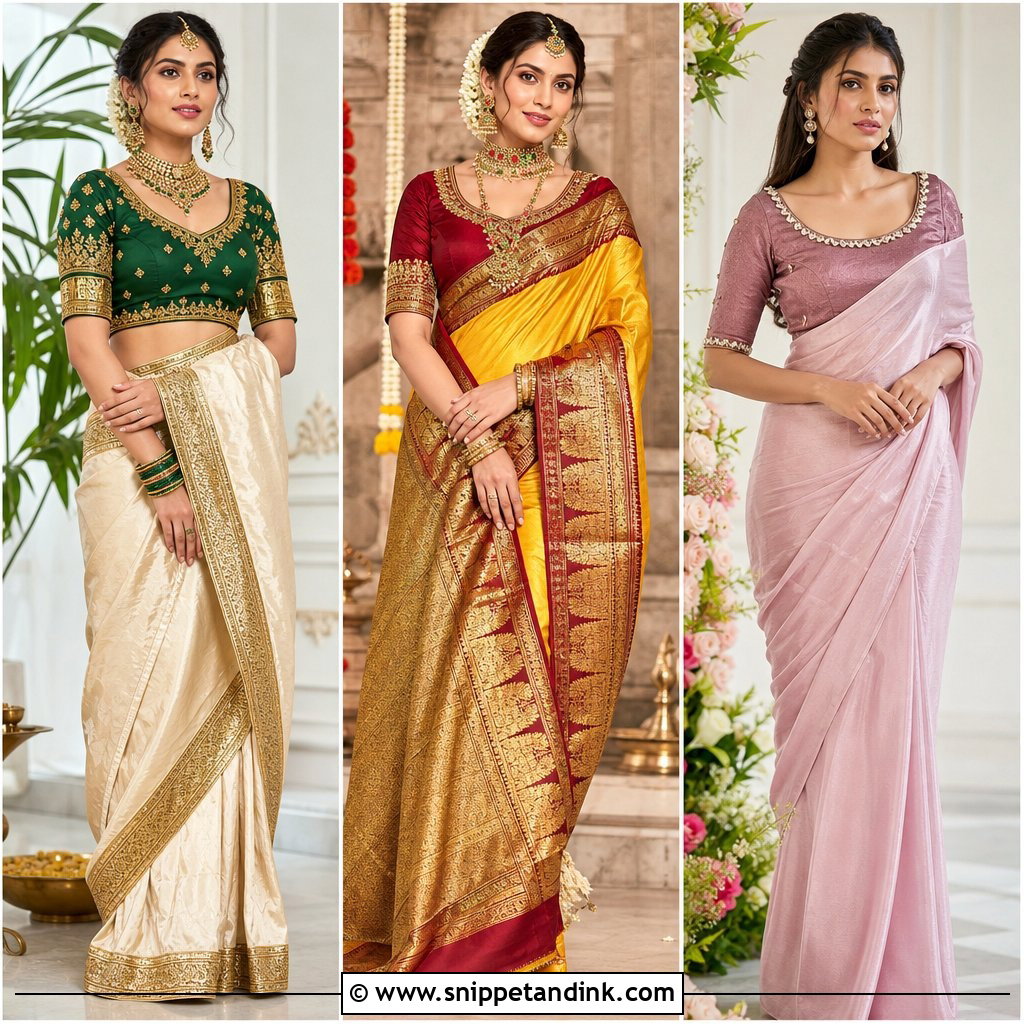
Fresh flowers on a bun soften a heavy outfit. White flowers stand out against red and maroon, while color-matched blooms look more natural with ivory, pastel, yellow or mint. Flowers wilt in heat and under hot lights, so ask your hairstylist to add them as late as possible and to choose sturdy blooms like jasmine buds or small roses over delicate petals. A tikka and choker keep the front view bridal. This Iqra Aziz inspired bridal look works for mehndi, nikkah, walima and outdoor portraits.
21. Iqra Aziz Soft Glam Bridal Makeup Look
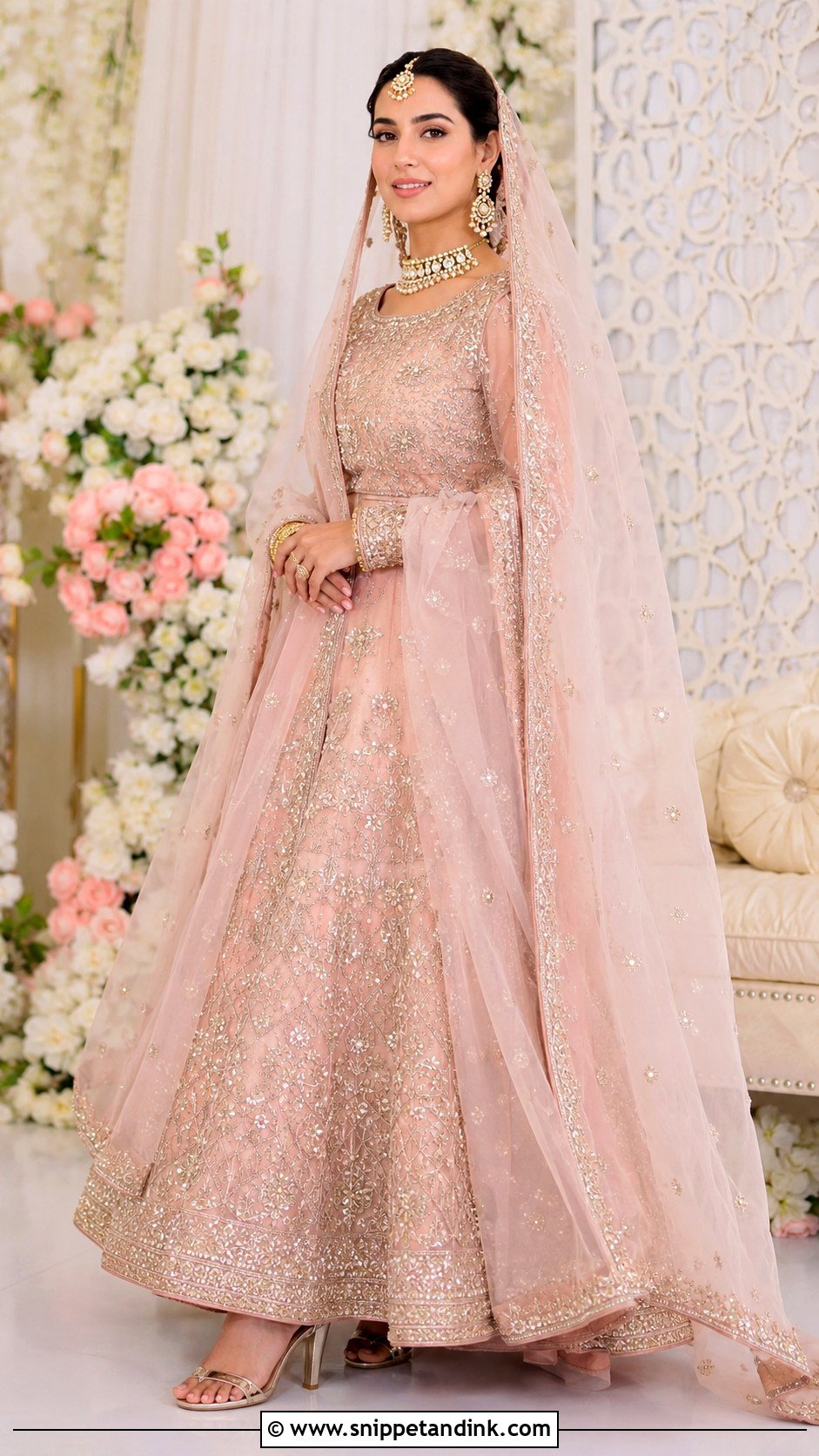
Soft glam means glowing skin, softly defined eyes, fluttery lashes, pink or peach blush and a natural lip. The thing to watch is balance. Soft makeup under a heavy red lehenga and full gold jewelry can look washed out from a distance, so it works best with ivory, pastel walima dresses and lighter pishwas. A dupatta draped gently over the head frames the face in photos. Keep shoes in the same tone as the embroidery.
22. Iqra Aziz Heavy Bridal Makeup Look
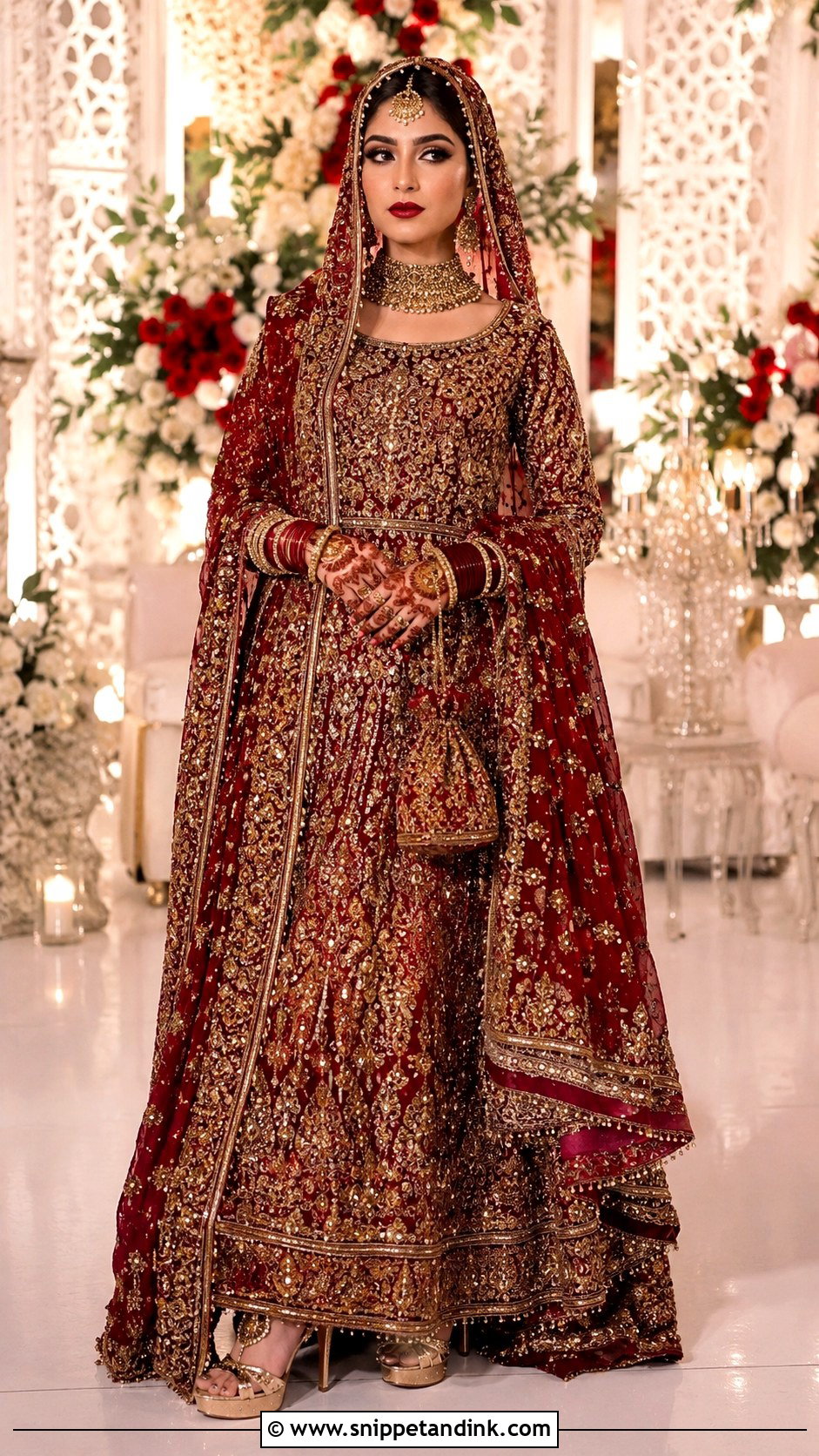
Heavy bridal makeup needs a grand outfit to hold it up, such as a red lehenga, maroon sharara or gold pishwas. Defined brows, kohl-lined eyes, lashes, warm contour, highlight and a deeper lip all go on, which is why the outfit needs rich embroidery and full traditional jewelry to match. Long-wear products matter here, because a baraat can run for many hours under hot lights. A neat bun or polished waves keeps the whole look camera-ready.
23. Iqra Aziz Bridal Photoshoot Look
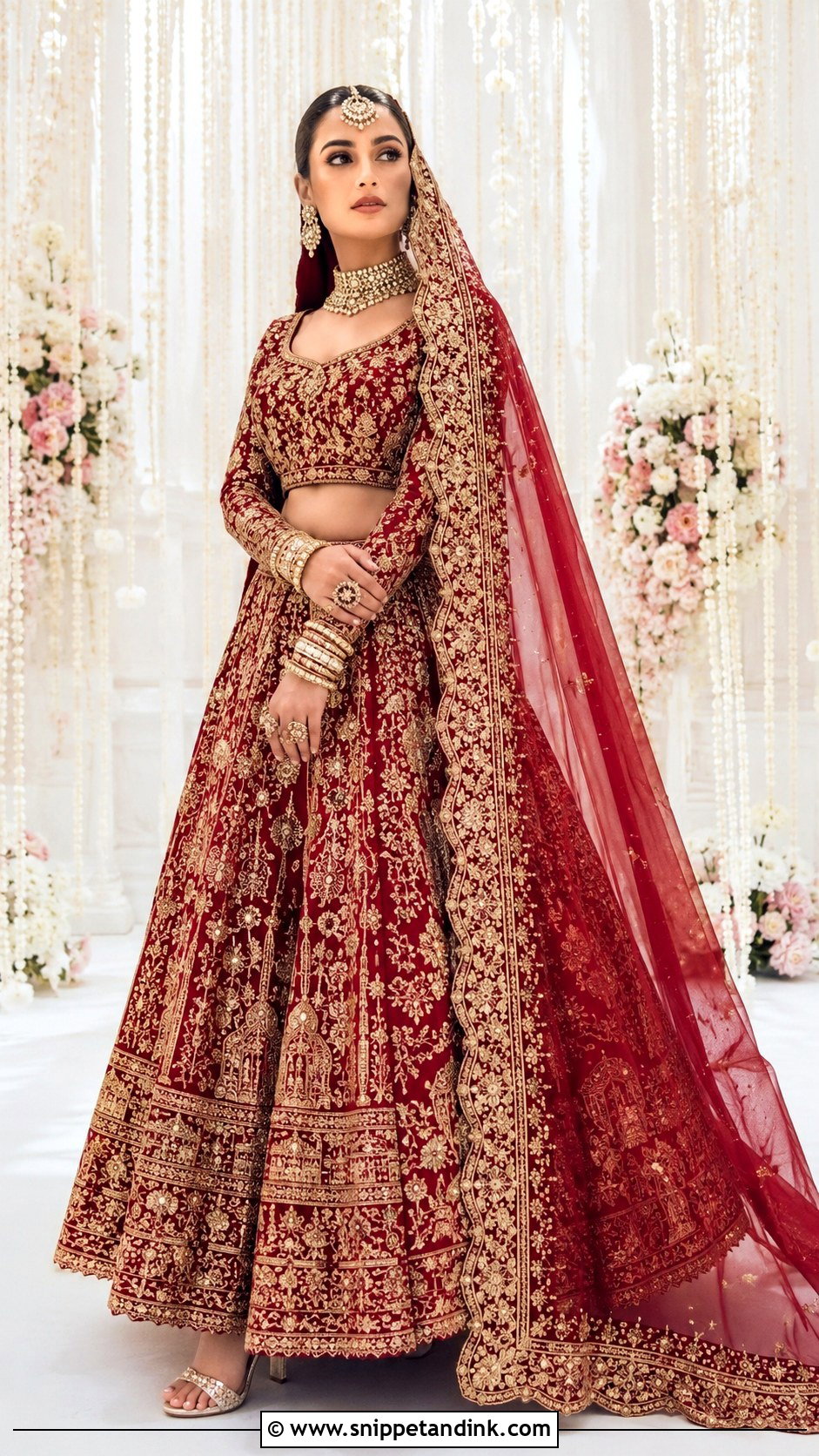
For a shoot, comfort counts more than people think. You’ll pose, sit on the floor, walk through gardens and repeat the same movement many times. Choose a statement lehenga or pishwas in red, maroon, ivory or gold, with a strong-bordered dupatta that creates movement when the photographer asks you to swing it. Jewelry should read from every angle, so include earrings, tikka, choker and bangles. Wear stable heels for grass and stone, and bring safety pins and a helper to reset the dupatta between setups.
24. Iqra Aziz Traditional Pakistani Bridal Look
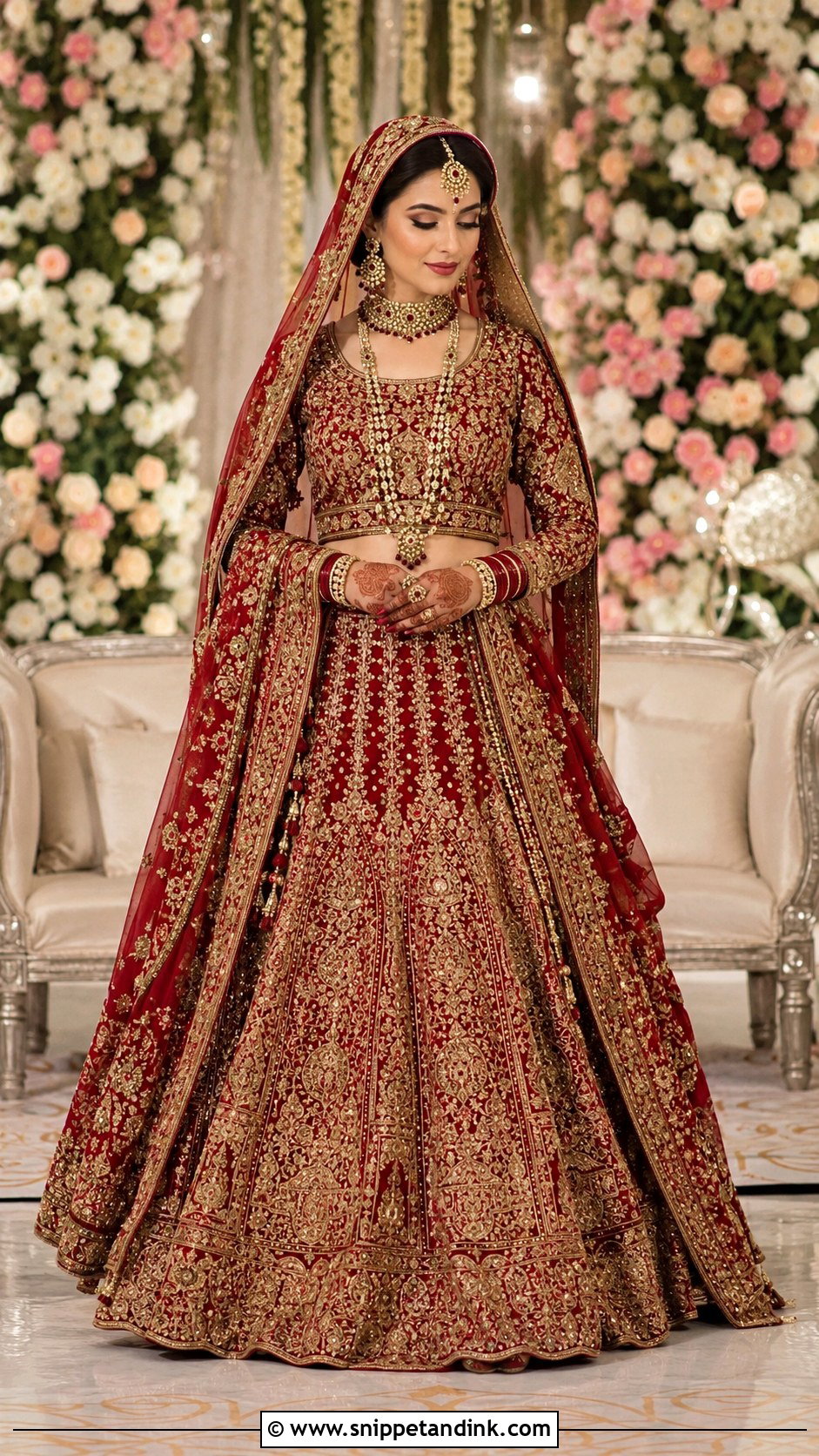
The traditional Pakistani bride wears a rich outfit, layered jewelry, a dupatta over the head and polished makeup, and every element supports the others. Choose a red, maroon, gold or ivory lehenga with handwork and a matching blouse, plus a dupatta with a heavy border. A full traditional set of choker, long necklace, jhumkas, tikka, bangles and rings is heavy, so wear the earrings for an hour at home first; heavy jhumkas often need hair chains to take the weight off the lobes. Keep the hairstyle neat so the dupatta sits well.
25. Iqra Aziz Modern Pakistani Bridal Look
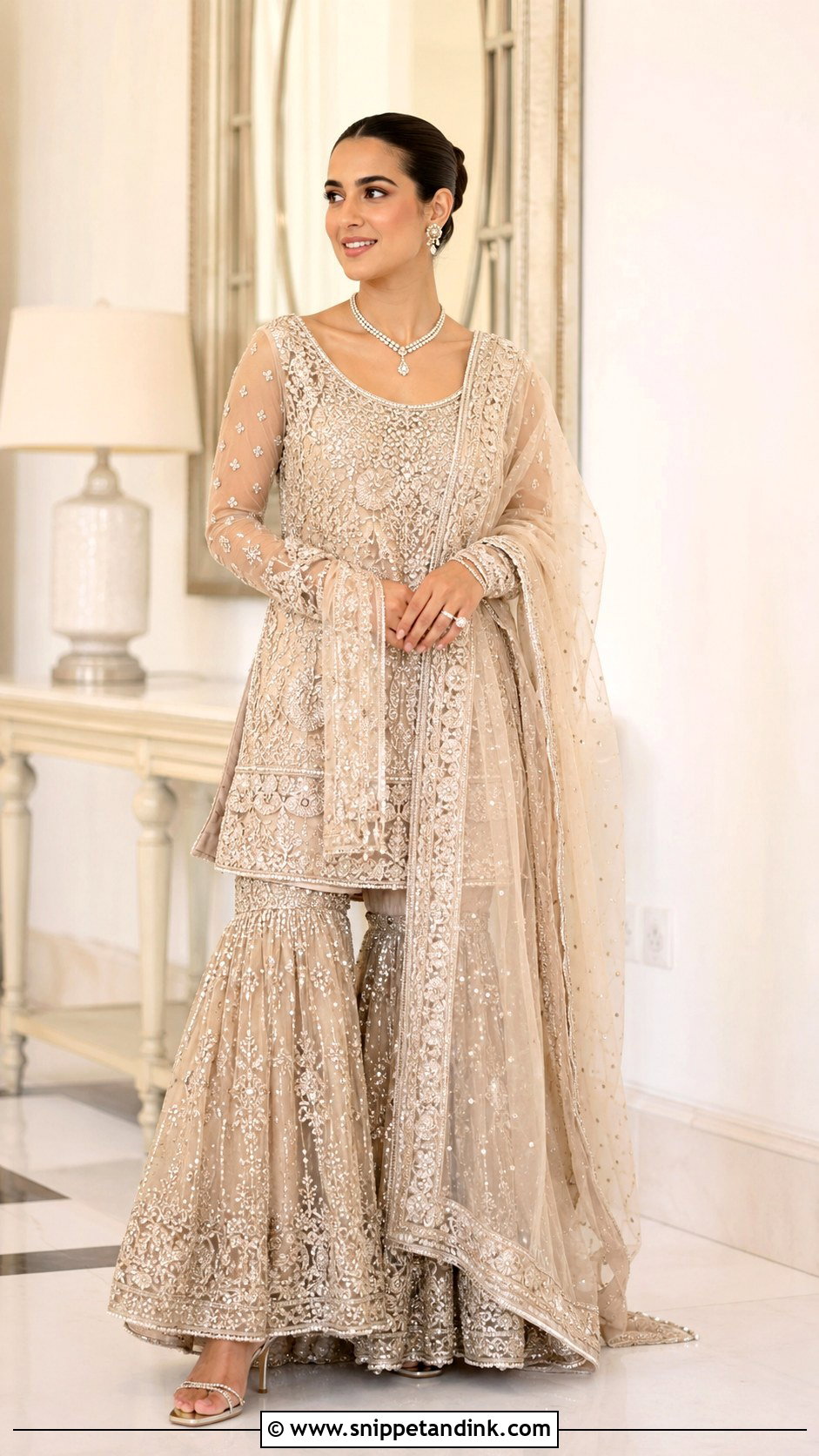
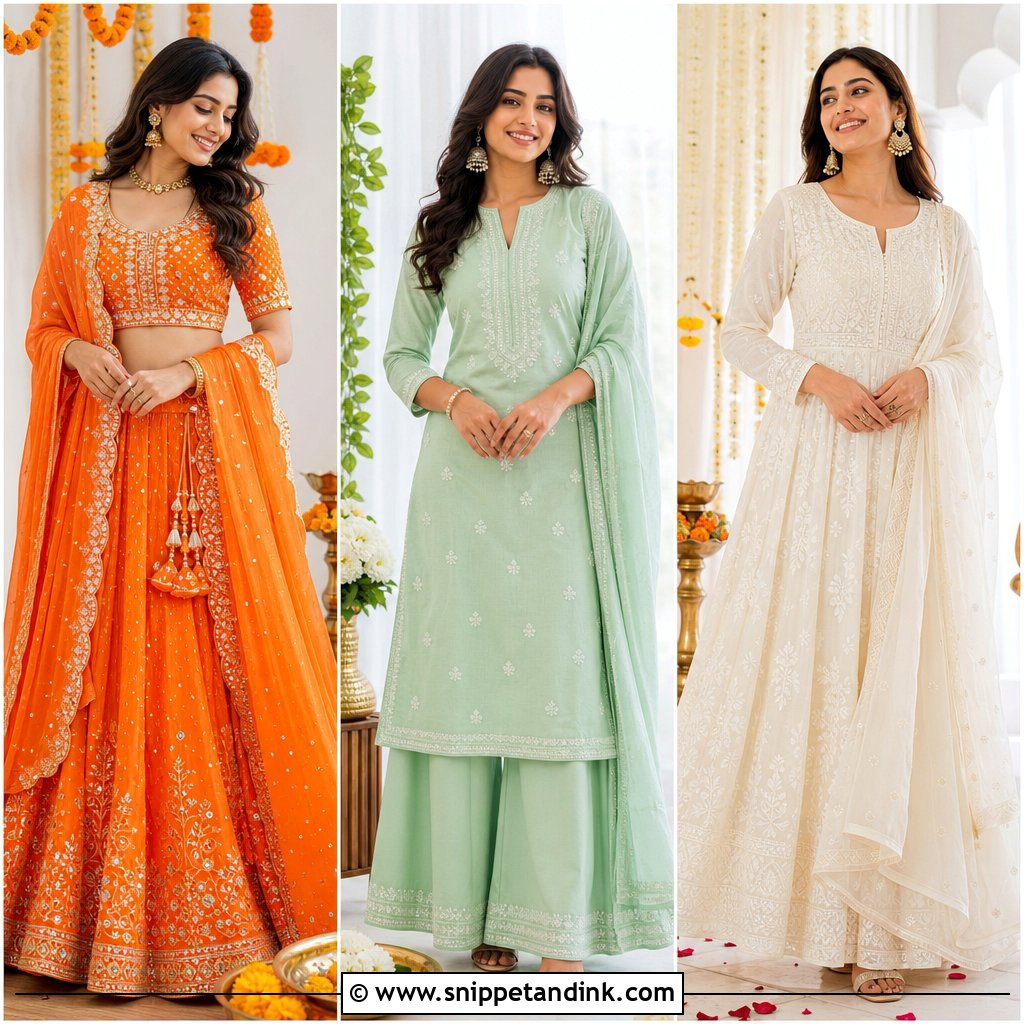
Modern Pakistani bridal style keeps the tradition but cleans up the styling. A pastel lehenga, champagne gown, ivory pishwas or structured sharara with refined embroidery, a flattering fit and a neatly draped dupatta does more than extra layers would. Diamond-style pieces, pearls or slim kundan sets suit it, with metallic heels and a small clutch. With less embellishment to hide behind, the fit has to be sharper, so plan an extra fitting. Soft waves or a half-up style keep it fresh.
Getting Through a Long Baraat in a Heavy Lehenga
Bridal lehengas are heavy, and you feel it most after a few hours of sitting on a stage and standing for photos. A few small arrangements make a real difference.
Spread the weight
Ask your tailor for a wider, supportive waistband and a can-can attached to the lining, so the skirt rests on your hips instead of cutting in along one line. Pin the dupatta so its weight sits on the bun, not on your forehead.
Plan the awkward moments
Decide beforehand who will hold your dupatta and skirt when you walk, sit and use the restroom. Give a trusted cousin a small pouch with safety pins, blotting papers and pain relief, rather than squeezing it into your own clutch.
Packing Away Zardozi and Gota After the Walima
Embroidered bridal wear can last for decades when it’s stored well. Don’t hang a heavy lehenga, since the weight stretches the waistband and seams over time. Fold it with soft muslin or acid-free tissue between the layers, wrap it in cotton rather than plastic, which traps moisture, and keep it somewhere dry. Refold it along different lines every few months so creases don’t set and the metallic thread doesn’t crack.
Red Baraat, Pastel Walima and Everything Between
Pakistani bridal fashion gives you room to move between moods across a wedding: a fully traditional red lehenga, a soft pastel walima outfit, a bright mehndi gharara or an ivory nikkah look. What makes any of them work is styling the whole picture, from dupatta placement to jewelry, makeup, hair and shoes. Take the parts of Iqra Aziz’s looks you love, then let your tailor fit them to your body and your events.
You'll Like These Ideas:



Leave a Reply