
A wedding dress on a hanger tells you very little. I’d much rather show a bride the whole picture: dress, veil, shoes, jewelry and the bouquet she’ll hold in front of the bodice for half the day. That’s how the twenty looks below are written. They cover satin ball gowns, lace and pearls, modest cuts, a short reception dress and culturally inspired frocks such as the pishwas and Anarkali. For each one, I’ve added what I’d check at the fitting and who it may not suit, because a dress that looks right in a photo can still be wrong for your venue, your season or the way you move.
Matching the Bouquet’s Shape to the Skirt
Most brides choose a dress and a bouquet separately, then meet them for the first time on the morning. The bouquet sits right over the waist and bodice in nearly every photo, so its size and shape change how the gown reads. I’d bring a photo of the dress, and ideally a swatch, to the florist.
- Full ball gowns can carry a larger round or cascading bouquet without it looking heavy.
- Mermaid, column and drop-waist shapes look best with something narrow or long-stemmed that doesn’t cover the seams.
- A detailed bodice, such as embroidery or 3D flowers, needs a smaller bouquet held lower, so the work stays visible.
- Short dresses suit a compact posy; anything large swamps a mini.
Hold the bouquet at your hip bones, not your chest, with elbows relaxed. Held too high, it hides the neckline and pushes the shoulders up.
1. Satin Ball Gown Wedding Dress
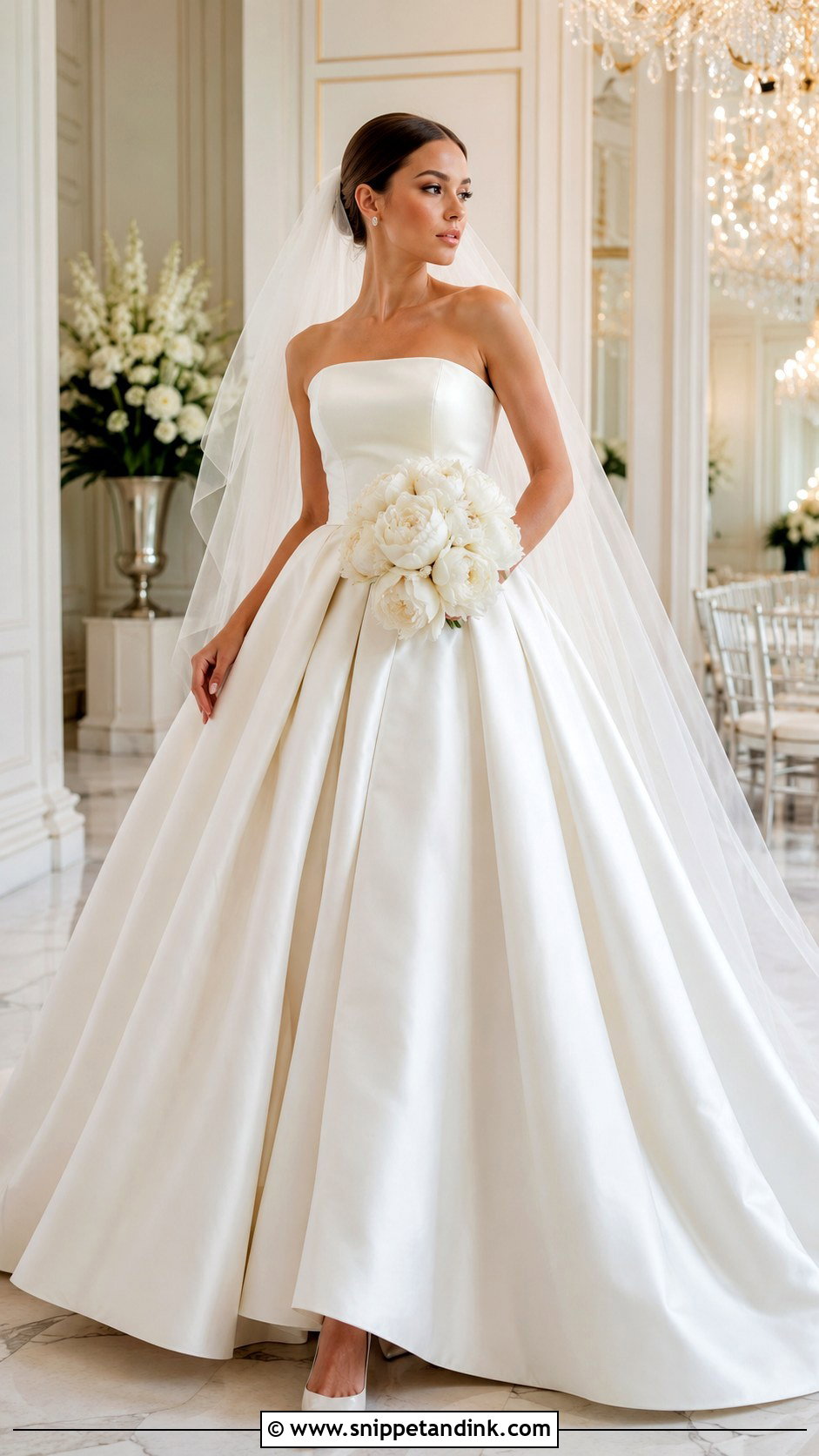
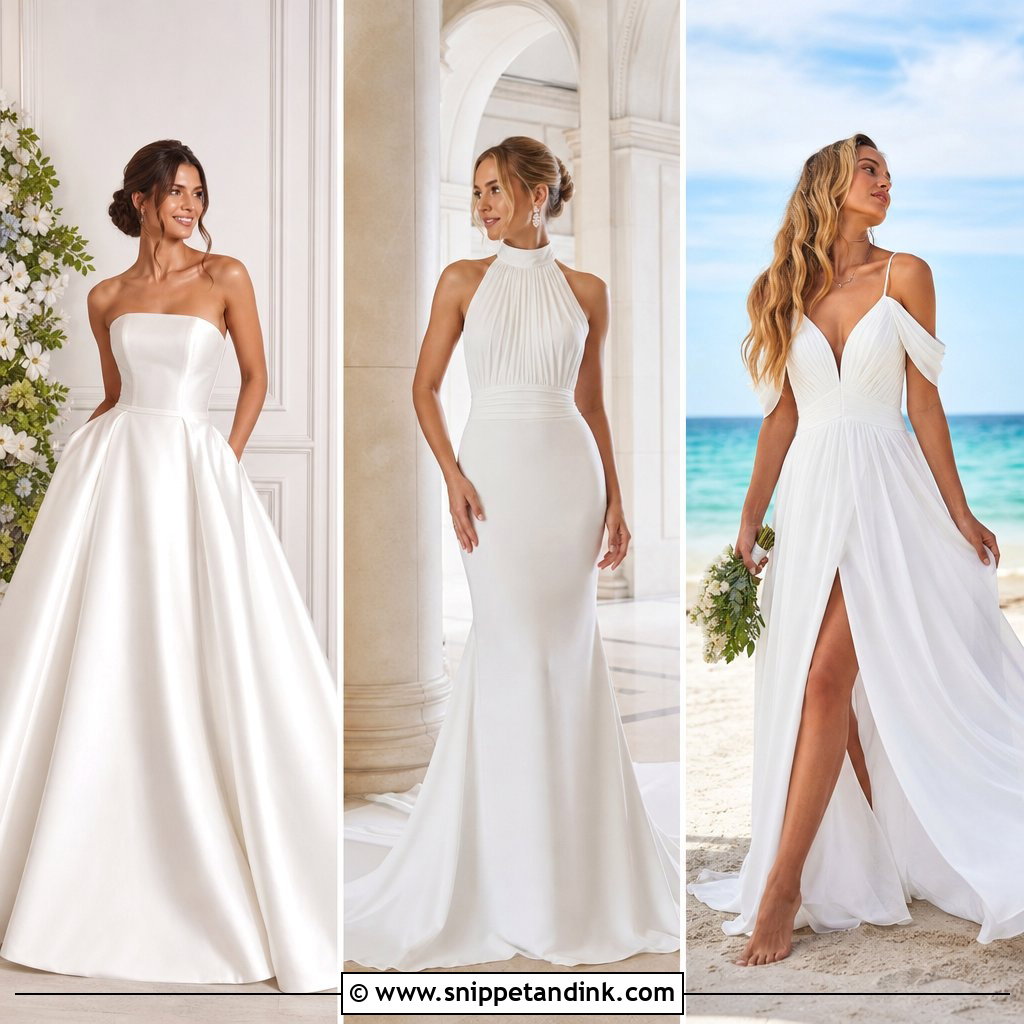
The weight surprises people. A full satin ball gown with layered petticoats is heavy at the hips, and by evening that’s what tires a bride, not the shoes. I’d look for a structured bodice with a gently curved strapless neckline, so the skirt hangs from the waist and the top isn’t sliding. A cathedral veil balances the volume. Pearl drops and a slim bracelet are enough, with no necklace if the neckline is doing the work. Pointed ivory pumps disappear under the skirt; block heels are safer on grass. A rounded bouquet of white roses or peonies matches the shape, and ballrooms and hotel venues with warm light make satin glow.
2. Lace A-Line Wedding Dress
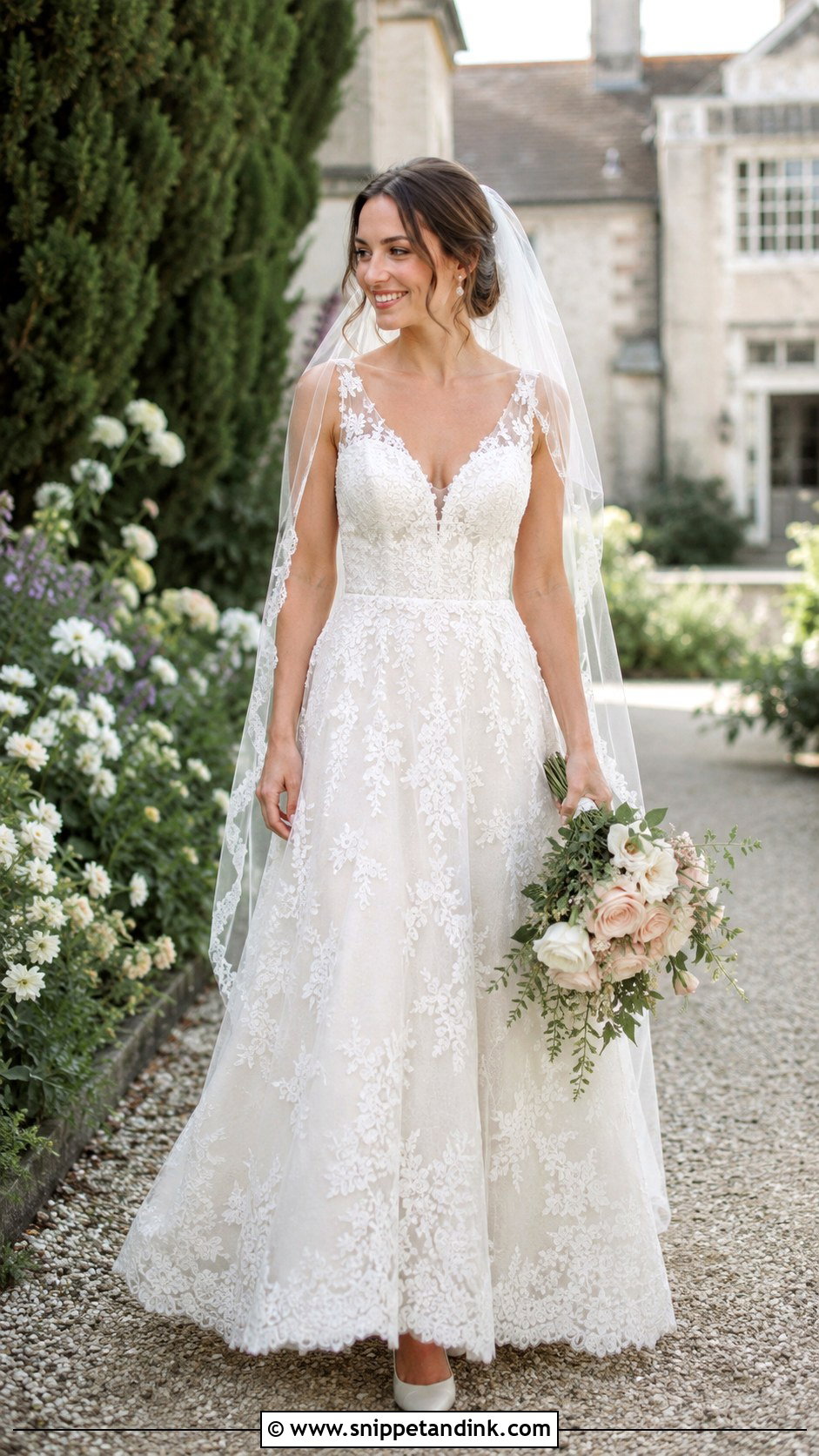
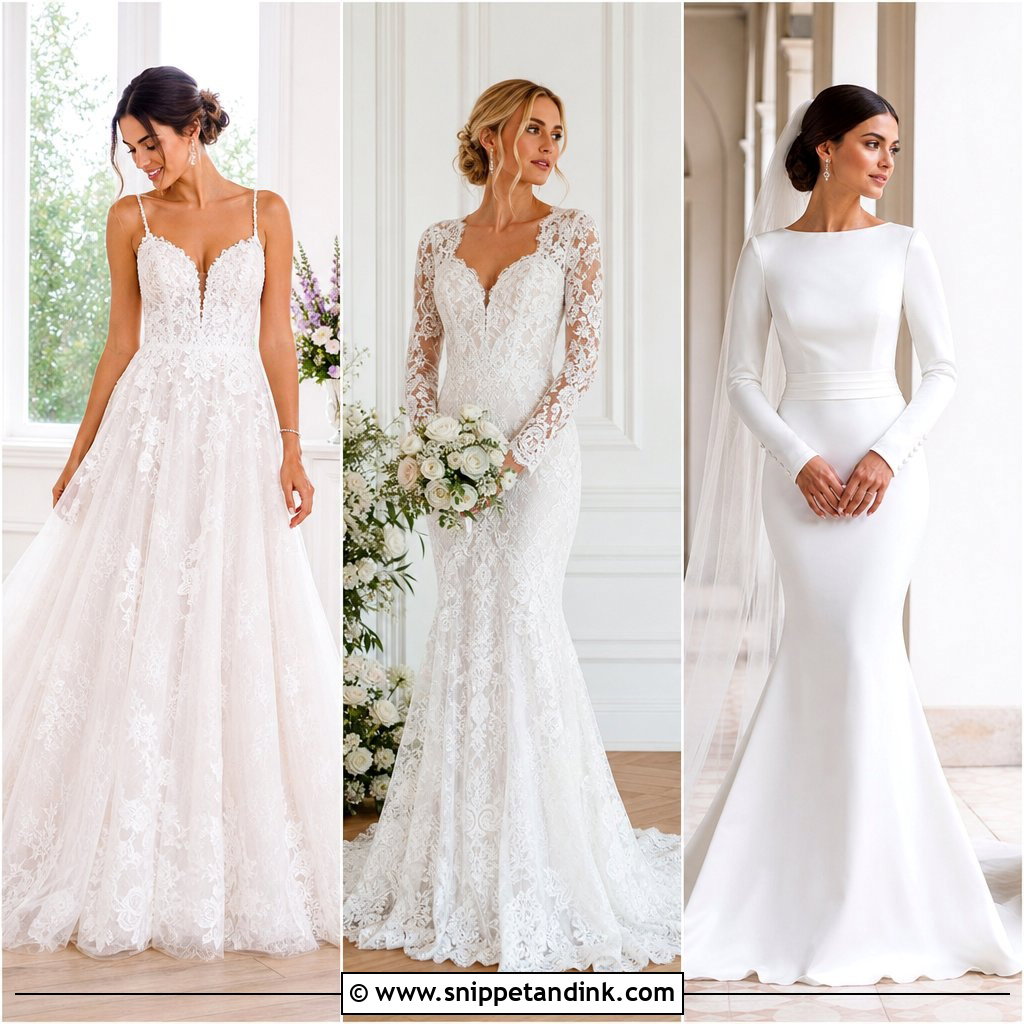
Lace A-lines are the gowns I see brides relax in. The fitted bodice and natural waist give shape without pressure, and the skirt widens slowly enough to walk and dance in. Floral lace over a light lining has depth without bulk. Use a fingertip veil edged in matching lace, but only if the lace actually matches; two slightly different patterns side by side look like a mistake up close. Pearl studs, a slim tennis bracelet and ivory slingbacks are plenty. A loose bouquet of garden roses, ranunculus and greenery keeps it natural. Gardens, estates and country clubs in spring or early autumn suit it.
3. Basque Waist Bridal Gown
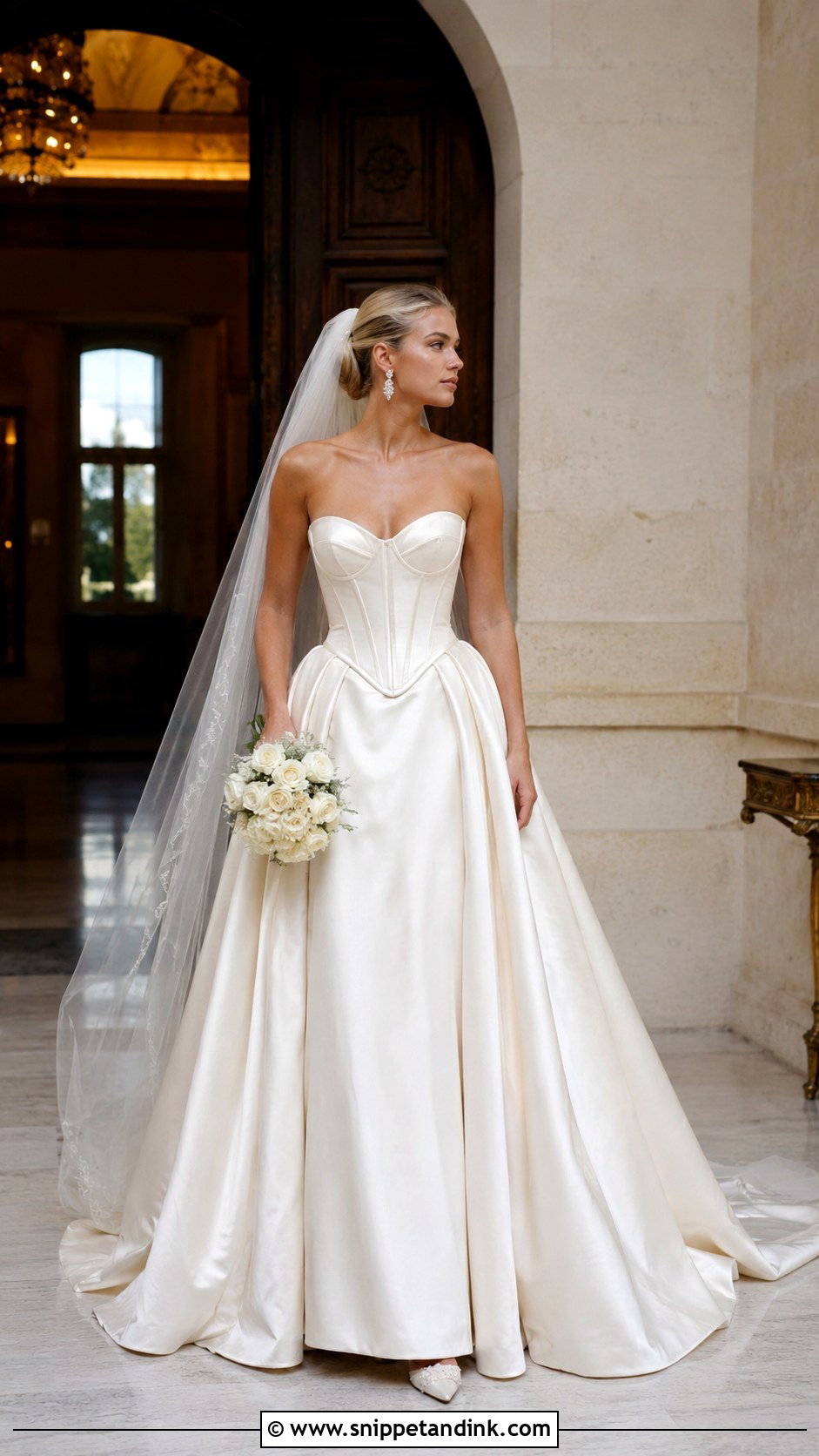
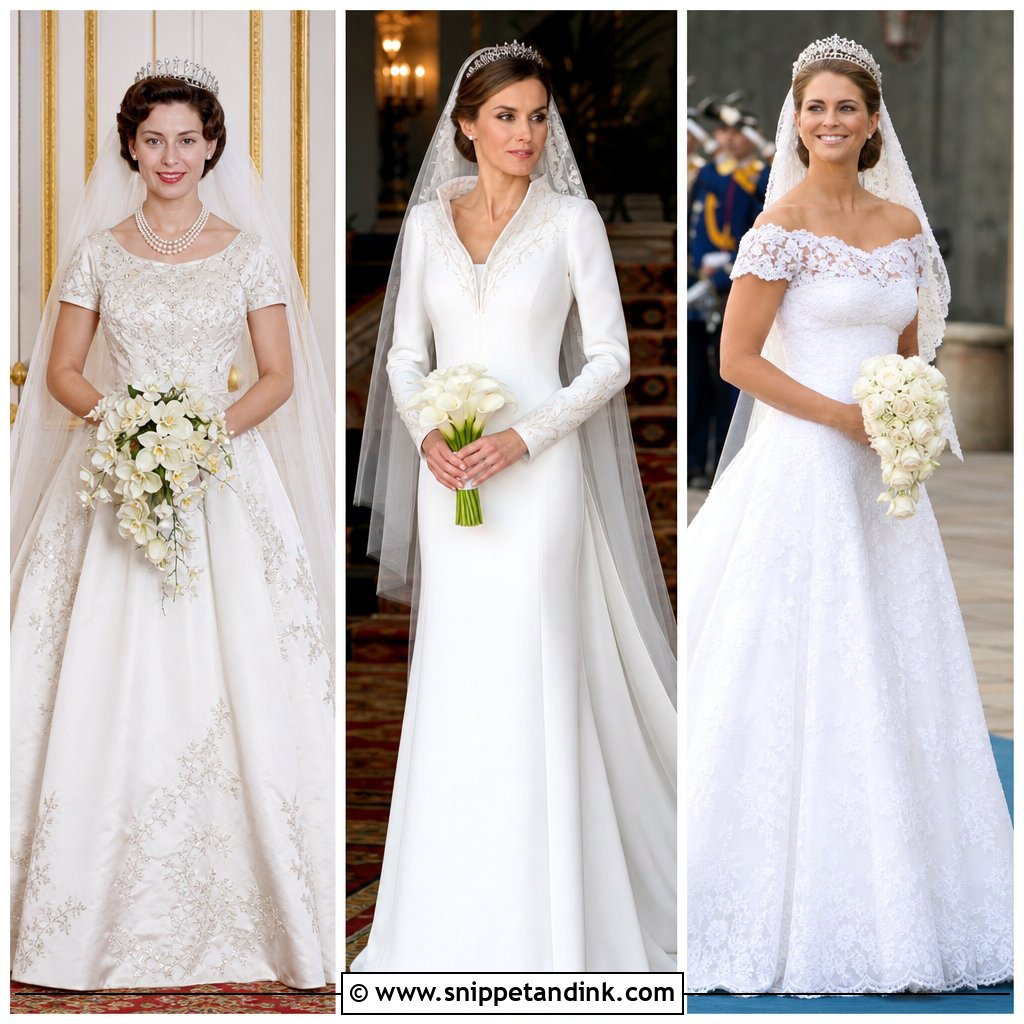
The point of a basque waist is the point itself. The bodice dips into a V below the natural waist and lengthens the torso, but if the point folds or lifts when you sit, the whole effect is lost. That’s what I watch in the fitting chair, and it usually needs boning right down into the tip. Pair it with a corset bodice and a full satin or tulle skirt. A chapel veil placed below a neat bun keeps the waistline visible. Crystal earrings and a slender pendant add light. Almond-toe heels and a compact bouquet of cream flowers, held above the point rather than over it. Formal ceremonies and historic venues suit its regal line.
4. Corset Mermaid Wedding Dress
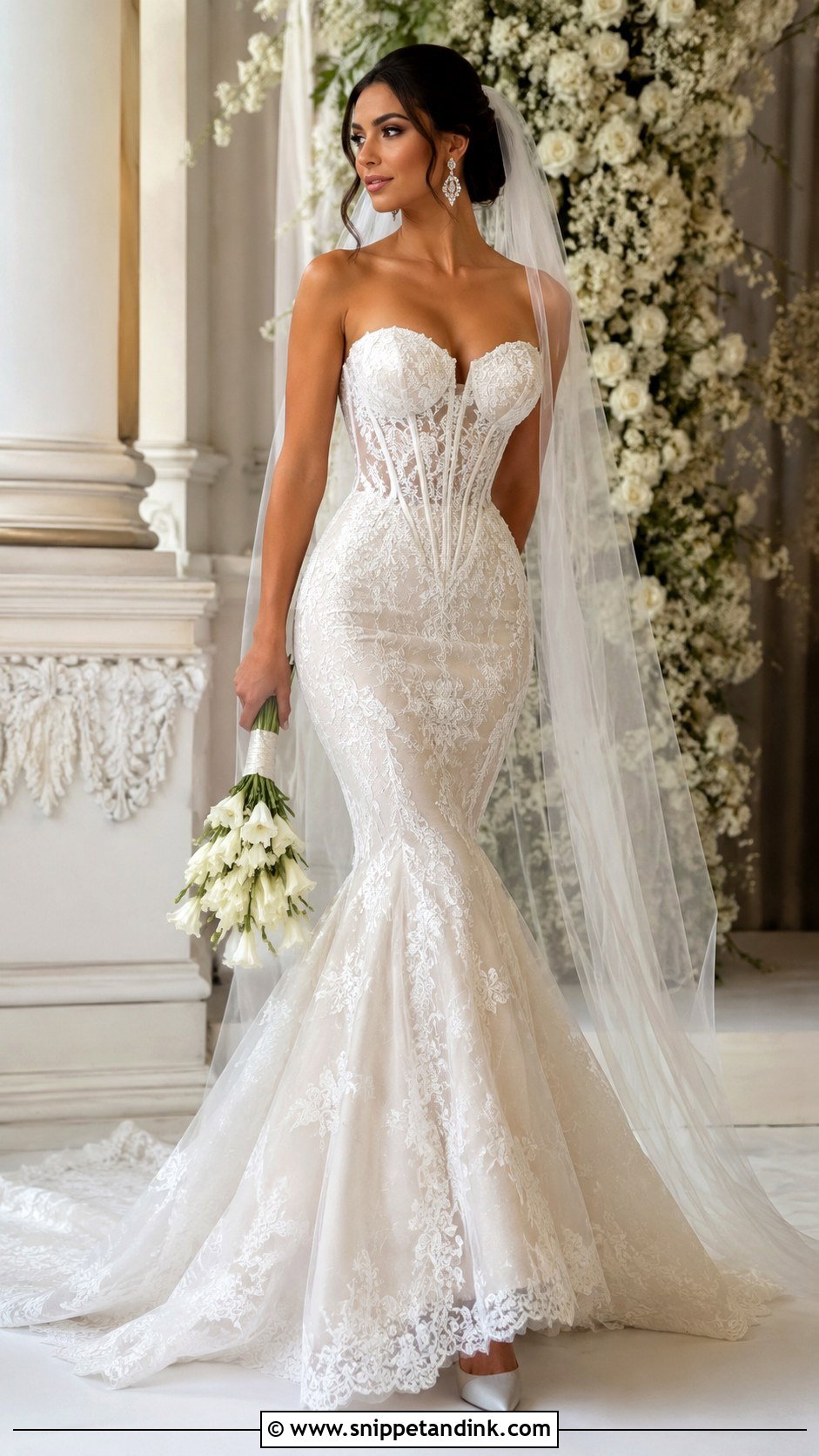
Corset plus mermaid is the most restrictive combination on this list, and I’d only steer a bride toward it if she’s comfortable being sculpted for a full day. The bodice supports and the skirt hugs the hips before flaring near the knees, so look for secure boning, a well-fitted lining and some stretch in the skirt. Lace appliqués soften it; plain satin looks sharper. A low chignon, crystal drop earrings and a long plain veil set beneath the hair. Pointed pumps carry the line down. Hold a narrow bouquet; a big round one hides the bodice you’re wearing it for. Rehearse walking, and especially climbing a step, in the full outfit.
5. Off-Shoulder Bridal Gown
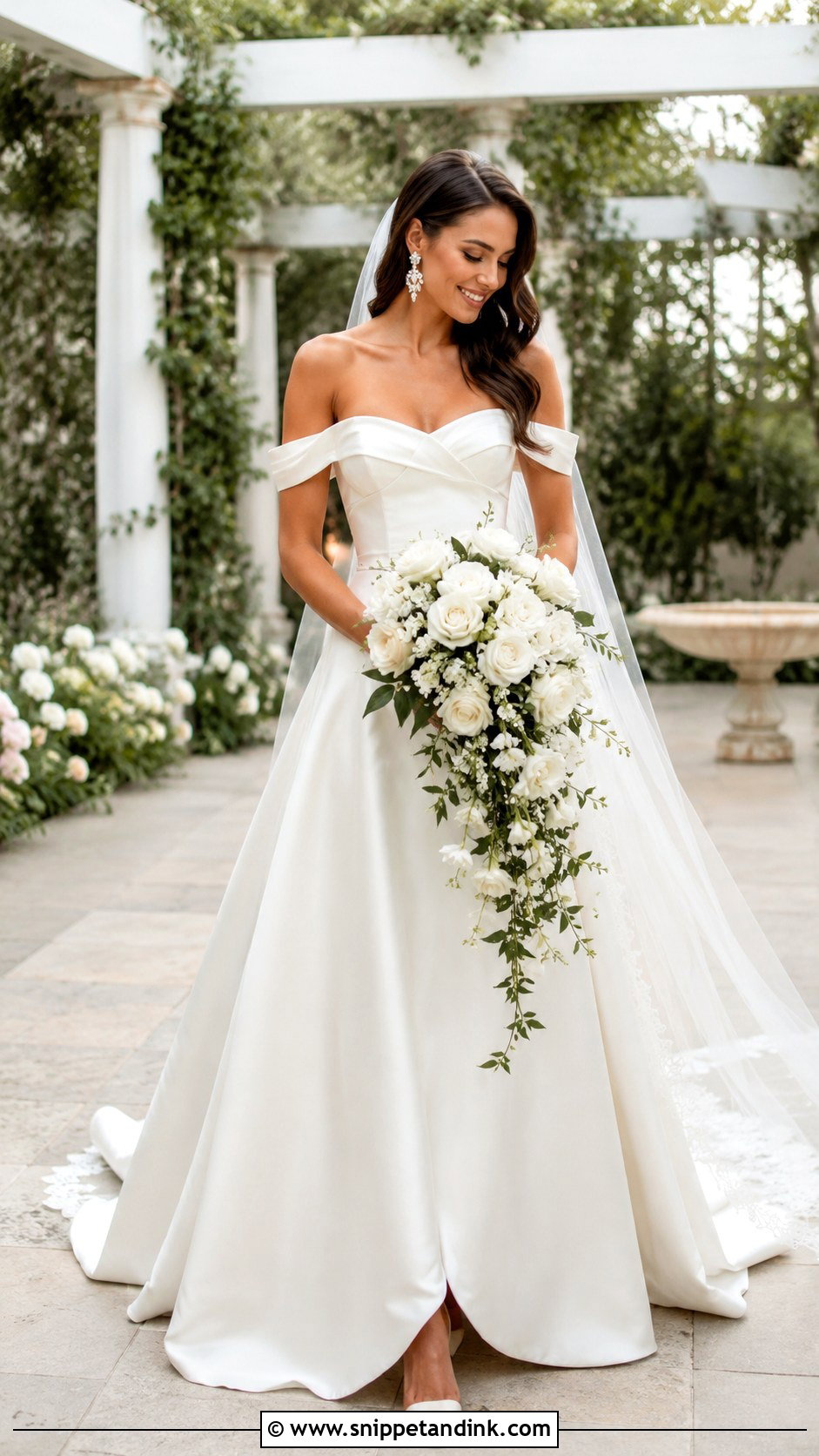
Draped satin sleeves read formal; lace sleeves read softer and more traditional. Either way, an off-shoulder neckline needs to stay put when you reach for a hug or lift a glass. If you find yourself tugging it up in the shop, it will only get worse on the day. Choose one focal piece, a short pendant or statement earrings. Swept-back hair keeps the shoulders clear. A light chapel veil, closed-toe ivory heels and a cascading bouquet that echoes the vertical line complete it. The neckline works over a ball gown, A-line or fitted skirt, so it moves easily from formal halls to gardens or a destination ceremony.
6. Long Sleeve Lace Wedding Dress
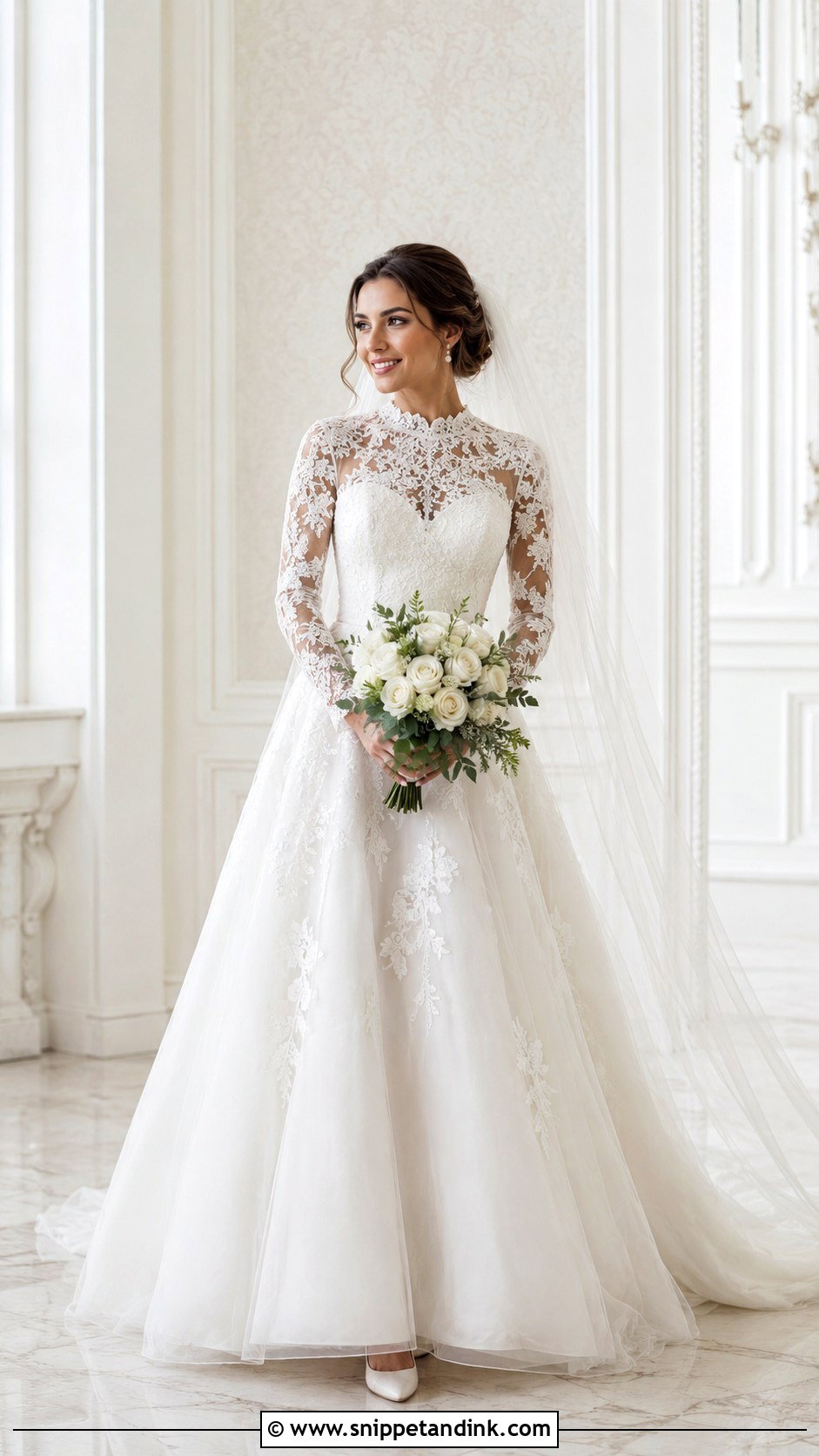
Wrists are the thing. Long lace sleeves that are snug at the wrist look neat but make it hard to shake hands, hold a bouquet or push a sleeve up to wash your hands, so I check the opening with the bride’s arm bent. Illusion sleeves with appliqués feel light; fully lined sleeves are more modest. A fitted bodice over an A-line skirt keeps the proportions easy. With a high neckline, wear pearl earrings and a sleek bun and leave the necklace out. A plain tulle veil lets the lace lead. Closed-toe satin pumps and white roses, anemones or seasonal greenery finish it, and it comes into its own in cool weather.
7. 3D Floral Bridal Gown
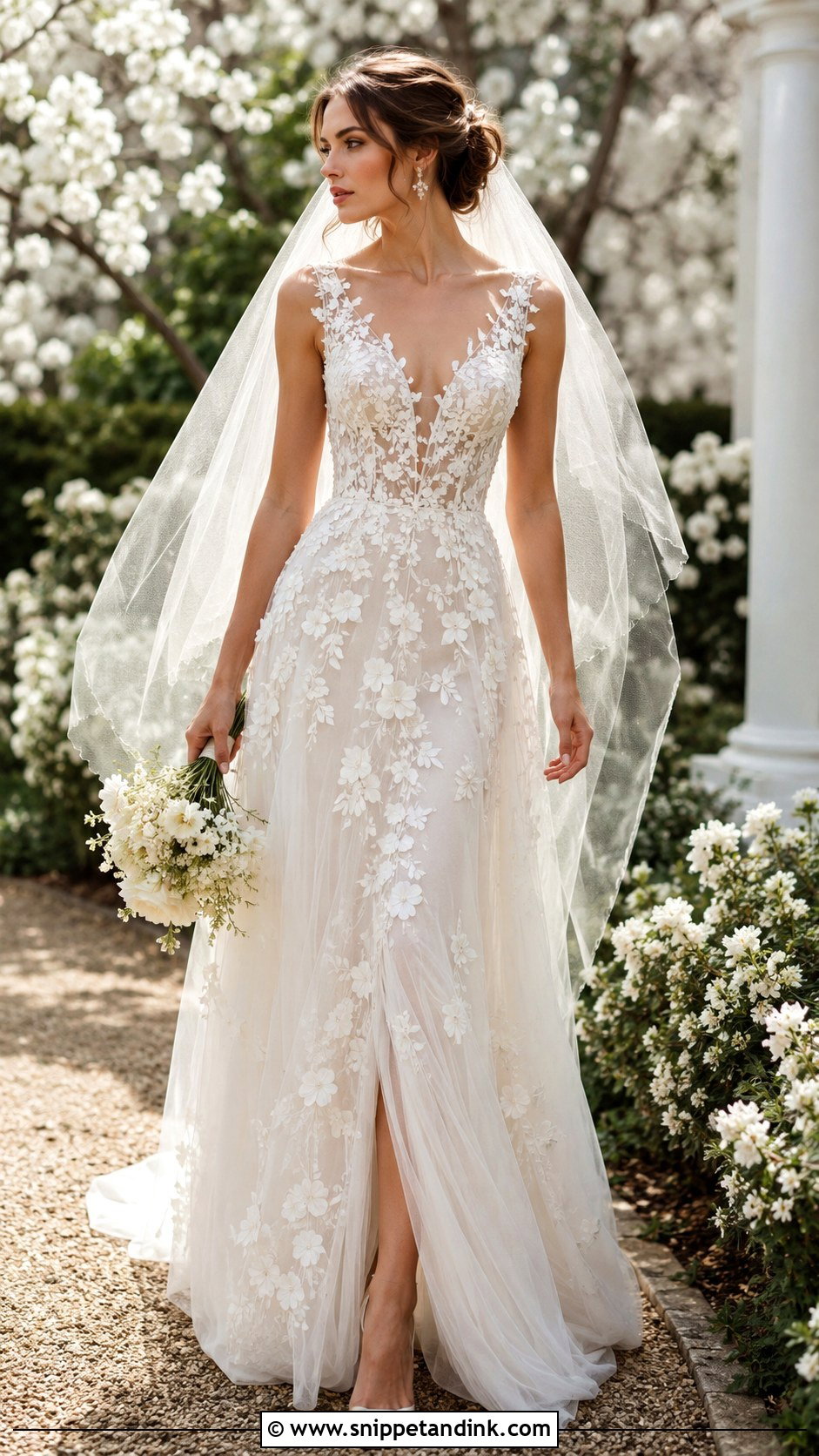
Raised flowers look delicate and are sturdier than they seem, provided they’re sewn properly. Petals that are only tacked at the center lift and flatten when you sit or hug, so I run a hand gently over them during the fitting. A scattering across the bodice that thins out over a tulle skirt feels lighter than dense coverage. Keep the rest quiet: a raw-edge veil, understated earrings, neutral ivory heels. A neat bun or soft waves won’t fight the flowers at the neckline. Choose a small bouquet in one or two varieties that echo the appliqués. It is at its best in a spring garden.
8. Pearl Embellished Wedding Dress
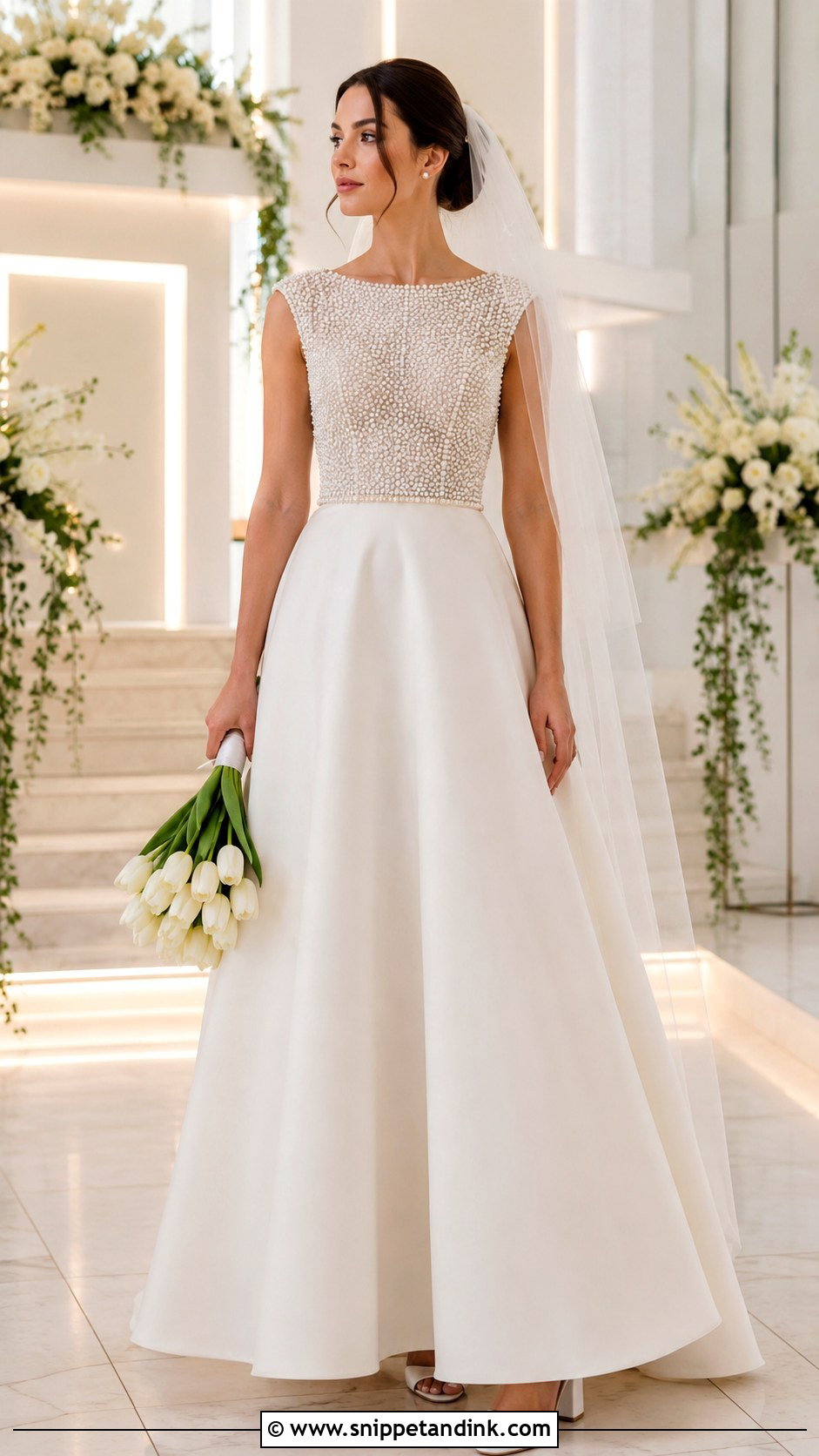
Pearls loosen. Every sample I handle has a few hanging by a thread, and a gown worn for a full day loses some along the way, so ask the seamstress to go over the beadwork and secure anything loose before the wedding. Pearls give a softer glow than crystal or sequin. A pearl-covered bodice over a smooth A-line skirt is balanced; scattered pearls on illusion sleeves and the upper skirt add texture. A plain veil won’t catch on the beads the way a lace-edged one can. Pearl studs, a fine bracelet and satin block heels match the sheen, and a structured bouquet of white tulips or calla lilies keeps it modern.
9. Bow Back Bridal Gown
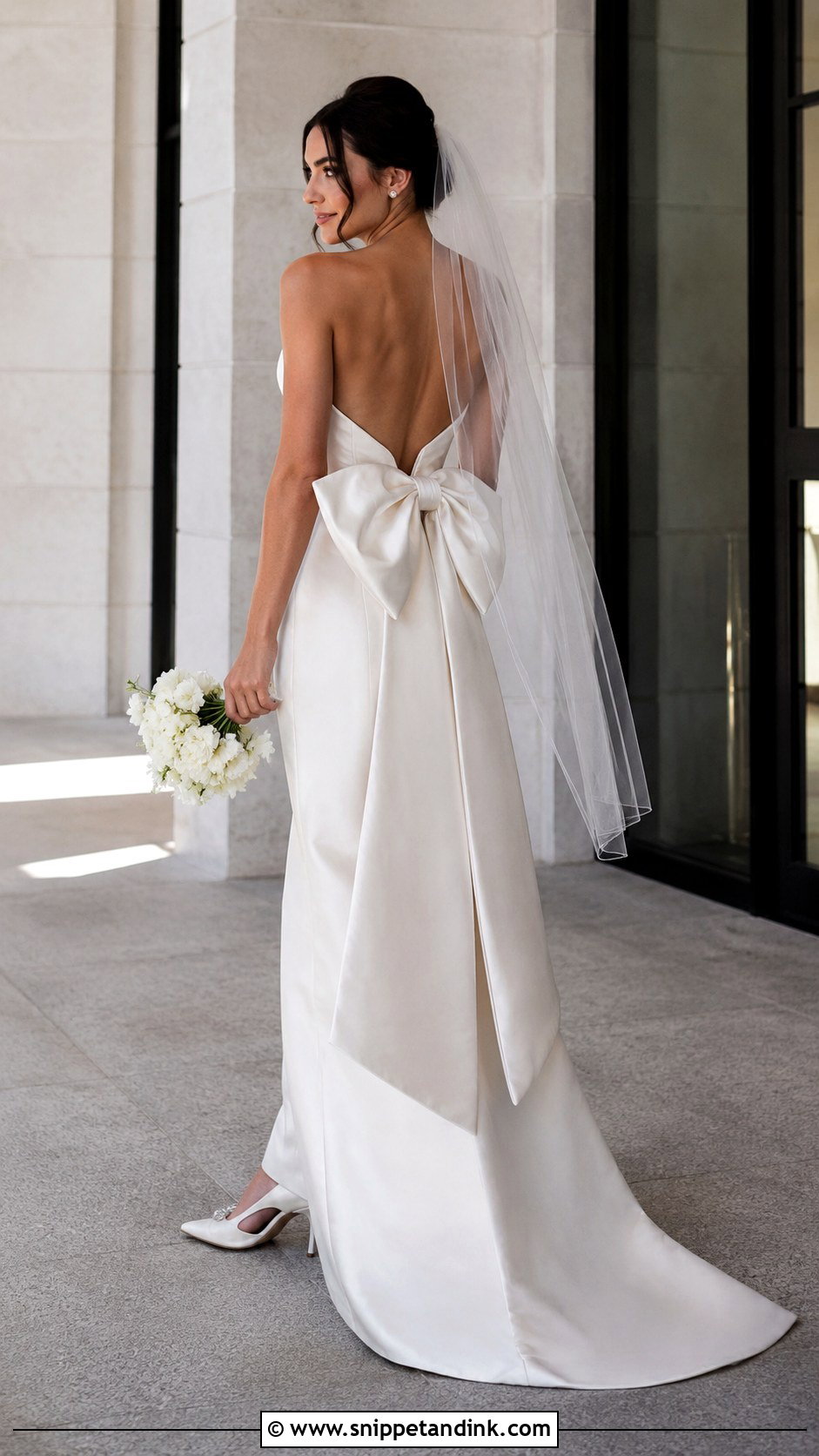
A big bow at the back gives guests something to look at while you stand at the altar, which is most of the ceremony. Choose structured satin with a removable bow at the waist or lower back; being able to take it off makes sitting and dancing much easier, since a bow pressed against a chair back flattens. Use a narrow veil that falls behind the bow rather than over it. Small diamond or crystal studs, a smooth updo and pointed ivory heels. A compact bouquet keeps the proportions clean. Ask someone to fluff and straighten the bow just before you walk. Modern hotels, galleries and city venues suit its playful formality.
10. Square Neck Satin Wedding Dress
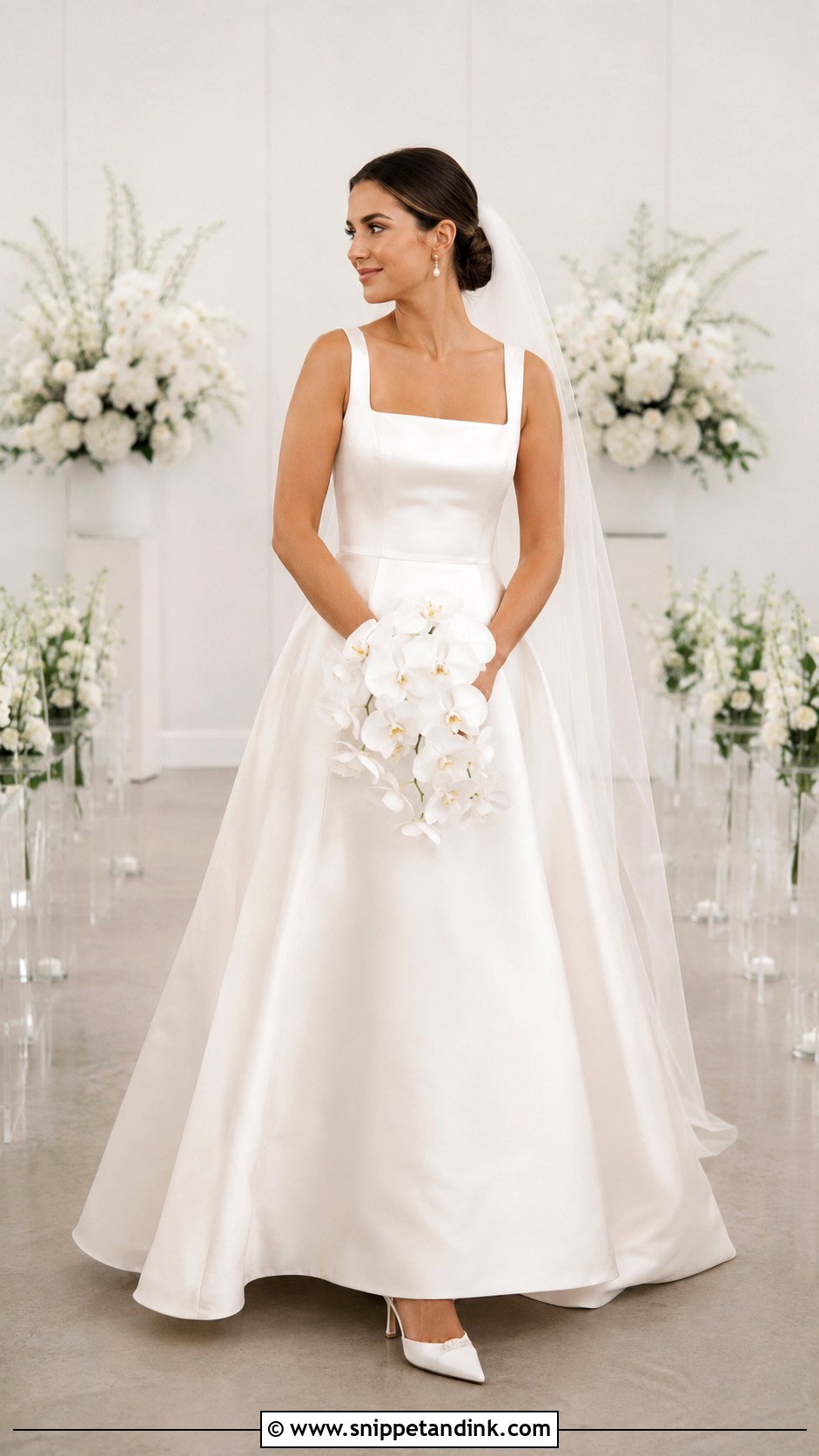
Satin shows everything, and a square neck in satin shows the bust fit more than any other combination here. If the neckline gaps or the fabric wrinkles across the ribs, the camera catches it, so tailoring is the whole job. Wide straps support better than thin ones. Pick an A-line or softly fitted skirt with few seams. A fine pendant can follow the neckline, though pearl drops alone are just as polished. A long sheer veil, a low bun and pointed slingbacks finish it, and a bouquet of white orchids or calla lilies matches the clean lines. Smooth, skin-toned undergarments with no visible edges are not optional.
11. Halter Neck Bridal Gown
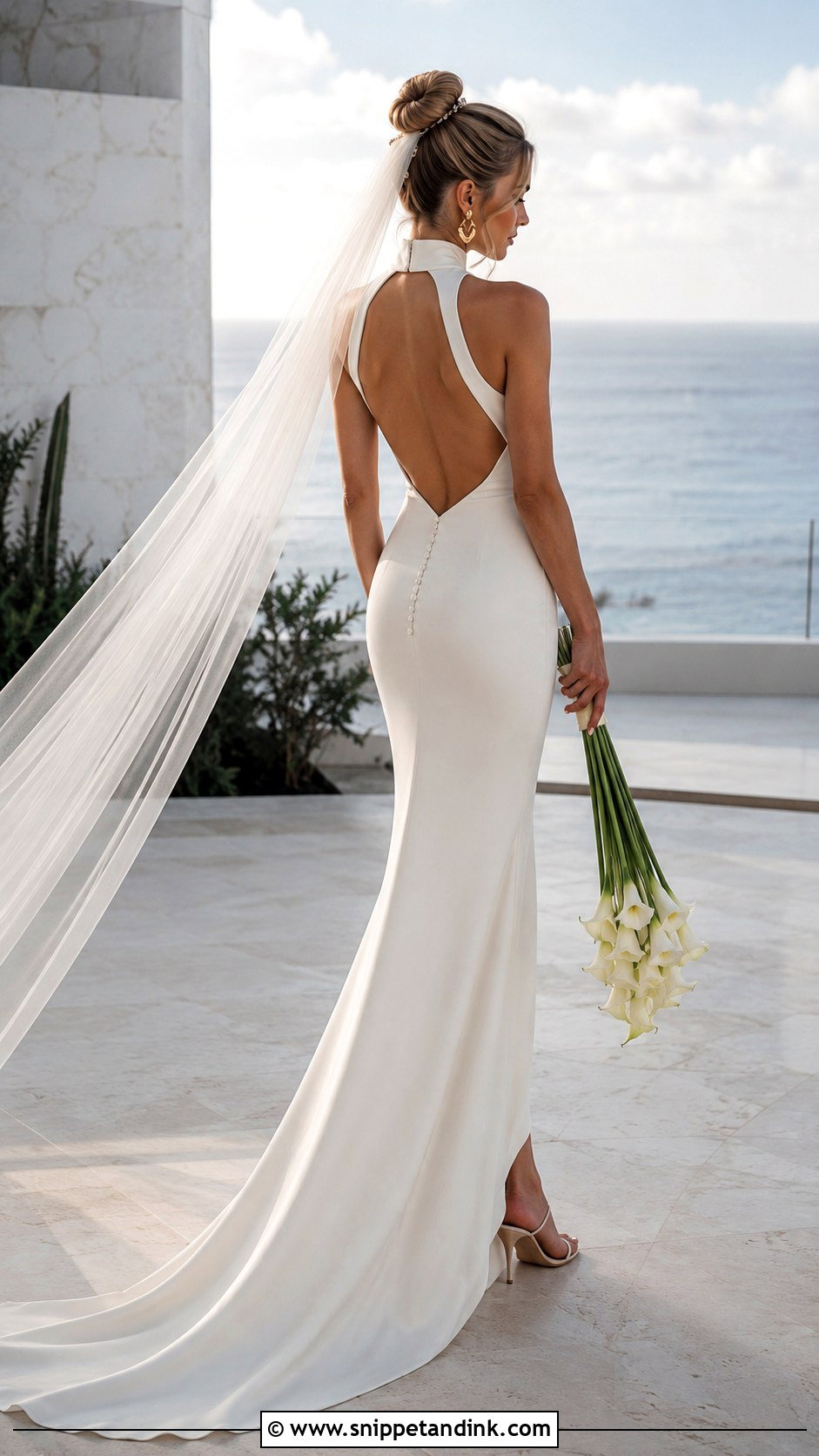
Some brides find a halter tiring after a few hours, because the whole bodice hangs from the back of the neck. I check whether the neck strap sits flat and whether turning the head pulls the front. Crepe, silk or satin keep the neckline crisp. An open back with a softly fitted column skirt looks modern. Skip the necklace and wear sculptural earrings, with a high bun and a veil tucked under it so the shoulders stay visible. Slim heels and a long-stemmed bouquet suit it. City weddings, coastal venues and contemporary interiors are its setting.
12. Chiffon Empire Waist Wedding Dress
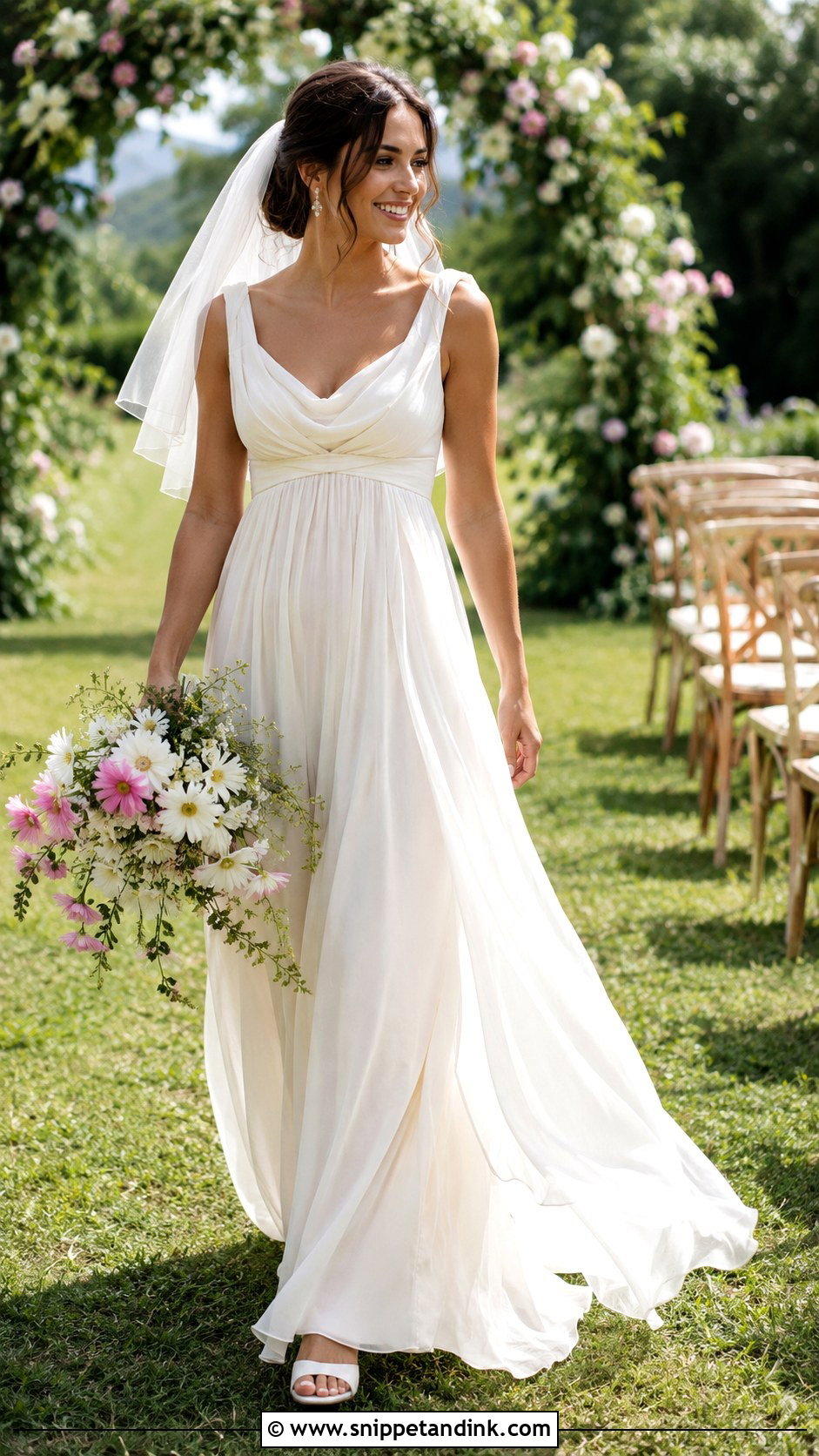
Hot weather and outdoor ceremonies are where chiffon earns its place; it moves with the breeze and doesn’t trap heat. An empire waist sits just under the bust and lets the skirt fall loosely, giving room through the waist and hips. Wide straps or flutter sleeves add secure coverage. Hold the fabric up to a window before you buy: chiffon can be sheer, and the lining has to cover in bright daylight. Delicate earrings, a short veil and low block heels or dressy flats suit it, with a loose bouquet of cosmos, sweet peas and greenery. Beaches, gardens and destination weddings are its natural home.
13. Tea Length Wedding Dress
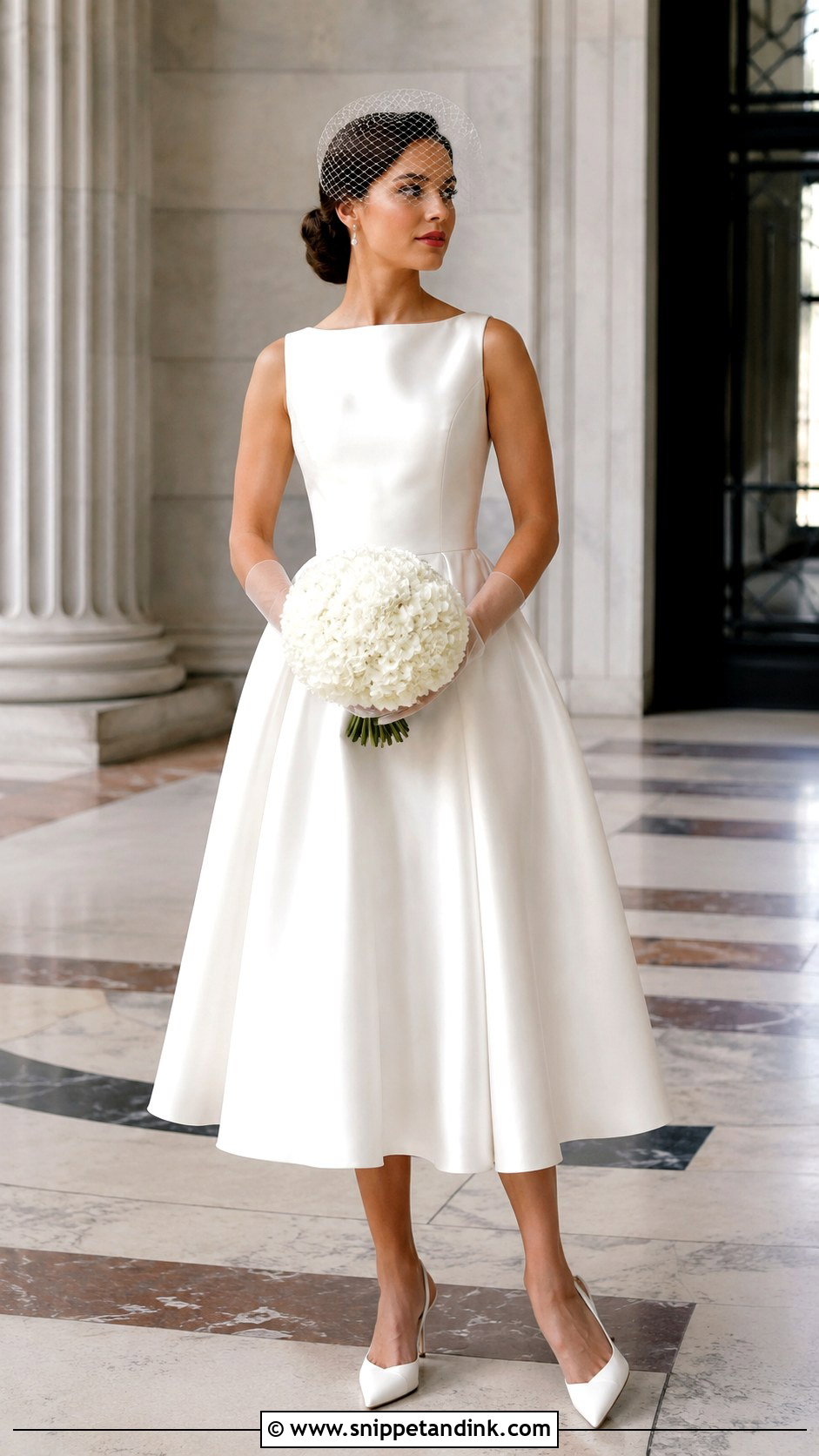
Tea length lands between knee and ankle, so the shoes become as important as the dress. A fitted bodice with a softly flared skirt gives the classic shape, and satin, mikado, lace or layered tulle all hold it. Pointed slingbacks, embellished pumps or ankle-strap heels in ivory. A birdcage veil feels vintage; a short plain veil cleaner. Pearl earrings, optional short gloves and a small rounded bouquet complete it. Set the final hem with your shoes on, since even a small difference in heel height changes where it falls. Courthouse ceremonies, daytime receptions and small venues suit it well.
14. Minimalist Crepe Bridal Gown
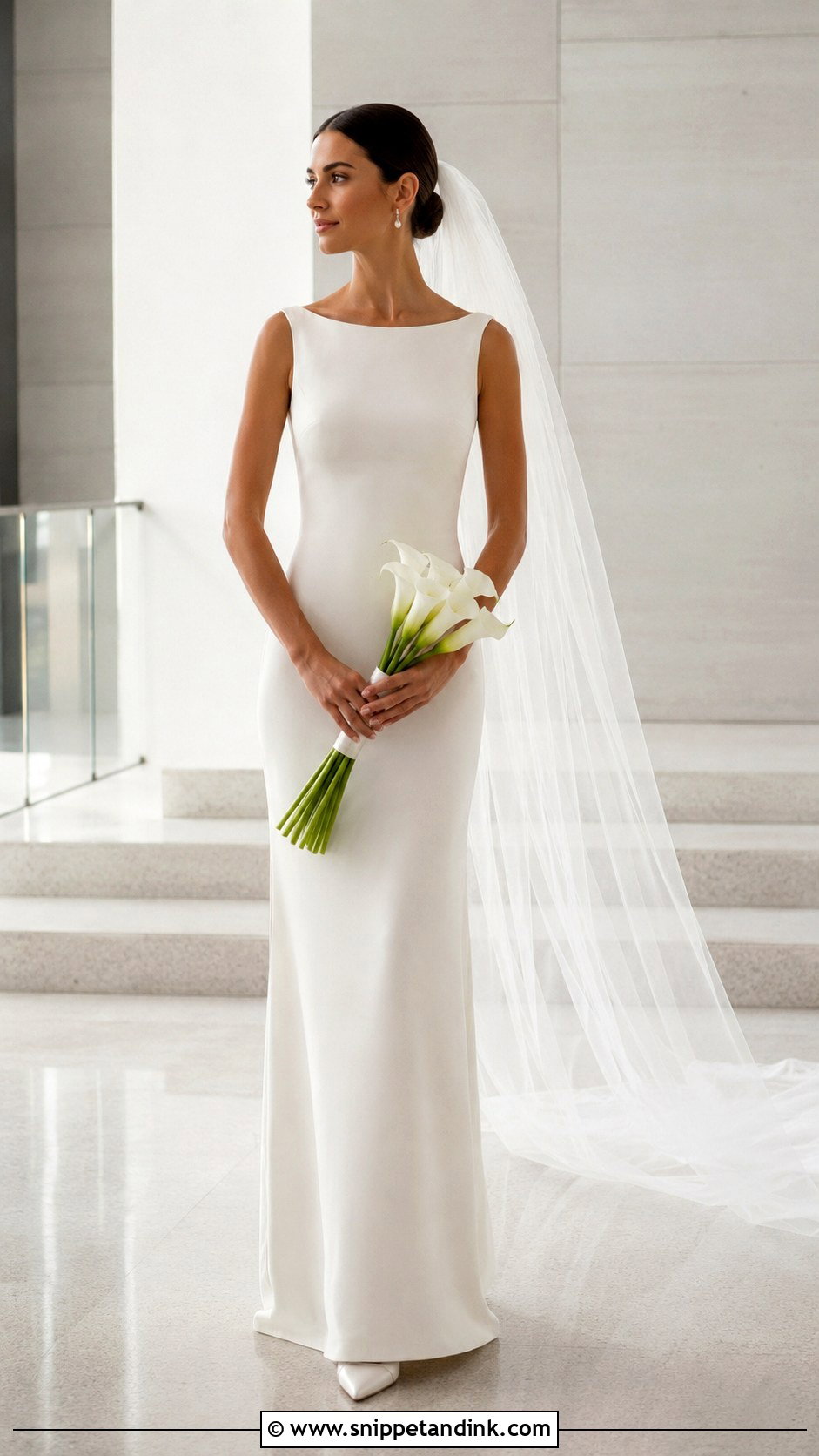
Without lace or beading, the cut does all the work, so this is where I’d spend the alteration budget. A bateau neck with a fitted column skirt is quiet and refined; a deep V is sharper. Choose one standout accessory, such as pearl drops, a sculptural comb or a long sheer veil. Pointed pumps or slim block heels keep the shoes clean, and white roses or long-stemmed calla lilies make a simple bouquet. Plain crepe shows every seam and every edge underneath, so smooth foundations and a skilled seamstress matter. Architectural and intimate venues suit it.
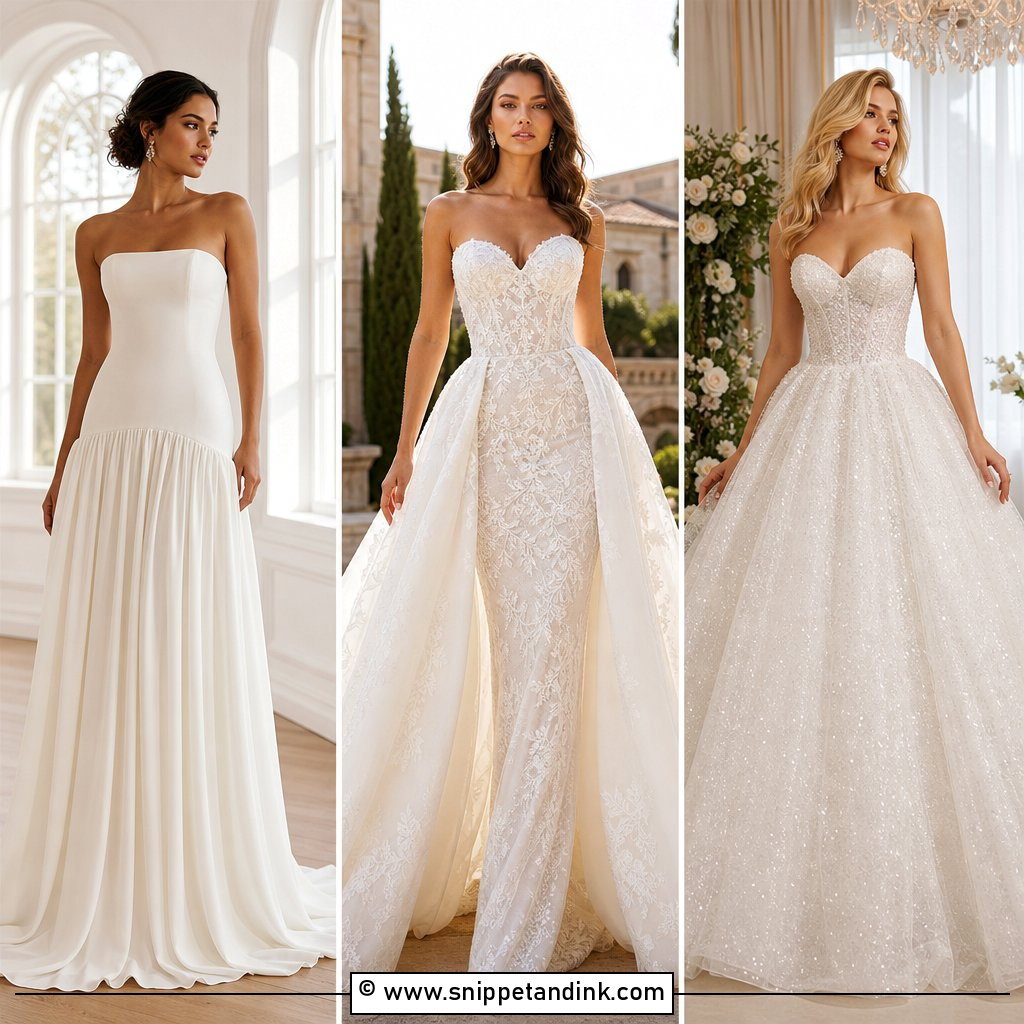

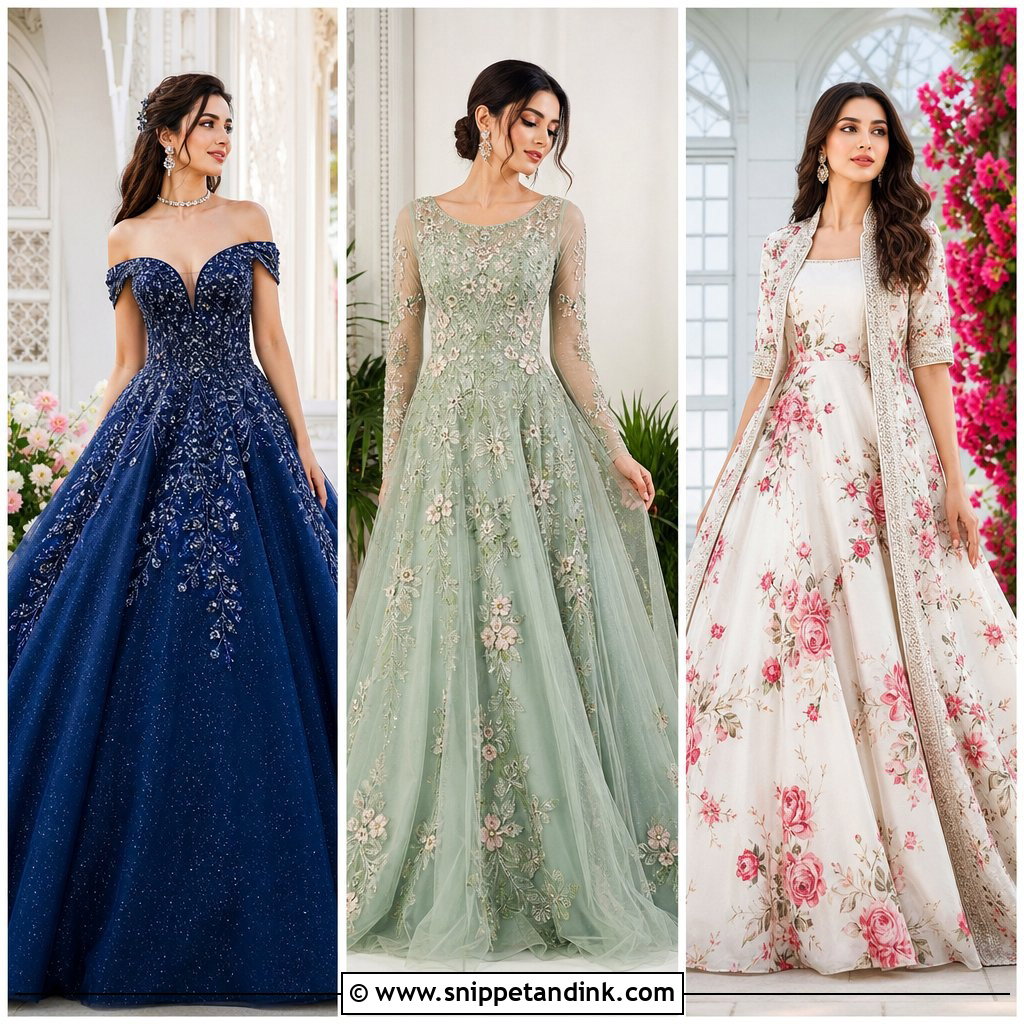
15. Pishwas Bridal Frock
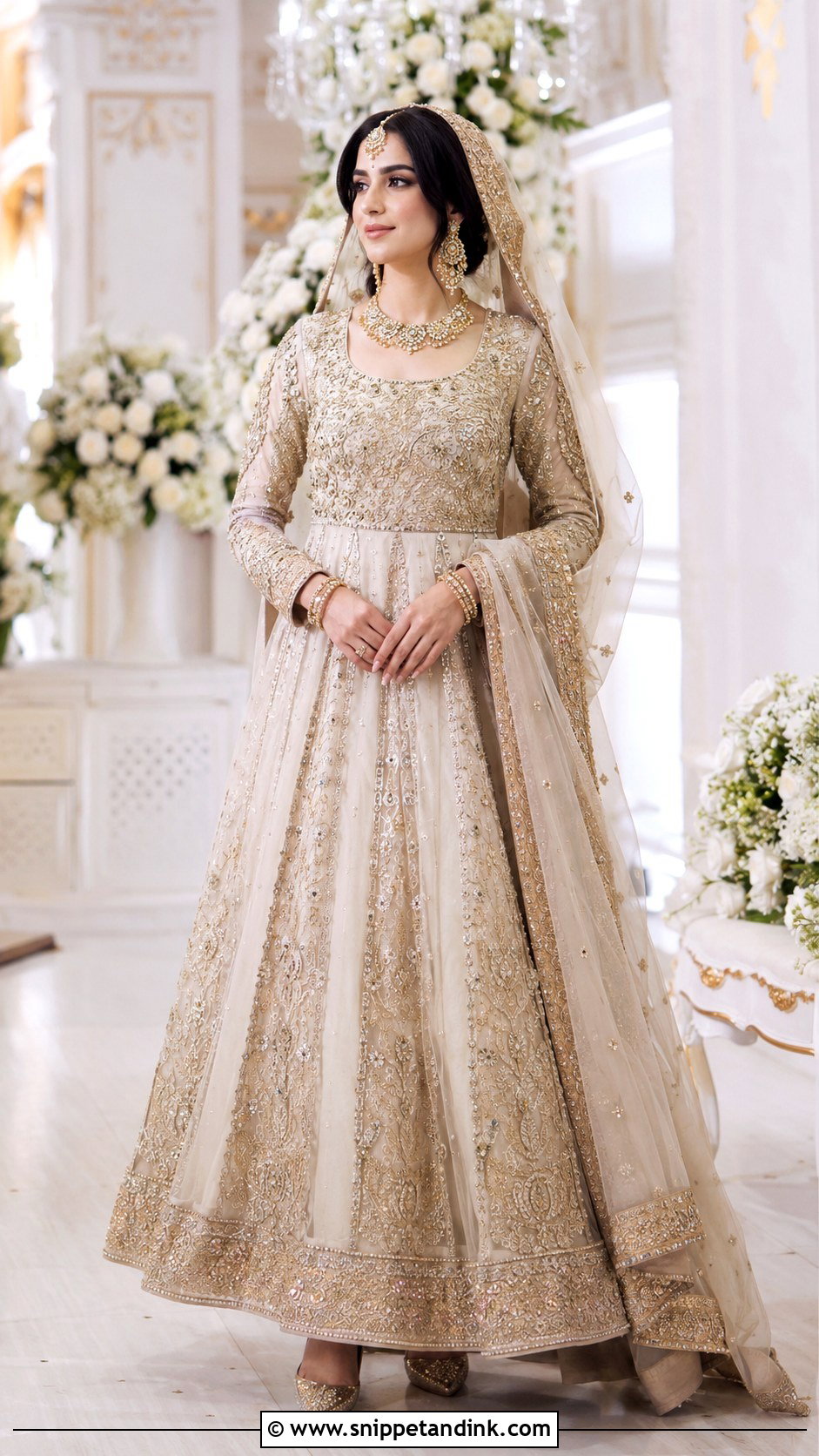
A pishwas bridal frock is fitted through the upper body and flares into a wide, full-length skirt, and the flare is what needs attention. Layered kalis can catch under the toe of a shoe, so the hem should just skim the floor in the shoes you’ll wear. Ivory, champagne, blush or soft gold with controlled embroidery at the neckline, sleeves and hem keeps it graceful. A light dupatta over the head and one shoulder leaves the front work on show. A coordinated necklace, earrings, bangles and embroidered block heels or traditional flats finish it. Pin the dupatta into a neat bun underneath so it stays secure through the ceremony, and keep makeup balanced against the embroidery.
16. Anarkali Bridal Gown
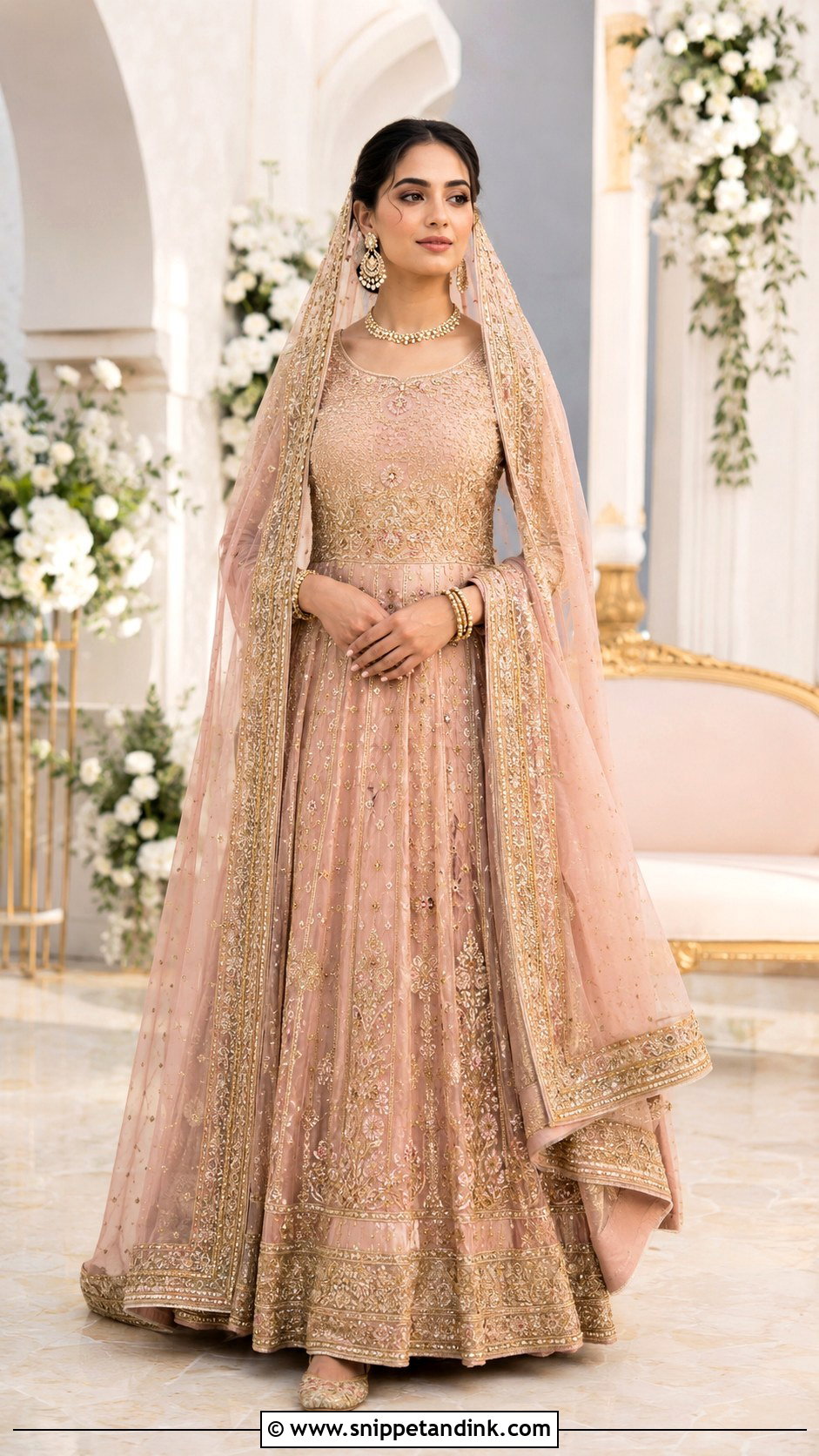
An Anarkali bridal gown has a long fitted bodice and a skirt that flows out from the natural or raised waist. Silk, organza, chiffon and net all work, in ivory, muted gold, blush or the color your ceremony calls for. Embroidery framing the neckline and running along the skirt border ties it together. A matching dupatta goes neatly over the head or across both arms. Statement earrings, a delicate necklace, bangles and comfortable embellished shoes complete it. Skip the large bouquet, which hides the bodice work. Sleeves and neckline are easy to adjust for coverage, but make sure the skirt is wide enough for a full stride, especially during rituals that involve walking.
17. Cape Sleeve Wedding Dress
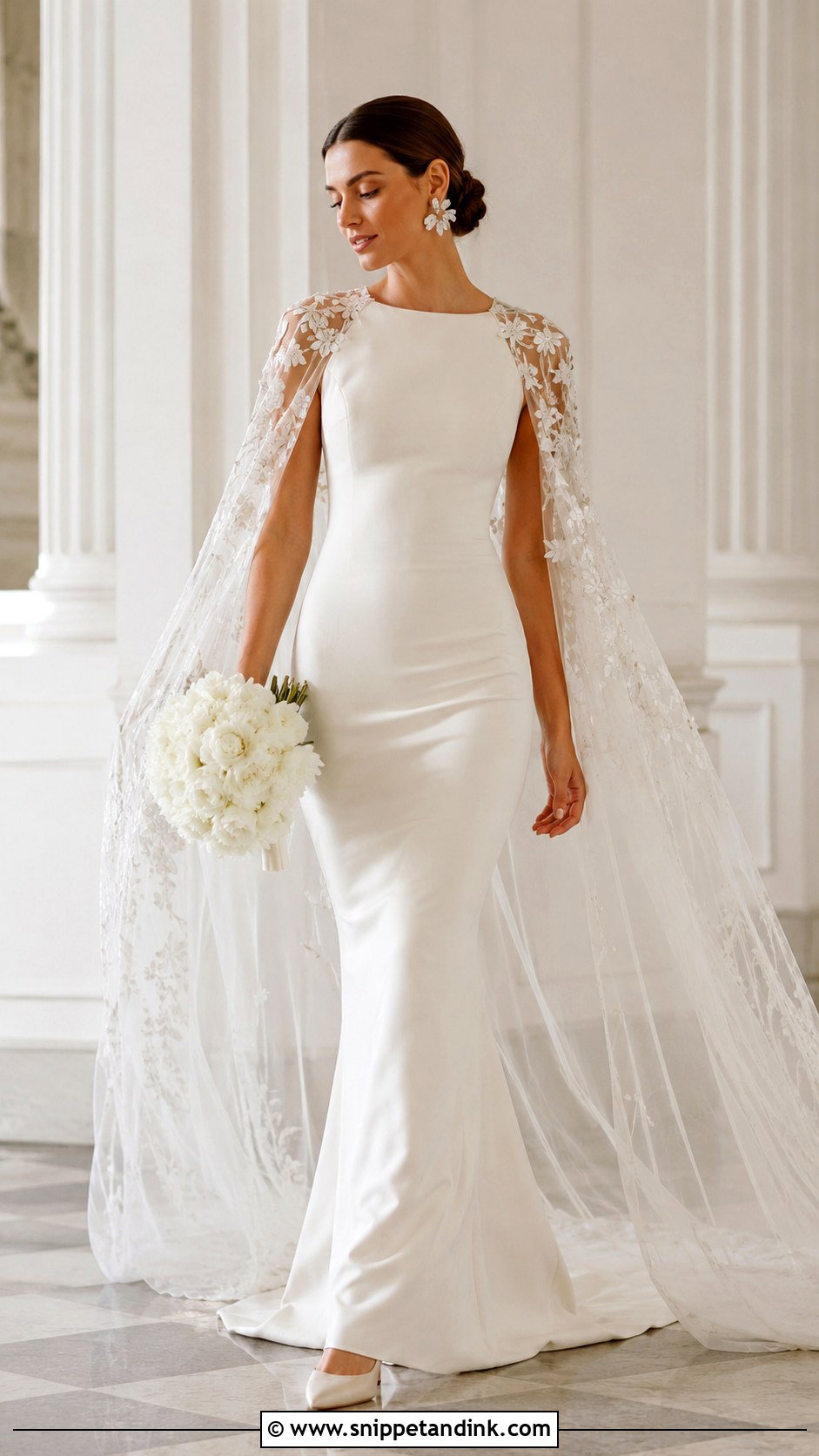
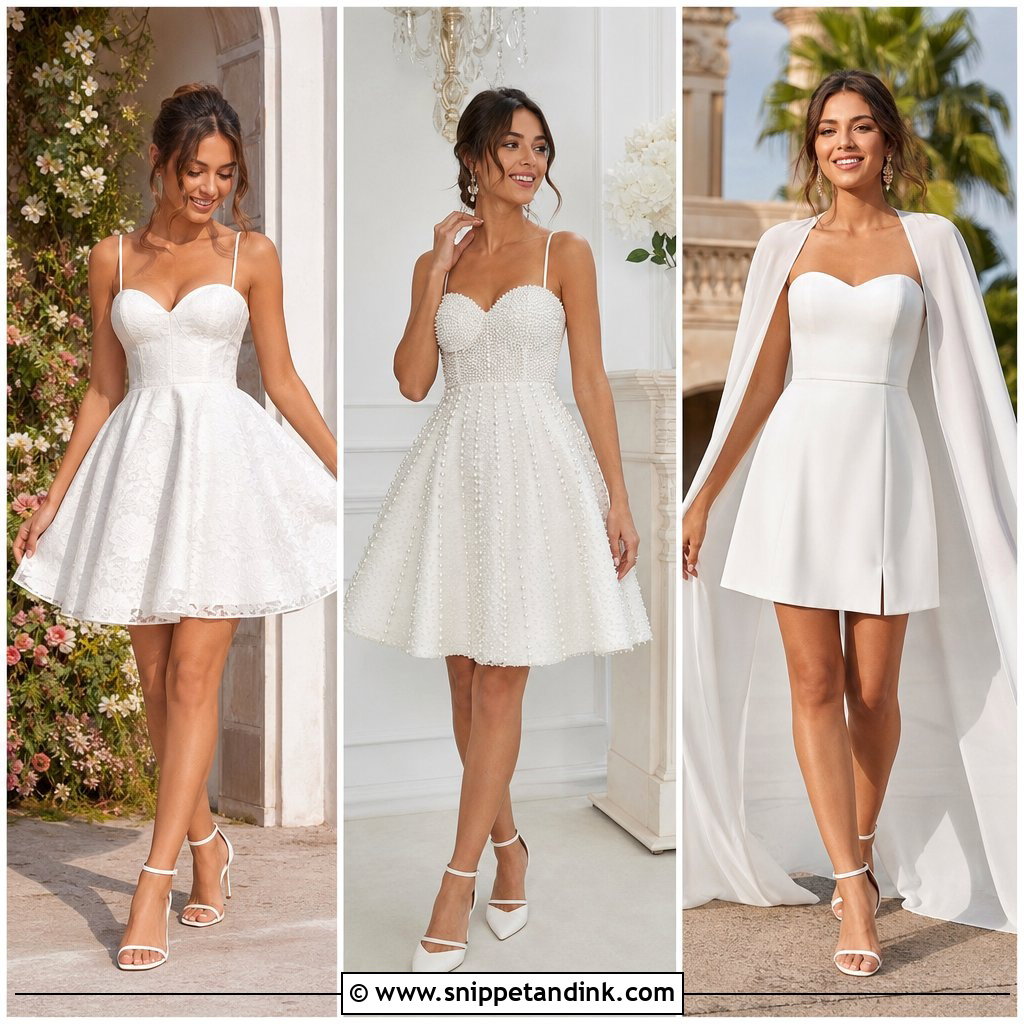
Capes look graceful until you walk arm in arm with your father and the fabric bunches between you. During the fitting I have the bride walk beside someone and hold a bouquet, because that’s when a cape shows whether it falls behind the arms properly. It can come from the shoulders, neckline or back, in sheer tulle, chiffon or embroidered lace. A detailed cape needs a plain fitted gown under it, and crepe or satin is cleanest. Choose earrings rather than a necklace if the cape circles the neck. A low bun, ivory pumps and a structured bouquet complete it. Pick a detachable cape if you want a second look later.
18. Tiered Tulle Bridal Gown
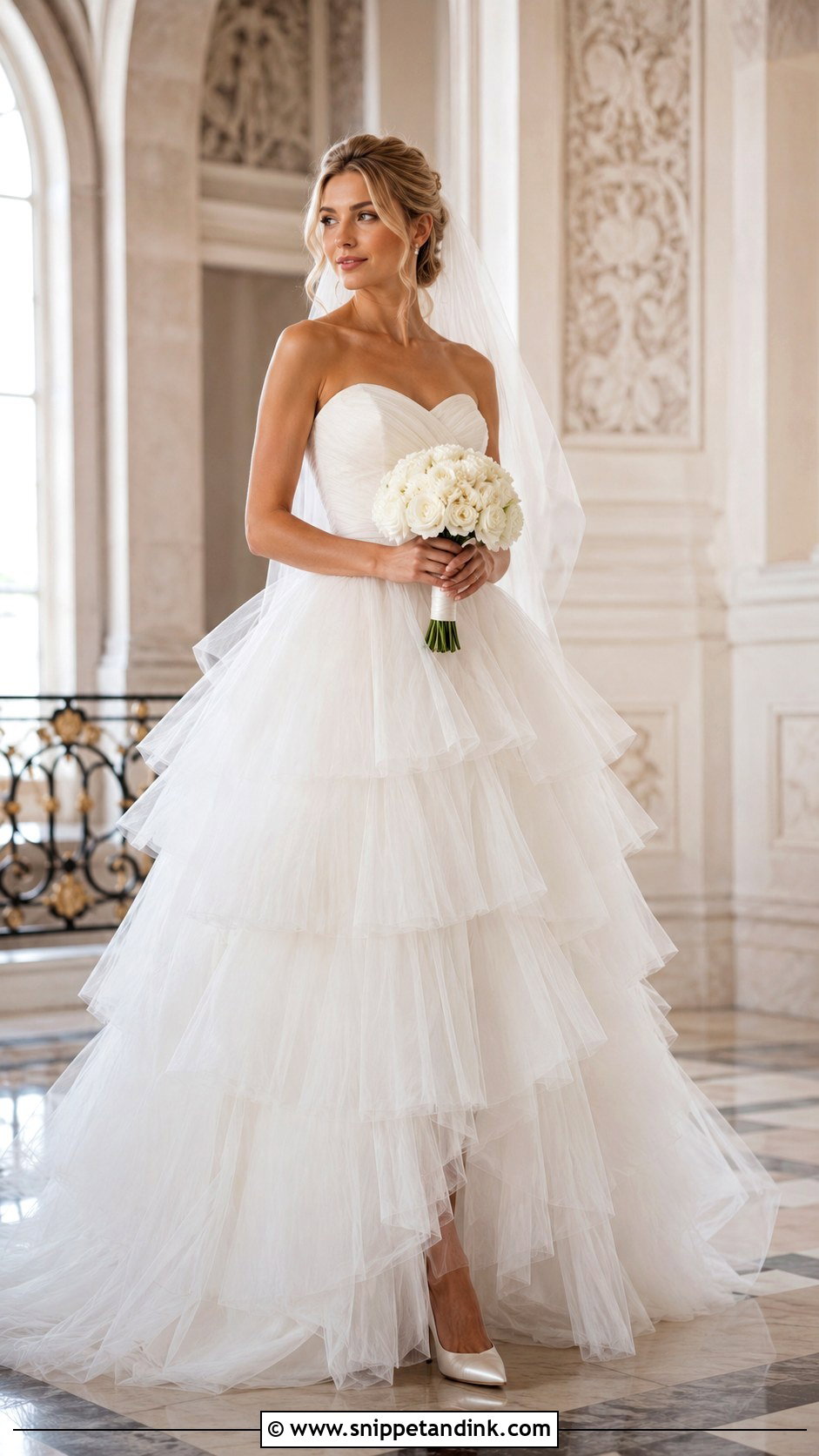
Tiers give a tiered bridal gown volume that moves when you walk, and they’re more playful than one big skirt. A fitted bodice defines the waist before two or three spaced tiers. Raw tulle edges look light and modern; horsehair trim makes each tier hold its shape. The lowest tier has to clear the floor; tulle that drags picks up dirt fast and tears easily under a heel. Crystal studs, a simple fingertip veil and satin heels are enough. Hold a compact bouquet above the waist. It suits big indoor rooms, romantic outdoor ceremonies and a reception with plenty of dancing.
19. Drop Waist Wedding Dress
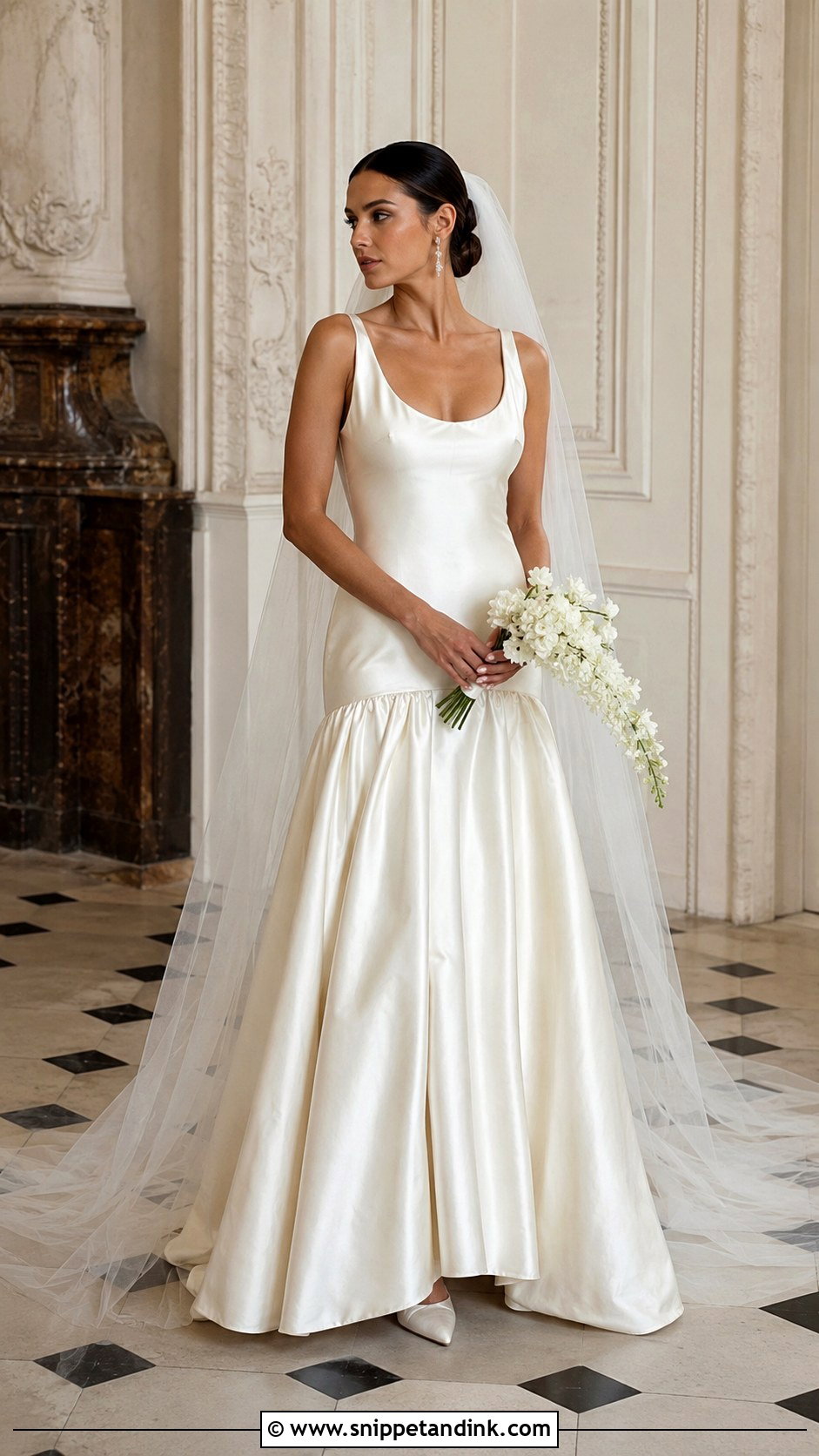
I’d be careful recommending a drop waist to brides with a short torso, as the seam can fall too low and shorten the legs. The bodice runs past the natural waist before opening into a fuller skirt, and it can feel vintage or modern depending on the fabric. Smooth satin with a scoop neck is refined, lace or light beading more decorative. Long earrings, a clean bun and a sheer veil at the back of the style. Pointed heels lengthen the line, and a narrow bouquet stops the outfit looking crowded. The waist seam must sit level and let your hips move. Formal ceremonies, historic buildings and evening celebrations suit it.




20. Short Reception Wedding Dress
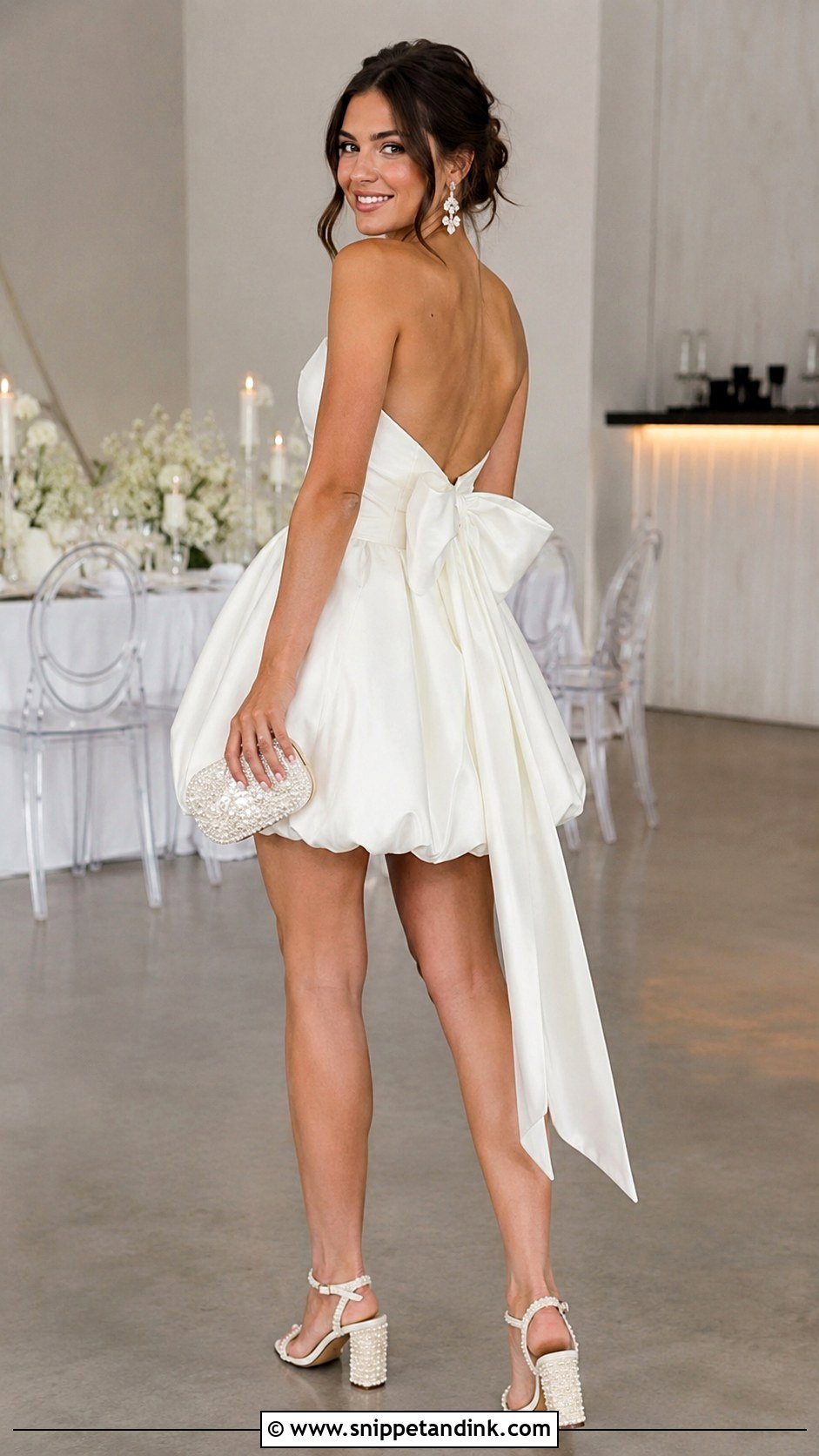
A short reception wedding dress is about getting your legs back for the dance floor. A structured mini, a fitted lace frock or an ivory bubble hem all work. Shoes depend on the floor: block heels on wood, embellished flats on stone, clean white pumps anywhere smooth. Statement earrings and a compact clutch replace the veil and bouquet. If the dress is plain, a removable bow, pearl detail or sheer gloves add interest. Sit in it at the fitting; a short hem that rides up will have you tugging all night. It also works as the main dress for a courthouse or small civil ceremony.
The Back of the Dress Is What Guests See
During the vows, everyone in the room is looking at your back. Brides spend hours on the front in the mirror and almost no time on the view guests actually get, so I always turn a bride round with a hand mirror before she decides.
Closures
Buttons over a zip look lovely but take time to fasten, so give the person dressing you a crochet hook or button hook. Corset lacing should be pulled evenly; twisted laces show in photos. Check that the closure lies flat when you breathe out fully.
Veil placement
A veil set at the crown hides most of a low back or a bow. Placed just under a low bun, it frames the back detail instead. Decide this with your hairstylist at the trial, with the dress on or a photo of the back in hand.
Bustle
Any train needs a bustle for the reception, and different styles change how the back looks. Ask to see the bustle in place at your final fitting, and have whoever will do it on the day practice there and then.
An over-bustle lifts the train up onto the back of the skirt and adds fullness; an under-bustle tucks it beneath and keeps the back flatter. Neither is better. On satin I lean toward whichever leaves fewer visible pull marks, and on lace I want the hooks hidden inside the motifs.
Your Gown Has to Work at the Dinner Table Too
A wedding dress has to suit your personality, your body and your venue at once. The range here goes from satin ball gowns and fitted mermaids to light chiffon, pishwas frocks and a short reception dress. When you compare them, look past the front. Check the back, the movement, the train, the sleeves and the shoes as one outfit, and bring your real undergarments and footwear to every alteration appointment. The dress you choose should let you walk, sit, greet guests and celebrate without thinking about it.
You'll Like These Ideas:







Leave a Reply