
An Algerian bride rarely wears one dress. During the tasdira she changes several times, and each outfit usually speaks for a region: the Tlemcen chedda, the Algiers karakou, the Oran blouza, the Constantine djebba, the Kabyle dress, the Chaoui melehfa and more. That makes planning a wardrobe less about finding the prettiest gown and more about sequence, weight and how fast each look can go on and come off. Velvet, satin, silk, pearls, metallic embroidery and sculpted headpieces appear throughout. Many of these garments carry real regional meaning, so I always suggest bringing in a dresser, artisan or relative who knows them well. Below are traditional pieces and careful modern versions, each with the fitting and styling notes I’d give in person.
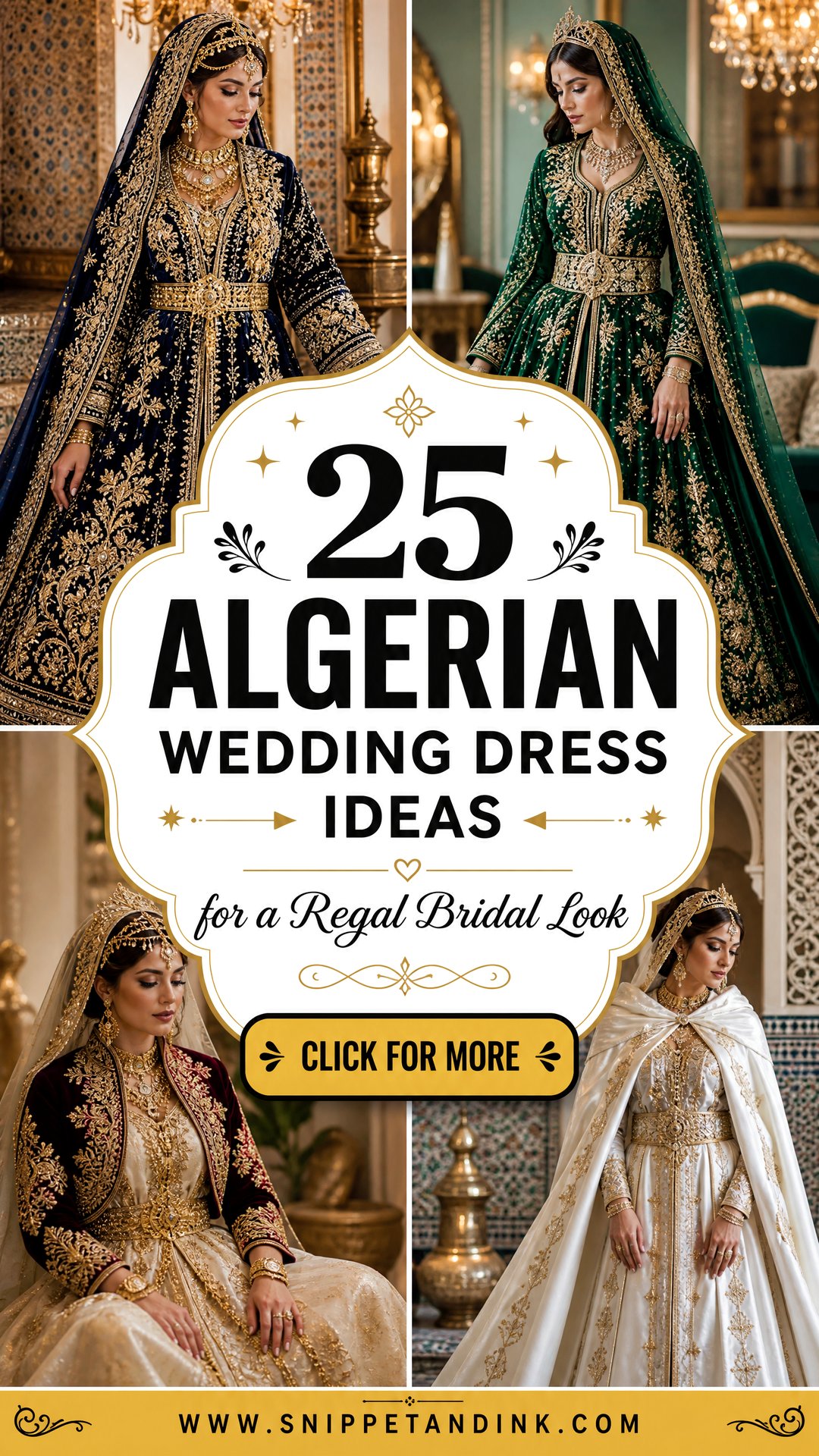
How I Plan the Order of a Tasdira
The tasdira is where the bride presents herself in a series of outfits, often several over one evening. The number varies by family, region and budget, so I start by deciding how many changes the evening can actually hold, then build the order around time and weight.
- Agree the list of outfits with the family first, including any piece that’s expected, such as a karakou for Algiers families or a chedda for Tlemcen.
- Put the heaviest outfit, usually the velvet and headdress, earlier in the evening while the bride is fresh and the hall is cooler.
- Place quick changes such as a blouza between two complicated ones, so the dresser has a break and the guests don’t wait too long.
- Keep the lightest, easiest dress for the end, when the dancing gets serious.
- Time each change at a rehearsal. A chedda or wrapped melehfa takes far longer than a one-piece blouza.
Most families work with a dresser, often called a machta, who manages changes, jewelry and headpieces. Book her early and walk her through your list of outfits well before the day.
1. Tlemcen Chedda Wedding Dress
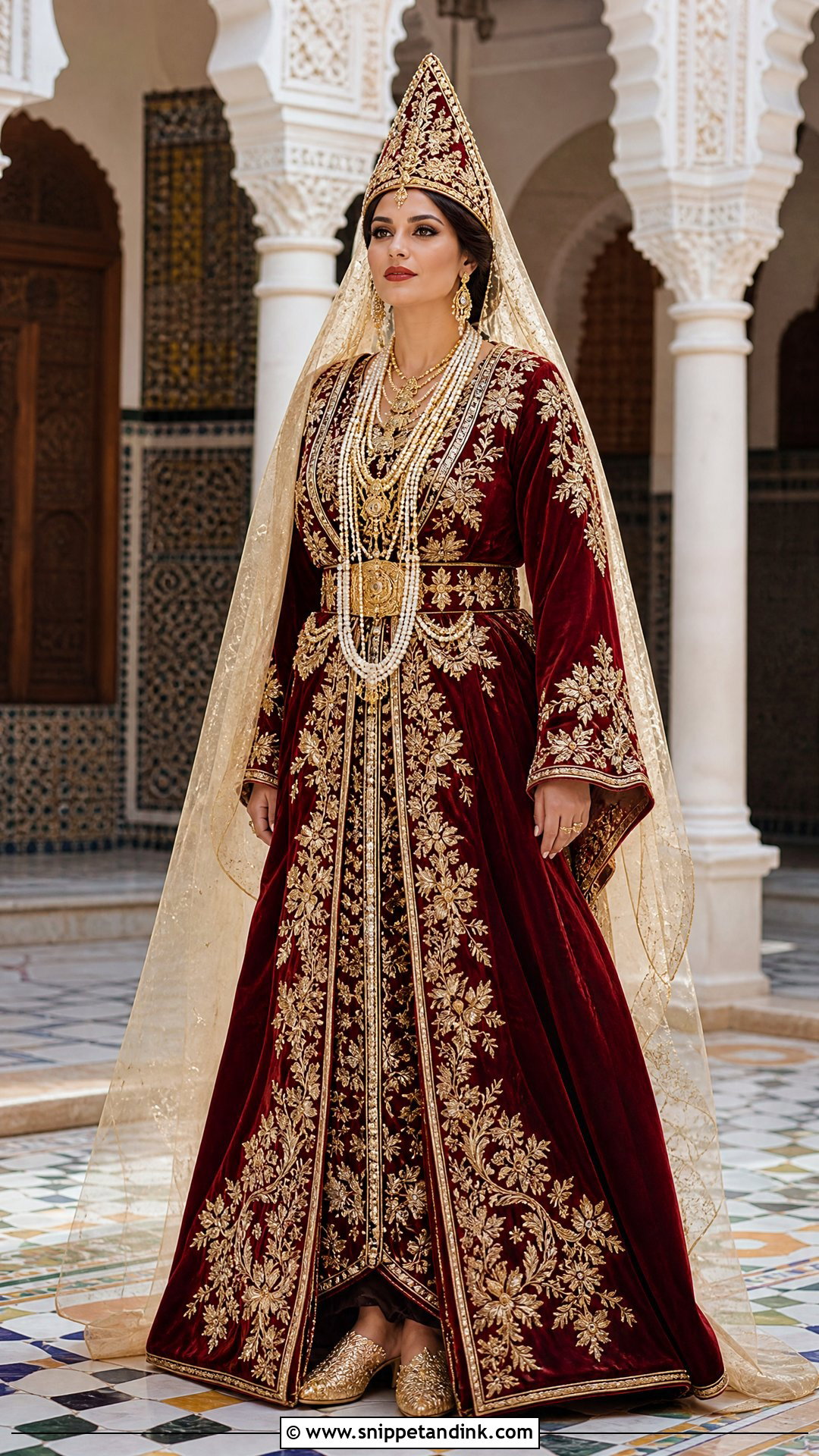
The Tlemcen chedda is the most ceremonial outfit an Algerian bride can wear, and the most demanding. It combines a richly embroidered velvet caftan with a tall conical headdress, layered pearl strands, necklaces, earrings and a silk veil, and the craft and rituals around it are recognized as cultural heritage. Deep red, burgundy or jewel-toned velvet shows the gold work best. All that jewelry and the headdress add real weight, so I always schedule a full dress rehearsal with every layer on, including the headdress, to check balance and comfort. Simple closed-toe gold slippers or low heels are the right shoes; anything taller makes the headdress harder to carry.
2. Red Velvet Karakou With Sarouel Mdawer
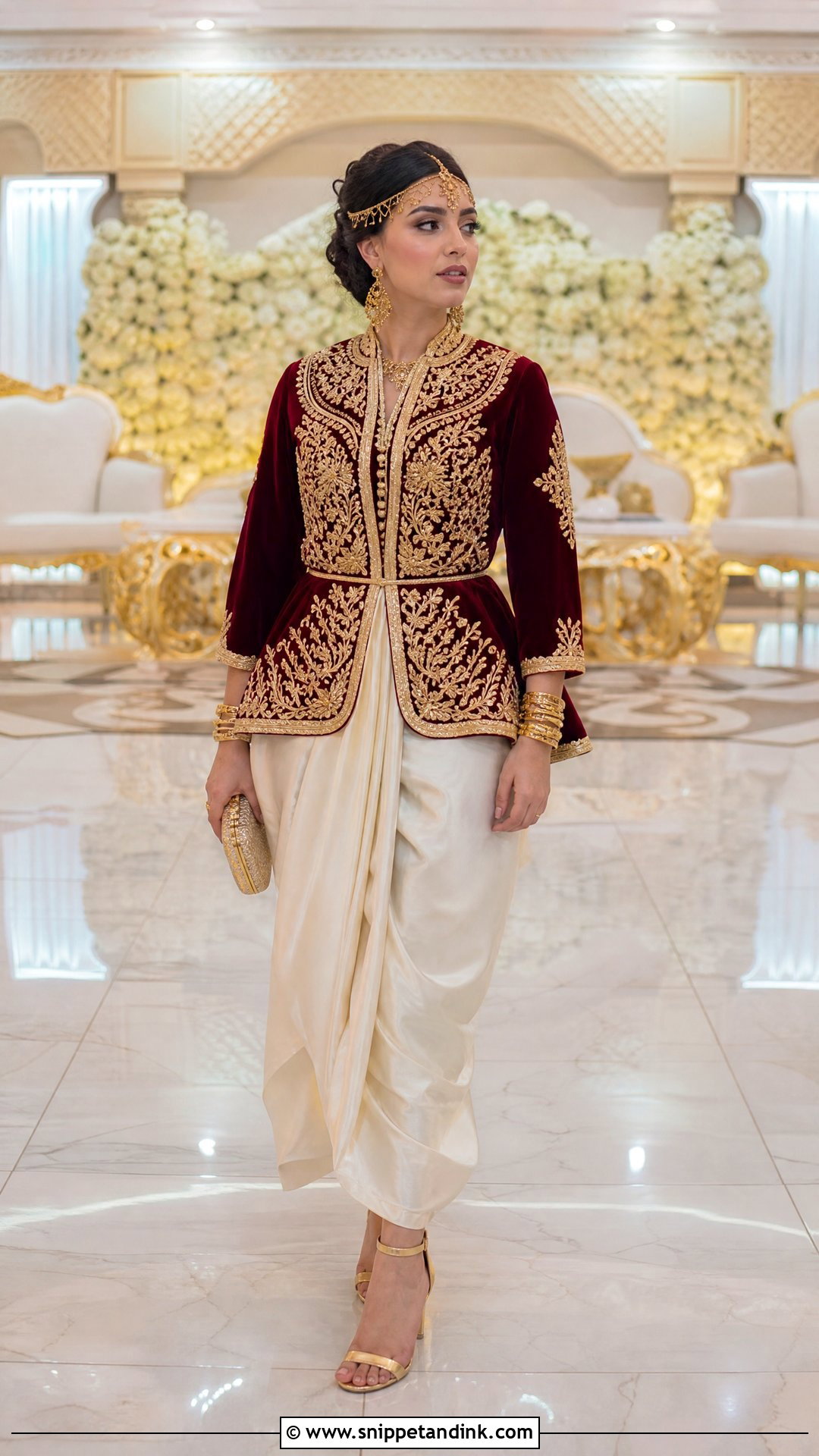
Red velvet karakou over a white sarouel mdawer is the classic Algiers bridal statement. The fitted jacket carries gold embroidery around the neckline, cuffs, front opening and hem, and an ivory camisole or satin lining keeps it smooth underneath. The full, rounded sarouel balances the structured jacket, which is why it flatters so many body types. What I watch closely is jacket length: it should finish near the natural waist, because a karakou that runs long hides the shape of the trousers. Gold heels, traditional earrings, stacked bracelets and a fine khit er rouh across the forehead complete it.
3. Ivory Karakou With Sarouel Chelka
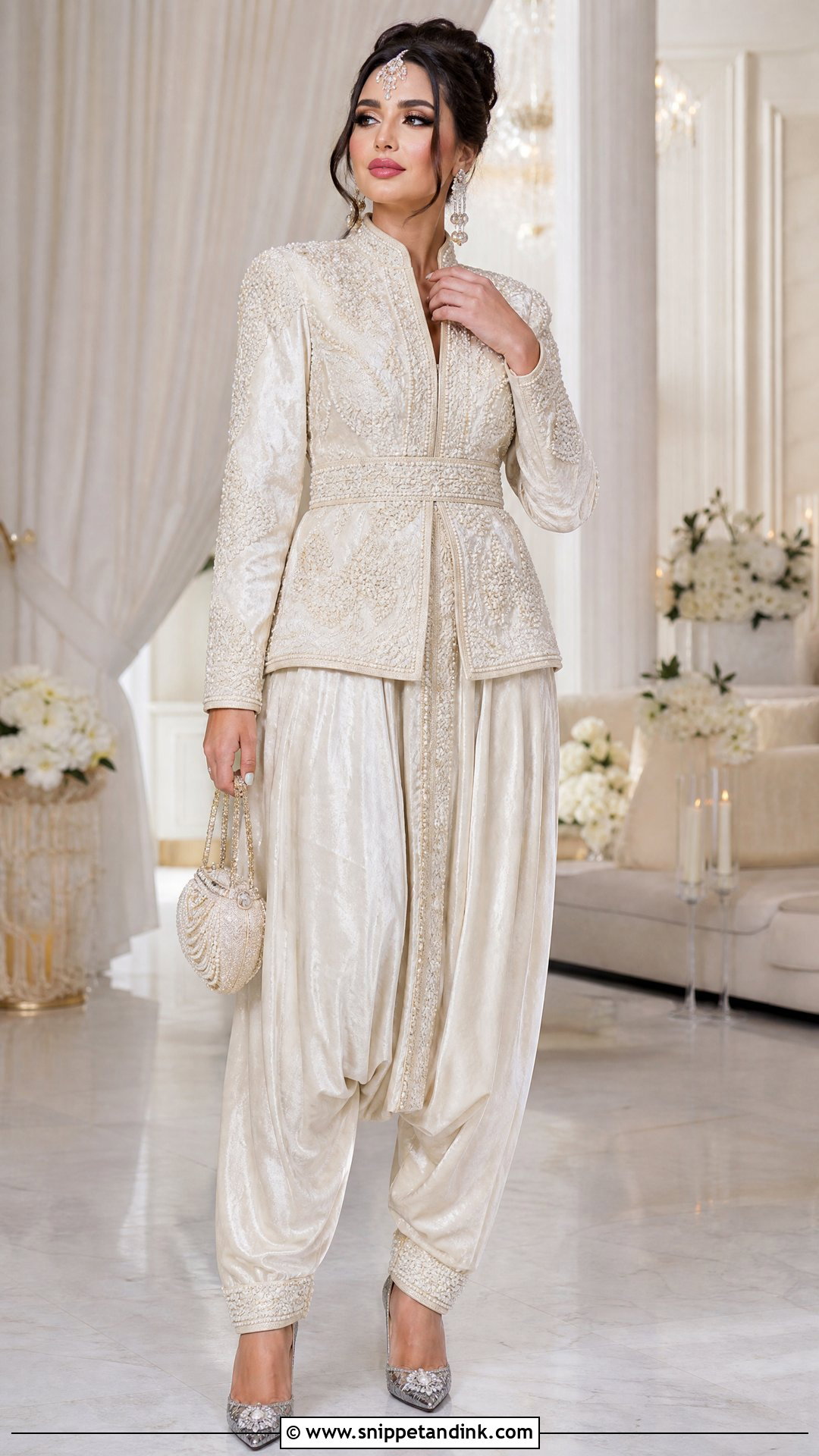
Ivory karakou with a sarouel chelka reads fresher and lighter. Ivory velvet or satin with silver thread, pearls and clear stones keeps the familiar two-piece structure, while the chelka is narrower and more contemporary than the mdawer. Pointed silver heels lengthen the leg, and a crystal headband or understated khit er rouh frames the face. It’s a good route to traditional Algerian details in a streamlined form. Because the chelka is slimmer, tailoring has to be exact at the shoulders, waist and trouser length; a chelka that’s a little too long pools at the ankle and spoils the line.
4. Black And Gold Karakou With Long Skirt
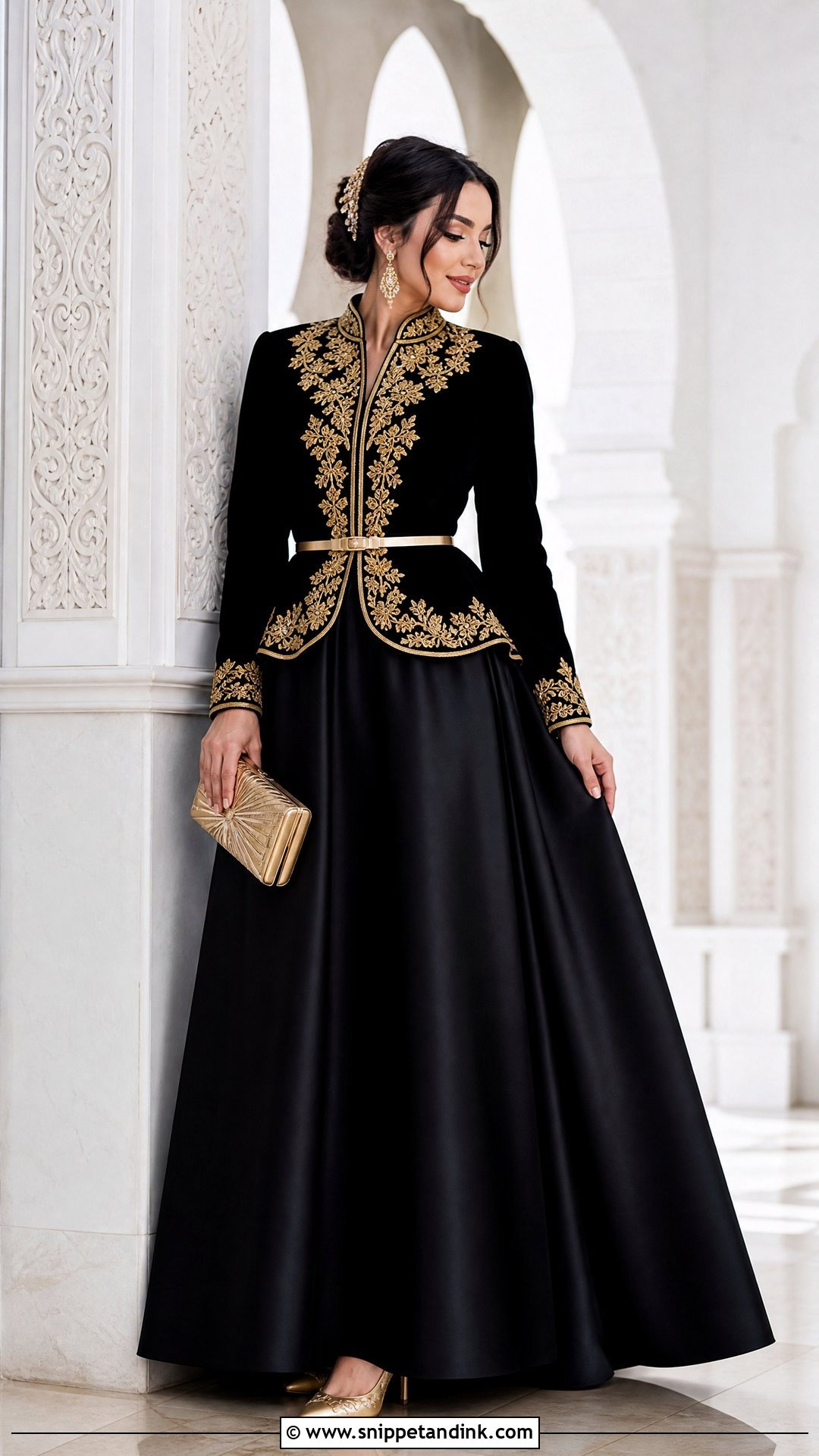
Black velvet with gold embroidery is dramatic and grown-up. Here the karakou goes over a full-length black satin skirt instead of trousers, and an A-line or softly flared skirt balances the structured jacket while leaving room to move. A slim gold belt can define the waist, but only if it doesn’t cut through the embroidered pattern. Some families feel black is too somber for a wedding, so I’d check before choosing it. A low bun keeps the neck and shoulder embroidery visible, and a black or champagne headscarf adds coverage where the family prefers it.
5. Oran Blouza Wedding Dress
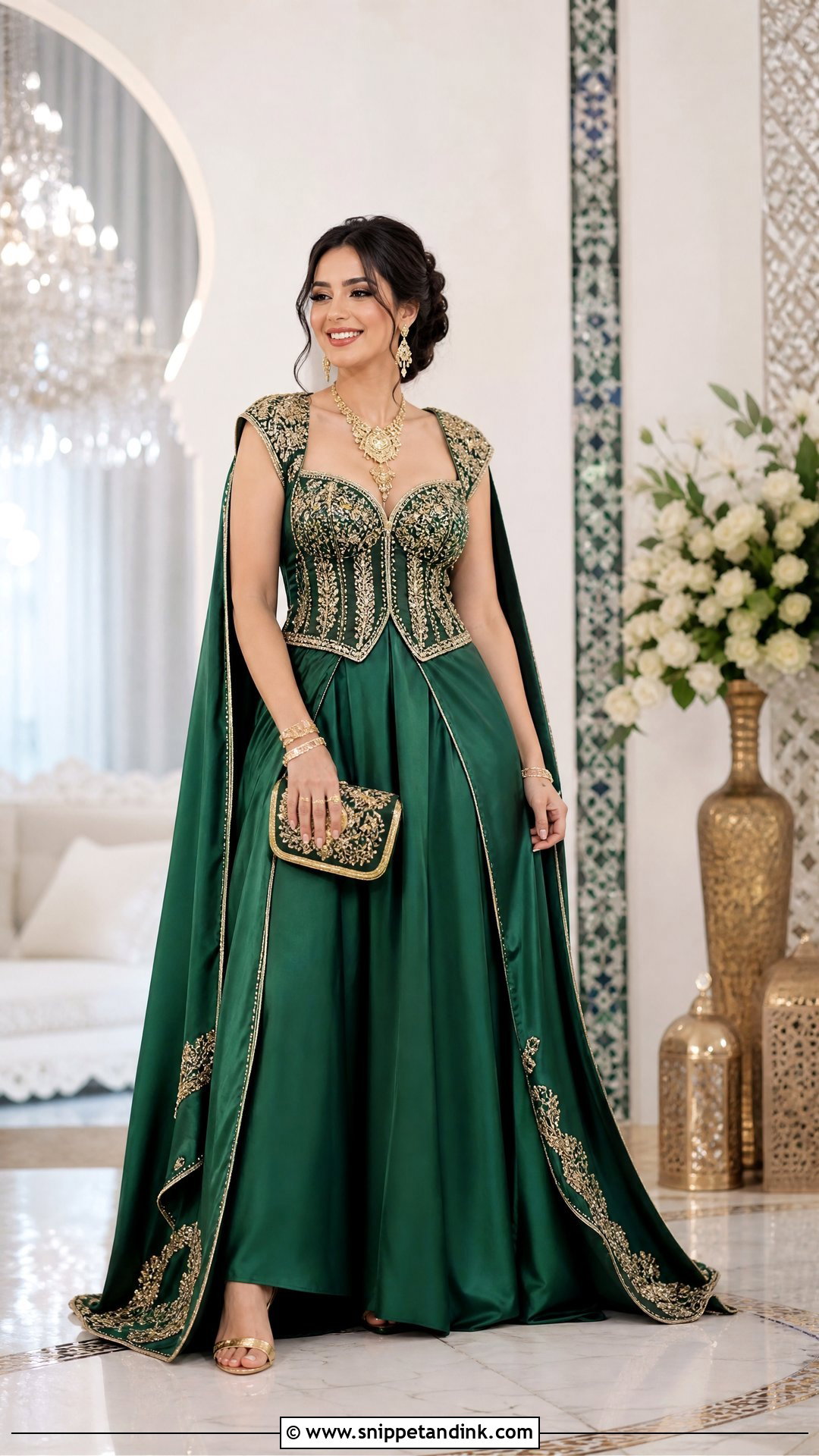
The Oran blouza is one of the easiest outfits in the tasdira to dance in. It’s a one-piece dress in silk, satin or another fluid fabric, with a heavily worked bodice and a skirt that falls straight from the waist. Emerald, raspberry, cobalt and violet with gold beading are classic. A fitted waist keeps the flowing skirt defined, and sleeves can run short or to the elbow depending on coverage. Since the beadwork concentrates on the bodice, it can catch on a long necklace, so I’d pick a necklace that sits above the beaded edge. A side-swept updo shows off the earrings.
6. Tlemcen Mensouj Blouza Wedding Dress
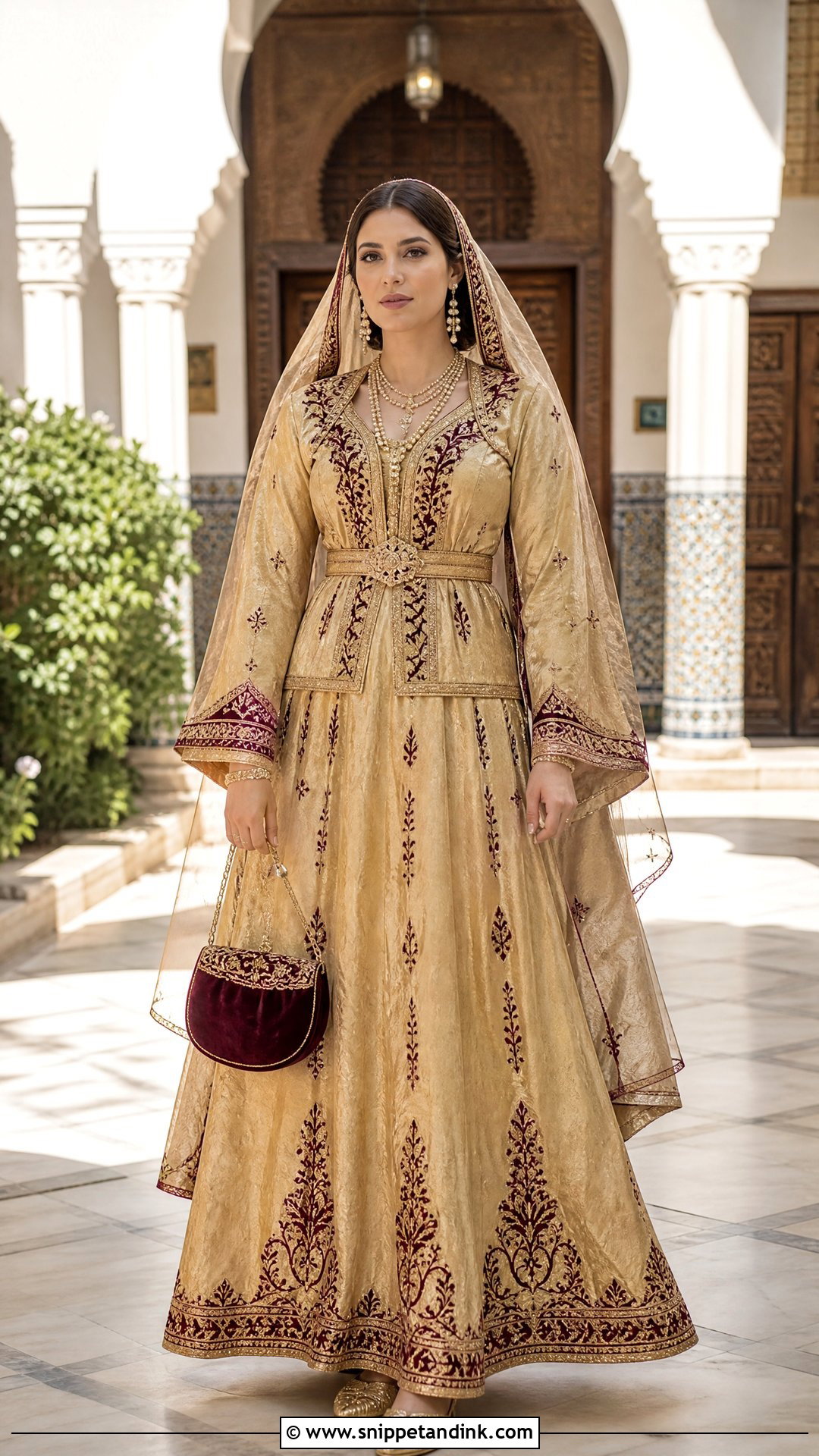
Mensouj is a woven fabric, often gold-based with burgundy, green, ivory or rose motifs, and it already carries a lot of richness on its own. Shaped into a defined bodice and ankle-length skirt, it needs extra embellishment only at the neckline. Gold slippers, pearl earrings and layered necklaces are traditional; one necklace is enough for a lighter version. Woven metallic fabric is stiff at the hem and catches easily, so the hem should clear the floor completely. A matching head covering or pinned veil completes the Tlemcen feel.
7. Constantine Djebba Fergani Wedding Dress
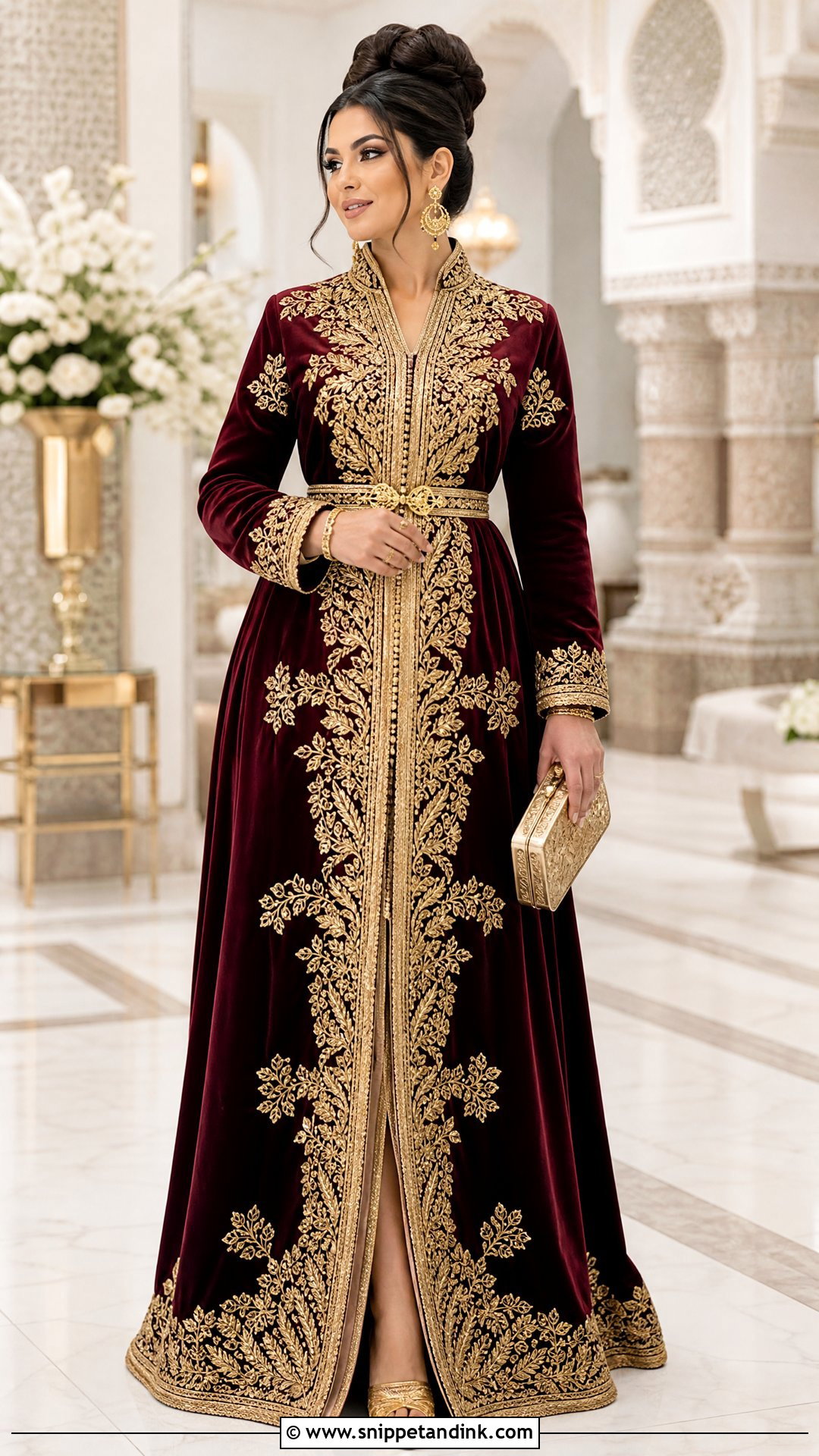
The Constantine djebba fergani is long and statuesque, with dense metallic majboud embroidery concentrated on the front. Burgundy or deep black velvet is the traditional base. Eastern Algeria’s festive garments, the gandoura and melehfa included, have long been made and decorated by specialist artisans, and the djebba reflects that work. The waist can be lightly defined, but I don’t let it be tightened, since the straight, heavy fall of the velvet is the point. A higher bun keeps long hair off the embroidery. Velvet this heavy limits your stride, so ask the maker for a discreet back slit or enough width in the skirt to walk naturally.
8. Emerald Gandoura Annabia Wedding Dress
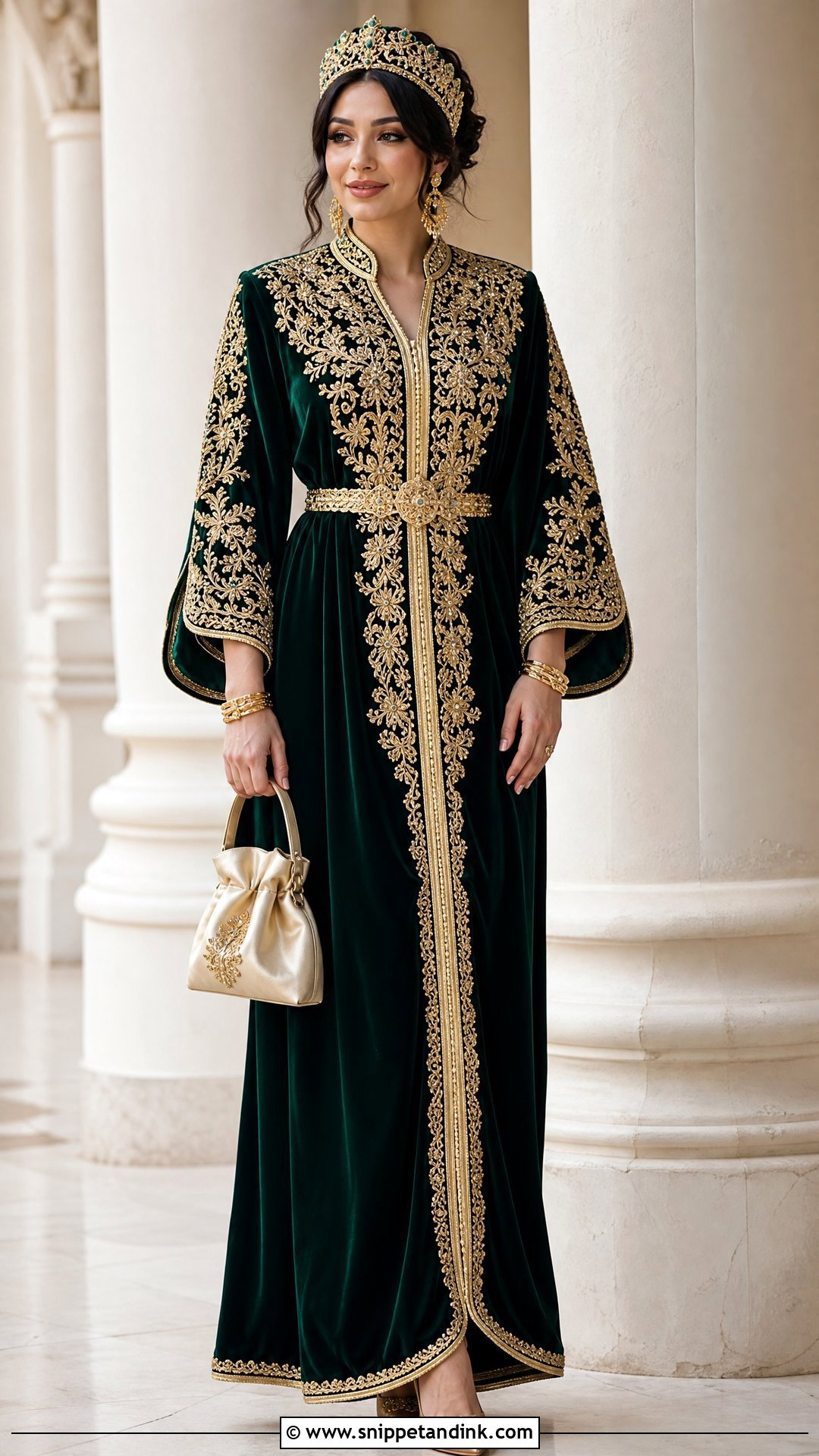
Emerald velvet suits the Gandoura Annabia, particularly at an evening wedding, where the green lets gold embroidery and traditional jewelry stand out. Embroidery usually covers the chest, neckline and sleeves. If the bodice is heavily worked, a short necklace, or none at all, keeps it clear. A defined waist shows curves; a straighter cut is just as traditional and more comfortable for a long evening. Hair worn away from the face lets the headpiece and earrings show. Velvet is warm under hall lighting, so I’d put this outfit at a cooler moment in the evening if you can.
9. White Kabyle Wedding Dress
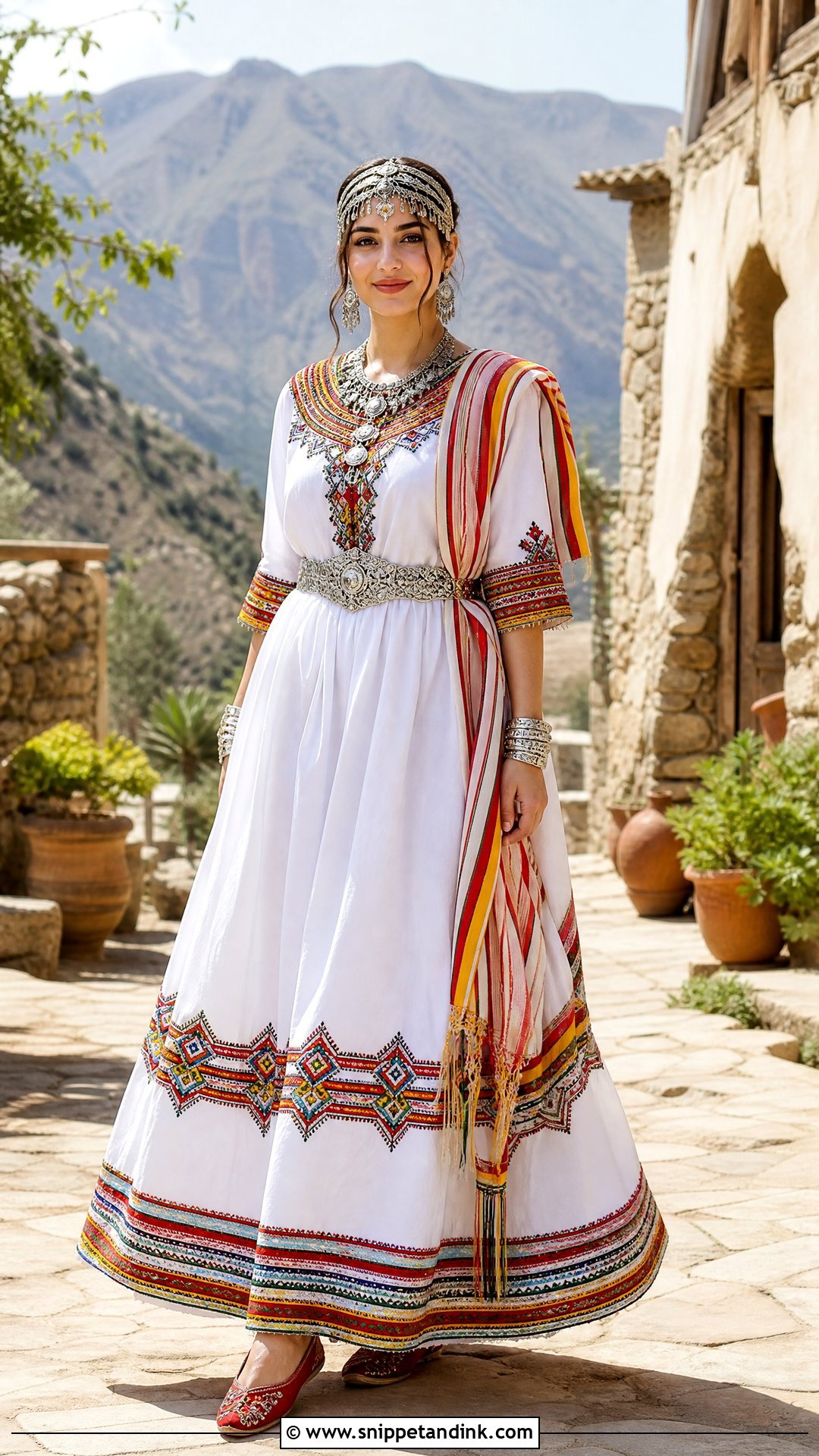
White Kabyle dresses are bright and celebratory, with bands of colored trim in red, yellow, green, blue and orange over a long white gown. A striped fouta tied at the waist gives shape and adds another layer of color. The jewelry is silver, often heavy and enameled, worn as necklace, earrings, bracelets and a headpiece. Low white or red shoes suit the dancing. When I style a Kabyle dress, I pick two or three of the trim colors to repeat in the makeup and accessories, rather than trying to match everything, which only makes the outfit look busy.
10. Red Kabyle Wedding Dress
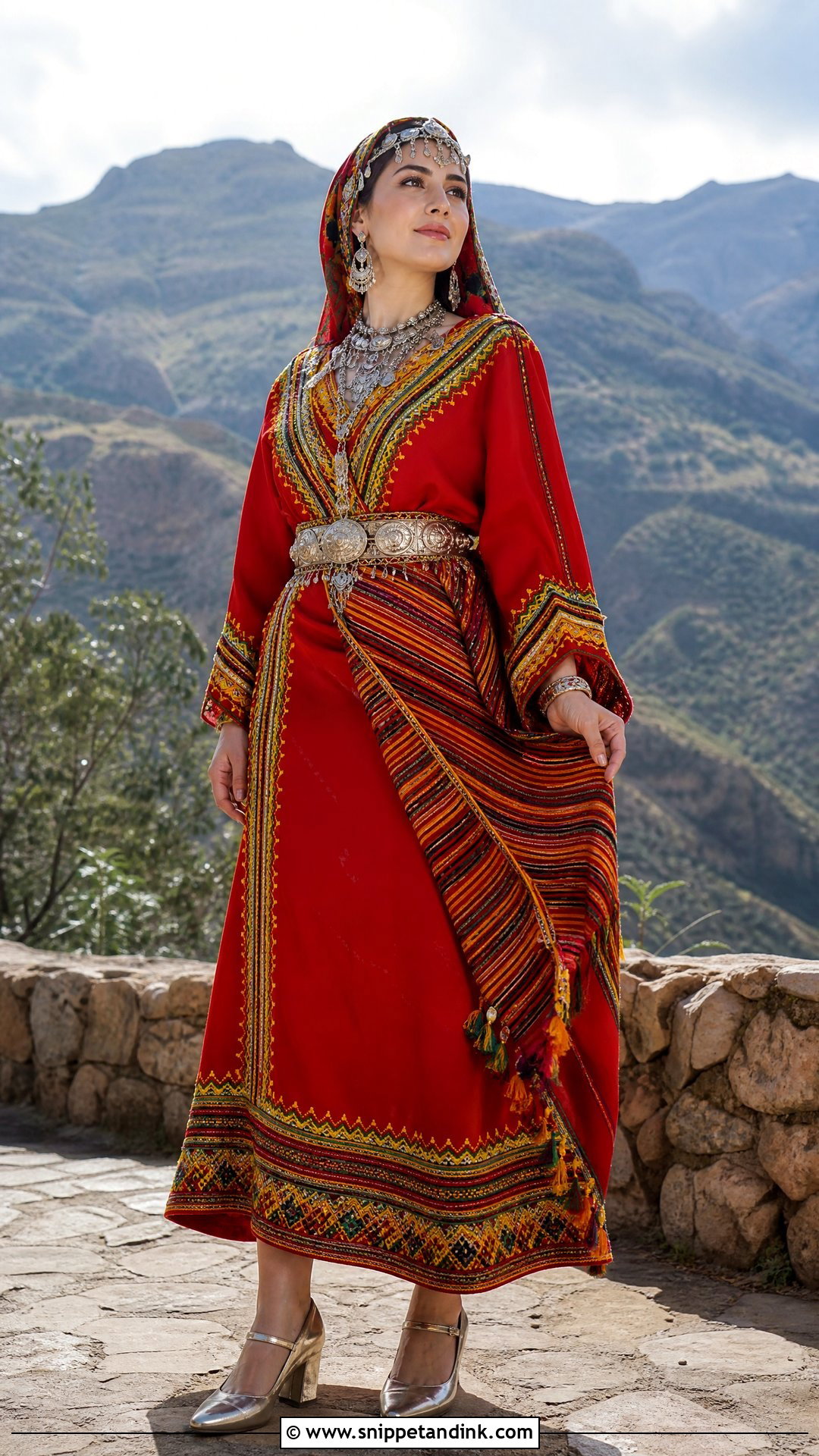
A red Kabyle dress is the bolder version. Begin with a flowing red dress decorated with geometric bands and contrasting embroidery, add a striped waist wrap and a silver belt, and finish with substantial silver jewelry and a colorful headscarf that leaves the face open. Bright red suits a henna night or a lively reception entrance; deep crimson with a palette of yellow, green and black feels quieter. Keep the skirt roomy for dancing. On a petite bride, I keep the bodice softly fitted so all those layers don’t swamp her.
11. Chaoui Melehfa Wedding Dress
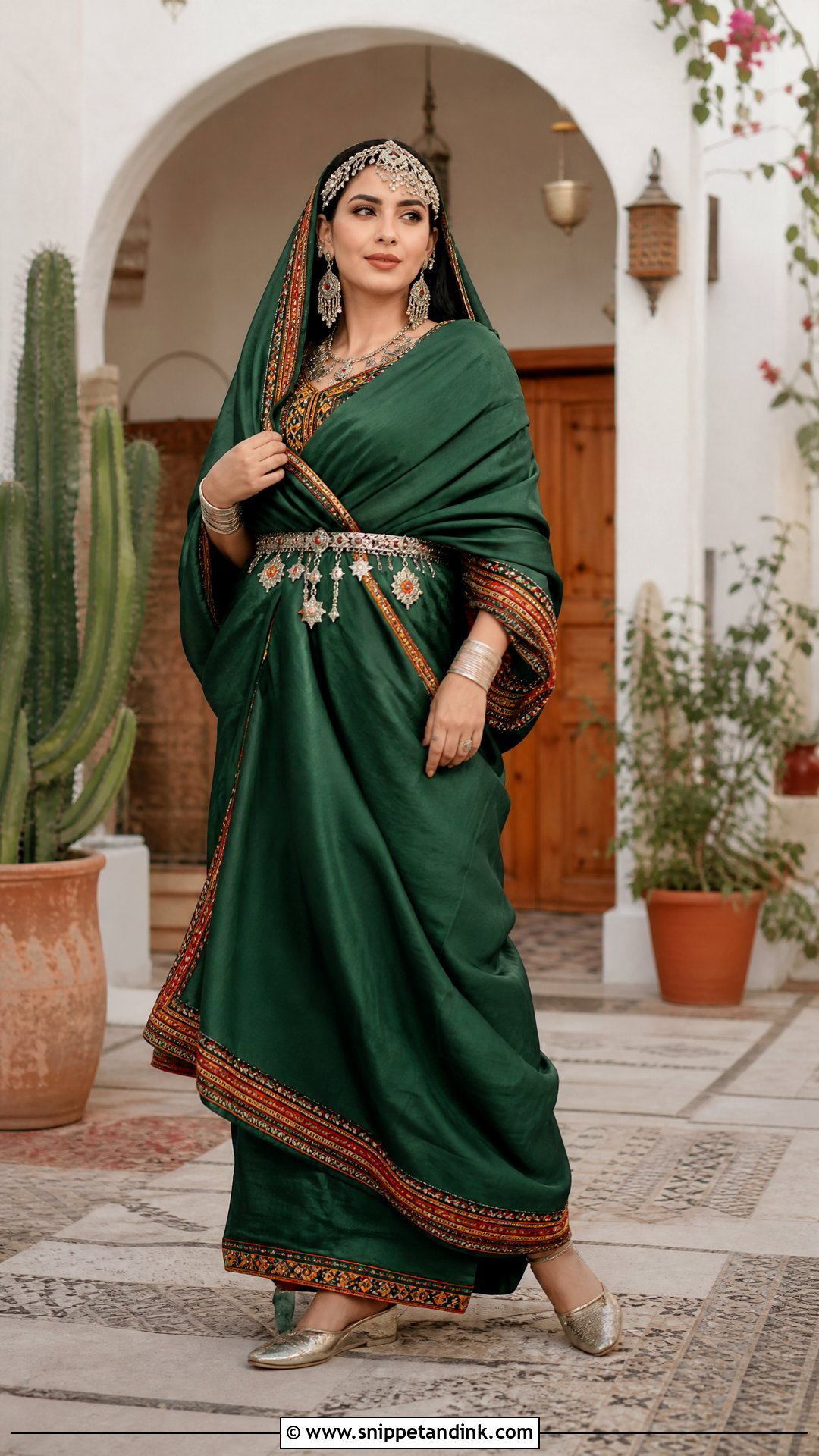
The Chaoui melehfa is a wrapped garment, and the wrap is everything. Lightweight fabric in black, deep red, forest green or ivory is draped over a fitted underdress and secured with decorative fastenings, with brightly colored trim along the edges. The underdress keeps the drape smooth and covered from every angle. Silver jewelry, a decorative belt, a headpiece and low metallic shoes complete it. I’d add color through the edging, earrings or a contrasting scarf rather than decorating the whole surface. Have an experienced dresser handle the wrapping and pins, because a melehfa that needs fixing every twenty minutes ruins the evening.
12. Setif Binouar Wedding Dress
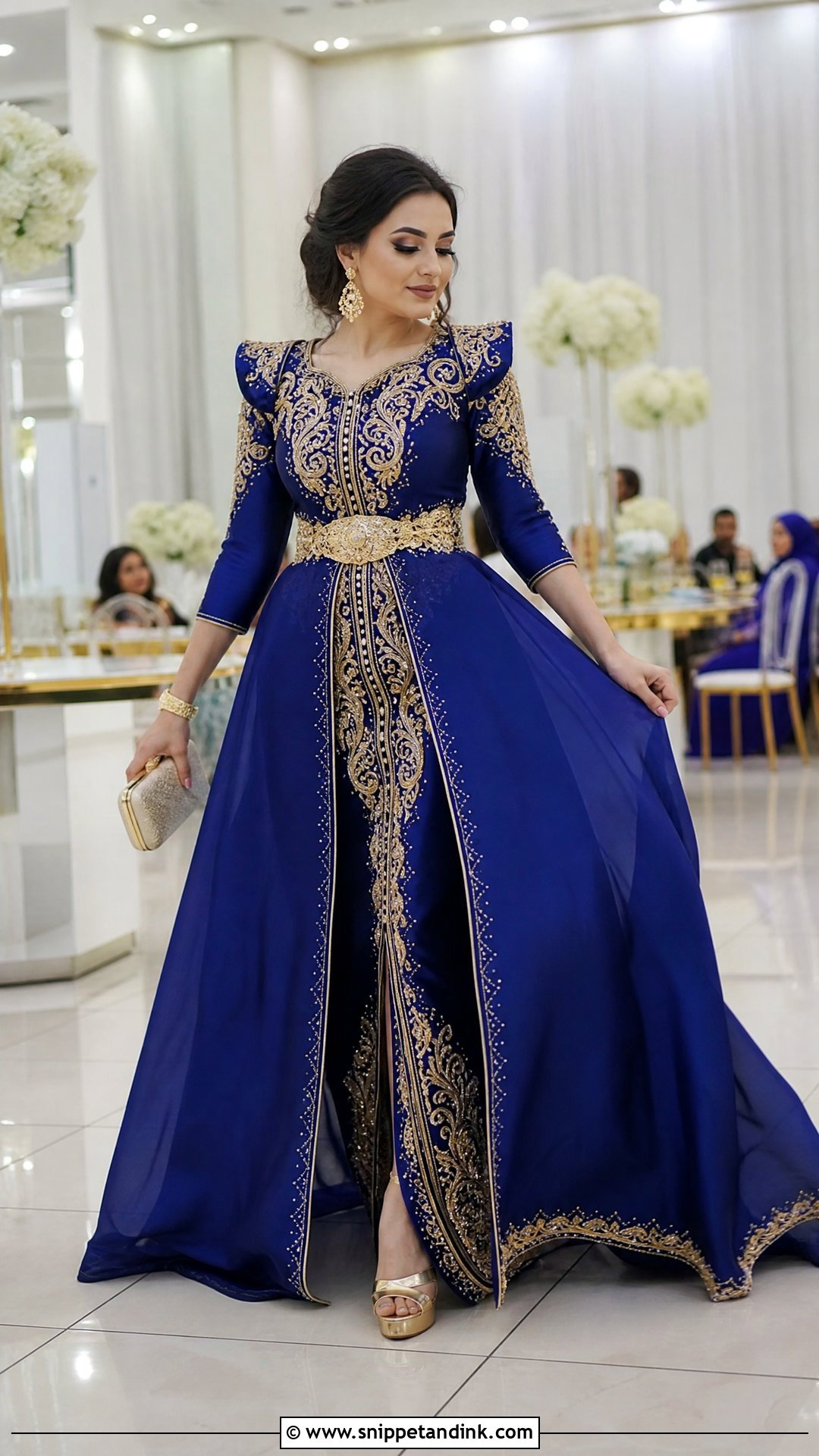
The Setif binouar is all volume and movement: a floor-length dress with a fitted bodice and a very full skirt, decorated with metallic or floral embellishment. Emerald, ruby, royal blue and violet suit it. A gold belt defines the waist. The skirt should spread naturally; heavily stiffened skirts look rigid and are tiring to carry. Low block heels or embellished flats are much easier under that volume. It’s a strong entrance outfit, since the skirt swings as the bride walks into the room.
13. Naili Wedding Dress
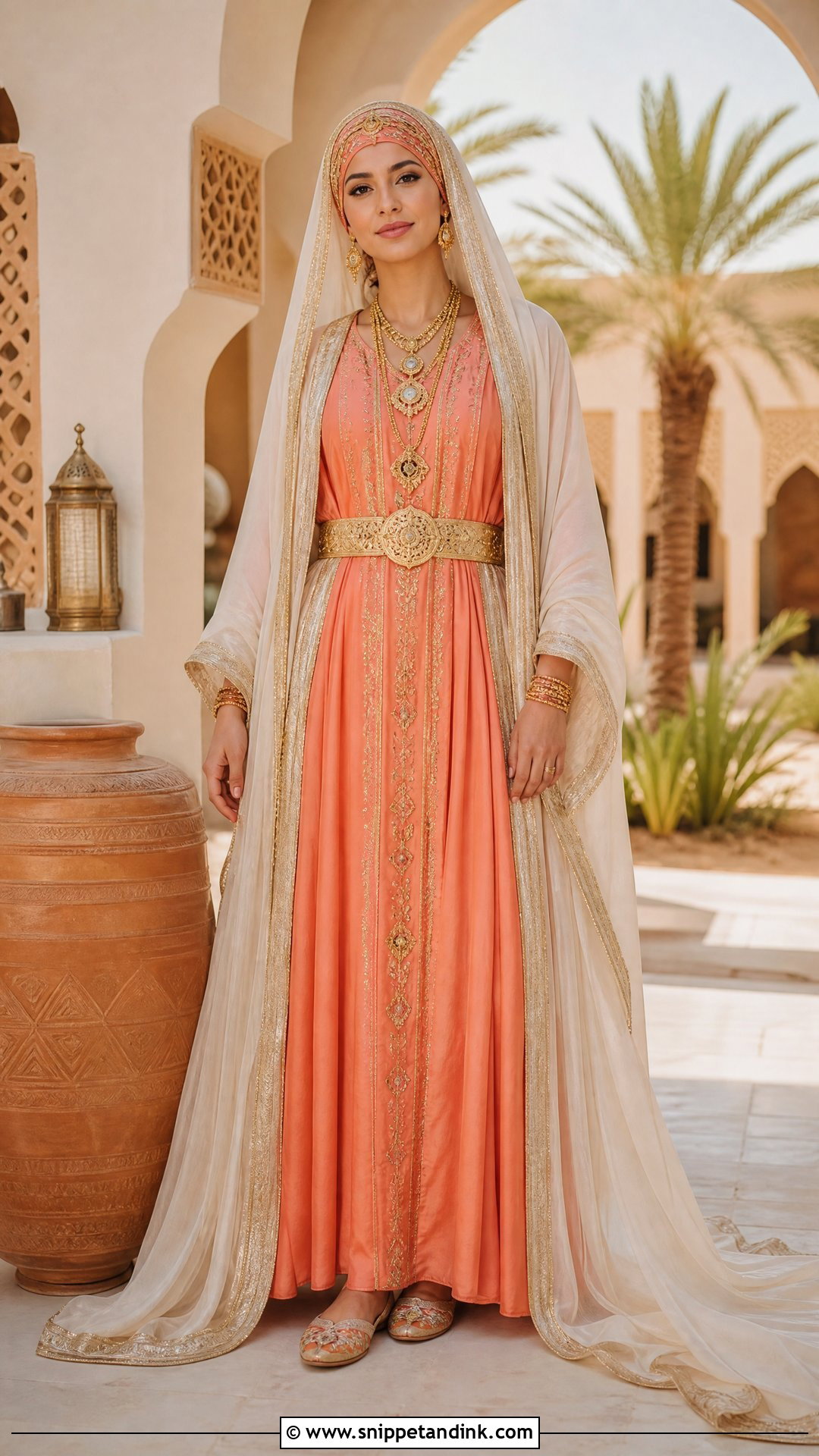
Naili-inspired dressing comes from the Ouled Nail tradition of the steppe and desert regions, with layered fabric and substantial jewelry. A long dress in white, crimson, coral or green carries a light outer wrap with metallic edging, a wide decorative belt and layered necklaces, earrings, bracelets and a head covering. The jewelry is heavy, so I’d keep the dress pattern plain around the upper body, letting each ornament show. Embroidered flats or low gold heels are more comfortable under the layers. Work with someone who knows the regional dress, so meaningful pieces aren’t treated as generic decoration.
14. Mostaganem Chedda Wedding Dress
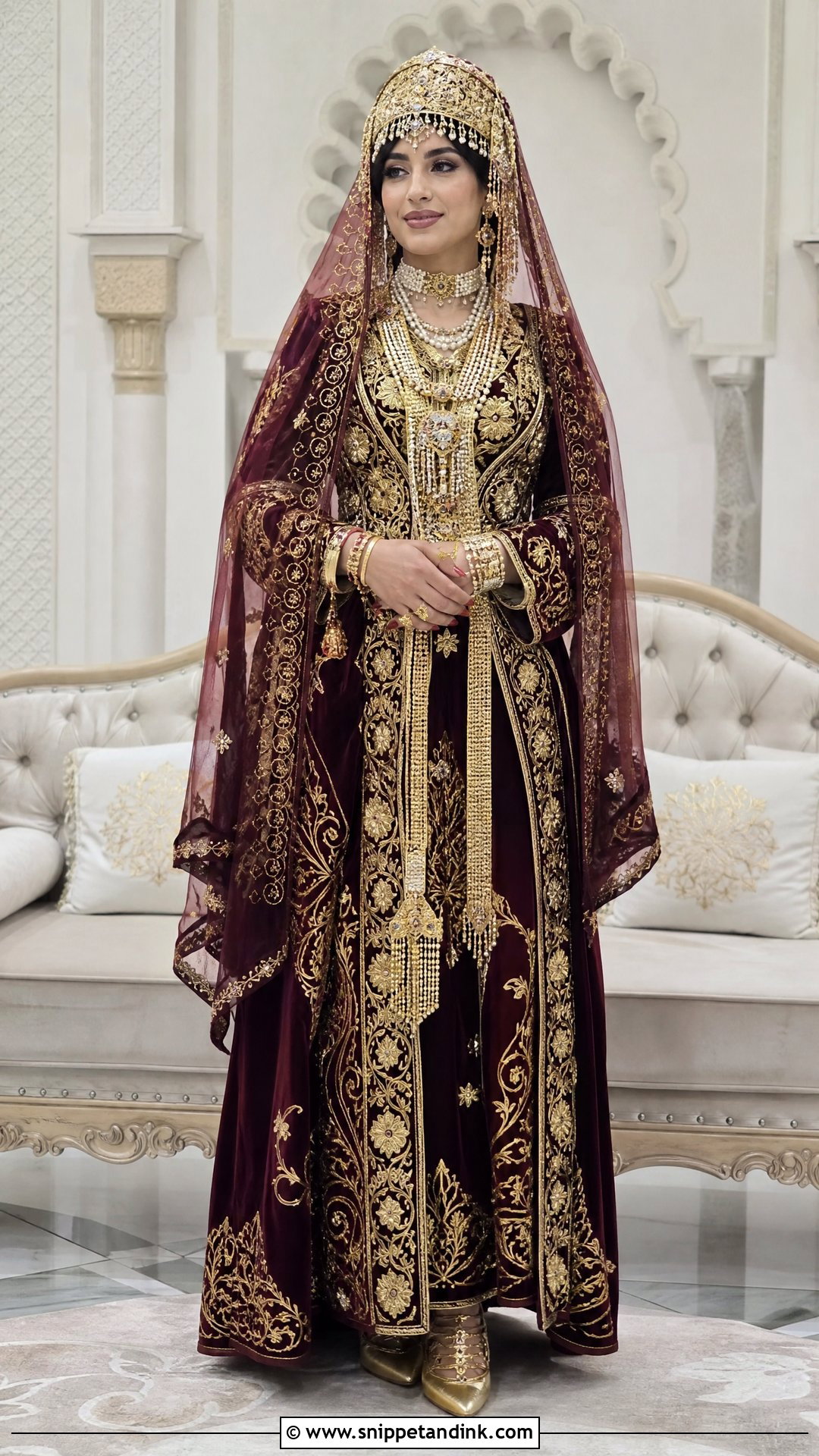
The Mostaganem chedda is another western Algerian bridal outfit with its own regional identity. Think of it as a complete ceremonial dressing, not a decorated dress, where the headdress, jewelry, fabrics and the way it’s put on all work together. Burgundy, red or dark green velvet with gold embellishment forms the base, with pearl strands and coordinated ornaments. Test the headdress well before the wedding to check balance, and allow plenty of time for dressing on the day, since this outfit can’t be rushed. Makeup should stay polished but restrained, so the face isn’t lost among the accessories.

15. Algerian Caftan El Kadi Wedding Dress
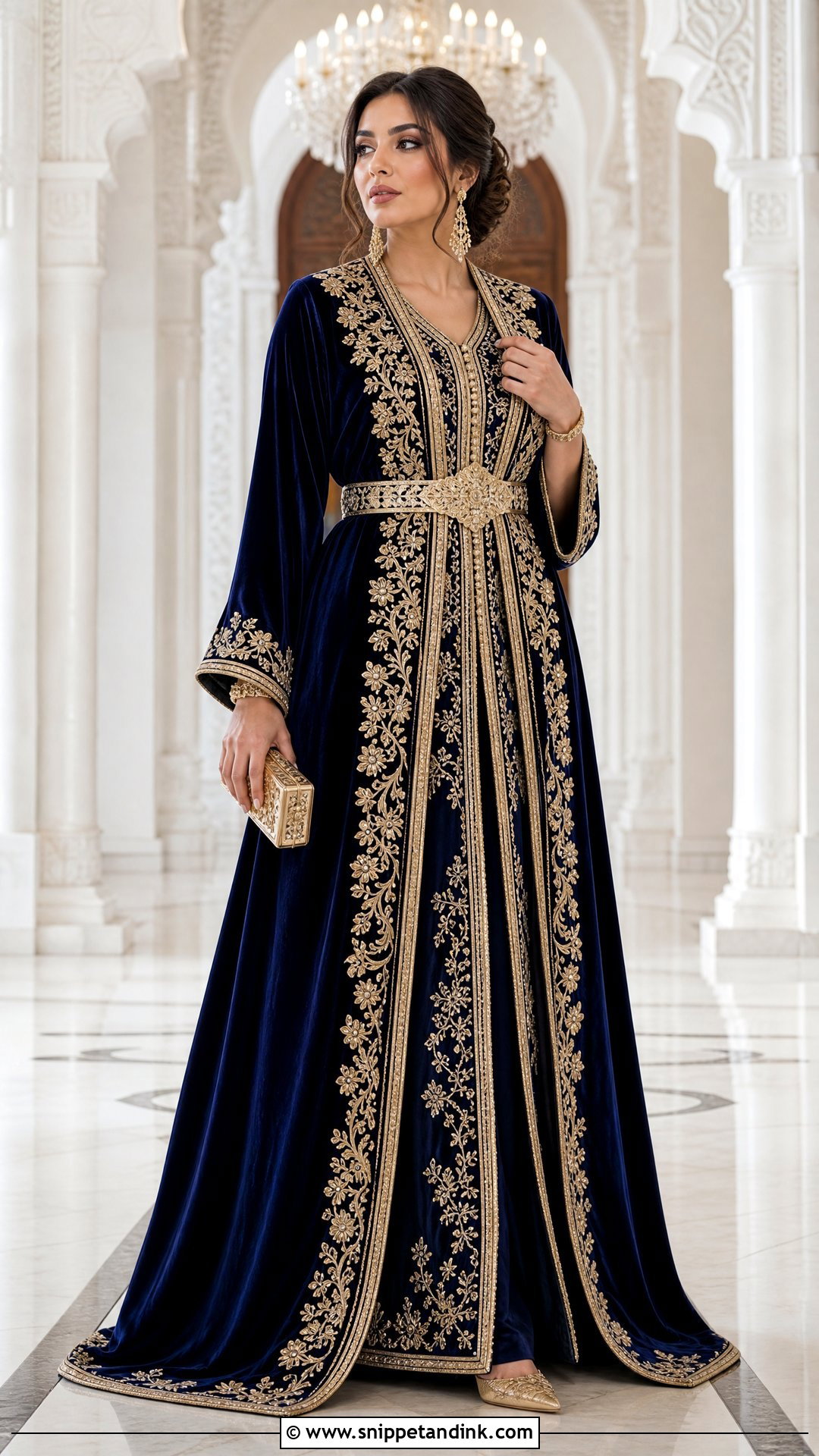
An Algerian caftan el kadi brings long lines and a dignified structure. Velvet or satin in midnight blue, burgundy, emerald or ivory carries gold embroidery at the front, sleeves and neckline, over a floor-length underdress. A belt can be added if it suits the cut, but it shouldn’t hide important embroidery. The fitting point I check first is the shoulders. The caftan should skim the body, and if it pulls across the shoulders when you raise your arms, the front embroidery will gape. A sleek low bun or a matching headscarf completes it.
16. Algerian Badroune With Embroidered Bolero
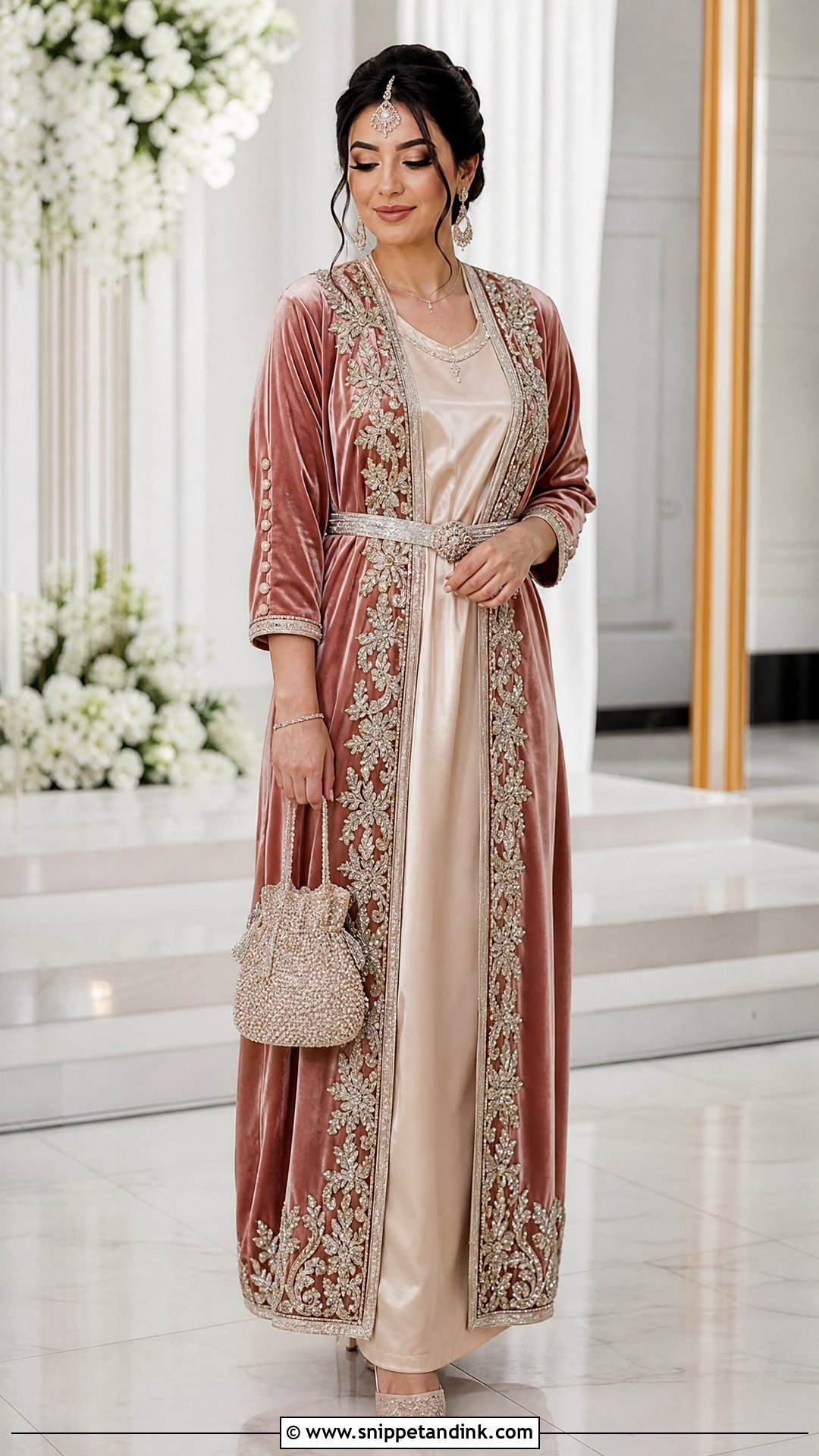
Badroune with a cropped embroidered bolero gives a smooth, modern silhouette with clear Algerian roots. The lower section reads like a long dress while keeping a shape drawn from sarouel dressing. Champagne, ivory, dusty rose or pale blue satin pairs with a fitted velvet bolero in silver or gold detailing. The satin should be fluid enough to move without clinging at the hips; very thin satin shows every line underneath. It suits brides who want fewer heavy layers in the tasdira, especially later in the evening. A clean updo and luminous makeup keep it contemporary.
17. Ghlila With Blouza Wedding Dress
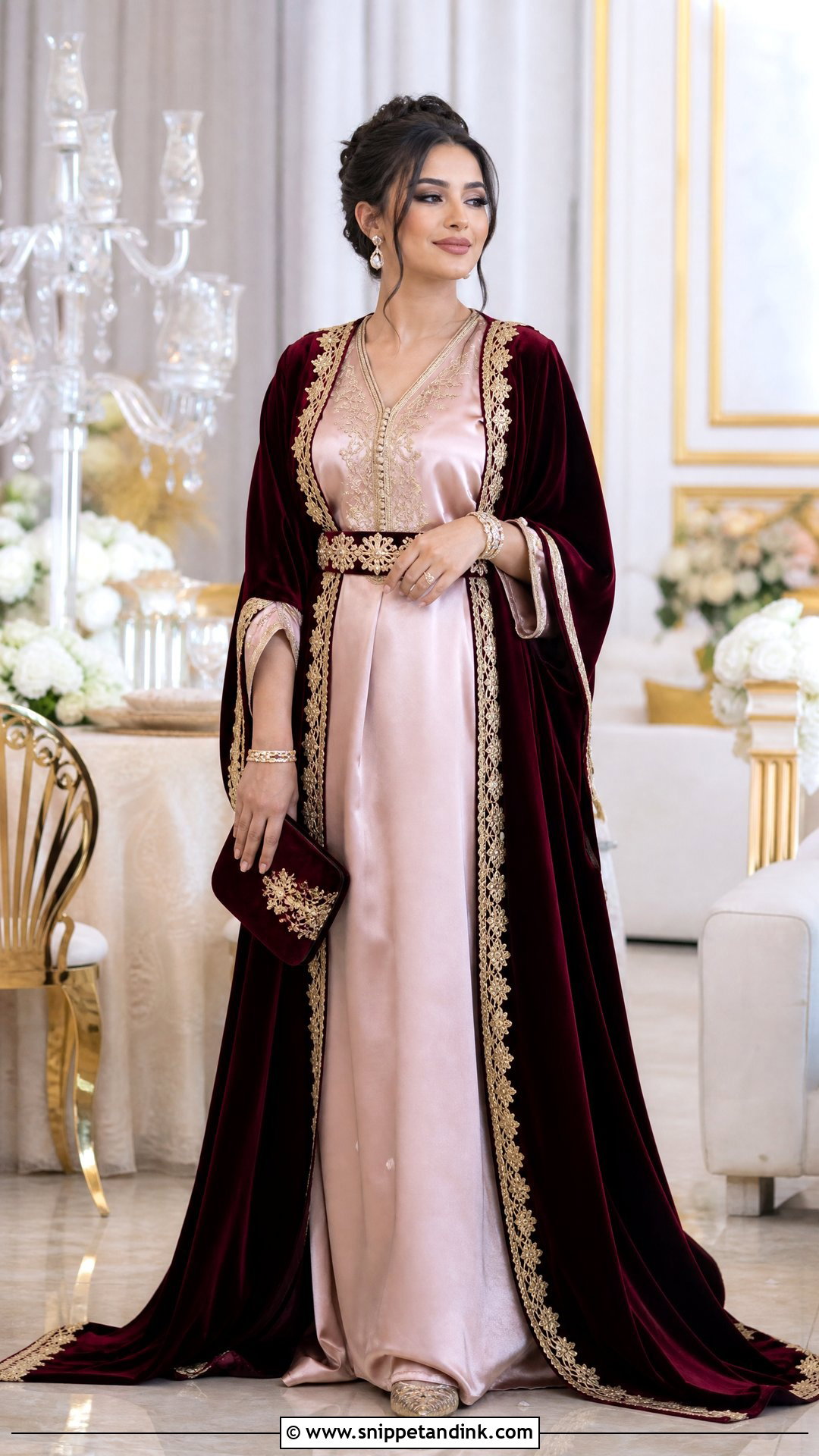
A velvet ghlila over a satin blouza layers structure on softness. The blouza in ivory, blush, mint or powder blue forms the base, and a fitted ghlila in a deeper coordinating color, embroidered at the edges, defines the torso. The ghlila should be short enough that the dress beneath still moves freely. A lightly embellished belt can connect the two colors. Since the ghlila is fitted, I’d fit it over the actual blouza rather than a slip, as a thick satin bodice changes how it closes.
18. Frimla With Badroune Wedding Dress
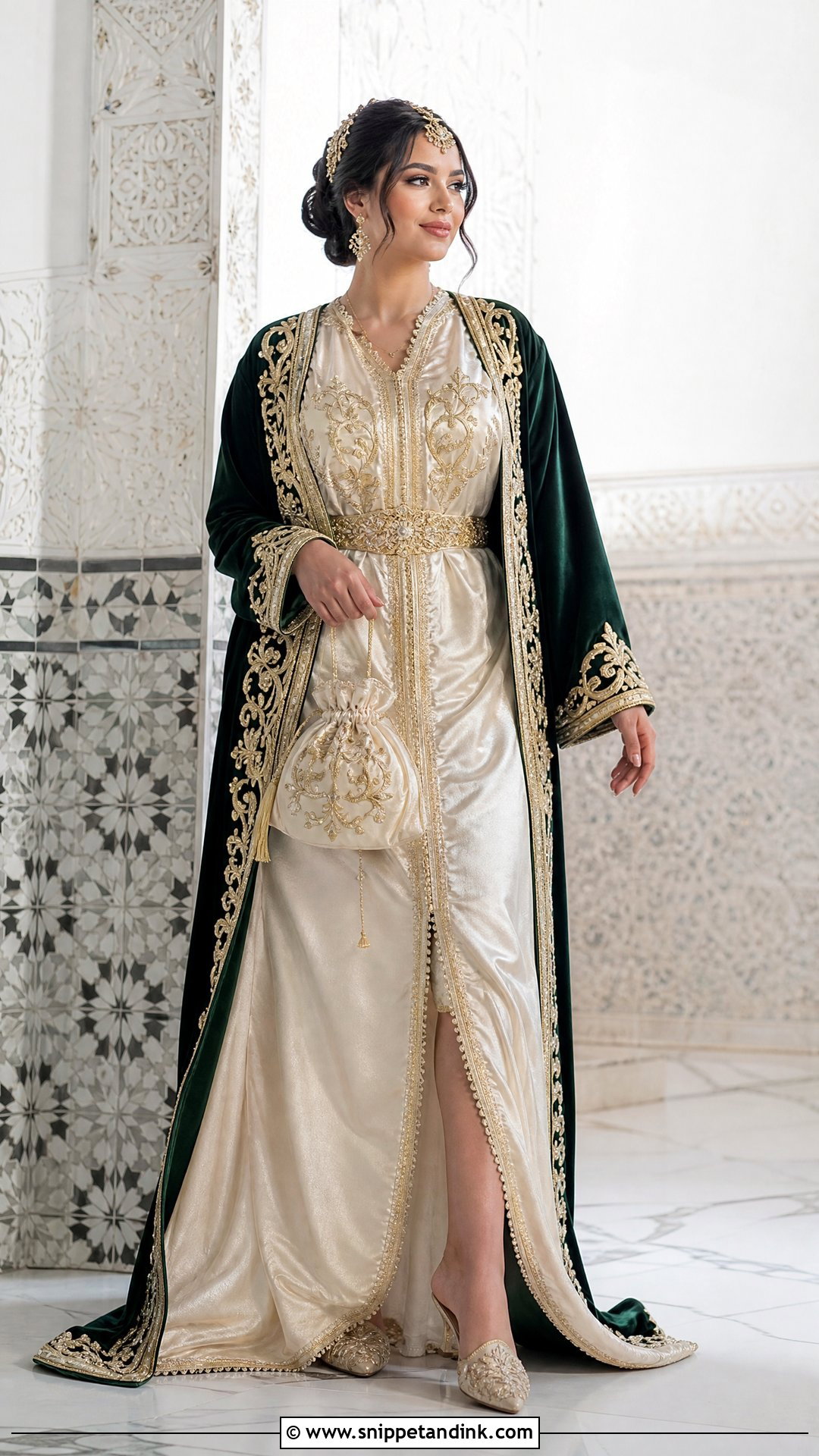
The frimla is a small sleeveless garment worn over a badroune, and it draws attention to the upper body, which helps balance a fuller skirt or trouser shape. An ivory or champagne badroune with a burgundy, emerald or black velvet frimla, gold-embroidered at the edges, is classic. Skip a large necklace that would fight the borders; a fine chain or an open neckline is better. Tailoring through the shoulders and armholes has to be precise. A frimla that shifts while you move will need constant straightening all evening.
19. Djabadouli With Sarouel Wedding Dress
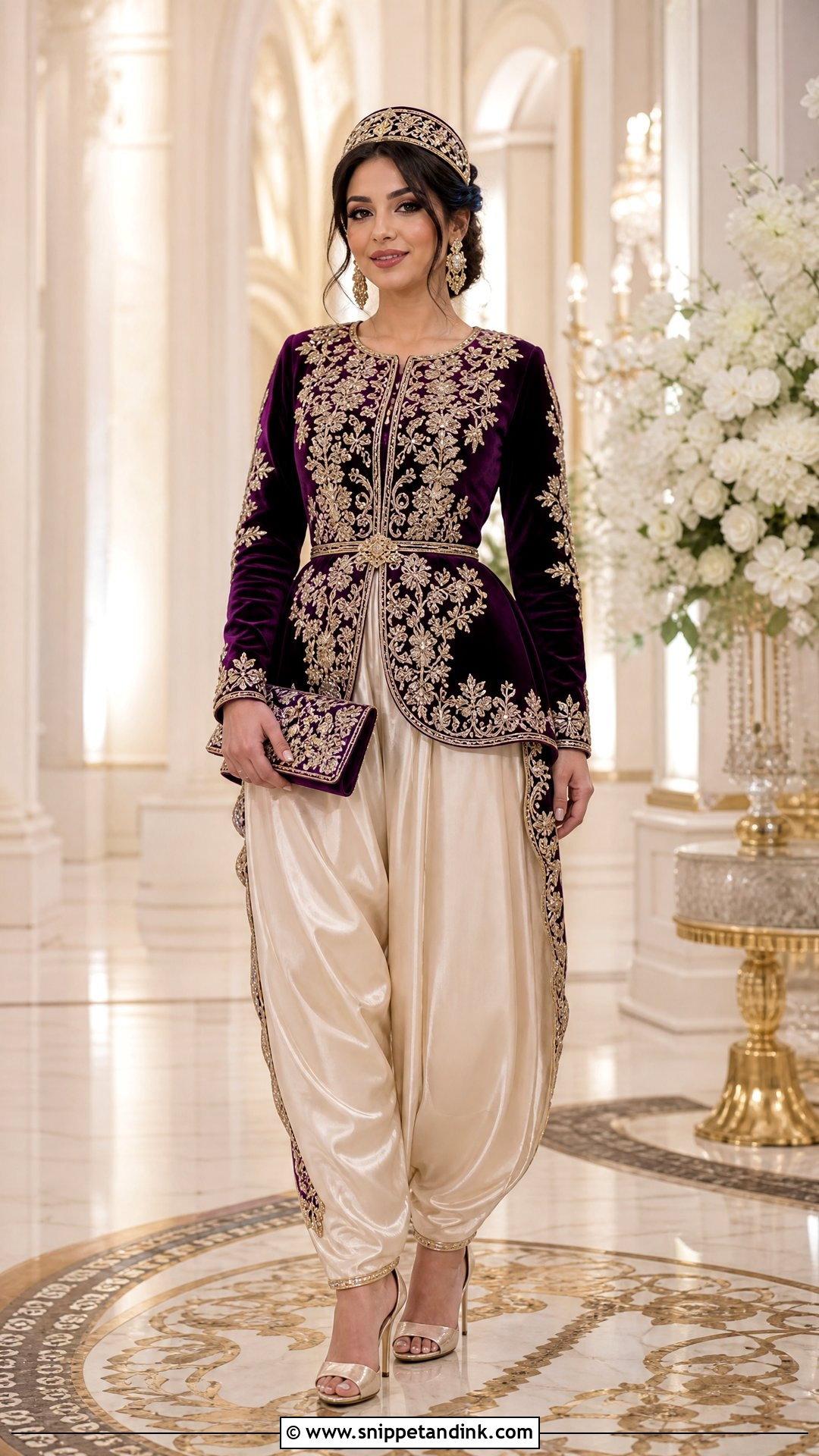
Djabadouli with sarouel suits cooler weather or brides who want full arm coverage. The fitted long-sleeved jacket in navy, plum, forest green or red velvet carries gold embroidery at the front, cuffs and neckline; an ivory satin sarouel brightens the outfit. Keep the jacket at the waist so the trousers keep their proportion. Metallic embroidery on the inside of a jacket can scratch the skin over a long evening, so ask for a smooth, breathable lining. Brides who wear a headscarf can choose ivory chiffon, secured smoothly beneath the head jewelry.

20. White Karakou Bridal Gown
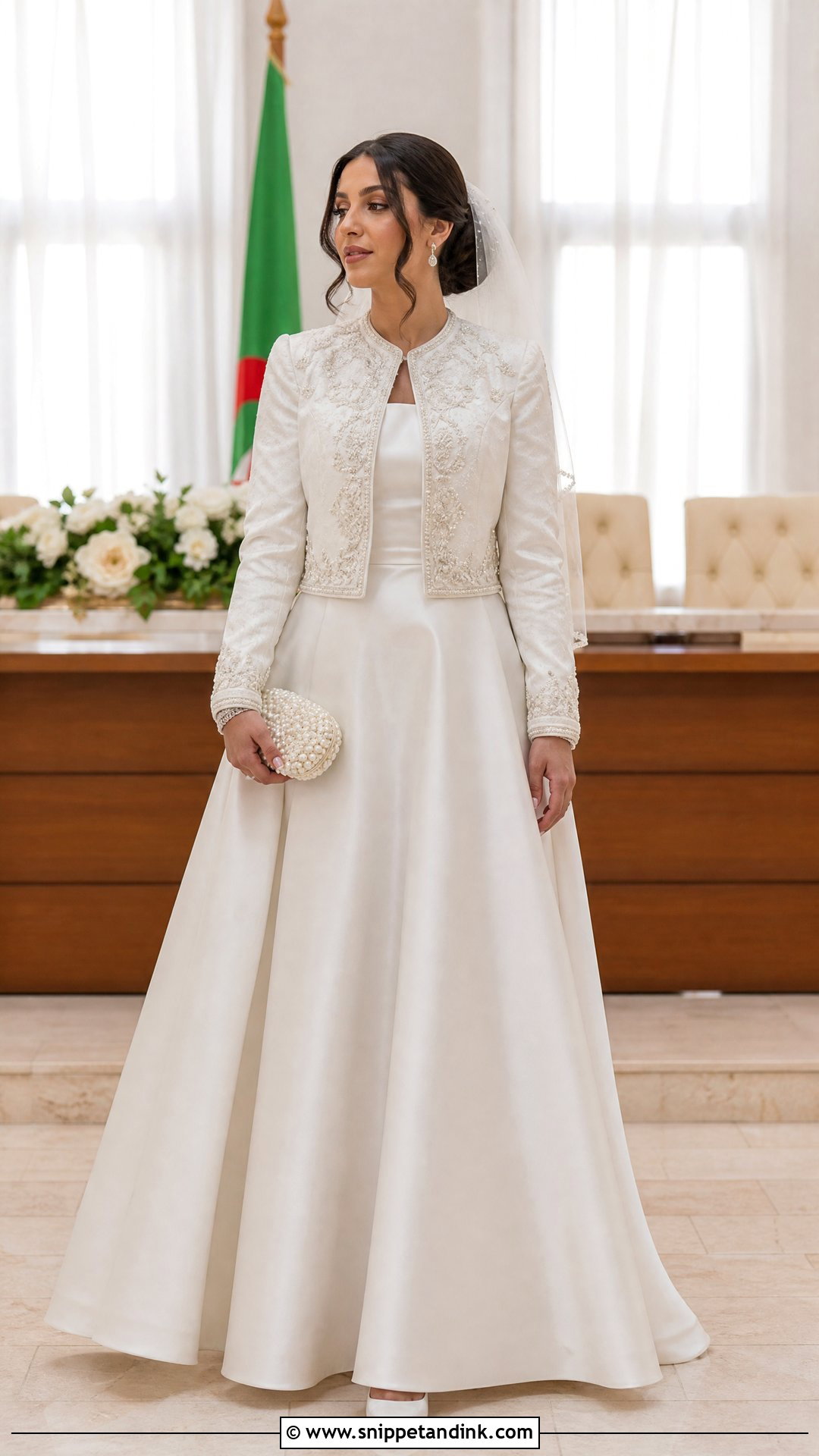
The white karakou gown is a fusion look: a simple A-line satin gown with a modest neckline, under a cropped white velvet karakou embroidered with silver thread, pearls and crystals. Keep the gown plain so the jacket stays the focus. A sheer fingertip veil can attach beneath a low bun and come off for the reception. It suits a civil ceremony or the main bridal entrance. One caution I always repeat: bright white and creamy ivory clash badly in photographs, so check that the gown, jacket and veil are the same white in daylight.
21. Pearl Blue Algerian Caftan Wedding Dress
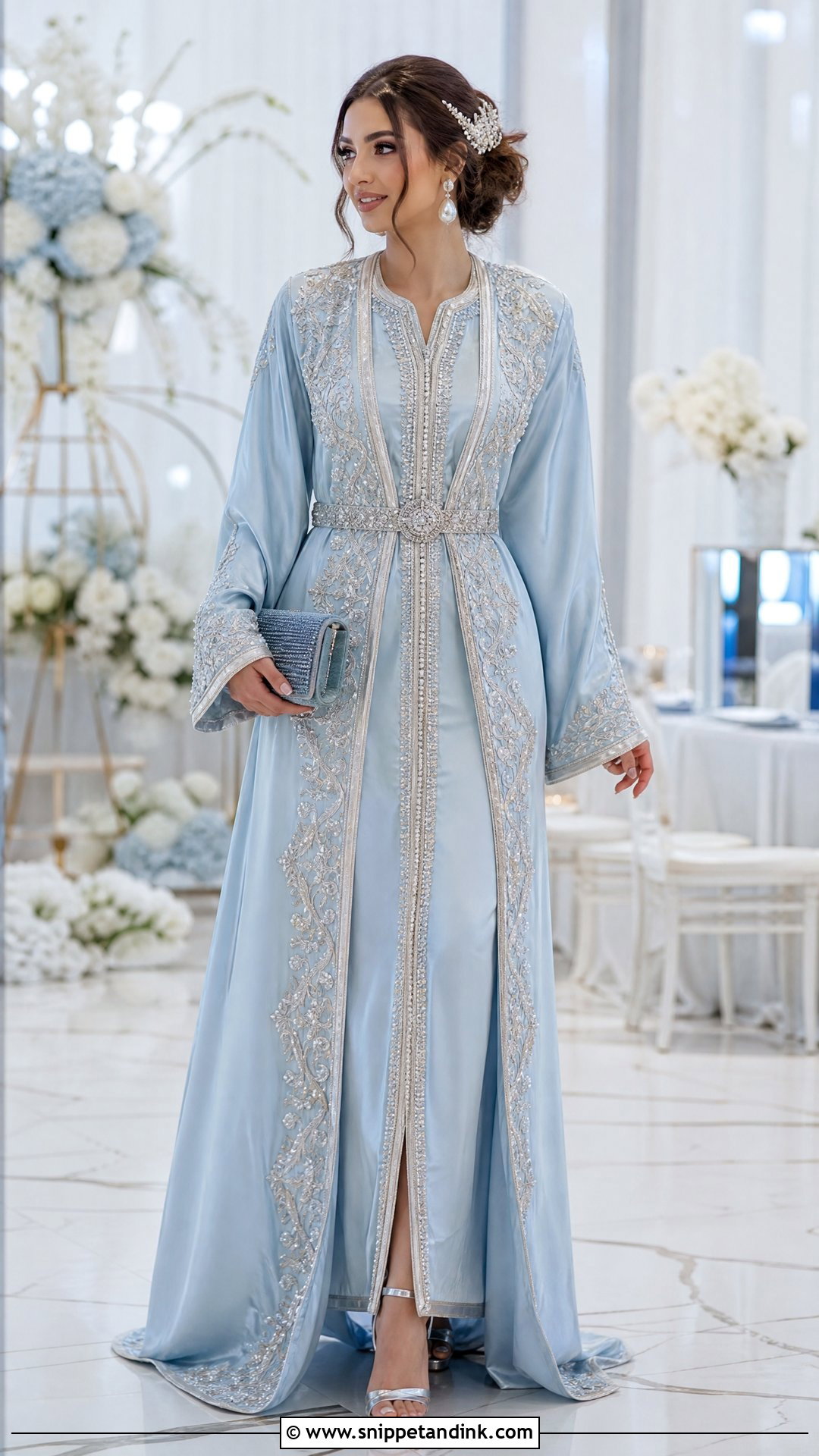
Pearl blue is a calm alternative to deeper colors, and it reads especially well in daylight. A floor-length caftan in pale blue satin or velvet with silver embroidery and pearl accents, a defined waist, long sleeves and a high or softly rounded neckline make up the look. Stick with silver and pearl accessories; yellow gold clashes with the cool tone of the embroidery. Cool pink makeup with a soft gray eye complements it. For a headscarf, match the chiffon to the caftan and use the crystal comb as a side ornament.
22. Burgundy Velvet Gandoura Wedding Dress
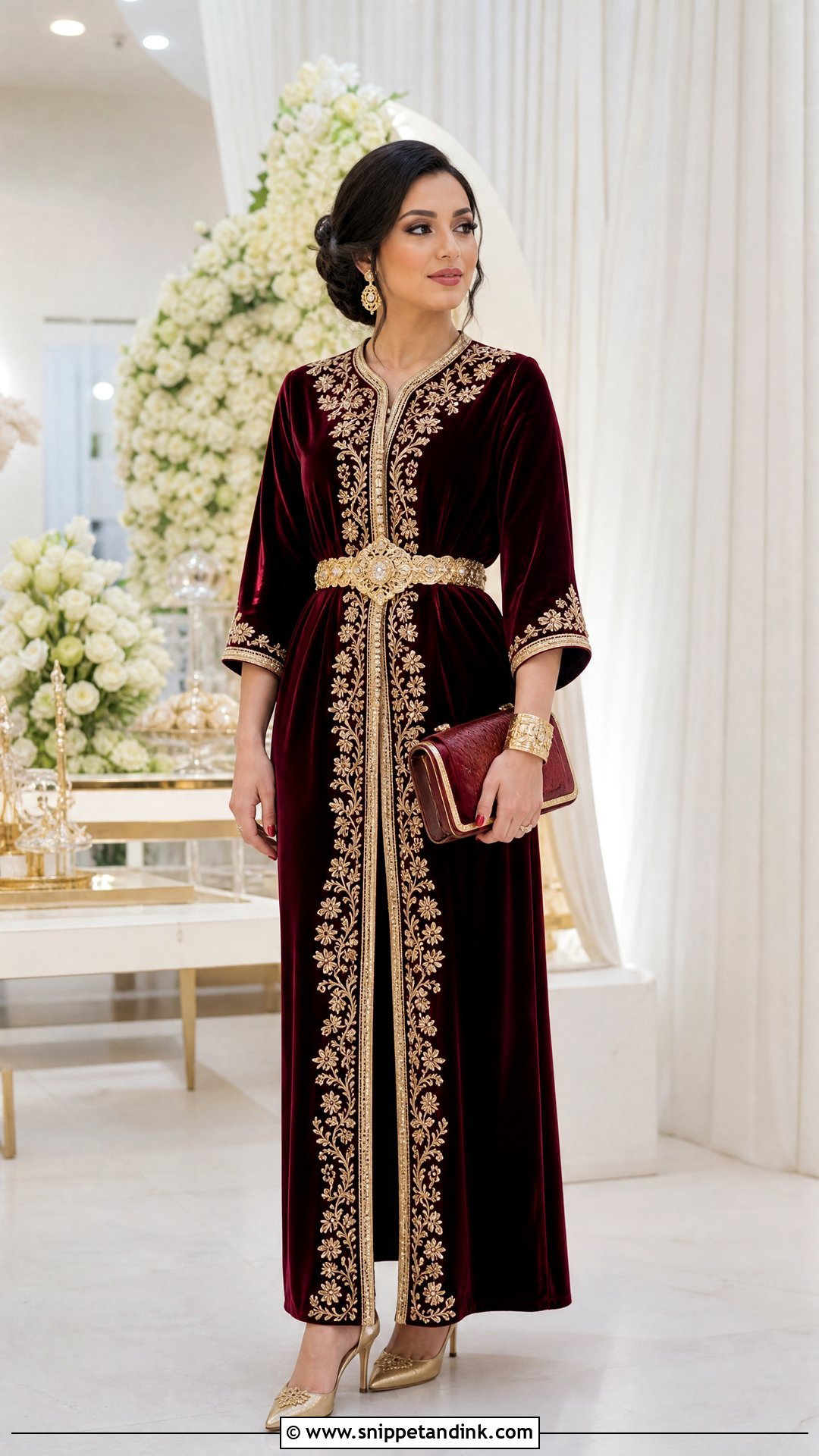
Burgundy velvet makes a floor-length gandoura feel ceremonial at once. Gold embroidery that runs vertically down the bodice and around the cuffs lengthens the silhouette and keeps heavy fabric from looking bulky, which is why I prefer vertical placement on velvet over horizontal bands. If there’s a belt, it sits at the natural waist and should match the thread color. A polished bun or side-parted updo keeps the neckline visible. A sheer burgundy wrap adds coverage. It belongs in the evening part of the celebration, especially in autumn.
23. Pastel Oran Blouza Wedding Dress
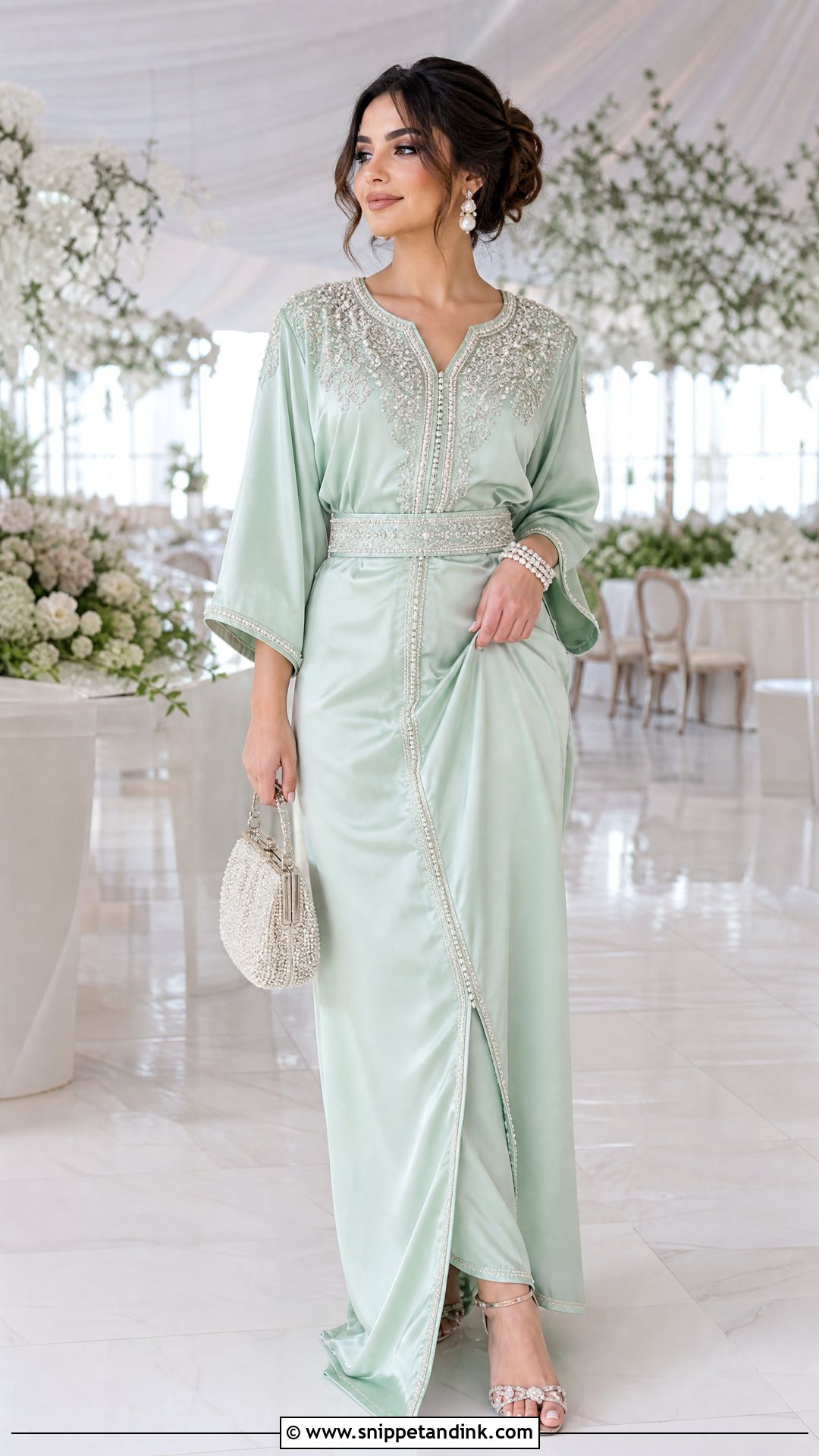
A pastel blouza brings a lighter mood to the tasdira without losing its festive beadwork. Mint, lilac, blush, pale peach or sky blue satin with beading around the bodice and sleeves works across many sizes thanks to the fitted waist and fluid skirt. Silver sandals, pearl earrings and a single bracelet on each wrist are enough. Skip a large necklace if the neckline is heavily decorated. Ask for longer sleeves or a chiffon insert for more coverage. It’s a natural choice for a daytime reception or one of the lighter changes.
24. Ivory Caftan With White Burnous
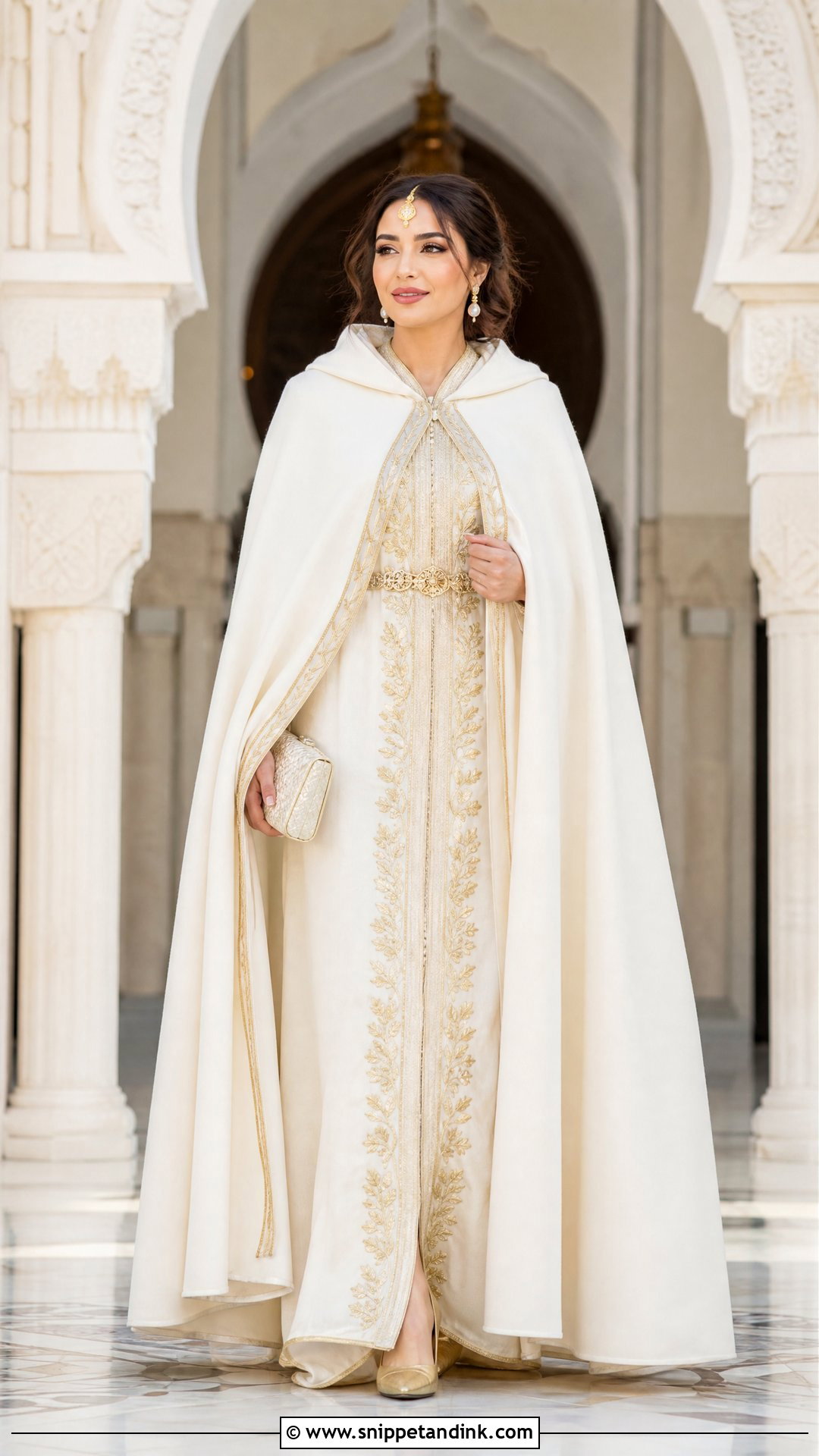
An ivory caftan beneath a white ceremonial burnous makes a dignified entrance. The caftan is floor-length with restrained gold embroidery and a fitted inner belt, and the burnous falls over the shoulders in long, uninterrupted lines. The burnous should be light enough to drape but firm enough to hold its shape. A sleek, low hairstyle lets it sit comfortably on the shoulders; a high bun pushes it backward. Brides wearing a headscarf can use ivory silk or chiffon beneath it. The burnous comes off after the entrance, revealing the caftan for dinner and dancing.

25. Saharan Melehfa Wedding Dress
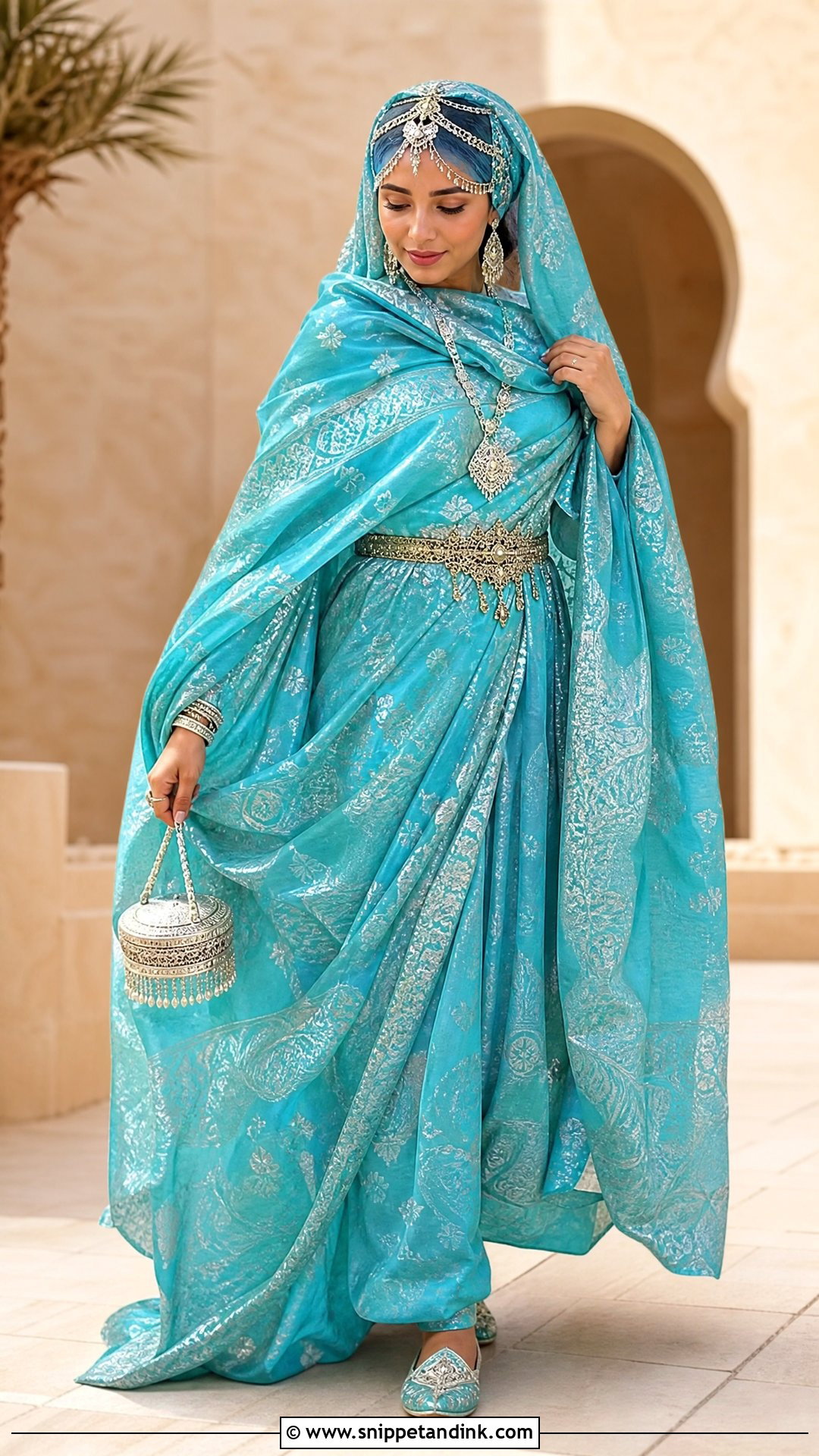
A Saharan melehfa is a generous length of lightweight fabric, draped over an opaque underdress, in white, turquoise, cobalt, violet or deep green. It makes a distinctive Algerian bridal look with real movement. The folds have to be secure but loose enough to walk in. Silver jewelry, a decorative belt, embellished flats and a matching or contrasting head wrap complete it. Keep accessories bold but few, or they disappear in the fabric. It’s suited to summer and outdoor portraits, and like any wrapped garment it needs an expert hand and discreet pins to stay in place all evening.
Protecting Hair, Makeup and Embroidery Through Several Changes
Each change is a chance to smudge makeup, flatten hair or snag embroidery. A little preparation in the changing room saves a lot of repair.
- Plan a hairstyle that works under every headpiece in the sequence, usually a smooth low bun that can take a crown, a headscarf and a khit er rouh.
- Use a light silk scarf or makeup hood over the face when pulling outfits over the head.
- Prefer outfits that open at the front or back over pull-on dresses, especially heavily beaded ones.
- Lay each finished outfit flat or on a padded hanger immediately, with jewelry bagged separately so metal thread doesn’t catch.
- Keep a small kit in the room: safety pins, fashion tape, blotting papers, a lip color and a needle with gold and silver thread.
Renting, Borrowing or Commissioning a Heritage Piece
Not every bride owns each regional outfit, and many rent or borrow some of them. Rented pieces are a sensible choice for a chedda or a djebba fergani, which are costly to have made and may only be worn once.
If you rent, try the piece on with your own shoes, check the condition of embroidery and fastenings, and ask what happens if a bead or pearl comes loose. For outfits you’ll keep, such as a karakou you might pass on, commissioning is worth it, but allow several months for hand embroidery and at least two fittings. Pieces borrowed from family deserve the same care: a fitting, a quiet repair if needed, and careful cleaning before they go back.
Every Outfit in the Tasdira Should Tell Its Region’s Story
Algerian bridal clothing is remarkably varied, from the ceremonial Tlemcen chedda to embroidered karakou sets, flowing blouzas, eastern gandouras and colorful Amazigh dress. The most decorated outfit isn’t automatically the right one. Each piece should respect its region, fit comfortably, and mean something to the bride and her family. Talk to experienced artisans and relatives about headdresses, wrapping and jewelry, and hold one full fitting with every layer and every pair of shoes before the wedding. A faithful heritage outfit and a careful modern version can both be right, as long as the thought behind them shows.
You'll Like These Ideas:










Leave a Reply