
Dressing a bride for an Arab wedding means planning for coverage, craftsmanship and a long, celebratory night all at once. These gowns lean on rich fabric, long sleeves, embroidery, beadwork, capes and veils, and they’re usually built to be seen walking in, under strong hall lighting. Some brides want a white gown with a high neck; others want a Moroccan kaftan, gold embroidery or a soft champagne look. Family tradition, the venue and the bride’s own taste all shape the answer. In each of the ideas below I’ve noted what I check at fittings: fabric weight, sleeve fit, veil length and how the whole outfit moves from the entrance to the last guest.
Fitting a Gown Around a Hijab From the First Appointment
Many of the gowns below are worn with a hijab, and the most common mistake I see is treating the head covering as an accessory chosen at the end. The hijab changes the neckline, the shoulder line and even how the veil sits, so it belongs in every fitting.
Bring the real fabric
Chiffon, silk and satin hijabs drape very differently. A slippery satin needs more pins and an underscarf with grip; chiffon is lighter but can look flat in photos without a structured underscarf. Bring the hijab you intend to wear, plus your underscarf, so the bodice and neckline are fitted around them.
Plan where the veil anchors
A veil worn over a hijab needs somewhere solid to attach. I usually anchor it to the underscarf with discreet pins or a comb, never to the outer fabric alone, which slides as soon as you turn your head. Long veils pull backwards, so test the weight while walking.
Watch the neck and shoulders
A high-neck gown plus a wrapped hijab can feel tight and warm. I’ll often lower the inner collar slightly or choose a softer neckline, since the hijab already provides the coverage.
1. Arabian Ball Gown Wedding Dress
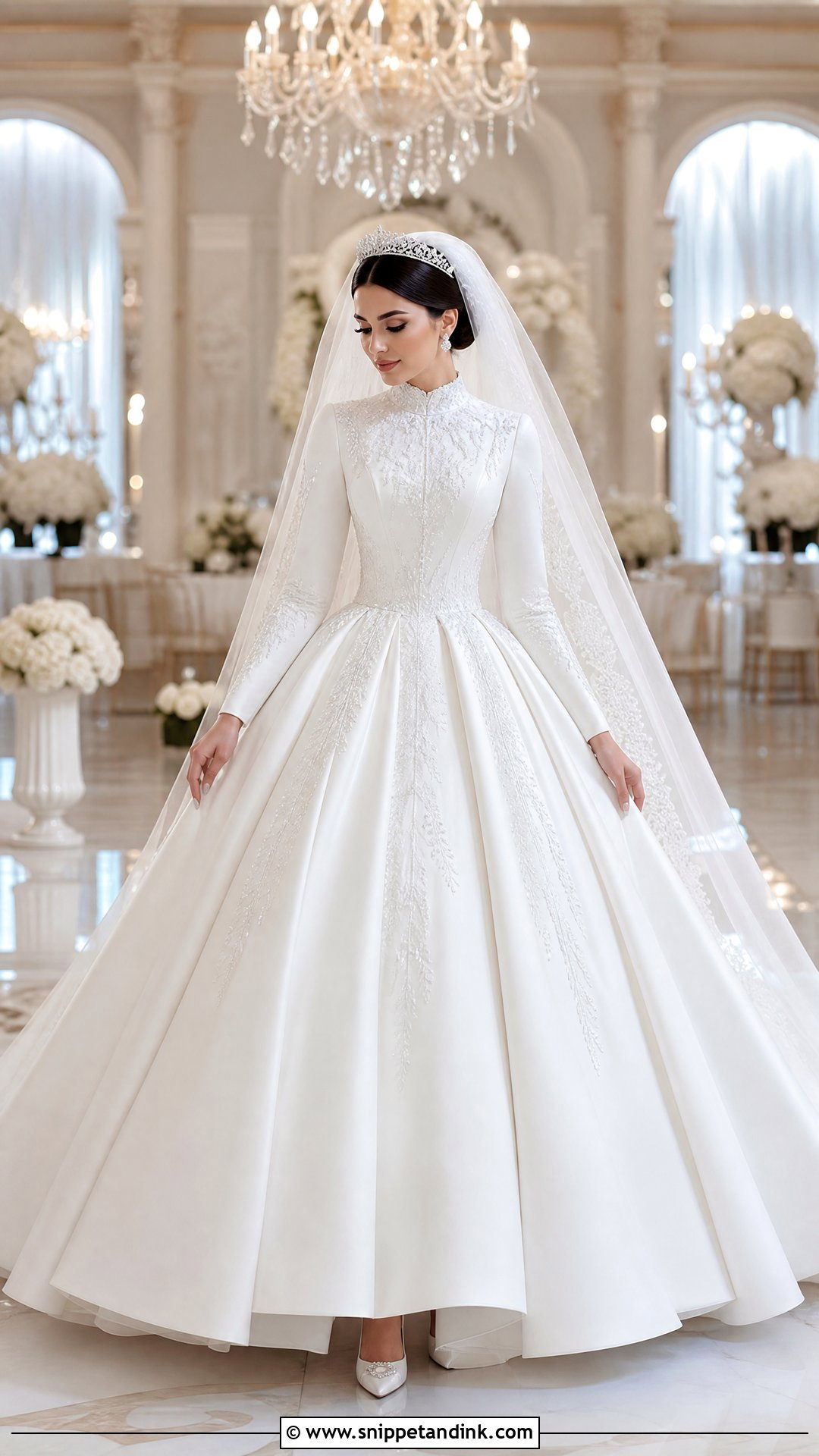
Nothing makes an entrance like a full ball gown, and a large hall gives the skirt room to work. I fit these with a structured bodice, a modest neckline and long sleeves, then plan the skirt layers carefully, because several layers of tulle under satin get heavy over a long evening; a hoop or crinoline lifts the weight off your legs and keeps the shape. Embroidered lace, pearl beading and soft crystal add richness. A cathedral veil, pointed satin heels and a fine tiara or jeweled headpiece complete it, with a soft, simple bouquet.
2. Arabian Long Sleeve Lace Wedding Dress
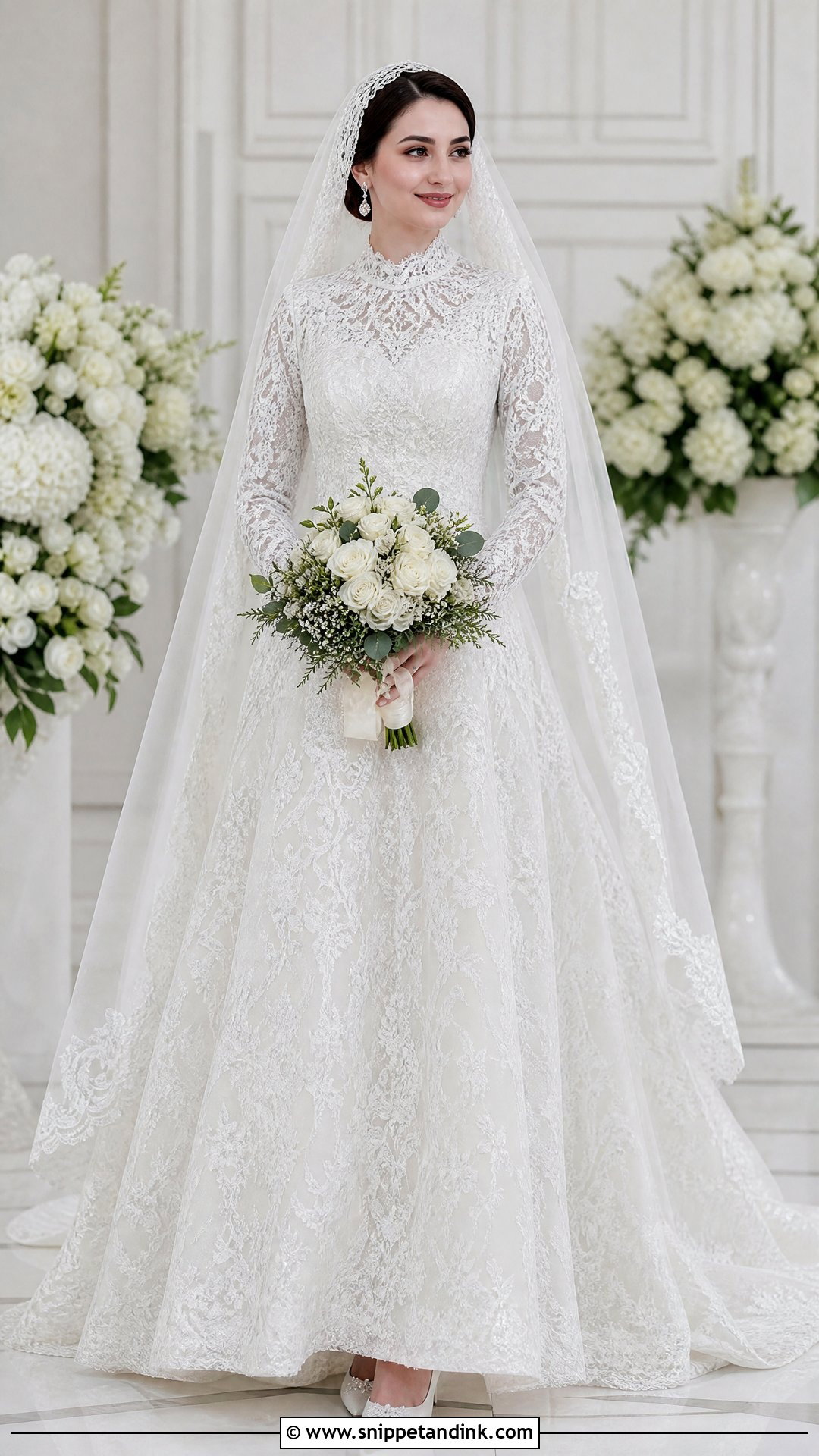
Lace gives modesty a romantic feel. A long sleeve lace wedding dress with a high neck, fitted waist and flowing A-line skirt flatters many figures. The sleeve is where I spend fitting time. Lace sleeves need lining or a fine mesh backing if full coverage matters, and they must leave room to lift your arms for greetings and hugs. Choose refined lace, such as floral embroidery or scalloped cuffs, rather than something busy. A matching hijab or smooth veil tucked around the neckline, pearl earrings, closed-toe heels and a small satin clutch finish it.
3. Arabian Kaftan Wedding Dress
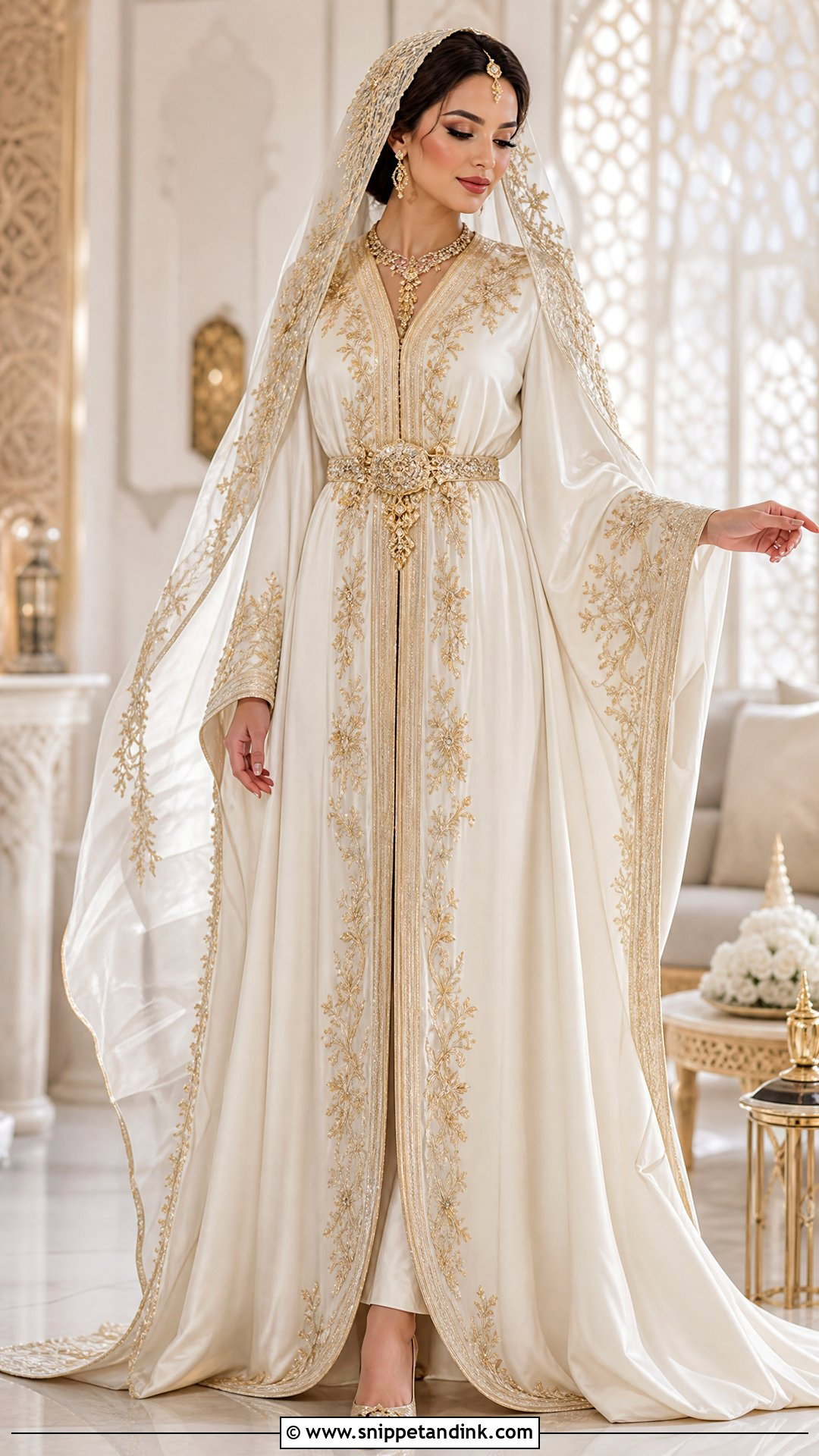
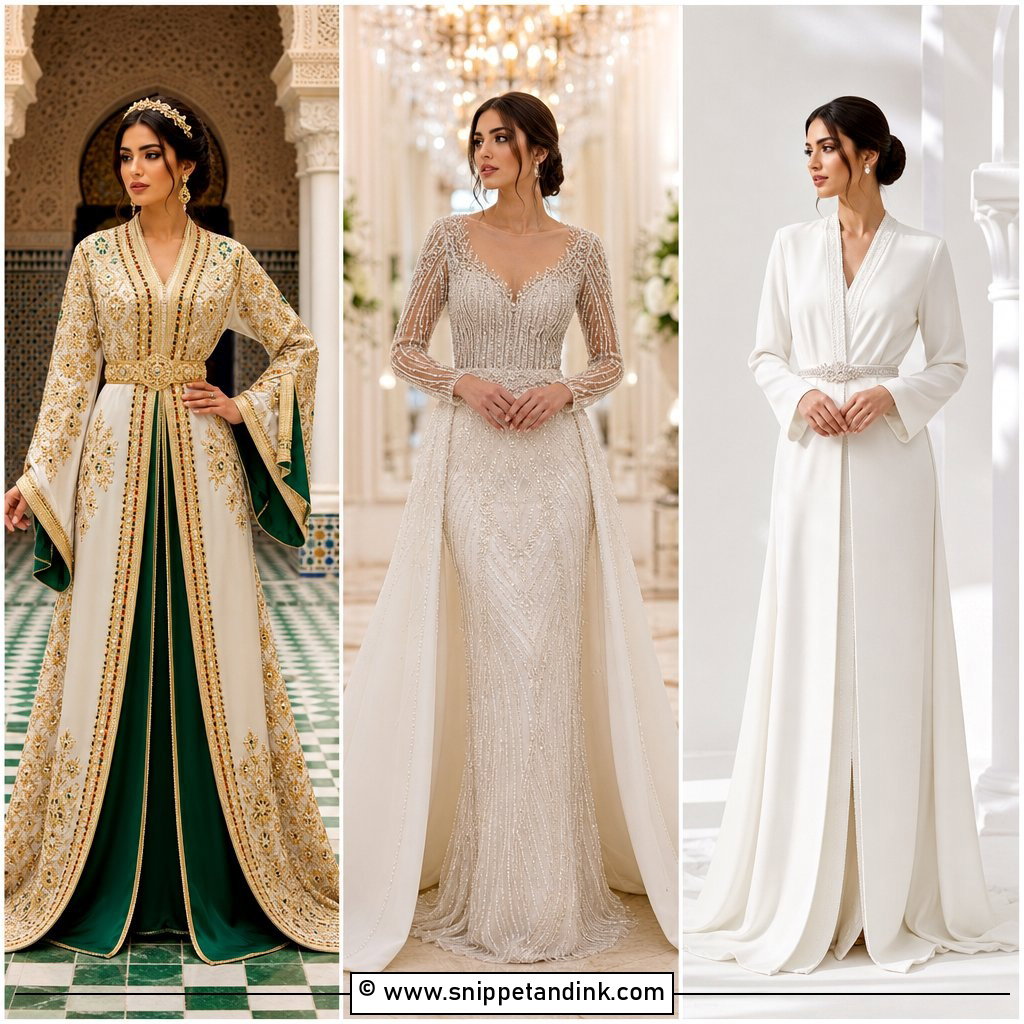
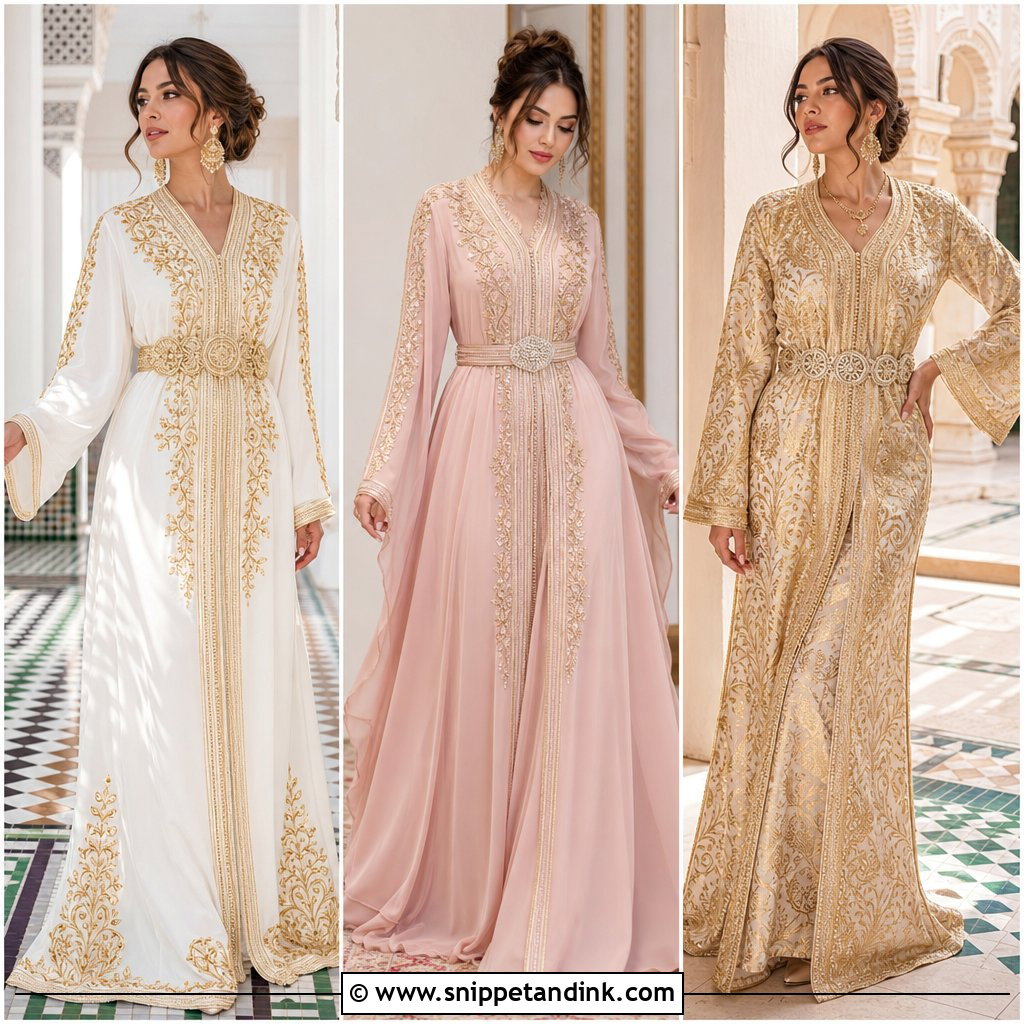
Kaftans carry real Arab and North African heritage, and a bridal one in white, ivory or champagne with gold embroidery feels both traditional and luxurious. The risk is losing your shape in all that fabric. A well-made bridal kaftan is tailored through the shoulders and cinched with a belt, often jeweled, so the waist reads clearly in photos. Silk, satin and brocade give it weight. Embellished heels, a sleek veil or hijab and statement earrings where the neckline allows suit it, and it’s especially at home at henna nights and smaller ceremonies.
4. Arabian Mermaid Wedding Dress
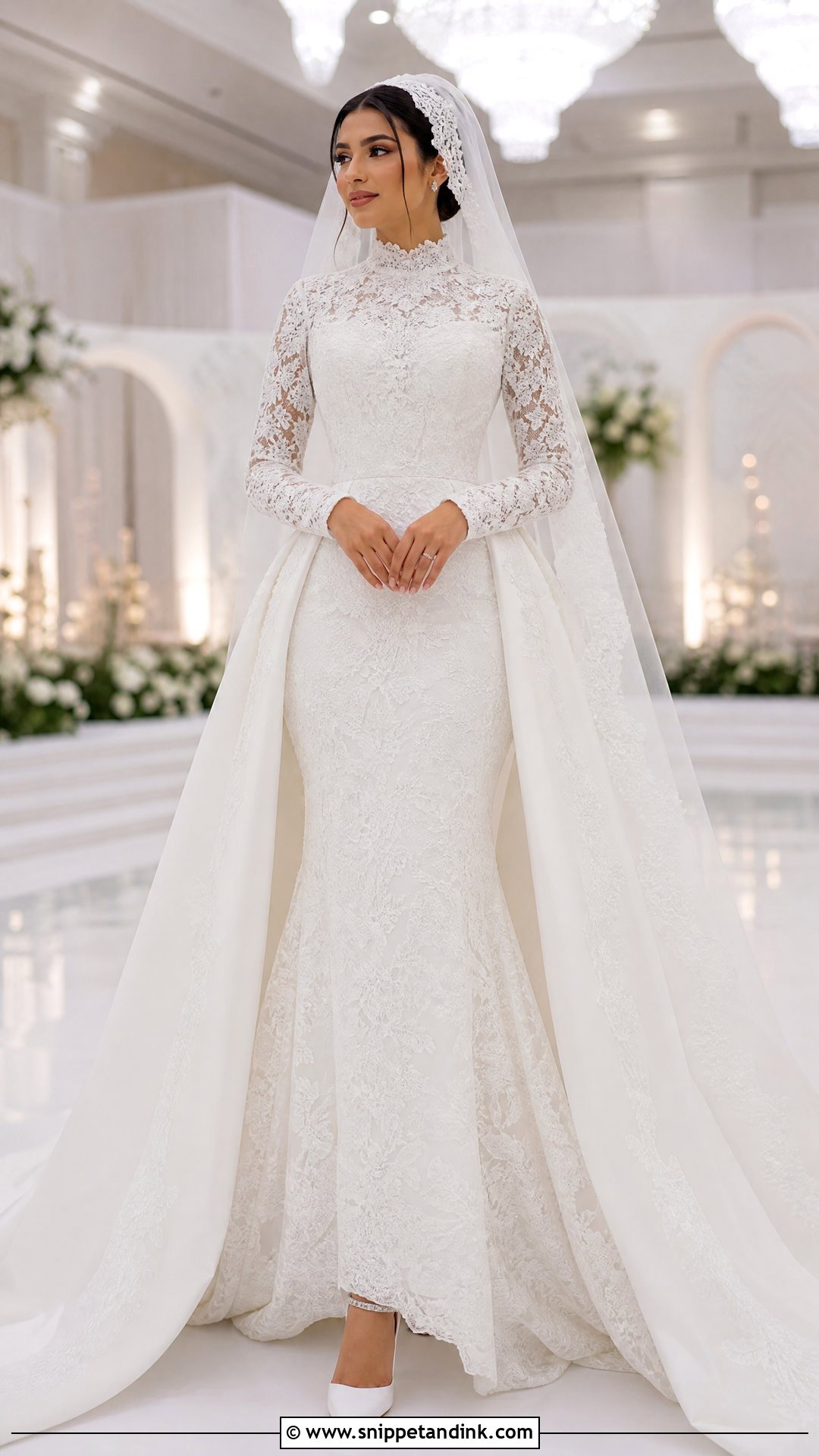
Mermaid gowns are the most sculpted silhouette here, and the modest versions need careful construction: long sleeves, a higher neckline and a bodice fitted through the hips before the flare. The flare point is critical. Too low and you’ll shuffle; I set it around the knee for most brides so walking and sitting stay possible. Lace appliqué, beadwork or subtle crystal embroidery can trace the line. A detachable overskirt gives drama for the entrance and freedom later. A long veil, sleek heels and a structured bouquet finish it.
5. Arabian A Line Wedding Dress
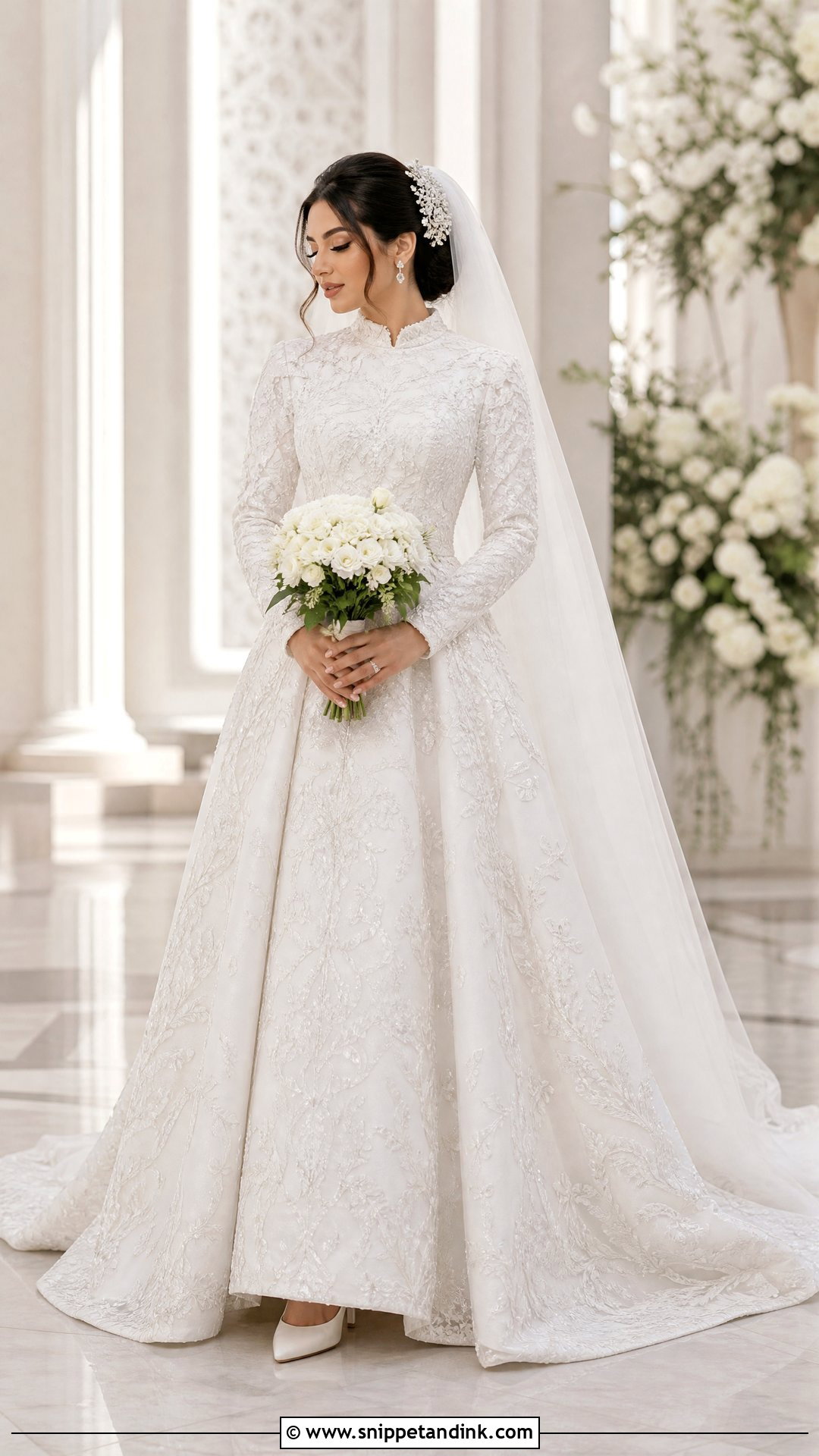
Between a slim gown and a full ball gown sits the A-line, and it’s the one I suggest most when a bride wants to dance at her own wedding. It marks the waist, skims the hips and doesn’t weigh you down. For an Arab wedding look, long sleeves, a modest neckline and embroidery across the bodice or hem keep it formal. Satin, organza and lace all work. A soft veil, crystal hair comb, closed-toe pumps and a refined bracelet complete it.
6. Arabian Satin Wedding Dress
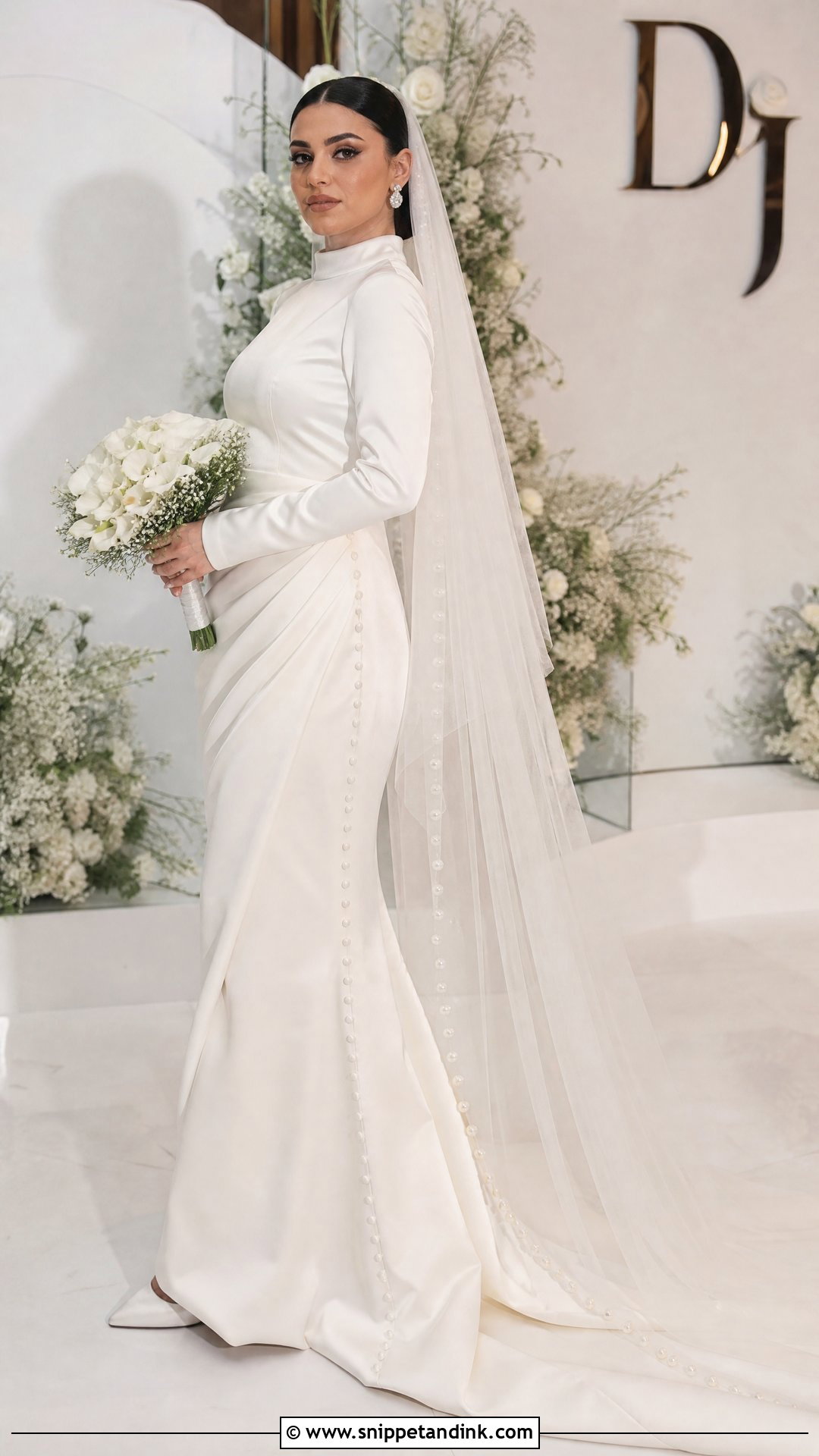
Satin does its own shining, so a satin gown with long sleeves, a high neck and a gentle flare needs almost no embellishment. That simplicity shows every fit issue, though, especially across the back and at the sleeve head, so I’d allow for two or three fittings. Satin also creases where you sit, which matters on a long night of greetings, so a heavier duchess satin holds up better than lightweight versions. A pearl-trimmed veil, satin heels and a structured bouquet coordinate. A draped waist or covered buttons down the back add definition for indoor and hotel weddings.
7. Arabian Embroidered Wedding Dress
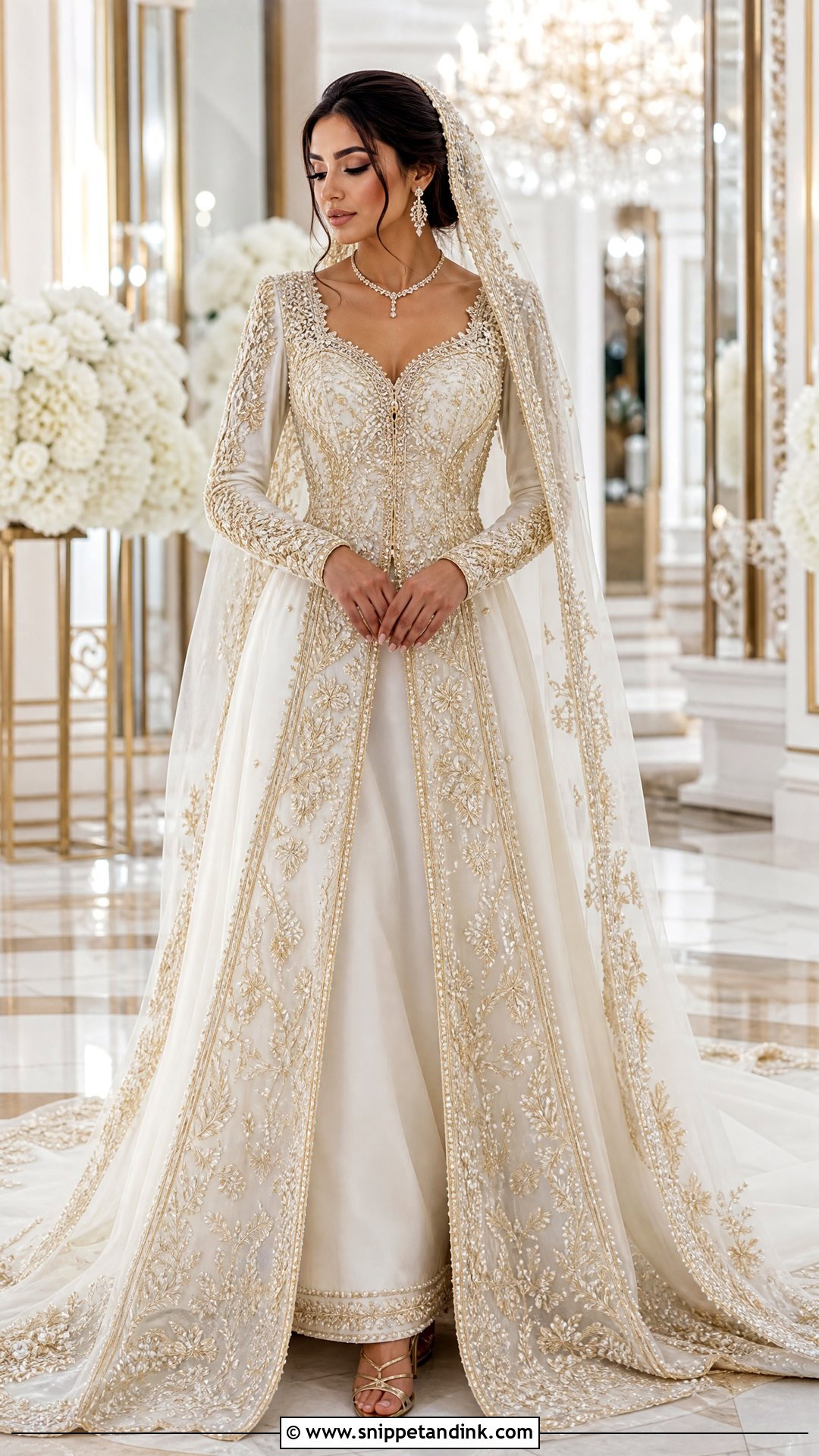
Embroidery is where an Arab wedding dress becomes personal. Fine threadwork, metallic accents, floral or geometric motifs along the sleeves, bodice, neckline and train give detail up close and impact across a hall. Gold, silver or pearl embroidery reads best on ivory. Pick one metal for the embroidery and repeat it in the shoes, veil edge and jewelry. I also check the back of hand embroidery: loose threads catch on jewelry and lace veils, and a quick trim before the wedding saves a snag later.
8. Arabian Beaded Wedding Dress
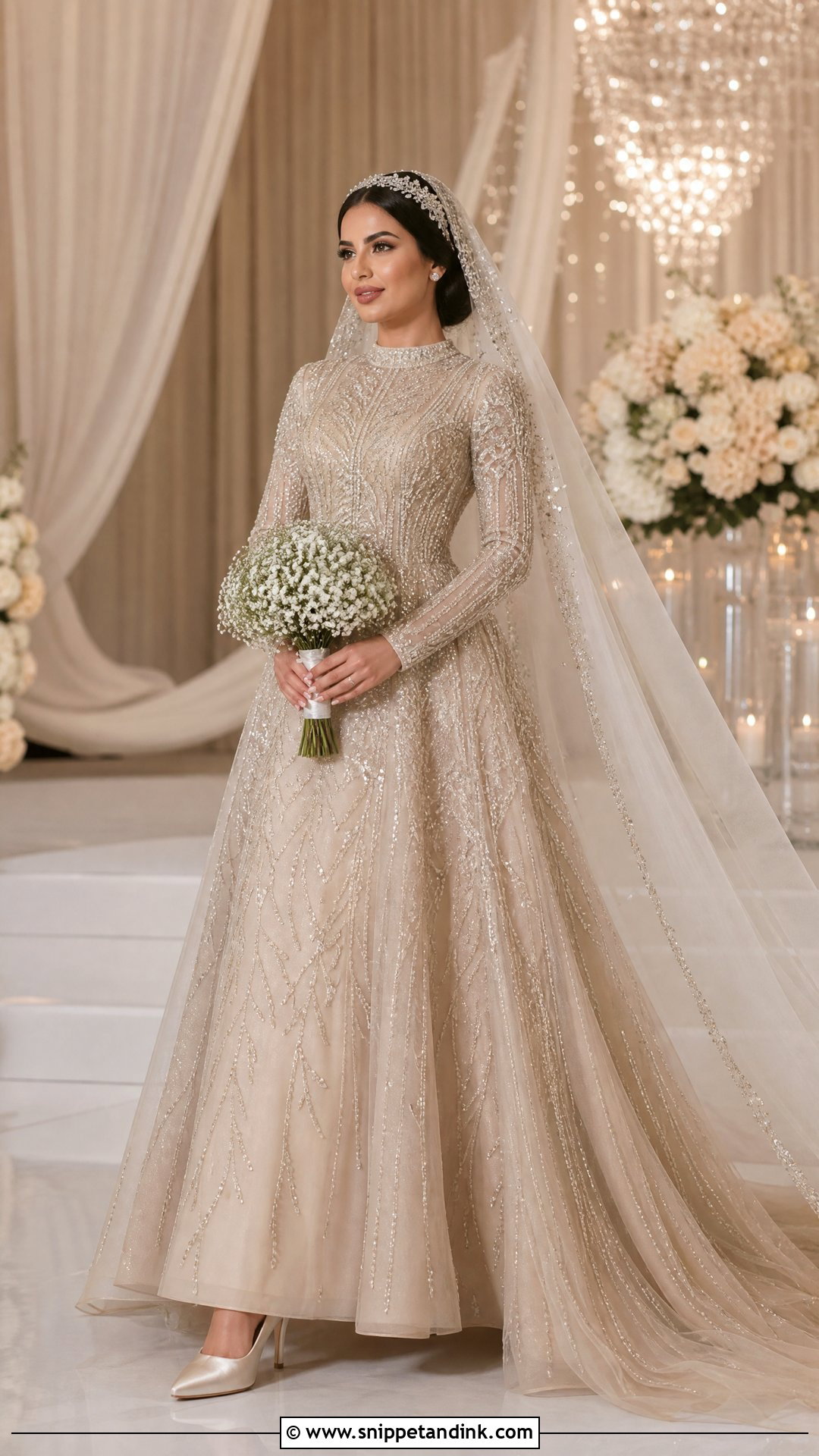
Beading is made for evening, when hall lighting brings it alive. Hand-beaded sleeves, a modest neckline and a flowing skirt keep sparkle graceful. Pearls, crystals and sequins all work, but beadwork adds real weight, so I check the shoulder seams and have heavier gowns reinforced there before the wedding. An ivory or champagne base warms the beading. Simple satin heels, a long veil and minimal jewelry stop it looking cluttered, and it catches the camera flash well without any help.
9. Arabian Cape Wedding Dress
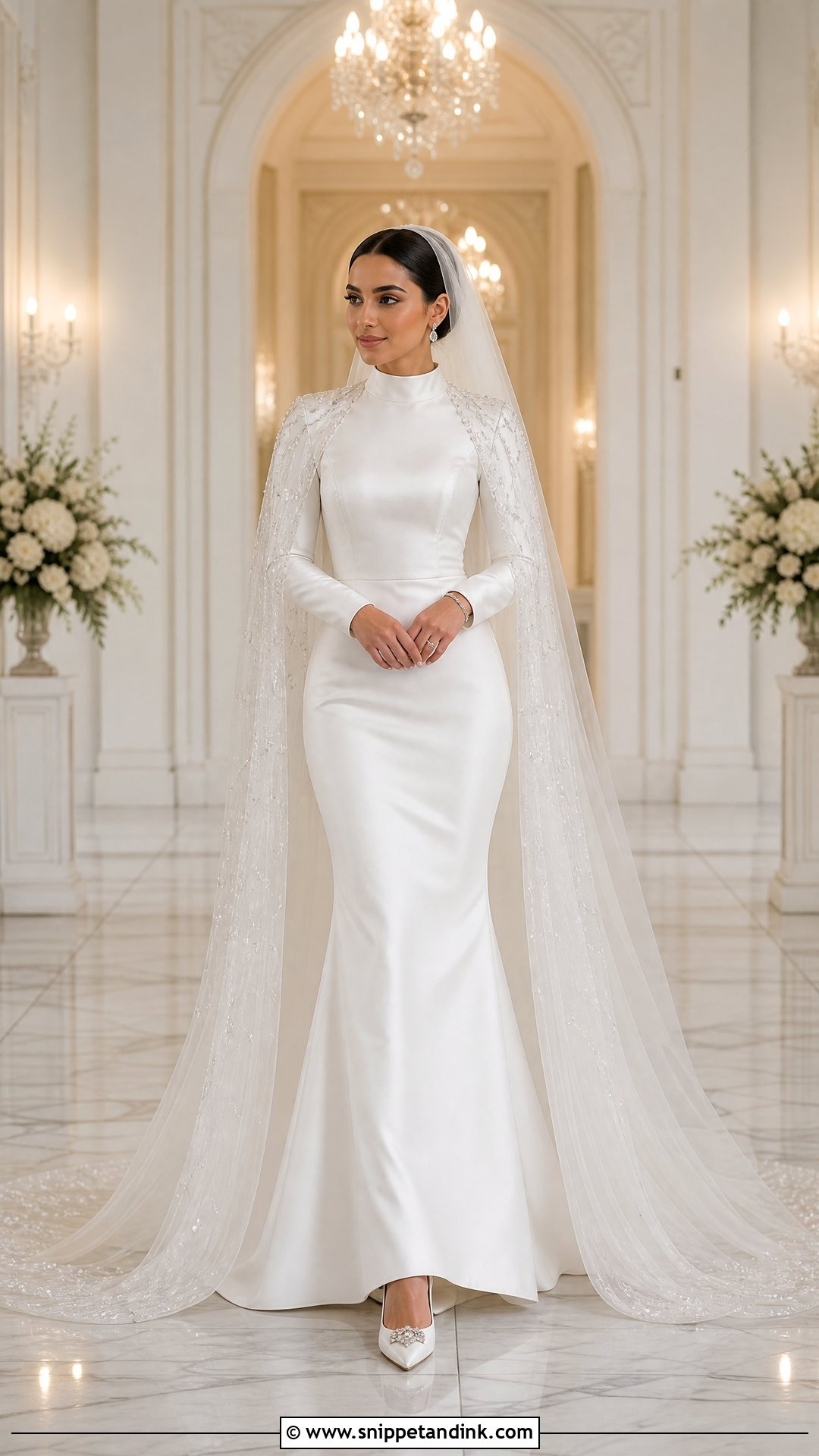
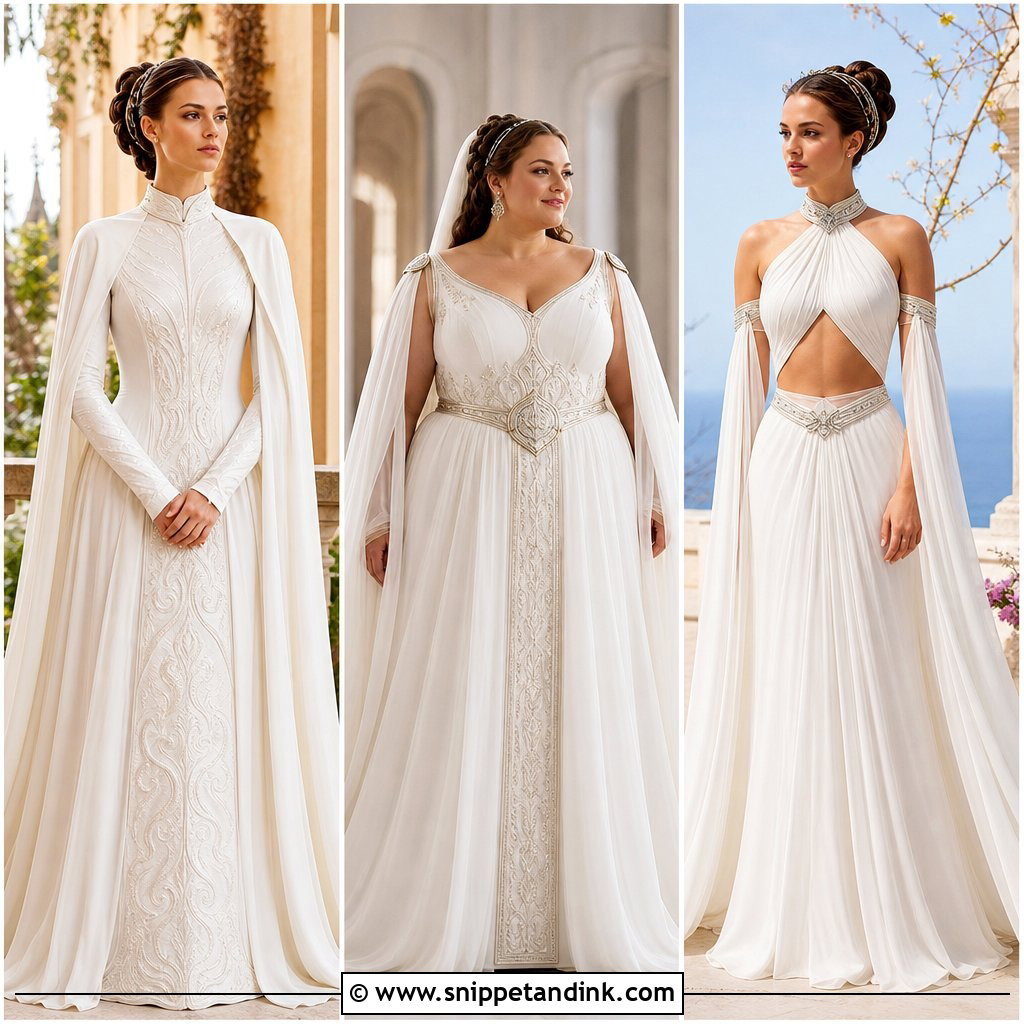
A cape gives you drama without a heavy skirt. A long sheer, lace or embellished cape attached at the shoulders flows behind like a modern royal train, over a sleek satin or crepe gown with long sleeves and a modest neckline. The attachment matters most: a cape that hangs from narrow buttons drags the shoulders back, so I prefer one sewn into the shoulder seam or a cape with a fitted collar. Pointed heels, a simple veil or hijab and clean jewelry keep it modest, and it suits grand entrances and formal portraits.
10. Arabian Hijab Wedding Dress
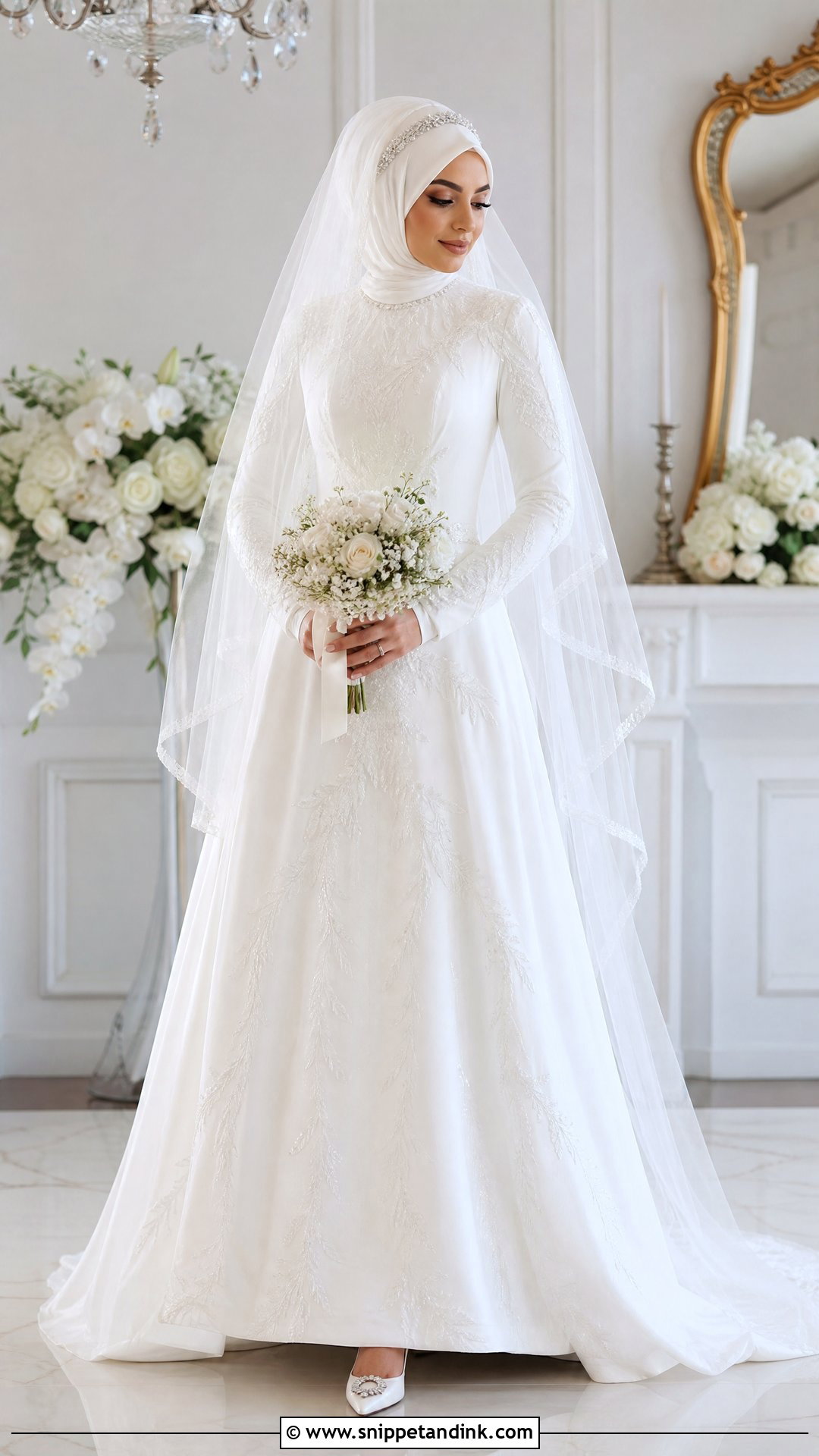
The hijab and the dress should be designed together, not paired at the end. I want to see the hijab at the very first fitting, because its drape changes how the neckline and shoulders need to sit. A high neck, long sleeves and smooth shoulder lines let it fall cleanly. Matching ivory or white chiffon, silk or satin gives a clean finish; a veil over the top adds softness, or a jeweled headpiece a regal note. Keep layers light, because bulk around the face and neck gets warm quickly.
11. Arabian Gold Wedding Dress
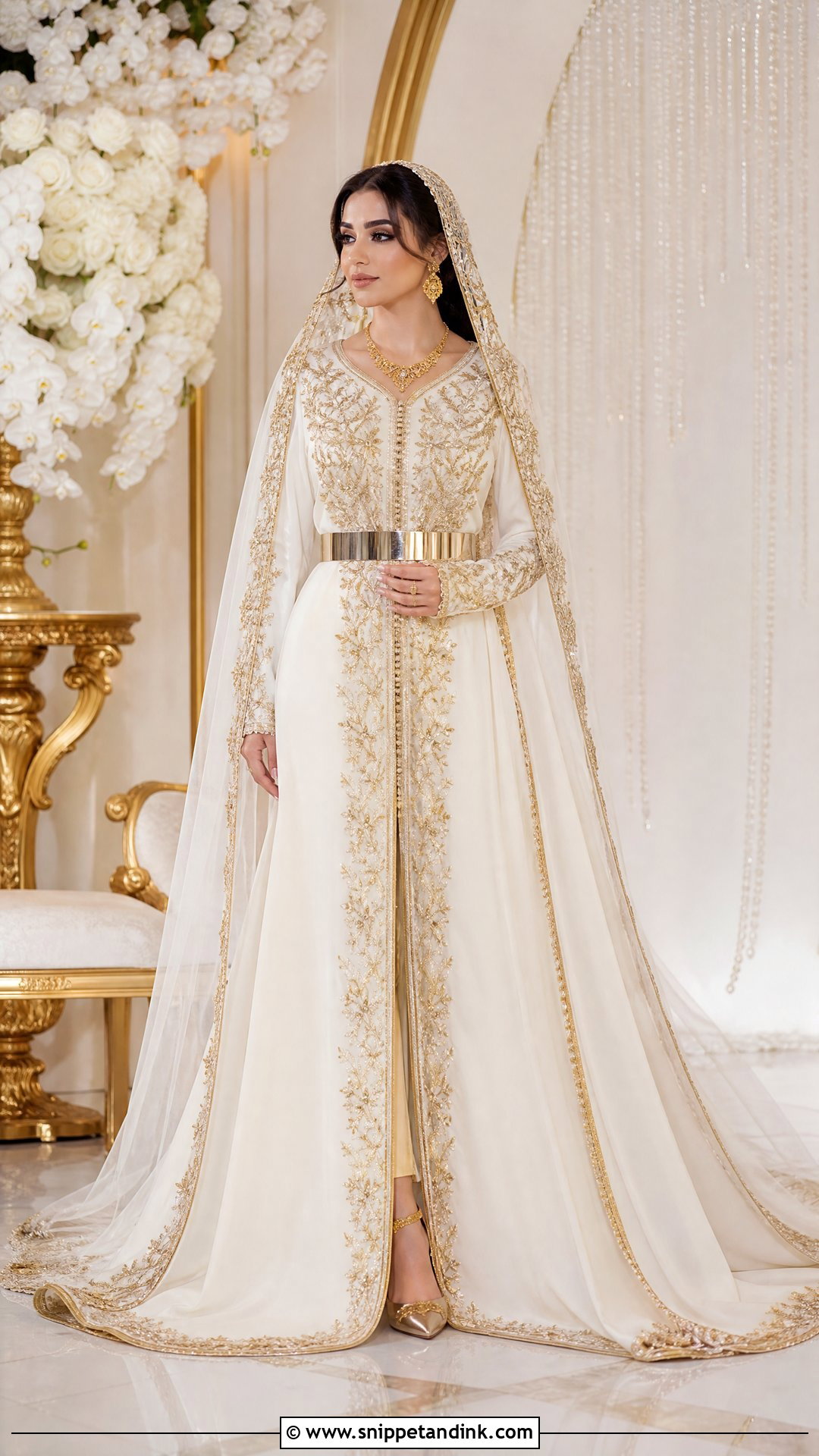
Gold signals celebration, but a fully gold gown can read more evening wear than bride. Most brides I dress prefer ivory or champagne with gold embroidery, beadwork or a metallic belt, which keeps the white bridal base while feeling rich. A long-sleeve gown with a fitted bodice and flowing skirt suits it. Gold heels, a gold-trimmed veil and jewelry matching the embroidery coordinate, with soft makeup and a neutral bouquet to balance the shine. Evening weddings and palace-style halls are its natural setting.
12. Arabian Champagne Wedding Dress
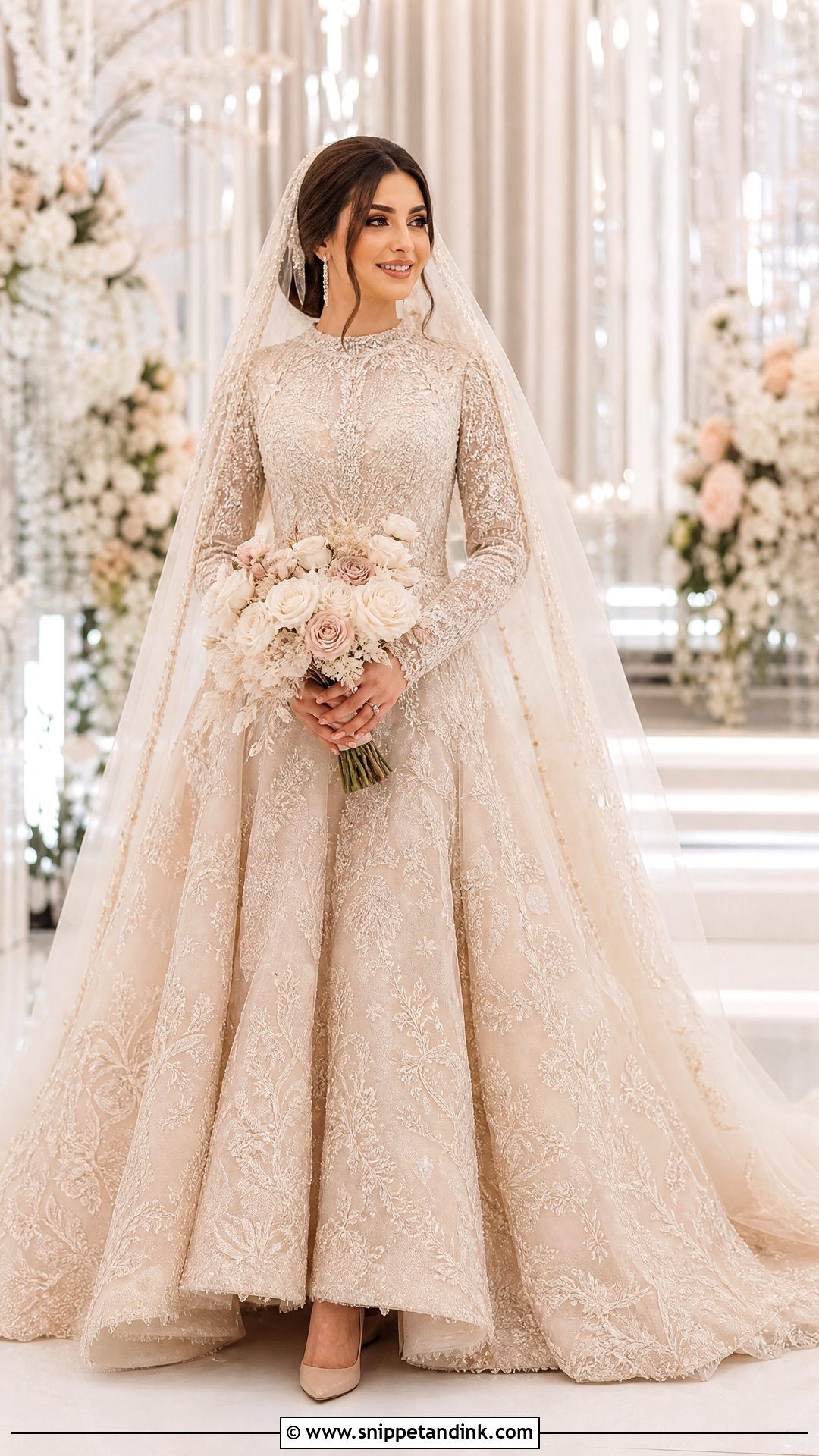
Champagne warms the face more than pure white and suits many skin tones, though I always test the exact shade against the bride’s skin in daylight first, since some champagnes go grey and others golden. Lace sleeves, pearl beading and a modest neckline sit well on it, in satin, tulle, organza or embroidered fabric. Nude or champagne heels, a matching veil and warm-toned jewelry suit it, with ivory and blush flowers. Under bright indoor lighting the whole look glows.
13. Arabian Princess Wedding Dress
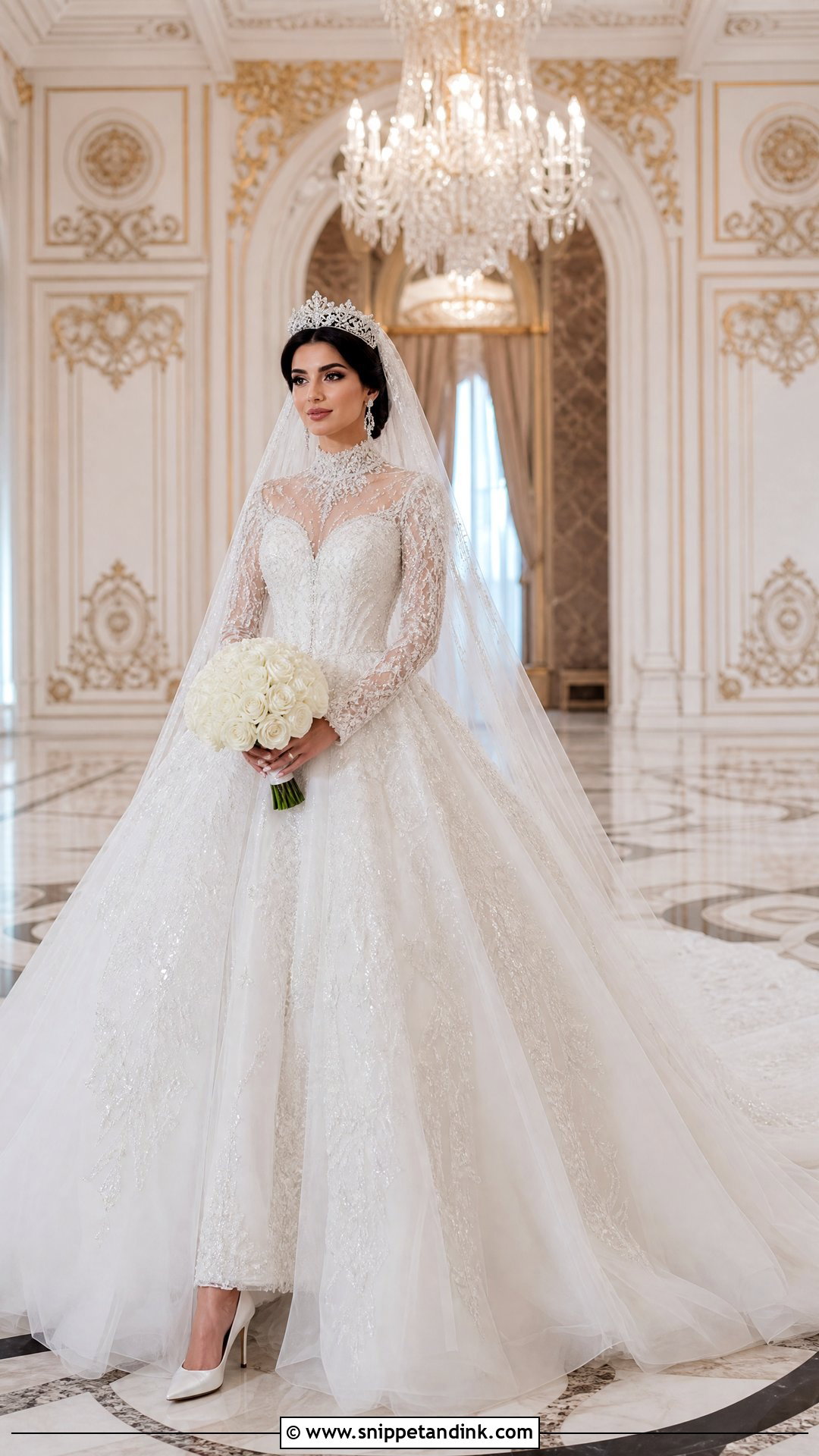
A princess wedding dress goes for maximum volume: structured bodice, long sleeves, a skirt of layered tulle or organza and often a long train. Delicate beadwork on the bodice keeps it luxurious without tipping into costume. Before choosing one, I ask about the room. A huge skirt needs a wide aisle, space on the stage and a chair you can actually sit on. A tiara, cathedral veil, satin heels and a neat bouquet complete it, in a venue big enough for the gown to move.
14. Arabian High Neck Wedding Dress
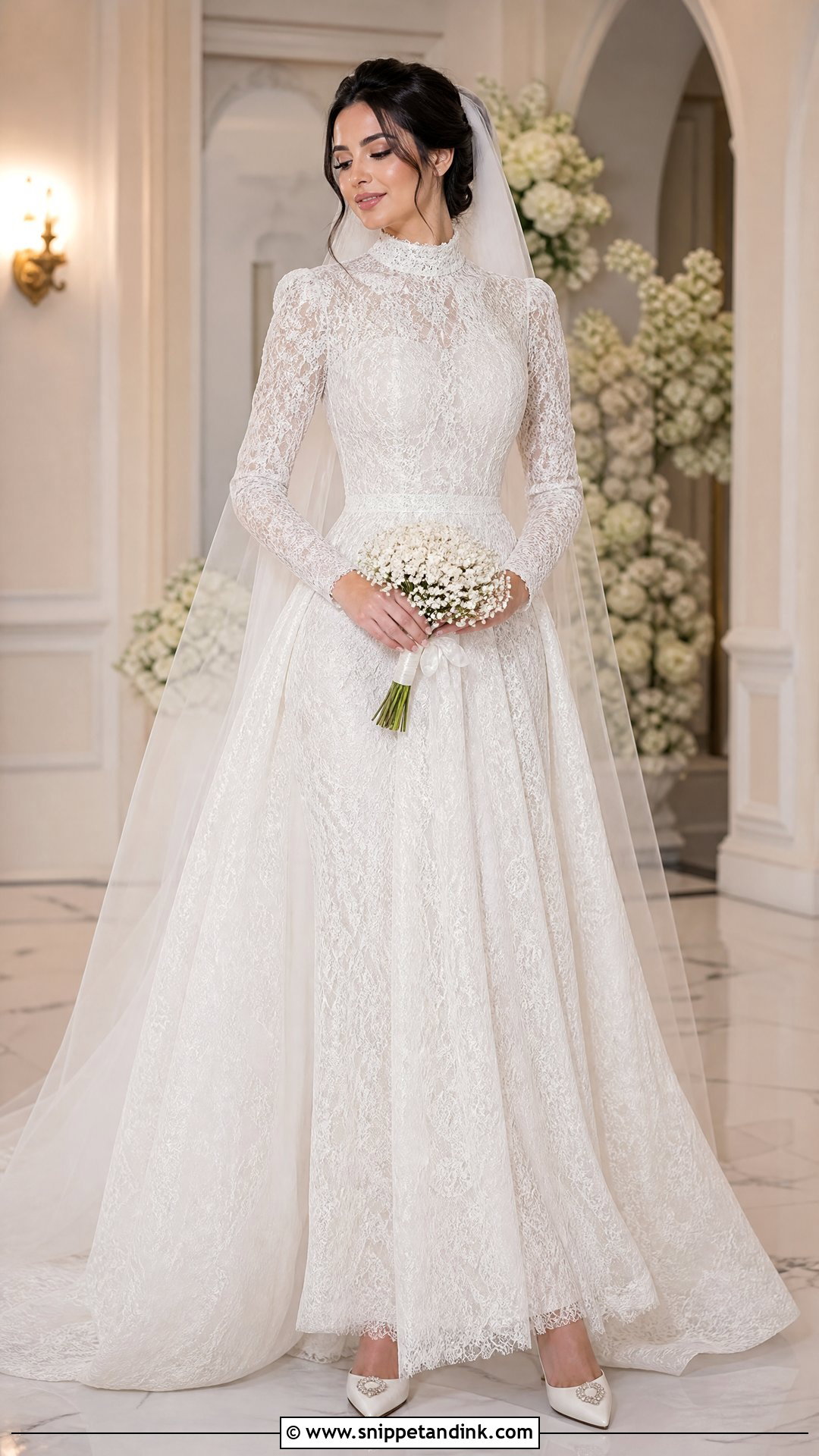
High necklines frame the face, which is why they look so good in close portraits. Lace, satin, crepe or embroidered tulle all suit. Fit at the throat matters: too tight and you’ll feel it all night, so I leave a finger’s width of ease and use a soft fastening at the back of the neck. A slightly fitted waist and a skirt that flows rather than stands stiff keep the balance. Long sleeves and covered buttons add vintage charm; a clean veil keeps it modern. Pearl studs, pointed heels and a smooth updo or neat hijab finish it.
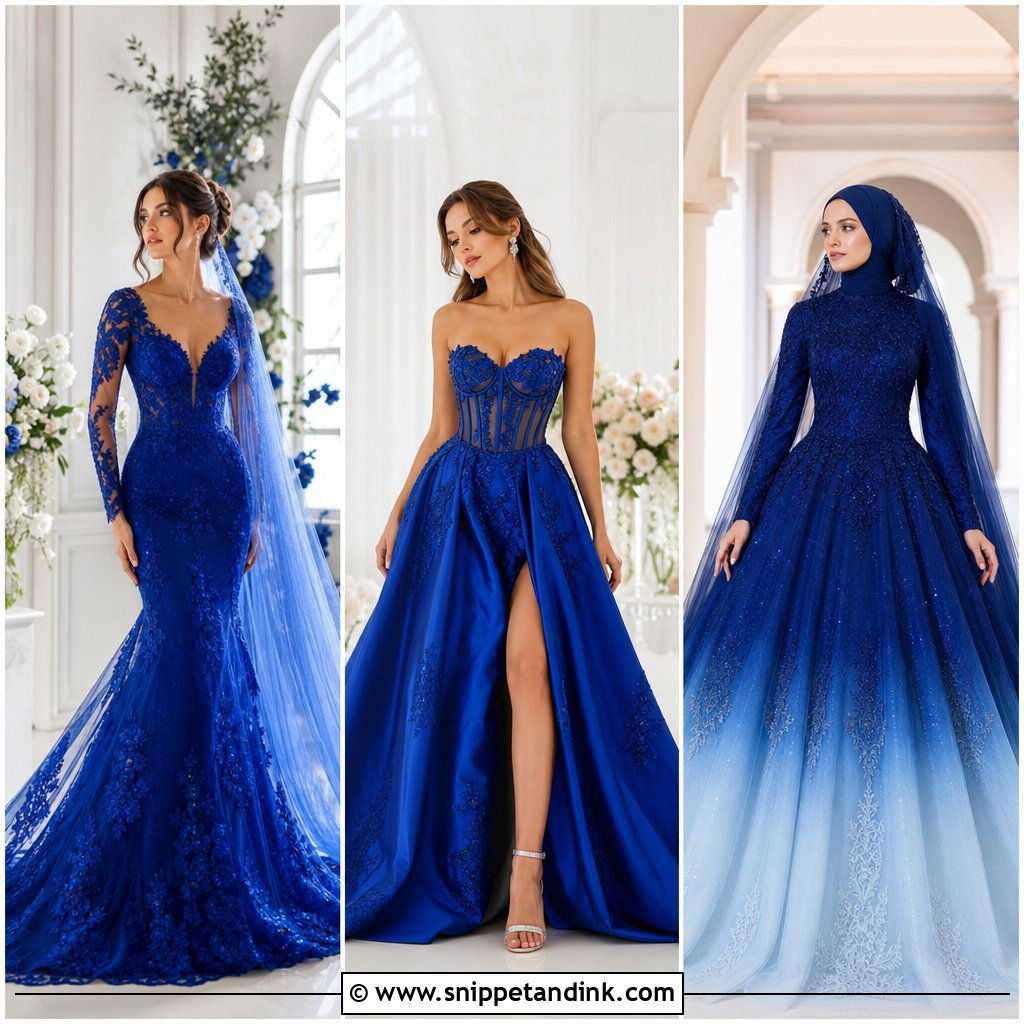
15. Arabian Tulle Wedding Dress
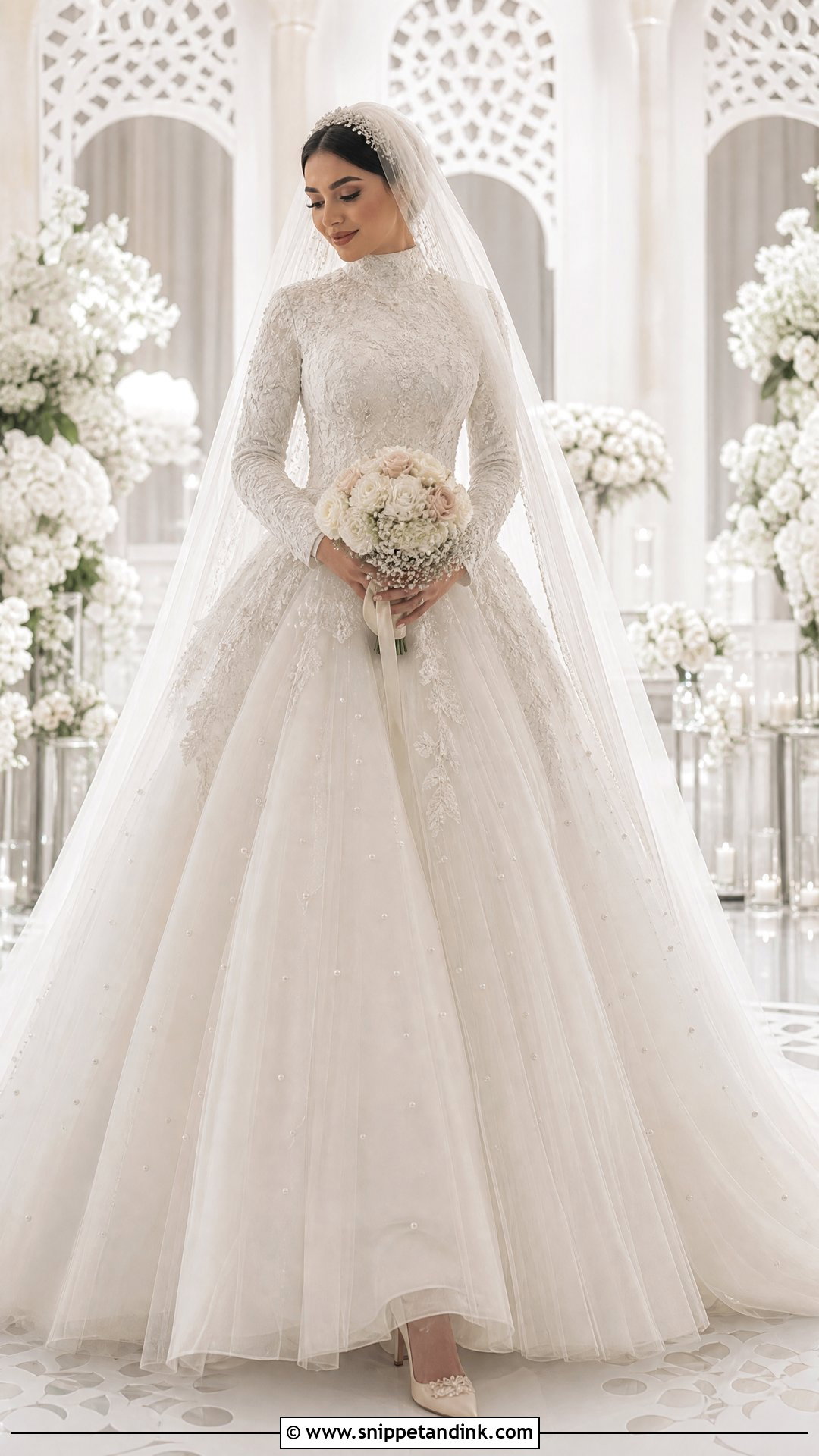
Tulle gives softness and volume without the weight of satin layers. A layered tulle skirt, a modest bodice and long sleeves create movement. Fine tulle looks delicate; firmer tulle holds more volume. Tulle snags easily on beaded sleeves, bracelets and the edges of embellished veils, so I keep jewelry smooth and check the veil edging. Embroidered flowers, scattered pearls or subtle sparkle add dimension. A long veil, dainty heels and simple jewelry keep it fresh for formal indoor weddings.
16. Arabian Organza Wedding Dress
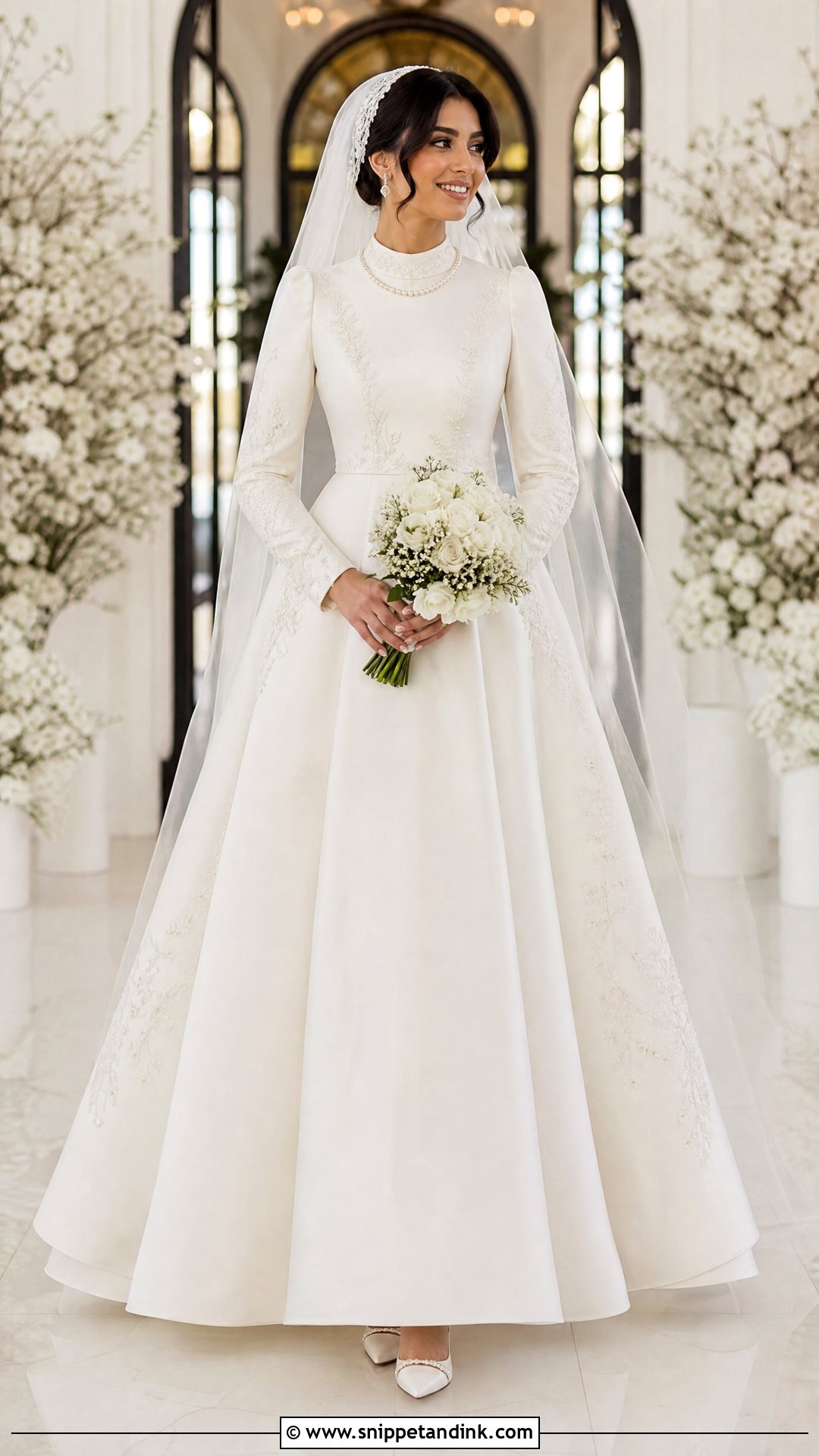
Organza is crisp and light and holds its shape, so it suits A-line skirts, puff sleeves and soft structured layers without the weight of heavier fabrics. A modest organza gown with long sleeves, a defined waist and subtle embroidery at the bodice or hem looks fresh. It does crease sharply when crushed in a car or garment bag, so hang it at the venue early and steam it from a distance. Satin pumps, a clean veil and pearl or crystal jewelry suit it, and it swings well in full-length walking shots.
17. Arabian Two Piece Wedding Dress
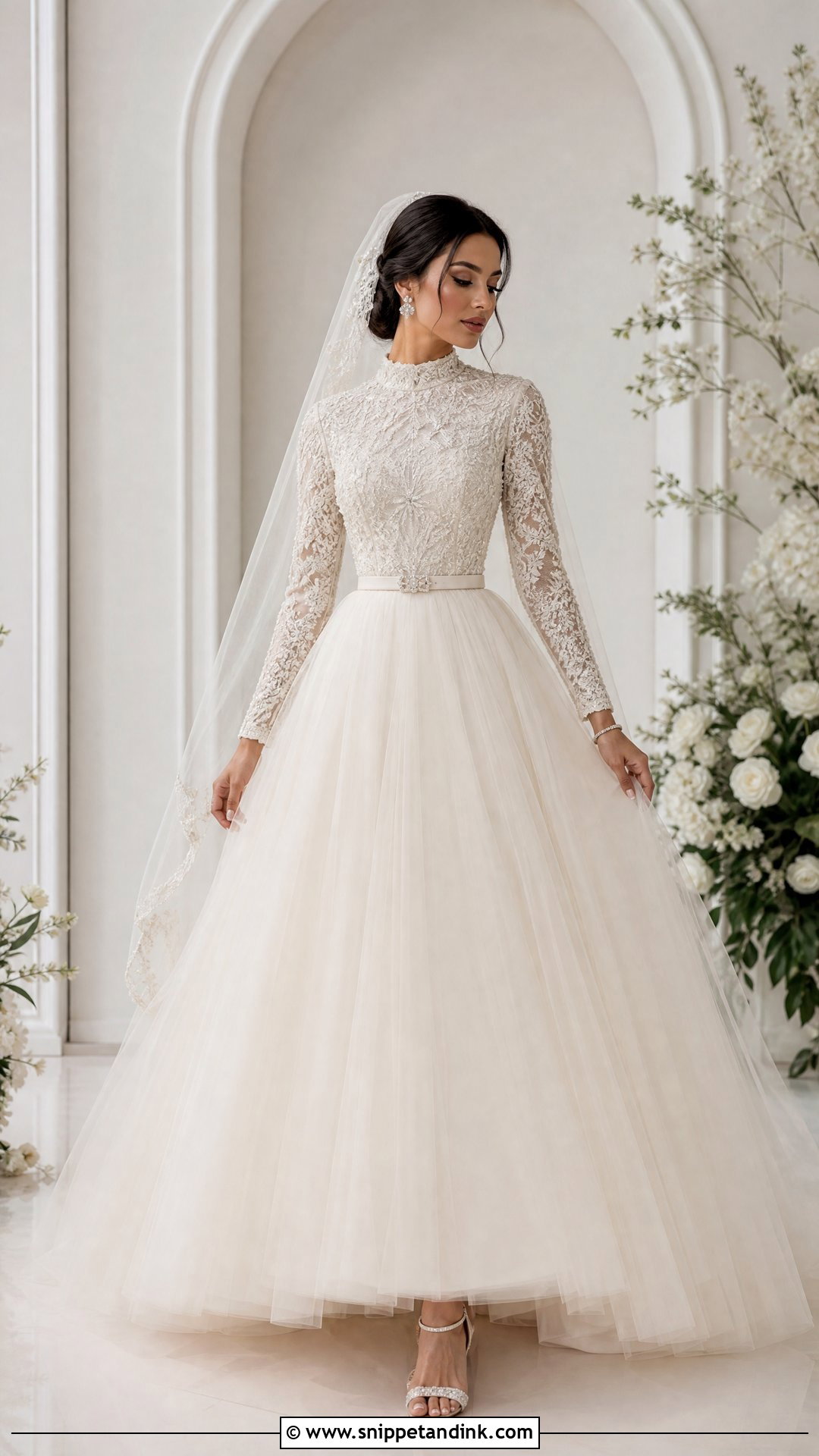
Two-piece bridal outfits solve a real fitting problem: brides whose top and bottom measurements fall in different sizes. A long-sleeve embellished top with a high neck over a full satin, tulle or organza skirt can look as formal as a gown when the pieces share fabric, embroidery or beadwork. I make sure the top is long enough, or attached with hidden hooks, so no skin shows when you lift your arms. A long veil pulls it together. Elegant heels, a slim belt and soft jewelry finish it.
18. Arabian Detachable Train Wedding Dress
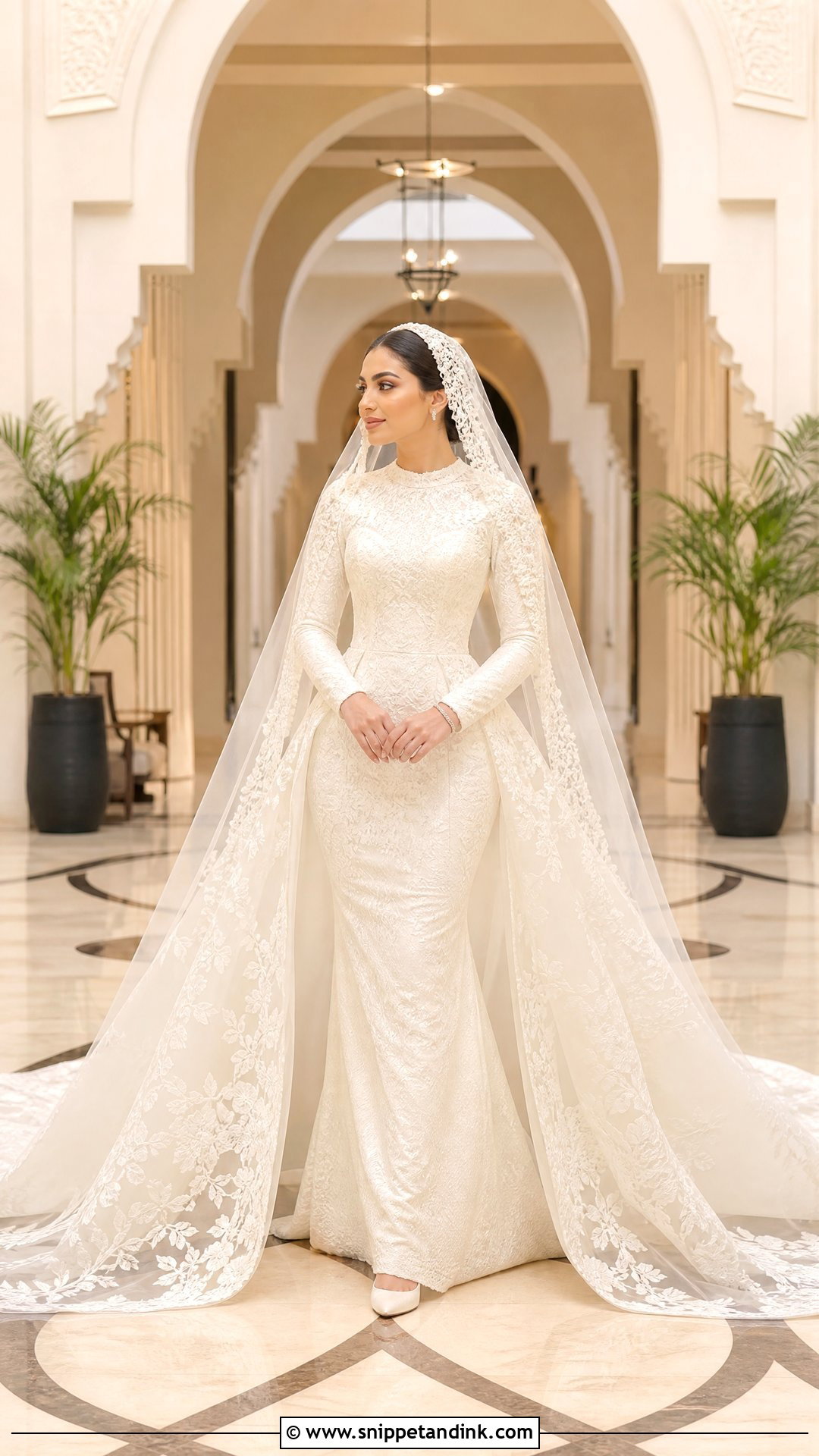
A detachable train gives one outfit two moods on a long night: full drama for the entrance and ceremony photos, then freedom of movement once it’s removed. Choose a train with lace, pearls or embroidery matching the gown. The attachment is what I test hardest; hooks or snaps should take seconds, and someone in your party should practise removing it at the final fitting. Secure heels, a long veil and simple jewelry finish it. Rear-view portraits are where the train shows off.
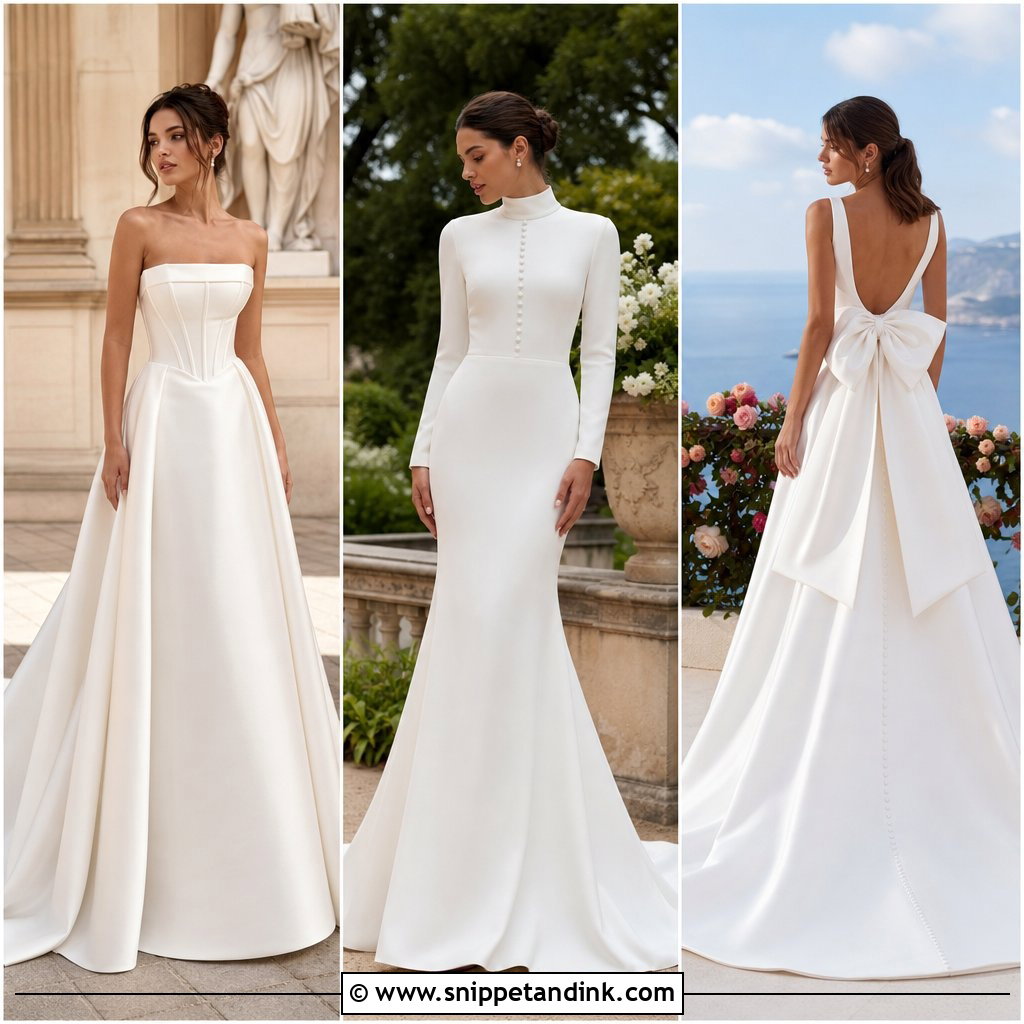
19. Arabian Pearl Wedding Dress
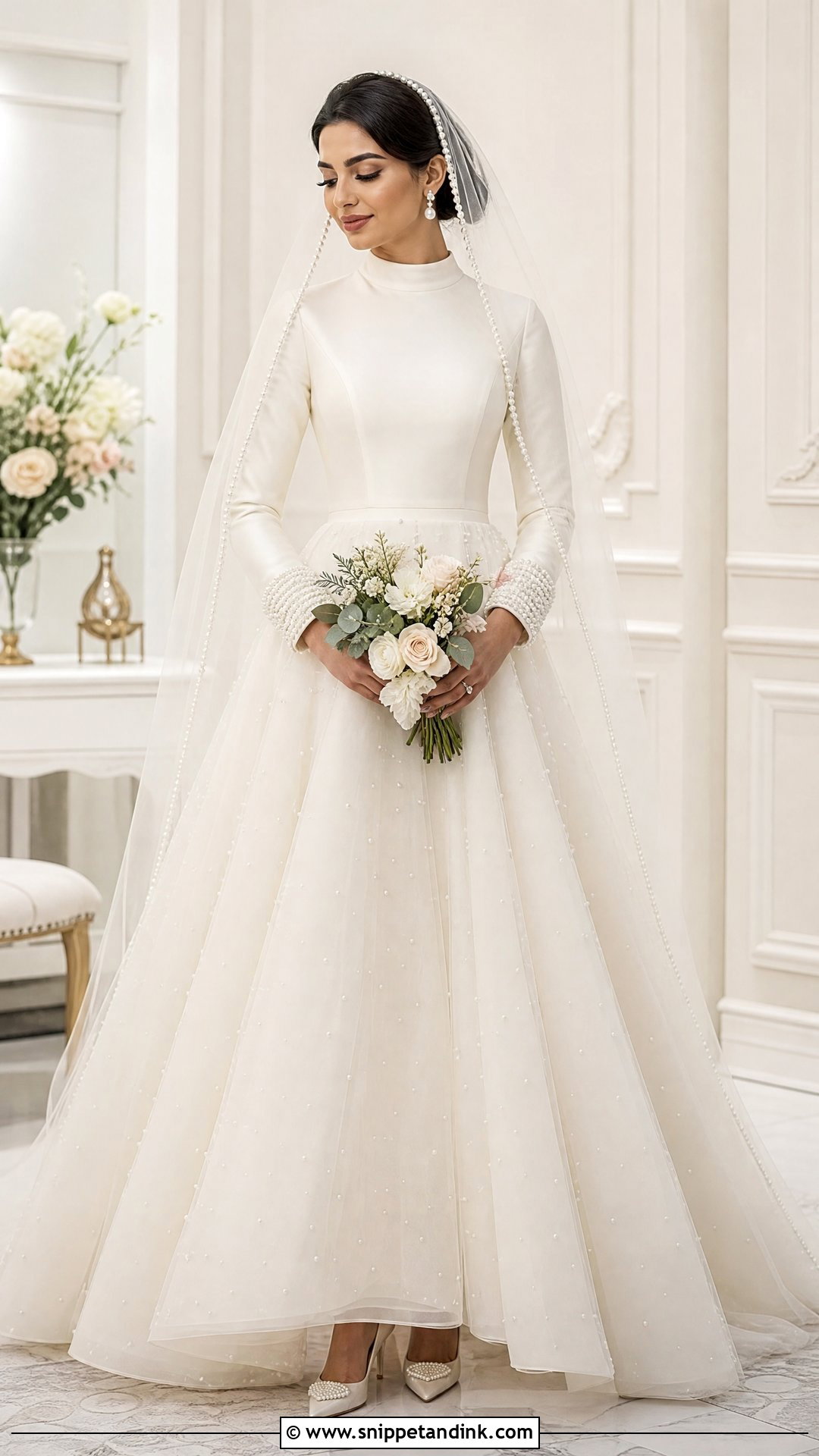
Pearls add softness without flash. Pearl-trimmed sleeves, a beaded bodice or tiny pearls scattered across tulle all work, and ivory fabric suits them best because it echoes their creamy tone. Look at how they’re attached before buying: hand-sewn pearls survive hugs and greetings; glued ones fall off on the dance floor. A modest neckline, long sleeves and a gentle A-line or ball gown shape give a classic finish. Pearl earrings, pearl-accent heels and a pearl-edged veil coordinate the outfit.

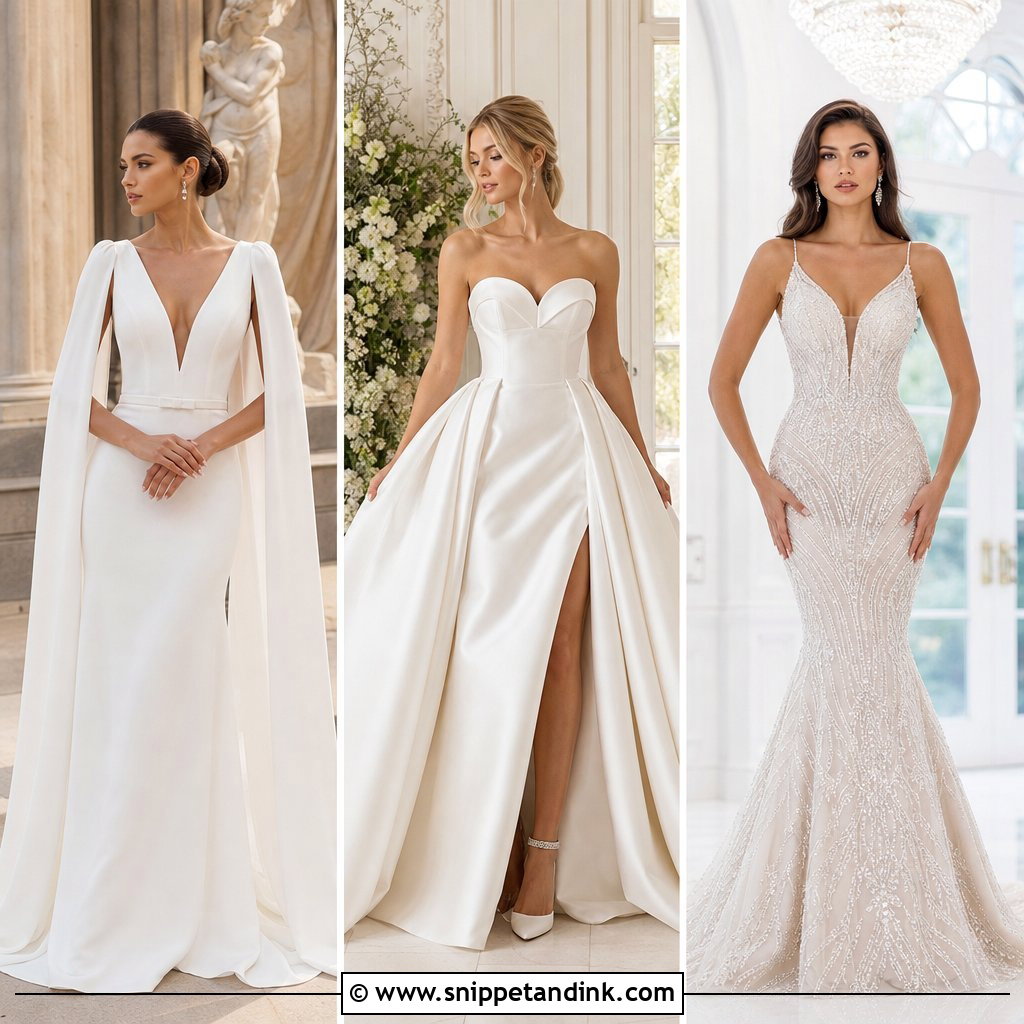

20. Arabian Crystal Wedding Dress
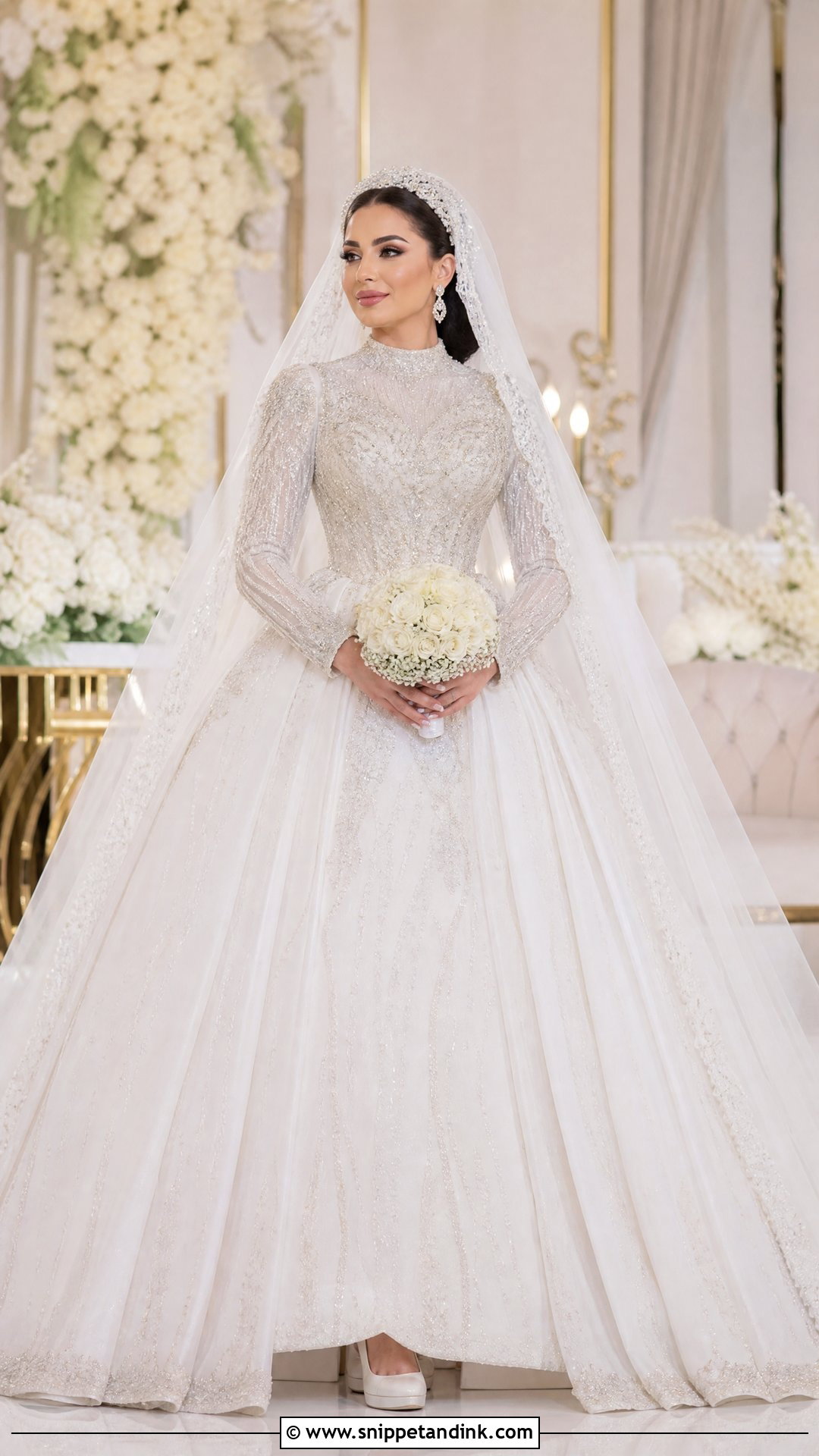
Crystals look most refined in a few placed areas, along the bodice, cuffs, waistline or veil border, rather than covering every inch. A long-sleeve silhouette with a flowing skirt balances the sparkle and keeps coverage. Silver or clear crystals suit white, ivory or soft grey-toned fabric. Crystal cuffs can scratch a hijab or catch a veil, so I check that settings are smooth and backed. Crystal earrings, satin heels and a clean bouquet suit large evening venues.
21. Arabian Ruffle Wedding Dress
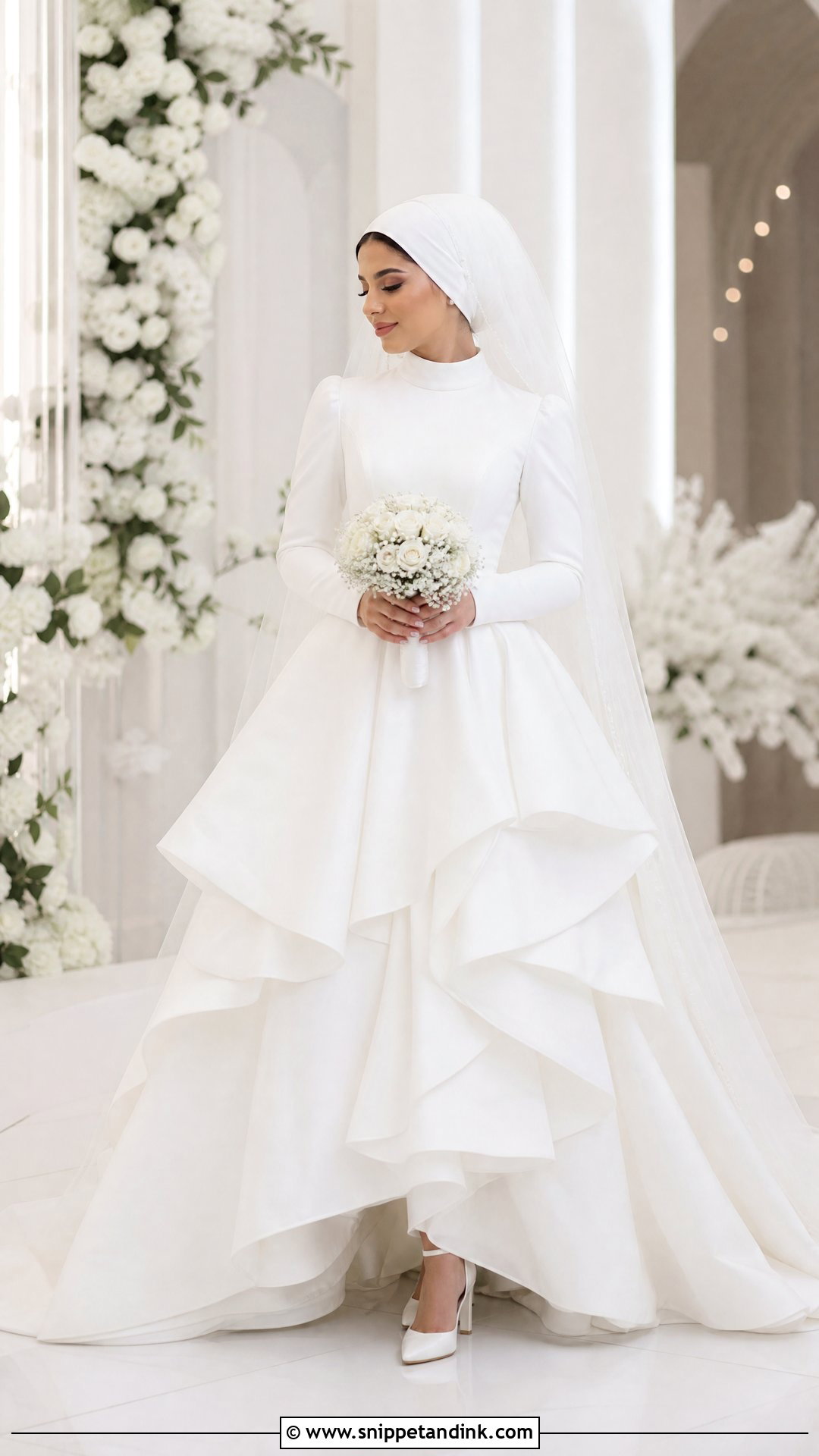
Ruffles add volume and movement, and they work best when the bodice stays smooth and modest. Soft layered ruffles on the skirt, sleeves or train, with a high neckline and long sleeves, give personality and drama. Each ruffle adds weight and width, so I walk the bride down a corridor in the fitting to make sure she can move and the skirt doesn’t catch on her heels. Simple heels, a smooth veil and minimal jewelry keep it balanced. Light, controlled ruffles beat oversized ones every time.
22. Arabian Floral Wedding Dress
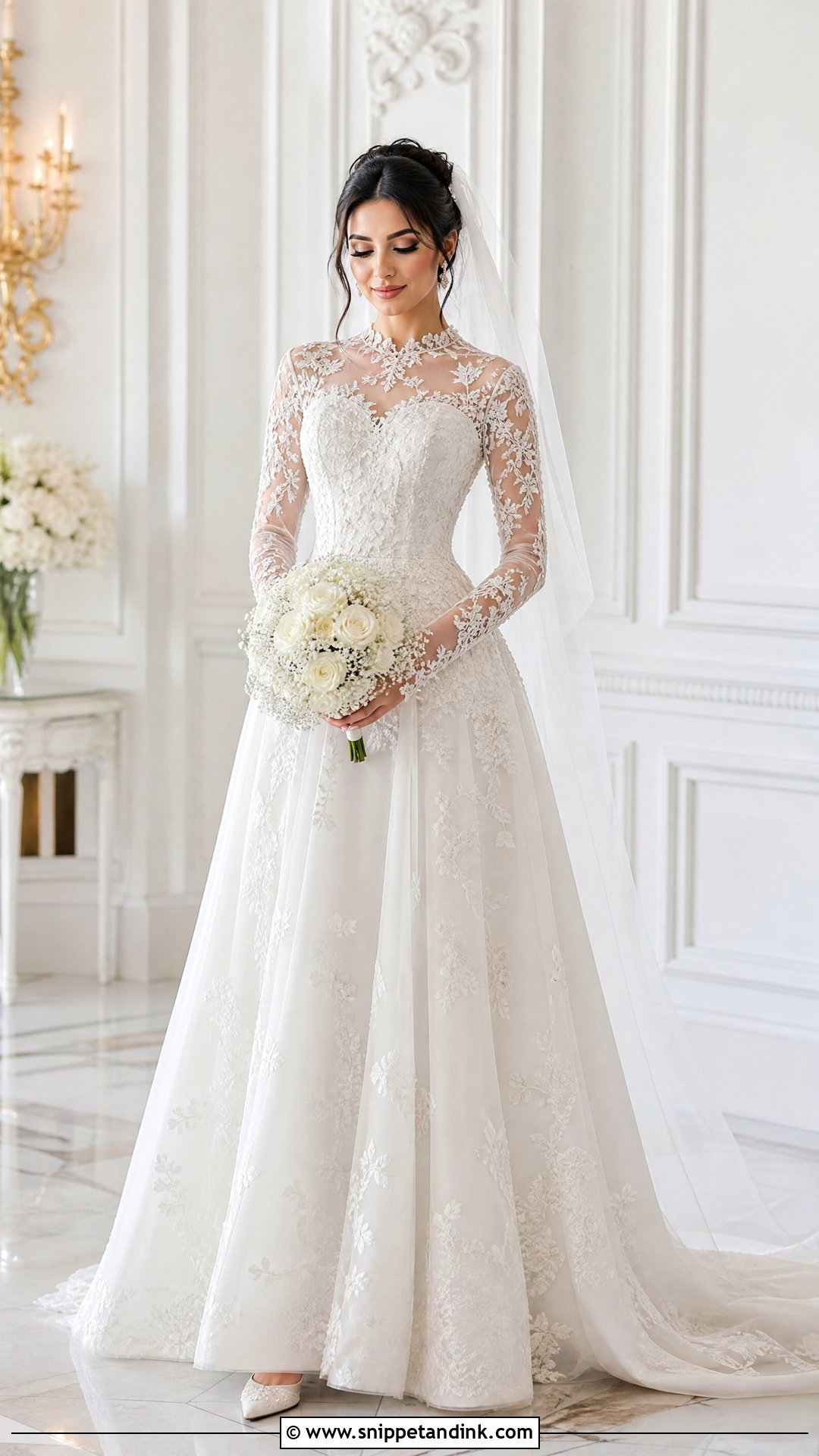
Floral details soften a modest gown. Embroidered flowers, lace appliqué or three-dimensional blooms all work on a long-sleeve dress. White-on-white looks classic; pale blush, champagne or silver thread adds a delicate twist. A flowing A-line or ball gown gives the florals room. Three-dimensional flowers flatten in transit, so plump them by hand once the dress is hung. A simple veil, soft heels and jewelry that doesn’t compete with the pattern finish it.
23. Arabian Minimalist Wedding Dress
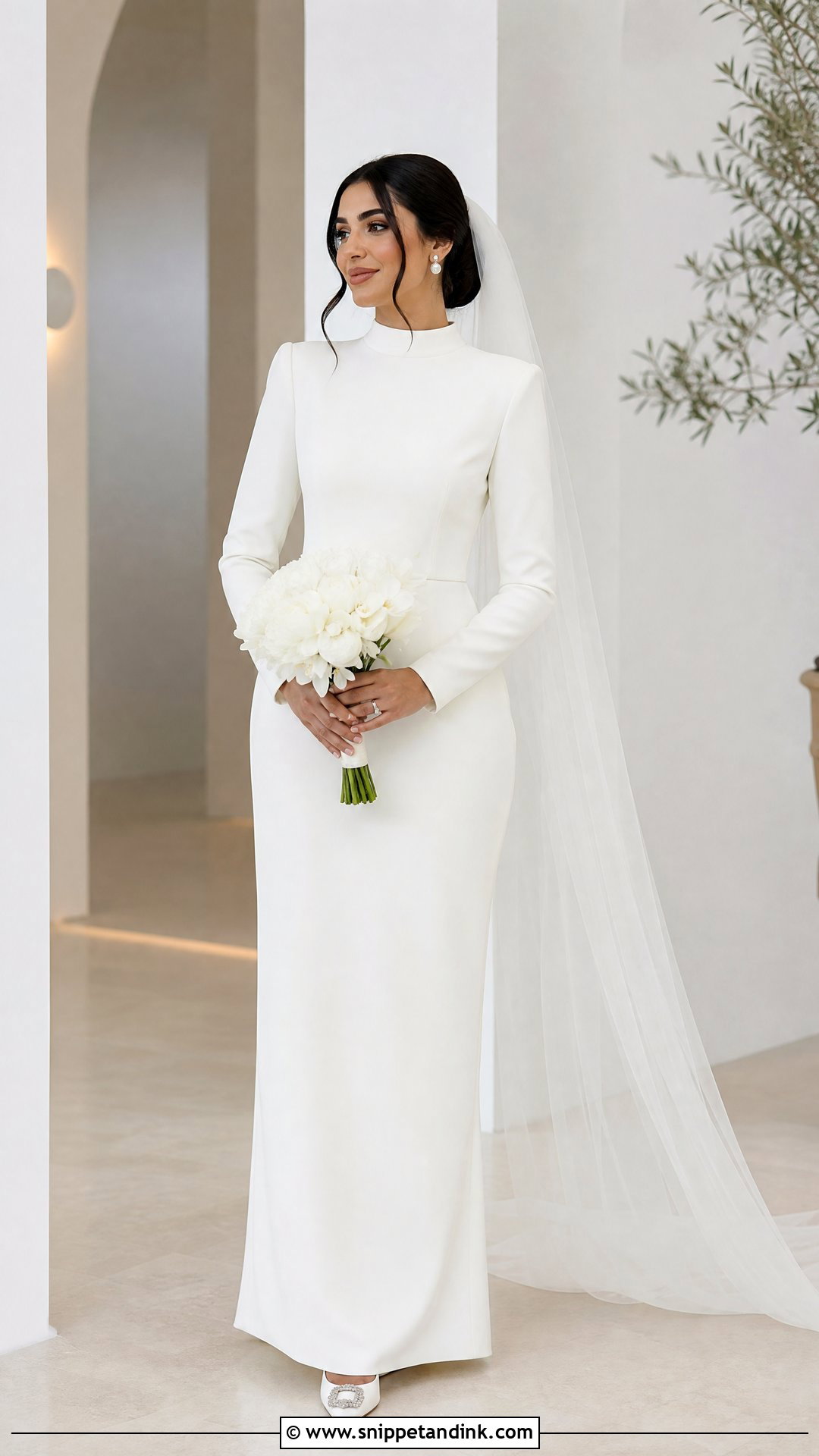
Minimal gowns put everything on fabric quality and fit. A clean satin or crepe gown with long sleeves, a high neck and a precisely tailored waist needs nothing more than a long plain veil, elegant pumps and one refined accessory, such as pearl earrings or a slim bracelet. Because nothing distracts, I check fit from every angle, including seated. Makeup, the bouquet and jewelry all have room to stand out quietly.
24. Arabian Plus Size Wedding Dress
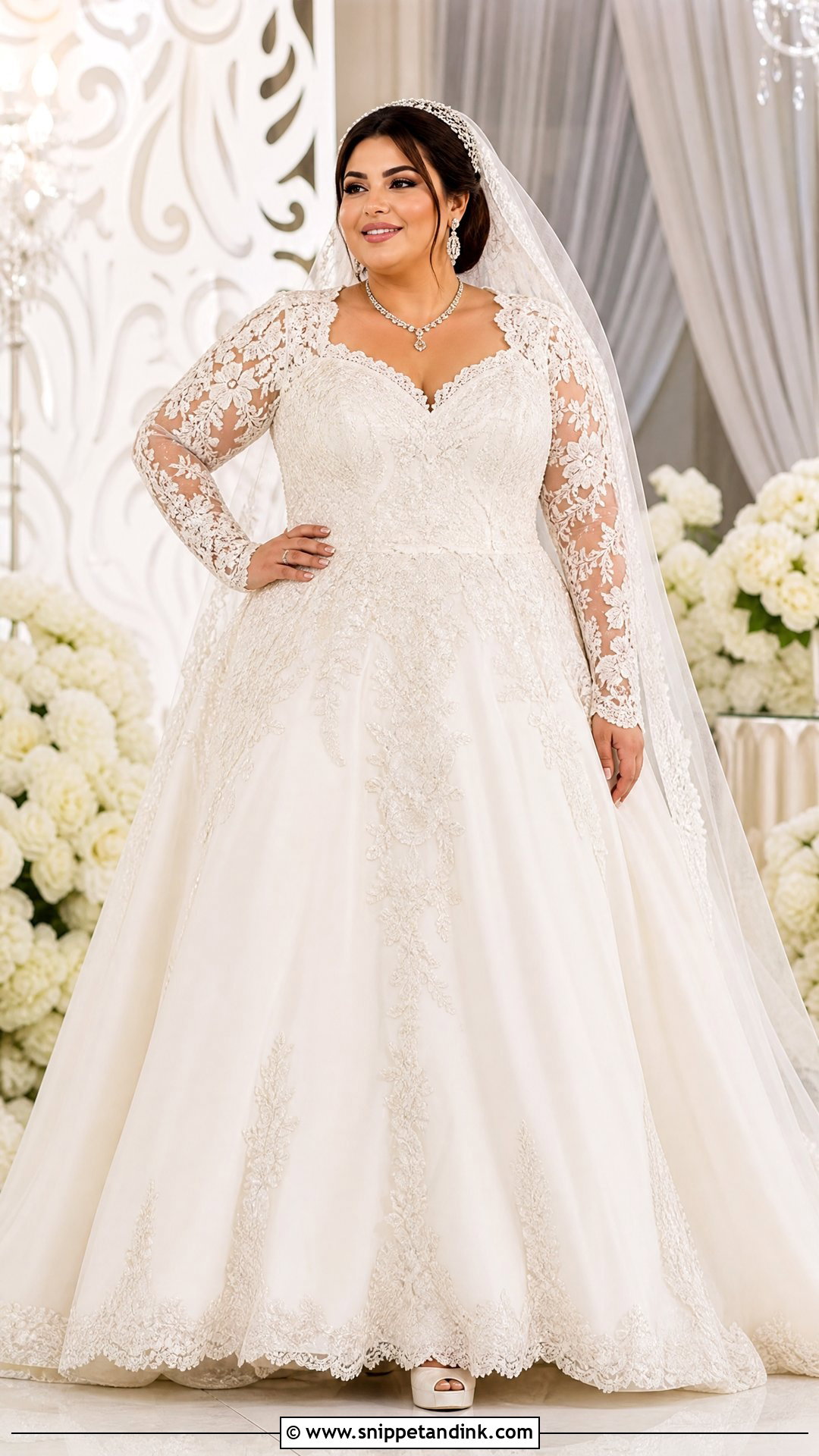
A plus size Arabian wedding dress needs a supportive build more than anything. A structured A-line, a soft ball gown or an empire waist creates a graceful shape without restriction. Long sleeves must have comfortable lining and room at the upper arm; tight sleeves are the most common complaint I hear in fittings. Lace, satin and tulle all work when tailored. A securely pinned veil, cushioned heels and jewelry that frames the face finish it. This isn’t about hiding anything; good alterations make the dress fit you, not the other way round.
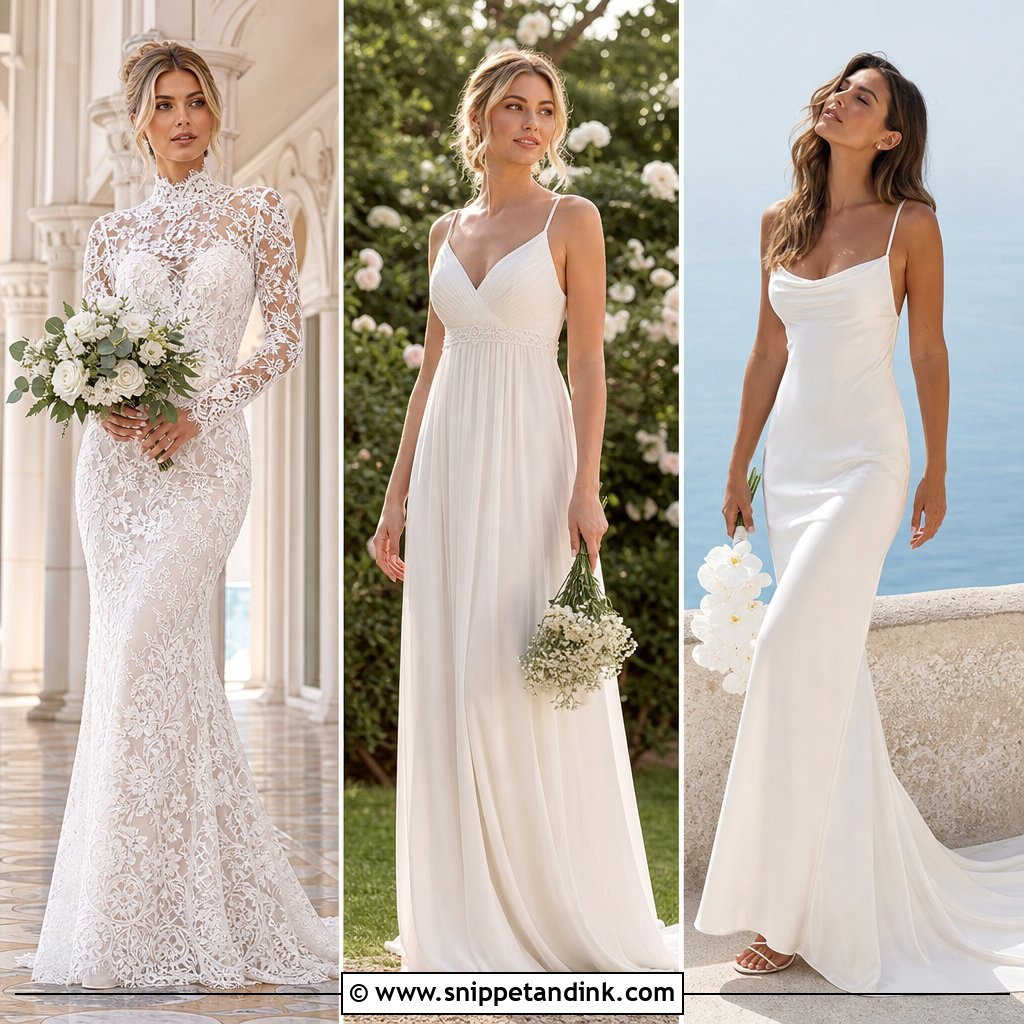


25. Arabian Reception Wedding Dress
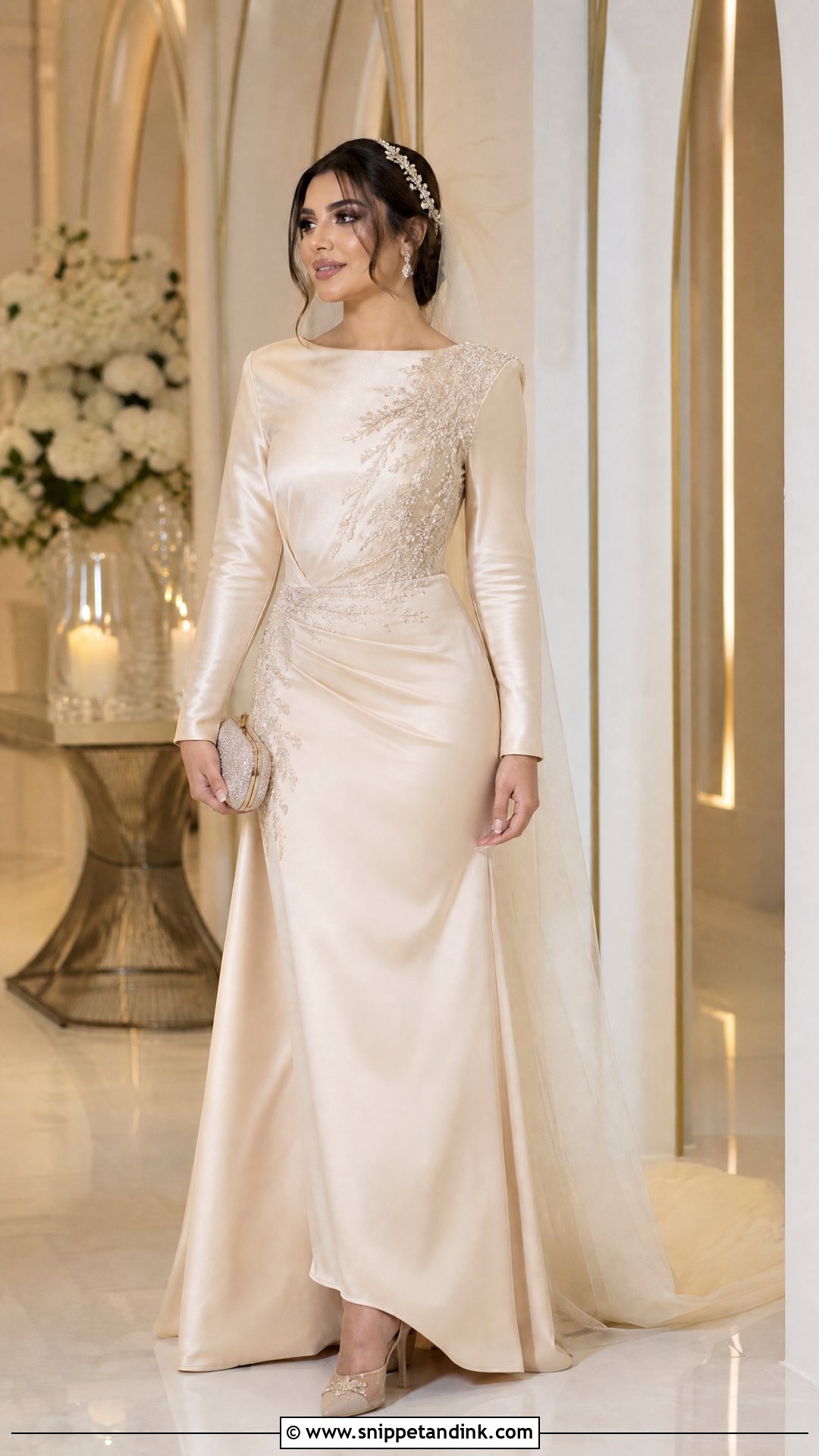
Long celebrations often deserve a second outfit, especially when the main gown is heavy. For the reception, a lighter long-sleeve gown, an embellished kaftan or a sleek satin dress keeps you bridal while freeing you to greet, sit and dance. Ivory, champagne, silver and soft gold all work. Comfortable heels, a lighter veil or hair accessory and a small clutch are enough. Plan the change with your stylist and photographer so the second entrance gets its own moment.
Heavy Gowns, Long Nights and the Bridal Entrance
Arab weddings often run late, and in many families the bride’s entrance into the hall, sometimes accompanied by a zaffa procession and music, is the moment everyone waits for. A gown that looked right standing still in a showroom has to manage a slow walk, a stage, hours of greetings and plenty of photos.
- Rehearse the entrance in your shoes and full skirt, including any steps up to the stage. Hold the skirt slightly in front, not to the side.
- Ask for a seat with no arms on the stage. Full skirts and capes crush against chair arms.
- Keep a small kit with someone close: safety pins, fashion tape, a spare hijab pin, blotting papers and flat shoes for later.
- Plan rests. Heavily beaded gowns can weigh a lot, and a few minutes sitting in a quiet room makes the second half of the night far easier.
- If guests will hug and kiss in greeting, choose smooth fabric near the shoulders. Beading there catches on other people’s clothing and jewelry.
If the women’s celebration and the mixed or men’s part of the evening are separate, talk through which elements of the look change between them, such as adding a cape, a hijab or a heavier veil, so the switch is quick and nobody is searching for pins.
Coverage, Comfort and the Detail That Carries Your Family’s Style
The gowns that work best at Arab weddings combine coverage, comfort and meaningful detail. A ball gown, a kaftan, a pearl-covered dress or a sleek satin gown can all be right, as long as the full outfit is balanced from head to toe. Think about the neckline, sleeves, veil, shoes and jewelry together, and about how the dress moves over a long celebration. Fabric weight, venue size and the hours you’ll wear it matter as much as decoration. The right dress reflects you and lets you enjoy the night.
You'll Like These Ideas:








Leave a Reply