
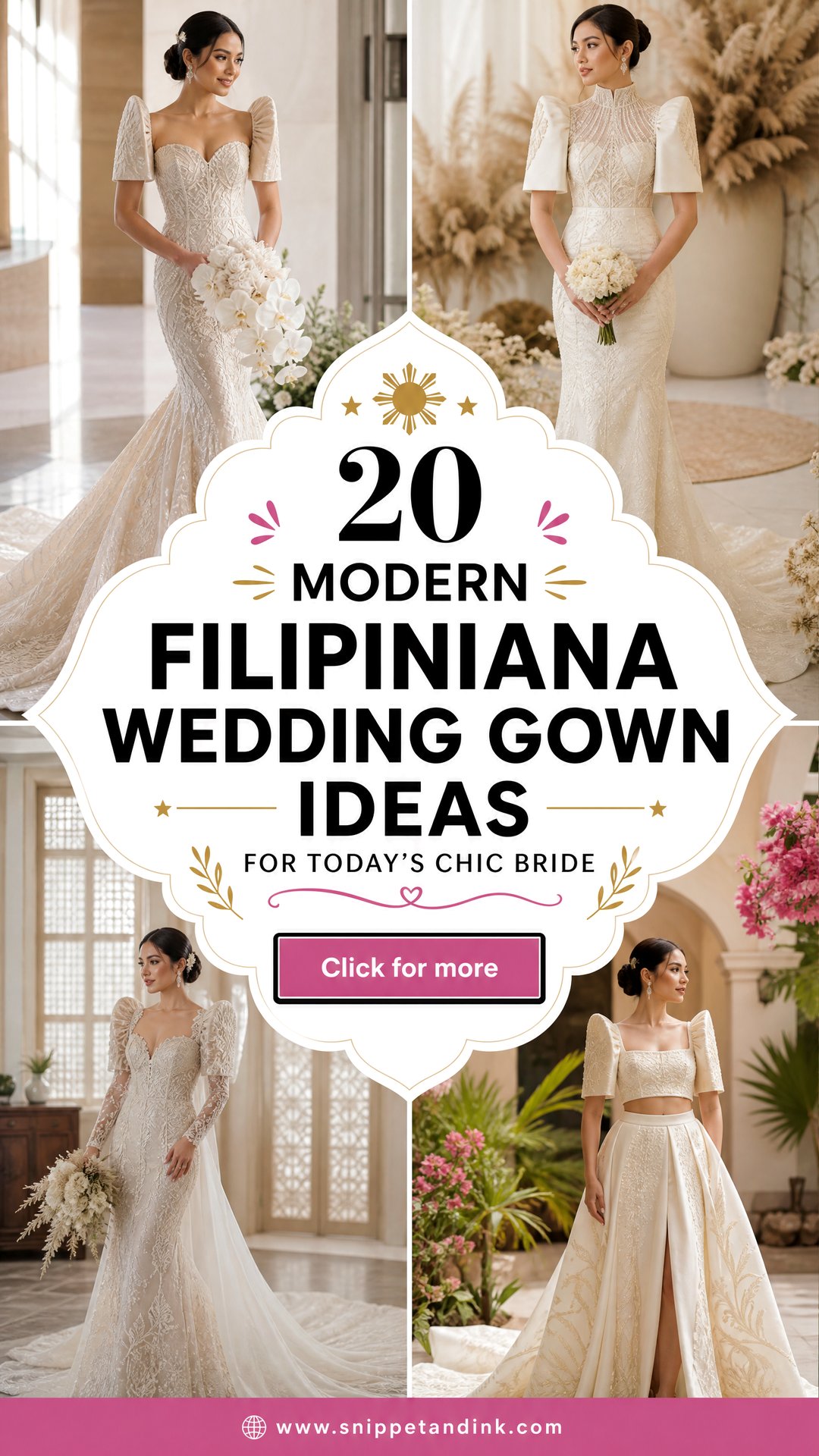
A Filipiniana gown starts with the sleeve. Those stiff, upright butterfly sleeves of the terno are what make the dress read as Filipino from across a church, and everything else (fabric, skirt, neckline, the native-inspired textiles some brides weave in) is built around them. Modern versions play with that: removable sleeves, slimmer skirts, sheer overlays, even two-piece sets. When I style a Filipiniana bride, I care less about how traditional the result looks and more about whether the sleeve suits her shoulders, survives the ceremony rituals and lets her hug every tita in the room. The 20 looks below are styled head to toe, with notes on where each one tends to go wrong.
How a Terno Sleeve Holds Its Shape
A butterfly sleeve is a pleated or gathered panel that stands up from the shoulder. It needs support to stay upright, and how your dressmaker supplies that support changes how the gown feels. Traditional ternos rely on naturally stiff fabrics such as piña, jusi or sinamay, sometimes starched. Many modern gowns add interfacing, horsehair braid or a hidden inner sleeve instead, which holds better in humidity but can feel scratchy if it isn’t lined.
At the first fitting I look at three things before anything else:
- Peak height. Stand facing a mirror; the top of the sleeve should frame your face, not rise past your ears.
- Width against your hips. Sleeve width and skirt width balance each other, so a column skirt can carry a wider sleeve than a ball gown can.
- Arm lift. Raise both arms to shoulder height. If the sleeve folds or the bodice lifts, the pleats are anchored too tightly.
Give Hand Embroidery the Time It Needs
Custom ternos with hand embroidery, especially on piña, can take many months, and good Filipiniana ateliers book up ahead of the wedding season. Lead times vary widely between makers, so ask for a realistic date at the first consultation and leave yourself a margin for at least two fittings after the embroidery is attached.
1. Classic Terno Filipiniana Wedding Gown
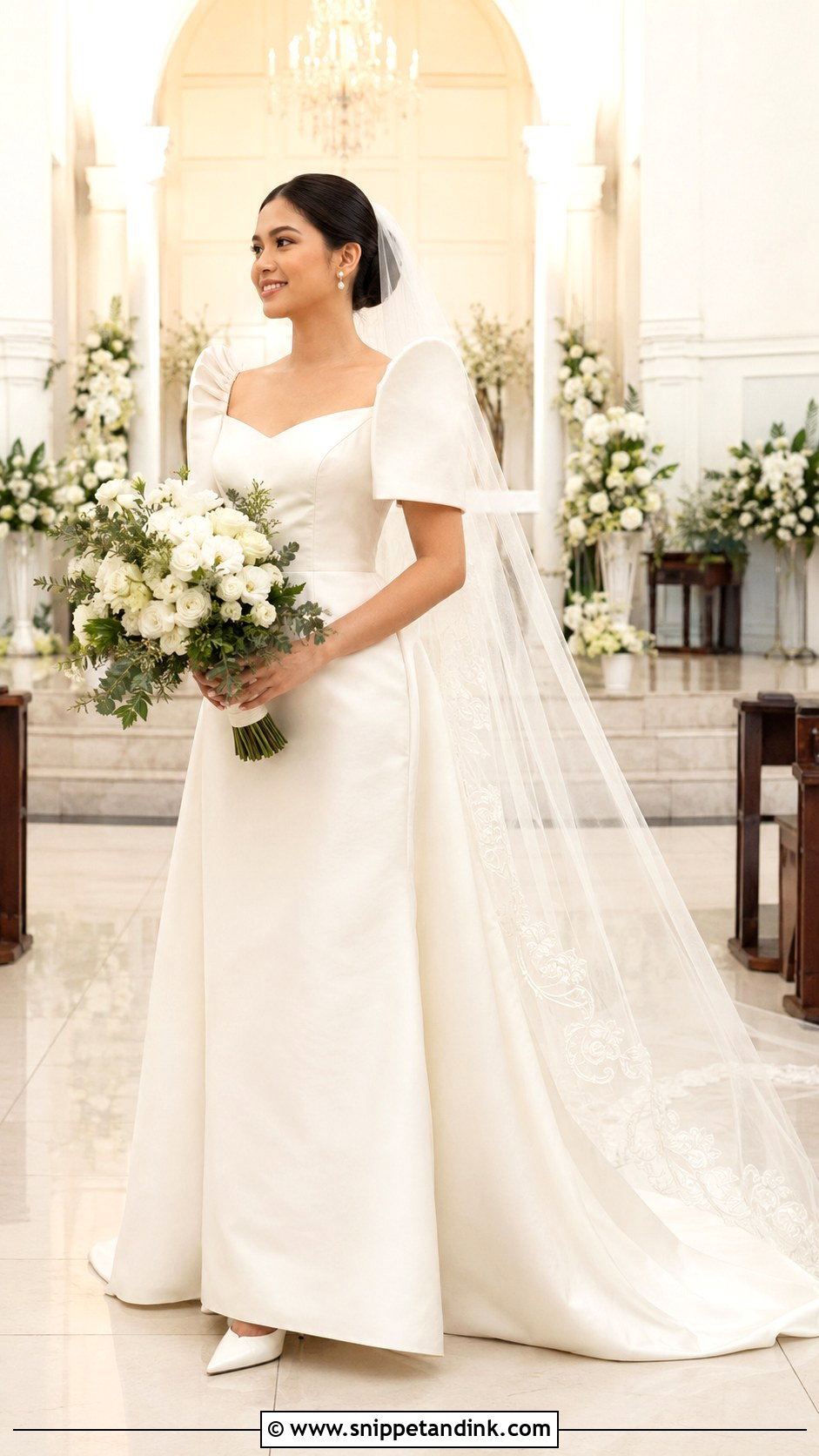
This is the version most families picture, and it earns that place. Duchess satin is my first suggestion for a classic terno because it is heavy enough to hold a pleated sleeve without much internal stiffening, so the sleeve stays crisp but doesn’t crackle when you move. A boat neck or shallow V keeps the line under the sleeve clean. Pearl studs, an embroidered veil and pointed ivory pumps are all it needs. The fitting I watch most closely is sleeve height: if the peak sits higher than about the top of your ear, it starts to box in your face, and on narrow shoulders a slightly lower, wider sleeve frames you far better.
2. Minimalist Satin Filipiniana Wedding Gown
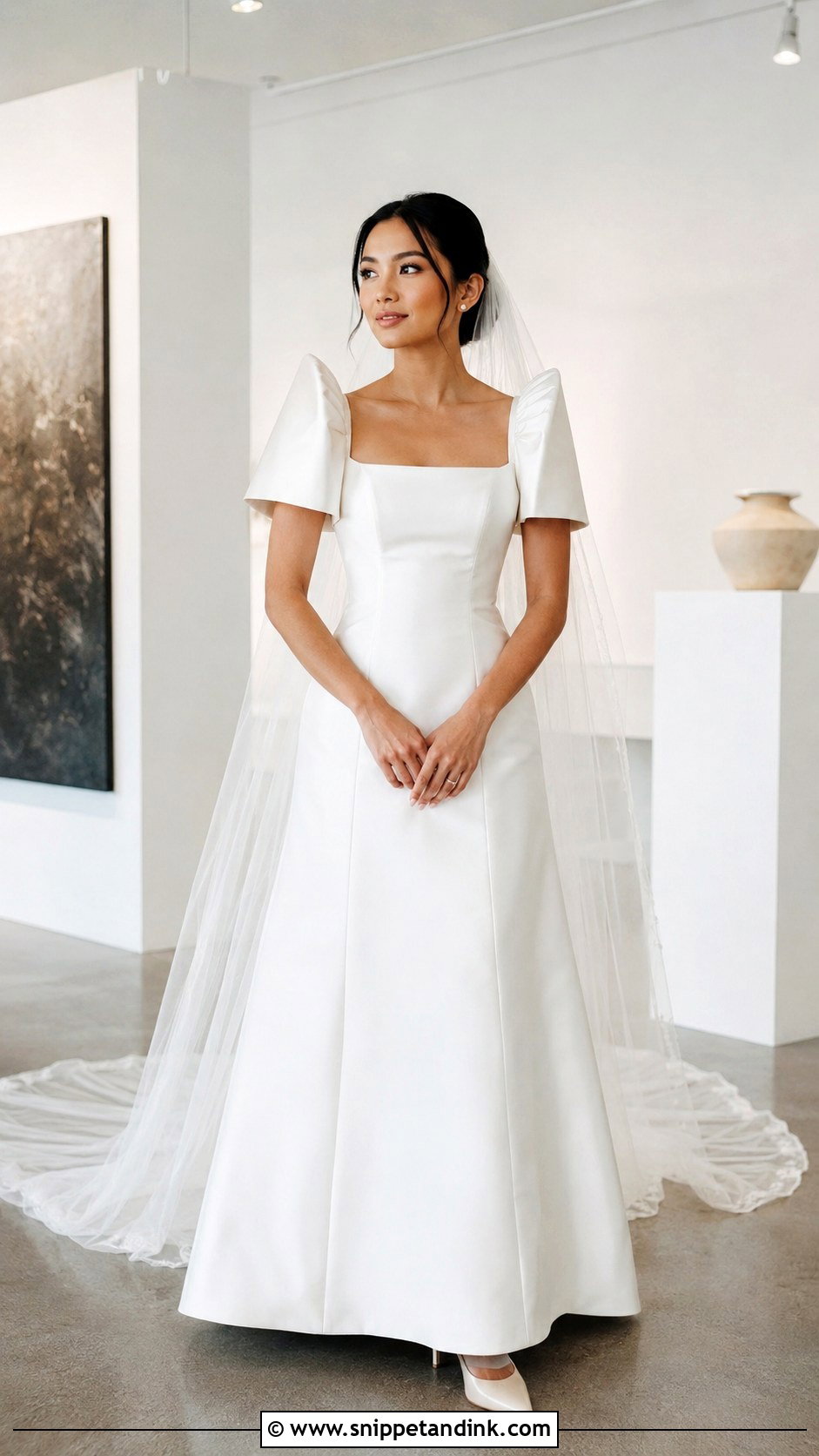
Satin with no lace at all is where the terno looks most architectural, and it is also where every fitting flaw shows. Keep the body simple: a column or soft A-line, sharp princess seams, maybe covered buttons or a square neckline. A low bun and a plain cathedral veil let the sleeves carry the look. Satin is unforgiving of the wrong underwear, so bring the exact bra and shapewear you’ll wear to every fitting. I also ask for a good weighty lining, because thin satin over a cheap lining ripples at the waist and hips the moment you sit, and that ripple is what the camera catches.
3. Piña Filipiniana Wedding Gown
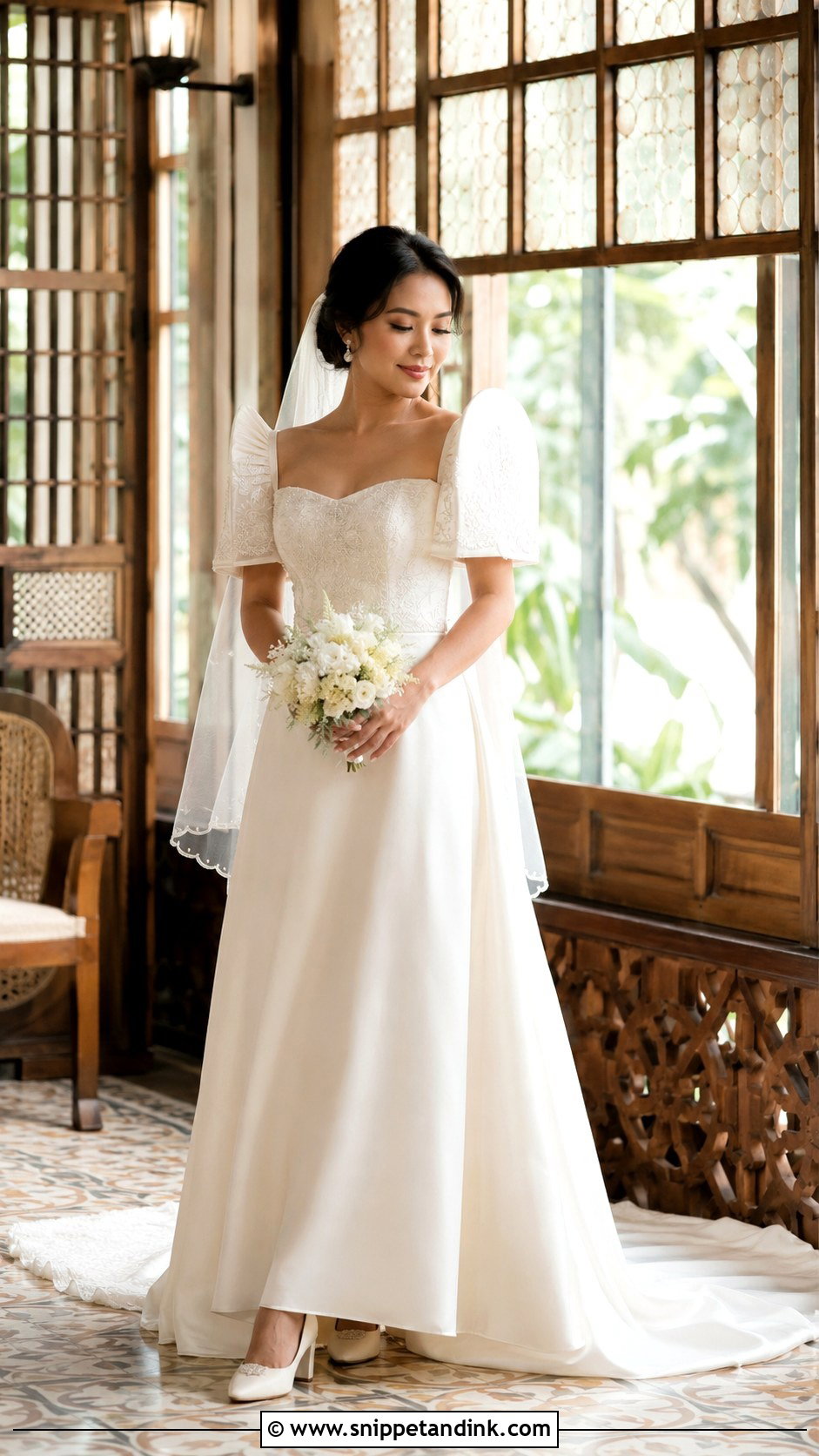
Piña is the fabric I get most excited about and the one I am most careful with. Woven from pineapple leaf fibre, it has a soft sheen and a slightly crisp hand, but it is fragile, and hand-embroidered piña is slow and costly to make. So I rarely put it everywhere. Use it for the sleeves, a bodice overlay or a detachable topper, then let a silk or satin skirt do the heavy work. Block-heel ivory shoes and pearl drops keep the rest quiet. Ask your designer how the seams will be reinforced, because piña can split along a stitch line under strain, and plan from the start how it will be cleaned and stored.
4. Jusi Organza Filipiniana Wedding Gown
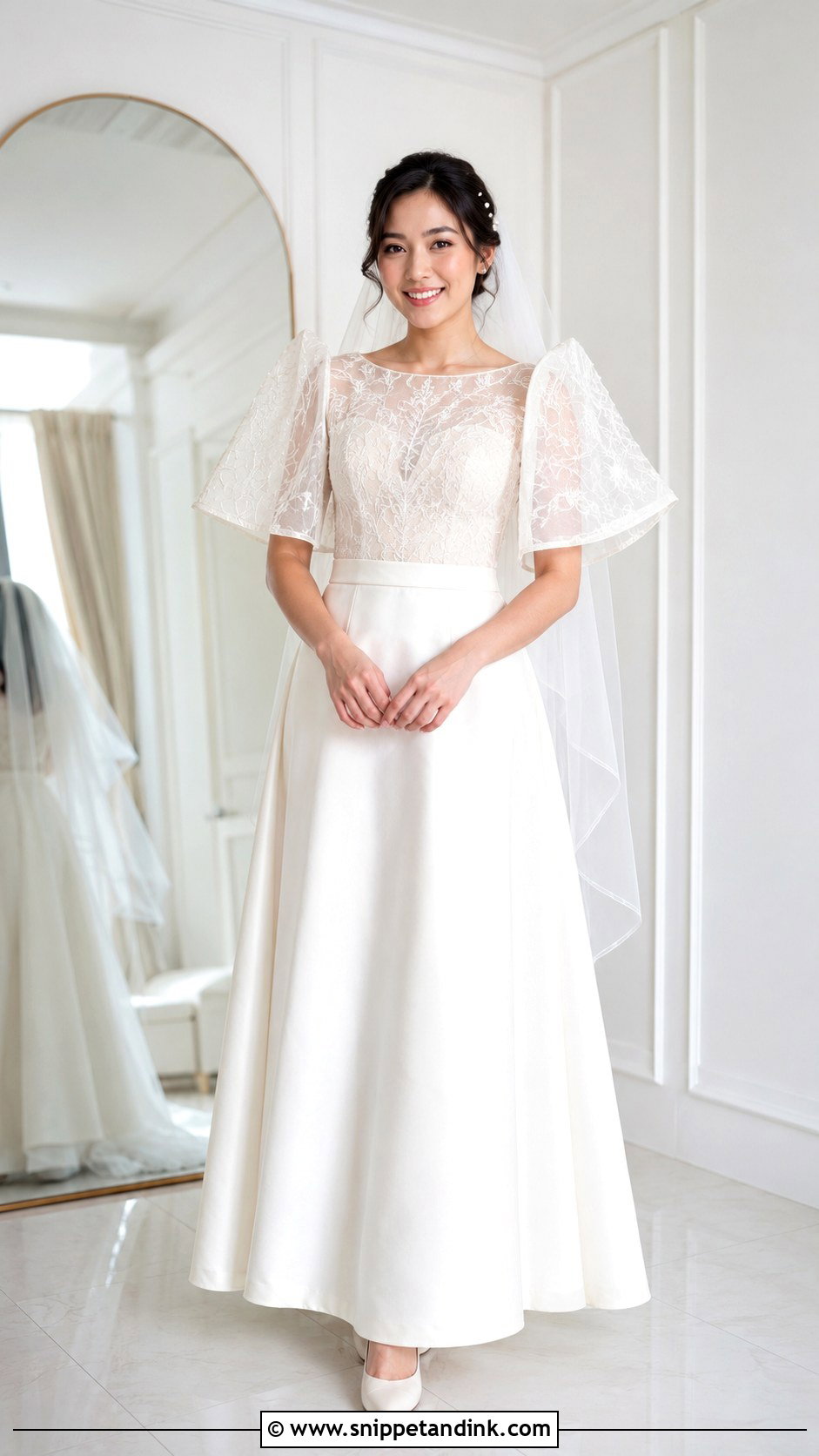
Jusi and organza give you the terno shape with almost no visual weight. The sleeves become translucent and the skirt floats, which is lovely in a garden or a warm church. The catch is sheerness. Fabric that looks opaque in a showroom can turn see-through under a flash or with the sun behind you, so I always check sheer layers outdoors and with a phone flash before signing off on the lining. A bateau neck, a sleek chignon, pearl hairpins and a fingertip veil suit it; skip big jewellery, since the weave already gives the eye plenty to read.
5. Lace Filipiniana Wedding Gown
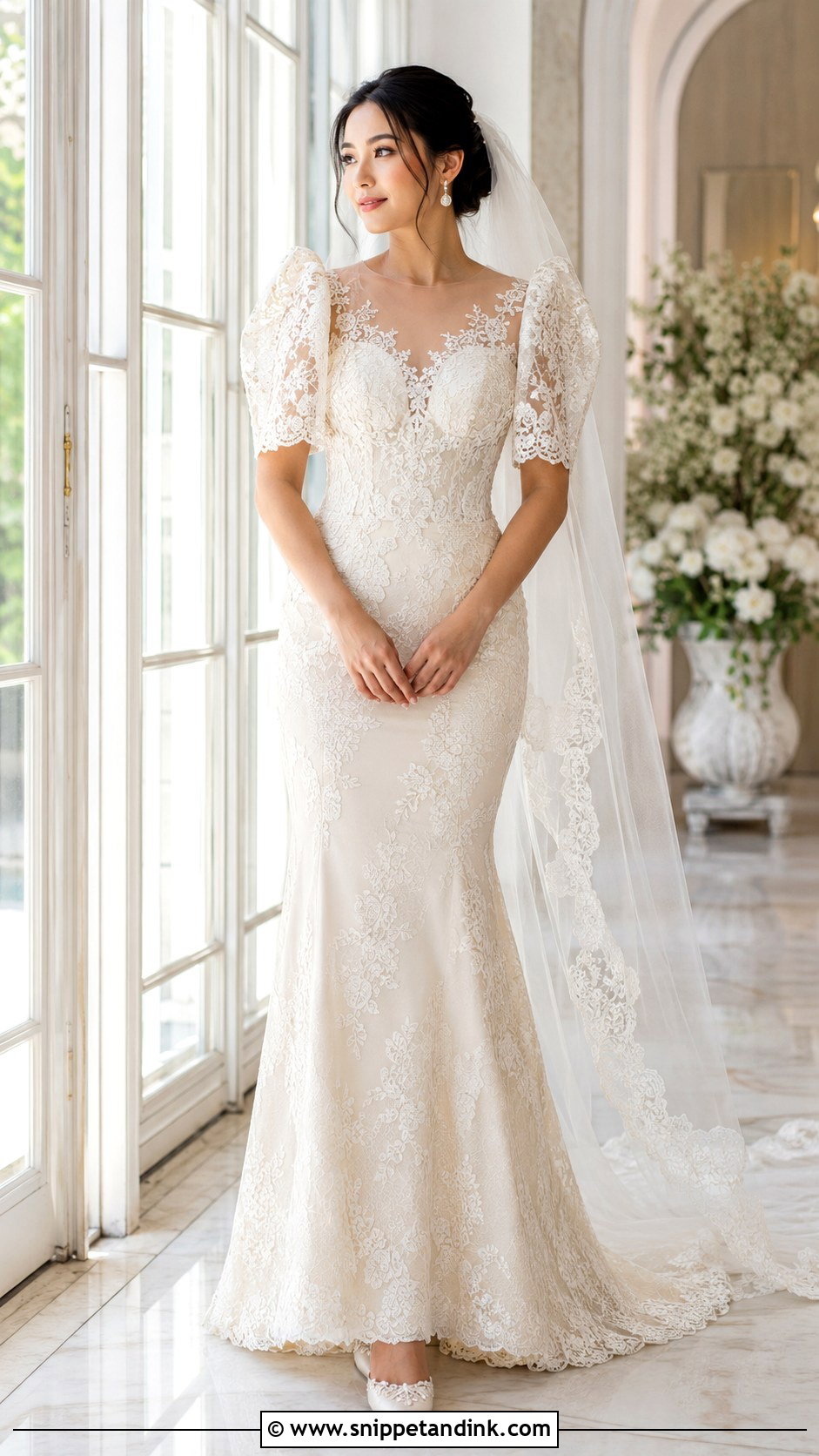
Lace softens the terno, but too much of it fights the structure. I prefer lace on the sleeves and bodice with a cleaner flared skirt, rather than appliqué over every layer. Motif size matters more than people expect: small florals look refined on a petite frame, while big motifs suit a taller bride and a larger room. Ask your dressmaker to mirror the appliqués at the neckline, waist and sleeves, because a lopsided flower right at the collarbone is the first thing guests notice. A soft lining under the lace stops it scratching your arms by the reception.
6. Maria Clara Filipiniana Wedding Gown
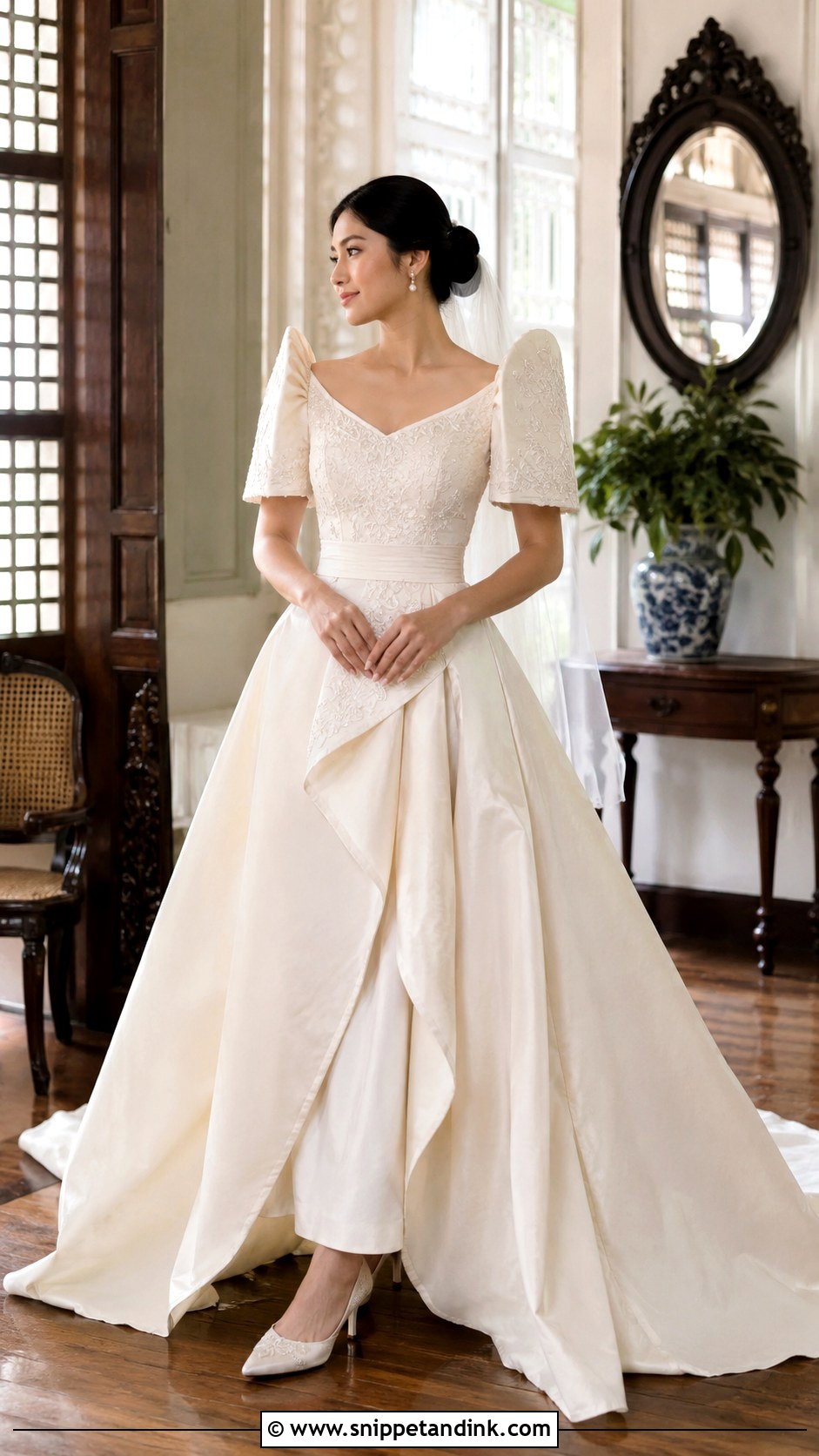
A Maria Clara-inspired gown is the most ceremonial look here, and it can tip into costume if every historic layer is copied literally. The way I keep it bridal is to make the whole outfit one ivory tone: embroidered blouse, butterfly sleeves, the pañuelo at the neck and a sweeping skirt. A sheer overskirt adds movement without weight. With a layered pañuelo, I leave the necklace off entirely. A neat low bun and a simple veil set under the hair keep the neckline readable, and a firmly defined waist is what makes it look modern.
7. Mermaid Filipiniana Wedding Gown
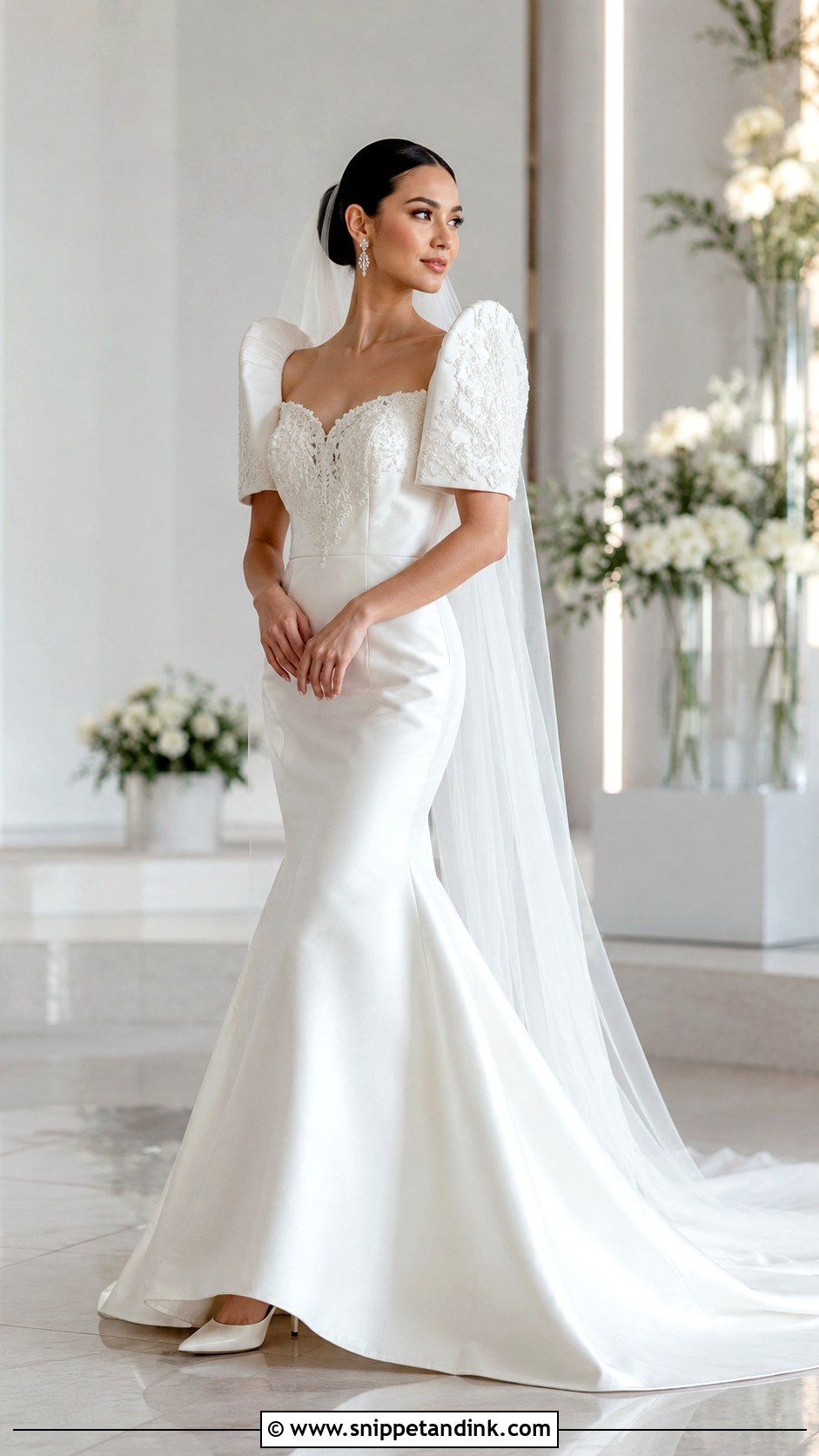
Butterfly sleeves on a mermaid skirt create two strong shapes, top and bottom, so they need to be in proportion. I usually ask for a medium sleeve here rather than a tall one, otherwise the bride looks wide at both ends and narrow in the middle. Satin gives the cleanest line; a little lace at the flare softens it. The honest drawback is movement. Before the final fitting, walk a full staircase, sit on a low chair and turn quickly. If the flare starts above the knee you will shuffle all night, so ask for it to begin just below the knee with a stretch lining and a sturdy bustle for the train.
8. A-Line Filipiniana Wedding Gown
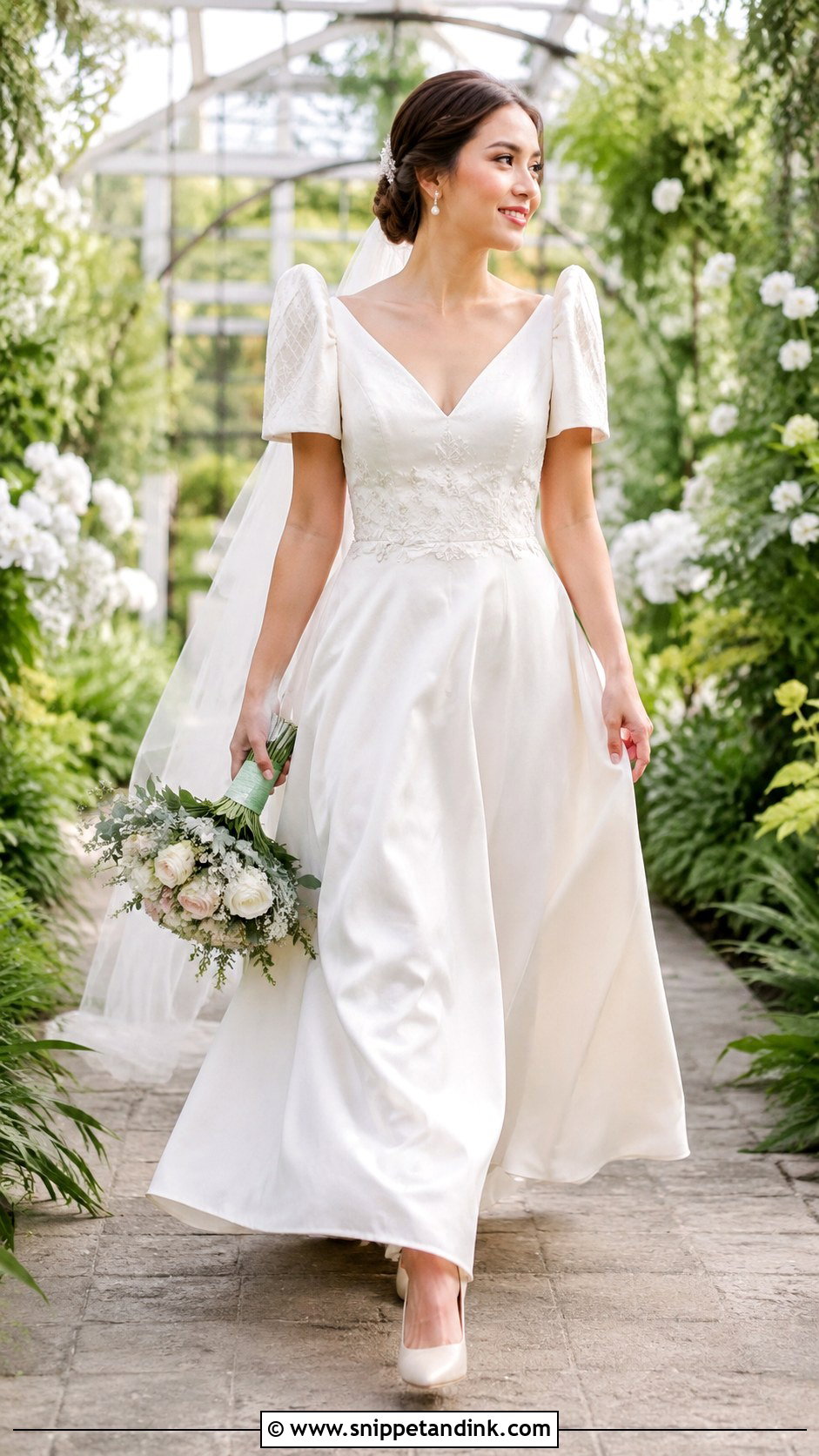
If you are unsure where to start, the A-line is the shape I reach for first because it forgives most fitting changes between appointments. It skims the bodice and widens gradually, so crisp sleeves and a V-neck balance easily over it. Satin-silk blends hold the flare without stiffness. Keep embroidery to the waist or sleeve edges, and add a same-colour embroidered belt if you want more waist. Bring your actual wedding shoes to the hemming appointment. A half-inch difference in heel height decides whether the skirt glides or catches under your toes all night.
9. Ball Gown Filipiniana Wedding Gown
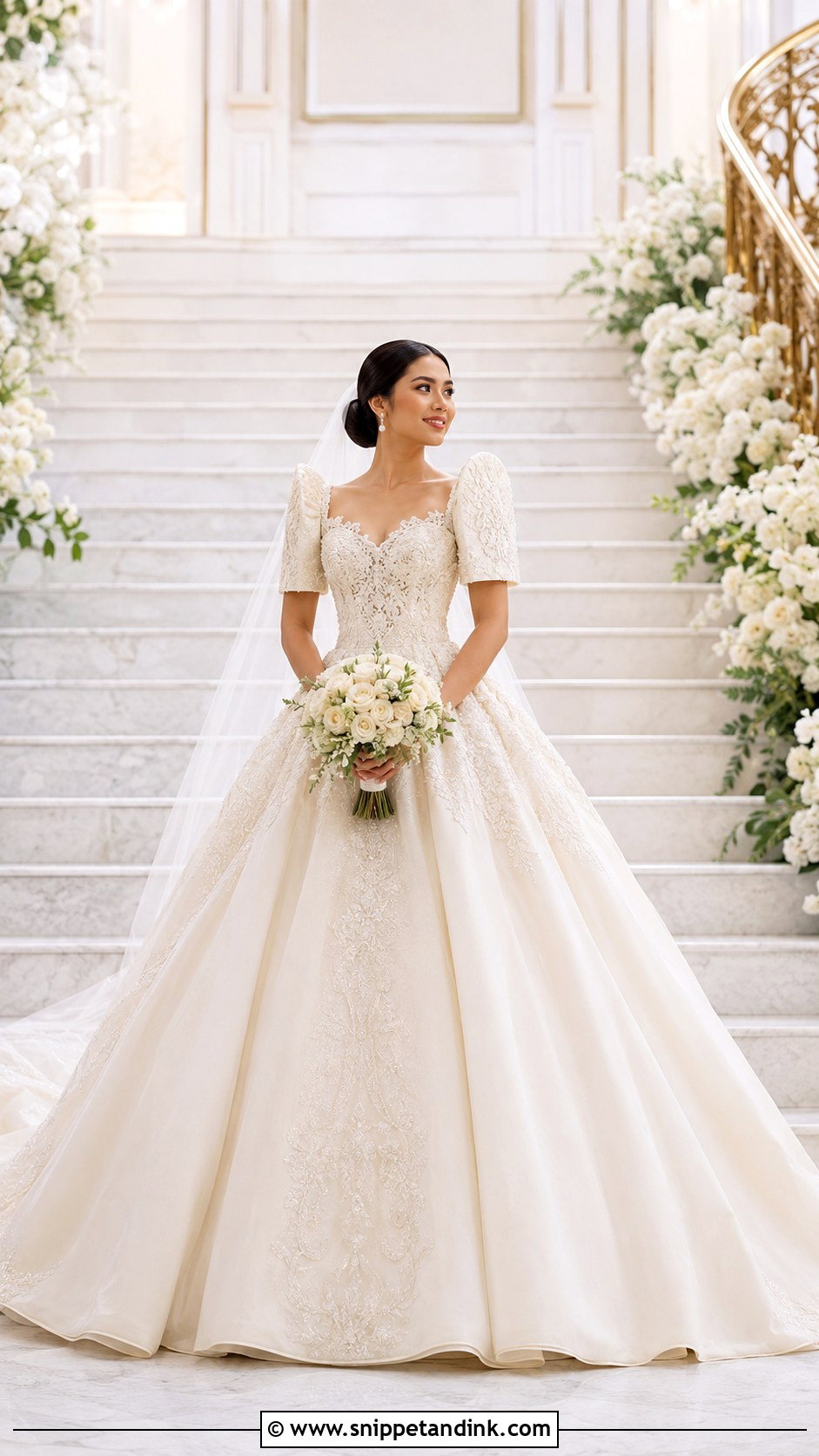
A ball gown terno belongs in a big church or a ballroom, and I would talk a bride out of it for a small garden or a narrow heritage house. Volume comes from tulle layers or a hoop underskirt, and the waist has to be sharply defined so the fullness looks planned. I like embroidery that is dense on the bodice and fades as it moves down the skirt. Platform heels hidden under the hem help with the length. Practise getting through a doorway and into a car in fittings. Pockets are a small, kind addition, and a removable petticoat buys you room to dance later.
10. Column Filipiniana Wedding Gown
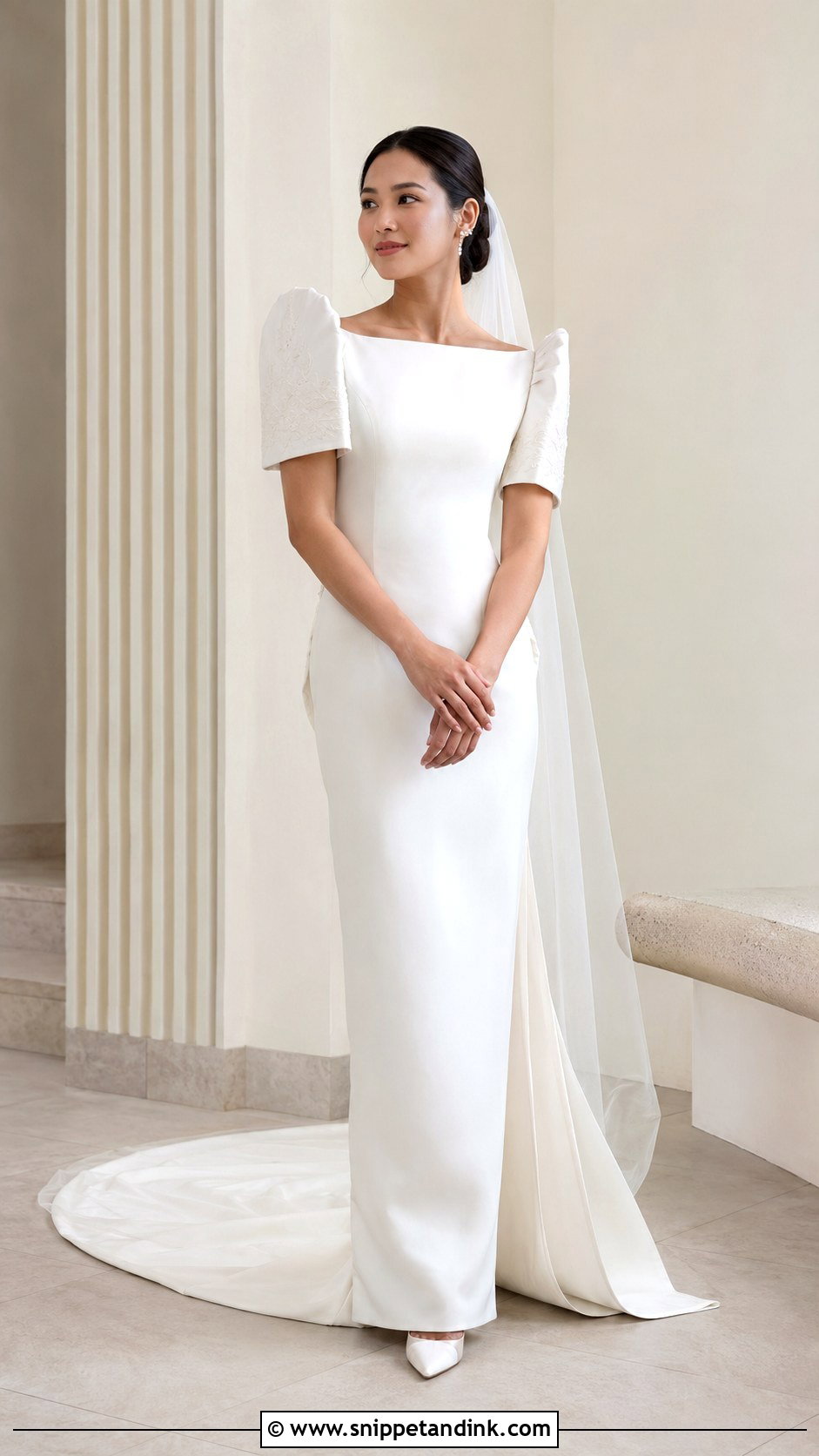
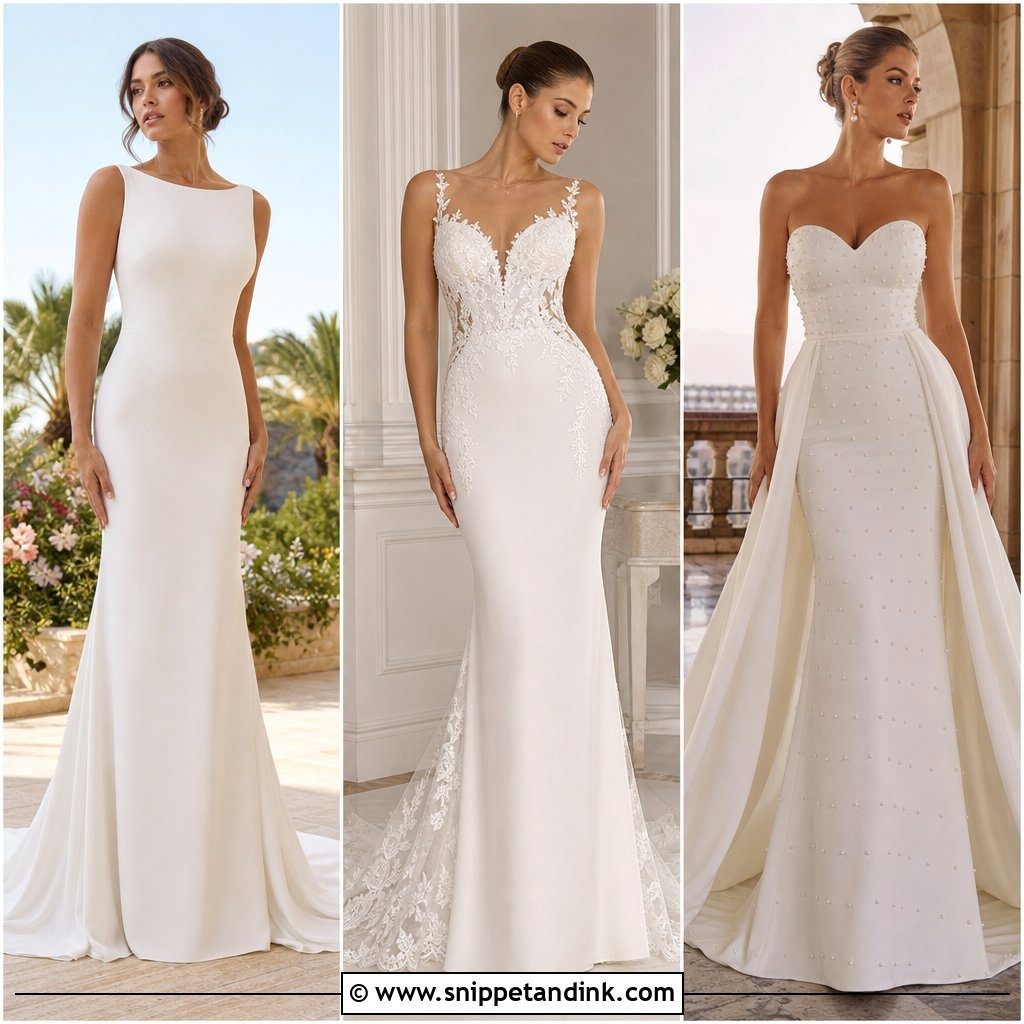
A straight column skirt puts every bit of attention on the sleeves, which is exactly why I like it for a bride who loves the terno shape but not the volume. Crepe, silk faille or matte satin give enough body. Keep embroidery to the sleeves, cuffs or centre bodice, and pair pearl climbers with pointed kitten heels and a narrow veil. The risk is the seat and hips: a column cut too close makes you walk in tiny steps and wrinkles when you sit. I ask for a little ease there, sometimes a back slit, and smooth no-line undergarments so the length reads as one clean line.
11. Off-Shoulder Filipiniana Wedding Gown
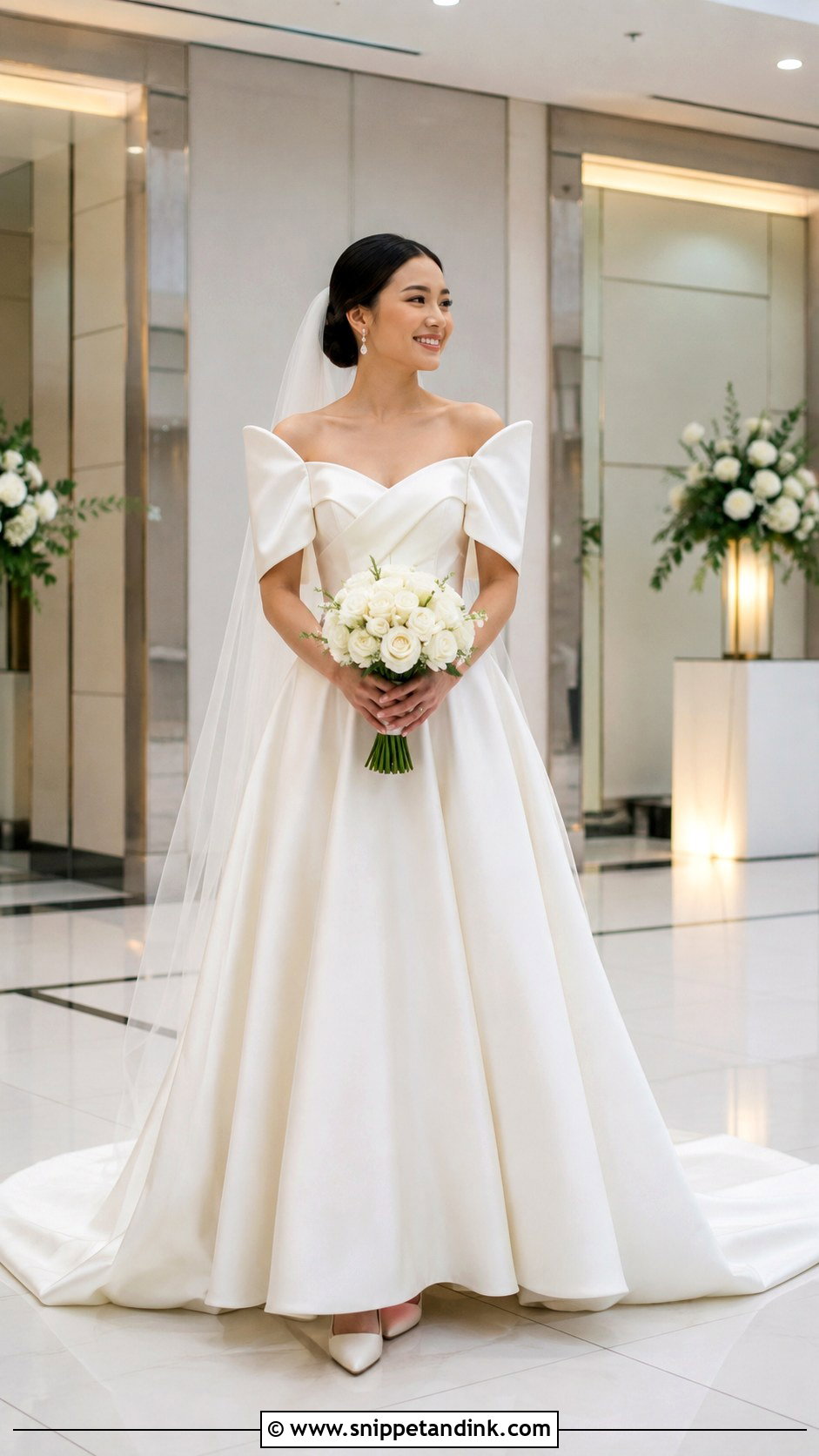
Taking the neckline off the shoulder softens the terno and shows the collarbones, but the sleeves still need something to hang from. Good versions use an internal corset or a discreet illusion panel to anchor the sleeves slightly away from the neck. A satin bodice over an A-line skirt suits it, with drop earrings and a low bun. No necklace. At the fitting I have the bride hug me, raise both arms and wave. If the bodice slips even once, it will slip in every photo, so boning and a waist stay are worth the extra appointment.
12. High-Neck Filipiniana Wedding Gown
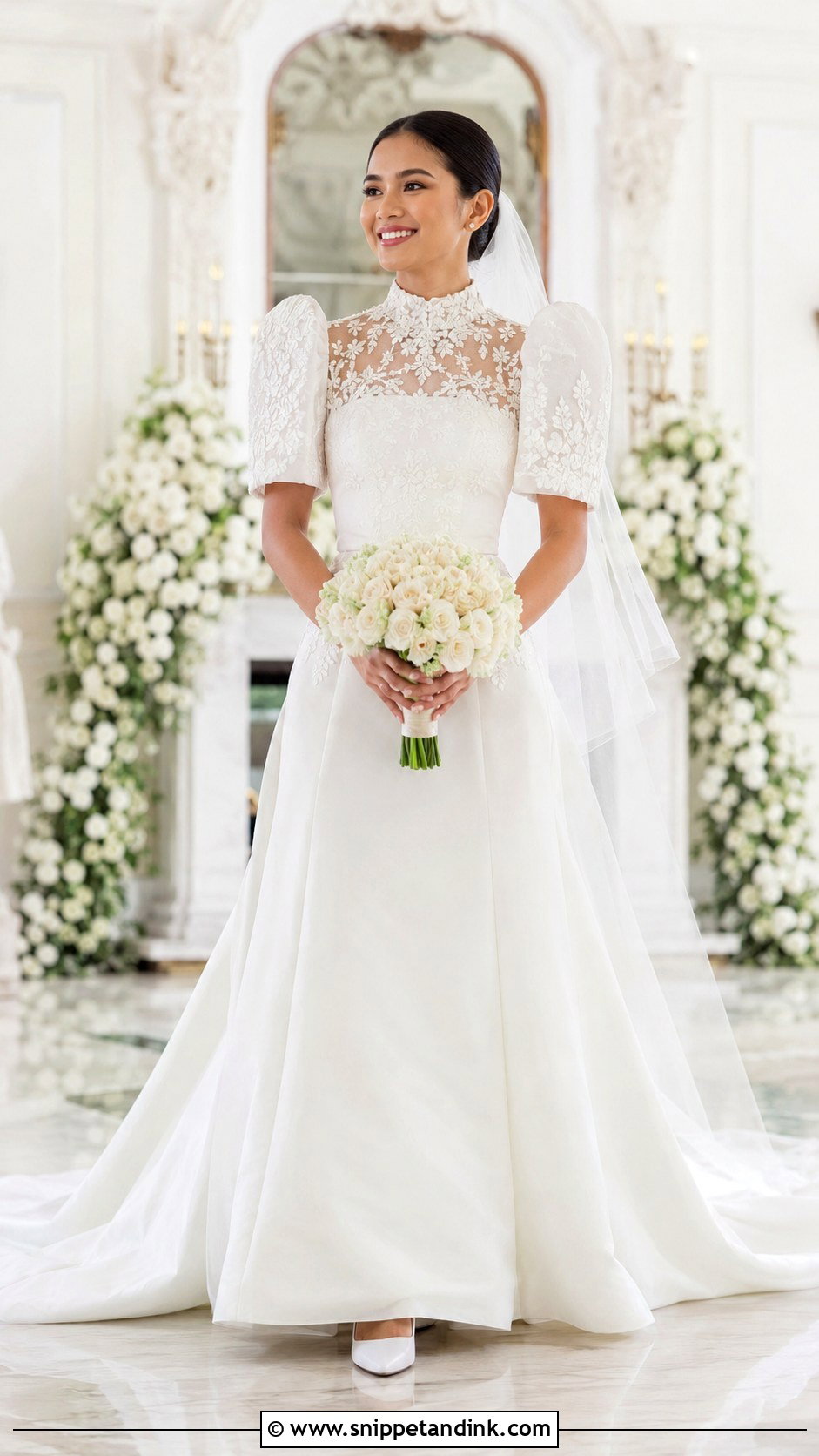
A high neck turns the terno sleeve into a frame, and it suits brides who want coverage for a church ceremony. Sheer embroidered fabric at the collar and upper chest, an opaque fitted bodice below and small covered buttons down the back keep it light. A smooth bun, pearl studs and a veil tucked under the hair are enough; big earrings crowd the collar. For a warm outdoor wedding I steer toward a breathable lining and a softly shaped collar rather than a rigid band, because a stiff collar rubs the neck raw after a few hours of greeting guests.
13. Sweetheart Filipiniana Wedding Gown
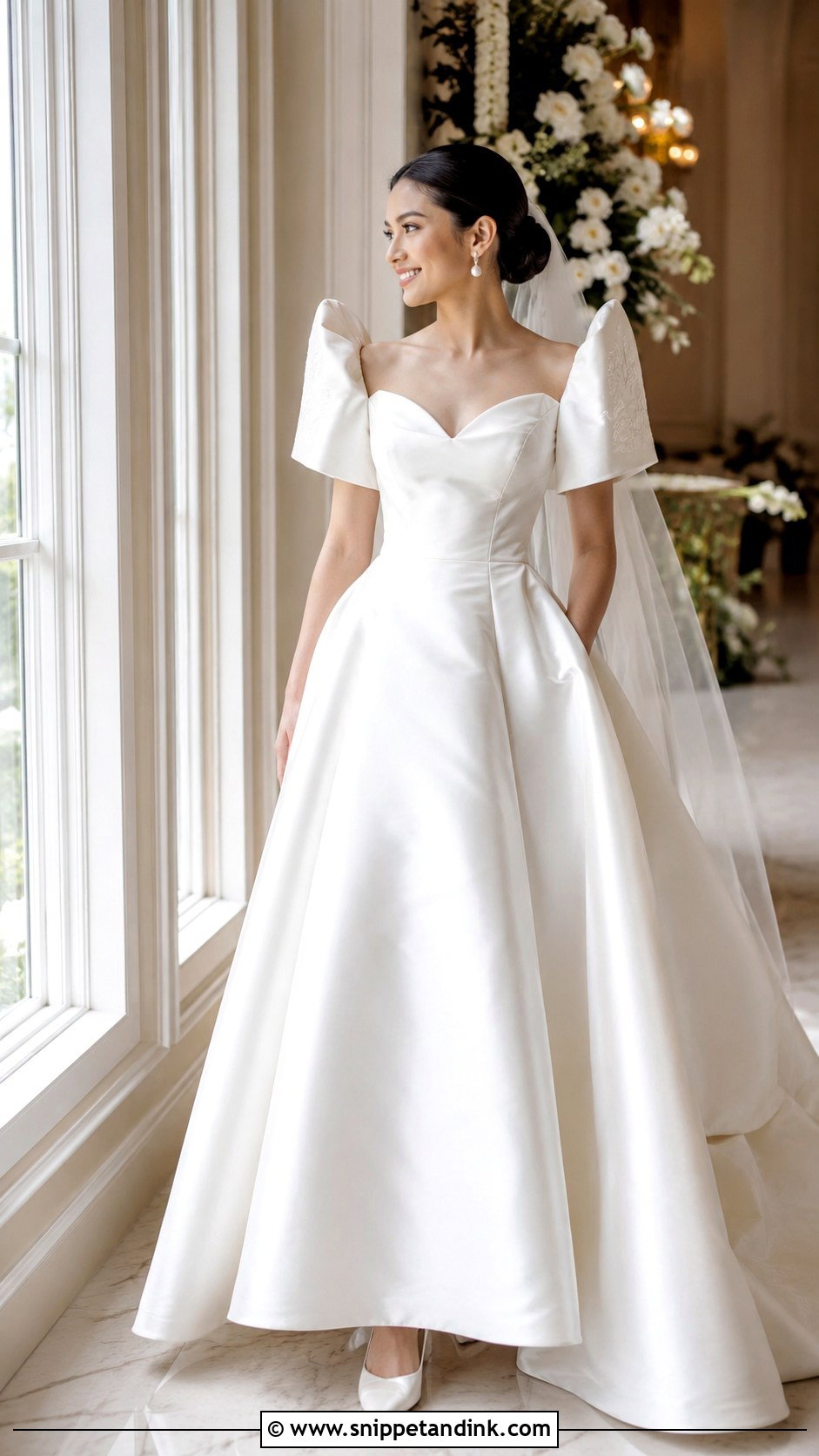
A sweetheart neckline brings a curve into a gown that is otherwise all angles. Pair a supportive bodice with sculpted butterfly sleeves and a full satin or mikado skirt, and add an embroidered illusion layer above the neckline if you want more security. Pearl drops, an elegant bun and a chapel veil finish it. For a fuller bust, I ask for built-in cups, internal boning and hidden straps under the sleeves. The neckline should sit flat against you without a gap when you lean forward to sign the register.
14. Long-Sleeve Filipiniana Wedding Gown
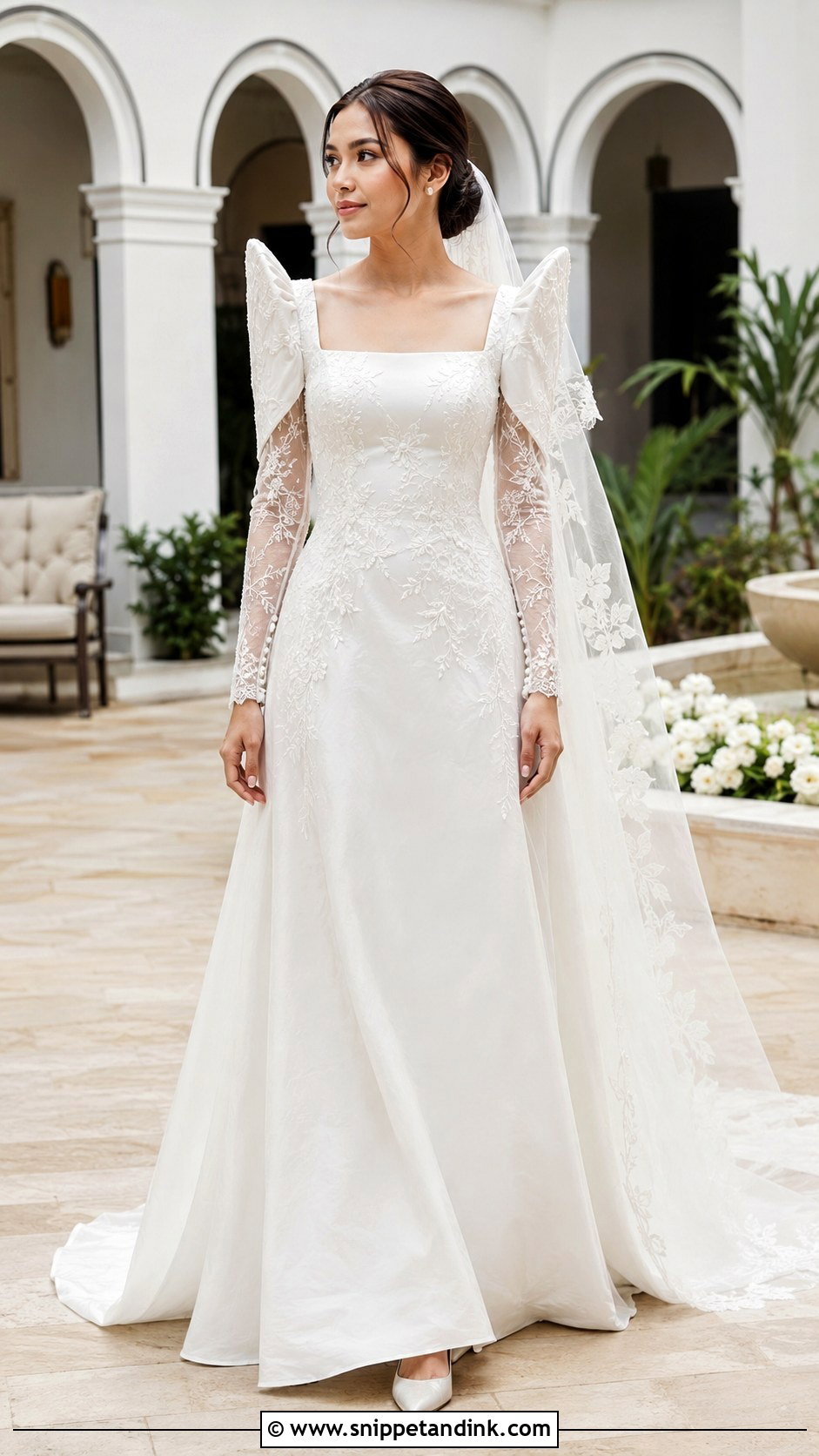
Long sleeves suit cooler months, church requirements and brides who just prefer coverage. The way to keep the terno identity is to hold the stiff butterfly shape at the shoulder and then let the sleeve narrow into fitted lace or embroidered organza to the wrist. Keep the bodice defined and the skirt plain so it doesn’t look busy. Covered buttons at the cuff are a nice tailored touch. The thing to test is your elbow: bend it, lift a glass, reach for a hug. A sleeve cut too narrow at the forearm will pull the whole shoulder line down every time you move.

15. Detachable-Sleeve Filipiniana Wedding Gown
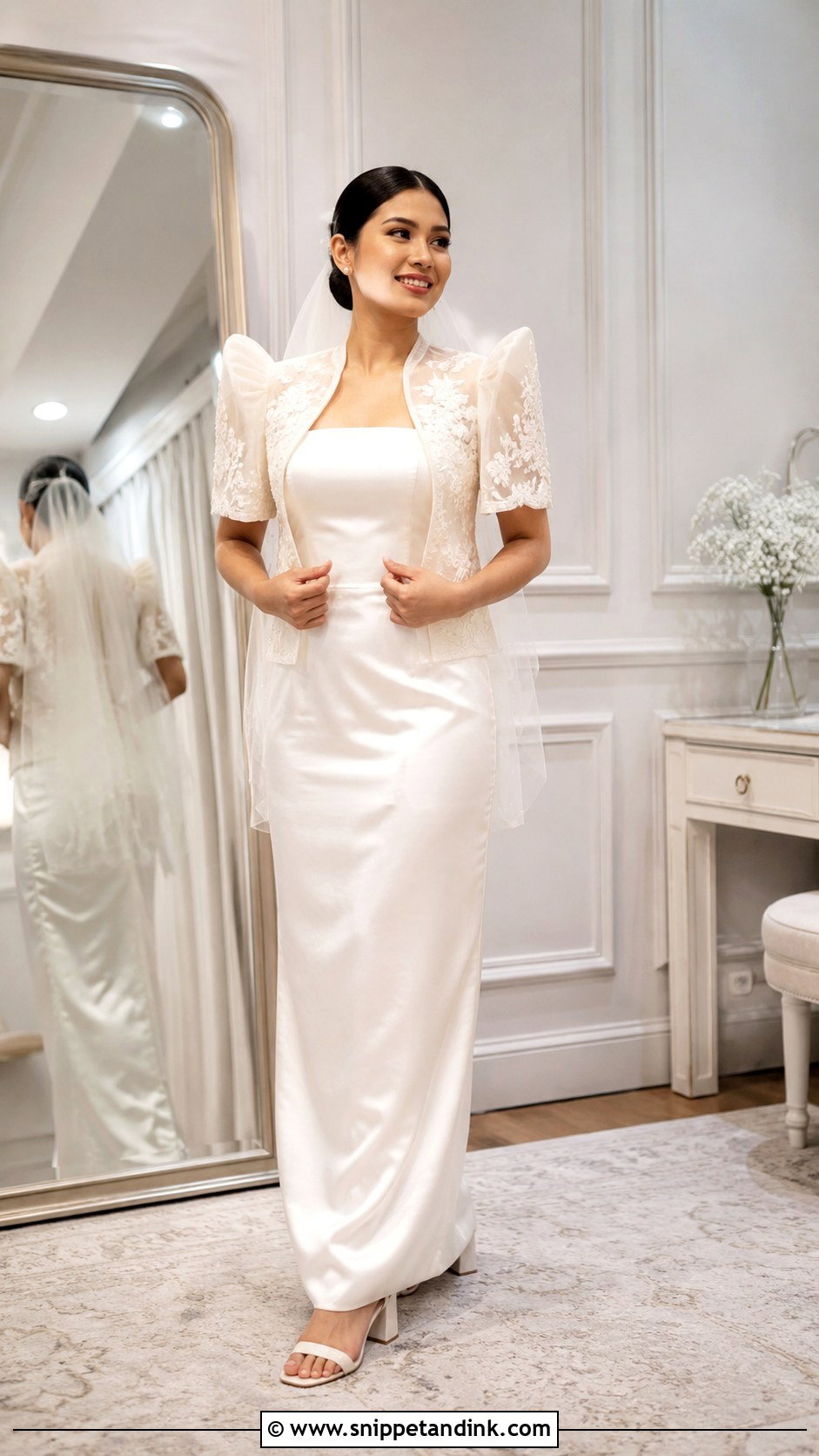
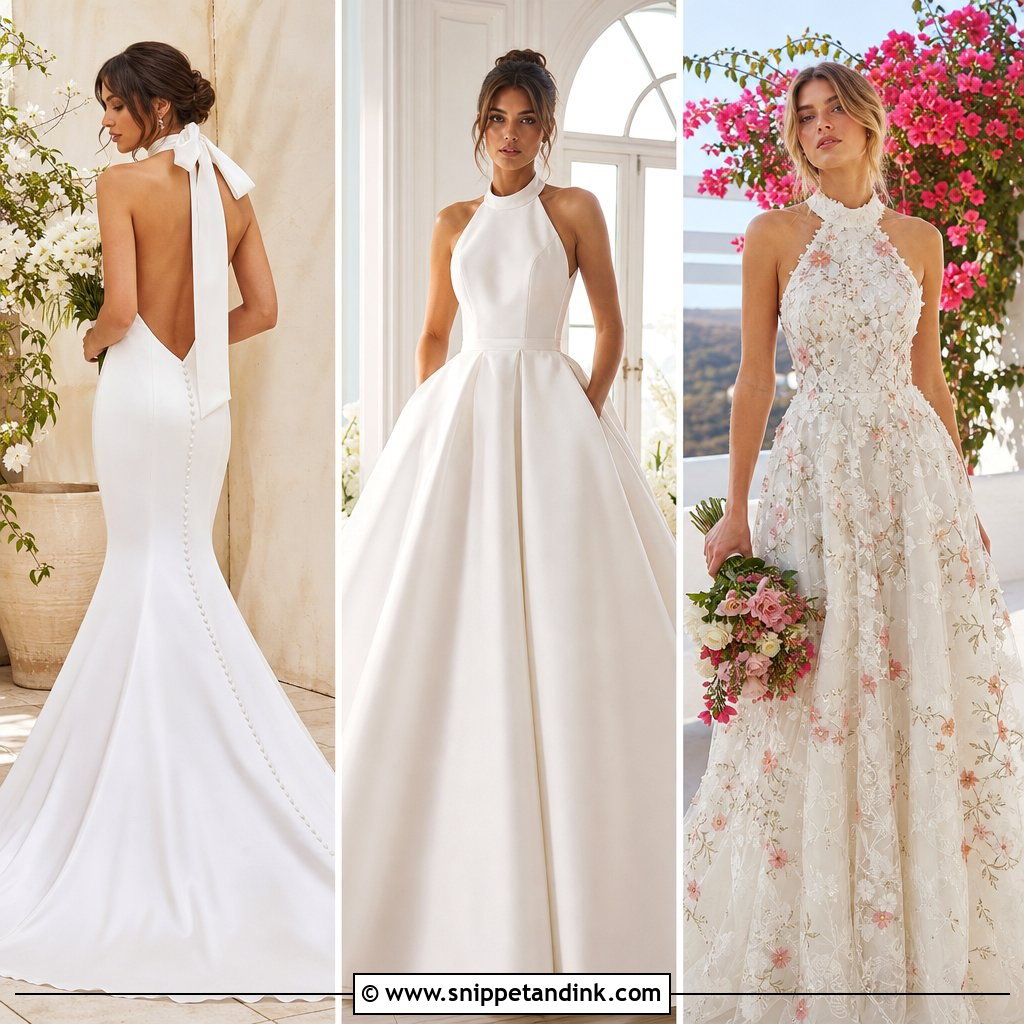
Removable sleeves give you two looks from one gown: the full terno for the ceremony, and a lighter strapless or sleeveless dress for dancing. You can do it with a fitted terno bolero or sleeves that attach directly to the bodice. Keep the accessories simple enough to work with both versions: pearl earrings, a sleek bun, comfortable heels. Hooks, snaps or zips should be hidden inside the seams. My test is to have someone take the sleeves off and put them back on in under two minutes; if it needs a seamstress, it won’t happen at the reception.
16. Two-Piece Filipiniana Wedding Gown
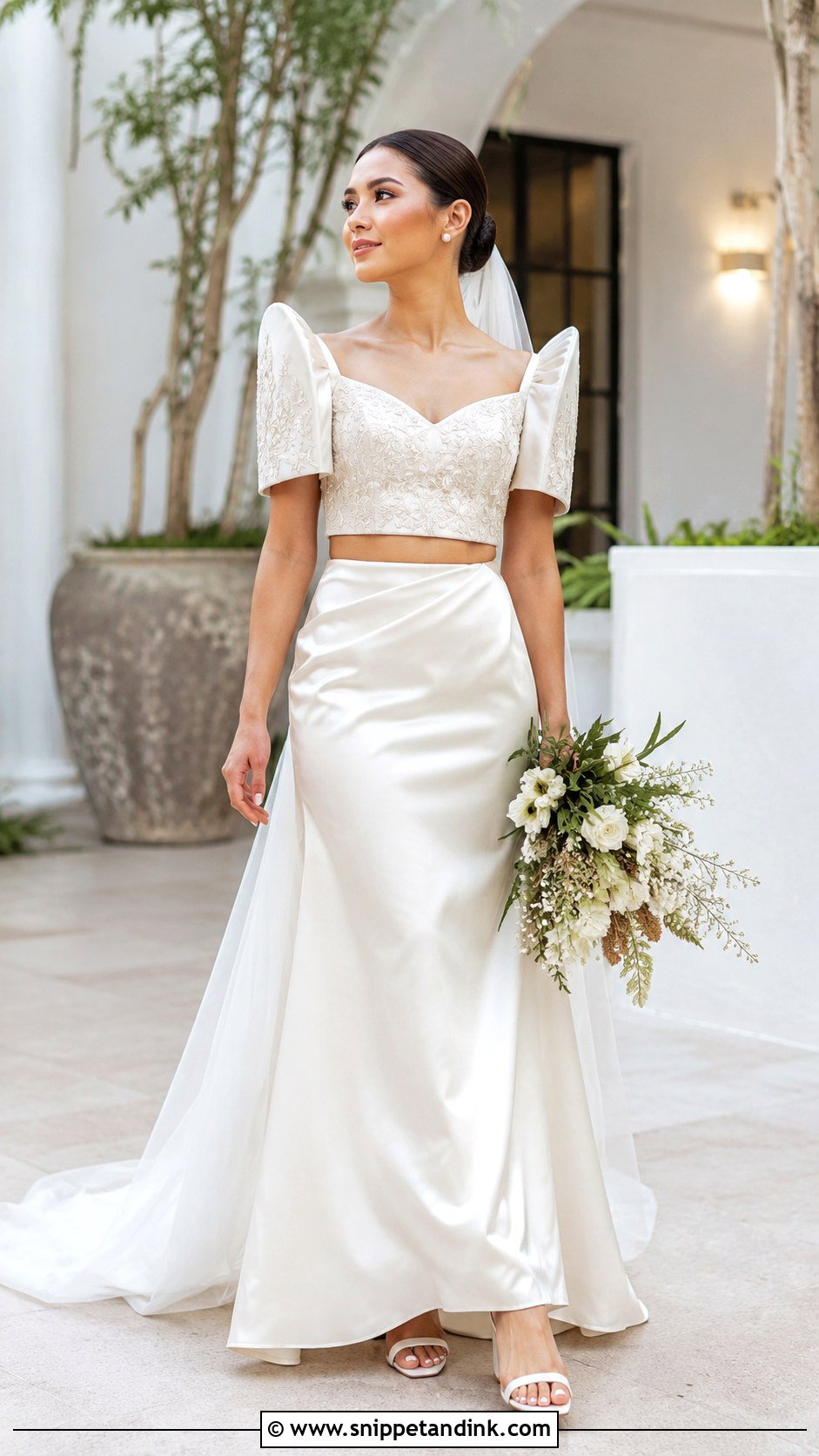
Separates echo the old pairing of a terno blouse with a skirt, and they are the easiest gown to alter because each piece can be fitted on its own. An embroidered top with structured sleeves over a high-waisted satin skirt works well, in one ivory tone so the body reads as a single column. Show only a sliver of skin at the waist, if any. A clean bun and block-heel sandals keep it relaxed. Raise both arms in the fitting room; if the top rides up, ask for a hidden hook between blouse and skirt so the waistline stays put through the first dance.
17. Cape Filipiniana Wedding Gown
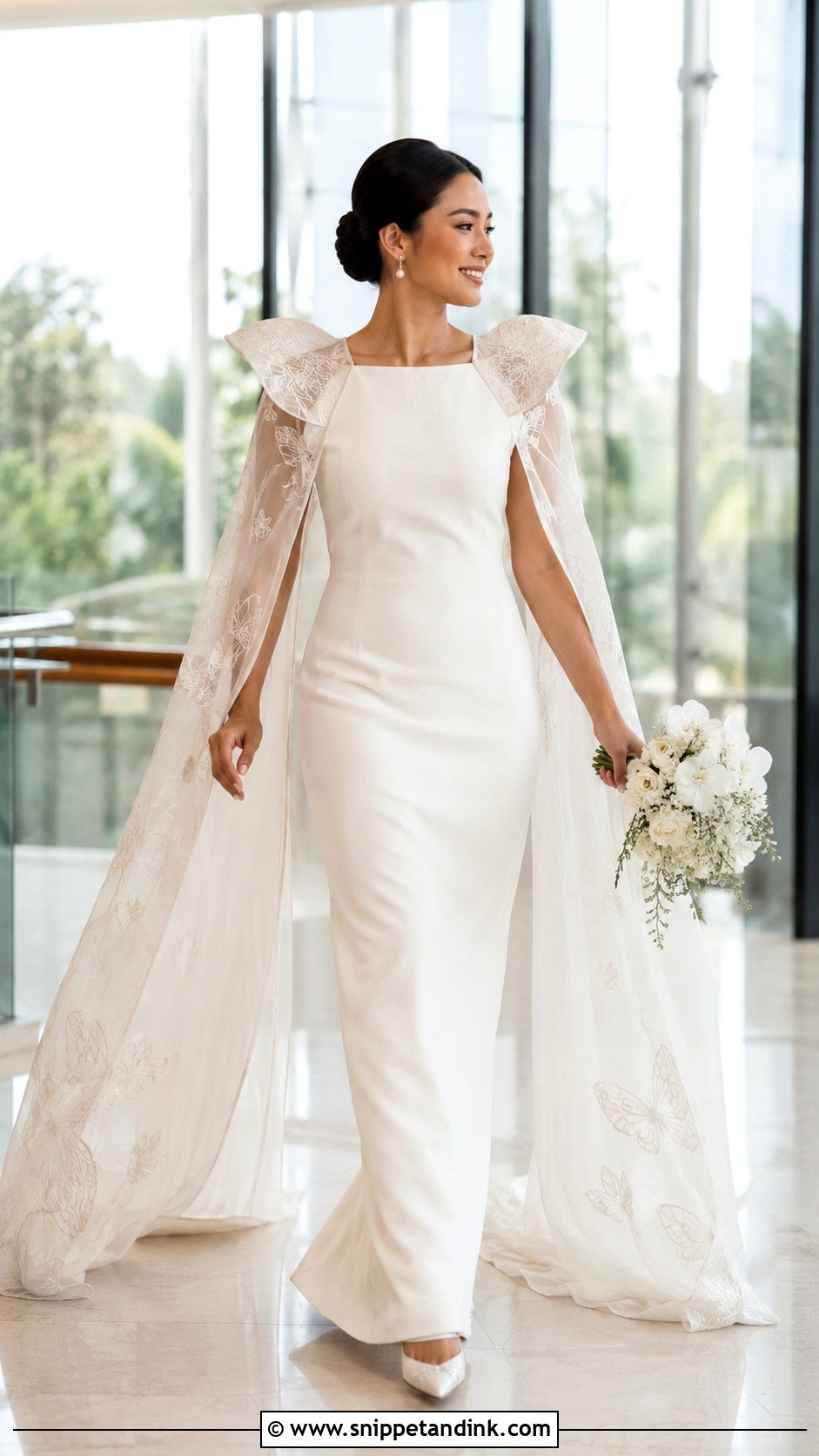
A cape gives you the drama of the sleeve without the commitment of a full terno bodice. I style it over a plain sleeveless column or A-line, with a sheer embroidered cape shaped into soft butterfly shoulders. It can stop at the elbows, run into a train, or come off for the reception. Since the cape supplies all the movement, the dress underneath should be nearly bare. Anchor it at the shoulders or neck, because an unanchored cape slides back and pulls at the throat. Test it outside, too: a long sheer cape on a breezy day goes straight into your face.
18. Barong-Inspired Filipiniana Wedding Gown
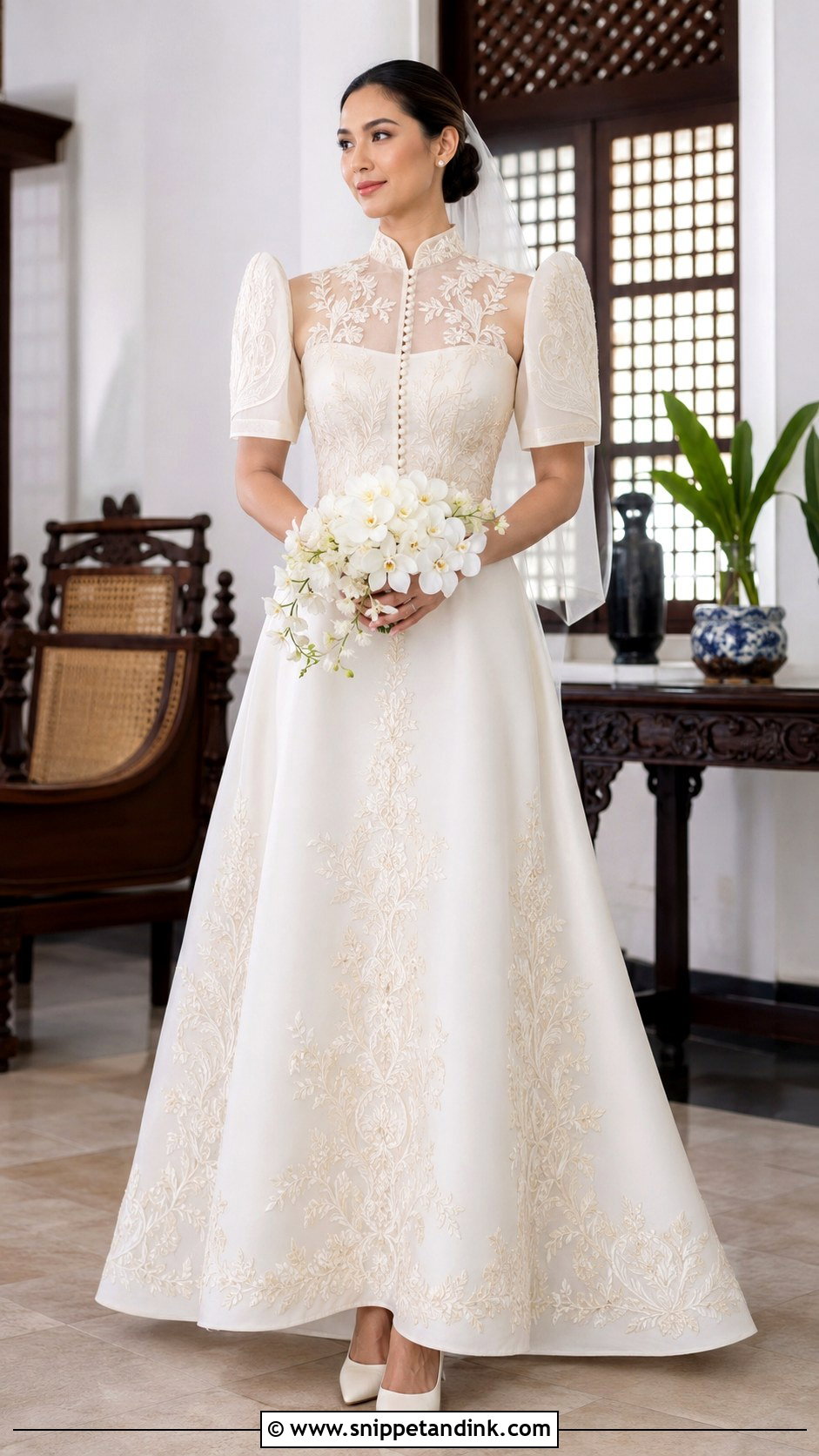
A barong-inspired gown borrows from the groom’s side of the wardrobe, with crisp hand embroidery instead of sparkle. A sheer embroidered bodice, terno sleeves and a lined matte silk skirt carry it; a standing collar or button front nods to barong tailoring. Wear a smooth camisole lining underneath so the embroidery reads clearly. Pearl studs, a low bun and a plain veil are enough. The detail I check is how the embroidery meets the seams and darts. When the motifs are cut through and don’t line up, the bodice looks pieced together, so ask your designer to place the pattern before cutting.
19. Tea-Length Filipiniana Wedding Gown
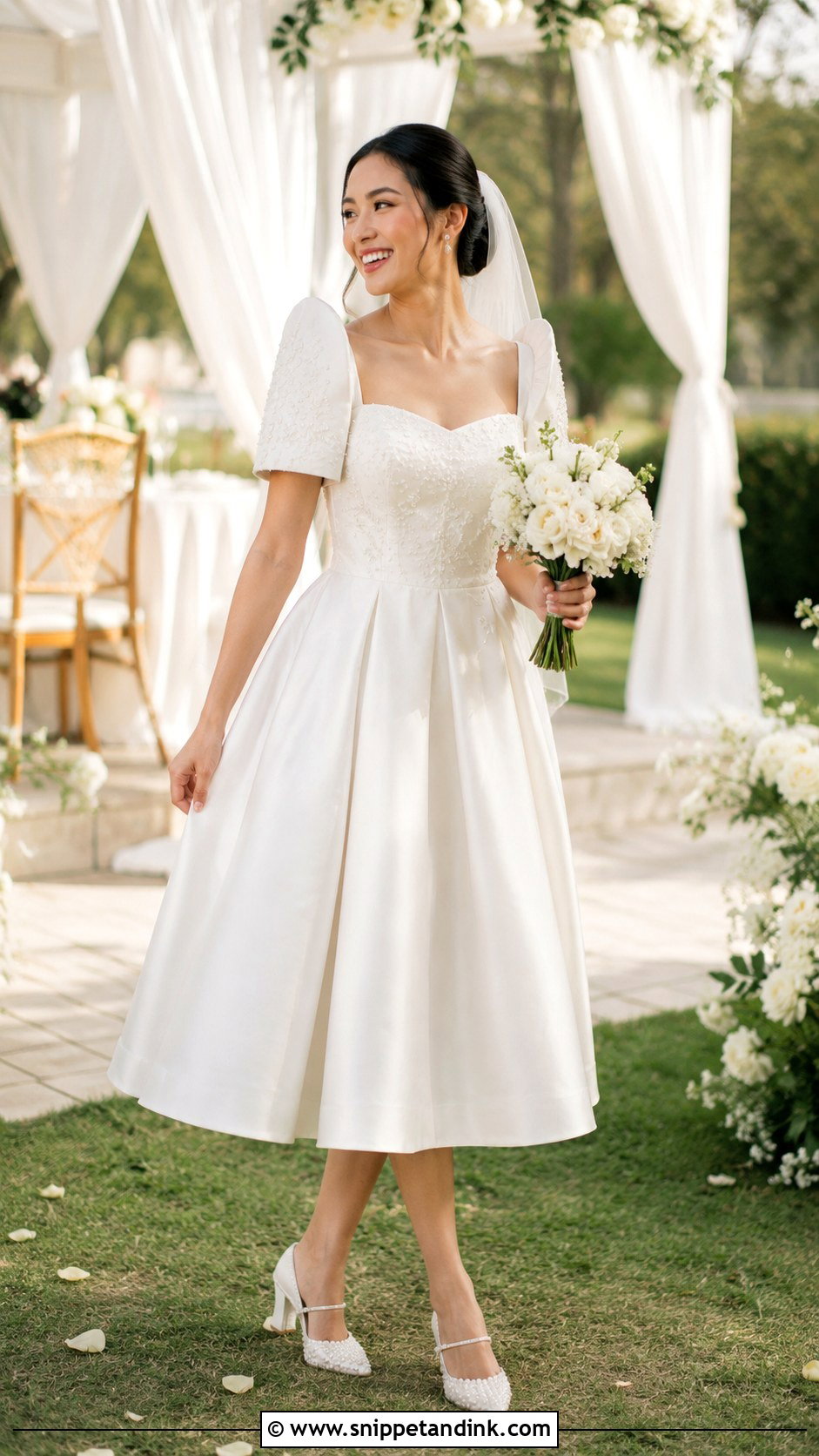
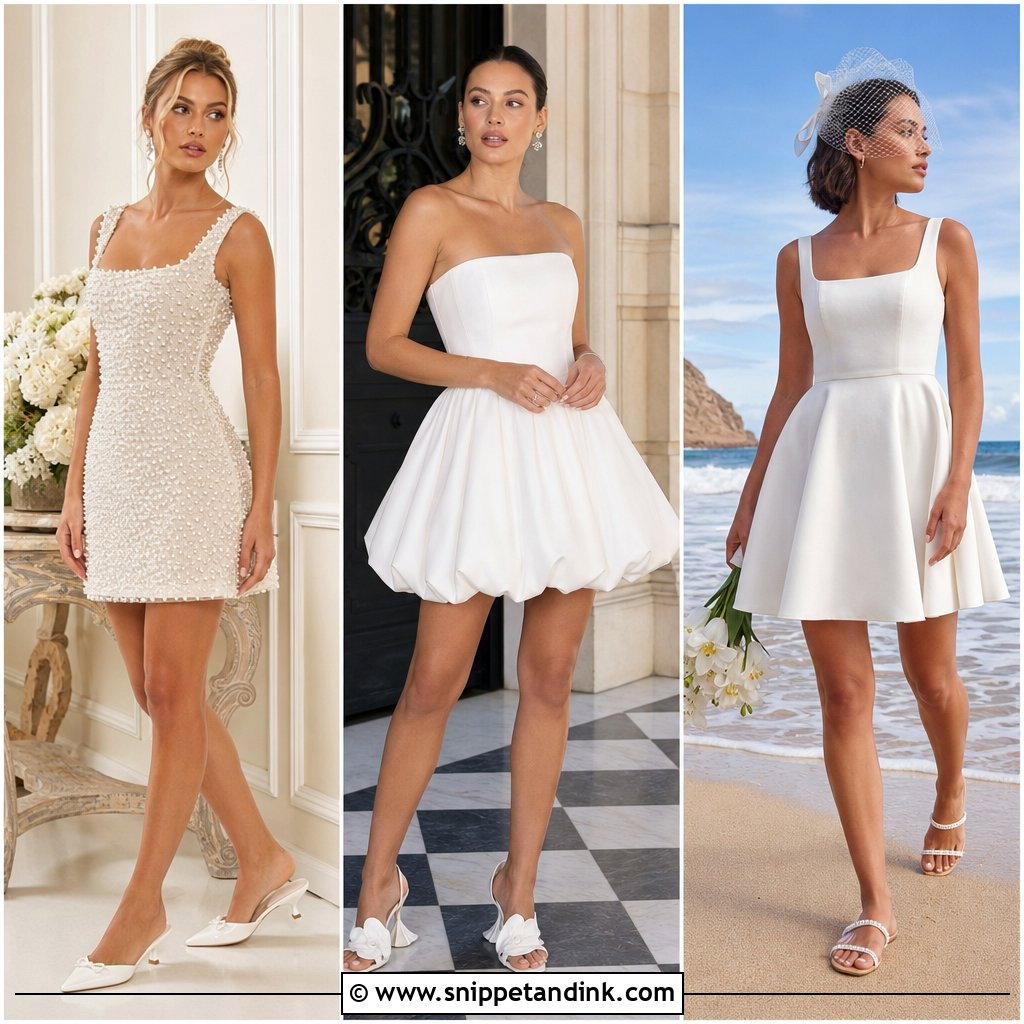
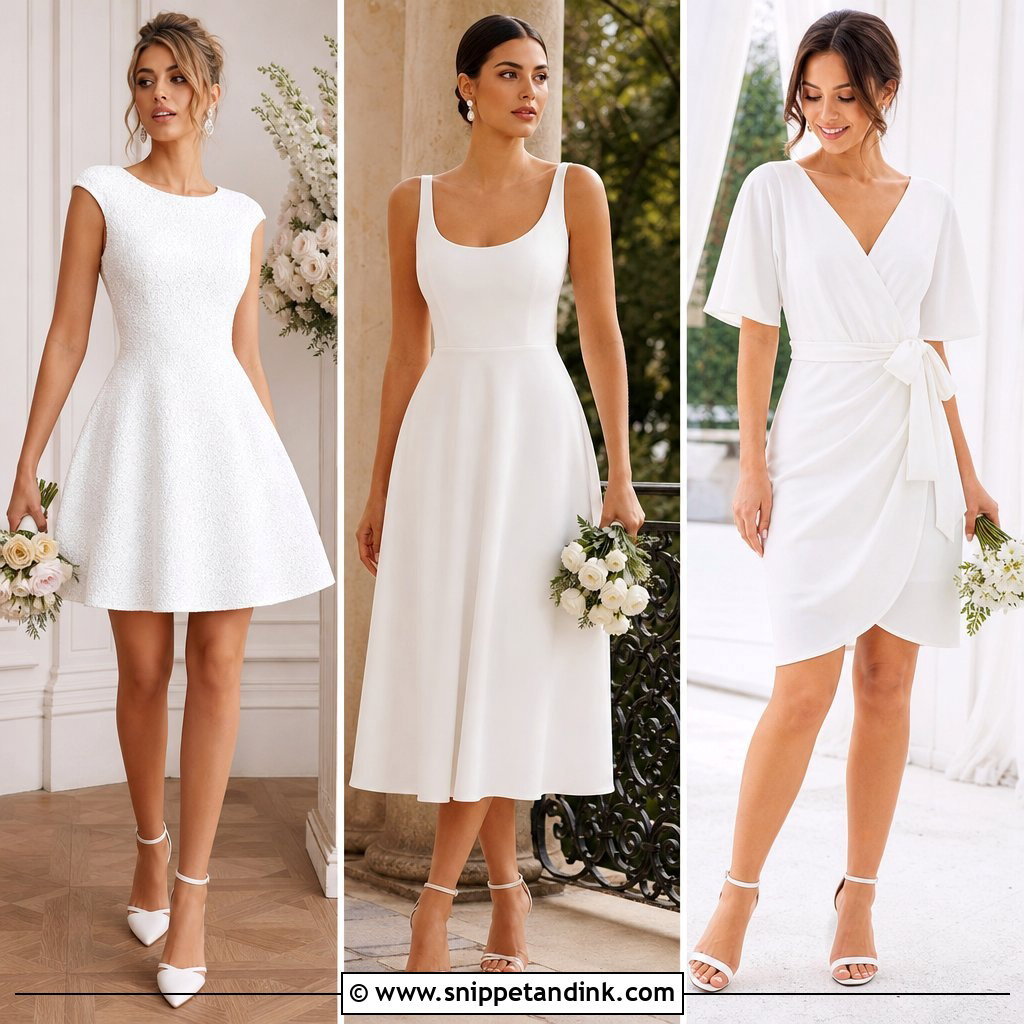
Tea length makes a terno feel lighter and much easier to move in, and I suggest it often for civil ceremonies, garden parties or a reception change. A fitted bodice, medium butterfly sleeves and a structured mikado or satin skirt that ends between knee and ankle give it shape without a train. Your shoes become part of the outfit, so choose them early: embroidered pumps or pearl-trimmed slingbacks work well. Set the hem relative to your calf, not to a standard length. Ending just below the widest point of the calf is the most flattering line for most legs.
20. Champagne Filipiniana Wedding Gown
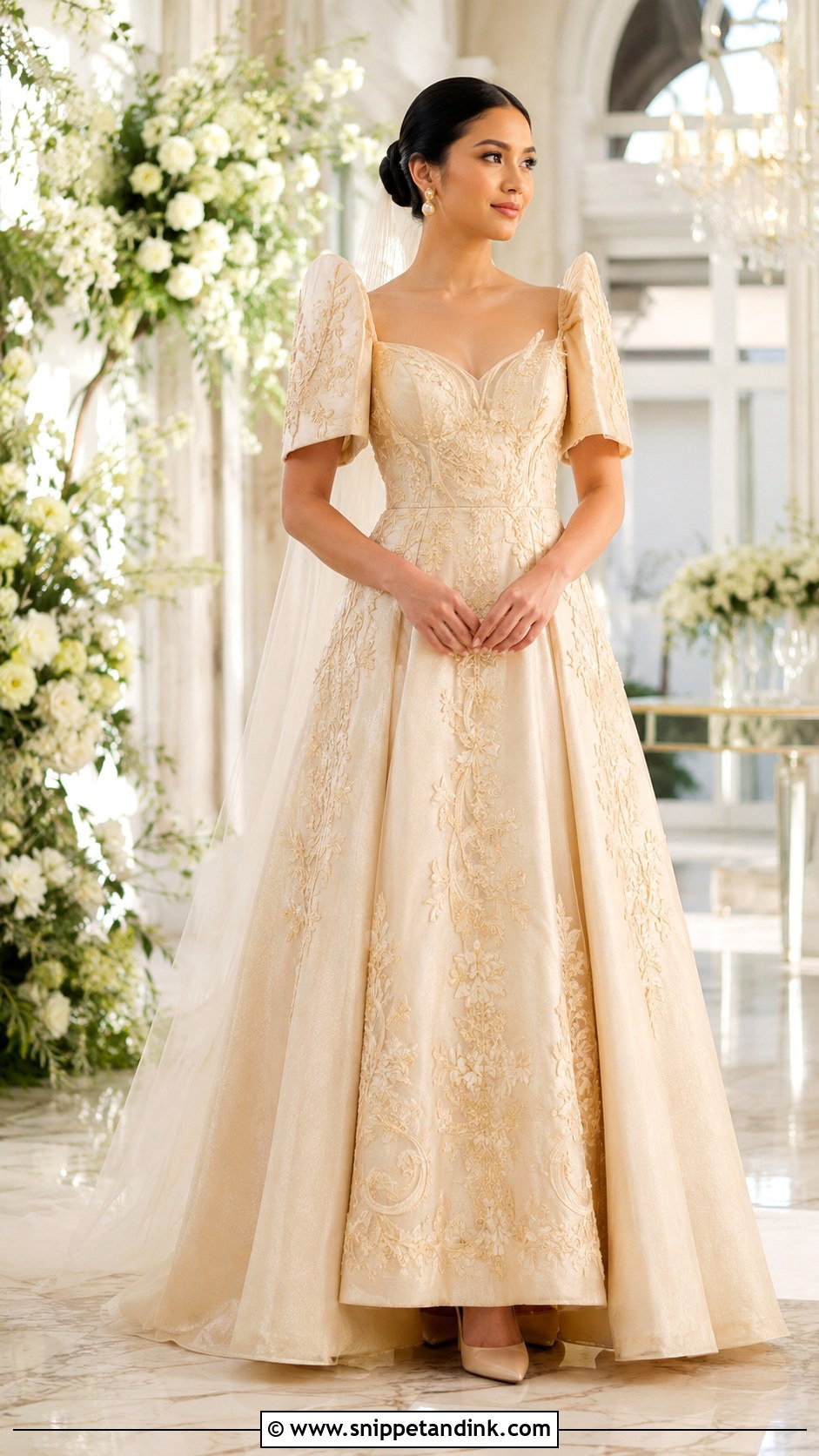
Champagne is kinder than bright white to many warmer skin tones, and with tonal gold embroidery at the sleeve edges and waist it looks rich rather than flashy. Pair pearl-and-gold earrings, champagne pumps and a neutral veil with a polished low bun. Look at fabric swatches against your skin by a window, because champagne can go grey or peachy under warm indoor lighting. The lining colour also shifts the shade of any lace or sheer layer on top, so judge the whole stack together. Keep every piece in one tonal family and let the sleeve shape do the work.
Sleeves, the Veil and the Cord at a Filipino Ceremony
In a Filipino Catholic wedding, sponsors drape a veil over the bride’s head and the groom’s shoulders, then lay the cord over both of you. A tall, rigid sleeve can catch that veil or push it off your shoulder, and the cord can snag on beading. When you know these rites are part of your ceremony, mention them to your dressmaker early. I usually lower the peak slightly on the side nearest the groom, or ask the sponsors to rehearse placing the veil once at the practice.
Kneeling matters too. A long mass can mean several minutes on a kneeler, so check that the skirt lets you kneel and rise without stepping on the hem, and that the bodice doesn’t dig in when you lean forward.
Storing Piña and Stiff Sleeves So They Last
Natural fibres yellow and weaken in plastic and damp, which is bad news for a family gown you may want to pass down. Once the gown is cleaned by someone who handles delicate natural textiles, store it this way:
- Pad each sleeve from inside with acid-free tissue so the pleats keep their shape without being crushed.
- Lay the gown flat or loosely folded in a cotton garment bag or acid-free box, never on a hanger that takes the sleeve weight.
- Keep it somewhere cool, dark and dry, away from an attic or a bathroom wall.
- Unfold and refold along different lines once a year so creases don’t set into the fibres.
A Terno That Still Moves When You Do
Butterfly sleeves give you the recognisable shape; the fabric, neckline, skirt and embroidery are where the gown becomes yours. In fittings, walk, sit, lift your arms and wear the real shoes every time. If you want to change between ceremony and reception, plan detachable pieces from the first sketch rather than adding them later. Above all, work with a dressmaker who has actually built ternos, because sleeve construction is a specialist skill. From a minimalist satin column to an embroidered piña gown, there are plenty of ways to celebrate heritage and still look like yourself on the day.
You'll Like These Ideas:




Leave a Reply