
Pear-shaped brides usually have a defined waist and hips that measure wider than the bust or shoulders. In a fitting room I never treat that as something to hide. The waist is the best feature to build a gown around, and the job is simply to give the hips room and the upper body enough presence to balance them. A-line, ball gown, trumpet and well-cut fit-and-flare shapes all work; which one is right depends on how much definition you want below the waist. The twenty gowns below each come with the neckline, fabric, shoes and veil choices I’d make, plus the fitting checks that matter most for this shape.
Why Your Bridal Size Is Set by Your Hips
Bridal size charts run smaller than everyday clothing, and many pear-shaped brides find their hip measurement sits a size or two above their bust and waist. When I order a gown, I order for the largest measurement, which is usually the hips, and plan to take the bodice in.
There’s a practical reason for this. A seamstress can take a bodice in quite a lot, but letting a skirt out through the hips is limited by the seam allowance, and on some gowns there’s almost none. Sizing down and hoping simply doesn’t work in bridal.
At the sample appointment
- Samples are often one size and clipped at the back, so judge the shape from the front and ignore the fit at the hips.
- Ask the consultant where the waist seam sits on the finished gown and whether it can be raised or lowered.
- Ask how much seam allowance the skirt has before you order.
1. A-Line Sweetheart Wedding Dress
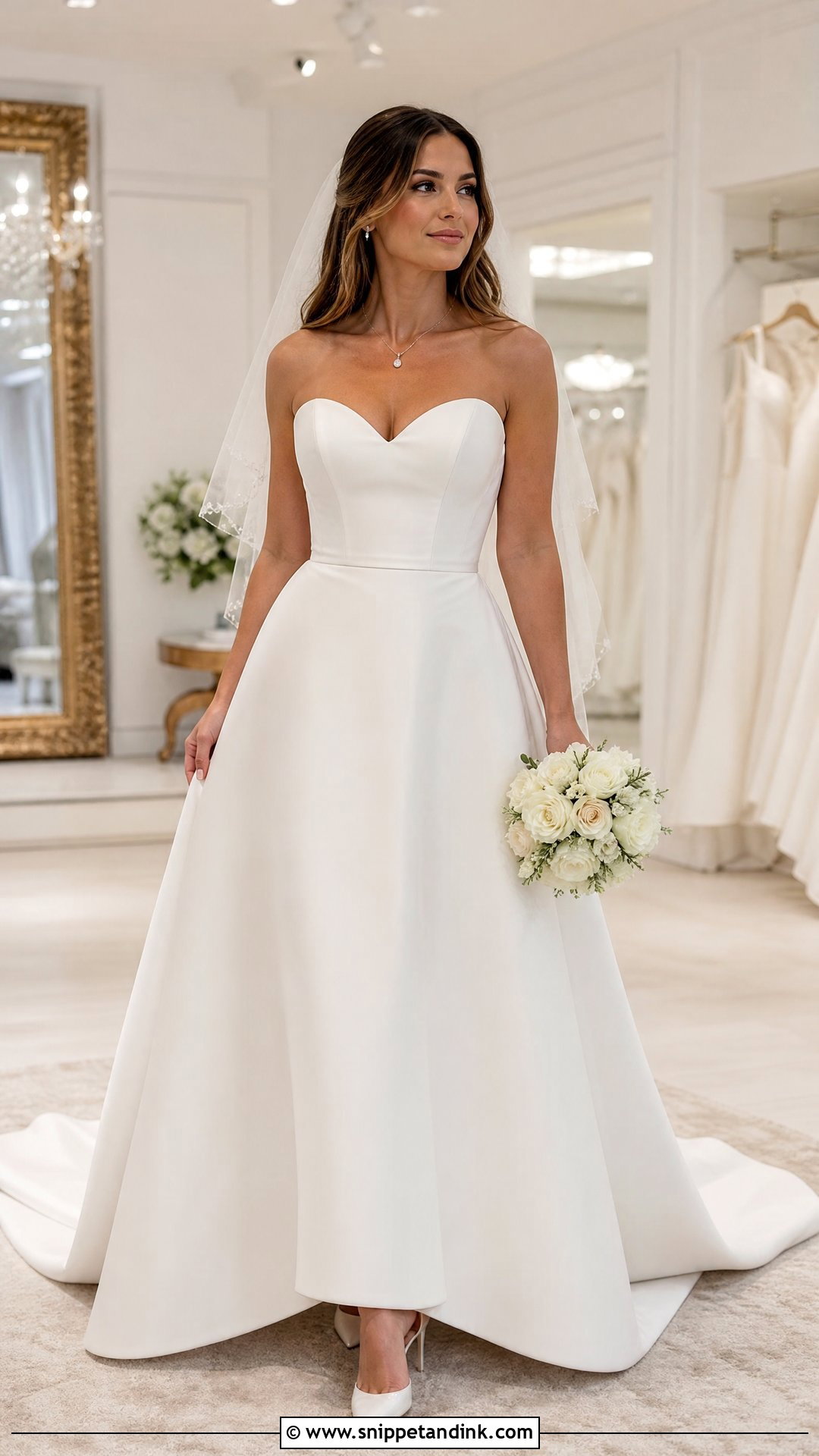
If a pear-shaped bride walks in unsure where to start, I pull an A-line sweetheart first. The fitted bodice marks the natural waist, and the skirt widens gradually so it skims the hips instead of clinging. Satin or mikado gives a clean, structured outline. Expect to order to your hip measurement and have the bodice taken in; that’s normal with bridal sizing and a good seamstress handles it routinely. A short pendant or crystal drops draw the eye up, and pointed ivory pumps, a fingertip veil and a small bouquet with trailing greenery finish it.
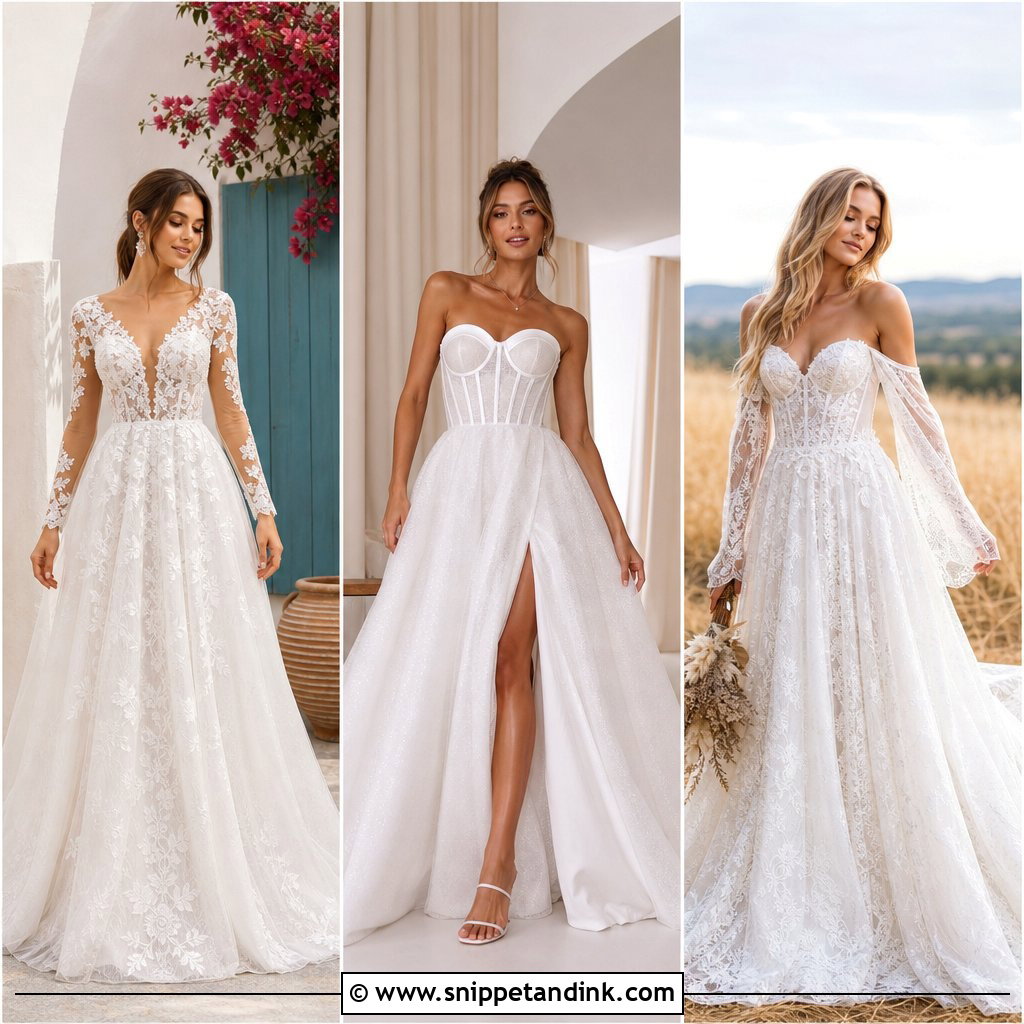
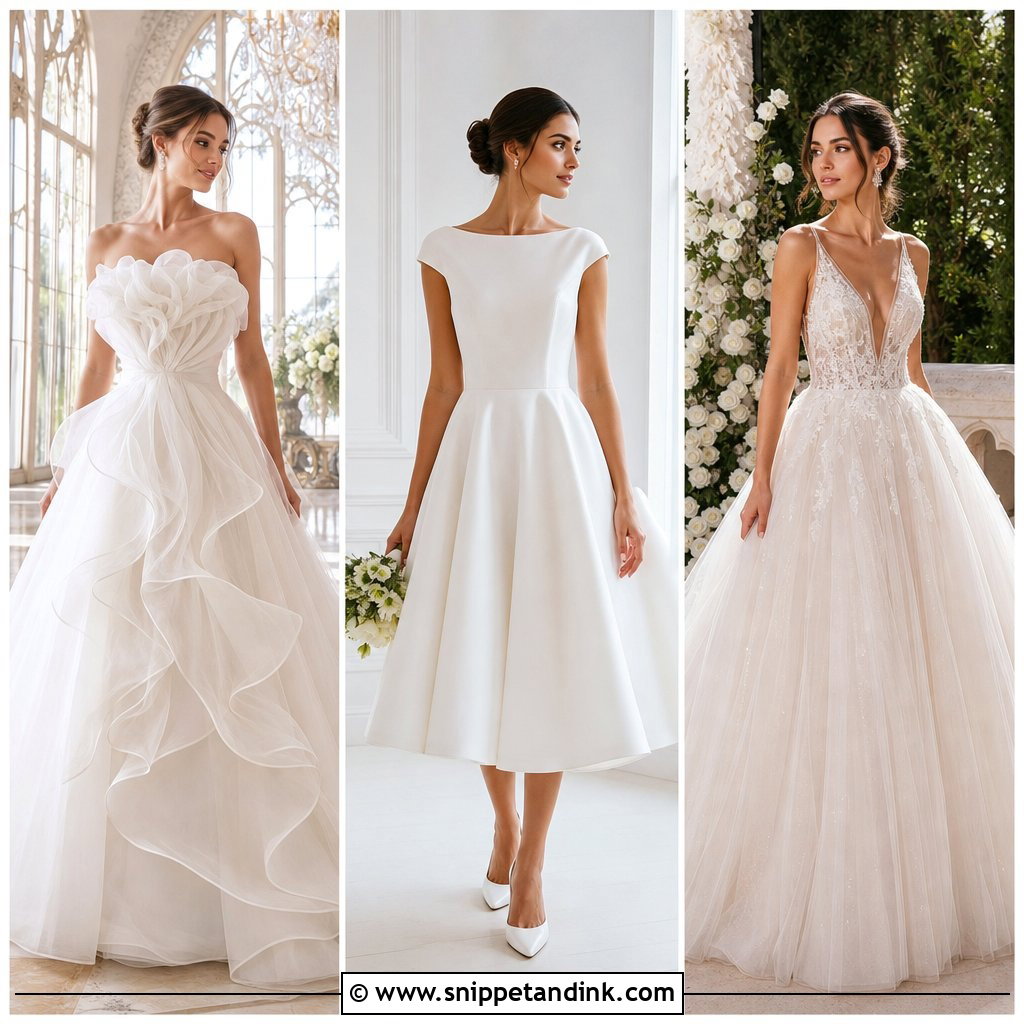
2. Off-Shoulder Ball Gown Wedding Dress
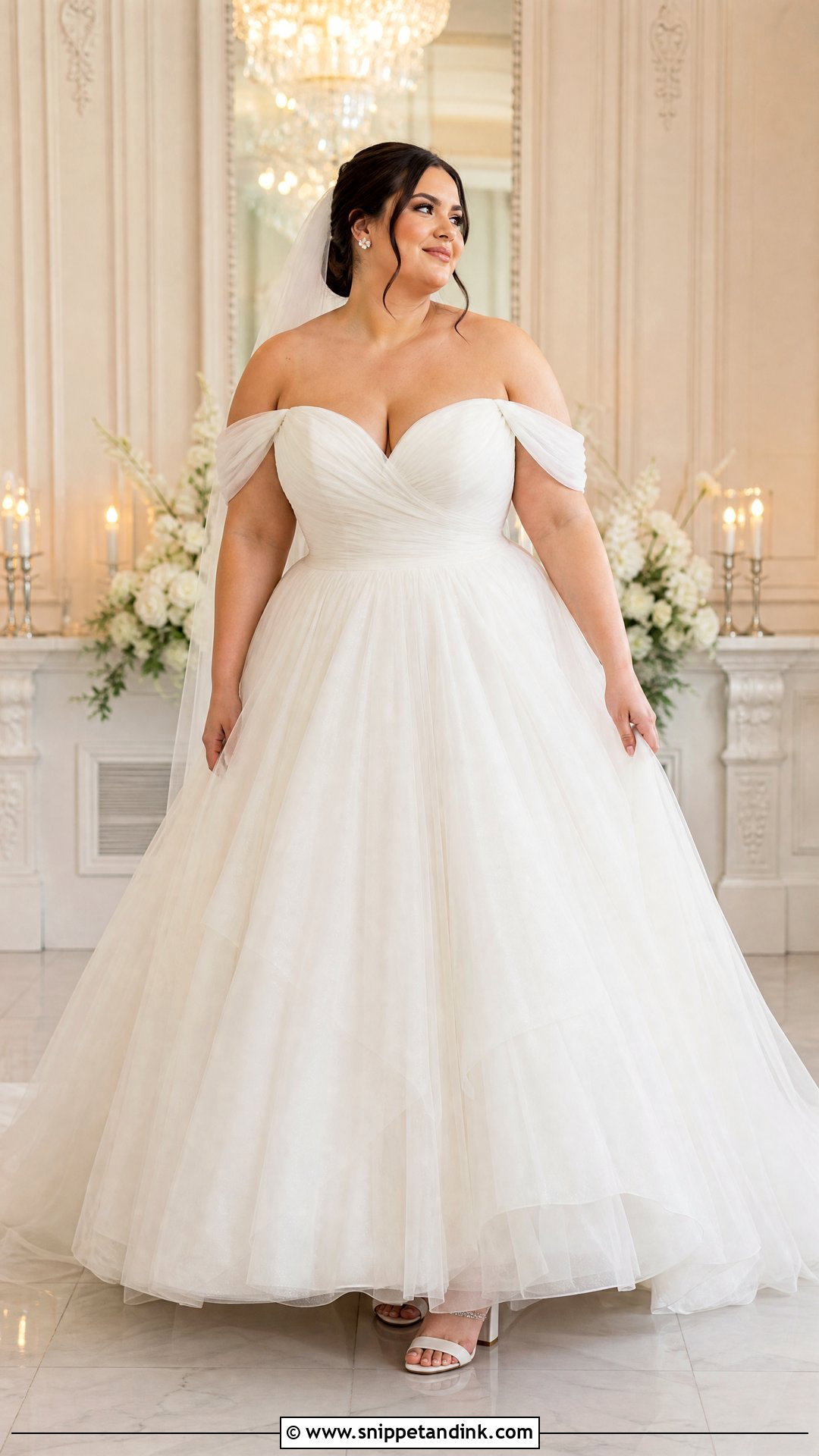
Off-the-shoulder sleeves draw a horizontal line across the collarbones, which is exactly the counterweight fuller hips need. On a ball gown, the bodice should fit closely and the skirt should start right at the natural waist; tulle or organza layers give volume without the weight of satin. My fitting test for this neckline is simple: lift your arms, sit and walk. If the sleeves ride up or dig into your upper arms, they need elastic or a stay. Simple studs, a medium-length veil, block-heel sandals for stability under all that skirt and a compact round bouquet. It suits ballrooms and formal indoor venues best.
3. V-Neck Lace A-Line Wedding Dress
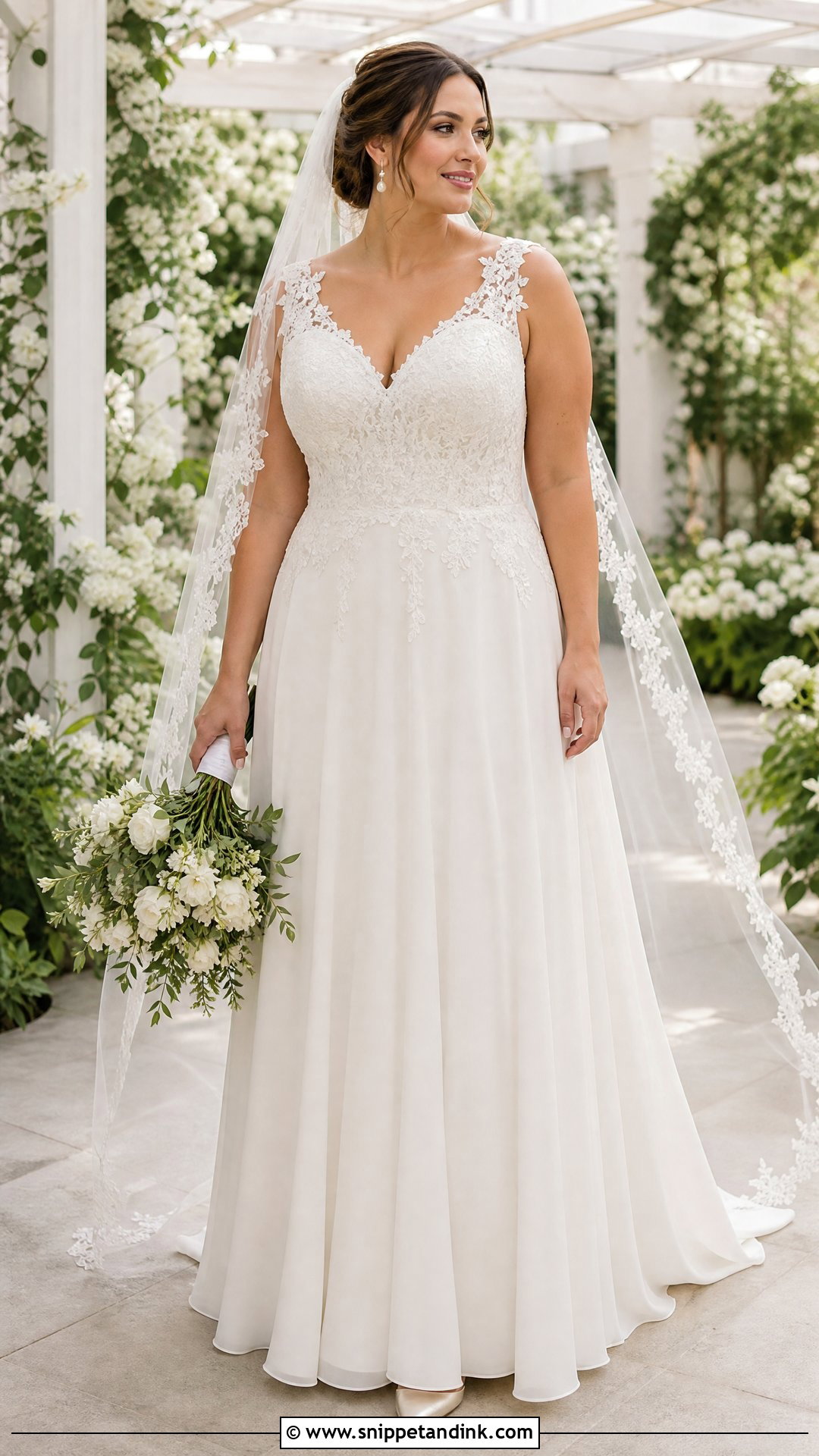
A V-neck lengthens the upper body and frames the face, and lace bodice detail keeps the interest above the waist where you want it. The skirt should fall smoothly from the waist; heavy gathering at the hips adds width exactly where it isn’t needed. I ask for the lace appliqués to stay on the shoulders and bodice and the skirt lining to stay plain. A low textured bun, pearl drops, pointed satin shoes and a chapel veil with a narrow lace edge. It’s comfortable to move in, which makes it easy to wear for a garden ceremony or a hotel reception.
4. Square-Neck Mikado Wedding Dress
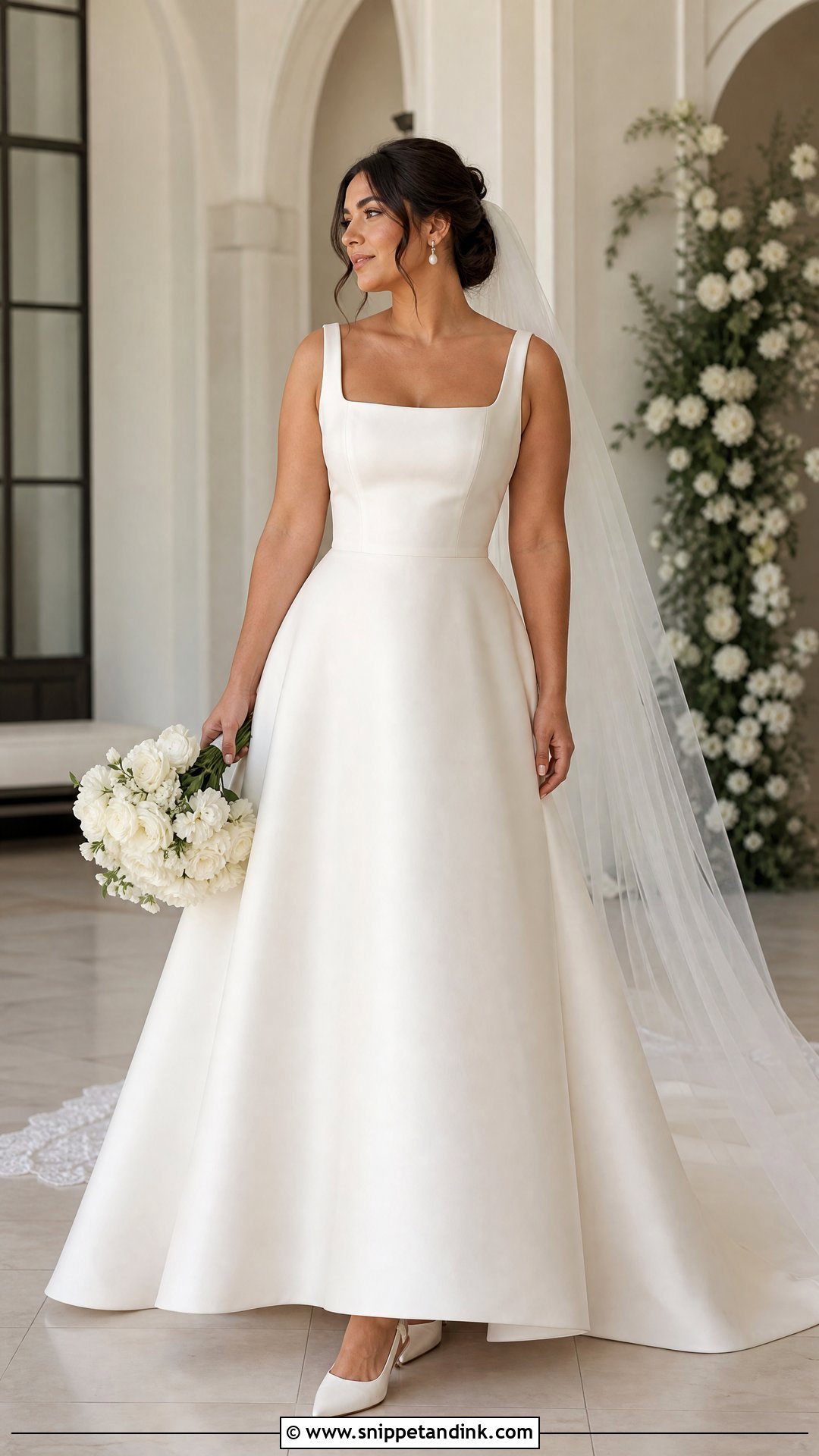
This is the gown for a bride who wants no decoration at all, because mikado relies entirely on cut. The square neckline gives the shoulders a crisp outline, and the stiff fabric holds that shape through a long day. Look for a fitted bodice, a clearly marked waist and an A-line skirt with smooth front panels. Side pleats are the clever part: they give the hips room without adding bulk at the front, where the camera sees it. Mikado creases sharply when you sit, so I’d steam it on the morning, not the night before. A sleek chignon, small pearls, pointed slingbacks, a plain cathedral veil and a structured all-white bouquet.
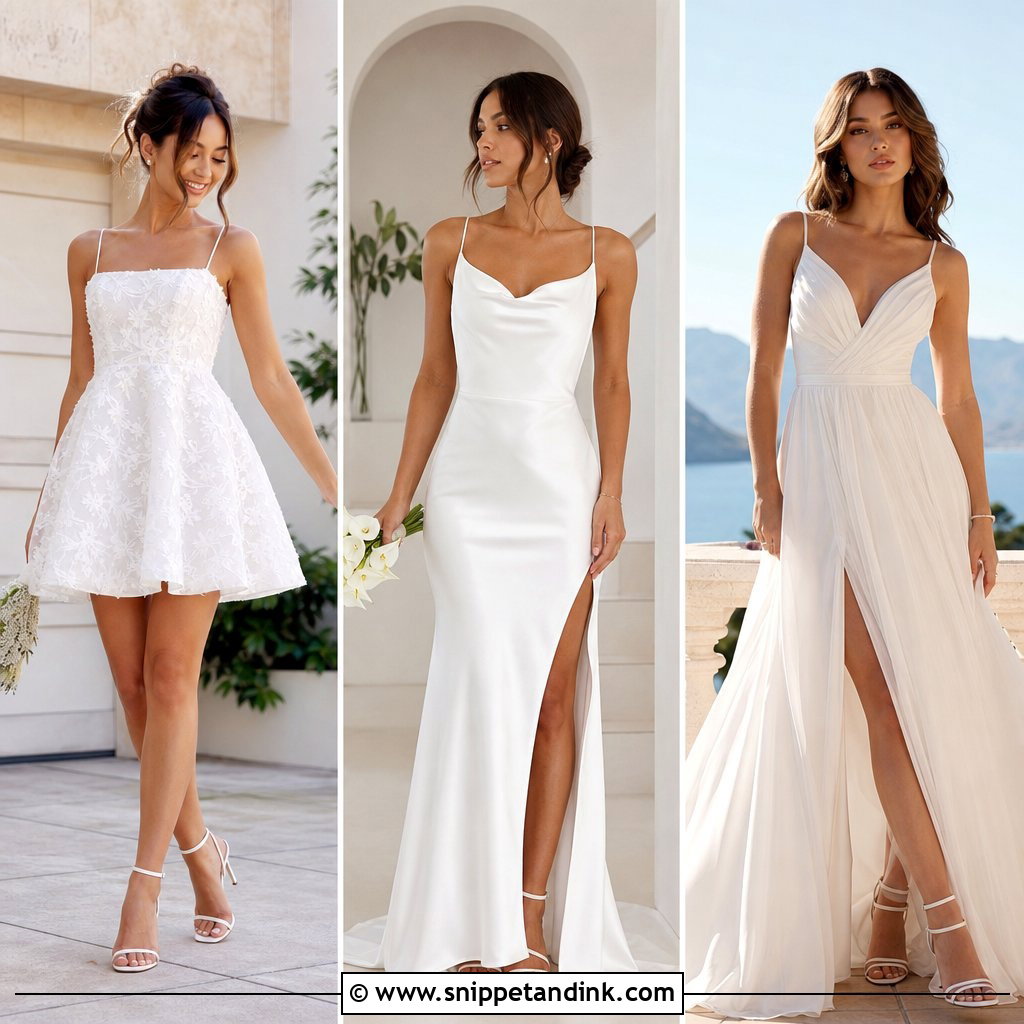
5. Chiffon Empire Waist Wedding Dress
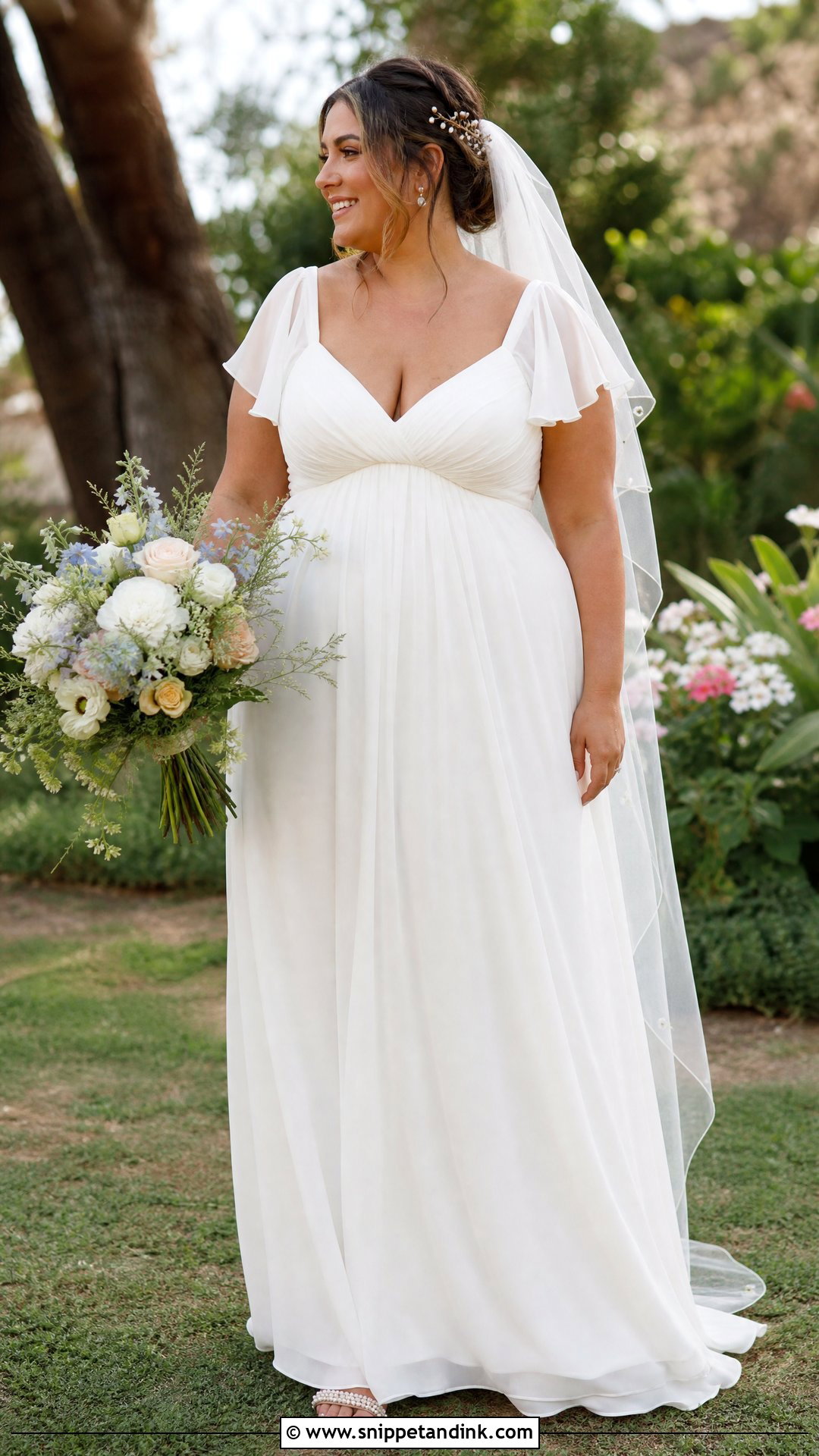
Chiffon is airy and moves with every step, so I reach for it at outdoor and warm-weather weddings. The empire waist sits just under the bust and the skirt falls loosely past the waist, hips and thighs. That’s both its strength and its risk: it skims beautifully, but it also gives up your waist, which is usually a pear-shaped bride’s best feature. I balance that with gathered fabric, flutter sleeves or detail at the shoulders. Low embellished sandals, a fingertip veil, a loose updo with pearl pins and a flowing bouquet. Check the lining in daylight, because single-layer chiffon goes see-through outdoors.
6. Corset Tulle Ball Gown Wedding Dress
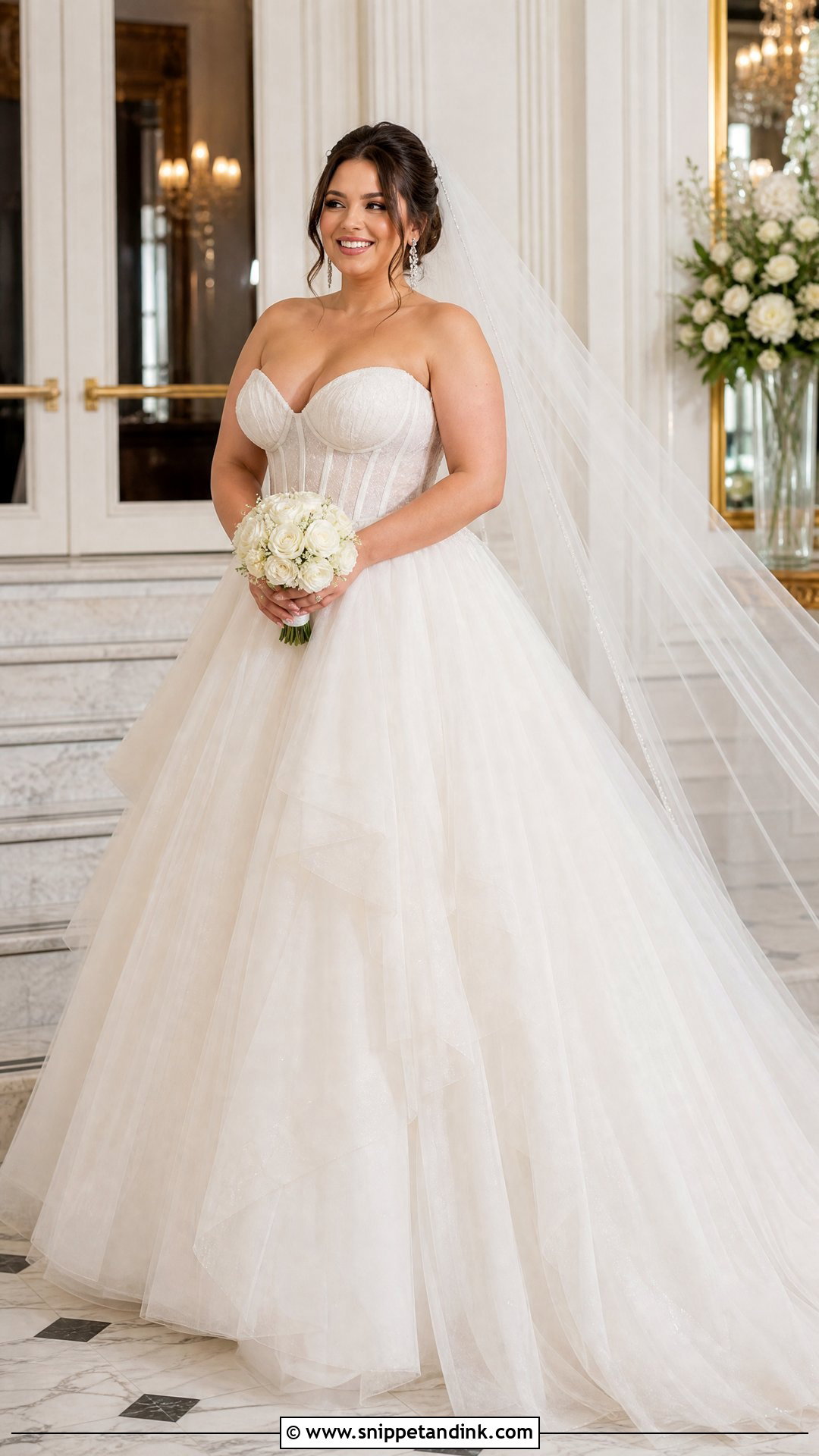
A corset bodice over a tulle ball gown makes the waist the headline. The bodice should support rather than squeeze, with boning that follows your torso and cups that sit flush without gaping. Below the waist, tulle gives generous room through the hips. Corsets are the gowns I’m strictest about at fittings: bring the exact underwear and shoes every time, because even a different bra changes where the boning sits. A high bun, crystal earrings, a cathedral veil anchored under the bun and hidden platform heels. A softly curved neckline or a little drape gives the upper body more presence.
7. Long-Sleeve Boat-Neck Wedding Dress
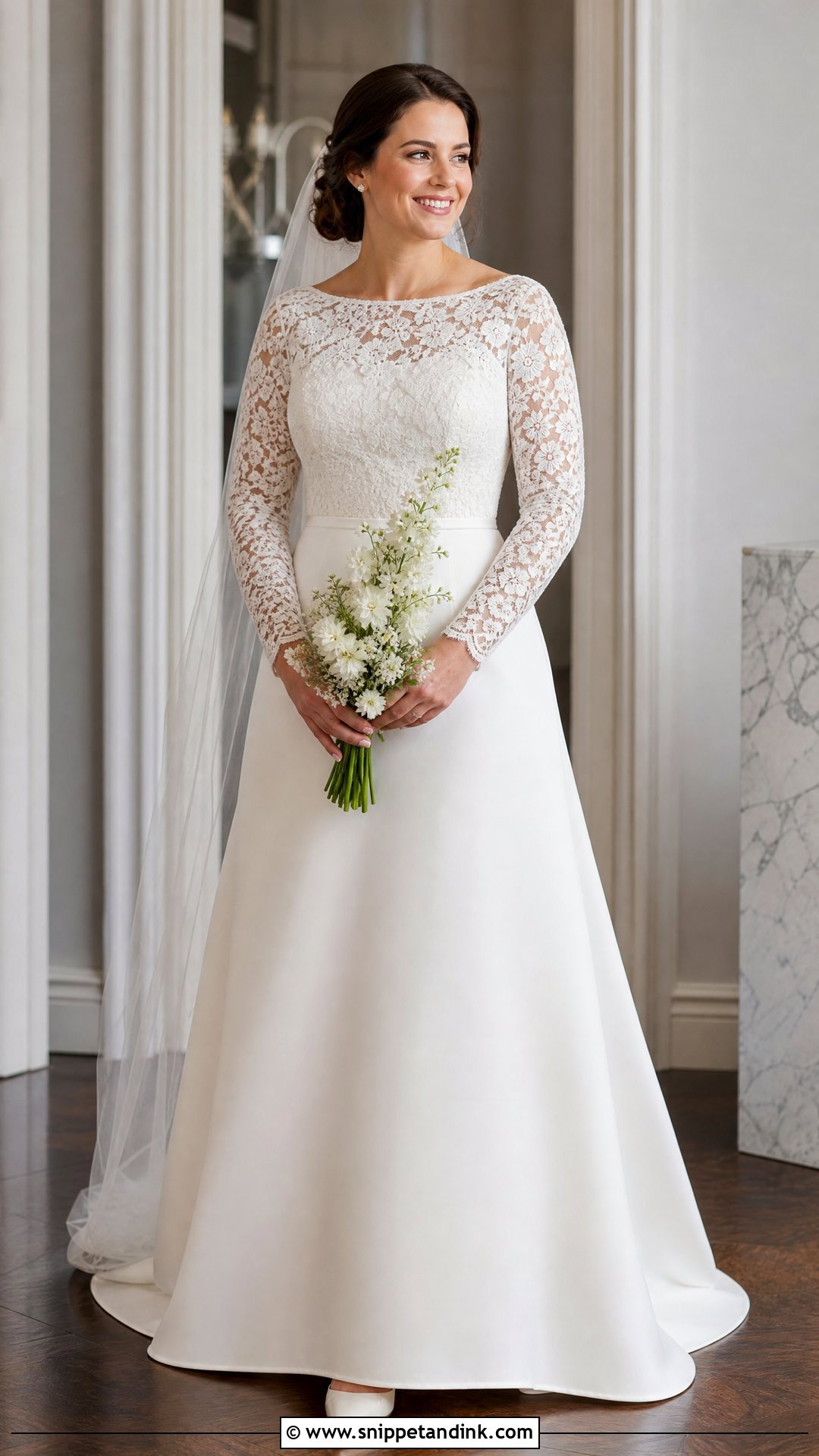
The boat neck runs straight across from collarbone to collarbone and visually widens the shoulders, which counterbalances fuller hips without any fuss. Long lace sleeves make it a good cool-season or high-coverage choice. Choose an A-line with a defined waist and a smooth lining under the lace, and avoid extra gathering at the side seams. A narrow belt can mark the waist, but only if it matches the gown closely; a contrasting belt cuts you in half. Pearl studs, a low bun, closed-toe pumps and a simple veil from the back of the hair.
8. Cap-Sleeve Lace Wedding Dress
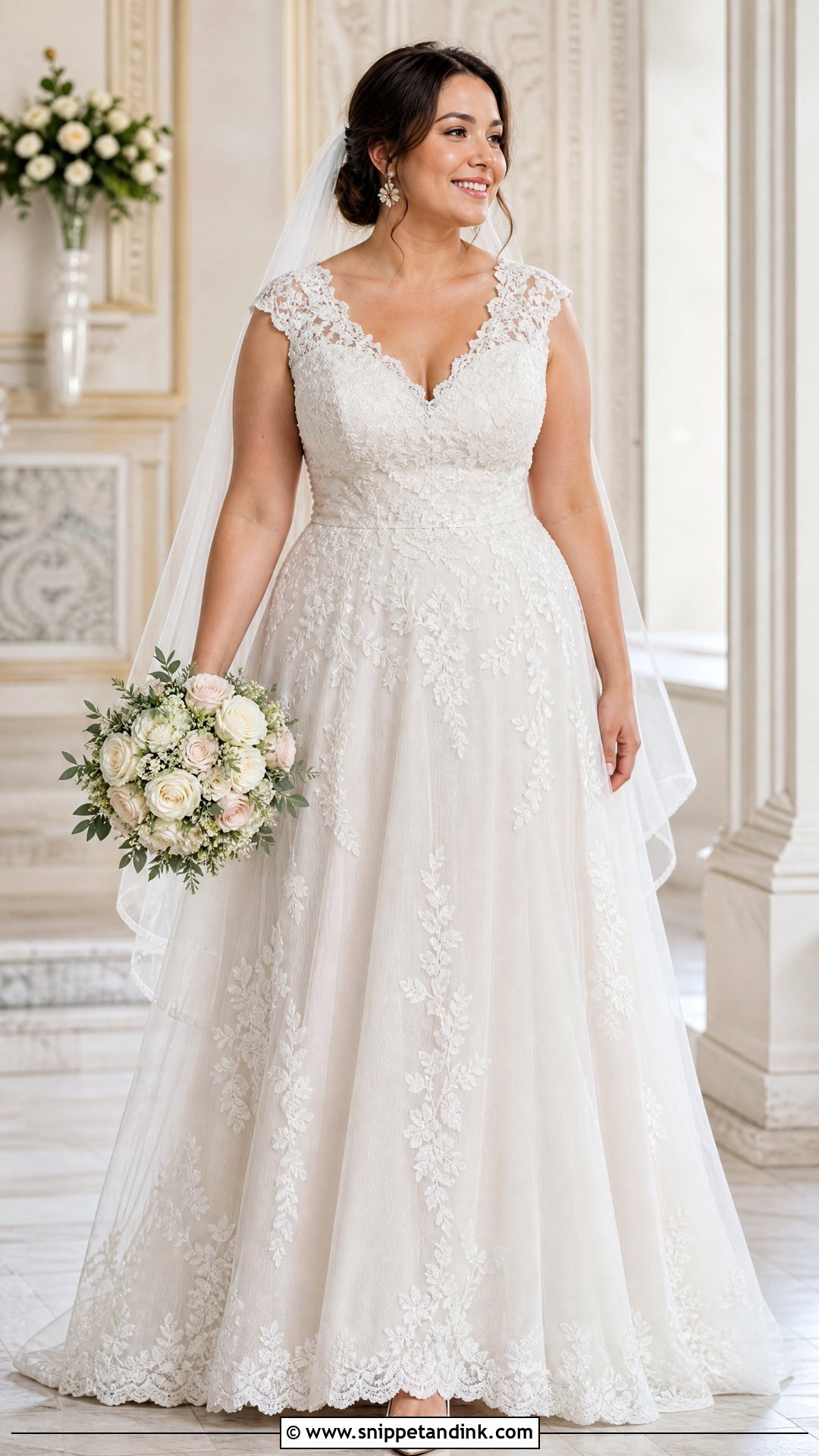
Cap sleeves add a little width at the shoulder and keep the look light. A fitted lace bodice with a soft scoop or V neckline over an A-line skirt is the classic pairing, ideally with appliqués that spread out as they move down the skirt so the heaviest decoration stays above the hips. Watch the armholes during alterations: cut too narrow, cap sleeves bind the moment you hug someone. A half-up style, small floral earrings, ivory pumps, a plain tulle veil and a bouquet of rounded blooms.
9. One-Shoulder A-Line Wedding Dress
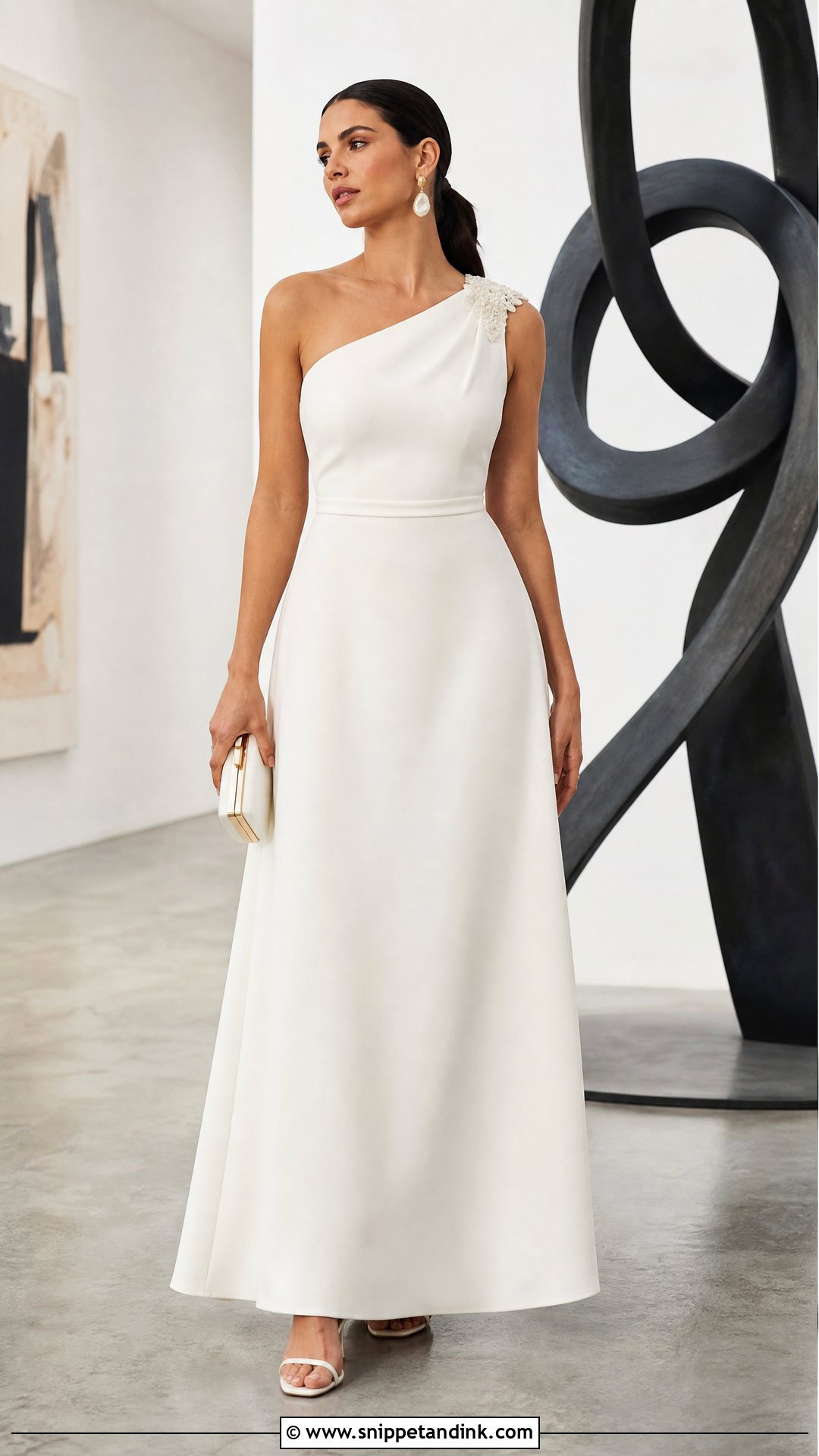
A one-shoulder gown pulls attention upward with its strong asymmetrical neckline, and it reads modern without being complicated. Crepe, satin or light mikado in an A-line, gently shaped at the waist with ease through the hips. Keep any embellishment near the shoulder. I usually suggest skipping the veil here, since a veil hides the very neckline you chose the dress for; a simple hair comb is enough. A sleek low ponytail or side-parted bun, a single statement earring on the bare side, minimal heels and a structured clutch for the reception.
10. Strapless Basque Waist Wedding Dress
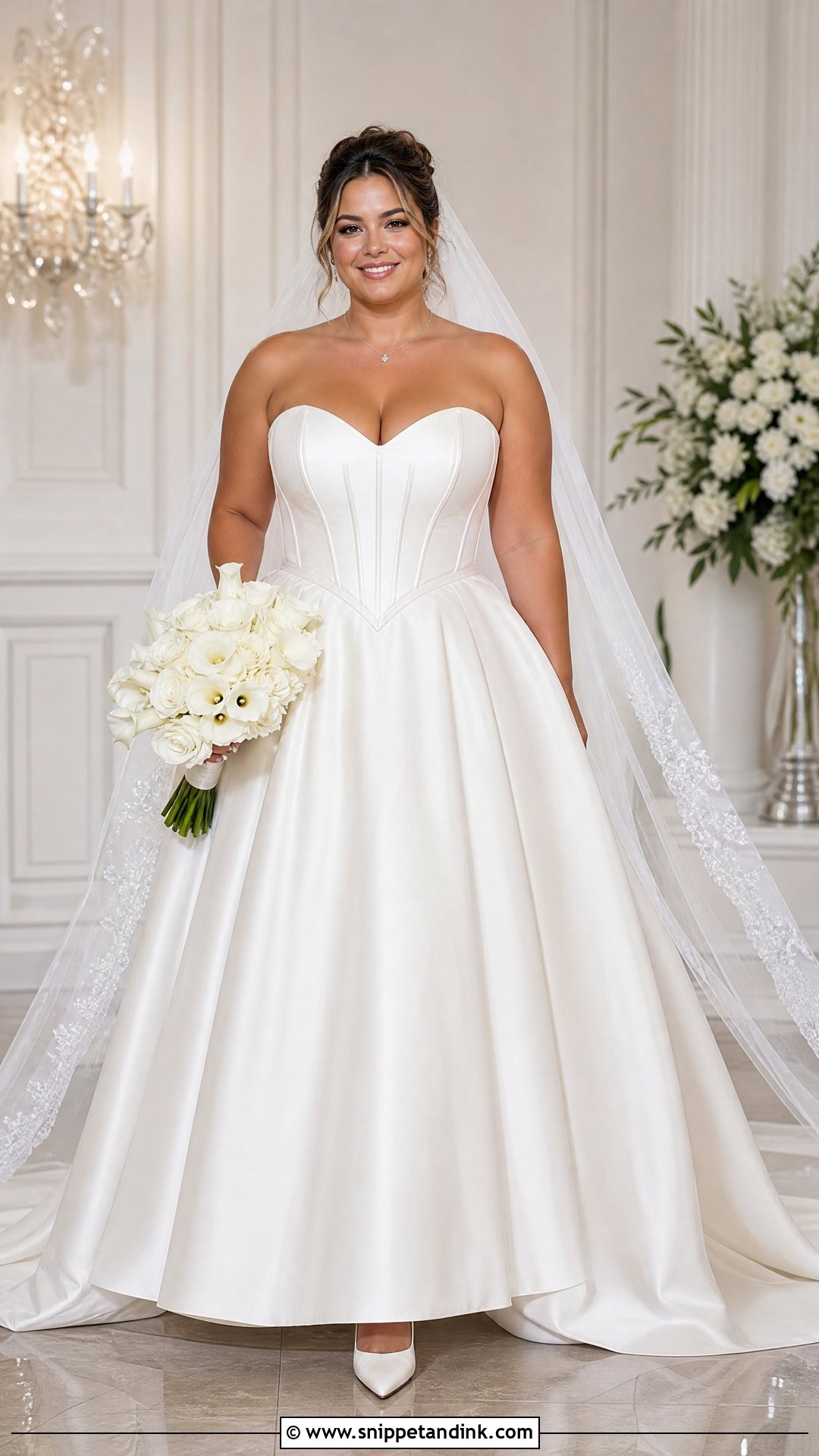
A basque waist dips into a shallow V below the natural waistline, which lengthens the torso and sharpens the transition into the skirt. The proportion is everything: if the point drops too low on a shorter torso, it shortens the legs instead. Pair it with a strapless bodice with strong internal support and a full satin or tulle skirt; a softly curved neckline is easier to wear than a severe straight edge. Sit down in it at every fitting, because the low center seam can press into the stomach when you’re seated. A collar-length necklace, matching earrings, pointed pumps and a cathedral veil.
11. Satin Wrap Bodice Wedding Dress
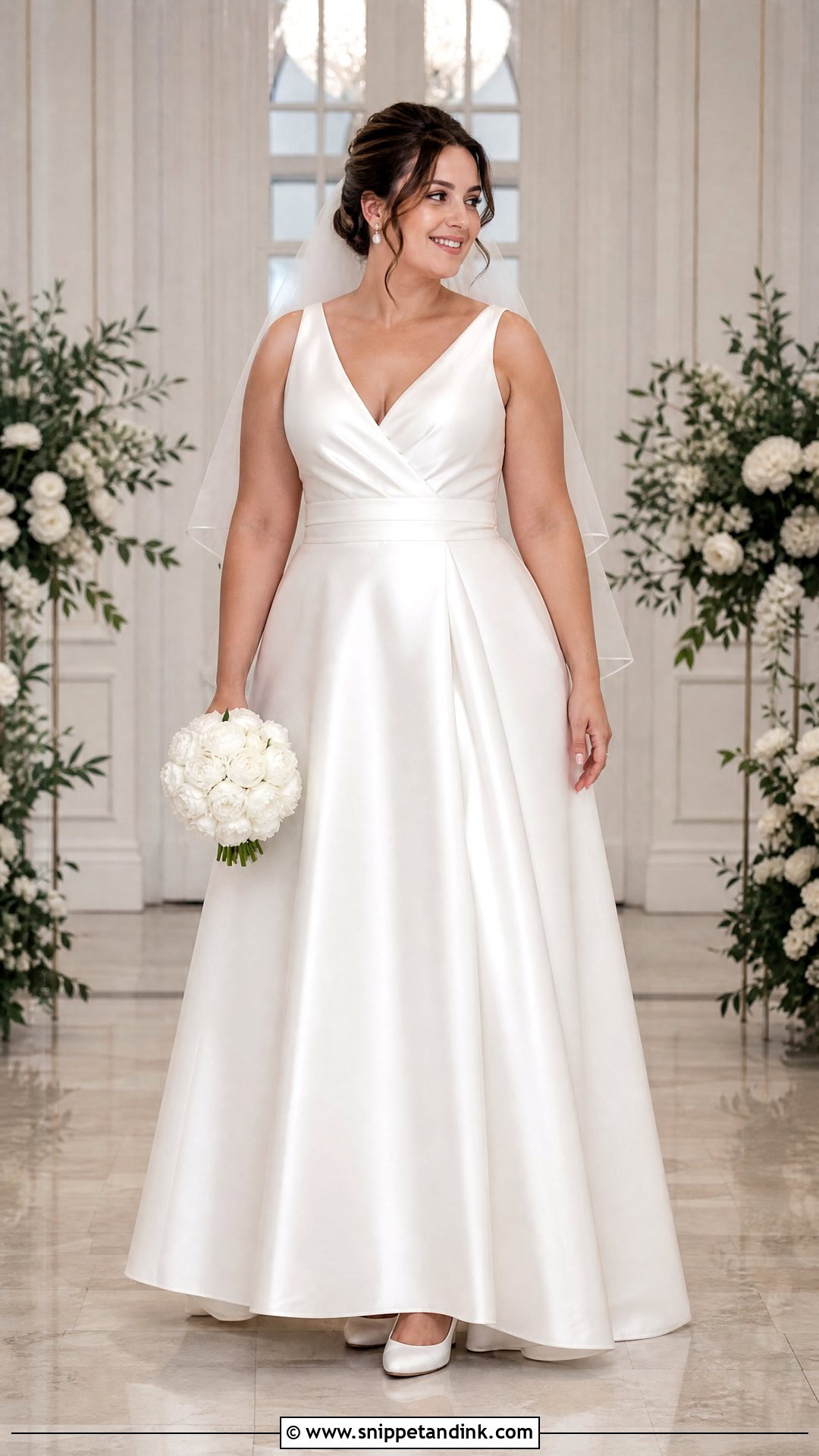
Diagonal lines across a wrap bodice lead the eye straight to the waist, which is why I like this design so much for pear shapes. The V neckline frames the face, and a wide waistband in the same satin adds definition. Pair it with an A-line skirt in soft box pleats or smooth panels, never tight gathers. The thing I check is the wrap panels across the bust: if they pull or gape, they need internal anchoring, or you’ll be adjusting them through the whole ceremony. A polished bun, pearl drops, a fingertip veil, closed-toe block heels and a compact bouquet that keeps the bodice visible.
12. Floral Appliqué A-Line Wedding Dress
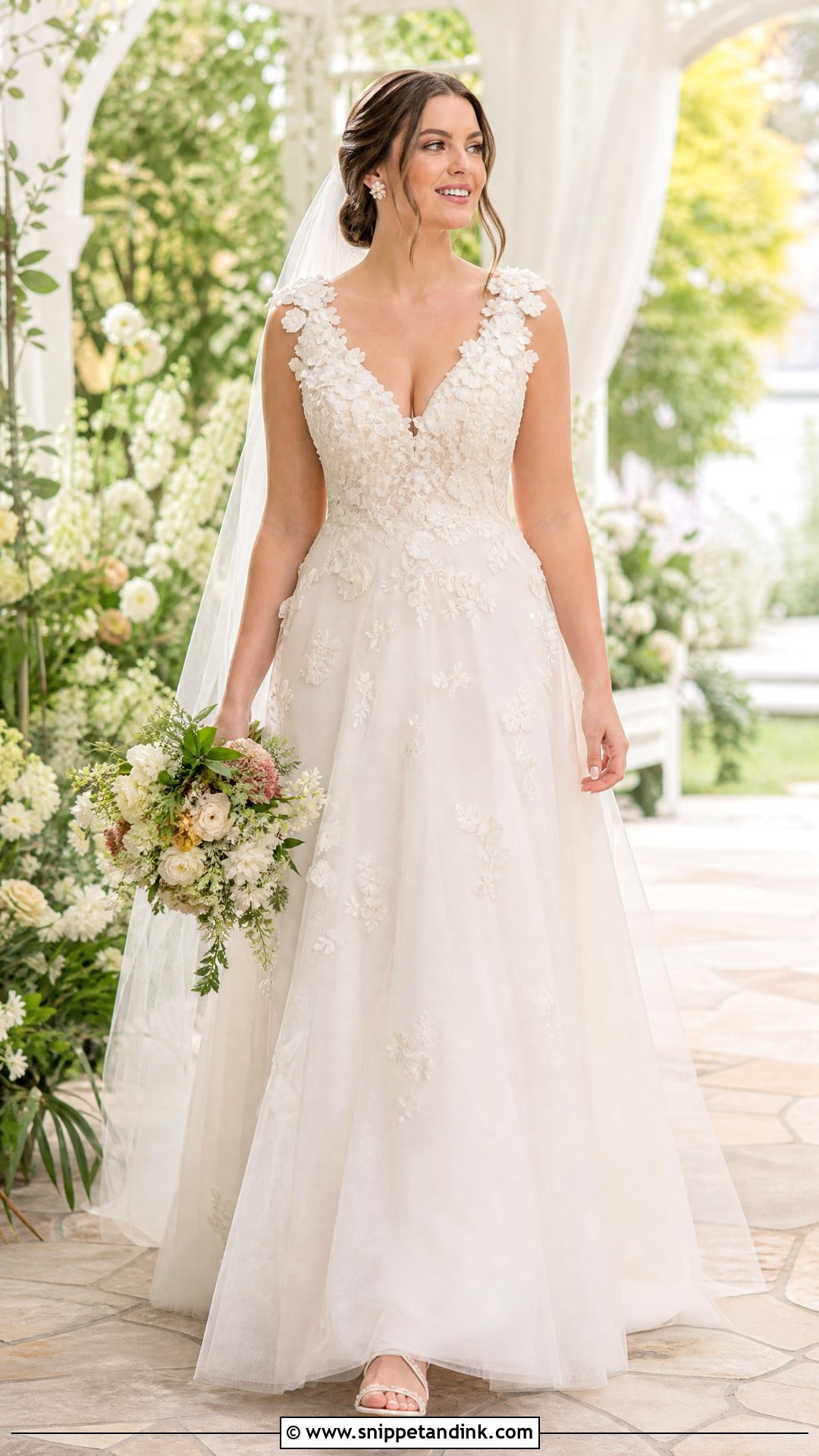
Three-dimensional floral appliqués add romance to a plain A-line, and placement is what makes them work for this shape. Concentrate the flowers at the neckline, shoulders and bodice, then let them thin out across the skirt. At the fitting I look closely at where the largest flowers fall at the waist and hips, because one big bloom on the hip line adds exactly the width you don’t want. A soft V or illusion neckline suits botanical detail. Floral studs, low-heeled sandals, a sheer veil, simple hair and a bouquet that echoes the appliqués without copying them.
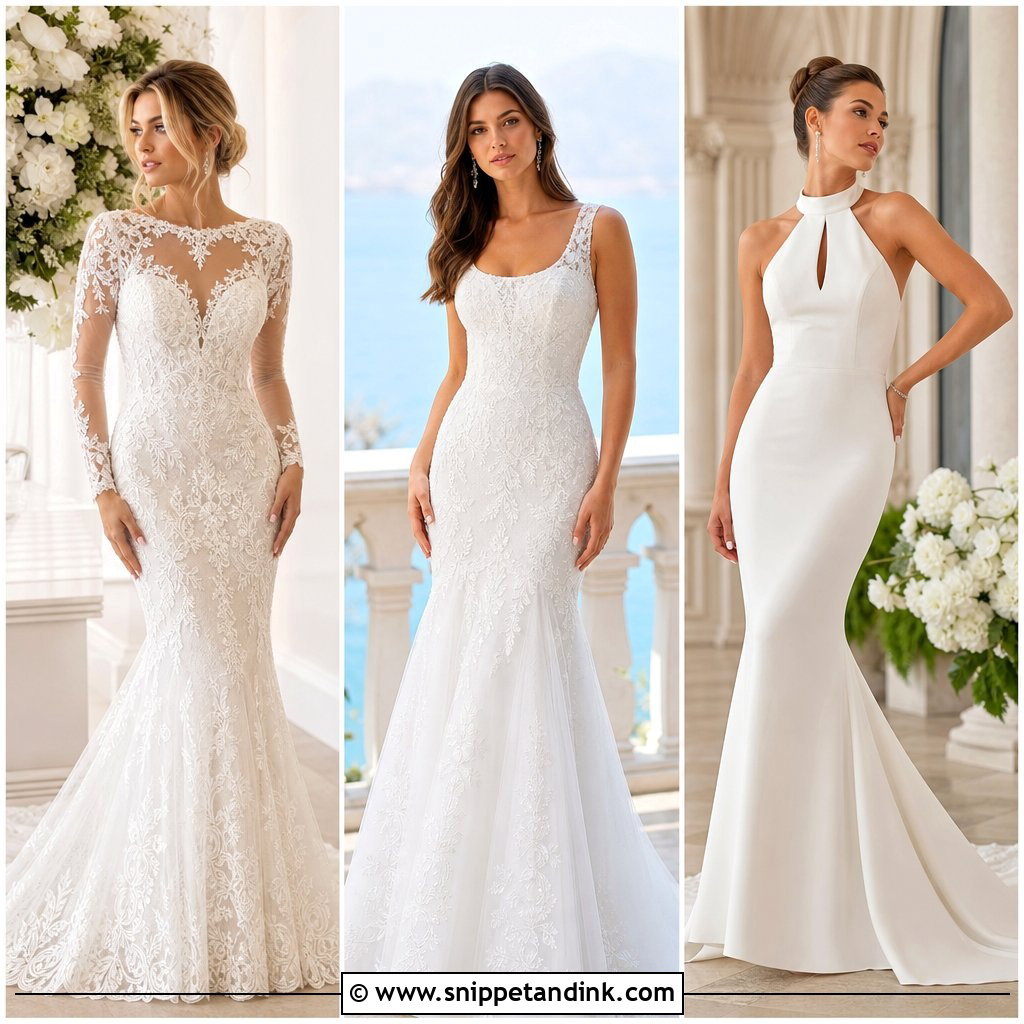
13. Crepe Fit-And-Flare Wedding Dress
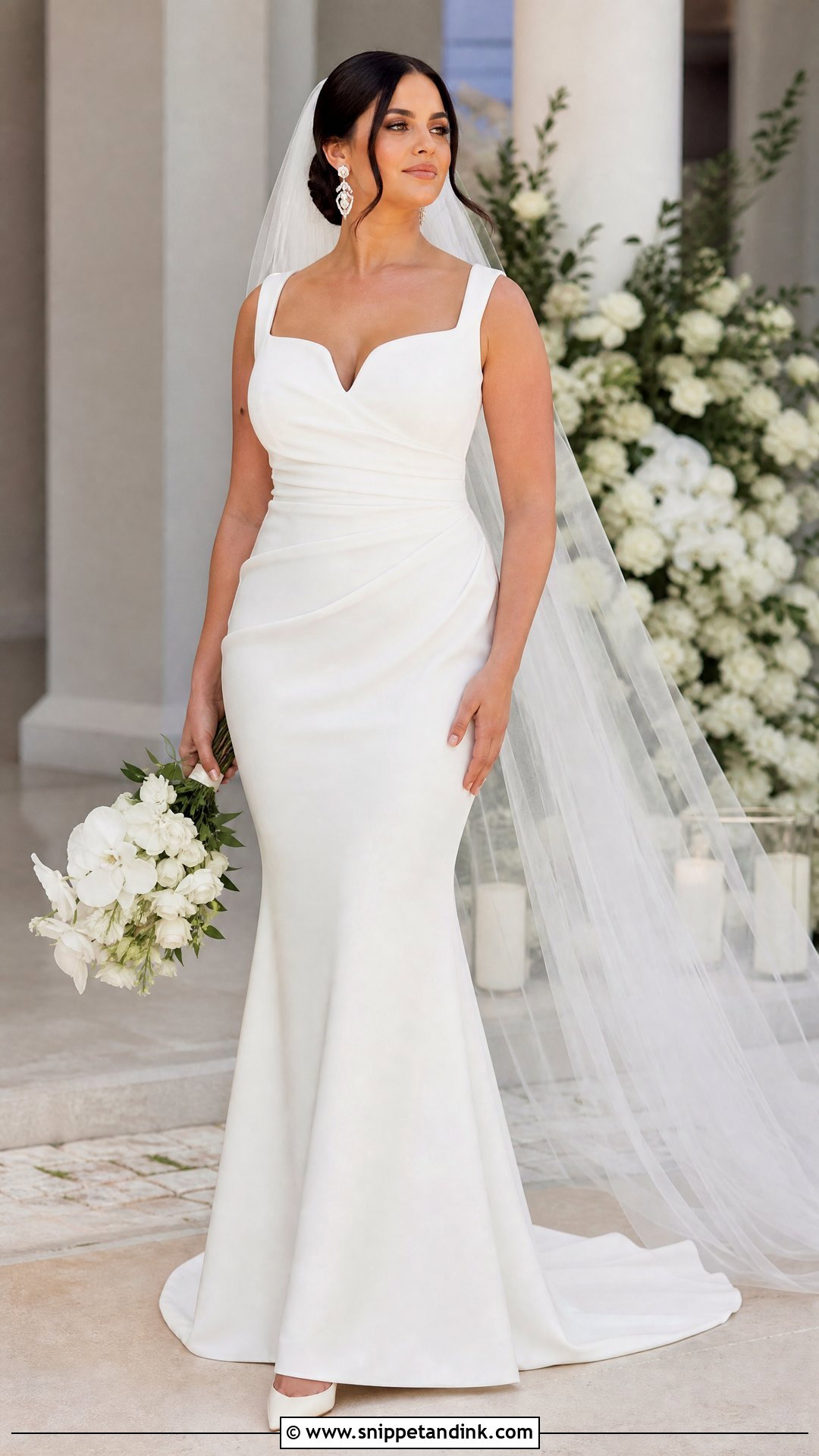
Some brides want to show their curves rather than skim them, and crepe fit-and-flare is the gown for that. It follows the waist and hips and widens lower down the skirt, so it suits a bride who’s comfortable with a closer fit through the hips. Choose a substantial crepe with a good lining and some stretch; thin crepe shows every line underneath. Seams, light ruching or drape can refine the fit without adding bulk. Supportive shapewear helps the fabric lie smoothly, but if you can’t sit and eat in it, it’s too much. A long veil, modern drops, pointed pumps and a sleek bouquet.
14. Lace Trumpet Wedding Dress
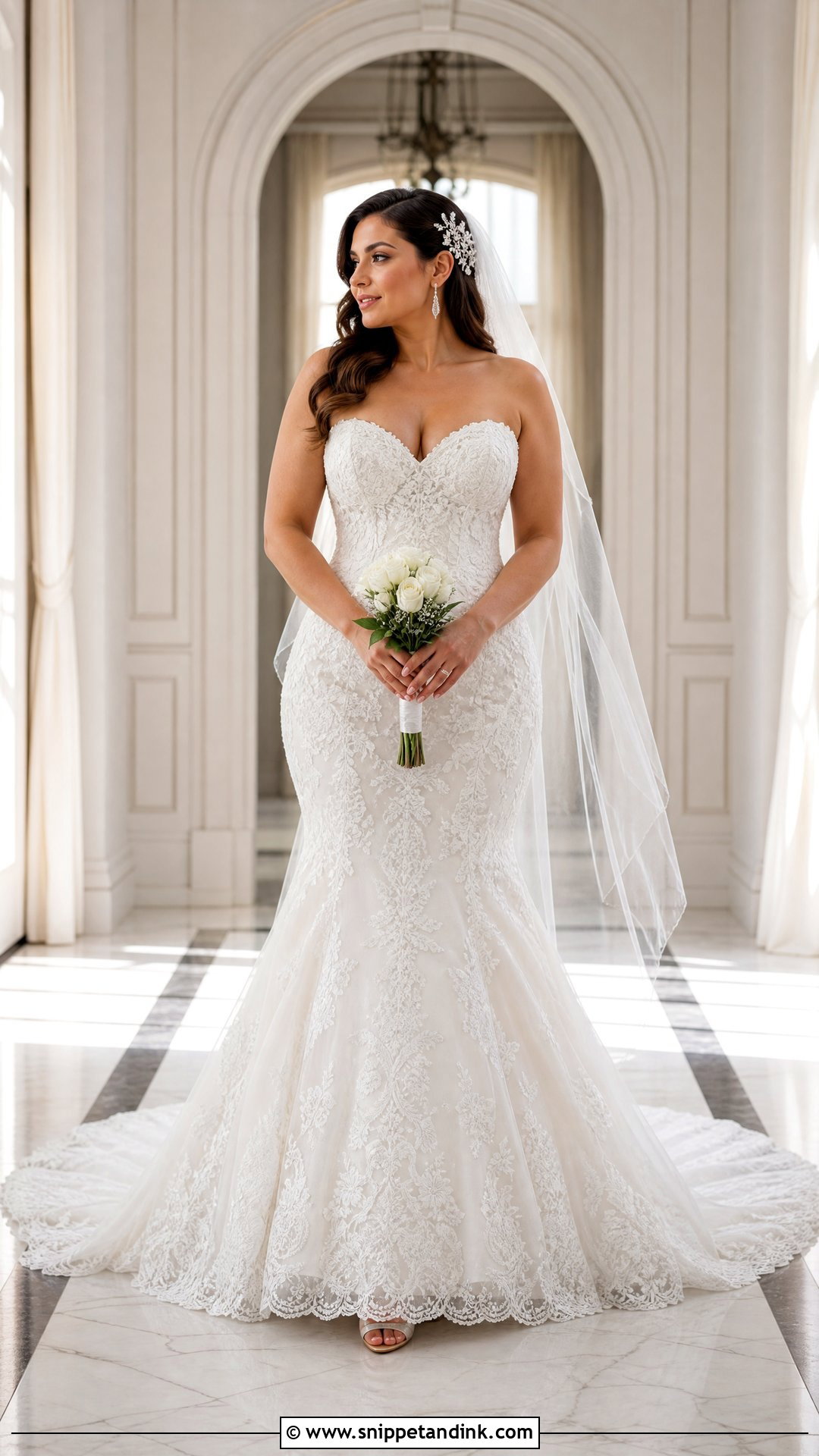
A trumpet gown follows the torso and hips and flares around mid-thigh, so it moves more freely than a mermaid. Lace with a flexible backing is what I look for, since rigid lace forms horizontal creases across the hips when it’s stretched. A sweetheart, off-shoulder or wider V neckline gives the upper body presence. At alterations, take full strides, climb a few stairs and sit; the flare point should suit your height, not the sample’s. A chapel veil, crystal comb, drop earrings, supportive heels and a narrow bouquet that doesn’t hide the outline.

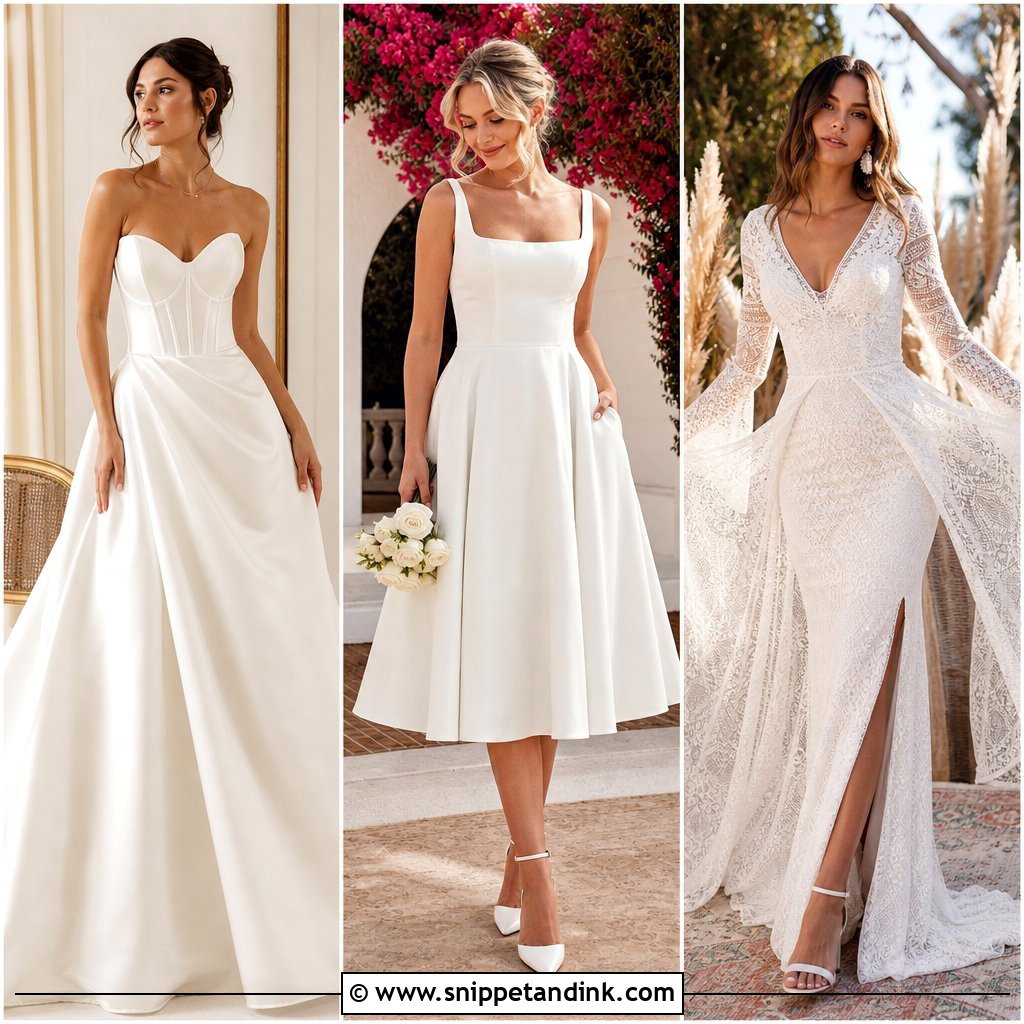

15. Modified Mermaid Wedding Dress
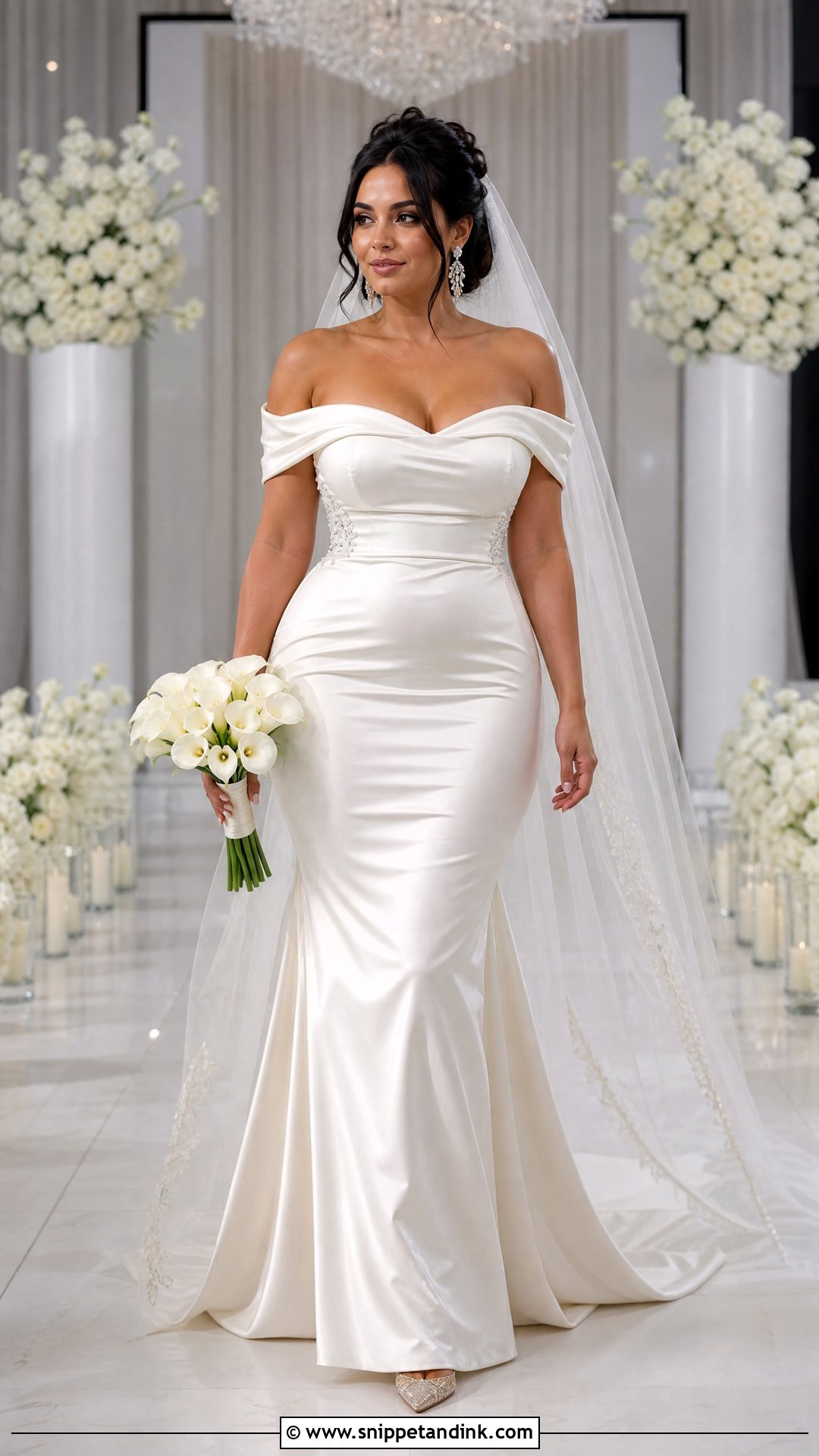
The modified mermaid starts its flare higher on the thigh than a true mermaid, which is what makes it wearable for most pear-shaped brides. Stretch satin, lined lace or structured crepe move with the body, and a draped off-shoulder neckline balances the hips into an hourglass. Avoid stiff, heavy underskirts that make the flare look rigid. Ask your seamstress to leave real ease through the hips and thighs: you should be able to walk normally and climb a step without hitching the skirt. A low bun, sparkling earrings, a plain cathedral veil and pointed heels.
16. Tea-Length A-Line Wedding Dress
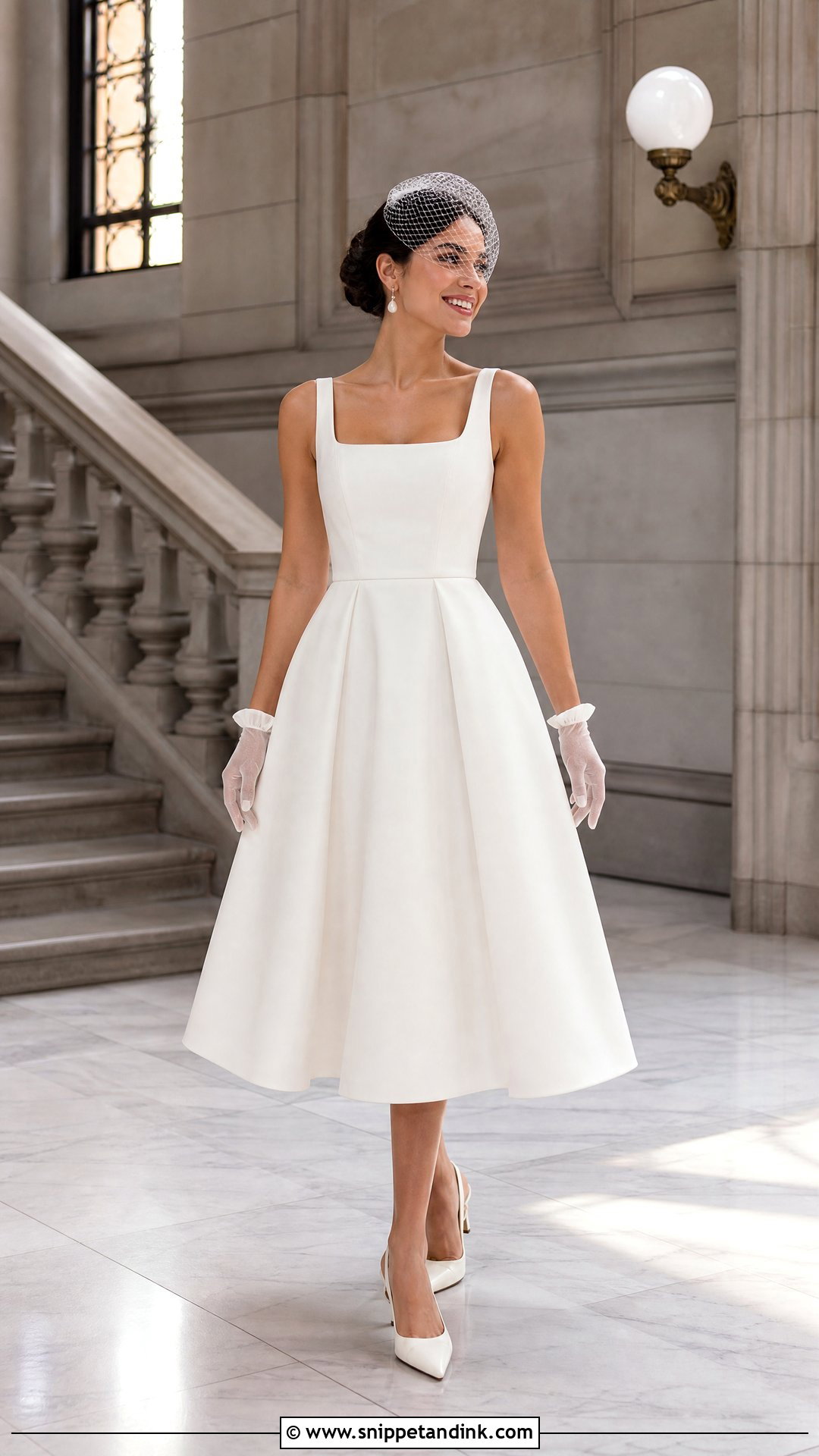
Tea length is a good fit for courthouse weddings, small ceremonies and relaxed receptions, and on a pear-shaped bride the A-line opens neatly over the hips. Because the shoes show, they’re part of the outfit: pointed pumps, slingbacks or embellished block heels. The hem needs to land at the narrowest part of your lower leg, usually just below the fullest part of the calf; an inch either way changes the whole proportion. A bateau, sweetheart or square neckline adds shoulder definition. Short gloves, pearl earrings and a birdcage veil or hair bow give a vintage feel, and a petticoat adds volume if it stays in scale with your height.
17. High-Low Organza Wedding Dress
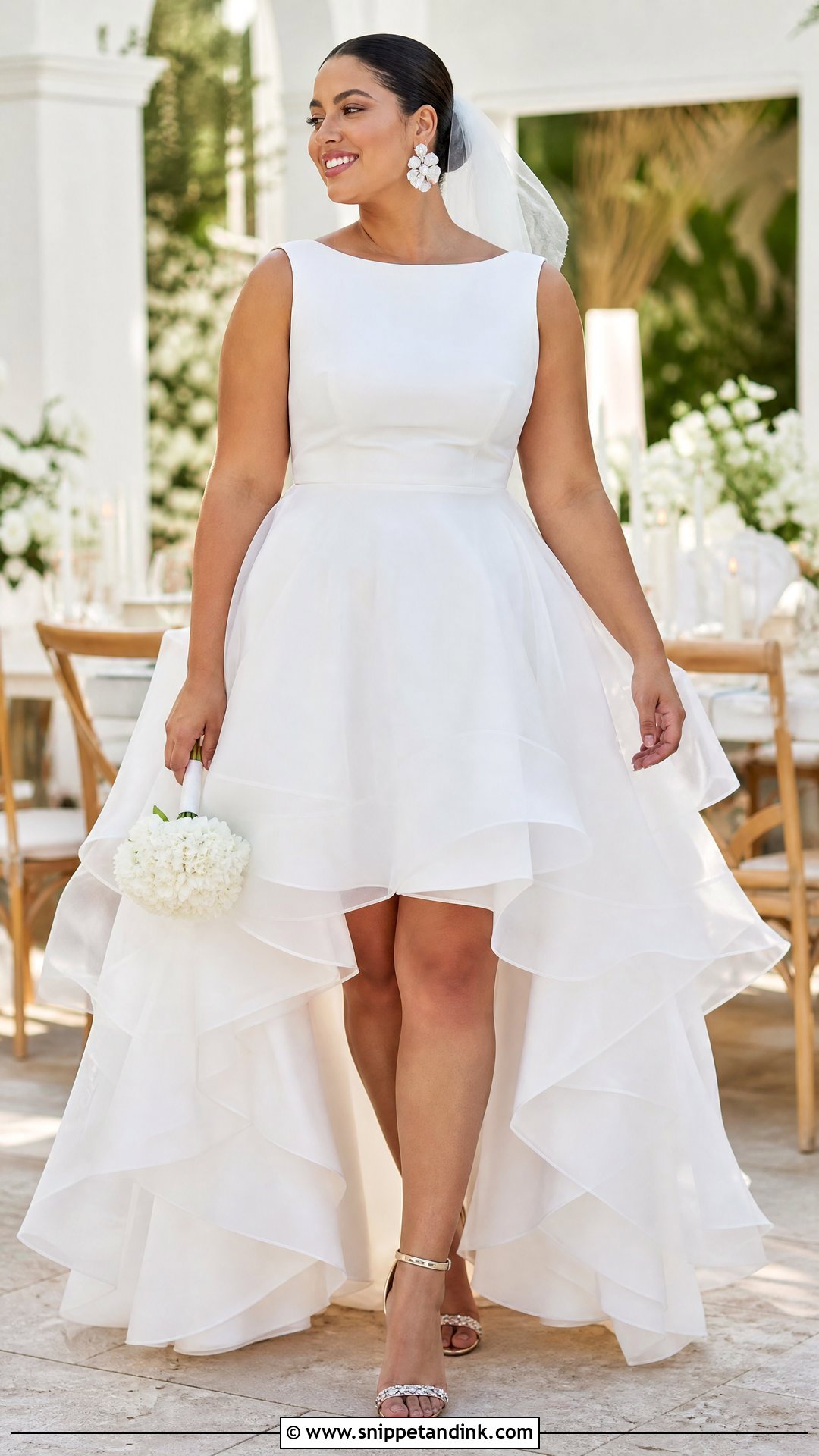
The high-low organza gown shows off your shoes while keeping the presence of a longer skirt behind. The front hem should fall below the knee; any shorter and it can look like a cocktail dress. The back can drop to the ankle or form a small train. A wide neckline, off-shoulder band or detailed straps balance the upper body. I’d swap a long veil for a shoulder-length one or a comb, because a long veil fights with the uneven hem. Organza holds its shape and stays lighter than satin, which makes it a good outdoor choice. Embellished ankle-strap heels, statement earrings and a neat updo.
18. Drop-Waist Ball Gown Wedding Dress
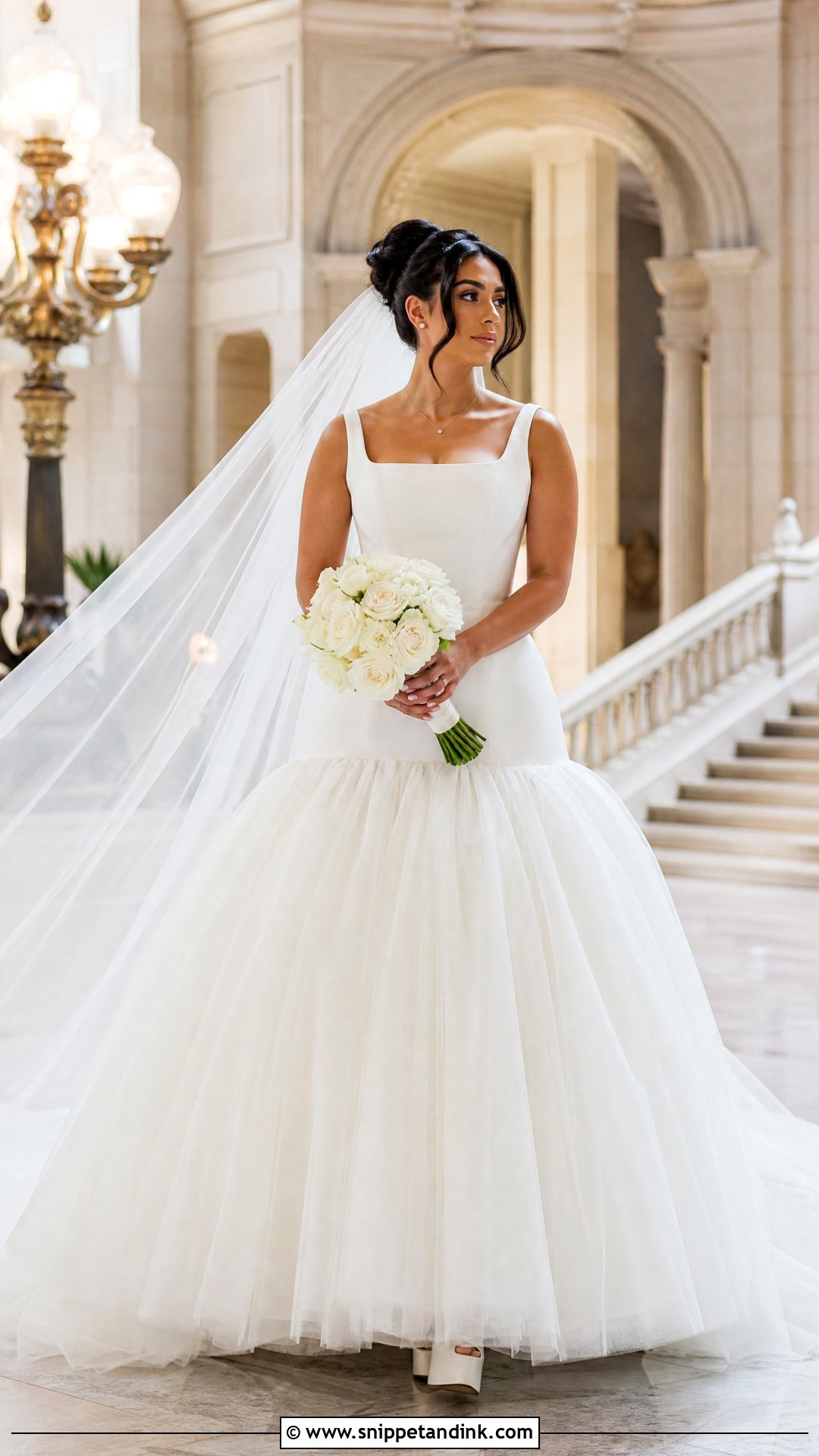
A drop waist is the trickiest silhouette on this list for a pear shape, and I only recommend it with careful tailoring. The bodice extends below the natural waist before the skirt opens, which lengthens the torso but can also squeeze the upper hips. The skirt must release above the fullest point of the hip, never across it. A wide scoop, square or off-shoulder neckline balances the long bodice, and the skirt’s volume should be even all the way around rather than piled at the sides. Bend and sit at every fitting to check the lower bodice doesn’t crease into the hips. A high bun, crystal studs, a cathedral veil and platform heels.
19. Pleated Skirt Wedding Dress
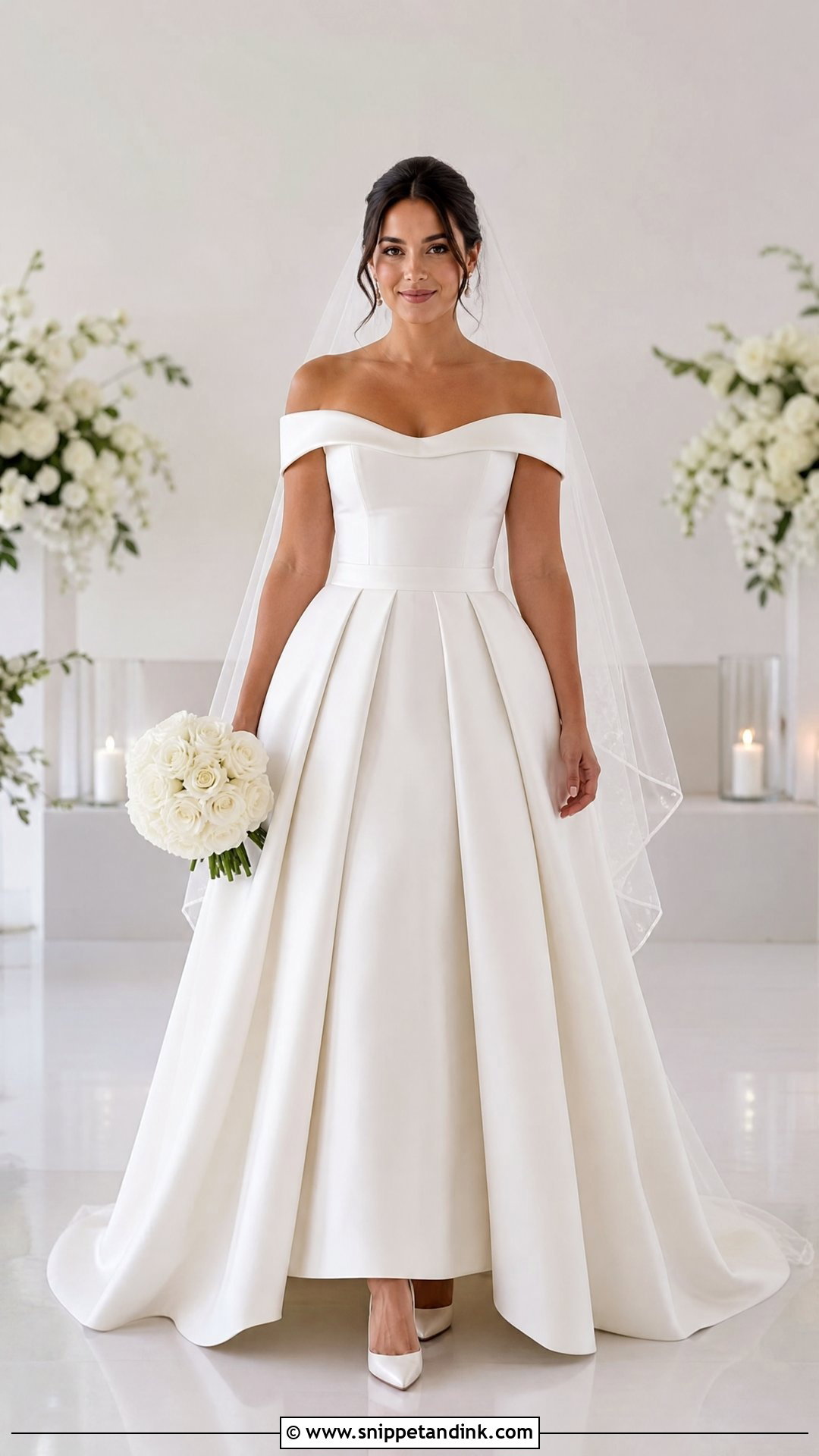
Wide pleats opening from a smooth waistband give room through the hips and keep the skirt structured, while narrow gathers add fullness right where you don’t want it. Pair the skirt with a fitted V-neck, square or off-shoulder bodice to keep the focus up. Mikado and satin hold crisp pleats best. If the skirt has pockets, check they lie flat when empty; bulging pockets widen the hip line instantly. After hemming, I ask the seamstress to check each pleat hangs evenly. Pearl earrings, a clean low bun, pointed heels and a fingertip veil.
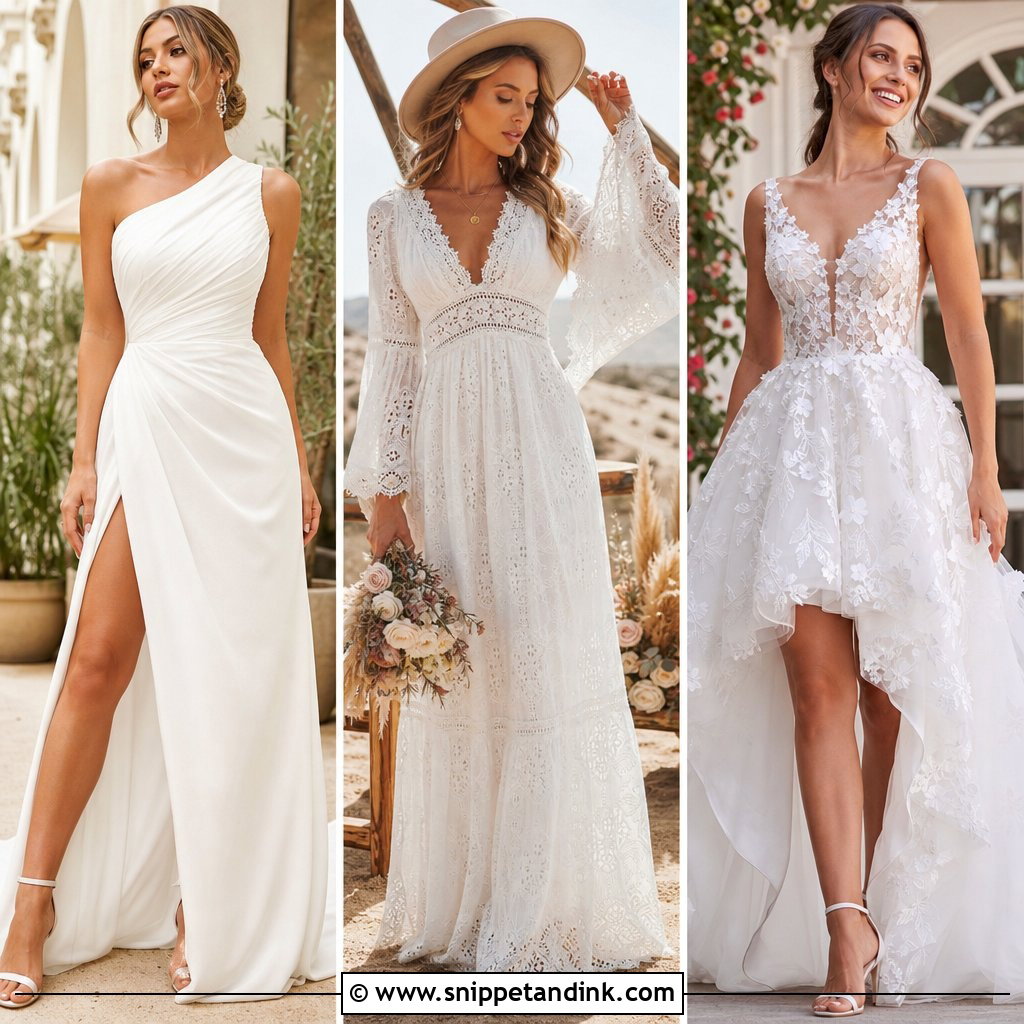
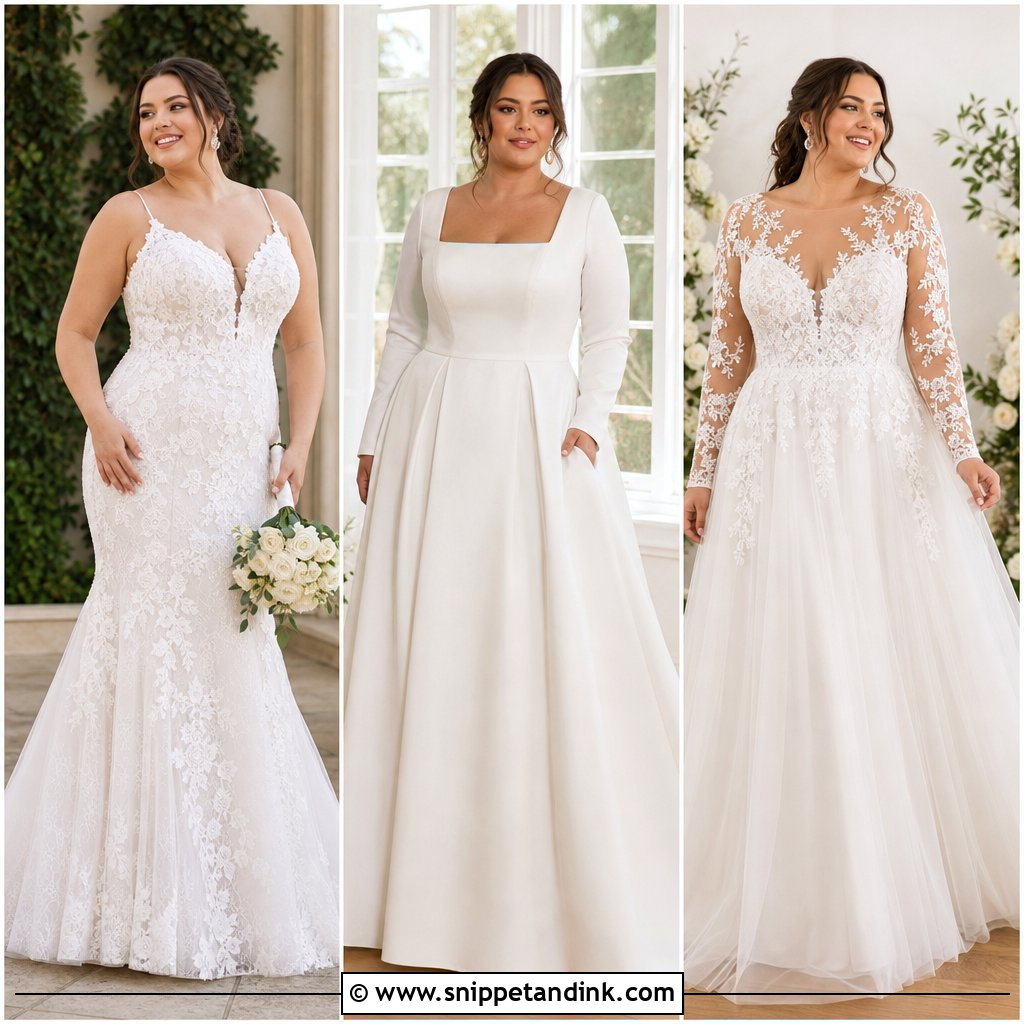
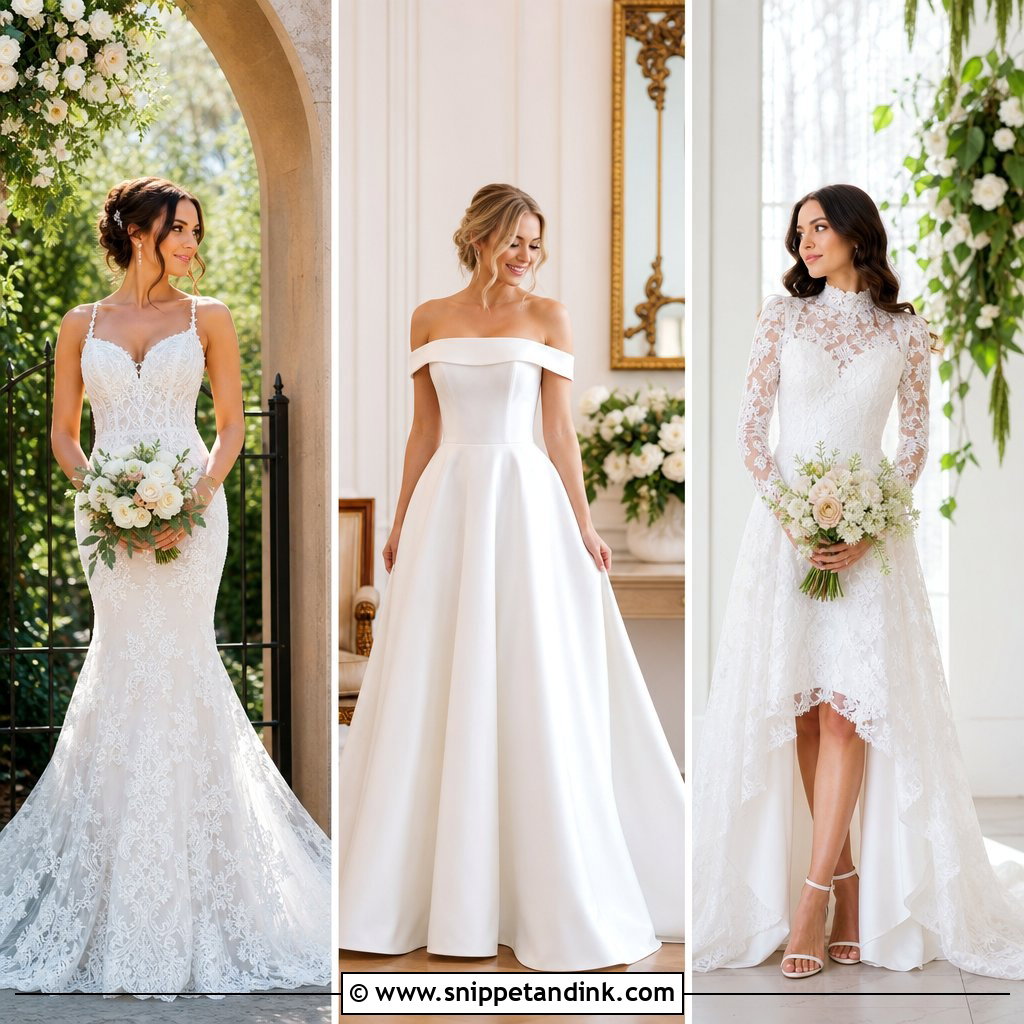

20. Detachable Overskirt Wedding Dress
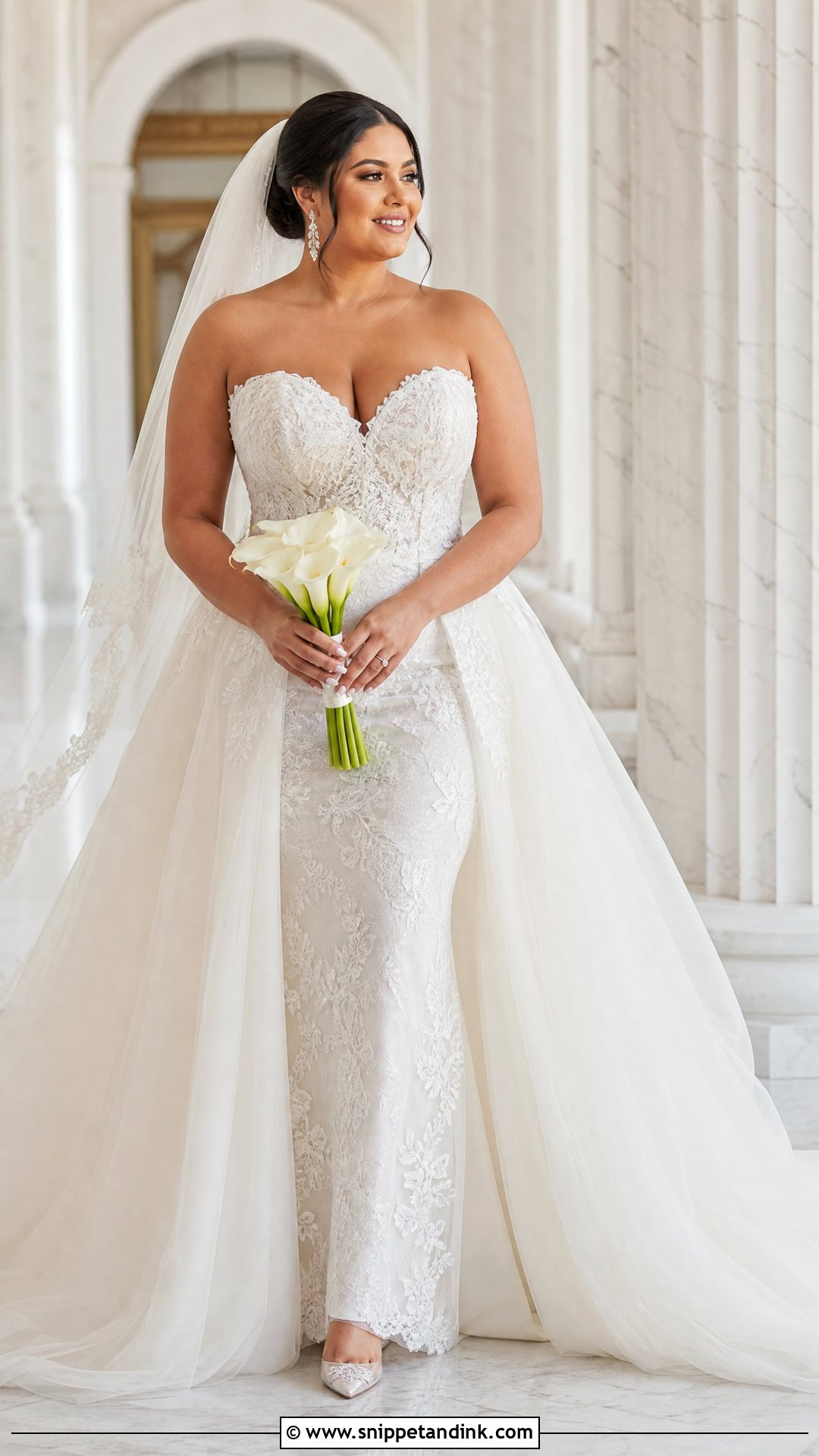
A detachable overskirt gives you two silhouettes. For the ceremony, a full tulle, satin or organza layer over a fitted crepe or lace gown creates an A-line or ball gown that flows over the hips. For the reception, it comes off to reveal a streamlined fit-and-flare. The waistband is the critical part; it should sit at the natural waist and blend into the gown without a visible ridge. Practice taking it off with whoever will help you on the day, because hooks and snaps are fiddly under pressure. A long veil, drop earrings and pointed pumps for the ceremony, then a crystal comb in place of the veil later.
Alterations That Make or Break a Pear-Shaped Fit
Most gowns need two or three fittings, and I tell brides to start them roughly two to three months before the wedding. These are the changes I most often ask for on this body shape:
- Taking in the bodice at the side seams and back so the waist is crisp, not loose.
- Moving the waist seam up or down so it sits at your natural waist, not the sample’s.
- Adjusting a trumpet or mermaid flare point to suit your height.
- Hemming to your exact shoes, which is why the shoes need to be bought before the first fitting.
What alterations can’t easily do: add width through the hips, change a heavily beaded skirt’s shape, or turn a mermaid into an A-line. If a gown only works after those changes, it’s the wrong gown.
Shapewear Under a Fitted Gown
With trumpet, fit-and-flare and mermaid styles, a smoothing short or slip helps fabric glide over the hips and stops lines from showing in photographs. I’d choose a light-control piece rather than the firmest one available. Firm shapewear rolls down at the waist when you sit, and you’ll be sitting for dinner and speeches. Wear it at every fitting, as it changes the measurements slightly.
Start With the Waist and Let the Skirt Follow
The best gown for a pear shape is the one that fits properly, lets you move and feels like you. You aren’t limited to one silhouette: A-line and ball gowns balance gently, while trumpet, modified mermaid and fit-and-flare cuts celebrate curves openly. Necklines, sleeves, fabric and accessories finish the effect, so judge the whole outfit at appointments. Bring your underwear and shoes to every fitting, and walk and sit in each gown. Treat these ideas as a starting point; a skilled seamstress can shape almost any design to your proportions.
You'll Like These Ideas:







Leave a Reply