
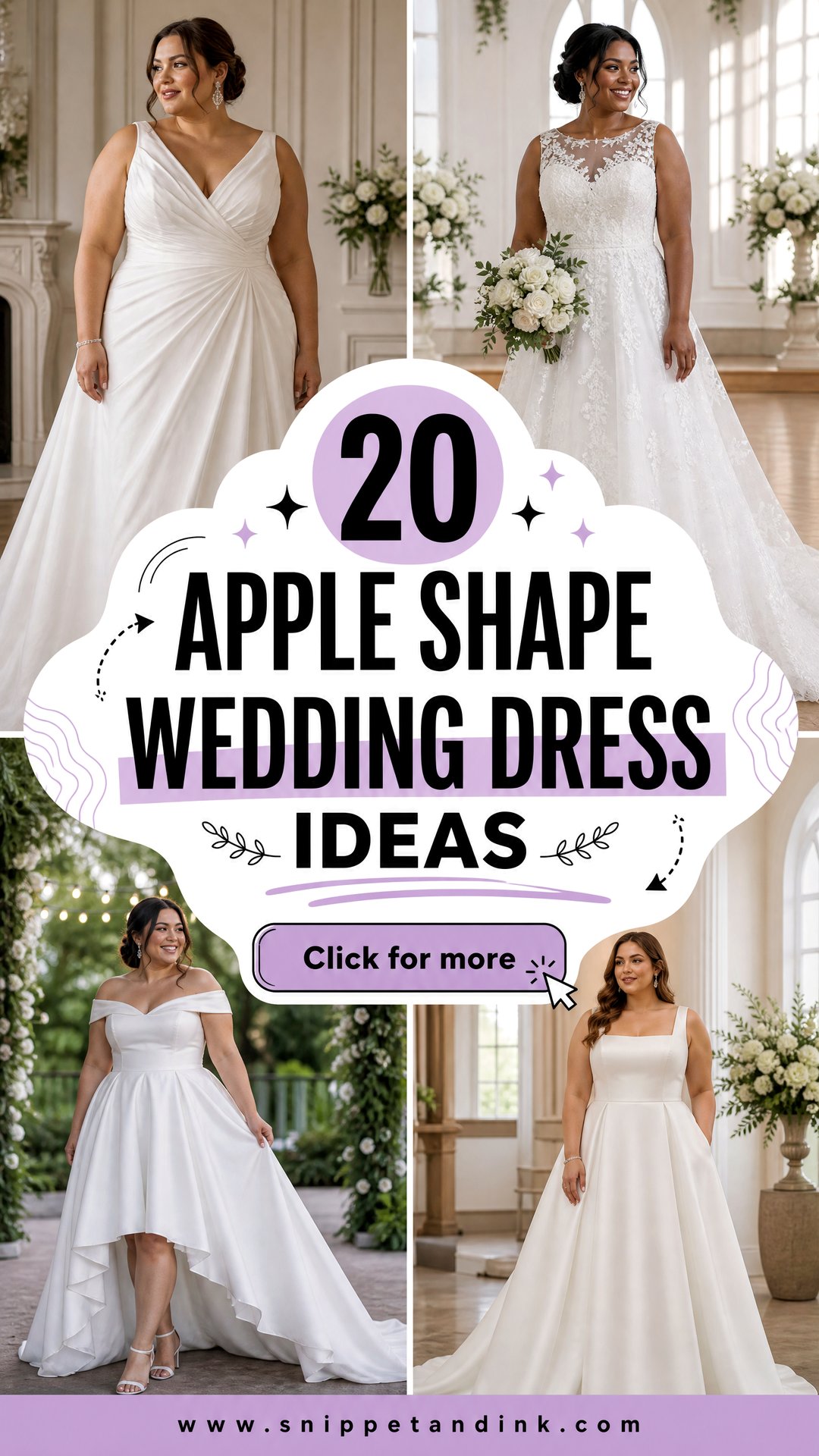
An apple shape usually means more fullness through the middle than the hips, often with a fuller bust and slimmer legs, and the dresses that work best give support up top and room through the stomach. In the looks below you’ll see empire waists, flowing A-line skirts, structured bodices and draping placed with intent. None of that is a rule. Height, bust size, personal style and the venue matter as much as any label, and an apple-shaped bride can look wonderful in a full ball gown. Bring supportive underwear and your ceremony-height shoes to every appointment so you judge each dress as it will really be worn.
Sample Sizes, Bulldog Clips and Why the Shop Mirror Misleads
Most bridal shops keep their try-on samples in a narrow range of sizes, and if you’re outside it, the consultant clips or holds the dress around you. That makes it hard to judge the one thing an apple shape most needs to see, which is how the gown sits over your middle. A few habits make appointments far more useful.
- When you book, ask which sizes the samples come in and whether they have any close to yours.
- If a sample is too small to close, have it laid against you and pinned at the sides, then judge the neckline and skirt rather than the waist.
- Look at the side and the back, not only the front. A tall mirror flatters; a phone photo taken from the side shows where a waist seam really lands.
- Sit down in every gown on your shortlist. A bodice that fits standing can crease or dig in once you’re seated, and a roomy skirt can pull tight across the lap.
Wedding dresses are ordered to your largest measurement and then taken in everywhere else. For many apple-shaped brides that means ordering to the waist or bust and letting the seamstress fit the rest down to you.
1. Empire Waist Chiffon Wedding Dress
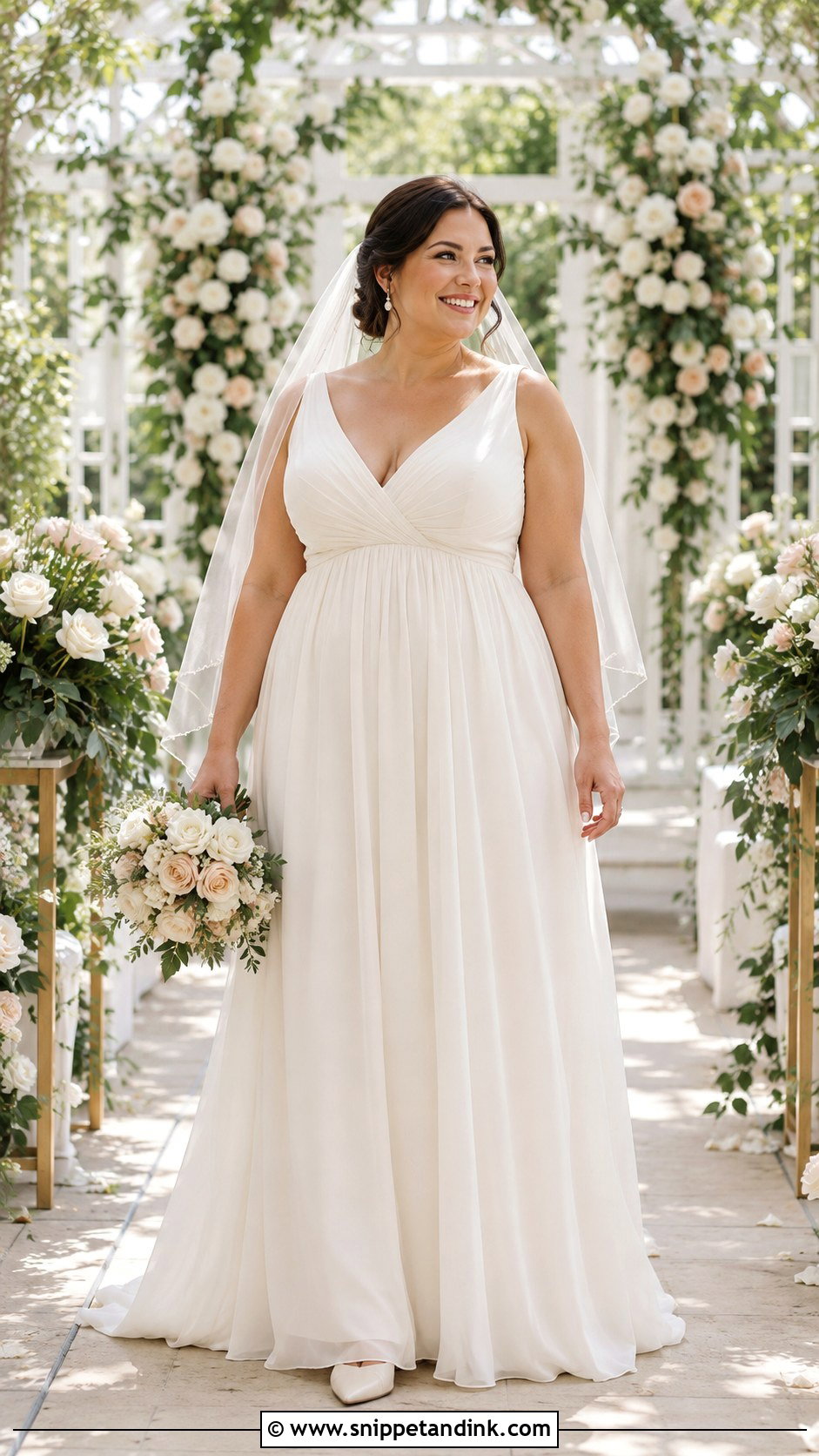
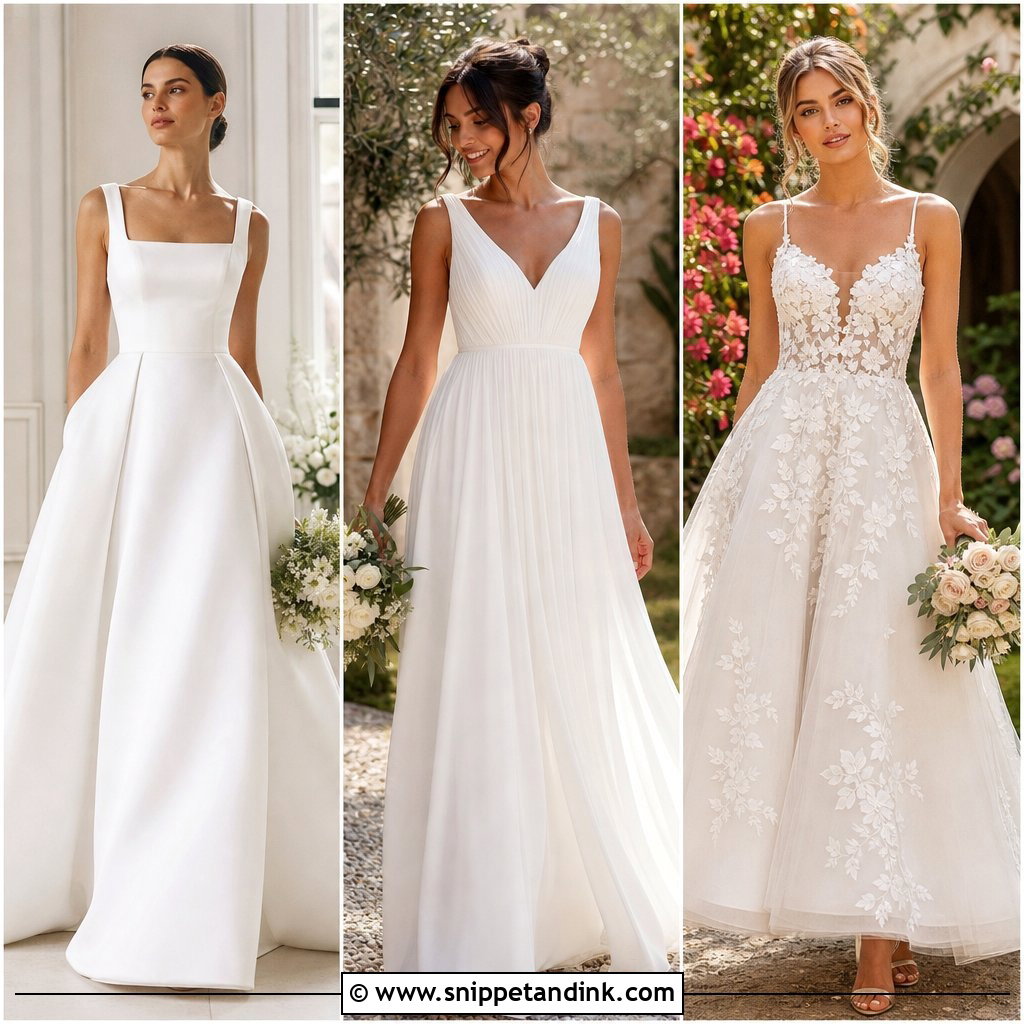
The raised seam on an empire gown sits under the bust, so the skirt floats over the stomach instead of following it. That makes the seam position the whole job: if it slips down even slightly, it lands on the fullest part of the torso and creates the very shelf you were trying to avoid. A V-neck with wide straps gives support and opens the neckline, and a lightly gathered chiffon skirt suits a beach or garden ceremony. Pearl drop earrings, ivory pointed-toe shoes and a fingertip veil finish it. I’d ask for flat panels just below the bust rather than heavy gathers, which add volume exactly where you don’t want it.
2. V-Neck A-Line Wedding Dress
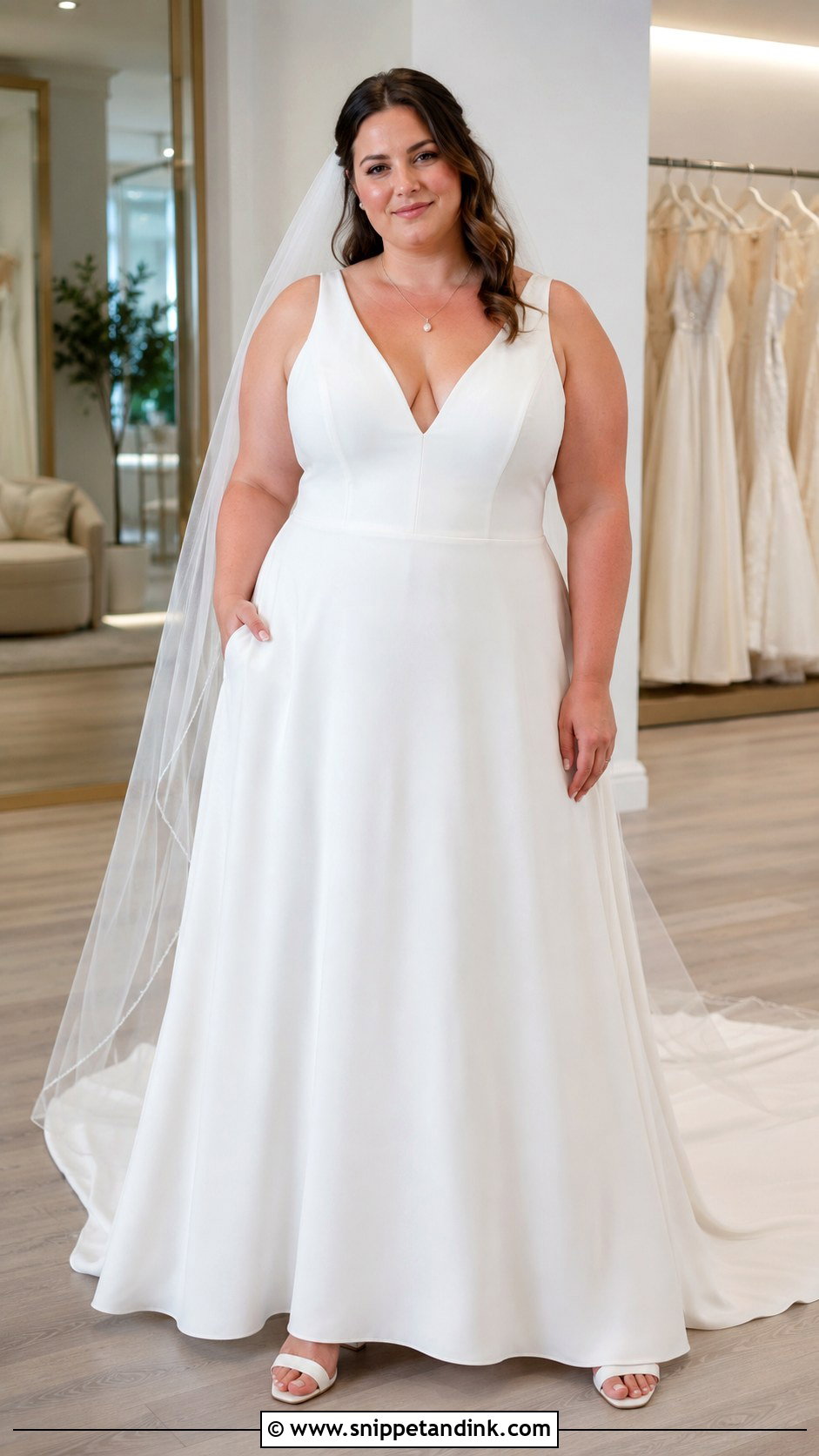
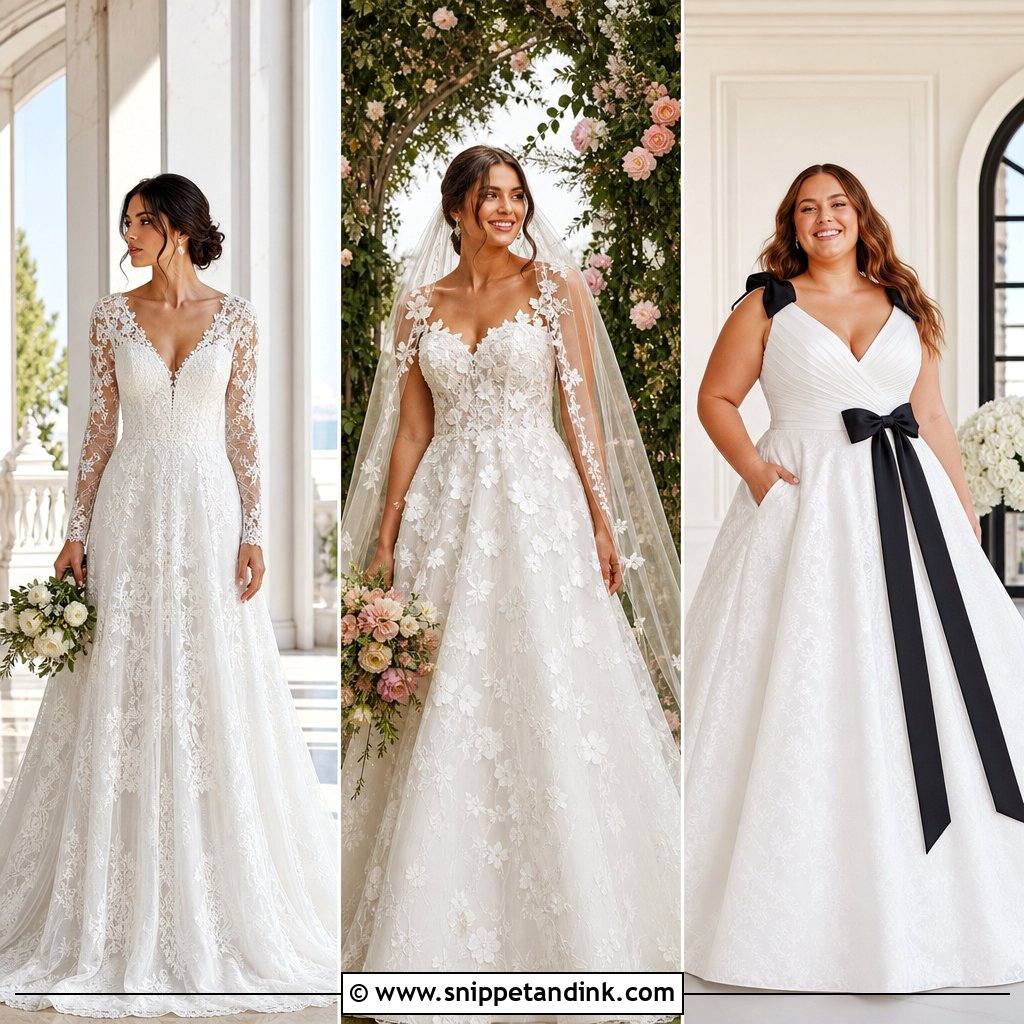
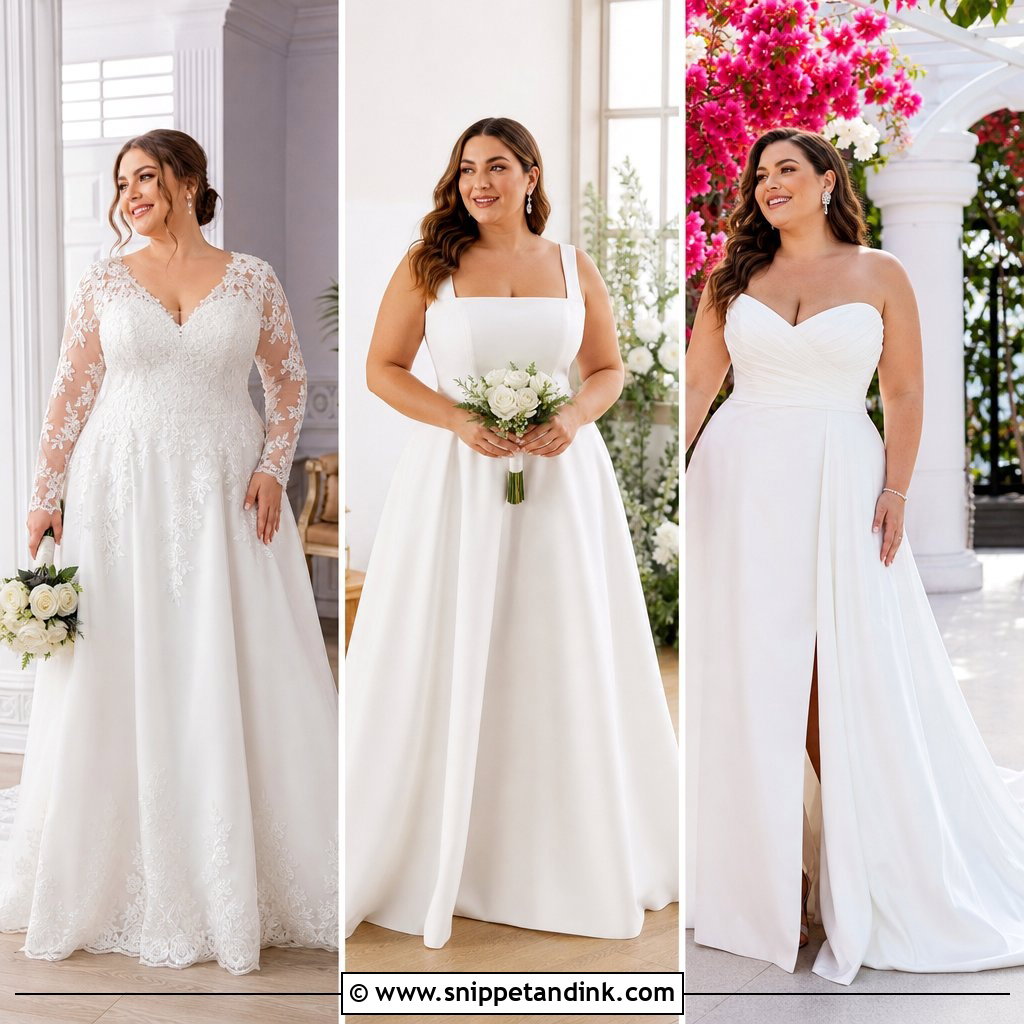
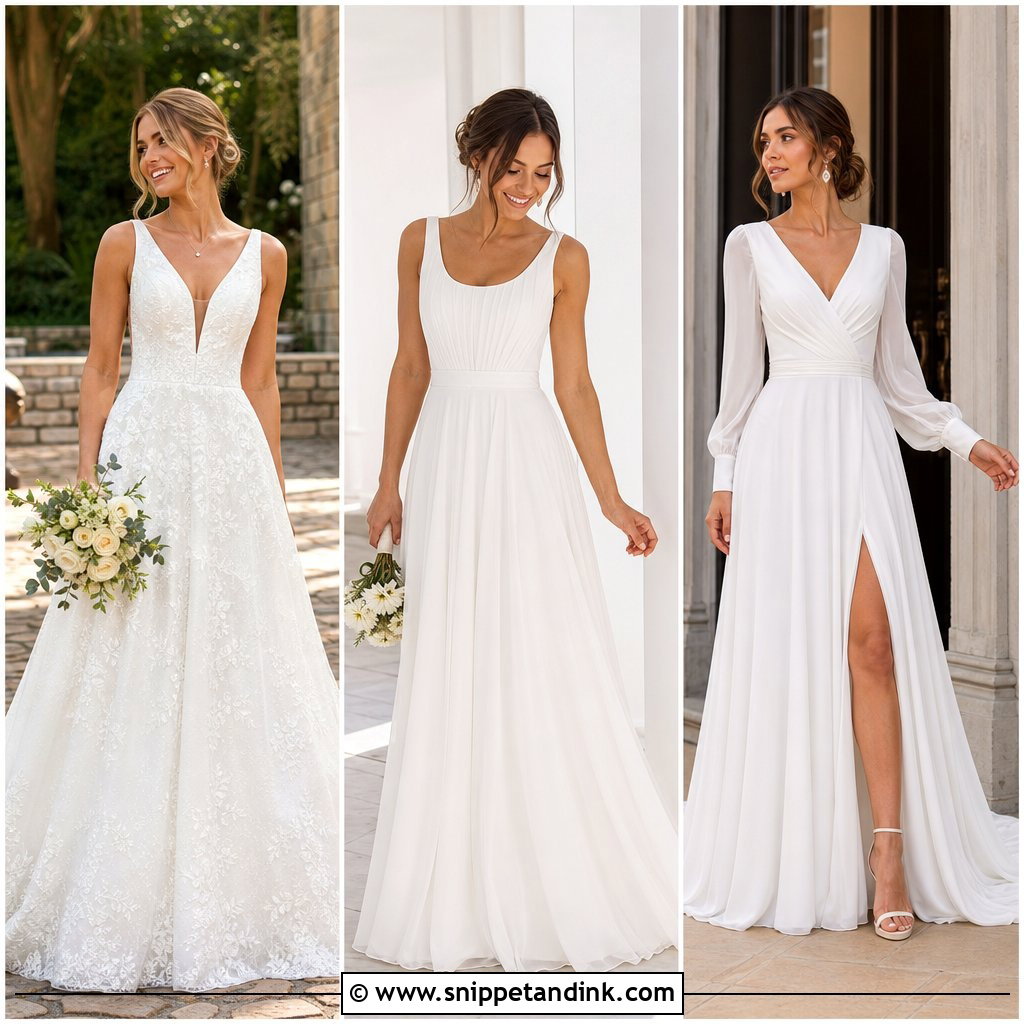
This is the dress I’d put an apple-shaped bride in first, because it gives definition without a tight skirt. The V draws the eye up and down, the bodice can be built for bust support, and the skirt widens gradually from the waist so it skims instead of gripping. Princess seams through the bodice give a cleaner line than a wide horizontal waistband. Satin, crepe and layered chiffon all suit. A simple pendant, a chapel veil and low block heels finish the outfit. At alterations, sit, walk and bend while the seamstress watches the neckline; a deep V that behaves standing can gape when you lean forward to sign the register.
3. Sweetheart Satin A-Line Wedding Dress
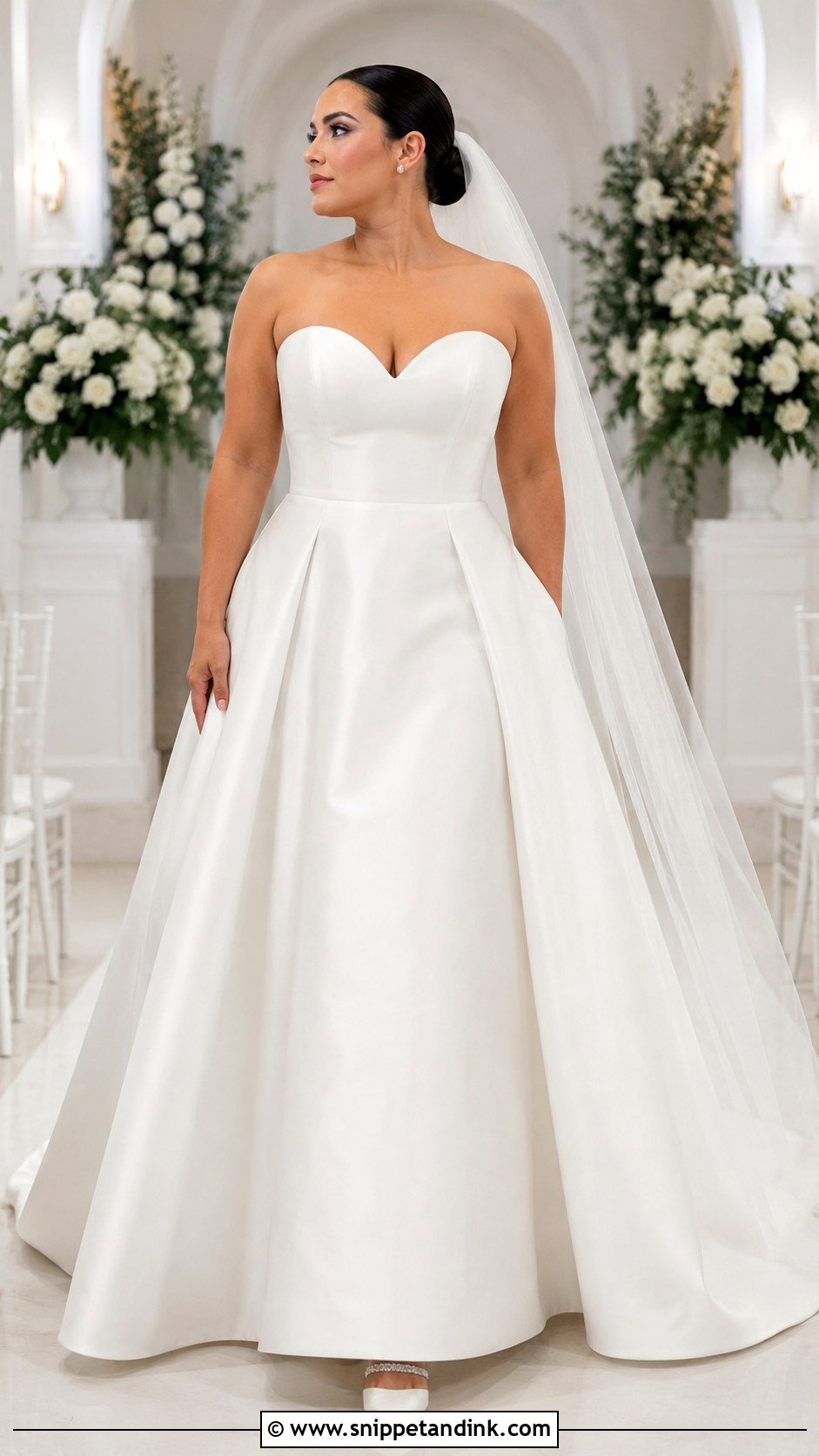
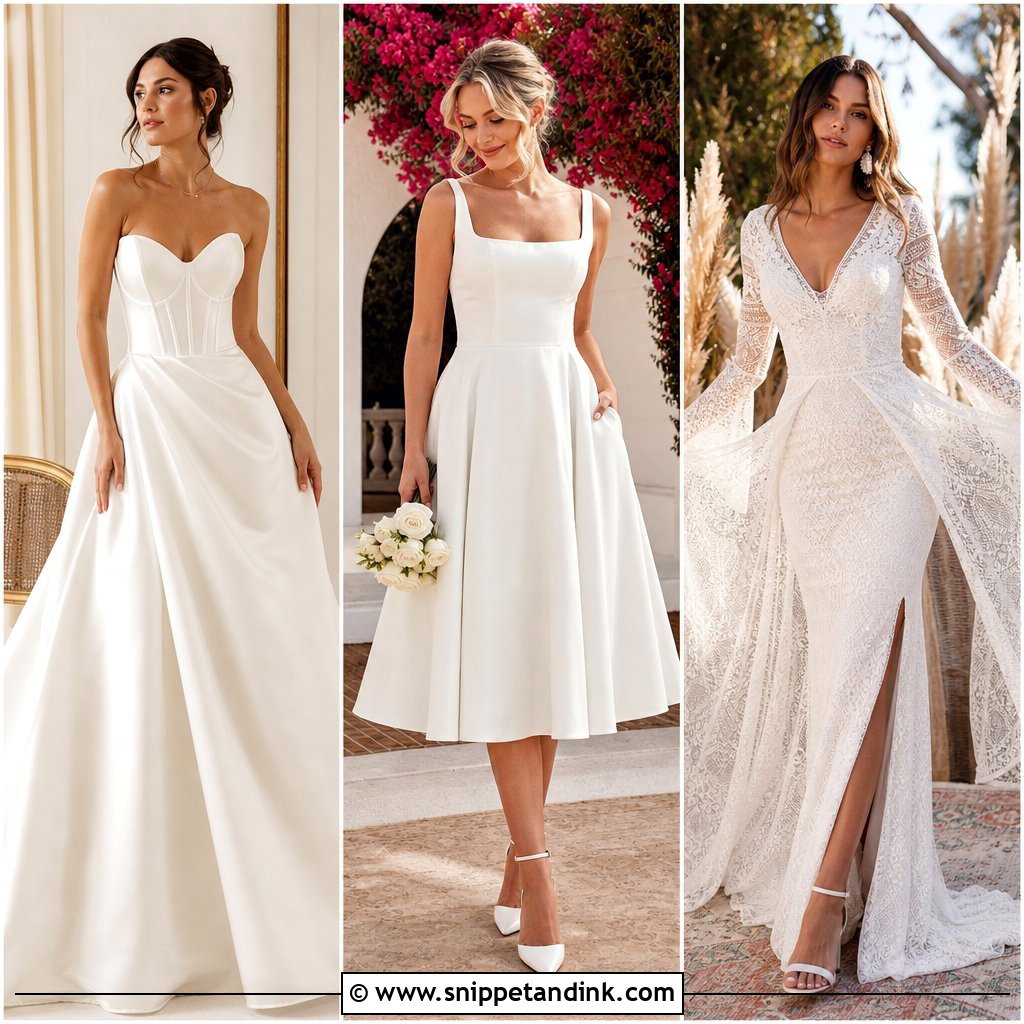
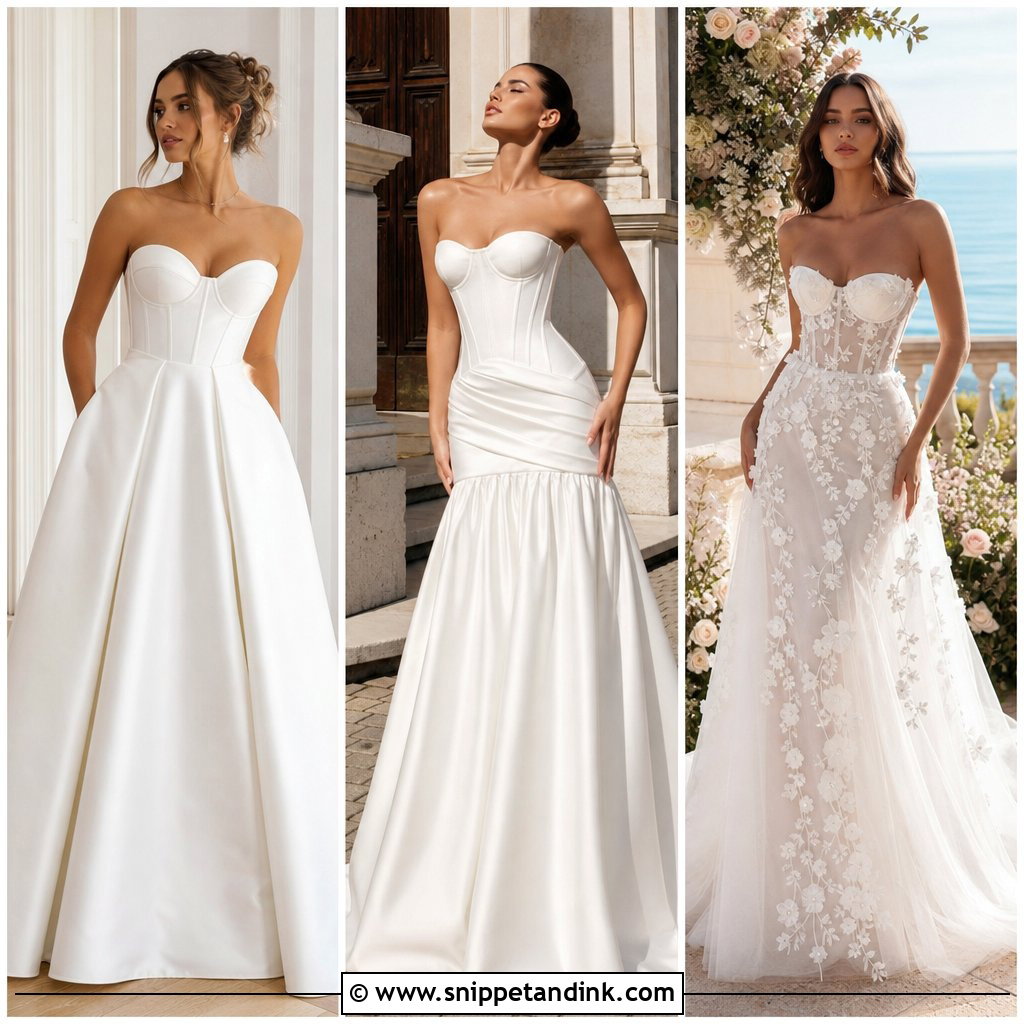
Satin holds a shape, and that’s useful here. A sweetheart neckline opens the chest while a supportive bodice shapes the upper body without a tight belt. Choosing matte satin or mikado lets the skirt fall cleanly over the midsection; high-shine satin catches light on the stomach and shows every crease, so I’d steer away from it. A moderately full skirt also balances a fuller upper body over slim hips. Crystal studs, a sleek low bun, pointed satin pumps and a long plain veil complete it. Covered buttons down the back give detail without adding anything to the front.
4. Off-the-Shoulder Ball Gown Wedding Dress
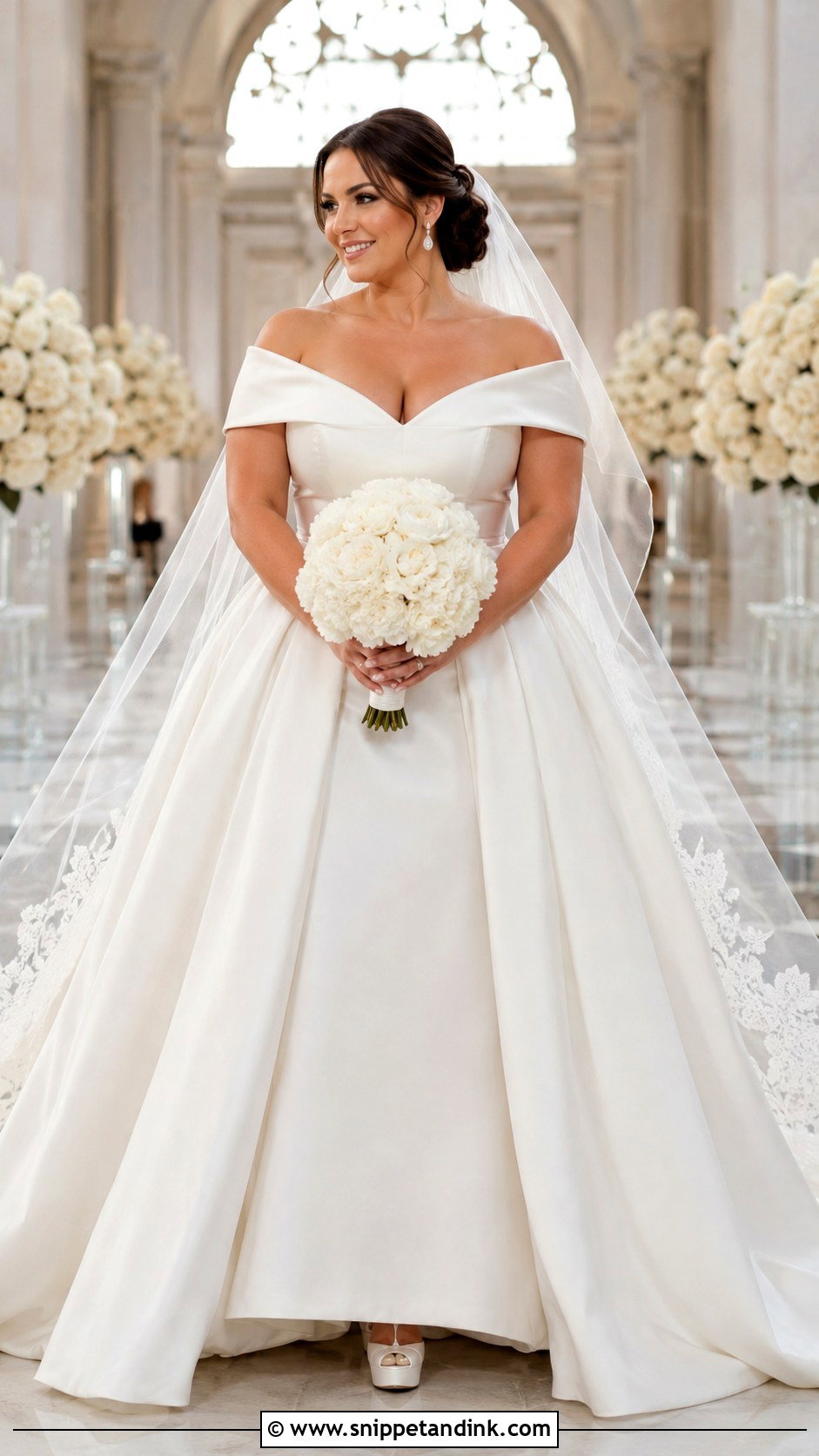
Ball gowns are often written off for an apple shape, and they shouldn’t be. The secret is at the waist: smooth pleats instead of dense gathers keep the centre flat before the skirt expands, and a separate petticoat gives volume without layering fabric over the stomach. The off-the-shoulder neckline frames the collarbones and pulls attention up to the face. Add a delicate necklace, teardrop earrings, platform heels and a cathedral veil. Off-shoulder straps limit how high you can lift your arms, so test that before the sleeve placement is fixed. Hugging and dancing depend on it.
5. Corset Bodice Princess Wedding Dress
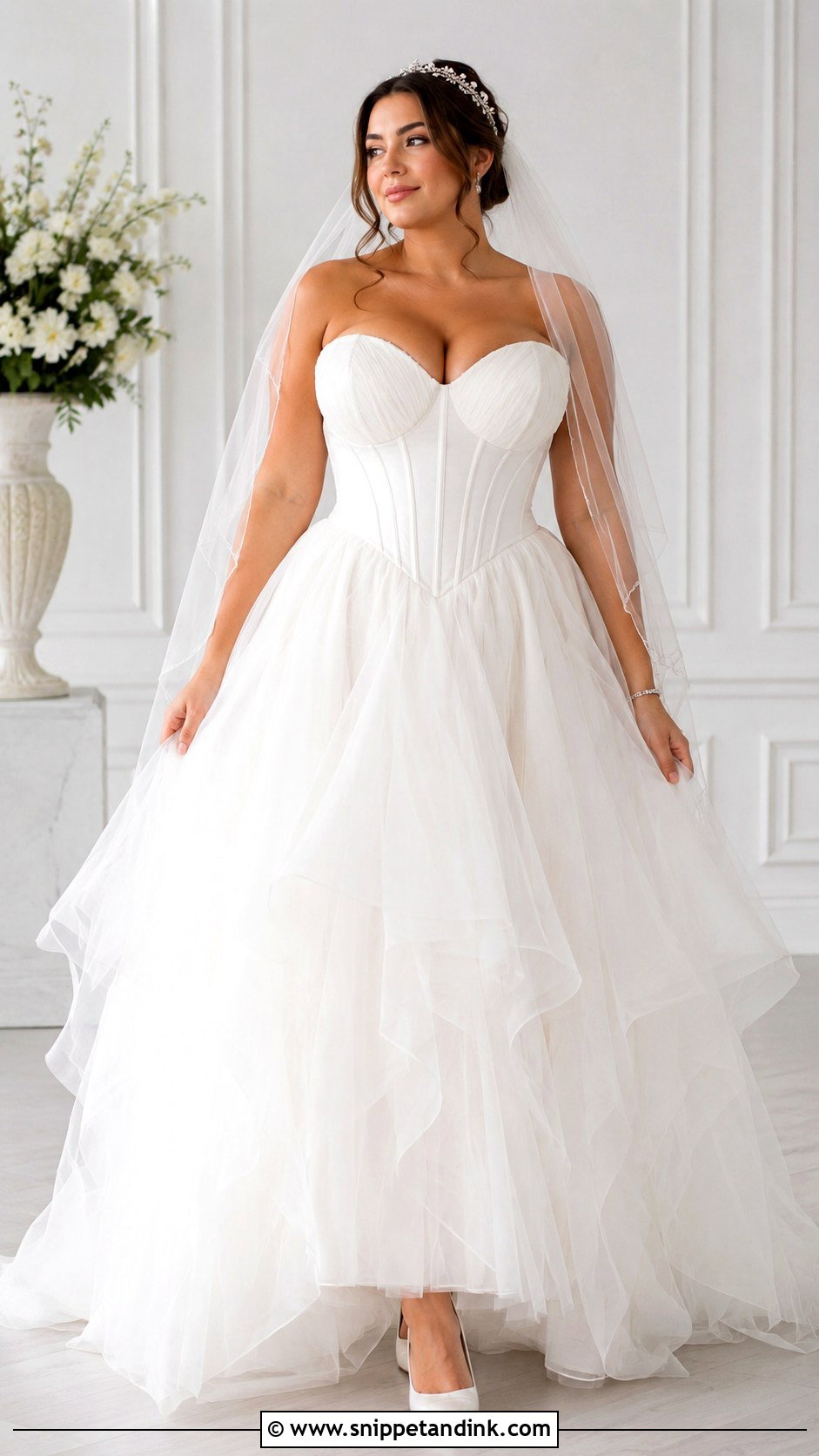
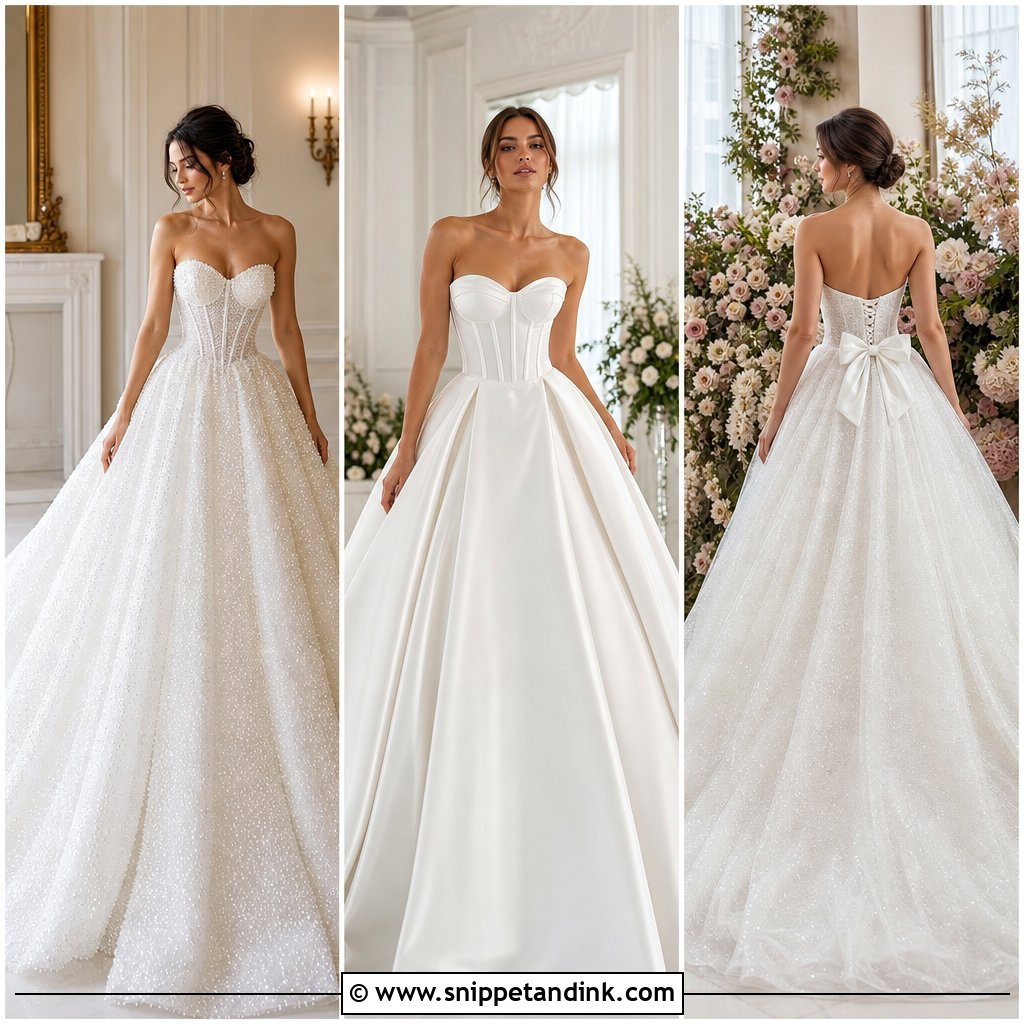
A corset bodice gives the support many fuller-busted brides want, provided it’s built to hold you rather than squeeze you. I look for flexible spiral steel boning, a gently curved neckline and princess seams that lead the eye vertically. Start the skirt where it feels comfortable on your torso, not automatically at the natural waist. Soft tulle layers over a smooth lining give fullness without weight. A fine crystal headband, small earrings, block-heel pumps and a sheer chapel veil finish the look. Ask whether the gown has an internal waist stay; it anchors the bodice so you aren’t hitching it up all evening.
6. Wrap Bodice A-Line Wedding Dress
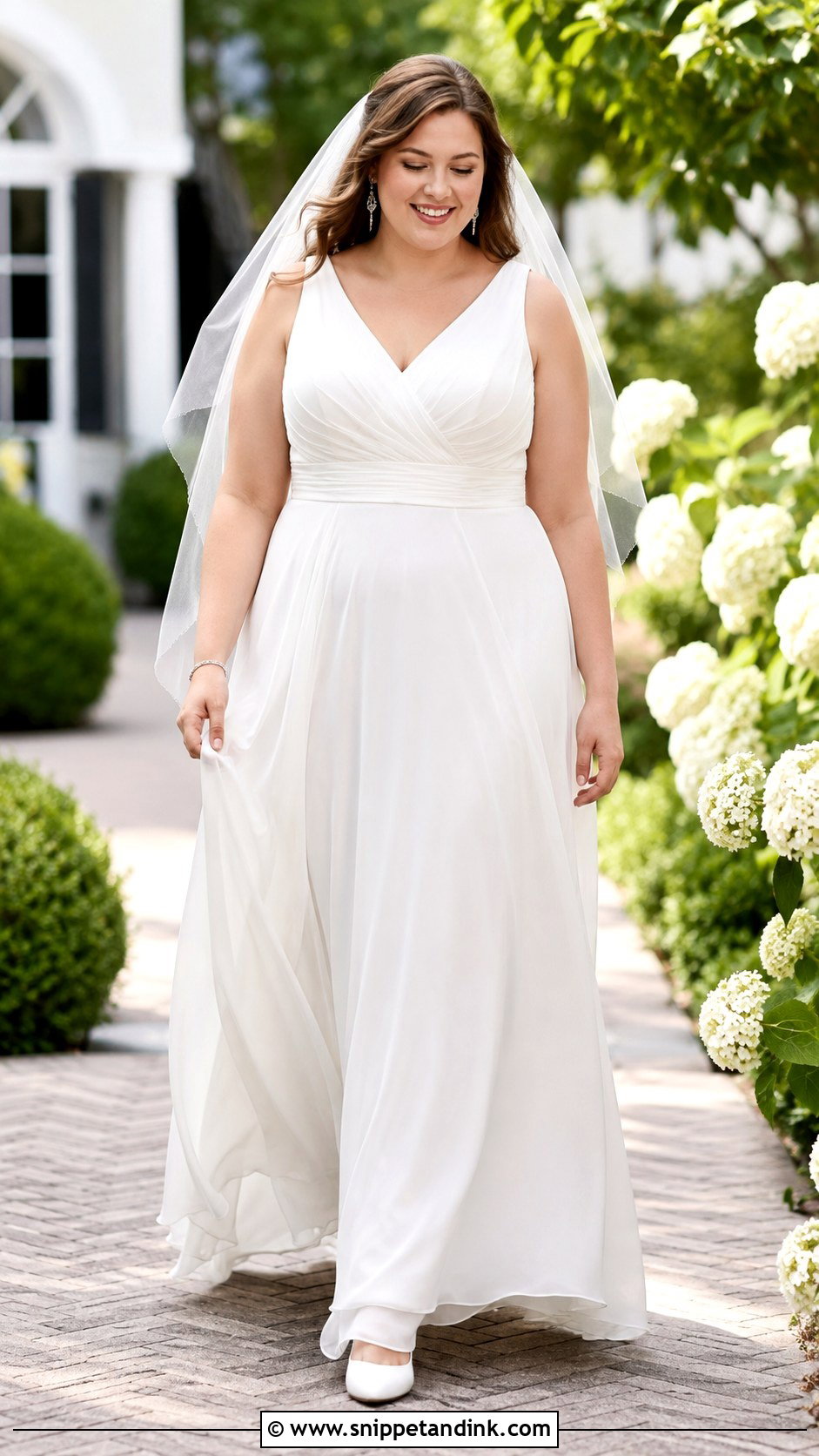
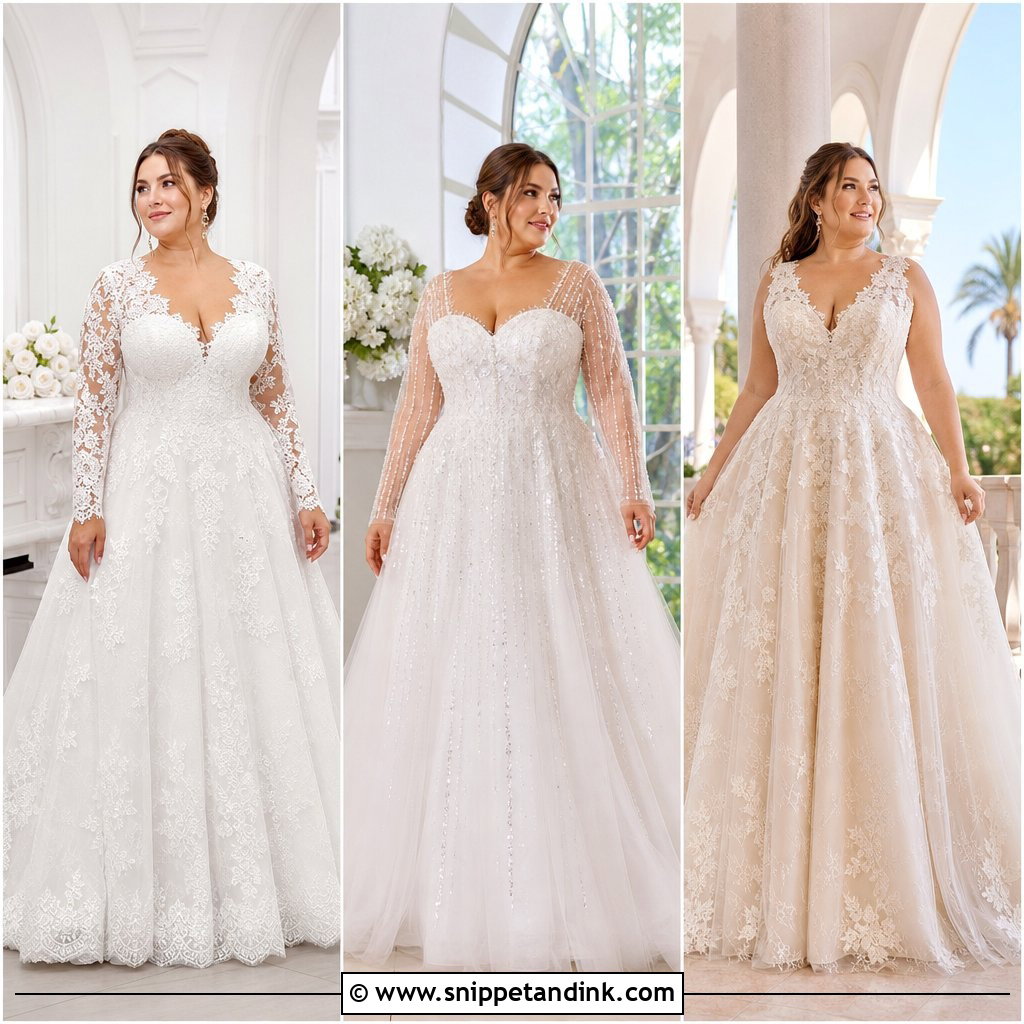
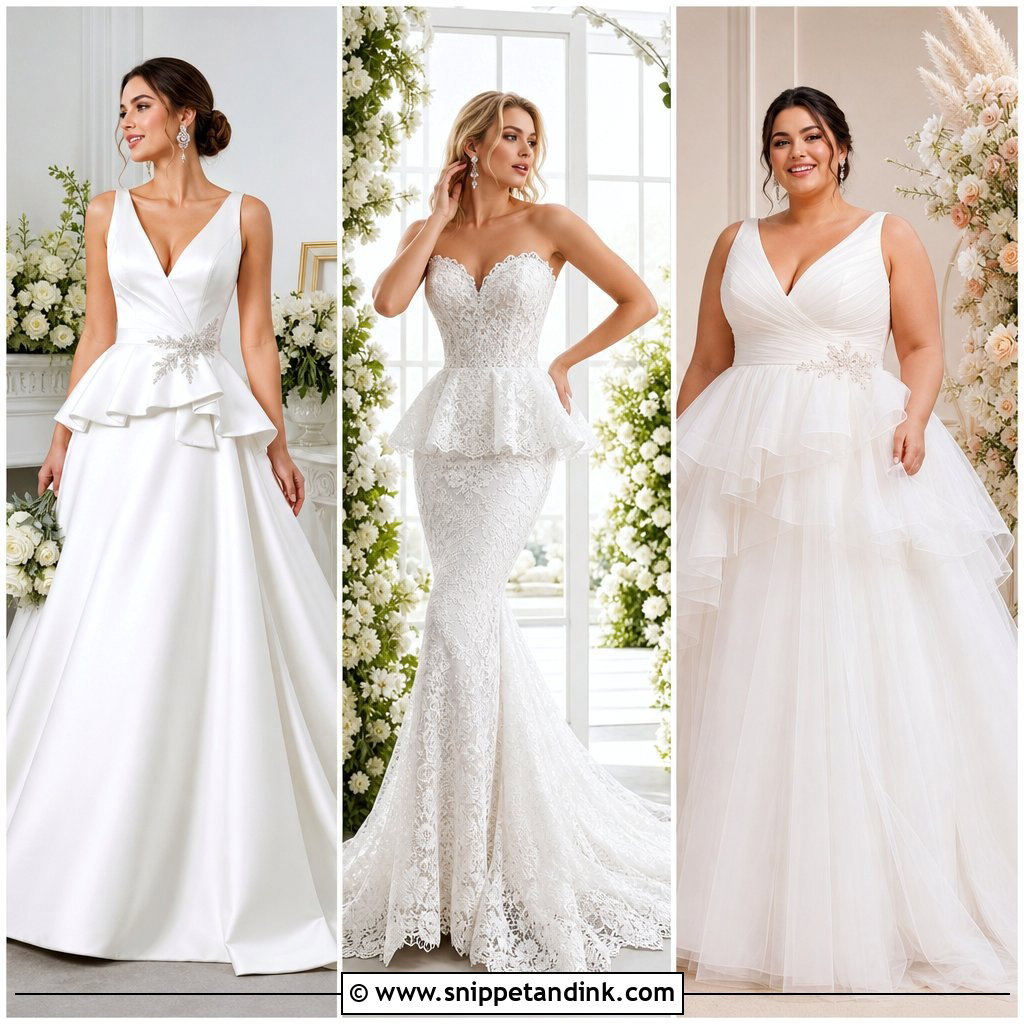
A wrap bodice crosses the body diagonally, and diagonal lines are kinder to a fuller middle than one firm horizontal seam. The overlap forms a natural V at the neck. Choose a fixed faux wrap, stitched in place, over a loosely tied one, which shifts every time you move. Below it, a softly flared skirt in chiffon, crepe or satin continues the line. A delicate bracelet, drop earrings, closed-toe heels and a light veil are plenty. Check the drape from the side as well as the front. If the folds pull or gape at the bust, they need re-pleating, not just an extra pin.
7. Ruched Waist Wedding Dress
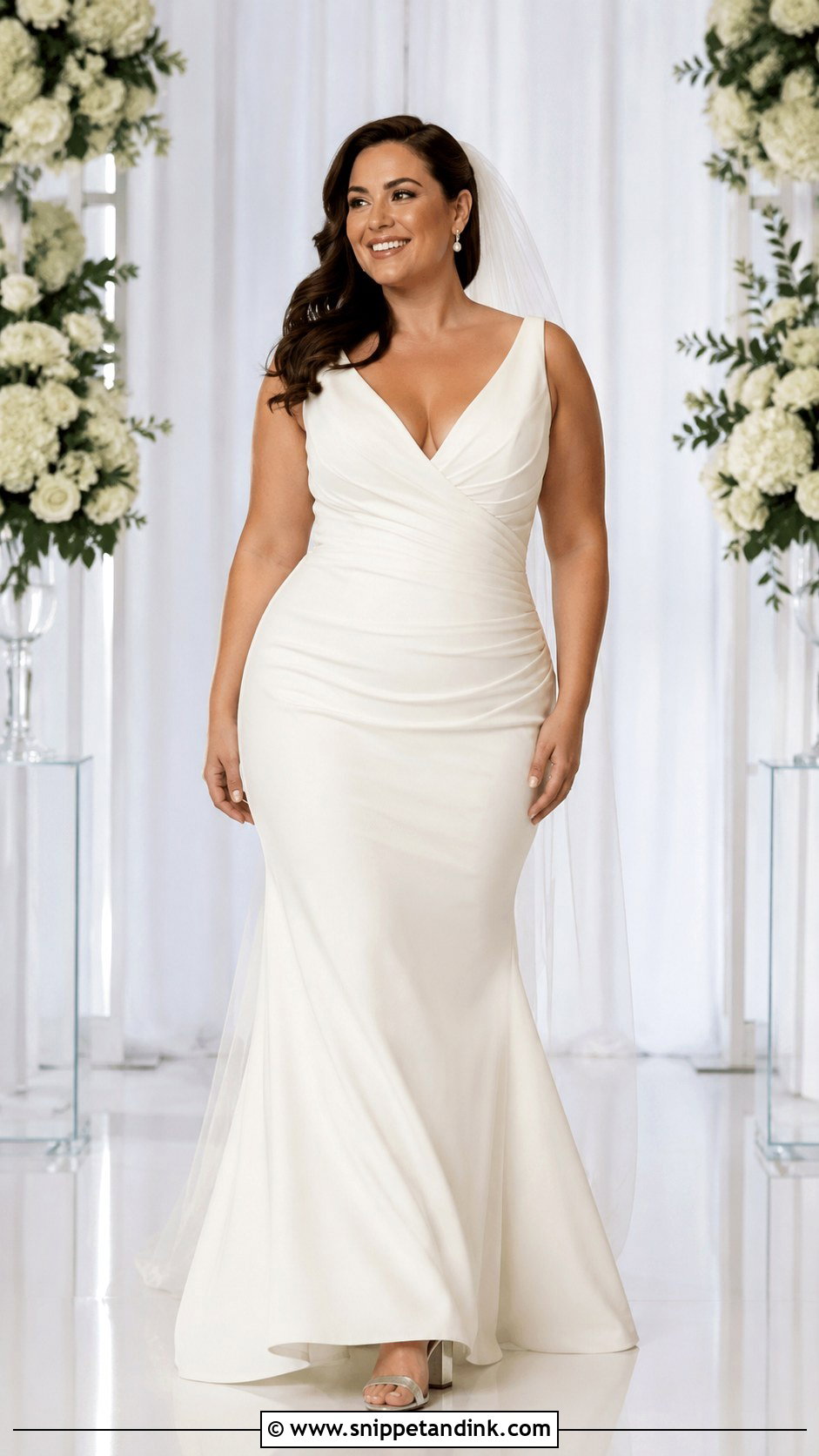
Ruching is forgiving because gathered fabric hides small changes in your shape across a long day, including after dinner. I prefer diagonal or asymmetrical ruching that crosses the torso and releases into an A-line skirt; a thick band of horizontal gathers does the opposite. A V-neck or curved neckline keeps the upper body open, and supportive straps keep it comfortable. The fabric should skim, never stretch tight. Matte jersey, crepe and soft satin all work over a well-made lining. A side-swept style, pearl earrings, silver block heels and a simple tulle veil finish it. Keep any extra embellishment off the ruched area.
8. Basque Waist A-Line Wedding Dress
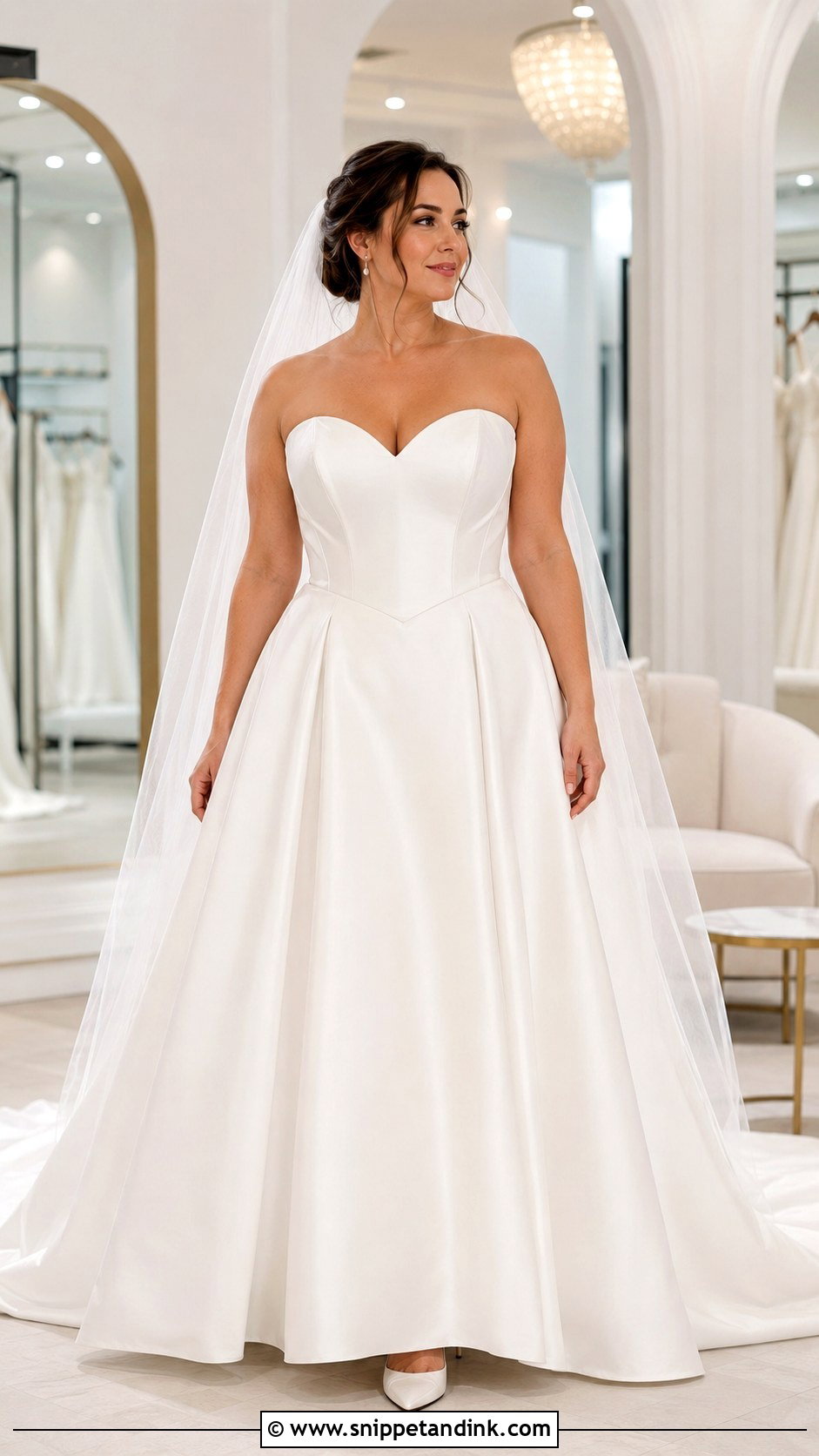
The pointed centre of a Basque waist A-line wedding dress draws a downward V that lengthens the torso. For an apple shape I’d pick a gentle point, a slightly raised waist placement and firm internal support, never a long rigid bodice that presses into the stomach when you sit. Pair it with a scoop or sweetheart neckline. A smooth mikado skirt, pearl earrings, satin heels and a plain chapel veil complete it. The point should lie flat. If it curls upward, it’s either too long for your torso or the bodice needs more boning, and trying a couple of depths at the fitting settles which.
9. Lace A-Line Wedding Dress With Illusion Neckline
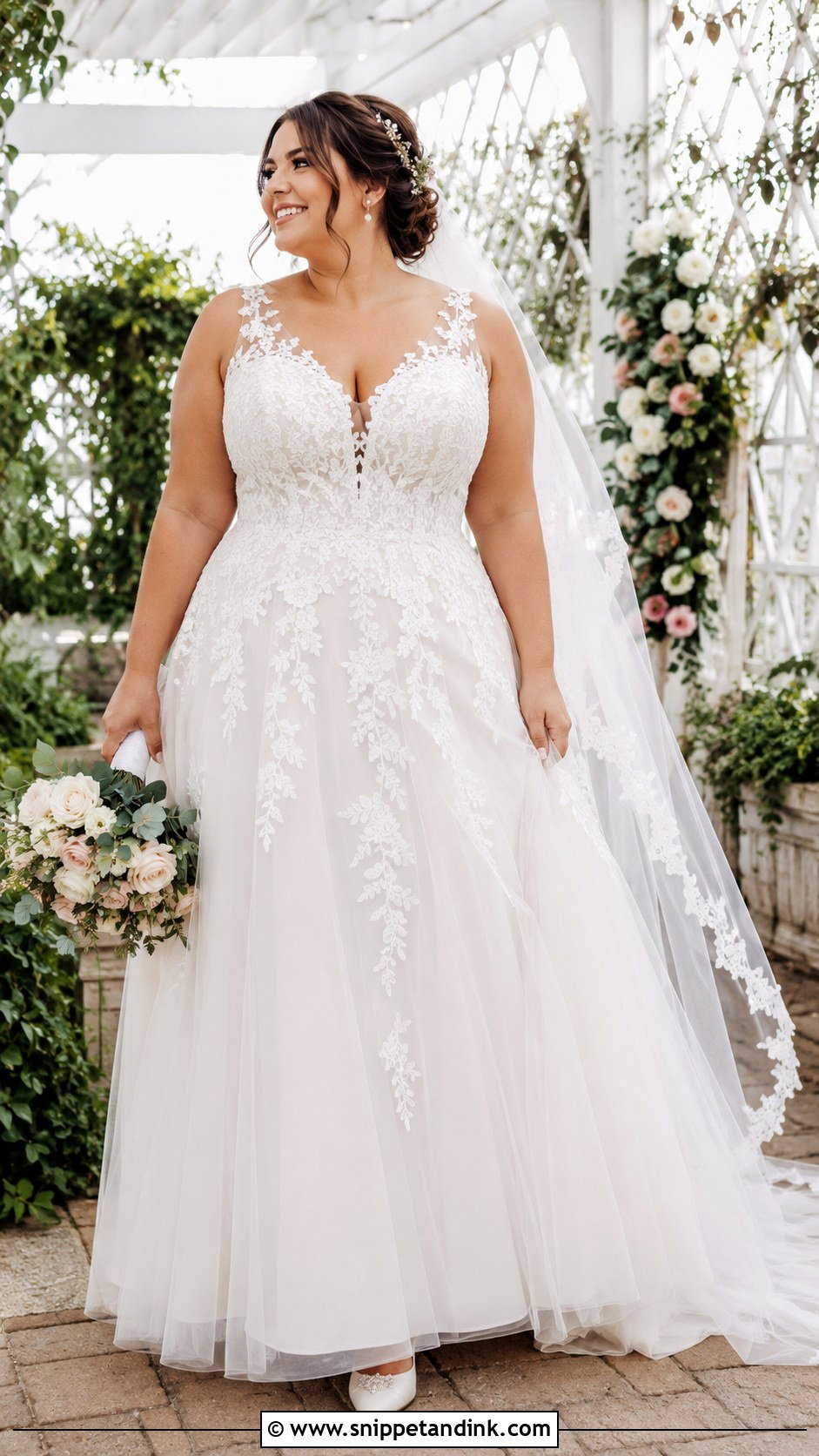
An A-line wedding dress with an illusion neckline uses a sheer mesh panel to hold a V or sweetheart bodice in place, which matters more than it sounds with a fuller bust. Lace arranged vertically through the bodice and scattered lightly onto the skirt keeps the eye moving, instead of stopping at a cluster of appliqués on the waist. A softly flared tulle skirt gives room through the midsection. Floral hairpins, pearl studs, ivory block heels and a lace-edged veil finish it. The mesh must match your skin tone, and I check that by a window, because shop lighting hides a poor match that daylight shows at once.
10. Cap-Sleeve Empire Waist Wedding Dress
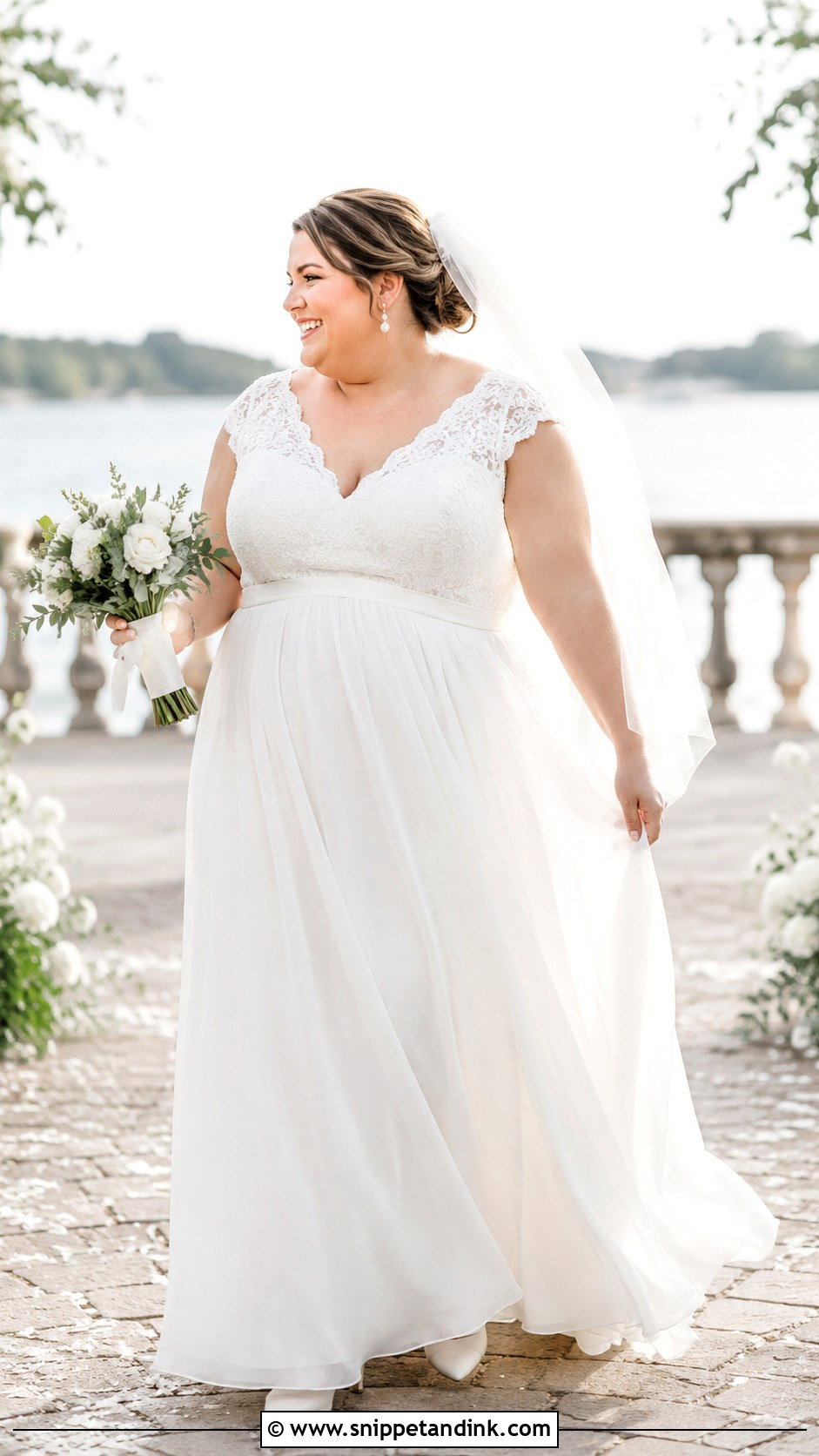
Cap sleeves add a little shoulder coverage, but they should never carry weight. If the bodice relies on them, they drag at the shoulders and dig in by evening, so on a fuller bust I ask for reinforced cups and internal support first. Narrow lace or tulle sleeves should let your arms move freely and join a V-neck bodice cleanly. The skirt falls from under the bust in soft folds, not bunched into a shelf. Chiffon feels airy; crepe looks more contemporary. A loose updo, small drop earrings, kitten heels and a fingertip veil complete the look.
11. Long-Sleeve Crepe A-Line Wedding Dress
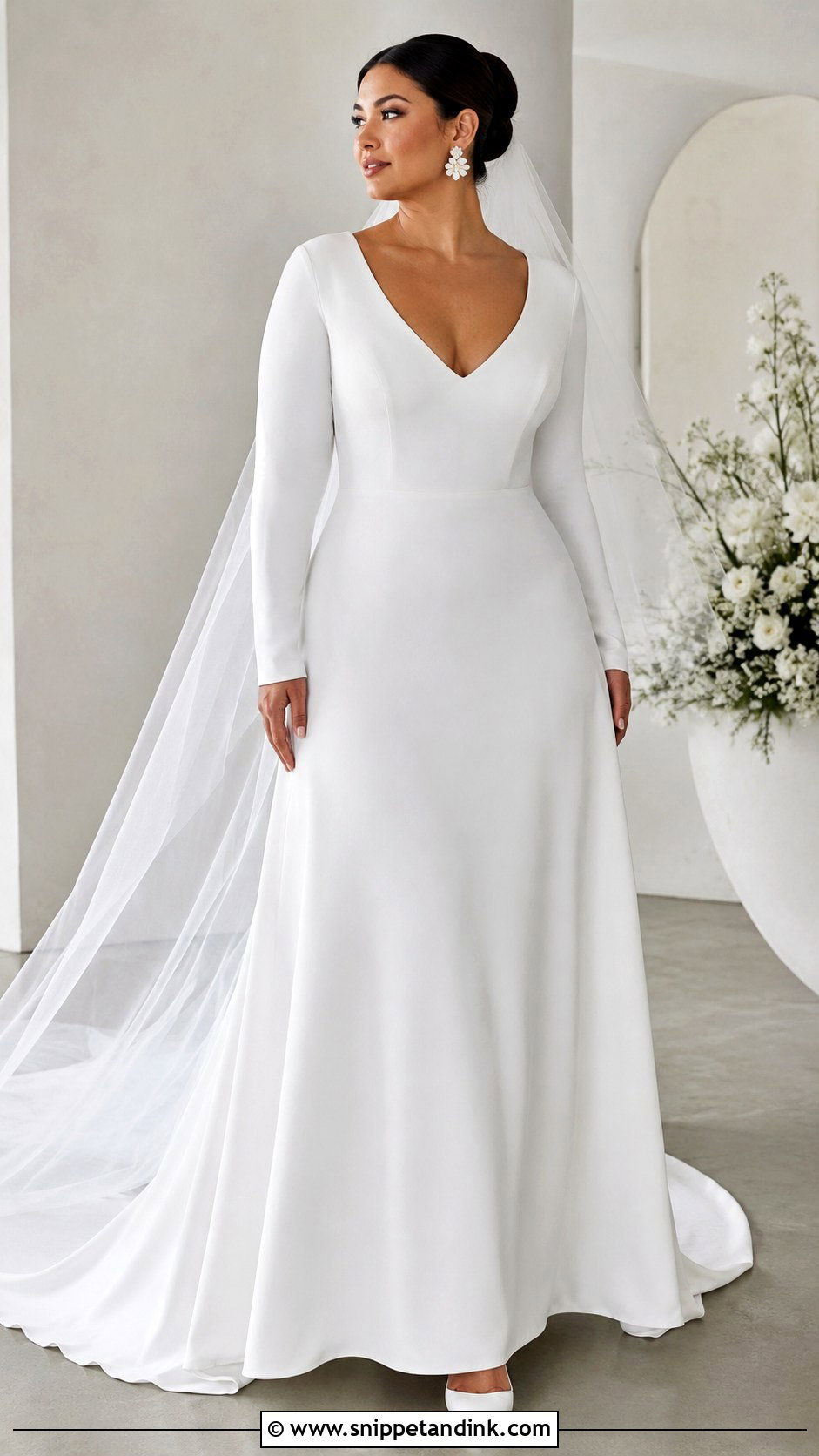
Crepe has no shine and no texture to hide behind, which is why it looks so modern and why the tailoring has to be right. Choose an A-line with a V-neck, shaped bodice seams and sleeves in stretch crepe or lined lace, with a skirt that falls in one continuous line to the floor. Sleeves are where I see the most trouble: too narrow through the upper arm and elbow, and you can’t lift your bouquet comfortably. A low chignon, sculptural earrings, pointed pumps and a long raw-edge veil suit it. Covered back buttons add detail without breaking up the front.
12. Tea-Length A-Line Wedding Dress
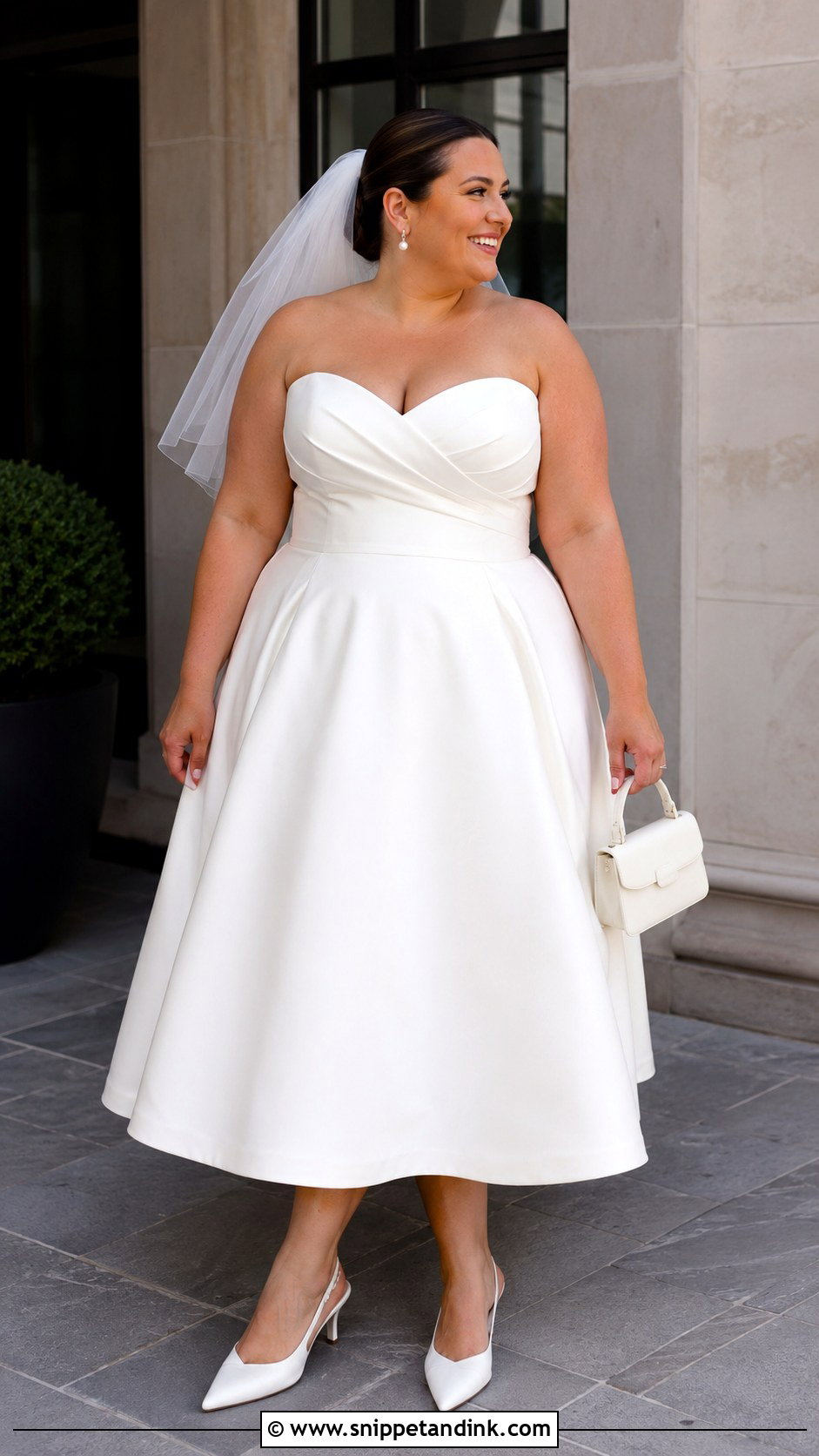
Tea length shows your legs and shoes, and the hem decides whether it works. It should end at a naturally narrow point of the leg, usually the lower calf or just above the ankle, never across the widest part of the calf. The dress itself is a fitted V-neck or sweetheart bodice with a moderately full skirt that starts smoothly at the waist. Pointed slingbacks, a structured mini bag, pearl earrings and a short veil or a modern bow complete it. Bring your shoes to alterations, since heel height moves where the hem lands. It suits city ceremonies, courthouse weddings and relaxed receptions.
13. High-Low A-Line Wedding Dress
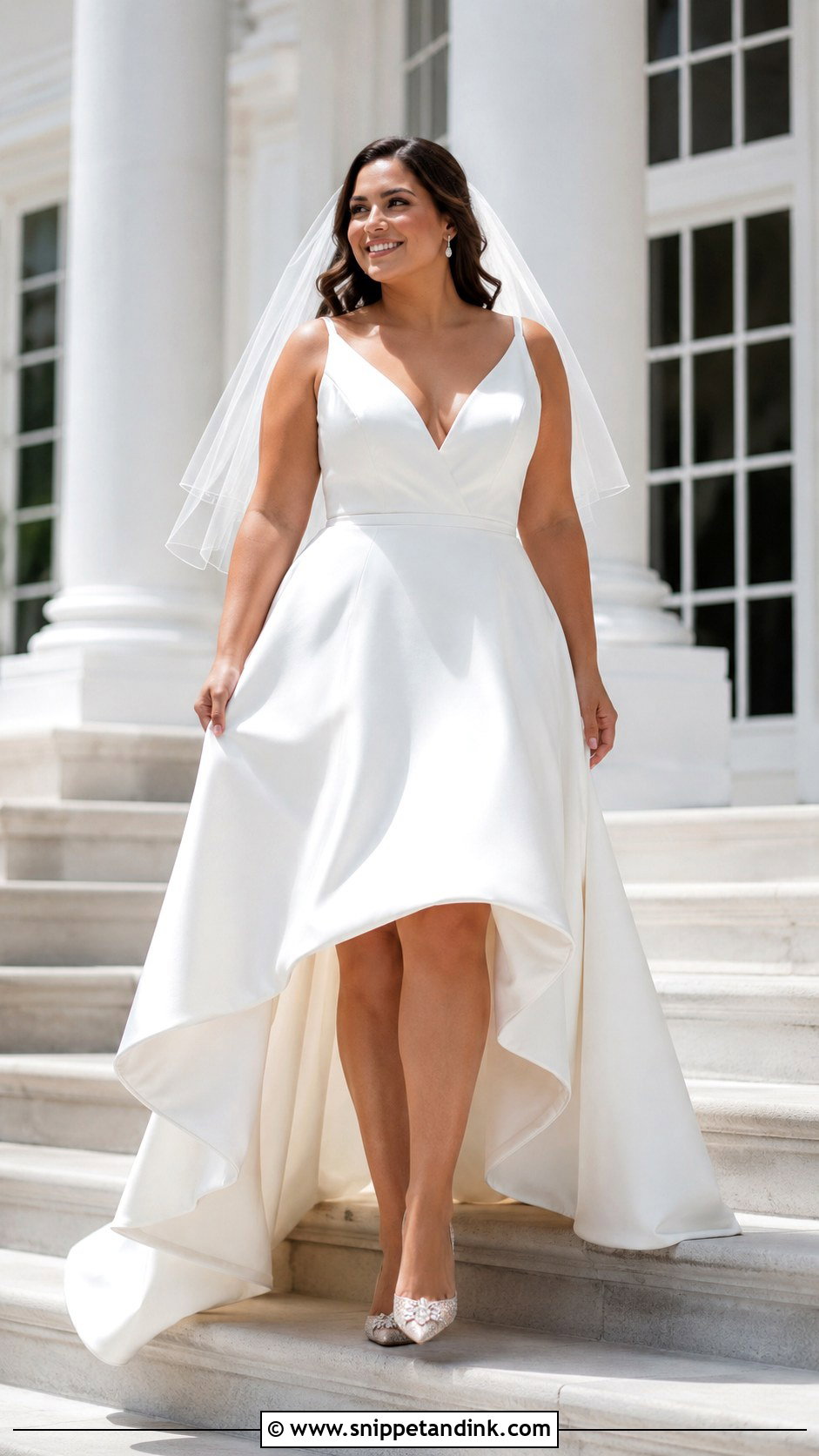
Want formality with easier movement? A high-low hem is shorter in front and longer behind, and that sweep lengthens the whole outfit. Pair a supportive V-neck bodice with a skirt of gentle volume rather than heavy gathering at the waist. Satin looks structured; chiffon moves more. Embellished pointed shoes, simple earrings and a shoulder-length veil work best, since a long veil fights the uneven hem. I set the front long enough to feel bridal yet short enough to show the shoes, then have the bride climb a few steps and sit, to make sure the back stays manageable.
14. Square-Neck A-Line Wedding Dress
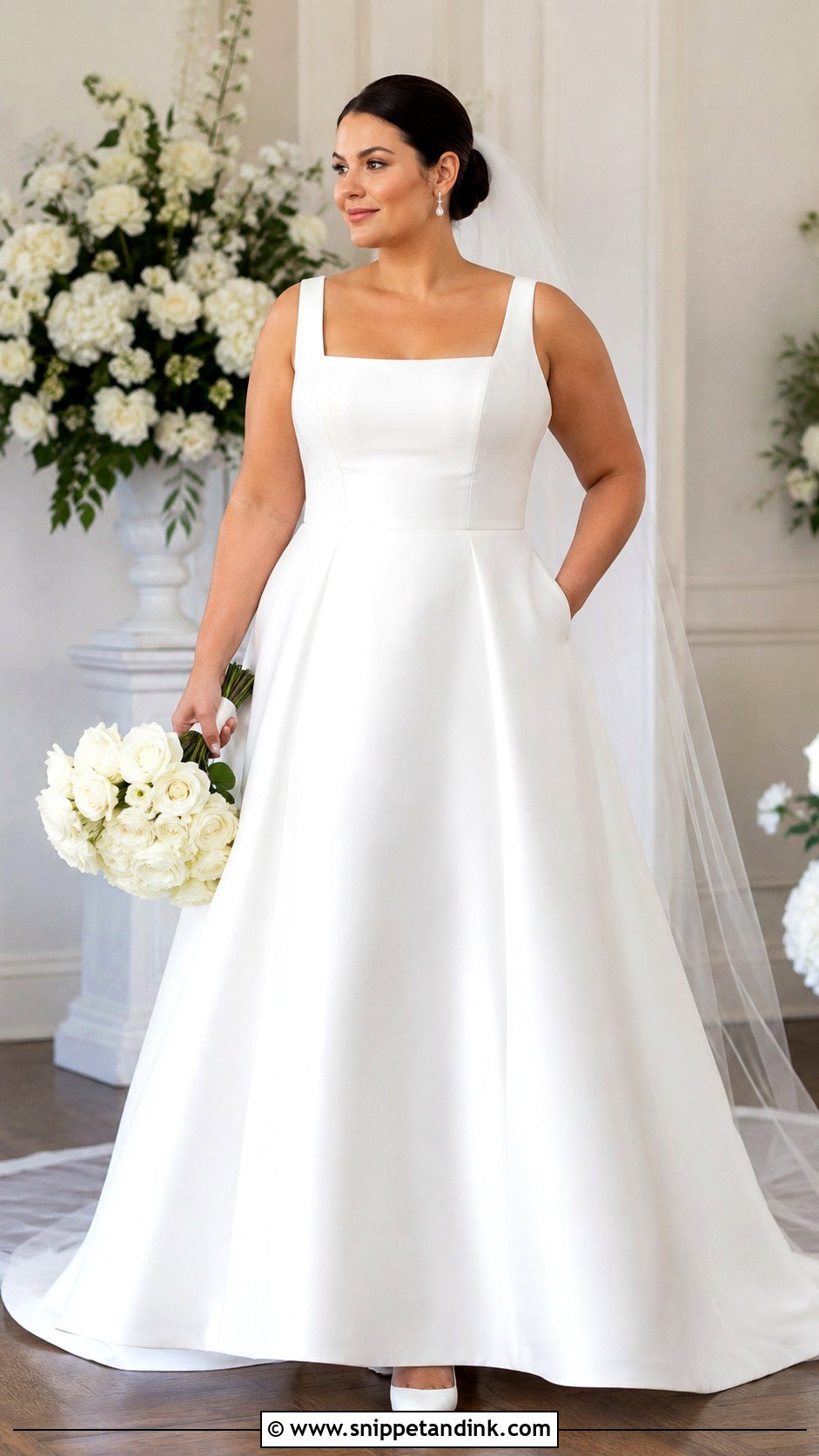
Square necklines frame the décolletage and pair naturally with wide straps, which suits a fuller bust well. Choose a bodice with vertical seams and a skirt that widens gradually instead of starting with bulky pleats. Matte satin, faille or mikado hold the square crisply. Pearl drop earrings, a sleek bun, low pointed heels and a plain cathedral veil finish the look. If the neckline feels too broad, the corners can usually be softened or the straps moved slightly inward. It should sit flat against the chest on its own; if you need tape to keep it there, the fitting isn’t done.
15. One-Shoulder Draped Wedding Dress
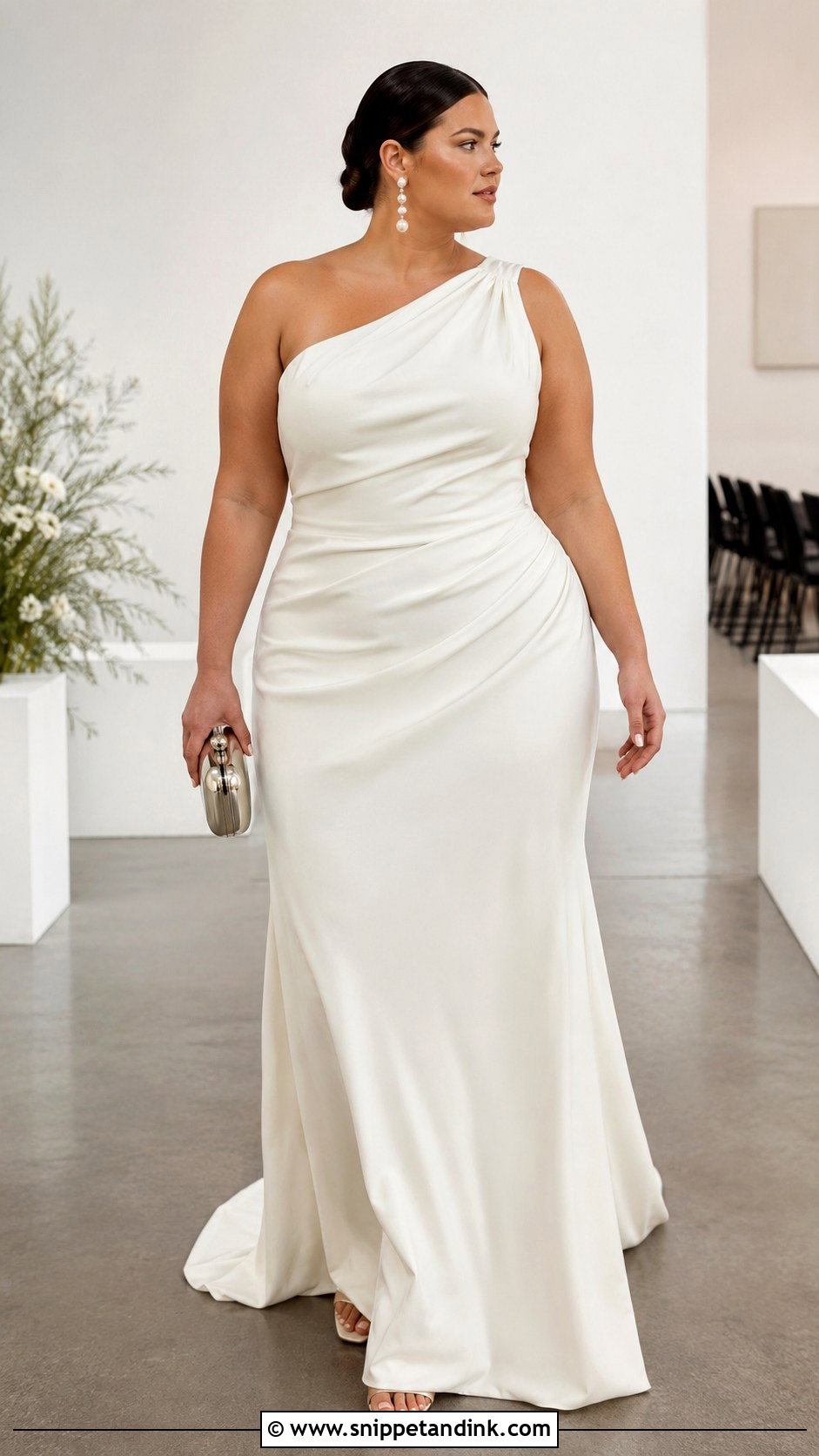
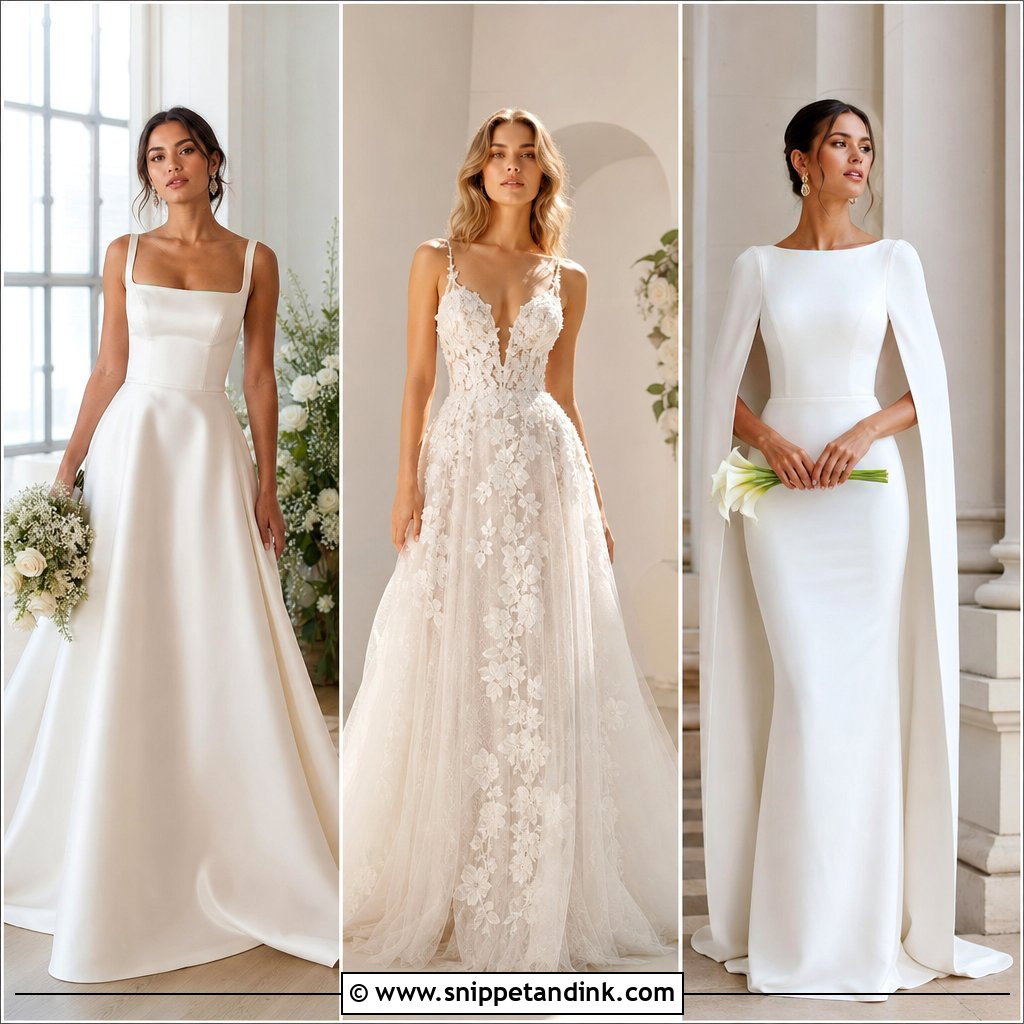
A single shoulder draws a diagonal across the body, and that line pulls attention away from the waist. Choose a draped bodice with real internal structure and an A-line or softly flared skirt. Keep the shoulder detail streamlined, because an oversized ruffle swamps the upper body. Crepe and satin hold the neckline well. A sleek ponytail or side-parted bun, statement earrings on the bare side, a metallic clutch and simple heels complete it, with no necklace. The risk with one-shoulder gowns is slipping, so I have the bodice fitted level and add silicone gripper along the inside of the top edge.
16. Scoop-Neck Tulle A-Line Wedding Dress
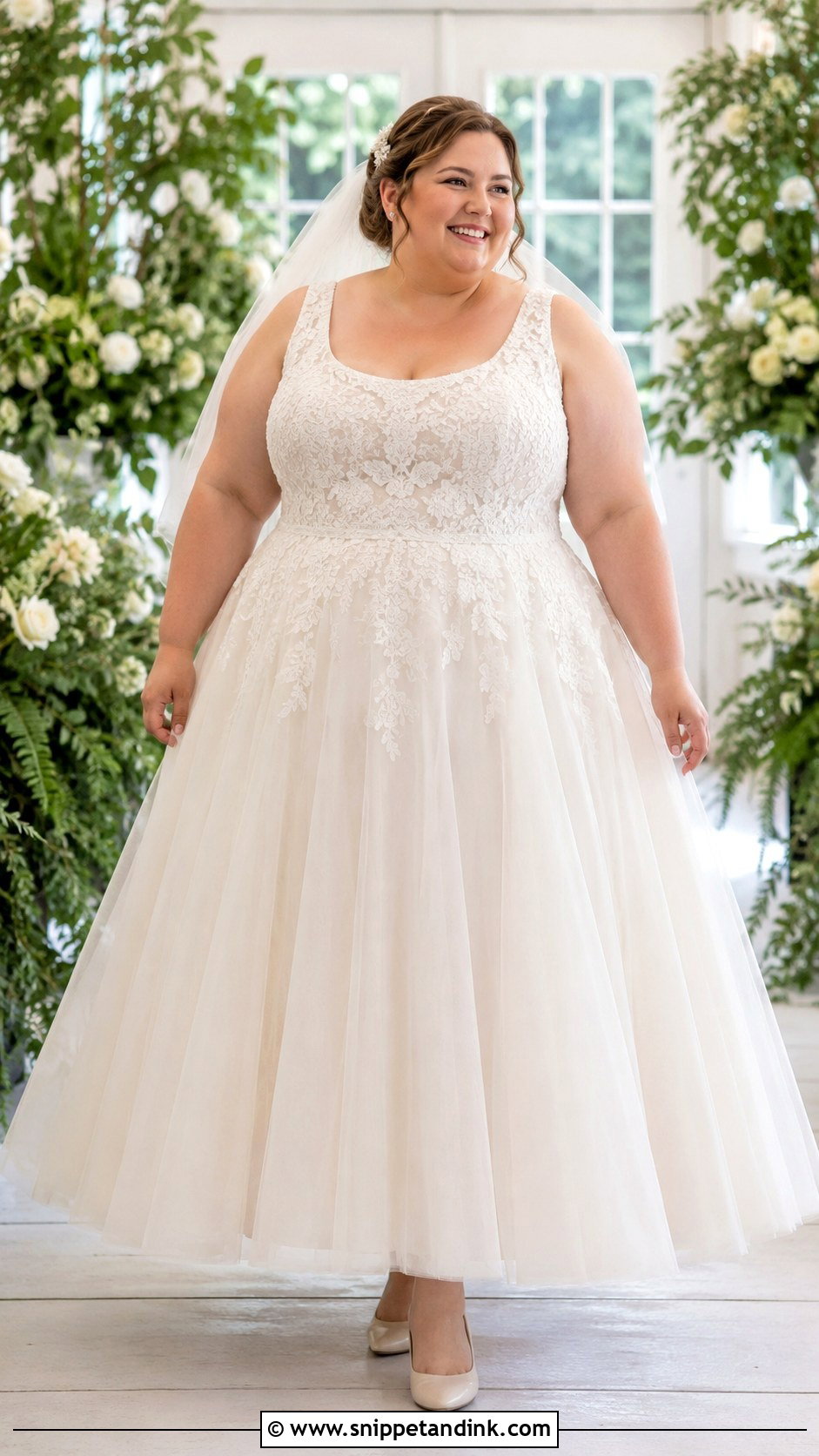
A medium scoop gives coverage without closing off the upper body, and with wide straps and a structured lining it supports well. The tulle skirt should start flat at the waist and build volume toward the hem, so the fullness sits below the stomach instead of on it. Lace appliqués can trail down from the bodice in a vertical pattern. A floral comb, crystal studs, ivory pumps and a tulle chapel veil finish it. Very stiff tulle stands away from the body and adds width, so I’d choose a soft one that moves as you walk.
17. Wedding Dress With Detachable Overskirt
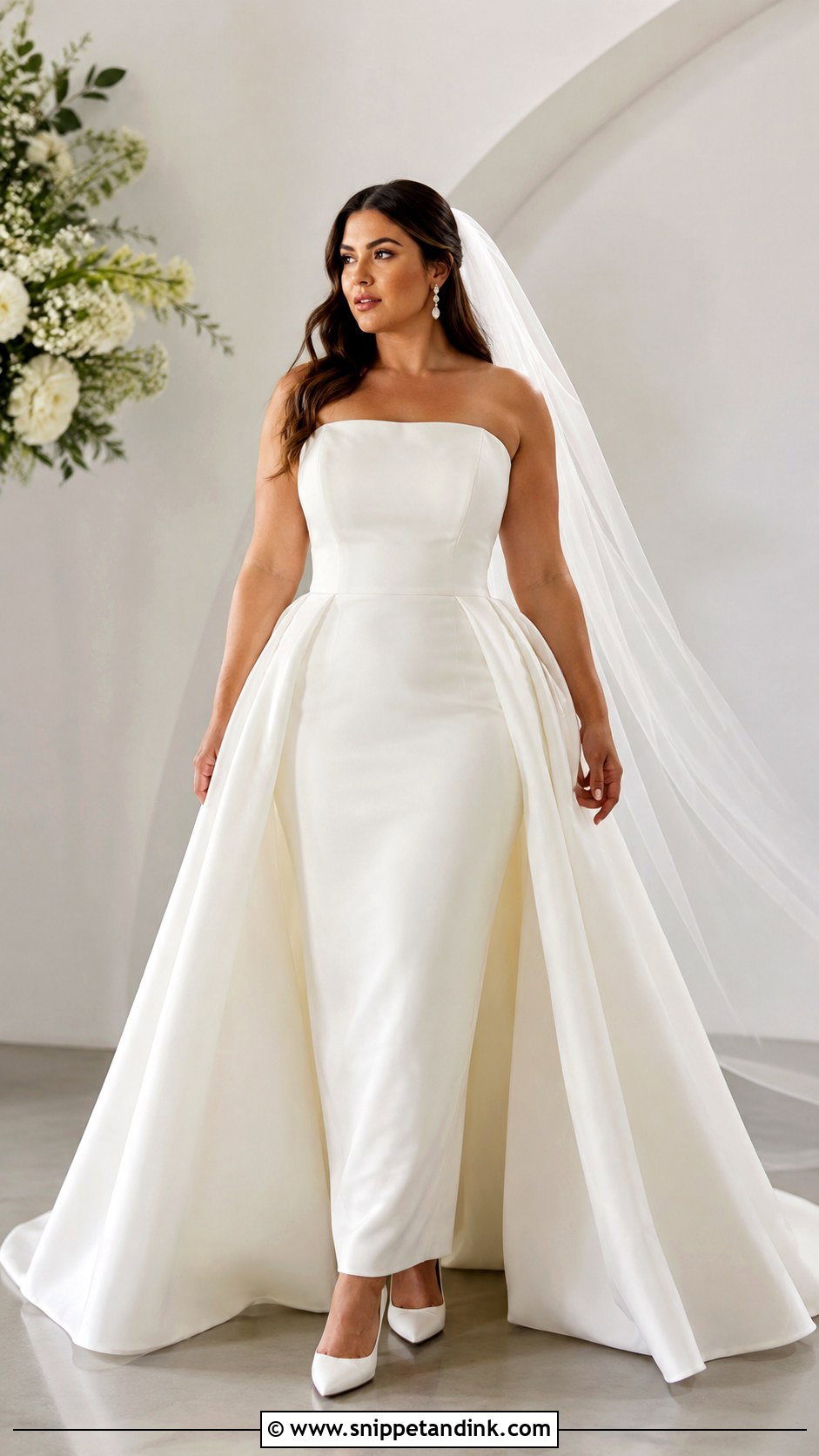
An overskirt gives you two outfits from one dress. Start with a comfortable crepe column or a gentle fit-and-flare base, add an A-line satin or organza overskirt for the ceremony, and take it off for dancing. Its waistband should sit wherever suits you best, which for an apple shape is often slightly above the natural waist. Look for a flat, discreet fastening and smooth front panels; big bows, thick belts and dense gathering all add bulk at the middle. Drop earrings, pointed heels and a long ceremony veil complete it. Practise the removal once with whoever will help you on the day.
18. Grecian Empire Waist Wedding Dress
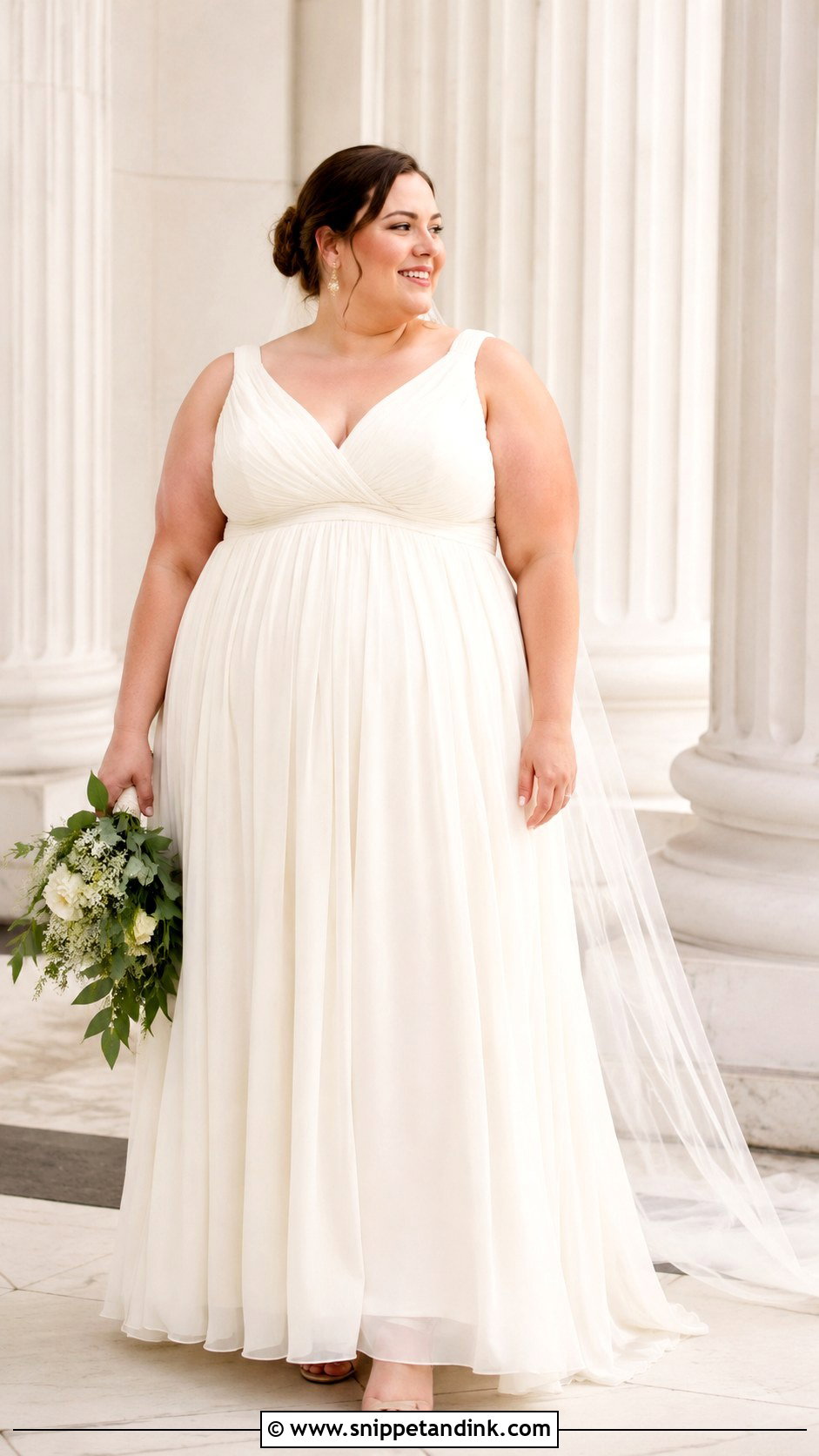
Grecian draping falls in long vertical folds, which is exactly why it suits a fuller middle. Look for a V-neck bodice, wide supportive straps and a raised seam fixed securely beneath the bust, with chiffon or georgette falling to the floor. A lightly crossed bodice adds definition without squeezing. Keep waist decoration narrow, a single row of crystals or tonal embroidery at most. A low twisted bun, delicate gold earrings, sandals or low heels and a sheer chapel veil finish it. Light fabrics need a solid lining, or they cling to the body and turn see-through in bright sun.
19. Plus-Size Corset A-Line Wedding Dress
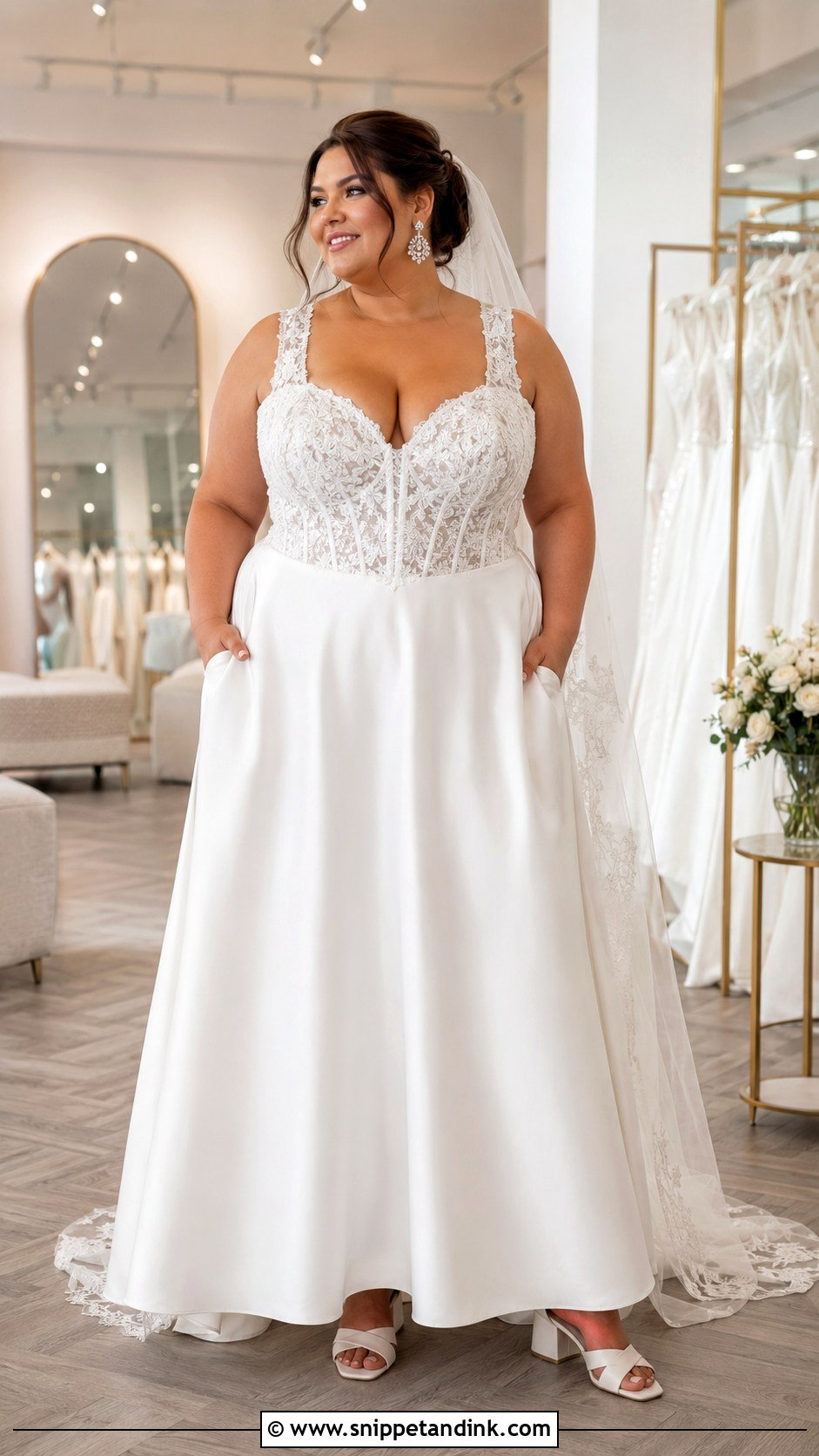
Support comes first with a plus-size corset gown, then flexibility. Look for reinforced cups, vertical boning, a secure back closure, and straps or detachable sleeves if you’d like them. The skirt can begin slightly above the natural waist and flare gradually. Satin gives structure, while lace panels soften the bodice. Block heels, statement earrings and a chapel veil finish it, with a longline bra underneath if you need one. My most practical advice: shop at a boutique that carries samples near your size. A sample clipped open at your back tells you very little about how the finished dress will sit.
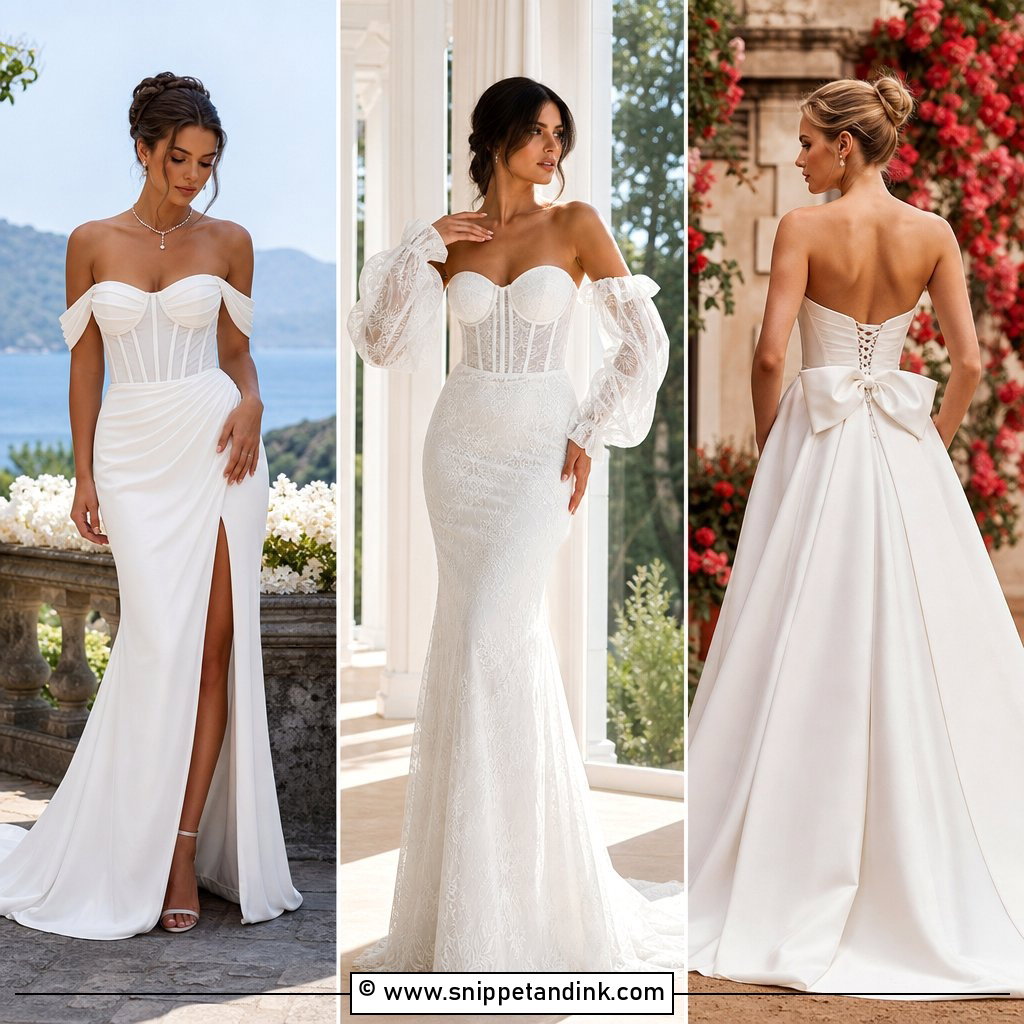
20. Minimalist Mikado Princess Wedding Dress
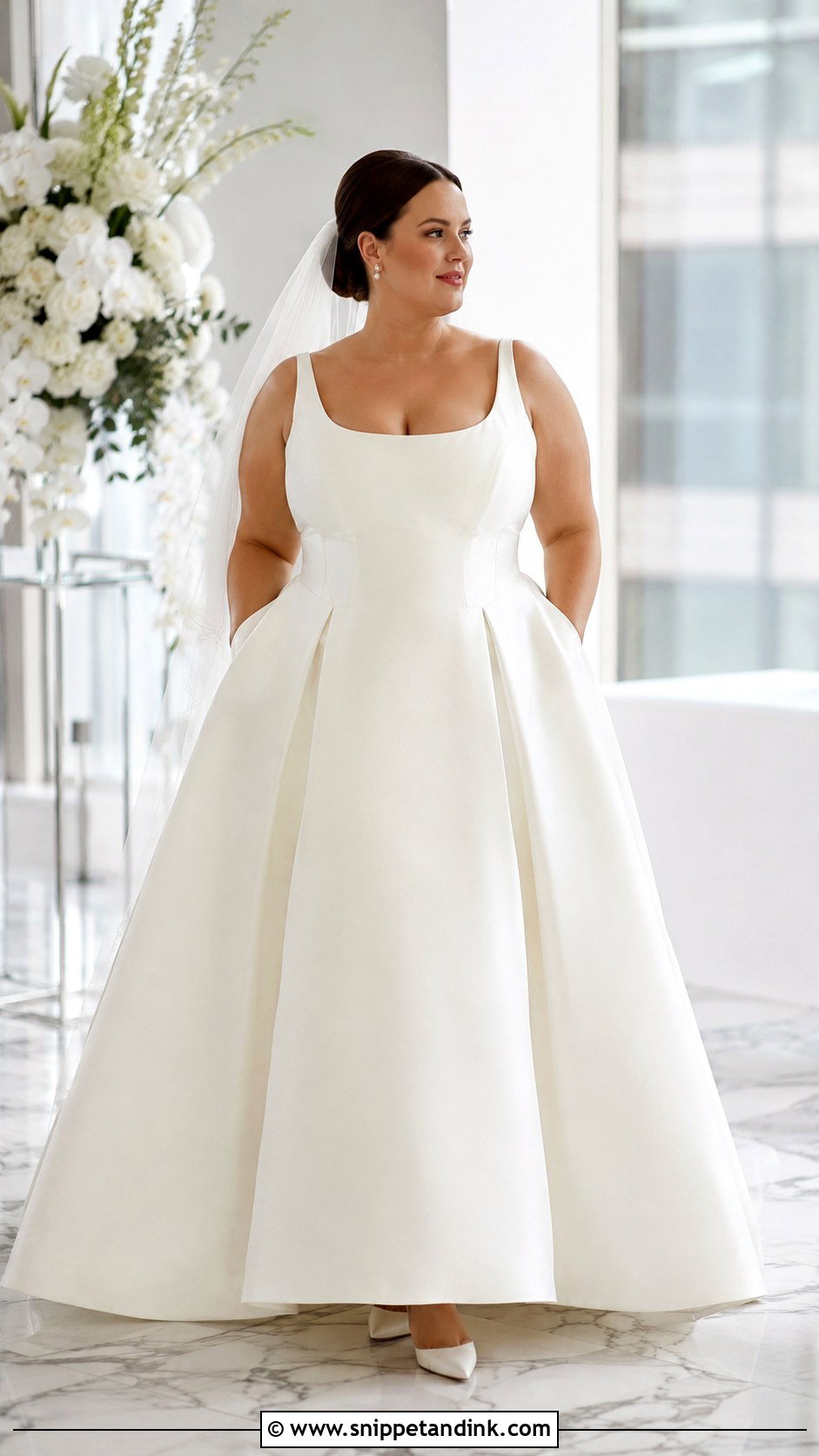
Mikado turns a simple princess wedding dress into something almost architectural, because the fabric holds its shape and glides over the body instead of clinging. A supportive V-neck or curved bodice with clean princess seams leads into a skirt that widens gradually to the floor. Hidden pockets are worth asking for. Pearl studs, a sleek bun, pointed satin shoes and a long unembellished veil finish it, and I’d skip any contrasting belt so the front stays continuous. With no lace or beading, every seam shows, so leave plenty of time for bodice, hem and bustle alterations.
Alterations Worth Paying For When Your Middle Is Fuller
A handful of changes make a bigger difference on this body shape than any choice of neckline. These are the ones I’d put in the budget before spending on extra beading.
- A waist stay. A grosgrain band sewn inside the bodice takes the weight of the skirt, so it doesn’t drag on your shoulders or strain the zip.
- Moving the waist seam. Shifting it to sit just above the fullest part of the stomach can change the whole silhouette.
- A corset back instead of a zip. Lacing gives a little adjustment on the day, which helps if you swell in the heat or after a meal.
- Built-in cup support. Sewn-in cups or a longline bra stitched into the lining let you wear an open back without visible straps.
Where to Hold the Bouquet, and How to Sit in Photos
Photos are where most brides worry about their middle, and small habits help far more than editing. Hold the bouquet at hip height rather than in front of your stomach; held high, it covers the waist detail and shortens your arms. Stand at a slight angle to the camera with your weight on your back foot, and keep a little space between your arms and your body so the waistline reads.
For seated shots, perch toward the front of the chair with a straight back instead of leaning into it, which folds fabric over the stomach. For close portraits, ask the photographer to shoot from just above eye level. It flatters everyone, not only apple shapes.
Your Shape Is a Starting Point, Not a Rulebook
Supportive construction, comfortable fabric and a waist placed where it suits you will do more than any body-type label. Empire and A-line gowns are good places to start, but structured ball gowns, one-shoulder designs, short dresses and detachable overskirts all work on an apple shape too. Try each one with the right shoes and underwear, then stand, sit and walk in it. Notice how you feel, not only how it looks in the mirror. A skilled seamstress can turn a dress that’s nearly right into one that fits you properly.
You'll Like These Ideas:




Leave a Reply