
A custom cake starts with a conversation, not a picture. When a couple sits down with me, I want to know the room, the flowers, the season and the flavors they actually like eating, because those decide far more about the finished cake than any inspiration photo. The designs below range from textured buttercream and pressed flowers to sculptural tiers and bold color. For each one I’ve added what I’d tell you at a consultation: how it’s made, how it holds up and when I’d suggest something else.
Turning Your Wedding Into a Brief a Baker Can Design From
The most useful thing you can bring to a cake consultation isn’t a folder of fifty pins. It’s the practical detail that shapes the cake. When a couple sends me this before we meet, I can sketch something that already fits.
- Final or near-final guest count, and whether there’ll be other desserts. This sets the number of tiers and servings.
- Venue, indoors or outdoors, and the time of year. Heat and humidity change which frosting I’ll recommend.
- Your flower palette and a photo of the stationery or linens, so the cake can echo them.
- Two or three cake photos you love, plus one you don’t, which often tells me even more.
- A comfortable budget range. Hand piping, sugar flowers and tall structures add labor, so knowing this early saves redesigns.
Many bakers book up months ahead during peak wedding season, so get in touch once your date and venue are confirmed. Tastings usually come next, and the final design and guest count are confirmed a few weeks before the wedding.
1. Custom Floral Wedding Cake
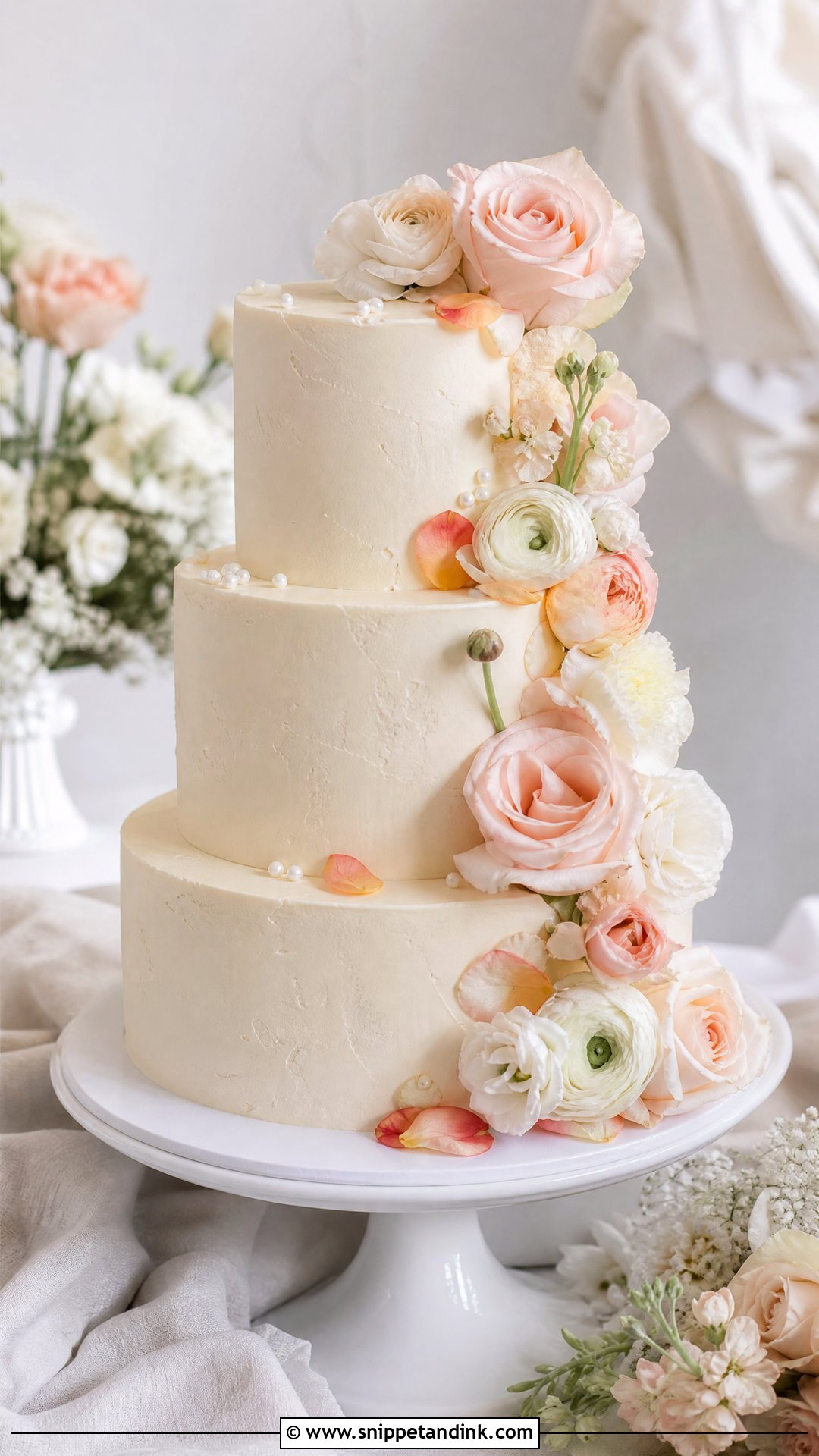
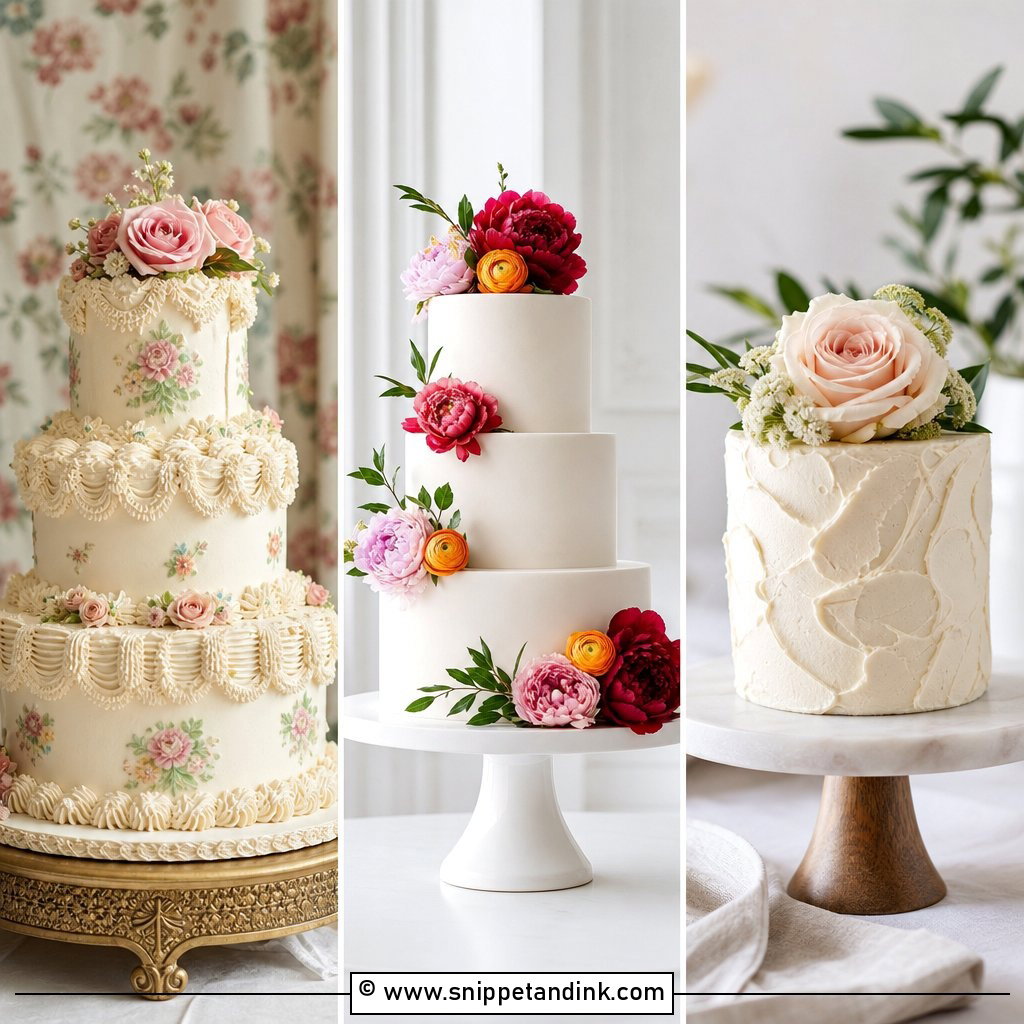
Flowers are the easiest way to tie the cake to the rest of the wedding, since they can repeat the bouquet or the ceremony arch. I usually suggest an asymmetrical trail down one side rather than a full ring on every tier; it reads as more modern and uses fewer stems. Ivory buttercream is the calmest backdrop. Garden roses suit it, and edible pressed flowers are an option if you’d rather nothing fresh touches the frosting. Lemon elderflower or raspberry cream keep the inside as fresh as the outside.
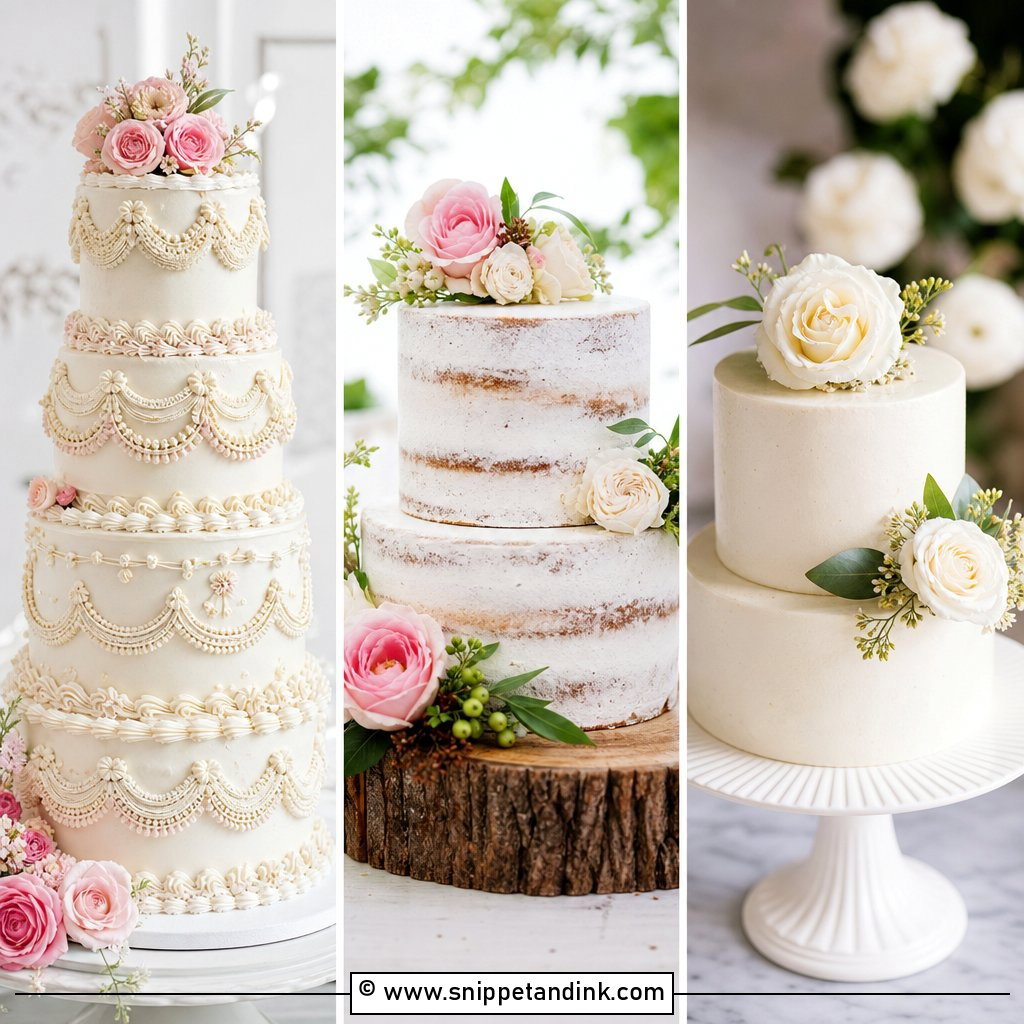
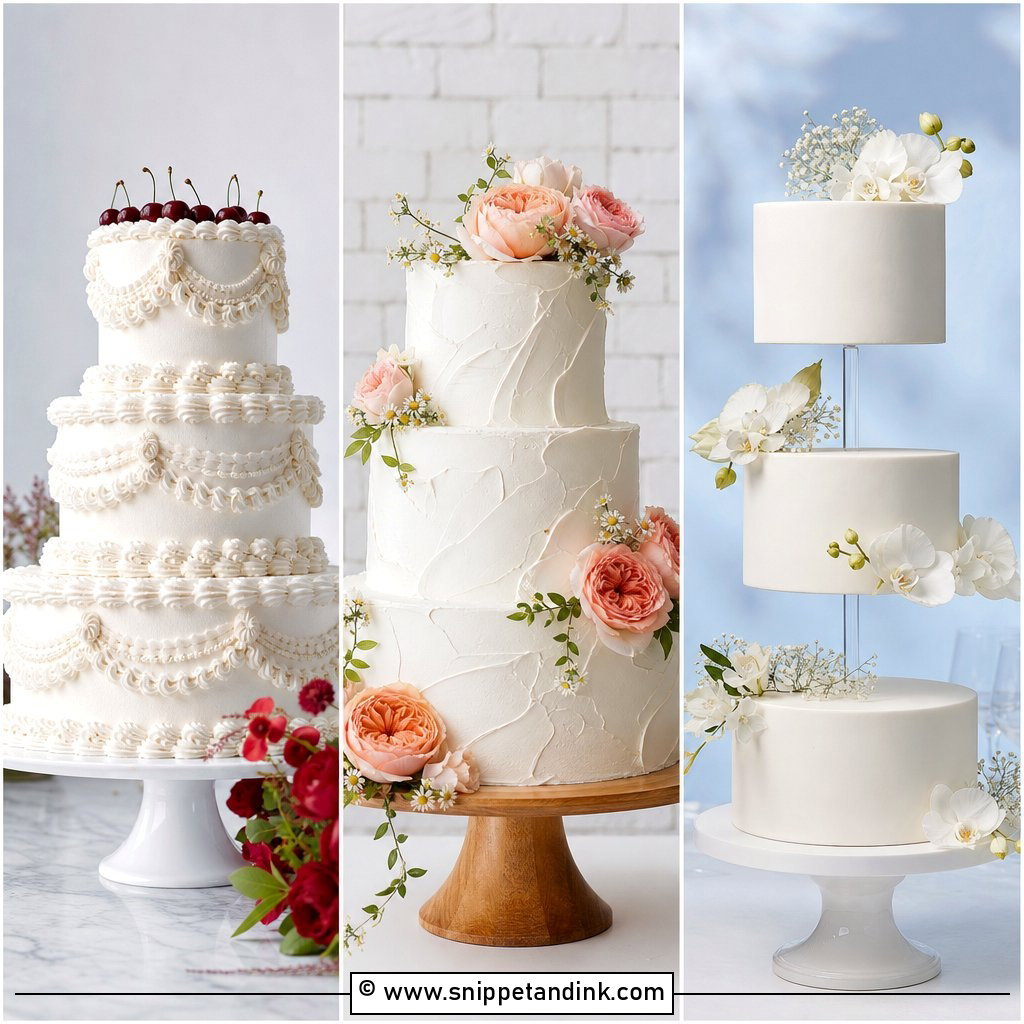
2. Custom Vintage Wedding Cake
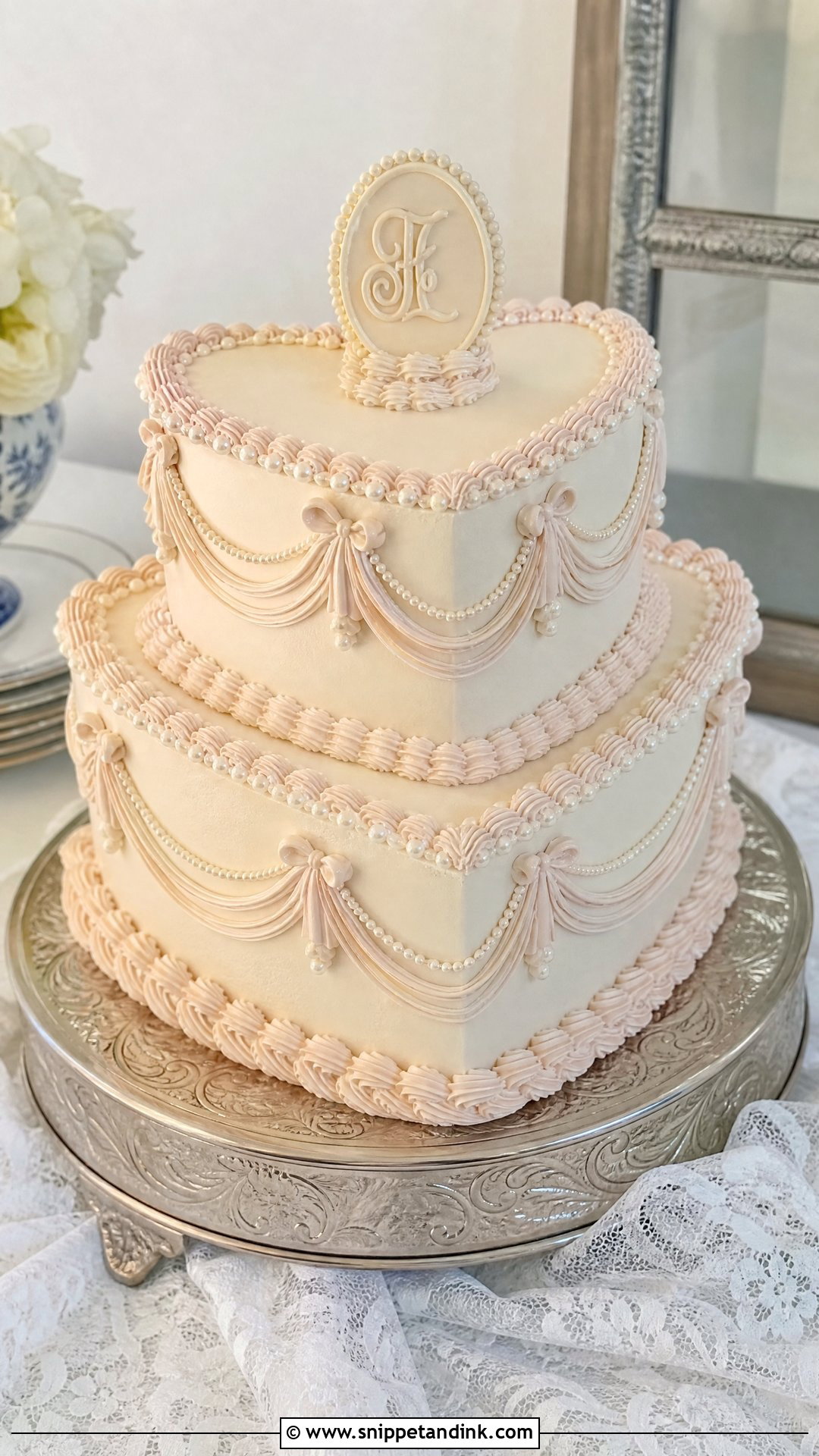
Vintage piping is built in buttercream, and that’s the right medium: it holds a crisp shell border and tastes far better than piped royal icing. Bows, swags, pearls and borders are slow, hand-piped work, so expect it to take longer and cost more than a smooth finish. A small version suits an intimate dinner; a tall one fills a ballroom. Blush, pale blue and champagne all look right, and a monogram or heart topper adds the personal note.
3. Custom Minimalist Wedding Cake
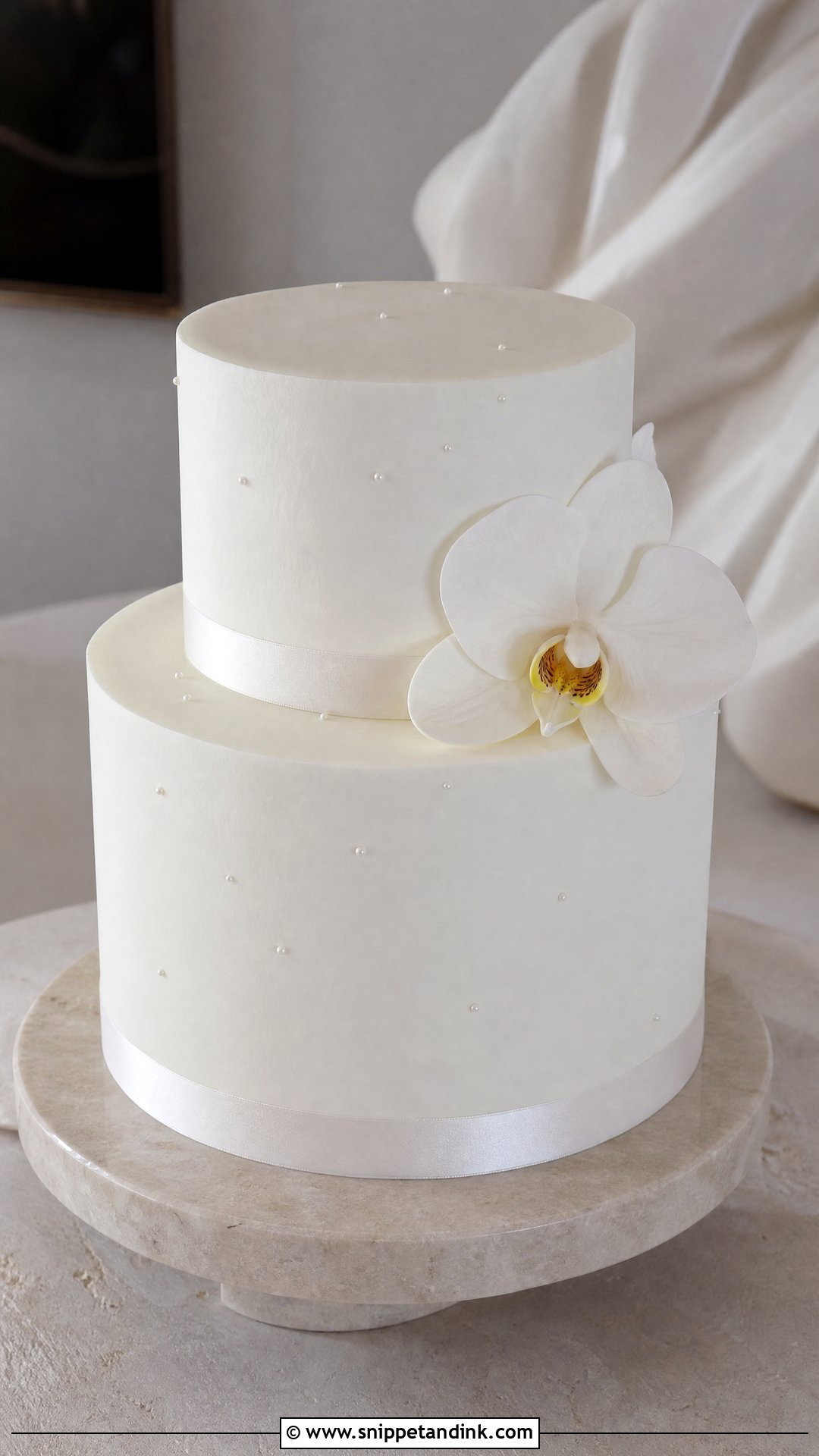
Minimalist cakes hide nothing. Every bump, lean or air bubble in the buttercream shows on a smooth white tier, so the skill is in the finishing: sharp edges, level tiers, a clean board. I’d add one detail only, a single sugar flower or a slim ribbon, and let the stand do the rest. Vanilla almond, coconut or white chocolate inside suit the restraint outside.
4. Custom Textured Buttercream Wedding Cake
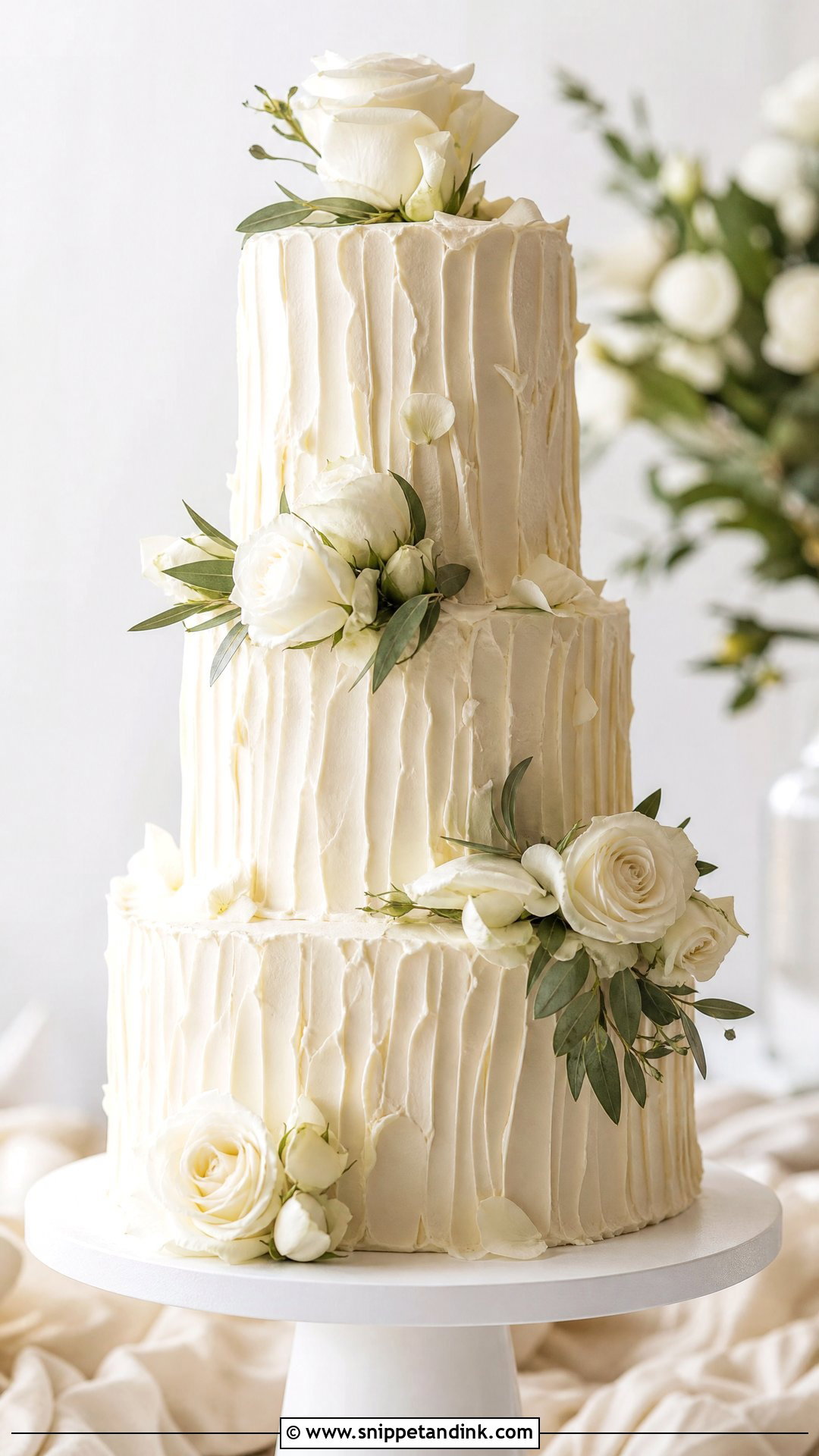
Textured buttercream is forgiving and very personal, because the palette knife or comb marks are made by hand. Waves, vertical ridges and stucco finishes catch light from the side, so I place textured cakes where they’ll get window or candle light rather than direct overhead light. Warm beige, sage or dusty blue add color. Keep toppings to a few flowers, dried citrus or petals; too many hide the texture you paid for.
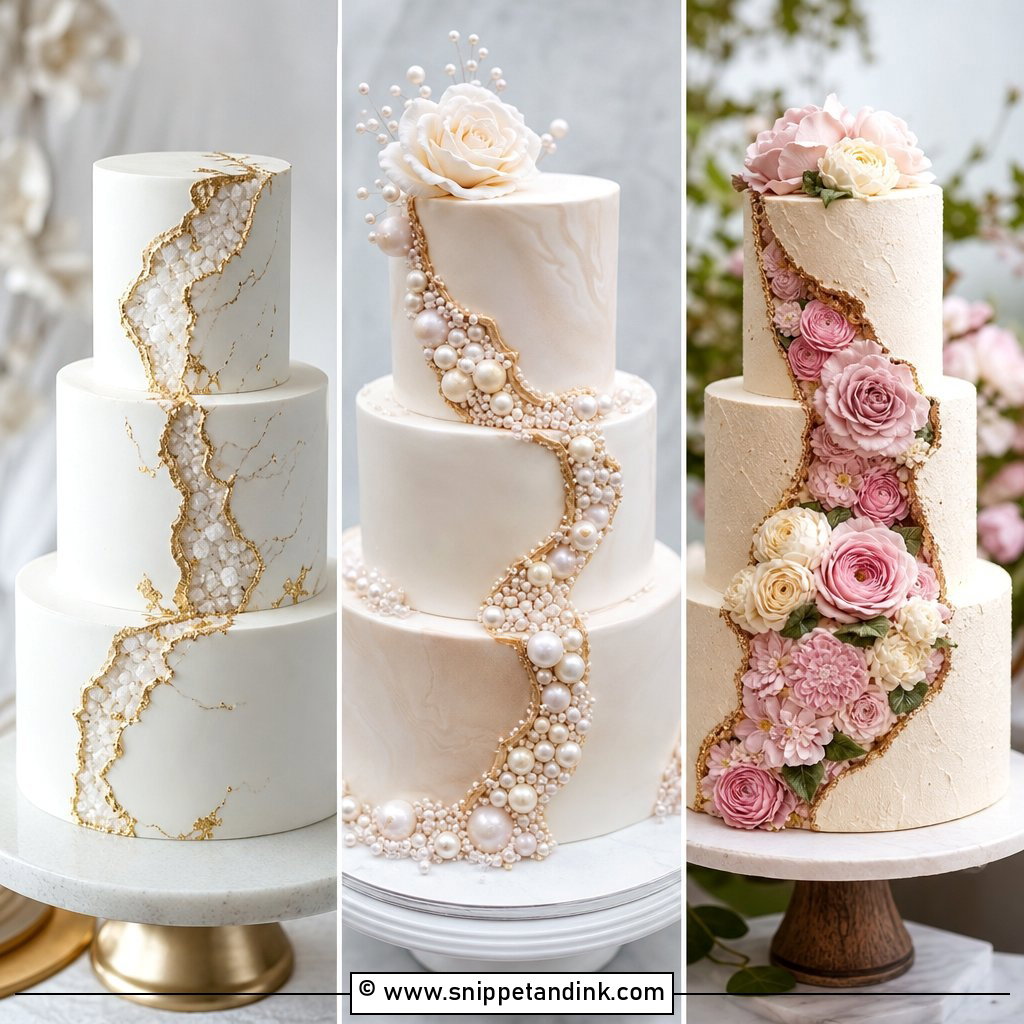
5. Custom Pearl Wedding Cake
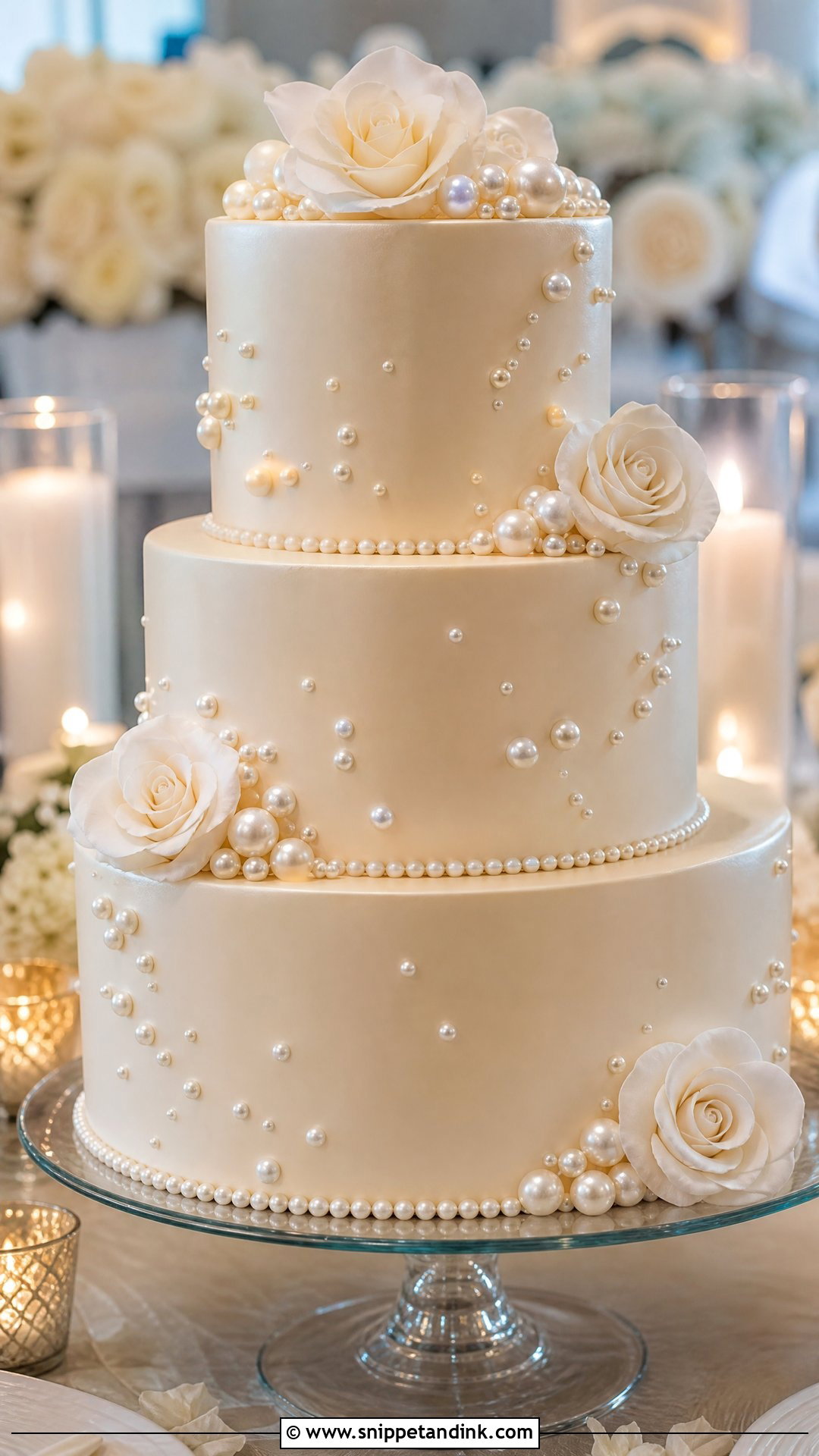
Edible pearls are small sugar balls, and they need to be pressed into buttercream while it’s still slightly soft, otherwise they roll off. A scattered dusting reads delicate; neat rows around each tier read formal. Ivory or champagne frosting lets them glow without shouting. With a satin gown and pearl jewelry it ties together well. Coconut cream or white chocolate raspberry are good flavor matches.
6. Custom Black And White Wedding Cake
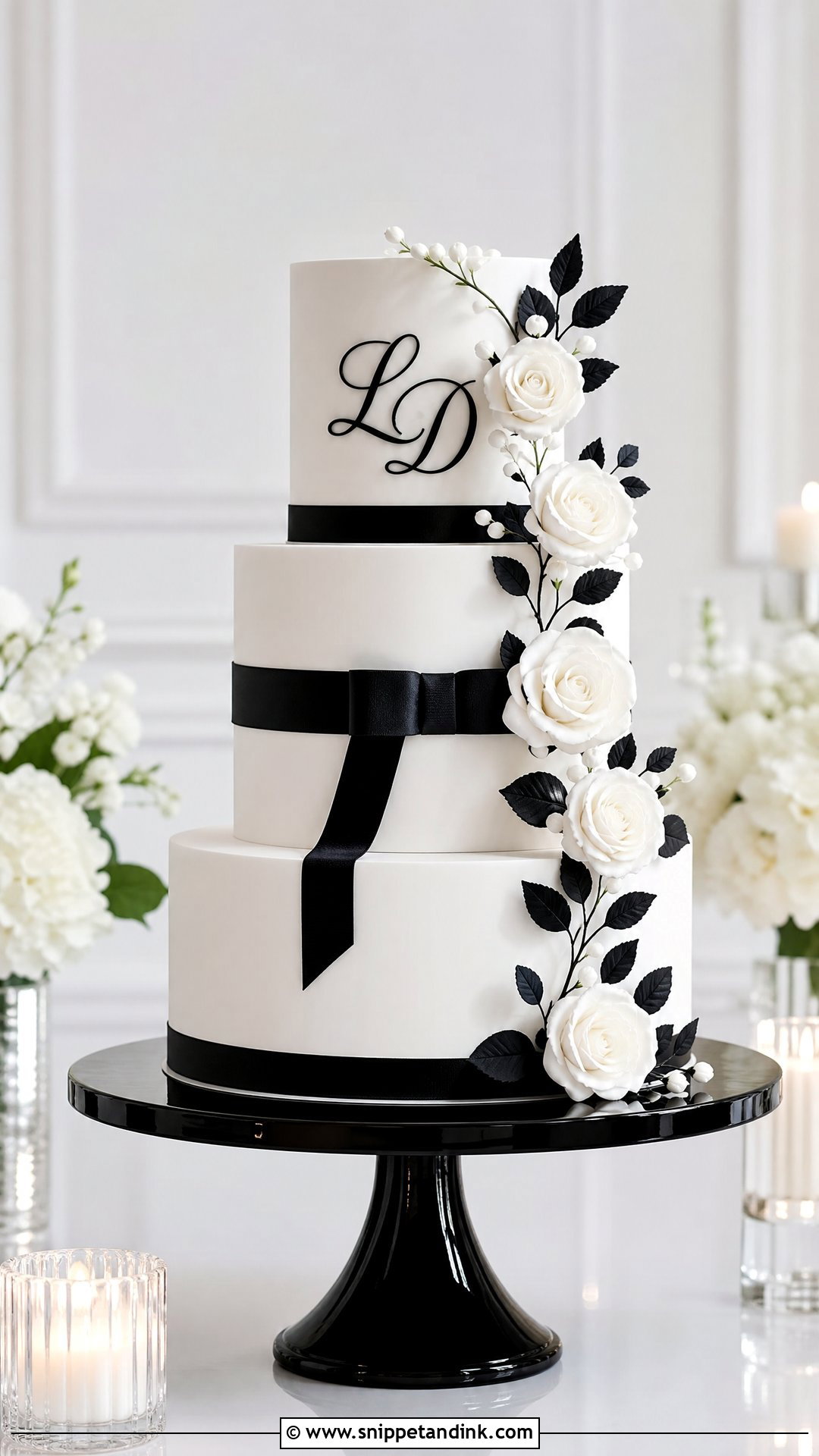
Black and white cakes need restraint, because black fondant and black-tinted frosting can stain teeth and lips if you use a lot of it. I prefer black as an accent: a ribbon, a painted line or a few dark florals on white buttercream. Keep the shape simple so the contrast does the work. Inside, chocolate ganache or espresso cake can echo the darker palette. Best at evening ceremonies, galleries and modern ballrooms.
7. Custom Gold Wedding Cake
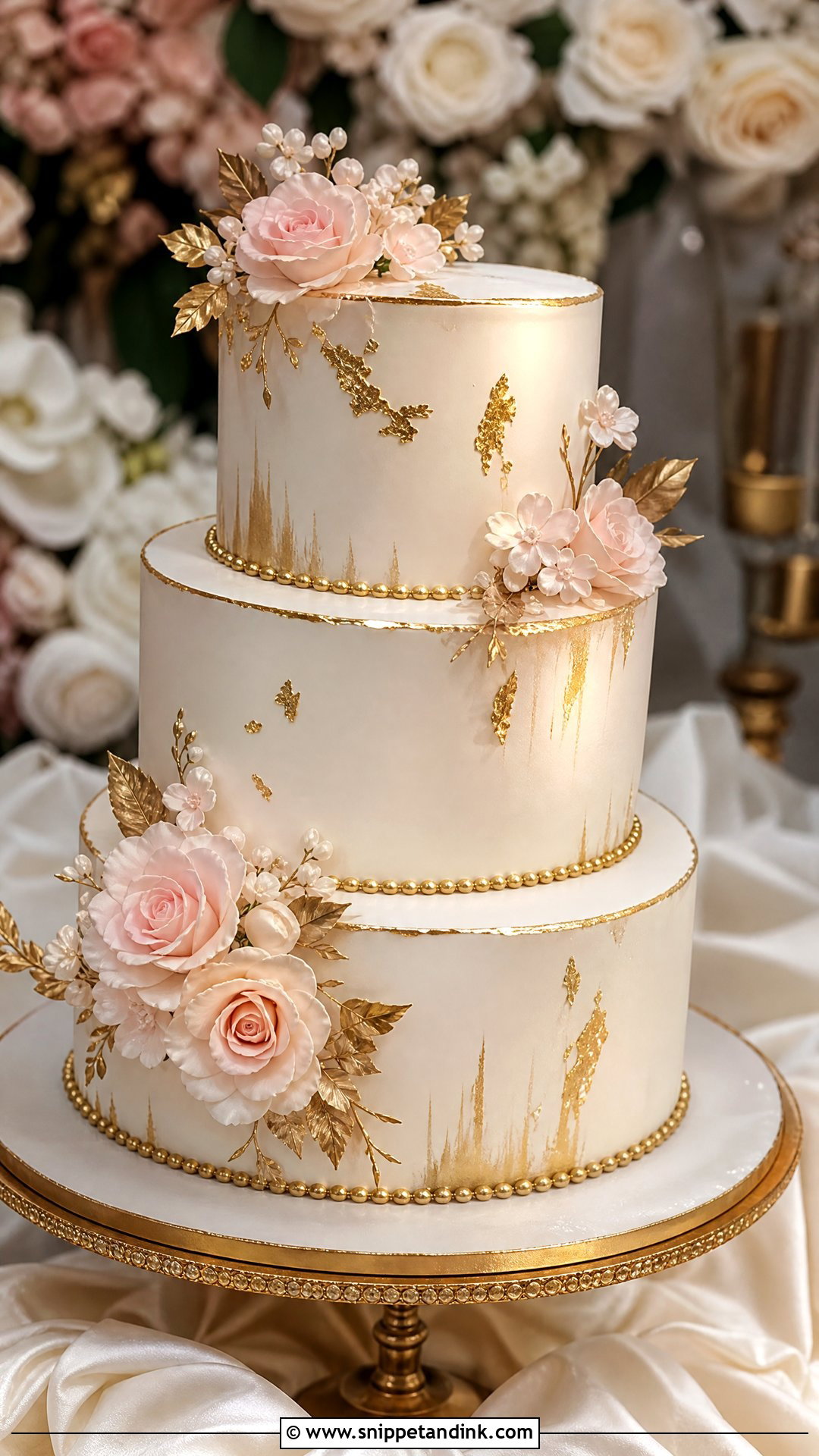
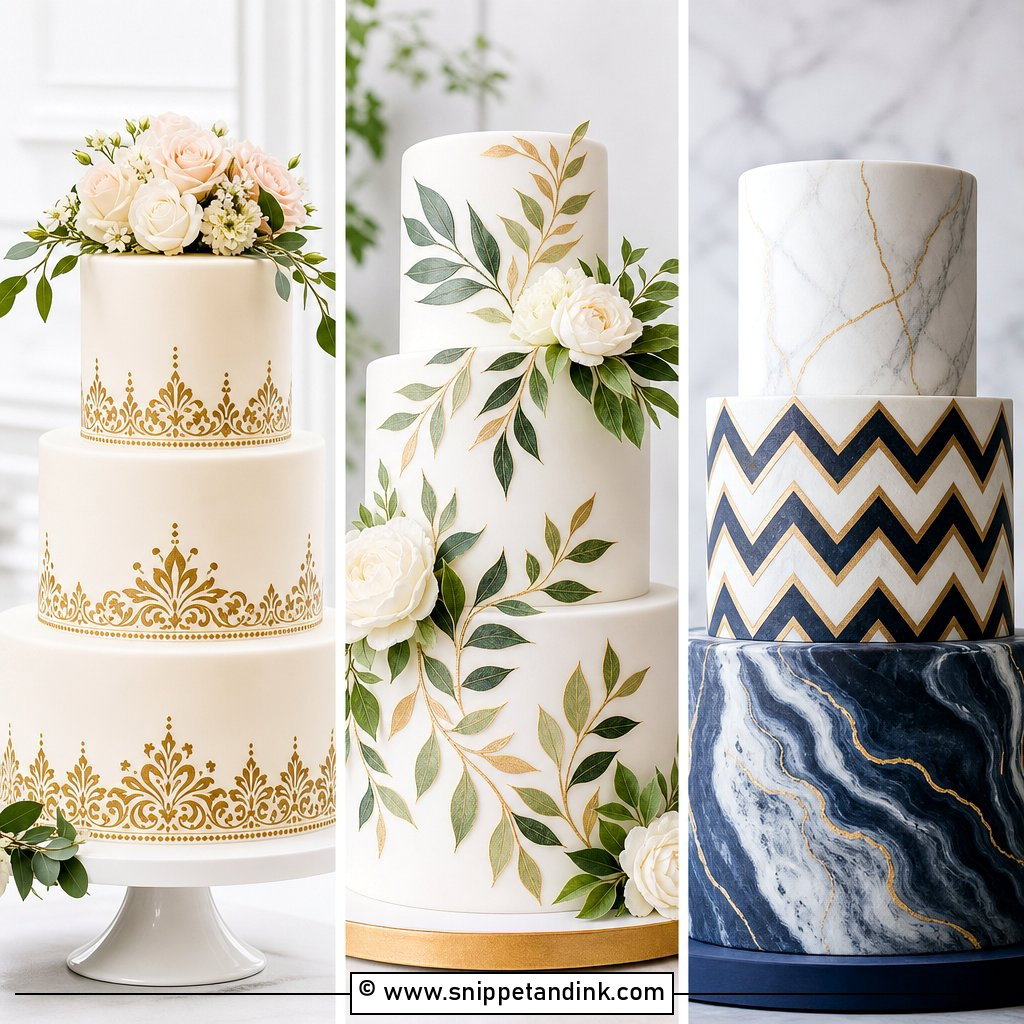
Gold leaf is edible but delicate, and it tears if you touch it with warm fingers, so I apply it with tweezers or a dry brush. Used as an accent, a painted edge or a thin band, gold reads expensive; covering a whole tier can look flat in photos. It suits ballrooms, hotels and candlelit dinners. Caramel vanilla, honey or brown butter cake inside match the warmth.
8. Custom Watercolor Wedding Cake
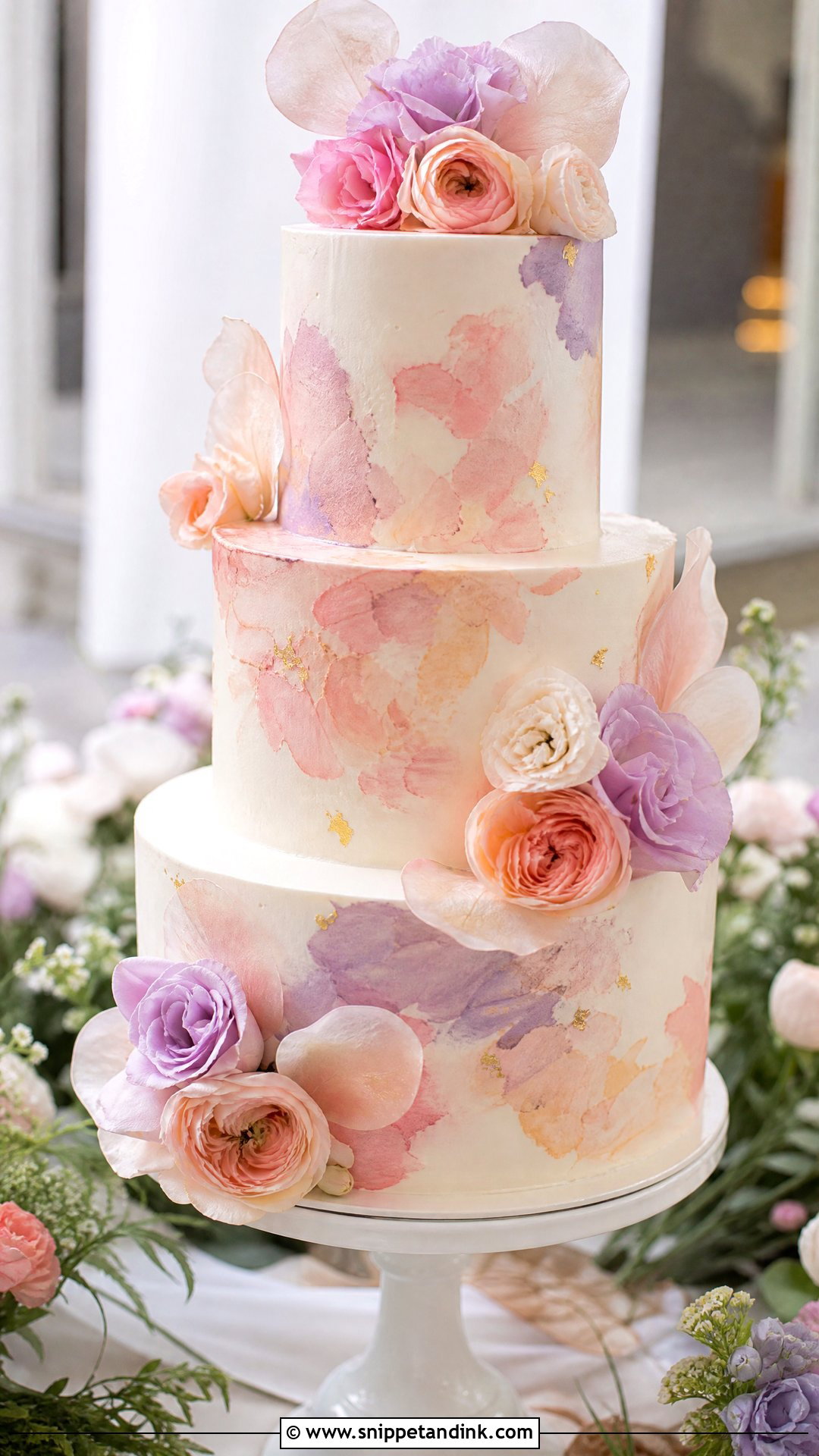
Watercolor cakes are painted with thinned gel color or brushed into the buttercream while I’m smoothing it, so the shades blend softly. Pale blue, lavender, blush and sage suit spring and garden weddings. Keep the decoration simple so the paint is the feature; a few fresh flowers or wafer paper petals are plenty. Lemon berry or lavender honey suit the soft palette.
9. Custom Square Wedding Cake
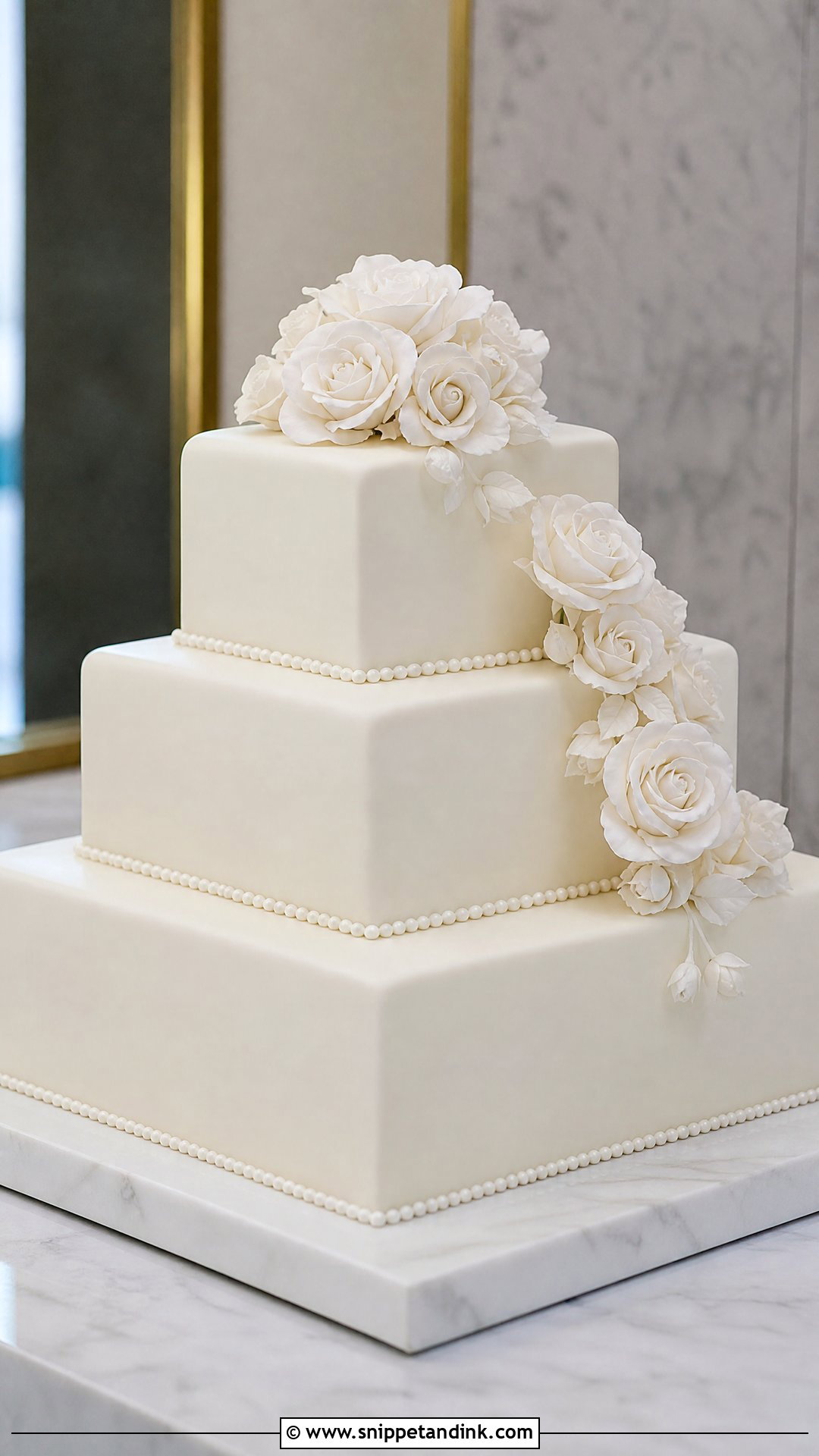
Square tiers are harder to finish than round ones, because the corners need to be crisp and level all the way down. They also serve more slices than a round tier of the same width. Stack them evenly for an architectural look or soften them with texture and a floral cascade. Sage, taupe or ivory keep the shape elegant. Almond raspberry and chocolate hazelnut are popular inside.
10. Custom Heart Wedding Cake
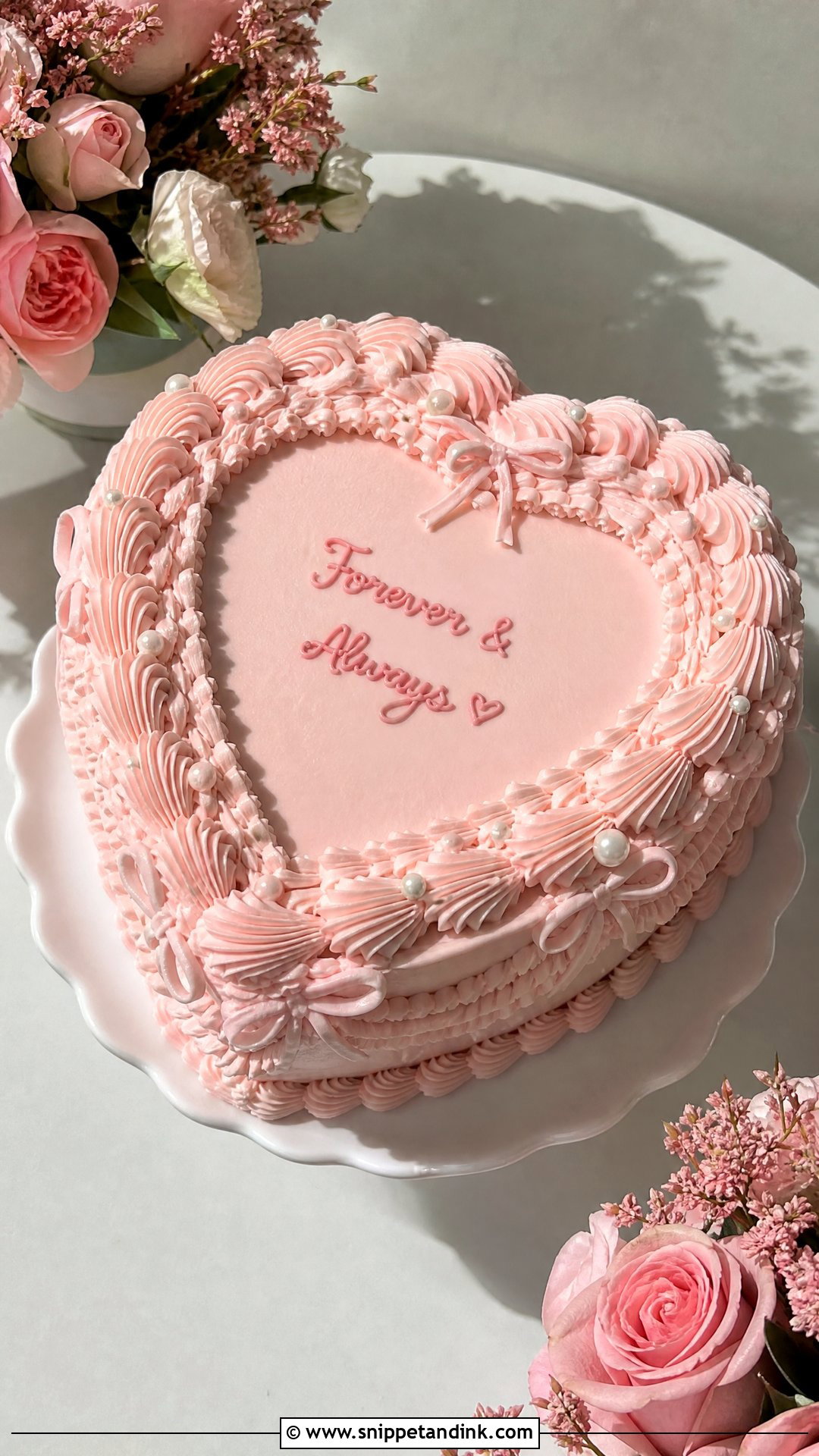
A custom heart wedding cake is a charming cutting cake for courthouse weddings and brunches, or alongside a bigger dessert table. Heart pans make the shape easy; the piping is where the time goes. Buttercream borders, cherries, bows and a short message all suit it. Red velvet or vanilla strawberry are classic flavor matches, and soft pink or buttercream yellow keep it bridal.
11. Custom Two Tier Wedding Cake
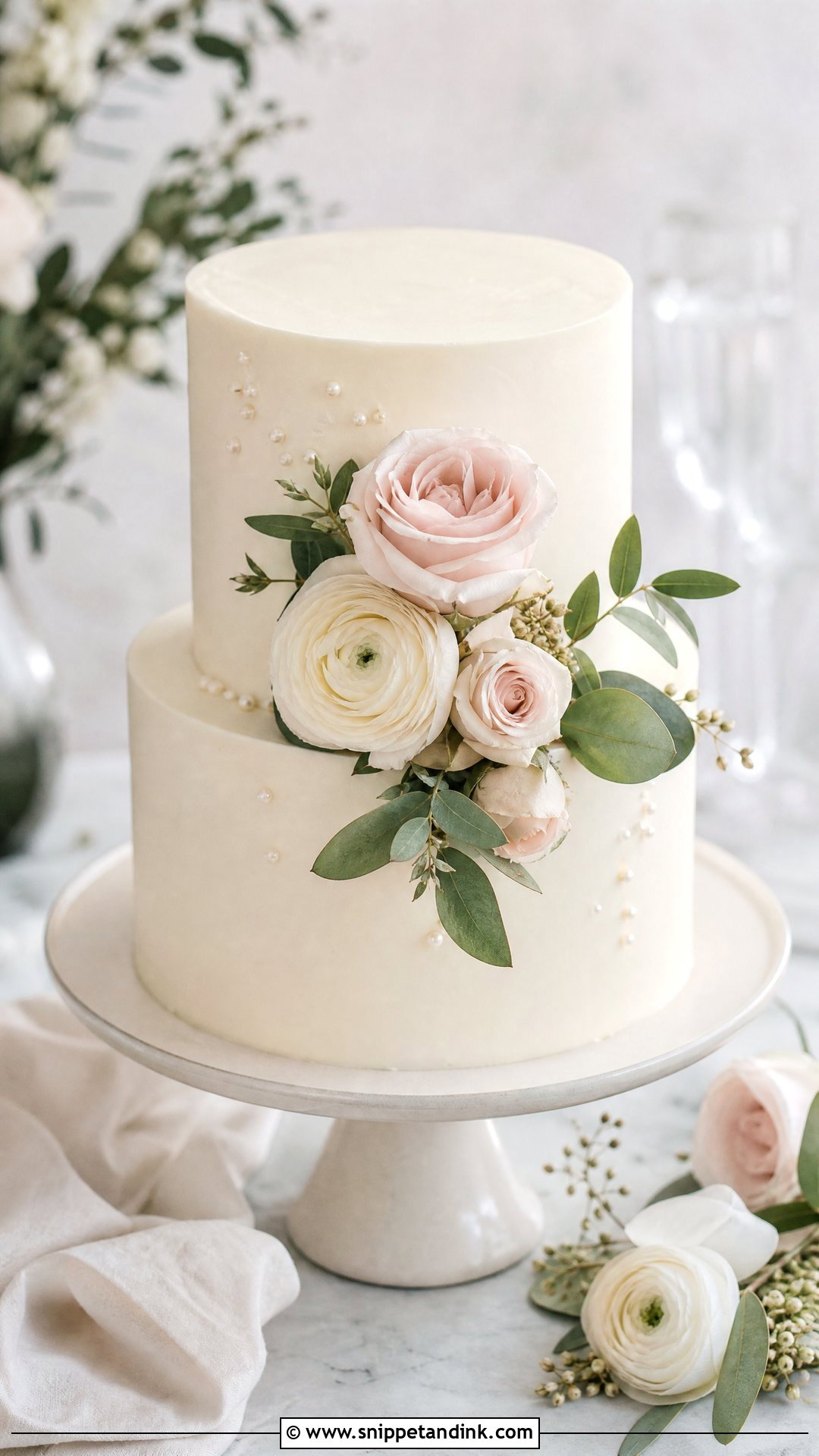
Two tiers suit smaller weddings because they give height for a cutting photo without leftover cake. A common pairing like a six-inch and an eight-inch tier serves a small group; the exact count depends on how your baker slices. Smooth buttercream with one floral cluster always looks good. If you can, choose two flavors so guests get a choice: lemon on top, vanilla almond below.
12. Custom Three Tier Wedding Cake
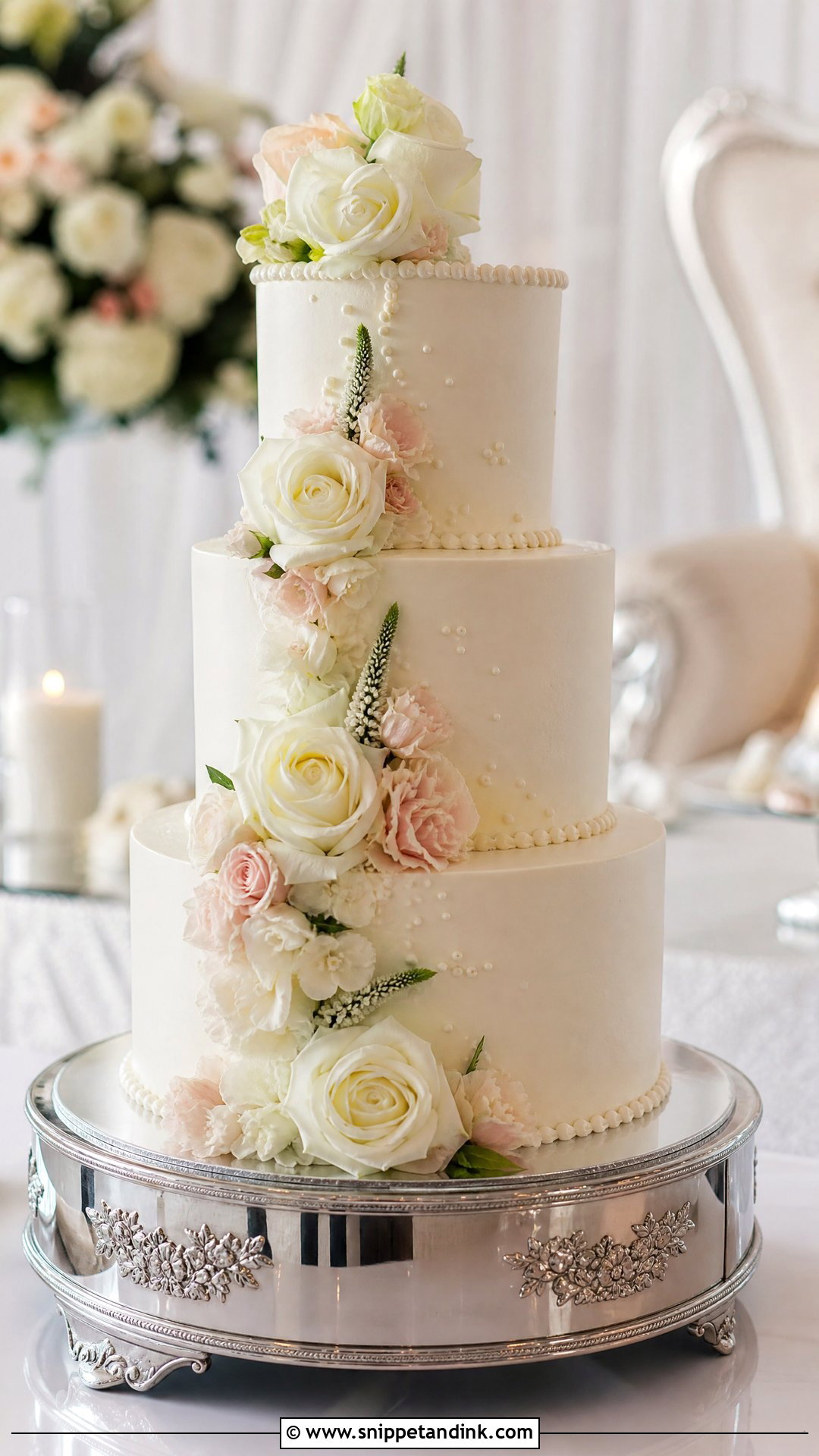
Three tiers are the most common wedding cake size for good reason: enough height to look celebratory, small enough for most reception tables. The design mistake I see most is too many decorations competing. Choose one main feature, a floral cascade, soft piping or gold bands, and repeat it on each tier. Each tier can be a different flavor, such as chocolate ganache, vanilla raspberry and lemon cream.
13. Custom Tall Wedding Cake
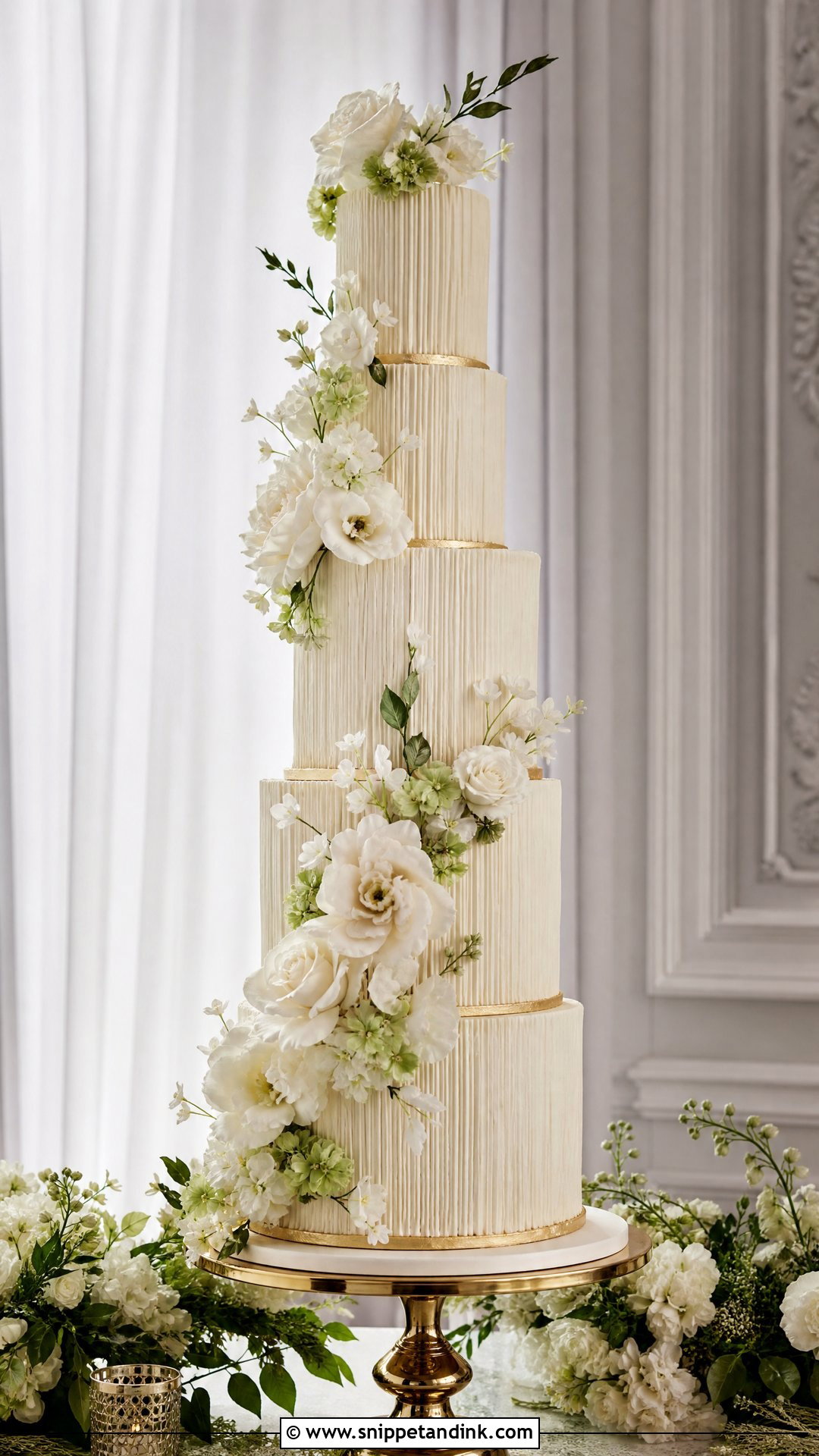
Tall cakes need internal support. Every tier sits on its own board, with dowels or straws underneath to carry the weight, and very tall cakes often get a central rod through all the tiers. Ask your baker how they deliver: some stack on site. Smooth or vertical-textured buttercream keeps a tall cake clean. Pistachio raspberry or brown butter caramel make the inside as memorable as the height.
14. Custom Rustic Wedding Cake
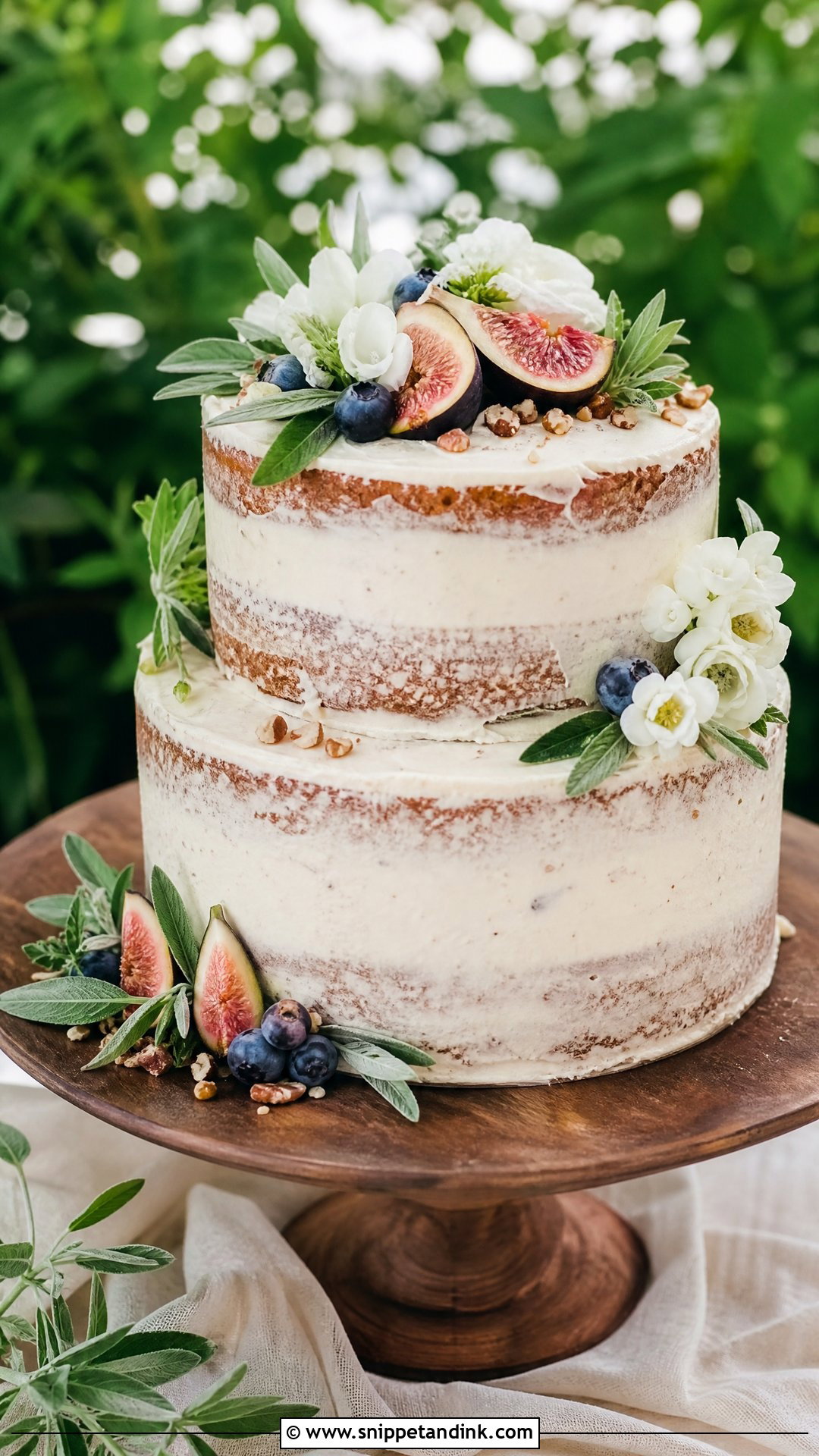
Semi-naked buttercream shows the cake layers through a thin scraped coat, and that crumb coat must be done neatly or it looks unfinished rather than rustic. Greenery, berries, figs or simple flowers suit barns, vineyards and mountain venues. One caution: semi-naked cakes dry out faster than fully frosted ones, so they shouldn’t sit out long before serving. Carrot, spice or maple pecan cake suit the setting well.
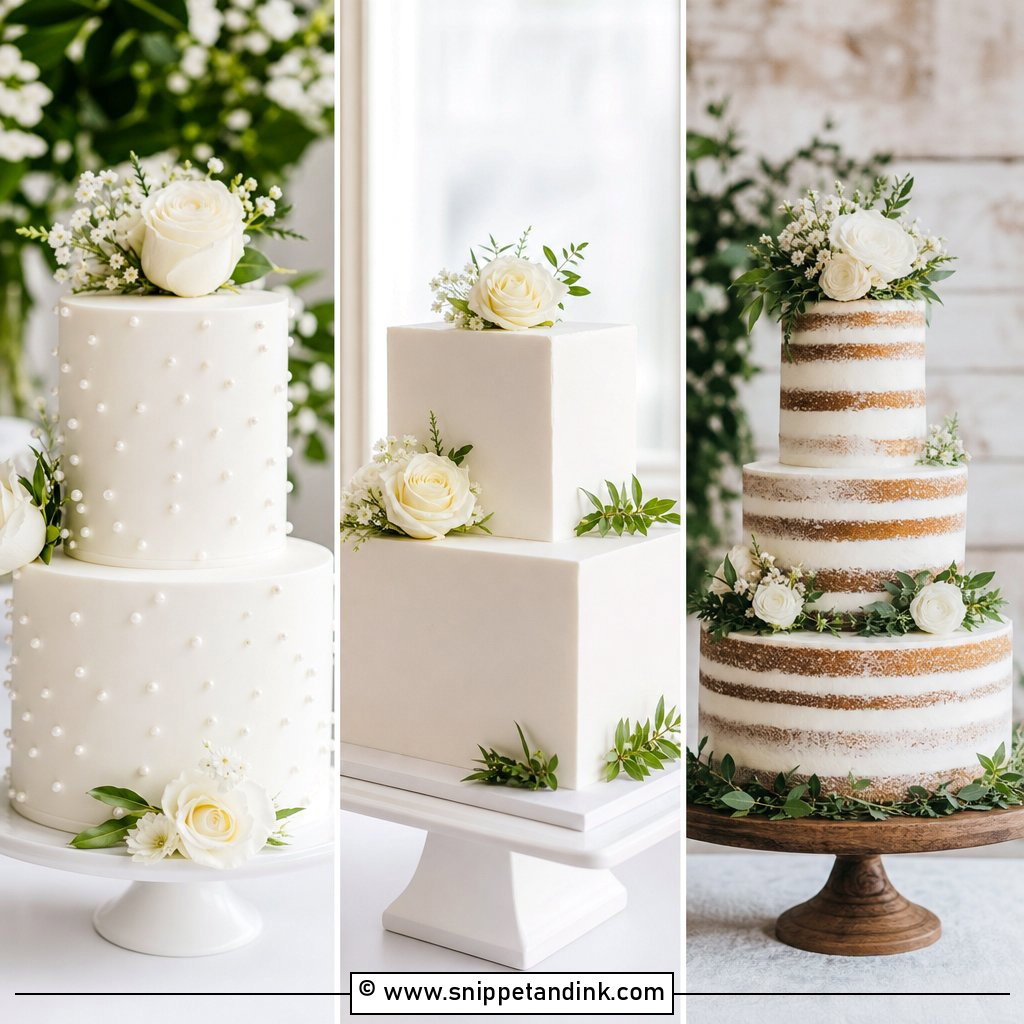


15. Custom Boho Wedding Cake
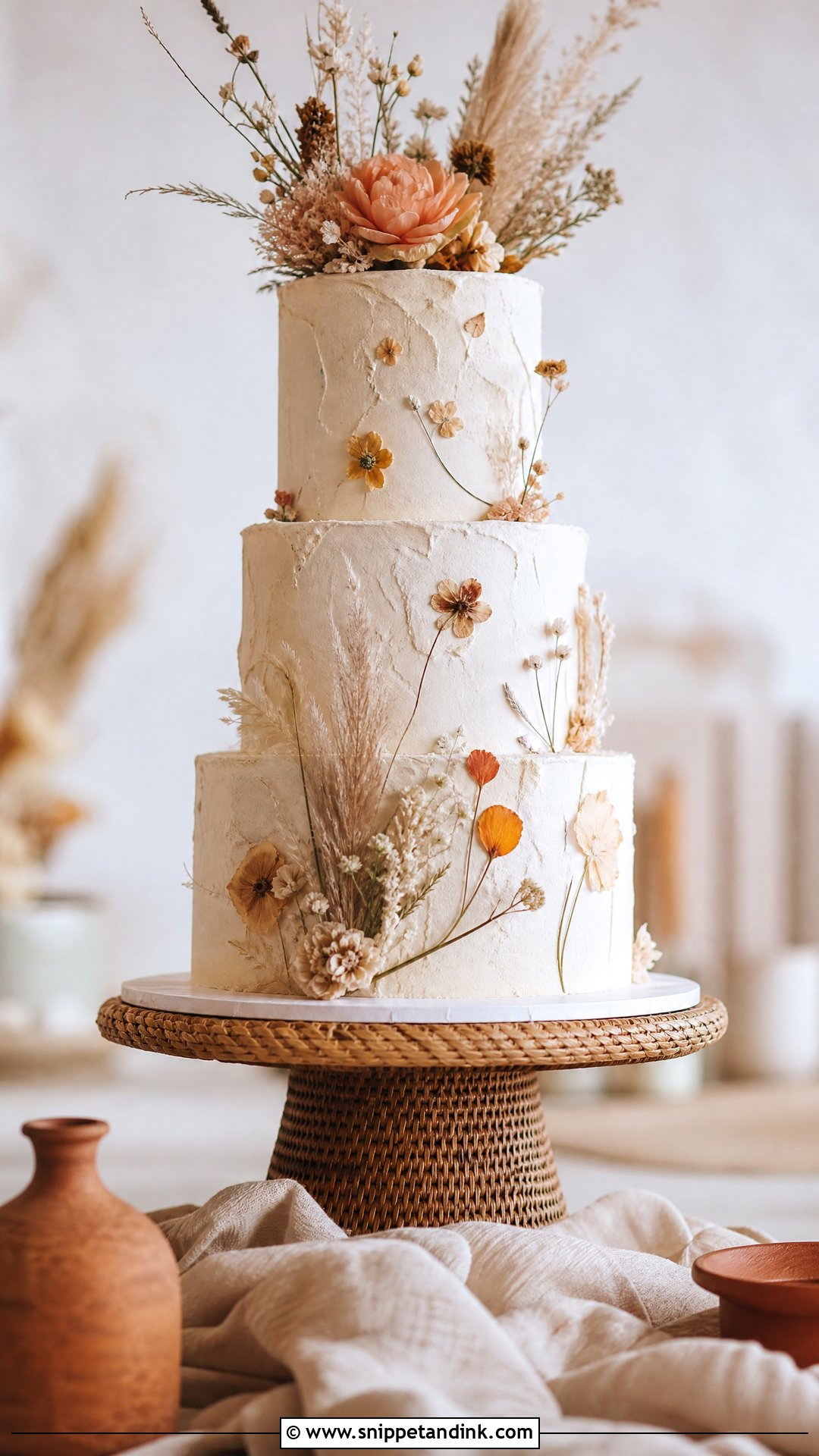
Boho cakes lean on dried and pressed elements: pampas grass, dried flowers, pressed petals. Dried decorations aren’t always food-safe, so I separate them from the frosting with wrap or a small barrier. Ivory, sand and terracotta suit desert, beach and casual outdoor weddings. Honey lavender or vanilla chai flavors fit the mood. Keep the decoration airy so the cake doesn’t look crowded.
16. Custom Beach Wedding Cake
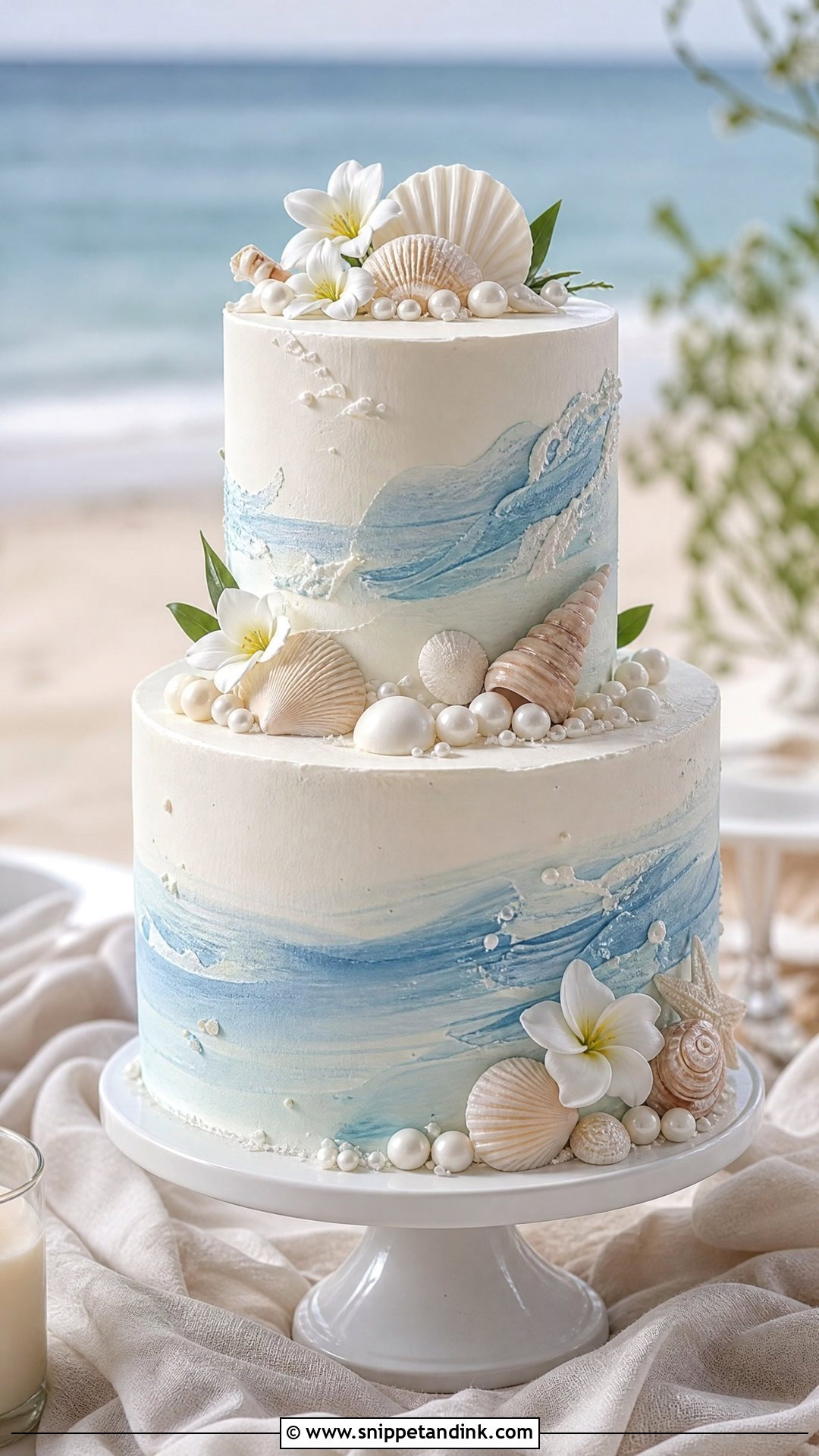
Beach cakes should feel light, not like a novelty cake. Soft white buttercream with pale blue watercolor, sugar shells, pearls and small tropical flowers make a coastal look without too many themed pieces. Heat is the real issue: buttercream softens fast in sun and salt air. I’d keep the cake indoors or in shade until cutting and consider ganache under the frosting for stability. Coconut lime and passion fruit vanilla suit the season.
17. Custom Garden Wedding Cake
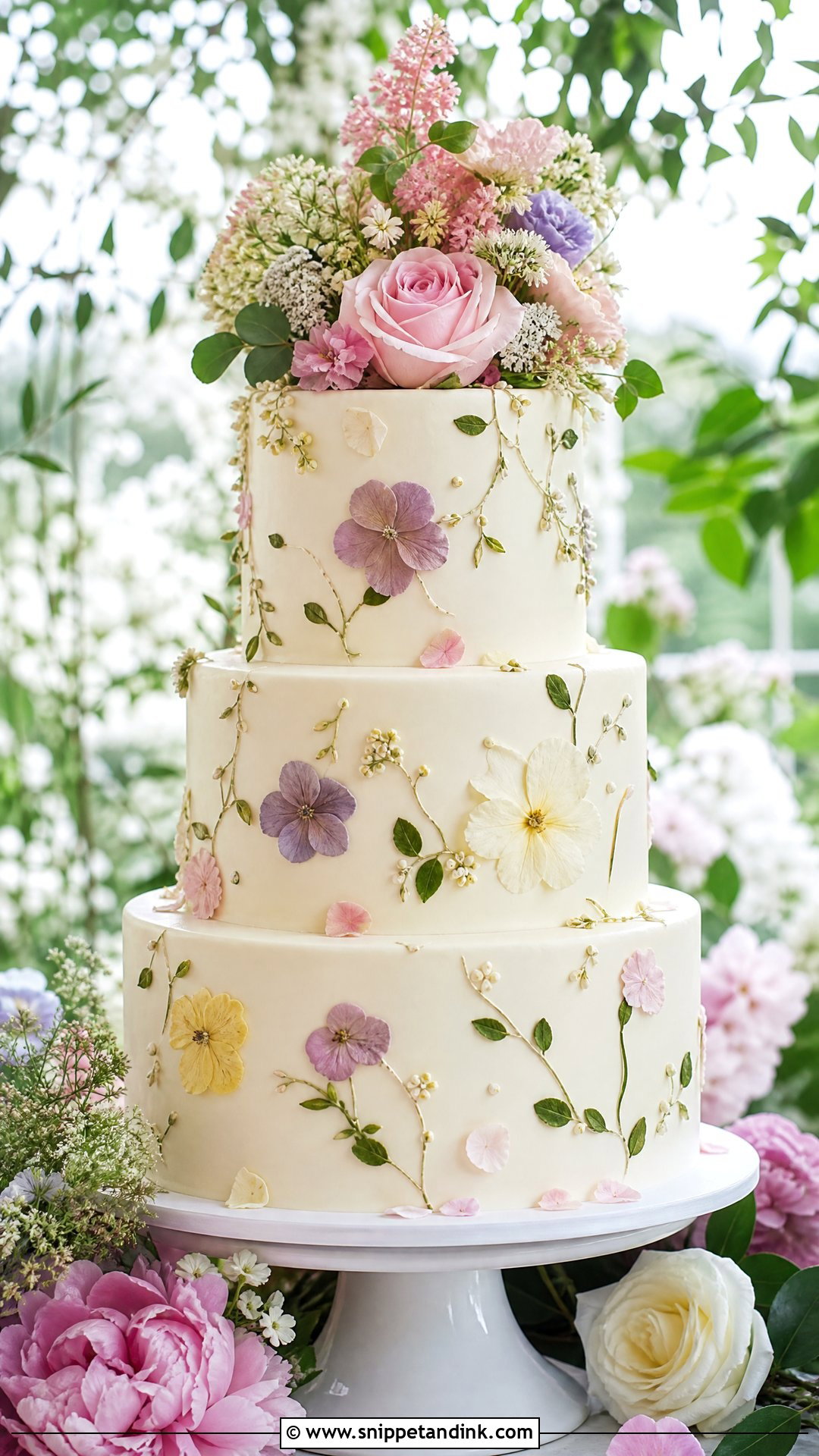
A garden cake should look like it came from the same flowers as the bouquet. Pressed flowers, buttercream vines, sugar blossoms and a fresh cascade all work. I’d talk to your florist early so the flowers on the cake match what’s on the tables. Keep the base simple. Lemon elderflower, strawberry cream or honey cake suit the garden mood.
18. Custom Marble Wedding Cake
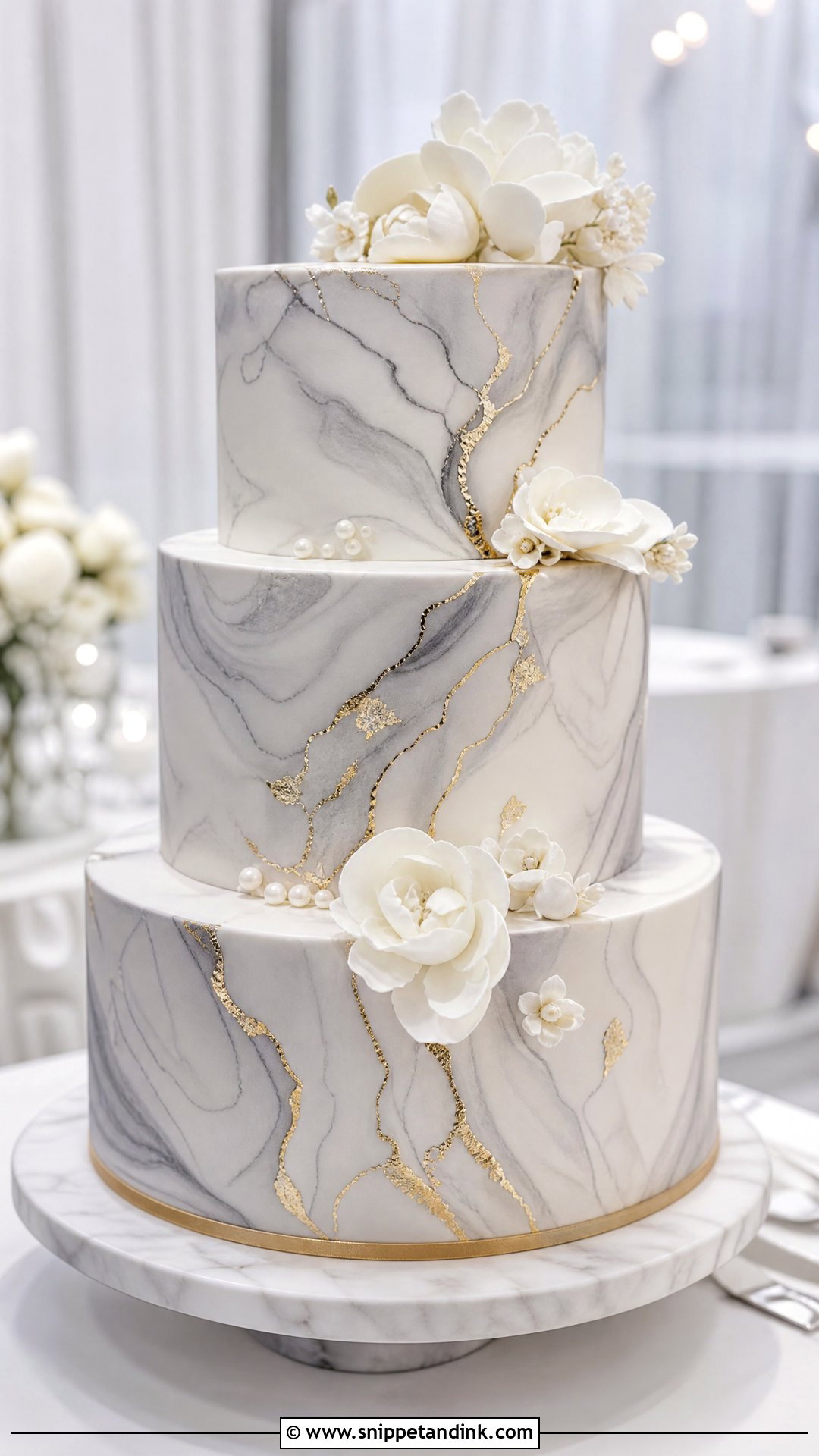
Marble effects can be done in fondant by twisting colors together before rolling, or painted onto buttercream. Gold veining adds luxury; a matte finish keeps it minimalist. It suits hotel and city venues with stone or glass. Because the pattern is already busy, keep the flowers and topper simple. A chocolate vanilla swirl inside echoes the outside.
19. Custom Monogram Wedding Cake
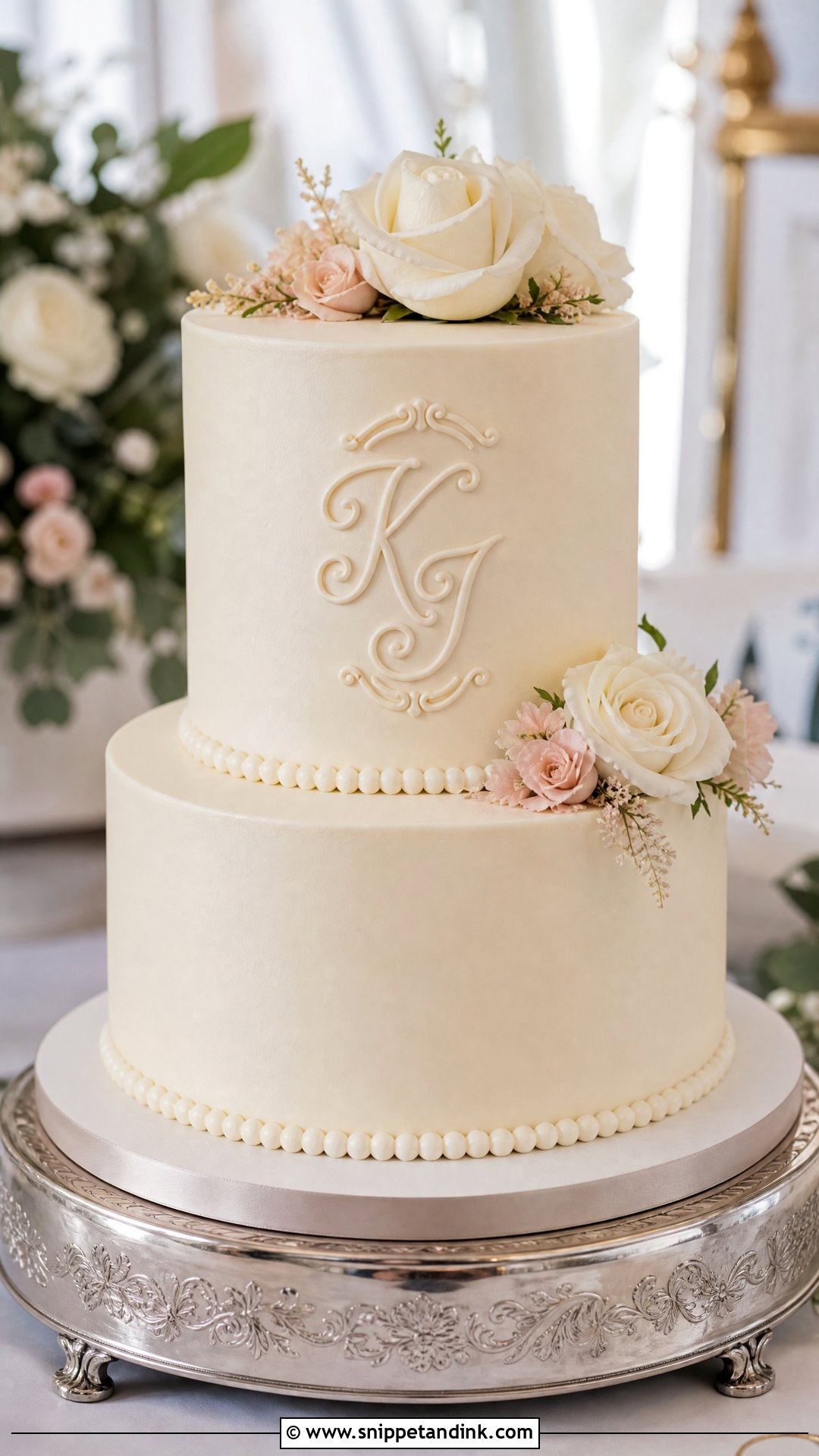
Initials can be piped, embossed, painted, or set as a small topper. The thing I check is legibility from across the room: a fancy script that’s beautiful up close can blur into a squiggle in photos. Keep it clean, frame it with pearl borders or small flowers, and pick flavors you love, like vanilla almond or lemon raspberry.




20. Custom Ombre Wedding Cake
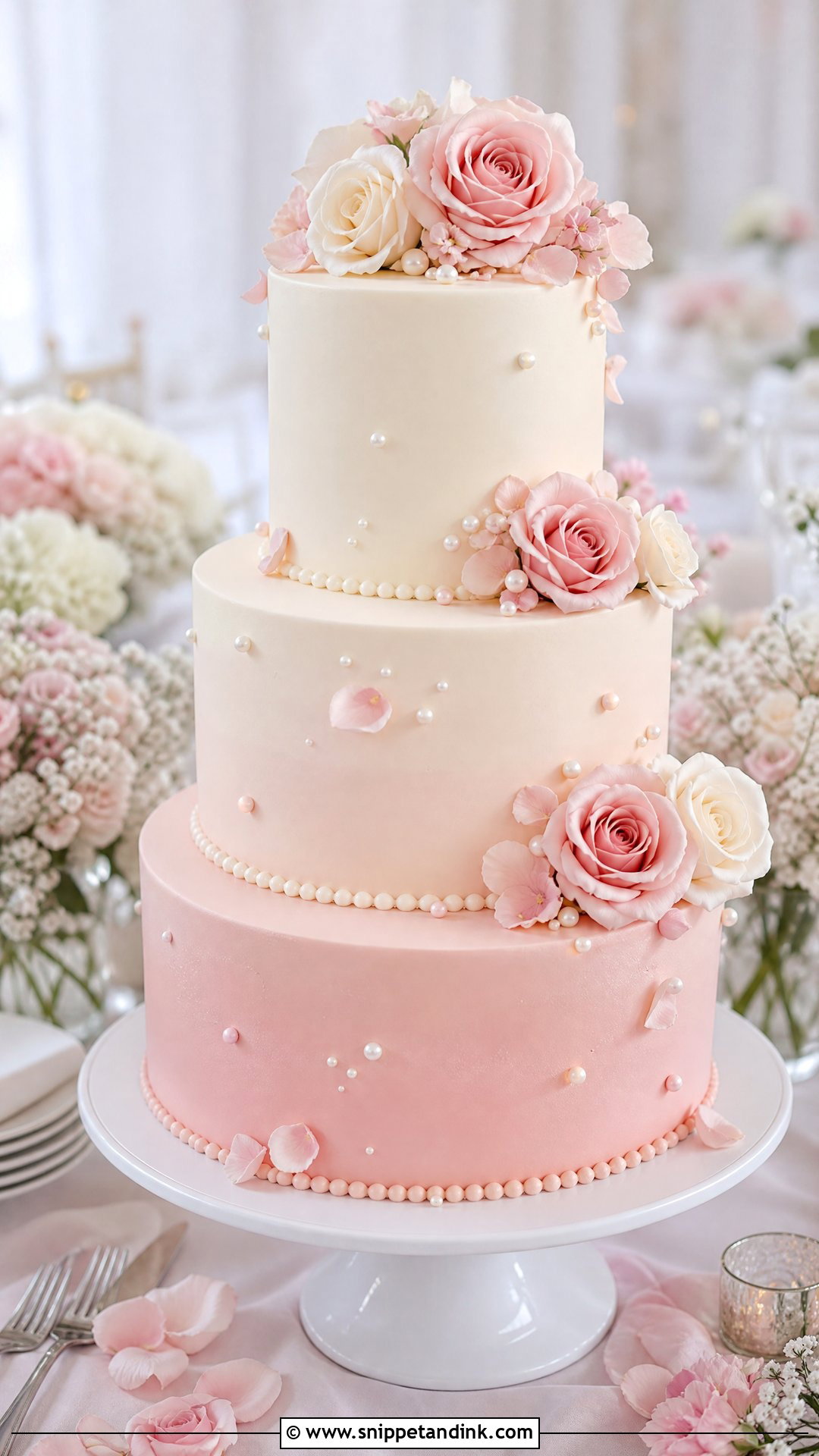
Ombre tiers fade from ivory to a single color down the cake. Buttercream ombre is softer; fondant ombre is smoother and more formal. Getting the steps even takes careful color mixing, so I mix every shade before I start frosting. Blush, peach and sage are popular. Sugar flowers or pearls keep the decoration simple.
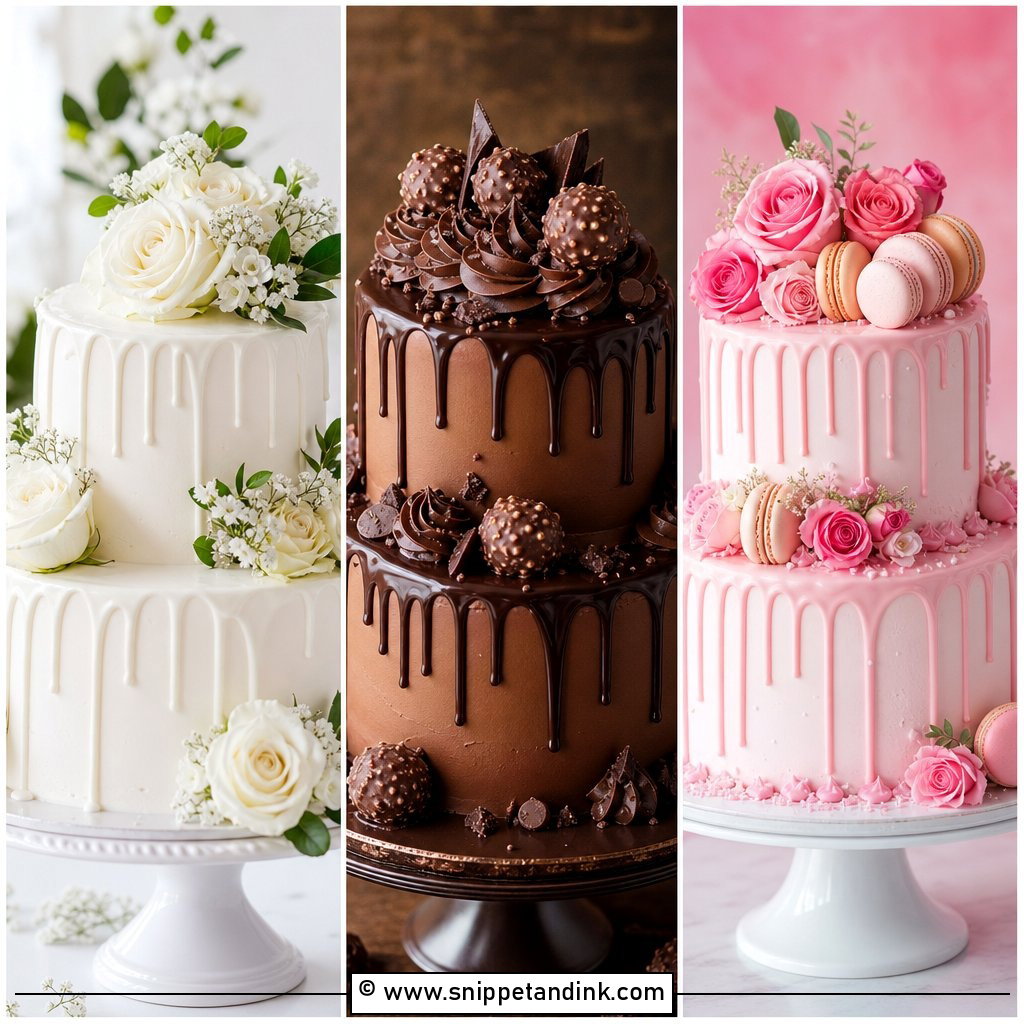
21. Custom Dessert Table Wedding Cake
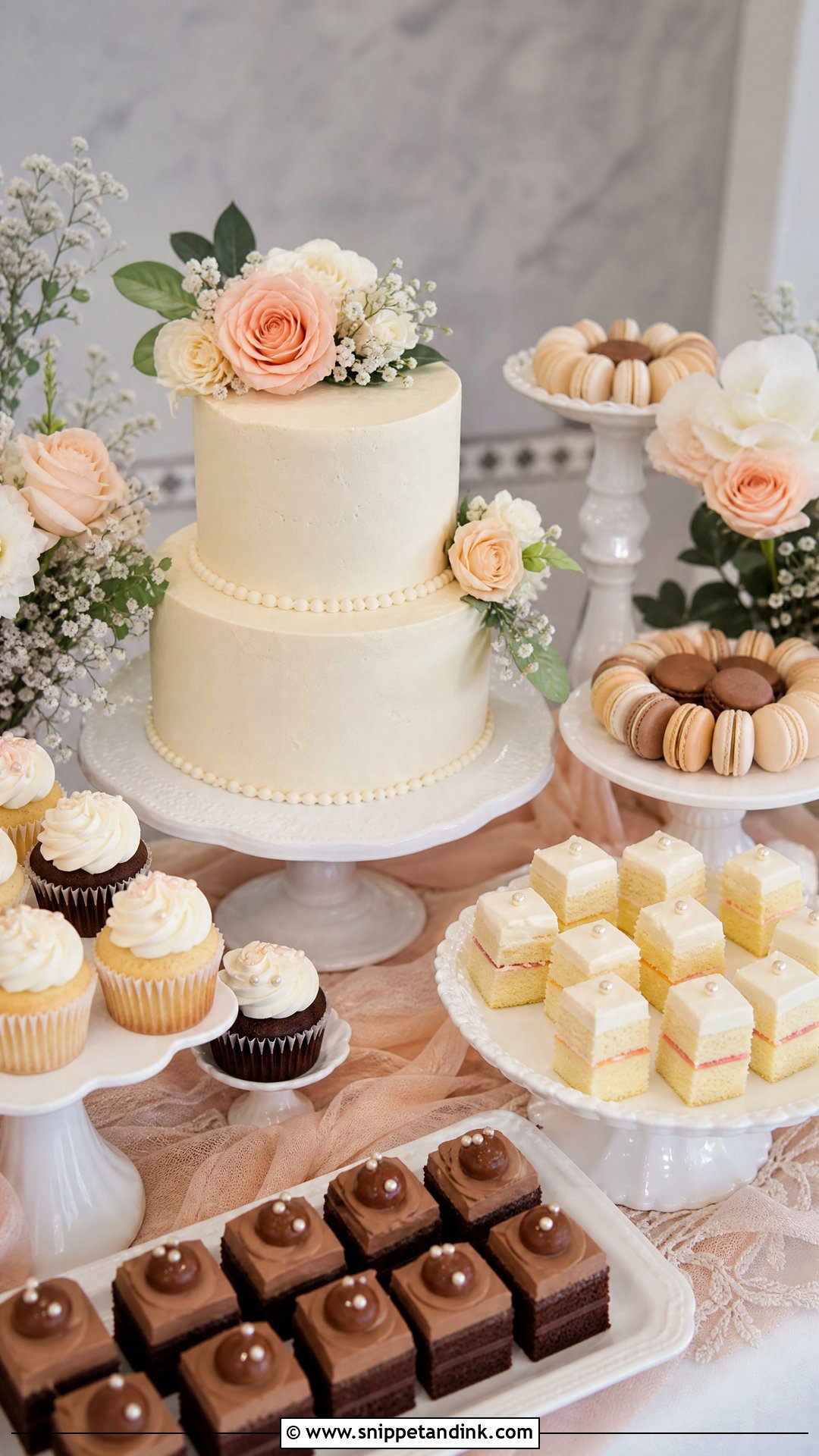
A dessert table wedding cake keeps a small cutting cake as the centerpiece and surrounds it with cupcakes, macarons, mini cakes or cookies. It’s an efficient way to feed a crowd and offer variety. The central cake needs to be the visual anchor, so give it height and the strongest decoration. Repeat a color or detail across the smaller desserts so it all looks planned. Offer crowd-friendly flavors and one signature flavor for the main cake.
22. Custom Pressed Flower Wedding Cake
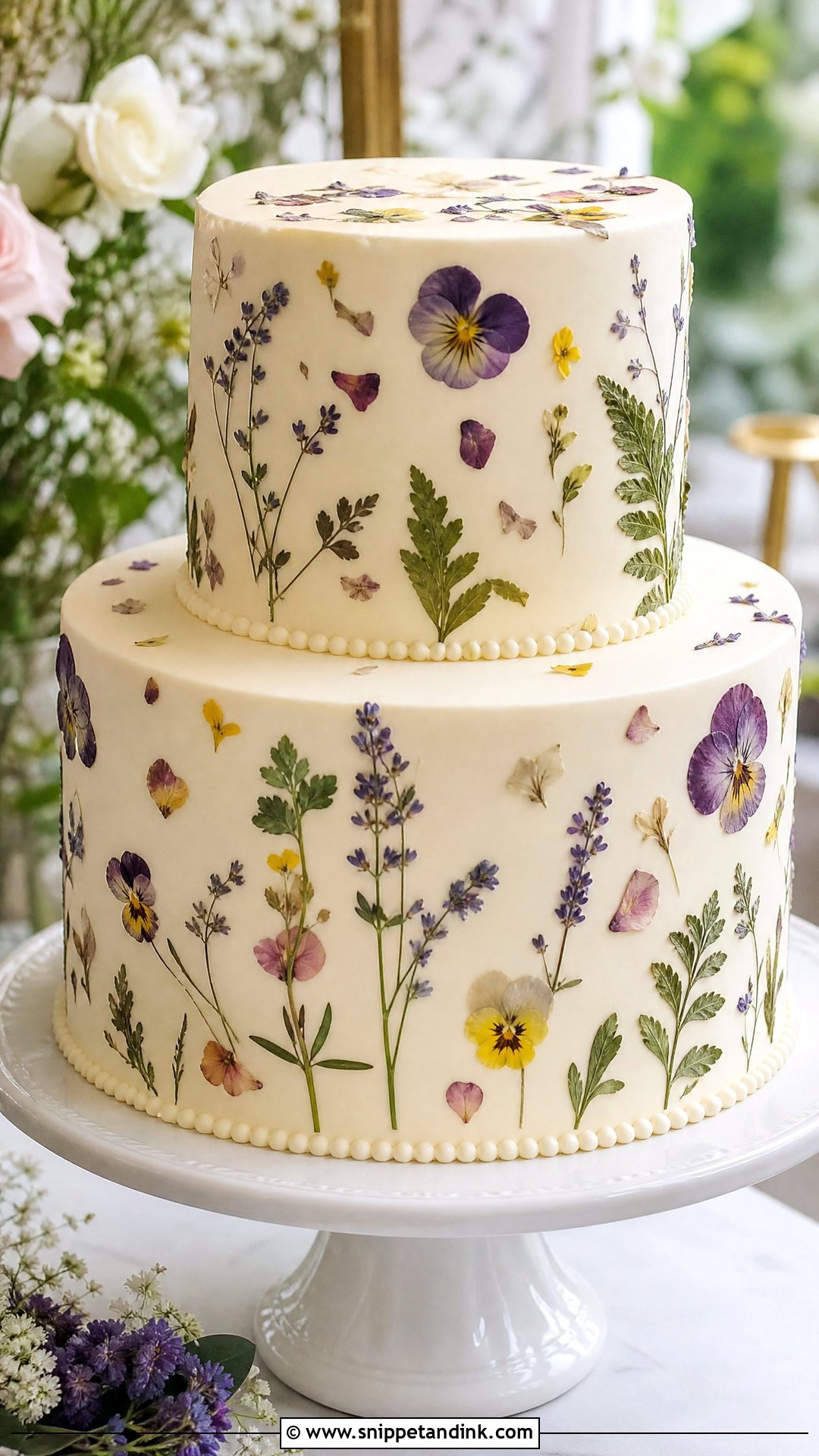
Pressed flowers are pressed flat and dried, then laid onto buttercream in a scattered pattern, a vertical trail or a full wrap. Only edible, food-safe varieties belong here, such as violas, pansies and cornflowers. A pale base, ivory or soft yellow, shows them clearly. Lemon honey or orange blossom flavors suit the botanical look.
23. Custom Sculptural Wedding Cake
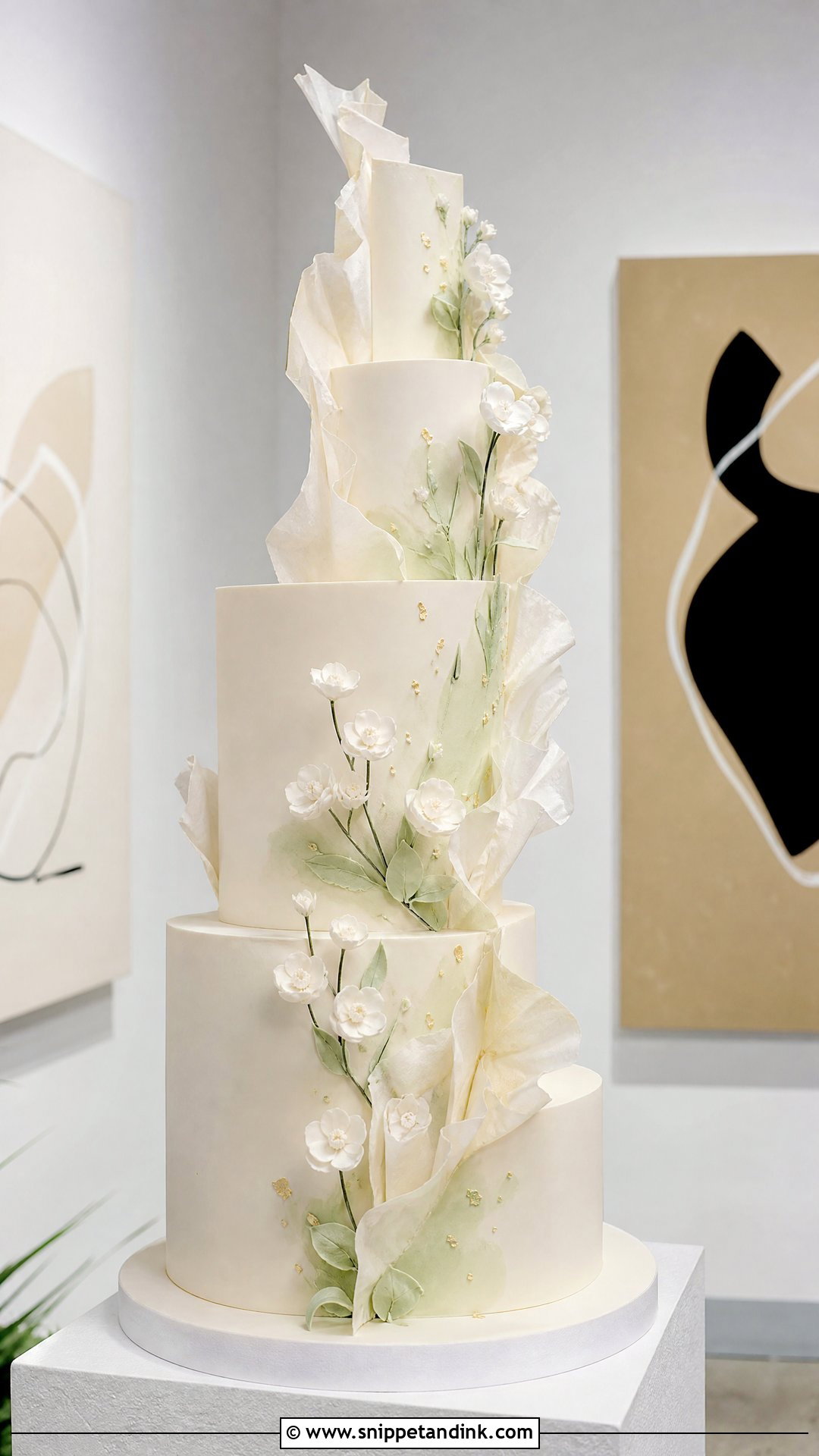
Sculptural cakes behave like small architecture projects. Offset stacking, curved tiers and wafer paper waves all need hidden supports, and I sketch the structure before I agree on the design. Keep the palette to ivory and one accent so the shape stays the focus. The flavors can be adventurous too: pistachio raspberry, black sesame vanilla or lemon thyme.
24. Custom Colorful Wedding Cake
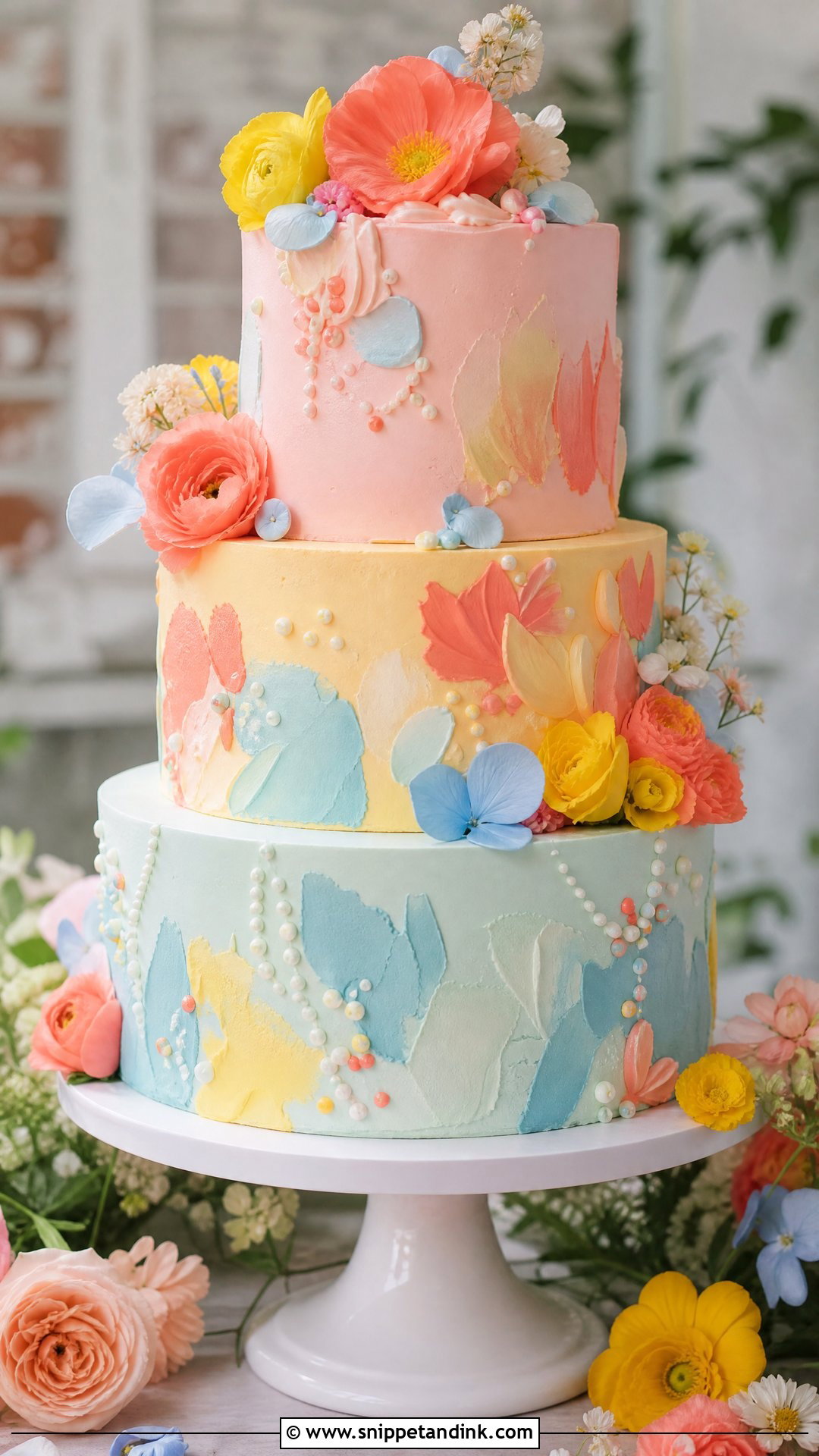
A custom colorful wedding cake works when the palette is chosen, not piled on. I pick two or three shades and balance them with ivory. Strong colors need a lot of gel color, which can make buttercream taste slightly bitter, so painted accents or bright flowers are sometimes a better route. Garden parties and summer receptions suit it.


25. Custom Small Wedding Cake
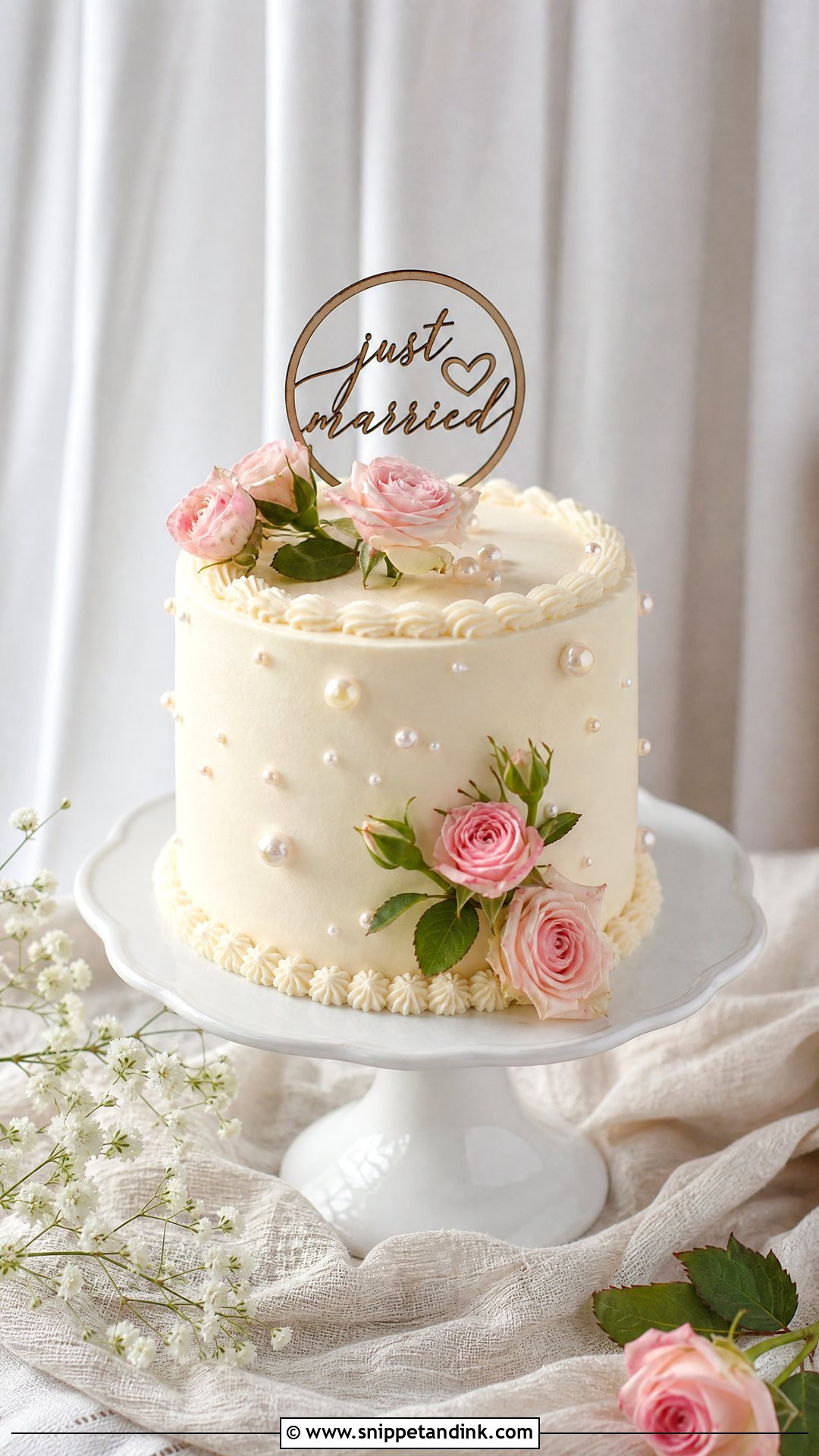
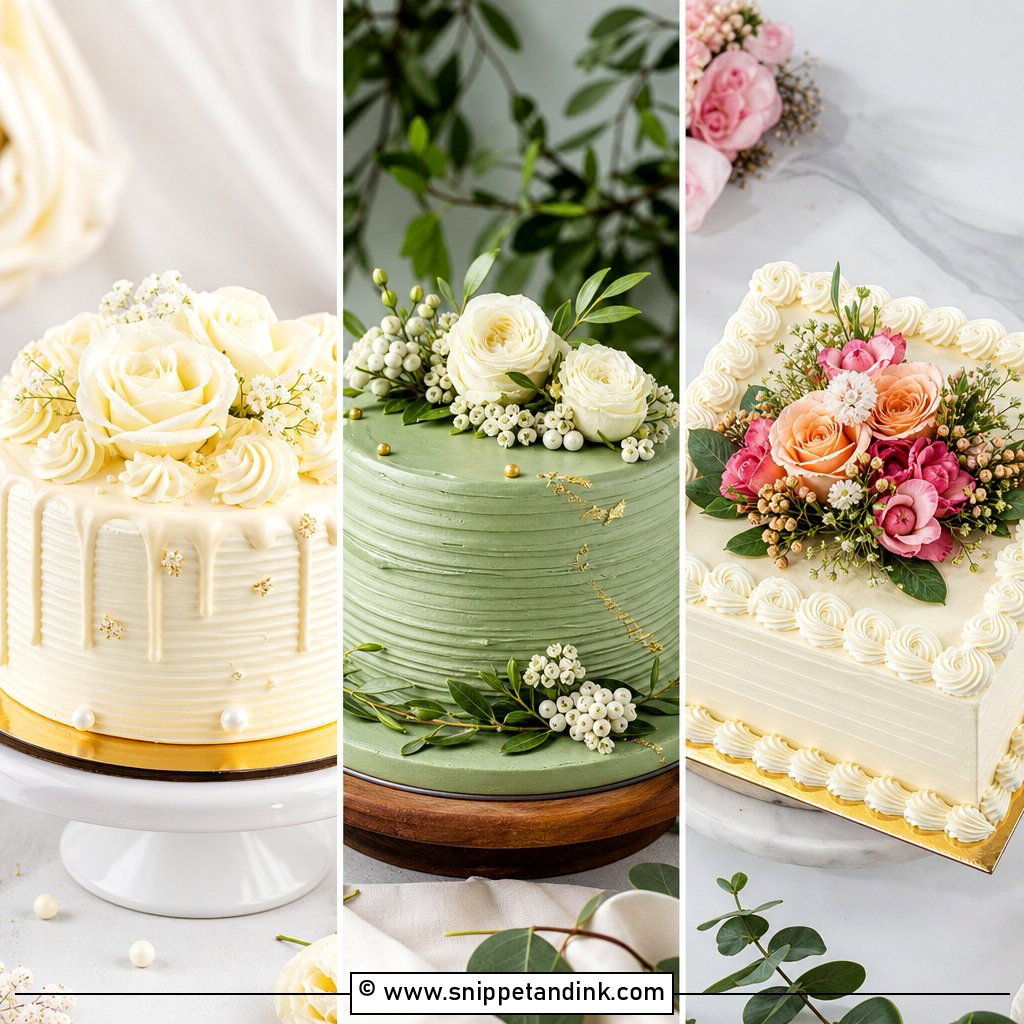
Small cakes make every detail count. A one-tier or petite two-tier cake for an elopement, courthouse wedding or backyard reception can carry vintage piping, flowers or a custom topper. Since there’s only one flavor, choose the one you love most. Put it on a raised stand with a few flowers so it doesn’t get lost on the table.
Which Flowers Can Actually Touch the Frosting
Not every flower that looks good on a cake is safe to put in it. Some common wedding flowers, including hydrangea, lily of the valley, sweet pea and foxglove, are toxic and shouldn’t touch anything guests will eat. Even safe flowers may have been sprayed with pesticides if they came from a regular florist supply.
- Wrap stems in floral tape and insert them into food-safe picks or straws, never straight into the cake.
- Place a small piece of parchment under blooms that rest on the frosting.
- Use edible flowers, such as violas, pansies and some rose varieties, for anything pressed directly into buttercream.
- Agree with your florist and baker who adds the flowers and when, ideally on site just before guests arrive.
Heat, Delivery and the Hour Before Cutting
Buttercream softens in warm rooms, and fondant can sweat when a cake moves from a cold fridge into a warm, humid space. I always ask where the cake will sit: away from windows, heaters and candles, and out of direct sun. For summer or outdoor weddings, a firmer frosting or a ganache layer underneath helps the cake hold its shape.
Tall and heavy cakes are often delivered in tiers and stacked at the venue, so ask for a setup time on the day and a sturdy table that won’t wobble. Plan to cut within a few hours of setup so the cake is still at its best.
Your Cake Should Look Like Your Wedding, Not a Catalog
The cakes people remember look like they belong to the couple and the room. A cake doesn’t need to be huge; it needs good proportions, a clear style, one strong detail and a flavor you’d happily eat twice. Save the looks you love, compare them with your venue and flowers, then bring them to your baker with your guest count and date. The conversation about structure, servings and frosting is where your cake really gets designed.
You'll Like These Ideas:








Leave a Reply