
Stenciling is the technique I reach for when a couple wants a detailed cake but not a heavy one. A thin sheet of food-safe plastic, a scraper and a bit of icing can put lace, florals, pearls, vines, damask or geometry onto fondant or a firm buttercream in minutes per tier, where hand piping the same pattern takes hours. The color changes the mood entirely: white royal icing reads classic, gold reads modern, blush reads romantic and black on ivory reads bold. Below are twenty patterns I’d happily put on a wedding cake, with notes on where each one behaves well and where it fights you.
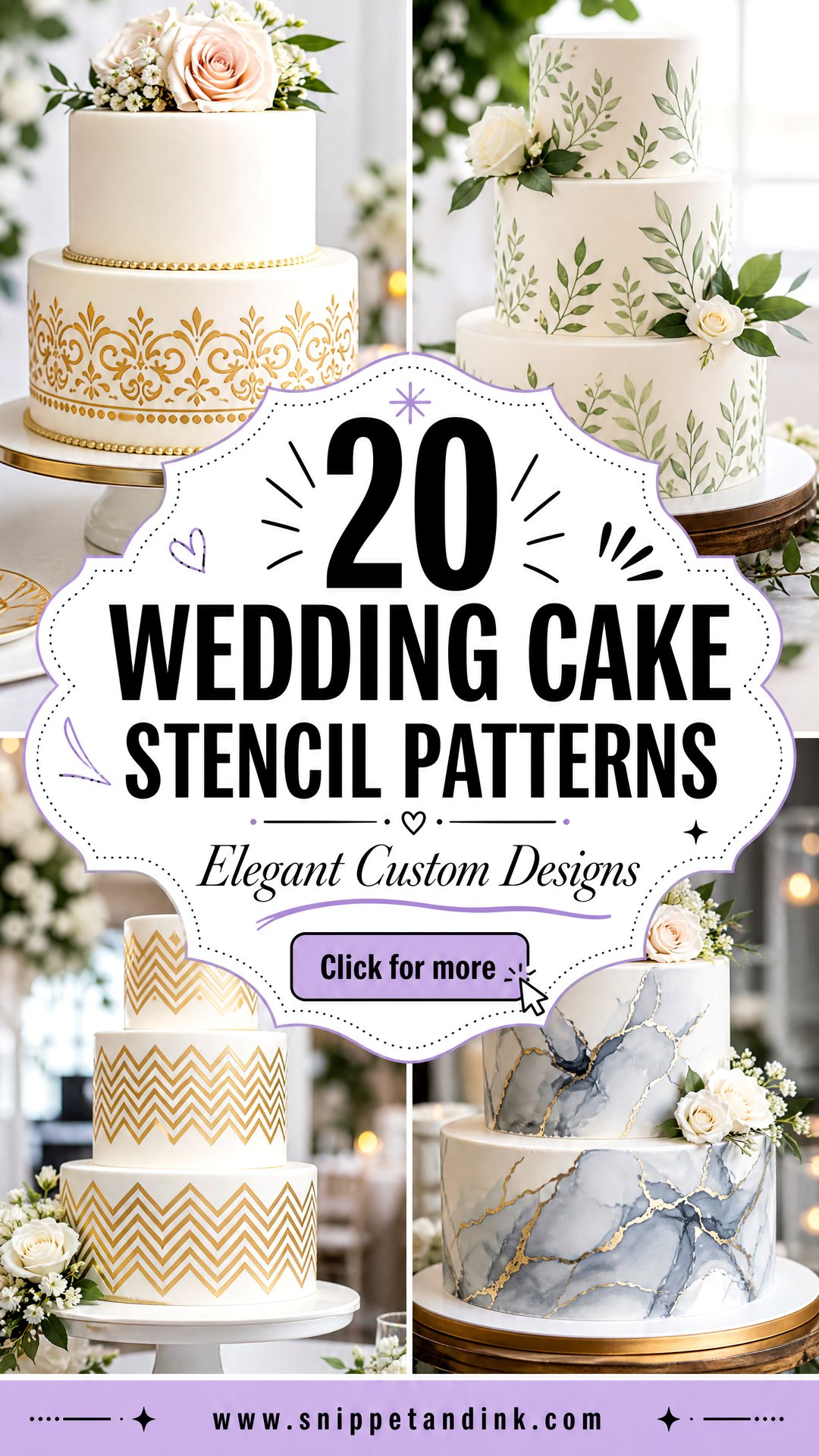
Royal Icing, Airbrush or Luster: How the Pattern Goes On
The same stencil looks completely different depending on what’s pushed through it. When I sit down with a couple, I show them all three methods before we pick a pattern.
Spread royal icing
I hold the stencil against the tier with pins or tape and spread a thin layer of royal icing across it with a scraper, then peel it straight off. It leaves a slightly raised pattern you can see in side light. It’s the right choice for lace, scrolls and damask, and the wrong one for very fine lines, which clog.
Airbrushed color
Spraying food color through the stencil gives a flat, sharp print with fine detail, so toile, marble and intricate mandalas are airbrush jobs. The overspray needs masking, or the tier above gets a faint haze.
Luster dust and metallics
Gold and pearl finishes are usually luster dust brushed or painted through the stencil, or metallic icing. Metallics show every wobble, so I use them on short patterns and borders unless the cake is fondant.
1. Wedding Cake Lace Stencil
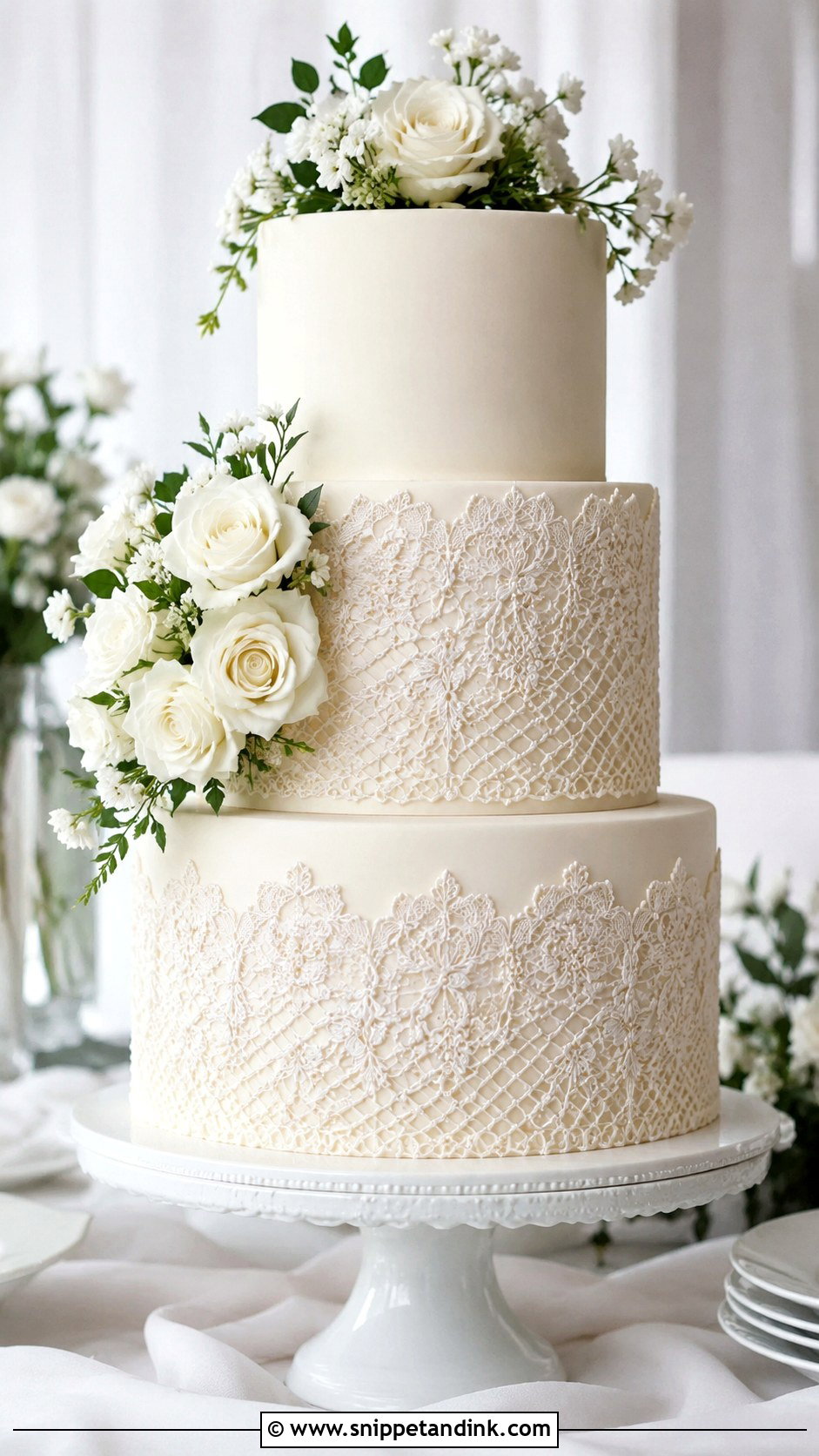
Lace is the pattern couples ask me for most, usually because the dress has lace sleeves, a lace train or a vintage neckline. I echo the motif rather than copying it; a stencil cut from a photo of the gown tends to look like wallpaper. It sits nicely on ivory fondant, firm buttercream or pale blush. White on white is soft, pearl or champagne gives a slight glow. I’d keep it to one or two tiers and leave the others smooth for flowers.
2. Wedding Cake Floral Stencil
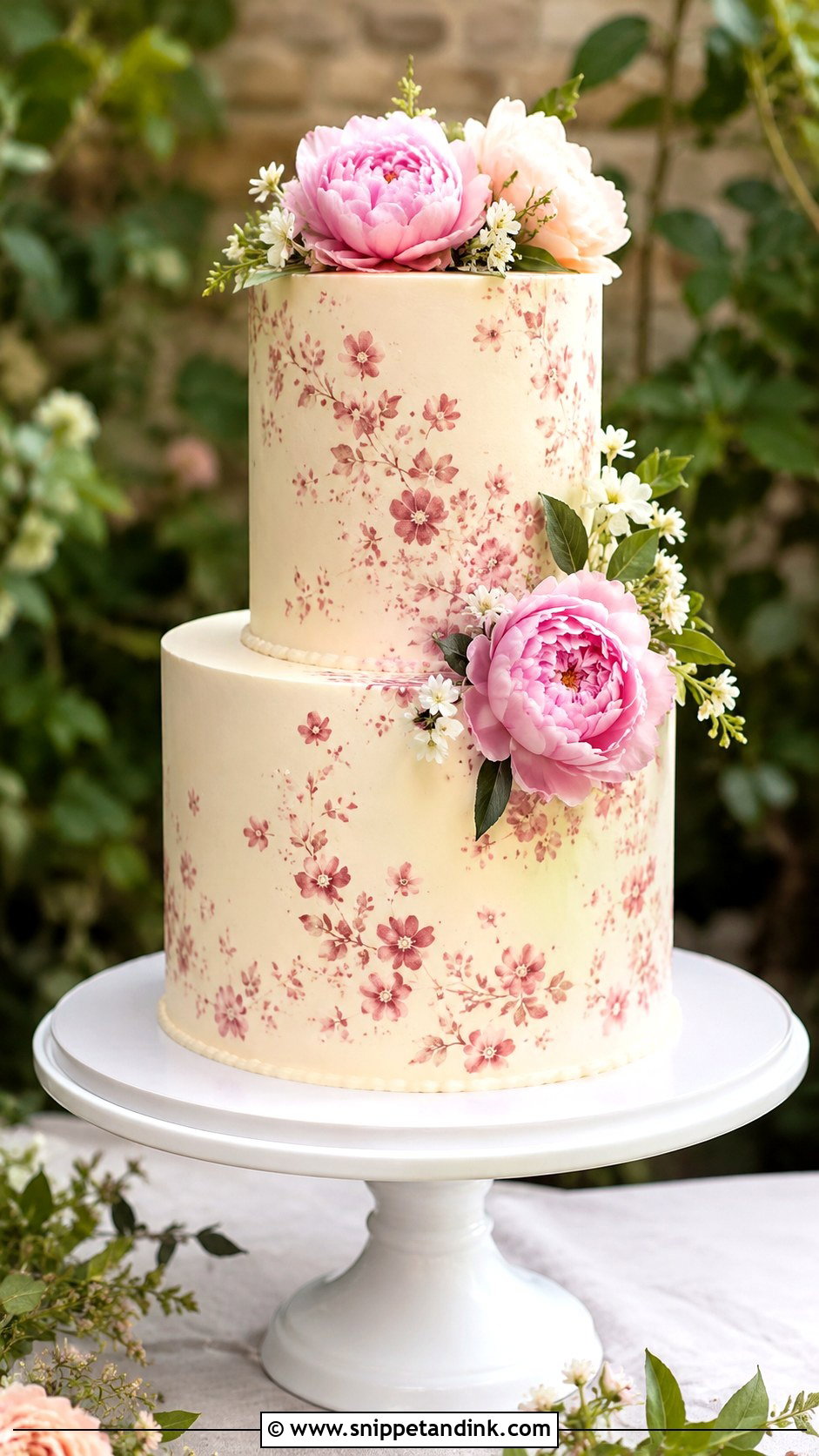
A floral stencil gives you flowers without the weight and cost of a cascade of sugar blooms. Tiny scattered blossoms read delicate; a full garden print reads bold, and needs a tall tier to breathe. Pale gold, dusty rose, sage and white all stencil cleanly. On buttercream I use small-flower designs only, since large solid petals tend to lift at the edges when the stencil comes away. Finish with fresh blooms that match the bouquet and a plain stand.
3. Wedding Cake Damask Stencil
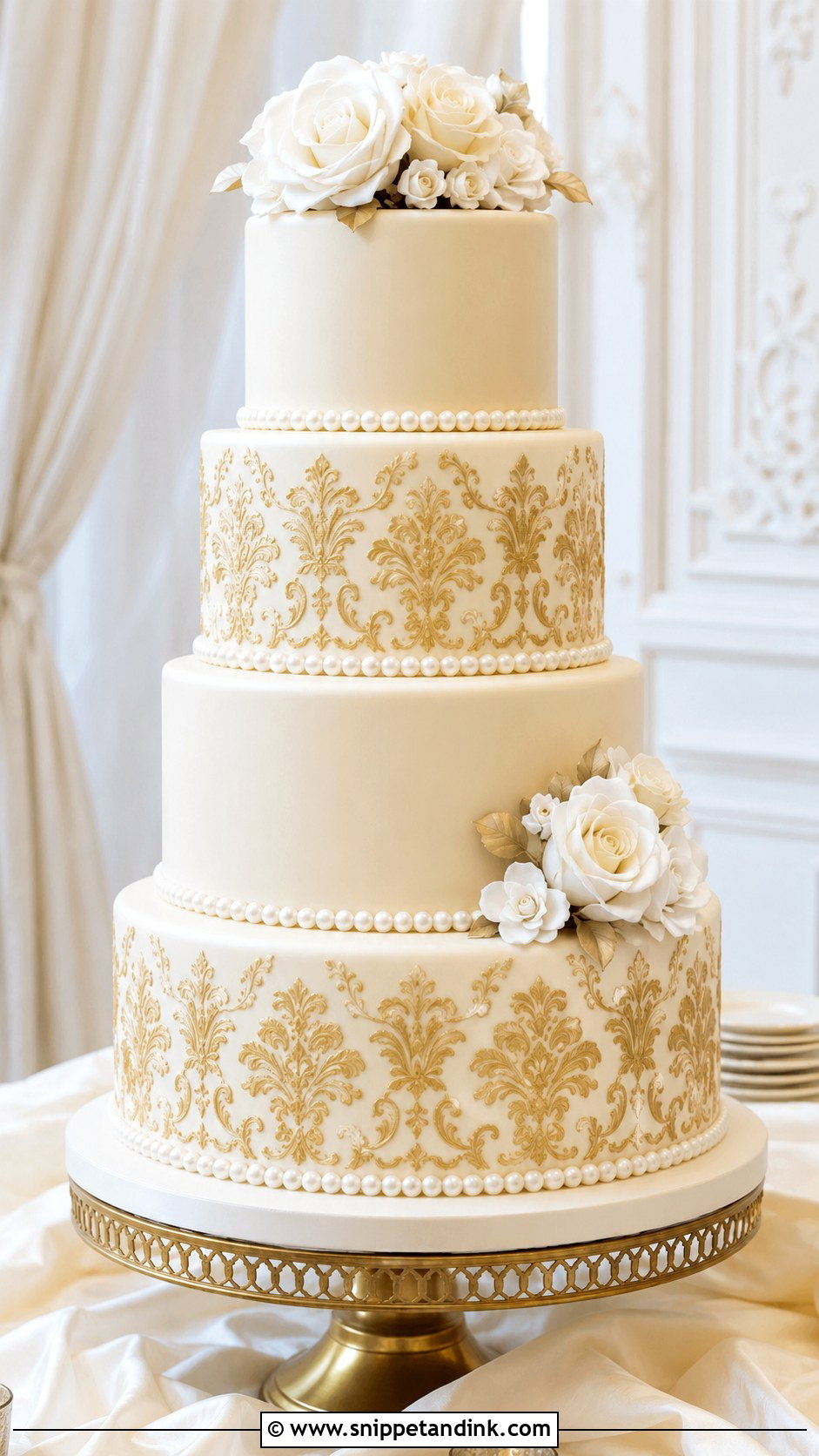
Damask is the most formal pattern here, a repeated scroll with a fabric quality that belongs in a hotel ballroom or a historic venue. The repeat has to be crisp and the joins invisible, so I only use it on fondant with sharp edges, never on soft buttercream. White on ivory looks classic, gold looks rich, and gray, champagne or blush tone it down. A ribbon or pearl border at each tier base hides where the stencil meets the board.
4. Wedding Cake Geometric Stencil
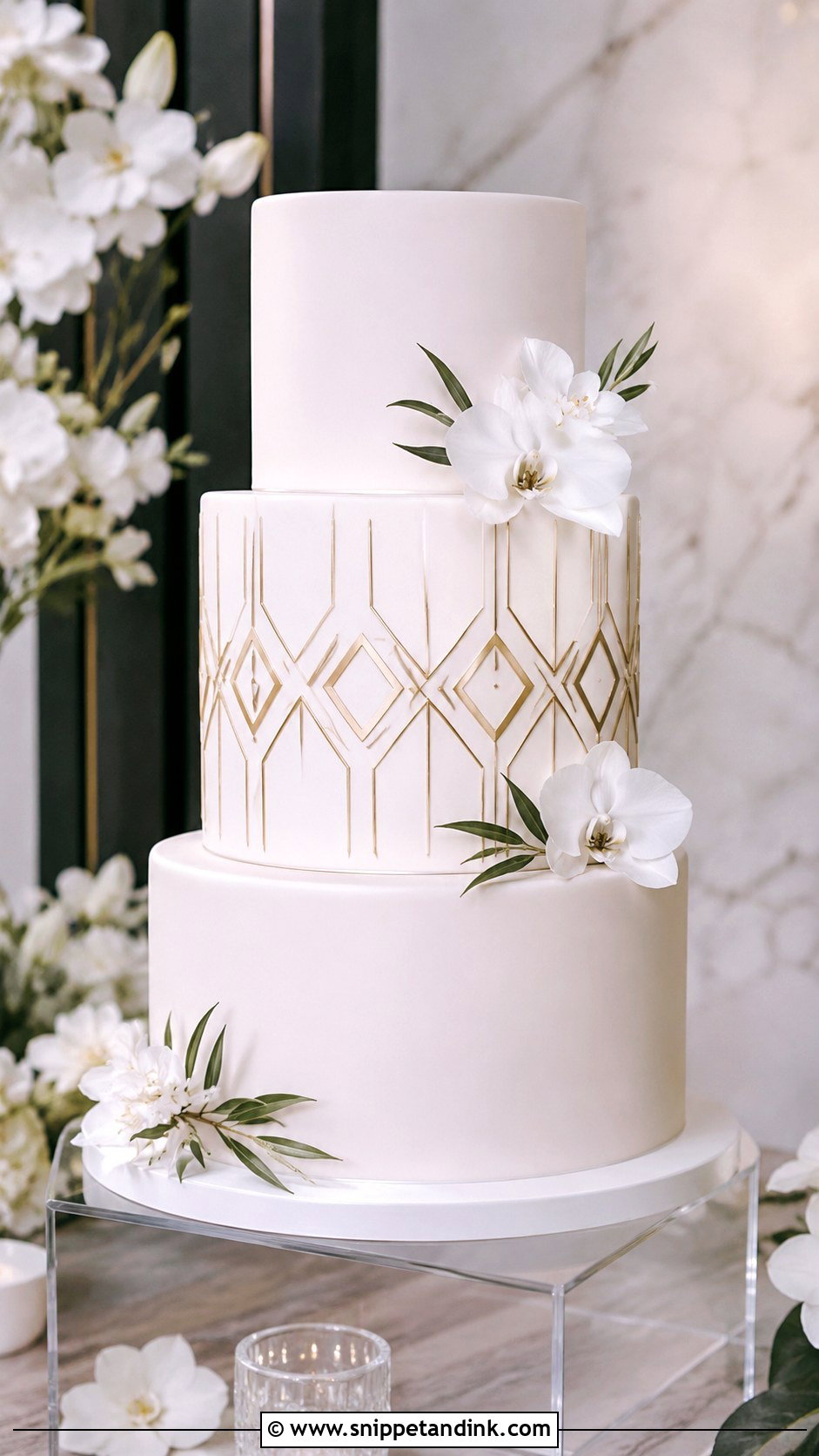
A wedding cake geometric stencil suits a modern cake. Diamonds, arches, triangles and repeats look architectural on square tiers, tall tiers or cakes with acrylic separators. Gold or silver airbrushing gives a sharp finish, white on white keeps it minimal. Geometry is unforgiving: a pattern that drifts a few millimeters off level shows from across the room, so I mark a guide line on the tier before I start. A few flowers or a satin ribbon stop it from feeling cold.
5. Wedding Cake Pearl Stencil
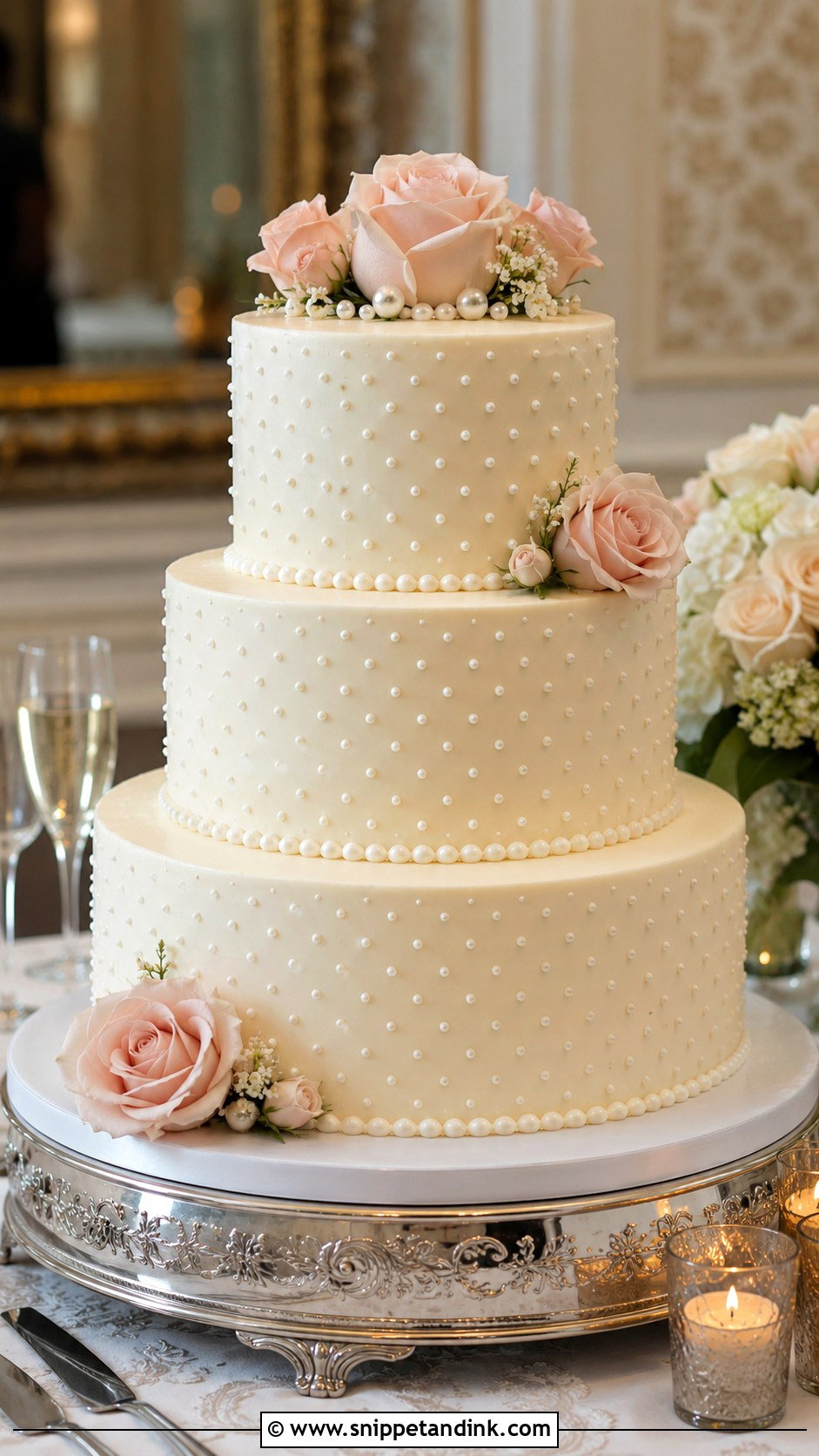
Placing hundreds of sugar pearls by hand takes a long time and they can drop off in transit. A pearl stencil gives an even dotted texture in a fraction of the time, in white, ivory, pearl shimmer or pale champagne. It reads as soft texture from a distance and shows its detail in close-ups. Pair pearl stenciling with smooth buttercream, rounded tiers, roses or a simple monogram topper. If you want real dimension, I add a few actual pearls along the top edge only.
6. Wedding Cake Monogram Stencil
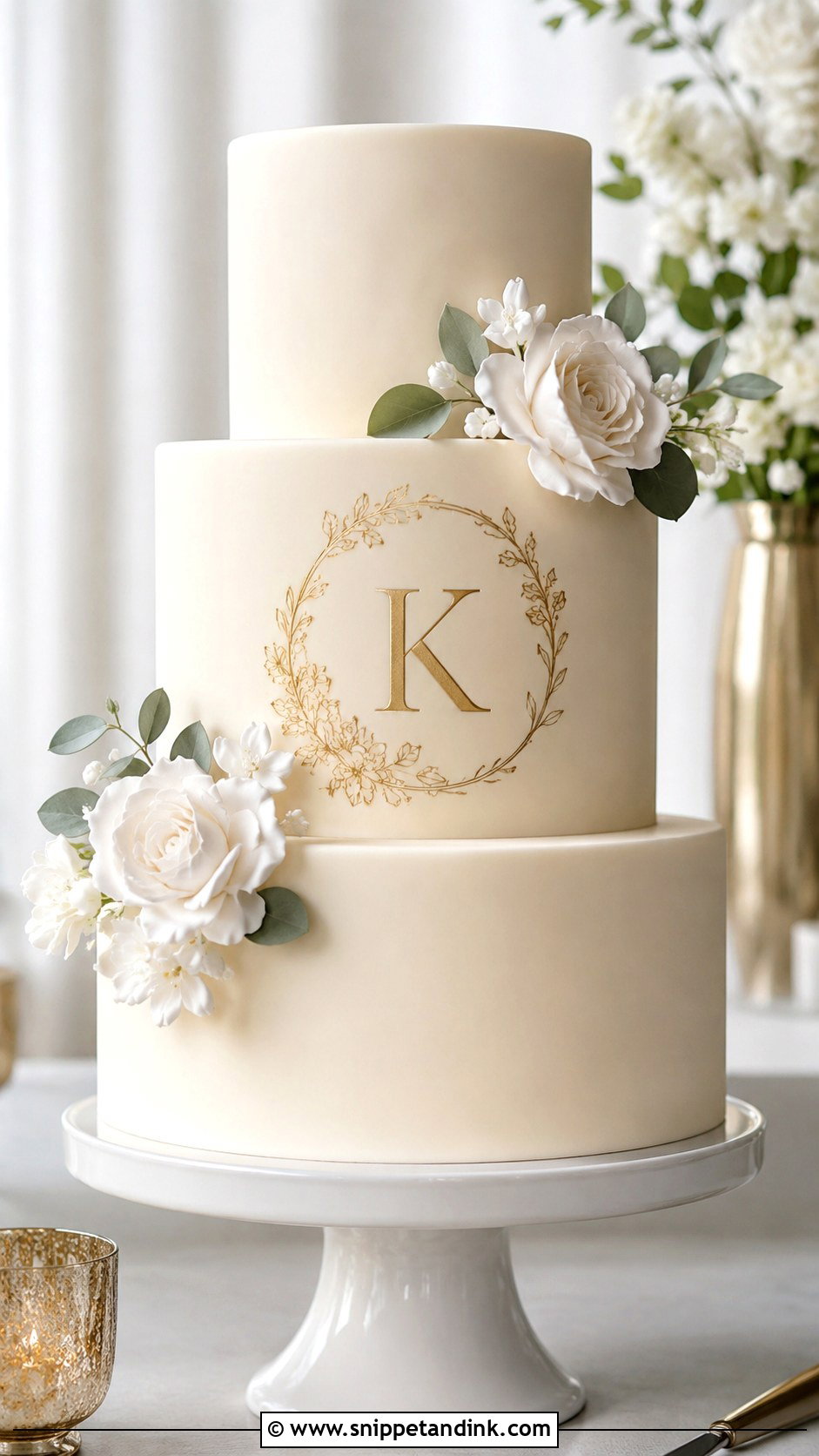
A monogram stencil is a one-off cut, so order it early; most bakers need your initials and font well before the wedding to have it made. The letters can sit on the front tier, inside a wreath, framed by lace or centered on a smooth fondant panel. Everything else should stay plain so the initials lead. Gold, silver, ivory and soft gray are reliable. Script letters with very fine hairlines can break when you lift the stencil, so I choose a script with some weight to it.
7. Wedding Cake Vine Stencil
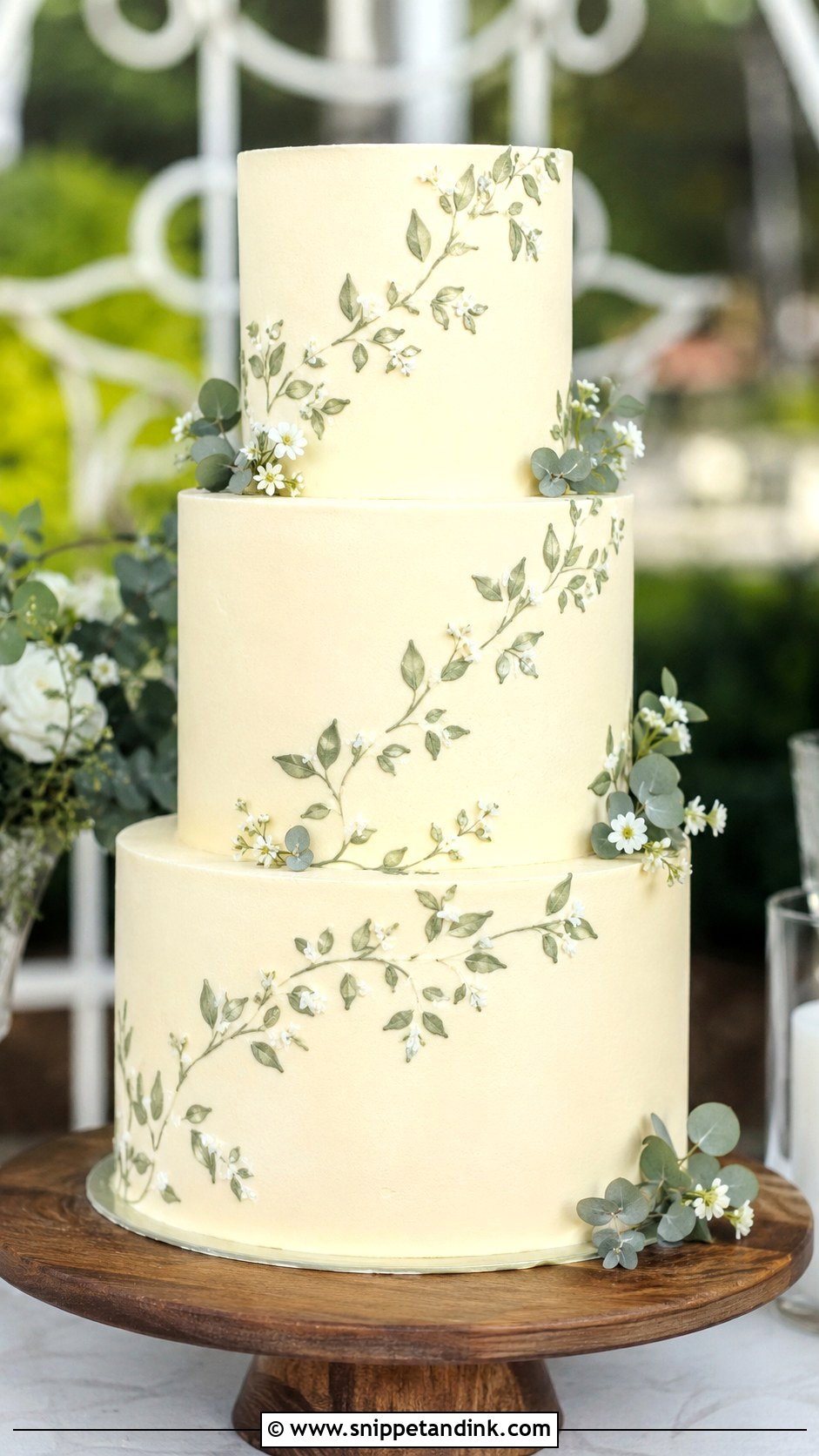
Vines are the most forgiving pattern on the list, because a slightly uneven join looks like natural growth rather than a mistake. The stencil can climb the tiers, wrap the sides or trail from one tier to the next. Sage green feels fresh, white on ivory is subtle. Fresh herbs, small white flowers, olive leaves or eucalyptus suit it, though eucalyptus should never touch the frosting directly. Smooth frosting keeps the line clear.
8. Wedding Cake Rose Stencil
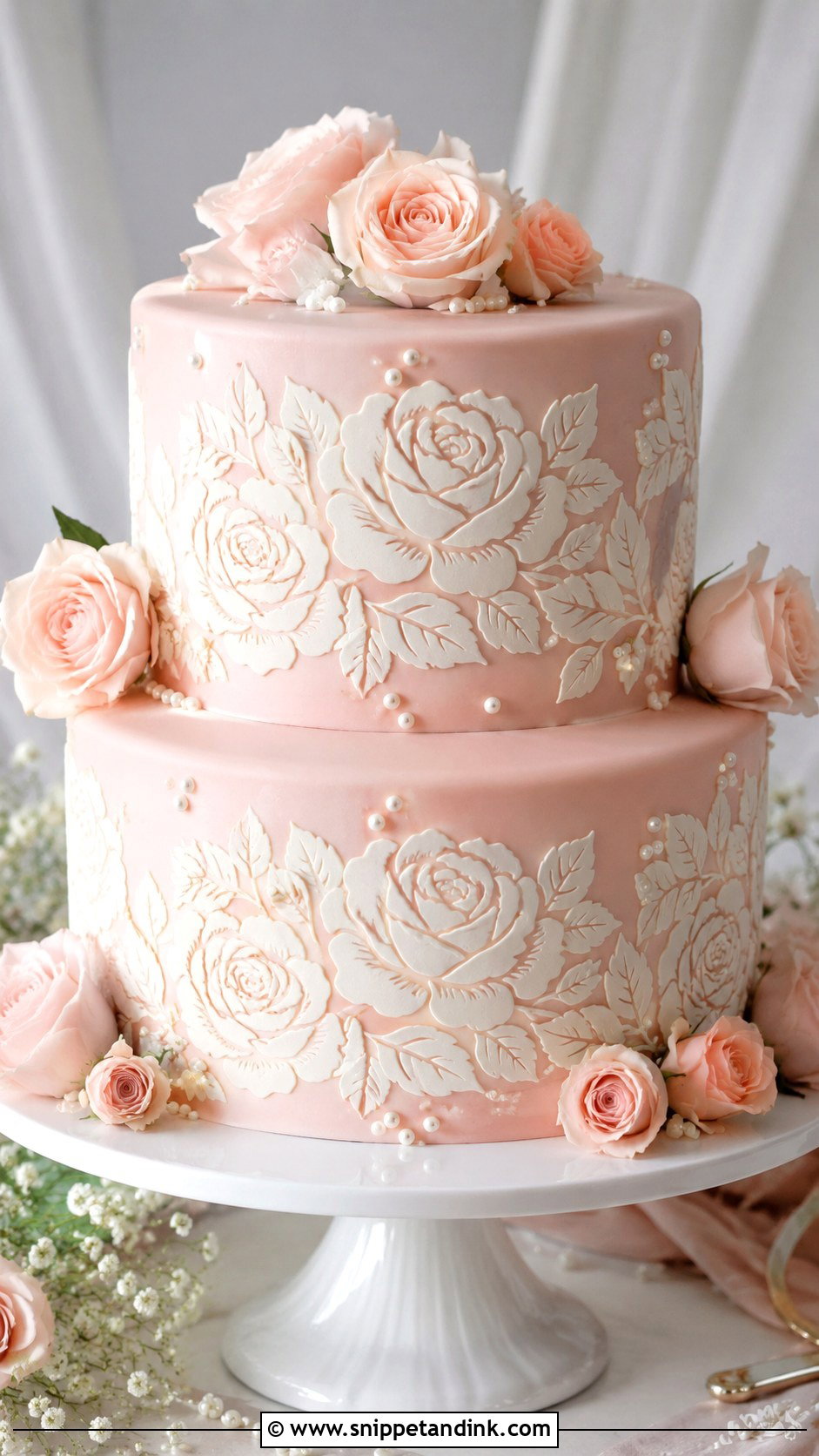
Roses can be a full wrap, a border or a single panel on one tier. Soft pink, ivory, champagne and antique gold all look right. The open rose outline stencils well; a dense rose with layered petals tends to blur into a blob, so I steer couples to the simpler drawing. Add a few fresh roses in a matching tone for depth, but don’t cover the pattern you’ve paid for.
9. Wedding Cake Art Deco Stencil
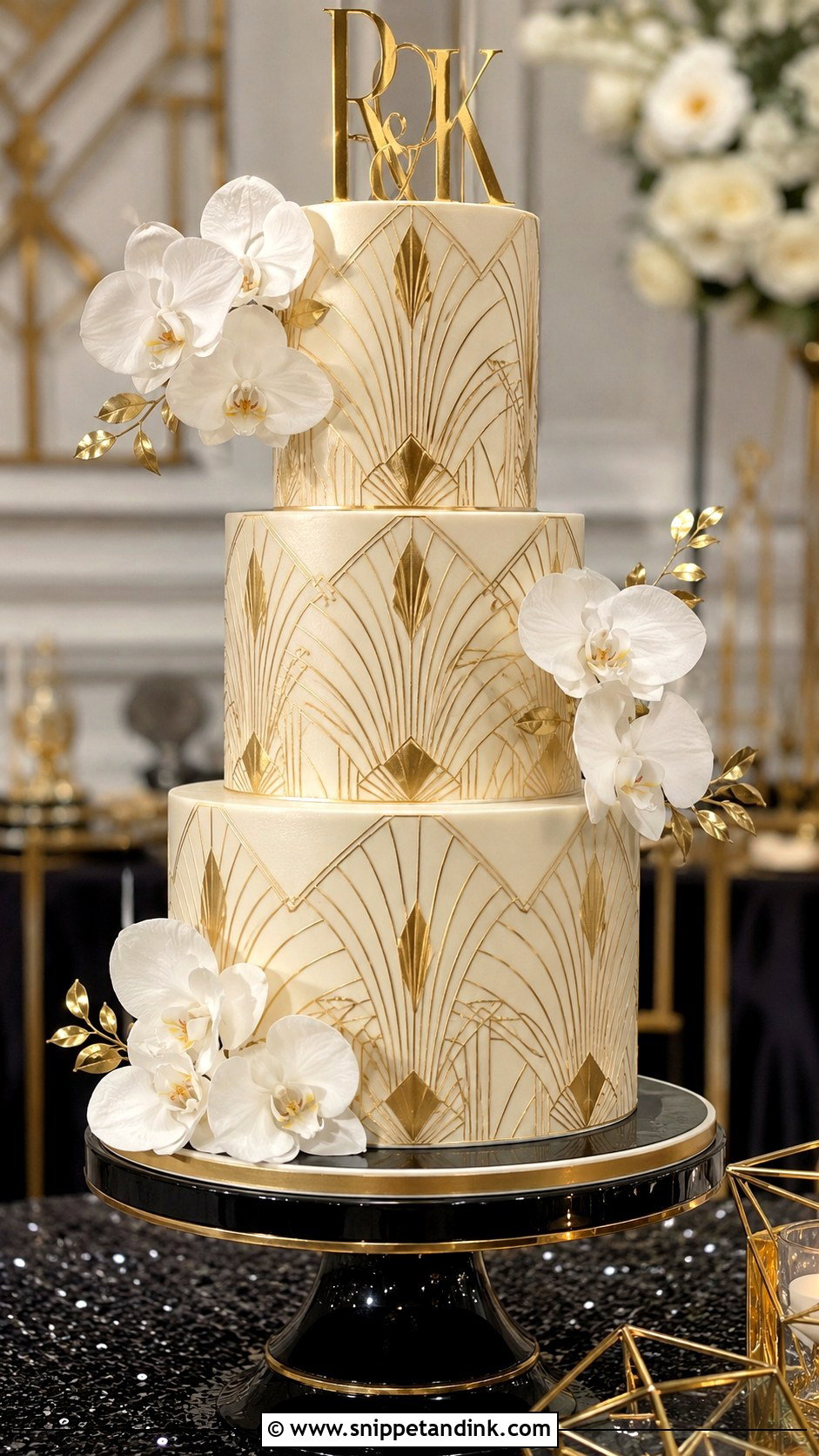
Fans, sunbursts, stepped lines and metallic edges make an Art Deco cake. Gold stenciling on ivory or black fondant is dramatic, champagne on white is softer. Symmetry matters more here than anywhere: the fan should sit dead center on the front of each tier, so I stack and check alignment before decorating. It needs few flowers. A couple of white orchids, sugar feathers or a plain gold topper is enough.
10. Wedding Cake Moroccan Stencil
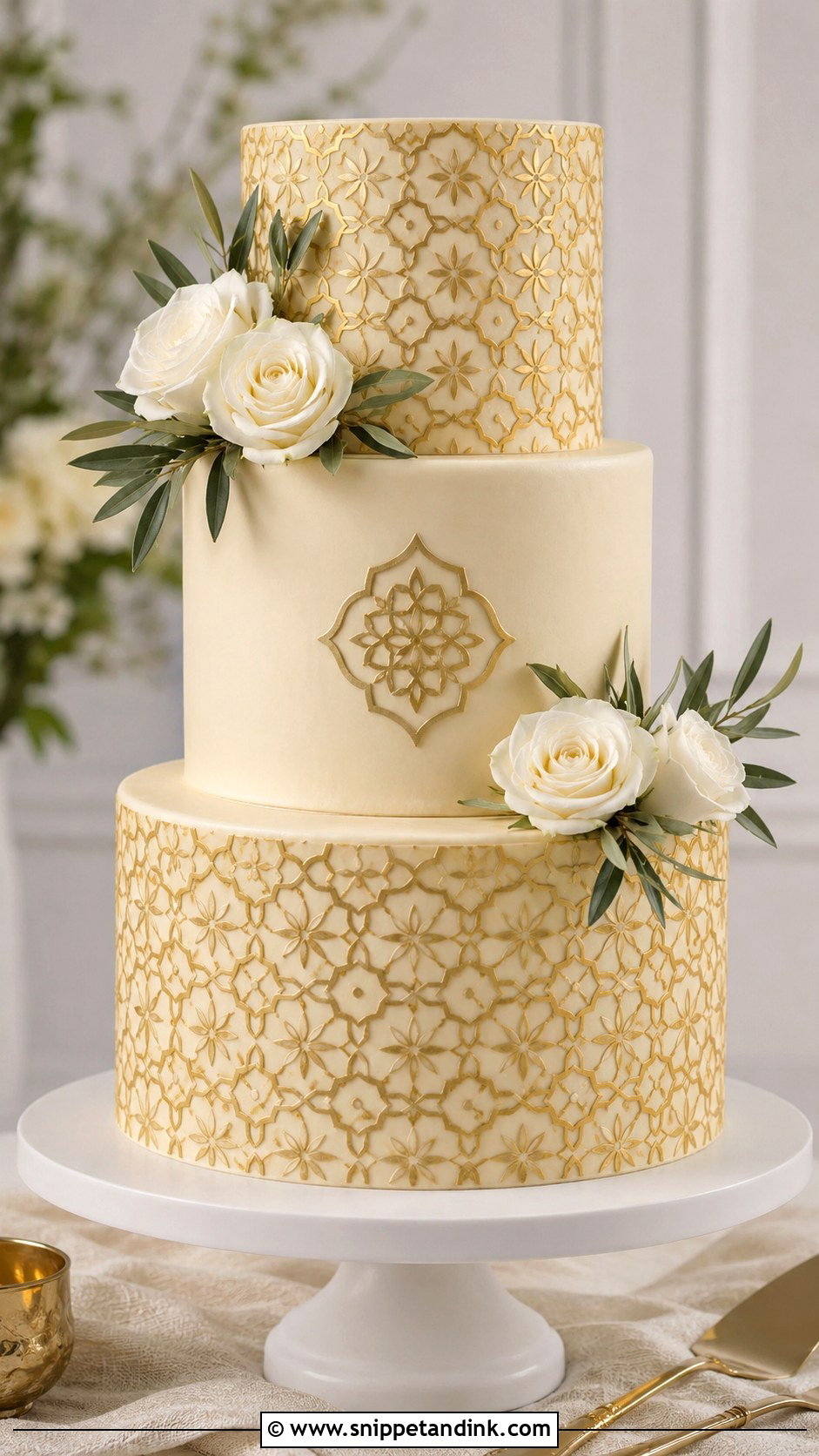
Moroccan tile patterns repeat like geometry but with softer curves. They can cover the whole cake or appear on alternating tiers. White on white gives an embossed look; gold, terracotta, sage or dusty blue tie in the palette. Tile repeats are the hardest to match at the seam, because the eye follows the grid all the way round, so I always put the join at the back of the cake. Keep the rest simple.
11. Wedding Cake Scroll Stencil
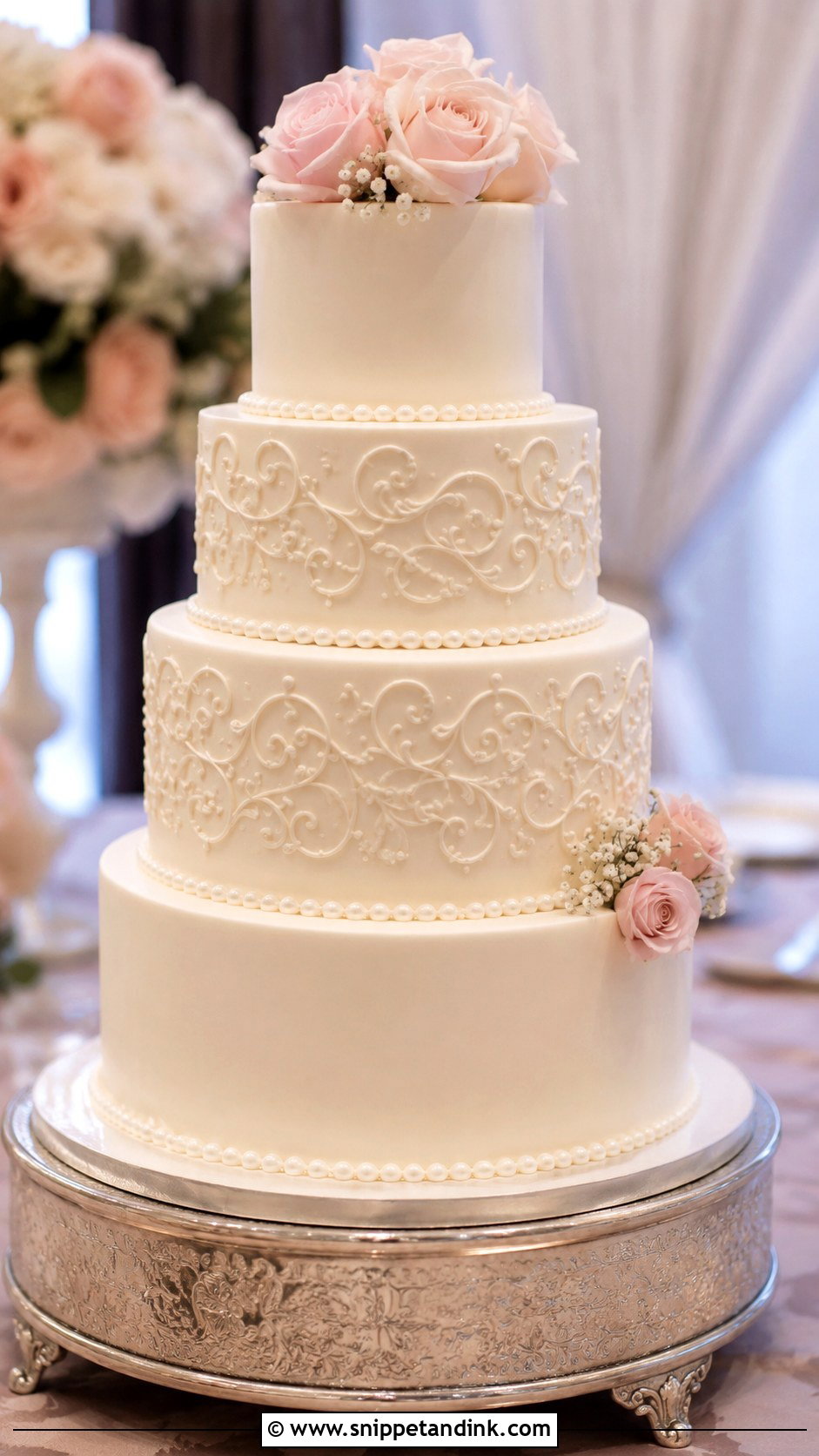
Scrollwork sits between geometry and damask: more movement than one, less formality than the other. It works on a single tier, as a full wrap or as a band at each base. White royal icing on ivory fondant gives a raised texture you can feel; a metallic finish is flatter and more decorative. Roses, peonies, pearl borders or satin ribbon all pair with it.
12. Wedding Cake Border Stencil
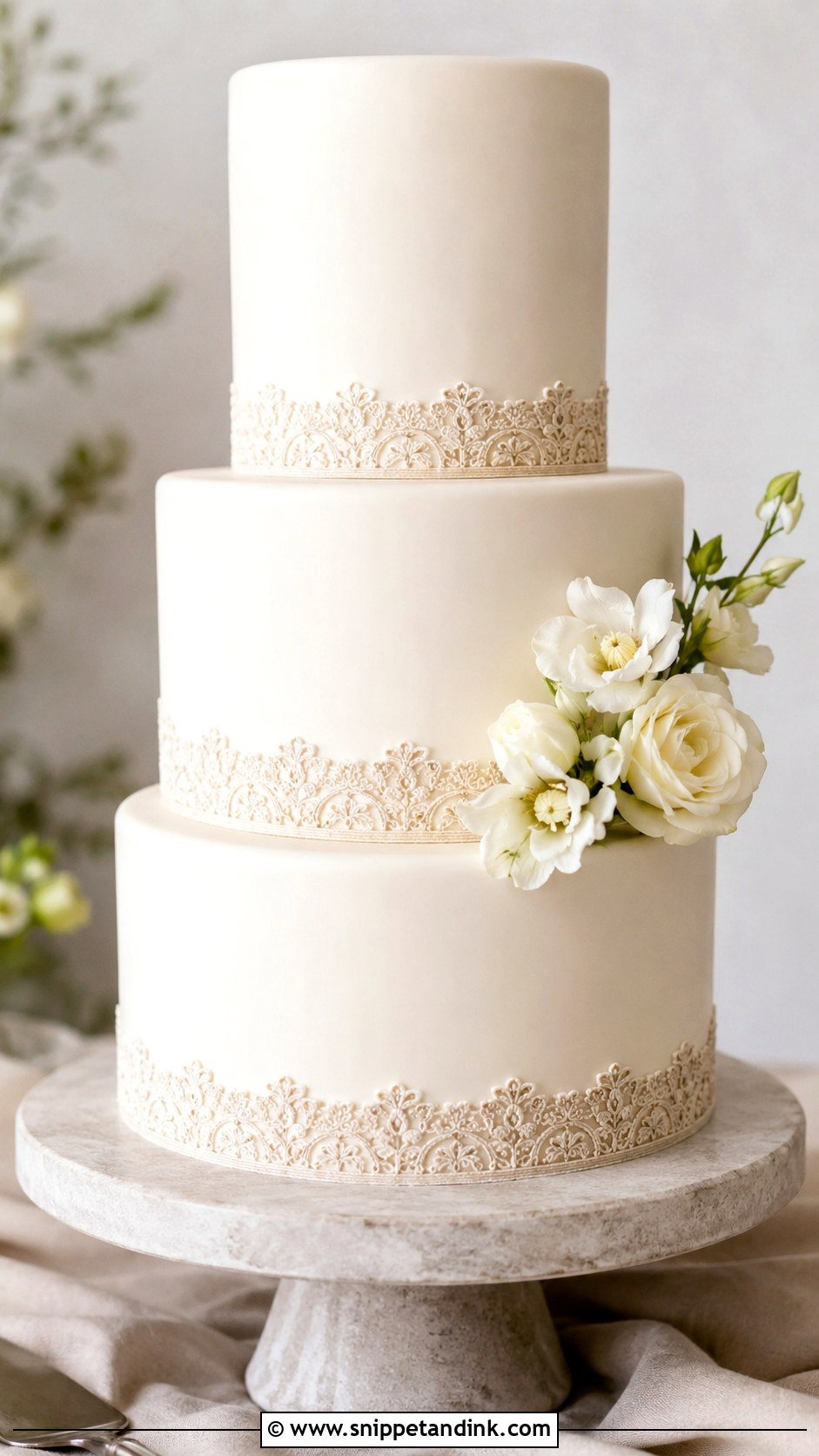
Borders give detail without committing the whole cake to a pattern. The band sits at the base, top edge or middle of each tier, which suits minimalist wedding cakes and leaves room for fresh flowers. Lace borders feel romantic, pearl borders classic and geometric borders modern. It’s also the easiest style for a beginner baker to get right, because a narrow strip is simple to hold flat against a curved tier. Ivory, champagne or pale gold keep it refined.
13. Wedding Cake Leaf Stencil
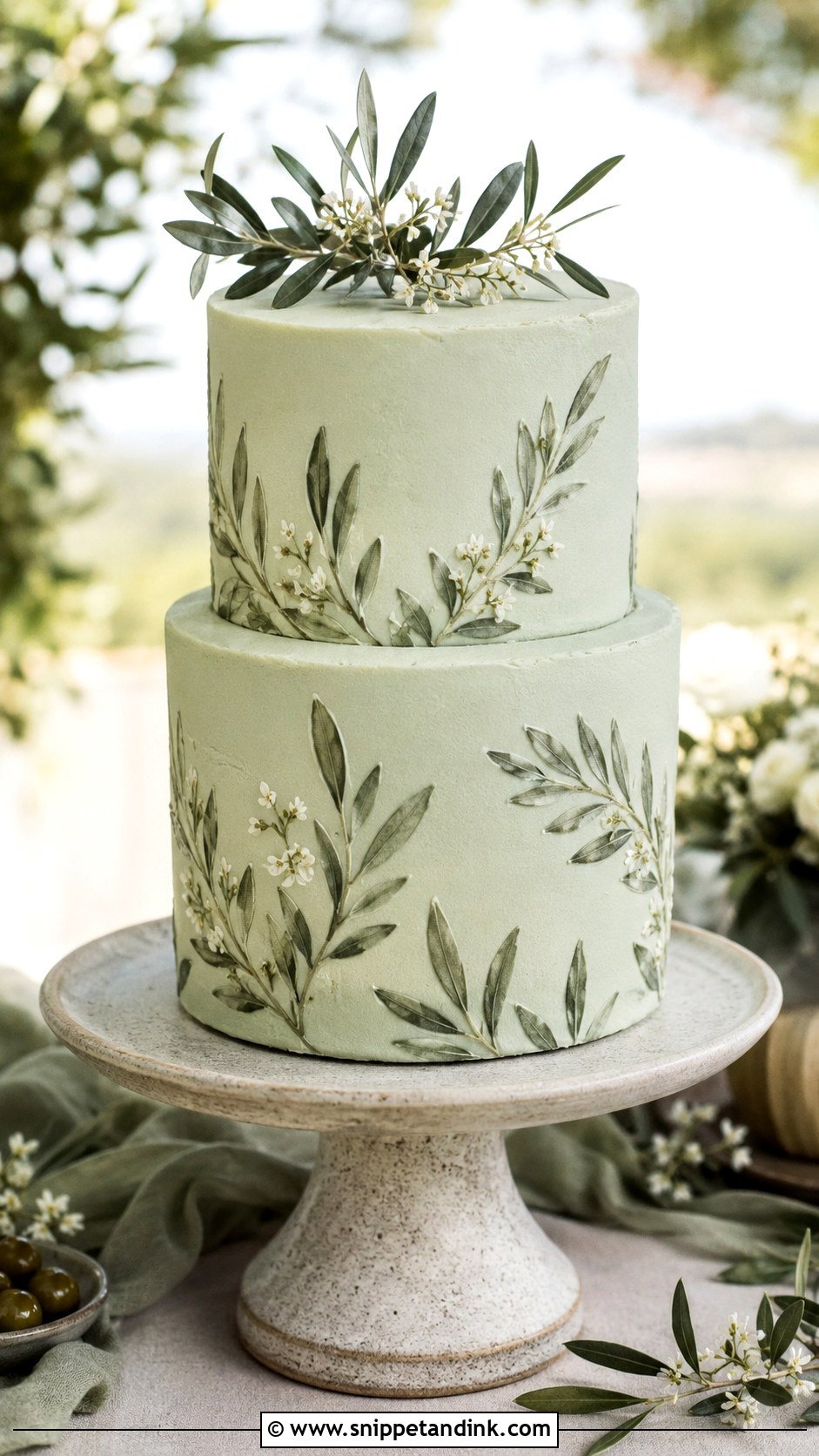
Leaves suit greenhouse receptions, rustic venues, outdoor ceremonies and neutral palettes. In white or ivory they’re quiet; in sage, olive or soft gold they show from further away. A fine botanical stencil on a tall smooth tier reads modern. Leaves trailing diagonally across the cake with a few small flowers read romantic. I’d avoid bright green, which looks artificial in photos.
14. Wedding Cake Butterfly Stencil
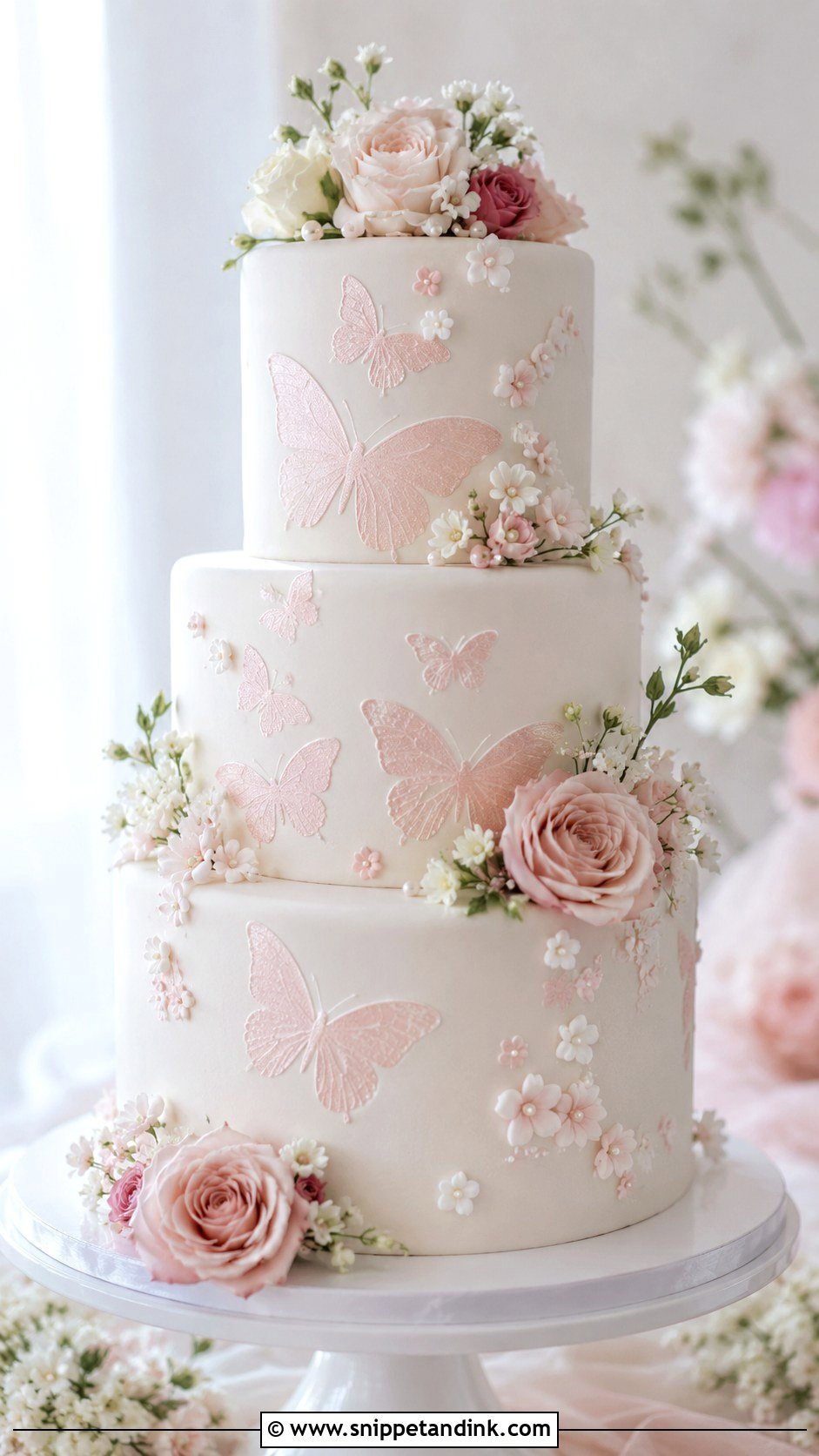
Butterflies can tip into a children’s party look, so scale and color do all the work. Small, delicate silhouettes, spaced generously, in white on ivory or pale pearl, blush or champagne keep it grown-up. They suit spring weddings, garden venues and cakes with pressed flowers. Keep the cake shape clean and add only a few blooms or sugar flowers. I sometimes lift one or two wings slightly with a wafer paper butterfly so the pattern seems to take off from the tier.



15. Wedding Cake Chevron Stencil
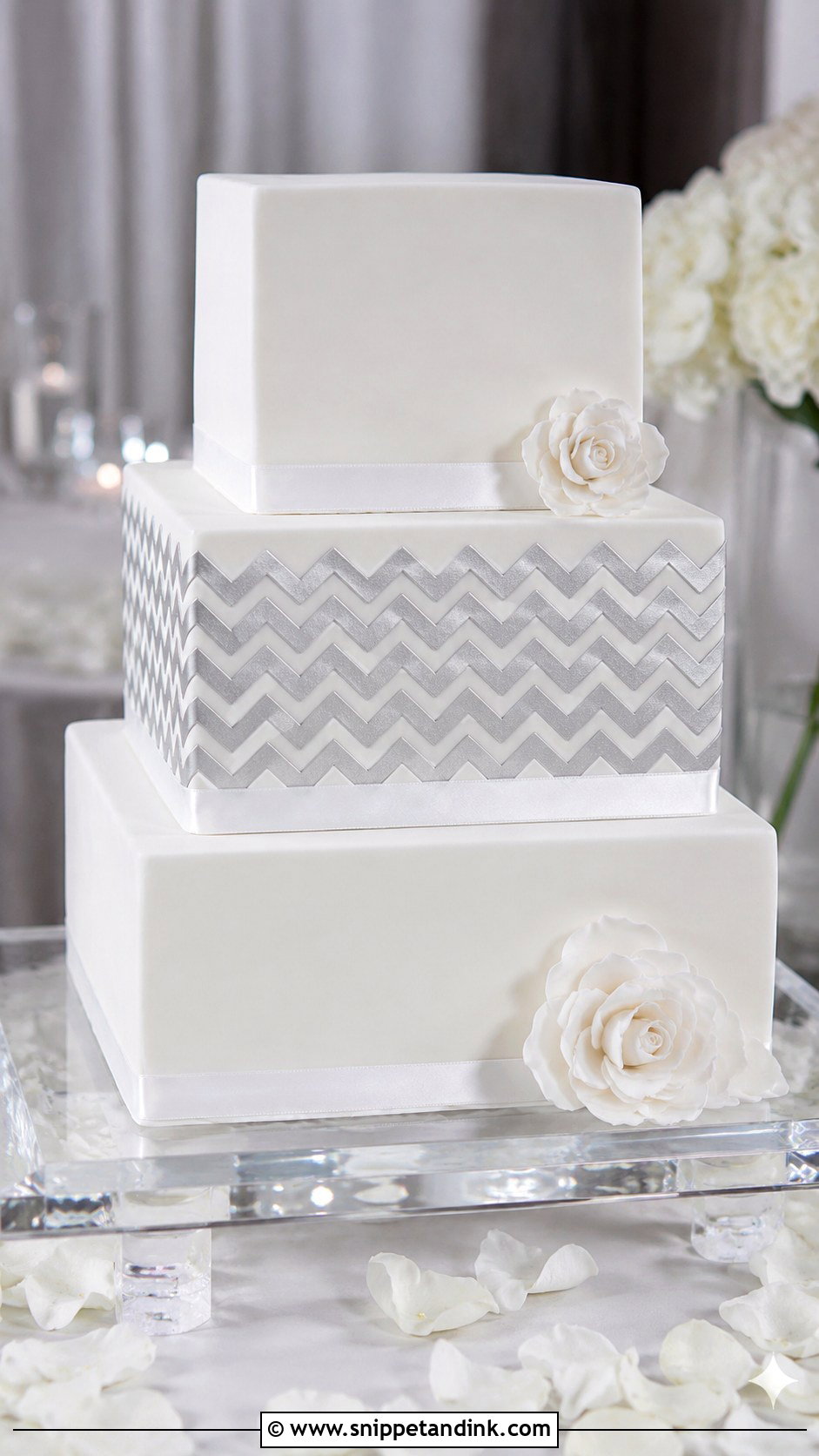
A wedding cake chevron stencil gives a strong, regular rhythm, cleaner than lace and more decorative than a plain tier. Use it as one statement tier or softly across the whole cake. Gold, silver, ivory and soft gray are the safest colors. Chevron exaggerates any lean in the tier, so the cake has to be perfectly level and straight-sided. Square cakes and tall rounds suit it, with simple flowers or a single satin ribbon.
16. Wedding Cake Mandala Stencil
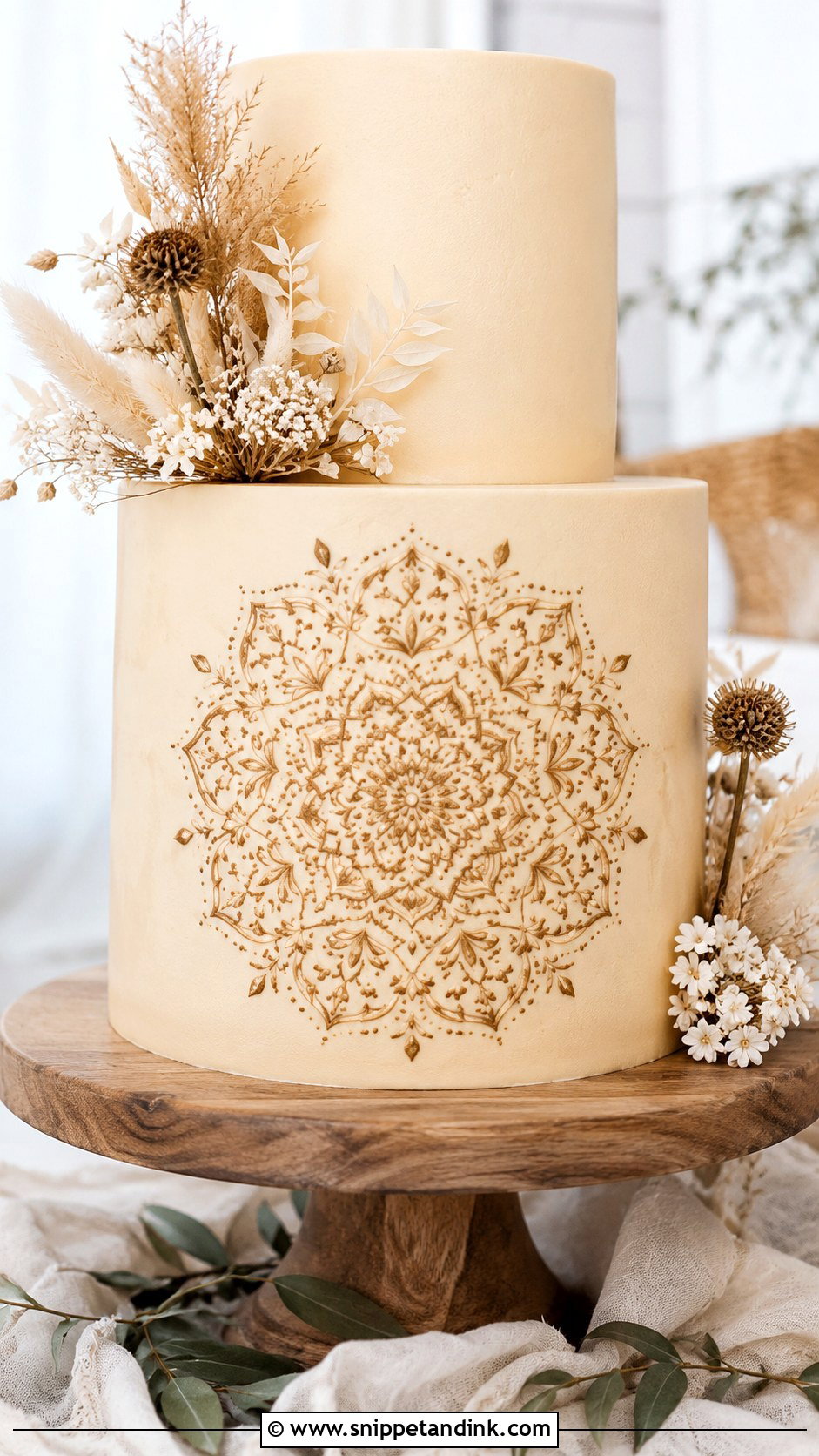
Mandalas are round, centered designs, so they look best as a front-facing medallion on one tier or repeated at intervals around it. White gives soft texture; gold or bronze makes it dramatic. Boho weddings and outdoor receptions suit the handcrafted feel. The pattern is detailed, so I keep the frosting smooth, flowers neutral and the stand plain. Very fine mandalas need fondant; on buttercream the inner lines fill in.
17. Wedding Cake Paisley Stencil
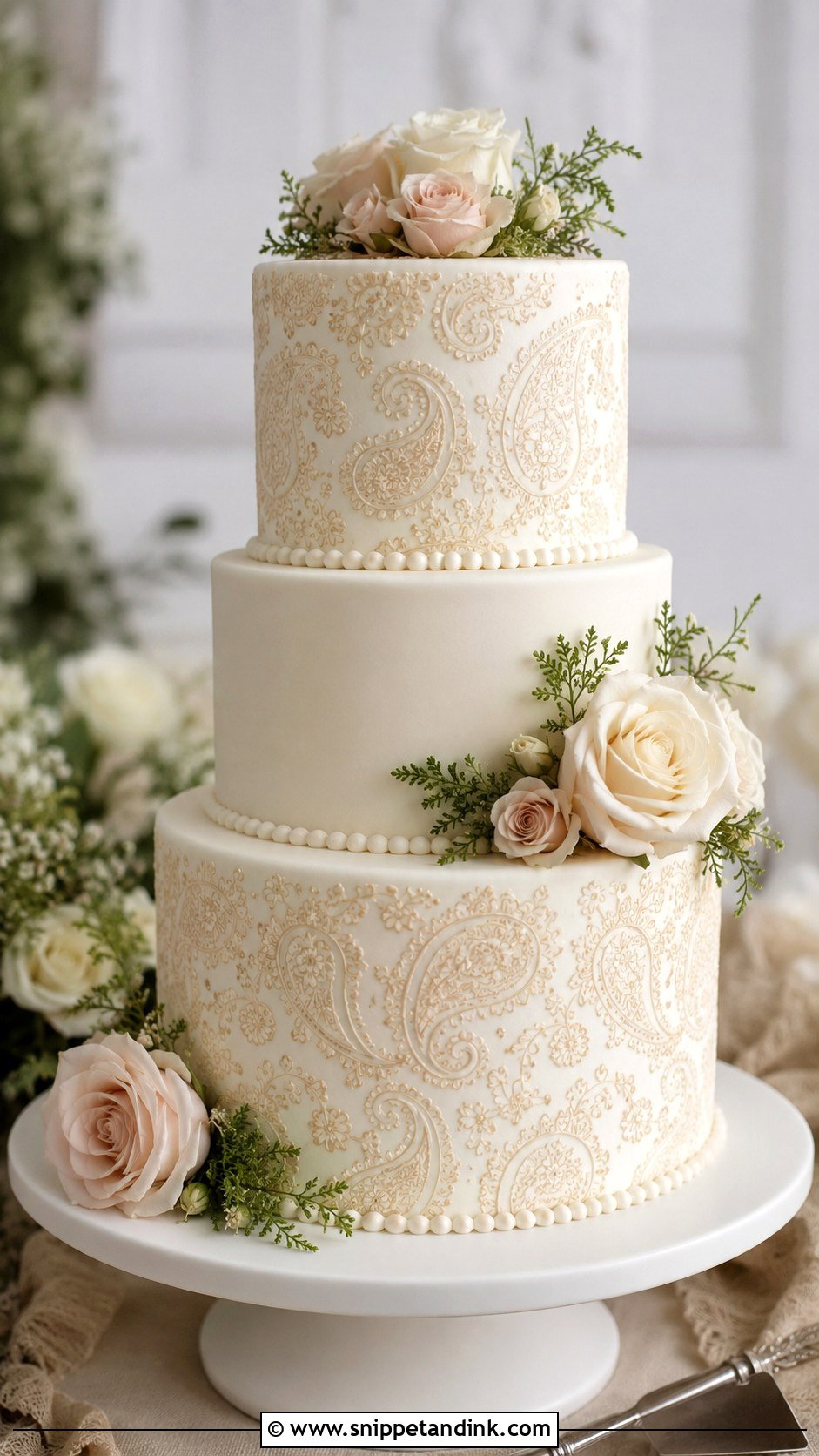
Paisley’s teardrop shapes give curved movement that feels decorative without being stiff. Ivory, champagne, blush, sage and soft gold all suit it. It can fit boho or romantic receptions and cultural celebrations, when the colors and motifs are chosen with the couple rather than borrowed for effect. For a lighter look, stencil alternate tiers. Fresh flowers, small pearls or simple greenery finish it.
18. Wedding Cake Toile Stencil
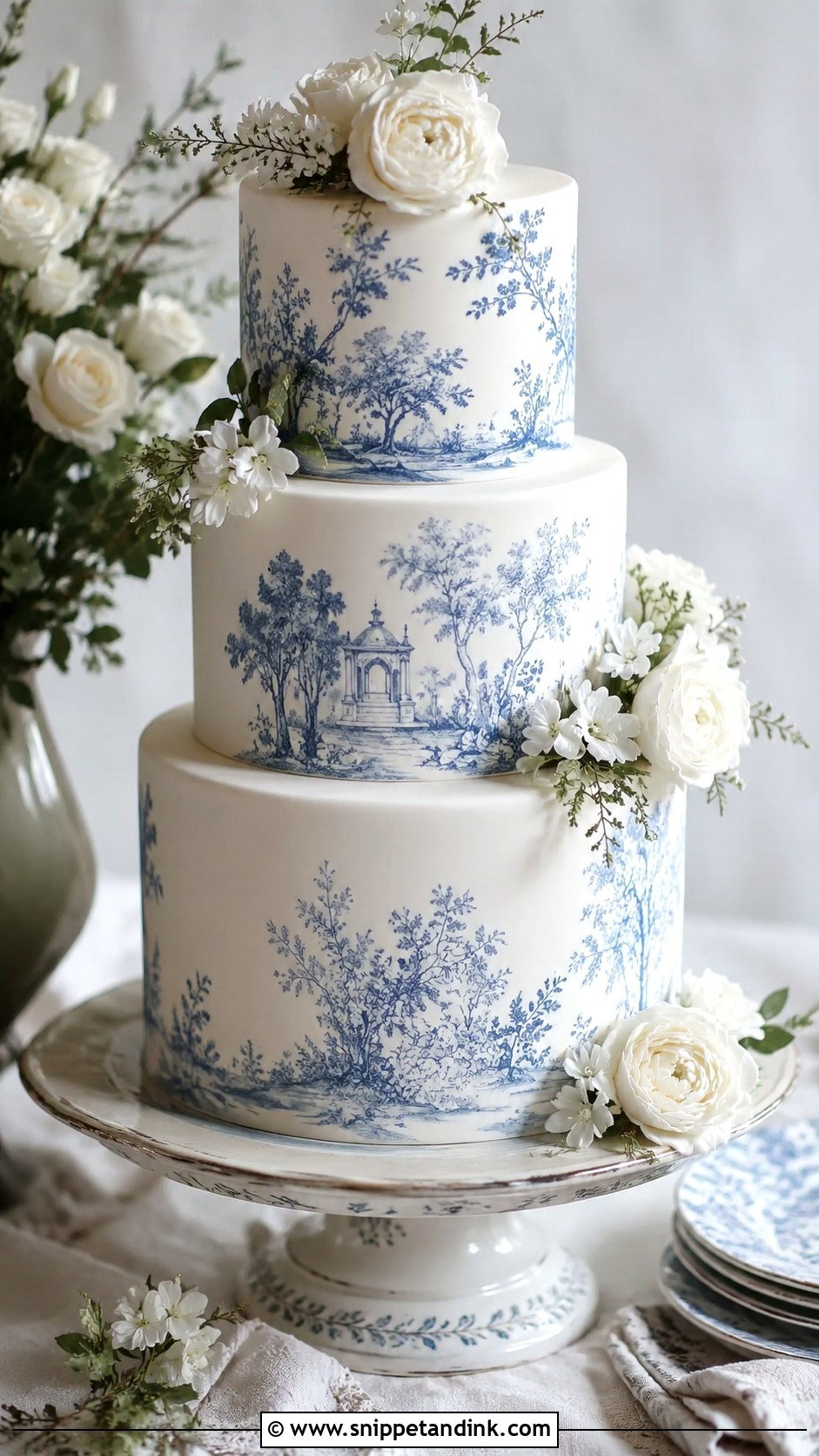
Toile is the storytelling pattern: scenic florals, vines, birds and garden motifs in fine lines. Blue on white is the classic pairing; blush, gray, sage and champagne also work. The detail is so fine that I only stencil toile onto fondant, and I use an airbrush rather than icing, because spread icing loses the thin lines. Keep the shape simple and let the pattern do the work. A ceramic stand, white flowers and linen styling make it feel old-world without looking dated.
19. Wedding Cake Lattice Stencil
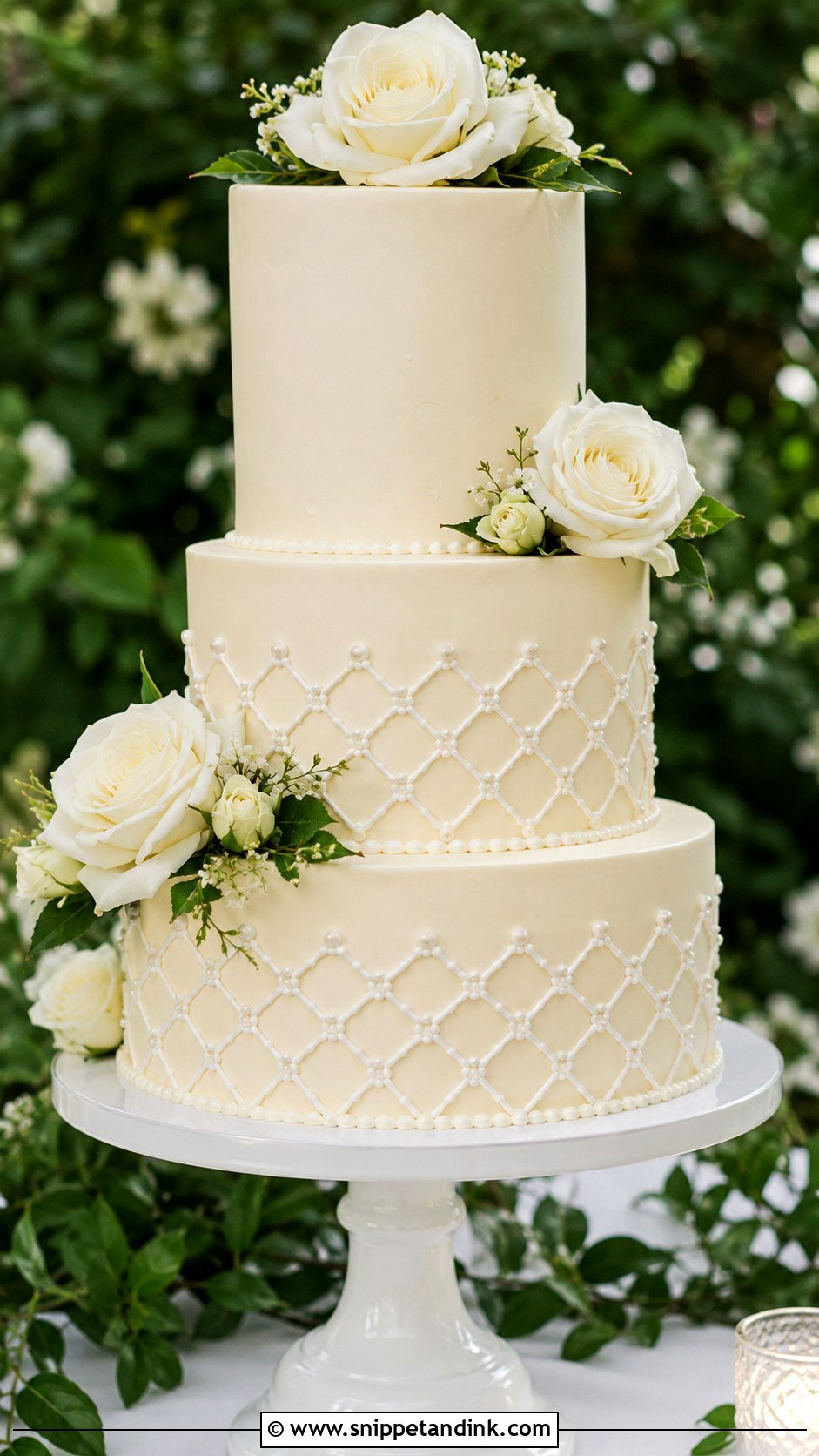
Lattice can look like a garden trellis, woven fabric or fine piping, depending on color and texture. White on ivory is classic; gold is more formal. I like a sugar pearl at each crossing point, which also hides any small break in the line. It sits naturally beside floral arrangements. Use it as one accent tier or wrap every tier for a traditional decorated cake.



20. Wedding Cake Marble Stencil
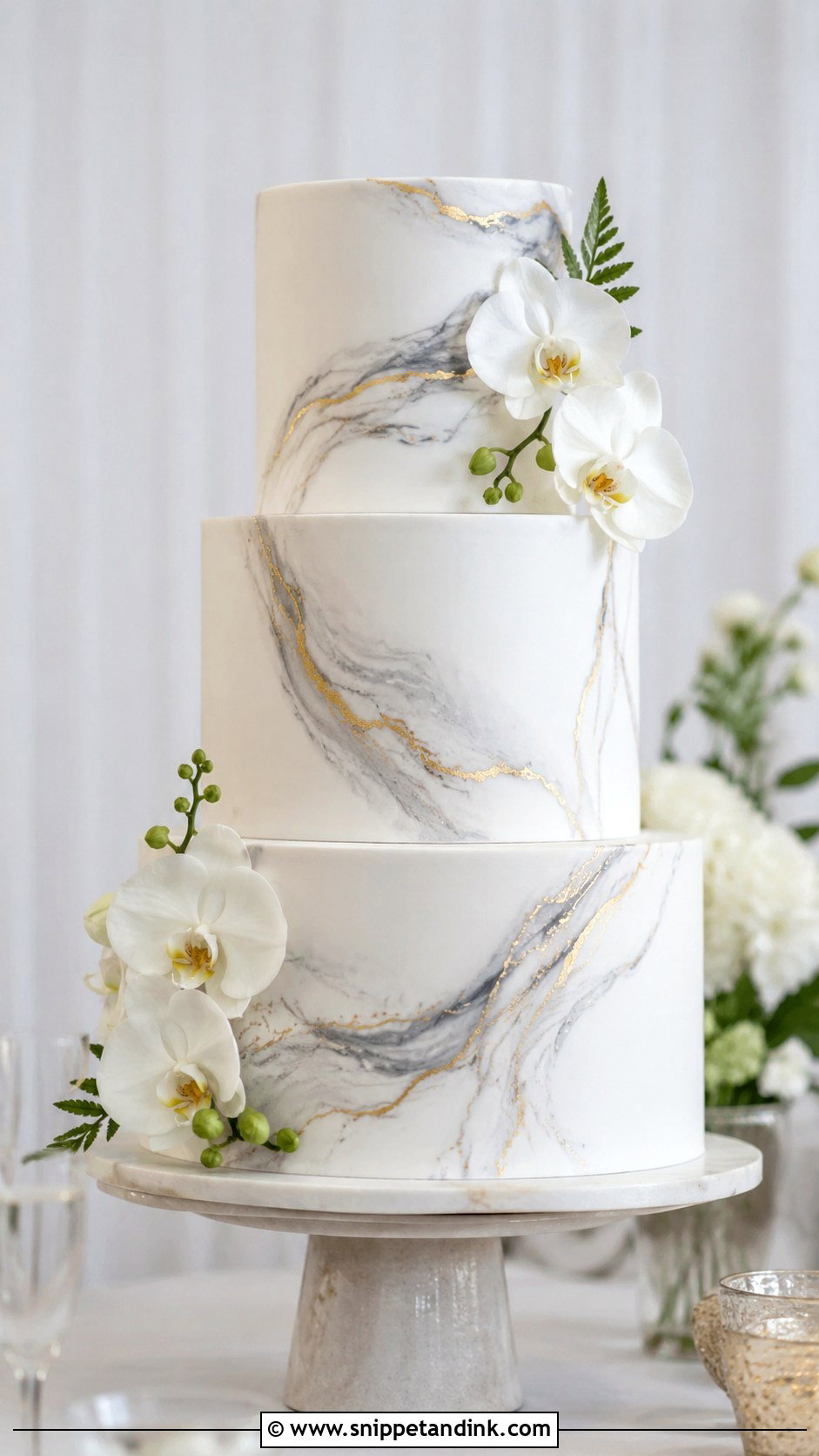
A marble stencil gives controlled veining, far tidier than hand-painted marble. Pale gray, champagne, blush or gold veins on tall white tiers suit modern venues, with metallic edging, orchids, roses or minimal greenery. I usually airbrush marble stencils in two passes, a pale wash then a darker vein, which gives the depth real stone has. Keep the rest of the cake clean.
Why Stencils Smudge, and How Bakers Prevent It
Most stencil disasters I’ve had to fix share a handful of causes. If you’re asking a baker for a stenciled cake, these are fair questions to raise.
- Soft buttercream. Swiss meringue and whipped frostings move under the plastic. I chill the tier until it’s firm to the touch, or use a crusting buttercream that dries a little on the surface.
- Condensation. A cake straight out of the fridge sweats as it warms, and wet icing smears. I either stencil while it’s still cold and dry, or wait until the moisture has fully evaporated.
- The seam. A stencil rarely matches a tier’s circumference exactly, so there’s always a join. Good bakers line up the repeat and place that join at the back.
- Pattern scale. A design sized for a tall tier gets cropped on a short one. Ask what tier heights your baker plans before falling for a particular stencil.
- Delivery. Stenciled fondant scuffs if anything touches it, so the box should be taller and wider than the cake with no wrap pressing on the sides.
On a hot outdoor day, a fondant cake keeps a stenciled pattern far better than buttercream. If your reception is in summer sun, that alone may decide the frosting for you.
A Clean Surface Matters More Than the Pattern
A pattern only looks as good as the surface under it. Lace and florals read traditional, geometry and marble read current, and monograms and borders personalize, but every one of them depends on a smooth, firm tier and a clean lift. Decide on the pattern, its color and how many tiers it covers, then leave the rest of the cake plain enough for it to show. Ask your baker to show you a stenciled sample at your tasting so you can see the finish up close.
You'll Like These Ideas:





Leave a Reply