
A Pithi outfit has a harder job than most wedding clothes. Relatives will rub turmeric paste onto your face, arms and feet, you’ll sit low for a long stretch, and someone will almost certainly start dancing before the paste has dried. When I dress a bride for this ceremony, I look at three things before colour or embroidery: whether the fabric survives a wet cloth, whether the drape stays put without constant fixing, and whether the sleeves stay clear of the paste bowl. The yellow outfits below cover lehengas, sarees, kurta sets, shararas and a few modern separates, with notes on what each one asks of you on the morning.
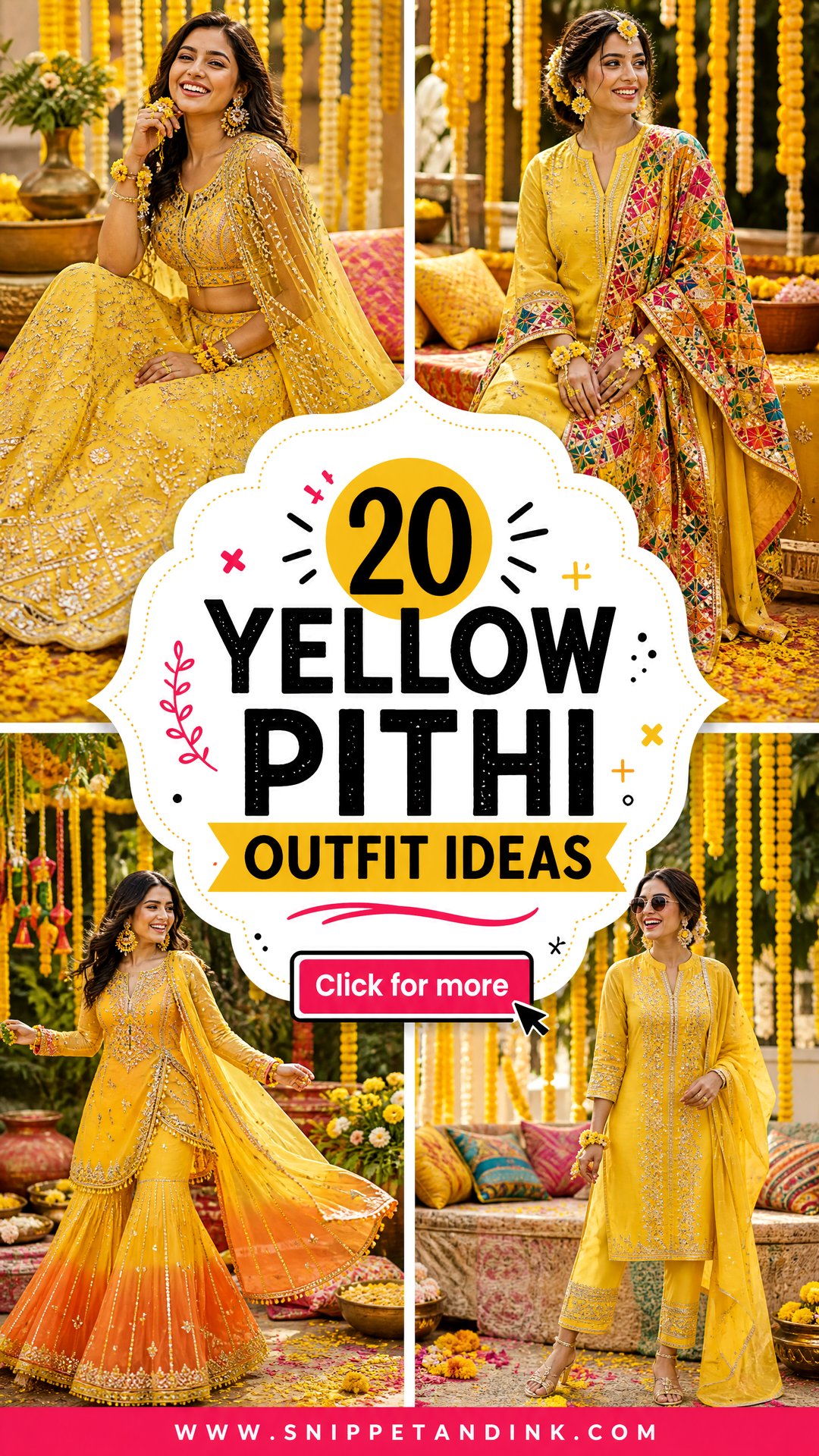
Lemon, Marigold or Mustard: Reading Yellow Against Your Skin
Yellow is the hardest colour I dress brides in, because one shade can make a face glow while the next one drains it. Before we look at a single silhouette, I hold three swatches under the bride’s chin in natural daylight, ideally at the time of day the ceremony will happen.
- Lemon and pale butter yellow have a cool, green edge. They sit well on fair skin with pink undertones and can look sallow on olive or golden skin.
- Marigold and saffron yellow carry some orange. They’re the most forgiving shades on deeper and warmer skin, and they hold their colour in strong sun.
- Mustard and haldi yellow are muted and earthy. They suit almost everyone over a certain age and look rich next to gold jewellery.
Remember that the paste is yellow too. A turmeric smear on lemon fabric reads as a stain; on marigold or mustard it almost blends in. If you’re torn between two shades, that is usually the deciding argument.
Photographs push yellow further than your eye does. Under direct midday sun, bright lemon can flatten into a white glare, while shade under a tree can turn it slightly green. A deeper yellow keeps its colour in both, which is one reason so many families settle on marigold.
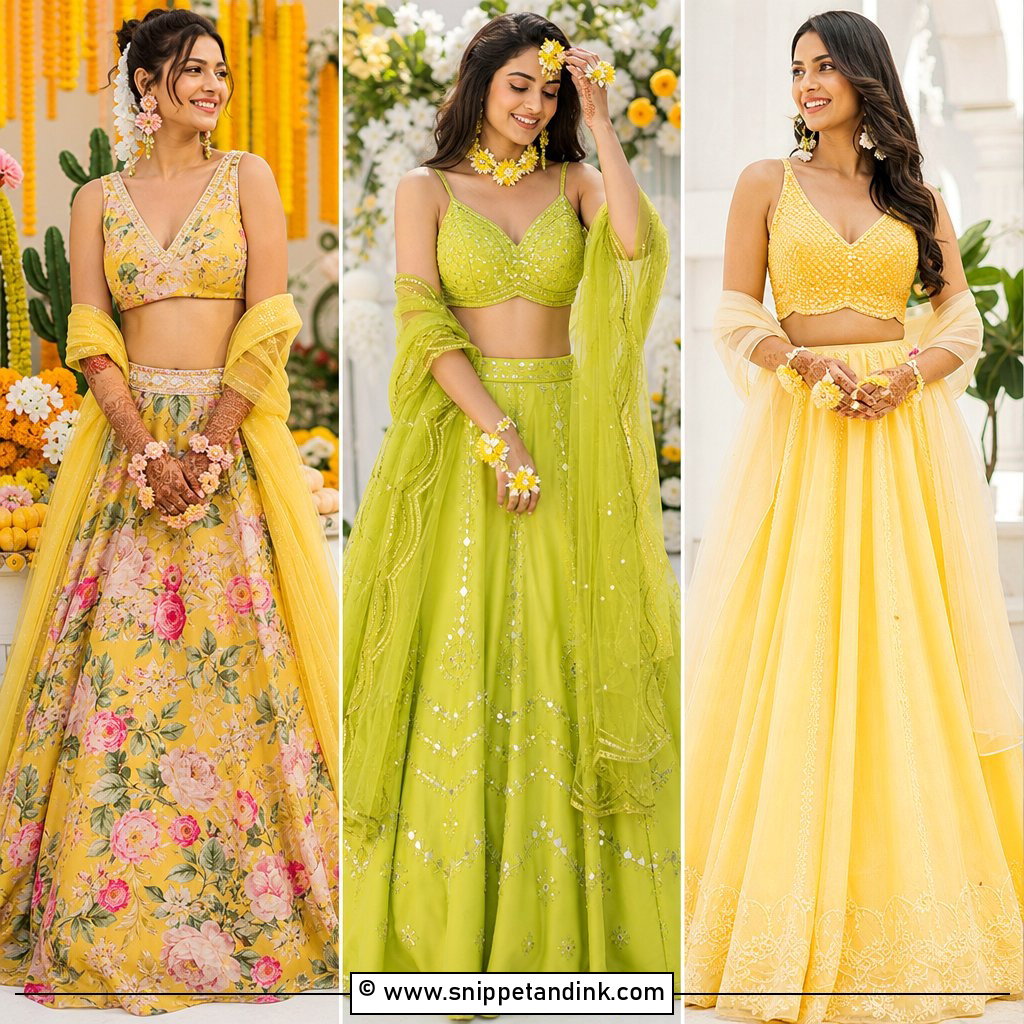
1. Yellow Pithi Lehenga With Floral Jewelry
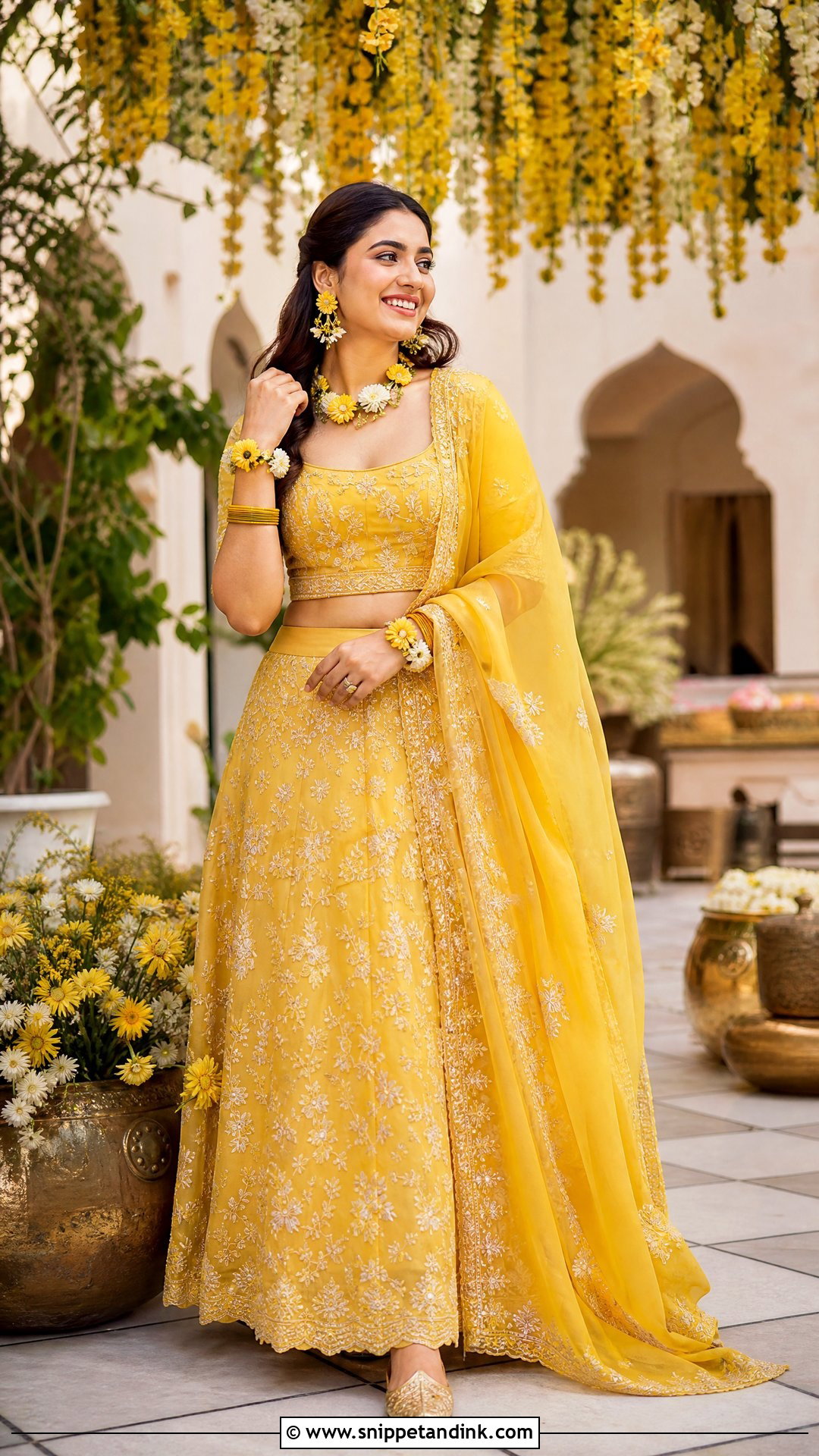
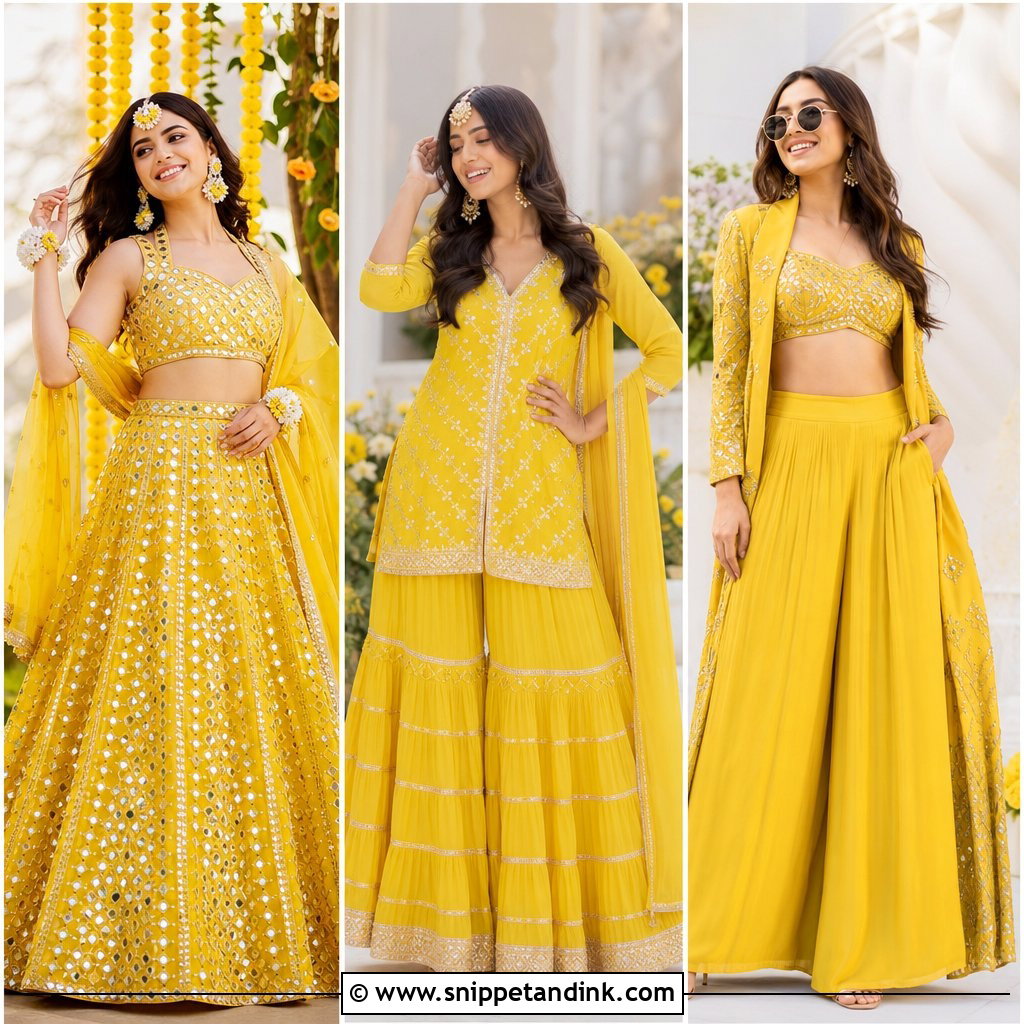
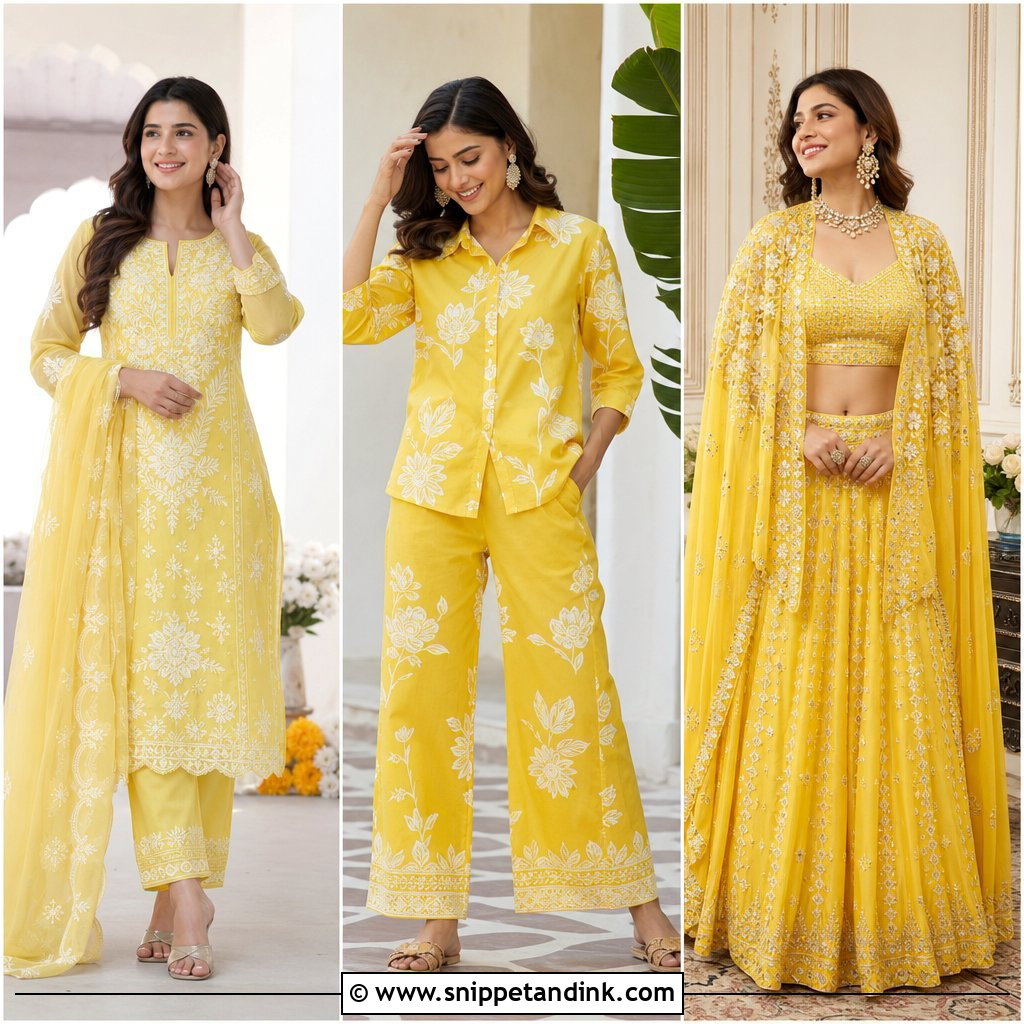
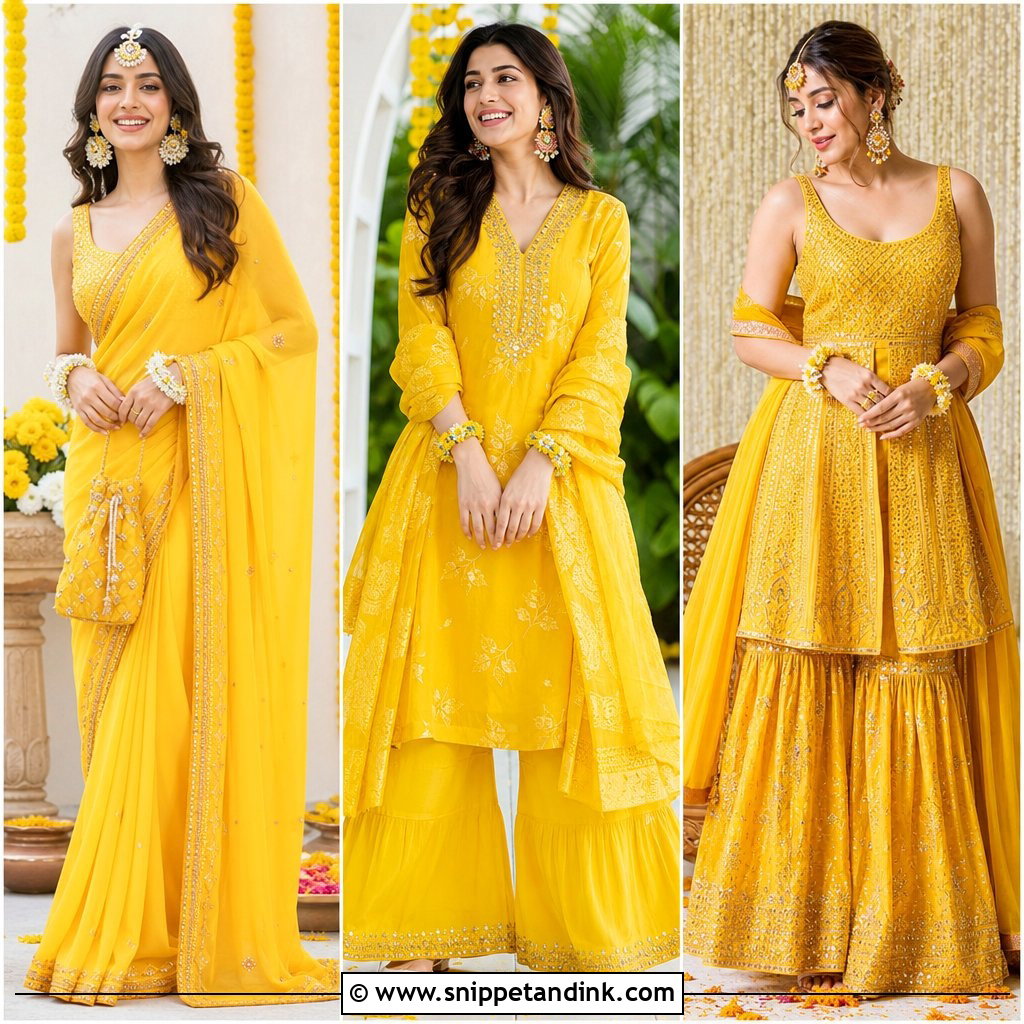
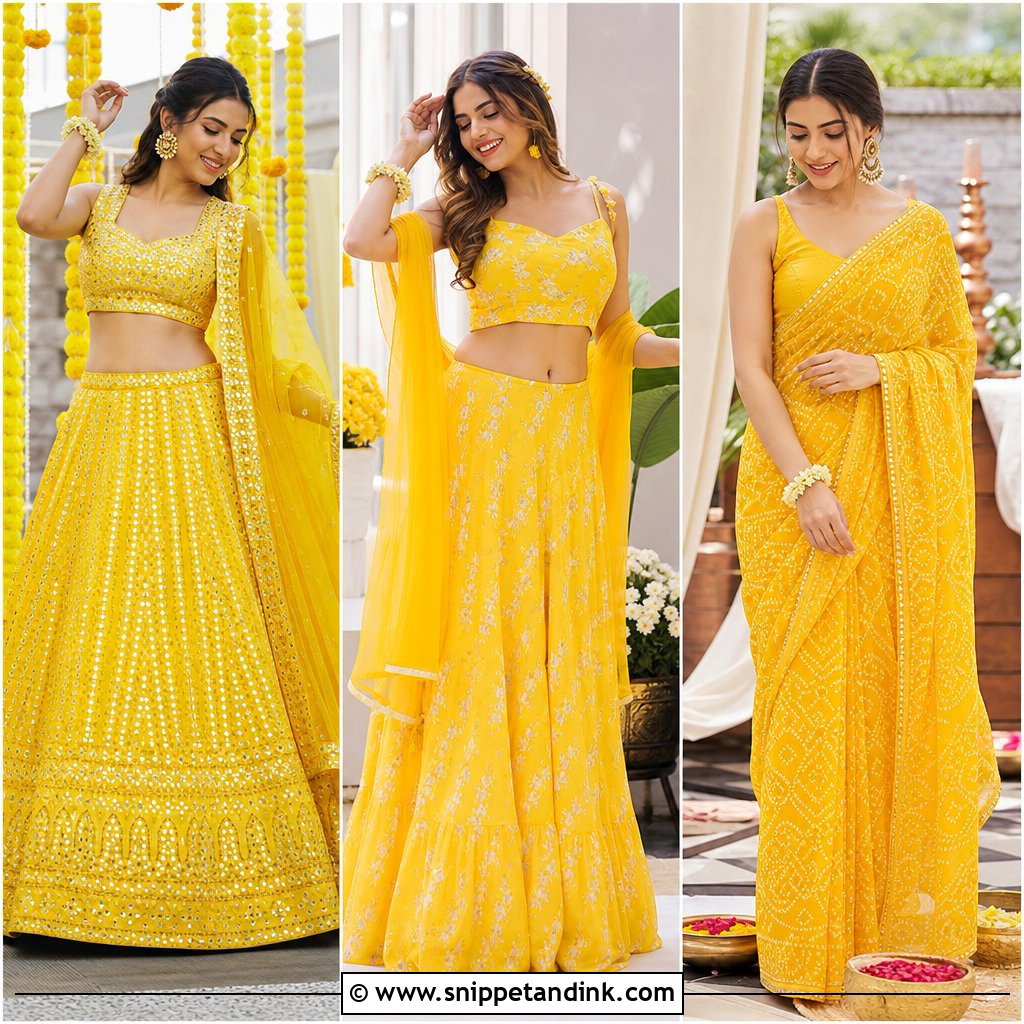
A bright yellow lehenga is the easiest place to start, because the colour does most of the work. Keep the skirt light, with small embroidered motifs rather than a heavy border, and pair it with a fitted short-sleeve blouse and a net or organza dupatta pinned over one shoulder so both hands stay free. Floral earrings and wrist flowers suit a daytime ceremony better than kundan, which tends to catch paste in its settings. I always check the waistband while the bride is sitting cross-legged: a moderate flare folds neatly under you, a full can-can skirt balloons up into your lap. Gold juttis or flat sandals are the safer choice on a lawn.
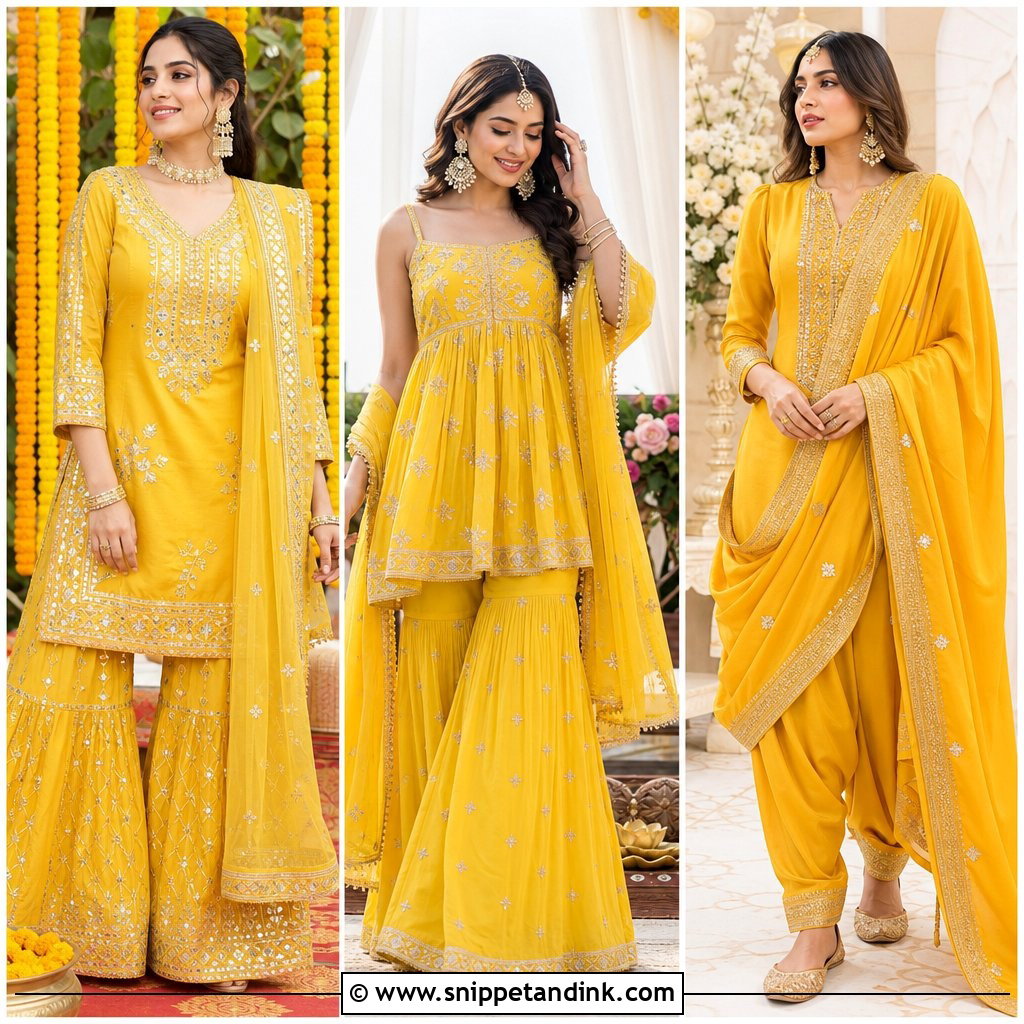
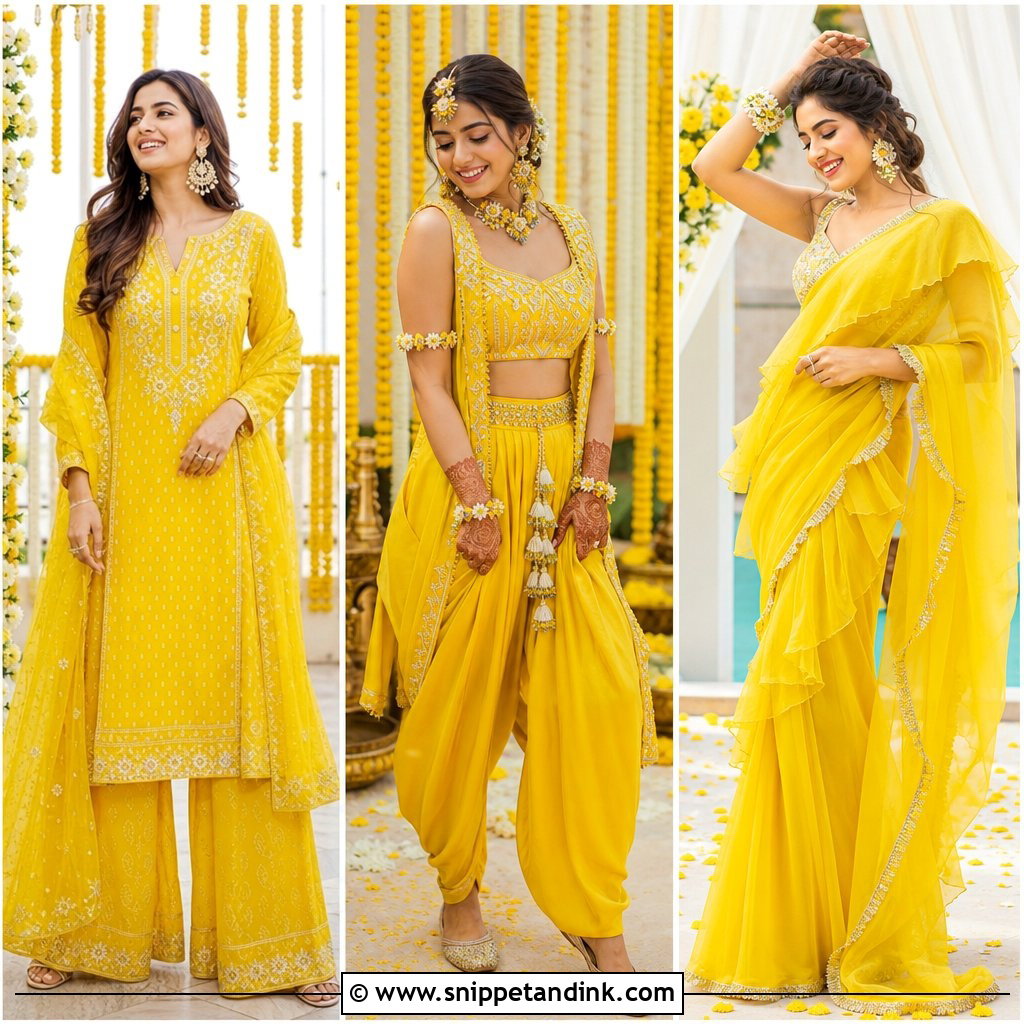
2. Yellow Pithi Sharara With Short Kurta
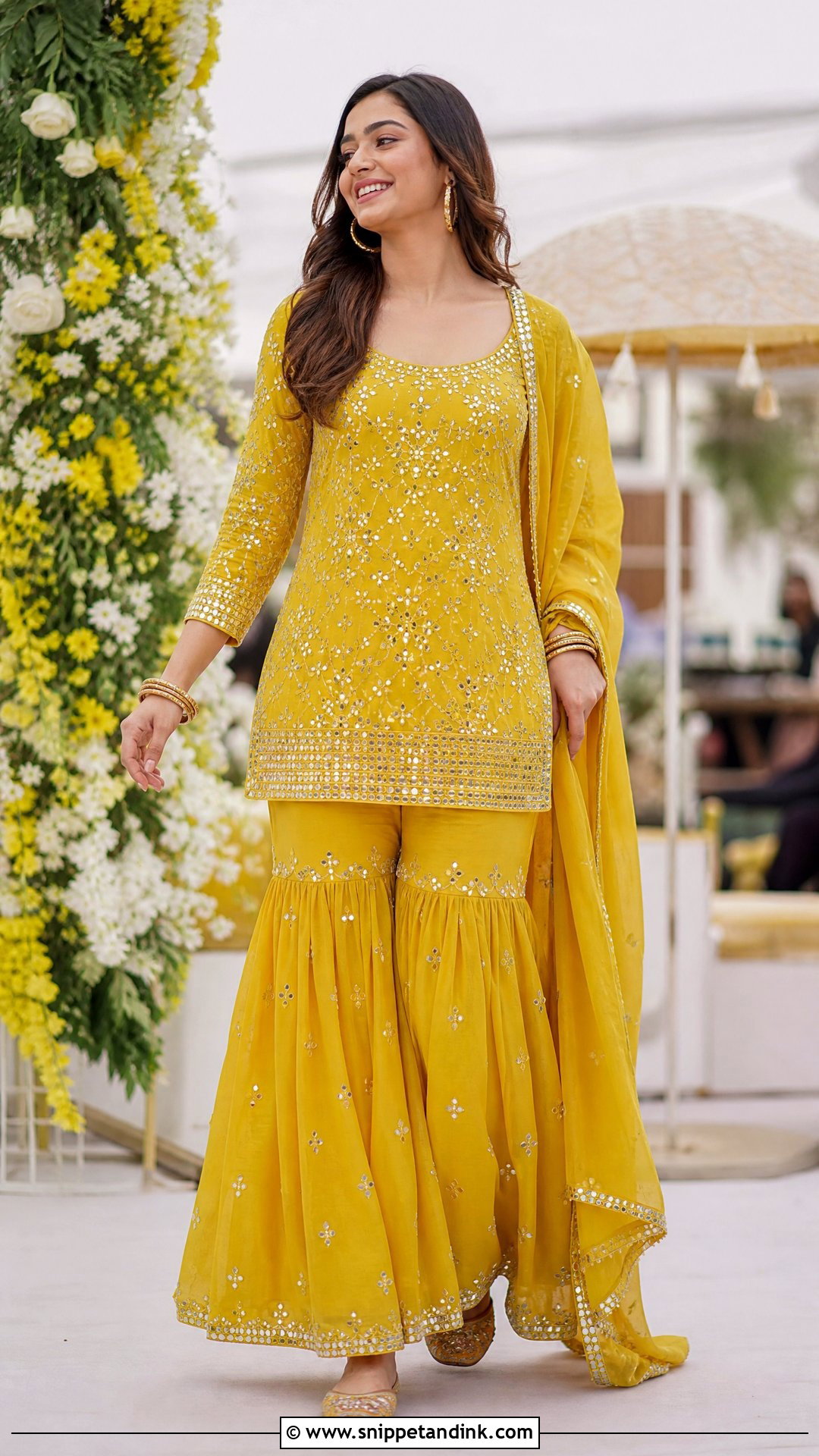
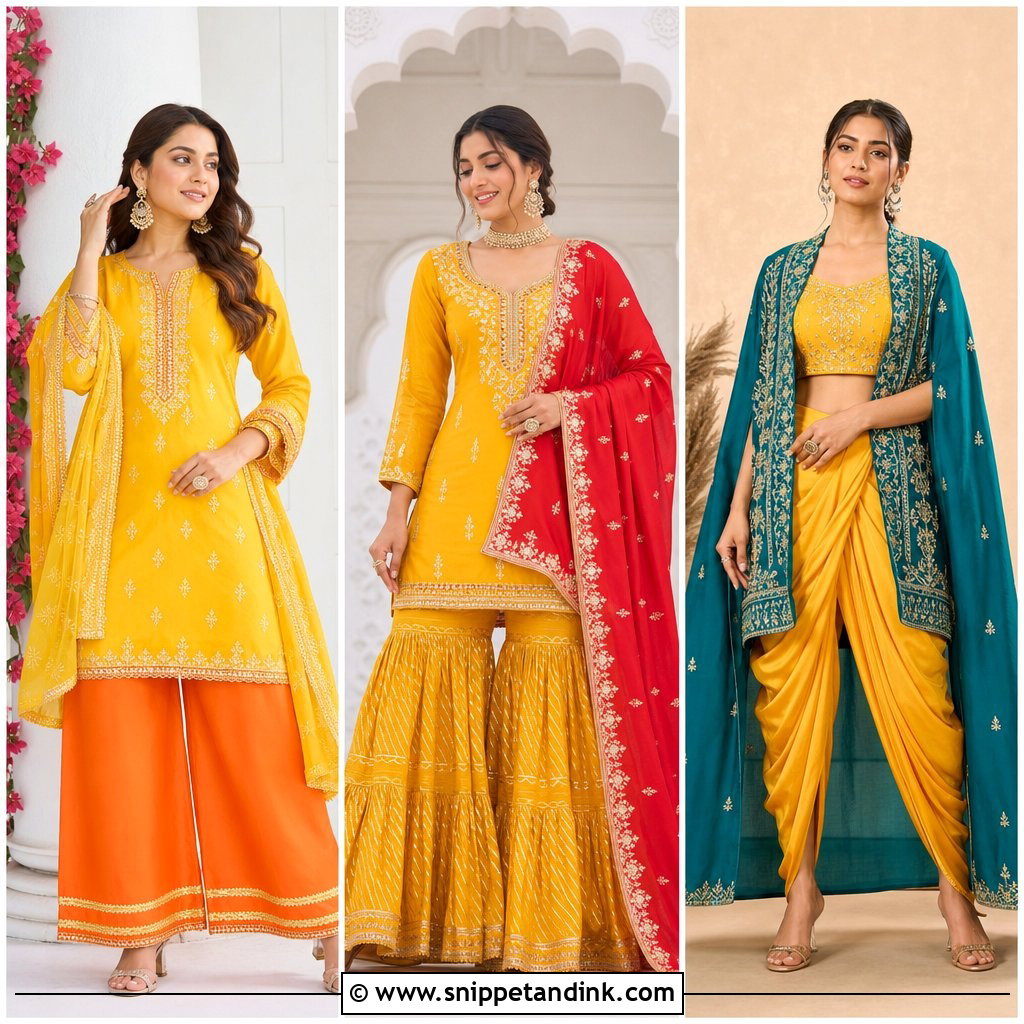
Sharara pants solve the floor-seating problem better than almost any skirt, since the volume sits below the knee and you can tuck your feet in without crushing a hem. Here a short yellow kurta with subtle mirror work ends around the upper thigh, which keeps the proportions right while the wide legs move. Add embroidered juttis, gold hoops and a few slim bangles. Watch the neckline: if the kurta is already worked, swap the necklace for one floral choker. A low ponytail or half-up style stays tidy for the whole ceremony, and the cut gives you real freedom once the dhol starts.
3. Yellow Pithi Organza Saree With Floral Blouse
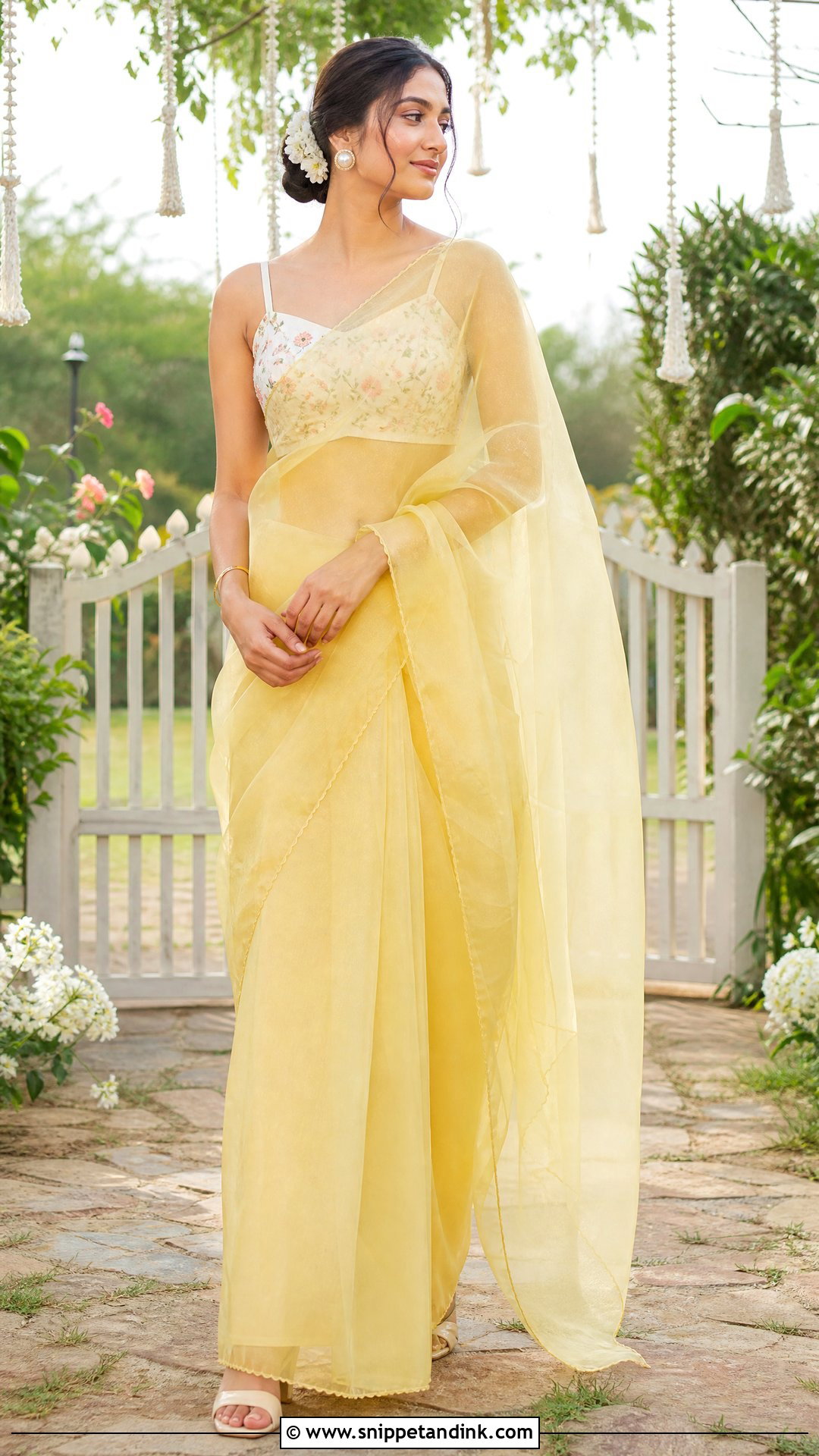
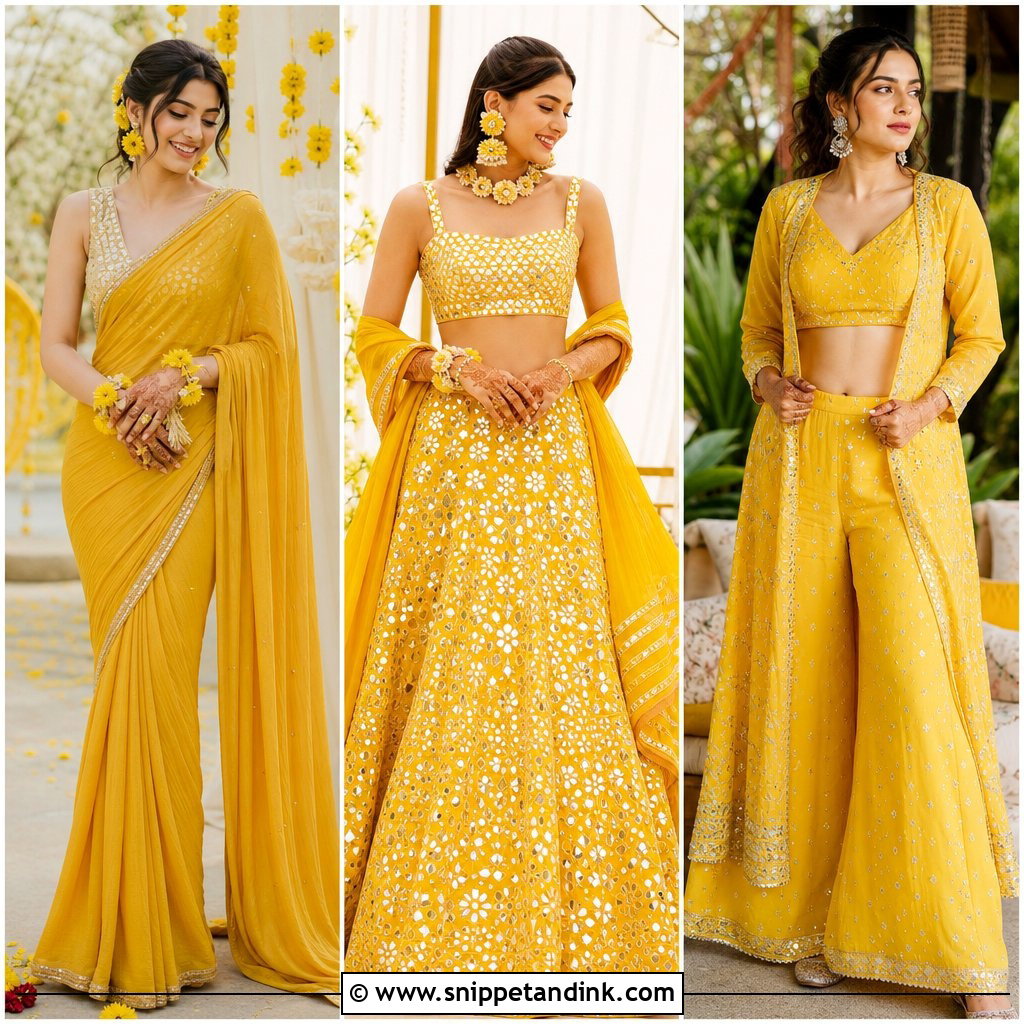
Organza looks airy in photographs, but standard organza is crisp enough to stand away from the body and crackle when you sit. For a Pithi I ask for a soft or tissue organza instead. Pair the yellow saree with a white or matching blouse covered in fine floral embroidery, keep the pleats narrow, and pin the pallu firmly at the shoulder. Pearl earrings, a slim gold bracelet and ivory block heels hold the pale palette together, and fresh flowers in a low bun finish it. A plain border is far easier to manage than heavy embellishment, which drags the pallu off the shoulder every time you lean forward.
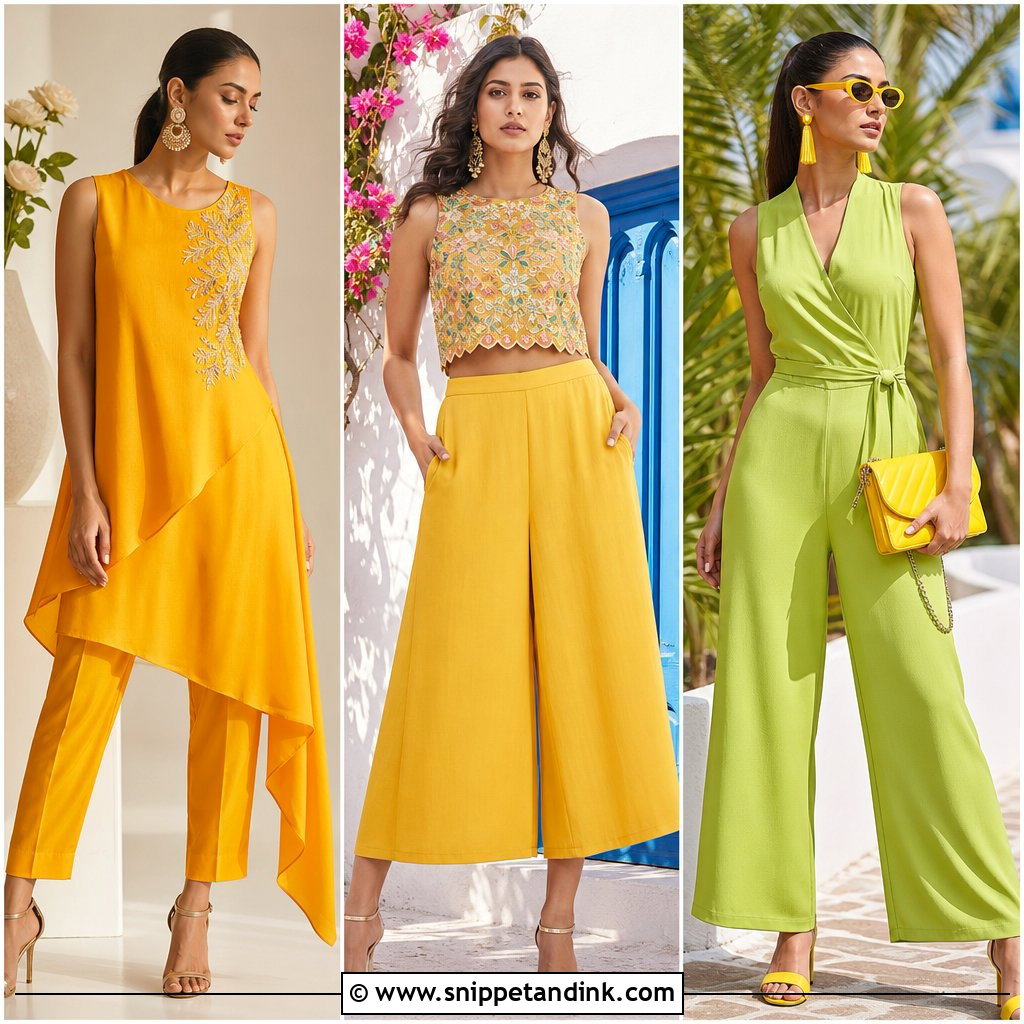
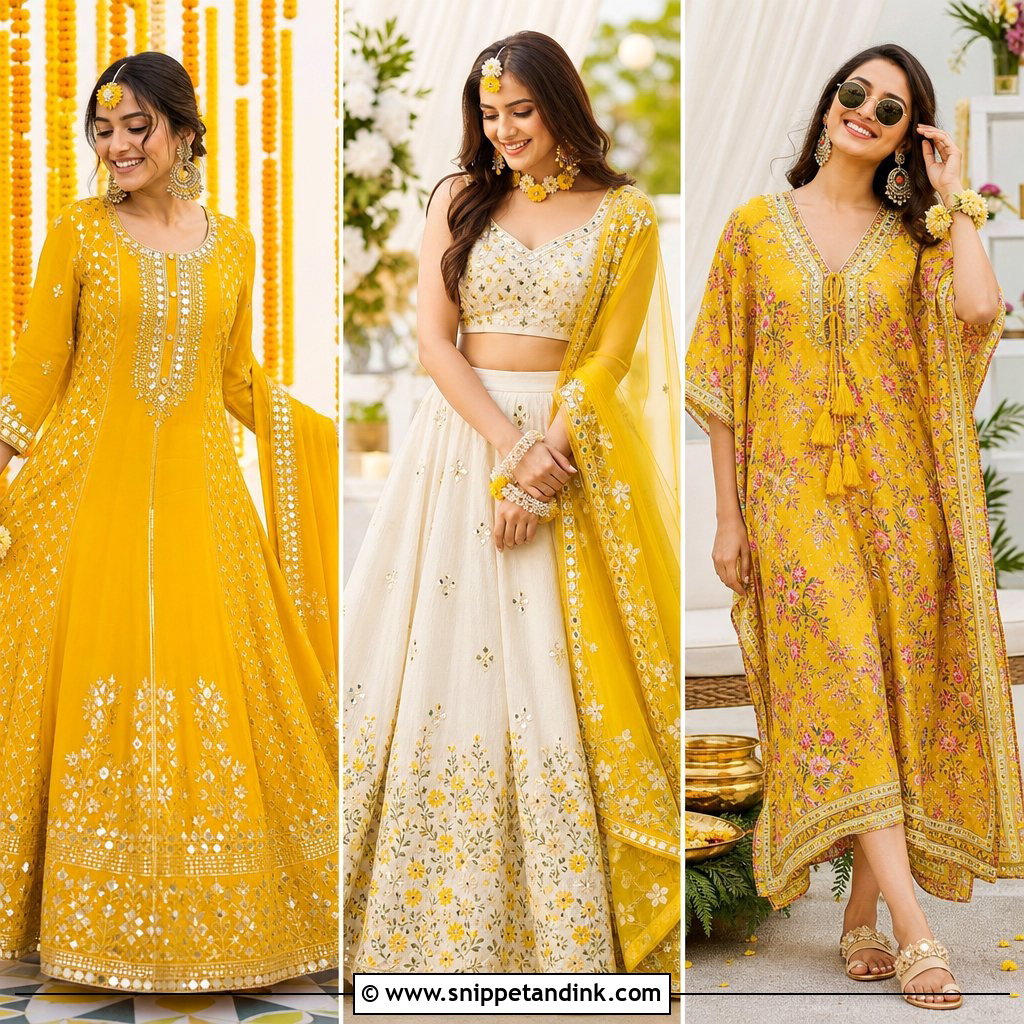
4. Yellow Pithi Anarkali With Palazzo Pants
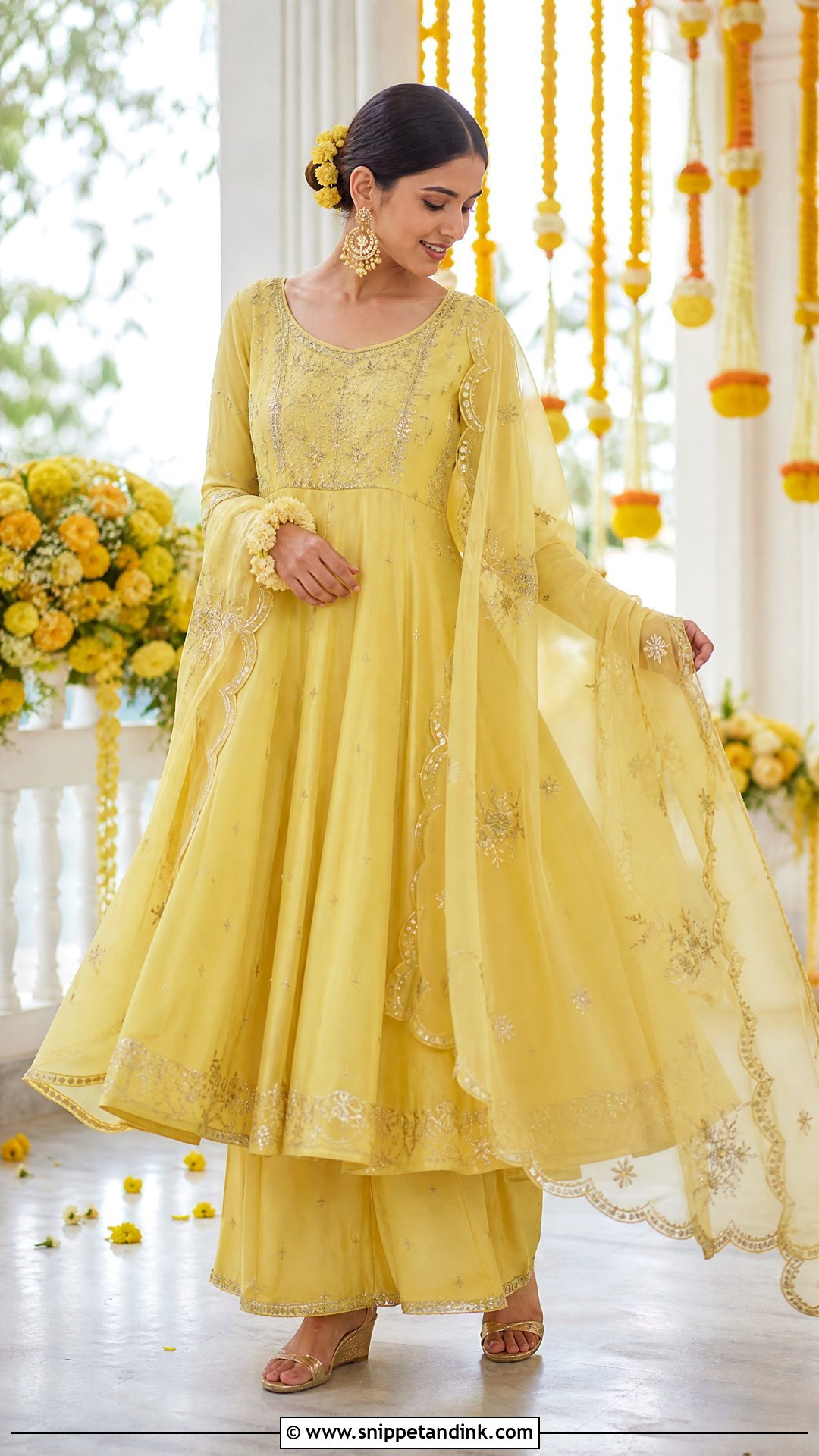
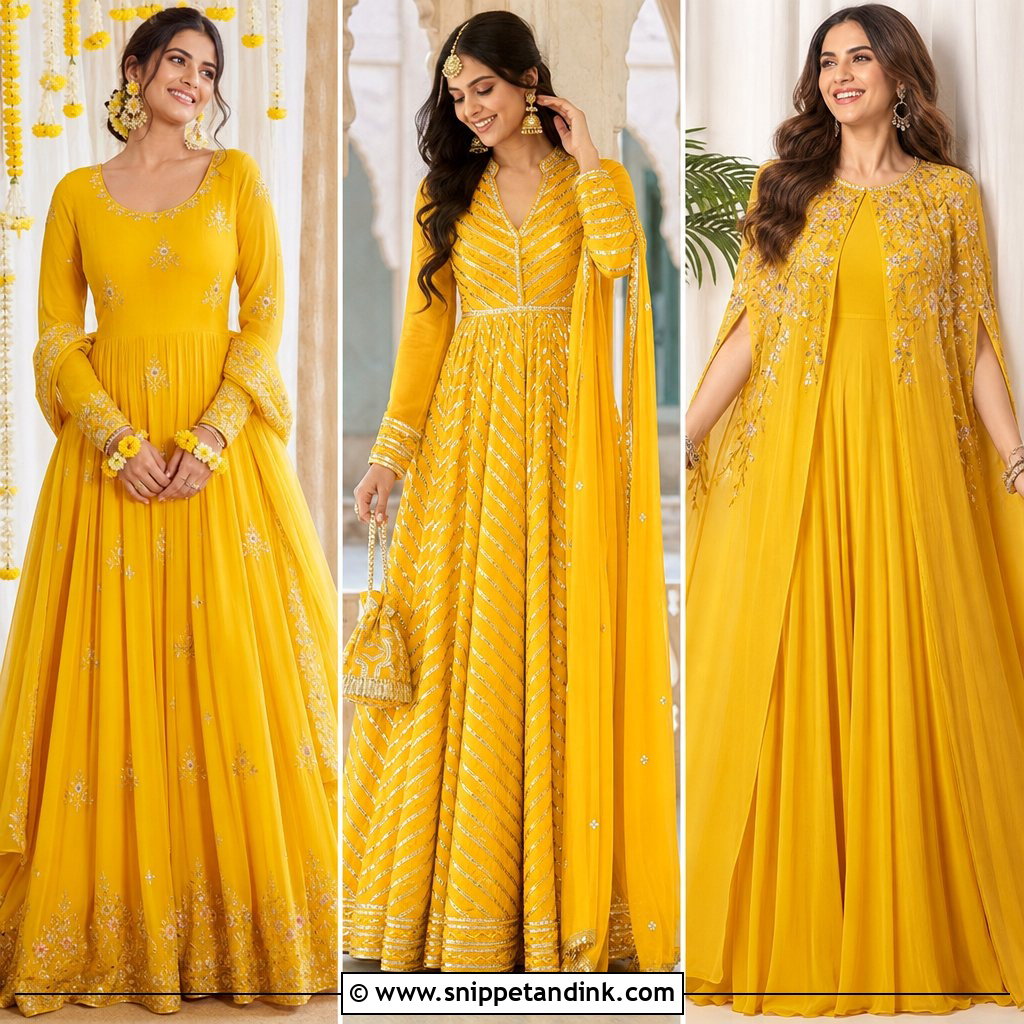
A yellow Anarkali kurta over coordinating palazzo pants gives full coverage with plenty of movement. I prefer calf length here: floor-length Anarkalis pool around you on the floor and pick up every drop of paste, while a calf hem stays clean and still draws that long vertical line. Georgette or cotton silk moves well; stiff brocade does not. Add a sheer dupatta with a narrow embroidered edge secured on one shoulder, small chandbalis, a floral bracelet and low gold wedges. A centre-parted low bun leaves the neckline visible. This cut suits sisters, aunts and guests who want a modest shape, and light embroidery at the neck and cuffs keeps it festive without weight.
5. Yellow Pithi Gharara With Peplum Top
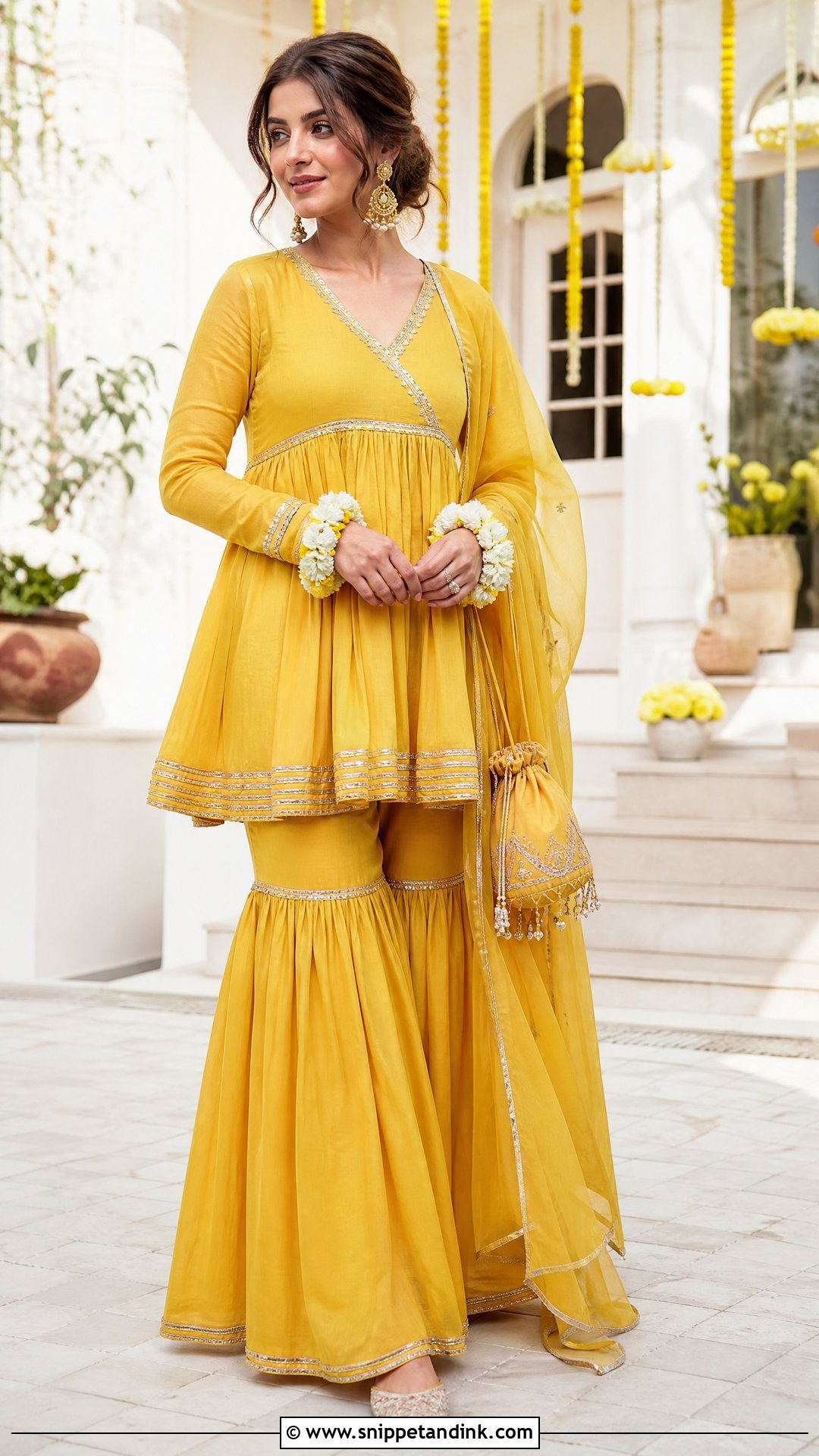
The peplum top and gharara pairing defines the waist, then lets the gathered knee of the gharara carry the volume. Choose a top that flares gently rather than one with a stiff peplum that juts out when you sit. Small gota trim or mirror accents catch daylight without adding weight. Wear the dupatta around the elbows, add embroidered flats and gold drops, and carry a small potli for your phone and tissues before the ceremony starts. A side braid with yellow and white flowers keeps hair off the face. One fitting note: gharara gathering should sit at or just below the knee, or the pants read as a skirt that’s slipped.
6. Yellow Pithi Mirror Work Crop Top And Skirt
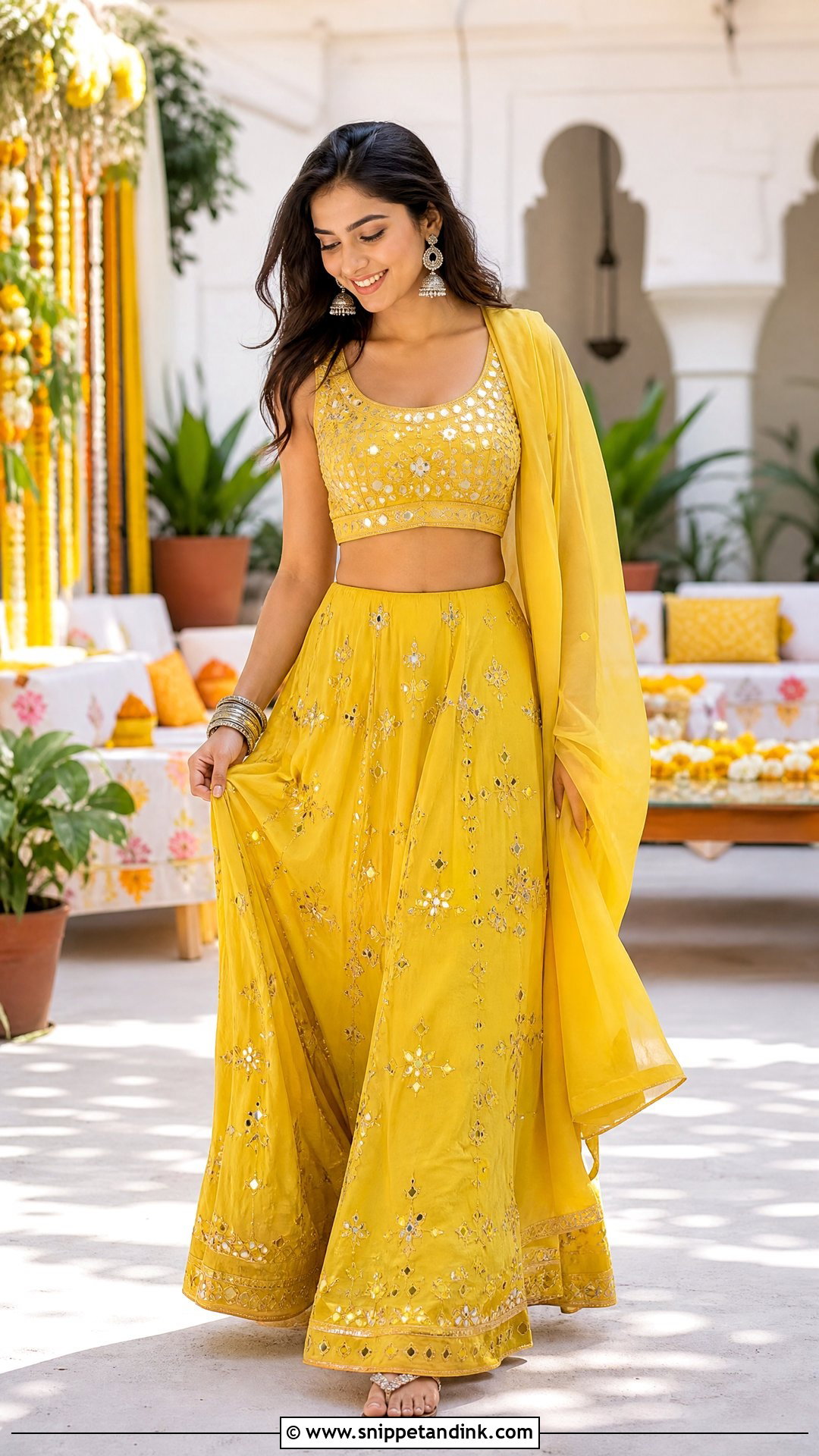
Mirror work is made for daylight, and a flowing yellow skirt with an evenly mirrored crop top will throw small flashes of light across every outdoor photo. Set the top length to the coverage you’re comfortable with and check that the skirt waistband is secure enough for dancing. A plain chiffon dupatta balances the sparkle, worn diagonally or over both arms. Silver earrings, silver bangles and embellished flats sit better with mirrors than heavy gold. Soft waves or a loose ponytail keep it relaxed. The one thing to know about mirror work: turmeric settles into the thread around each mirror and is hard to lift, so this is a skirt to keep out of the paste zone.
7. Yellow Pithi Bandhani Lehenga With Matching Blouse
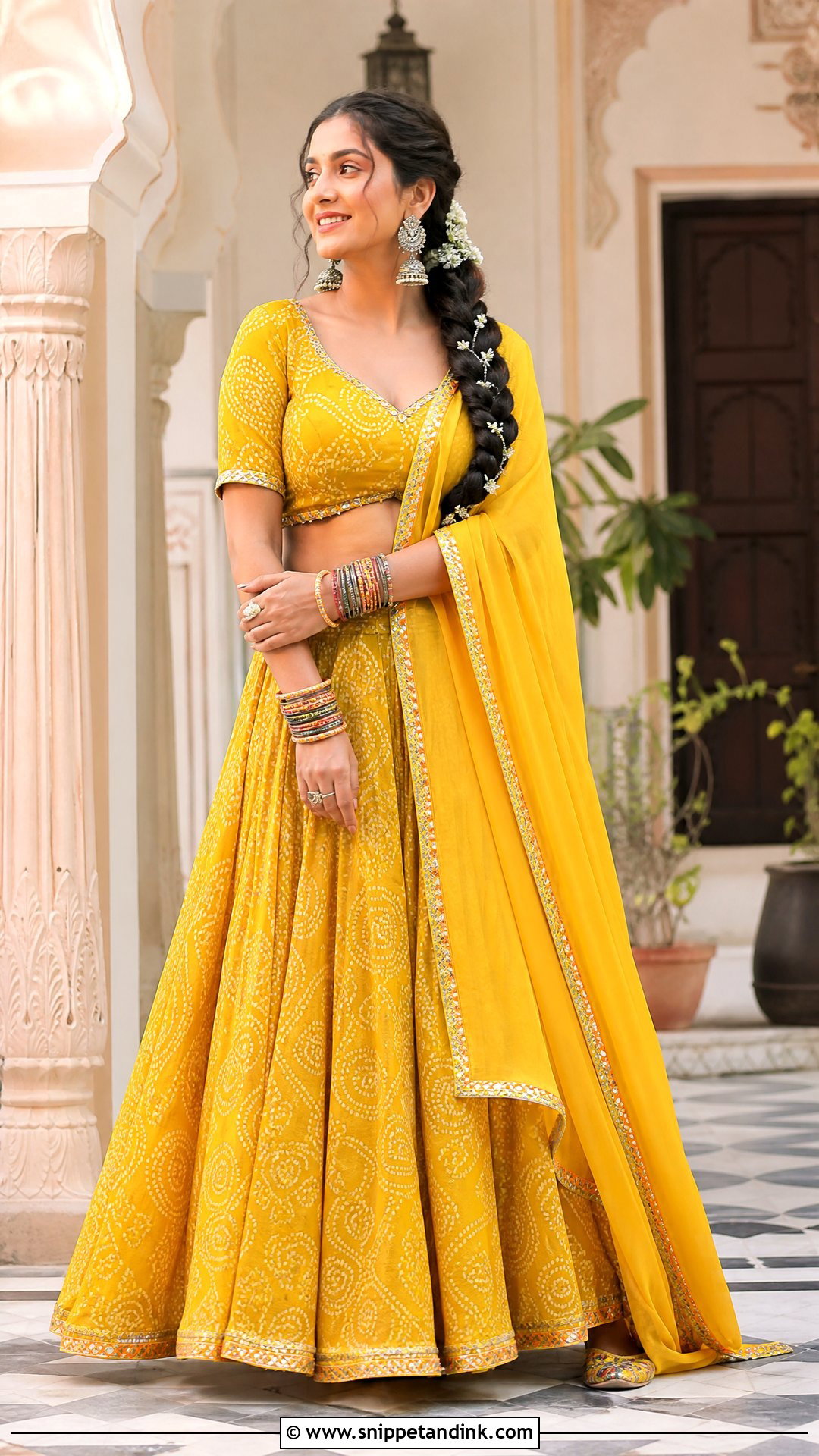
Bandhani hides a lot, which is a practical point in its favour at a turmeric ceremony. The tie-dye dots break up the surface, so a stray smear of paste disappears into the pattern on a yellow Pithi lehenga in a way it never would on plain silk. Choose a lightweight printed skirt with touches of white, pink or orange, and keep the matching blouse simple with a clean neckline. A plain yellow dupatta finished with a bandhani border ties it together. Oxidised silver earrings, coloured bangles, comfortable juttis and a long braid with fabric tassels suit the handcrafted feel.
8. Yellow Pithi Chikankari Kurta With White Palazzo
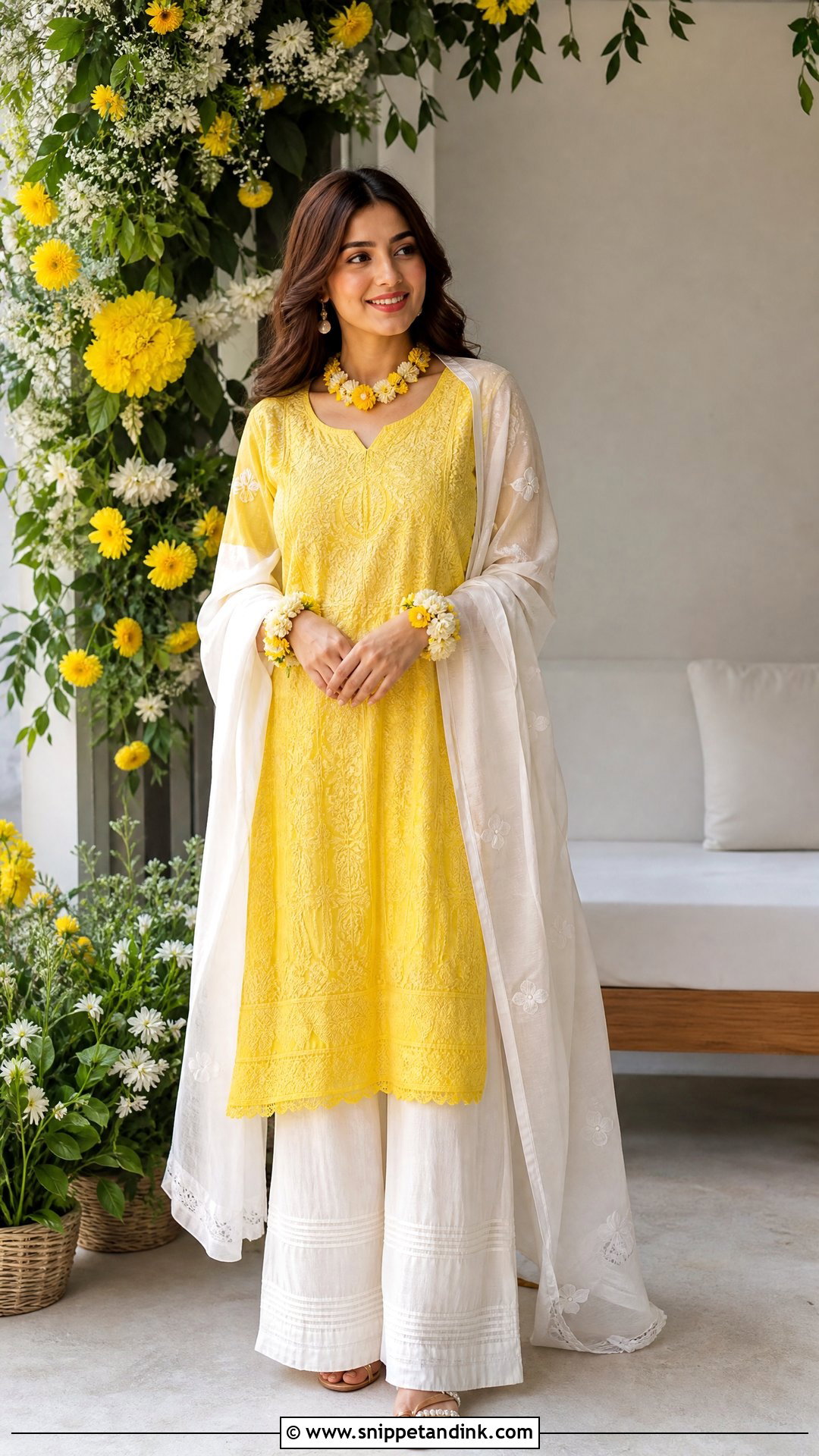
Yellow chikankari over white palazzos is the quietest outfit on this list, and that is its strength at an early ceremony. Pick a straight or slightly flared kurta so the hand embroidery lies flat and stays visible. A light yellow or white dupatta, pearl earrings, white floral bangles and neutral sandals keep the palette clean, with light makeup and a low ponytail or loose bun. Because the colours are soft, a yellow floral necklace gives the eye somewhere to land. Be realistic about the white pants: they will take paste, so choose cotton that can go straight into a cold wash afterwards.
9. Yellow Pithi Draped Saree With Gold Belt
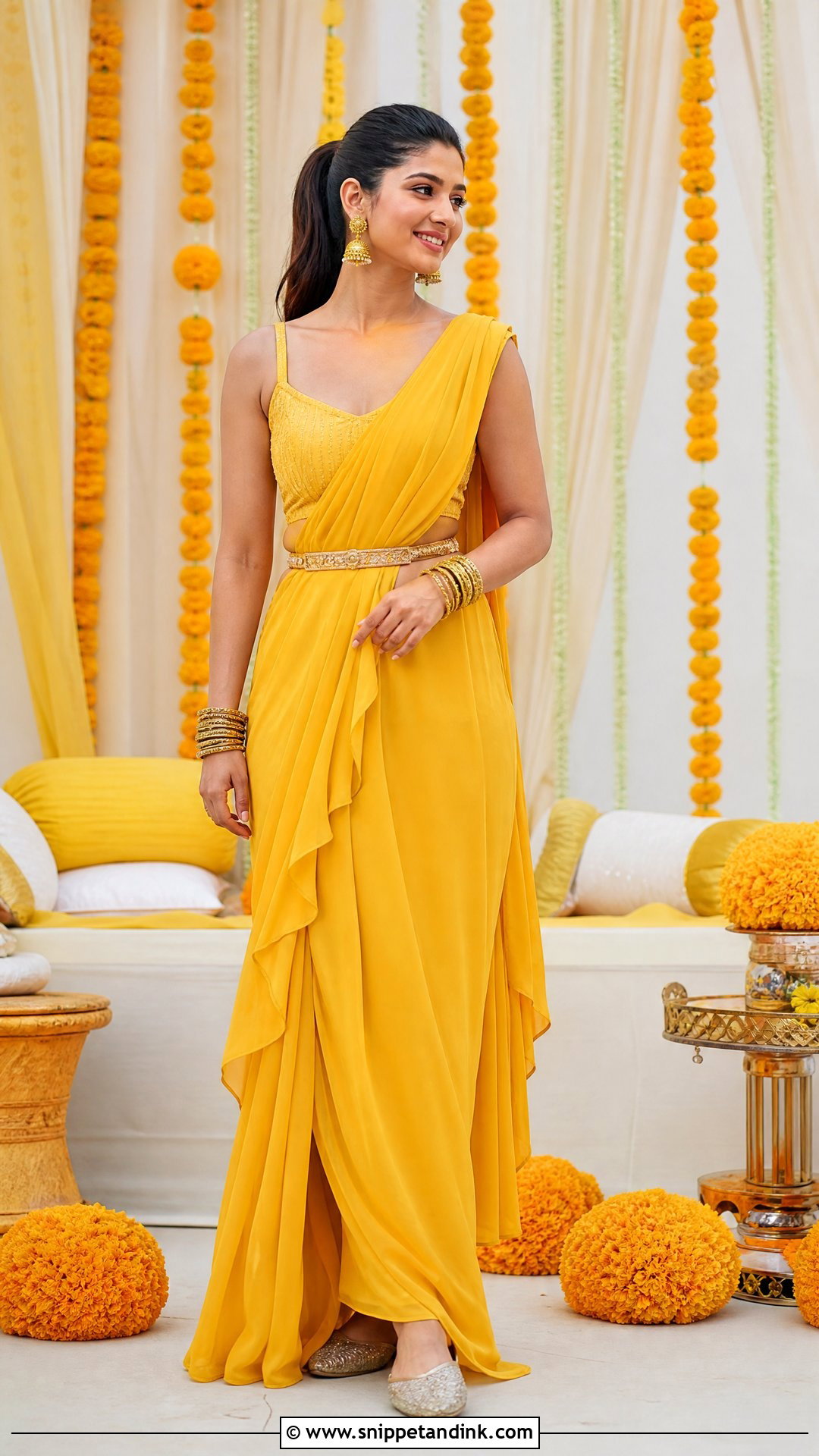
A pre-draped saree is the one I suggest to brides who have never worn a saree for hours. The pleats are stitched, so nothing unravels when an auntie pulls you into a hug. Pair it with a fitted blouse with short sleeves or supportive straps, and add a slim gold belt to hold the drape at the waist. Gold jhumkas, stacked bangles and low block heels or metallic flats finish it, with hair pulled into a sleek ponytail or bun so the belt and neckline show. Georgette or crepe behaves far better than heavily decorated fabric, and the whole thing stays neat from the first ritual to the family portraits.
10. Yellow Pithi Dhoti Pants With Short Kurta
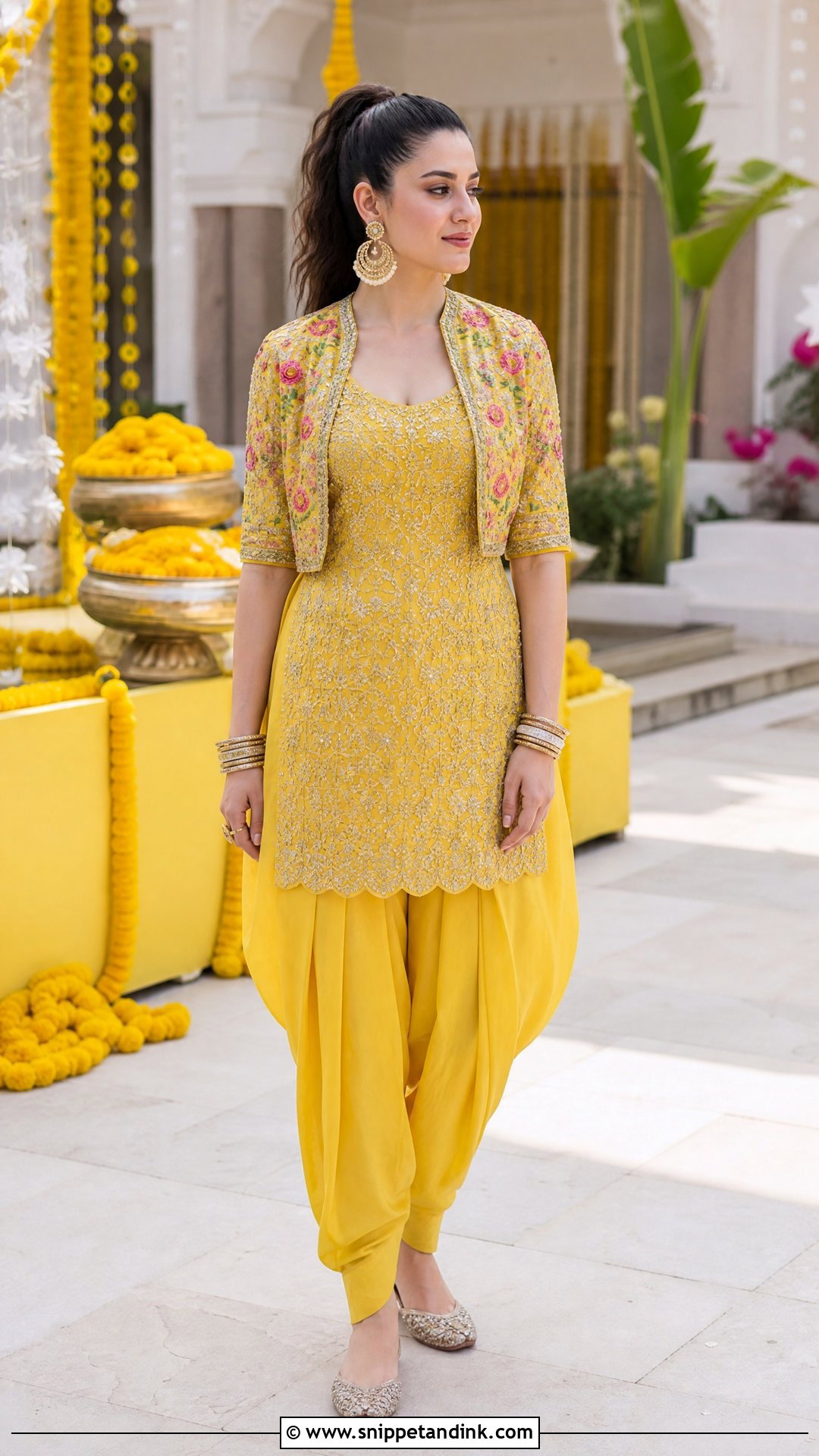
Dhoti pants with a short embroidered kurta give a modern line with a traditional root. The gathered pants create shape, so keep the kurta fitted and choose a soft fabric that drapes rather than one that adds bulk at the hip. A cropped embroidered jacket or a light dupatta adds coverage when you need it. Pointed juttis, statement earrings and a few slim bangles finish it, and a high ponytail stops hair falling forward when you bend for the paste. You can sit, walk and dance in this without thinking about a hem, which matters more than people expect. It suits anyone who leans towards Indo-Western fashion but still wants the outfit to read clearly as Pithi.
11. Yellow Pithi Lehenga With Cape Blouse
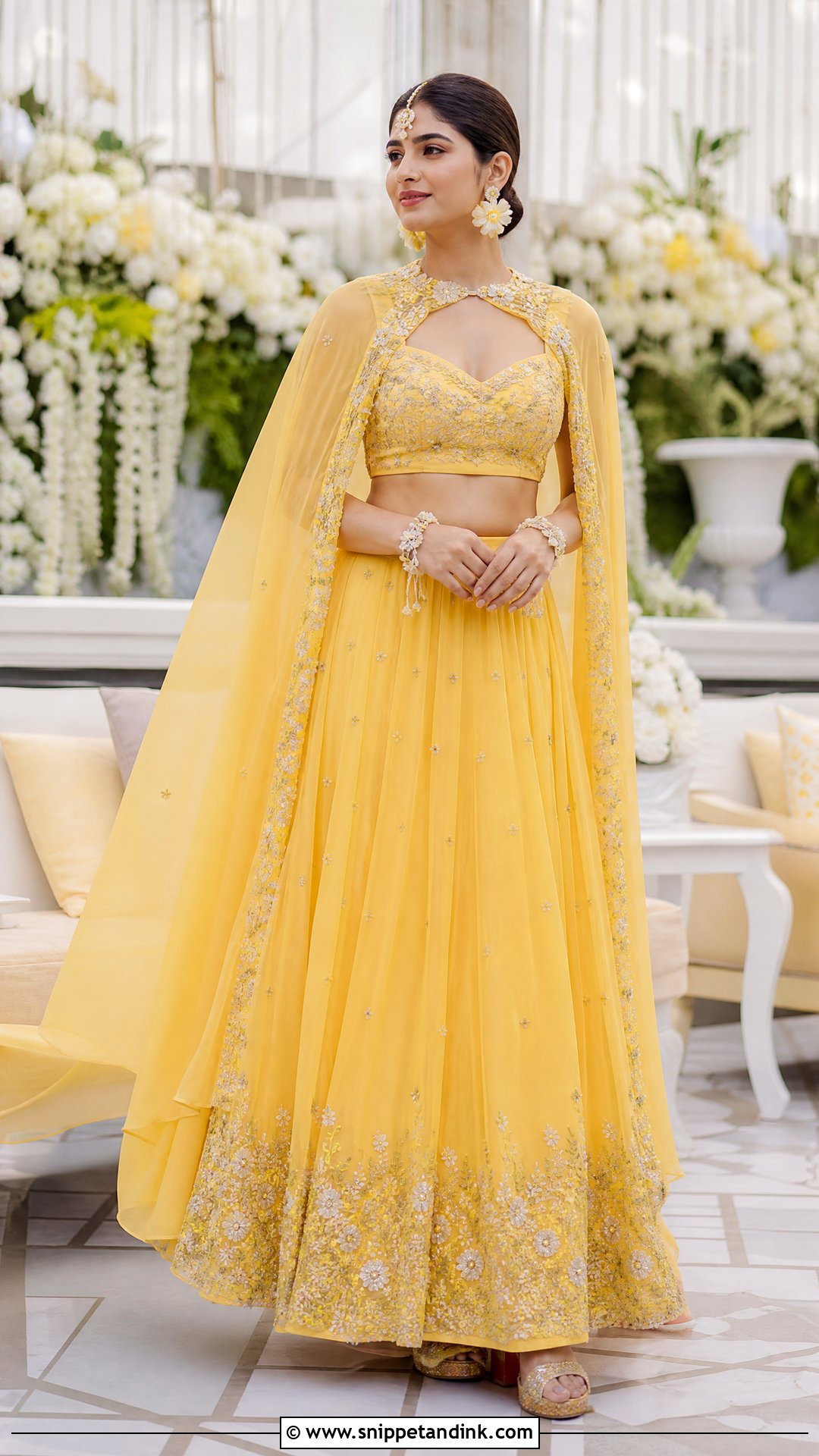
A cape blouse replaces the dupatta, which is one less piece of fabric to manage while relatives reach for your arms. Choose a fitted blouse joined to a sheer cape that falls to the elbow or waist, over a plain flowing skirt or one with small tonal motifs. The cape already brings movement to the shoulders, so keep jewellery to floral earrings, a slim maang tikka and fine bracelets. Low embroidered wedges and a sleek bun or soft curls finish it. Length matters here: I’d steer you away from any cape that reaches the wrist, because it trails straight through the turmeric bowl.
12. Yellow Pithi Floral Skirt With White Crop Top
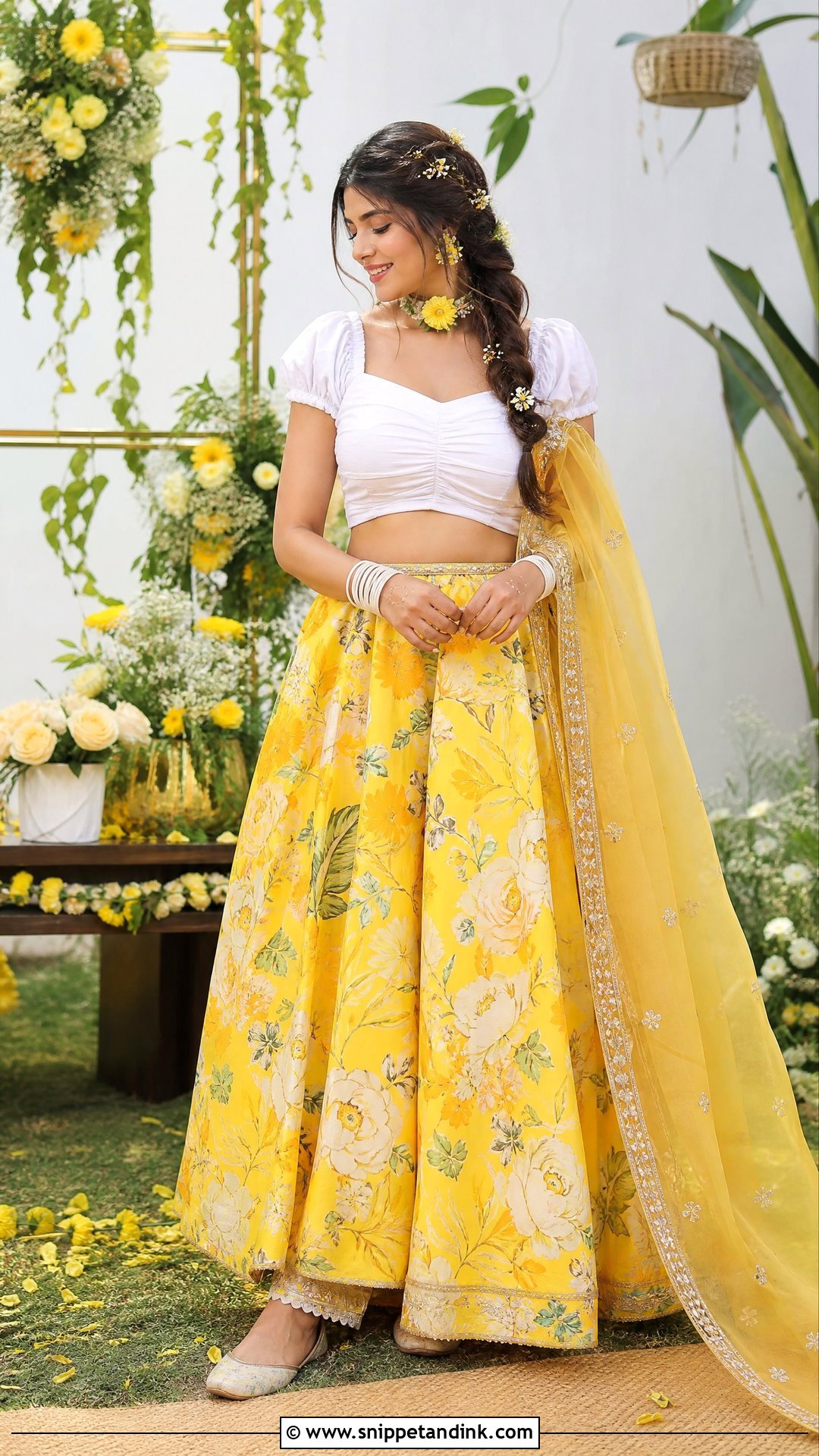
Printed florals look most at home in a garden or courtyard, where the greenery repeats the print. Choose a flowing skirt with yellow, green and soft pink flowers and pair it with a fitted white blouse with modest embroidery, puff sleeves or a square neckline. A sheer yellow dupatta gives a more traditional finish if you want it. A flower choker, small earrings, white bangles, neutral juttis and a loose braid woven with tiny yellow flowers complete the set. It’s relaxed enough for bridesmaids, sisters and younger guests. Keep the blouse plain, since a busy top against a busy print fights for attention in photos.
13. Mustard Yellow Pithi Silk Saree With Green Blouse
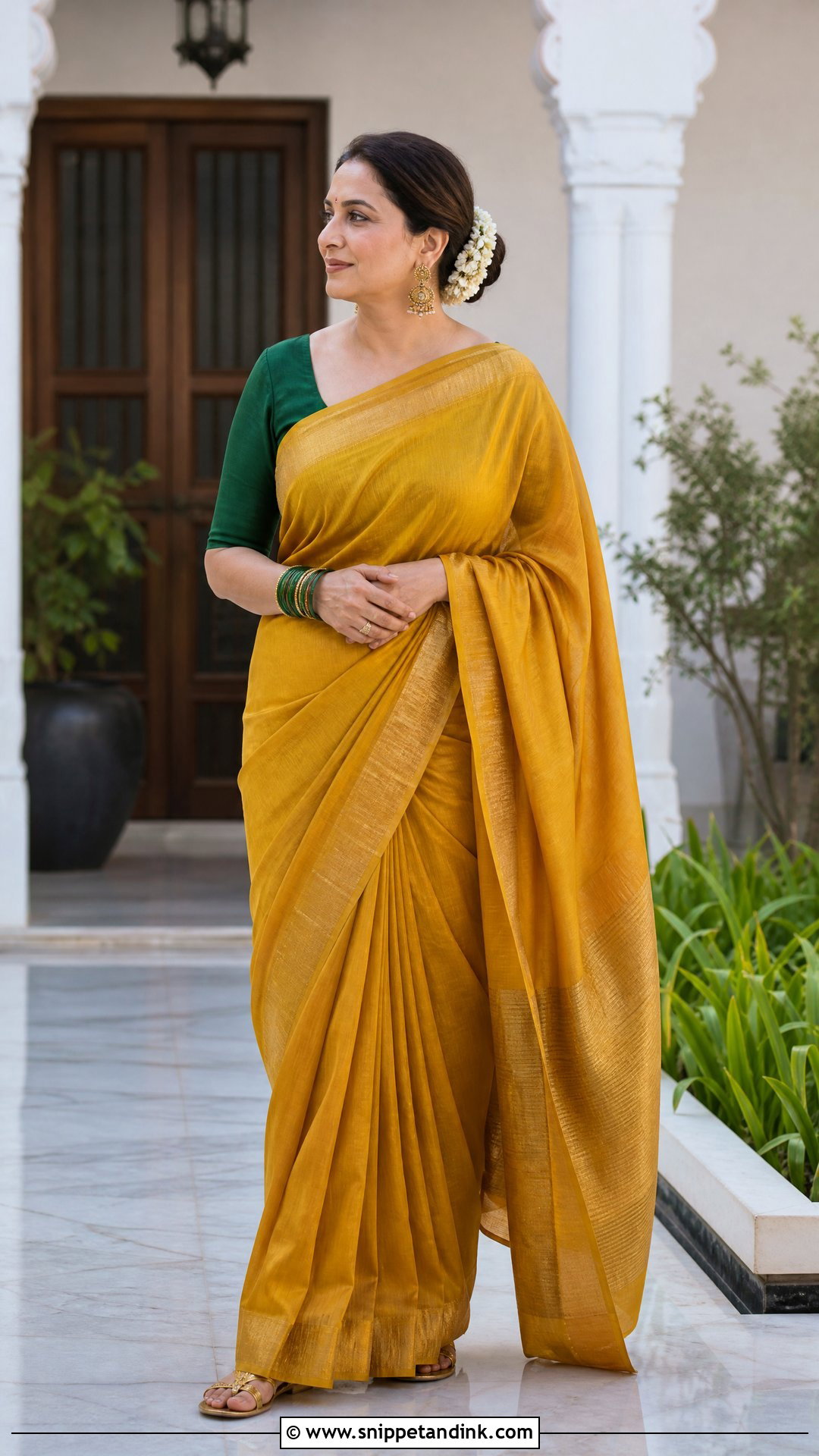
Mustard is the yellow I reach for when lemon shades make someone look washed out, which happens more often on cooler or olive skin than people realise. Drape a lightweight silk saree with a slim gold border and pair it with a green blouse; emerald, olive and leaf green all work. Antique gold earrings, green glass bangles and comfortable gold sandals suit the deeper palette, and white flowers around a low bun lift it. Pin securely at the waist and shoulder. Choose a soft silk blend over a stiff formal saree. It flatters mothers and older brides especially, but I’ve put it on young brides too when bright yellow simply wasn’t their colour.
14. Yellow Pithi Palazzo Set With Long Jacket
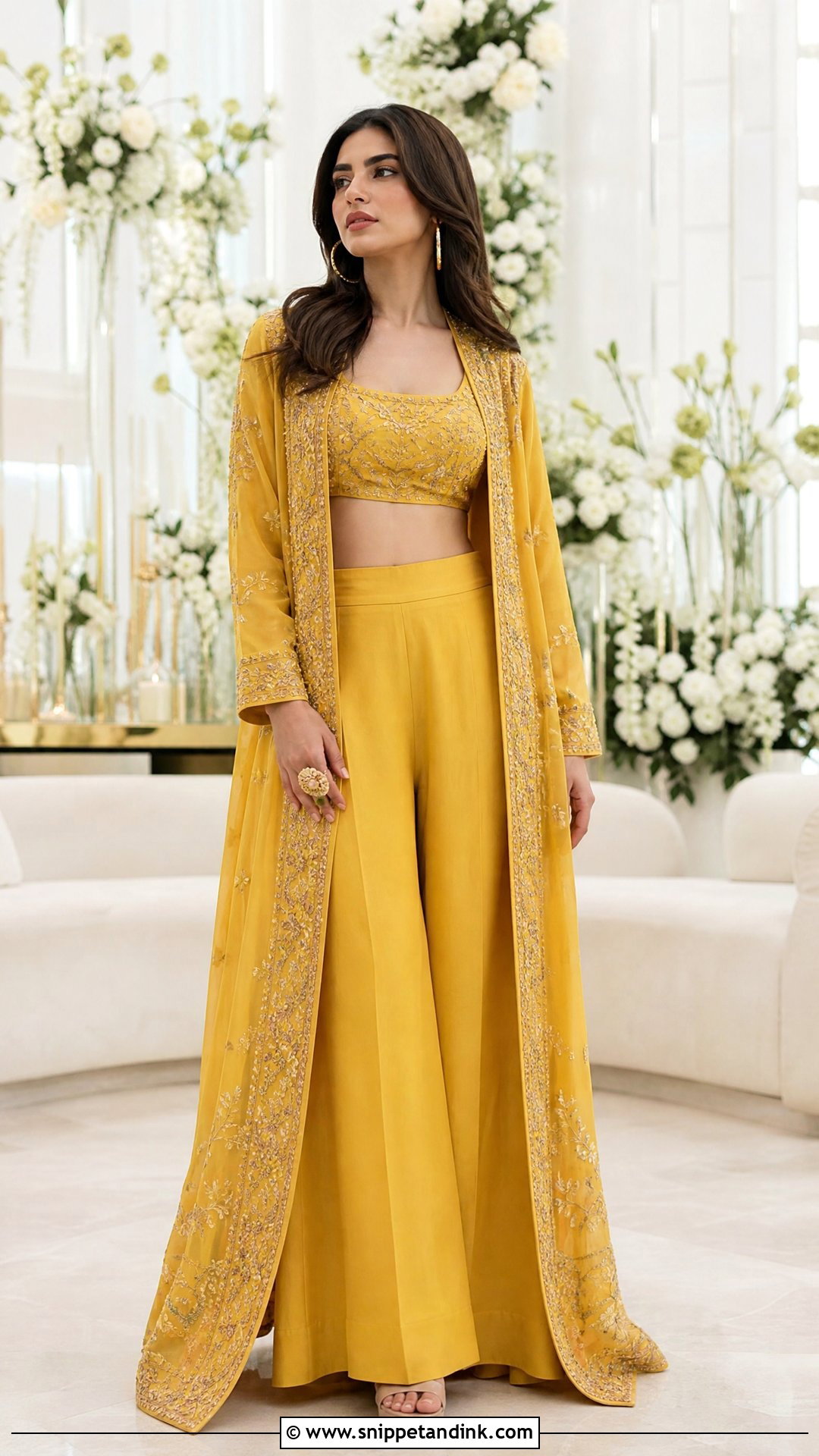
Three pieces sound like more to manage, but a long jacket over a crop top and palazzo pants is actually forgiving: if the jacket takes paste, you take it off and the outfit underneath is still complete. Choose a fitted inner top, high-waisted wide-leg pants and an open jacket with light embroidery along the edges, falling somewhere between knee and ankle. Gold hoops, a statement ring and simple platform sandals suit the modern shape, with a high ponytail or sleek low bun. If the jacket is worked with mirrors or florals, keep the top and pants plain.
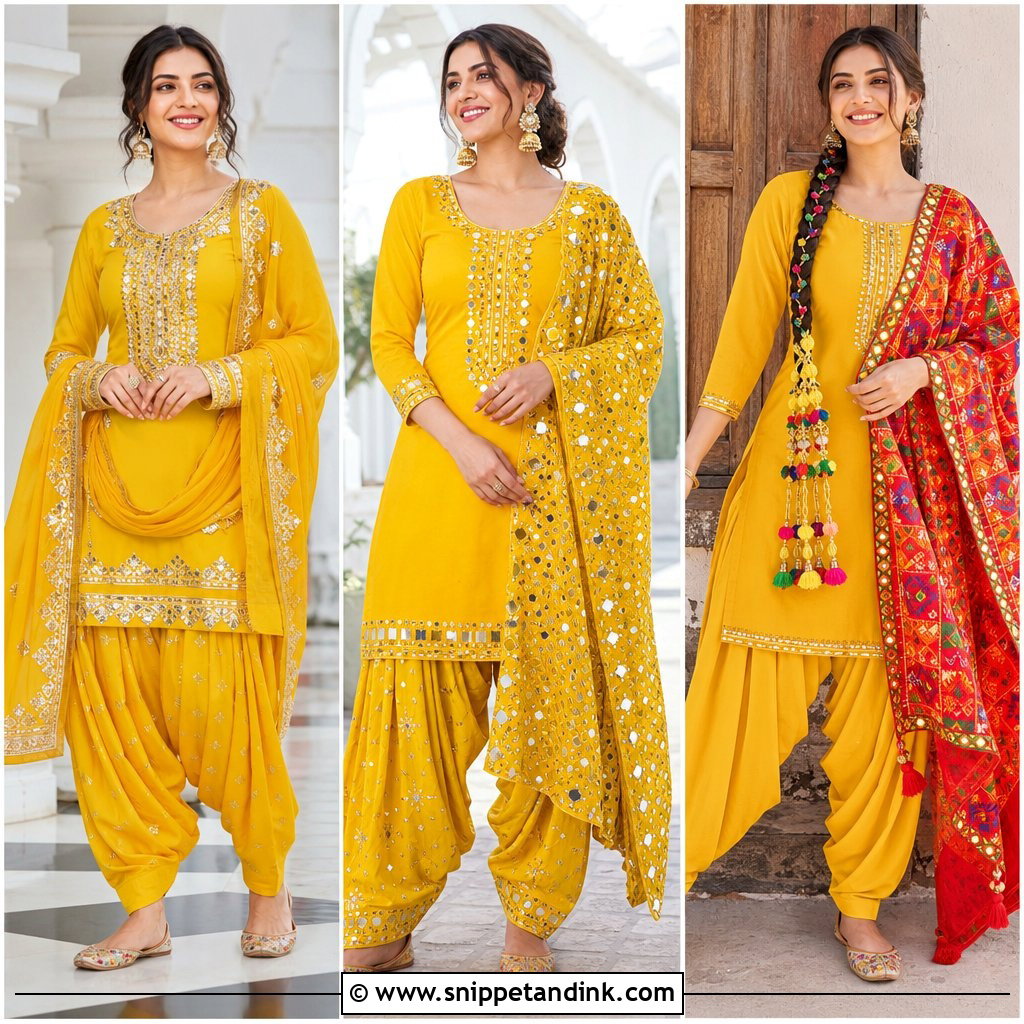
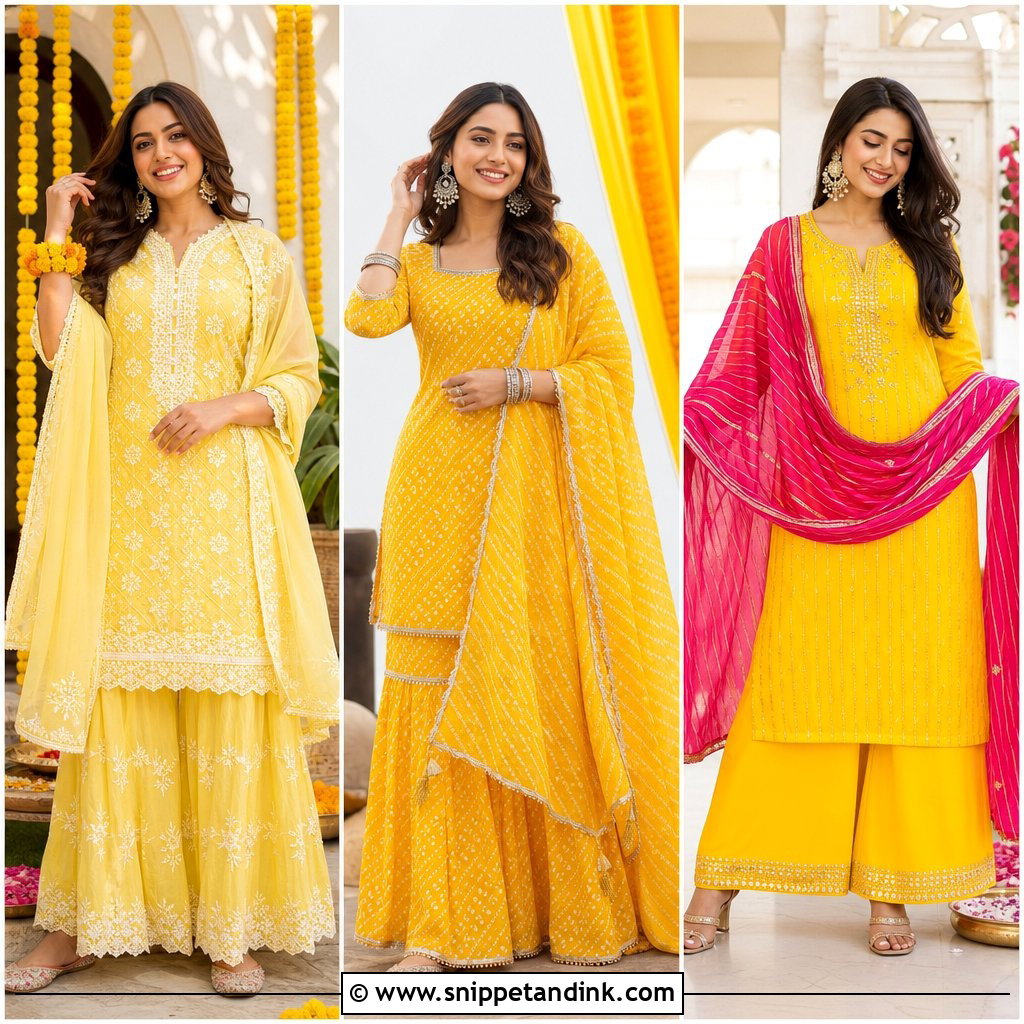
15. Yellow Pithi Cotton Salwar Suit With Phulkari Dupatta
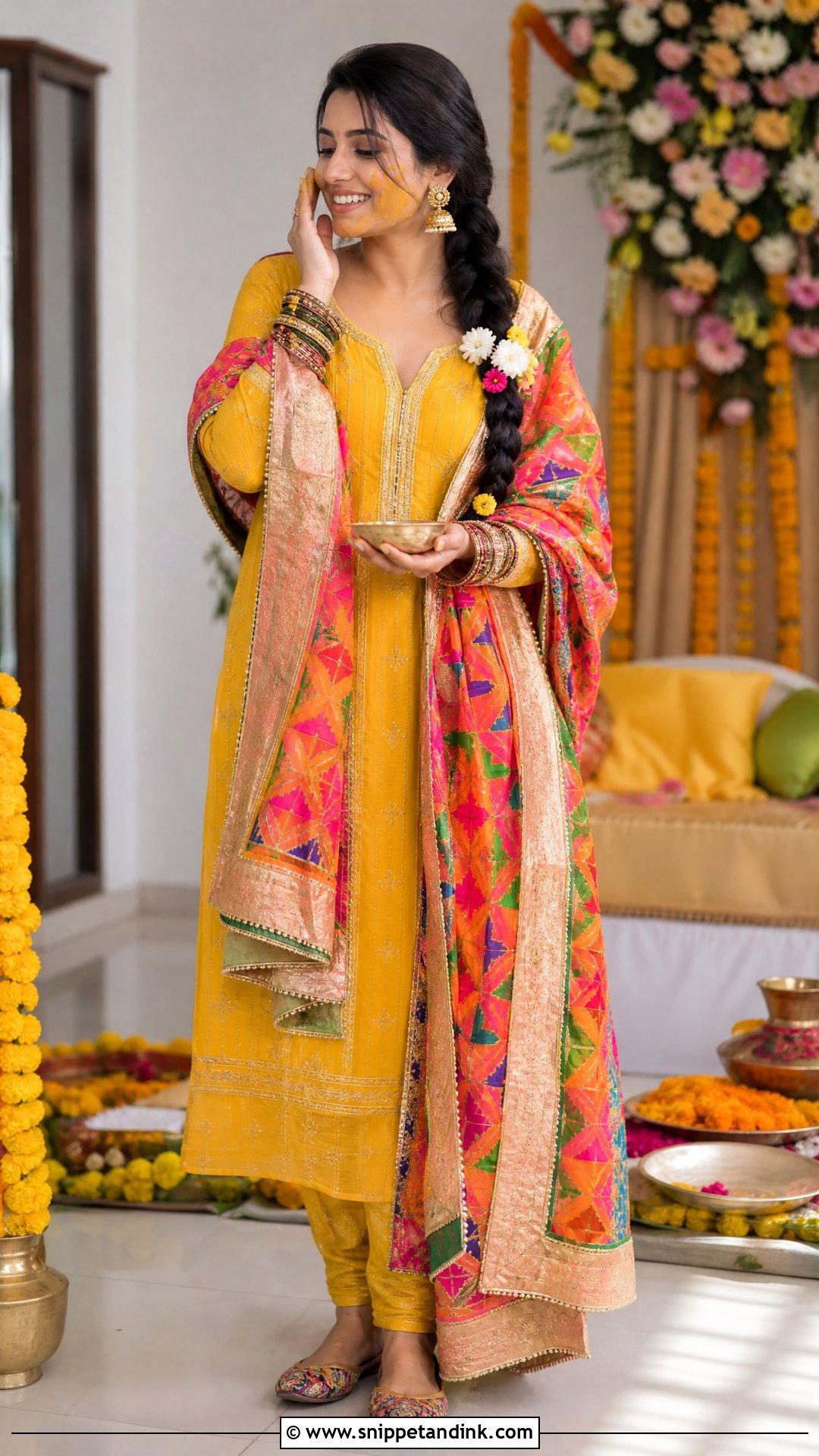
Cotton breathes, and at a summer daytime ceremony that counts for more than any embroidery. Wear a straight yellow kameez with comfortable salwar and let a colorful phulkari dupatta in pink, orange, green or red bring the energy. The dupatta does all the decorating, so the base can stay simple. Add traditional jhumkas, mixed bangles and embroidered Punjabi juttis, with a long braid or low ponytail. When I fit this, I check the shoulders by having the bride raise both arms; if the kameez pulls, it will pull every time she greets someone. Side slits matter too, for sitting on the floor.
16. Yellow Pithi Skirt Co-Ord With Puff Sleeve Top
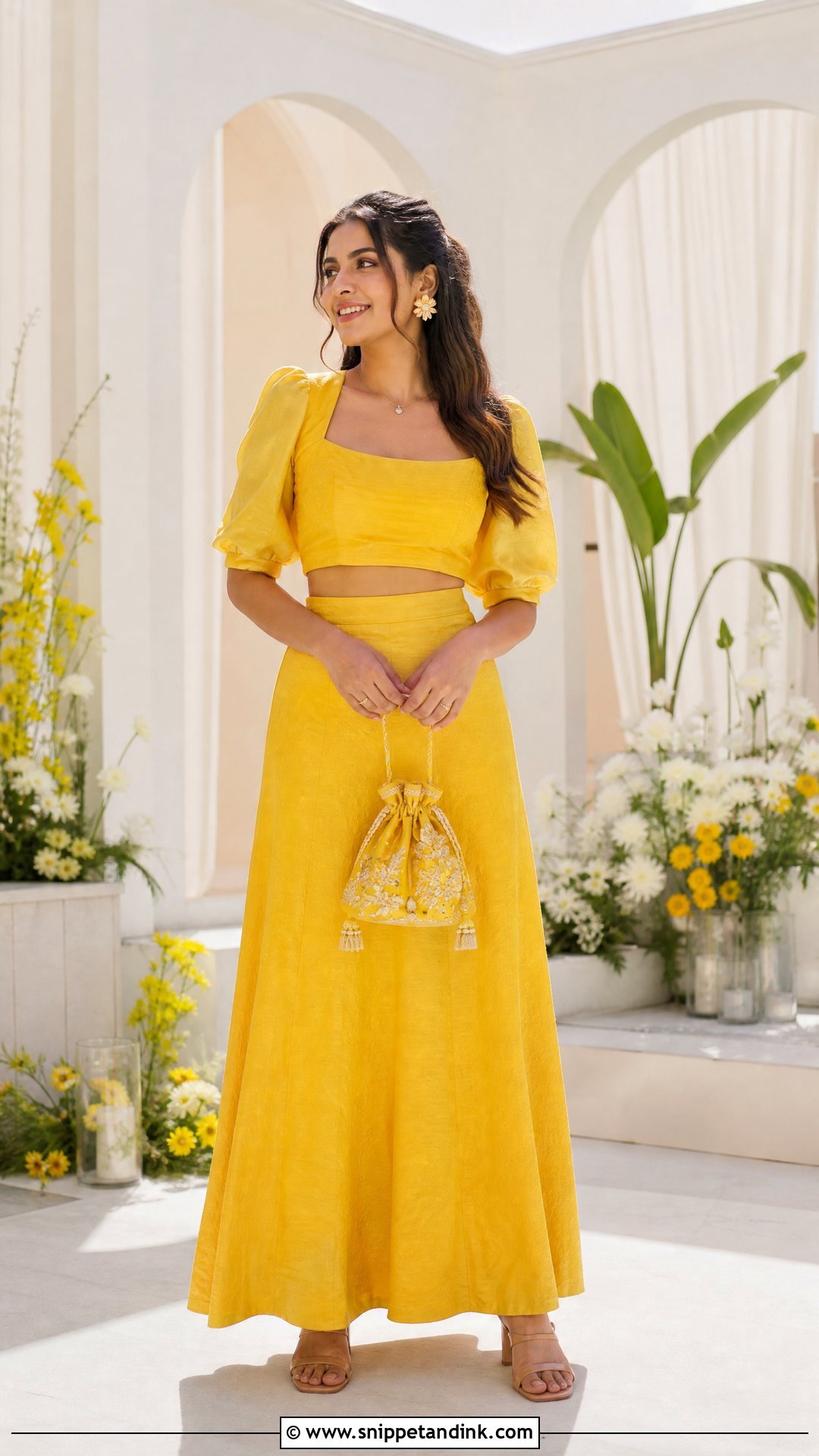
A matching skirt and puff-sleeve top is the outfit guests can wear again, which makes it a sensible bridesmaid choice. Go for a high-waisted midi or ankle-length skirt with gentle volume and a fitted top with short puff sleeves; tonal embroidery or covered buttons add detail without weight. Floral studs, a fine necklace, nude block heels, a small yellow potli and a soft half-up style keep it light. For a bride, I build it up with a flower crown, stacked floral bracelets and a matching dupatta worn loosely around the arms. Short puff sleeves have one more advantage: they stay well clear of the paste.
17. Yellow And Orange Pithi Ombre Sharara
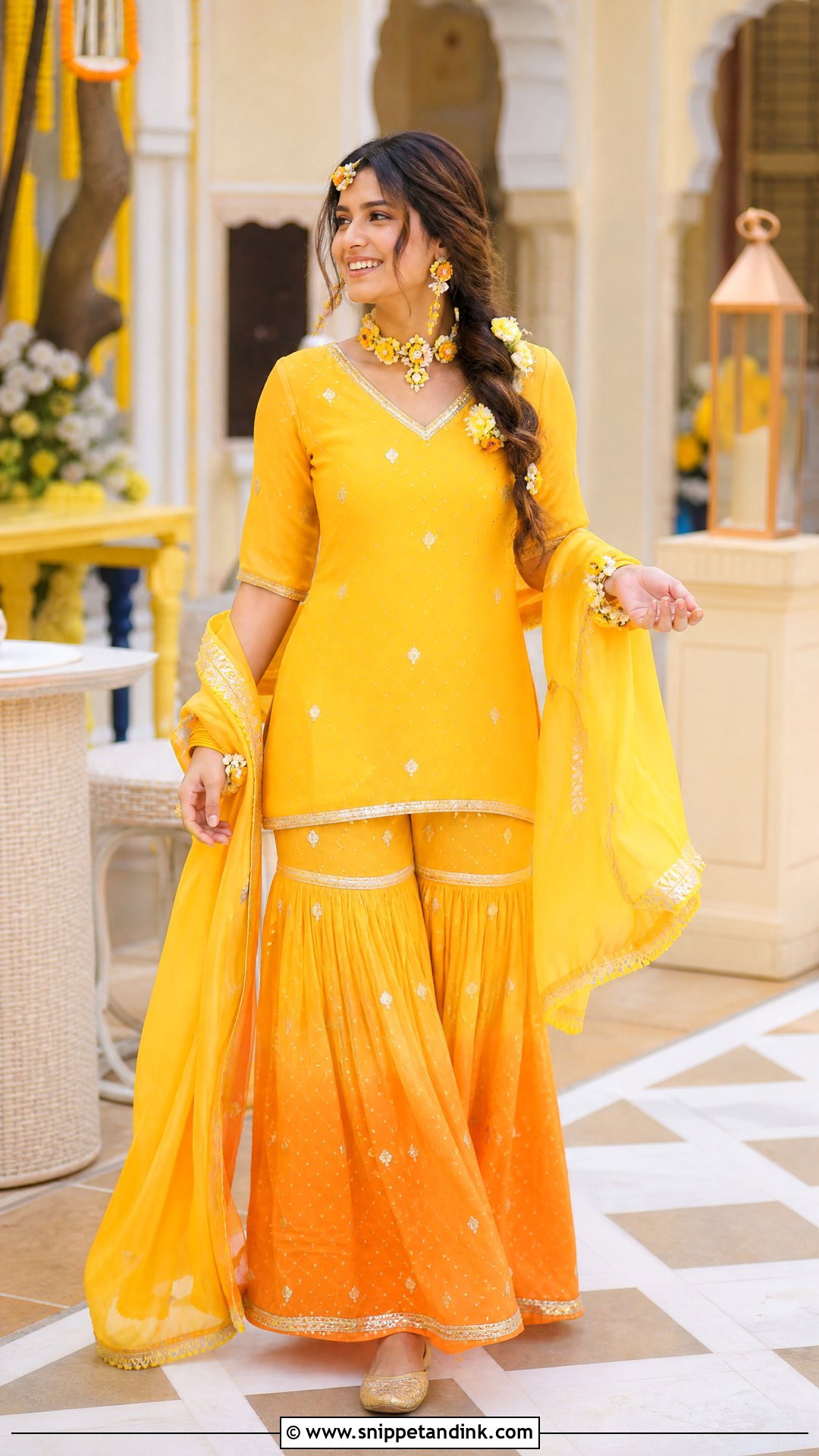
Ombre needs a simple cut, otherwise the colour change and the shape compete. Choose a sharara that fades from orange into yellow, a plain short kurta, and a dupatta that repeats both shades. Small gota borders or scattered sequins help the flare move without breaking the gradient. Gold juttis, orange and yellow floral jewellery and matching bangles finish it, with a loose side braid or textured low ponytail and fresh makeup. Warm colours hold up well in outdoor photos from any angle. Check the dye before you buy: cheaper ombre pieces can bleed when wet, and a Pithi is a wet ceremony.
18. Plus Size Yellow Pithi Empire Waist Anarkali
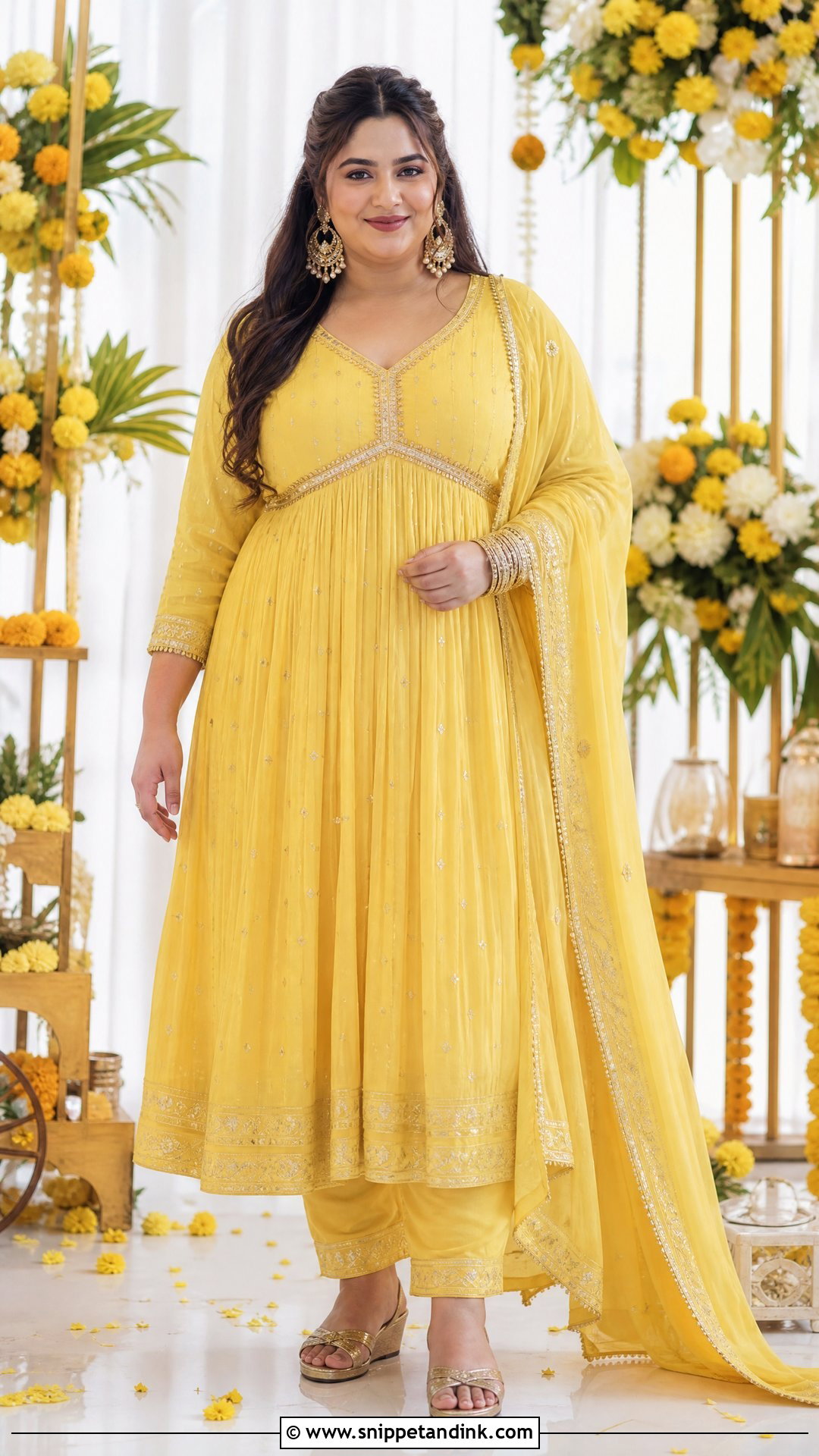
For a plus-size Pithi outfit, the empire waist does the work by setting the seam just under the bust and letting the A-line fall from there. What makes or breaks it is the shoulder. A yellow Anarkali that fits cleanly across shoulders and bust looks tailored; one bought a size up to be safe looks like it is wearing you. Three-quarter sleeves, a V-neck and vertical embroidery lengthen the line. Pair with straight pants, a light dupatta over one shoulder, chandelier earrings, stacked bangles and low gold wedges, plus a half-up style for height. Georgette, cotton silk and crepe move without adding volume.
19. Yellow Pithi Straight Kurta With Cigarette Pants
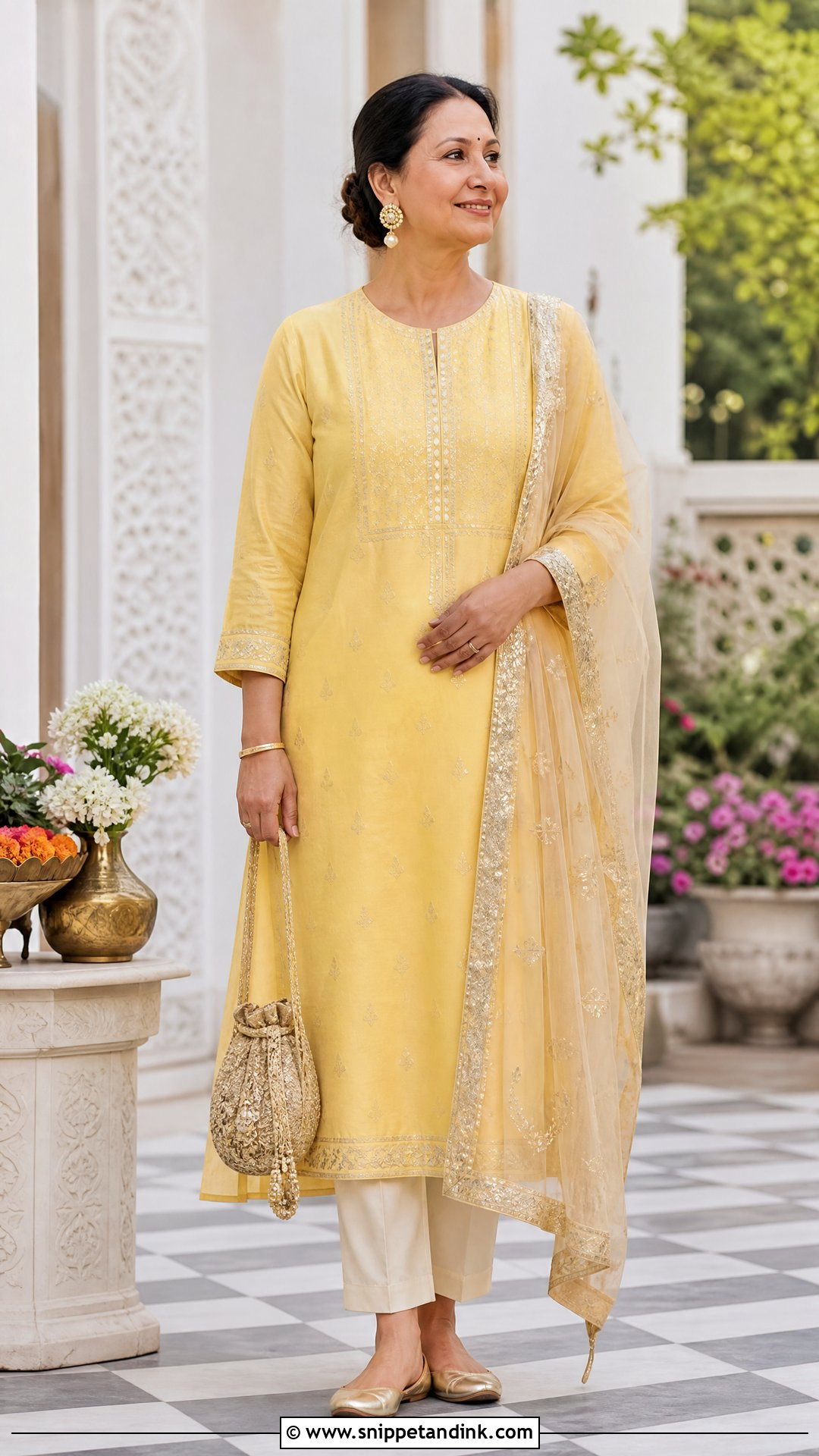
Clean lines suit women who don’t want anything flaring or trailing, and a straight kurta with cigarette pants is about as clean as it gets. Choose a knee-length kurta with three-quarter sleeves, side slits and fine embroidery at the neckline, over matching yellow or ivory pants. A sheer dupatta with a narrow gold border, pearl-and-gold earrings, a structured potli and metallic flats complete it, with a low bun, soft eyeliner and a small bindi. Mothers and older guests often prefer this cut. It also goes from the ceremony to lunch and photographs without a change.
20. Bridal Yellow Pithi Lehenga With Pink Dupatta
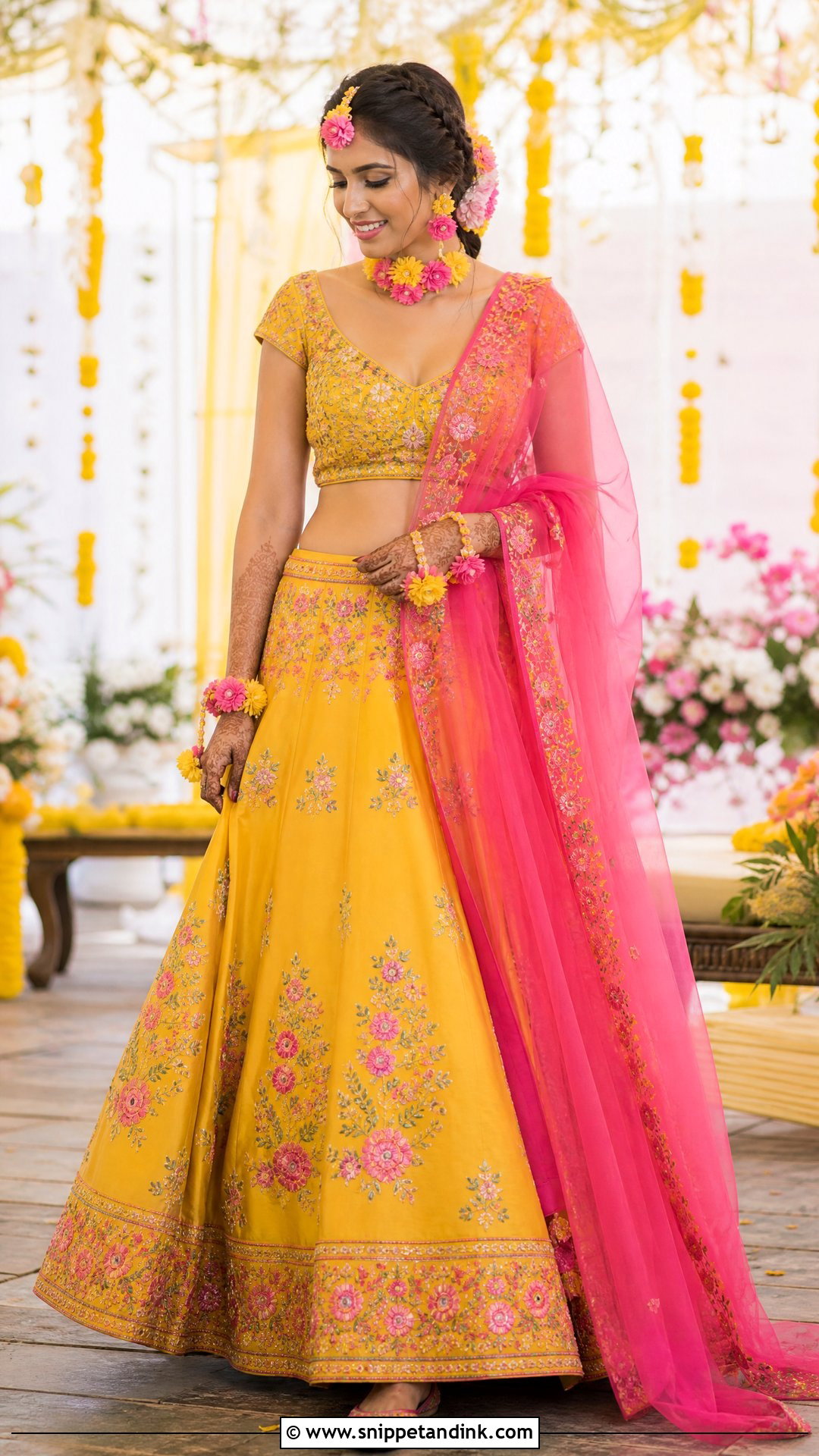
Pink against yellow is the contrast that most clearly marks out the bride when every cousin has arrived in yellow. Choose a flowing skirt with floral embroidery that brings in small touches of pink, a matching yellow blouse with a secure neckline, and drape the pink dupatta diagonally or pin it on one shoulder so hands and face stay reachable. Add pink-and-yellow floral jewellery, embroidered juttis and a delicate maang tikka, with a braided bun dressed in fresh flowers. Keep the lehenga itself light even if it’s detailed. You’ll be leaning in and out of hugs all morning.
Getting Turmeric Out of Silk, Cotton and Embroidery
Every Pithi outfit gets some paste on it, so plan the cleanup before the ceremony rather than after. Turmeric dyes fabric fast, and the oil that’s usually mixed into the paste carries it deeper into the fibres. The first hour matters most.
On the day
- Scrape off wet paste with a blunt knife or card. Don’t rub; rubbing pushes it in.
- Rinse from the back of the fabric with cold water. Hot water sets the stain.
- Avoid regular bar soap or baking soda at this stage. Turmeric turns reddish brown in alkaline conditions, and the mark often looks worse before it looks better.
- Hang washable cotton pieces in direct sun afterwards. Sunlight genuinely fades turmeric, and a few hours outdoors will lift a lot of the yellow.
For silk, zari and mirror work
Don’t wash these at home. Blot, let the piece dry flat, and take it to a dry cleaner within a few days, telling them it’s turmeric and oil so they treat it properly. Leave metallic zari and mirror work alone; scrubbing tarnishes the thread and loosens the mirrors.
My honest advice is to treat the Pithi outfit as something that might not come back exactly as it was. Buy or borrow with that in mind, and save the heirloom silk for a ceremony where nobody is holding a bowl of paste.
The Yellow That Still Looks Right Once the Paste Dries
Most of the outfits above come down to the same few decisions: which yellow suits your skin, how much fabric sits near the paste, and whether you can sit on the floor and get up again without help. Think about the venue, the temperature and how long the ceremony really runs, then go for the lightest version of the look you love. Flat shoes, secure pins and jewellery that rinses clean will spare you from fussing with your clothes, so your attention stays on the people around you.
You'll Like These Ideas:






Leave a Reply