
The barat is the night the whole family has been building toward, and the outfit carries more weight than anything else you’ll wear that week, literally and otherwise. Red lehengas still lead, but I now dress just as many brides in maroon ghararas, velvet maxis, antique gold pishwas and organza-dupatta looks that are lighter to carry and still read as royal. What matters is how the outfit holds up under hall lighting, how it moves when you walk to the stage, and whether it suits the season and venue. Each of the 25 looks below comes with the styling I’d pair it with, so you can see the full picture before you commit.
Which Barat Color Suits Your Skin and Your Venue Lights?
Most barat halls are lit warm, with yellow bulbs and a bright stage backdrop, and that changes how fabric looks. Tomato reds go orange, pale pastels go muddy, and very dark shades lose their embroidery. Before I sign off on a color, I run three checks.
- Hold the fabric under your face in daylight and look at your skin, not the fabric. If your skin turns grey or sallow, the shade is wrong for you, however well it photographed on someone else.
- Check it again under warm indoor bulbs, which is closer to the hall. Ask the venue about its stage lighting, or look at past wedding photos taken there.
- Find out the stage backdrop color. A gold backdrop swallows a gold outfit, and a solid red floral wall can do the same to red.
Undertone helps narrow things down. Warm and olive skin tends to suit rust, oxblood and antique gold, while cooler undertones often look brighter in ruby, plum and emerald. These are tendencies, not rules, and the fabric test settles it. Bring a small swatch home from the designer if you can, and look at it on a cloudy afternoon and again at night.
1. Red Pakistani Barat Bridal Lehenga
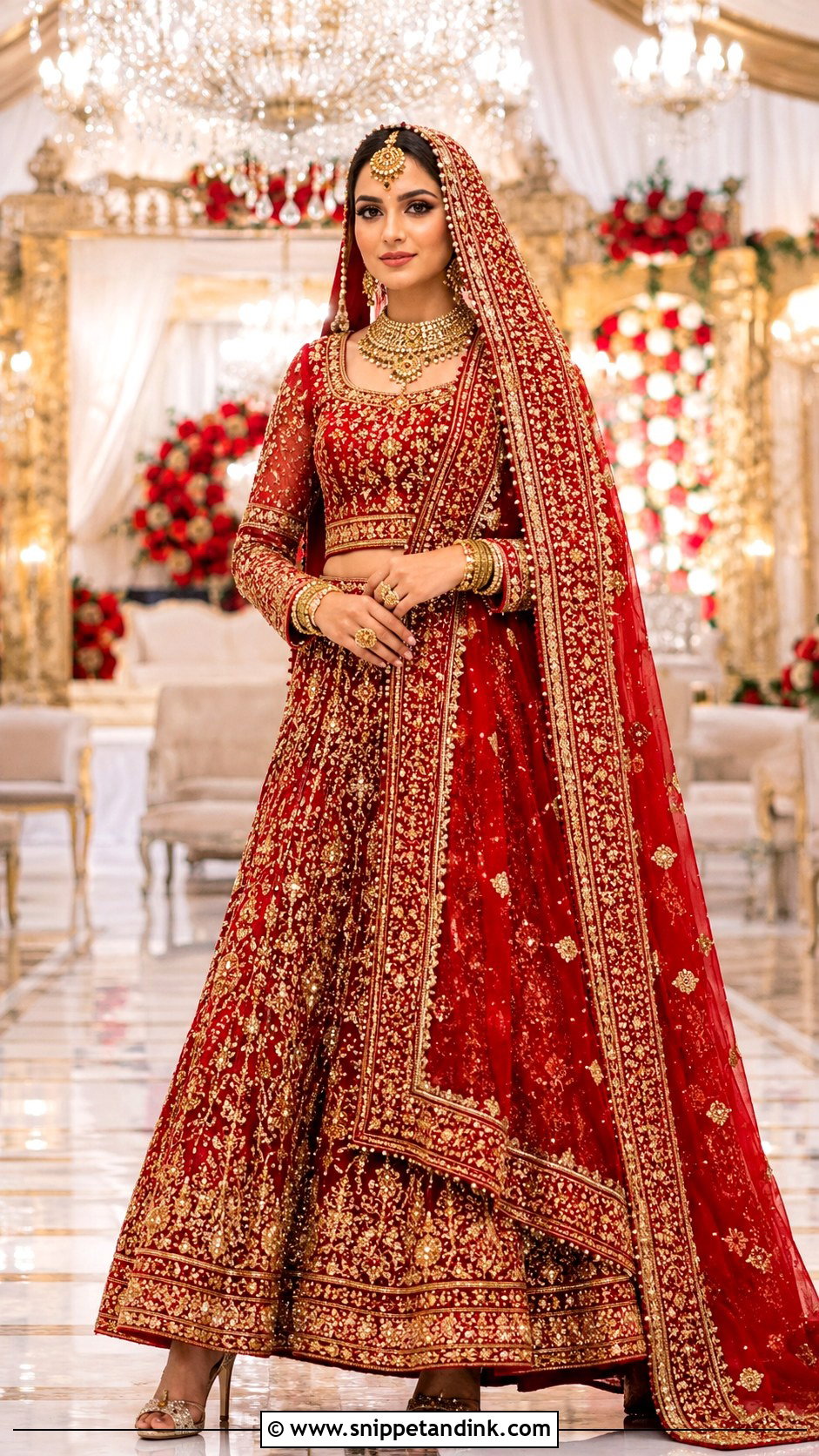
Red has stayed the default for good reason: it holds its color under almost any light, and zardozi, dabka, kora and resham all show their texture against it. I prefer a deep or ruby red to a bright tomato shade, which can turn orange in warm hall lighting. Pair the lehenga with a fitted blouse or short choli and a heavily bordered dupatta over the head, plus a lighter one across the shoulder for portraits. Gold kundan jewelry, a matha patti, jhumkas, bangles and khussa heels finish it. Ballrooms, wedding halls and evening ceremonies all suit it.
2. Maroon Pakistani Barat Bridal Gharara
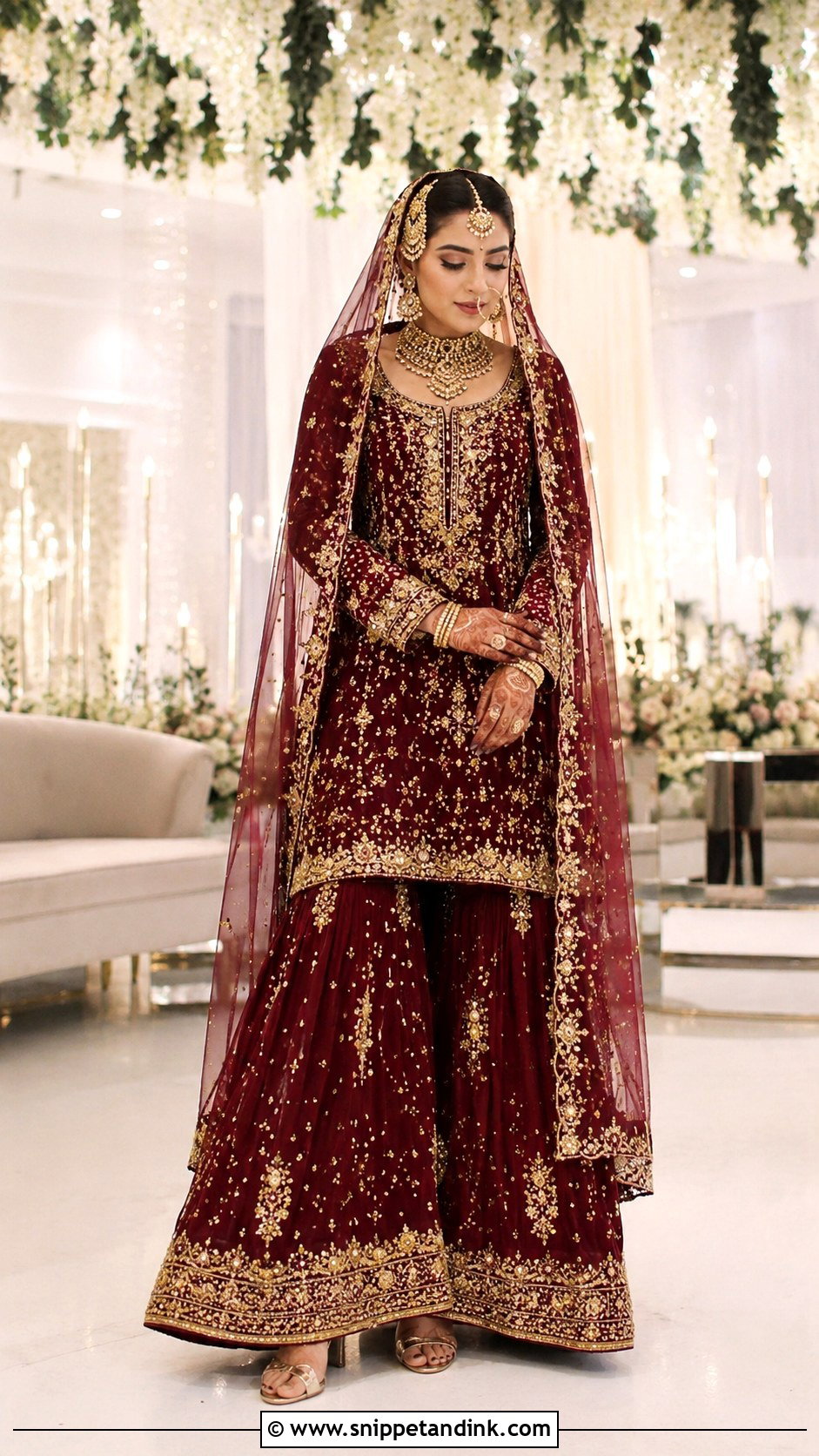
Maroon ghararas have a quieter authority than red, and the shape ties straight back to traditional South Asian bridal dressing. The flare starts at the knee, so the bride looks tall and composed when standing and doesn’t fight a huge skirt when she sits. Antique gold embroidery, scalloped borders and dense work at the hem, sleeves and neckline suit it. A maroon net or organza dupatta with a heavy border sits well over the head, and polki, a passa, a choker and stacked bangles give it an old-world finish. One thing to check: the gota band at the knee joint is stiff, so have it placed where your knee actually bends.
3. Gold Pakistani Barat Bridal Pishwas
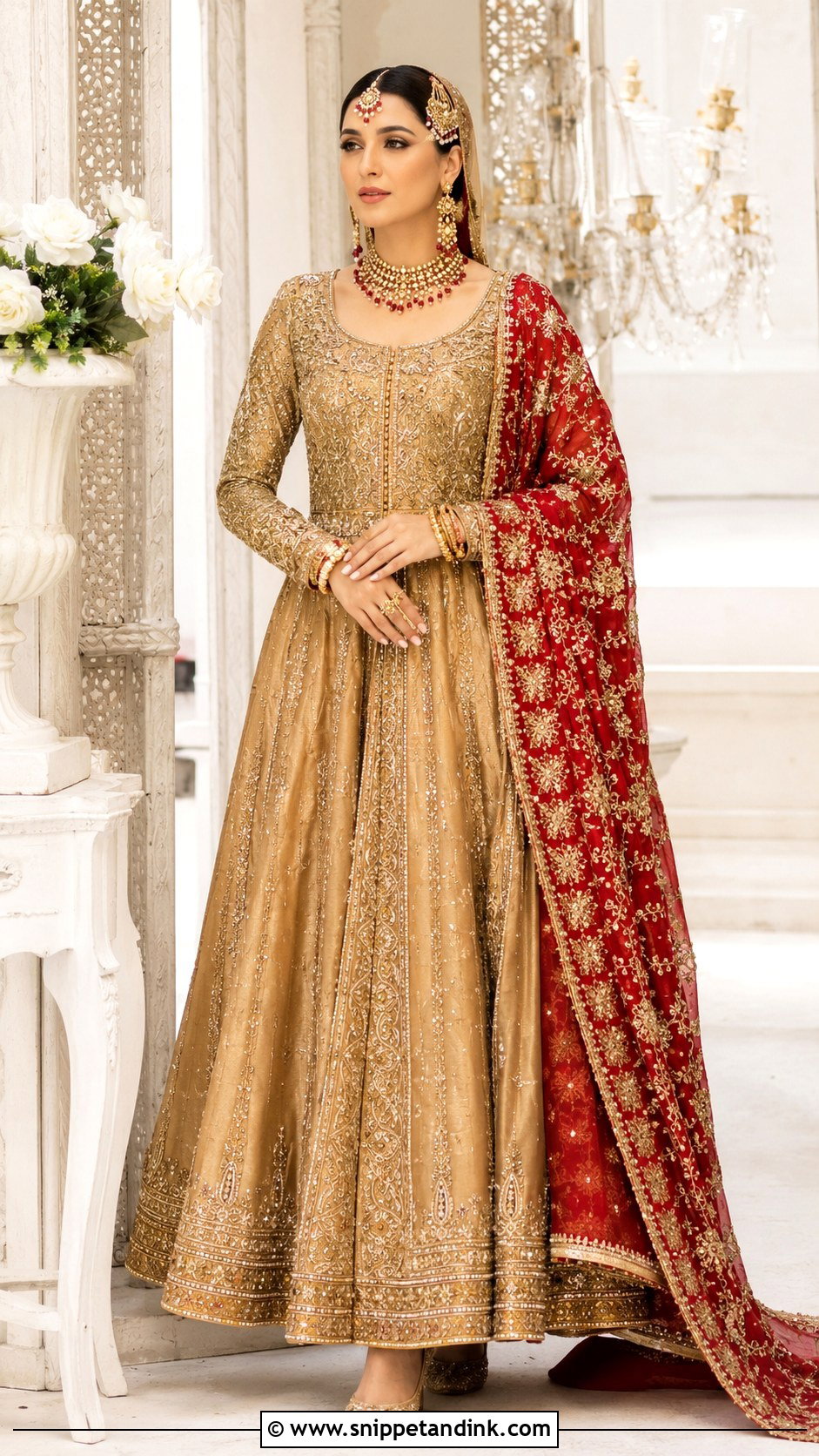
Gold suits the bride who wants a glow rather than a blaze. A pishwas falls from a fitted bodice into a long flare, and in champagne, antique or dull gold with zari, tilla, small mirrors and beadwork it reads traditional without the expected red. A matching churidar or a soft lehenga underneath adds fullness. I nearly always pair it with a red or maroon dupatta so the bride doesn’t disappear into a gold stage backdrop, which happens more often than you’d think. Gold heels and statement kundan finish it, and it works for daytime or evening.
4. Velvet Pakistani Barat Bridal Maxi
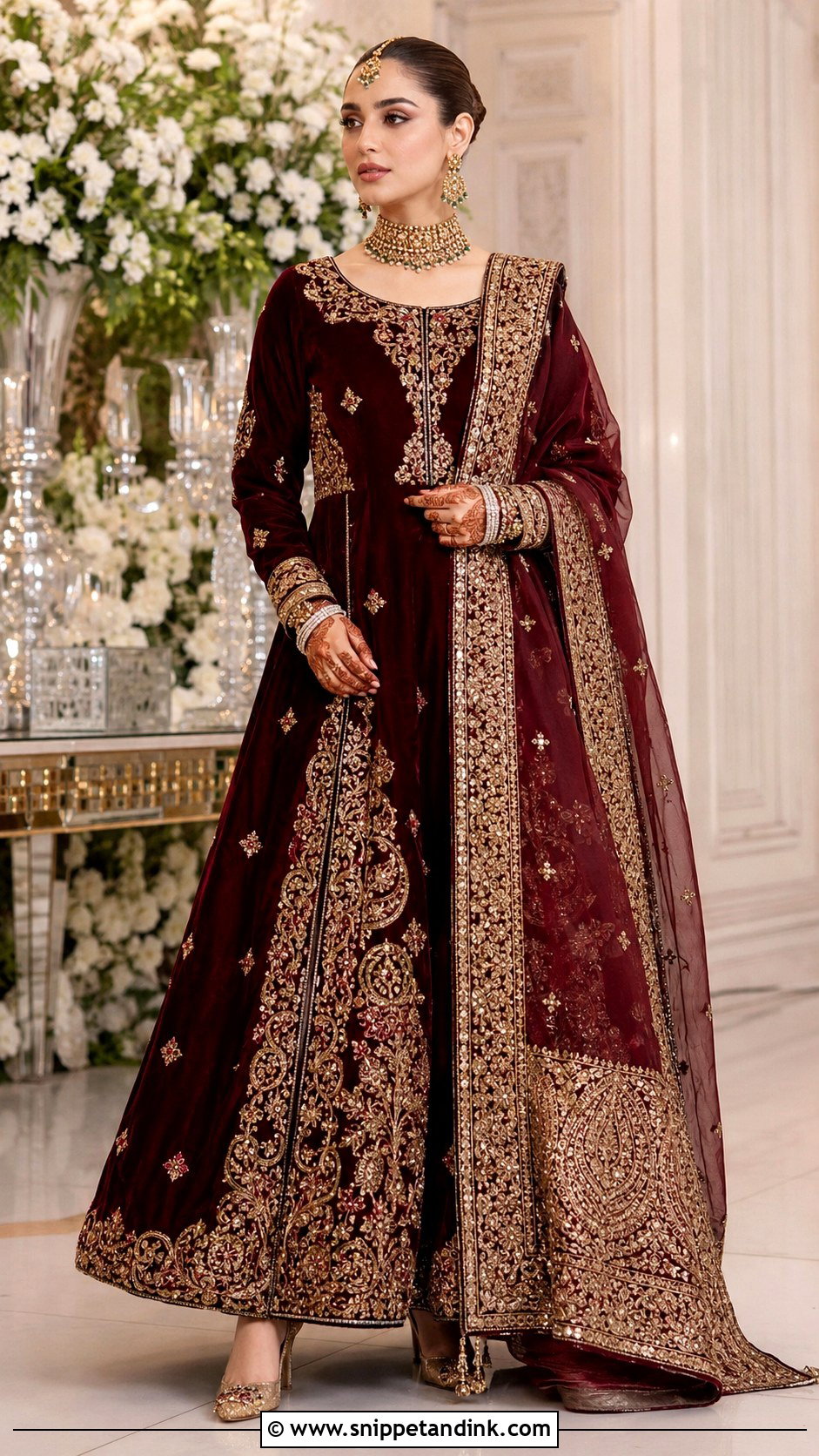
Velvet makes even restrained embroidery look expensive, which is why a velvet Pakistani Barat bridal maxi is my first suggestion for a winter wedding. Maroon, emerald, oxblood, plum and ruby all deepen in velvet. Go for a structured bodice, a flared hem, and heavy work at the neckline, sleeves and border. Velvet is heavy, so the dupatta has to be light, in net or organza. Ask your tailor about the nap direction too. If panels are cut running different ways, they reflect light differently and the skirt looks patchy in photos. A choker set, soft curls, embellished heels and a potli bag finish it.
5. Red Pakistani Barat Bridal Sharara
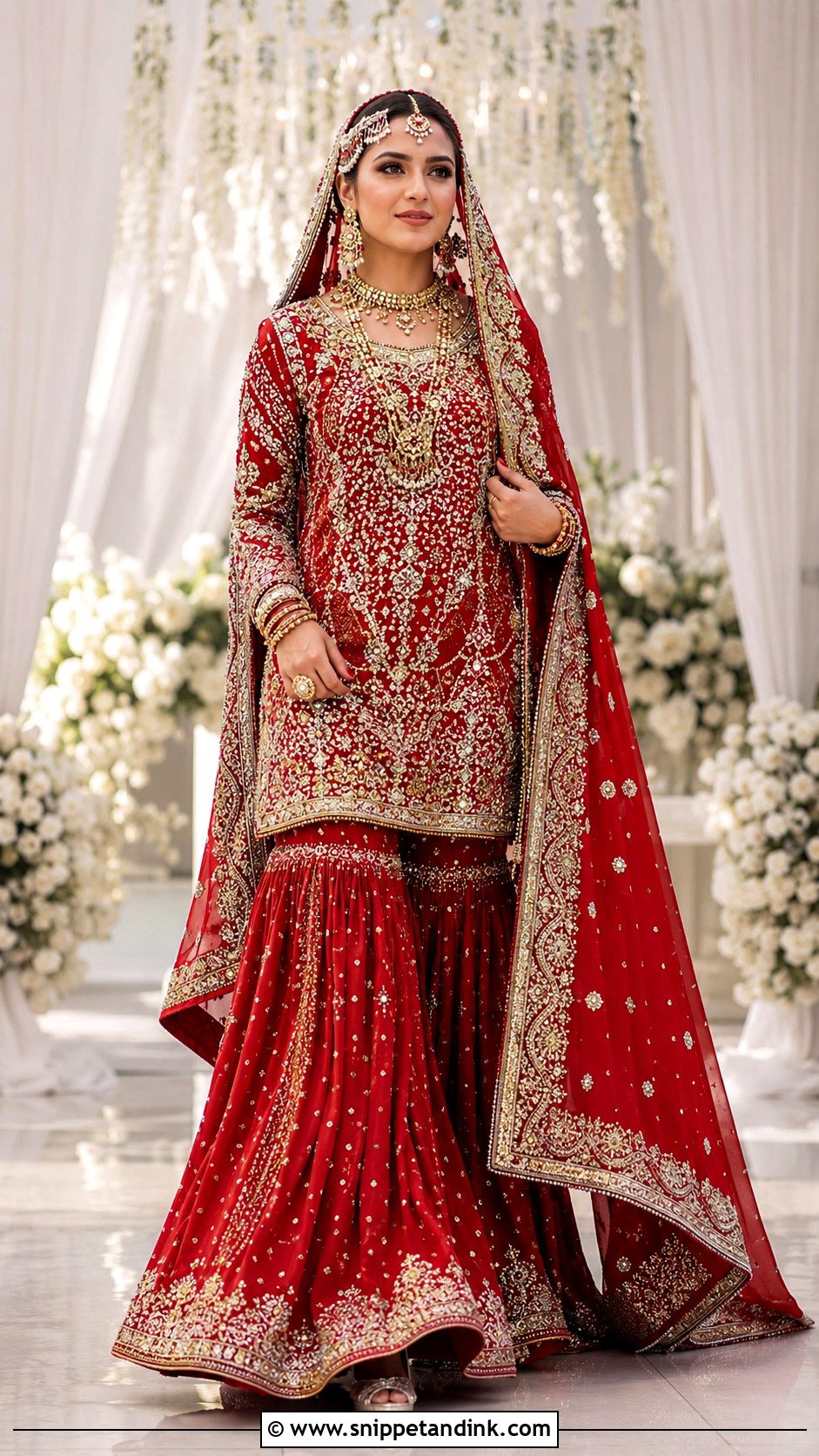
Short version: a sharara gives you red without the weight of a lehenga. The flare starts at the hip, so you walk and sit freely, and with a short or mid-length shirt the volume reads clearly. Put the heavy embroidery at the knees, hem and shirt border to define the shape, and gota, zari or kiran edging on a red dupatta keeps it traditional. A matha patti, jhumar, jhumkas and layered necklaces complete the bridal set. Shararas gather a lot of fabric at the ankle, so I keep the shoes flat or low.
6. Ivory And Red Pakistani Barat Bridal Outfit
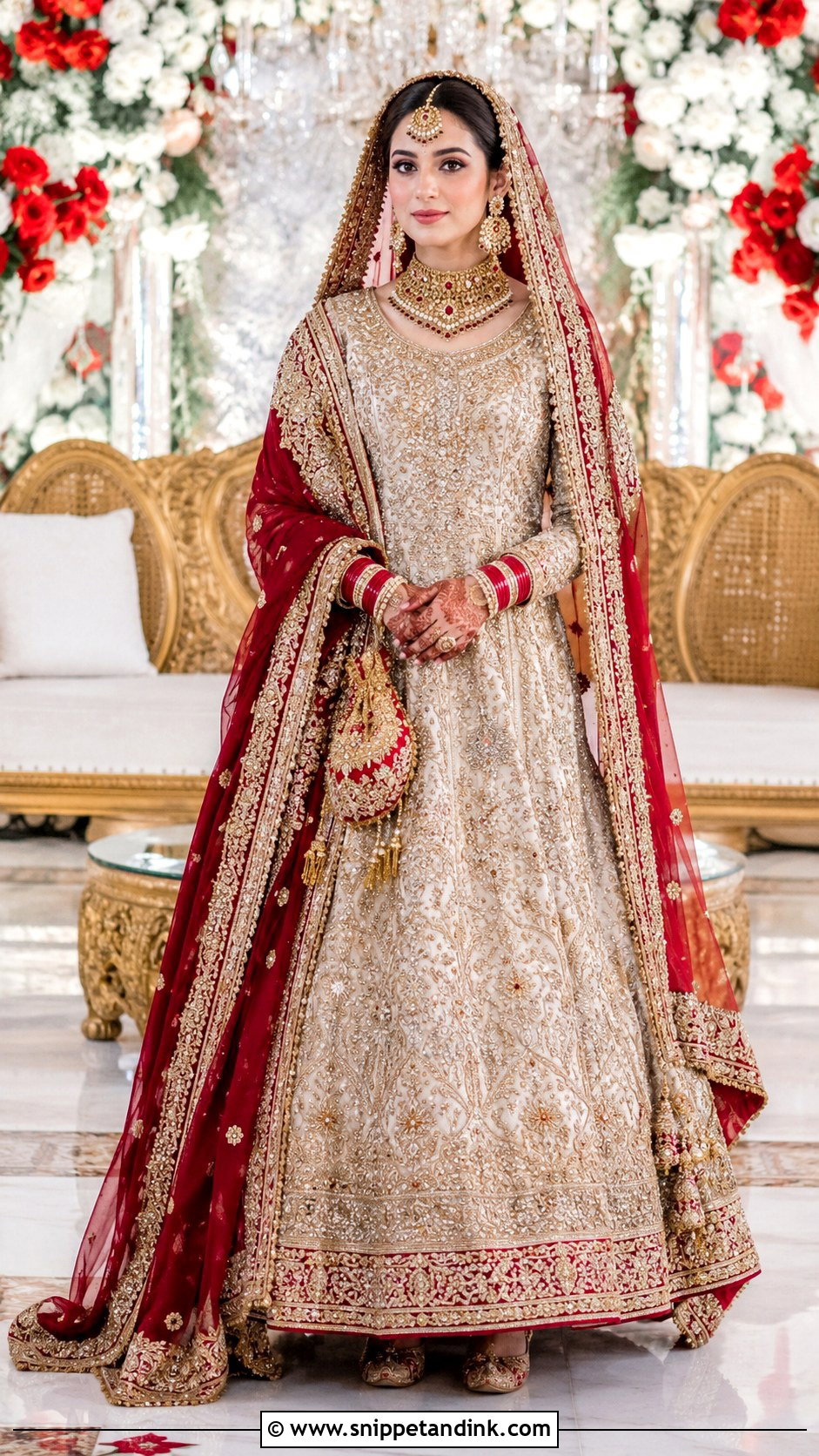
Ivory with red puts light near the face, which helps brides who feel that all-over red drags their complexion down. Try an ivory lehenga or pishwas with red embroidery, a red dupatta and antique gold embellishment. The metal tone matters here. Gold, kundan or polki keeps the ivory warm, whereas silver can make it look like a walima outfit. Red bangles, a red lip and embroidered khussas tie it back to the barat. Ivory marks easily, so I keep makeup wipes and a white chalk stick on hand for small smudges at the hem.
7. Emerald Pakistani Barat Bridal Lehenga
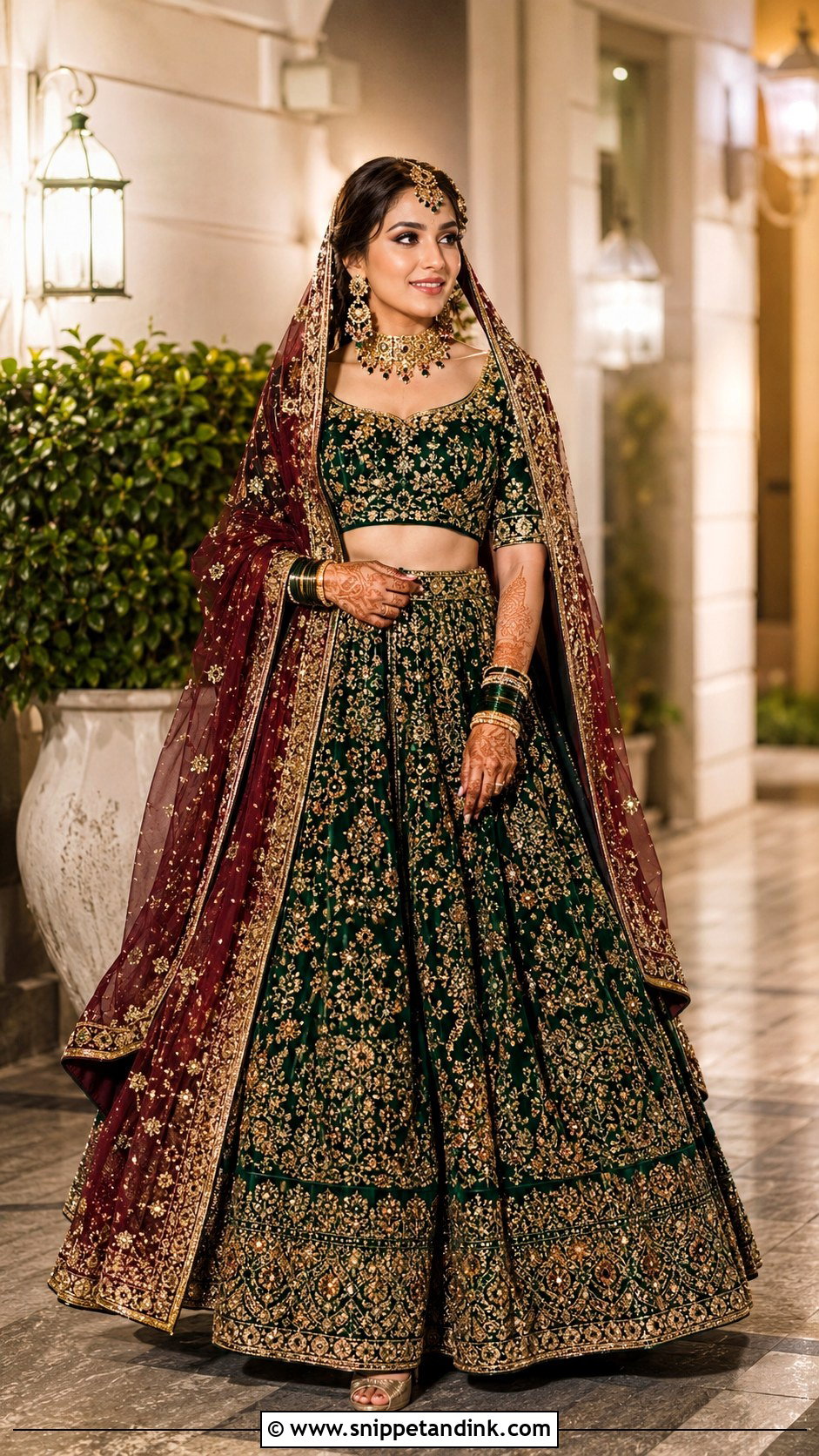
Emerald is the choice I’d make for a bride who wants to stand apart and has the confidence for it. It looks rich with antique gold, copper or dull silver work. A full lehenga, a structured blouse and a sheer bordered dupatta keep it bridal, and a maroon or deep red second dupatta brings in the traditional barat color. Gold jewelry works best: a choker, a layered necklace, jhumkas and bangles. Emerald flatters most skin tones in evening light, though under very cool LED lighting it can lean blue, so ask your photographer to set white balance by your skin rather than the stage.
8. Oxblood Pakistani Barat Bridal Dress
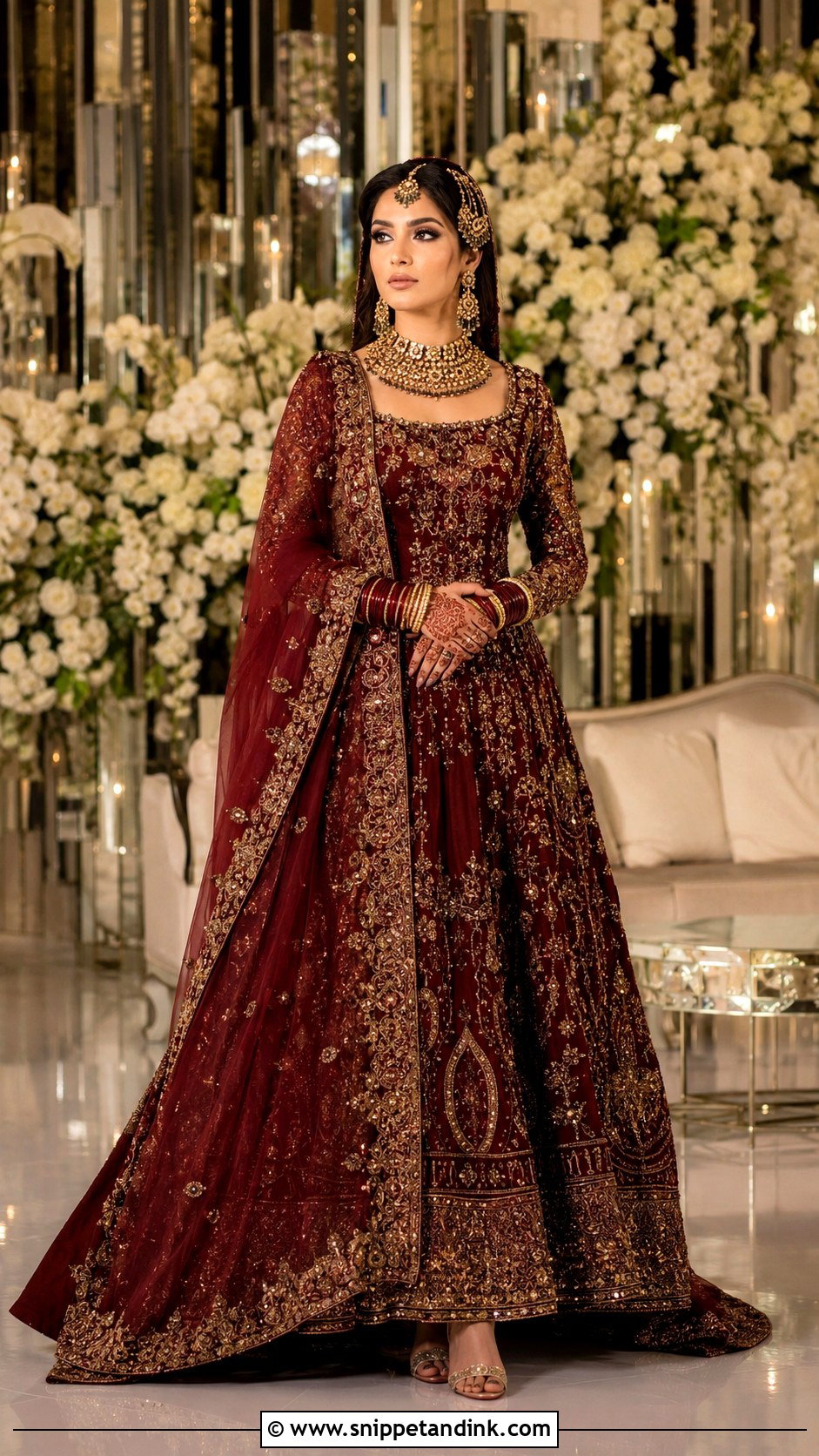
Oxblood is red with brown in it, darker and moodier than ruby. It works in lehengas, maxis, ghararas and pishwas. Antique gold, copper or bronze embroidery warms the base, while bright yellow gold can look brassy against it. A sheer dupatta with a worked border keeps the dress visible. Style it with polki, a center-parted bun and deep red bangles. Because the color is so dark, I’d keep it for evening ceremonies with good lighting. In a dim hall it loses its detail and reads almost black.
9. Pastel Pakistani Barat Bridal Lehenga
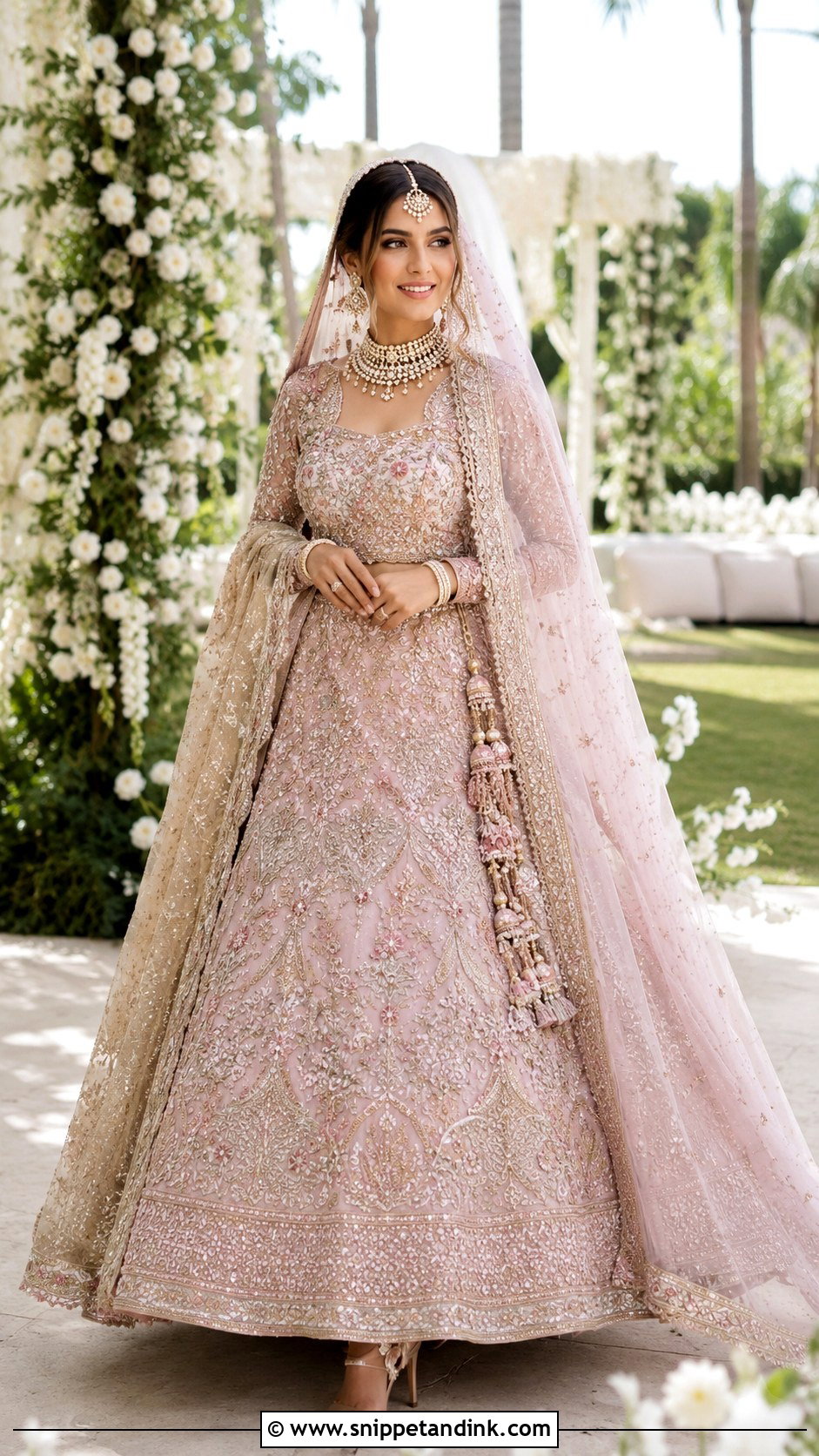
A pastel barat lehenga only works if the embroidery carries the weight that color normally would. Blush pink, powder peach, soft mint and champagne beige need heavy zardozi, pearl work, sequins and detailed borders, or the outfit will look like a walima piece. I usually add a second dupatta in red or gold to anchor it in tradition, and elders tend to appreciate the nod. Diamond-look jewelry, kundan or pearls all suit it. Daytime events and garden venues show pastels best; under heavy orange hall lighting they can look muddy.
10. Pakistani Barat Bridal Saree
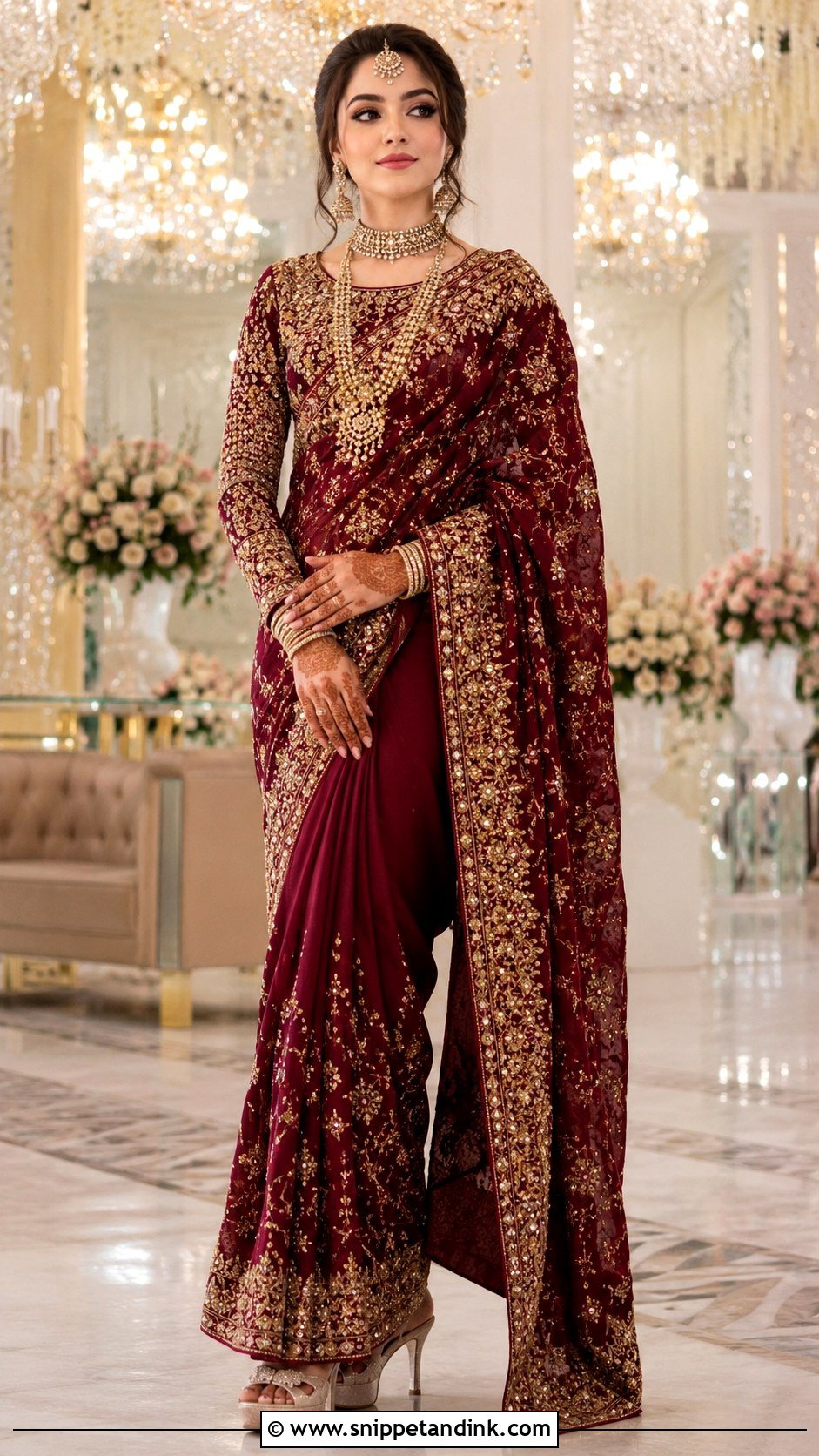
A saree is the least common barat choice and, for the right bride, one of the most graceful. Pick a heavily embroidered piece in red, maroon, gold or deep plum, with a modest blouse and a structured drape. The pallu can go over the head or be pinned across the shoulder. The border does most of the work in photos, framing the body from shoulder to hem. Bridal sarees with heavy borders are hard to drape on yourself, so arrange a draper for the morning and ask for the pleats to be stitched or pinned in place. A choker, long necklace, jhumkas, bangles, embellished heels and a sleek bun finish it.
11. Pakistani Barat Bridal Anarkali
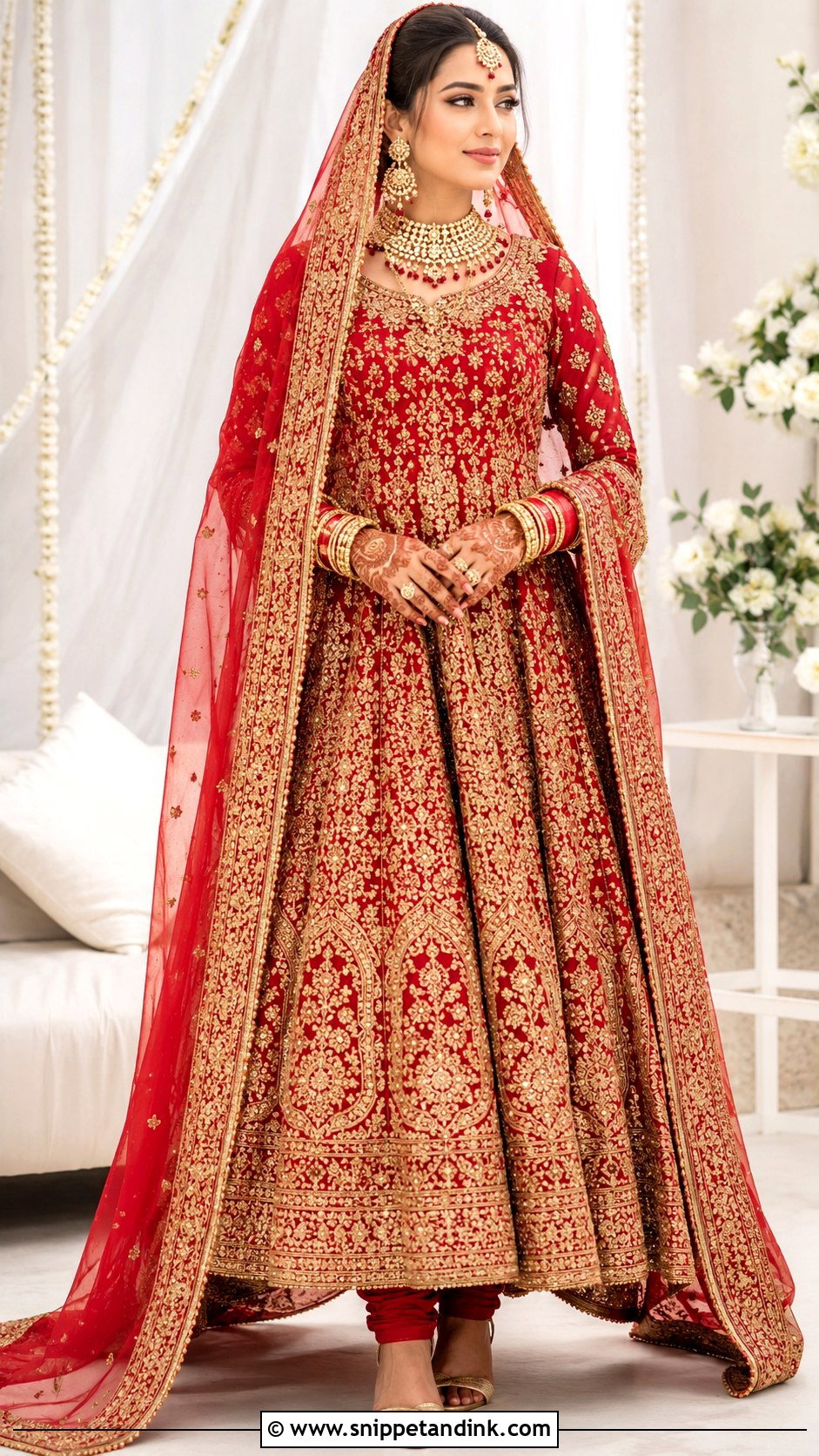
An anarkali is what I suggest when a bride is worried about getting through a long evening: one flared piece, no separate skirt to manage. Go for a heavily worked bodice, embroidered sleeves and a wide hem border, in red, maroon, gold, rust or deep pink. Underneath, churidar or slim trousers keep it light, or a hidden lehenga adds volume. A dupatta over the head makes it bridal. The bodice seam is the fitting detail to watch. If the waist seam sits too low, the flare drops and the bride looks shorter, so I mark it at the natural waist. Kundan, soft makeup and embellished heels complete it.
12. Pakistani Barat Bridal Peplum Lehenga
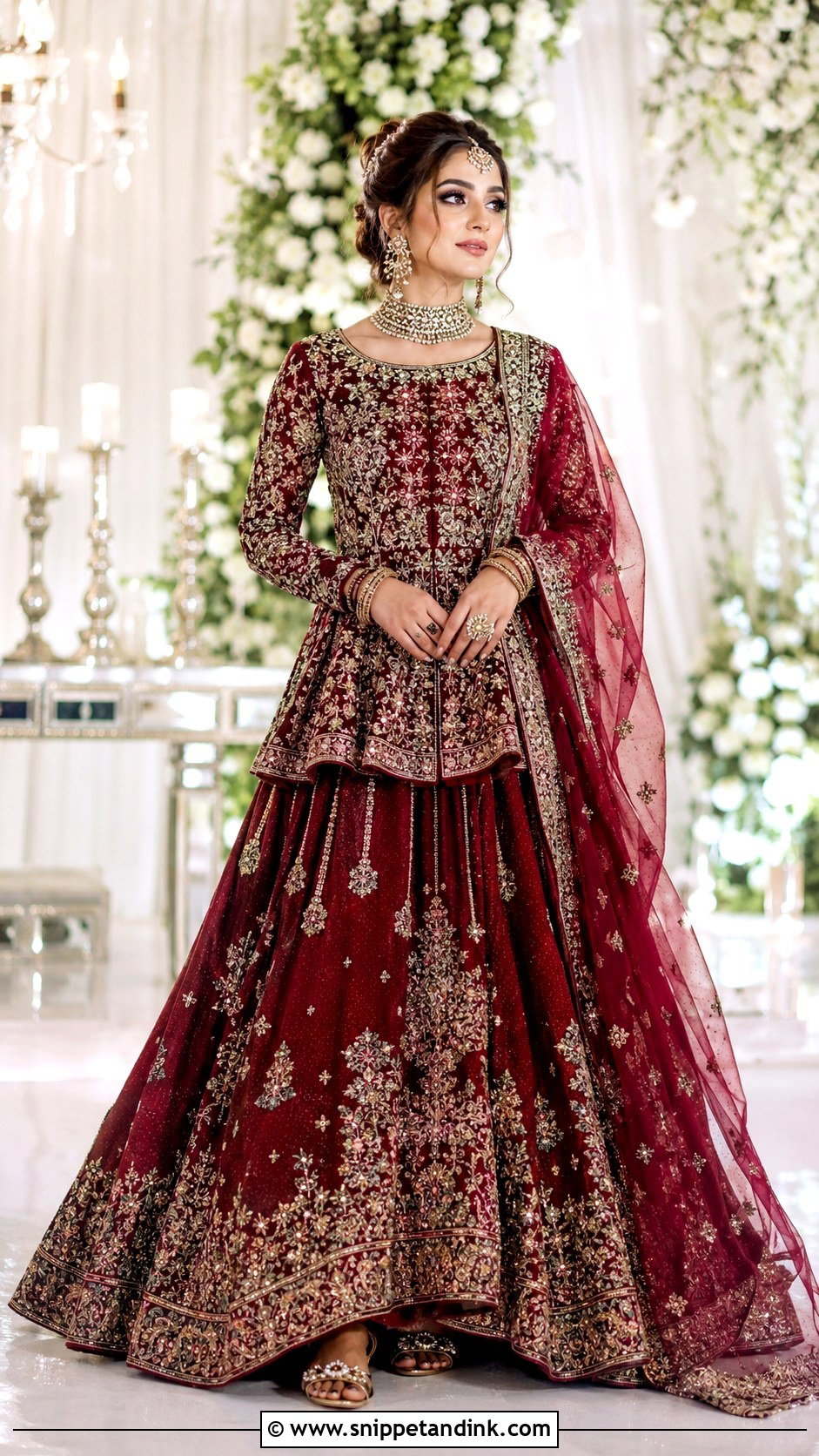
The peplum gives the waist a defined line that a long shirt hides, and it’s worth considering for a bride who wants some structure without a corset-style blouse. Red, maroon, rust or gold all suit, with detailed work at the peplum hem and sleeves, and a full lehenga underneath keeps it grand. Peplums can flip up when you sit, so I add a light interlining to the flare to hold its shape. Finish with a sheer heavy-bordered dupatta, kundan jewelry and statement earrings.
13. Rust Pakistani Barat Bridal Outfit
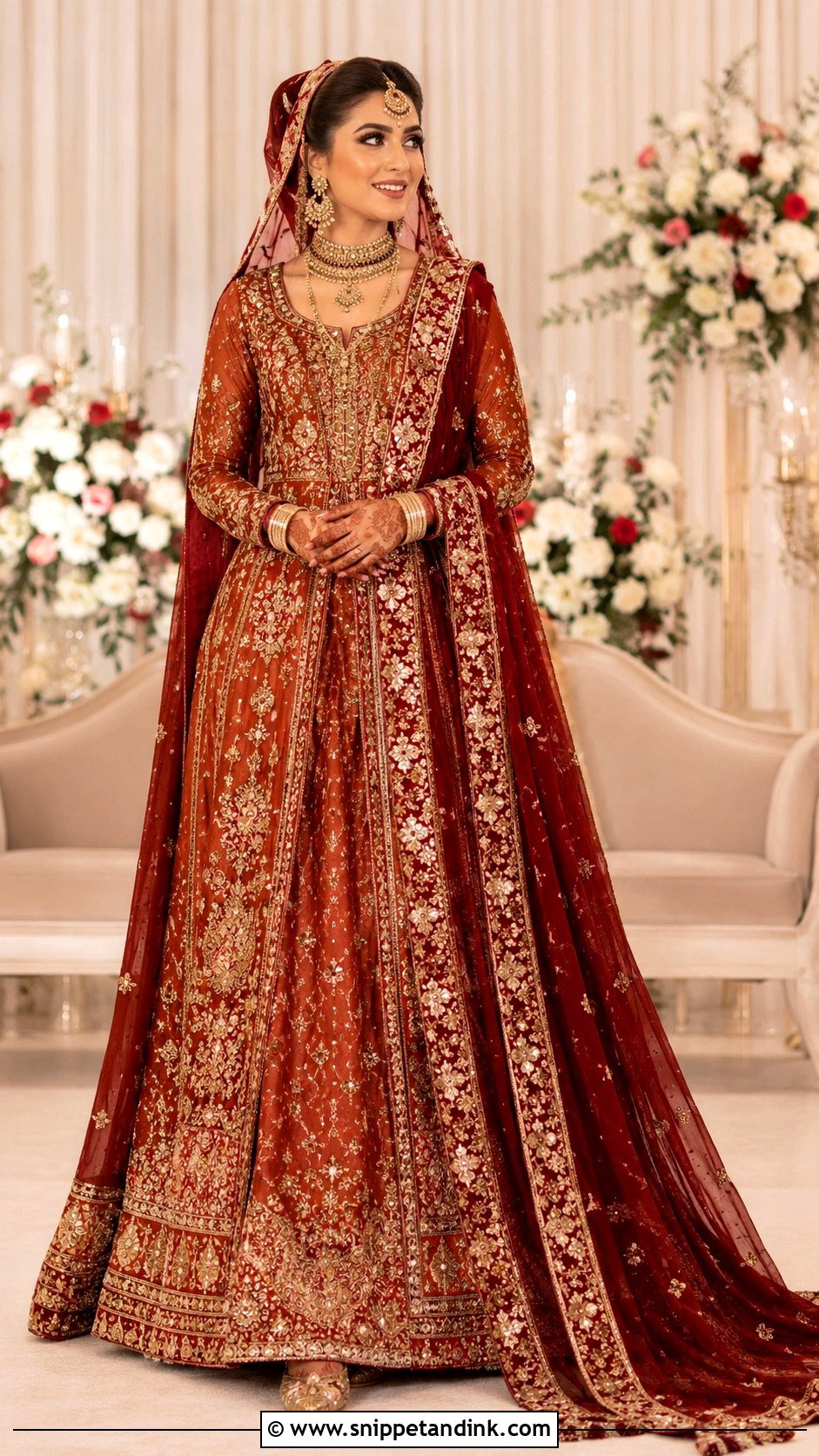
Rust sits between red and gold, which makes a rust Pakistani Barat bridal outfit feel traditional without being the expected red. It glows with antique gold, copper and bronze embroidery. Lehenga, gharara, pishwas or long shirt with sharara all work, and a maroon or dull gold dupatta deepens it. Gold jewelry, bronzed makeup and henna-toned bangles suit the warm palette. Rust is forgiving in mixed light, indoors or out, because it doesn’t swing toward pink or orange the way brighter reds do. It does fight with cool-toned makeup, so ask your artist for warm shades throughout.
14. Tea Pink Pakistani Barat Bridal Lehenga
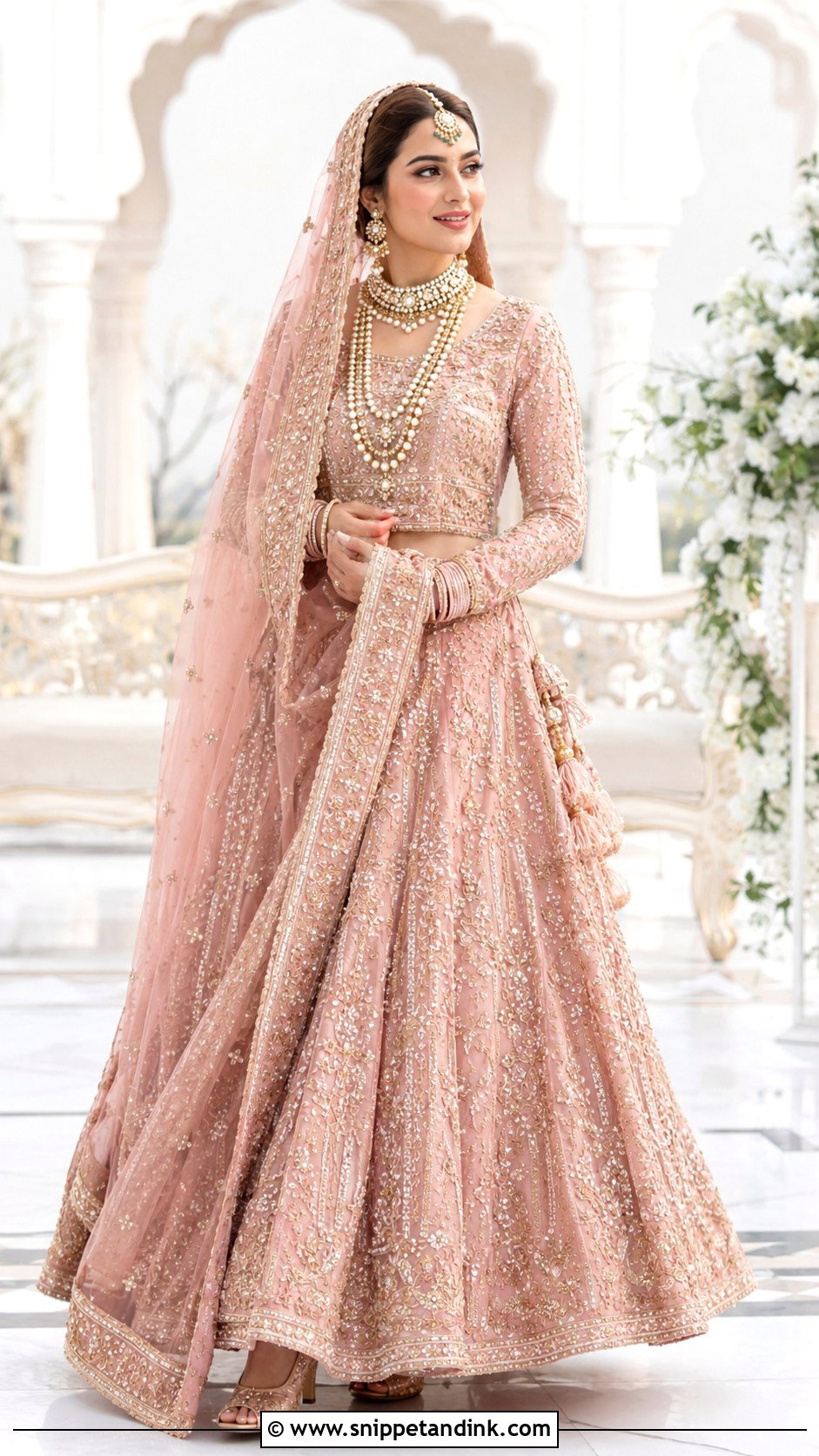
Tea pink is the answer when red feels too loud but the event still needs grandeur. It looks best with mixed silver and gold embroidery, pearls, sequins and fine zardozi. A matching dupatta keeps it soft; a maroon one adds a traditional layer. Pearl kundan jewelry, soft glam makeup and blush bangles complete it. I’d hesitate with tea pink for a bride with very fair, pink-toned skin, since the outfit and complexion can merge in photos. A slightly warmer peach-pink, or a contrasting dupatta near the face, fixes that.
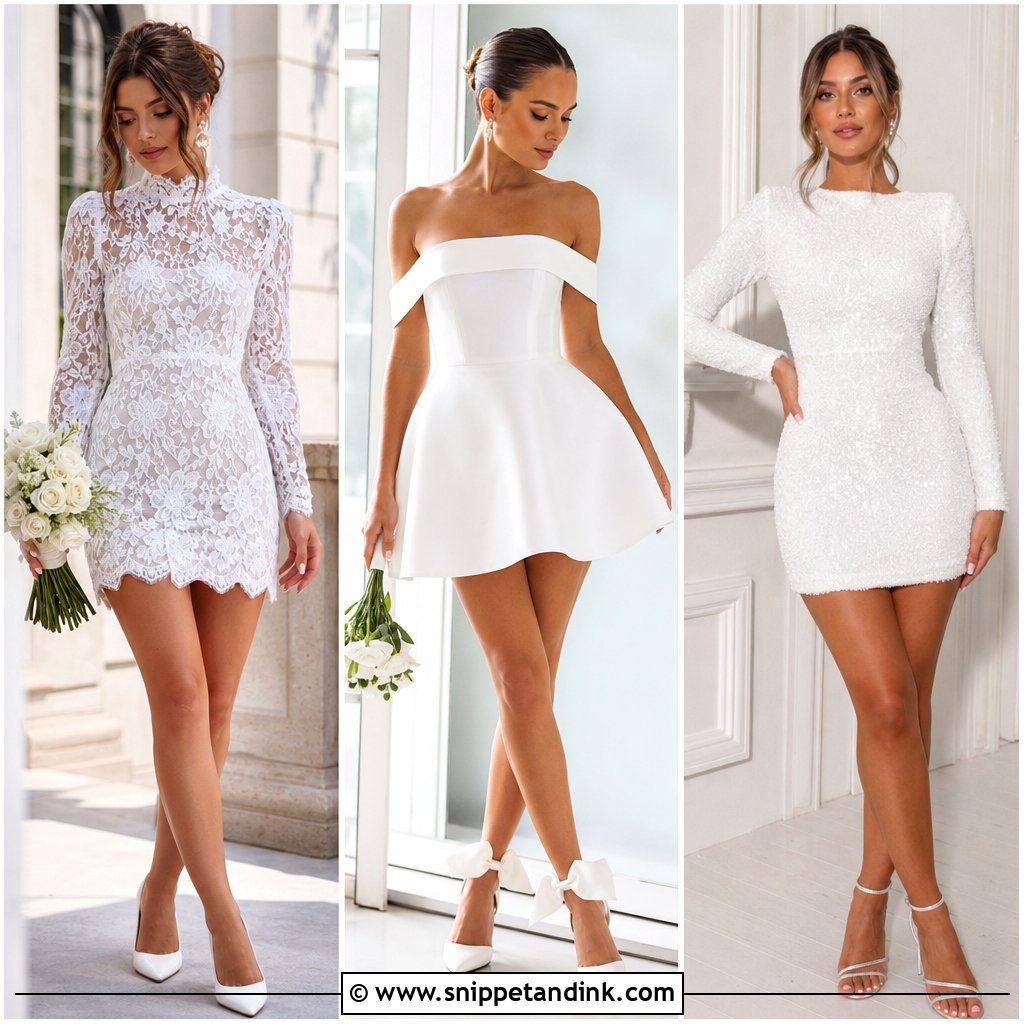
15. Pakistani Barat Bridal Long Shirt Lehenga
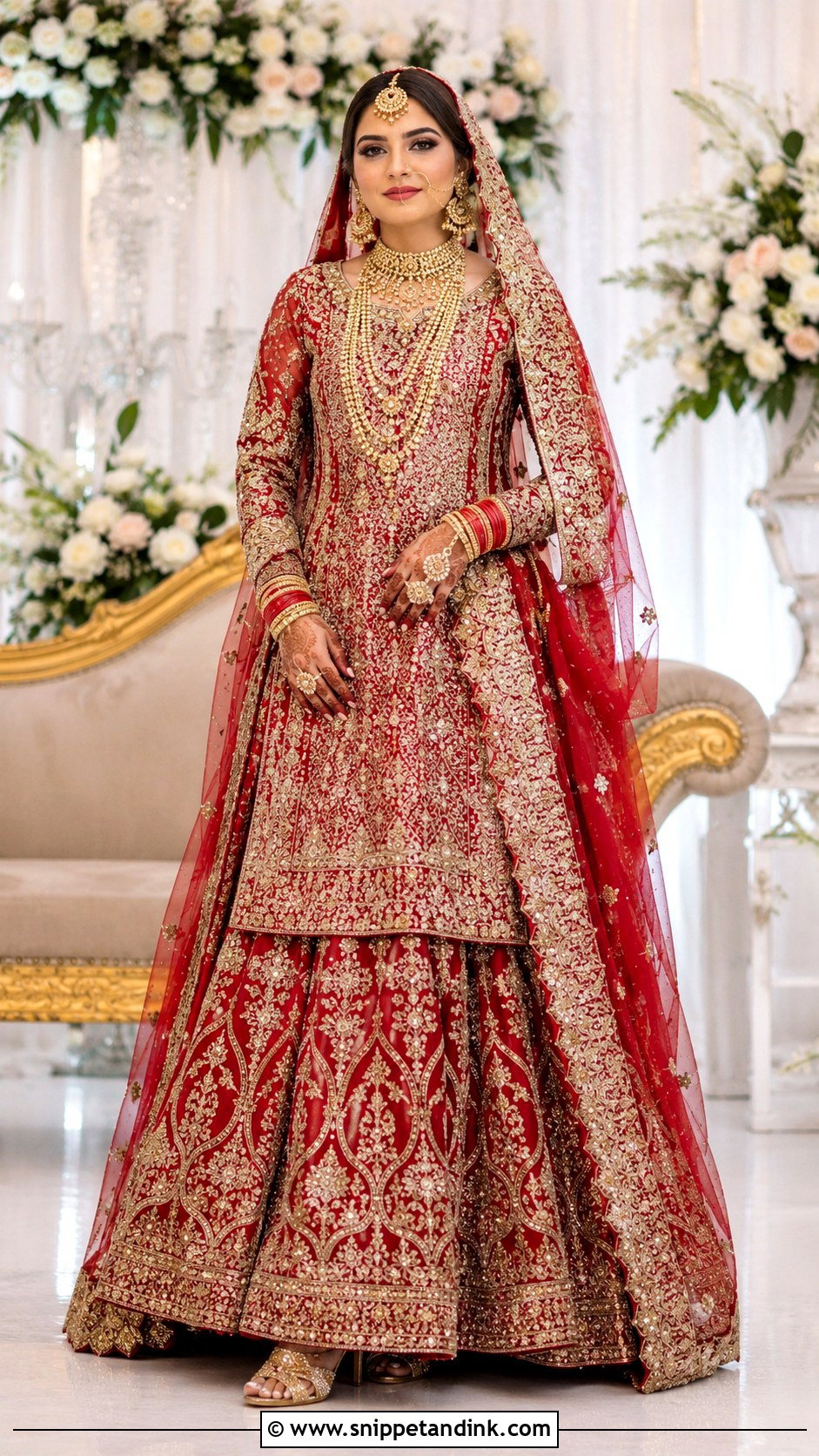
The long shirt with lehenga flatters most body types because it skims rather than clings. Heavy front panels, detailed sleeves and a rich border do the bridal work, and if the shirt is heavily embellished the lehenga can stay simpler, which saves real weight. Red, maroon, gold and deep pink are strong here. Add a head dupatta, layered necklaces and traditional earrings. Check the side slits before the final stitch. They should sit high enough to let you take a full step, but not so high that the lehenga waistband shows.
16. Pakistani Barat Bridal Double Dupatta Look
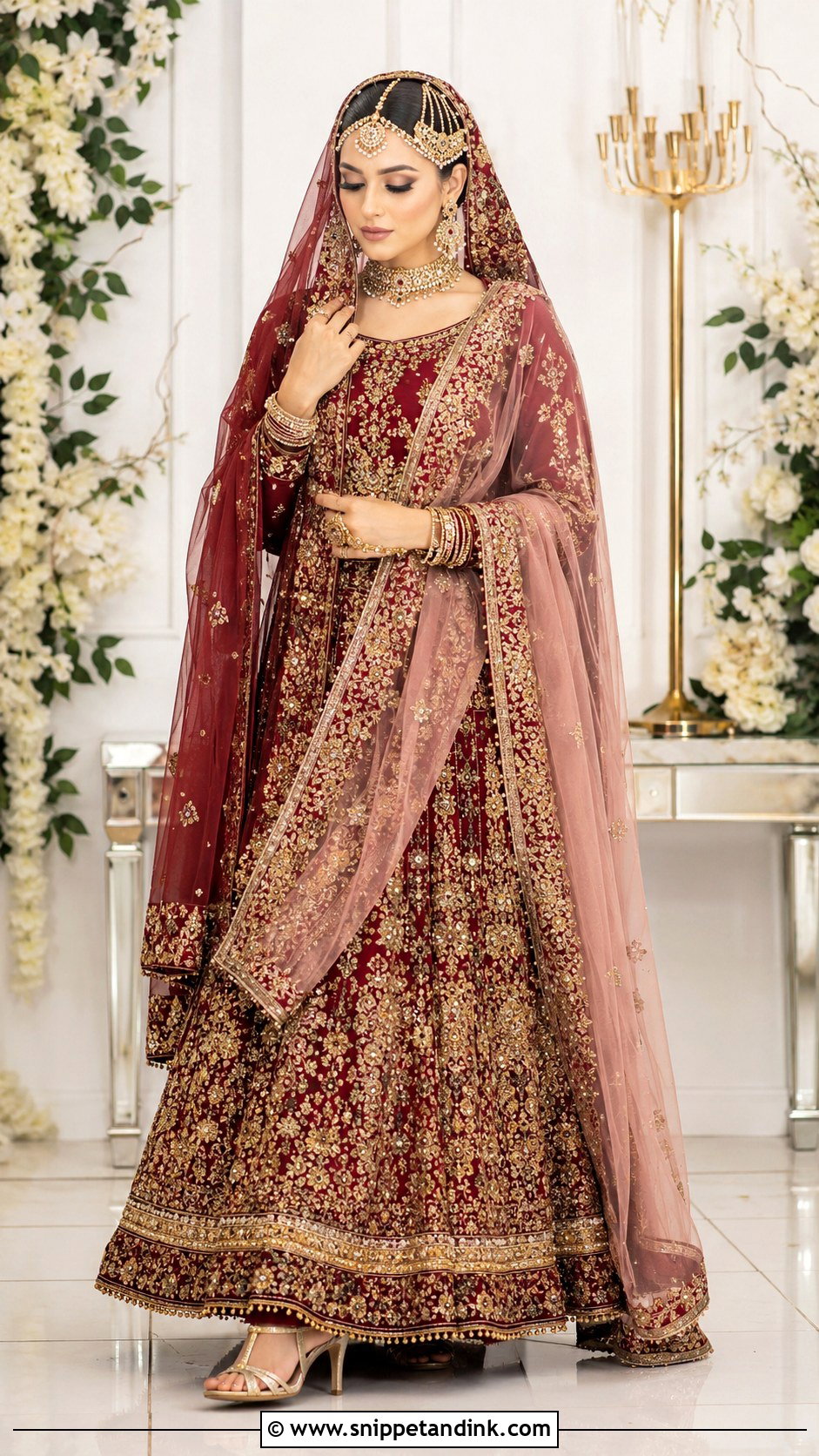
Two dupattas change the whole silhouette. One goes over the head, usually the heavier bordered piece, and the second drapes across the shoulder or front for movement. It works with lehengas, ghararas, shararas and pishwas, and red with gold, maroon with peach or ivory with red are strong pairings. Pinning is where this look succeeds or fails. I set the head dupatta first, anchored into the hair with U-pins, then attach the second with safety pins hidden under the blouse edge so it doesn’t drag the first one back. Keep the jewelry to a matha patti, choker and earrings so the face isn’t crowded.
17. Pakistani Barat Bridal Kundan Jewelry Look
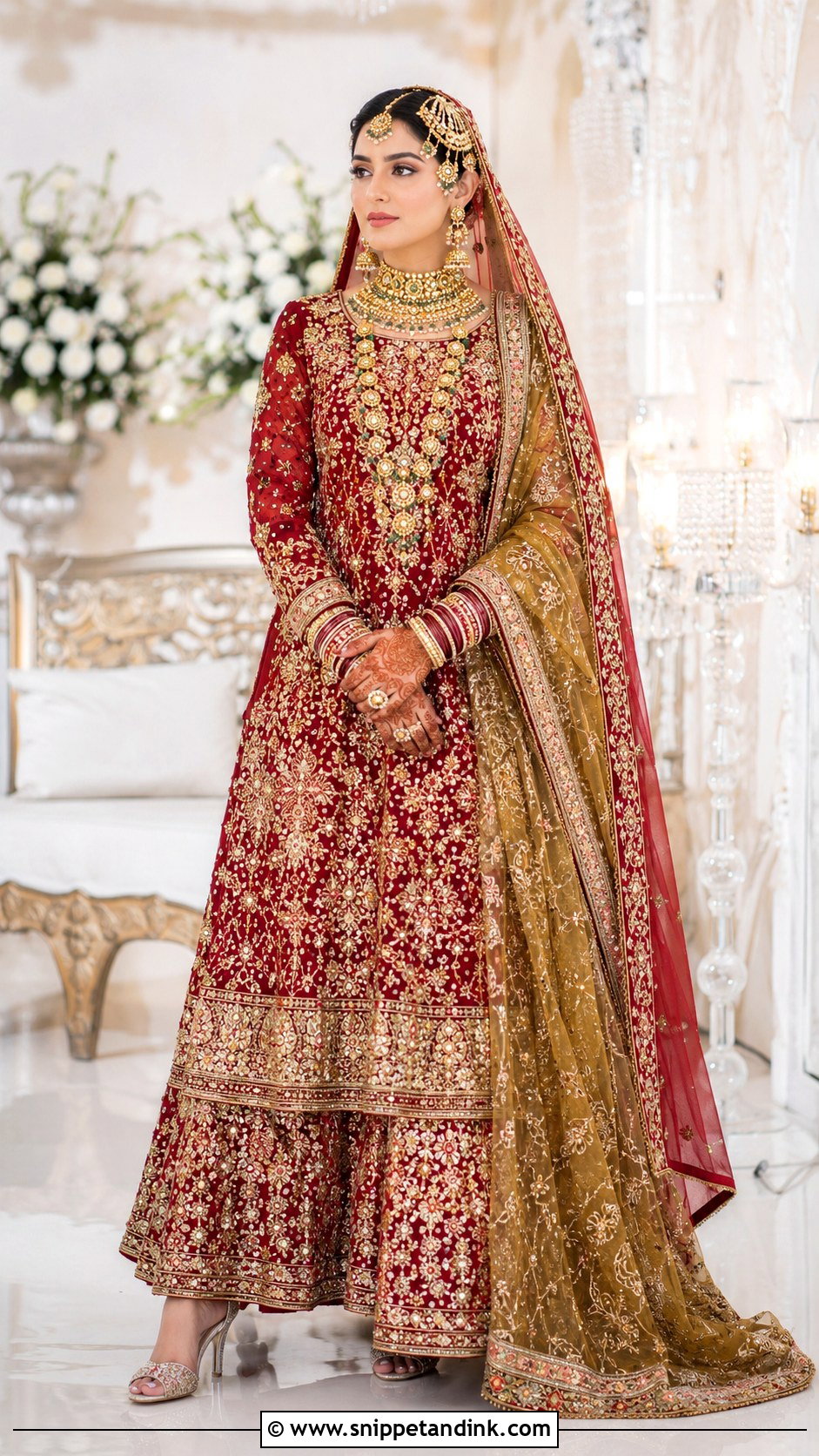
Kundan sets the tone of the whole outfit, so I plan the jewelry with the dress rather than after it. It suits red, maroon, gold, emerald and ivory. Start with a choker or collar, and add a longer layered necklace only if the neckline leaves room. A matha patti, jhumkas, a passa and bangles round out the set. Heavy kundan earrings pull on the lobes through a long night, so I thread a sahara chain into the hair to carry some of the weight. With an extremely heavy dress, choose cleaner shapes; with a softer outfit, go bolder on the necklace.
18. Pakistani Barat Bridal Hijab Outfit
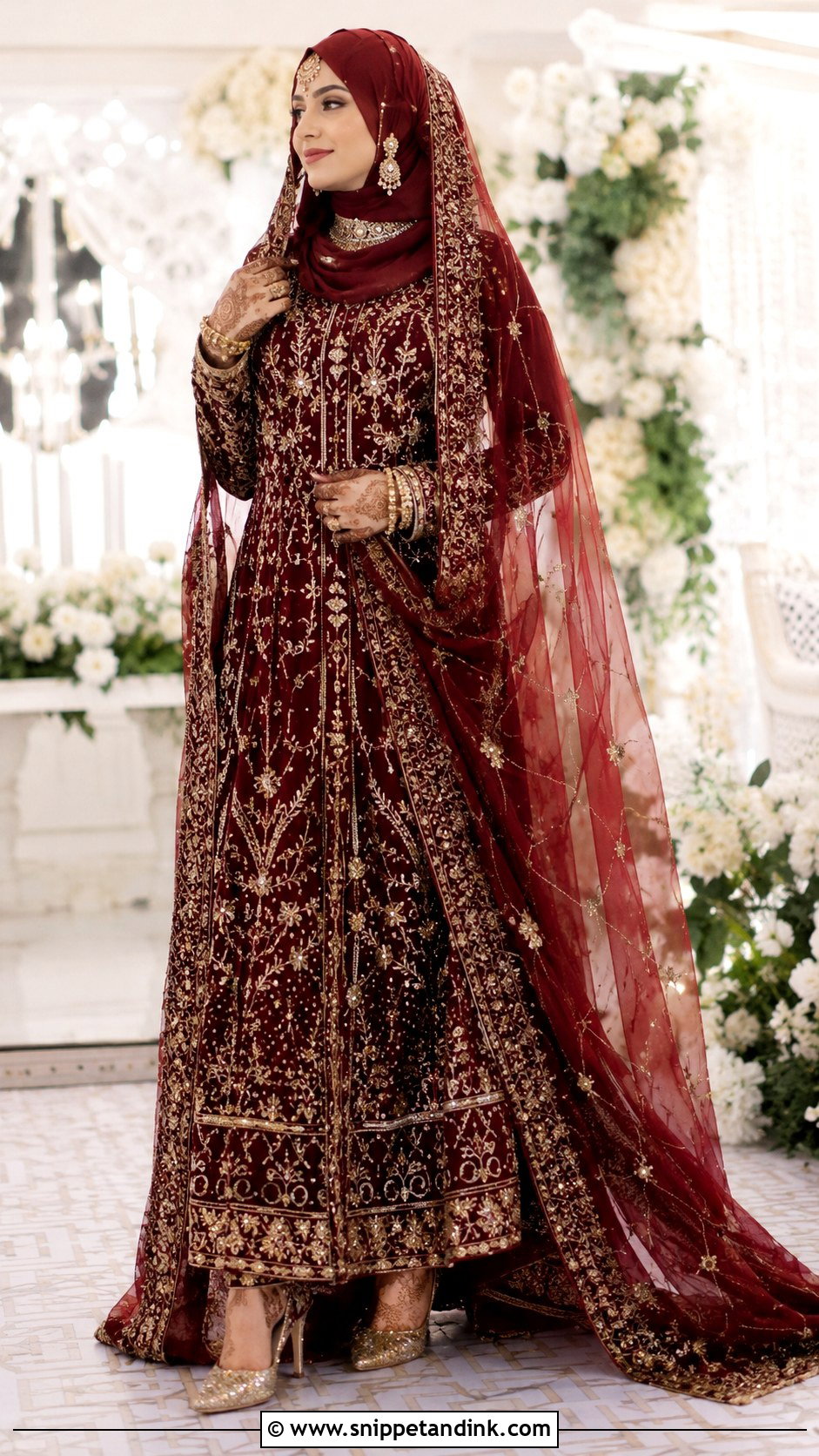
A Pakistani Barat bridal hijab outfit can be every bit as bridal as an uncovered look; it just needs the layers planned. Choose a lehenga, gharara, maxi or pishwas, and a coordinated hijab under the bridal dupatta. Chiffon, silk or satin underneath sits smoothly below a heavier net or organza dupatta. Keep the hijab flat around the face so the jewelry lies neatly. A tikka-style headpiece can pin through the hijab, and a side passa, earrings and a choker still work. I use an underscarf cap with grip so the hijab doesn’t slide under the dupatta’s weight, and magnetic pins wherever a pin would show.
19. Pakistani Barat Bridal Short Shirt Gharara
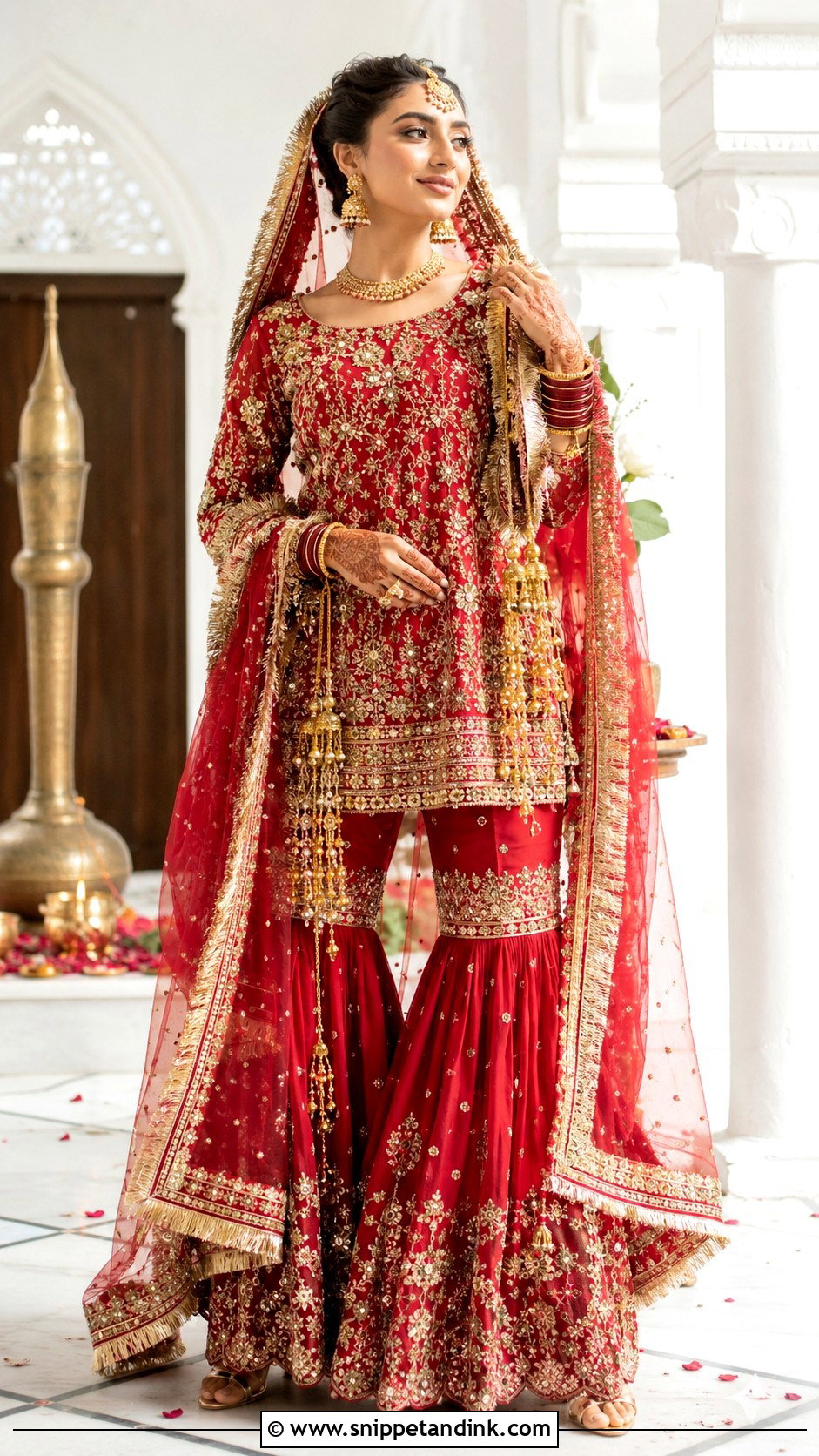
The short shirt is the older gharara style, and it shows off the flare far more than a long kameez does. Put heavy embroidery around the knee joint and hemline, with worked sleeves and neckline on the shirt. Red, maroon, rust and gold all carry it. A dupatta with kiran edging or a heavy border, a passa and bangles complete the heritage feel. A short shirt exposes the gharara waistband whenever you raise your arms, so I ask for a longer inner lining or a fitted waist yoke underneath.

20. Pakistani Barat Bridal Trail Lehenga
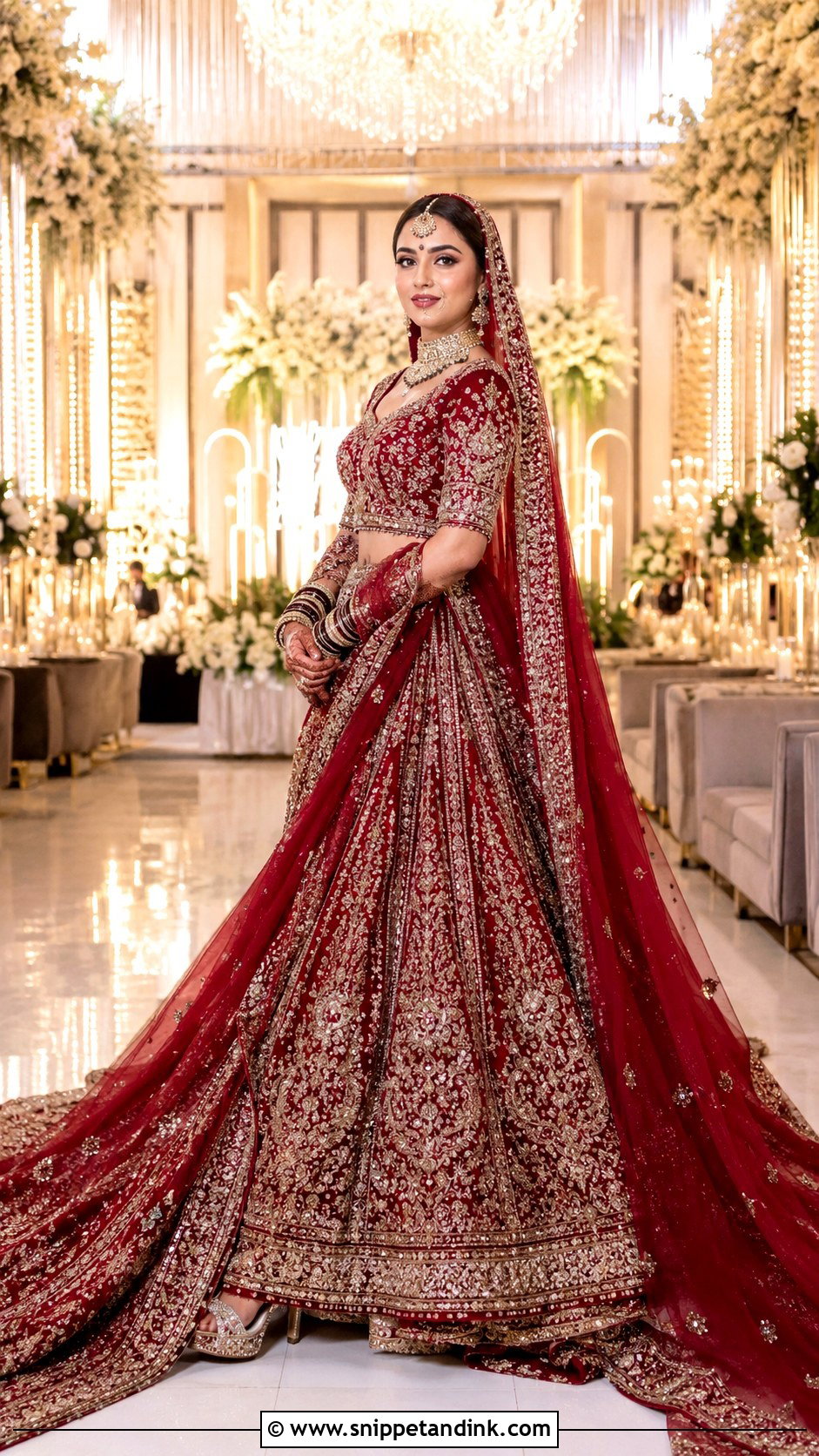
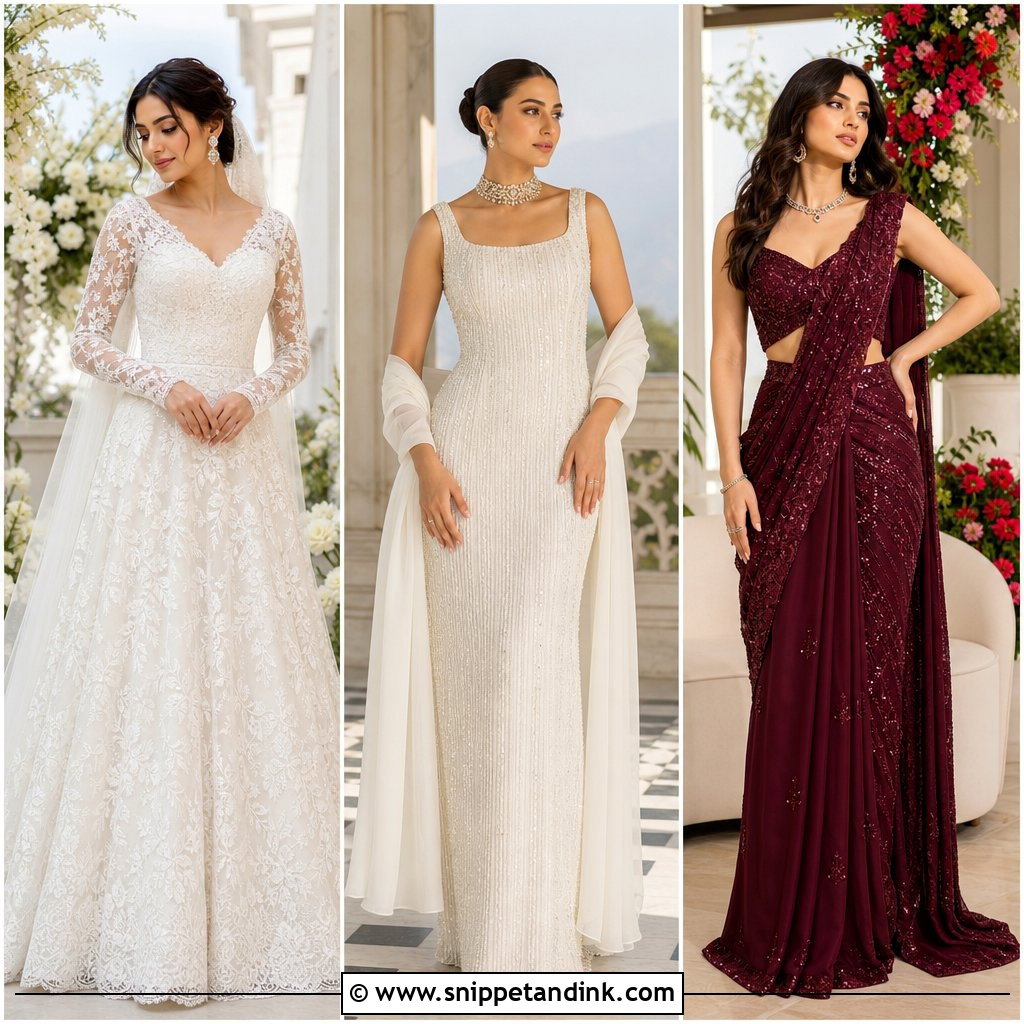
A trail turns the walk to the stage into an entrance, and in a large venue with a long aisle that moment is worth having. Choose red, maroon, champagne or gold with embroidery carried along the hem and back panels. Keep the blouse fitted and the dupatta pinned firmly so the outfit stays controlled. Trails are heavy and drag at the waist, so the waistband has to be wide and well fitted, and someone should be assigned to lift and settle the trail at every stop. In a small hall, though, a trail just gets stepped on, and I’d skip it.
21. Pakistani Barat Bridal Jacket Lehenga
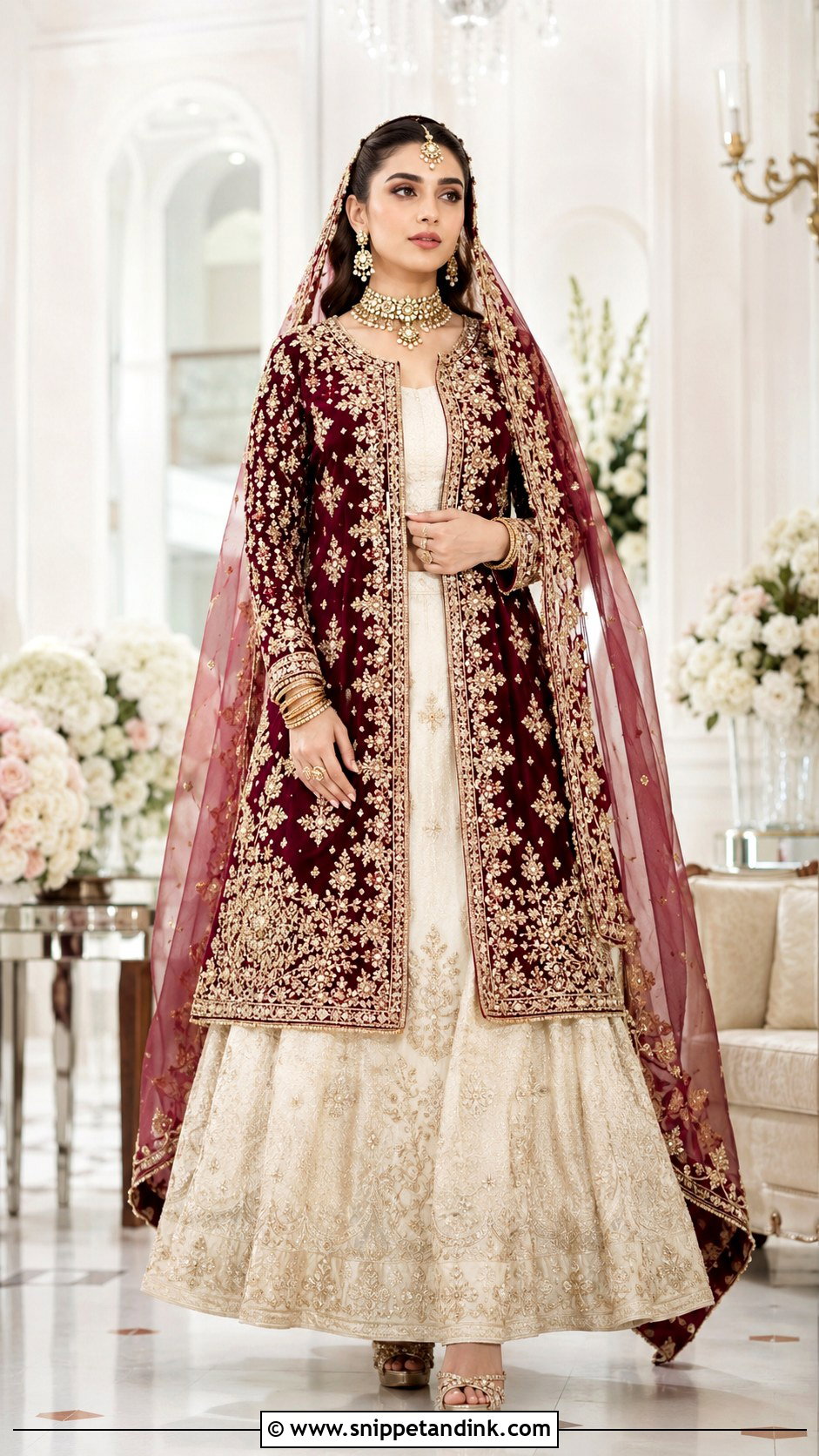
The jacket adds couture structure, and a Pakistani Barat bridal jacket lehenga also gives easy coverage over a short blouse. A long or mid-length jacket goes over the lehenga and blouse, or over a simple inner top. Heavy work on the jacket front, cuffs and hem carries the bridal effect. Red with gold, ivory with maroon and emerald with antique gold all pair well, and a sheer dupatta over the head keeps it traditional. Jackets trap heat, so for a summer barat I’d ask for net or organza rather than silk or velvet.
22. Pakistani Barat Bridal Maxi With Dupatta
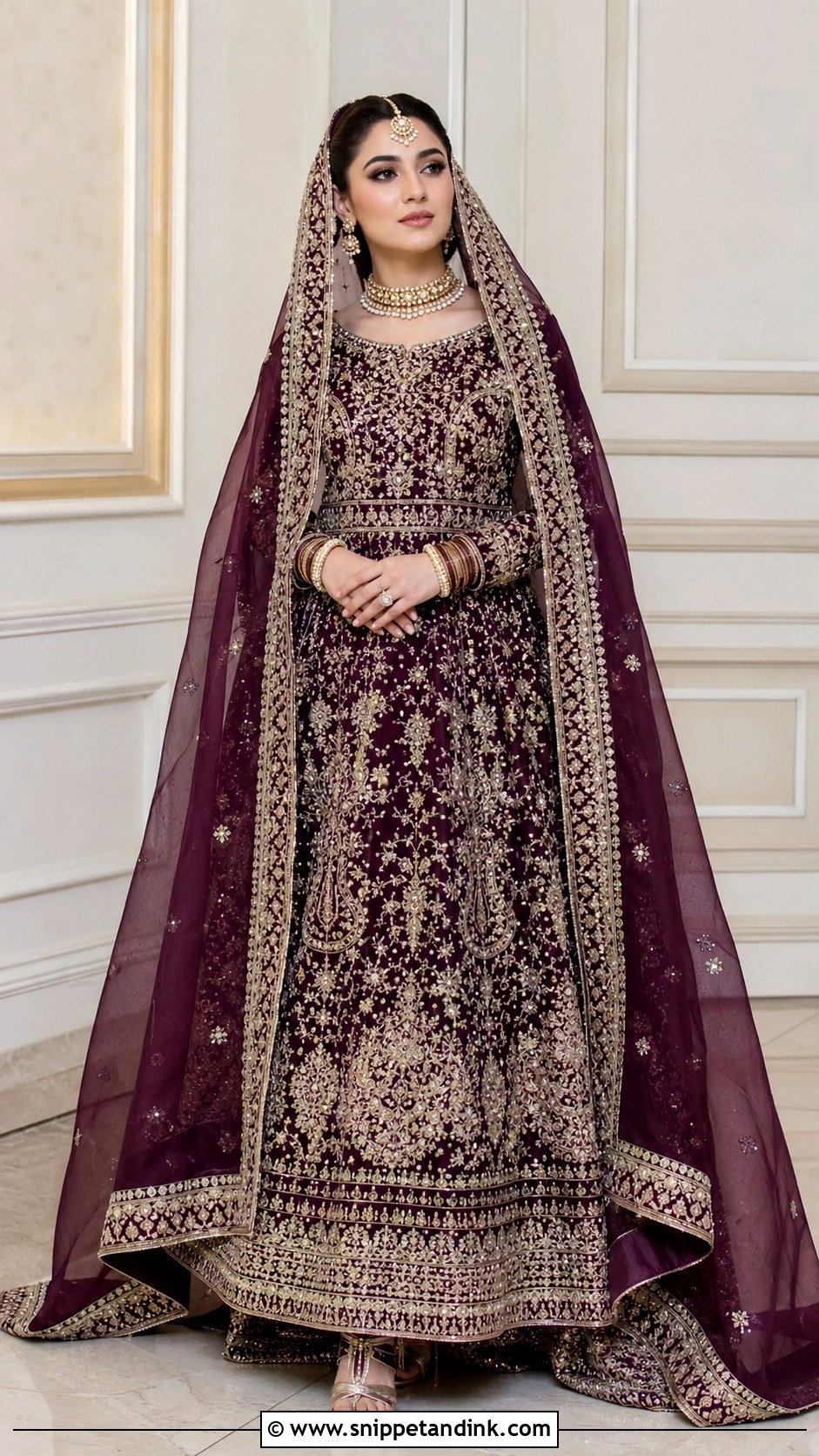
A maxi with dupatta is the simplest outfit to wear for hours: one piece, no waistband digging in after dinner. Look for a structured bodice, a flared skirt, and embroidery at the neckline, waist, sleeves and hem. Red, maroon, gold and deep plum all suit a barat. Pin a sheer heavy-bordered dupatta over the head and one shoulder. The zip is the weak point on a heavy maxi, so I ask for a sturdy concealed zip with a hook at the top and a few more along the placket. Heels, a choker set and bangles finish it.
23. Pakistani Barat Bridal Lehenga With Long Veil
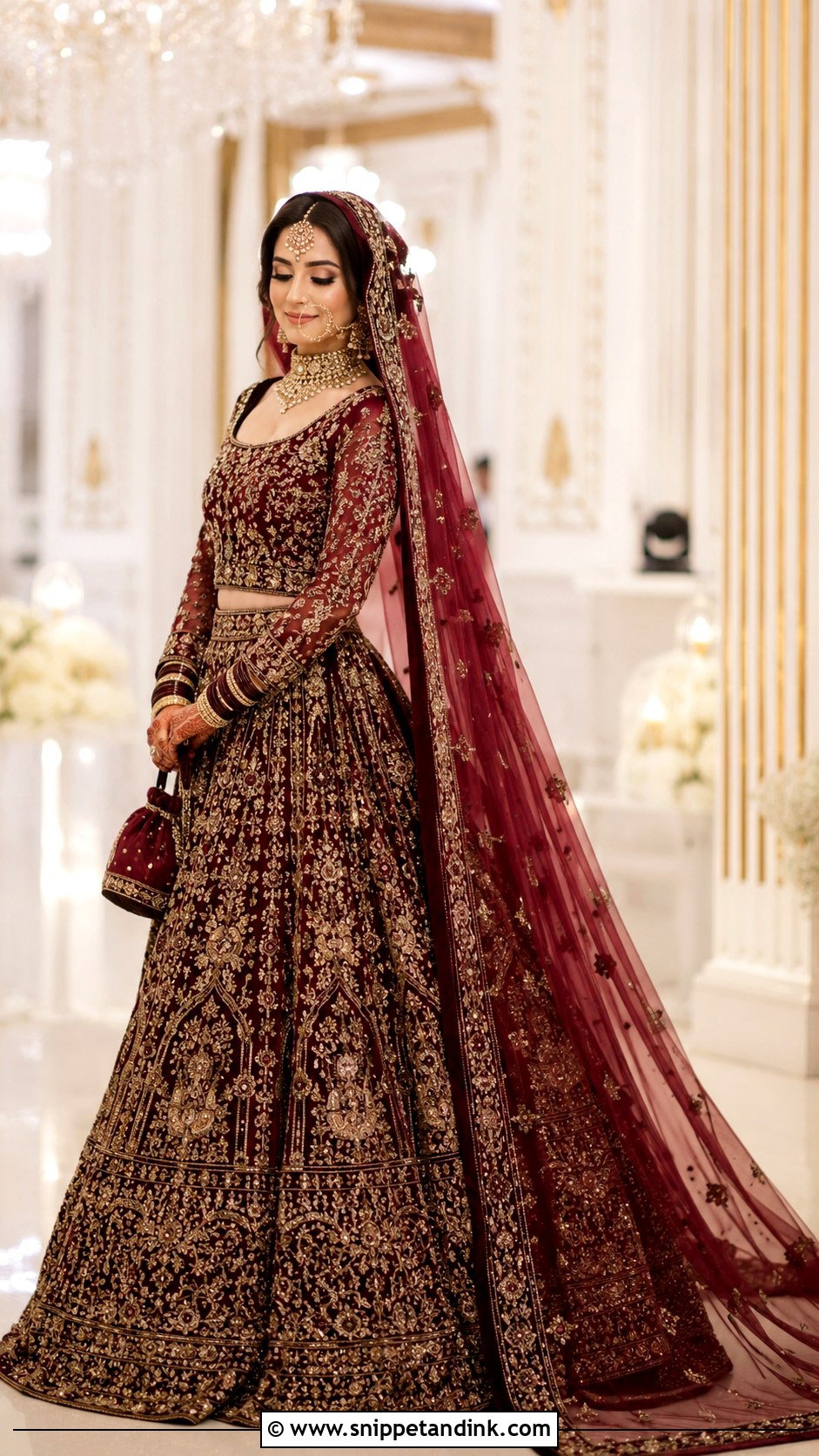
A long veil draped from the head and out behind the bride frames her in every shot and moves in a way a regular dupatta can’t. Pick a lehenga with detailed embroidery and a veil with a worked border that is still light enough to carry. Red, maroon, ivory and gold combinations suit it. For entrance and portrait shots, have someone spread the veil out behind you. Because it already adds volume around the face, keep the jewelry restrained. A veil that long catches on chairs and flower stands, so plan to unpin or gather it once you’re seated on stage.
24. Pakistani Barat Bridal Plum Dress
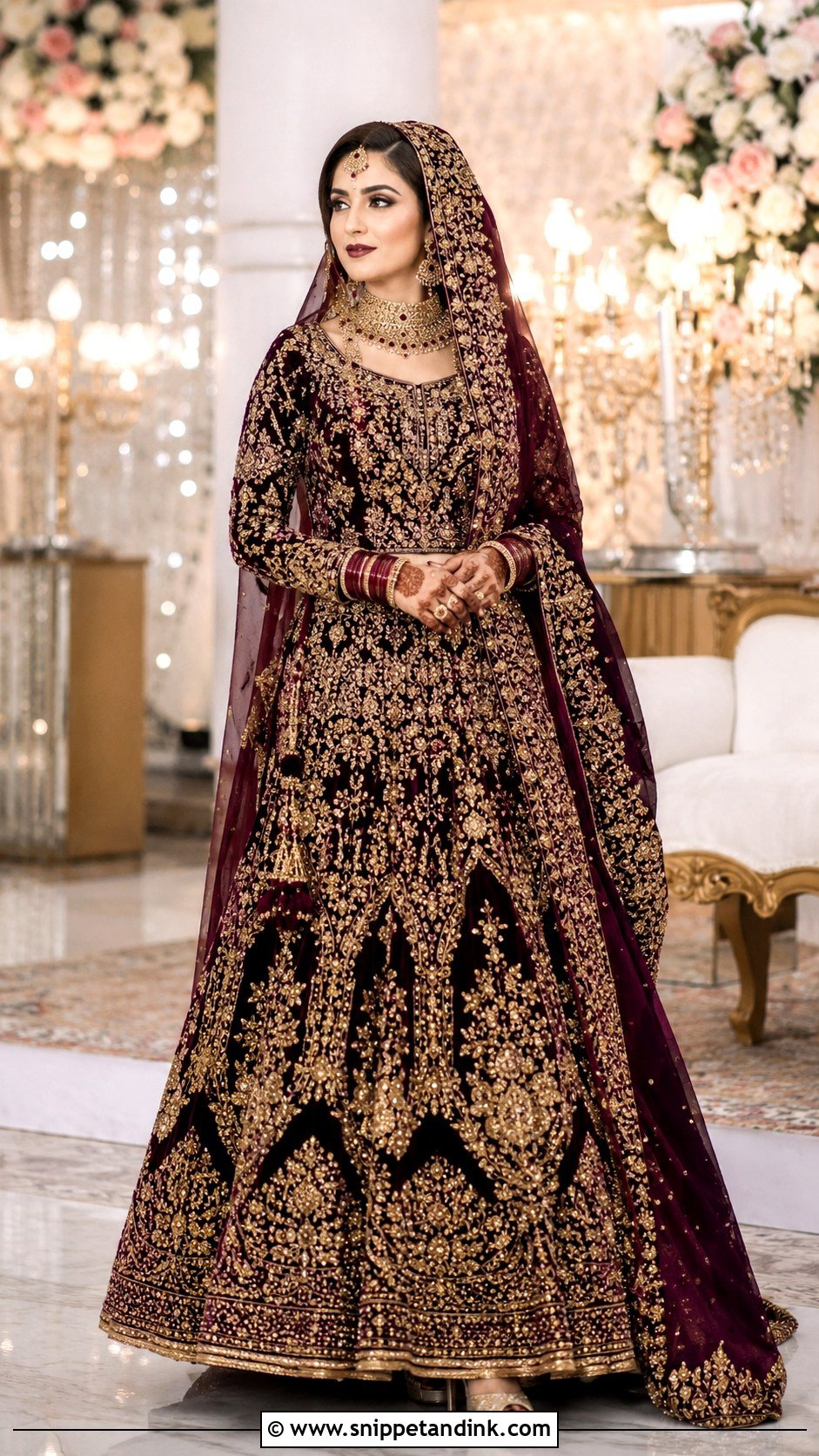
Plum is a jewel tone that reads as bridal once it’s styled as one. It works in velvet, raw silk, organza or net, with gold, copper or silver embroidery chosen to match your skin tone and jewelry. A plum lehenga, maxi or gharara holds its own next to red when it’s paired with a heavy dupatta and statement accessories. Add kundan or polki, deep berry makeup and embellished heels. It looks richest under evening lights. In flat daylight plum can look greyish, so I’d keep it for an indoor or evening barat.
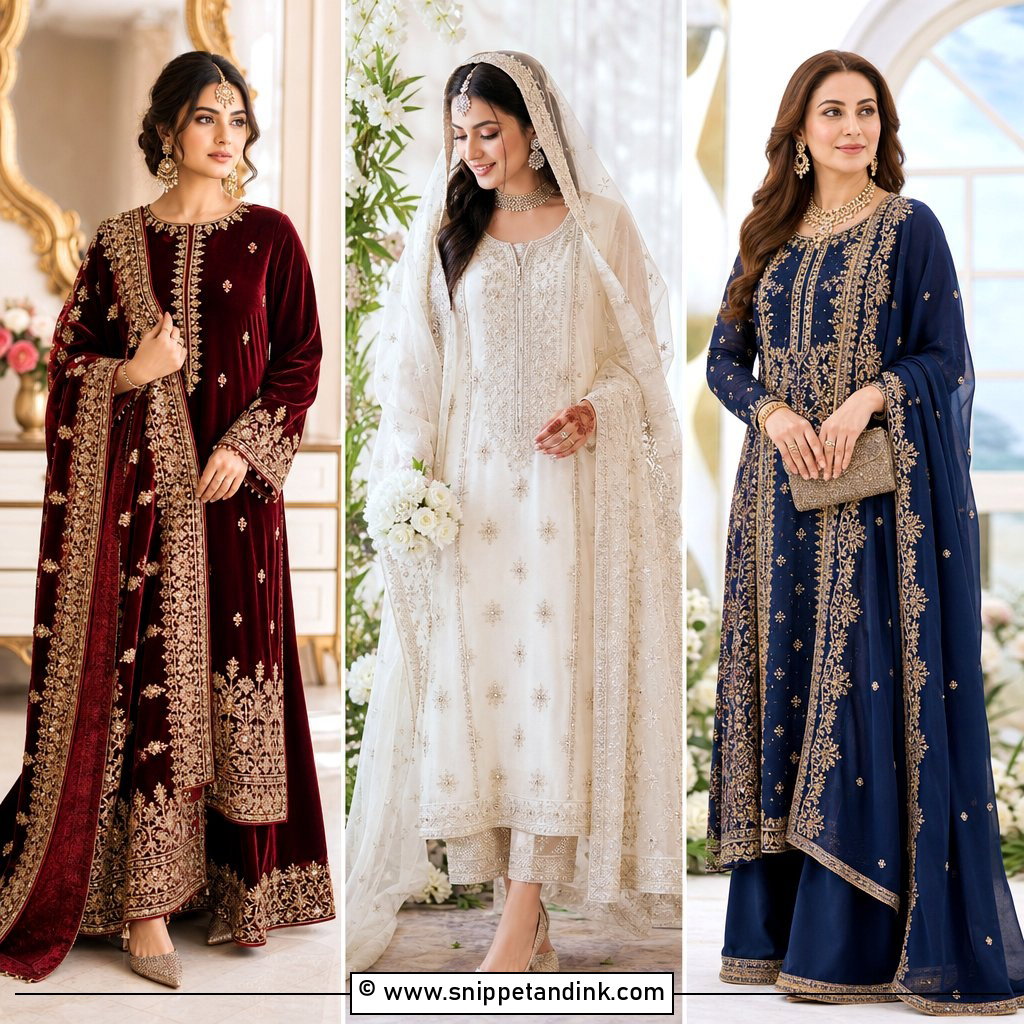
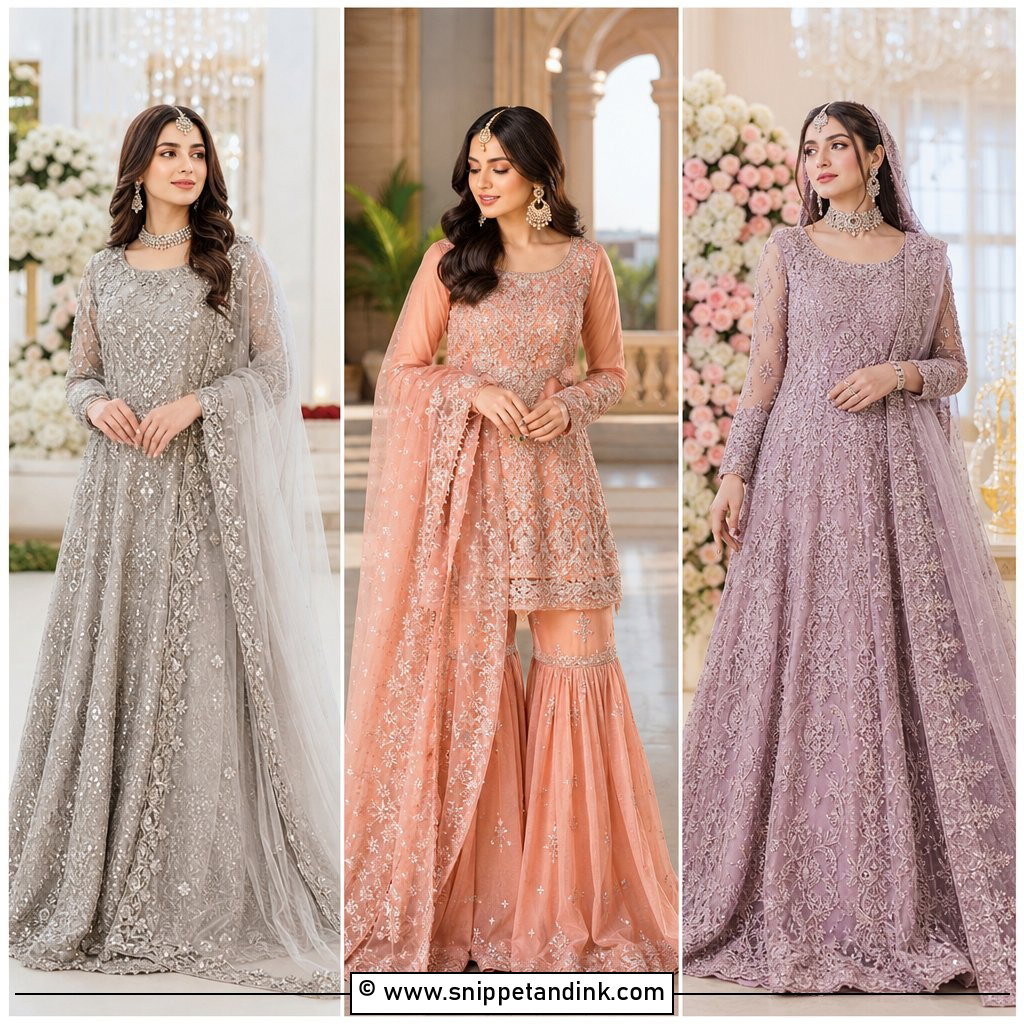

25. Pakistani Barat Bridal Red And Gold Outfit
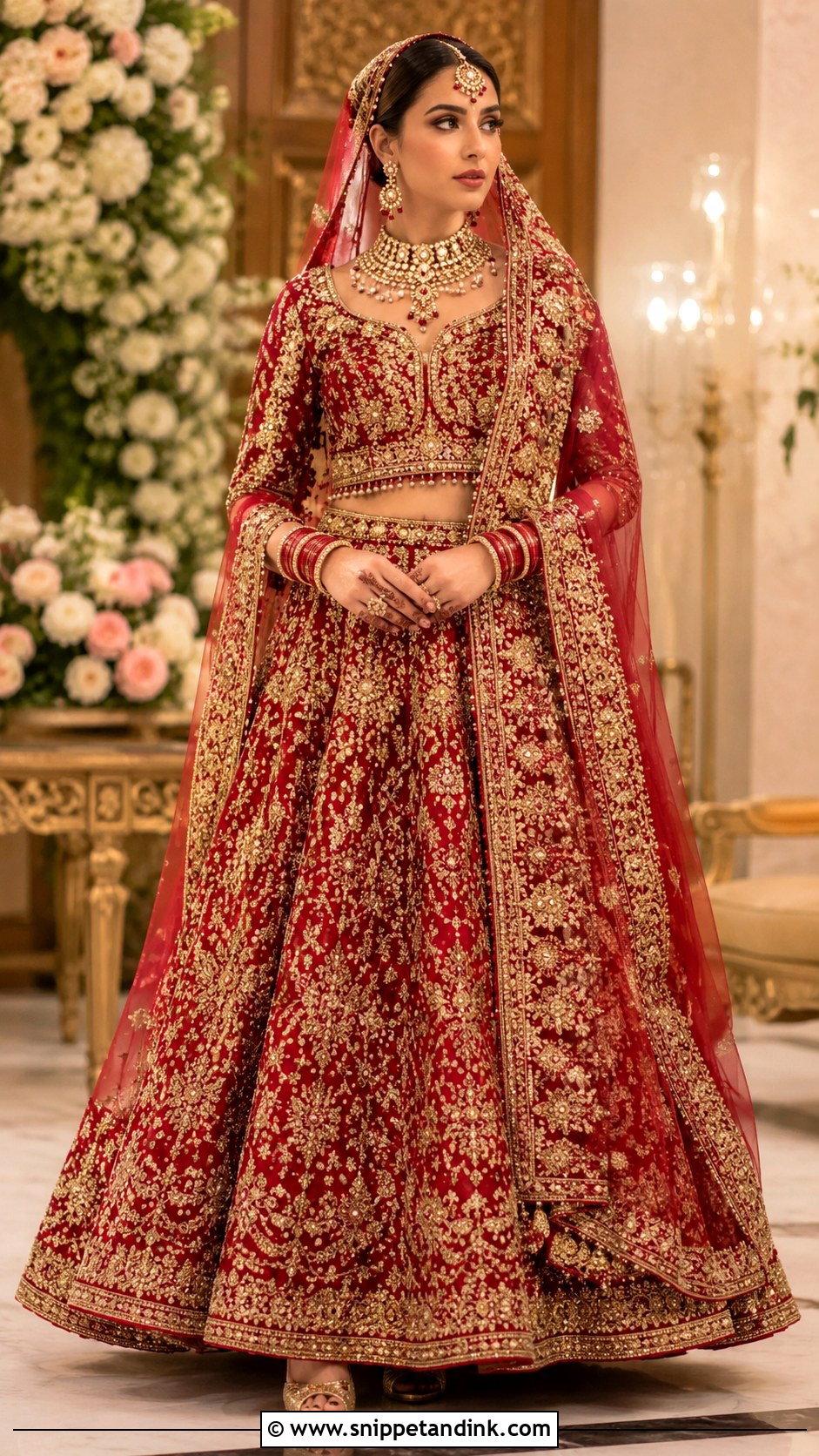
Red and gold together is the barat in its most recognizable form, and the pairing works across every silhouette: lehenga, gharara, sharara, pishwas, maxi or long shirt. Put the embroidery where cameras look most, around the face, sleeves and hem, so it reads in close-ups and full-length shots alike. A gold-bordered dupatta, kundan jewelry, red bangles and embellished heels complete it. With this much going on in the outfit, I’d pick defined eyes or a classic red lip as the focus of the makeup, rarely both at full strength.
The Bride’s Side of the Stage, From Entrance to Rukhsati
A barat bride spends most of the evening seated on stage, and nobody warns her how much of the outfit comes down to that. Heavy lehengas pool and crease, waistbands tighten after dinner, and dupattas slip every time she turns to greet someone. At the final fitting I walk through the evening with her, stage by stage.
Sitting, eating and the bathroom
Practice sitting on a low sofa, because stage seating is usually lower than a dining chair, and have someone arrange the skirt around you each time. Tuck a napkin into the blouse edge to eat. For the bathroom, a sister or friend holds the skirt and dupatta; try it once at home so the night itself isn’t the first attempt.
What goes in the bride’s handbag
- Safety pins and U-pins in skin and hair shades
- Blotting papers and the exact lipstick she’s wearing
- Small scissors for loose threads
- Plasters for shoe rubs and a painkiller
- Fashion tape for a neckline that shifts
The rukhsati comes at the end of a long night, usually with tears and hugs that tug at the dupatta. Re-pin it just before, and hand the trail and the jewelry pouch to someone else so the bride can walk out with her hands free.
Red Remains the Baseline, Not the Rule
A barat outfit has to work beyond the first photo. It has to feel right when you walk, sit, smile and hug your family. Red lehengas will always have a place, and maroon ghararas, gold pishwas, velvet maxis, pastel lehengas and jewel tones now sit comfortably beside them. Before you finalize anything, test the dupatta setting, the jewelry weight and the fabric in the lighting you’ll actually have. A grand outfit you can also live in for an evening is the one you’ll remember fondly.
You'll Like These Ideas:





Leave a Reply