
A naked cake puts the sponge on show, and that changes how I bake it. With no thick coat of icing to hide an uneven layer or a crumb that’s a day too old, the cake itself has to be right. That’s the appeal for barns, gardens, beach receptions and simple modern tables: you can see what you’re about to eat. It can be fully naked with bare sponge, or semi-naked with a thin swipe of buttercream that lets the layers show through. Flowers, berries, herbs, figs, citrus, caramel and chocolate all suit the style. Below are 25 versions, with what I’d watch for on each.
Bare Sponge Dries Out Faster Than You’d Think
Frosting is a seal. Take it away and the sponge starts losing moisture the moment it’s stacked, and in a warm, airy marquee the outer edges can go stale within a few hours. That’s the main reason I plan naked cakes differently from iced ones.
- I brush every layer with a light sugar syrup, often flavoured to match the cake, before filling.
- I wrap and chill the layers until set-up, then stack and dress the cake as close to the event as the venue allows.
- I ask for the cake to be cut within a few hours of display, not left out from lunchtime for an evening cutting.
- Outdoors, it stays in the shade. Buttercream softens in direct sun and the tiers can start to lean.
If your timeline has a very long gap between the reception opening and the cutting, a semi-naked finish is the safer choice. It keeps the look while giving the sponge some protection.
1. Rustic Naked Wedding Cake
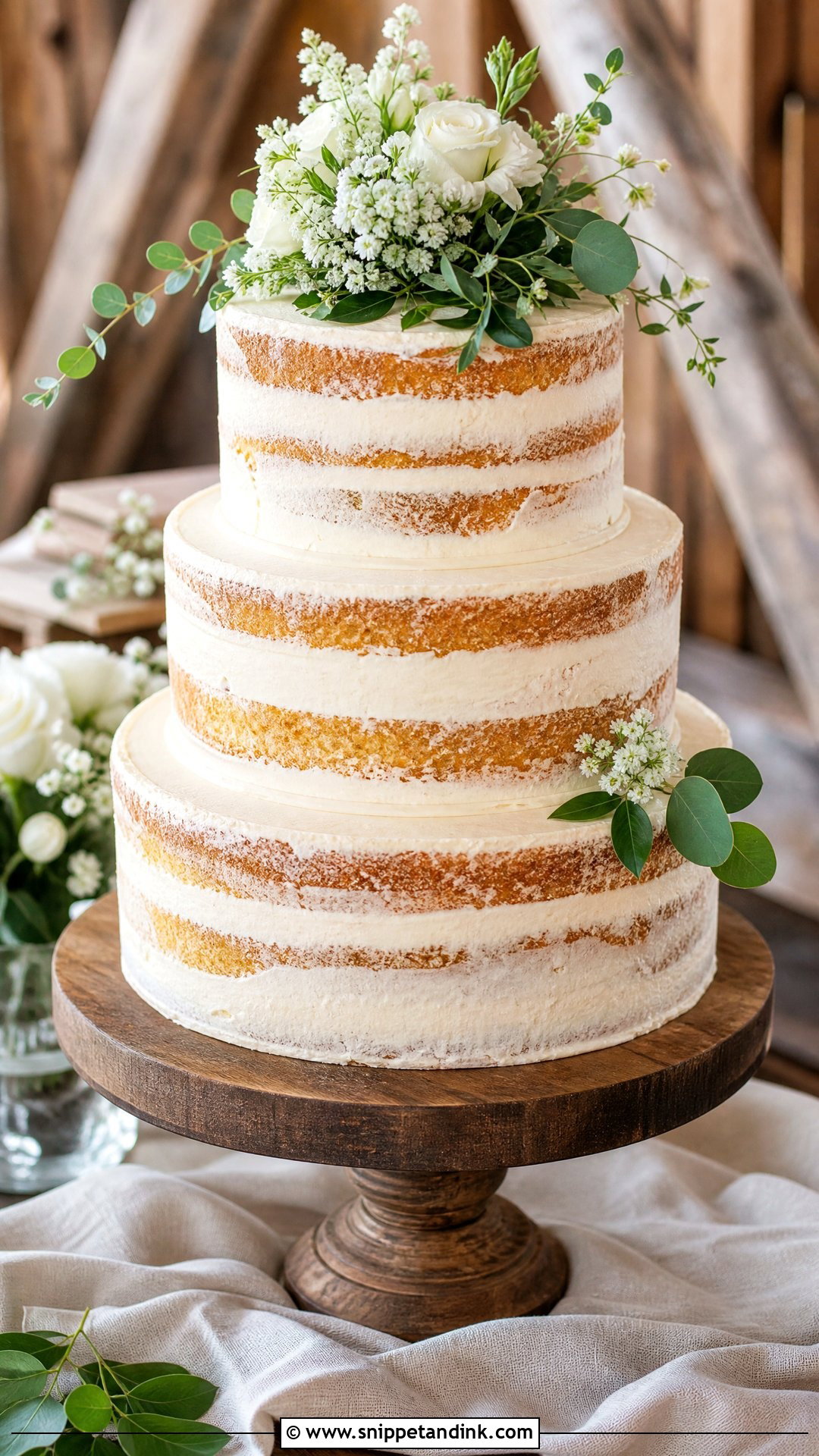
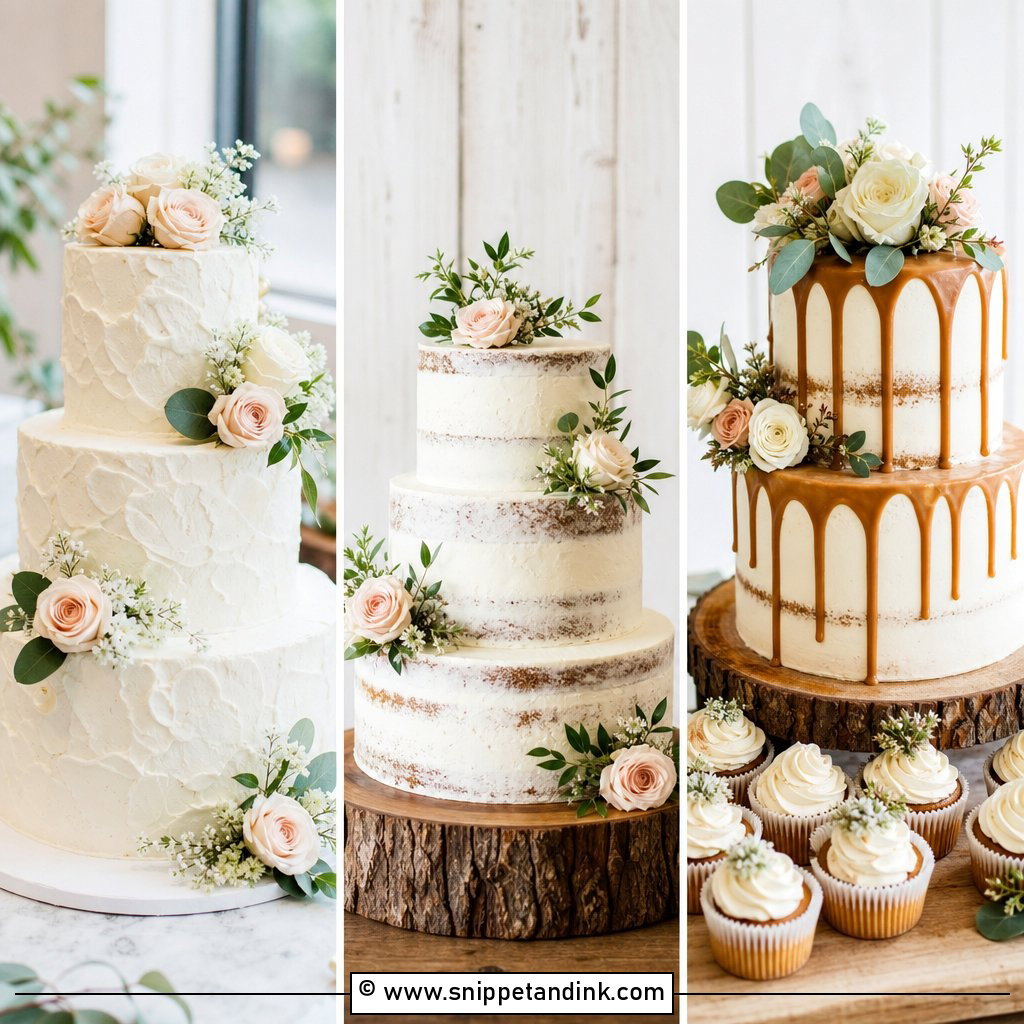
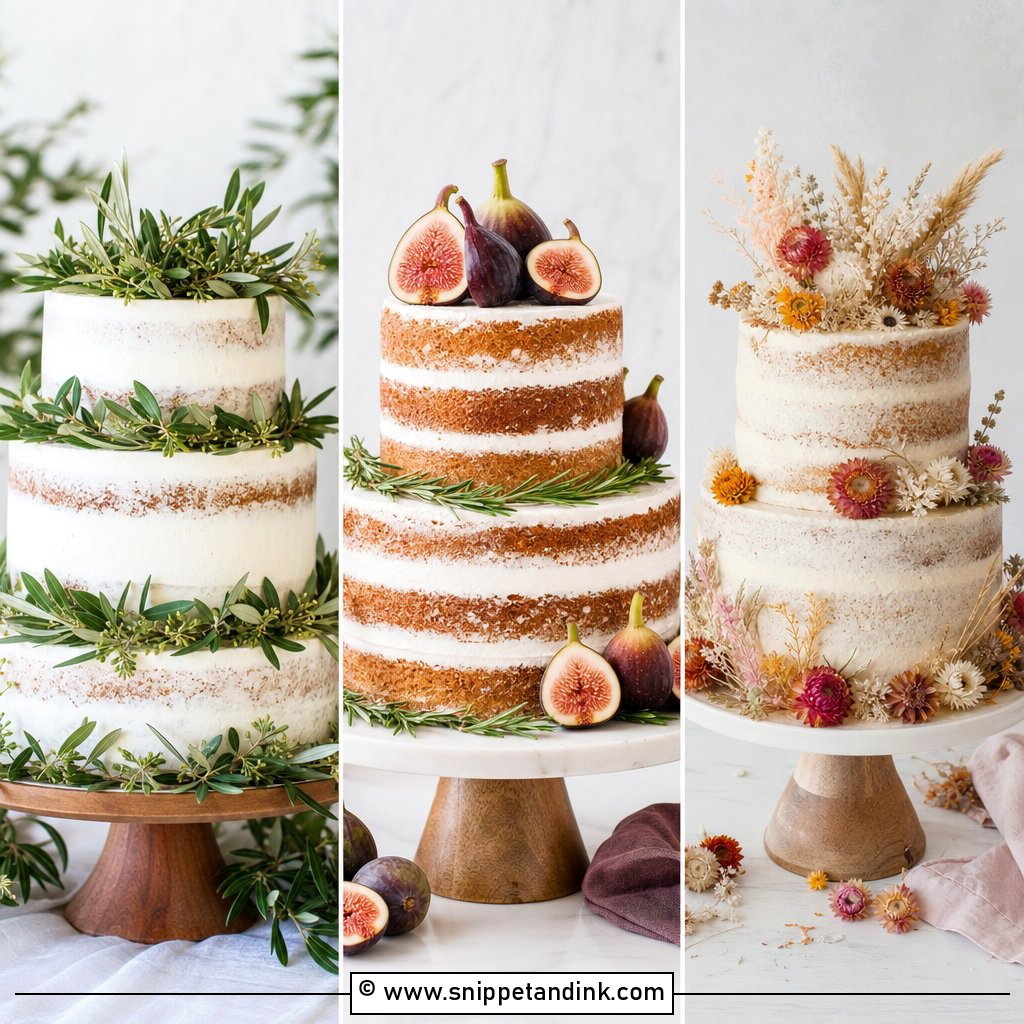
This is the version most couples picture: vanilla or almond layers, visible filling and just enough buttercream between them to hold the tiers neatly. It sits naturally in a barn or at an autumn backyard reception, with greenery, a few small white flowers and a wooden stand. What separates rustic from unfinished is the sponge. I level every layer so the filling lines run straight all the way round, because a tilting layer is the first thing guests notice on a bare cake.
2. Semi Naked Wedding Cake
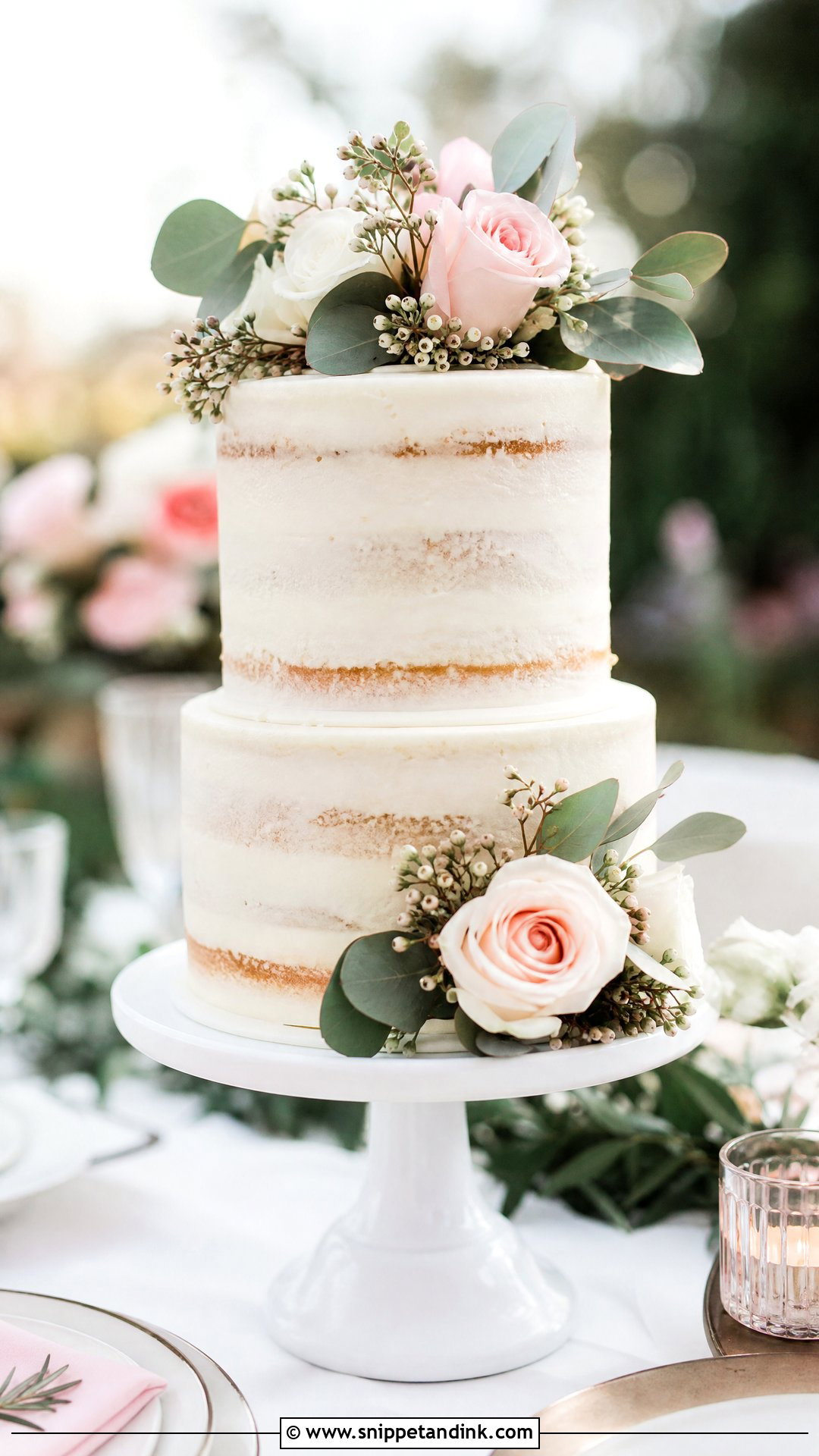
A thin veil of buttercream over the outside, scraped back so the layers still show, is the style I recommend most often. It looks a little more finished than fully naked, and it does a practical job too: that skim of frosting slows the sponge from drying out while the cake sits on display. Ivory buttercream with pale roses, eucalyptus and a few berries is the classic dressing. I leave a slightly textured finish so it still looks made by hand.
3. Three Tier Naked Wedding Cake
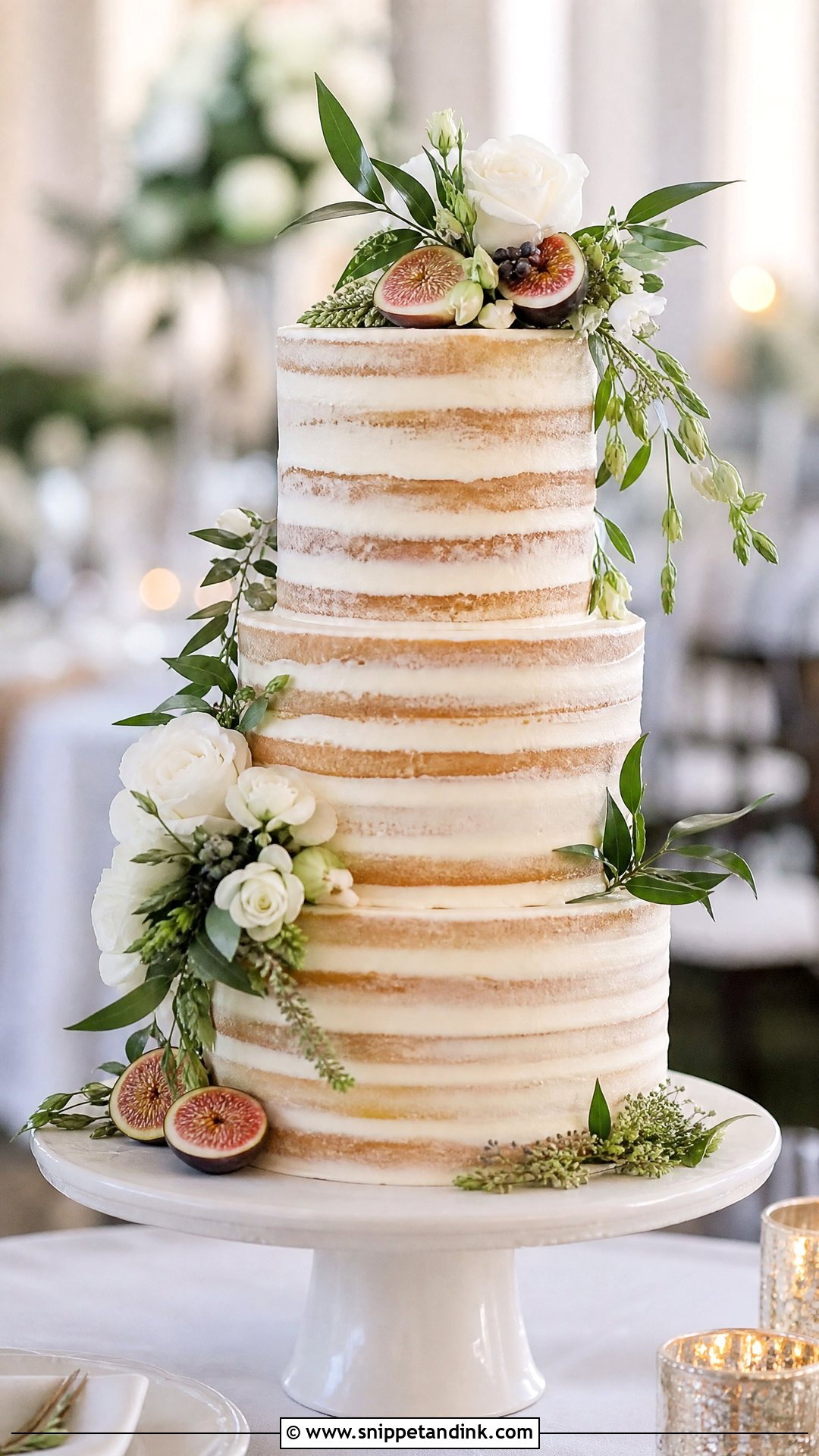
Three tiers give you real height and a proper centrepiece with very little decoration. They also need the most engineering. Every tier above the base sits on dowels and a cake board, and the sponge has to be sturdy enough to stay level under the weight, so I avoid very light, airy recipes here. Vanilla, lemon, almond or a lightly spiced sponge all hold up. A diagonal trail of flowers from top tier to base gives the eye movement, and berries or figs between tiers add colour.
4. Two Tier Naked Wedding Cake
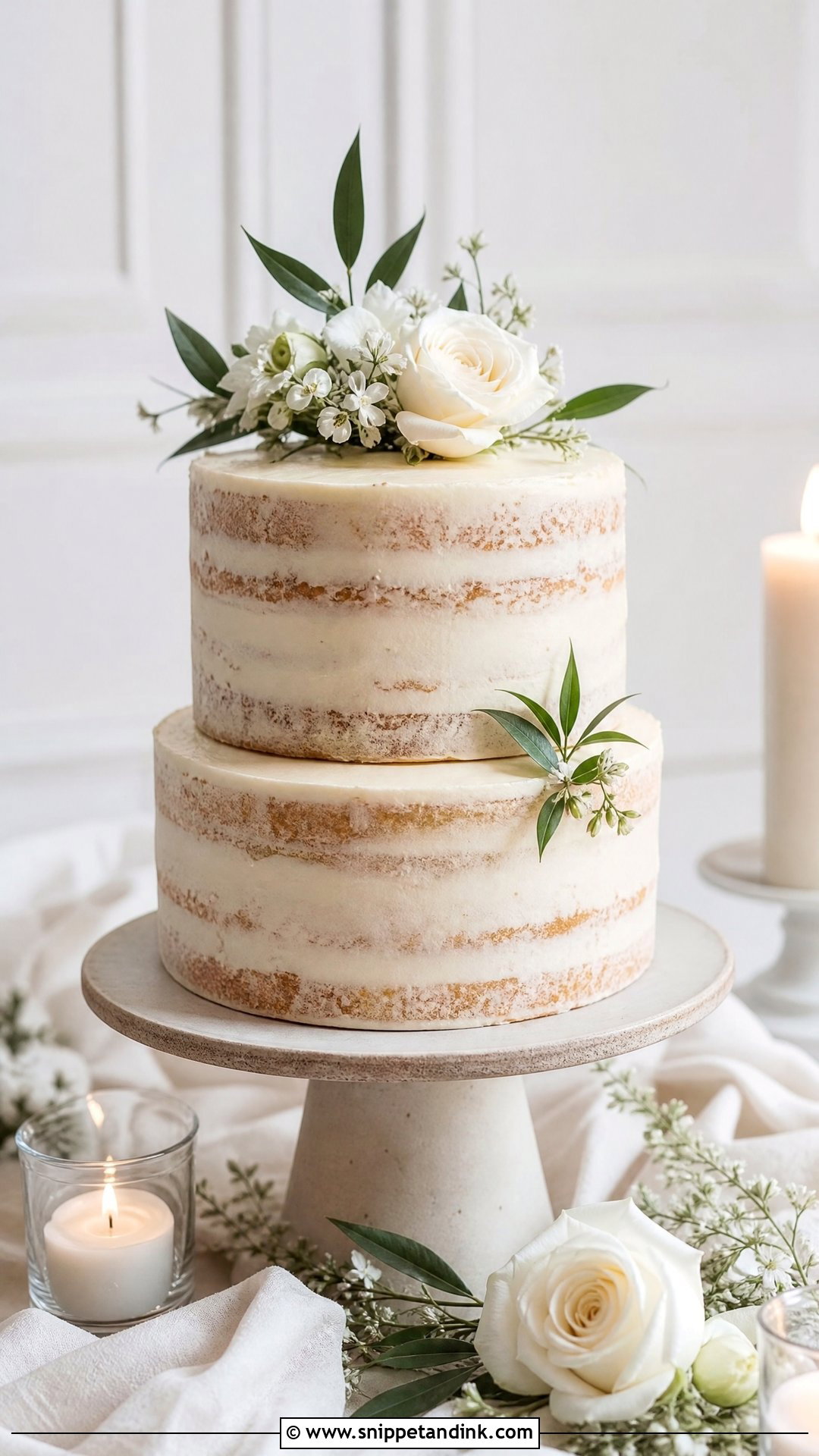
For small weddings, elopements or a long lunch, two tiers look in proportion rather than lost on the table. Being smaller, every detail is closer to the eye, so the finish has to be tidy: even layers, clean filling, no crumbs on the board. Vanilla with cream cheese frosting and a few blooms is hard to beat. If you need more servings, I’d add a kitchen cake or cupcakes rather than a third tier you don’t want. A ceramic stand or wooden board sets the tone.
5. Naked Wedding Cake With Flowers
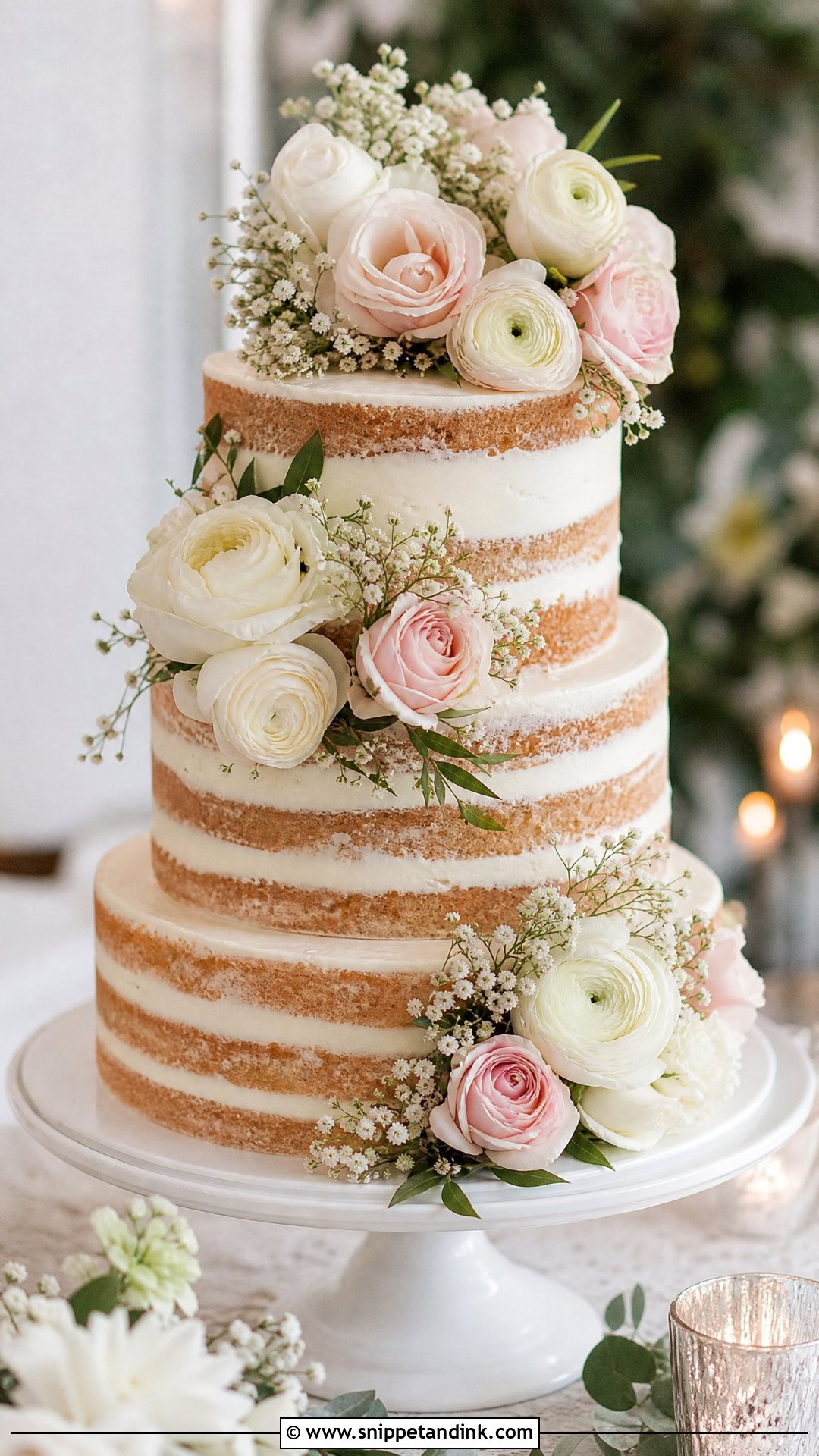
Fresh flowers on a bare sponge are where I’m strictest. Roses, ranunculus, peonies, chamomile and small wildflowers can all work, but only if they’re safe and kept away from the crumb with a barrier. Group them. A cluster on top and another near the lower tier looks deliberate; blooms scattered evenly over every tier look like confetti. Matching the stems to the bouquet ties the cake into the rest of the day, and your florist can usually hold back a few for me.
6. Naked Wedding Cake With Berries
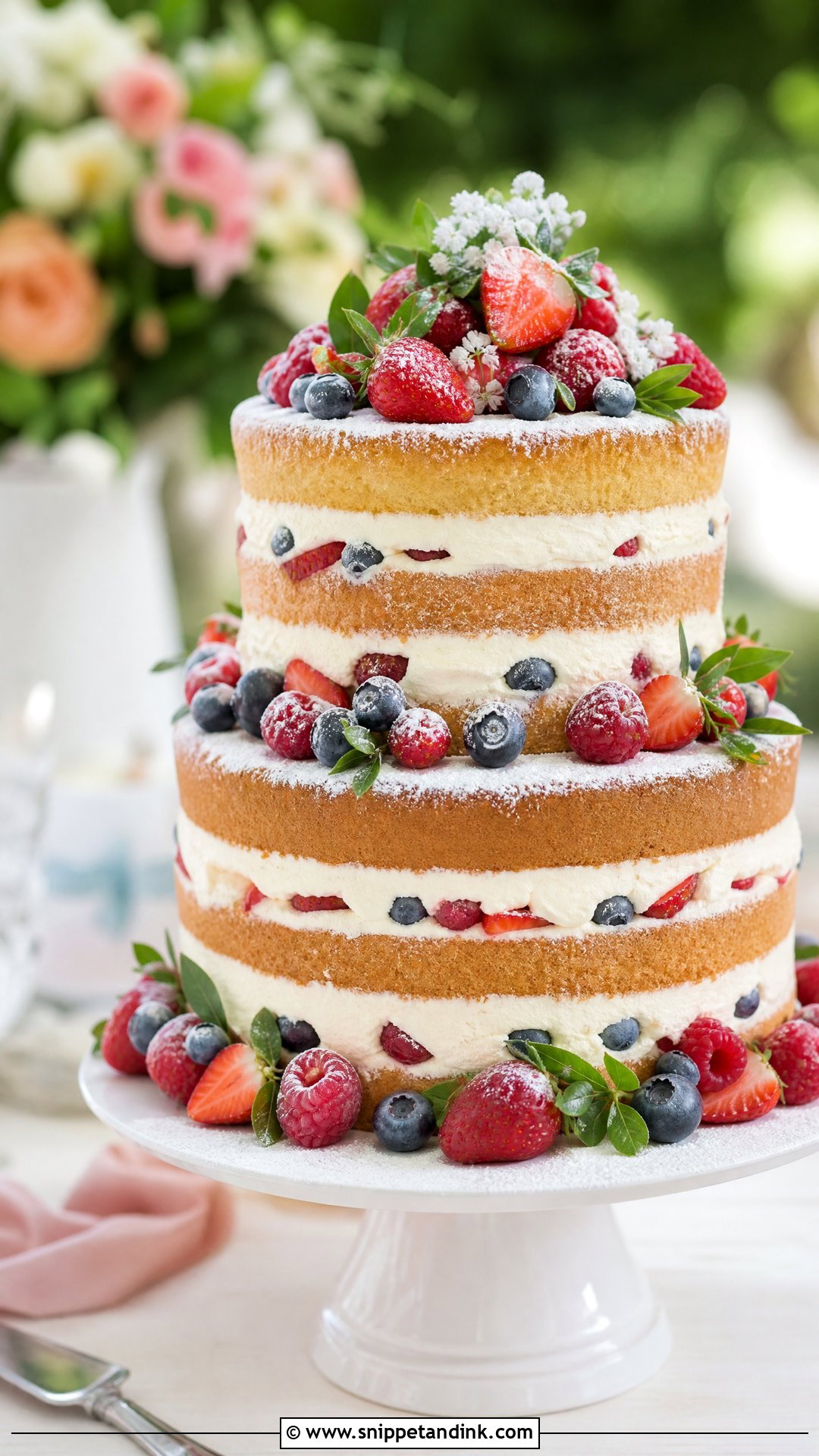
Berries add colour and texture without any piping at all. Strawberries, raspberries, blueberries and blackberries suit vanilla, lemon, almond or chocolate sponge. The practical catch is that cut or bruised berries bleed juice into bare sponge, so I use whole, dry berries and place them as close to serving as I can. Small clusters along the tier edges and on top look cleanest. A light dusting of icing sugar finishes it while keeping the beautiful sponge layers visible; dust it at the venue, though, since it dissolves on moist fruit within an hour or so.
7. Naked Wedding Cake With Greenery
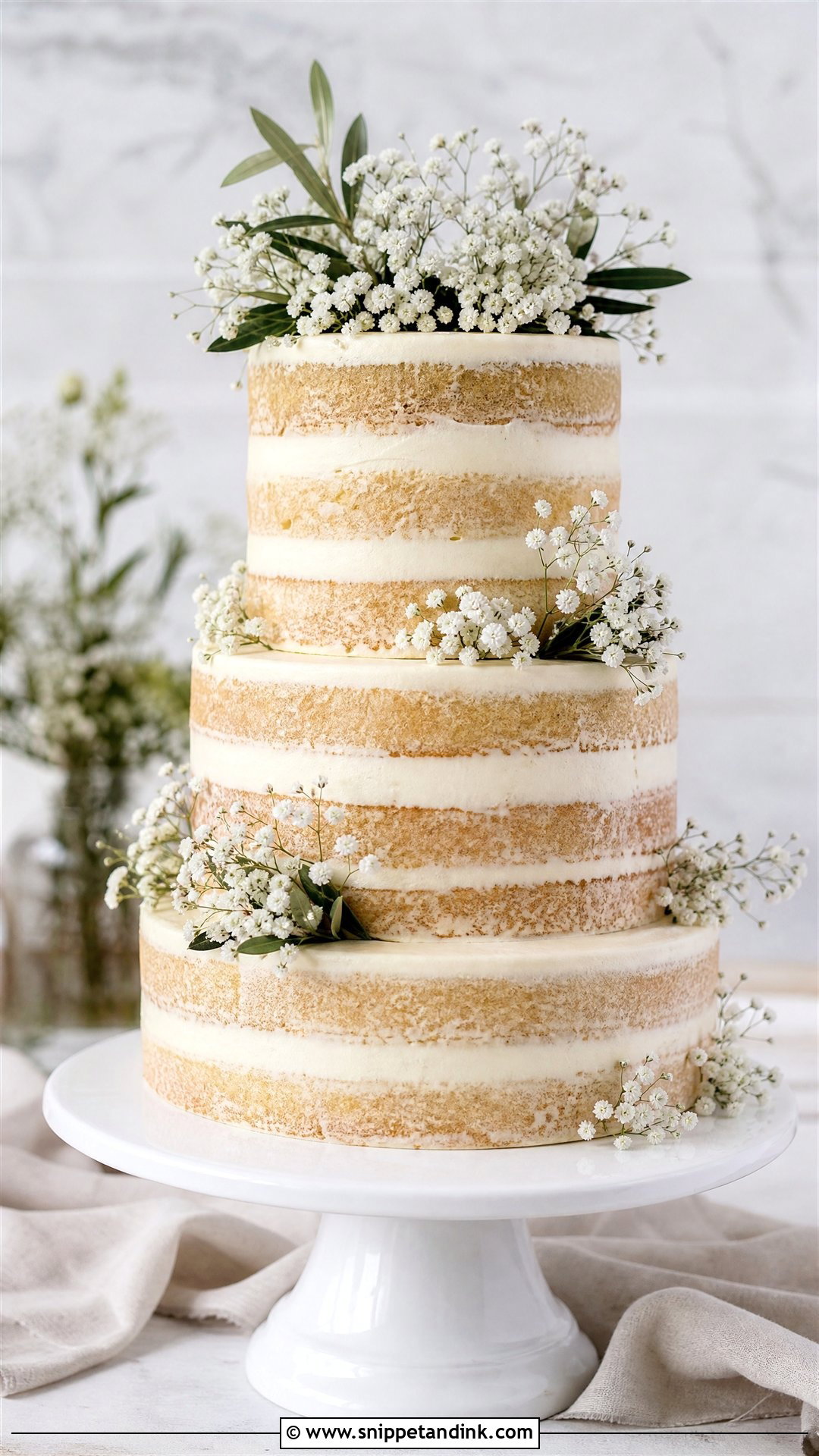
Greenery changes mood easily, which is why this one fits rustic, boho and modern weddings alike. Olive leaves, rosemary and bay are my first choices, because they’re kitchen herbs. Eucalyptus looks wonderful but isn’t edible, so its stems go into picks or onto a barrier, never straight into the sponge. Keep it sparse: a few stems around the base and one small cluster on top, so the cake still reads as dessert and not a table arrangement.
8. Naked Wedding Cake With Fresh Fruit
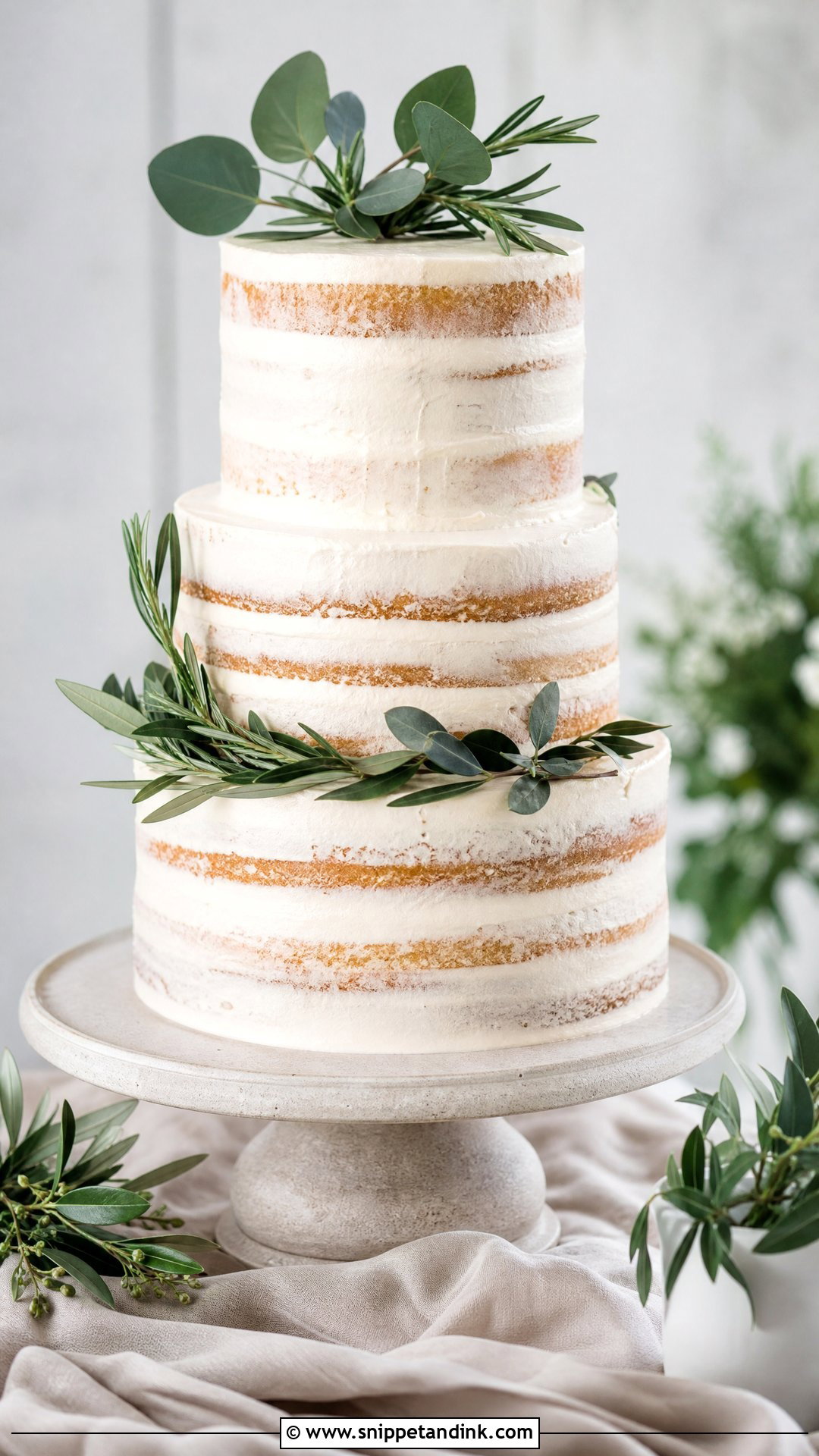
Fruit lets the decoration hint at the flavour inside. Fresh figs, peaches, grapes, berries, cherries, citrus or pears should match the month and the sponge: lemon cake with blueberries in summer, spice cake with figs in autumn. Stone fruit and pears brown once cut, so I brush cut faces with a thin glaze or apricot jam to keep them glossy. Don’t overload the tiers. On an exposed cake, decoration should frame the layers, not bury them.
9. Naked Wedding Cake With Roses
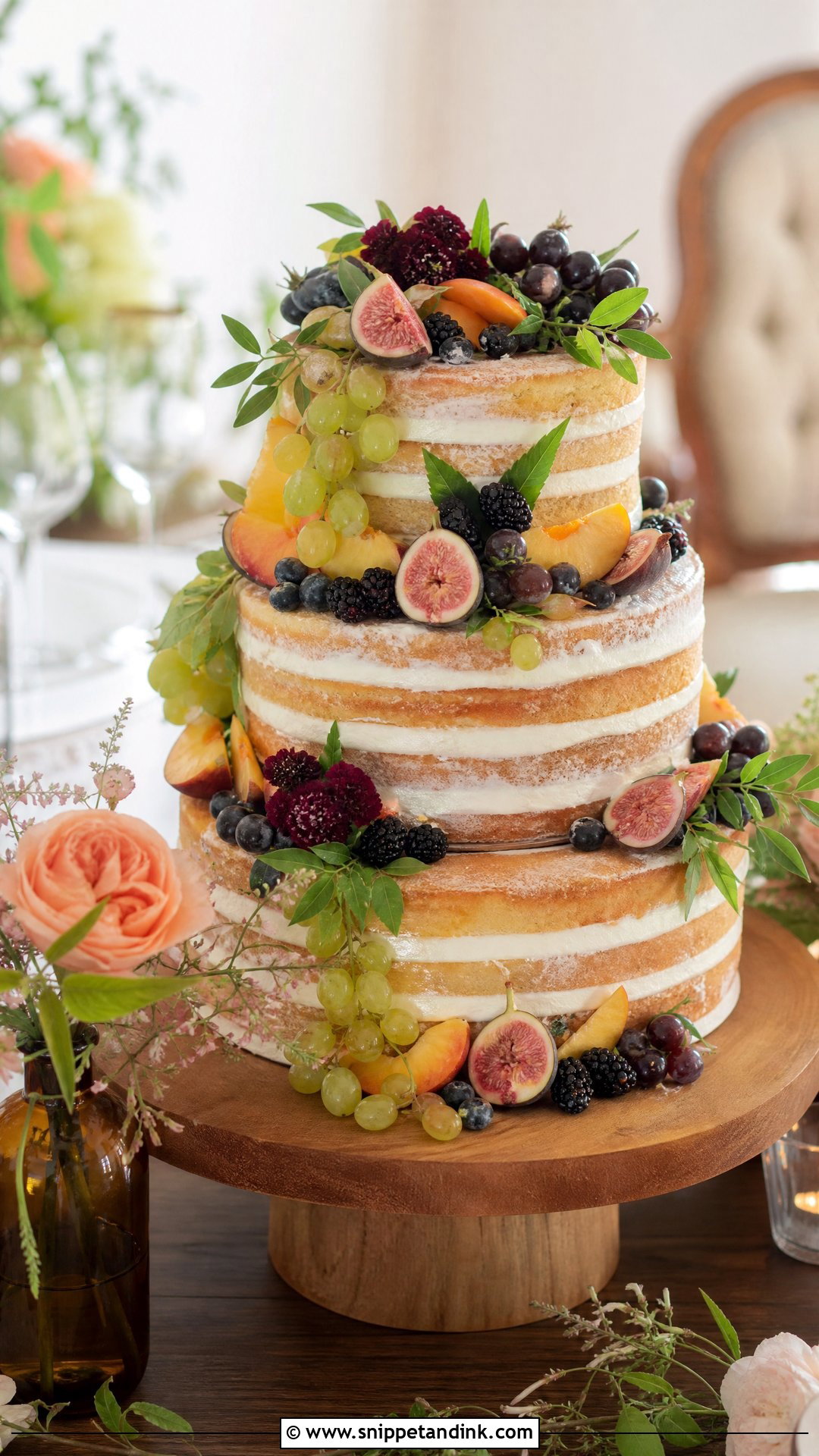
Roses shift style with colour alone: white reads classic, blush romantic, dusty peach more like a summer garden. They pair well with vanilla, almond or champagne-style sponge and a smooth buttercream filling. I place them in clusters, one on top and one around the middle tier, so the texture of the cake still shows. Most florist roses have been sprayed, so their stems are wrapped and the heads sit on a barrier rather than directly on the sponge.
10. Naked Wedding Cake With Sunflowers
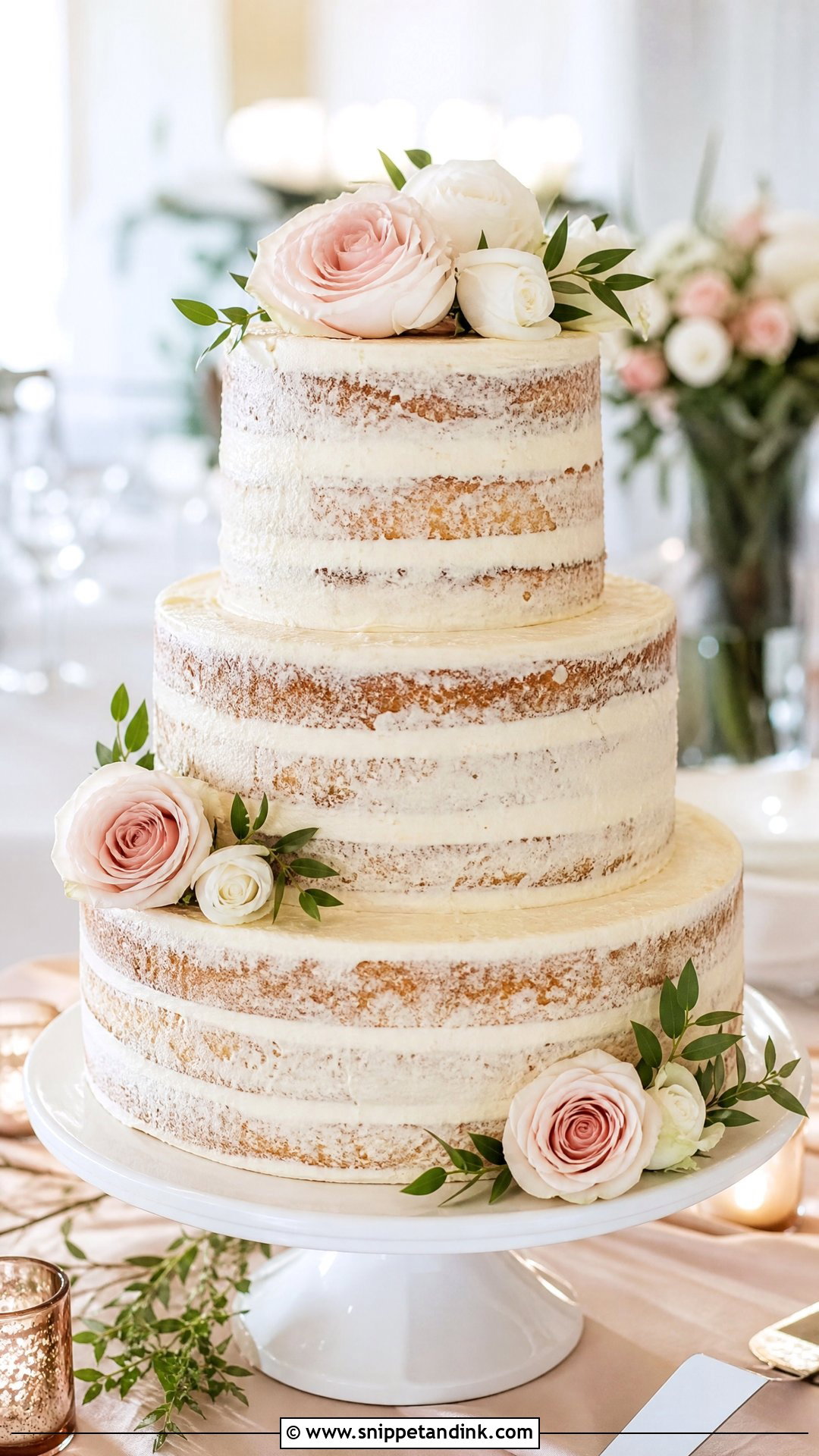
Sunflowers do a lot of work on their own. Their yellow is strong against pale sponge and ivory buttercream, so I keep everything else quiet: a few small heads, some greenery, maybe blueberries or blackberries. Big sunflower heads are heavy and their stems are thick, which means they sit on top or rest on the board rather than being pushed into a tier. A wooden stand suits the summer barn or field setting these cakes usually belong to.
11. Naked Wedding Cake With Wildflowers
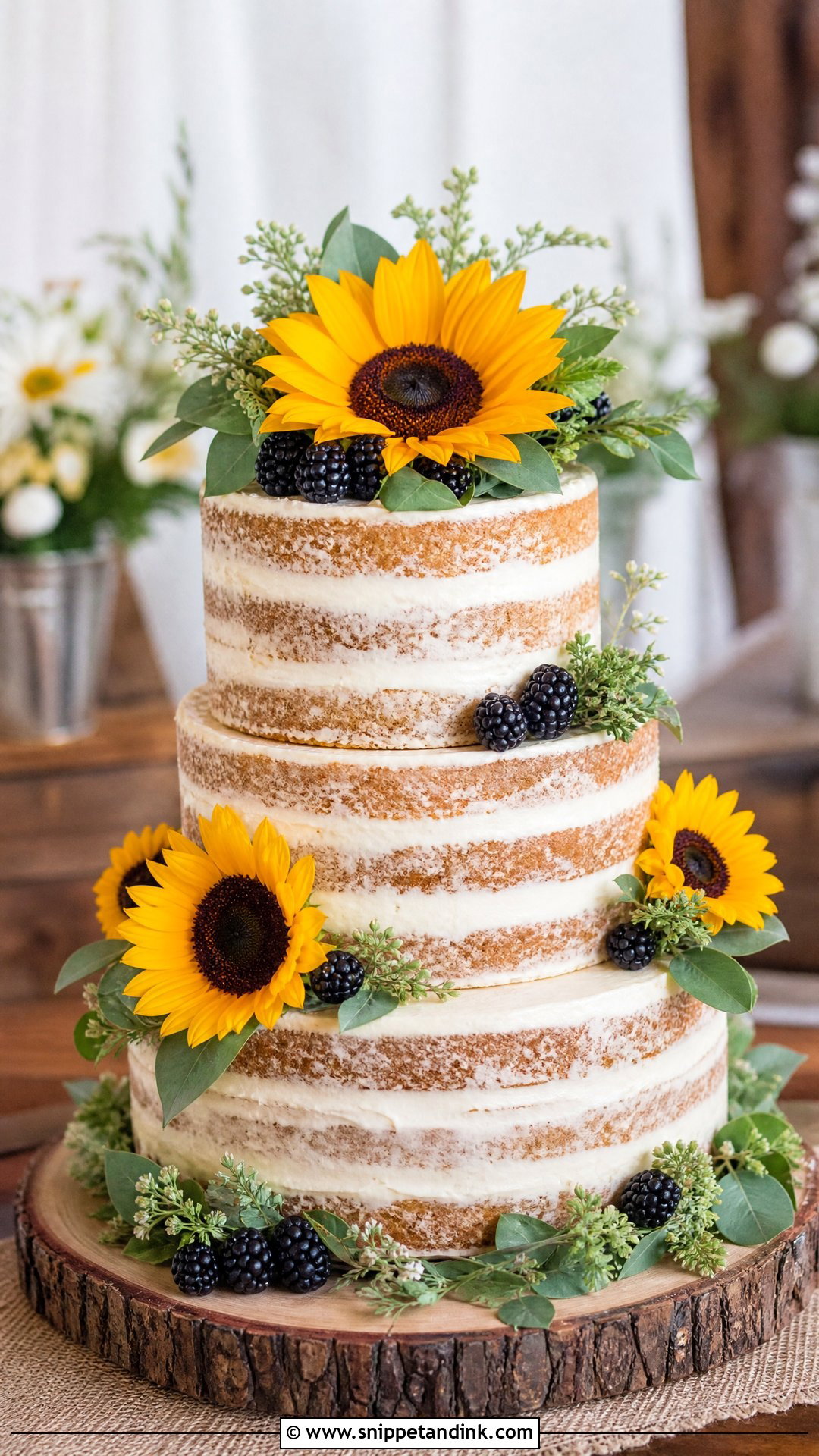
Small blooms in soft pink, lavender, yellow, blue and white make a cake look gathered from a hedgerow. A naked wedding cake with wildflowers works best when the flowers follow a pattern, a crescent or a cascade, instead of being dotted everywhere. Honey, lemon, vanilla or lavender sponge suits the meadow feel. I’d use a semi-naked finish here to soften the edges. Real foraged wildflowers are a risk, though; I only use blooms from a grower who can confirm what they are.
12. Naked Wedding Cake With Baby’s Breath
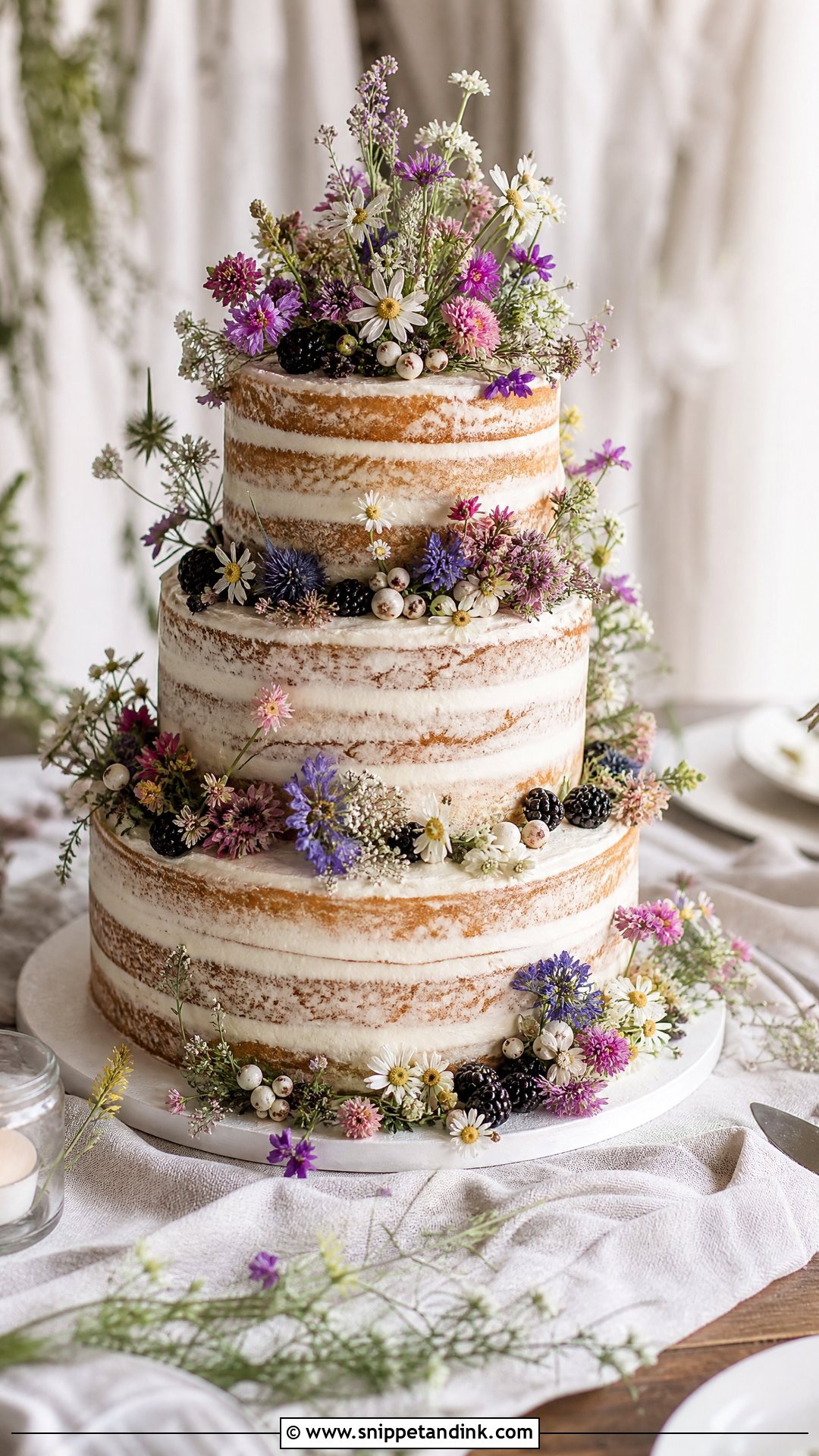
Baby’s breath is airy and inexpensive, and it gives a cloud-like edge to the bare layers. It’s also not food-safe. The plant contains compounds that can upset the stomach, so I always keep it off the sponge: stems wrapped, heads resting on a thin barrier or on the board, and removed before cutting. Styled that way, a small wreath around the base and a light cluster on top looks clean with white buttercream, vanilla sponge and a few sprigs of greenery.
13. Naked Wedding Cake With Lavender
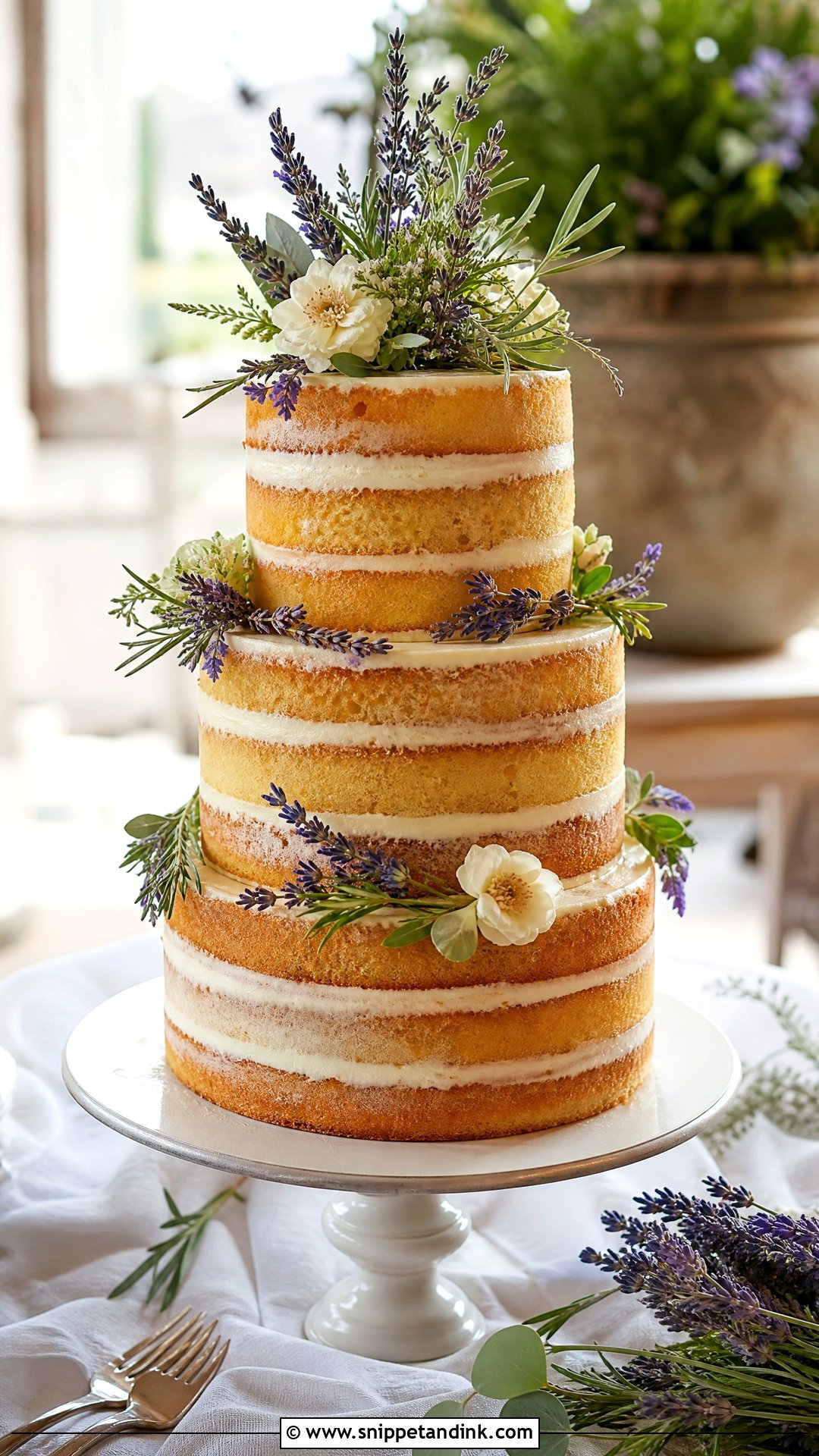
Lavender is a flavour as well as a decoration, so I keep both in proportion. Used heavily in a sponge or buttercream it tastes soapy; a gentle infusion with lemon, honey, vanilla, almond or Earl Grey is much nicer. Culinary lavender is the variety to use for both, and a few sprigs around the tiers with a little on top is plenty. A semi-naked finish suits it. For a fuller look, add pale ivory flowers or greenery.
14. Naked Wedding Cake With Eucalyptus
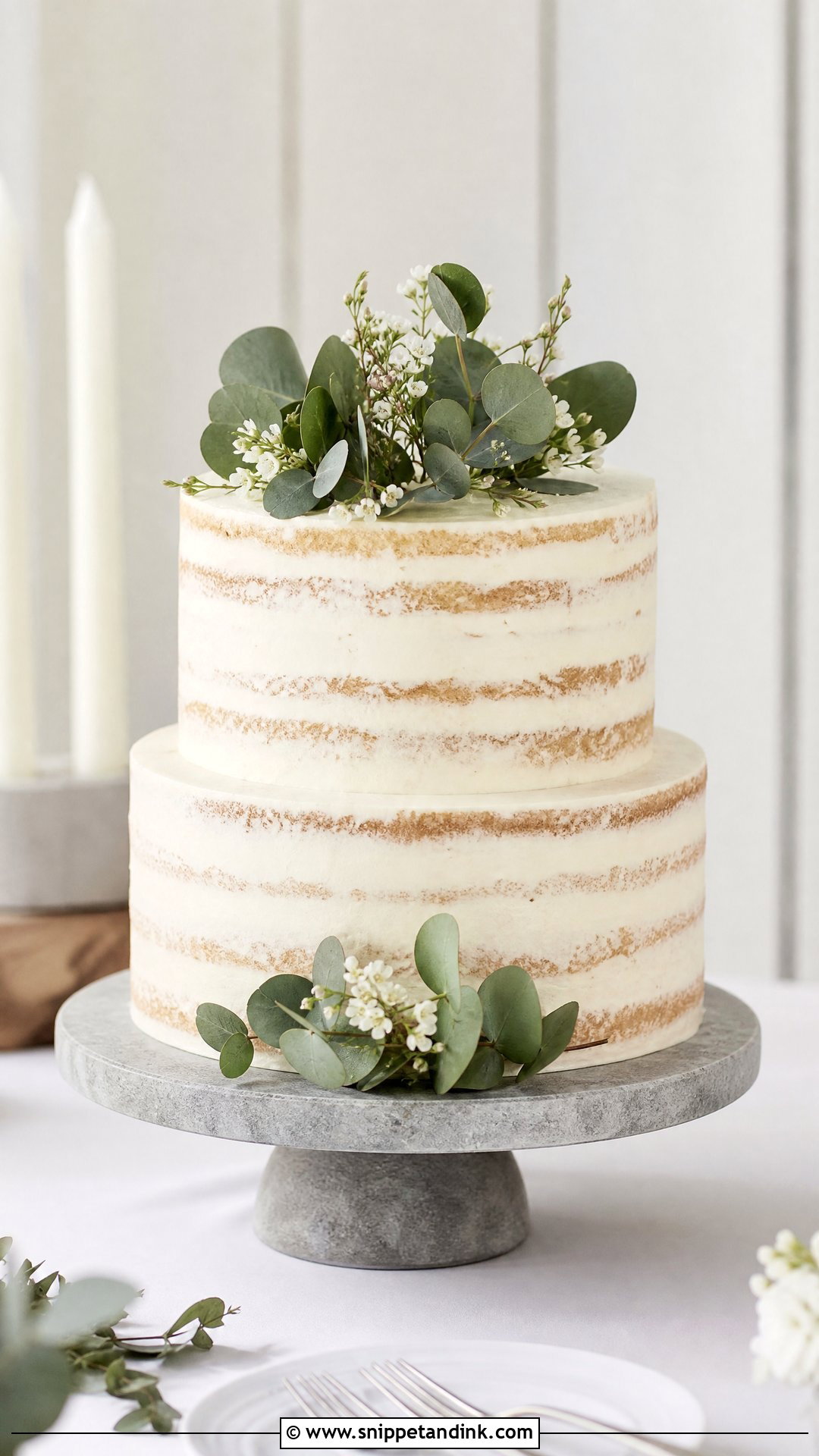
The grey-green of eucalyptus looks clean against ivory frosting and pale sponge, which is why it fits boho, garden and even industrial venues. It’s also one of the plants I’m most careful with, because it isn’t edible. The stems go into food-safe picks or sit on the board, and the leaves shouldn’t rest on cut sponge. Loose curves of a few stems over a smooth semi-naked finish are enough. A white or stone stand keeps the styling modern.
15. Naked Wedding Cake With Figs
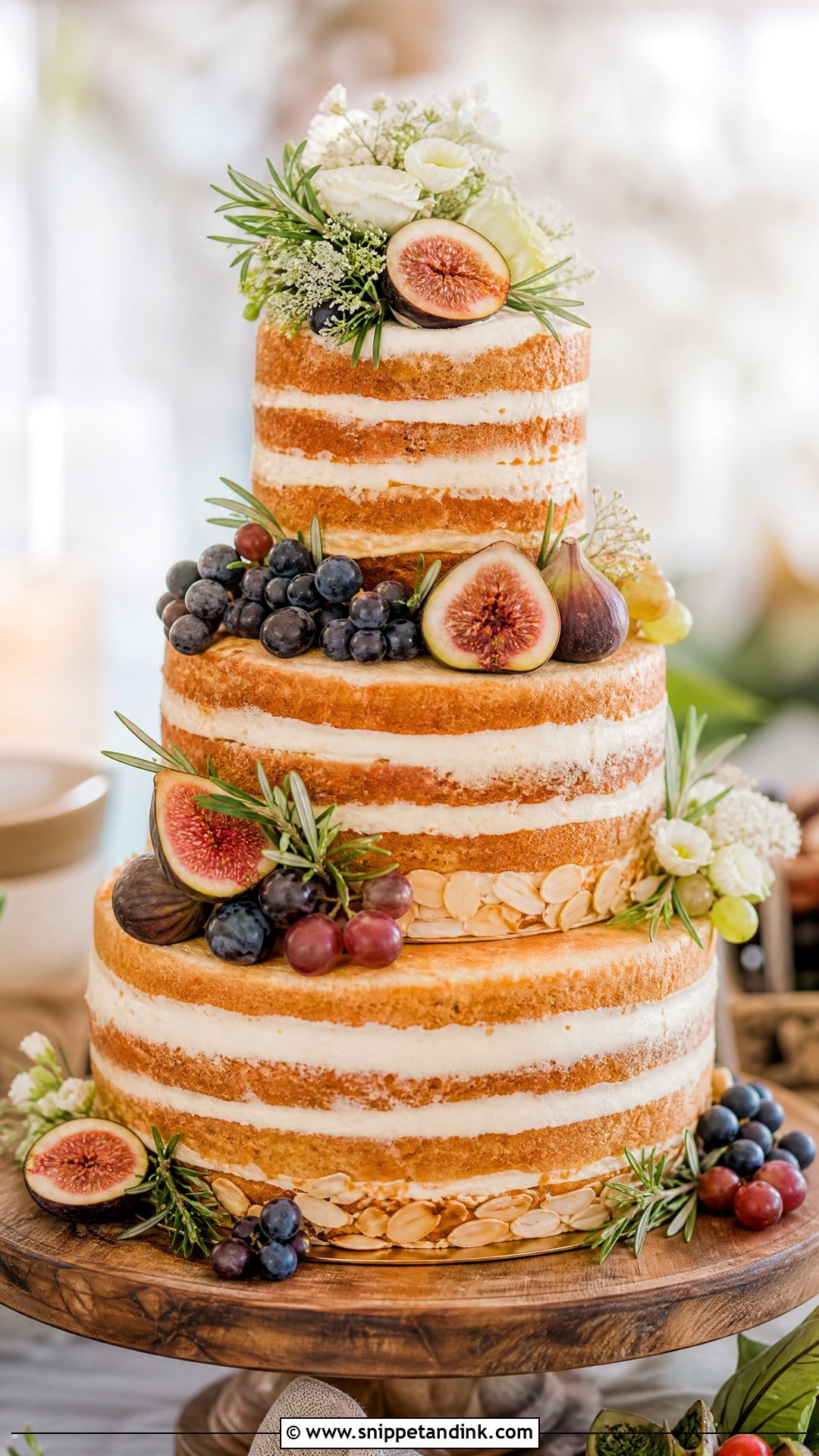
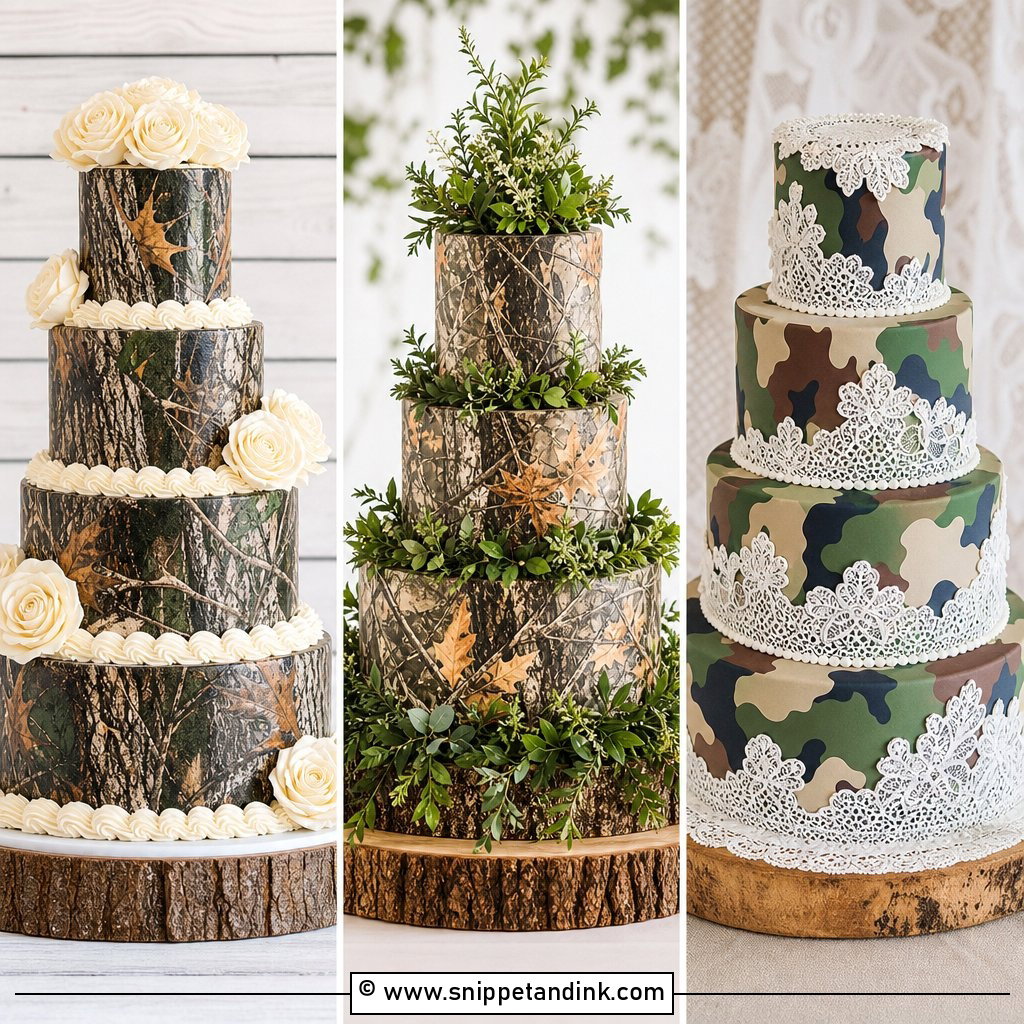
Figs bring deep purple, green and ruby tones that look rich against cream frosting and golden sponge. They suit late summer and autumn, especially with honey, almond, vanilla, spice or mascarpone filling. Halved figs show their seeded centres, but cut figs weep, so I slice them at the venue and glaze the faces lightly. Arranged in small groups with grapes, rosemary or a few flowers, they make a naked cake feel more formal than a berry cake without losing the relaxed look.
16. Naked Wedding Cake With Citrus
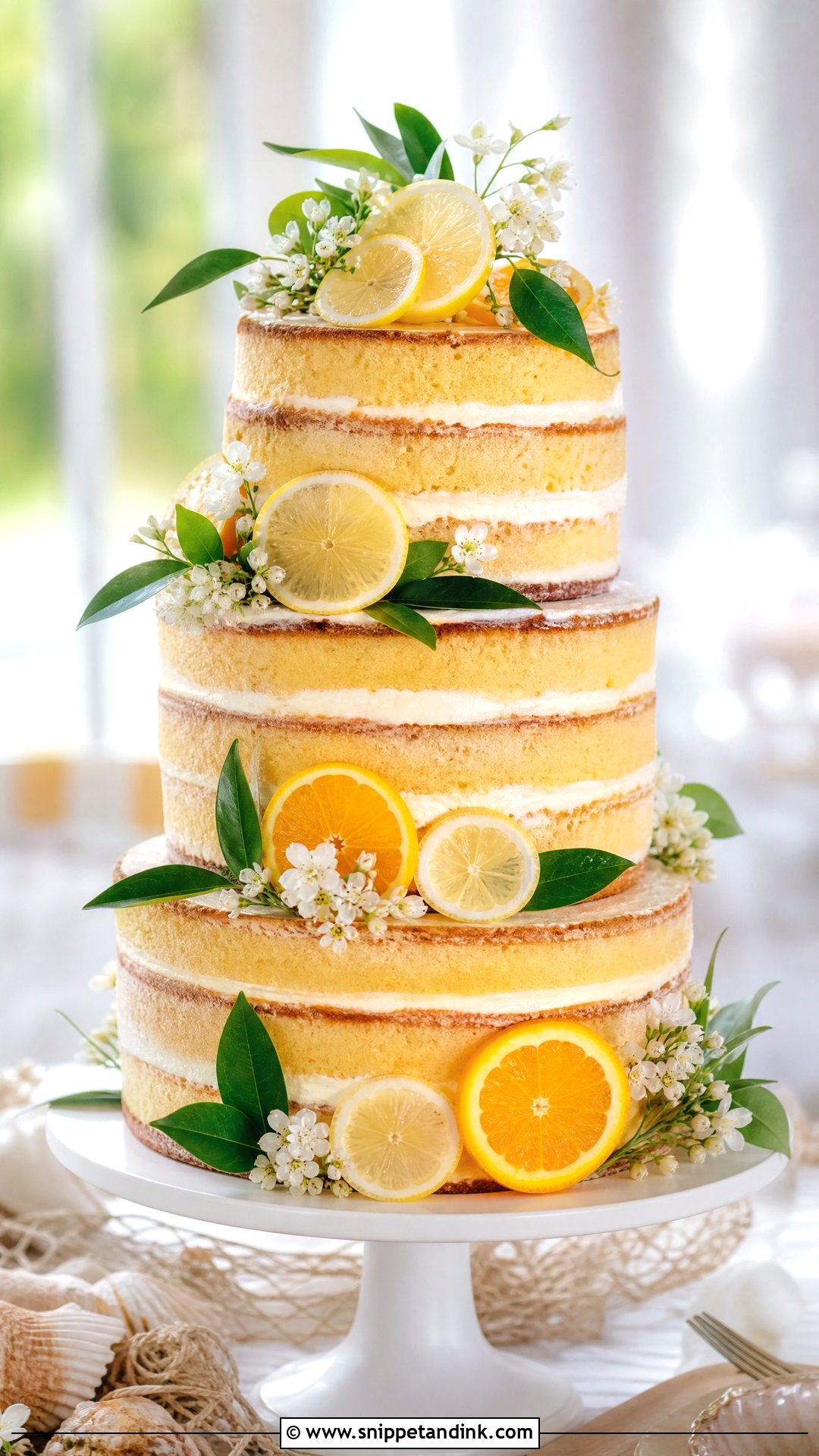
Citrus adds colour with almost no flowers needed: lemon slices, orange rounds, grapefruit wedges or candied peel. It pairs with lemon, vanilla, almond, olive oil or orange blossom sponge under a light buttercream. Fresh slices release juice and curl as they dry, so for a long display I prefer candied or dried citrus, which holds its shape all day. A few layered clusters look cleaner than covering the cake. Small white flowers or greenery give it a garden feel for a coastal or tent wedding.
17. Naked Wedding Cake With Chocolate Drip
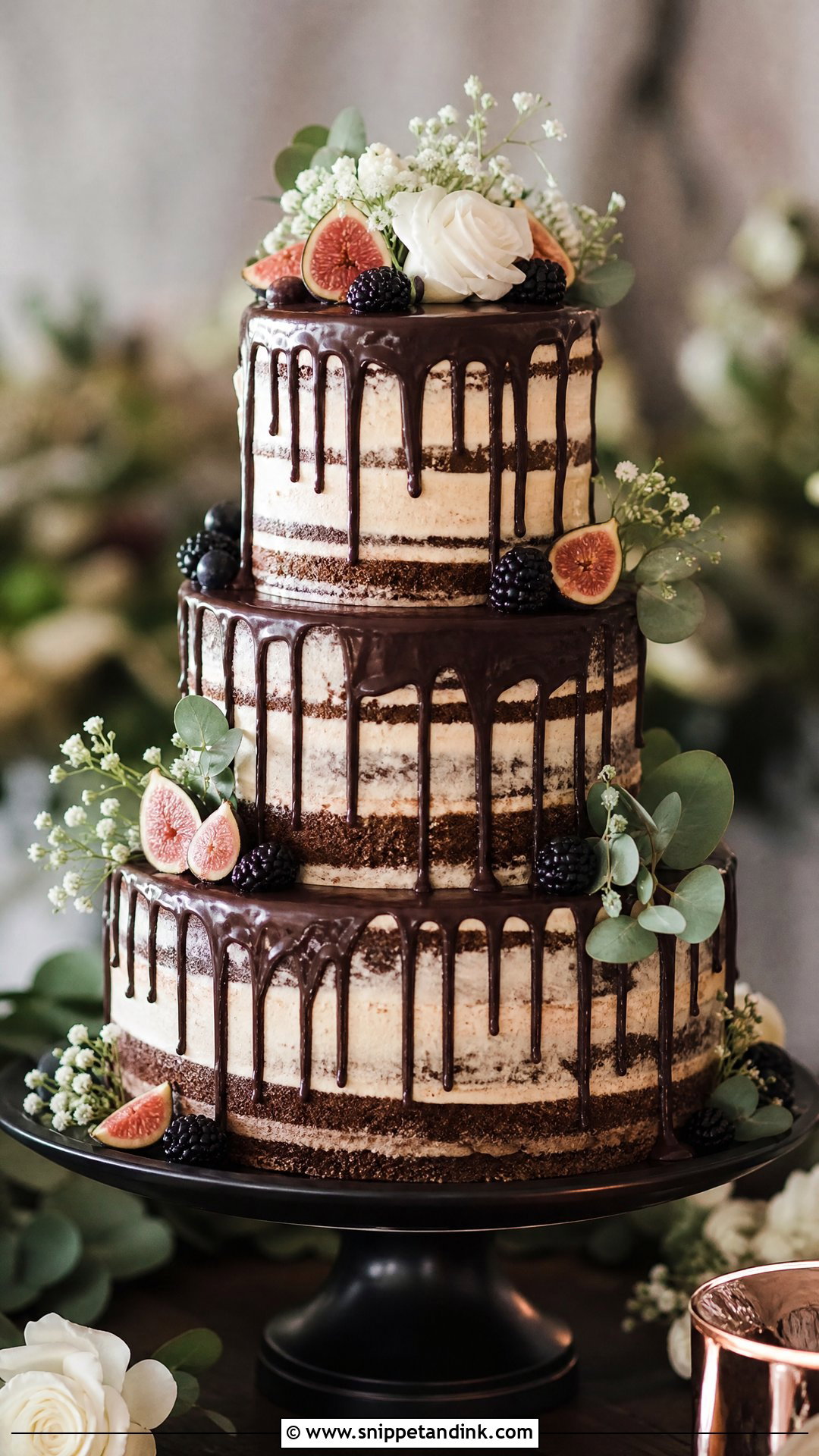
A chocolate drip makes a naked cake feel indulgent rather than rustic. The sponge can be vanilla, chocolate, mocha or almond. Dark chocolate looks dramatic; white chocolate is softer. Temperature is the whole technique: I apply ganache when it has cooled just enough to run a short way and set, because too warm and it races to the board, too cool and it sits in lumps. Berries, figs or small flowers on top finish it, and it suits an evening reception.
18. Naked Wedding Cake With Caramel Drip
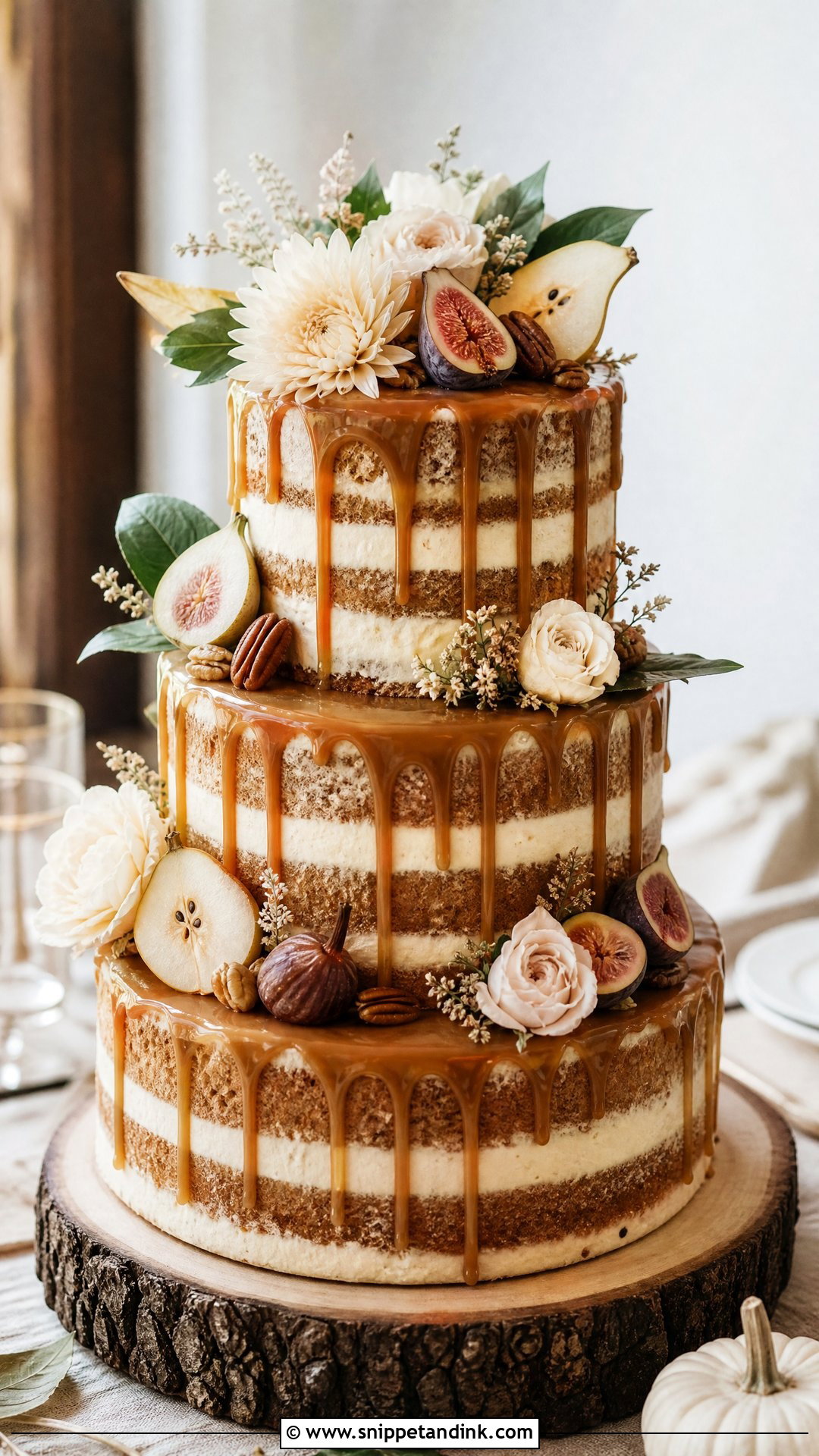
A naked wedding cake with caramel drip feels warm and familiar, which suits autumn and rustic venues. Caramel goes with vanilla, apple spice, cinnamon, chocolate, brown butter or salted caramel sponge. It’s softer than ganache and keeps creeping in a warm room, so I use a thicker caramel and keep the drips short. Figs, pears, berries, pecans or small cream flowers add a seasonal touch, and a wood slice stand fits the look.
19. Naked Wedding Cake With Gold Leaf
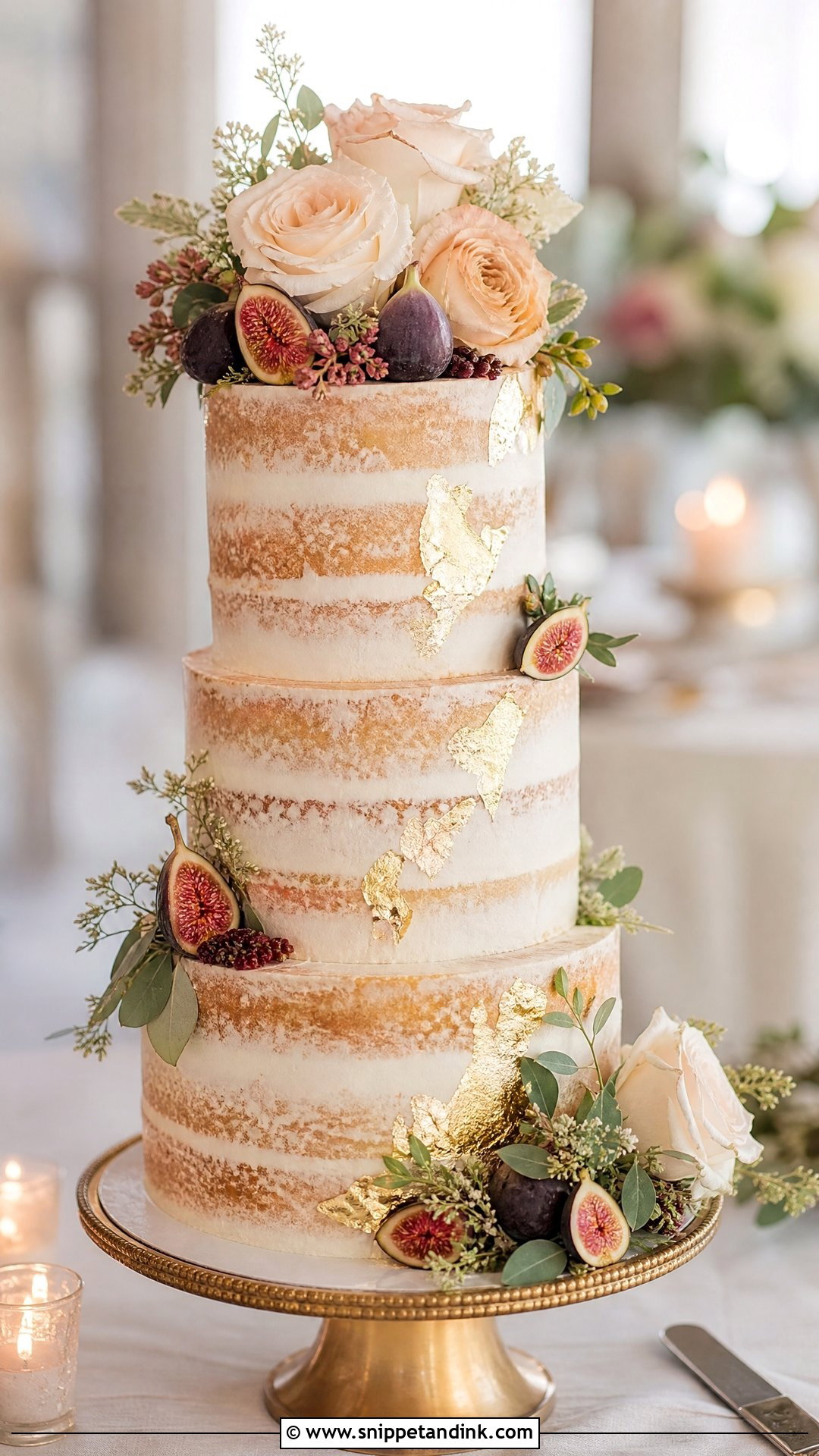
Edible gold leaf adds a formal note without losing the relaxed style. I lay small pieces along frosting edges, on the top tier or near flower clusters, using tweezers or a dry brush, because it sticks to warm fingers and tears. Sparing is the rule: too much gold hides the softness of the sponge. Ivory buttercream, white flowers, champagne roses or figs balance it, and it catches warm reception lighting well. Use leaf sold as edible, not craft leaf.

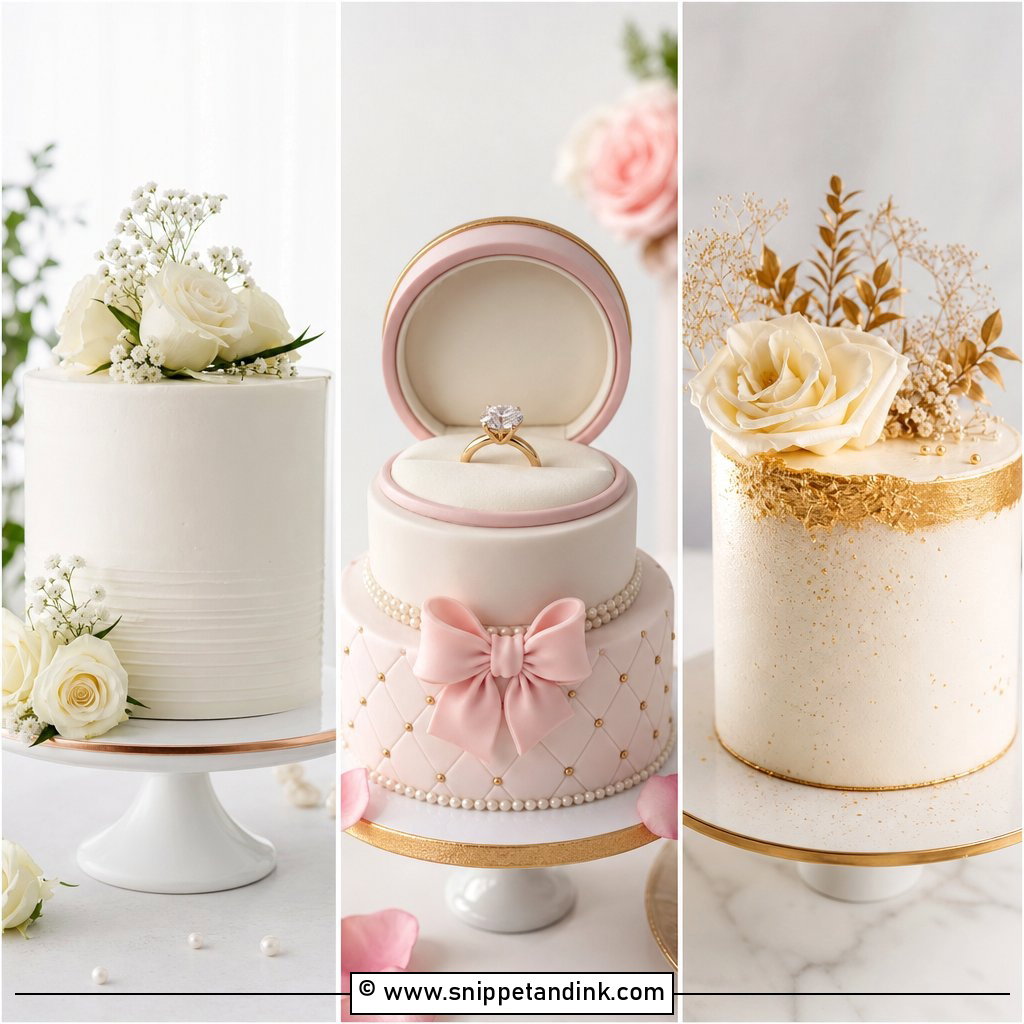


20. Naked Wedding Cake With Pressed Flowers
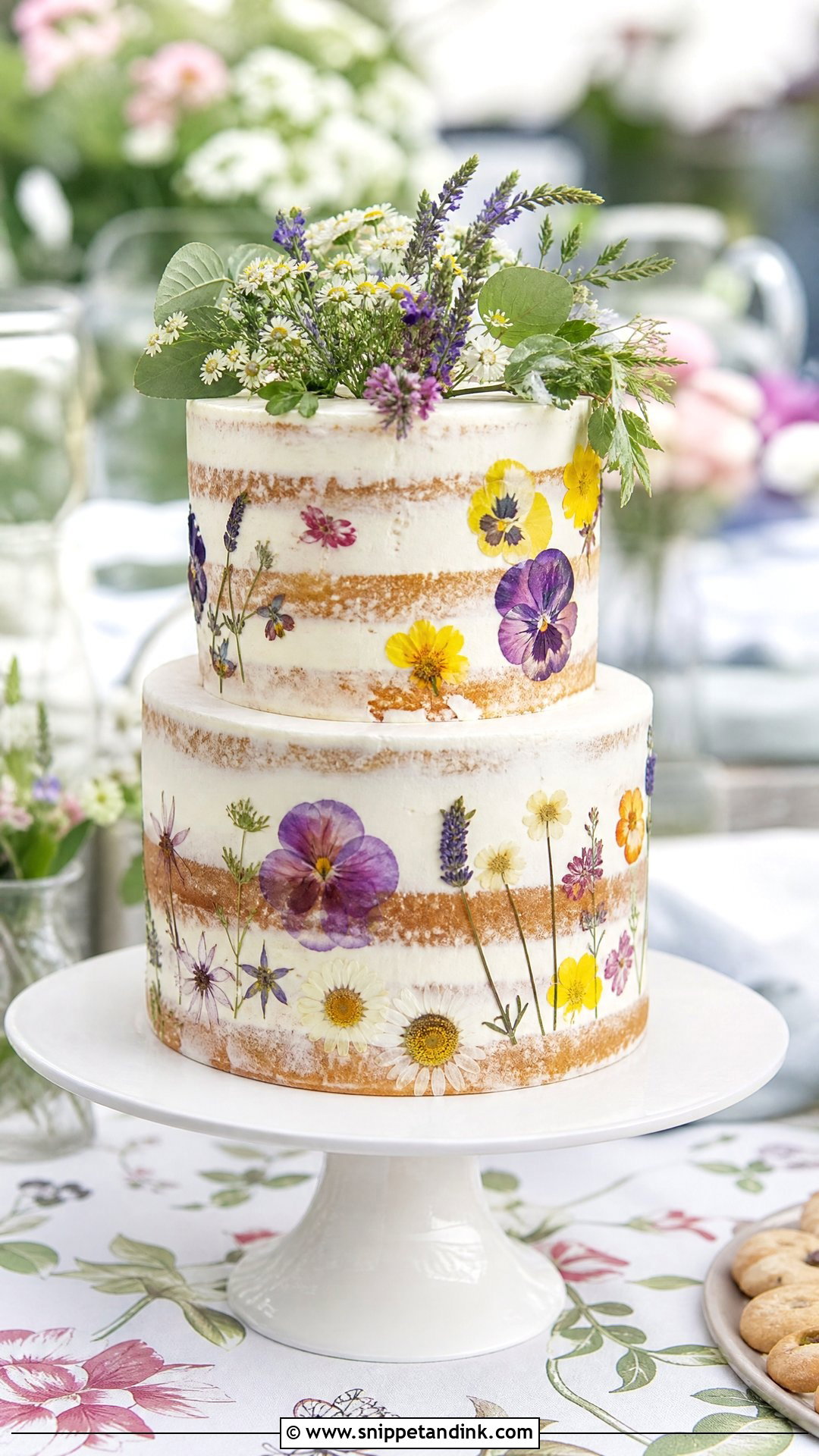
Pressed edible flowers lie flat, so they suit a thin semi-naked finish and give a botanical, hand-painted effect. Pansies, violas, calendula petals and other small edible blooms can form a pattern around the tiers. I press them against the buttercream while it’s still slightly tacky so they stay put. Keep the colours tied to the wedding palette. Because the decoration is so light, the layers and filling remain the focus, which is the point of a naked cake. It suits spring and garden venues.
21. Naked Wedding Cake With Macarons
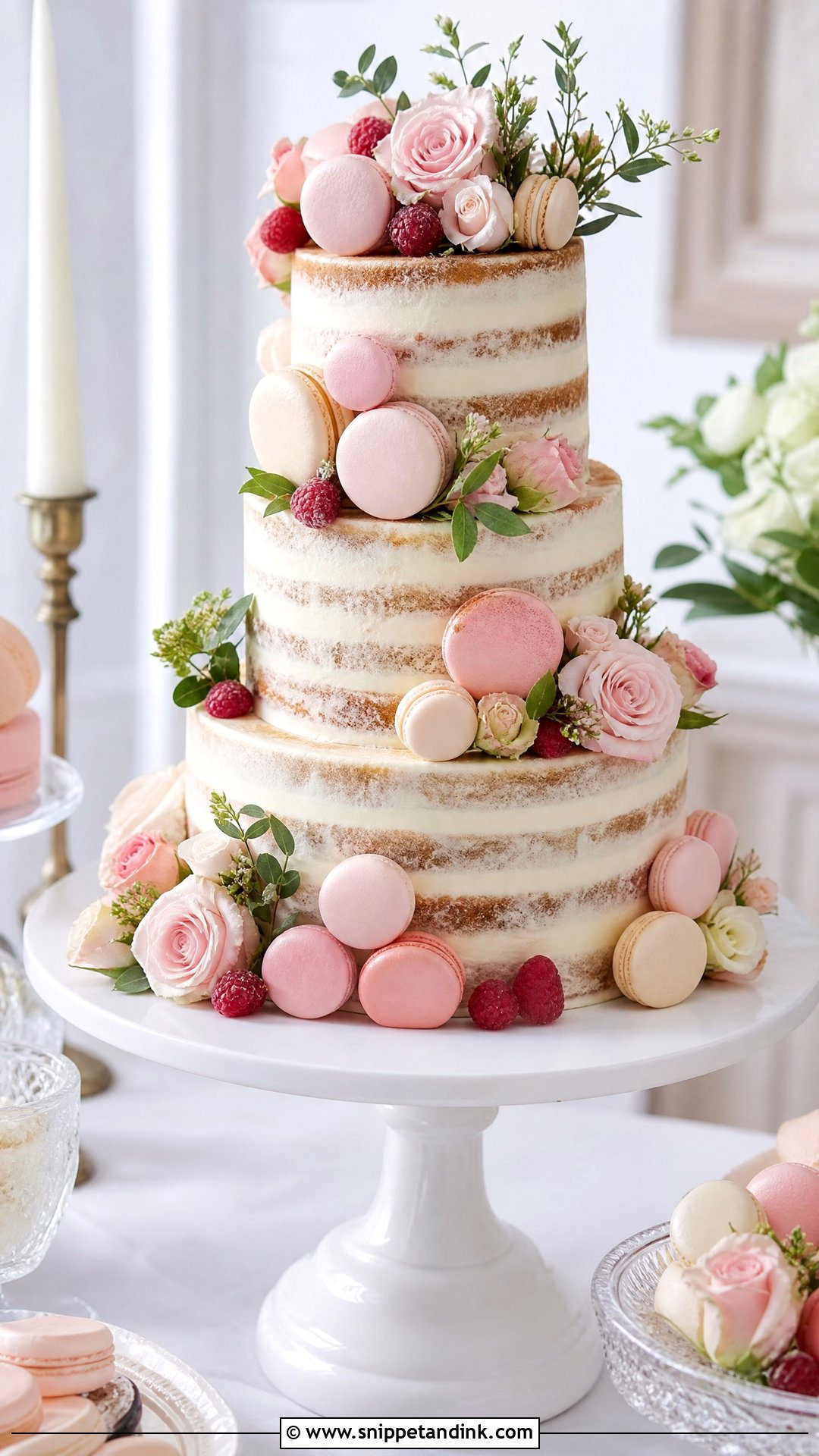
Macarons bring colour and a little height without covering the cake. I pick shells in shades that match the flowers, blush, ivory, sage, lavender or pale peach, and group them with berries or blooms. One practical note: macarons soften once they sit against moist buttercream for a few hours, so I attach them at set-up rather than the day before. Vanilla, almond, lemon or raspberry sponge suits them, under a semi-naked finish.
22. Naked Wedding Cake With Succulents
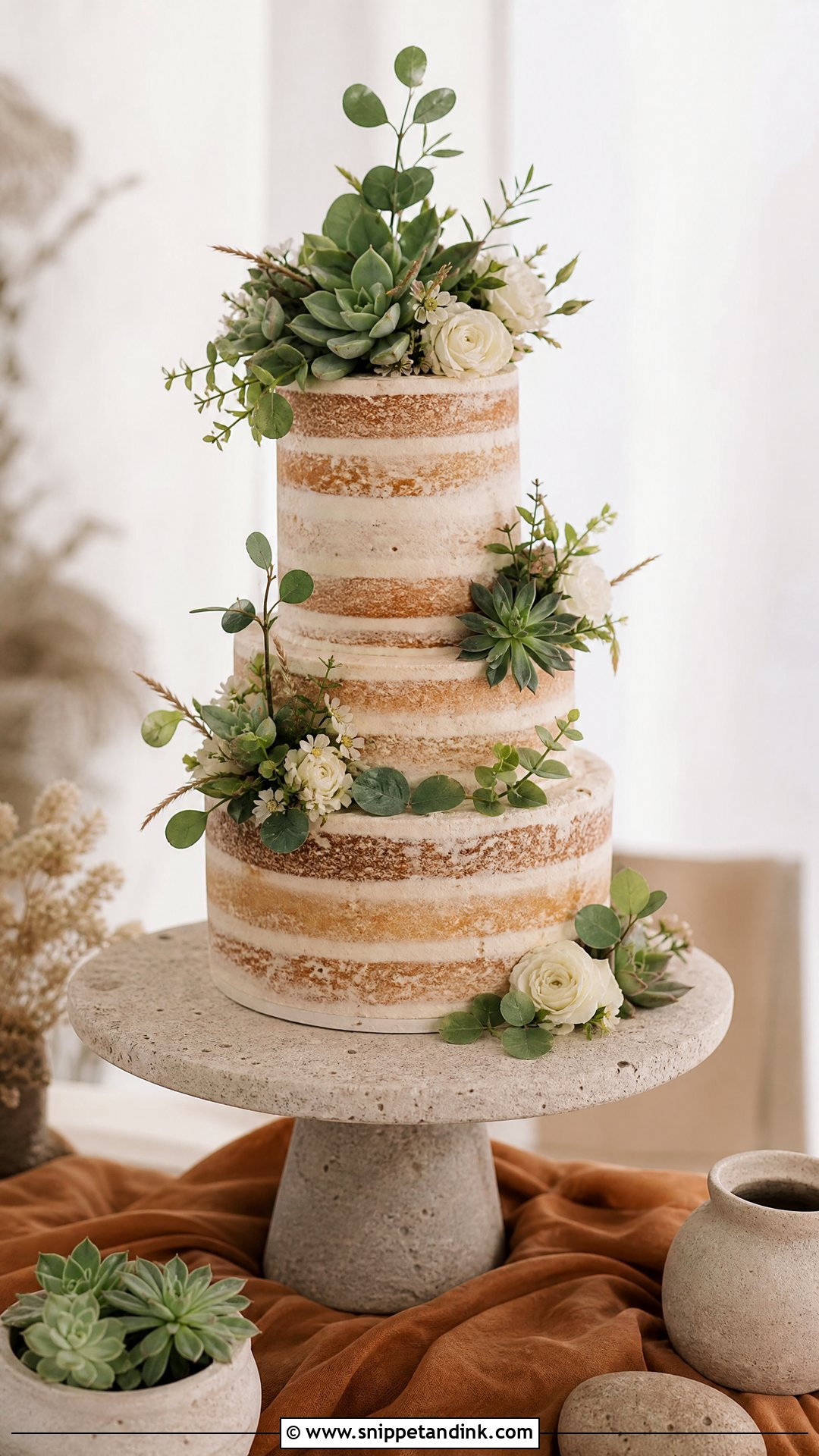
Succulents give structure and a soft green against bare sponge, which suits desert, boho and modern outdoor weddings. Their bold shape means a little goes a long way: one cluster on top and a few near the lower tier. They’re decorative only, so I clean the roots and soil off thoroughly and set each one on a small barrier or pick. Ivory buttercream and warm vanilla or almond sponge, with a few small flowers for softness, and a stone, clay or wood stand finish it.
23. Naked Wedding Cake With Peonies
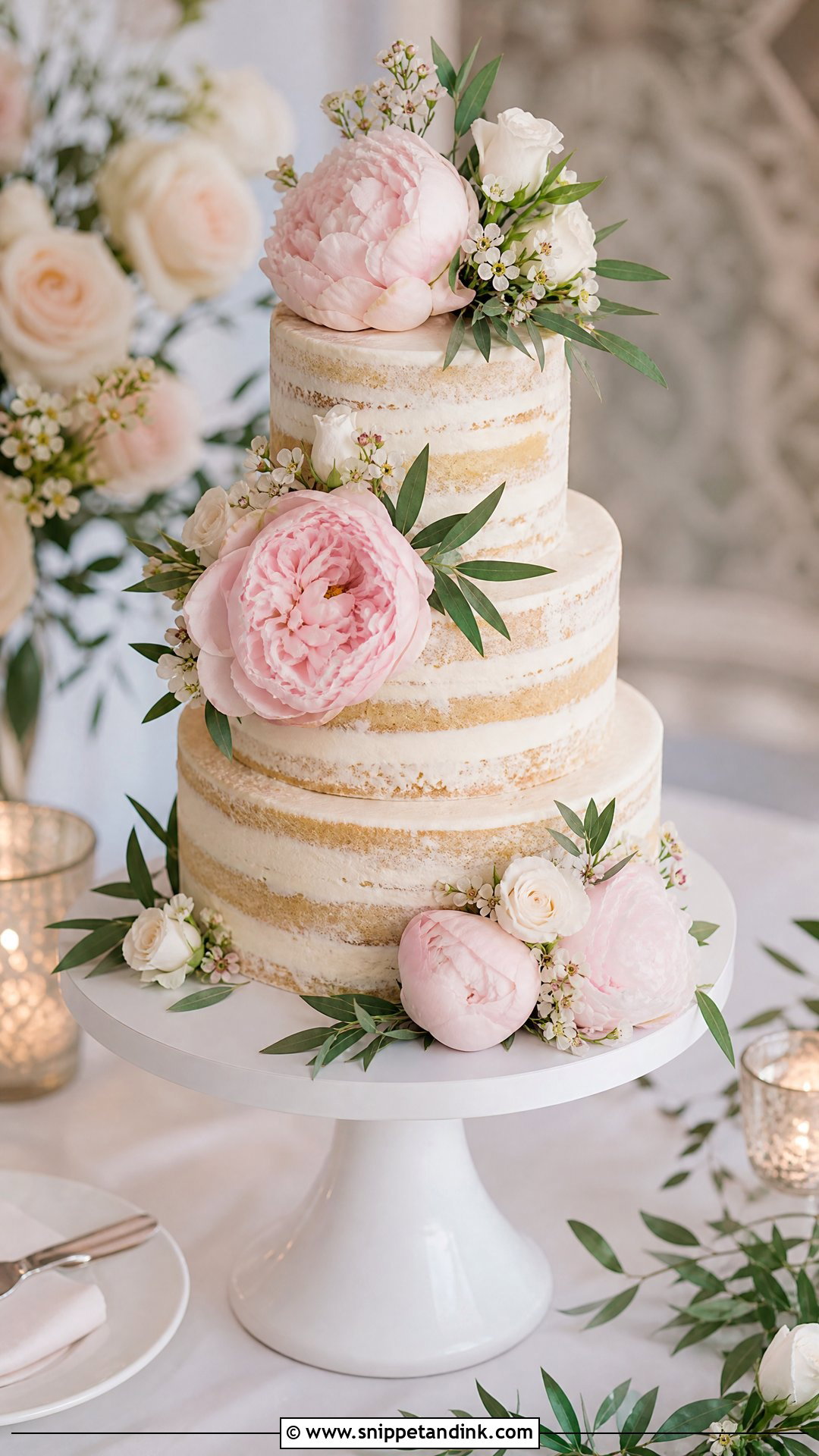
A few peonies can make a simple cake look full, because each bloom is so large. They belong to late spring and early summer, in blush, ivory, coral or pink. Peonies also open fast in a warm room. I use them just before full bloom so they’re at their best at the cutting, not drooping by the speeches. Vanilla, almond, champagne or lemon sponge suits them. Keep the rest simple: a few leaves and a little filler.
24. Naked Wedding Cake With Mocha Layers
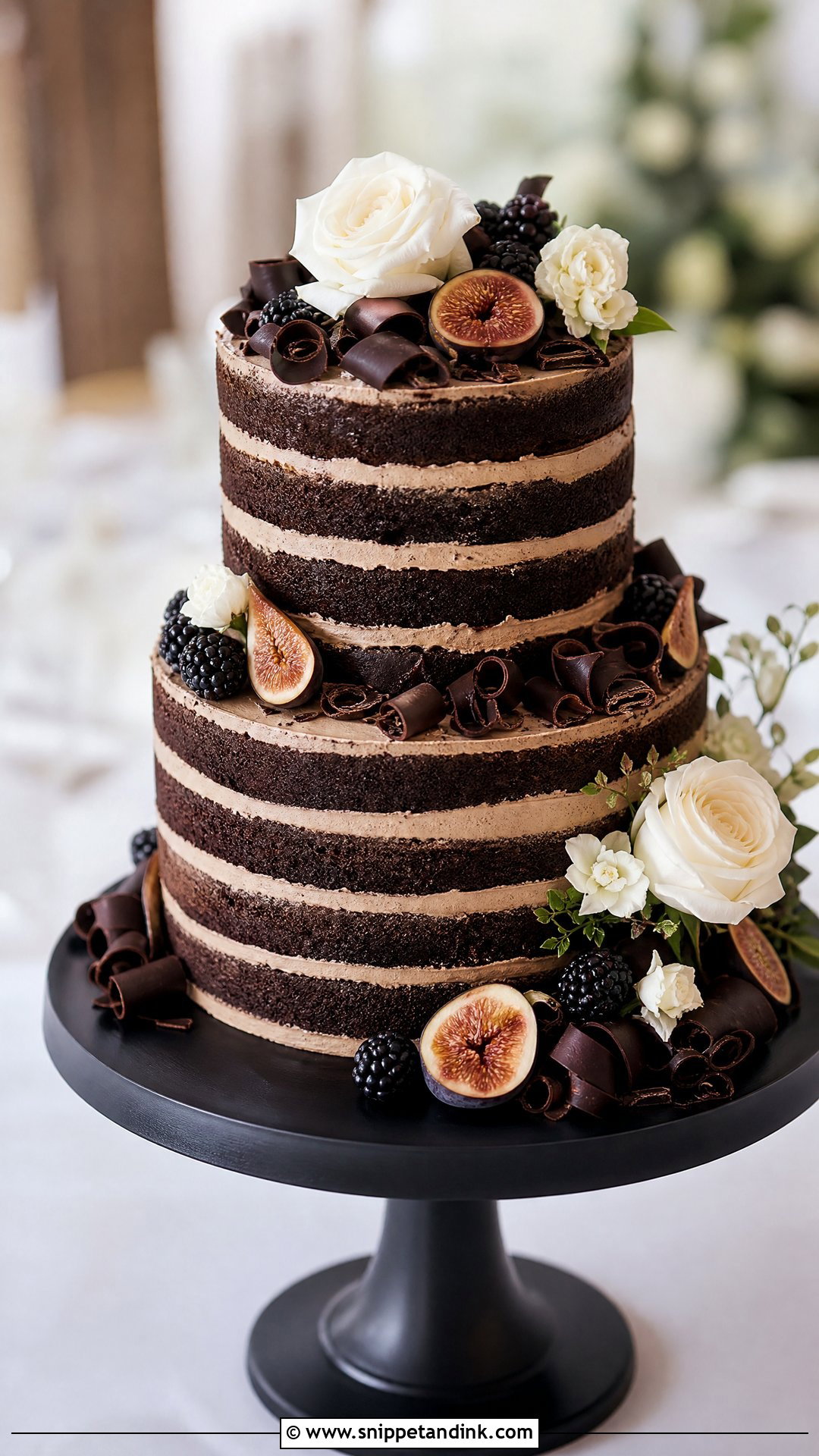
Chocolate or coffee sponge looks dramatic with its layers exposed, especially against light buttercream or espresso cream. Dark sponge also shows crumbs and a dry edge more than vanilla does, so I trim and brush the layers with syrup carefully. Chocolate curls, berries, figs or ivory flowers keep it looking refined. A semi-naked finish softens the contrast while still showing the colour. It suits evening weddings and indoor receptions.



25. Naked Wedding Cake With Lemon Layers
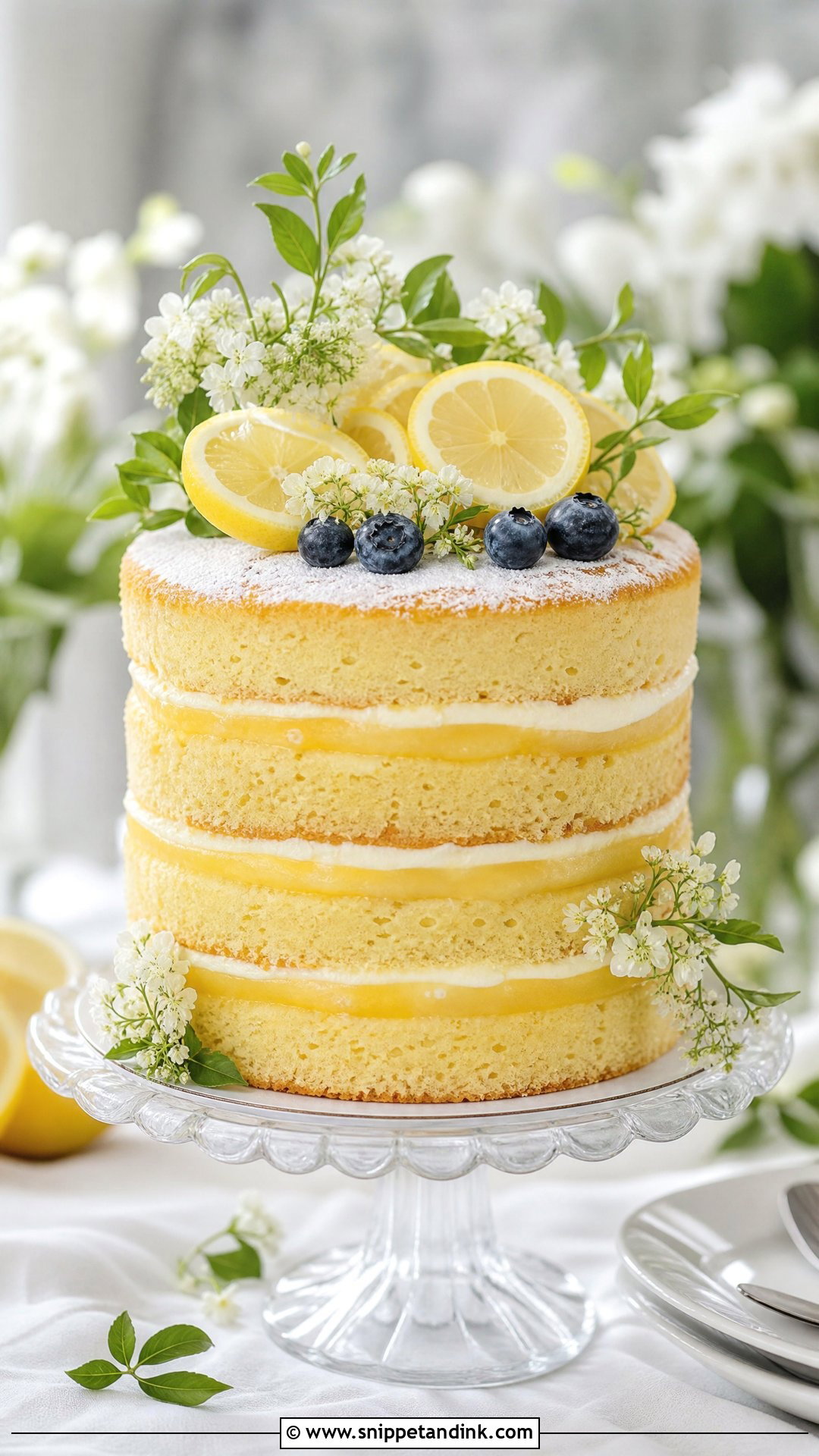
Lemon is the brightest naked cake on the list: pale yellow sponge, lemon curd filling and a soft vanilla or cream cheese frosting. Curd is softer than buttercream, though, so I pipe a firm buttercream dam around each layer to stop it squeezing out under the weight of the tier above. Lemon slices, blueberries, white flowers or small greenery keep the finish fresh. Keep the frosting thin. A white pedestal or clear glass stand suits spring, summer and coastal weddings.
Flowers and Fruit That Shouldn’t Touch the Sponge
Most flowers from a florist are grown for looks, not eating, and many have been treated with pesticides. On an iced cake there’s a layer of frosting between them and the crumb. On a naked cake there isn’t, so the rules matter more.
- Keep these off cakes entirely: lily of the valley, hydrangea, foxglove, sweet pea, daffodil and oleander.
- Baby’s breath and eucalyptus are popular but not edible, so they sit on a barrier and come off before cutting.
- Wrap every stem in floral tape or set it in a food-safe pick before it goes into a tier.
- Edible flowers such as pansies, violas, calendula and roses should come from a grower who sells them for food.
Worth asking at your tasting
Ask who supplies and places the flowers, the florist or the baker, because that decides who is responsible for wrapping them. Ask when the cake will be assembled on the day, how it travels, and whether the venue has a cool spot to hold it. And ask to see a cut slice of a naked sponge that has been out for a few hours, if they can. It tells you more than any photo.
A Naked Cake Should Look Fresh, Never Unfinished
The reason this style keeps its popularity is that the sponge, filling and decoration are the design. Flowers, berries, gold leaf, citrus, figs, greenery or a thin swipe of buttercream can all suit a barn, a garden or a city loft. What they all need is even layers, a moist crumb and decorations that are safe and placed with intent. Choose flavours that match the season, decorations that echo your flowers, and a stand that suits the table, then trust your baker on timing.
You'll Like These Ideas:












Leave a Reply