
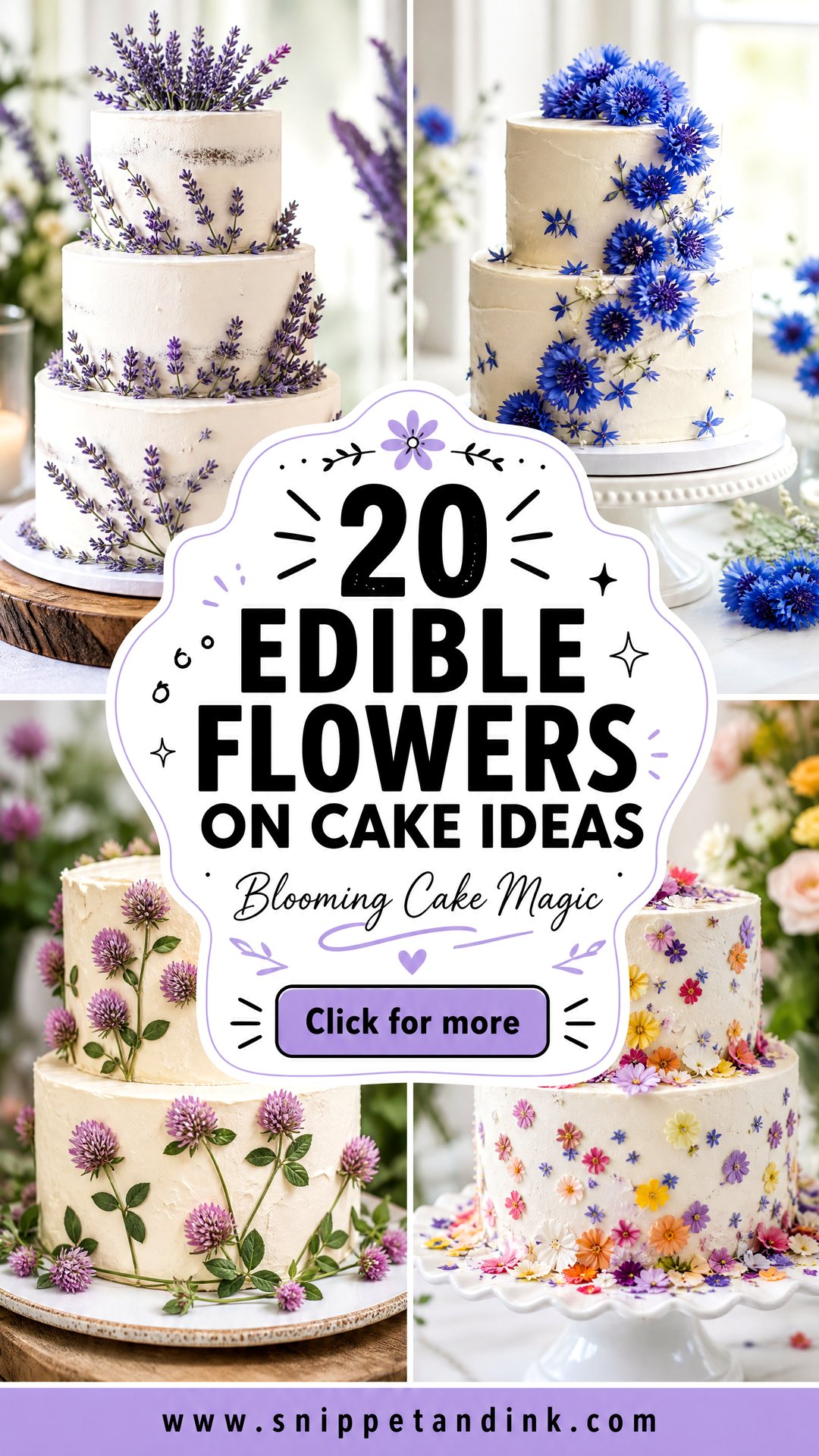
Flowers you can actually eat give a wedding cake a softness that sugar flowers rarely match, as long as they’re used with restraint. The cakes below range from pressed petals laid flat like a botanical print to whole blooms cascading down one side and tiny petals scattered like confetti. The flowers I reach for most are pansies, violas, roses, calendula, lavender, chamomile, cornflowers and nasturtiums, chosen to echo the couple’s palette. Every one of them has to be grown for eating, not bought from a florist’s bucket, and each behaves differently once it touches frosting. I’ve noted those quirks under each idea.
Florist Stems and Food-Grown Blooms Are Not the Same Thing
The first conversation I have about a flower-topped cake is about where the flowers come from. Florist flowers are grown to look good in a vase, and many are sprayed with pesticides or preservatives that were never meant to touch food. Even a rose that is edible in principle isn’t safe if it came from the bouquet supplier. The flowers on your cake should come from a grower who sells them for eating, or from a garden you know hasn’t been sprayed.
Some popular wedding flowers should never touch frosting or anything else people will eat:
- Lily of the valley and foxglove, which are toxic
- Hydrangea and sweet pea, both popular with couples and both unsafe to eat
- Baby’s breath, which is often used on cakes but isn’t a food flower
- Any flower dyed, glittered or sprayed for shine
If you want a florist flower that is merely decorative, not toxic, on the cake to match your bouquet, it needs to sit on a barrier, like a small disc of parchment or a food-safe holder, and be removed before cutting. Edible flower growers often need ordering a week or two ahead, and some varieties are only available in season, so mention them at your first tasting.
1. Pressed Flower Wedding Cake
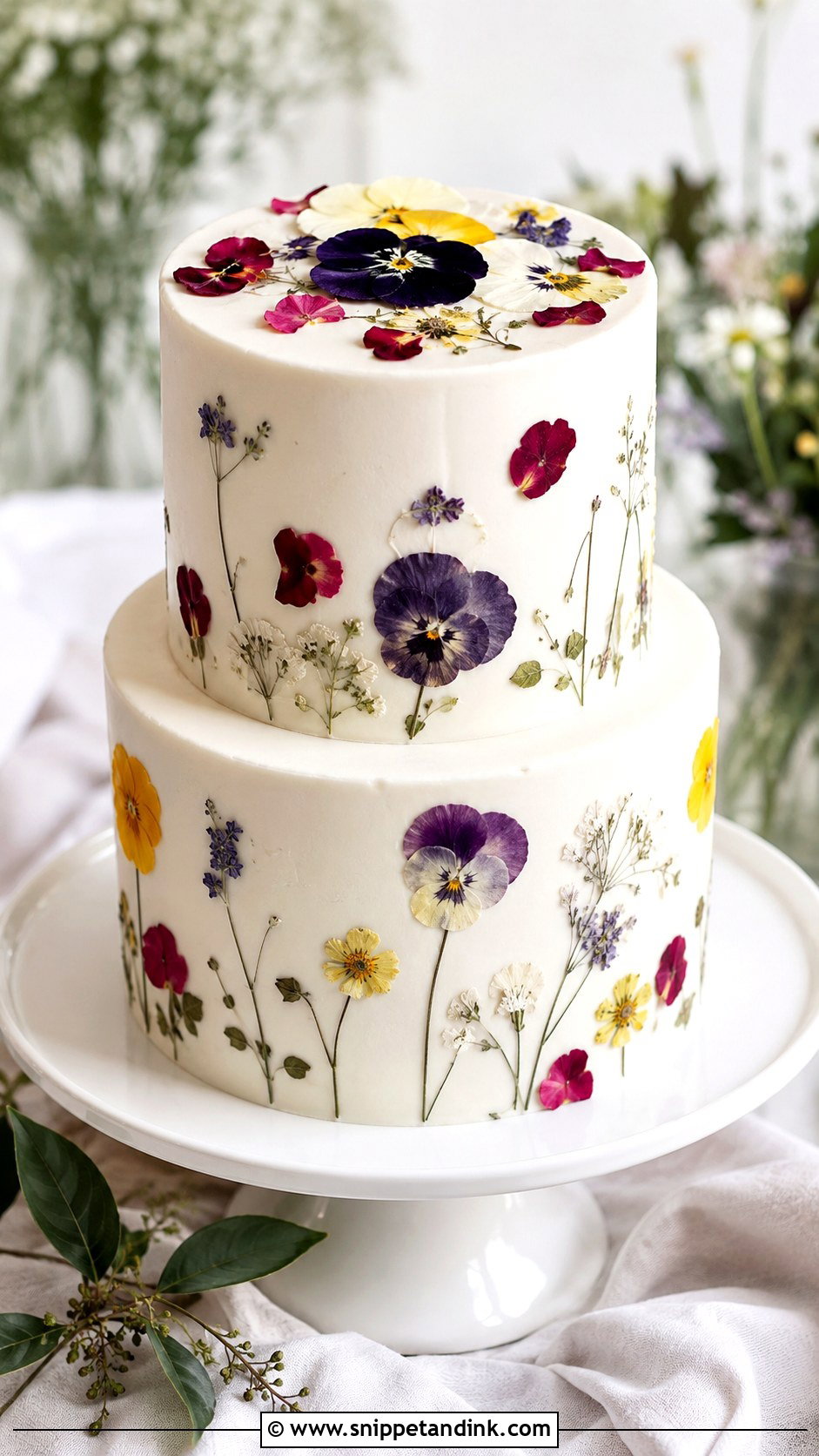
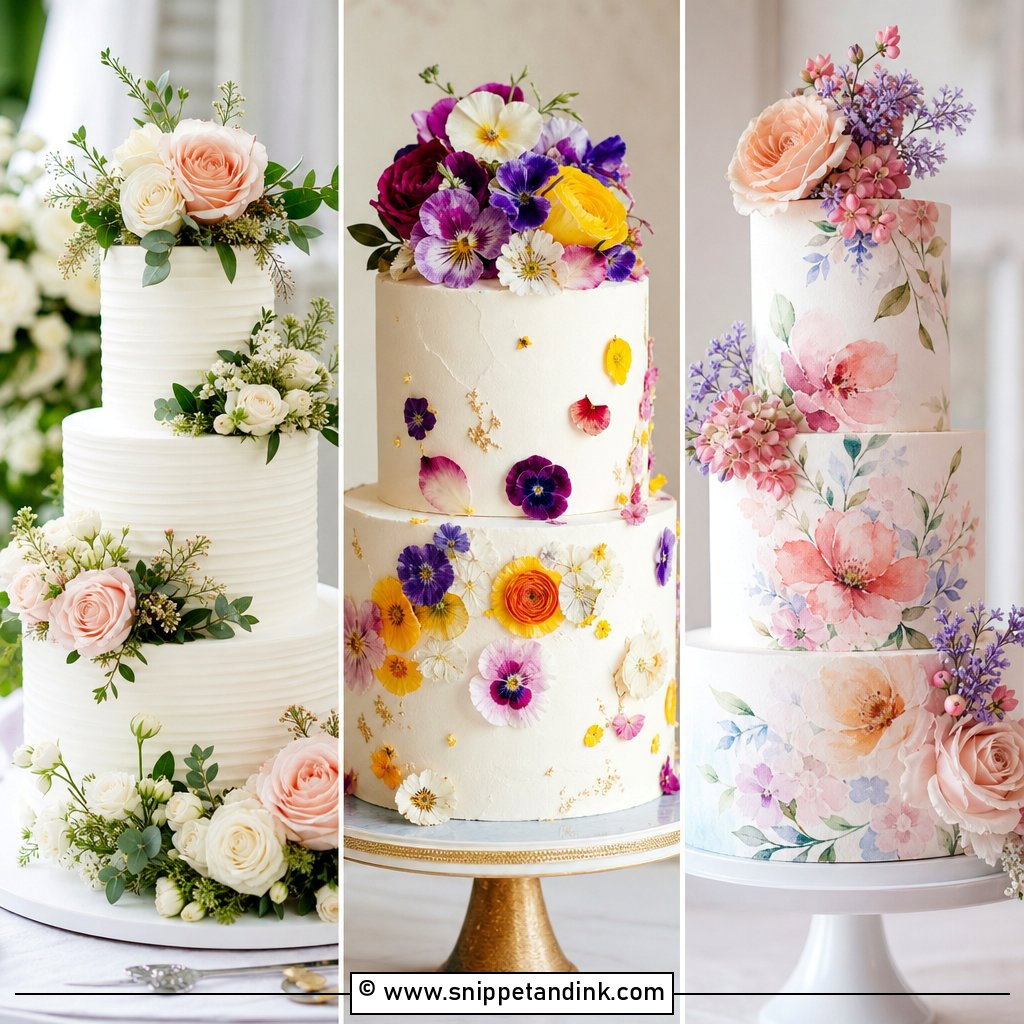
A pressed flower wedding cake is the one I can decorate furthest ahead, which makes it a calm choice for a busy wedding week. Pressed petals are dry, so they don’t wilt, and on fondant they hold with a brush of water or edible glue. On buttercream I chill the cake first and press each petal on lightly, or the frosting smears around the edges. Pansies, violas, rose petals and cornflowers all press well. It suits one or two tiers and tall mini cakes, where a big floral topper would look heavy. I set the larger blooms near the base and let smaller ones drift upward.
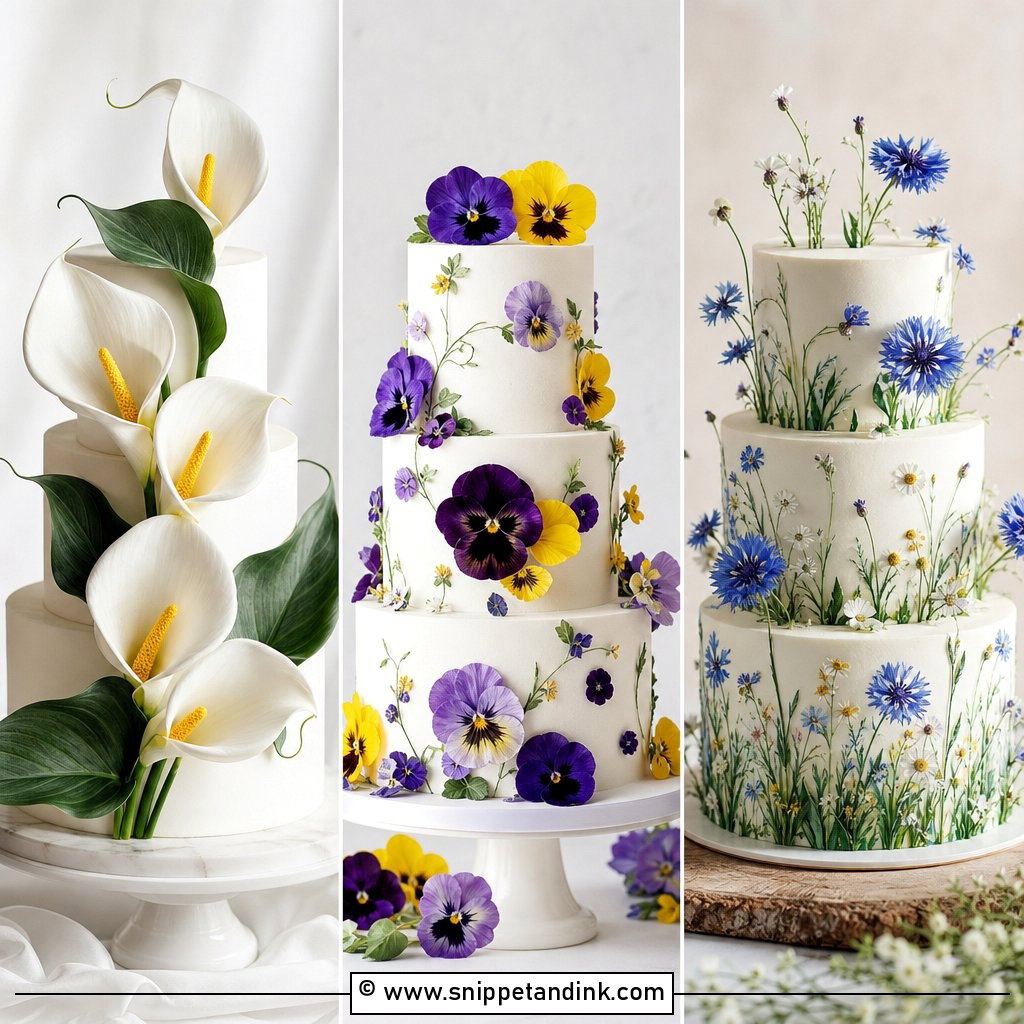
2. Pansy Wedding Cake
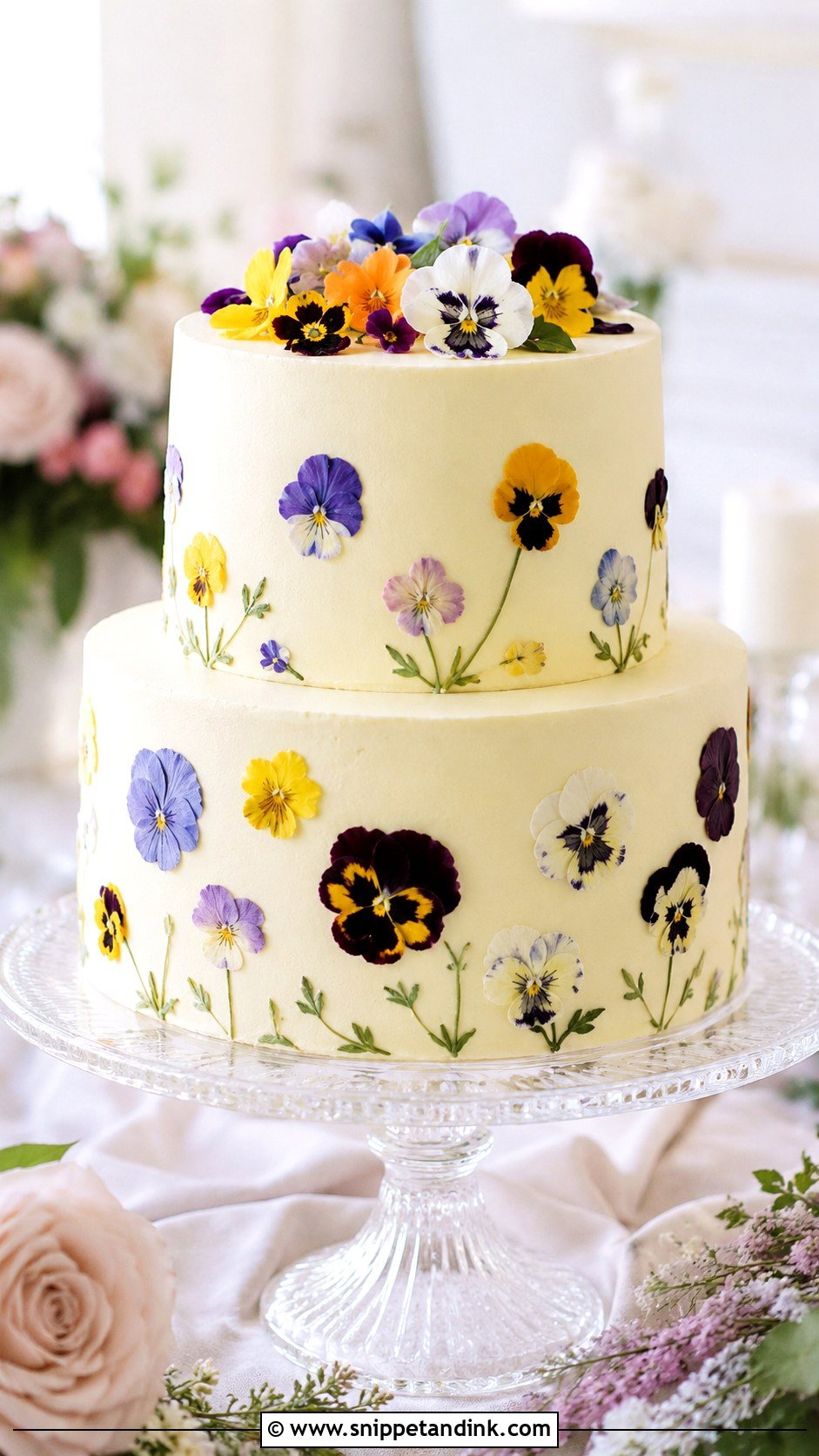
Pansies have faces, which is why guests lean in to look at them. A pansy wedding cake suits spring weddings, garden receptions and brunches, in pale yellow, lavender, white, peach or deep purple. Because they’re flat and light, they sit neatly on smooth buttercream, press well onto the sides and can ring the top tier like a crown. Fresh pansies soften within a few hours once out of the fridge, so I place them as late as I can. A vanilla, lemon or almond sponge lets their mild, slightly grassy taste go unnoticed.
3. Viola Wedding Cake
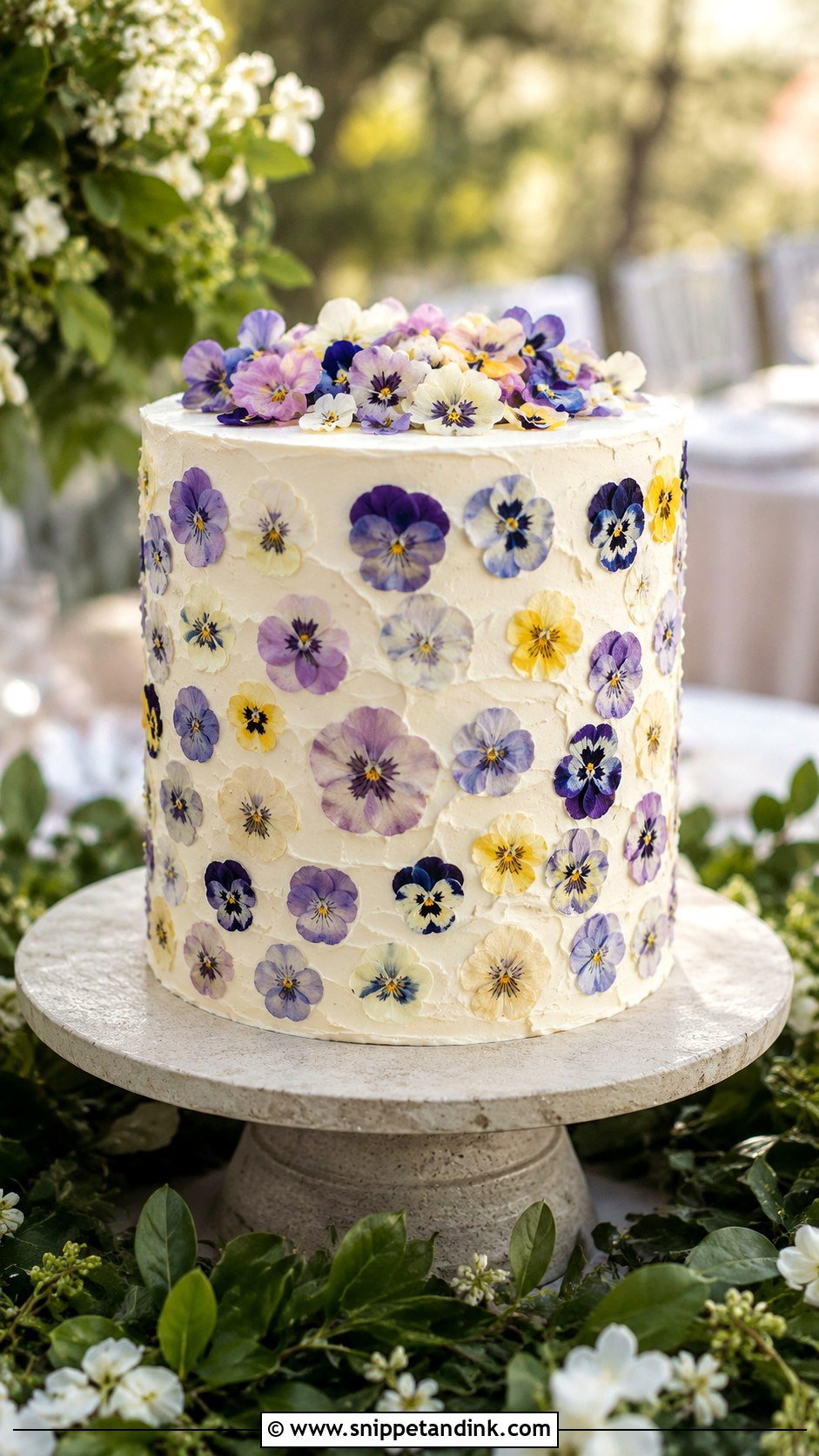
Violas are the small cousins of pansies, and their size is the point: you can cover a whole tier without it looking cluttered. I use them as a light sprinkle, in curved lines that follow the tier, or pressed in for a watercolour effect. Lavender, blue, cream and gold violas look like a garden border. One warning: dark violas can bleed a little colour into Swiss meringue buttercream if they sit on it for hours, so for deep purples I prefer a slightly crusted American buttercream or a chilled surface.
4. Rose Petal Wedding Cake
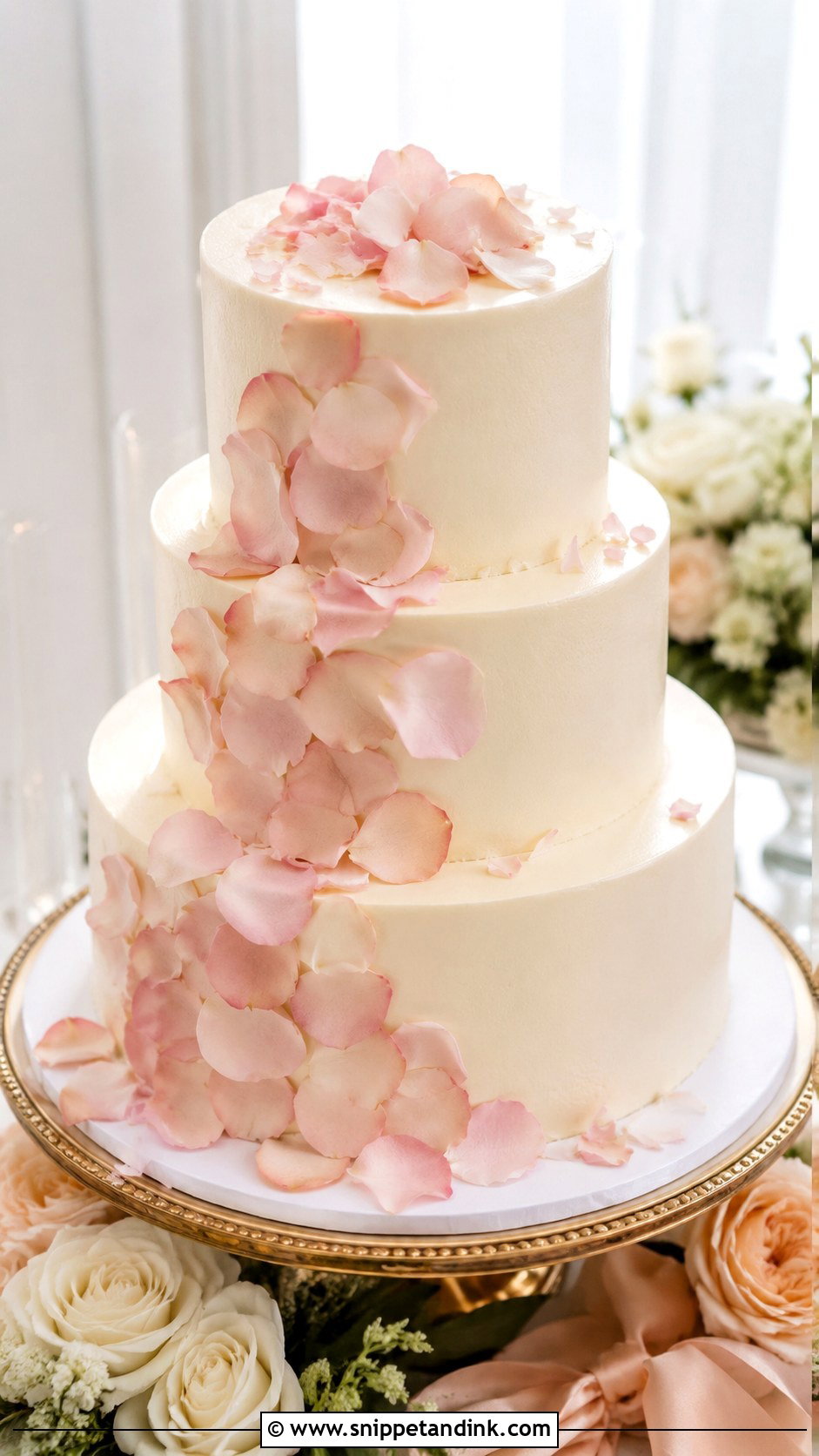
Rose petals give you roses without the weight of a whole flower head, which matters on soft frosting. I scatter them over the top, tuck them between tiers or press them gently into buttercream in overlapping layers. Edges dry and curl within a few hours, so I pick petals from the middle of the flower, where they’re thickest. Blush, ivory, champagne and dusty pink palettes suit it, either sparse for a minimal cake or built into an ombre from the bottom tier up. Vanilla bean, pistachio, raspberry and rosewater all sit well with that faint perfume.
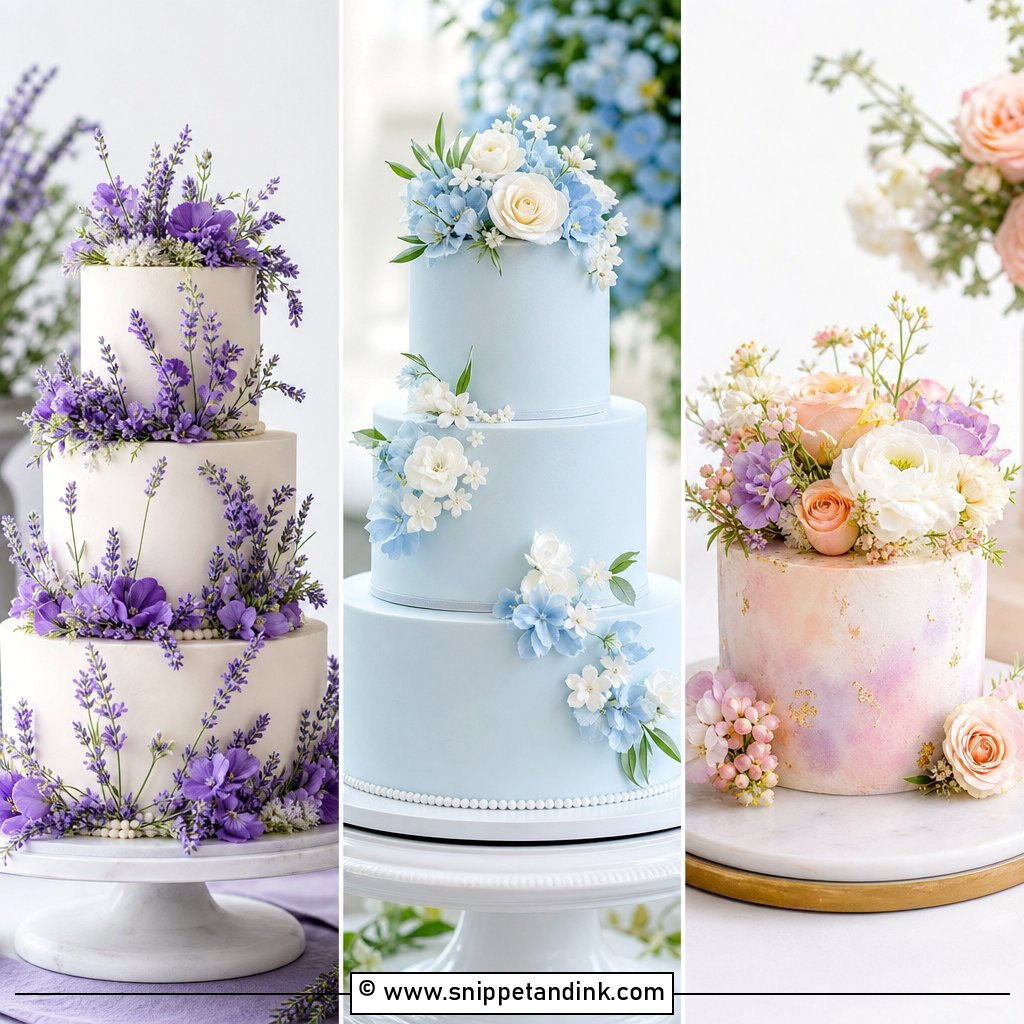
5. Lavender Wedding Cake
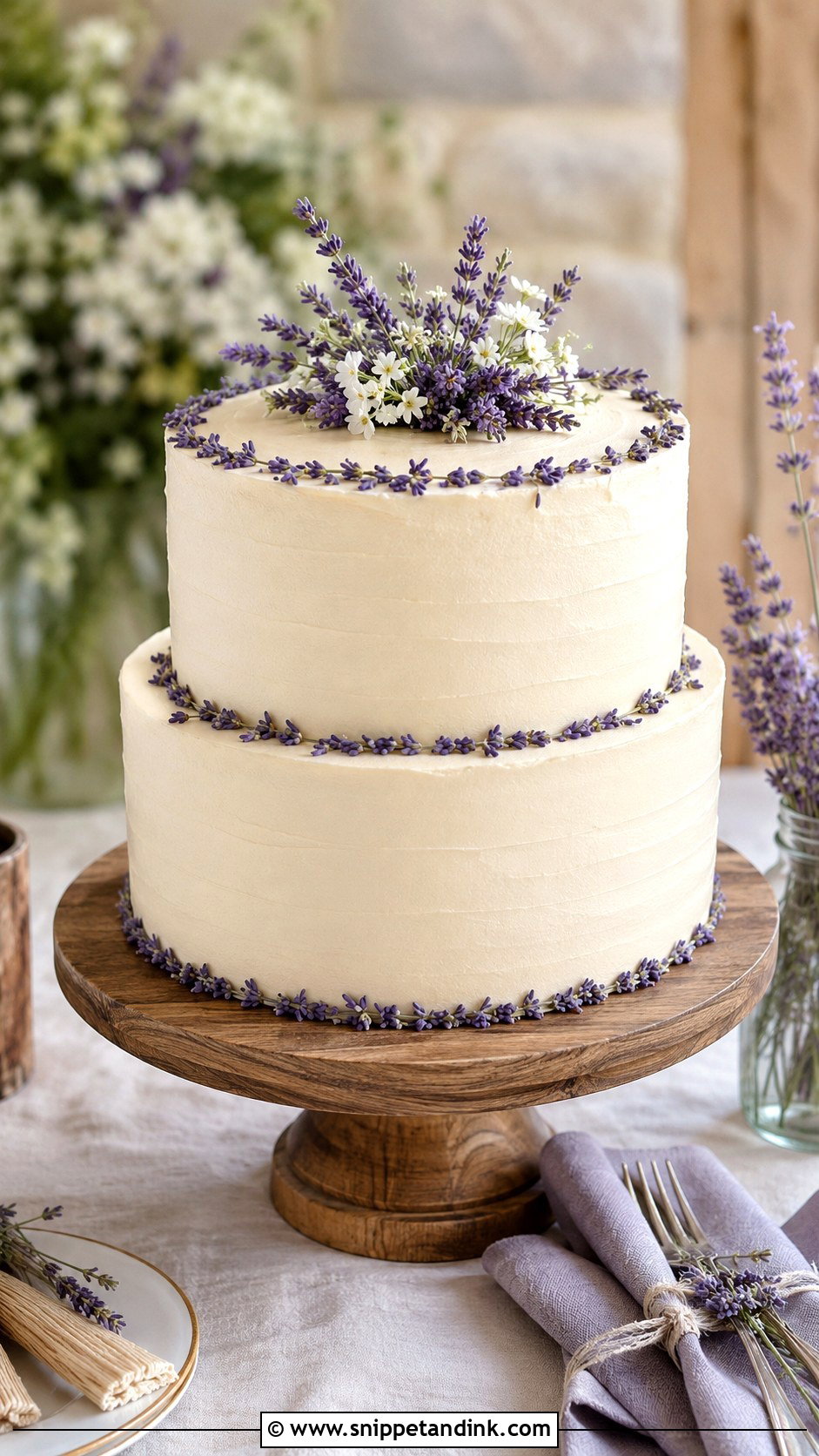
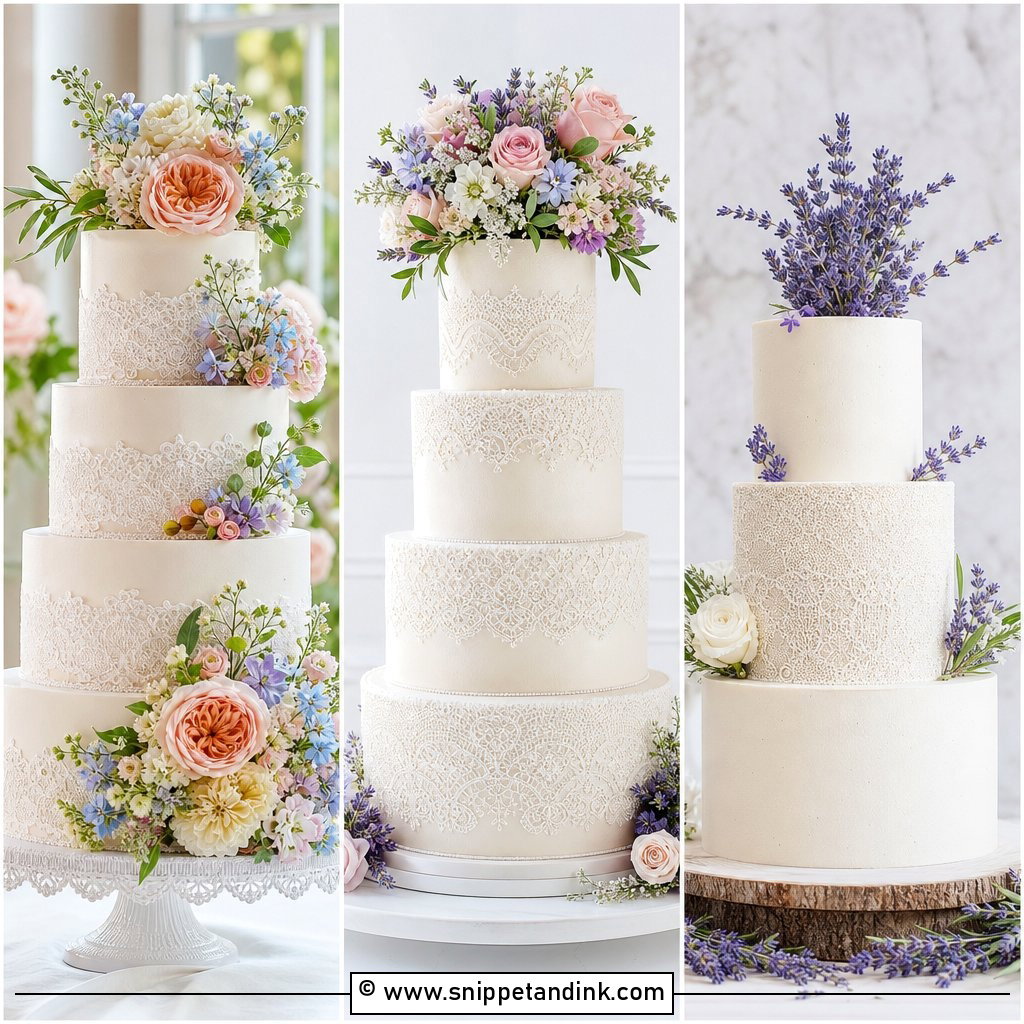
Lavender is strong, so less is far better. I use culinary lavender buds in small amounts on the frosting, around the base or in a tiny topper; too much and the cake tastes of soap. Lemon, honey, vanilla sponge and blueberry filling all match the flavour. A pale ivory buttercream keeps the purple buds visible, and a few edible white flowers add contrast. It suits rustic, garden and countryside weddings, though I’d keep lavender away from the flavour if many guests are children, who often find it too perfumed.
6. Chamomile Wedding Cake
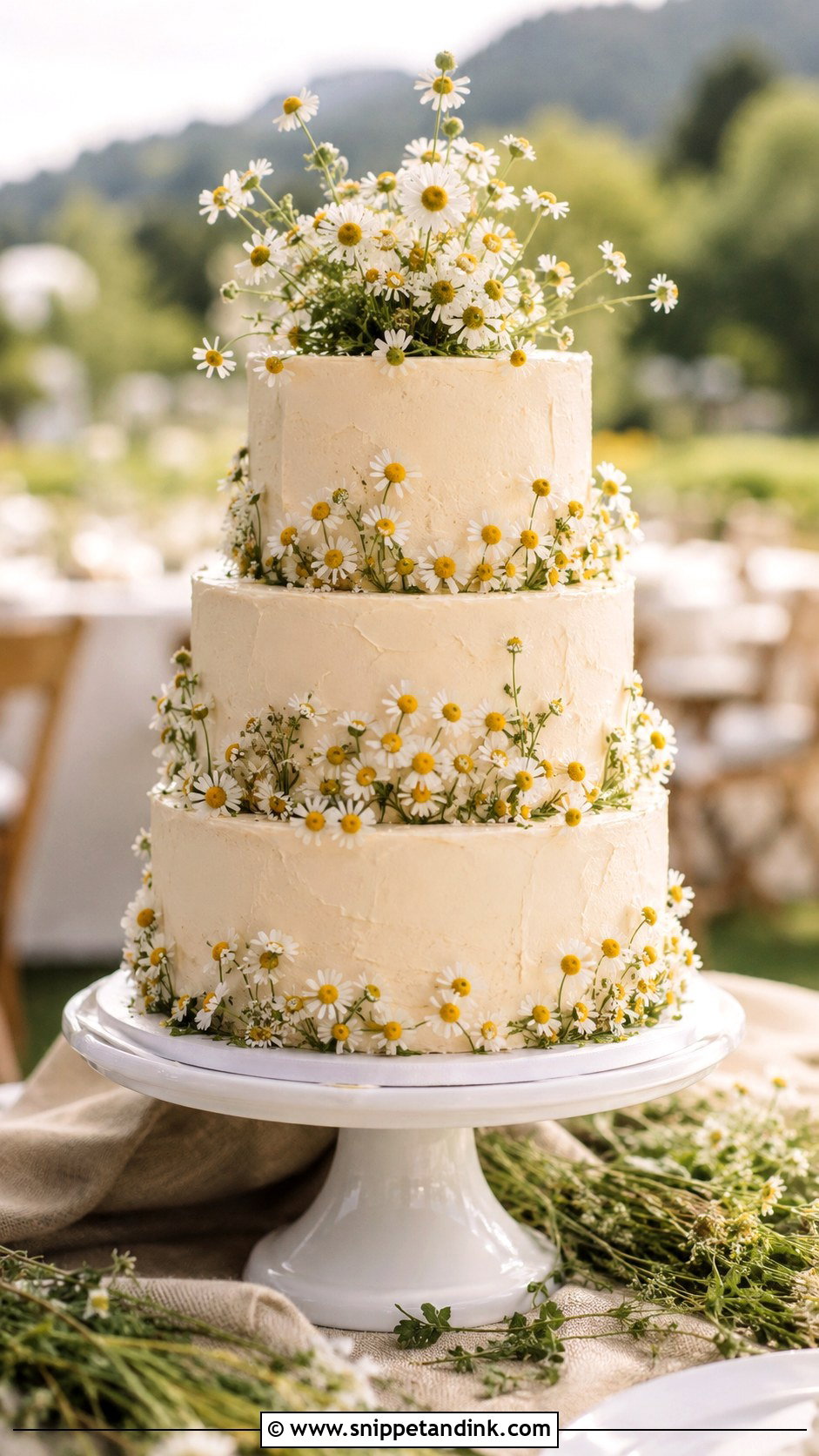
A chamomile wedding cake looks like a summer meadow, with tiny white petals and yellow centres. I scatter them lightly over smooth frosting or cluster them at the base of each tier, where they hide the join between cake and board. Chamomile belongs to the daisy family, so anyone with a ragweed allergy may react to it; I always mention this to couples and suggest a small sign at the cake table. Honey, lemon, vanilla and almond suit it. Keep the frosting white or pale cream, and add mint or lemon balm leaves for green.
7. Calendula Wedding Cake
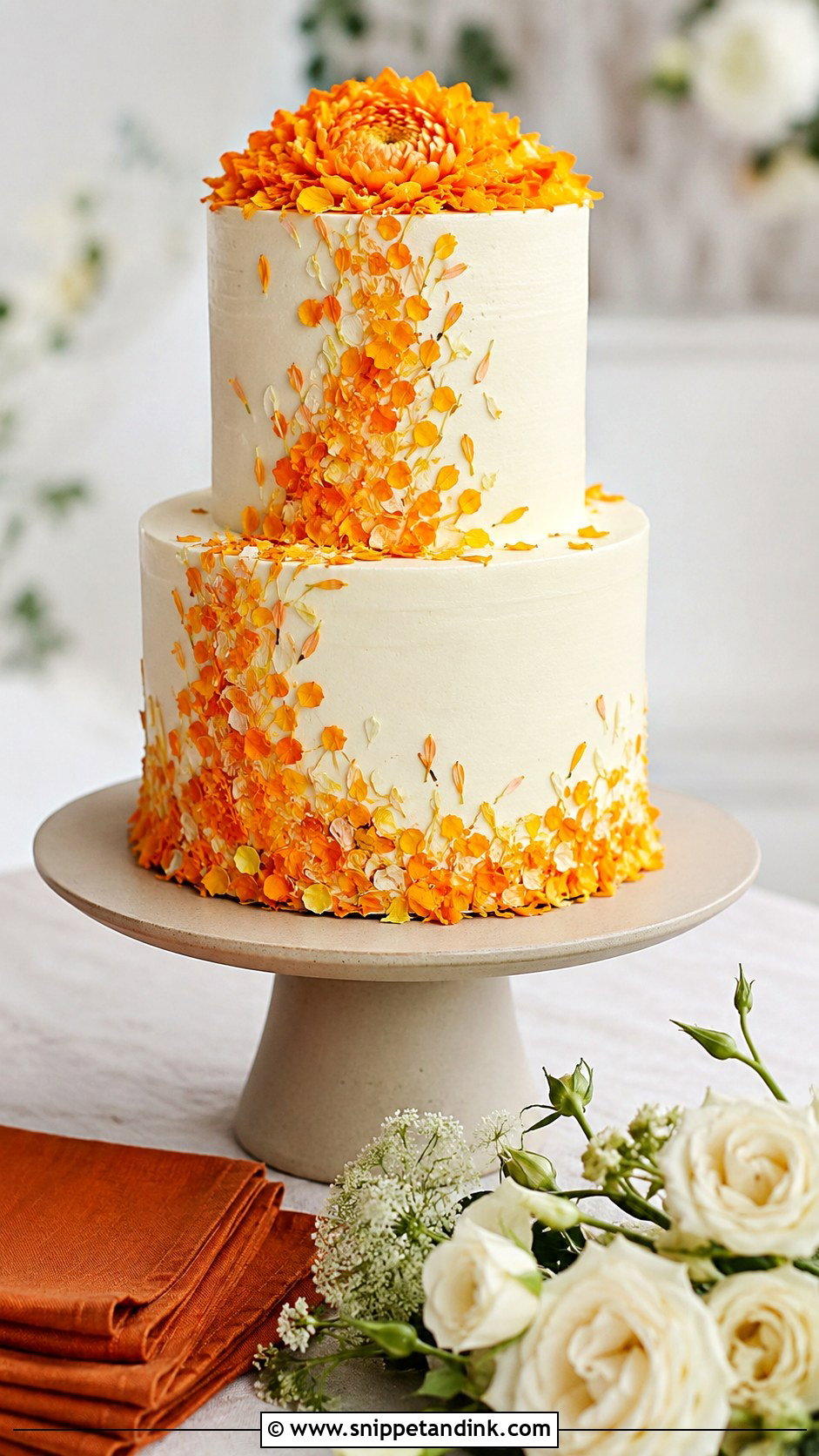
Calendula is sometimes sold as pot marigold, and its petals run from soft yellow to deep orange. I use the petals rather than whole heads, which are bulky and slightly bitter at the base. Scattered over white buttercream, as a border around each tier or as a loose crescent on the front, they suit late summer and early autumn. Citrus, vanilla, carrot and spice cakes match the warmth. I balance the bright orange with ivory frosting, clean edges and a few cream or blush blooms.
8. Cornflower Wedding Cake
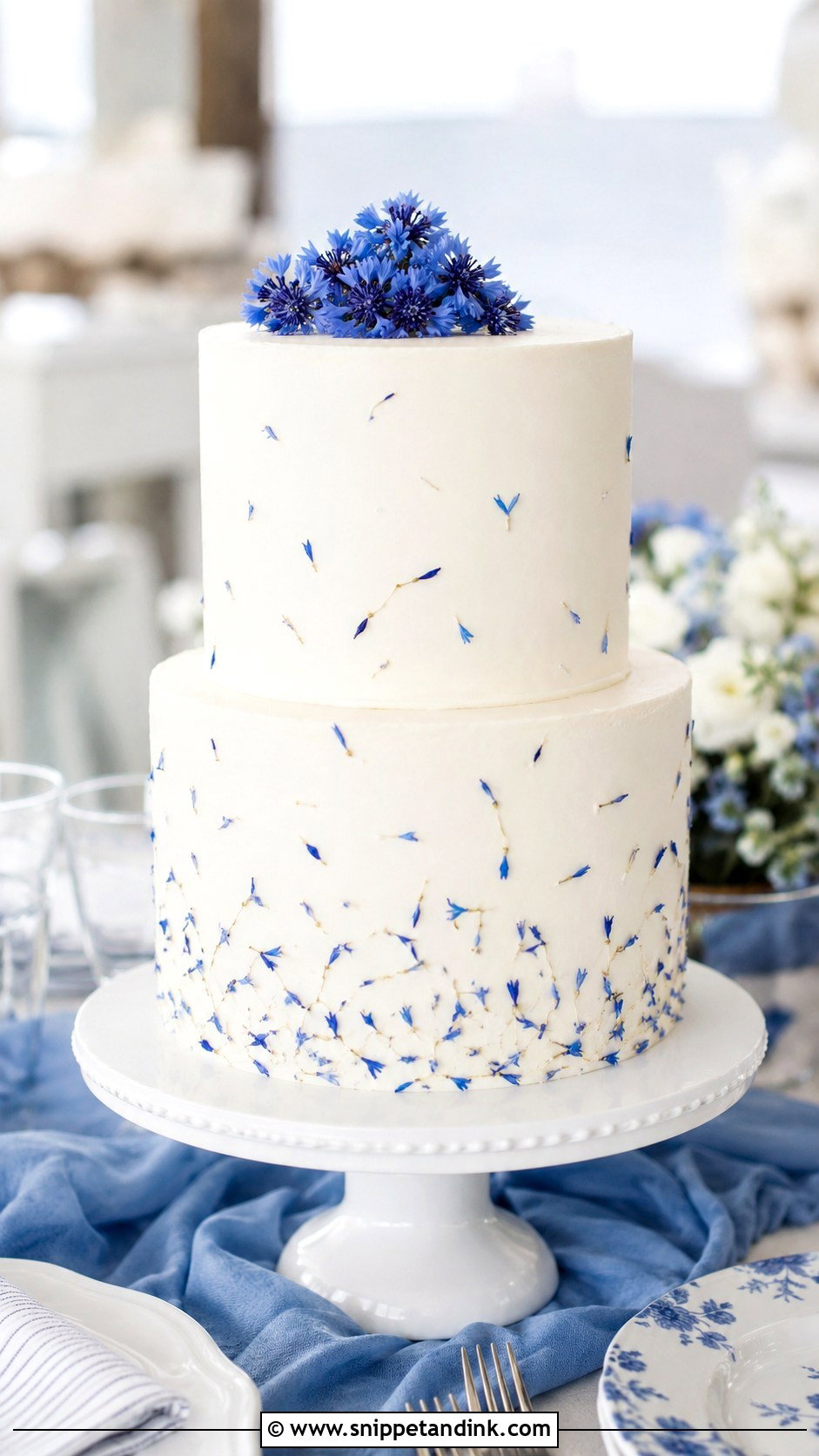
Getting a true blue onto a cake with food colouring is hard; it often turns teal or grey once it meets yellowish butter. A cornflower wedding cake avoids that, because the petals are naturally blue. I scatter them like confetti or grade them in a light ombre over white buttercream, where they show up best. Coastal weddings and blue-and-white palettes suit them. Lemon, vanilla, elderflower and blueberry fillings keep the taste fresh. Tiny white flowers or silver sugar pearls add polish for an evening reception.
9. Nasturtium Wedding Cake
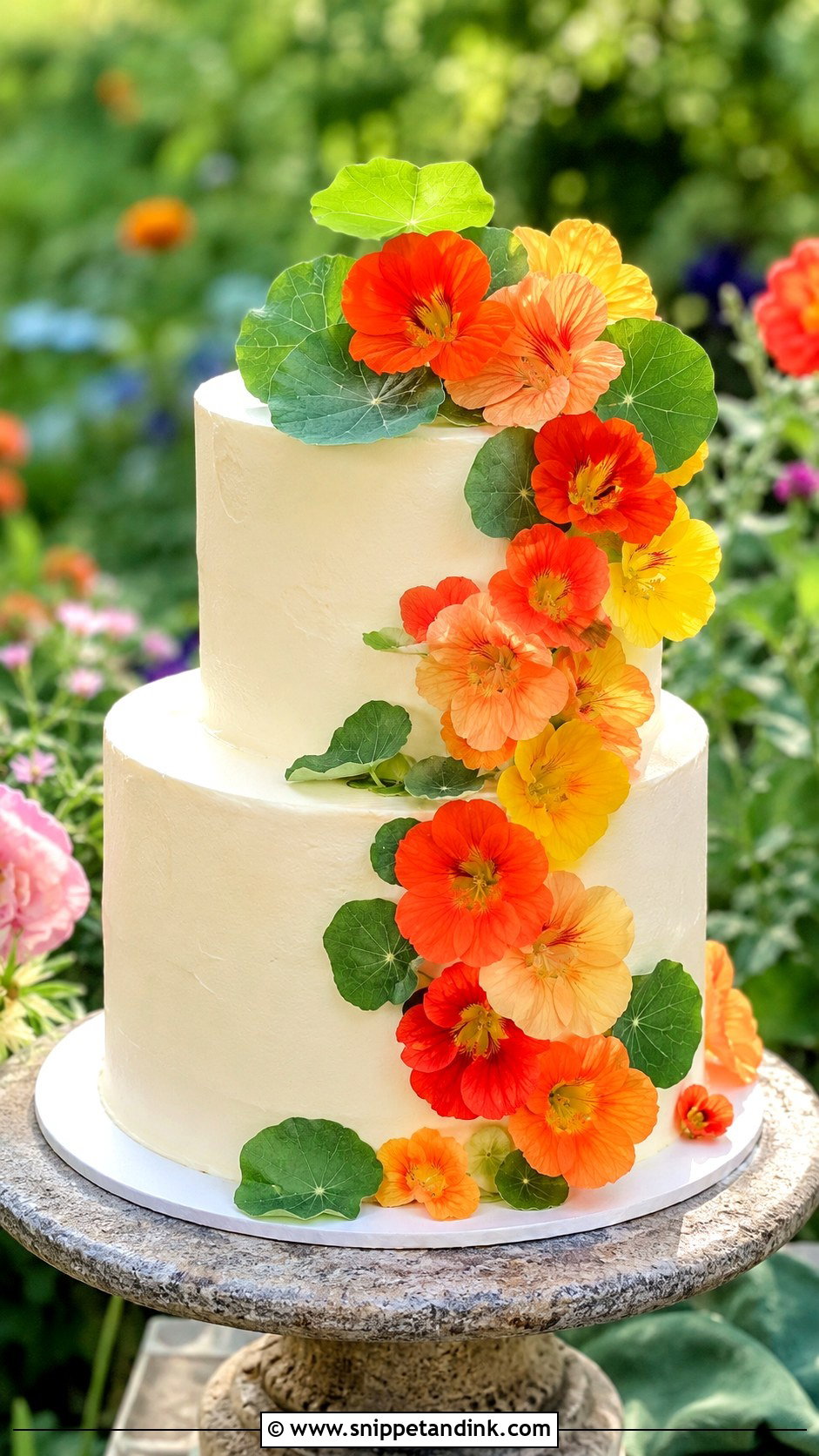
Nasturtiums are the bold one: orange, yellow, peach and red, with a peppery bite. I use them on a clean buttercream finish, placing whole blooms down one side in a loose cascade with a few of their round leaves for movement. They wilt faster than most edible flowers, so they go on at the venue, not at my kitchen. Citrus cake, herb-infused fillings and carrot cake stand up to their spice. They suit colourful weddings and couples who want something less traditional.
10. Marigold Wedding Cake
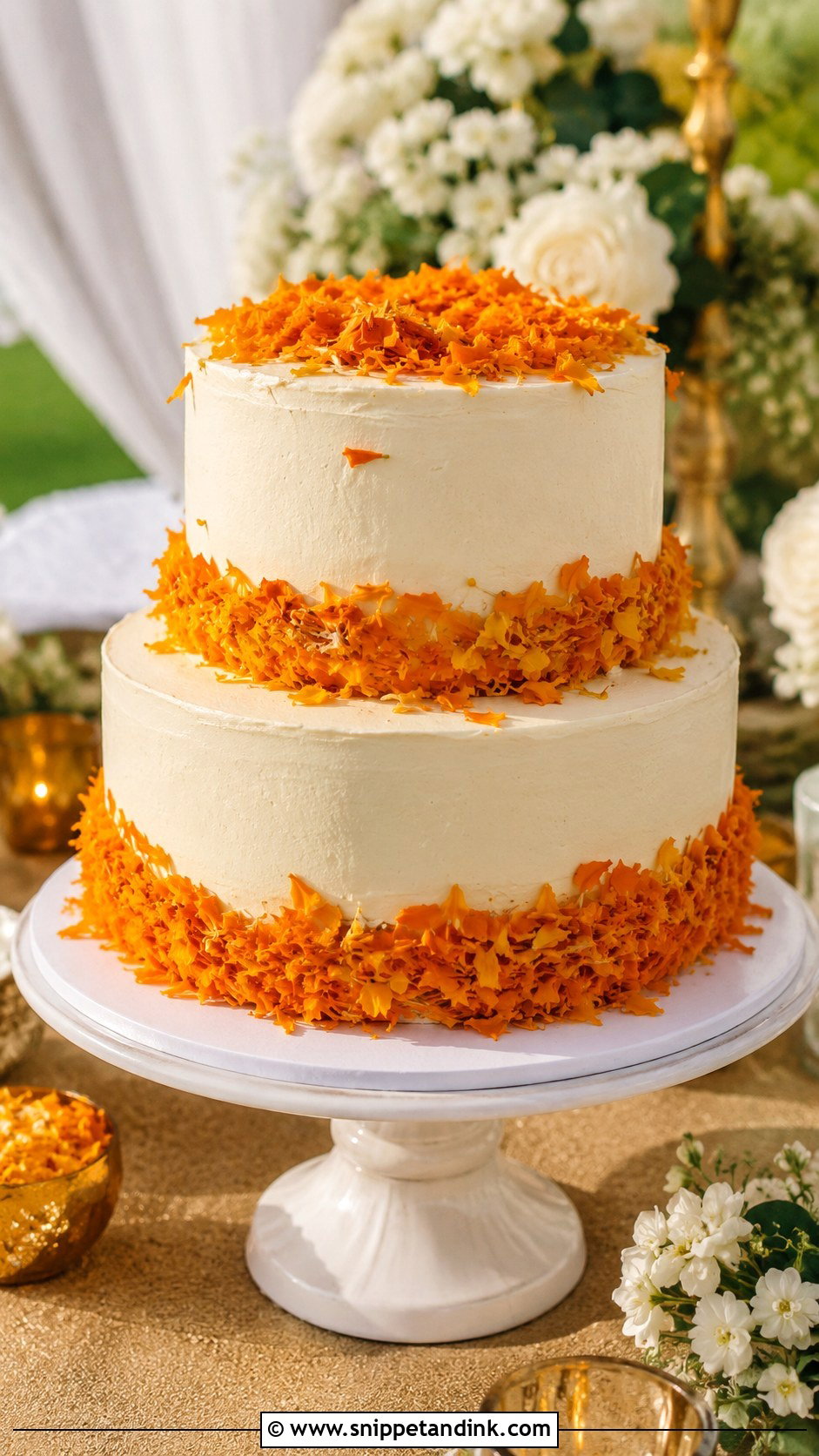
Not every marigold is pleasant to eat. The edible ones I use are signet marigolds and pot marigold petals; the big French and African bedding types taste bitter and are rarely grown for food. Used as a bright border, a scattered topping or a halo around each tier, they bring gold and orange to late summer weddings with terracotta and cream palettes. I keep the cake simple, often two smooth round tiers, so the petals aren’t fighting other details. Lemon, vanilla, coconut and spice cakes all suit them.
11. Borage Flower Wedding Cake
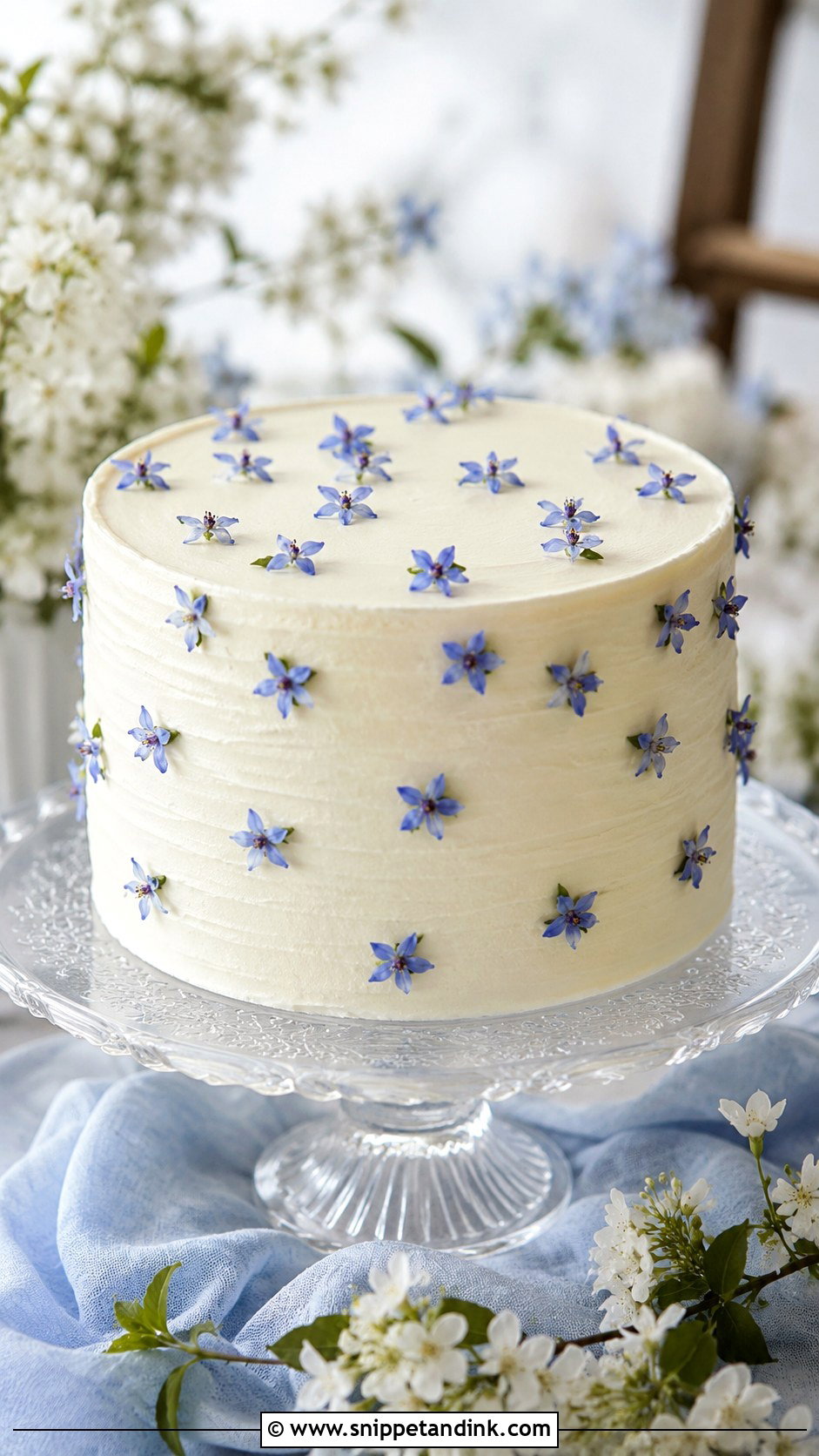
Borage flowers are small blue stars, and the shape is what makes them stand out. I scatter them over smooth buttercream, ring the top tier, or mix them with white edible flowers for a starry effect. They’re fragile and turn floppy within hours once picked, so I order them to arrive the day of decorating and keep them chilled in a sealed box until the last moment. Spring and summer weddings with blue accents suit them. Lemon, cucumber-lime, vanilla and elderflower all match their faint cucumber taste. Leave plenty of white space so each star is visible.
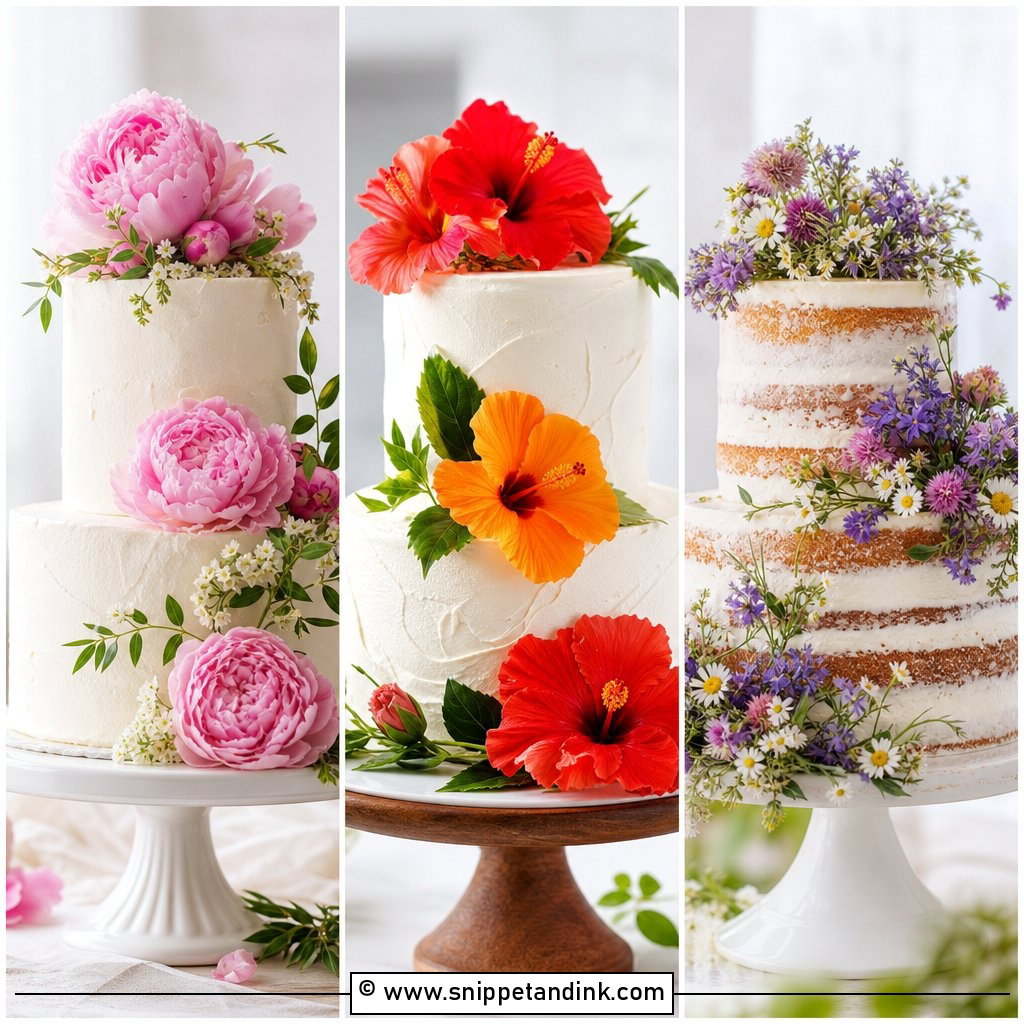
12. Hibiscus Wedding Cake
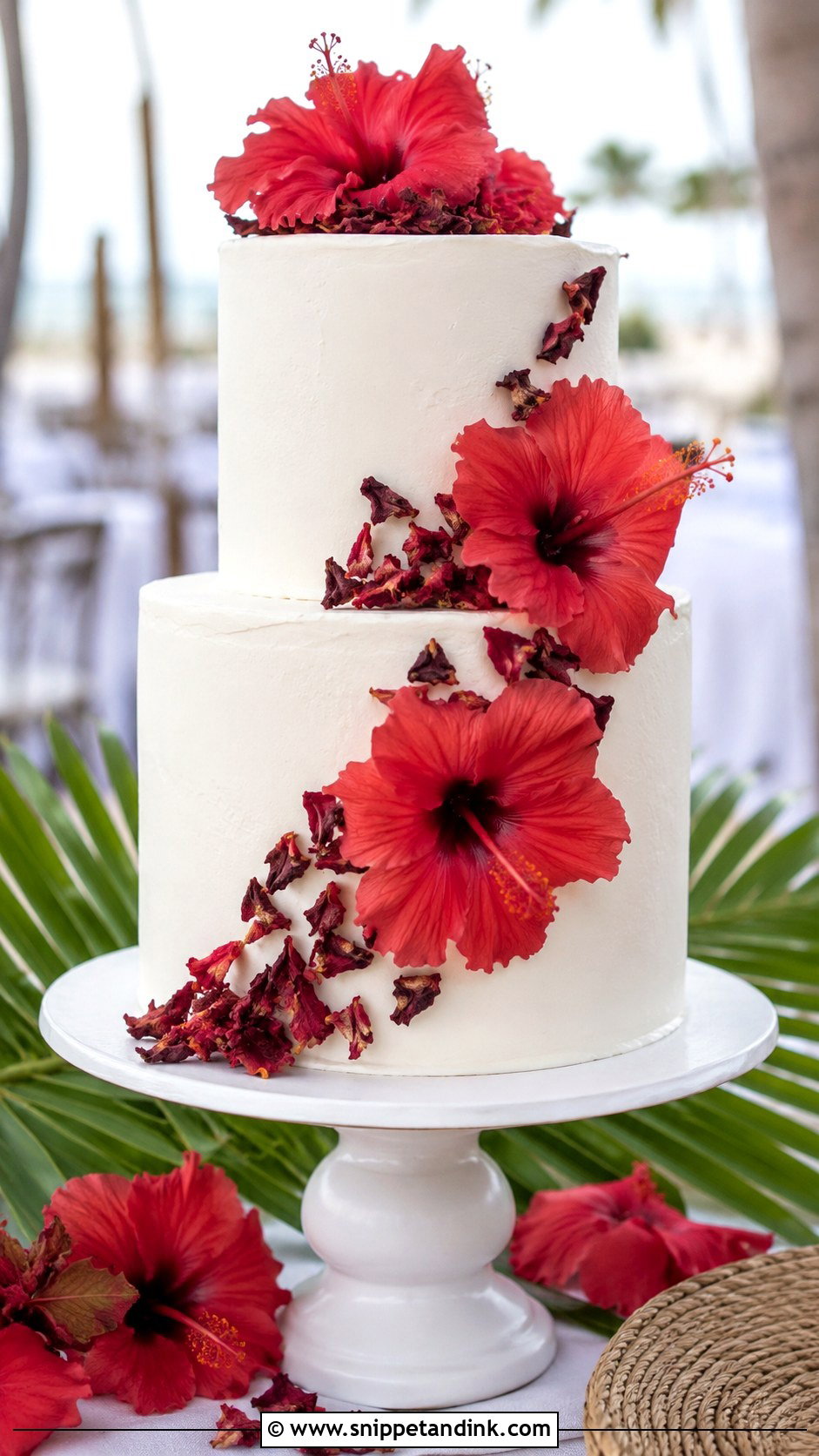
Hibiscus is a tropical cake flower, for beach receptions and colourful summer parties. Whole fresh blooms are large and wilt quickly, so I use them only when they come from a grower selling them for food; otherwise dried petals give a deep red-pink topping that lasts. White or pale blush frosting makes the colour the main feature. Coconut, lime, passion fruit, vanilla and raspberry pair well with its tart flavour. I’d put a crescent of flowers on one side rather than covering every tier, which looks more modern and uses fewer of these big flowers.
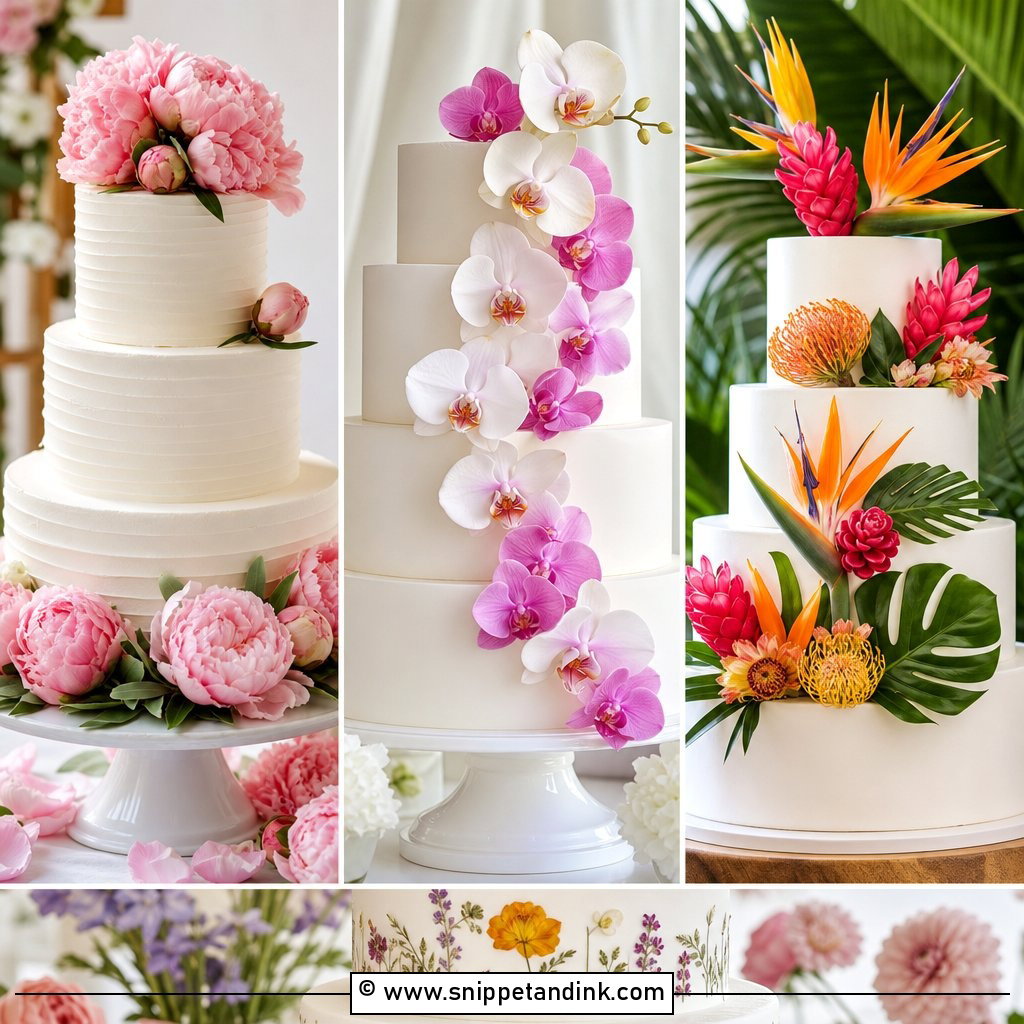
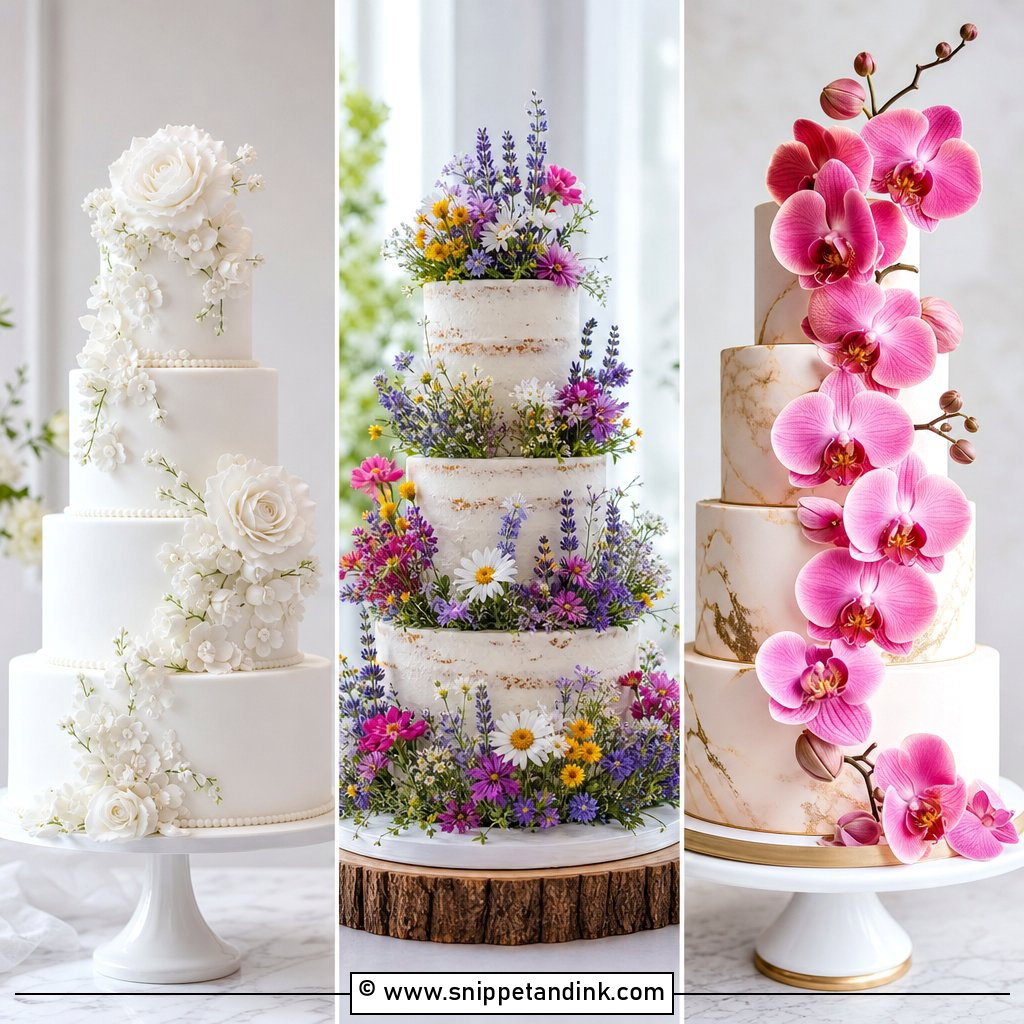
13. Orchid Wedding Cake
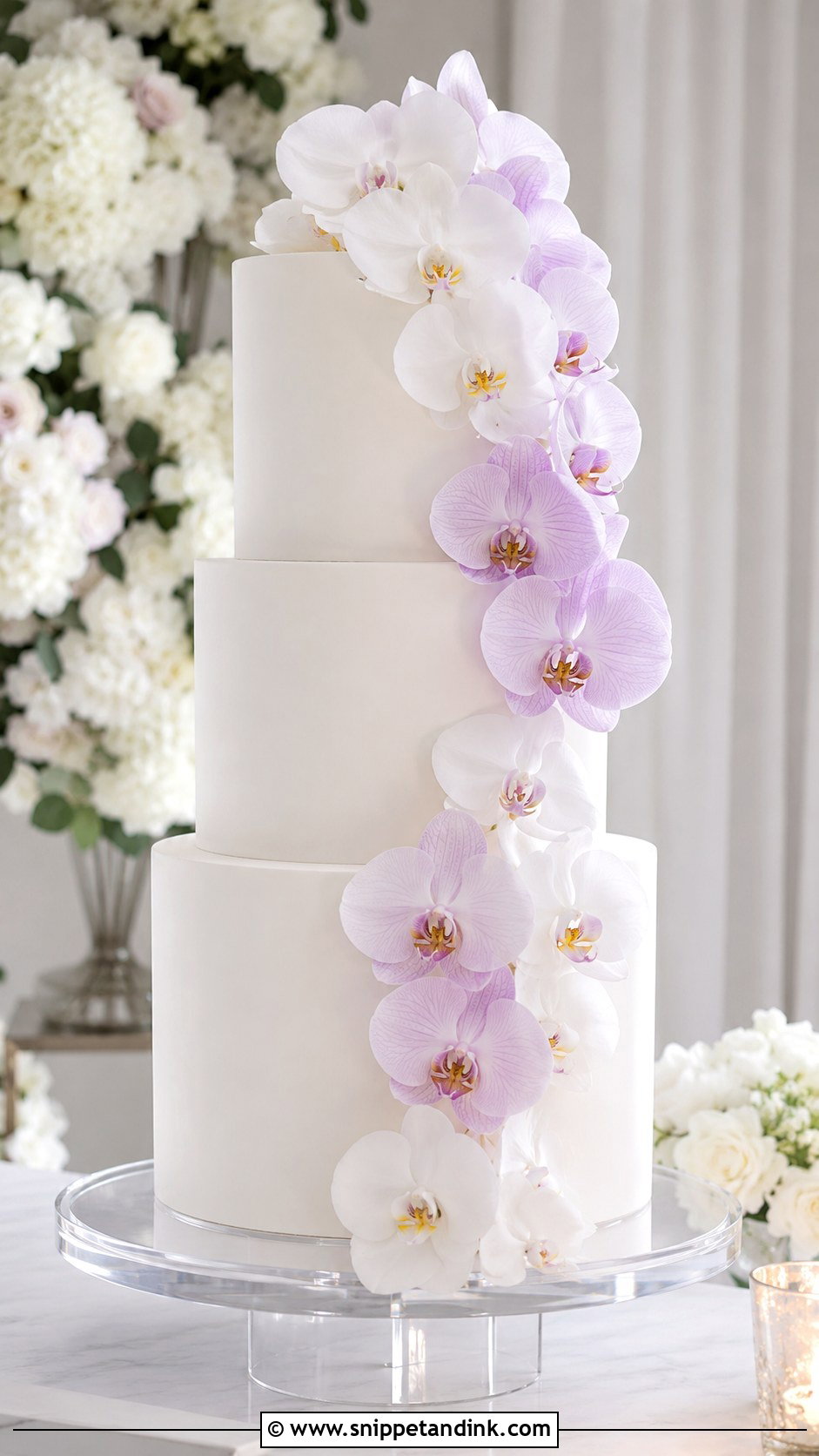
Orchids are where I’m most careful with sourcing, because most florist orchids are not safe to eat and are often treated with chemicals. Only a few kinds are grown for culinary use, so I buy them from an edible flower supplier and ask what variety they are. Their sculptural shape suits smooth fondant, clean buttercream and a tall tiered silhouette. White, pale pink, lavender and soft yellow orchids look refined in a single cascading line or as a simple topper with a few petals at the base. Vanilla, coconut, almond and passion fruit cake suit them.
14. Carnation Wedding Cake
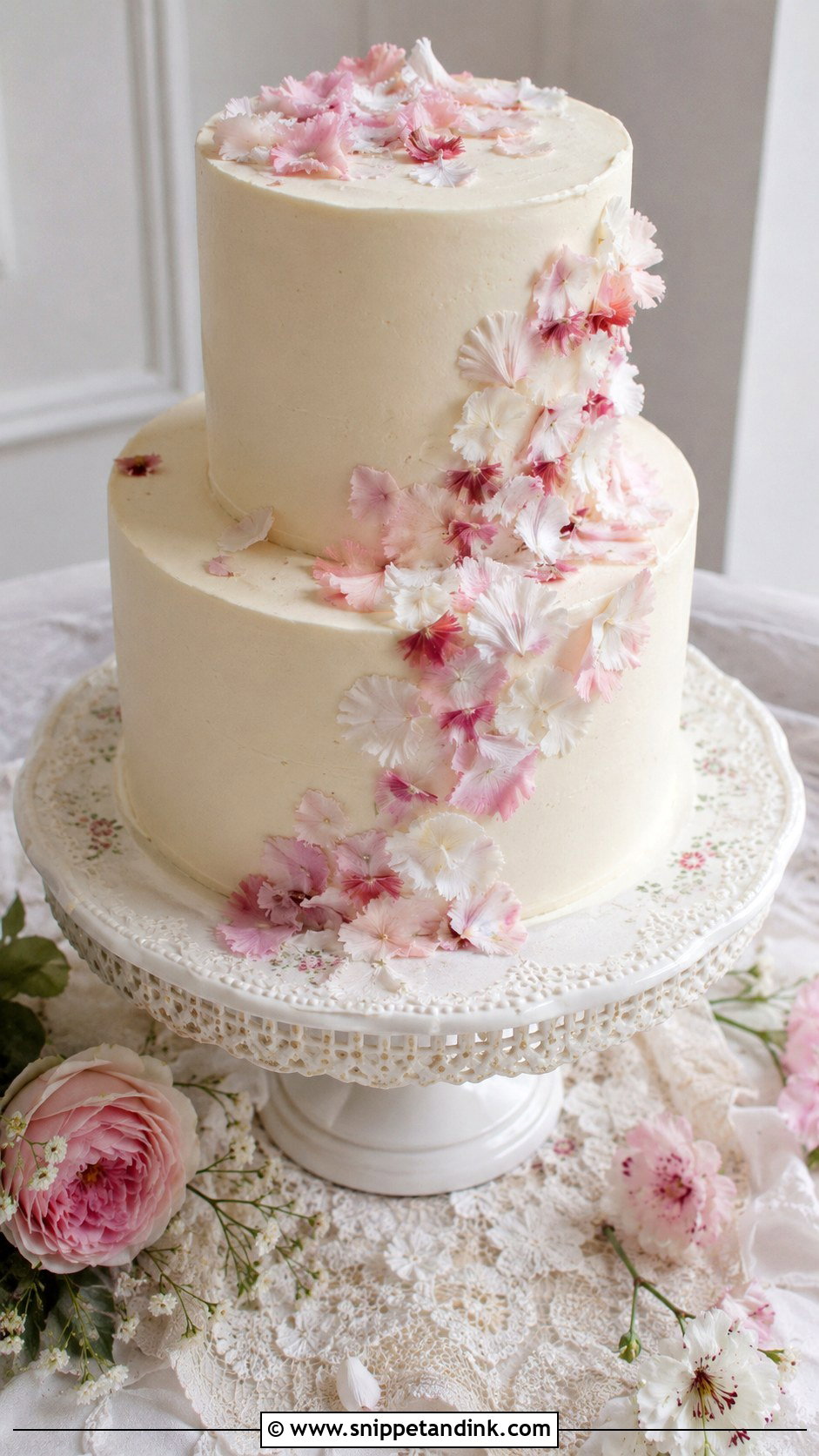
Carnation petals give a ruffled texture without needing big heavy flower heads on the cake. I snip the petals off the white base first, as that part is bitter. They make a border around each tier, a scattered top or a fully petalled bottom tier with a smooth tier above it for balance. Blush, ivory, peach and pale coral are the easiest shades to source. Vanilla, strawberry, almond and champagne-flavoured sponge all suit them. Smooth frosting and clean edges keep it from looking old-fashioned.
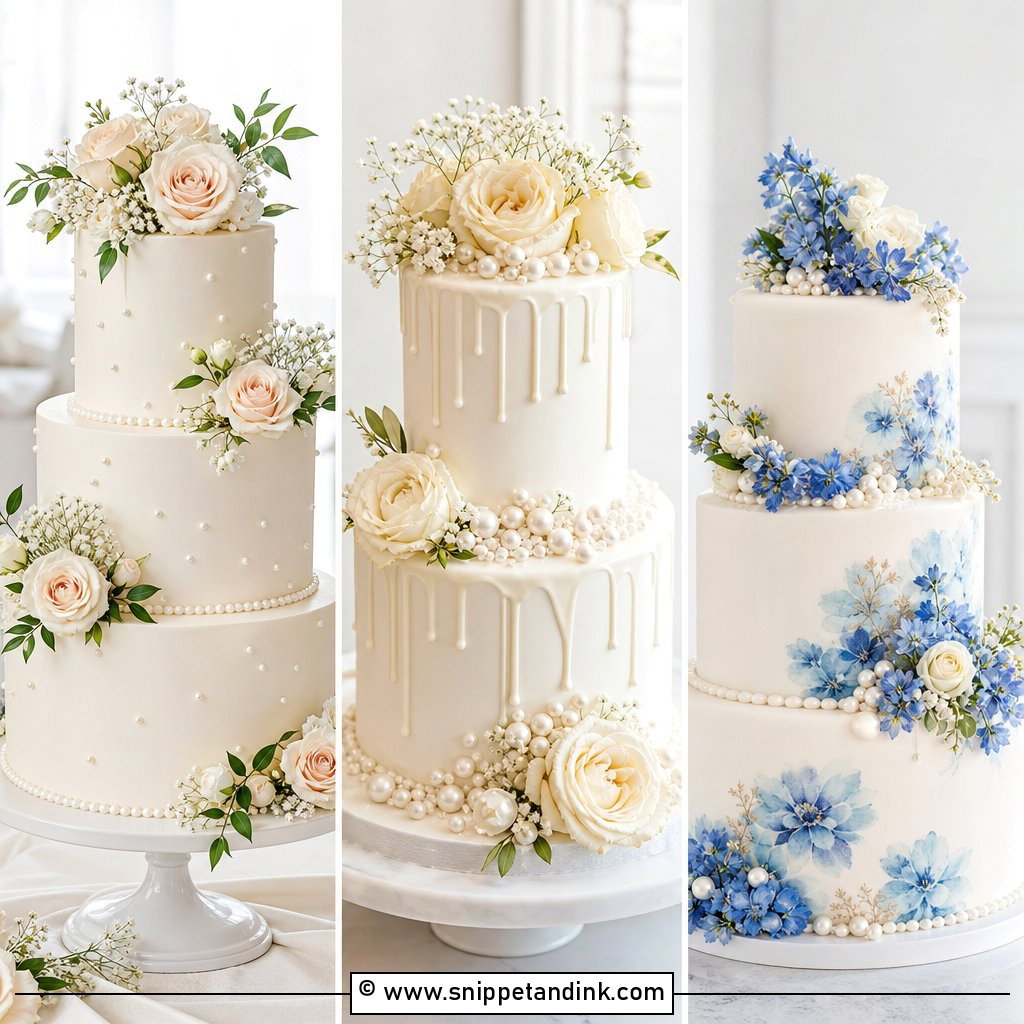
15. Bachelor Button Wedding Cake
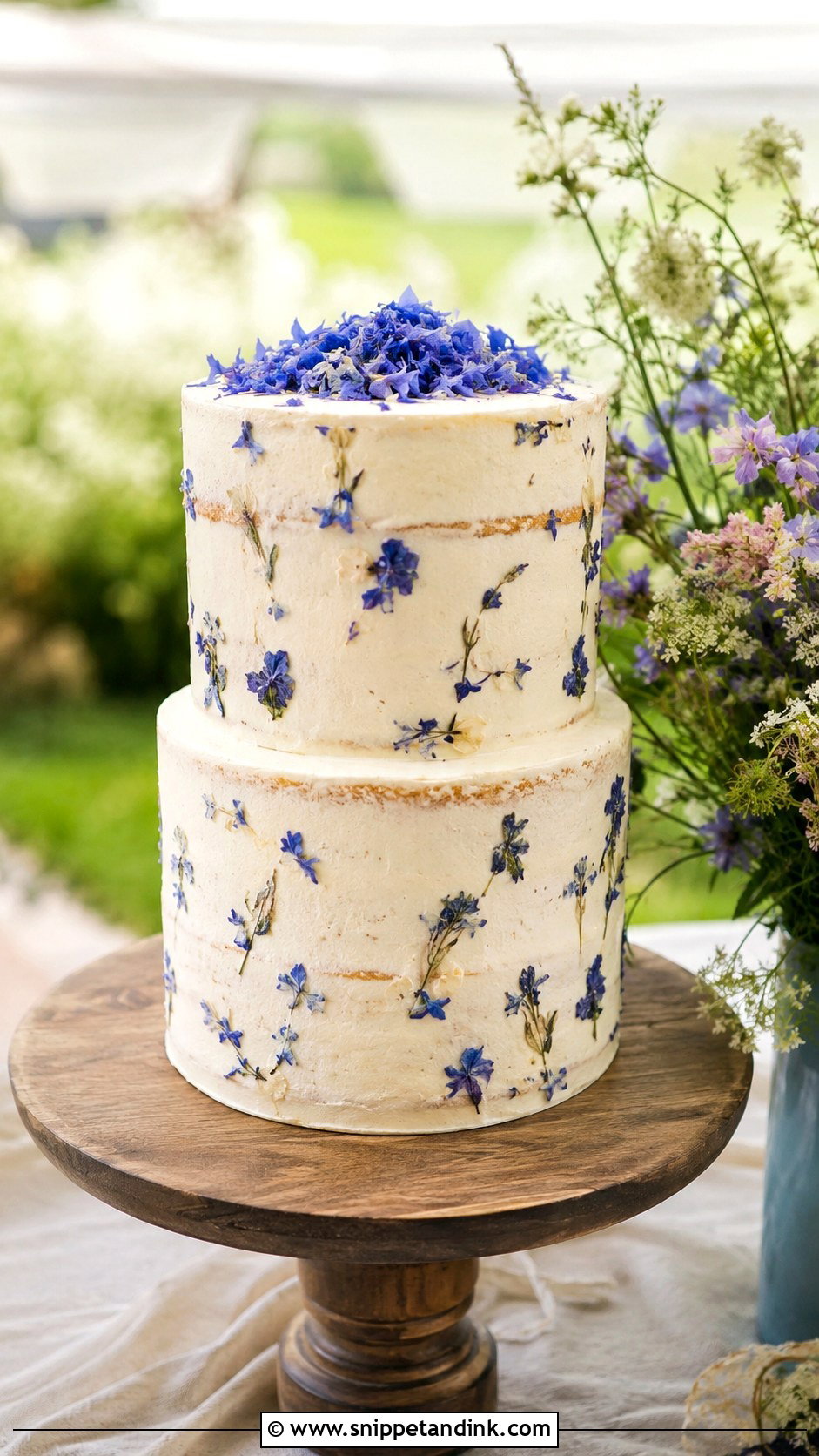
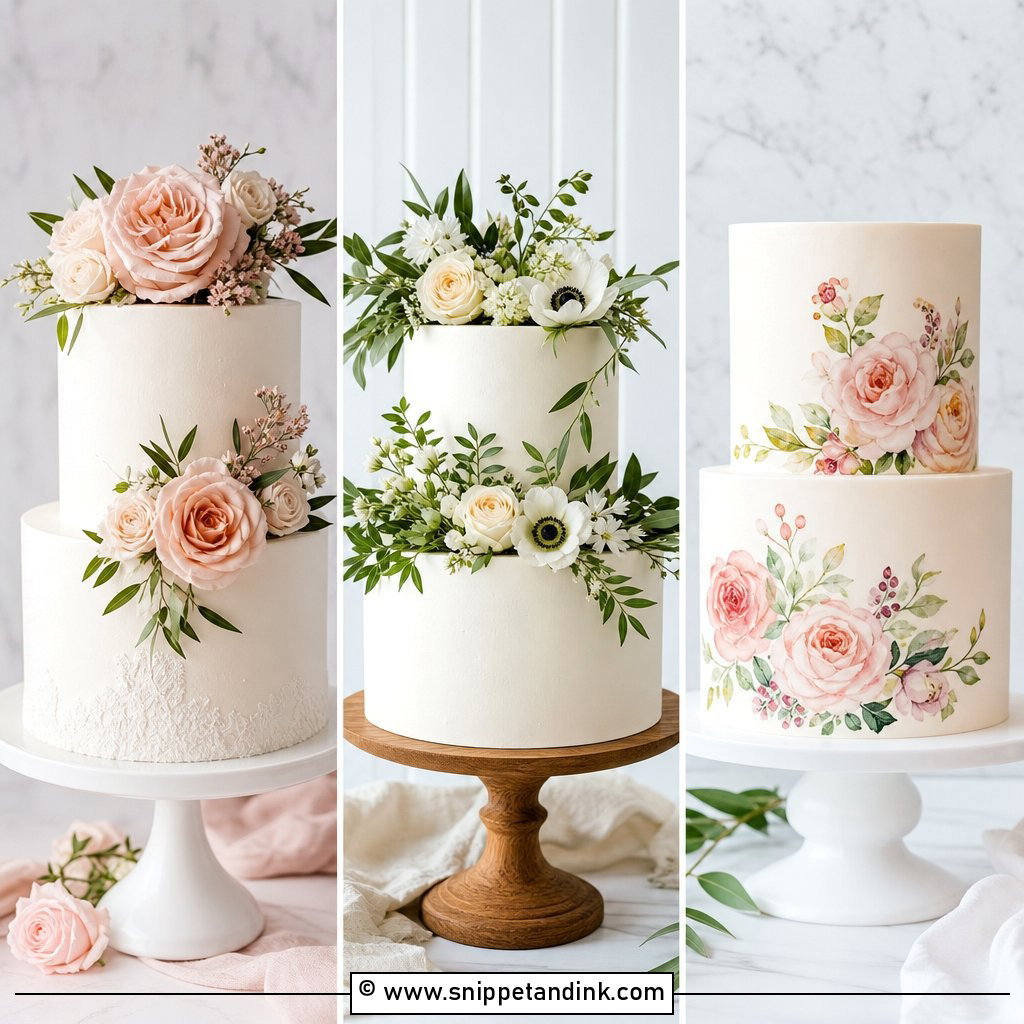
Bachelor buttons and cornflowers are the same plant, so if you love the blue in idea eight, here’s a more rustic way to use it. They give a charming wildflower look without any artificial decoration. I like them on a two-tier cake with a slightly textured, spatula-swept frosting, scattered over the top or pressed along the sides with tiny white flowers. Lemon, vanilla bean, honey and blueberry fillings all work. The petals dry out but keep their colour well, which makes them forgiving at outdoor weddings.
16. Dianthus Wedding Cake
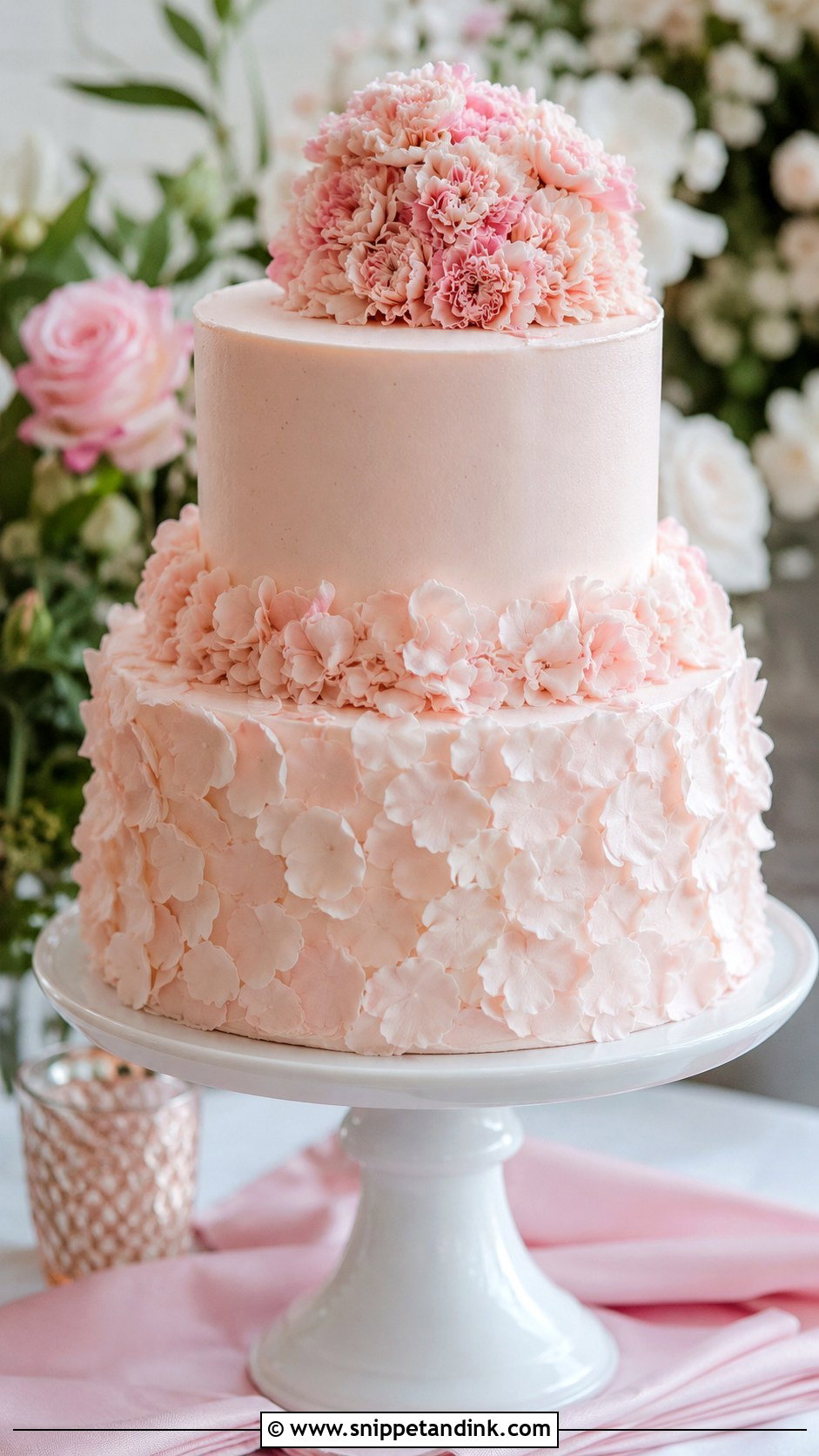
Dianthus has fine, frilled edges and a faint clove taste, which pairs with vanilla, spice, almond and citrus cake. Pink, white, red and blush shades are easy to match to most palettes. I trim the bitter white heel off each petal, then use them as confetti, as a border or in a diagonal sweep across the tiers. Creamy, plain frosting lets the frilled edges show. It has a slightly vintage feel that suits classic venues.
17. Elderflower Wedding Cake
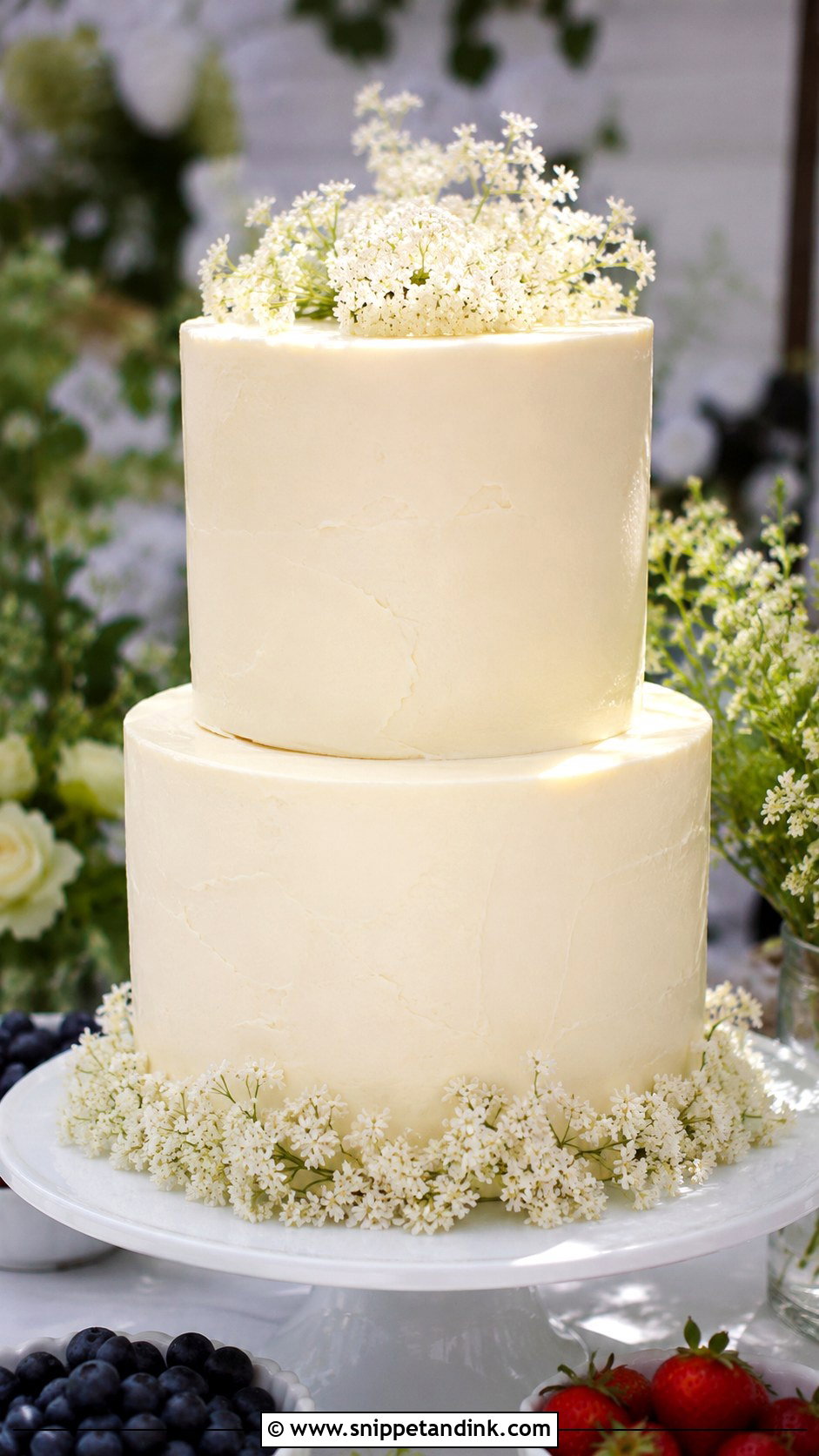
Elderflower is better known as a flavour, but the tiny cream blossoms can decorate the cake too. I only use the flowers, never the stems or leaves, which aren’t safe to eat, and I snip each sprig into small clusters. A simple cluster around the top or base on smooth ivory buttercream is enough. Elderflower blooms in late spring and early summer, so it’s a seasonal choice. Lemon curd, vanilla bean, pear and berry fillings suit it, and it works for minimalist couples who still want something floral.
18. Clover Flower Wedding Cake
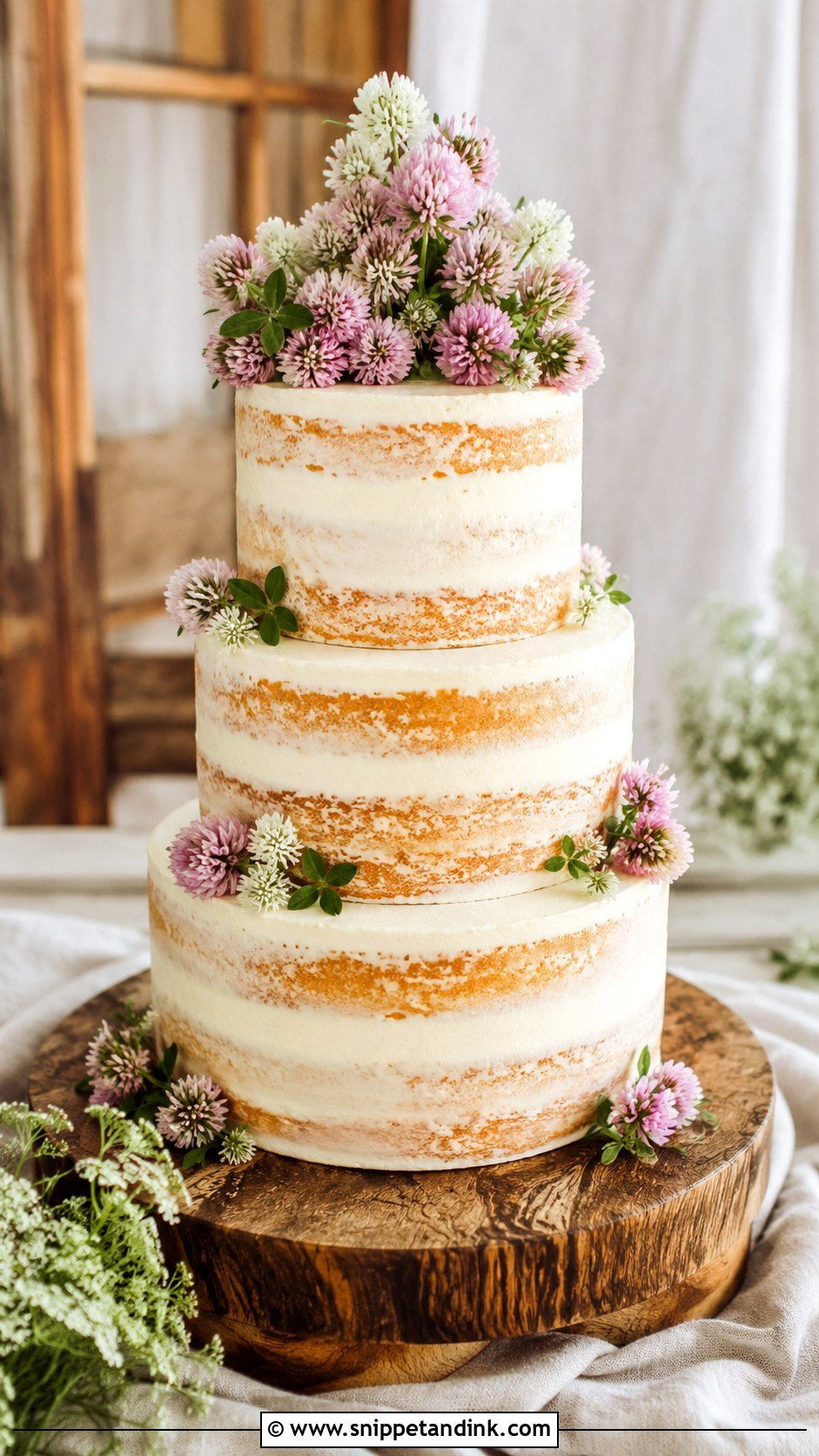
Clover blossoms suit outdoor receptions, barns and small garden weddings. The soft pink, white or purple flowers look gentle against ivory frosting. I use them in small clusters rather than covering the cake, which keeps it neat. A semi-naked finish, where the sponge shows through a thin layer of buttercream, suits them, though that cake dries faster, so it’s cut sooner and kept away from sun. Honey cake, vanilla sponge, lemon filling and berry compote match the countryside feel. A few petals around the cake stand finish the table.
19. Flower Confetti Wedding Cake
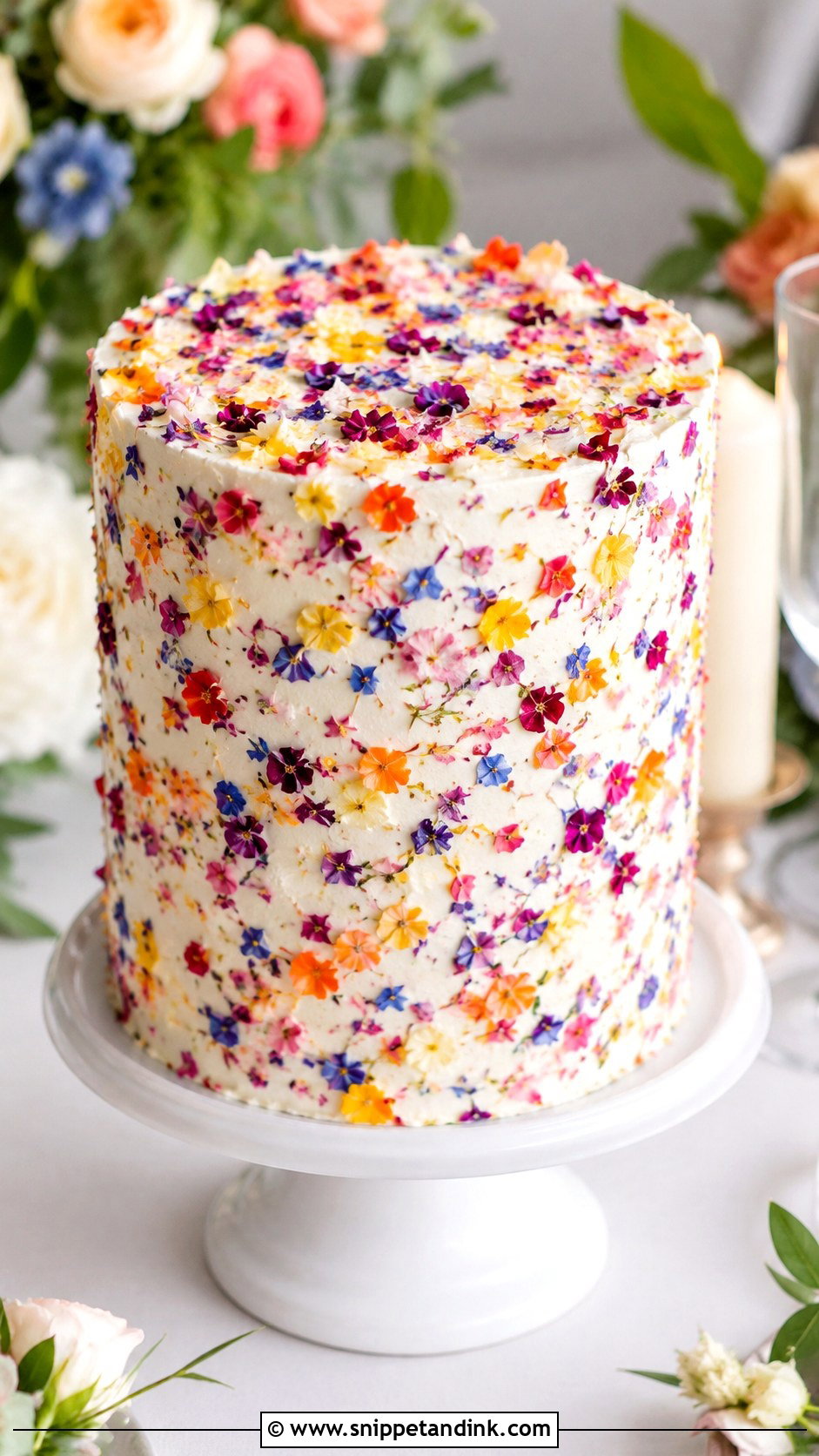
Flower confetti is my answer when a couple wants florals but no formal arrangement. Instead of whole blooms, I scatter tiny petals of rose, calendula, cornflower, viola and dianthus over white buttercream. The trick is gradient: heavier near the top, lighter down the sides, so it looks like the petals have fallen there. It’s easy to match to any palette and suits almost any size of cake. Small petals also wilt less obviously than whole flowers.
20. Edible Flower Cascade Wedding Cake
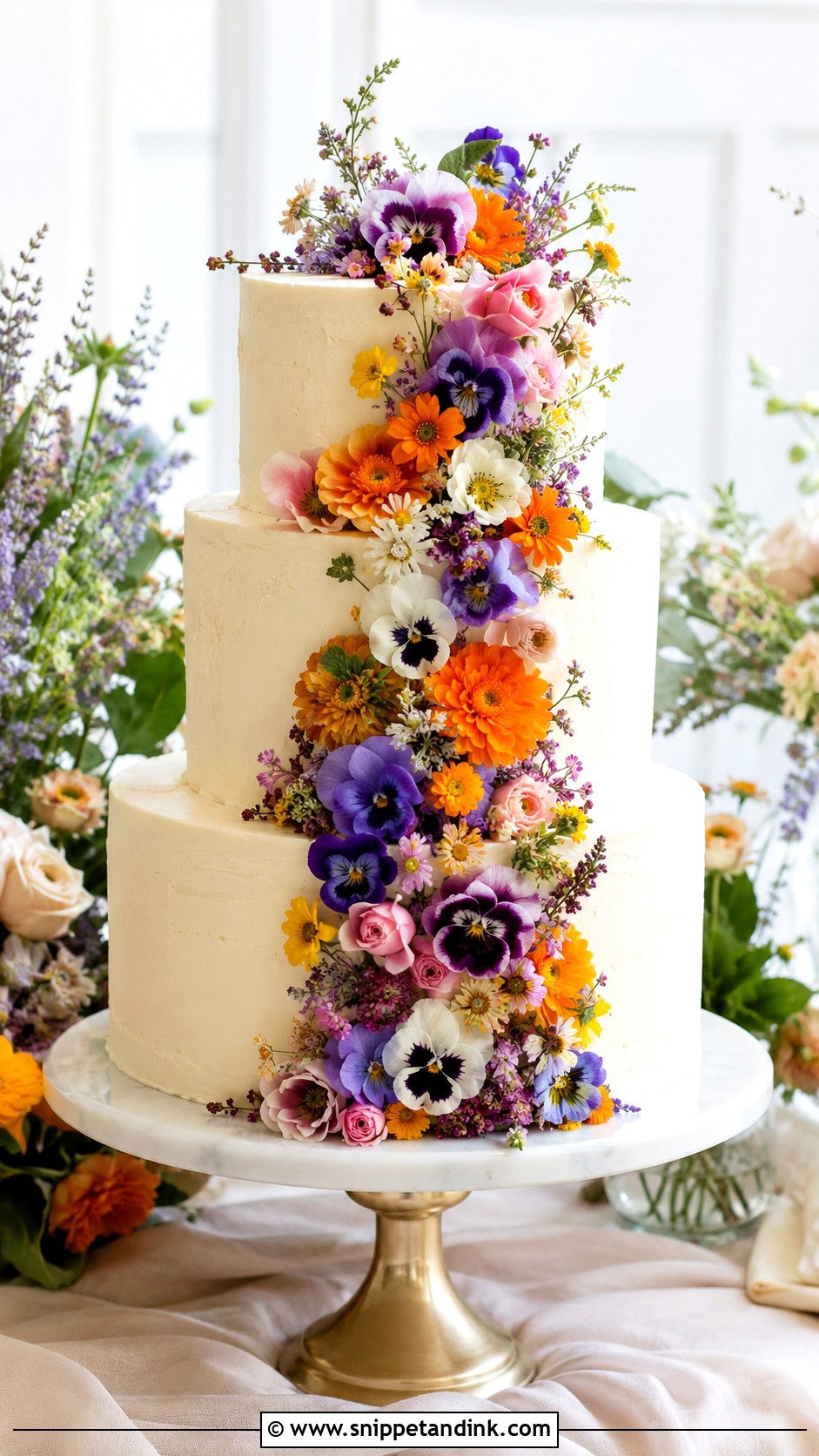
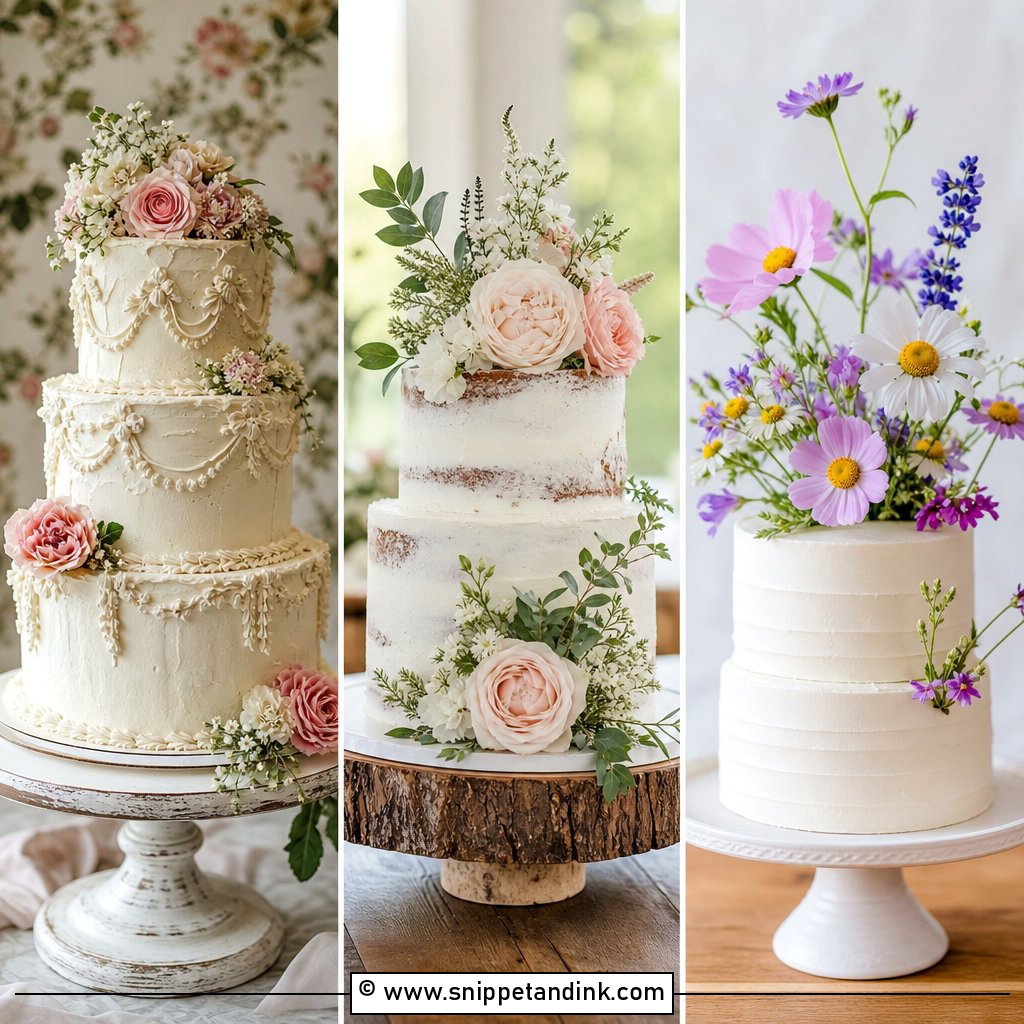
An edible flower cascade wedding cake gives height and movement, flowing from the top tier down one side. I mix pansies, violas, roses, calendula, borage and tiny herb flowers in the wedding palette. Larger blooms sit at the top and base, and smaller petals link them through the middle, so the eye travels down. Smooth buttercream or fondant keeps the cascade clean. Because it uses the most fresh flowers, this is the design I finish last and closest to service.
Petals Wilt Faster Than Buttercream Sets
Fresh edible flowers have a short life once they leave the fridge. Violas, borage and nasturtiums can look tired within a few hours, especially in a warm room. That’s why I decorate these cakes in stages: the frosting and any pressed petals at my kitchen, the fresh flowers at the venue, as close to the cake reveal as I can manage.
Heat is the other problem. Buttercream softens in a warm marquee or a sunny window, and petals pressed into soft frosting slide. Ask your venue where the cake will sit and keep it out of direct sun and away from the dance floor lights. If your wedding is outdoors in summer, a fondant finish or a cake displayed only for a short time before cutting gives the flowers a better chance.
A Small Sign for Guests With Allergies
Chamomile, calendula, marigolds and cornflowers belong to the daisy family, which can trouble people with pollen allergies. A small card naming the flowers on the cake lets guests decide for themselves, and your caterer can set aside slices without petals. It takes ten minutes to write and saves a lot of worry.
Matching the Petals to Your Season and Your Venue
Pressed flowers suit a couple who wants the cake ready early, pansies and violas bring detail, lavender and chamomile feel calm, and a cascade gives you drama. Whatever you choose, every flower must be labelled edible and grown for food. Ask your baker what’s in season near your date, since the flowers that bloom that month will be freshest and easiest to buy. Keep the frosting simple, match the petals to your wedding colours and leave space on the cake. A crowded cake looks messy once the first flowers start to soften.
You'll Like These Ideas:


Leave a Reply