
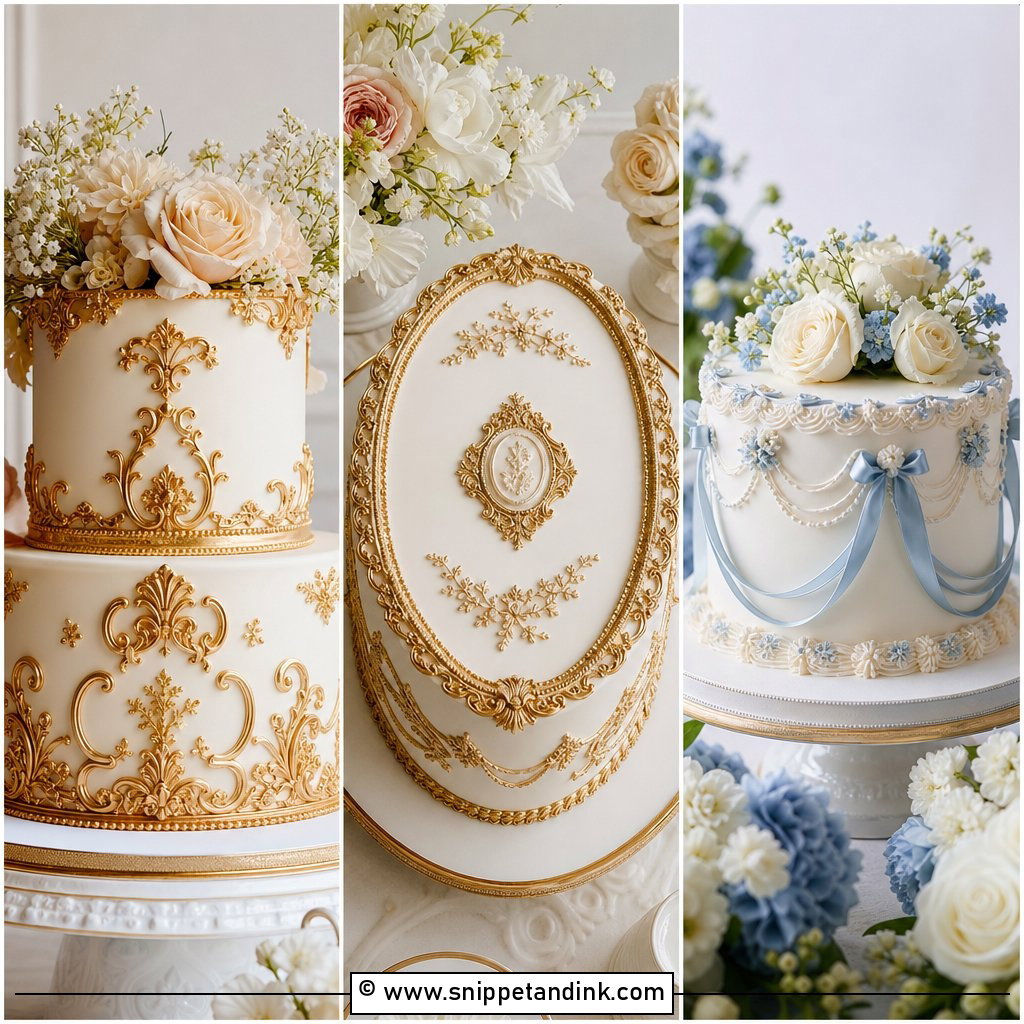
Real flowers on a wedding cake do something sugar flowers can’t: they tie the cake to the bouquets and centerpieces, because they came out of the same buckets. They sit happily on buttercream, fondant, naked and modern tiered cakes, as long as they suit the palette, the venue and the shape of the tiers. As the person who has to put them on, I care about one thing before the look, and that is what touches the frosting. Stems get wrapped or sleeved in food-safe picks, and anything meant to be eaten has to come from a culinary grower, not the florist’s cooler. Below are 20 ways I’d dress a cake with fresh blooms, from pressed petals to full cascades.
Sprayed Stems, Toxic Blooms and What Sits Under Each Flower
Most flowers sold for bouquets were grown to look good, not to be eaten, and many have been treated with pesticides or preservatives that have no business near frosting. So I split every floral cake order into two lists before anything else. Decorative blooms can come from the florist, but they never touch the cake directly. Edible blooms come from a grower who sells for food, and only those go straight onto buttercream.
Flowers I keep off a cake entirely
Some popular wedding flowers are toxic, and sap or pollen can transfer to the icing even when nobody eats the petals. These stay in the bouquets:
- Lily of the valley, foxglove and oleander, which are poisonous in every part
- Hydrangea, daffodils and other narcissus
- Sweet peas, whose seeds and pods are toxic
- Lilies, mainly because the pollen stains white icing orange and is hard to lift off
Keeping stems out of the sponge
Every decorative stem gets wrapped in floral tape and then plastic wrap, or slipped into a food-safe posy pick or a cut drinking straw, before it goes into a tier. Heads that sit on the surface go on a small disc of wafer paper, chocolate or parchment. Wire never goes directly into cake. At cutting time the decorative flowers come off first, and the catering team should know exactly which ones those are.
1. Fresh Rose Wedding Cake
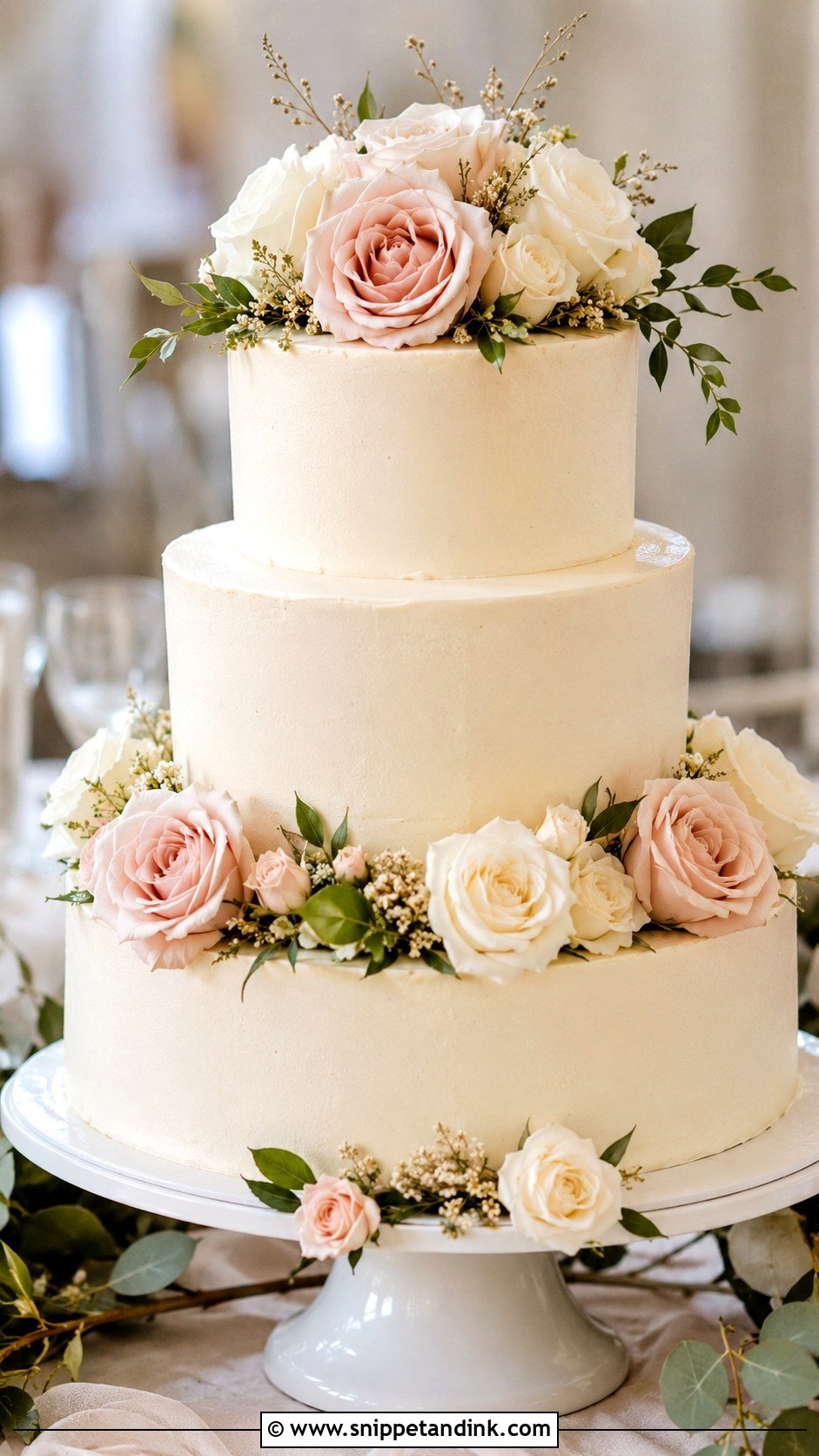
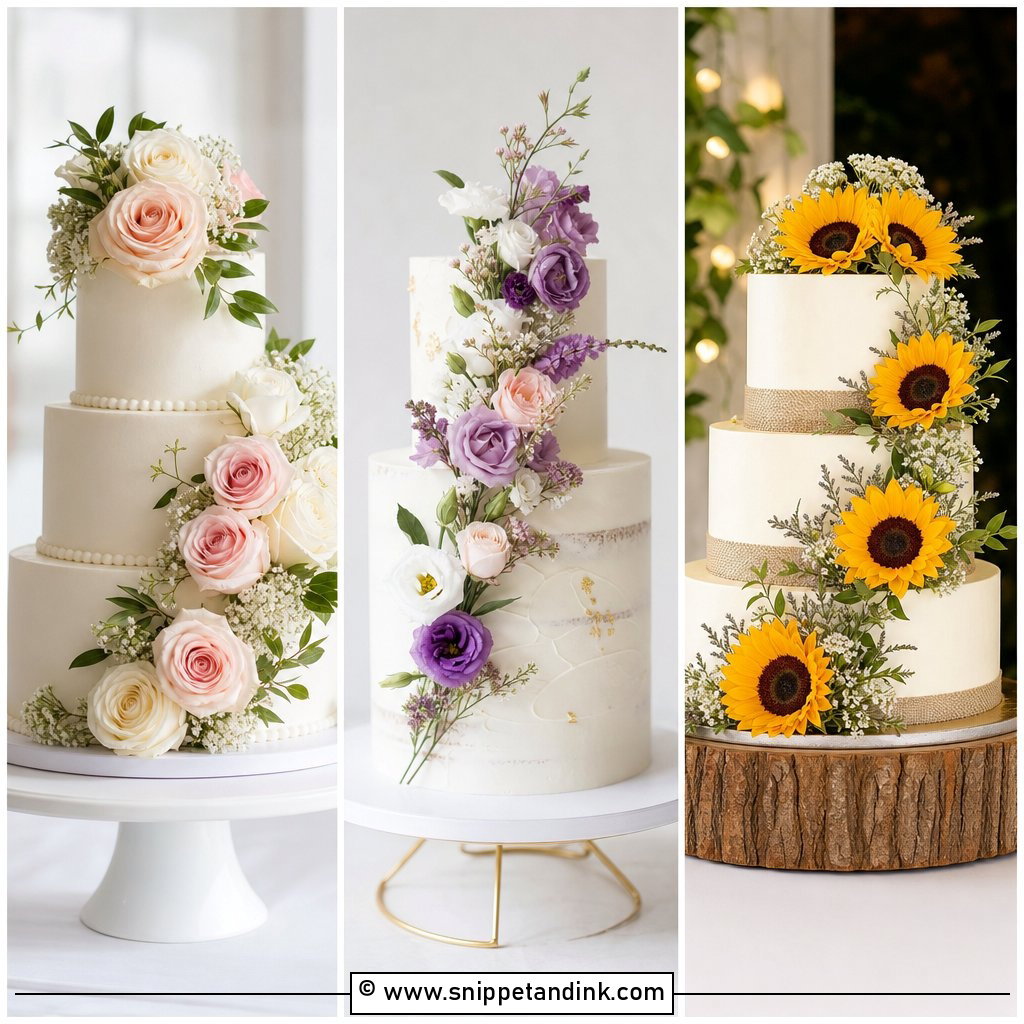
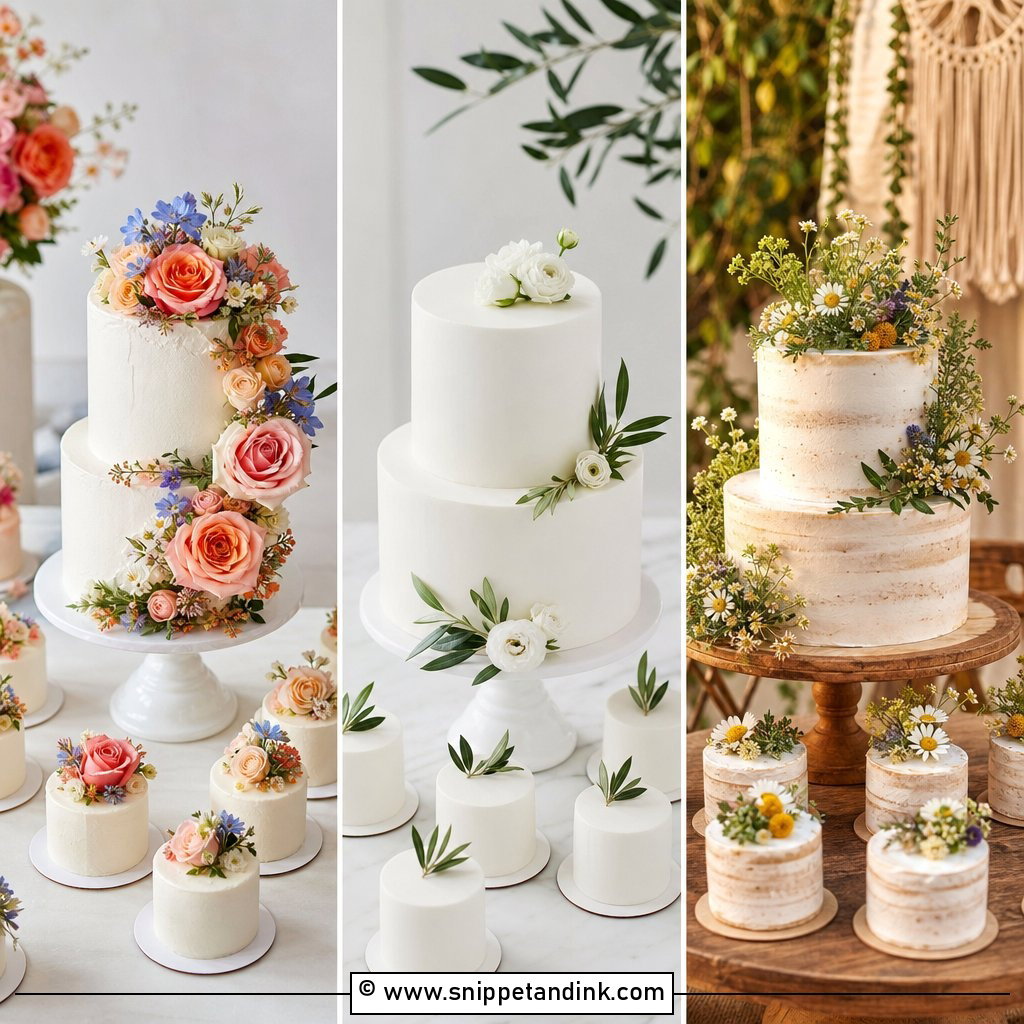
Roses are the flower I’m asked for most, and they’re forgiving to work with because the heads are firm and the petals don’t drop at a touch. On ivory buttercream or smooth fondant, I place garden roses on the top tier and a few around the base. Blush, cream, peach and pale pink read soft; deep red or coral reads louder, and a damp red petal resting on white buttercream can leave a faint pink mark, so I dry them before they go on. Mix two or three bloom sizes instead of covering every inch. On a three-tier cake with clean edges and simple piping, a little safe greenery tucked around the heads is all it needs.
2. Fresh Peony Wedding Cake
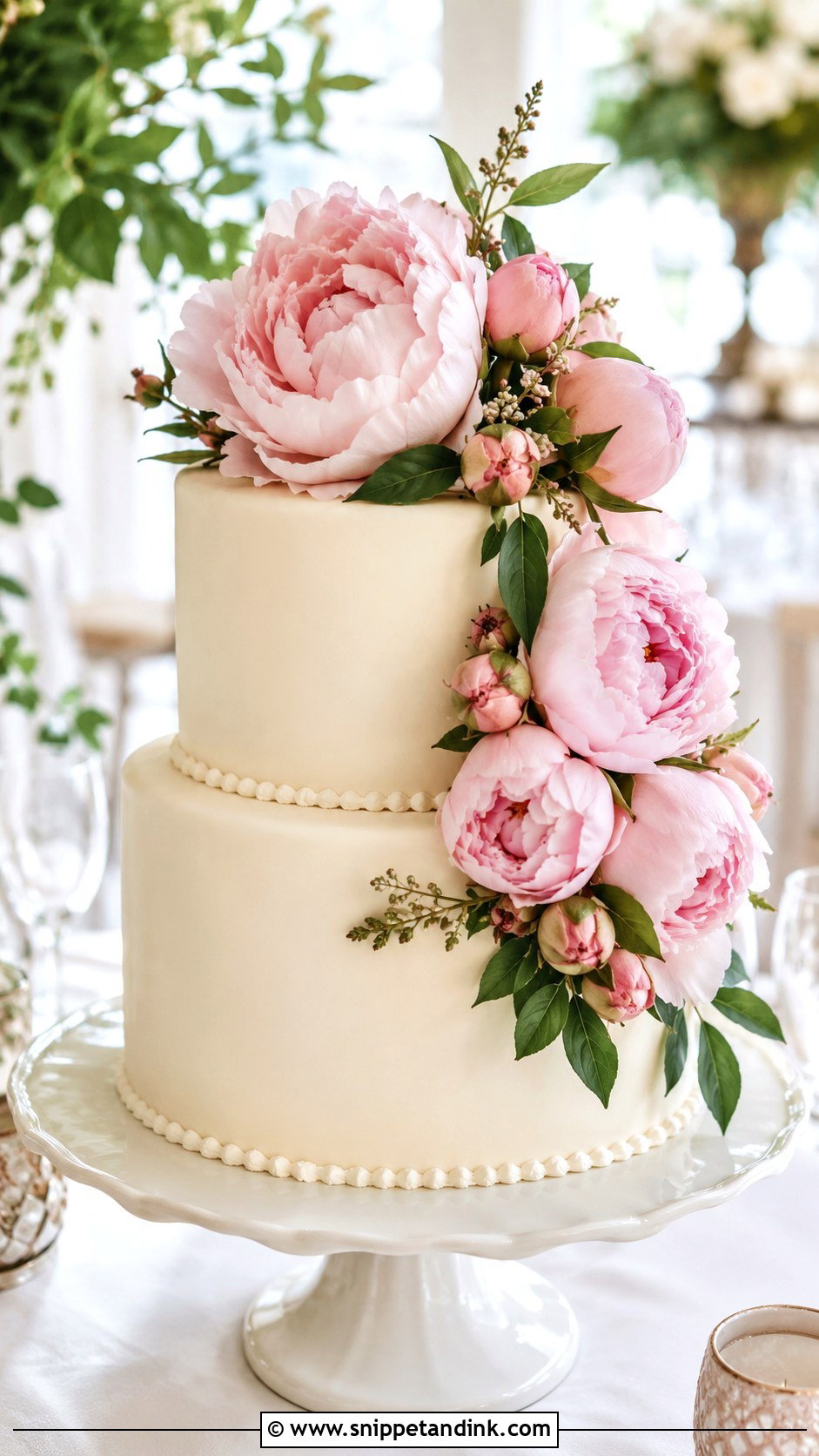
One or two peonies on the top tier can carry a whole cake, with smaller buds or a matching flower trailing down one side. Keep the cake white or ivory, or go pale pink buttercream if you want the tone warmer. The catch is timing. A peony that’s fully open on Friday will be dropping petals onto the cake table by Saturday evening, so I ask the florist for blooms just past the tight-bud stage, opened in a warm room the morning of the wedding. They’re a spring and early summer flower, and they need a food-safe barrier and clean, unsprayed stock like anything else here.
3. Fresh Orchid Wedding Cake
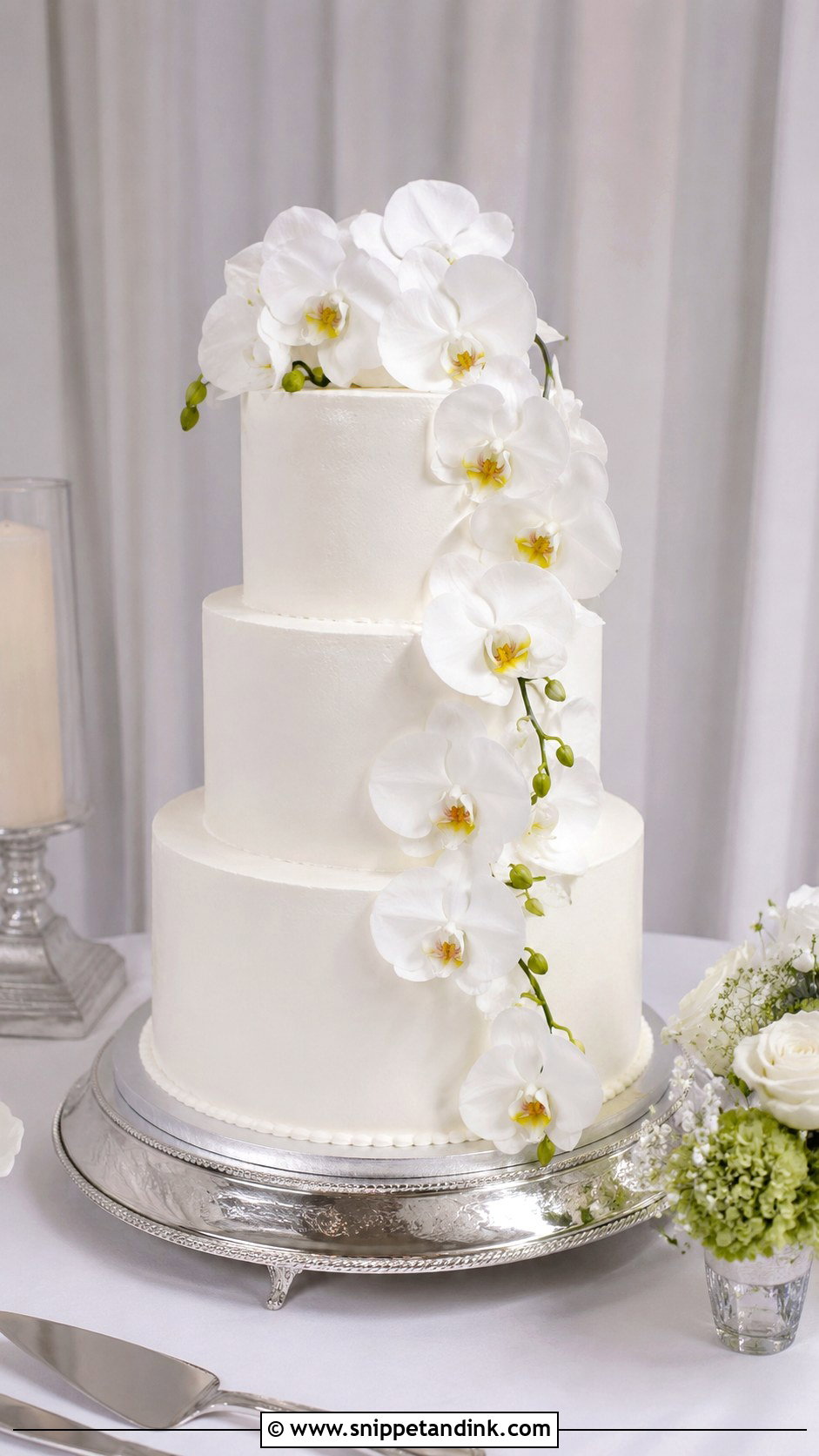
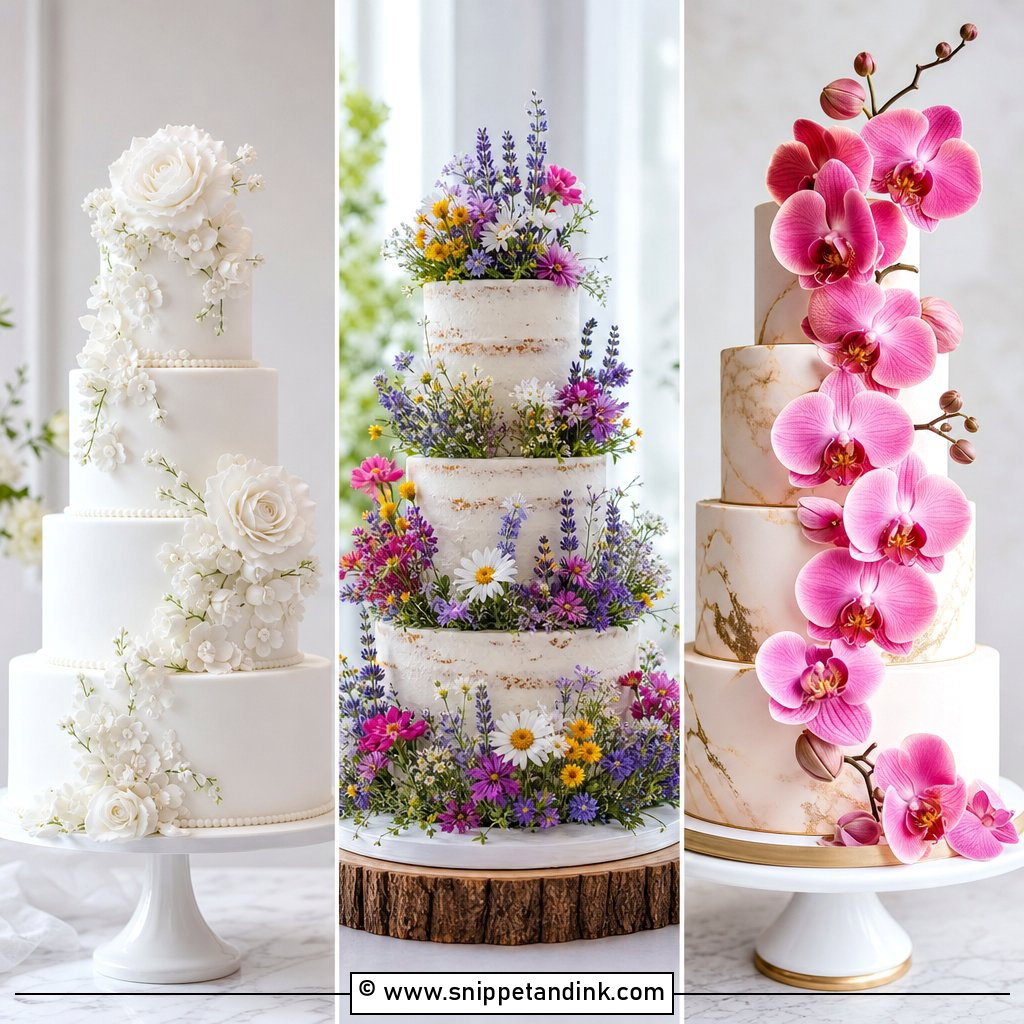
Orchids are the easiest fresh flower I place on a cake. Phalaenopsis and dendrobium blooms hold up for hours out of water, and their natural droop makes a cascade down tall tiered cakes almost arrange itself. White on a smooth white cake gives a clean, expensive look; purple, blush or peach adds color without clutter. Ballrooms, tropical venues and minimalist receptions suit them. Keep the frosting smooth so the flower’s outline reads from across the room. I wire orchid sprays onto a food-safe pick rather than pushing single stems into the tiers, so the line from the top tier down one side stays put and lifts out cleanly at the cut.
4. Fresh Ranunculus Wedding Cake
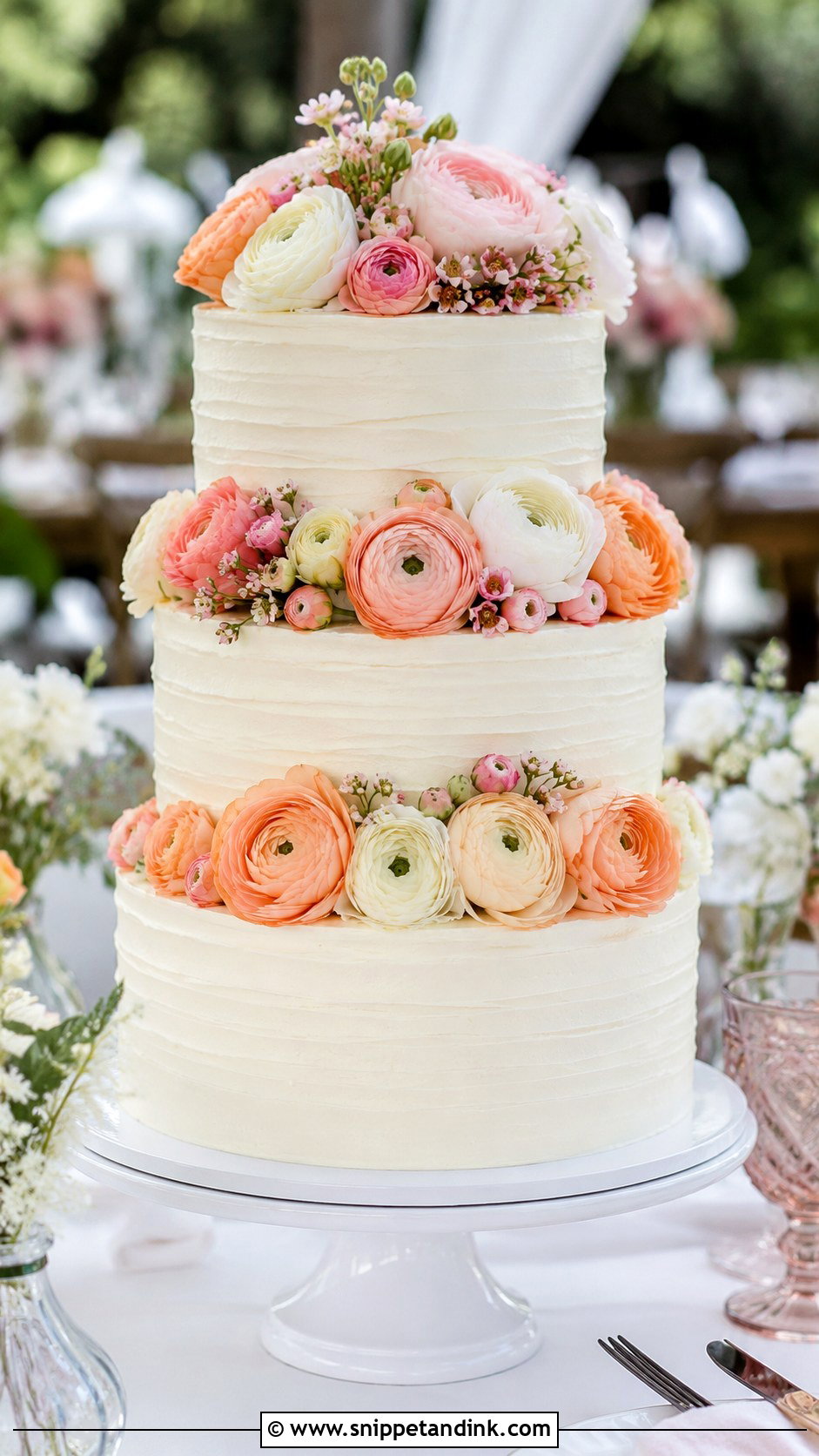
Because ranunculus are smaller than roses or peonies, I can cluster them around the tiers without the cake looking top-heavy. Their stems are hollow and soft, and they fold if you try to push them into firm fondant, so I cut them short and seat them on a pick or a small disc instead. Cream, blush, apricot or pale yellow sit well on smooth buttercream next to tiny edible blossoms and light greenery. On a semi-naked cake they go rustic. On fondant they look formal.
5. Fresh Pansy Wedding Cake
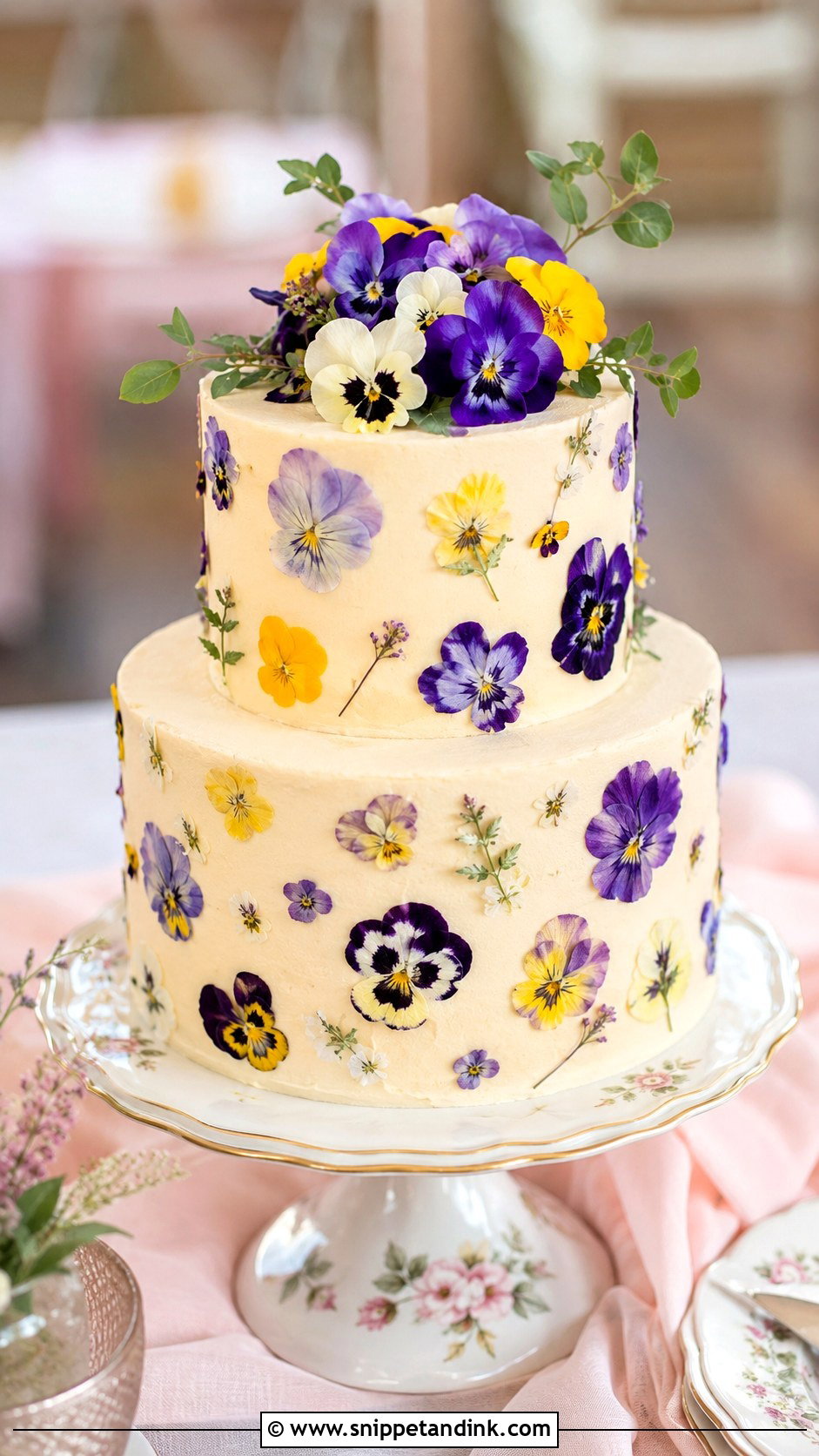
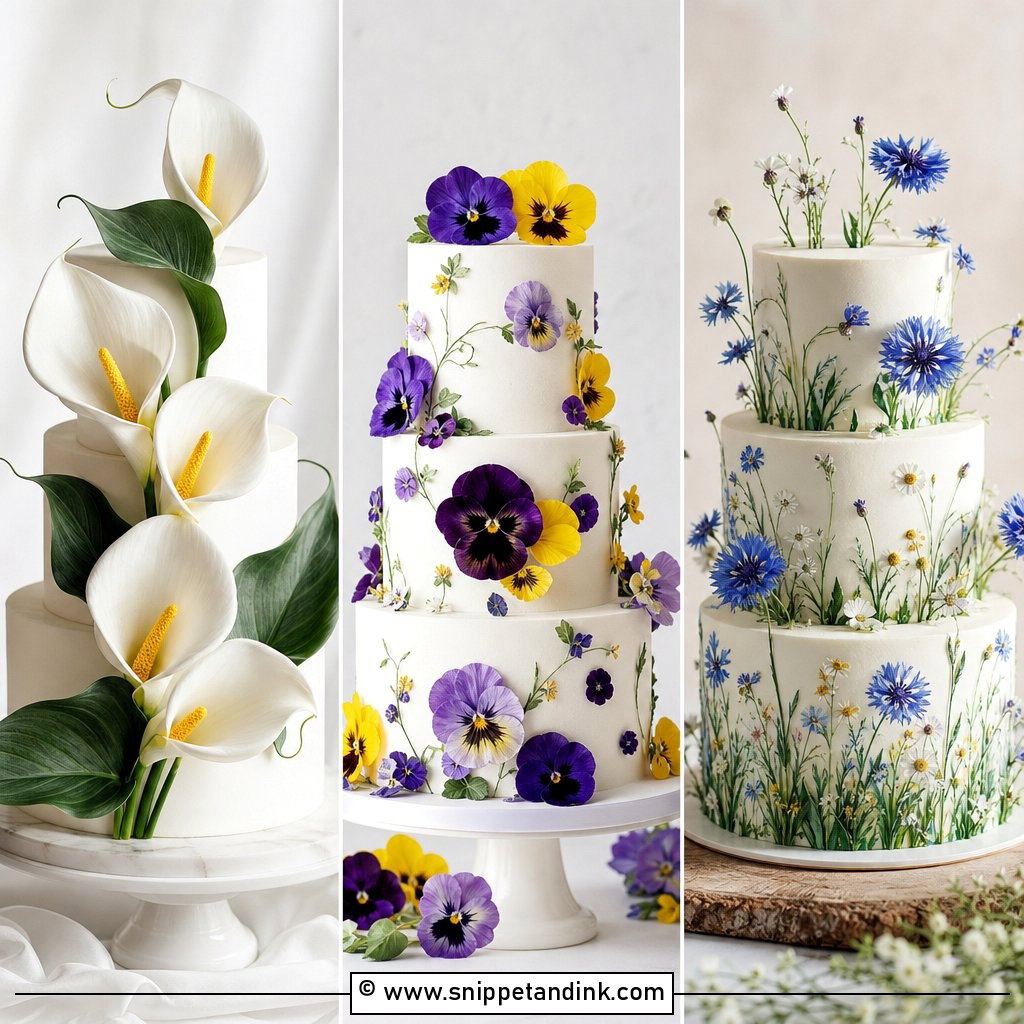
Pansies are one of the few flowers on this list grown and sold for eating, which makes a fresh pansy wedding cake a good route to that pressed, painted look. I press them flat against smooth buttercream across the top or right around the sides, and purple, yellow, white and blue together give a watercolor effect with no piping at all. They wilt quickly once picked, so I press them on as late as the schedule allows. One or two tiers is the right size here, because the flowers become the pattern and a tall cake would need far too many of them.
6. Fresh Violet Wedding Cake
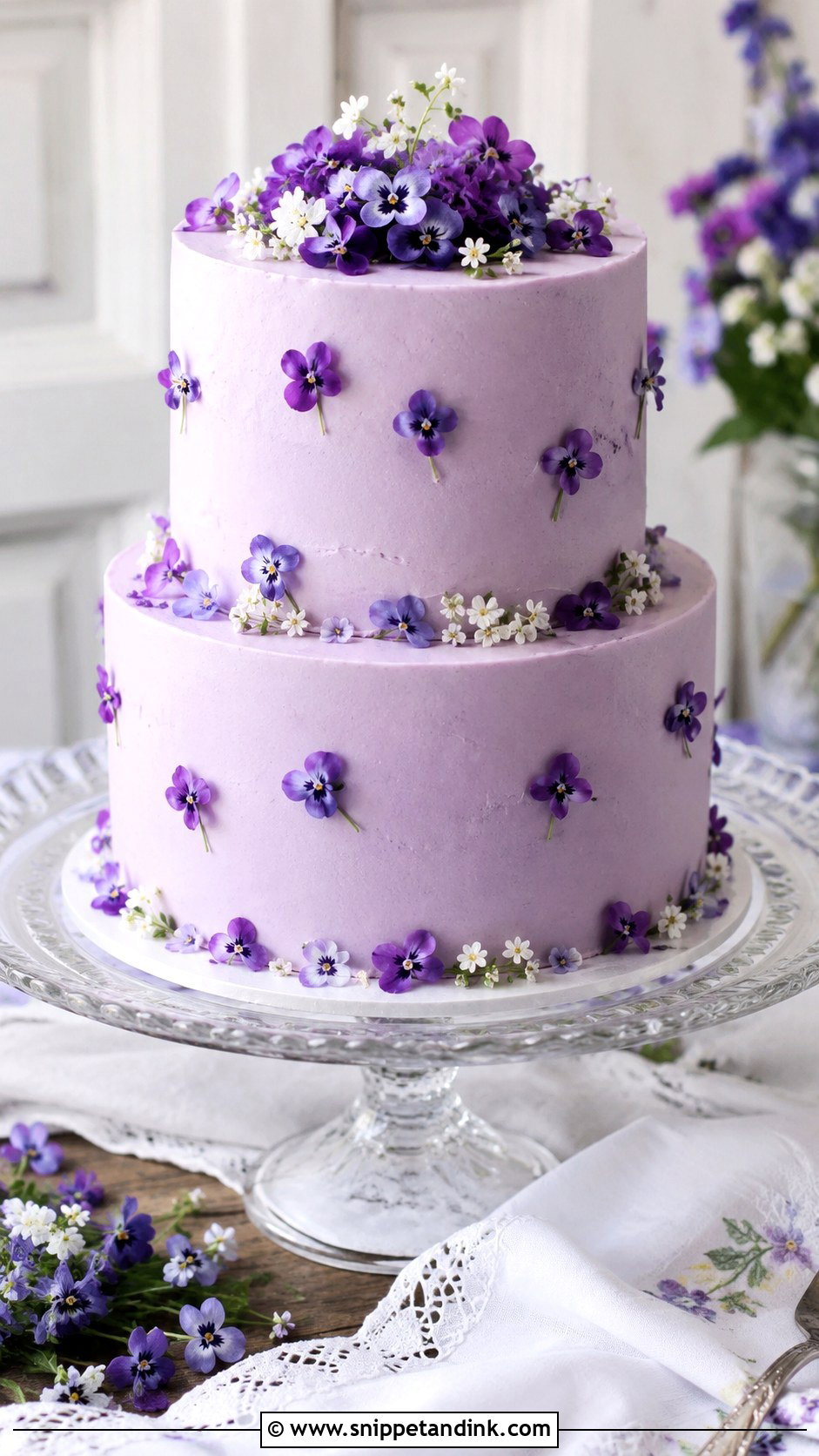
Violets are tiny, which makes them useful for framing the top edge, dotting the sides or filling gaps between larger flowers. From an edible-flower grower they work pressed or scattered as loose petals on white, lavender or pale blue buttercream. I’d steer you away from them for a big room, though. At reception distance they simply disappear, so they belong on intimate weddings, garden receptions and spring cakes where guests get close enough to see them. Pair them with small white blooms and a smooth finish so the color isn’t lost in texture.
7. Fresh Chamomile Wedding Cake
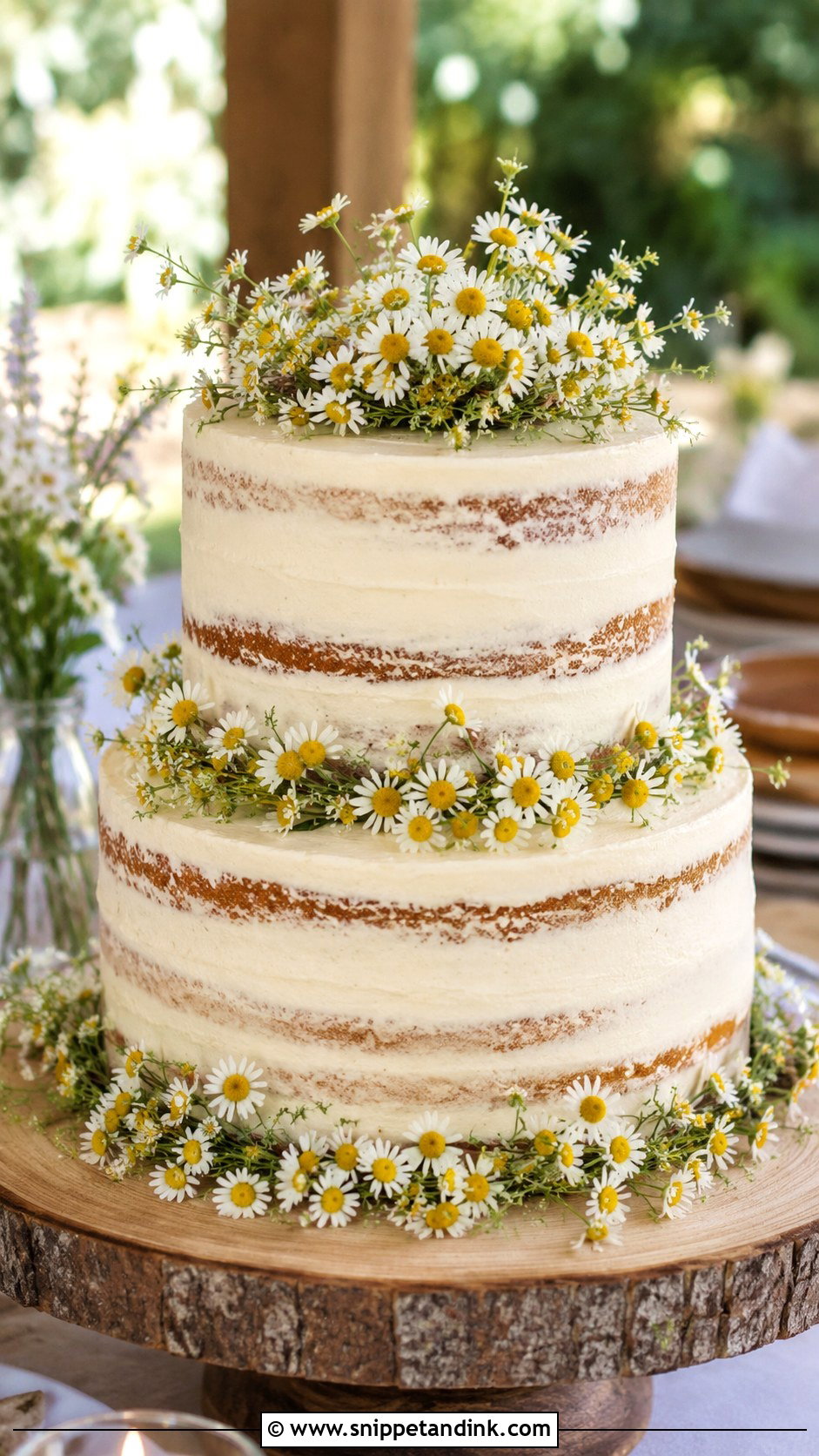
Chamomile gives you the daisy look in miniature, and a fresh chamomile wedding cake sits right at home with rustic, cottage and garden themes. A semi-naked vanilla cake is where I like it best, because rough frosting and small flowers suit each other. I place small clusters around the tiers and leave a few loose heads on the stand. Don’t crowd it; chamomile only reads as fresh with space around it. Lemon, vanilla, honey or almond sponge all go with it.
8. Fresh Lavender Wedding Cake
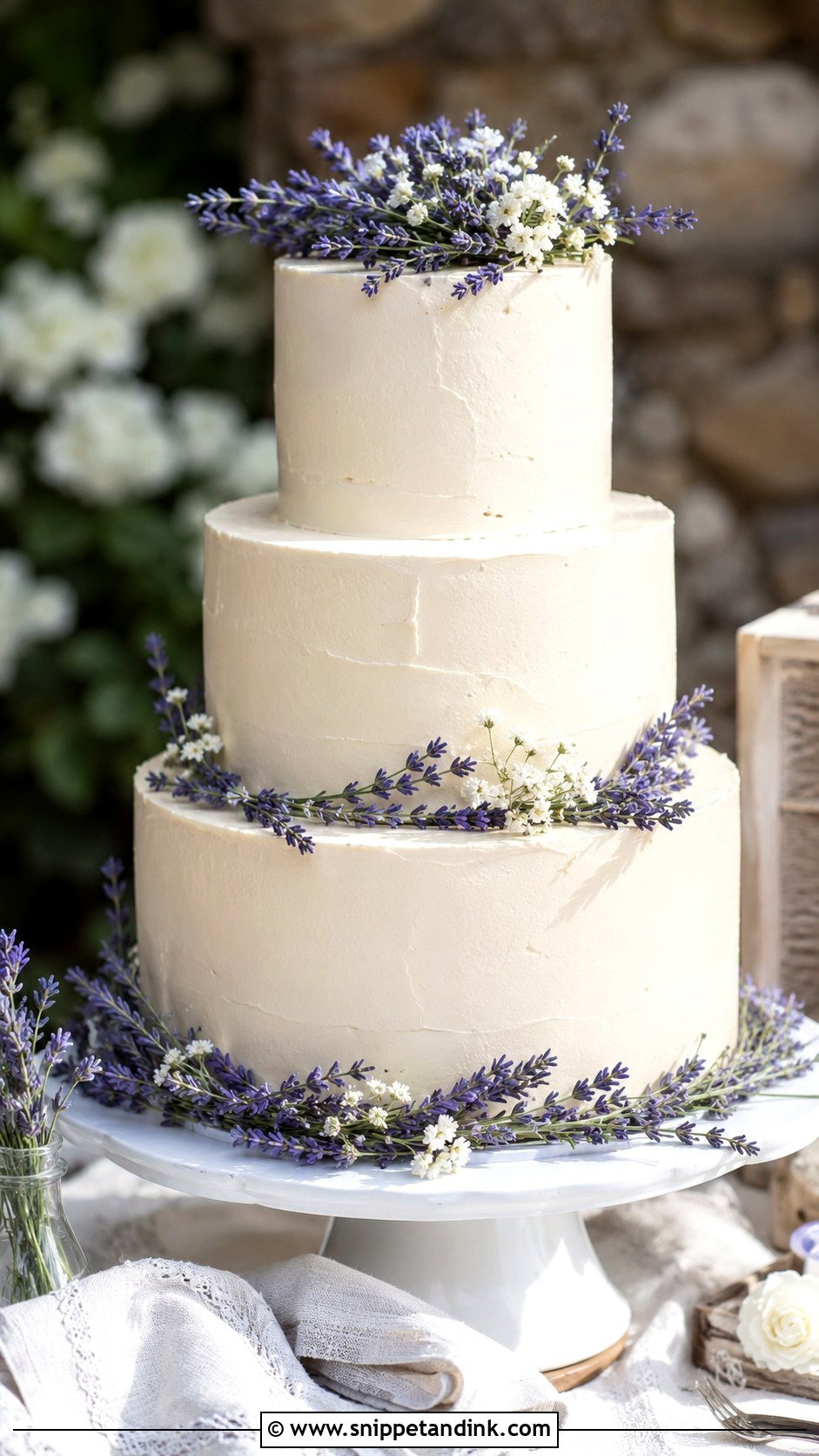
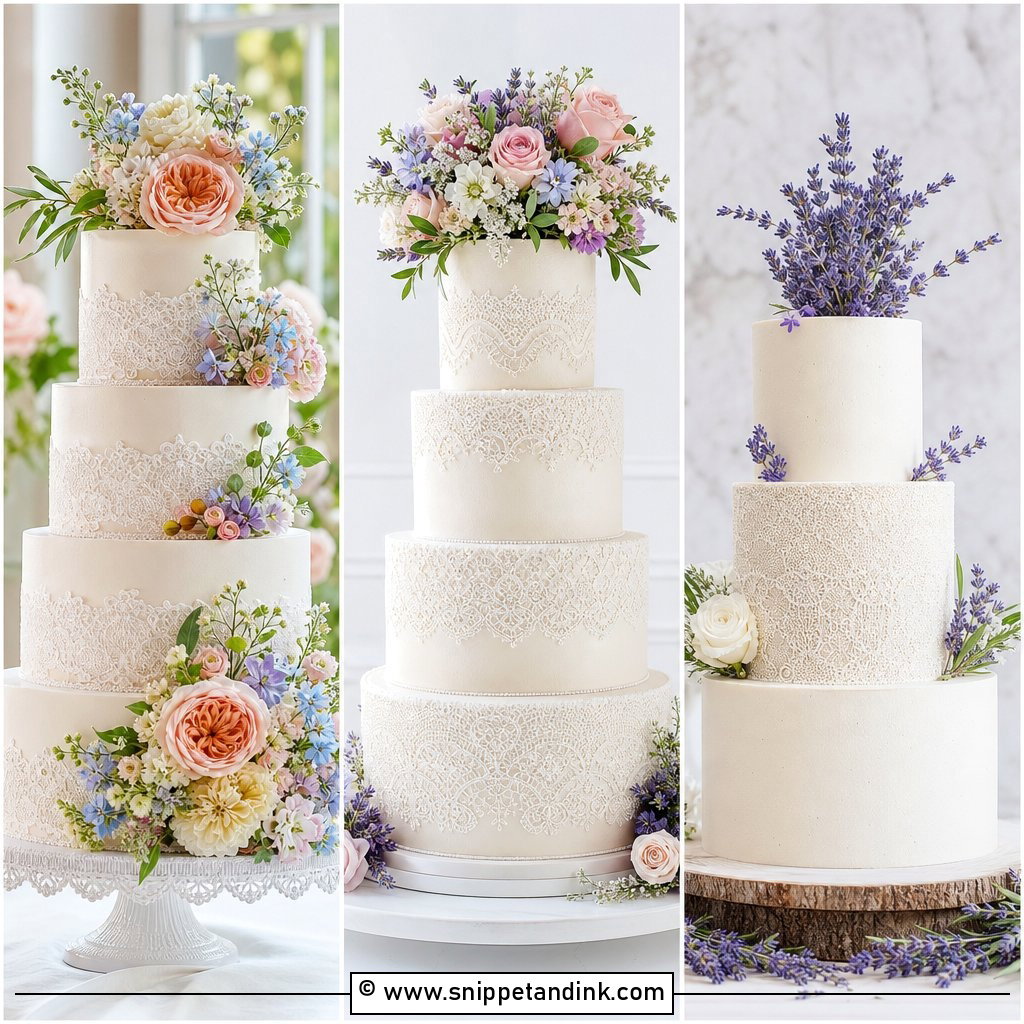
Lavender sprigs work as a ring around the base, tucked into a crown on top, or mixed in with white roses, on ivory buttercream, pale gray frosting or a naked cake. Use it lightly. Lavender tastes soapy in quantity, and even fresh sprigs will scent the buttercream they rest on if they’re placed the night before, so I add them at the venue. It belongs at outdoor weddings, barns and countryside receptions. It also holds its shape out of water, which means it still looks right late in the evening when softer petals have gone limp.
9. Fresh Calendula Wedding Cake
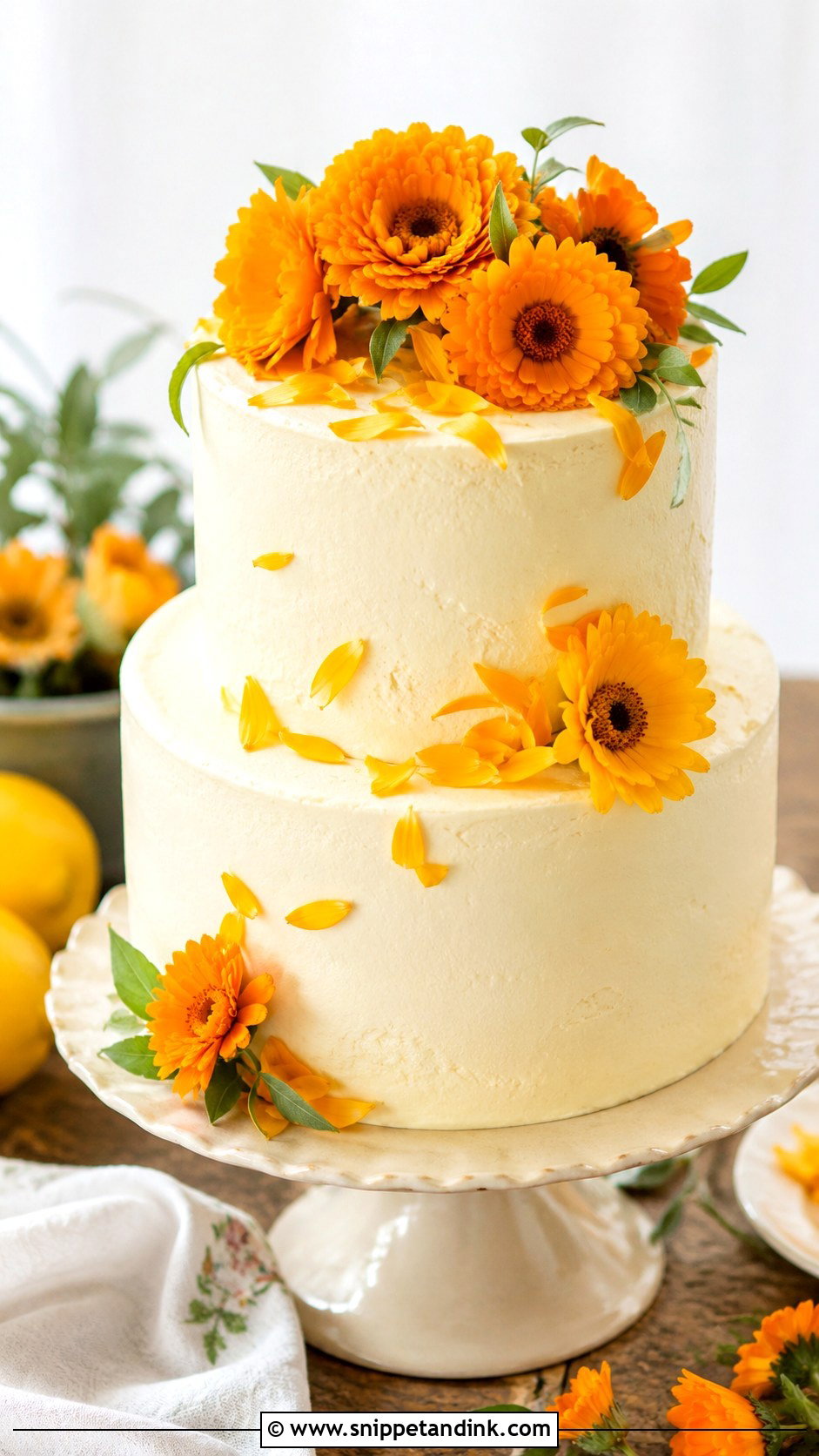
Calendula is my late summer and fall flower, warm gold and orange. The petals pull off easily, so I often scatter them loose across buttercream instead of placing full heads, and from a culinary source they’re edible. Ivory frosting and very little greenery stop the color looking loud. Citrus, vanilla, honey and spice cakes all suit it.
10. Fresh Cornflower Wedding Cake
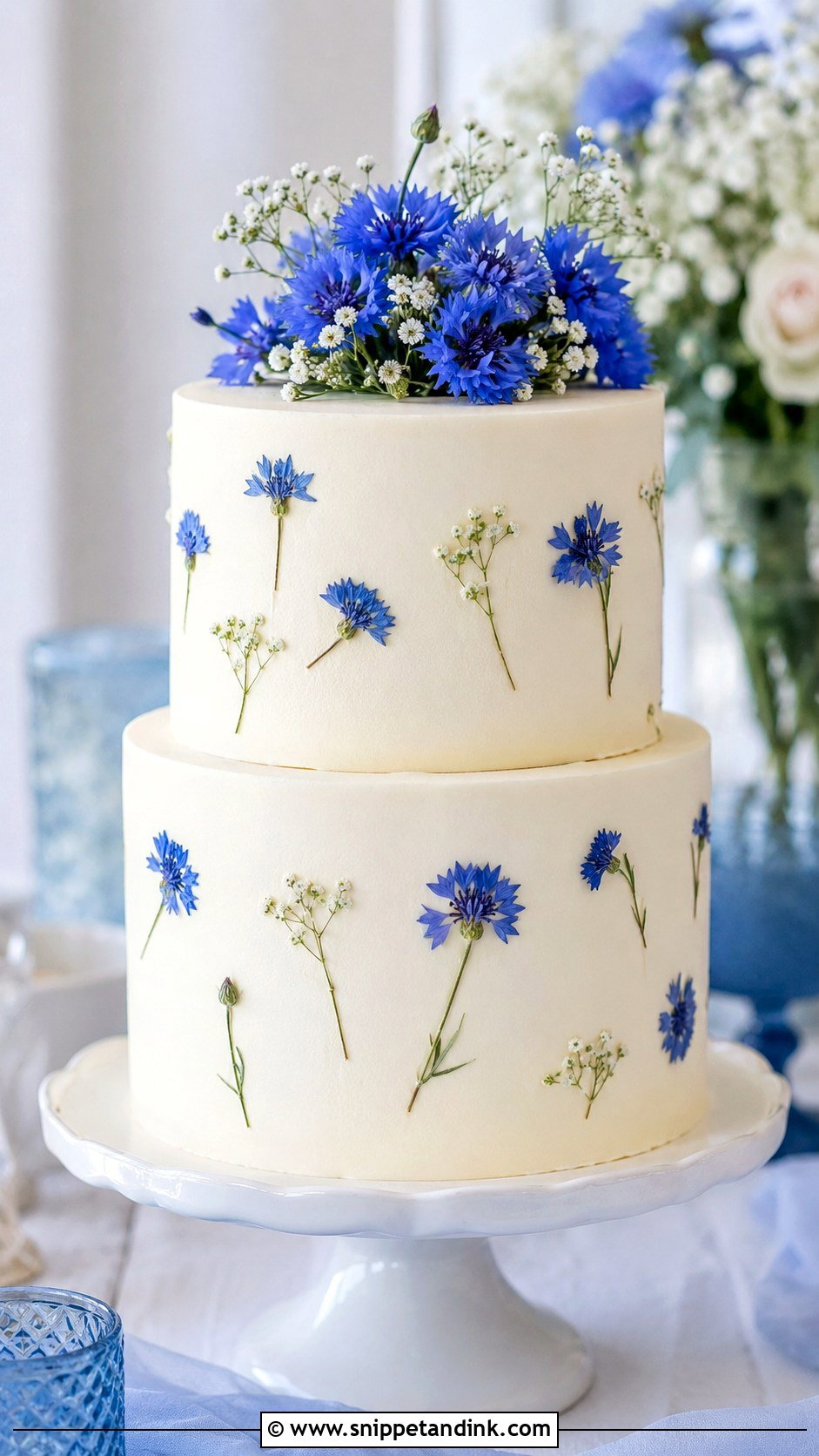
True blue is hard to find among fresh flowers, and cornflowers are one of the few that give it to you. I press them onto smooth buttercream, scatter them over a white cake, or group them with tiny white blossoms for a meadow look. One thing to know: under warm, yellow-toned reception lighting, blue petals look darker and duller than they do in daylight, so if your blue needs to match the bridesmaids, look at a sample under the venue lights first. Keep the cake shape simple and let the petals do the decorating. Vanilla, lemon, almond and berry flavors work well underneath.
11. Fresh Marigold Wedding Cake
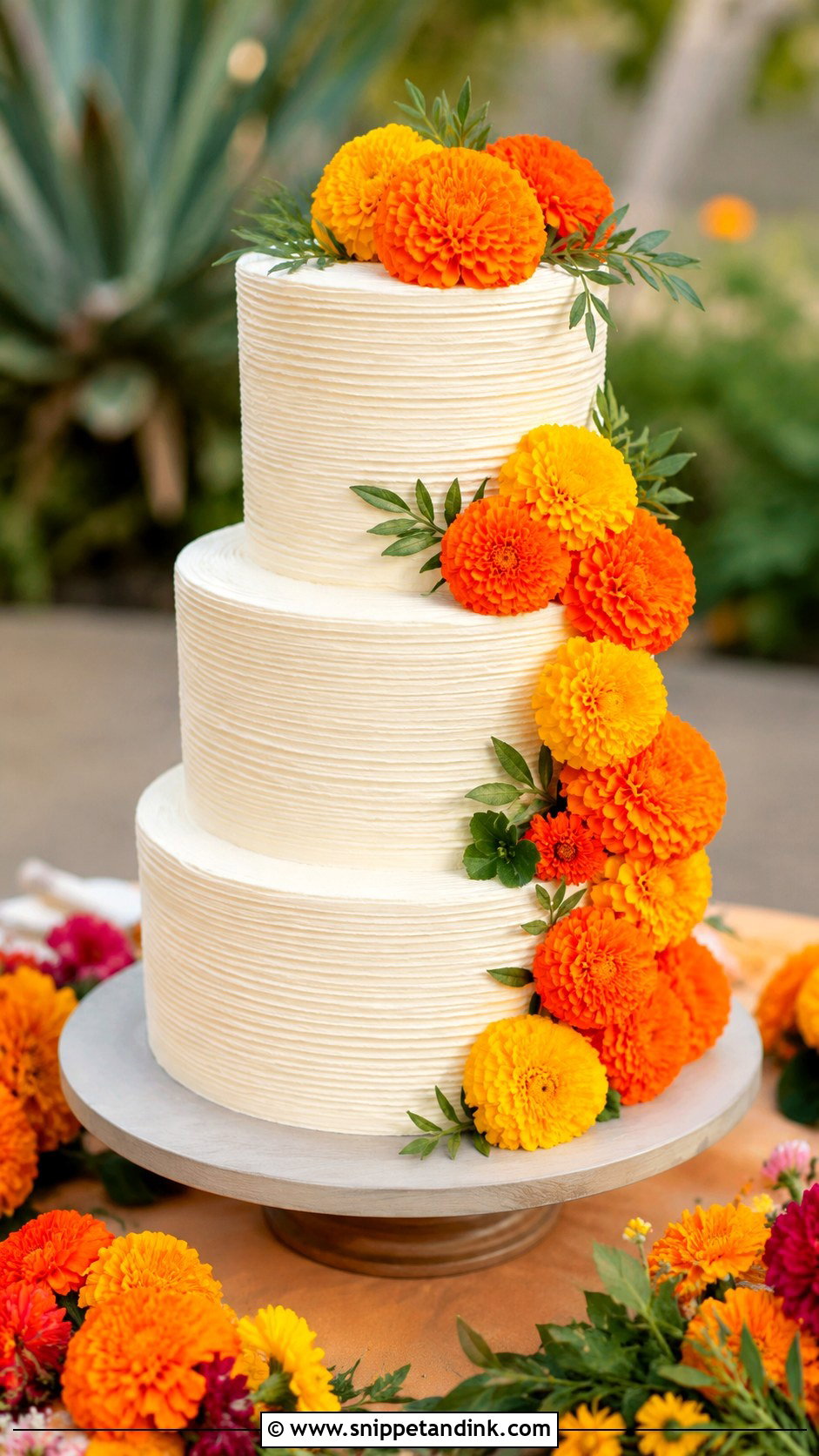
Marigolds bring bold orange, gold and yellow, and on a white cake they look far better in small clusters than in heavy layers. A top wreath or a side cascade gives them a deliberate pattern on smooth buttercream. Florist marigolds are usually grown as ornamentals, so unless your grower confirms they’re food grade, they sit on a barrier and come off before slicing. They suit outdoor receptions, late summer and colorful celebrations, with a little greenery and citrus on the side.
12. Fresh Hibiscus Wedding Cake
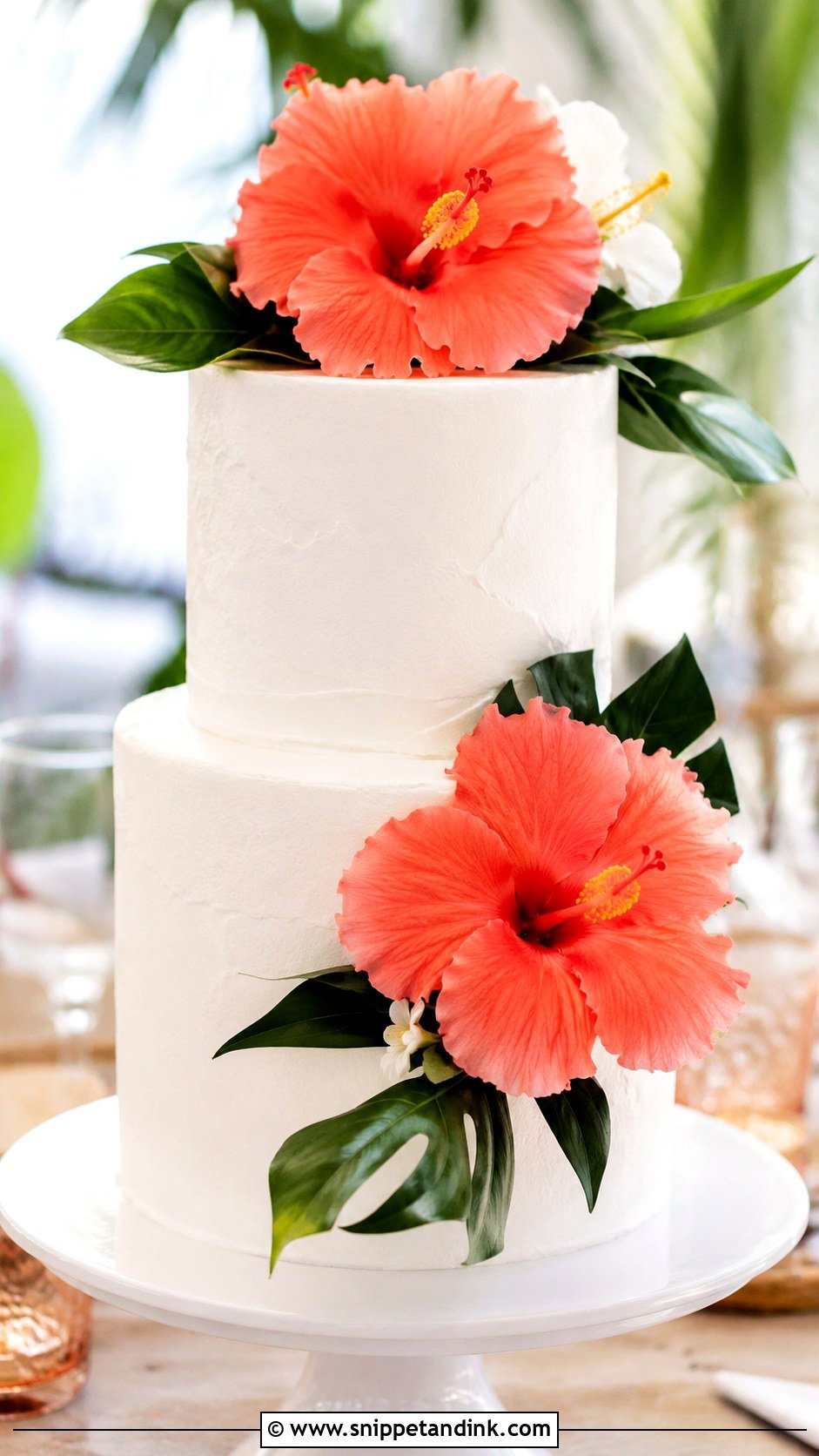
Hibiscus is large and bold, so a few wide flowers on the top tier of a clean cake can be enough. White, coral, pink or red on a coconut, vanilla or citrus sponge gives an island feel at beach settings and bright summer receptions. Be realistic about its life span. A single hibiscus flower lasts about a day even on the plant, and once cut it wilts within hours in heat. I place hibiscus last, right before guests walk in, and keep spares in a cool box.
13. Fresh Borage Wedding Cake
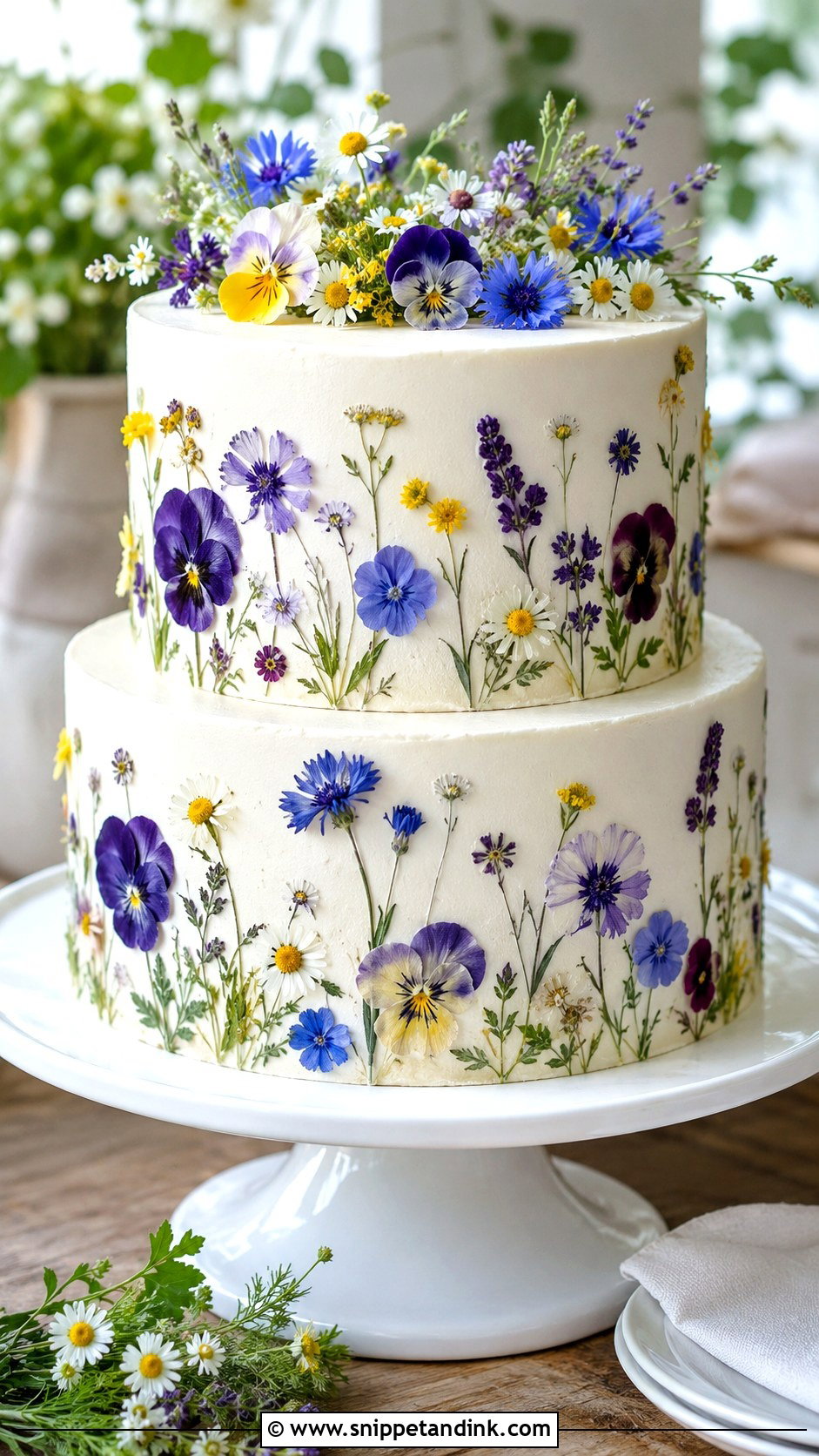
Borage gives you small blue stars, and since they’re edible they work as scattered accents or as part of a pressed flower finish. A white cake with borage looks fresh and slightly modern, and it’s a nice way out of the rose-and-peony default for spring and garden weddings. The petals bruise if handled much, so I lift each one with tweezers by the green calyx at the back. Add tiny white blooms or soft herbs, and keep the tiers plain and bright so the star shape stays readable.
14. Fresh Nasturtium Wedding Cake
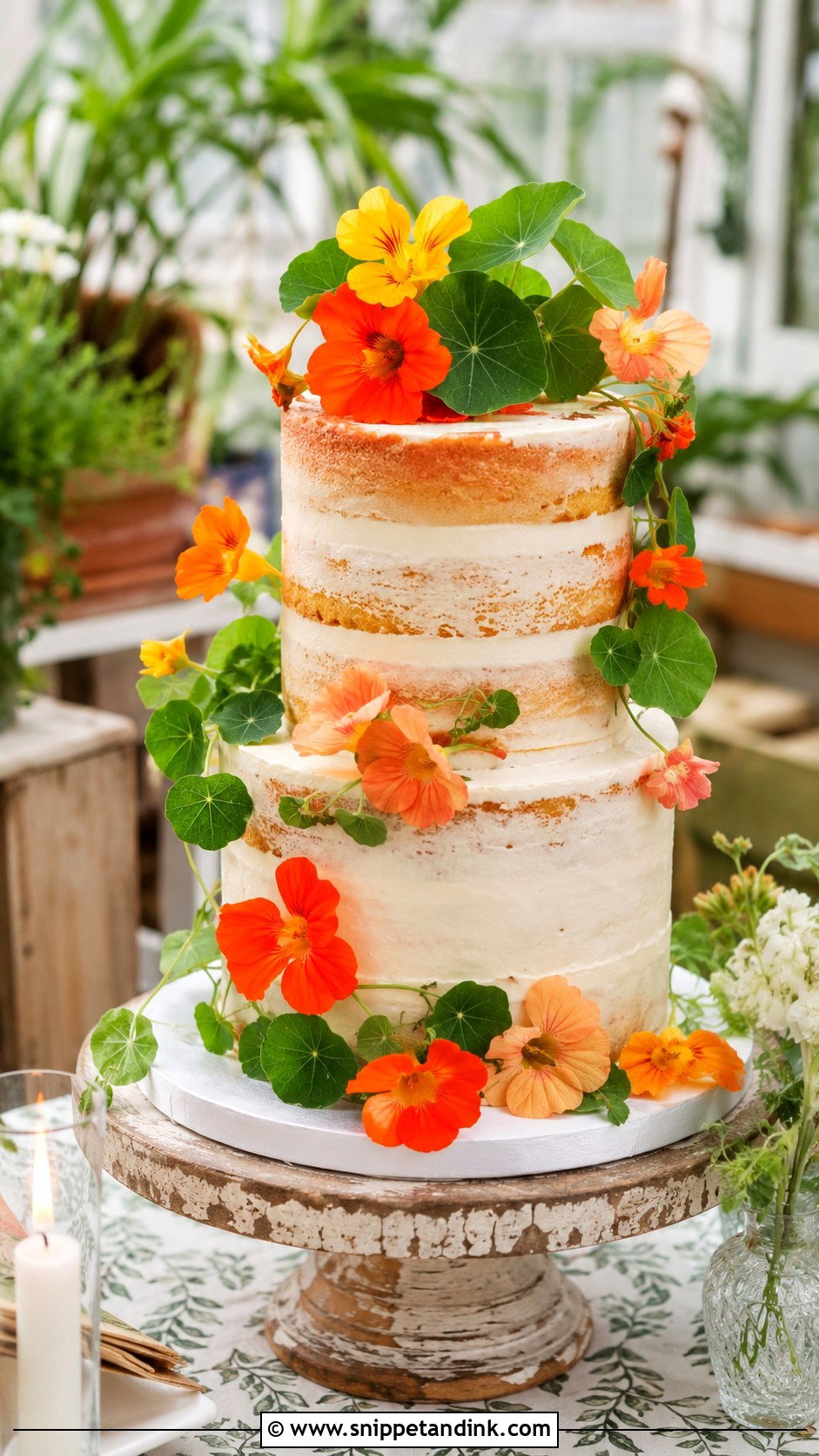
Nasturtiums come in orange, red, yellow and peach, with rounded petals and a peppery taste if anyone eats one. On a semi-naked cake I trail them around the tiers like a vine; on a smooth white cake, a clean diagonal line looks more modern. They droop in heat faster than almost anything else here, so they need a short display window and a shaded table. Outdoor weddings, greenhouse receptions and late summer celebrations suit them. Keep the other decoration minimal so the shape of each flower stays visible.



15. Fresh Dianthus Wedding Cake
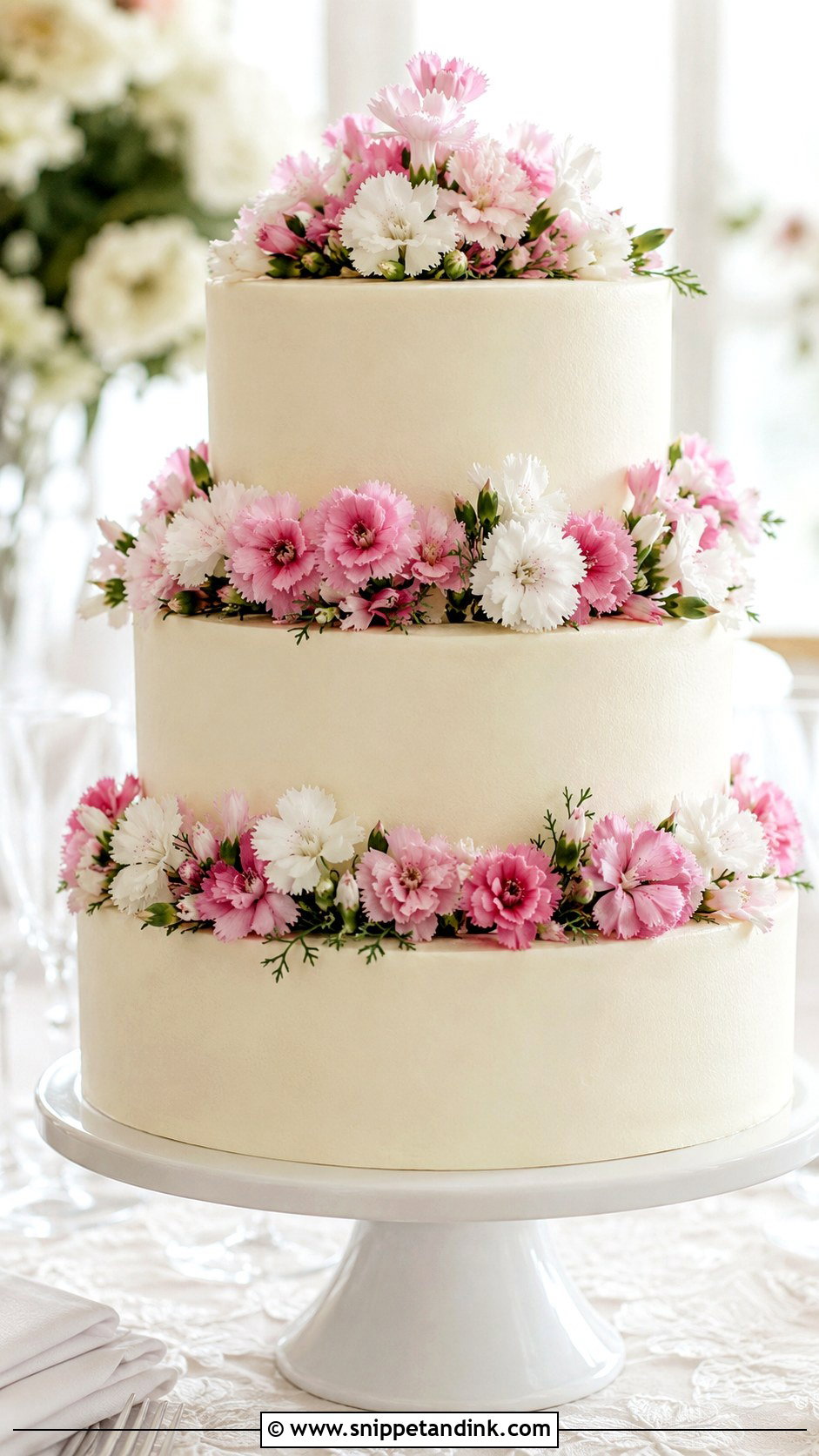
Dianthus is the carnation family, with ruffled petals in pink, white, red and two-tone shades that make matching the bridal flowers easy. I rate them because they’re tough. Carnations stay fresh out of water far longer than roses or peonies, so they’re a safe pick for a long reception or a warm room. On smooth ivory buttercream I place them around each tier, as a top cluster, a base border or a small side arrangement. No oversized blooms, just neat ruffles that look right from any side of the table.
16. Fresh Garden Rose Wedding Cake
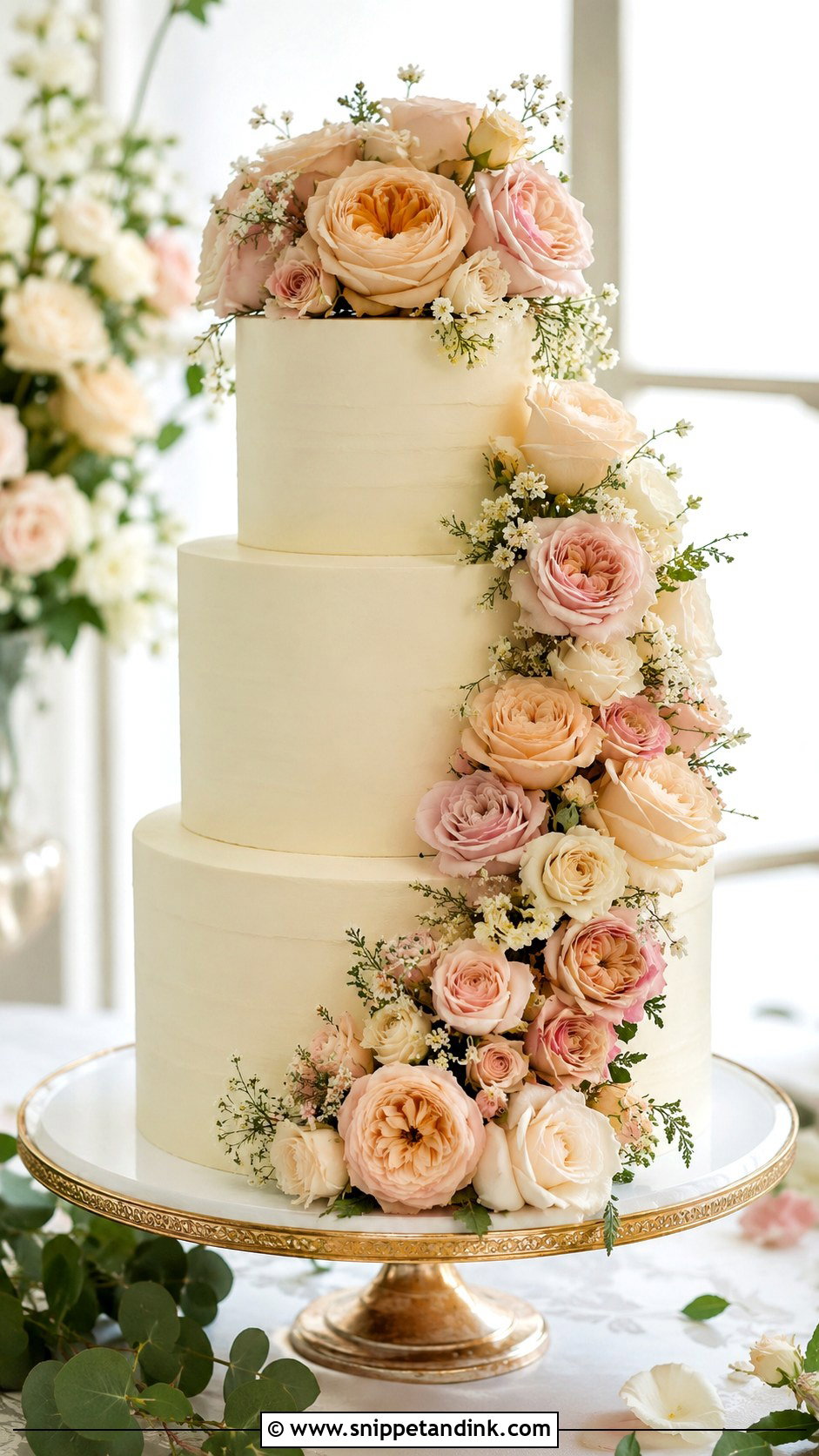
Garden roses look fuller and softer than standard roses because of their many layered petals, and on a three-tier buttercream cake they make a lush cascade down one side in blush, cream, champagne or dusty peach. That fullness has a cost. They open fast in heat and can shatter by late evening, so I pick heads that are about two-thirds open, never fully blown. A few smaller safe accent flowers fill the gaps without weighing the cake down. Formal weddings, garden ceremonies and receptions that want a classic cake without a plain one are where they belong.
17. Fresh Daisy Wedding Cake
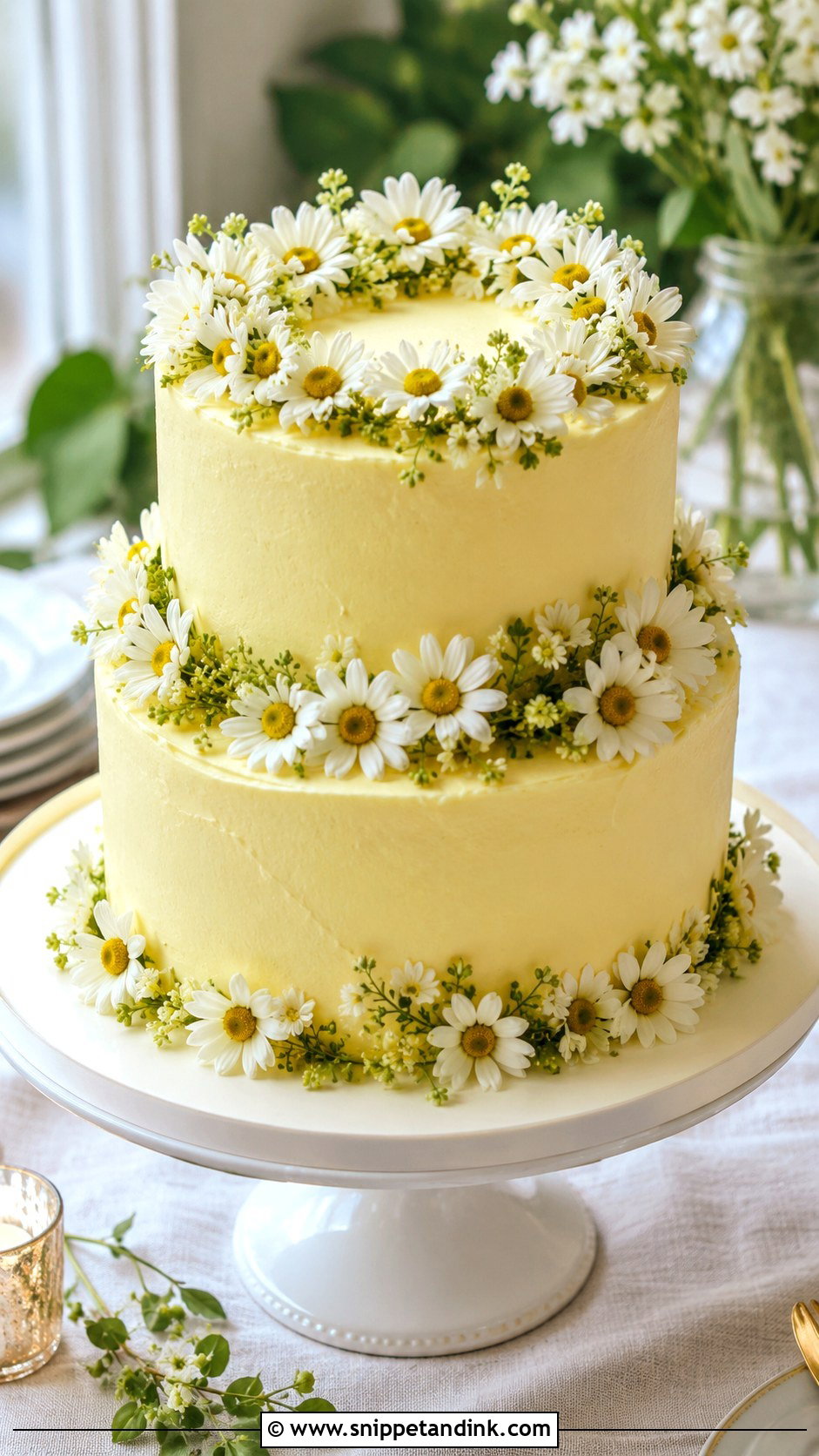
A fresh daisy wedding cake is cheerful and simple, and it fits casual outdoor weddings, backyard receptions and spring. Small white daisies on smooth white or pale yellow buttercream can sit as a top wreath, a border around each tier, or scattered across the sides. The trap is overdoing it. Daisies are flat, and packed tightly they start to look like printed fabric rather than flowers, so leave space between them. Vanilla, lemon or strawberry flavors match the mood.
18. Fresh Edible Flower Wedding Cake
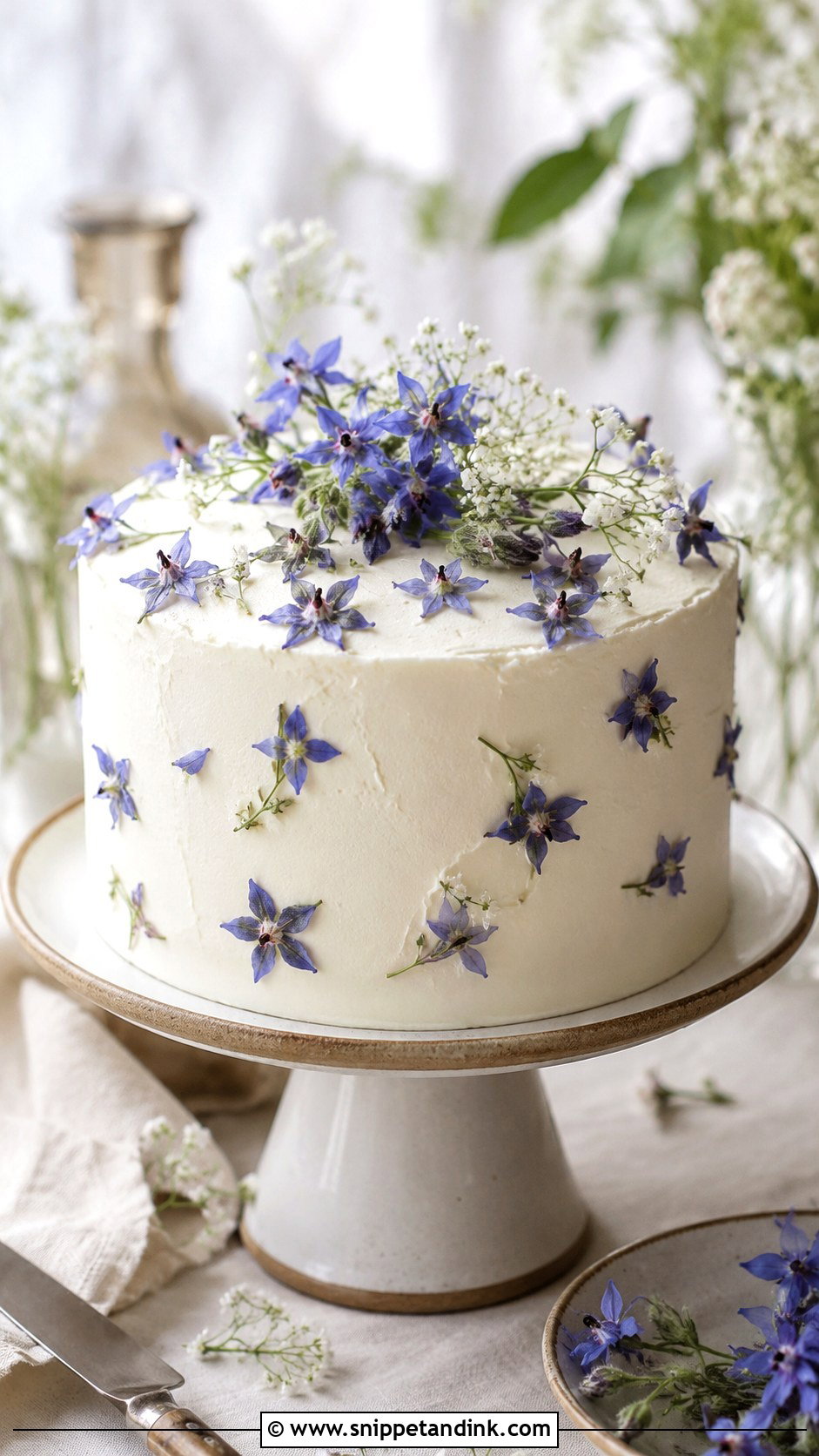
A fresh edible flower wedding cake lets the flowers become part of dessert instead of decoration you lift off. Depending on the palette, I use culinary blooms like pansies, violets, chamomile, cornflowers, calendula or borage, pressed gently onto smooth buttercream or arranged like a meadow across the top, on a clean white, ivory or pastel base. Order them from a grower who sells for food, not from the florist’s general stock, and ask for them chilled in a clamshell, because they keep only a few days. Anything not labeled edible and grown without unsafe sprays stays off this cake.
19. Fresh Flower Cascade Wedding Cake
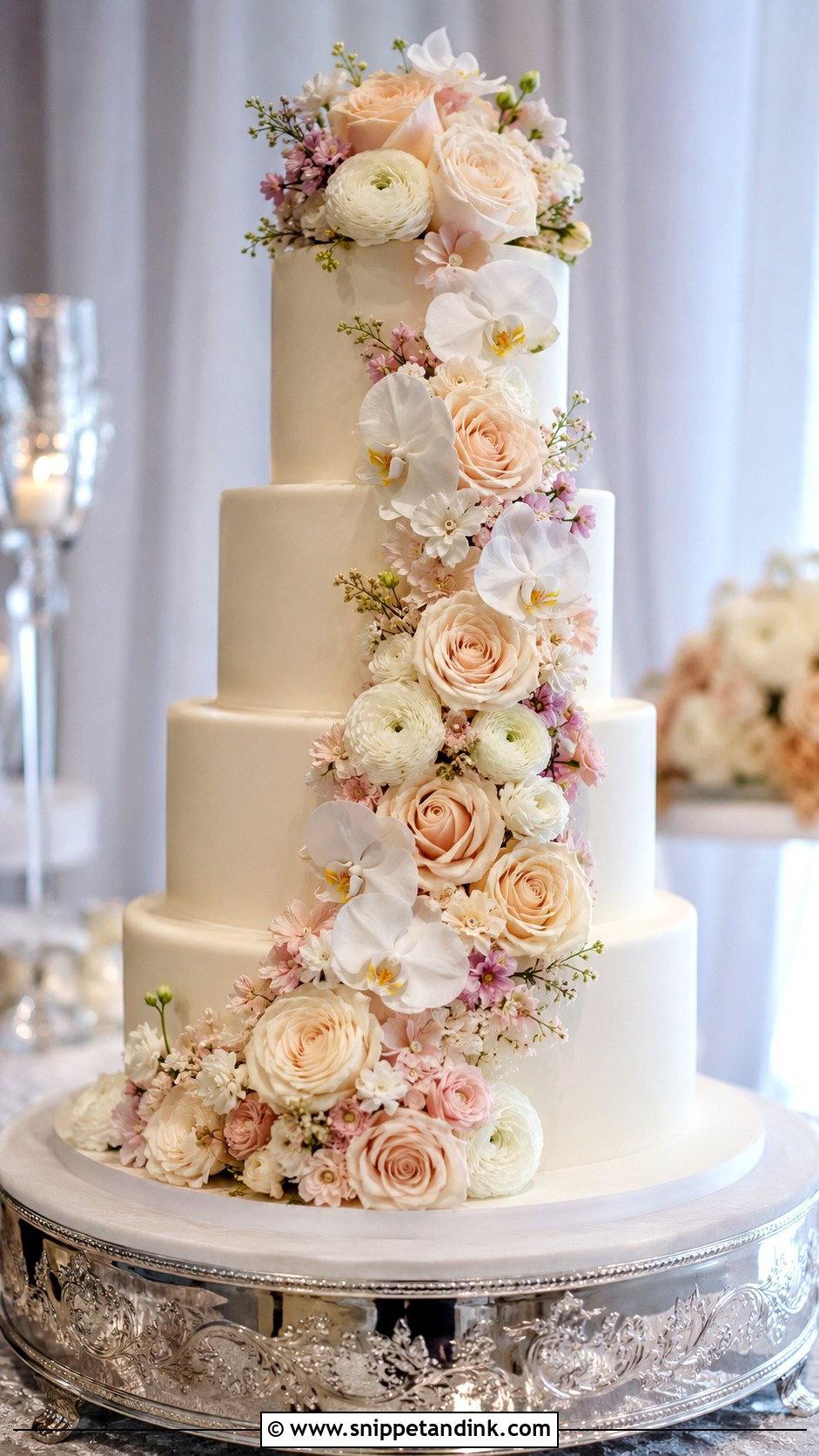
A cascade gives the cake its drama without any complicated frosting. Flowers start near the top tier and flow down one side on a diagonal, in roses, orchids, ranunculus, garden roses or mixed edible blooms, and a white three- or four-tier cake leaves room for the line to read. The engineering matters more than the flower choice. Each cluster needs its own pick and anchor point so the weight doesn’t drag the buttercream, and the florist and I agree placement before delivery so nobody improvises on the cake table. On a large table at a formal reception, it’s the cake guests notice from the door.
20. Fresh Flower Naked Wedding Cake
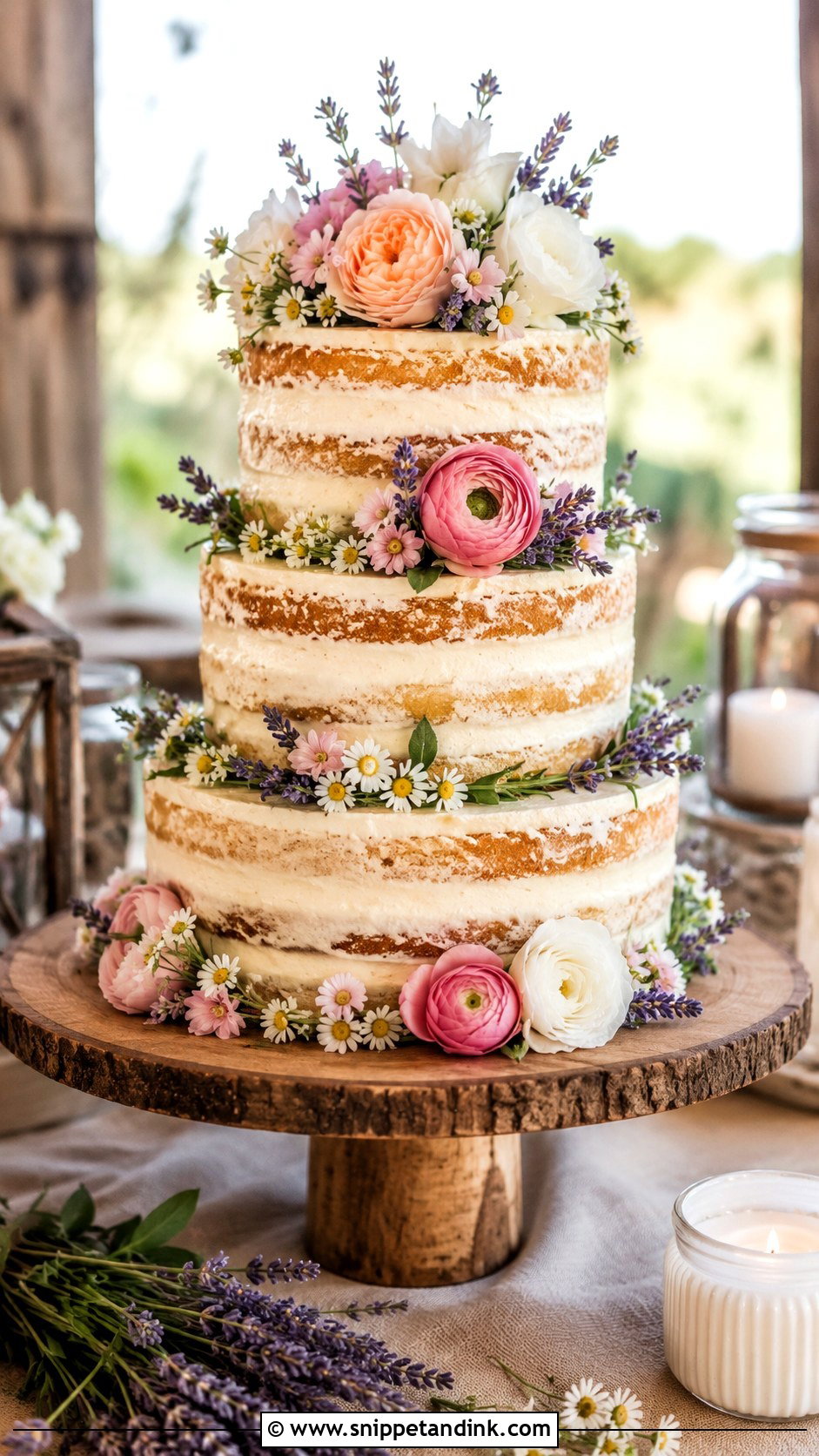
On a naked cake, the thin scrape of frosting shows the sponge, and fresh flowers soften those edges and add color. Roses, chamomile, ranunculus, lavender, daisies and small edible blooms all suit it, placed on the top tier, around the base and between layers. Exposed sponge dries out faster than a fully coated cake, so I don’t finish this style the night before in a warm room, and the flowers between layers go in at the venue. Barns, outdoor receptions and intimate celebrations fit it best. Tie the flower colors to the wedding palette so it looks planned, and finish on a wooden stand or a simple white plate.
Who Puts the Flowers On, and How Late
Fresh flowers are nearly always added at the venue, not in the bakery, because a boxed cake in a delivery van is no place for petals. That means someone has to own the job. Sometimes it’s me, sometimes it’s the florist, and the worst outcome is each of us thinking the other is doing it. Agree in writing who places the flowers, when they arrive at the venue, and where the spare blooms will be kept.
Timing depends on the flower. Orchids, carnations and lavender can go on an hour or two before guests arrive. Garden roses, peonies and pansies are better placed as close to the reception as setup allows. Hibiscus and nasturtiums I hold back until the very last moment.
Warm Rooms, Soft Buttercream and Heavy Heads
Buttercream softens in a warm room and slumps in direct sun, and a heavy flower resting on a soft tier slowly sinks into it. If the cake table is near a window or outdoors, ask for shade and keep it away from stage lighting. Smaller flowers or a fondant finish cope with heat far better than big heads on soft frosting.
Keep a few spare blooms in a cool box with a damp paper towel. A tired rose swapped out two hours into the reception takes a couple of minutes, and nobody notices it happened.
Big Blooms, Small Blooms and the Cake Between Them
Fresh flowers connect a cake to the rest of the room in a way sugar work can’t. Large blooms like peonies, roses and hibiscus make focal points; tiny ones like violets, chamomile, borage and cornflowers add detail for guests who come close. Decide by cake style, flower size, palette and how warm the venue will be. Then make sure your baker and florist are actually talking about wrapped stems, picks and edible sourcing, because the riskiest cake is the one where each assumed the other had it covered.
You'll Like These Ideas:







Leave a Reply