
I get asked for chocolate more than any other flavour, and I’m always glad of it, because chocolate cake adapts to almost any wedding. It can be modern, rustic, classic or dramatic, and still feel soft enough for a romantic reception. What makes a good one is balance: deep cocoa flavour inside, a finish that suits the room outside, and decoration that doesn’t fight either. A tall tiered cake, a moody near-black look, a soft ivory finish with chocolate inside or a dessert-table centrepiece with drips are all here. These twenty chocolate wedding cakes are arranged so you can compare flavours and finishes before a tasting.
Taste Chocolate Cake at Room Temperature, Not From the Fridge
Cold dulls chocolate. A cake straight from the fridge tastes flatter and less sweet, and the frosting feels waxy because the butter has firmed. If a tasting box arrives chilled, I tell couples to leave it out for an hour or two before they try it, the same way the real cake will be served.
A few habits make a tasting far more useful:
- Taste the lightest flavour first and the darkest last, so a strong chocolate doesn’t drown out a vanilla or lemon.
- Keep plain water or unsweetened tea to rinse between samples. Wine and sweet drinks change how the cake tastes.
- Try the frosting, filling and sponge separately, then together. A filling you love alone can be too sweet under a full coat of buttercream.
- Ask about the chocolate itself. Higher cocoa content tastes more bitter and less sweet, which some guests love and others don’t.
- Write down your reactions straight away. After five samples, they blur.
1. Chocolate Ganache Wedding Cake
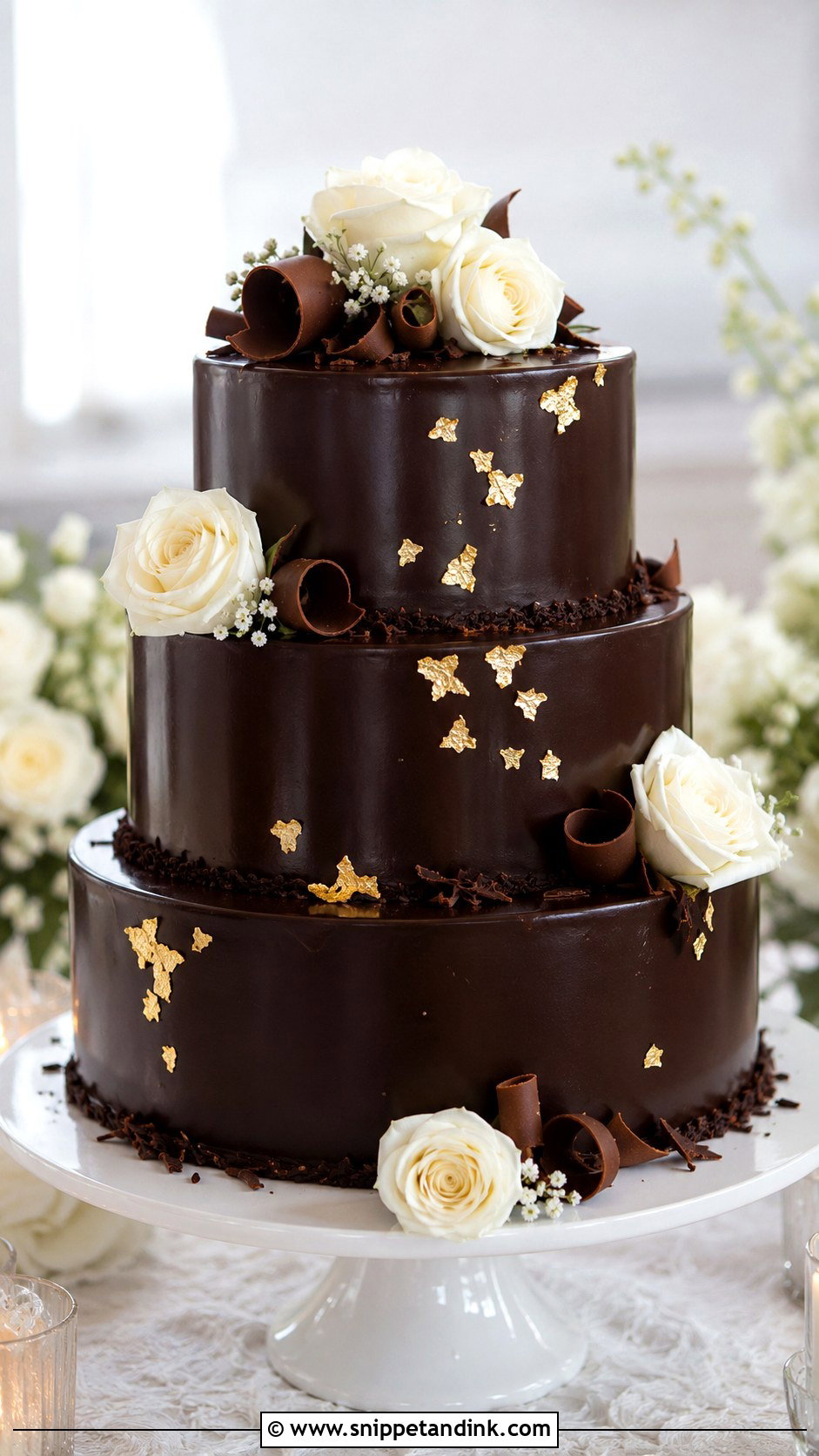
Ganache gives a shine and a clean edge that buttercream can’t quite match, and it holds up in a ballroom, a hotel or a garden. Dark chocolate ganache stands on its own or with ivory flowers, gold leaf, pearls or fresh berries. If dark feels too intense, I make it with semi-sweet chocolate, which tastes milder and sets slightly softer. Ganache covers every slice in a band of real chocolate, so guests who love chocolate get it right to the edge.
2. Chocolate Drip Wedding Cake
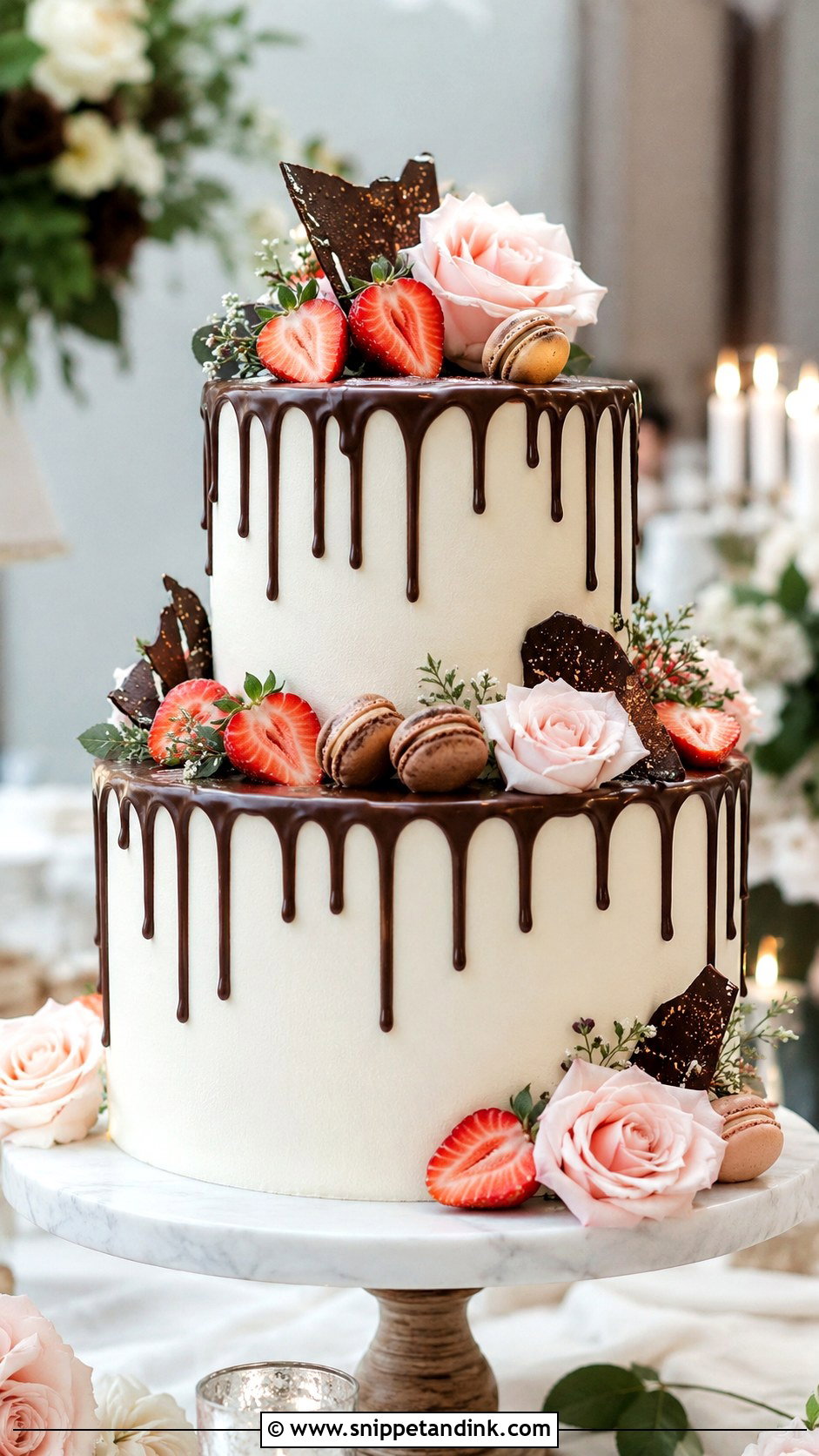
A drip loosens up a tiered cake without making it casual. I keep it neat and minimal for formal rooms, fuller for something more dramatic. The usual pairing is ivory buttercream with dark chocolate running down the sides, then roses, figs, berries, macarons or chocolate shards on top. It’s at home in barns, rustic venues and autumn receptions. If you want the drip to be the feature, I’d keep the tiers themselves plain.
3. Three Tier Chocolate Wedding Cake
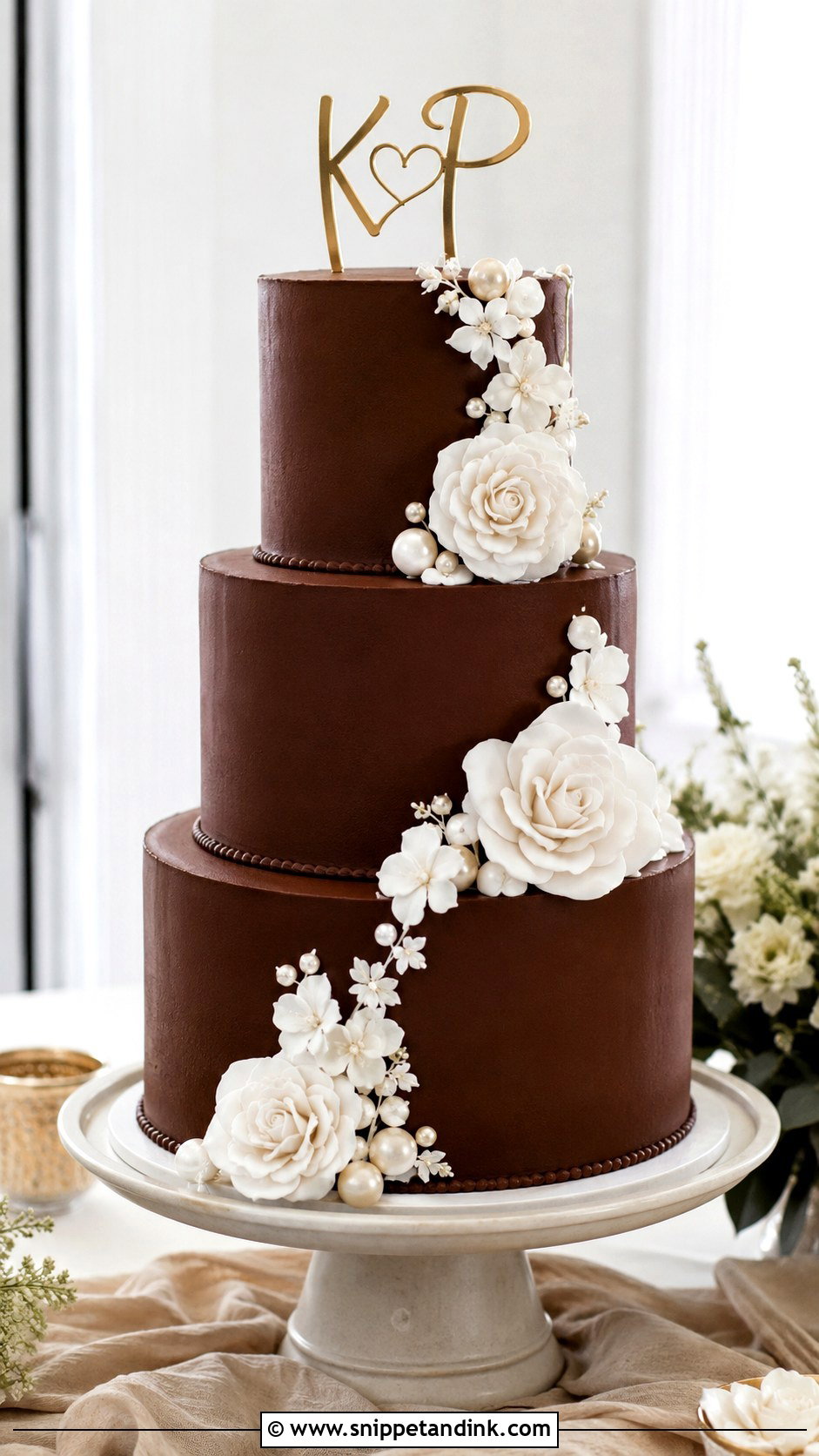
A three tier chocolate wedding cake is the size I recommend most for a medium wedding, and it gives the most room to play. Smooth chocolate buttercream looks modern; fondant with chocolate details looks formal. I sometimes mix finishes, with ganache on the bottom tier, textured buttercream in the middle and flowers on top, though three finishes needs a steady hand to look planned rather than undecided. Each tier can carry its own filling: raspberry, salted caramel, mocha or vanilla cream.
4. Chocolate Buttercream Wedding Cake
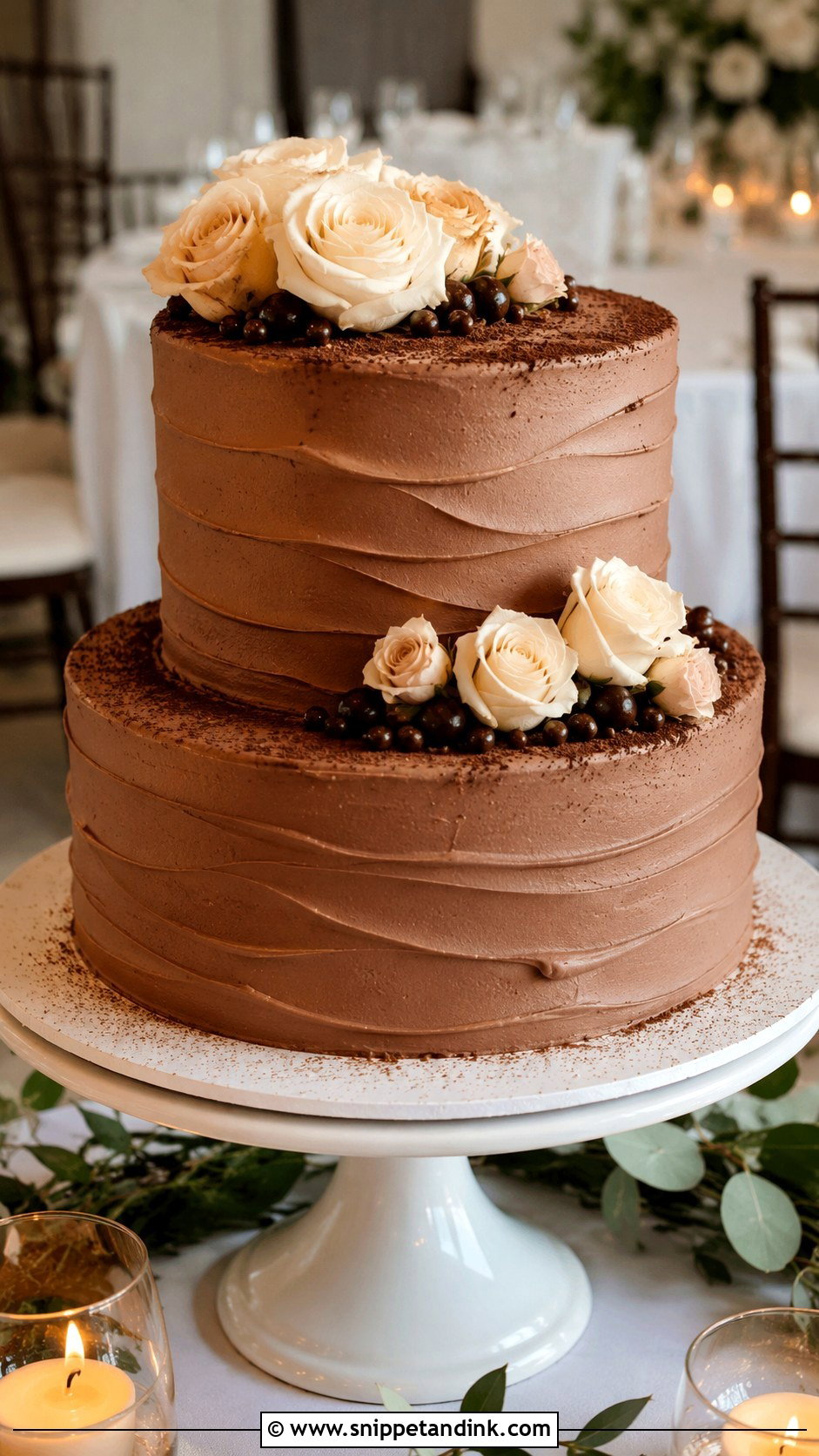
Buttercream is creamier and gentler than ganache, both in taste and texture. I can smooth it, swirl it or leave rustic strokes. Milk chocolate buttercream gives a warm, soft brown; dark chocolate buttercream is deeper and more dramatic. Because it’s less intense than solid ganache, it pleases a wide crowd. Fresh flowers, greenery, chocolate pearls or a simple topper suit it. Inside, vanilla filling, espresso cream or raspberry preserves balance the slice. Its one weak point is warmth, so I’d want it kept in a cool room.
5. Chocolate Raspberry Wedding Cake
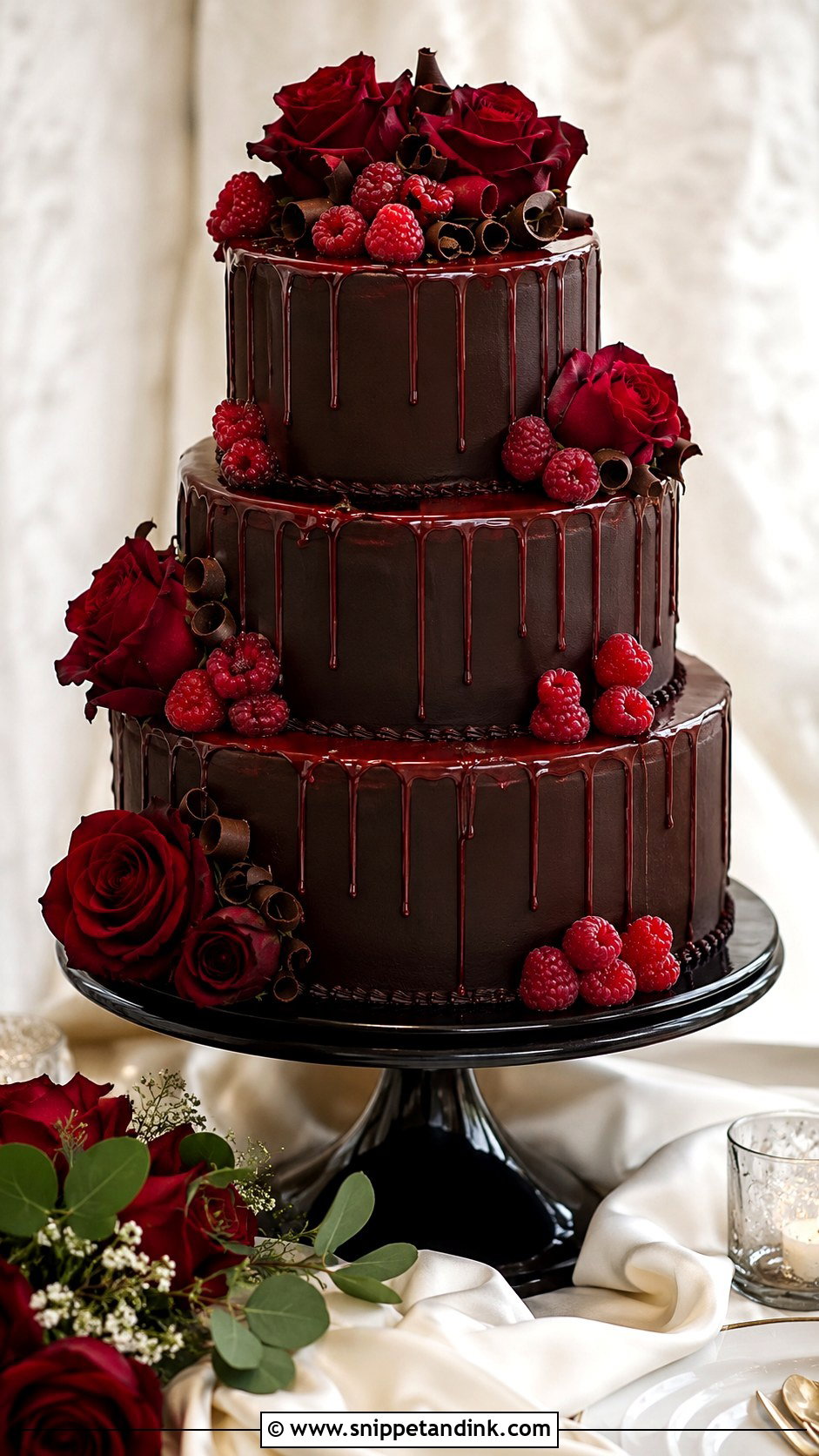
Raspberry’s sharpness is what keeps chocolate from tasting flat, and it’s the pairing I’d suggest to anyone who worries chocolate is too heavy for a wedding. Dark chocolate layers carry raspberry jam, raspberry buttercream or fresh raspberry filling. Outside, ivory frosting keeps it classic and ganache with berries makes it bold. Fresh raspberries, deep red roses and a light dust of cocoa finish it. The colour can be styled soft for spring or deep for winter. Fresh raspberry filling shortens how long the cake keeps, so it’s made close to the day.
6. Chocolate Strawberry Wedding Cake
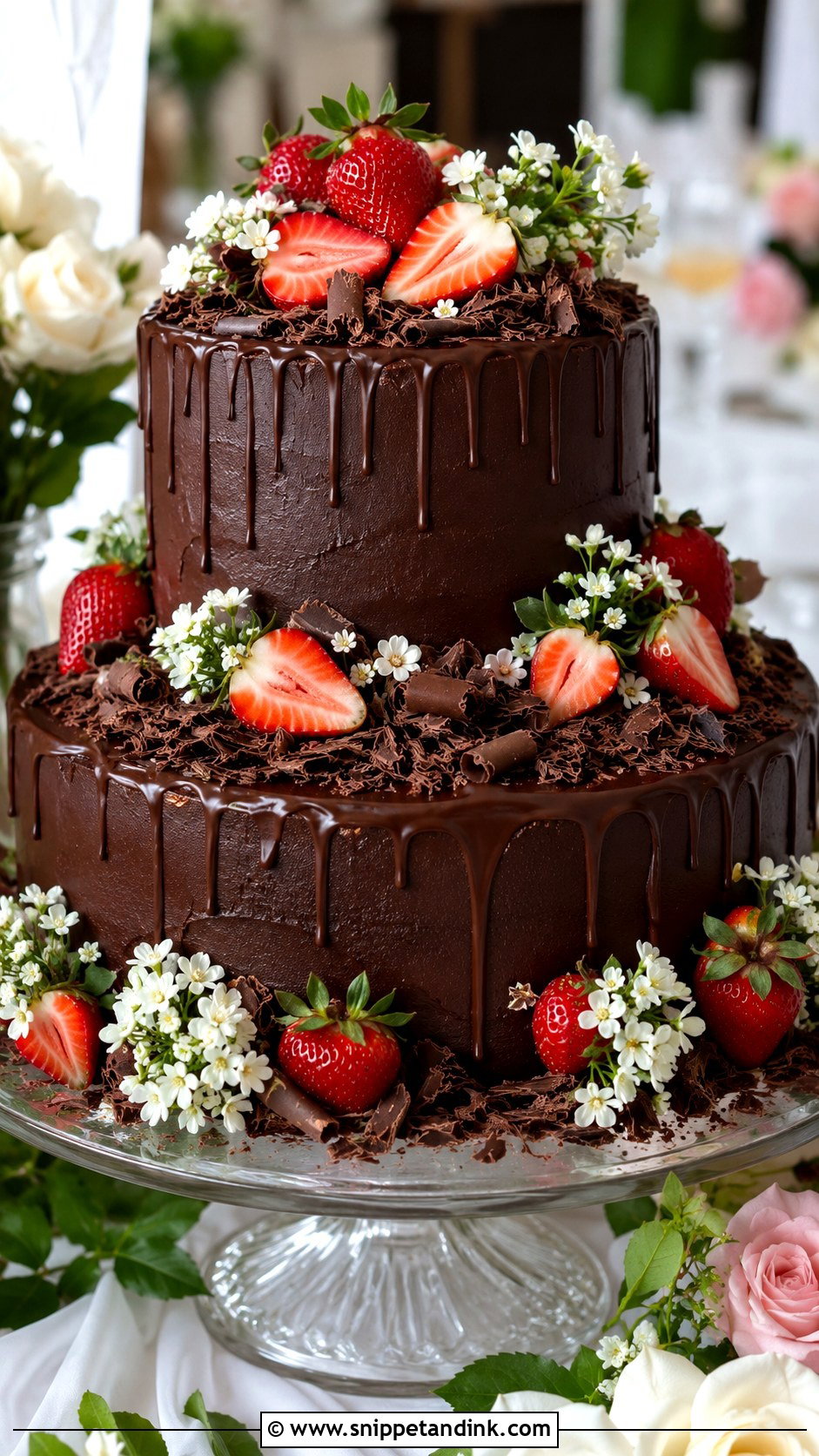
Strawberries are the flavour almost every guest already likes with chocolate. Fresh berries bring colour and a little sweetness against rich layers. Smooth ganache with whole berries looks formal, while ivory buttercream with strawberry filling inside is softer. For a garden wedding I add small white flowers and greenery; for a modern reception, sliced strawberries, chocolate curls and clean tiers. Strawberries go on at the venue, since cut fruit starts leaking within hours.
7. Chocolate Salted Caramel Wedding Cake
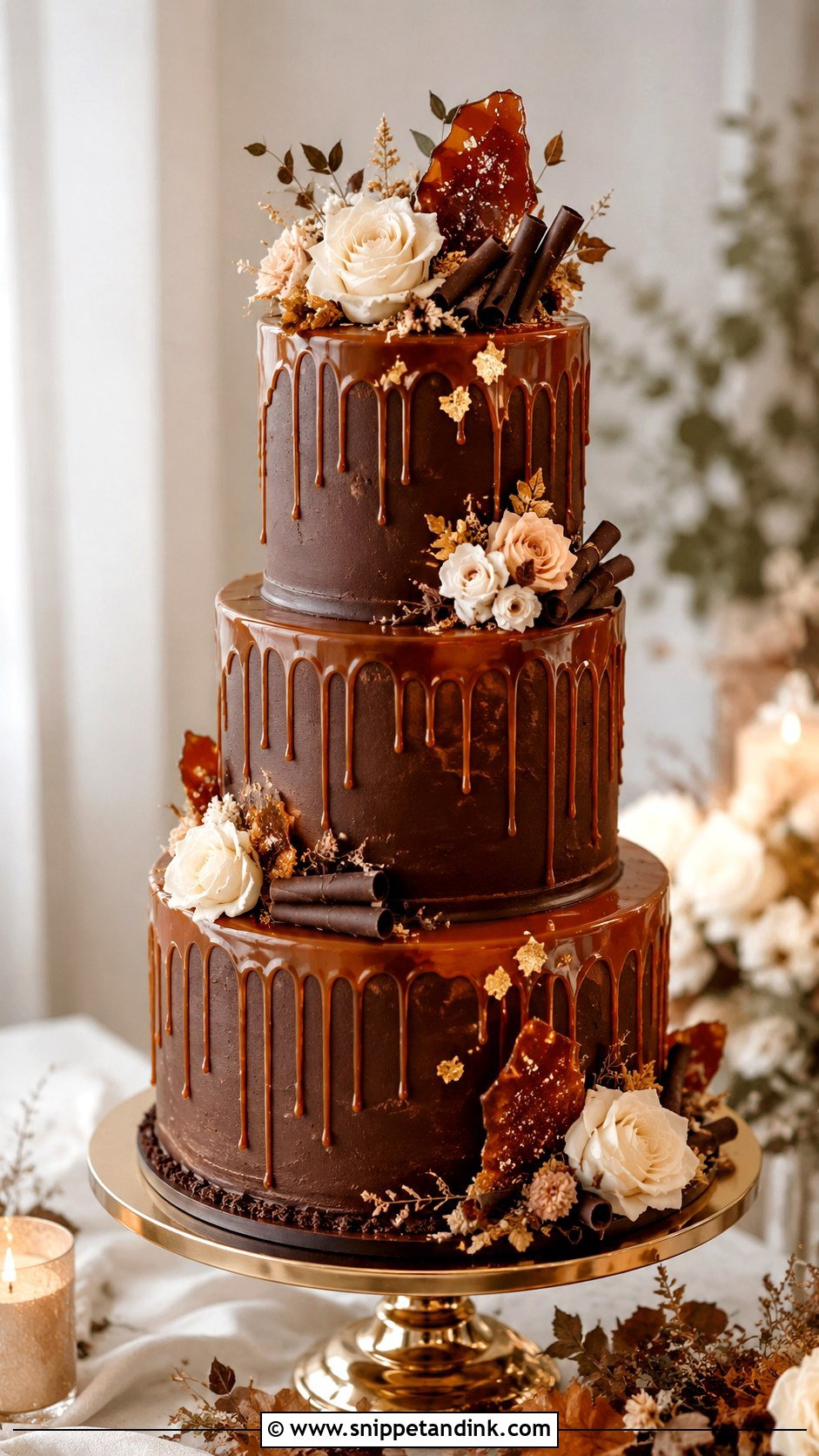
Salt is what makes this one work. Caramel alone can make chocolate cake cloying, but a pinch of salt sharpens the cocoa and cuts the sweetness. Smooth chocolate buttercream or ganache keeps the outside elegant, and caramel drips add warmth. Caramel shards, chocolate curls, dried flowers or cream roses decorate it. Candlelit autumn receptions with wood, gold or neutral styling suit it best. I’d steer away from very soft caramel layers on a tall cake, as they can make the tiers shift.
8. Chocolate Mocha Wedding Cake
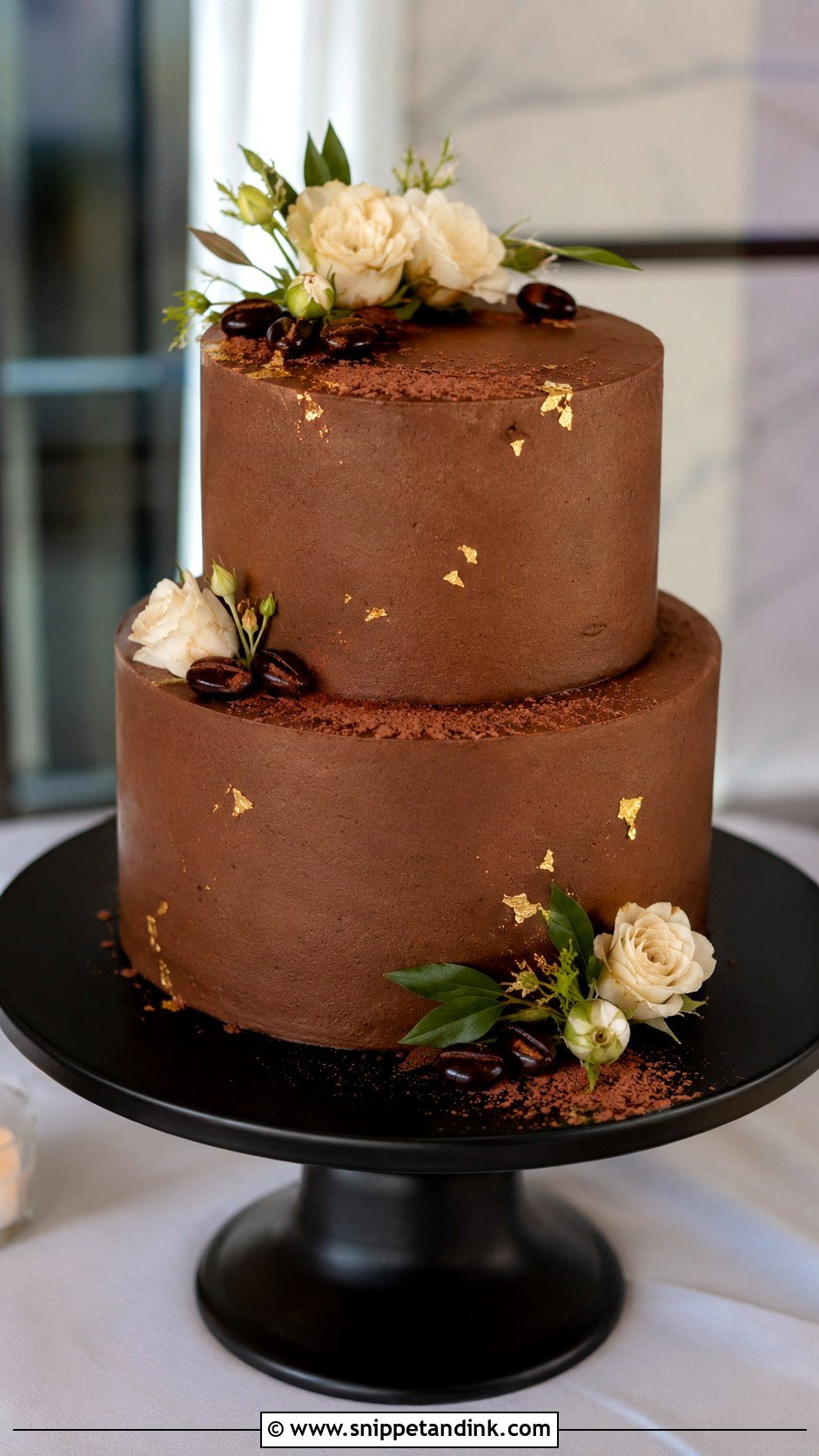
Espresso deepens chocolate without tasting strongly of coffee, unless you want it to. I layer mocha buttercream, espresso ganache or coffee cream between dark sponge. A smooth dark finish looks sleek; ivory buttercream with mocha details is softer. Gold details, chocolate-covered espresso beans, cream flowers and clean tiers suit it. I always ask whether a lot of guests avoid caffeine, because a properly strong mocha cake does carry some, and a decaf espresso works just as well in the recipe.
9. Chocolate Peanut Butter Wedding Cake
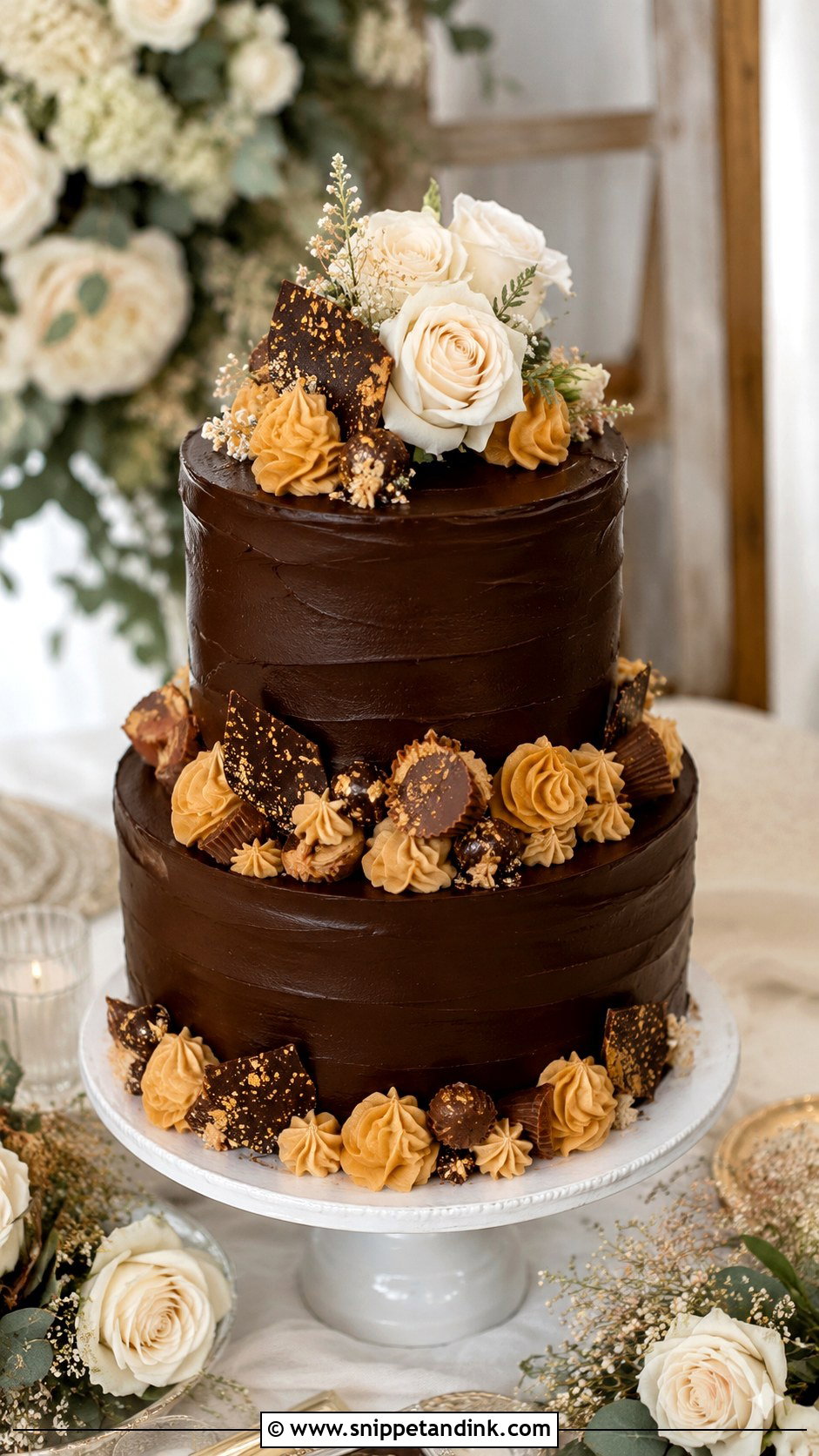
Peanut butter is personal and comforting, and with a refined finish it belongs at a wedding. Dark chocolate layers with peanut butter buttercream sit under smooth ganache or clean ivory frosting, with a few truffles, peanut butter cups or gold-dusted chocolates placed with restraint. It’s rich, so slim slices are enough. Peanut is also one of the most serious allergens, so this is a flavour I only make after we’ve talked through the guest list, the labelling and how it’s served.
10. Chocolate Orange Wedding Cake
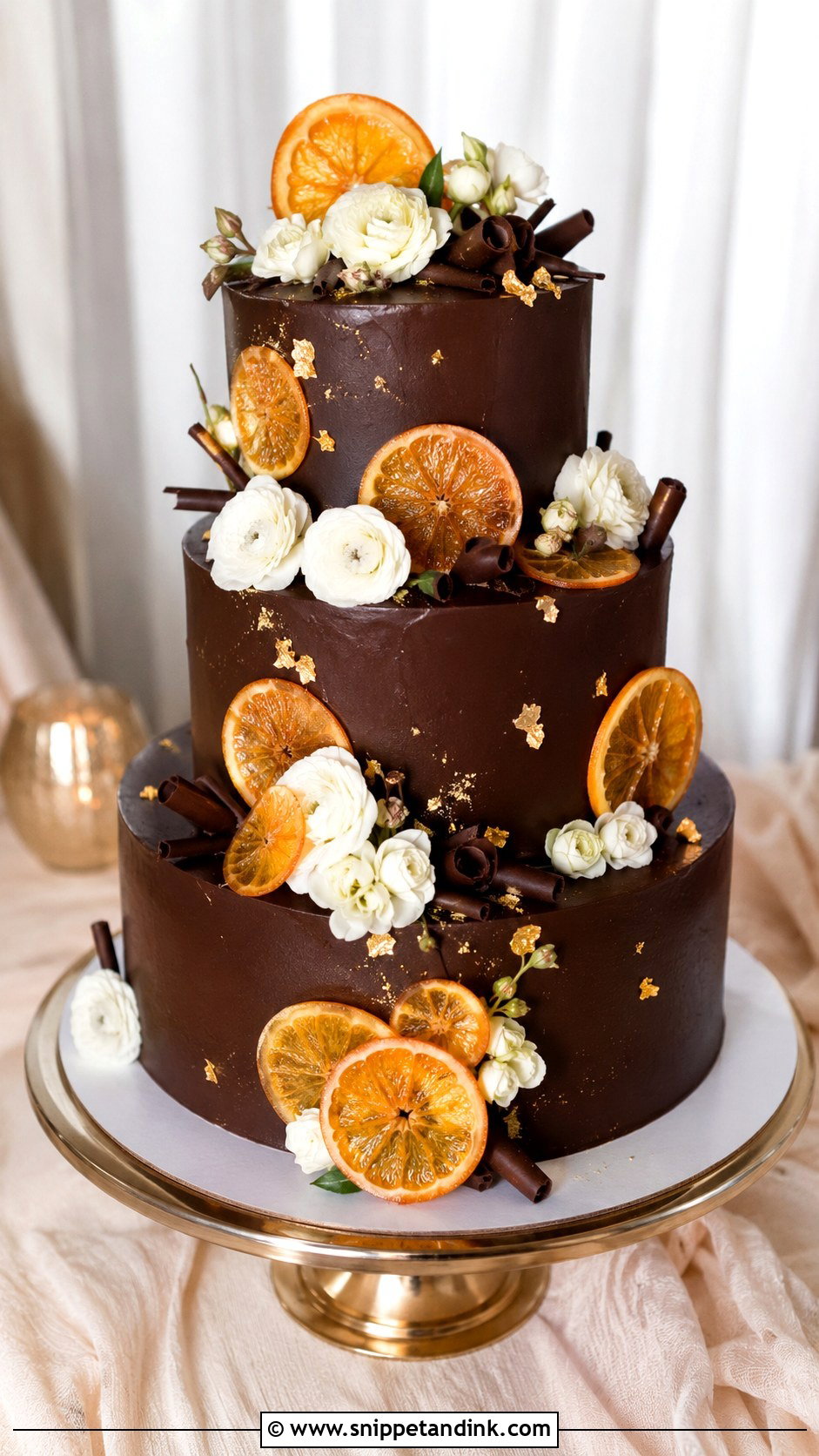
Orange cuts through rich chocolate and leaves each bite clean. I add zest to the sponge, orange curd between layers or orange into the ganache. Dark frosting with candied orange slices looks striking; ivory buttercream with orange-toned flowers is softer. It suits late summer, autumn and winter weddings, and gold leaf or dried orange wheels finish it. Curd is softer than buttercream, so I pipe a firm dam around each layer before filling, otherwise it presses out at the sides under weight.
11. Black Forest Wedding Cake
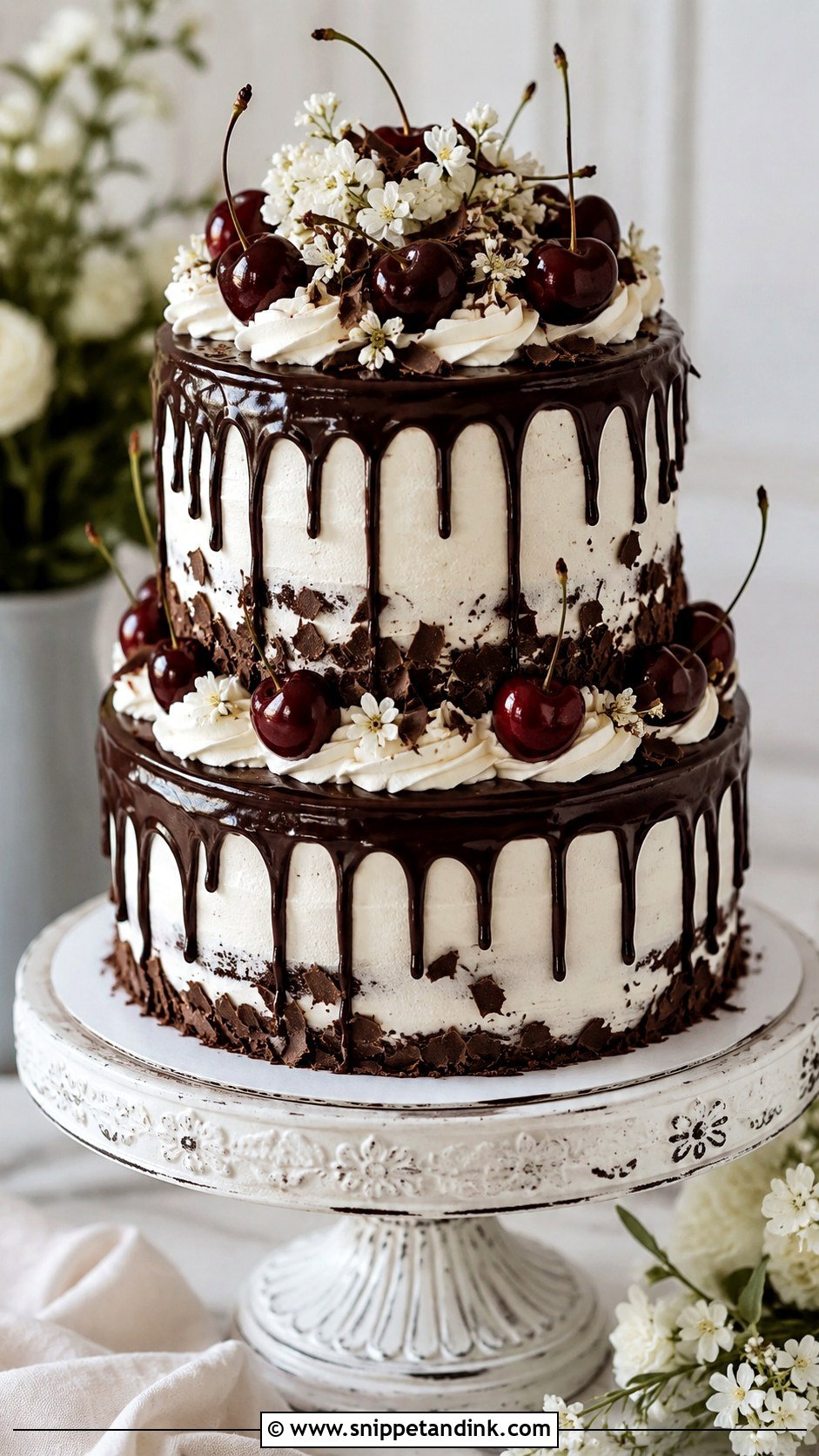
A Black Forest cake brings dark chocolate cake, cherries and cream together, and it has a vintage charm I enjoy. The traditional whipped cream finish won’t survive a reception, so for a wedding I use stabilised cream, chocolate ganache or a clean buttercream outside, built up into tall tiers. Cherries ring the tiers, sit in floral clusters or go on top with chocolate shavings. A cherry liqueur soak is traditional, so I mention it to couples in case guests avoid alcohol. The cut slice, with its dark and pale stripes, is one of the best on this list.
12. Chocolate Hazelnut Wedding Cake
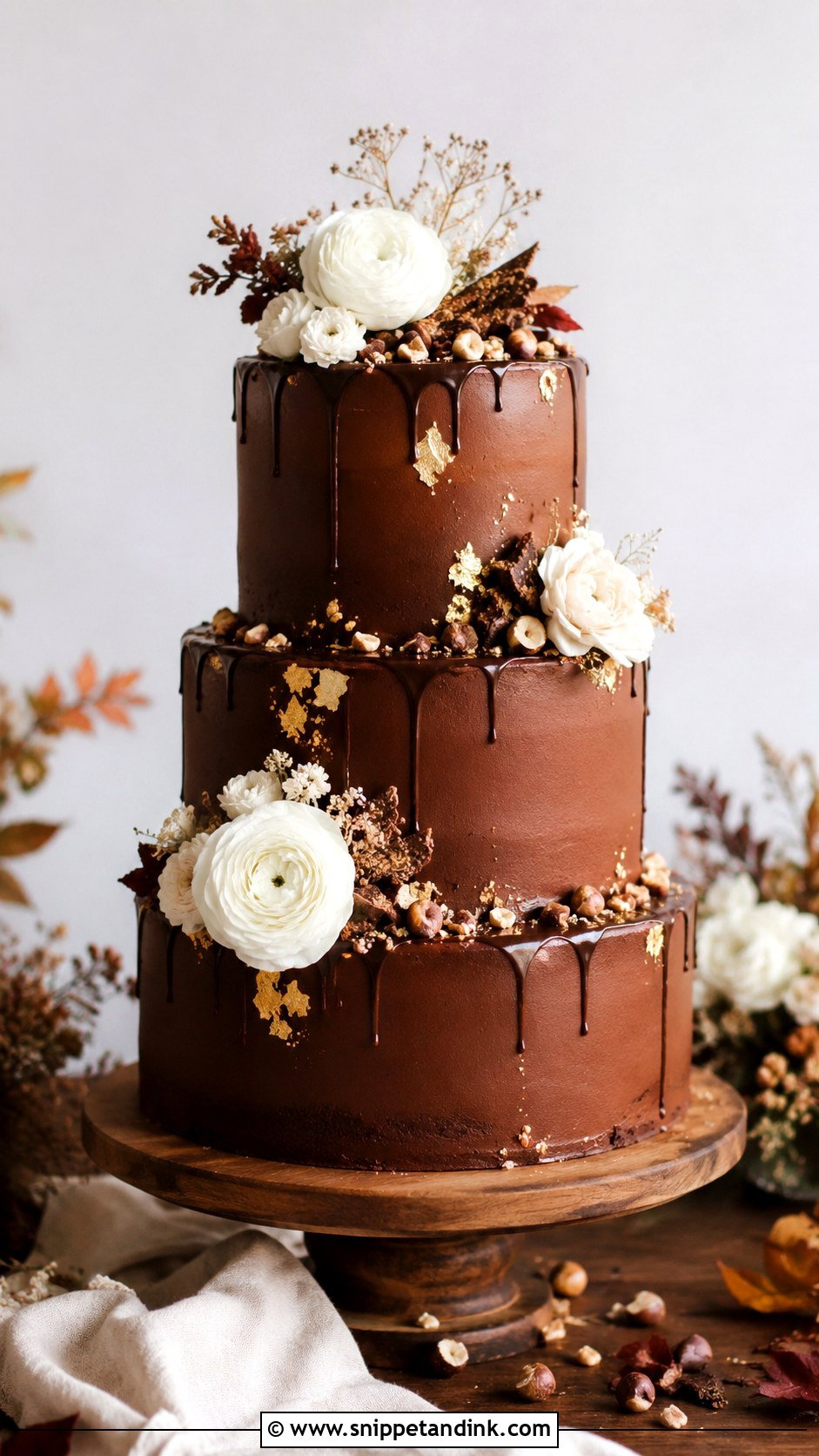
Hazelnut makes chocolate taste warmer and nuttier. The wedding version is more refined than the spread it’s inspired by: chocolate sponge, hazelnut praline filling, whipped hazelnut buttercream or glossy ganache. Chopped toasted hazelnuts, chocolate sails, gold leaf or neutral flowers decorate it. Praline adds a crunch that most guests don’t expect from a wedding cake. It’s an autumn and indoor cake, and like peanut butter, it needs clear allergy labelling.
13. White Chocolate Wedding Cake
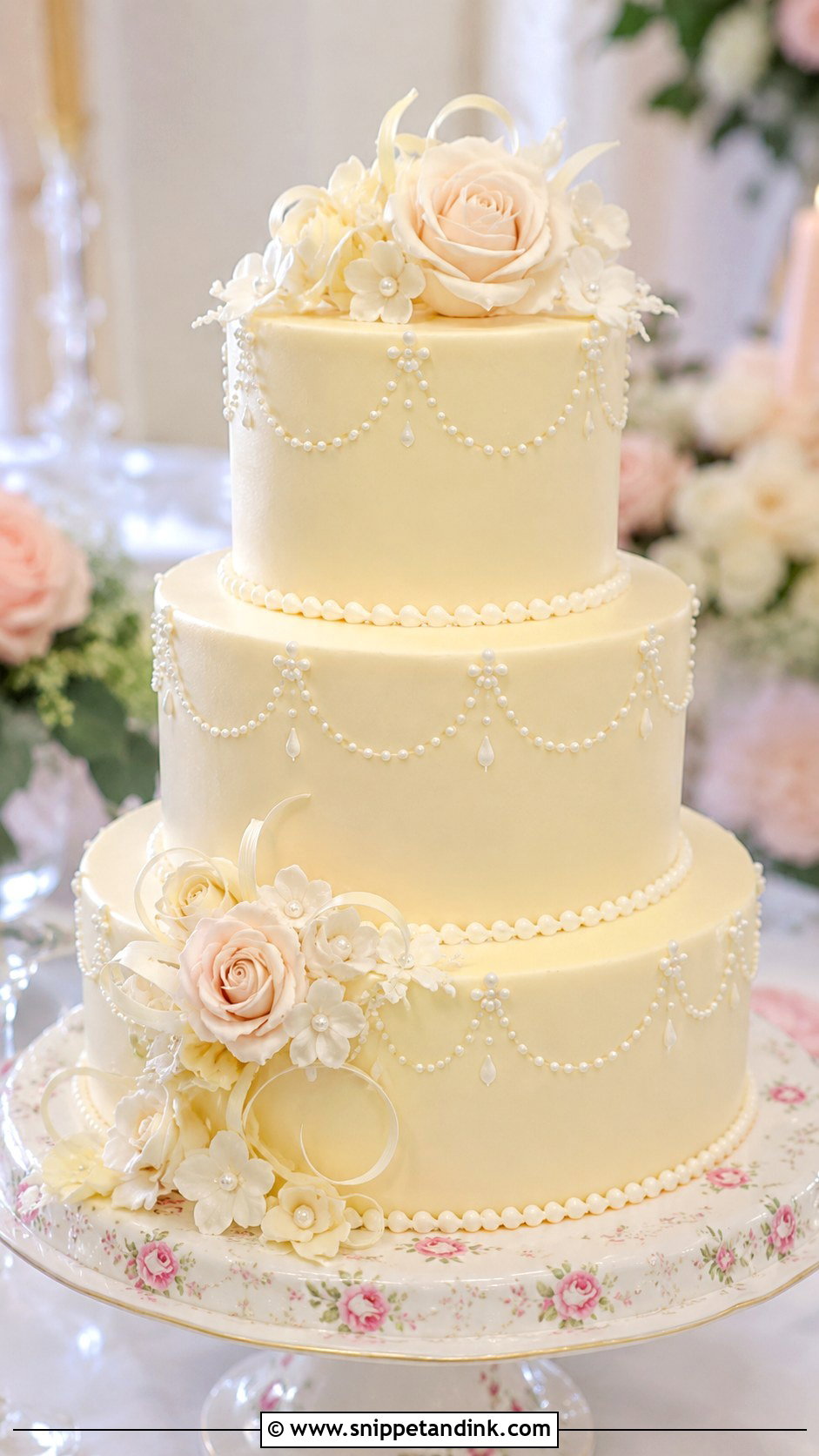
White chocolate gives you a pale, classic wedding look with chocolate in it. White chocolate buttercream, white chocolate ganache or mousse filling make it creamy. It’s sweet, so I always pair it with something tart inside: raspberry, lemon or passion fruit, or a little dark chocolate for contrast. Sugar flowers, pearl details or soft blush blooms suit its look. White chocolate frosting can yellow slightly next to a bright white dress, so I show couples a sample beside a fabric swatch.
14. Dark Chocolate Wedding Cake
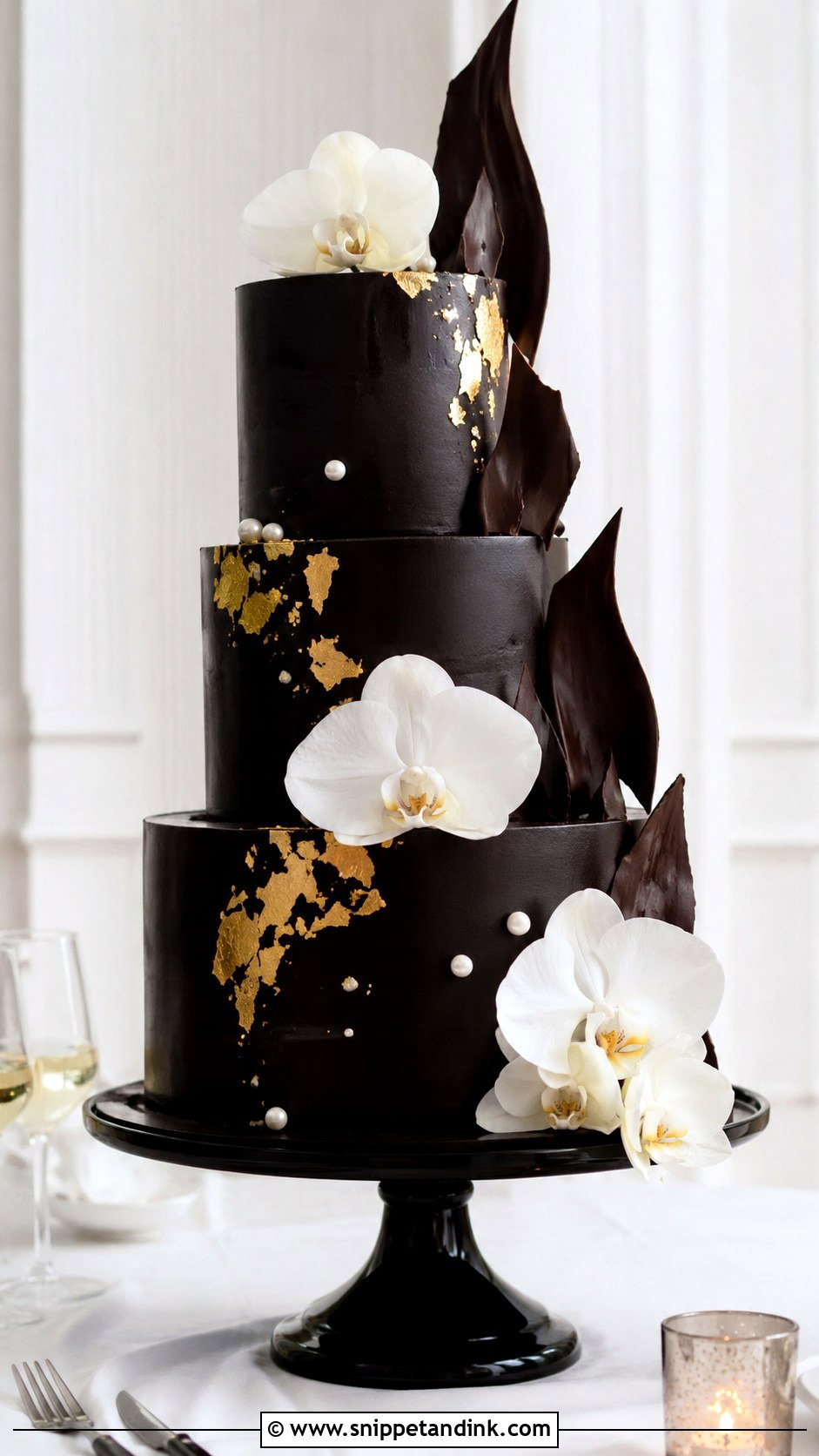
Dark chocolate looks dramatic against white flowers, gold details or a clear glass stand. Inside, dark sponge pairs with ganache, espresso buttercream, raspberry filling or salted caramel. Outside, it can be fully dark for a moody look or covered in ivory so the colour is a surprise when it’s cut. It suits evening receptions, modern rooms and black-tie weddings. The colour already does a lot, so I keep the decoration spare.


15. Chocolate Fondant Wedding Cake
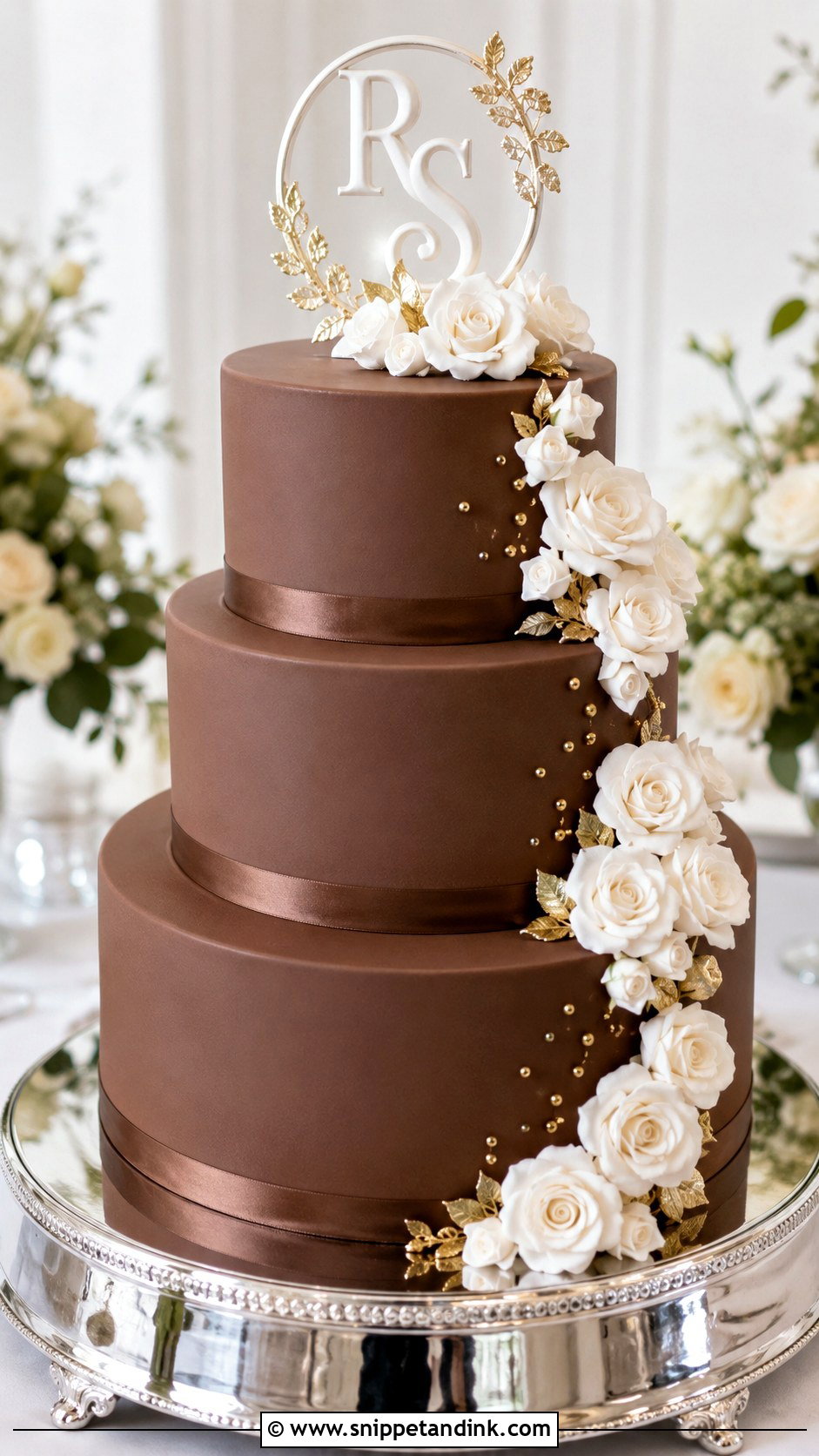
Fondant is what I reach for when a design needs sharp edges, ribbon, monograms or metallic details. Chocolate fondant can be deep brown or soft cocoa, or I cover a chocolate cake in ivory fondant. It holds a clean shape in photographs and protects the cake inside from drying out. Many guests peel fondant off, so I keep it thin and put the flavour in the filling, with ganache or a lighter vanilla cream. It suits formal venues where a structured centrepiece matters.
16. Naked Chocolate Wedding Cake
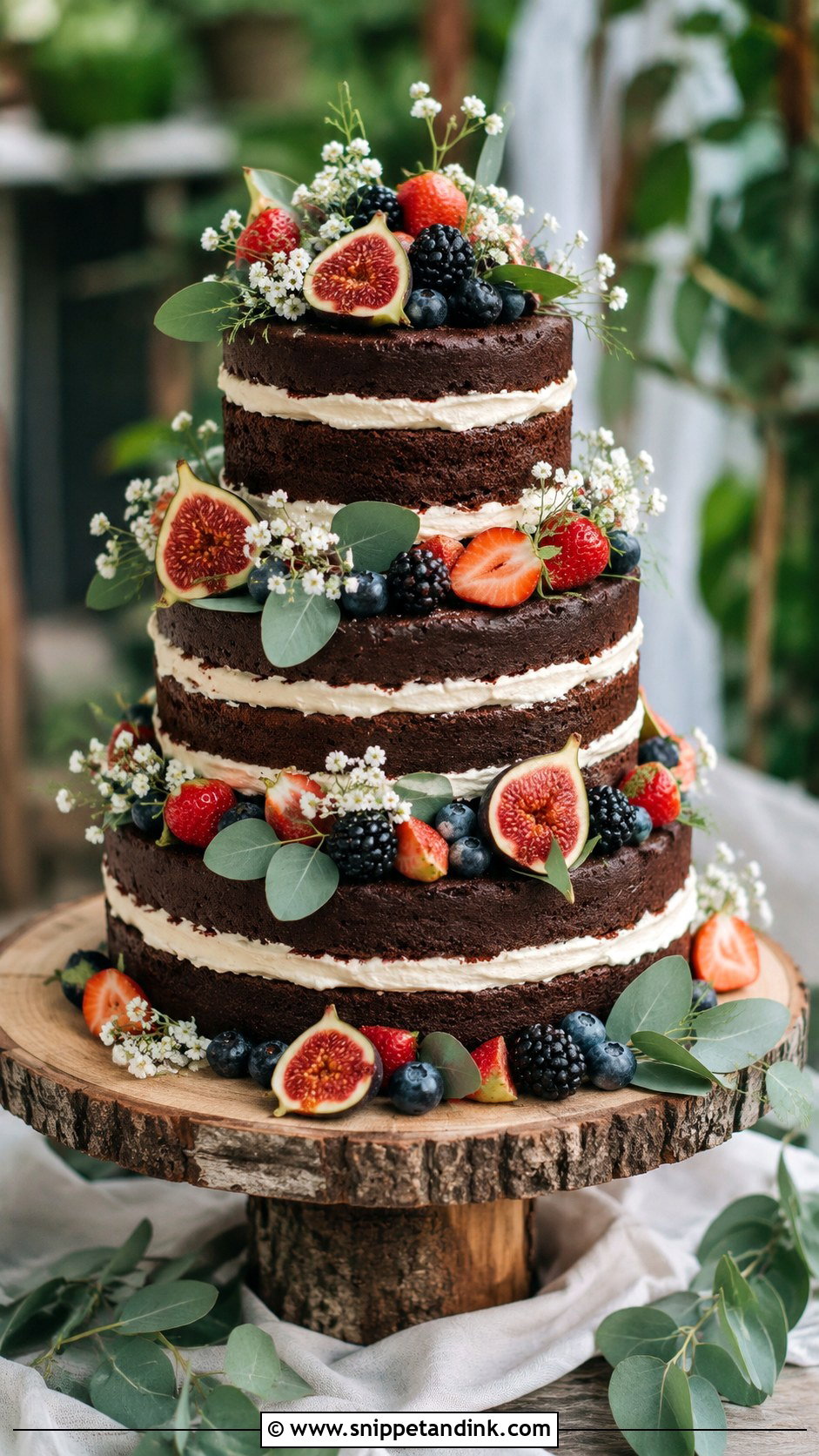
Naked chocolate cakes suit rustic, garden and outdoor weddings, with exposed layers and filling showing between them. Vanilla buttercream, cream cheese frosting, raspberry cream or chocolate mousse all work as filling. Fresh berries, figs, greenery and flowers decorate it. Bare sponge dries out in open air, so I bake close to the day and assemble near serving time. Cream cheese and mousse fillings also need to stay cool, which matters for an outdoor summer wedding.
17. Semi Naked Chocolate Wedding Cake
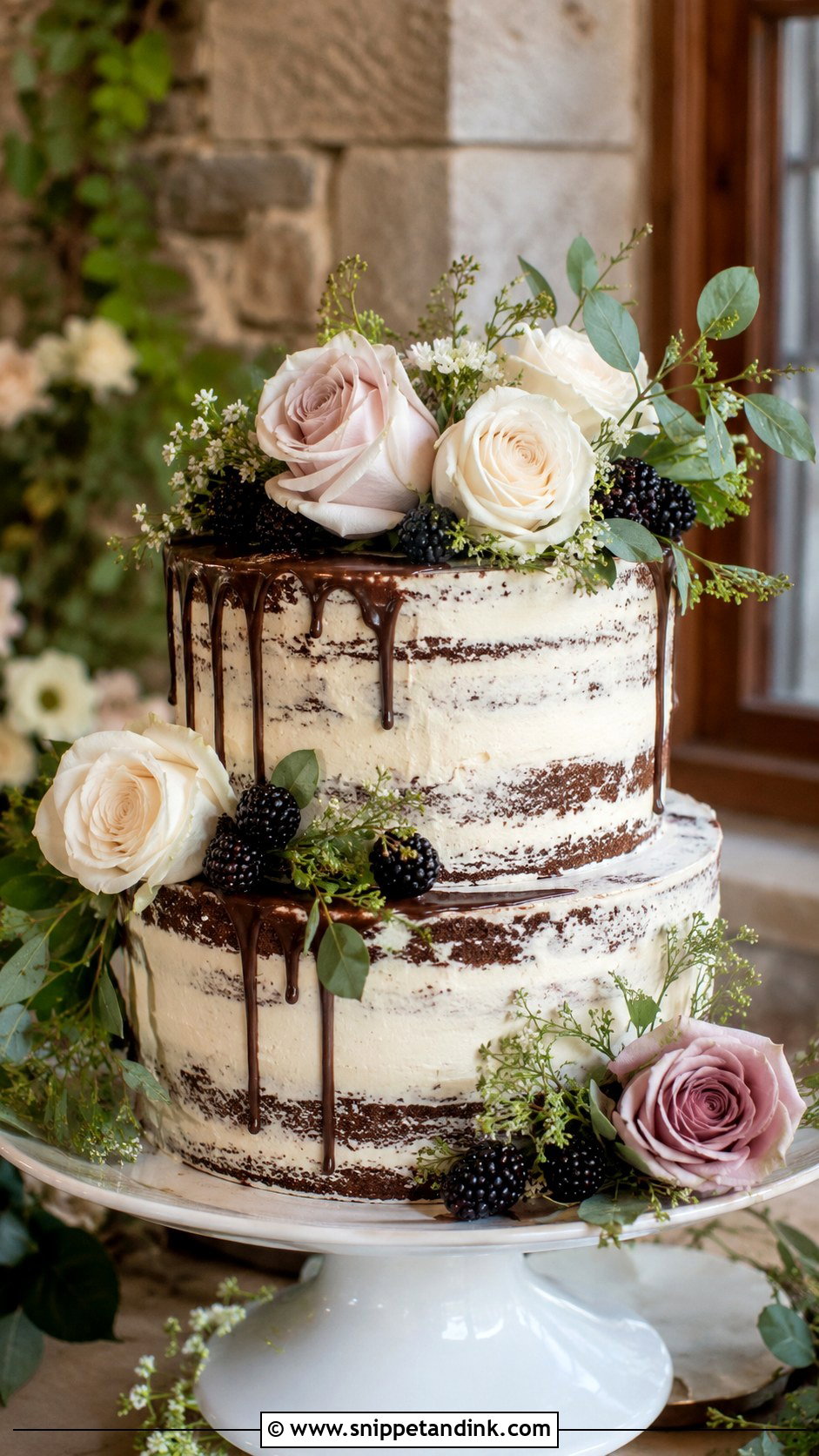
Semi-naked cakes add a thin coat of buttercream over the dark sponge, which softens the edges and still lets the layers show. Fresh flowers, berries, herbs or a light ganache drizzle finish it. It’s a favourite for barns, backyards and smaller celebrations. I use firm fillings here, since a thin outer coat gives soft fillings nothing to hold onto. A soft ivory frosting against chocolate layers gives a warm contrast.
18. Chocolate Floral Wedding Cake
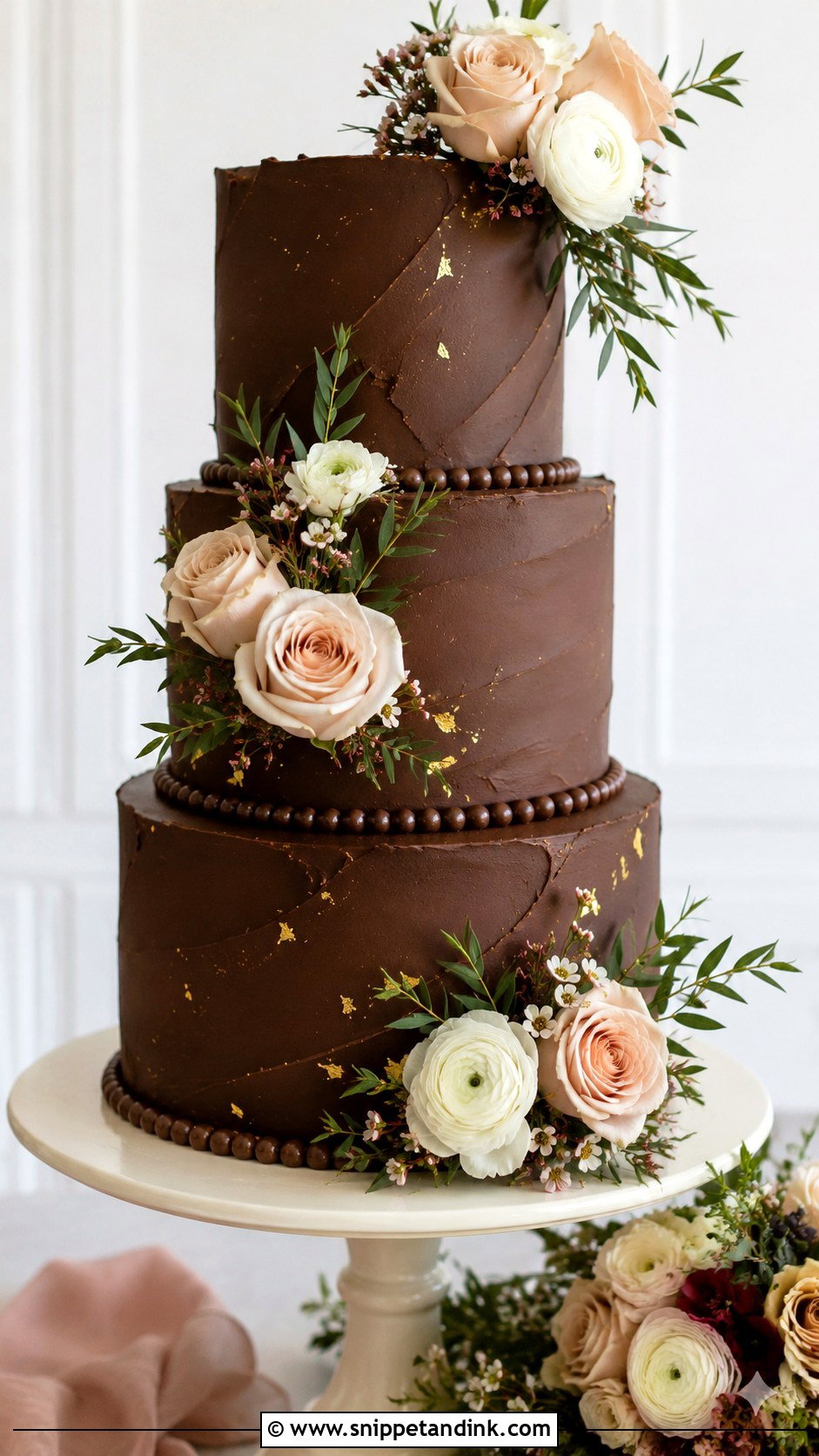
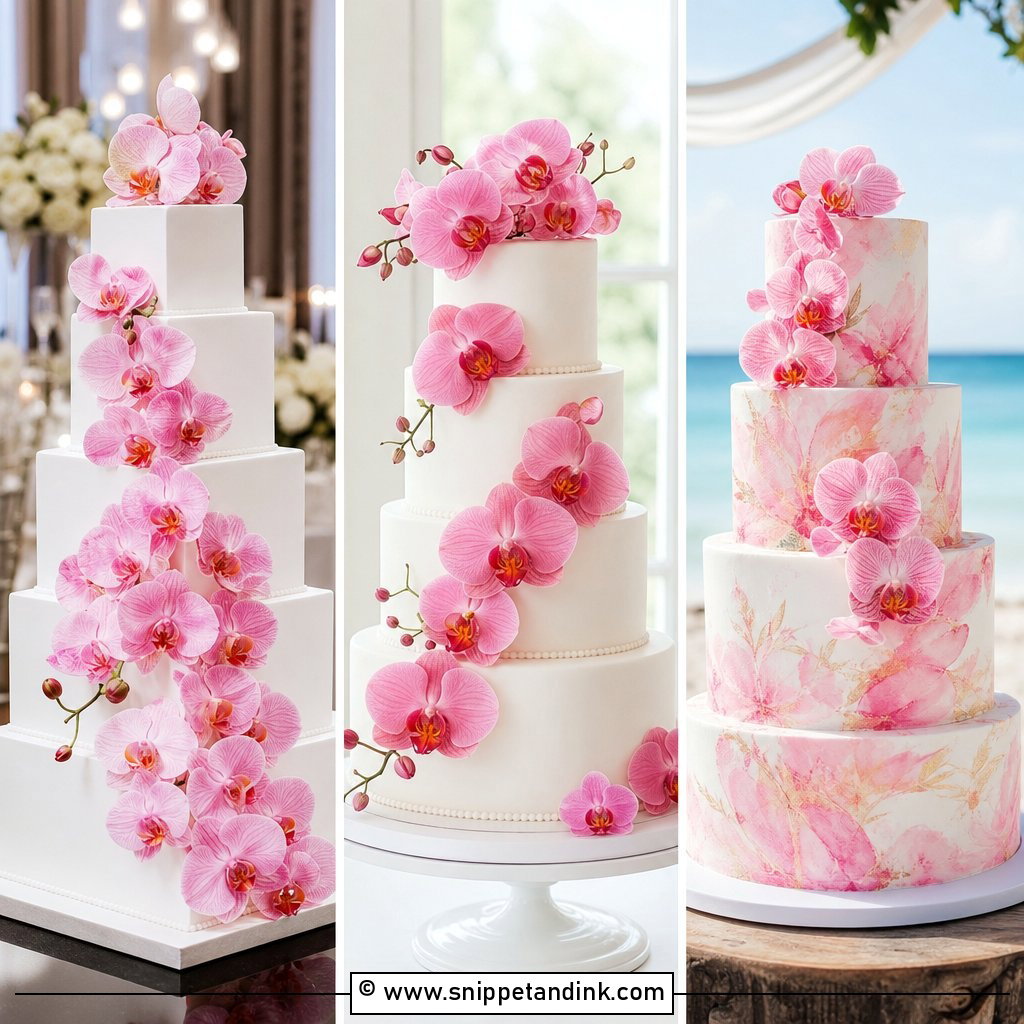
Flowers change the mood of a chocolate cake completely: garden roses feel soft, burgundy blooms feel bold, white orchids feel clean. A chocolate buttercream or ganache base gives depth behind them. I match the flowers to the bouquet or the table arrangements so the cake looks part of the room. Smooth tiers look refined; light texture is softer. Every fresh flower has to be food-safe and prepared before it touches the cake, and I agree with the florist in advance who does that.
19. Chocolate Marble Wedding Cake
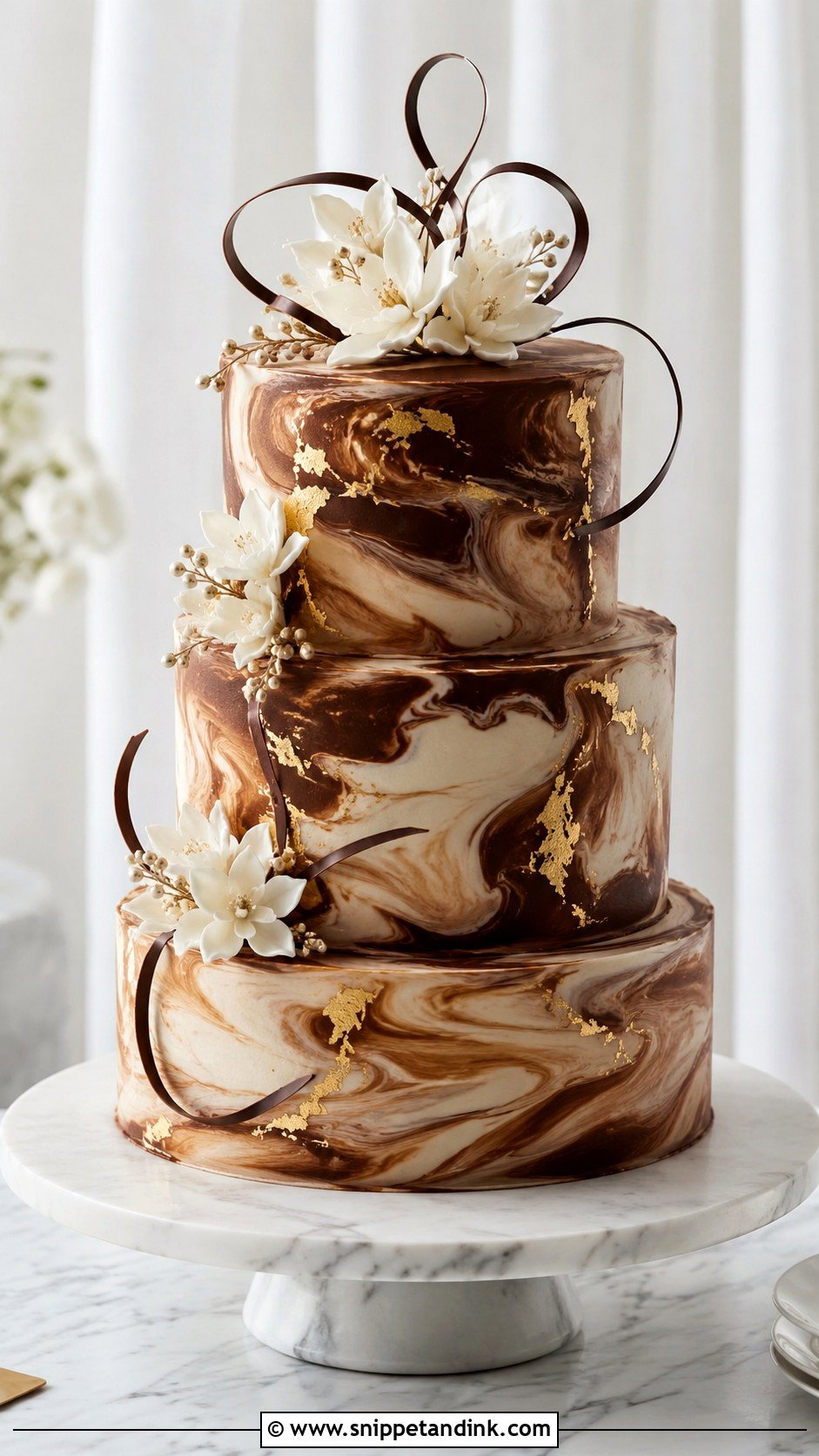
Marble sponge swirls chocolate and vanilla batter together, so each slice has a lighter, mixed look. Outside, it can be smooth ivory buttercream, chocolate ganache or marbled fondant, and a cocoa, cream and gold marble exterior looks modern. It’s the cake I suggest to couples who can’t agree between vanilla and chocolate, and to families with young children, who often prefer a lighter slice. The swirl comes out differently in every cake, which I rather like.




20. Chocolate Mini Wedding Cake
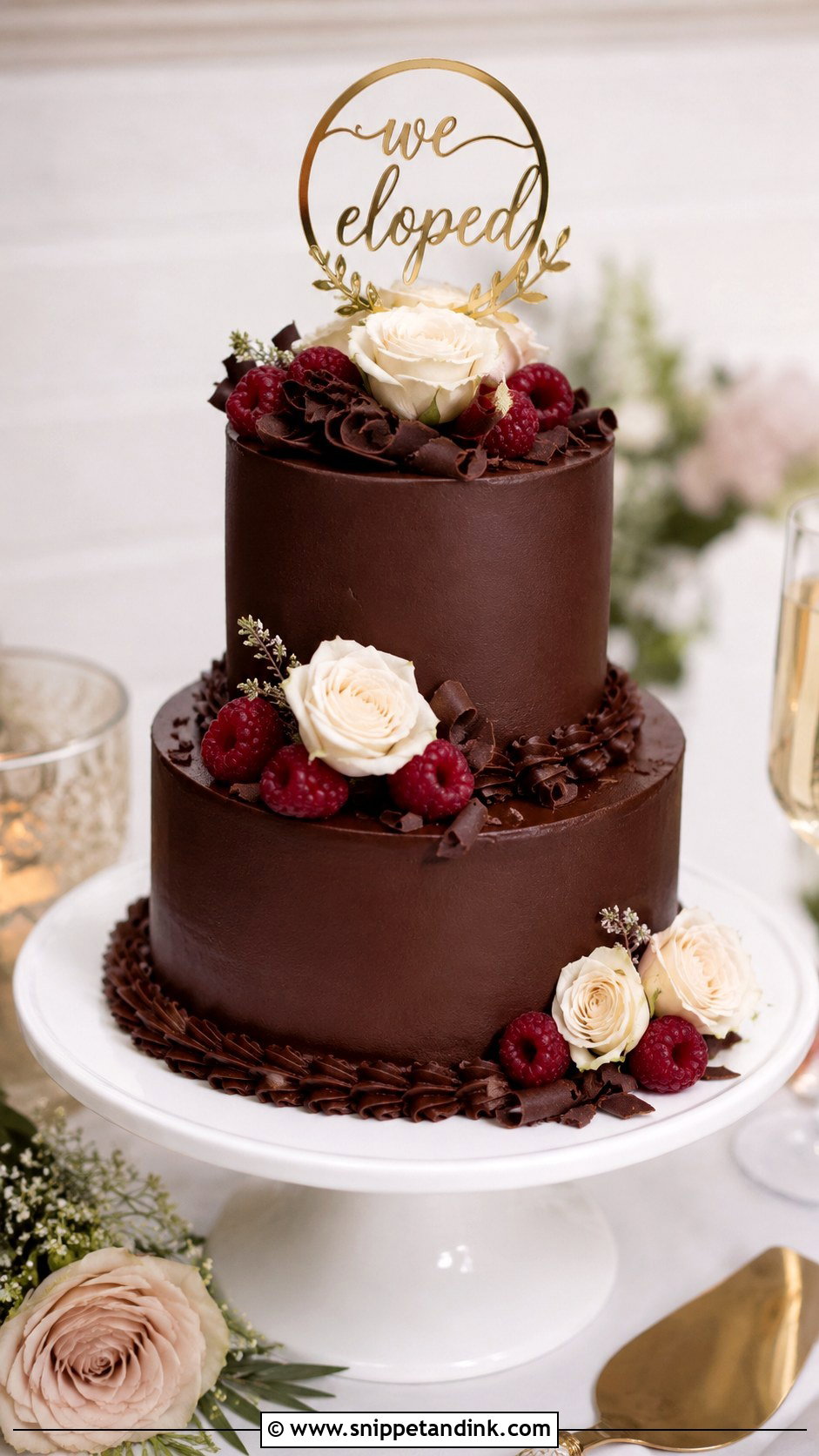
A chocolate mini wedding cake suits intimate weddings, elopements and dessert tables. A small two-tier or a single tall tier with smooth ganache, buttercream piping, fresh flowers or a simple topper still reads as a wedding cake. It sits well beside cupcakes, macarons, brownies or plated desserts. Small cakes cost less and are easier to personalise. I put the same level of detail on them as on a large one, since a mini cake is photographed up close and every flaw shows.
Peanut Butter and Hazelnut Tiers With Allergic Guests in the Room
Peanut butter, hazelnut and praline are some of the most loved flavours on this list, and they’re also among the most serious allergens. A nut tier is not off-limits; it just needs planning.
I ask couples to check RSVPs for allergies before we finalise flavours. If someone has a severe nut allergy, I’d suggest leaving nuts out of the cake entirely, since a single shared knife or board can move traces from one tier to another. When nuts stay in, the caterer gets a written cutting plan, each flavour is labelled at the table and the nut tier is cut last with its own knife. Most bakeries work with nuts in the same kitchen, so be wary of any nut-free promise.
Does a Chocolate Top Tier Last a Year in the Freezer?
Some do better than others. Plain chocolate sponge with buttercream or ganache freezes well if it’s chilled first, wrapped tightly in several layers of cling film and foil, and sealed in a box. Fresh fruit, whipped cream, custard and mousse fillings don’t, so a Black Forest or fresh berry tier comes out soggy. If your favourite is one of those, ask your baker for a small fresh cake in the same flavour on your first anniversary. That’s what I suggest to most of my couples.
Start From the Flavour, Then Pick the Finish
Chocolate cakes can be classic, rustic, modern or bold, and the frosting, shape, filling and decoration decide which. Ganache gives a sleek finish, buttercream is softer and more approachable, fruit adds freshness and flowers make even the richest cake look ready for a wedding. Your venue, season, guest list and taste will narrow the field. My advice is to choose the flavour you love first, then the finish that suits your room. Save the ones that catch your eye, compare the details and take them to your bakery consultation.
You'll Like These Ideas:







Leave a Reply