
British wedding cakes tend to be understated, and the venue usually explains why: a cake for a country house, a city hotel, a Cotswold barn, a seaside marquee or a registry office lunch all face different rooms and very different weather. What I’m piping most at the moment is vintage overpiping, soft buttercream and pearls, with lighter flavors like lemon, elderflower, pistachio and salted caramel. These are the designs couples bring to me most, and what I’d tell you about each before you book.
Fruit Cake, Sponge or a Bit of Both?
The traditional British wedding cake was a rich fruit cake, covered in marzipan and royal icing. Most couples I bake for now choose sponge, but many still ask for one fruit tier, often for an older relative or for keeping.
The two behave very differently in the kitchen:
- Fruit cake can be baked weeks ahead and fed with brandy or another spirit while it matures. It keeps well, which is why the top tier was traditionally saved for a first anniversary or a christening.
- Sponge tiers are baked only a few days before the wedding. If you want to keep the top tier, wrap it well and freeze it rather than leaving it in a tin.
- Fruit cake is dense and heavy, so it usually goes on the bottom, with lighter sponge tiers above, supported by dowels and boards.
Mixing the two also helps with portions. Fruit cake is cut in smaller slices than sponge, so a fruit tier stretches further than its size suggests.
1. Lambeth Wedding Cake
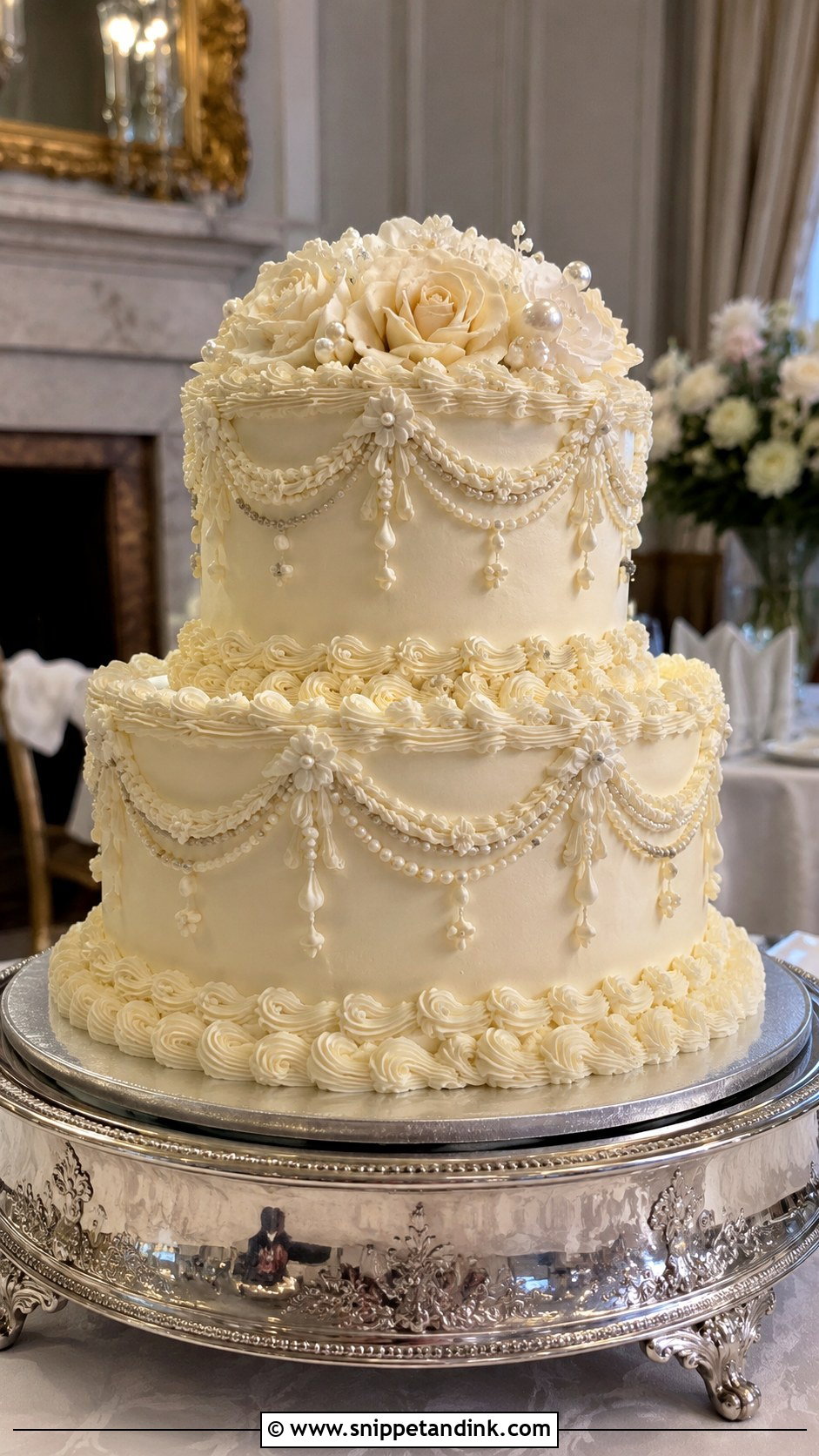
A Lambeth wedding cake is the British overpiping method, building shells, swags, bows and scrolls in raised layers one on top of another. It is slow work, so the amount of piping drives the price more than the number of tiers. Two tiers suit a small wedding; tall versions need a big room. Ivory looks classic, and blush, powder blue or sage feel fresher. Under all that piping I’d choose a sponge firm enough to hold its shape, such as lemon elderflower or vanilla raspberry, rather than a very soft, moist crumb.
2. English Garden Wedding Cake
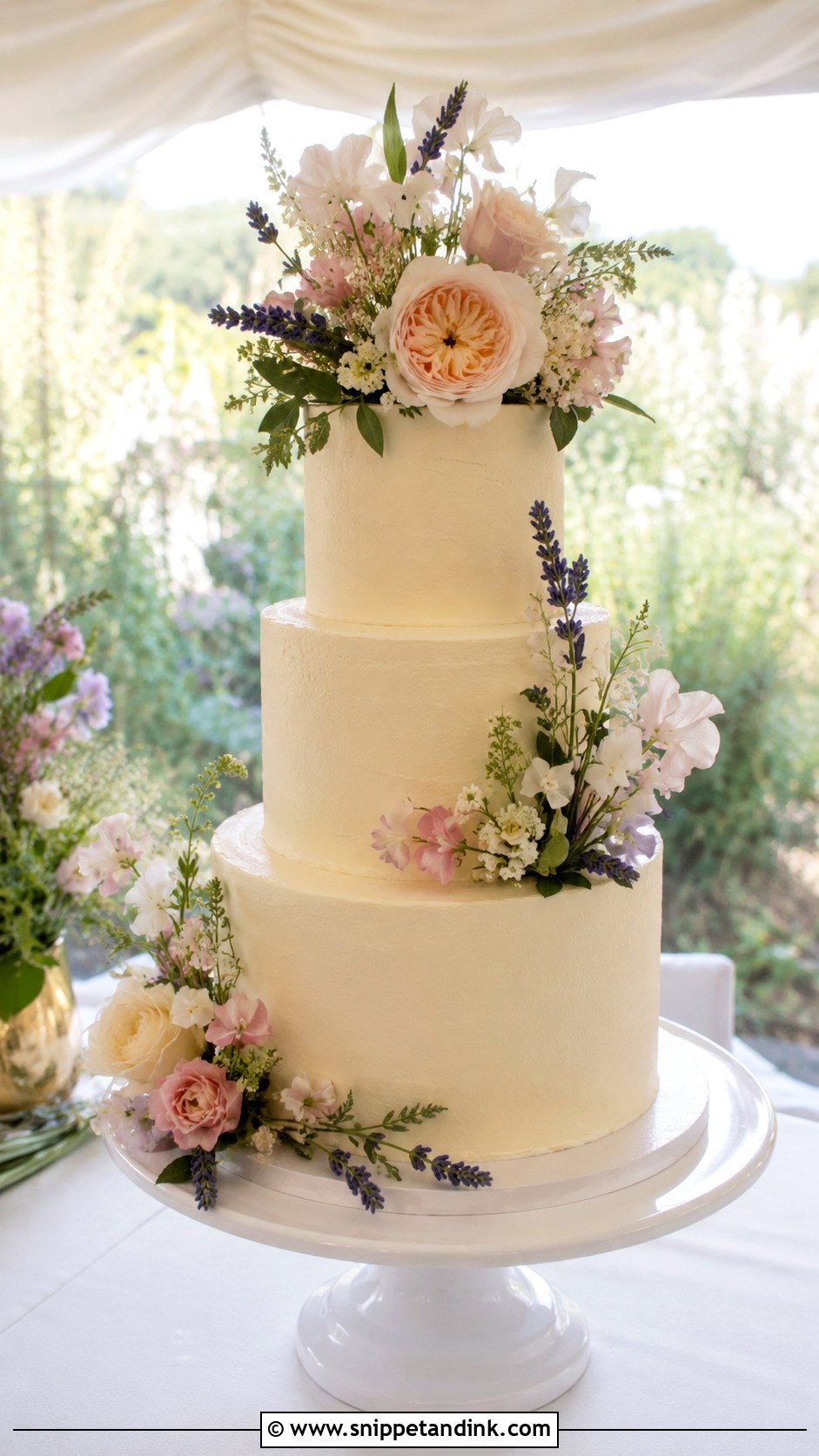
The English garden cake is ivory buttercream or fondant dressed with garden roses, sweet peas, lavender and herbs, as if they were cut from the venue grounds. It suits marquees and countryside weddings in spring and summer. Three straight tiers look classic; staggered heights look more editorial. Lavender, many garden flowers and herbs from a florist are not automatically safe to touch the cake, so your baker and florist need to agree who wraps the stems and where each bloom goes.
3. Semi Naked Wedding Cake
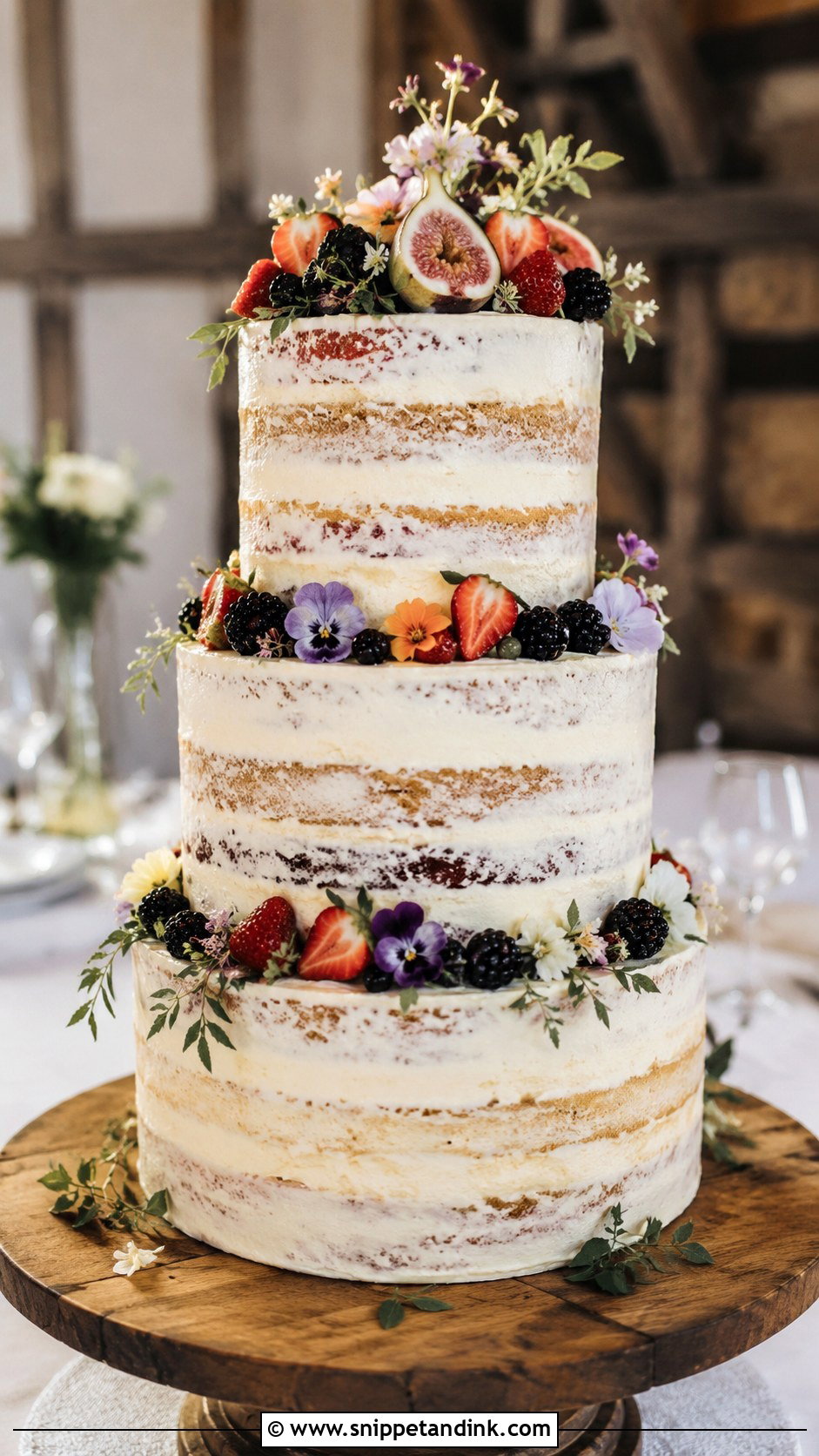
The semi naked wedding cake remains a favorite here because it feels relaxed but finished. A thin scraped coat lets the sponge show through and still slows it from drying out, which a fully naked cake can’t. Berries, figs and greenery keep it seasonal. Victoria sponge, lemon curd, carrot and chocolate salted caramel are the flavors I bake most for it. In a hot barn, ask for it to be put out shortly before guests arrive.
4. Pearl Wedding Cake
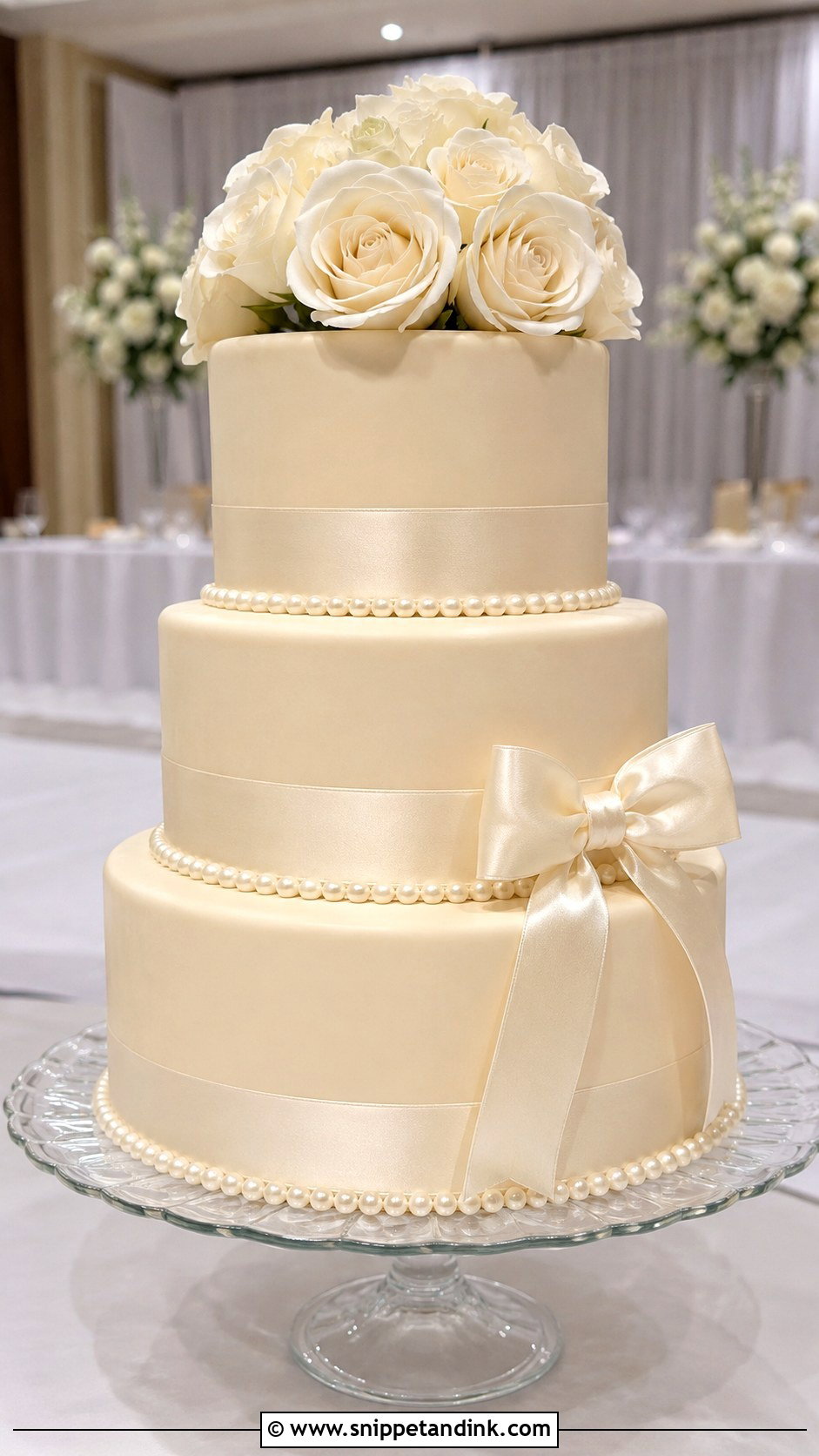
Pearls are usually sugar or fondant balls, scattered, set in rows or used as borders between tiers. Placed by hand, they take hours, so a border at each tier is often the sensible compromise over a fully covered cake. Smooth fondant shows them best, and they suit ivory, champagne and silver palettes in hotels and manor houses. Keep the cake shape plain. White chocolate raspberry or almond sponge keeps the slice pale to match.
5. Pressed Flower Wedding Cake
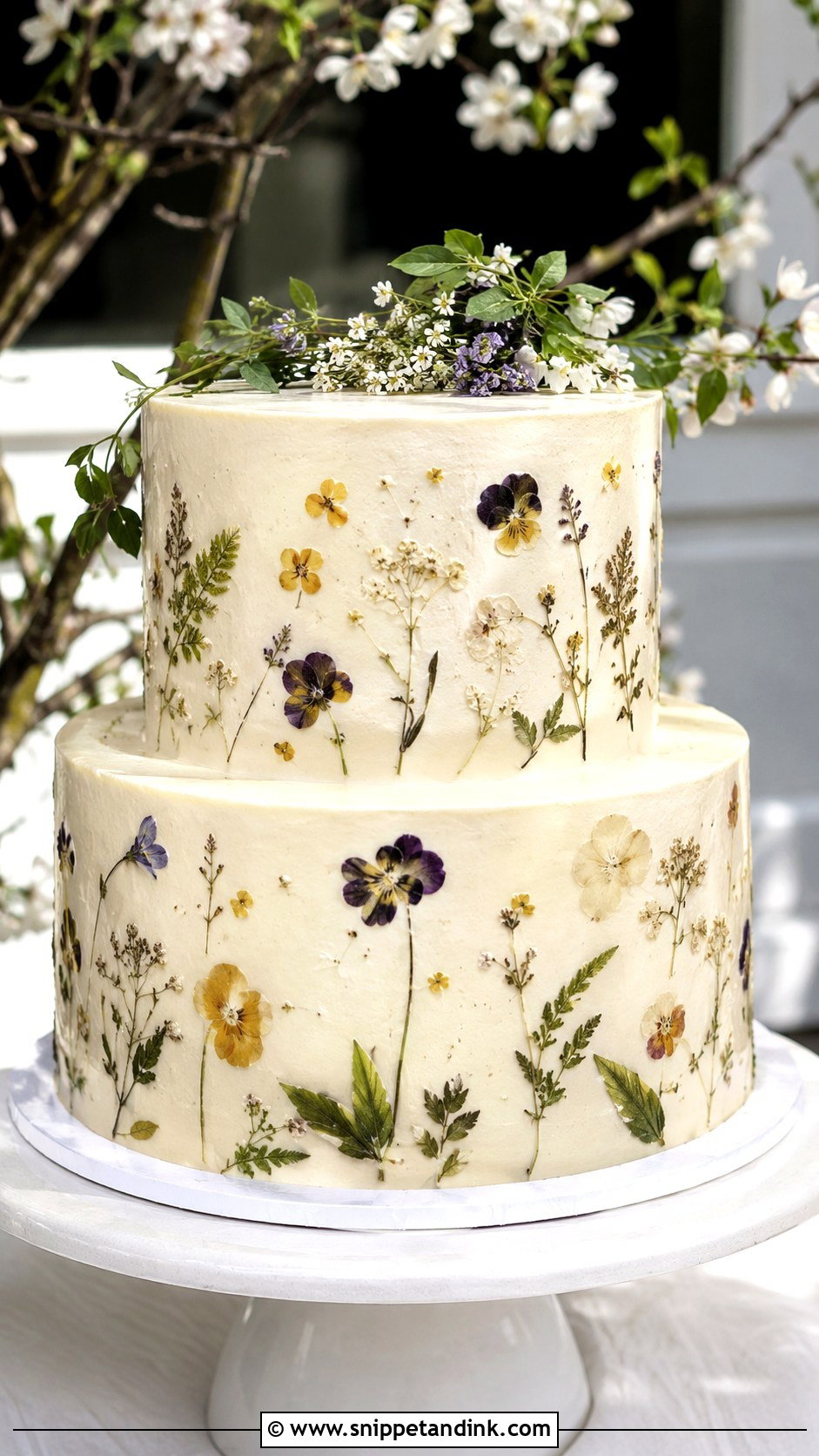
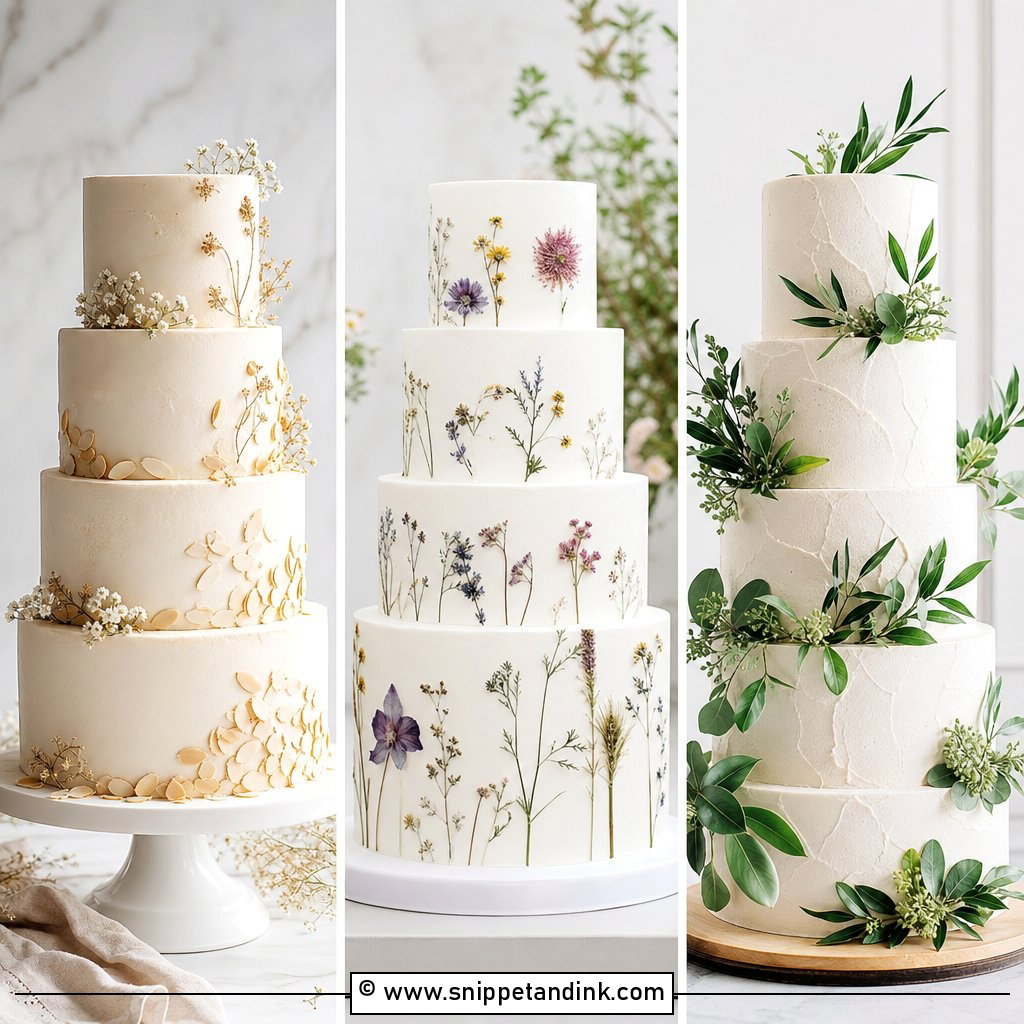
Pressed flowers are flattened petals and small blooms laid into smooth buttercream or fondant, scattered or trailed down the tiers. The flowers must be edible varieties, grown without pesticides and pressed for food use; dried petals from a craft shop are not suitable. Pressed petals can brown at the edges in damp buttercream, so I press them on close to delivery. Keep the palette controlled and pair it with lemon, honey or elderflower. A pressed flower wedding cake is one of the most delicate designs in this list, and it suits spring garden weddings.
6. Textured Buttercream Wedding Cake
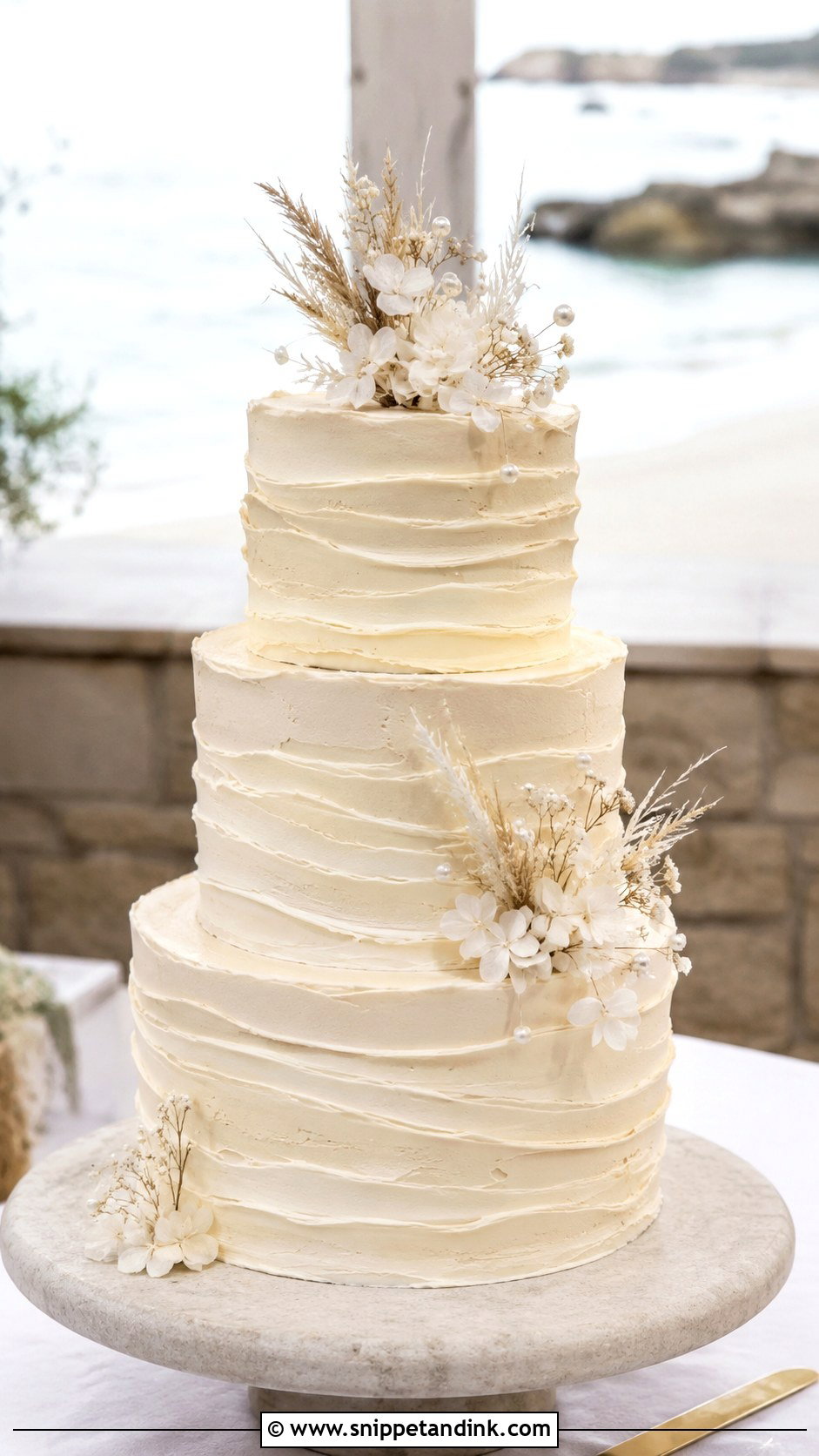
Texture is made with combs, palette knives and brushes, and it looks plain from across the room and detailed up close. That makes it useful in barns, warehouses and coastal venues where the cake is seen from both distances. White is the most forgiving, but warm neutrals, blush, sage or stone grey all take texture well. A single cluster of flowers or a few pearl pins is enough. Texture also hides small marks from transport, which is one practical reason I like it for long journeys.
7. Fondant Bow Wedding Cake
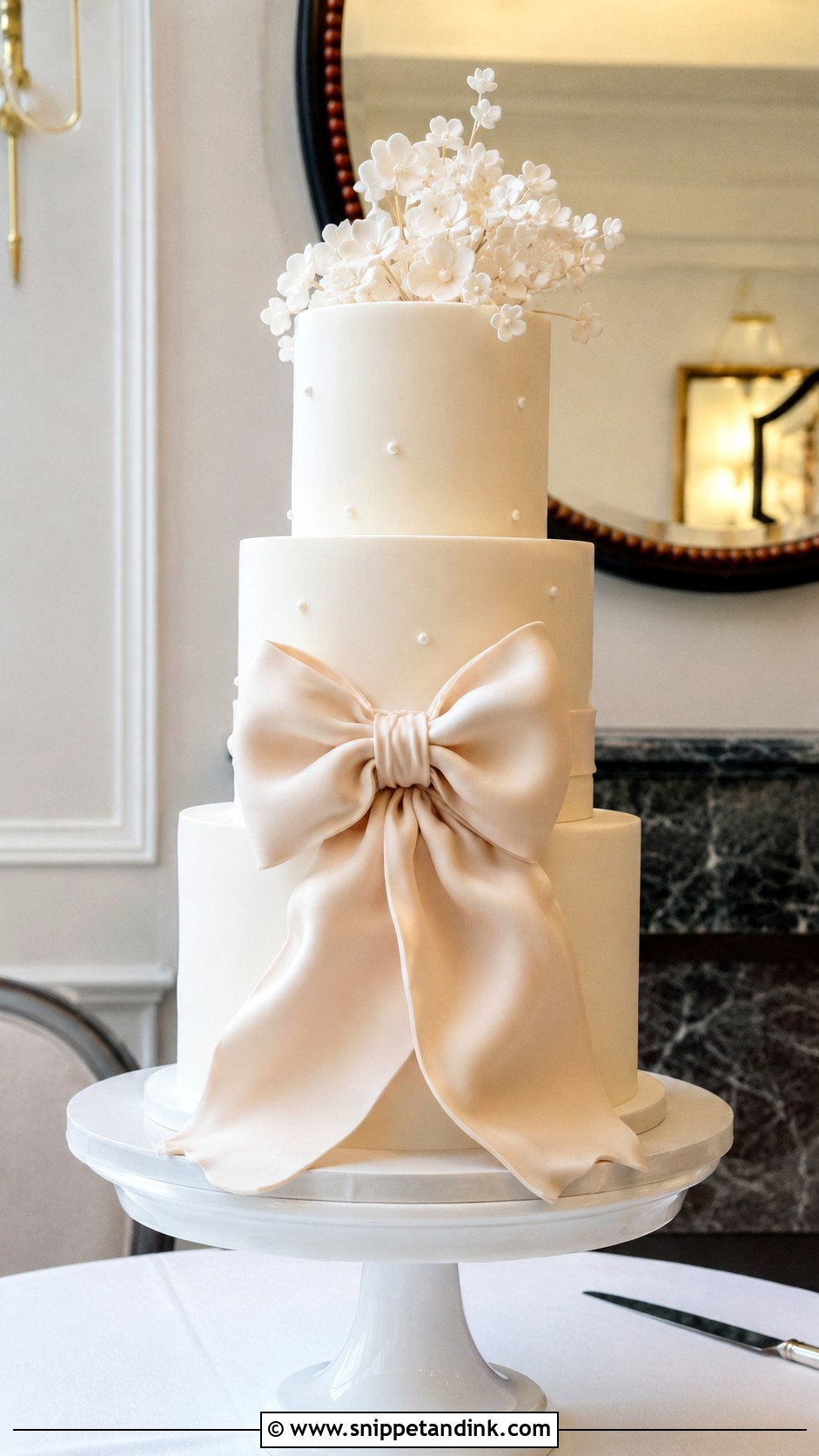
A fondant bow can sit on one tier, wrap around the cake like fabric or trail down as a sugar ribbon. It looks fashion-led and suits boutique hotel weddings and satin dresses. Large sugar bows are heavy and fragile, so I make them days ahead to dry and attach them at the venue. Keep the base smooth so the bow is the only feature. Ivory, blush, pale blue and champagne are the safest colors.
8. Heart Wedding Cake
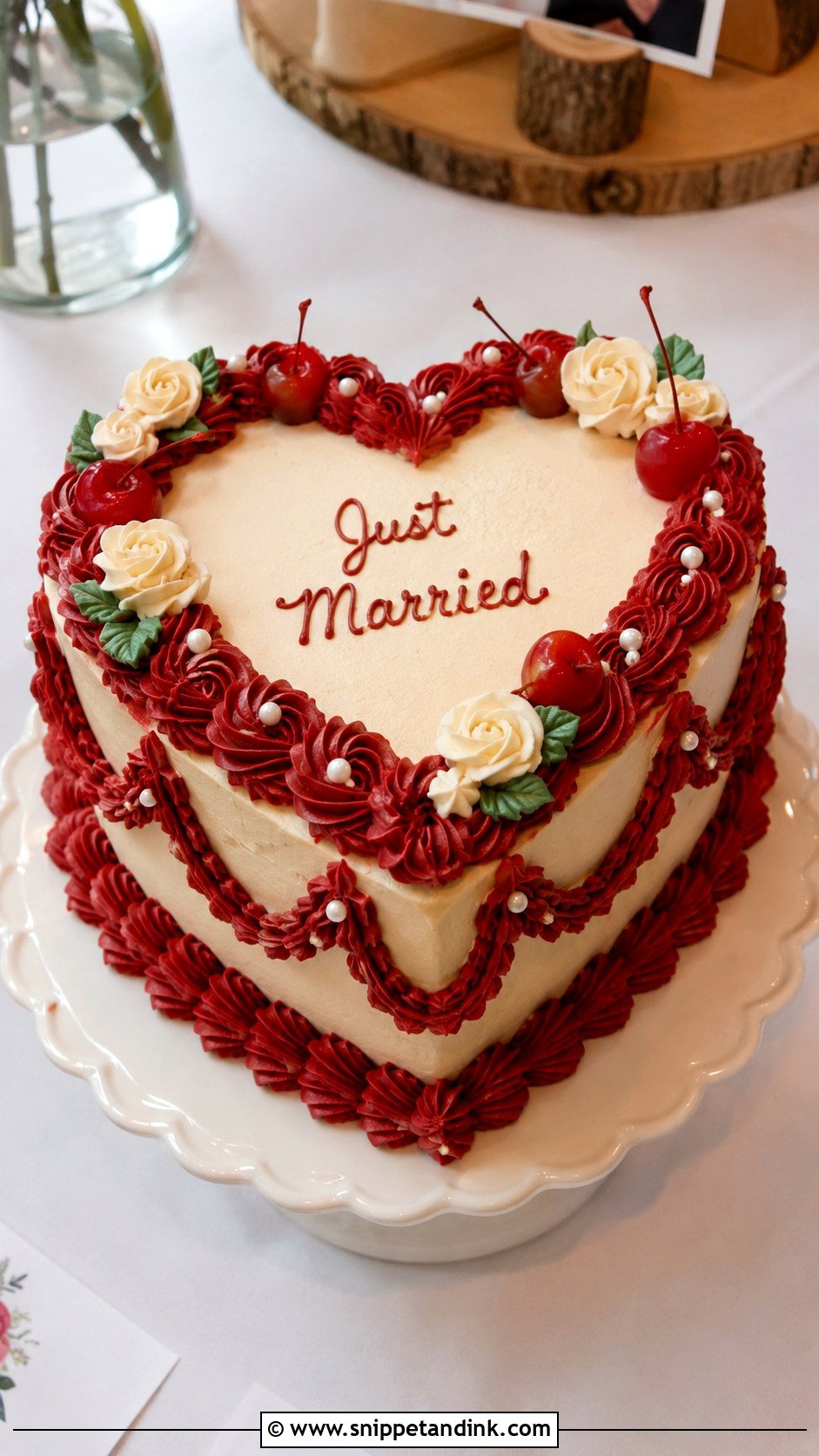
A heart wedding cake is playful and leans into the vintage cake trend. It can stand alone at a small wedding or sit on a dessert table. Lambeth piping, cherries and ribbon look natural on the shape. Heart tiers are harder to stack than rounds because the point has to line up perfectly, which is why most heart wedding cakes are one or two tiers. Ivory, blush, burgundy or pale blue keep it grown-up.
9. Sage Green Wedding Cake
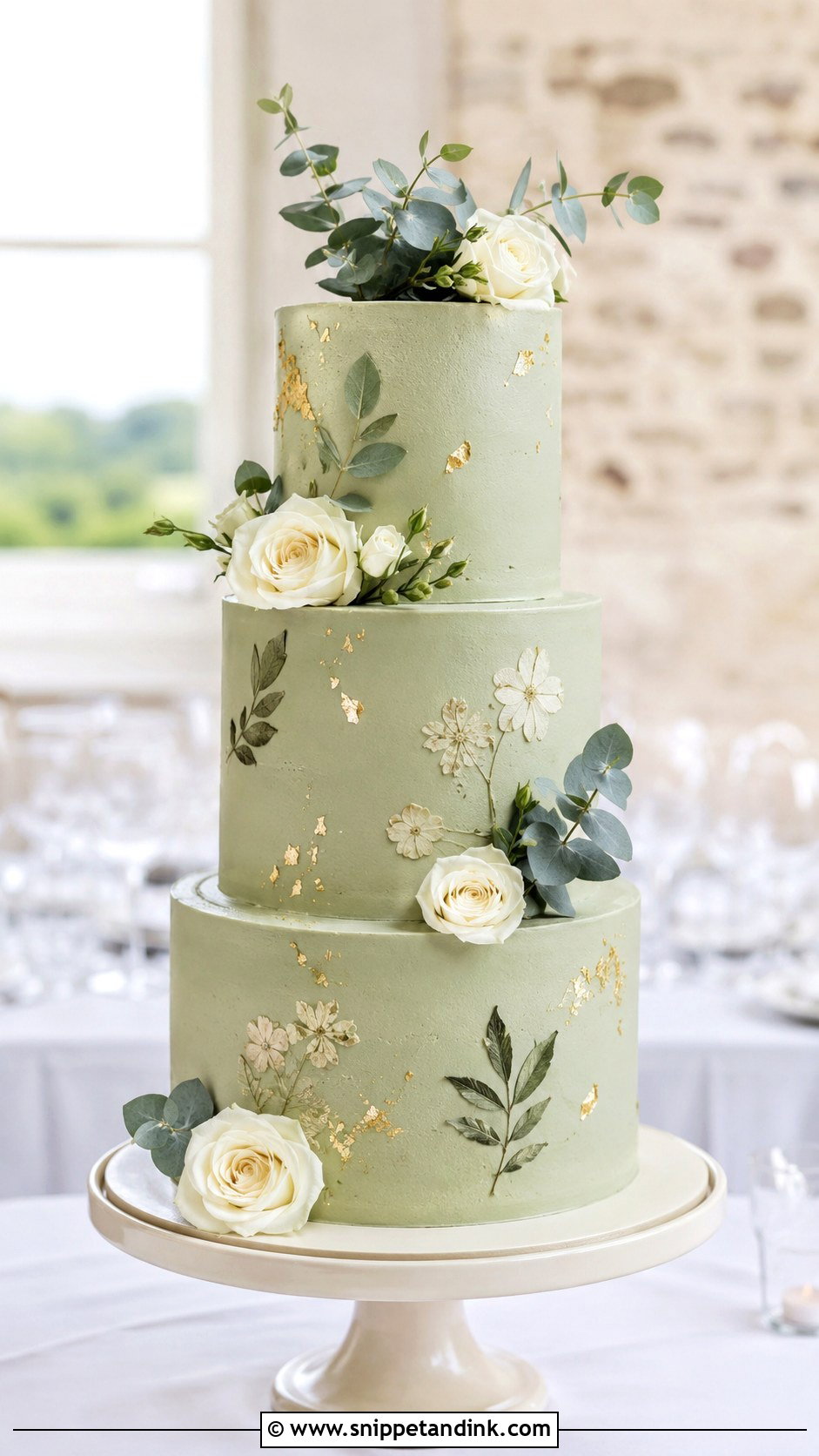
Sage is a good color for British weddings because it doesn’t depend on season. Pressed petals make it springlike, white roses make it classic and dried grasses push it toward autumn. It can be smooth fondant, matte buttercream or ridged texture. Mixing sage is fussy; a little too much yellow turns it khaki, so I always check a sample in daylight. Pistachio, lemon or pear flavors sit nicely with the color.
10. Blue Wedding Cake
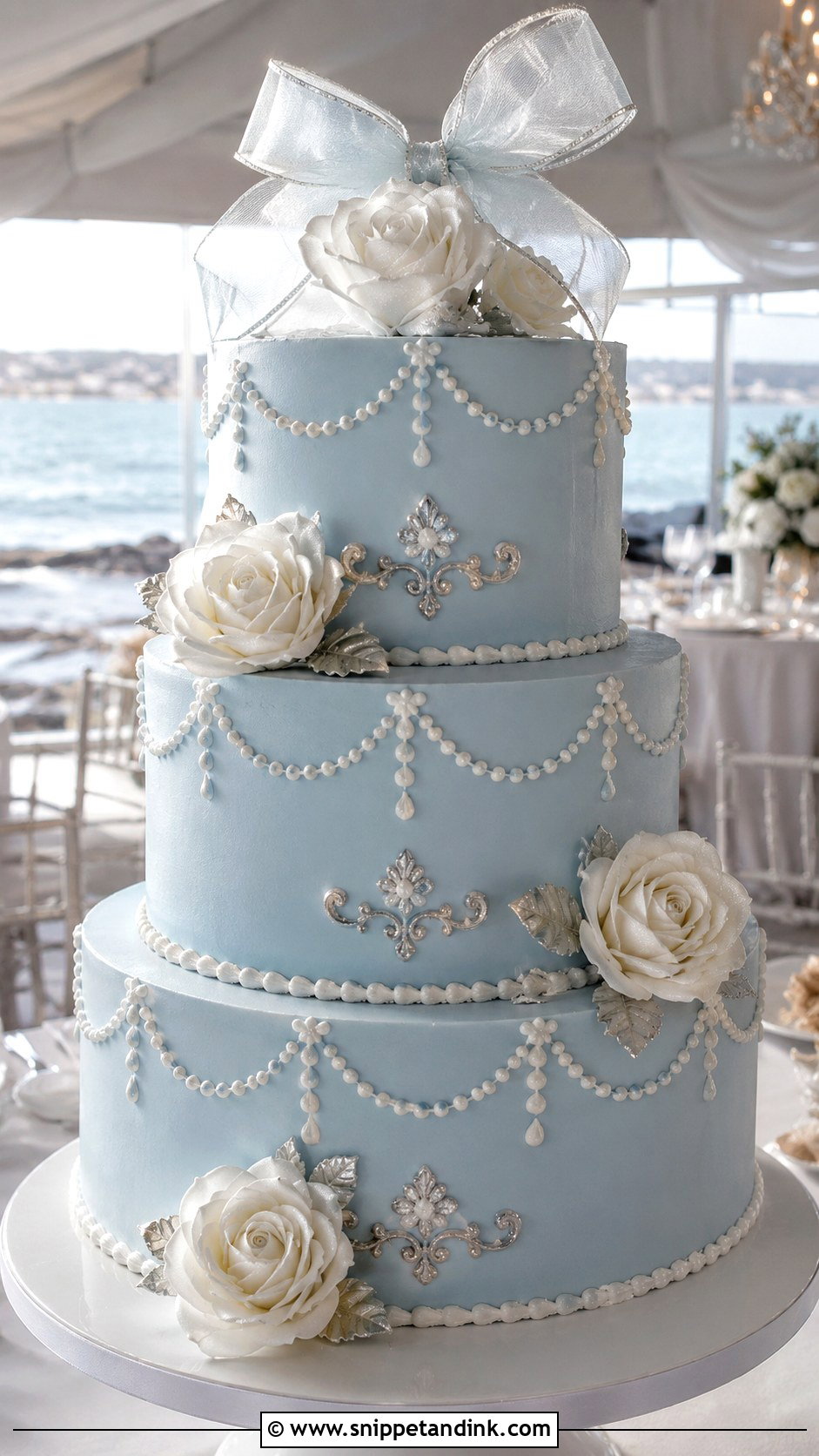
A blue wedding cake changes completely with the shade. Powder blue with pearl piping and Lambeth details looks vintage, dusty blue with white roses and silver looks soft, and navy with sharp fondant edges looks formal. Muted blues usually suit a British wedding better than bright royal blue. In a marquee lit by warm festoon bulbs, pale blue can look grey, so check the shade under similar light.
11. Floral Cascade Wedding Cake
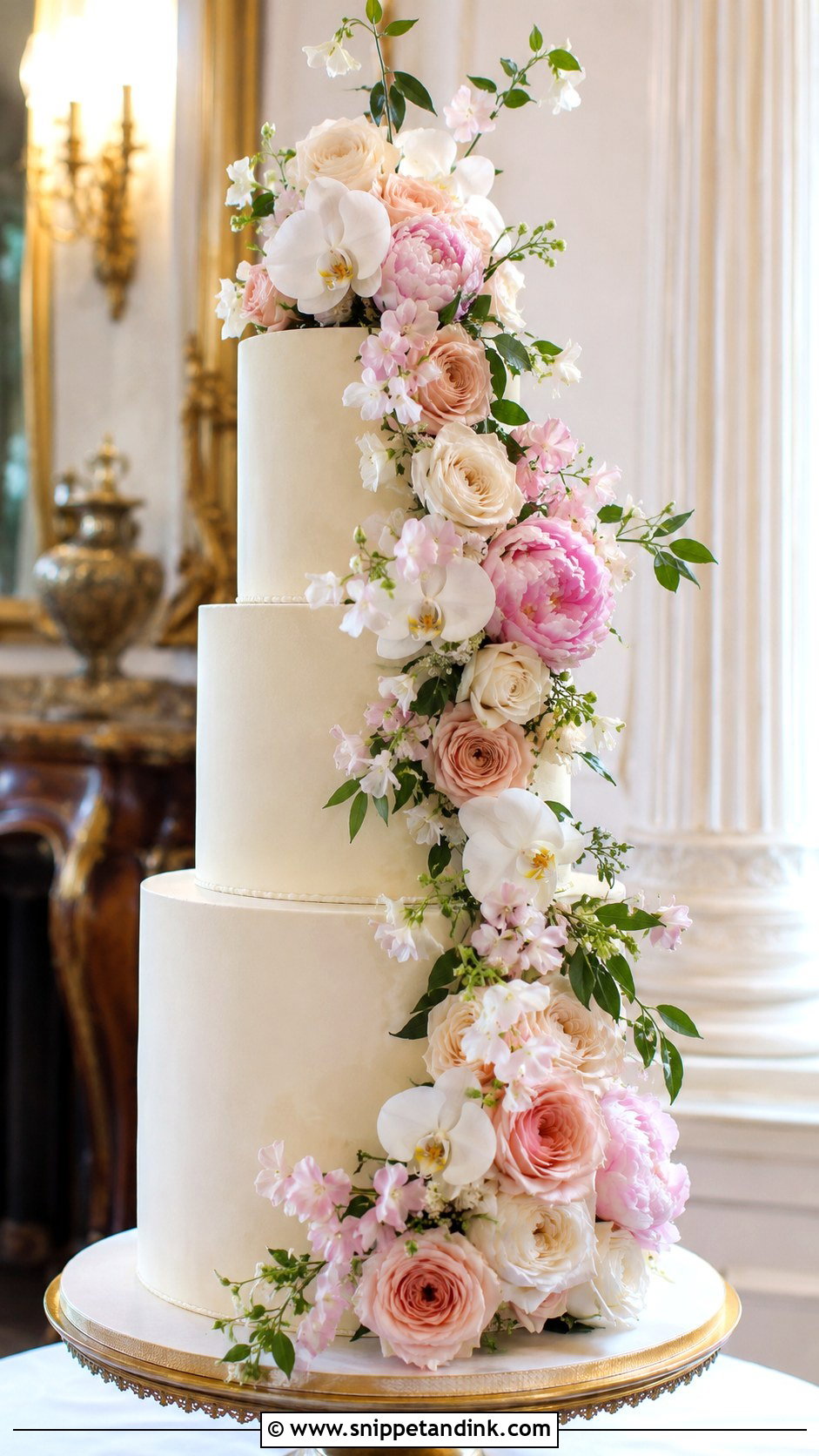
In a floral cascade, flowers flow from the top tier down one side. Three or four tiers give the flowers room to travel; on two tiers it can look crowded. Roses, orchids, peonies and sweet peas are common, with greenery to connect them. The cascade is usually arranged on site by the florist or baker, so check that someone is booked to do it and that stems are wrapped where they meet the cake. Match the colors to the bouquet.
12. Modern White Wedding Cake
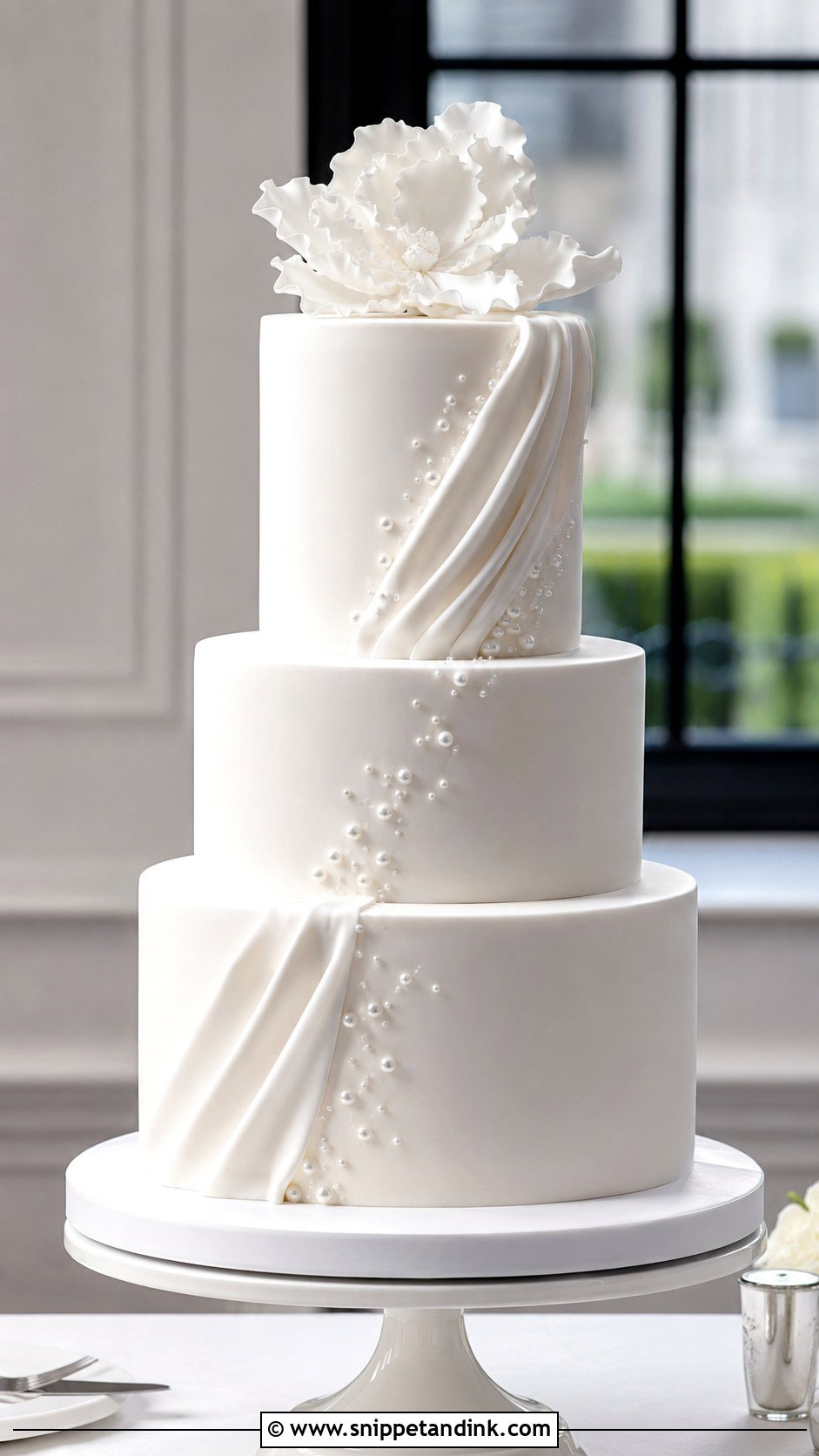
A modern white cake looks expensive only when it is technically precise: sharp edges, level tiers, smooth sides. There is nothing to hide a flaw, so look closely at the edges in your baker’s portfolio. White-on-white texture, tiny pearls, folded fondant or a single sculptural sugar flower give it detail. It suits galleries and city hotels, and it is a good counterweight when the rest of the room is full of flowers. A precise white finish doesn’t date.
13. Tall Tiered Wedding Cake
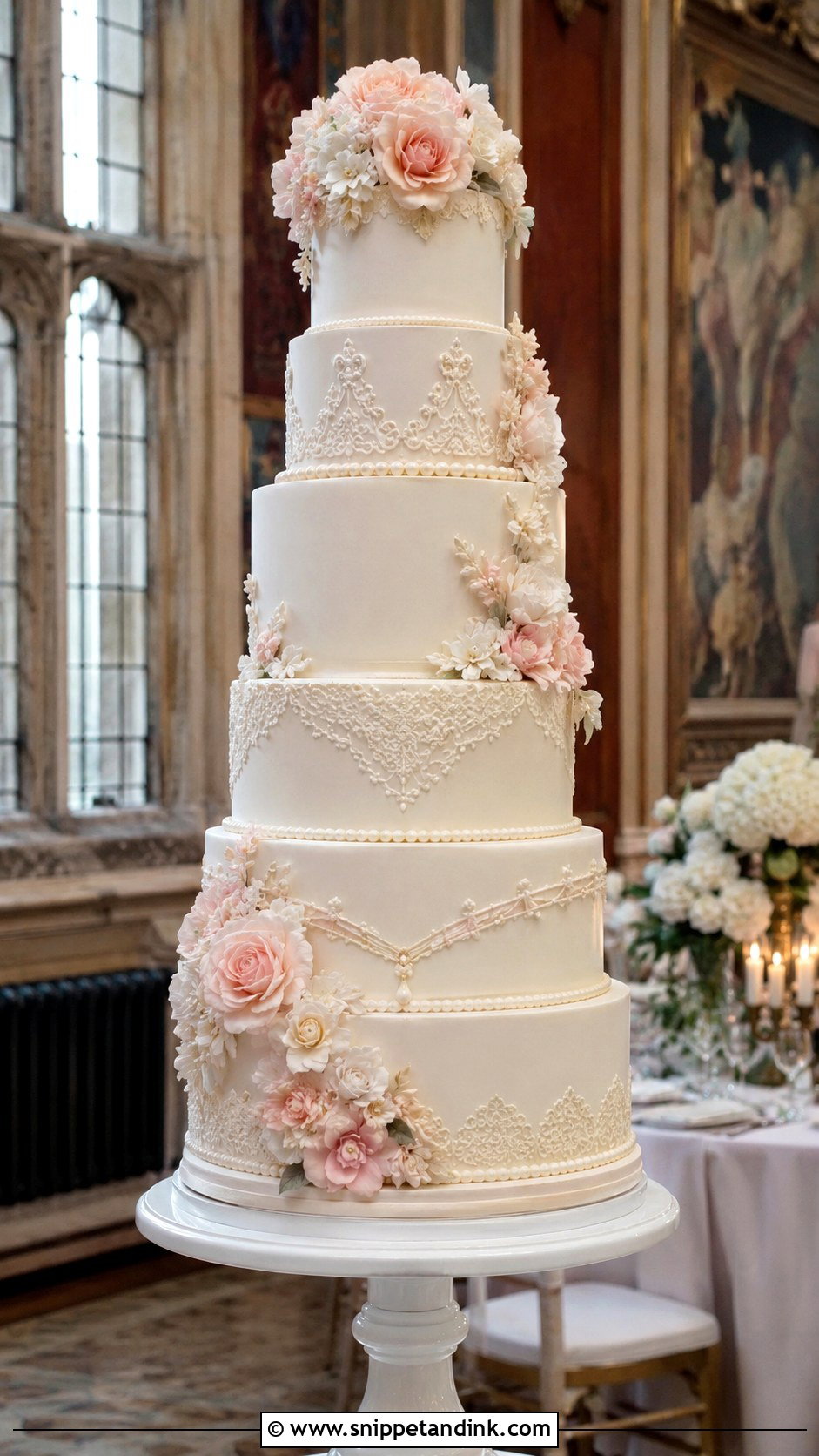
A tall tiered wedding cake belongs in castles, manor houses and ballrooms where a smaller cake would disappear. Equal tiers look traditional; mixed heights look modern. Tall cakes need internal dowels and boards in every tier, and very tall ones are stacked at the venue. Keep the color controlled. One advantage is choice: each tier can be a different flavor, lemon elderflower on one, chocolate salted caramel or carrot cake on another.
14. Small Wedding Cake
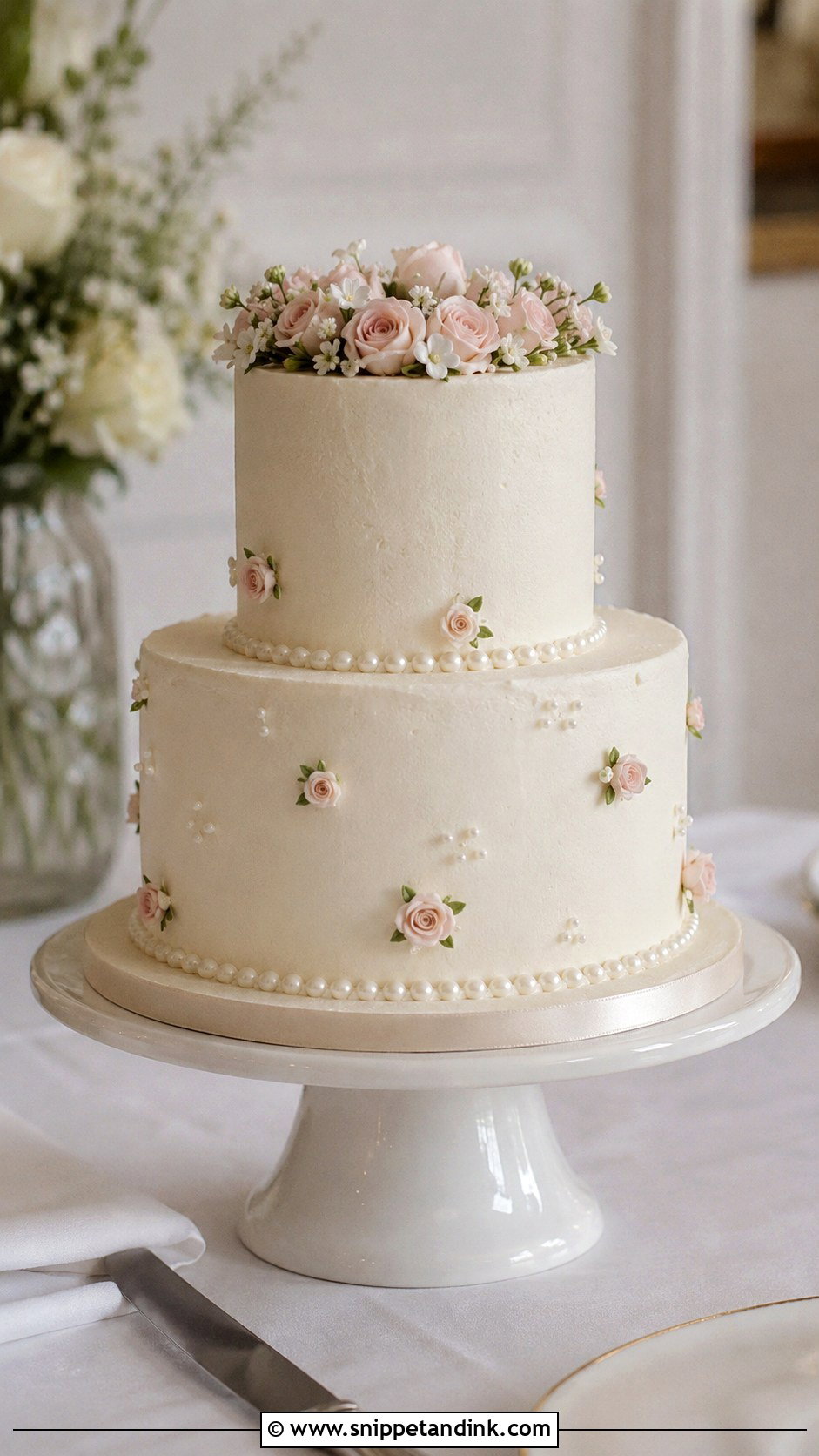
Micro weddings, registry office ceremonies and restaurant receptions need only a one- or two-tier cake, and a small cake can carry as much detail as a large one. The key is proportion: one strong feature, not five small ones. A small Lambeth cake, a pressed flower cake or a buttercream cake with a floral crown all work. Because fewer people need to agree, a bolder flavor is easier to choose.


15. Square Wedding Cake
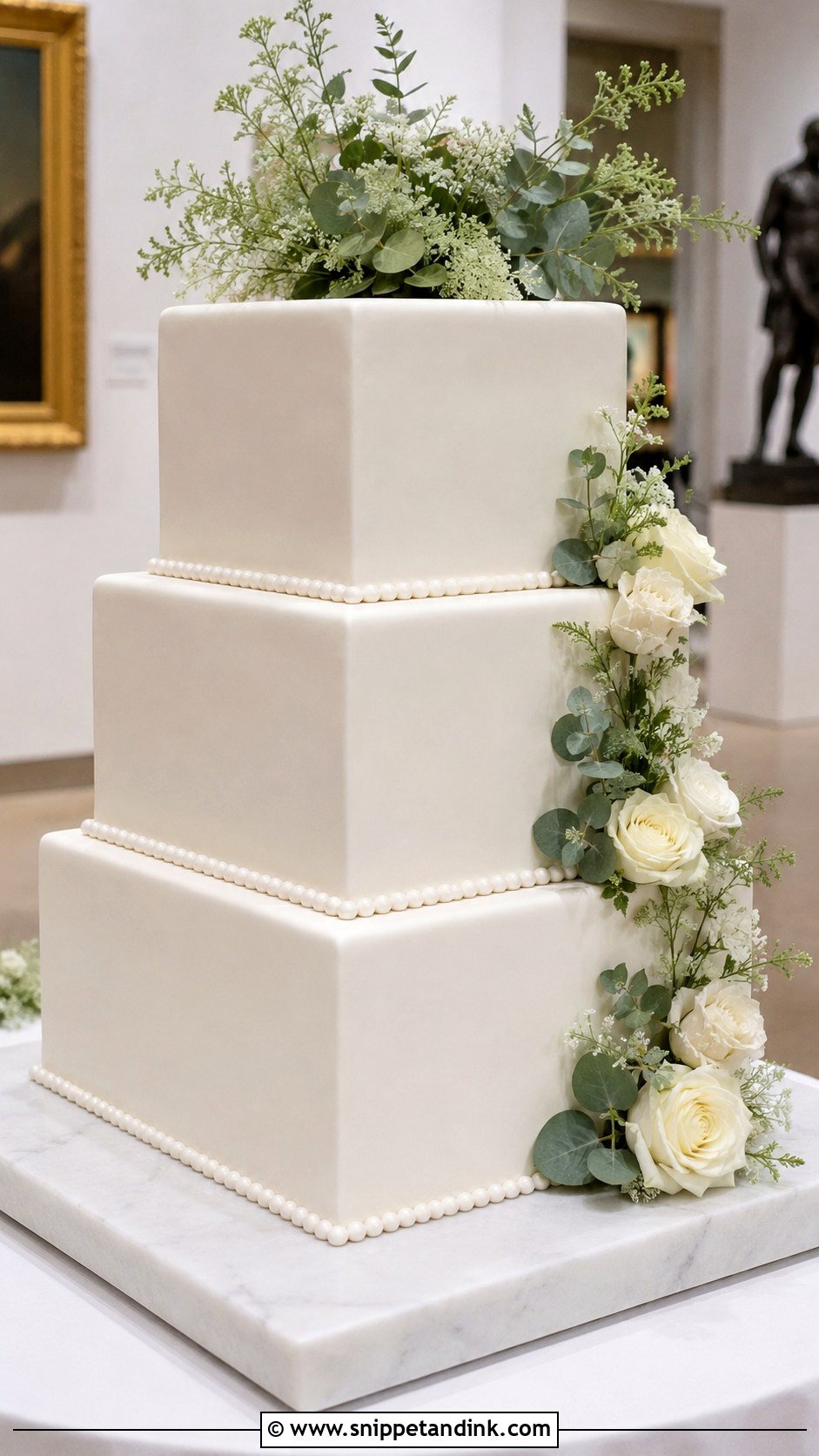
Square tiers look architectural and a little unexpected. They also give more portions than round tiers of the same size. The corners are the challenge: buttercream needs careful chilling to hold them, so many square cakes are finished in fondant over ganache. Stack them evenly or offset them slightly. White, stone, sage and soft grey suit the shape, and one floral accent softens it.
16. Ruffle Wedding Cake
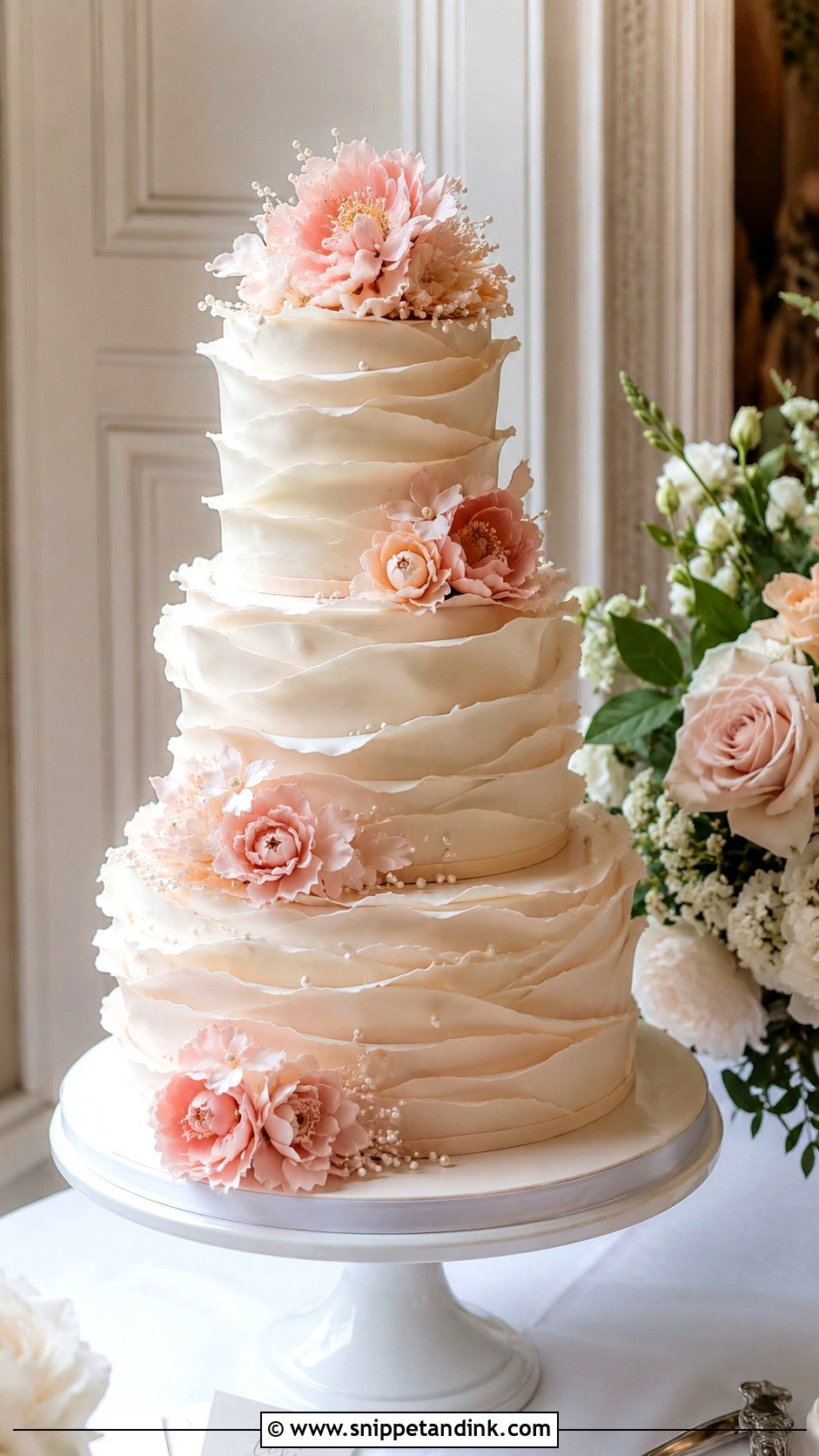
Ruffles can be made in fondant, wafer paper or buttercream, and each behaves differently. Wafer paper ruffles are light and look like fabric, but they soften and wilt in humidity, which matters in a damp British summer marquee. Fondant ruffles hold better; buttercream ruffles are tastier but delicate. Loose ruffles feel bridal, tight ones more dramatic. They pair naturally with tulle and organza dresses.
17. Gold Wedding Cake
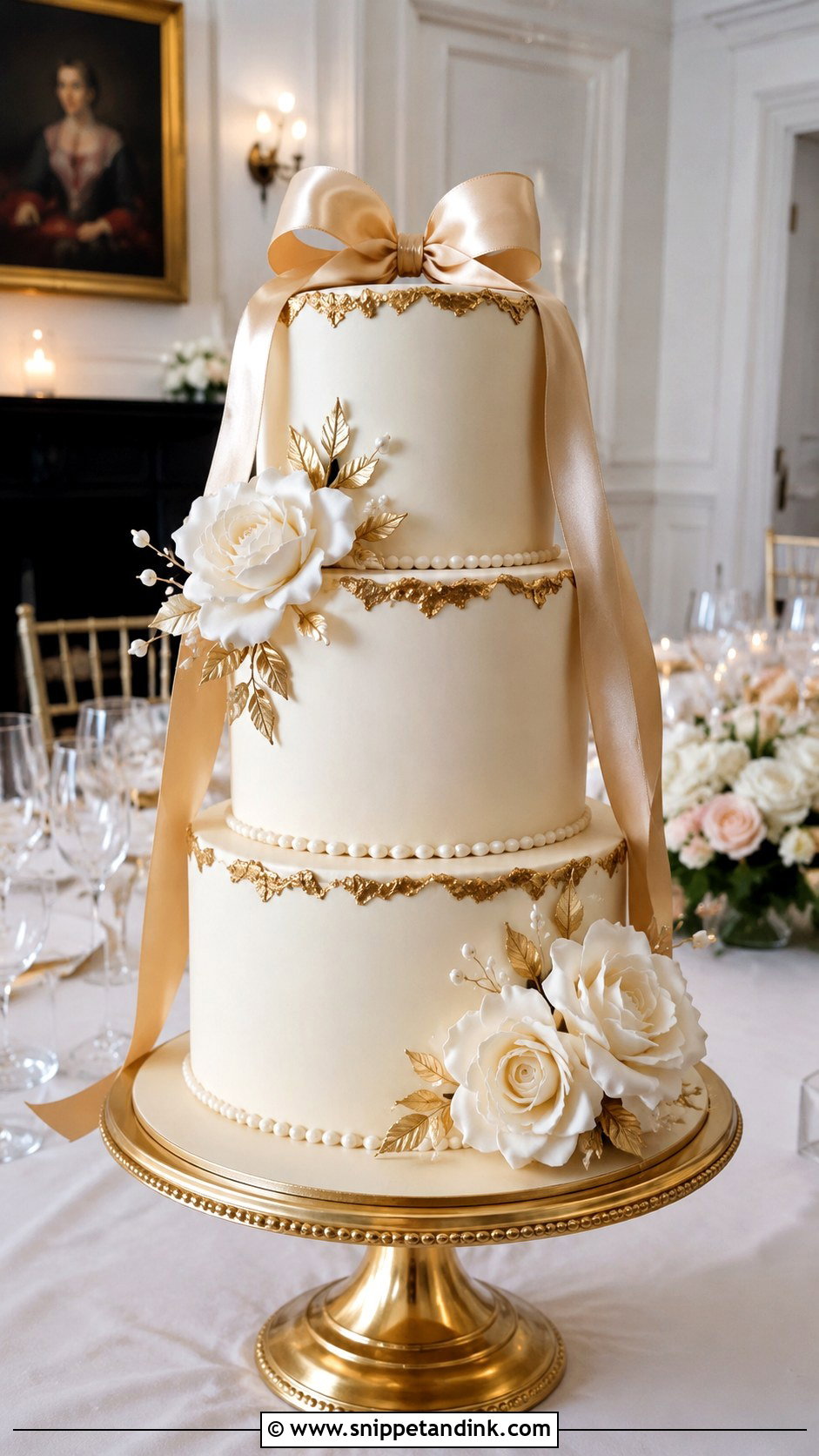
Gold can be brushed onto edges, painted onto fondant or laid as leaf on a single tier. For British weddings I usually suggest a soft antique gold rather than a bright yellow gold, which can look brassy in daylight. Ivory, champagne, sage and deep green sit well with it. Gold leaf is fragile and I apply it last, in a dry room. Keep it to accents and add a few sugar flowers to soften the shine.
18. Black And White Wedding Cake
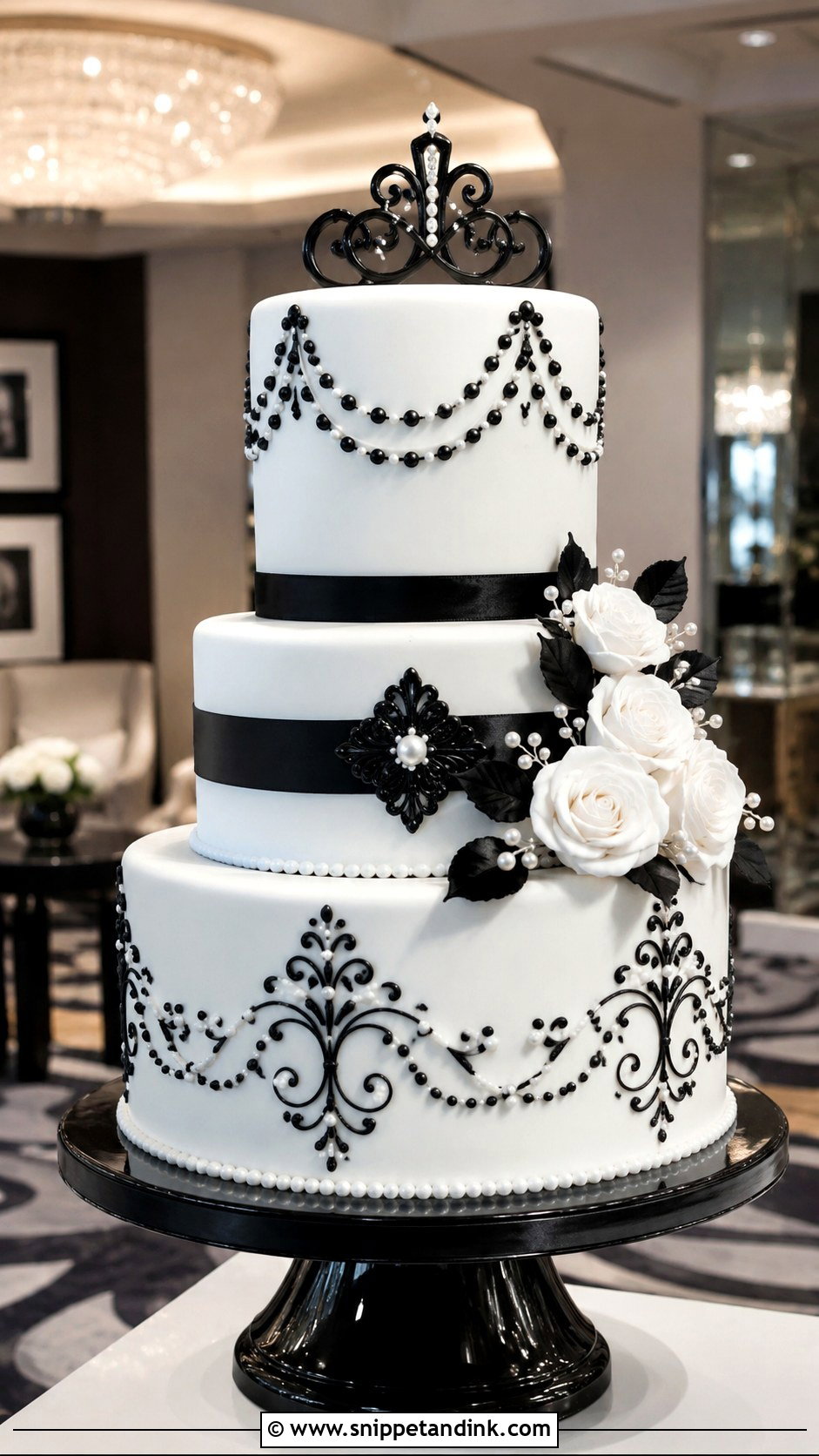
Black and white is bold and works only when the design is clean. White tiers with black ribbon or piping, monochrome sugar flowers or one black base tier all suit hotel and city weddings. Black icing needs a lot of coloring, so I usually make black elements in fondant or use black cocoa, which gives a dark sponge with less dye. Dark chocolate, cookies and cream or vanilla bean all suit the palette. Pearls or white roses add softness.
19. Macaron Wedding Cake
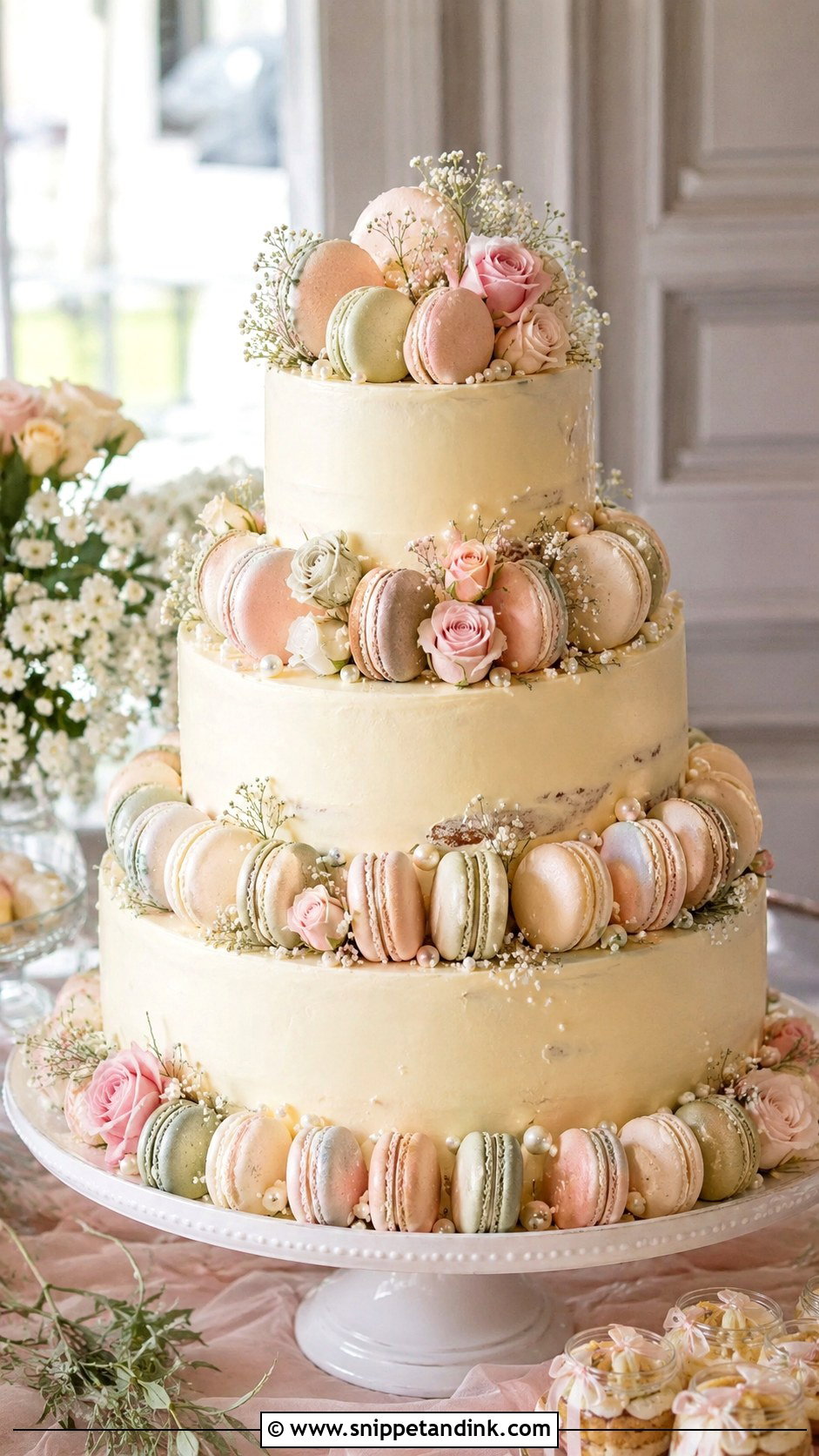
Macarons can be arranged around the tiers, stacked at the base or built into a separate tower, and they give guests something extra to pick up. They suit pastel palettes in blush, sage, lavender or pale blue. Macarons absorb moisture and soften when they sit against buttercream for hours, so I attach them as late as possible and keep spares for the table. Pistachio, raspberry and lemon fillings are popular.


20. Fruit Wedding Cake
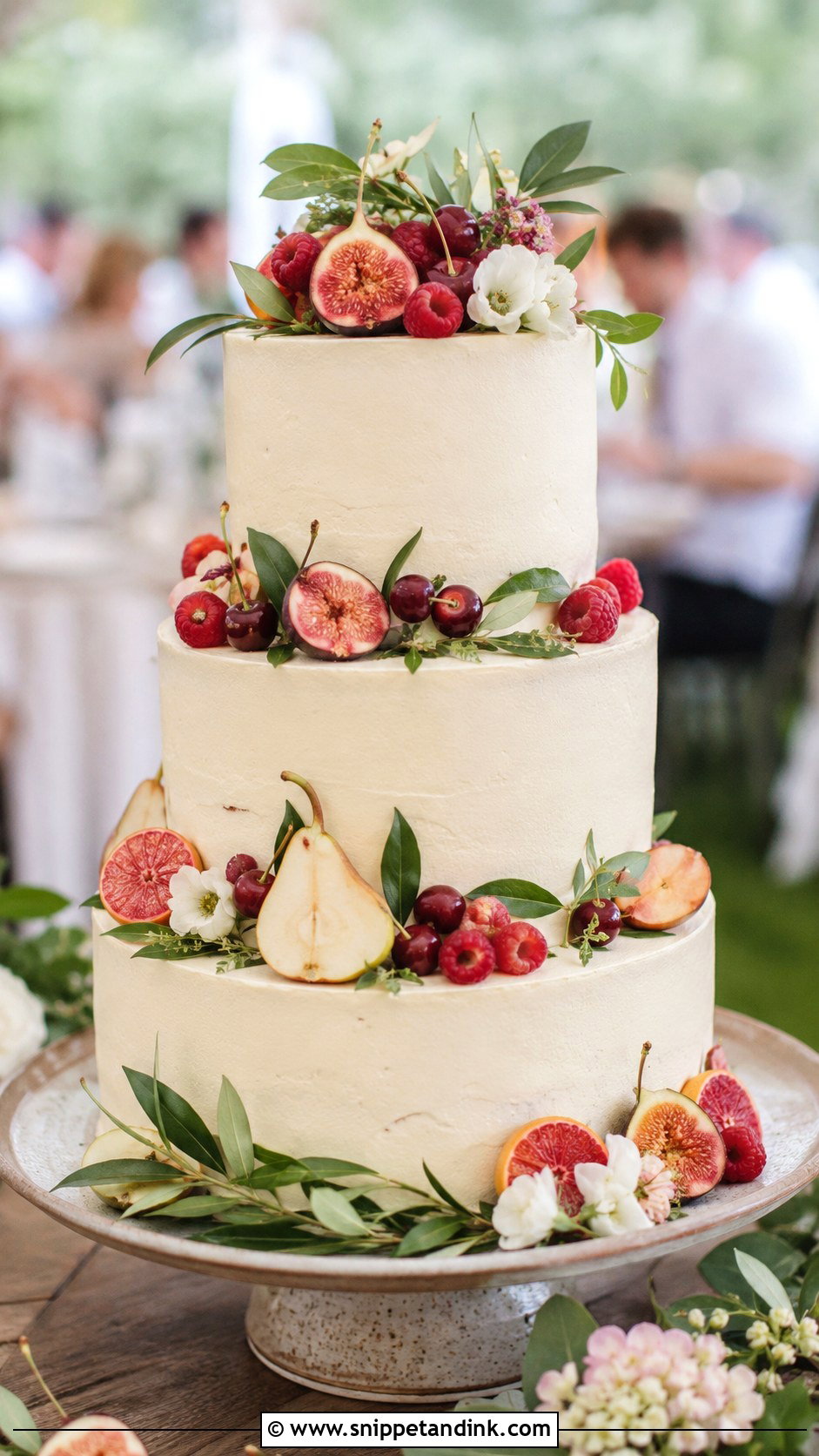
Fruit works best as designed decoration, not a heap on top. Figs, berries, pears, cherries and citrus can sit against smooth buttercream, ganache or fondant. Cut fruit weeps juice and can stain frosting, so I place whole or halved fruit and add it near the time of serving. Berries suit summer, figs and pears suit autumn. Spiced pear and chocolate raspberry are good matching flavors.
Marquees, Manor Houses and a Long Gravel Drive
Many British venues are beautiful and awkward for a cake. These are the questions I ask every venue before delivery.
Marquees and tipis
A marquee warms up fast in sunshine and turns damp in the evening. Buttercream softens in the heat, and fondant can sweat when a chilled cake meets a warm, humid tent. I ask for the cake table to sit in the shade, away from the canvas walls, heaters and the dance floor.
Old houses and country estates
Long gravel drives, narrow doors and stairs all affect how a tall cake is carried in. If the cake room is up a flight of stairs, I deliver tiers separately and stack them in the room. Sunny bay windows and old radiators are poor spots for the cake table.
Cutting and serving
Some venues charge to cut and plate a cake from an outside supplier. Ask whether that applies, who will cut it and when, and whether the cake can go into a cool room until then.
Let the Venue and the British Weather Shortlist Your Cake
British wedding cakes now cover far more than the classic white-iced fruit cake, from Lambeth piping to pressed flowers, bows and macarons. Start with the venue and the time of year, then bring a few clear photos to your baker and talk through flavor, structure, transport and the weather on the day. A cake that suits the room and still tastes good after dinner is the one people remember.
You'll Like These Ideas:








Leave a Reply