
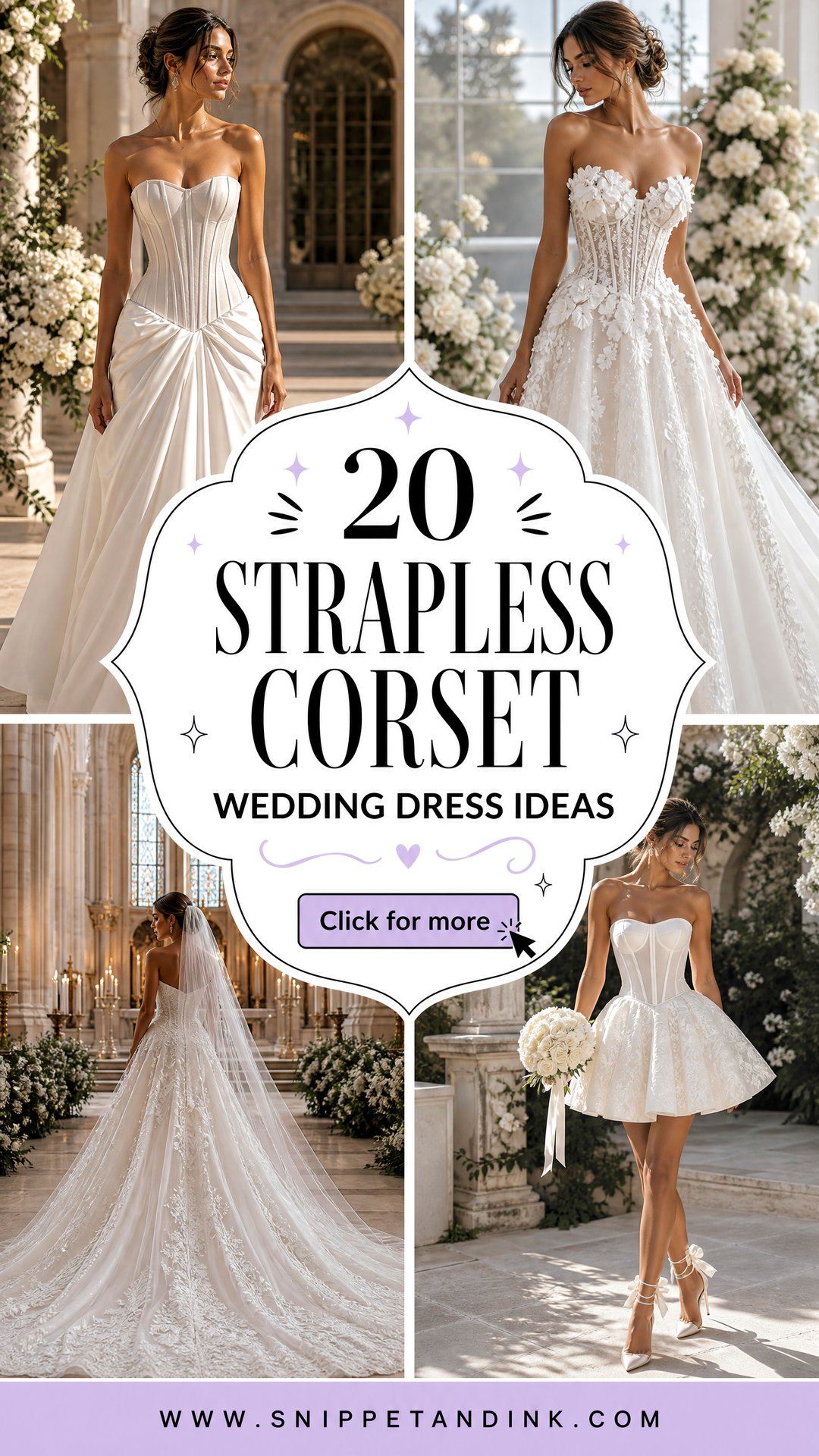
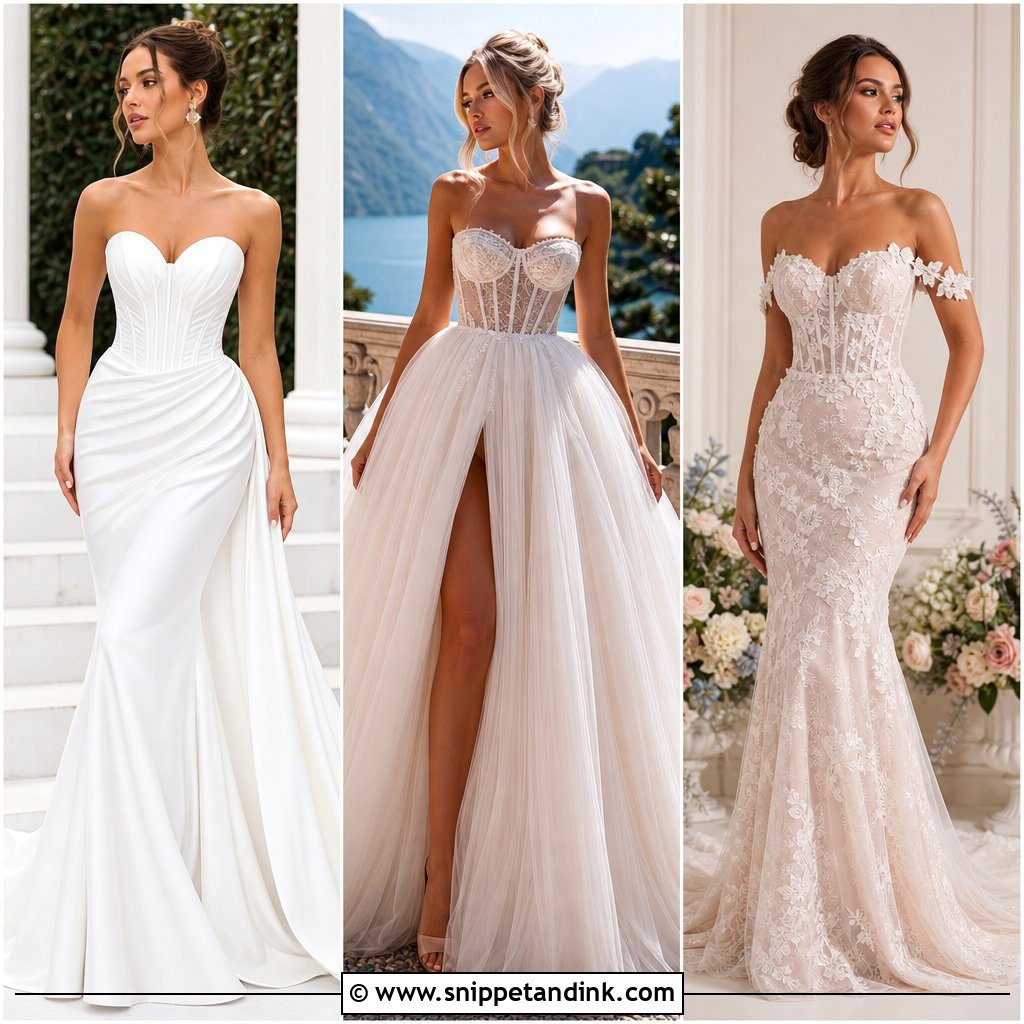
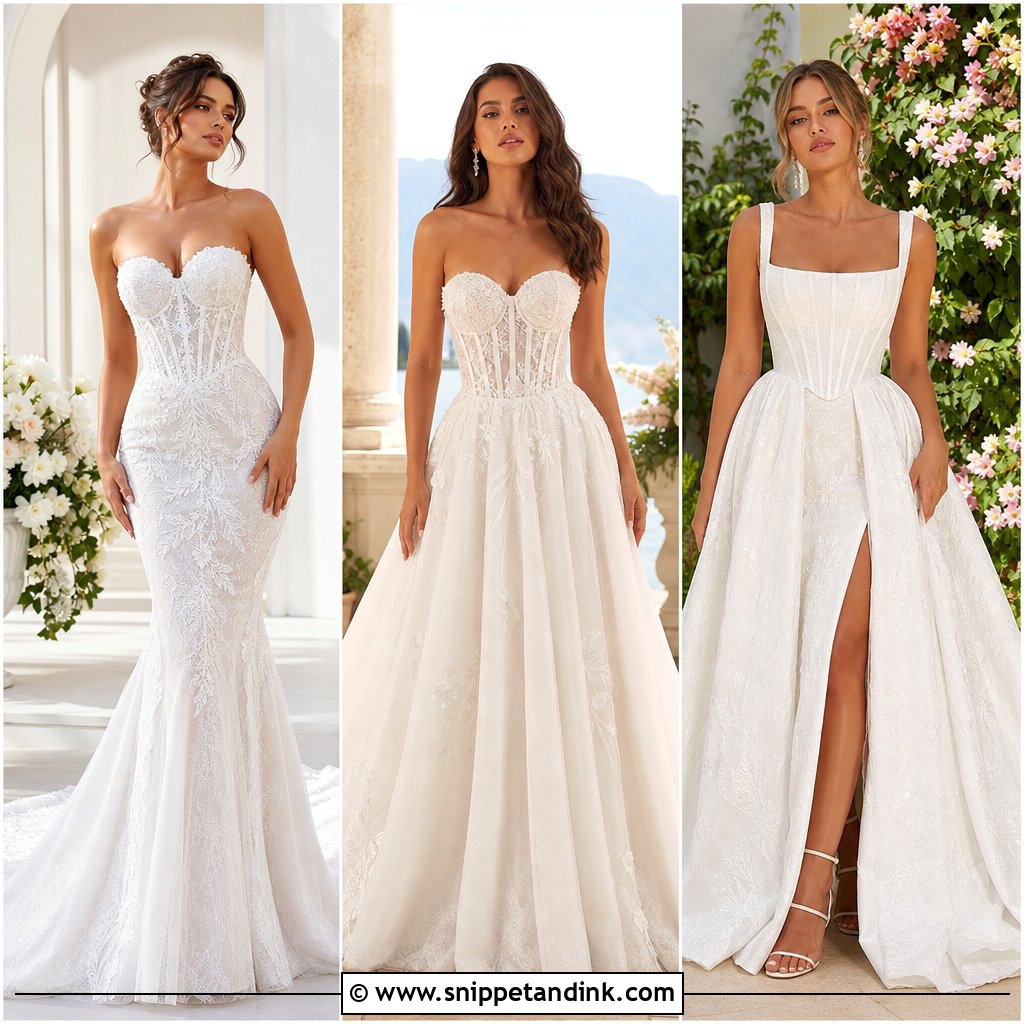
A corset bodice does two jobs at once. It holds you up without straps and it shapes the waist, which leaves the neckline free for earrings, a fine necklace, a veil and whatever hairstyle you love. Designers keep finding new angles, exploring corsetry through basque waists, dropped waistlines, dimensional lace, sculpted satin, floral appliqués and removable layers. The skirt and fabric decide whether the result reads classic or modern. Before anyone falls for a picture, I ask about bust support, season, venue and how much dancing is planned, because those answers narrow the twenty looks below very quickly.
Spiral Steel or Plastic? Telling Real Corsetry From a Corset Look
Plenty of gowns sold as corset dresses have the look on the outside and very little structure inside. Both can work, but they behave differently over a long day, so it helps to know which one you’re trying on. Ask to see inside the bodice; a good boutique won’t mind.
- Boning: spiral or flat steel bends with your body and holds its shape all day. Plastic boning is lighter and cheaper, but it softens with body heat and can leave visible ridges by evening.
- Waist tape: a sturdy ribbon sewn inside at the waistline. It anchors the bodice and takes strain off the seams and the zip.
- Strength layer: proper corsetry has a firm, tightly woven layer under the fashion fabric. Without it, satin and lace stretch wherever the bones press.
- Closure: lacing adjusts to small changes in your body. A zip doesn’t, so the fit has to be exact.
Lighter structure isn’t wrong. For a relaxed summer wedding or a short dress, a softly boned bodice can be more comfortable. Under a heavy skirt or on a fuller bust, though, I want steel and a waist tape.
1. Satin Strapless Corset Ball Gown
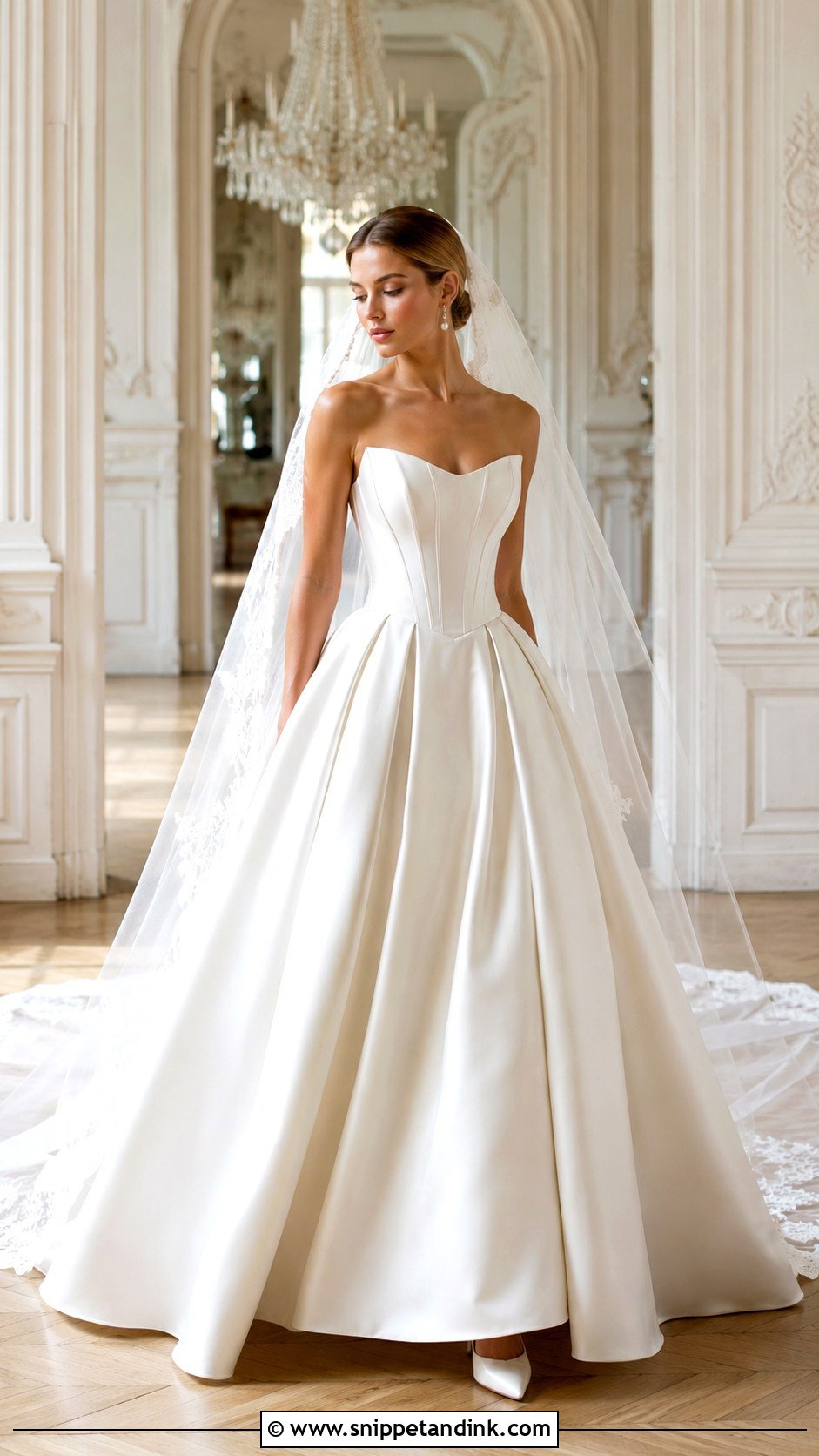
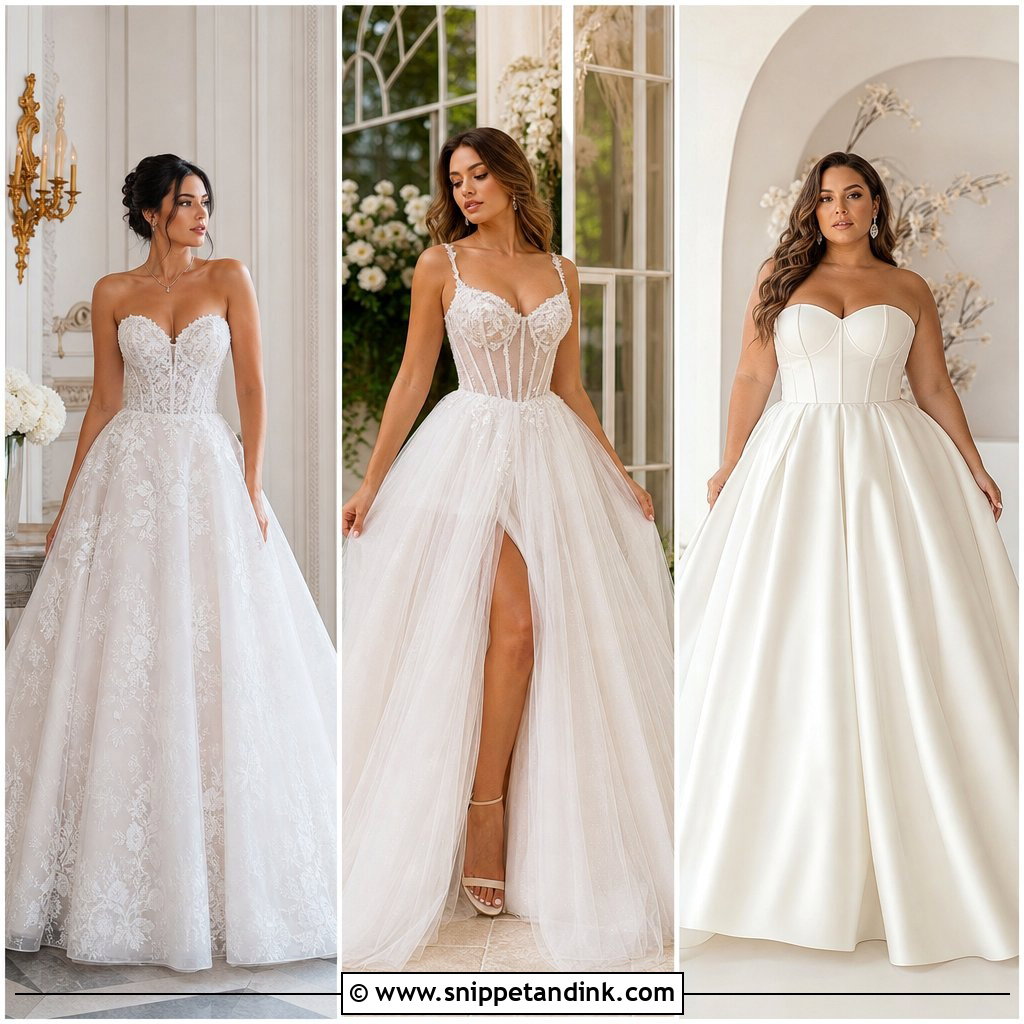
Satin over a properly boned corset is the most polished version of this dress. Curved seams, secure boning and a softly dipped neckline sit above a full skirt in duchess satin or mikado, which keeps its shape without any embellishment. Pointed ivory pumps, pearl drops and a sleek low bun suit it; pick a cathedral veil for drama or a plain fingertip one for something cleaner. Satin reflects light, so allow one statement piece at most. It’s a ballroom and grand-estate dress. I check this bodice three ways at every fitting, sitting, walking and arms up, because satin shows a gap or a bulge the moment one appears.
2. Lace Strapless Corset A-Line Wedding Dress
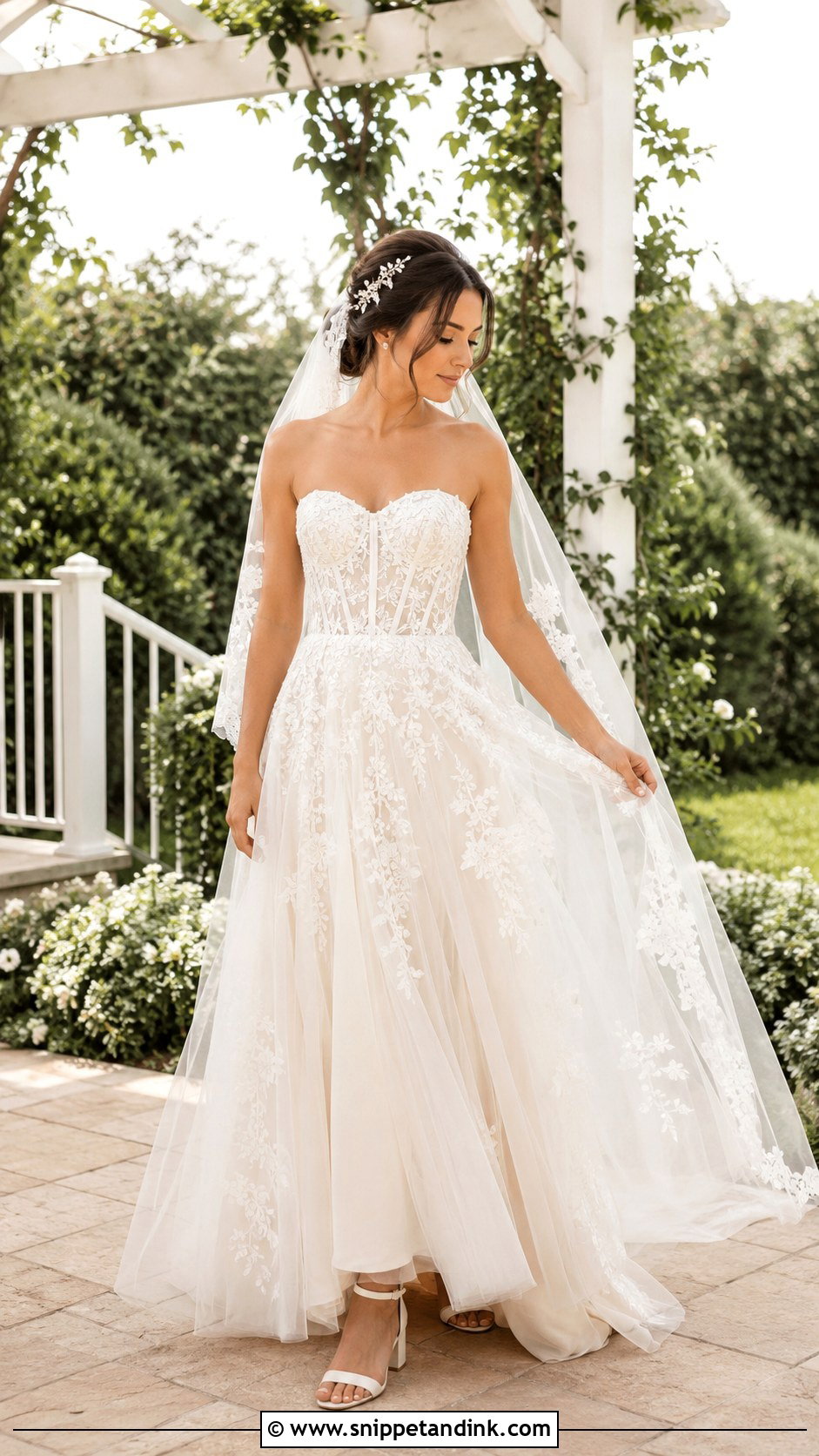
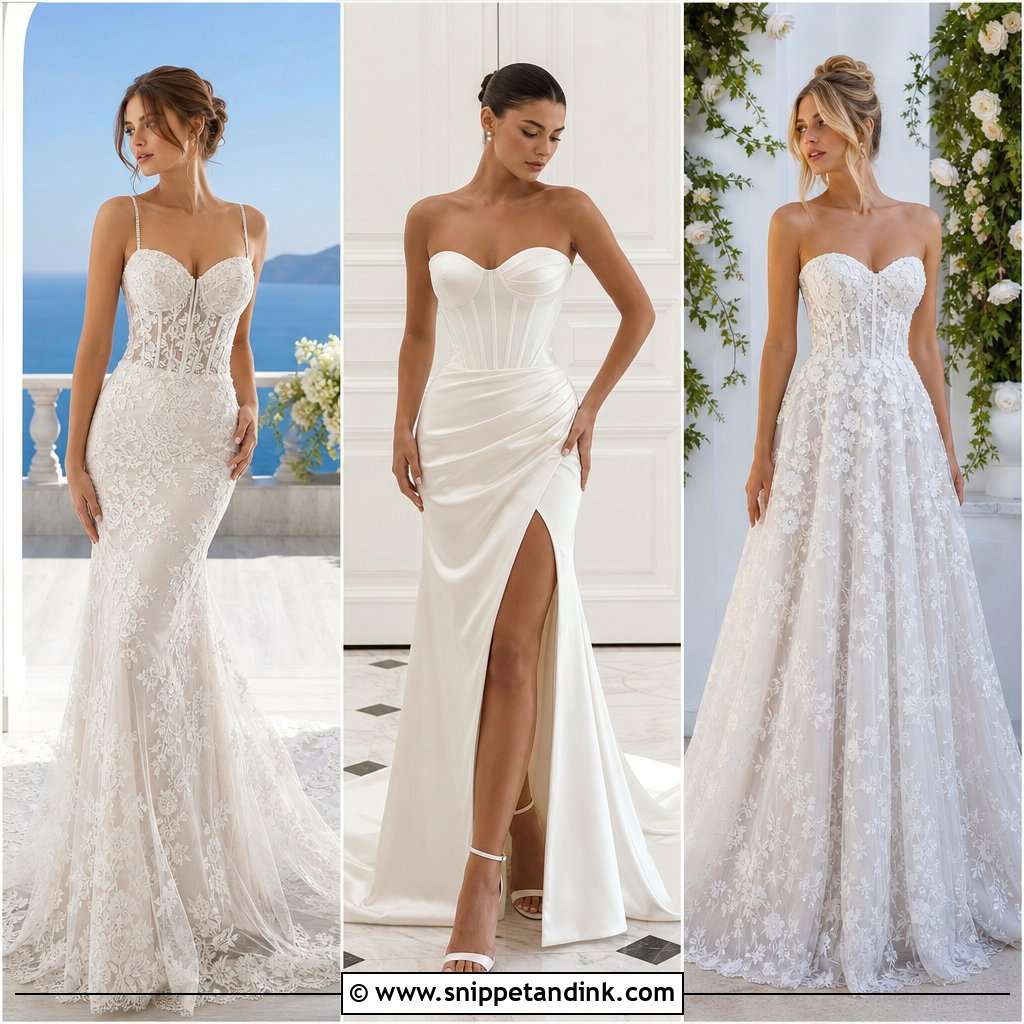
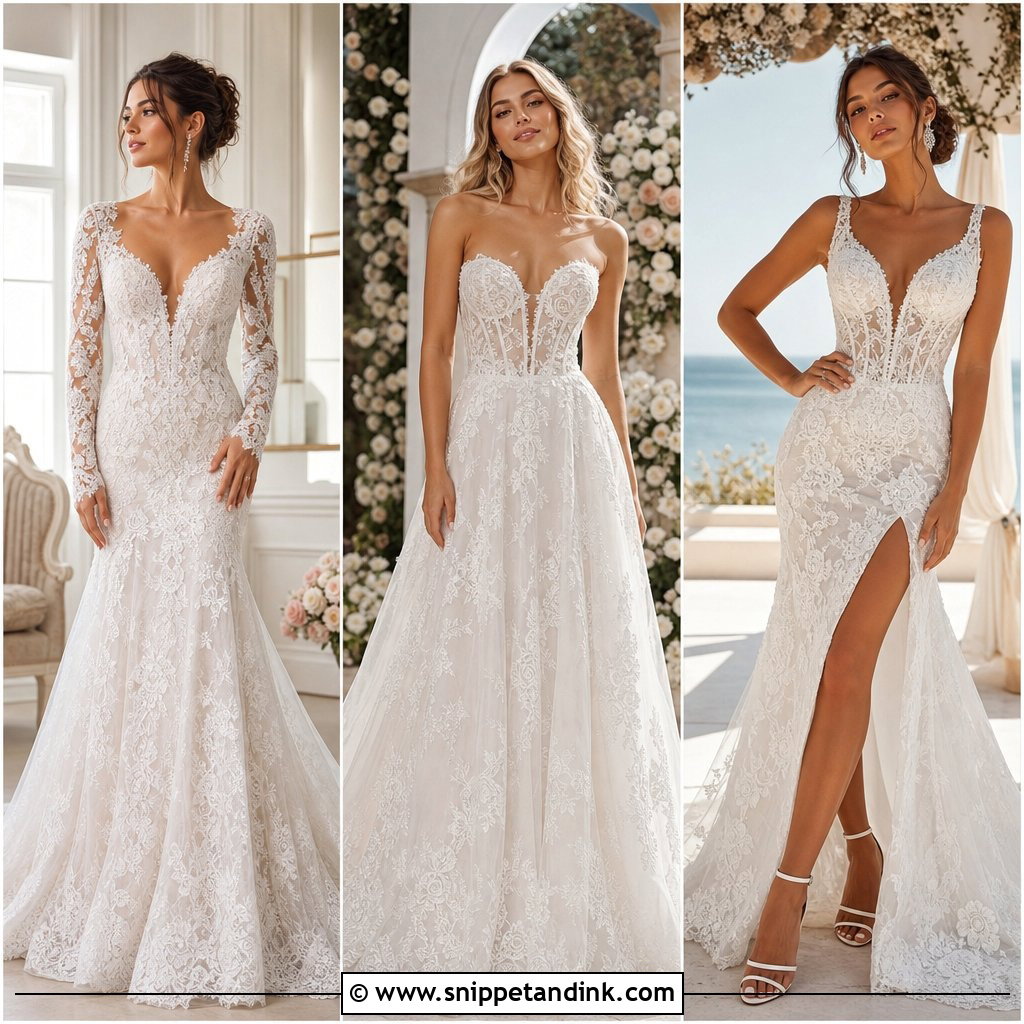
Lace takes the edge off a structured A-line. Look for motifs that run onto the skirt instead of stopping sharply at the waist, with a lightly layered tulle skirt below that’s easy to walk in. Ivory block heels, a floral hair comb and small crystal or diamond studs finish it. A lace-trimmed veil can work, but its pattern should be finer than the dress’s, or the two start arguing. Sheer panels in the bodice are worth lining in a shade close to your skin, since standard ivory or nude linings can look grey or pink against skin in photos. Gardens and historic venues suit it.
3. Basque Waist Strapless Corset Wedding Dress
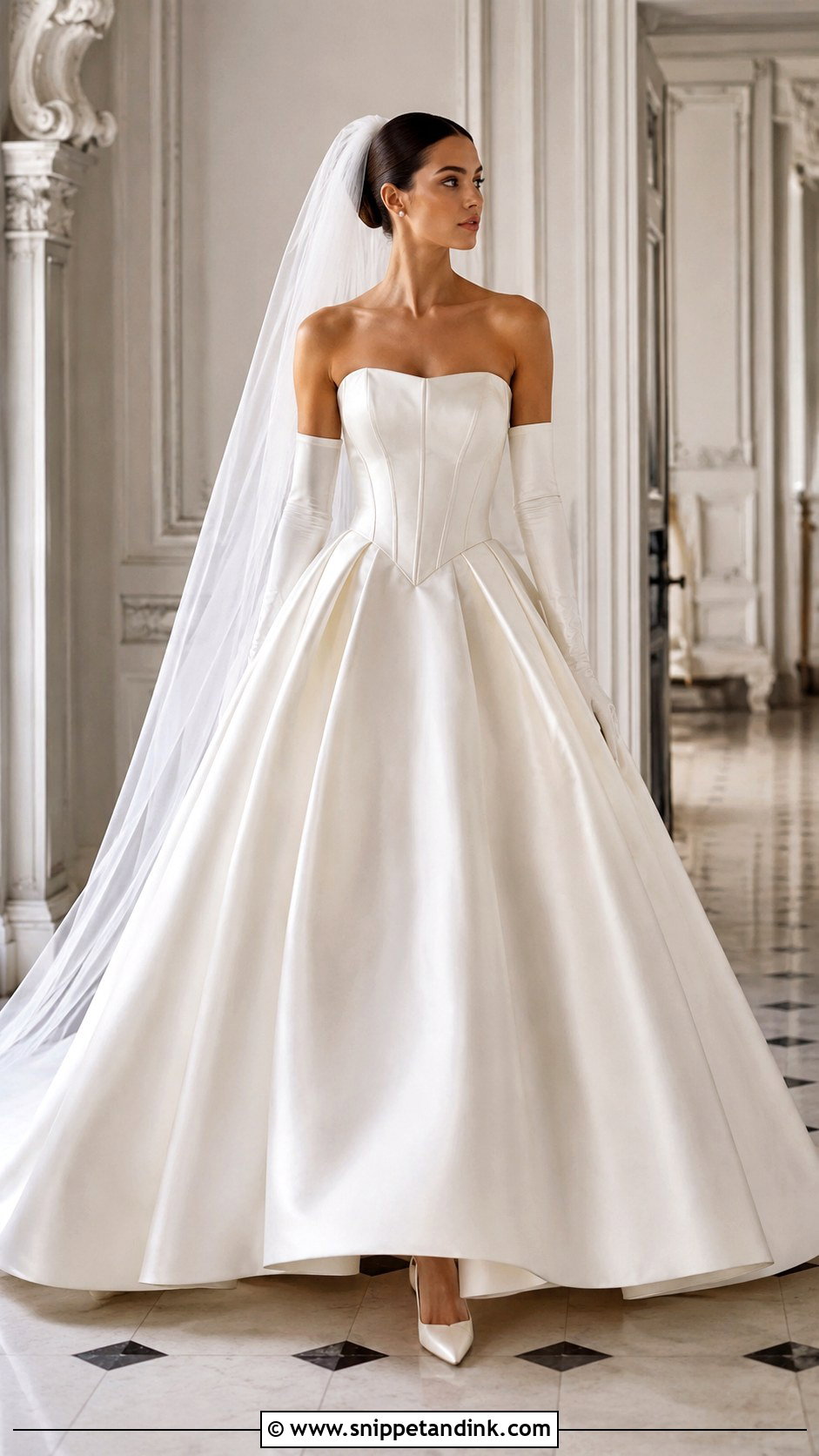
A Basque waist dips into a V below the natural waist, and on a corset it gives a long, regal line. Balance it with a full satin or tulle skirt. Long opera gloves push it toward formal, while pearl studs keep the jewelry quiet. Pointed heels with a stable base matter here, because a big skirt hides your feet and you can’t see where you’re stepping. A simple cathedral veil leaves the waist on show. Torso length decides comfort with this cut. I check where the point lands when the bride sits, since on a short torso it can press into the top of the thighs and may need shortening slightly.
4. Drop Waist Strapless Corset Wedding Dress
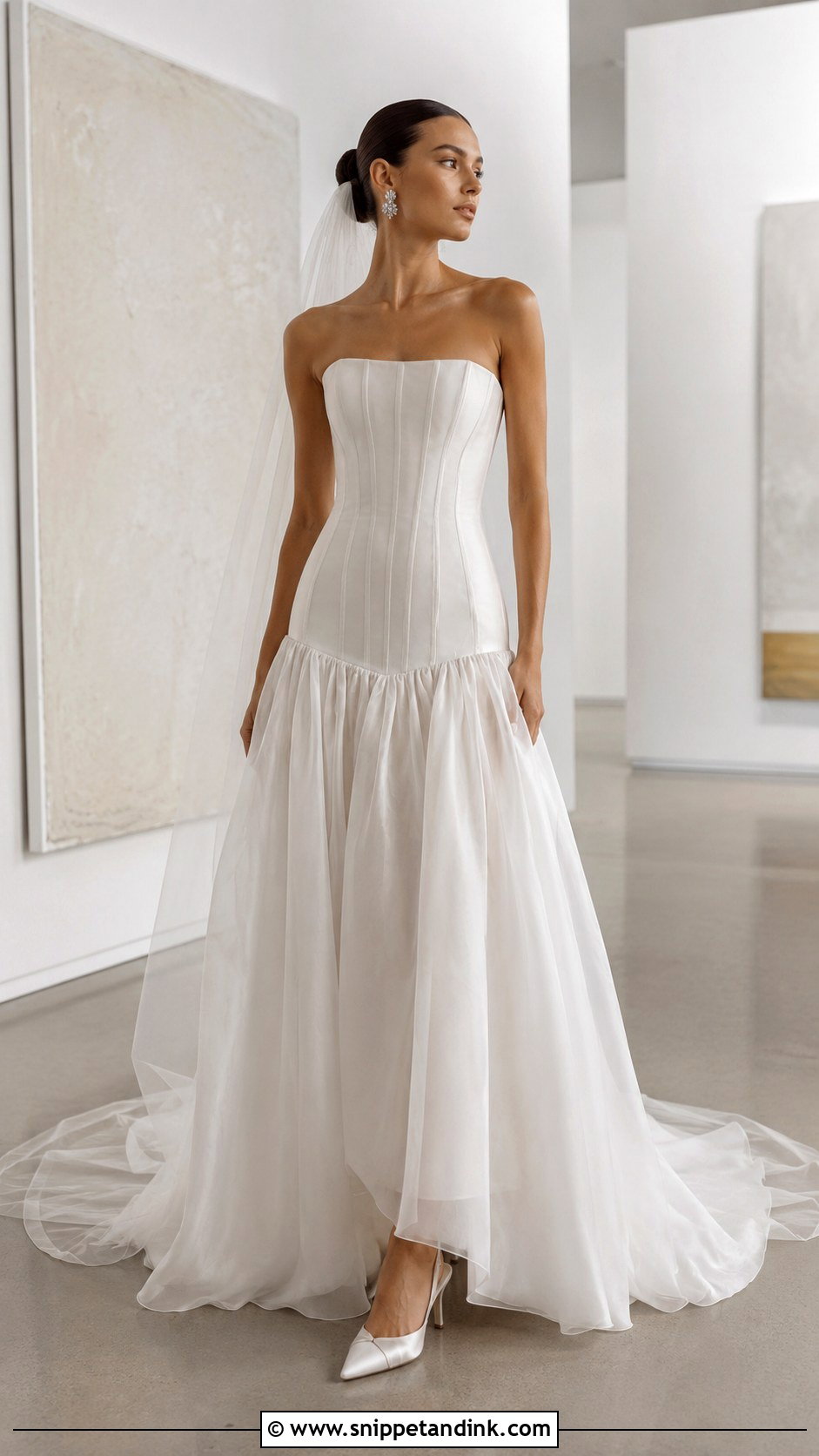
This corset runs down toward the hips before meeting the skirt, giving a long, streamlined torso. Softly gathered tulle, satin or organza looks striking against it. Sculptural earrings, a clean bun and satin slingbacks keep the styling modern, and a sheer chapel veil moves without hiding the proportions. Never belt it at the natural waist; that cuts across the very line it was designed to make. The hip fit needs patience in alterations, so walk, bend and sit at each appointment. Gallery venues, modern hotels and city weddings suit it best.
5. Mermaid Strapless Corset Wedding Dress
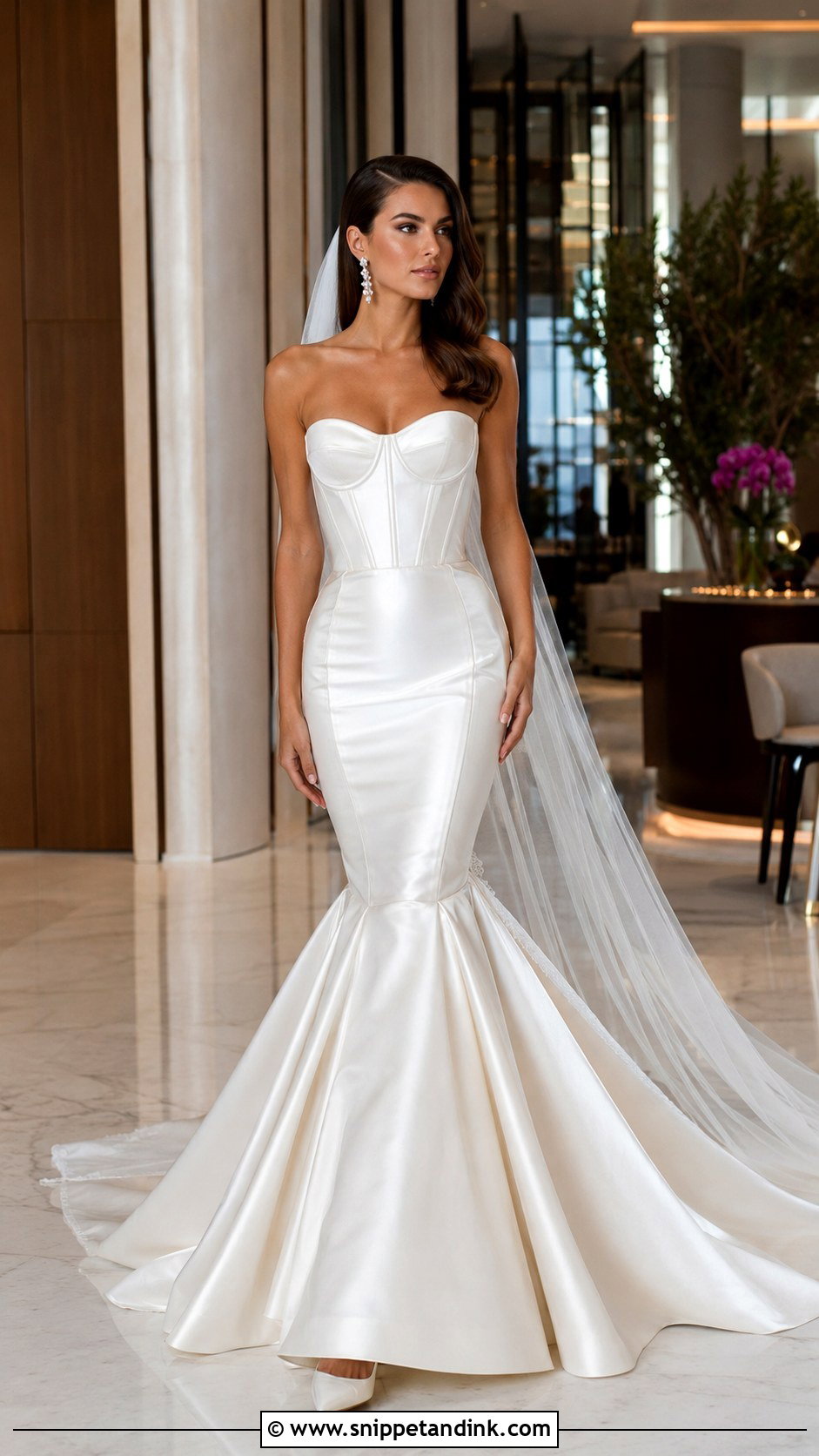
Fitted to the knee, then a flare: a mermaid corset is glamorous and demanding. Stretch crepe, satin or lace give definition with some give. Crystal earrings, a smooth side-parted style and pointed pumps under the hem suit it, along with a long narrow veil that adds no bulk at the hips. If there’s a dramatic train, budget for a secure bustle. Honestly, I wouldn’t put a bride who plans to dance all night in this shape unless the flare starts at or just below the knee. Practise sitting and taking full steps before the final alterations.
6. Minimalist Strapless Corset Column Wedding Dress
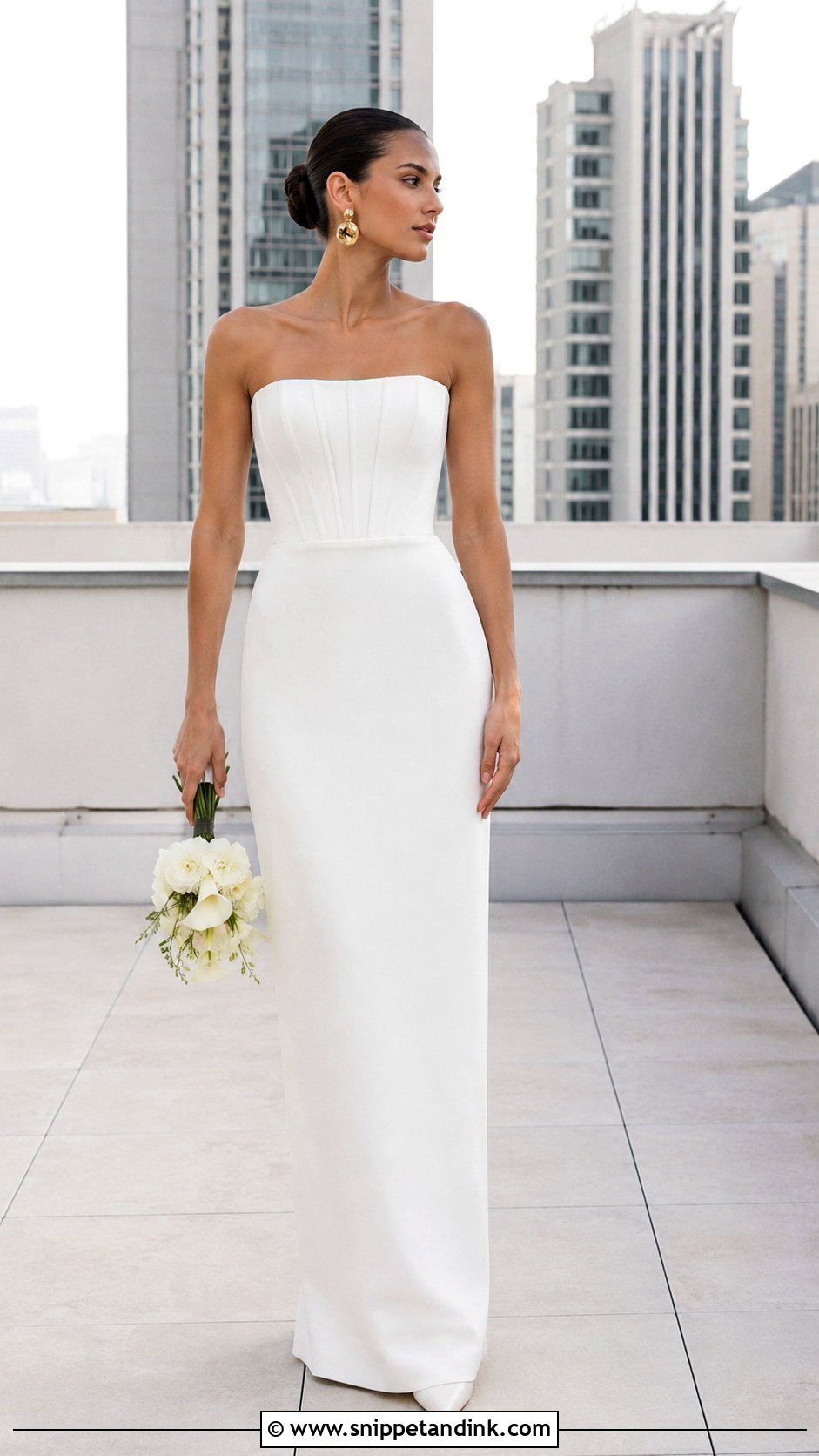
Minimal gowns are the least forgiving dresses I fit. Picture a strapless corset with concealed boning, smooth fabric and a straight or gently curved neckline, over a slim crepe or matte satin skirt that falls close to the body without shortening your stride. Pearl or sculptural gold earrings, pointed ivory heels, a compact bouquet and a neat chignon complete it, with a long plain veil for the ceremony that comes off afterwards. With nothing to distract the eye, every seam is on display, so tailoring is where the budget should go. Courthouses, rooftops and galleries suit it.
7. Floral Appliqué Strapless Corset Wedding Dress
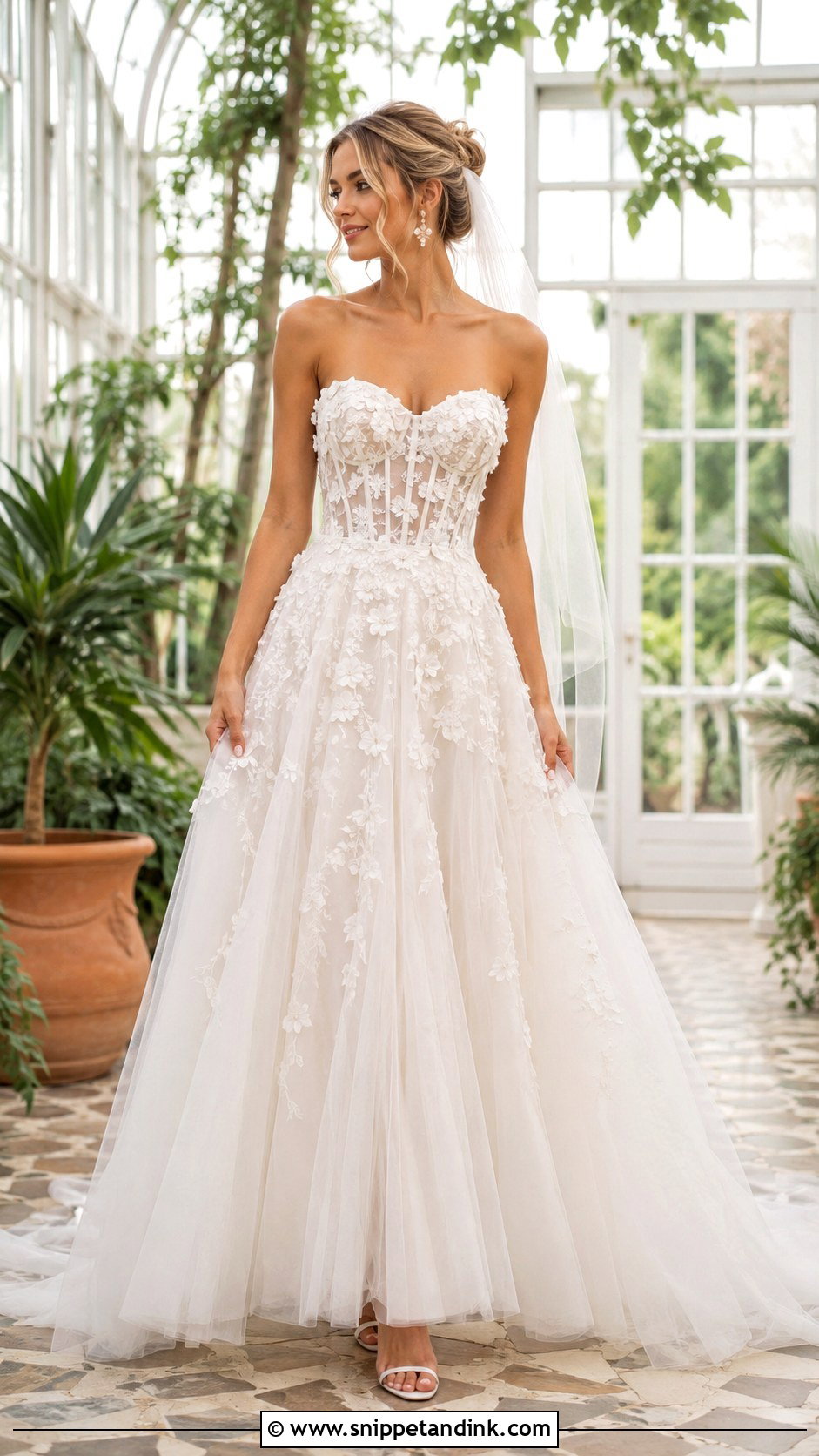
Raised flowers make a corset romantic without any sparkle. I like them starting at the bodice and scattering down a tulle A-line or ball gown skirt, so the design stays balanced from neckline to hem. Floral earrings, ivory sandals and a softly textured updo suit it, with a plain veil so the flowers stay visible. For an outdoor ceremony, ask how heavy the appliqués are, because a skirt loaded with fabric flowers is tiring to lift across a lawn. Raised petals near the waist and underarms catch on your arms and get crushed, so have the seamstress tack them down.
8. Pearl Beaded Strapless Corset Wedding Dress
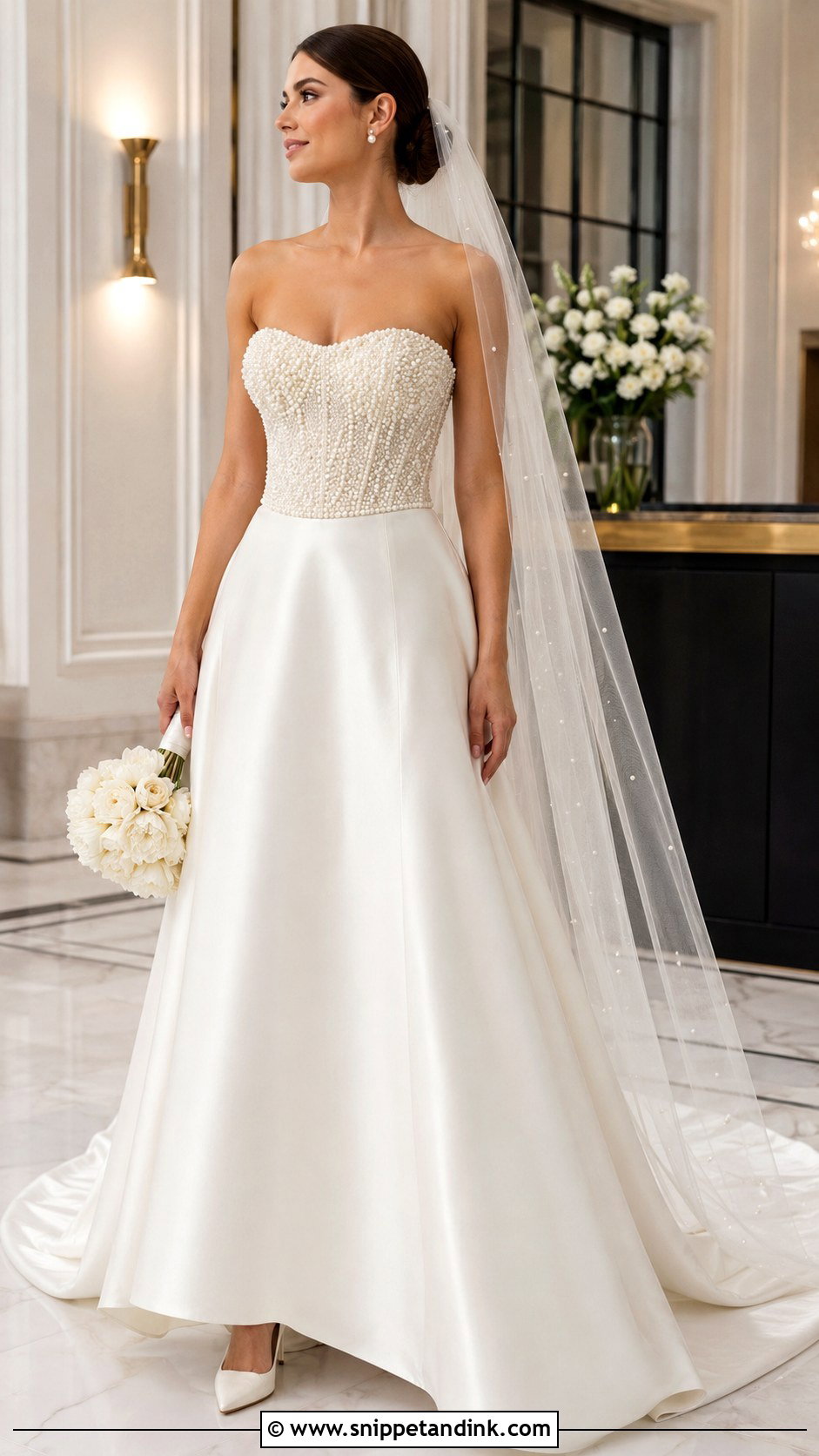
Pearls glow rather than glitter, which keeps the look elegant instead of overly glittery. A bodice covered in small pearls above a cleaner satin, crepe or tulle skirt lets the corset shape stand out without making the whole dress heavy. Pearl studs, a smooth bun and closed-toe satin pumps are plenty, with a plain veil or one with sparse pearls. Run your hand along the side seams at the fitting. Beads at the underarm can rub skin sore over a long day, and a few can usually be removed there without anyone noticing. Formal hotels, winter weddings and evening receptions suit it.
9. Ruched Tulle Strapless Corset Wedding Dress
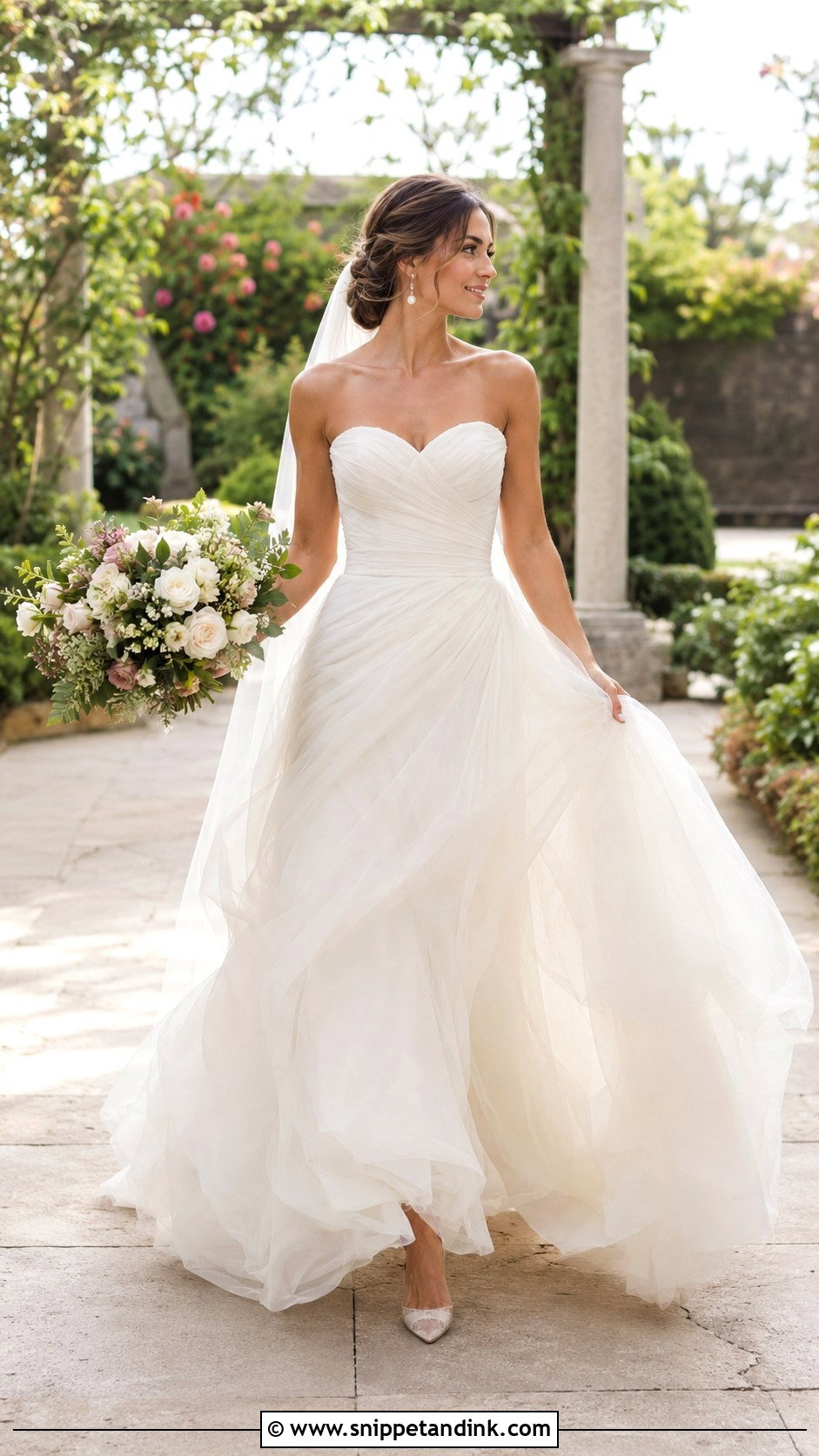
Ruched tulle softens a corset while still marking the waist. Fine tulle gathered across the bodice, diagonally or horizontally, flows into an A-line skirt and adds dimension without lace or crystals. Sheer ivory pumps, drop earrings and a relaxed low bun suit it, along with a light chapel veil that drifts nicely in outdoor portraits. The weak spot is the bust and side seams. Gathers that sit unevenly there look messy rather than soft, so I check them from both sides. Gardens, beach hotels, conservatories and spring weddings are where it shines.
10. Mikado Strapless Corset Wedding Dress
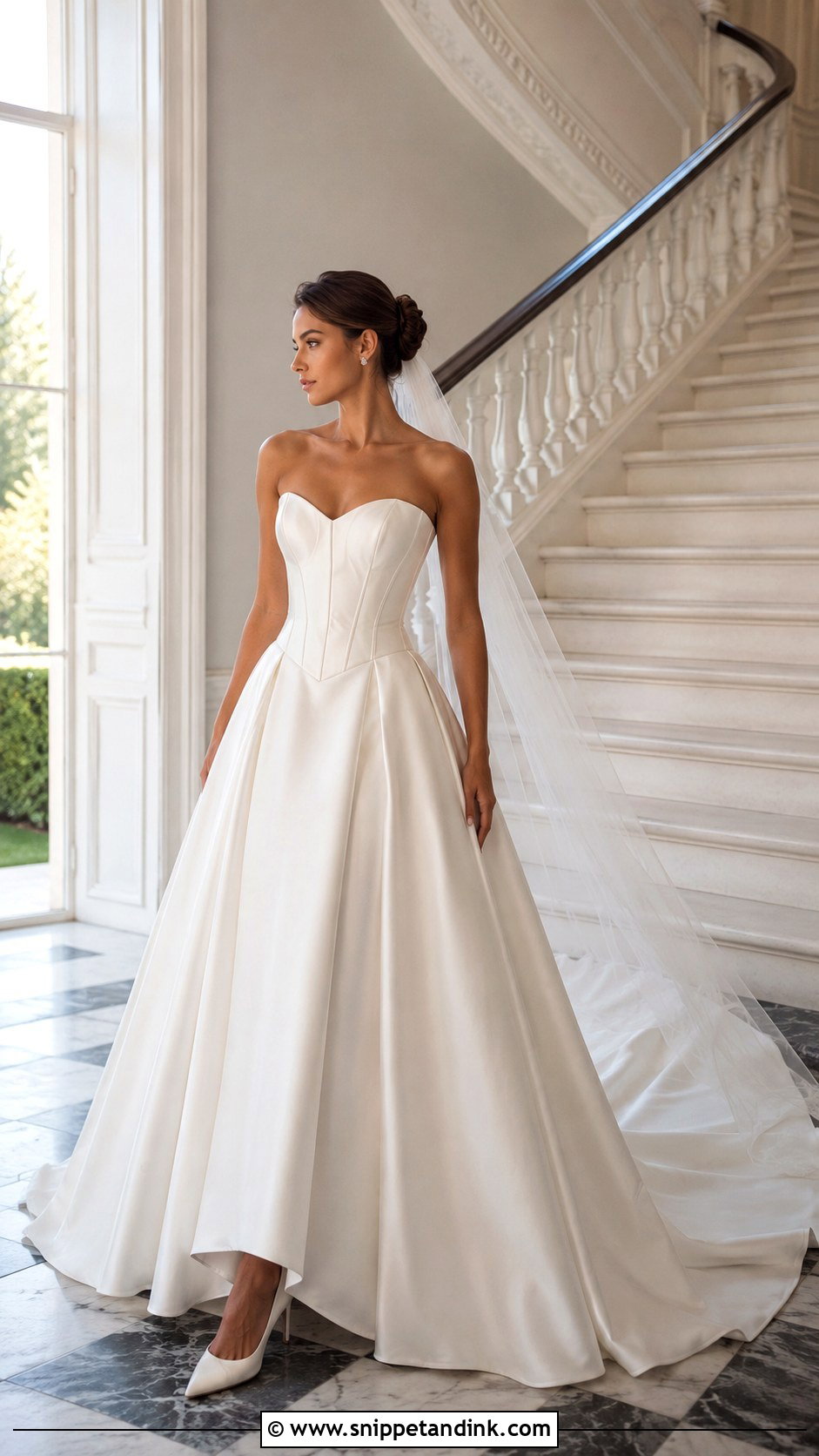
Mikado’s weight is what makes it sculptural. On a defined corset bodice with an A-line or full ball gown skirt, it needs almost nothing added, so keep the neckline simple and the surface plain. Crystal studs, pointed satin pumps and a polished bun finish it; choose a cathedral veil for drama or a short blusher for tradition. A mikado skirt holds its width firmly, so sit in a chair like your ceremony seating before you buy, because some skirts don’t fold down neatly. Grand staircases and formal estates show it off.
11. Sweetheart Strapless Corset Wedding Dress
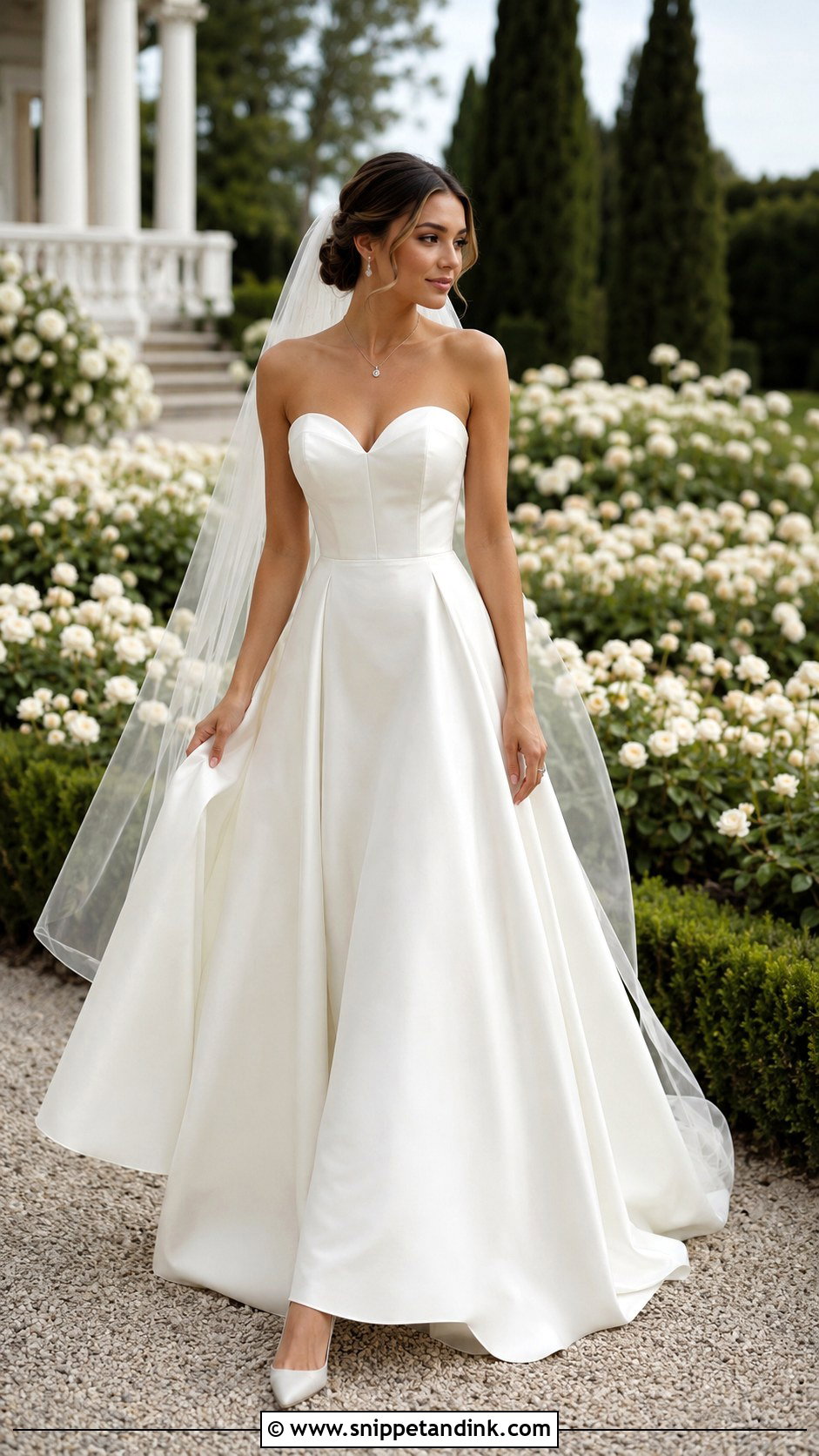
A sweetheart neckline follows the curves of the bust and softens the structure of the corset. With an A-line skirt it’s balanced; with a ball gown, dramatic. Choose a fine necklace or bold drop earrings, not both. Ivory pumps, a low romantic bun and a sheer fingertip veil give a classic finish. The centre dip is where fit shows. If the cups sit too far apart or too low, the sweetheart gapes every time you breathe in, so cup placement matters more than fabric. It adapts to satin, lace, tulle or crepe and to almost any setting.
12. Scoop Neck Strapless Corset Wedding Dress
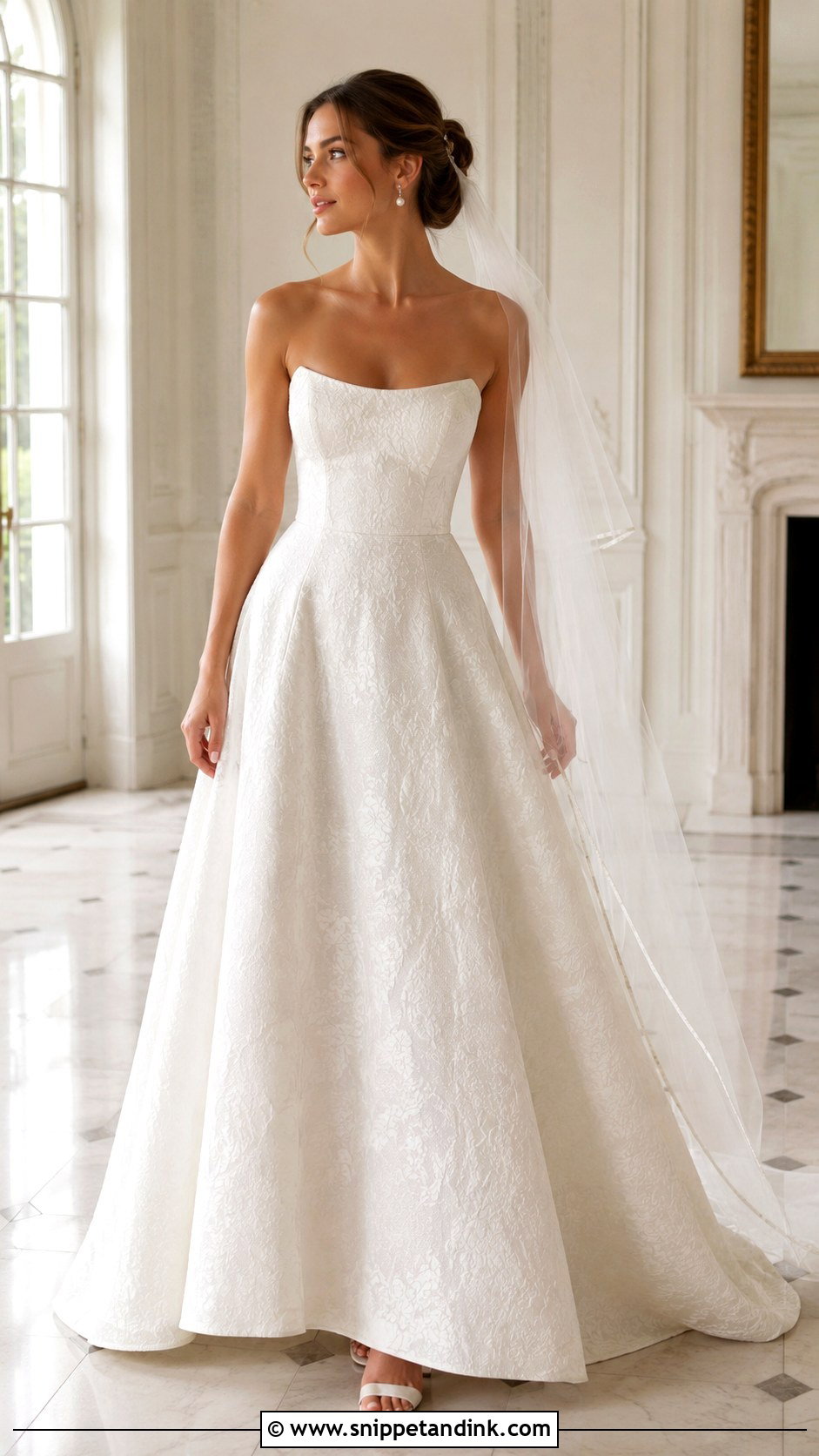
A scoop is gentler than a pointed sweetheart, and it frames the collarbones nicely above visible corset seaming. A satin A-line is classic, while textured jacquard adds interest. Short pearl drops, comfortable block heels and a sleek twisted bun suit it, with a chapel veil finished in a narrow edge. For more coverage, ask for the scoop to be raised slightly rather than adding accessories across the bodice. An internal grip band helps the curve sit flat against your chest instead of standing away from it.
13. Straight Neckline Strapless Corset Wedding Dress
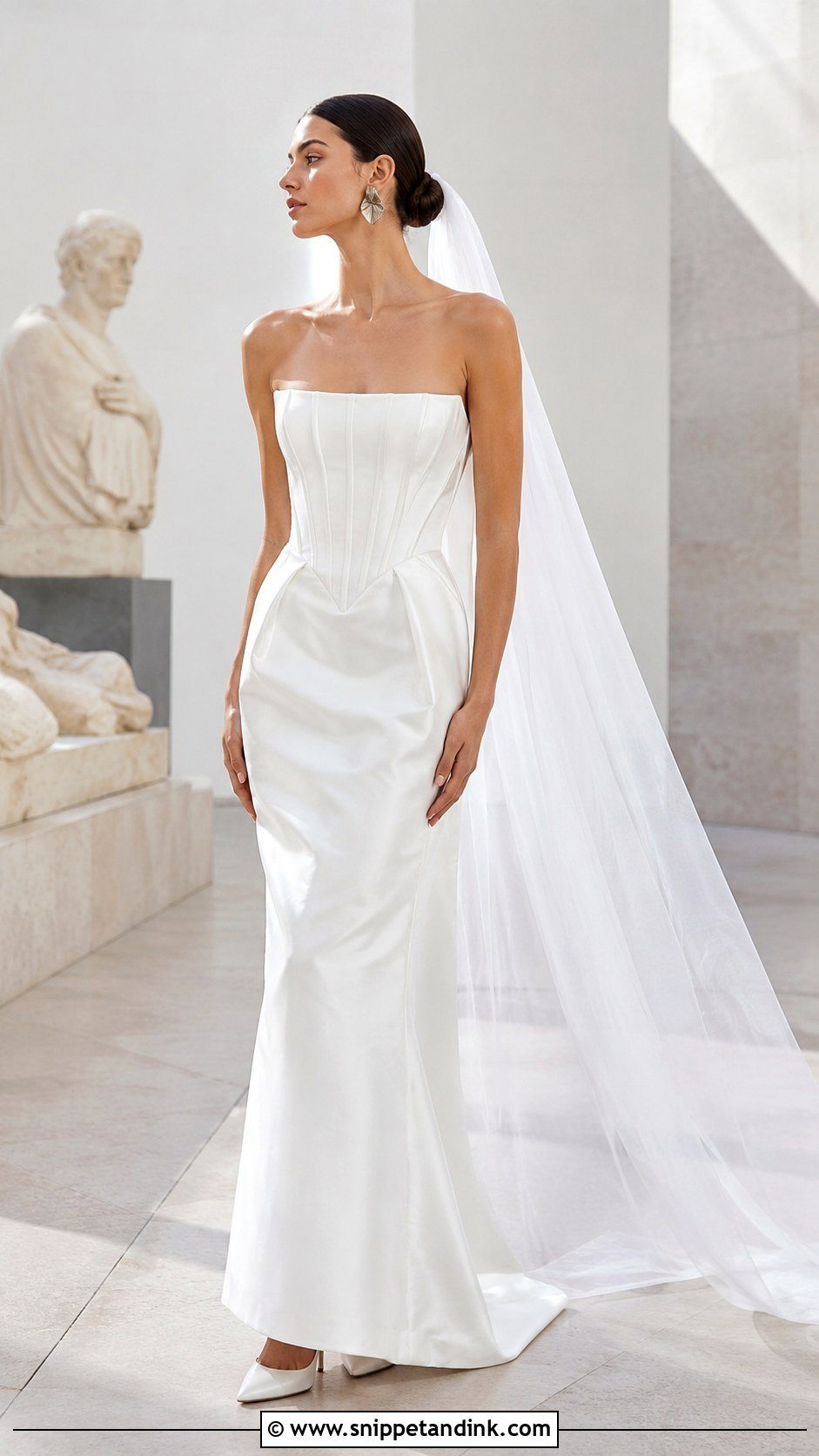
A straight edge looks editorial against vertical boning; the two geometries balance each other. A full satin skirt brings drama, a slim column minimalism. Sculptural earrings, a slick low bun and sharp pointed pumps finish it, and a long plain veil softens the whole look. Check the neckline from the front and both sides at the fitting, because a straight edge shows any gap. Fashion tape is reassurance, not a substitute for tailoring. Modern hotels, museums and rooftops suit it.
14. Lace-Up Back Strapless Corset Wedding Dress
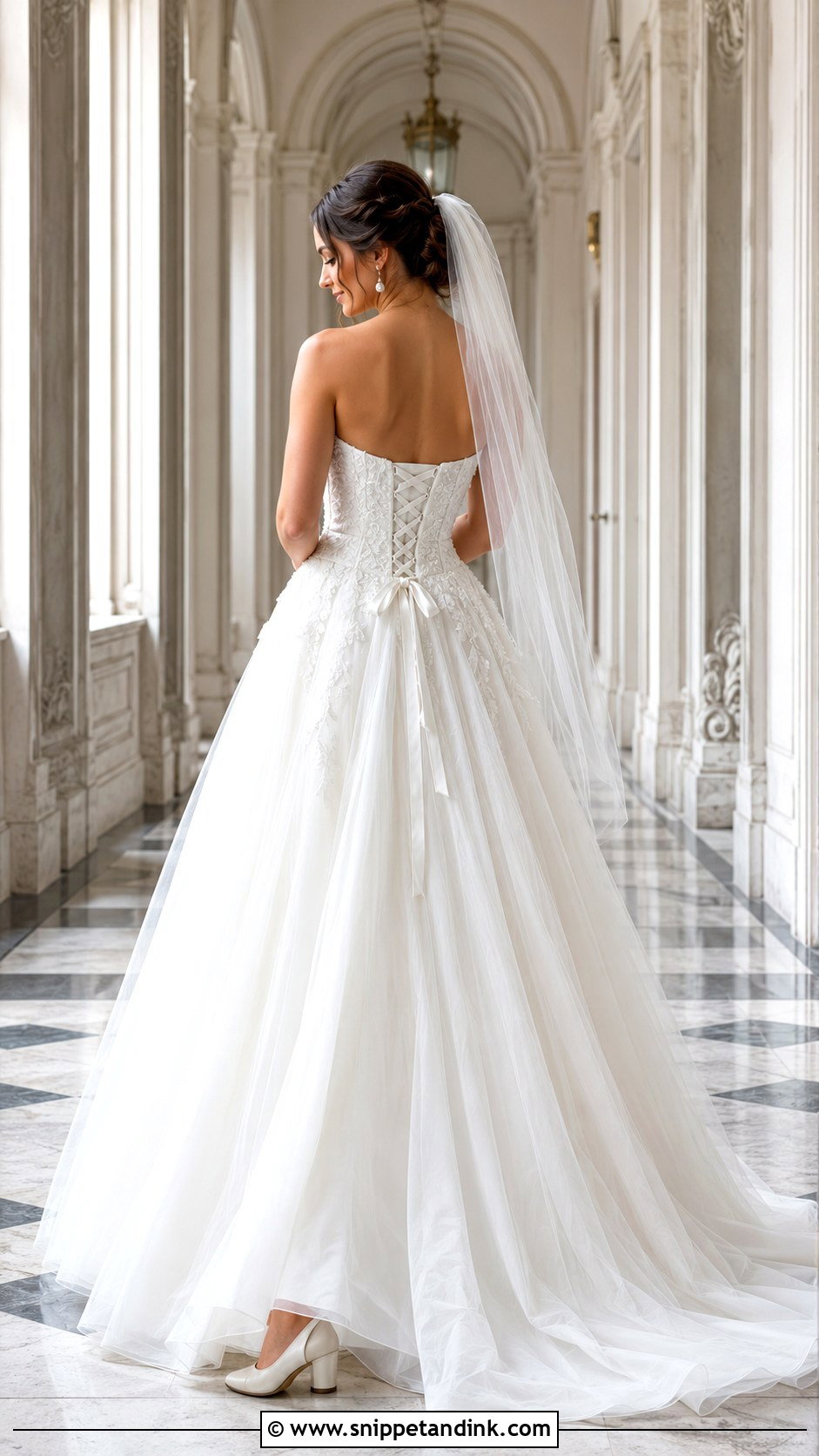
Ribbon lacing up the back is the most adjustable closure in bridal wear, which is why I like it for brides whose shape might shift in the run-up to the wedding. Choose satin ribbon and a modesty panel that matches the surrounding fabric. A full tulle or satin skirt balances the fitted top. Wear your hair up or swept to one side so the back shows, with pearl earrings, low block heels and a sheer veil attached below the hairstyle. Lacing should feel supportive, not restrictive, and someone needs to practise it well before the morning; I’ve set out the order further down.

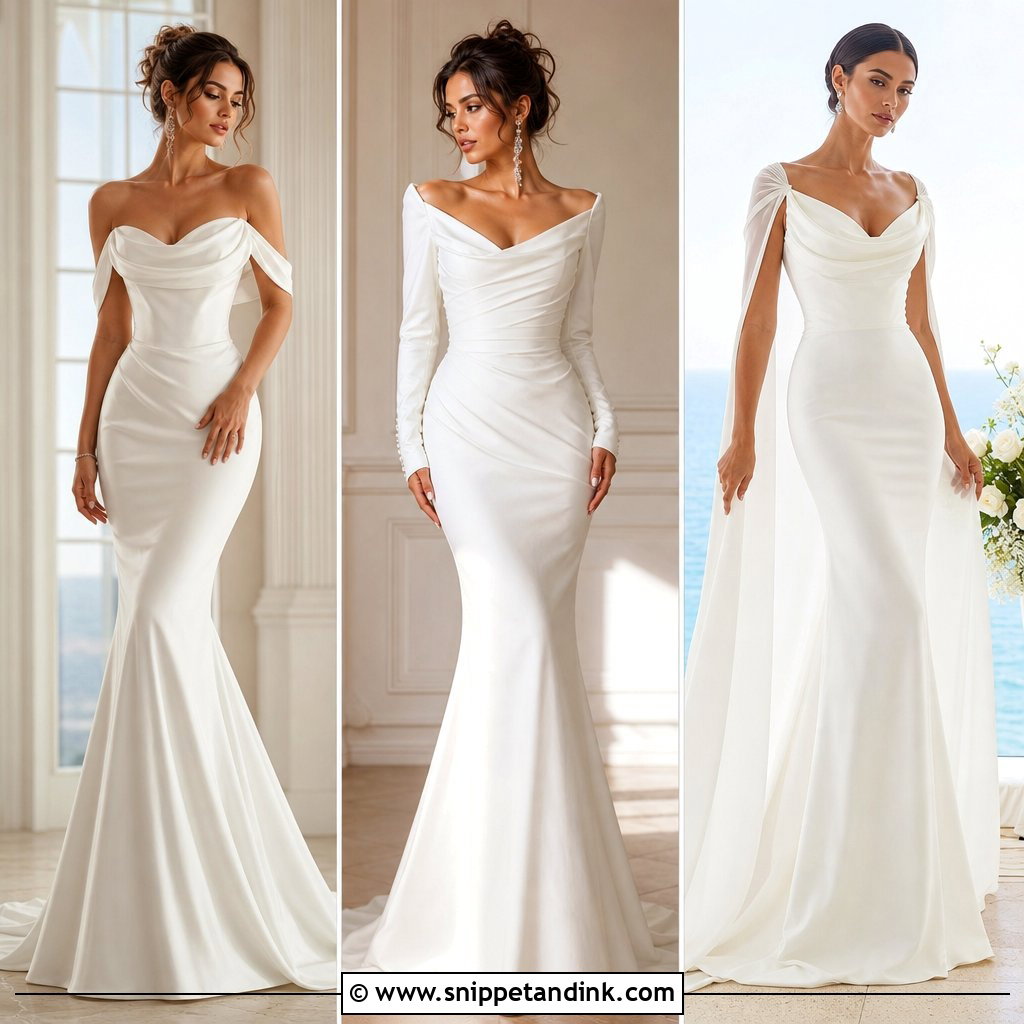

15. Detachable Overskirt Strapless Corset Wedding Dress
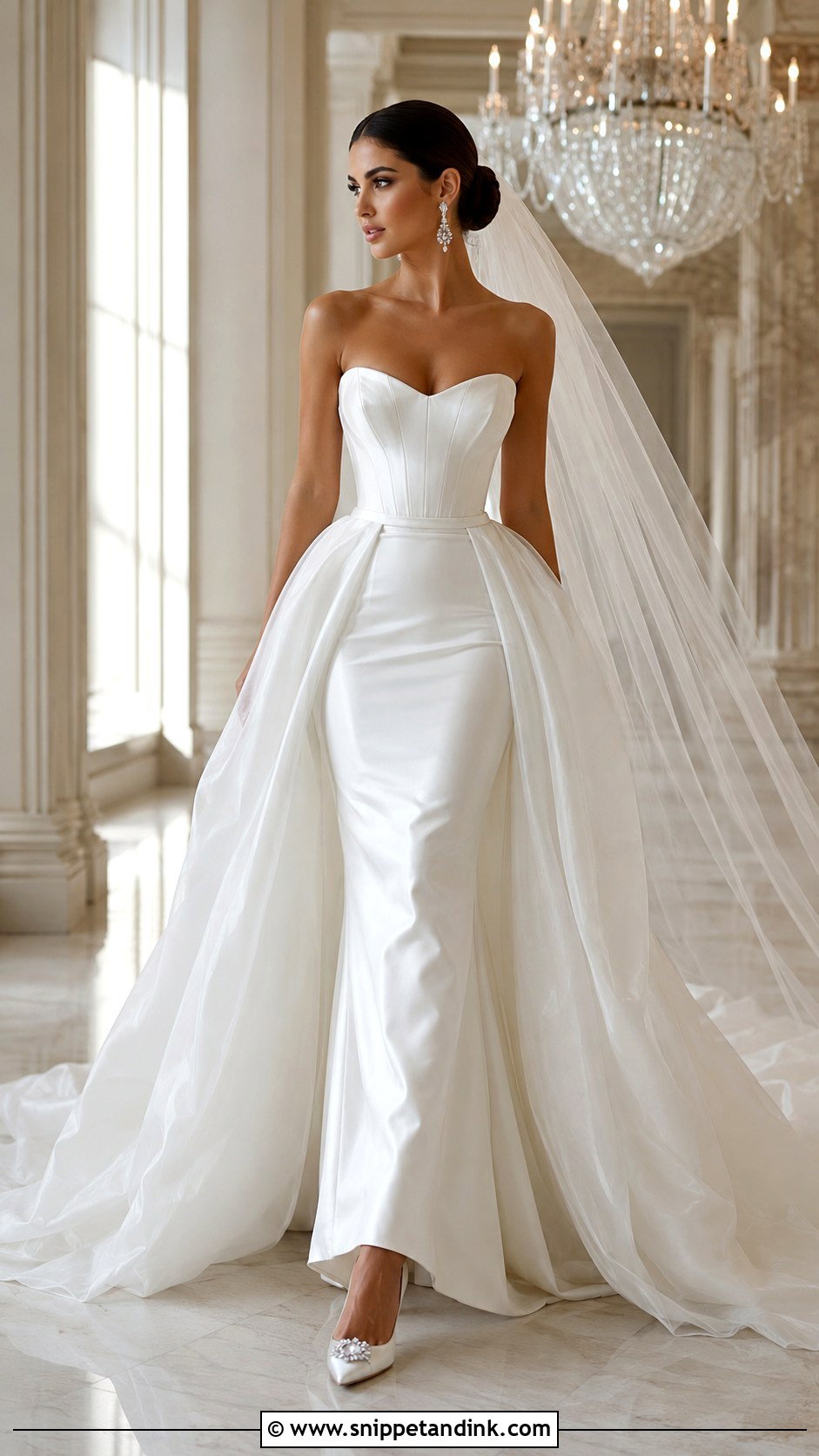
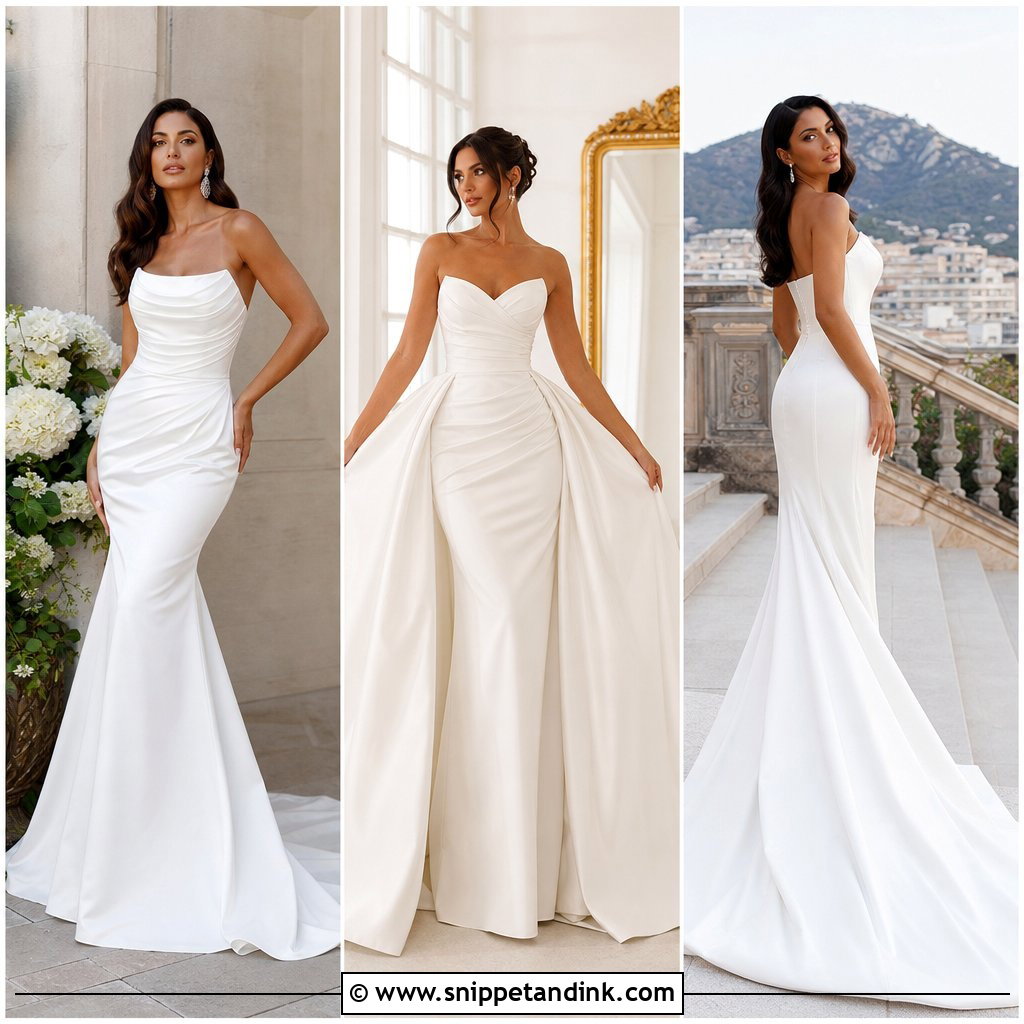
One gown, two silhouettes. A full tulle, organza or satin overskirt goes over a fitted column or mermaid for the ceremony, then comes off to reveal the slimmer dress for dancing. Start with a long veil, crystal earrings and pointed heels; afterwards, switch to a decorative comb or a polished ponytail. The overskirt waistband should lie flat and its fastening stay hidden. On a corset base, I ask for the overskirt to hook onto the internal waist tape where possible, rather than the outer fabric, so its weight can’t drag the bodice down.
16. Bow Back Strapless Corset Wedding Dress
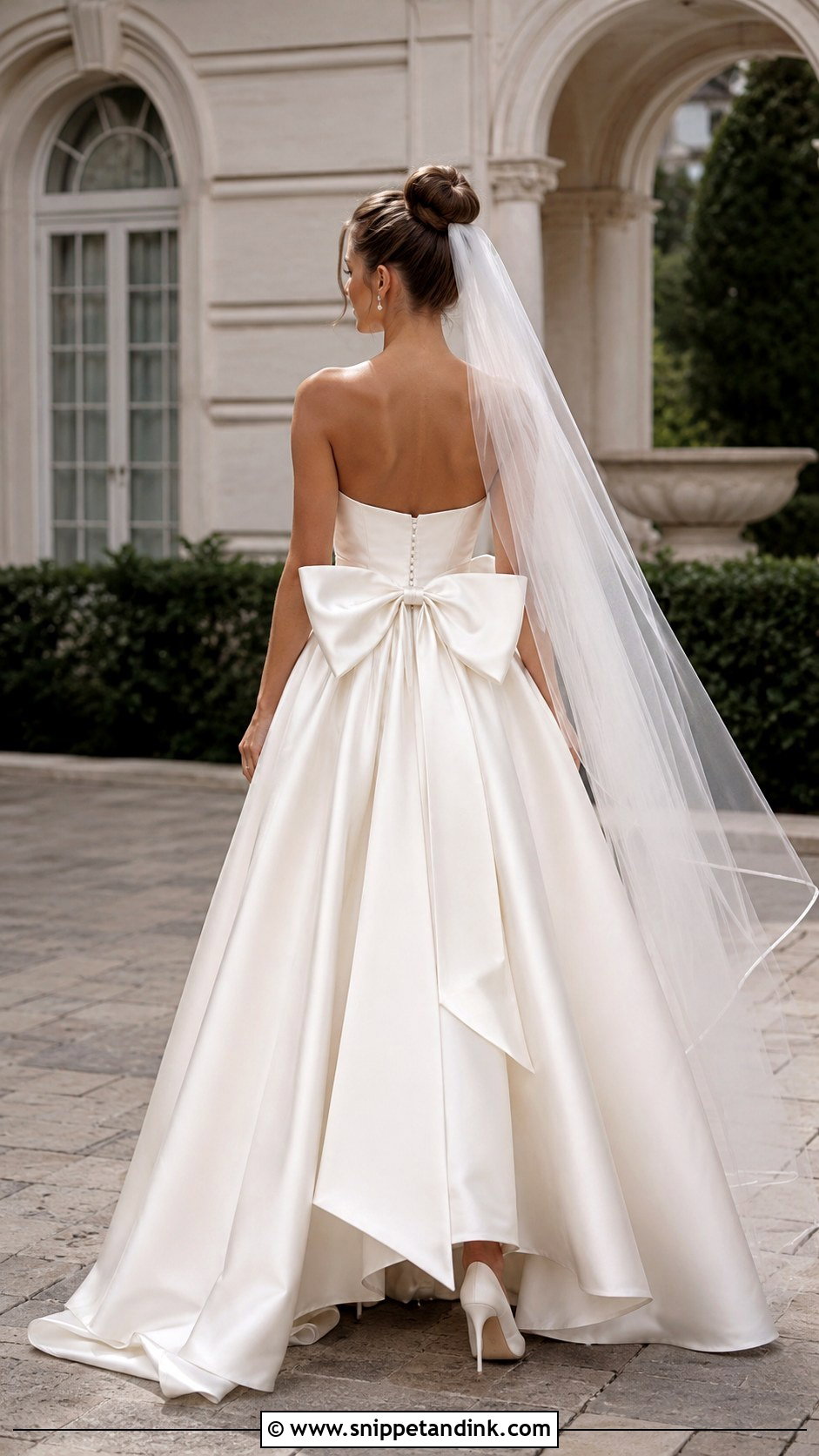
A big satin bow at the back adds romance to a clean corset gown, and a removable one with long tails gives you drama at the ceremony and a simpler silhouette later. A fitted bodice over an A-line or ball gown skirt gives it room to sit neatly. Wear your hair up, with pearl earrings and classic pointed pumps. Set the veil above the bow or take it off after the ceremony. Sit down at the fitting and see whether the bow gets crushed against the chair back. If it does, plan to remove it before dinner.
17. Cathedral Train Strapless Corset Wedding Dress
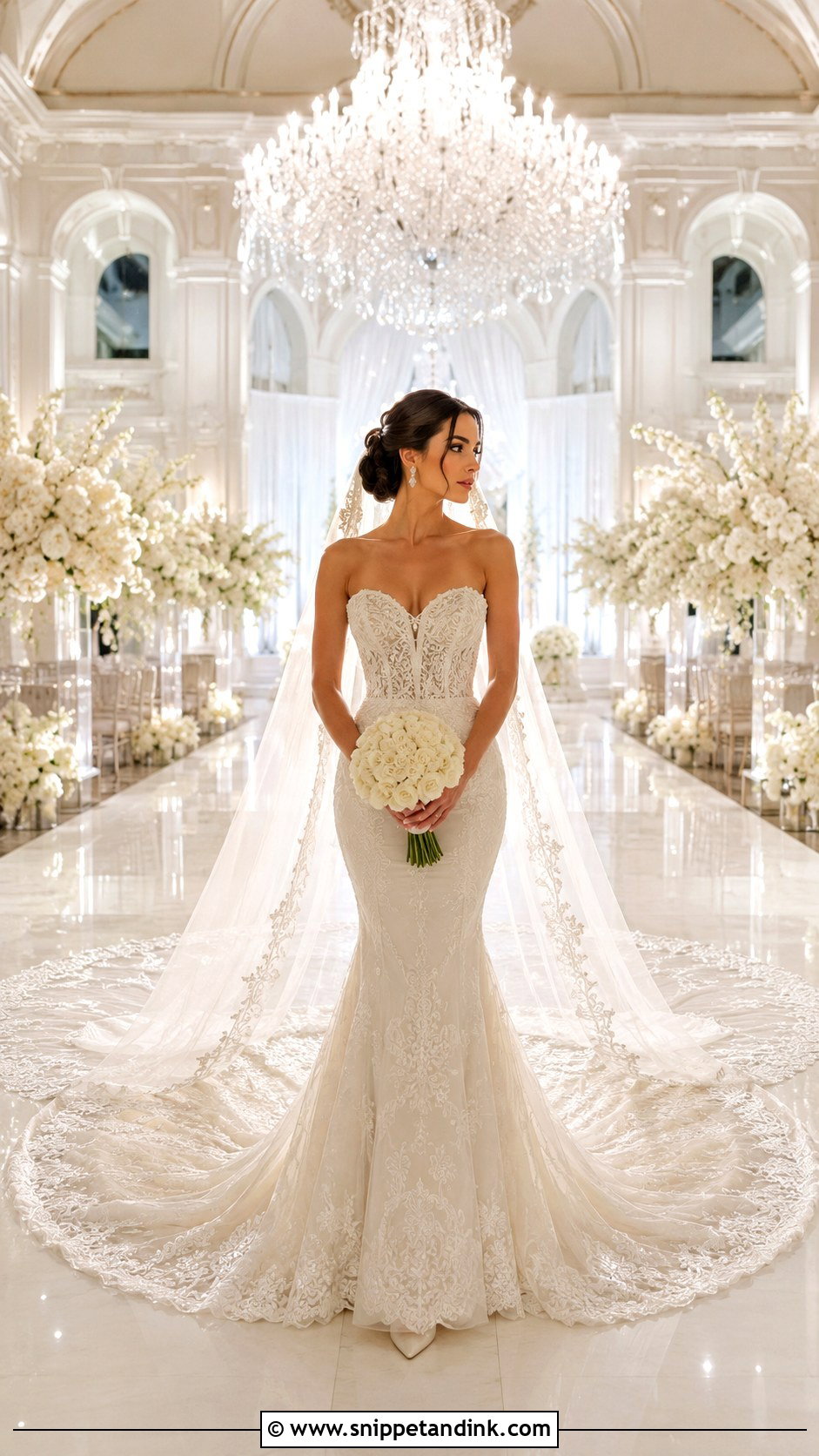
A cathedral train is the most formal finish a corset gown can have. Keep the front fairly clean so the train stays the main feature. Satin gives a smooth, regal look; lace adds detail that photographs pick up. A cathedral veil, refined earrings and closed-toe heels complete it. A heavily bordered veil over an ornate train usually clashes unless the two patterns were designed together. Get a strong bustle made and have an attendant practise it. Long aisles and large venues let the train spread fully.
18. Champagne Strapless Corset Wedding Dress
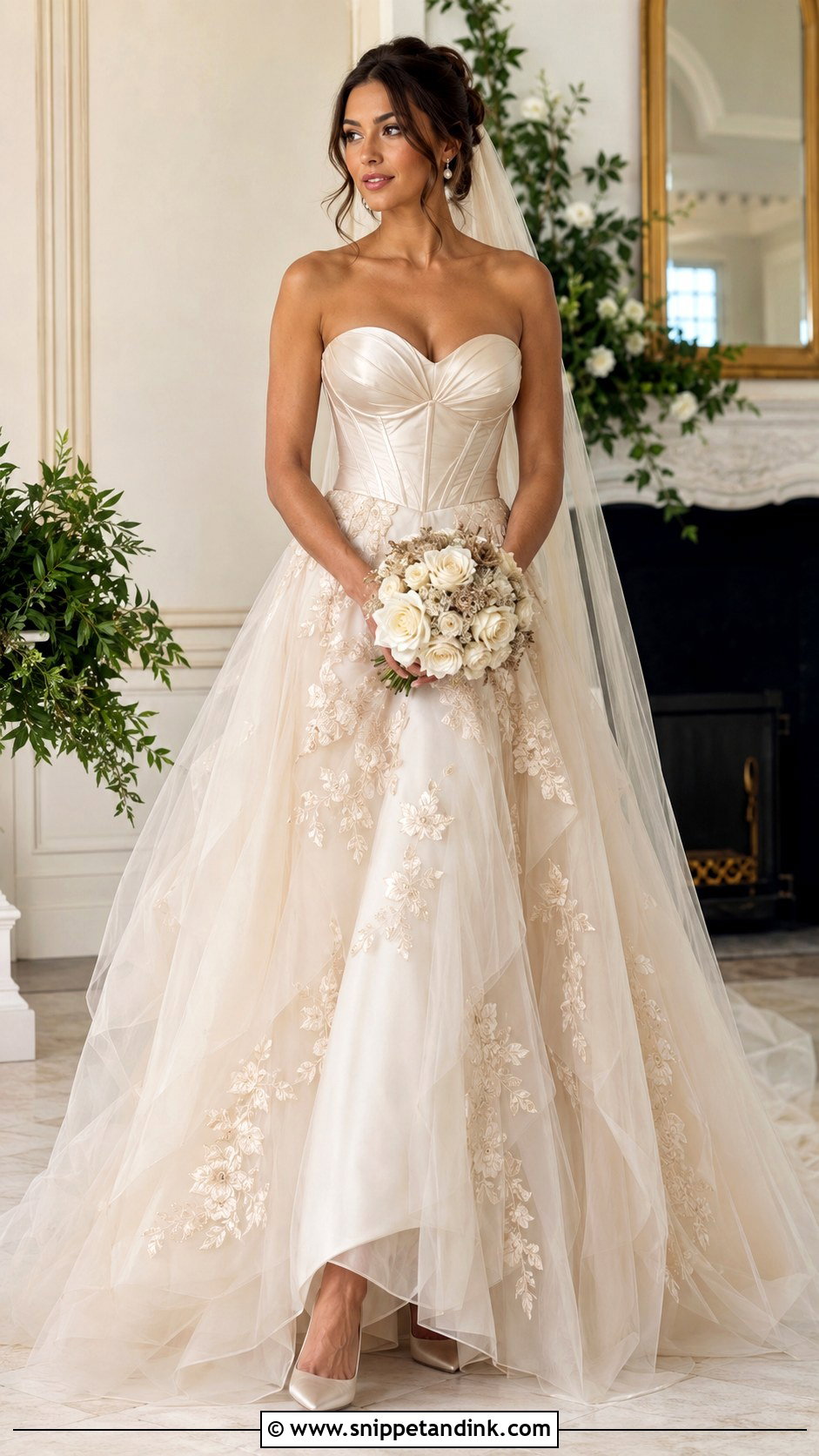
Champagne is softer than bright white and still unmistakably bridal, and on many skin tones it’s the more flattering shade. Satin gives a smooth glow; layered tulle an airy finish. Warm ivory appliqués add depth without harsh contrast. Neutral satin pumps, pearl earrings and a cream veil matched to the undertone suit it. Compare every accessory in daylight, because ivory, champagne and beige shift under indoor bulbs. A bouquet of white and pale neutral flowers keeps the palette together. Autumn weddings, formal hotels and estates suit it.
19. Plus Size Strapless Corset Wedding Dress
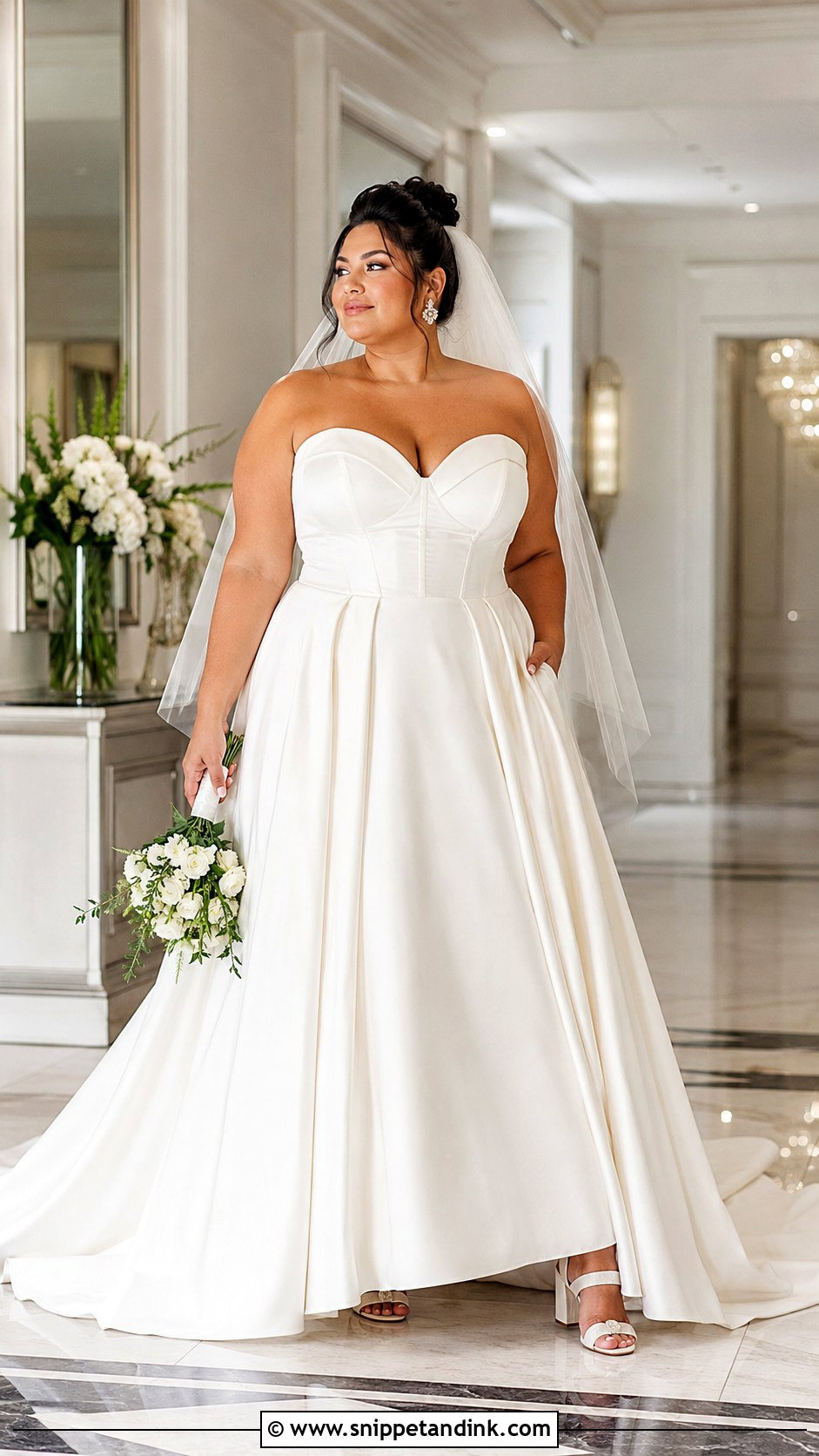
On a fuller figure, a strapless corset can be the most supportive dress in the shop, provided it’s built properly. Look for substantial internal boning, real cups, a secure back closure and a waist seam placed for your proportions. A-line or ball gown skirts move gracefully; fitted shapes give more definition. Cushioned block heels, statement earrings and a veil length that suits the venue finish it. Bring your intended undergarments to every fitting, then test sitting, dancing and raising your arms. A dress you only love standing still isn’t the one.



20. Short Strapless Corset Wedding Dress
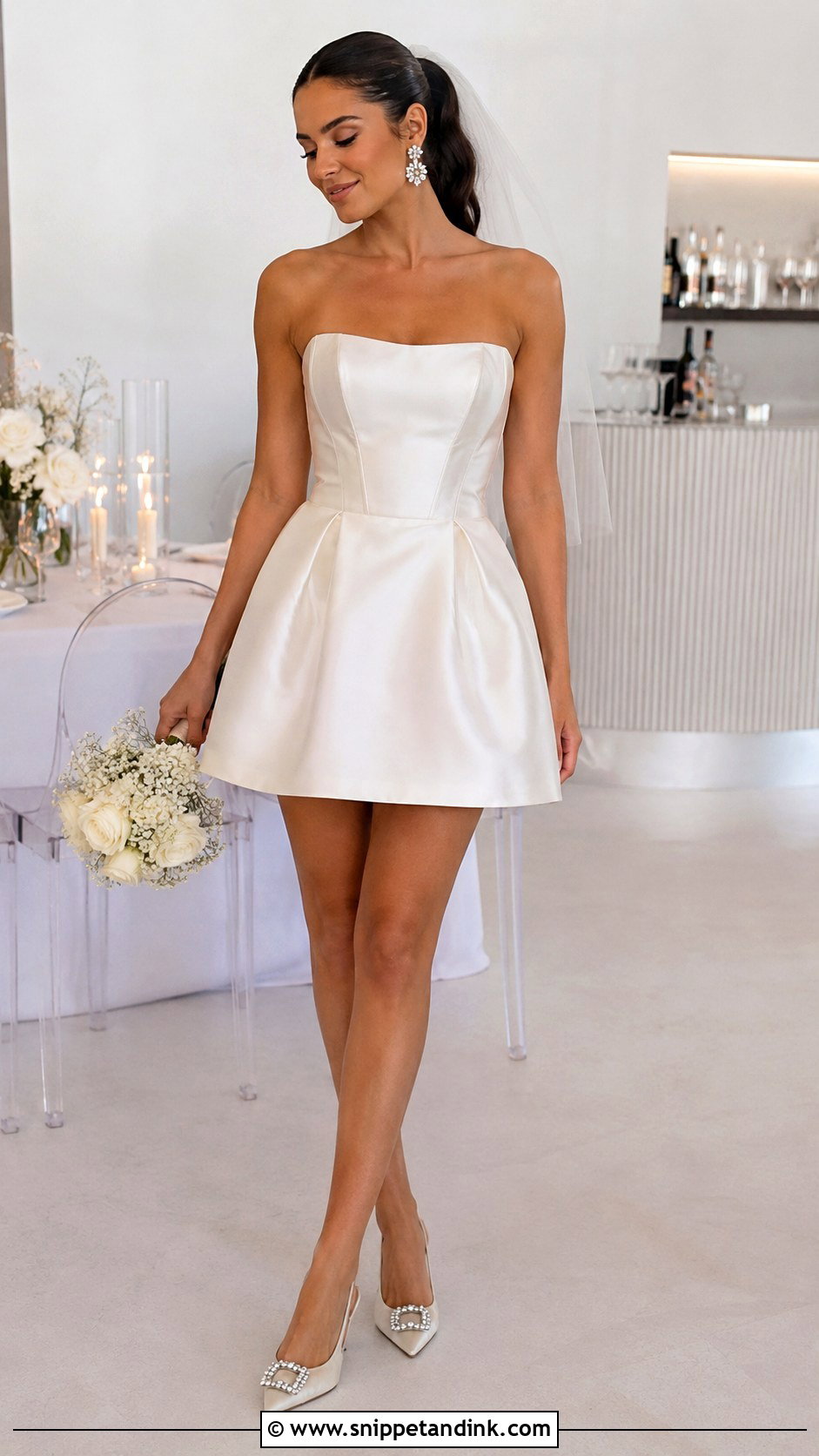
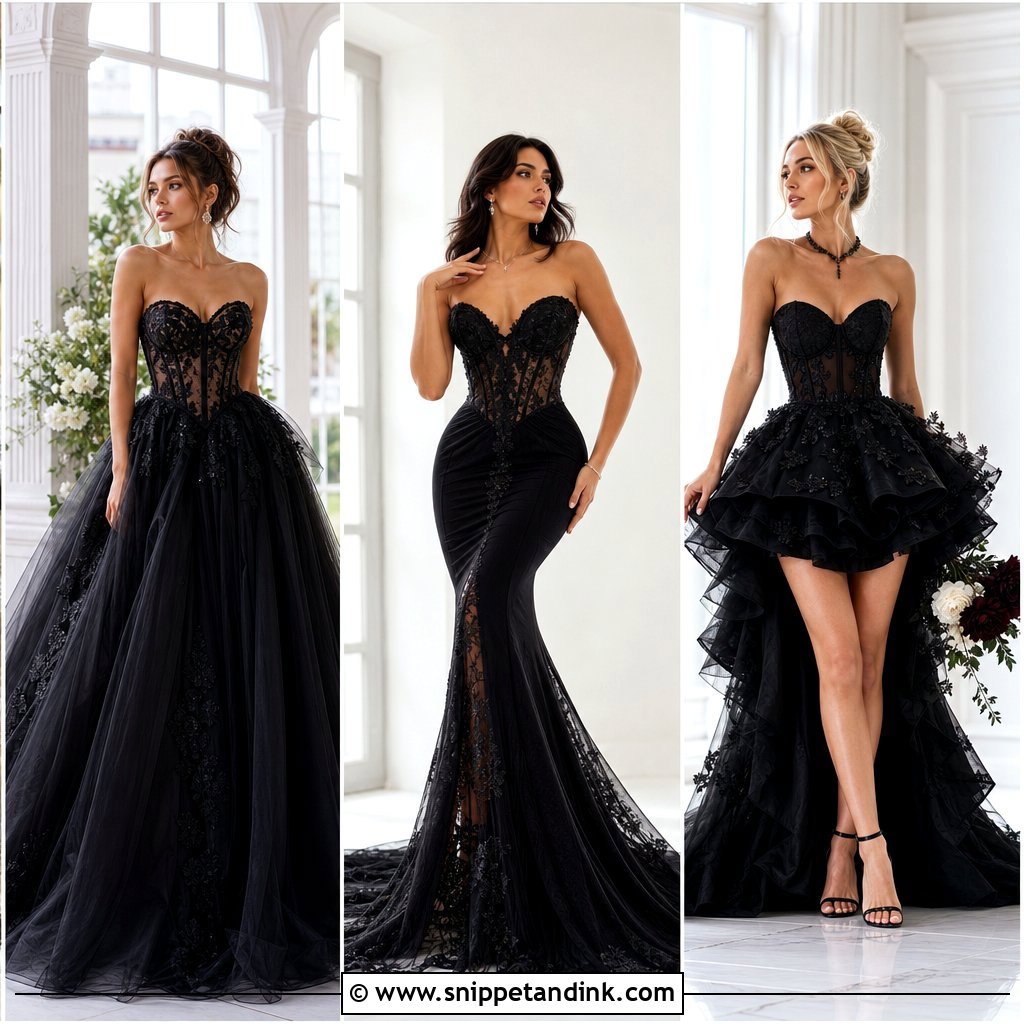
Short corset dresses suit receptions, courthouses and relaxed weddings. A structured mini with an A-line skirt, a fitted satin shape or a tea-length dress with movement all work. Your shoes are on show, so think embellished pumps, satin slingbacks or comfortable block heels. Statement earrings, a short veil and a compact bouquet balance it. A very short skirt needs a sit-and-dance test before you commit. A detachable train can add ceremony drama and then reveal the short dress, and the corset is what keeps it looking bridal rather than like a cocktail dress.
Lacing the Back on the Morning, in Order
A laced back needs a helper and about ten unhurried minutes. Practise once at the final fitting with the person who will do it on the day, and have them do it again at home if you can.
- Step into the dress with the lacing loose and smooth the modesty panel flat against your back so it doesn’t fold.
- Hold the bodice in place at the front while your helper takes up the slack from the top and the bottom, working toward the waist.
- Tighten in two or three passes instead of one hard pull. The fabric settles and the bones warm to your shape between passes.
- Check the gap. The two edges should be evenly spaced from top to bottom, and the panel behind them should sit straight.
- Tie the ends at the waist and tuck them under the lacing, unless the design calls for a short tail to hang.
Easing it after dinner
Wanting a little more room after the meal is completely normal. Your helper can loosen the lacing slightly at the waist without undoing the whole back. Agree on a quiet spot beforehand, because it only takes a minute but means opening the back of the dress.
Breathe, Sit, Lift Your Arms, Then Decide
A strapless corset gown should look striking and still support you, flatter your proportions and let you move. Start with a skirt shape that fits your venue and level of formality, then compare necklines, waist placements, fabrics and removable details. Shoes, veil, jewelry and hair should back the dress up rather than compete with it. Above everything, test each gown sitting, walking, raising your arms and taking full breaths. With careful tailoring, the corset you choose will feel secure from the first photo to the last dance.
You'll Like These Ideas:








Leave a Reply