
A dress looks classy when the whole outfit agrees with it. The veil, shoes, jewelry, bouquet and even the room all change how a gown reads, and I’ve watched the same dress look plain in one setting and regal in another. So the looks below are styled head to toe, the way I’d pull them for a bride before a fitting, built around wedding-day looks that feel timeless. You’ll see lace and satin, ball gowns and fitted shapes, sleeves, bows, pearls and a few pared-back minimalist options. What they share is restraint: one main detail per outfit, with everything else supporting it.
Why One Gown Looks Expensive and Another Looks Costume
Classy is a word brides use a lot, and when I ask what they mean, it usually comes down to quality signals they can’t quite name. These are the ones I check first when a gown is on the hanger.
Fabric weight and lining
Good satin and crepe have enough weight to hang straight without clinging to the hips. Hold the skirt and let it drop; it should fall cleanly rather than float. A full lining under lace or tulle stops the fabric catching on itself and looks smoother in flash.
Where the lace stops
On well-made lace gowns, the scalloped edge runs along the hem, neckline and sleeve ends, and the pattern lines up across seams. Raw-cut lace edges or a motif chopped in half at the side seam are the quickest giveaway of a cheaper gown.
Ivory, white or champagne
Bright white can look stark against warm or olive skin, while ivory and soft champagne flatter most complexions. Try the same style in two shades next to your face in daylight. The right one makes your skin look rested; the wrong one makes the dress look cheap, whatever it cost.
1. A Line Lace Wedding Dress
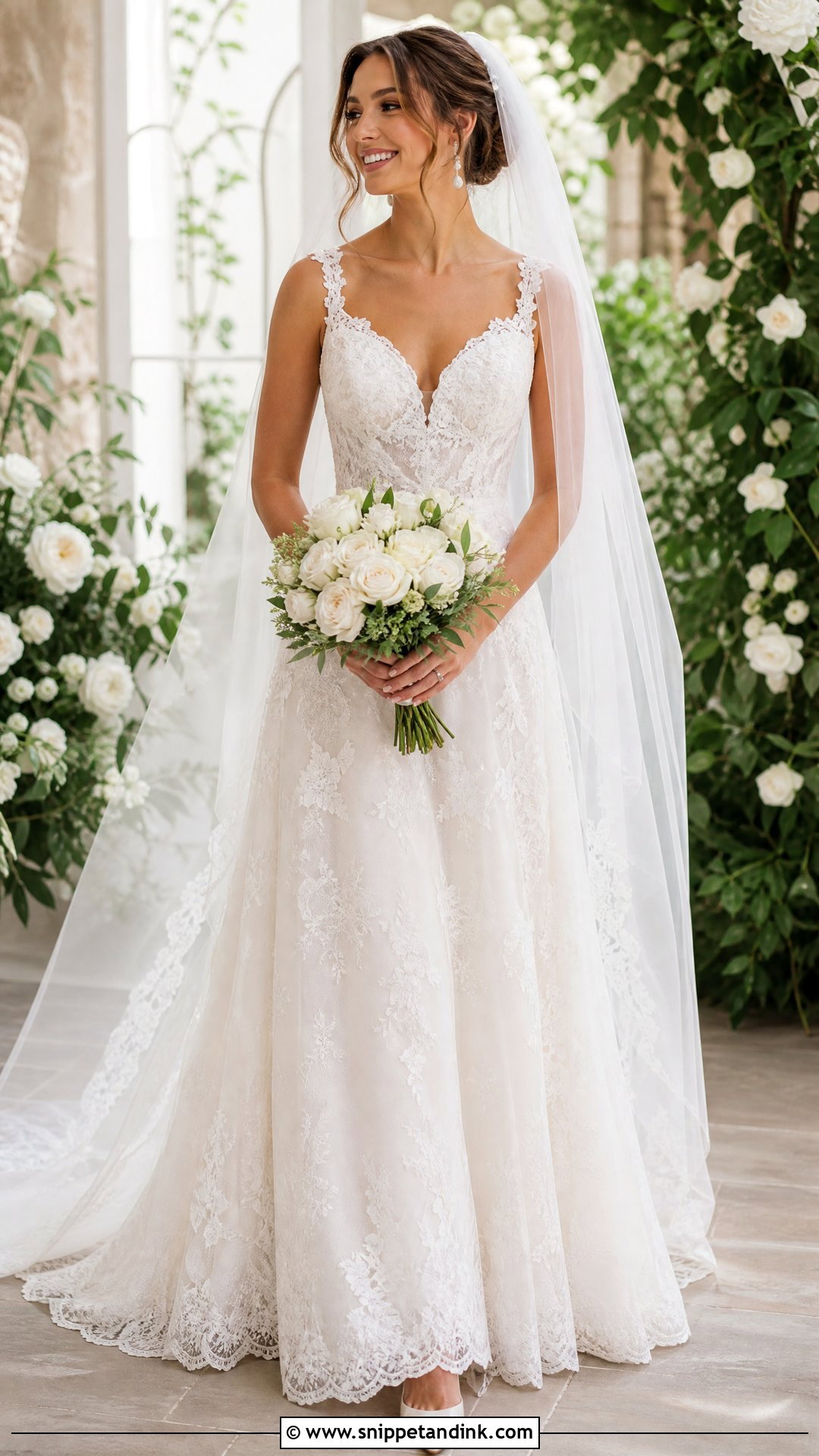
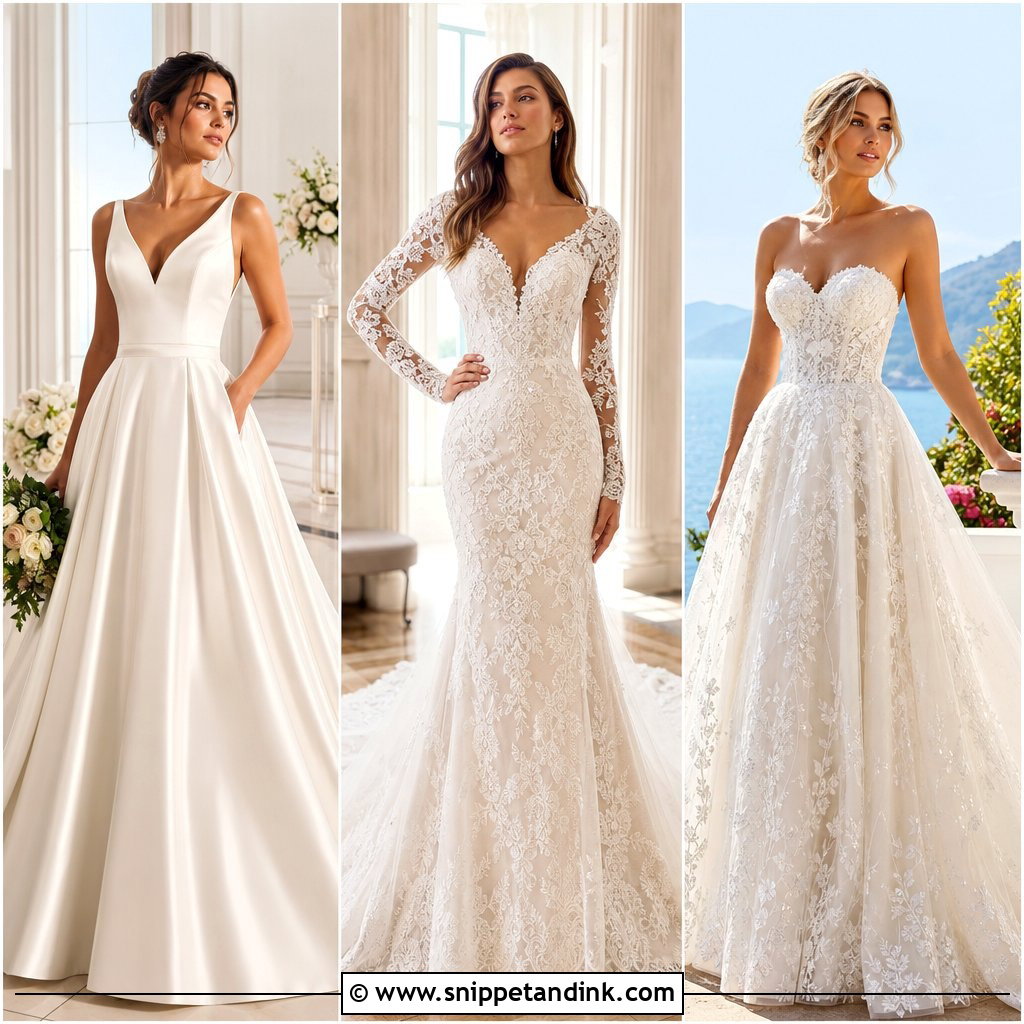
If a bride is unsure where to start, I put her in a lace A-line first. The fitted bodice marks the waist and the skirt falls away from the hips without clinging, so it suits most figures. Floral lace, a soft sweetheart neck and a chapel-length veil give the classic finish; pearl drops, pointed ivory pumps and a small bouquet of white roses complete it. Soft, glowing makeup with a low bun or loose waves keeps it calm. It settles into a garden, an estate or a church equally well.
2. Satin Ball Gown Wedding Dress
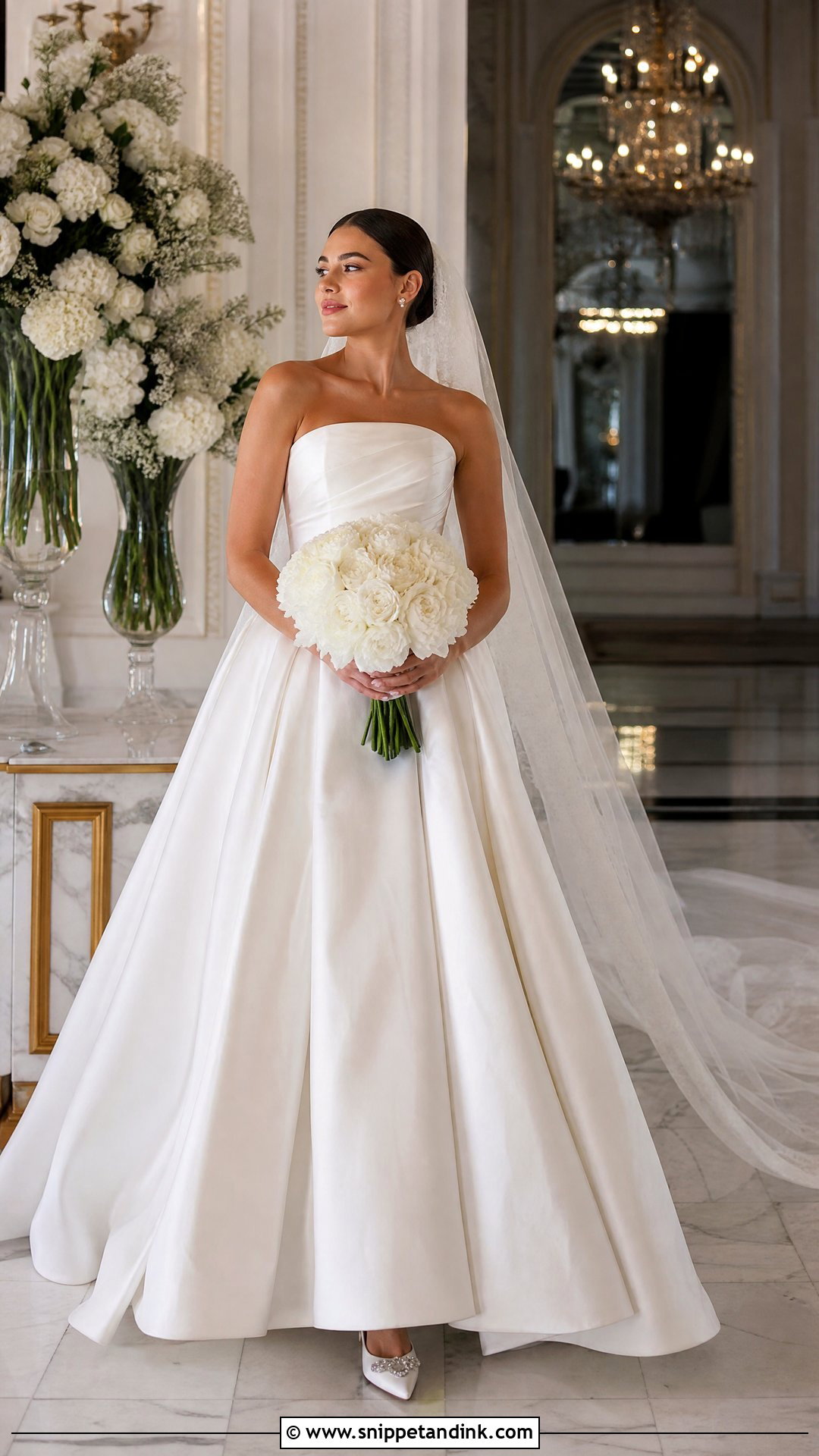
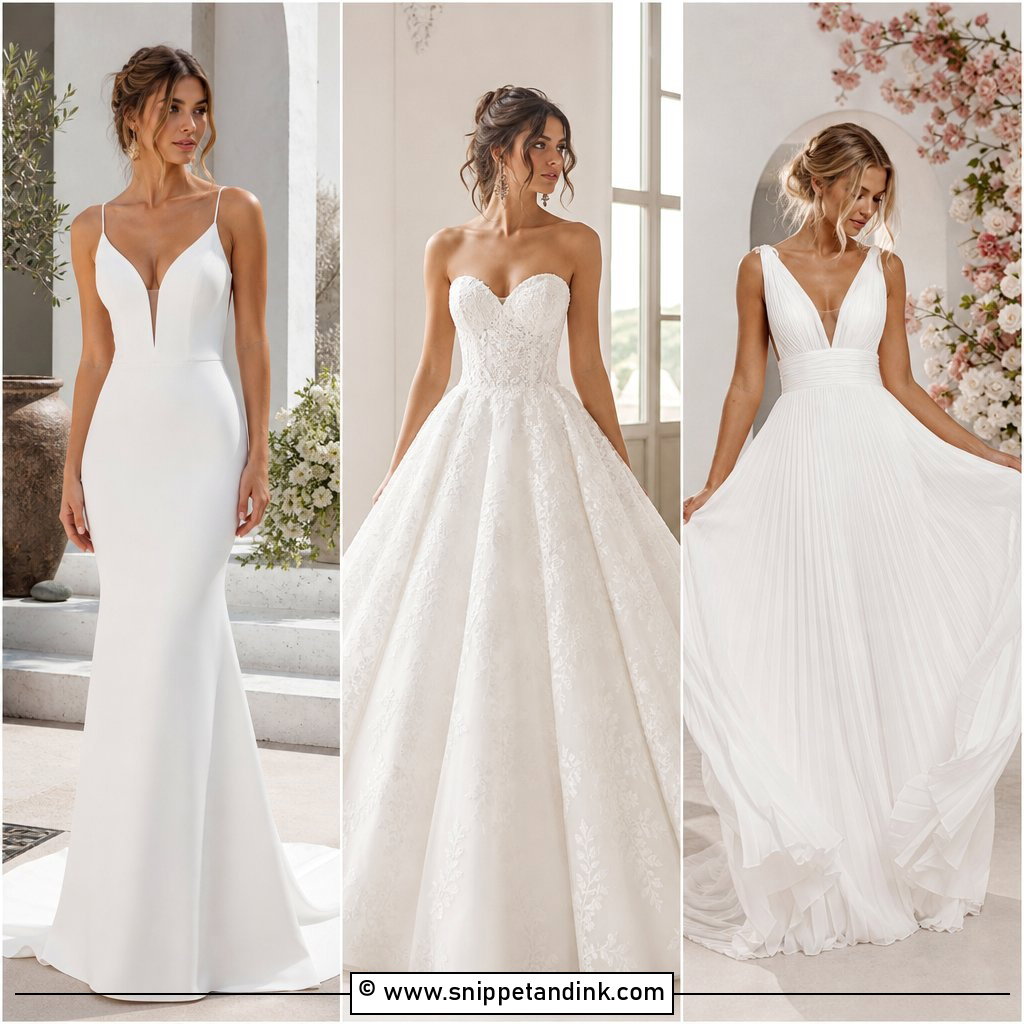
Satin on a full skirt has a clean sheen that looks expensive without a single bead, which is why a satin ball gown wedding dress suits black-tie rooms so well. A strapless or bateau neckline over a fitted waist and long cathedral veil is the classic build, with crystal studs, satin heels and a structured bouquet. Volume does the talking, so keep everything else spare: a sleek chignon, soft contour and a neutral pink lip. Heavy satin and a big skirt add up to real weight, so ask for a waist stay inside the bodice to carry it.
3. Off Shoulder Wedding Dress
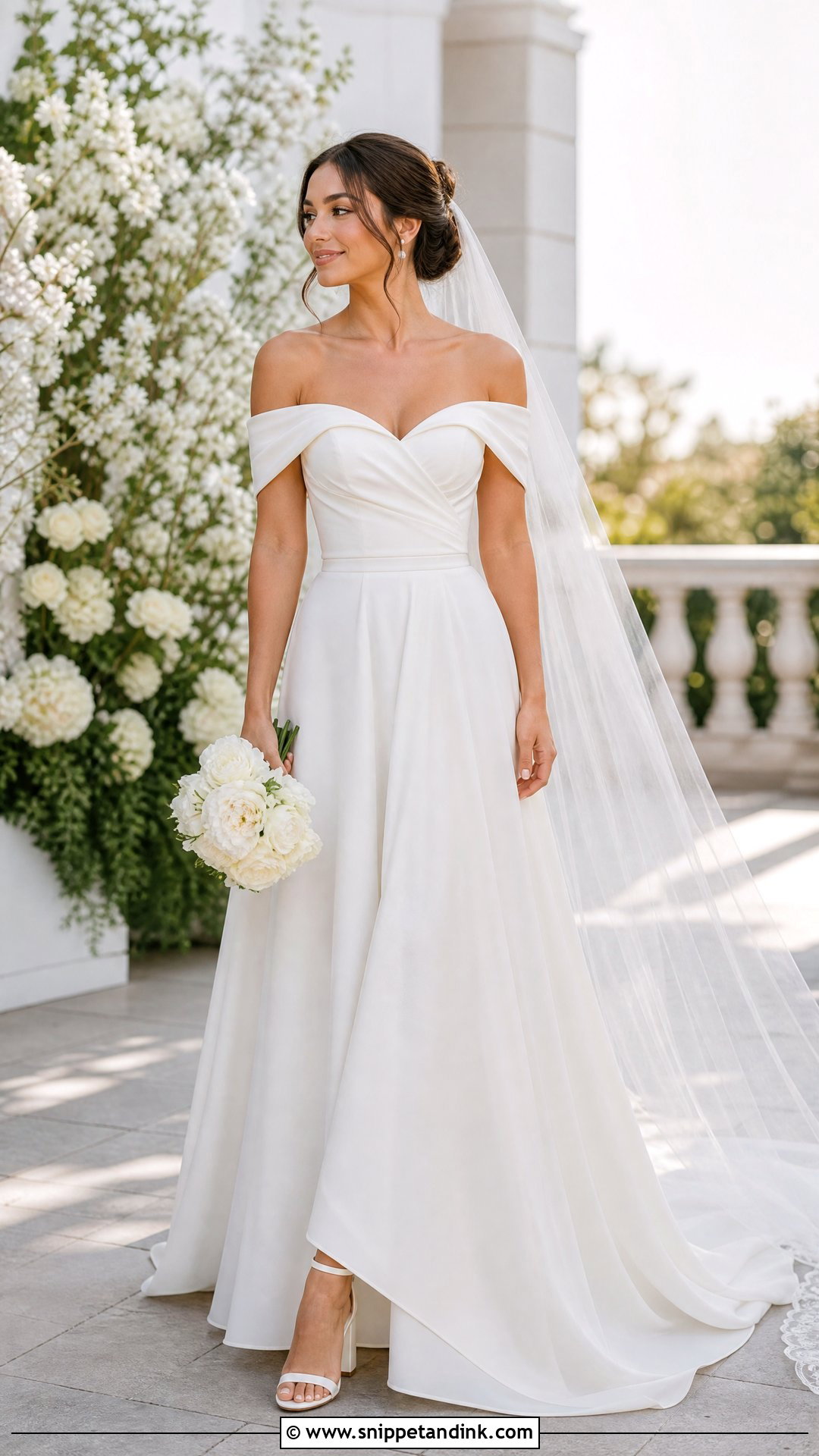
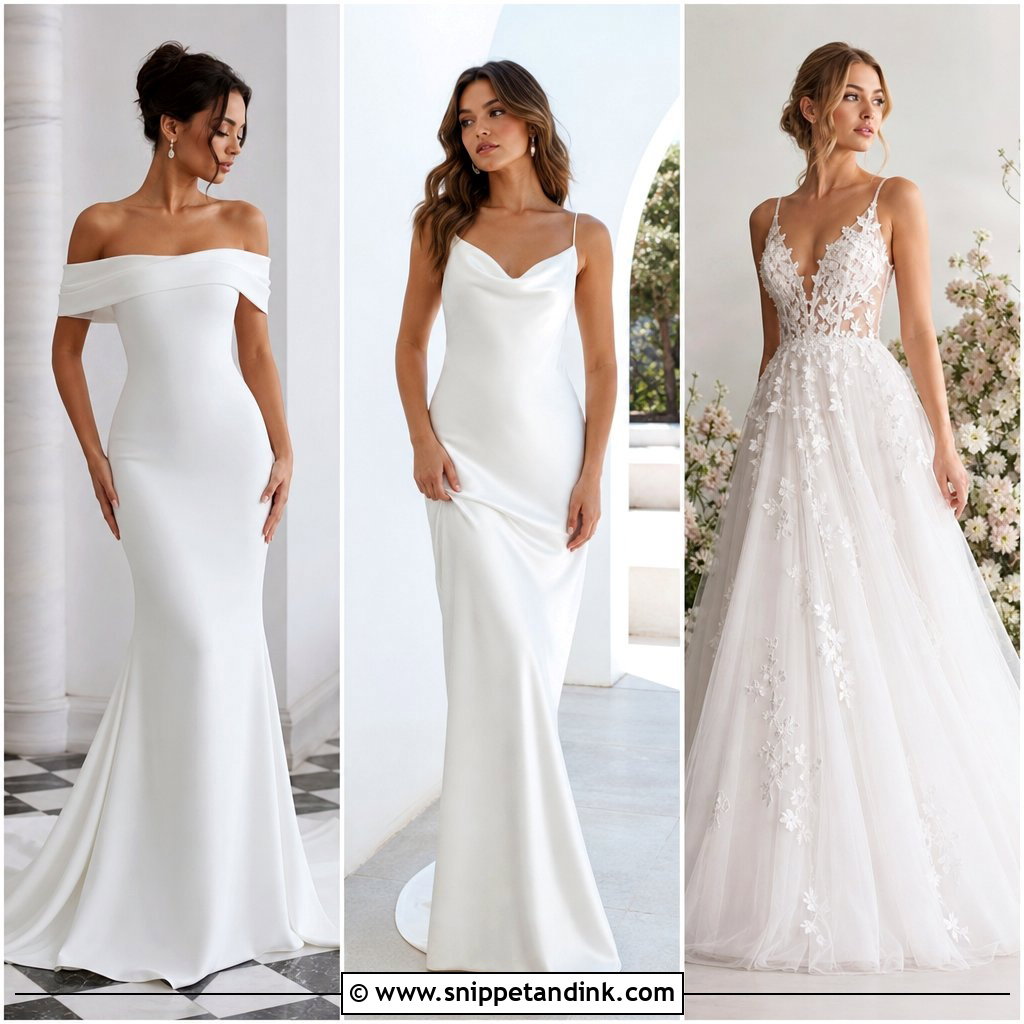
The off-shoulder line frames the collarbones and still covers more than a strapless bodice. Smooth crepe, satin or lace with gentle draping across the shoulders keeps it classy. A fingertip veil, pearl studs, ivory block heels and a small bouquet with greenery suit spring through early autumn. A low twisted bun or side-swept waves shows the neckline best. I’d skip a necklace entirely. The other thing I check is arm movement, because off-shoulder sleeves that are set too tight stop her lifting her arms for a hug.
4. Long Sleeve Lace Wedding Dress
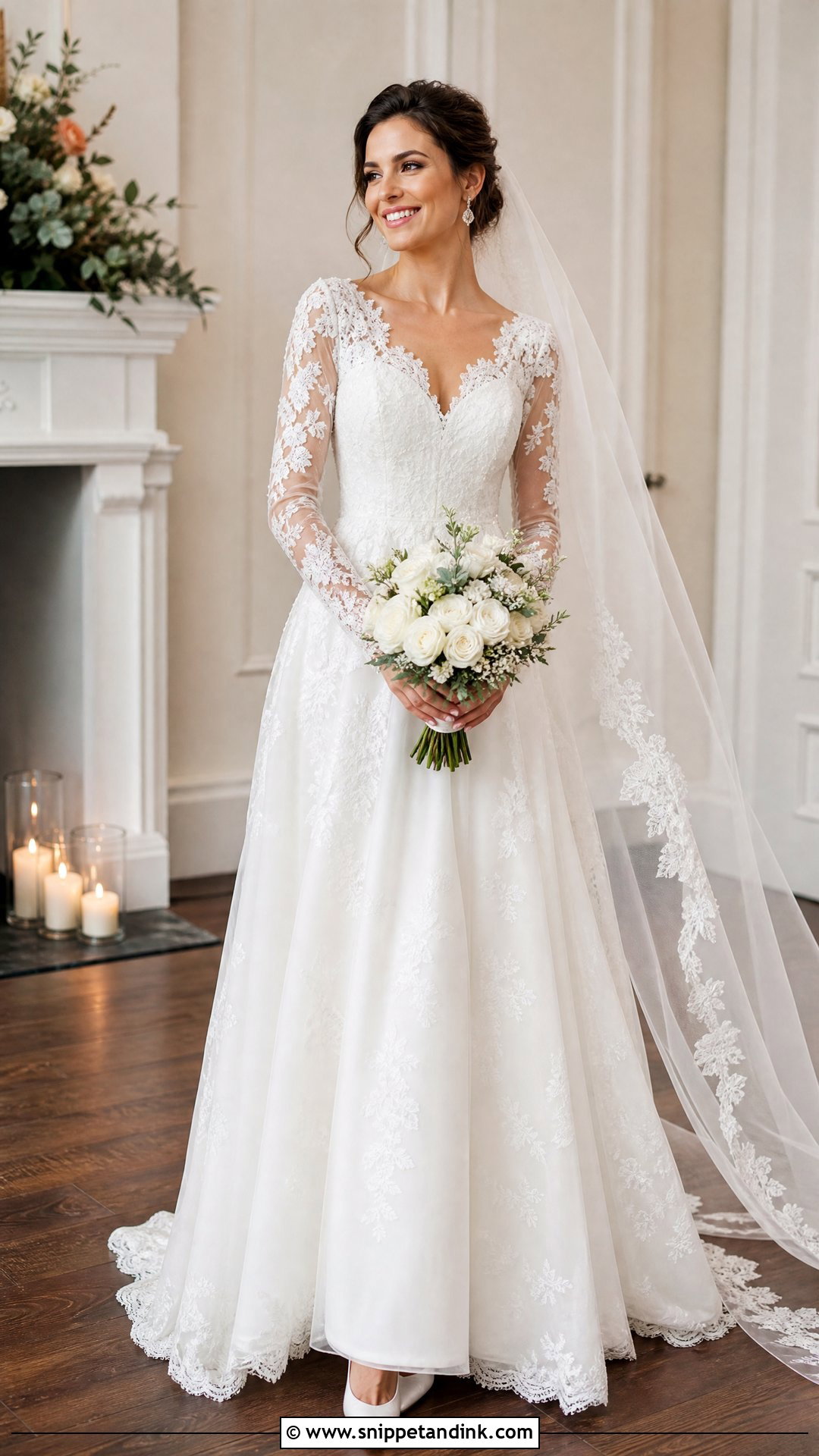
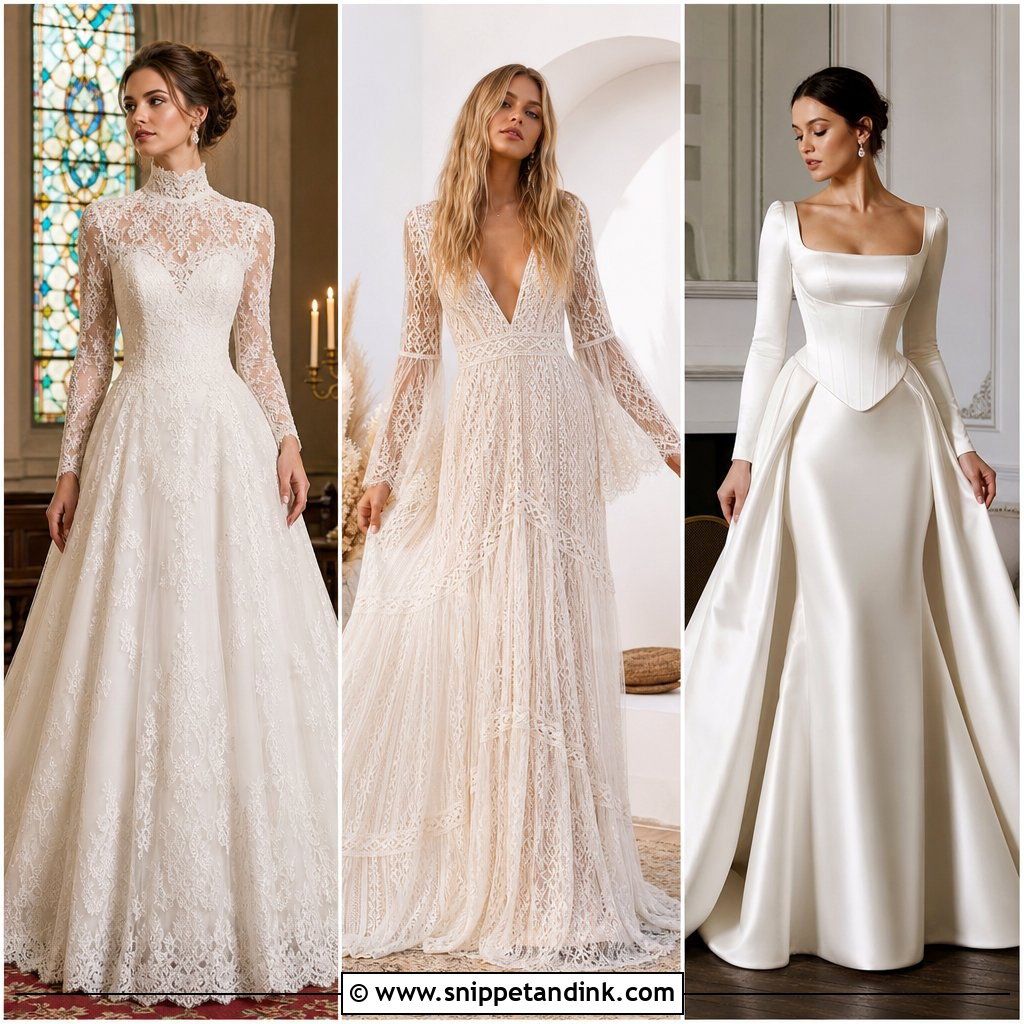
Sheer lace sleeves bring a vintage note without heaviness. Over a fitted bodice and soft A-line skirt, with tiny covered buttons down the back, it’s one of the most polished gowns here. Pearl earrings, ivory pumps and a lace-trimmed veil that echoes the gown tie it together. Keep the bouquet modest, since the sleeves already carry detail, and choose a soft updo with natural lashes. Fall, winter and formal indoor weddings suit it best, though a light lace works in a garden too.
5. Simple Crepe Wedding Dress
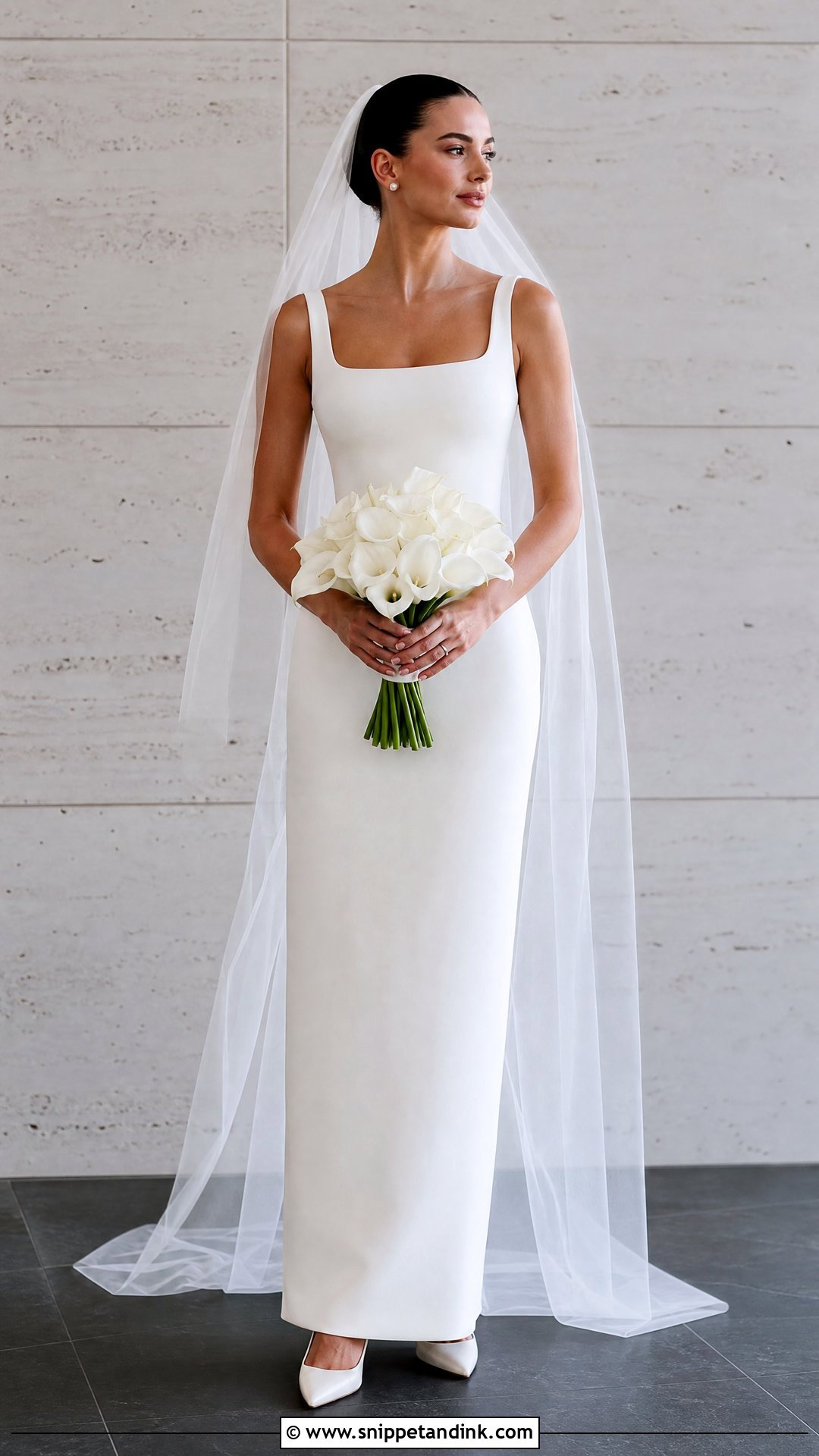
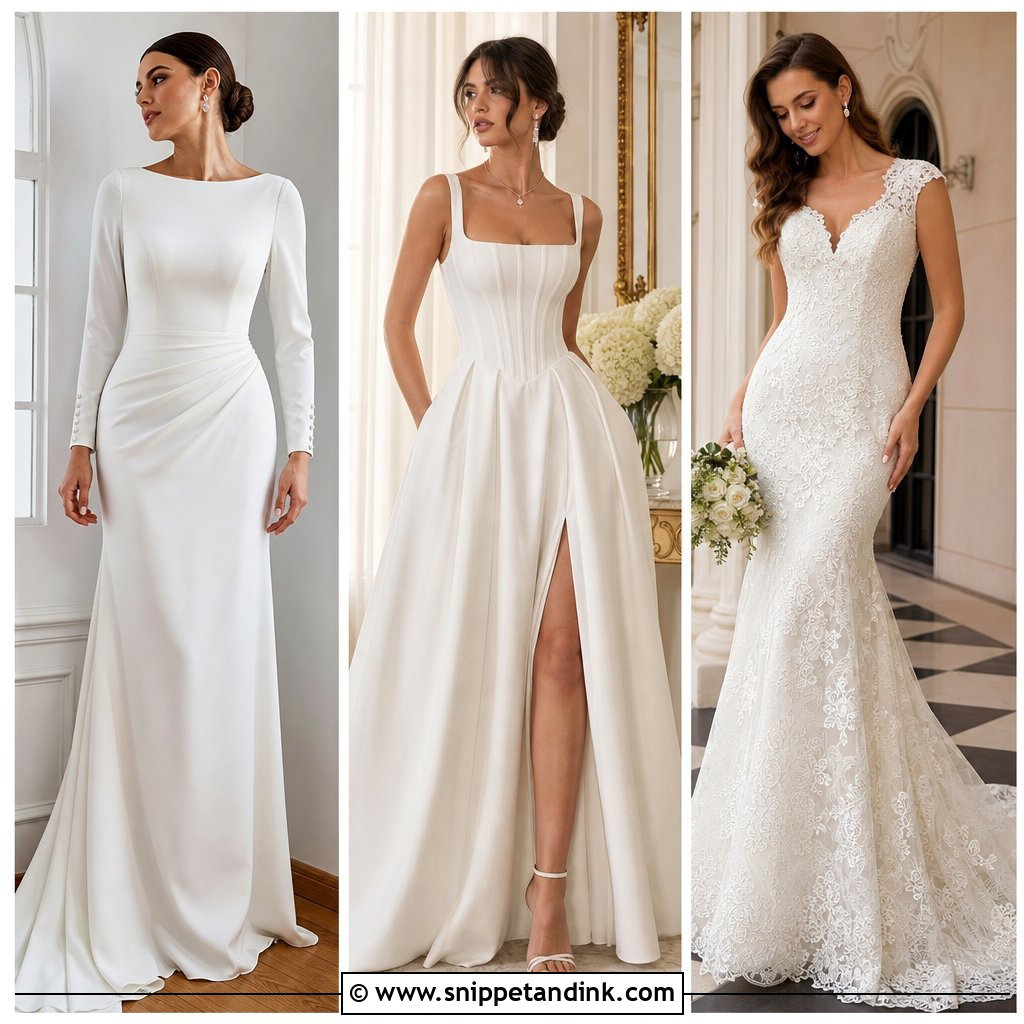
Crepe is unforgiving in the best way. It shows the cut, so a well-tailored crepe gown looks expensive and a badly fitted one looks like a nightdress. A square neck, low back or modest train keeps it modern. Pearl studs, sleek ivory heels and a long plain veil complete the outfit, with a smooth bun, fresh skin and a structured bouquet. I’d budget more for alterations here than for any lace gown, because there’s no detail to hide a seam that doesn’t sit right. City weddings and modern venues suit it.
6. Strapless Mikado Wedding Dress
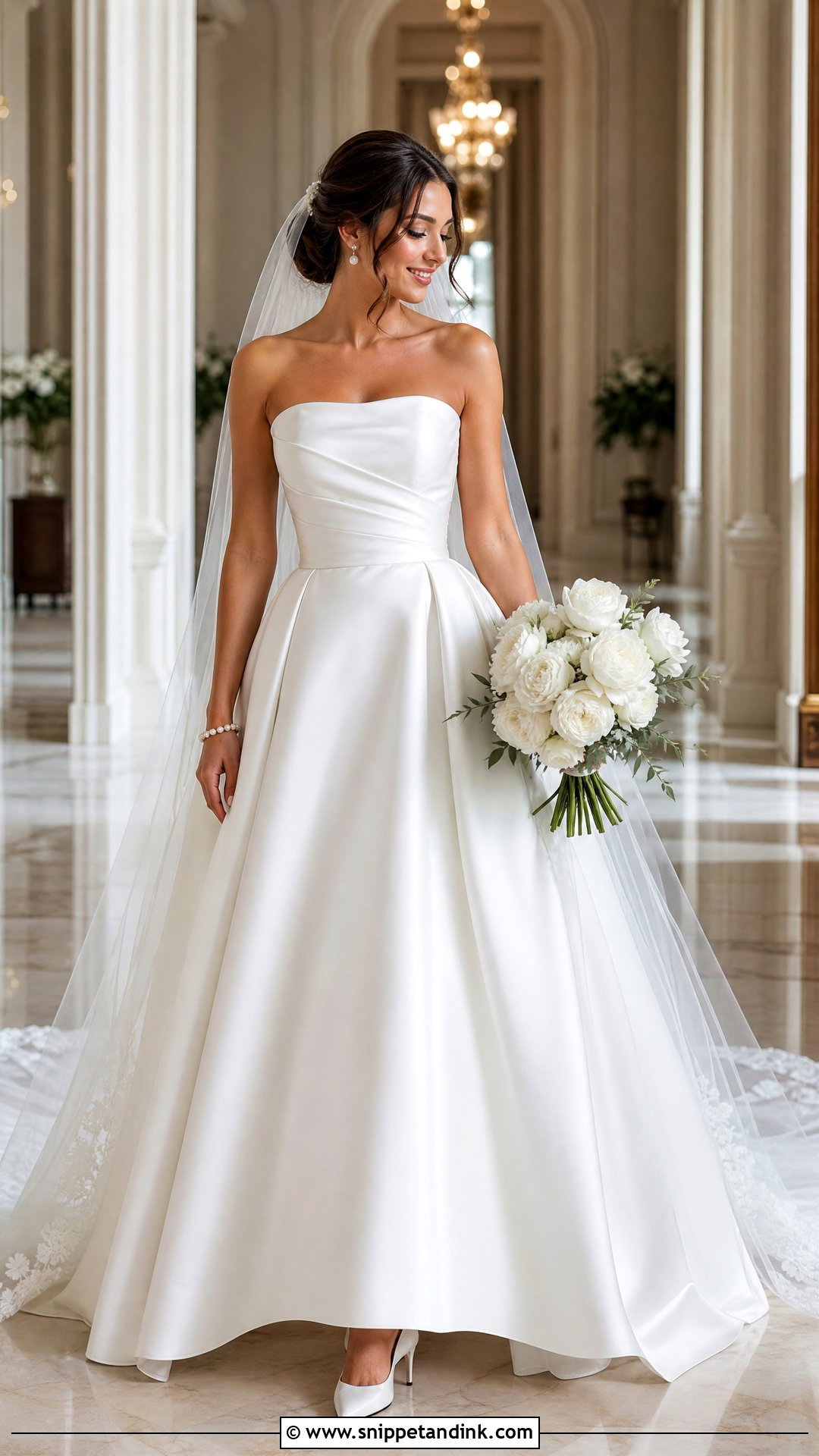
Mikado is a heavy, slightly stiff silk blend that holds a sculpted shape, so a strapless bodice stays crisp and the skirt keeps its line. A gently pleated A-line or soft ball gown silhouette gives presence without too much drama. Style it with a cathedral veil, a pearl bracelet, classic ivory heels and white blooms. Waved hair or a polished bun with glowing makeup finishes it. Mikado has very little stretch, so the bodice has to be fitted exactly; I always do a seated check at the last fitting.
7. Sweetheart Neckline Wedding Dress
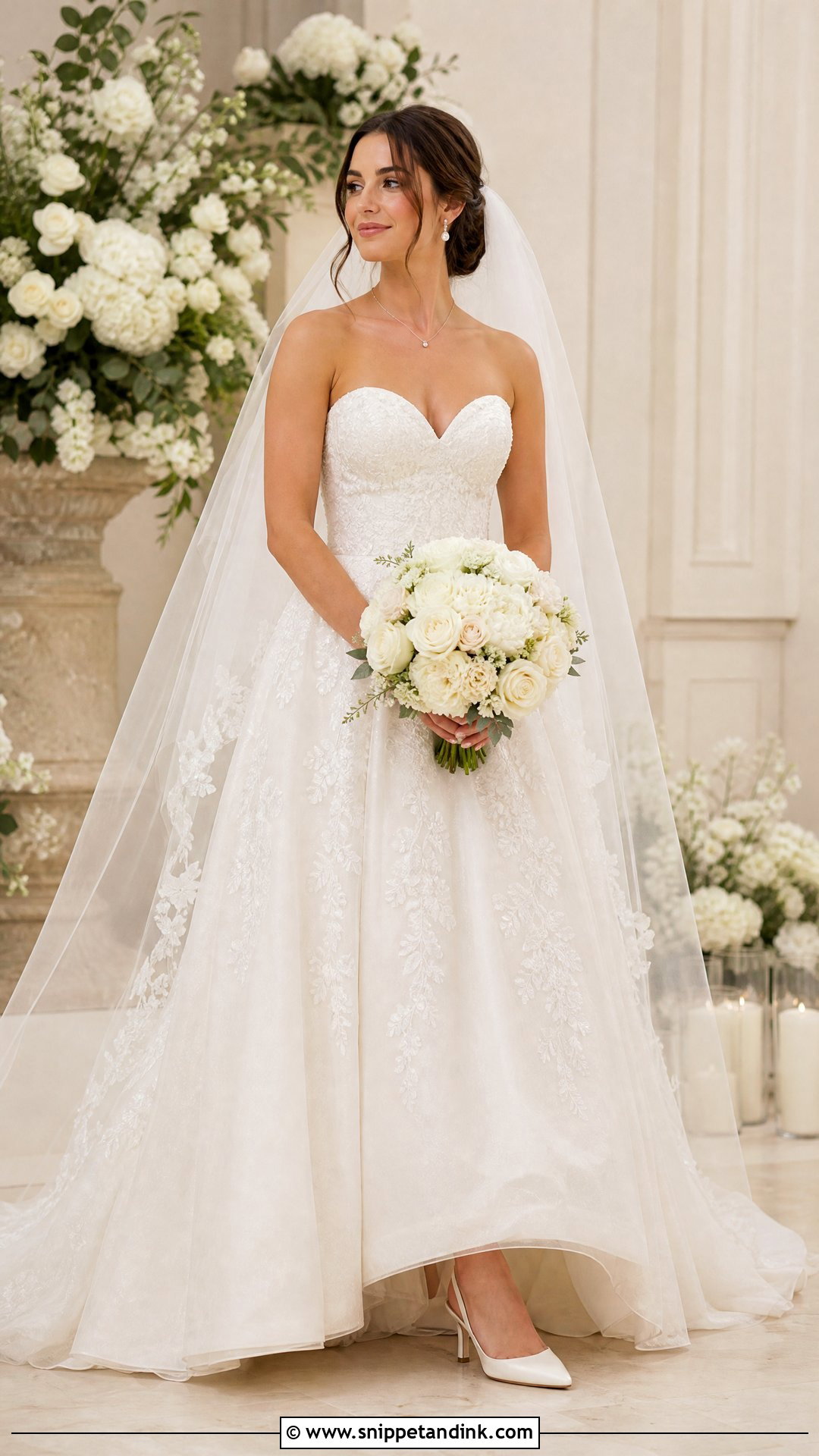
The curve of a sweetheart neckline wedding dress softens the bodice and draws attention up to the face. It sits on lace A-lines, satin ball gowns and fitted mermaid dresses equally well. A sheer veil, a delicate necklace, pearl earrings and ivory slingbacks keep it classy, with a soft, rounded bouquet. A half-up hairstyle leaves the neckline visible. On a corset bodice, fit is everything: if she adjusts the top every few minutes during the fitting, it’ll be worse after dinner.
8. Square Neck Wedding Dress
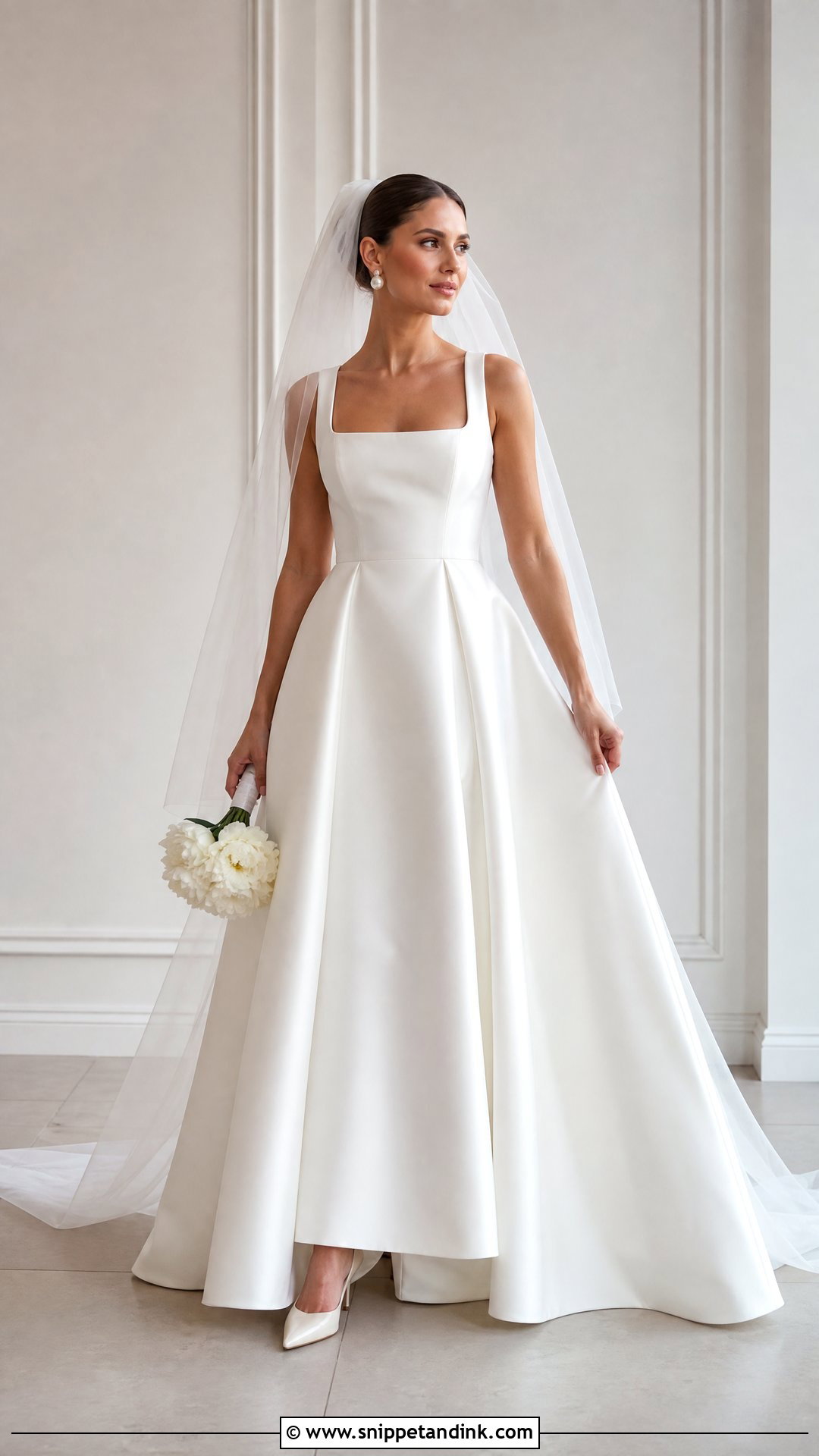
A square neck gives quiet structure to the upper body and looks quietly regal. It pairs with long sleeves, wide straps or a sleeveless fitted bodice, in satin, crepe or lace depending on how romantic she wants it. Pearl earrings, a sleek veil and pointed ivory pumps complete the look, and a center-part bun or waves tucked behind the ears suit the neckline. The corners need to sit flat. A gaping edge is the most common alteration I ask for on this style, and it’s quick to fix.
9. High Neck Wedding Dress
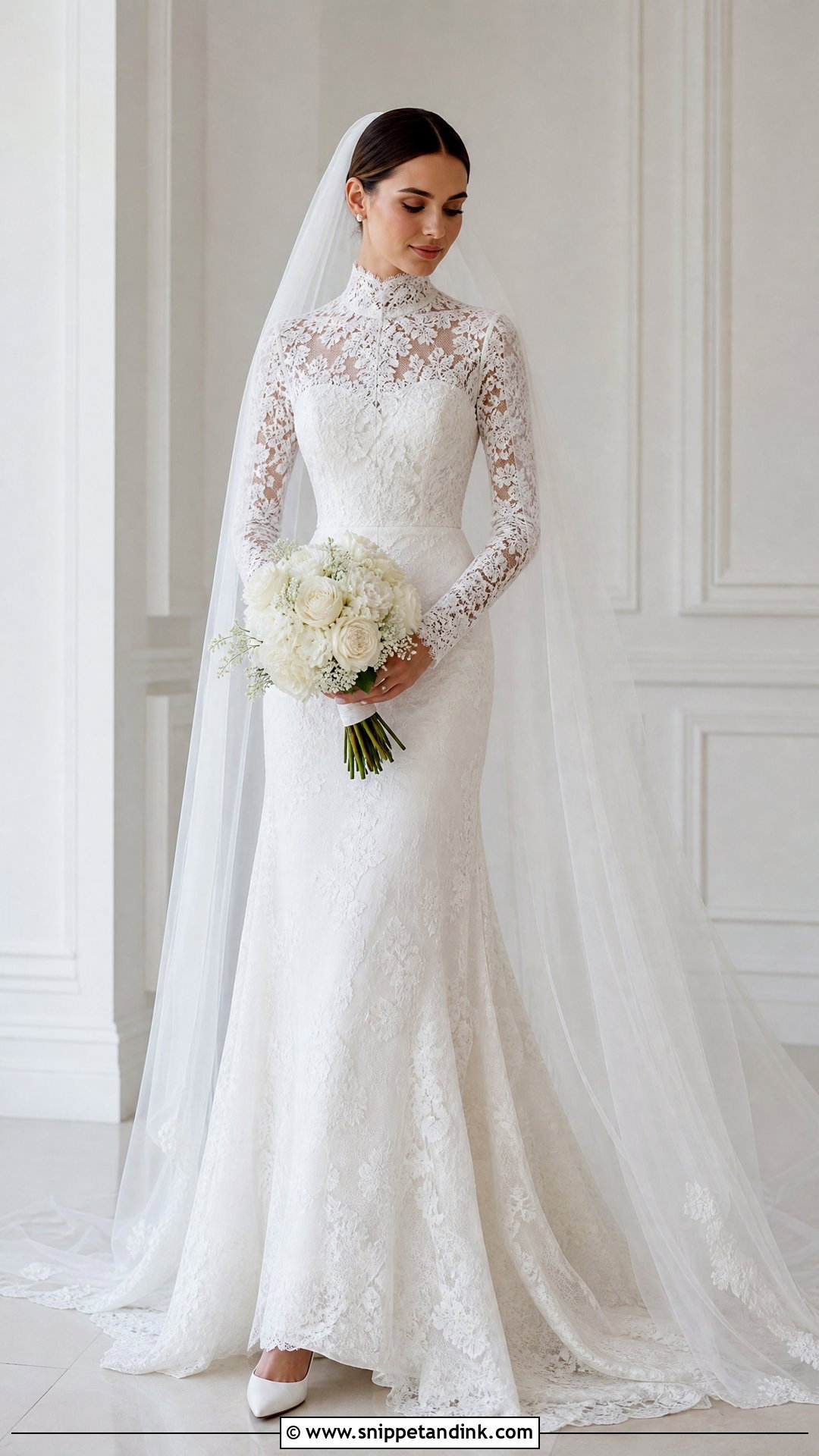
High necks give graceful coverage and suit lace, crepe or satin over a fitted bodice. Sheer lace reads romantic; plain satin looks modern. I keep jewelry to small pearl studs, add a sleek updo and pointed heels, and let a long veil supply the drama. Skip big necklaces, since the neckline is already the statement. It suits formal venues and cooler months. Posture matters with this cut more than any other; a high neck shows a slouch in every photo, so practise standing tall in the mirror.
10. Floral Applique Wedding Dress
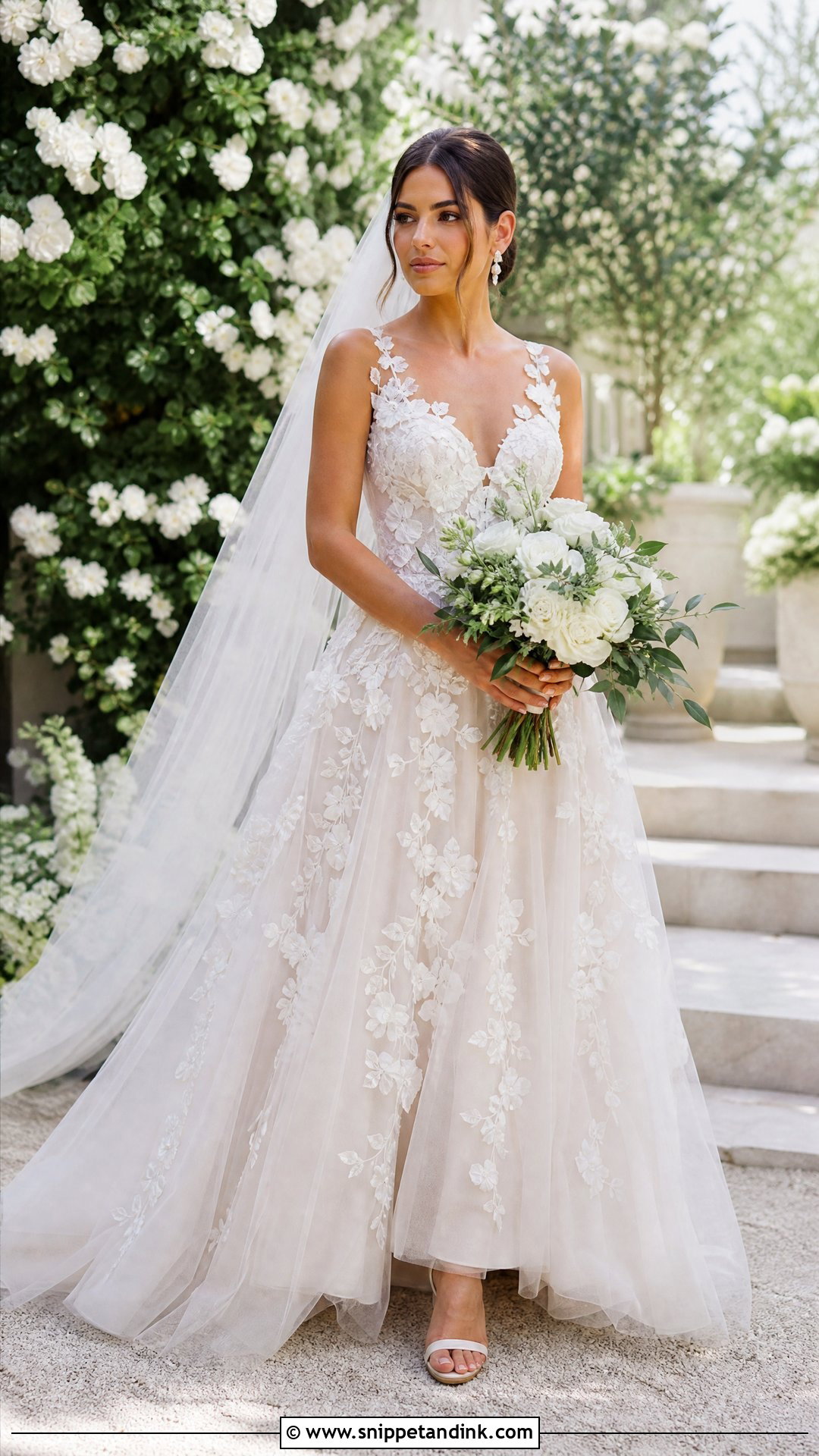
Appliqués can be scattered lightly over tulle or packed densely over the bodice and skirt, and a floral applique wedding dress looks most refined when the flowers are ivory on ivory rather than a contrasting color. Sheer heels, pearl earrings and a simple veil that doesn’t cover the work suit it, with white flowers and pale greenery echoing the detail. Loose waves or a low textured bun keep the hair soft. Gardens, estates and spring ceremonies suit it best. A busy veil edge over heavy appliqué looks cluttered, so I keep the veil plain.
11. Tulle Ball Gown Wedding Dress
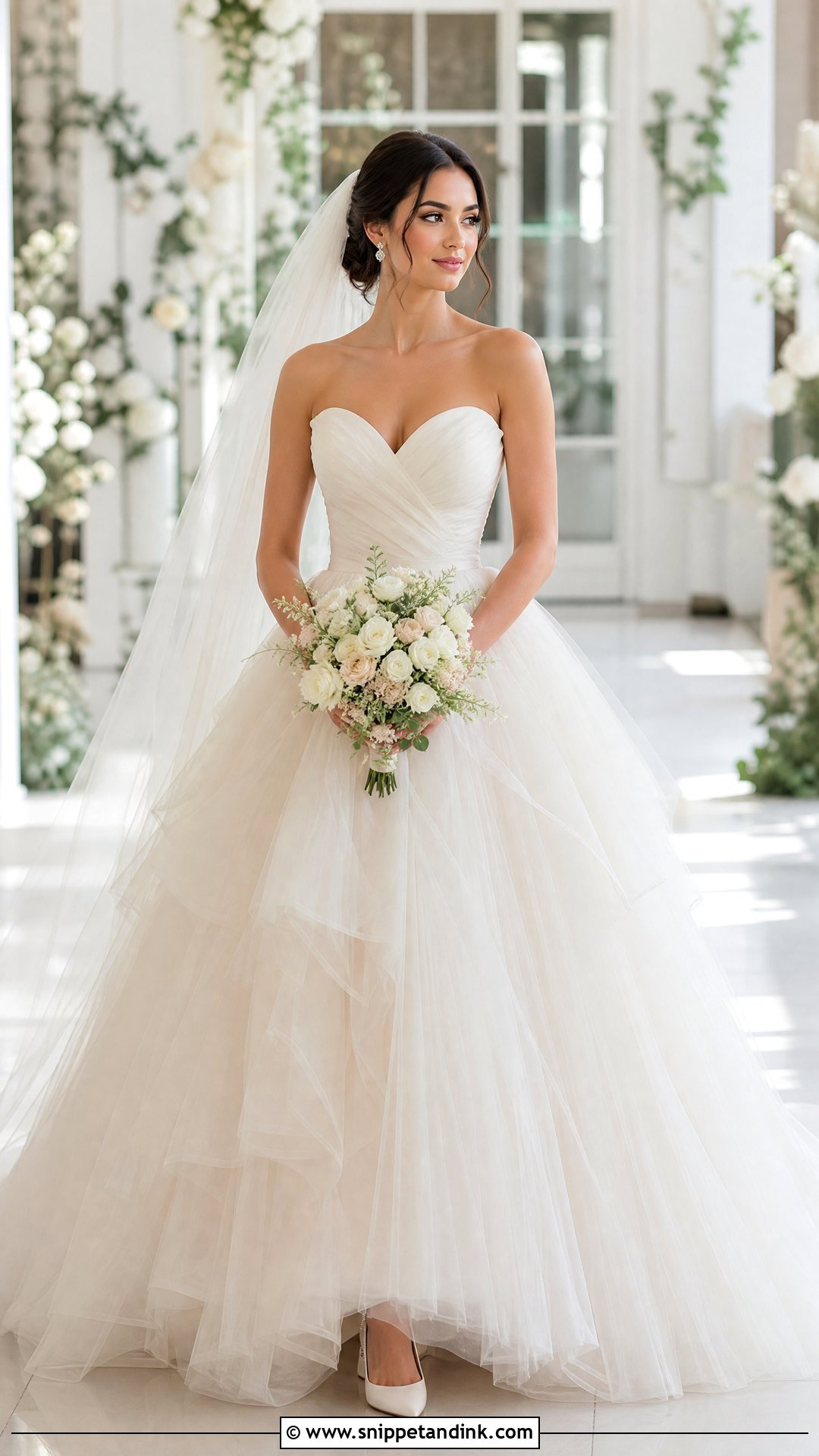
Tulle gives volume that floats instead of standing stiff. Over a fitted bodice with a soft sweetheart, delicate straps or a sheer bodice, layers of fine tulle feel romantic and move well. Crystal studs, ivory heels and a long veil that blends into the skirt complete it. Accessories should stay light: a delicate bouquet, soft pink makeup and a loose low bun. Tulle compresses in a car, so plan to fluff the skirt before photos, and sit on the skirt’s back layer rather than crushing the front.
12. Mermaid Lace Wedding Dress
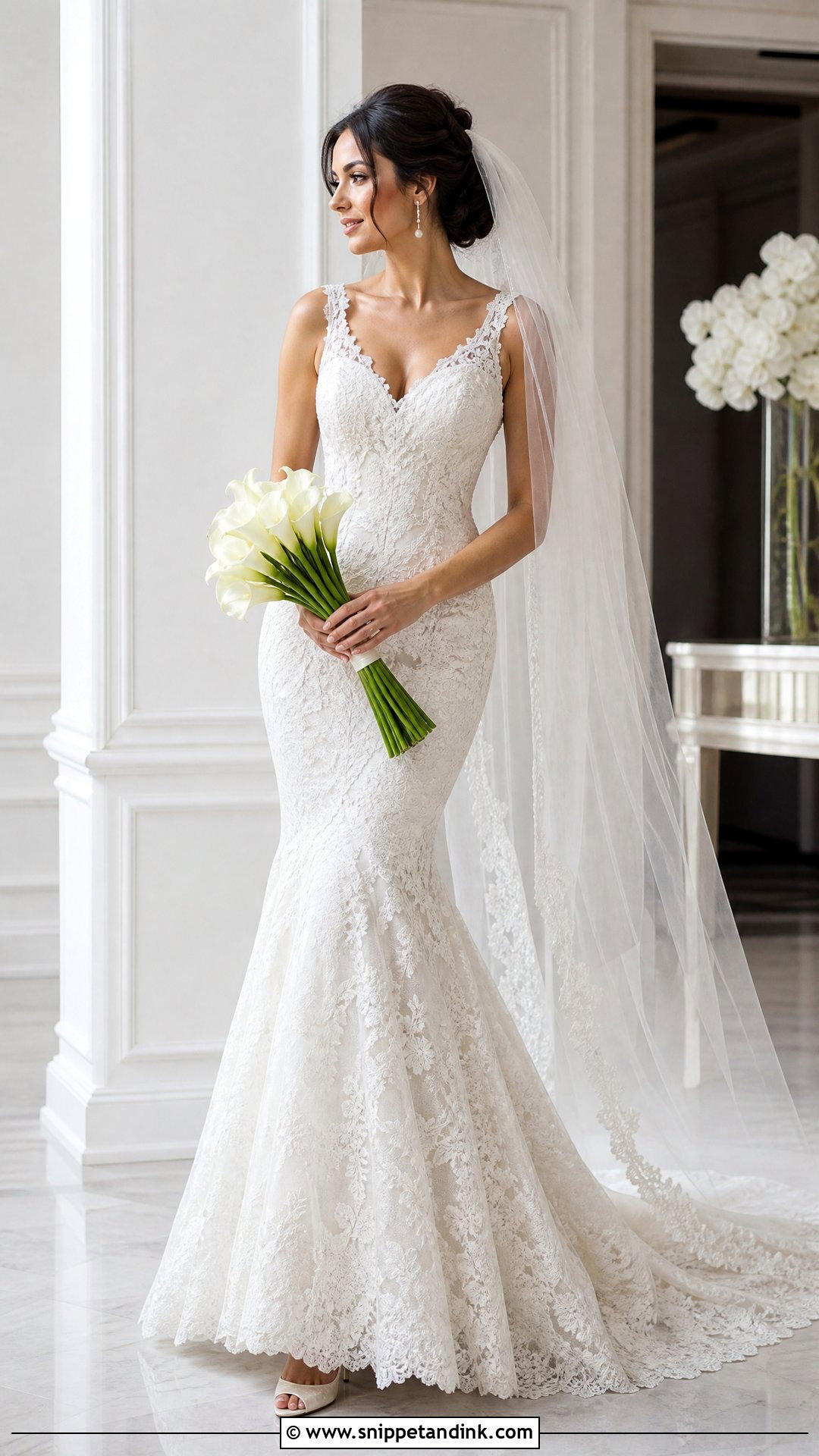
Mermaid lace gowns sculpt the body through the hips, then flare for movement. A modest train, delicate lace and a neckline she feels secure in keep it classy. Pair it with a long veil, pearl drops and plain ivory heels, with a sleek low bun or polished waves to balance the shape. Tailoring is essential around the waist, hips and hem. Sit and walk upstairs in it at every fitting, because a flare placed too low makes stairs difficult.
13. Fit And Flare Wedding Dress
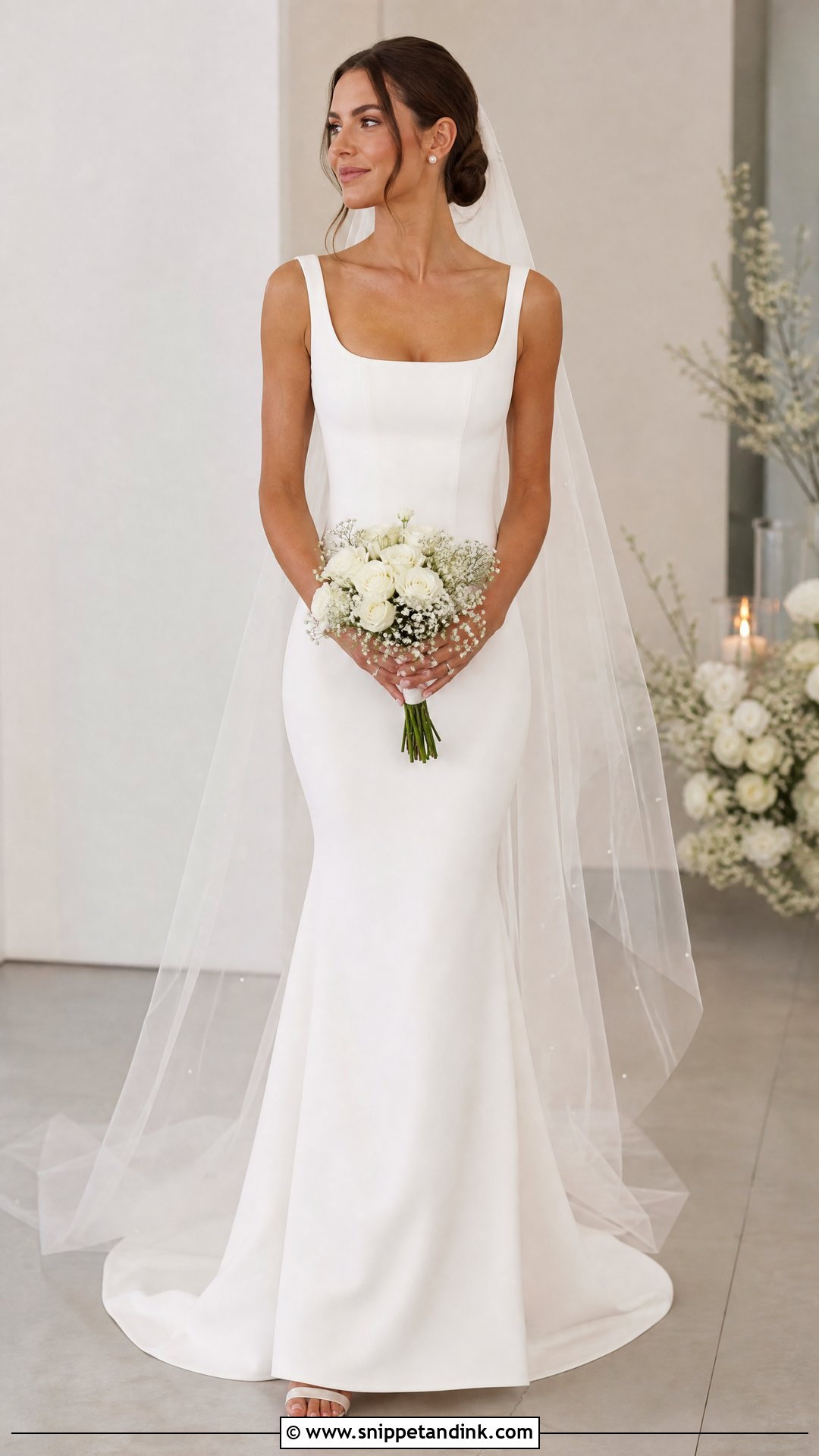
Fit-and-flare is the easier cousin of the mermaid. It follows the waist and hips, then opens around the thighs rather than the knees, so walking and dancing are easier. Crepe looks clean, lace romantic and satin glamorous. A fingertip veil, pearl studs and classic heels suit it, along with a slim bouquet that echoes the streamlined line. A side part or soft waves completes it. I suggest this cut to brides who loved the mermaid in photos but couldn’t sit down in it.
14. Corset Bodice Wedding Dress
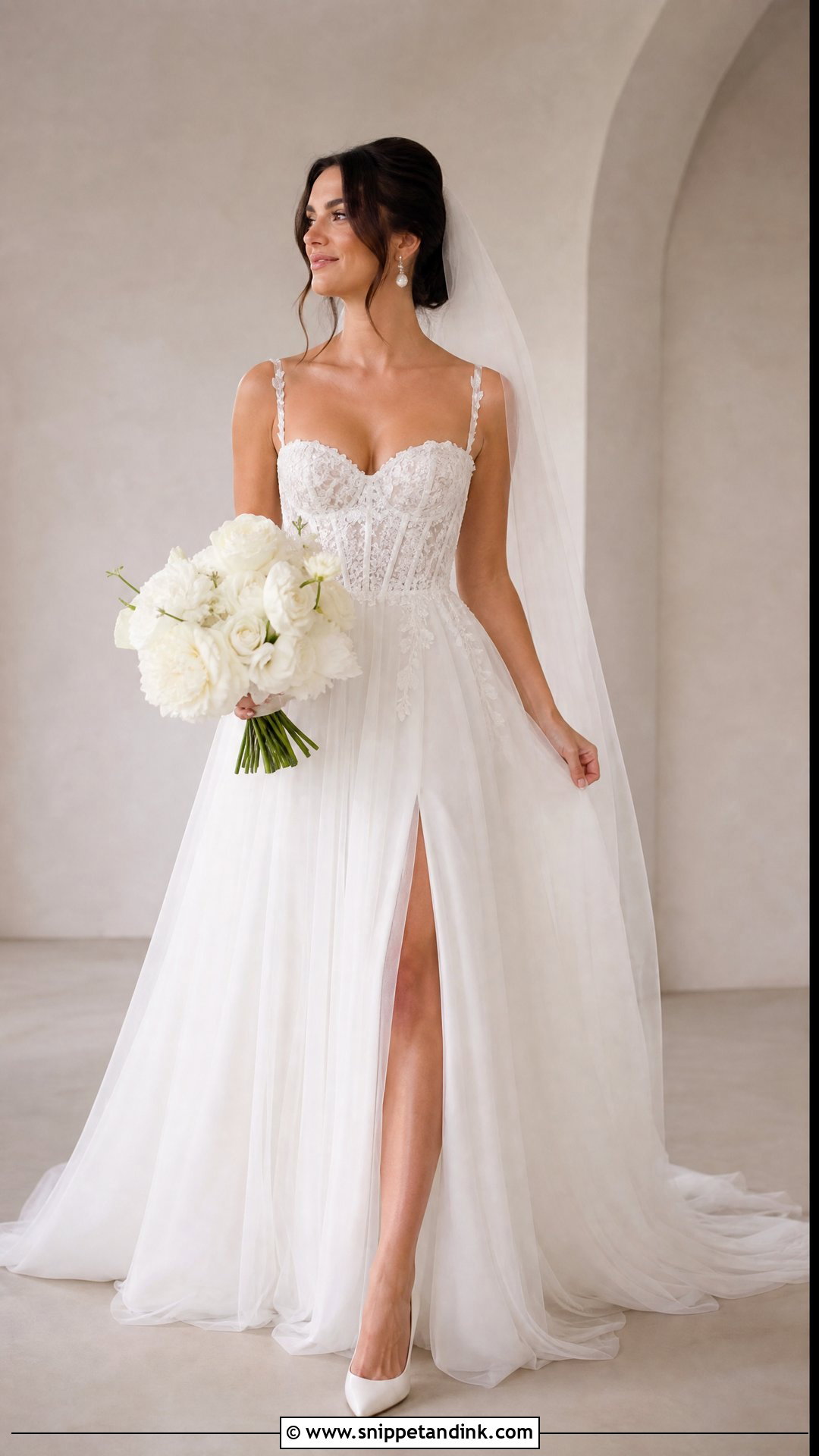
Corset bodices give structure and support, and they pair with tulle, satin, lace or organza skirts. For a classy version, I look for softer boning, fine fabric and a neckline that isn’t too exposed. A long veil, pearl earrings and ivory pumps complete it, with fresh makeup and a loose bun with face-framing pieces so the structure doesn’t feel harsh. The fabric changes its whole mood, from vintage to fairytale. The best corsets lace or hook so the fit can be tightened slightly on the day if she’s lost a little weight from stress.
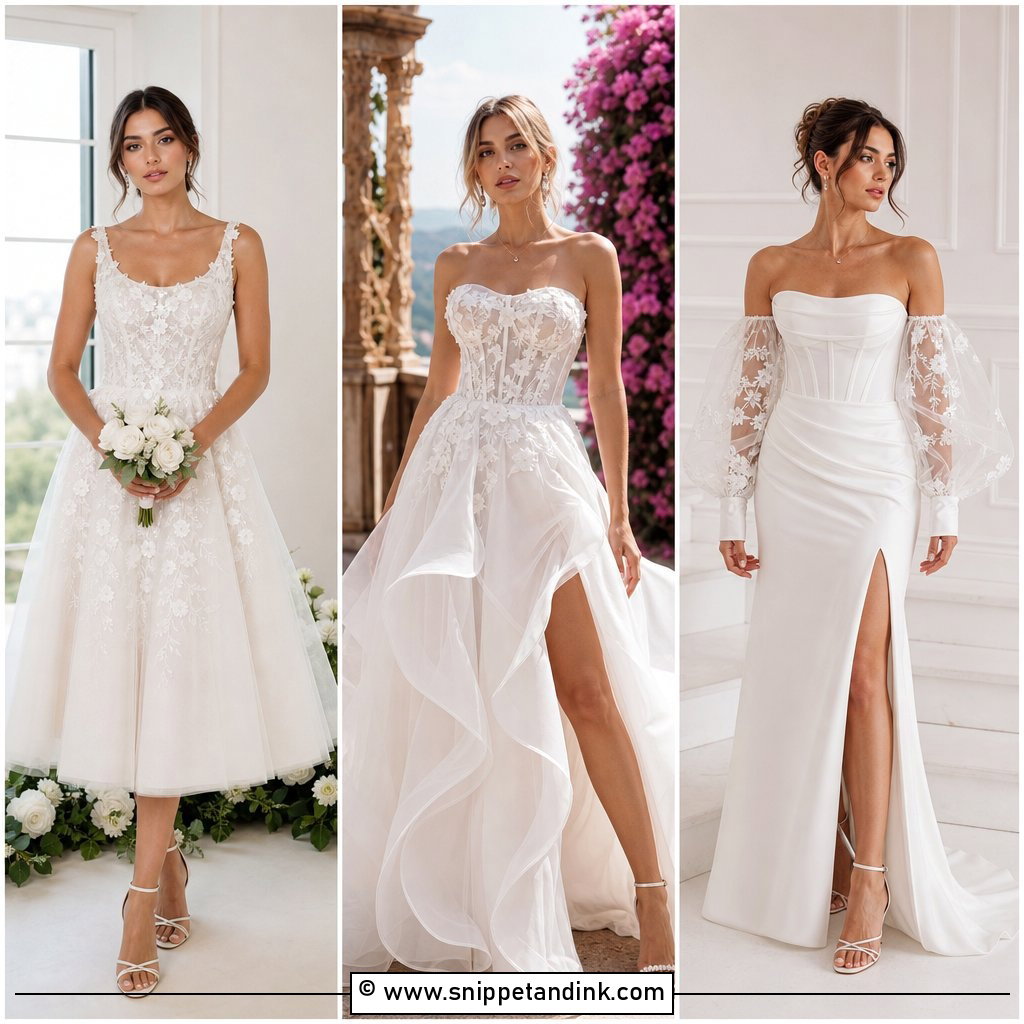

15. Basque Waist Wedding Dress
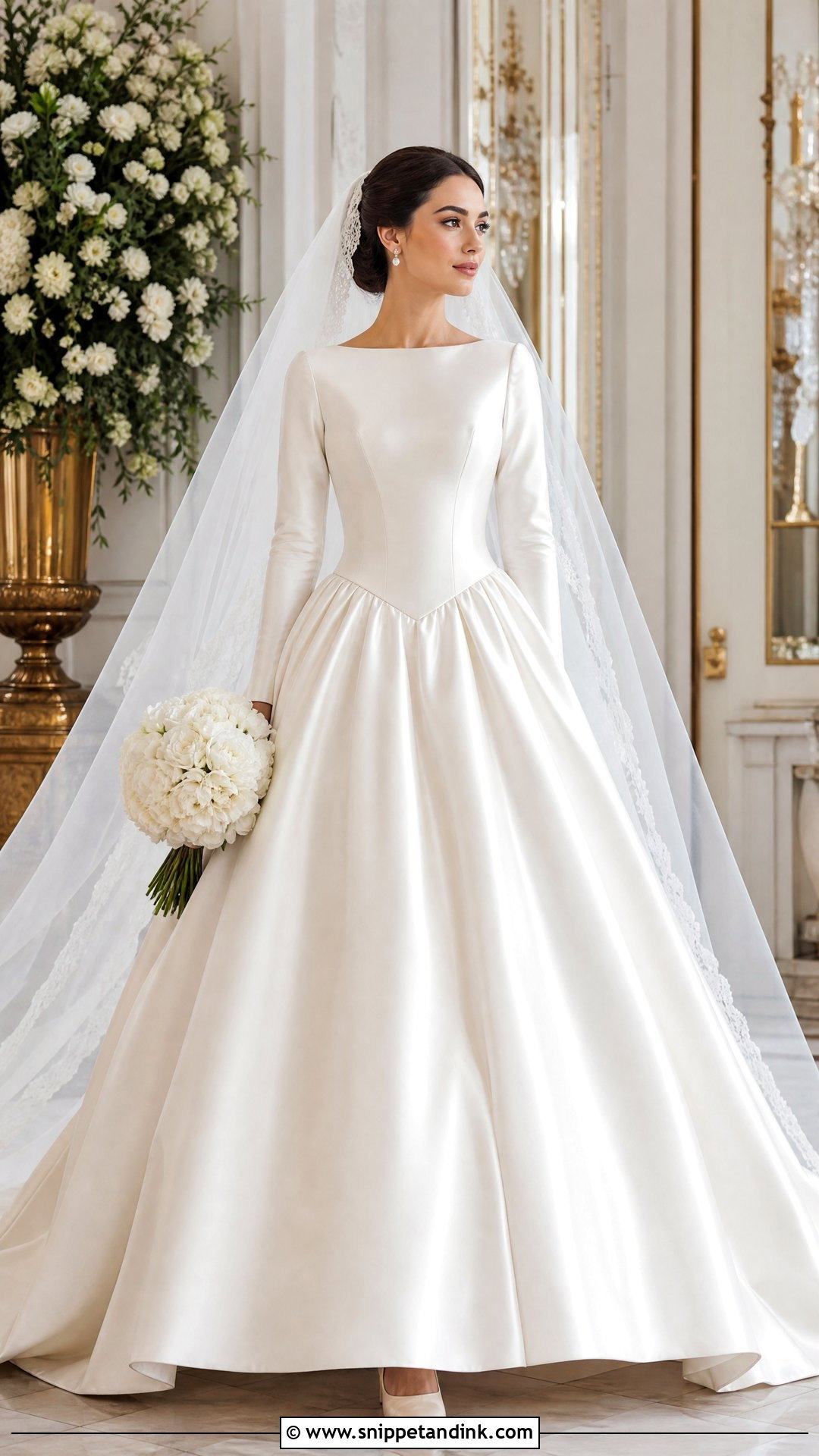
A basque waist dips into a V or U at the front, lengthening the torso before a full skirt. It looks regal without heavy beading, especially in satin, Mikado or lace. A cathedral veil, simple pearl earrings and closed-toe ivory heels suit it, and a rounded bouquet softens the line. A classic bun or soft curls keeps it timeless. The point of the basque has to sit on the body’s center line; if it pulls to one side, it shows in every front-on photo.
16. Drop Waist Wedding Dress
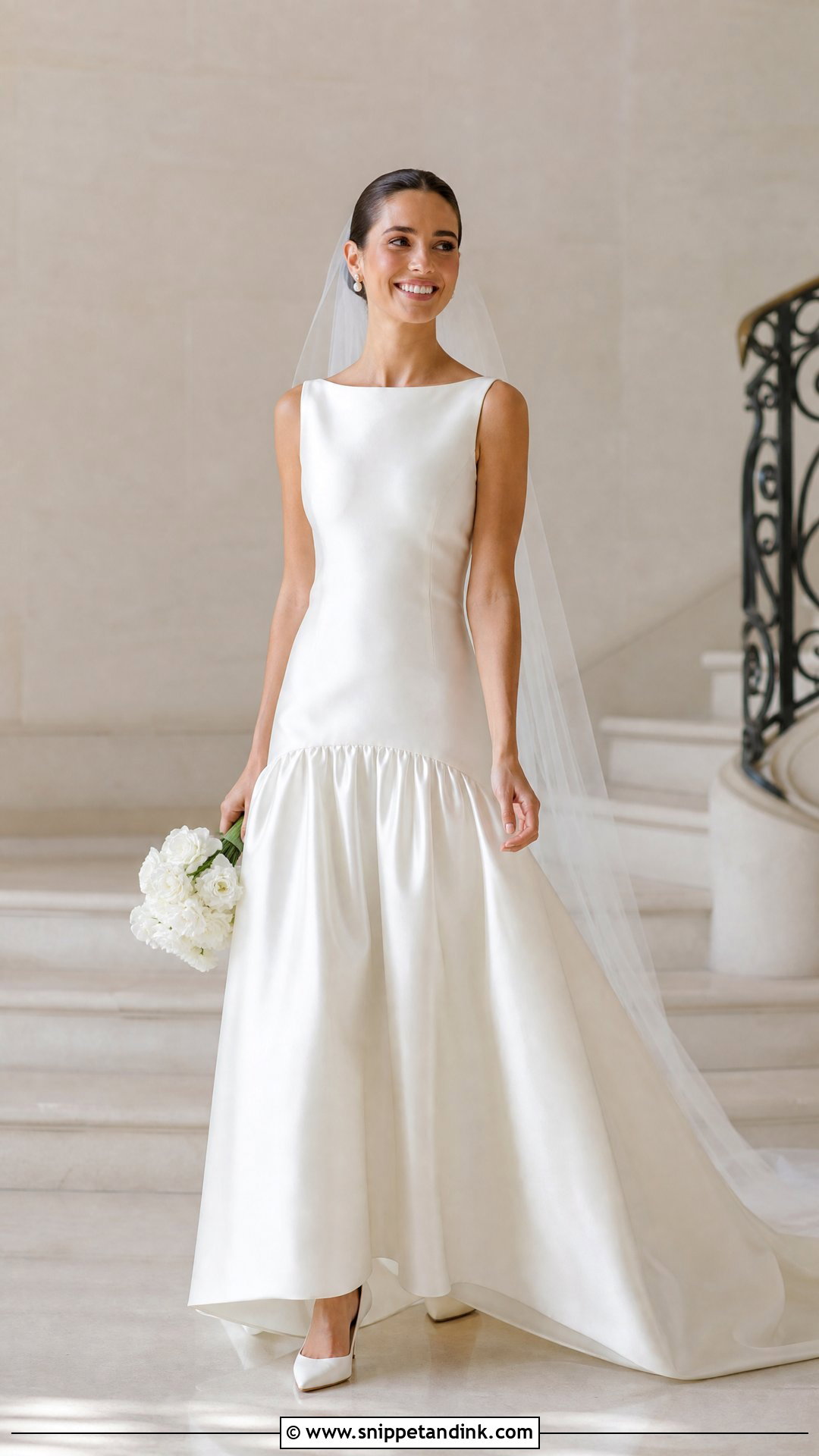
A drop waist sits lower than the natural waist, lengthening the torso before the skirt opens. Satin, crepe or lace each set a different mood. Pointed heels, a clean veil and understated earrings keep it elegant, with polished waves or a smooth bun. It’s a little unexpected, which is the appeal. On a short torso or petite frame, it can make the legs look shorter, so I always compare it side by side with a natural waist before a bride commits.
17. Pearl Wedding Dress
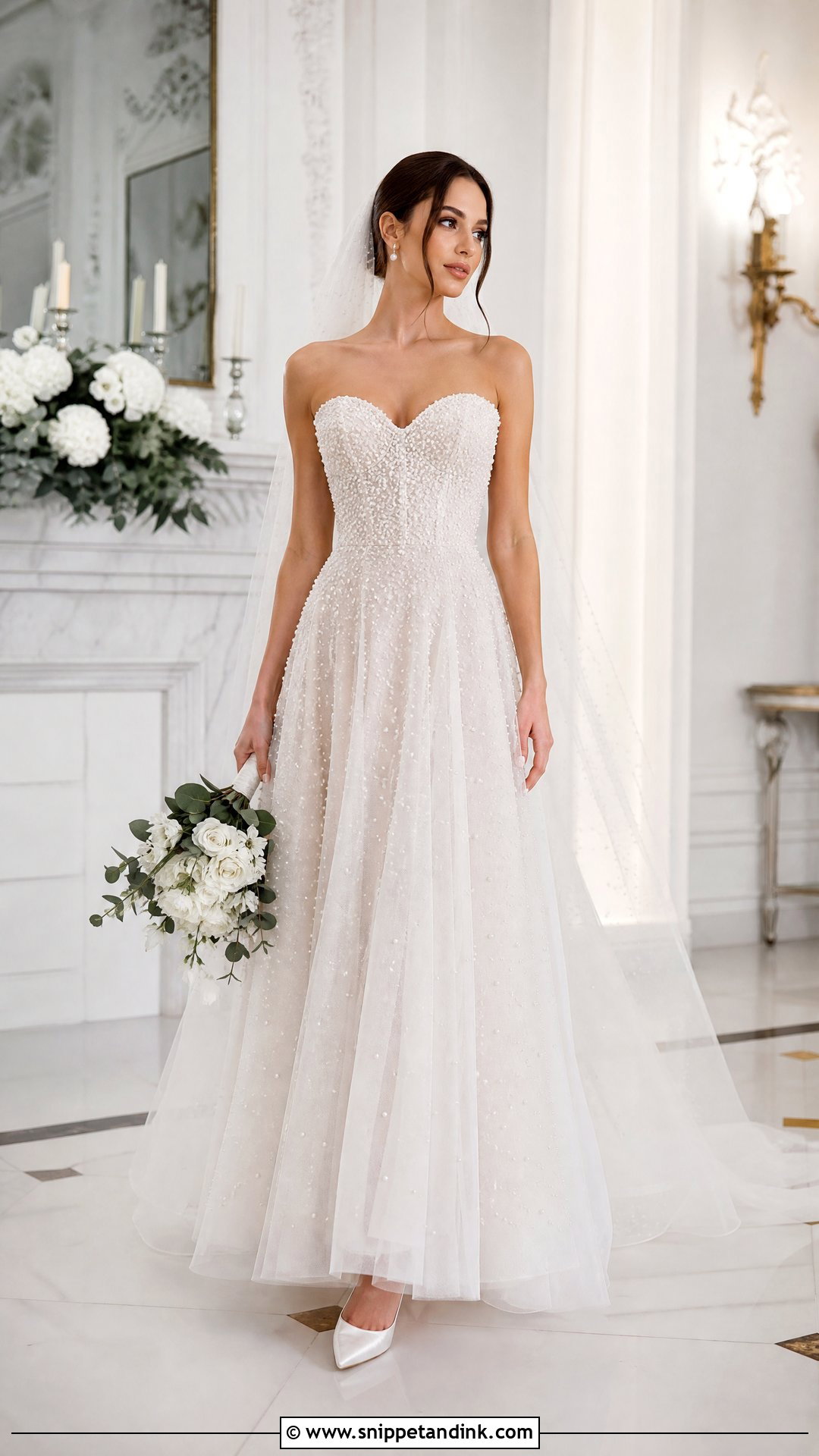
Pearls give a soft glow rather than sparkle. Beading can be scattered over tulle, set along the bodice or used as trim on straps and sleeves; refined placement looks better than heavy coverage. Pearl earrings, satin heels and a simple veil keep everything coherent, with white flowers and greenery. A sleek bun or low ponytail freshens the look. Pearls add weight to sheer fabric, so I check whether a pearl-covered strap or sleeve drags down when she moves her arms.
18. Bow Back Wedding Dress
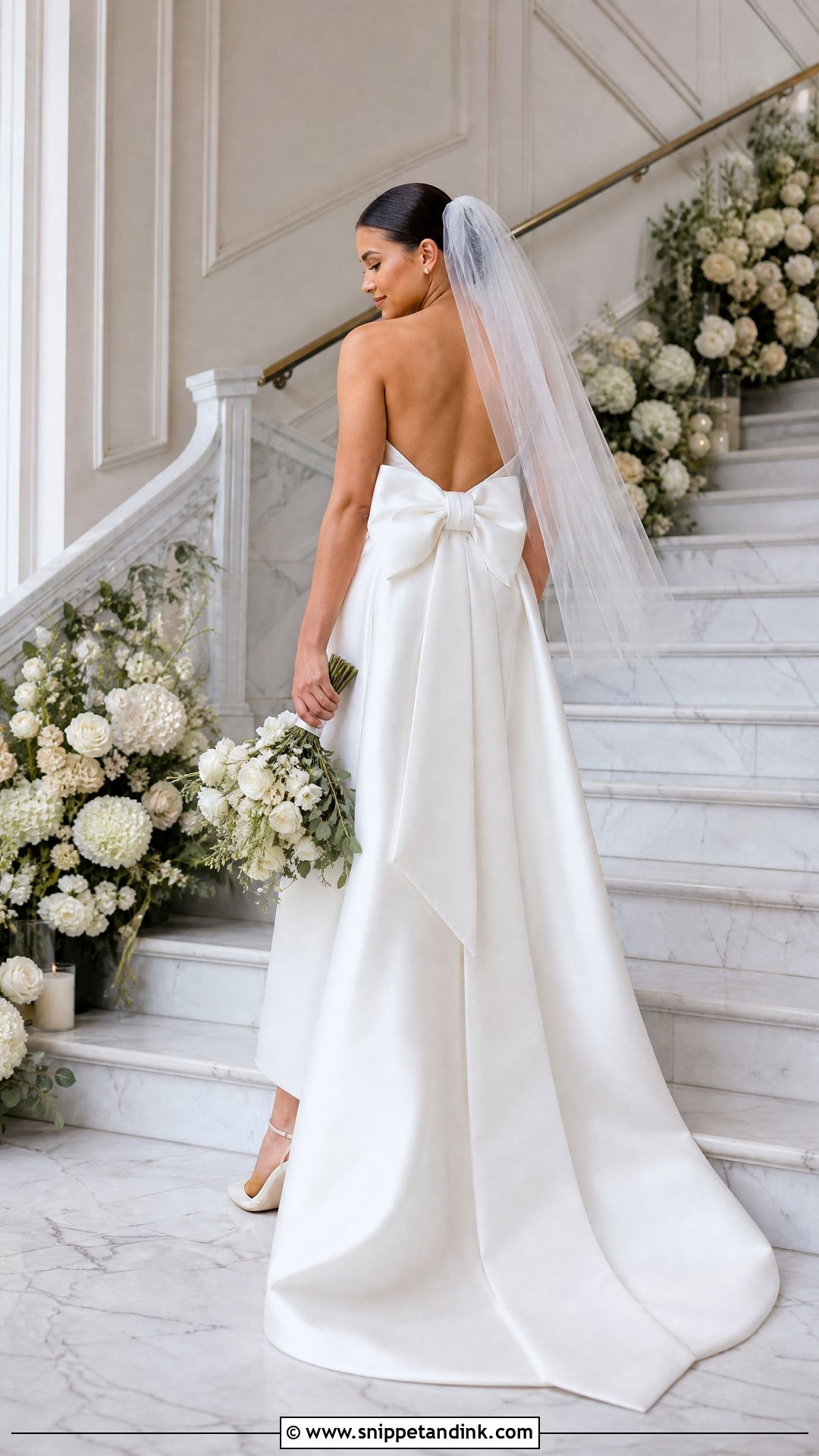
A bow at the back gives the aisle a detail to watch. Large structured bows bring drama; smaller, softer ones feel quiet. A clean satin or Mikado gown carries it best, with pearl studs, a plain veil and ivory heels matched to the dress tone. Keep accessories quiet, and wear a low bun so the bow stays visible. Large bows are often attached with snaps or hooks, so check they can’t flip or droop when she sits and stands repeatedly.
19. Detachable Overskirt Wedding Dress
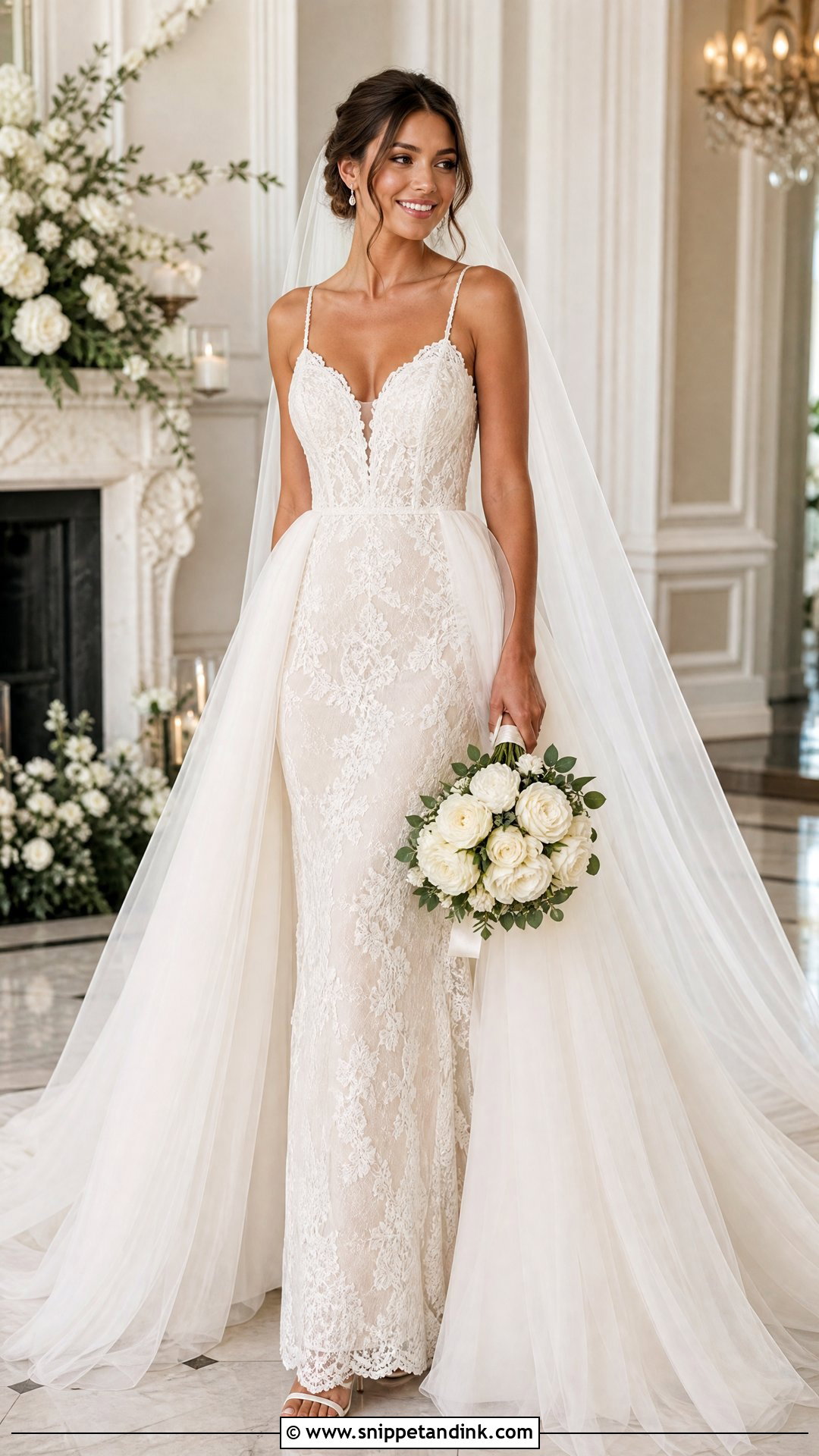
A detachable overskirt gives a grand ceremony look and an easier reception look from one gown. A fitted crepe or lace base with a tulle, satin or organza overskirt is the usual build. A long veil, simple earrings and comfortable heels finish it. The base dress needs to look complete on its own, so have it fitted and hemmed as a finished gown, not as a lining. Rehearse taking the overskirt off once with whoever will help, since the fastenings are hidden and fiddly.

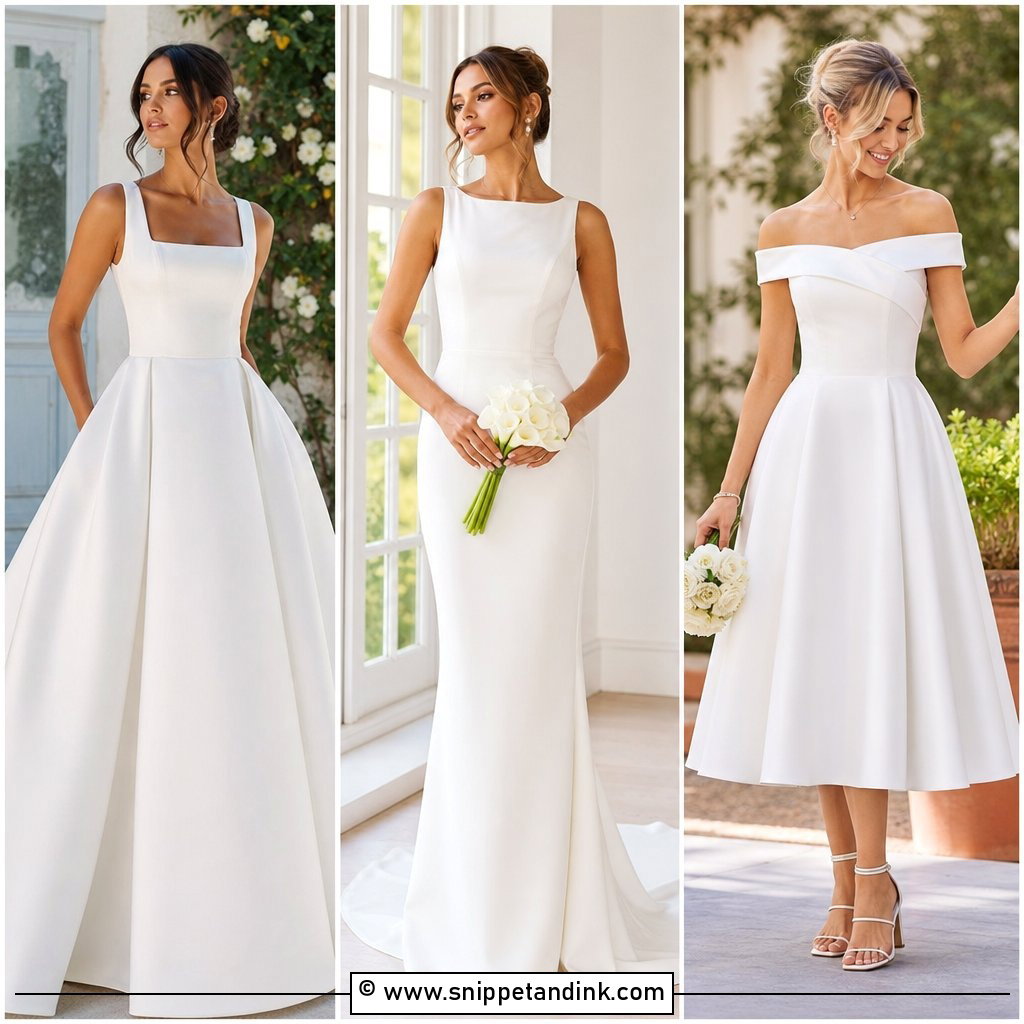
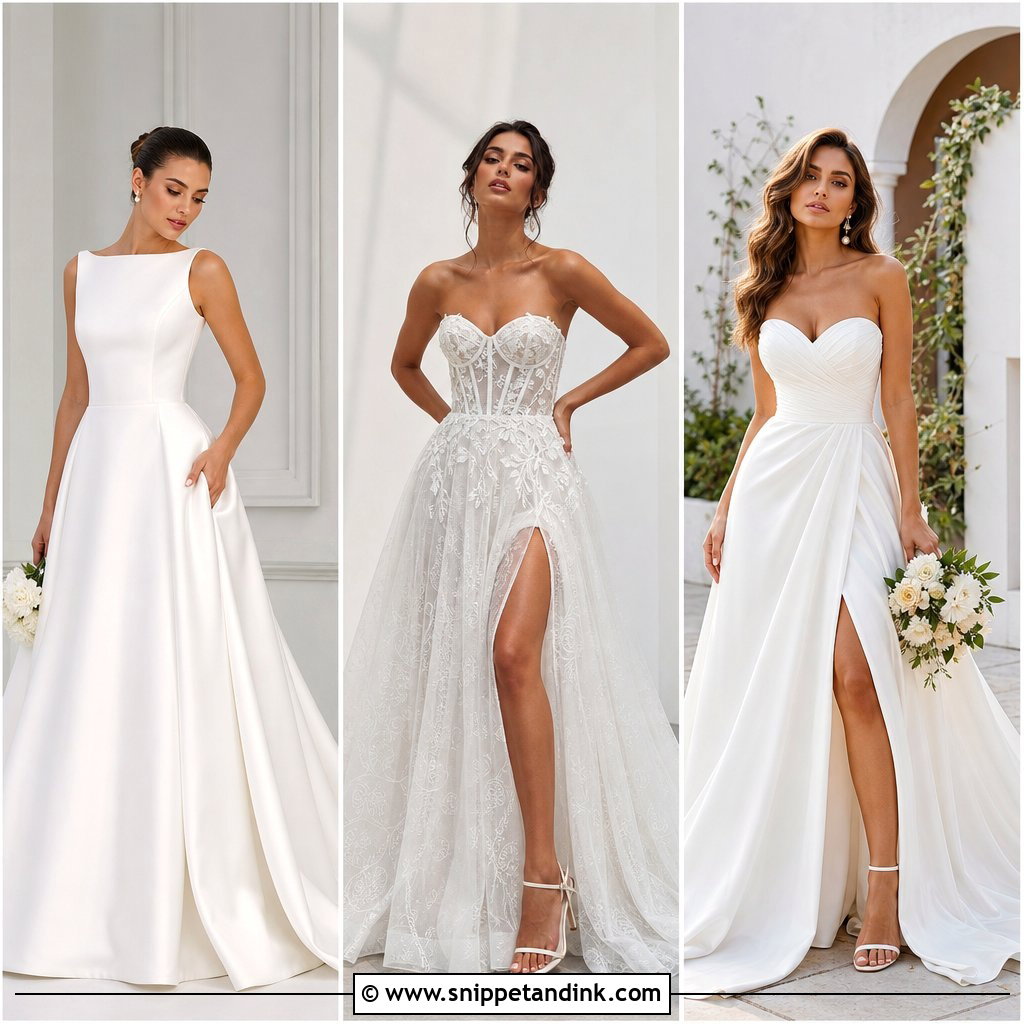

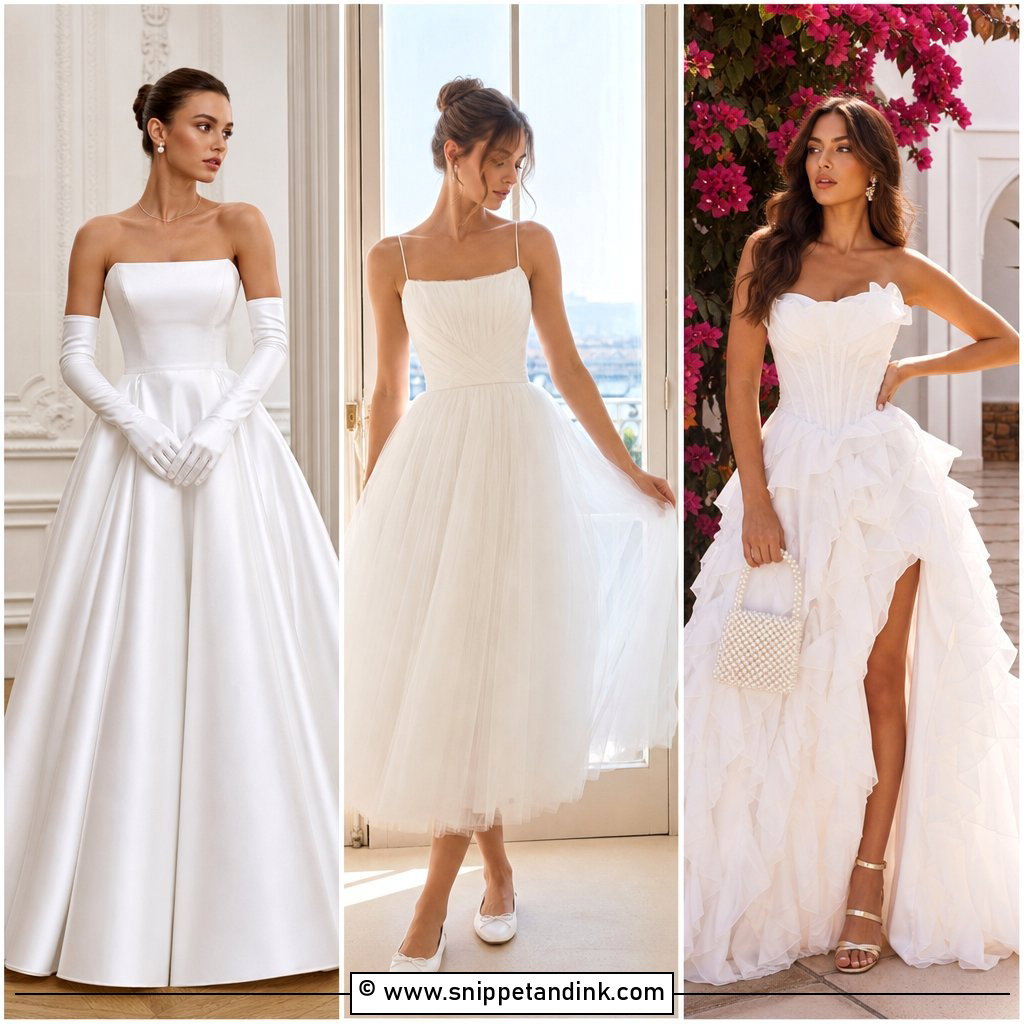
20. Cape Veil Wedding Dress
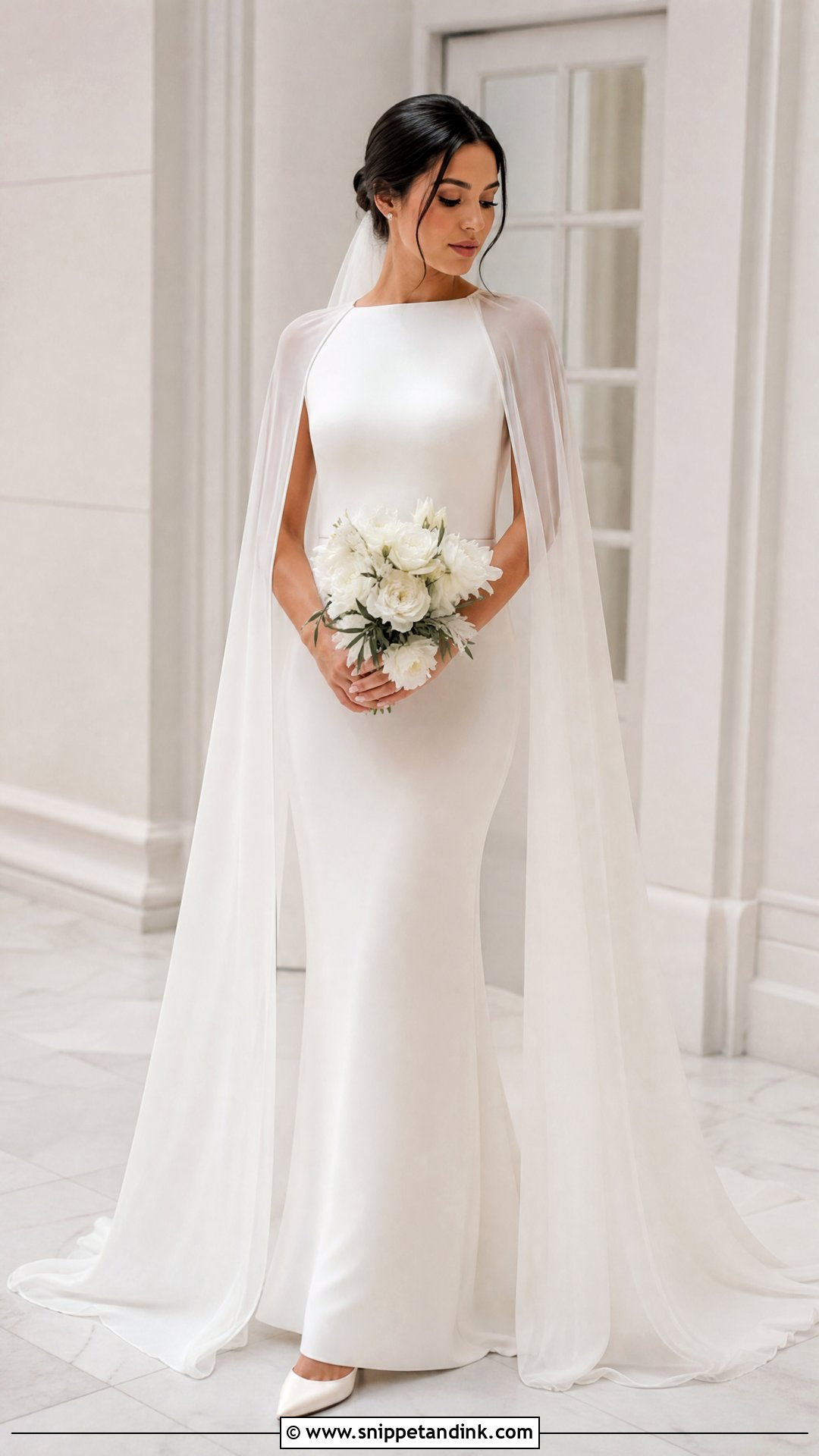
Cape veils drape from the shoulders or upper back instead of the hair, moving as she walks. They sit best on simple crepe gowns, fitted lace or minimal satin. Pearl studs, sleek heels and smooth hair keep the cape clean. It gives drama without a long train or elaborate headpiece, and from behind it frames the whole body in photos. Most cape veils attach with clips or hooks at the shoulder; check they’re strong enough not to slip when she hugs guests, and keep the bouquet simple so the fabric stays the main feature.
21. Tea Length Wedding Dress
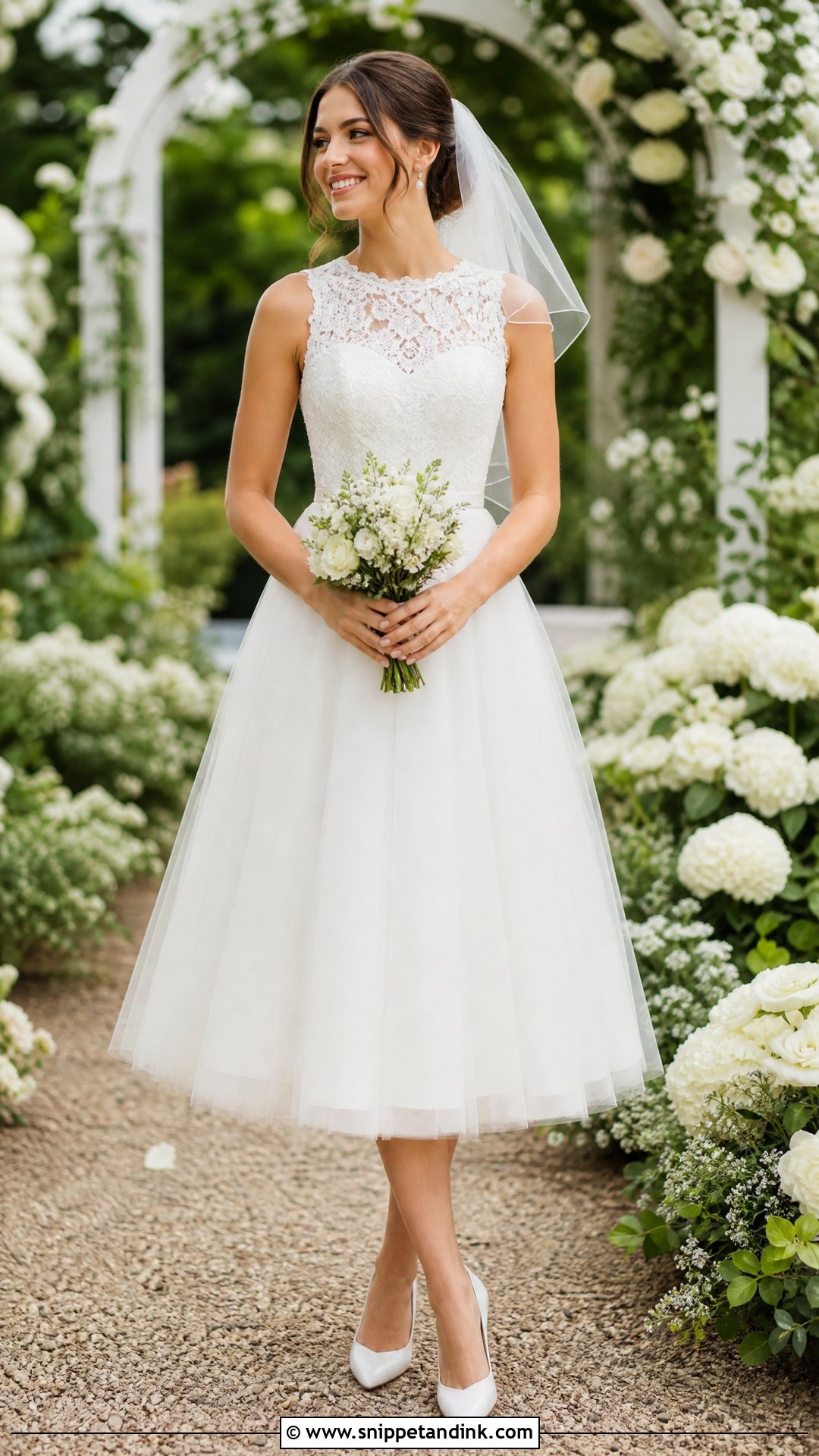
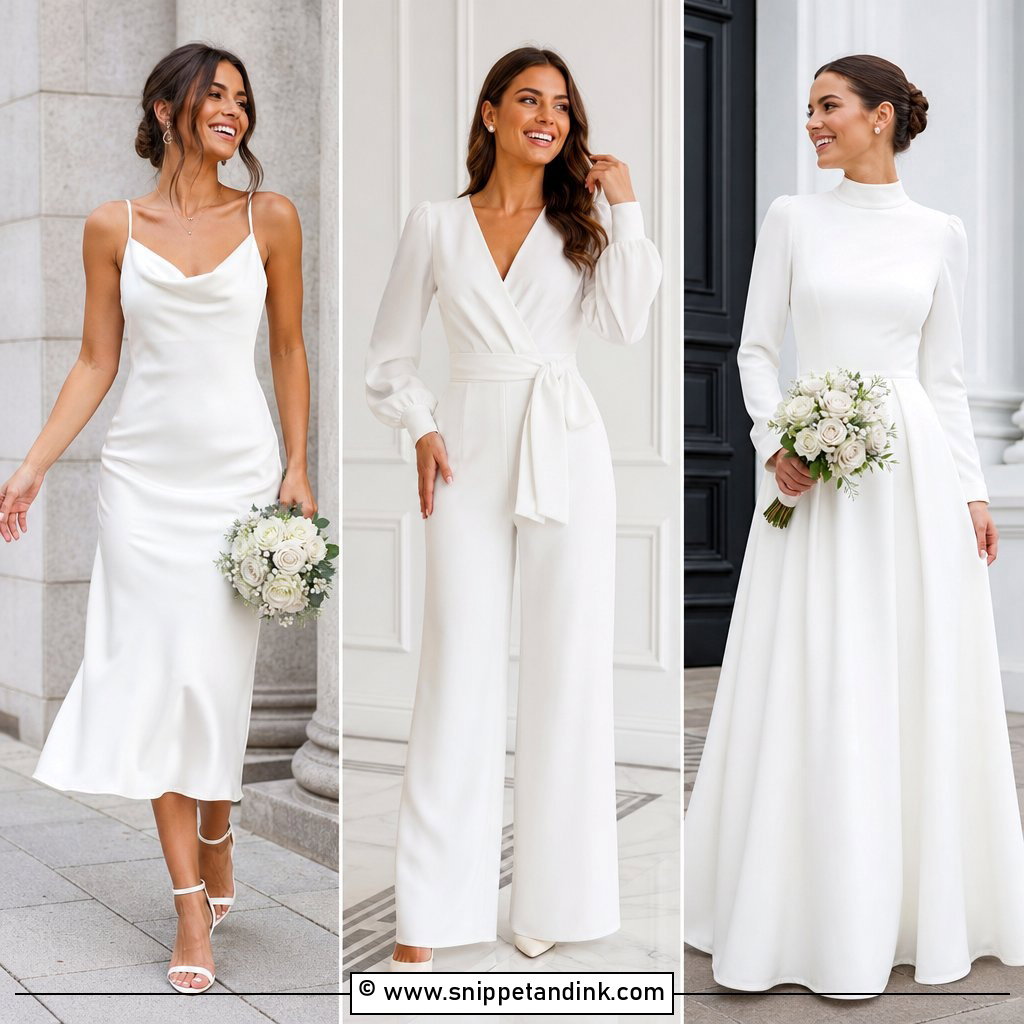
Tea length falls between the knee and ankle, so the shoes become part of the outfit. Satin, lace or tulle over a fitted bodice keeps it romantic. Pointed pumps, pearl earrings and a short veil or bow in the hair suit it, perhaps with a soft red or pink lip. It fits courthouse ceremonies, gardens and small weddings, and gives a vintage note without a full gown. The fit needs to be sharp, because a shorter hem shows every crooked line. Shoe choice comes first, then the hem is set.
22. Minimalist Slip Wedding Dress
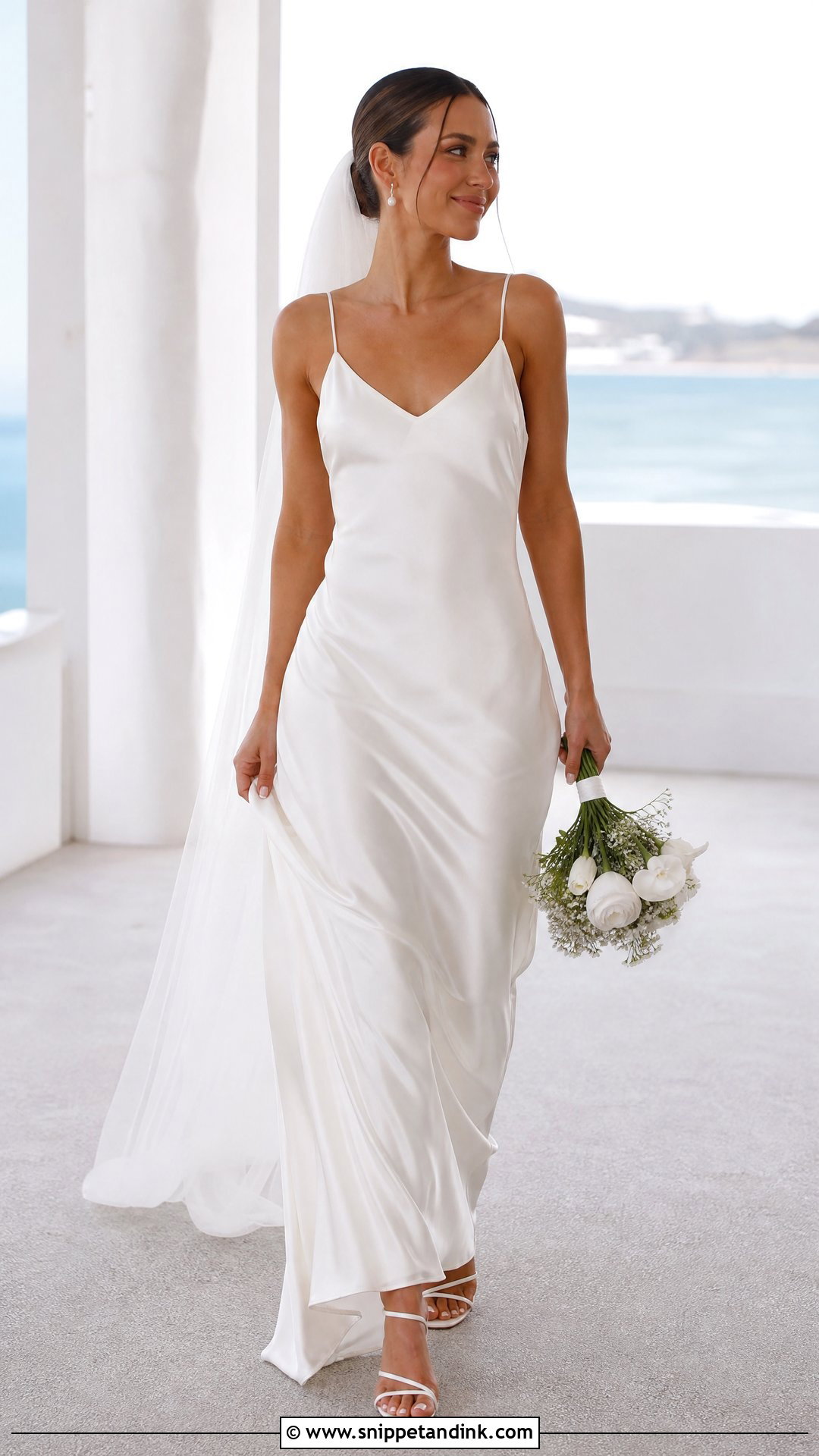
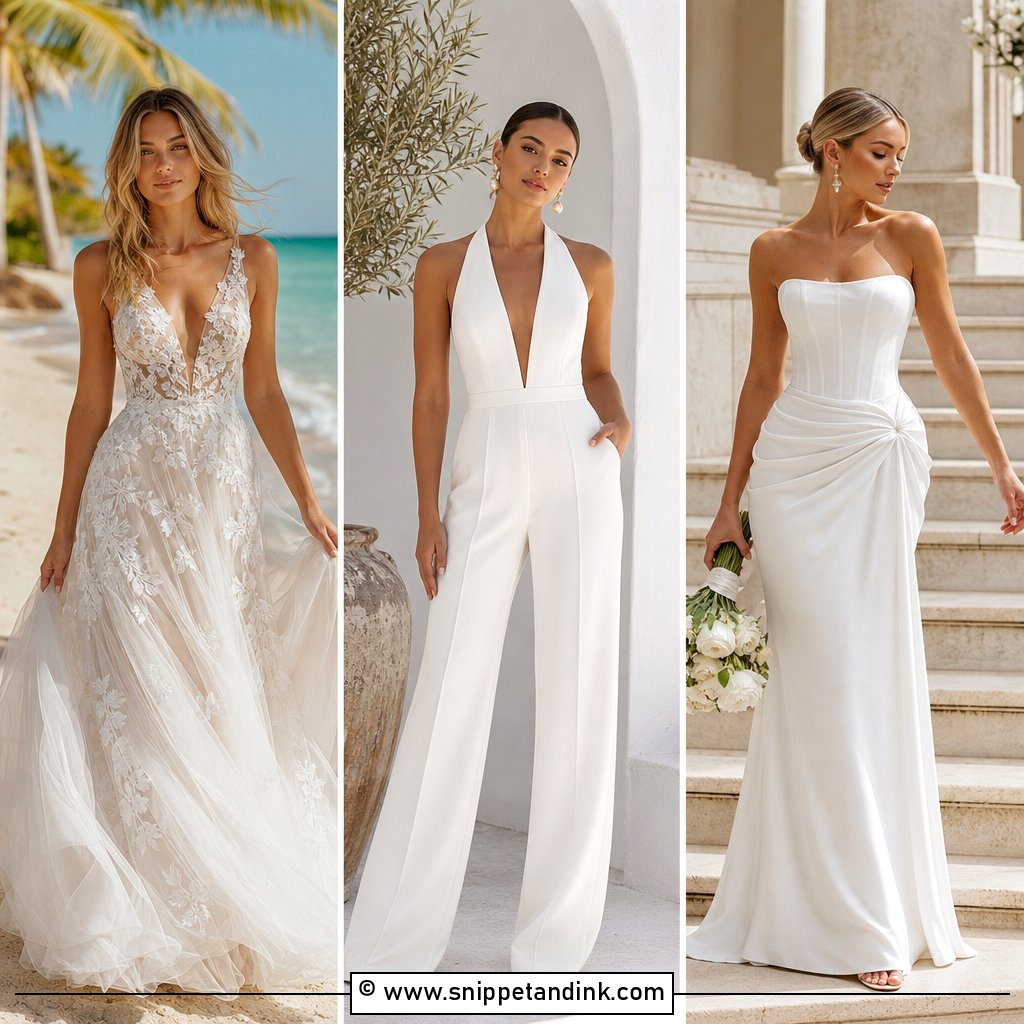
A minimalist slip wedding dress skims the body without structure. Silk, satin or charmeuse with a cowl neck, straight neckline or fine straps keeps it understated. Strappy ivory heels, pearl studs and a sheer veil complete it, with a sleek bun, glowing skin and a small bouquet. Fabric quality and fit are everything. Bias-cut silk shows every line underneath, so the undergarments have to be tested with the dress itself, and heavier silk drapes far better than thin polyester satin. Beaches, city weddings and small ceremonies suit it.
23. Pleated Skirt Wedding Dress
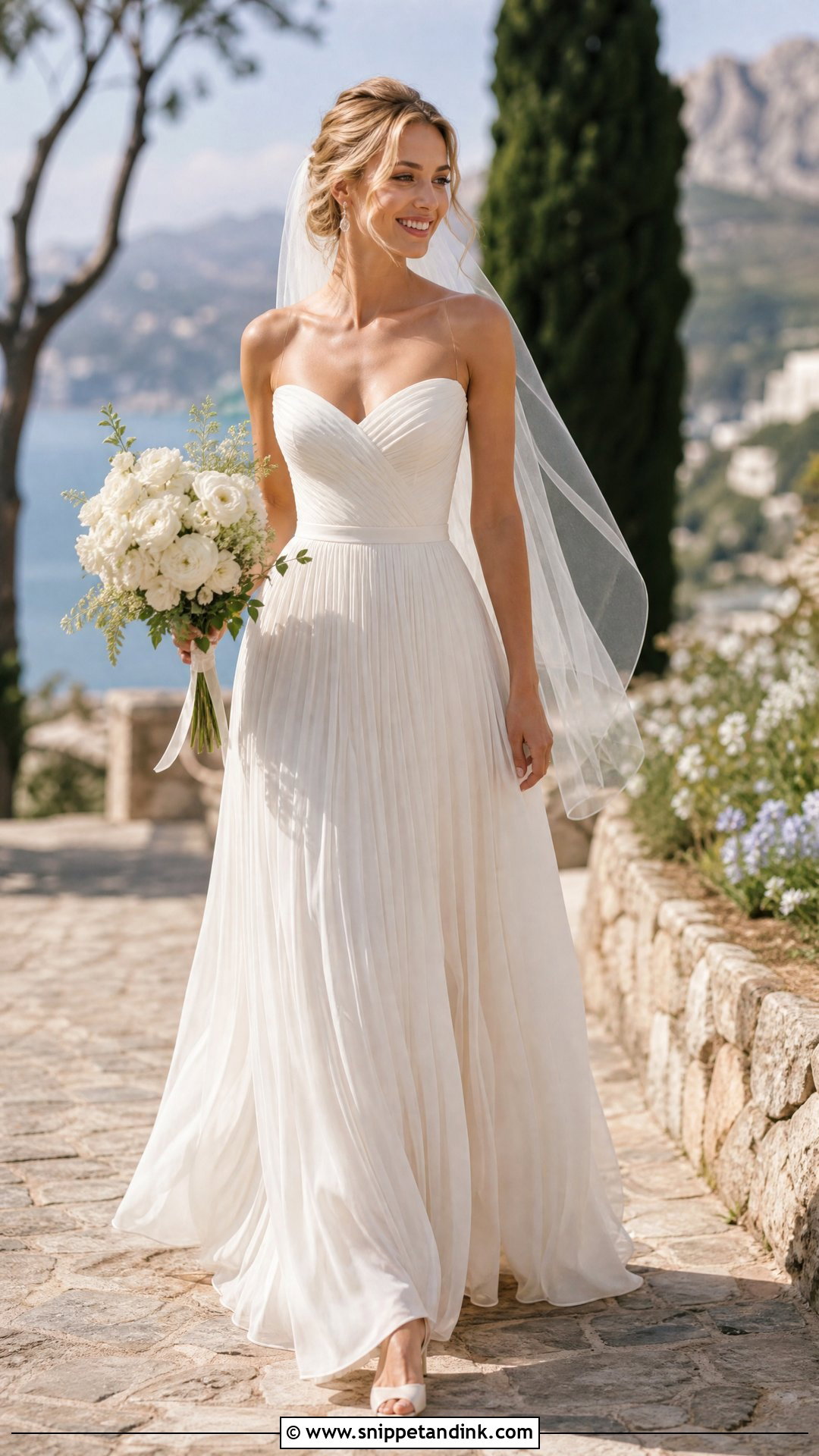
Pleats add movement and texture. Soft pleats in chiffon feel airy; structured pleats in satin or organza feel crisp. A fitted bodice balances the skirt and defines the waist. Simple heels, pearl earrings and a light veil that moves with the fabric suit it, along with a low bun or half-up hair. The pleats create natural lines as she walks, which suits outdoor ceremonies. Steam pleats along their folds, never flat across them, or the lines blur.
24. Beaded Sheath Wedding Dress
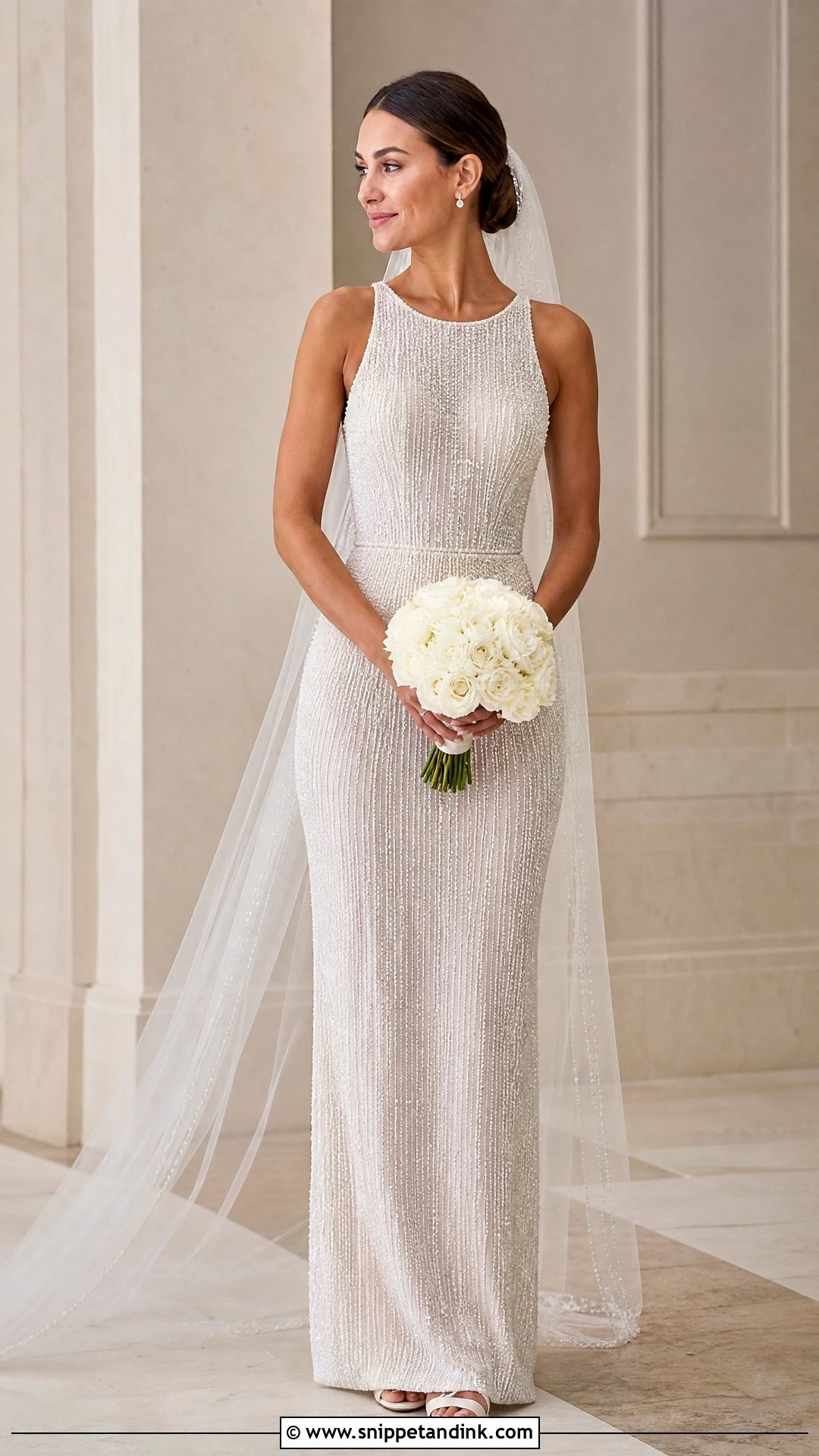
A beaded sheath follows the body without volume, so it’s easy to wear and slim in shape. Soft beading, pearl accents or delicate embroidery look more refined than all-over sparkle. Plain ivory heels, small earrings and a sheer veil suit it, with a small, clean bouquet and a smooth side part or soft waves. It works for evening weddings, hotels and elegant receptions. Heavily beaded sheaths can be surprisingly heavy and less flexible than they look, so walk and sit in it for a while before deciding.



25. Two Piece Wedding Dress
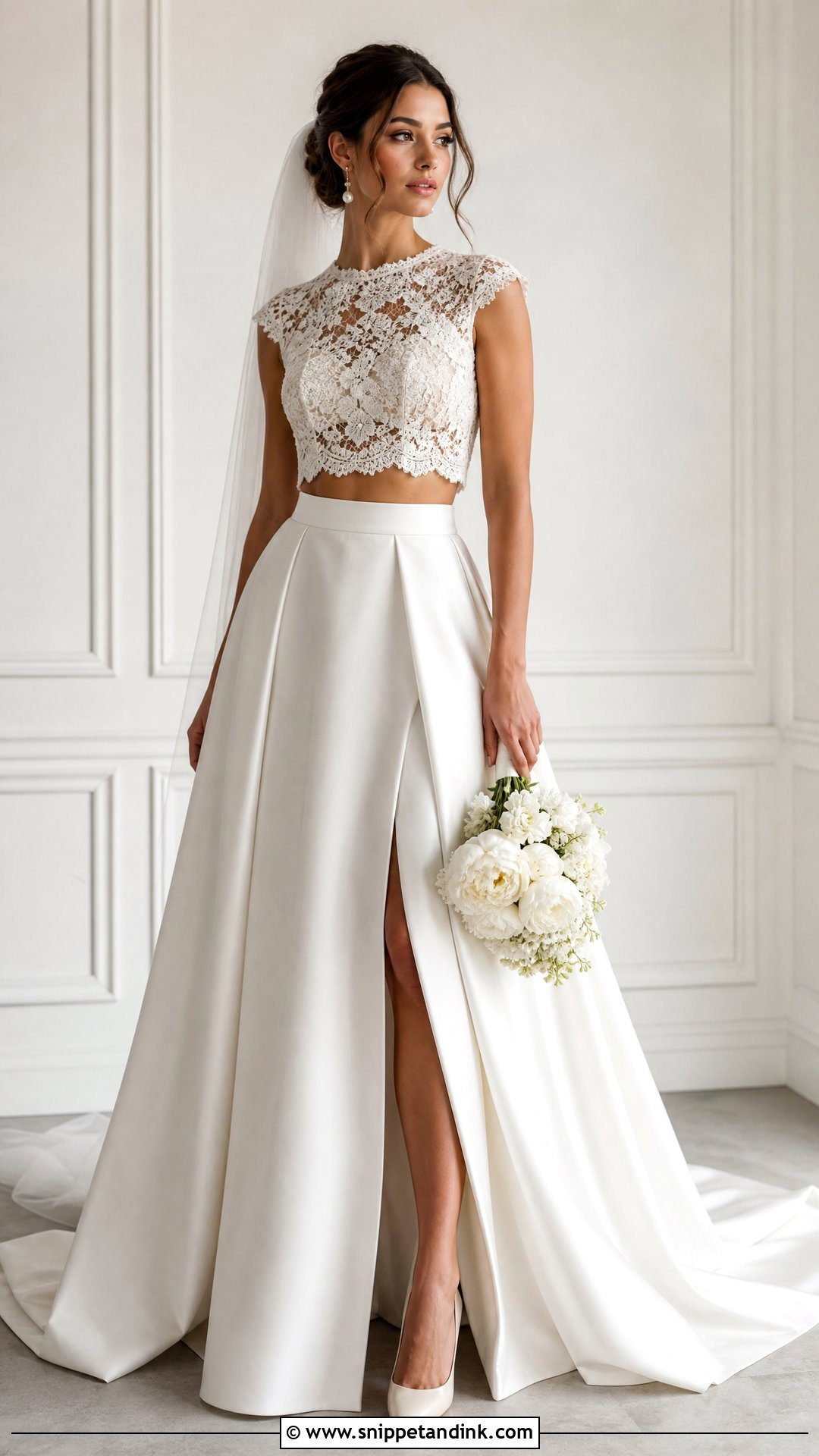
Two-piece outfits look classy when the pieces were clearly designed together. A structured lace top with a high-waisted satin skirt, or a simple crepe bodice with a flowing tulle skirt, creates a fresh bridal outfit. Keep the colors, fabrics and proportions balanced, and choose a veil that ties both pieces together. Pearl earrings, ivory heels, a low bun, natural makeup and a simple bouquet finish it. A practical advantage is fit: top and bottom can be different sizes. Make sure the top overlaps the skirt waistband enough that no skin shows when she raises her arms.
A Church Aisle, a Ballroom and a Lawn Ask for Different Gowns
The setting changes which of these looks will work, and it’s worth thinking about before falling for a sample.
- Long church aisles reward a train and a cathedral veil, and the floor is usually smooth enough not to damage them. Check whether shoulders need to be covered during the service.
- Ballrooms and hotels suit volume, satin and Mikado. Air conditioning can be cold, so long sleeves or a cape veil are welcome.
- Lawns, beaches and gravel paths are hard on long trains and tulle. Choose a shorter train, chiffon or a slip, and block heels that won’t sink.
- Registry offices and city restaurants often have narrow doors and small rooms; tea length, a sheath or a two-piece moves through them easily.
Ask the venue about steps, the length of the aisle and the reception floor. A bride who knows she’ll climb a staircase will choose a different hem from one who walks across a lawn, and nobody remembers that question until the first fitting.
Restraint Is What Makes a Romantic Gown Look Classy
The right bridal look feels good to wear and still looks like you. From lace A-lines and satin ball gowns to slips, pearls, cape veils and two-piece looks, there’s a wide range here. Think about the venue, the season, comfort and how you want to feel when you walk, sit, dance and pose. A classy gown doesn’t have to be plain, and a romantic one doesn’t have to be heavily detailed. Pick one main feature, let the rest support it, and the outfit will hold together all day.
You'll Like These Ideas:







Leave a Reply