
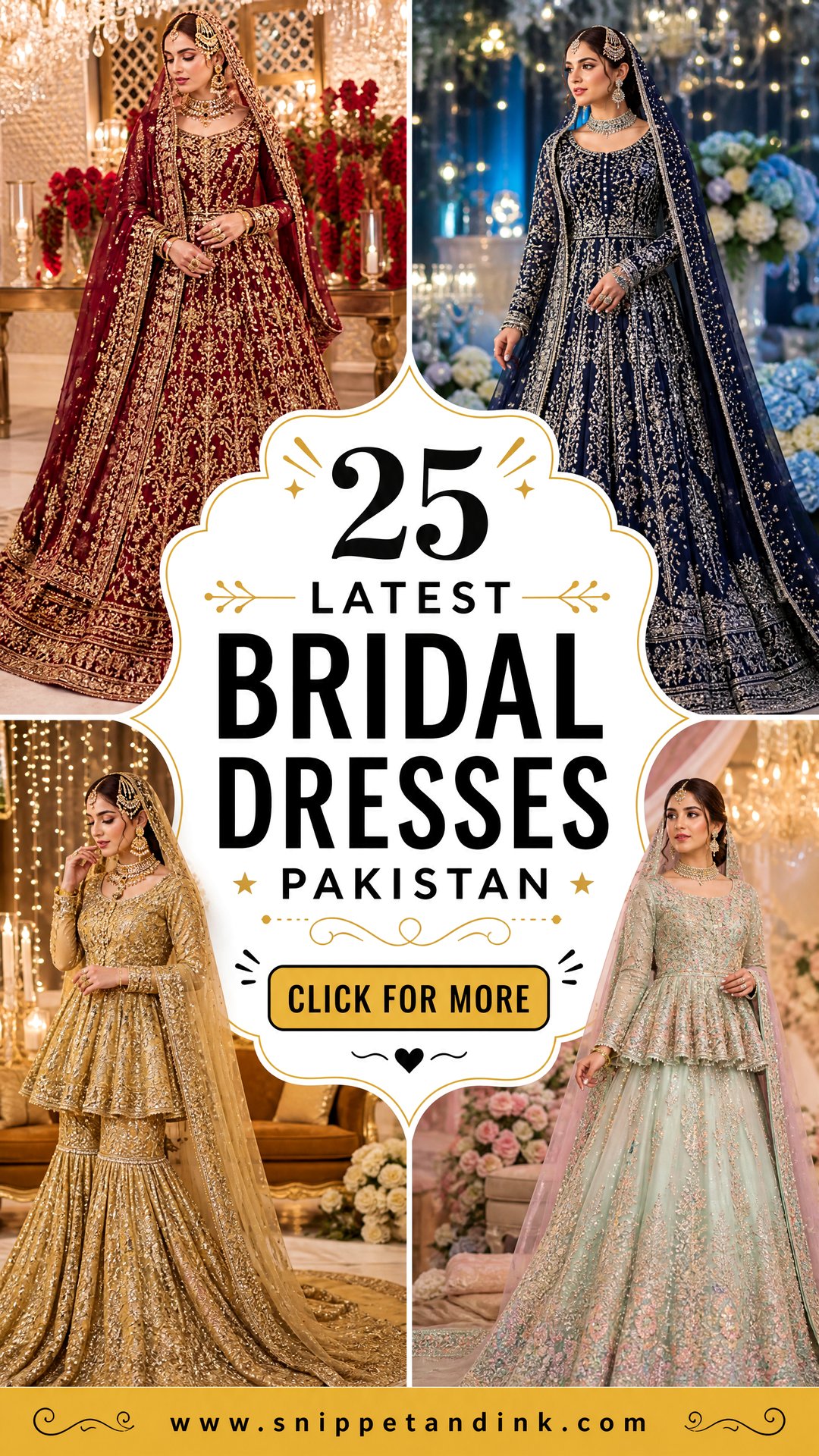
A Pakistani wedding isn’t one outfit. It’s three or four, each with its own mood: the mehndi is loud and moving, the nikkah is quiet, the baraat is the heaviest, and the walima is usually lighter and cooler in color. When I plan a bride’s wardrobe I map the events first and then match fabric and weight to each one. Red lehengas still own the baraat for most families, but ivory pishwas, pastel maxis, ghararas, trailing gowns and lighter separates have real room now. Dupattas are getting more attention, and handwork is placed with more restraint so you can actually move. The 25 Latest Bridal Dresses below each come with the jewelry, shoes and fabric notes I’d give at a styling appointment.
Handwork Takes Months, So Order in This Order
Zardozi, dabka and naqshi are stitched by hand, and a fully worked bridal outfit can take a karigar team months. Most designers I work with want a custom baraat order placed four to six months before the wedding, and popular ateliers close their books earlier in peak season. Ready-to-wear or lightly customized pieces move faster, but still need alterations.
- Order the baraat outfit first. It has the most handwork and the longest wait.
- Then the walima, then the nikkah. The mehndi outfit is usually the quickest and can come last.
- Ask for a photo of the fabric and the embroidery sample before the full piece goes into work. Colors on a phone screen often look different from dyed raw silk.
- Book your final fitting two to three weeks before the first event, wearing your actual shoes and the same undergarments.
- If you’re ordering from abroad, add time for shipping and customs, and send measurements taken by a tailor, not by a friend with a tape.
Jewelry and shoes should wait until the outfit is fixed. The embroidery metal, whether antique gold, bright gold or silver, decides which jewelry looks right next to it.
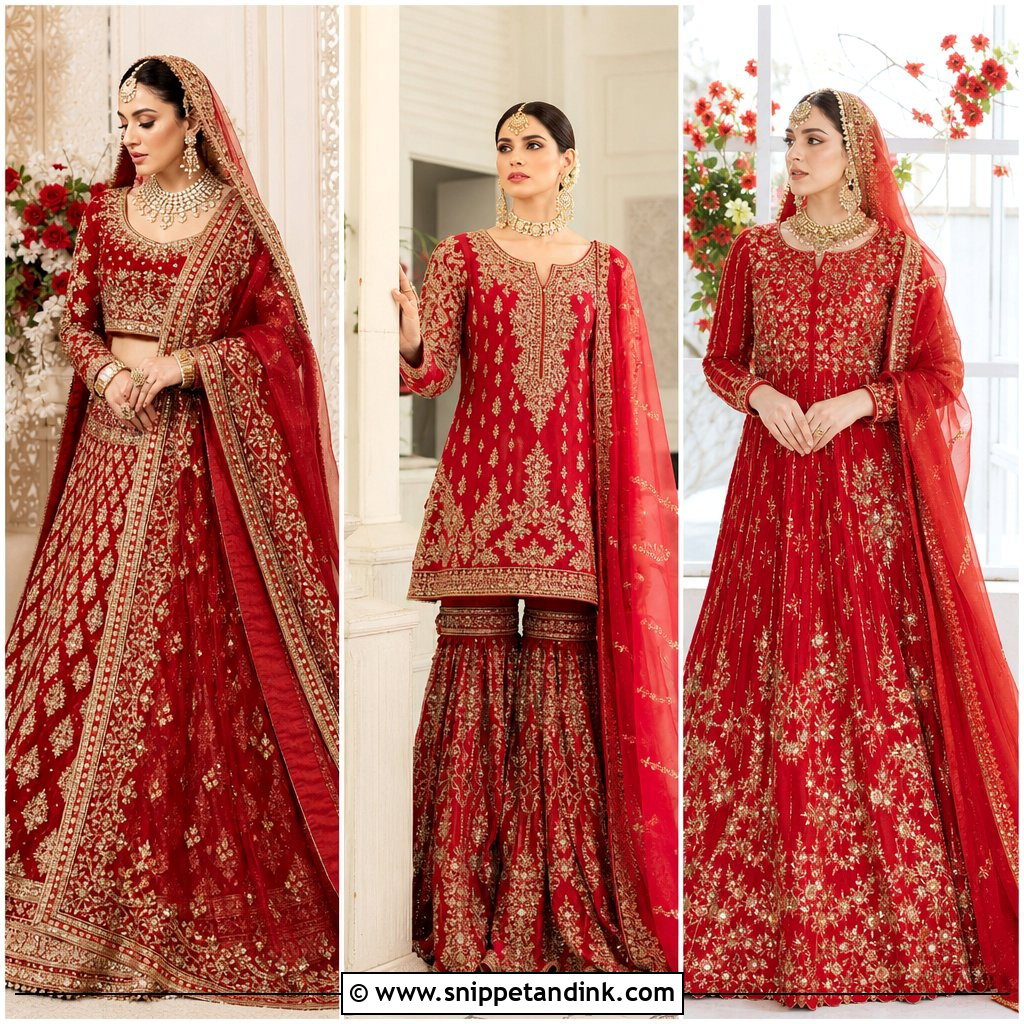
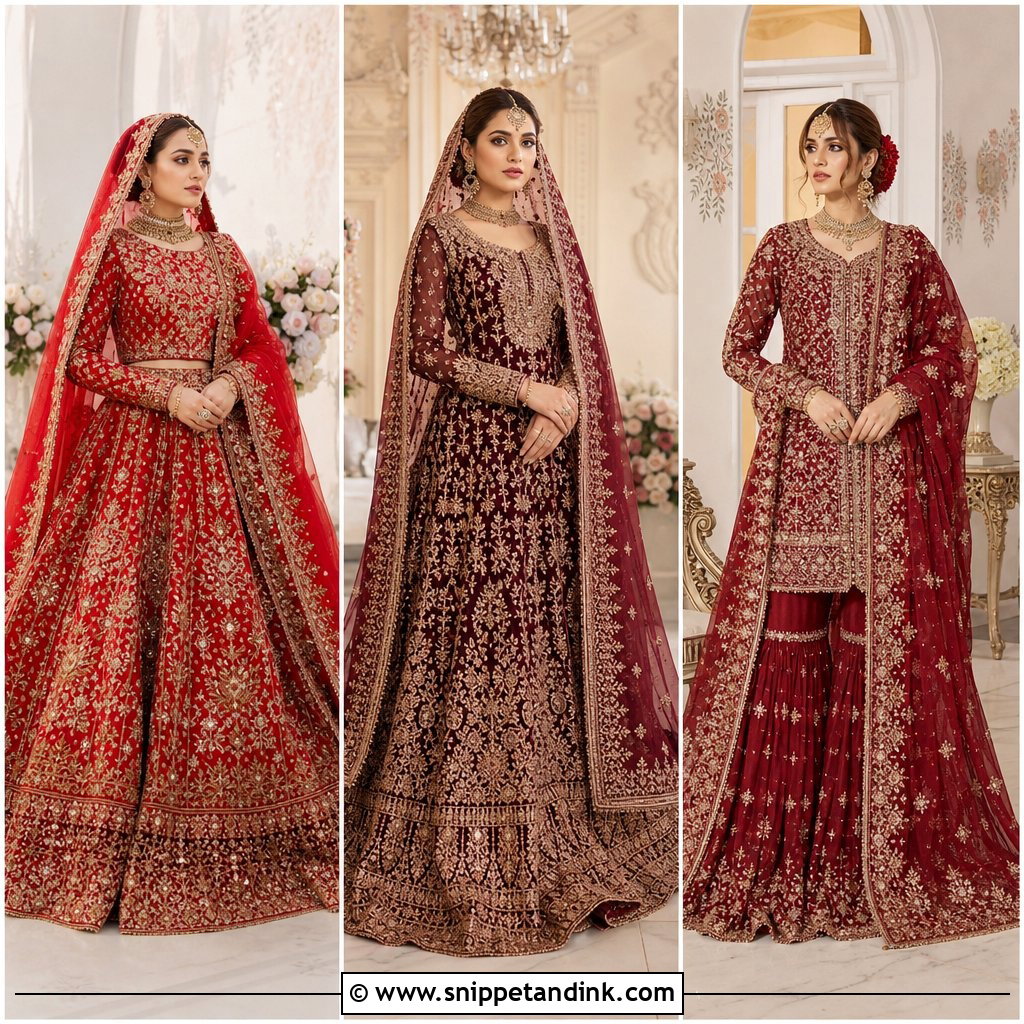
1. Red Bridal Lehenga With Double Dupatta
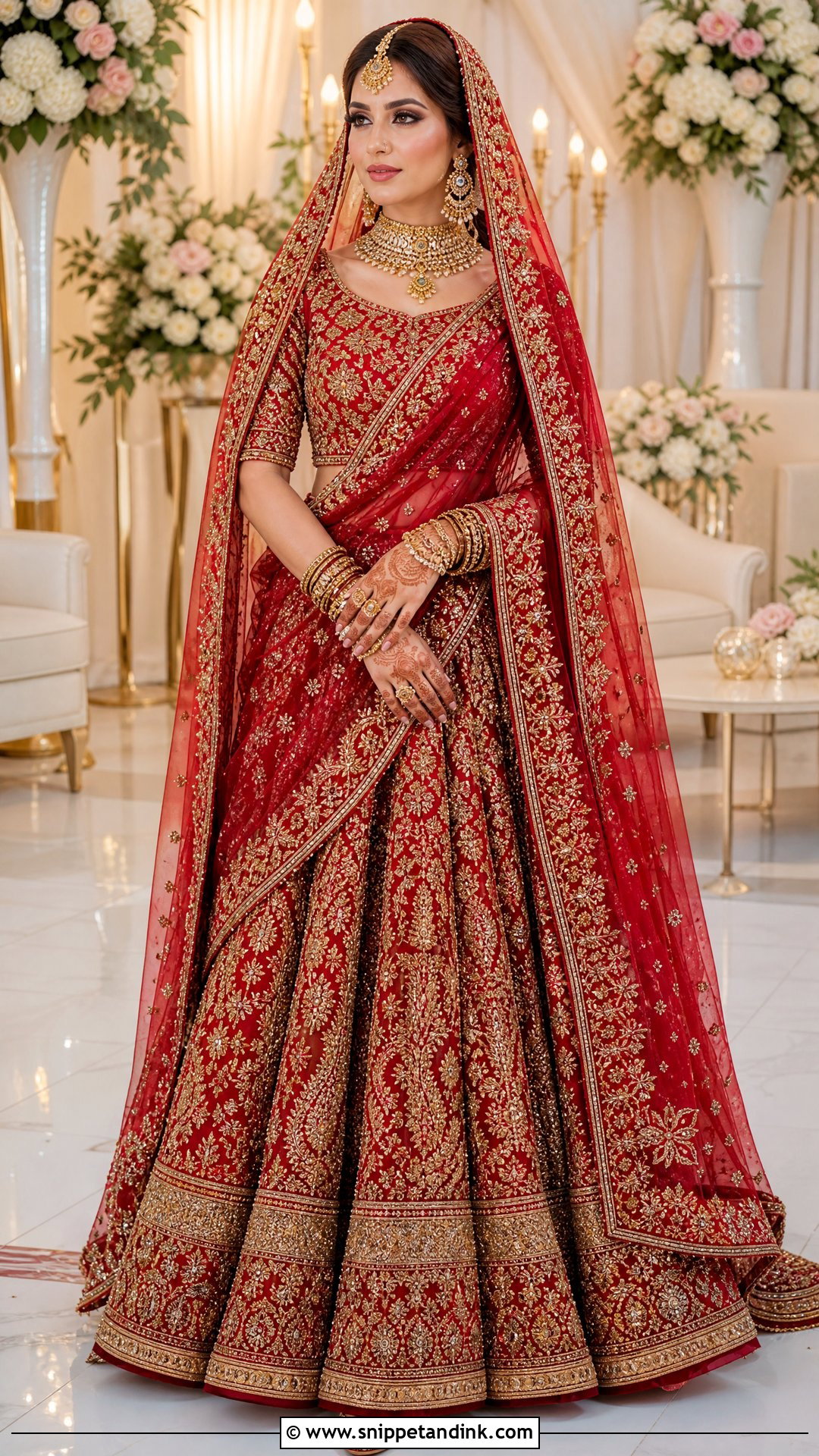
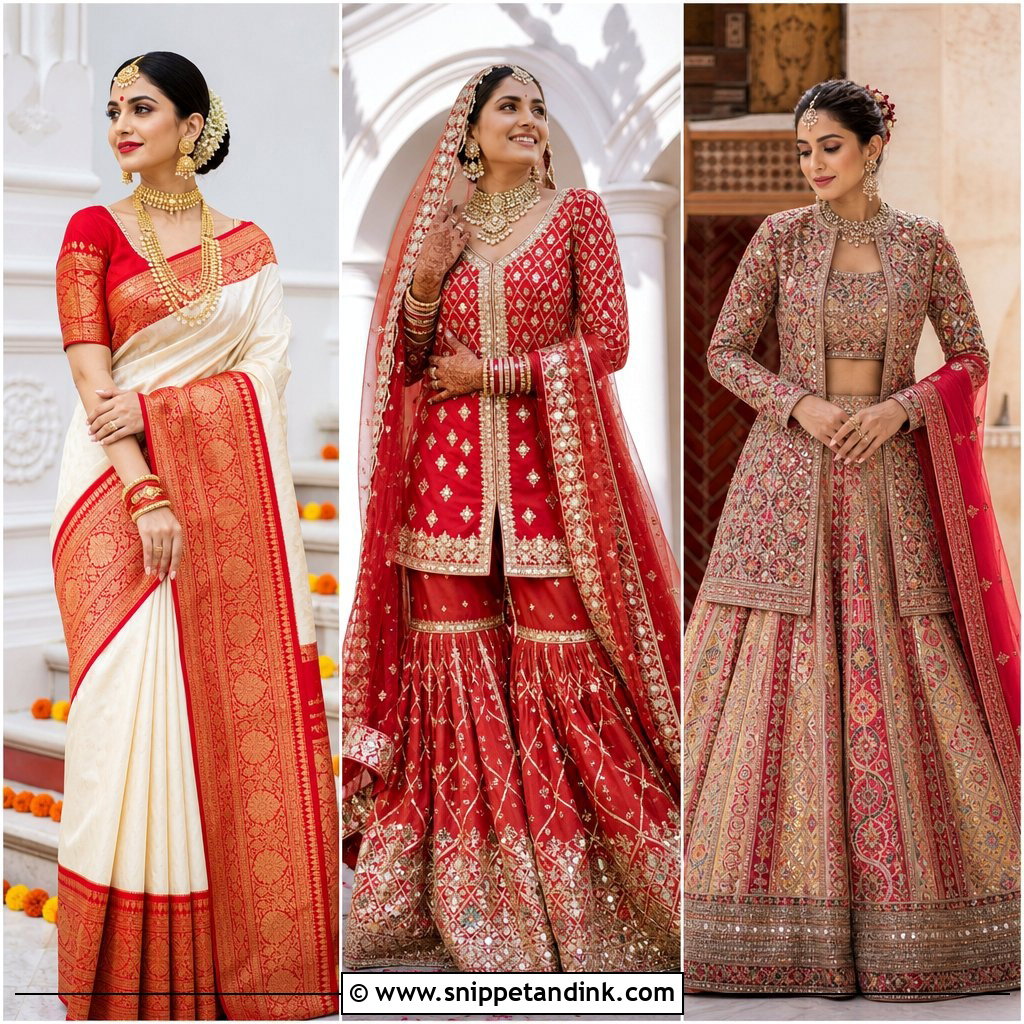
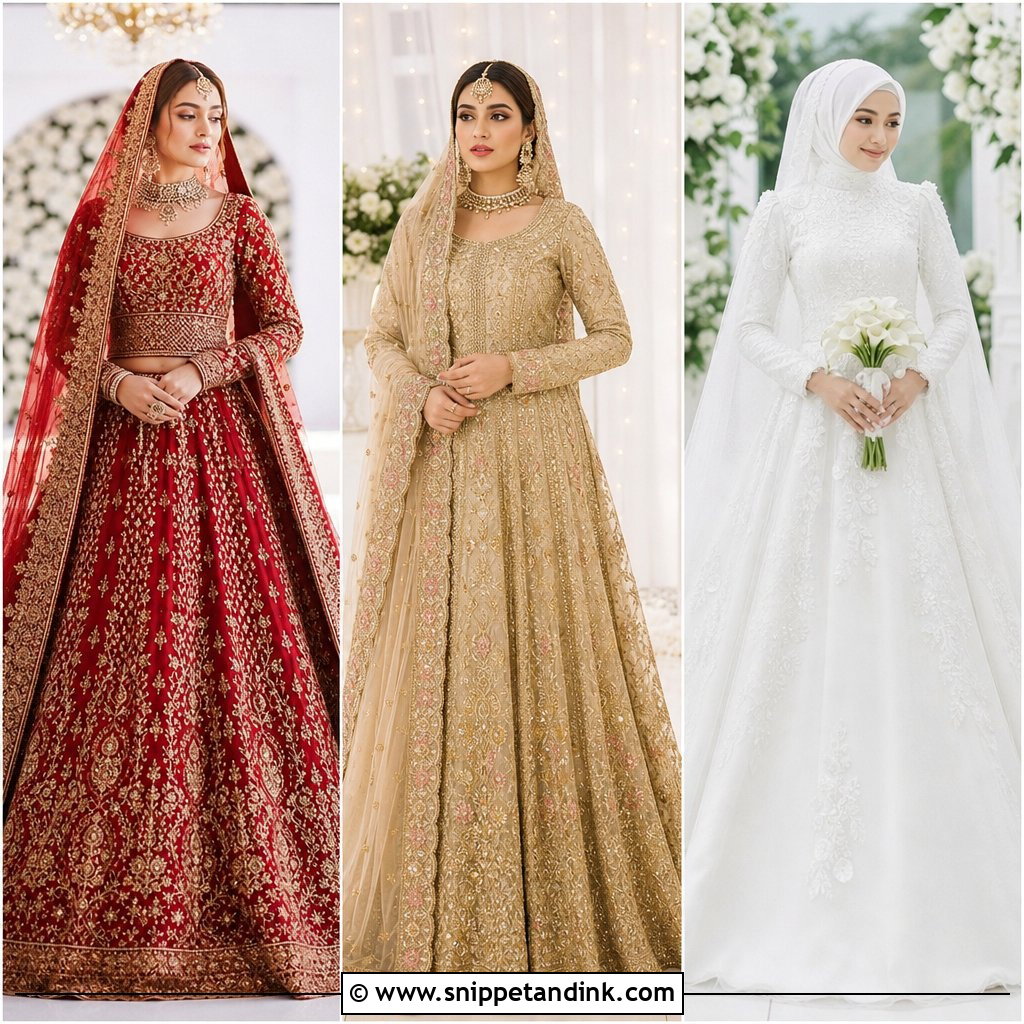
Two dupattas on a red lehenga give the baraat look depth, but they also double the weight on your head and shoulders, so I set them before anything else. One goes over the head; the second runs diagonally across the bodice to frame the embroidery. Velvet, raw silk or jamawar takes antique gold zardozi, dabka, naqshi and pearls well. A fitted blouse or long choli balances the full skirt. Gold jewelry, a matha patti, layered necklaces and stacked bangles, with khussas under the hem. If full coverage feels too heavy, ask for concentrated borders and spaced motifs; the skirt drops a lot of weight that way.
2. Maroon Bridal Lehenga With Gold Embroidery
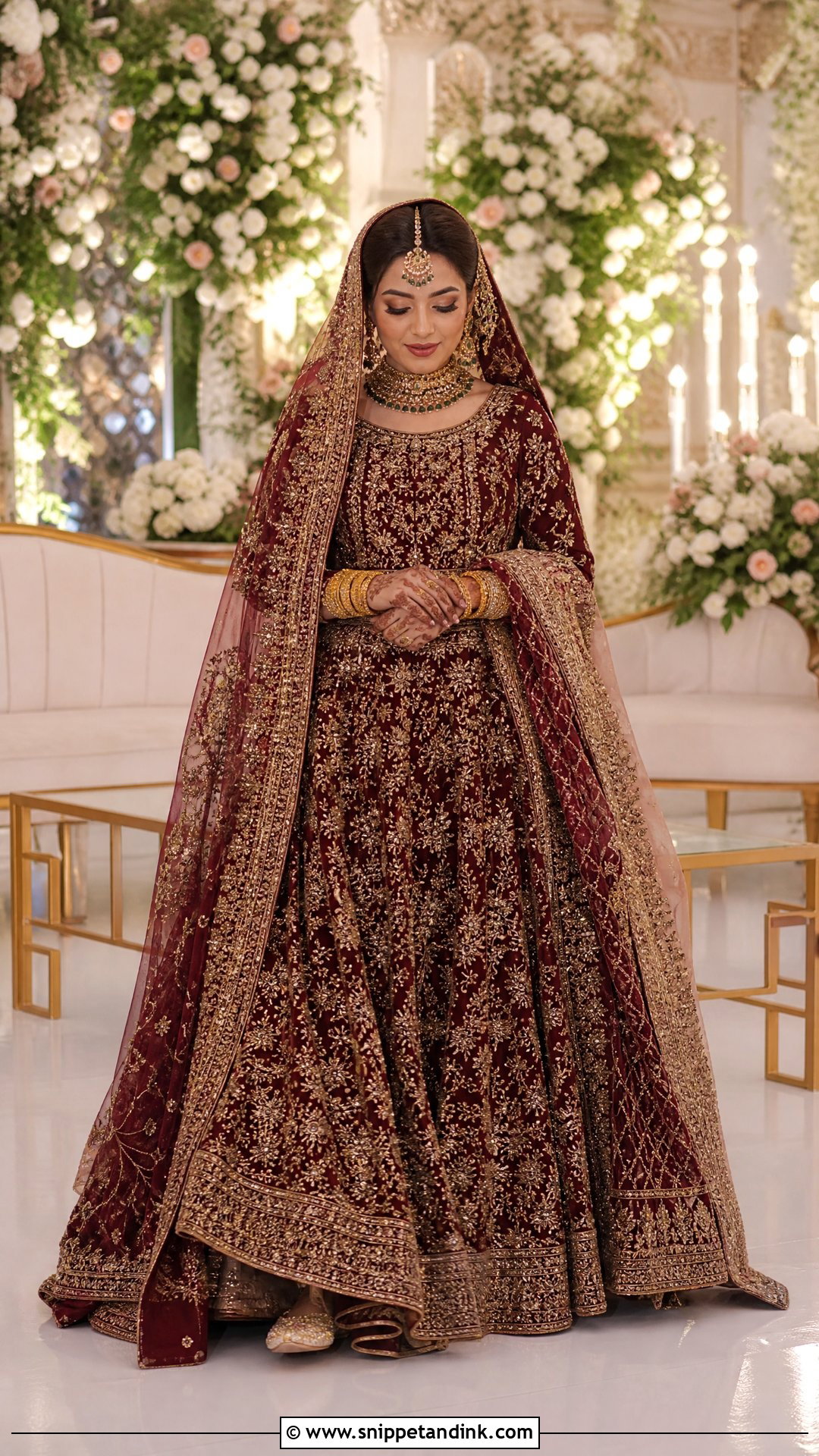
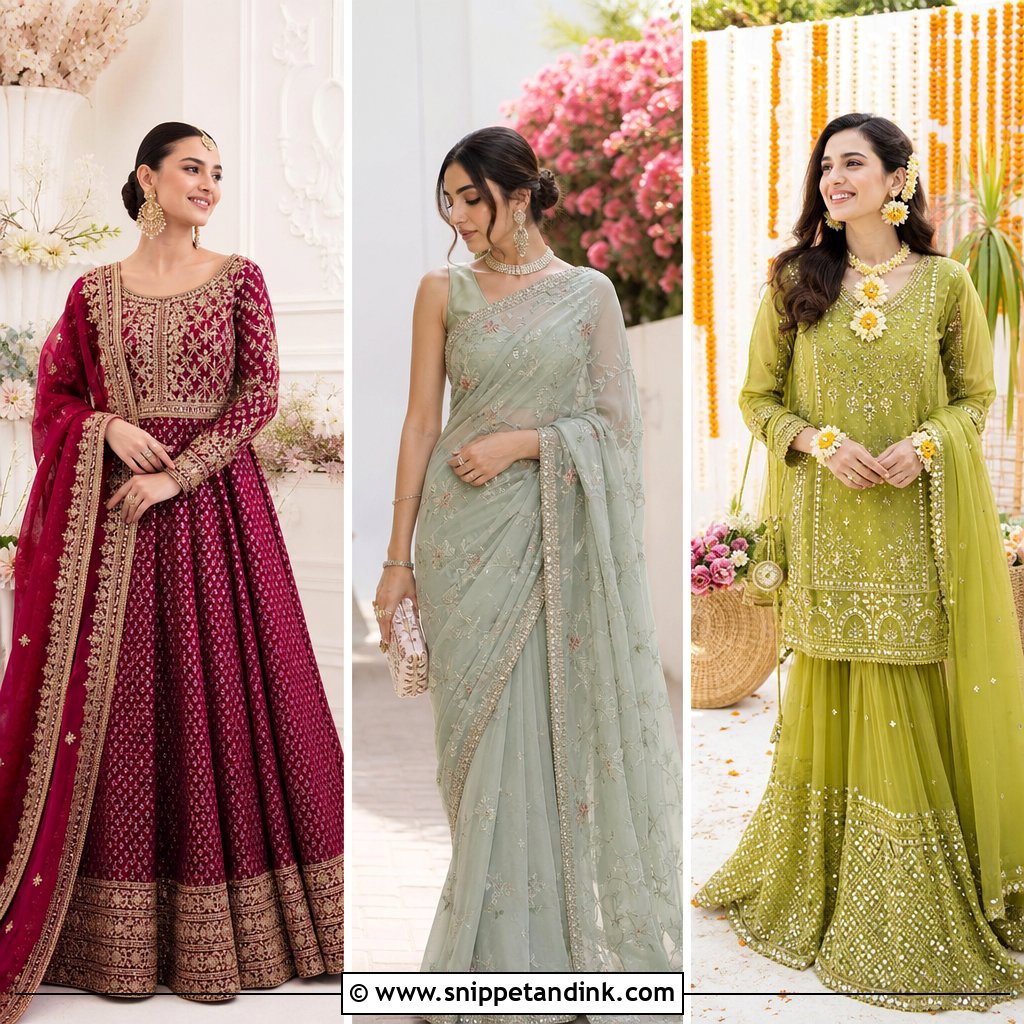
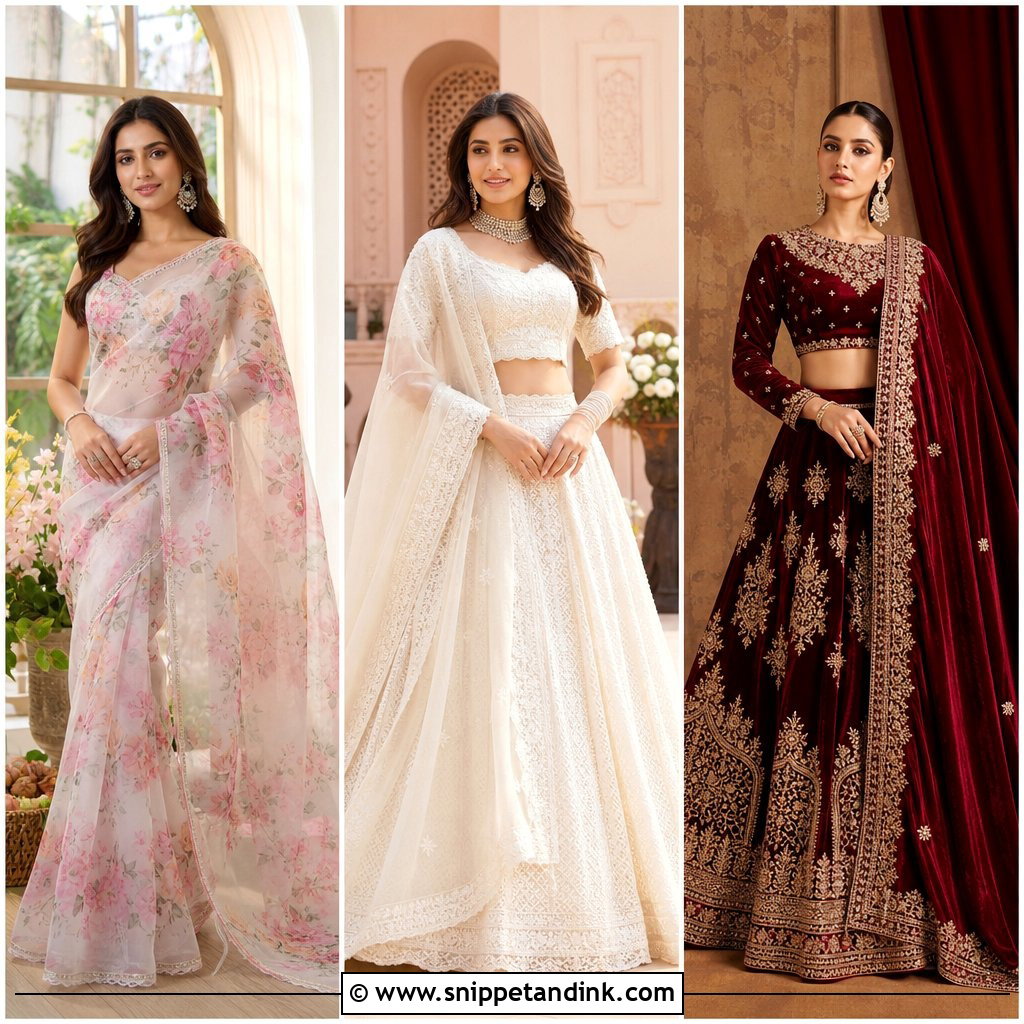
Maroon reads deeper and more formal than red, and I steer it toward evening baraats and winter weddings where it doesn’t get lost in harsh daylight. A paneled traditional Pakistani bridal lehenga with antique gold work, fine resham and a scalloped border suits it. A matching blouse with comfortable sleeves; a heavy maroon net dupatta on the head and a lighter organza one across the front. Kundan, a centered tikka, gold bangles, embellished heels or khussas. On the makeup side, soft bronze eyes and a muted rose lip let the color lead. Keep the bag small.
3. Rust Bridal Lehenga With Traditional Jewelry
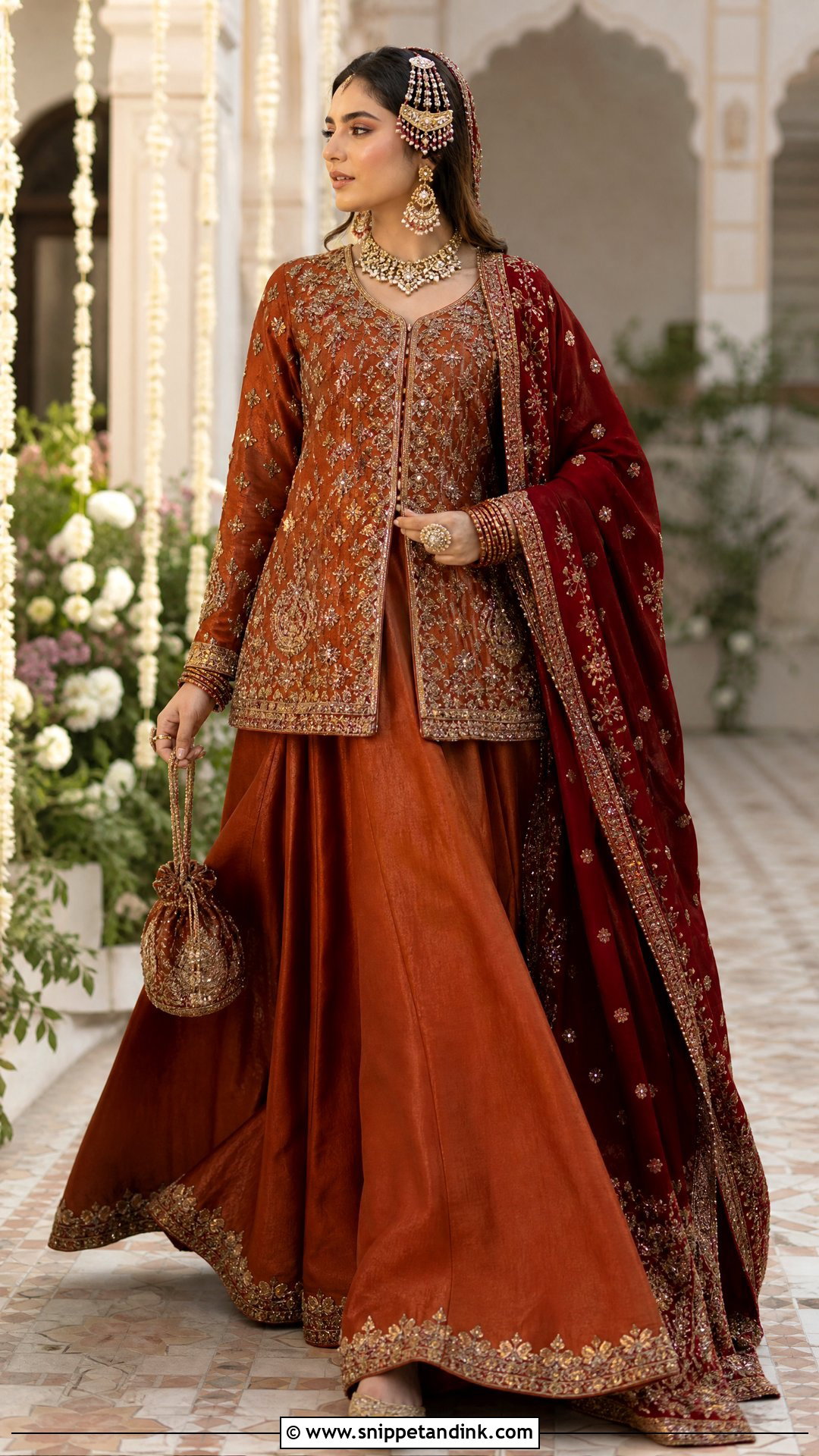
Rust is for the bride who wants warmth without red. Raw silk worked in dull gold zari, bronze sequins and deep red thread holds up under hard stage lights, since the matte base doesn’t flare. A fitted blouse or waist-length kurti with a modest neck; a rust organza dupatta on the head and a deep red one over one shoulder. Polki, a passa, layered necklaces and bangles carry the heritage feel. I always ask the karigar to run embroidery in vertical lines on rust, because horizontal bands on a warm color can widen the frame.
4. Ivory Nikkah Pishwas With Gold Details
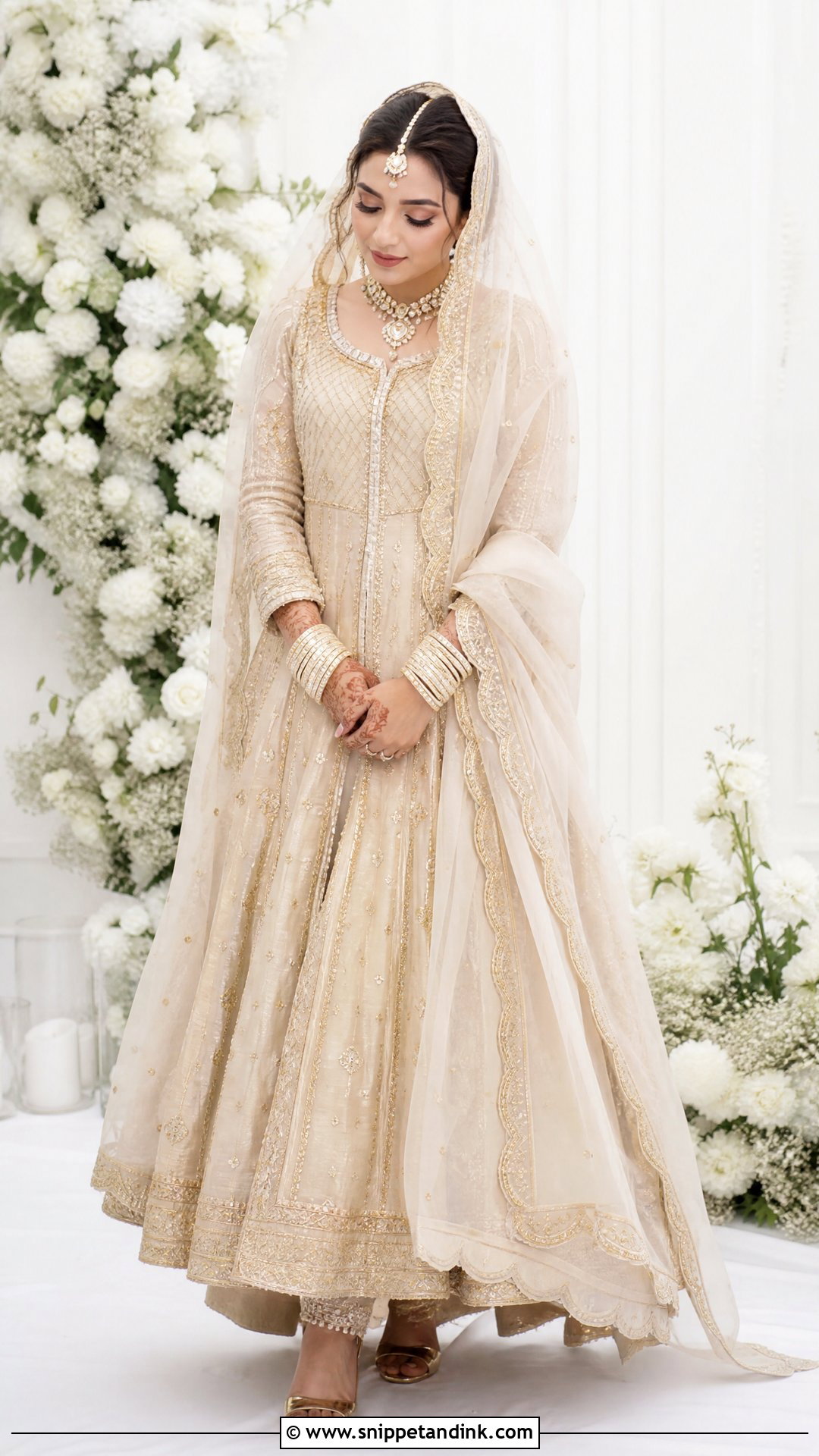
For a daytime nikkah, ivory is calm and lets the moment carry itself. I’d pick a floor-length pishwas with a fitted bodice, full sleeves and a big flare. Keep gold kora, dabka, pearls and thread to the neckline, cuffs and hem so the pale fabric still breathes. An ivory organza dupatta with a wide border and scattered motifs; pearl and kundan jewelry, a small tikka, ivory bangles and gold heels. Glowing skin and soft pink lips. The thing I always check on ivory: hold it up to daylight. If you can see through it, add a tonal silk lining, because a camera flash will show what a mirror doesn’t.
5. White Bridal Gharara For Nikkah
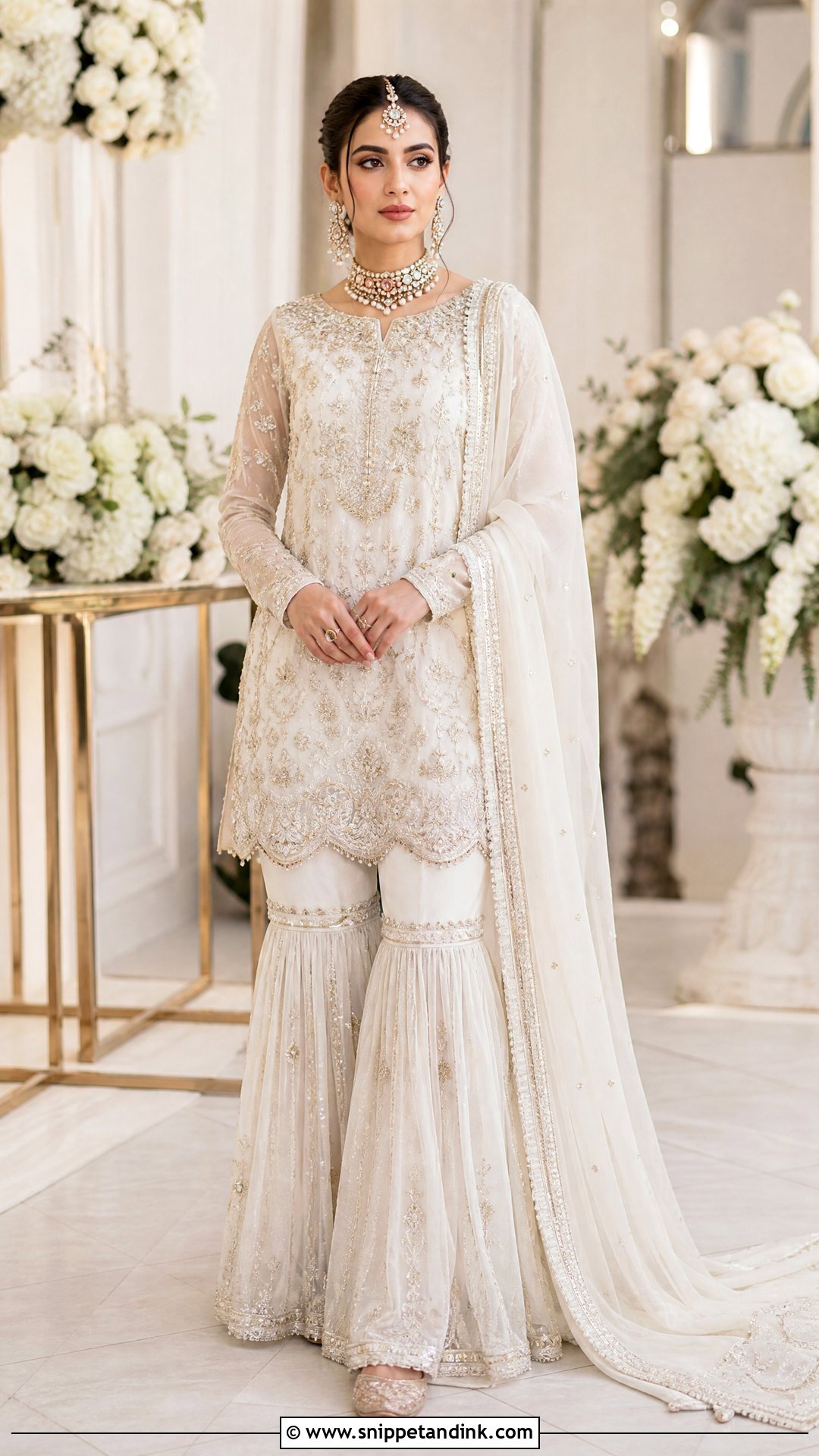
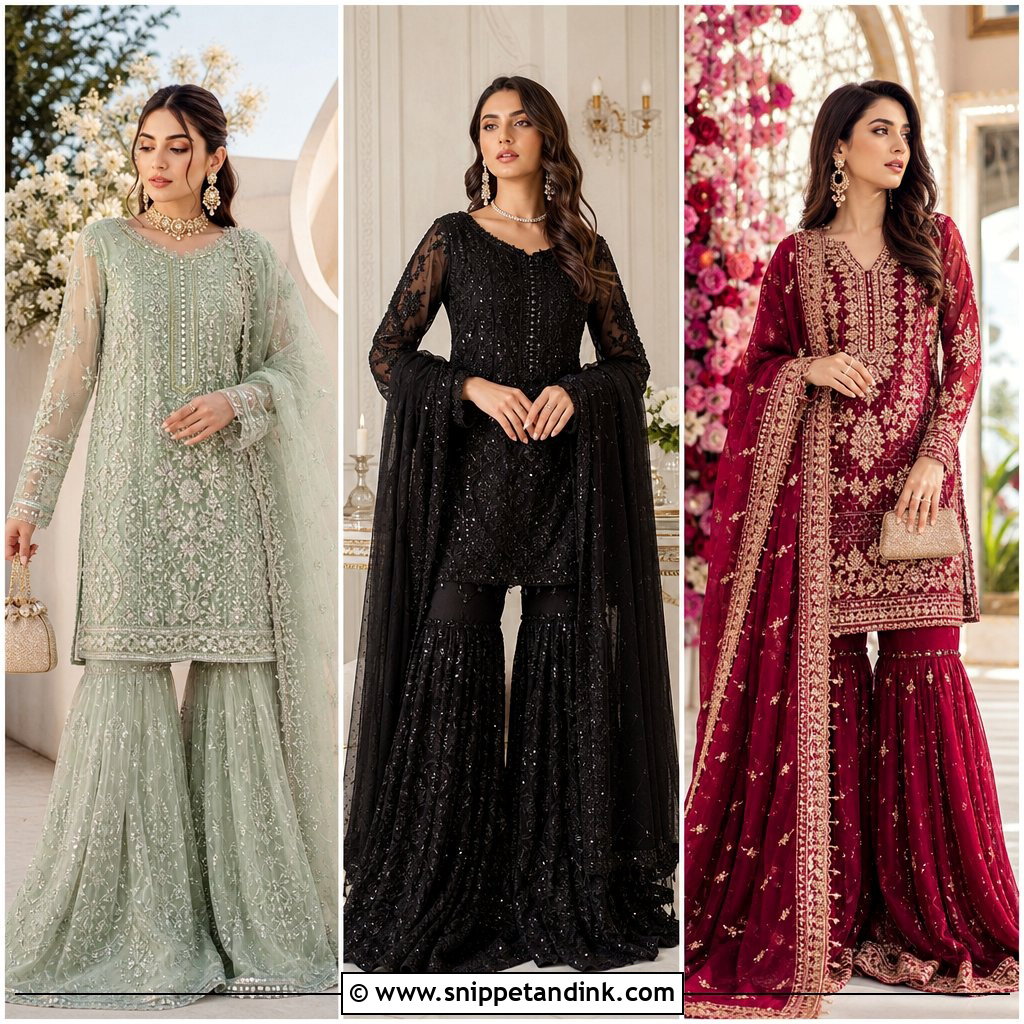
A white gharara feels traditional but clean. Start with a knee-length silk or tissue shirt with silver-gold embroidery and fine pearls. The gharara cut is what makes or breaks it: fitted through the upper leg, a defined joint at the knee, then full flare below. If the knee band sits too high or low, the whole shape looks off, so I mark it with the bride standing in her shoes. Add a light organza dupatta edged with lace or pearls, pearl earrings, a kundan choker, a small tikka and silver or champagne khussas. It looks best in seated photos when the flare has enough fabric to spread on the floor.
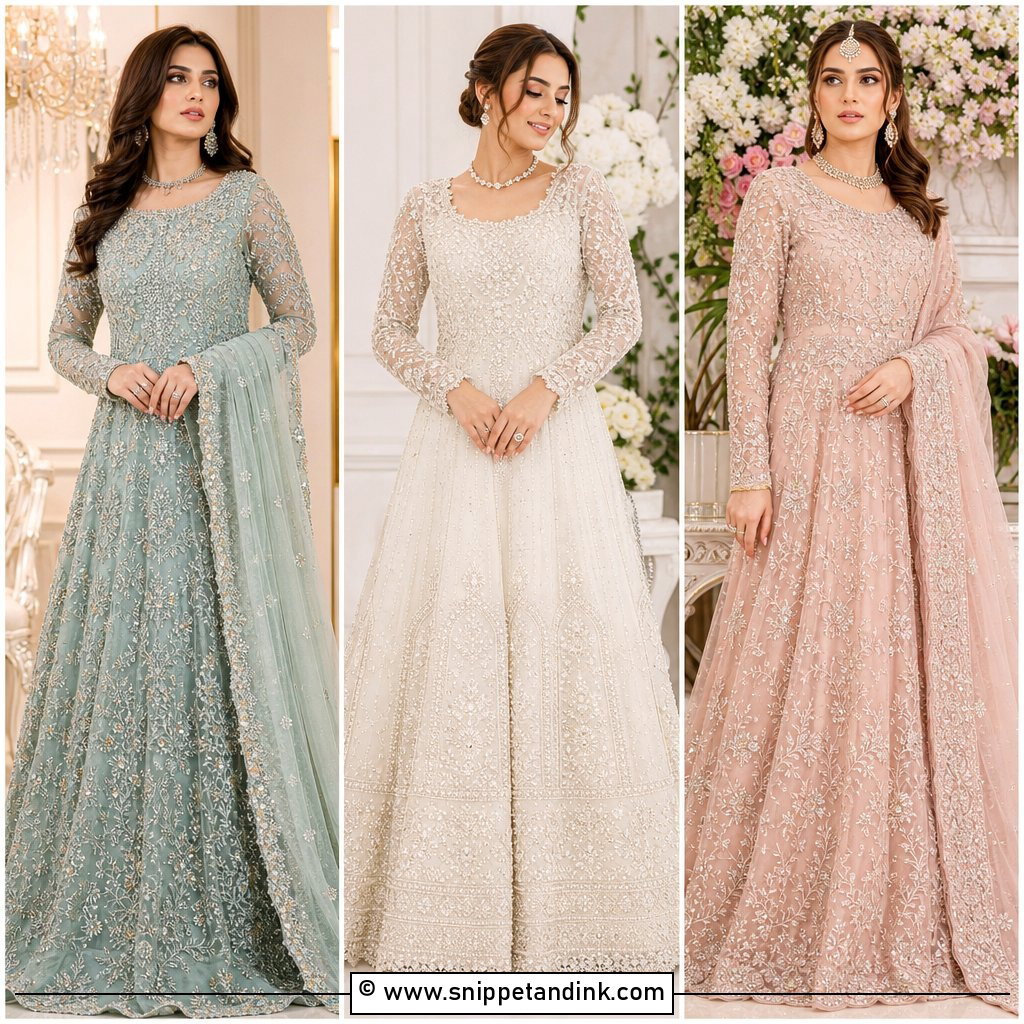
6. Blush Pink Bridal Maxi With Pearl Work
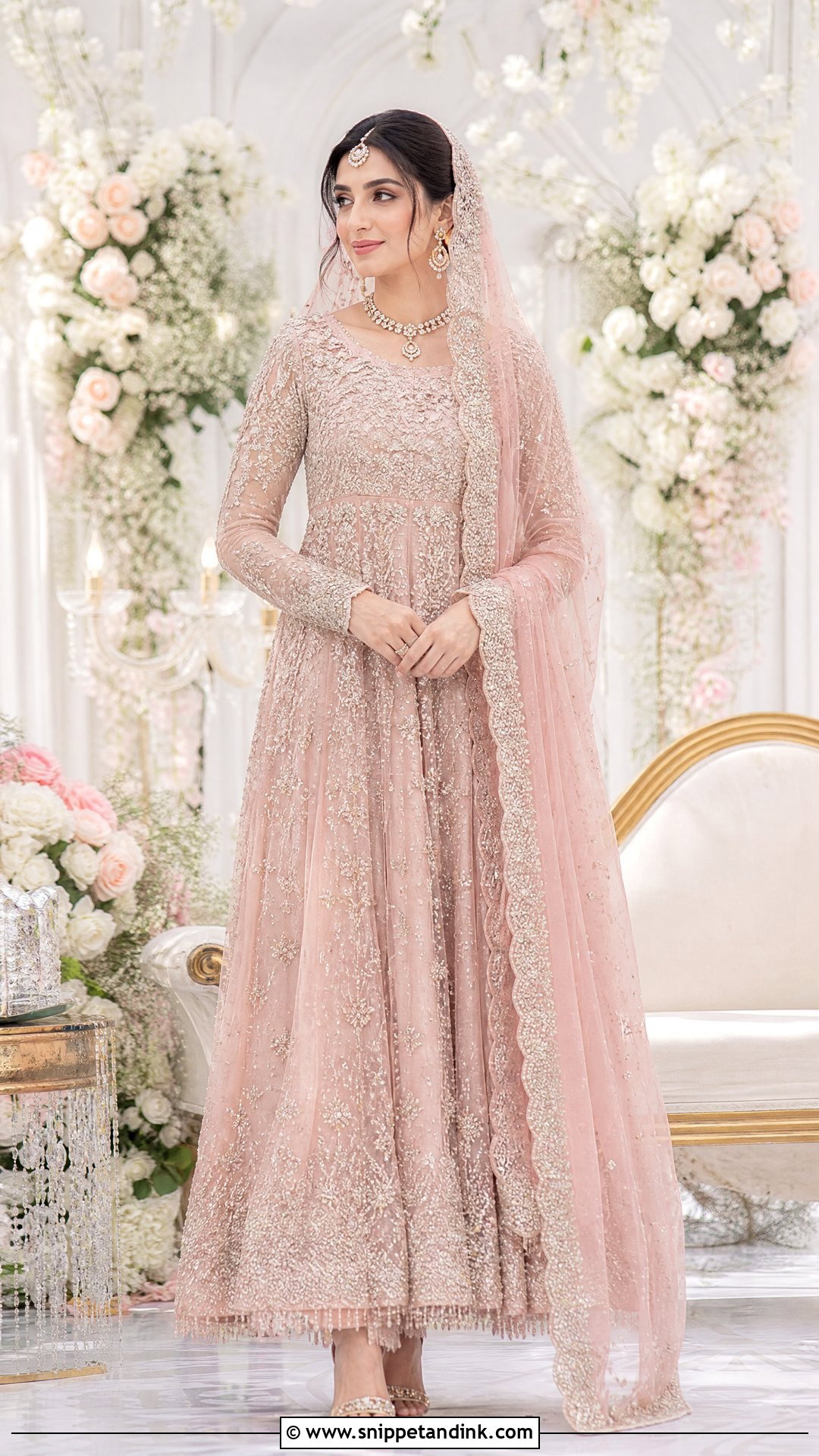
Blush pink softens a bridal maxi without losing formality. Net or chiffon over a fitted top and flowing skirt; pearls, crystals, silver thread and pale gold work heavier at the bodice and fading toward the hem, which also keeps the skirt light enough to move. Add a matching dupatta with a pearl scallop, pearl drops, a delicate necklace, a small tikka and crystal heels. A low bun and rosy makeup suit it. For more coverage, illusion-lined sleeves and a high neck keep it airy. Chiffon shows sweat marks quickly, so I’d put dress shields in.
7. Champagne Bridal Gown With Long Train
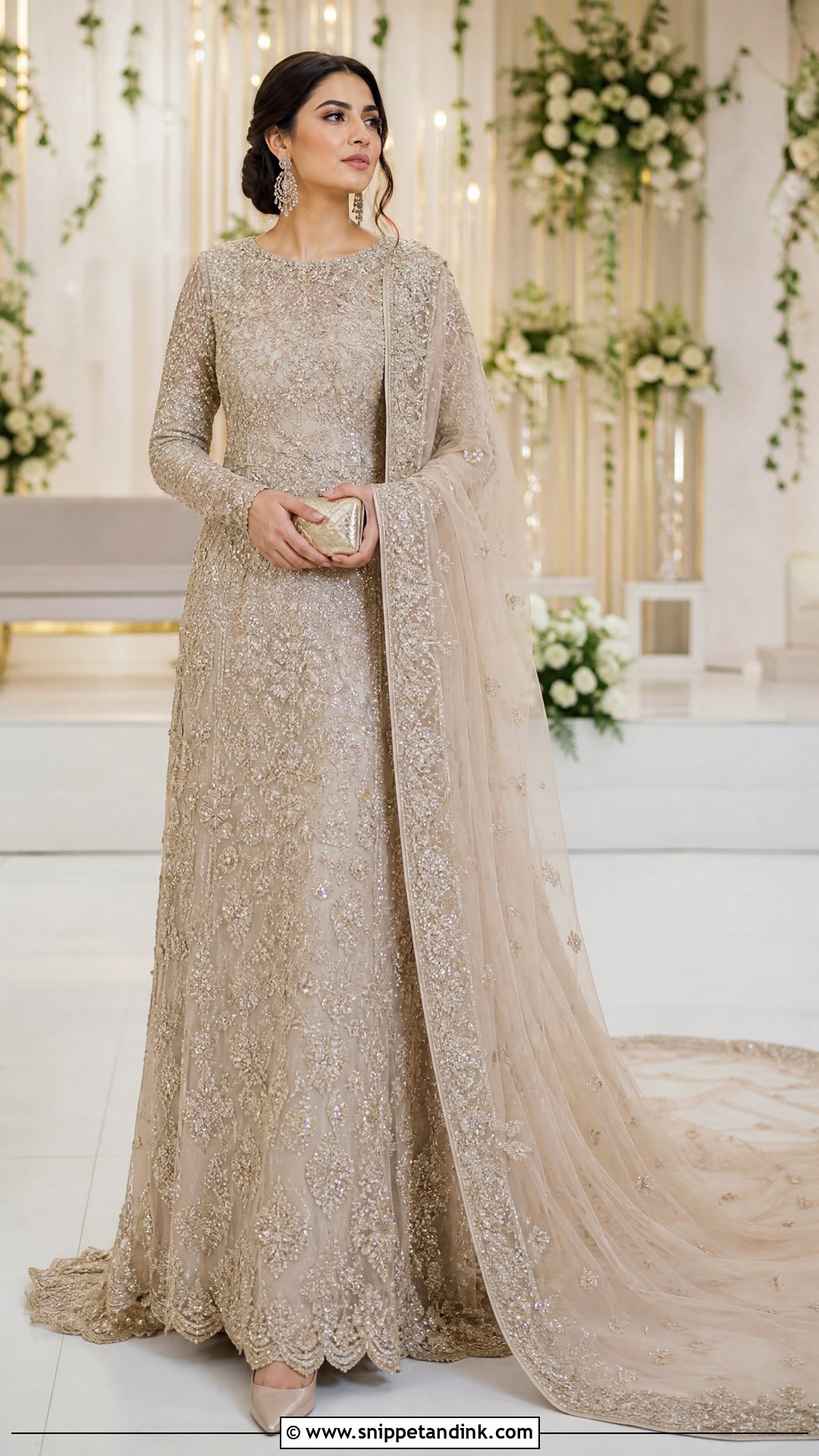
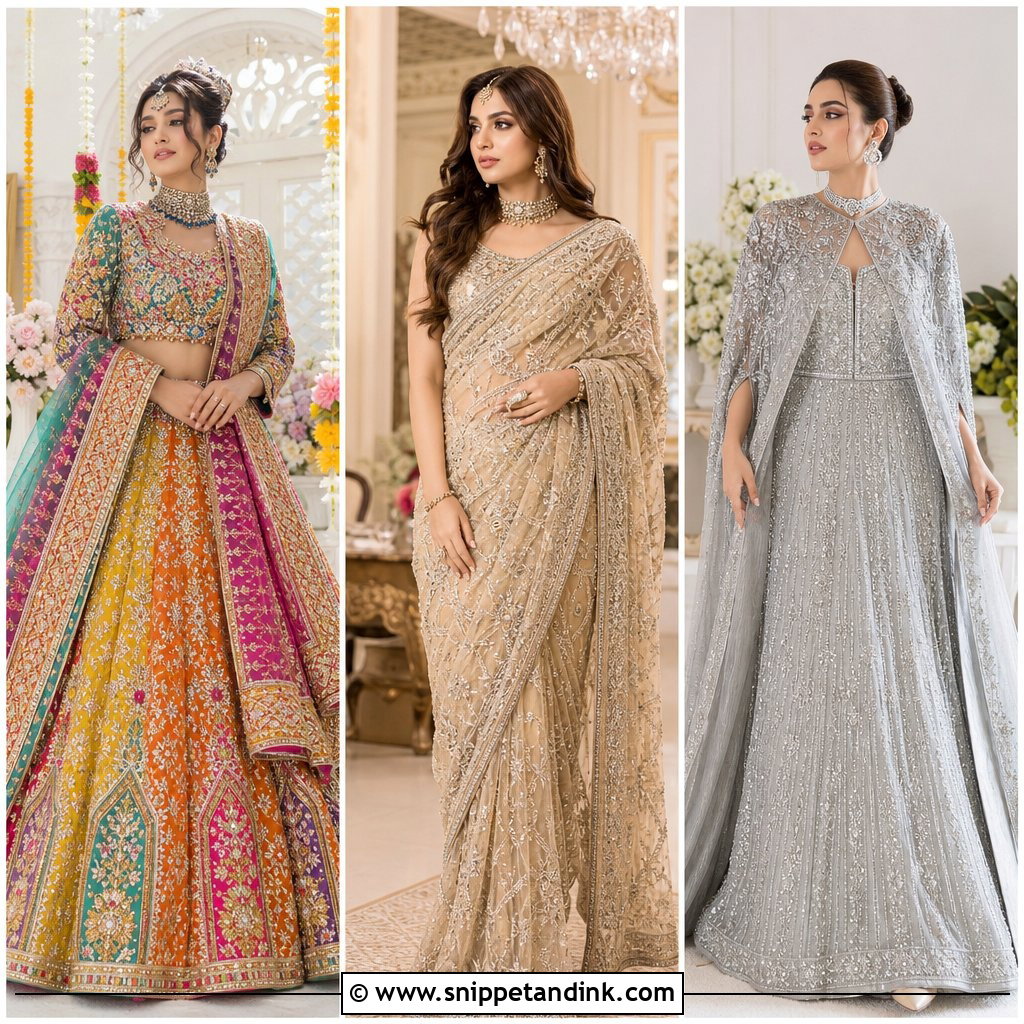
A champagne gown with a long train is the modern walima look I’m asked for most. A fitted bodice with full or three-quarter sleeves flows into a manageable train. Metallic thread, crystals, sequins and tonal beads give dimension without stark contrast. A sheer champagne dupatta with a narrow border complements rather than covers. Diamond-style jewelry, a low bun, a small metallic clutch and pointed heels. Insist on a wrist loop or bustle; walima halls are crowded, and an unbustled train gets trodden on by every guest who wants a photo. Shoulders, waist and sleeves need careful tailoring for it to hold up all evening.
8. Silver Bridal Maxi For Walima
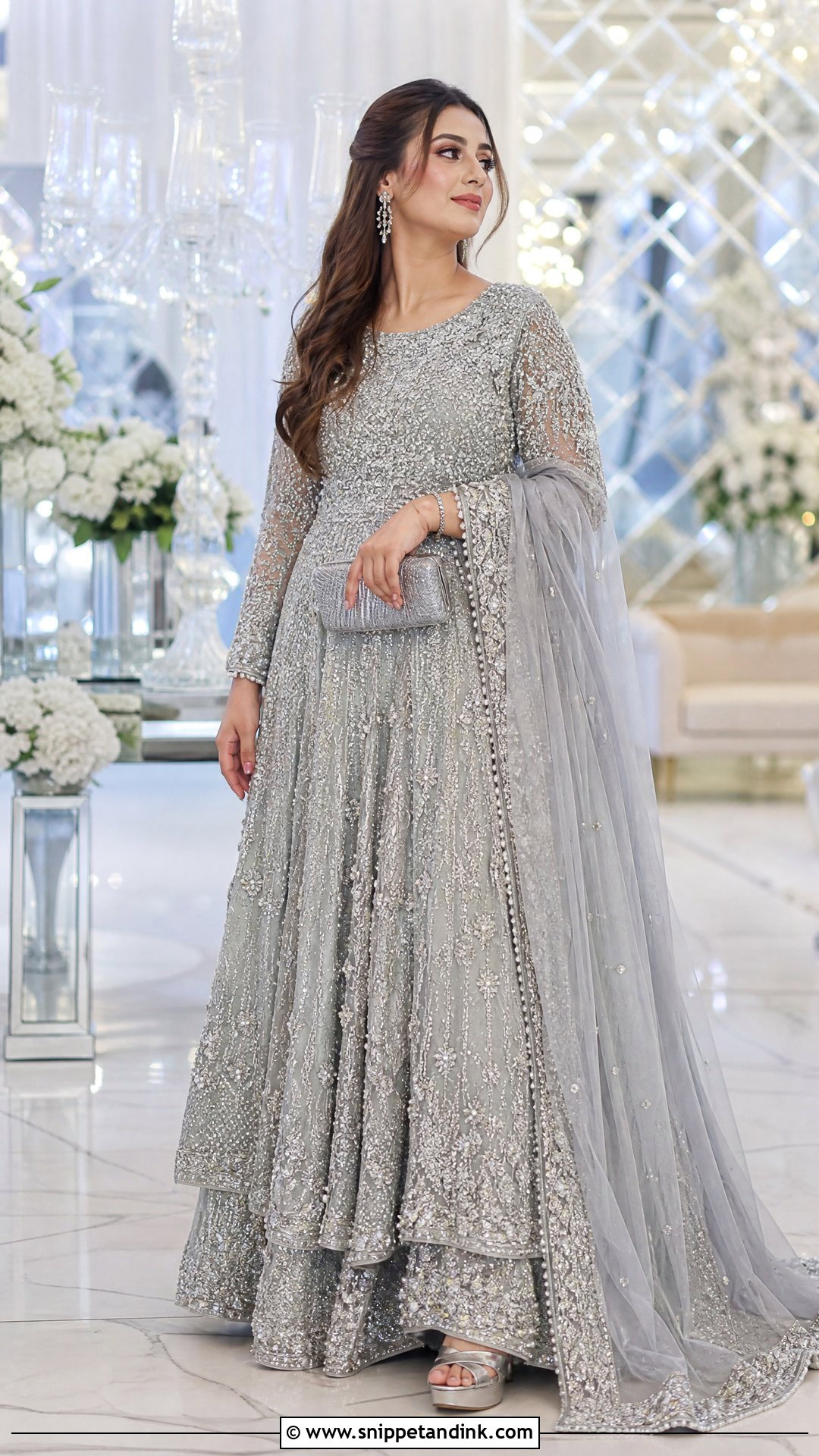
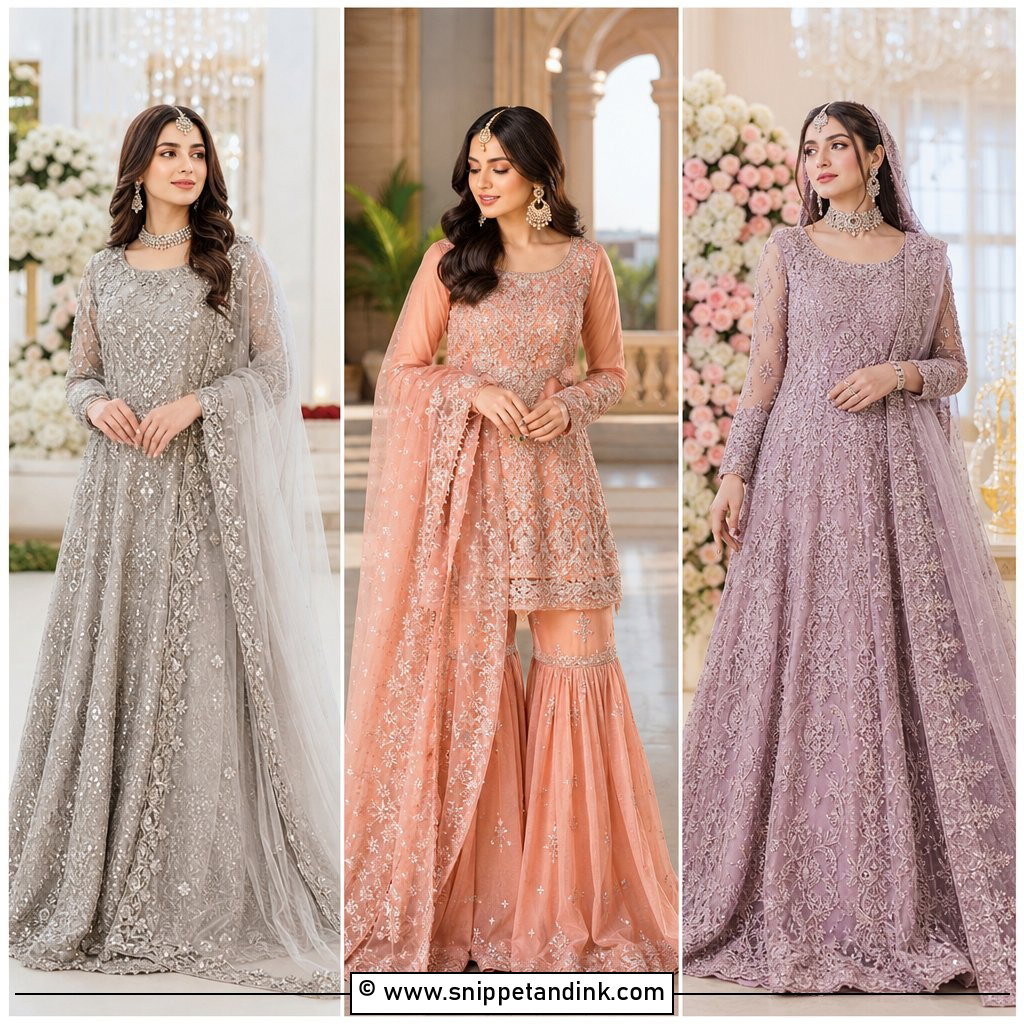
Silver works for a formal walima when the embroidery mixes several metallic tones, otherwise it can look flat and grey. A floor-length maxi in net, tissue or organza; silver crystals, pearls, sequins and pale grey thread for texture. A sheer silver-grey dupatta with a finished border, diamond-style earrings, a slim bracelet and a small hair piece are enough. Silver heels and a structured clutch. Smoky eyes and a cool pink lip. I’d always choose a neutral lining under silver; it stops the metallic layer looking dull in photos.
9. Powder Blue Bridal Lehenga For Walima
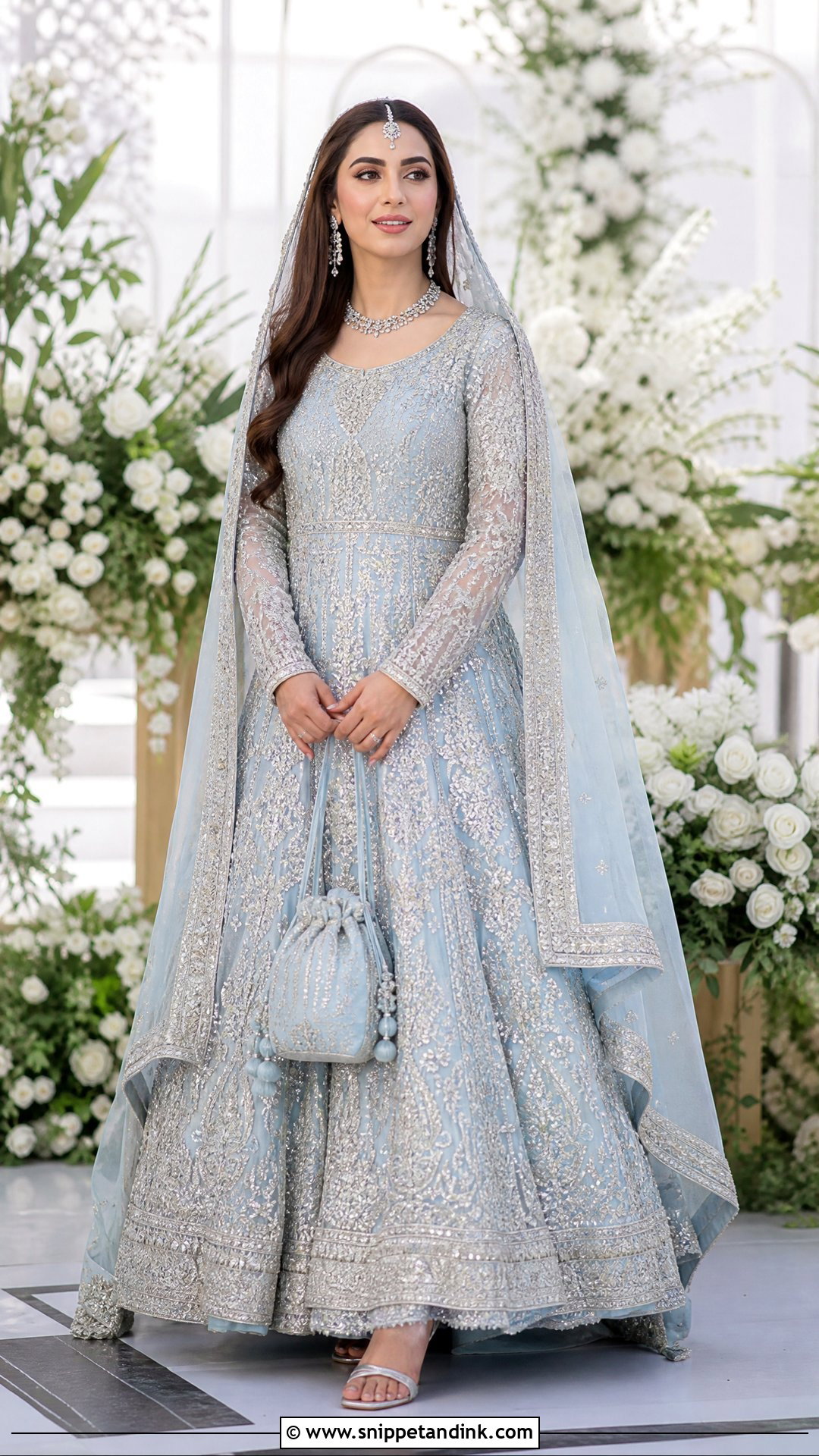
Powder blue is a fresh alternative to the usual pink and ivory walima palette. Raw silk or organza gives the lehenga body, with silver embroidery, pearls, crystals and pale blue resham. A fitted full-sleeve blouse or a modest neckline. A matching net dupatta over the head lets the border frame your face. Silver-tone jewelry, crystal earrings, a small tikka, metallic heels, and a pale blue potli in place of a clutch. My rule for pastels: keep the blouse detailed and space the skirt motifs out, or the outfit looks dense.
10. Mint Green Bridal Pishwas With Organza Dupatta
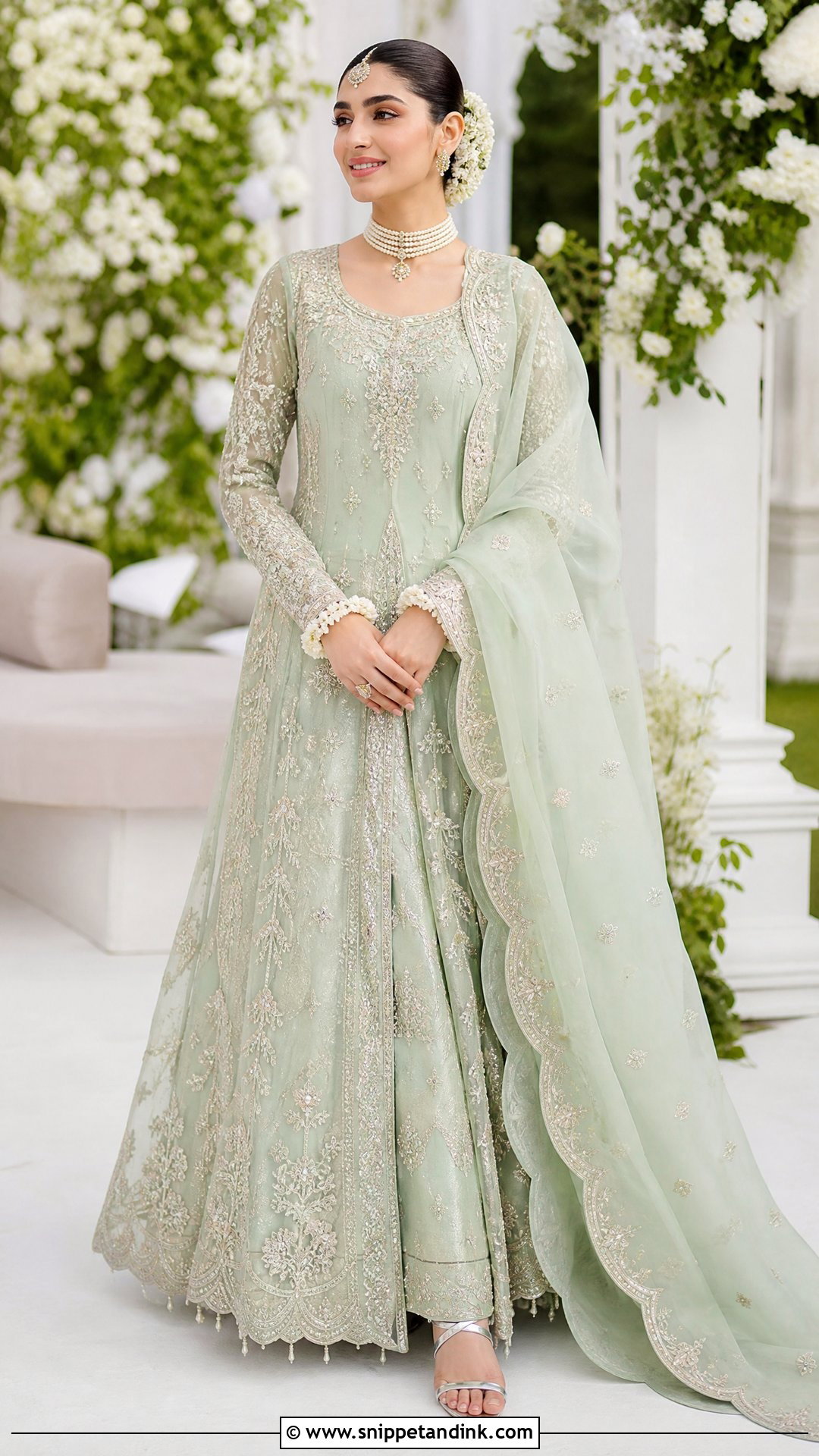
Mint green is easy on the eye at a daytime walima or nikkah. A long pishwas in organza, chiffon or fine net over silk, with silver-gold work, pearls and muted pink florals. A matching organza dupatta with a scalloped edge and light corner motifs; pearl jewelry, a delicate choker, a small tikka and metallic sandals. A neat bun with small floral accents. Size the embroidery to the bride: petite brides do better with smaller motifs and a moderate hem; taller brides can carry wider borders and extra panels.
11. Peach Bridal Sharara With Short Kurti
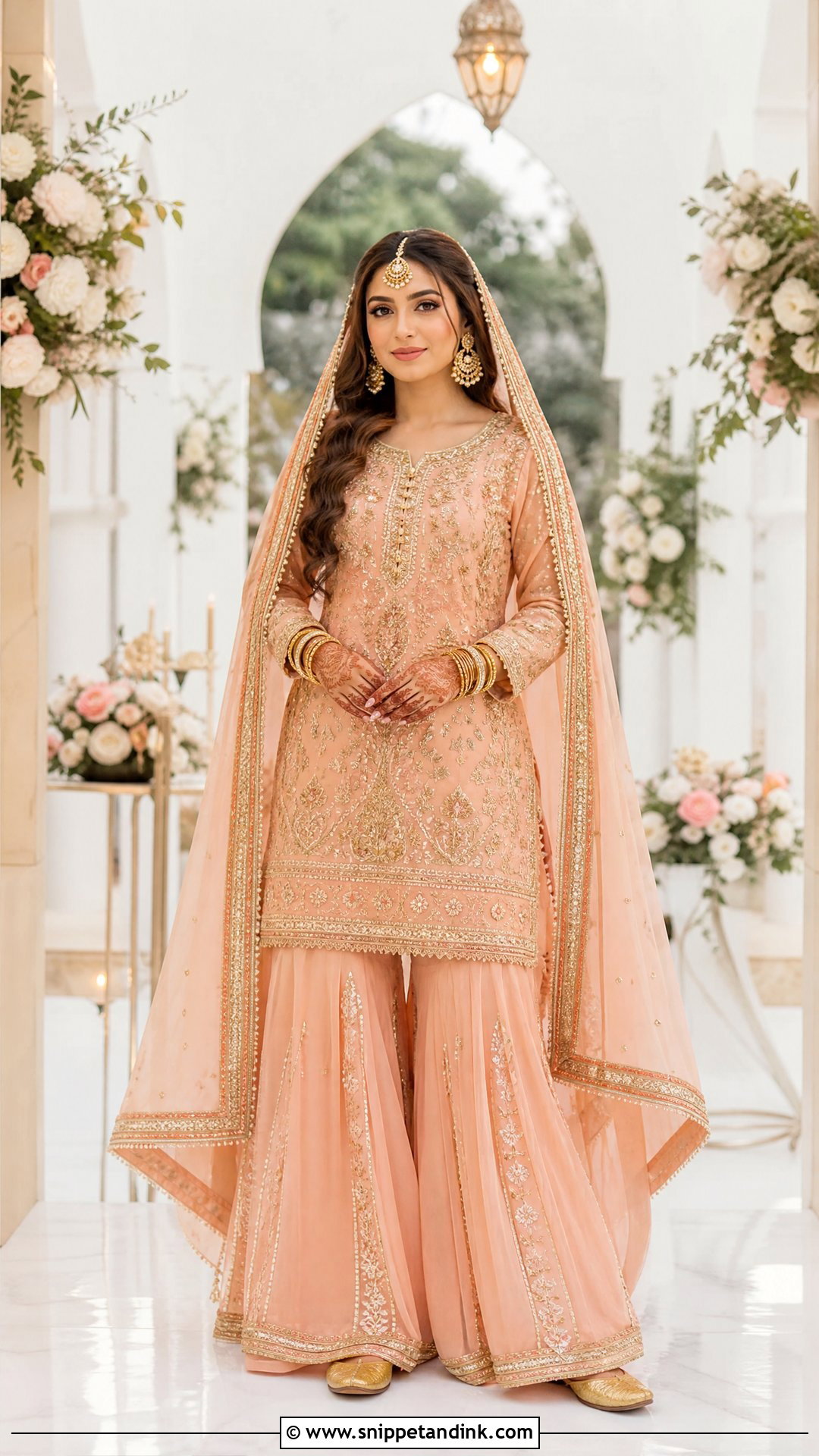
A peach sharara feels young but still rooted in tradition. A heavily worked short kurti over a wide chiffon, tissue or crushed silk sharara, with gold thread, pearls, sequins and coral accents. The kurti’s hem matters most: it should end above the widest part of the sharara, otherwise the two shapes fight. A matching bordered dupatta over one shoulder or loosely on the head; kundan earrings, a tikka, bangles and gold khussas. It’s a strong pick for a nikkah or a smaller event when a full lehenga feels like too much.
12. Dusty Pink Bridal Gharara With Long Shirt
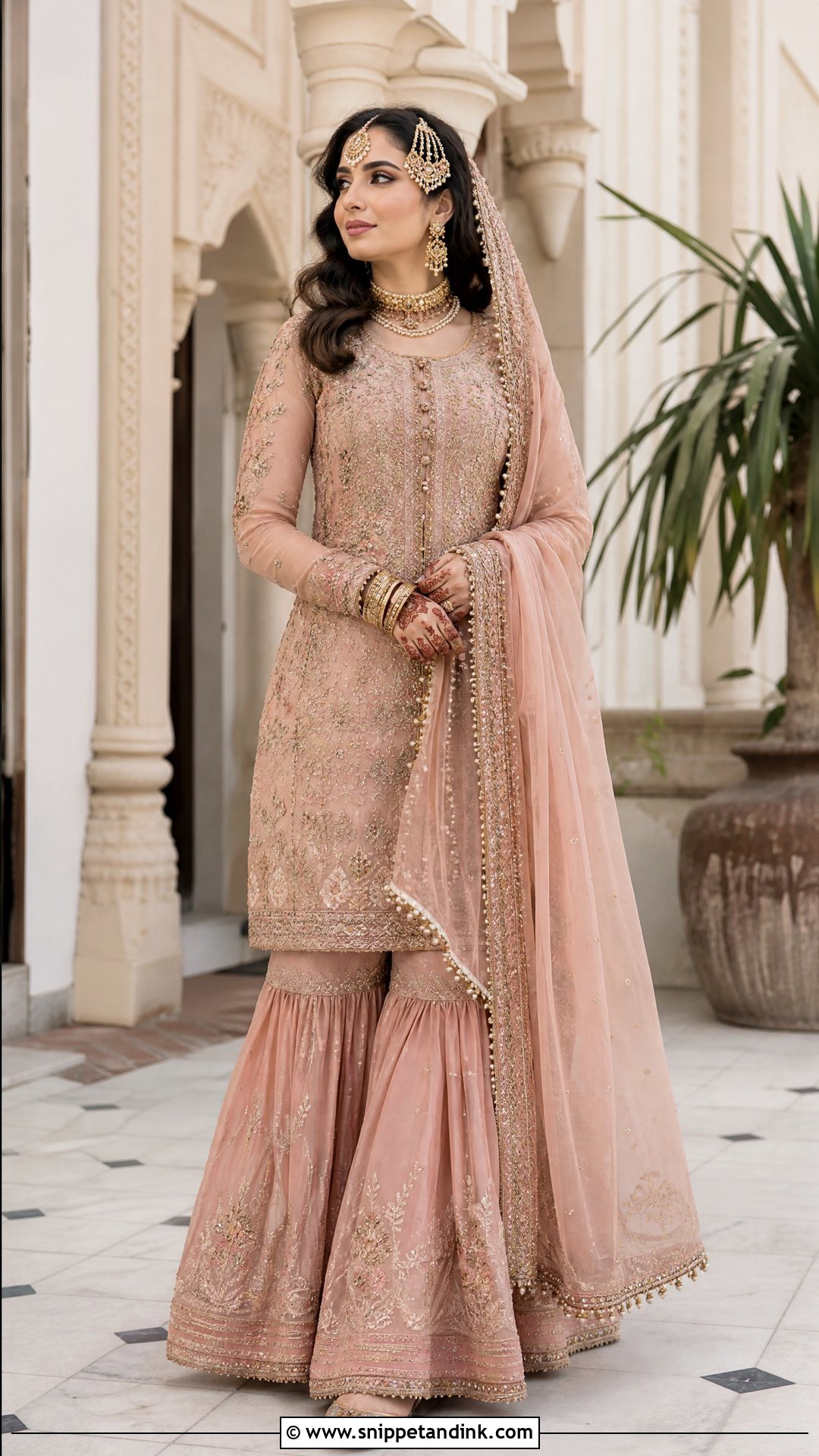
Dusty pink gives a muted base for a gharara with a long shirt. The shirt should be straight, with side slits, fitted sleeves and handwork concentrated at the neckline, cuffs and hem. I check the slits carefully; if they’re too short, the long shirt hides the knee bands and the gharara loses its shape. Add a net or organza dupatta with pearls, antique gold jewelry, a side passa, bangles and khussas. A sleek center-parted bun shows the neckline and earrings. It’s a good fit for a bride who wants coverage and structure together.
13. Lavender Bridal Maxi With Crystal Embroidery
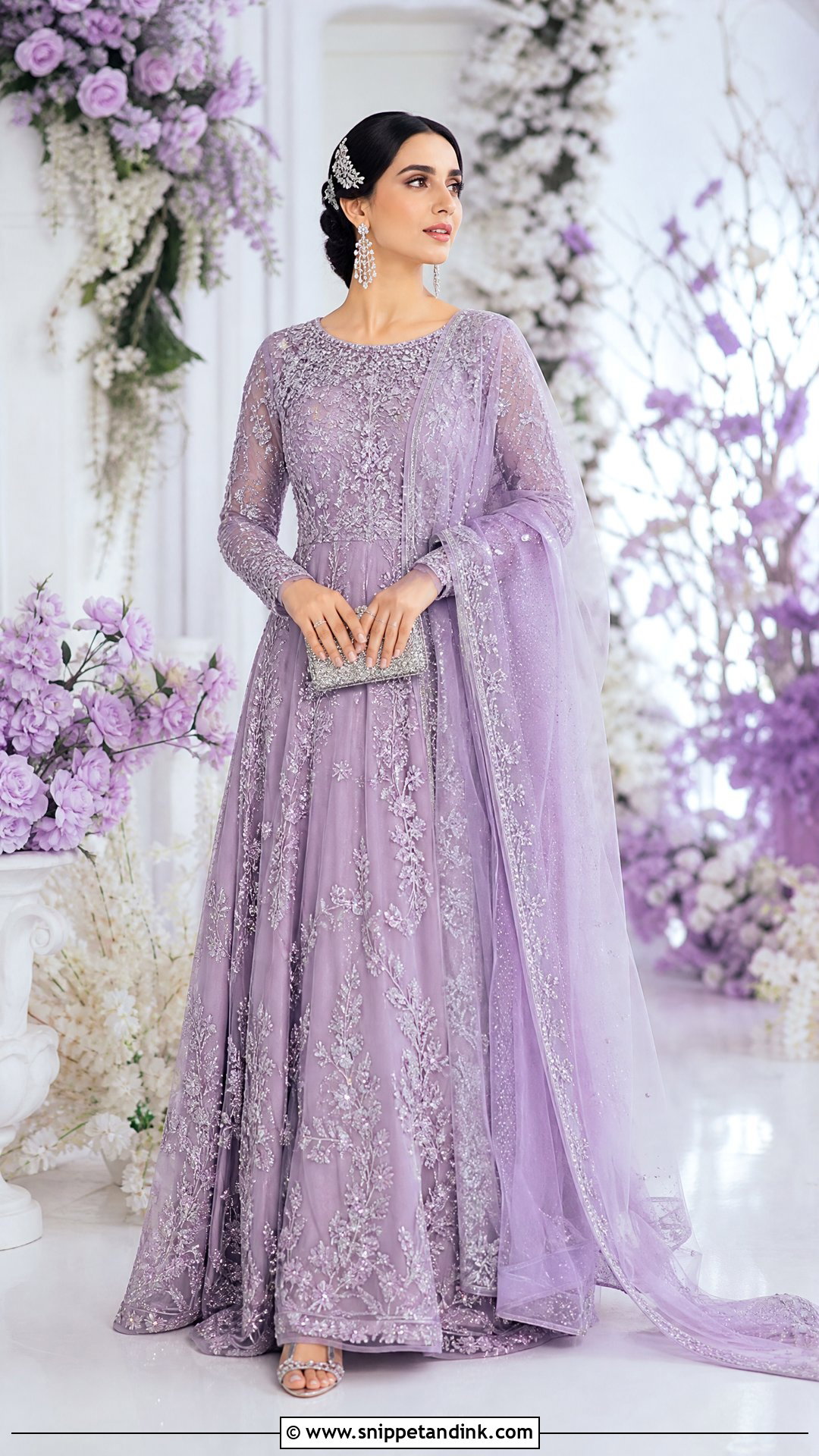
Lavender makes a distinctive formal maxi. A fully lined fitted bodice with long sleeves, a gently flared skirt, crystal work, silver thread, pearls and small lavender florals. A matching sheer dupatta with a narrow crystal border. Silver earrings, a delicate necklace, a jeweled hair piece and crystal heels. Soft mauve eyes and a neutral pink lip. Lavender can turn grey under warm hall lighting, so I’d check the fabric under yellow light before ordering. Vertical embroidery keeps it slim; layered net makes it fuller.
14. Mauve Bridal Lehenga With Cape Dupatta
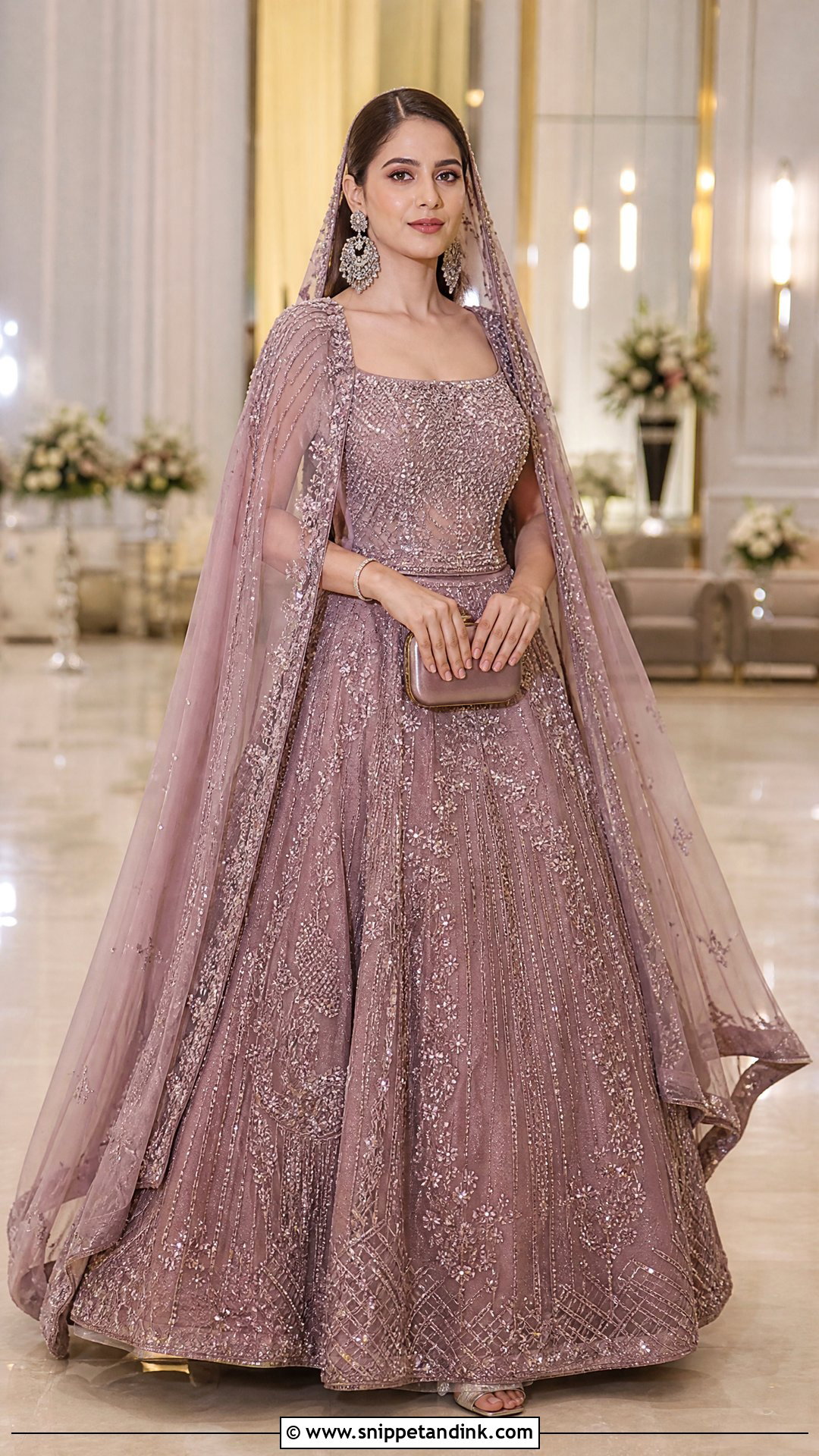
A cape over a mauve lehenga is a modern way around traditional draping. Tonal embroidery, silver sequins, pearls and fine vines on the skirt; a fitted blouse under a sheer embellished cape fixed at the shoulders. For the ceremony, a separate light dupatta goes over the head. Statement earrings, a slim bracelet, metallic heels and a small clutch, and very little at the neck so the cape’s line shows. Waist length or hip length depends on your height. The fastening is what I check hardest: hooks plus a hidden snap, because a cape that slides off one shoulder while greeting guests is the most common problem I see.
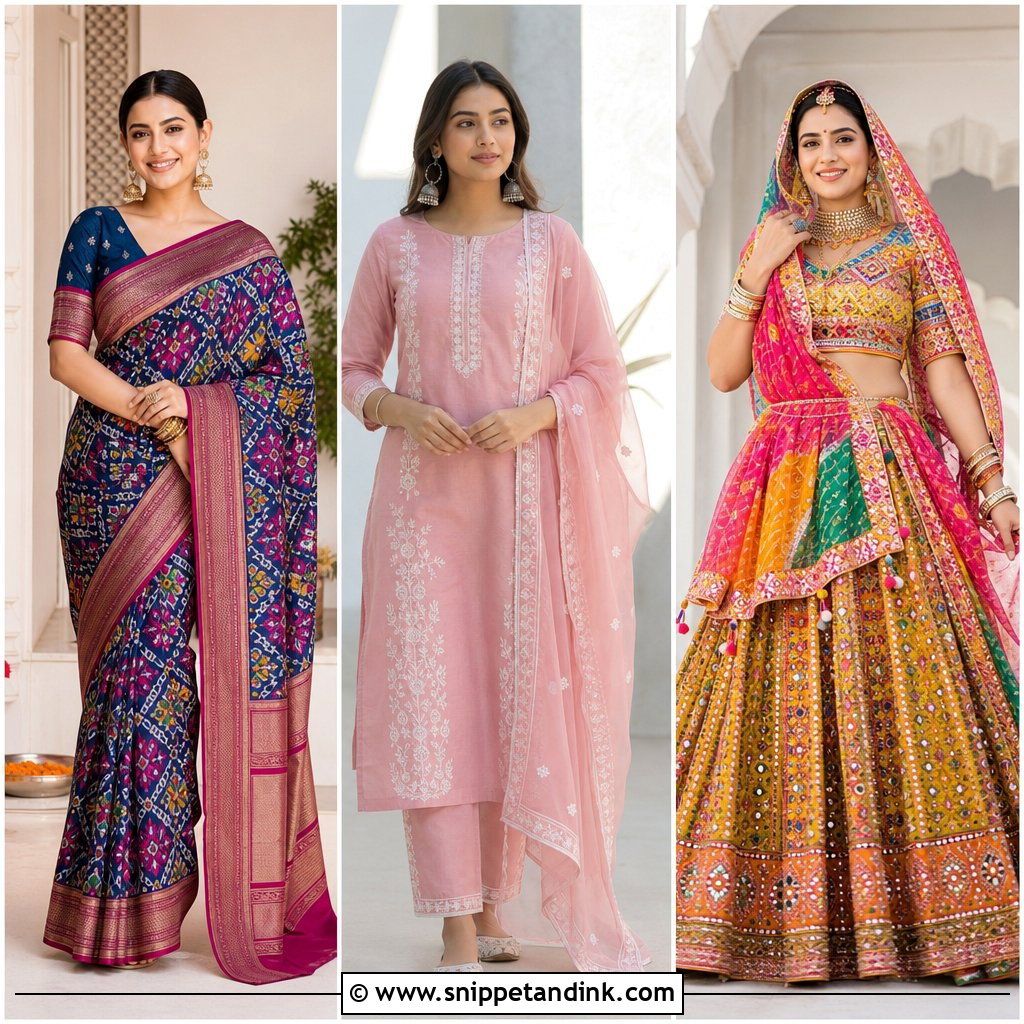
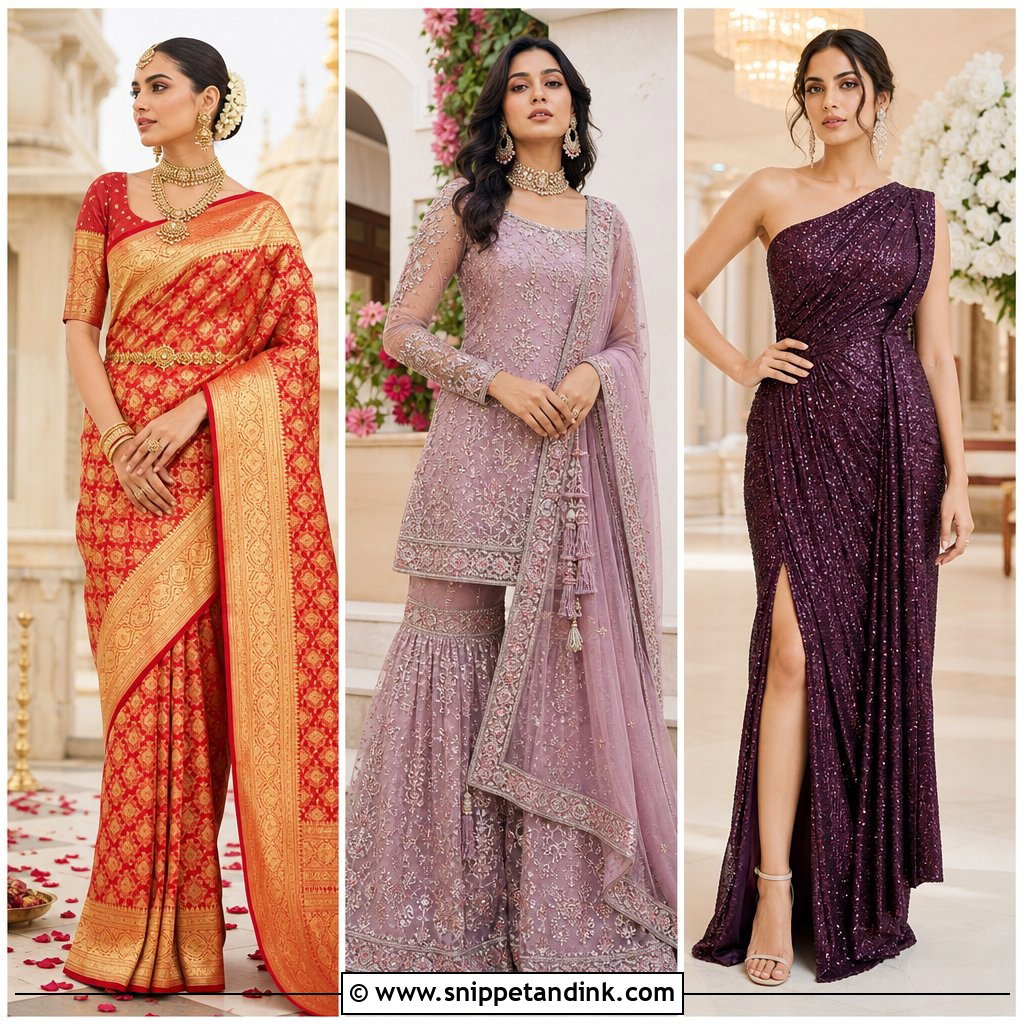
15. Emerald Green Bridal Lehenga With Velvet Blouse
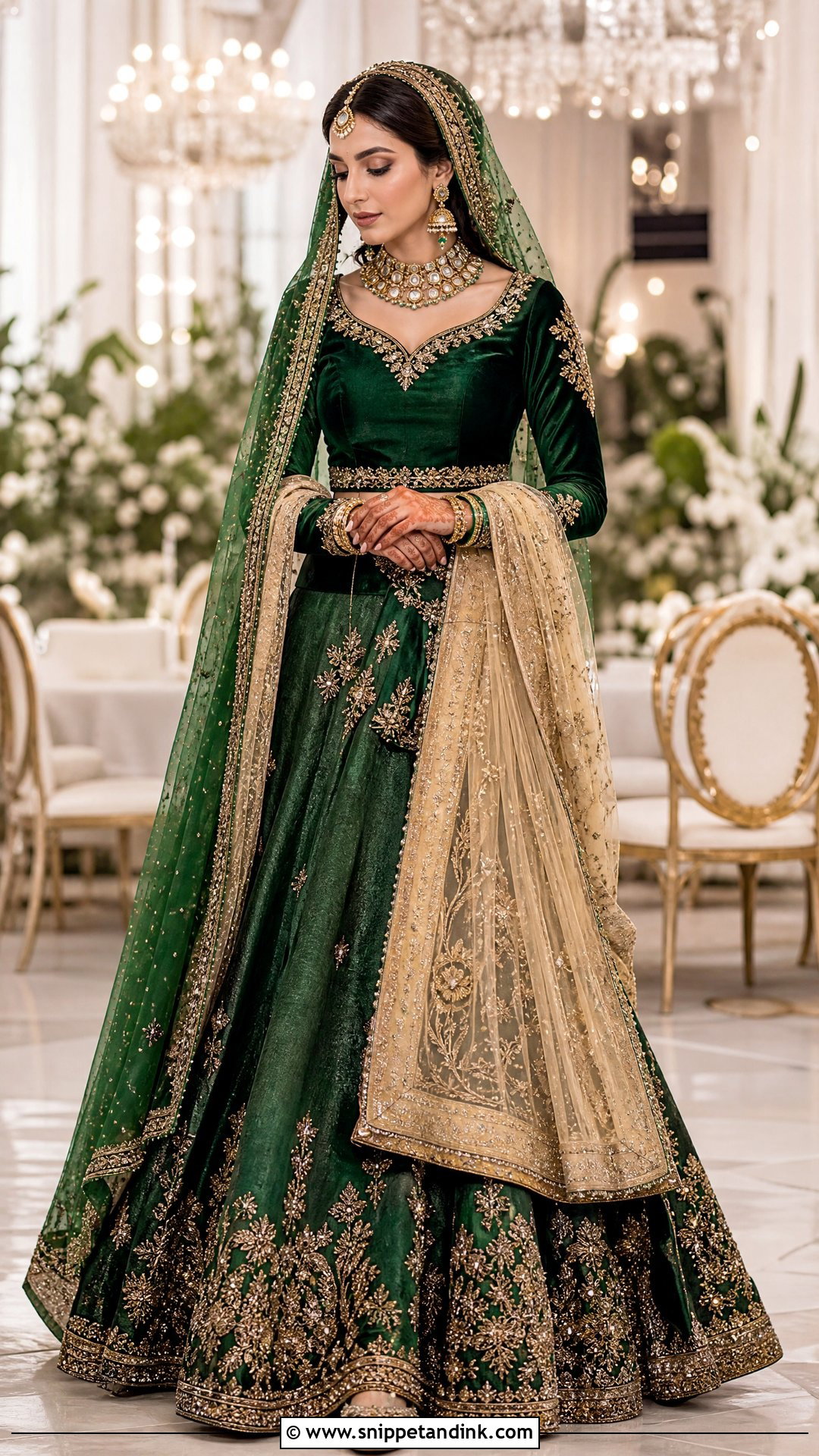
Emerald green suits an evening nikkah, a reception or a winter wedding. Raw silk or jamawar for the lehenga, with a fitted velvet blouse in gold zardozi, dabka and fine resham, and touches of deep red on the skirt for contrast. An emerald net dupatta on the head and a lighter gold one in front. Antique gold, a polki choker, jhumkas, bangles and khussas. Velvet already carries weight, so keep the blouse shape clean. Velvet also crushes where you sit, so I’d steam the back of the skirt between the nikkah and the photos.
16. Teal Bridal Sharara With Gold Dupatta
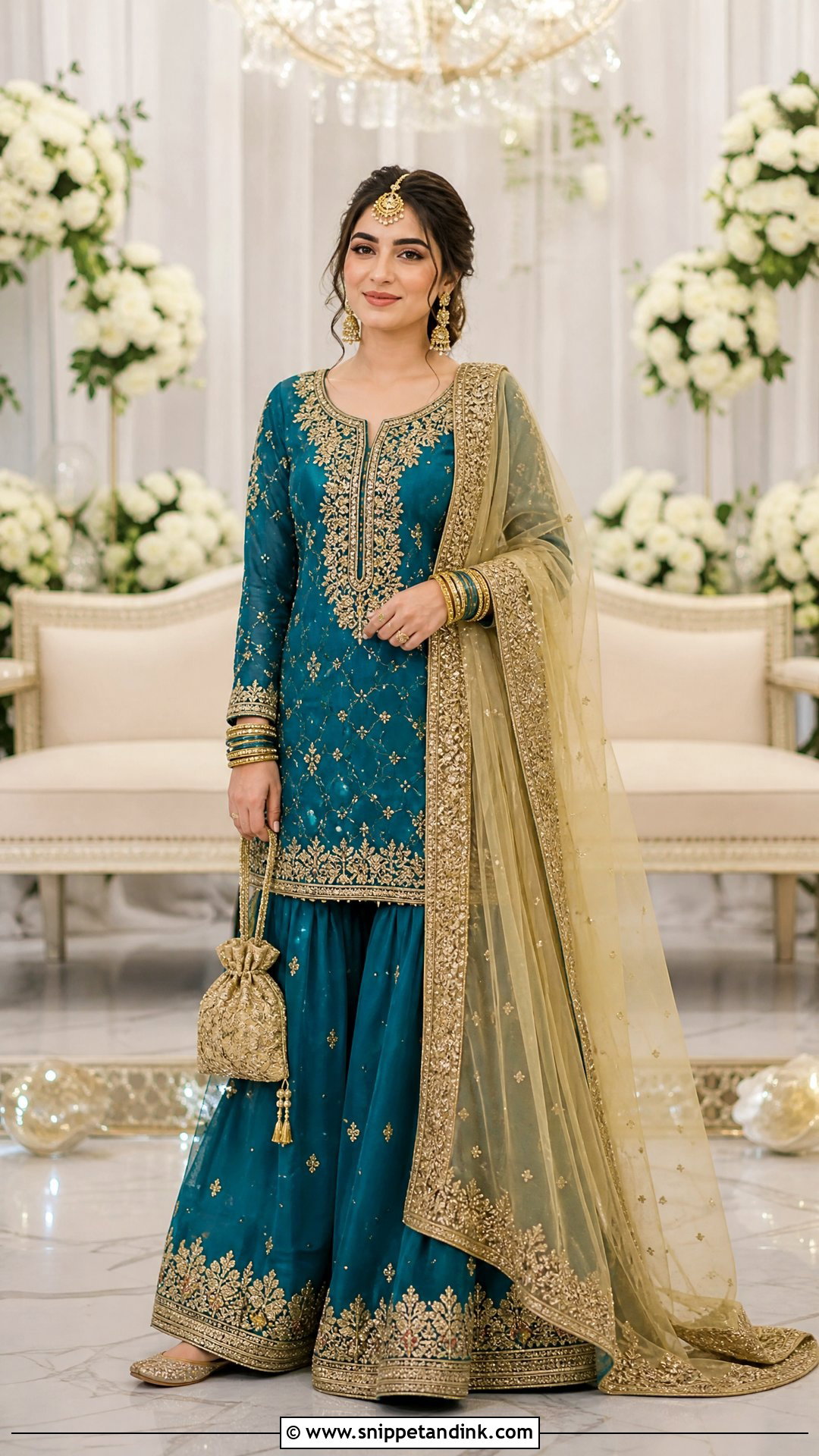
Teal gives color without going traditional red. A short or mid-length shirt with fitted sleeves and antique gold work; a wide chiffon or silk sharara with small motifs up top and a heavier hem border. A contrasting gold organza dupatta brightens it. Kundan earrings, a tikka, bangles, a gold potli and khussas. Bronze makeup and a rose lip suit teal. Hem the sharara to the exact shoe height; even an inch too long and you’ll catch it on every stair.
17. Navy Blue Bridal Gown With Silver Work
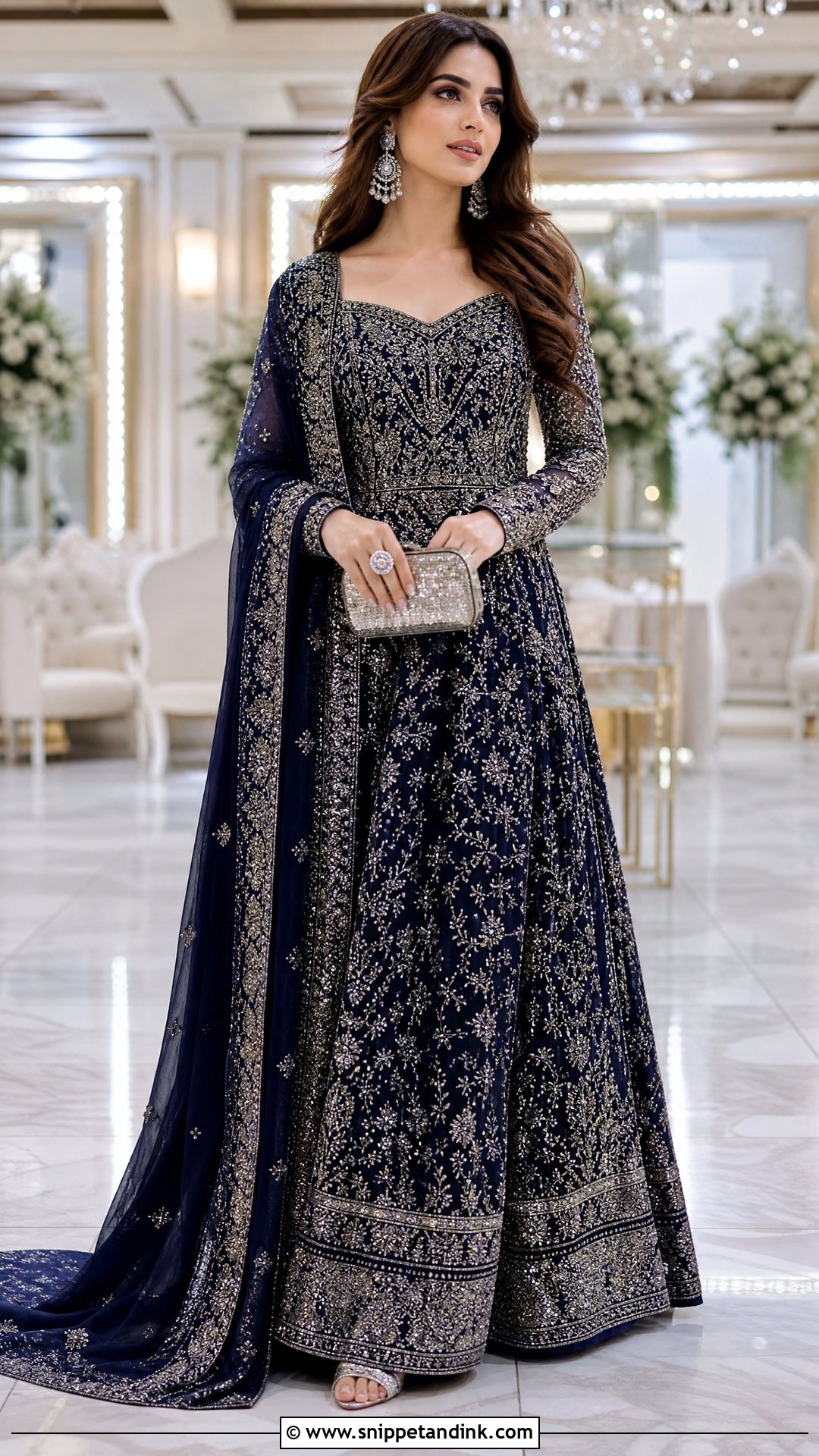
Navy has a lot of contrast against silver, which gives a strong formal look. A full-length gown with a structured bodice, long sleeves and a softly flared skirt, with silver crystals, pearls and sequins following the panels to lengthen. A navy net dupatta with an embellished border, silver earrings, a statement ring, a small clutch and crystal heels. Navy absorbs light, so I ask for the most reflective work around the neckline. It lifts your face in indoor photos without piling on jewelry or heavy makeup.
18. Black And Gold Bridal Lehenga
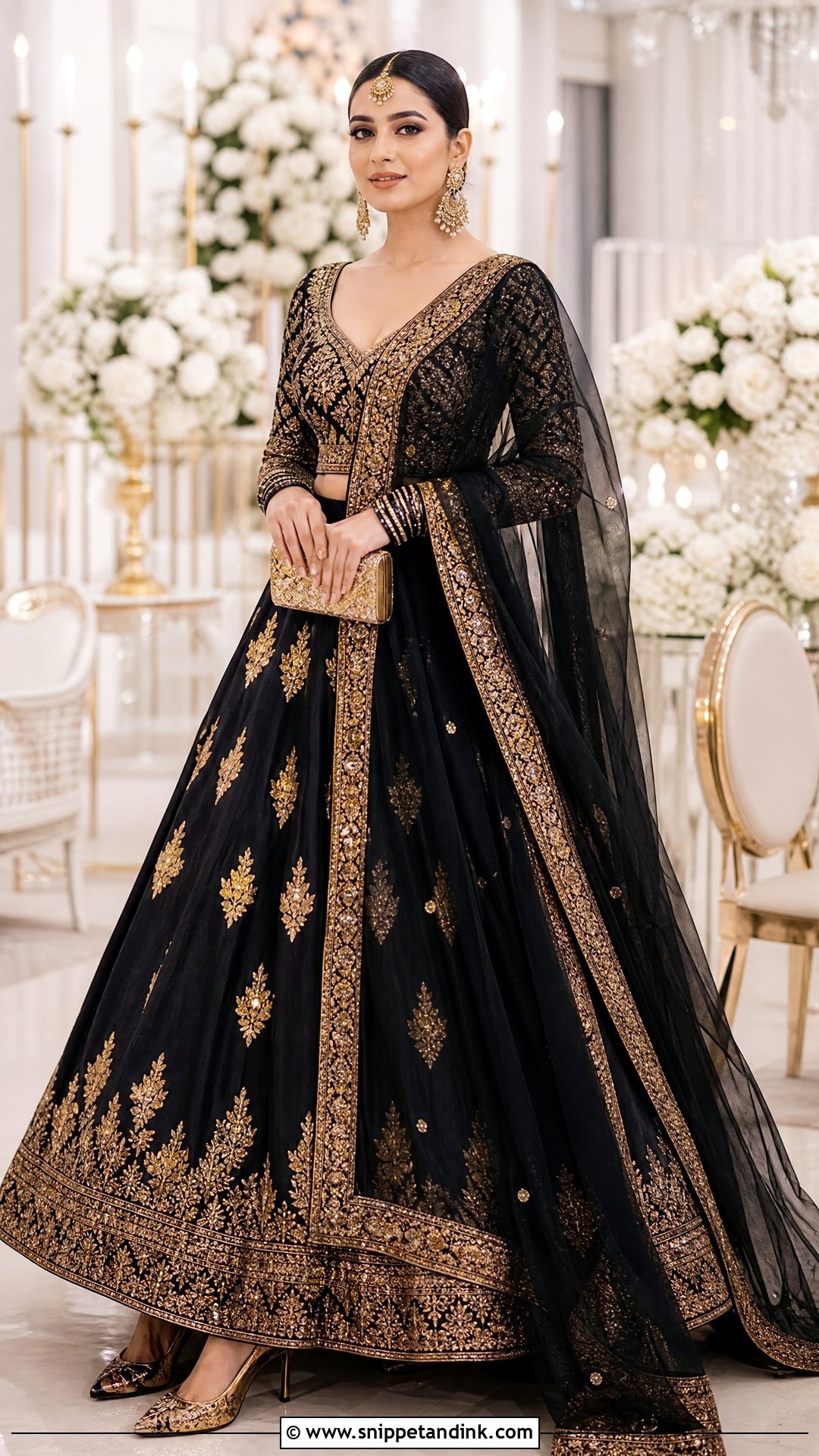
Black is still a conversation in some families, so I’d raise it with yours before ordering. Styled well, black and gold make a confident reception look. Black raw silk with ornate zari, dabka, sequins and architectural borders; a fitted blouse or longer peplum. A sheer black dupatta with gold edging that lets the embroidery show through. Gold jewelry, statement earrings, bangles, a structured clutch and black embroidered heels. Deep red stones or a red second dupatta warm it. Keep the shape clean; this pairing already does a lot.
19. Gold Bridal Farshi Gharara
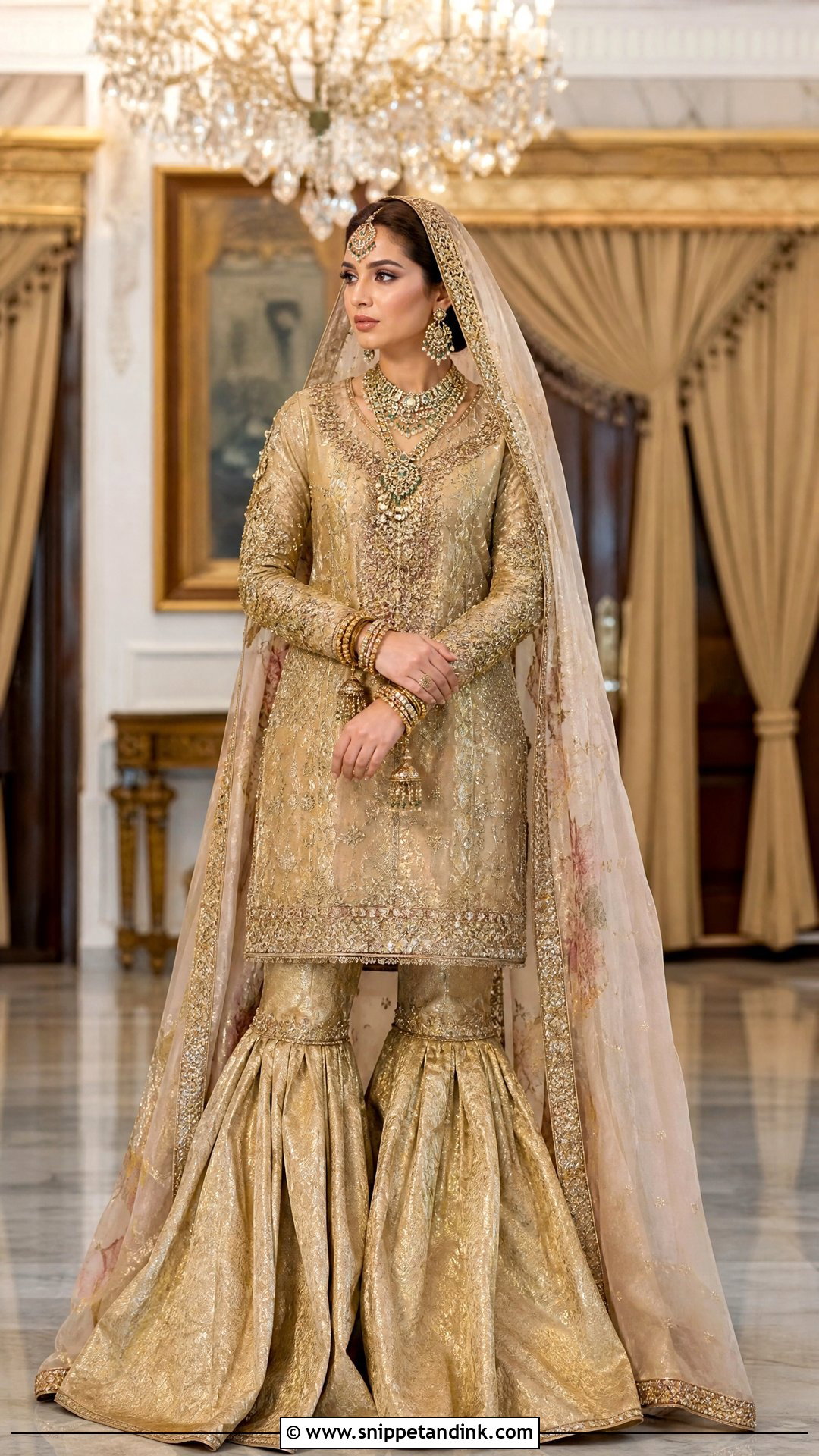
Few shapes carry the grandeur of a gold farshi gharara. The lower garment sweeps behind you, paired with a fitted knee-length shirt in tissue, jamawar or raw silk. Gold work, pearls and colored resham at the neckline, sleeves, knee joints and hem. An organza dupatta on the head, kundan, a passa, layered necklaces, bangles and khussas. Practice walking and sitting in the finished piece at least once before the day. I want a secure inner waist fastening and properly placed knee joints, otherwise the farshi pulls down and you trip on it.
20. Red Bridal Pishwas With Churidar
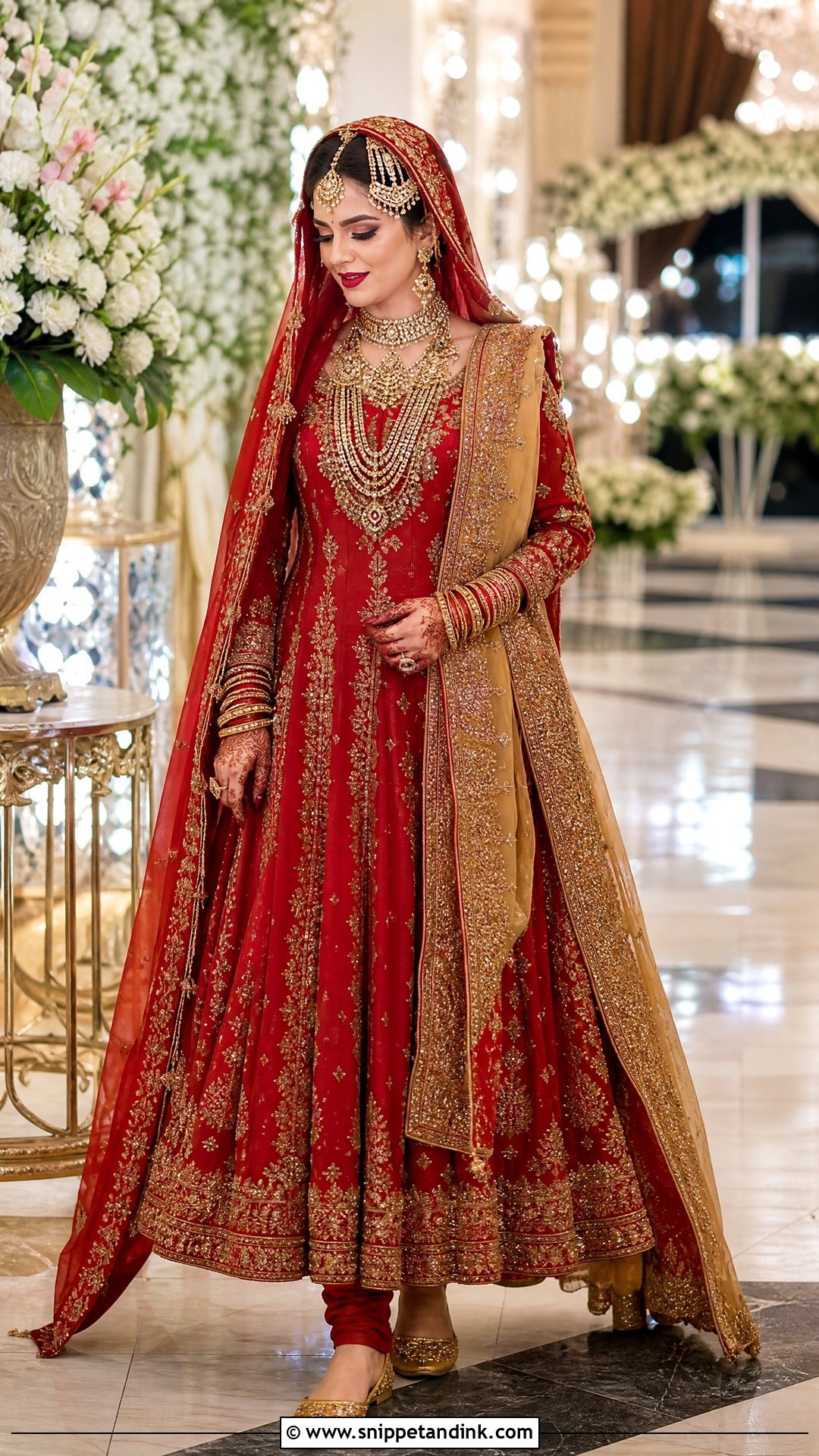
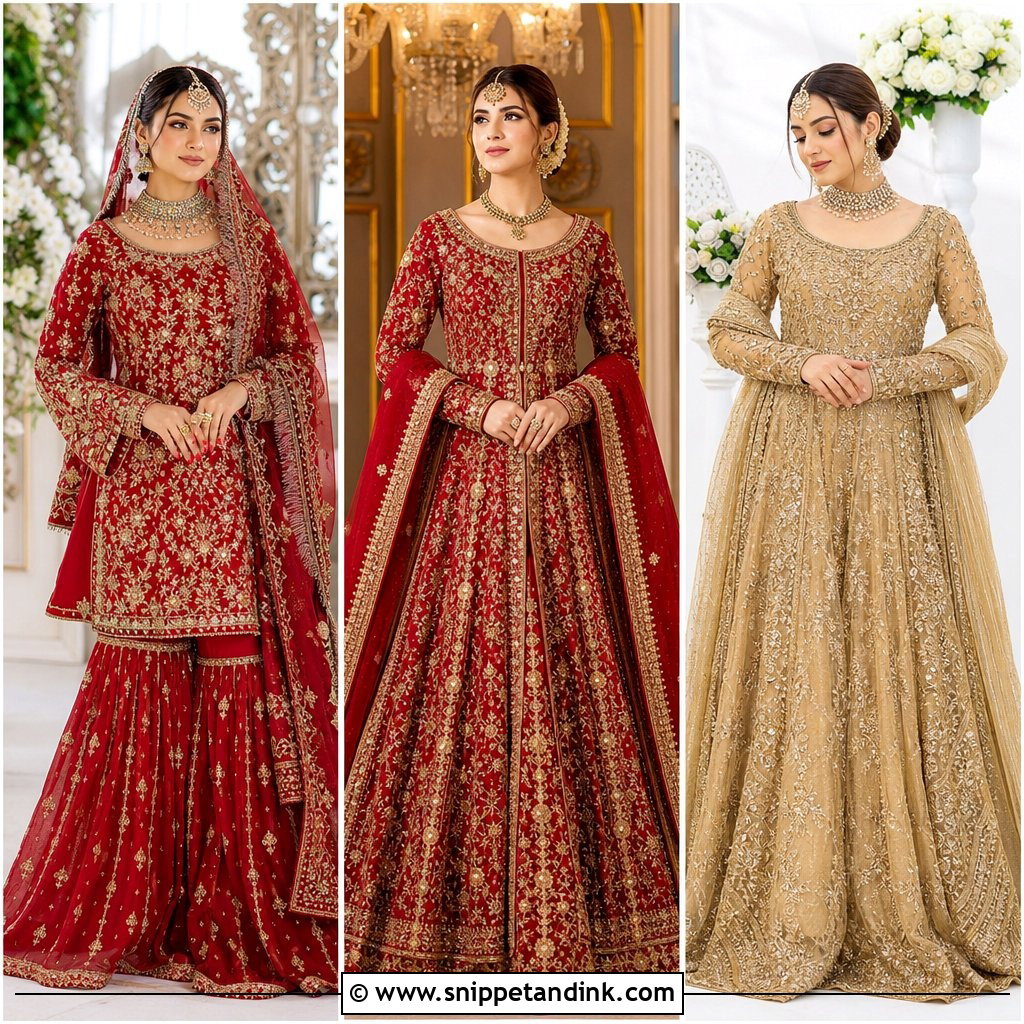
A red pishwas with a fitted churidar is graceful and traditional. A long paneled pishwas with gold work on the bodice, sleeves, front opening and wide hem; a churidar in the same fabric that shows when the skirt moves. A red net dupatta on the head, and maybe a gold or deep green one over one shoulder. Kundan, a matha patti, layered necklaces, bangles and khussas. A defined waist seam stops the flare from swamping smaller brides. For a lighter version, keep dense work on the upper section and border and leave the middle panels open.
21. Mehndi Bridal Lehenga With Colorful Embroidery
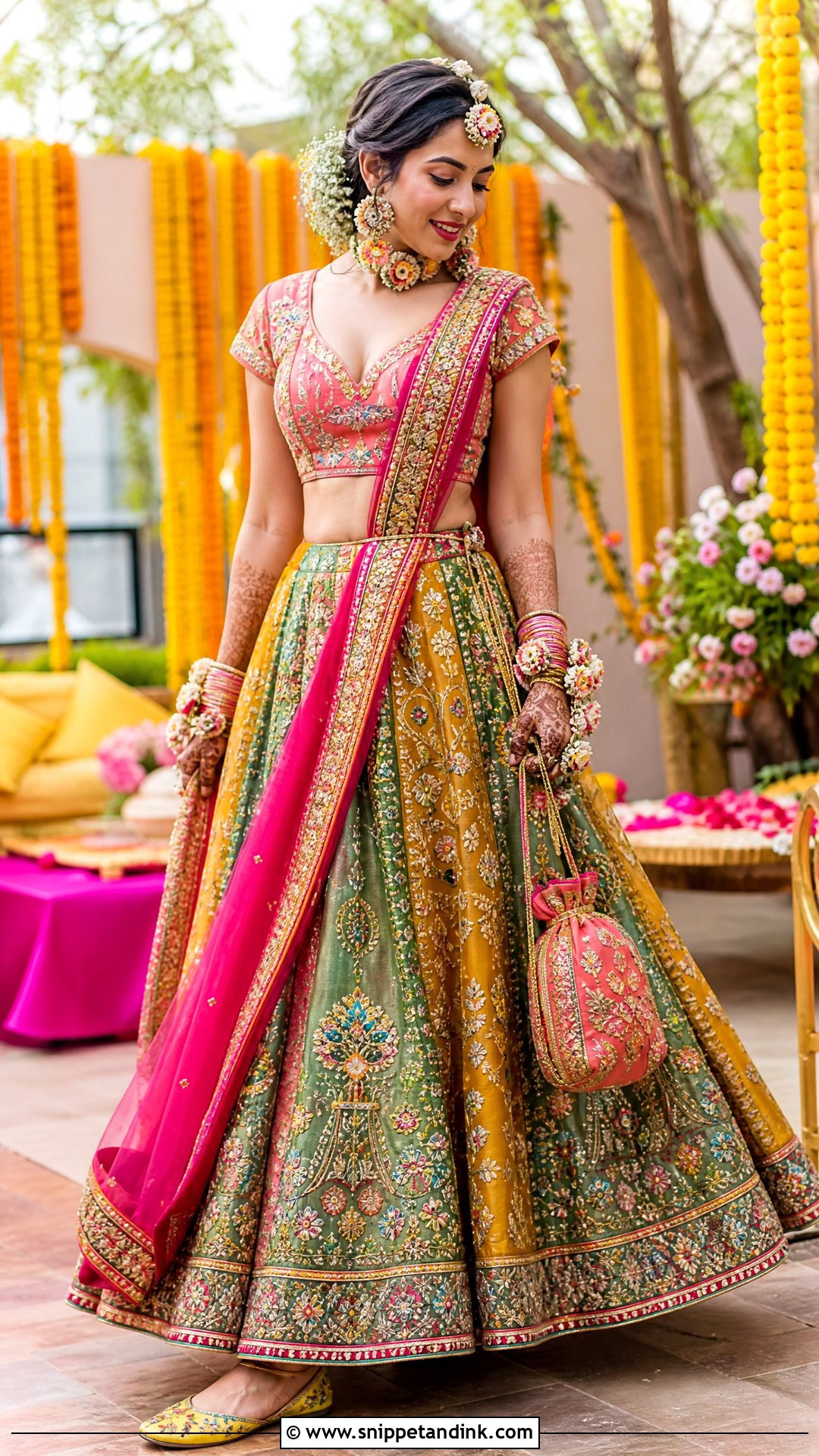
A mehndi outfit has to survive dancing, sitting on the floor and wet henna on your hands. A bright mehndi bridal lehenga in mustard, green, coral or turquoise with colorful resham, mirror accents, gota and playful borders suits it. A fitted blouse or short kurti that supports you through dancing. A contrasting dupatta pinned across one shoulder and secured at the waist, so your hands stay free while the mehndi dries. Floral jewelry, colorful bangles, a small potli and flat khussas. A braid or low bun with fresh flowers. I’d keep the skirt noticeably lighter than the baraat one.
22. Mustard Bridal Sharara For Mehndi
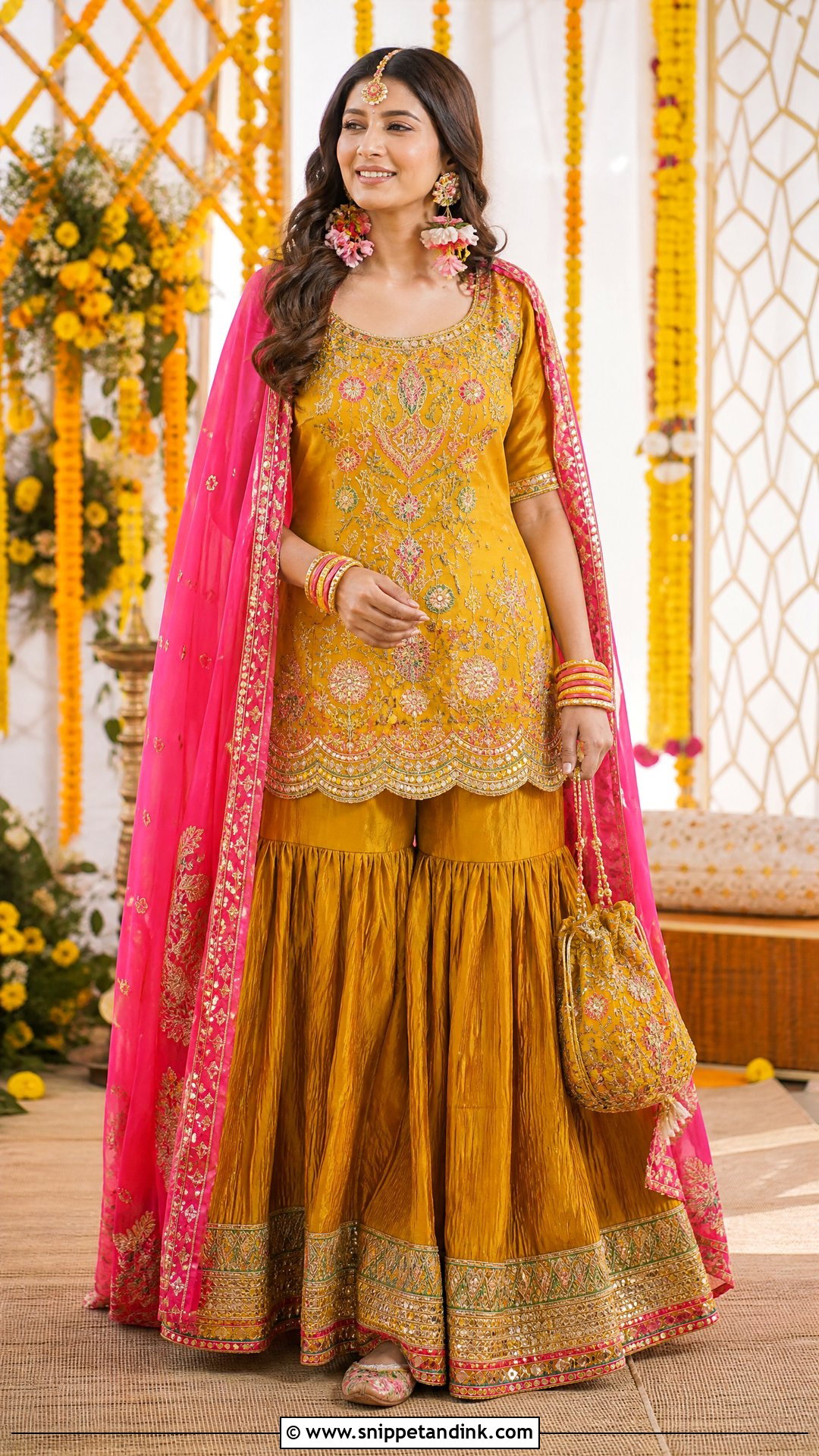
Mustard looks bright and warm as a mehndi bridal sharara. A short embroidered kurti over a wide chiffon or crushed silk sharara with colorful hem borders; gota, mirror details, pearls and pink or green resham against the mustard. A hot pink or emerald dupatta pinned over one shoulder keeps both hands free. Floral earrings, a delicate tikka, bangles, a potli and flat khussas. Fit the kurti close without restricting your arms, and give the sharara enough flare to walk. Henna stains on mustard are hard to see but they’re there, so I’d keep fresh henna well away from the fabric.
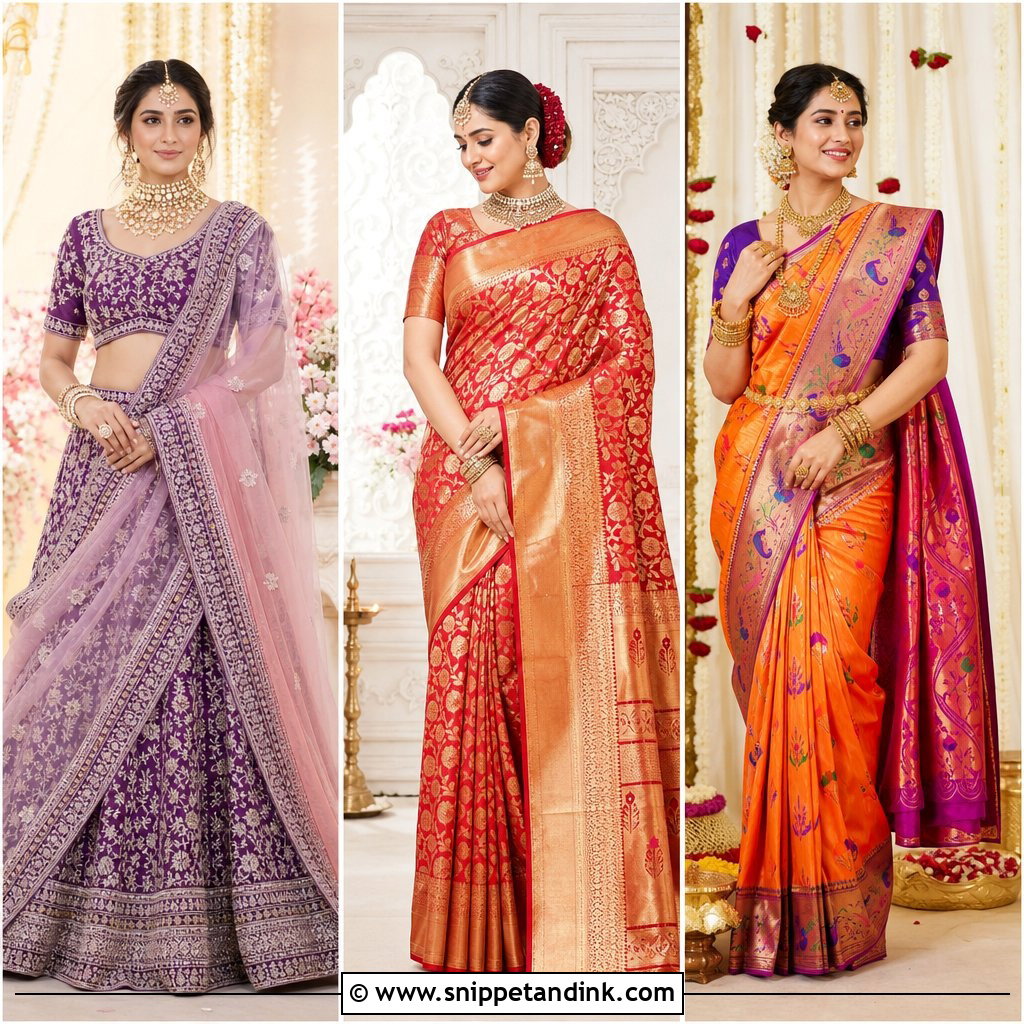
23. Ivory Bridal Saree With Embellished Blouse
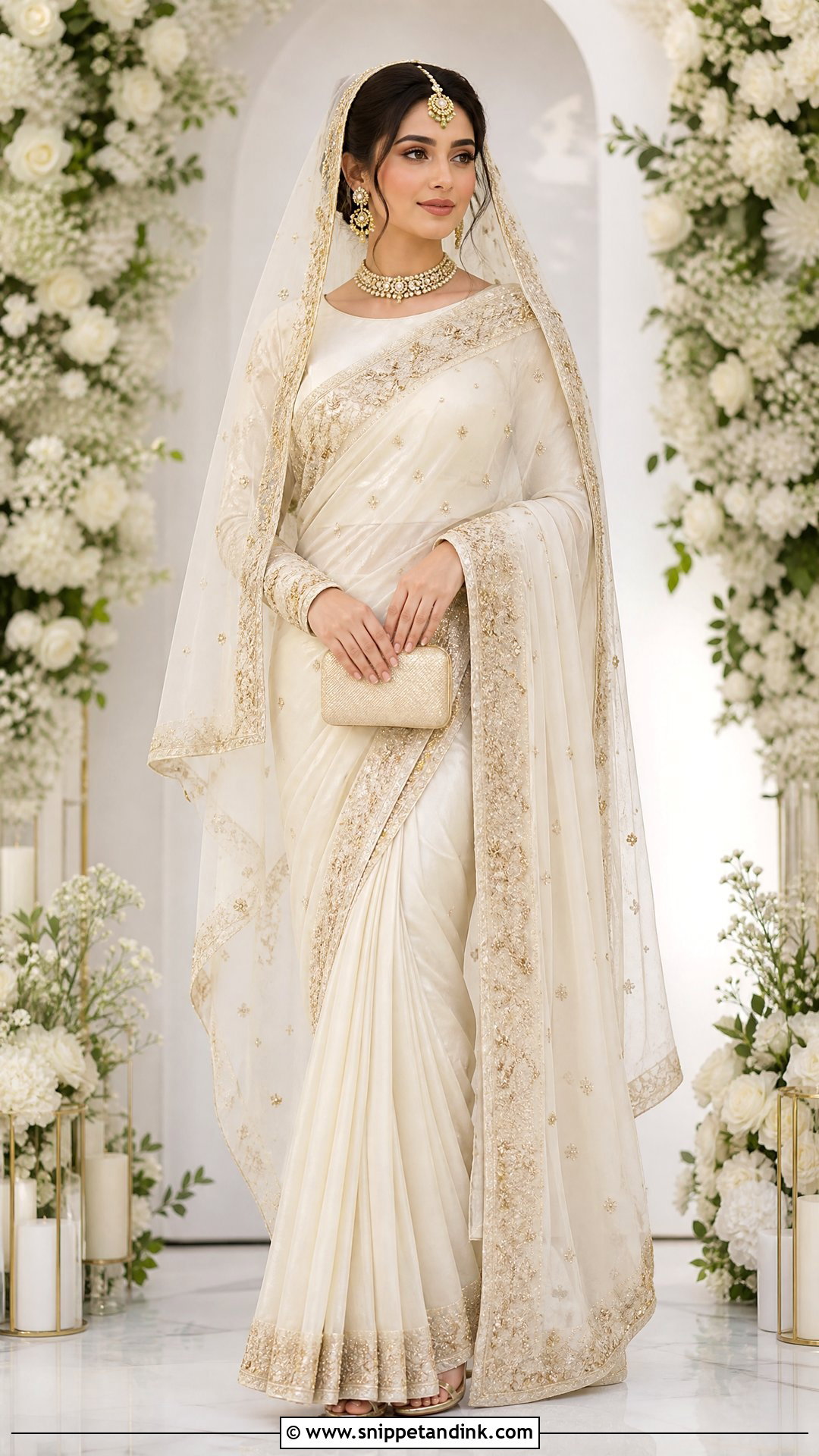
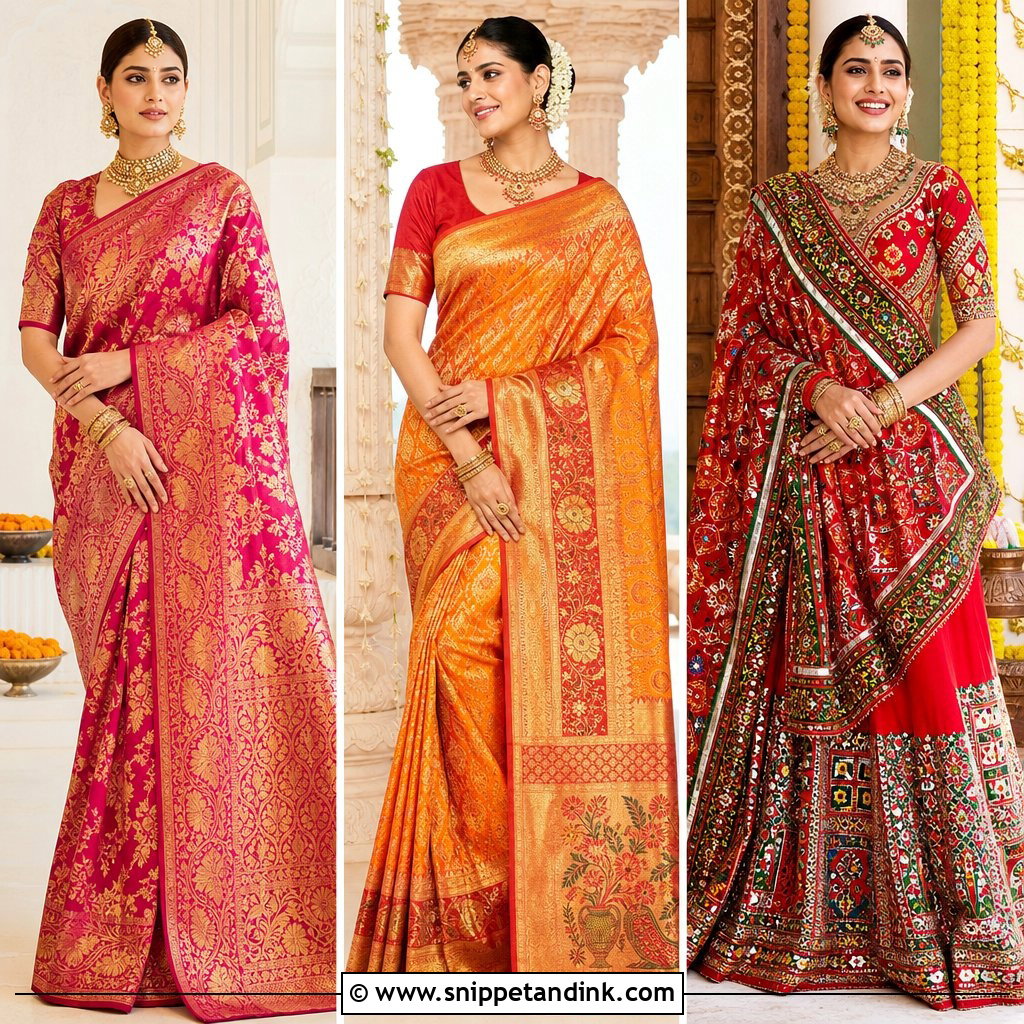
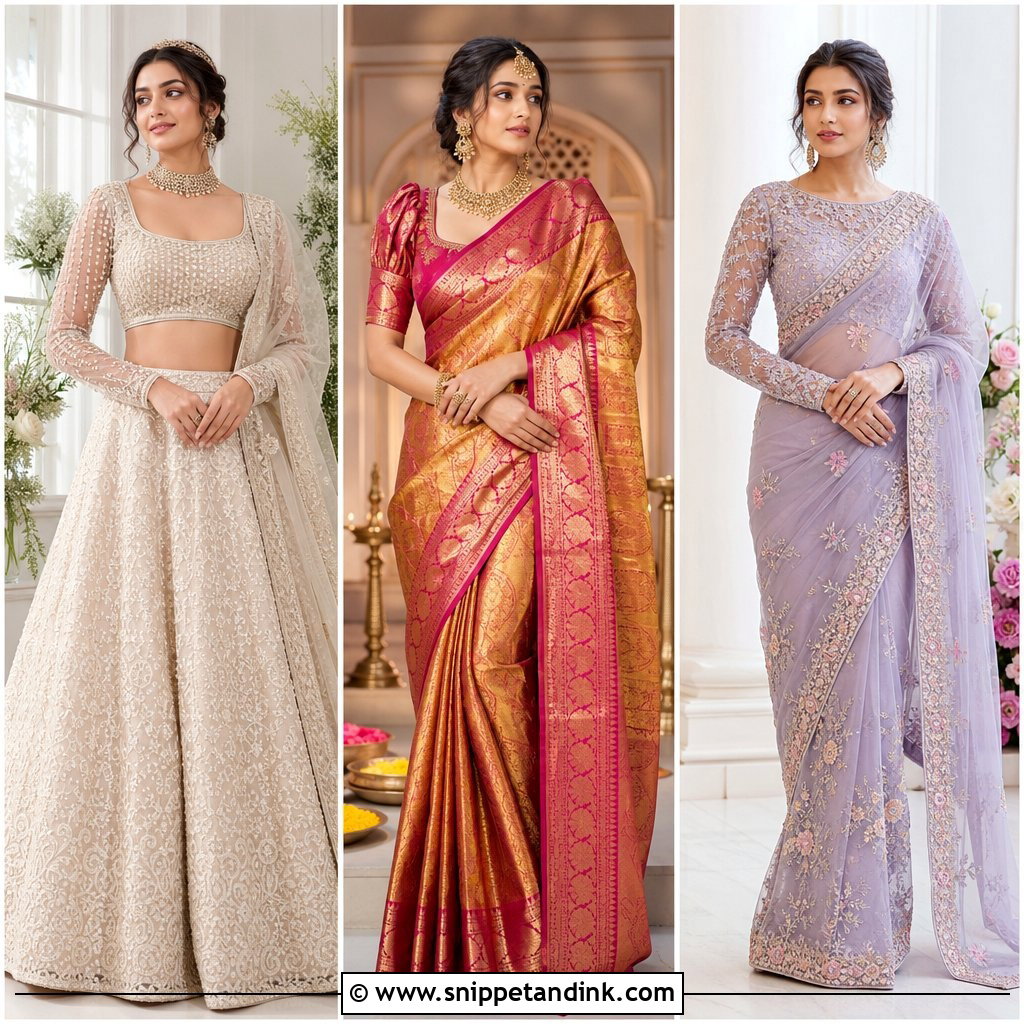
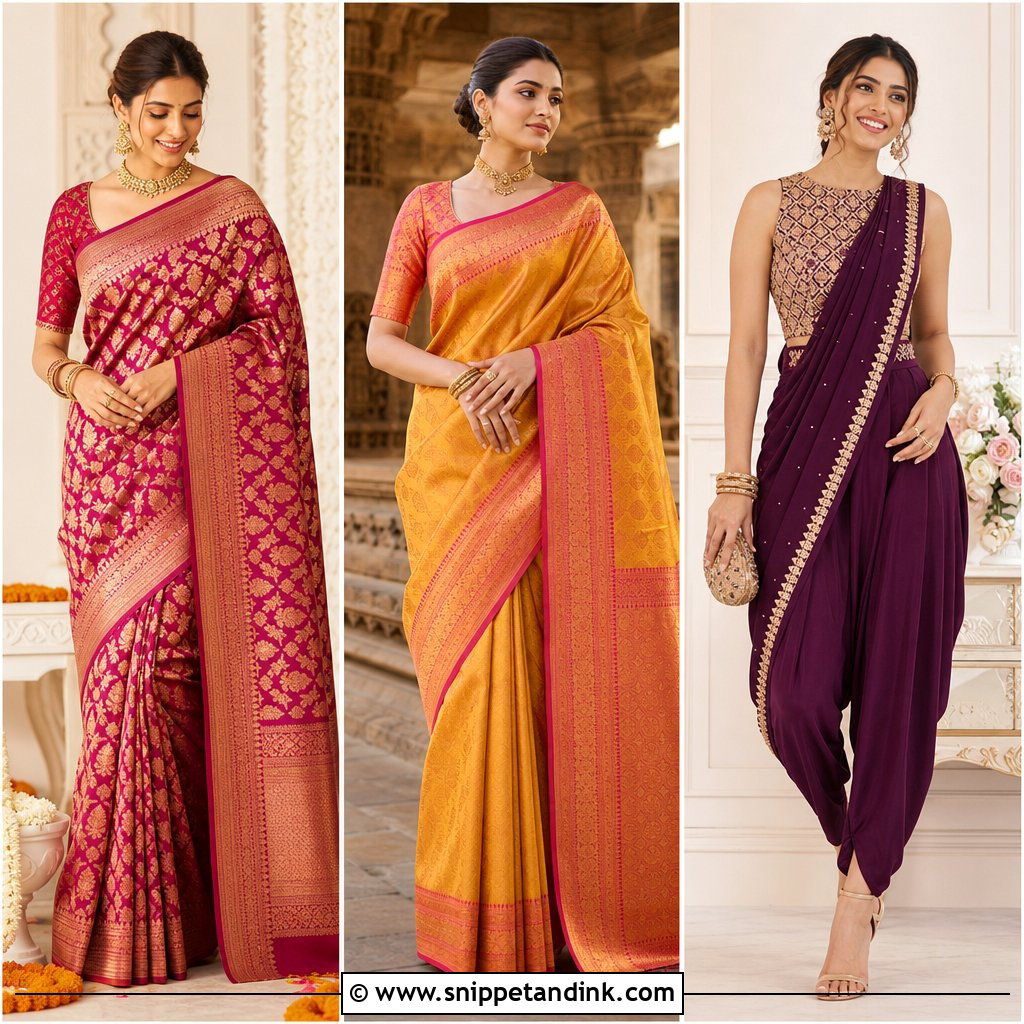
An ivory saree is sleek for a nikkah, walima or small reception. Silk, tissue or organza with a gold border and light scattered work; a fully lined blouse with long sleeves, a high back or a modest neck. I’d have the saree draped by someone who does it professionally on the day, and pin the pleats and pallu with small hidden pins. Pearl and kundan jewelry, a small tikka, metallic heels and a compact clutch. A low bun lets the pallu fall cleanly. For more coverage, a matching sheer veil over the head works without disturbing the drape.
24. Pastel Bridal Peplum With Lehenga
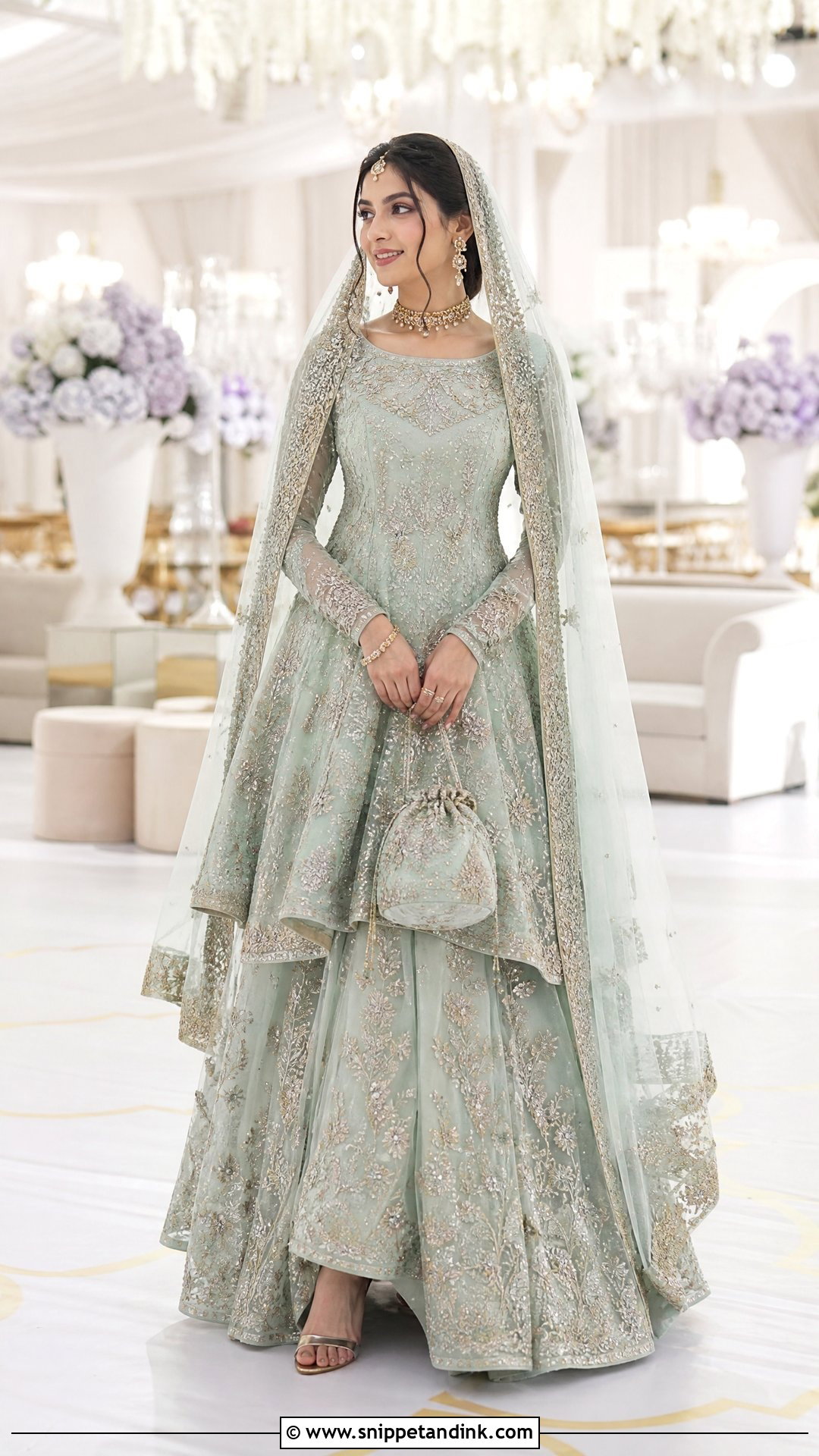
A pastel peplum over a lehenga defines the waist and gives comfortable coverage. Blush, mint, powder blue or peach, with the peplum ending near the upper hip. A coordinating lehenga with a broad but balanced border; pearls, crystals, silver-gold thread and fine florals. A sheer dupatta on the head or across both arms, a choker, drop earrings, a small tikka, metallic heels and a matching potli. I’m strict about peplum length; if it drops too far past the waist it hides your shape. It needs precise tailoring to work.
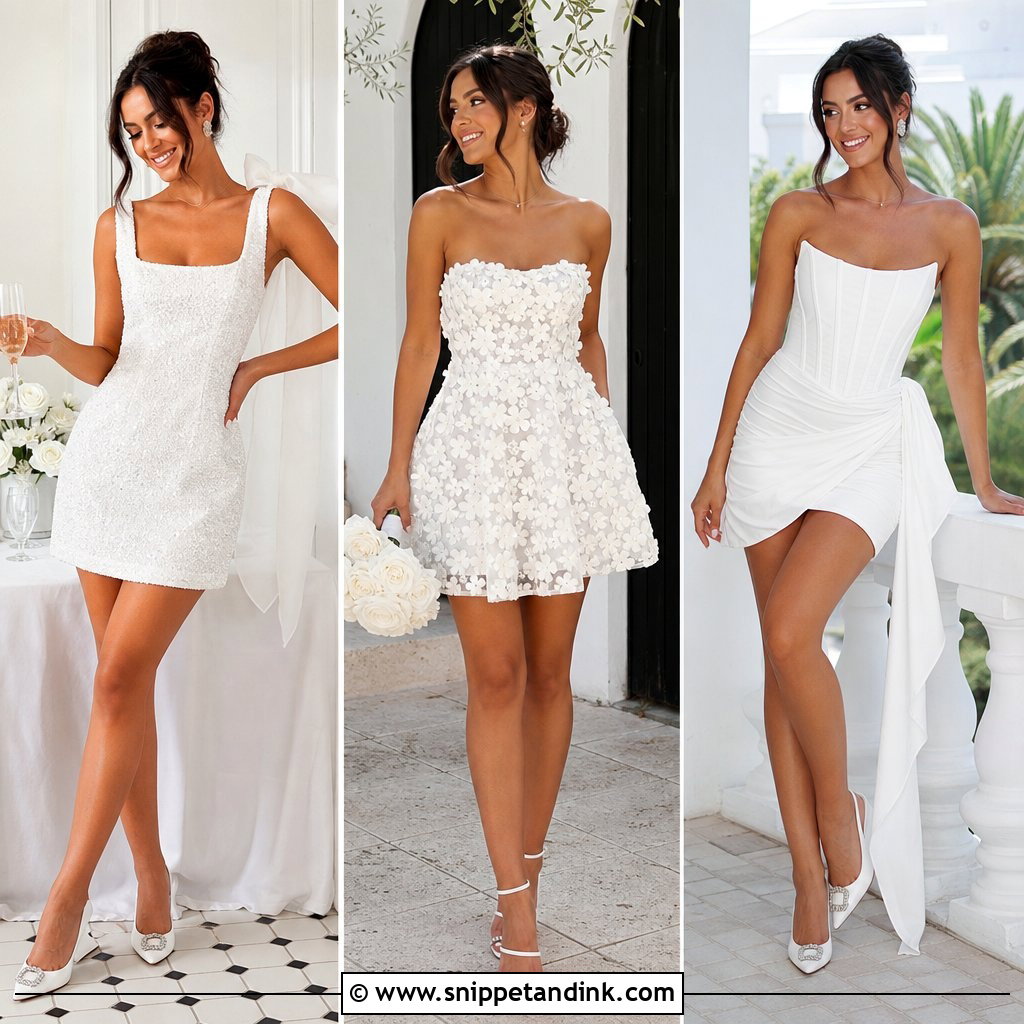
25. Bridal Angrakha Maxi With Embroidered Dupatta
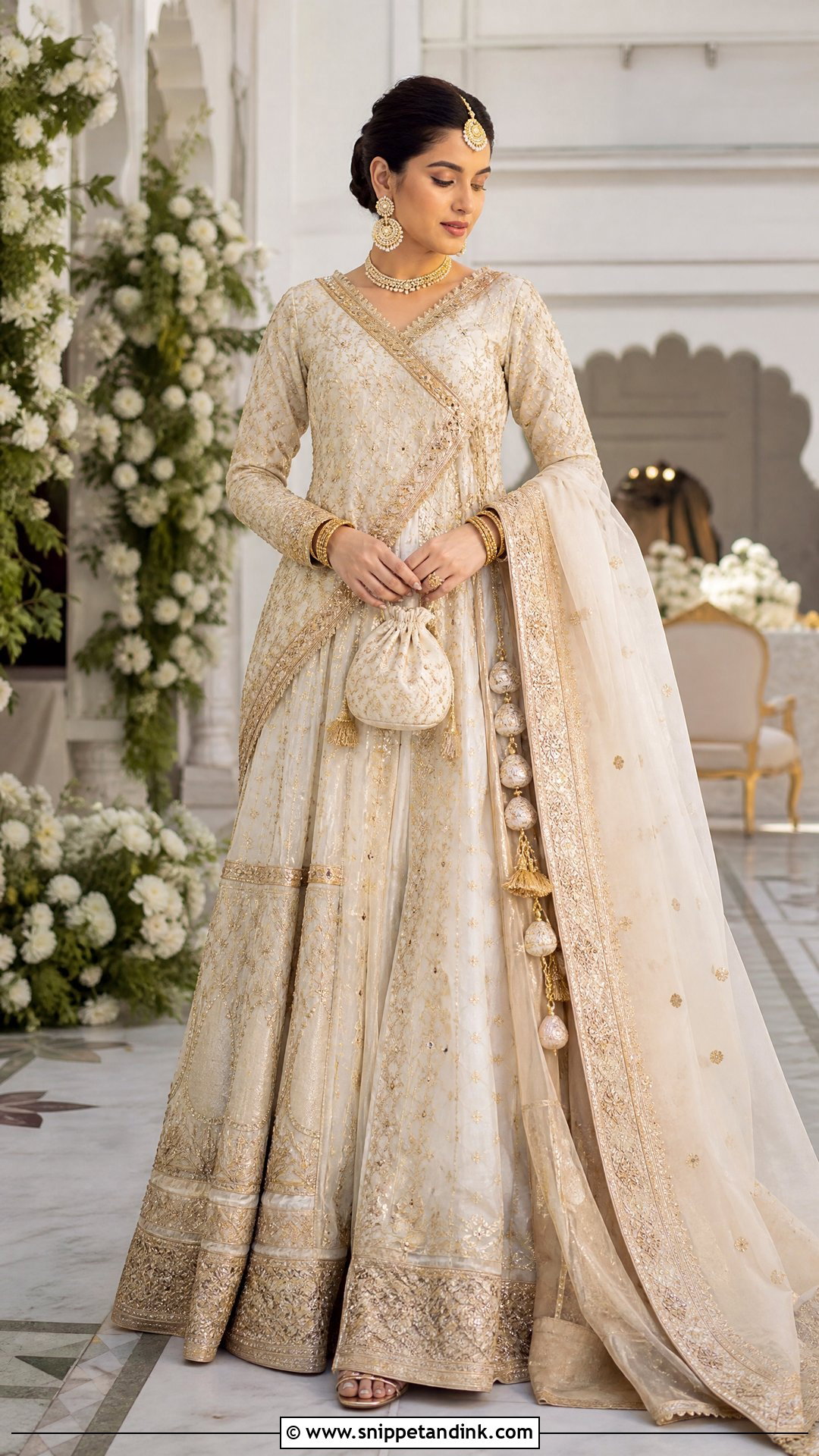
An angrakha maxi brings the traditional crossover bodice to a flowing modern gown. An overlapping bodice, a defined waist, full sleeves and a wide paneled skirt, with gold or silver work running along the diagonal neckline and on to the cuffs and hem. Tassels at the side tie add movement. A heavily bordered organza dupatta, kundan earrings, a delicate necklace, bangles, metallic heels and a small potli. Hidden hooks along the crossover stop it from opening when you lean forward. The shape flatters a lot of bodies, since it defines the top and falls cleanly over the waist and hips.
Carrying the Weight Through Baraat, Stage and Rukhsati
A heavily worked baraat lehenga with two dupattas is properly heavy, and the weight sits on your waist and the top of your head for hours. I plan for that the way I’d plan for heat at an outdoor wedding.
What I check at the final trial
- The skirt should hang from a wide, well-finished waistband with a strong drawstring or hook, not a thin one that digs in.
- A can-can underskirt adds flare but also width; make sure you can fit through a car door and sit on the stage sofa in it.
- The head dupatta is pinned to the hair, not just to the tikka, with small U-pins your hairstylist hides. Heavy dupattas pulling on a tikka chain give headaches.
- Sit for twenty minutes in the full outfit and jewelry. If anything pinches now, it will hurt by the rukhsati.
Afterward, don’t store a worked outfit on a hanger, since the weight stretches the fabric. Fold it with muslin or acid-free tissue between the layers, keep it in a cotton bag rather than plastic, and refold it along new lines every few months so the metal thread doesn’t crack at the creases.
Match the Outfit to the Event Before the Embroidery
What these outfits have in common is how far Pakistani bridal fashion can range between heritage and modern dressing. Red lehengas, farshi ghararas, pishwas and worked shararas keep the tradition; pastel maxis, cape lehengas, metallic gowns and sarees give lighter options. Pick by event, season and venue first, then by how your body likes to move. At your final fitting, check the weight, the lining, how your arms move in the sleeves, the shoe height and where every dupatta pin sits. Good tailoring does more than extra embellishment, and jewelry is best chosen after the outfit, not before.
You'll Like These Ideas:


Leave a Reply