
Bridal dressing across the Middle East ranges from couture ballroom drama to quiet, deeply embroidered tradition, and the best gowns carry meaningful cultural details rather than borrowed decoration. Below you’ll find ball gowns, embroidered kaftans, bridal abayas, sleek satin and a few reception looks. The region is huge and varied, so I start every consultation with the bride’s own heritage, what her family expects and the room she’ll walk into. Long sleeves, trains, capes and detachable layers all sit comfortably with modern cuts now. Pick fabric you can move in, ask for custom coverage early, and choose jewelry that supports the dress instead of fighting it.
Building Modest Coverage Into the Pattern From Day One
Adding sleeves or a lining to a finished gown is possible, but it rarely looks as good as a dress cut with coverage from the start. If you know you want long sleeves, a high back or an opaque skirt, say so at the first appointment and order the gown that way. A made-to-order or custom gown usually needs six to nine months, sometimes longer for hand embroidery, and a rushed workroom is where corners get cut.
At the consultation, I ask for these things in writing:
- Sleeve fabric, length and whether the cuff closes with buttons or a zip.
- Exact lining for every sheer area, with the color matched to the outer fabric.
- Neckline height, measured from the collarbone.
- Extra fabric from the same bolt for the hijab, veil edging or later repairs.
- How many fittings are included and when the final one falls.
That extra fabric is the item brides forget most. Dye lots vary, and a wrap cut from a different roll can look a shade off in photographs, even when it seemed identical in the shop.
1. Long Sleeve Lace Ball Gown
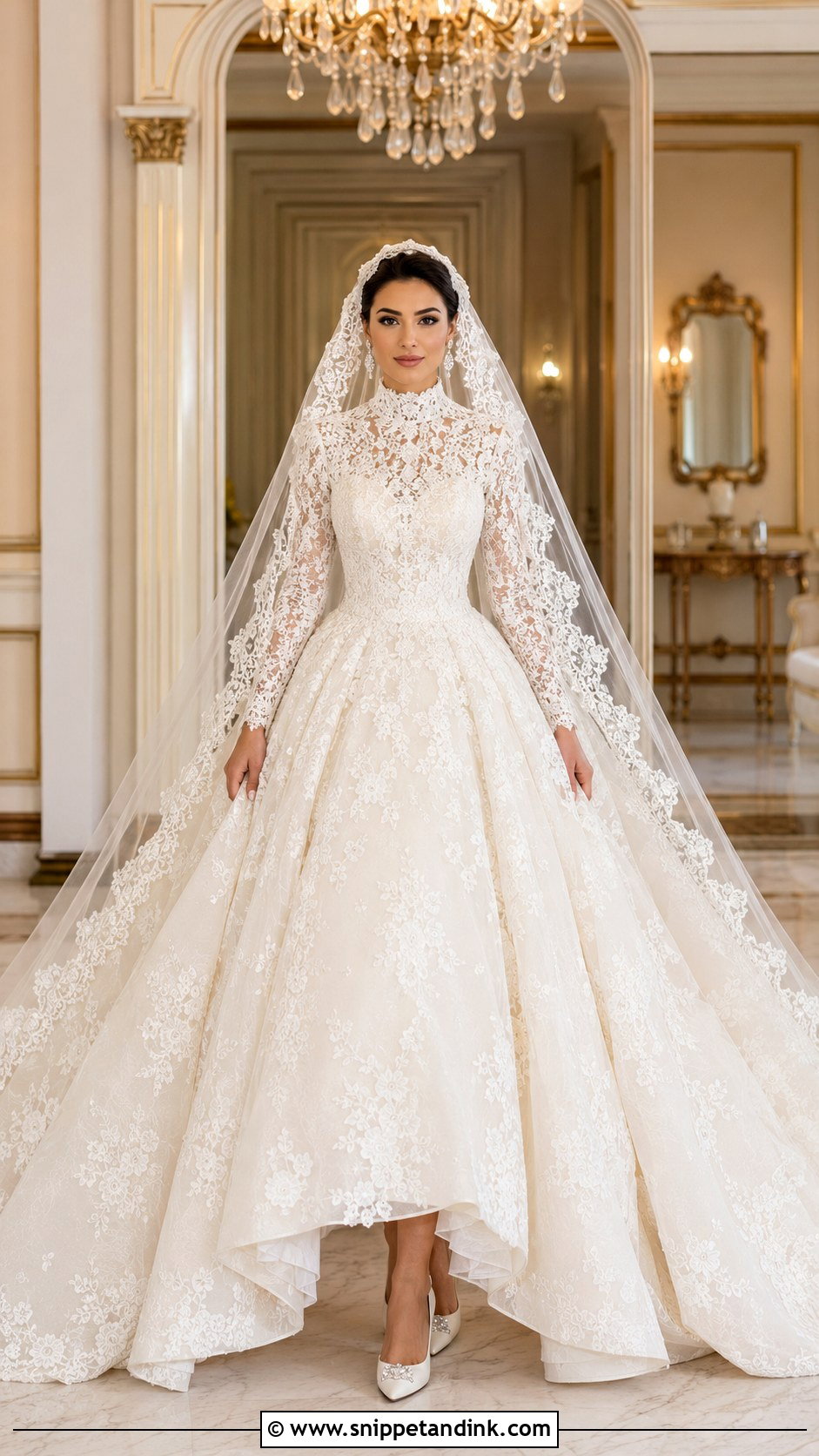
A long-sleeve lace ball gown has the presence a formal ballroom wedding asks for. I pair a structured bodice and a high bateau or soft round neck with a full layered skirt and a sweeping train, and I let the lace appliqué thin out as it travels down the skirt. Lace sleeves are the fitting point to watch; set them too snug and they ride up every time you lift your arms. Add a cathedral veil edged in matching lace, crystal drops and pointed ivory pumps. For a hijabi bride, I ask for a fully lined bodice, opaque sleeves and a satin or chiffon wrap cut from the same bolt. Keep the bouquet small so the waistline stays visible.
2. High Neck Beaded A-Line Wedding Dress
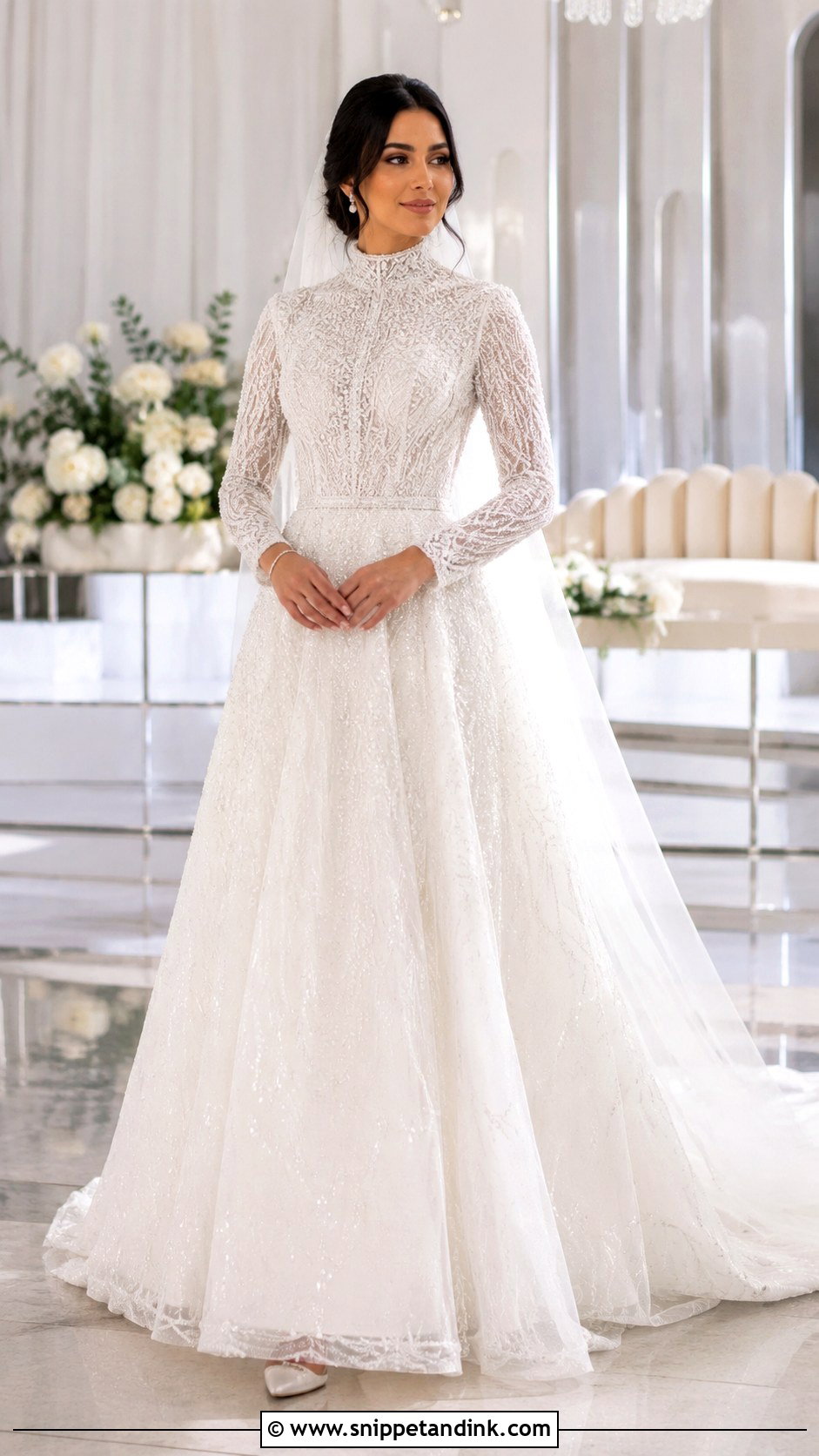
Beadwork reads best when it’s dense at the bodice and fades out toward the hem, which is exactly what makes a high-neck beaded A-line feel light instead of dated. Crystal, pearl or sequin patterns should follow the bodice seams. A natural waist with a flowing skirt suits most figures I fit. Heavy beading at a high neck can scratch the chin and jaw, so I always have the top edge finished with a soft binding. Finish with a simple tulle veil, pearl earrings, a slim bracelet and closed-toe heels, and skip the necklace. A smooth satin hijab or a plain headpiece completes it for a nikah or an evening reception.
3. White Bridal Kaftan With Gold Embroidery
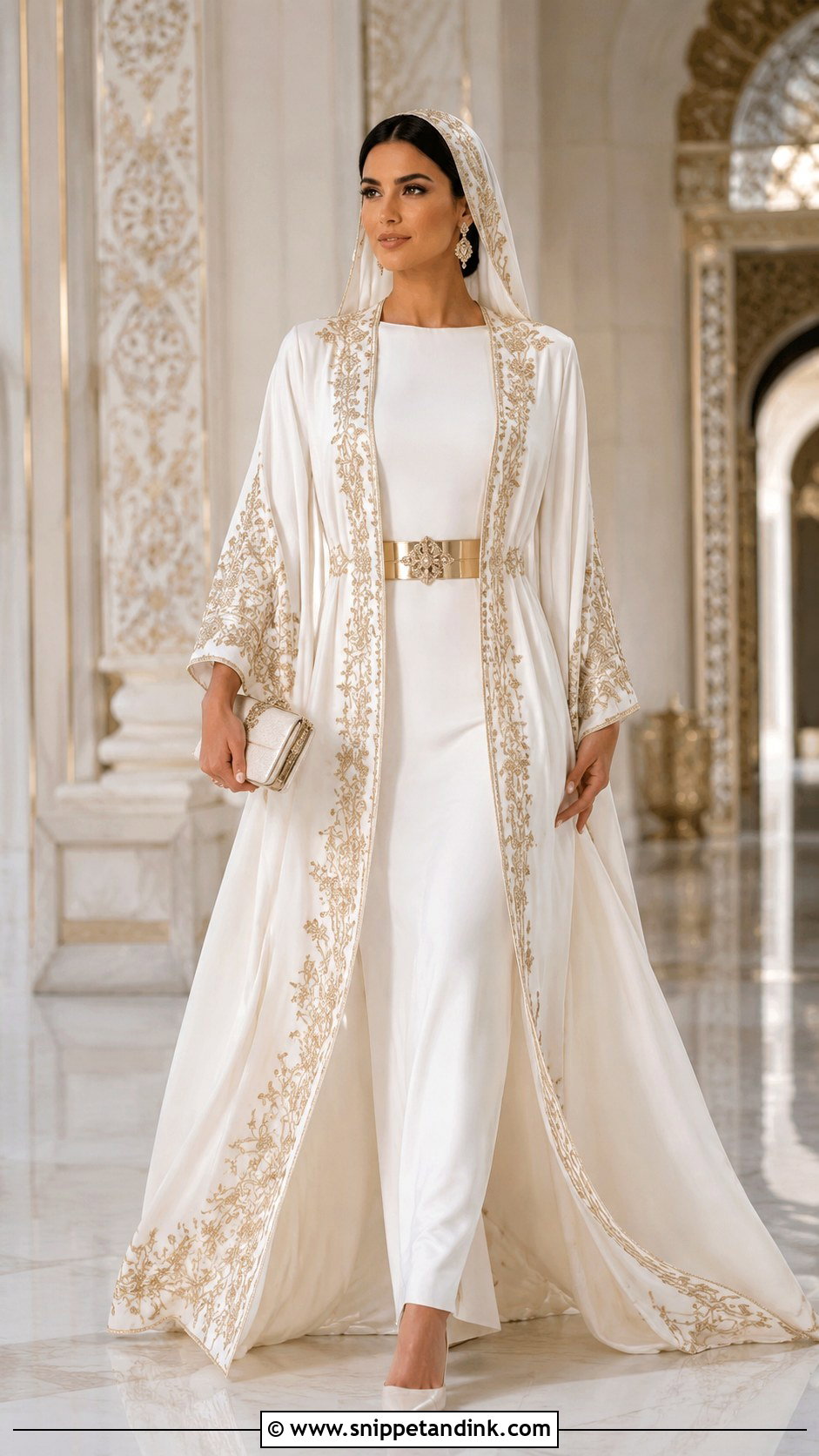
Gold embroidery on a white bridal kaftan gives you texture that photographs from across a hall. The secret is the tailored inner dress, which keeps the silhouette smooth while the open or belted outer layer moves. I place embroidery at the neckline, cuffs, waist and front opening so it stays in frame in every portrait. Metallic belts look wonderful but often dig in when seated; try sitting for ten minutes in it before you decide. Gold drops, an embroidered veil or head covering, ivory pointed shoes and a small clutch are enough. Regional motifs that mean something to your family are worth asking the maker about. White and antique gold glow under bright ballroom lighting and against heavy floral decor.
4. White Moroccan Takchita Wedding Dress
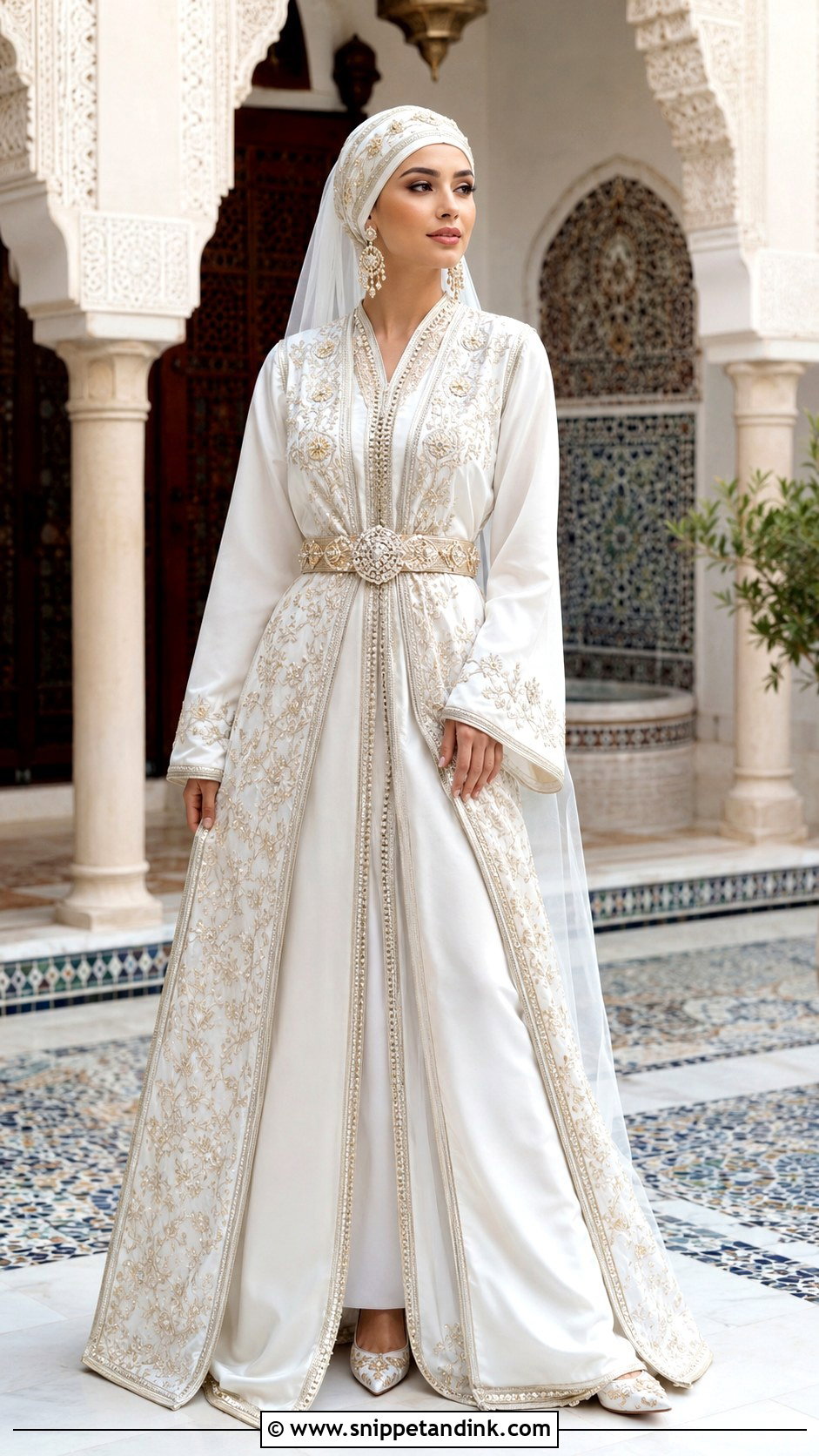
A white Moroccan takchita is two garments working together: a smooth underdress and a decorative outer layer whose trim frames you from neck to hem. White-on-white threadwork is subtle, while silver or pale gold gives the edges definition. The belt does a lot of structural work here, so have it fitted after the layers are hemmed, not before. Jeweled earrings, embroidered slippers or low block heels and a neat updo or draped hijab complete it. Leave the oversized bouquet at home, since it covers the center panel. Takchitas shine at a henna night, a formal entrance or as a second outfit during the reception.
5. Cape Sleeve Wedding Gown
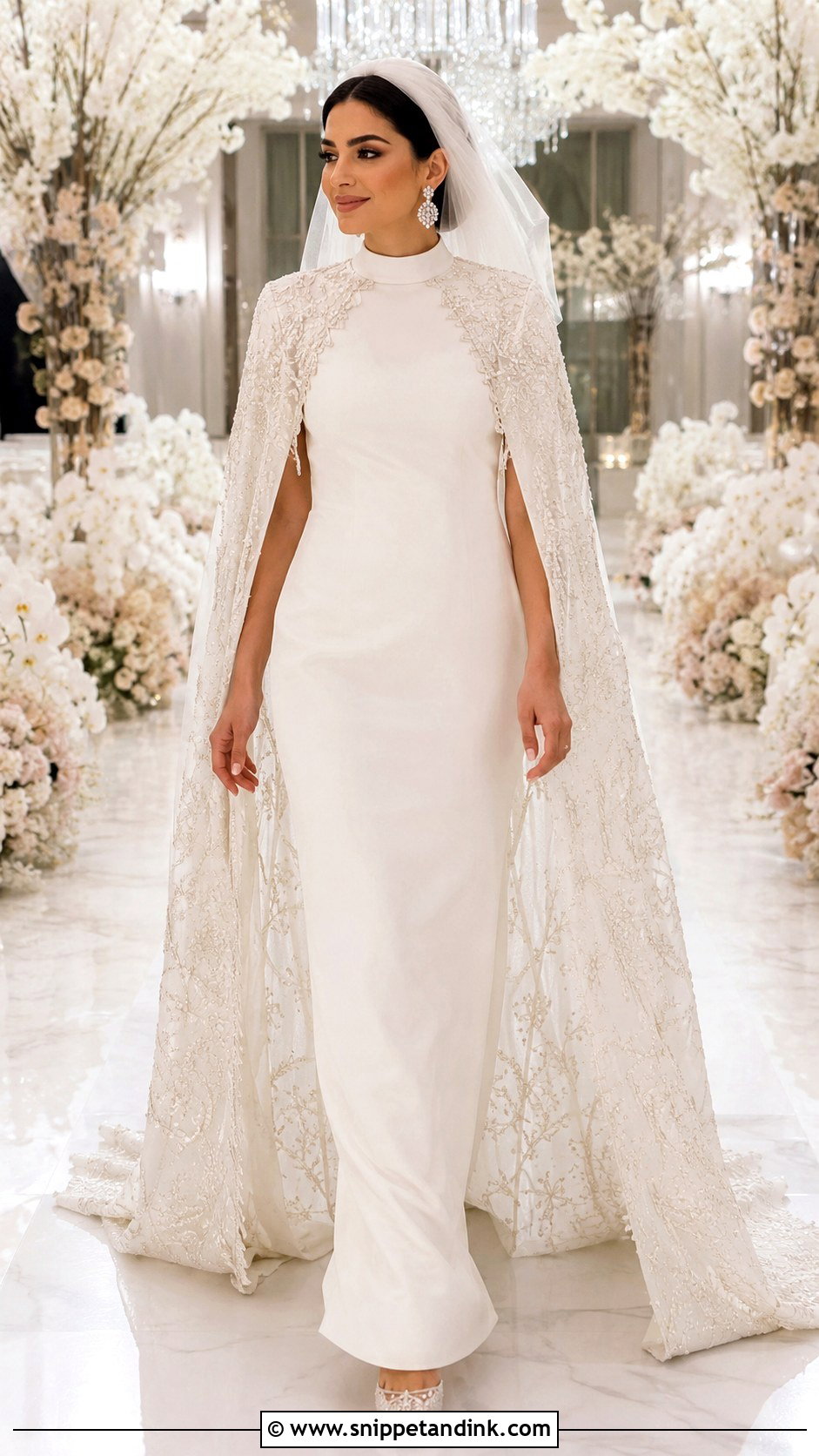
Capes are about the walk. A fitted A-line or column dress under a floor-length chiffon, organza or embroidered tulle cape trails behind you with every step. The cape can start at the shoulders or fasten around a high neck for more coverage. Chiffon capes float; organza ones hold a shape and can feel stiff when you turn, so I have brides do a full turn in the mirror before choosing. Crystal earrings, a smooth low bun and pointed pumps you can stand in for hours finish it. Wear a short veil under a detachable cape, or replace the veil with a jeweled headpiece. Because the cape comes off later, it works as a removable layer for a grand entrance and a formal evening.
6. Satin Princess Wedding Dress With Overskirt
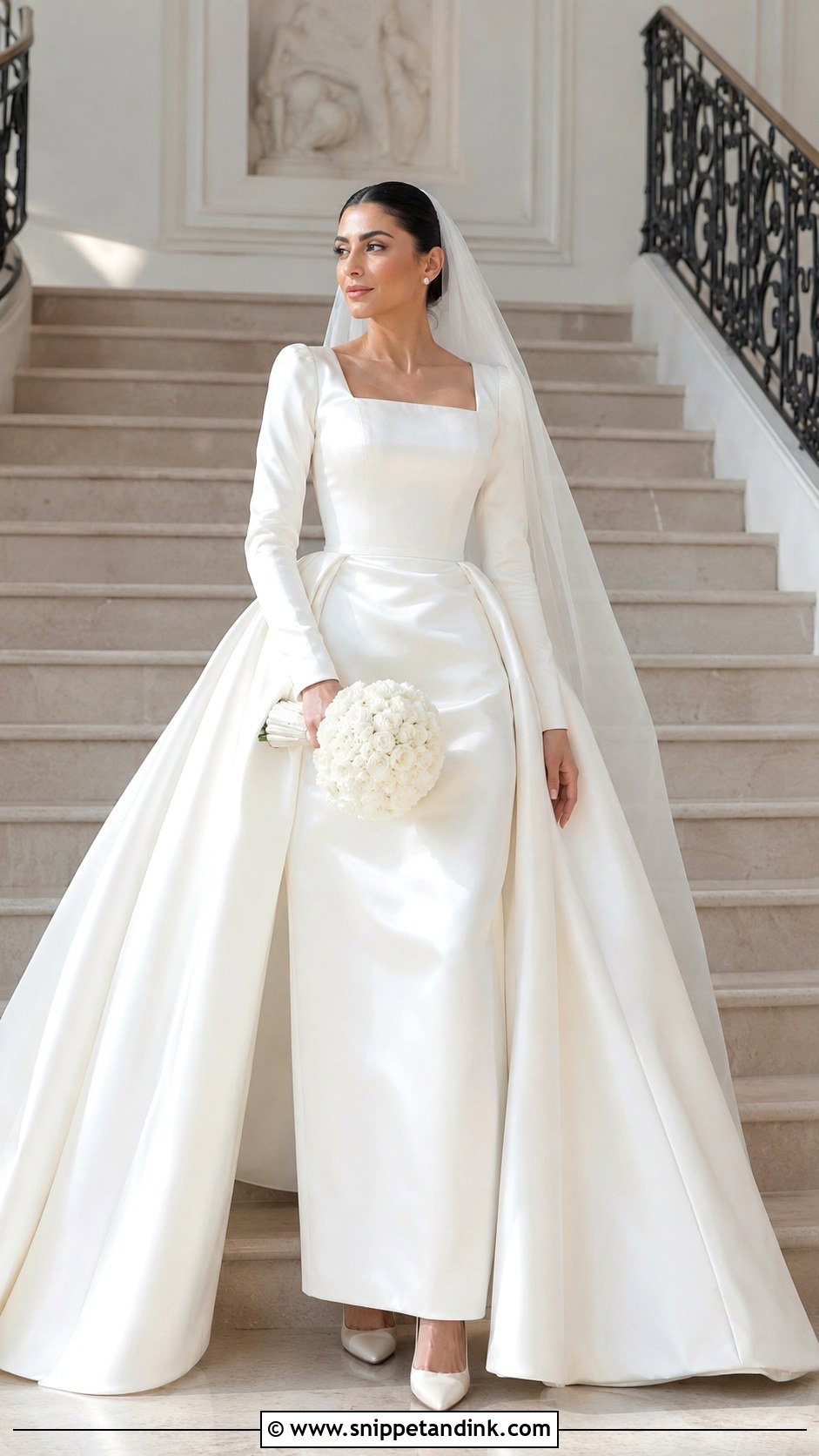
Crisp satin gives a princess gown a clean, luminous surface. Start with a fitted long-sleeve dress with a modest square, bateau or high neck, then add a detachable satin overskirt for volume during the ceremony and entrance. When the formal photographs are done, the overskirt comes off and you’re in a slimmer dress you can actually dance in. Ask how the overskirt fastens: a hidden waistband with hooks and a covered zip is sturdier than snaps alone, and it shouldn’t add bulk at the waist once removed. A long plain veil, pearl studs, a structured bouquet and closed-toe satin heels suit it. Satin needs little decoration. Hotel ballrooms and modern wedding halls suit it best.
7. Pearl Embellished Column Wedding Dress
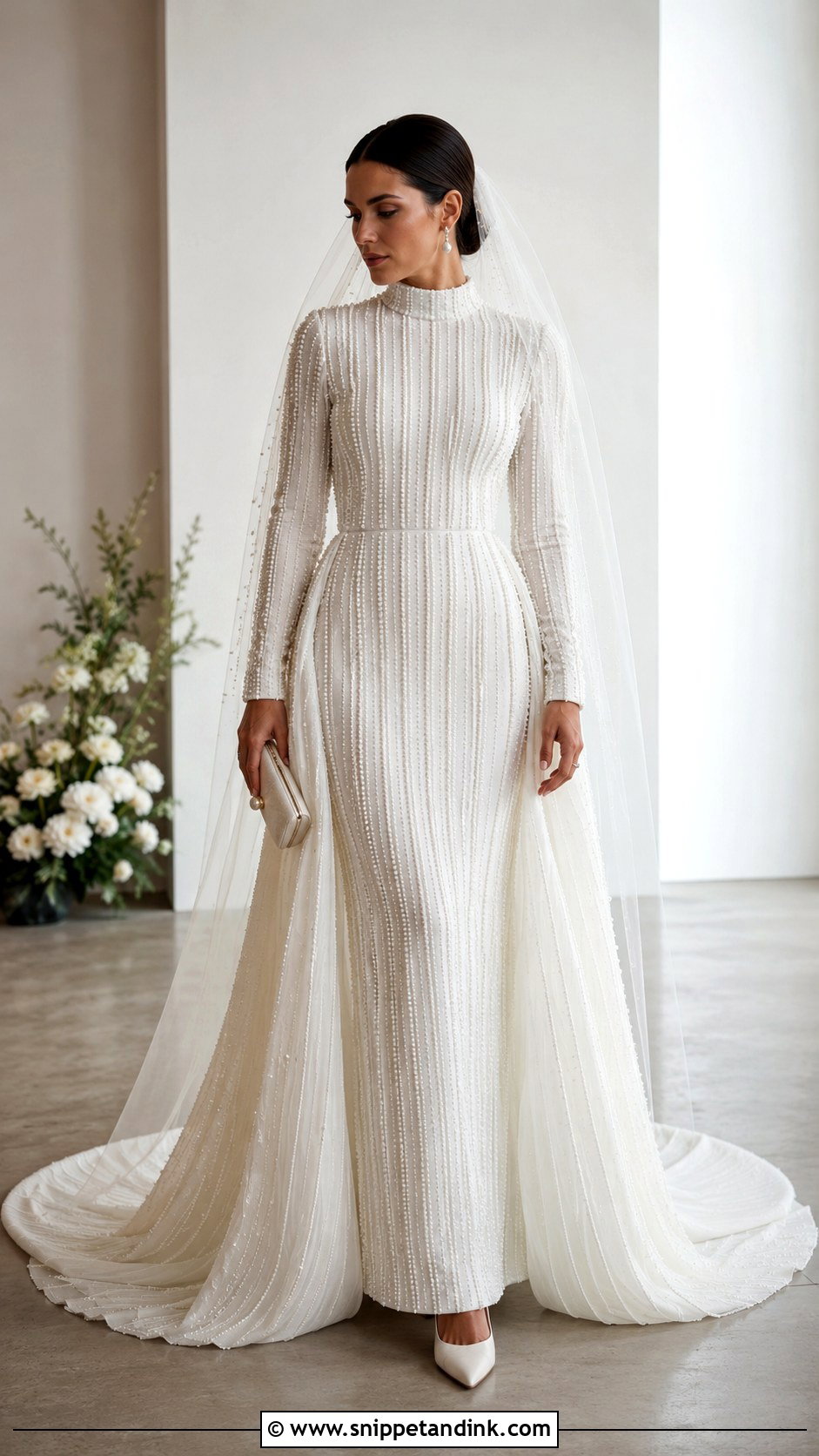
Pearls placed in clean vertical lines turn a column dress into something quietly expensive. Look for full lining, long sleeves and a high neck, with a slight flare at the hem or a removable train for the entrance. Pearl embellishment is heavier than crystal, so I check the shoulder seams carefully at each fitting; if they pull forward, the gown needs internal support tape. Pearl drop earrings, a fingertip veil, an ivory clutch and pointed heels keep it polished. A sleek style or smoothly wrapped hijab lets the neckline show. It suits a nikah, a smaller reception or a city wedding.
8. Tatreez Embroidered Wedding Dress
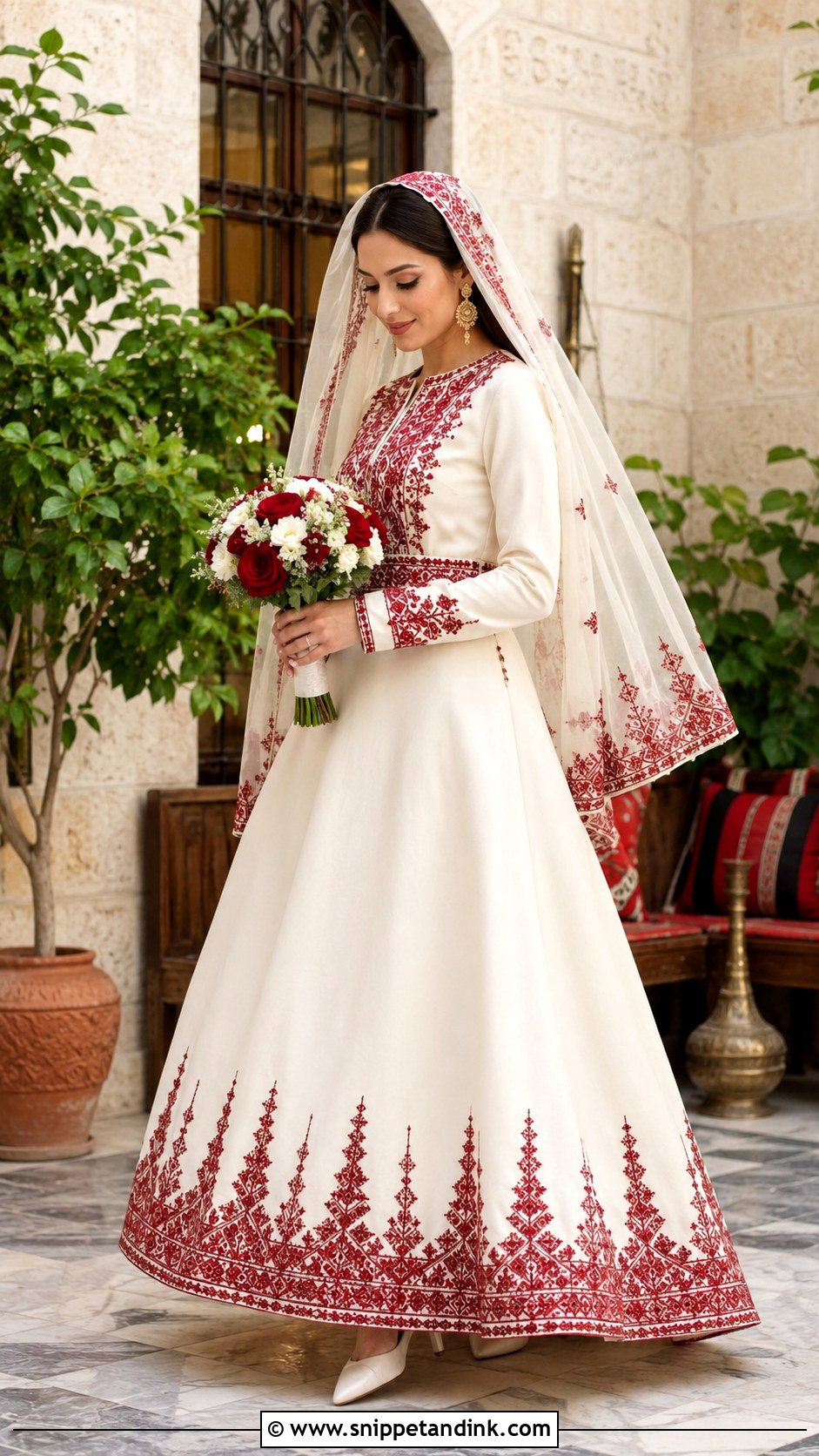
A tatreez embroidered wedding dress carries Palestinian heritage in its color, pattern and hand stitching. I start with a simple ivory or white long-sleeve A-line so the embroidery stays the main event. Tatreez panels can sit on the bodice, cuffs, belt or skirt border. Red is the traditional, striking choice; white-on-white is quieter. Cross-stitch panels are dense and add stiffness, so the gown underneath should be soft enough to balance them. Add a matching embroidered veil, gold earrings, closed-toe pumps and deep red or white flowers. Commission the motifs from a Palestinian artisan or designer who knows what each pattern means. It makes a moving choice for a cultural ceremony, a family celebration or a second bridal entrance.
9. Crystal Beaded Mermaid Wedding Dress
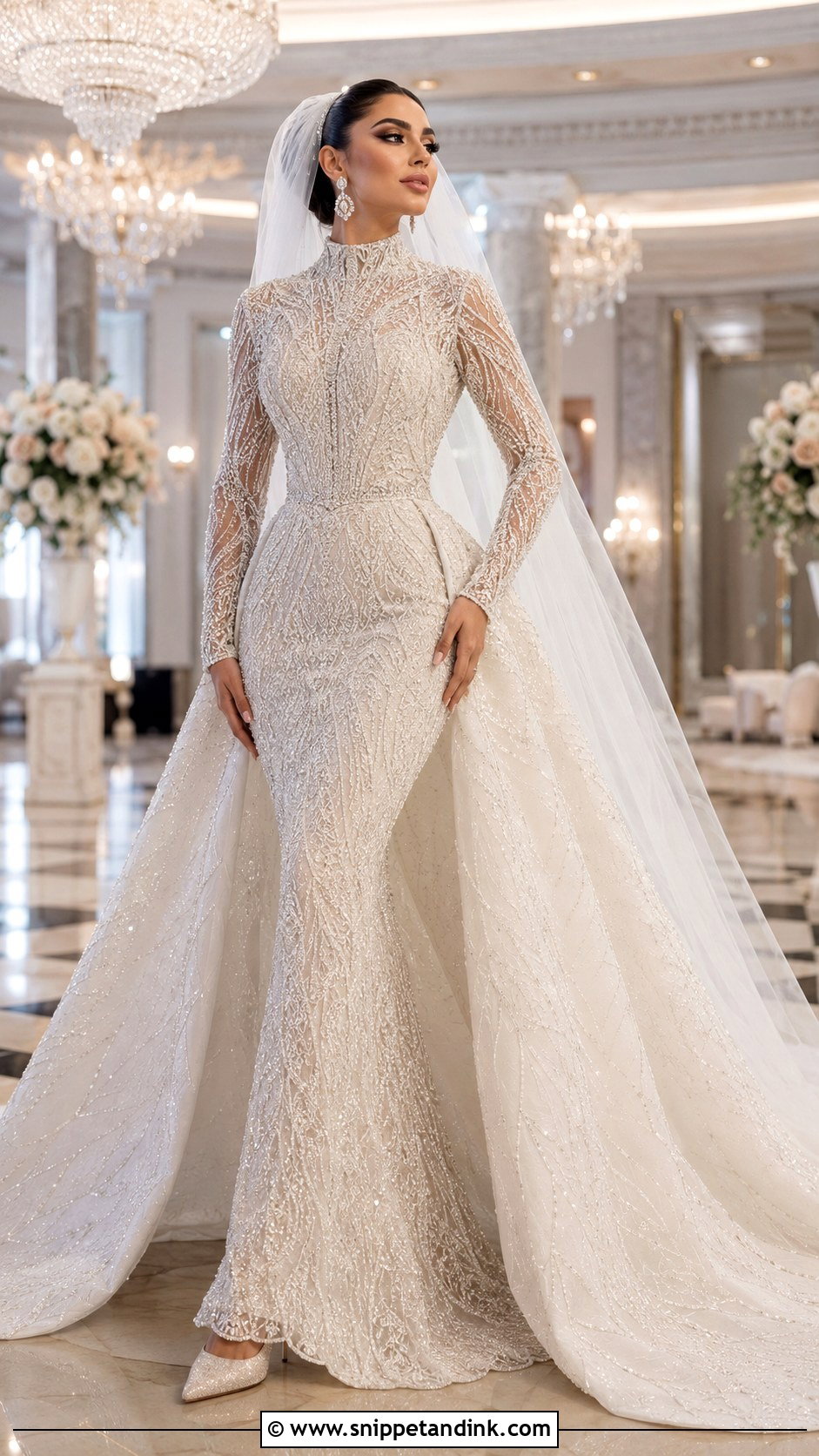
Maximum glamour, maximum fitting work. A crystal-beaded mermaid gown has to sit smoothly through the bodice and hips before it flares near the knee. Long sleeves and a higher neck balance the close fit and keep coverage elegant. Beadwork following curved or vertical lines looks far better than one solid block of sparkle. Add a detachable overskirt if you want a fuller first impression. At alterations, I ask brides to walk, sit and climb a few steps in it, because the flare point decides whether you can manage a staircase. Finish with a long plain veil, crystal earrings, a sleek bun and supportive heels. Grand ballrooms and formal evenings are where it belongs.
10. Modest Hijab Wedding Dress
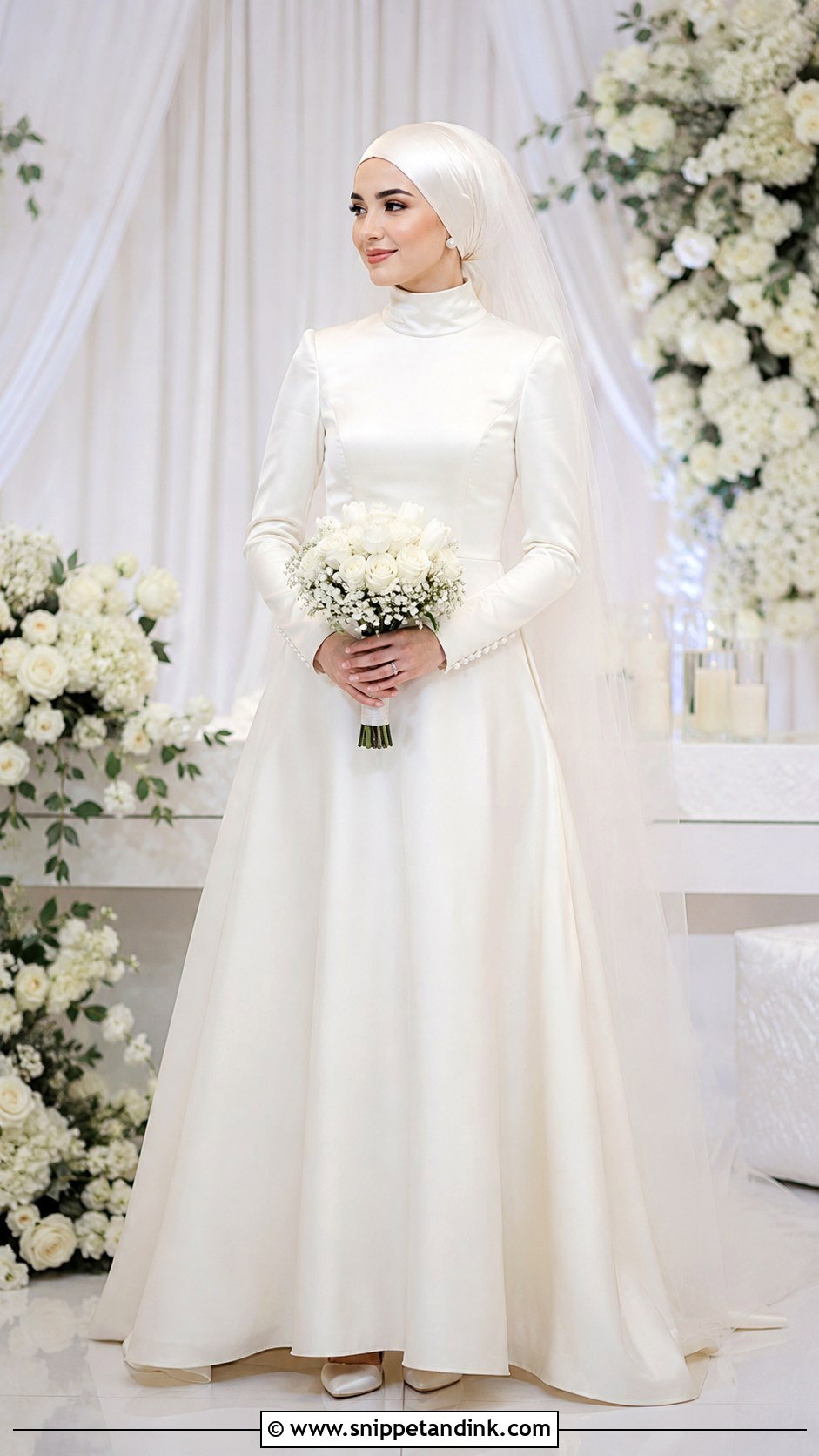
The most common problem I see with hijab bridal looks is that they’re assembled piece by piece, so the wrap, gown and veil never quite match. Start with an opaque long-sleeve gown with a high neck, a covered back and a lined skirt. Soft A-line or princess cuts move well and leave room for custom layers. Match the hijab to the gown’s undertone, whether bright white, ivory, cream or champagne, by holding the fabrics together in daylight. A light chiffon or satin wrap sits under a veil without bulk. Pearl earrings can go over or beside the wrap, with closed-toe heels and a small bouquet. Bring the styled hijab to your final fitting so the seamstress can adjust the neckline and cuffs around it.
11. Wedding Dress With Cathedral Train
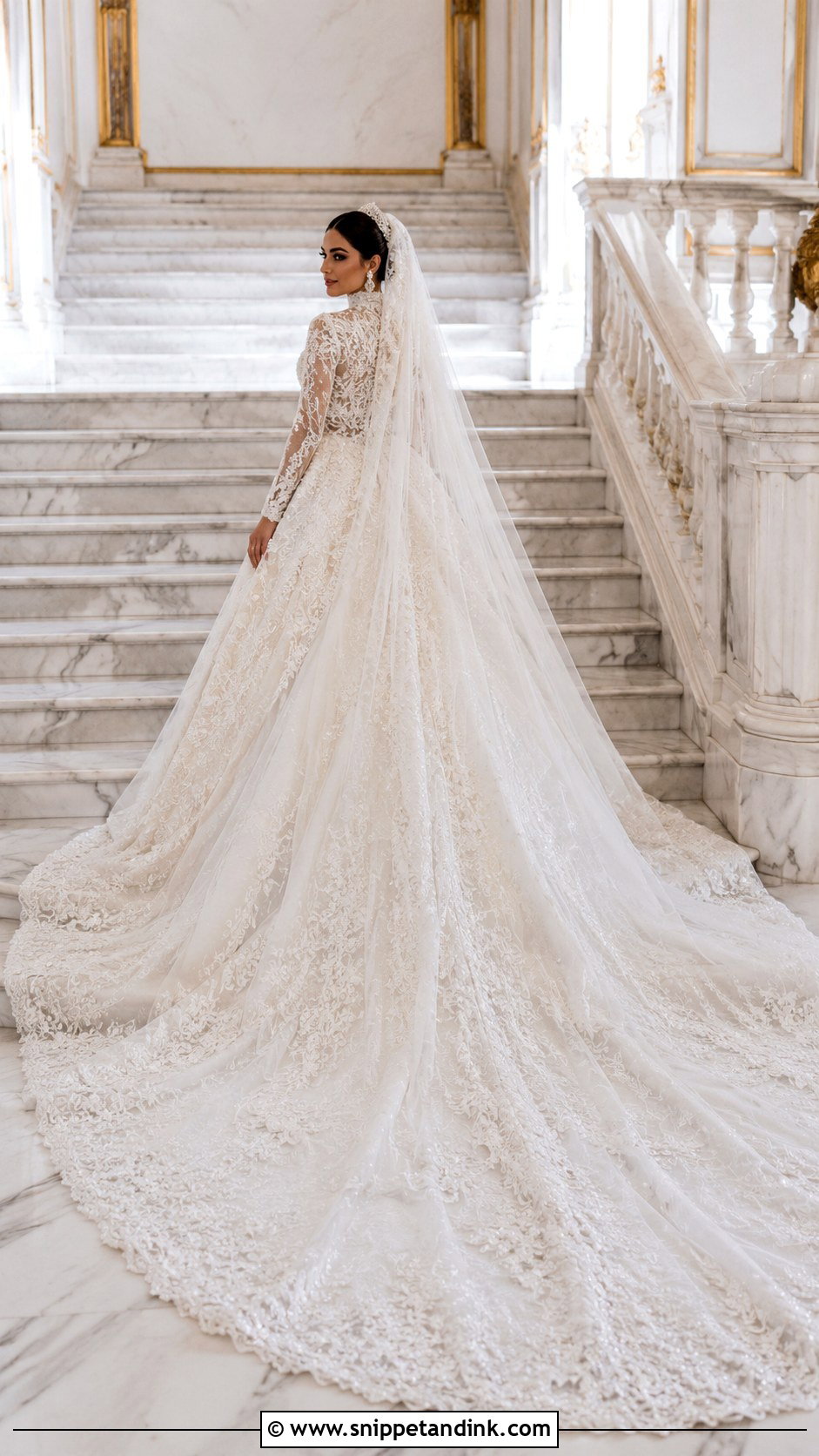
A cathedral train turns the aisle walk into its own moment. Pair it with a structured ball gown or a long-sleeve A-line, and let lace, scattered crystals or floral appliqués add depth while leaving some plain fabric so the design reads from a distance. A cathedral veil that ends slightly past the train creates one continuous line. Supportive ivory pumps, statement earrings and a neat updo or polished hijab complete it. Ask the designer for a strong bustle with multiple pick-up points. A cathedral train can weigh several pounds, and a bustle with only one or two hooks tears loose on the dance floor. Long aisles and grand staircases show this gown off.
12. Ivory Bridal Abaya With Embroidery
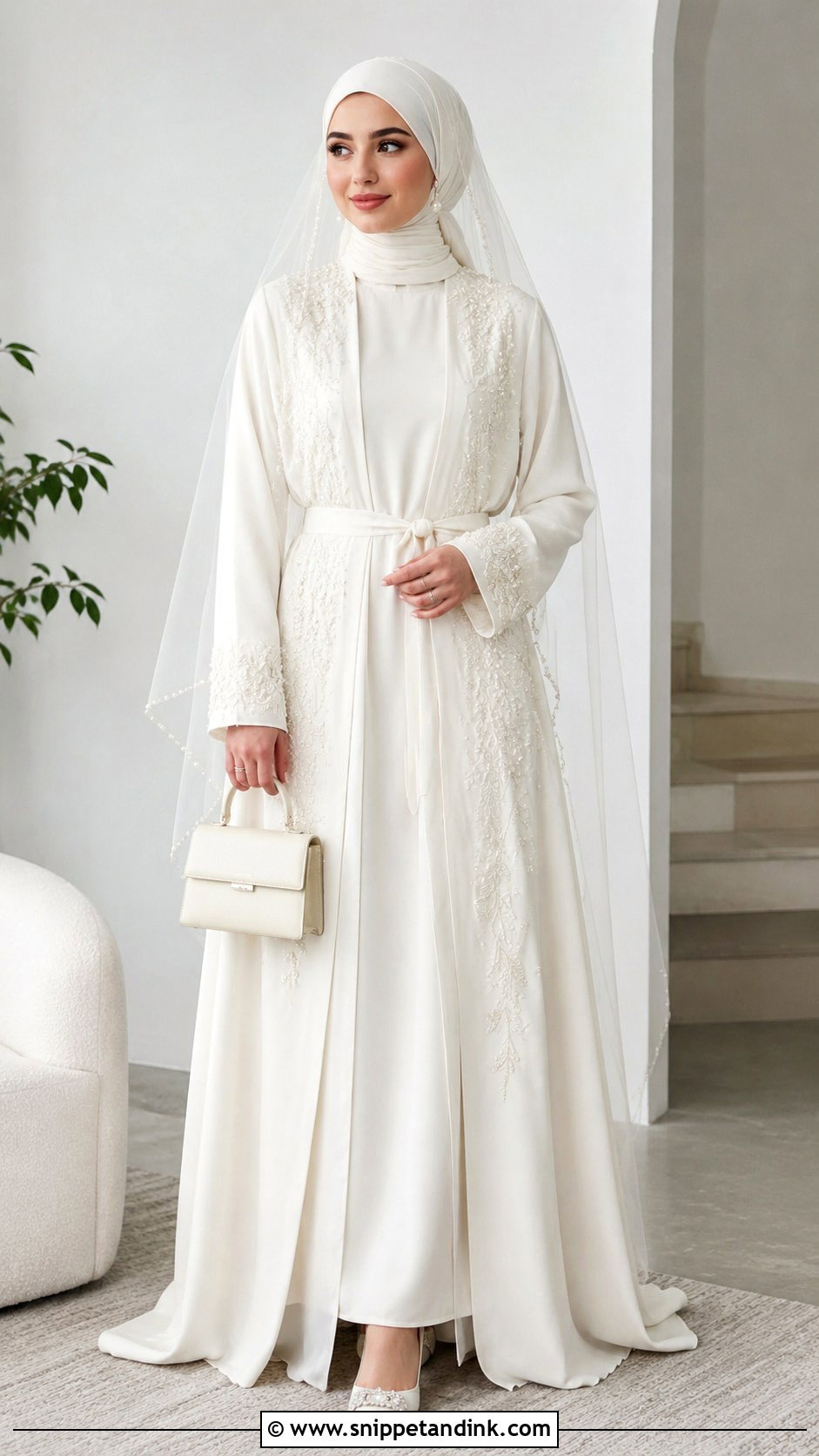
An ivory bridal abaya is graceful for a nikah, a legal ceremony or a small gathering. I like it in crepe, satin or light jacquard over a matching opaque inner dress. Embroidery at the cuffs, shoulders and front opening adds definition, and pearl, silver or pale gold thread sits nicely on ivory. A narrow fabric belt defines the waist, or wear it open for softer movement. Add a coordinated hijab, a fine veil, pearl earrings, a small structured bag and embellished low heels. Hem both layers in the same session while you wear the actual shoes; if the outer layer is even half an inch longer, you’ll step on it all evening.
13. Silk Bridal Kaftan Wedding Dress
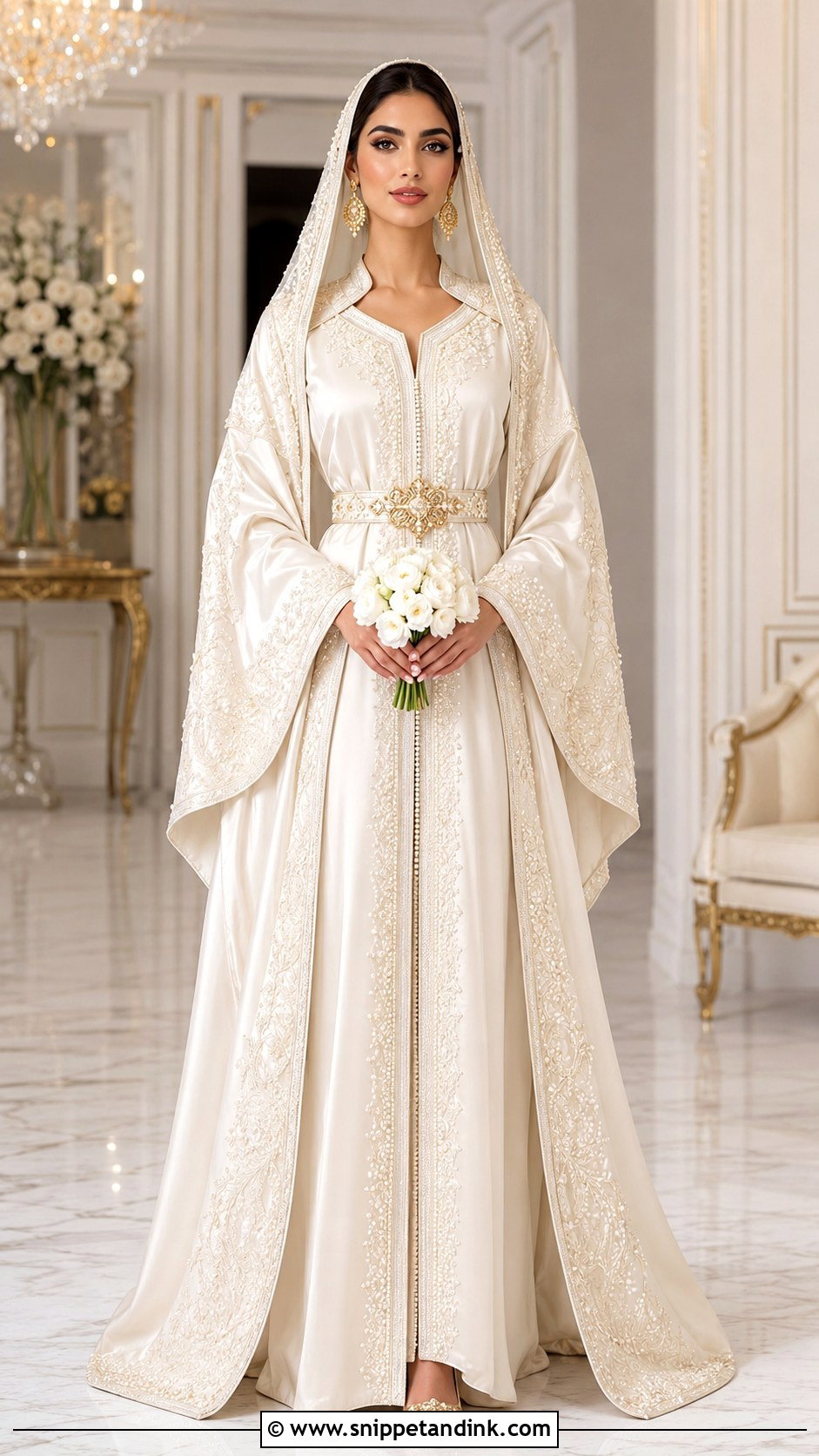
Silk kaftans move like water, but silk is unforgiving. An off-white or ivory kaftan with a structured neckline, wide sleeves and a softly fitted waist looks luxurious from every side. White embroidery, seed pearls or fine metallic trim outline the shape without hiding the sheen. Choose a handcrafted belt that’s comfortable seated. Gold earrings, a sleek style or matching head covering, pointed metallic shoes and a small bouquet are enough. Smooth silk reveals every seam and every water drop, so tailor it carefully, wear a supportive slip, and steam it shortly before dressing instead of pressing it. It suits a family celebration, a cultural entrance or a portrait session.
14. Long Sleeve Tulle Wedding Dress
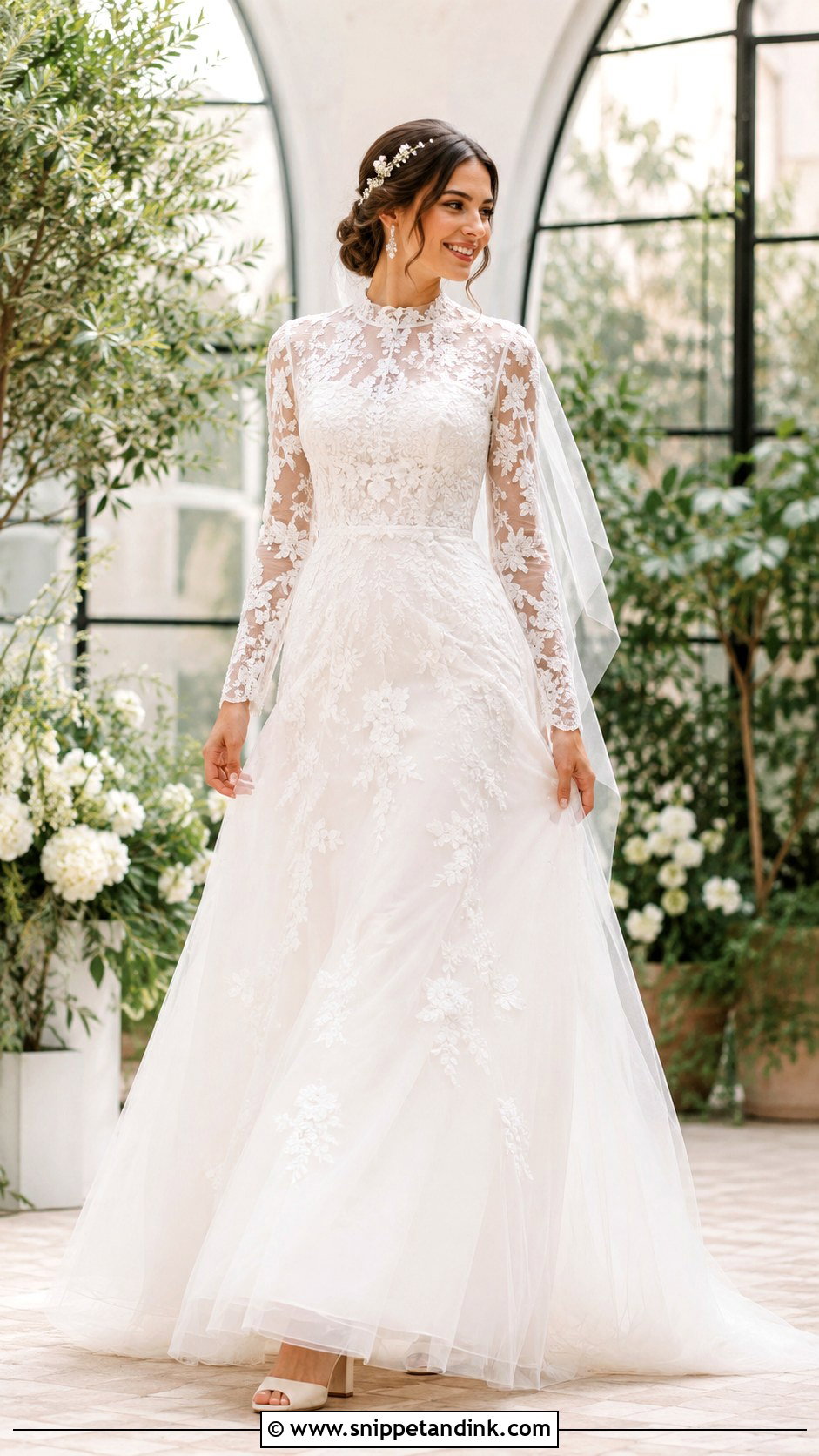
Tulle is airy, but it needs an opaque fitted lining underneath to give real coverage. Add a softly structured bodice, long illusion sleeves and a full skirt, with floral appliqués climbing from the cuffs toward the shoulders. A high or round neck keeps the balance modest. Hijabi brides can swap the illusion sections for lined tulle or matching fabric. Tulle catches on heel buckles and beaded shoes, which is why I check the hem at the fitting with the shoes on and often add a light horsehair underskirt. Finish with a fine tulle veil, crystal studs, a floral comb and block heels hidden under the skirt. Garden venues and bright ballrooms suit it.

15. Corset Ball Gown With Modest Bodice
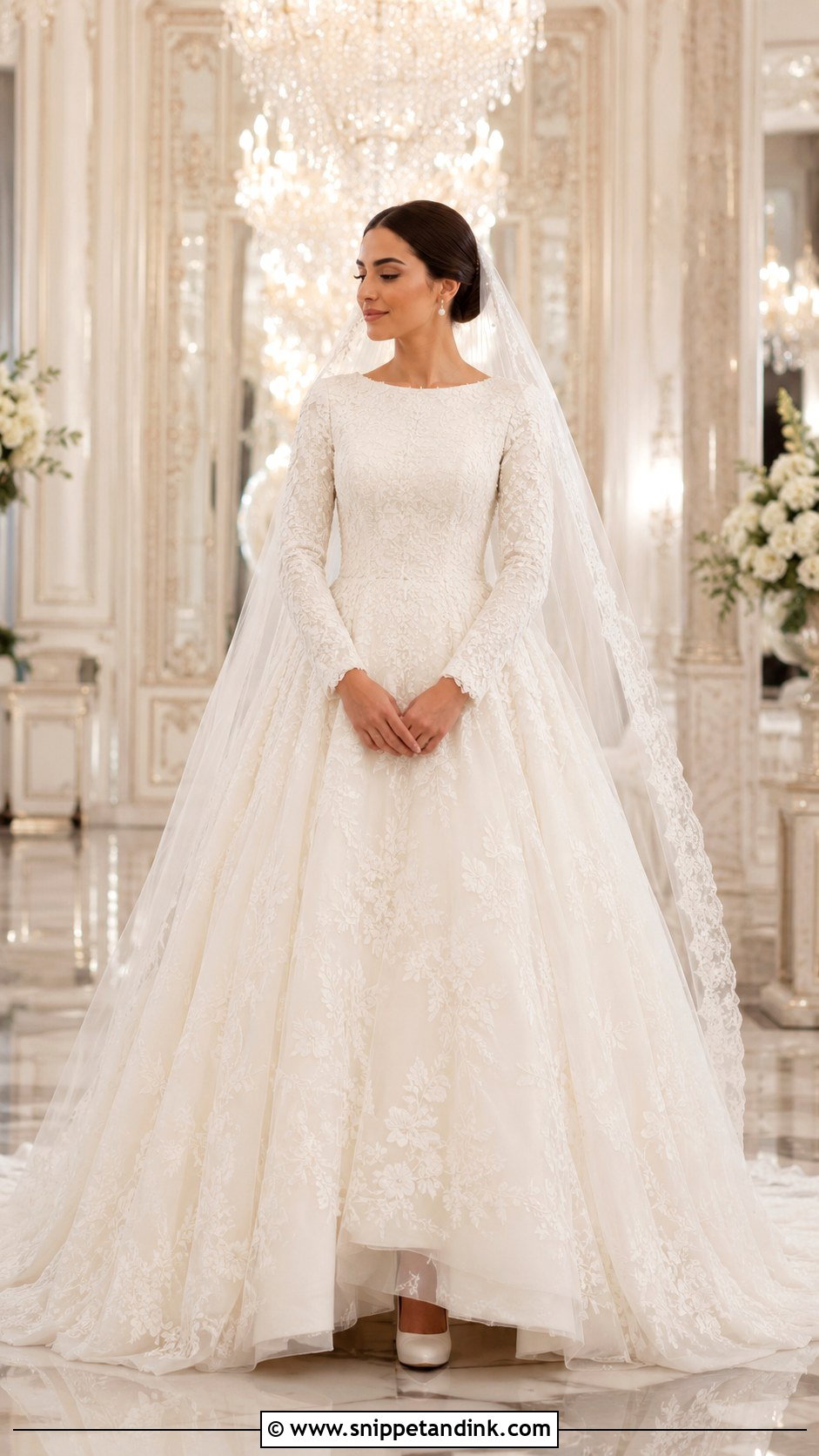
An internal corset gives a ball gown its shape without showing a single bone. I hide it under an opaque bodice with long sleeves, a covered back and a high or softly curved neck. It defines the waist and holds the weight of a full skirt. Satin gives a clean, royal look; embroidered tulle adds texture. Make sure you can breathe, eat and sit; a lace-up back or careful fitting lets the corset be adjusted on the day. Add a bustle and enough ease for movement. A lace-edged veil, pearl earrings, a smooth updo and closed-toe platforms suit a large formal wedding with a big entrance.
16. Structured Satin Wedding Dress
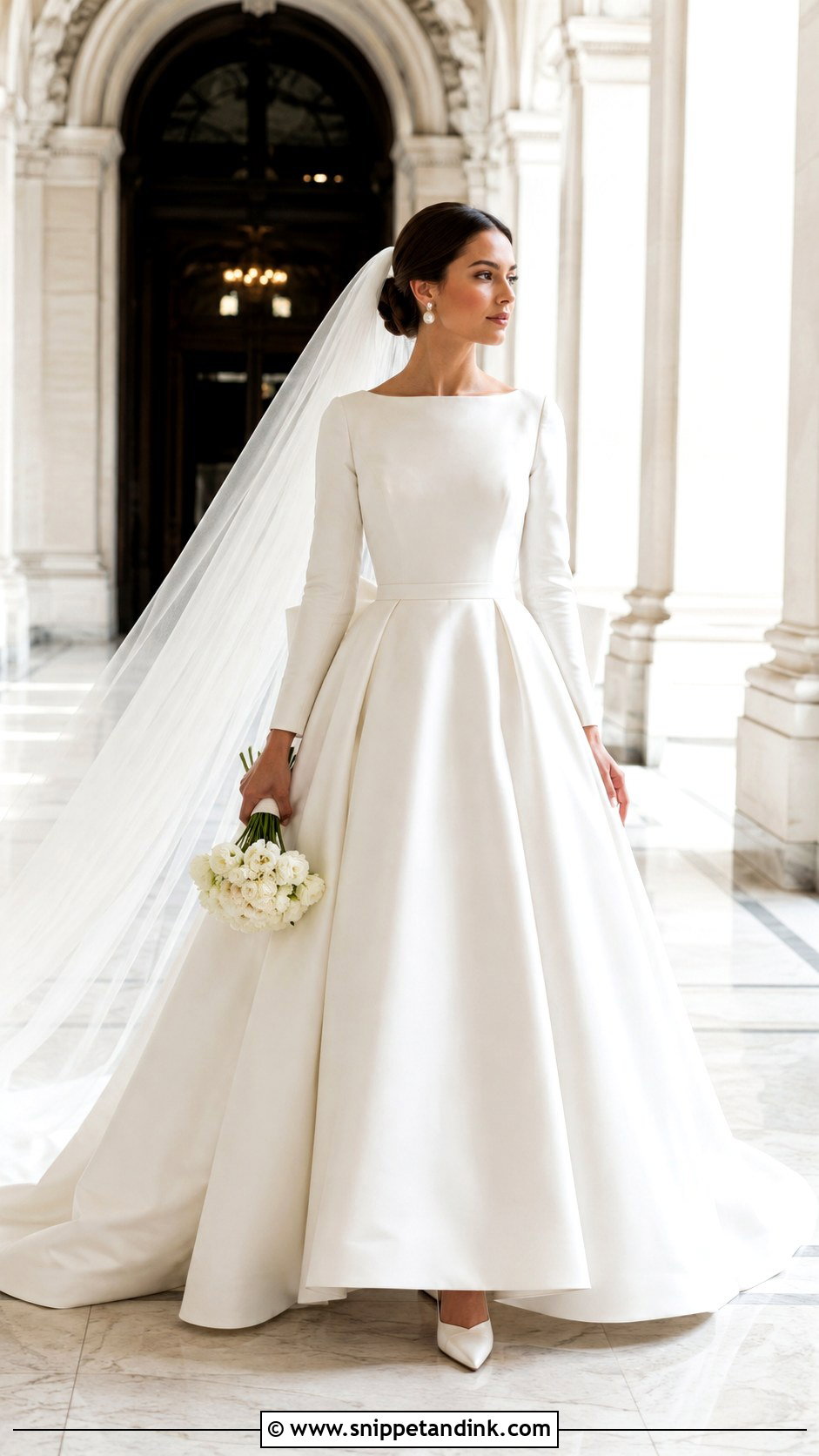
Clean lines can stop a room as well as crystals can. A structured satin gown is a modern take built entirely on tailoring: an A-line with long sleeves, a defined waist and a bateau or high neck, with skirt pleats creating volume instead of heavy embellishment. The satin must be heavy enough to stay smooth under bright lights; thin satin ripples at the seams and every ripple shows in flash photography. Add a dramatic plain veil, sculptural pearl earrings, pointed satin shoes and a bouquet of one flower variety. One detail is enough, such as a detachable bow or a narrow satin belt at the back. Minimalist ballrooms and architectural spaces suit it best.
17. Floral Appliqué Wedding Gown
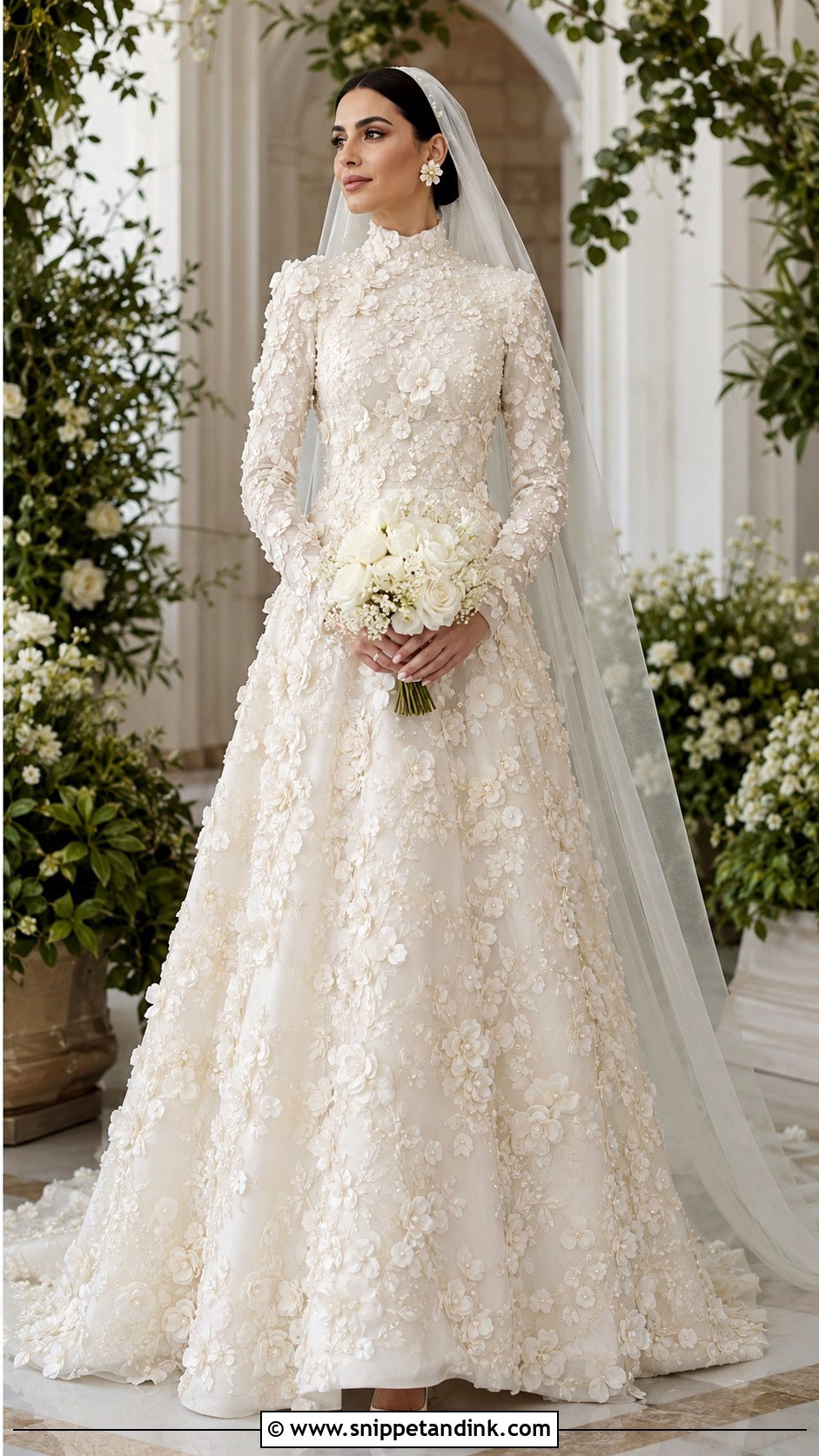
Three-dimensional flowers create texture that comes alive in close-up portraits. On a long-sleeve A-line or ball gown, concentrate the appliqués around the bodice, shoulders and upper skirt, then let them shrink and scatter toward the hem. A few pearls or clear crystals on selected petals add light without turning the gown into full sparkle. Raised appliqués catch on lace veils, so I pair this dress with a plain-edged veil. Floral earrings, ivory pumps and a soft white bouquet finish it. Hijabi brides can stitch a few matching flowers onto the edge of the wrap or veil. Keep any floral accessory smaller than the flowers on the gown.
18. Detachable Cape Wedding Dress
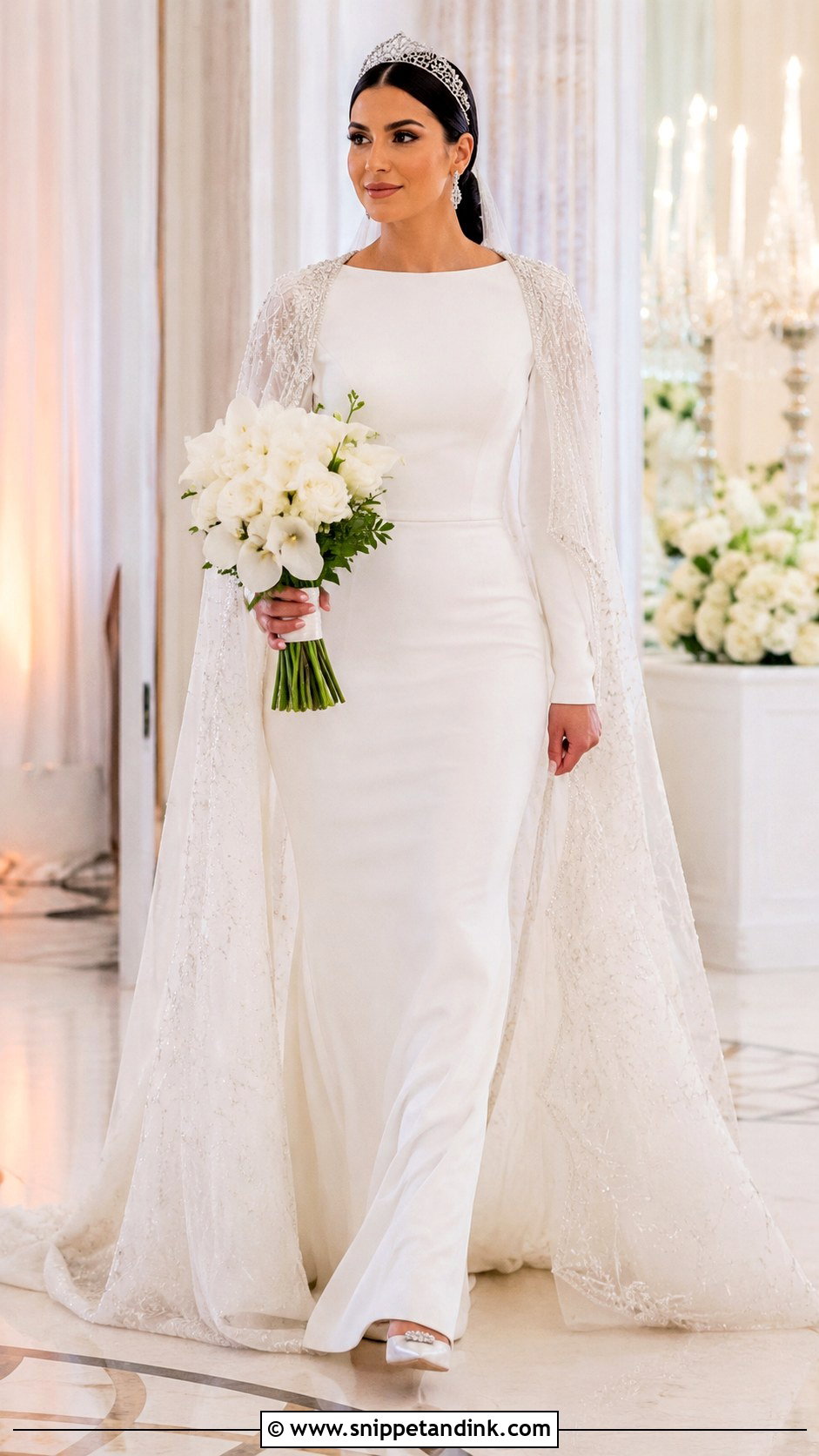
Two entrances, one gown. A detachable cape dress starts with a fitted long-sleeve gown in satin, crepe or beaded tulle, with a floor-length cape fastened discreetly at the shoulders or neckline. Wear it for the ceremony and first entrance, then take it off to move freely at the reception. You get a real change of look without buying a second dress. A streamlined veil or jeweled headpiece, drop earrings, pointed heels and a structured bouquet complete it. Practice releasing the fastenings with whoever will help you on the night; in a busy bridal room, small hooks under a veil take far longer than you’d expect.
19. Simple Crepe Wedding Dress With Veil
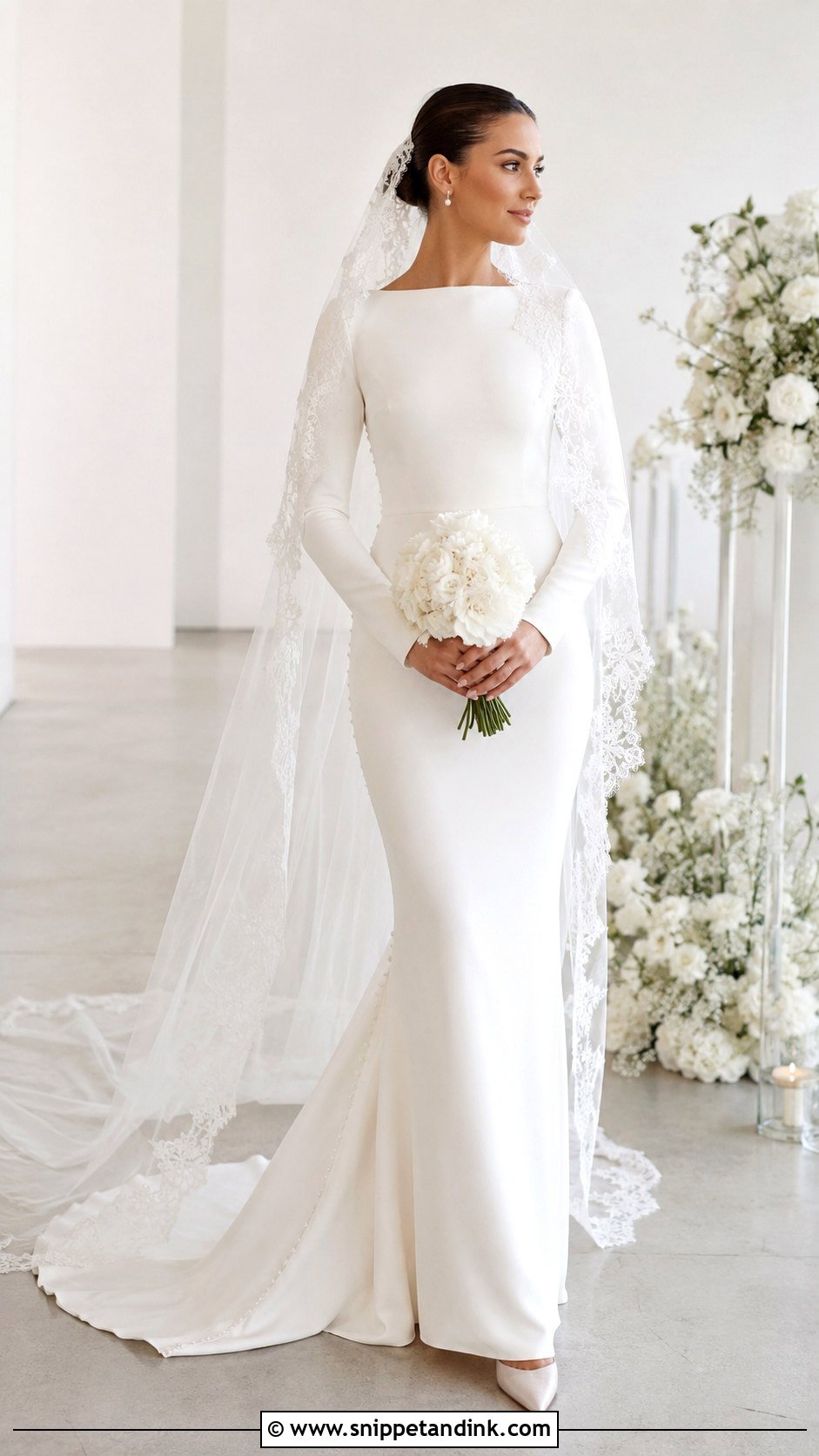
Crepe puts all the attention on tailoring and styling. A softly fitted A-line or column with long sleeves, a high neck and covered buttons along the cuffs or back is all it needs. The matte surface makes a dramatic veil look even better, whether a lace-edged cathedral veil for contrast or plain tulle for a minimal finish. Crepe clings to the hips if it’s cut without a structured underlayer, so ask about one. Pearl drop earrings, pointed ivory pumps and a neat white bouquet are plenty. Request a removable train or a bustle if there’s dancing. It suits an intimate nikah, a civil ceremony or a sleek modern venue.

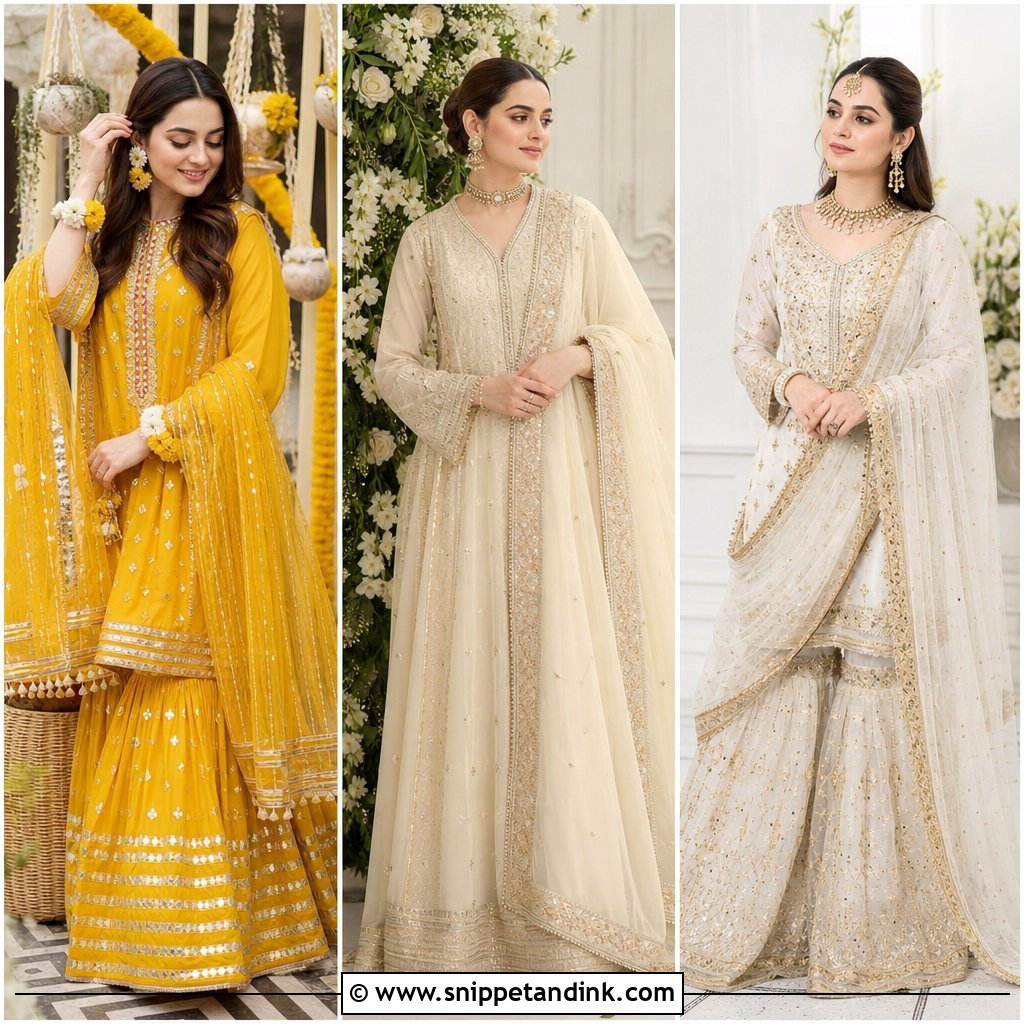
20. Champagne Embroidered Reception Dress
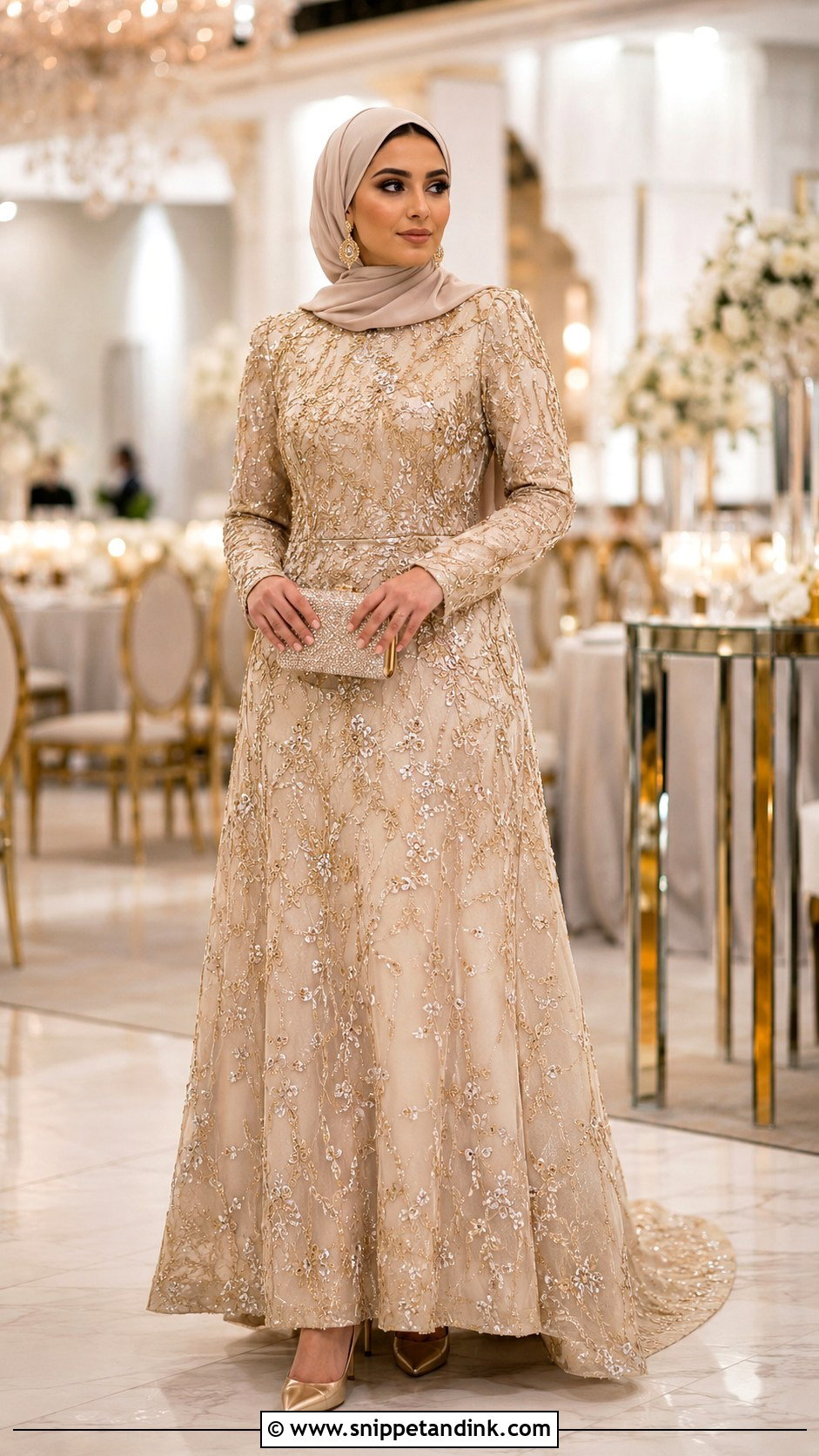
Champagne is a warm, soft step away from white for the second look of the night. A long-sleeve A-line or column with gold threadwork, small crystals and tonal beading stays bridal while clearly different from the ceremony gown. Champagne shifts under warm lighting, so I hold the swatch next to the bride’s skin under the venue’s own lights before ordering; some shades turn beige and flatten the complexion. A shorter train or an ankle-clearing front panel makes dancing easier. Metallic pointed heels, gold drops, a compact clutch and a polished style or matching champagne hijab complete it. Swap the cathedral veil for a shoulder-length veil, jeweled headband or embroidered covering. It carries you through the reception entrance, family photos and the cake.
Surviving a Zaffe, Two Entrances and a Kosha in One Night
Many Middle Eastern weddings ask a lot of the dress. There may be a lively zaffe procession, a long stretch seated on the kosha, hours of dancing and at least one outfit change. A gown that looks perfect standing still can be exhausting by midnight.
Planning the outfit change
Allow at least thirty minutes for a change between gowns, more if the hijab or hair has to be restyled. Choose one person to help, someone who has practiced the fastenings with you, and set up a quiet room close to the hall with a mirror, a steamer and good light. Hang the second outfit there in the morning so nobody is running across a hotel with it at night.
Sitting on the kosha
Heavy beading and full skirts bunch when you sit for a long time. Spread the skirt out to the sides rather than gathering it under you, and stand every so often to let the fabric fall. If your gown has a long train, ask a sister or cousin to arrange it each time you sit down, because a twisted train shows in every photo taken of the couple.
Which of These Gowns Belongs at Your Wedding?
The right gown honors the woman wearing it and the traditions of her family. The Middle Eastern Wedding Dress Ideas gathered here run from modest lace ball gowns and kaftans to abayas, plain crepe and reception gowns. Before you choose, think about your venue, the season, how many outfit changes you want and how long you’ll be standing or dancing. Ask for custom sleeves, necklines, linings and hijab-friendly details at the very start of alterations. And don’t treat this region’s bridal dress as one fixed style; your heritage, local customs and family wishes should shape the final look far more than any trend.
You'll Like These Ideas:










Leave a Reply