
Most brides walk into their first appointment with a neckline in mind and leave in a completely different silhouette. That is normal. The shape of the skirt, the weight of the fabric and how you feel walking in it decide more than any photo you saved. Below are twenty gowns I’d happily put a bride in, from classic satin to a feathered dress for the party, each styled with shoes, jewellery and a veil so you can see the whole picture. As you look, picture yourself moving: how the neckline frames your face, how the skirt behaves when you sit, and whether you could dance in it at eleven at night.
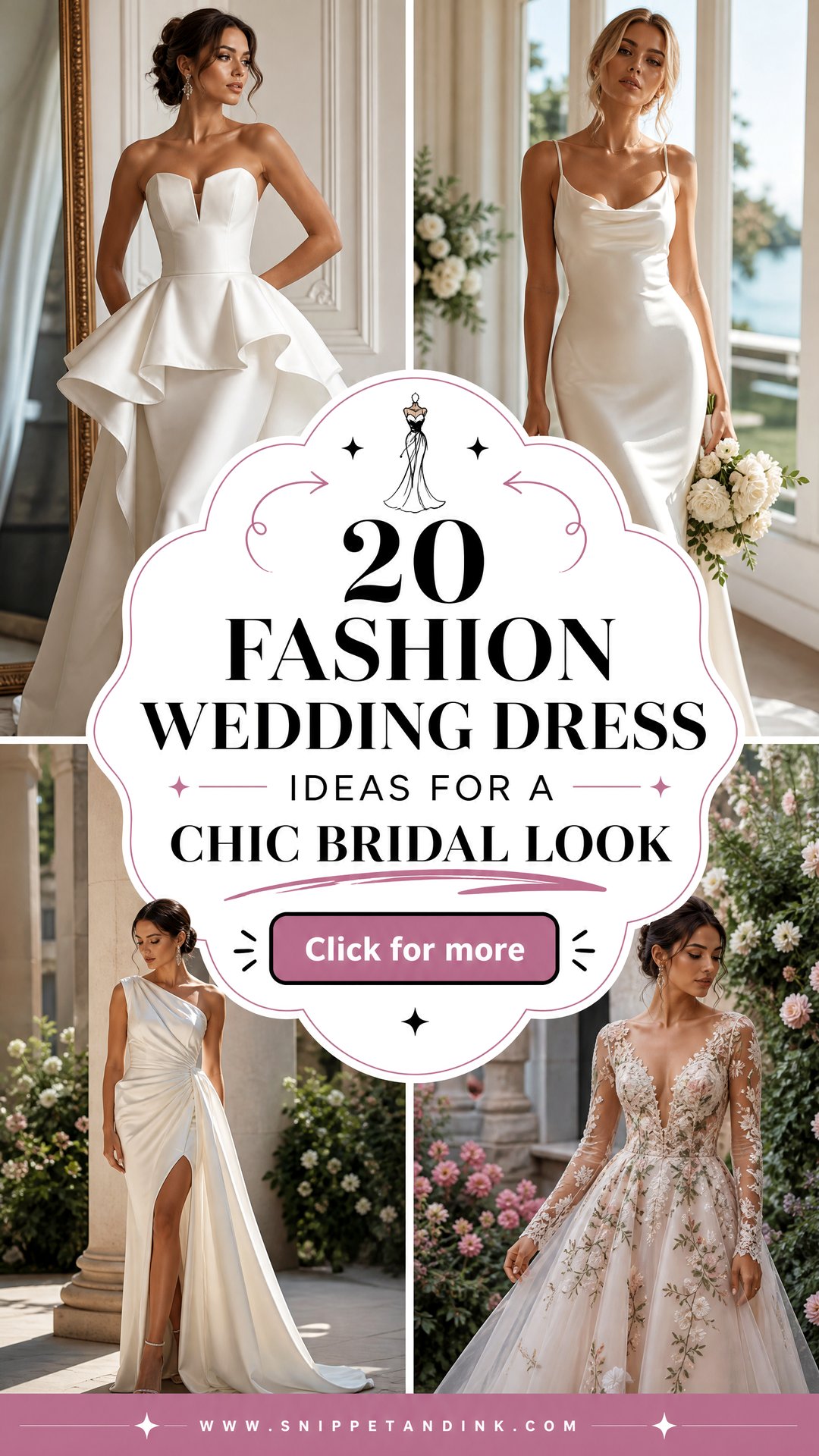
Matching a Silhouette to Your Frame, Not to a Pinboard
At a first appointment I ask a bride to try on one gown of each main shape before she narrows anything down. The silhouette that suits her body is often not the one she arrived wanting, and seeing them side by side settles it quickly.
- Ball gown: defines the waist and hides the hips. Easiest for most figures, heaviest to wear.
- A-line: fitted at the bodice, gently flared. The most forgiving shape for all heights.
- Mermaid or trumpet: fitted to the knee or thigh. Shows curves, limits stride.
- Column or sheath: follows the body straight down. Suits a long frame, shows every fitting flaw.
- Drop waist: lengthens the torso. Best on tall brides or long bodies.
Fabric matters as much as shape. Structured satin, taffeta and mikado hold their form away from the body, while crepe and silk fall close and show what is underneath. If you love a silhouette but not the fabric, ask whether the designer makes it in another one; many do.
Wear smooth nude underwear and bring a strapless bra to the appointment, plus shoes close to the height you plan to wear. Bring one or two people whose opinion you trust, not six. Too many voices in a fitting room and a bride stops listening to how the dress feels on her.
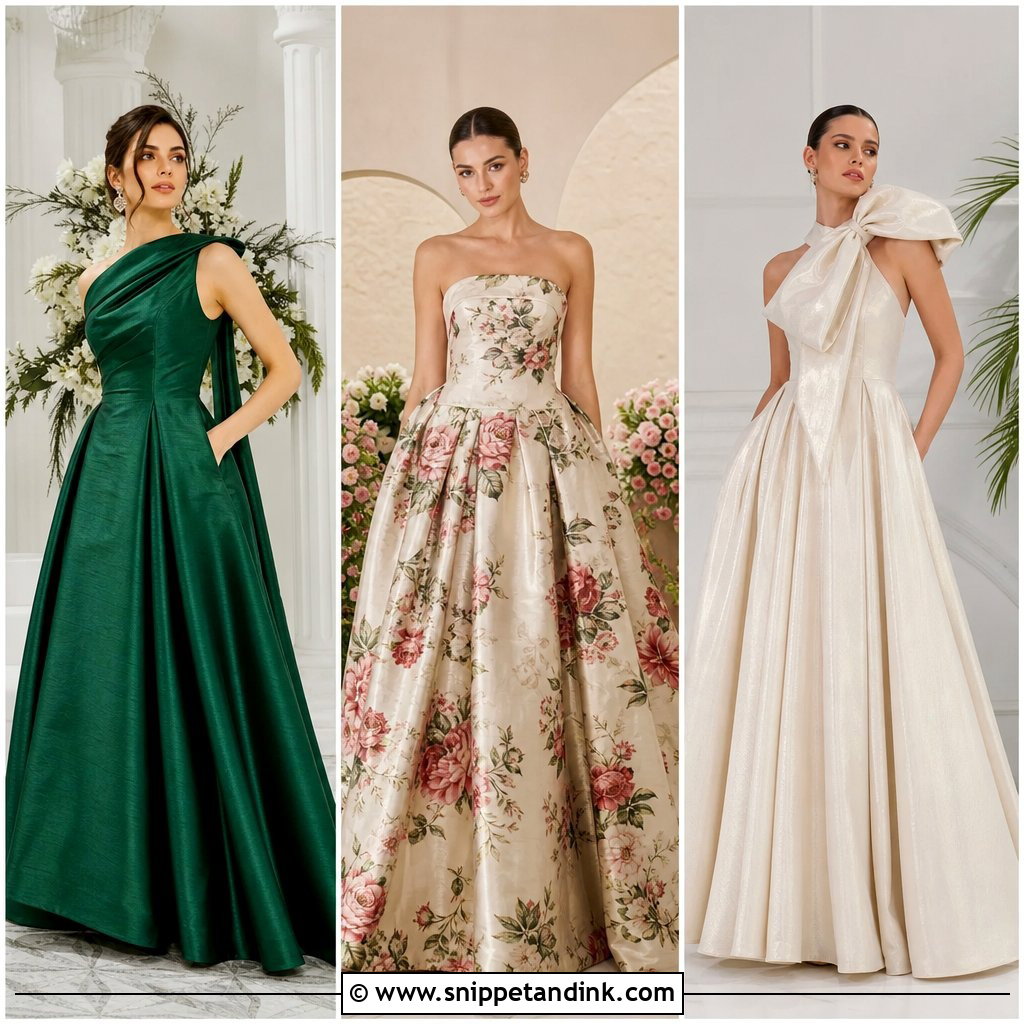
1. Satin Ball Gown Wedding Dress
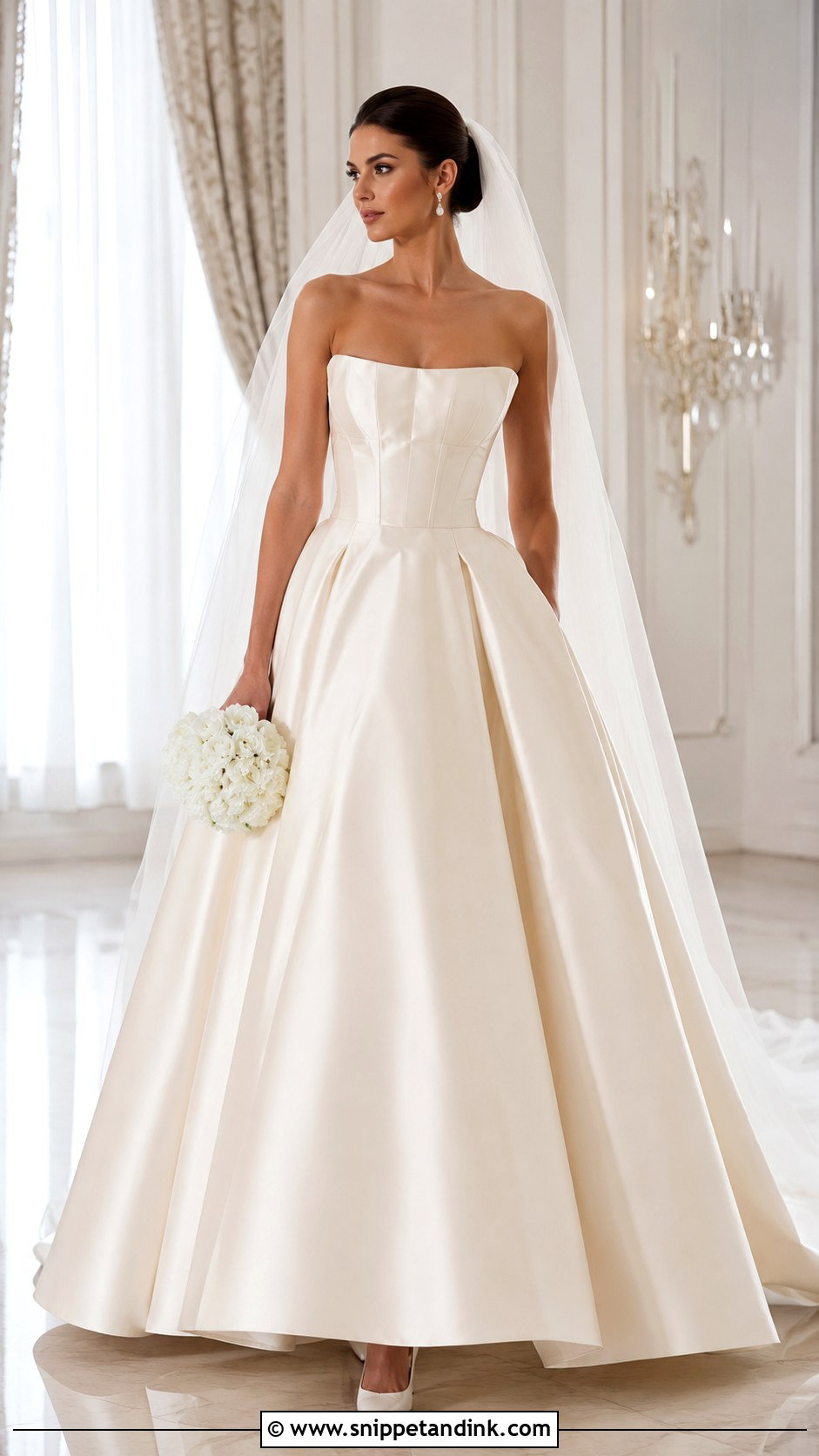
Satin ball gowns depend on what is inside them. A firm internal corset holds the bodice, and a petticoat or crinoline keeps the skirt falling in a clean bell instead of collapsing at the sides. Ivory satin catches light on its own, so I rarely add beading. Pointed satin pumps, pearl drops and a small structured bag are enough, with a long plain veil. Pick a compact white bouquet; a big cascade fights the skirt for space. One request I always pass to the seamstress: hidden pockets. They cost little and don’t spoil the shape.
2. Basque Waist Wedding Dress
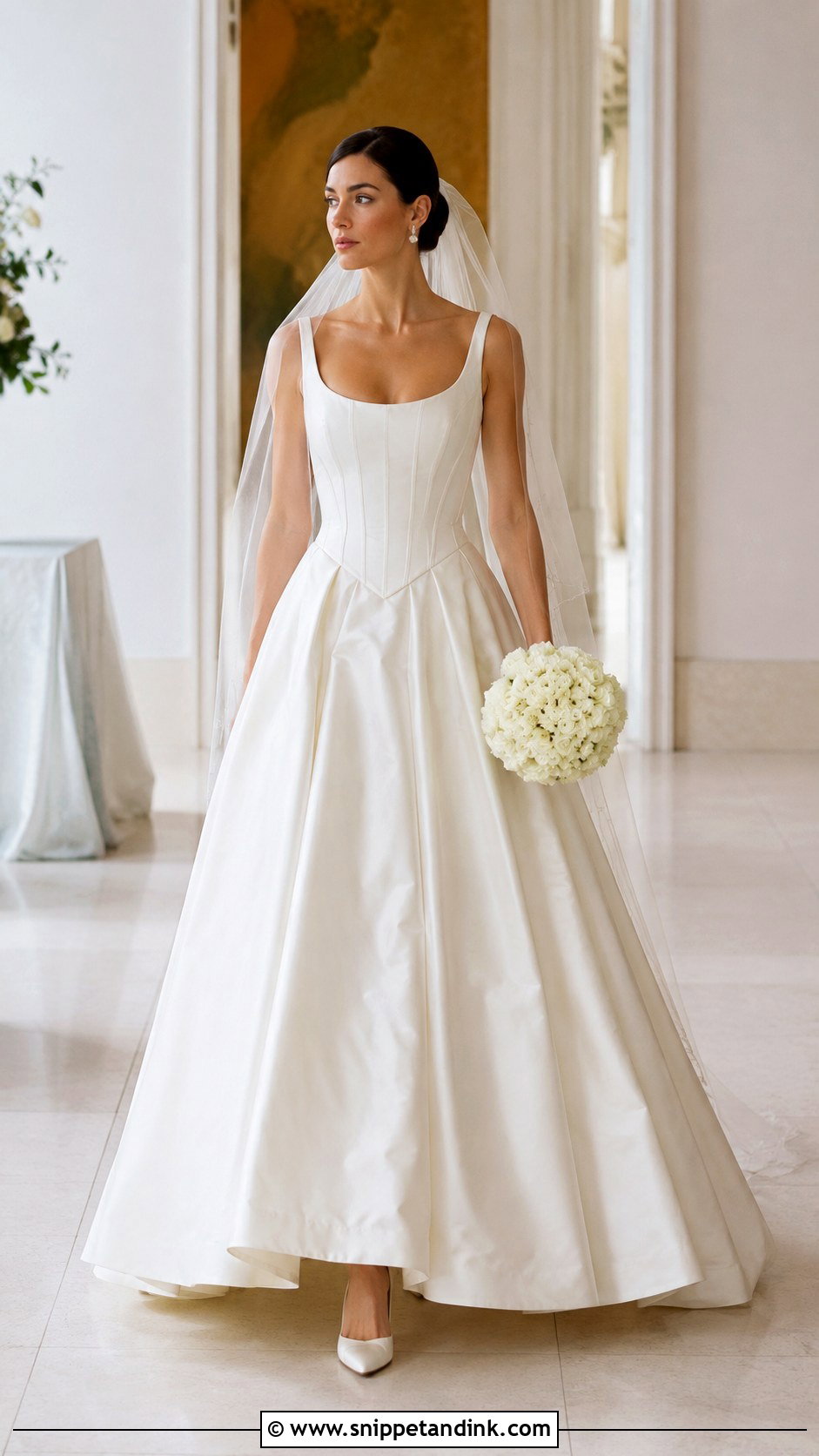
The basque waist dips into a V below the natural waistline, and that point is what makes the torso look longer above a full skirt. It belongs with a corseted bodice and a skirt in satin, taffeta or layered tulle. Necklines can range from a soft scoop to off-the-shoulder. The fit check I insist on is sitting down: boning that feels fine standing can dig in at the hip when you sit, and that V point is where it shows. Drop earrings, a fingertip veil, a neat bun and a round bouquet keep the waist the focus.
3. Lace A-Line Wedding Dress
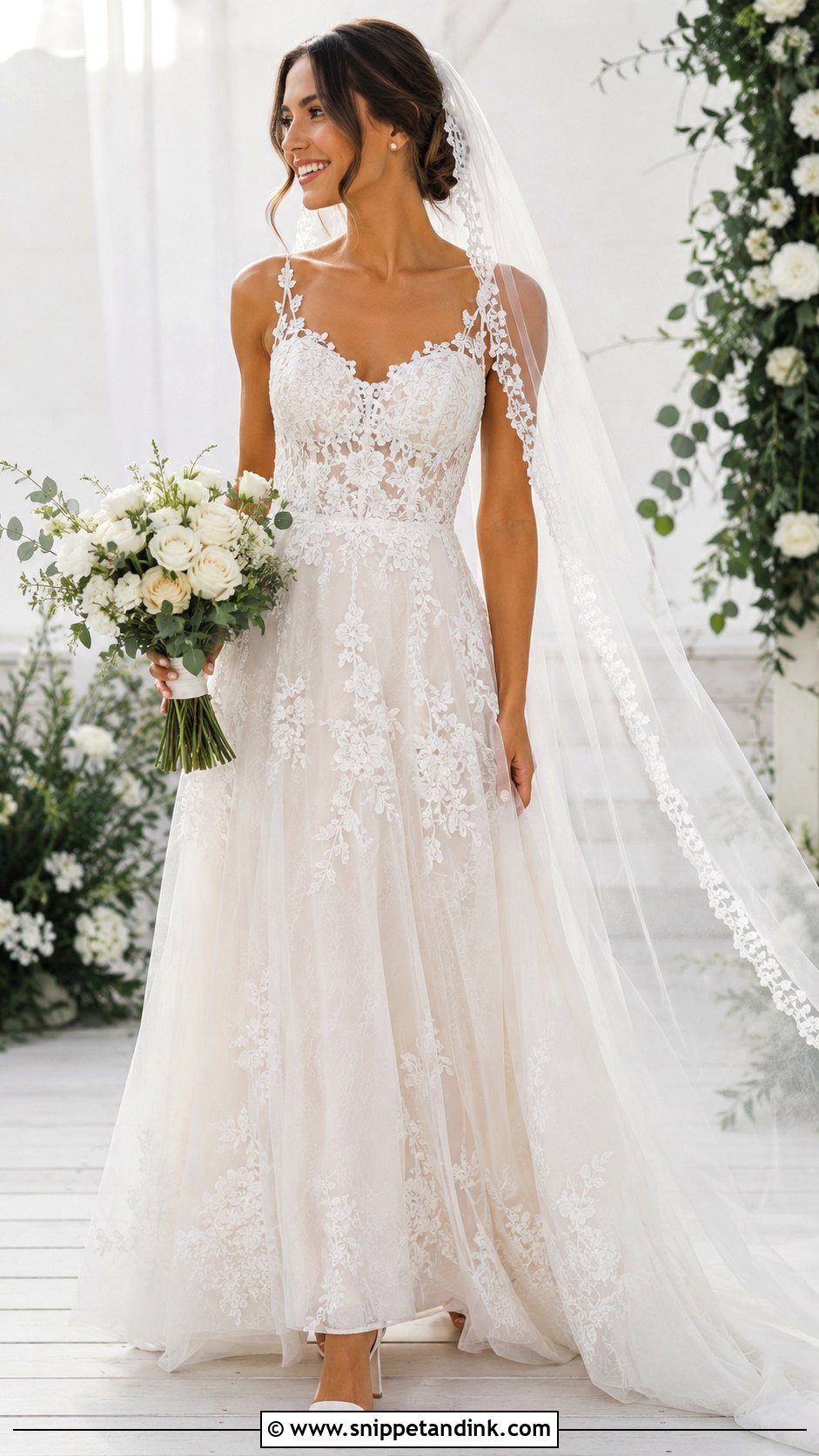
A lace A-line is the gown I’d suggest to a bride who doesn’t know where to start. It fits through the bodice and widens gently below the waist, so it moves well without the weight of a ball gown. Floral lace over a light lining gives texture. Lace often needs work at the shoulders, because it can gap or slide there, and that small alteration changes the whole fit. Pearl studs, ivory block heels and a veil with a narrow lace edge. If the lace is busy, skip the necklace. A loose chignon or half-up style suits it.
4. Off-Shoulder Mermaid Wedding Dress
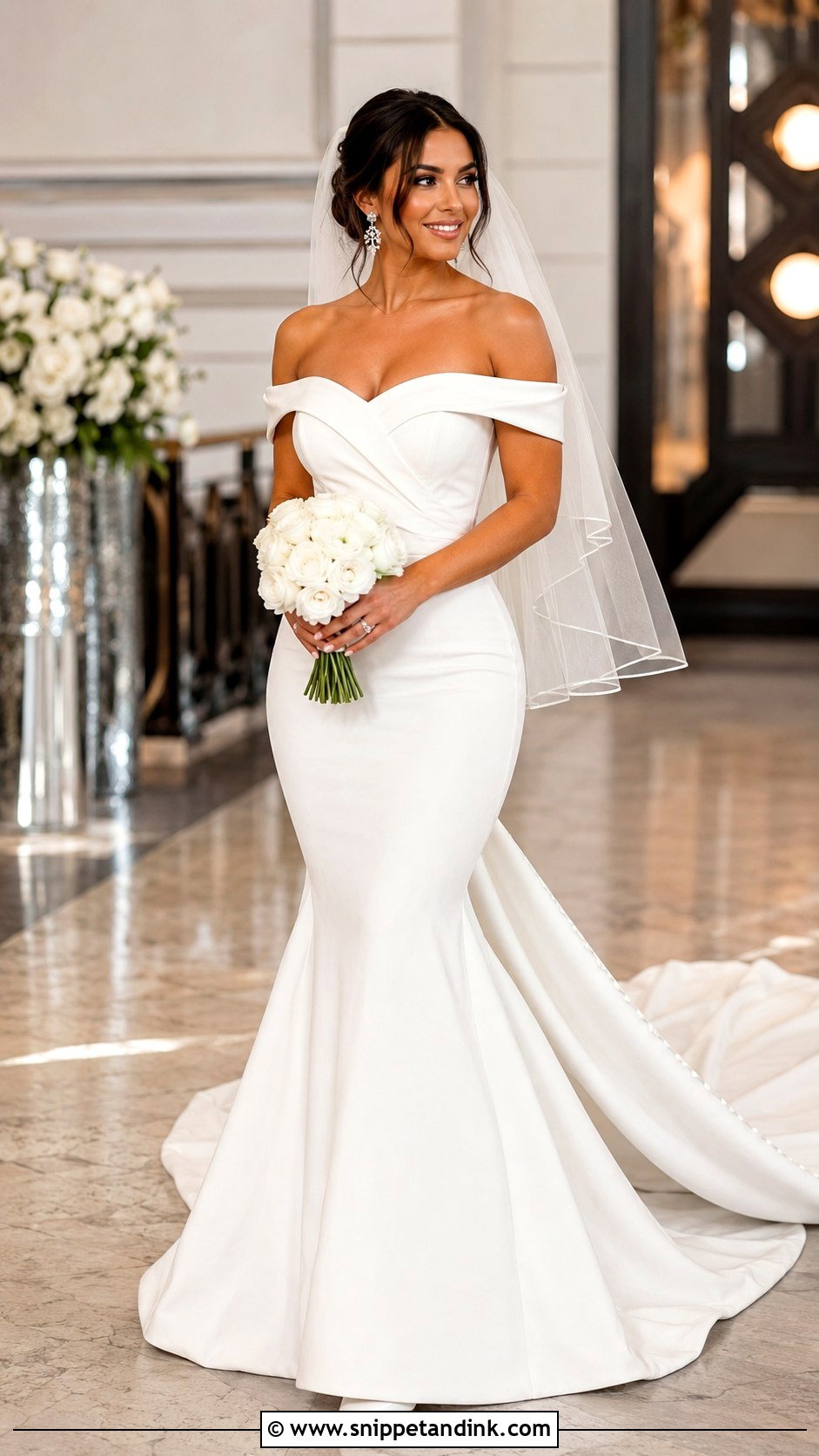
Mermaid gowns fit close to the knee and flare below. The fabric choice decides whether you can move: stretch crepe or lined lace with a little give lets you sit and climb steps, while a rigid satin mermaid can make stairs a slow, sideways affair. Practise full steps and sitting before you commit. Off the shoulder, either a short pendant or statement earrings, not both. Pointed pumps keep the line long. A bustle or detachable train makes the reception much easier.
5. Square Neck Column Wedding Dress
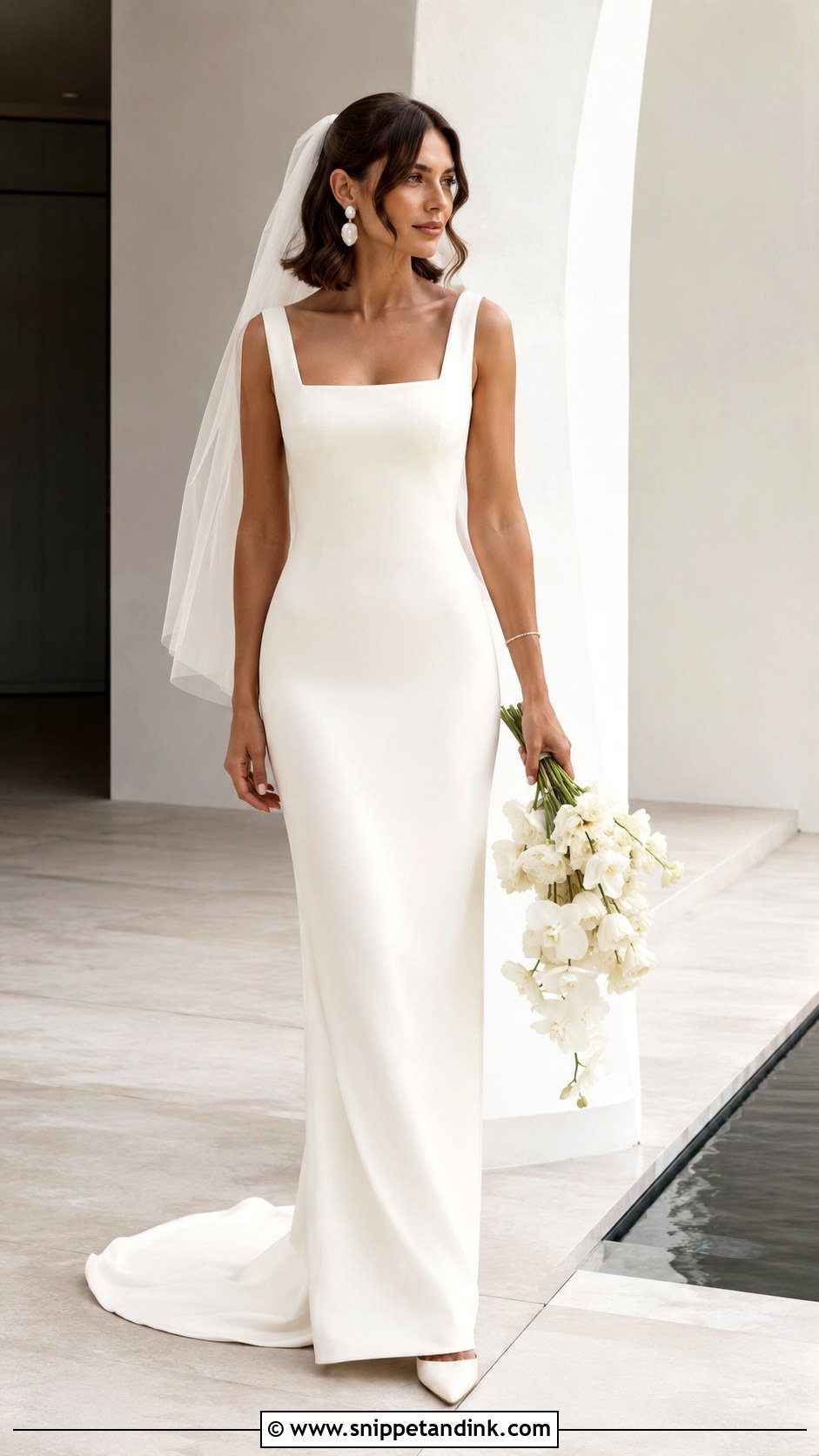
Square neck columns are minimal, which means there is nowhere for poor fit to hide. Matte crepe or silk that skims rather than clings is the safe choice. Wide straps give support and frame the neck. Sculptural earrings, sleek pointed heels, a slim bracelet and a shoulder-length veil or headband. Long-stemmed flowers repeat the vertical line. For ceremony drama, a removable back panel or train can be added. Bring your exact undergarments and shoes to every fitting; on a column, a change of bra moves the bust line visibly.
6. Long Sleeve Crepe Wedding Dress
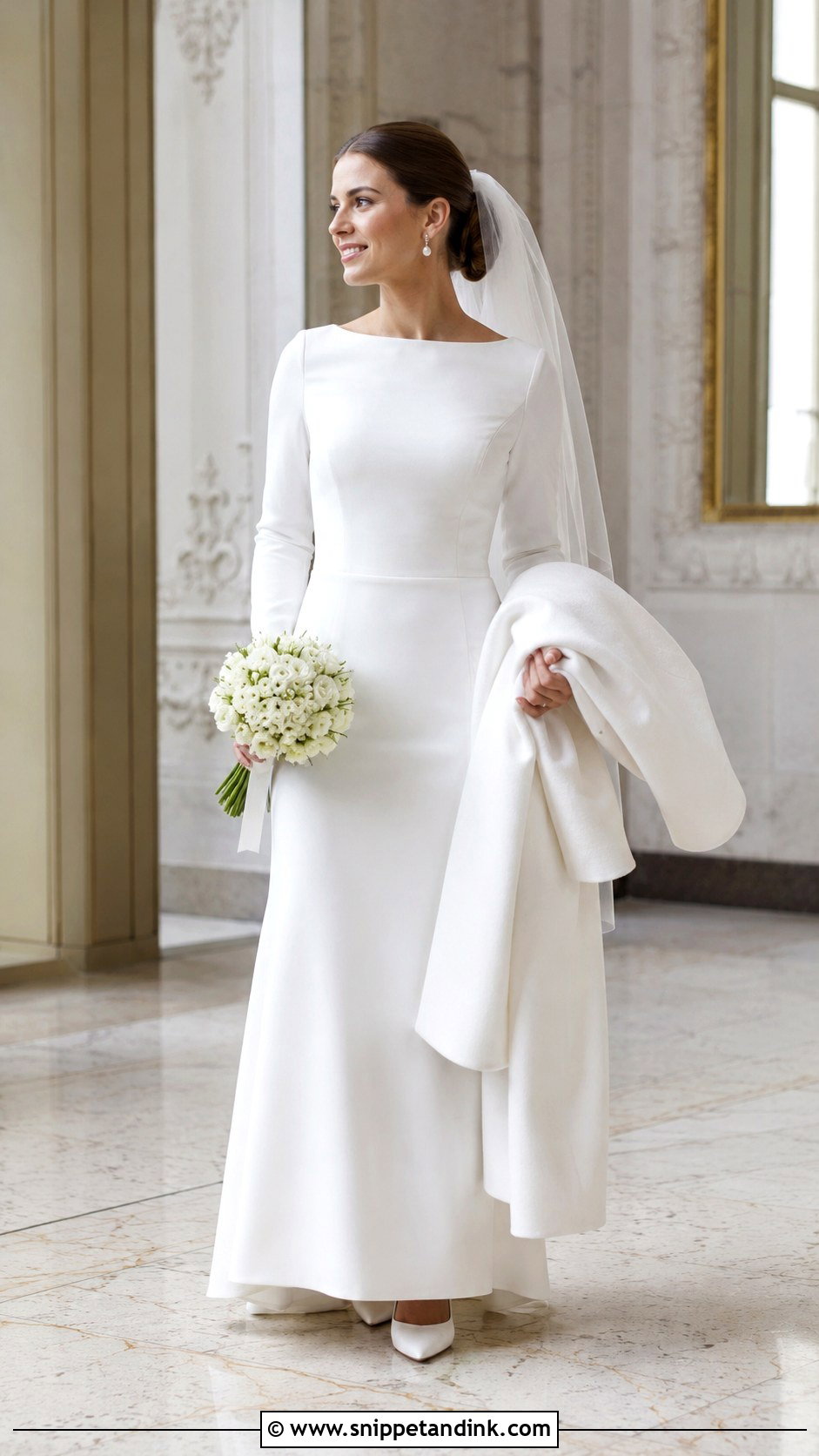
Crepe shows everything, which is its charm and its risk. On a long sleeve gown with a defined waist and a softly flared skirt, I check seams and underwear lines from the back and side in natural light before anything else. Lined sleeves give a clean, minimal look; sheer ones with small buttons feel softer. Closed-toe pumps, a low bun, pearl earrings and a veil set under the hair. Long sleeves can get warm in a heated room, so plan on a cooler dance floor. A white coat covers outdoor photos in winter.
7. 3D Floral Wedding Dress
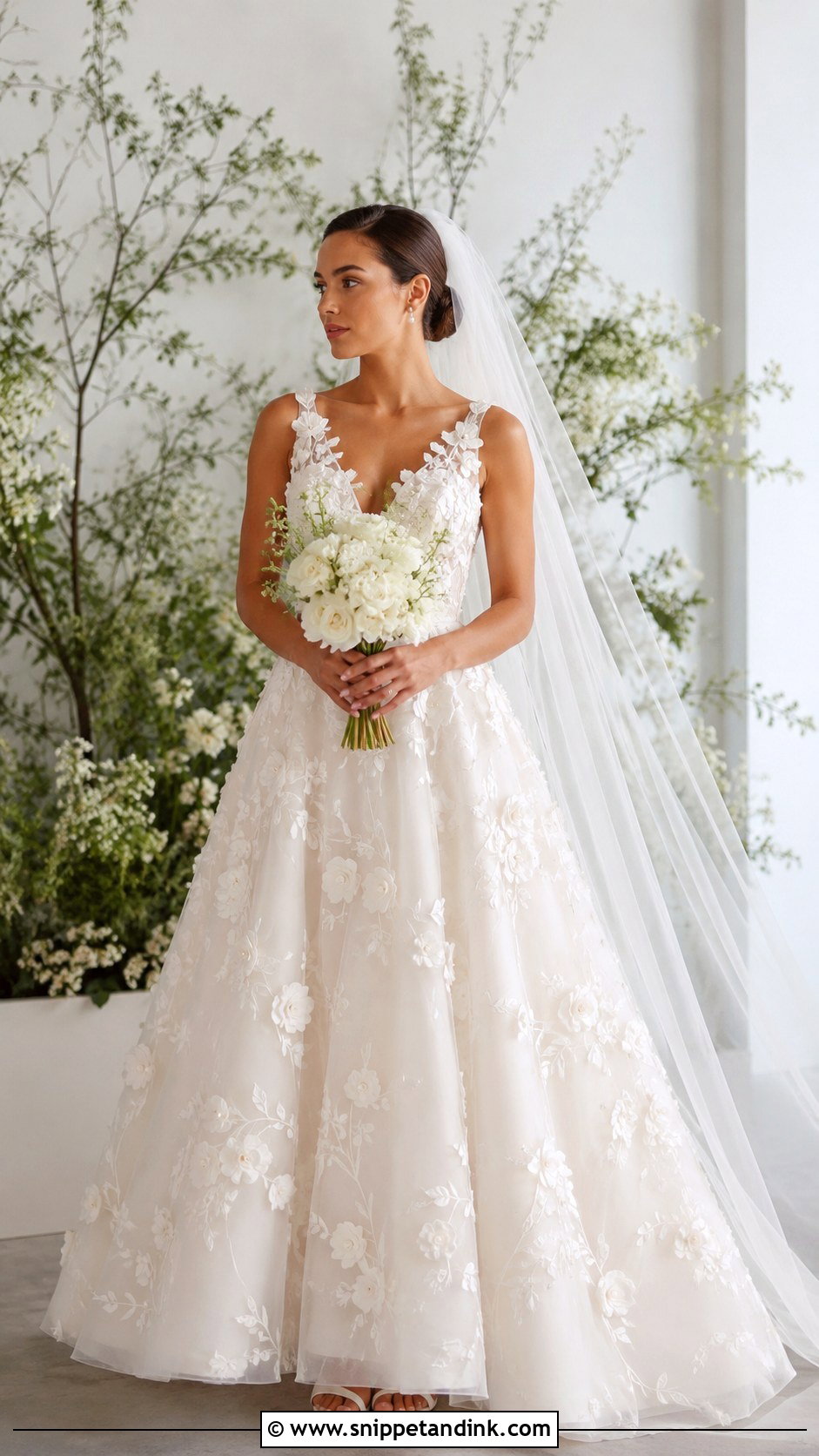
Raised appliqué flowers catch on things, and that is the first thing I test. Run the veil over them, brush a bracelet past them, and see if the skirt sections snag each other as you walk. Clustered around the neckline they frame the face; scattered they feel lighter. Simple satin heels, small crystal or pearl earrings and a plain tulle veil let the flowers lead. Keep the bouquet to a few varieties so the textures don’t clash.
8. Corset Tulle Wedding Dress
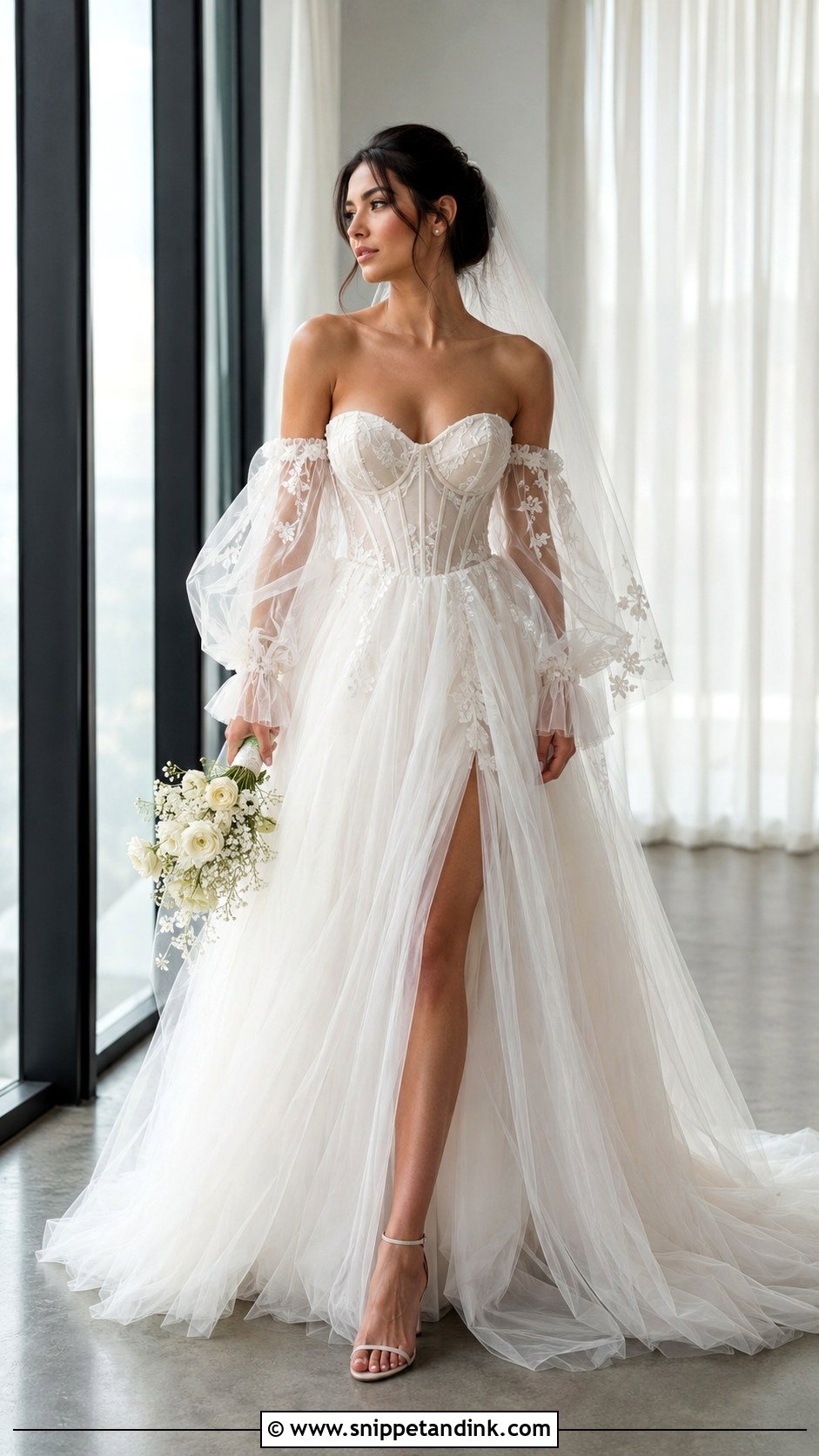
A corset tulle dress pairs a strict bodice with a soft skirt. The boning should be fitted to you, with secure cups and either an opaque lining or panels placed to cover what you want covered. Sit, eat and lift your arms in it at the fitting; if the top edge of the corset bites under the arm, it will by the speeches. Crystal studs, ankle-strap heels and a raw-edge fingertip veil. Sleek hair keeps strands out of hooks and lacing. Detachable tulle sleeves add ceremony coverage.
9. High Neck Lace Wedding Dress
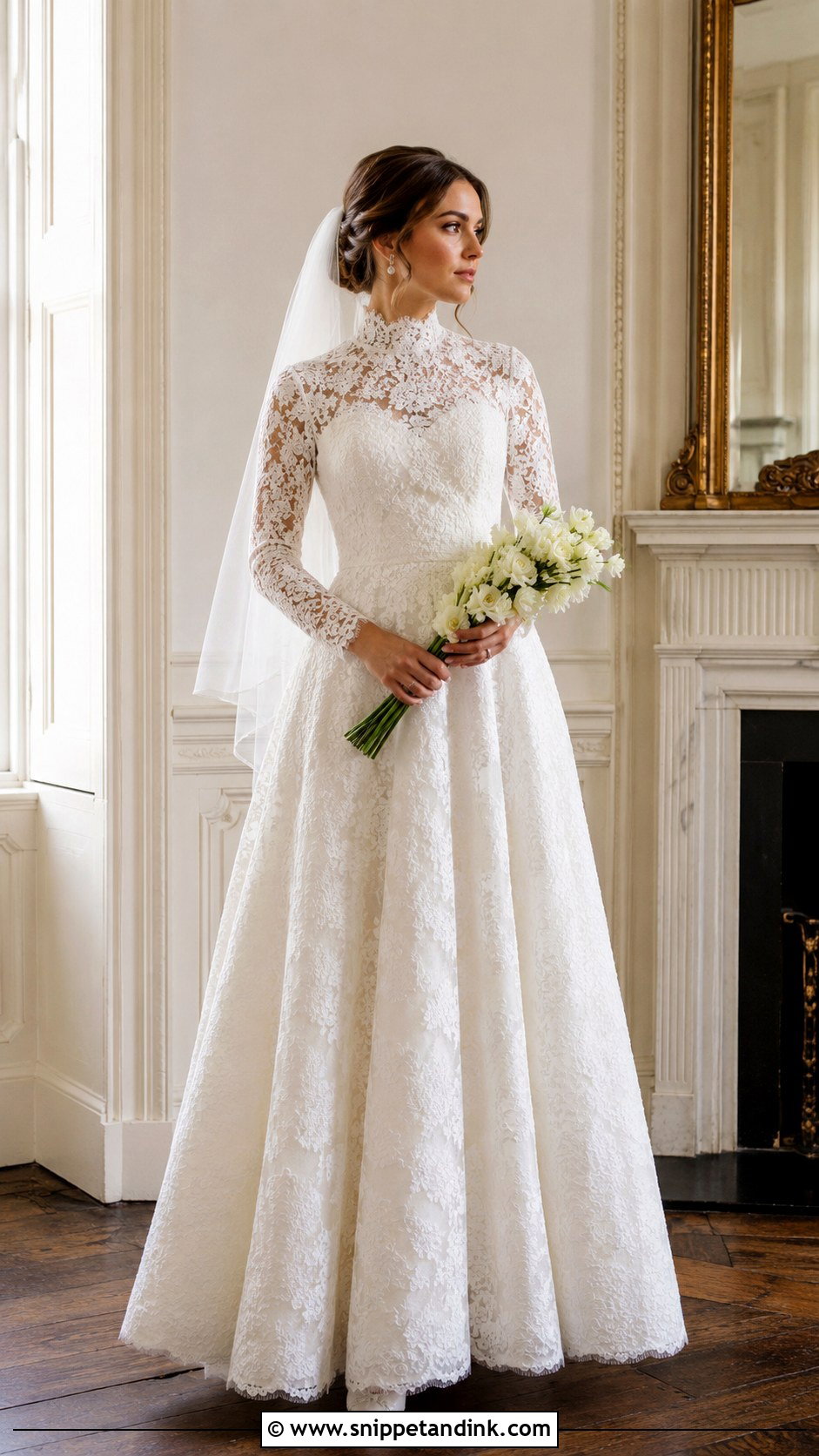
High lace necks bring coverage and a vintage feel. An illusion neckline with lace placed over sheer mesh is lighter; a fully lined bodice is more modest. Turn your head and look down during the fitting, because a collar that sits a fraction too high rubs the neck all day. With built-in detail at the throat, skip the necklace and wear small earrings. Closed heels, a smooth bun and a veil fixed below the hair. Covered buttons down the back add a nice finish without fuss.
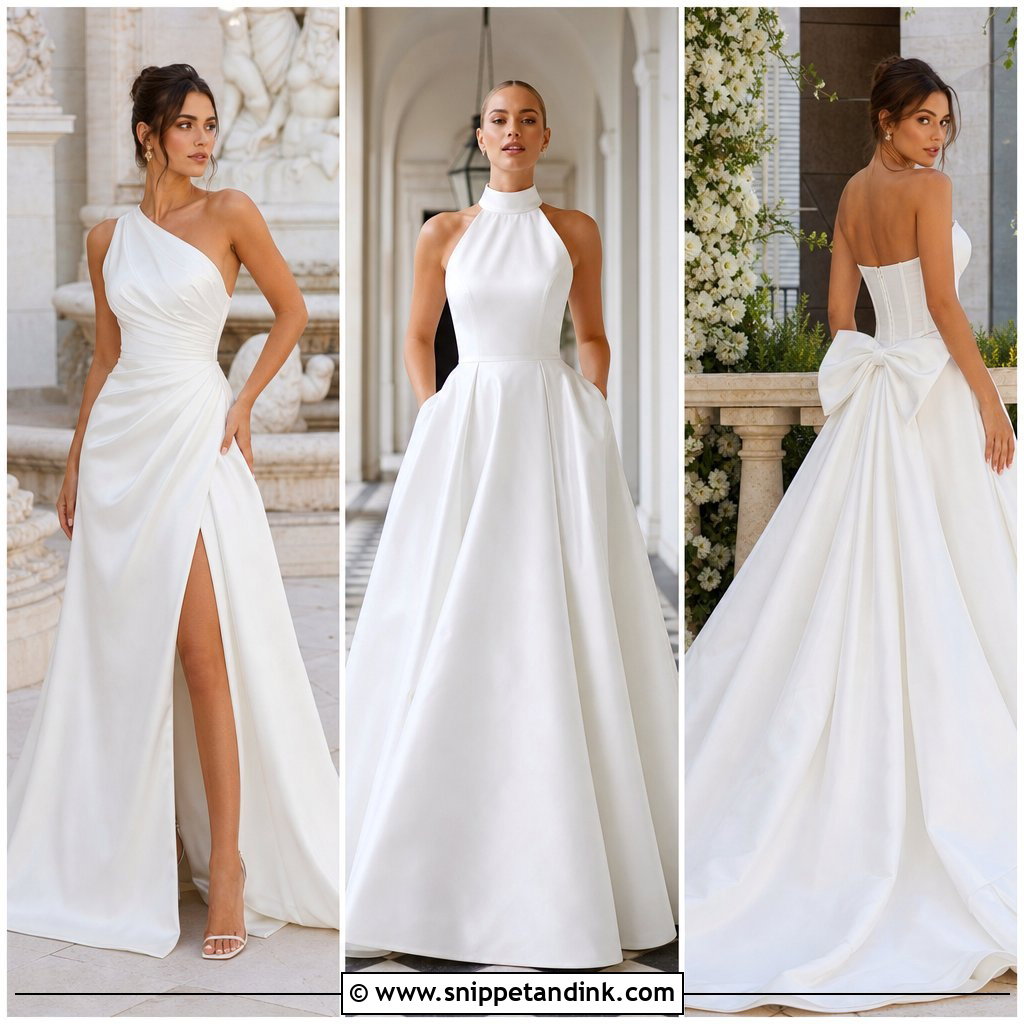
10. Bow Back Wedding Dress
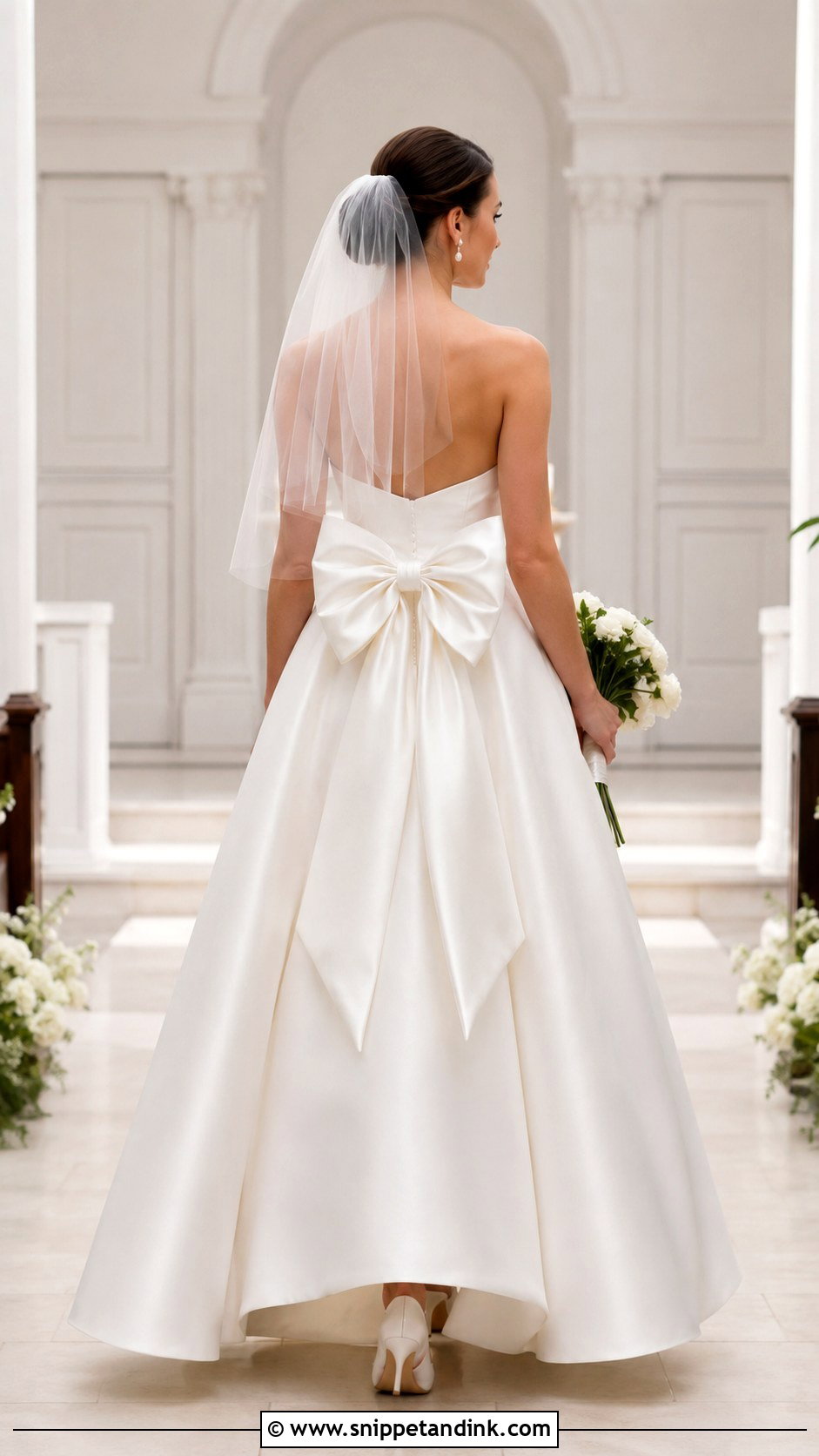
Bow backs are made for the walk down the aisle, since that is when guests see you from behind. Scale matters: a crisp oversized bow sits well on satin, while a softer bow suits organza or tulle. The veil should finish above or below the bow, never over it. An updo keeps it in view. I always ask the seamstress to anchor the bow with hidden stitches as well as hooks, because a heavy bow slides off-centre once you start moving. If it detaches, the gown lightens for dancing.
11. Peplum Wedding Dress
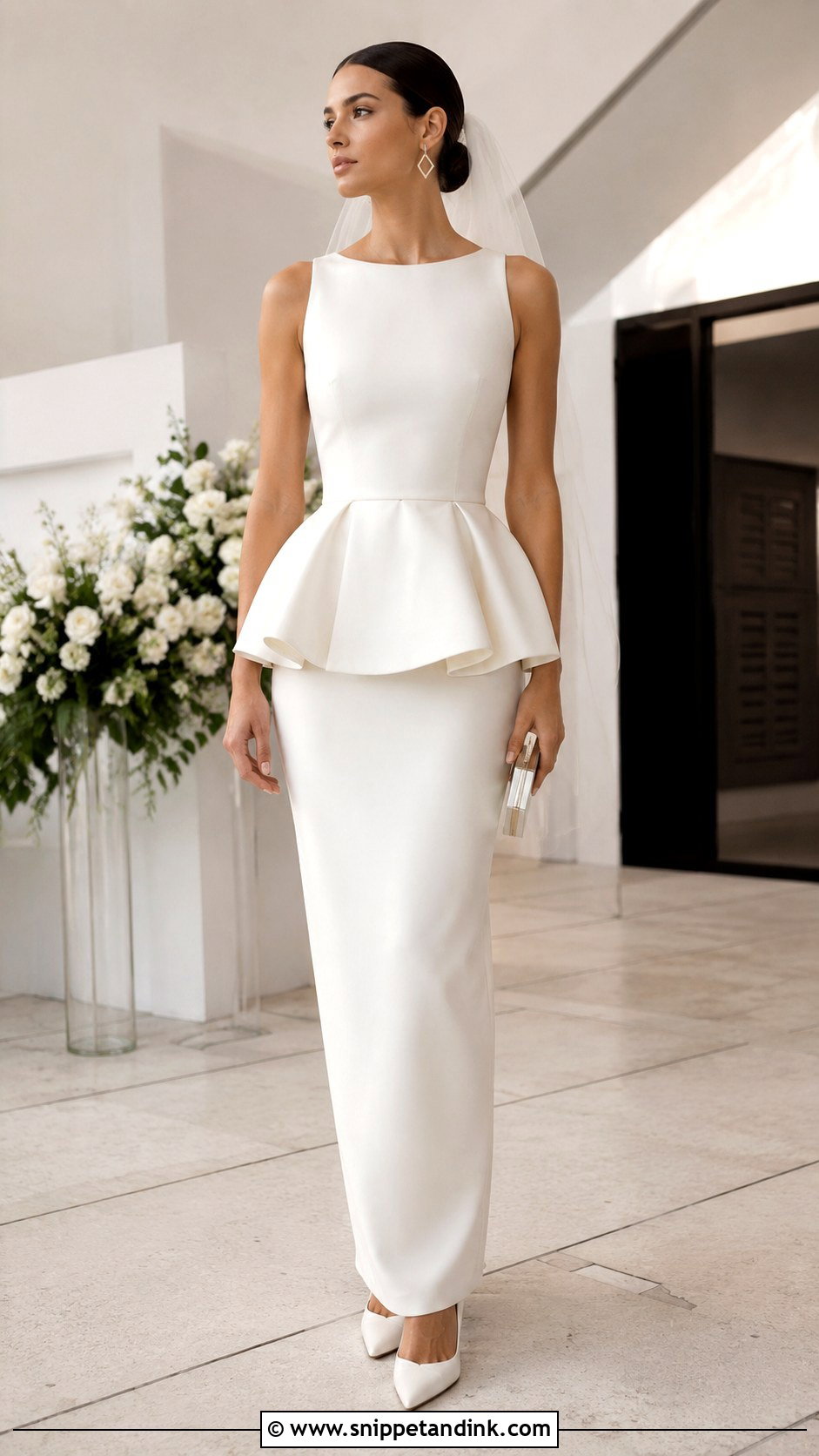
Peplums add a flared ruffle at the waist, either crisp and sculpted or soft and draped. Over a straight skirt it looks sleek; over a full one, more dramatic. Sit down in it during the fitting. A stiff peplum can fold up or flip when seated, and you want it to settle flat again when you stand. Pointed heels, geometric earrings, a neat clutch and a birdcage veil, short veil or headband. Smooth hair and minimal flowers.
12. Drop Waist Wedding Dress
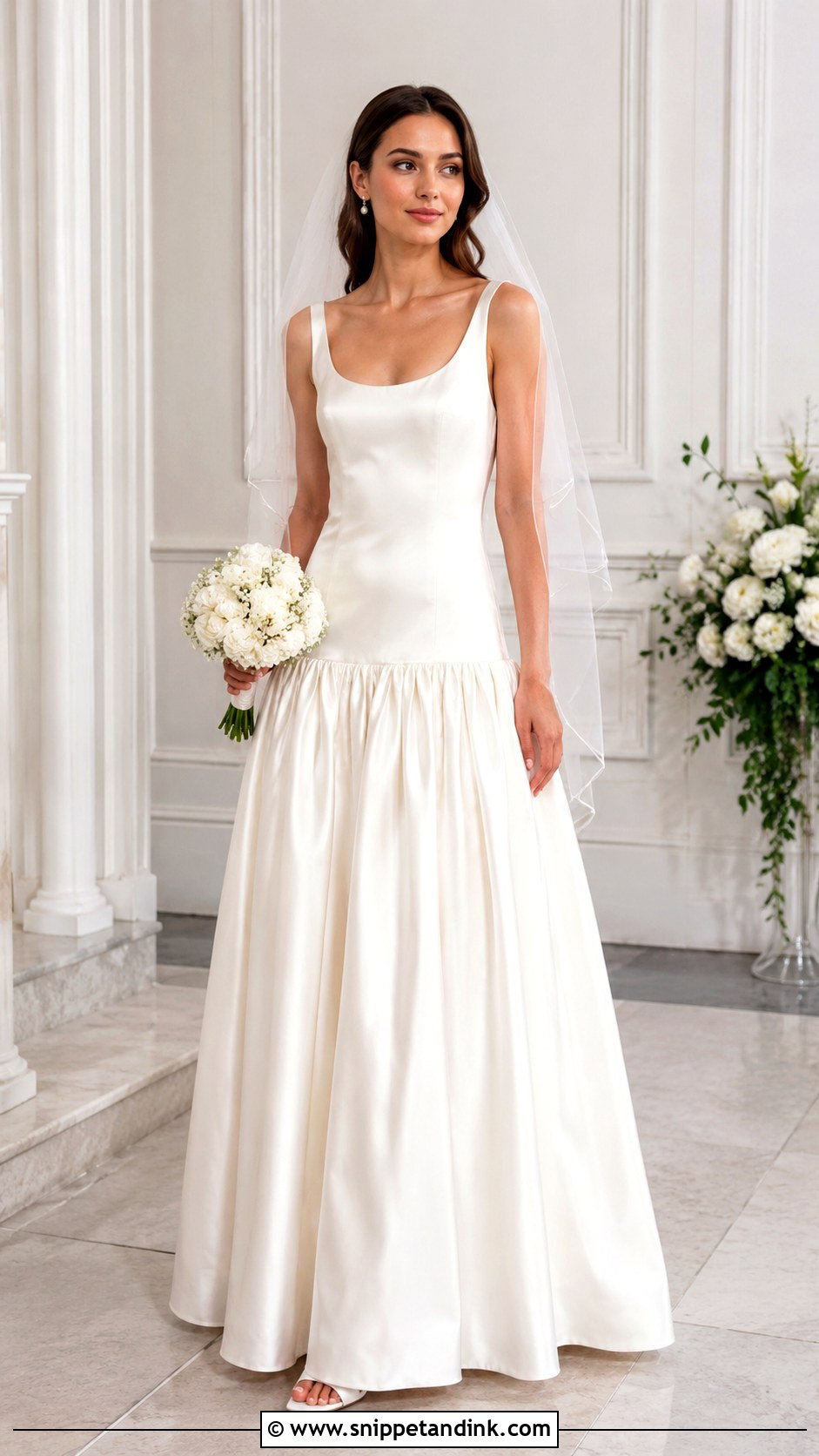
Drop waists move the fitted part of the bodice down onto the hips before the skirt starts. That long line suits taller brides and long torsos best; on a short torso it can make the legs look shorter, so this is one I try on rather than order from a photo. Satin, lace or tulle with firm support through the torso. Straps hold better than strapless over a long day. Slim heels, pearl earrings and a medium veil. Have the seamstress check the seam height from every side.
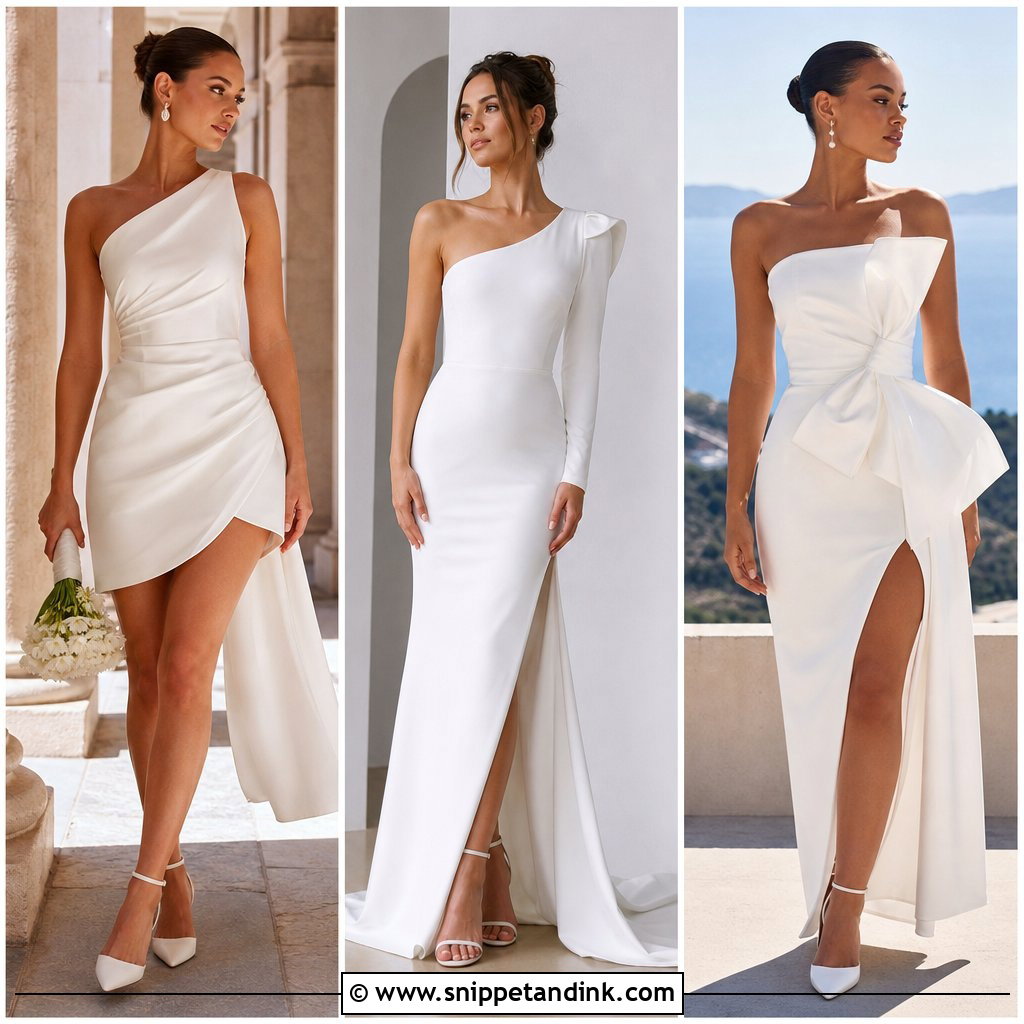
13. Bubble Hem Mini Wedding Dress
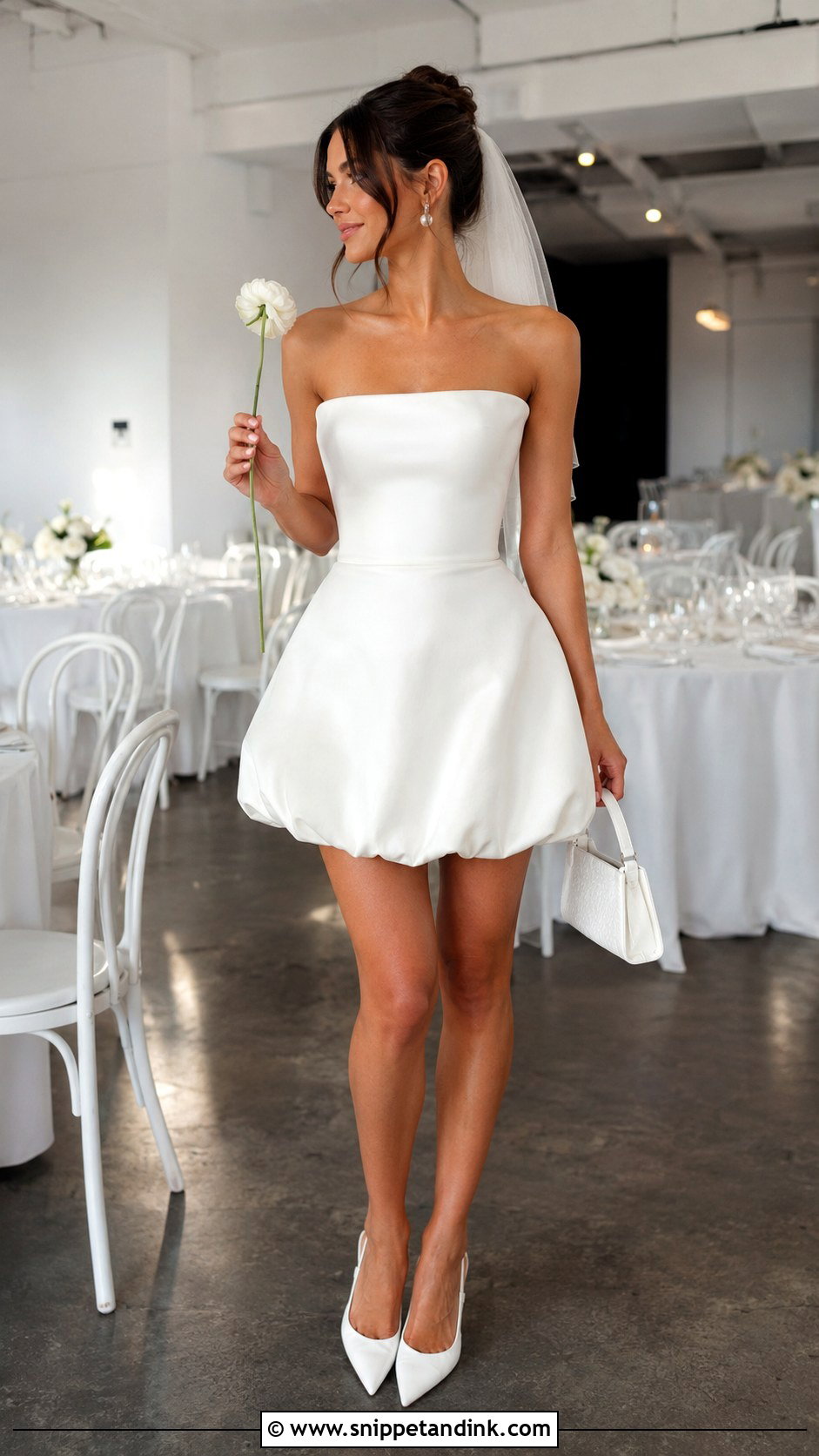
For a reception, a city hall wedding or a small party, a bubble hem mini is fun to wear. The rounded skirt needs body, so satin, mikado or structured taffeta are the fabrics that hold it. Pair a fitted bodice and plain neckline with slingbacks, pearl earrings and a small top-handle bag. The shoes are on full view, so wear them in beforehand or choose cushioned heels or flats for dancing. A short veil or big hair bow, plus a small bouquet. Test that the under-layer stays put when you sit.
14. Tea Length Wedding Dress
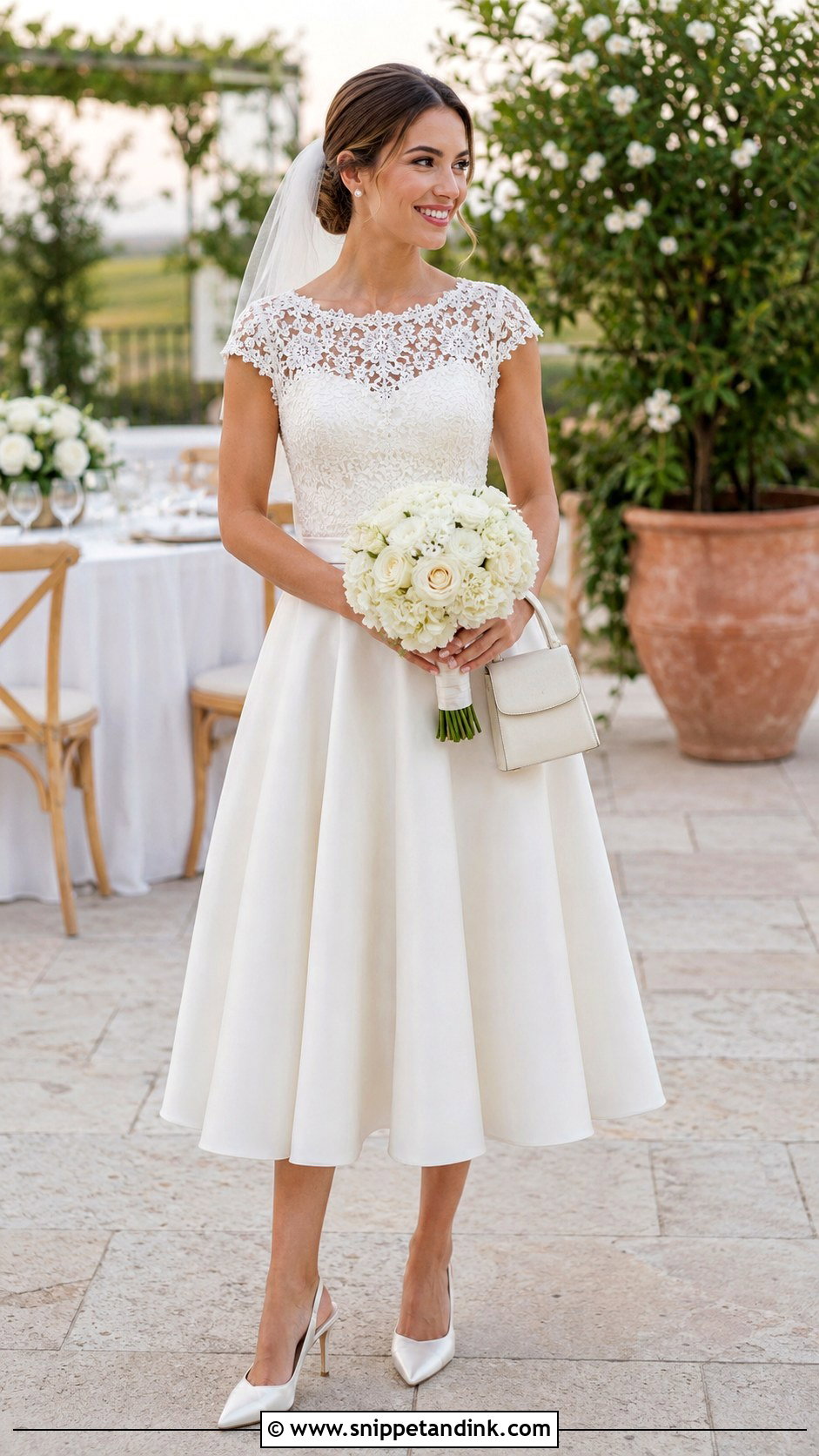
Tea length falls between knee and ankle, and it turns your shoes into part of the outfit. A fitted bodice with a flared skirt in satin, organza or lace keeps it classic. Ankle-strap pumps, slingbacks or block heels all work. Hem length is everything here, so take your exact shoes to the fitting; a centimetre too long and it looks like a dress that is the wrong size. Pearl studs, a short veil and a small bag. A curled bob, a ponytail or a low bun suit it, and a light wrap for a cool evening.

15. Silk Slip Wedding Dress
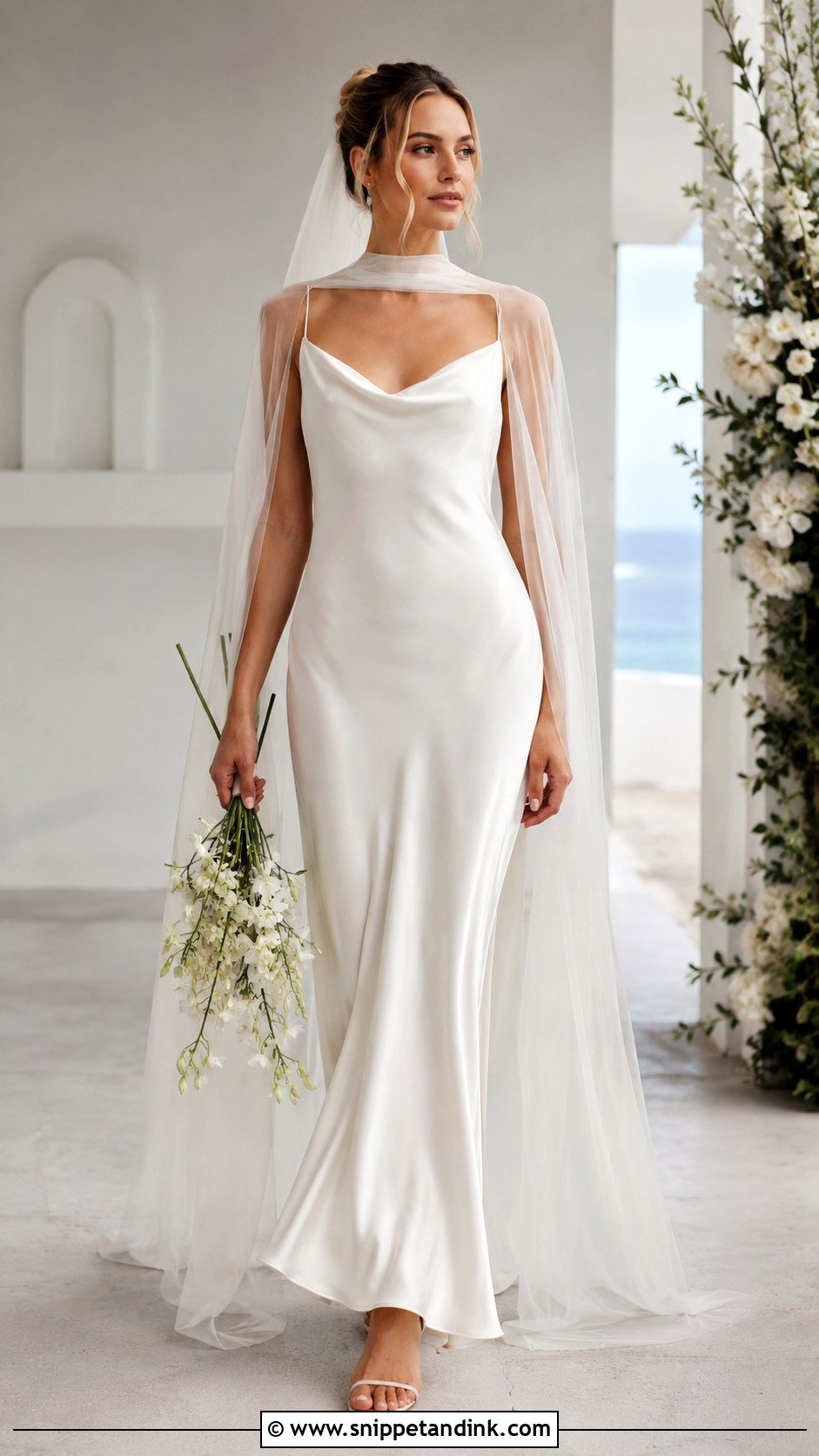
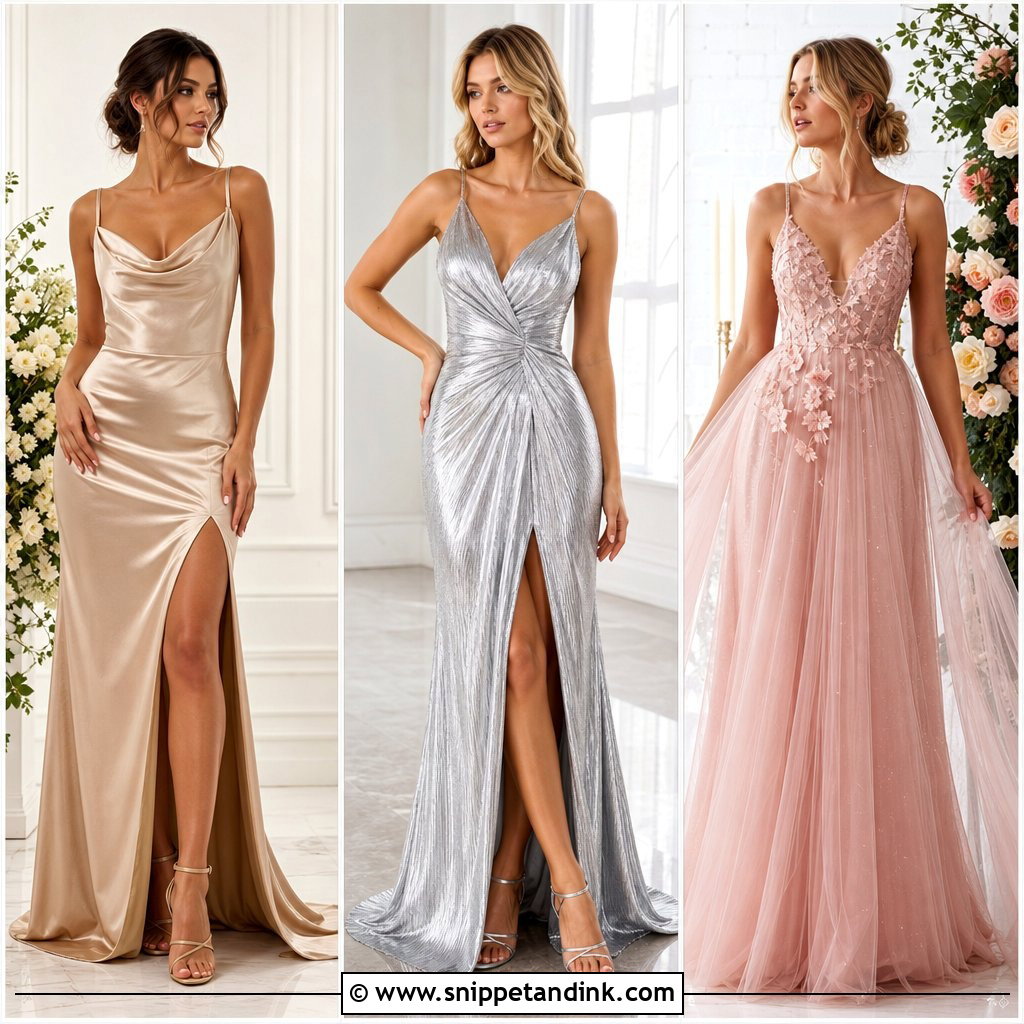
Silk slips look easy and are not. A bias-cut design follows the body closely, and it also shows every seam, line and fold of shapewear underneath. Bring your exact foundation pieces to every fitting. Allow enough ease to walk and sit; bias silk that is too tight pulls across the hips. A cowl or scoop neck shows off the drape. Strappy heels, fine drops, a light veil and a sleek bun or loose waves. For coverage, a sheer cape or a cropped jacket. Silk also marks with water, so keep drinks away.
16. Asymmetrical Draped Wedding Dress
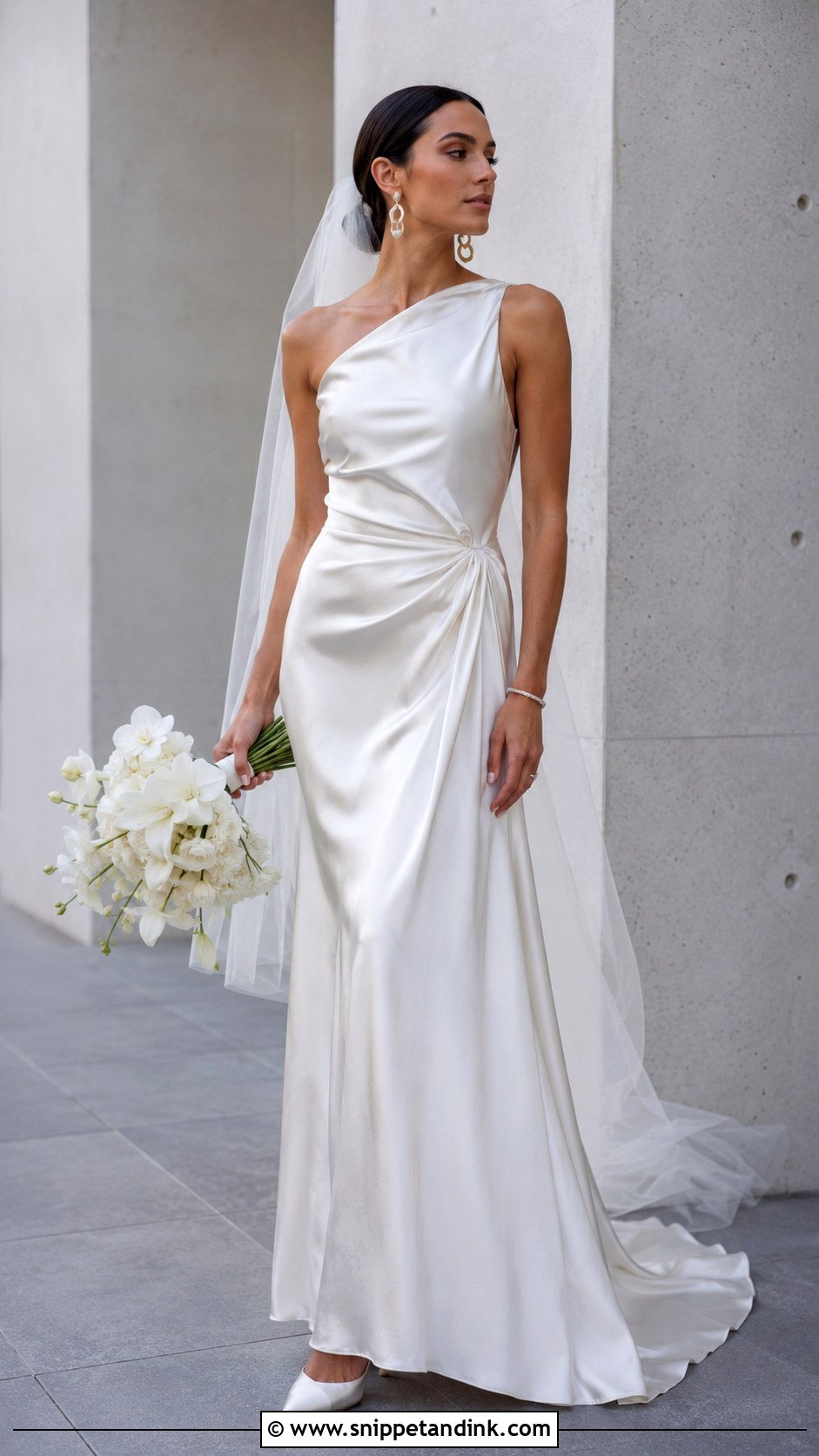
An asymmetrical draped gown gets its movement from the cut alone. One shoulder, an angled waist or gathers at one side in silk, crepe or satin. The drape has to stay put: if it pulls or bunches when you walk, the shape is lost, so alterations matter more here than on most gowns. Check any high slit sitting and on stairs. Mismatched earrings, a thin metallic bracelet and pointed heels, with a veil under a low bun. A small, structured bouquet contrasts the soft drape.
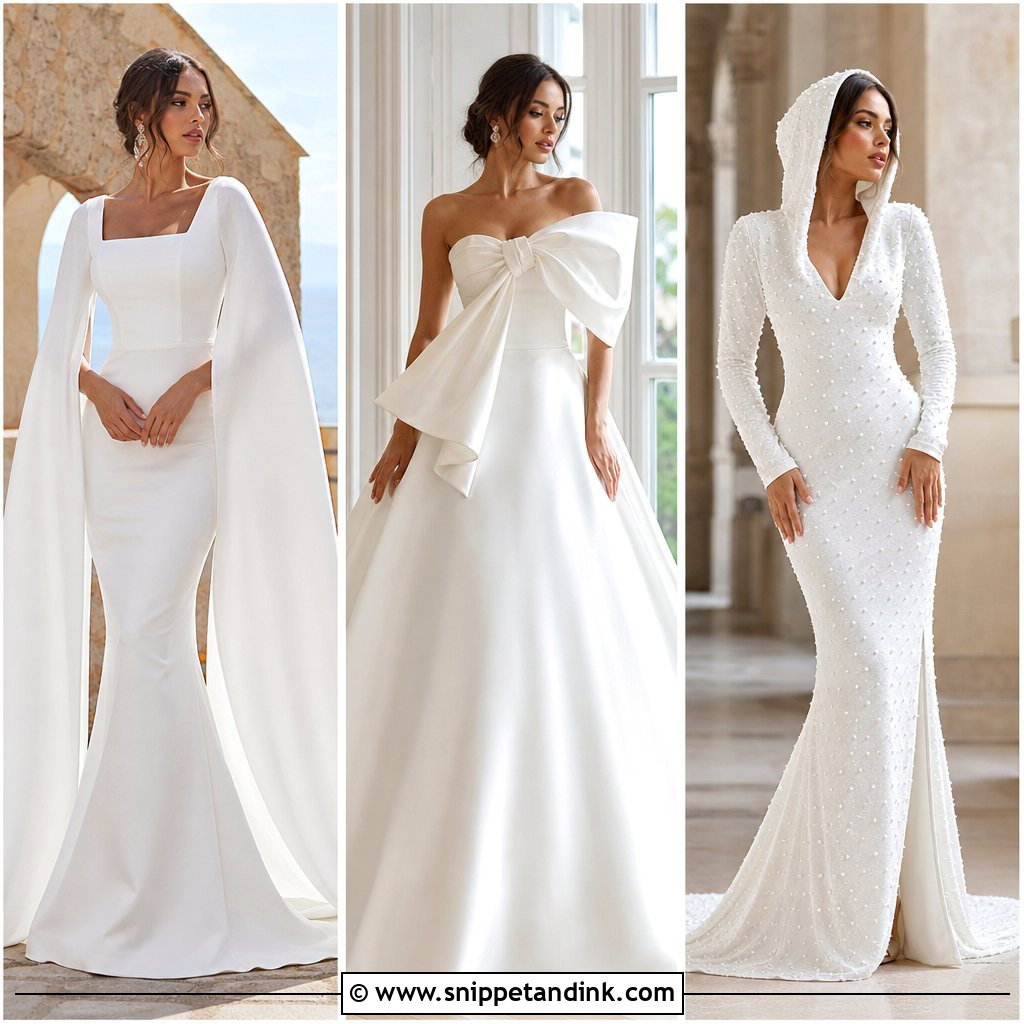
17. Cape Sleeve Wedding Dress
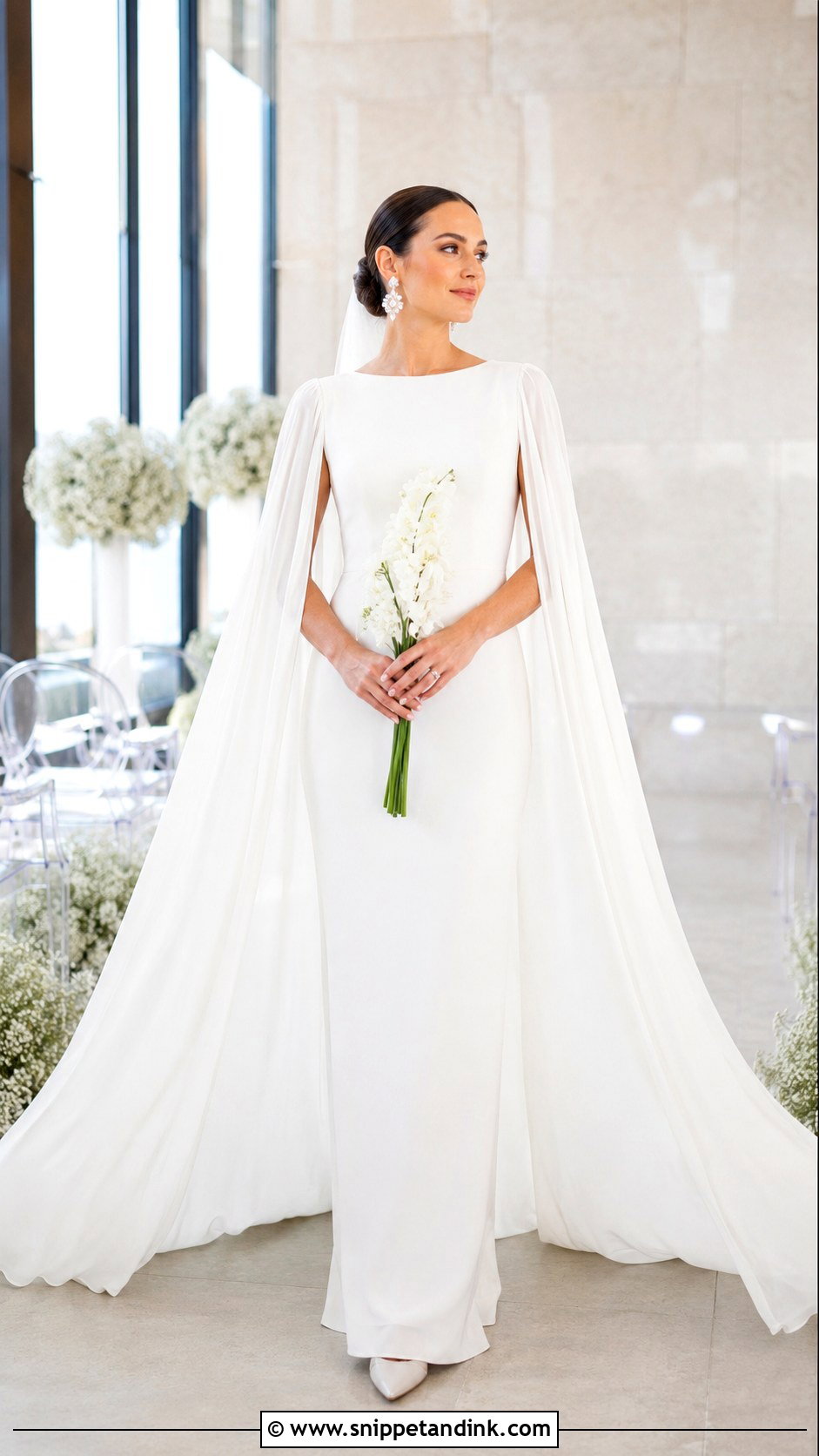
Cape sleeves give arm coverage without the tight feeling of real sleeves. A column or A-line with a cape from the shoulder works in chiffon for air or crepe and satin for structure. Hug someone and lift your arms at the fitting; a cape cut too tight across the back pulls the whole gown up. If the cape runs long behind, skip the veil or keep it short so they don’t tangle. Closed pumps, statement earrings, a low bun and a narrow bouquet. A detachable cape gives a simpler look for the reception.
18. Detachable Overskirt Wedding Dress
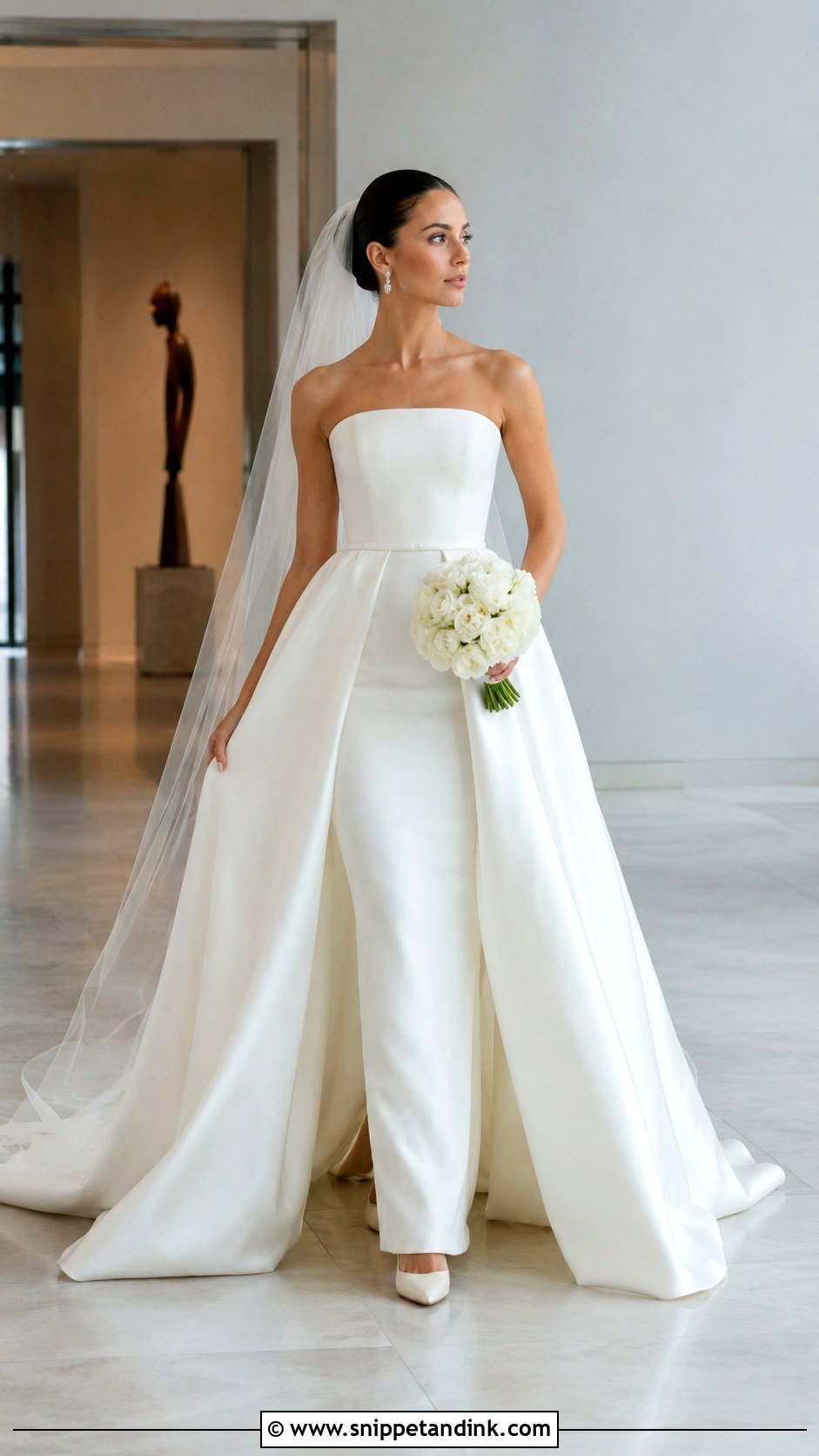
A detachable overskirt turns one dress into two. Wear a column, sheath or mermaid base underneath and add a full satin or tulle skirt for the ceremony. The waistband is where it succeeds or fails: it has to blend into the dress and fasten without visible bulk, ideally with hidden hooks or snaps. Practise taking it off with whoever is helping you; it should take a couple of minutes, not twenty. Pointed pumps, crystal earrings and a veil that suits both shapes. Add a slim belt later if the base looks bare.
19. Floral Embroidered Wedding Dress
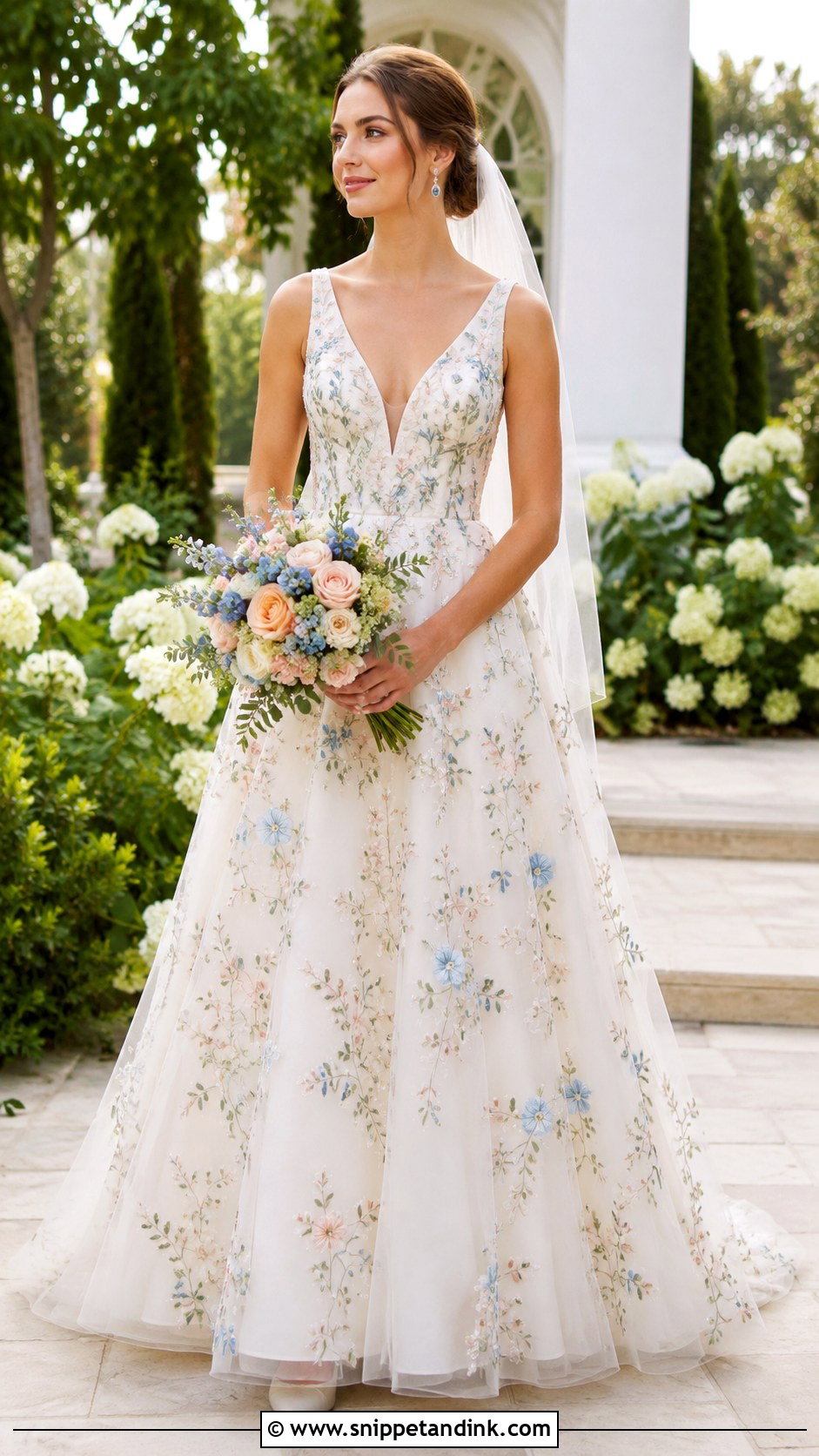
Coloured floral embroidery is a way to add personality while staying recognisably bridal. Ivory A-line or fitted shapes with blue, blush, green or mixed stitching around the bodice, down the skirt or at the hem. Turn the bodice inside out before you buy; rough knots on the reverse can rub through the lining. Neutral pumps, small gemstone earrings and a plain veil. Pull one thread colour into the bouquet or hair to tie it together, and keep bags and jewellery simple.
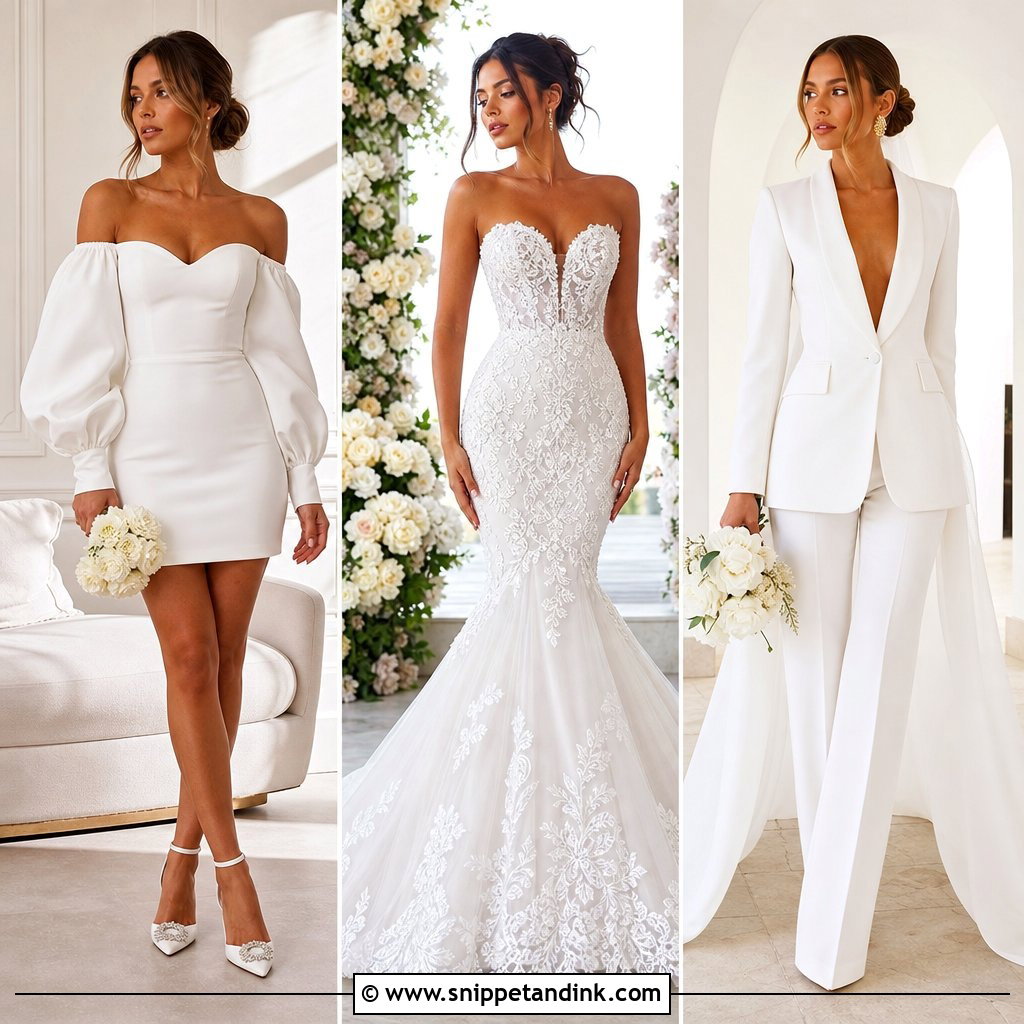



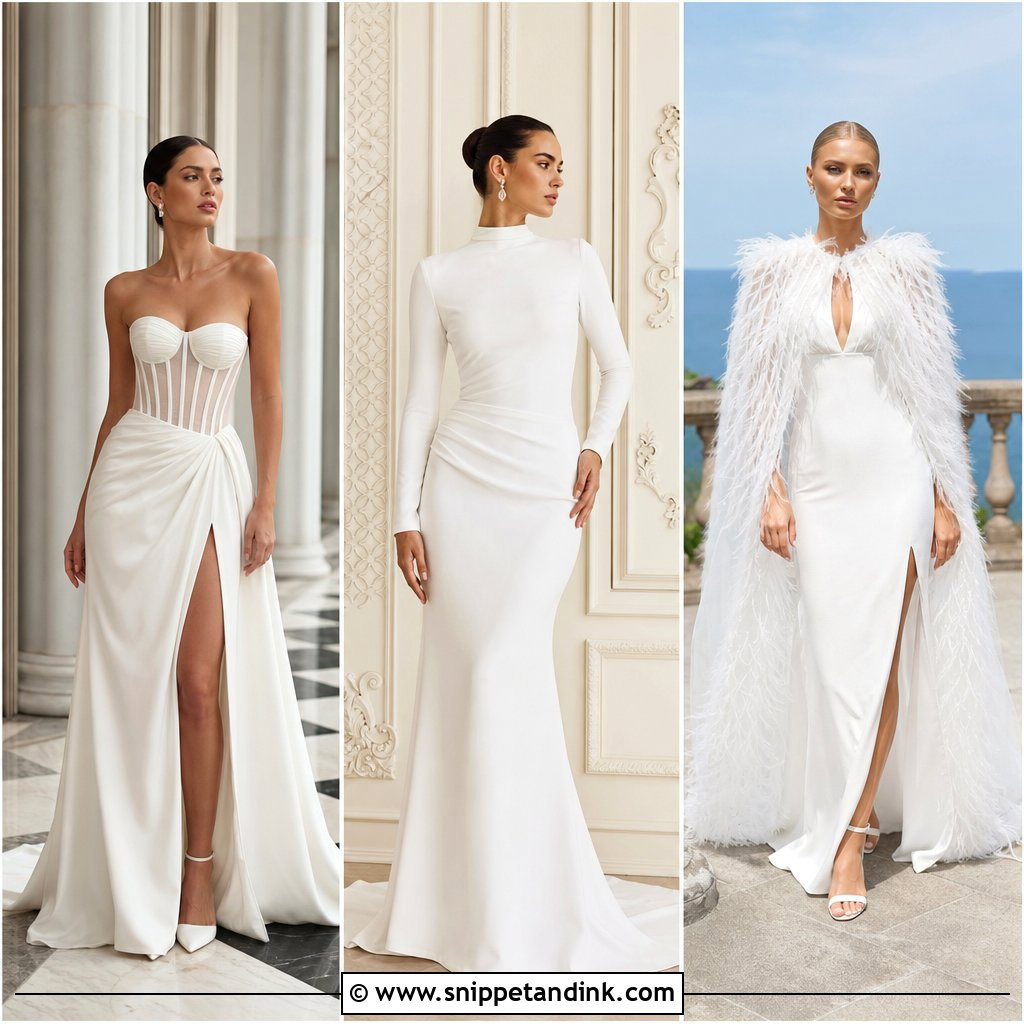
20. Feather Reception Wedding Dress
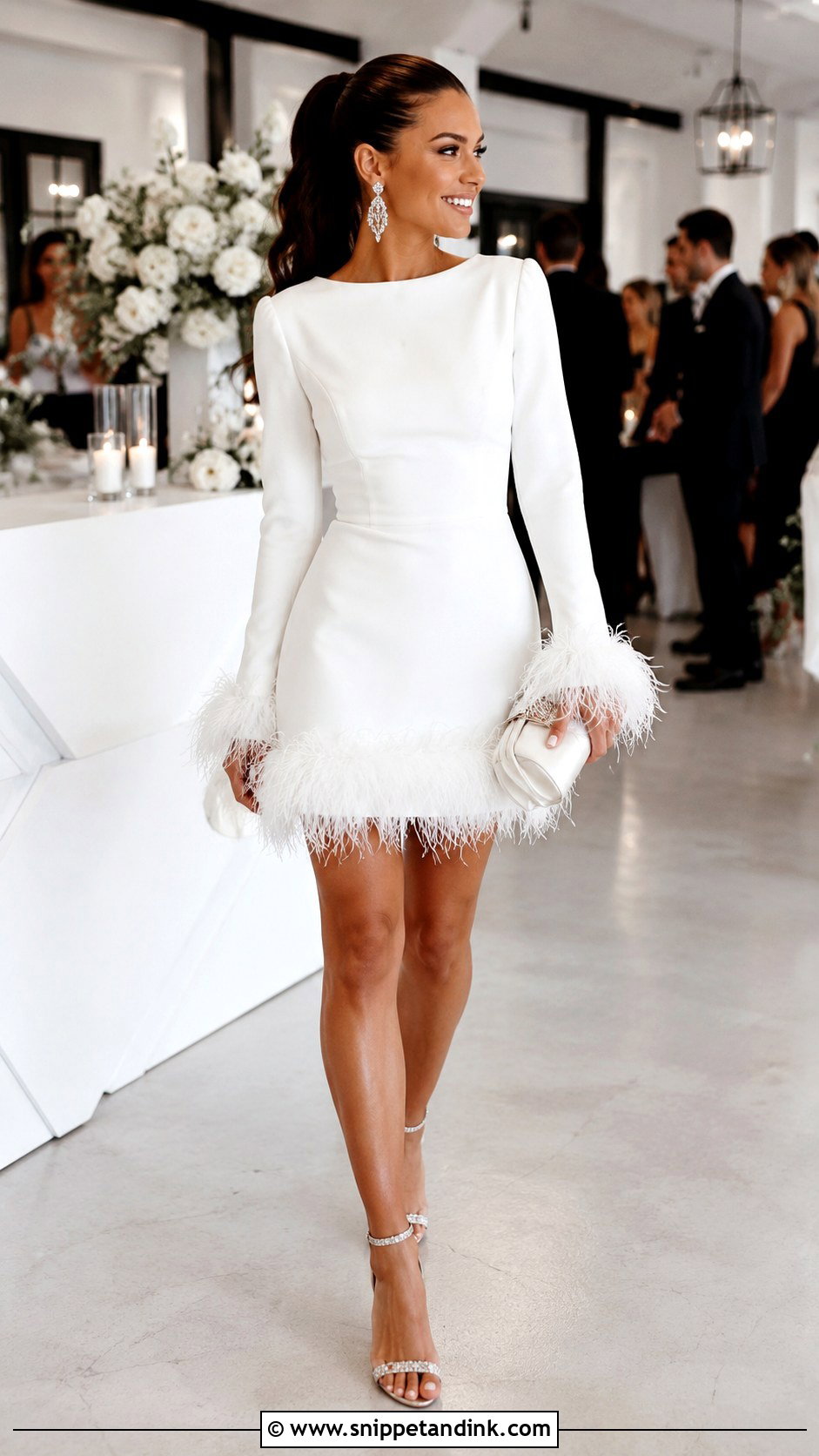
Feather trim brings movement to a reception dress without needing a beaded gown. Mini, midi or fitted column, with feathers at one or two places: hem, neckline, cuffs or detachable sleeves. Ostrich feathers in particular can shed, so give the dress a shake before the day and ask about how securely the trim is stitched. Supportive heels, sparkling earrings, a small clutch and sleek hair. If you are changing after the ceremony, wear shoes you can dance in for hours. No long veil.
How Long a Gown Takes From First Try-On to Last Fitting
The usual mistake is shopping too late. Most bridal gowns are made to order after you choose a size, and production times run to several months, so I advise brides to start looking around nine to twelve months out. Timing varies by designer, so ask at the appointment before you fall in love.
- Order the gown, ideally at least six months before the wedding if it is made to order.
- Book alterations so the first fitting falls about two to three months ahead.
- Plan on two or three fittings. Bring your shoes, undergarments and any jewellery every time.
- Ask your seamstress to show your maid of honour how the bustle works at the final fitting.
- Collect the gown a week or two before and hang it in its bag somewhere cool and dark.
Rush fees exist, but they limit your options. Giving yourself time is the cheapest way to get a better fit.
Turn Around in the Mirror Before You Say Yes
Every gown here comes down to proportion and comfort. Classic satin, romantic lace, clean crepe, coloured embroidery and feathers all work for the right bride. Look at the back, the train and the neckline, not just the front. At each fitting, sit, walk, lift your arms and turn. Good alterations can make an affordable gown look made to measure, while supportive shoes and the right underwear let you enjoy the day instead of adjusting your dress through it.
You'll Like These Ideas:




Leave a Reply