
Old-fashioned piping is back on wedding cake tables, and I’m glad, because it’s the part of cake decorating that shows a pair of hands at work. Buttercream swags, pearl borders, lace, heart-shaped tins, sugar flowers and tall tiered silhouettes all sit under the word vintage. They suit historic venues and garden parties, but they work just as well at a courthouse lunch or a small dinner. A vintage cake doesn’t have to look dated. Pair classic piping with modern proportions and a restrained colour, and it looks like a choice rather than a costume. Here are thirty versions, with what each one asks of your baker and your venue.
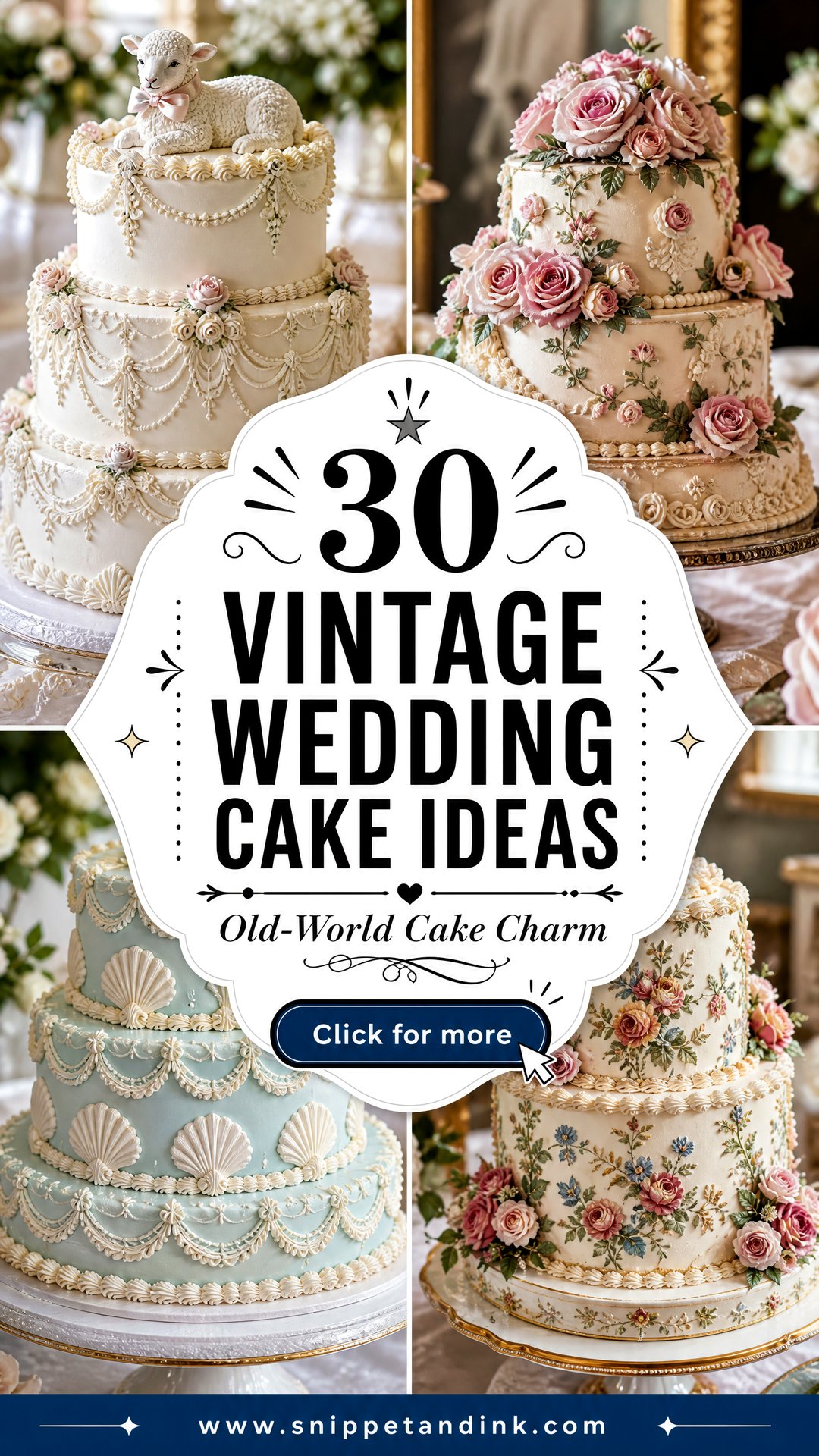
Which Decade Do You Mean by Vintage?
Vintage covers about a century of cake styles, and they don’t mix well. When a couple brings me a mood board, the first thing I do is sort the photos by era, because a cake that borrows from three decades usually looks confused.
Victorian and Edwardian
Tall, white and formal. Royal icing, pillars, swags and sugar flowers. Suits churches, estates and old hotels.
1920s and 1930s
Geometry, fans, metallic paint and sharp edges. Needs a smooth fondant or very crisp buttercream finish.
1950s to 1970s
Heart tins, Lambeth overpiping, cherries, pastel buttercream and piped messages. Playful, and the era most current photos are drawing on.
1980s
Fondant frills, pillars with fountains between tiers, lots of lace. Fun as a deliberate reference, harder to make feel fresh.
Bring five or six photos from one era and tell me what you like in each: the border, the colour, the shape. That’s more useful to a baker than fifty pins.
1. Vintage Lambeth Wedding Cake
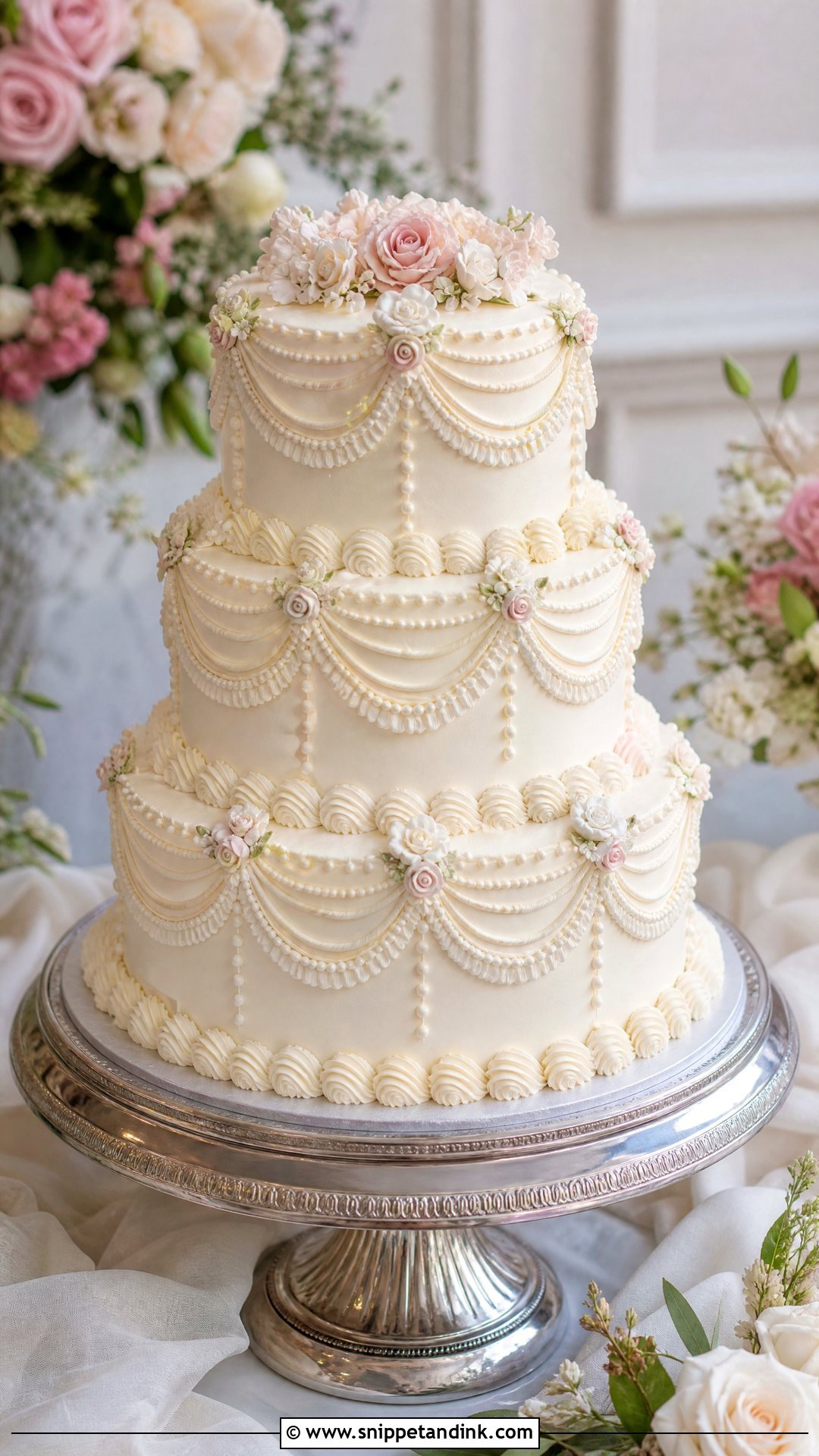
A vintage Lambeth wedding cake is the one most people mean when they say vintage. The method is overpiping: shells, drop strings and scallops built up in layers until the sides look carved. Every layer has to set before the next goes on, so this is the slowest style on the list and the one where a baker’s skill shows most plainly. Ivory, cream and pale blush are the easiest colours to dress with pearls and linen. On two or three tiers, I keep the same border sequence on each so the eye reads one cake rather than three busy ones.
2. Vintage Heart Wedding Cake
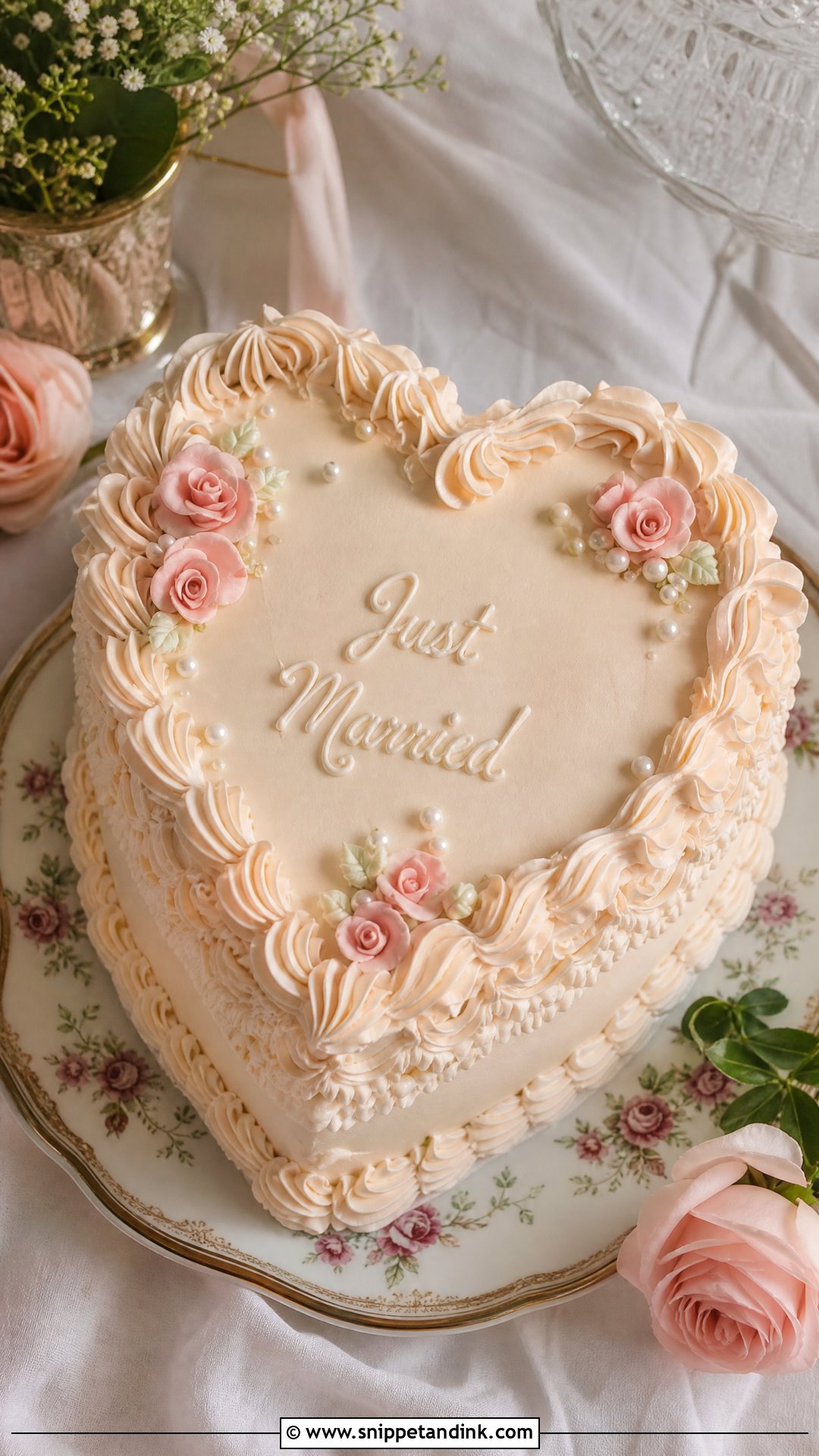
Heart tins were everywhere in mid-century baking, and a heart cake still carries that retro sweetness on its own, which means the piping can stay quieter. Buttercream shells, a ruffled edge and a short piped message are enough. For a wedding I’d keep to ivory, blush, champagne or pale blue rather than party pinks. Scale matters here: a heart reads best as a single tier for a small reception or a bridal lunch, set on a silver stand or an old china plate.
3. Vintage Pearl Wedding Cake
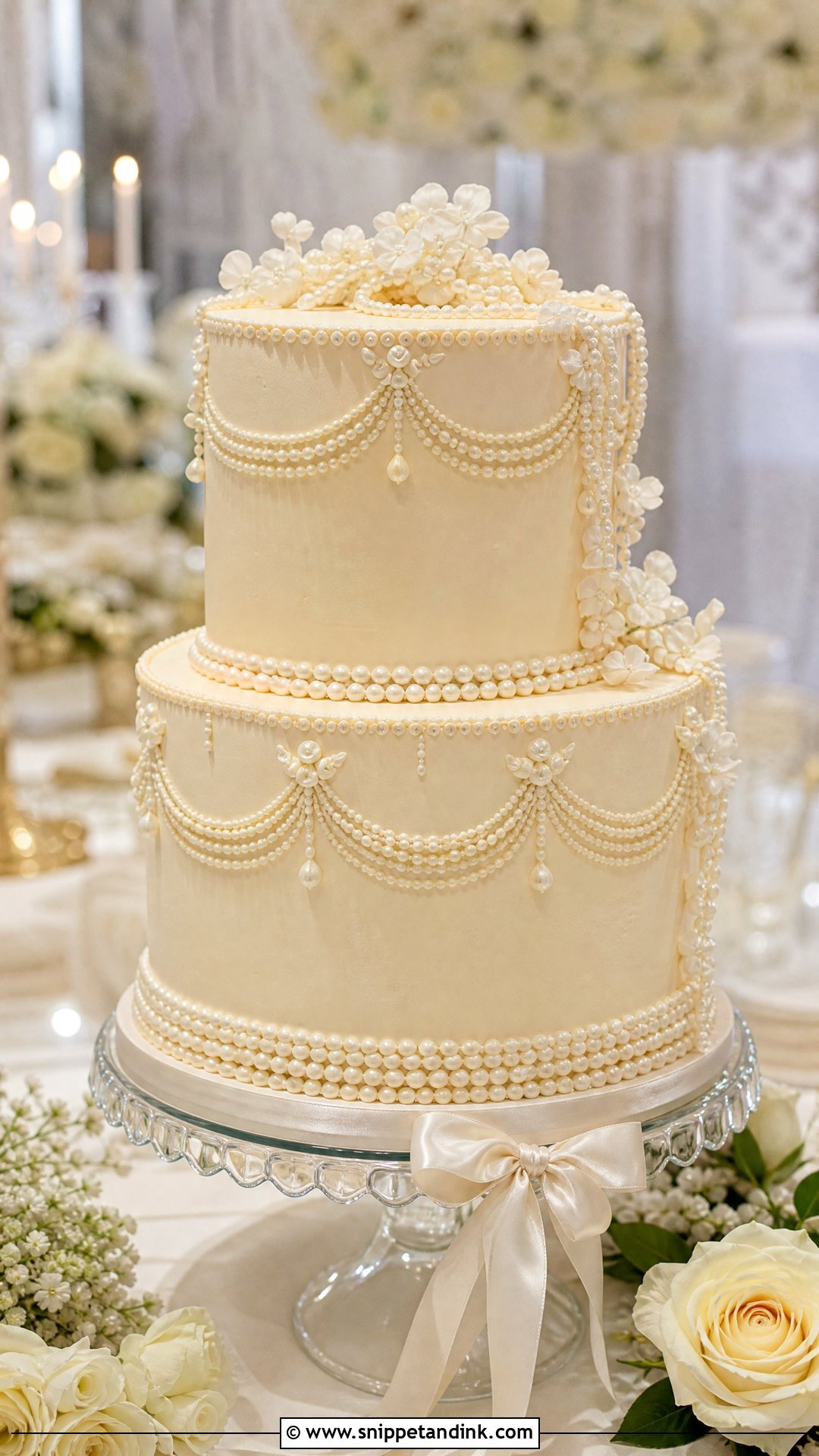
Pearls are an easy way into vintage because they add detail without needing a lot of piping skill. There are two kinds. Piped pearls are dots of buttercream from a round tip, soft to eat and quick to apply; sugar pearls are hard, shiny and best used in small amounts so nobody cracks a tooth. Along scalloped borders or around tier bases they look neat; scattered across a whole tier they start to look like a craft project. Ivory buttercream with white pearls suits satin gowns and pearl-edged veils especially well.
4. Vintage Lace Wedding Cake
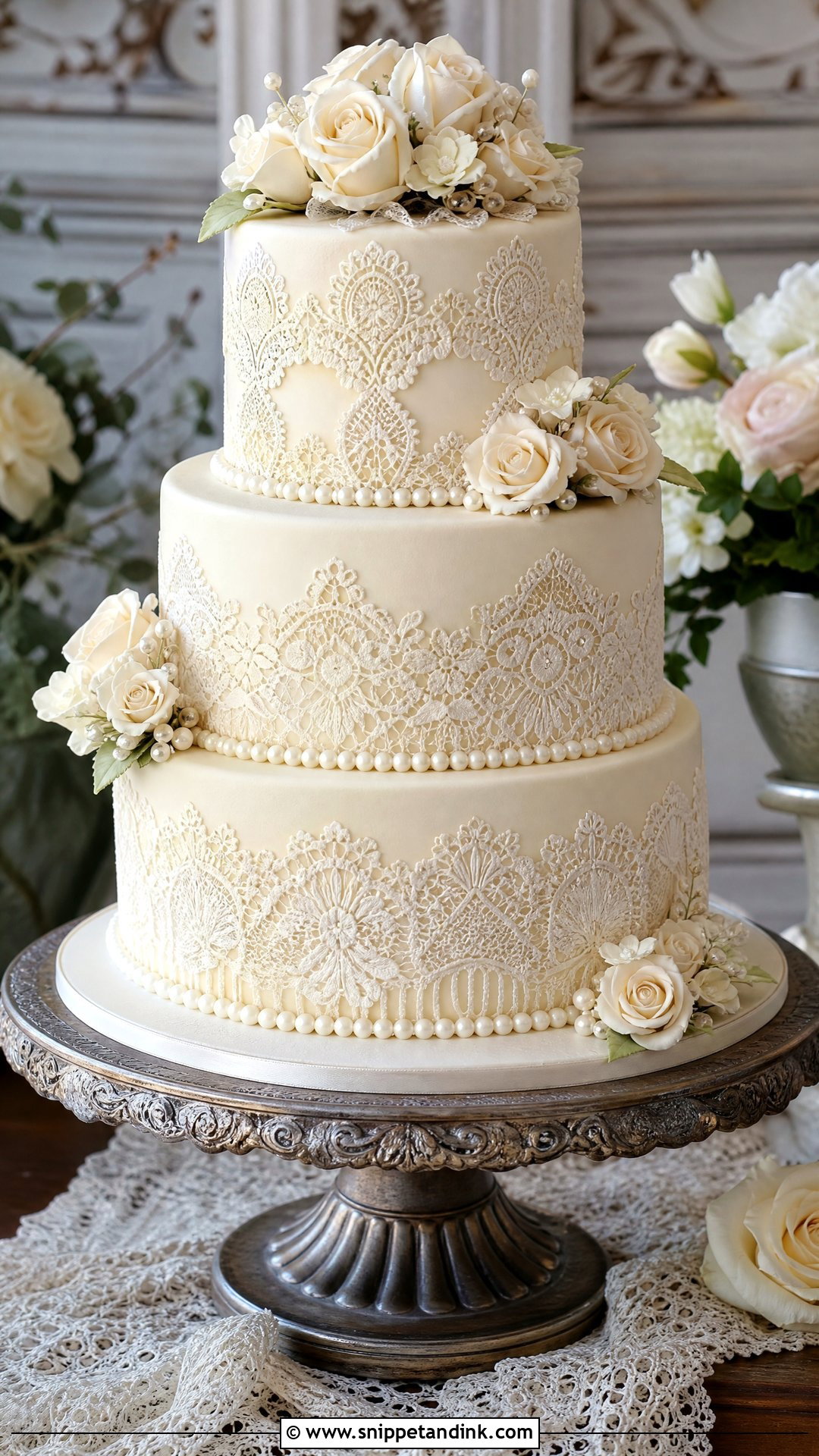
If the cake is meant to echo a lace dress or veil, there are several ways to make the lace, and they behave differently. Piped royal icing is crisp and precise. Edible sugar lace, set in a silicone mat, looks the most like fabric, but it goes brittle in dry air and tacky in humid air, so I apply it on the day. Royal icing spread through stencil work is the fastest and most even. Soft ivory looks more like old lace than stark white, and tall tiers give the pattern room. A few sugar roses are fine; cover too much of the lace and you lose the point of it.
5. Vintage Victorian Wedding Cake
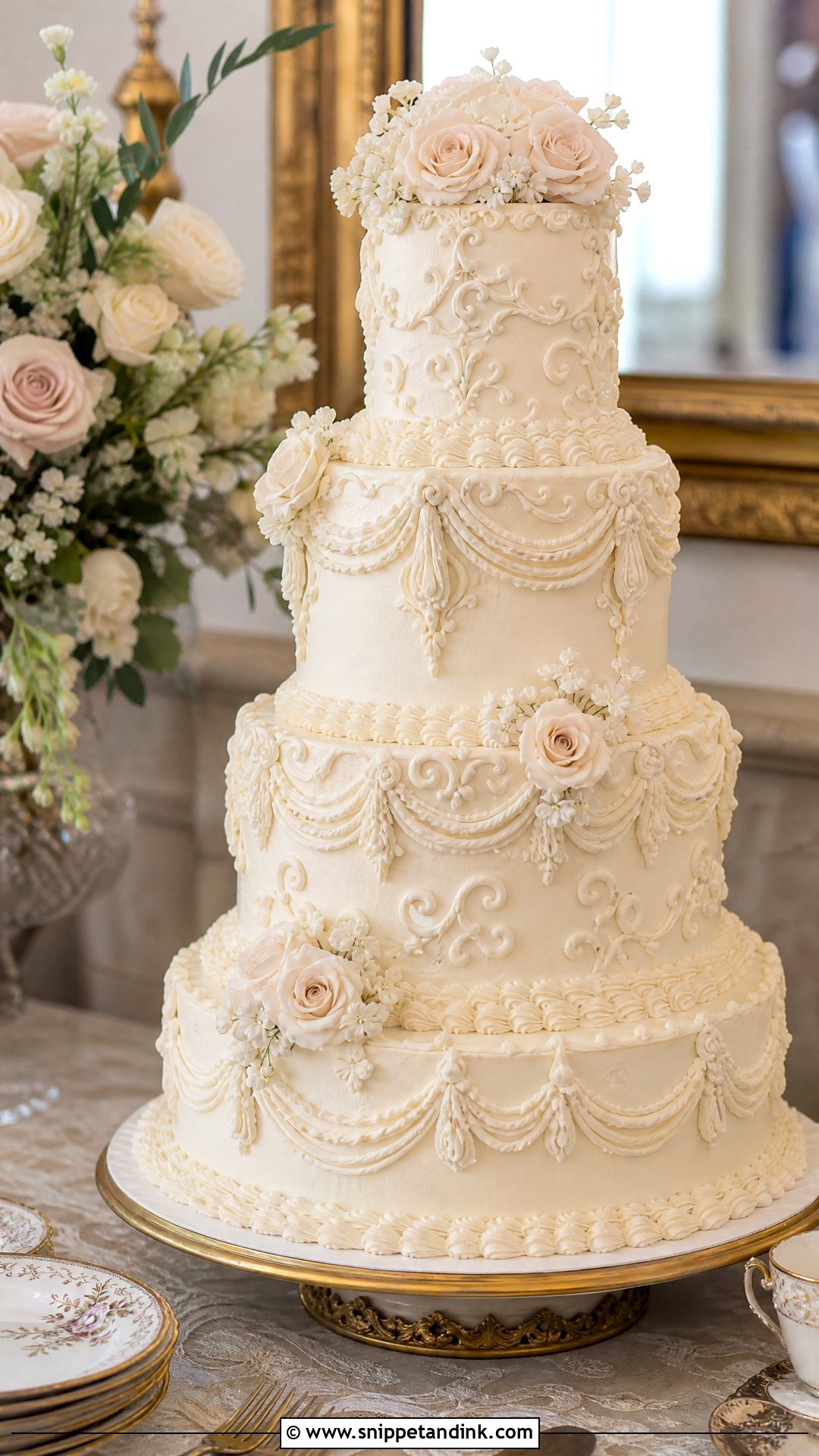
The Victorian wedding cake was originally a dense fruitcake under hard white royal icing, which is why those cakes could stand so tall. Today most couples want sponge inside, so the look is recreated with buttercream and proper internal support. Think ivory frosting, curved swags, shell borders, sugar roses and small pearl details, repeated so the cake looks balanced from every side. Blush or sage can come in if your palette needs it. Mansions, libraries and ornate rooms suit the formality.
6. Vintage Art Deco Wedding Cake
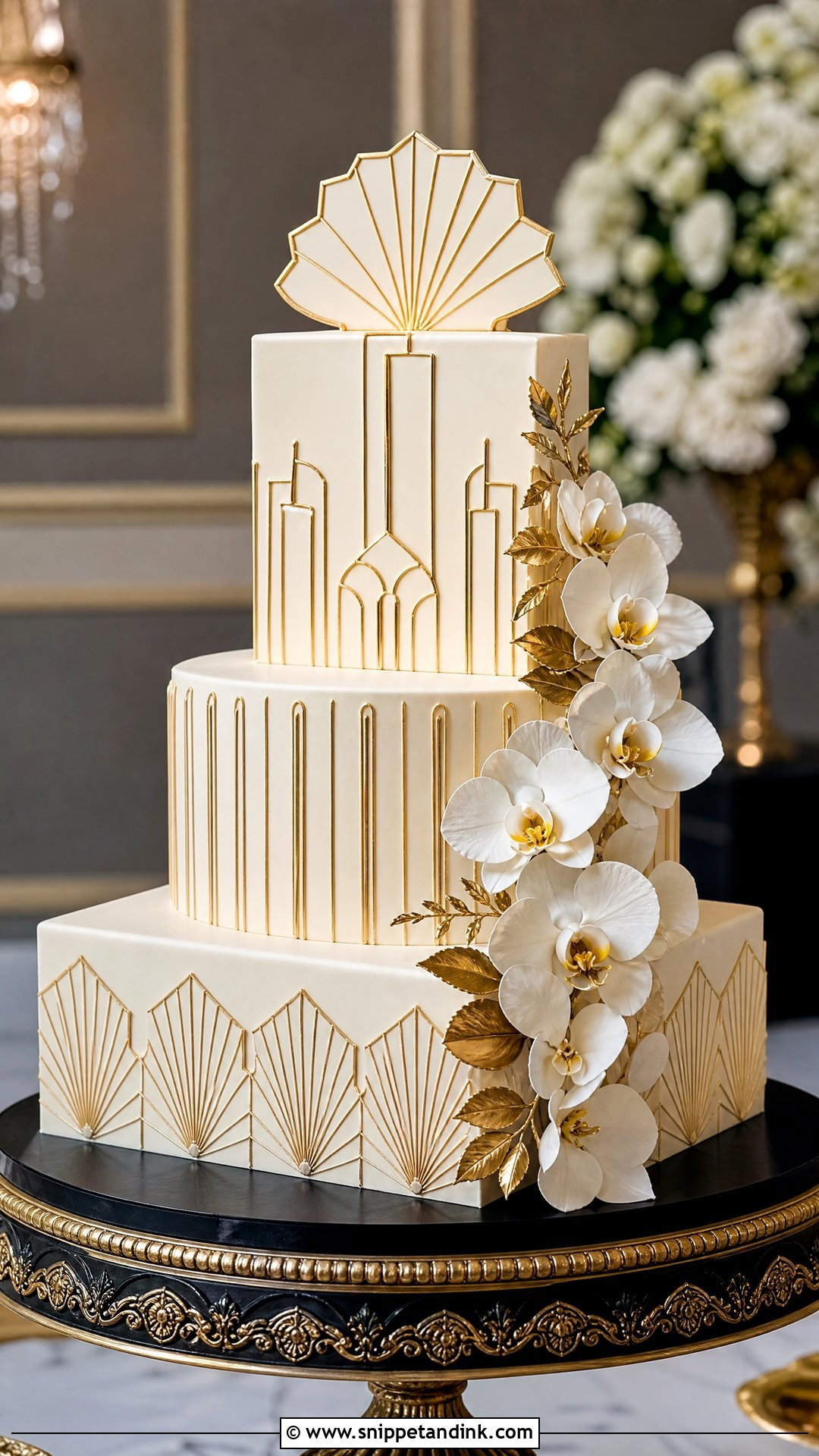
Art Deco swaps ruffles for geometry: fans, stepped bands, vertical lines and metallic paint. Geometry is unforgiving, so this needs either fondant or very sharp, chilled buttercream; one wobbly line shows from across the room. Ivory and gold are classic. Black detail adds drama, but heavy black colouring stains lips and teeth, so I keep black to thin painted lines rather than whole panels. A few sugar flowers or pearl touches stop it feeling cold at an evening reception.
7. Vintage Buttercream Wedding Cake
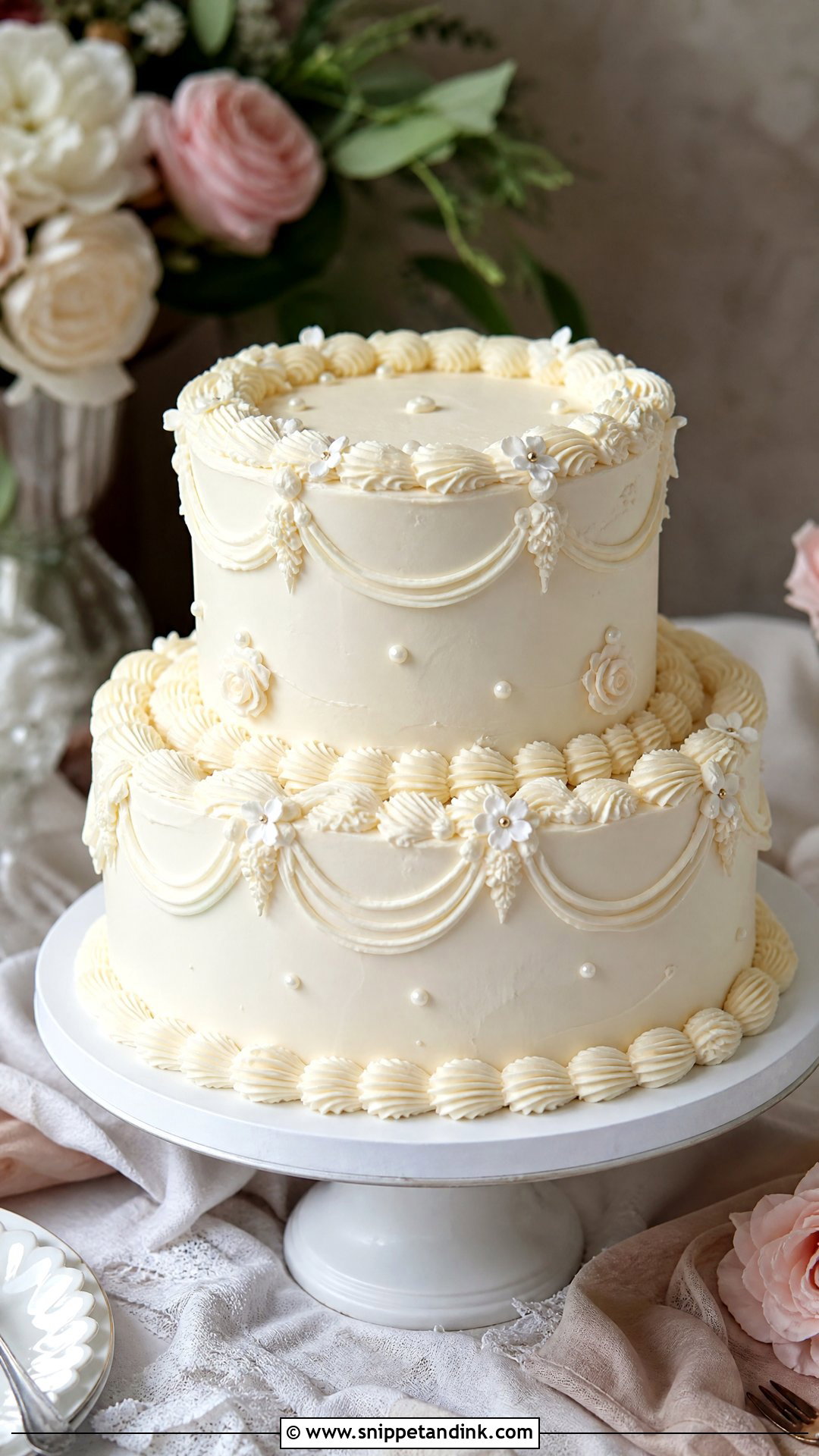
Buttercream has a softness that fondant can’t fake, and it’s what most guests actually want to eat. For vintage piping, the type matters. A crusting American buttercream holds sharp shells and basketweave well; a silkier Swiss meringue buttercream tastes lighter but softens faster in warm rooms. Rosettes, basketweave panels, scallops and swags all work, on one tier or five. Ivory, vanilla, pale peach and soft pink keep it traditional.
8. Vintage Rose Wedding Cake
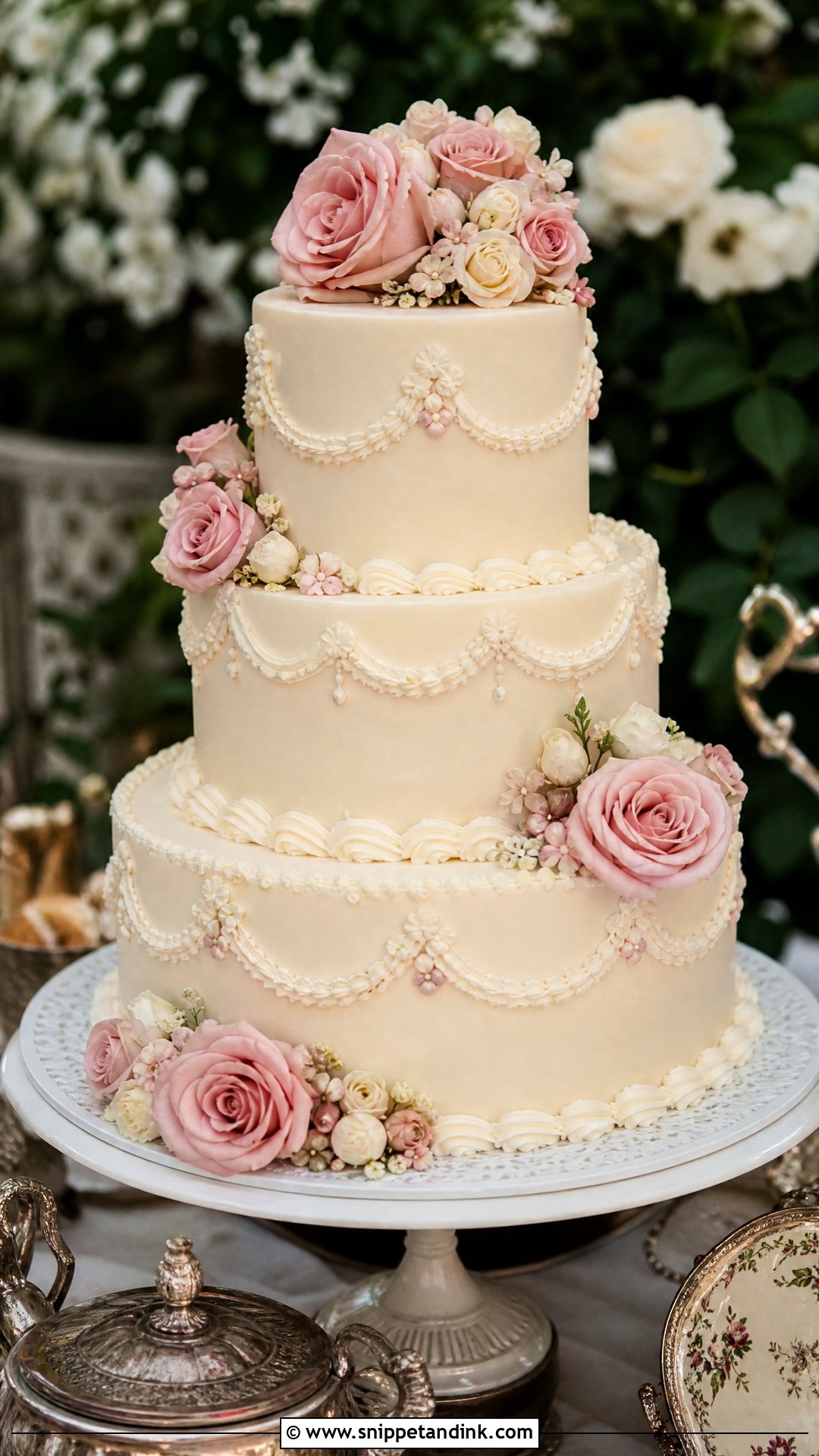
Roses come three ways: piped buttercream roses turned on a flower nail, sugar roses made in advance, or fresh roses placed by a florist and baker working together. Fresh garden roses are often sprayed, so stems need wrapping and a barrier before they go near frosting. For a vintage look I steer towards dusty pink, mauve and pale peach, and pair them with delicate piping rather than leaving the cake bare. A pedestal stand with linen and candlelight finishes it.
9. Vintage Sugar Flower Wedding Cake
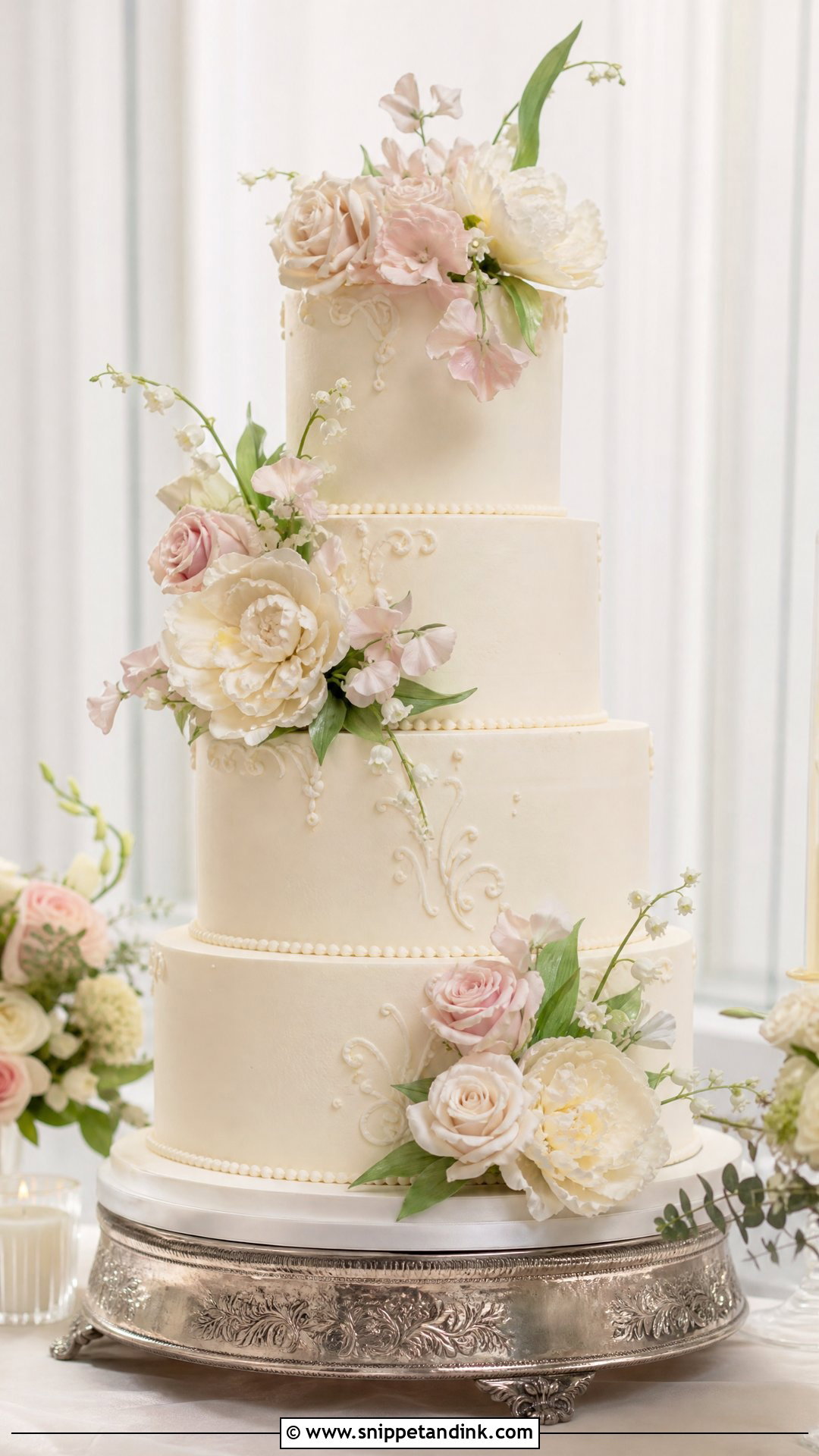
Sugar flowers are the most labour-heavy decoration here, and the one couples most often keep. Each petal is rolled thin, wired, shaped and dusted, so a full spray takes many hours of work spread over days. Roses, peonies, sweet peas and small blossoms can all match your bouquet. Two things to know: the wires inside are not edible, so they come off before cutting, and humidity softens sugar petals, so the flowers travel boxed and go on last. Kept dry, the arrangement can be saved as a keepsake.
10. Vintage Ruffle Wedding Cake
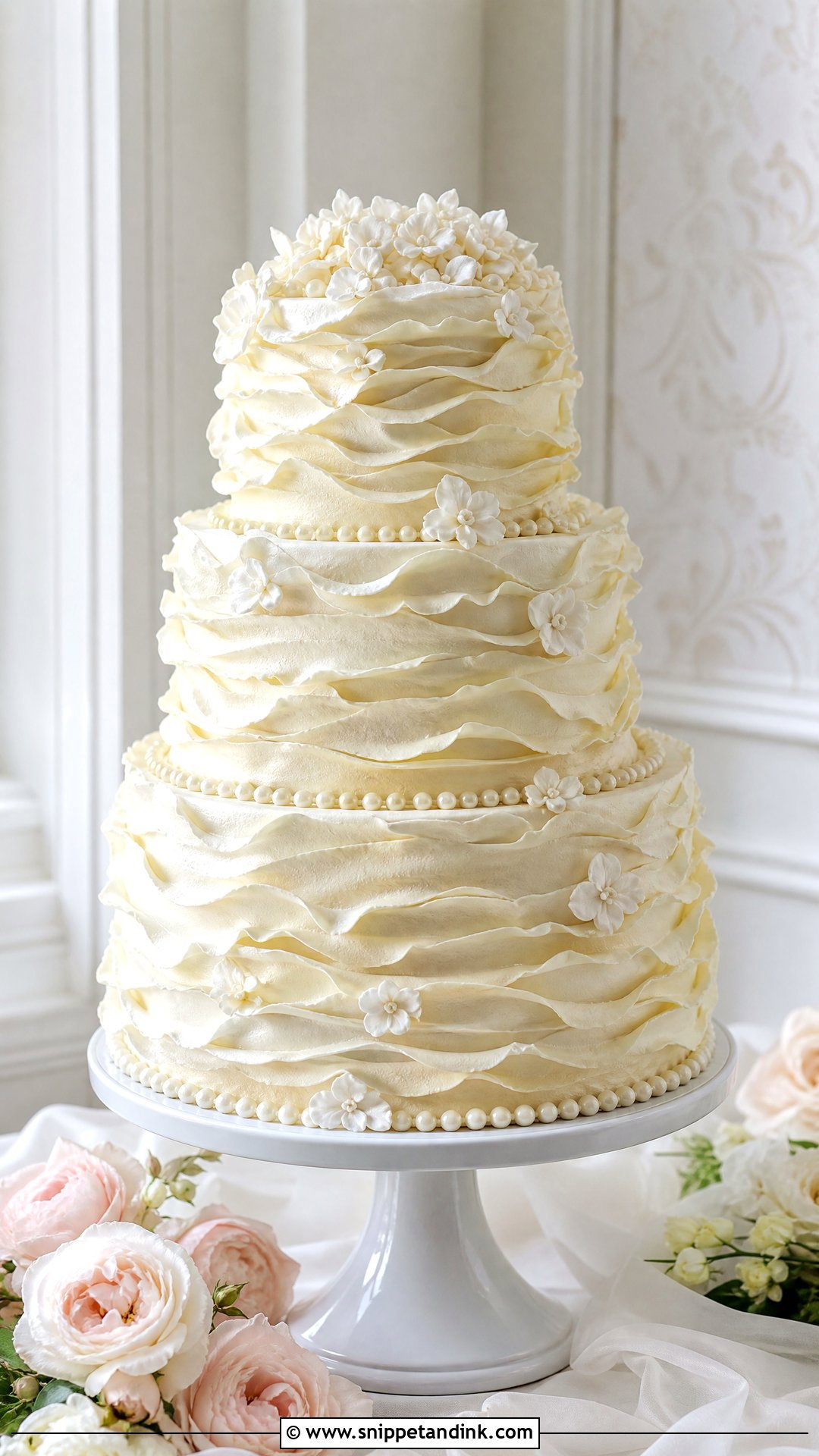
Ruffles can be piped in buttercream or cut from thin fondant, and they look quite different. Buttercream ruffles are soft and lofty. Fondant frills, the classic sugarcraft version, hang like fabric and keep their shape for longer. Rows around each tier, gathered edges or a skirt-like frame all suit ivory, blush and champagne. Pearl borders or a few small sugar flowers between sections add detail, though I’d keep one or the other, not both.
11. Vintage Cherry Wedding Cake
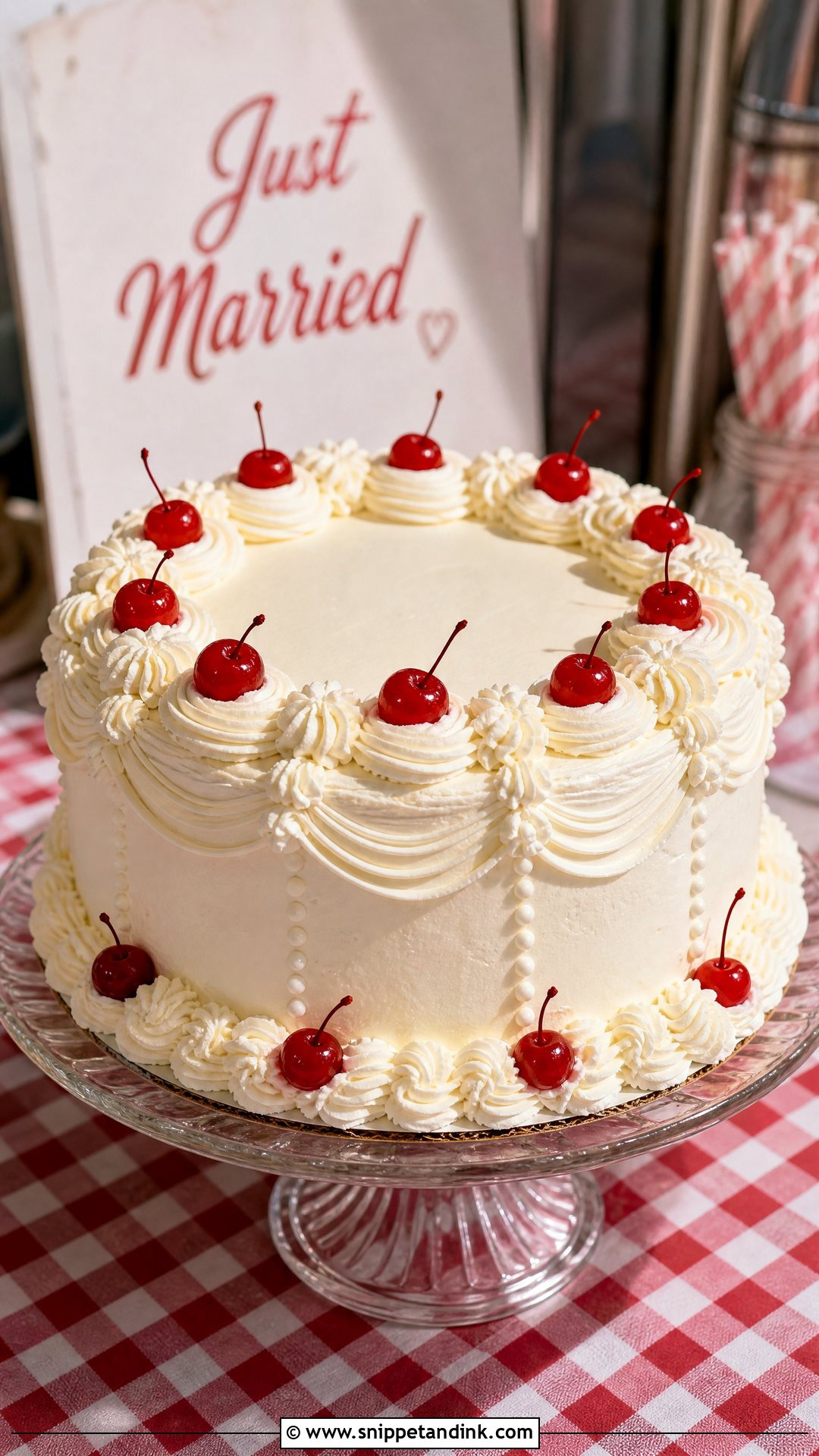
Cherries on ivory Lambeth piping are the most copied version of this whole trend. The red has to be managed. Glacé and maraschino cherries bleed syrup into buttercream, leaving pink haloes, so I drain them and dry them on paper overnight, or use fresh stemmed cherries placed just before display. Set them evenly along a border rather than scattering. It suits a heart cake, a round single tier or a small stack, and it’s one guests remember.
12. Vintage Blue Wedding Cake
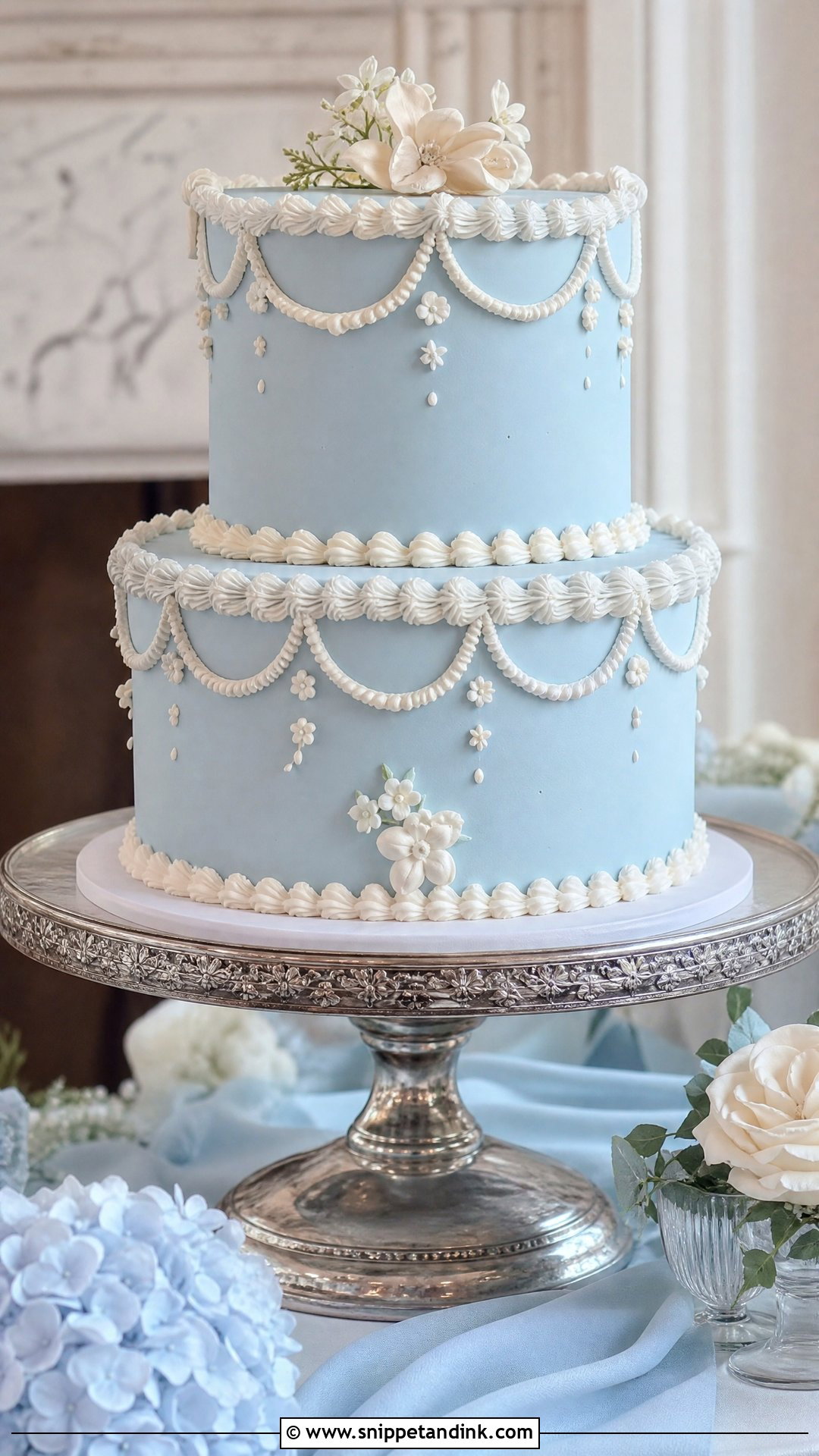
Powder blue, dusty blue and pale French blue look right for vintage; bright blue doesn’t. There’s a technical catch with blue buttercream. Butter is yellow, and yellow plus blue drifts towards green, so a tiny touch of violet colouring keeps the shade true. White piping, pearl borders and lace all sit well on it. For a subtle effect, colour one tier and keep the others ivory; for more drama, pipe ornate white Lambeth borders over a fully blue cake.
13. Vintage Pink Wedding Cake
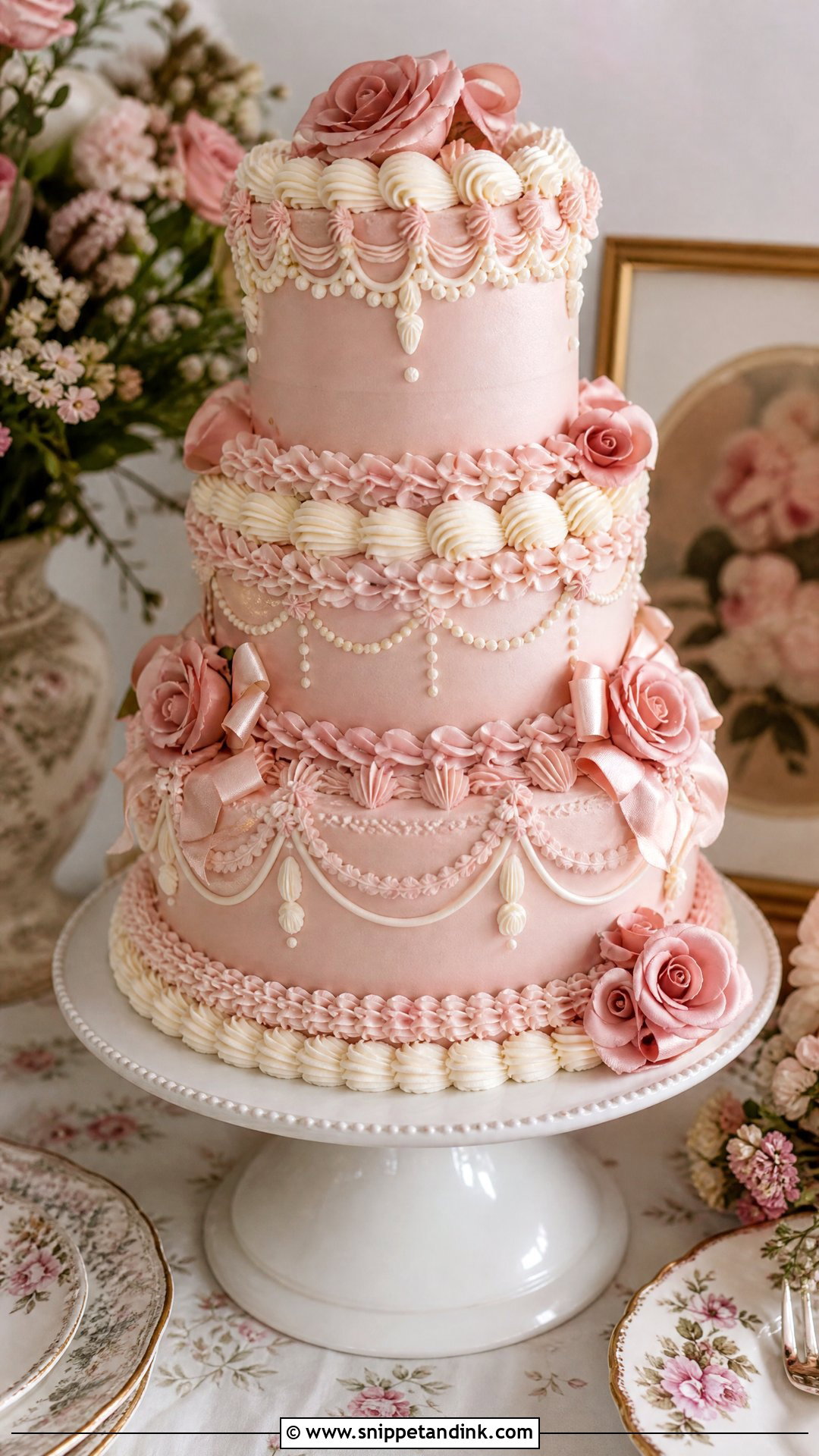
Blush, dusty rose, ballet pink and muted mauve keep a pink cake soft rather than sugary. One thing bakers know and couples don’t: many pink and purple food colourings fade under strong light, so a cake left near a sunny window can look patchy by the cutting. Display it out of direct sun. Ivory piping, pearls, small rosettes or sugar roses finish it, and I’d choose one main pink and repeat it rather than mixing several tones.
14. Vintage Ivory Wedding Cake
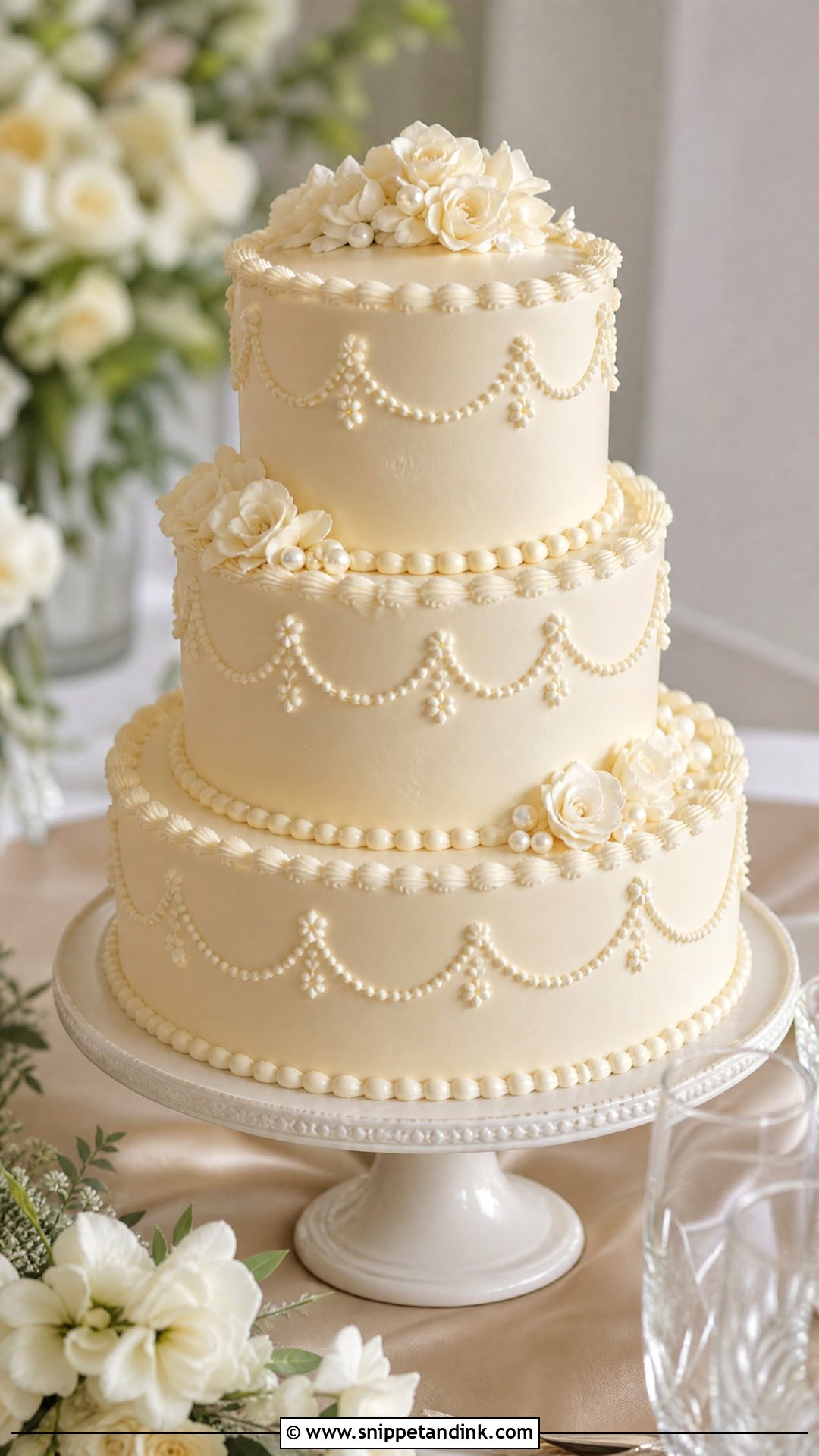
Ivory is warmer than bright white, so piping, lace and pearls read softer next to it in photos. All-butter buttercream is naturally ivory anyway; a true white needs whitener or part shortening. This is the most adaptable colour on the list, sitting with blush and sage as comfortably as with gold. The risk with an all-ivory cake is flatness, so I vary the texture: scallops on one tier, shells on another, a fine swag where the light falls.
15. Vintage Gold Wedding Cake
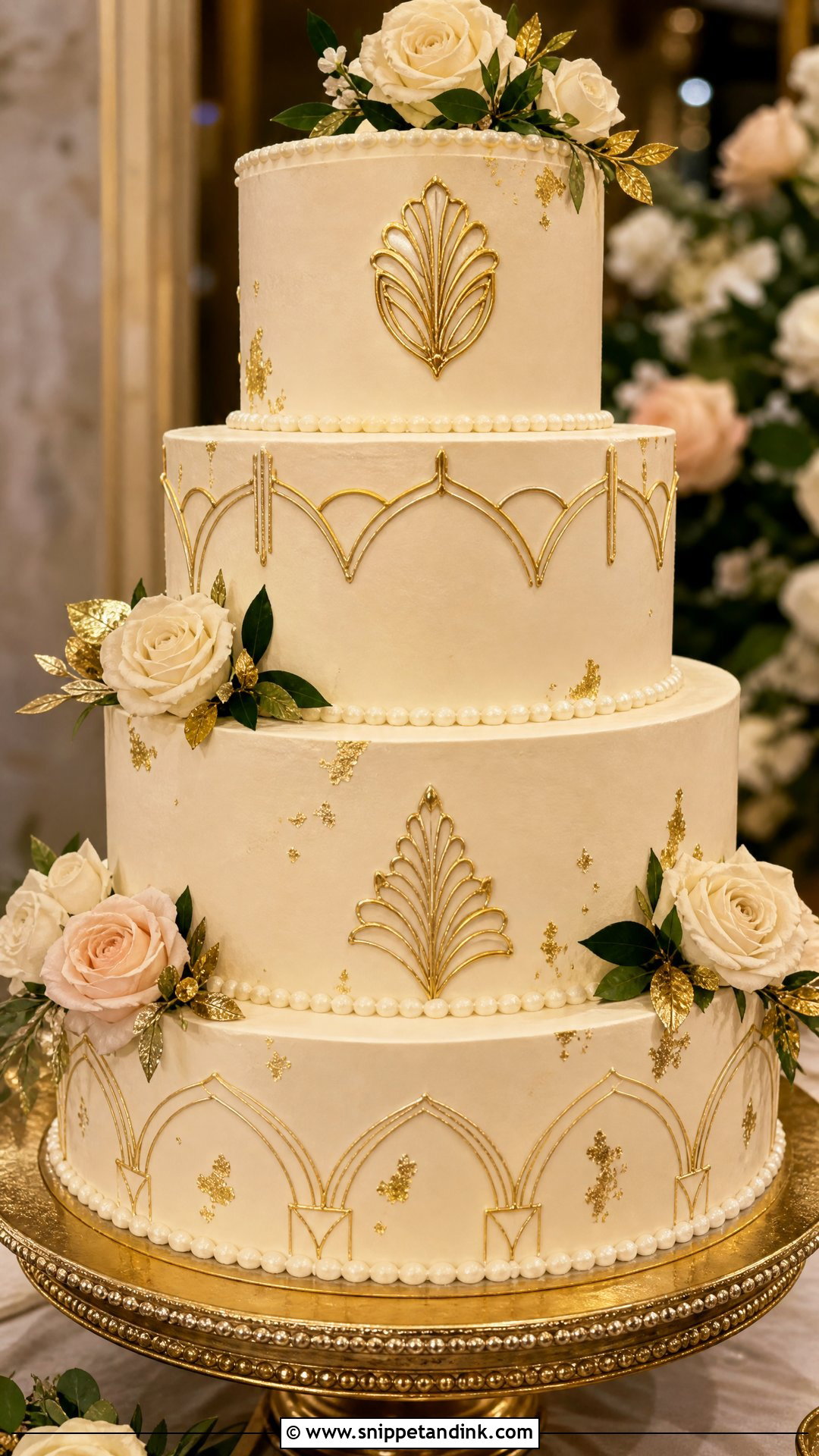
Gold gives old-world luxury when it’s used with control: thin painted lines, a few leaf accents, a monogram or Art Deco fans. Make sure the gold is labelled edible. Some shimmer dusts are sold as non-toxic, which is not the same thing, and those belong on display pieces only. Pair it with ivory frosting and refined piping, plus pearls or sugar roses for an antique feel. Under warm evening light it catches softly instead of glaring.
16. Vintage Monogram Wedding Cake
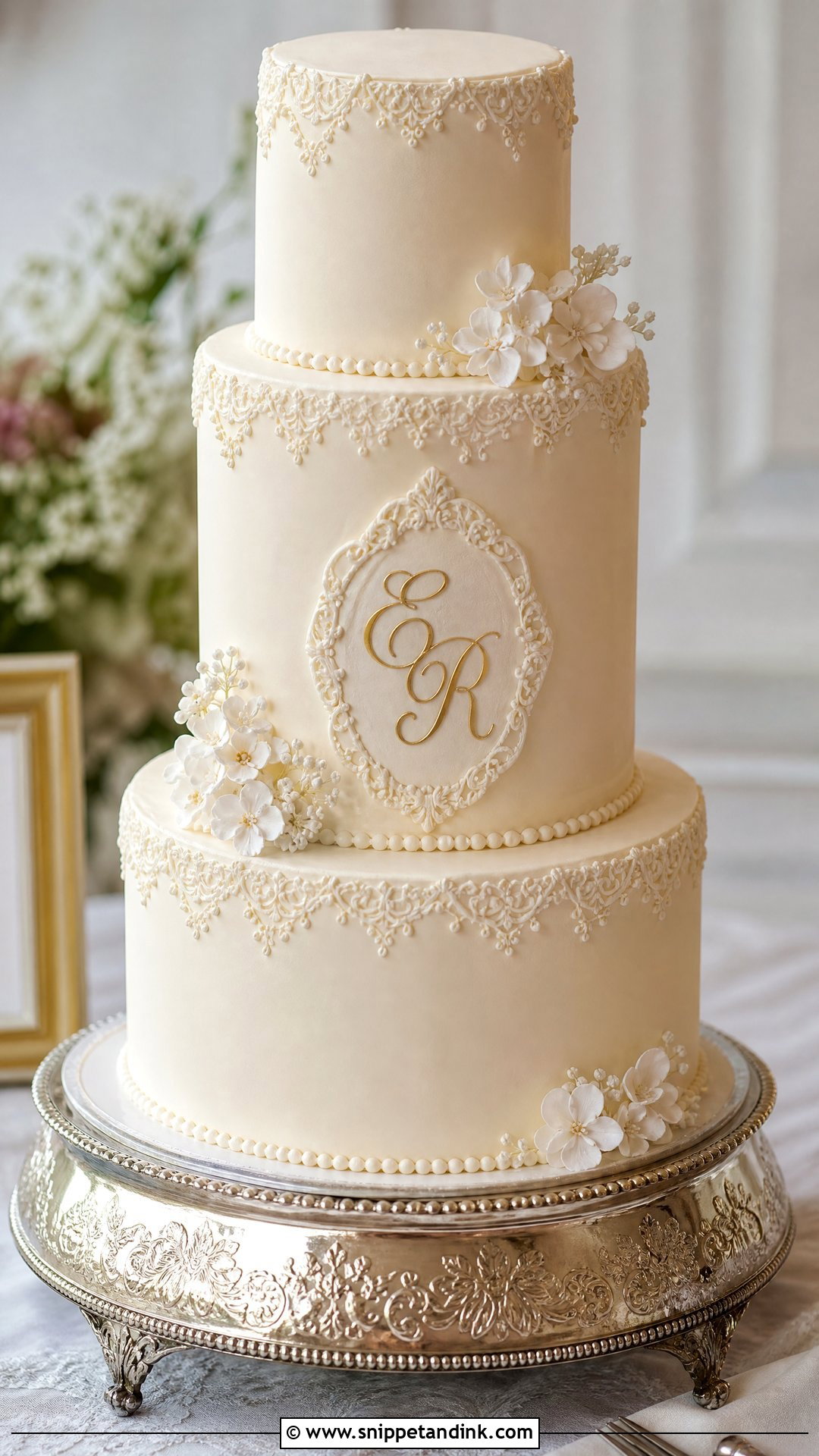
A monogram makes the cake feel commissioned. It can be piped, painted, embossed or set on a small sugar plaque on the front tier. If you’re using a traditional three-letter couple’s monogram, the shared surname initial sits larger in the centre, so check the order before anything is piped, since a mistake can’t be scraped off neatly. Ivory frosting with gold, pearl or soft grey lettering is the classic combination. Frame the letters with lace piping or a swag so they look built into the cake.
17. Vintage Cameo Wedding Cake
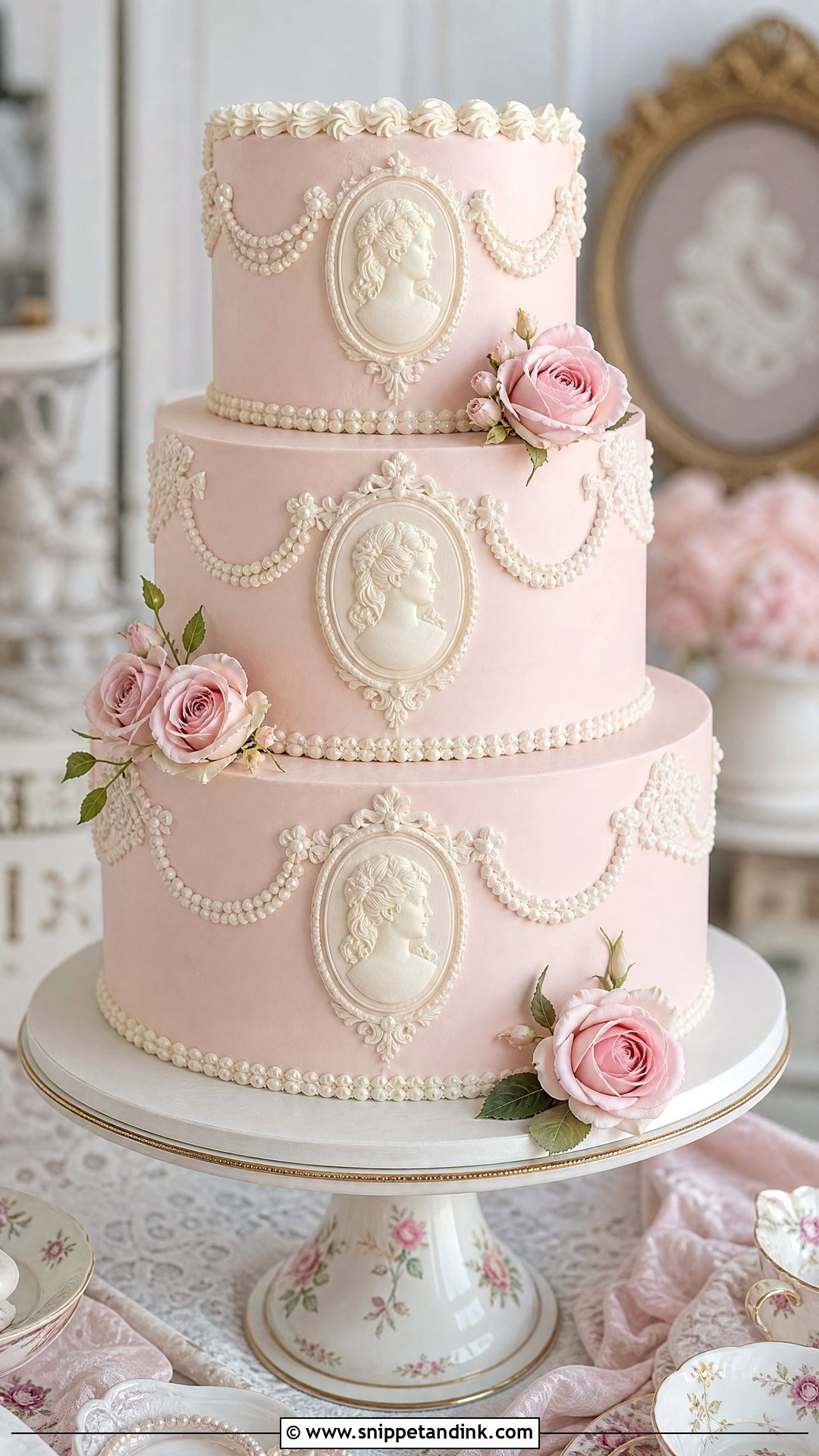
Cameos are usually made from fondant or modelling chocolate pressed into a silicone mould, then set on a tinted oval so the white relief stands out, the way it does on carved shell jewellery. A brush of pearl dust gives the sheen. Soft ivory, blush or champagne tiers with fine borders suit it, along with pearls, roses or lace. Restraint matters most here. One or two cameos look like heirlooms; a ring of them starts to look like a souvenir shop.
18. Vintage Bow Wedding Cake
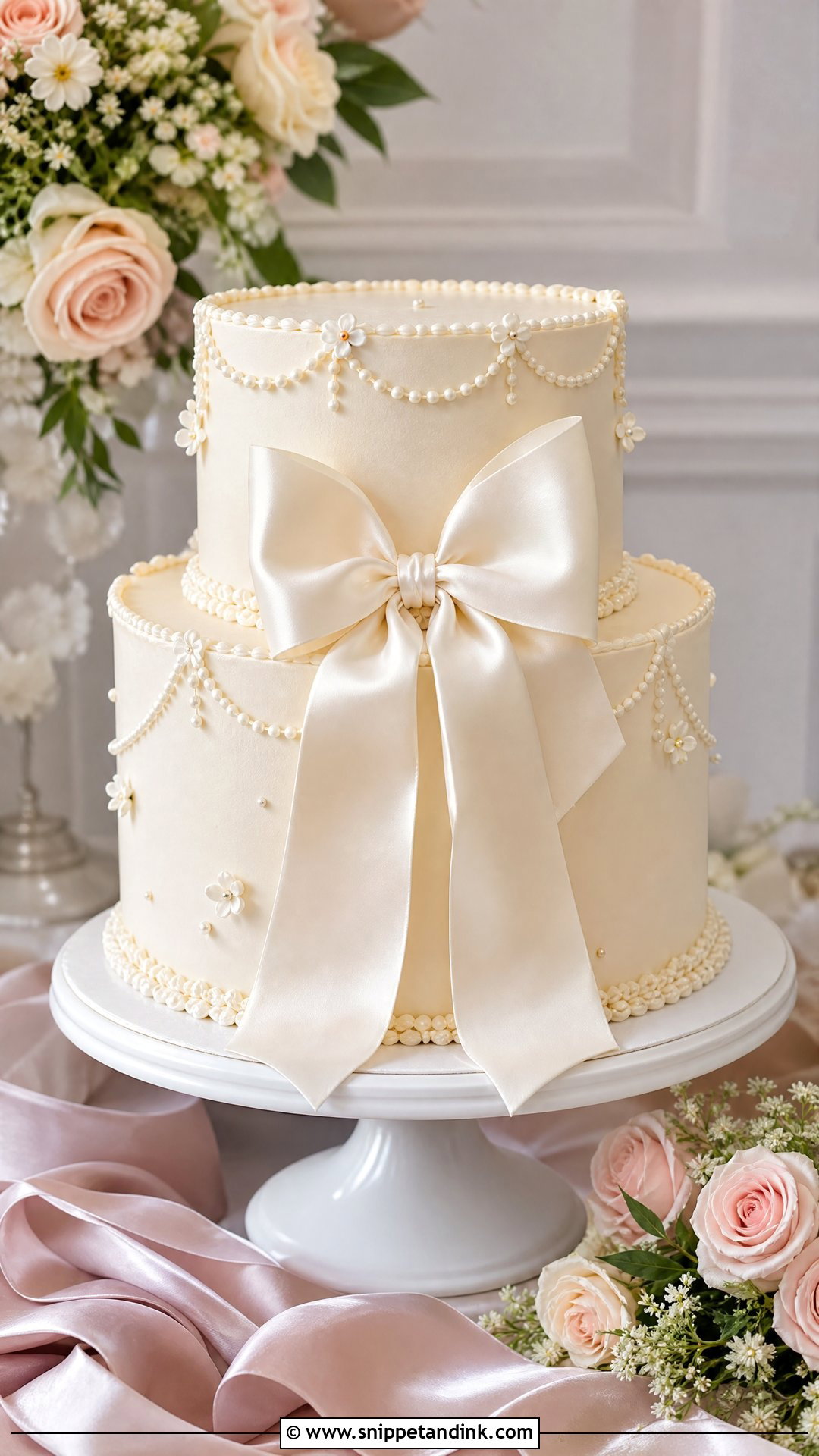
Bows can be fondant, sugar paste, wafer paper or piped buttercream. A large fondant bow needs a day or two to firm up with a little tylose kneaded in, and it’s propped with tissue while it dries, otherwise the loops collapse on the cake. One big bow as a focal point, or small bows between tiers, both work. In soft ivory, blush, dusty blue or champagne, alongside pearl borders or swags, it stays grown-up rather than childish.
19. Vintage Basketweave Wedding Cake
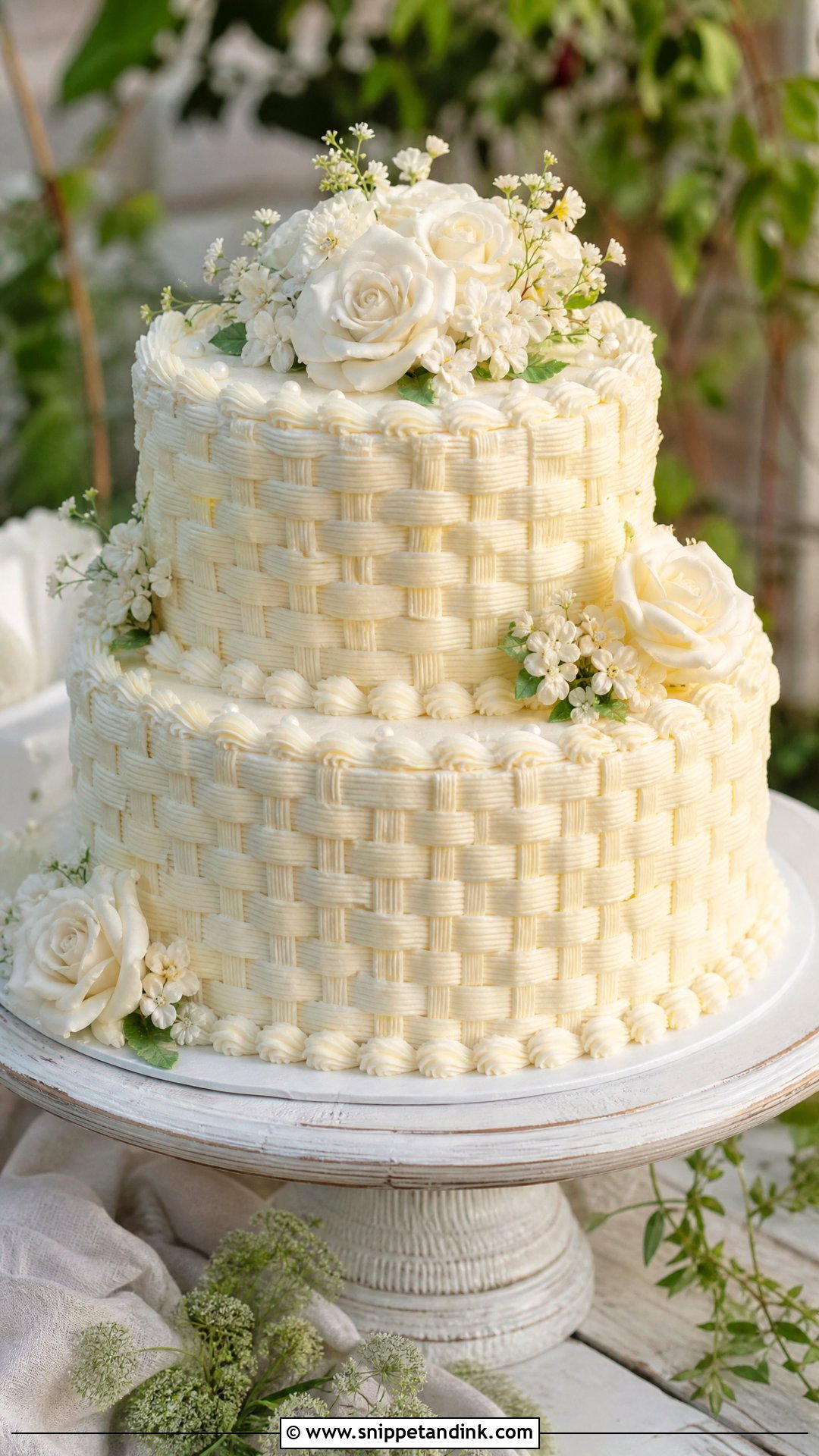
Basketweave is piped with a ridged tip, a vertical line followed by short horizontal bars, then repeated all the way round. It’s slow and rhythmic, and it hides small imperfections in the coat better than smooth finishes do. Roses, small blossoms, greenery or pearl borders all sit well against it. Ivory and cream are classic; pale peach or soft yellow feel more like an old bakery window. You get plenty of texture here without the full drama of Lambeth.


20. Vintage Scallop Wedding Cake
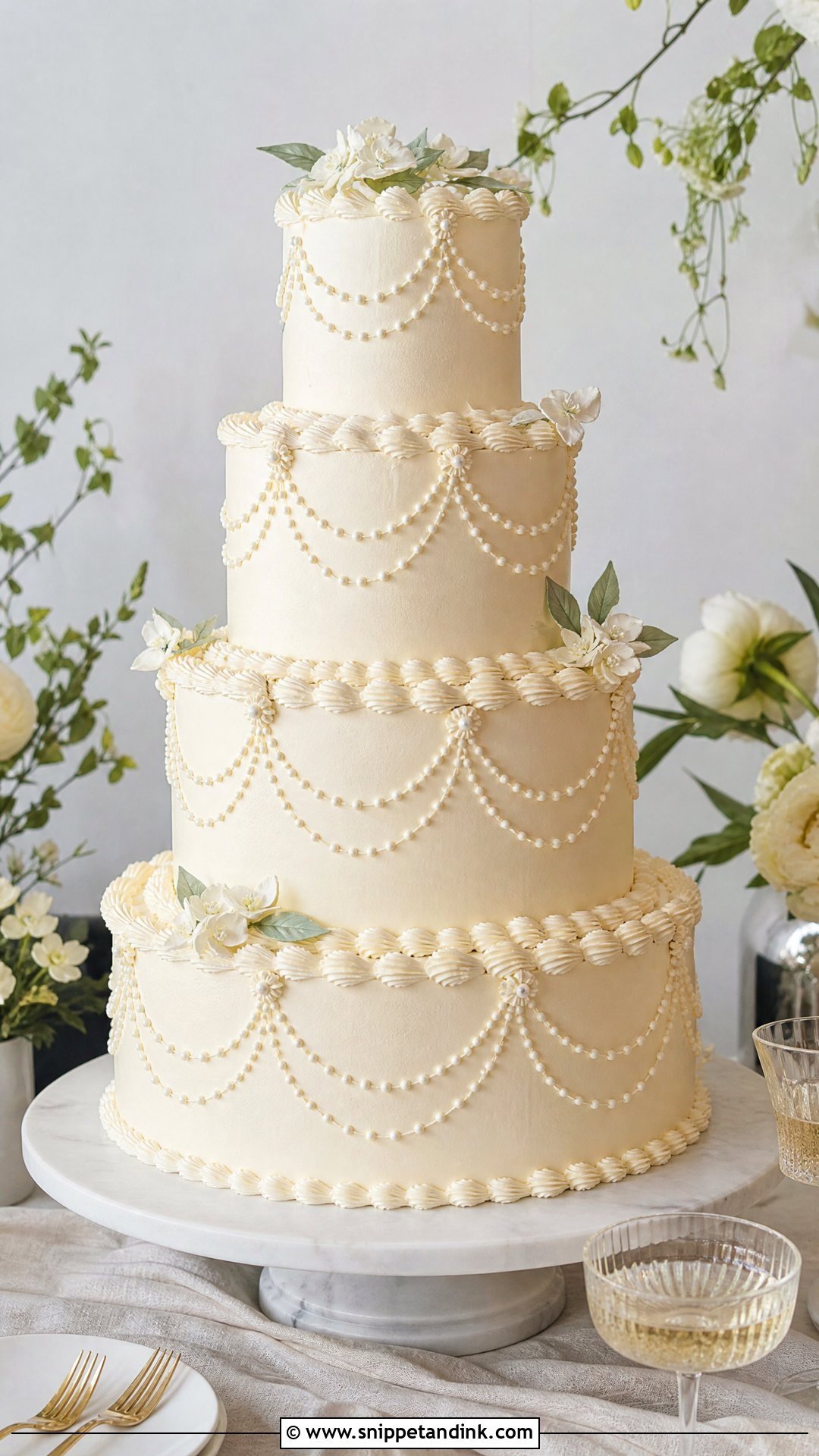
Scallops are repeating curves along tier edges, around the sides or as a full design. Even spacing makes or breaks it. Uneven scallops are the most visible mistake on a vintage cake, which is why I mark the divisions around each tier with a template before piping a single curve. Ivory buttercream with pearl accents or tiny flowers is the safest base, and the palette can lean coastal or formal from there. Tall tiers show the pattern best.
21. Vintage Tiered Wedding Cake
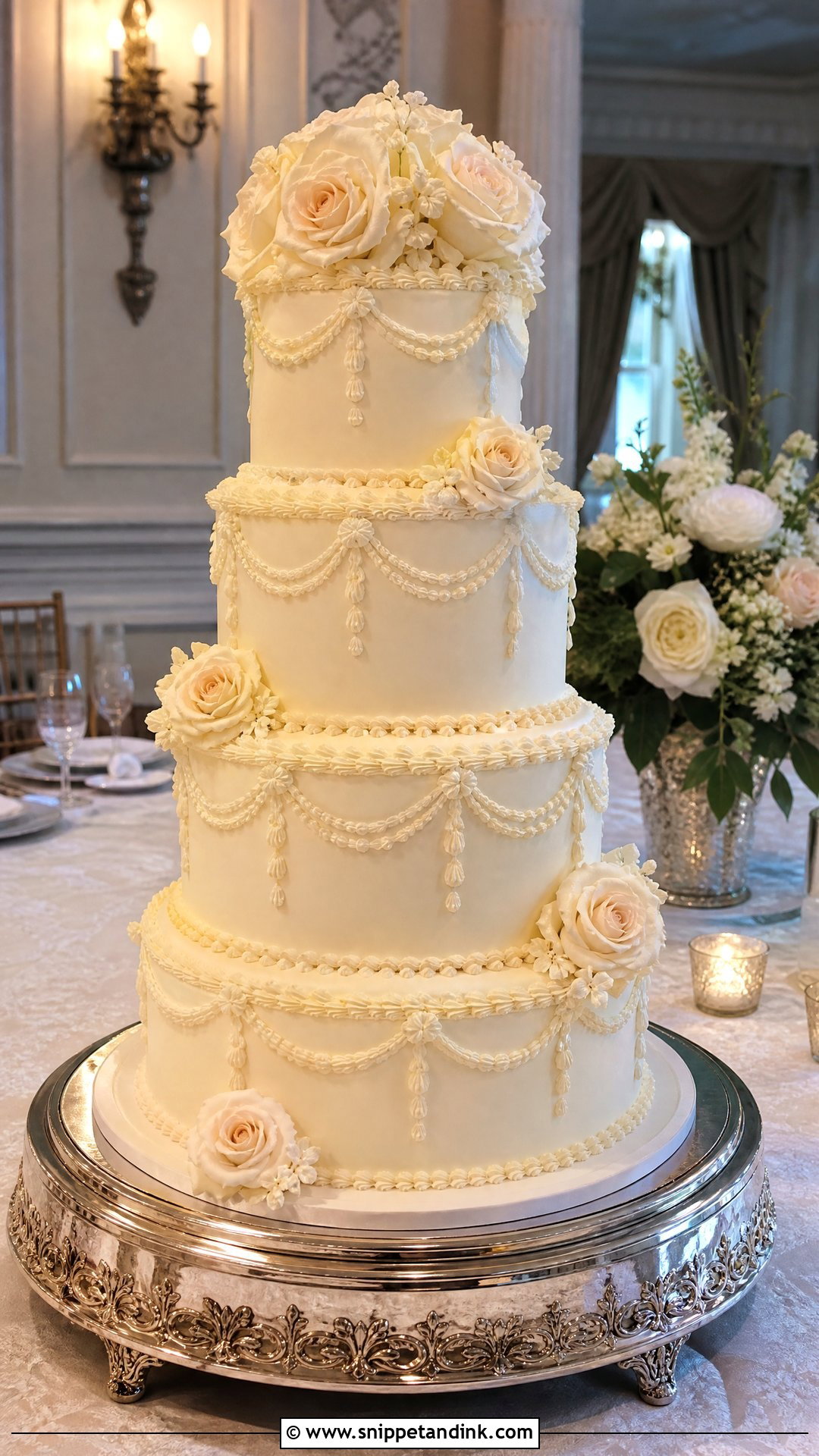
Three or more tiers give height and a formal presence that larger weddings need. To read as vintage, the tiers need detail: piped borders, lace, sugar flowers, pearls or swags. Round tiers feel the most traditional, though square or mixed shapes work too. I’d also vary tier heights slightly, as older cakes often did, instead of making every tier identical. Ivory and cream are safe; muted pastels make it more personal.
22. Vintage Two Tier Wedding Cake
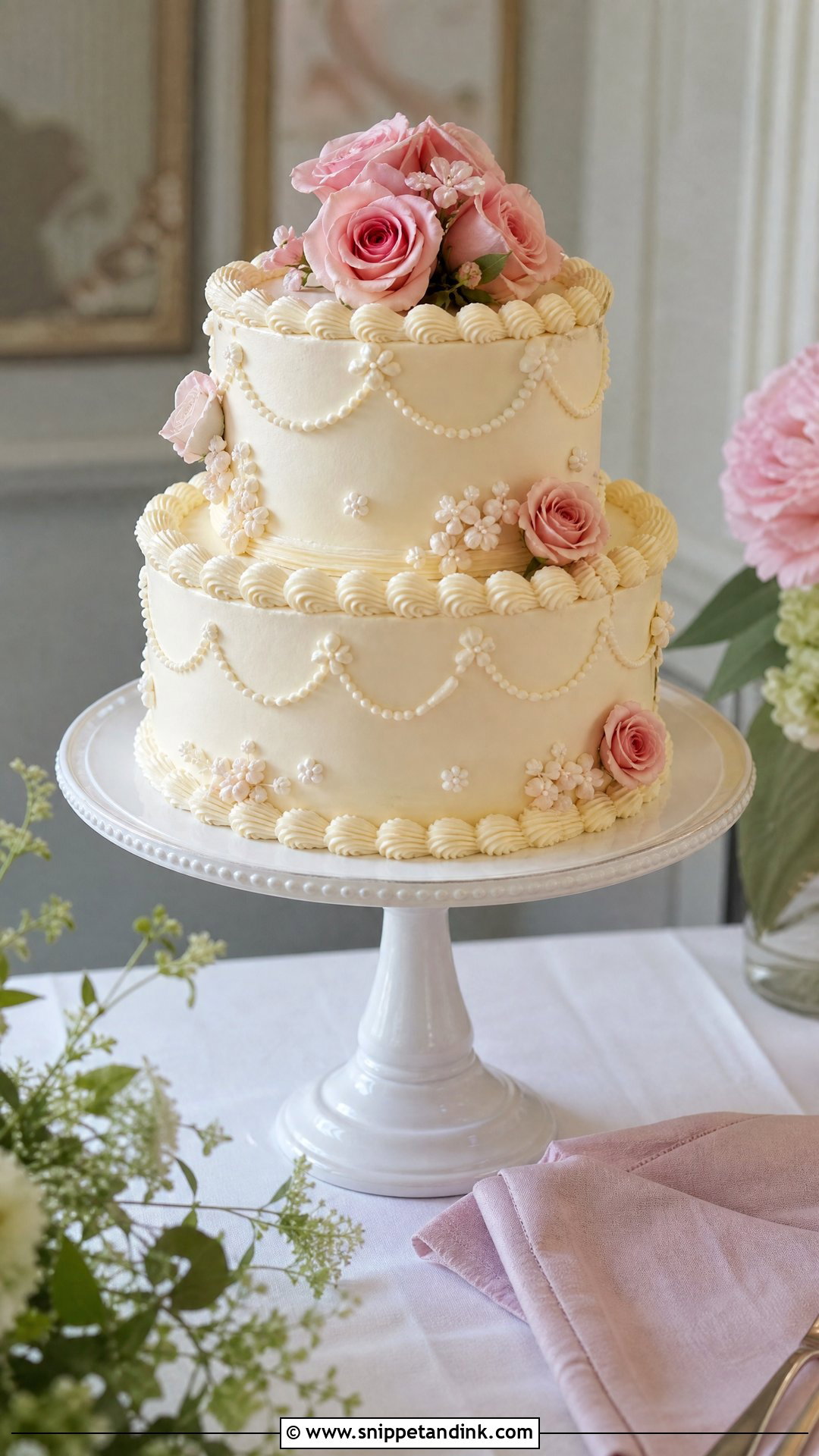
Two tiers give enough height for decoration while still feeling intimate. Lambeth piping, scalloped borders, small roses and pearls all fit, but the details have to be scaled down, because full-size shells on a small tier look clumsy. A tall pedestal stand adds presence without adding cake you don’t need. Micro weddings, restaurant receptions and garden ceremonies suit it.
23. Vintage Single Tier Wedding Cake
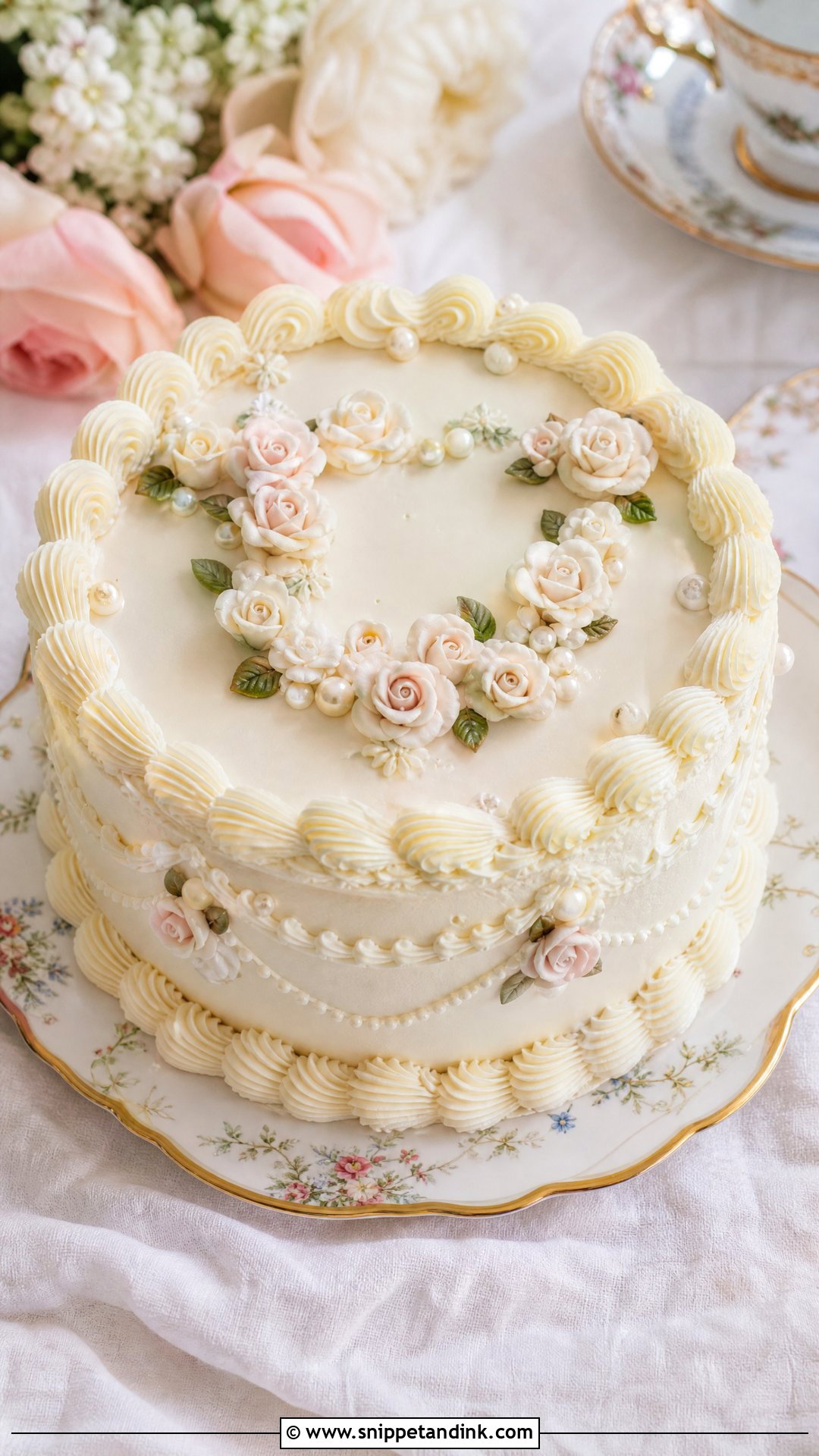
With one tier, the sides do all the work. A round or heart-shaped cake with piped borders, pearls and a small floral topper is enough, provided the side detail has depth: scallops, drop strings, ruffles or basketweave. I’d bake it deeper than a standard layer cake so it has some stature. Elopements, courthouse weddings and backyard receptions are its natural setting, and a raised stand gives it importance next to other desserts.
24. Vintage Square Wedding Cake
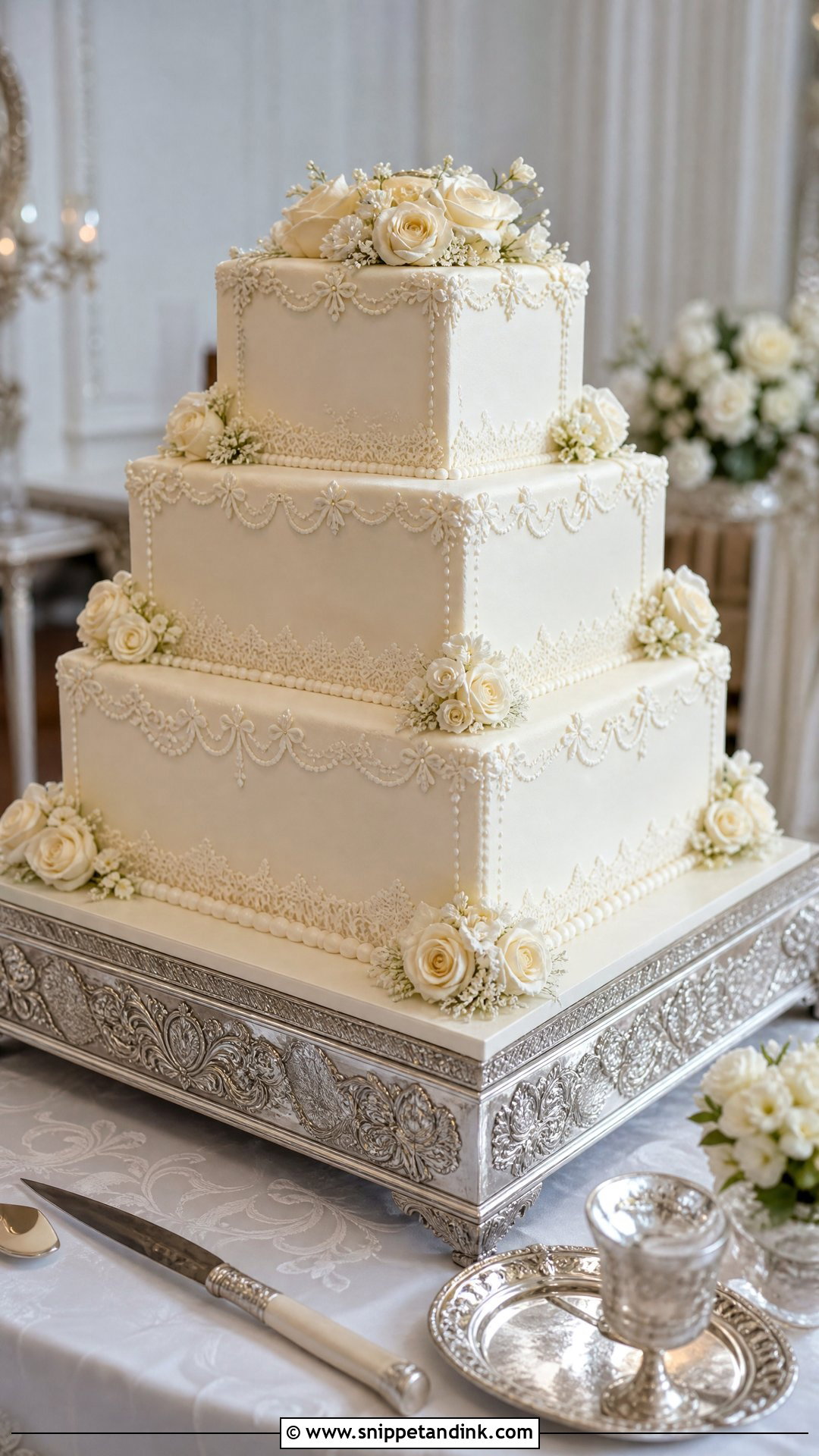
Square tiers feel architectural, and the straight sides give piped borders and lace a clean frame. They also suit Art Deco detail, monograms and symmetrical flowers. Corners are where piping either lines up or doesn’t, so swags and scallops have to be measured to meet exactly at each edge. For a softer version, ivory buttercream with pearl piping and small sugar roses at the corners. It works stacked tall or as two tiers.
25. Vintage Pillar Wedding Cake
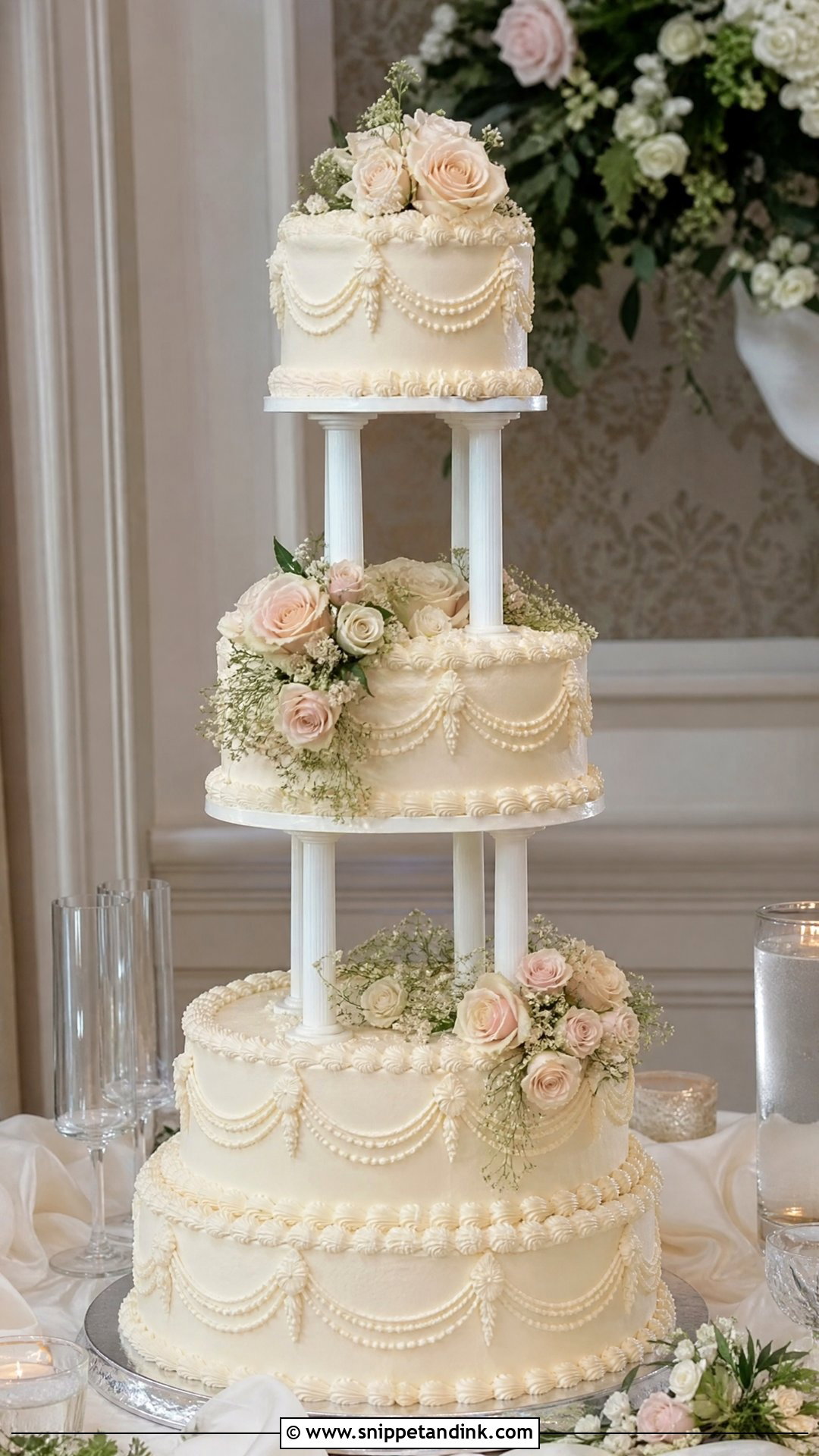
Pillared cakes bring back the raised tiers of older receptions, with space between them for flowers or lace detail. The pillars themselves carry nothing; hollow pillars have dowels running through them into the tier below, which is what takes the weight. Larger weddings and formal venues suit the scale. Keep the gaps lightly filled, a few roses or small blossoms, because overcrowded gaps make the whole cake look top-heavy. Clean ivory tiers and careful piping keep it current.
26. Vintage Garden Wedding Cake
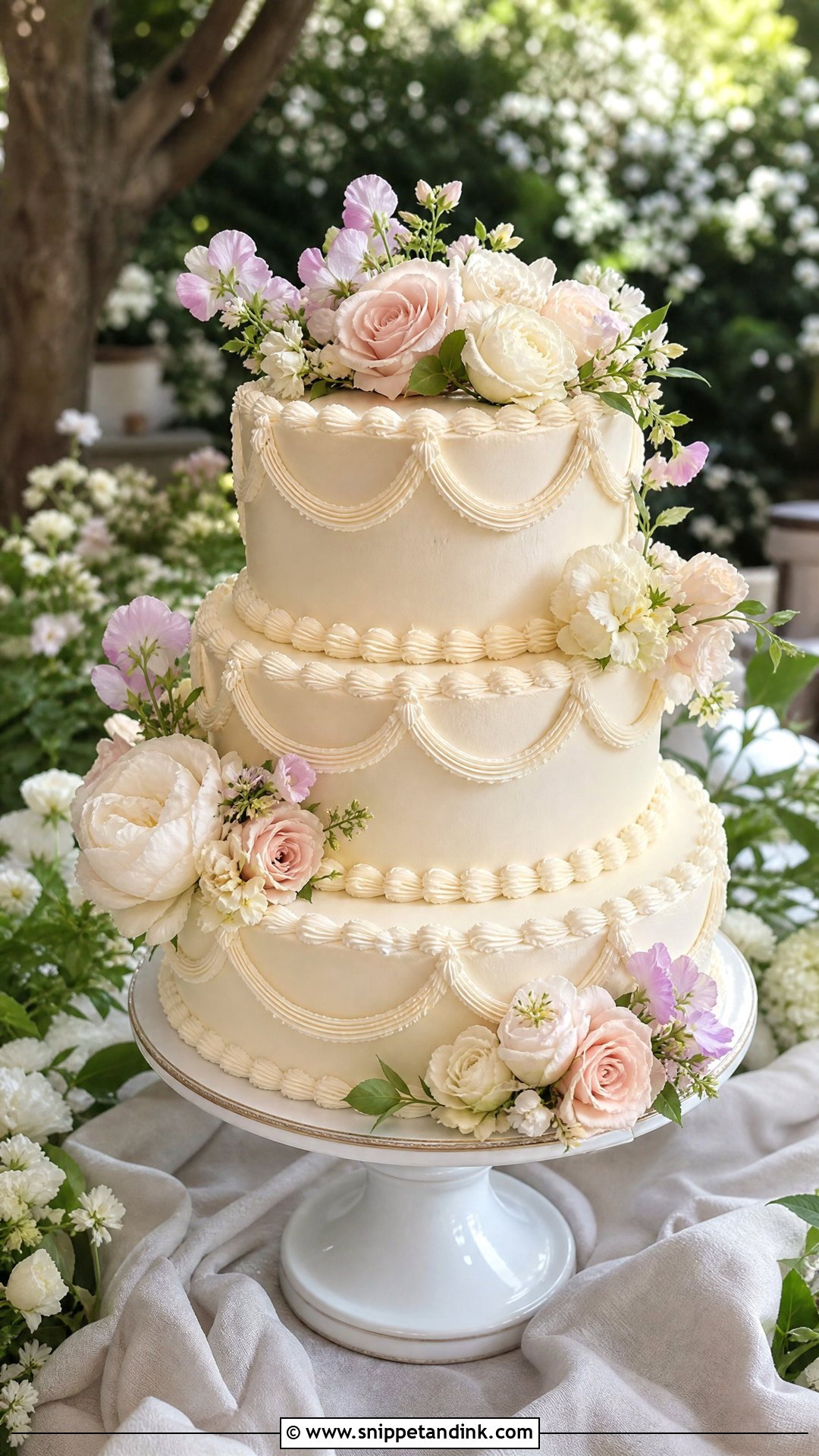
A garden cake mixes old-fashioned piping with soft florals and green accents. Roses, peonies, sweet peas and small blossoms suit the mood, arranged loosely but not messily. If it’s actually outdoors, think about heat before style. Fine buttercream piping softens fast in sun, so the cake should stay inside or in deep shade until close to cutting. Linen cloths and antique serving pieces complete the table, and the flowers keep the piping from feeling heavy.
27. Vintage Floral Wedding Cake
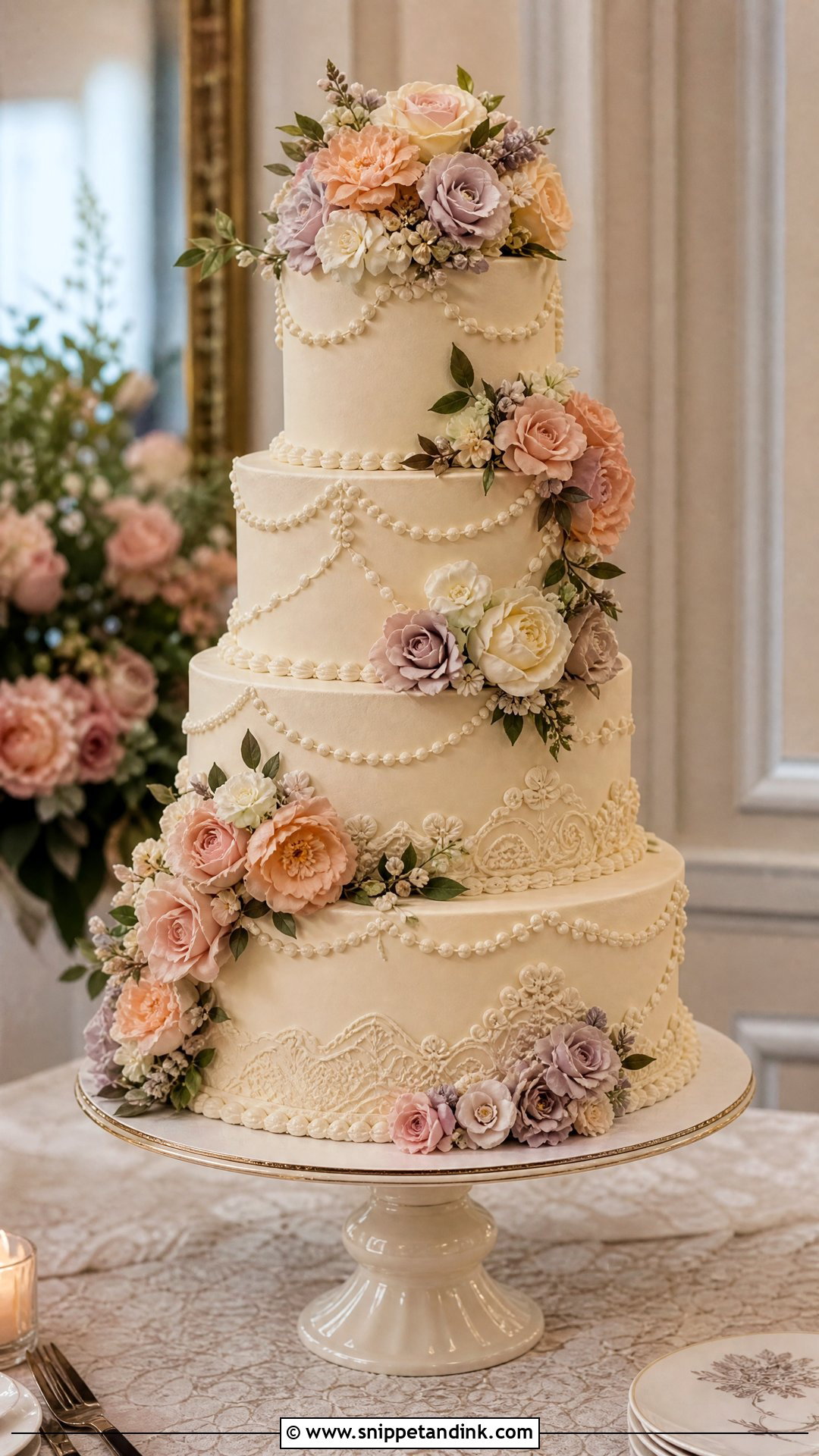
Florals can match almost any palette, and the flowers can be sugar, buttercream, pressed edible blooms or fresh stems placed by a professional. For vintage, muted shades work best: cream, dusty rose, pale lavender, sage, peach. A bare cake with flowers looks modern, so I pair them with piped borders, pearls or lace texture to keep the old-world feel. The arrangement decides the mood more than the flowers do, whether that’s garden, formal or cottage.
28. Vintage Pastel Wedding Cake
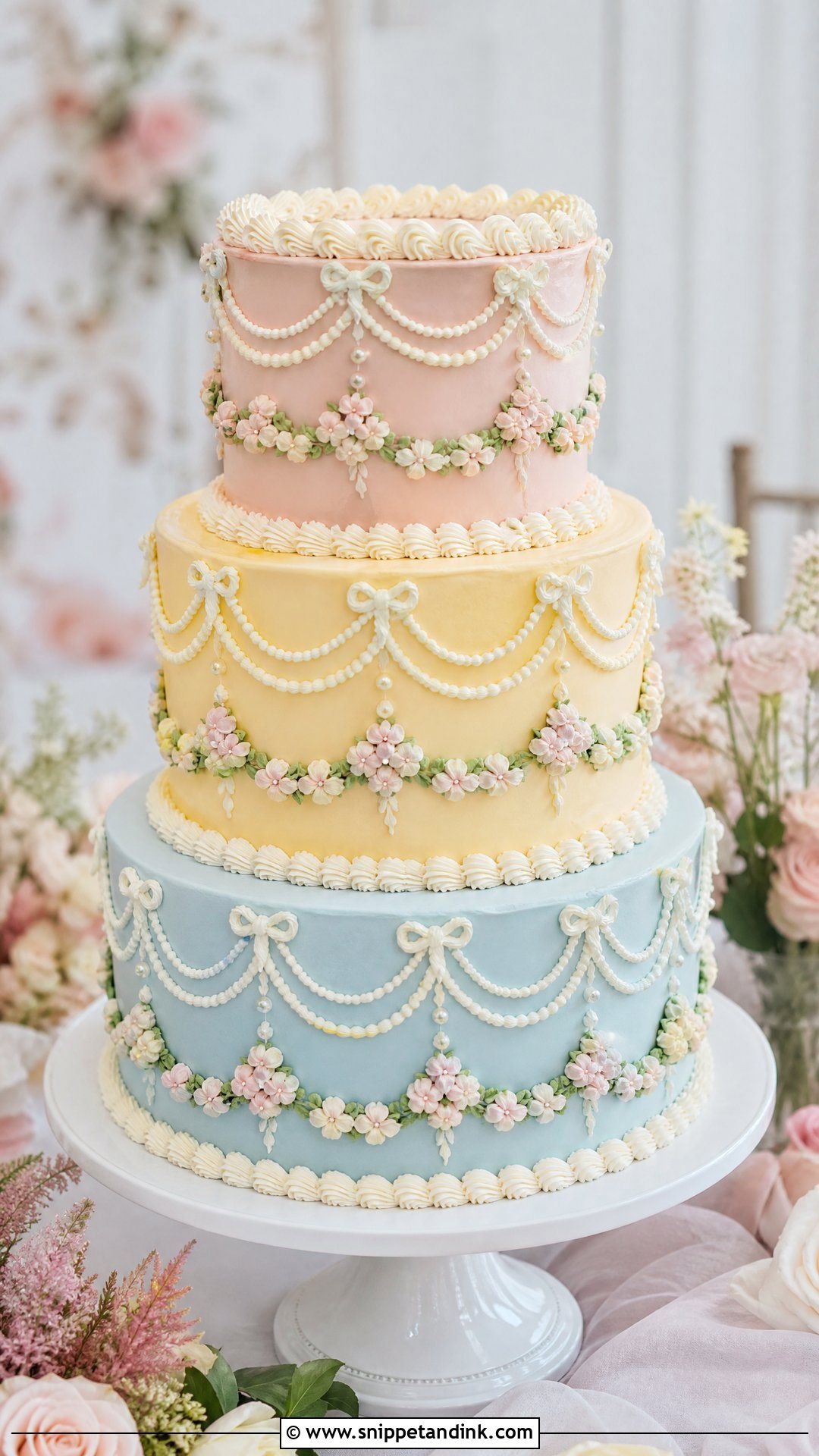
Muted pastels make old-fashioned piping feel fresh: blush, butter yellow, mint, powder blue, lavender. Muted is the operative word, since bright candy colours tip it into a children’s party. You can use one shade throughout or give each tier its own, tied together with white or ivory piping. As with pink, some pastels fade in strong light. Pearls, small bows, cherries or sugar flowers finish it, and it suits spring and garden venues.
29. Vintage Mini Wedding Cake
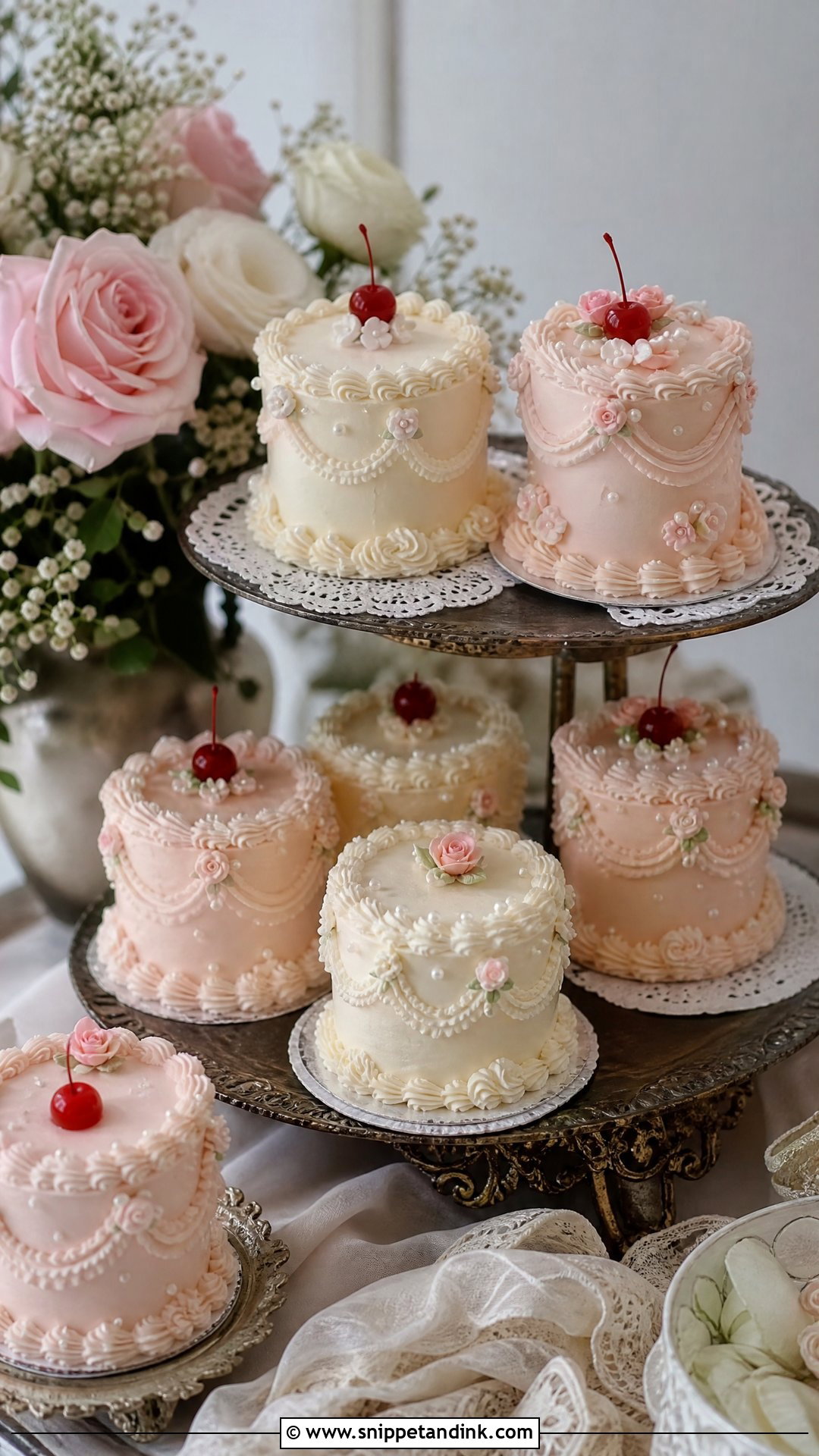
Mini cakes give every guest a decorated cake instead of a slice, which is their charm and also their cost. Each one needs its own board, coat and piping, so a table of minis usually takes far more decorating time than one large cake serving the same number. Coordinate the colours, ivory, blush and pale blue are easy, so the display looks planned. Mini vintage cakes look charming arranged on tiered stands or antique trays, each with a tiny pearl border and a cherry or flower on top.
30. Vintage Sheet Wedding Cake
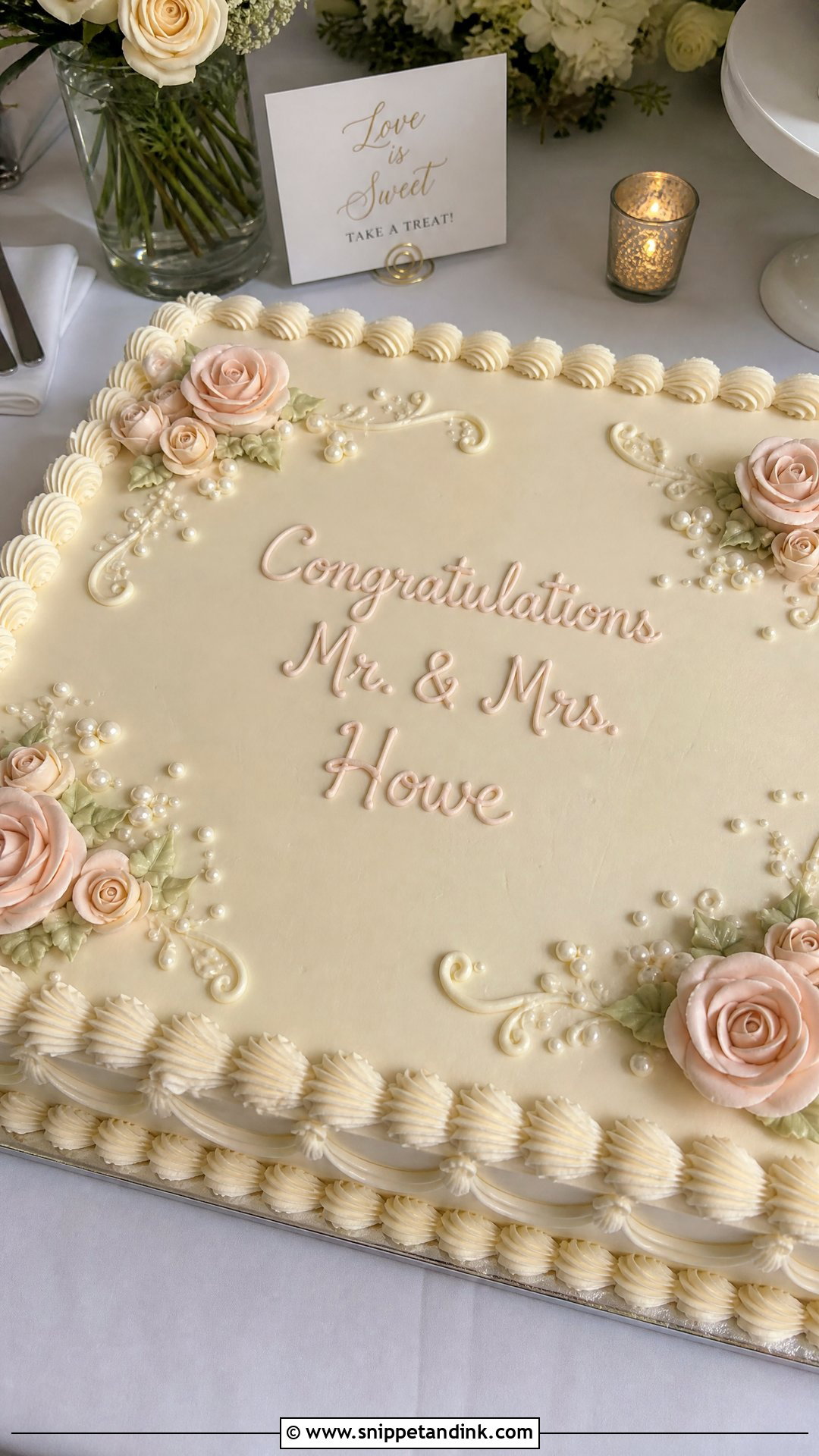
A sheet cake doesn’t have to look like a supermarket one. Piped borders, buttercream roses, scalloped edges, pearls and a short piped message make it wedding-worthy. It’s the sensible answer for large guest counts or a casual reception, and it can sit in the kitchen behind a smaller display cake, decorated to match so the whole dessert plan feels cohesive. Ivory with blush flowers is classic; pale blue or butter yellow lean more retro.
Overpiping Takes Hours, So Put It Where People Look
On a vintage cake, the piping is most of the work. A plain buttercream tier and the same tier covered in three layers of Lambeth borders can differ by many hours at the bench, and quotes reflect that, though how much varies widely between bakers. If the budget is tight, I’d rather simplify than rush the piping, because uneven work is far more obvious than less of it.
- If the cake will stand against a wall, the back can carry lighter piping than the front.
- Heaviest detail on the bottom tier reads as grand; heaviest on the top tier reads as top-heavy.
- A decorated display cake plus plain kitchen sheet cakes is the usual way to get a big look for a big guest list.
- Royal icing borders hold up in warm rooms; delicate buttercream piping needs a cool venue.
Using a family cake stand or topper
Heirloom stands and toppers suit these cakes perfectly well, but check them early. Old glass and china stands can have hairline cracks, and some aren’t rated for the weight of a stacked cake, so bring the stand to your baker to test. Old toppers may have flaking paint or metal parts, so they should sit on a small sugar disc rather than straight on the frosting.
Old Piping, Modern Proportions
Vintage wedding cakes bring detail and personality back to the dessert table. A dramatic Lambeth cake, a heart cake, a pearl-covered tier and a simple sheet cake are very different projects, and the right one depends on your venue, your guest count and how much piping time your budget covers. Stick to soft colours and balanced decoration, and pick a shape that fits the room. Save the photos you keep returning to, then take them to your baker and talk through what’s realistic.
You'll Like These Ideas:










Leave a Reply