
A flower basket cake is two jobs in one: a woven texture piped row by row around the tiers, and an arrangement on top that has to sit like it was gathered rather than stuck on. I enjoy making them because the weave hides small surface flaws that a smooth finish would show, and the flowers can echo the bouquet without copying it. The weave can be buttercream, fondant strips or a chocolate-toned icing, and the blooms can be fresh, sugar or piped. Each of those choices changes how the cake travels, how long it can sit out and what it costs in labor. Below are 25 versions, from barn-rustic to ballroom, with notes on how I would actually build them.
Buttercream, Fondant or Royal Icing for the Weave
Before you pick a color, decide what the basket itself is made of. It changes the taste, the look in close-up photos and how well the cake copes with a long day.
Piped buttercream
This is the classic basketweave. I pipe a vertical line, then short horizontal bars across it, then the next vertical line over their ends, and repeat around the tier. It tastes the best and looks the most handmade. It is also the slowest to pipe and the most sensitive to heat, because the ridges soften before a smooth surface would.
Fondant strips
Thin strips are cut and actually woven, or laid to look woven. The result is crisp, holds up better in a warm room and can be prepared ahead. Plenty of guests peel fondant off, though, so I only suggest it when the venue is hot or the cake will be on display for many hours.
Royal icing
Royal icing dries hard and gives sharp, fine detail. It suits small accents, borders or a weave on a dummy display tier more than a full cake, since it can be brittle to cut and crunchy to eat.
If you are unsure, ask your baker to pipe a short sample row at the tasting. Seeing one inch of the weave in person tells you more than any photo.
1. White Flower Basket Wedding Cake
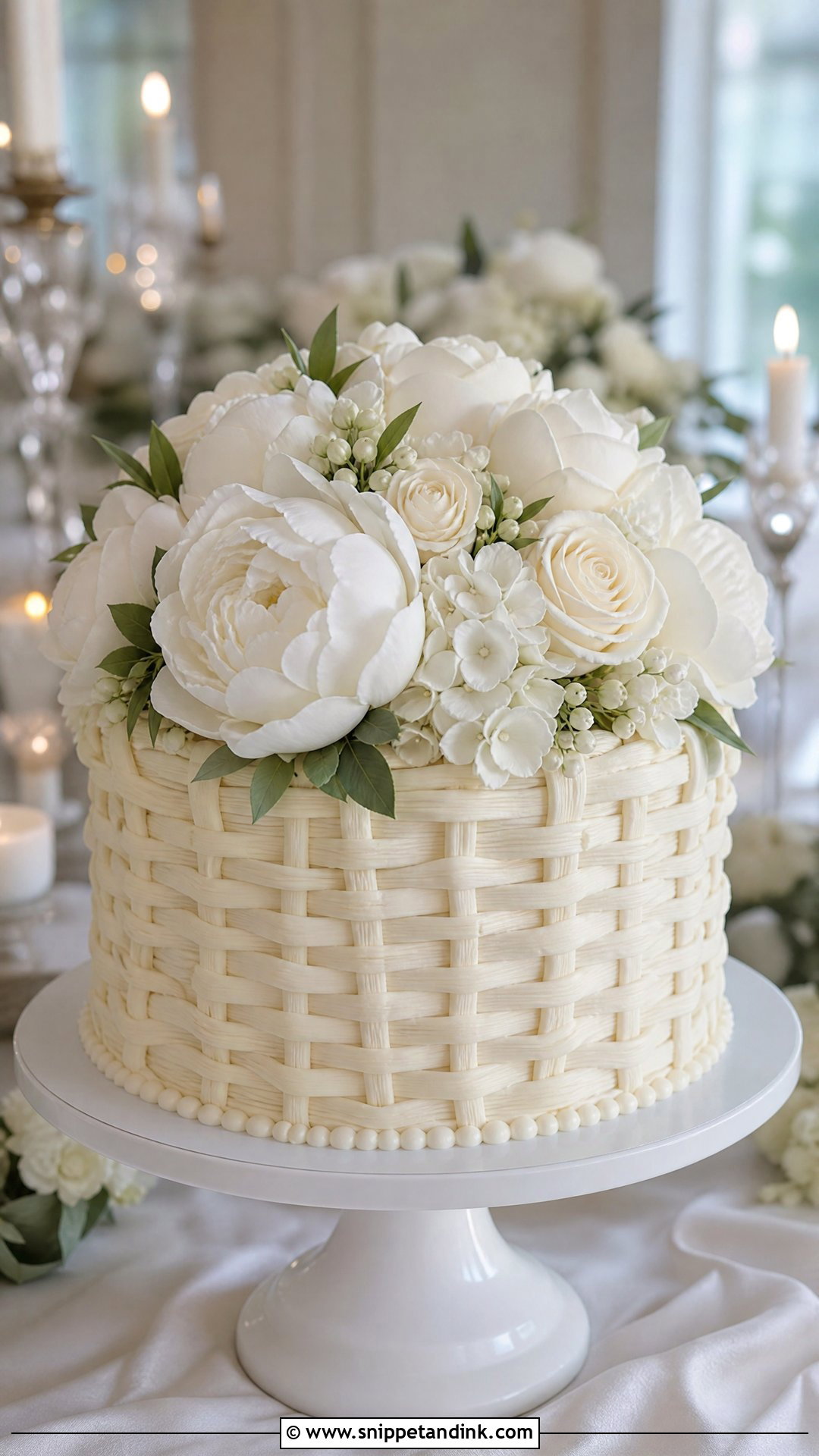
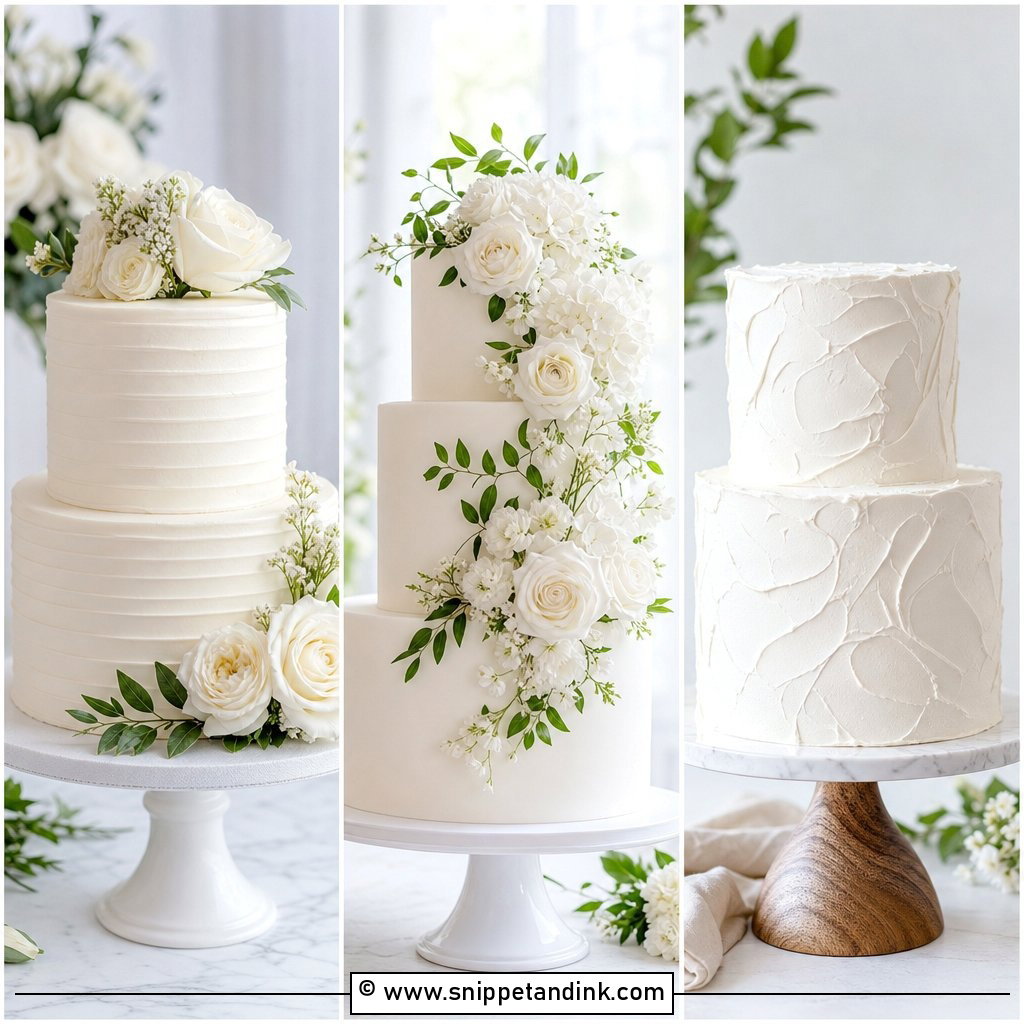
All-white is the version I am asked for most, and it is also the least forgiving. Ivory buttercream weave shows every uneven row, so I pipe the vertical strokes against a spacing guide before adding the horizontal bars. White roses, peonies and small blossoms on top read like a bridal bouquet, and a few sprigs of greenery stop the whole thing looking like a block of icing in photos. Pearl dragées and a satin ribbon at the base finish it. Ask your baker to warm the white slightly toward ivory, since pure white buttercream can look blue under flash.
2. Pink Flower Basket Wedding Cake
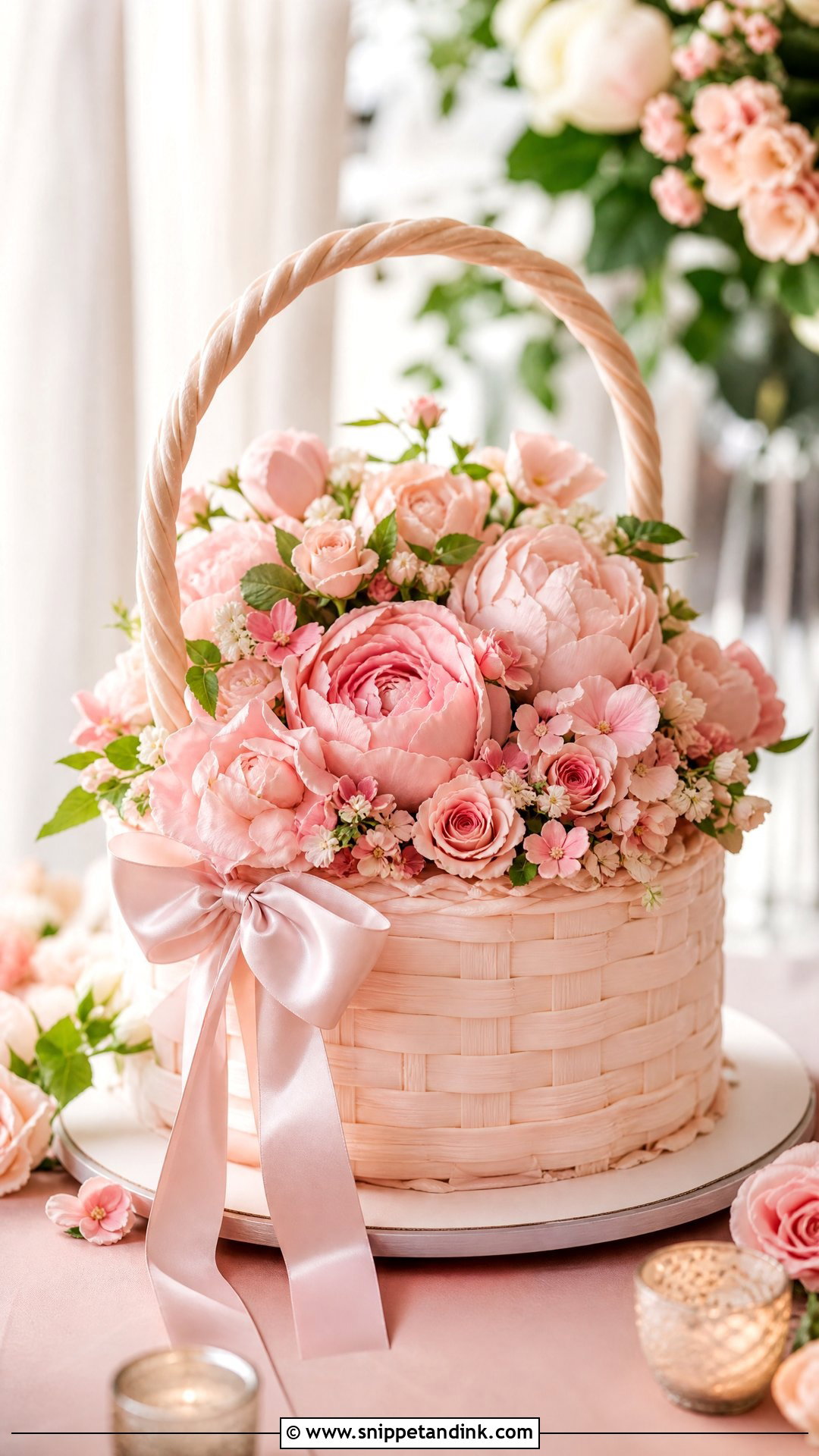
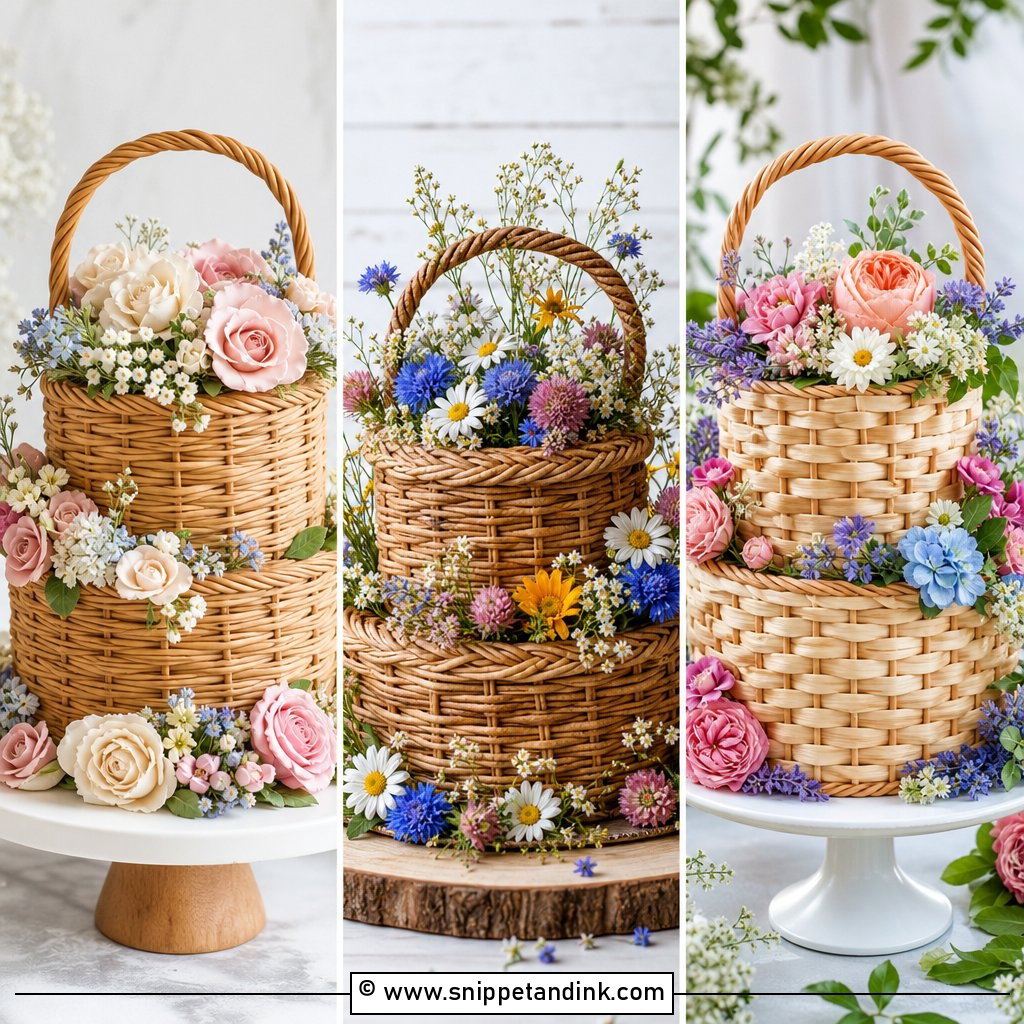
Pink works best when the basket stays pale and only the flowers carry the color. I keep the weave ivory or the faintest blush, then layer buttercream roses and sugar peonies in two or three shades of pink so the arrangement has depth. Bright candy pink is the risk here: gel colors deepen as buttercream sits, so a shade that looks soft at piping time can be noticeably stronger by the evening. If your bridesmaids wear blush, bring a fabric swatch to the tasting so I can match it under daylight, not kitchen light.
3. Rustic Flower Basket Wedding Cake
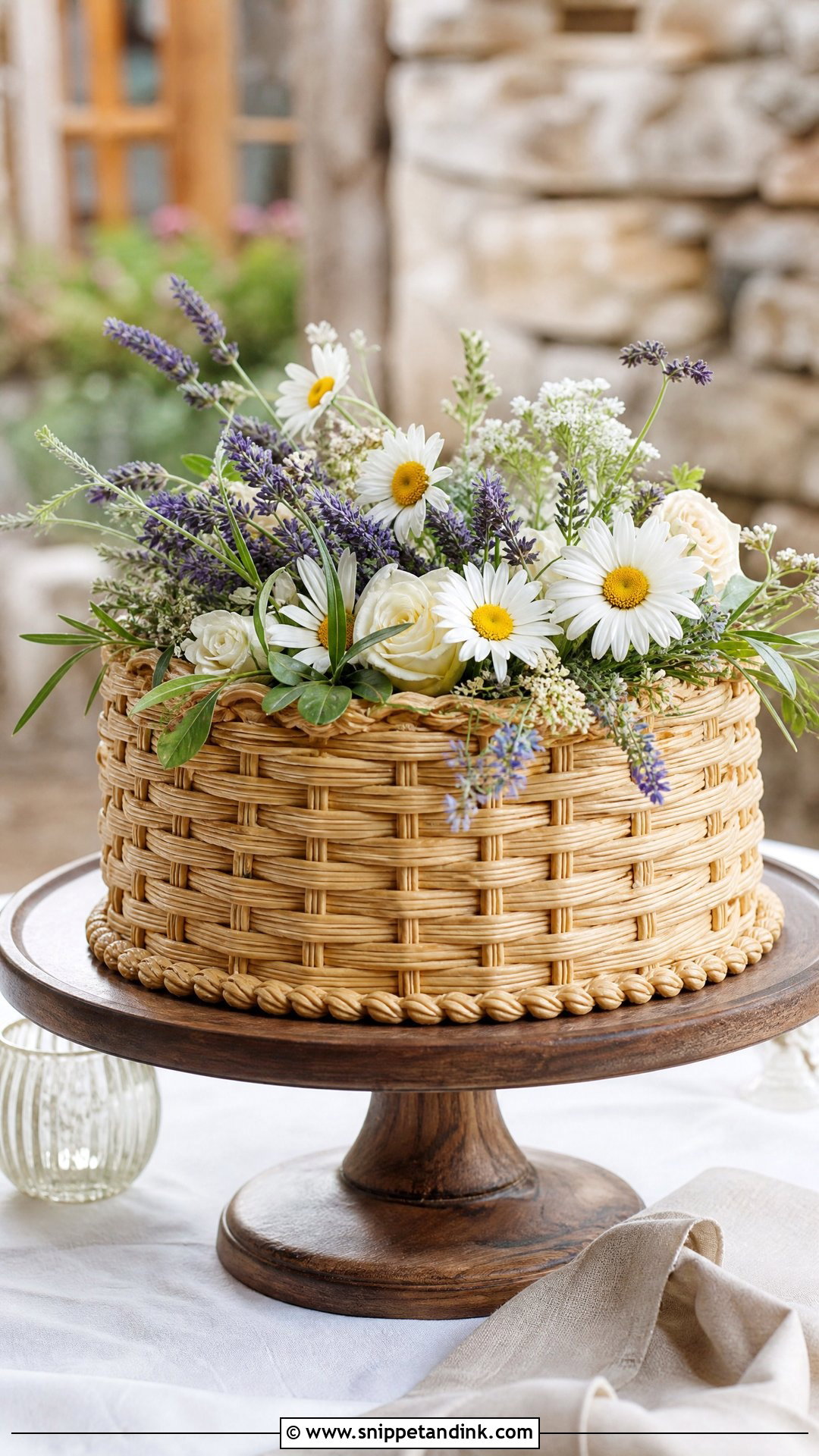
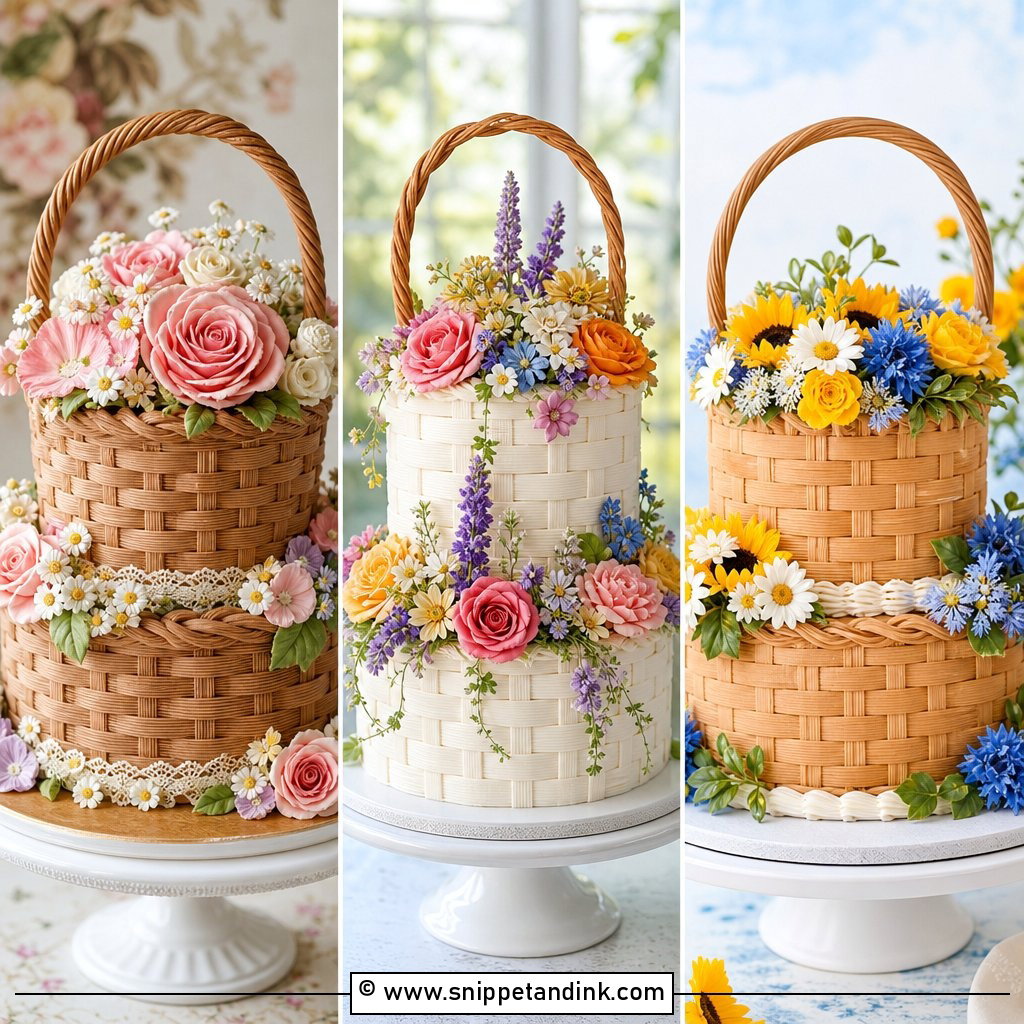
For a barn or farm reception I tint the buttercream a warm tan and pipe the weave a little loose, so it reads like wicker rather than lace. Garden roses, daisies, lavender sprigs and small wildflowers suit it. I leave the finish slightly textured on purpose; a rustic cake that is too crisp looks out of place on a wooden stand and linen runner. The one thing I watch is the venue temperature. Barns warm up fast in summer, and a tan weave that softens will slump at the bottom rows first.
4. Buttercream Flower Basket Wedding Cake
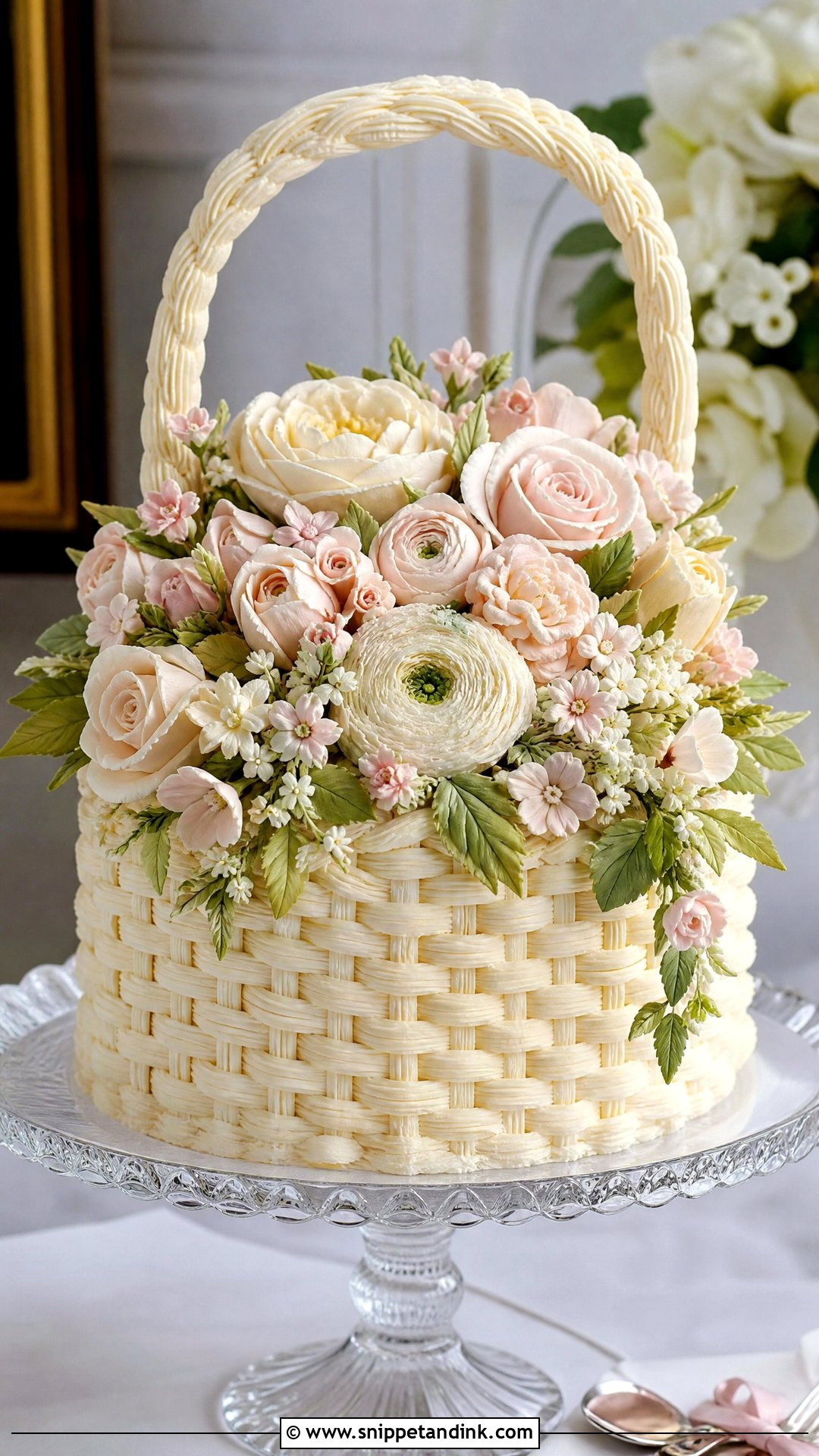
An all-buttercream cake means every part of it can be eaten: the weave, the borders, the roses, the tulips, even the leaves. It also means the cake needs more care with heat than a fondant one. Swiss meringue buttercream pipes the softest-looking flowers but loosens in a warm room; a crusting American buttercream holds its weave better if the cake will sit out for hours. Vanilla, almond, lemon or champagne sponges sit well under either. I usually keep the flower colors to three so the basket texture still shows through.
5. Sugar Flower Basket Wedding Cake
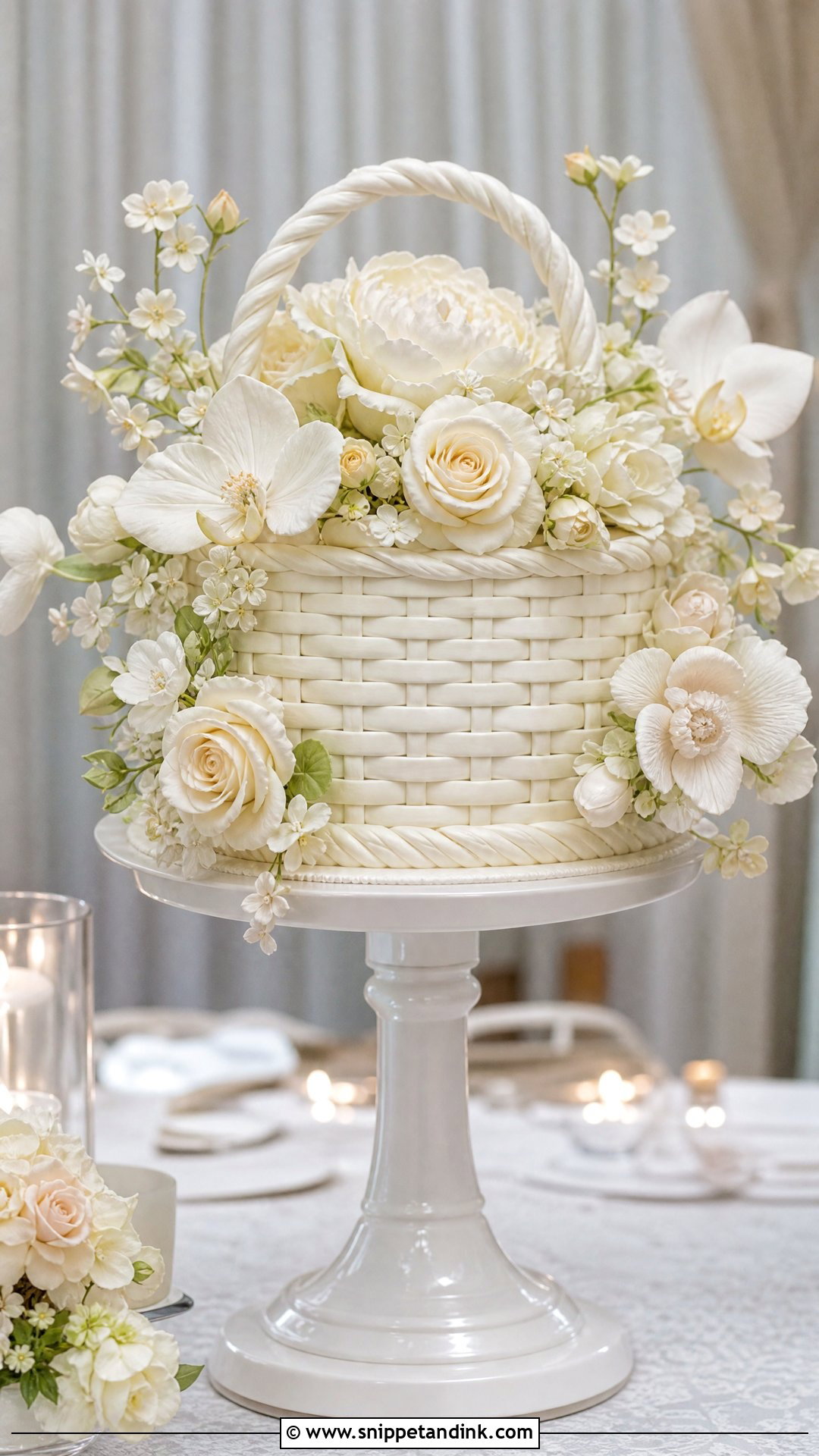
Sugar flowers are where a basket cake starts to look like a florist made it. Sugar roses, orchids, peonies, sweet peas and blossoms are shaped petal by petal from gum paste and wired into sprays, so they need to be ordered weeks ahead, not days. They do not wilt, which makes them the safest route when your bouquet includes flowers that should never touch food. Gum paste is technically edible but hard and not pleasant to eat, so treat them as decoration. Kept dry and out of sunlight, they keep for years on a shelf.
6. Fresh Flower Basket Wedding Cake
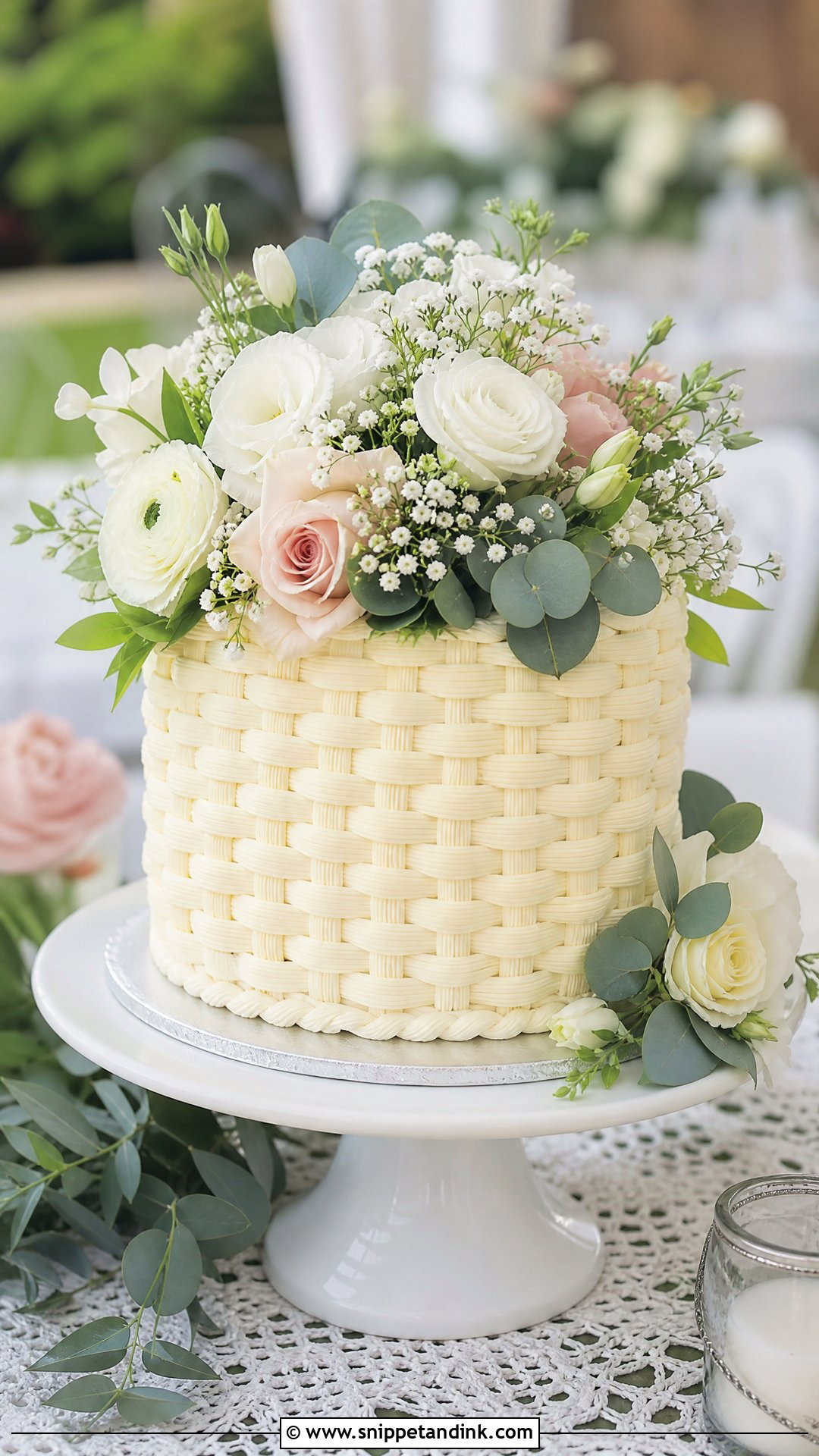
Fresh flowers tie the cake straight into the rest of the wedding, and they look lush in a way piping can’t copy. The catch is coordination. Your florist supplies the stems, but I decide where they go, and nothing goes into the cake without a barrier: stems wrapped in floral tape and pushed into food-safe picks or straws. Lisianthus, roses and ranunculus spill nicely over the edge. Baby’s breath is one I keep away from the icing, because it is not considered food-safe. Plan for a short window between flowers arriving and the cake being set out, since cut blooms on buttercream start to droop in a warm tent.
7. Two Tier Flower Basket Wedding Cake
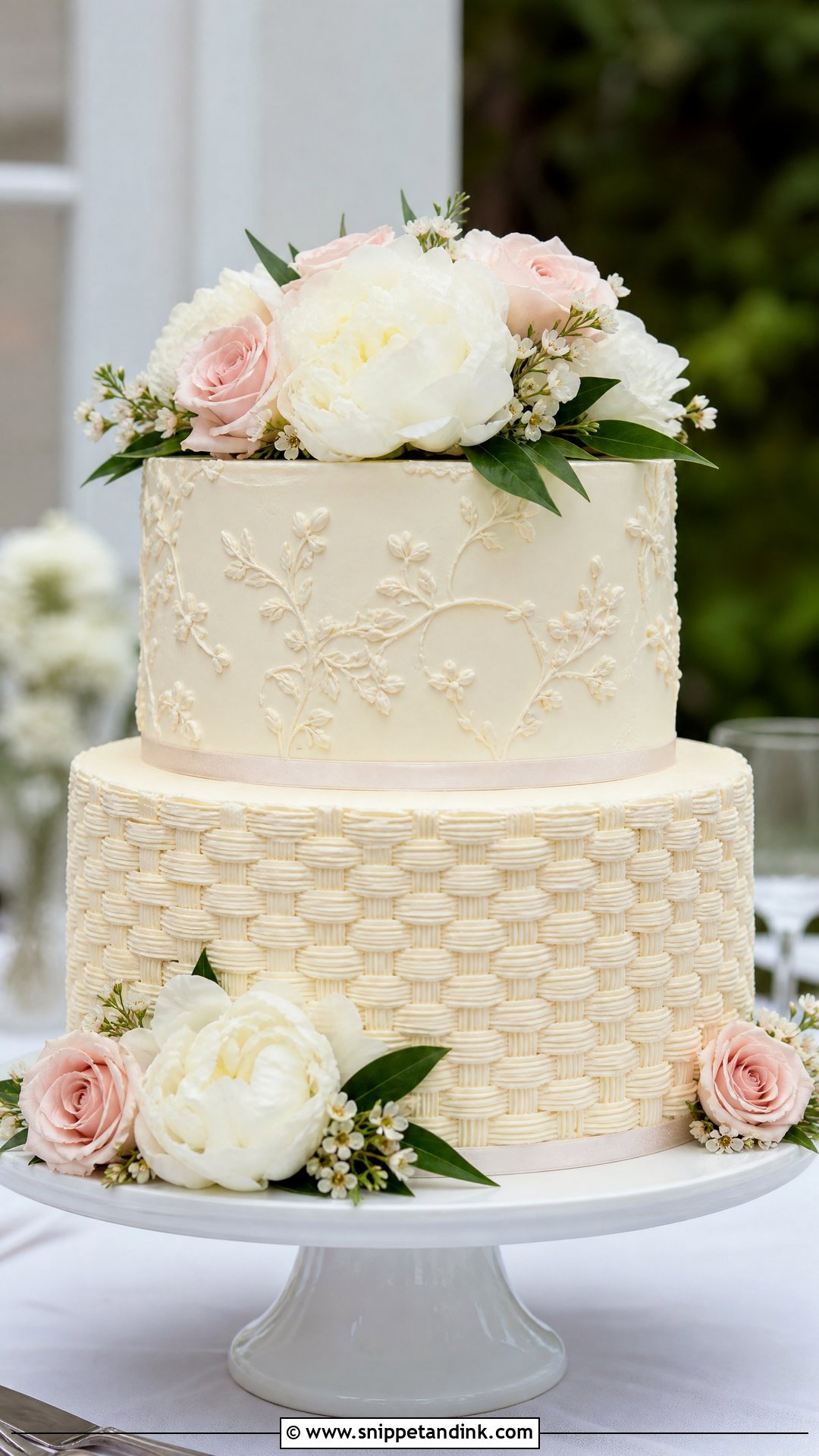
Two tiers is my usual suggestion for guest lists under about sixty. Weave the lower tier fully and let the top tier carry a domed arrangement, and you get height without the formality of a tall stack. Ivory buttercream throughout is clean; champagne reads warmer under candlelight. If you need more servings than two tiers allow, a kitchen sheet cake in the same flavor sliced out of sight keeps the display small and the cost down.
8. Three Tier Flower Basket Wedding Cake
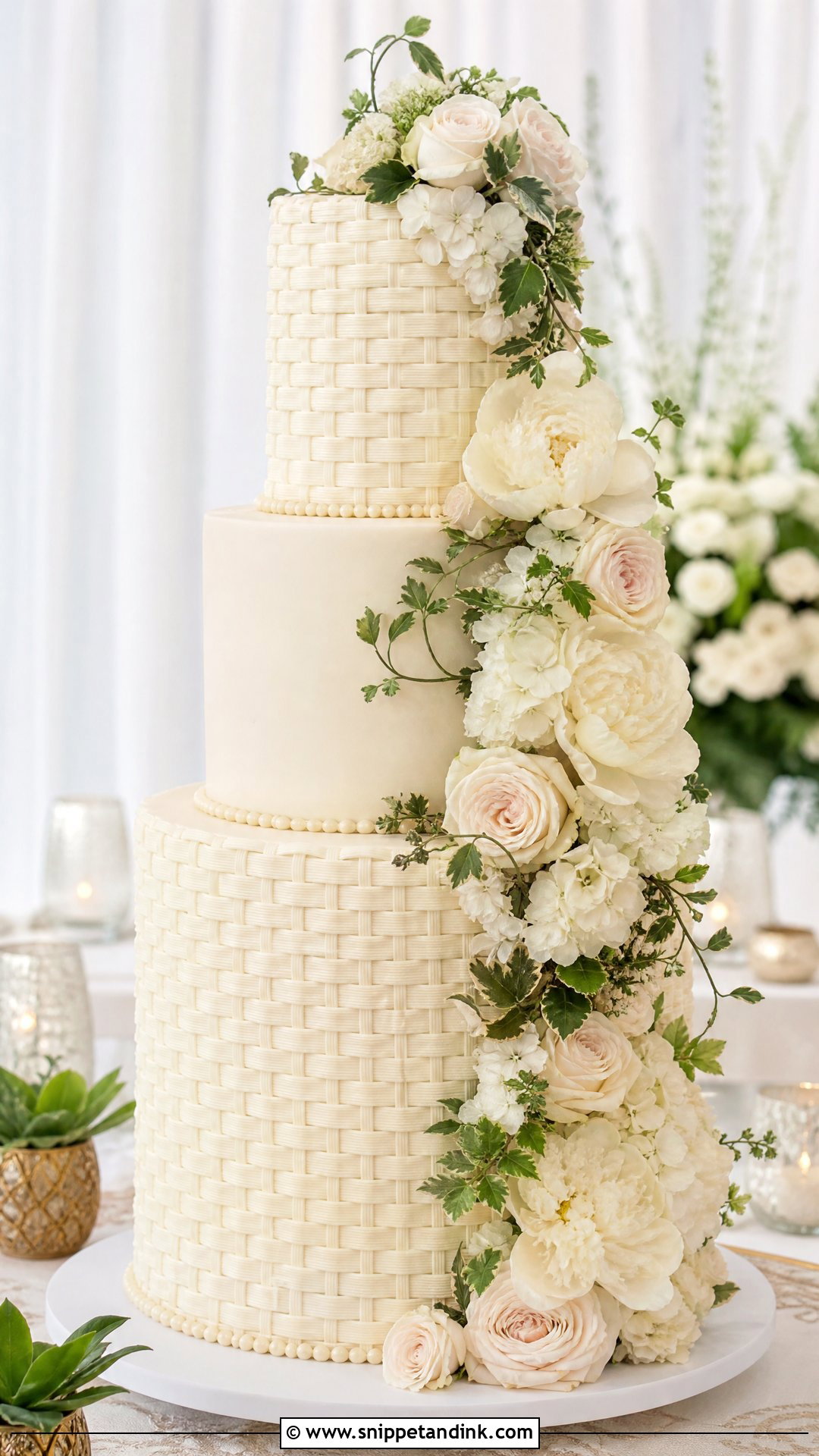
Three tiers give flowers room to travel. I often weave only the bottom tier and keep the upper two smooth, so the texture grounds the cake and the cascade of roses, peonies and trailing vines reads clearly down one side. Weaving all three is possible but adds hours of piping and can look busy at that height. Every tier needs internal dowels and its own board, which matters more on a woven cake because the outer rows can’t hide a settling tier. Keep the basket color light and the flower shades soft so the stack doesn’t feel heavy.
9. Mini Flower Basket Wedding Cake
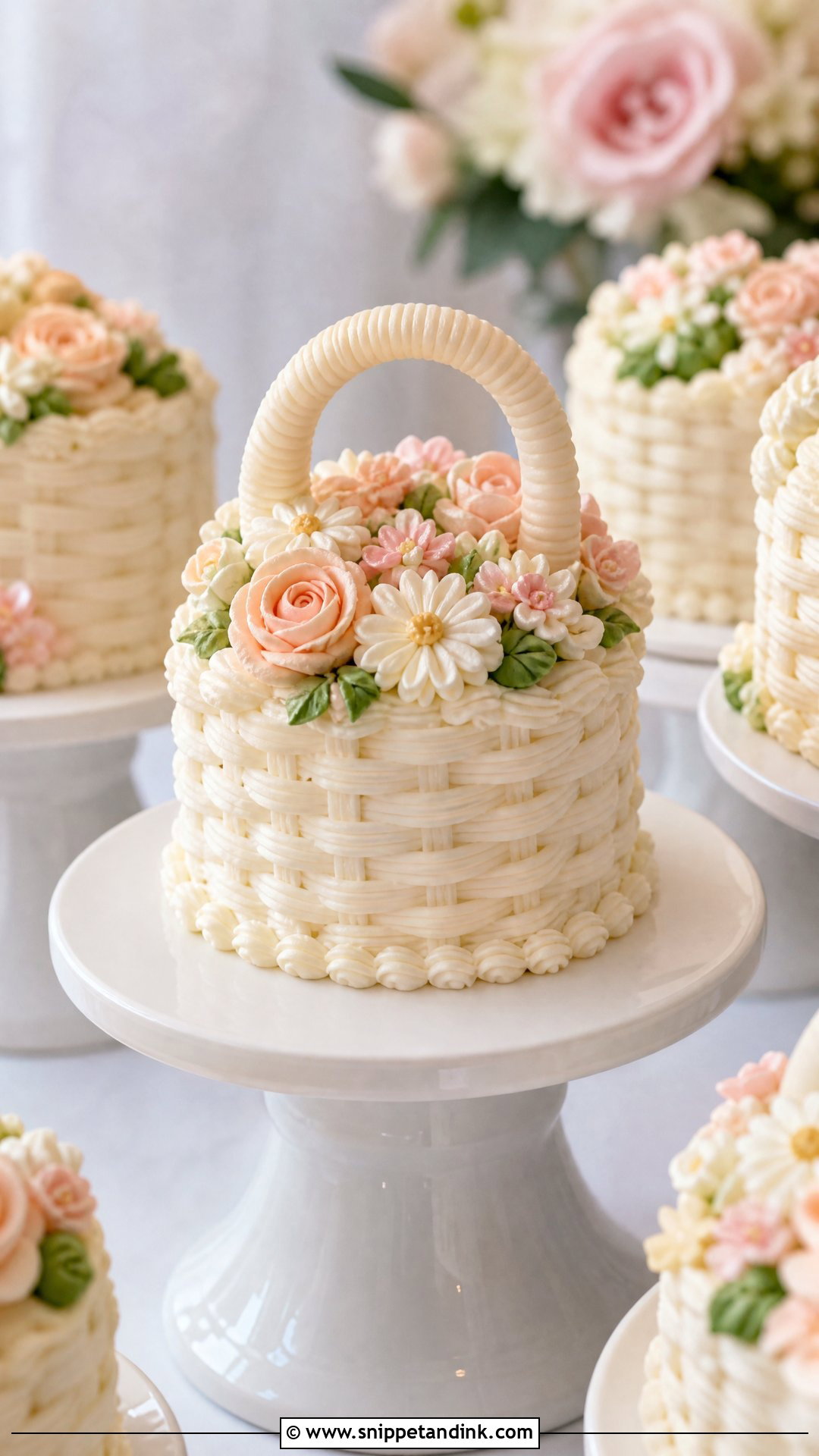
A mini flower basket wedding cake is a small cake with a tiny basket weave around the sides and a cluster of blooms on top, and a table of them lets you offer vanilla, lemon, almond and strawberry at once. The weave on a four-inch cake needs a smaller piping tip, so the rows look in proportion. Tiny flowers matter just as much; one full-size rose on a mini cake swallows it. They also make an easy sweetheart-table cake or cutting cake for an intimate guest list.
10. Vintage Flower Basket Wedding Cake
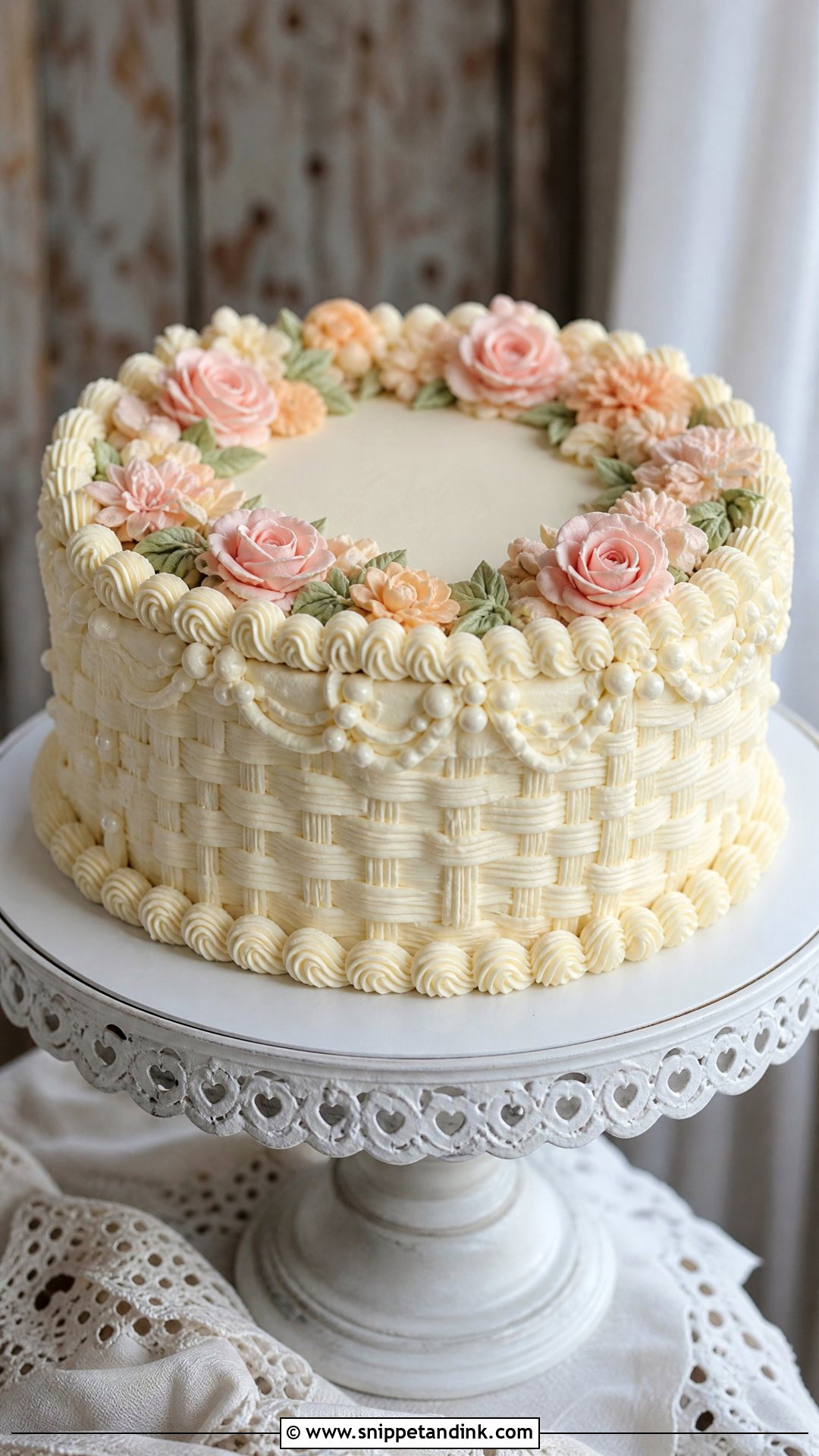
Vintage basket cakes are built from the old piping vocabulary: piped buttercream details like shell borders, pearl dots and small ruffles around a woven body. Pale yellow, peach, soft pink and ivory flowers keep it romantic rather than dated. Where it goes wrong is overload. Choose two border styles, not five, or the eye has nowhere to rest. A lace gown, antique cake knife and candlelit tables suit it, and a small topper or ribbon finishes it in a traditional way.
11. Garden Flower Basket Wedding Cake
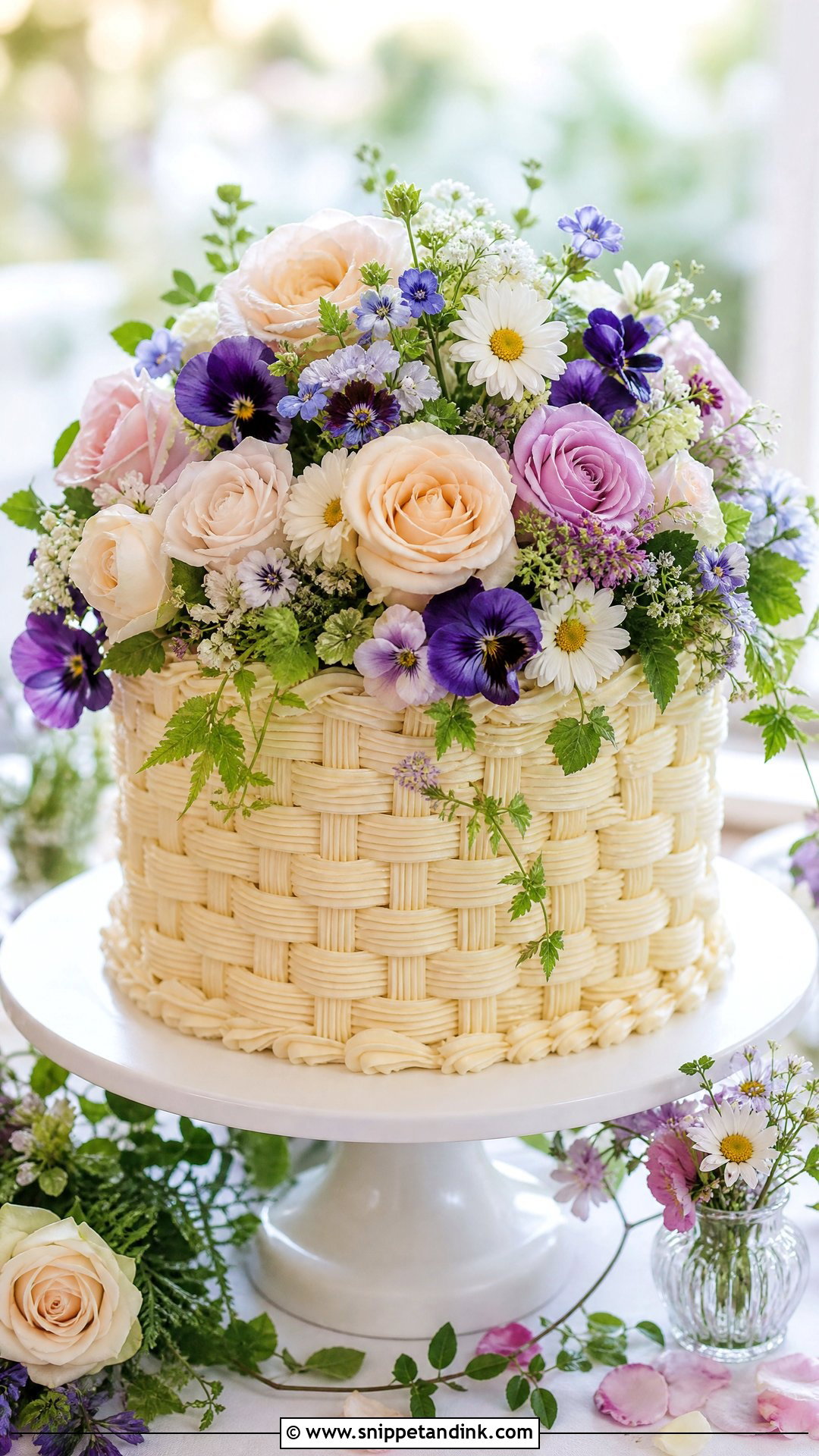
The garden version should look picked, not arranged. Roses, daisies, pansies and violets in mixed sizes, with leaves tucked so a few peek over the rim of the basket. Pansies and violets are both edible flowers, which is handy when you want something real on top. I pipe the sides in ivory, cream or pale beige. Spring and summer greenhouse or estate venues suit it, and the main judgment call is fullness: generous enough to read as a basket, but with gaps so each flower is visible.
12. Wildflower Basket Wedding Cake
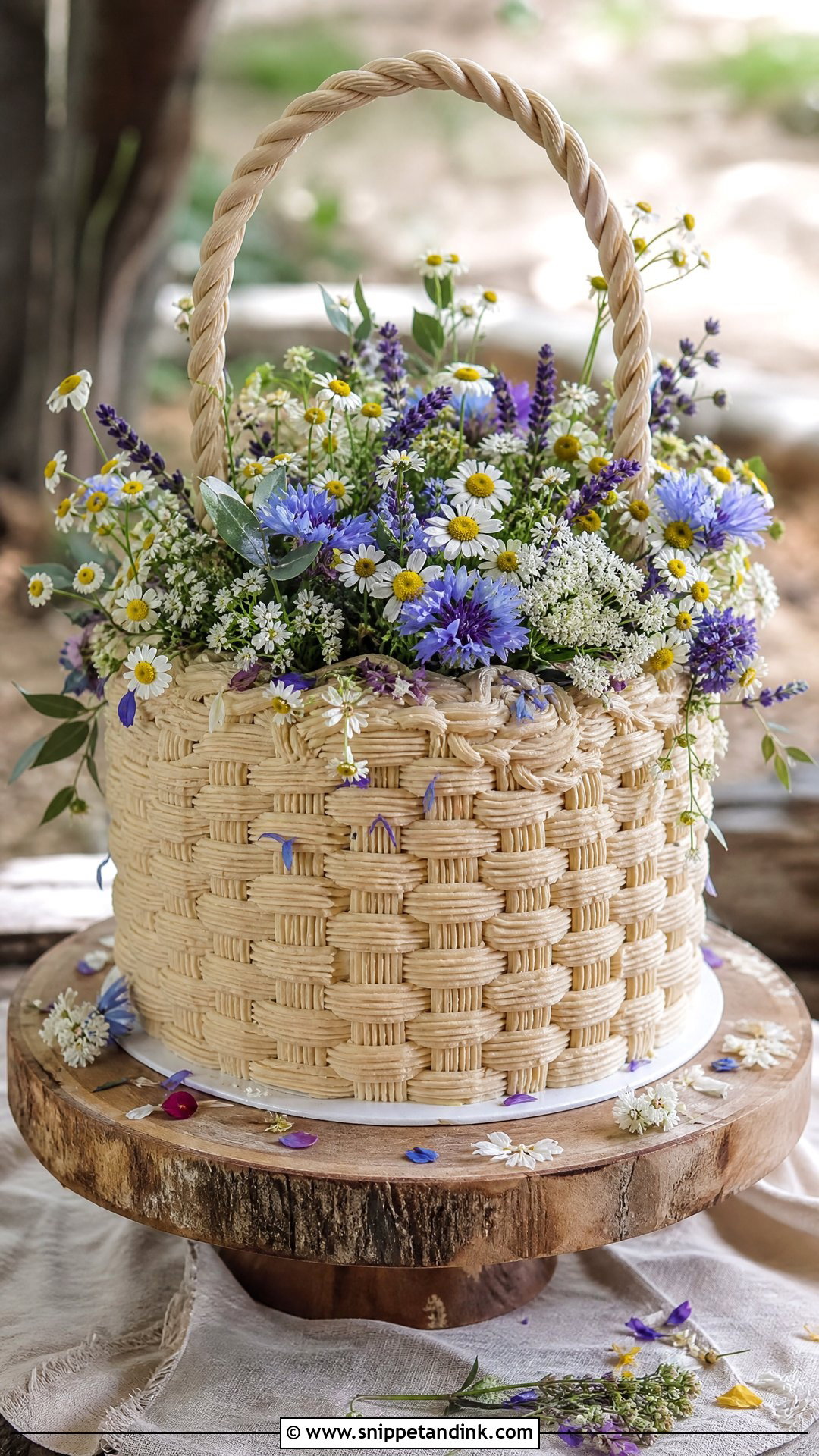
Wildflower basket cakes suit couples who find roses too formal. Tiny daisies, lavender, cornflowers and chamomile on a cream or tan weave give a meadow feel, and keeping the colors soft is what stops it looking casual. I use small flowers only; a big bloom ruins the scale and hides the basket outline. Many wildflowers bought in bunches are not grown for eating, so I usually pipe or sugar these, or ask the florist for culinary-grade stems.
13. Rose Flower Basket Wedding Cake
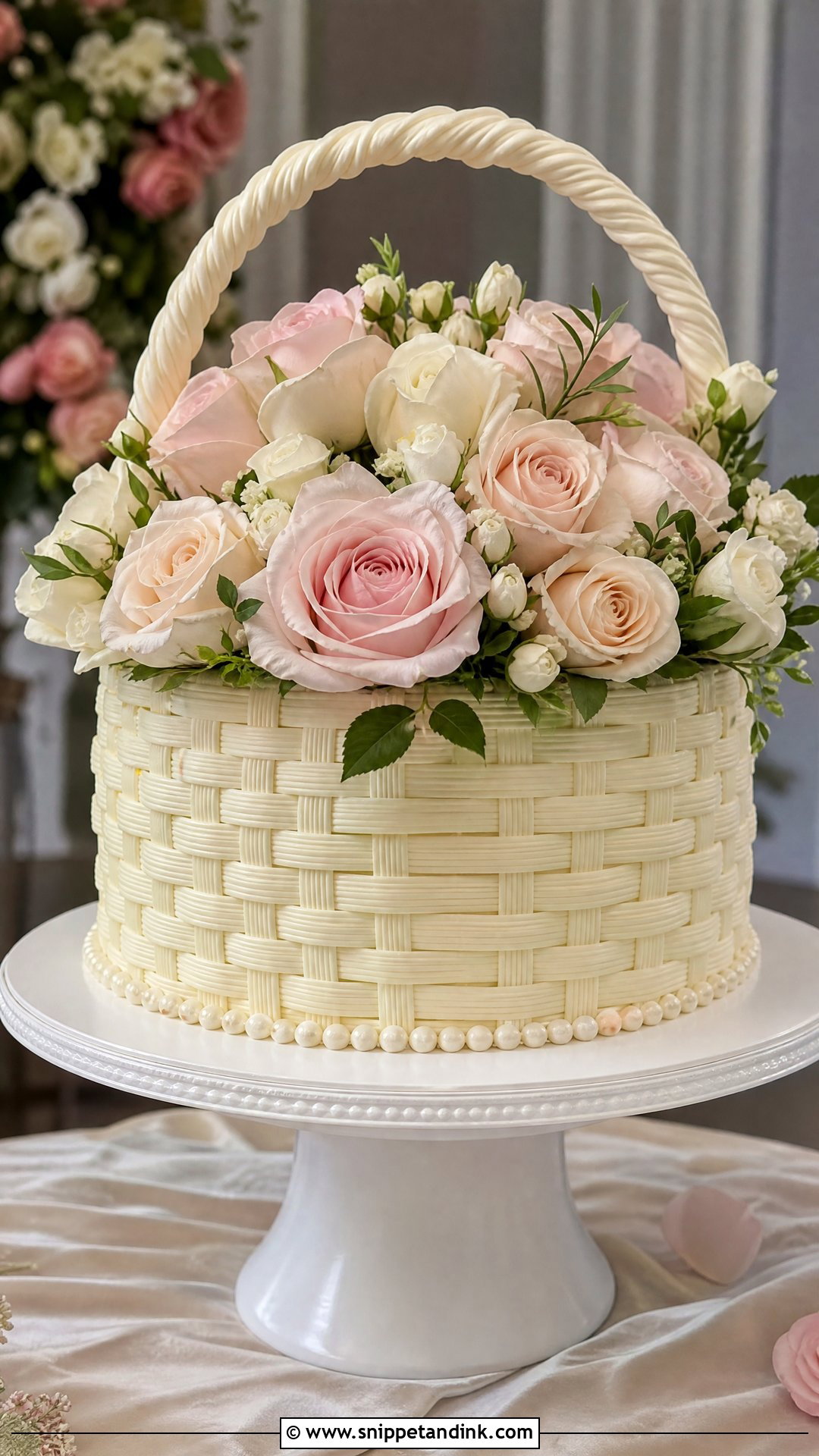
Roses are the easiest flower to get right on a basket cake because nearly everyone recognizes them instantly. I mix sizes, open blooms with tight buds tucked between, and add green leaves so the arrangement doesn’t look like a flat mat of petals. White, blush, peach or a soft red all sit well on ivory weave. Piped roses taste better; sugar roses give crisper petal edges in close-up photos. If you want both, sugar on the top tier and piped around the sides is a sensible split.
14. Peony Flower Basket Wedding Cake
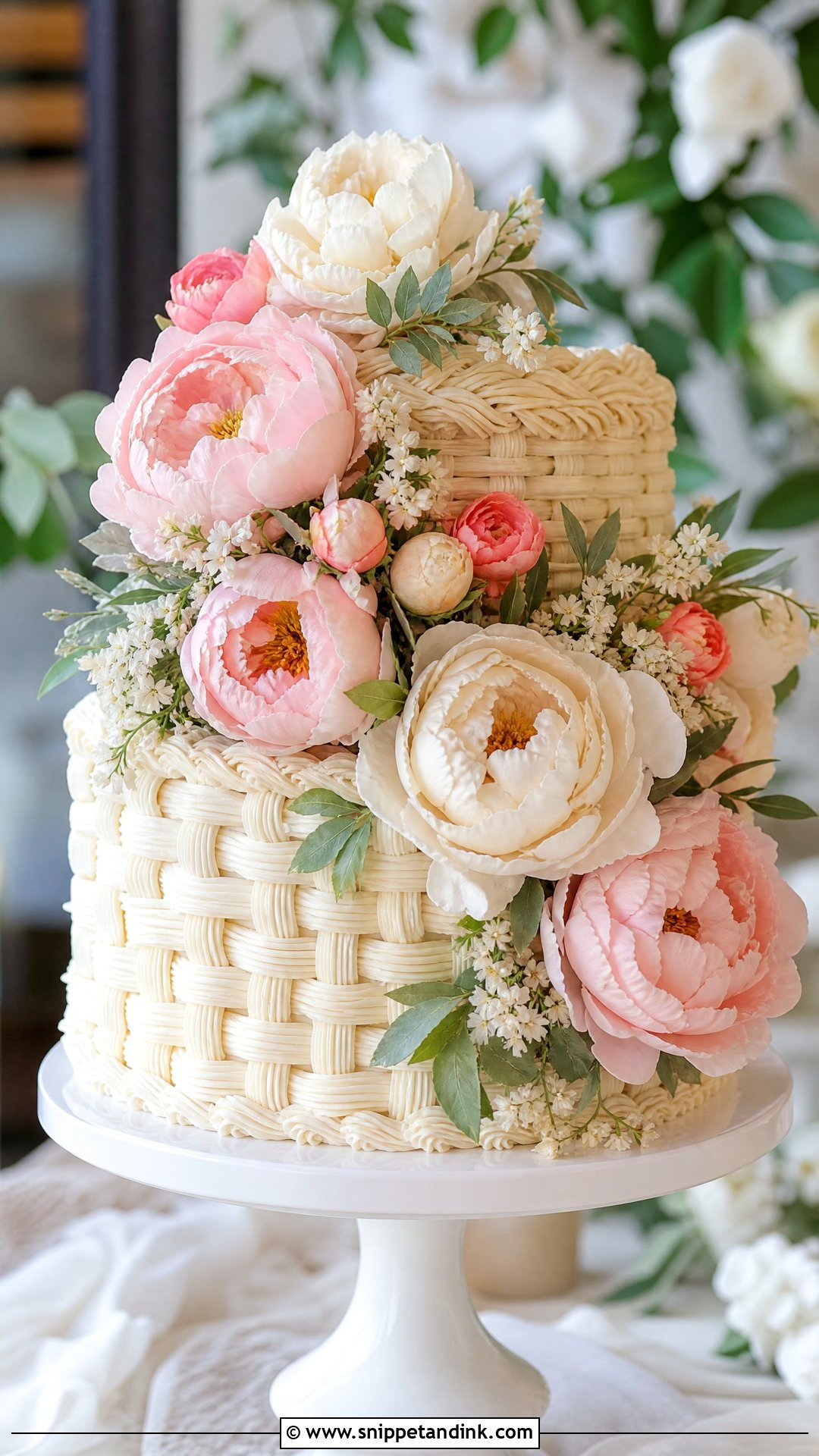
Peonies are big, so on a basket cake they are the main act and everything else supports them. I keep the weave plain, set two or three peonies on top and one on the side, then fill gaps with small blossoms and greenery so the arrangement doesn’t look top-heavy. Fresh peonies are short-seasoned and can open faster than expected in a warm room; sugar peonies hold their exact shape all evening. Blush, coral, ivory and pale pink are the shades I reach for.

15. Hydrangea Flower Basket Wedding Cake
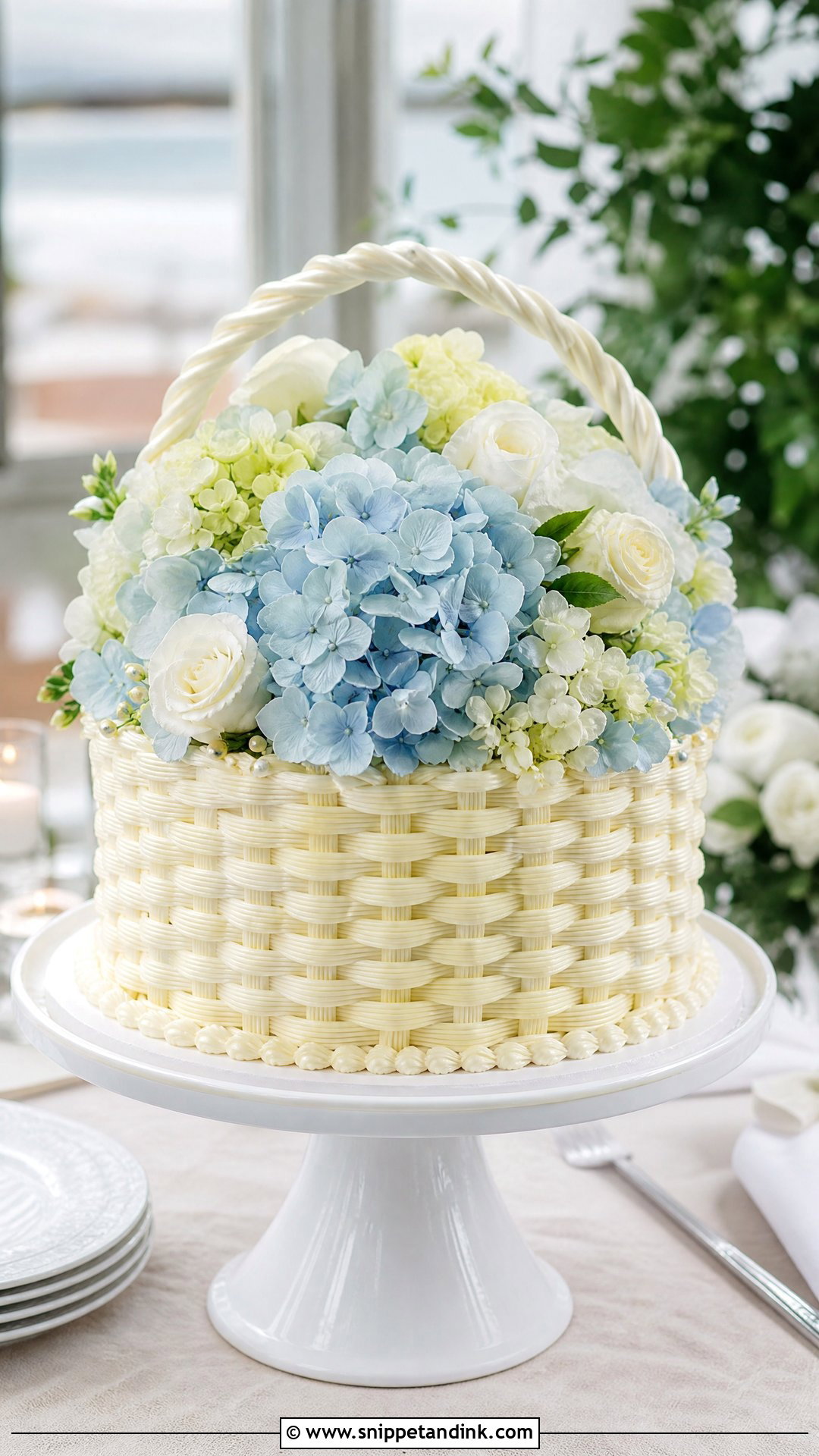
Hydrangea gives a full, cloud-like top made of tiny petals in white, blue, lavender, blush or green. Here is the part couples don’t expect: fresh hydrangea is not food-safe, so on my cakes it is always piped or sugar, never cut stems pressed into icing. Piped hydrangea is actually quick to do with a small petal tip, and it suits coastal and pastel weddings well. I keep the basket shape rounded and full so the clusters look like a real arrangement, and add a few roses if you want variety.
16. Daisy Flower Basket Wedding Cake
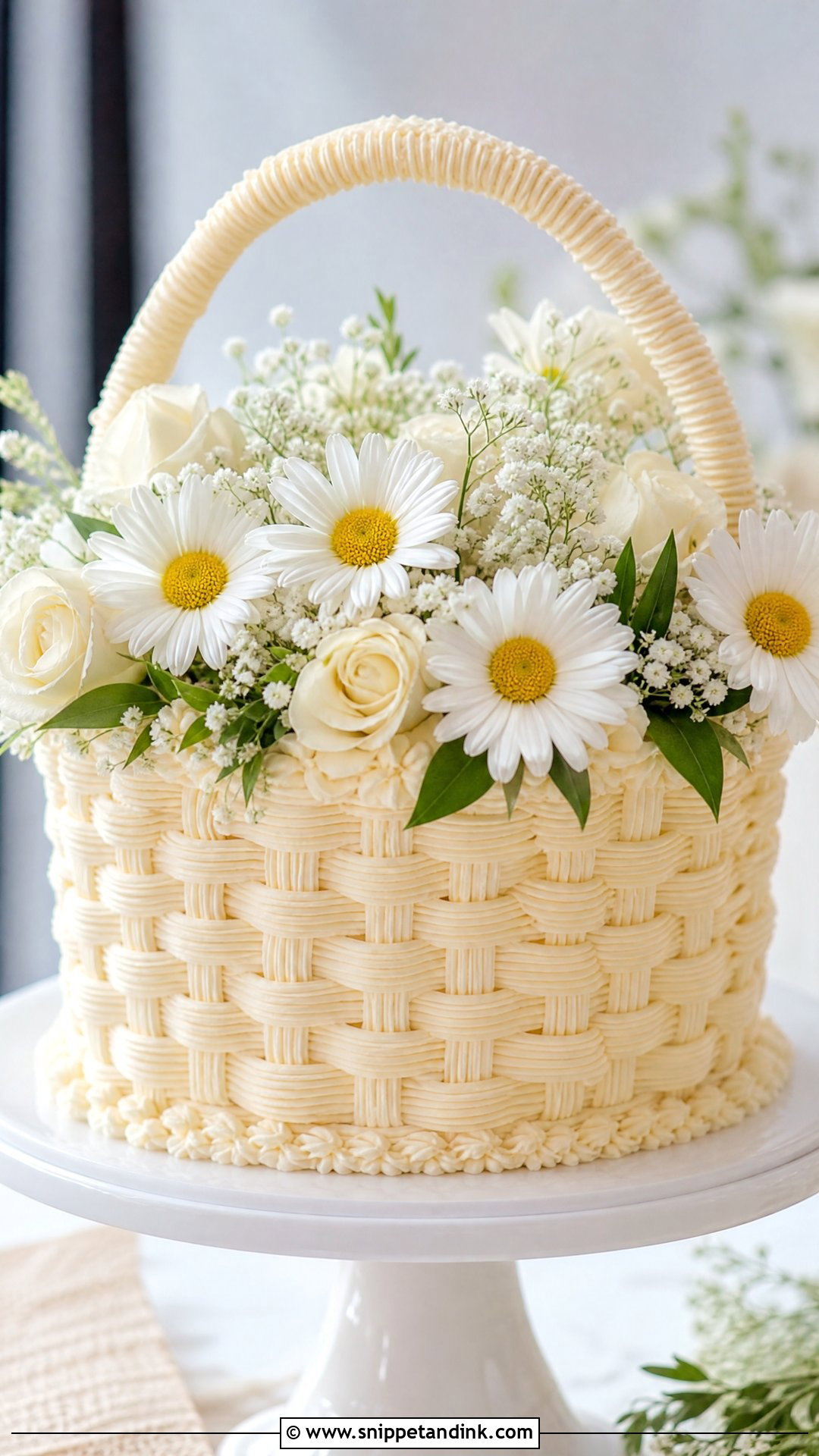
Daisies are cheerful, and the risk is that they tip into casual. Adding a few small white roses or soft green leaves around them keeps the cake bridal, and a light beige weave makes the basket read clearly. They are easy flowers for guests to recognize from across a room. I pipe or sugar daisies rather than using cut ones, since many bought daisies are not grown for eating. A plain white stand finishes it for a backyard or spring reception.
17. Lavender Flower Basket Wedding Cake
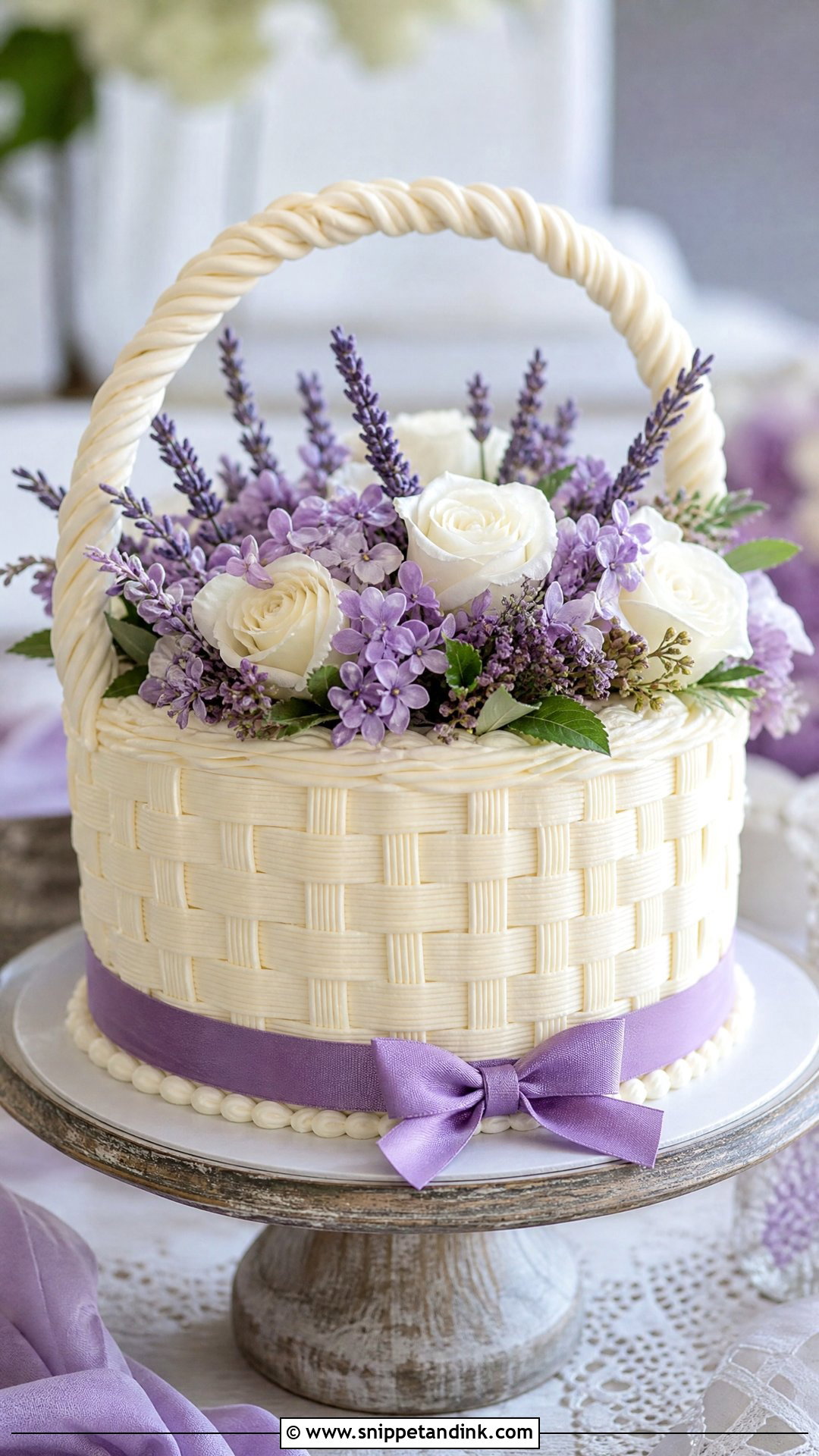
Lavender is one of the few flowers I am happy to place fresh, because culinary lavender is grown to be eaten and pairs with lemon or honey sponge. A light hand matters: it is strongly scented, and too many sprigs can make the top of the cake taste soapy. Sprigs with white roses or pale lilac blossoms balance the color. A lavender ribbon at the base ties it together, and the stand decides whether it reads rustic or polished.
18. Sunflower Basket Wedding Cake
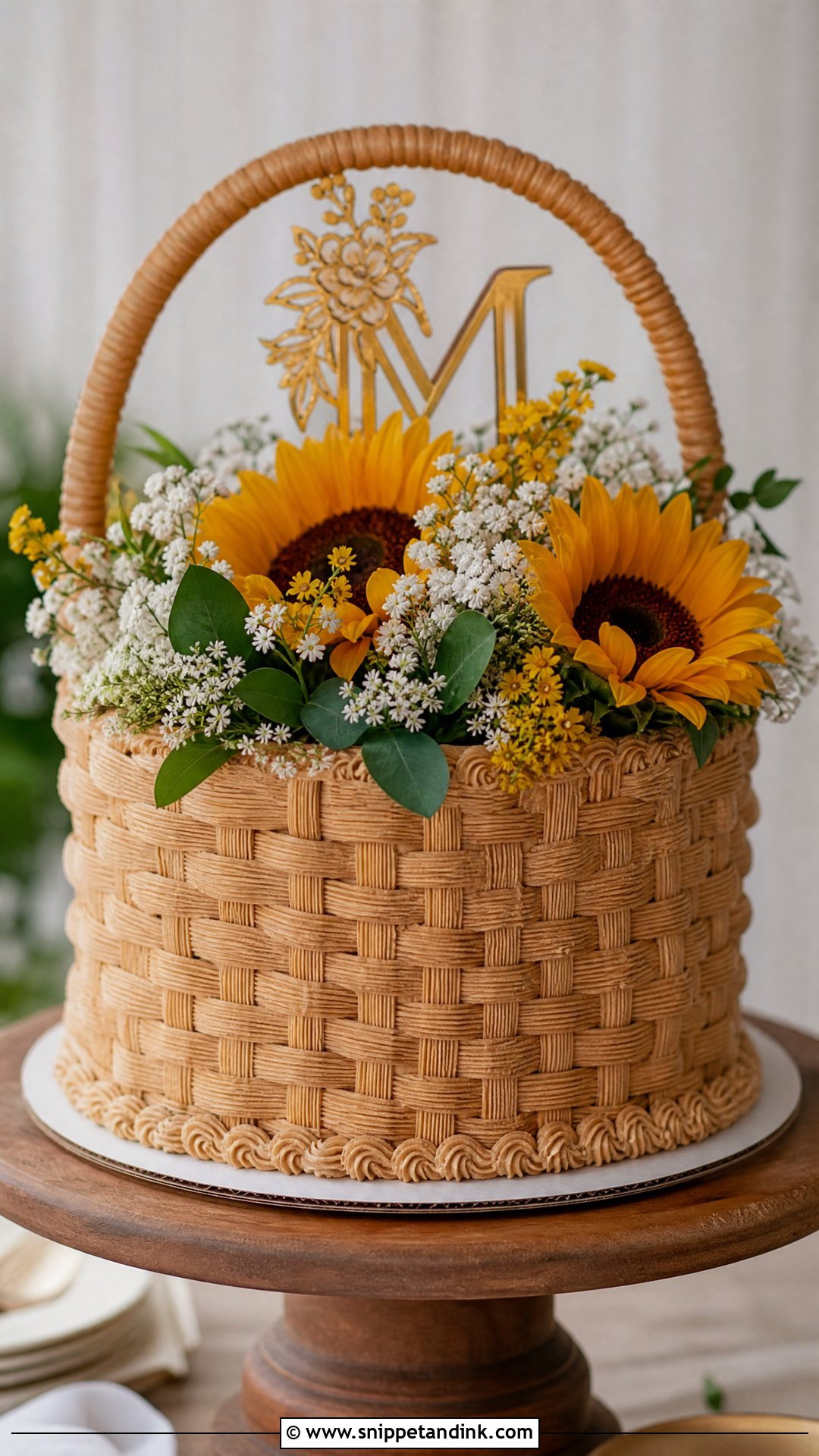
Sunflowers carry a lot of visual weight, so two or three large heads are usually enough. I tint the weave tan or caramel to sit under the golden petals and soften the arrangement with white flowers, greenery or tiny yellow blossoms. Realistic shapes matter; a sunflower with flat, cartoonish petals looks like a child’s cake. For late summer or early fall at a rustic venue, a wooden stand suits it best.
19. Orchid Flower Basket Wedding Cake
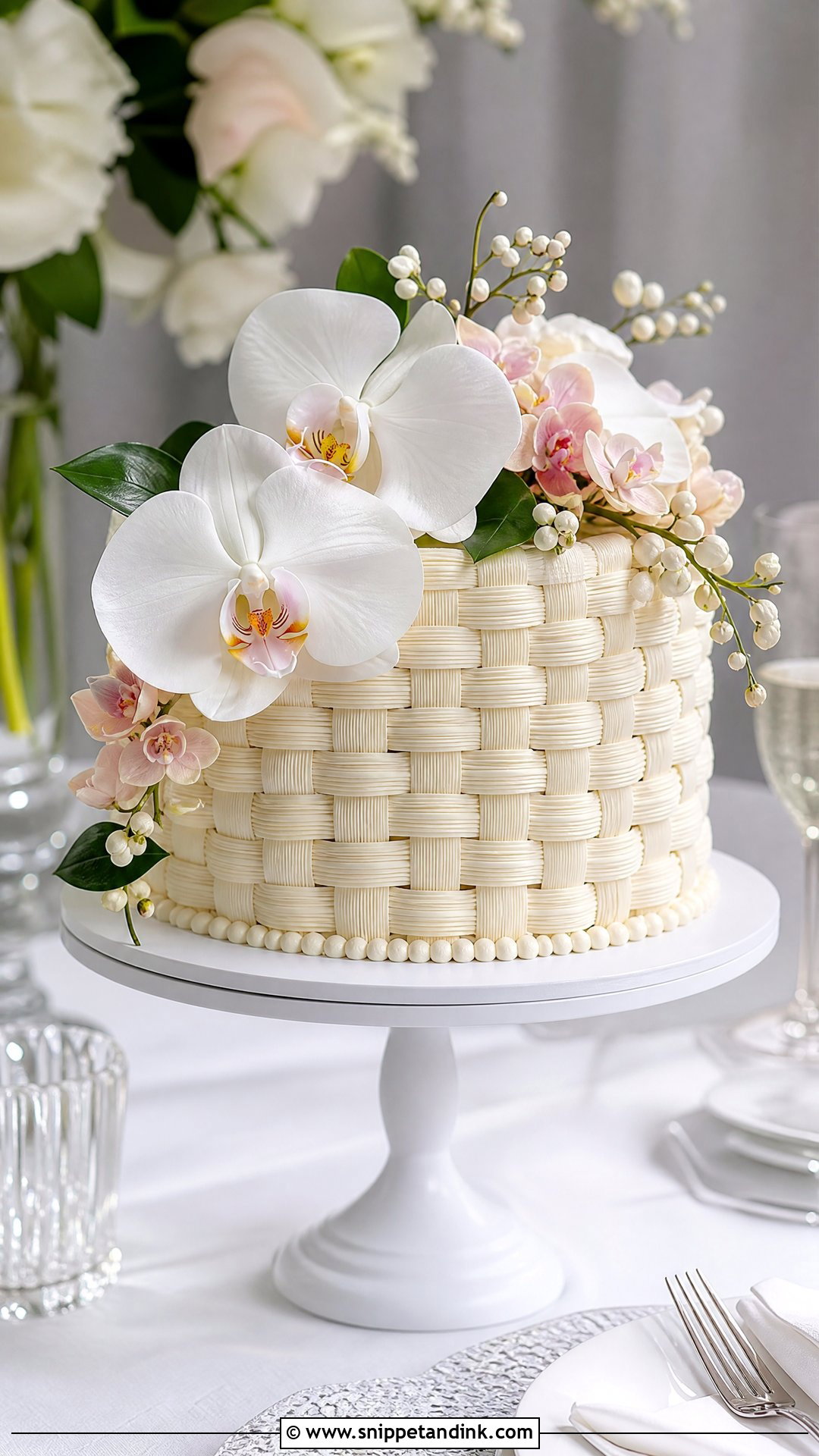
Orchids want space. I set white, blush or pale purple blooms on a smooth woven base with gaps around each one, and let a short spray trail down one side for movement. Crowding them is the most common mistake I see, because each orchid has a strong shape that gets lost in a pile. The weave can be buttercream or fondant depending on the finish you want, and sugar orchids hold up better than fresh ones on a long evening. Ballrooms, beach venues and evening receptions suit this one.

20. Pastel Flower Basket Wedding Cake
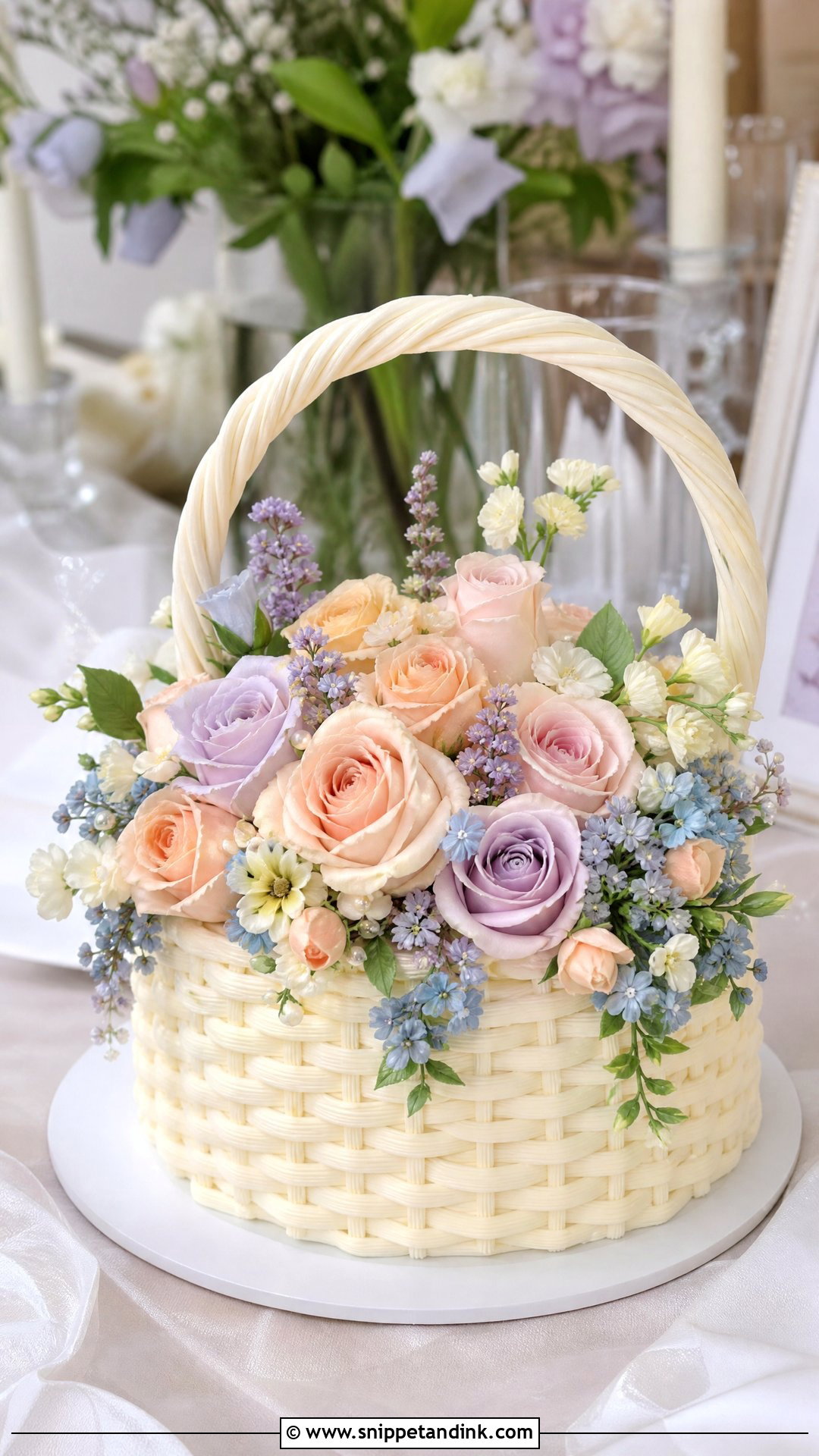
Pastel basket cakes go wrong when every color gets equal space. I pick one main shade, blush or lavender usually, and two supporting colors in smaller amounts, set against an ivory or pale cream weave. Buttercream flowers suit pastels because the tones blend at the edges. Pastel gel colors are also the ones most likely to fade under bright daylight, so I keep the cake out of direct sun until it’s cut. A pearl border makes it read more formal.
21. Blue Flower Basket Wedding Cake
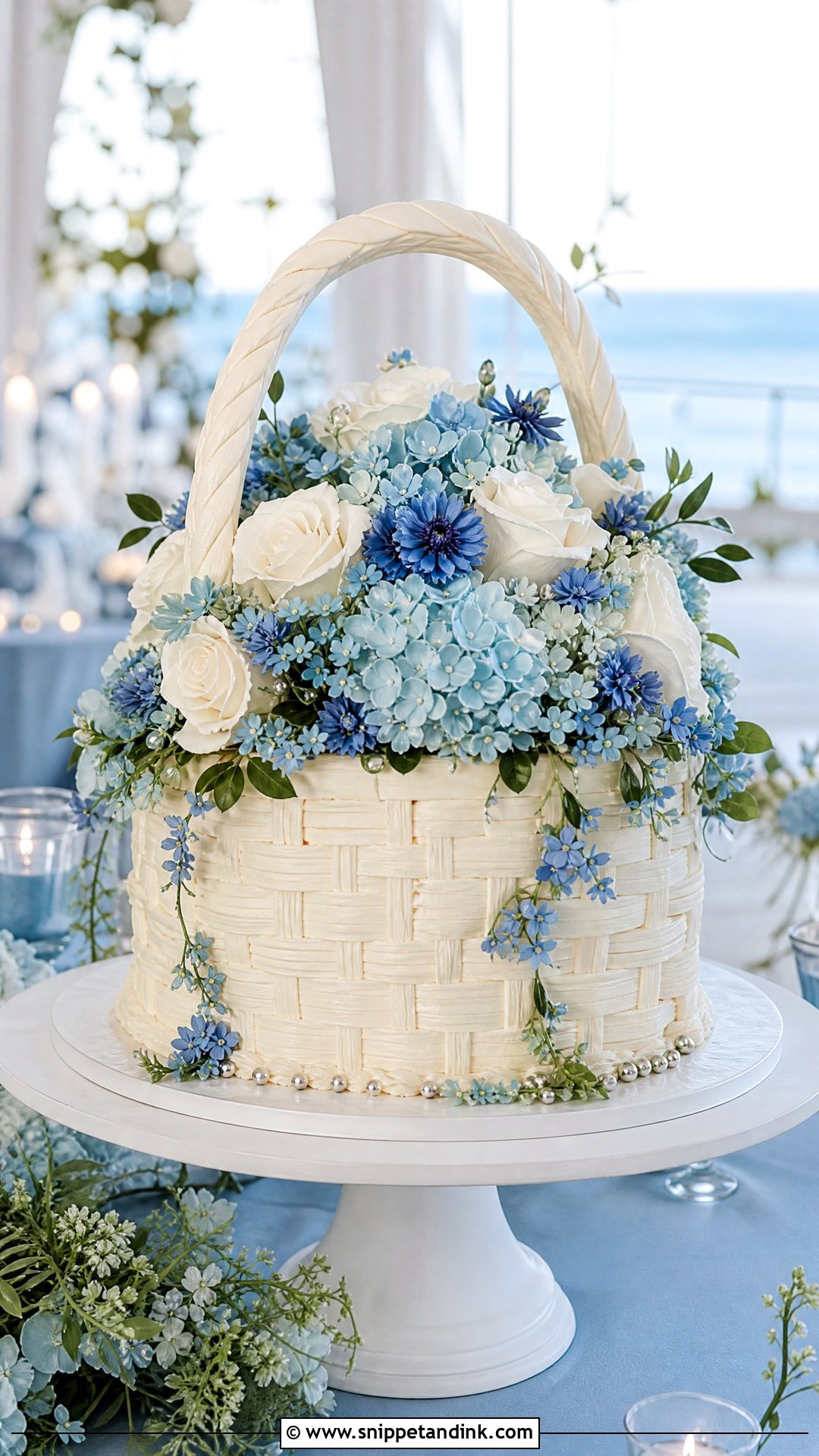
Blue is an unexpected flower color on a cake, which is exactly why it works. Pale blue sugar blossoms, piped hydrangea, cornflowers or forget-me-nots on neutral weave keep the blue as the focal point. White roses, silver accents and soft greenery pair with it. I keep the tones dusty or powdery; a saturated royal blue in buttercream can look artificial and stains teeth. Coastal weddings and ballrooms with blue details suit it.
22. Purple Flower Basket Wedding Cake
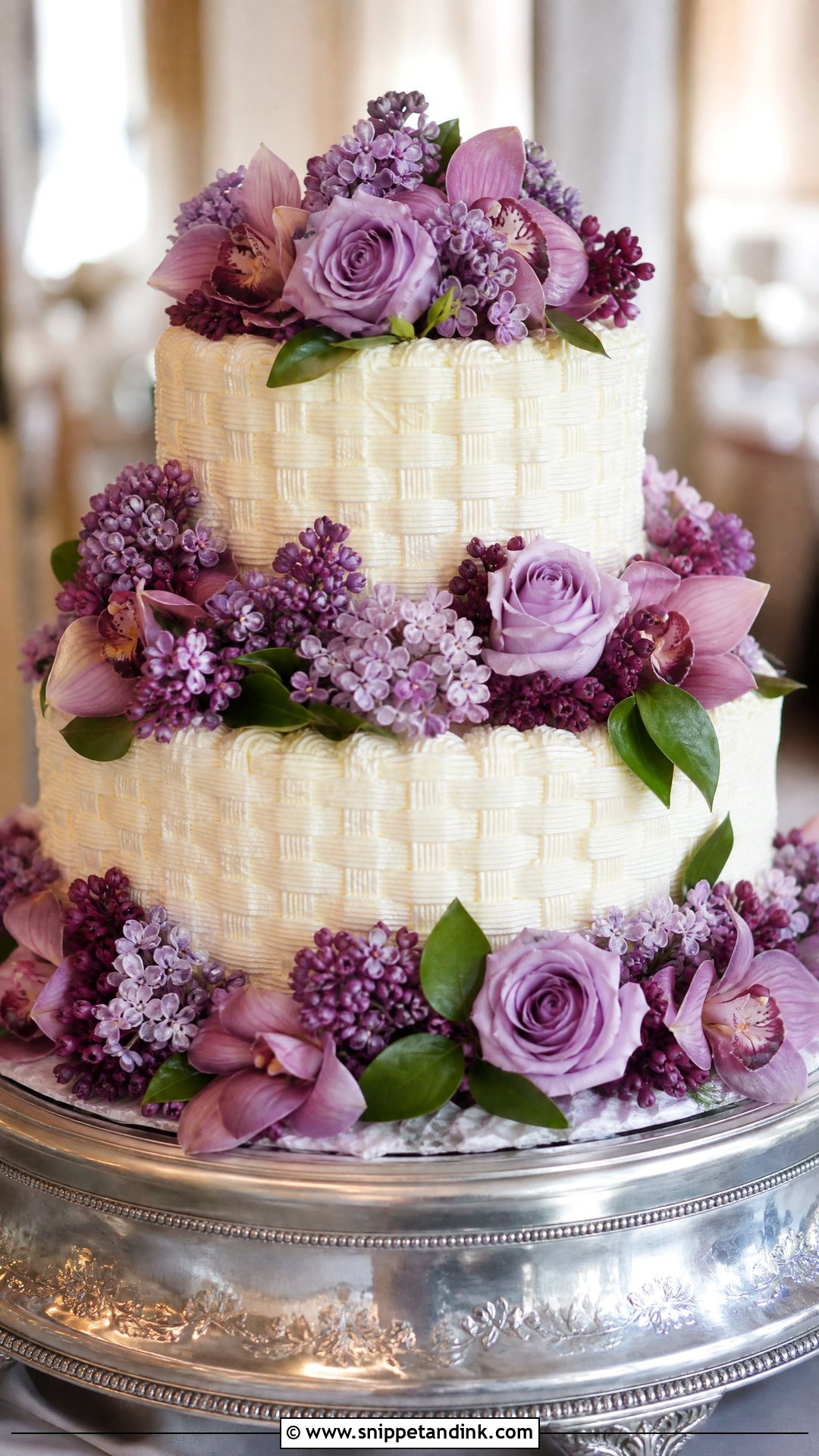
A purple flower basket wedding cake depends on how the shades are layered. Lavender, lilac and mauve can cover most of the arrangement, with plum used only as small accents, because a lot of dark purple on ivory weave pulls the eye into a heavy patch. Purple buttercream can also drift toward grey or blue as it sets, so I mix it a touch warmer than the target. Roses, violets and orchids give layered heights. Silver, sage and blush palettes suit it.
23. Boho Flower Basket Wedding Cake
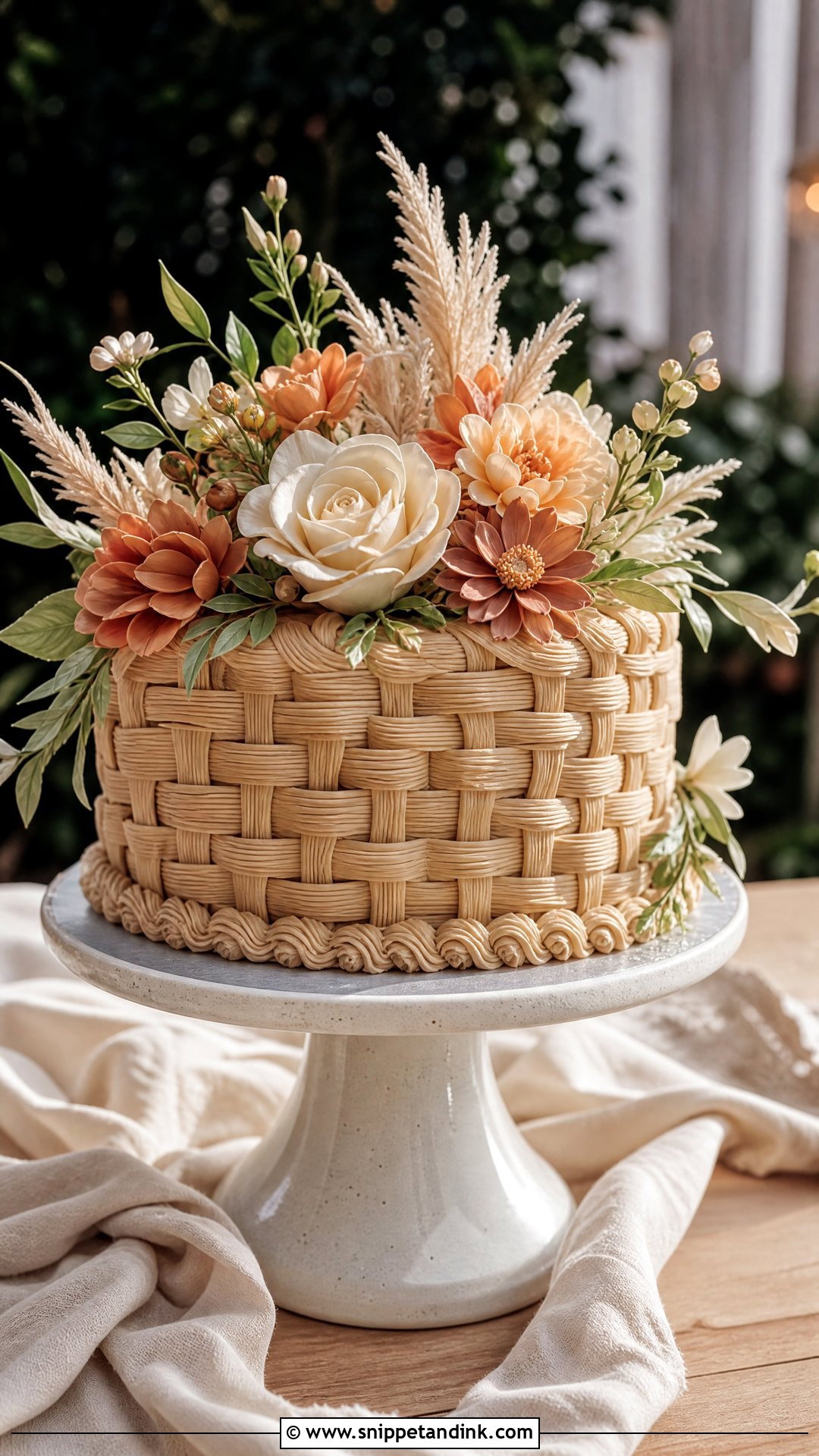
Boho basket cakes look gathered rather than symmetrical. I pipe the weave in warm ivory or sandy beige and use muted roses, sugar accents shaped like pampas, and dried-look blooms in cream, peach, terracotta and sage. Real dried pampas grass is not food-safe, so the plume effect should be sugar or kept on the stand, not in the icing. A ceramic or wooden stand with simple linen suits desert venues and garden parties.
24. Elegant Flower Basket Wedding Cake
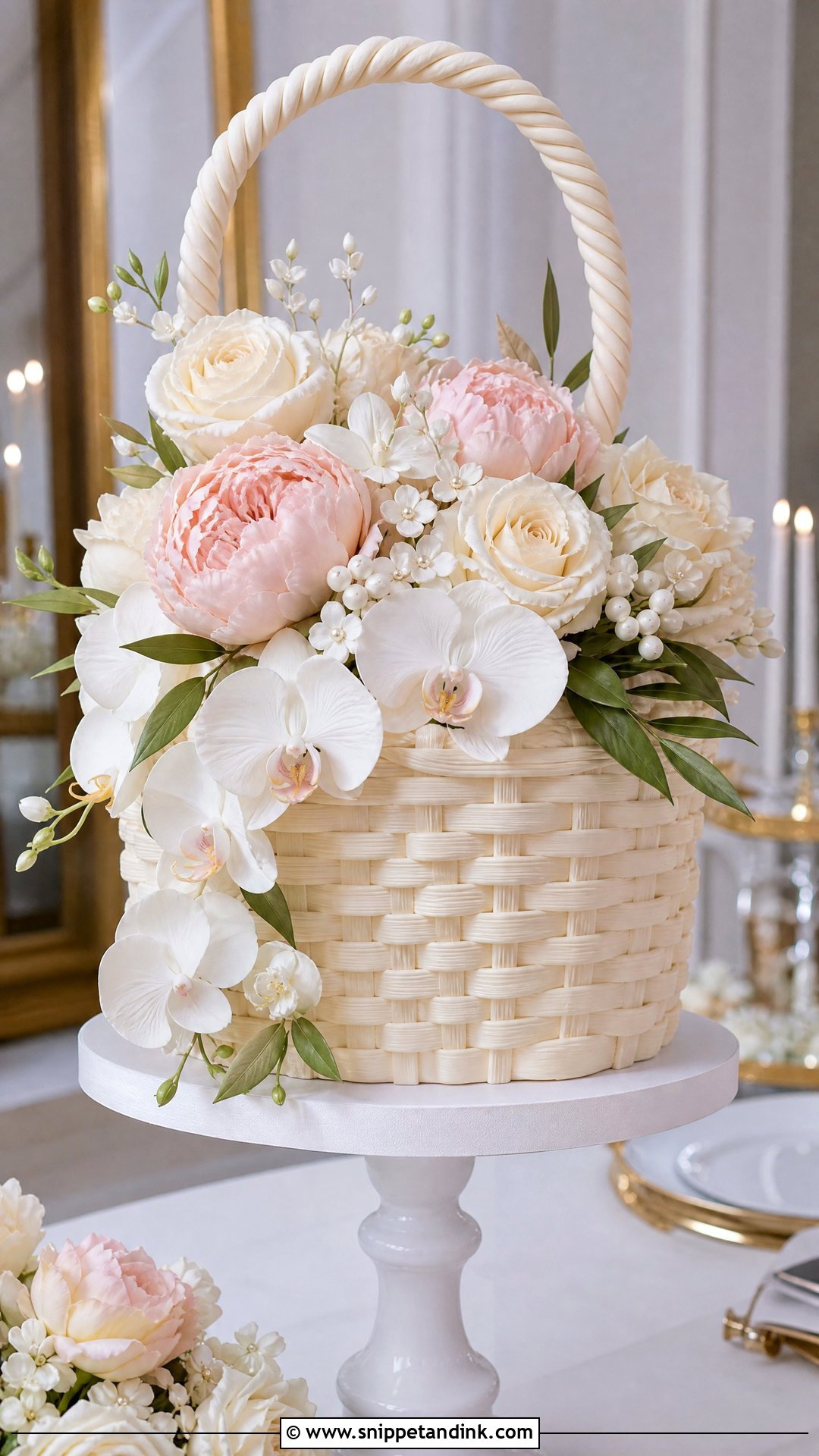
The polished version is about restraint. A neat, delicate weave in ivory, white or champagne buttercream, then a controlled arrangement of white roses, blush peonies, sugar orchids and a few pearl accents placed on top or to one side. I leave large areas of weave showing; that bare texture is what makes it look expensive. A tall white or mirrored stand raises it to eye level in a hotel ballroom, and the formality comes from the precision of the rows, not from more flowers.
25. Simple Flower Basket Wedding Cake
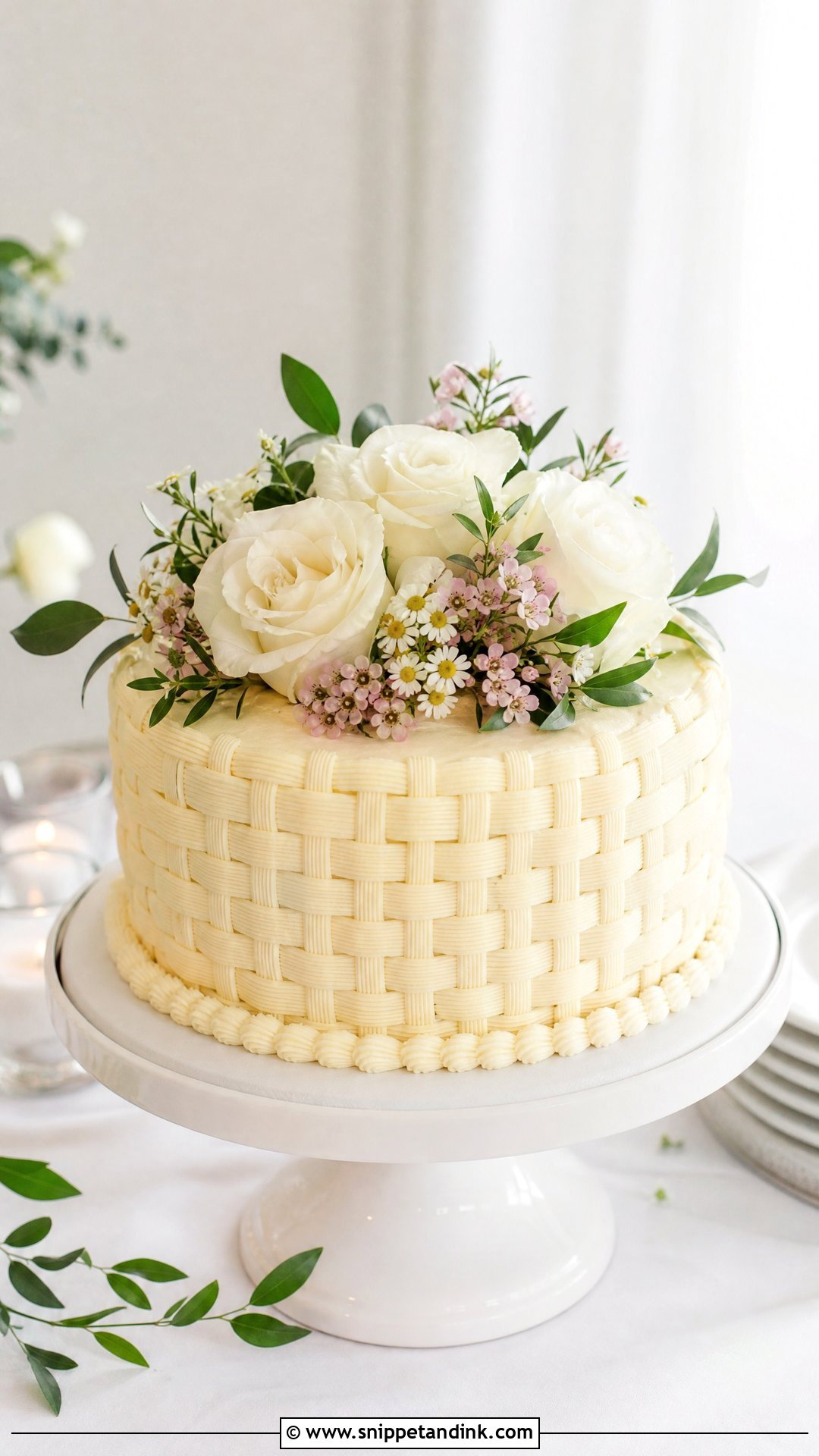
Simple doesn’t mean plain here. One or two tiers, a clean weave around the sides and a small cluster of roses, daisies or greenery on top is enough. It is the most budget-friendly version because fewer flowers and fewer tiers mean fewer hours, and the weave already gives the cake texture so nothing looks missing. I finish it with a soft buttercream and a neat bottom border. Courthouse celebrations and small receptions suit it well.
Fresh Stems I Keep Off the Icing
Fresh flowers are the part of a basket cake most likely to cause a problem, and it is rarely the baker’s fault or the florist’s alone. The trouble usually starts when nobody owns the handover. I ask for the stem list two weeks before the wedding so I can flag anything unsuitable while there is still time to swap it.
- Fine to place with a barrier: roses grown without pesticide, culinary lavender, pansies, violas, and many orchid varieties.
- Better piped or in sugar: hydrangea, baby’s breath, lily of the valley, sweet pea and daffodils, which are not considered food-safe.
- Every stem gets wrapped in floral tape and set in a food-safe pick or straw, so sap and water never touch the cake.
- Flowers from a supermarket or wholesale bucket are usually treated, so I ask for organic or culinary-grade stems for anything sitting directly on icing.
Guests also pull flowers off and eat the frosting underneath, which is another reason I remove any fresh stems before the cake goes to the cutting station.
Getting a Woven Cake Through a Hot Afternoon
A basket weave is the first thing to fail in heat because its ridges soften from the outside in. I deliver woven cakes chilled and as late as the venue allows, and I ask where the cake table will stand before I quote. A spot by a window, a heater or a tent wall in direct sun can do more damage in an hour than a whole cool evening.
For an outdoor summer wedding I steer couples toward a crusting buttercream or fondant weave, sugar flowers instead of fresh, and a display time of no more than a couple of hours before cutting. If your heart is set on Swiss meringue and fresh peonies in July, the honest answer is an indoor, air-conditioned cake table, or a smaller display cake with the rest served from the kitchen.
The Bouquet Photo Is Where Your Basket Cake Starts
Every cake above comes back to the same three decisions: what the weave is made of, what the flowers are made of, and how warm the room will be. Bring a photo of your bouquet and centerpieces to your first tasting, along with the venue’s indoor or outdoor setup, and a good baker can tell you within a few minutes which version will hold. Roses, wildflowers, orchids, lavender or peonies, the basket should look like it belongs to your wedding rather than to a catalog.
You'll Like These Ideas:











Leave a Reply