
A French-leaning wedding cake is quieter than most. It earns attention through pastry and texture rather than height or colour: caramel-glossed choux, crisp puff pastry, silky buttercream, a few pressed flowers. That gives you a lot of directions, from a Paris patisserie counter to a farmhouse table in the countryside or a formal château. It also blends easily into a dessert table with macarons, fruit and delicate piping. The palette tends to stay in ivory, blush, cream, lavender, raspberry and the gold of baked pastry. Here are 25 ideas, with what each one asks of your venue and your timeline.
Pastry Tower or Sponge Tiers?
Before you fall for a picture, decide which family of cake you’re in, because they behave very differently on the day.
Pastry pieces
Croquembouche, Saint-Honoré, éclairs, profiteroles and mille feuille are made from choux or puff pastry and cream. They taste wonderful for a few hours and then soften. They need assembly on the day, a cool room and someone to serve them promptly. Guests usually eat them by hand, so there’s no slicing.
Sponge tiers
Vanilla, almond, lemon, opera or a fraisier are built and iced ahead, transported stacked or in pieces, and cut into slices. They’re much more forgiving of a long reception. Many of my couples do both: a small iced tier to cut and photograph, with a pastry display beside it for the French feeling.
1. French Wedding Croquembouche Cake
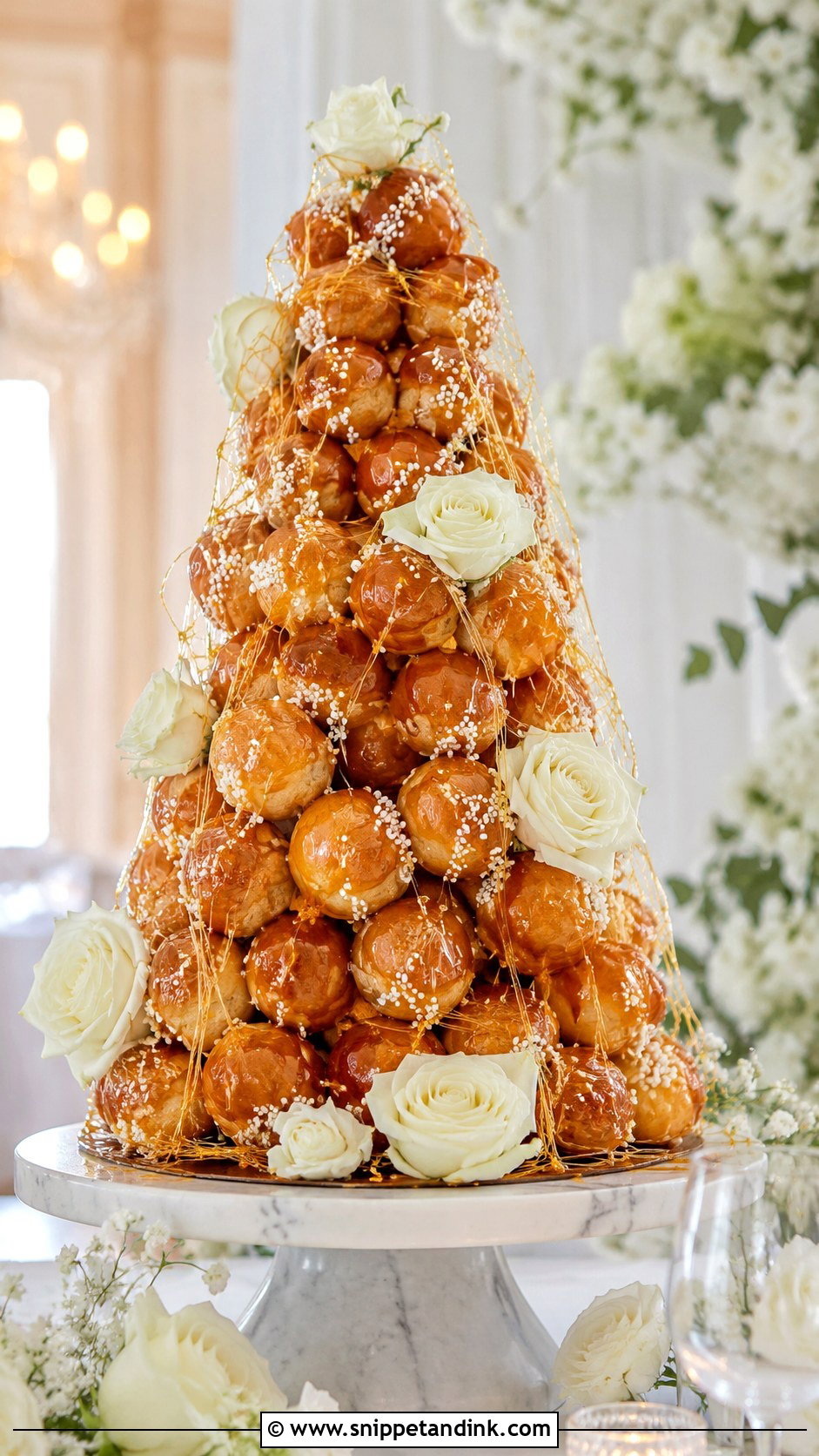
The croquembouche is the real French wedding tradition: cream-filled choux puffs stacked into a cone and glued with caramel, often finished in spun sugar. I assemble it as close to the reception as I can, because caramel softens and the puffs go limp once humidity gets to them. Vanilla, caramel or raspberry pastry cream inside each puff keeps it interesting. Guests pull puffs off by hand, so plan a small cutting cake if you still want that moment.
2. French Macaron Wedding Cake
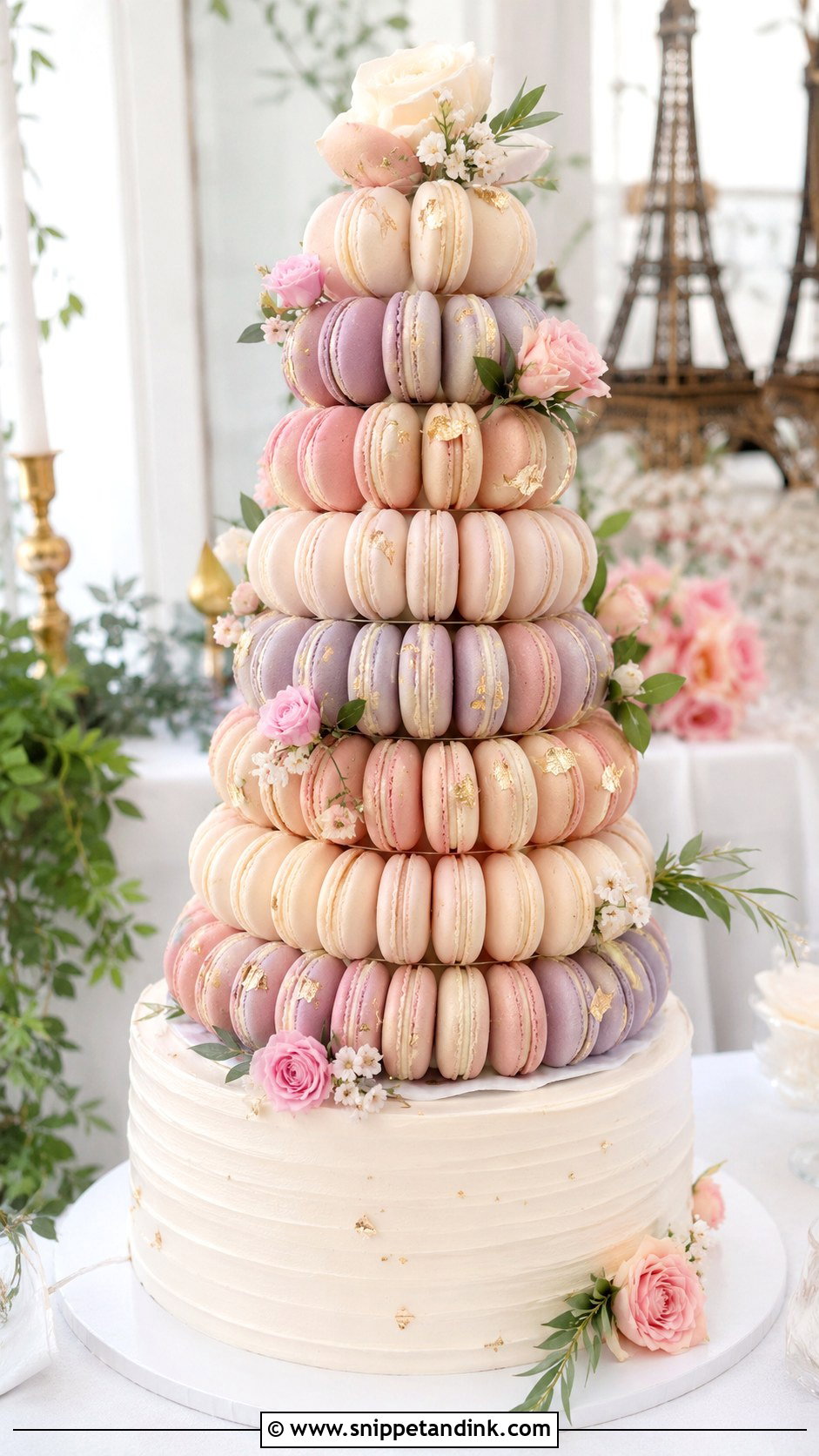
A macaron tower is really a display stand covered in rows of shells, which means colour is easy: blush, ivory, lavender, pistachio, pale blue. Each colour can be its own flavour, such as rose, raspberry, lemon or salted caramel. Macarons are actually better a day after filling, when the shell softens slightly, so they’re one of the few things I’m happy to make ahead. They double as guest favors if you box a few. Keep the tower out of direct sun; the fillings soften fast.
3. French Mille Feuille Wedding Cake
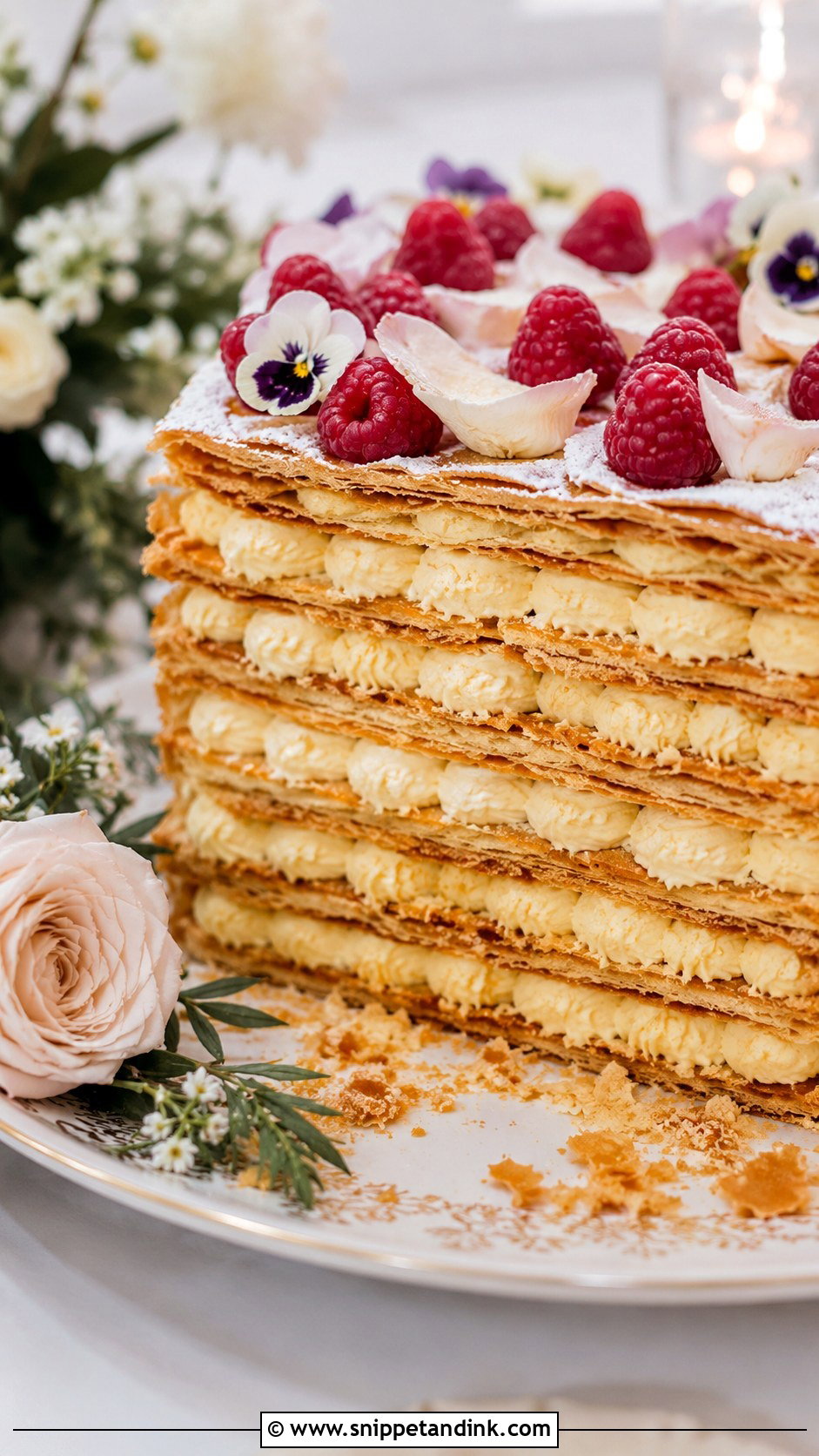
Mille feuille stacks puff pastry with pastry cream, and the contrast of shatter and silk is the whole point. The catch is that puff pastry starts to soften as soon as cream touches it, so I build it within a few hours of serving. That makes tall tiers impractical; a long rectangular sheet or a small stack is more honest. Berries, powdered sugar or a feathered fondant glaze on top are all it needs. Cutting is messy, so warn your venue’s cake team.
4. French Vanilla Wedding Cake
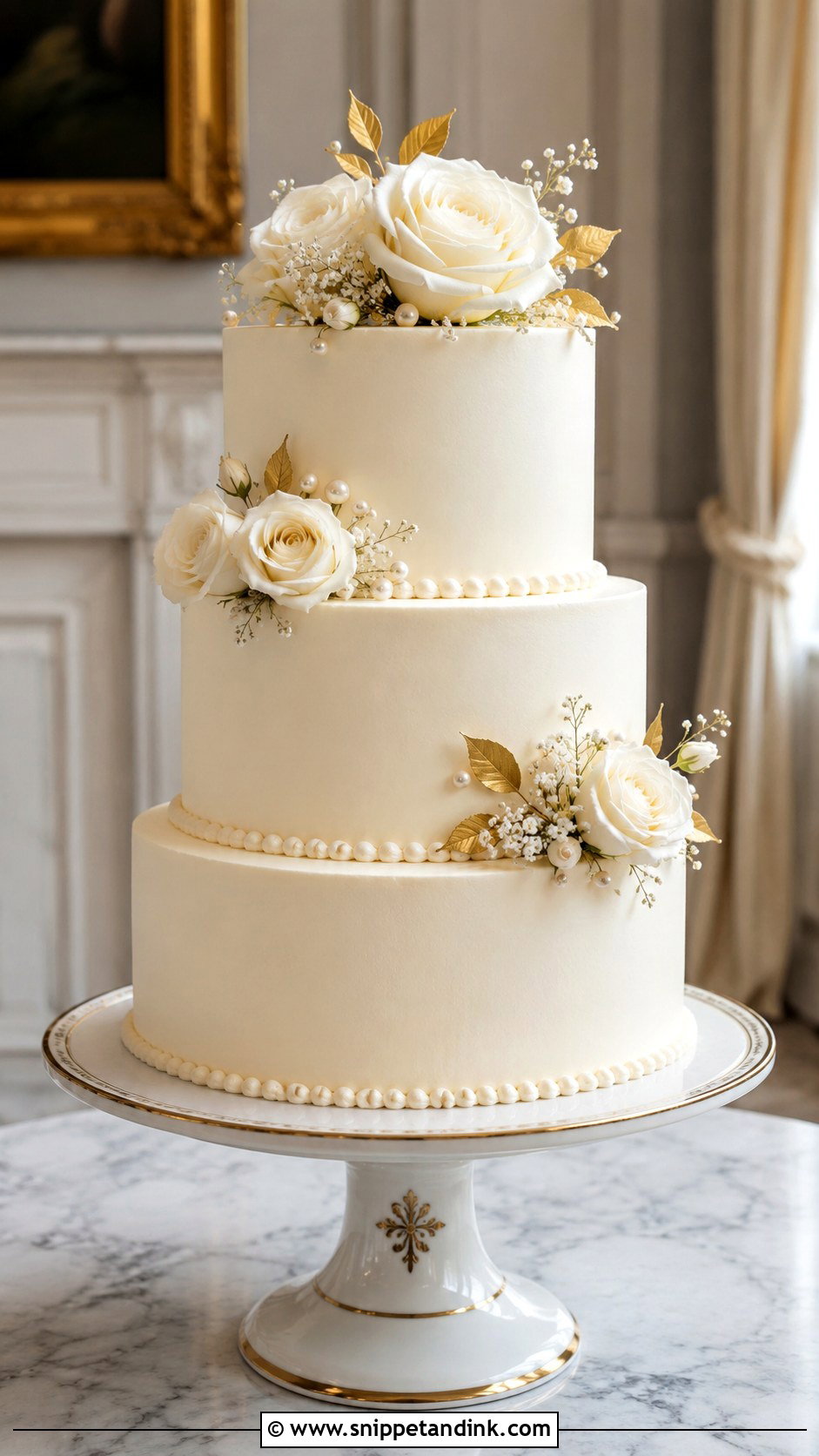
French vanilla is the crowd-pleaser, custard-rich and familiar. Where it gets interesting is the filling: raspberry jam, lemon curd or almond cream all change the cake without scaring older guests. Outside, ivory buttercream with pearl piping and a few garden roses reads château. A three-tier with a thin gold line at each base is about as classic as it gets.
5. French Buttercream Wedding Cake
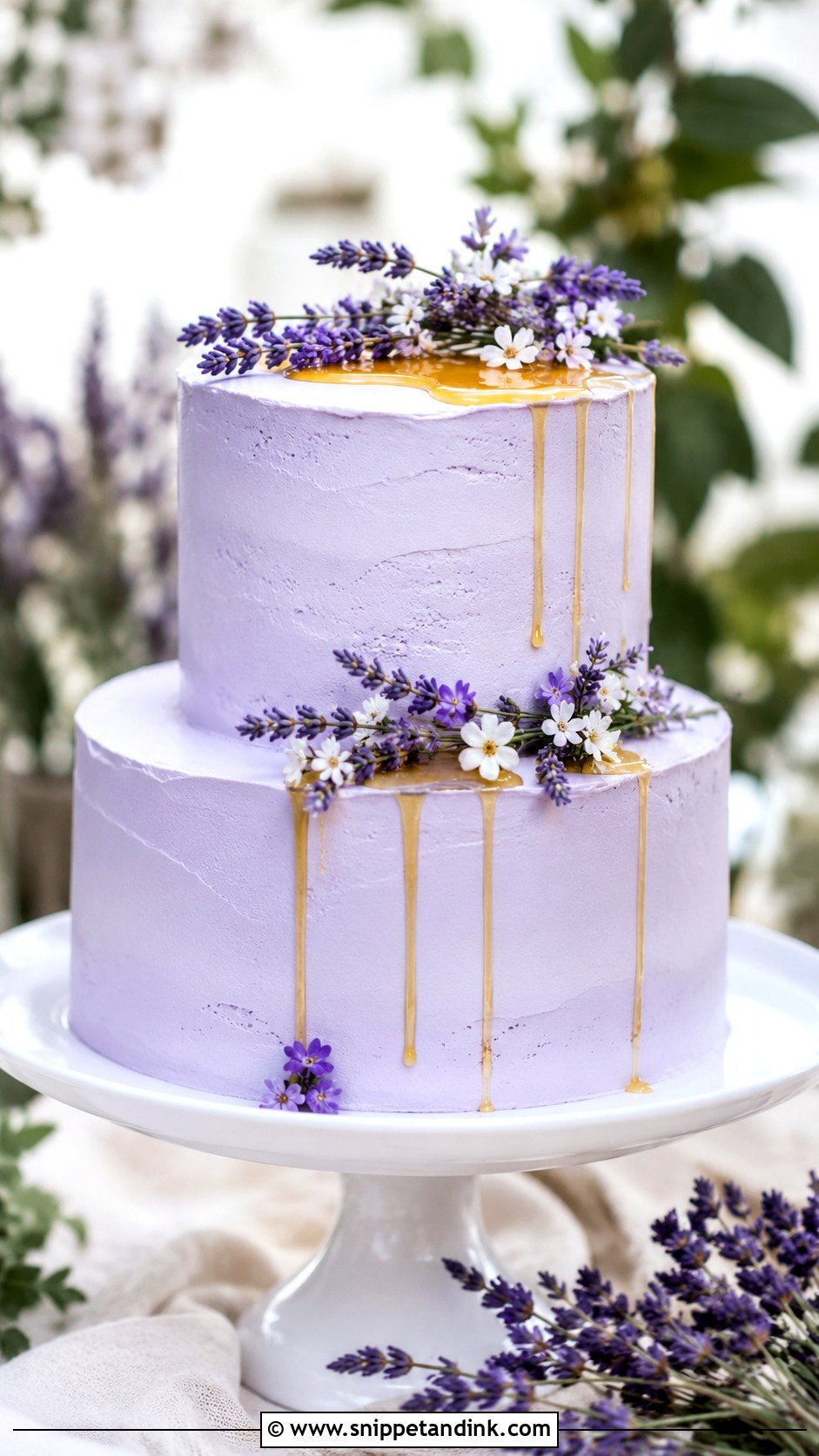
French buttercream is made with egg yolks and hot sugar syrup, which gives it a pale golden colour and a custard taste, softer than American buttercream. It’s lovely to eat and harder to work with: it softens fast in a warm room and won’t hold sharp edges like a meringue-based icing. I use it for ruffles, loose piping and rustic finishes, and keep the cake chilled until shortly before display. Fresh berries or apricot filling underneath suit it.
6. French Lavender Wedding Cake
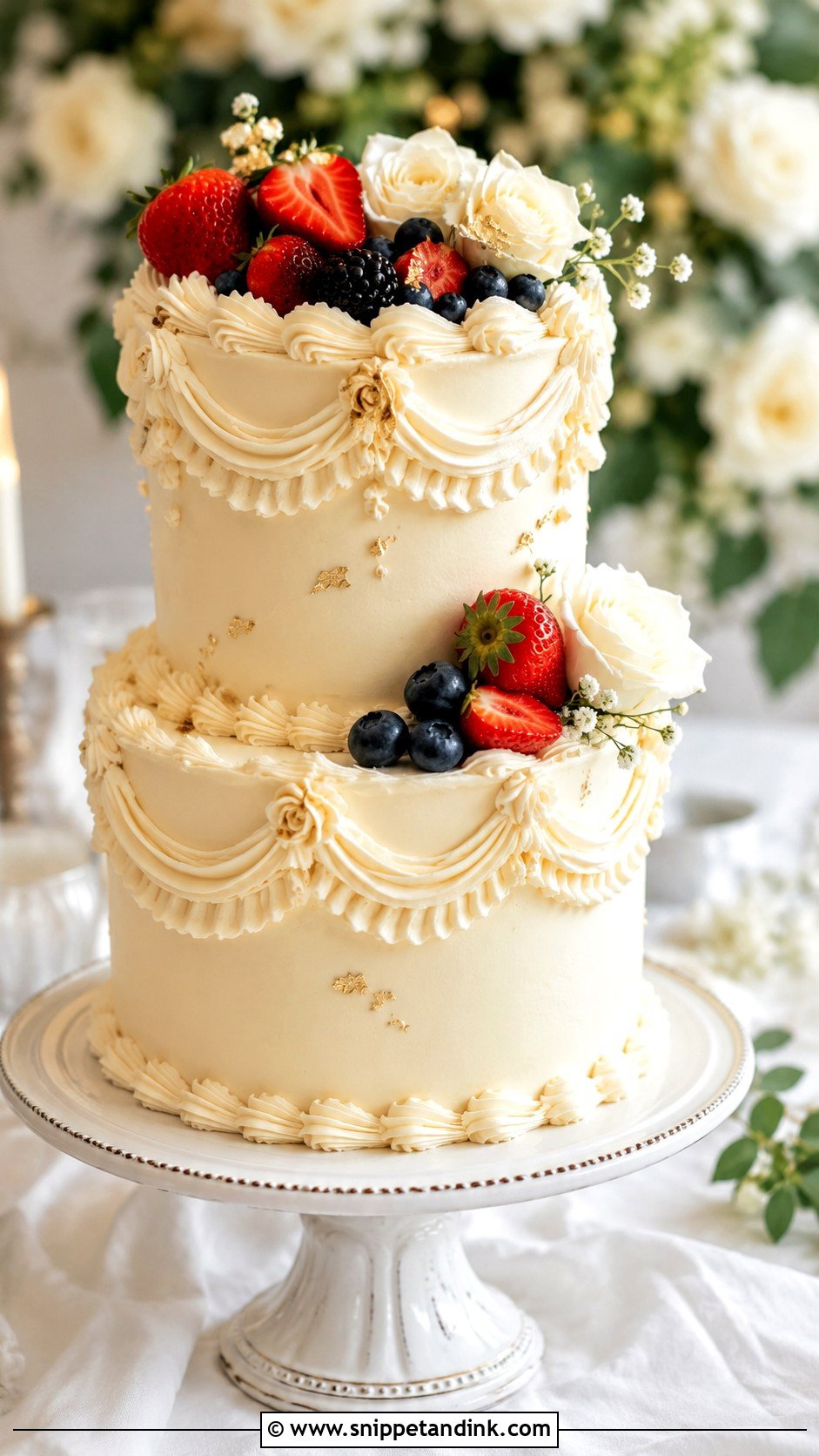
Lavender is the flavour I’m most cautious with. Too much and it tastes like soap, so I infuse it gently into cream or honey and pair it with lemon or vanilla sponge. The outside can be the palest lilac or ivory with a few dried sprigs. Make sure any lavender on the cake is culinary-grade, not from a florist’s bunch. It suits a Provence-themed summer wedding with linen and greenery.
7. French Raspberry Wedding Cake
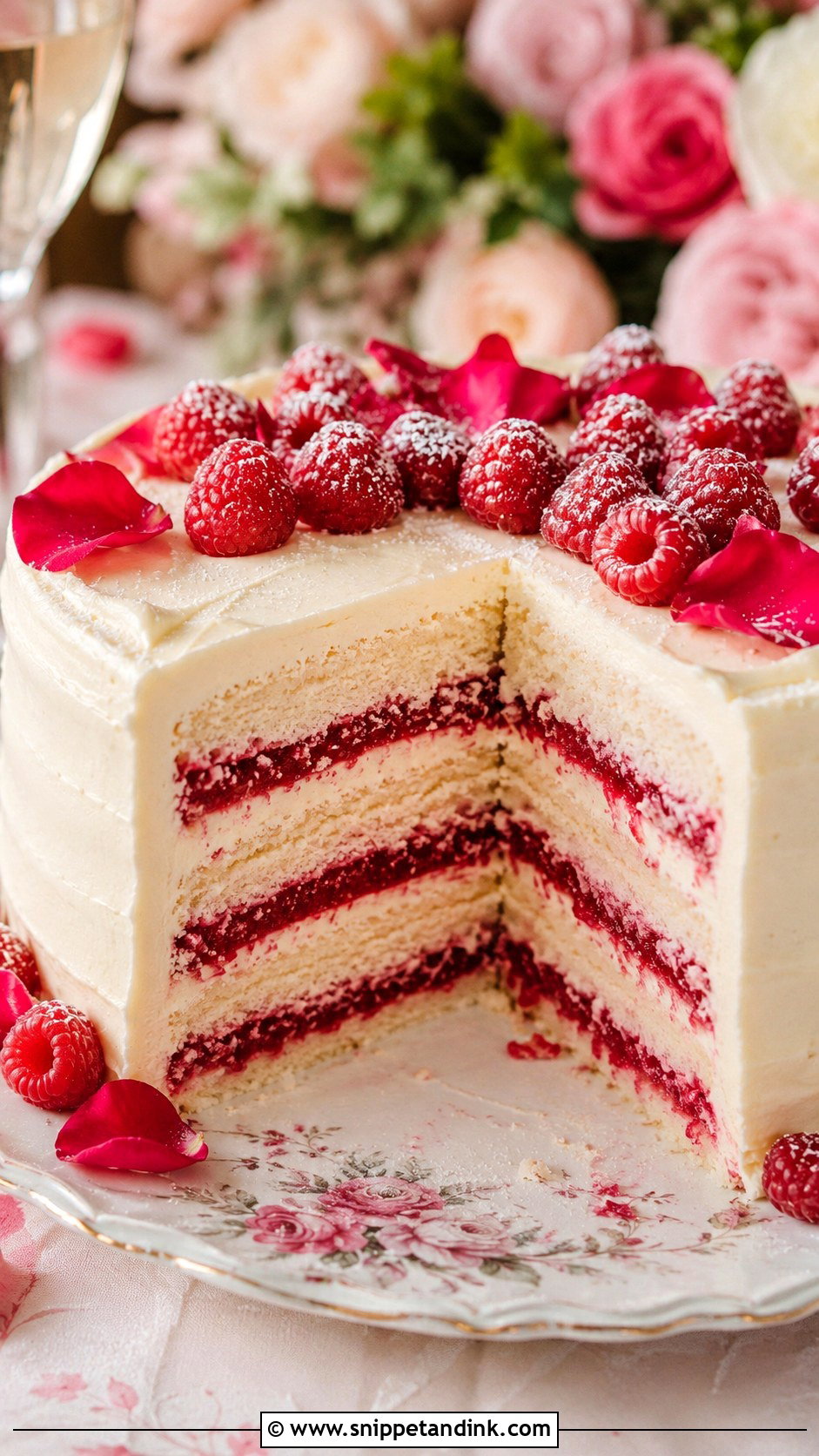
Raspberry is bright enough to cut through rich icing, which is why I reach for it so often. A thin ribbon of raspberry between ivory layers shows nicely when the cake is cut. Vanilla, almond, pistachio and white chocolate all pair well. Fresh raspberries on top look generous but bleed onto icing within hours, so I add them at the venue. A raspberry glaze is the more modern finish.
8. French Lemon Wedding Cake
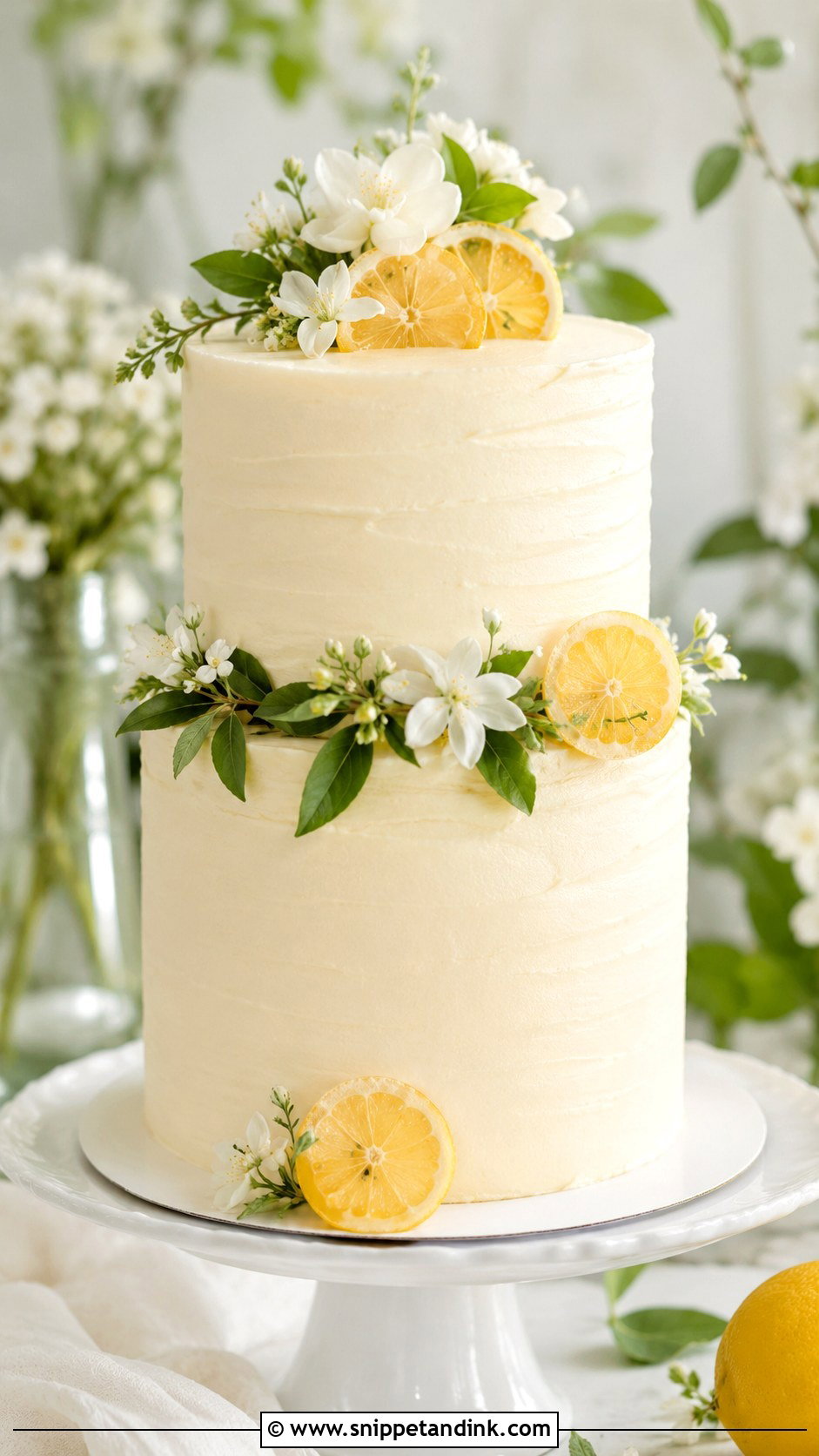
A French lemon wedding cake is the one I suggest for daytime and summer receptions, when guests want something lighter after the meal. Lemon curd sets firmer than jam, so it’s stable between tiers. Candied lemon slices and a little greenery keep it polished rather than casual. Watch acidic fillings with dairy-heavy icing; I use a buttercream dam so the curd doesn’t seep.
9. French Almond Wedding Cake
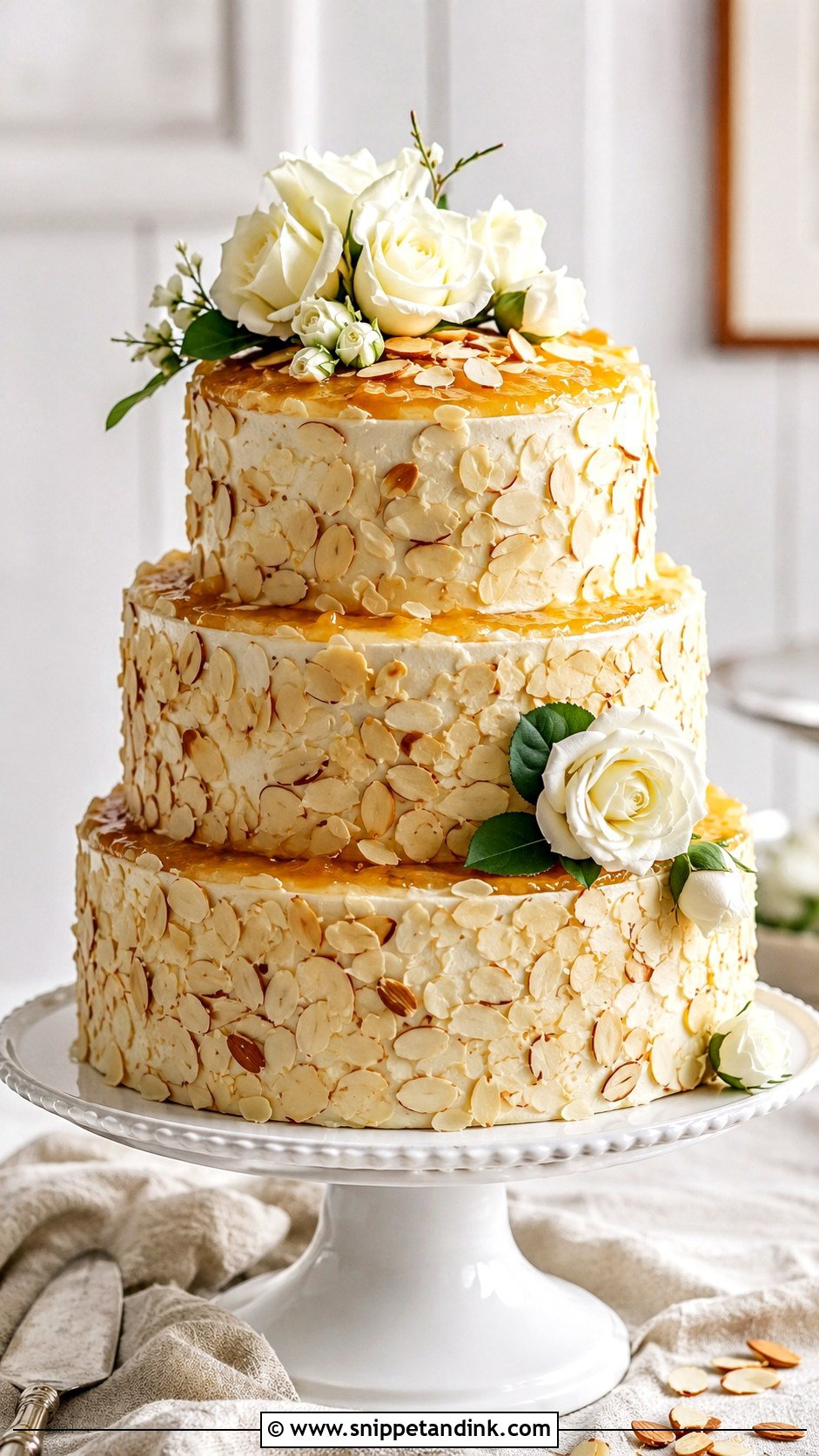
Almond runs all through French baking, so it’s an honest flavour choice for this theme. I pair almond sponge with apricot jam, raspberry or vanilla bean buttercream. Toasted sliced almonds pressed around the base add crunch and hide the board. A marzipan layer under the icing is traditional; be clear with your caterer about nut allergies, since almond flavour isn’t always obvious.
10. French Pear Wedding Cake
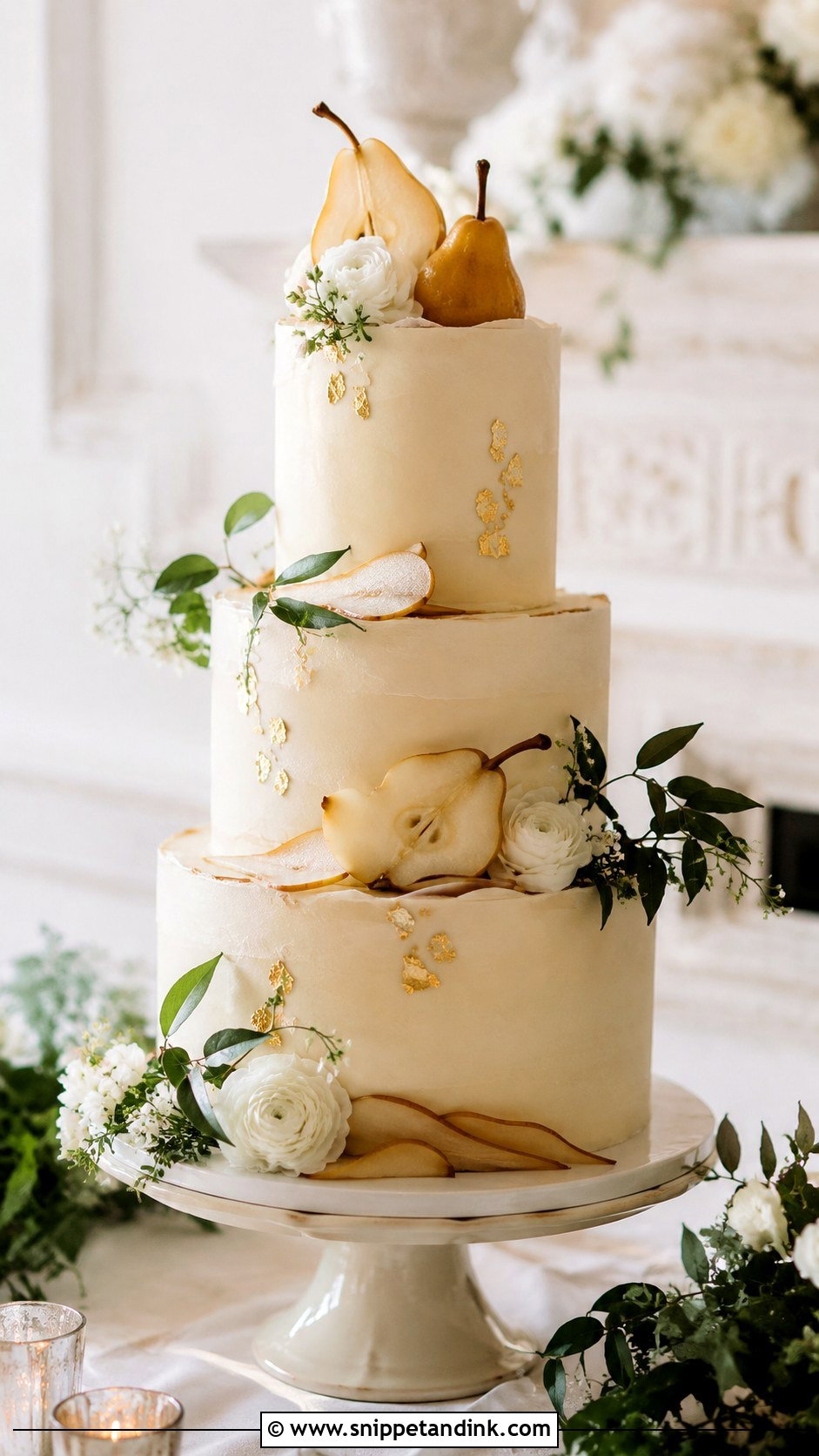
Pear is subtle, which is either its charm or its problem. It needs support from almond, caramel, honey or a little spice to taste of anything inside a buttercream cake. I cook it into a compote so it doesn’t release water into the sponge. Thin poached pear slices on top go brown if they’re cut too early, so they’re the last thing I add. It fits autumn naturally; with pale flowers it can stretch to spring.
11. French Strawberry Fraisier Wedding Cake
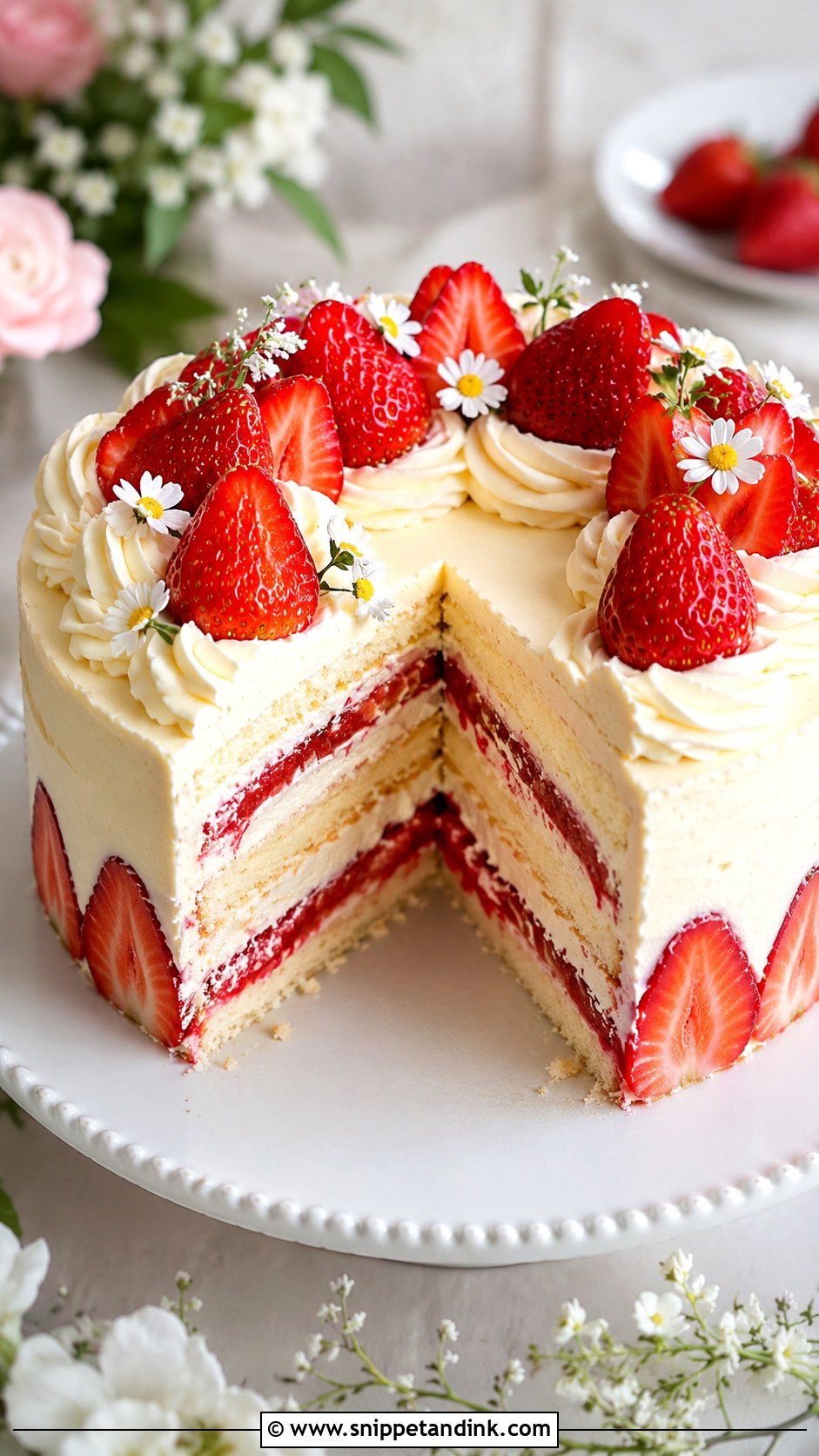
A fraisier is sponge, a vanilla mousseline cream and halved strawberries set against the sides so the cut faces show all round. For a wedding I build it as a tall round tier with a smooth top. It relies on fresh strawberries, so it really belongs to late spring and summer, when the berries are full of flavour. It’s chilled and fairly soft, so it can’t sit out on a hot terrace for hours.
12. French Opera Wedding Cake
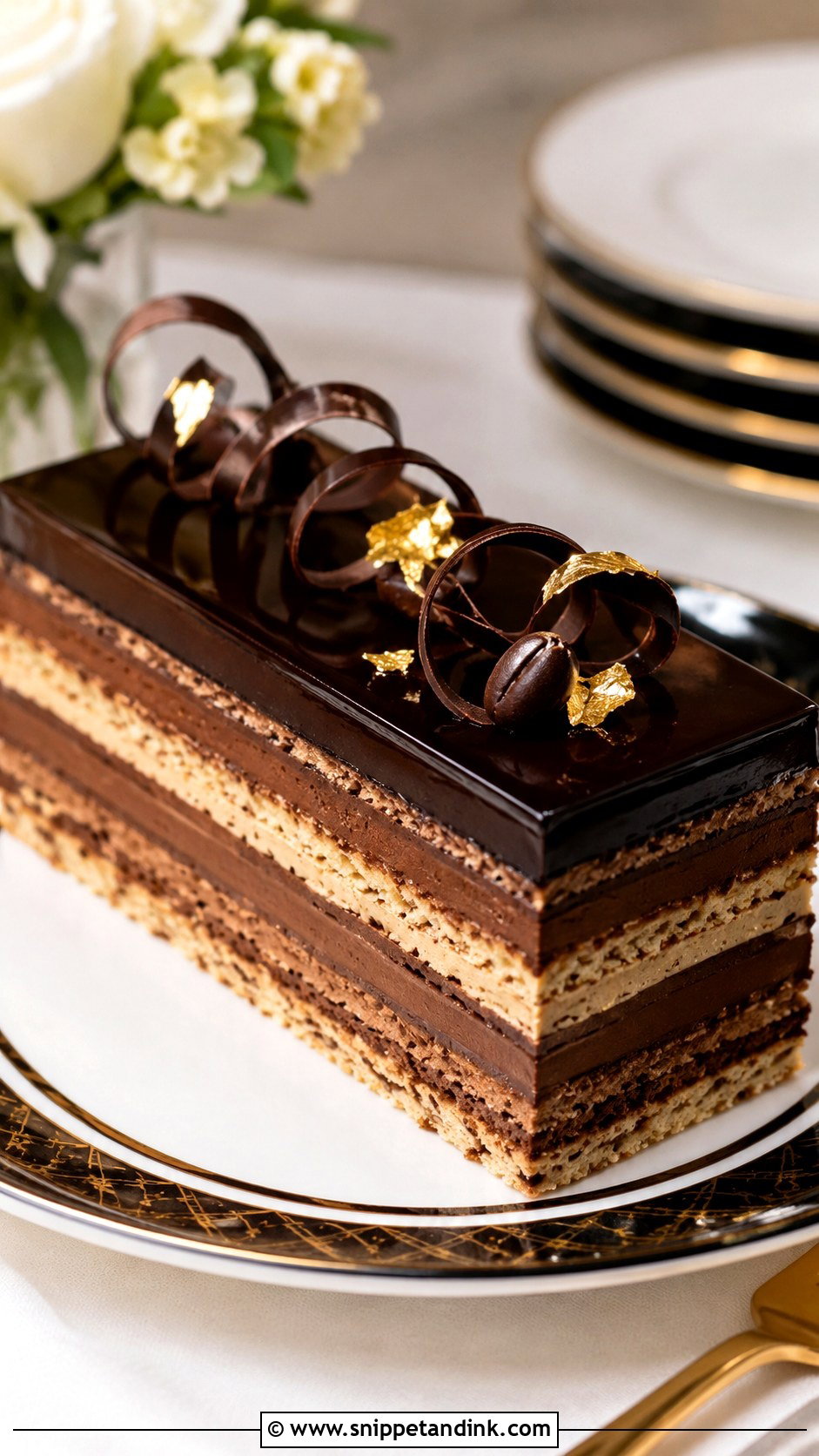
Opera cake is thin layers of almond sponge soaked in coffee syrup, coffee buttercream and chocolate ganache under a glossy glaze. The layers are its beauty, so I cut a clean edge to show them off. It’s naturally a sheet cake; stacked into tiers it needs supports like any other cake. Rich and dense, it serves smaller portions, which helps with numbers. An evening reception suits it best.
13. French Gateau Saint Honore Wedding Cake
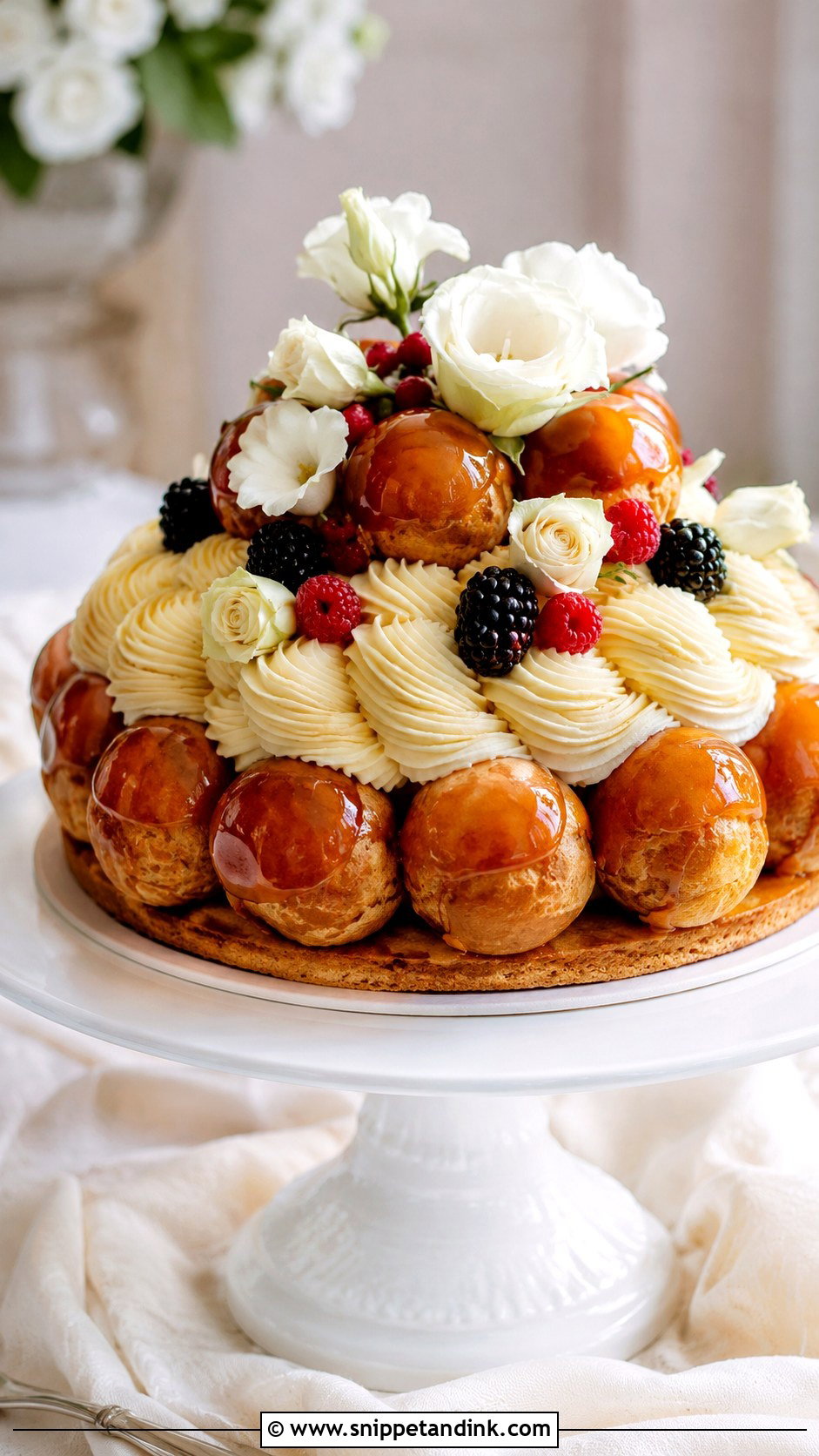
A gâteau Saint-Honoré has a pastry base, a ring of caramel-dipped choux and a centre of piped cream, often a light chiboust or Chantilly. It’s less known than the croquembouche and, to me, nicer to eat. Like any choux and caramel piece, it has a short life once assembled, so it should be made on the day. Berries or a few flowers soften the top. Each slice gets crisp, creamy and caramel textures together.
14. French Madeleine Wedding Cake
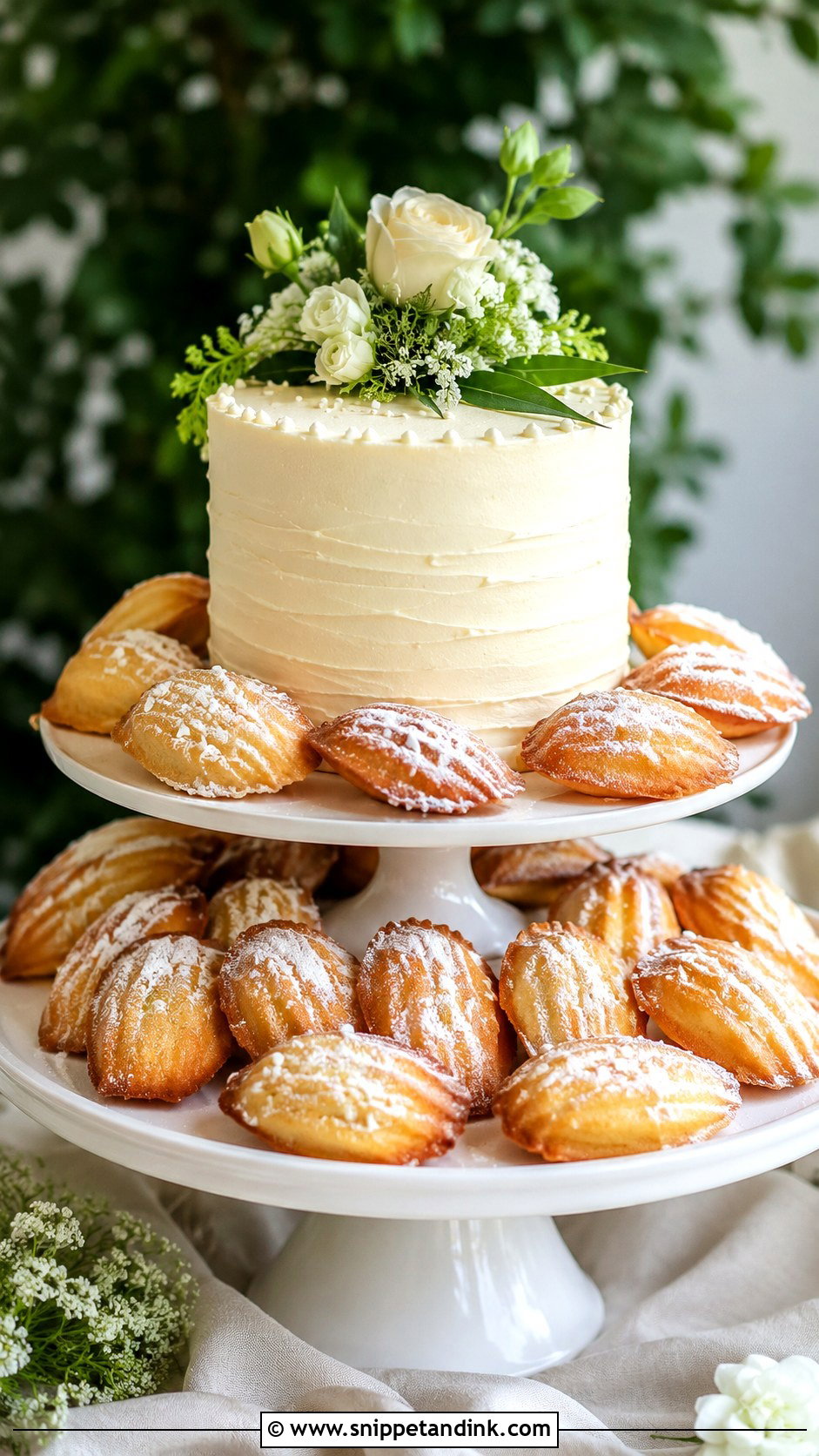
Madeleines are best within hours of baking, while the edges are still crisp, which is the only real challenge here. I arrange them in rings around a small cutting cake or stacked into a tower, shell side out. Vanilla, lemon, almond or honey keep them classic. A dusting of powdered sugar just before guests arrive finishes the display. It’s a warm, relaxed idea that suits a smaller wedding.
15. French Eclair Wedding Cake
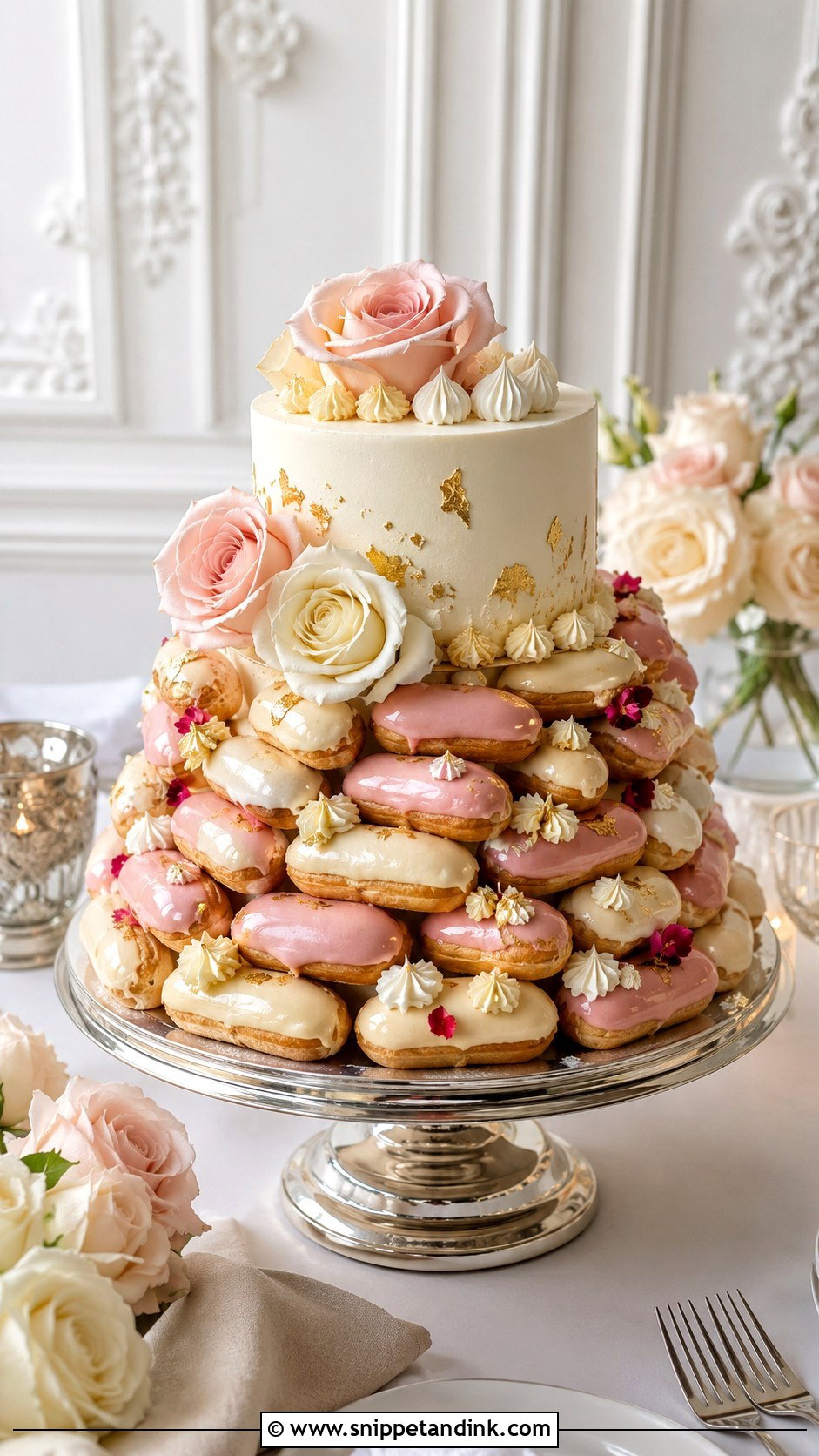
Mini éclairs stacked in tiers or arranged around a small cake give each guest a whole pastry. The glaze on each one is where colour comes in: ivory, blush or pale gold. Fillings like vanilla, chocolate, coffee, raspberry or pistachio let you offer variety. Filled éclairs soften within a few hours, so they need to be filled close to service and kept cool.
16. French Profiterole Wedding Cake
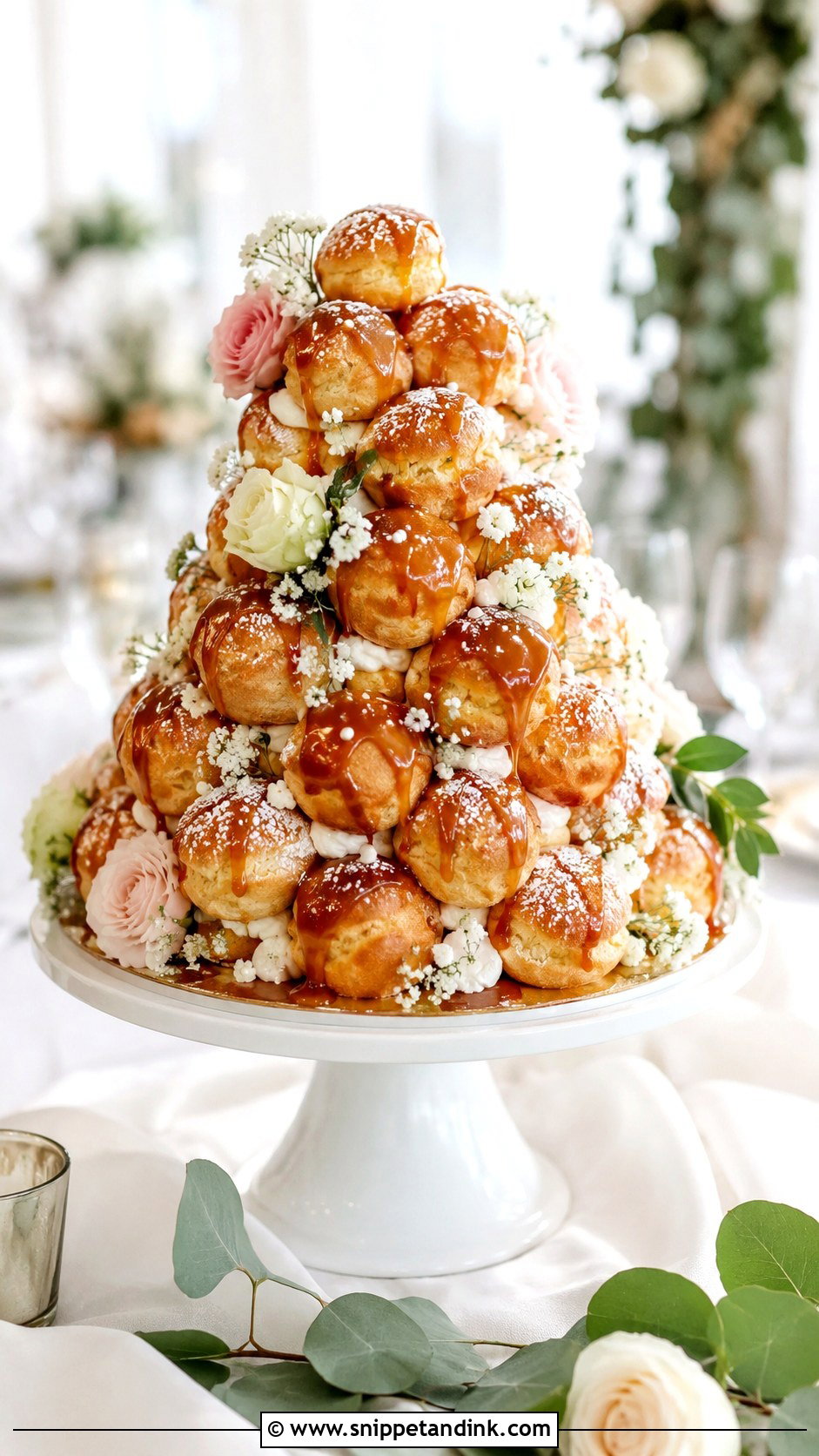
Profiteroles use the same choux as a croquembouche without the tall cone, so they can go round, cascading or tiered on a stand. That’s more forgiving to transport and set up. Vanilla, chocolate or raspberry cream all work. Caramel drizzle and powdered sugar dress them. I like this for couples who love the idea of choux but worry about a fragile tower.
17. French Chantilly Wedding Cake
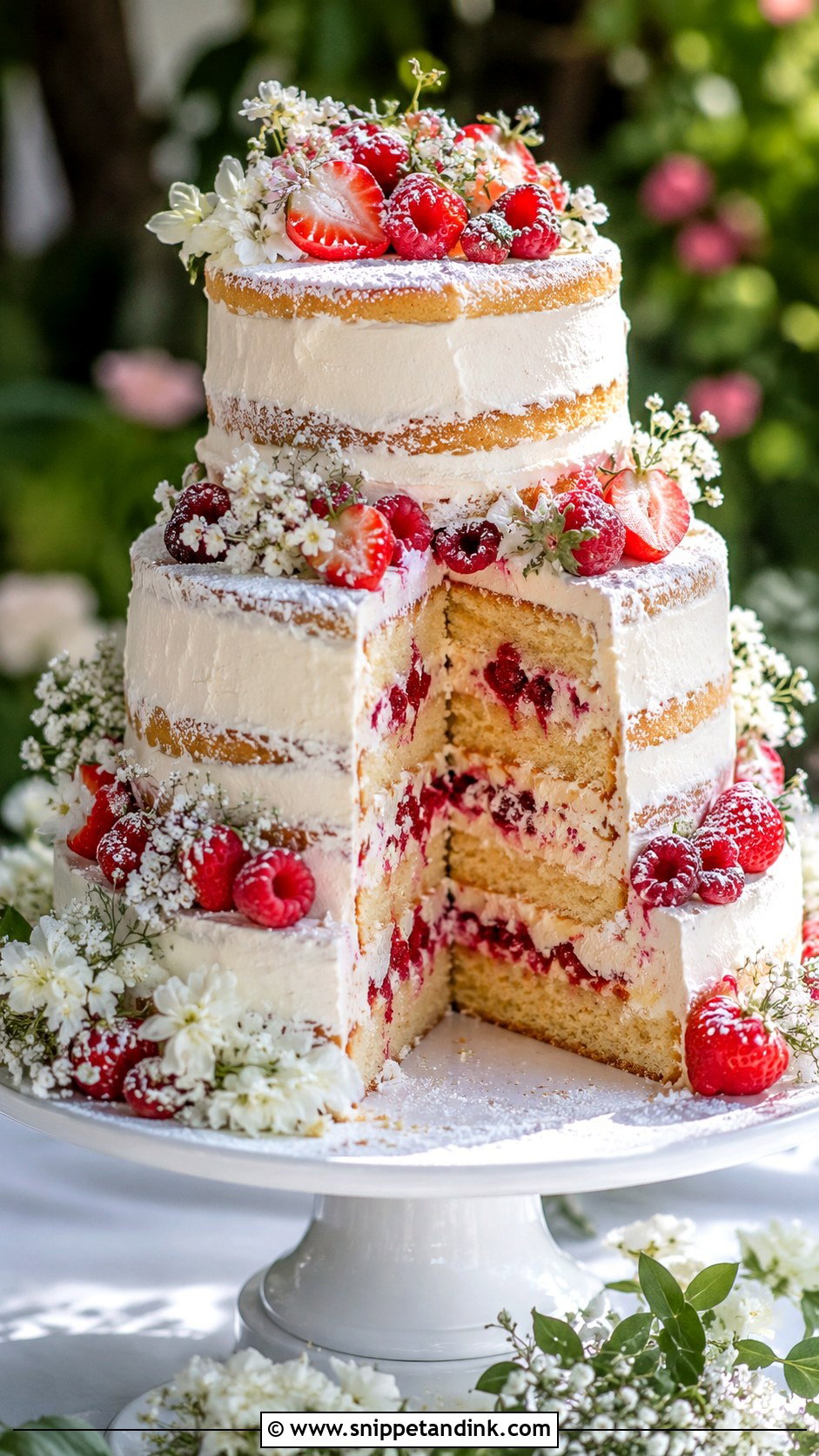
Chantilly is sweetened whipped cream, and it’s as light as icing gets. It also can’t hold up to heat, can’t support heavy tiers and shouldn’t sit out for long, so I stabilise it and keep the cake small or semi-naked. Berries, citrus and plain sponge suit it. Strawberries, raspberries and white flowers are enough decoration. It’s a good pick for a cool-weather or indoor reception.
18. French Patisserie Wedding Cake
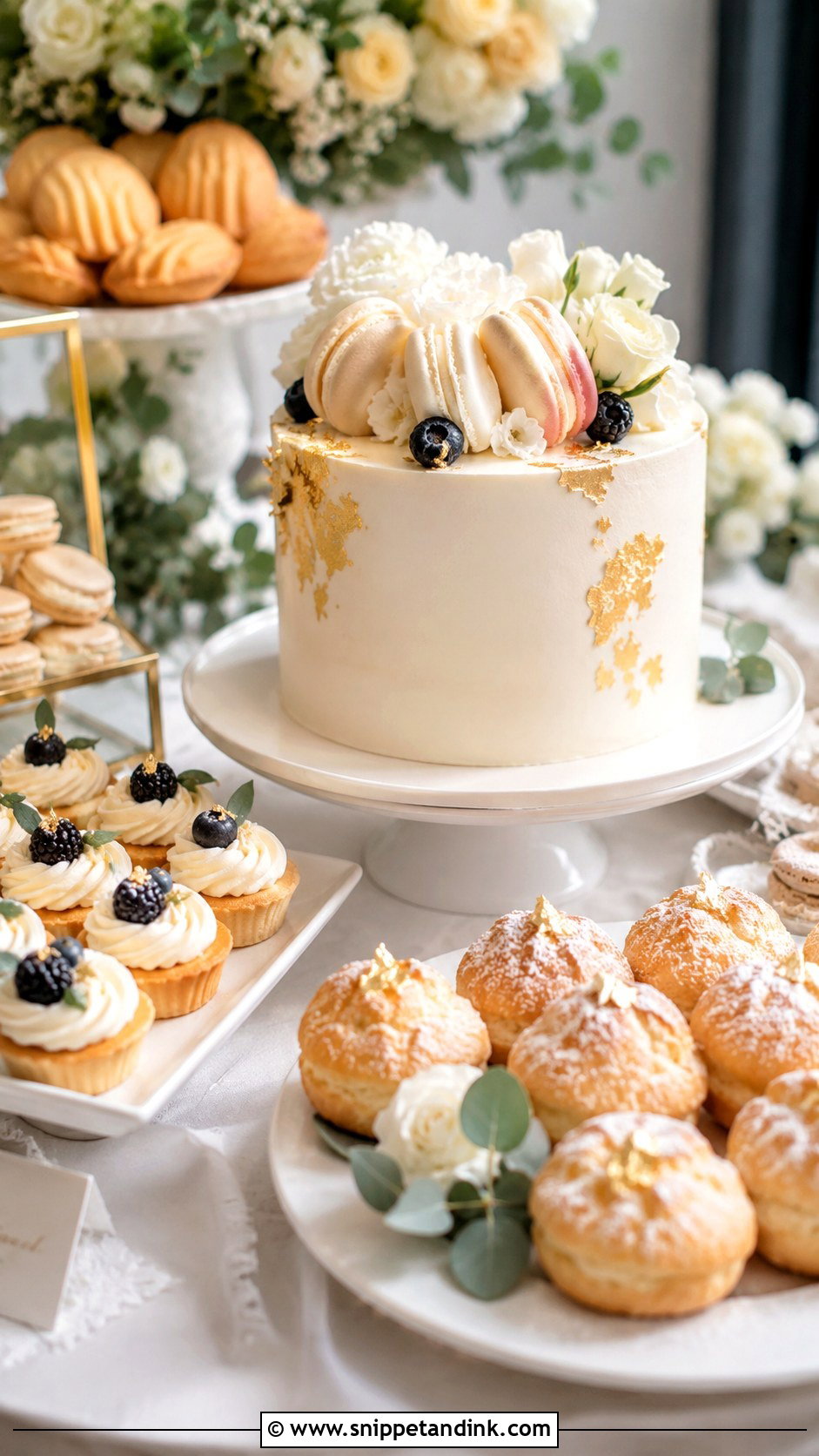
A patisserie table puts a small cutting cake in the middle of macarons, mini tarts, madeleines and cream puffs. It feels abundant, and guests choose what they like. Planning is the challenge: each pastry has a different shelf life, so the bake schedule matters more than the design. I coordinate colours across the whole table so it looks planned rather than just plentiful.
19. French Chateau Wedding Cake
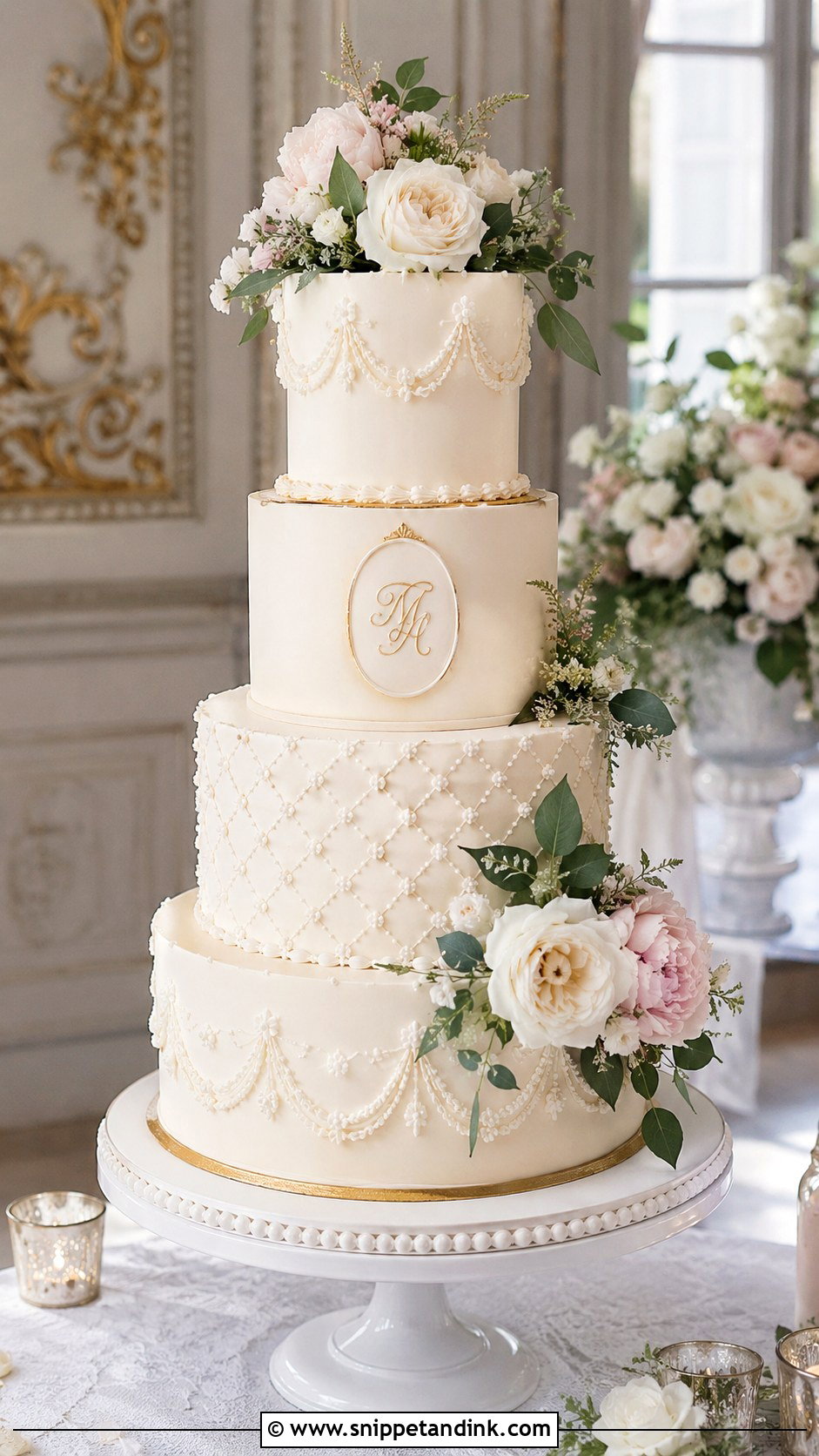
A château venue already supplies grandeur, so the cake shouldn’t compete with the room. I usually go tall, ivory and quiet: subtle piping, white roses or blush peonies, a little gold. Vanilla bean, almond, raspberry or lemon depending on the season. If the room has high ceilings, an extra tier or a taller stand keeps the cake from looking small.

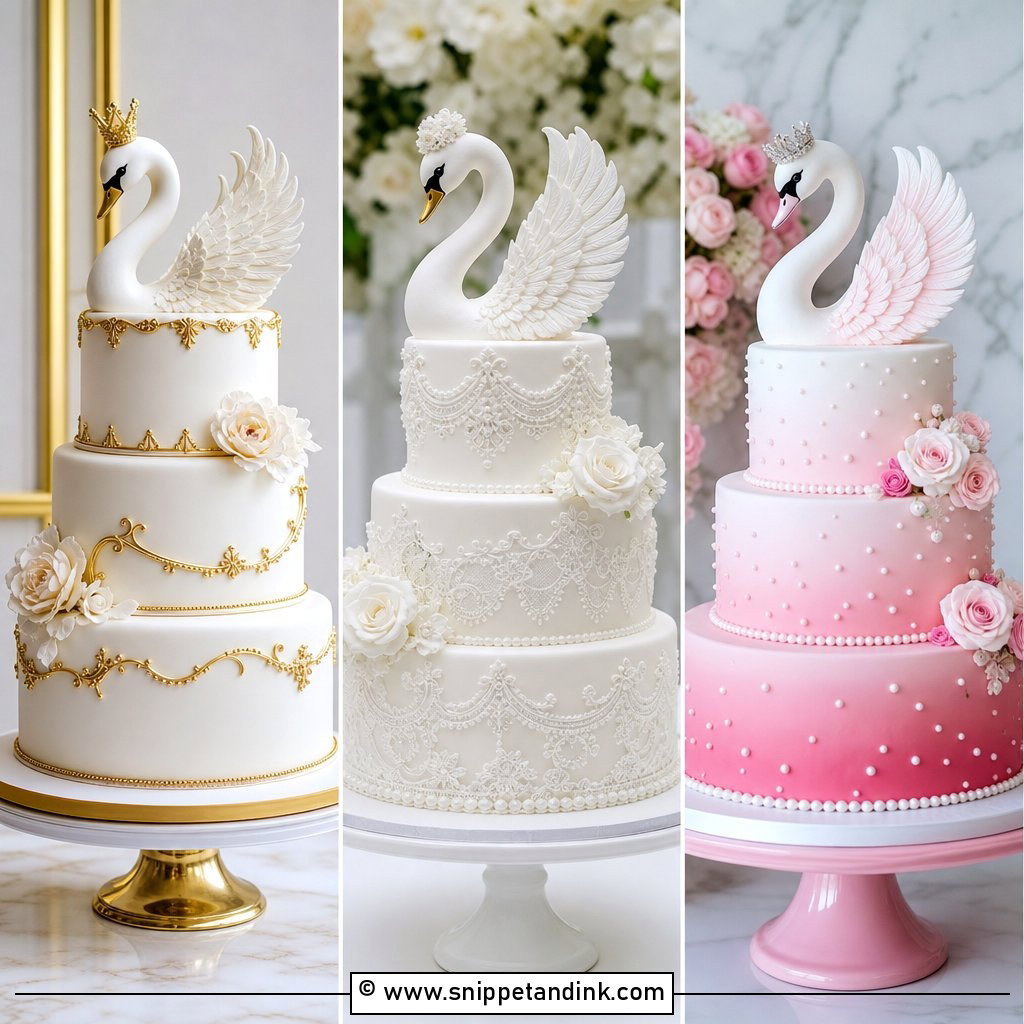
20. French Garden Wedding Cake
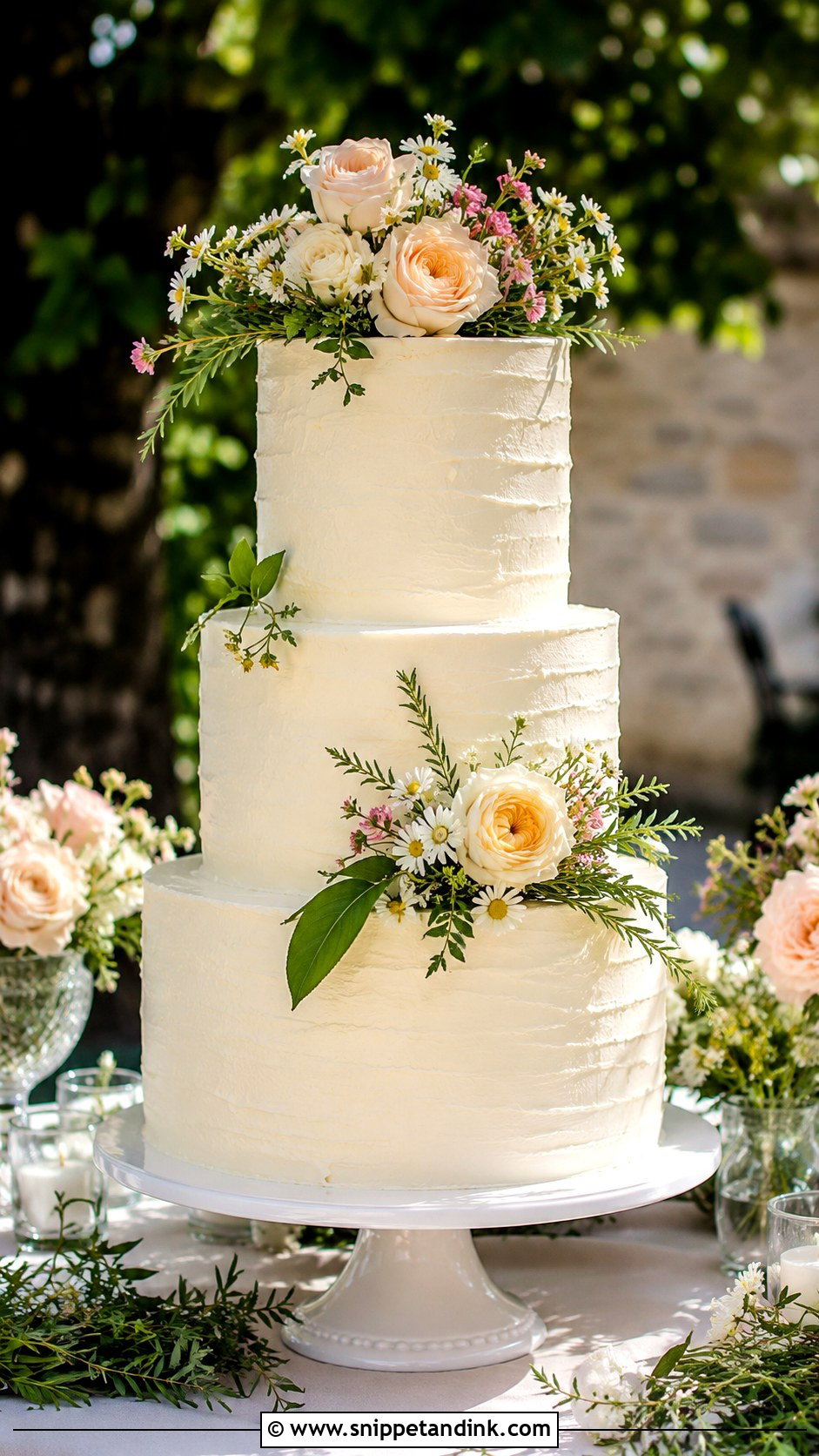
Garden cakes look best in buttercream, which takes a softly textured finish and holds flowers well. Roses, small blossoms, herbs and greenery do the decorating. Pale yellow, blush and soft green keep it airy. The weak point is the outdoor setting: buttercream softens in direct sun, so the cake table should be in shade, and fresh flowers need taped stems.
21. French Countryside Wedding Cake
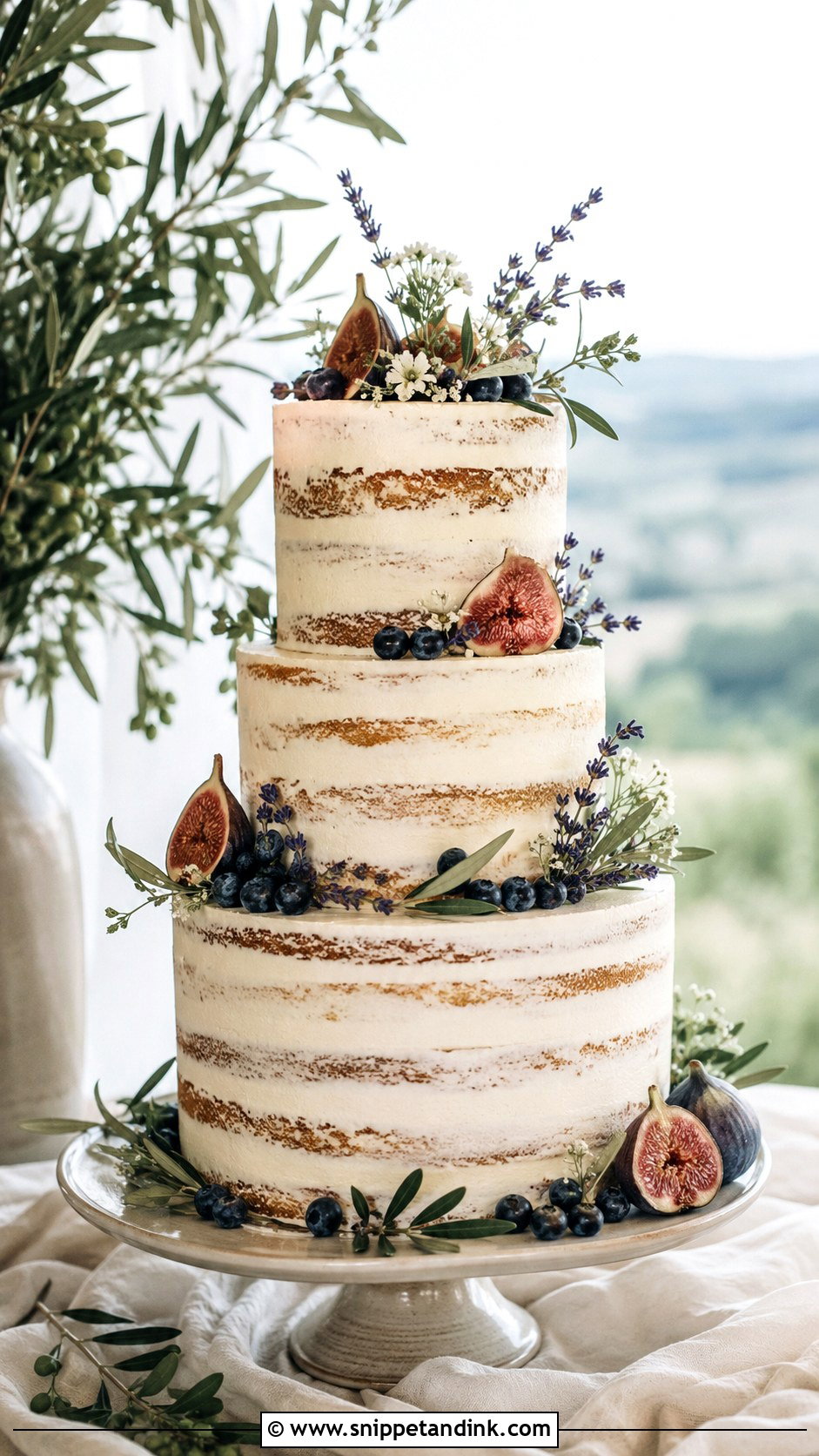
Countryside cakes trade polish for warmth: textured icing, exposed sponge, fruit and flowers. Pear, almond, honey or berry fit the farmhouse mood. A semi-naked cake on a ceramic or wooden stand is the natural format. Exposed sponge dries quickly, so I bake close to the day and add figs, lavender and small blooms at setup.
22. French Blue Wedding Cake
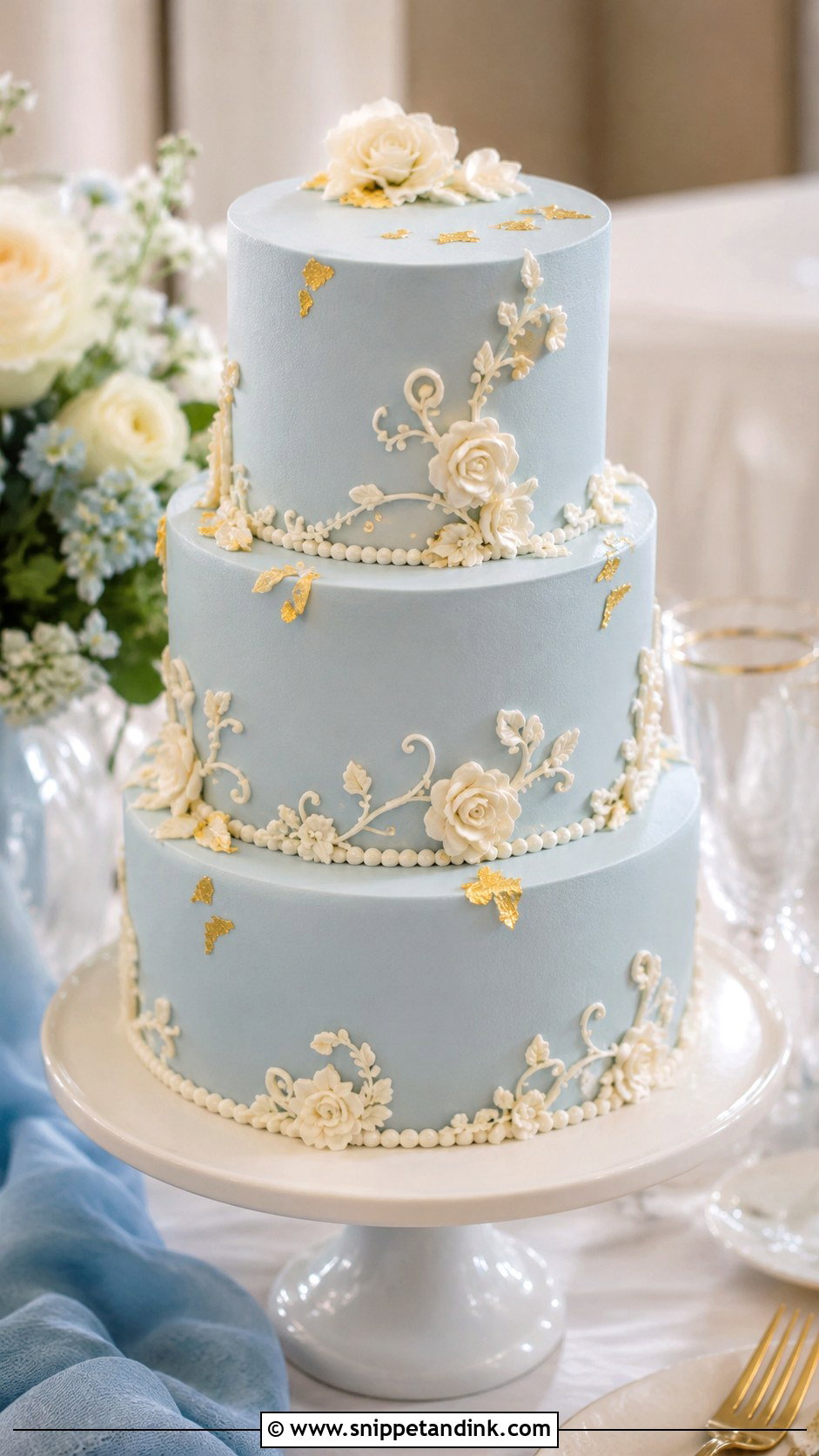
Soft blue is harder to mix in buttercream than you’d expect. Yellow-toned butter turns blue icing slightly green, so I either whiten the base first or use a white chocolate ganache or fondant for a true powder blue. Vanilla, almond or lemon inside. Ivory piping, tiny pearls and white flowers keep it French rather than nursery. It’s a good match for coastal palettes.
23. French Blush Wedding Cake
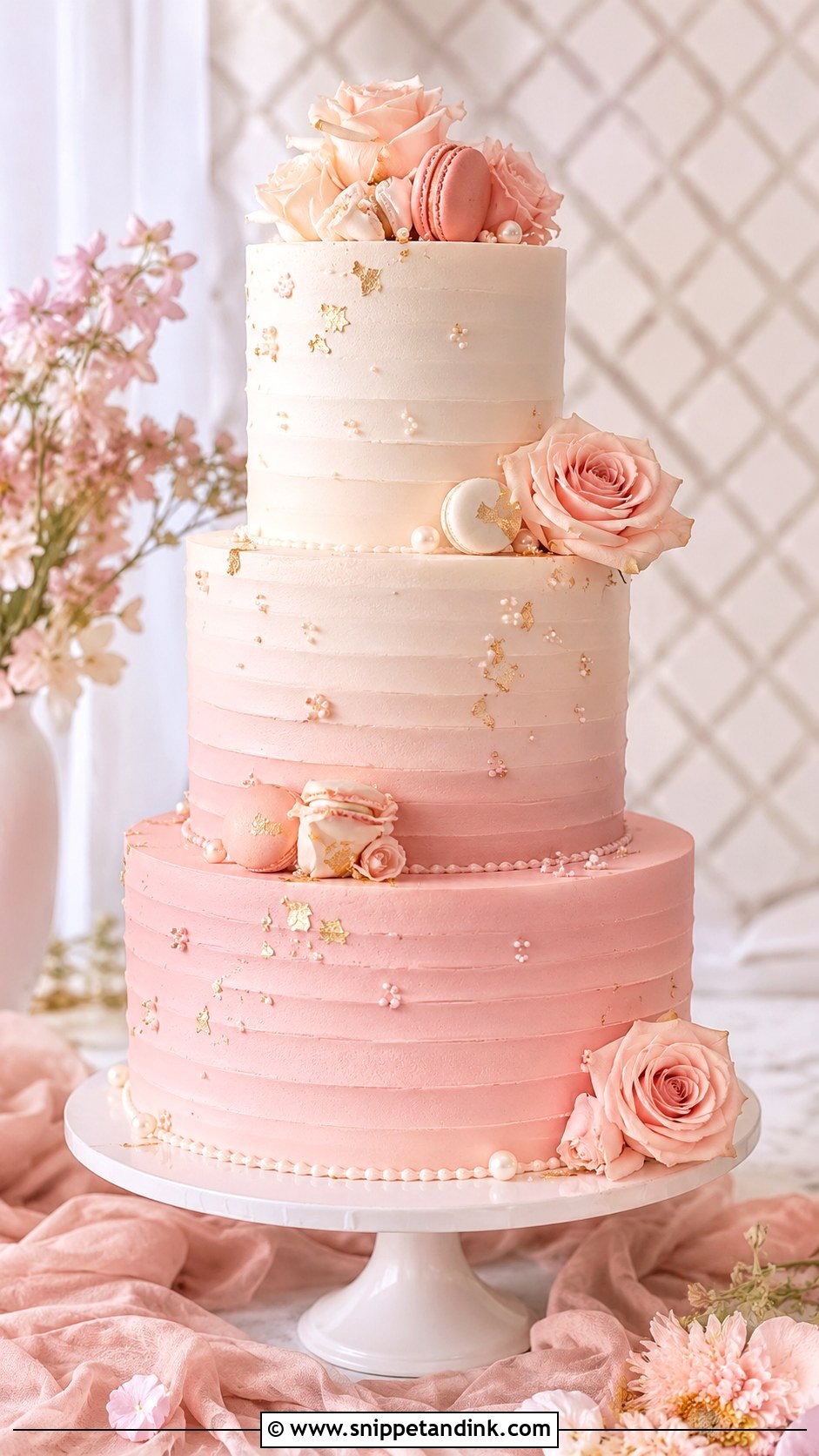
Blush is easy to love and easy to overdo. A blush ombré, darkest at the base and fading up, lets the colour show without flooding the cake. Vanilla, raspberry, rose or almond suit the palette. Macarons around the base add texture. Test the shade under the reception lighting if you can; warm bulbs push pinks toward peach.
24. French Gold Wedding Cake
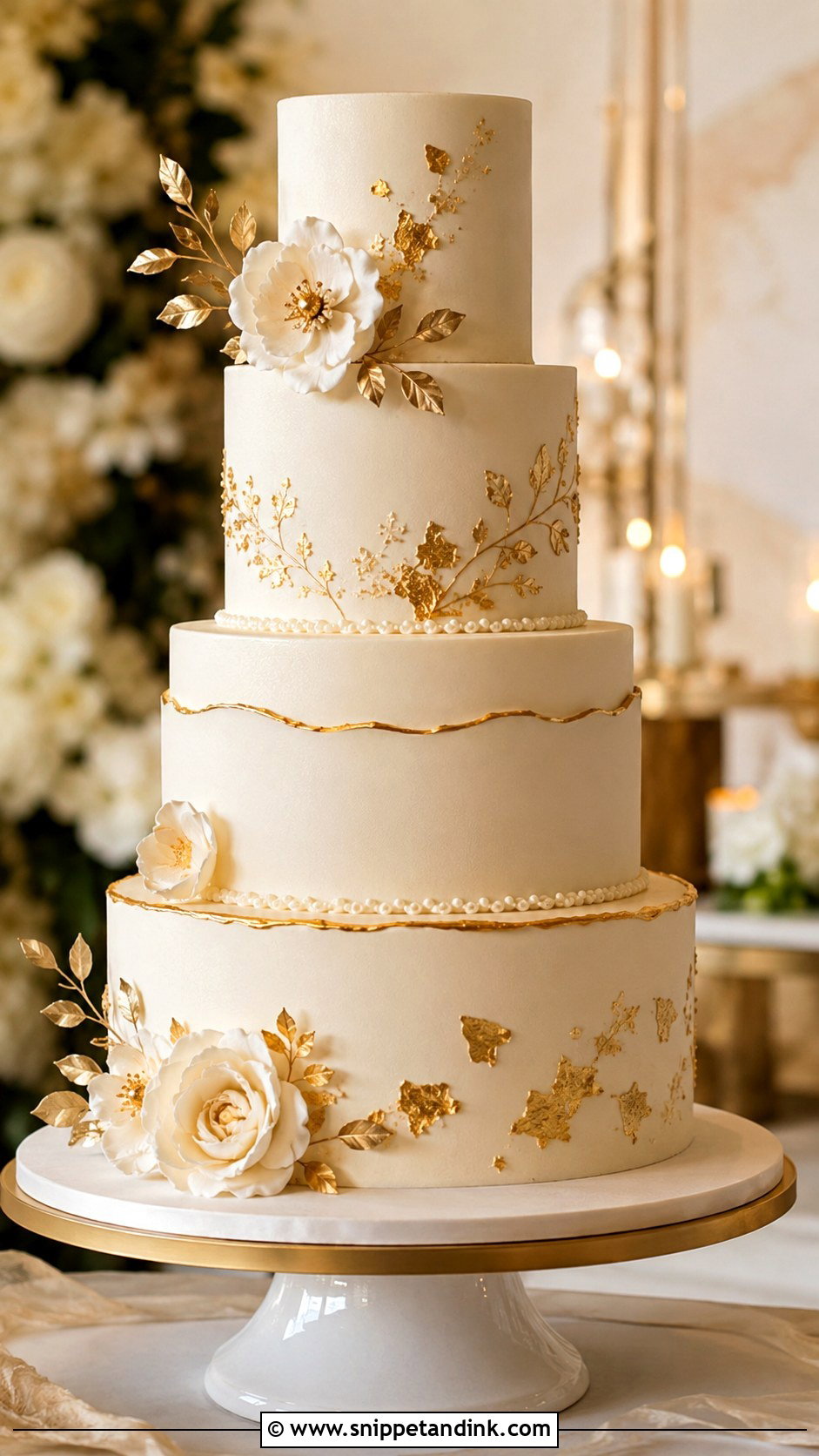
Gold works when there’s less of it. Thin gold leaf, a painted edge or a small monogram on ivory buttercream or fondant is plenty, finished with elegant piping, white flowers and a clean tiered shape. Check that every metallic finish is labelled edible. Gold leaf won’t stick well to soft buttercream, so I chill the tier first. Ballrooms and evening receptions suit it.
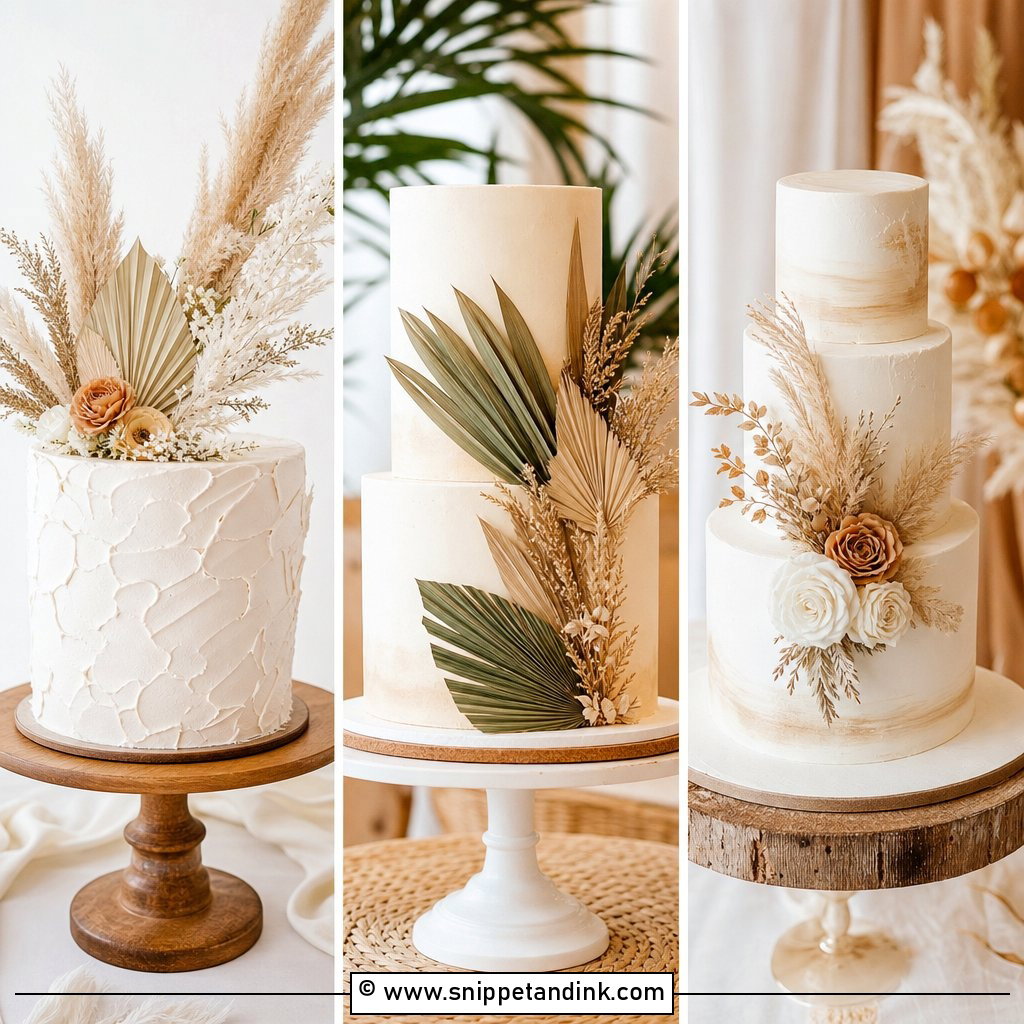

25. French Floral Wedding Cake
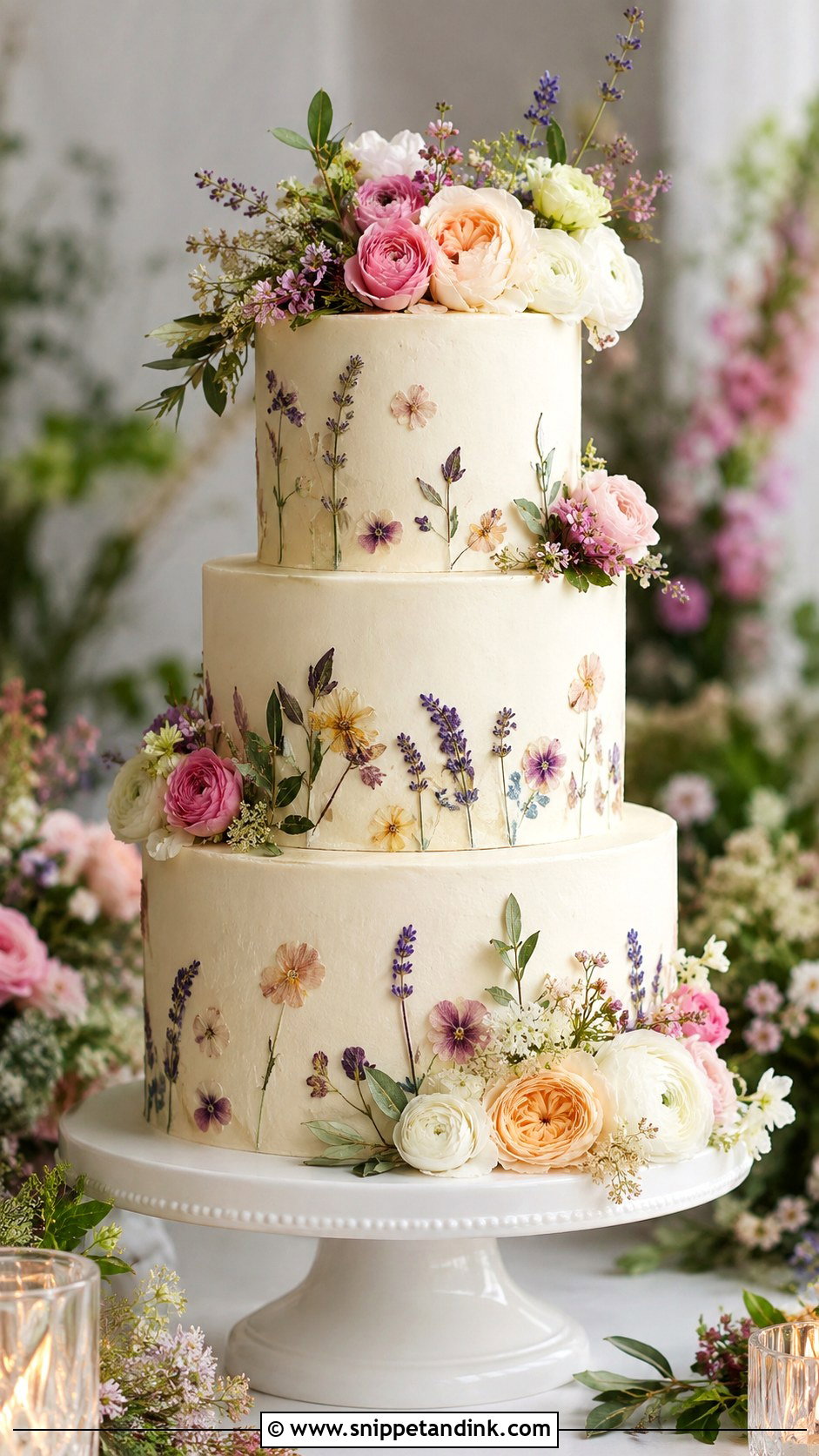
When flowers are your main wedding detail, the cake should look like part of that arrangement. Garden roses, ranunculus, lavender, small white blooms or pressed edible flowers all fit. Vanilla, lemon, almond, and raspberry flavors stay light underneath. I keep the arrangement loose and slightly asymmetrical, and the florist and I decide in advance who wraps and places the stems.
Caramel, Choux and Cream Have Short Lives
Most French pastry doesn’t like waiting. Caramel draws moisture out of the air and turns sticky; choux goes soft once it’s filled; whipped cream and pastry cream need to stay cold. That shapes your timeline more than anything else.
- Ask your baker how many hours their piece holds once assembled, and plan the display around it.
- Place the dessert table away from windows, heaters and dance floors that warm a room.
- Keep a pastry tower indoors for a summer wedding, even if the reception is outside.
- Serve cream-filled pieces within a couple of hours, and ask the venue to refrigerate leftovers promptly.
For quantity, I usually count two or three choux puffs or mini pastries per guest when they replace the cake entirely, and fewer when there’s a cutting cake too. Your baker will adjust that to your menu, so share how big the dinner is.
One French Detail, Done Properly
The French cakes I’d stand behind all have one thing in common: a single strong idea carried out well. A croquembouche brings the tradition, macarons, mille feuille and éclairs bring the patisserie, and a classic tier in vanilla, almond or lavender brings the calm. Pick one feature, whether pastry, soft colour, flowers or piping, and keep everything else simple. Then think hard about your timeline and room temperature, because with French pastry those decide more than the design does.
You'll Like These Ideas:











Leave a Reply