
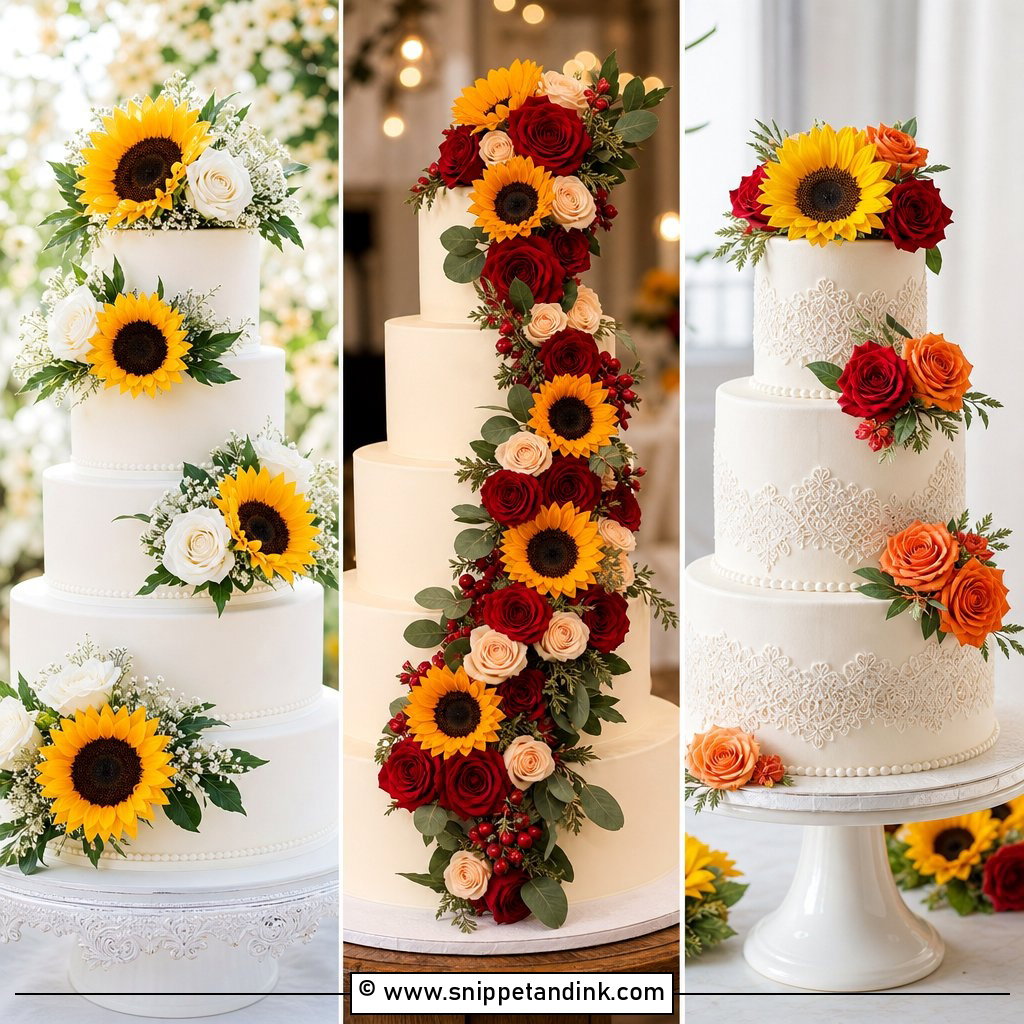
Sunflowers are a forgiving flower to design a cake around. The bloom is big, the color is unmistakable and the dark center gives the eye an anchor, so even a plain ivory cake looks finished with three or four of them. They suit a barn in August, a tented garden in September or a black-and-white modern room. Most of the cake decisions I make with couples come down to how much sunflower to use and where, and that’s what the twenty full-size designs below are really about: the finish under the flowers, the companions beside them and how each version holds up through a reception.
Tier Count, Slice Count and the Kitchen Sheet Cake
Couples usually come to me with a picture of a height. I’d rather start from the number of guests, because that decides how many tiers you need and how much sunflower decoration the cake can carry.
Bakers cut wedding portions smaller than party slices, roughly a finger of cake about an inch wide and two inches long through the full height. Using that cut, these are the approximate counts most of us work from for round tiers about four inches tall:
- 6 inch tier: about 12 portions
- 8 inch tier: about 24 portions
- 10 inch tier: about 38 portions
- 12 inch tier: about 56 portions
So a 6 and 8 inch two-tier serves around 36, and a 6, 8 and 10 inch three-tier serves around 74. If you have 150 guests but love the proportions of a smaller cake, order the display cake you like and a plain buttercream sheet cake in the same flavor for the kitchen staff to slice. Nobody at the table can tell, and it usually costs less per serving than adding tiers.
Count your flowers by tier too. A two-tier cake reads full with three to five heads; a three-tier cascade can need ten or more smaller blooms plus greenery. Give your florist that number, not just the word sunflower.
1. Rustic Sunflower Wedding Cake
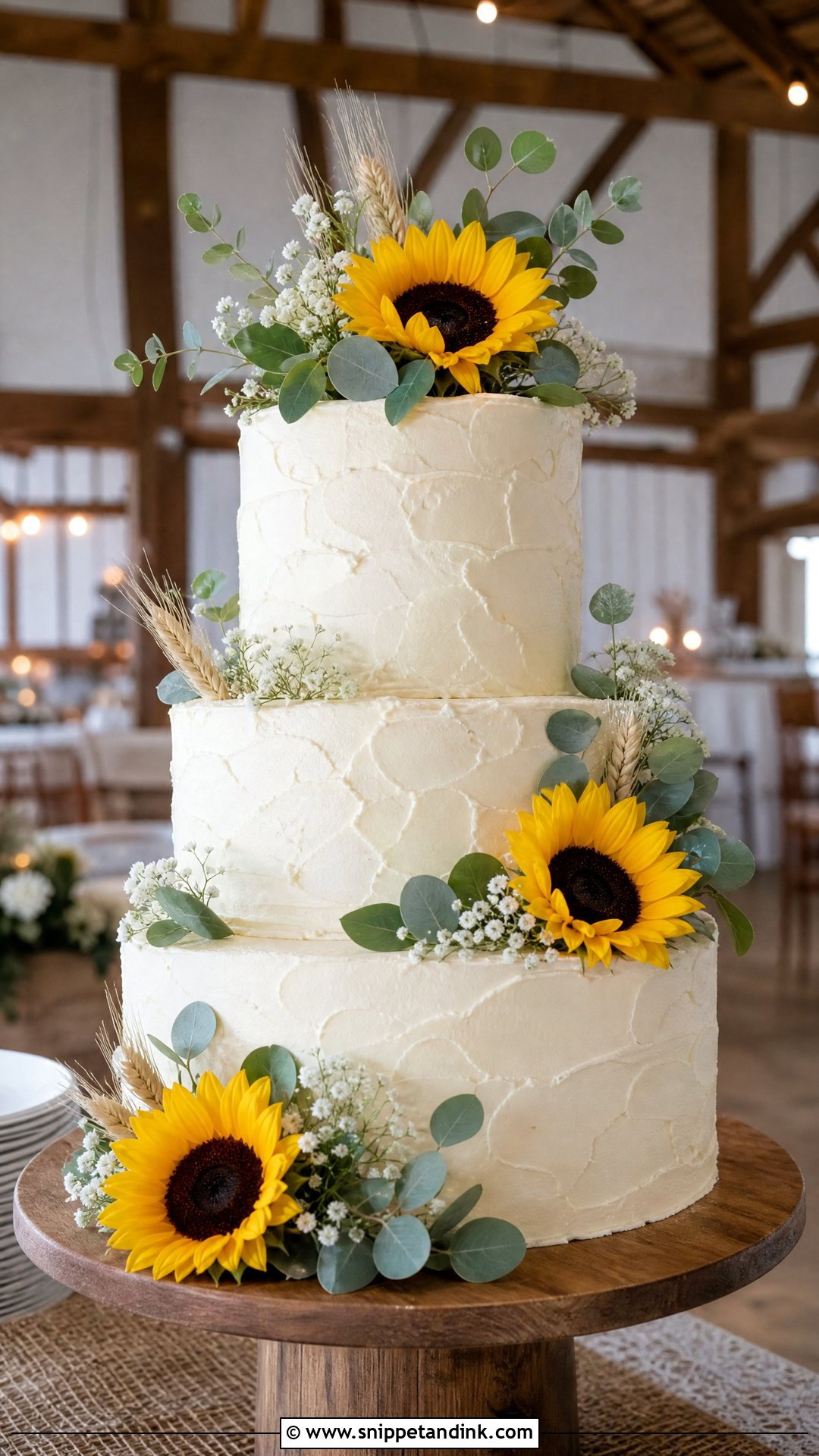
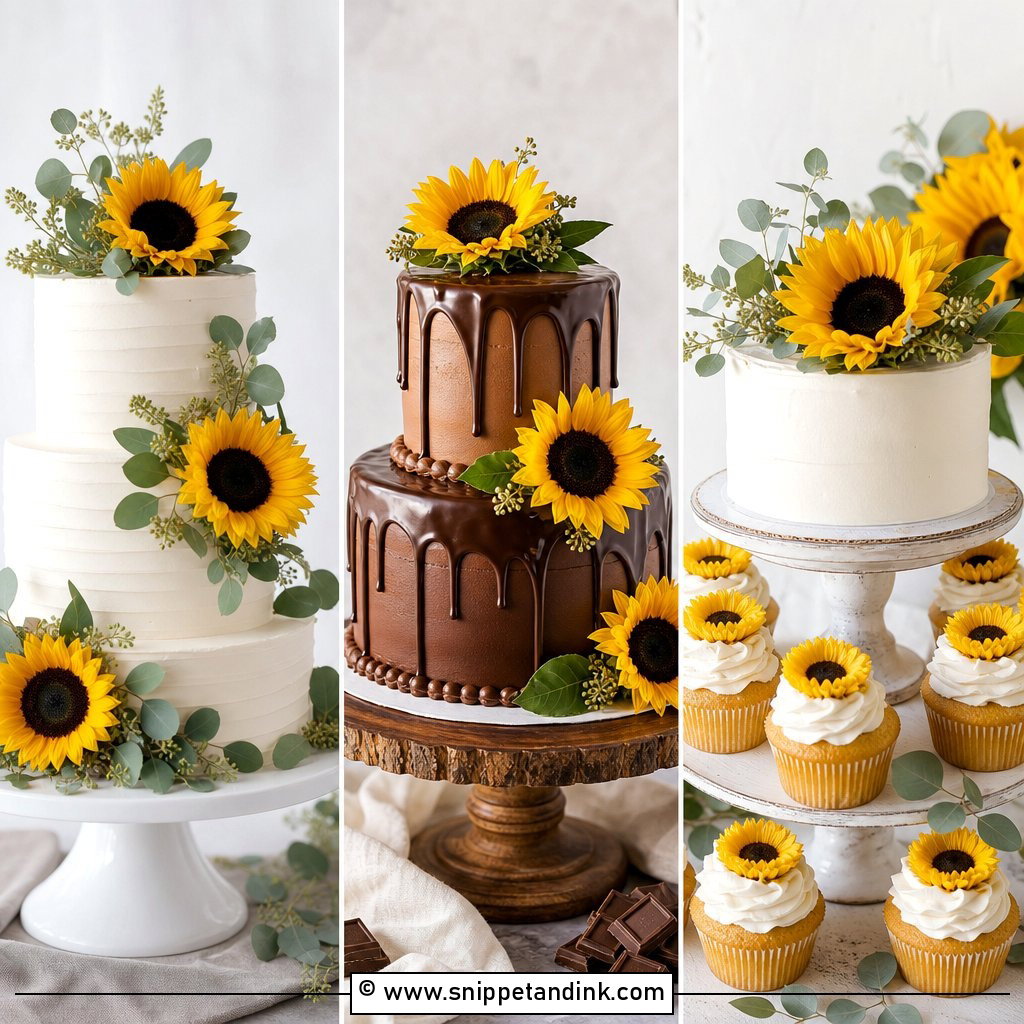
Texture is the friend of an outdoor cake. A rough palette-knife finish on ivory buttercream hides small dents from transport and doesn’t show the slight softening that a smooth coat reveals on a warm day. I place one large bloom near the top and tuck smaller heads between tiers, with wheat stems or a little baby’s breath to fill gaps. Honey, vanilla, lemon and spice sponges all match the farmhouse mood. A wooden stand finishes it.
2. Two Tier Sunflower Wedding Cake
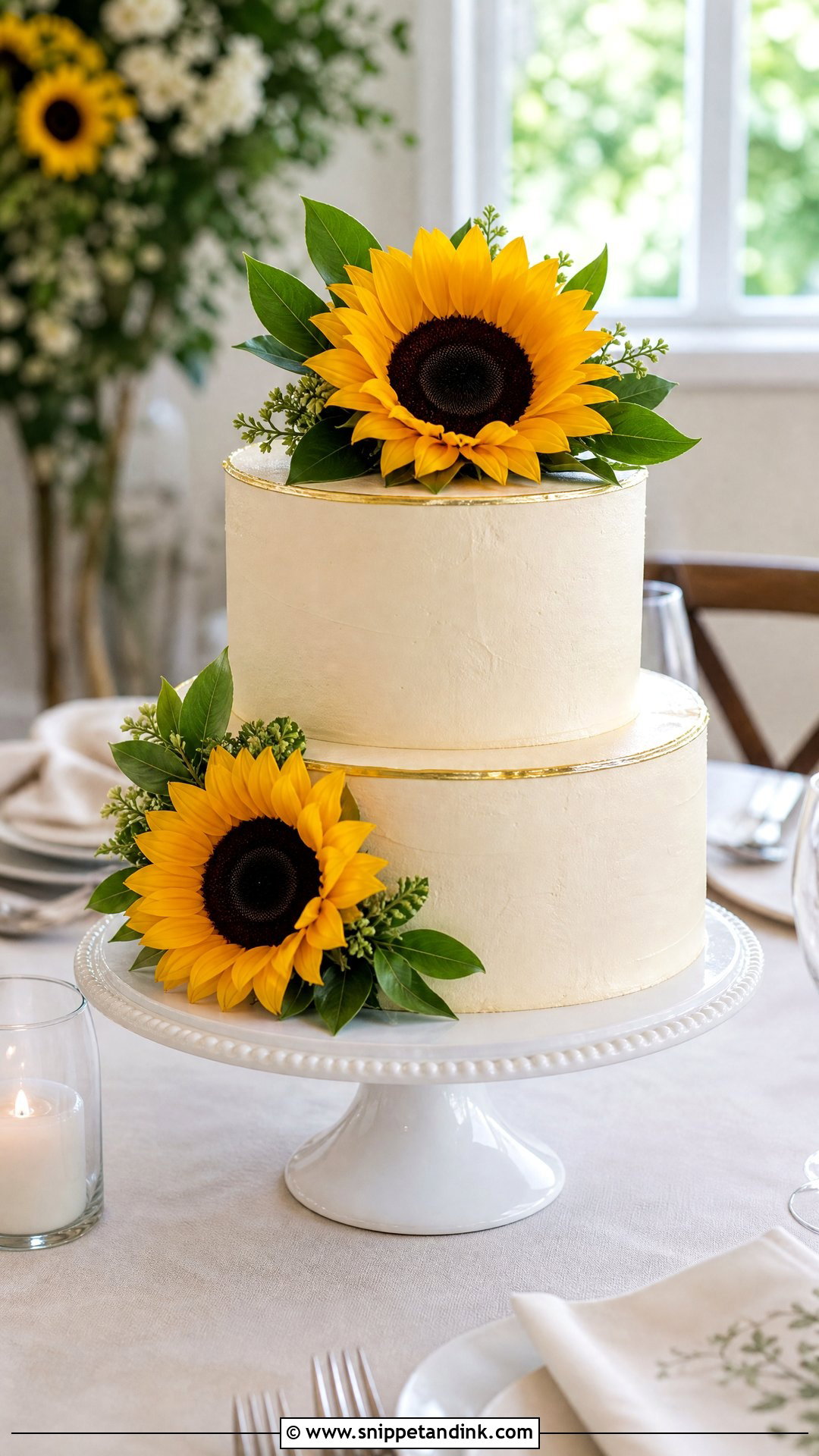
Two tiers is the size I’d recommend for most weddings under about seventy guests, especially if you add a kitchen cake for the rest. A two tier sunflower wedding cake has less surface to decorate, so three or four blooms make it look full rather than sparse. It’s also easier to keep cool and to carry. Smooth white buttercream with a thin gold trim at the base gives the flowers a clean backdrop, and the cake still looks formal in the cutting photos.
3. Three Tier Sunflower Wedding Cake
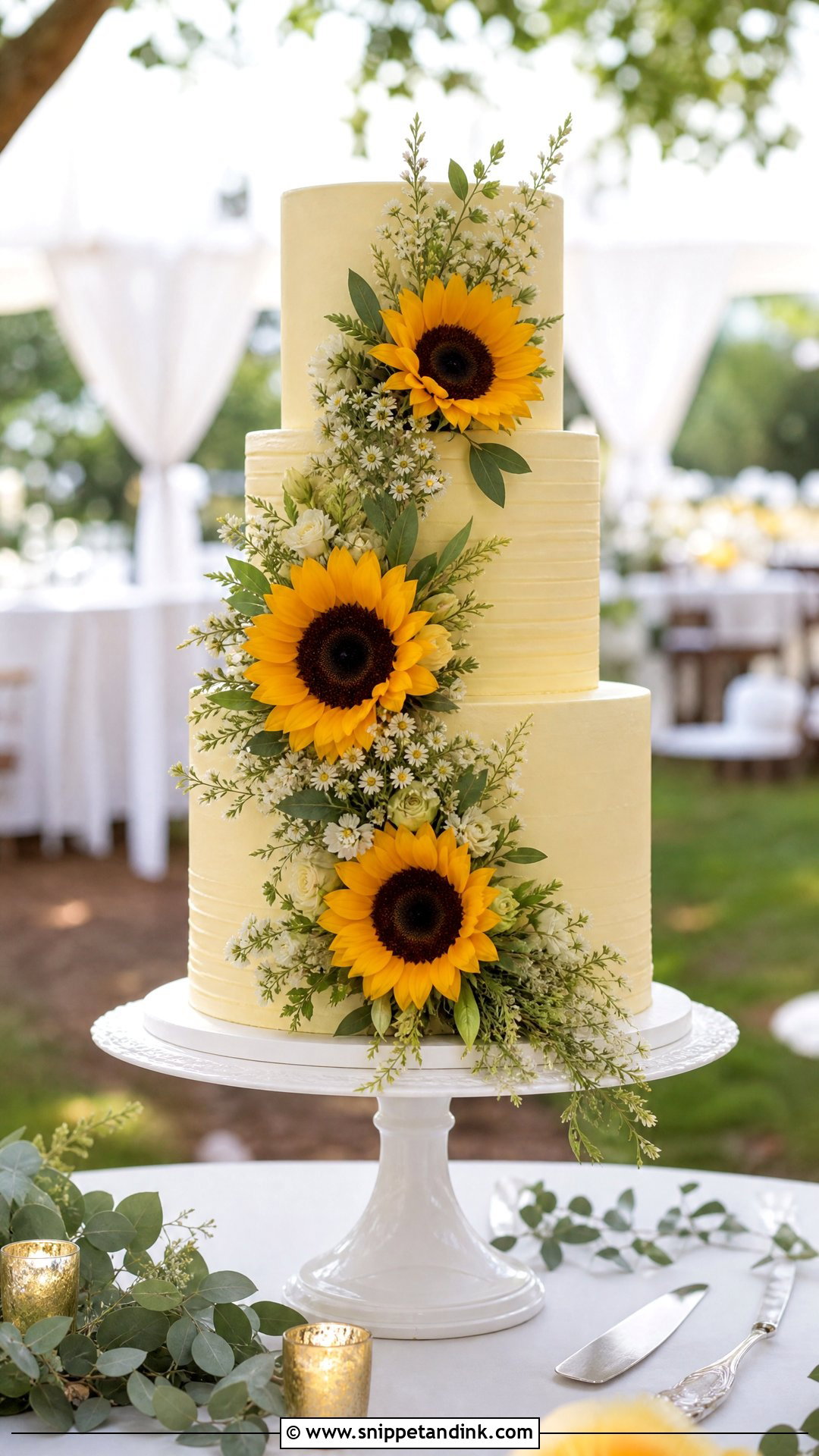
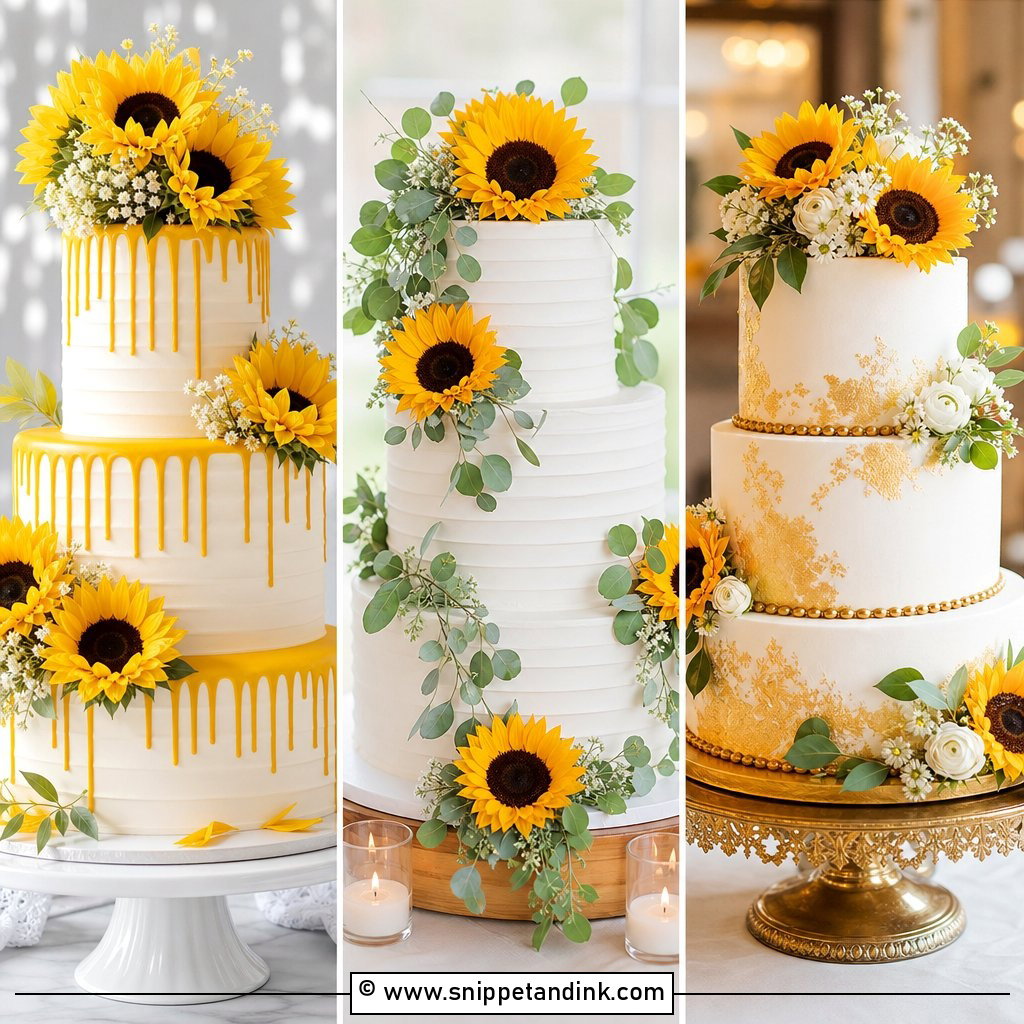
Three tiers give the height that reads as a traditional wedding cake. A three tier sunflower wedding cake can carry a different finish on each level: smooth on top, combed ridges in the middle, semi-naked at the base. I like a diagonal trail of sunflowers from top to bottom because it leads the eye down the cake. The weight adds up, though. Each tier sits on its own board with internal dowels, and a full diagonal of fresh heads is heavier than most couples expect, so the flowers go on at the venue.
4. Naked Sunflower Wedding Cake
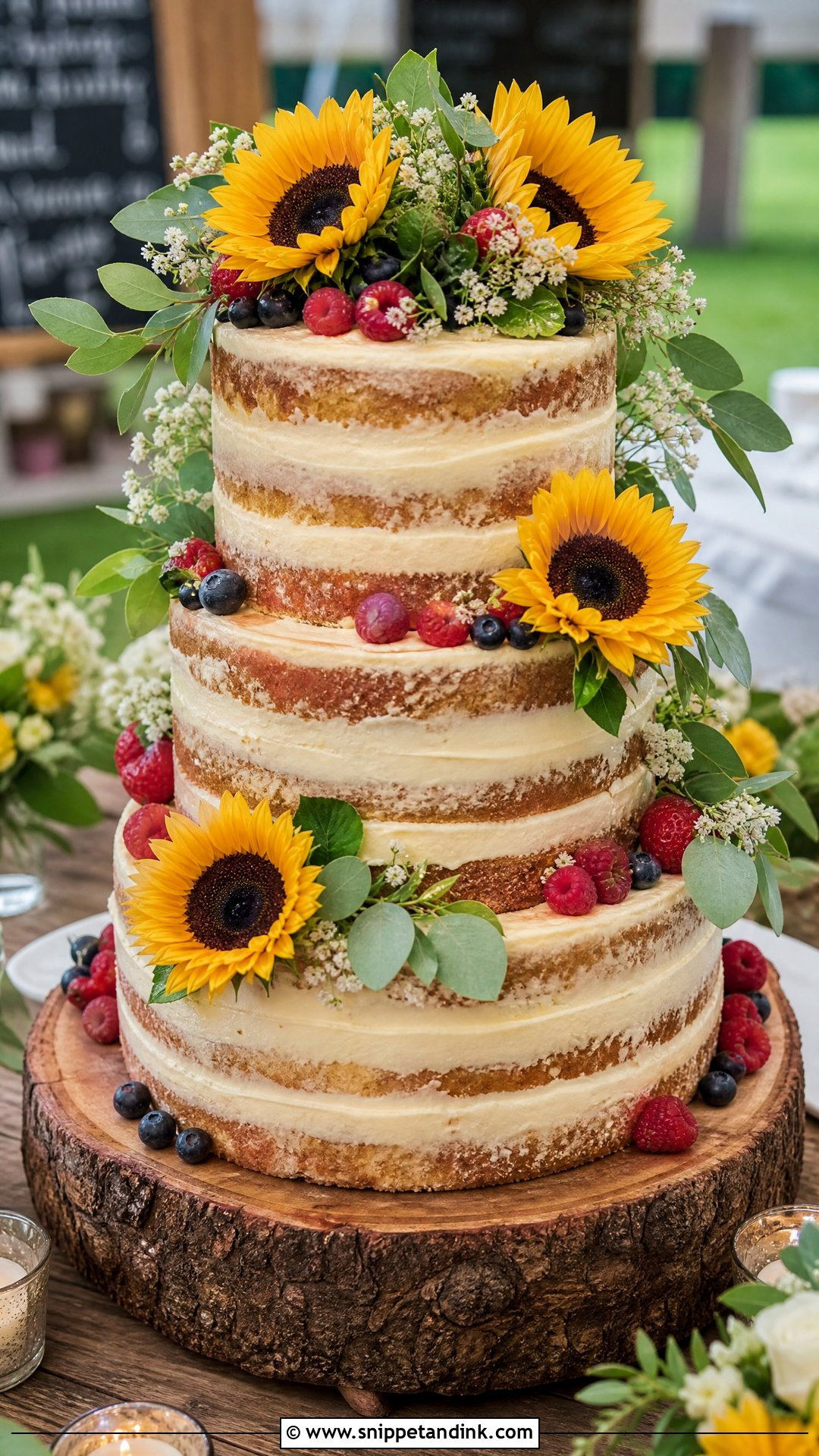
Naked cakes look simple, and they’re the most exposed design on the list. With no frosting to protect it, the sponge dries at the edges within a few hours, so I soak each layer in syrup and keep the cake wrapped until it’s set out. Even layers and evenly piped filling matter, because every flaw shows. Vanilla bean, carrot, spice or honey sponge, sunflowers on the top tier and around the board, plus a few berries: that’s the whole look. In direct summer sun I’d choose a different style.
5. Semi Naked Sunflower Wedding Cake
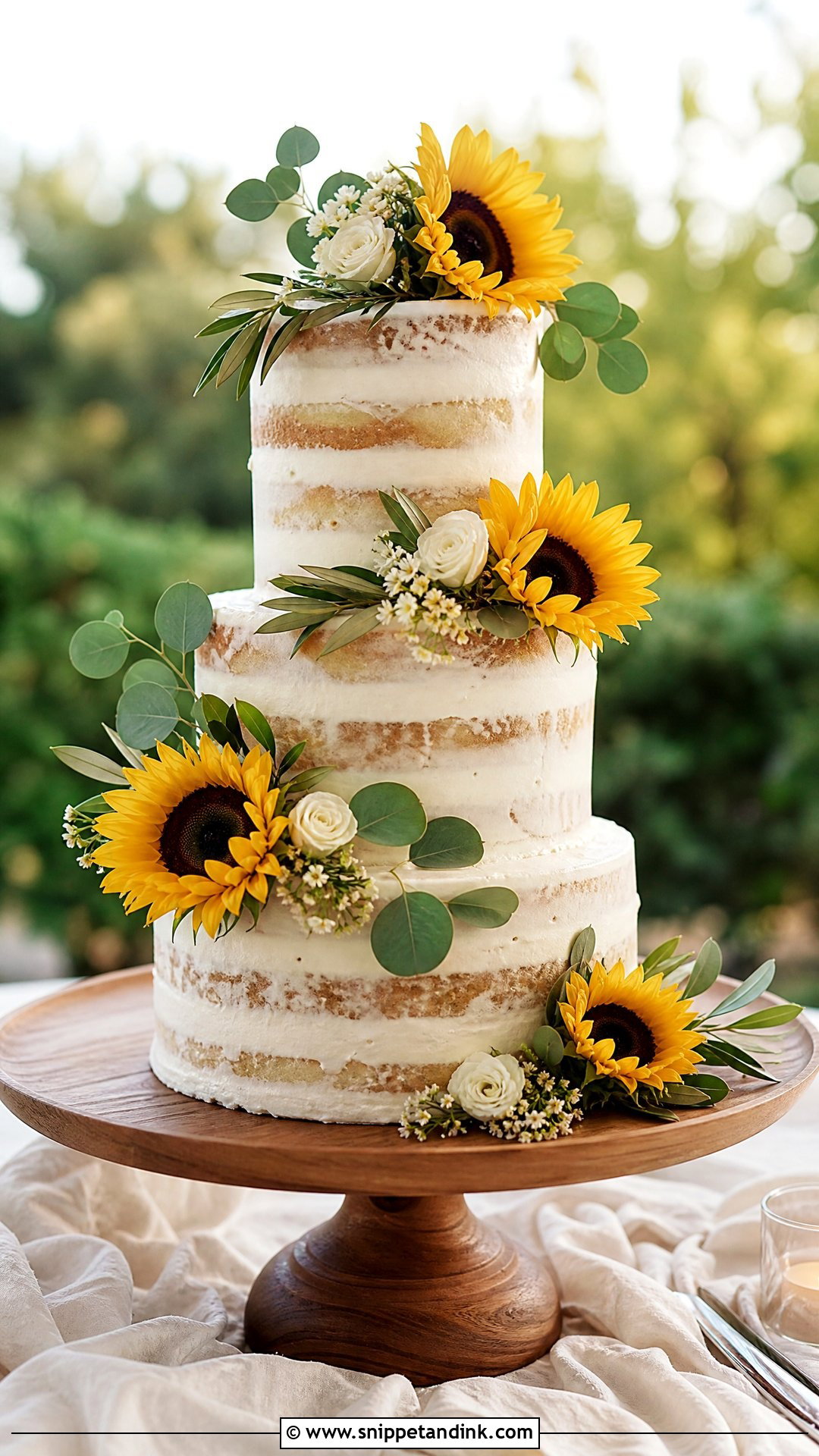
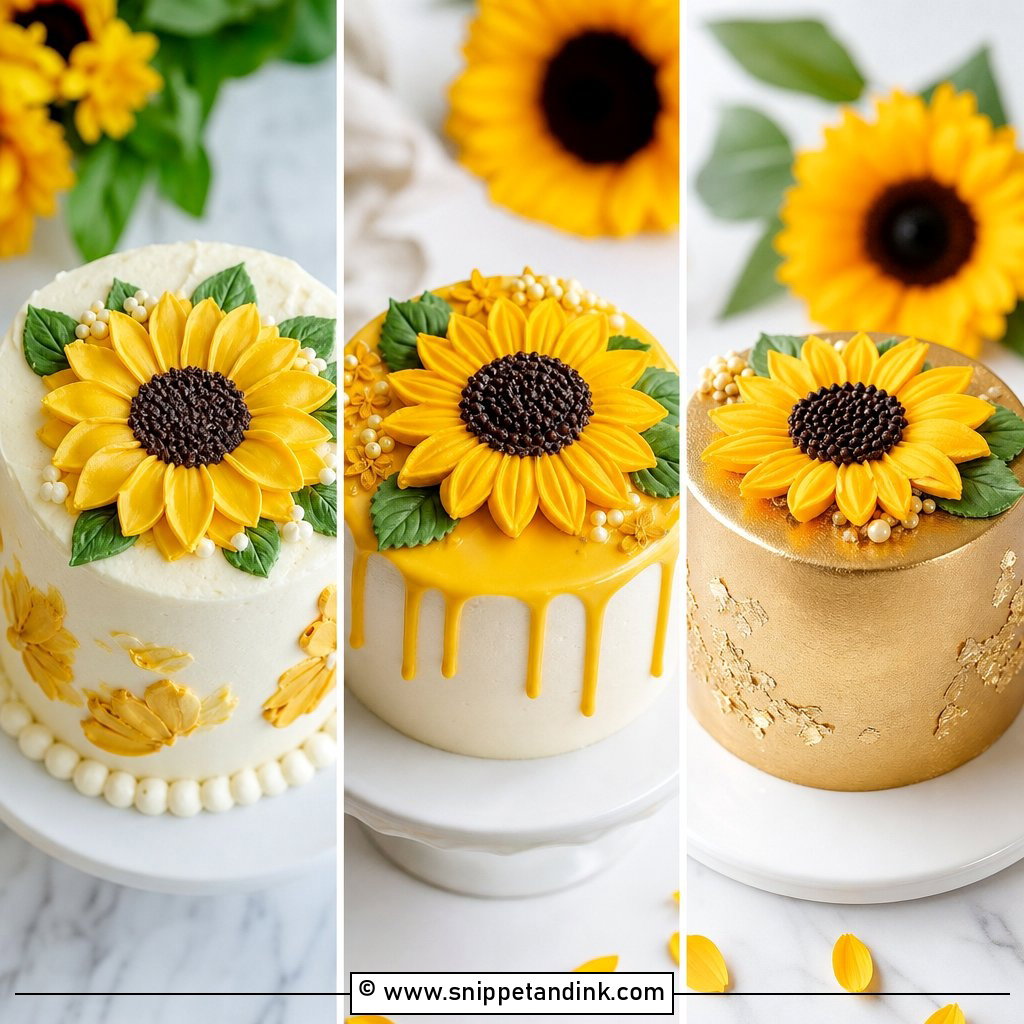
A thin scrape of frosting over the sponge seals it better than a fully naked cake while still showing the layers. The semi naked sunflower wedding cake is the version I suggest most often to couples who like the rustic look but worry about dryness. Sunflowers pop against white buttercream, and olive leaves or small cream flowers soften them. A brown sugar sponge with cream cheese filling is a good flavor here, though the cream cheese means the cake needs refrigeration until close to serving.
6. Sunflower Buttercream Wedding Cake
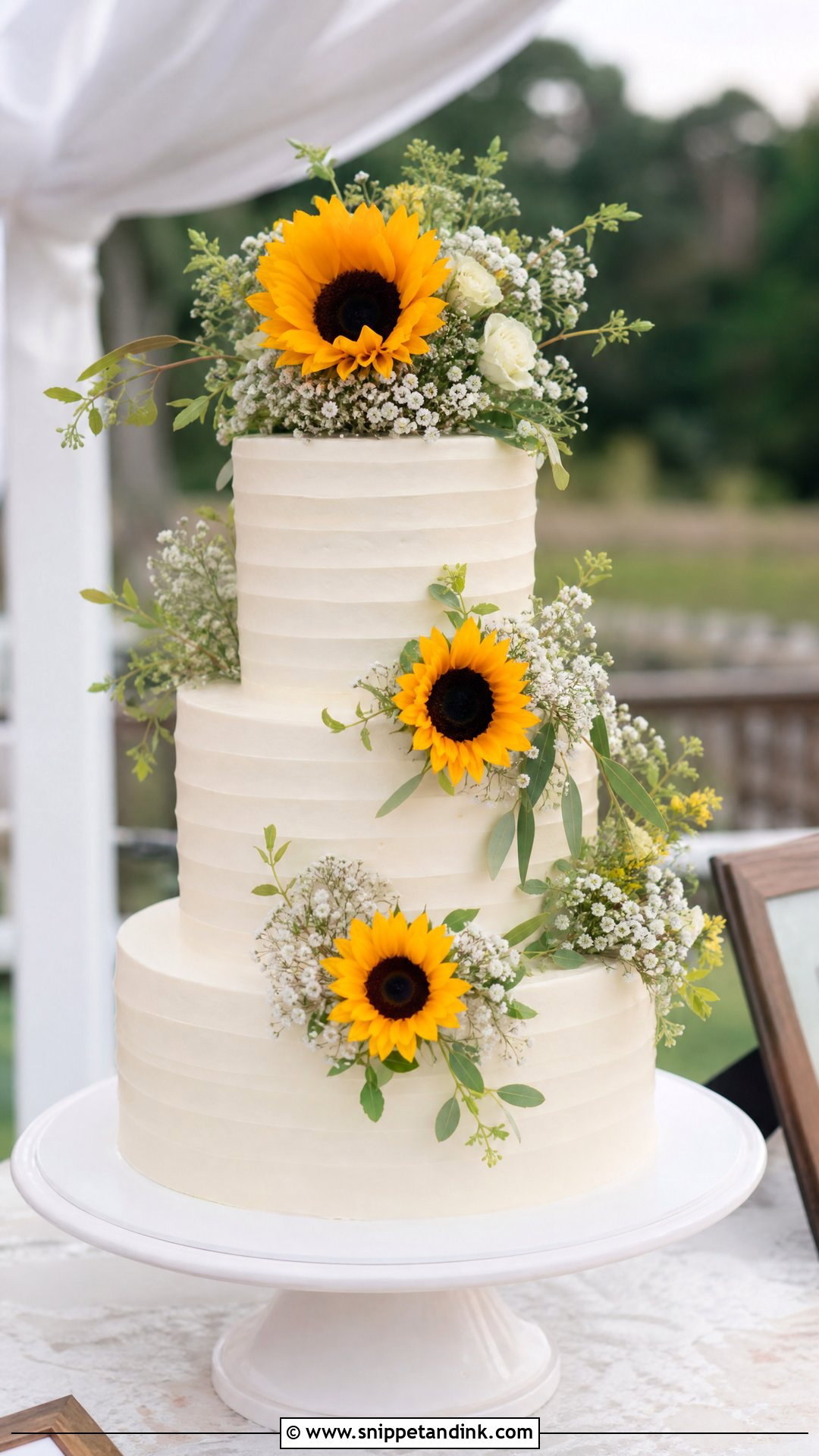
Buttercream is the finish most couples choose, and for good reason: it tastes better than fondant and takes piping well. Swiss meringue buttercream gives the smoothest coat, while American buttercream crusts slightly and holds piped petals more firmly. You can decorate with sugar sunflowers, fresh blooms or piped flowers. Light textured strokes read modern; soft swirls lean country. The one thing buttercream won’t do is stay crisp in strong heat, so plan shade.
7. Sunflower Fondant Wedding Cake
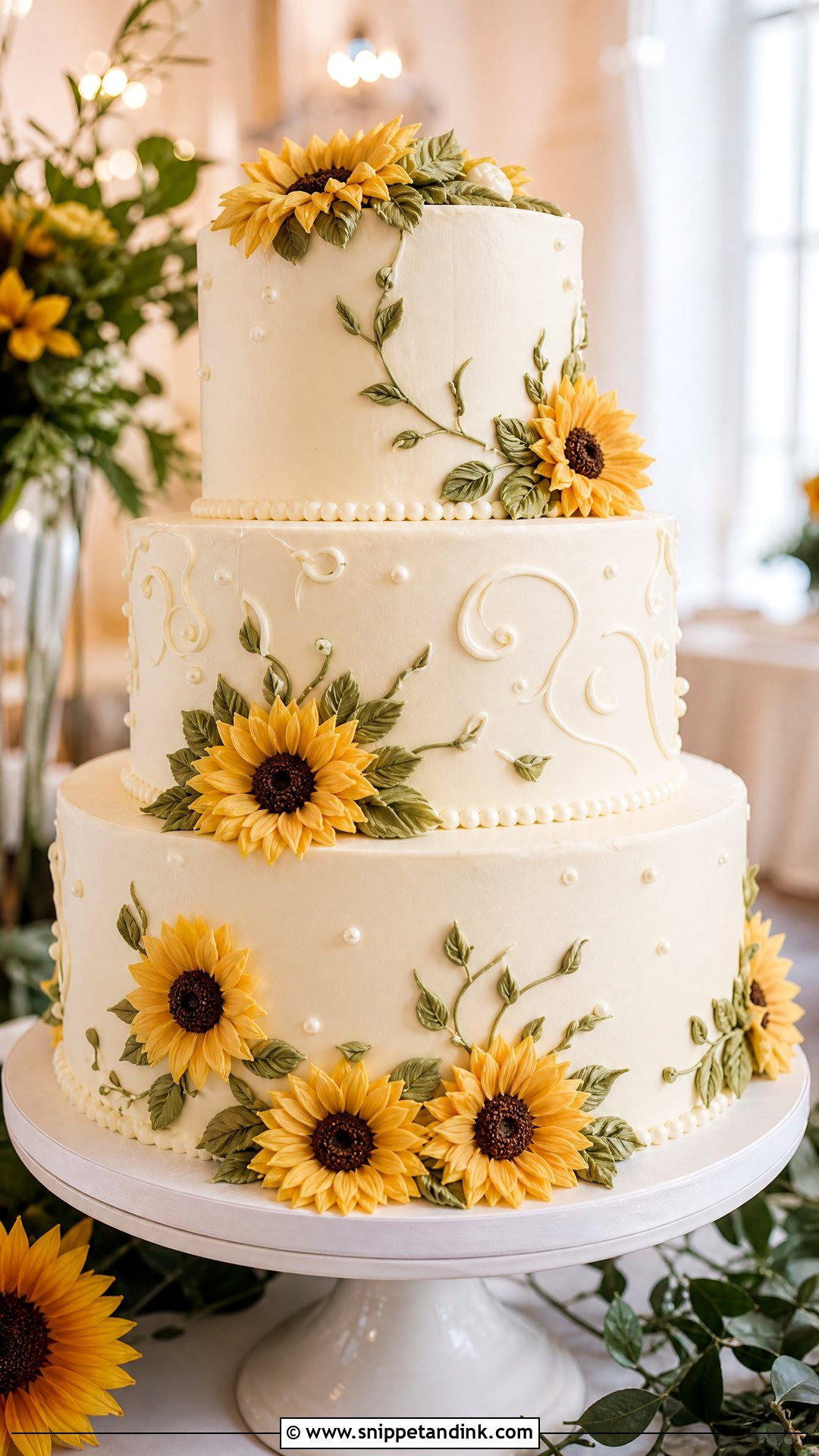
Fondant is my answer when a cake has to stand in a warm room for hours and still look sharp. It holds clean edges, keeps the sponge underneath moist and gives a smooth canvas for sugar sunflowers or painted vines. Ivory, beige or pale yellow work as a base. The honest downside is taste and texture; plenty of guests peel it off. A thin roll over a well-flavored buttercream helps, and it suits a ballroom as much as a garden.
8. Sunflower Wedding Cake With Burlap
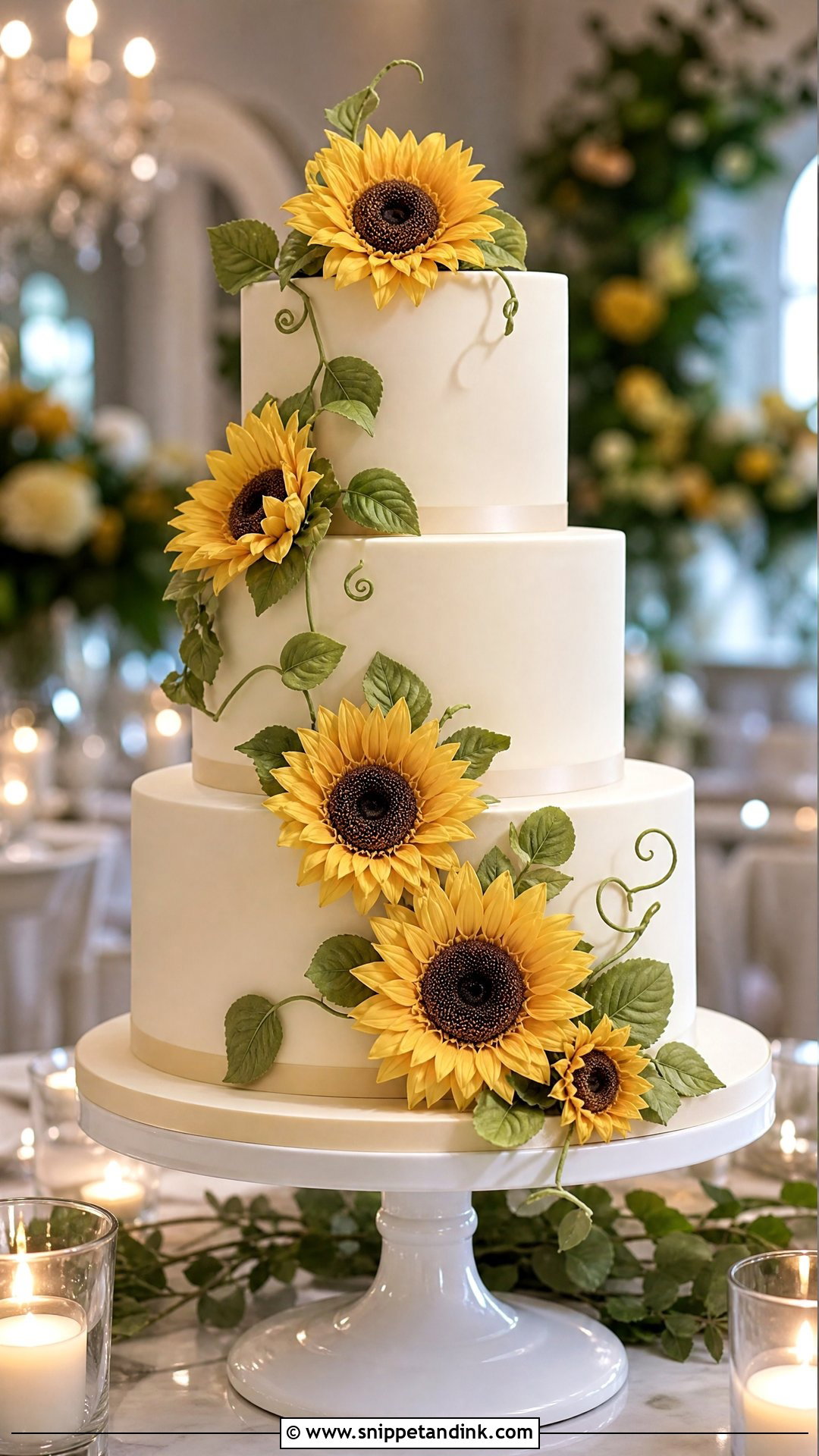
Burlap is a texture, not a food, and that changes how I use it. Real burlap ribbon sheds fibers and absorbs grease from buttercream, so I put a strip of food-safe ribbon or a thin band of fondant underneath, or wrap it only around the cake boards. One or two tiers with burlap is plenty. Lace layered over the burlap softens it into something more bridal. Clusters of sunflowers rather than a continuous ring keep the cake from looking heavy.
9. Sunflower Wedding Cake With Lace
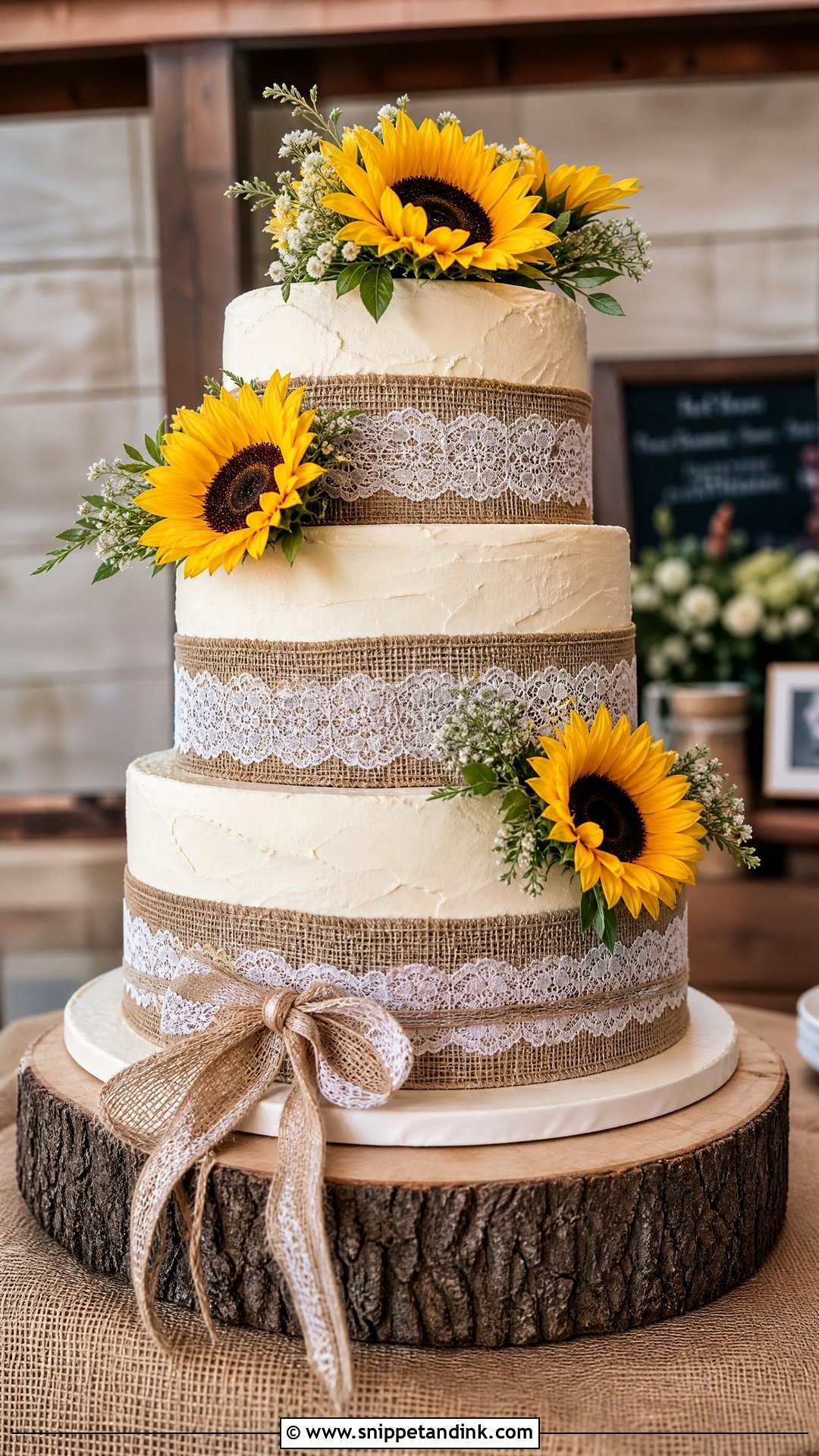
Lace can be piped in buttercream, embossed into fondant with an impression mat, or set from edible lace mix in a silicone mold. Edible lace is the finest but goes brittle in dry air and limp in humidity, so it’s applied close to delivery. If your dress has a distinctive lace motif, bring a photo; matching the pattern loosely is very achievable. Let one large sunflower cluster be the focal point and keep the lace to a band or one tier.
10. Sunflower Wedding Cake With Baby’s Breath
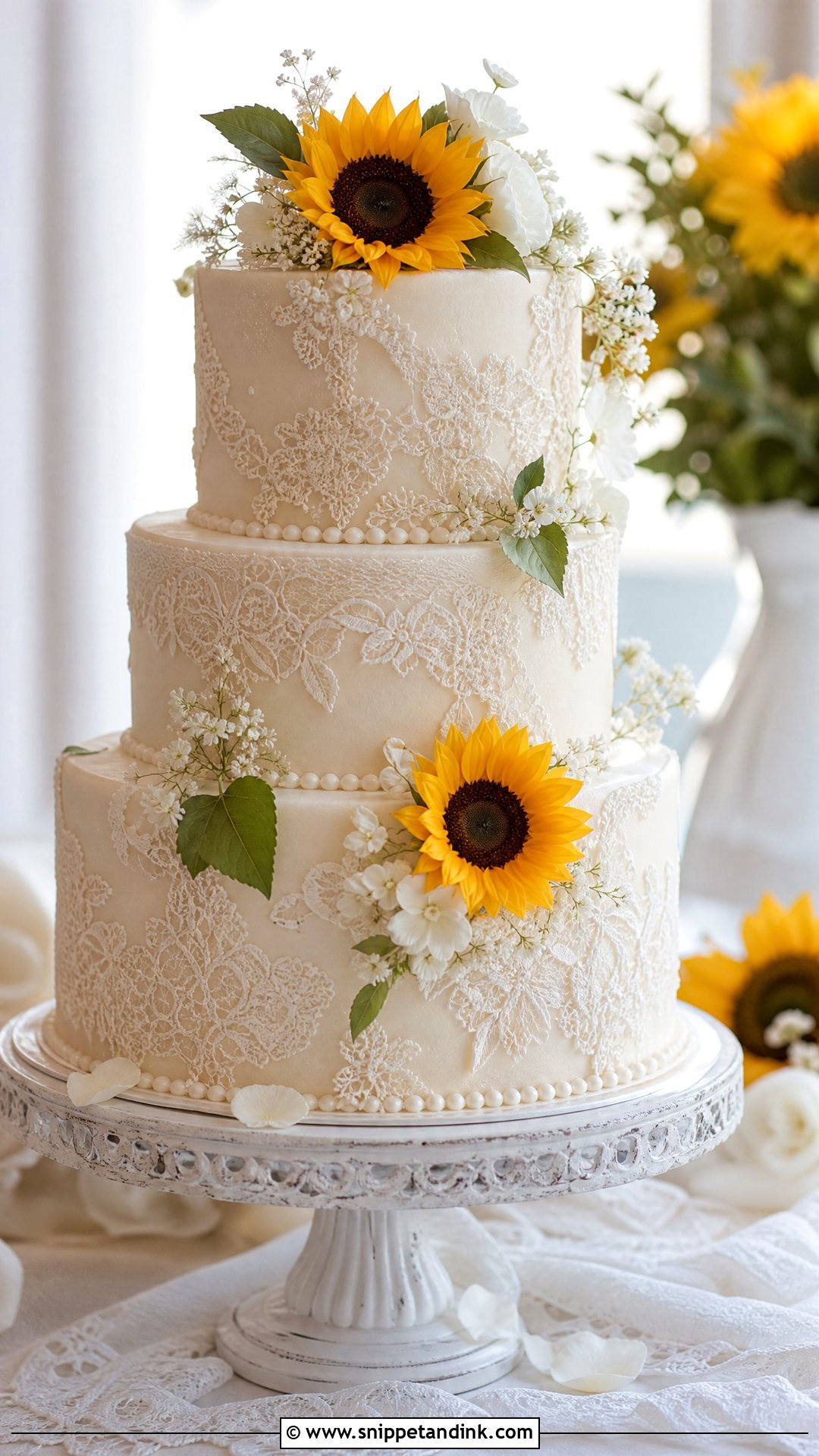
Baby’s breath around sunflowers fills the gaps between those big round heads, which otherwise leave awkward holes on a cake. I arrange it loose, almost like a hand-tied bouquet laid against the tiers. One caution: baby’s breath (gypsophila) is mildly toxic, so its stems must be wrapped and it should sit on barriers rather than pressed straight into frosting. Many florists now supply it with that in mind. It sits naturally on semi-naked and rustic cakes.
11. Sunflower Wedding Cake With Greenery
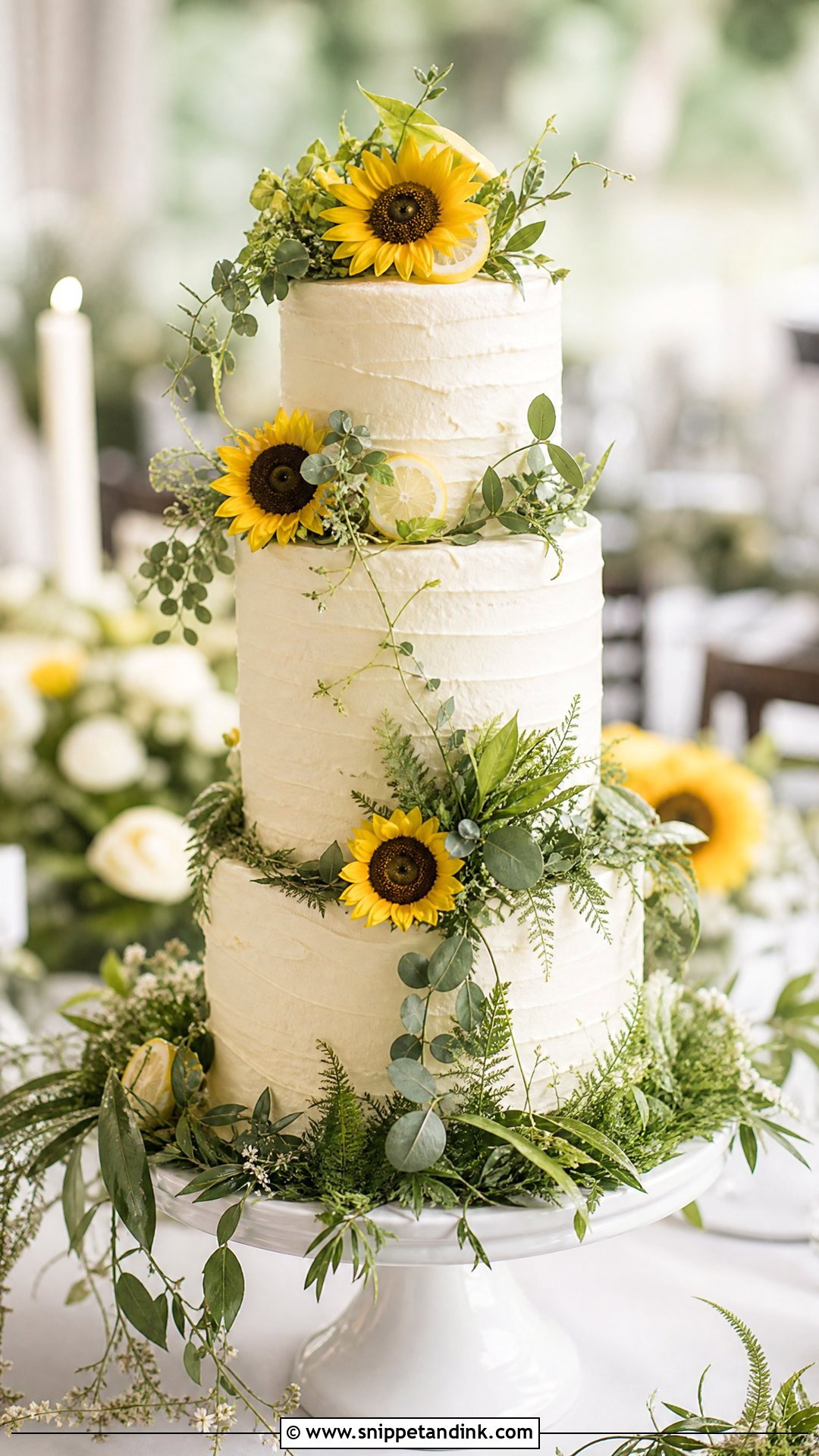
Greenery stops a cake full of yellow from shouting. I usually suggest a ratio of more leaves than flowers on the lower tiers and the opposite at the top. Eucalyptus, olive, ferns and trailing vine all look right, but not all are food-safe; eucalyptus in particular should never touch the cake without a barrier. A smooth white cake keeps things crisp, and textured buttercream makes the greenery look as if it grew there. You can go small with one cluster or trail sunflowers down every tier.
12. Sunflower Wedding Cake With Roses
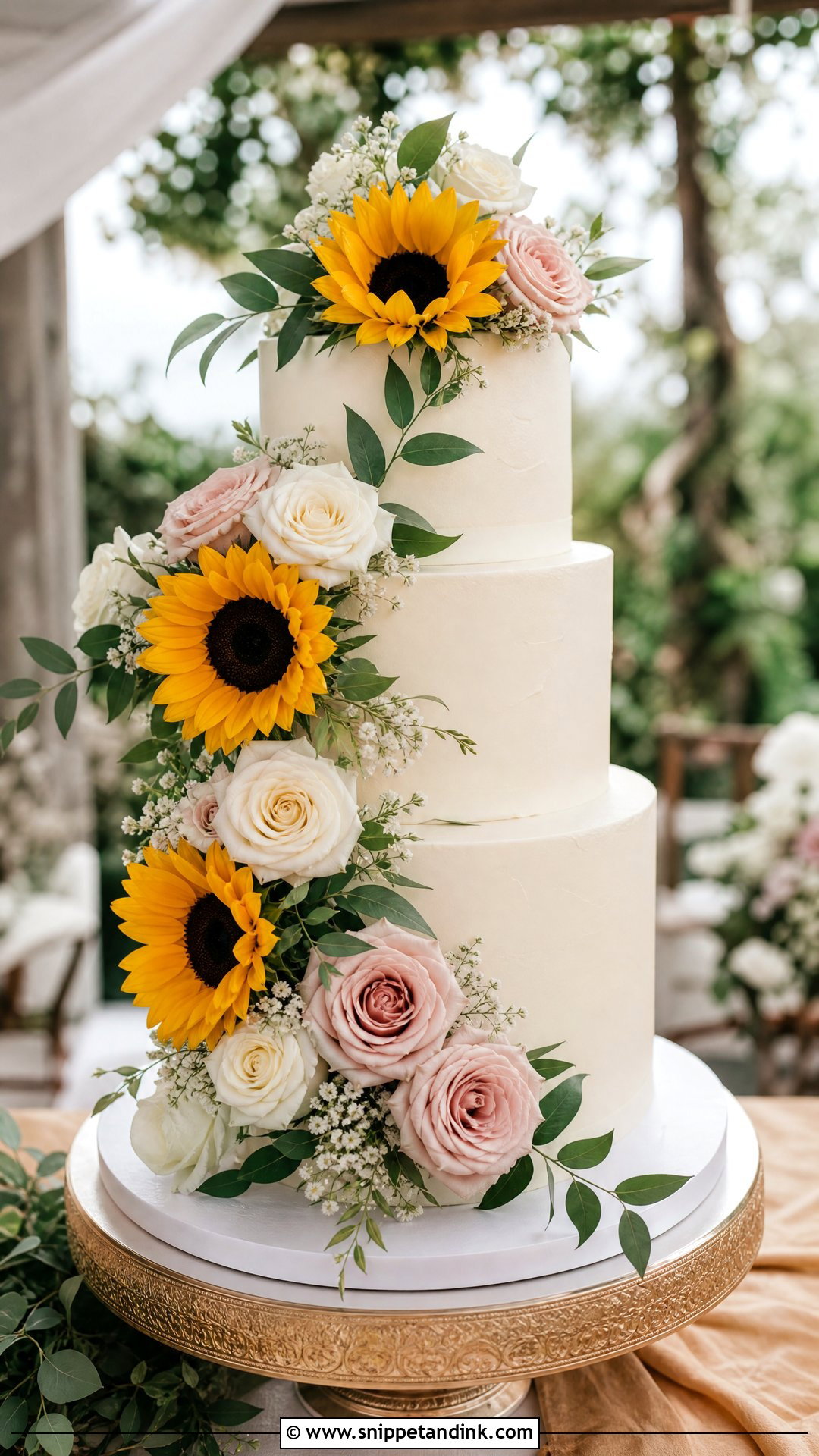
Sunflowers and roses have very different shapes, so they need grouping, not scattering. I build clusters with one sunflower as the anchor and two or three roses around it, which keeps each group readable from across the room. White roses keep it clean, blush softens it, and burgundy turns it toward autumn. Garden roses are heavier than they look, so a three-tier cake with full clusters needs firm buttercream or fondant to hold them.
13. Sunflower Wedding Cake With Black Accents
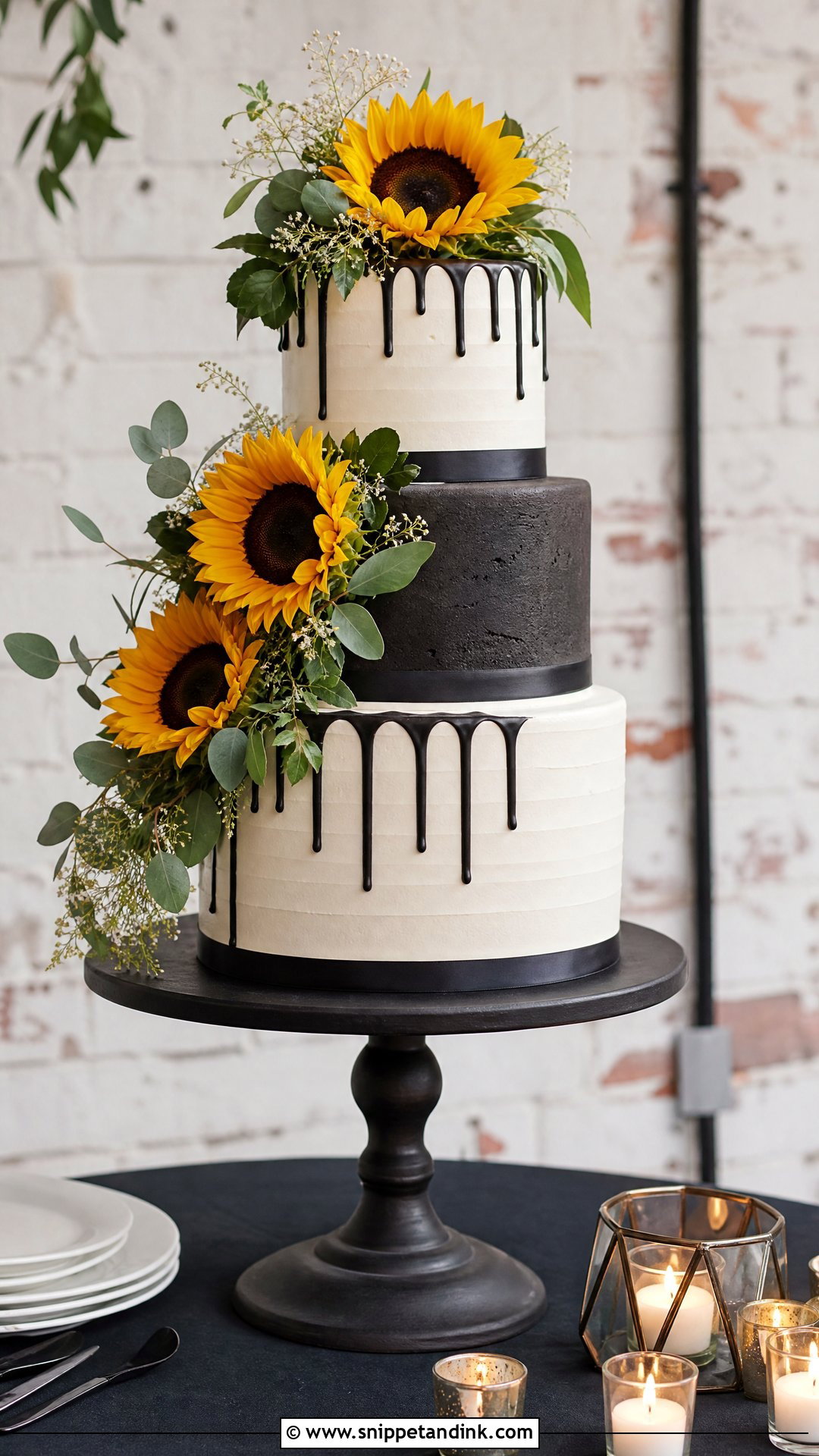
Black is the boldest partner a sunflower can have. A black ribbon, a black drip or one black fondant tier makes the yellow look electric, and it suits industrial venues and modern rustic weddings. Black frosting needs a lot of color, which can stain lips and taste bitter, so I’d keep black to fondant accents, ribbon or a thin drip rather than a whole buttercream tier. Balance it with greenery and clean edges, and pick chocolate or vanilla sponge to suit the mood.
14. Sunflower Wedding Cake With Gold Accents
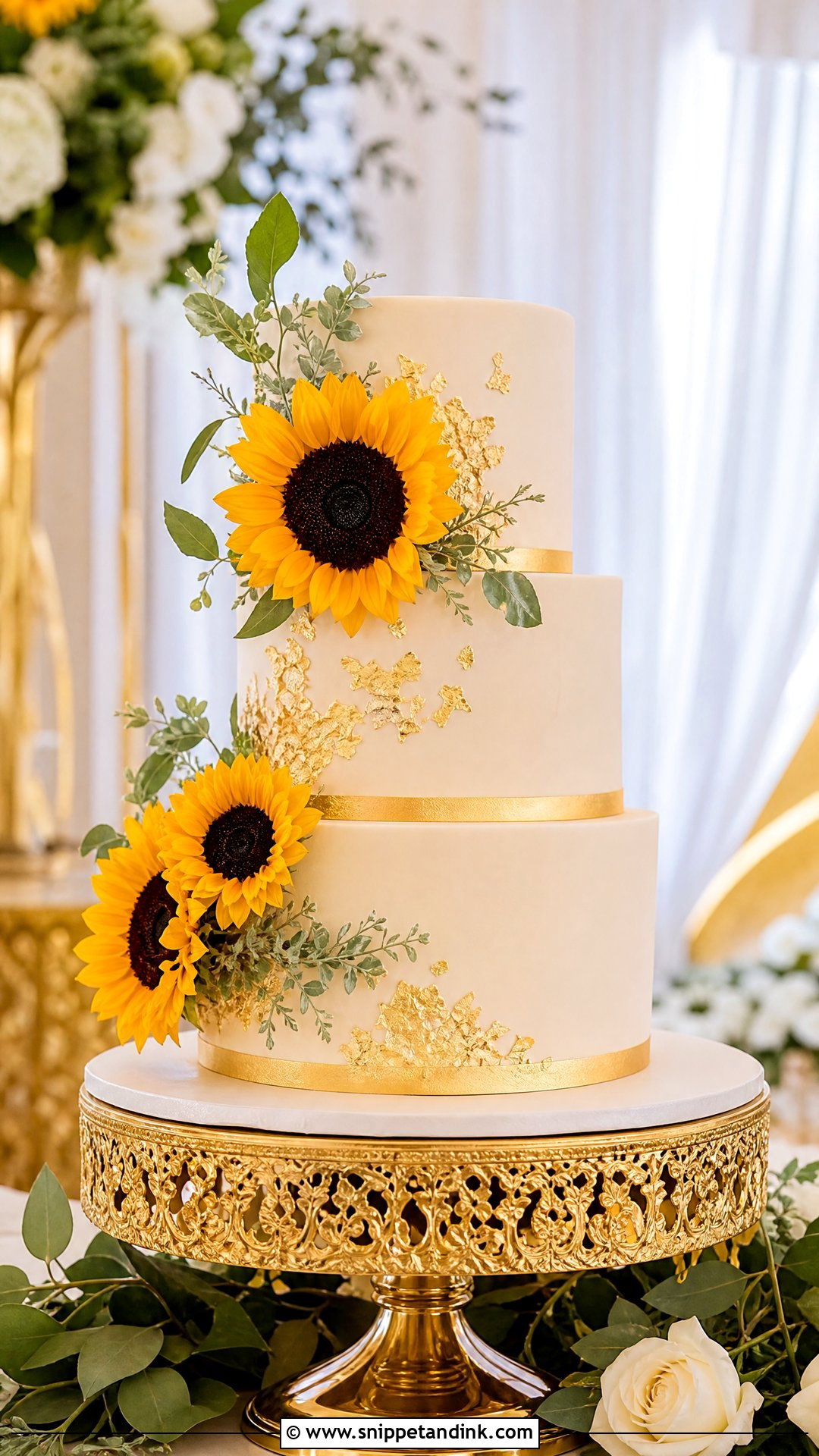
Gold makes a sunflower cake read more formal without changing the flowers. A sunflower wedding cake with gold accents might have gold leaf flakes, a painted metallic band at the base of each tier or a gold topper. Edible gold leaf only goes on a chilled, firm surface or it tears. I’d use either one cascade of blooms or a few well-placed heads, not both, so the gold has space. Honey, vanilla, almond and lemon flavors suit the warm palette.



15. Sunflower Drip Wedding Cake
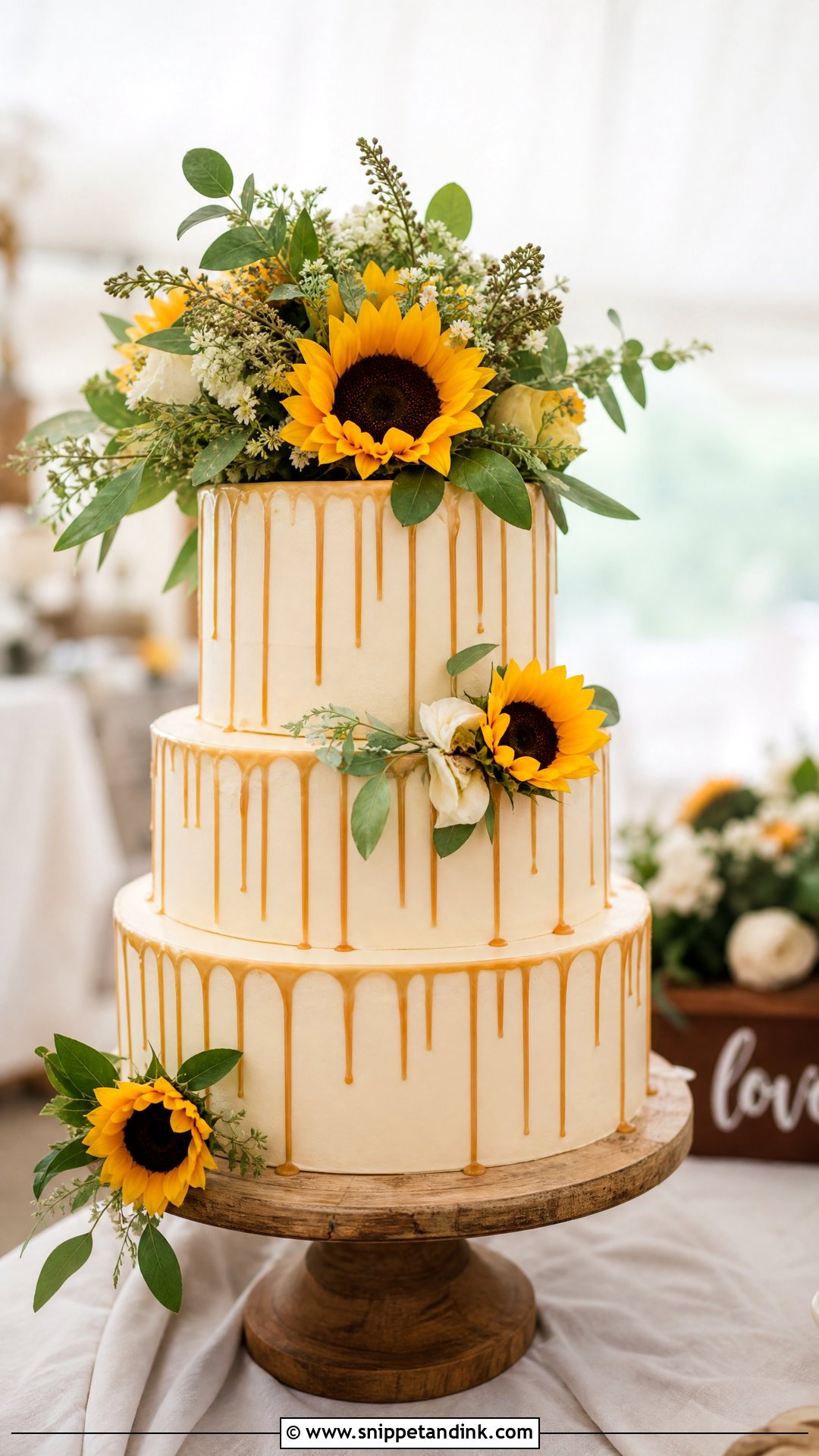
On a tall cake the drip has to be controlled tier by tier, which takes practice. I pour on a chilled cake with ganache at a set temperature and let some drips run long and others stop short. White chocolate and caramel suit a light cake; dark chocolate gives contrast. Smooth frosting with a thin drip keeps it bridal, and textured buttercream with a wood stand pushes it rustic. Sunflowers on top and one or two on the side sit well above the drip line.
16. Sunflower Wedding Cake With Cupcakes
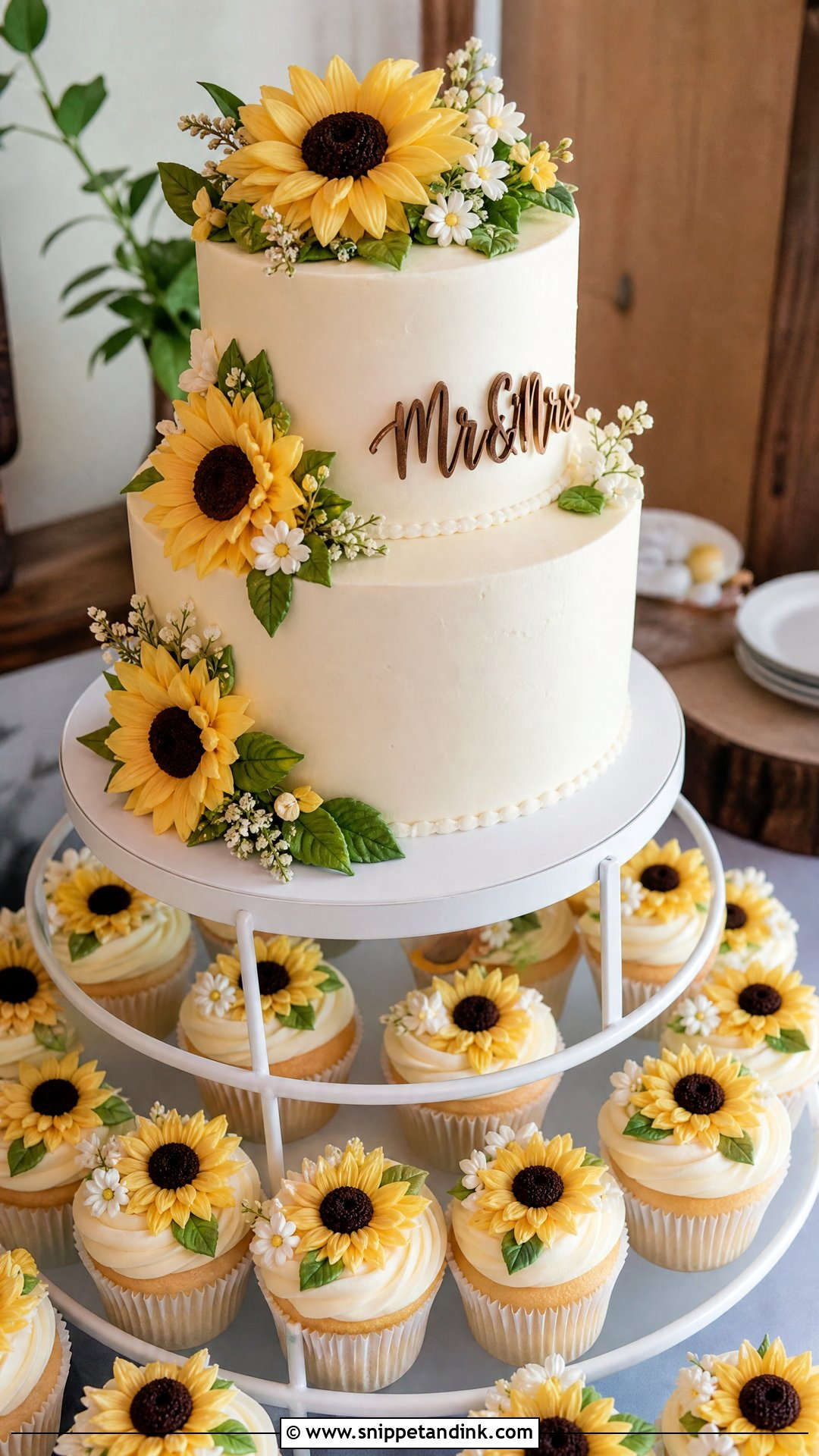
Pairing a small cake with cupcakes is one of the most practical setups for a big guest list. A sunflower wedding cake with cupcakes lets you cut a two-tier cake for photos while guests help themselves to cupcakes, and it’s an easy way to offer vanilla, chocolate, lemon and red velvet without four flavors of tier. Piped sunflower petals in a leaf tip on each cupcake tie the display together. Keep frosting shades matched so the whole table reads as one design.
17. Sunflower Wedding Cake With Wood Stand
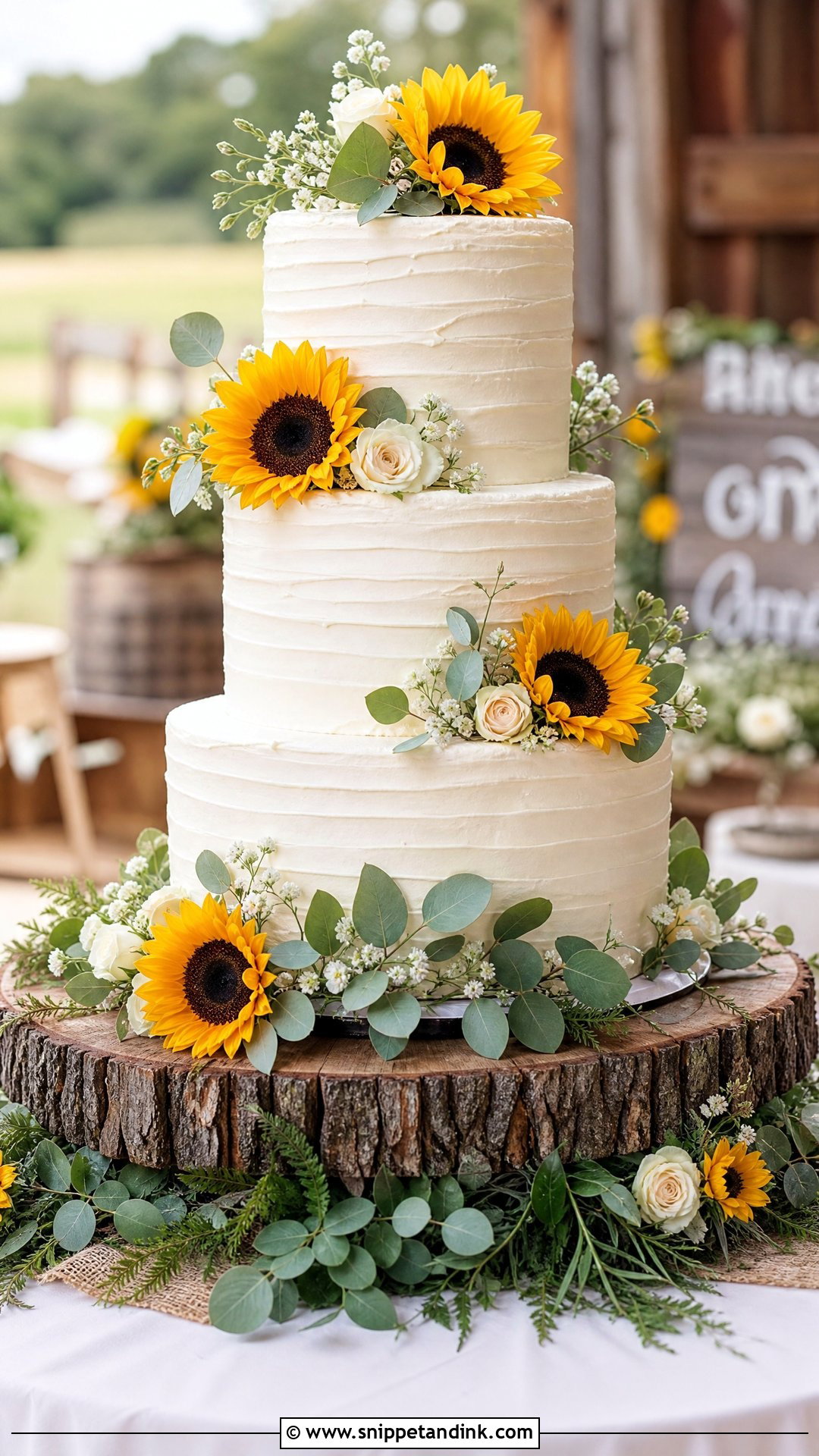
A wood stand grounds the cake visually, and the right one also keeps it stable. I check that the slab is level and sealed; an uneven log slice can tip a tiered cake, and raw wood leaches sap and moisture. A food-safe board between cake and wood solves both. Simple ivory buttercream is enough when the wood and flowers bring the texture. Sunflowers at the base, between tiers or on top all work on a barrel or a long dessert table.
18. Sunflower Wedding Cake With Painted Flowers
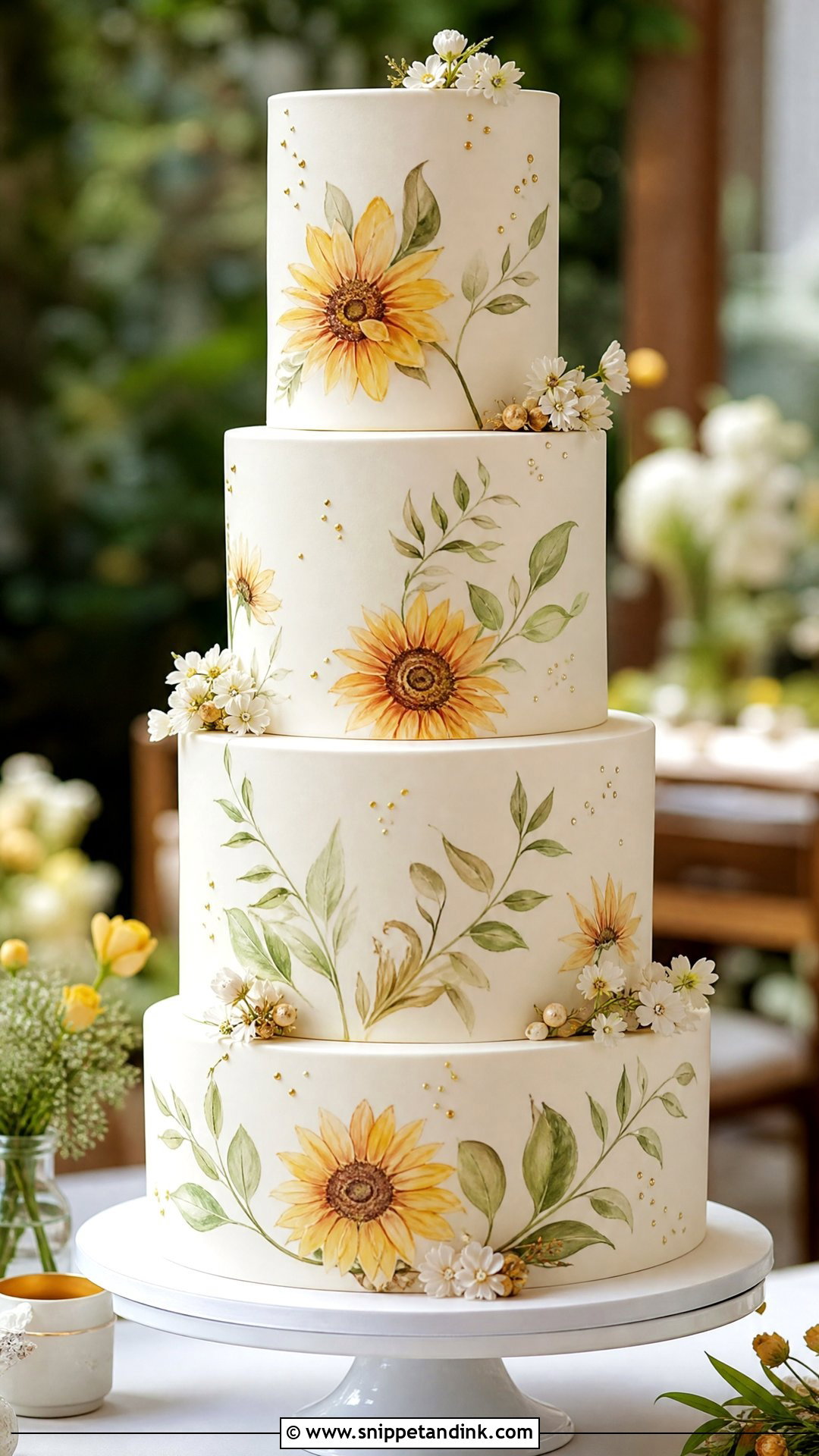
Painted sunflowers are slow, careful work, and they need a very smooth, firm surface. On fondant I paint with gel color thinned in alcohol; on buttercream I chill the cake hard first so the brush doesn’t drag. The flowers sit flat, so the cake looks more like illustrated stationery than a floral arrangement. Choose bold color or a watercolor wash depending on the rest of your styling, and expect a higher quote for the hours involved.
19. Sunflower Wedding Cake With Sugar Flowers
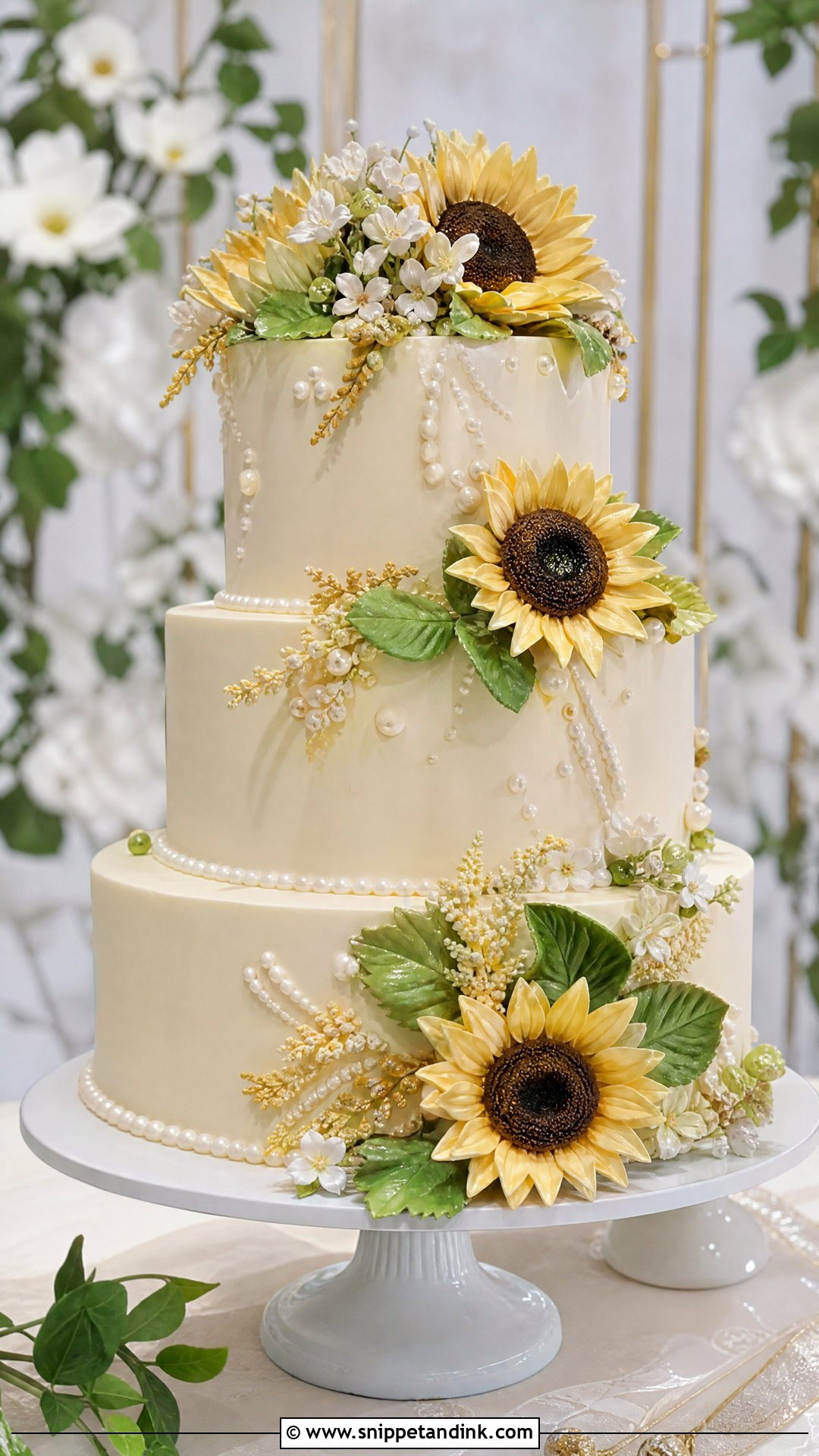
Sugar sunflowers solve most of the problems fresh ones bring: they don’t wilt, shed pollen or carry sap, and I can tint them to the exact yellow on your invitations. Each petal is cut, veined and dried, so a full set takes time and needs ordering well ahead. The cake underneath can stay simple. Many couples keep the top flower afterwards, since gum paste lasts for years in a dry box.


20. Sunflower Wedding Cake With Topper
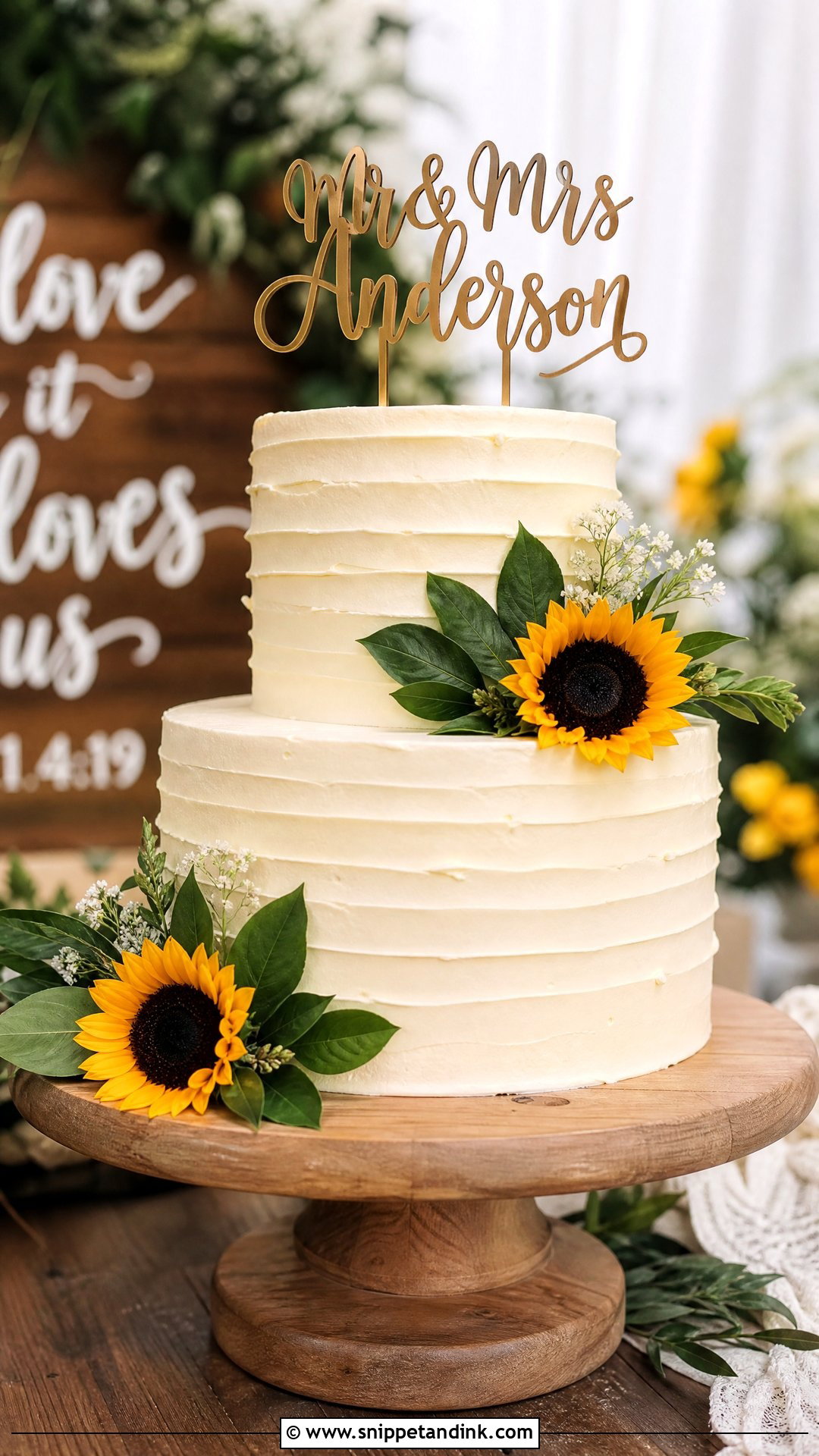
A topper is the simplest way to personalize the cake without more decoration on the tiers. A wooden script name, a small sign with your initials or a mini arrangement of sunflowers all give a clear focal point. Acrylic and wood toppers need a stake pushed into a firm top tier, and I’d seal wooden stakes or wrap them in food-safe film. Keep the tiers plain and let the topper and one sunflower cluster carry the design.
A Sunflower Cake in an August Barn: What Holds and What Droops
Most sunflower weddings happen in the warmest months, often in venues without air conditioning. That’s the setting I plan around from the first conversation.
The frosting
Fondant and ganache-covered cakes are the most stable in heat. Swiss meringue buttercream tastes lighter but softens sooner, and cream cheese frosting should not sit out long at all. If the room will be hot, ask your baker for a firmer, more heat-tolerant recipe and a display spot away from windows and the dance floor lights.
The flowers
Sunflowers drink heavily, and once cut off from water their heads begin to droop within a few hours. I ask the florist to condition the stems properly the day before, then place the flowers as late as possible with the stems in water tubes or sealed with tape. Heavy heads get a floral pick or a small support so they don’t tilt forward. For a long afternoon outdoors, sugar sunflowers on the top tier and fresh ones lower down is a sensible compromise.
The timing
Schedule the cake cutting earlier rather than later if the cake has to stand in a warm space. An hour or two on display is comfortable for most buttercream cakes; four or five hours in a hot barn is asking a lot of any of them.
Let the Venue Set the Finish, Then Add the Flowers
Sunflower cakes can go rustic with burlap and wood or formal with fondant, gold and sugar blooms, but they work best when one direction is chosen and everything else supports it. I’d start with the venue’s temperature and your guest count, then look at your bouquet and table colors. A small two tier cake can look as considered as a tall tiered display when the flowers are grouped well. Bring photos of your florals to the tasting, and the sunflowers will fall into place.
You'll Like These Ideas:




Leave a Reply