
Bows have taken over my order book, and I understand why: one bow can make a plain tier look like couture, and a row of small ones can turn a classic cake playful. The style lives or dies on two decisions, the material and the scale. Bows can be made from fondant, gum paste, wafer paper, buttercream or cake-safe fabric ribbon, and each behaves differently in a warm room and on a long delivery. The 35 cakes below are whole designs rather than single accents, with notes on what I’d watch for when making each one.
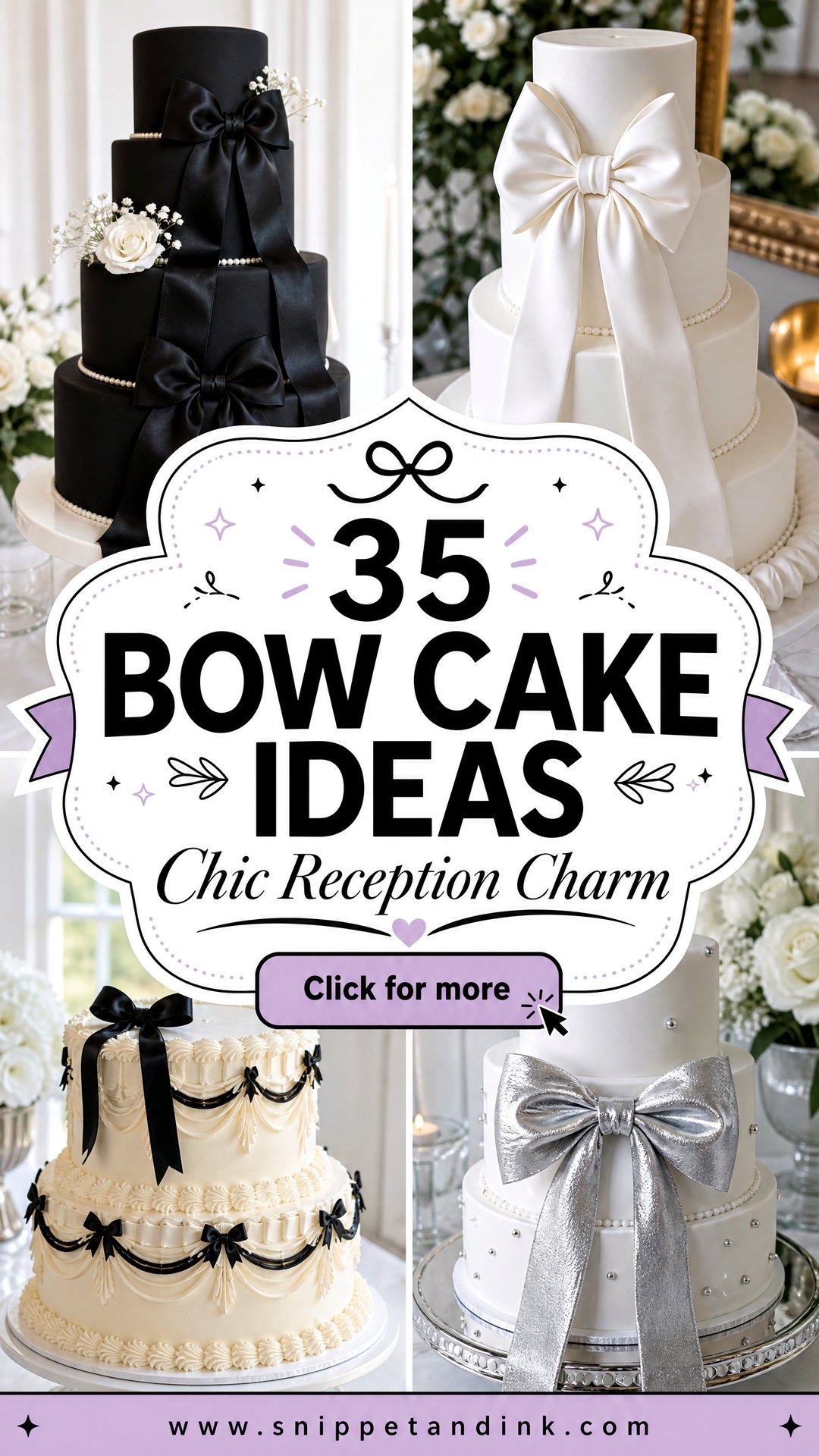
Gum Paste, Wafer Paper or Real Ribbon?
The material decides how the bow looks, how early it has to be made and how it copes with your venue. Here’s how I explain the options at a consultation:
- Gum paste: dries rock hard, so it holds big, crisp loops and survives delivery. Made several days ahead. Edible in theory but not pleasant to eat, and it keeps afterwards as a memento.
- Fondant: softer and more forgiving to shape, good for wraps and medium bows. It softens in humid rooms, so large fondant loops get hidden supports.
- Wafer paper: the lightest, most fabric-like look. Hates moisture, so it’s a poor choice for steamy summer venues or direct contact with buttercream.
- Buttercream: piped or sculpted, the tastiest and the most heat-sensitive. Fine indoors; risky in a tent in July.
- Satin, velvet or tulle: looks the most real but isn’t food. It needs a barrier against the icing and must be removed before cutting.
If you can’t decide, I’d usually pick gum paste for the statement bow and something softer for smaller repeated details. That mix gives structure where it matters and keeps the rest pleasant to eat.
1. White Bow Wedding Cake
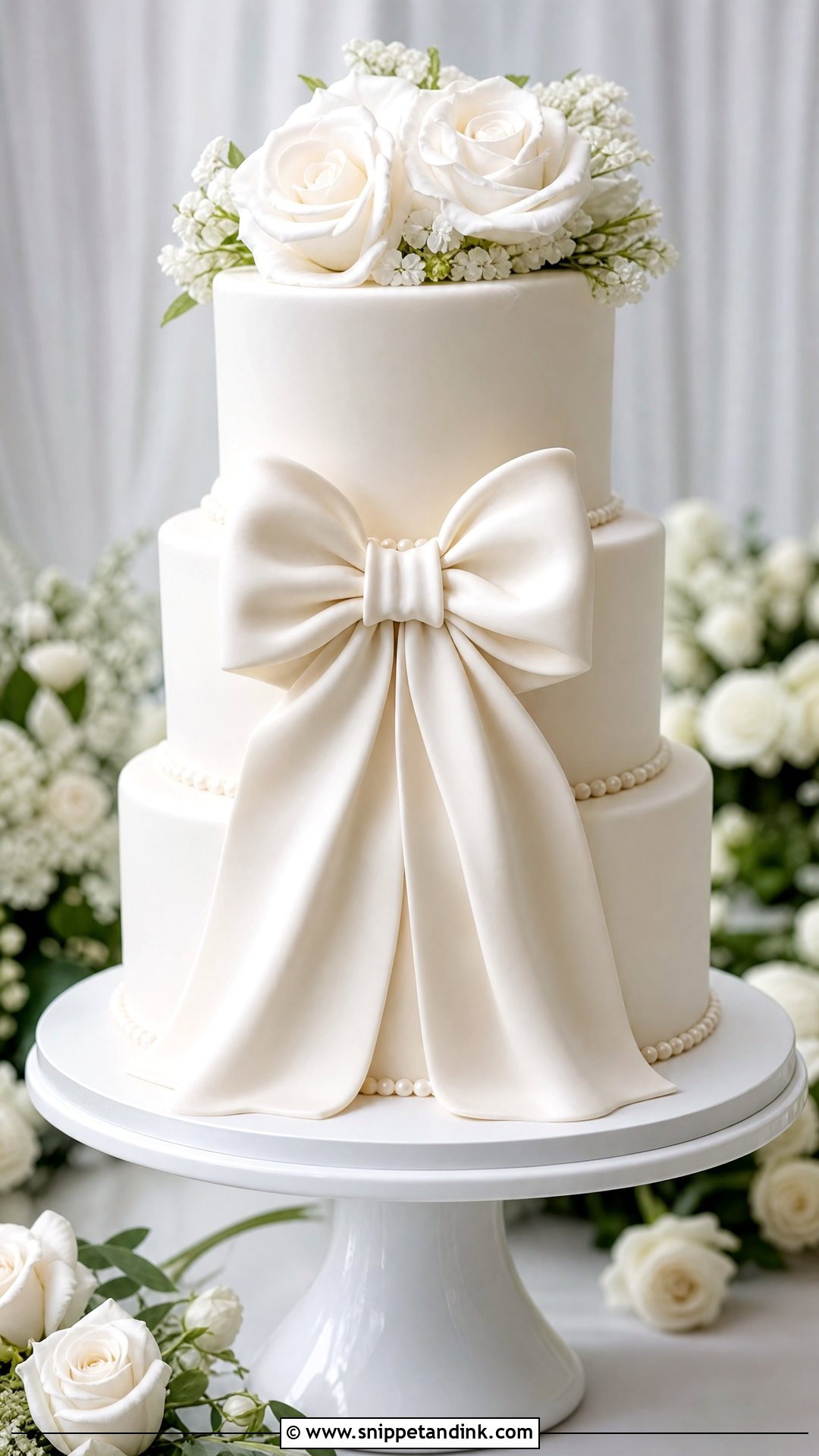
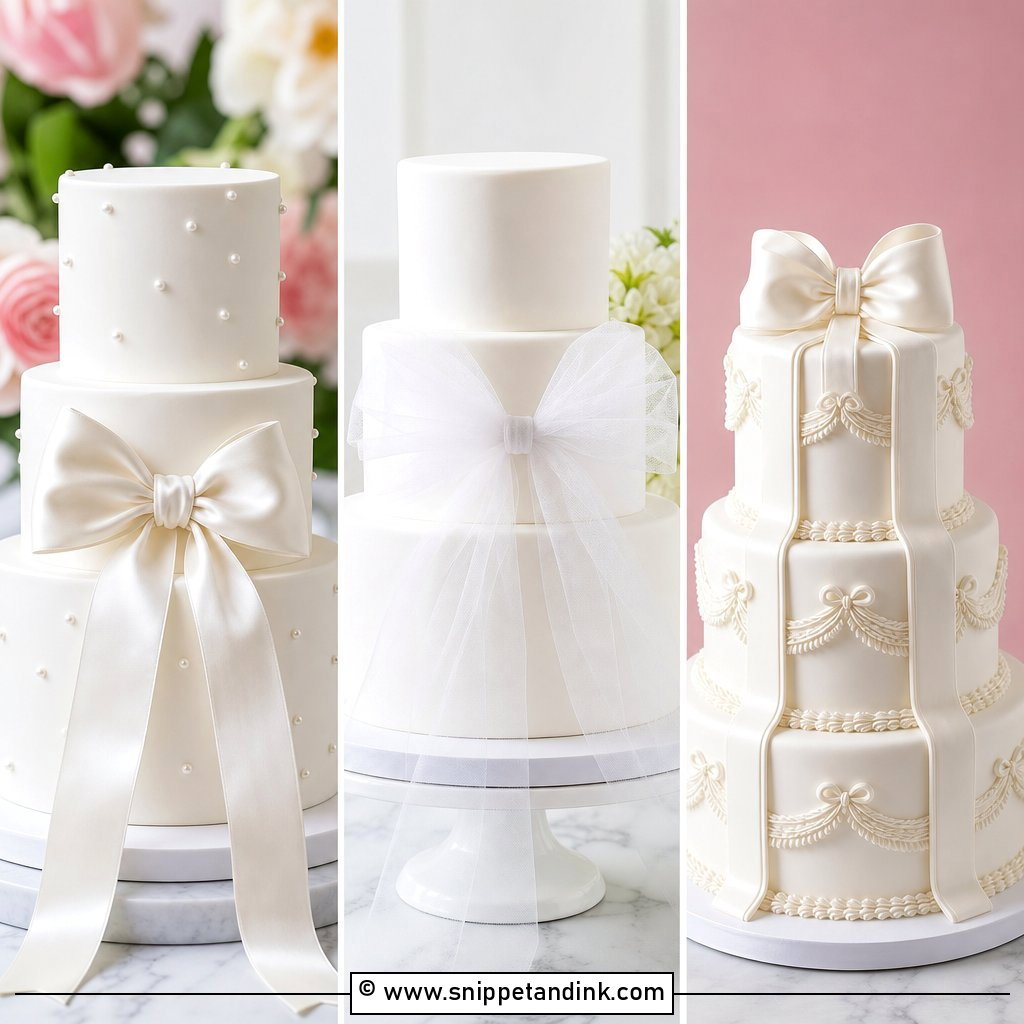
Smooth white tiers with one sculpted bow on the front read like the back of a wedding gown. I make that bow in gum paste a week or so ahead so it dries rigid and keeps its loops. Oversized looks fashion-forward; smaller and centred looks classic. A little pearl piping and a plain stand are all it needs.
2. Black Bow Wedding Cake
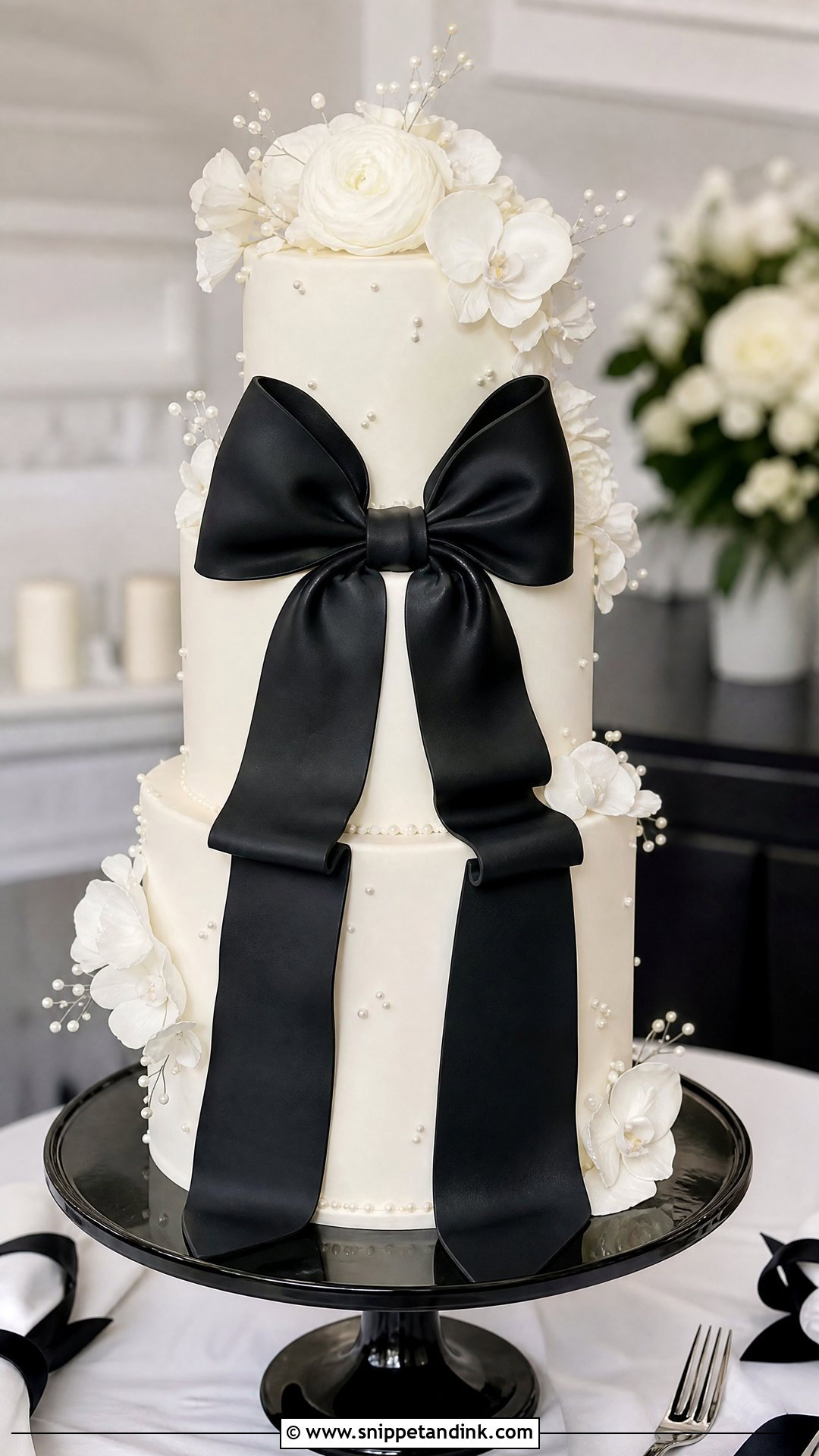
Black on white is the sharpest contrast you can put on a cake table. Let the bow be the only black element and keep the tiers bright, otherwise the cake starts to look heavy. Deep black sugar paste needs a lot of colour, so I make bows a few days early and let them darken as they rest. White sugar flowers or a few pearls soften it for an evening reception.
3. Pearl Bow Wedding Cake
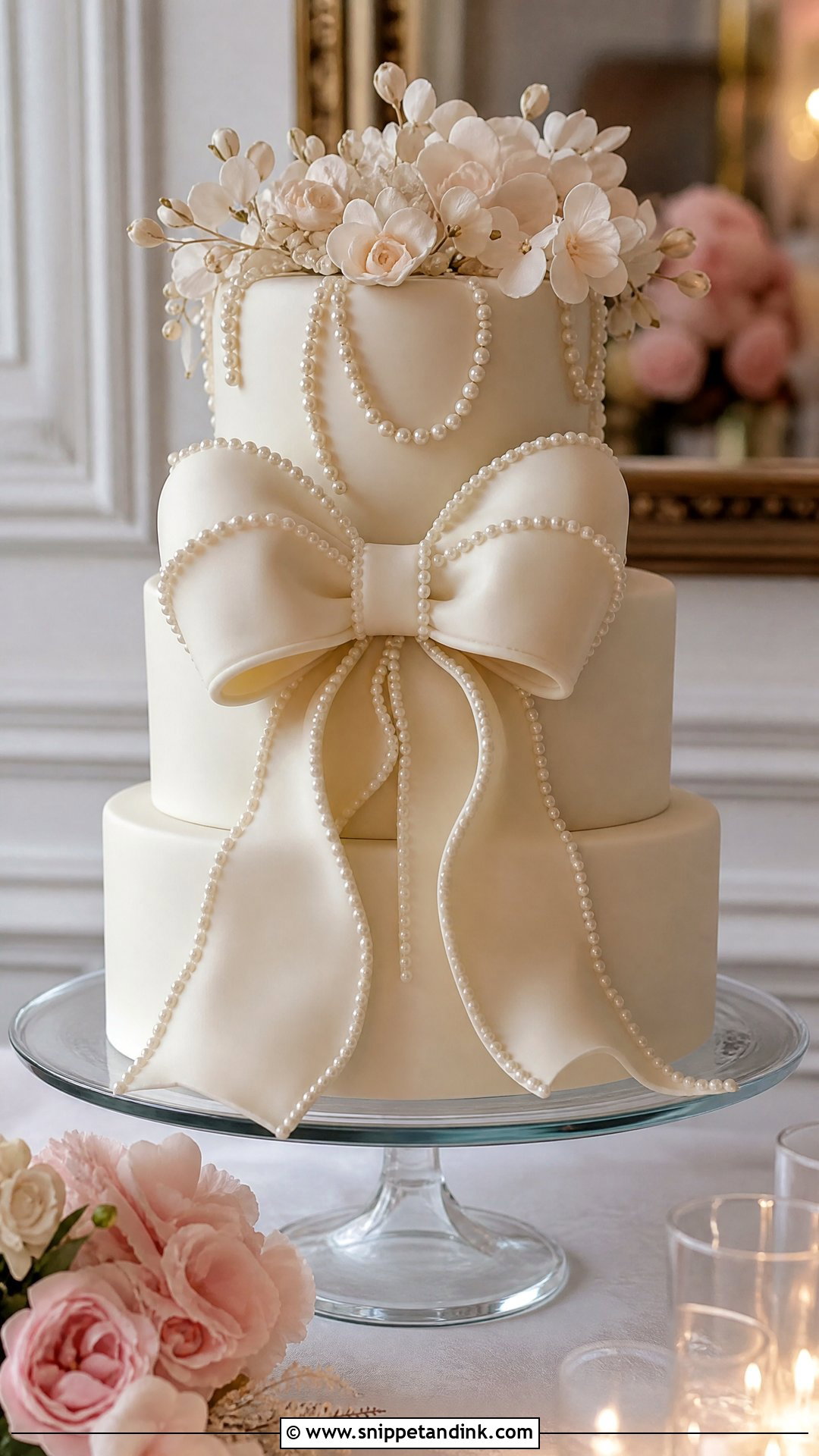
Pearls along the edges of a bow make it look like a hair accessory. I set each edible pearl by hand with a dot of edible glue while the bow is still slightly soft, so they sink in and don’t pop off during delivery. Smooth icing underneath lets them read. If the bride is wearing pearl earrings or a pearl-edged veil, this is the design I’d point her to.
4. Pink Bow Wedding Cake
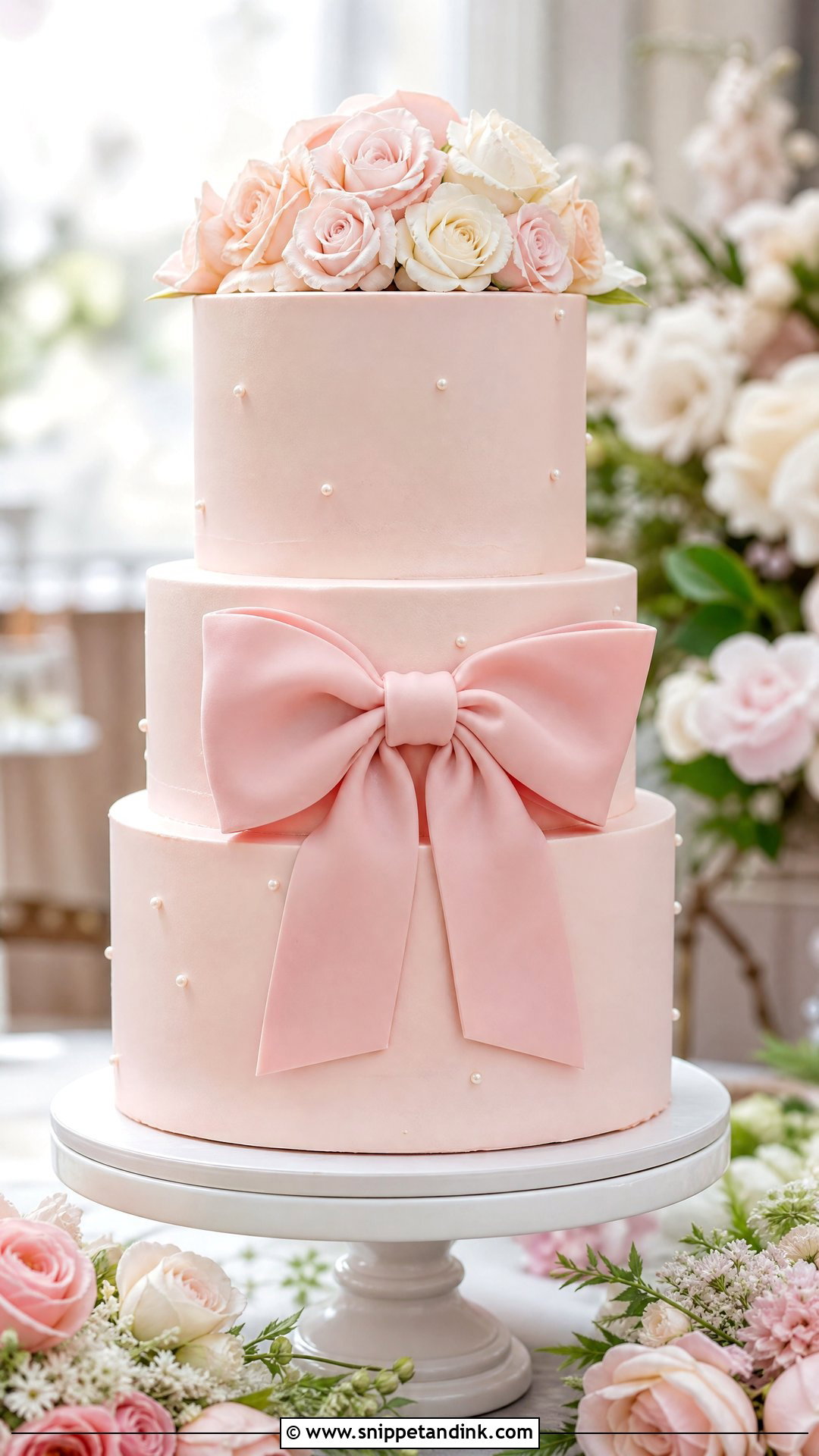
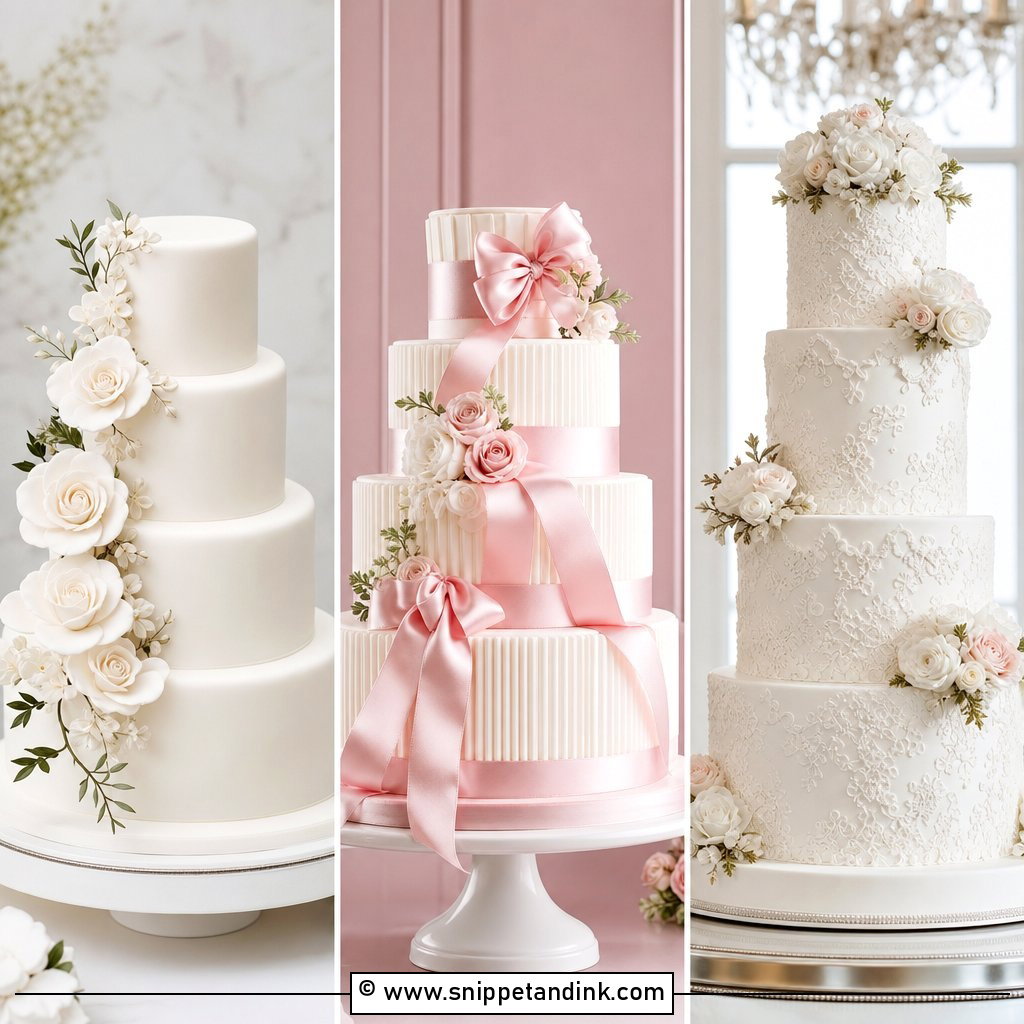
Pink stays grown-up when it’s muted: blush, dusty rose, ballet pink or pale mauve. Either the bow carries the colour on a white cake, or the cake goes softly pink with ivory details. I match pinks to a physical swatch, never a phone photo, because screens shift pinks toward coral or purple. Smooth buttercream and a light floral touch finish it.
5. Blue Bow Wedding Cake
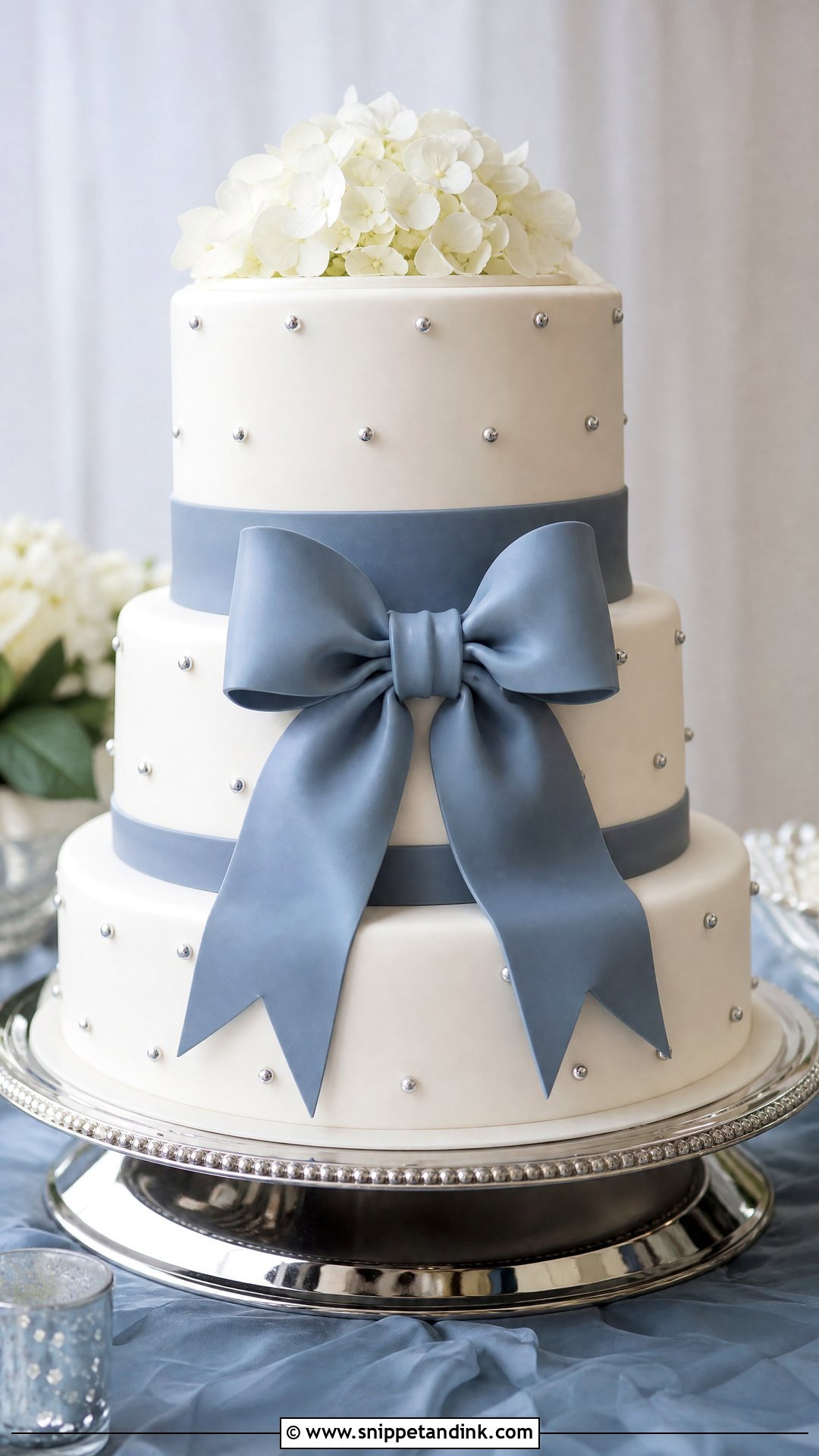
A blue bow is a neat way to sneak in “something blue”. French, dusty blue, and powder blue all sit well against white tiers, as a front accent, a wrap around each tier or a soft topper. I keep the shade muted and test it beside the linens, since bright sugar blues can look almost teal under warm lighting. Silver pearls or white sugar roses complete it.
6. Coquette Bow Wedding Cake
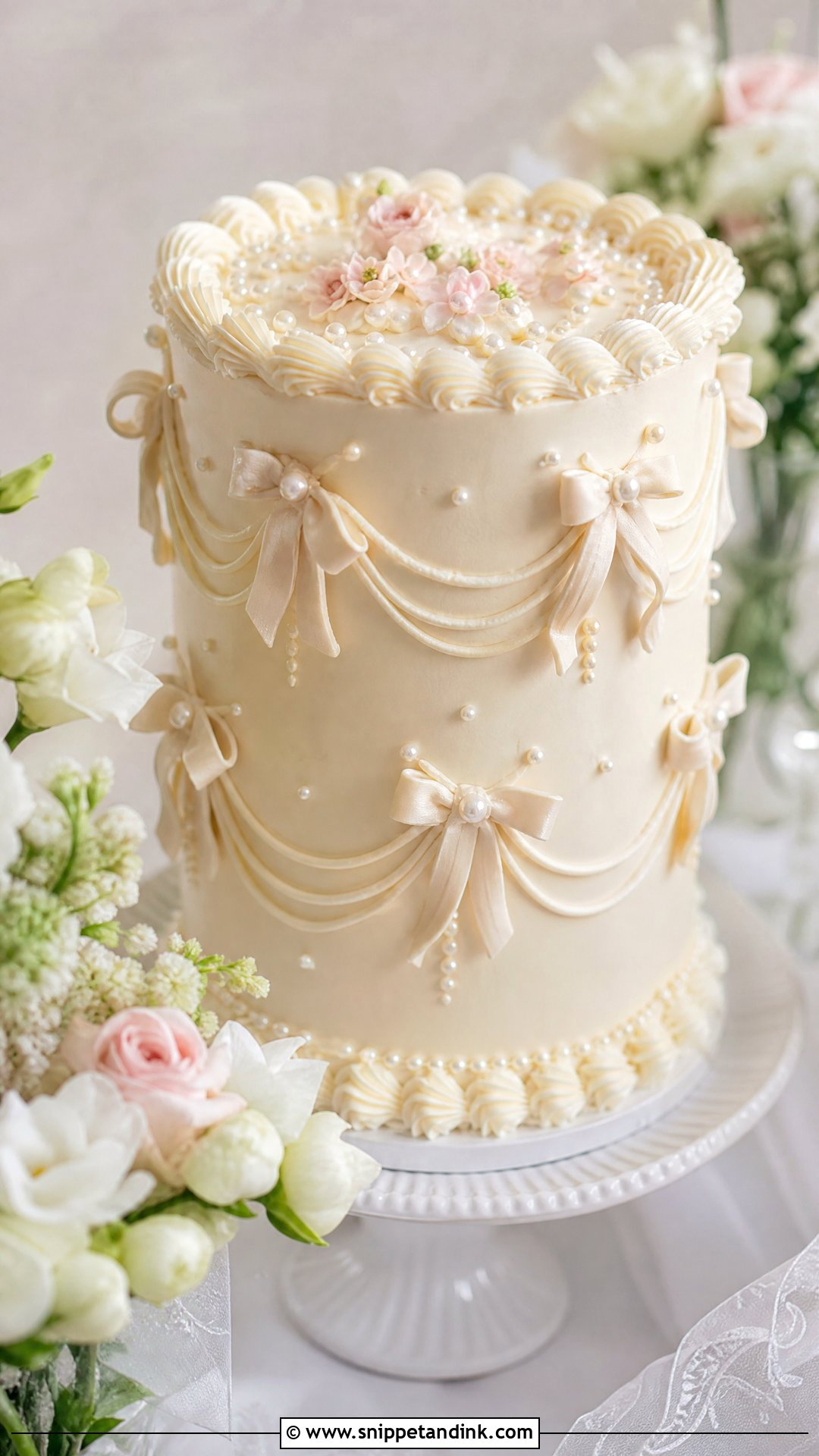
The coquette look is dainty and symmetrical: small bows, vintage piping, pearls and ruffled borders on a cream or blush base. Restraint is what keeps it elegant rather than sugary. I pick one colour and repeat the bows at even intervals, measured with a marked strip of paper around the tier, so the pattern looks deliberate. It can be one tall tier or a full stacked cake.
7. Fondant Bow Wedding Cake
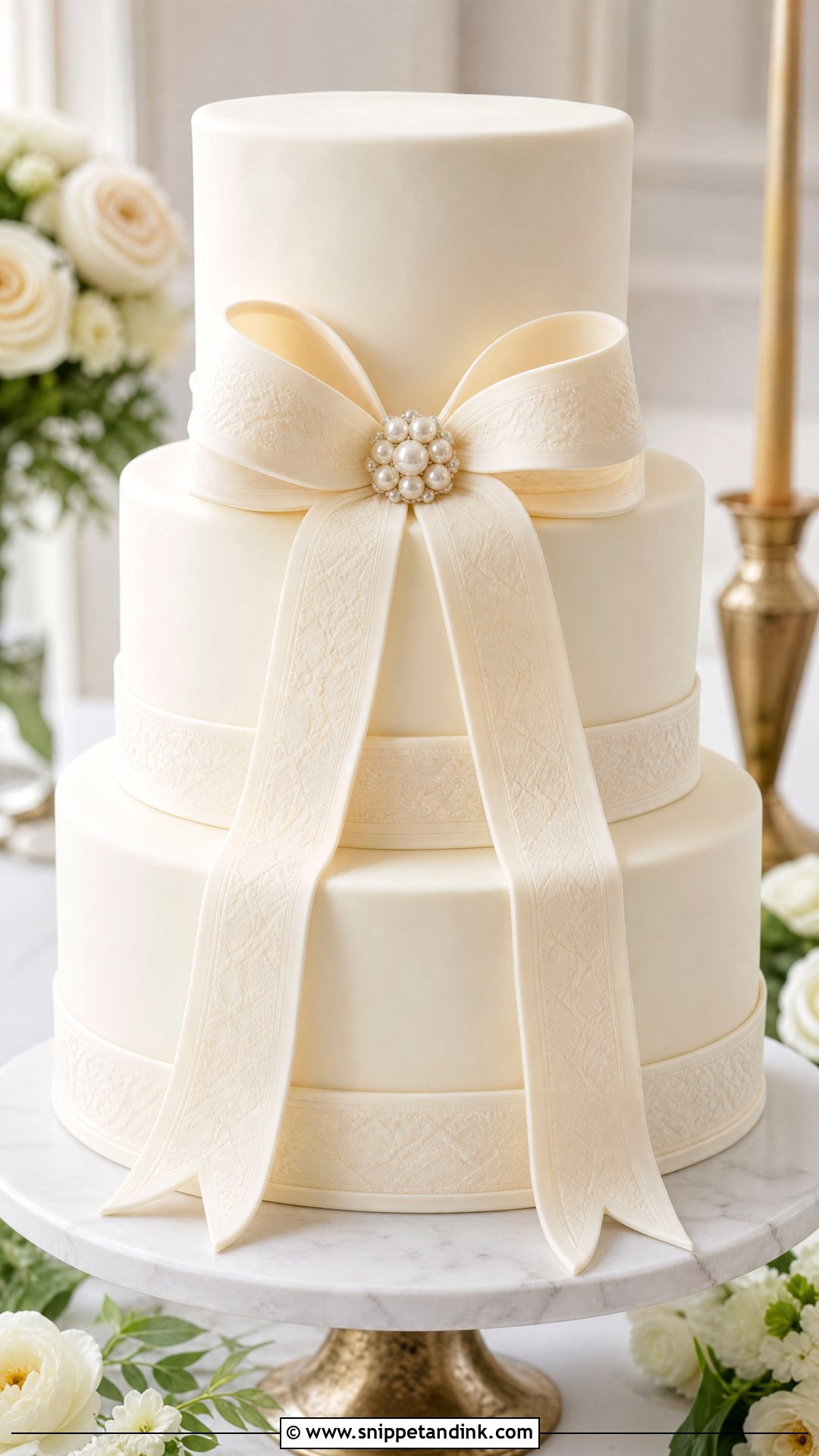
Fondant bows give crisp loops that hold their shape all evening. I cut the ribbon strips, fold them over rolled tissue or foam so the loops dry open, and leave them to firm up before assembling. Placed on buttercream they need support, a dab of icing and sometimes a hidden pick, because a heavy bow can slide down a soft tier. Embossed edges or a pearl trim are easy extras.
8. Buttercream Bow Wedding Cake
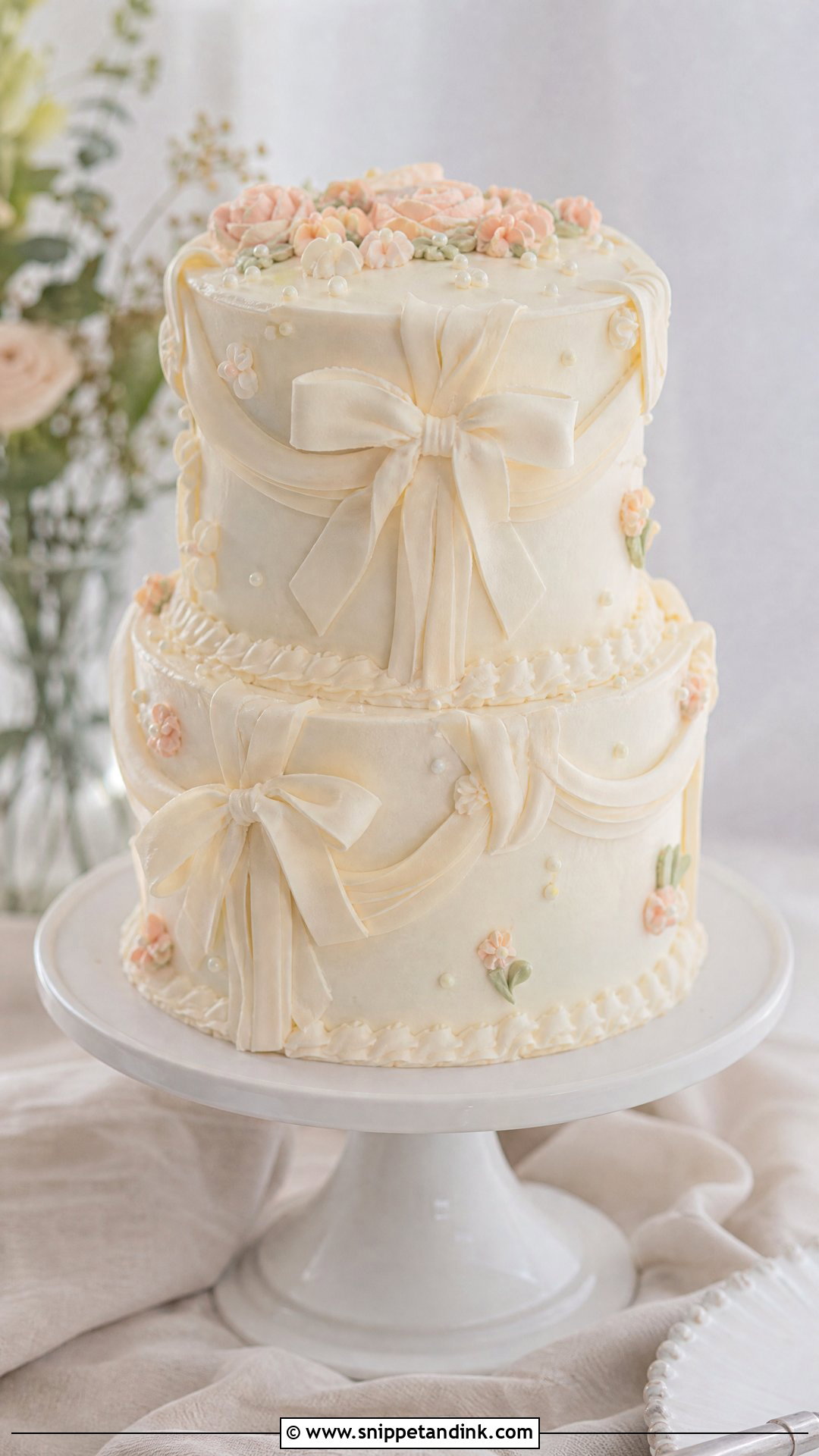
Piped or sculpted buttercream bows look handmade and soft, and they’re the most delicious option on the list. They’re also the most fragile. Buttercream bows soften as soon as the room warms up, so they need to be chilled until the last moment and kept away from sunny windows. For a hot outdoor venue I’d suggest a sturdier buttercream style or a sugar bow instead.
9. Satin Ribbon Bow Wedding Cake
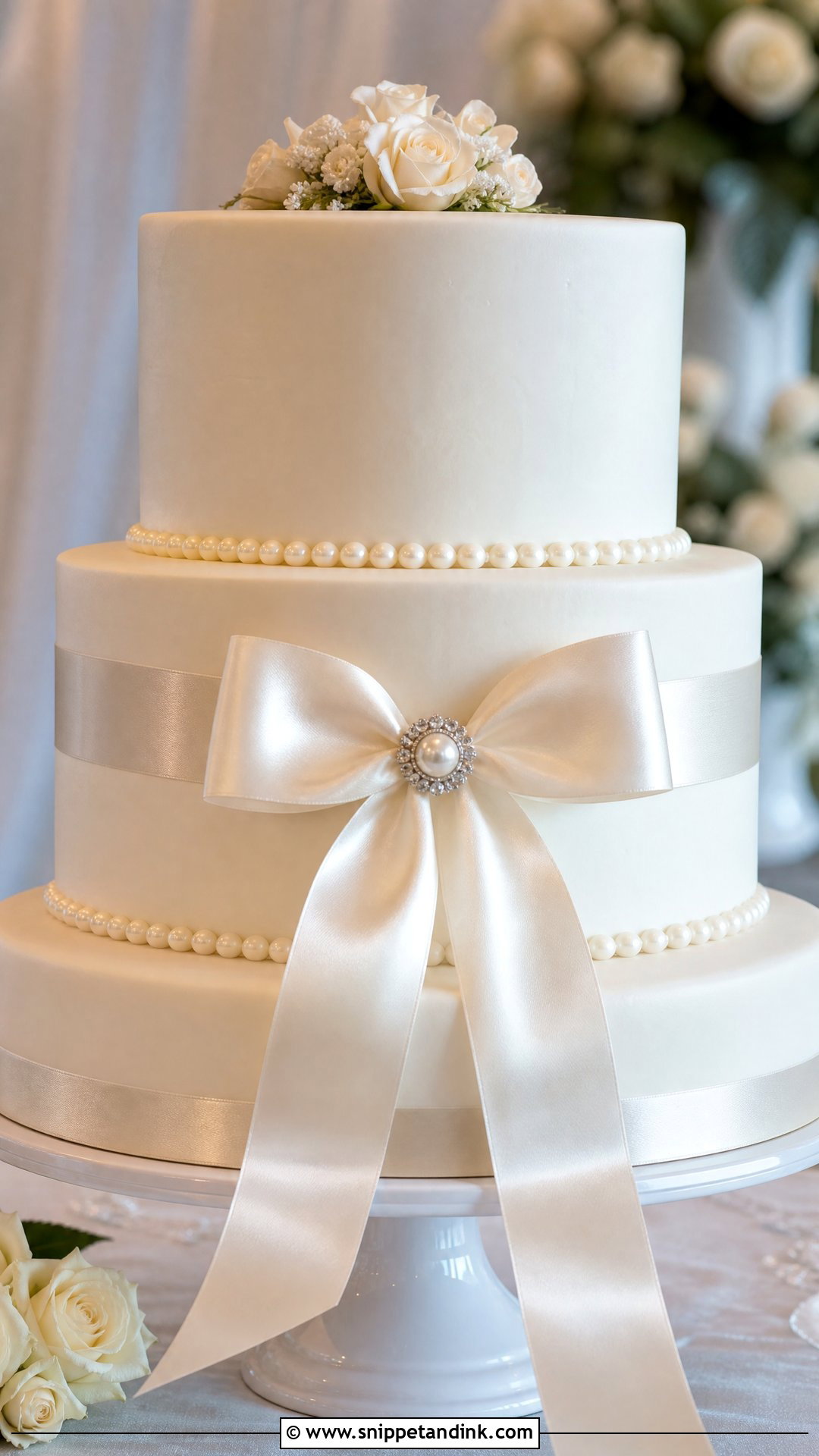
Real satin ribbon looks more expensive than any sugar imitation, but it can’t touch buttercream directly. Fat seeps into the fabric and leaves dark grease marks within an hour or two. I back every ribbon with a thin strip of acetate or wrap the tier in a band of fondant first. Match the colour to the bridesmaid dresses or linens, and keep other decoration light so the ribbon stays the focus.
10. Tulle Bow Wedding Cake
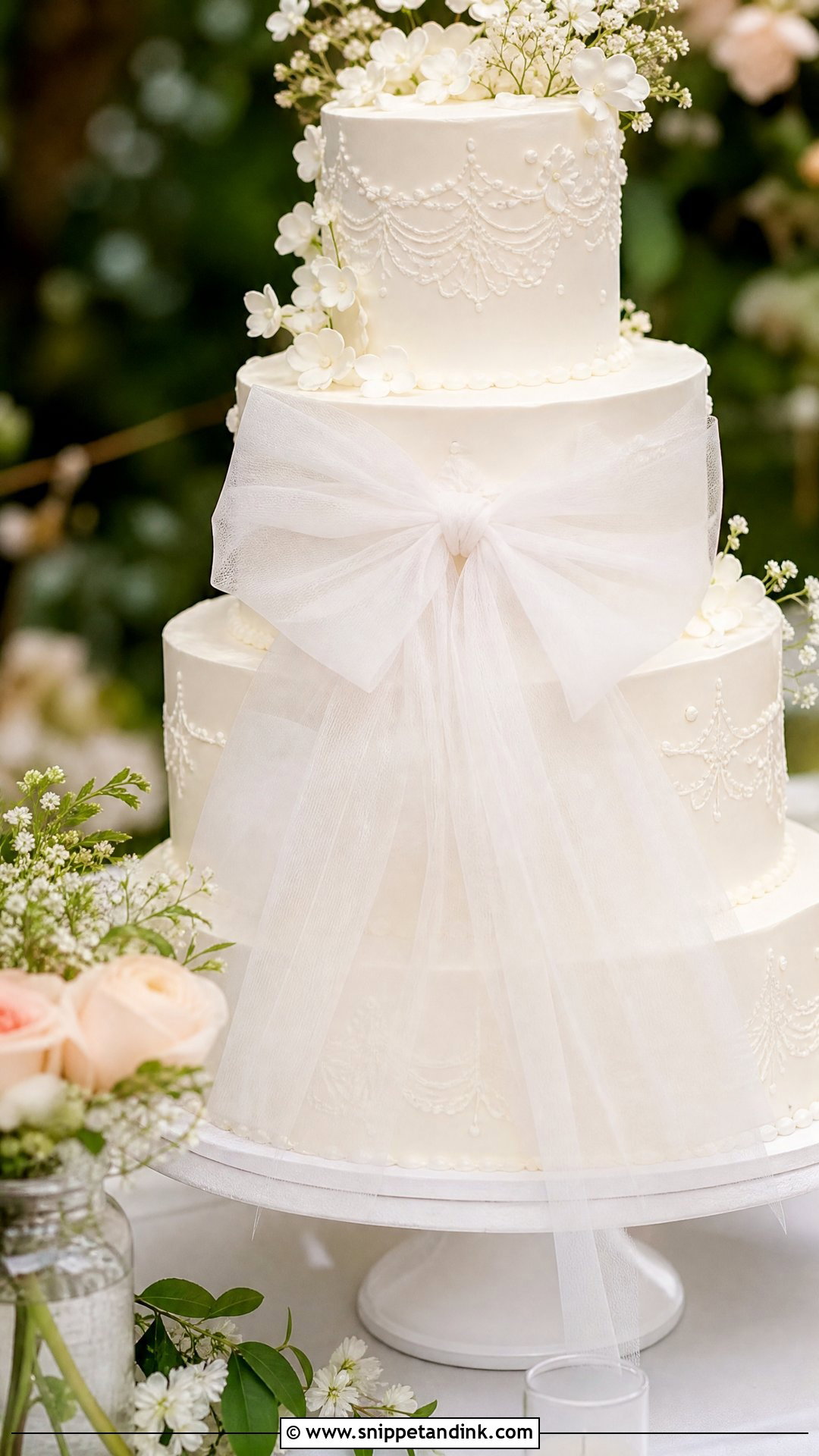
Tulle gives volume and movement, especially when the tails drape beside the tiers. It’s purely decorative, so I attach it to a removable support and take it off before cutting. Smooth white buttercream or subtle lace piping keeps the cake quiet so the fabric can float. It suits garden receptions with soft natural light, though wind will play with it outdoors.
11. Wafer Paper Bow Wedding Cake
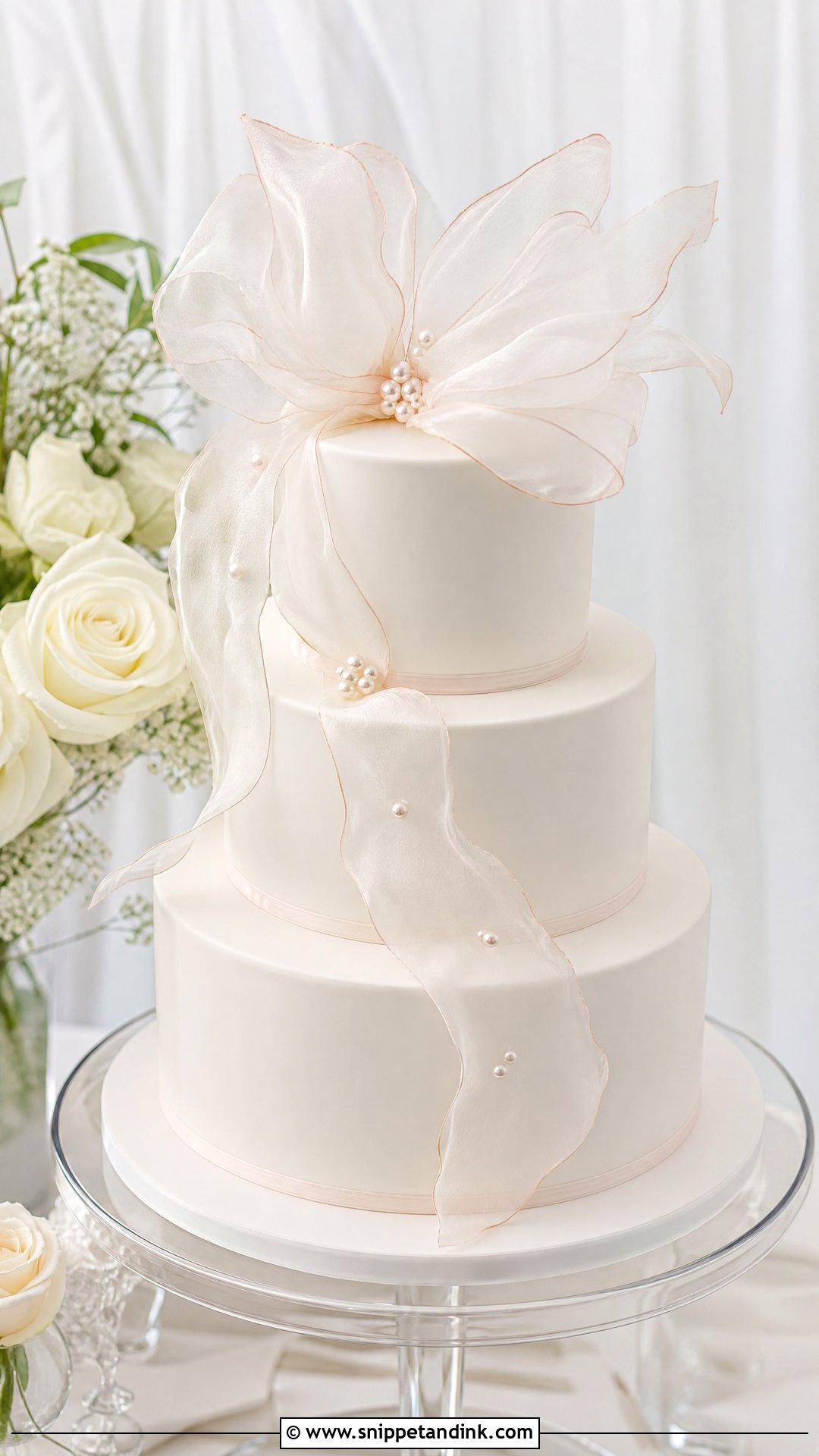
Wafer paper makes the lightest, most fabric-like bow you can eat. It folds into airy, layered loops that look almost translucent. The catch is moisture: wafer paper wilts in humidity and on damp buttercream, so I back it carefully and avoid it for steamy summer venues. Edible shimmer or a blush edge adds dimension without weight.
12. Vintage Bow Wedding Cake
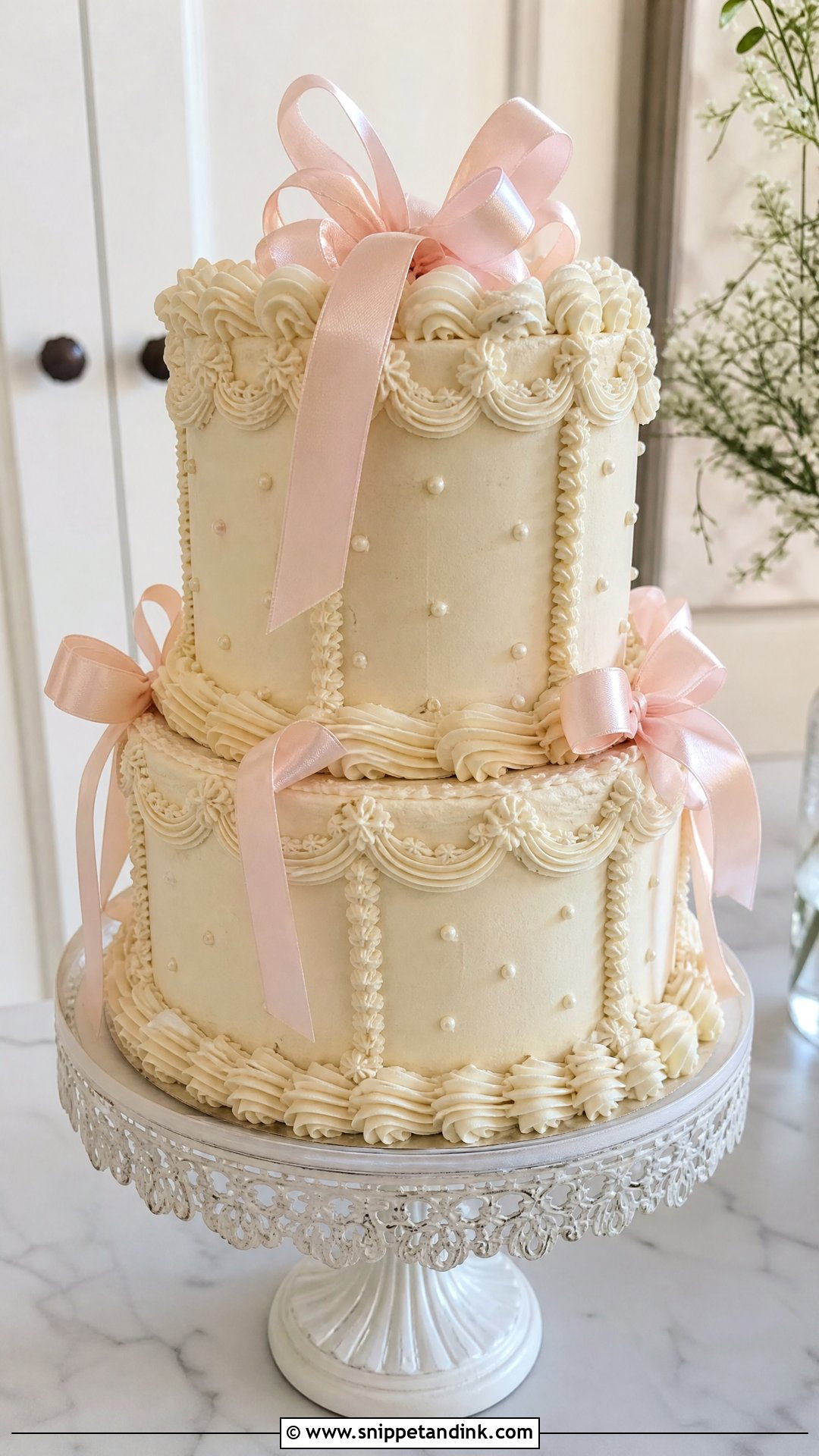
Lambeth borders, shell piping, scallops and pearl dots with bows tucked between them: that’s the vintage bow cake. The piping and bows must share the space rather than compete, so I plan which tier gets the heaviest piping and keep the bows smaller there. All white is classic, blush is romantic, and ivory with black bows is dramatic. A footed stand suits the period feel.
13. Minimalist Bow Wedding Cake
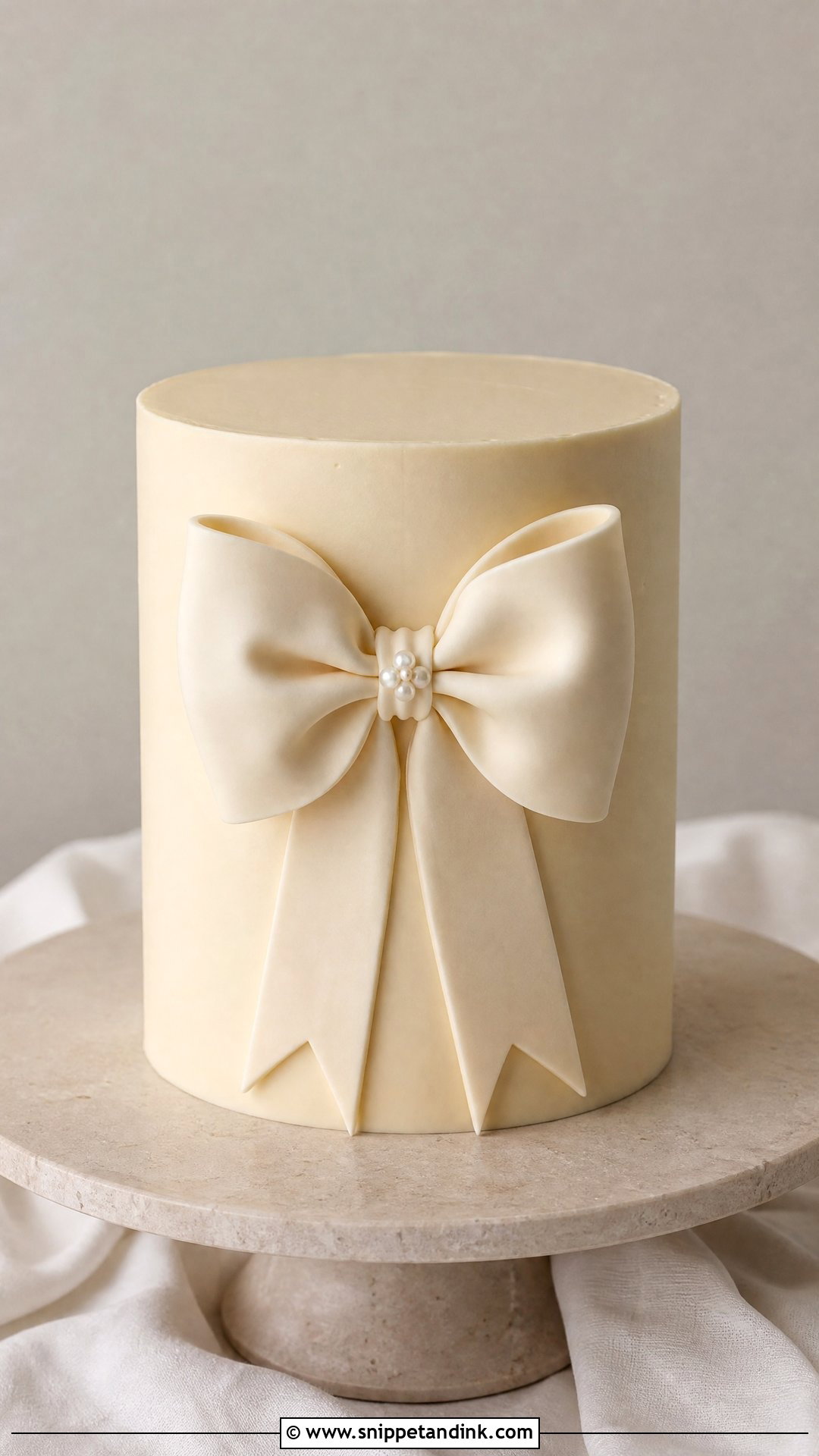
One bow on a smooth white, ivory or pale beige cake can carry the whole design. Placement matters more than anything here: I mark the centre front and the height on paper before attaching it, because a bow a few millimetres off-centre looks wrong on a plain cake. Neat ribbon tails, nothing else. Good for courthouse weddings and dinner-style receptions.
14. Three Tier Bow Wedding Cake
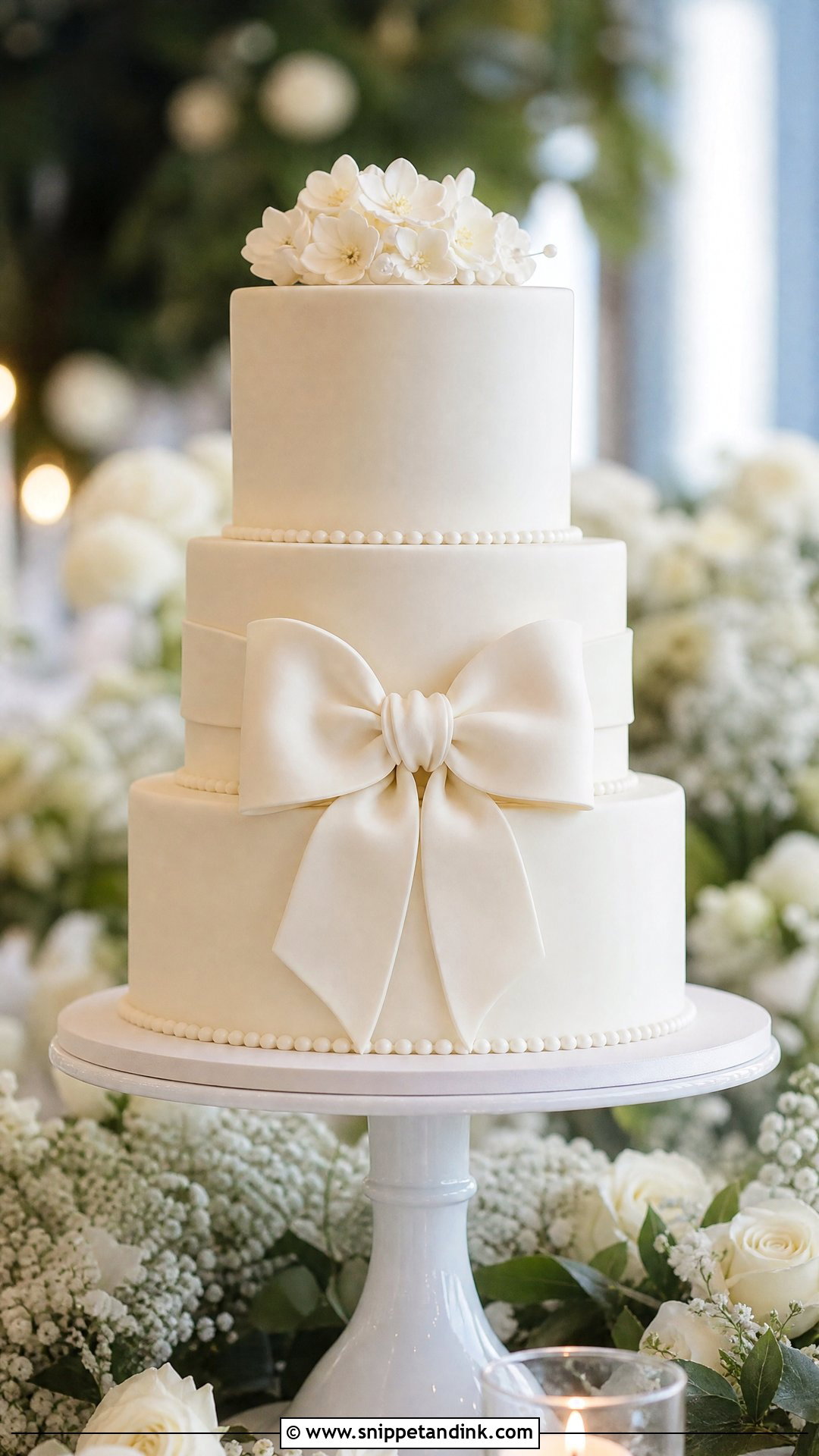
Three tiers give height without dwarfing the room, and enough surface for texture, piping or flowers. The bow can sit on the middle tier, crown the top or cascade down one side. Size is where most bow cakes go wrong, and I’ll come back to that below. Too small disappears; too big looks like the cake is wearing a costume. White with ivory reads classic, and a black or dusty blue bow reads modern.


15. Two Tier Bow Wedding Cake
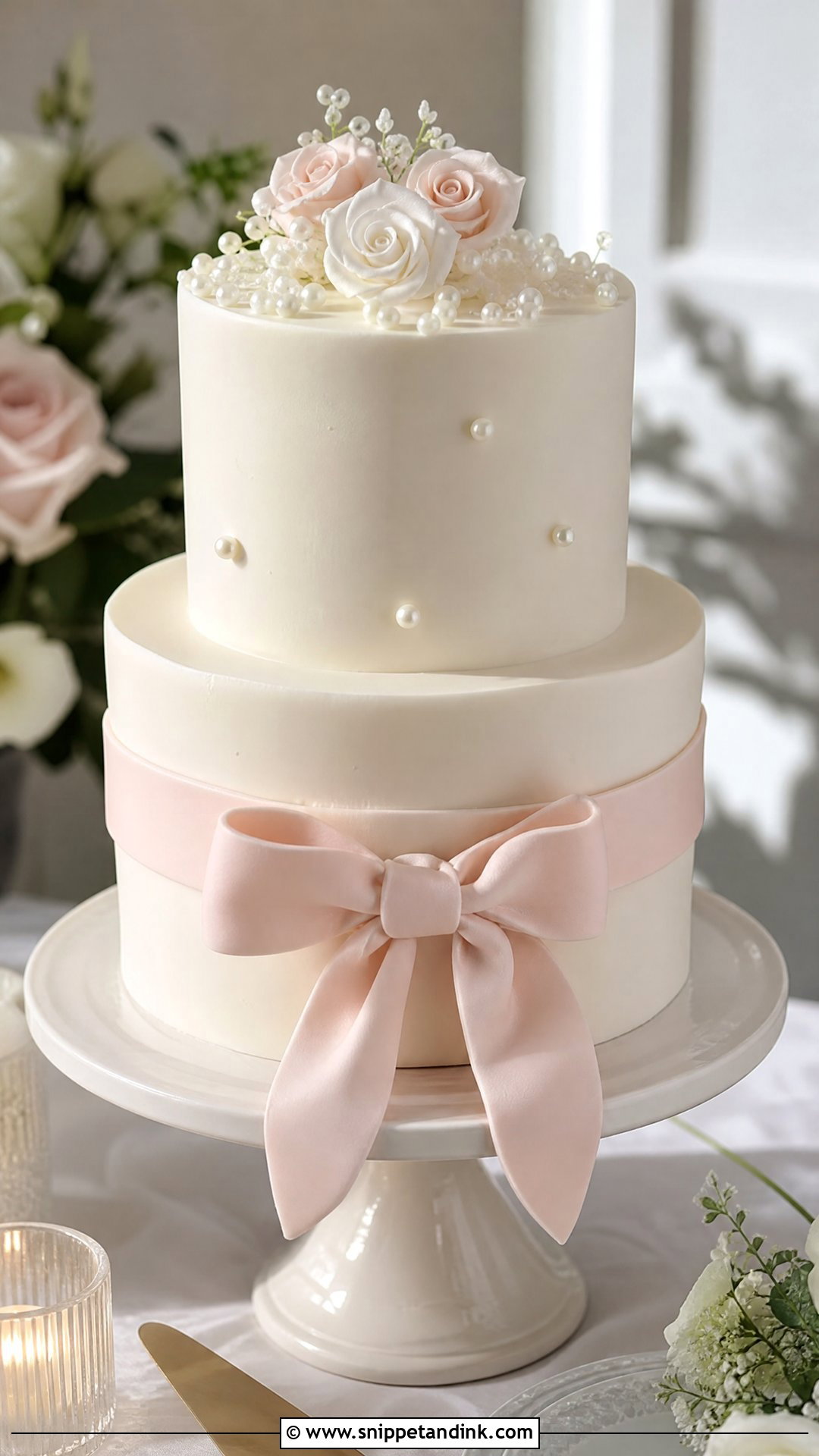
Two tiers suit elopements, bridal lunches and small receptions. A bow can wrap the lower tier, sit on the top one or trail down a side. White buttercream, pale pink fondant or ivory with pearls all work. Because there’s less cake, every detail is seen up close, so the finish has to be flawless.
16. Single Tier Bow Wedding Cake
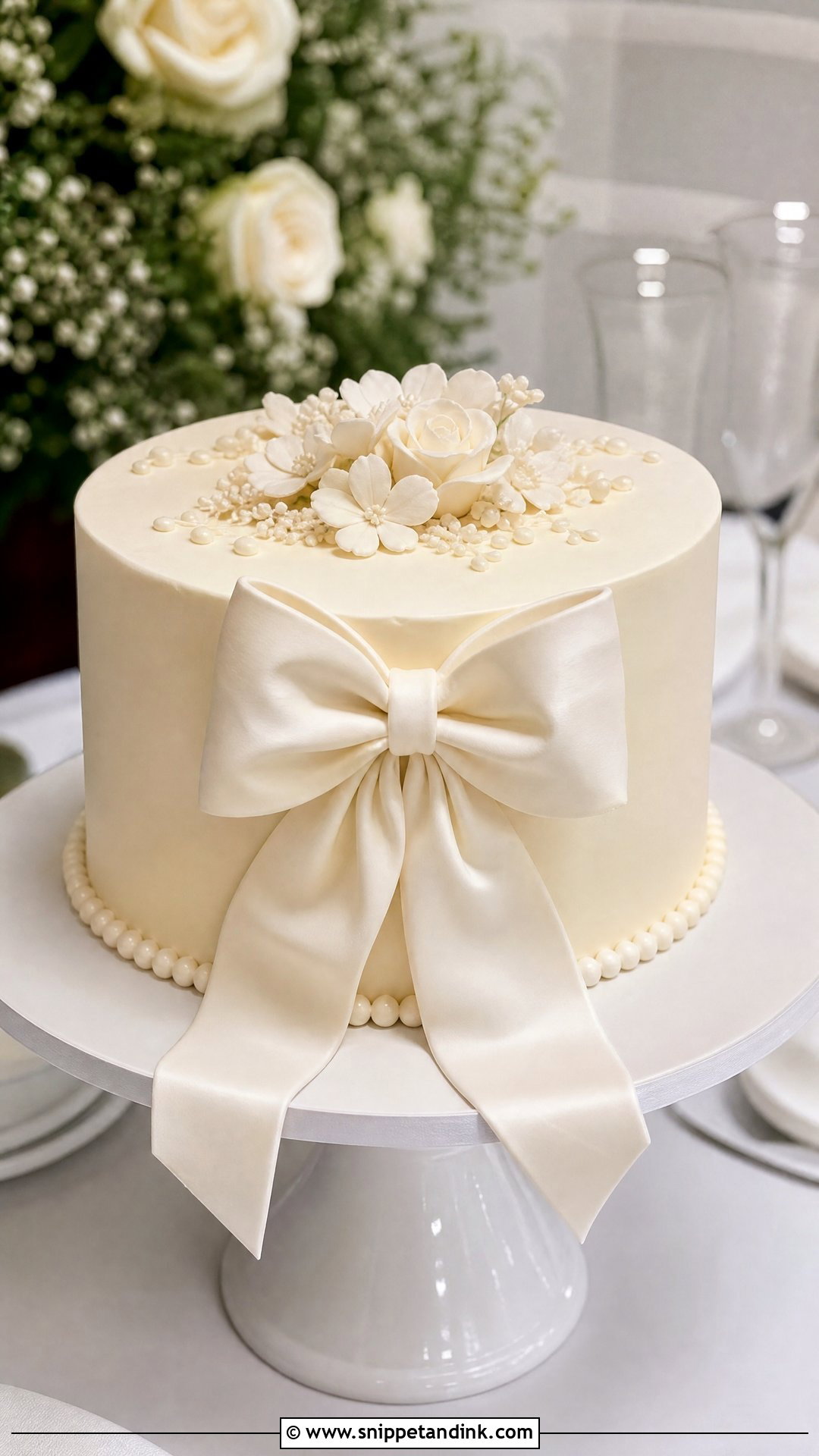
Go tall rather than wide with a single tier. A round tier about twice as high as a standard one, with a smooth finish and one large bow on the front, looks modern and deliberate. It sits nicely among other sweets on a dessert table. White and blush or ivory and black keep the palette clean.
17. Bow Topper Wedding Cake
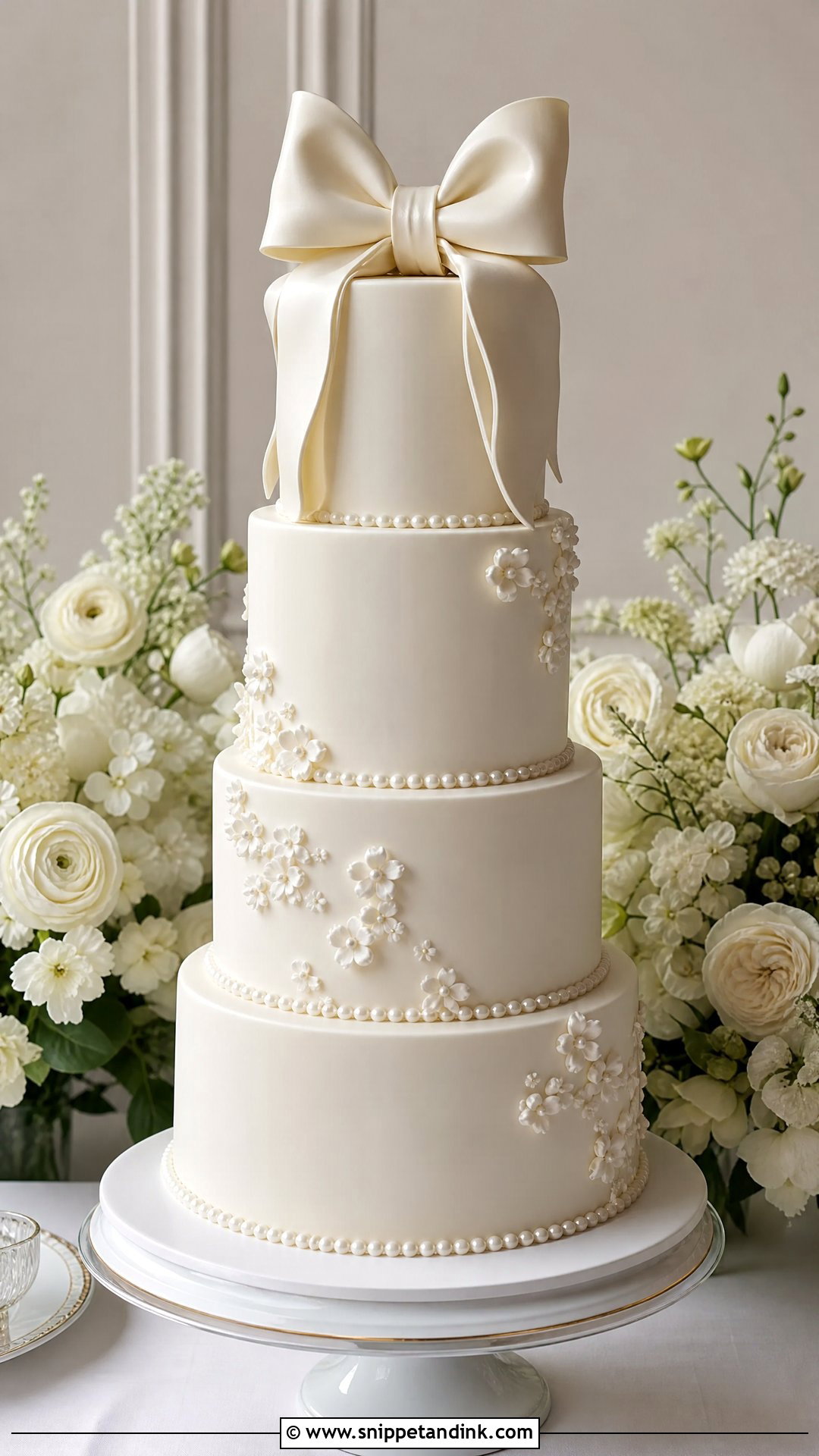
A bow topper wedding cake places the bow at the highest point, rather like a bridal hair accessory, and draws the eye upward. A large topper needs a dry, rigid gum paste bow and a support wire or pick into the top tier. Keep the sides of the cake simple when the topper is big. It’s a good alternative for couples who don’t want flowers or figurines on top.
18. Bow Cascade Wedding Cake
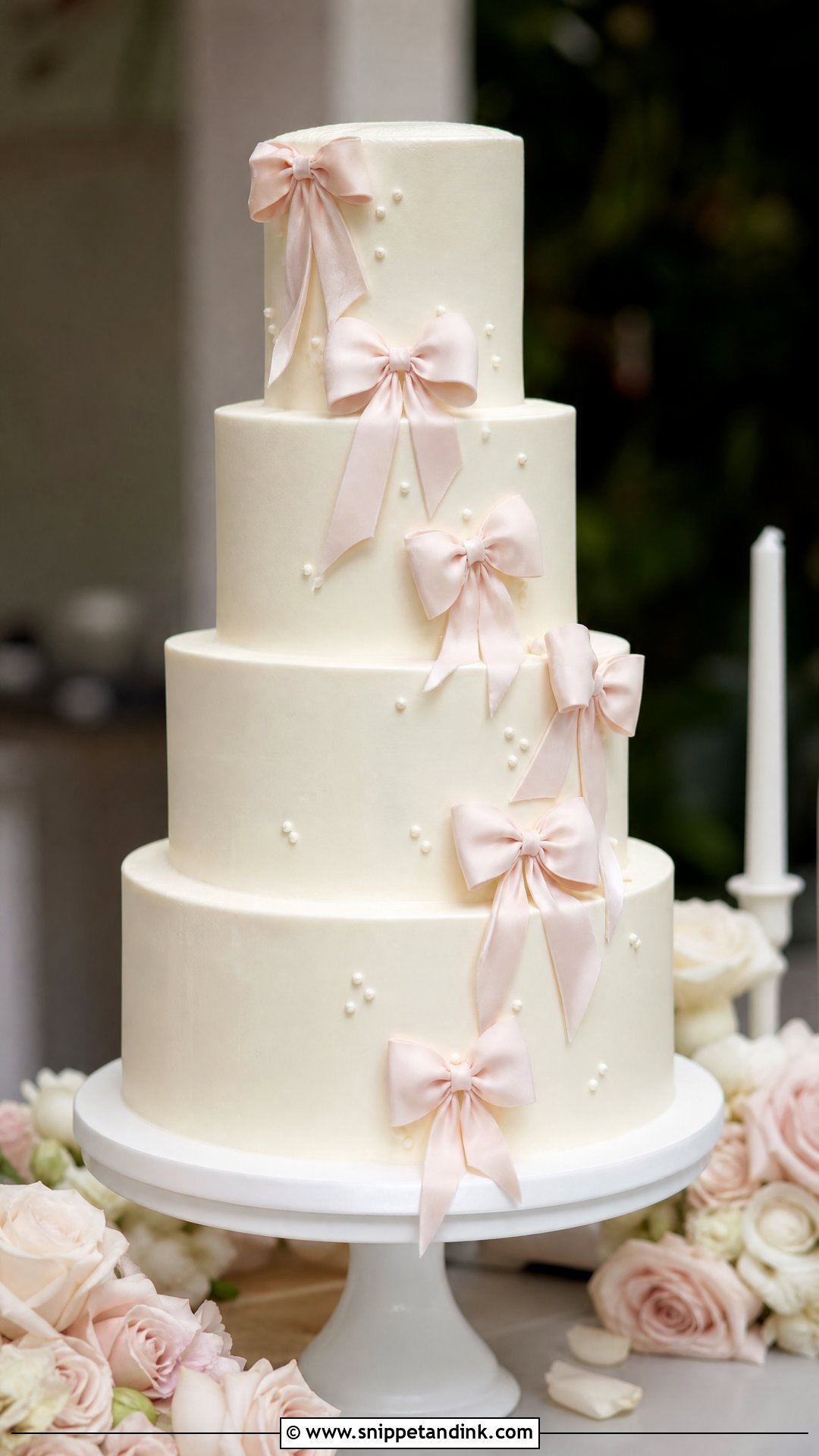
A cascade uses several bows flowing down the tiers like a ribbon trail. I place the bows on a diagonal and shrink them slightly as they descend, which keeps the eye moving. The tiers must stay clean so the cascade reads. Blush bows on white feel romantic, black on ivory feels editorial. Position the cake so guests see it side-on as they walk in.
19. Floral Bow Wedding Cake
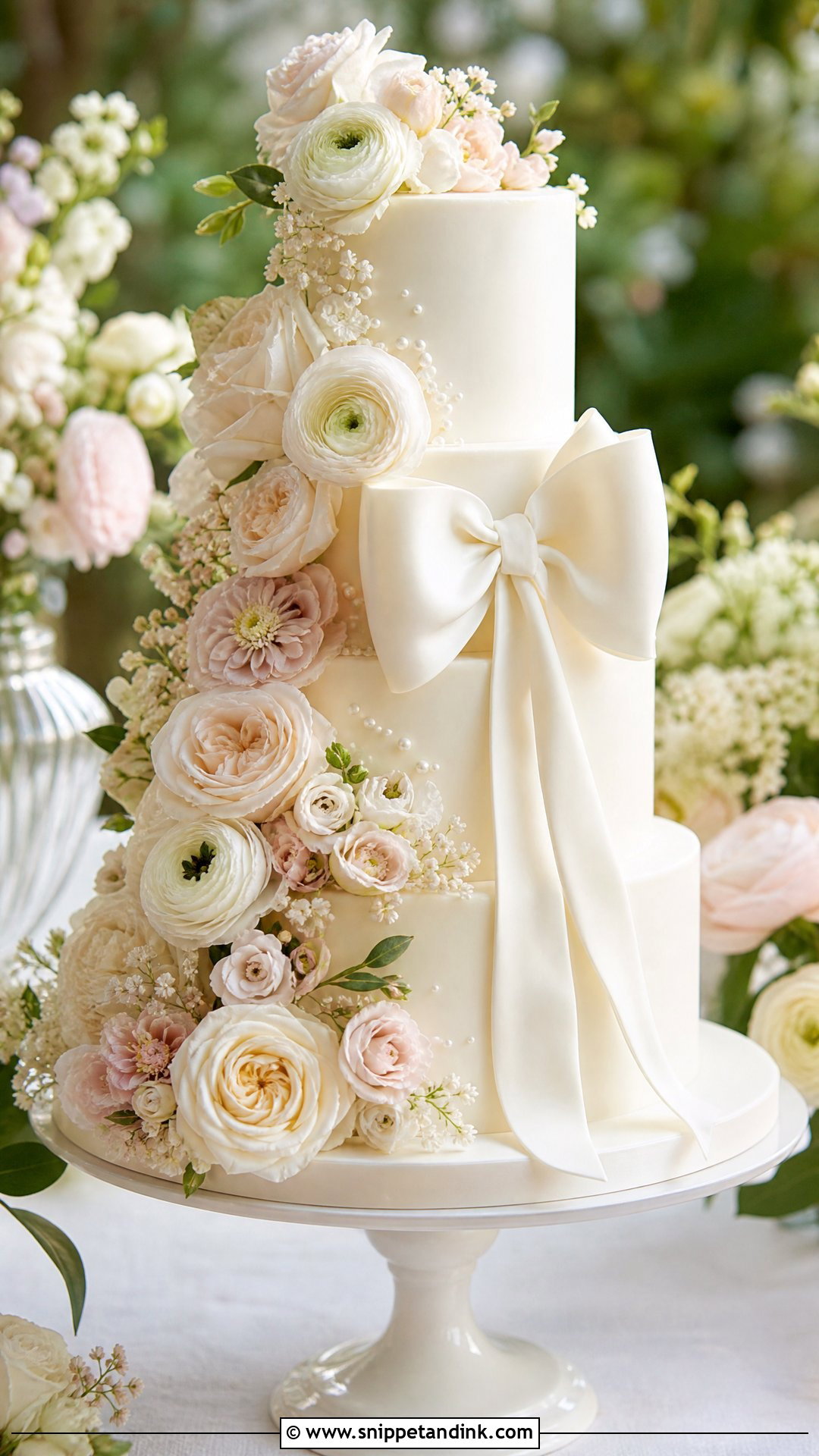
Bow for structure, flowers for softness. Sugar flowers are the easiest way to keep the whole cake cohesive, and they’re safe on food. If you’d rather use fresh flowers, I need them wrapped and kept off the icing, and some popular wedding flowers are toxic, so the florist and I agree which stems go on the cake. Roses, peonies and ranunculus all suit bows.

20. Rose Bow Wedding Cake
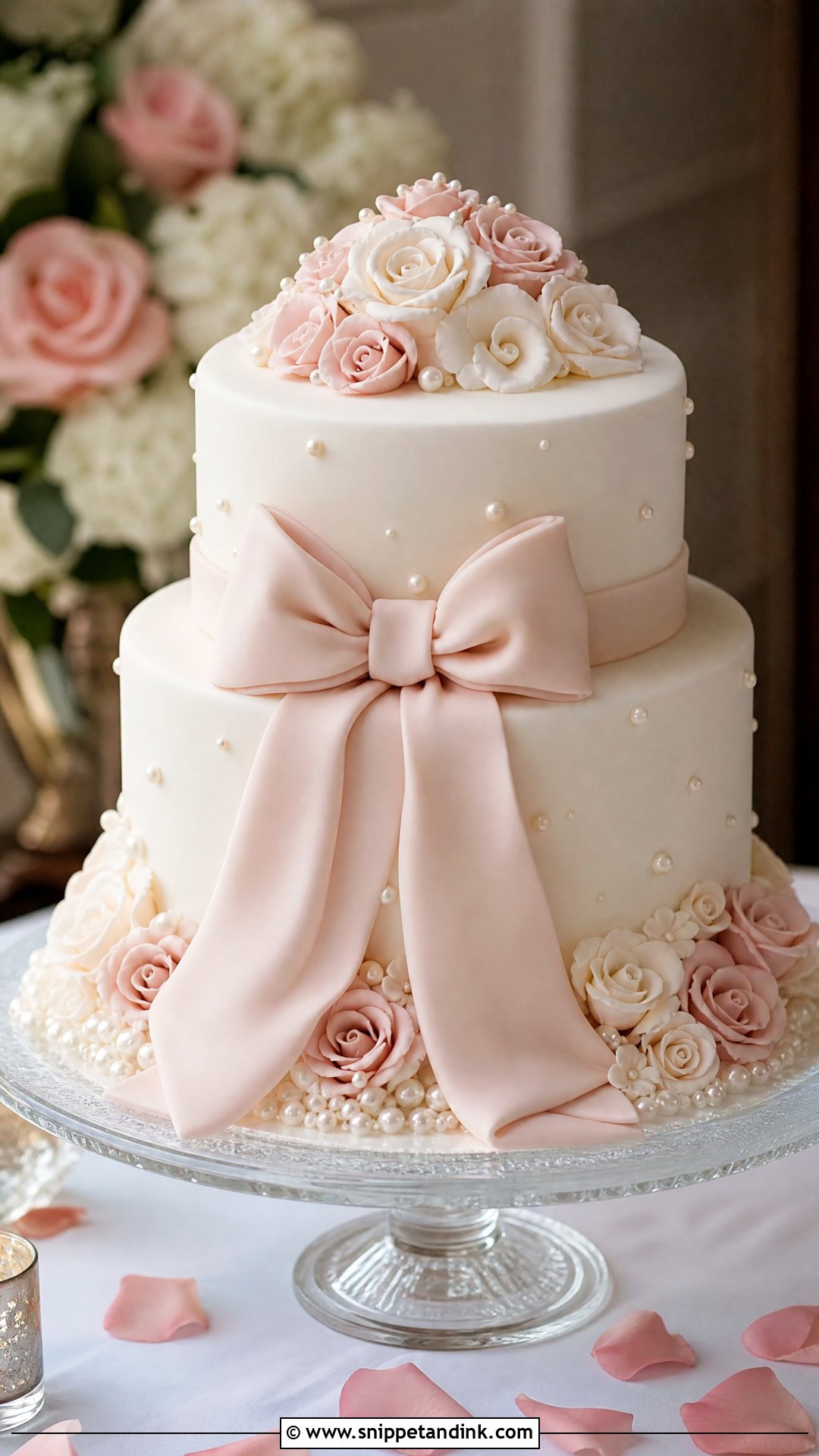
Roses and bows have been paired on wedding cakes for generations, which is why this one sits so easily with bridal flowers. White roses with an ivory bow are timeless; blush roses with a pink bow are softer; one black bow with white sugar roses is the modern twist. I cluster the roses around the bow or let them climb one side, and keep the icing smooth so both details read.
21. Gold Bow Wedding Cake
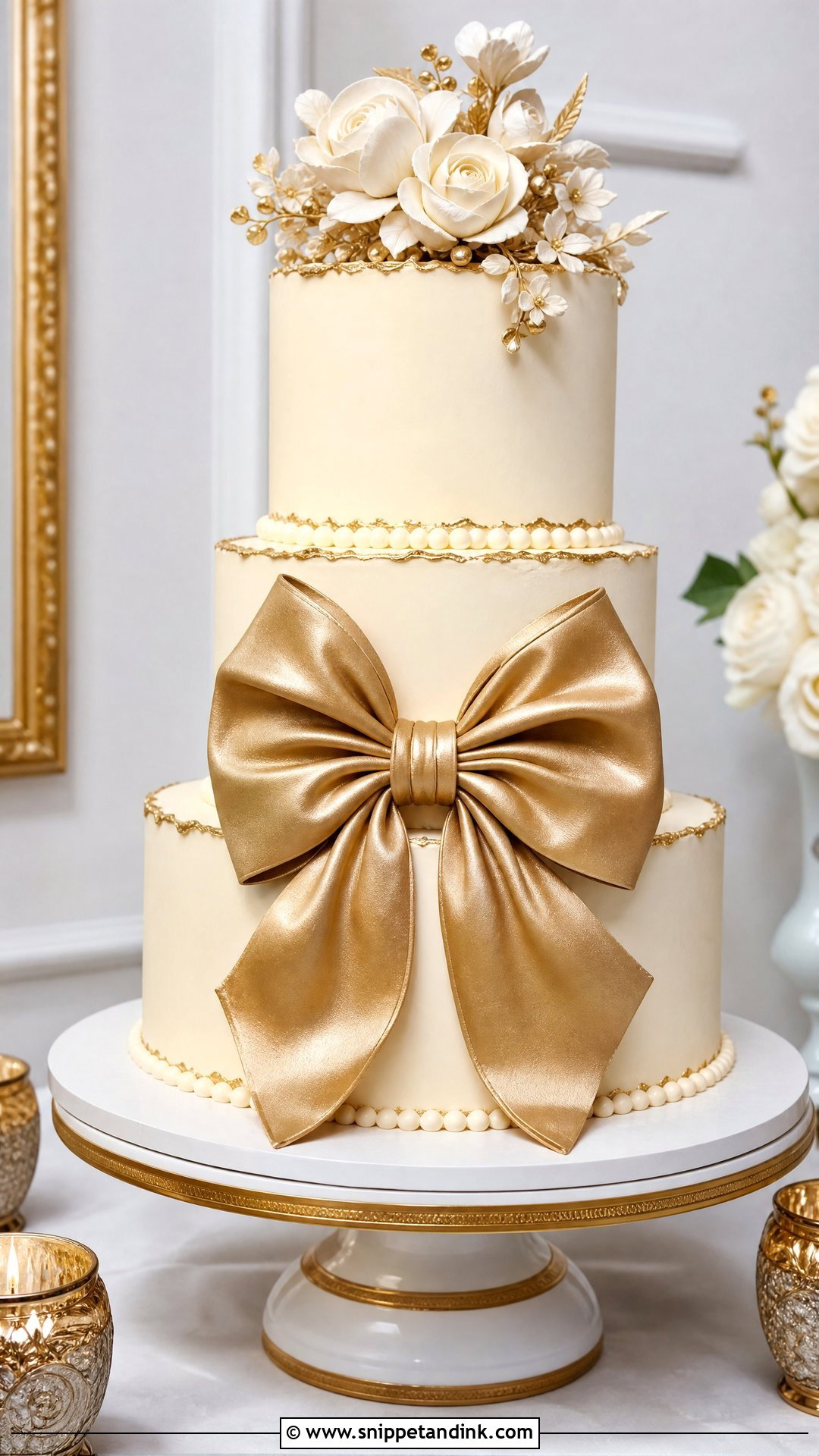
One gold bow is enough luxury. I paint it with edible gold mixed with a drop of alcohol so it dries quickly to a metallic finish, and I keep the rest to a few gold edges. Ivory tiers, pearls and subtle piping keep it refined in a ballroom or candlelit room. Gold everywhere starts to look busy and brassy in photos.
22. Silver Bow Wedding Cake
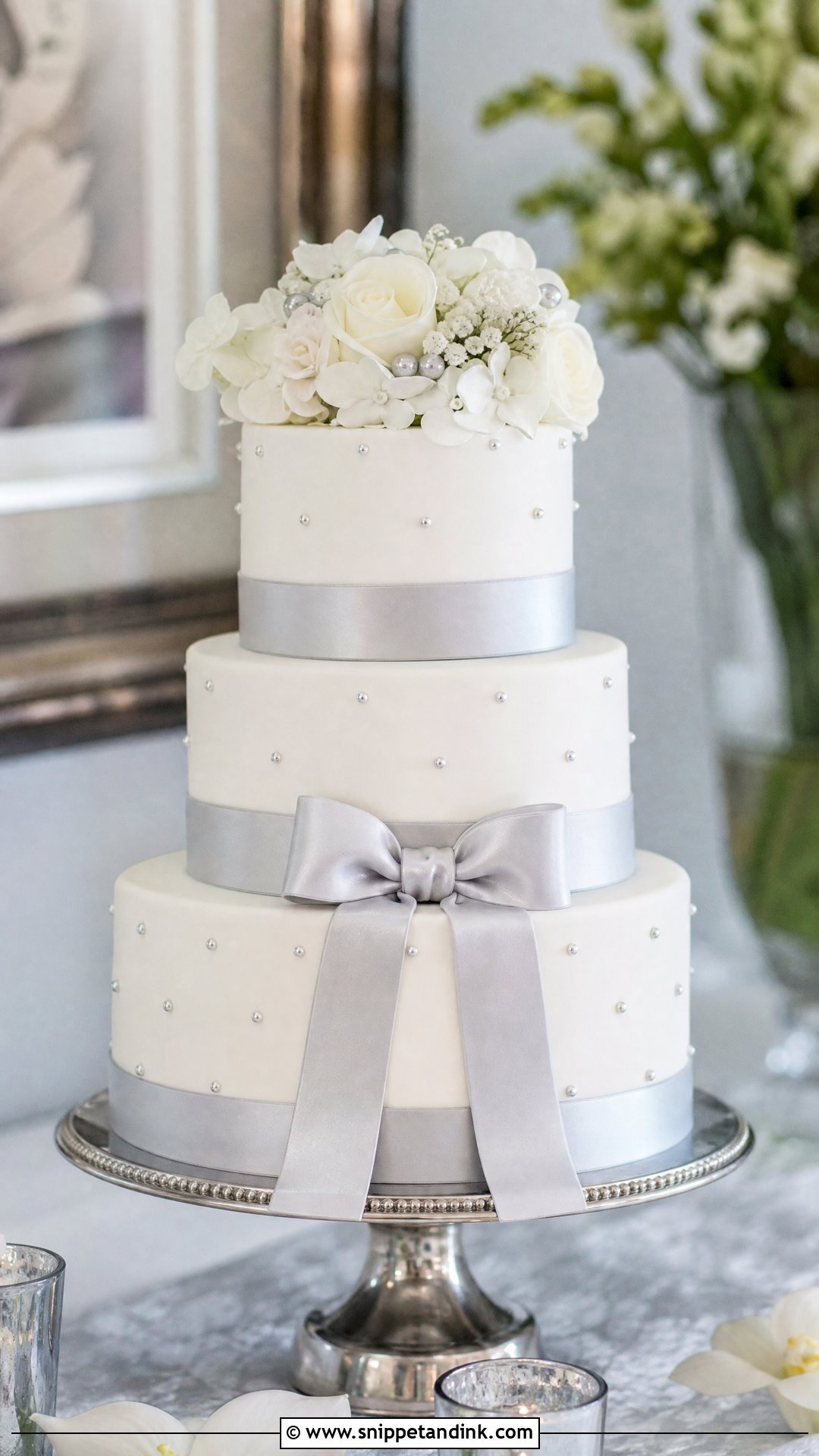
Silver suits cooler palettes: white, pale blue, icy grey, lavender. I aim for a satin silver rather than mirror shine, which looks more bridal and avoids glare in flash photos. A silver fondant bow can sit on the middle tier, wrap the base or top the cake like a gift. Edible pearls or fine piping complete it in a modern venue.
23. Ivory Bow Wedding Cake
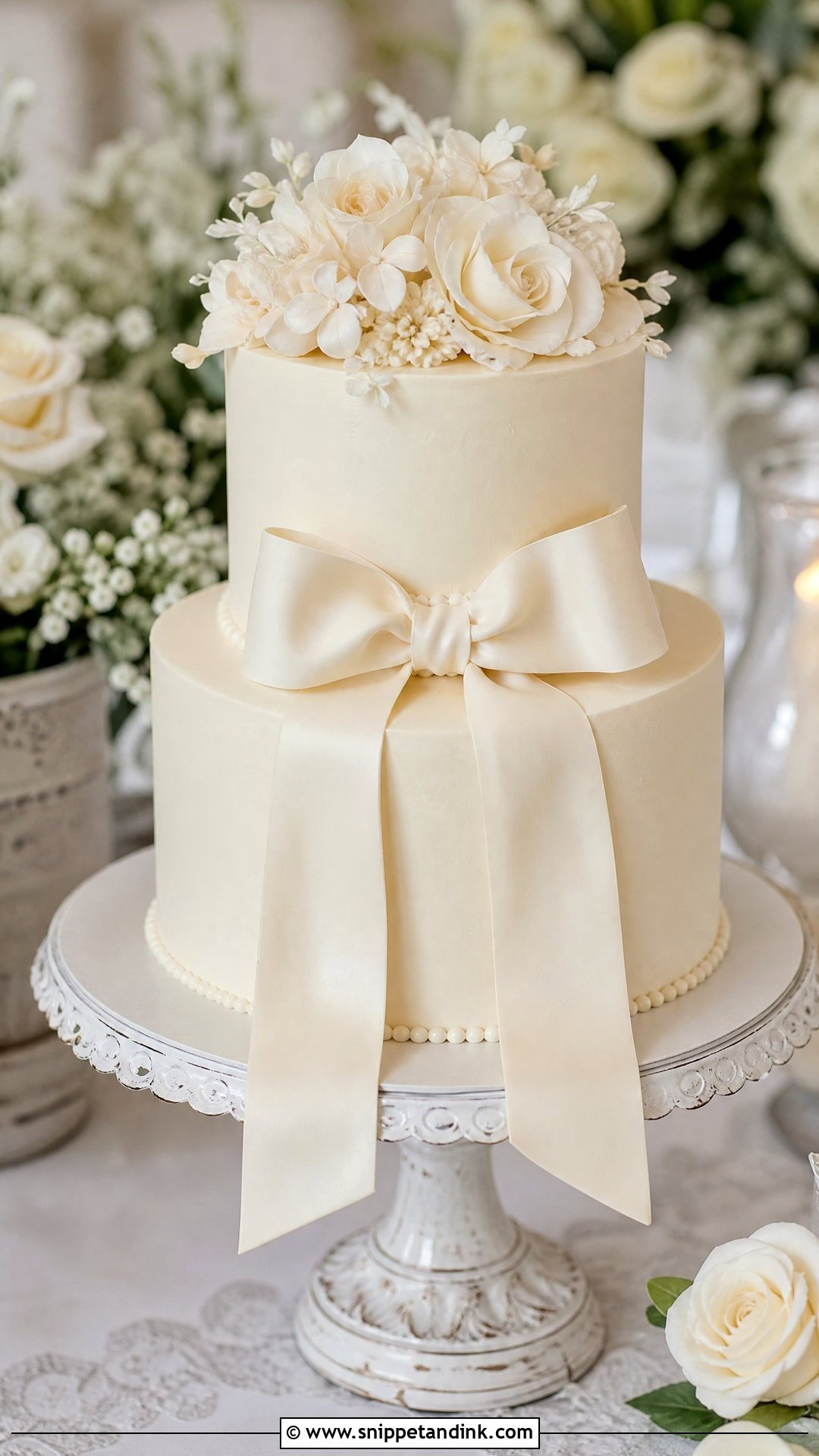
Ivory is softer and warmer than bright white, and it’s kinder in photos because it doesn’t blow out under flash. Champagne bows, pearls, antique piping and cream sugar flowers suit it, especially in historic venues or garden weddings with neutral palettes. Match the ivory to the dress if you can; a cake much whiter than the gown makes the gown look yellow.
24. Champagne Bow Wedding Cake
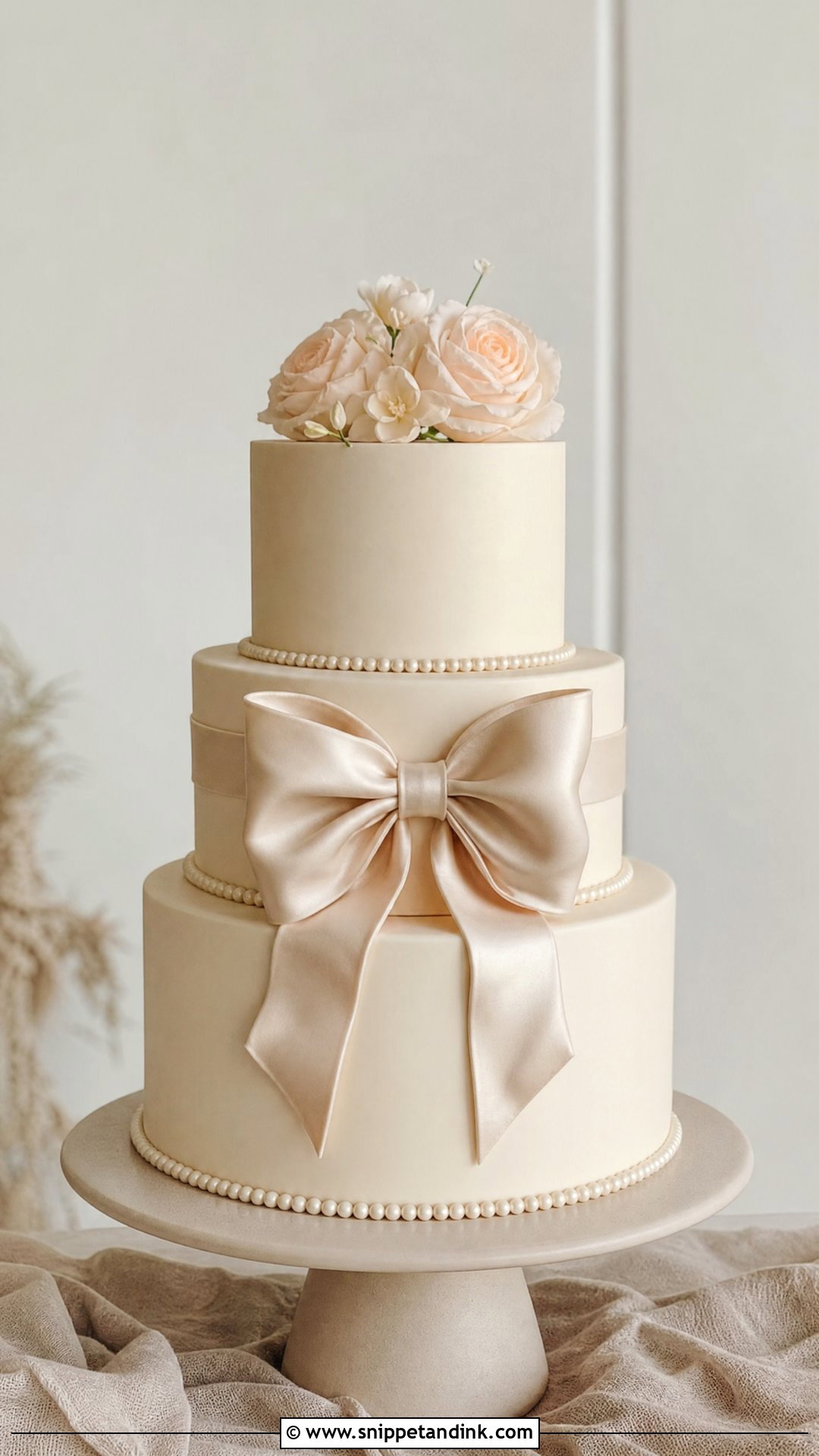
Champagne sits between beige, gold and blush, warm but not flashy. A champagne bow on ivory buttercream or smooth fondant with subtle pearl piping sits well beside satin dresses and candlelight. Large and sculptural reads fashion; small and wrapped reads classic. Sugar flowers in cream, taupe or pale peach add detail without breaking the palette.


25. Red Bow Wedding Cake
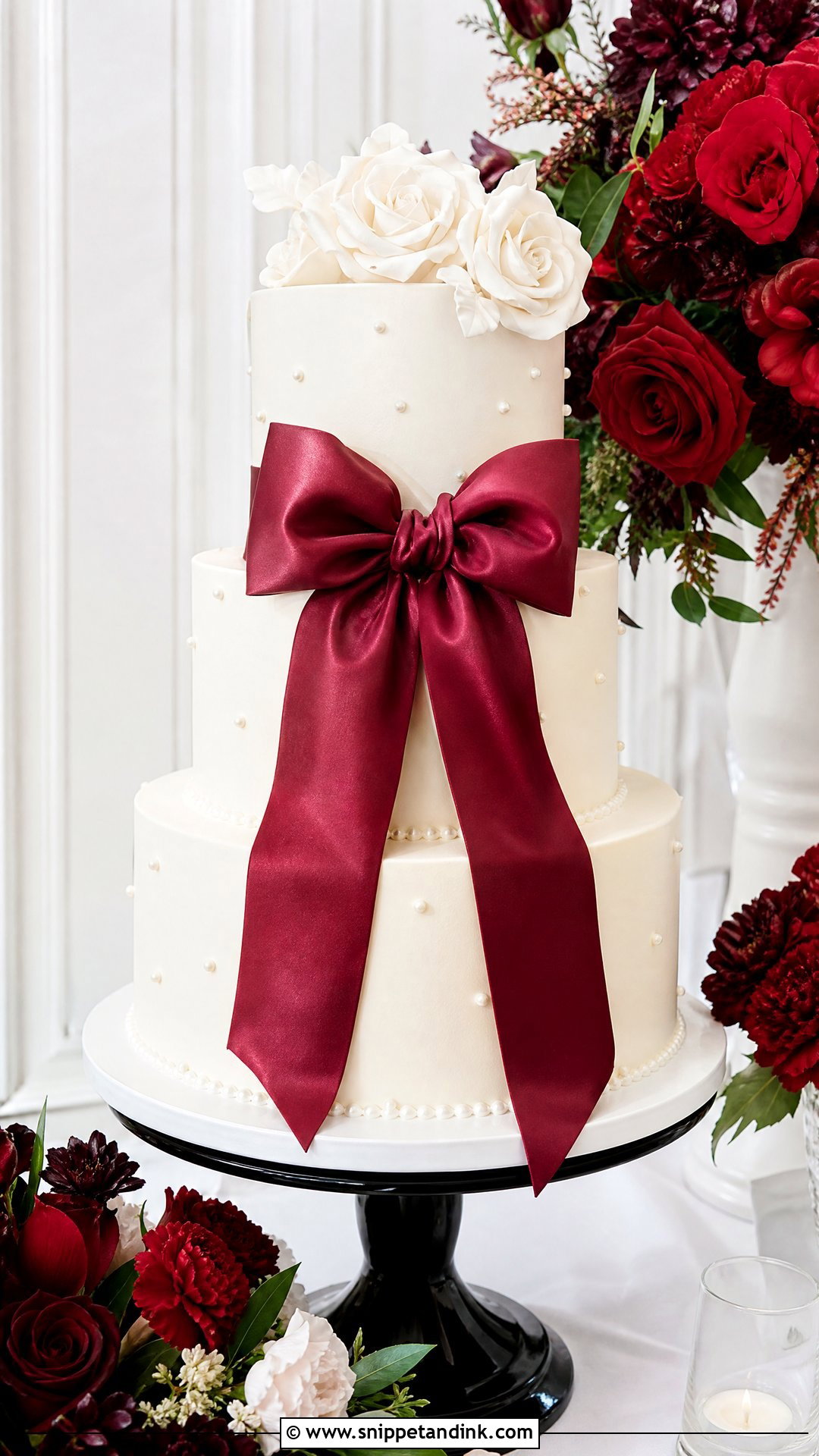
Red is bold, so everything else has to step back. A deep red or burgundy bow on a white cake makes the focal point; pearls, a few white roses or soft piping are plenty. Deep reds also need heavy colouring, which is why I usually make red bows in sugar paste rather than buttercream. Choose wine and burgundy shades over bright candy red for a grown-up look.
26. Green Bow Wedding Cake
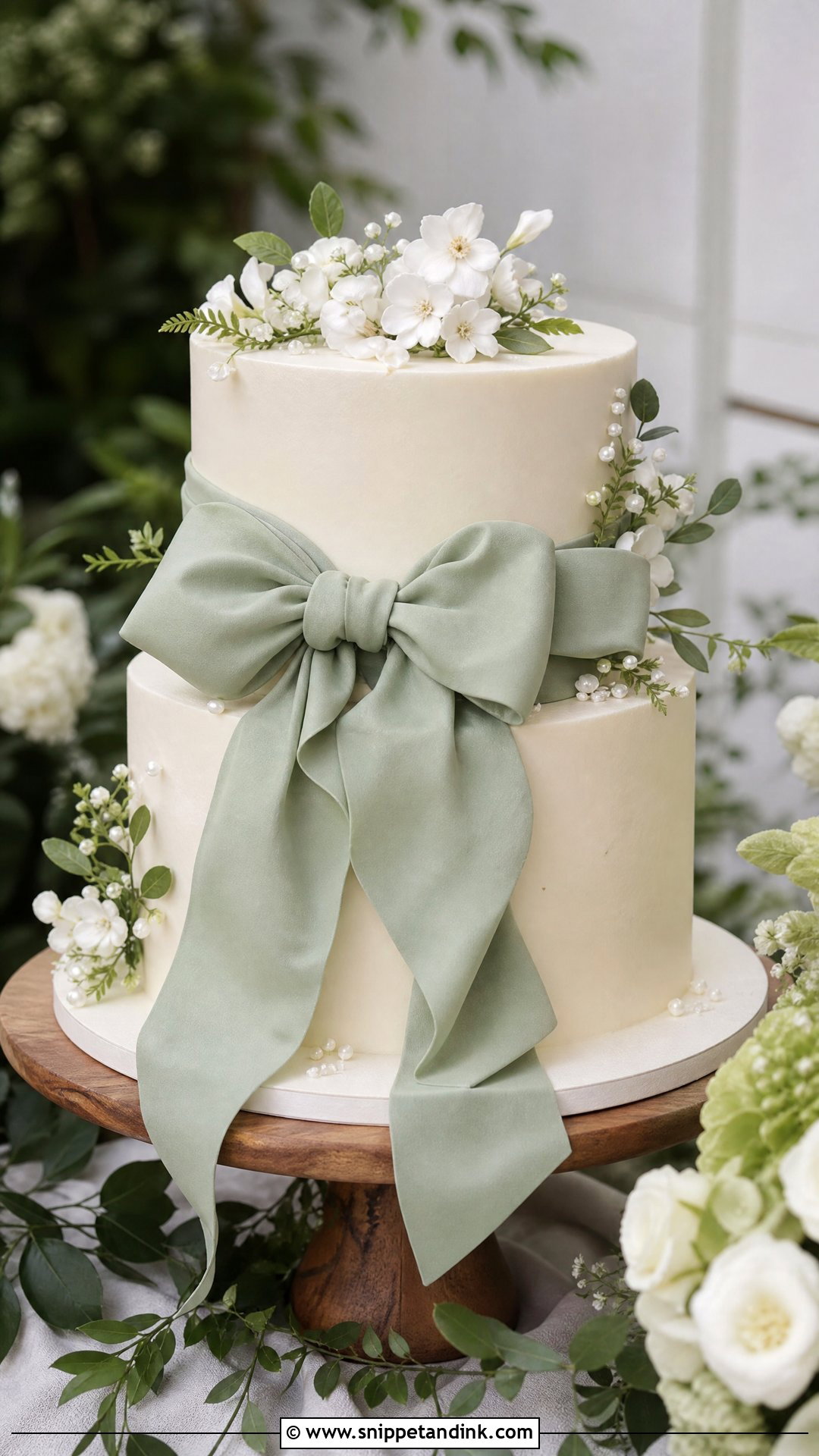
Sage, olive, eucalyptus and soft pistachio bows tie a cake to the greenery in the arrangements. Muted shades stay elegant; bright greens can look casual. Sugar leaves, white blooms or pearls keep it bridal. Greenhouse venues and outdoor summer receptions suit it, though outdoor heat brings its own rules for the icing.
27. Lavender Bow Wedding Cake
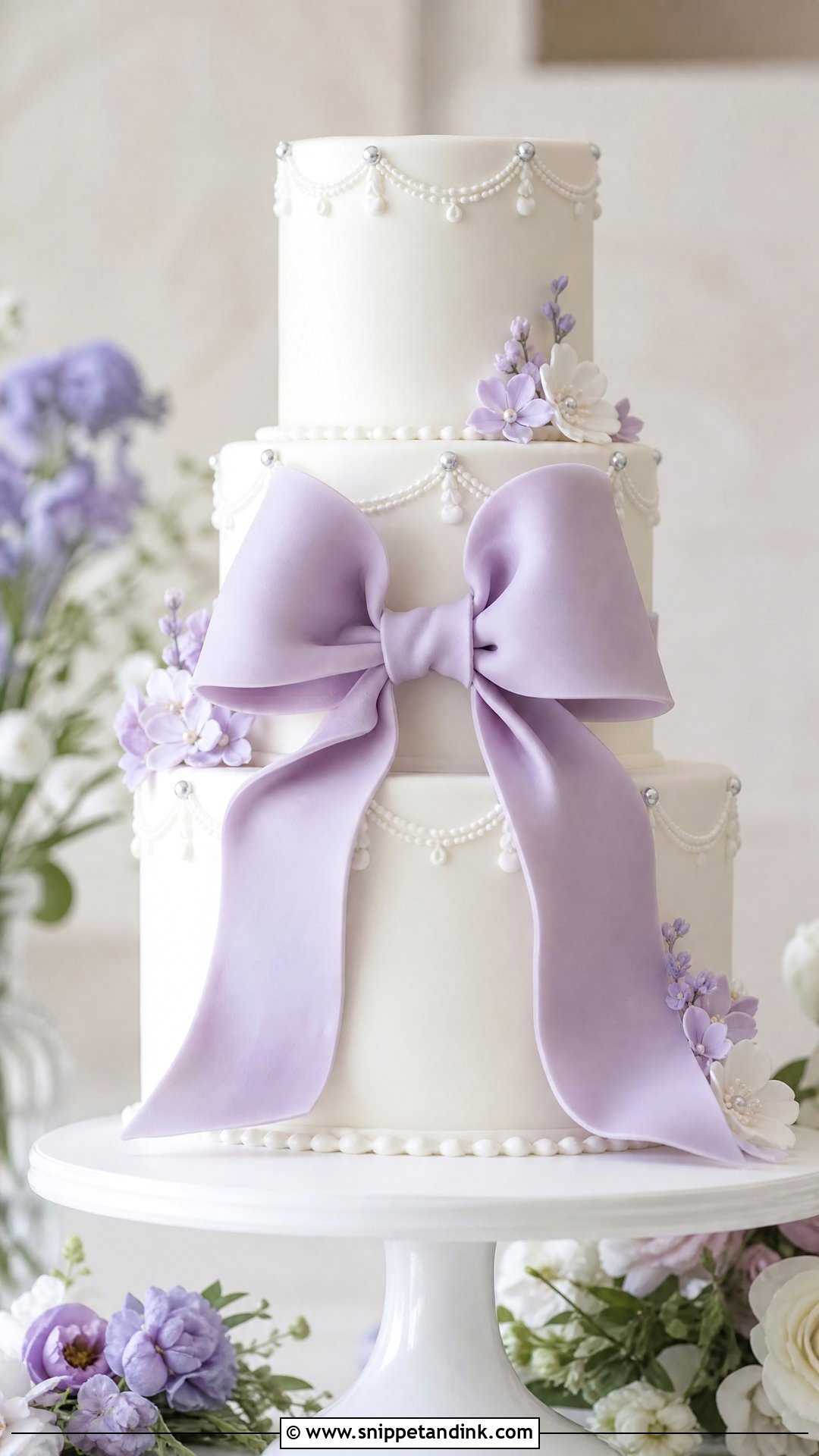
Lavender can lean lilac, dusty or grey-purple, and it shifts noticeably under different lights, so I check it in daylight and under warm bulbs before committing. Paired with ivory frosting, white sugar flowers and delicate piping, it looks graceful. Silver and pearls suit it too. Keep the design airy; purple looks heavier than it is.
28. Lace Bow Wedding Cake
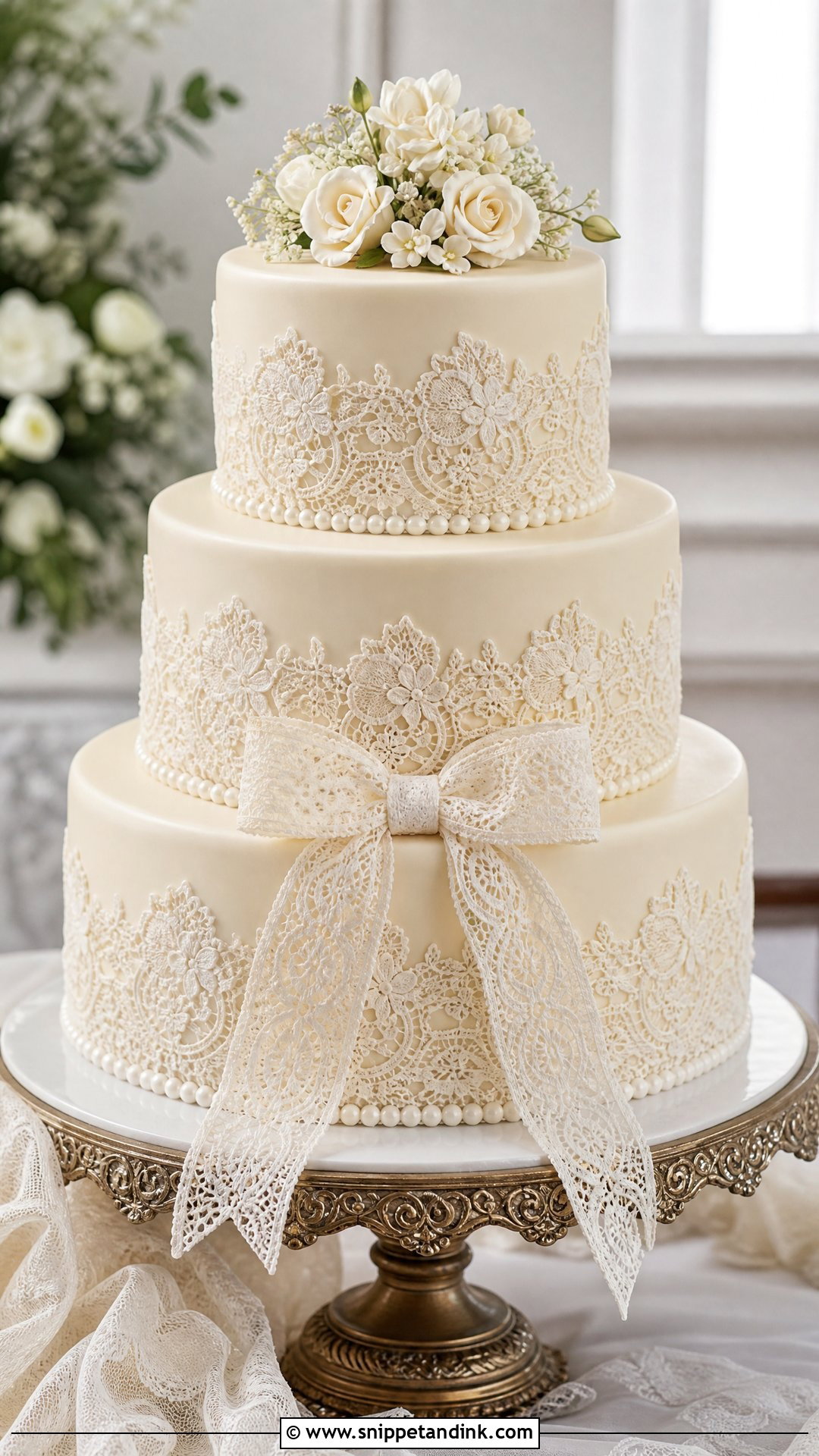
Lace pressed into a fondant bow, or lace piping on the tiers with a smooth bow accent, echoes the gown without copying it. I usually take one motif from the dress lace and repeat it rather than reproduce the whole pattern. Ivory and white are safest, though soft blush can work too. Estate weddings and traditional ceremonies suit it.
29. Ruffle Bow Wedding Cake
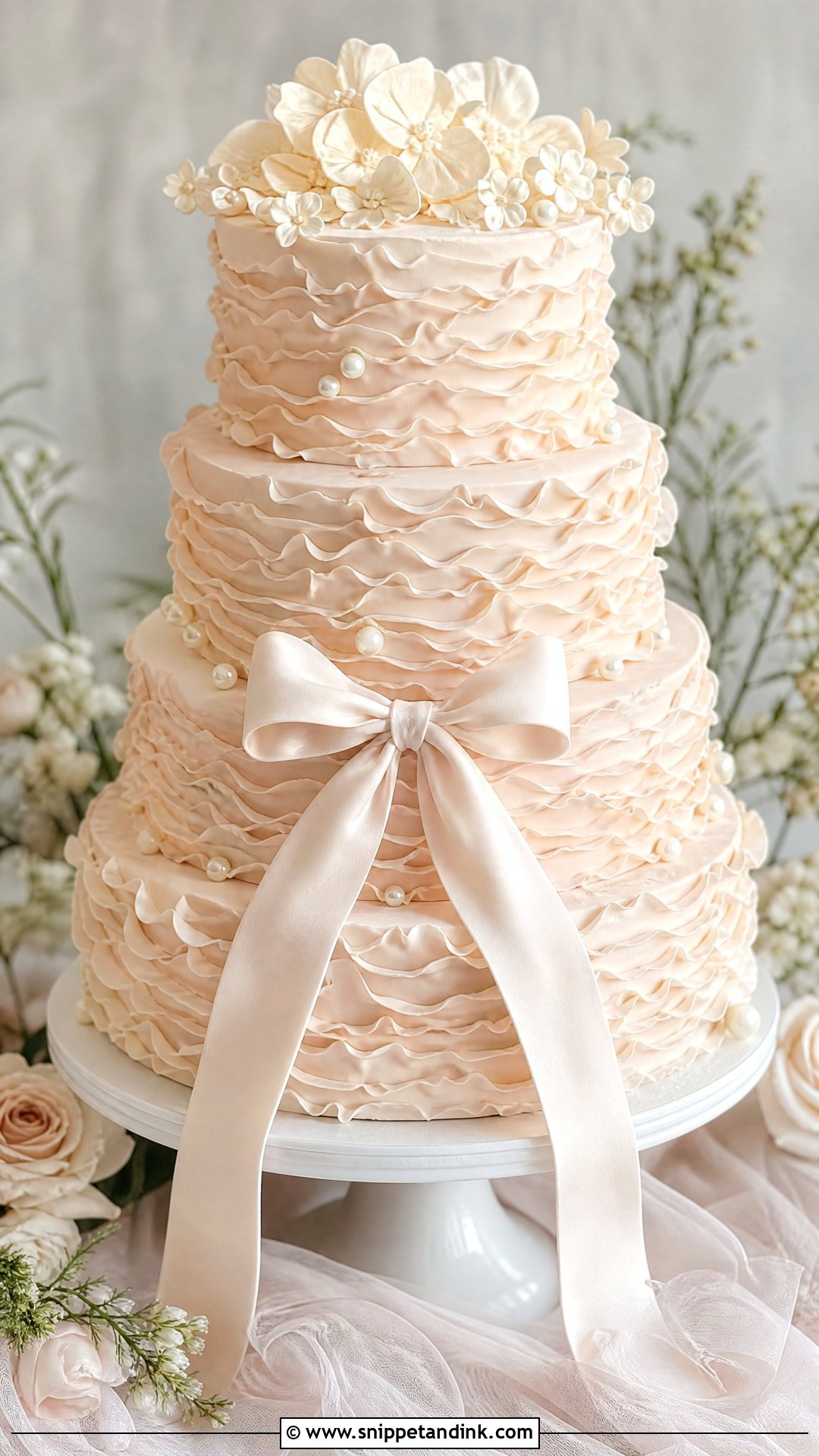
A ruffle bow wedding cake pairs soft texture with one structured detail. The tiers carry fondant or buttercream ruffles and the bow sits at the waist, top or base. Ruffles add weight visually, so I keep colours light: white, ivory, blush, champagne. Ruffled fondant also adds actual weight, which means more internal support on the lower tiers.
30. Square Bow Wedding Cake
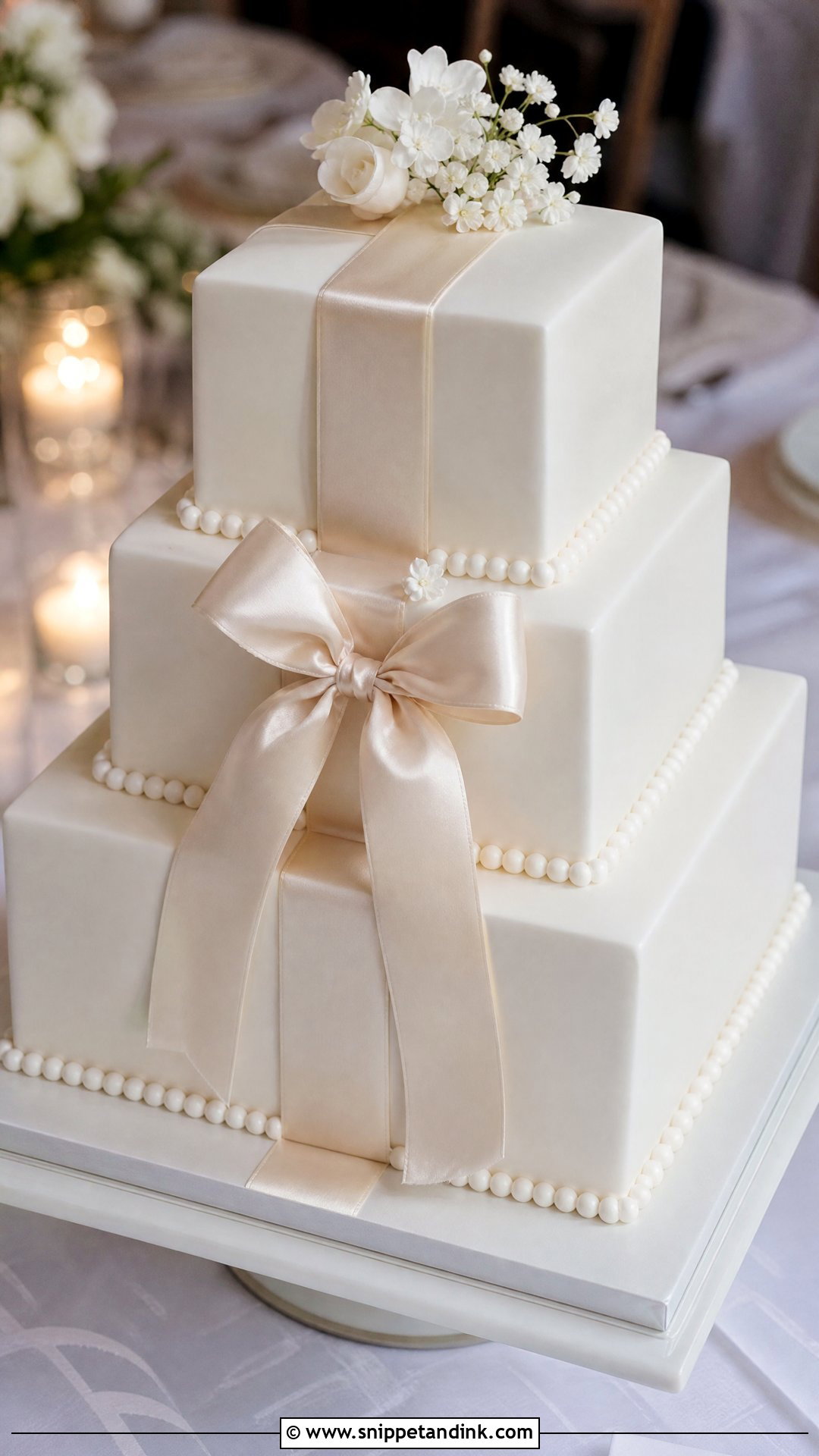
Square tiers make a bow look tailored, almost like a wrapped gift. Fondant suits them because the flat sides keep ribbon lines crisp, though those sharp corners take real time to finish. A single bow on the front corner is my favourite placement. Two or three square tiers, or a mix of square and round, both work; keep decoration minimal so the shape stays clear.
31. Heart Bow Wedding Cake
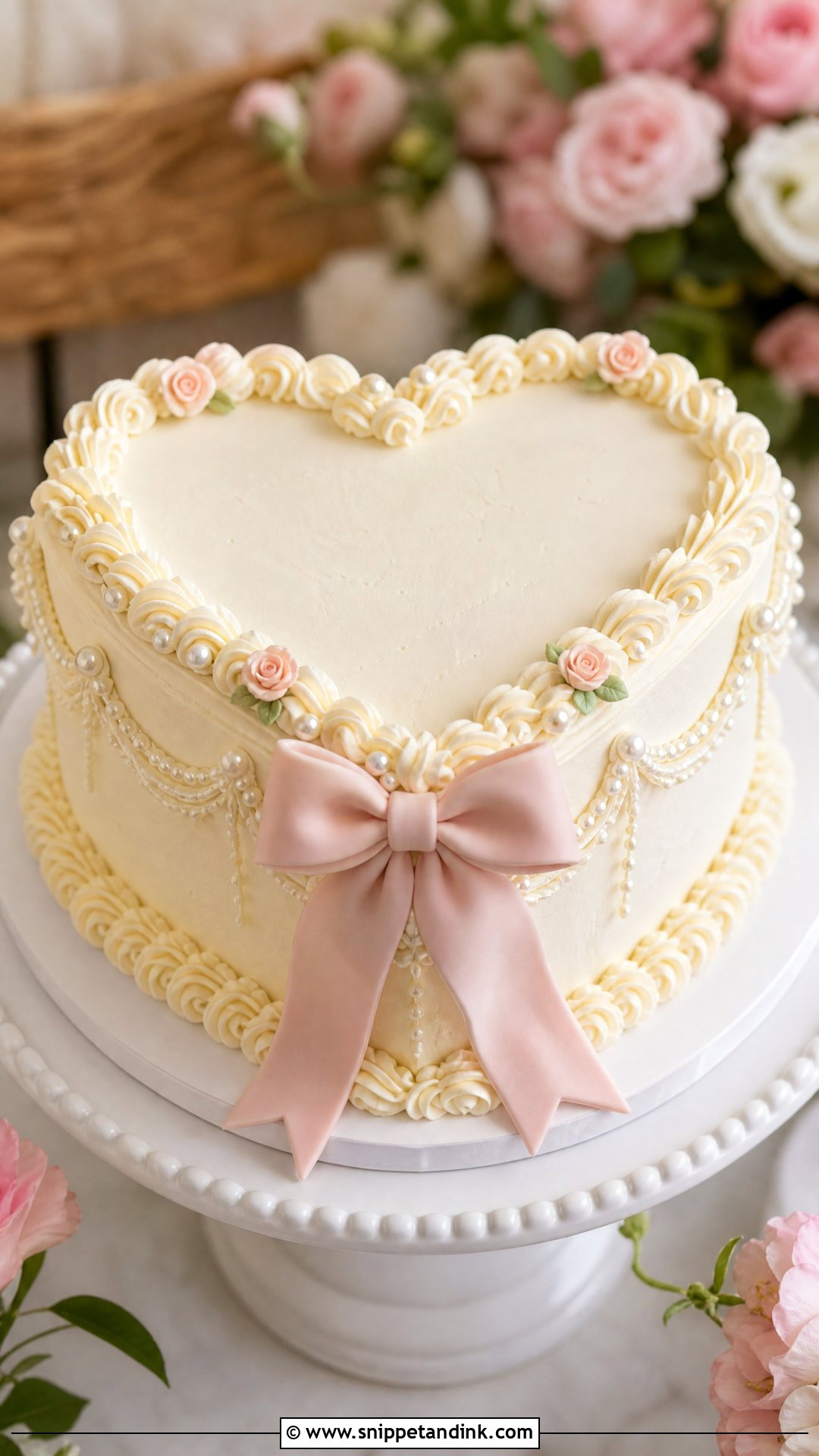
Heart shapes flirt with being too cute, so I steer them toward a refined palette and neat piping. A heart cake with a bow on top or at the point suits small weddings, elopements and sweetheart tables. White with a blush bow is soft; ivory with pearls is more classic. Heart shapes are awkward to slice, so I’d plan portions from a separate kitchen cake if guest numbers are large.
32. Tall Bow Wedding Cake
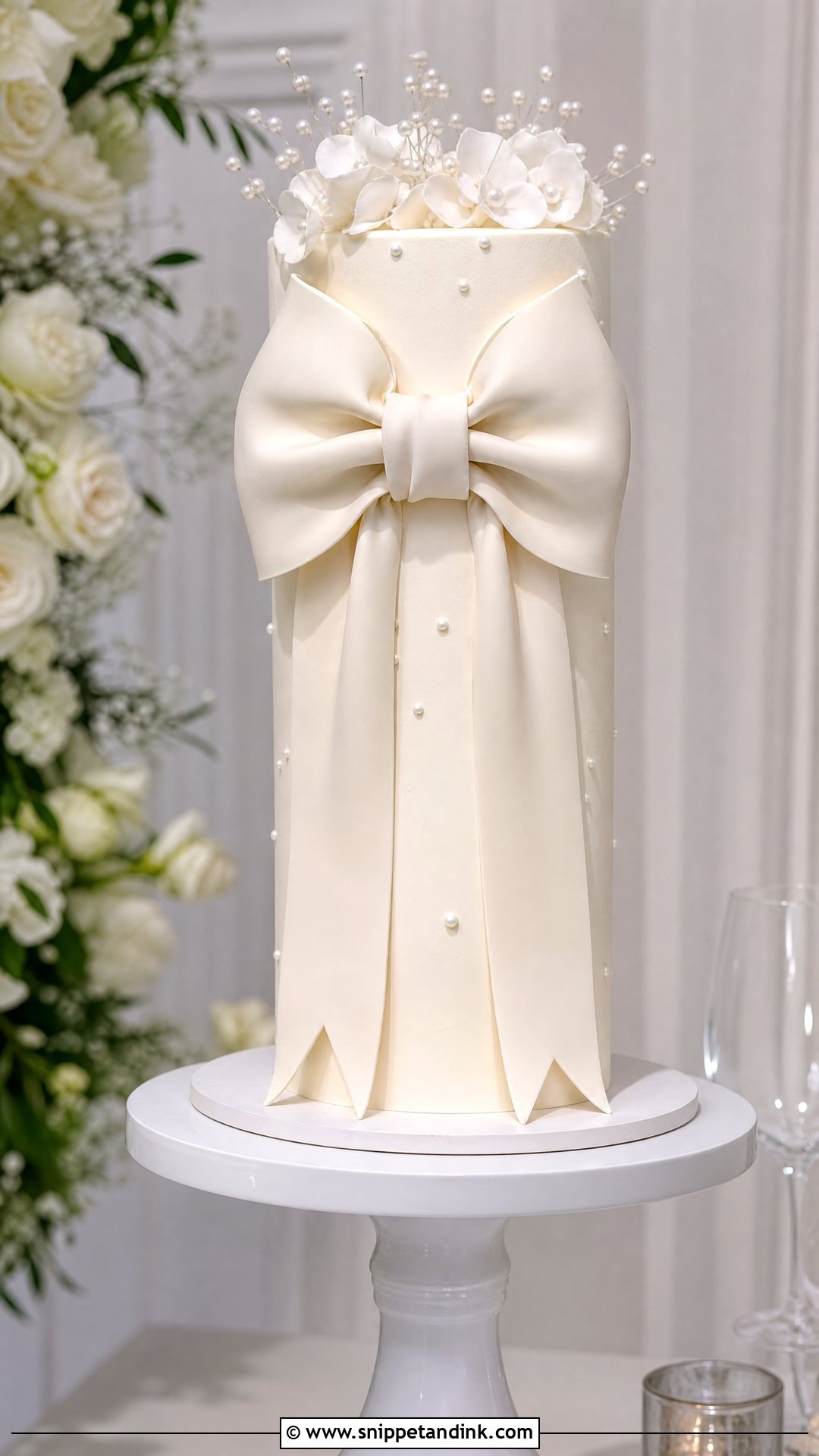
Extra-tall tiers give a bow room to sit naturally, particularly one with long tails. Smooth white buttercream with one oversized bow is modern; piped borders with smaller bows are romantic. Height adds drama for a small guest count. It also means more internal structure: dowels and boards in every tier, and a careful, chilled transport. Ask your baker how they’ll get it to the venue upright.
33. Mini Bow Wedding Cakes
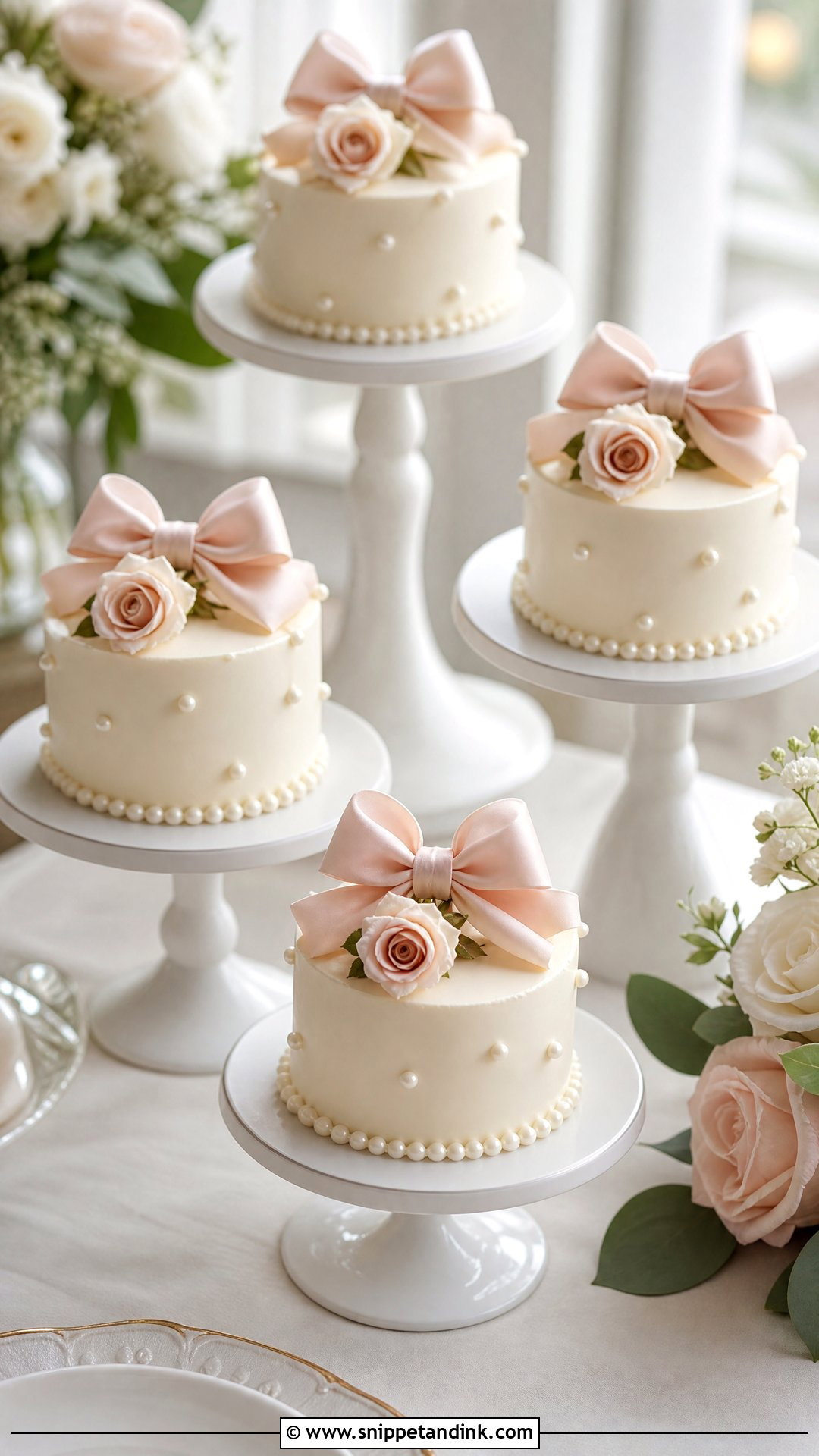
Individual cakes each get a tiny bow on top, a ribbon band or a piped bow on the front. Consistency is the challenge, since dozens of small bows have to match, so I cut them all from one template. White with blush bows is romantic; ivory with black is chic. They suit plated service and intimate dinners, arranged on matching stands.
34. Bow Wedding Cake With Cupcakes
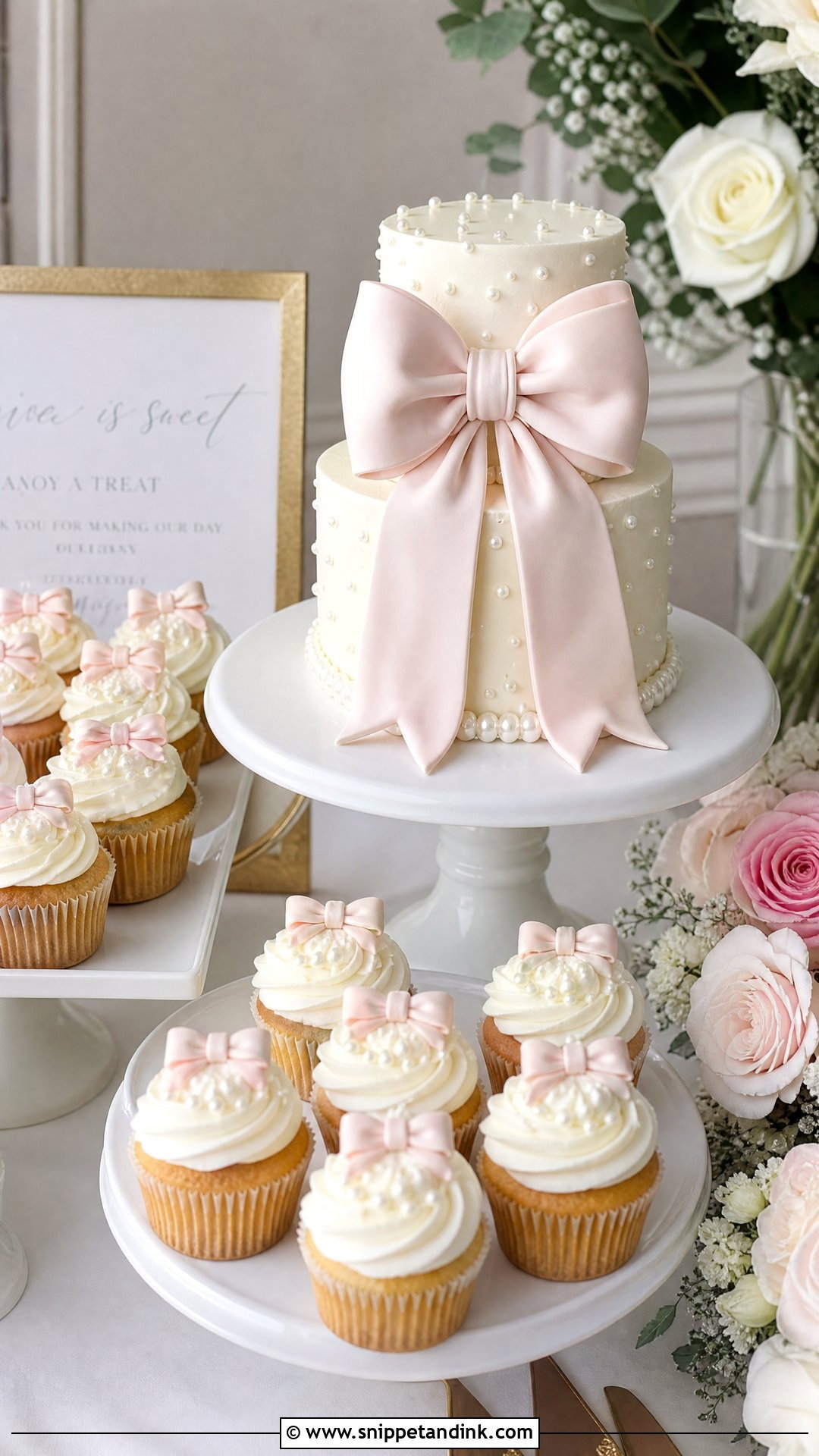
A main bow cake with cupcakes gives you a centrepiece plus easy serving and room for extra flavours. The cupcakes repeat the bow colour in tiny fondant bows, pearls or a coordinated buttercream swirl. The main cake should look complete on its own. Tiered trays and stands of different heights keep the display organised rather than scattered.
35. Bow Wedding Cake Table
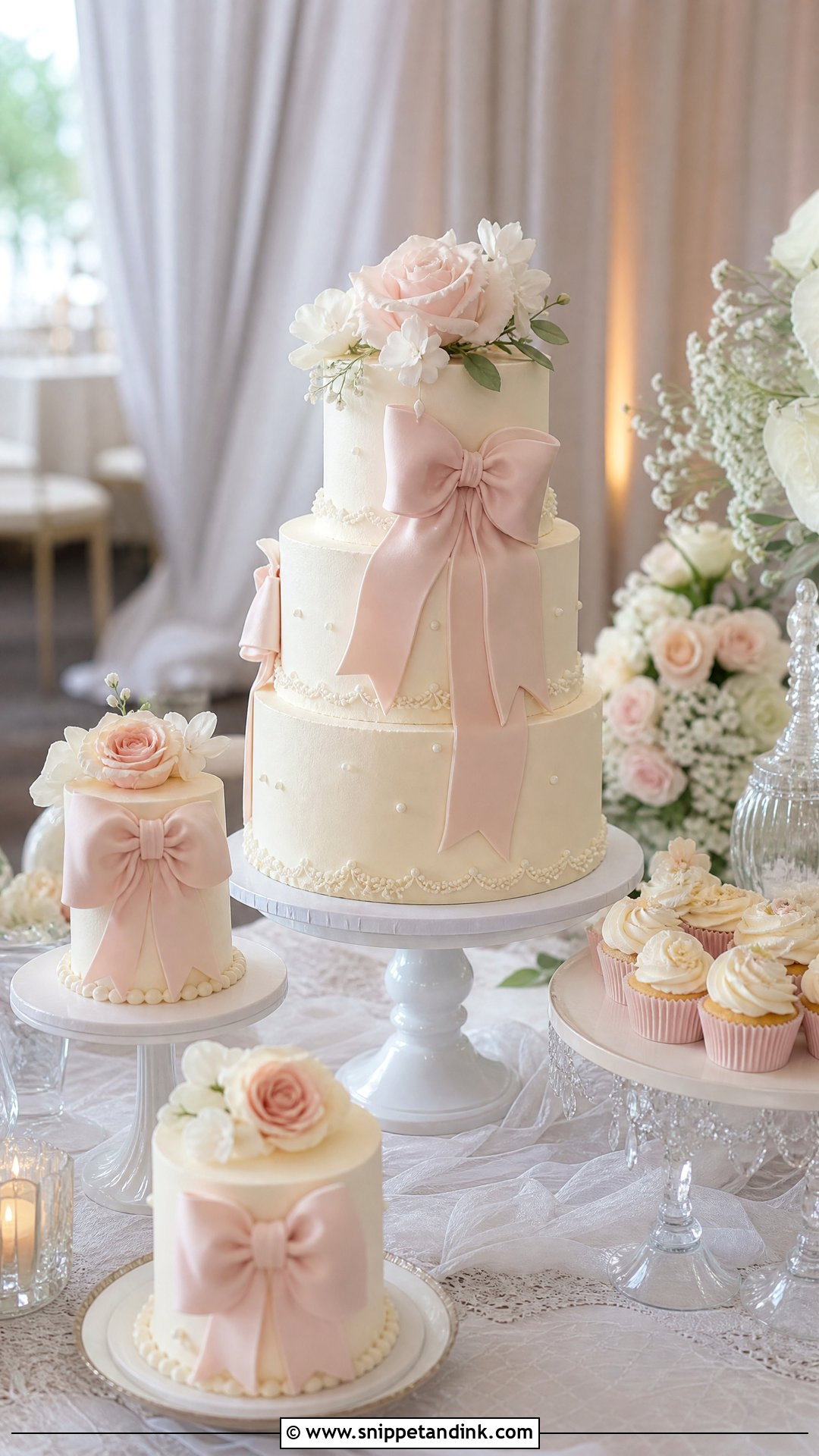
Build the whole table around one statement bow on the main cake, then echo it in smaller ways on mini cakes, cupcakes or cookies. I take the bow colour from the stationery or bridal accessories so the table connects to the rest of the day. Vary stand heights and keep the surface uncluttered. Flowers, pearls and folded napkins can support the look without competing with the cake.
Sizing a Bow Against the Tier It Sits On
The most common thing I redesign in a client’s inspiration photo is the bow size. A bow that looks right on a tall single tier on a phone screen can swamp a short tier in real life. I sketch every bow cake to scale on paper, with the actual tier heights and diameters, and cut a paper bow to hold against a dummy before I commit to sugar. A few rules I go by:
- A front bow should never be wider than the tier it sits on.
- Tails should end above the board of the tier below, or they get crushed at assembly.
- On a cascade, the largest bow goes highest or lowest, never in the middle.
- A bow on top should be heavy enough to look intentional and light enough not to sink the top tier.
What happens to the bow at cutting time
Agree this with your venue before the day. Fabric bows, tulle and any supports come off first, ideally by someone briefed in advance, so nobody is hunting for wires with a cake knife. Gum paste bows lift off and can be kept in a dry box out of sunlight; they’ll last for years, though they will fade a little. Buttercream bows simply get served with the slice.
A Bow Is Only as Good as Its Scale
What keeps bows fresh rather than gimmicky is that one detail can carry the cake: a single bow styles a plain tier, and a cascade turns a classic cake into a showpiece. Decide on the mood first, soft, clean, vintage or bold, then let material and scale follow from your venue. Bring your designer fabric swatches, the dress detail you love and an honest note about the room temperature, and ask which parts of the bow are edible before the cutting starts.
You'll Like These Ideas:








Leave a Reply